Validation of Real-Time PCR for Allergenic Food Detection in Germany: Methods, Applications, and Regulatory Compliance
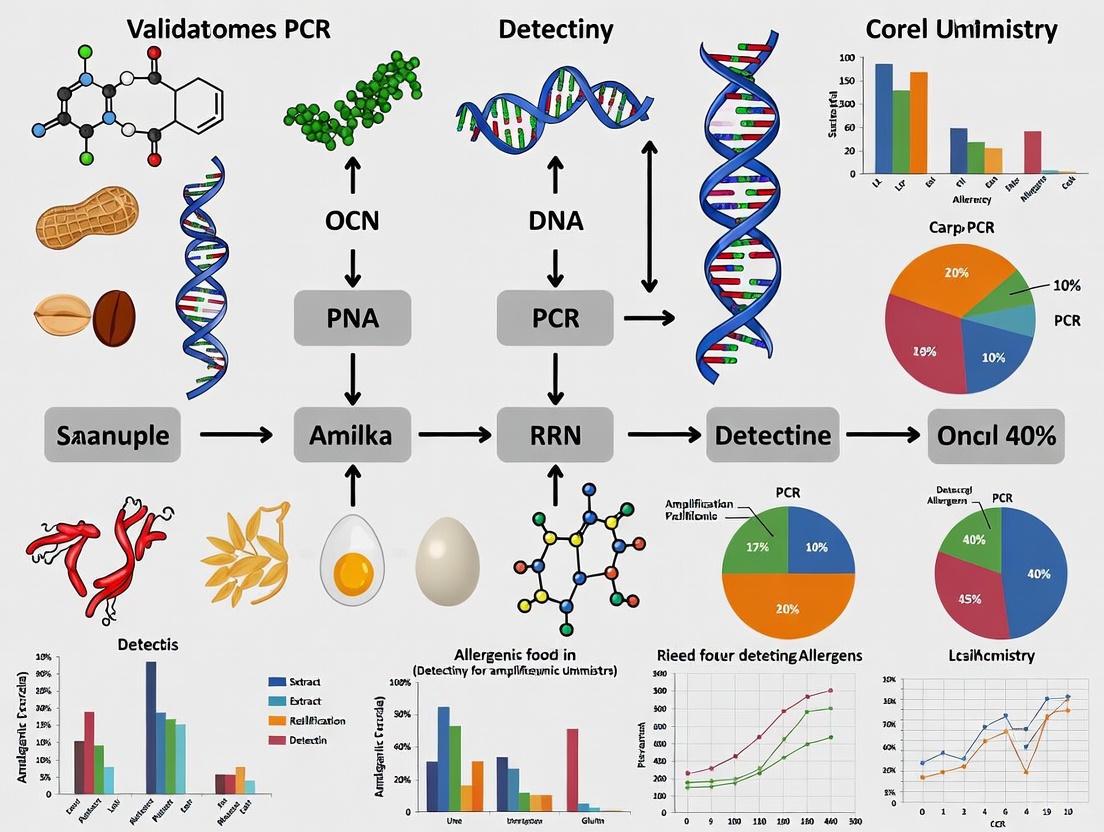
This article provides a comprehensive overview of the validation and application of real-time PCR for detecting allergenic foods within the German regulatory framework.
Validation of Real-Time PCR for Allergenic Food Detection in Germany: Methods, Applications, and Regulatory Compliance
Abstract
This article provides a comprehensive overview of the validation and application of real-time PCR for detecting allergenic foods within the German regulatory framework. It explores the scientific foundations driving method development, details optimized protocols for sensitive multiplex detection of key allergens like peanut and tree nuts, and addresses troubleshooting for complex food matrices. The content examines rigorous validation standards through collaborative trials and compares real-time PCR performance with alternative technologies like ELISA and emerging biosensors. Aimed at researchers, scientists, and drug development professionals, this review synthesizes current methodologies, regulatory considerations, and future trends to support advancements in food safety and clinical diagnostics.
The German Landscape: Food Allergy Prevalence, Regulatory Drivers, and the Scientific Basis for PCR
Food allergy (FA) has emerged as a significant public health challenge in Germany, affecting millions and placing considerable burden on individuals, families, and the healthcare system [1] [2]. The condition encompasses a broad spectrum of phenotypes and severity, characterized by variability in clinical manifestations ranging from mild oral symptoms to fatal anaphylaxis [1]. For researchers and drug development professionals, accurate detection methodologies and standardized severity classification are paramount for advancing diagnostic and therapeutic innovations. This review examines the current landscape of food allergy in Germany, focusing on epidemiological trends, the newly introduced DEFASE severity assessment system, and the critical role of validated real-time PCR protocols in detecting allergenic foods within complex matrices. The integration of these elements provides a comprehensive framework for addressing food allergy as an escalating public health priority.
Epidemiology of Food Allergy in Germany
Prevalence and Public Health Impact
Epidemiological studies reveal that food allergies affect approximately 8% of children and 10% of adults in industrialized countries, with significant regional variations across Europe [2]. In Germany specifically, the KiGGS study (Child and Adolescent Health Survey, 2003-2006) provided comprehensive data on sensitization patterns in children and adolescents [2]. This study measured specific IgE antibodies against 20 common allergens in 12,988 children aged 3–17 years and found that 40.8% were sensitized to at least one allergen, with higher rates in boys (45.0%) than girls (36.4%) [2].
The prevalence of food allergy confirmed by double-blind, placebo-controlled food challenge was 4.2% in Germany, with 3.5% of children and adolescents having symptoms of food allergy and 0.7% having symptoms of nonallergic food hypersensitivity [2]. More recent data from studies of German birth cohorts (KUNO Kids and Ulm SPATZ Health Study) found that parent-reported food allergy symptoms in children aged 1 and 2 years reached 13.2% and 13.9% respectively, indicating potential overestimation without clinical confirmation [2].
Table 1: Food Sensitization Patterns in German Children (KiGGS Study)
| Allergen | Prevalence in 3-17 Year Olds | Age-Specific Patterns |
|---|---|---|
| Peanut | 10.6% | - |
| Apple | 9.2-9.9% | More common in older children/adolescents (11-17 years) |
| Carrot | 9.2-9.9% | More common in older children/adolescents (11-17 years) |
| Wheat | 9.2-9.9% | - |
| Chicken Egg White | 5-6.3% | More common in younger children (0-3 years) |
| Milk Protein | 5-6.3% | More common in younger children (0-3 years) |
| Soybean | 5-6.3% | - |
Regional Variations and Common Allergens
Significant geographical differences exist in food allergy patterns across Europe. In Central and Northern Europe, including Germany, birch pollen-associated food allergies are common, while food allergies to milk and hen's egg occur frequently throughout Europe [2]. The most important food allergens in Germany include hazelnut, apple, carrot, and celery in Central and Northern Europe and lentils and walnut in the Mediterranean region [2].
Recent data from Google search query analyses (2022-2024) in Germany revealed substantial public interest in food allergies, with 3,649,390 combined search queries related to food and drug allergies, of which 92.6% were about food allergies [3]. The most frequently searched terms were "histamine allergy" (10.1%), "penicillin allergy" (7.3%), and "nut allergy" (2.8%), though it was noted that "histamine allergy" likely often referred to intolerance rather than true IgE-mediated allergy [3].
The DEFASE System: Standardizing Severity Assessment
Development and Implementation
The DEFASE (DEfinition of Food Allergy SEverity) score represents the first comprehensive classification system for food allergy severity that considers not only the severity of individual reactions but the entire disease scenario [1] [4]. Developed through international consensus using a two-stage process (systematic literature review followed by an e-Delphi), DEFASE is now being introduced in Germany as d-DEFASE through a joint project by the Association of German Allergists (AeDA) and the Society for Pediatric Allergology and Environmental Medicine (GPA) [1].
This standardized evaluation system addresses a critical gap in German healthcare, where previously no standardized evaluation system existed for defining and classifying the severity of IgE-mediated food allergies [1]. The implementation of DEFASE is particularly timely given the recent approval of the first biologics for food allergy treatment, which are highly effective but relatively expensive, necessitating efficient allocation to the most severely affected patients [1].
DEFASE Score Components and Calculation
The DEFASE score encompasses five key domains that collectively provide a comprehensive assessment of food allergy severity [1]:
- Acute symptoms/symptoms in previous reactions
- Minimal therapy to treat the most severe reaction
- Individual trigger dose
- Current quality of life associated with FA
- Economic impact of FA
Each domain is scored from 1 (mild) to 3 (severe), and the sum of values across all five domains determines the final DEFASE score [1]. The scoring system classifies food allergies as: mild FA (score 5-6), moderate severity (score 7-12), or severe FA (score ≥13) [1]. The DEFASE economic score (DEFASE-ES) quantifies the economic burden by calculating costs related to healthcare utilization, lost productivity, and other allergy-related expenses over the previous year [1].
Table 2: DEFASE Severity Classification System
| Severity Category | DEFASE Score Range | Key Characteristics |
|---|---|---|
| Mild Food Allergy | 5-6 points | Minimal symptoms, low economic impact, minimal QoL disruption |
| Moderate Food Allergy | 7-12 points | Moderate symptoms, may require medication beyond antihistamines, measurable QoL impact |
| Severe Food Allergy | ≥13 points | Severe symptoms including anaphylaxis, requires multiple adrenaline doses or ICU care, significant QoL and economic impact |
Application in Clinical Practice and Research
For researchers and clinicians, the DEFASE system provides a standardized framework for patient stratification and outcome measurement [1]. The scoring system is currently being tested in research projects before introduction into clinical practice, with adaptations planned for various food allergenic sources, populations, and settings [1]. Importantly, the DEFASE score requires that several prerequisites be met before application, including proper allergen identification, adequate patient support for self-management, and appropriate implementation of avoidance and treatment strategies [1].
The system specifically classifies patients who have experienced at least one near-fatal food-induced allergic reaction requiring intensive care as severe FA sufferers for life, unless resolution of the specific FA is proven [1]. This has significant implications for long-term management and therapeutic decision-making.
Real-Time PCR Detection of Allergenic Foods: Methodological Framework
Principles and Advantages of DNA-Based Detection
Real-time PCR methodologies have emerged as powerful tools for detecting allergenic foods, particularly in processed food products where protein integrity may be compromised [5] [6]. Unlike protein-based immunoassays, DNA-based detection offers advantages of enhanced stability of DNA molecules during thermal processing and greater resistance to structural changes that affect antibody recognition [7] [5].
The fundamental principle involves extracting DNA from food samples and amplifying species-specific sequences using primers and probes targeting allergen-encoding genes or other genomic regions [6]. The selection of target sequences is critical, with options including single-copy nuclear genes (allergen-encoding genes) or multi-copy sequences (mitochondrial, chloroplast, or ribosomal DNA) that offer different sensitivity and specificity profiles [7] [8].
Multiplex Real-Time PCR for Nut Allergen Detection
A recently validated multiplex real-time PCR method ("AllNut") enables simultaneous detection of peanut, hazelnut, walnut, and cashew in food matrices [8]. This method employs multicopy target sequences to achieve exceptional sensitivity, capable of detecting 0.64 mg/kg (approximately 0.1–0.2 mg of nut-derived protein/kg) in processed cookie matrices [8].
The experimental workflow involves several critical steps:
- Sample Preparation: Artificial contamination (incurred) of food matrices with defatted nut flours, followed by processing (baking, boiling) to simulate real-world conditions [8].
- DNA Extraction: Using CTAB (cetyltrimethylammonium bromide) extraction protocol with precipitation to isolate high-quality DNA from complex matrices [8].
- Primer/Probe Design: Selecting species-specific sequences (mitochondrial, ribosomal RNA genes, chloroplasts) and optimizing concentrations for multiplex amplification [8].
- Amplification Conditions: Using Quantitect Multiplex Mastermix with specific temperature-time protocols (initial denaturation 15min at 95°C, followed by 38 cycles of 10s at 95°C, 60s at 60°C, and 60s at 72°C) [8].
- Validation Parameters: Assessing specificity, sensitivity, limit of detection (LOD), precision, and trueness according to established guidelines [8].
Figure 1: Real-Time PCR Workflow for Allergen Detection
Sensitivity and Validation Data
The collaborative trial validation of the AllNut method across 12 laboratories demonstrated robust performance characteristics [8]. The method showed excellent precision and could detect allergenic nuts at concentrations as low as 0.64 mg/kg in processed foods, far below the internal action value of 1 mg protein/kg used by German food control authorities [8]. This sensitivity level is crucial for protecting highly sensitive consumers who may react to minute quantities of allergens.
Table 3: Performance Characteristics of Multiplex Real-Time PCR for Nut Detection
| Parameter | Performance | Experimental Details |
|---|---|---|
| Limit of Detection | 0.64 mg/kg | In processed cookie matrix |
| Target Sequences | Multicopy (mitochondrial, ribosomal, chloroplast) | Peanut, hazelnut, walnut, cashew |
| Specificity | High (exclusivity tested with 35+ non-target species) | Almond, soy, lupin, sesame, etc. |
| Matrix Effects | Minimal in validated matrices | Cookie, sausage, sauce powder |
| Precision | Good across 12 laboratories | Collaborative trial validation |
| Quantitative Recovery | Insufficient in some cases (bias >50%) | Method better suited for detection than precise quantification |
Research Reagent Solutions for Allergen Detection
Table 4: Essential Research Reagents for Food Allergen Detection
| Reagent/Category | Specific Examples | Function/Application |
|---|---|---|
| DNA Extraction Kits | DNeasy Plant Pro Kit, CTAB protocol | Isolation of high-quality DNA from complex food matrices |
| Real-Time PCR Mastermix | Quantitect Multiplex Mastermix | Multiplex amplification with hydrolysis probes |
| Target Sequences | Mitochondrial genes, chloroplast markers (mat K, trnH-psbA) | Species-specific detection with enhanced sensitivity |
| Calibrators/Reference Materials | Incurred food materials with known allergen concentrations | Method calibration and quantification |
| Positive Controls | Defatted nut flours, certified reference materials | Quality control and method validation |
| Primers/Probes | Species-specific oligonucleotides | Targeted amplification of allergen sequences |
The intersection of epidemiological surveillance, standardized severity assessment, and advanced detection methodologies provides a comprehensive framework for addressing food allergy as a public health priority in Germany. The introduction of the DEFASE severity scoring system represents a significant advancement in patient stratification and management, enabling more targeted allocation of healthcare resources and standardized outcome measures for clinical research.
For drug development professionals and researchers, the validation of highly sensitive real-time PCR protocols offers reliable tools for detecting allergenic foods in complex matrices, supporting both regulatory compliance and clinical management of food-allergic individuals. The integration of these approaches—understanding population burden through epidemiological studies, classifying severity through standardized clinical tools, and ensuring accurate allergen detection through validated laboratory methods—creates a synergistic foundation for advancing public health responses to the growing challenge of food allergy in Germany.
As prevalence rates continue to evolve and novel therapeutic interventions emerge, the ongoing refinement of both assessment tools and detection technologies will be essential for optimizing patient care and advancing scientific understanding of this complex condition.
Food allergen labelling is a critical public health measure designed to protect consumers from potentially life-threatening allergic reactions. In the European Union, including Germany, the regulatory framework for allergen labelling is established by Regulation (EU) No 1169/2011 on the provision of food information to consumers (FIC) [9] [10] [11]. This legislation identifies 14 specific allergens that must be declared whenever they are used as ingredients in pre-packed foods, with similar requirements extending to non-prepackaged foods across EU member states [10] [11]. For researchers validating real-time PCR methods in Germany, understanding this regulatory landscape is fundamental to developing detection methods that align with legal requirements and protect consumer health.
The German market implements the EU FIC regulation through national legislation that specifies allergen information must also be provided for non-prepackaged foods, with verbal information permitted only when supported by written documentation [11]. With approximately 17 million Europeans suffering from food allergies, including 3.5 million under age 25, and nearly 10% of allergic individuals experiencing potentially fatal anaphylactic reactions, the need for accurate detection methods has never been more pressing [10]. This guide examines the intersection of regulatory requirements and analytical validation, providing a framework for researchers developing real-time PCR applications in the German context.
Mandatory Allergens: EU and German Requirements
The 14 Major Allergens
EU legislation mandates the declaration of 14 specific allergens when used as ingredients in food products [10] [11]. These allergens represent the most common triggers for severe allergic reactions across the European population. The comprehensive list includes:
- Cereals containing gluten (wheat, rye, barley, oats, spelt, kamut, etc.)
- Crustaceans (e.g., crab, lobster, crayfish)
- Eggs
- Fish
- Peanuts
- Soybeans
- Milk (including lactose)
- Nuts (almond, hazelnut, walnut, cashew, pecan, Brazil nut, pistachio, macadamia)
- Celery (and celeriac)
- Mustard
- Sesame seeds
- Sulphur dioxide/sulphites (at concentrations >10 mg/kg or mg/l)
- Lupin
- Molluscs
Table 1: EU and German Mandatory Allergens and Common Examples
| Allergen Category | Specific Examples |
|---|---|
| Gluten-containing cereals | Wheat, rye, barley, oats, spelt, kamut [10] |
| Tree Nuts | Almonds, hazelnuts, walnuts, cashews, pecans, Brazil nuts, pistachios, macadamia nuts [10] [11] |
| Crustaceans | Crabs, lobsters, crayfish [10] |
| Molluscs | Mussels, clams, oysters, squid [10] |
| Sulphites | Sulphur dioxide, various sulphite compounds [11] |
Labelling Requirements and Compliance
According to EU regulations, mandatory allergen information must be provided in a clearly visible and legible manner using a font with a minimum x-height of 1.2 millimetres (0.9 mm for packages with a largest surface area less than 80 cm²) [9]. For prepacked foods, allergens must be emphasized in the ingredients list through formatting such as a different font, letter size, or background color [9]. In the absence of a full ingredients list, allergens must be declared using the word "contains" followed by the specific allergen name [9].
For non-prepackaged foods (loose foods), including those served in restaurants, bakeries, and pastry shops, Germany mandates that allergen information must be provided, with oral information permitted only if supported by written or electronic documentation that is readily available [11]. This places additional responsibility on food business operators to maintain accurate and current allergen records for all menu items and food products.
A special labelling requirement exists for sulphites, which must be declared when concentrations exceed 10 mg/kg or 10 mg/l (expressed as total SO₂) [11]. Similarly, Switzerland has established specific threshold values for unintended allergen presence, including 200 mg gluten/kg for gluten-containing cereals and 1 g lactose/kg for lactose, above which precautionary labelling becomes mandatory [11].
Validation of Real-Time PCR for Allergen Detection
Principles and Methodological Framework
Real-time PCR (Polymerase Chain Reaction) has emerged as a powerful technique for detecting allergenic foods by targeting species-specific DNA sequences [5] [8]. Unlike protein-based detection methods, PCR offers advantages for detecting allergens in processed foods where proteins may become denatured but DNA retains sufficient integrity for amplification [5] [12]. The method works by amplifying and quantifying target DNA sequences using fluorescent reporters, allowing for both detection and semi-quantitative estimation of allergenic ingredients.
The validation of real-time PCR methods for allergen detection in Germany requires careful consideration of several methodological factors. Research indicates that multicopy target sequences from mitochondrial or chloroplast DNA provide significantly enhanced sensitivity compared to single-copy targets [8]. One study demonstrated that using multicopy targets enabled detection limits as low as 0.64 mg/kg (approximately 0.1-0.2 mg of nut-derived protein/kg) in processed cookie matrices [8]. This sensitivity is crucial for protecting highly sensitive consumers who may react to trace amounts of allergens.
Table 2: Key Validation Parameters for Real-Time PCR Allergen Detection
| Validation Parameter | Experimental Requirement | Acceptance Criteria |
|---|---|---|
| Specificity | Testing with non-target species/taxa [8] | No amplification in non-target organisms [8] |
| Sensitivity (LOD) | Analysis of serial dilutions in food matrix [8] | Consistent detection at target concentration [8] |
| Precision | Repeatability and reproducibility testing [8] | Sufficiently low variation between replicates [8] |
| Trueness/Recovery | Analysis of incurred samples with known content [8] | Recovery within acceptable range (e.g., 50-150%) [8] |
Experimental Protocols and Workflows
A typical validation protocol for real-time PCR allergen detection involves several standardized steps. First, DNA extraction is performed using a cetyltrimethylammonium bromide (CTAB)-based method or commercial kits to obtain high-quality DNA from food matrices [8] [12]. The extracted DNA is then quantified and assessed for purity using UV spectrophotometry, with A260/A280 ratios typically between 1.8-2.0 indicating pure DNA [12].
For the real-time PCR reaction, researchers employ species-specific primers and probes targeting allergenic ingredients. One validated multiplex real-time PCR method ("AllNut") simultaneously detects peanut, hazelnut, walnut, and cashew using the following temperature-time protocol: initial denaturation at 95°C for 15 minutes, followed by 38 cycles of 10 seconds at 95°C, 60 seconds at 60°C, and 60 seconds at 72°C [8]. Fluorescence measurements are taken during the elongation phase, and results are calibrated using matrix-standard DNA extracted from reference materials with known allergen concentrations [8].
Addressing Technical Challenges
Validating real-time PCR methods for allergen detection presents several technical challenges that researchers must address. Food processing techniques, particularly high-temperature treatments, can fragment DNA and reduce amplifiability [12]. Studies show that baking at 220°C for 60 minutes significantly degrades genomic DNA, necessitating the design of primers that amplify shorter target sequences (typically 200-300 bp) for processed foods [12]. Additionally, matrix effects from different food compositions can inhibit PCR amplification, requiring validation across multiple food matrices and the use of internal controls [8].
The semi-quantitative nature of real-time PCR presents another challenge, as studies have reported measurement uncertainties exceeding 50% and variable recovery rates in collaborative trials [8]. Despite these limitations, real-time PCR remains highly valuable for sensitive detection, with research demonstrating the ability to detect walnut, hazelnut, and peanut at levels as low as 5 mg/kg, sufficient to identify potential allergen cross-contamination [8].
Comparative Analytical Techniques
Protein-Based vs. DNA-Based Detection Methods
The landscape of allergen detection methodologies encompasses two primary approaches: protein-based and DNA-based techniques. Each offers distinct advantages and limitations that researchers must consider when validating methods for regulatory compliance.
Protein-based methods, particularly Enzyme-Linked Immunosorbent Assay (ELISA), represent the traditional approach for allergen detection. The Codex Alimentarius Commission has adopted ELISA as the official test for gluten allergens, establishing a threshold of 20 mg/kg [5]. ELISA offers the advantage of directly detecting allergenic proteins and has well-characterized validation protocols. However, these methods may struggle with processed foods where proteins become denatured, and antibody cross-reactivity can lead to false positives [5].
DNA-based methods, primarily real-time PCR, provide superior sensitivity and specificity for many applications, particularly with processed foods where DNA stability exceeds that of proteins [5] [12]. Germany has established PCR as an official analytical tool for food allergen detection, reflecting its utility in regulatory contexts [5]. The technique is especially valuable for detecting multiple allergens simultaneously through multiplex assays and can achieve detection limits meeting or exceeding the action values used by German food control authorities (1 mg allergen protein/kg or 5 mg whole nut/kg) [8].
Table 3: Comparison of Allergen Detection Method Performance Characteristics
| Method Type | Detection Principle | Sensitivity | Advantages | Limitations |
|---|---|---|---|---|
| ELISA (Protein) | Antibody-antigen binding [5] | ~1-20 mg/kg (gluten) [5] | Direct protein detection, standardized protocols [5] | Protein denaturation in processed foods, antibody cross-reactivity [5] |
| Real-Time PCR (DNA) | DNA amplification with fluorescent probes [8] | 0.64-5 mg/kg (nuts) [8] | High sensitivity/specificity, works with processed foods [5] [8] | Semi-quantitative, matrix inhibition, DNA degradation [8] [12] |
| Mass Spectrometry | Protein peptide analysis [5] | Varies by allergen | High specificity, multi-allergen detection [5] | Complex sample preparation, high equipment cost [5] |
| Biosensors | Bio-recognition elements [5] | Research stage | Potential for rapid on-site testing [5] | Not yet standardized for routine use [5] |
Emerging Technologies and Future Directions
The field of allergen detection continues to evolve with several promising technologies emerging. Biosensor-based methods utilizing aptamers, antibodies, or other recognition elements show potential for rapid, on-site testing with minimal sample preparation [5]. These platforms are particularly promising for food business operators implementing HACCP-based allergen control programs, though they currently lack standardization for regulatory enforcement [5] [11].
Mass spectrometry offers another powerful approach, enabling simultaneous detection of multiple allergens through signature peptide markers [5]. While currently limited by cost and technical expertise requirements, advances in liquid chromatography-mass spectrometry (LC-MS/MS) methodologies show increasing promise for reference method applications [5]. For real-time PCR, future developments will likely focus on improved quantification through digital PCR platforms, expanded multiplexing capabilities, and reference materials that better reflect processed food matrices.
The Scientist's Toolkit: Research Reagent Solutions
Table 4: Essential Research Reagents for Real-Time PCR Allergen Detection
| Reagent/Equipment | Function/Application | Examples/Specifications |
|---|---|---|
| CTAB Extraction Buffer | DNA extraction from complex food matrices [8] [12] | Cetyltrimethylammonium bromide-based protocol for efficient DNA isolation [8] [12] |
| Species-Specific Primers/Probes | Target amplification and detection [8] | TaqMan probes targeting multicopy sequences from mitochondrial/chloroplast DNA [8] |
| Multiplex PCR Master Mix | Simultaneous amplification of multiple targets [8] | Quantitect Multiplex Mastermix (QIAGEN) enabling multiplex real-time PCR [8] |
| DNA Quantification System | Nucleic acid concentration and purity assessment [12] | NanoDrop UV-Vis Spectrophotometer (A260/A280 ratios) [12] |
| Real-Time PCR Thermocycler | DNA amplification with fluorescence detection [8] | QuantStudio 5 (Thermo Fisher) or equivalent systems [8] |
| Reference Materials | Method calibration and validation [8] | Incurred food materials with known allergen concentrations [8] |
The validation of real-time PCR methods for allergenic food detection in Germany operates within a well-defined regulatory framework that mandates the declaration of 14 major allergens. As food supply chains become increasingly complex and consumer awareness grows, the demand for sensitive, reliable detection methods will continue to increase. Real-time PCR has established itself as a valuable tool in this landscape, particularly for detecting processed allergens where protein-based methods may fall short.
Future developments in allergen detection will likely focus on harmonizing threshold levels across jurisdictions, improving the quantitative capabilities of DNA-based methods, and expanding multiplexing capabilities to address the full spectrum of regulated allergens. For researchers in Germany, understanding both the technical requirements of method validation and the regulatory context in which these methods operate is essential for developing applications that effectively protect consumer health while supporting compliance with EU and German food labelling regulations.
The detection of food allergens is a critical public health issue, requiring methods that are sensitive, specific, and reliable. While immunoassays have traditionally dominated this field, DNA-based real-time PCR (Polymerase Chain Reaction) has emerged as a powerful complementary technique. This guide explores the fundamental principles underpinning real-time PCR's suitability for allergen detection. We examine its technical advantages, supported by experimental data, and compare its performance with other analytical methods. Framed within the context of validating real-time PCR for detecting allergenic foods—a significant research initiative in Germany—this article provides an objective comparison for researchers, scientists, and drug development professionals.
Food allergies are a growing global health concern, affecting up to 10% of the population in some Western countries, with the only effective preventive measure being the strict avoidance of allergenic foods [8] [13]. This necessitates accurate food labelling and robust analytical methods for enforcement. In the European Union, Regulation (EU) No 1169/2011 mandates the labelling of 14 key allergenic substances, including celery, gluten, crustaceans, eggs, fish, peanuts, soybeans, milk, nuts, sesame, mustard, lupin, molluscs, and sulphites [14] [8]. The German government, along with other regulatory bodies, has been actively developing and validating detection methods to protect consumers, with real-time PCR becoming an officially recognized analytical tool in Germany for food allergen detection [5].
The core challenge in allergen detection lies in the need to detect trace amounts of allergens that can provoke severe reactions in sensitized individuals, even when these allergens are present as unintended contaminants due to cross-contact during manufacturing. This requires methods with extremely high sensitivity and specificity. Furthermore, food processing techniques, which often involve heat or pressure, can alter the structure of target molecules, complicating detection.
Fundamental Principles of Real-Time PCR for Allergen Detection
Real-time PCR, also known as quantitative PCR (qPCR), is a DNA-based technique that amplifies and simultaneously quantifies a specific DNA target sequence. Its application to allergen detection is based on several core principles.
The Target: DNA as a Stable Marker
Unlike protein-based methods that directly detect allergenic proteins, real-time PCR indirectly detects the presence of an allergenic food by targeting its species-specific DNA sequences.
- Stability: DNA is a highly stable molecule, more so than proteins, particularly in thermally processed foods. This stability allows for detection even in products that have undergone cooking, baking, or other harsh processes that can denature proteins and reduce the efficacy of immunological methods like ELISA [14] [7] [5].
- Specificity: DNA sequences can be selected to uniquely identify a single species (e.g., peanut) or a group of related species (e.g., tree nuts). This allows for high specificity, minimizing cross-reactivity with non-allergenic relatives. For instance, DNA methods can effectively discriminate between allergenic mustard and non-allergenic rapeseed, a challenge for some protein-based kits [14] [15].
The Power of Amplification and Fluorescent Detection
The PCR process exponentially amplifies a target DNA sequence, making it possible to detect even a single copy of the gene. In real-time PCR, this amplification is monitored in "real-time" using fluorescent reporter molecules.
- Sensitivity: The exponential amplification enables extreme sensitivity, allowing for the detection of allergens at parts-per-million (ppm) levels. Studies consistently show detection limits down to 0.5-10 ppm (mg/kg) in various food matrices [16] [17].
- Quantification: The cycle threshold (Ct), the point at which fluorescence crosses a threshold, is inversely correlated to the initial amount of target DNA. This allows for semi-quantitative or quantitative analysis, which is crucial for risk assessment and compliance with potential regulatory thresholds [8] [13].
Multi-Copy Target Sequences for Enhanced Sensitivity
A key strategic principle is the selection of the target gene. While single-copy genes can be used, targeting multi-copy genes—such as mitochondrial DNA, chloroplast DNA, or ribosomal RNA genes—significantly enhances sensitivity.
- Copy Number Advantage: A single cell contains multiple copies of mitochondrial or chloroplast DNA, compared to just two copies of a nuclear gene. By targeting these multi-copy sequences, the effective number of target molecules per cell is vastly increased, lowering the limit of detection.
- Research Evidence: A 2022 multiplex real-time PCR method for detecting peanut, hazelnut, walnut, and cashew utilized multicopy target sequences to achieve a detection level of 0.64 mg/kg in a processed cookie matrix. The authors explicitly noted that using multicopy instead of single-copy targets increases sensitivity significantly, which is essential for protecting very sensitive consumers [8]. Similarly, a 2021 study on peanut detection found that chloroplast markers (e.g., matK) provided more sensitive detection than a nuclear allergen-coding gene (Ara h 6) [7].
Performance Comparison with Alternative Methods
To objectively evaluate real-time PCR, it is essential to compare its performance with other established and emerging allergen detection techniques. The table below summarizes this comparison based on key performance metrics.
Table 1: Comparison of Major Food Allergen Detection Methods
| Method Type | Principle | Sensitivity | Specificity | Influence of Food Processing | Quantification Ability | Key Limitations |
|---|---|---|---|---|---|---|
| Real-Time PCR [8] [7] [5] | Detection of species-specific DNA sequences via amplification. | Very High (e.g., 0.5-10 ppm) | Very High, with low cross-reactivity | Low (DNA is thermally stable) | Semi-quantitative to Quantitative | Does not directly detect the allergenic protein; matrix effects can influence DNA extraction. |
| ELISA [5] | Antibody-based detection of allergenic proteins. | High | Can be compromised by cross-reactive proteins (e.g., celery vs. carrot) [14] | High (proteins can denature) | Quantitative | Antibody quality is critical; protein solubility issues in processed foods. |
| Mass Spectrometry (LC-MS/MS) [14] [5] | Detection of unique peptide sequences from allergenic proteins. | High | High, based on peptide mass | Moderate | Quantitative | Complex and expensive; requires high expertise; still under development for some allergens. |
| Biosensors [5] | Biorecognition element (antibody, aptamer) coupled to a transducer. | High (potential for on-site use) | High | Varies with the biorecognition element | Semi-quantitative | Emerging technology; stability and application in complex matrices can be challenging. |
Key Comparative Insights
- Direct vs. Indirect Detection: A fundamental distinction is that real-time PCR is an indirect method, detecting DNA rather than the protein that causes the allergic reaction. While this is often advantageous due to DNA's stability, it is a consideration in quantitative risk assessment, as the DNA-to-protein ratio is not constant [14] [13].
- Addressing ELISA's Limitations: Real-time PCR excels in areas where ELISA can struggle. For example, a 2024 study on celery detection highlighted that protein-based kits can cross-react with other species in the Apiaceae family (e.g., carrot, parsley), and for some allergens like celery, specific ELISA methods may be unavailable. DNA-based methods effectively overcome this specificity issue [14] [15].
- Speed and Simplicity: Recent advancements have focused on simplifying and accelerating real-time PCR. A 2024 study developed a nucleic acid release reagent that extracts DNA in 4 minutes, combined with a rapid qPCR protocol that completes the entire detection process for fish allergens in under 30 minutes, showcasing its potential for on-site use [18].
Experimental Data and Validation Protocols
The validation of real-time PCR methods, particularly within the German research context, involves rigorous testing according to international guidelines. The following experimental data and protocols illustrate its real-world performance.
Sensitivity and Limit of Detection (LOD)
Validation studies consistently demonstrate the high sensitivity of real-time PCR across various allergenic foods and complex matrices.
Table 2: Experimentally Determined Limits of Detection for Various Allergens via Real-Time PCR
| Allergenic Food | Target Gene | Food Matrix | Limit of Detection (LOD) | Citation |
|---|---|---|---|---|
| Lupin | Proprietary (Commercial Kit) | Chocolate cookies, ragù, Olivier salad, flour | 0.5 ppm | [16] |
| Pistachio | Pis v 2 (single-copy nuclear) | Wheat pasta, Ice-cream | 5-100 mg/kg | [17] |
| Peanut | Chloroplast matK (multi-copy) | Binary mixtures with wheat | 10 mg/kg (after boiling/autoclaving) | [7] |
| Celery | Cel-MDH | Five product groups (meat, sauces, etc.) | 1 ppm (spiked protein) | [14] |
| Peanut, Hazelnut, Walnut, Cashew | Multicopy mitochondrial/chloroplast | Processed cookie | 0.64 mg/kg (approx. 0.1-0.2 mg nut protein/kg) | [8] |
| Fish | Mitochondrial | Various processed foods | 0.00001% (0.1 mg/kg) | [18] |
Detailed Experimental Protocol: A Representative Workflow
The following diagram outlines a generalized workflow for allergen detection using real-time PCR, as described in multiple validation studies [14] [7] [16].
Figure 1: Generalized workflow for allergen detection using real-time PCR.
Step-by-Step Protocol:
Sample Preparation and DNA Extraction:
- Approximately 30-80 mg of homogenized food sample is weighed.
- CTAB Protocol: A common and effective method involves using CTAB (cetyltrimethylammonium bromide) buffer. The sample is incubated with CTAB buffer and proteinase K at 65°C for 90 minutes to lyse cells and degrade proteins. After centrifugation, the supernatant is purified, often using a commercial silica-membrane kit or magnetic beads [14] [8].
- Kit-Based Extraction: Commercial kits (e.g., DNeasy Plant Pro Kit from Qiagen, ION Force FAST from Generon) provide standardized protocols for efficient DNA extraction, ensuring consistency and reproducibility [7] [16].
DNA Quality Assessment:
Real-Time PCR Reaction Setup:
- A master mix is prepared containing:
- TaqMan Universal Master Mix or similar: Contains DNA polymerase, dNTPs, and buffer.
- Primers and Probe: Species-specific oligonucleotides. Probes are labeled with a fluorescent dye (e.g., FAM) and a quencher.
- DNA Template: Typically 5 µL of the extracted DNA.
- Final reaction volumes are usually 20-25 µL.
- A master mix is prepared containing:
Thermal Cycling and Fluorescence Detection:
- The reaction is run on a real-time PCR instrument (e.g., Bio-Rad CFX96) with a standard two-step cycling protocol:
- Initial Denaturation: 95°C for 2-10 minutes.
- 40-45 Cycles of:
- Denaturation: 95°C for 15 seconds.
- Annealing/Extension: 60°C for 60 seconds (fluorescence is read at this step).
- The instrument software records the fluorescence and calculates the Ct value for each sample.
- The reaction is run on a real-time PCR instrument (e.g., Bio-Rad CFX96) with a standard two-step cycling protocol:
Data Analysis:
- The Ct value is used for interpretation. A sample is considered positive if the Ct value is below a predetermined threshold.
- For quantification, a standard curve is generated using DNA extracted from samples with known concentrations of the allergenic ingredient, allowing the estimation of the allergen amount in unknown samples [8] [13].
The Scientist's Toolkit: Essential Research Reagents and Materials
Successful implementation of real-time PCR for allergen detection relies on a suite of specific reagents and instruments.
Table 3: Essential Research Reagents and Materials for Real-Time PCR Allergen Detection
| Item | Function | Specific Examples |
|---|---|---|
| DNA Extraction Kit | Isolate high-quality DNA from complex food matrices. | DNeasy Plant Pro Kit (Qiagen), Maxwell RSC PureFood GMO and Authentication Kit (Promega), ION Force FAST (Generon), CTAB-based manual protocols [14] [7] [16]. |
| Real-Time PCR Kit | Provides the core components for amplification and detection. | Quantitect Multiplex Mastermix (QIAGEN), TaqMan Universal Master Mix (Applied Biosystems), SYBR Green Dye-based mixes, commercial allergen-specific kits (e.g., RT-PCR SPECIALfinder, DNAllergen kits) [8] [15] [19]. |
| Species-Specific Primers & Probes | Ensure specific amplification of the target allergen's DNA. | Primers and TaqMan probes for celery (Cel-MDH), peanut (chloroplast matK, atp6), pistachio (Pis v 2), or multiplex sets for nuts [14] [8] [7]. |
| Reference DNA / Control Material | Serves as a positive control and for standard curve generation. | DNA extracted from certified reference materials or well-characterized raw food ingredients (e.g., lupin flour, peanut flour) [13] [16]. |
| Real-Time PCR Thermocycler | Instrument that performs thermal cycling and detects fluorescence. | CFX-96 (Bio-Rad), QuantStudio 5 (Thermo Fisher) [14] [8]. |
| Nucleic Acid Quantification Instrument | Assesses the concentration and purity of extracted DNA. | Nanodrop Spectrophotometer (Thermo Fisher), Qubit Fluorometer (Thermo Fisher) [14] [19]. |
DNA-based real-time PCR has firmly established itself as a vital technology for the detection of food allergens. Its fundamental strengths—high sensitivity, exceptional specificity, and robustness across processed food matrices—make it an indispensable tool for food safety authorities, the food industry, and research scientists. The validation of these methods, particularly within rigorous frameworks like those in Germany, provides the confidence needed for their use in regulatory compliance and consumer protection.
While it is an indirect method that does not detect the allergenic protein itself, its performance characteristics often surpass those of direct protein-based methods in challenging scenarios, such as with highly processed foods or when distinguishing between closely related species. As the technology continues to evolve with faster extraction methods, more sensitive multiplex assays, and streamlined protocols, real-time PCR is poised to play an even greater role in ensuring the safety of food for allergic consumers worldwide. Its role as a confirmatory technique alongside ELISA or as a primary quantitative tool will be central to future advances in allergen management and risk assessment.
Within the European Union, clear labelling of allergenic foods like peanut, hazelnut, walnut, and cashew is mandatory (Regulation 2011/1169/EC) [8]. In Germany, official food control laboratories utilize internal action values, such as 1 mg of allergenic protein per kg of food, to guide inspections and protect consumers [8]. Robust, sensitive, and specific detection methods are therefore crucial for compliance and risk assessment. Real-time PCR (Polymerase Chain Reaction) has emerged as a powerful tool for the detection of allergenic ingredients, even within complex and processed food matrices [8] [20]. This guide objectively compares the performance of a novel multiplex real-time PCR method, "AllNut," against historical detection alternatives, framing the analysis within the context of its validation for detecting allergenic foods in German research.
Performance Comparison: AllNut PCR vs. Alternative Methods
The following table summarizes the key performance characteristics of the multiplex real-time PCR method "AllNut" for nut detection, compared to other common techniques and earlier PCR methods.
Table 1: Performance Comparison of Food Allergen Detection Methods
| Method | Targets | Sensitivity (Limit of Detection) | Specificity | Robustness in Processed Foods | Quantitative Capability |
|---|---|---|---|---|---|
| Multiplex Real-Time PCR (AllNut) [8] | Peanut, Hazelnut, Walnut, Cashew | 0.64 mg/kg (in processed cookie matrix) | High (validated via collaborative trial) | High (validated in baked cookies, cooked sausage, sauce powder) | Semi-quantitative; quantitative uncertainty >50% in some cases |
| Historical Real-Time PCR [8] | Various Tree Nuts | 5 - 20 mg/kg | Variable | Not specifically reported | Possible, but sensitivity may be lower |
| Immunological Methods (ELISA) | Proteins | Variable, often higher than 5 mg/kg | Can be affected by processing | Can be compromised by protein denaturation during processing | Yes, but dependent on antibody affinity and protein integrity |
| DNA Barcoding [21] | Species Identification | Varies | High | Good, but less suited for quantitative analysis in mixtures | Primarily qualitative |
Experimental Data and Validation of the AllNut Method
Key Experimental Findings
The "AllNut" multiplex real-time PCR method was developed and validated through a collaborative trial involving 12 laboratories [8]. The key experimental data supporting its performance are as follows:
- Sensitivity: The method demonstrated a detection limit of 0.64 mg/kg (approximately 0.1–0.2 mg of nut-derived protein per kg) in a processed cookie matrix. This was confirmed using incurred samples spiked at very low levels between 0.9 and 50 mg/kg [8].
- Specificity: The method exhibited high specificity for its target nuts (peanut, hazelnut, walnut, cashew). Exclusivity testing was conducted with a broad panel of non-target species, including almond, Brazil nut, celery, coconut, lupin, macadamia, mustard, pistachio, and various cereals, with no cross-reactivity detected [8].
- Robustness and Precision: The collaborative trial revealed good precision data across the participating laboratories, confirming the method's robustness when applied to different processed matrices, including vegan cookies and veggie burgers [8].
- Quantitative Performance: While suitable for sensitive detection and semi-quantitative estimation, the method showed insufficient recovery (bias) in some cases during quantitative analysis, resulting in measurement uncertainties of more than 50% [8].
Detailed Experimental Protocol
The validation of the "AllNut" method provides a template for a robust experimental protocol for detecting allergens in processed foods [8].
1. Sample Preparation and DNA Extraction:
- Spiked Food Material: Artificially contaminate (incur) relevant food matrices (e.g., rice cookies, Lyoner sausage, sauce powder) with defatted flours of the target nuts.
- Processing: Subject the spiked materials to relevant processing conditions (e.g., baking cookies at 200°C for 10 minutes, boiling sausage meat at 100°C for 1.5 hours) to simulate real-world conditions.
- DNA Extraction: Use a cetyltrimethylammonium bromide (CTAB) extraction protocol with a precipitation step to isolate DNA from the processed materials [8].
2. Real-Time PCR Setup:
- Target Genes: Employ TaqMan real-time PCR systems targeting multicopy sequences from mitochondrial, ribosomal RNA, or chloroplast DNA to maximize sensitivity [8].
- Reaction Mix: Use a commercial multiplex mastermix. The final reaction contains primers and probes at optimized concentrations for each of the four nut targets.
- Thermocycling Protocol:
- Initial Denaturation: 95°C for 15 minutes for one cycle.
- Amplification: 38 cycles of:
- Denaturation: 95°C for 10 seconds.
- Annealing/Extension: 60°C for 60 seconds.
- Fluorescence data acquisition occurs during the elongation phase [8].
3. Data Analysis:
- Calibration: Use a matrix standard DNA extracted from a highly spiked (e.g., 400 mg/kg) reference material to create a calibration curve for semi-quantitative estimation.
- Limit of Detection (LOD): The LOD is determined as the lowest concentration that can be reliably detected in the processed matrix, confirmed by collaborative trial data [8].
The workflow for this experimental protocol is outlined below.
Figure 1: Experimental Workflow for Allergen Detection Validation.
The Scientist's Toolkit: Essential Research Reagents and Materials
Table 2: Key Research Reagent Solutions for Allergen Detection PCR
| Item | Function / Application | Example from Validation |
|---|---|---|
| Defatted Nut Flours | Used to create incurred (spiked) reference materials for method validation, mimicking real-world contamination. | Defatted flours of peanut, hazelnut, walnut, and cashew were used to spike cookie, sausage, and sauce matrices [8]. |
| CTAB Extraction Buffer | A detergent-based DNA extraction solution effective for breaking down rigid plant cell walls and isolating high-quality DNA from complex, processed matrices. | A CTAB protocol with a precipitation step was used for DNA extraction from all test materials in the AllNut validation [8]. |
| Multiplex PCR Mastermix | A pre-mixed solution containing DNA polymerase, dNTPs, buffers, and salts optimized for simultaneously amplifying multiple targets in a single reaction. | The Quantitect Multiplex Mastermix no ROX (QIAGEN) was used for the AllNut qPCR according to the manufacturer's instructions [8]. |
| Species-Specific Primers & TaqMan Probes | Short, single-stranded DNA sequences that define the start and end of the DNA segment to be amplified (primers) and a fluorescently-labeled probe that specifically binds and confirms the identity of the target sequence. | Primers and probes for peanut were from a published source; systems for hazelnut, walnut, and cashew were newly established, targeting multicopy sequences [8]. |
| Matrix Standard DNA | A calibrated DNA extract from a known, highly-spiked reference material, used to create a standard curve for semi-quantitative analysis and calibrate results in mg/kg. | DNA was extracted from a 400 mg/kg spiked rice cookie material, then diluted to create a calibration curve [8]. |
Critical Validation Parameters and Their Interrelationship
The validation of a real-time PCR method for allergen detection rests on three core pillars: Sensitivity, Specificity, and Robustness. These parameters are interdependent, as visualized below.
Figure 2: Core Pillars of PCR Method Validation.
The "AllNut" multiplex real-time PCR method exemplifies the advancements in detecting allergenic foods, demonstrating superior sensitivity and reliability in processed foods compared to earlier techniques. Its validation through a comprehensive collaborative trial in Germany underscores its robustness and aligns with the stringent requirements of European and German food control systems. While the method is highly effective for qualitative detection and semi-quantitative estimation, its limitations in precise quantification highlight an area for future development. For researchers and food control scientists, this method provides a validated, powerful tool for enforcing labelling regulations and protecting consumers with food allergies.
Germany represents the largest and most mature food safety testing market in Europe, characterized by a strong regulatory framework, high technological adoption, and significant investment in research and development. The market is a critical component of Germany's extensive food industry, ensuring public health and compliance with some of the world's most stringent food safety standards. The German food safety testing market is part of a broader European industry that was valued at an estimated $8,197.9 million in 2025 and is projected to reach $15,405.9 million by 2033, growing at a compound annual growth rate (CAGR) of 6.5% [22]. Within this European context, Germany holds a dominant 30% market share, solidifying its position as the regional leader in food testing innovation and implementation [22]. This growth trajectory is propelled by multiple factors, including regulatory pressure, increasing consumer awareness about food quality, and the need for sophisticated detection methods for contaminants ranging from pathogens to undeclared allergens.
A key driver in this market is the rising consumer demand for transparency and food safety, coupled with strict enforcement of national and European Union regulations. The European Food Safety Authority (EFSA) implements rigorous standards that German testing laboratories must adhere to, creating a consistent demand for reliable testing services [23]. Furthermore, high-profile incidents of foodborne illness and food fraud have underscored the vulnerability of the food supply chain, prompting manufacturers to invest in advanced testing technologies to verify product authenticity and safety. The German market, in particular, is a front-runner in automated testing systems and has pioneered the integration of technologies like blockchain for enhanced food traceability [22]. The subsequent sections will explore the quantitative market outlook, the pivotal role of real-time PCR in allergen detection, and the experimental protocols that underpin its validation.
The German food testing sector is distinguished by its technological sophistication and a strong focus on compliance and innovation. The market's growth is not merely a function of regulatory compliance but is also driven by the evolving complexities of the food supply chain, including the rise of plant-based alternative proteins and an increased focus on food fraud detection. The German market's size and forecast are summarized in the table below.
Table 1: German Food Safety Testing Market Overview
| Metric | Value | Source/Timeframe |
|---|---|---|
| European Market Share | 30% | Leading position in Europe [22] |
| Market Value (2024) | US$ 6.45 Billion | Europe-wide base value [23] |
| Projected Market Value (2033) | US$ 10.74 Billion | Europe-wide forecast [23] |
| Compound Annual Growth Rate (CAGR) | 5.84% | Forecast period 2025-2033 [23] |
This growth is underpinned by several key market drivers and challenges. The stringent regulatory environment, governed by both EU and national laws, compels comprehensive testing for pathogens, pesticides, allergens, and heavy metals [23]. Simultaneously, increasing consumer concern about food quality and a demand for transparency are pushing manufacturers to adopt more rigorous testing protocols to maintain brand trust [22]. The market also faces significant challenges, including a complex regulatory landscape where national rules can supplement broader EU requirements, creating a costly compliance environment for multi-national operators [23]. Furthermore, the constant evolution of pathogens and contaminants necessitates continuous research and development to adapt and validate testing methods against emerging threats [23].
The competitive landscape is consolidated, with major international players like Eurofins Scientific and Bureau Veritas maintaining a significant presence through state-of-the-art laboratories in Germany [22]. These companies, along with others such as SGS SA, Intertek Group PLC, and TÜV SÜD, compete on technological innovation, extensive laboratory networks, and strategic partnerships [22] [23]. The presence of specialized academic institutions, such as the Department of Food Safety at Geisenheim University, which focuses on developing rapid detection methods for allergenic proteins, further fuels innovation in the sector [24].
Validation of Real-Time PCR for Allergenic Food Detection
Within the diverse scope of food testing, the detection and quantification of allergenic food ingredients represent a critical and technically challenging domain. Here, real-time Polymerase Chain Reaction (qPCR) has emerged as a powerful and validated tool for ensuring labeling compliance and protecting consumers with food allergies. This technique targets specific allergen-encoding genes, providing high specificity and sensitivity even in complex, processed food matrices [6].
Core Principles and Advantages of Real-Time PCR
Real-time PCR functions by amplifying and simultaneously quantifying a targeted DNA molecule. The process uses sequence-specific primers and a hydrolysis (TaqMan) probe to enable the detection of amplification as it occurs, in "real-time." This allows for both the identification and quantification of the target allergen DNA [6]. The primary advantages of this method in the German research and regulatory context include:
- Specificity: It can distinguish between closely related species, such as different types of nuts, by targeting unique DNA sequences [25].
- Sensitivity: It is capable of detecting very low levels of allergenic contaminants, crucial for preventing accidental exposure [25].
- Quantification: Unlike some qualitative methods, qPCR can provide data on the amount of an allergenic ingredient present, which is vital for risk assessment and compliance with labeling thresholds [6] [25].
- Applicability to Processed Foods: DNA is a relatively stable molecule, allowing for detection in foods that have undergone heating or other processing that might denature proteins targeted by other methods like ELISA [25].
Key Experimental Protocol for Allergen Detection
The validation of a real-time PCR method for allergen detection follows a rigorous, multi-stage protocol. The following workflow outlines the key steps involved, using the detection of an allergenic nut as an example [6].
Detailed Methodology:
- In Silico Sequence Analysis and Primer/Probe Design: The process begins with the identification of a highly specific DNA region, often the allergen-encoding gene itself. Bioinformatics tools are used to design primers and a hydrolysis probe (typically 90-200 base pairs long) that will uniquely bind to the target sequence from the allergenic species [6].
- Preparation of Calibrators (Model Foods): To enable accurate quantification, model foods are created by spiking a known, defined amount of the allergenic ingredient (e.g., cashew nut) into a food matrix that is confirmed to be free of the allergen. These calibrators create a standard curve for the qPCR assay [6] [25].
- Efficient DNA Extraction from Complex Food Matrices: DNA is extracted from both the calibrators and the commercial food samples being tested. This step is critical, as the complex composition of foods (fats, proteins, carbohydrates) can contain substances that inhibit the PCR reaction. Efficient and pure DNA extraction is necessary for reliable results [6].
- Amplification by Real-Time PCR with Hydrolysis Probe: The extracted DNA is amplified using the designed primers and probe. The real-time PCR instrument monitors the fluorescence signal released during each amplification cycle, allowing for the quantification of the initial amount of target DNA [6].
- Sequencing PCR Products for Identity Confirmation: To unequivocally confirm that the amplified DNA product is the correct target, the PCR products are sequenced. This verifies the specificity of the assay [6].
- Validation and Application to Commercial Foods: The fully developed method must undergo a formal validation process to establish its performance characteristics (e.g., sensitivity, specificity, reproducibility) before it is applied to test commercial food products [6].
Multi-Laboratory Validation and Performance Data
The gold standard for validating a new testing method is a multi-laboratory ring trial. A seminal study in Germany validated real-time PCR methods for quantifying soybean and white mustard in boiled sausages [25]. This interlaboratory trial established key performance metrics for the method, as summarized below.
Table 2: Performance Data from Ring-Trial Validation of qPCR for Allergens
| Performance Metric | Soybean (in Sausage) | White Mustard (in Sausage) | Context & Significance |
|---|---|---|---|
| Lowest Detectable Level | 10 mg/kg | 10 mg/kg | Demonstrates high sensitivity for trace contamination [25] |
| Recovery Rate | 82 - 99% | 80 - 93% | Indicates high accuracy and reliability of quantification [25] |
| Reproducibility Standard Deviation | < 35% | < 35% | Falls within acceptable limits for quantitative methods, confirming consistency across labs [25] |
This validation study demonstrated that real-time PCR is a highly reproducible, sensitive, and accurate tool for the quantitative detection of allergenic foods, making it suitable for official food control and industrial quality assurance programs [25]. The principles established in this German study align with international validation efforts for qPCR in food safety, such as those for detecting Salmonella in frozen fish, which also confirmed the method's high reproducibility, specificity, and sensitivity compared to traditional culture methods [26].
The Scientist's Toolkit: Essential Research Reagents and Materials
The development and application of validated real-time PCR methods rely on a suite of essential research reagents and laboratory materials. The following table details key components used in a typical workflow for allergen detection.
Table 3: Research Reagent Solutions for Real-Time PCR-Based Allergen Detection
| Item | Function | Application Example |
|---|---|---|
| Sequence-Specific Primers | Short DNA sequences designed to bind to and flank the target DNA region, initiating amplification. | Primers targeting a unique sequence in the cashew nut allergen gene [6]. |
| Hydrolysis Probe (TaqMan Probe) | A labeled oligonucleotide that binds specifically to the target sequence between the primers; its degradation during PCR generates a fluorescent signal for detection and quantification. | A probe labeled with a fluorophore and quencher for the specific detection of white mustard DNA [25]. |
| DNA Polymerase (e.g., Tth polymerase) | The enzyme that synthesizes new DNA strands by adding nucleotides to the primers, essential for the PCR amplification process. | Used in the PCR mixture for the collaborative trial of a Campylobacter detection method [27]. |
| Calibrators (Model Foods) | Control materials with a known, defined content of the allergenic ingredient, used to create a standard curve for quantification. | Boiled sausages spiked with defined amounts (e.g., 10-1000 mg/kg) of soybean or mustard [25]. |
| DNA Extraction Reagents (e.g., Chelex-100) | Chemicals and resins used to isolate and purify DNA from complex food matrices while removing PCR inhibitors. | Chelex-100 resin used for simple and non-proprietary DNA extraction from enriched carcass rinse [27]. |
| Internal Amplification Control (IAC) | A non-target DNA sequence added to the PCR reaction to confirm that the test has not been inhibited, verifying negative results are true negatives. | Essential control used in collaborative trials to validate results; its omission can lead to data exclusion [27]. |
The German food testing sector is on a strong growth trajectory, firmly anchored in a culture of regulatory rigor, technological innovation, and scientific validation. The market's expansion is a direct response to the converging demands of stringent EU and national laws, increasingly health-conscious consumers, and a complex, globalized food supply chain. Within this dynamic landscape, real-time PCR has been established as a cornerstone technology for the specific, sensitive, and quantitative detection of allergenic foods. The multi-laboratory validation of these methods, demonstrating high reproducibility and accuracy, provides the scientific community, regulatory bodies, and the food industry with a reliable tool for protecting public health. As the market continues to evolve, driven by trends in alternative proteins and digital traceability, the role of rigorously validated, DNA-based detection methods like real-time PCR will only become more central to ensuring food safety and integrity in Germany and beyond.
Protocols in Practice: Designing and Implementing Real-Time PCR Assays for Allergen Detection
In the field of food safety, particularly for the detection of allergenic ingredients, the accuracy and reliability of DNA-based methods are fundamentally dependent on the initial DNA extraction process. This is especially true for complex and processed food matrices, where ingredients undergo various mechanical, thermal, and chemical treatments that can degrade DNA and introduce PCR inhibitors. Within the context of German research on validating real-time PCR for allergenic food detection, selecting an appropriate DNA extraction method is not merely a preliminary step but a critical analytical parameter that determines the success or failure of the entire detection protocol. Processed foods present unique challenges; techniques like heating, high-pressure processing, and the addition of ingredients such as salts, polysaccharides, and fats can fragment DNA and co-extract substances that inhibit downstream PCR amplification [28] [29]. Consequently, the extraction efficiency and purity of isolated DNA directly influence the sensitivity, specificity, and quantitative accuracy of real-time PCR methods, which are essential for protecting consumers with food allergies and ensuring compliance with labeling regulations like those in the European Union [8] [30].
This guide provides a comparative evaluation of DNA extraction methods, presenting experimental data to help researchers select the optimal protocol for their specific food matrix. The objective is to support the development and validation of robust real-time PCR assays by addressing the most variable and challenging step in the analytical workflow.
Comparative Evaluation of DNA Extraction Methods
Researchers have systematically compared various DNA extraction techniques for different food types. The performance of these methods is typically assessed based on DNA yield, purity (A260/A280 ratio), integrity (degree of fragmentation), and, most importantly, suitability for PCR amplification.
The following table summarizes a comparative study of four methods used for DNA extraction from processed Chestnut rose juices and beverages:
Table 1: Comparison of DNA Extraction Methods for Chestnut Rose Juices and Beverages [28]
| Extraction Method | DNA Concentration | DNA Purity (A260/A280) | Real-time PCR Performance | Time & Cost Considerations |
|---|---|---|---|---|
| Non-commercial Modified CTAB | High | Poor | Poor (inhibitors present) | Low cost, moderate time |
| Combination Approach | High | Good | Greatest performance | Relatively time-consuming and costly |
| Commercial Kit A | Moderate | Good | Good | Varies by specific kit |
| Commercial Kit B | Moderate | Good | Good | Varies by specific kit |
A broader study on meat products and pet food compared eight different DNA extraction procedures, including commercial kits and classical organic extraction. Key findings are summarized below:
Table 2: Comparison of DNA Extraction Methods for Meat Products and Pet Food [29]
| Extraction Method | DNA Yield | DNA Purity | PCR Amplification Suitability | Remarks |
|---|---|---|---|---|
| DNeasy Mericon Food Kit (Qiagen) | Sufficient | High proportion of optimal purity | High efficiency | Optimal for raw, heat-treated, and homemade meat products |
| Phenol-Chloroform Extraction | Highest | Good | Lower efficiency (66%) | Risk of chemical contaminants; labor-intensive |
| NucleoSpin Food (M-N) | Sufficient | Variable (often >2.0) | Good | - |
| Food DNA Isolation Kit (Norgen) | Lowest | High proportion of high values (>2.0) | Good | - |
Detailed Experimental Protocols for Key Methods
To ensure reproducibility and provide a clear technical reference, this section outlines standardized protocols for two commonly used and effective DNA extraction methods: the CTAB-based method and a protocol for the DNeasy Mericon Food Kit.
CTAB-Based Extraction Protocol
The CTAB (cetyltrimethylammonium bromide) method is a well-established, non-commercial technique for isolating DNA from challenging plant and food matrices [31].
Key Reagents:
- CTAB Extraction Buffer: 20 g/L CTAB, 2.56 M NaCl, 0.1 M Tris-HCl, 20 mM EDTA, pH 8.0.
- CTAB Precipitation Solution: 5 g/L CTAB, 0.04 M NaCl.
- Proteinase K (20 mg/mL)
- RNase A (10 mg/mL)
- Chloroform, Isopropanol, and Ethanol (70%)
Detailed Workflow:
- Homogenization: Grind 100 mg of sample to a fine powder using liquid nitrogen.
- Lysis: Transfer the powder to a microfuge tube. Add 300 μL sterile deionized water, 500 μL of pre-warmed CTAB buffer, and 20 μL Proteinase K. For samples high in polyphenols, add 1% polyvinylpyrrolidone (PVP).
- Incubation: Incubate the mixture for 1.5 hours at 65°C in a thermo-shaker with occasional mixing.
- RNA Digestion: Add 20 μL RNase A and incubate at 65°C for an additional 10 minutes.
- Centrifugation: Centrifuge at 16,000 × g for 10 minutes. Transfer the supernatant to a new tube.
- Organic Extraction: Add an equal volume of chloroform, mix thoroughly, and centrifuge at 16,000 × g for 10 minutes. Transfer the upper aqueous phase to a new tube. Repeat this step twice for higher purity.
- DNA Precipitation: Add one volume of CTAB precipitation solution, mix, and incubate at room temperature for 1 hour.
- Pellet DNA: Centrifuge at 16,000 × g for 5 minutes and discard the supernatant.
- Resolubilization: Dissolve the pellet in 350 μL of 1.2 M NaCl.
- Final Purification: Add 350 μL chloroform, mix, and centrifuge. Transfer the upper phase and precipitate the DNA with 0.6 volumes of isopropanol. Centrifuge to pellet the DNA.
- Wash and Elute: Wash the DNA pellet with 500 μL of 70% ethanol, air-dry, and finally dissolve in 100 μL sterile deionized water or TE buffer [28] [31].
DNeasy Mericon Food Kit Protocol
This commercial kit protocol is designed for efficient DNA extraction from processed foods with steps to remove PCR inhibitors [29] [31].
Key Reagents: DNeasy Mericon Food Kit (Qiagen), containing Lysis Buffer, Proteinase K, Wash Buffers, and Elution Buffer.
Detailed Workflow:
- Lysis: Add 100 mg of sample (can be divided into 5 × 20 mg) to a 2 mL tube containing 1 mL Lysis Buffer and 2.5 μL Proteinase K. Mix thoroughly.
- Incubation: Incubate in a thermo-shaker for 30 minutes at 65°C and 1000 rpm. Cool to room temperature.
- Clarification: Transfer the entire content to a pre-filter and centrifuge at 13,000 × g for 5 minutes.
- Organic Clean-up: Transfer 700 μL of the supernatant to a new tube. Add 500 μL chloroform, mix vigorously, and centrifuge at 13,000 × g for 15 minutes at 4°C.
- Repeat Clean-up: Carefully collect the upper aqueous phase and mix with another 500 μL chloroform. Centrifuge again.
- Binding: Collect the supernatant in 250 μL batches. To each batch, add 1 mL phosphate buffer. Transfer 600 μL of this solution to a QIAquick spin column and centrifuge at 17,900 × g for 1 minute. Discard the flow-through. Repeat with the remaining solution from the same sample.
- Washing: Add 500 μL of AW2 wash buffer (70% ethanol) to the column and centrifuge. Discard the flow-through. Perform a final centrifugation with an empty column to dry the membrane.
- Elution: Add 30–100 μL of Elution Buffer to the column, incubate for 5 minutes at room temperature, and centrifuge at 14,000 × g for 1 minute to elute the pure DNA [31].
Figure 1: CTAB-based DNA extraction workflow from processed food, culminating in quality control for real-time PCR.
The Impact of Food Processing on DNA Quality and Extraction Strategy
The extent of food processing is a major determinant of DNA quality and must guide the choice of extraction method. Thermal processing (e.g., baking, canning) and mechanical treatment cause DNA fragmentation, reducing the average length of available DNA molecules [29]. Studies on wheat and maize have demonstrated that baking at temperatures of 180°C to 220°C leads to significant DNA degradation, which is visibly apparent as a smear instead of a sharp band on an agarose gel [32]. Furthermore, the acidity of certain food matrices, like fruit juices, accelerates the hydrolytic degradation of DNA, especially when combined with heat treatments [28].
This degradation has a direct impact on PCR success. For reliable detection in processed foods, target amplicon sizes in real-time PCR assays should be kept short, ideally between 200-300 base pairs [32]. Longer amplification targets are likely to fail because the intact DNA template of sufficient length is no longer available. Therefore, the DNA extraction method must be optimized to recover the maximum amount of these short, fragmented DNA molecules while effectively removing PCR inhibitors. A study on buffalo worm (Alphitobius diaperinus) detection in food reported that the sensitivity of the real-time PCR method (ranging from 1 to 20 ppm) was highly dependent on the matrix and the degree of food processing, underscoring the interplay between DNA extraction efficiency and downstream detection [33].
The Scientist's Toolkit: Essential Research Reagents
Successful DNA extraction from complex foods relies on a set of key reagents and materials. The following table details these essential components and their functions within the protocol.
Table 3: Essential Reagents and Materials for DNA Extraction from Processed Foods
| Item | Function/Description | Application Note |
|---|---|---|
| CTAB (Cetyltrimethylammonium bromide) | A cationic detergent that complexes with nucleic acids and polysaccharides, helping to remove contaminants and precipitate DNA. | Core component of non-commercial methods; especially useful for plant-based matrices [31]. |
| Proteinase K | A broad-spectrum serine protease that degrades nucleases and other proteins, facilitating cell lysis and freeing DNA. | Essential for breaking down tough tissue structures and inactivating DNases [28] [31]. |
| Silica-Membrane Spin Columns | The DNA binds to the silica membrane in the presence of high salt, while contaminants are washed away. | Basis of most commercial kits; enables rapid and efficient purification [34] [29]. |
| Chaotropic Salts | (e.g., Guanidine HCl) Disrupt hydrogen bonding, making water less organized, which promotes the binding of DNA to silica. | A key component of the binding buffer in silica-column based kits [31]. |
| PVP (Polyvinylpyrrolidone) | Binds to polyphenols, preventing them from co-purifying with DNA and inhibiting downstream PCR. | Critical for plant and cereal tissues rich in polyphenolic compounds [31]. |
| Chloroform | An organic solvent used for liquid-phase separation to remove proteins, lipids, and other non-polar contaminants. | Used in both classical CTAB and some commercial kit protocols for clean-up [31]. |
| RNase A | An enzyme that degrades RNA, preventing RNA contamination from affecting DNA quantification and PCR. | Standard step to ensure a pure DNA extract [28] [31]. |
The selection of a DNA extraction method is a critical decision that must be tailored to the specific food matrix and the intended analytical goal. Based on the comparative data and experimental protocols presented, the following conclusions can be drawn:
- For maximum sensitivity in difficult matrices: The combination approach, which may integrate multiple purification principles, often delivers the highest quality DNA suitable for amplification, despite being more time-consuming and costly [28].
- For routine analysis of processed foods: Commercial kits specifically validated for food analysis, such as the DNeasy Mericon Food Kit, provide an excellent balance of efficiency, purity, and practical applicability across a range of matrices, from meats to baked goods [29].
- For cost-effective, high-volume processing: The modified CTAB protocol remains a powerful and reliable method, particularly when optimized with additives like PVP for plant-based or polyphenol-rich samples [31].
Within the framework of German research on validating real-time PCR for allergenic foods, consistency in DNA extraction is paramount for obtaining comparable and reliable results across different laboratories. The data underscores that no single method is universally superior, but a thorough understanding of the principles and performance metrics of available options empowers researchers to make an informed choice, ensuring that the critical first step in allergen detection is a solid foundation for everything that follows.
The accurate detection of food allergens represents a critical public health challenge, with food allergies affecting a significant portion of the population worldwide. For individuals with food allergies, avoidance of allergenic foods remains the most effective preventive measure, as no specific treatment is currently available. This reality places substantial importance on reliable detection methods to obtain accurate food composition information and protect consumer health. In many countries, including Germany, regulatory frameworks have been established to mandate allergen labeling, creating an urgent need for highly sensitive and specific detection methodologies. Within this context, real-time PCR has emerged as a powerful tool for food allergen detection, particularly when targeting multi-copy genes to achieve enhanced sensitivity. This approach has been specifically adopted as an official analytical tool for food allergen detection in Germany, highlighting its importance in food safety protocols.
Theoretical Foundation: Multi-Copy Gene Targeting
Principle of Enhanced Sensitivity
The fundamental principle behind targeting multi-copy genes for enhanced detection sensitivity lies in the increased number of template molecules available for amplification. In a typical bacterial cell, while most genes exist as single copies, certain sequences are present in multiple copies distributed throughout the genome. When designing detection assays, if a PCR system targets a single-copy gene, each cell provides only one template molecule for amplification. In contrast, when targeting a multi-copy gene, each cell provides multiple template molecules—potentially 5 to 13 or more depending on the specific target and organism.
This difference directly impacts detection sensitivity. As demonstrated in Brucella detection research, when PCR amplification efficiencies are identical, the sensitivity of an assay targeting a gene with five copies will be five times greater than that targeting a single-copy gene. This relationship holds true because primers for multi-copy genes have multiple binding sites within each cell, effectively increasing the target concentration without actually increasing the number of organisms present in the sample.
Advantages for Food Allergen Detection
In food allergen detection, targeting multi-copy genes offers distinct advantages, particularly for processed foods where allergen concentrations may be very low. The German research community has extensively validated this approach, demonstrating that multi-copy targets from mitochondrial DNA significantly increase detection sensitivity compared to single-copy targets. This enhanced sensitivity enables detection of allergenic ingredients at levels as low as 0.64 mg/kg in processed cookie matrices, which is crucial for protecting highly sensitive consumers.
Moreover, multi-copy gene targets often provide more reliable detection in processed foods where DNA fragmentation may occur during thermal treatment or other processing methods. The probability of recovering at least one intact copy of a multi-copy target is substantially higher than for single-copy targets, making these assays particularly suitable for real-world food matrices that undergo various processing conditions.
Comparative Performance Data
Sensitivity Comparison: Single-Copy vs. Multi-Copy Targets
Table 1: Sensitivity Comparison Between Single-Copy and Multi-Copy Gene Targets
| Target Type | Organism | Limit of Detection | Application Context | Reference |
|---|---|---|---|---|
| Single-copy nuclear gene | Various tree nuts | 5-20 mg/kg | Processed foods | [8] |
| Multi-copy mitochondrial gene | Peanut | 5 mg/kg | Food allergen detection | [8] |
| Multi-copy target (AllNut method) | Peanut, hazelnut, walnut, cashew | 0.64 mg/kg | Processed cookies | [8] |
| Multi-copy IS711 gene | Brucella species | Significant improvement over single-copy targets | Pathogen detection | [35] |
Method Comparison for Food Allergen Detection
Table 2: Comparison of Allergen Detection Method Performance Characteristics
| Detection Method | Sensitivity | Specificity | Suitable Matrices | Advantages | Limitations |
|---|---|---|---|---|---|
| Immunological (ELISA) | High | High | Various, but affected by processing | Direct protein detection | Protein structure affected by processing |
| Single-copy gene PCR | Moderate | High | Minimally processed foods | DNA stability | Lower sensitivity |
| Multi-copy gene PCR | Very high | High | Processed and complex matrices | Enhanced sensitivity, detects degraded DNA | Indirect detection |
| Mass spectrometry | High | High | Various | Direct protein detection | Complex operation, high cost |
Experimental Validation in German Research
Multiplex Real-Time PCR for Nut Allergens
German researchers have developed and validated a multiplex real-time PCR method ("AllNut") for the simultaneous detection of peanut, hazelnut, walnut, and cashew in food products. This method specifically employs multi-copy target sequences from mitochondrial and chloroplast DNA to achieve superior sensitivity. The validation process followed rigorous standards, including in-house validation and a collaborative trial with 12 participating laboratories.
The collaborative trial demonstrated that the method could detect allergenic nuts at concentrations as low as 0.64 mg/kg (approximately 0.1-0.2 mg of nut-derived protein per kg) in a processed cookie matrix. This exceptional sensitivity was confirmed using incurred, processed samples spiked at very low levels between 0.9 and 50 mg/kg of the corresponding allergenic ingredient. The method exhibited good precision data, though quantitative analysis revealed measurement uncertainties exceeding 50% in some cases, highlighting the challenges of absolute quantification with DNA-based methods.
Statistical Analysis and Data Quality Control
The validation of multi-copy gene targeting approaches requires robust statistical analysis to ensure reliability. Research has established that real-time PCR data follow a lognormal distribution, making logarithmic transformation necessary before applying parametric statistical tests. For quantitative analysis, the Pfaffl method has been widely adopted as it accounts for potential differences in amplification efficiencies between target and reference genes, providing more accurate representation of relative expression levels compared to the simpler 2-ΔΔCt method.
Statistical packages developed specifically for real-time PCR data analysis, such as the rtpcr package in R, facilitate proper statistical treatment including calculation of standard errors, confidence intervals, and significance testing using t-tests, analysis of variance (ANOVA), or analysis of covariance (ANCOVA) as appropriate for the experimental design.
Implementation Protocols
DNA Extraction and Quality Control
For optimal detection of food allergens using multi-copy gene targets, DNA extraction represents a critical step. The CTAB (cetyltrimethylammonium bromide) extraction protocol with a precipitation step has proven effective for various food matrices, including processed products. This method efficiently isolates DNA while removing inhibitors that could compromise subsequent PCR amplification.
Quality control measures should include:
- Assessment of DNA purity through spectrophotometric measurements (A260/A280 ratio)
- Evaluation of DNA integrity using gel electrophoresis
- Verification of extractability through spike-in controls
- Testing for PCR inhibitors using internal amplification controls
Real-Time PCR Assay Conditions
The AllNut multiplex real-time PCR method employs the following protocol:
- Reaction Mix: Quantitect Multiplex Mastermix no ROX (QIAGEN)
- Thermocycling Conditions: Initial denaturation at 95°C for 15 minutes, followed by 38 cycles of 10 seconds at 95°C, 60 seconds at 60°C, and 60 seconds at 72°C
- Detection: Fluorescence measurement during elongation phase
- Template Volume: 5 μL of DNA extract per reaction
This protocol has been optimized specifically for the simultaneous detection of multiple nut allergens using multi-copy gene targets, providing a balance between sensitivity, specificity, and efficiency in a multiplex format.
Research Reagent Solutions
Table 3: Essential Research Reagents for Multi-Copy Gene-Based Detection
| Reagent/Category | Specific Examples | Function in Assay | Application Notes |
|---|---|---|---|
| DNA Extraction Kits | CTAB-based protocols | Isolation of high-quality DNA from complex matrices | Effective for processed foods |
| PCR Master Mixes | Quantitect Multiplex Mastermix | Provides optimized buffer, enzymes, dNTPs | Compatible with multiplex reactions |
| Fluorescent Probes | TaqMan hydrolysis probes | Sequence-specific detection | Enables multiplexing with different labels |
| Reference Materials | Defatted nut flours | Method calibration and validation | Essential for quantitative accuracy |
| Positive Controls | Plasmid clones with target sequences | Assay performance verification | Should include multi-copy targets |
Regulatory Context and Thresholds
In Germany, official food control laboratories work with an internal action value of 1 mg protein/kg (derived from peanut or tree nut) or 5 mg/kg whole peanut or tree nut, respectively. These action values serve as internal minimal thresholds for food control authorities and support decision-making processes regarding production facility inspections. The development of highly sensitive detection methods targeting multi-copy genes directly supports compliance with these regulatory thresholds by enabling reliable detection at or below these levels.
The German validation approach emphasizes the importance of detecting allergenic ingredients at concentrations that pose a risk to sensitive consumers, with methods capable of detecting levels that align with published eliciting doses. This practical application of multi-copy gene targeting demonstrates its real-world significance in food safety systems.
Targeting multi-copy genes represents a powerful strategy for enhancing the sensitivity of real-time PCR assays for food allergen detection. The theoretical foundation of this approach—increasing the number of available template molecules—has been convincingly demonstrated through extensive validation studies, particularly in German research settings. The significantly improved sensitivity achieved through multi-copy gene targets enables detection of allergenic ingredients at concentrations relevant for consumer protection, even in complex and processed food matrices.
While challenges remain in quantitative accuracy and standardization, the exceptional sensitivity and reliability of well-validated multi-copy gene approaches make them invaluable tools for food safety monitoring. As regulatory frameworks continue to evolve around food allergen labeling, these sensitive detection methods will play an increasingly important role in protecting consumers and ensuring compliance with food safety standards.
Multi-Copy vs Single-Copy Gene Detection Sensitivity
Multi-Copy Gene Detection Workflow with Quality Control
Food allergies represent a significant and growing public health concern, affecting up to 10% of the population, with peanut and tree nuts being among the most frequent triggers for severe reactions in Europe [8]. To protect consumers, regulatory frameworks like the European Union's Regulation 2011/1169/EC mandate the labelling of allergenic ingredients, including peanut, hazelnut, walnut, and cashew [8]. The enforcement of these regulations and the implementation of effective allergen management in food production rely heavily on the availability of sensitive, specific, and reliable detection methods. In this context, molecular diagnostics, particularly real-time PCR (polymerase chain reaction), have become indispensable tools in food analysis [36]. This guide focuses on the development and validation of a multiplex real-time PCR method for the simultaneous detection of these four allergenic nuts, a method that has undergone rigorous in-house and collaborative trial validation and is now established as an official standard method in Germany (Method L 00.00-175:2022-04) [8] [37].
The "AllNut" method represents a significant advancement by enabling the sensitive detection of multiple allergens in a single reaction. This multiplex approach offers substantial benefits over singleplex methods, including increased throughput, conservation of valuable sample material, reduced reagent costs, and minimized pipetting errors [38] [39]. Furthermore, the method's design, which targets multi-copy genetic sequences, provides the high sensitivity required to detect trace amounts of allergenic nuts, thereby supporting risk assessment and protecting even the most sensitive consumers [8].
Method Principle and Workflow: From Sample to Result
Multiplex real-time PCR is a technique that allows for the amplification and detection of two or more specific DNA target sequences in a single reaction [38]. In the case of the "AllNut" method, the targets are specific sequences from the mitochondrial DNA of peanut, hazelnut, walnut, and cashew. The process relies on TaqMan probe chemistry, where each target is detected using a unique primer pair and a probe labeled with a distinct fluorescent dye [39]. As amplification occurs, the probe binds to its complementary sequence and is cleaved by the 5'-3' exonuclease activity of the Taq polymerase, resulting in a fluorescent signal that increases in direct proportion to the amount of amplified DNA [39]. The use of multi-copy target sequences, as opposed to single-copy genes, is a key feature that confers high sensitivity to this method, enabling the detection of very low levels of allergenic ingredients [8].
The entire process, from sample preparation to final analysis, can be semi-automated, streamlining workflows and enhancing efficiency in the laboratory [36]. The following workflow diagram illustrates the key stages of this standardized process.
Figure 1: Experimental workflow for multiplex real-time PCR detection of allergenic nuts.
Detailed Experimental Protocol
The validation of the "AllNut" method followed a stringent and standardized protocol to ensure reliability and reproducibility across laboratories [8].
Sample Material and DNA Extraction: The method was validated using artificially contaminated (incurred) food materials, including rice cookies, sausage ("Lyoner"), and sauce powder. These materials were spiked with defatted flours of peanut, hazelnut, cashew, and walnut and then processed (e.g., baked or boiled) to simulate real-world conditions [8]. DNA was extracted from all materials using a cetyltrimethylammonium bromide (CTAB) protocol with a precipitation step, as detailed in Siegel et al. (2013) [8]. A standardized volume of 5 µL of the resulting DNA extract was used for each real-time PCR reaction [8].
Primers, Probes, and PCR Conditions: The method employs TaqMan real-time PCR systems targeting multi-copy sequences. The peanut-specific system was adopted from Ladenburger et al. (2018), while systems for hazelnut, walnut, and cashew were newly established [8]. The reaction utilizes a commercial multiplex mastermix. The thermocycling conditions on a QuantStudio 5 instrument are: initial denaturation at 95°C for 15 minutes, followed by 40 cycles of 10 seconds at 95°C, 60 seconds at 60°C, and 60 seconds at 72°C, with fluorescence measurement during the elongation phase [8].
Calibration and Specificity Testing: Quantification was calibrated using matrix standard DNA prepared from a 400 mg/kg nut-in-cookie material, serially diluted to create a standard curve [8]. The method's specificity was rigorously tested against a panel of non-target organisms (e.g., almond, soy, lupin) and with numerous cultivars of the target nuts to ensure no cross-reactivity and consistent detection across different genetic varieties [8].
Performance Data: Sensitivity, Precision, and Quantitative Accuracy
The "AllNut" method was validated in a two-step process: first via an in-house validation, and then through a collaborative trial (ring trial) involving 12 independent laboratories [8]. This extensive validation provides a robust dataset for comparing its performance characteristics.
Table 1: Key Performance Metrics from the Collaborative Trial Validation
| Performance Parameter | Result | Experimental Context |
|---|---|---|
| Limit of Detection (LOD) | 0.64 mg/kg (approx. 0.1–0.2 mg nut protein/kg) | Processed cookie matrix [8]. |
| Detection in Spiked Samples | Successful detection at spiked levels between 0.9 and 50 mg/kg | Incurred, processed samples [8]. |
| Precision | Good precision data | Data confirmed across 12 laboratories in the collaborative trial [8]. |
| Quantitative Recovery (Trueness) | Insufficient recovery (bias) in some cases | Resulting in measurement uncertainties of >50% for quantitative analysis [8]. |
| Specificity | High specificity for peanut, hazelnut, walnut, cashew | No cross-reactivity with a panel of non-target species [8]. |
The data reveals a clear distinction between the method's excellent qualitative performance (detection) and its more limited quantitative application. The method is exceptionally sensitive, capable of detecting allergen traces far below the internal action value of 1 mg/kg nut protein used by German food control authorities [8]. This high sensitivity is crucial for protecting highly sensitive consumers. Furthermore, the method demonstrated good precision across multiple laboratories, indicating its robustness for reliable detection.
However, for absolute quantification, the method showed insufficient recovery (bias) in some instances, leading to high measurement uncertainties exceeding 50% [8]. This finding is critical for researchers and food control scientists to understand: while the "AllNut" method is highly reliable for determining the presence or absence of these allergens, its use for precise quantification should be approached with caution.
Comparison with Alternative Detection Approaches
The landscape of food allergen detection is primarily divided into two methodological families: DNA-based methods (like PCR) and protein-based methods (like ELISA - Enzyme-Linked Immunosorbent Assay). The table below provides a comparative overview of the "AllNut" multiplex real-time PCR method against these alternatives.
Table 2: Comparison of Allergen Detection Methods
| Feature | Multiplex Real-Time PCR (AllNut) | Singleplex Real-Time PCR | Immunological Methods (e.g., ELISA) |
|---|---|---|---|
| Target | DNA (multi-copy sequences) | DNA (often single-copy) | Protein (allergen itself) |
| Multiplexing Capacity | High (4 targets in one reaction) | None (one target per reaction) | Typically low, though some multiplex arrays exist |
| Sensitivity | Very High (LOD 0.64 mg/kg) [8] | Varies (LOD often 5-20 mg/kg) [8] | Very High (often in low mg/kg range) |
| Specificity | High (genus/species level) | High (genus/species level) | Can be affected by cross-reactive proteins |
| Impact of Food Processing | Moderate (can degrade DNA) | Moderate (can degrade DNA) | High (can denature protein epitopes) |
| Quantitative Performance | Semi-quantitative / High uncertainty [8] | Better suited for quantification | Typically good for quantification |
| Throughput & Cost | High throughput post-optimization; lower cost per data point | Lower throughput; higher cost per data point | High throughput; cost varies |
The primary advantage of the "AllNut" multiplex PCR is its ability to provide a highly sensitive and specific screening for four major allergens in a single, efficient test. This is a significant improvement over singleplex PCR methods, which have higher per-test costs and lower throughput [38] [39]. Compared to ELISA, PCR targets a different molecule (DNA vs. protein). While ELISA detects the allergenic protein directly, its performance can be compromised if processing denatures the protein epitopes recognized by the antibodies. PCR's robustness can be an advantage in heavily processed foods, though it is also susceptible to DNA degradation. The choice between methods ultimately depends on the analytical question: PCR is ideal for sensitive, multi-target screening, while ELISA may be preferred when direct quantification of the intact protein allergen is required.
The Scientist's Toolkit: Essential Reagents and Materials
Successful implementation of a multiplex real-time PCR method requires careful selection of reagents and instruments. The following table details the key components used in the validated "AllNut" method and their critical functions.
Table 3: Essential Research Reagents and Solutions for Multiplex Real-Time PCR
| Item | Function / Description | Example from Validation Study |
|---|---|---|
| DNA Extraction Kit | Isolation of high-quality, amplifiable DNA from complex food matrices. | CTAB-based extraction protocol [8]. Commercial kits like SureFast Mag PREP Food are also available [36]. |
| Multiplex PCR Mastermix | A optimized buffer containing Taq polymerase, dNTPs, and Mg2+ formulated to support simultaneous amplification of multiple targets without competition. | Quantitect Multiplex Mastermix no ROX [8]. Other specialized mixes like TaqMan Multiplex Master Mix are also designed for this purpose [38]. |
| Sequence-Specific Primers & Probes | Oligonucleotides that define the target; primers initiate amplification, while the fluorescently-labeled probe enables specific detection. | TaqMan probes for peanut, hazelnut, walnut, cashew (e.g., FAM, VIC, ABY, JUN dyes) [8]. |
| Calibrator / Standard DNA | A known concentration of target DNA used to create a standard curve for semi-quantitative estimation. | DNA extracted from a 400 mg/kg nut-in-cookie material, serially diluted [8]. |
| Real-Time PCR Instrument | A thermocycler equipped with multiple optical channels to detect and distinguish the different fluorescent signals from the probes. | QuantStudio 5 (Thermo Fisher) [8]. Other 4-5 channel systems like the Eppendorf Mastercycler ep realplex4 S are also suitable [40]. |
| Internal Amplification Control (IAC) | A non-target DNA sequence amplified in the same reaction to distinguish true negative results from PCR failure. | Included in many commercial kits (e.g., SureFood product line) to monitor inhibition [36]. |
The collaborative trial validation of the "AllNut" multiplex real-time PCR method marks a significant achievement in the field of food allergen analysis. By achieving a nationally standardized status in Germany, it provides laboratories with a reliable, highly sensitive, and efficient tool for the simultaneous detection of peanut, hazelnut, walnut, and cashew. Its exceptional sensitivity makes it particularly valuable for enforcing labelling regulations and protecting public health.
However, the observed quantitative biases highlight an ongoing challenge in molecular allergen detection. Future developments in this field will likely focus on improving the accuracy of quantification through the use of certified reference materials and further refinement of DNA extraction and calibration methods. Furthermore, the principles of this validated method pave the way for the development of even more comprehensive multiplex assays, potentially encompassing a broader panel of allergens from the EU's mandatory labelling list. For now, researchers and food control scientists can confidently employ this method as a powerful qualitative and semi-quantitative screening tool, with a clear understanding of both its strengths and its limitations.
Market and Regulatory Context in Germany
In Germany, the food allergen testing market is a dynamic and rapidly evolving sector, driven by a high standard of food safety regulations and a strong research infrastructure. The market for food allergen testing in Europe was valued at USD 186.91 million in 2024, with Germany projected to be the fastest-growing country within the region [41]. This growth is largely driven by the implementation of stringent food safety authorities that aim to protect consumer health by ensuring the quality of the entire food supply chain [41].
A key characteristic of the German market is the establishment of well-defined internal action values for food allergens. Official food control laboratories work with an internal action value of 1 mg of allergenic protein per kg of food product, or approximately 5 mg of whole peanut or tree nut per kg [8]. These values, which support decision-making processes during food control inspections, are based on published eliciting doses and are designed to protect even highly sensitive consumers. This regulatory precision creates a strong demand for highly sensitive and reliable detection methods, such as real-time PCR.
Comparative Performance Analysis of Detection Platforms
The detection of allergenic foods in Germany relies on a variety of technological platforms. The following table summarizes the core characteristics of the primary technologies cited in recent research and validation studies.
Table 1: Performance Comparison of Key Allergen Detection Platforms
| Technology | Key Principle | Advantages | Limitations / Challenges | Reported Sensitivity (LOD) |
|---|---|---|---|---|
| Real-Time PCR (qPCR) | Amplification and detection of target DNA sequences in real-time using fluorescent probes. | High specificity, sensitivity, suitable for processed foods (DNA stability), potential for multiplexing [5] [42]. | Cannot detect allergens in DNA-free products (e.g., refined oils) [42]. Results can be influenced by food matrix effects [8]. | As low as 0.64 mg/kg for nuts in a processed cookie matrix [8]. |
| Digital PCR (dPCR) | Absolute quantification of target DNA by partitioning a sample into thousands of individual reactions. | Absolute quantification without a standard curve, high precision, more robust against inhibitors [43] [44]. | Higher cost per sample, less automated workflows compared to qPCR [43]. | Demonstrates superior accuracy for medium and high target concentrations [43]. |
| Immunoassays (ELISA) | Detection of allergenic proteins using antibody-antigen binding. | Directly detects the allergenic protein, well-established, standardized for some allergens (e.g., gluten) [5]. | Protein structure can be damaged by food processing, leading to false negatives. Potential for cross-reactivity [5]. | The CAC specifies an LOD of 20 mg/kg for gluten [5]. |
| Biosensors | Use of biological recognition elements (e.g., aptamers) coupled to a signal transducer. | Rapidity, potential for on-site detection, high sensitivity and specificity [5]. | Largely in research and development phase; limited commercial availability for routine food control. | Varies by target and platform; demonstrated for tropomyosin, β-lactoglobulin [5]. |
Recent independent evaluations, such as a 2024 study comparing commercial PCR kits, highlight the importance of kit selection. The study found that different commercial real-time PCR kits showed variability in performance against an in-house "gold standard" method. One kit demonstrated minimal variability in Cycle Threshold (CT) values (average difference of 1.8 cycles), indicating very good agreement, while another showed a larger discrepancy (average difference of 4.1 cycles) [45]. This underscores the need for thorough in-house validation of any commercial kit before implementation.
Detailed Experimental Protocols from Validation Studies
To ensure reliable detection of allergenic foods, robust and validated experimental protocols are essential. The following workflow and detailed methodology are based on a collaboratively validated multiplex real-time PCR assay for nuts, reflecting the high standards required for research and control in Germany [8].
Figure 1. Workflow for Validated Multiplex Real-time PCR Allergen Detection. This diagram outlines the key steps from sample preparation to data analysis, as used in a collaboratively validated method for detecting peanut, hazelnut, walnut, and cashew [8].
Detailed Methodology of the "AllNut" Multiplex Assay
The following protocol is adapted from the collaborative trial validation of the "AllNut" multiplex real-time PCR, which was designed for the simultaneous, sensitive detection of peanut, hazelnut, walnut, and cashew [8].
- 1. Production of Incurred Reference Material: To accurately validate the method, food materials (e.g., rice cookies, sausage meat) are artificially contaminated (incurred) with defined amounts of defatted nut flours. These materials are then processed (e.g., baked at 200°C for 10 minutes or boiled) to mimic real-world conditions, ensuring that the DNA extraction and amplification efficiency are tested on a relevant matrix [8].
- 2. DNA Extraction Protocol: A CTAB (cetyltrimethylammonium bromide)-based extraction method with a precipitation step is employed for efficient DNA isolation from complex and processed food matrices. This manual protocol is critical for obtaining high-quality DNA free from PCR inhibitors. For 5 µL of the resulting DNA extract is typically used as the template in the subsequent real-time PCR reaction [8].
- 3. Primer and Probe Design for Sensitivity: A key feature of this sensitive assay is the use of multicopy target sequences from mitochondrial or chloroplast DNA, as opposed to single-copy nuclear genes. This choice significantly increases the assay's sensitivity. The reaction utilizes TaqMan probes and is performed with a multiplex mastermix (e.g., Quantitect Multiplex Mastermix no ROX from QIAGEN) on a thermocycler like the QuantStudio 5 [8].
- 4. qPCR Amplification and Data Calibration:
- Thermal Cycling Profile: Initial denaturation at 95°C for 15 min, followed by 38 cycles of 10 s at 95°C, 60 s at 60°C, and 60 s at 72°C. Fluorescence is measured during the elongation phase [8].
- Calibration with Matrix-Matched Standards: For semi-quantitative analysis, a calibration curve is prepared using DNA extracted from the reference material containing a known, high concentration of nuts (e.g., 400 mg/kg). This DNA is serially diluted to create standards corresponding to concentrations down to 0.64 mg/kg. This approach corrects for matrix effects and provides a more accurate estimation [8].
Key Validation Parameters and Results
During the in-house and collaborative ring-trial validation (with 12 participating laboratories), the following performance characteristics were confirmed [8]:
- Specificity: The assay was tested for exclusivity (no cross-reaction with non-target species like almond, soy, sesame) and inclusivity (successful detection of multiple cultivars and market samples of the target nuts).
- Sensitivity (Limit of Detection): The method reliably detected allergenic ingredients at a level of 0.64 mg/kg in a processed cookie matrix. This corresponds to approximately 0.1–0.2 mg of nut-derived protein per kg, which is below the German internal action value of 1 mg/kg protein [8].
- Precision: The method demonstrated good precision (repeatability and reproducibility) across different laboratories. However, for fully quantitative analysis, some targets showed insufficient recovery (bias), leading to high measurement uncertainties (>50%). Therefore, the method is recommended for sensitive detection and semi-quantitative estimation [8].
The Scientist's Toolkit: Essential Research Reagent Solutions
For researchers validating and implementing real-time PCR for allergenic foods in Germany, a specific set of reagents and materials is critical. The following table details these essential components based on the protocols cited.
Table 2: Essential Reagents and Materials for Real-time PCR Allergen Detection
| Item | Function / Description | Specific Example / Note |
|---|---|---|
| Defatted Allergen Flours | Used to produce incurred reference materials for method validation, ensuring realistic assessment of DNA extraction and amplification efficiency [8]. | e.g., Defatted peanut, hazelnut, cashew, and walnut flour. |
| CTAB Extraction Buffers | A manual DNA extraction protocol proven effective for breaking down complex food matrices and purifying high-quality DNA, free from PCR inhibitors [8]. | Critical for robust performance in processed foods. |
| Multiplex qPCR Mastermix | A optimized ready-to-use buffer containing DNA polymerase, dNTPs, and salts, specifically formulated for the simultaneous amplification of multiple targets in a single reaction [8]. | e.g., Quantitect Multiplex Mastermix (QIAGEN). |
| Species-Specific Primers & TaqMan Probes | Oligonucleotides designed to bind to unique, multi-copy DNA sequences of the target allergenic food. Fluorogenic probes enable real-time detection [8]. | Targeting multicopy mitochondrial/chloroplast genes (e.g., atp1 for peanut) enhances sensitivity. |
| Matrix-Matched Standard Curve DNA | A DNA extract from a known, high-concentration incurred material, used to create a dilution series for semi-quantitative analysis. This accounts for matrix-specific effects on the PCR [8]. | Essential for achieving accurate estimations of allergen content. |
| Commercial Real-time PCR Kits | Pre-optimized, ready-to-use kits for specific allergens. Performance can vary, so independent validation is required [45] [46]. | The MycoGENIE kit showed superior agreement (kappa 0.82) with an in-house standard in one study [45]. |
The accurate detection of food allergens is a critical component of food safety, directly impacting public health and regulatory compliance. Within the German research landscape, a significant focus has been placed on validating robust, sensitive, and specific methods to protect consumers. Among the various technologies, real-time quantitative PCR (qPCR) has emerged as a powerful tool for the authentication of food products and the detection of allergenic contaminants. This guide compares the performance of real-time PCR with other analytical techniques through specific application case studies across the dairy, meat, and bakery industries, providing experimental data and detailed protocols to underscore its utility.
Case Study: Dairy Product Authenticity and Allergen Detection
The adulteration of high-value dairy products like camel, buffalo, goat, or sheep milk with lower-cost cow's milk is a prevalent economic fraud. This practice also poses a serious health risk for individuals with cow's milk allergies. Real-time PCR has been validated as a key method for detecting and quantifying such adulteration.
Experimental Protocol for Milk Adulteration Detection
The following protocol is adapted from published studies on detecting cow milk DNA in other milk species [47] [48].
- Sample Preparation and DNA Extraction: Genomic DNA is extracted from milk or dairy product samples. The efficiency of DNA extraction from somatic cells is critical, requiring optimized methods, especially for processed products where DNA may be degraded [48].
- Primer Design: Species-specific primers are designed to target mitochondrial DNA genes, such as cytochrome b (Cytb) [47] or cytochrome c oxidase subunit 1 (cox1) [48]. Mitochondrial DNA provides a high copy number per cell, enhancing detection sensitivity.
- qPCR Reaction Setup: The reaction mixture typically includes:
- DNA template.
- Species-specific forward and reverse primers.
- A fluorescent DNA-binding dye, such as SYBR Green, or specific probes.
- PCR master mix (containing DNA polymerase, dNTPs, and buffer).
- Amplification Conditions: The qPCR run involves an initial denaturation (e.g., 95°C for 12 min), followed by 35-45 cycles of denaturation (95°C for 15-30 s), primer annealing (55-63°C for 20-45 s), and extension (72°C for 20-60 s) [47] [48].
- Melting Curve Analysis: Following amplification, a melting curve analysis (e.g., from 70°C to 92°C) is performed to verify the specificity of the amplified product [48].
- Data Analysis: The cycle threshold (Ct) values are used with standard curves from known DNA concentrations to achieve absolute quantification of the target DNA, allowing for the calculation of the percentage of adulteration.
Performance Comparison of Dairy Authentication Methods
The table below summarizes the performance of real-time PCR against other techniques used in dairy product authentication.
Table 1: Comparison of Methods for Detecting Adulteration in Dairy Products
| Method | Principle | Key Performance Metrics | Advantages | Limitations |
|---|---|---|---|---|
| Real-time PCR [47] [48] | Amplification and detection of species-specific DNA sequences | LOD: 0.1% cow milk in buffalo, goat, or sheep milk [48].LOQ: 1.5x10⁻⁵ ng/µL (cow), 2x10⁻⁵ ng/µL (camel) [47].Specificity: High (based on mitochondrial DNA). | High sensitivity and specificity; ability to quantify adulteration; applicable to processed products. | Requires DNA extraction; may be influenced by variability in somatic cell counts. |
| Immunoassays (e.g., ELISA) | Detection of species-specific protein antigens | LOD: Varies by assay and target protein. | Detects proteins directly; high-throughput capability. | Can be affected by heat processing which denatures proteins; potential for cross-reactivity. |
| Physical/Chemical Methods | Analysis of fat, protein profiles, or spectroscopic fingerprints | LOD: Highly variable and often less sensitive. | Rapid and non-destructive; suitable for high-volume screening. | Generally less specific and sensitive for low-level adulteration; requires complex chemometrics. |
The data confirms that real-time PCR offers superior sensitivity for detecting trace amounts of cow's milk, which is crucial for both combating fraud and preventing allergic reactions [48].
Case Study: Meat Speciation and Allergen Control
In the meat industry, real-time PCR is extensively used for species identification to verify label claims, detect adulteration with undeclared species, and prevent cross-contamination with allergenic meats in production facilities.
Experimental Workflow for Meat Speciation
The standard workflow for meat speciation using real-time PCR is highly systematic, ensuring accurate and reliable results.
Diagram 1: Workflow for Meat Speciation via qPCR. This diagram outlines the key steps from sample preparation to final analysis, as applied in the meat industry [49] [50].
Performance Comparison of Meat Speciation Methods
The table below compares real-time PCR with other common methods for meat species identification.
Table 2: Comparison of Methods for Meat Species Identification
| Method | Principle | Key Performance Metrics | Advantages | Limitations |
|---|---|---|---|---|
| Real-time PCR [49] [50] | Amplification and real-time detection of species-specific DNA. | Sensitivity: Can detect up to 0.1% adulteration in meat mixtures.Specificity: High, can distinguish closely related species.Speed: A few hours. | High sensitivity and specificity; quantitative; robust for processed meats. | Requires DNA extraction and specialized equipment. |
| Enzyme-Linked Immunosorbent Assay (ELISA) | Detection of species-specific proteins using antibodies. | Sensitivity: Moderate; may struggle with highly processed meats.Specificity: Potential for cross-reactivity. | High-throughput; relatively low cost; simple protocol. | Protein denaturation during processing can affect results. |
| DNA Barcoding | Sequencing of a standard short genetic marker. | Sensitivity: High (can work on trace DNA).Specificity: Very high (species-level identification). | Unambiguous identification; discovers unexpected species. | More time-consuming and expensive than qPCR; not quantitative. |
As highlighted in the table, real-time PCR provides an optimal balance of speed, sensitivity, specificity, and quantitative capability, making it a preferred choice for routine meat authentication [49].
Case Study: Detection of Walnut Allergen in Bakery Products
The bakery sector faces significant challenges with undeclared allergens, such as nuts. For individuals with allergies, even trace amounts can trigger severe reactions. Real-time PCR methods have been developed to detect allergenic walnut in complex food matrices.
Experimental Protocol for Walnut Allergen Detection
A patented method for detecting walnut allergen using real-time PCR involves the following steps [51]:
- DNA Extraction and Purification: DNA is extracted from the food sample (e.g., bread, cookie). The protocol may involve treatment with CTAB extraction buffer, chloroform-isoamyl alcohol purification, and ethanol precipitation to obtain high-quality DNA free from PCR inhibitors.
- Primer and Probe Design: Primers and TaqMan probes are designed to be specific to the walnut Jug r 2 gene (a major walnut allergen) or other conserved walnut sequences. The use of a probe (e.g., FAM-labeled) enhances specificity.
- Plasmid Standard Construction: For absolute quantification, a standard curve is constructed using a recombinant plasmid containing the target walnut DNA sequence. Serial dilutions of this plasmid provide known copy numbers for the curve.
- qPCR Amplification: The reaction uses a probe-based system. The amplification program includes steps to activate the enzyme, denature DNA, and anneal/extend primers and probe. Fluorescence is measured at the end of each cycle.
- Quantitative Analysis: The Ct values from samples are interpolated from the standard curve, allowing the calculation of the walnut DNA content, which correlates with the presence of the allergenic ingredient.
This method demonstrates high sensitivity, with a detection limit as low as 0.001% walnut content in some foods, making it exceptionally reliable for ensuring allergen labeling compliance [51].
The Scientist's Toolkit: Essential Research Reagent Solutions
The successful implementation of real-time PCR assays relies on a suite of critical reagents and materials. The following table details key components and their functions in a typical experiment.
Table 3: Key Reagent Solutions for Real-time PCR-based Food Analysis
| Reagent / Material | Function / Role in the Experiment | Example from Case Studies |
|---|---|---|
| Species-Specific Primers | Short, single-stranded DNA sequences that define the start and end points of the DNA segment to be amplified. They confer specificity to the assay. | Primers targeting cytochrome b for cow/camel milk differentiation [47] and cox1 for cow/buffalo/goat/sheep milk [48]. |
| Fluorescent Detection System | A molecule that emits a fluorescent signal in proportion to the amount of amplified DNA product. Enables real-time monitoring of the reaction. | SYBR Green dye used in camel milk assay [47] and EvaGreen dye used in multi-species dairy detection [48]. |
| High-Fidelity DNA Polymerase | A thermostable enzyme that synthesizes new DNA strands during PCR. "High-fidelity" versions have proofreading activity to reduce replication errors. | Platinum Taq DNA Polymerase High Fidelity used in conventional PCR for sequencing cox1 gene [48]. |
| Standard Reference Materials | Purified DNA or constructed plasmids with known concentrations or copy numbers. Essential for creating standard curves for absolute quantification. | Plasmid containing the walnut Jug r 2 gene sequence used for absolute quantification in bakery products [51]. |
| DNA Extraction & Purification Kit | A commercial kit optimized to efficiently isolate high-quality, inhibitor-free DNA from complex food matrices like cheese or cooked meat. | Methods by Reale et al. (2008) and Azevedo et al. (2021) used for DNA extraction from milk and cheese [48]. |
The validation of real-time PCR within German research and beyond solidifies its role as a cornerstone technology for food allergen detection and authenticity testing. As demonstrated in the dairy, meat, and bakery sectors, its unparalleled sensitivity, specificity, and quantitative capabilities consistently outperform protein-based and physicochemical methods, particularly for detecting low-level contamination and analyzing processed foods. The provision of standardized experimental protocols and performance data empowers researchers and industry professionals to implement this robust technology, ultimately enhancing consumer trust and safeguarding public health through more accurate food labeling and safer food products.
Overcoming Analytical Challenges: Matrix Effects, Sensitivity, and Quantification
Managing PCR Inhibition from Fats, Polysaccharides, and Other Food Components
The validation of real-time PCR for the detection of allergenic foods, particularly within the German research context, requires meticulous management of polymerase chain reaction (PCR) inhibitors. These inhibitory substances, ubiquitous in complex food matrices, can compromise analytical sensitivity and lead to false-negative results, posing significant challenges for food safety monitoring and regulatory compliance [8] [52]. In Germany, where official food control laboratories operate with internal action values as low as 1 mg of allergenic protein per kg of food, overcoming PCR inhibition is not merely methodological but a regulatory necessity to protect consumers, especially those with high sensitivity [8]. Inhibitors represent a heterogeneous class of substances that originate directly from food components, from culture media used in enrichment steps, or even from reagents employed in DNA-extraction protocols [53] [54] [55]. Their effects range from partial reduction in amplification efficiency to complete amplification failure, directly impacting the reliability of diagnostic and detection assays [55] [56]. A profound understanding of the sources, mechanisms, and strategies to overcome these inhibitors is therefore fundamental for developing robust, sensitive, and accurate real-time PCR methods for food analysis, including the detection of major allergens like peanut, hazelnut, cashew, and walnut [8].
Common PCR Inhibitors in Food Matrices
PCR inhibitors found in food samples are diverse and can interfere with the amplification process at various stages. Their origins and mechanisms are multifaceted, affecting everything from nucleic acid extraction to the final enzymatic amplification [55].
Table 1: Common PCR Inhibitors in Food Matrices and Their Mechanisms
| Food Matrix/Component | Specific Inhibitors | Primary Mechanism of Inhibition |
|---|---|---|
| Complex Foods (High fat/protein) | Fats, Proteins, Various undefined components | Sensitivity to large sample volumes; co-extraction with DNA interferes with polymerization [53] [54]. |
| Produce (Fruits, Vegetables) | Pectin, Polyphenols, Polysaccharides (e.g., xylan) | Pectin inhibits at concentrations ≥0.25% (w/V); polysaccharides may mimic DNA structure and hinder polymerase activity [57] [55] [56]. |
| Mollusks | Hemocyanin | Causes complete inhibition at 0.25%; mechanism likely involves interaction with polymerase or template [57]. |
| Meat & Dairy | Collagen, Myoglobin, Calcium Ions, Proteases | Calcium competes with magnesium; proteases degrade DNA polymerase; collagen inhibits polymerase activity [55] [56] [58]. |
| Sample Preparation & Extraction | Detergents (SDS, Sarkosyl), Ethanol, Phenol, EDTA | Ionic detergents degrade polymerase; EDTA chelates essential Mg²⁺ ions; ethanol denatures enzymes [53] [54] [55]. |
The diagram below illustrates how these inhibitors disrupt the PCR process at different points, providing a visual summary of the challenges in food sample analysis.
Quantitative Effects of Specific Food Inhibitors
Recent research has provided quantitative data on the inhibitory effects of specific food components, enabling scientists to better assess the risk associated with different matrices. For instance, in the context of norovirus detection, which is relevant for food safety, pectin from produce and hemocyanin from mollusks have been identified as potent inhibitors. One study demonstrated that 0.25% (w/V) pectin and 0.25% hemocyanin caused complete PCR inhibition [57]. Interestingly, the same study found that even high levels of glycogen (10%) from oysters had no significant effect on amplification, challenging previous assumptions about this compound [57]. The inhibitory effect is also matrix-dependent. Research on allergenic food detection showed that a CTAB-based DNA extraction method was successfully used to analyze incurred cookie and sausage matrices spiked with nut flours, allowing detection of allergenic ingredients at levels as low as 0.64 mg/kg [8]. This highlights that the choice of DNA extraction method can significantly mitigate the impact of inherent inhibitors.
Experimental Strategies to Overcome PCR Inhibition
DNA Extraction and Purification Protocols
Effective DNA extraction is the first and most critical line of defense against PCR inhibition. The goal is to obtain high-quality, inhibitor-free DNA while maintaining a high yield of the target template. Several methods have been evaluated for their efficacy in removing inhibitors from complex food samples.
- Hot NaOH/SDS Treatment: An extraction procedure based on treatment with hot NaOH and SDS was found to significantly reduce the inhibitory effect of complex food samples containing high amounts of fat and protein [53] [54].
- CTAB Extraction: A cetyltrimethylammonium bromide (CTAB) protocol with a precipitation step has been successfully employed for the extraction of DNA from challenging food matrices, such as cookies and sausages incurred with allergenic nuts, enabling highly sensitive detection [8].
- Commercial Kits and Modified Protocols: Studies comparing DNA extraction methods for pathogen detection in food (e.g., steamed pork) have shown that kits like the DNeasy Tissue Kit (Qiagen) or the use of PrepMan Ultra Reagent with an additional washing step were effective in removing PCR inhibitors present in selective enrichment broths [59]. The additional washing step with water or buffer before the final resuspension helps remove residual salts and other water-soluble inhibitors [59] [55].
- Magnetic Bead-Based Purification: Technologies like the BcMag One-Step PCR Inhibitor Removal Kit use magnetic beads with proprietary chemistry to instantly capture and remove a wide range of PCR inhibitors (e.g., polyphenolic compounds, humic acids, tannins, detergents, Ca²⁺), leaving pure DNA in the solution [56].
The following workflow diagram integrates DNA extraction choices with other key strategies for managing PCR inhibition, forming a comprehensive experimental approach.
Enzymatic and Chemical Mitigation in PCR Workflow
When inhibitors cannot be completely removed during DNA extraction, several strategies can be employed within the PCR setup itself to mitigate their residual effects.
- Selection of a Robust DNA Polymerase: The choice of DNA polymerase is crucial, as different enzymes exhibit varying degrees of resistance to inhibitors. For example, in the presence of hemoglobin, rTth and Tli DNA polymerases were found to resist inhibition from at least 100 μg, whereas AmpliTaq Gold, Pwo, and Ultma were inhibited by ≤1.3 μg [58]. This demonstrates that switching to a more inhibitor-resistant polymerase can be a simple yet highly effective strategy.
- Use of Amplification Facilitators: Adding specific compounds to the PCR mixture can relieve inhibition.
- Bovine Serum Albumin (BSA): BSA is one of the most efficient amplification facilitators. The addition of 0.4% (wt/vol) BSA allowed AmpliTaq Gold to amplify DNA in the presence of 20 instead of 1 μg of hemoglobin and 500 instead of 5 ng of lactoferrin [58]. BSA is thought to work by binding inhibitory components.
- Single-Stranded DNA-Binding Protein gp32: The addition of 0.02% (wt/vol) gp32 to the reaction mixture also reduces the inhibitory effects of hemoglobin and lactoferrin [58].
- Other Facilitators: Non-ionic detergents (e.g., Tween 20, Triton X-100), organic solvents like DMSO, and biologically compatible solutes like betaine can also enhance amplification efficiency in the presence of inhibitors by stabilizing enzyme activity and influencing nucleic acid interactions [55].
- Sample and DNA Dilution: Diluting the DNA extract is a straightforward strategy to reduce the concentration of inhibitors to a non-inhibitory level. However, a significant downside is the concomitant dilution of the target DNA, which can decrease sensitivity and is therefore only suitable when the target concentration is sufficiently high [55] [56].
Table 2: Comparison of Inhibitor Mitigation Strategies in PCR
| Strategy | Specific Example | Experimental Data/Effect | Advantages | Limitations |
|---|---|---|---|---|
| Robust DNA Polymerase | rTth polymerase | Resists ≥100 μg hemoglobin vs. ≤1.3 μg for AmpliTaq Gold [58]. | Simple to implement; no protocol changes. | Polymerase may have other drawbacks (e.g., fidelity, cost). |
| Protein Facilitators | 0.4% BSA (w/v) | Increased hemoglobin tolerance of AmpliTaq Gold from 1 μg to 20 μg [58]. | Highly effective for many inhibitors; inexpensive. | May interfere with downstream applications if not removed. |
| Improved DNA Extraction | CTAB Protocol | Enabled detection of nuts at 0.64 mg/kg in processed cookies [8]. | Addresses the problem at its source; improves overall DNA quality. | Can be more time-consuming and labor-intensive. |
| Sample Dilution | 1:10 DNA dilution | Dilutes inhibitors below inhibitory concentration [55]. | Extremely simple and low-cost. | Dilutes the target; risk of losing sensitivity for low-copy targets. |
The Scientist's Toolkit: Essential Reagents for Managing Inhibition
Successfully navigating PCR inhibition in food analysis requires a well-stocked toolkit of specialized reagents and kits. The following table details key solutions referenced in experimental studies.
Table 3: Research Reagent Solutions for PCR Inhibition Management
| Reagent/Kits | Function in Managing PCR Inhibition | Application Context in Research |
|---|---|---|
| CTAB (Cetyltrimethylammonium bromide) | A cationic detergent used in DNA extraction protocols to effectively co-precipitate DNA while removing polysaccharides, polyphenols, and other contaminants [8]. | Used for extracting DNA from difficult matrices like cookies and sausages for sensitive allergen detection [8]. |
| Bovine Serum Albumin (BSA) | Acts as an amplification facilitator by binding to inhibitory compounds (e.g., phenolics, humic acid, hemoglobin) in the PCR mix, preventing them from interfering with the polymerase [58]. | Documented to relieve inhibition from blood components like hemoglobin and lactoferrin, allowing amplification in otherwise inhibitory conditions [58]. |
| DNeasy Tissue Kit (Qiagen) | A silica-membrane based DNA purification kit designed to efficiently purify genomic DNA from tissues, removing salts, proteins, and other impurities that can inhibit PCR [59]. | Successfully removed PCR inhibitors from selective enrichment broths (RV, MKTTn) in the detection of Salmonella in steamed pork [59]. |
| PrepMan Ultra Reagent (Applied Biosystems) | A rapid preparation reagent used to lyse cells and prepare DNA templates for PCR. An additional washing step can be incorporated to further reduce inhibitors [59]. | Used with an additional water wash to remove inhibitors from enrichment broths for Salmonella detection, improving real-time PCR results [59]. |
| rTth DNA Polymerase | A recombinant thermostable DNA polymerase from Thermus thermophilus known for high resistance to common PCR inhibitors found in blood and food samples [58]. | Showed superior performance, resisting 100 μg of hemoglobin compared to the inhibition of many other polymerases at much lower concentrations [58]. |
| BcMag PCR Inhibitor Removal Kit | Uses functionalized magnetic beads to selectively bind and remove a broad spectrum of PCR inhibitors (humic acids, tannins, dyes, divalent cations) from DNA samples [56]. | Provides a one-step, rapid purification solution suitable for high-throughput processing and automation, as an alternative to column-based methods [56]. |
The reliable detection of allergenic foods in Germany using real-time PCR is intrinsically linked to the effective management of PCR inhibitors. The journey from a complex food sample to a trustworthy amplification result hinges on a multi-faceted strategy. This involves selecting an appropriate DNA extraction method, such as CTAB or commercial kits with additional washing steps, to purify the template [8] [59]. Furthermore, the strategic use of inhibitor-resistant DNA polymerases like rTth and potent amplification facilitators like BSA within the PCR setup provides a robust secondary defense, neutralizing residual inhibitors that escape purification [58]. As validation standards become increasingly stringent to protect public health, the integration of these proven protocols for overcoming matrix-induced inhibition is not just best practice—it is a fundamental prerequisite for ensuring the accuracy, sensitivity, and reliability of real-time PCR in food allergen analysis.
The accurate detection of food allergens at sub-parts per million (ppm) concentrations is a critical frontier in food safety, essential for protecting susceptible individuals from severe and potentially life-threatening reactions. Within the regulatory framework of Germany, where PCR is an officially recognized analytical tool for food allergen detection, the validation of real-time PCR methods represents a significant research focus [5]. The drive towards sub-ppm sensitivity is fueled by the low eliciting doses for major allergens; for instance, the discrete ED01 for walnut is as low as 0.03 mg, highlighting the necessity for exceptionally sensitive detection methods [60]. This guide objectively compares the performance of various detection strategies, from established techniques like real-time PCR to innovative biosensors and emerging technologies, providing a detailed analysis of their capabilities in achieving the requisite sensitivity for robust allergen management.
Comparative Analysis of Allergen Detection Technologies
The selection of an appropriate detection method is paramount, as it must balance sensitivity, specificity, robustness, and practicality for implementation within a regulatory environment. The table below provides a comparative overview of key technologies used for allergen detection.
Table 1: Performance Comparison of Major Food Allergen Detection Methods
| Detection Method | Principle | Typical Sensitivity | Key Advantages | Major Limitations |
|---|---|---|---|---|
| Immunoassays (e.g., ELISA) | Antibody-antigen binding for protein detection [5] | High sensitivity (e.g., adopted for gluten detection at 20 mg/kg) [5] | High sensitivity and specificity; easy operation [5] | Protein structure can be damaged by food processing, affecting detection [5] |
| Real-Time PCR (qPCR) | Amplification and detection of allergen-specific DNA sequences [5] | Varies; can be less sensitive than digital PCR (see below) [61] | Suitable for highly processed foods due to DNA stability; high specificity [5] [32] | Indirect detection (does not detect the protein itself); performance depends on DNA quality and amplicon length [5] [32] |
| Digital PCR (dPCR) | Absolute quantification by partitioning a sample into many reactions [61] | Improved sensitivity over qPCR (e.g., 0.1 mg/kg for sesame) [61] | High sensitivity and robustness; less affected by food matrix and PCR inhibitors [61] | Higher cost; requires specialized instrumentation [61] |
| Biosensors | Biorecognition element (e.g., antibody, aptamer) coupled with a signal transducer [5] | Promising rapidity and high sensitivity [5] | Potential for on-site, real-time detection; portability [5] [62] | Often in development stage; requires further validation for complex food matrices [5] |
| Mass Spectrometry | Detection of proteotypic peptides from allergenic proteins [60] [63] | High sensitivity (e.g., limits as low as 0.01 ng/mL reported) [63] | Direct protein detection; high specificity and multiplexing capability [60] [63] | High equipment cost; requires expert operation [60] |
Advanced PCR Strategies for Enhanced Sensitivity
The Digital PCR Revolution
A significant leap in sensitivity is offered by nanoplate digital PCR (ndPCR). In a landmark study focusing on sesame detection, researchers developed two ndPCR assays targeting different genomic regions (CO6b-1 and ITS). The ITS-targeted assay demonstrated a sensitivity of 0.1 mg/kg in dough and biscuit matrices, representing a ten-fold improvement over real-time PCR methods. Crucially, this performance was not compromised by food processing, and the CO6b-1 system showed minimal influence from the food matrix itself. This underscores ndPCR's potential for trace-level allergen detection where ultimate sensitivity is required [61].
Methodological Optimization in Real-Time PCR
For real-time PCR (qPCR), achieving optimal sensitivity relies on a meticulously optimized experimental protocol. Key factors include:
- Target Gene Selection: Choosing genes with higher copy numbers can enhance sensitivity. For maize allergen detection, targeting multi-copy genes like zein has proven effective [32].
- Amplicon Length: Given that food processing fragments DNA, designing assays with short amplicons (optimally 100-200 base pairs) is critical for reliable detection in processed foods [32].
- Primer Specificity: Rigorous in silico and experimental testing is necessary to ensure primers bind uniquely to the target allergen's DNA, avoiding cross-reactivity with other ingredients [32].
- DNA Extraction Efficiency: The choice of extraction method must be validated for different food matrices to ensure sufficient yield and purity of amplifiable DNA, which directly impacts sensitivity [64] [32].
Table 2: Key PCR Target Genes for Allergen Detection of Wheat and Maize
| Allergenic Food | Target Gene/Protein | Function/Note | Contribution to Sensitivity |
|---|---|---|---|
| Wheat | HMW-Glutenin Subunit (HMW-GS) [32] | Major gluten protein, contributes to dough elasticity [32] | A primary allergen, essential for accurate detection. |
| Wheat | LMW-Glutenin Subunit (LMW-GS) [32] | Major gluten protein [32] | A primary allergen, essential for accurate detection. |
| Maize | Zea m 14 [32] | Lipid Transfer Protein (LTP) [32] | A known major allergen. |
| Maize | Zein [32] | Storage protein [32] | Multi-copy gene family, enhancing detection signal [32]. |
Validation Frameworks and Regulatory Context
The German and European Landscape
In Germany, PCR is employed as an official analytical tool for food allergen detection, operating within a broader European context that mandates the labeling of 14 major allergenic foods [5] [62]. The European Medicines Agency (EMA) has also adopted a new guideline, effective January 2026, which creates a harmonized framework for developing allergen products, including diagnostics, particularly for moderate to low-sized study populations [65]. This regulatory environment underscores the need for thoroughly validated, highly sensitive detection methods.
The Multi-Laboratory Validation Process
For a method to be accepted as reliable, it must undergo a rigorous validation process. A multi-laboratory validation (MLV) study is the gold standard for demonstrating that a method is reproducible, sensitive, and specific across different laboratories. The process, derived from microbiological method validation but applicable to allergen PCR, can be summarized in the following workflow:
Figure 1: Multi-laboratory validation workflow for ensuring the reproducibility and reliability of a new detection method, based on established guidelines [64] [66]. RLOD: Relative Level of Detection.
The core of this process involves multiple laboratories testing identical, blind-coded samples. The results are statistically analyzed to determine the method's reproducibility (how consistent results are between labs) and its relative level of detection (RLOD) compared to a reference method. A successful MLV study, like one conducted for Salmonella detection where qPCR showed similar sensitivity to the culture method (RLOD ~0.969), provides strong evidence for the method's robustness [66].
Emerging Technologies and Future Directions
While PCR and ELISA are current workhorses, the future of allergen detection lies in technologies that offer even greater speed, sensitivity, and integration.
- AI-Enhanced Non-Destructive Diagnostics: Techniques like Hyperspectral Imaging (HSI) and Fourier Transform Infrared (FTIR) spectroscopy, combined with machine learning, are being developed for non-destructive, real-time allergen detection directly on production lines without altering food integrity [63].
- Advanced Mass Spectrometry: This technology is gaining traction for its ability to precisely detect and quantify multiple specific allergenic proteins (e.g., Ara h 3 in peanut, Bos d 5 in milk) by targeting proteotypic peptides, even in complex food matrices [60] [63].
- Biosensors and Portable Systems: The integration of biosensors with microfluidics and portable platforms promises a shift towards rapid, on-site testing. This could provide manufacturers and regulators with tools for immediate sanitation verification and decision-making, significantly reducing the risk of cross-contamination [5] [62] [63].
Table 3: The Researcher's Toolkit: Essential Reagents and Materials for Allergen PCR
| Reagent/Material | Function | Critical Consideration |
|---|---|---|
| Reference DNA/Material | Positive control and calibration standard for quantification [64] | Must be well-characterized and of high purity; crucial for assay validation. |
| Species-Specific Primers & Probes | Binds to and amplifies unique DNA sequences of the target allergen [32] | Specificity is paramount to avoid cross-reactivity; short amplicons are preferred for processed foods [32]. |
| DNA Polymerase | Enzyme that catalyzes the amplification of DNA [64] | Must be high-quality and efficient; choice can impact sensitivity and robustness. |
| DNA Extraction Kit | Isolates and purifies DNA from complex food matrices [32] | Efficiency directly impacts sensitivity; must be validated for the specific food type being tested. |
| Internal Amplification Control (IAC) | Non-target DNA sequence co-amplified with the target [64] | Essential for distinguishing true negative results from PCR failure due to inhibitors. |
The evolution of these technologies and their potential integration with PCR is visualized below, showing a pathway towards more powerful detection systems:
Figure 2: The evolution of allergen detection technologies from foundational PCR methods toward integrated, next-generation systems [61] [62] [63].
The pursuit of sub-ppm sensitivity in food allergen detection is a dynamic and multi-faceted challenge. While real-time PCR remains a validated and powerful tool within the German research and regulatory context, the emergence of digital PCR represents a significant advance, offering a clear and demonstrable improvement in sensitivity and robustness. The future points towards a diversified arsenal of techniques, including sophisticated biosensors, precise mass spectrometry, and AI-powered non-destructive methods. The ultimate goal is a harmonized ecosystem where these technologies provide unparalleled sensitivity and real-time data, ensuring the highest level of safety for consumers with food allergies through accurate labeling and effective manufacturing controls.
In the field of food safety, particularly for the detection of allergenic foods, the analytical journey from sample to result is fraught with technical challenges that directly impact public health. Recovery bias and measurement uncertainty represent the most significant quantification hurdles in validating real-time PCR methods for allergen detection. These factors determine whether analytical results can reliably inform regulatory decisions, risk assessments, and ultimately protect sensitized consumers from accidental exposure to hidden allergens. Within the German research context, where action values as low as 1 mg allergenic protein per kg food have been established for tree nuts and peanuts, addressing these analytical challenges is not merely academic but a practical necessity for enforcement of labeling regulations [8].
The science of Uncertainty Quantification (UQ) provides a framework for understanding these challenges, distinguishing between epistemic uncertainty (systematic uncertainties due to incomplete knowledge) and aleatoric uncertainty (inherent random variability) [67]. In real-time PCR analysis for allergens, both forms manifest distinctly: epistemic uncertainty through model inadequacy in calibration curves and extraction efficiencies, and aleatoric uncertainty through experimental variability in replication. This guide objectively compares approaches for quantifying and addressing these hurdles, with specific application to the German research landscape where method validation follows established standards from the European Network of GMO Laboratories (ENGL) [8].
Theoretical Foundations: Uncertainty in Measurement Science
Conceptual Framework of Uncertainty and Bias
In measurement science, a critical distinction exists between error (the difference between a measured value and the true value) and uncertainty (a parameter characterizing the dispersion of values that could reasonably be attributed to the measurand) [68]. The ISO Guide to the Expression of Uncertainty in Measurement recommends correcting for all known biases, but practical constraints in food analysis often make this economically challenging or technically infeasible [68].
Recovery Bias: Systematic difference between the measured value and the true value of an analyte, often expressed as a percentage recovery. In real-time PCR, this arises from DNA extraction efficiency, matrix effects, and amplification inhibition.
Measurement Uncertainty: A parameter associated with the result of a measurement that characterizes the dispersion of values that could reasonably be attributed to the measurand. It comprises both precision (random variation) and trueness (systematic deviation from true values) components [8].
When known biases remain uncorrected, as is common in high-throughput food testing laboratories, the uncertainty statement must be modified to explicitly account for this bias while maintaining statistical confidence. The approach involves asymmetric uncertainty intervals rather than simply expanding the symmetric uncertainty range [68].
Classification of Uncertainty in Analytical Methods
Uncertainty in real-time PCR allergen detection manifests from multiple sources, which can be categorized according to established uncertainty quantification frameworks [67]:
Table: Sources of Uncertainty in Real-Time PCR Allergen Detection
| Uncertainty Type | Manifestation in PCR Analysis | Category |
|---|---|---|
| Parametric | Variability in input DNA concentration, sample homogeneity | Aleatoric |
| Structural | Model inadequacy in calibration curves, DNA degradation models | Epistemic |
| Algorithmic | Numerical approximations in quantification algorithms | Epistemic |
| Experimental | Variability in replication, pipetting inaccuracies | Aleatoric |
| Interpolation | Extrapolation beyond calibration points for low concentrations | Epistemic |
Methodological Approaches: Experimental Protocols for Addressing Uncertainty
Core Experimental Workflow for Method Validation
The following diagram illustrates the comprehensive experimental workflow for validating real-time PCR methods with emphasis on quantifying recovery bias and measurement uncertainty:
Validation Workflow for Real-Time PCR Methods
Detailed Experimental Protocols
Preparation of Incurred Reference Materials
The foundation of accurate bias assessment lies in using properly incurred materials rather than simply spiked samples. The German collaborative trial on nut allergen detection employed this rigorous approach [8]:
- Materials Composition: Rice cookies, sausage meat mixtures ("Lyoner"), and sauce powder were artificially contaminated with defatted flours of peanut, hazelnut, cashew, and walnut
- Processing Conditions: Rice cookies were baked at 200°C for 10 minutes; sausage mixtures were filled into cans and boiled at 100°C for 1.5 hours; sauce powder underwent no further processing
- Homogeneity Testing: Materials were tested for homogeneity before validation, following established protocols [8]
- Storage Conditions: All materials were stored frozen at -18°C or below until analysis to preserve DNA integrity
DNA Extraction and Purification
Efficient DNA extraction is critical for minimizing recovery bias. The CTAB (cetyltrimethylammonium bromide) protocol with precipitation has demonstrated effectiveness for allergenic food detection [8]:
- Extraction Buffer: CTAB extraction buffer with proteinase K for cell lysis
- Precipitation Step: Isopropanol or ethanol precipitation to concentrate nucleic acids
- Purification: Additional purification steps to remove PCR inhibitors
- Quality Assessment: DNA quantification using fluorometric methods (e.g., Qubit Fluorometer) and purity assessment via spectral ratios
For difficult matrices, more extensive extraction protocols may be necessary, such as those employing lysozyme, lysostaphin, and proteinase K in combination, which have shown improved sensitivity for bacterial detection in complex samples [69].
Real-Time PCR Amplification and Quantification
The "AllNut" multiplex real-time PCR method developed in Germany exemplifies current best practices [8]:
- Target Sequences: Multicopy mitochondrial DNA sequences for enhanced sensitivity
- Reaction Composition: Quantitect Multiplex Mastermix (QIAGEN), species-specific primers and TaqMan probes
- Thermocycling Conditions: Initial denaturation (15 min, 95°C), followed by 38 cycles of denaturation (10 s, 95°C), annealing (60 s, 60°C), and extension (60 s, 72°C)
- Detection Platform: QuantStudio 5 thermocycler (Thermo Fisher) with fluorescence measurement during elongation
Comparative Performance Data: Method Validation Results
Quantitative Performance Across Matrices
Table: Performance Metrics from German Collaborative Trial on Nut Allergen Detection [8]
| Parameter | Peanut | Hazelnut | Walnut | Cashew |
|---|---|---|---|---|
| LOD (mg/kg) | 0.64 | 0.64 | 0.64 | 0.64 |
| LOQ (mg/kg) | 10 | 10 | 10 | 10 |
| Repeatability (RSDr%) | 12-36 | 9-42 | 11-50 | 16-50 |
| Reproducibility (RSDR%) | 36-50 | 29-59 | 34-63 | 41-64 |
| Recovery (%) | 58-171 | 50-186 | 42-159 | 46-170 |
| Measurement Uncertainty | >50% | >50% | >50% | >50% |
Comparative Method Performance Across Food Allergens
Table: Comparison of Real-Time PCR Methods for Various Allergenic Foods
| Allergen Target | Method | LOD | Recovery Range | Key Challenges |
|---|---|---|---|---|
| Tree Nuts [8] | Multiplex real-time PCR | 0.64 mg/kg | 42-186% | High measurement uncertainty (>50%) |
| Silkworm [70] | Real-time PCR | 0.001% | Not specified | Matrix effects in processed foods |
| Mollusks [30] | Real-time PCR | 10 ppm | Not specified | High specificity requirements |
| Lupin [16] | Commercial real-time PCR | 0.5 ppm | Not specified | Cross-reactivity with other legumes |
The Scientist's Toolkit: Essential Research Reagents and Materials
Table: Key Research Reagents for Real-Time PCR Allergen Detection
| Reagent/Material | Function | Example Specifications |
|---|---|---|
| CTAB Extraction Buffer | DNA extraction and purification | Contains cetyltrimethylammonium bromide, proteinase K [8] |
| Multiplex PCR Mastermix | Simultaneous amplification of multiple targets | Quantitect Multiplex Mastermix (QIAGEN) [8] |
| Species-Specific Primers/Probes | Target detection and quantification | TaqMan probes targeting multicopy sequences [8] |
| Reference Materials | Calibration and recovery studies | Incurred food materials with documented homogeneity [8] |
| DNA Quantification System | Nucleic acid concentration measurement | Fluorometric methods (e.g., Qubit Fluorometer) [8] |
Analytical Framework: Addressing Bias and Uncertainty
Mathematical Treatment of Uncorrected Bias
When recovery bias cannot be fully corrected, as demonstrated by the insufficient recovery data in the German nut detection trial, the uncertainty statement must explicitly account for this uncorrected bias. The recommended approach modifies the expanded uncertainty to become asymmetric [68]:
For a measurement result y with uncorrected bias δ, the value of the measurand Y is estimated by: y - U- ≤ Y ≤ y + U+
Where:
- U+ = {U - δ if U - δ > 0; 0 if U - δ ≤ 0}
- U- = {U + δ if U + δ > 0; 0 if U + δ ≤ 0}
And U is the usual expanded uncertainty that would be calculated if the measurement had been corrected for bias [68].
Uncertainty Budgeting in Real-Time PCR
A comprehensive uncertainty budget for real-time PCR allergen detection should include contributions from:
- Sample homogeneity: Representing the variability in distribution of the target analyte throughout the sample
- DNA extraction efficiency: The recovery of DNA during extraction and purification
- Calibration curve fitting: Uncertainty in the relationship between Cq values and target concentration
- Matrix effects: Differential performance across various food matrices
- Instrument precision: Variation in thermal cycling and fluorescence detection
The German validation study demonstrated that despite excellent precision data, insufficient recovery in some cases resulted in measurement uncertainties exceeding 50%, highlighting the dominant contribution of bias to the overall uncertainty [8].
The quantification hurdle posed by recovery bias and measurement uncertainty remains a significant challenge in real-time PCR detection of allergenic foods. The German research experience with nut allergen detection demonstrates that even with excellent sensitivity and precision, insufficient recovery can lead to unacceptably high measurement uncertainties that complicate regulatory decision-making. Future method development should focus on improving DNA extraction efficiencies from processed matrices, establishing more robust calibration approaches, and implementing standardized uncertainty budgeting protocols specifically adapted to the challenges of allergen detection. Only by directly addressing these quantification hurdles can real-time PCR methods fully deliver on their potential to protect consumers through reliable detection of hidden allergens in complex food matrices.
The detection of food allergens using real-time polymerase chain reaction (real-time PCR) has become an established technique, particularly in Germany where it is recognized as an official analytical tool [5]. This method identifies allergenic foods by targeting specific DNA sequences, offering a highly sensitive and specific approach. However, a significant challenge persists: cross-reactivity with closely related, non-allergenic species can lead to false-positive results, compromising the accuracy of food safety controls and potentially causing unnecessary product recalls [71]. For researchers and drug development professionals, ensuring the specificity of these assays is not merely a procedural step but a fundamental requirement for method validation. This guide objectively compares strategies and experimental data for verifying specificity, providing a framework for the robust validation of real-time PCR assays within the context of German research on allergenic food detection.
Fundamentals of Specificity and Cross-Reactivity in Real-Time PCR
Cross-reactivity in real-time PCR occurs when primers or probes designed for a target allergenic species hybridize with DNA from a non-target, but genetically similar, species [71]. This is a critical pitfall, as a positive test result does not automatically confirm the presence of the allergen itself. For instance, tests for peanut have been known to cross-react with other legumes, and mustard allergen tests can cross-react with rapeseed, a related species within the Brassica family [71]. The core of the problem lies in the test design; many assays target genetic markers that are conserved across related species, rather than unique sequences specific to the allergenic component.
The regulatory and practical imperative for specificity is clear. The European Union's Food Information for Consumers Regulation (No. 1169/2011) mandates the labeling of allergenic ingredients, and accurate detection is the backbone of compliance [72]. False positives driven by cross-reactivity can lead to significant economic losses, erode consumer trust, and devalue the effectiveness of precautionary allergen labeling. Consequently, a key part of method development involves a comprehensive specificity check against a panel of related species and common food matrix ingredients to confirm that the assay is truly detecting the intended target [71] [73].
Experimental Protocols for Specificity Testing
A robust experimental protocol for specificity testing involves multiple stages, from in silico design to practical validation against a wide range of samples.
1In SilicoAnalysis and Primer/Probe Design
The first line of defense against cross-reactivity is careful bioinformatic design. The process typically begins with the retrieval of target DNA sequences, often from mitochondrial genes (e.g., cytochrome b, 12S rRNA) or specific allergen genes, from public databases like GenBank [74] [21]. These sequences are then aligned using software such as MEGA6 or DNAMAN to identify variable regions unique to the target species [74] [21]. Species-specific primers and probes are designed to bind exclusively to these unique regions.
Critical Step: The designed oligonucleotides must be screened in silico for potential cross-hybridization. Using tools like the NCBI BLAST (Basic Local Alignment Search Tool), researchers align the primer and probe sequences against DNA databases of non-target species, including close phylogenetic relatives and common food ingredients [74] [21]. This step helps identify and eliminate primer sets with a high risk of cross-reactivity before moving to wet-lab testing.
Wet-Lab Validation with Specificity Panels
Theoretical design must be confirmed with empirical testing. A core experiment involves running the real-time PCR assay against DNA extracted from a comprehensive panel of species.
- Panel Composition: The panel should include the target species, multiple closely related species (e.g., different Brassica species for a mustard assay), and distantly related species that are common in the relevant food matrices [74] [71]. For example, a heptaplex PCR assay for meat species was validated against 14 land animals and 3 aquatic species to confirm specificity [74].
- Experimental Procedure: DNA is extracted from pure reference materials of each species in the panel. The real-time PCR assay is performed under optimized conditions with each DNA sample. A result is considered specific only if a significant amplification signal is generated exclusively from the target species, with no signal (or a signal with a significantly higher cycle threshold, Ct) from any non-target species in the panel [21].
Discriminatory Testing for Challenging Allergens
For particularly challenging allergen pairs, such as pistachio and cashew, or different mustard species, standard PCR may be insufficient. In these cases, discriminatory methods are required.
- Multiplex PCR with Multiple Targets: One strategy is to use a combination of primers targeting different parts of the genome to enable discrimination between closely related species [71]. The heptaplex PCR assay is a prime example, using seven primer sets with different amplicon lengths to distinguish seven meat species in a single reaction [74].
- Alternative Confirmatory Techniques: When cross-reactivity cannot be resolved by PCR alone, alternative techniques are employed for confirmation. Next-Generation Sequencing (NGS) can identify the presence of undeclared species that may be causing a false positive [71]. Additionally, Liquid Chromatography with Tandem Mass Spectrometry (LC-MS/MS) directly detects allergenic proteins, bypassing DNA-based cross-reactivity issues altogether. A 2025 study developed an LC-MS/MS method specifically to discriminate between pistachio and cashew, overcoming the limitations of cross-reactive ELISA and PCR tests [73].
Table 1: Key Experimental Protocols for Specificity Testing
| Protocol Stage | Core Activity | Key Tools & Techniques | Outcome |
|---|---|---|---|
| Bioinformatic Design | Identifying unique target sequences; Screening for cross-hybridization. | GenBank, MEGA6, DNAMAN, NCBI BLAST, Oligo calc software. | A theoretically specific primer/probe set. |
| Wet-Lab Validation | Empirical testing against a broad species panel. | DNA extraction kits, real-time PCR thermocycler, specificity panel DNA. | Confirmation of specific amplification only in the target species. |
| Discriminatory Analysis | Resolving cross-reactivity in complex cases. | Multiplex PCR, Next-Generation Sequencing (NGS), LC-MS/MS. | Unambiguous identification of the allergenic source. |
The following workflow diagrams the logical progression from assay design to definitive analysis when cross-reactivity is suspected.
Comparative Performance Data
The effectiveness of specificity testing is demonstrated through quantitative data from published research. The following table summarizes experimental findings from studies that successfully developed specific detection assays.
Table 2: Experimental Specificity and Sensitivity Data from Allergen Detection Studies
| Target Allergen / Species | Technique | Specificity Panel (No Cross-Reactivity) | Detection Limit | Reference |
|---|---|---|---|---|
| Bovine Meat | TaqMan Real-Time PCR | Water buffalo, yak, goat, sheep, horse, donkey, rabbit, swine, chicken, duck, goose, turkey, fish, soybean, corn. | 0.025 ng DNA; 0.002% (w/w) | [21] |
| Seven Meat Species | Heptaplex PCR | Camel, pigeon, chicken, duck, horse, beef, pork. Validated against 14 land and 3 aquatic species. | 0.01 - 0.025 ng DNA; 0.1% total meat weight. | [74] |
| Pistachio | LC-MS/MS | Specifically discriminated from cashew nut. | 1 mg/kg (SDL) | [73] |
| Wheat & Maize Allergens | PCR | Specific detection of HMW-GS, LMW-GS (wheat), Zea m 14, Zea m 8, zein (maize) post-baking. | Detection after 60 min at 220°C baking. | [12] |
The Scientist's Toolkit: Essential Research Reagents
Successful specificity testing relies on a foundation of high-quality reagents and reference materials. The following table details key solutions used in the featured experiments.
Table 3: Key Research Reagent Solutions for Specificity Testing
| Reagent / Material | Function in Specificity Testing | Examples from Research |
|---|---|---|
| Mitochondrial Gene Primers/Probes | Target high-copy number DNA for high sensitivity; designed from conserved/variable regions for specificity. | Cytochrome b [21], COX III, ND6, D-loop [74]. |
| Commercial DNA Extraction Kits | Standardized isolation of high-quality, amplifiable DNA from diverse and complex food matrices. | EasyPure Genomic DNA Kit [74], MiniBEST Kits (TaKaRa) [21], CTAB method [12]. |
| Specificity Panel Reference Materials | Pure, authenticated biological materials from target and non-target species for empirical validation. | 14 land animals and 3 aquatic species [74]; 13 animal species for bovine assay [21]. |
| DNA Polymerase for qPCR | Enzymatic amplification of target DNA with high fidelity and efficiency under optimized buffer conditions. | Premix Ex Taq Probe qPCR [21], EasyTaq DNA Polymerase [74]. |
| Commercial Allergen Test Kits | Validated, ready-to-use systems for specific allergen detection, minimizing development time. | DNAllergen RT-PCR kits for celery, mustard, etc., designed for no cross-reactivity [15]. |
Within the rigorous framework of German research on food allergen detection, ensuring the specificity of real-time PCR is an indispensable component of method validation. The comparative data and protocols presented here underscore that a multi-layered strategy—combining meticulous in silico design, comprehensive wet-lab testing against specificity panels, and the deployment of discriminatory techniques like multiplex PCR or LC-MS/MS for problematic allergens—is essential for generating reliable results. As the landscape of food allergens and analytical technologies evolves, ongoing validation and refinement of these approaches will remain critical for protecting public health, ensuring regulatory compliance, and maintaining the integrity of the global food supply chain.
Within the framework of research validating real-time PCR for the detection of allergenic foods in Germany, understanding how food processing impacts DNA quality is paramount. The reliability of DNA-based detection methods, such as those mandated for allergen labeling and safety compliance in the European Union and Switzerland, is directly influenced by the integrity of the DNA extractable from processed foodstuffs [75] [76]. Processes like roasting, baking, boiling, and sterilization can introduce DNA damage and fragmentation, which poses significant challenges for analytical techniques that depend on the amplification of specific DNA sequences [75]. This guide objectively compares the effects of various processing methods on DNA quality, drawing on experimental data to inform researchers and scientists in the field of food safety and drug development.
DNA Quality and Its Analytical Importance
In the context of food analysis, DNA quality refers to the molecular integrity of DNA, encompassing its fragment size, the absence of inhibitory substances, and the presence of undamaged nucleotide bases. High-quality DNA is essential for the performance of polymerase chain reaction (PCR) methods. As highlighted in validation studies for allergen detection, the efficiency of DNA extraction and amplification is a critical performance parameter [75] [76].
Food processing techniques, particularly those involving heat, can cause DNA degradation through two primary mechanisms:
- Fragmentation: The physical shearing of the DNA molecule into smaller pieces, which can prevent the amplification of longer target sequences [75].
- Nucleotide Damage: Chemical alterations to the nucleotide bases, such as oxidation and deamination, which can inhibit polymerase activity during PCR and lead to inaccurate quantification [77] [78].
The German Federal Office of Consumer Protection and Food Safety (BVL) includes provisions for dealing with processed materials in its official collection of methods, underscoring the practical importance of this issue for accurate food labeling and the prevention of allergen-related frauds [76] [79].
Comparative Analysis of Processing Methods on DNA
Experimental Data on Heat-Induced DNA Damage
A comprehensive study analyzing 21 food ingredients, including both plant- and meat-based foods, investigated DNA content and damage in raw and roasted forms [77] [80]. The research quantified two major types of DNA damage: oxidative damage (8-oxo-dG) and deaminative damage (dU). The findings are summarized in the table below.
Table 1: Impact of Roasting on DNA Damage in Various Foods
| Food Type | Processing Method | DNA Damage Marker | Increase vs. Raw |
|---|---|---|---|
| Meats (e.g., Pork, Beef) | Roasting (15 min, 220°C) | 8-oxo-dG & dU | Up to 250-fold [77] |
| Potato | Roasting (15 min, 220°C) | 8-oxo-dG & dU | Significantly less than meat [77] [78] |
| Animal Feed Ingredients | Sterilization (133°C, 20 min, steam pressure) | General Fragmentation | Severe [75] |
The data demonstrates that high-temperature cooking, such as roasting, causes extensive DNA damage. Notably, the study found that meats are more susceptible to this heat-induced damage compared to plant-based foods like potatoes, suggesting that other components in plant tissues may offer a protective effect [77] [78].
Impact on PCR Detectability and Quantification
The degradation of DNA during processing directly affects the sensitivity and accuracy of real-time PCR methods. The following table compares the performance of PCR assays in detecting allergens in processed food matrices, based on ring trial validations.
Table 2: PCR Detection Limits in Processed Food Matrices
| Allergenic Ingredient | Food Matrix | Processing Level | Reliable Detection Limit | Key PCR Factor |
|---|---|---|---|---|
| Brown/Black Mustard | Boiled Sausage | Boiled, Autoclaved | 10 mg/kg [76] | Multiplex Real-time PCR |
| Peanut, Hazelnut, Walnut, Cashew | Cookie | Baked/Processed | 0.64 mg/kg [79] | Multiplex, mitochondrial targets |
| Mustard, Celery, Soy, Wheat | Boiled Sausage | Boiled/Incurred | 40 mg/kg (10 mg/kg for mustard) [76] | Single & Multiplex Real-time PCR |
| Ruminant DNA (e.g., Bovine) | Animal Feed | Sterilized (133°C) | 0.1% contamination [75] | Short (68bp) mitochondrial target |
A key strategy to overcome DNA fragmentation is the use of short amplicon targets in PCR assays. For instance, a method to detect ruminant DNA in sterilized animal feed uses a short 68-base pair (bp) mitochondrial DNA target, which is more likely to remain intact than longer sequences [75]. Furthermore, targeting multi-copy sequences, such as those in mitochondrial DNA, enhances detection sensitivity in highly processed samples where nuclear DNA may be severely degraded [79].
Detailed Experimental Protocols
Protocol for Assessing DNA Damage in Heat-Processed Foods
The following workflow is adapted from studies investigating DNA damage in cooked foods [77] [78].
Diagram 1: Workflow for DNA Damage Analysis
1. Food Sample Preparation:
- Food ingredients are cut into uniform cubes (e.g., 1 cm x 1 cm) to ensure consistent heat penetration [77].
- Samples are blotted to remove excess moisture, which can affect cooking dynamics and DNA extraction yield [77].
2. Application of Processing Methods:
- Raw (Control): Used as an uncooked baseline.
- Boiling: Samples are boiled in water at approximately 100°C for 25 minutes.
- Sous Vide: Samples are vacuum-sealed and cooked at 60°C for 1 hour.
- Pan-Frying: Samples are fried in vegetable oil at 200°C for 20 minutes, turned regularly.
- Roasting: Samples are cooked in a standard oven preheated to 220°C for 15 minutes [77].
3. DNA Extraction and Purification:
- DNA is extracted using commercial kits, such as the Easy-DNA gDNA Purification Kit (Thermo Fisher Scientific) [77].
- The protocol involves incubation with proteinase K and lysis solutions, followed by chloroform extraction and ethanol precipitation to purify the DNA from inhibitors and contaminants [77].
- DNA yields are calculated based on the mass of DNA obtained relative to the initial wet weight of the food sample.
4. Enzymatic Digestion of DNA:
- Purified DNA is enzymatically broken down into its constituent deoxynucleosides using specific nucleases [78]. This step is crucial for the subsequent mass spectrometry analysis.
5. Mass Spectrometry Analysis:
- The digested samples are analyzed using liquid chromatography-mass spectrometry (LC-MS) [78].
- This technique identifies and quantifies specific damaged nucleosides, such as 8-oxo-2'-deoxyguanosine (8-oxo-dG) for oxidative stress and 2'-deoxyuridine (dU) for deaminative damage [77] [80].
6. Data Analysis:
- Levels of damaged nucleotides in processed samples are compared to the raw controls to calculate fold-increases [77].
- Statistical analysis is performed to determine the significance of the changes induced by different cooking methods.
Protocol for DNA-Based Allergen Detection in Processed Foods
This protocol is derived from ring trial validations for detecting allergenic ingredients in complex, processed matrices like boiled sausages [76].
1. Sample Homogenization:
- The processed food sample (e.g., boiled sausage) is finely ground to create a homogeneous mixture, ensuring a representative sub-sample for DNA extraction [75].
2. DNA Extraction Using Magnetic Bead Technology:
- The Wizard Magnetic DNA Purification System for Food is often employed, sometimes in a semi-automated process using a KingFisher Magnetic Particle Processor [75].
- This method is designed to efficiently purify DNA from PCR inhibitors commonly found in food matrices and to recover short, fragmented DNA molecules [75].
3. Real-Time PCR Setup:
- Primer/Probe Design: Primers and probes are designed to target short, species-specific DNA sequences. For maximum sensitivity in processed foods, multi-copy mitochondrial DNA or short, high-copy nuclear sequences are preferred [76] [79].
- Multiplexing: To detect multiple allergens simultaneously, multiplex real-time PCR systems are developed. For example, a single assay can be designed to detect peanut, hazelnut, celery, and soy [81] [79].
- Calibration: Quantitative PCR often uses calibrants with defined copy numbers of the target sequence. For accurate quantification in complex matrices, the use of matrix-matched control samples is critical [76].
4. PCR Amplification and Data Interpretation:
- The PCR reaction is run on a real-time PCR instrument.
- The cycle threshold (Ct) values are used for quantification. In qualitative analysis, the presence or absence of a specific amplification curve confirms the detection of the allergen [76].
- The results are interpreted against a standard curve for quantification or reported as detected/not detected relative to a defined limit of detection (LOD).
The Scientist's Toolkit: Key Research Reagents and Materials
The following table details essential materials and their functions for conducting research on DNA quality in processed foods.
Table 3: Essential Reagents and Kits for DNA Analysis in Processed Foods
| Reagent / Kit Name | Primary Function | Key Feature / Application |
|---|---|---|
| Easy-DNA gDNA Purification Kit (Thermo Fisher) | DNA extraction from diverse food matrices | Protocol involves chloroform extraction & ethanol precipitation; used for DNA damage studies [77] |
| Wizard Magnetic DNA Purification System for Food (Promega) | Semi-automated DNA extraction | Purifies DNA from PCR inhibitors; EU-recommended for animal feed analysis [75] |
| Maxwell 16 DNA Purification System (Promega) | Automated DNA extraction | Used for DNA isolation from mixed meat samples for species identification [75] |
| Damaged Nucleosides (e.g., dU, 8-oxo-dG) | Analytical standards | Used as reference standards in mass spectrometry for quantifying DNA damage [77] |
| SYBR GreenER dye | Fluorescent DNA binding dye | Enables multiplex real-time PCR detection without sequence-specific probes [82] |
| EDTA (Ethylenediaminetetraacetic acid) | Chelating Agent | Preserves DNA by inhibiting metal-dependent DNases during sample storage and extraction [83] |
The impact of food processing on DNA quality is a critical factor determining the success of DNA-based detection methods. Experimental data conclusively shows that high-temperature processing methods, such as roasting and sterilization, cause significant DNA damage and fragmentation, with animal-based products often showing greater susceptibility [77] [80]. For researchers validating real-time PCR assays, particularly for allergen detection in Germany and the EU, these findings underscore the necessity of employing robust DNA extraction methods and designing assays with short, multi-copy target sequences to ensure reliable detection in processed foods [75] [76]. A deep understanding of these process impacts is fundamental to developing accurate, sensitive, and legally defensible analytical methods for food safety and labeling compliance.
Establishing Reliability: Validation Standards, Collaborative Trials, and Technology Comparisons
In the field of food safety, particularly for the detection of allergenic foods, the validation of analytical methods is not merely a technical formality but a fundamental requirement for ensuring public health. For researchers in Germany and internationally, demonstrating that a method is fit-for-purpose requires rigorous assessment of key performance parameters including Limit of Detection (LOD), Limit of Quantification (LOQ), precision, and trueness [84]. This is especially critical for molecular methods like real-time PCR, which has emerged as a powerful technique for detecting allergenic ingredients in complex food matrices due to the thermal stability of DNA compared to proteins [85]. The framework for validation is guided by both international standards and a growing consensus within the scientific community on the need for harmonized approaches to ensure reliable and comparable results [86] [84].
This guide examines the core validation parameters within the context of German and international research, providing a comparative analysis of different detection methodologies and the experimental protocols used to establish their performance characteristics.
Core Validation Parameters: Definitions and Importance
The validation of any analytical method, including real-time PCR for allergen detection, is built upon the evaluation of several key parameters. These metrics collectively define the method's reliability and suitability for its intended purpose.
- Limit of Detection (LOD): The lowest concentration of an analyte that can be reliably detected, but not necessarily quantified, under stated experimental conditions. It represents the smallest amount of target that the method can distinguish from background noise [84] [87].
- Limit of Quantification (LOQ): The lowest concentration of an analyte that can be quantitatively determined with acceptable levels of precision and trueness. The LOQ is always equal to or higher than the LOD and is the lower limit of the method's quantitative range [87].
- Precision: This describes the closeness of agreement between a series of measurements obtained from multiple sampling of the same homogeneous sample under prescribed conditions. It is a measure of random error and is typically expressed as standard deviation or coefficient of variation. Precision can be assessed at different levels, including repeatability (same conditions, short time interval) and reproducibility (different conditions, different laboratories) [84].
- Trueness: The closeness of agreement between the average value obtained from a large series of test results and an accepted reference value. Trueness reflects the systematic error of a method and is often expressed as bias [84]. It is important to distinguish this from accuracy, which, in a broader sense, encompasses both trueness and precision.
For allergen detection, the clinical relevance of these parameters is paramount. They must be sufficient to verify established safety thresholds, such as the VITAL reference doses, which are based on clinical reactivity and protect the majority of allergic consumers [86].
Comparative Analysis of Allergen Detection Methods
The choice of analytical method significantly impacts the performance characteristics for allergen detection. The table below summarizes the key features, advantages, and limitations of the three primary technology platforms.
Table 1: Comparison of Major Allergen Detection Methodologies
| Method | Target Molecule | Key Advantages | Key Limitations | Typical Applications |
|---|---|---|---|---|
| Immunoassays (ELISA) | Protein | High throughput, relatively low cost, well-established | Potential for cross-reactivity; protein denaturation during processing can affect detection [86] [87] | High-throughput screening of raw and mildly processed ingredients |
| Real-Time PCR | DNA | High specificity; DNA is more thermally stable than many proteins, making it suitable for processed foods [85] | Does not directly detect allergenic protein; DNA/protein ratio can vary [86] | Detection of allergens in highly processed matrices (e.g., autoclaved sausages, cooked hams) [85] |
| Mass Spectrometry (MS) | Protein | High specificity and multiplexing capability; can detect multiple allergens simultaneously | High cost, requires specialized equipment and expertise; complex data analysis [86] | Confirmatory analysis and multiplexed detection of specific protein markers |
Research indicates that for major allergens like peanut, soy, hazelnut, and wheat, current analytical methods are capable of robust detection at or below the VITAL 2.0 and 3.0 reference doses [86]. However, the detection of cow's milk and hen's egg can be more problematic, primarily due to issues with matrix interference and processing incompatibility, highlighting that method performance is both allergen- and matrix-dependent [86].
Experimental Protocols for Validating Real-Time PCR Methods
The validation of a real-time PCR method for allergen detection involves a series of deliberate and documented experimental steps. The following protocol, drawing from validated research, outlines the key stages.
Sample Preparation and Model Mixtures
In the absence of certified reference materials, researchers create model mixtures to simulate food products. A detailed protocol for quantifying milk ingredients in meat products involves [85]:
- Base Matrix Selection: Use a matrix known to be free of the target allergen (e.g., turkey meat for milk detection).
- Spiking: Spike the base matrix with known amounts of the allergenic material (e.g., Milk Protein Concentrate - MPC). A typical dilution series may range from 10.0% down to 0.0001% (w/w) to establish a calibration curve [85].
- Processing Simulation: Subject subsets of these model mixtures to relevant thermal processing, such as oven cooking (67°C for 5 h to simulate ham preparation) or autoclaving (121°C, 1 bar for 15 min to simulate sausage production) to evaluate the method's performance under realistic conditions [85].
DNA Extraction and Quality Control
The reliability of PCR results is critically dependent on DNA quality.
- Extraction: Use commercial kits (e.g., NucleoSpin Food Kit) with optional modifications, such as adding RNase to remove RNA contamination [85].
- Quality Assessment: Evaluate the yield and purity of extracted DNA using UV spectrophotometry, ensuring acceptable 260/280 and 260/230 ratios. The integrity of the DNA can be confirmed with a qualitative PCR targeting a universal eukaryotic gene (e.g., 18S rRNA) [85].
Real-Time PCR Assay Design and Execution
- Target Selection: Choose a specific genetic marker. For cow's milk detection, the 12S rRNA gene of Bos domesticus has been identified as a highly sensitive and specific target [85].
- Assay Run: Perform real-time PCR using sequence-specific primers and hydrolysis probes. The use of a normalized approach (e.g., the ∆Ct method) against an endogenous control is highly recommended to account for variations in DNA recovery and quality, especially in processed foods [85].
The workflow below visualizes this multi-stage validation process for a real-time PCR method.
Figure 1: Experimental workflow for the validation of a real-time PCR method for allergen detection.
The Scientist's Toolkit: Essential Reagents and Materials
Successful development and validation of a real-time PCR assay require a set of core reagents and materials. The following table details these essential components and their functions.
Table 2: Key Research Reagent Solutions for Real-Time PCR Validation
| Reagent/Material | Function | Example from Literature |
|---|---|---|
| Model Mixture Components | Provides a controlled matrix for spiking and creating calibration curves | Minced turkey meat, Milk Protein Concentrate (MPC) [85] |
| DNA Extraction Kit | Iserts high-quality, amplifiable DNA from complex food matrices | NucleoSpin Food Kit (Macherey-Nagel) with RNase treatment [85] |
| Sequence-Specific Primers | Binds flanking regions of the target DNA sequence to initiate amplification | Primers targeting the 12S rRNA gene of Bos domesticus for milk detection [85] |
| Hydrolysis Probe (e.g., TaqMan) | Provides sequence-specific detection and enables quantification during PCR | 6-FAM labeled probe for the 12S rRNA target [85] |
| Endogenous Control System | Accounts for variations in DNA extraction efficiency and quality; normalizes results | Primers/probe for universal eukaryotic 18S rRNA gene [85] |
German and International Regulatory Context
In Europe, the regulatory landscape for diagnostic and clinical research assays is evolving. While the European In Vitro Diagnostic Regulation (IVDR 2017/746) sets strict requirements for commercial IVD assays, there remains a "gray area" for laboratory-developed tests used in clinical research [84]. Researchers operating in this space are encouraged to follow consensus guidelines to ensure the quality of their work.
For molecular diagnostics, including PCR, quality assurance is paramount. While not all European countries have mandatory legislation for all molecular tests, there is a strong emphasis on proficiency testing and accreditation [88]. International guidelines, such as those from the OECD, recommend that genetic testing be performed under a quality assurance framework, with proficiency testing implemented to monitor laboratory performance [88]. This aligns with the scientific consensus calling for harmonized reporting units, reference materials, and method ring-trials to make allergen detection results comparable across different methods and laboratories [86].
The rigorous validation of real-time PCR methods, through the precise determination of LOD, LOQ, precision, and trueness, is a cornerstone of reliable food allergen detection. The international research community, including key contributors from Germany and surrounding countries, has established clear experimental protocols and consensus guidelines to achieve this goal. While challenges remain—such as the need for harmonized reference materials and the variable performance across different allergen-matrix combinations—the continued refinement of these validation guidelines ensures that molecular methods will remain powerful tools for protecting the health of food-allergic consumers. The commitment to methodological rigor, as detailed in this guide, is what bridges the gap between research and practical, impactful application in food safety.
Within Germany's rigorous food safety framework, the detection of allergenic ingredients is paramount for consumer protection. Mandatory labelling of ingredients like peanut, hazelnut, walnut, and cashew is required by European Union regulation (Regulation 2011/1169/EC) [8]. To support enforcement and risk assessment, official food control laboratories in Germany employ internal action values, for instance, requiring further inspection if a product contains more than 1 mg of peanut or tree nut-derived protein per kilogram [8]. Real-time Polymerase Chain Reaction (PCR) has emerged as a powerful tool for the sensitive detection of allergenic foods, with multiplex real-time PCR offering the distinct advantage of simultaneously detecting multiple allergens in a single test [8]. This guide analyzes the ring-trial (collaborative) validation of a specific multiplex real-time PCR method, known as "AllNut," for detecting allergenic nuts in complex food matrices, benchmarking its performance against other validated PCR approaches within the German research context.
Experimental Protocols & Methodologies
AllNut Multiplex PCR: Core Protocol
The validated "AllNut" method is designed for the simultaneous, sensitive, and specific detection of peanut, hazelnut, walnut, and cashew [8].
- DNA Extraction: A cetyltrimethylammonium bromide (CTAB) protocol with a precipitation step was used for DNA extraction from all test materials. This method is known for effectively purifying DNA from complex and processed food matrices [8].
- Target Sequences and Principle: The method's high sensitivity is achieved by targeting multicopy sequences from mitochondrial DNA, ribosomal RNA genes, and chloroplasts, as opposed to single-copy nuclear genes. This increases the number of target molecules per cell, thereby lowering the limit of detection [8].
- PCR Amplification: The reaction uses the Quantitect Multiplex Mastermix (QIAGEN) on a Thermo Fisher QuantStudio 5 thermocycler. The thermal cycling profile consists of an initial denaturation at 95°C for 15 minutes, followed by 38 cycles of 10 seconds at 95°C, 60 seconds at 60°C, and 60 seconds at 72°C [8].
- Validation Samples (Incurred Materials): The method was tested using artificially contaminated (incurred) food materials to better simulate real-world conditions. Matrices included:
- Rice cookies (baked at 200°C for 10 minutes)
- Sausage meat of the type "Lyoner" (canned and boiled at 100°C for 1.5 hours)
- Sauce powder (no further processing) [8]
- Calibration: For quantification, matrix-based standard DNA was prepared from the 400 mg/kg incurred rice cookie material and serially diluted to create a calibration curve [8].
Ring Trial Design
Validation involved a two-step process: initial in-house validation followed by a formal collaborative trial (ring trial) with 12 participating laboratories [8]. This inter-laboratory study is critical for establishing the method's reproducibility and ruggedness. The laboratories analyzed the incurred samples, allowing for the statistical evaluation of precision and trueness across different environments and operators.
Performance Data Analysis
Sensitivity and Detection Limits
The AllNut method demonstrated exceptionally high sensitivity, which is attributed to its use of multicopy target sequences.
Table 1: Sensitivity of the AllNut Multiplex PCR in Ring Trial Validation
| Matrix | Lowest Detectable Concentration | Approximate Nut-Derived Protein |
|---|---|---|
| Processed Cookie | 0.64 mg/kg total nut | 0.1 - 0.2 mg/kg [8] |
| Various Incurred Samples | 0.9 - 50 mg/kg of individual nut | Not specified [8] |
This sensitivity is superior to earlier real-time PCR methods for tree nuts, which typically had limits of detection ranging between 5 and 20 mg/kg [8]. The method is therefore capable of detecting nut traces far below the action levels used in German food control.
Precision and Trueness
The ring trial generated robust quantitative performance data.
Table 2: Quantitative Performance Metrics from the Ring Trial
| Performance Parameter | Result | Implication |
|---|---|---|
| Precision | Good precision data [8] | The method provides reproducible results across different laboratories. |
| Trueness (Recovery/Bias) | Insufficient recovery in some cases [8] | The measured value may deviate from the true value for certain nuts/matrices. |
| Measurement Uncertainty | > 50% in some cases [8] | Quantitative results should be interpreted with caution, considering this margin of error. |
The data indicates that while the method is excellent for sensitive detection and semi-quantitative estimation, its use for strict quantification is limited due to potential bias and high measurement uncertainty [8].
Comparative Analysis with Alternative PCR Methods
The validation of food allergen PCR methods in Germany extends beyond the AllNut method. Other ring trials have validated methods for different allergen sets, providing a basis for comparison.
Table 3: Comparison with Other Validated Real-Time PCR Methods for Allergens
| Method / Focus | Allergens Detected | Matrices Validated | Key Performance Findings | Citation |
|---|---|---|---|---|
| AllNut Multiplex PCR | Peanut, Hazelnut, Walnut, Cashew | Cookie, Sausage, Sauce Powder | Extremely sensitive detection (sub-1 mg/kg). Suitable for semi-quantification. | [8] |
| Singleplex & Multiplex PCR | Sesame, Almond, Lupine, Brazil Nut | Cookie, Sauce Hollandaise Powder | Lowest spike level of 10 mg/kg reproducibly detected. Reproducibility standard deviations ~50% or below. | [89] |
| Multiplex PCR | Brown/Black Mustard, White Mustard, Celery, Soybean | Not specified in detail | Method validated for joint simultaneous detection and quantification. | [90] |
A consistent theme across these validations is the use of matrix-based calibrants (e.g., incurred rice cookies) for quantitative evaluation, which helps to account for the influence of the food matrix on PCR efficiency [89]. Furthermore, these studies consistently achieve the reliable detection of allergen concentrations at levels relevant for protecting allergic consumers (e.g., 10 mg/kg) [89].
The Scientist's Toolkit: Key Research Reagent Solutions
The following reagents and materials are critical for implementing and validating a multiplex real-time PCR assay for allergen detection based on the analyzed protocols.
Table 4: Essential Reagents and Materials for Allergen PCR Validation
| Reagent / Material | Function / Application | Example from Validated Studies |
|---|---|---|
| CTAB Extraction Buffer | DNA extraction from complex, processed, and high-fat food matrices. | Used for DNA extraction from cookies and sausage [8]. |
| Multiplex PCR Mastermix | Provides optimized buffer, enzymes, and dNTPs for simultaneous amplification of multiple targets. | Quantitect Multiplex Mastermix (QIAGEN) [8]. |
| Incurred Food Material | Validation samples spiked with allergen and subjected to processing; superior to simple spiking for real-world accuracy. | Artificially contaminated and processed cookies and sausage [8]. |
| Matrix-Based Standard DNA | Calibrant for quantification, extracted from incurred matrix material; corrects for matrix-effects. | DNA extracted from incurred rice cookie with defined nut levels [8] [89]. |
| Species-Specific Primers/Probes | TaqMan probes and primers targeting multicopy genes (mitochondrial, chloroplast) for high sensitivity. | Targets for peanut, hazelnut, walnut, cashew [8]. |
Workflow and Performance Relationships
The following diagram illustrates the key procedural steps and critical decision points in the validation and application of the multiplex PCR method for allergen detection.
The ring-trial validation of the AllNut multiplex real-time PCR confirms its status as a highly sensitive and reproducible method for detecting minute traces of peanut, hazelnut, walnut, and cashew in challenging processed matrices like cookies and sausages. Its design, leveraging multicopy gene targets and matrix-based standards, aligns with the advanced practices established in German research for food allergen control. While the method is ideally suited for reliable detection and semi-quantitative estimation at levels relevant to protect allergic consumers, analysts should be aware of its limitations for strict quantification due to potential recovery issues. This analysis underscores the critical importance of collaborative ring trials in establishing validated, standardized methods that ensure the safety of food for allergic individuals through accurate allergen detection.
Within the framework of research validating real-time PCR for the detection of allergenic foods in Germany, the selection of an appropriate analytical method is paramount. Two methodologies dominate the landscape of analytical detection: enzyme-linked immunosorbent assays (ELISA) and real-time polymerase chain reaction (real-time PCR). These techniques operate on fundamentally different principles—ELISA detects proteins, while real-time PCR targets DNA—leading to distinct performance characteristics. This guide provides an objective, data-driven comparison of their strengths and limitations, drawing on empirical evidence from food science, clinical diagnostics, and microbiology to inform researchers, scientists, and drug development professionals.
Fundamental Principles and Mechanisms
ELISA: A Protein-Based Immunoassay
The Enzyme-Linked Immunosorbent Assay (ELISA) is an immunoassay that detects the presence of target proteins (antigens) through highly specific antibody-antigen interactions [91]. In a typical sandwich ELISA, the sample is added to a well coated with capture antibodies. If the target antigen is present, it binds to these antibodies. After washing, a second antibody, conjugated to an enzyme, is added, which binds to the captured antigen. A final substrate is added, and the enzyme converts it into a colored or fluorescent product, the intensity of which is proportional to the amount of antigen present [91]. This method leverages the specificity of immunological reactions to identify target proteins.
Real-Time PCR: A DNA-Based Molecular Method
Real-time PCR is a molecular technique that detects and amplifies specific sequences of DNA. The process begins with the extraction of DNA from the sample. Specific short DNA sequences (primers) and, typically, a fluorescent probe are designed to bind exclusively to the target gene sequence. During thermal cycling, the DNA is amplified, and the release of fluorescence is monitored in "real-time." The point at which the fluorescent signal crosses a threshold (Ct value) indicates the presence of the target and can be used for its quantification [91]. This method exploits the specificity of genetic code complementarity.
The following diagram illustrates the core procedural workflows for both techniques, highlighting their key steps and differences.
Comparative Performance Data
The fundamental differences in the detection targets (protein vs. DNA) of ELISA and real-time PCR lead to significant variations in their analytical performance. The following tables summarize key experimental findings from direct comparison studies across various fields.
Table 1: Comparative Sensitivity in Food Analysis
| Analysis Target | Real-Time PCR Detection Limit | ELISA Detection Limit | Citation |
|---|---|---|---|
| Pork in Meat | 0.10% (w/w) | 10.0% (w/w) | [92] [93] |
| Beef in Meat | 0.50% (w/w) | 1.00% (w/w) | [92] [93] |
| Crustacean Shellfish (Dynamic Range) | 0.1 - 100,000 mg/kg | 200 - 4,000 mg/kg | [94] |
Table 2: Performance in Pathogen and Parasite Detection
| Analysis Target | Metric | Real-Time PCR | ELISA | Citation |
|---|---|---|---|---|
| Human Fascioliasis | Agreement with Gold Standard | 99.2% | 94.4% | [95] [96] |
| No Cross-reactivity with other parasites | Confirmed | Confirmed | [95] | |
| Rotavirus A | % Positive Samples in Diarrheic Animals | 56.9% | 29.4% | [97] |
| Plasmodium vivax in Mosquitoes | Detection of Early-Stage Infection | High Sensitivity | Low Sensitivity | [98] |
Table 3: Practical Implementation Factors
| Factor | Real-Time PCR | ELISA | Citation |
|---|---|---|---|
| Specificity & False Positives | High specificity; lower false-positive rate [91]. | Potential for cross-reactivity; higher false-positive rate [91] [98]. | |
| Internal Controls | Can be incorporated into each reaction [91]. | Not typically included in each well [91]. | |
| Detection of Non-Viable Targets | Detects DNA from dead cells [91]. | Detects proteins from living organisms only [91]. | |
| Ease of Use | Requires more technical expertise [92]. | Less time-consuming and easier to perform [92] [91]. |
Detailed Experimental Protocols
To ensure the reproducibility of the data cited, this section outlines the core methodologies employed in the comparative studies.
Protocol for ELISA-Based Meat Speciation
This protocol is adapted from studies comparing ELISA and real-time PCR for detecting beef and pork in processed meat products [92] [93].
- 1. Coating: ELISA microplates are coated with a capture antibody specific to the target species' muscle protein (e.g., myoglobin) in a carbonate-bicarbonate coating buffer (pH 9.6) and incubated overnight.
- 2. Blocking: The plates are washed with a phosphate-buffered saline and Tween 20 (PBST) solution to remove unbound coating material. The remaining binding sites are then blocked with a protein-based blocking agent (e.g., 3% skimmed milk or bovine serum albumin) for 1-2 hours.
- 3. Sample Incubation: Prepared protein extracts from meat samples are added to the plates and incubated, allowing the target antigen to bind to the capture antibody.
- 4. Detection Antibody Incubation: After washing, a species-specific detection antibody conjugated to an enzyme (e.g., horseradish peroxidase) is added and incubated.
- 5. Signal Development and Measurement: A substrate solution (e.g., 3,3',5,5'-Tetramethylbenzidine (TMB)) is added. The enzymatic reaction produces a color change, which is stopped with an acid. The optical density (OD) is measured at a specific wavelength (e.g., 450 nm), and the concentration is determined against a standard curve.
Protocol for Real-Time PCR Meat Speciation
This protocol is based on the TaqMan real-time PCR assay used in the same meat speciation studies [92].
- 1. DNA Extraction: Genomic DNA is extracted from meat samples using a commercial kit. The quality and concentration of the extracted DNA are verified using a spectrophotometer.
- 2. Primer and Probe Design: Primers and minor groove binder (MGB) TaqMan probes are designed to target species-specific sequences within mitochondrial genes, such as cytochrome b (cyt b) or 16S rRNA. These targets provide high copy numbers per cell, enhancing sensitivity.
- 3. Reaction Setup: The real-time PCR reaction mix contains the extracted DNA template, forward and reverse primers, the species-specific TaqMan probe, and a master mix containing DNA polymerase, dNTPs, and buffer.
- 4. Amplification and Detection: The plate is run on a real-time PCR instrument with the following typical cycling conditions:
- Initial Denaturation: 95°C for 10 minutes.
- 40-50 Cycles of:
- Denaturation: 95°C for 15 seconds.
- Annealing/Extension: 60°C for 1 minute (fluorescence reading taken at this step).
- 5. Data Analysis: The software calculates a cycle threshold (Ct) value for each sample. The Ct value is inversely proportional to the amount of target DNA in the original sample. Results are interpreted based on a predetermined cutoff Ct value.
The Scientist's Toolkit: Essential Research Reagents
Successful implementation of ELISA and real-time PCR requires specific reagents and materials. The following table lists key solutions and their functions in the respective workflows.
Table 4: Key Research Reagent Solutions
| Reagent/Material | Function in Assay |
|---|---|
| ELISA | |
| Capture & Detection Antibodies | Bind specifically to the target protein antigen; the detection antibody is conjugated to an enzyme for signal generation. |
| Coating Buffer (e.g., Carbonate-Bicarbonate) | Provides the optimal alkaline pH (9.6) for passive adsorption of antibodies to the solid phase of the microplate. |
| Blocking Buffer (e.g., BSA, Skim Milk) | Covers any remaining protein-binding sites on the microplate to prevent non-specific binding of other proteins, reducing background noise. |
| Enzyme Substrate (e.g., TMB, OPD) | Converted by the conjugated enzyme (e.g., HRP) into a measurable colored or fluorescent product. |
| Real-Time PCR | |
| Species-Specific Primers | Short, single-stranded DNA sequences that flank and define the target DNA region to be amplified. |
| TaqMan Probe | An oligonucleotide labeled with a fluorescent reporter and quencher; it binds specifically to the target sequence and is cleaved during amplification, releasing fluorescence. |
| DNA Polymerase (Taq) | A thermostable enzyme that synthesizes new strands of DNA complementary to the target sequence. |
| dNTPs (deoxynucleotide triphosphates) | The building blocks (A, T, C, G) used by the DNA polymerase to synthesize new DNA strands. |
The choice between real-time PCR and ELISA is not a matter of identifying a universally superior technique but of selecting the right tool for the specific research question and context. The experimental data consistently demonstrate that real-time PCR offers superior sensitivity and a broader dynamic range, making it the optimal choice for applications requiring the detection of trace amounts of a target, such as verifying the absence of allergenic contaminants or identifying species in highly processed mixtures [94] [92]. Its high specificity also reduces the risk of false-positive results [91].
Conversely, ELISA provides a simpler, faster, and often more cost-effective platform for high-throughput screening when the target protein is expected to be present in substantial quantities and when the protein itself (rather than the genetic material) is the analyte of interest [92] [91]. Its main limitations are its lower sensitivity and potential for antibody cross-reactivity [91] [98].
For the validation of real-time PCR for allergenic food detection in Germany, this analysis strongly supports its adoption as a highly sensitive and specific confirmatory method. However, the optimal diagnostic or quality control strategy may involve a combination of both techniques, leveraging the practical advantages of ELISA for initial screening and the definitive power of real-time PCR for confirmation and precise quantification.
The accurate detection of food allergens is a critical public health issue, with an estimated 8% of children and 5% of adults affected by food allergies and strict avoidance being the primary management strategy [99]. For researchers in Germany validating real-time PCR methods for allergenic food detection, understanding the landscape of alternative and complementary technologies is essential for robust method development and comparison. This guide provides a systematic comparison of four principal technological approaches: real-time PCR, loop-mediated isothermal amplification (LAMP), biosensors, and mass spectrometry (MS). Each method offers distinct advantages and limitations based on its underlying mechanism, enabling researchers to select the most appropriate technology for specific validation protocols, application settings, and information requirements—whether targeting allergenic proteins, DNA, or both. The positioning of real-time PCR, the established regulatory method in Germany for certain applications [5], is clarified through direct comparison with these emerging and established alternatives.
The following table summarizes the core characteristics, performance metrics, and applicable standards of the four major allergen detection technologies, providing a foundational comparison for researchers.
Table 1: Comprehensive Comparison of Allergen Detection Technologies
| Technology | Target Analyte | Key Advantage | Key Limitation | Sensitivity | Multiplexing Capacity | Standardization Status |
|---|---|---|---|---|---|---|
| Real-time PCR | DNA (Allergen genes) | High specificity and sensitivity for DNA; quantitative | Does not directly detect allergenic protein; affected by food processing | ~0.01 ng/μL [100] | Moderate | Official method in Germany and Japan [5] |
| LAMP | DNA (Allergen genes) | Rapid, isothermal amplification; minimal equipment | Qualitative/semi-quantitative; primer design complexity | 0.4-10 mg/kg [101] [100] | Moderate to High | Emerging; used in commercial tests [101] |
| Biosensors | Protein (Allergens) / DNA | Rapid, portable for point-of-care use | Limited multiplexing; stability issues in complex matrices | Varies (e.g., attomolar for some platforms) [102] | Low to Moderate | Research and development phase [5] |
| Mass Spectrometry | Protein (Allergenic peptides) | Direct protein quantification; high specificity and multiplexing | Complex sample preparation; requires expertise | 1-5 mg/kg (LOQ) [103] | High | Advanced; used in LC-MS methods [99] [103] |
Detailed Experimental Protocols
Real-Time PCR for Allergen Detection
Real-time PCR remains the gold standard for nucleic acid-based allergen detection due to its excellent sensitivity and quantitative capabilities. The standard workflow involves several stages. First, genomic DNA is extracted from the food sample using commercial kits, with quality and concentration verified by spectrophotometry. Subsequently, sequence-specific primers and probes are designed to target unique allergen gene sequences (e.g., for hazelnut, peanut, or soybean). The reaction mixture typically includes the DNA template, primers, probe, dNTPs, and a DNA polymerase with hot-start capability. Amplification is then performed on a real-time PCR instrument with cycling conditions optimized for the specific target, commonly featuring an initial denaturation at 95°C for 10 minutes, followed by 40-45 cycles of 95°C for 15 seconds (denaturation) and 60°C for 1 minute (annealing/extension). Finally, fluorescence data acquisition during the annealing/extension step of each cycle enables precise quantification through threshold cycle (Ct) values, with results interpreted against a standard curve constructed from known DNA concentrations [5] [100].
LAMP (Loop-Mediated Isothermal Amplification)
LAMP provides a rapid, isothermal alternative to PCR, particularly valuable for point-of-care applications. The method begins with DNA extraction from the food matrix, similar to PCR methods. Then, four to six specifically designed primers (FIP, BIP, F3, B3, and optionally LF/LB) are used, targeting six to eight distinct regions on the allergen gene to ensure high specificity [104]. The reaction mixture consists of the DNA template, primer set, Bst DNA polymerase with strand displacement activity, dNTPs, and reaction buffer. A critical feature of many LAMP protocols is the inclusion of a colorimetric pH indicator (e.g., phenol red or NeuRed) in the reaction buffer, with an initial pH of 8.8 [100]. The amplification is performed at a constant temperature of 60-65°C for 30-60 minutes in a simple water bath or heating block, without requiring thermal cycling. During amplification, DNA synthesis produces hydrogen ions as a byproduct, decreasing the solution pH. Result interpretation is performed visually: a color change from light brown (or purple) to pink (or yellow) indicates a positive reaction, while the original color indicates a negative result [100]. This visual detection makes the method particularly suitable for field use, though it can also be monitored in real-time with fluorescent dyes [101].
Biosensors for Allergen Detection
Biosensor platforms for allergen detection employ diverse transduction mechanisms, with electrochemical and optical systems being most common. The general protocol involves several key steps. First, the biosensor surface is functionalized with a capture element, which may include antibodies, aptamers, or molecularly imprinted polymers specific to the target allergen [5] [102]. The prepared food sample, often requiring minimal processing such as buffer extraction and filtration, is then applied to the sensor surface. During an incubation period, the target allergen binds to the immobilized capture element, forming a recognition complex. This binding event is converted into a measurable signal through various transduction mechanisms: electrochemical (change in electrical properties), optical (change in light absorption/emission or surface plasmon resonance), or mass-sensitive (change in resonant frequency) [102]. The generated signal is transduced and amplified electronically, with the output being proportional to the allergen concentration in the sample. These systems can be integrated with microfluidic components to create compact, user-friendly devices suitable for rapid screening in industrial settings [5].
Mass Spectrometry for Allergen Quantification
Mass spectrometry represents the most advanced technology for direct, multiplexed quantification of allergenic proteins, though it requires significant expertise and instrumentation. The workflow consists of multiple stages. First, proteins are extracted from the food matrix using appropriate buffers, often under denaturing conditions. Extracted proteins then undergo reduction and alkylation using dithiothreitol (DTT) and iodoacetamide (IAA) to break disulfide bonds and prevent reformation. The proteins are enzymatically digested, typically with trypsin, which cleaves proteins at specific sites to generate peptides [99] [103]. The resulting complex peptide mixture is then separated by liquid chromatography (LC) to reduce complexity before MS analysis. The core analysis occurs in the tandem mass spectrometer (MS/MS), where peptides are ionized (commonly via electrospray ionization), selected by mass-to-charge ratio in the first mass analyzer, fragmented, and the fragments analyzed in the second mass analyzer [99]. For quantification, the Multiple Reaction Monitoring (MRM) mode is typically used, tracking specific precursor ion → product ion transitions for each target peptide [99] [103]. Finally, data processing and quantification are performed by integrating peak areas of target peptides and comparing them to calibration curves constructed using stable isotope-labeled peptide analogs as internal standards, enabling highly accurate and precise quantification of multiple allergens simultaneously [103].
Technology Workflow Diagrams
Real-Time PCR Workflow
LAMP Workflow
Mass Spectrometry Workflow
Research Reagent Solutions
The following table outlines essential reagents and materials required for implementing each allergen detection technology, providing researchers with a practical resource for experimental planning.
Table 2: Essential Research Reagents for Allergen Detection Technologies
| Technology | Core Reagents & Materials | Function | Specific Examples |
|---|---|---|---|
| Real-time PCR | Sequence-specific primers & probes | Target DNA amplification with detection | Hydrolysis (TaqMan) probes [100] |
| DNA polymerase with hot-start | Specific amplification with reduced non-specific binding | Hot-start Taq polymerase | |
| dNTP mix | Building blocks for DNA synthesis | dATP, dCTP, dGTP, dTTP | |
| Nucleic acid extraction kits | DNA isolation from complex food matrices | Commercial spin-column kits | |
| LAMP | Bst DNA polymerase | Strand-displacing DNA polymerase for isothermal amplification | Bacillus stearothermophilus polymerase [100] |
| LAMP primer sets (4-6 primers) | Recognition of multiple target sequences for specific amplification | FIP, BIP, F3, B3, LF, LB primers [104] | |
| Colorimetric pH indicators | Visual detection of amplification through pH change | Phenol red, NeuRed dye [100] | |
| Biosensors | Capture elements (antibodies, aptamers) | Specific recognition and binding of target allergens | Anti-tropomyosin antibodies, β-lactoglobulin aptamers [5] |
| Signal transduction elements | Conversion of binding events to measurable signals | Electrodes, fluorophores, gold nanoparticles [102] | |
| Microfluidic chips | Sample handling and miniaturization of assays | Paper-based microfluidics, LOC devices [105] | |
| Mass Spectrometry | Trypsin (protease) | Protein digestion into measurable peptides | Sequencing-grade modified trypsin [103] |
| Reduction/alkylation reagents | Protein denaturation and cysteine modification | DTT (reduction), IAA (alkylation) [103] | |
| Stable isotope-labeled peptides | Internal standards for precise quantification | ^13^C/^15^N-labeled peptide analogs [103] | |
| LC columns | Peptide separation before MS analysis | C18 reverse-phase columns [99] |
The positioning of real-time PCR for allergenic food detection is defined by its specific role within the broader technological ecosystem. For German researchers conducting validation studies, this comparative analysis reveals that real-time PCR maintains distinct advantages in sensitivity, quantification capability, and regulatory acceptance for DNA-based detection [5] [100]. However, LAMP emerges as a superior alternative for rapid, field-deployable screening without need for sophisticated equipment [101] [100], while mass spectrometry provides unmatched specificity and multiplexing capacity for direct protein quantification [99] [103]. Biosensors offer promising pathways toward point-of-care testing though require further development for widespread adoption [5] [102].
The optimal technology selection depends fundamentally on the specific validation objectives—whether prioritizing sensitivity, speed, cost, or the ability to detect multiple allergens simultaneously. For comprehensive allergen management, many laboratories are adopting integrated approaches, using real-time PCR as a sensitive screening tool while employing mass spectrometry for confirmatory protein quantification. This complementary use of technologies provides the most robust framework for ensuring food safety and protecting allergic consumers.
In Germany, as in the rest of the European Union, safeguarding consumers with food allergies is a critical regulatory priority. Legislation, including Regulation (EU) No. 1169/2011, mandates the labelling of 14 major allergenic foods, such as peanut, hazelnut, walnut, and cashew [8]. The practical enforcement of these regulations and the protection of public health depend intrinsically on the availability of sensitive, reliable, and standardized detection methods. For the German food control system, the journey of Real-Time Polymerase Chain Reaction (real-time PCR) from a research technique to an officially recognized analytical tool is a testament to rigorous validation and its unique value proposition. Real-time PCR, also known as quantitative PCR (qPCR), is a molecular biology technique that monitors the amplification of a targeted DNA molecule during the PCR process in real time, enabling both detection and quantification [106]. This article examines the scientific and regulatory pathway of real-time PCR in Germany, objectively comparing its performance with alternative methods and detailing the experimental data that underpins its official status within the context of food allergen detection research.
Methodological Comparison: Real-Time PCR Versus Alternative Allergen Detection Platforms
The detection of allergenic ingredients in food products is primarily achieved through two analytical approaches: protein-based methods and nucleic acid-based methods. The table below provides a structured comparison of these techniques, highlighting their respective advantages and limitations.
Table 1: Comparison of Major Food Allergen Detection Methods
| Method Type | Target Molecule | Key Examples | Advantages | Limitations |
|---|---|---|---|---|
| Protein-Based | Allergenic Proteins | Enzyme-Linked Immunosorbent Assay (ELISA), Mass Spectrometry (MS) | - Directly detects the allergenic protein.- High sensitivity and specificity for immunoassays.- MS can enable multi-allergen detection. | - Protein structure can be denatured and damaged by food processing (e.g., heating), leading to potential false negatives.- Antibody cross-reactivity can cause false positives.- Performance depends on the availability of high-quality antibodies. |
| Nucleic Acid-Based | Allergen-Encoding DNA | Real-Time PCR (qPCR), Loop-Mediated Isothermal Amplification (LAMP) | - DNA is more stable than proteins during intensive food processing.- High specificity and sensitivity.- Can differentiate between closely related species. | - Indirect detection (does not target the protein itself).- Requires efficient DNA extraction.- Can be affected by ingredients that inhibit the PCR reaction. |
| Biosensors | Protein or DNA | Electrochemical, Optical Biosensors | - Potential for rapid, on-site detection.- High sensitivity.- Can be integrated with microfluidics. | - Largely in research and development phase.- Performance can be variable in complex food matrices. |
Real-time PCR has emerged as a powerful alternative to ELISA, the traditional gold standard. While ELISA is highly effective for many applications, its reliance on intact, antibody-recognizable protein epitopes makes it susceptible to failure in highly processed foods where these structures are altered [5]. In contrast, DNA's greater resilience to thermal and chemical processing makes real-time PCR particularly suitable for detecting allergens in baked goods, roasted nuts, and other processed foods [12]. Furthermore, the technique's exquisite sensitivity allows for the detection of trace amounts of allergenic ingredients, which is crucial for protecting highly sensitive individuals.
Experimental Validation: The German Collaborative Trial for a Multiplex Real-Time PCR Method
The official recognition of a method within food control relies on successful validation through collaborative trials, which assess a method's performance across multiple independent laboratories. A seminal study in this context is the development and validation of the "AllNut" multiplex real-time PCR, designed for the simultaneous detection of peanut, hazelnut, walnut, and cashew [8].
Experimental Protocol and Workflow
The validation followed a meticulous experimental design. The workflow, from sample preparation to data analysis, is summarized in the diagram below.
Diagram Title: Real-Time PCR Allergen Detection Workflow
Key Steps in the Experimental Protocol [8]:
- Sample Preparation (Incurring): Food matrices (e.g., rice cookies, Lyoner sausage) were artificially contaminated (incurred) with defined amounts of defatted peanut, hazelnut, cashew, and walnut flours. This process ensures the allergen is evenly distributed and integrated into the matrix, providing a more realistic test material than simply spiking a finished product.
- DNA Extraction: A critical step for success. A cetyltrimethylammonium bromide (CTAB)-based protocol was used to isolate high-quality DNA from the complex, often processed, food matrices. This method is effective in removing polysaccharides and other PCR inhibitors.
- Real-Time PCR Setup:
- Primers and Probes: The assay targeted multi-copy sequences (e.g., from mitochondrial or chloroplast DNA) to achieve high sensitivity. Sequence-specific DNA probes labelled with fluorescent reporters were used for detection, ensuring high specificity [8] [106].
- Multiplex Reaction: The "AllNut" method was designed as a multiplex, allowing the simultaneous detection of all four nuts in a single tube, which increases throughput and efficiency.
- Thermal Cycling: Amplification was performed on a real-time PCR instrument with the following typical protocol: initial denaturation (15 min, 95°C), followed by 38 cycles of denaturation (10 s, 95°C), annealing/extension (60 s, 60°C), and fluorescence measurement.
- Data Analysis: The quantification cycle (Cq), the cycle at which the fluorescence signal crosses a predefined threshold, was determined for each sample. A standard curve, prepared from DNA extracted from reference materials with known allergen concentrations, was used for semi-quantitative estimation.
Key Performance Data from the Collaborative Trial
The in-house and multi-laboratory validation yielded the following critical performance metrics, which form the basis for the method's official acceptance.
Table 2: Performance Metrics of the AllNut Multiplex Real-Time PCR from Collaborative Trial [8]
| Performance Parameter | Result | Significance |
|---|---|---|
| Specificity | High specificity for target nuts; no cross-reactivity with non-target species (e.g., almond, soy, lupin). | Ensures reliable identification without false positives from related species. |
| Sensitivity (LOD) | Detection possible at 0.64 mg/kg (approx. 0.1–0.2 mg nut protein/kg) in a processed cookie matrix. | Exceeds the sensitivity required to protect highly allergic consumers and aligns with low internal action thresholds. |
| Precision | Good precision data across 12 participating laboratories. | Demonstrates the method's robustness and transferability between different labs and operators. |
| Trueness (Bias) | Insufficient recovery in some cases, leading to measurement uncertainties >50%. | Highlights a limitation; the method is highly reliable for sensitive detection but requires caution for strict quantitative purposes. |
| Practical Application | Successfully detected allergens in incurred, processed samples spiked at very low levels (0.9 - 50 mg/kg). | Validates the method's effectiveness in real-world, challenging food matrices. |
The data confirms that the real-time PCR method is exceptionally capable of sensitive detection, achieving limits of detection that align with or exceed the internal action values used by German food control authorities (e.g., 1 mg/kg of allergenic protein) [8]. This performance is crucial for verifying "free-from" claims and detecting unintended cross-contamination at levels relevant to public health.
The Scientist's Toolkit: Essential Reagents and Materials
The successful implementation of real-time PCR for allergen detection relies on a suite of specialized research reagents and instruments.
Table 3: Essential Research Reagent Solutions for Real-Time PCR Allergen Detection
| Item | Function | Application Note |
|---|---|---|
| CTAB Buffer | A detergent-based lysis buffer for plant and food DNA extraction. Efficiently removes polysaccharides and polyphenols that can inhibit PCR. | Critical for obtaining high-quality, inhibitor-free DNA from complex, processed food matrices like cookies and sausages. |
| Proteinase K | A broad-spectrum serine protease. Degrades nucleases (DNases/RNases) and other proteins during DNA extraction, protecting the target DNA. | Ensures DNA integrity and yield during the extraction process. |
| Sequence-Specific Primers & Probes | Short, single-stranded DNA oligonucleotides. Primers define the target region for amplification. The probe, with a fluorescent reporter and quencher, enables specific, real-time detection. | Targeting multi-copy genes (e.g., mitochondrial) enhances sensitivity. Multiplexing requires probes with distinct fluorescent dyes. |
| Hot-Start DNA Polymerase | A thermostable enzyme that catalyzes DNA synthesis. "Hot-Start" variants are inactive at room temperature, preventing non-specific amplification prior to PCR cycling. | Improves assay specificity and yield by reducing primer-dimer formation and mispriming. |
| dNTPs | Deoxyribonucleotide triphosphates (dATP, dCTP, dGTP, dTTP). The building blocks used by the DNA polymerase to synthesize new DNA strands. | Required for the amplification reaction. |
| Real-Time PCR Thermal Cycler | An instrument that precisely controls temperature cycles for PCR and contains optics to excite fluorophores and detect fluorescence signals in real time. | Essential for running the assay and generating the Cq data. Instruments must be properly calibrated. |
Real-time PCR has firmly established itself as an officially recognized and invaluable tool within the German food control framework. The collaborative trial validation of multiplex methods like "AllNut" provides the robust experimental data required for its adoption, demonstrating superior sensitivity and reliability for detecting allergenic foods, even in challenging processed matrices. While methods like ELISA remain vital for direct protein quantification, real-time PCR's unique strength lies in its resilience to food processing effects and its exceptional sensitivity for trace-level detection. The future of real-time PCR in food allergen detection will likely involve further multiplexing to cover more allergens simultaneously, ongoing refinement of quantitative accuracy, and integration with rapid on-site screening technologies, ensuring it continues to play a critical role in protecting consumer health and enforcing food safety regulations in Germany and beyond.
Conclusion
The validation and implementation of real-time PCR for allergenic food detection represent a critical advancement in safeguarding public health within Germany and the broader EU. This synthesis of core intents demonstrates that real-time PCR, particularly multiplex assays targeting multi-copy genes, offers a sensitive, specific, and robust solution for enforcing labelling regulations and protecting consumers. While challenges in accurate quantification and matrix effects persist, collaborative validation studies prove the method's reliability for sensitive detection at action levels relevant for risk management. Looking forward, the integration of real-time PCR with emerging technologies like biosensors and AI-enhanced platforms, alongside continued alignment with standardized severity assessments like d-DEFASE, will further personalize risk assessment and enhance clinical outcomes. Future research should focus on improving quantitative accuracy, expanding multiplexing capabilities to cover all major allergens, and validating methods for increasingly complex food matrices to meet evolving regulatory and public health needs.
References
- 1. Severity assessment of food allergies according to ... [https://link.springer.com/article/10.1007/s40629-025-00334-y]
- 2. Epidemiology of food allergy | Allergo Journal International [https://link.springer.com/article/10.1007/s40629-025-00336-w]
- 3. Public Information Needs and Interest in Specific Food and ... [https://formative.jmir.org/2025/1/e75395]
- 4. Consensus on DEfinition of Food Allergy SEverity ... [https://pmc.ncbi.nlm.nih.gov/articles/PMC7966874/]
- 5. Research progress on detection methods for food allergens [https://www.sciencedirect.com/science/article/abs/pii/S0889157524009402]
- 6. Quantitative Real-Time PCR for the Detection of Allergenic ... [https://pubmed.ncbi.nlm.nih.gov/37608105/]
- 7. Detection of Peanut Allergen by Real-Time PCR [https://pmc.ncbi.nlm.nih.gov/articles/PMC8234062/]
- 8. Collaborative trial validation of a new multiplex real-time ... [https://link.springer.com/article/10.1007/s00003-022-01385-x]
- 9. Food labelling - general EU rules - Your Europe [https://europa.eu/youreurope/business/product-requirements/food-labelling/general-rules/index_en.htm]
- 10. Food Labelling - EFA [https://www.efanet.org/prevent/food-labelling]
- 11. Allergen Labelling 2025 – Obligations, Risks and Practical ... [https://www.alcomo.com/en/allergenkennzeichnung-2025-pflichten-risiken-und-digitale-loesung-alcomo-app/]
- 12. Development of PCR Methods for Detecting Wheat and Maize ... [https://pmc.ncbi.nlm.nih.gov/articles/PMC12551070/]
- 13. Comparative assessment of DNA-based approaches for ... [https://www.sciencedirect.com/science/article/abs/pii/S0308814614004683]
- 14. Comparison of commercial DNA kits for allergen detection ... [https://pmc.ncbi.nlm.nih.gov/articles/PMC11419853/]
- 15. DNAllergen RT-PCR kits [https://www.rapidmicrobiology.com/news/dnallergen-rt-pcr-kits-for-the-reliable-detection-of-target-allergen-sequences]
- 16. Performance Evaluation of a Commercial Real-Time PCR ... [https://www.mdpi.com/2304-8158/13/4/609]
- 17. A novel single-tube nested real-time PCR method to ... [https://www.sciencedirect.com/science/article/pii/S0889157522006603]
- 18. Rapid and accurate detection of fish allergen within 30 min ... [https://www.sciencedirect.com/science/article/abs/pii/S0956713524003633]
- 19. Rapid and sensitive real-time PCR-DNA based method to ... [https://medcraveonline.com/JBMOA/rapid-and-sensitive-real-time-pcr-dna-based-method-to-detect-arachis-hypogea-allergens-in-various-food-samples.html]
- 20. Food Safety Testing with Real-Time PCR [https://www.hygiena.com/learning-center/technology-guide/comprehensive-guide-to-real-time-pcr-for-food-safety-testing]
- 21. Development of a real-time PCR assay for the identification ... [https://www.nature.com/articles/s41598-020-59010-6]
- 22. Europe Food Services Testing Demand & Market 2035 Growth [https://www.futuremarketinsights.com/reports/europe-food-testing-services-market]
- 23. Europe Food Safety Testing Size, Share & Forecast Market -2033 2025 [https://www.renub.com/europe-food-safety-testing-market-p.php]
- 24. Department of Food Safety [https://www.hs-geisenheim.de/en/research/departments/food-safety/department-of-food-safety]
- 25. First ring-trial validation of real - time methods for the... PCR [https://link.springer.com/article/10.1007/s00217-012-1788-6]
- 26. Multi-laboratory validation study of a real-time PCR method ... [https://www.sciencedirect.com/science/article/abs/pii/S0740002025000930]
- 27. Validation of a PCR-Based Method for Detection of Food ... [https://pmc.ncbi.nlm.nih.gov/articles/PMC444809/]
- 28. Comparative evaluation of various DNA extraction methods ... [https://pmc.ncbi.nlm.nih.gov/articles/PMC11748555/]
- 29. The Quality of DNA Isolated from Processed Food and ... [https://www.mdpi.com/1420-3049/24/6/1188?type=check_update&version=1]
- 30. Filling Analytical Gaps in Allergen Detection—Real-Time ... [https://pmc.ncbi.nlm.nih.gov/articles/PMC10416776/]
- 31. Comparison of three genomic DNA extraction methods to ... [https://plantmethods.biomedcentral.com/articles/10.1186/s13007-016-0152-4]
- 32. Development of PCR Methods for Detecting Wheat and ... [https://www.mdpi.com/2673-6284/14/4/78]
- 33. Development and validation of a novel real-time PCR ... [https://www.sciencedirect.com/science/article/abs/pii/S0956713522003310]
- 34. A comparison of DNA extraction methods for food analysis [https://www.sciencedirect.com/science/article/abs/pii/S0956713505001878]
- 35. Ultrasensitive Detection of Pathogenic Bacteria by ... [https://www.frontiersin.org/journals/veterinary-science/articles/10.3389/fvets.2022.889419/full]
- 36. - Real : Molecular Diagnostics in Food Analysis | R-Biopharm time PCR [https://food.r-biopharm.com/technologies/real-time-pcr/]
- 37. Collaborative trial validation of a new multiplex real-time ... [https://www.academia.edu/143375363/Collaborative_trial_validation_of_a_new_multiplex_real_time_PCR_to_sensitively_detect_allergenic_nuts_in_food]
- 38. What is multiplex qPCR? [https://www.thermofisher.com/us/en/home/life-science/pcr/real-time-pcr/real-time-pcr-learning-center/real-time-pcr-basics/what-is-multiplex-qpcr.html]
- 39. Multiplex Real-Time PCR for Beginners [https://nordicbiosite.com/blog/multiplex-real-time-pcr-for-beginners]
- 40. Multiplex Real-Time PCR [https://www.sigmaaldrich.com/IN/en/technical-documents/protocol/genomics/pcr/kapa-multiplex-rtpcr?srsltid=AfmBOorvIrIibPiNBWVDsDPaCgsBB6xqciL7JdYQ9YC9hV6HRaEWPrx8]
- 41. Europe Food Allergen Testing Market Size and Analysis, 2033 [https://www.marketdataforecast.com/market-reports/europe-food-allergen-testing-market]
- 42. PCR-Based Food Allergen Testing Market I Size, Share, Growth I 2023-2030 [https://virtuemarketresearch.com/report/pcr-based-food-allergen-testing-market]
- 43. Comparative Performance of Digital PCR and Real-Time ... [https://www.mdpi.com/1999-4915/17/9/1259]
- 44. In-house validation of a droplet digital PCR system using a ... [https://www.sciencedirect.com/science/article/pii/S0003267025005665]
- 45. Agreement between two real-time commercial PCR kits ... [https://pmc.ncbi.nlm.nih.gov/articles/PMC11302037/]
- 46. Food Allergen PCR Kits Market Size & Trends Research [2034] [https://www.marketgrowthreports.com/market-reports/food-allergen-pcr-kits-market-116415]
- 47. 基于实时荧光定量PCR技术的骆驼奶中牛奶掺假定量检测 ... [https://www.ebiotrade.com/newsf/2025-10/20251023084300912.htm]
- 48. Detection and quantification of adulteration in milk ... [https://pmc.ncbi.nlm.nih.gov/articles/PMC8991746/]
- 49. 实时荧光定量PCR技术在肉及肉制品中的应用 [https://www.spgykj.com/article/doi/10.13386/j.issn1002-0306.2017.17.063]
- 50. 肉源性检测仪:荧光定量PCR技术快速鉴定肉质真实性 [https://www.pcryq.com/hydt/237.html]
- 51. 运用实时荧光定量pcr检测食品中核桃过敏原的方法 [https://patents.google.com/patent/CN110846410A/zh]
- 52. Collaborative trial validation of RT-PCR methods for the ... [https://www.semanticscholar.org/paper/Collaborative-trial-validation-of-RT-PCR-methods-of-Waiblinger-Boernsen/ebe53482b905ad86c32dfb4359a73c3e1f839c7b]
- 53. Inhibition of PCR by components of food samples ... [https://pubmed.ncbi.nlm.nih.gov/1476866/]
- 54. Inhibition of PCR by components of food samples ... [https://www.sciencedirect.com/science/article/abs/pii/016816059290017W]
- 55. Inhibit inhibition: PCR inhibition and how to prevent it [https://www.bioecho.com/blog/inhibit-inhibition-pcr-inhibition-and-how-to-prevent-it]
- 56. PCR Inhibitors: Effects on PCR Reactions and Removal ... [https://bioclone.net/technology-pcr-inhibitors/?srsltid=AfmBOooEGmnASzPD2Izc8zyyzdZJOz22jG47JetPFea9dgeHoPftNEjA]
- 57. Quantification and discovery of PCR inhibitors found in ... [https://www.sciencedirect.com/science/article/pii/S221345301930062X]
- 58. Purification and Characterization of PCR-Inhibitory ... [https://pmc.ncbi.nlm.nih.gov/articles/PMC87763/]
- 59. Evaluation of PCR inhibitory effect of enrichment broths ... - PMC [https://pmc.ncbi.nlm.nih.gov/articles/PMC2873814/]
- 60. Advances in Food Processing Techniques for Allergenicity ... [https://pmc.ncbi.nlm.nih.gov/articles/PMC12651889/]
- 61. First nanoplate digital PCR method to trace allergenic foods [https://www.sciencedirect.com/science/article/pii/S030881462400298X]
- 62. The Magnitude and Impact of Food Allergens ... [https://pmc.ncbi.nlm.nih.gov/articles/PMC11011628/]
- 63. Innovations shaping the future of food allergen testing [https://allergenbureau.net/innovations-shaping-the-future-of-food-allergen-testing/]
- 64. Validating Real-Time Polymerase Chain Reaction (PCR) Assays [https://pmc.ncbi.nlm.nih.gov/articles/PMC7834634/]
- 65. New EMA Guideline for Allergens: Important Step ... [https://www.pei.de/EN/newsroom/hp-news/2025/250707-ema-guideline-simplifies-allergen-product-development.html]
- 66. Multi-laboratory validation study of a real-time PCR method ... [https://pubmed.ncbi.nlm.nih.gov/37290875/]
- 67. Uncertainty quantification - Wikipedia [https://en.wikipedia.org/wiki/Uncertainty_quantification]
- 68. Guidelines for Expressing the Uncertainty of Measurement Results Containing Uncorrected Bias - PMC [https://pmc.ncbi.nlm.nih.gov/articles/PMC4894580/]
- 69. Real-Time Quantitative Broad-Range PCR Assay for ... [https://pmc.ncbi.nlm.nih.gov/articles/PMC1594602/]
- 70. Comparative analysis of LC-MS/MS and real-time PCR ... [https://www.sciencedirect.com/science/article/abs/pii/S0308814624004102]
- 71. Cross-reactivity in food allergen tests [https://www.foodmanufacture.co.uk/Article/2023/10/24/cross-reactivity-in-food-allergen-tests/]
- 72. PCR in allergen analysis: a controversial issue - R-Biopharm [https://food.r-biopharm.com/news/pcr-in-allergen-analysis-a-controversial-issue/]
- 73. Allergens in Food: Analytical LC-MS/MS Method for the ... [https://www.mdpi.com/2304-8158/14/17/3031]
- 74. A Heptaplex PCR Assay for Molecular Traceability ... [https://pmc.ncbi.nlm.nih.gov/articles/PMC9260169/]
- 75. Analyzing DNA in Food Samples [https://worldwide.promega.com/es-es/resources/pubhub/tpub_130-analyzing-dna-in-food-samples/]
- 76. Ring trial validation of single and multiplex real - time methods for... PCR [https://link.springer.com/article/10.1007/s00003-016-1063-z]
- 77. DNA Content and DNA Damage in Raw and Heat- ... [https://pmc.ncbi.nlm.nih.gov/articles/PMC12616684/]
- 78. How We Studied DNA Damage in Cooked Food [https://www.nist.gov/blogs/taking-measure/how-we-studied-dna-damage-cooked-food-and-what-it-might-mean-our-health]
- 79. (PDF) Collaborative trial validation of a new multiplex real - time ... PCR [https://www.academia.edu/144108007/Collaborative_trial_validation_of_a_new_multiplex_real_time_PCR_to_sensitively_detect_allergenic_nuts_in_food]
- 80. DNA Content and DNA Damage in Raw and Heat ... [https://pubmed.ncbi.nlm.nih.gov/41178059/]
- 81. Two tetraplex real - time for the detection and quantification of... PCR [https://link.springer.com/article/10.1007/s00217-009-1164-3]
- 82. Multiplex real - time using SYBR® GreenER™ for the detection of... PCR [https://pubmed.ncbi.nlm.nih.gov/20087728/]
- 83. Preserving biological specimens for DNA analysis just got easier [https://news.northeastern.edu/2025/10/14/dna-preservation-breakthrough-sample-storage/]
- 84. Consensus guidelines for the validation of qRT-PCR ... [https://pmc.ncbi.nlm.nih.gov/articles/PMC8792405/]
- 85. Detection and Quantification of Milk Ingredients as ... - PMC [https://pmc.ncbi.nlm.nih.gov/articles/PMC6995640/]
- 86. Are current analytical methods suitable to verify VITAL® 2.0 ... [https://www.sciencedirect.com/science/article/pii/S0278691520305998]
- 87. Review of allergen analytical testing methodologies [https://www.food.gov.uk/research/review-of-allergen-analytical-testing-methodologies-allergen-detection-methods-unbiased-literature-search]
- 88. 11. European Quality Assessment Networks in Molecular ... [https://pmc.ncbi.nlm.nih.gov/articles/PMC4975345/]
- 89. of single and Ring real-time trial methods... validation multiplex PCR [https://link.springer.com/article/10.1007/s00003-014-0868-x]
- 90. of single and Ring real-time trial methods... validation multiplex PCR [https://www.semanticscholar.org/paper/Ring-trial-validation-of-single-and-multiplex-PCR-Waiblinger-Boernsen/a1c4875baa0c7120498f65d82a769da8e8c40f29]
- 91. Pathogen Testing: Immunoassay vs. Molecular Methods [https://www.eurofinsus.com/food-testing/resources/pathogen-testing-immunoassay-vs-molecular-methods/]
- 92. Comparison of real-time PCR and ELISA-based methods ... [https://www.sciencedirect.com/science/article/abs/pii/S0956713516303802]
- 93. Comparison of Real-Time PCR and ELISA-Based Methods ... [https://digitalcommons.chapman.edu/food_science_articles/19/]
- 94. Comparison of real-time PCR and ELISA for the detection ... [https://pubmed.ncbi.nlm.nih.gov/33617420/]
- 95. Comparative evaluation of real-time PCR and ELISA for the ... [https://www.nature.com/articles/s41598-024-54602-y]
- 96. Comparative evaluation of real-time PCR and ELISA for the ... [https://pubmed.ncbi.nlm.nih.gov/38366006/]
- 97. Comparison of electron microscopy, ELISA, real time RT- ... [https://www.sciencedirect.com/science/article/pii/S0166093416300489]
- 98. A comparison of PCR and ELISA methods to detect different ... [https://parasitesandvectors.biomedcentral.com/articles/10.1186/s13071-021-04976-z]
- 99. Food allergen detection by mass spectrometry: the role of ... [https://pmc.ncbi.nlm.nih.gov/articles/PMC5516885/]
- 100. Colorimetric LAMP microfluidic chip for detecting three ... [https://www.nature.com/articles/s41598-018-26982-5]
- 101. Development and Validation of a Loop-Mediated ... [https://pubmed.ncbi.nlm.nih.gov/39405504/]
- 102. Mass Spectrometry-Based Biosensing and Biopsy ... [https://www.mdpi.com/2227-9040/11/8/419]
- 103. An integrated calibration strategy for the development and ... [https://www.sciencedirect.com/science/article/abs/pii/S0308814623025402]
- 104. LAMP-Based Point-of-Care Biosensors for Rapid Pathogen ... [https://pmc.ncbi.nlm.nih.gov/articles/PMC9775414/]
- 105. Biosensors for rapid detection of bacterial pathogens in ... [https://www.sciencedirect.com/science/article/pii/S0160412022002847]
- 106. Real-time polymerase chain reaction [https://en.wikipedia.org/wiki/Real-time_polymerase_chain_reaction]