Validating the INFOGEST Protocol: A Comprehensive Framework for Diverse Food Matrices
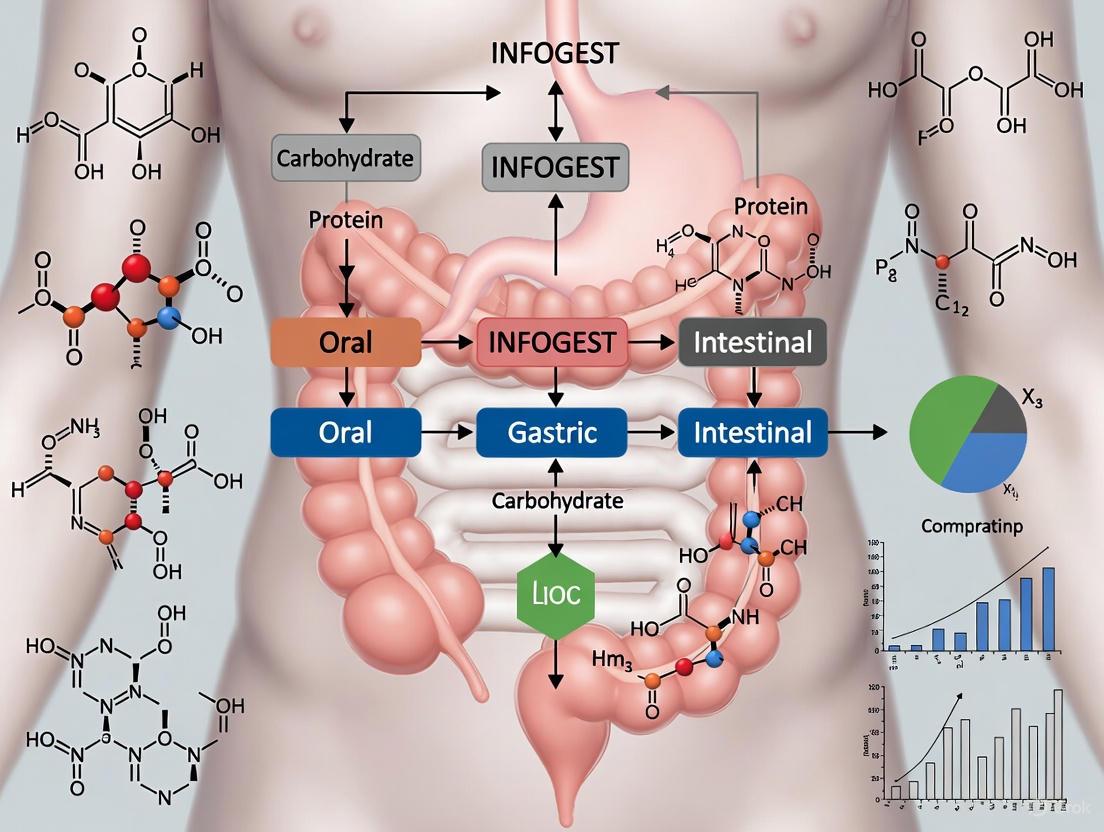
This article provides a systematic review of the validation and application of the INFOGEST static in vitro digestion protocol across a wide range of food matrices.
Validating the INFOGEST Protocol: A Comprehensive Framework for Diverse Food Matrices
Abstract
This article provides a systematic review of the validation and application of the INFOGEST static in vitro digestion protocol across a wide range of food matrices. Aimed at researchers, scientists, and drug development professionals, it explores the foundational principles of the standardized method, details its methodological application for various food types, addresses common troubleshooting and optimization strategies for challenging matrices, and synthesizes evidence from validation and comparative studies. By consolidating recent research, including the protocol's use for plant-based foods, dietary supplements, and macronutrient-specific analyses, this work serves as a critical resource for employing INFOGEST in the development of functional foods and the assessment of nutrient bioaccessibility with high reproducibility and physiological relevance.
Understanding INFOGEST: Principles and Global Standardization of In Vitro Digestion
Before the establishment of the INFOGEST initiative, the field of in vitro food digestion research was characterized by significant methodological fragmentation. Research teams worldwide employed diverse digestion models with substantial variations in key parameters including enzyme sources (porcine, rabbit, or human), pH levels, mineral compositions, and digestion times [1]. This lack of standardization impeded the comparison of results across different laboratories and research teams, limiting the collective advancement of the field [1] [2]. The INFOGEST network emerged to address this critical challenge by developing a harmonized, physiologically relevant static in vitro digestion method for food research.
The Genesis and Development of INFOGEST
The INFOGEST consortium, an international research network of over 700 scientists from 200 institutes across 52 countries, undertook the task of creating a standardized protocol [3]. The harmonized static in vitro digestion (IVD) protocol was the result of more than two years of collaborative work involving extensive discussions among scientists from a wide range of relevant disciplines [1]. This effort was led by Andre Brodkorb and resulted in the first consensus recommendation published in 2014 [1] [4].
The primary objective was to create a general standardized and practical static digestion method based on physiologically relevant conditions that could be applied for various research endpoints [1]. The method was designed to simulate the upper gastrointestinal tract digestion, comprising up to three stages that mimic the oral, gastric, and small intestinal phases of in vivo digestion [1]. All aspects of digestion in the upper GI tract were considered in the development of the method, with detailed justifications provided for the inclusion or exclusion of specific features [1].
Table 1: Key Development Milestones of the INFOGEST Protocol
| Year | Development Milestone | Key Achievement |
|---|---|---|
| 2014 | Initial Consensus Method | Publication of the first static in vitro digestion protocol in Food & Function [4] |
| 2016 | Method Validation | Inter-laboratory validation studies demonstrating improved consistency [2] |
| 2017 | Physiological Validation | Study confirming comparability to in vivo pig digestion [5] |
| 2019 | Detailed Protocol | Publication of a comprehensive nature protocols paper [4] |
| 2023 | Population Adaptation | Development of a static model adapted for the older adult population [4] |
| 2025 | Ongoing Refinement | Continued optimization of enzyme activity measurements [3] |
The Harmonized INFOGEST Static Digestion Protocol
Core Protocol Parameters
The INFOGEST method outlines a standardized framework for simulating gastrointestinal digestion under fixed conditions that represent physiologically relevant averages. The protocol specifies precise parameters for each phase of digestion, including pH, duration, ionic composition, and enzyme activities [1].
The simulated gastrointestinal fluids include Simulated Salivary Fluid (SSF), Simulated Gastric Fluid (SGF), and Simulated Intestinal Fluid (SIF), each with specified ionic compositions [1]. The method allows the sourcing of materials from any suitable supplier while maintaining standardized activity levels, making it both practical and accessible [1].
Digestion Phase Specifications
Oral Phase: For solid foods, this phase involves physical breakdown (simulated by mincing) and mixing with simulated salivary fluid containing α-amylase at 150 units per mL of SSF [1]. The recommended contact time between food and SSF is 2 minutes at 37°C, with a 1:1 volume/weight ratio of saliva to food based on stimulated flow rates in humans [1].
Gastric Phase: This phase uses a static pH value of 3, representing a mean value for a general meal over 2 hours [1]. The recommended activity of porcine pepsin is 2,000 U/mL of gastric contents [1]. The inclusion of gastric lipase was considered but not included in the standard protocol due to limited availability and affordability of enzymes with correct pH and site specificity [1].
Intestinal Phase: The small intestinal phase involves pancreatic enzymes and bile salts to simulate intestinal digestion, though the specific parameters for this phase are described more generally across the literature [1] [6].
Diagram 1: INFOGEST Static In Vitro Digestion Workflow. The standardized protocol progresses through three main phases with fixed parameters for pH, duration, and enzyme activities at each stage [1].
Experimental Validation of the INFOGEST Protocol
Inter-laboratory Studies
The INFOGEST method underwent rigorous validation through multiple inter-laboratory trials. An initial study using skim milk powder (SMP) as a model food compared the different in-house digestion protocols used among INFOGEST members, demonstrating significant variability [2]. A second inter-laboratory study applying the harmonized protocol investigated the consistency of protein hydrolysis, showing that caseins were mainly hydrolyzed during the gastric phase, while β-lactoglobulin was resistant to pepsin [2].
These validation studies identified critical steps responsible for remaining inter-laboratory variability, with the largest deviations arising from the determination of pepsin activity [2]. This finding led to further clarification and harmonization of this step in subsequent iterations of the protocol [2]. More recent inter-laboratory studies have continued this refinement process, such as the 2025 optimization of the α-amylase activity measurement protocol, which demonstrated reproducibility coefficients of variation ranging from 16% to 21% - up to four times lower than with the original method [3].
Physiological Comparability
A crucial 2017 study compared the harmonized INFOGEST method to in vivo pig digestion using the same skim milk powder, analyzing protein hydrolysis at different levels with multiple analytical techniques [5]. The results demonstrated that milk proteins detected after gastric in vitro digestion corresponded to gastric and duodenal in vivo samples, and intestinal in vitro samples corresponded to distal jejunal in vivo samples [5].
Peptides identified after the gastric phase of in vitro digestion correlated well with in vivo gastric samples (r = 0.8), and free amino acids were mainly released during the intestinal phase of digestion in both systems [5]. The study concluded that protein hydrolysis in the harmonized in vitro protocol was similar to in vivo protein hydrolysis in pigs at the gastric and intestinal endpoints, validating its physiological relevance [5].
Table 2: Performance Comparison of INFOGEST vs. Pre-Harmonized Methods
| Performance Metric | Pre-Harmonized Methods | INFOGEST Protocol | Improvement |
|---|---|---|---|
| Inter-laboratory consistency | High variability between labs [1] | Significant improvement in comparability [2] | Major advancement |
| α-amylase activity CVR | Up to 87% coefficient of variation [3] | 16-21% coefficient of variation [3] | 4-fold improvement |
| Physiological correlation | Limited validation | Good correlation with in vivo pig digestion (r=0.8) [5] | Enhanced predictive value |
| Application diversity | Limited comparable data | Validated for various protein sources [7] | Broad applicability |
Comparative Performance Across Food Matrices
Protein Digestibility Studies
The INFOGEST protocol has been successfully applied to study protein digestion across diverse food matrices. A comprehensive study evaluated protein hydrolysis in three isolated proteins (collagen, zein, and whey protein) and five foods (sorghum flour, wheat bran cereals, peanuts, black beans, and pigeon peas) [7]. The results demonstrated that no intact protein from the substrates was visually detected by SDS-PAGE after the intestinal phase, though digestion-resistant peptides were present in all substrates [7].
Protein hydrolysis was particularly high in whey protein isolate and pigeon pea, while wheat bran cereals and bovine collagen showed lower hydrolysis [7]. The study also analyzed amino acid composition, finding that the essential to non-essential amino acid (EAA/NEAA) ratios varied across protein sources, with whey protein having one of the highest ratios [7].
Impact of Food Structure and Composition
Recent research using the INFOGEST protocol has investigated how food formulation and processing impact protein digestibility. A 2025 study examined the in vitro protein digestibility of a blend of pea protein isolate and wheat flour in different food models, finding that protein digestion depended significantly on food hydration level, composition, and structure [8].
High-moisture foods achieved the highest digestibility scores, with plant-based milk at approximately 83% and pudding at 81%, while a plant-based burger showed 71% digestibility and a breadstick had the lowest at approximately 69% [8]. This highlights the importance of food matrix effects beyond simply the protein source itself.
Diagram 2: Food Matrix Factors Influencing Protein Digestibility. Research using the INFOGEST protocol has demonstrated that multiple factors beyond the protein source itself significantly impact protein digestibility, with high-moisture foods generally showing higher digestibility scores than low-moisture foods [8].
The Scientist's Toolkit: Key Research Reagent Solutions
Table 3: Essential Reagents for Implementing the INFOGEST Protocol
| Reagent/Enzyme | Specification | Function in Protocol | Example Source & Activity |
|---|---|---|---|
| Salivary α-amylase | Human saliva Type IX-A | Starch digestion in oral phase | 150 U/mL in SSF; 1,000-3,000 U/mg protein (Sigma) [1] |
| Porcine pepsin | From porcine gastric mucosa | Protein hydrolysis in gastric phase | 2,000 U/mL gastric contents; 3,200-4,500 U/mg protein (Sigma) [1] |
| Pancreatic enzymes | Porcine pancreatin | Nutrient digestion in intestinal phase | Contains trypsin, chymotrypsin, pancreatic lipase, amylase [6] |
| Simulated fluids | Specific ionic composition | Create physiological environment | SSF, SGF, SIF with defined salts [1] |
| Calcium chloride | 0.3 M solution | Cofactor for enzyme activity | Added in microliter quantities to oral and gastric phases [1] |
| Phosphatidylcholine | 0.17 mM in vesicular form | Endogenous surfactant | Simulates physiological phospholipids in gastric phase [1] |
Adoption and Impact in Food Science Research
The INFOGEST method has seen widespread adoption across food science research, with substantial impact on the field. A 2024 systematic review noted that 65% of in vitro protein digestion studies adopted the INFOGEST harmonized static model, recognizing it as the most effective model for simulating gastrointestinal protein processes in humans [9].
The protocol's versatility has enabled its application to answer diverse research questions because it describes experimental conditions close to the human physiological situation [9]. The INFOGEST website documents extensive scientific output, with 559 communications through Web of Science and 129 through HAL open archive as of 2025 [4]. Citation analysis shows that meso terms related to food science and technology, inflammatory bowel diseases, lipids, physiology, and microbial biotechnology are the most represented, demonstrating the broad interdisciplinary impact of the methodology [4].
The initiative continues to evolve, with recent developments including adaptations for specific populations such as older adults [4] and continued refinement of enzyme activity measurements [3]. This ongoing development ensures that the INFOGEST protocol remains at the forefront of in vitro digestion research, enabling more physiologically relevant and comparable studies across the global scientific community.
In the fields of food science and drug development, understanding the gastrointestinal fate of ingested materials is fundamental. For years, research in this area was impeded by the use of vastly different in vitro digestion protocols across laboratories, making meaningful comparisons of results nearly impossible [1]. To address this critical issue, the international COST Action INFOGEST network developed a consensus static in vitro digestion method through extensive collaboration among scientists from diverse disciplines [1] [2]. This harmonized protocol, established after more than two years of deliberation and inter-laboratory validation, has provided researchers with a standardized framework based on physiologically relevant conditions [1] [10]. The INFOGEST method has since become the gold standard for simulating human gastrointestinal digestion in vitro, enabling more reliable assessment of nutrient bioaccessibility, drug release profiles, and the behavior of various food matrices during digestion [11] [6]. This guide examines the core components of this standardized protocol, focusing on the specific parameters and experimental conditions for each digestive phase, and provides supporting data on its application across different food matrices.
Core Physiological Phases of the INFOGEST Protocol
The static INFOGEST protocol comprises three sequential phases that mimic the upper gastrointestinal tract digestion in vivo: oral, gastric, and intestinal. Each phase is characterized by specific biochemical environments, enzymes, and processing times designed to reflect physiological conditions.
Oral Phase
The oral phase simulates the initial stage of digestion where food is processed in the mouth. In vivo, this involves mastication to break down solid foods and mixing with saliva to form a bolus. The INFOGEST method simplifies this complex process into standardized parameters focused on key digestive elements [1].
Key Conditions:
- pH: Maintained at 7.0 throughout the oral phase [1]
- Duration: 2 minutes of exposure to simulated salivary fluids [1]
- Saliva-to-Food Ratio: 1:1 volume/weight ratio (e.g., 5 g food + 5 mL simulated salivary fluid) [1]
- Primary Enzyme: α-Amylase (EC 3.2.1.1) at 150 units per mL of simulated salivary fluid [1]
- Electrolyte Composition: Specific ion composition as outlined in the protocol
For solid foods, the method recommends mechanical processing using a mincer to simulate chewing, reducing food particles to approximately 2 mm before mixing with simulated salivary fluid [1]. While human saliva contains numerous components, the consensus method includes only α-amylase and electrolytes, excluding mucin and other proteins due to their relatively low concentration in saliva and challenges in sourcing reliable mucin supplies [1].
Table 1: Oral Phase Parameters in the INFOGEST Static Protocol
| Parameter | Specification | Physiological Basis |
|---|---|---|
| pH | 7.0 | Typical pH of saliva |
| Time | 2 minutes | Practical handling time; slightly longer than in vivo 0.5 min |
| Temperature | 37°C | Human body temperature |
| Primary Enzyme | α-Amylase (150 U/mL) | Key digestive enzyme in saliva for starch breakdown |
| Sample Processing | Mincing (for solids) | Simulates chewing to reduce particle size to ~2 mm |
| Fluid Ratio | 1:1 (v/w) | Based on stimulated salivary flow rates |
Gastric Phase
Following oral processing, the bolus enters the gastric phase, where it encounters the acidic environment and proteolytic enzymes of the stomach. The INFOGEST method addresses the dynamic nature of gastric digestion by establishing standardized static conditions representative of an average fed state [1].
Key Conditions:
- pH: Maintained at 3.0 throughout the 2-hour gastric phase [1]
- Duration: 2 hours, representing the half-emptying time for a moderately nutritious semi-solid meal [1]
- Primary Enzyme: Porcine pepsin (EC 3.4.23.1) at 2,000 U/mL of gastric contents [1]
- Additional Components: Phosphatidylcholine (0.17 mM) in vesicular form [1]
- Mixing: Continuous shaking or stirring at 37°C to simulate limited gastric mixing [1]
The selection of pH 3 represents a mean value for a general meal over the 2-hour digestion period, as gastric pH is highly dynamic and dependent on the buffering capacity of the food itself [1]. While the potential importance of human gastric lipase is acknowledged, it is not included in the standard protocol due to its limited activity at low pH, unavailability of affordable enzymes with correct specificity, and generally limited gastric lipolysis [1].
Table 2: Gastric Phase Parameters in the INFOGEST Static Protocol
| Parameter | Specification | Physiological Basis |
|---|---|---|
| pH | 3.0 | Mean value representing a general meal over 2 hours |
| Time | 2 hours | Half-emptying time for a semi-solid meal |
| Temperature | 37°C | Human body temperature |
| Primary Enzyme | Porcine Pepsin (2,000 U/mL) | Main proteolytic enzyme in stomach |
| Additional Components | Phosphatidylcholine (0.17 mM) | Simulates gastric surfactants |
| Physical Processing | Shaking or stirring | Simulates limited mixing in gastric antrum |
Intestinal Phase
The final stage of the INFOGEST protocol simulates digestion in the small intestine, where the majority of nutrient absorption occurs. This phase introduces pancreatic enzymes and bile salts to breakdown proteins, lipids, and carbohydrates into absorbable units [10].
Key Conditions:
- pH: Raised to 7.0 to reflect the neutral environment of the small intestine [11]
- Duration: 2 hours of incubation to allow for complete nutrient liberation [11]
- Primary Enzymes: Pancreatin (containing trypsin, chymotrypsin, pancreatic lipase, and pancreatic amylase) [11]
- Bile Salts: Included at standardized concentrations to facilitate lipid emulsification [10]
- Electrolyte Composition: Specific ion composition matching physiological intestinal fluid
The intestinal phase is critical for assessing the bioaccessibility of nutrients and bioactive compounds, as it represents the final chemical environment before absorption. The combination of pancreatic enzymes and bile salts works synergistically to breakdown complex macronutrients into their absorbable components: proteins into peptides and amino acids, lipids into fatty acids, and carbohydrates into simple sugars [10] [11].
Table 3: Intestinal Phase Parameters in the INFOGEST Static Protocol
| Parameter | Specification | Physiological Basis |
|---|---|---|
| pH | 7.0 | Neutral pH of small intestine |
| Time | 2 hours | Standard time for complete nutrient liberation |
| Temperature | 37°C | Human body temperature |
| Enzyme Source | Pancreatin | Contains mixture of pancreatic enzymes |
| Bile Salts | Standardized concentration | Facilitates lipid emulsification and absorption |
| Mixing | Continuous | Simulates intestinal peristalsis |
Experimental Workflow of the INFOGEST Static Protocol
The following diagram illustrates the sequential workflow of the three-phase INFOGEST static digestion method:
Diagram 1: INFOGEST Static Digestion Workflow
Research Reagent Solutions: Essential Materials for Protocol Implementation
Successful implementation of the INFOGEST protocol requires careful preparation and characterization of simulated digestive fluids and enzymes. The following table outlines the key reagent solutions needed for executing the method.
Table 4: Essential Research Reagent Solutions for INFOGEST Protocol
| Reagent Solution | Composition | Function in Protocol | Critical Parameters |
|---|---|---|---|
| Simulated Salivary Fluid (SSF) | Electrolyte stock solution (specific ion composition) [1] | Provides physiological ionic environment for oral phase | pH 7.0, prepared fresh before experiment |
| α-Amylase Solution | α-Amylase from human saliva (Type IX-A, 1,000-3,000 U/mg protein) in SSF [1] | Catalyzes starch breakdown during oral phase | 150 U/mL final concentration in digest; activity must be verified [3] |
| Simulated Gastric Fluid (SGF) | Electrolyte stock solution (specific ion composition) [1] | Provides physiological ionic environment for gastric phase | pH 3.0 after adjustment with HCl |
| Pepsin Solution | Porcine pepsin (3,200-4,500 U/mg protein) in SGF [1] | Primary proteolytic enzyme for gastric protein digestion | 2,000 U/mL final concentration in digest; activity critical [2] |
| Simulated Intestinal Fluid (SIF) | Electrolyte stock solution (specific ion composition) | Provides physiological ionic environment for intestinal phase | pH 7.0 after adjustment |
| Pancreatin Solution | Pancreatin extract in SIF | Provides mixture of intestinal enzymes for macronutrient digestion | Standardized activity levels for different enzymes |
| Bile Salt Solution | Bile salts in SIF | Emulsifies lipids for enhanced enzymatic access | Physiological concentration based on human data |
| Calcium Chloride Solution | 0.3 M CaCl₂ [1] | Cofactor for enzyme activation | Added in small quantities (μL) at each phase |
Application and Validation Across Food Matrices
The INFOGEST protocol has been extensively validated across various food matrices, demonstrating its robustness for evaluating nutrient digestibility and release. Recent research has particularly focused on plant-based protein systems, reflecting current trends in sustainable food development.
Protein Digestibility in Plant-Based Food Models
A 2025 study applied the INFOGEST protocol to evaluate protein digestibility in different food formulations containing a blend of pea protein isolate and wheat flour (75:25 ratio) [8]. The research prepared four distinct food models with varying moisture content: plant-based milk and pudding (high-moisture), burger (medium-moisture), and breadstick (low-moisture) [8]. The results demonstrated clear correlations between food structure, moisture content, and protein digestibility:
Table 5: Protein Digestibility in Plant-Based Food Models Using INFOGEST
| Food Model | Moisture Category | Protein Digestibility (%) | Key Influencing Factors |
|---|---|---|---|
| Plant-Based Milk | High moisture | ~83% | Liquid structure, high water accessibility |
| Pudding | High moisture | ~81% | Gelled structure, high water content |
| Burger | Medium moisture | ~71% | Complex matrix, medium hydration |
| Breadstick | Low moisture | ~69% | Dense structure, limited hydration |
The study concluded that food formulation and processing significantly impact protein digestibility, emphasizing the importance of macro- and micronutrient interactions in defining the nutritional quality of food products [8]. These findings validate the INFOGEST protocol's sensitivity to different food matrices and its utility in developing optimized food products with enhanced nutritional profiles.
Inter-laboratory Validation and Protocol Refinements
The reliability of the INFOGEST method has been confirmed through extensive inter-laboratory trials. Initial validation studies using skim milk powder as a model food demonstrated that while the harmonized protocol significantly improved consistency across laboratories, certain critical steps required further refinement [2]. Specifically, the determination of pepsin activity emerged as the largest source of inter-laboratory variability [2]. This finding led to improved clarification and harmonization of pepsin activity measurement, further enhancing protocol reproducibility.
More recent inter-laboratory studies have focused on refining specific enzyme activity measurements. A 2025 ring trial involving 13 laboratories across 12 countries validated an optimized protocol for measuring α-amylase activity [3]. The updated method, which uses four time-point measurements at 37°C instead of a single-point measurement at 20°C, demonstrated significantly improved reproducibility with inter-laboratory coefficients of variation ranging from 16% to 21% - up to four times lower than with the original method [3]. This continuous refinement process ensures the INFOGEST protocol remains the most reliable method for in vitro digestion studies.
Comparison with Alternative Digestion Models
While the static INFOGEST protocol provides a standardized foundation for digestion studies, researchers should be aware of its limitations and the availability of more complex models for specific applications.
Static vs. Dynamic Digestion Models
The INFOGEST static protocol uses constant ratios of meal to digestive fluids and constant pH for each digestion step, making it simple to implement but unsuitable for simulating digestion kinetics [10]. In contrast, dynamic models incorporate continuous changes in parameters such as pH, enzyme secretion, and gastric emptying, providing a more physiologically accurate representation of the digestive process [12].
Semi-dynamic models have emerged as a middle ground, incorporating key dynamic features only in the gastric phase while maintaining static intestinal conditions [12]. Recent advancements include miniaturized semi-dynamic systems that offer automated control of pH and temperature with minimal reagent consumption, making them particularly valuable for testing expensive or scarce materials like nano-engineered formulations [12].
Adaptation for Specific Populations
The INFOGEST network has also developed variations of the standard protocol to simulate digestion in specific populations. Recent reviews highlight adaptations for infant and older adult digestion, accounting for physiological differences such as decreased gastric acid secretion, altered digestive enzyme activity, and increased pH of gastric contents in elderly individuals [6]. These specialized protocols enable more accurate assessment of food digestion and nutrient bioaccessibility for vulnerable population groups.
The harmonized INFOGEST static in vitro digestion method represents a significant advancement in food and nutritional sciences, providing researchers with a standardized, physiologically relevant protocol for assessing gastrointestinal digestion. The clearly defined parameters for each phase - oral (pH 7.0, 2 min, α-amylase), gastric (pH 3.0, 2 hr, pepsin), and intestinal (pH 7.0, 2 hr, pancreatin and bile) - along with detailed specifications for reagent preparation, have enabled unprecedented comparability of results across research laboratories [1] [10]. The protocol's validation across diverse food matrices, coupled with continuous refinement through inter-laboratory studies, ensures its ongoing relevance for evaluating the digestibility of traditional and emerging food products, particularly plant-based alternatives [8] [3]. As the gold standard for in vitro digestion studies, the INFOGEST method provides an essential tool for developing foods with optimized nutritional properties and assessing the bioaccessibility of bioactive compounds in both food and pharmaceutical applications.
In the fields of food science and drug development, understanding the gastrointestinal fate of ingested materials is fundamental. For decades, in vitro digestion studies were plagued by a lack of standardization, with researchers employing a wide variety of enzymes, pH conditions, digestion times, and fluid compositions [13]. This significant methodological heterogeneity impeded the meaningful comparison of results across different laboratories and studies, slowing scientific progress and the development of robust, data-driven products [2] [13]. The INFOGEST international consortium, comprising hundreds of scientists from over 30 countries, addressed this critical need by developing a harmonized static in vitro simulation of human gastrointestinal digestion [10] [13]. This protocol provides a consensus framework of physiologically relevant conditions, dramatically improving the consistency and comparability of experimental data in food and nutritional sciences [2] [10]. This guide details the key physiological parameters of the INFOGEST method, providing researchers with a clear reference for its implementation and validation across various food matrices.
Core Physiological Parameters of the INFOGEST Protocol
The INFOGEST static protocol is designed to simulate the chemical conditions of the human upper gastrointestinal tract in a sequential manner. The following tables summarize the critical parameters for each digestive phase.
Table 1: Key physiological parameters for the oral, gastric, and intestinal phases in the INFOGEST 2.0 protocol.
| Parameter | Oral Phase | Gastric Phase | Intestinal Phase |
|---|---|---|---|
| pH | 7.0 | 3.0 | 7.0 |
| Duration | 2 minutes | 2 hours | 2 hours |
| Primary Enzymes | Human Salivary α-Amylase | Porcine Pepsin | Porcine Trypsin, Chymotrypsin, Pancreatin (source of amylase & lipase) |
| Enzyme Activity | 75 U/mL (in final mixture) | 2000 U/mL (in final mixture) | Trypsin: 100 U/mL (in final mixture) |
| Key Fluid Components | Electrolytes, Mucin | Electrolytes, HCl | Electrolytes, Bile salts (e.g., 10 mM), CaCl₂ |
| Ratio (Food : Secretions) | 1:1 (w/v) | 1:1 (gastric fluids to oral bolus, v/v) | 1:1 (intestinal fluids to gastric chyme, v/v) |
Enzyme Specifications and Reagent Preparation
Table 2: Key research reagent solutions and their functions in the INFOGEST protocol.
| Reagent / Enzyme | Typical Source | Key Function in Digestion | Critical Activity Determination |
|---|---|---|---|
| Human Salivary α-Amylase | Human Saliva | Hydrolyzes starch into smaller carbohydrates [6] | Optimized protocol measures maltose liberation at 37°C; critical for inter-lab consistency [3] |
| Pepsin | Porcine Gastric Mucosa | Primary protease for gastric protein hydrolysis [2] [6] | Activity determination is a critical step; improved pH stabilization reduces variability [2] |
| Pancreatin | Porcine Pancreas | Provides a mix of pancreatic enzymes (proteases, amylase, lipase) [10] | Must be characterized for activity; α-amylase activity in pancreatin can be standardized [3] |
| Bile Salts | Porcine Bile / Synthetic | Emulsifies lipids, facilitates lipolysis and nutrient solubilization [6] | Concentration (e.g., 10 mM) is standardized in the intestinal phase [10] |
| Simulated Fluids (SSF, SGF, SIF) | Laboratory Prepared | Provide physiologically relevant ionic strength and pH environment for enzymes [10] | Recipes include specific concentrations of KCl, KH₂PO₄, NaHCO₃, NaCl, MgCl₂, and (NH₄)₂CO₃ |
Experimental Protocol and Workflow
The standardized INFOGEST method is a static digestion procedure that uses constant ratios of meal to digestive fluids and a constant pH for each step. The entire protocol, including enzyme activity determination, can be completed in approximately seven days [10].
Step-by-Step Methodological Workflow
- Preparation: Before digestion, all simulated fluids (Simulated Salivary Fluid - SSF, Simulated Gastric Fluid - SGF, Simulated Intestinal Fluid - SIF) are prepared according to standardized recipes. The activities of all enzymes must be characterized and adjusted to the target levels for the final digestion mixture [10] [3].
- Oral Phase: The food sample is mixed with SSF in a 1:1 ratio (w/v). Human salivary α-amylase is added to achieve a final activity of 75 U/mL in the mixture. The pH is adjusted to 7.0 and the mixture is incubated for 2 minutes at 37°C with constant agitation [10] [11].
- Gastric Phase: The oral bolus is combined with SGF in a 1:1 ratio (v/v). Porcine pepsin is added to achieve a final activity of 2000 U/mL. The pH is lowered to and maintained at 3.0. This mixture is then incubated for 2 hours at 37°C with constant agitation [10].
- Intestinal Phase: The gastric chyme is mixed with SIF in a 1:1 ratio (v/v). Pancreatin and bile salts are added to achieve final activities/concentrations of 100 U/mL for trypsin and 10 mM for bile salts. The pH is raised to and maintained at 7.0 for 2 hours at 37°C with constant agitation [10].
- Sampling & Analysis: Digestion is stopped at the end of each phase (typically by inactivating enzymes, e.g., by heating or pH shift) for subsequent analysis of digestion products, such as peptides, amino acids, fatty acids, and simple sugars, or the bioaccessibility of micronutrients [10].
The following diagram illustrates the sequential workflow of the INFOGEST static in vitro digestion protocol.
Validation and Application in Food Matrix Research
The robustness of the INFOGEST protocol has been rigorously validated through inter-laboratory studies, proving its effectiveness for analyzing diverse food matrices.
Experimental Data and Model Performance
- Inter-laboratory Consistency: Initial validation using skim milk powder demonstrated that the harmonized protocol significantly improved the comparability of protein hydrolysis results across different laboratories [2]. A critical finding was that pepsin activity determination was a major source of variability; this step was subsequently clarified and harmonized, leading to further improved consistency in a third inter-laboratory trial [2].
- Application to Plant-Based Proteins: A 2025 study applied the INFOGEST method to evaluate the digestibility of a pea protein-wheat blend in different food formats [8]. The results demonstrated that food matrix structure and moisture content significantly impact protein digestibility. High-moisture foods (plant-based milk, pudding) achieved digestibility scores of approximately 81-83%, while low-moisture foods (breadstick) scored lower, around 69% [8]. This highlights the protocol's utility in quantifying the nutritional quality of alternative protein products.
- Protocol Optimization: Ongoing work within INFOGEST continues to refine supporting methodologies. A 2025 interlaboratory study validated a new, optimized protocol for measuring α-amylase activity at 37°C using multiple time points, which improved reproducibility (inter-laboratory coefficient of variation) to 16-21%—a substantial improvement over the original method [3].
The Scientist's Toolkit: Essential Research Reagents
Successful implementation of the INFOGEST protocol relies on the use of well-characterized reagents. The following table details the essential materials required.
Table 3: Essential research reagent solutions for implementing the INFOGEST protocol.
| Item Name | Function / Role in the Protocol |
|---|---|
| Porcine Pepsin | Primary protease for gastric protein hydrolysis; critical for simulating stomach digestion [2]. |
| Human Salivary α-Amylase | Initiates starch digestion in the oral phase; activity must be precisely measured [3]. |
| Porcine Pancreatin | A mixture of pancreatic enzymes (proteases, amylase, lipase) essential for the intestinal phase [10]. |
| Porcine Bile Extract / Synthetic Bile Salts | Emulsifies lipids, forming mixed micelles to solubilize lipolytic products [10] [6]. |
| Standardized Electrolyte Solutions (SSF, SGF, SIF) | Provide a physiologically relevant ionic environment that supports correct enzyme structure and function [10]. |
| Calcium Chloride (CaCl₂) | Added in specific steps to simulate physiological calcium levels, which can influence enzyme activity (e.g., pancreatic lipase) and precipitation reactions [10]. |
| pH Meter and Adjusters (HCl, NaOH) | Crucial for maintaining the exact, defined pH at each stage (Oral: 7.0, Gastric: 3.0, Intestinal: 7.0) [10]. |
| Thermostated Incubator/Shaker | Maintains a constant physiological temperature of 37°C and provides agitation to simulate mixing peristalsis [10]. |
The INFOGEST harmonized static in vitro digestion method represents a seminal advancement for researchers and drug development professionals. By providing a standardized set of key physiological parameters—including pH, enzyme activities, digestion times, and fluid compositions—it has established a common language and experimental framework in digestion science [2] [10] [13]. Its validation through extensive inter-laboratory trials ensures that data generated using this protocol are robust, comparable, and physiologically relevant [2] [3]. As the food and pharmaceutical industries continue to evolve, with an increasing focus on alternative proteins and tailored nutrient delivery, the INFOGEST protocol serves as an indispensable tool for the rational design and evaluation of next-generation products, effectively bridging the gap between basic research and practical application.
The Role of INFOGEST in Replacing and Reducing Animal Models
The study of food digestion is crucial for understanding nutrient bioavailability, formulating healthier foods, and developing sustainable protein sources. Historically, such research relied heavily on animal models, which present significant challenges including ethical concerns, high costs, variable results, and limited throughput [14] [15]. The lack of standardized protocols across laboratories further complicated the comparison of data and building upon existing research [2] [14]. Driven by these limitations, the scientific community established the INFOGEST network, a consortium of researchers from over 45 countries dedicated to harmonizing in vitro digestion methods [2] [16]. Their primary output, the INFOGEST static digestion protocol, provides a physiologically relevant, reproducible, and accessible framework for simulating human gastrointestinal digestion of foods [10] [16]. By offering a reliable alternative, this standardized method plays a pivotal role in replacing and reducing animal models in food research.
The INFOGEST Protocol: A Standardized Tool for the Laboratory
The INFOGEST protocol is a static, multi-step method that simulates the chemical conditions of the human gastrointestinal tract using standard laboratory equipment. It is designed to be simple to implement, thereby encouraging wide adoption, while maintaining physiological relevance for digestion studies [10] [16]. The method proceeds through three sequential phases, each with standardized parameters as outlined below.
Experimental Workflow and Physiological Parameters
The following diagram illustrates the sequential workflow of the INFOGEST static in vitro digestion method.
Key Research Reagent Solutions
The INFOGEST protocol's reproducibility hinges on the use of standardized simulated fluids and enzymes. The table below details the key reagents required for implementation.
Table 1: Essential Research Reagents for the INFOGEST Protocol
| Reagent / Component | Function / Role in Digestion | Key Characteristics & Notes |
|---|---|---|
| Simulated Salivary Fluid (SSF) | Provides ionic environment for oral phase; contains electrolytes (KCl, KH₂PO₄, NaHCO₃, NaCl, MgCl₂, (NH₄)₂CO₃) [10] | Used with α-amylase for starch hydrolysis; pH maintained at 7.0 |
| Porcine Pepsin | Primary protease for gastric protein hydrolysis [2] [10] | Activity is critical; pre-assay determination and standardization are required for reproducibility |
| Simulated Gastric Fluid (SGF) | Acidic environment for gastric phase; contains electrolytes and HCl [10] | Initiates protein denaturation and provides optimal pH (3.0) for pepsin activity |
| Porcine Pancreatin | Enzyme mixture for intestinal digestion; contains trypsin, chymotrypsin, amylase, and lipase [10] [16] | Crucial for the hydrolysis of proteins, starch, and lipids in the intestinal phase |
| Bile Salts | Emulsifies lipids, facilitating lipase action and absorption of lipid digestion products [10] | Added with pancreatin during the intestinal phase; concentration based on physiological data |
| Simulated Intestinal Fluid (SIF) | Neutral pH environment for intestinal phase; contains electrolytes and NaHCO₃ [10] | Neutralizes gastric chyme to pH 7.0, providing the optimal pH for pancreatic enzymes |
Validation and Comparative Performance of INFOGEST
The credibility of the INFOGEST protocol as an alternative to animal models is grounded in rigorous inter-laboratory validation and direct comparison with in vivo data. These studies demonstrate its ability to produce physiologically consistent and reproducible results.
Inter-Laboratory Validation and Consistency
A core achievement of the INFOGEST network was the successful validation of its protocol across multiple independent laboratories. In a key study using skim milk powder as a model food, the harmonized protocol significantly improved the consistency of protein hydrolysis results compared to the various in-house methods previously used by different labs [2]. The analysis showed that casein proteins were predominantly hydrolyzed during the gastric phase, while β-lactoglobulin was resistant to pepsin, which aligns with known in vivo behavior [2]. This validation confirmed that the INFOGEST method reduces inter-laboratory variability, enabling direct comparison of data generated worldwide and fostering greater scientific collaboration [2] [15].
Comparative Data: Protein Digestibility Across Food Matrices
The INFOGEST protocol has been extensively applied to evaluate the protein digestibility of a wide range of foods, providing valuable data that can reduce the need for animal testing in nutritional quality assessment. The following table summarizes quantitative findings from studies on different protein sources and food matrices.
Table 2: Protein Digestibility Outcomes Measured Using the INFOGEST Protocol
| Protein Source / Food Matrix | Key Digestibility Findings | Reference / Study Context |
|---|---|---|
| Whey Protein Isolate | High protein hydrolysis [7] | Isolated protein source |
| Pigeon Pea | High protein hydrolysis [7] | Plant-based whole food |
| Soy-Based Burger | Protein solubilisation: ~55% [17] | Commercial plant-based meat analogue |
| Pea-Based Burger | Protein solubilisation: ~40% [17] | Commercial plant-based meat analogue |
| Beef Burger | Protein solubilisation: 61-63% [17] | Animal-based meat control |
| Wheat Bran Cereals | Low protein hydrolysis [7] | Whole grain cereal with high fiber |
| Bovine Collagen | Low protein hydrolysis [7] | Animal-based protein |
| Plant-Based Milk (Pea/Wheat) | Digestibility: ~83% [8] | High-moisture food model |
| Plant-Based Burger (Pea/Wheat) | Digestibility: ~71% [8] | Medium-moisture food model |
| Breadstick (Pea/Wheat) | Digestibility: ~69% [8] | Low-moisture food model |
The data in Table 2 highlights the protocol's ability to discriminate digestibility based on protein source and food matrix. For instance, it captures the lower hydrolysis of collagen and wheat bran, which can be attributed to their structural composition and the presence of dietary fiber, respectively [7]. Furthermore, a 2025 study demonstrated that even when the same protein ingredient blend (pea protein and wheat flour) is used, the INFOGEST method can detect significant differences in digestibility based on the final food's moisture content and structure, with high-moisture foods like plant-based milk showing higher digestibility (~83%) than low-moisture foods like breadsticks (~69%) [8]. This nuanced understanding of how food processing and formulation impact nutritional quality is a key advantage of the in vitro approach.
The Path to Validation and Adoption
The transition from animal models to a trusted in vitro method like INFOGEST follows a logical pathway of development, validation, and continuous refinement, ultimately leading to its widespread adoption as a standard research tool.
From Consensus to Widespread Research Tool
The following diagram maps the key stages in the development and validation of the INFOGEST protocol, illustrating its journey from an initial need to an established tool that reduces reliance on animal models.
The INFOGEST static in vitro digestion protocol represents a paradigm shift in food research. By providing a standardized, physiologically relevant, and reproducible methodology, it directly addresses the core limitations of animal models, including ethical constraints, high costs, and low throughput [14] [15]. Its validation through inter-laboratory trials and successful application to a vast array of food matrices—from plant-based meats to dairy and complex hybrid foods—has built a robust body of evidence supporting its role as a reliable predictive tool [8] [2] [17]. While in vivo studies remain the gold standard for certain endpoints like full nutrient absorption and metabolic effects, INFOGEST serves as an powerful tool for mechanistic investigations, hypothesis testing, and preliminary screening [15]. As the protocol continues to be refined and adopted, its role in reducing and replacing animal models will undoubtedly expand, accelerating the development of sustainable and nutritious foods for a growing global population.
Implementing INFOGEST: Protocol Adaptation for Specific Food Matrices
The validation and application of the INFOGEST in vitro digestion protocol have revolutionized the study of food digestibility, enabling researchers to simulate human gastrointestinal conditions under standardized parameters [10]. However, a significant bottleneck has persisted in the post-digestion phase: the lack of harmonized methods for the isolation and analysis of released macronutrients. Without unified sample preparation protocols, comparing digestibility data across different studies and food matrices remains challenging [18]. This guide objectively compares a newly proposed integrated preparation method against traditional approaches, providing experimental data on their performance when applied to various food matrices within the INFOGEST framework. The critical evaluation presented here aims to equip researchers with the information needed to select appropriate methodologies for assessing macronutrient bioaccessibility, thereby supporting advancements in nutritional science, food development, and public health.
Comparative Analysis of Macronutrient Isolation Methods
The selection of an appropriate sample preparation method following in vitro digestion is crucial for obtaining accurate and reproducible data on macronutrient bioaccessibility. The table below compares the key characteristics of a novel integrated method against traditional approaches.
Table 1: Comparison of Macronutrient Isolation and Analysis Methods
| Method Feature | Integrated Bligh & Dyer-Based Method | Traditional Sequential Methods | Protein-Specific Protocols |
|---|---|---|---|
| Core Principle | Selective isolation for simultaneous analyte extraction [18] | Sequential, separate procedures for each macronutrient | Focused on protein hydrolysis and amino acid analysis |
| Throughput | High (enables parallel processing) [18] | Low (time-consuming sequential steps) | Medium (specific to protein) |
| Analyte Coverage | Proteins, carbohydrates, lipids [18] | Typically limited to one or two macronutrients per method | Proteins, peptides, amino acids [19] |
| Key Advantage | Harmonized with INFOGEST; yields comprehensive dataset from a single sample [18] | Established, well-understood procedures | Provides detailed protein quality metrics (e.g., IVDIAAS) [19] |
| Recovery Efficiency | 70-120% for bioaccessible analytes [18] | Varies significantly between methods | High for amino acids [19] |
| Typical Analysis | HPLC-SEC (protein), HPLC-RID (carbohydrates) [18] | Kjeldahl/Dumas (protein), GC (lipids) | Degree of Hydrolysis (DH), True Ileal Digestibility (TID) [19] |
Performance Evaluation on Model Foods
The unified Bligh & Dyer-based method was tested on canned chickpeas and wholewheat cereal following the INFOGEST 2.0 digestion protocol [18] [20]. The results demonstrate how the method effectively reveals matrix-dependent digestibility patterns.
Table 2: Macronutrient Digestibility of Model Foods Determined by the Integrated Method [18] [20]
| Food Matrix | Protein Digestibility (%) | Carbohydrate Digestibility (%) | Lipid Digestibility (%) |
|---|---|---|---|
| Canned Chickpeas | 91 - 93 | 35 - 47 | 48 |
| Wholewheat Cereal | 83 - 107 | 70 - 89 | 57 - 61 |
The data shows that canned chickpeas exhibit high protein digestibility but medium carbohydrate and lipid digestibility. In contrast, wholewheat cereal shows high protein and carbohydrate digestibility with medium lipid digestibility [18]. This matrix-dependent interplay, efficiently captured by the unified method, would be difficult to correlate across separate, traditional analytical workflows.
Detailed Experimental Protocols
The INFOGEST 2.0 Digestion Protocol
The foundational step before macronutrient isolation is the standardized in vitro simulation of gastrointestinal digestion. The INFOGEST 2.0 static protocol is a three-phase method that mimics oral, gastric, and intestinal digestion [10].
Materials and Reagents:
- Simulated Salivary Fluid (SSF), Simulated Gastric Fluid (SGF), Simulated Intestinal Fluid (SIF)
- Electrolyte solutions (CaCl₂·2H₂O, KCl, KH₂PO₄, NaCl, MgCl₂·6H₂O, (NH₄)₂CO₃)
- Enzymes: α-amylase from human saliva, pepsin, gastric lipase (often as Rabbit Gastric Extract - RGE), pancreatin from porcine pancreas [10] [21]
- Bovine bile extract
- HCl and NaOH solutions for pH adjustment
Protocol Workflow:
- Oral Phase: The food sample (typically 2 g) is mixed with SSF, CaCl₂, and α-amylase solution (1500 U/mL final activity). The mixture is incubated for 2 minutes at 37°C under constant agitation [10] [21].
- Gastric Phase: The oral bolus is combined with SGF, CaCl₂, a pepsin solution (25,000 U/mL final activity), and gastric lipase (750 U/mL final activity). The pH is adjusted to 3.0, and the volume is made up with water. The incubation continues for 2 hours at 37°C with stirring [10] [21].
- Intestinal Phase: The gastric chyme is mixed with SIF, a pancreatin solution in SIF (8 mg/mL of 4xUSP), a bile salt solution (160 mM final concentration), and CaCl₂. The pH is adjusted to 7.0, and the mixture is incubated for a further 2 hours at 37°C with stirring [10] [21].
After the intestinal phase, the digesta is immediately processed for macronutrient isolation to prevent further enzymatic activity.
Integrated Sample Preparation Method
The unified method, designed for compatibility with the INFOGEST digesta, is centered around a selective isolation technique based on the Bligh and Dyer extraction principle [18].
Workflow Overview:
Detailed Steps [18]:
- Sample Homogenization: The final intestinal digesta is homogenized to ensure a representative aliquot for analysis.
- Bligh & Dyer Extraction: A precise aliquot of digesta is subjected to a monophasic extraction using chloroform, methanol, and water in a specific ratio. This step simultaneously solubilizes lipids, proteins, and carbohydrates into a single phase.
- Phase Separation: The addition of further volumes of chloroform and water induces separation into a two-phase system:
- Organic (Lower) Phase: Contains the extracted lipids. This phase can be collected, evaporated under nitrogen, and analyzed for lipid content and fatty acid profile via GC-MS or other techniques.
- Aqueous (Upper) Phase: Contains soluble proteins, peptides, and carbohydrates. This phase can be further processed.
- Analysis of Aqueous Phase:
- Proteins/Peptides: Analyzed using High-Performance Liquid Chromatography with Size-Exclusion Columns (HPLC-SEC) to profile protein hydrolysis and determine bioaccessible protein content.
- Carbohydrates: Analyzed using HPLC with a Refractive Index Detector (HPLC-RID) to quantify released simple sugars and oligosaccharides.
- Interface/Pellet: The insoluble material at the interface or pelleted during centrifugation represents the undigested residue. Its composition can be analyzed to calculate digestibility coefficients.
This method has demonstrated excellent recovery rates (70-120%) for bioaccessible analytes across different matrices, validating its ground for use in systematic nutrient digestibility assessment [18].
The Scientist's Toolkit: Essential Research Reagents & Materials
Successful execution of the INFOGEST protocol and subsequent analysis requires specific, high-quality reagents and instruments.
Table 3: Essential Research Reagent Solutions for INFOGEST and Macronutrient Analysis
| Category | Item | Key Function & Specification |
|---|---|---|
| Digestion Fluids | Simulated Salivary/Gastric/Intestinal Fluids (SSF, SGF, SIF) | Provide physiologically relevant ionic strength and buffer capacity for each digestive phase [10]. |
| Enzymes | Pepsin, Gastric Lipase (RGE), Pancreatin, α-Amylase | Catalyze the breakdown of proteins, lipids, and starch. Activity must be standardized (e.g., 25,000 U/mL pepsin) [10] [21]. |
| Bile Salts | Bovine Bile Extract | Emulsifies lipids, facilitating lipase action and micelle formation in the intestinal phase [10]. |
| Extraction Solvents | Chloroform, Methanol (HPLC Grade) | Used in Bligh & Dyer extraction for simultaneous isolation of lipids, proteins, and carbohydrates from digesta [18]. |
| Analytical Standards | Amino Acid Mixes, Sugar Standards, Fatty Acid Methyl Esters (FAMEs) | Essential for calibrating HPLC, GC, and other instruments for quantitative analysis of bioaccessible nutrients [18] [19]. |
| Analytical Instruments | HPLC System (with SEC, RID), GC-MS, Kjeldahl/Nitrogen Analyzer | For separation, identification, and quantification of macronutrients and their breakdown products [18] [19]. |
The move toward unified sample preparation methods, such as the integrated Bligh and Dyer-based protocol, represents a significant advancement in harmonizing macronutrient analysis within INFOGEST-based research. This comparative guide demonstrates that while traditional and nutrient-specific methods remain valuable for targeted questions, the integrated approach offers a superior solution for generating comprehensive, comparable digestibility datasets across diverse food matrices. Its high throughput and efficient recovery of multiple analytes directly address the need for standardized post-digestion workflows. The adoption of such unified methods will be instrumental in validating the INFOGEST protocol for global food matrix research, ultimately accelerating the development of foods tailored for specific nutritional needs and health outcomes.
The global shift towards plant-based diets, driven by environmental and health considerations, has led to an explosion of alternative protein products designed to mimic animal-based foods [8]. However, the nutritional quality of these products, particularly protein digestibility, is a critical factor for public health. A protein's true quality is not just its gross content but its bioaccessible essential amino acids after digestion [22].
This makes the reliable assessment of digestibility paramount. The INFOGEST static in vitro simulation of human gastrointestinal digestion has emerged as a key tool, providing a harmonized, physiologically relevant protocol that enables comparable results across different laboratories and food matrices [10] [2]. This case study uses the validation framework of the INFOGEST protocol to objectively compare protein digestibility across a range of plant-based foods—burgers, milk, and breadsticks—shedding light on how food matrix effects influence nutritional outcomes.
Comparative Analysis of Protein Digestibility
Digestibility Across Food Matrices
The formulation and processing of a food product significantly influence its protein digestibility. Research using the INFOGEST protocol on a uniform pea protein isolate and wheat flour blend (75:25) revealed how different matrices affect protein breakdown [8].
Table 1: Protein Digestibility of a Pea-Wheat Blend in Different Food Matrices [8]
| Food Matrix | Moisture Category | Protein Digestibility (%) |
|---|---|---|
| Plant-Based Milk | High | ~83% |
| Pudding | High | ~81% |
| Plant-Based Burger | Medium | ~71% |
| Breadstick | Low | ~69% |
The data demonstrates a clear trend: high-moisture foods like plant-based milk and pudding exhibit superior protein digestibility compared to medium- and low-moisture matrices like burgers and breadsticks. This highlights that the same protein ingredients can yield different nutritional outcomes depending on their final food format.
Plant-Based vs. Meat-Based Burgers
Burgers are a central product in the plant-based market. Studies employing the INFOGEST protocol provide a direct comparison of protein digestibility between plant-based and traditional meat burgers.
Table 2: In Vitro Protein Digestibility of Commercial Burgers [23]
| Burger Type | Protein Source | Protein Digestibility (%) |
|---|---|---|
| Meat-Based Burger 1 | Beef | 63 ± 3% |
| Meat-Based Burger 2 | Beef | 61 ± 8% |
| Plant-Based Burger 1 | Soy | ~55% |
| Plant-Based Burger 2 | Pea | ~40% |
While meat burgers showed a slight advantage in protein solubilisation, some soy-based plant burgers demonstrated comparable digestibility [23]. Another study using the Digestible Indispensable Amino Acid Score (DIAAS) in pigs found that beef and pork burgers served without buns scored as "excellent" protein sources, while a bunless Beyond Burger (pea-based) was a "good" source [22]. The study concluded that the differences are often more dependent on the quality of the raw materials and formulation than on the animal or plant origin alone [23] [24].
Experimental Protocols
The INFOGEST Static In Vitro Digestion Method
The INFOGEST protocol is a consensus method that simulates the physiological conditions of the upper human gastrointestinal tract. The following workflow outlines its key stages [10].
Key Phases of the INFOGEST 2.0 Protocol [10]:
- Oral Phase: The food sample is mixed with simulated salivary fluid (SSF) containing electrolytes and α-amylase. The pH is adjusted to 7.0, and the mixture is incubated for 2 minutes at 37°C with constant agitation.
- Gastric Phase: The bolus from the oral phase is combined with simulated gastric fluid (SGF) containing electrolytes and pepsin. The pH is lowered to 3.0, and gastric digestion proceeds for 2 hours at 37°C.
- Intestinal Phase: The gastric chyme is introduced to simulated intestinal fluid (SIF) containing electrolytes, pancreatin (a mixture of digestive enzymes including trypsin, chymotrypsin, and amylase), and bile salts. The pH is raised to 7.0, and intestinal digestion occurs for 2 hours at 37°C.
Upon completion, the digested sample is analyzed for endpoints such as liberated peptides, amino acids, and free fatty acids to determine bioaccessibility.
Critical Protocol Steps & Methodological Advances
Standardizing enzyme activity is crucial for the protocol's reproducibility. Key advancements have been made in this area:
- Pepsin Activity Assay: The traditional method measures TCA-soluble peptides from hemoglobin digestion at 280 nm. A recent miniaturized colorimetric method using the Folin-Ciocalteu reagent in 96-well plates has been validated. This new approach offers advantages of automation, reduced reagent volumes, and high reproducibility (inter-day CV of 8%) [25].
- α-Amylase Activity Assay: An interlaboratory study validated an optimized protocol for measuring α-amylase activity. The updated method uses four time-point measurements at a physiological temperature of 37°C, which greatly improved reproducibility (inter-laboratory CV of 16-21%) compared to the old single-point method at 20°C [3].
The Scientist's Toolkit: Key Research Reagents & Materials
Successfully implementing the INFOGEST protocol requires carefully characterized reagents and enzymes. The following table details essential components for the simulation.
Table 3: Essential Reagents for INFOGEST In Vitro Digestion
| Reagent / Material | Function in the Protocol | Physiological Relevance |
|---|---|---|
| Pepsin (from porcine gastric mucosa) | Primary protease for the gastric phase; breaks down proteins into peptides. | Simulates the action of human gastric pepsin, which is crucial for initial protein hydrolysis [25]. |
| Pancreatin (from porcine pancreas) | Enzyme preparation containing proteases (trypsin, chymotrypsin), lipase, and amylase for the intestinal phase. | Mimics the complex mixture of enzymes secreted by the human pancreas [10] [3]. |
| α-Amylase (from human saliva or porcine pancreas) | Enzyme for the oral phase; initiates starch hydrolysis. | Represents salivary amylase, which begins carbohydrate digestion in the mouth [3]. |
| Bile Salts | Added in the intestinal phase to emulsify lipids, facilitating lipase action. | Simulates the emulsifying function of bile produced by the human liver and stored in the gallbladder [10]. |
| Simulated Gastric Fluid (SGF) & Simulated Intestinal Fluid (SIF) | Electrolyte solutions (e.g., containing KCl, KH₂PO₄, NaHCO₃, NaCl) to maintain ionic strength and osmolarity. | Creates a physiologically realistic ionic environment for enzymatic activity and nutrient stability throughout digestion [10]. |
| Trichloroacetic Acid (TCA) | Used to precipitate undigested proteins and large peptides after gastric or intestinal digestion. | Allows for the separation and quantification of digestible (soluble) and non-digestible (insoluble) protein fractions [25]. |
Impact of Food Composition and Matrix
Beyond the protein source itself, the overall food composition and structure—the food matrix—are dominant factors in determining protein digestibility.
- Moisture Content and Structure: High-moisture foods like plant-based milk have a less dense structure, allowing digestive enzymes greater mobility and access to protein substrates. In contrast, low-moisture matrices like breadsticks often have a compact, processed structure that can physically entrap proteins, limiting enzymatic access [8].
- Presence of Anti-Nutritional Factors: Plant-based ingredients can contain compounds that interfere with digestion. For example, trypsin inhibitors (Kunitz and Bowman-Birk types) have been detected in soy-based burgers. These inhibitors bind to digestive enzymes, reducing their proteolytic efficiency [24].
- Macronutrient Interactions: Dietary fibers can increase the viscosity of the digestive bolus, slowing the diffusion of enzymes and nutrients. Lipids can encapsulate proteins, and certain carbohydrates can form complexes with proteins, both of which may shield the protein from enzymatic attack [8].
- Processing Conditions: Techniques like high-moisture extrusion, used to create fibrous, meat-like textures, can induce protein denaturation and cross-linking (e.g., through disulfide bonds). While denaturation can improve digestibility, strong protein aggregation can have the opposite effect, making the protein less accessible [8] [24].
The following diagram summarizes how these factors within the food matrix influence the digestive process and the final protein digestibility outcome.
This case study demonstrates the critical role of the validated INFOGEST protocol in delivering objective, comparable data on the protein digestibility of plant-based foods. The evidence clearly shows that digestibility is not an inherent property of the protein ingredient alone but is profoundly shaped by the final food matrix.
High-moisture products like plant-based milk show superior digestibility, while more complex, processed matrices like burgers and breadsticks show reduced values. Furthermore, comparisons with meat burgers reveal that while animal proteins generally maintain high digestibility, careful selection of high-quality plant ingredients and optimized processing can yield plant-based products with competitive protein quality. For researchers and product developers, these findings underscore the necessity of looking beyond the nutritional label's protein gram count and focusing on optimizing the entire food matrix to enhance the nutritional value of plant-based proteins.
In vitro gastrointestinal models are powerful tools for studying food digestion, providing critical insights into the bioaccessibility of nutrients—defined as the proportion of a nutrient that becomes chemically and physically available for absorption by the small intestine [6]. For researchers validating the INFOGEST protocol across diverse food matrices, the analytical endpoints for peptides, sugars, and fatty acids represent fundamental measurements that bridge the gap between standardized digestion simulations and meaningful nutritional data. The accurate quantification and characterization of these bioaccessible components require carefully selected analytical techniques that offer specificity, sensitivity, and reproducibility [26] [27].
This guide systematically compares the current analytical platforms and methodologies for measuring digestion products of the three primary macronutrients. For researchers in food science and drug development, selecting appropriate analytical techniques is crucial for generating reliable, comparable data that can validate the performance of the INFOGEST protocol against in vivo outcomes [28] [3]. The following sections provide detailed methodologies, technical comparisons, and experimental workflows to inform analytical decisions in digestion research.
Analytical Techniques for Peptides and Amino Acids
Molecular Weight Distribution and Quantification
Following in vitro digestion, the analysis of protein breakdown products focuses on determining both the extent of proteolysis and the nature of the resulting peptides. The INFOGEST protocol has demonstrated strong correlation with in vivo data for protein digestibility, with studies reporting correlation coefficients of r = 0.6 (P < 0.0001) for individual amino acid digestibility and r = 0.96 (P < 0.0001) for the digestible indispensable amino acid score (DIAAS) [28]. These validation metrics underscore the protocol's relevance for predicting protein quality.
Key analytical approaches for peptides include:
- Size Exclusion Chromatography (SEC): This method separates peptides based on their hydrodynamic volume, providing a profile of molecular weight distribution. Using columns such as TSK gel 2000 SWXL (300 mm × 7.8 mm) with UV detection at 220 nm enables researchers to quantify the proportion of small peptides (<1000 Da) versus larger fragments [29]. This is particularly valuable for assessing the efficiency of gastric and intestinal phases in breaking down complex proteins.
- Liquid Chromatography-Mass Spectrometry (LC-MS): For detailed characterization, LC-MS platforms offer unparalleled capabilities. Ultra-high-performance liquid chromatography coupled to Orbitrap mass spectrometers provides high resolution and mass accuracy for identifying specific peptide sequences [29]. Nano-liquid chromatography systems (e.g., Evosep one) coupled to timsTOF Pro2 instruments further enhance sensitivity for low-abundance peptides when sample quantity is limited [29].
Table 1: Analytical Techniques for Peptide Characterization
| Technique | Key Separations/Parameters | Applications | Strengths |
|---|---|---|---|
| SEC-HPLC | Molecular weight distribution using TSK gel columns | Quantifying short peptides (<1000 Da) in enteral nutrition products [29] | Rapid profiling, no complex sample preparation |
| UHPLC-MS | Peptide sequence identification via C18 columns and high-resolution MS | Comparing peptide profiles across different food matrices [29] | High specificity and ability to detect bioactive peptides |
| Amino Acid Analysis | Quantification of primary amines using OPA assay or HPLC post-hydrolysis | Determining total protein digestibility and DIAAS scores [28] | Direct measurement of bioavailable amino acids |
Experimental Protocol for Peptide Analysis
Sample Preparation:
- Terminate digestion reactions by immediate cooling or enzyme inhibition.
- For liquid samples: Mix 100 μL digest with 400 μL cold extraction solution (MeOH:ACN, 1:1, v/v) [29].
- For solid or semi-solid digests: Homogenize first, then use 100 mg sample with 500 μL extraction solution (MeOH:ACN:H₂O, 2:2:1, v/v/v) [29].
- Vortex for 30 seconds, sonicate at 4°C for 10 minutes, and incubate at -40°C for 1 hour to precipitate undigested proteins.
- Centrifuge at 13,800× g for 15 minutes at 4°C and collect supernatant for analysis.
LC-MS Analysis:
- Use Waters ACQUITY UPLC BEH Amide column (2.1 mm × 50 mm, 1.7 μm) for separation [29].
- Employ mobile phase A: 25 mmol/L ammonium acetate and 25 mmol/L ammonia hydroxide in water (pH = 9.75); mobile phase B: acetonitrile.
- Set auto-sampler temperature to 4°C with injection volume of 2 μL.
- Operate mass spectrometer in information-dependent acquisition (IDA) mode with these parameters: sheath gas flow rate 50 Arb, capillary temperature 320°C, full MS resolution 60,000, MS/MS resolution 15,000 [29].
Analytical Techniques for Sugars and Carbohydrates
Measuring Sugar Release and α-Amylase Activity
Carbohydrate digestion primarily involves the breakdown of starch into maltose and other simple sugars by α-amylase. The INFOGEST network has optimized and validated a protocol for measuring α-amylase activity that significantly improves upon previous methods, demonstrating interlaboratory coefficients of variation (CVR) of 16-21% compared to the original method's CVR of up to 87% [3]. This standardization is critical for obtaining reproducible sugar release data across different laboratories.
The core principle for quantifying sugar bioaccessibility involves measuring reducing sugars liberated during digestion as maltose equivalents. The optimized protocol employs a four time-point measurement at 37°C rather than single-point measurement at 20°C, better simulating physiological conditions and improving precision [3]. Key applications include establishing starch digestion kinetics in different food matrices and evaluating how food structure affects carbohydrate bioaccessibility.
Experimental Protocol for Sugar Analysis
α-Amylase Activity Assay:
- Prepare enzyme solutions from human saliva or porcine pancreatin at appropriate concentrations (e.g., 1:1000 dilution for saliva) [3].
- Incubate with 1% potato starch solution in 20 mM sodium phosphate buffer (pH 6.9) containing 6.7 mM NaCl at 37°C [3].
- Collect aliquots at four time points (e.g., 0, 1.5, 3, and 4.5 minutes) to establish linear reaction kinetics.
- Stop reactions by adding colorimetric reagent (dinitrosalicylic acid) and measure reducing sugars as maltose equivalents.
- Calculate activity where one unit liberates 1.0 mg of maltose from starch in 3 minutes at pH 6.9 at 37°C [3].
Chromatographic Methods for Specific Sugars:
- For detailed sugar profiles, use HPLC with refractive index or mass spectrometry detection.
- Employ amine-based columns (e.g., XBridge Amide 3.5 μm, 4.6 × 150 mm) for separation of mono- and disaccharides.
- Use mobile phase of 75% acetonitrile in water with 0.1% ammonium hydroxide at 0.5 mL/min flow rate.
- Quantify using external calibration curves for glucose, maltose, fructose, and other relevant sugars.
Analytical Techniques for Fatty Acids
Comprehensive Fatty Acid Profiling
Fatty acid analysis presents unique challenges due to the structural diversity of lipid species, including variations in chain length, degree of unsaturation, and cis/trans isomeric forms. Recent methodological advances have enabled more comprehensive characterization of fatty acid bioaccessibility following in vitro digestion. The selection of appropriate LC-MS platforms depends on the specific research questions, sample complexity, and available resources [30].
Derivatization Strategies: Chemical derivatization enhances detection sensitivity and enables structural elucidation. The SUGAR tag labeling method, utilizing hydrazide chemistry to target carboxylic acids, allows multiplexed relative quantification of fatty acids [31]. When combined with meta-chloroperoxybenzoic acid (m-CPBA) epoxidation, this approach enables carbon-carbon double bond localization and cis/trans geometry differentiation—critical for understanding the bioaccessibility of different unsaturated fatty acid isomers [31].
Table 2: LC-MS Platforms for Fatty Acid Analysis
| Platform | Mass Accuracy | Key Strengths | Optimal Applications | Cost Consideration |
|---|---|---|---|---|
| Quadrupole (Q-MS) | Unit resolution | Cost-effective, high quantitative precision (CV < 5% in MRM mode) [30] | Targeted analysis of <50 analytes (e.g., serum ω-3 index) [30] | ~$150k USD [30] |
| Ion Trap (IT-MS) | 200-500 ppm | Sequential fragmentation (MSⁿ) for modified FA identification [30] | Structural characterization (e.g., hydroxylated FAs) [30] | Medium investment |
| Orbitrap HRMS | <1 ppm | Resolves isotopologues (Δm/z=0.001), untargeted analysis of >200 FAs [30] | Discovery research, novel FA identification [30] | $400k-$800k USD [30] |
| LC-QTOF-MS | <2 ppm | Combines quadrupole pre-filtering with high-resolution TOF detection [30] | High-throughput metabolite profiling, positional isomers [30] | $300k-$500k USD [30] |
Experimental Protocol for Fatty Acid Analysis
Sample Preparation and Derivatization:
- Hydrolyze oil samples (10 mg/mL in ethanol with 2 M KOH) at 65°C for 2 hours to release fatty acids [31].
- Acidify with 1% TFA and purify using C18 solid-phase extraction cartridges.
- For SUGAR tag labeling: React 10 μg fatty acids with 1 mg SUGAR tag in 100 μL solvent containing 100 mM EDCI and 10 mM HOBt at 60°C for 1 hour [31].
- For double bond localization: Prior to labeling, perform epoxidation with m-CPBA (10 min reaction) to convert double bonds to epoxides [31].
LC-MS Analysis:
- Use nano-reverse phase C18 column (15 cm, 75 μm i.d., BEH 1.7 μm) for separation.
- Employ gradient elution from 10% to 90% mobile phase B (ACN with 0.1% formic acid) over 85 minutes.
- Operate mass spectrometer in positive ion mode with spray voltage of 1.9 kV and capillary temperature of 275°C.
- Acquire full MS scans at m/z 300-700 with resolving power of 30,000 (at m/z 400) [31].
Research Reagent Solutions
Table 3: Essential Research Reagents for Bioaccessibility Analysis
| Reagent/Chemical | Function | Application Examples |
|---|---|---|
| Porcine pepsin | Gastric protease simulating human stomach digestion | Protein hydrolysis in gastric phase (INFOGEST protocol) [26] |
| Pancreatin (porcine) | Provides pancreatic enzymes for intestinal digestion | Lipid, protein, and carbohydrate digestion in intestinal phase [26] |
| Bile salts (porcine) | Emulsification of lipids for enhanced lipase access | Critical for fatty acid bioaccessibility measurements [26] |
| SUGAR tags | Isobaric labeling reagents for multiplexed quantification | Relative quantification of fatty acids [31] |
| meta-Chloroperoxybenzoic acid (m-CPBA) | Epoxidation reagent for double bond modification | Localization of carbon-carbon double bonds in unsaturated FAs [31] |
| DPP-IV inhibitor | Prevents degradation of bioactive peptides during analysis | Stabilization of peptide samples before LC-MS [29] |
| Dinitrosalicylic acid | Colorimetric detection of reducing sugars | Quantification of maltose equivalents in α-amylase assays [3] |
Integrated Analytical Workflow
The following diagram illustrates the comprehensive workflow for analyzing bioaccessible components following INFOGEST in vitro digestion, integrating the techniques discussed for all three macronutrient classes:
The validation of INFOGEST protocols across diverse food matrices relies heavily on robust endpoint analyses for peptides, sugars, and fatty acids. As demonstrated in this guide, the selection of analytical techniques must align with specific research objectives, whether focused on comprehensive characterization of all digestion products or targeted quantification of specific nutrients. The strong correlations between in vitro results obtained through these methods and in vivo data, particularly for protein digestibility [28], provide confidence in the physiological relevance of the INFOGEST approach.
For researchers, the continuing standardization of analytical protocols—exemplified by the interlaboratory validation of α-amylase assays [3]—will further enhance reproducibility across studies. Emerging techniques, such as multiplexed SUGAR tags for fatty acid quantification [31] and high-resolution MS for peptide profiling [29], offer increasingly sophisticated tools for deciphering the complex relationship between food matrix structure and nutrient bioaccessibility. Through the thoughtful application and continued refinement of these analytical endpoints, the scientific community can generate the reliable, comparable data needed to advance food science, nutritional research, and therapeutic development.
Application in Dietary Supplement Quality and Bioaccessibility Assessment
The global dietary supplement market continues to expand, creating an urgent need for standardized methodologies to accurately evaluate product quality and nutrient bioaccessibility. The INFOGEST standardized in vitro digestion protocol, developed through international consensus, has emerged as a critical tool for addressing this need [32] [2]. This simulated gastrointestinal model provides researchers, scientists, and drug development professionals with a physiologically relevant framework to assess how supplement formulations behave during digestion, which directly influences nutrient release and absorption potential [32]. The validation of this protocol across diverse food matrices represents a significant advancement in supplement science, enabling more reliable comparisons between products and more accurate predictions of in vivo performance [2] [10].
Unlike earlier digestion methods that varied significantly between laboratories, producing incompatible results, the INFOGEST protocol establishes standardized parameters including electrolyte concentrations, enzyme activities, pH conditions, and digestion timings that reflect available physiological data [10]. This harmonization is particularly valuable for the dietary supplement industry, where claims of efficacy must be supported by robust scientific evidence regarding the bioavailability of active ingredients [32]. The following analysis examines the application of the INFOGEST protocol in dietary supplement research, with specific emphasis on experimental data comparing its performance across different supplement matrices and formulations.
INFOGEST Protocol Methodology
The INFOGEST static in vitro simulation method is a three-phase system replicating human oral, gastric, and intestinal digestion under fasted-state conditions [10]. The protocol has been refined through international interlaboratory studies to optimize critical parameters such as enzyme activity measurements, with recent research demonstrating substantially improved reproducibility for α-amylase activity determinations (interlaboratory coefficients of variation reduced to 16-21% from previously reported variations up to 87%) [3].
Standardized Digestion Parameters
Table 1: Core Parameters of the INFOGEST 2.0 Static Protocol
| Digestion Phase | Duration | pH | Key Enzymes | Temperature |
|---|---|---|---|---|
| Oral | 2 minutes | 7.0 | α-amylase (1500 U/mL final) | 37°C |
| Gastric | 2 hours | 3.0 | Pepsin (25000 U/mL final) | 37°C |
| Intestinal | 2 hours | 7.0 | Pancreatin (100 U/mL trypsin, 200 U/mL amylase, 177 U/mL lipase final), Bile salts (10 mM final) | 37°C |
The method maintains constant meal-to-digestive fluid ratios throughout all phases and utilizes physiologically relevant electrolyte stock solutions for simulated salivary fluid (SSF), simulated gastric fluid (SGF), and simulated intestinal fluid (SIF) [33] [10]. Enzyme activity units are carefully defined according to international standards, with one unit liberating 1.0 μmol of maltose equivalents from potato starch per minute at pH 6.9 and 37°C for α-amylase [3].
Experimental Workflow Visualization
The following diagram illustrates the standardized experimental workflow for implementing the INFOGEST protocol in dietary supplement research:
Figure 1: INFOGEST Static Digestion Protocol Workflow
Comparative Assessment of Dietary Supplement Matrices
The INFOGEST protocol has been systematically applied to evaluate various dietary supplement formulations, providing comparative data on nutrient digestibility, bioactive compound stability, and probiotic viability. The following sections present experimental findings across key supplement categories.
Protein-Based Supplement Digestibility
Recent research applying the INFOGEST method to plant-based protein formulations demonstrates significant variability in protein digestibility based on matrix composition and hydration levels [8].
Table 2: Protein Digestibility of Plant-Based Formulations Using INFOGEST
| Food Matrix | Moisture Category | Protein Digestibility (%) | Key Findings |
|---|---|---|---|
| Plant-based milk | High moisture | 83% | Highest digestibility due to increased hydration |
| Plant-based pudding | High moisture | 81% | Gel structure moderately impacts protein access |
| Plant-based burger | Medium moisture | 71% | Medium digestibility with structural limitations |
| Breadstick | Low moisture | 69% | Lowest digestibility due to limited hydration |
The study employed a standardized pea protein isolate and wheat flour blend (75:25 ratio) across all matrices, with digestion samples analyzed for peptide release using HPLC-SEC [8]. These findings highlight how identical protein ingredients yield significantly different bioaccessibility depending on the final product formulation, information crucial for designing high-quality protein supplements.
Probiotic Survival in Different Matrices
The INFOGEST protocol has been extended to evaluate probiotic supplement viability during gastrointestinal transit, with a recent study examining eight commercial products under different consumption scenarios [34].
Table 3: Probiotic Survival After In Vitro Digestion with Different Matrices
| Consumption Scenario | Average Viability Reduction (log10 CFU) | Survival Rate (%) | Key Implications |
|---|---|---|---|
| With porridge | 1.2 | 91.8% | Food matrix provides significant protection |
| On empty stomach (water) | 1.6 | 79.0% | Moderate survival without food protection |
| With juice | 2.5 | 58.9% | Acidic environment decreases viability |
The study implemented the INFOGEST 2.0 method with careful anaerobic handling of probiotics, using selective media (TOS with mupirocin for bifidobacteria, Rogosa agar for lactobacilli) for viability counts before and after digestion [34]. Notably, two products fell below the threshold of 3×10⁵ CFU after digestion despite meeting label claims beforehand, highlighting how INFOGEST testing can identify products with inadequate GI survival despite proper initial counts [34].
Bioaccessibility of Phenolic Compounds
A systematic review of 121 studies applying INFOGEST to phenolic compounds revealed considerable variability in bioaccessibility depending on compound type and food matrix [35].
Table 4: Bioaccessibility of Phenolic Compounds After In Vitro Digestion
| Compound Category | Typical Bioaccessibility Range | Stability Observations | Enhancement Strategies |
|---|---|---|---|
| Total phenolics | 60-120% | Variable, sometimes >100% due to matrix release | Encapsulation, fermentation |
| Individual phenolics | 10-90% | Highly compound-dependent | Structural modifications |
| Antioxidant activity | Often increased | Digestion may release bound antioxidants | Combination with lipids |
The INFOGEST method has been particularly valuable for identifying technological approaches to improve phenolic bioaccessibility, such as encapsulation techniques and microbial fermentation, which can enhance stability through the gastrointestinal tract [35].
Essential Research Reagent Solutions
Successful implementation of the INFOGEST protocol for dietary supplement assessment requires carefully characterized reagent systems. The following table details essential research reagents and their specific functions within the standardized methodology.
Table 5: Key Research Reagents for INFOGEST Supplement Analysis
| Reagent Solution | Composition | Physiological Function | Application Notes |
|---|---|---|---|
| Simulated Salivary Fluid (SSF) | Electrolytes (KCl, KH₂PO₄, NaHCO₃, MgCl₂, (NH₄)₂CO₃) | Initial bolus formation, starch digestion | α-amylase added separately (1500 U/mL final) [33] |
| Simulated Gastric Fluid (SGF) | Electrolytes (KCl, KH₂PO₄, NaHCO₃, NaCl, MgCl₂, (NH₄)₂CO₃) | Protein digestion, antimicrobial activity | Pepsin (25,000 U/mL final), pH adjusted to 3.0 [34] |
| Simulated Intestinal Fluid (SIF) | Electrolytes (KCl, KH₂PO₄, NaHCO₃, NaCl, MgCl₂) | Neutralization, nutrient absorption | Pancreatin enzymes + bile salts (10 mM final) [33] |
| Calcium Chloride Solution | 0.3 M CaCl₂·2H₂O | Cofactor for digestive enzymes | Added incrementally throughout phases [10] |
| Enzyme Inhibition Solutions | 4-bromophenylboronic acid (lipase), heat treatment (proteases) | Reaction termination for kinetics | Critical for time-point analyses [33] |
Technological Advances in Protocol Implementation
Recent innovations have focused on automating the INFOGEST protocol to enhance reproducibility and throughput. The BioXplorer 100 system has demonstrated equivalent performance to manual methods while reducing human error, showing no significant differences in protein (44-51% digestibility) and lipid (>60% digestibility) breakdown of nutritional supplements when compared to standard tube-based implementations [33].
Additionally, integrated sample preparation methods have been developed to simultaneously determine macronutrient digestibility, with recovery experiments demonstrating 70-120% yield for all bioaccessible analytes using selective isolation based on the Bligh and Dyer extraction method [18]. This approach enables more comprehensive nutrient release kinetics from complex supplement matrices.
For physical digestion simulation, specialized devices that replicate gastric peristalsis have been developed, applying forces of several Newtons at frequencies of 2.5-3.0 waves/minute to better simulate the mechanical breakdown of solid supplement formulations [6].
The INFOGEST standardized in vitro digestion protocol provides dietary supplement researchers with a powerful, physiologically relevant tool for assessing product quality and nutrient bioaccessibility. Experimental data across diverse matrices—from protein formulations to probiotic supplements—demonstrate the method's capacity to generate comparable, reproducible results that reflect likely in vivo performance.
The consistent application of this harmonized protocol enables meaningful comparisons between supplement formulations, identification of optimal delivery matrices, and validation of label claims regarding stability and bioaccessibility. As the methodology continues to evolve through automation and integration with advanced analytical techniques, its value in dietary supplement development and quality assessment will further increase, ultimately supporting the creation of more effective, evidence-based products for consumers.
Optimizing INFOGEST: Addressing Protocol Limitations and Matrix Challenges
The efficient digestion and absorption of dietary lipids is a complex physiological process crucial for human health. A significant hurdle in this process is the inherent incompatibility between pancreatic lipase, the primary enzyme responsible for triglyceride hydrolysis, and bile salts, which are essential for emulsifying dietary fats. Bile salts, which adhere to the surface of fat droplets, inadvertently displace pancreatic lipase, which is only active at the water-fat interface [36]. This inhibition can severely impede lipid breakdown.
This review explores the critical role of colipase, a small protein cofactor, in overcoming this challenge. We will objectively compare the performance of the lipase-colipase system against lipase alone under various physiological conditions, providing experimental data framed within the context of validating the INFOGEST in vitro digestion protocol for diverse food matrices. The evidence underscores that colipase is not merely an accessory but an essential component for efficient lipid digestion, particularly in complex food systems.
Molecular Mechanisms: How Colipase Functions
The Bridging Molecule at the Interface
Colipase counteracts the inhibitory effect of bile acids by acting as a bridging molecule. It binds simultaneously to the C-terminal domain of pancreatic lipase and to the bile acid-covered lipid surface [36] [37]. This interaction effectively re-anchors lipase to the droplet surface, preventing its displacement and restoring enzymatic activity.
The molecular architecture of colipase is perfectly suited for this function. It is a small protein (approximately 10-12 kDa) stabilized by five conserved disulfide bonds, forming a flat structure that can be described as an "assembly of protruding fingers" tipped with non-polar residues [37] [38]. This structure facilitates its adsorption onto hydrophobic interfaces. In the human body, colipase is secreted by the pancreas as an inactive precursor, procolipase, which is activated in the intestinal lumen by the proteolytic enzyme trypsin [36].
Structural Activation of Pancreatic Lipase
The binding of colipase does more than just anchor lipase; it stabilizes an active conformation of the enzyme. Pancreatic lipase has a "lid" domain that sits over its active site in the closed (inactive) form. Upon interaction with colipase at the lipid interface, this lid undergoes a drastic conformational change, opening the active site and allowing substrate access [37]. In the active open complex, colipase is held in a grip between the N-terminal and C-terminal domains of the lipase, creating a considerable increase in the overall hydrophobicity of the binding site and ensuring efficient interfacial binding [37].
Table 1: Key Components of the Lipolysis Machinery
| Component | Role in Lipid Digestion | Functional Characteristic |
|---|---|---|
| Pancreatic Lipase | Primary enzyme for triglyceride hydrolysis. | Requires oil-water interface for activity; inhibited by bile salts. |
| Colipase | Essential protein cofactor for lipase. | Binds lipase and bile-acid coated surface; restores lipase activity. |
| Bile Salts | Biological surfactants from the liver. | Emulsify fats; form mixed micelles; inhibit lipase alone. |
The following diagram illustrates this coordinated mechanism:
Figure 1: Molecular Mechanism of Colipase Action. Colipase binds to bile-salt coated lipid droplets and pancreatic lipase, forming an active complex that enables efficient fat digestion.
Experimental Data and Performance Comparison
Historical Evidence and Quantitative Assessments
The critical role of colipase has been established through decades of research. A foundational study from 1979 demonstrated that long-chain triglycerides emulsified with phosphatidylcholine are hydrolyzed very slowly by pancreatic lipase alone. The introduction of colipase enhanced triglyceride hydrolysis severalfold, in a dose-dependent manner, even in the complete absence of bile salts [39]. This study highlighted that colipase could partially or completely relieve the inhibition caused by proteins or phospholipids adsorbing to the oil-water interface, a common scenario in digested foods.
Insights from Modern Computational Predictions
Recent advances in computational biology, particularly AlphaFold 3.0, have provided deeper, structural insights into the colipase mechanism. A 2024 study predicted that fatty acids themselves can interact directly with colipase, and that these interactions are modulated by calcium ions [40]. The predictions revealed a stronger interaction between oleic acid and colipase compared to palmitic acid. Furthermore, calcium ions were found to alter the interaction between fatty acids and the lipase-colipase complex, thereby changing the catalytic efficiency. This suggests a more nuanced regulatory role for colipase, where it may be involved in the later stages of lipolysis or product handling, potentially influencing the hydrolysis rate based on the types of fatty acids released [40].
Table 2: Comparative Hydrolysis Efficiency of Lipase with and without Colipase
| Experimental Condition | Relative Hydrolysis Efficiency | Key Experimental Finding |
|---|---|---|
| Lipase alone on protein-coated TG emulsion | Very Low | Hydrolysis is severely impeded by adsorbed proteins [39]. |
| Lipase + Colipase on protein-coated TG emulsion | Several-fold Increase | Colipase fully restores activity in a dose-dependent manner [39]. |
| Lipase alone with bile salts | Inhibited | Bile salts displace lipase from the lipid interface [36] [38]. |
| Lipase + Colipase with bile salts | Fully Restored | Colipase acts as a bridge, anchoring lipase to the interface [36] [37]. |
| Impact of Calcium Ions | Alters Efficiency | Ca²⁺ changes fatty acid-colipase interaction, affecting catalysis [40]. |
Abbreviation: TG, Triglyceride.
Methodologies for Studying Colipase-Dependent Lipolysis
The INFOGEST Standardized Protocol
The INFOGEST consortium has developed a general standardized and practical static digestion method to harmonize in vitro research across laboratories [1]. The protocol outlines simulated conditions for the oral, gastric, and small intestinal phases, specifying pH, ionic composition, digestion times, and enzyme activities. For the small intestinal phase, it recommends using porcine pancreatin, which contains a mixture of digestive enzymes, including pancreatic lipase and colipase.
The protocol is primarily optimized for protein digestion, and its application to lipid digestion requires careful consideration. A key recommendation is the determination of lipase activity in enzyme preparations prior to digestion studies, typically using the pH-stat technique with tributyrin as a substrate [41]. This method titrates the free fatty acids released during hydrolysis to maintain a constant pH, providing a direct measure of lipolytic activity.
Optimizing INFOGEST for Lipid Digestion
Recent work has focused on adjusting the INFOGEST protocol for improved application in lipid digestion studies. Researchers have found that processing pancreatin (e.g., via ultrasonication) to lower residual material can interfere with subsequent analyses, such as in vitro fermentation. However, this processing can also deplete cofactors, as it was shown that extra colipase was required to reach a similar lipase activity as non-processed pancreatin [42]. This finding directly highlights the indispensability of colipase for achieving physiologically relevant lipolysis rates in vitro.
Furthermore, the ratio of lipid to lipase/colipase quantities is critical. One study demonstrated that digesting 250 mg of sunflower oil resulted in nearly 100% free fatty acid (FFA) release, while 4 g of oil with the same enzyme quantity only achieved 63% FFA release, despite yielding a higher absolute FFA concentration [42]. This underscores the need for researchers to carefully design their experiments based on their specific endpoints.
Figure 2: INFOGEST Workflow with Lipid-Specific Considerations. The standard static digestion protocol requires specific optimizations for accurate lipid digestion studies, including validation of lipase-colipase activity.
The Scientist's Toolkit: Essential Research Reagents
Successfully studying colipase-dependent lipolysis requires a set of well-characterized reagents. The following table details key materials and their functions as derived from the cited experimental literature.
Table 3: Essential Reagents for Colipase and Lipid Digestion Research
| Reagent / Material | Function in Experimental Research | Example from Literature |
|---|---|---|
| Porcine Pancreatin | Source of pancreatic enzymes, including lipase and colipase. Used in INFOGEST intestinal phase [41] [1]. | Standard enzyme preparation for in vitro digestions [1] [42]. |
| Purified Porcine Colipase | Used to supplement activity or study specific colipase-lipase interactions. | Adsorption-desorption studies with bile salts [38]. |
| Bile Salt Mixtures | Physiological surfactants that emulsify lipids but inhibit lone lipase; essential for physiologically relevant conditions. | Sodium taurocholate (NaTC), glycodeoxycholate (NaGDC) used in interfacial studies [38]. |
| Tributyrin | Synthetic triglyceride substrate used in the pH-stat method to standardize and determine lipase activity. | Recommended substrate for lipase activity assays in INFOGEST inter-laboratory study [41]. |
| pH-stat Apparatus | Instrumentation that automatically titrates base to neutralize freed fatty acids, measuring lipase activity in real-time. | Key equipment for quantifying lipase and colipase activity [41]. |
| Calcium Chloride (CaCl₂) | Divalent ion that alters catalytic efficiency and interactions between fatty acids and the lipase-colipase complex. | Included in simulated intestinal fluids; impacts hydrolysis rates [40] [1]. |
The critical role of colipase in overcoming the fundamental hurdle of bile salt inhibition is unequivocal. Experimental data consistently shows that colipase enhances triglyceride hydrolysis by several-fold, transforming an inefficient system into a highly efficient one. The structural and mechanistic insights provided by techniques like X-ray crystallography and, more recently, AlphaFold 3.0 predictions, continue to refine our understanding of this complex interaction [40] [37].
For researchers using the INFOGEST protocol to study diverse food matrices, these findings are highly relevant. The composition of the food matrix (e.g., presence of proteins, fibers, phospholipids) can create competitive interfaces that further complicate lipase access. The demonstrated ability of colipase to counteract various interfacial inhibitors makes it a central player in ensuring robust lipid digestion across different food types [39]. Therefore, rigorous validation of the lipase-colipase system within the INFOGEST framework, including activity assays and careful attention to component ratios, is not just a technical detail but a prerequisite for generating physiologically meaningful and comparable data on lipid digestibility. Future research should continue to refine in vitro methods to fully capture the dynamic interplay between lipase, colipase, bile salts, and complex food structures.
Accurate assessment of protein quality is paramount in nutritional science, influencing dietary recommendations and food product development. The Digestible Indispensable Amino Acid Score (DIAAS) has emerged as the gold standard method for evaluating protein quality, surpassing its predecessor, the Protein Digestibility Corrected Amino Acid Score (PDCAAS). However, a significant challenge persists: DIAAS is determined through complex, costly, and ethically constraining in vivo models, creating a critical barrier to efficient research and development. The INFOGEST network has developed standardized in vitro digestion protocols to address such challenges, yet the standard method lacks a crucial physiological component—the brush border membrane phase of intestinal digestion.
This guide examines a key methodological advancement: the integration of a jejunal-ileal digestion phase into the established INFOGEST protocol. This modification utilizes a purified porcine intestinal aminopeptidase to mimic the enzymatic action of the human small intestine's brush border. We will objectively compare the performance of this enhanced protocol against the standard method, presenting supporting experimental data across various food matrices to provide researchers with a comprehensive tool for superior, physiologically relevant protein quality assessment.
Experimental Protocol: Implementing the Jejunal-Ileal Phase
The modified protocol builds directly upon the harmonized INFOGEST static in vitro digestion framework, with the principal modification occurring in the intestinal phase.
Core Modification: Jejunal-Ileal Phase Addition
- Procedure: Following the standard INFOGEST gastric and intestinal phases, a subsequent digestion step is introduced.
- Enzyme Application: The intestinal chyme is incubated with a porcine intestinal aminopeptidase solution.
- Rationale for Enzyme Choice: Porcine intestinal aminopeptidase serves as a standardized and readily available substitute for human brush border membrane extract (BBME), which is difficult to obtain in a consistent and standardized manner [43]. Aminopeptidases are enzymes that catalyze the cleavage of amino acids from the N-terminus of proteins or peptides, and are abundant in the brush border membranes of the small intestine, where they are essential for the final digestion of peptides generated by gastric and pancreatic proteases [44].
Detailed Methodology
- Sample Preparation: Subject the test food matrix to the standard INFOGEST oral, gastric, and intestinal digestion phases as previously described.
- Jejunal-Ileal Phase Initiation: Following the intestinal phase, adjust the sample to reflect the physiological conditions of the jejunal-ileal environment.
- Aminopeptidase Incubation: Add a purified porcine intestinal aminopeptidase to the digestion mixture. The specific activity and concentration should be standardized prior to the assay.
- Incubation Conditions: Maintain the sample at 37°C with continuous agitation for a defined period (e.g., 30-60 minutes) to simulate in vivo transit time.
- Reaction Termination: Halt the enzymatic activity by heating the sample or through the addition of a specific enzyme inhibitor.
- Analysis: Analyze the digest for amino acid release using appropriate methods, such as chromatography for amino acid composition or size exclusion chromatography (SEC) to determine the proportion of small peptides [45].
Performance Comparison: Standard vs. Enhanced Protocol
The effectiveness of the modified protocol is demonstrated by comparing its performance against the standard INFOGEST method across multiple food matrices. The data below summarizes key quantitative findings from validation studies.
Table 1: Comparison of Protein Digestibility and DIAAS Values Between Standard and Enhanced INFOGEST Protocols
| Food Matrix | Standard INFOGEST (Free AA Digestibility) | Enhanced with Jejunal Phase (Free AA Digestibility) | Increase (%) | Standard INFOGEST (IVDIAAS) | Enhanced with Jejunal Phase (IVDIAAS) | Increase (%) |
|---|---|---|---|---|---|---|
| Faba Bean | Data not specified | Data not specified | +31%* | Data not specified | Data not specified | +83% (Avg) |
| Pea Flour | Data not specified | Data not specified | +31%* | 57.8 [19] | Data not specified | +83% (Avg) |
| Soy Flour | Data not specified | Data not specified | +31%* | Data not specified | Data not specified | +83% (Avg) |
| Whey Protein Isolate | Data not specified | Data not specified | +31%* | 119 [19] | Data not specified | +83% (Avg) |
| Casein | Data not specified | Data not specified | +31%* | 87.6 [45] | Data not specified | +83% (Avg) |
| Potato Protein | 77.9% (TID) [19] | Data not specified | Not specified | 97.2 [19] | Data not specified | Not specified |
| Yeast Protein | 85.8% (TID) [19] | Data not specified | Not specified | 97.2 [19] | Data not specified | Not specified |
Average increase reported for all tested matrices (faba bean, pea, soy, whey, casein) [43]. TID: True Ileal Digestibility, a different measure of digestibility.
Table 2: In Vitro DIAAS (IVDIAAS) of Various Protein Concentrates Using an INFOGEST-Based Method
| Protein Concentrate | IVDIAAS | First Limiting Amino Acid |
|---|---|---|
| Whey | 119 [19] | - |
| Potato | 97.2 [19] | - |
| Blood Plasma | >97.2 [19] | - |
| Yeast | 97.2 [19] | - |
| Lesser Meal Worm | 73.8 [19] | Not specified |
| Pea | 57.8 [19] | Sulfur amino acids |
| Corn | <57.8 [19] | Lysine |
Key Findings from Comparative Data
- Significantly Enhanced Digestibility: The addition of the jejunal-ileal phase with aminopeptidase led to a substantial and statistically significant (p < 0.05) average increase of 31% in free amino acid digestibility and 29% in total amino acid digestibility across all tested food matrices [43]. This confirms the physiological relevance of mimicking brush border enzyme activity.
- Marked Improvement in DIAAS: The in vitro DIAAS values saw an even more dramatic average increase of 83% for all food matrices when the modified protocol was used [43]. This suggests that the standard protocol significantly underestimates the true protein quality, particularly by limiting the release of indispensable amino acids.
- Strong Correlation with In Vivo Data: Despite the underestimation, the IVDIAAS results from the enhanced protocol showed a strong positive correlation (r = 0.879, p = 0.009) with published in vivo DIAAS values [43]. This correlation validates the modified method as a highly reliable and predictive tool for screening protein quality in vitro.
Methodological Workflow and Validation
The experimental workflow for validating the enhanced protocol involves a direct comparison between the standard and modified methods, followed by correlation analysis with in vivo data.
Diagram 1: Experimental validation workflow.
The Scientist's Toolkit: Essential Research Reagents
Successful implementation of this enhanced digestion protocol requires specific, high-quality reagents. The following table details the key solutions and their critical functions within the experimental setup.
Table 3: Essential Research Reagent Solutions for the Protocol
| Reagent / Solution | Function in the Protocol | Key Considerations |
|---|---|---|
| Porcine Intestinal Aminopeptidase | Catalyzes the final hydrolysis of peptides at the brush border, releasing free N-terminal amino acids [43] [44]. | Purity and activity must be standardized. Serves as a accessible alternative to BBME. |
| Simulated Digestive Fluids (SSF, SGF, SIF) | Mimic the ionic composition and pH of salivary, gastric, and intestinal secretions in vivo as per the INFOGEST standard [19]. | Preparation must be harmonized to ensure inter-laboratory reproducibility. |
| Maltose Standard Solution | Used for creating a calibration curve to quantify reducing sugars in enzyme activity assays, such as for α-amylase [3]. | Critical for accurate spectrophotometric quantification and unit definition. |
| Size Exclusion Chromatography (SEC) Columns | Separates digested protein fragments by molecular size to estimate the proportion of small, absorbable peptides [45]. | Provides a physiologically relevant estimate of digestibility (DSEC). |
Implications for Research and Method Selection
The experimental data consistently demonstrates that the enhanced INFOGEST protocol, incorporating a jejunal-ileal phase with aminopeptidase, offers a more physiologically complete and accurate model for predicting protein digestibility and quality in humans.
Advantages and Limitations
Advantages:
- Physiological Relevance: Captures the critical final stage of protein digestion, leading to digestibility metrics that more closely align with in vivo outcomes.
- Predictive Power: The strong correlation with in vivo DIAAS makes it an excellent tool for rapid screening of novel protein sources, such as sustainable alternatives.
- Standardization: The use of a purified aminopeptidase overcomes the batch-to-batch variability associated with BBME, enhancing inter-laboratory reproducibility.
Limitations:
- Residual Underestimation: While significantly improved, the in vitro DIAAS values may still underestimate the true in vivo score, indicating potential for further refinement of the method.
- Model Complexity: The additional step increases the protocol duration and requires sourcing of an additional, well-characterized enzyme.
For researchers and drug development professionals focused on protein quality assessment, the integration of a jejunal-ileal phase with aminopeptidase into the INFOGEST protocol represents a significant methodological evolution. It effectively bridges a key physiological gap in the standard in vitro model, providing data that is both more accurate and highly correlated with gold-standard in vivo measurements. This enhanced protocol is particularly suited for the evaluation of novel food matrices, sustainable proteins, and special medical nutrition products, where reliable and ethical screening of protein quality is essential.
Protocol Refinements for Infants, Older Adults, and Specific Health Conditions
This guide provides an objective comparison of the performance of the standardized INFOGEST in vitro digestion protocol when adapted for the distinct physiological conditions of infants and older adults. Supporting experimental data from recent studies illustrate how these refinements affect outcomes for various food matrices, underscoring their importance in nutritional research.
The INFOGEST static in vitro digestion protocol offers a harmonized framework for simulating human gastrointestinal digestion, enabling comparable data across laboratories [1]. However, its standard parameters are based on the physiology of healthy adults. As digestion is highly age-dependent, applying this standard to populations like infants or older adults can lead to physiologically irrelevant results regarding nutrient bioaccessibility and bioavailability [46] [47] [48]. Consequently, significant protocol refinements have been established to more accurately mimic the digestive conditions of these specific groups, leading to different interpretations of food digestibility and nutritional quality.
Comparative Analysis of Adapted INFOGEST Protocols
The key physiological differences between infants, older adults, and healthy adults necessitate specific adjustments to the INFOGEST protocol. The table below summarizes the core parameter modifications for each group.
Table 1: Key Parameter Adjustments in Population-Specific INFOGEST Protocols
| Physiological Parameter | Healthy Adult (Standard INFOGEST) | Infant Model | Older Adult Model |
|---|---|---|---|
| Gastric pH | pH 3.0 [1] | Higher pH (e.g., 5.0-6.5) [49] | Increased to pH 3.7 [47] |
| Pepsin Activity & Gastric Phase | 2000 U/mL for 2 hours [1] | Significantly reduced enzyme activity and concentration [49] | Reduced by 40%; Extended to 3 hours [47] |
| Pancreatic Enzyme Activity | Standardized levels [1] | Reduced levels compared to adults [46] | Reduced output/activity [47] |
| Bile Salt Concentration | Standardized levels [1] | Lower concentrations [46] | Reduced concentration [47] [48] |
Impact on Experimental Outcomes for Different Food Matrices
The physiological adjustments detailed above directly impact the assessed digestibility and nutrient release from foods. The following table compiles experimental data demonstrating how these refined protocols alter outcomes compared to the standard model.
Table 2: Experimental Data from Studies Using Adapted Protocols
| Study Focus / Food Matrix | Adapted Protocol | Key Experimental Findings | Comparison to Standard Adult Model |
|---|---|---|---|
| Bread Digestion [50] | Adult vs. Elderly | Protein digestibility (PD) and estimated glycaemic index (GIe) were lower under elderly conditions. Whole wheat bread had the lowest PD and GIe. | PD and GIe were significantly restrained under elderly conditions. |
| Fermented Lentils & Quinoa [48] | Adult vs. Older Adult | Mineral bioaccessibility (Ca, Fe, Mg) was largely unaffected by age-related digestive conditions, but phenolic profile and antioxidant activity were compromised. | No significant difference in mineral bioaccessibility; antioxidant properties were lower in the older adult model. |
| Plant-Based Foods [8] | Standard Adult (with varied moisture) | Protein digestibility varied with food moisture: Plant-based milk (~83%) > Pudding (~81%) > Burger (~71%) > Breadstick (~69%). | Highlights how food matrix properties interact with standard digestion. |
| Microbial Enzyme Supplement [47] | Aging-adapted Oro-Gastric | ENZ mixture enhanced nutrient bioaccessibility (e.g., essential amino acids by 100.4%) under aging conditions more than in standard (57.6%). | Showed capacity to compensate for reduced pepsin activity in the aging model. |
| Human Milk & Infant Formula [49] | Infant Conditions | HM and IF showed differences in gastric digestion (e.g., curd formation), but protein digestibility was not significantly different after full gastrointestinal digestion. | The infant model revealed digestibility trajectories missed by adult protocols. |
Detailed Methodologies for Key Protocol Adaptations
The Infant Digestion Protocol
The infant digestive system is immature, with higher gastric pH, lower secretion of digestive enzymes, and lower bile salt concentrations [46]. The adapted protocol reflects this:
- Gastric Phase: The pH is elevated to fall within the range of 5.0 to 6.5 to mimic the less acidic infant stomach. Pepsin activity is drastically reduced or omitted, as its secretion is minimal in newborns. Gastric lipase may be included but at reduced levels [49].
- Intestinal Phase: The concentration of pancreatin and bile extract is significantly lowered to match the infant's lower pancreatic output and bile salt pool [46] [49].
- Application: This protocol is crucial for evaluating infant-specific foods like human milk, infant formula, and early complementary foods. It can reveal differences in gastric curd formation and proteolysis kinetics that are critical for infant nutrition but are not apparent under adult conditions [49].
The Older Adult Digestion Protocol
Digestive senescence in older adults is characterized by reduced gastric acidity, decreased enzyme output, and slower gastric emptying [47] [48]. The consensus adaptation includes:
- Gastric Phase: The starting pH is increased from 3.0 to 3.7 to model mild hypochlorhydria. Pepsin concentration is reduced by 40% (e.g., from 2000 U/mL to 1200 U/mL) to reflect lower pepsin output. The duration of the gastric phase is often extended from 2 hours to 3 hours to account for slower gastric emptying [47].
- Intestinal Phase: While the standard INFOGEST intestinal parameters are often used, reductions in pancreatic enzyme and bile salt inputs can be incorporated to fully model age-related decline [47] [48].
- Application: This model is used to test the bioaccessibility of nutrients from foods targeted at older adults, helping to formulate products that can compensate for their reduced digestive efficiency, such as those with enhanced antioxidant properties or improved protein digestibility [48].
Workflow for Protocol Selection and Application
The following diagram illustrates the decision-making process for selecting and applying the appropriate INFOGEST protocol based on the research population and objective.
The Scientist's Toolkit: Essential Reagents and Materials
Successful implementation of the INFOGEST protocol and its adaptations relies on carefully selected reagents and analytical methods.
Table 3: Key Research Reagent Solutions for INFOGEST Studies
| Reagent / Material | Function in the Protocol | Critical Considerations & Alternatives |
|---|---|---|
| Porcine Pepsin | Primary proteolytic enzyme in the gastric phase [1]. | Activity must be verified. Concentration must be reduced (e.g., by 40%) for the older adult model [47]. |
| Human Salivary α-Amylase (HSA) | Hydrolyzes dietary starch in the oral phase [51]. | Preferred over porcine pancreatic amylase (PPA), which has unintended proteolytic activity that can confound protein digestibility results [51]. |
| Microbial Enzyme Mixtures | Supplemental enzymes to enhance digestion (e.g., proteases, lipases, amylases) [47]. | Can be used to compensate for reduced endogenous enzyme activity in older adult models. Must be active at GI pH [47]. |
| Simulated Fluids (SSF, SGF, SIF) | Provide physiologically relevant ionic environment for digestion [1]. | Composition is standardized in INFOGEST 2.0. pH is adjusted as the primary variable for different populations [1] [47]. |
| Pancreatin & Bile Extract | Key reagents for the intestinal phase, providing pancreatic enzymes and bile salts [1]. | Concentrations should be lowered for infant models [46] [49]. |
| Analytical Methods (HPLC, SEC, SDS-PAGE) | Used to quantify nutrient bioaccessibility (e.g., amino acids, sugars) and characterize hydrolysis products [8] [47] [51]. | Essential for generating the supporting data on digestion efficiency and food matrix breakdown. |
Accurate measurement of enzyme activity is a cornerstone of biochemical research, forming the foundation for advancements in drug discovery, nutritional sciences, and diagnostic development. However, the lack of standardized protocols has long been a significant source of variability, making it difficult to compare results across different laboratories and studies. This challenge is particularly acute in food digestion research, where understanding the breakdown of macronutrients like starch is essential for evaluating nutritional quality and health implications. The international INFOGEST network was established to address this very issue by harmonizing in vitro digestion protocols, thereby improving the comparability and reproducibility of data across the scientific community [3] [52].
Within this framework, the assay for α-amylase activity—a key enzyme responsible for starch digestion—has been a specific focus. Historically, a single-point assay conducted at 20°C was widely used. Preliminary tests by the INFOGEST "Working Group 5 - Starch digestion and amylases," however, revealed alarmingly high interlaboratory variation with this method, with reproducibility coefficients of variation (CVR) as high as 87% [3]. Such inconsistency undermines the reliability of research findings and hinders scientific progress. This article objectively compares the performance of this original protocol against a newly optimized, multi-point assay validated through a comprehensive ring trial, providing researchers with the experimental data and methodology needed to implement the more robust and physiologically relevant standard.
Protocol Comparison: Original vs. Optimized α-Amylase Assay
The following table summarizes the key differences between the original and the INFOGEST-validated optimized protocol for measuring α-amylase activity.
Table 1: Key differences between the original and optimized α-amylase activity assay.
| Feature | Original Protocol | Optimized Protocol |
|---|---|---|
| Incubation Temperature | 20°C | 37°C [3] |
| Measurement Points | Single-point [3] | Four time-points [3] |
| Definition of 1 Unit of Activity | Liberates 1.0 mg of maltose in 3 min at 20°C [3] | Liberates 1.0 mg of maltose in 3 min at 37°C or1.0 μmol of maltose in 1 min at 37°C (IU) [3] |
| Physiological Relevance | Low | High (matches human body temperature) [3] |
| Reported Repeatability (CVr) | Not fully characterized | Below 15% (8-13% for all products) [3] |
| Reported Reproducibility (CVR) | Up to 87% [3] | 16% to 21% [3] |
The optimized protocol offers two definitions for a unit of activity: one consistent with the original Bernfeld definition (mg of maltose) and another aligned with international enzyme unit standards (μmol of maltose). The conversion between these is straightforward: 1 Bernfeld unit is approximately equal to 0.97 International Units (IU) [3].
Performance Data: Quantitative Evidence of Improvement
The interlaboratory validation study involved 13 laboratories across 12 countries, which tested human saliva and three porcine enzyme preparations using the new protocol [3]. The results demonstrate a dramatic improvement in precision.
Table 2: Summary of α-amylase activity results and precision data from the interlaboratory validation study.
| Test Product | Mean Activity Reported | Overall Repeatability (CVr) | Reproducibility (CVR) |
|---|---|---|---|
| Human Saliva | 877.4 ± 142.7 U/mL [3] | 8-13% [3] | 16-21% [3] |
| Porcine Pancreatin | 206.5 ± 33.8 U/mg [3] | 8-13% [3] | 16-21% [3] |
| Porcine α-Amylase M | 389 ± 58.9 U/mg [3] | 8-13% [3] | 16-21% [3] |
| Porcine α-Amylase S | 22.3 ± 4.8 U/mg [3] | 8-13% [3] | 16-21% [3] |
The data shows that the interlaboratory reproducibility was improved to up to four times compared to the original method. Furthermore, a direct comparison of incubation temperature revealed that amylolytic activity increased by approximately 3.3-fold (± 0.3) when the reaction temperature was raised from 20°C to 37°C, underscoring the critical importance of physiologically relevant conditions for obtaining accurate activity levels [3].
Experimental Protocol: Detailed Workflow for the Optimized Assay
This section provides a detailed methodology for the optimized α-amylase activity assay as validated in the interlaboratory study.
Reagent and Solution Preparation
- Maltose Standard Solution: Prepare a 2% (w/v) stock solution for creating a calibration curve with concentrations ranging from 0 to 3 mg/mL [3].
- Potato Starch Solution: Prepare a starch solution as the substrate for the enzymatic reaction [3].
- Enzyme Solutions: Prepare dilutions of the enzyme sample (e.g., saliva, pancreatin, or purified α-amylase) in appropriate buffers. The validation study tested each product at three different concentrations to ensure reliability across a range of activities [3].
- Buffer Solution: Use a phosphate buffer at pH 6.9, consistent with the original Bernfeld assay conditions [3].
Assay Procedure and Measurement
The core of the optimized protocol involves monitoring the reaction at multiple time points to establish a kinetic profile, rather than relying on a single endpoint measurement.
Diagram 1: Optimized amylase assay workflow.
- Calibration Curve: Generate a standard curve by measuring the absorbance of the maltose calibrator solutions [3].
- Reaction Initiation: Mix the enzyme solution with the pre-warmed starch substrate solution to start the reaction. The incubation should be performed at 37°C [3].
- Kinetic Sampling: Withdraw aliquots from the reaction mixture at four pre-determined time points (e.g., 1, 2, 3, and 5 minutes) [3].
- Reaction Stop and Detection: Immediately stop the reaction in each aliquot using a stop solution (e.g., dinitrosalicylic acid or similar). Measure the amount of reducing sugars (maltose equivalents) released, typically using a spectrophotometer or microplate reader [3].
- Activity Calculation: Plot the amount of product formed against time. The slope of the linear portion of this curve represents the reaction rate. Calculate the α-amylase activity based on the defined unit, ensuring it falls within the linear range of the assay [3].
The Scientist's Toolkit: Essential Research Reagents
Successful implementation of the protocol requires specific, high-quality reagents and materials. The following table lists key solutions used in the INFOGEST static digestion protocol and the α-amylase activity assay.
Table 3: Key research reagents and solutions for INFOGEST digestion and enzyme assays.
| Reagent/Solution | Function in the Protocol |
|---|---|
| Simulated Salivary Fluid (eSSF) | Provides inorganic ions and electrolytes to mimic the oral environment during the initial digestion phase [52]. |
| Simulated Gastric Fluid (eSGF) | Creates an acidic environment with specific electrolytes to simulate the stomach phase of digestion [52]. |
| Simulated Intestinal Fluid (eSIF) | Provides a neutral pH environment with bile salts and electrolytes to simulate the small intestine conditions [52]. |
| Porcine Pancreatin | A complex mixture of digestive enzymes (including amylase, lipase, and proteases) used as a substitute for human pancreatic juice in intestinal digestion simulations [3] [52]. |
| Potato Starch Solution | Acts as the defined substrate for α-amylase in the activity assay [3]. |
| Maltose Standard Solution | Serves as the calibrator for quantifying the amount of reducing sugars liberated from starch by α-amylase activity [3]. |
Broader Implications for Food Matrix Research
The principles of rigorous enzyme characterization and standardized protocols are crucial for reliable research on food digestion. The INFOGEST framework ensures that results for different foods and ingredients are comparable. For instance, research into plant-based protein digestibility has shown that protein breakdown is highly dependent on food structure and moisture content, with high-moisture foods like plant-based milk achieving significantly higher protein digestibility (~83%) compared to low-moisture foods like breadsticks (~69%) [8]. Such findings are only trustworthy when the underlying enzyme assays are precise and reproducible.
Furthermore, technological advances like automated digestion systems (e.g., the BioXplorer 100) are now capable of faithfully replicating manual INFOGEST protocols. Studies show no significant differences in protein and lipid digestion outcomes between manual and automated methods, highlighting the potential for automation to further enhance reproducibility by minimizing human error [52].
The interlaboratory validation of the optimized α-amylase activity assay marks a significant step forward for biochemical and food science research. The data clearly demonstrates that the new protocol—featuring four time-point measurements at a physiologically relevant temperature of 37°C—offers vastly superior repeatability and reproducibility compared to the traditional single-point assay at 20°C. By adopting this standardized and validated method, researchers can ensure that their determinations of α-amylase activity are accurate and reliable, thereby facilitating more meaningful comparisons across studies and accelerating progress in fields ranging from drug discovery to the development of healthier and more sustainable foods.
Validating INFOGEST: Correlating In Vitro Data with Physiological Outcomes
The validation of in vitro digestion protocols is fundamental to advancing research in food science, nutrition, and pharmaceutical development. The INFOGEST network, an international consortium of scientists, has pioneered efforts to standardize these methods to improve the reliability and comparability of research outcomes across different laboratories [10]. A core challenge in this field has been the significant interlaboratory variation in measured enzymatic activities, which can obscure true biological effects and hinder scientific progress [53]. This guide objectively compares the performance of original and optimized protocols for assessing enzyme activity and digestibility, providing researchers with experimental data and methodologies to enhance the reproducibility of their work.
Protocol Performance Comparison: Original vs. Optimized
The foundational Bernfeld method for α-amylase activity determination, involving a single-point measurement at 20°C, has been widely used for decades. However, ring trials within INFOGEST working groups revealed its susceptibility to considerable interlaboratory variation [53]. In response, an optimized protocol was developed, featuring four key time-point measurements at a physiologically relevant temperature of 37°C [53]. The quantitative performance differences between these approaches are substantial, as summarized in the table below.
Table 1: Comparative Performance of Original and Optimized α-Amylase Activity Assays
| Performance Metric | Original Protocol (20°C) | Optimized Protocol (37°C) | Improvement Factor |
|---|---|---|---|
| Reproducibility (Interlaboratory CV) | Up to 87% [53] | 16-21% [53] | Up to 4-fold improvement |
| Repeatability (Intralaboratory CV) | Not consistently reported | Below 20% (Overall below 15%) [53] | Significant improvement |
| Incubation Temperature | 20°C [53] | 37°C [53] | Physiological relevance |
| Sampling Points | Single-point [53] | Four time-points [53] | Improved kinetics assessment |
| Amylolytic Activity | Baseline | 3.3-fold (± 0.3) increase [53] | Higher sensitivity |
Beyond α-amylase, interlaboratory validation has been successfully applied to starch digestibility methods. A separate ring trial with six laboratories demonstrated that the method for determining rapidly digestible starch (RDS) and slowly digestible starch (SDS) also achieved acceptable measurement uncertainty, confirming its transferability between laboratories [54]. The calculated uncertainties were 3.6 g/100 g for RDS and 1.9 g/100 g for SDS across ten cereal products [54].
Detailed Experimental Protocols
Optimized α-Amylase Activity Assay
The optimized protocol for determining α-amylase activity in fluids and enzyme preparations involves several critical steps to ensure precision and physiological relevance [53].
- Principle: The assay measures the amount of reducing sugars (expressed as maltose equivalents) liberated from a potato starch solution through the reduction of 3,5-dinitrosalicylic acid (DNSA) [53] [55].
- Unit Definition:
- Key Reagents:
- Substrate: Potato starch solution in a pH 6.9 phosphate buffer.
- Enzyme: Appropriately diluted sample (human saliva, pancreatic α-amylase, or pancreatin).
- Detection: 3,5-Dinitrosalicylic acid (DNSA) solution.
- Calibrators: Maltose solutions (concentration range 0-3 mg/mL).
- Procedure:
- Incubation: Combine enzyme solution with starch substrate and incubate at 37°C for a defined period. The optimized protocol uses multiple time points (e.g., 0, 5, 10, 15 minutes) instead of a single measurement [53].
- Reaction Termination & Color Development: Remove aliquots at each time point and add them to DNSA solution. Heat the mixture to develop color.
- Spectrophotometry: Measure the absorbance of the solution (e.g., at 540 nm) using a spectrophotometer or microplate reader [53].
- Calculation: Determine maltose concentration from the calibration curve and calculate enzyme activity.
In Vitro Starch Digestibility Protocol for RDS and SDS
This method evaluates the digestibility of starch in foods, which is a major determinant of glycaemic response [54].
- Principle: The method mimics human digestion using enzymatic hydrolysis to classify starch into rapidly digestible (RDS) and slowly digestible (SDS) fractions based on their hydrolysis kinetics [54].
- Key Reagents:
- Enzymes: Pepsin, pancreatin (source of α-amylase and other enzymes).
- Substrate: Finely ground food sample.
- Buffer Solutions: To simulate gastric and intestinal conditions.
- Glucose Determination Reagents: Glucose oxidase-peroxidase (GOPOD) kit or similar.
- Procedure:
- Gastric Phase: Incubate the sample with pepsin in a low-pH buffer.
- Intestinal Phase: Neutralize the gastric digest, add pancreatin enzyme solution, and incubate at 37°C under shaking.
- Sampling: Take aliquots at specific time points (e.g., 0 and 120 minutes) to assess the kinetics of glucose release.
- Analysis: Hydrolyze the aliquots to measure glucose content enzymatically. RDS is defined as the starch hydrolyzed within 20 minutes, while SDS is the starch hydrolyzed between 20 and 120 minutes [54].
The Scientist's Toolkit: Essential Research Reagents
Successful implementation of these protocols relies on specific, high-quality reagents. The following table details essential materials and their functions.
Table 2: Key Research Reagent Solutions for Digestibility Assays
| Reagent/Enzyme | Function in Protocol | Key Specifications & Considerations |
|---|---|---|
| Porcine Pancreatin | Provides a mixture of digestive enzymes (amylase, protease, lipase) for intestinal phase simulation [53] [54] | Activity can vary between suppliers and batches; requires characterization [53] |
| Porcine Pancreatic α-Amylase | Specifically hydrolyzes starch molecules into smaller sugars [53] | Purified enzyme; offers more controlled activity than pancreatin [53] |
| Human Saliva | Source of salivary α-amylase for oral phase simulation [53] | Should be pooled from multiple donors and characterized for activity [53] |
| Pepsin | Proteolytic enzyme for gastric phase digestion [56] [8] | Critical for breaking down protein matrices that encapsulate nutrients |
| 3,5-Dinitrosalicylic Acid (DNSA) | Colorimetric agent for detecting and quantifying reducing sugars (maltose, glucose) [55] | The reaction involves reduction of DNSA, measured by absorbance increase |
| Potato Starch | Standardized substrate for α-amylase activity assays [53] | Provides a consistent and defined polymer for enzymatic hydrolysis |
Workflow and Interlaboratory Validation Logic
The process of establishing a reliable, reproducible method involves a logical sequence from identifying variability to implementing an improved protocol. The following diagram illustrates this workflow and its outcomes.
Application in Food Matrix Research
The validated INFOGEST protocols provide a robust framework for investigating complex interactions between food composition, structure, and nutrient digestibility. Research has demonstrated that food matrix effects significantly influence digestive outcomes.
- Moisture Content and Composition: Protein digestibility of a pea protein-wheat blend varies significantly when formulated into different food models. High-moisture foods (e.g., plant-based milk, ~83% digestibility) showed higher protein digestibility than medium-moisture (burger, ~71%) or low-moisture (breadstick, ~69%) foods, highlighting the role of hydration, structure, and macro-/micronutrient interactions [8].
- Beyond Single Nutrients: The INFOGEST static method allows for the study of sequential digestion (oral, gastric, intestinal) of semi-solid and solid foods, enabling researchers to track structural changes and the release of various food components, including lipids, micronutrients, and bioactive compounds [10] [15].
The rigorous interlaboratory validation of enzyme activity and digestibility protocols marks a significant advancement toward robust and reproducible research in food science and related fields. The transition from the original Bernfeld method to the optimized INFOGEST protocol has yielded a four-fold improvement in reproducibility, providing the scientific community with a reliable tool for data generation and comparison [53]. Adherence to these standardized, physiologically relevant methods, along with the application of robust data management practices [57], is crucial for generating high-quality, translatable evidence on how food matrices influence human health.
Within nutritional sciences, accurately predicting the protein quality of foods is paramount for addressing global malnutrition and developing sustainable diets. The Digestible Indispensable Amino Acid Score (DIAAS) has emerged as the gold standard method recommended by the FAO for evaluating protein quality, replacing the earlier Protein Digestibility-Corrected Amino Acid Score (PDCAAS) [58] [59]. DIAAS provides a more accurate measure because it is based on true ileal amino acid digestibility, reflecting the actual absorption of essential amino acids in the small intestine, unlike PDCAAS, which uses less accurate fecal digestibility measures [59]. However, determining DIAAS directly in humans (in vivo) is ethically complex, expensive, and low-throughput, creating a major bottleneck for research and food development.
The INFOGEST static in vitro digestion protocol was developed to standardize digestion studies and offers a potential pathway to predict in vivo outcomes [6]. This review objectively compares the current methodologies for predicting DIAAS and ileal digestibility, evaluating the correlation between in vitro results and in vivo data. It situates this comparison within the broader thesis of validating the INFOGEST protocol for various food matrices, providing researchers with a clear guide to the performance, experimental data, and limitations of existing approaches.
Current Methods for Determining DIAAS and Ileal Digestibility
The Gold Standard: In Vivo Determination
The DIAAS is calculated from the true ileal digestibility of individual indispensable amino acids, measured at the end of the small intestine [58] [59]. The calculation is as follows:
DIAAS (%) = 100 × [(mg of digestible dietary IAA in 1 g of the dietary test protein) / (mg of the same amino acid in 1 g of the reference protein)] [58]
Two primary in vivo models are used to obtain the necessary digestibility coefficients:
- The Growing Pig Model: This is the most established and validated animal model. The pig's digestive physiology is considered a good analogue for humans, making it a practical and widely accepted method for determining true ileal amino acid digestibility for a wide range of foods [59].
- The Dual-Isotope Human Assay: A recent, non-invasive method developed for direct measurement in humans. This state-of-the-art technique avoids surgical procedures and can be applied across different physiological states, providing the most direct human data [59].
Table 1: Comparison of In Vivo Models for DIAAS Determination
| Model | Description | Advantages | Disadvantages |
|---|---|---|---|
| Growing Pig | An animal model where ileal digesta is collected via a cannula. | - Well-validated & accepted- Good physiological analogue to humans- Practical for many food types | - Still an animal model with ethical/cost concerns- Not human data |
| Dual-Isotope Human Assay | Non-invasive method using stable isotopes in human subjects. | - Most accurate for human application- Avoids surgical procedures- Applicable to different physiological states | - Expensive and technically complex- Low throughput- Not yet widely available |
The In Vitro Alternative: The INFOGEST Protocol
The INFOGEST consortium developed a standardized static in vitro simulation of gastrointestinal food digestion to harmonize research protocols [6] [60]. Its primary purpose is to improve the comparability and reproducibility of digestion studies. The protocol simulates the oral, gastric, and intestinal phases of digestion using defined electrolytes, pH, and enzymes (e.g., pepsin, pancreatin) [60].
While not originally designed to directly output a DIAAS value, the INFOGEST protocol is increasingly used to measure in vitro protein digestibility (IVPD), which can be correlated with in vivo ileal digestibility data. The workflow for using INFOGEST to predict protein digestibility involves simulating digestion and then analyzing the hydrolysate for released amino acids or nitrogen content [8].
Comparative Analysis: Correlation Between In Vitro and In Vivo Data
A critical challenge is bridging the gap between simple in vitro systems and complex in vivo physiology. The following diagram illustrates the pathway and key considerations for validating an in vitro protocol against in vivo gold standards.
Direct Correlations and Validation Studies
Research directly correlating INFOGEST-derived data with in vivo DIAAS is still in its early stages. The primary focus has been on validating the protocol's ability to produce physiologically relevant digestion trends rather than generating direct DIAAS predictions.
Trend Validation Over Direct Prediction: Studies confirm that the INFOGEST protocol can effectively rank the digestibility of different food matrices in a way that is consistent with physiological expectations. For example, one study on model foods containing a pea protein-wheat blend found that protein digestibility was highly dependent on food structure and moisture content. High-moisture foods (e.g., plant-based milk, pudding) showed significantly higher IVPD (~81-83%) than low-moisture foods (e.g., breadsticks, ~69%) [8]. This demonstrates the protocol's utility in evaluating the impact of food formulation on protein breakdown.
Automation for Improved Reproducibility: Technological advancements are strengthening the reliability of in vitro methods. Automated digestion systems like the BioXplorer 100 can precisely implement the INFOGEST protocol, controlling parameters like temperature, pH, and reagent addition. Studies show that results from such automated systems (e.g., protein and lipid hydrolysis of Ensure Plus Vanilla) do not significantly differ from manual tube methods, while simultaneously reducing human error and enhancing reproducibility [60]. This improved robustness is a critical prerequisite for developing reliable predictive models.
Limitations and Physiological Gaps
Despite its utility, the standard static INFOGEST protocol has inherent limitations that can affect its correlation with in vivo data:
- Lack of Absorptive Interface: The protocol ends with intestinal digestion and does not include an absorption phase, which is a key component of bioavailability in vivo [6].
- Simplified Physical Digestion: While the protocol includes mixing, it does not fully replicate the complex shear forces and grinding of gastric peristalsis, which can significantly impact the disintegration of solid foods [6].
- Static Conditions: The protocol uses fixed enzyme concentrations and volumes, unlike the dynamic secretory responses and feedback mechanisms present in the human body [61].
Advanced Predictive Modeling Approaches
To overcome the limitations of direct in vitro-in vivo correlation and improve prediction accuracy, researchers are turning to more sophisticated computational and statistical models.
Table 2: Advanced Modeling Approaches for Predicting Digestibility Outcomes
| Model Type | Application Example | Key Findings | Relevance to DIAAS Prediction |
|---|---|---|---|
| Kinetic Models (e.g., Gompertz, First-Order) | Predicting methane yield from anaerobic digestion of organic waste [62]. | The Gompertz model was often the most accurate for predicting complex biological degradation kinetics. | Demonstrates that mathematical models can successfully describe biological digestion processes, a principle applicable to protein hydrolysis. |
| Ensemble Machine Learning (ML) | Predicting specific methane yield (SMY) from the composition of lignocellulosic residues [63]. | Ensemble ML models (combining RF, SVM, ANN, etc.) outperformed individual methods and were more robust to variations in input data. | Offers a powerful framework to predict DIAAS by using in vitro data, food composition, and processing parameters as inputs for a trained model. |
| Mechanistic Digestion Models (MDM) | In silico simulation of the entire digestive process, incorporating physiological feedback [61]. | Integrates a vast amount of physiological knowledge to predict post-prandial markers, bridging in vitro and in vivo outcomes. | Could be integrated with INFOGEST data to create a more comprehensive and predictive digital twin of human digestion for nutrient availability. |
These advanced models show that the future of predicting DIAAS lies not in relying on a single in vitro measurement, but in integrating in vitro data with food properties and physiological principles using computational power.
The Scientist's Toolkit: Key Research Reagents and Materials
The following table details essential solutions and materials required for implementing the INFOGEST protocol and conducting related digestibility research [60] [8].
Table 3: Key Research Reagent Solutions for In Vitro Digestion Studies
| Reagent / Material | Function in Experiment | Example & Specification |
|---|---|---|
| Simulated Salivary Fluid (SSF) | Replicates the ionic environment and α-amylase activity of the oral phase. | Prepared with electrolytes (KCl, KH₂PO₄, etc.); may omit amylase for low-starch foods. |
| Simulated Gastric Fluid (SGF) | Creates the acidic environment and provides pepsin for protein hydrolysis in the stomach phase. | Contains electrolytes (KCl, KH₂PO₄, NaHCO₃, NaCl); pH adjusted to 3.0 with HCl. |
| Simulated Intestinal Fluid (SIF) | Replicates the neutral pH and bile environment of the small intestine for further digestion. | Contains electrolytes (KCl, KH₂PO₄, NaHCO₃, NaCl) and bile salts (e.g., 10 mM final concentration). |
| Digestive Enzymes | Catalyze the breakdown of macronutrients (proteins, lipids, starch). | Porcine pepsin (e.g., ~3300 U/mg); pancreatin extract (amylase, lipase, proteases); pure trypsin & chymotrypsin. |
| Automated Digestion System | Precisely controls reaction parameters (pH, T°, agitation, dosing) to automate the INFOGEST protocol. | Systems like the BioXplorer 100 with multiple bioreactors, pH probes, and syringe pumps for reagent addition [60]. |
| Protein Analysis Methods | To quantify protein content and degree of hydrolysis after digestion. | Kjeldahl or Dumas method for total protein; OPA, TNBS, or SDS-PAGE for hydrolysis products [8]. |
The quest to predict in vivo DIAAS and ileal digestibility from in vitro data is a central challenge in food science. The standardized INFOGEST protocol provides a crucial, reproducible foundation for assessing protein digestibility across diverse food matrices. Current evidence indicates it is excellent for ranking the relative digestibility of different foods and understanding the impact of food structure and composition.
However, a direct, one-to-one correlation between IVPD and DIAAS remains an area of active research. The path forward lies in the strategic integration of in vitro data with advanced computational models. Ensemble machine learning and mechanistic in silico models, calibrated with high-quality in vivo data from pig models or human assays, represent the most promising frontier for developing accurate, high-throughput predictive tools. For researchers, this means that while INFOGEST is an indispensable tool for screening and mechanistic studies, validating its outcomes against gold-standard measures for key food categories is essential to advance its predictive power for human nutrition.
Within nutritional science and food engineering, a fundamental shift is occurring from a sole focus on food composition to an integrated understanding of the food matrix—the complex interplay of a food's structure, composition, and physical properties. This paradigm recognizes that these factors collectively dictate the metabolic fate of nutrients, influencing digestion kinetics, bioaccessibility, and ultimately, physiological response [64]. The validation of robust, physiologically relevant in vitro models is paramount to advancing this field. This guide objectively compares the performance of various food matrices under the harmonized INFOGEST static in vitro simulation, a protocol designed to mimic human gastrointestinal digestion [10] [11]. By synthesizing experimental data, we frame these findings within the broader thesis of validating the INFOGEST protocol as a essential tool for diverse food matrix research.
The INFOGEST Protocol: A Standardized Experimental Framework
The INFOGEST static in vitro simulation provides a consensus methodology for gastrointestinal food digestion studies. This protocol subjects food samples to sequential oral, gastric, and intestinal digestion phases under parameters—including electrolyte concentrations, enzymes, bile acids, dilution factors, pH, and digestion times—based on physiological data [10] [11]. Its primary strength lies in standardization, enabling meaningful cross-comparison of results from different laboratories and food types.
Detailed Methodology
The following diagram illustrates the core workflow of the INFOGEST 2.0 protocol, which avoids challenges associated with earlier versions, such as the inclusion of the oral phase and the use of gastric lipase [10].
Key Phases and Parameters:
- Oral Phase: Simulation of mastication and salivary digestion using simulated saliva fluid (SSF) containing amylase at a neutral pH [10] [11].
- Gastric Phase: The food bolus is mixed with simulated gastric fluid (SGF). The pH is maintained at 3.0 with the enzyme pepsin for a standardized duration, typically 120 minutes [11].
- Intestinal Phase: The gastric chyme is introduced to simulated intestinal fluid (SIF) containing pancreatin and bile salts, with the pH adjusted to 7.0 to simulate the small intestine environment [10] [19].
Comparative Analysis of Food Matrix Digestion
The following tables synthesize experimental data from studies utilizing the INFOGEST protocol, highlighting how matrix properties influence digestive outcomes.
Table 1: Impact of Food Form and Texture on Oral Processing and Intake
| Food Property | Impact on Oral Processing | Effect on Eating Rate & Energy Intake | Key Experimental Findings |
|---|---|---|---|
| Food Form [64] | Liquids require minimal processing; solids require mastication to form a bolus. | Liquids are consumed significantly faster (>600 g/min) than solids (10-120 g/min), leading to higher ad libitum intake. | Semi-solid versions of foods reduced eating speed by 20-40% and intake by 12-34% compared to liquid versions [64]. |
| Texture (Hardness) [64] | Harder foods require smaller bites, more chews per bite, and longer oro-sensory exposure. | Harder textures decrease eating rate and food intake by 9-21%. | Texture-driven faster eating is a modifiable risk factor for obesity, influencing energy intake to satiation and metabolic responses [64]. |
| Lubrication (Tribology) [65] | Friction factor (μ) between surfaces (tongue-palate) influences perceived texture and mouthfeel. | Affects swallowing threshold and oral processing time. | Liquid milk showed a significantly higher friction factor (μ=1.5) than semi-solid cottage cheese and solid cheeses, attributed to compositional and structural differences [65]. |
Table 2: Protein Digestibility of Alternative Protein Concentrates via INFOGEST
| Protein Source | Mean True Ileal Digestibility (%) | In Vitro DIAAS (IVDIAAS) | Key Findings |
|---|---|---|---|
| Whey Protein Concentrate | 91.1% | 119 | High digestibility and quality, used as a reference protein [19]. |
| Blood Plasma Concentrate | 85.8% | ~97.2 | High digestibility and quality, comparable to whey [19]. |
| Yeast Protein Concentrate | ~85.8% | ~97.2 | High digestibility and quality [19]. |
| Corn Protein Concentrate | 77.9% - 82.5% | Lowest | Lowest IVDIAAS due to underrepresentation of lysine [19]. |
| Pea Protein Concentrate | 77.9% - 82.5% | 57.8 - 73.8 | Intermediate digestibility and quality [19]. |
| Potato Protein Concentrate | 77.9% - 82.5% | 97.2 - 119 | High IVDIAAS despite intermediate digestibility score [19]. |
| Lesser Meal Worm Concentrate | 77.9% - 82.5% | 73.8 | Intermediate digestibility and quality [19]. |
Table 3: Effect of Moisture Content and Food Matrix on Protein Digestibility
| Food Model | Matrix Description | Moisture Content | Protein Digestibility (%) | Key Influencing Factor |
|---|---|---|---|---|
| Plant-Based Milk | Liquid colloidal dispersion | High Moisture | ~83% | High hydration allows immediate enzyme access [8]. |
| Plant-Based Pudding | Gelled system | High Moisture | ~81% | Gel structure is permeable to digestive enzymes [8]. |
| Plant-Based Burger | Solid, cooked matrix | Medium Moisture | ~71% | Complex structure and heat-induced protein interactions slow digestion [8]. |
| Breadstick | Solid, baked dry matrix | Low Moisture | ~69% | Low hydration and dense structure limit enzyme penetration and mobility [8]. |
The data in Table 3 demonstrates a clear positive correlation between the moisture content of a food matrix and the extent of protein digestion achieved using the INFOGEST protocol. Higher moisture content likely enhances the mobility and diffusion of digestive enzymes and the solubility of protein substrates [8].
The Scientist's Toolkit: Essential Research Reagents and Materials
Table 4: Key Reagent Solutions for INFOGEST In Vitro Digestion
| Reagent / Material | Function in Protocol | Physiological Basis |
|---|---|---|
| Simulated Salivary Fluid (SSF) | Provides ionic environment and alpha-amylase for initial starch digestion in the oral phase. | Mimics the composition and enzymatic activity of human saliva [10]. |
| Pepsin | Primary protease in the gastric phase; breaks down proteins into smaller peptides. | Represents the action of gastric juice in the stomach, activated at low pH [10] [11]. |
| Simulated Gastric Fluid (SGF) | Acidic solution (pH 3.0) that provides the optimal environment for pepsin activity. | Simulates the low pH environment of the stomach after gastric acid secretion [10]. |
| Pancreatin | Enzyme mixture containing proteases (trypsin, chymotrypsin), lipase, and amylase for the intestinal phase. | Represents the digestive secretion of the pancreas into the duodenum [10] [19]. |
| Bile Salts | Emulsify lipids, increasing their surface area for enzymatic action by lipase. | Mimics the action of bile produced by the liver and stored in the gallbladder [10] [19]. |
| Simulated Intestinal Fluid (SIF) | Bicarbonate buffer that neutralizes gastric chyme to a pH of 7 for intestinal enzyme activity. | Recreates the neutral pH environment of the small intestine [10]. |
Integrated Discussion: Matrix Effects and Protocol Validation
The collective data underscores that a food's nutrient composition is not the sole determinant of its nutritional outcome. The food matrix—defined by its form, texture, moisture, and structural integrity—imposes significant physical and chemical barriers that modulate digestive kinetics and efficiency.
The INFOGEST protocol has proven effective in quantifying these matrix effects. For instance, it can differentiate the digestibility of various protein concentrates beyond what their amino acid profiles would suggest (Table 2), and it systematically reveals how moisture content governs enzyme accessibility (Table 3). Furthermore, research into oral processing and tribology provides a mechanistic explanation for how texture influences eating rate and initial bolus formation, setting the stage for subsequent gastric and intestinal digestion [64] [65].
The following diagram synthesizes the logical relationship between food matrix properties, their physiological consequences, and the measurable endpoints in digestion research.
This framework validates the INFOGEST protocol as a critical tool for deconstructing the complex interplay between food matrices and digestion. Its standardized nature allows researchers to isolate the effects of specific matrix properties, providing invaluable data for designing foods for specific nutritional needs, such as foods for the elderly with declining digestive function [6] or sustainable alternative proteins with optimized nutrient delivery [19] [8].
Benchmarking Against Dynamic Models and Other In Vitro Systems
The study of food digestion is crucial for understanding nutrient bioavailability, developing functional foods, and creating specialized nutritional products for populations with specific needs, such as older adults or infants [6]. For decades, research in this field was hampered by a significant challenge: the lack of standardized protocols across different laboratories. Before 2014, individual laboratories independently determined chemical conditions for in vitro digestion studies, using varying pH levels, enzyme activities, and digestion times based on medical data [6]. This methodological variability made it extremely difficult to compare results across studies with confidence, as differences in outcomes could stem from either the actual food properties being tested or simply from the different experimental conditions employed.
In response to this challenge, the international INFOGEST consortium developed a harmonized static in vitro digestion protocol, with the first version released in 2014 and an improved version (INFOGEST 2.0) published in 2019 [6] [2] [10]. This standardized approach has since become a foundational methodology for food digestion research, providing a common framework that enables meaningful comparisons across laboratories worldwide. The protocol was carefully designed to simulate human digestion using physiologically inferred conditions, with parameters such as electrolytes, enzymes, bile, dilution, pH, and digestion time based on available physiological data [10]. The method is intentionally designed to be accessible, requiring only standard laboratory equipment and limited experience to encourage widespread adoption [10].
This guide provides a comprehensive objective comparison between the INFOGEST static protocol and dynamic in vitro systems, focusing on their application in validating digestion across various food matrices. The benchmarking analysis presented here offers researchers a systematic framework for selecting appropriate experimental approaches based on their specific research objectives, whether investigating fundamental mechanisms of food breakdown or seeking to simulate the complex temporal dynamics of human gastrointestinal processing.
The INFOGEST Static Digestion Protocol
The INFOGEST static protocol is a simplified but carefully standardized system that simulates the major phases of gastrointestinal digestion—oral, gastric, and intestinal—using constant ratios of meal to digestive fluids and a constant pH for each digestion step [10]. This method deliberately sacrifices the ability to simulate digestion kinetics in favor of simplicity, reproducibility, and inter-laboratory consistency [10]. The protocol utilizes physiologically relevant conditions based on available data from healthy adults, including specific electrolyte compositions, enzyme concentrations (including pepsin, gastric lipase, and pancreatic enzymes), bile salts, and digestion times for each phase [6] [10].
One of the key strengths of the INFOGEST protocol is its rigorous standardization of enzyme activity measurements. Recent interlaboratory validation studies have further refined methods for measuring critical digestive enzymes like α-amylase, achieving significantly improved reproducibility with interlaboratory coefficients of variation ranging from 16% to 21%—up to four times lower than with original methods [3]. For the gastric phase, pepsin activity has been identified as a particularly critical parameter, and its measurement has been systematically optimized through multiple interlaboratory trials to minimize variability [2]. The protocol can be adapted for specific populations, such as infants and older adults, by modifying enzyme activities and pH conditions to reflect the physiological differences in these groups [6].
The experimental workflow typically involves sequential digestion in oral, gastric, and intestinal phases, with sampling possible at each stage to analyze the breakdown of food components and release of nutrients. The entire process, including enzyme activity determination, can be completed in approximately seven days, making it relatively efficient for screening multiple samples [10]. Endpoint analyses focus on quantifying digestion products such as peptides, amino acids, fatty acids, and simple sugars, as well as assessing micronutrient bioaccessibility [10].
DynamicIn VitroDigestion Systems
Dynamic in vitro digestion models represent a more complex approach that aims to simulate the changing physiological conditions and physical processes occurring during digestion. These systems range from single-compartment models with gradual pH changes and enzyme additions to sophisticated multi-compartmental systems that simulate the stomach, small intestine, and sometimes large intestine with real-time parameter adjustments [15]. Unlike static models, dynamic systems can incorporate gastric emptying, continuous secretion of digestive fluids, peristaltic mixing, and removal of digestion products, providing a more physiologically realistic simulation of the temporal aspects of digestion [6] [15].
Advanced dynamic systems specifically simulate physical digestion processes, particularly gastric peristalsis, which applies mechanical forces of several Newtons to break down food particles and mix contents [6]. These devices replicate the antral contraction waves that progress from the proximal to distal stomach at speeds of 1.5-3.0 mm/s and frequencies of 2.5-3.0 waves per minute [6]. This capability is particularly important for studying the disintegration of solid foods and hydrogel-based materials, where mechanical forces significantly impact digestion kinetics and nutrient release profiles [6].
The most sophisticated dynamic models incorporate aspects of intestinal motility, including both peristalsis (for content transport) and segmentation (for mixing), as well as simulated absorption processes [6]. Some advanced systems also include elements of the intestinal epithelium, such as mucus layers and cellular uptake mechanisms, to provide more comprehensive simulation of the digestive process [66]. However, these complex systems require specialized equipment, greater technical expertise, and more resources to operate compared to static models, limiting their accessibility for many laboratories [15].
Table 1: Comparative Analysis of INFOGEST Static vs. Dynamic Digestion Models
| Parameter | INFOGEST Static Model | Dynamic Models |
|---|---|---|
| Physiological Basis | Based on physiological data but simplified | Aims to closely mimic dynamic physiological processes |
| pH Handling | Constant pH for each digestion phase | Gradual pH changes simulating in vivo conditions |
| Enzyme Addition | Single addition at each phase | Continuous secretion simulating natural patterns |
| Gastric Emptying | Not simulated | Gradual emptying mimicking physiological rates |
| Mixing Mechanism | Simple agitation | Simulated peristalsis with controlled shear forces |
| Equipment Needs | Standard laboratory equipment | Specialized, often custom-built devices |
| Throughput | High (suitable for screening) | Low to moderate |
| Reproducibility | High (proven interlaboratory consistency) | Variable (system-dependent) |
| Technical Expertise | Basic laboratory skills required | Specialized training needed |
| Simulation of Absorption | Limited (requires separate models) | Possible in advanced multi-compartment systems |
Comparative Performance Across Food Matrices
Protein Digestion in Plant-Based Matrices
Recent research applying the INFOGEST protocol to plant-based protein matrices has revealed significant insights into how food structure and composition influence protein digestibility. A 2025 study systematically investigated the in vitro protein digestibility of a pea protein isolate and wheat flour blend (75:25 ratio) formulated into different food models with varying moisture content [8]. The findings demonstrated that protein digestion strongly depended on food hydration level, composition, and structure, with high-moisture foods (plant-based milk and pudding) achieving the highest digestibility scores of approximately 83% and 81%, respectively [8]. Medium-moisture (burger at 71%) and low-moisture (breadstick at 69%) formulations showed progressively lower protein digestibility, highlighting the importance of food matrix characteristics beyond mere nutrient composition [8].
The INFOGEST protocol enabled standardized comparison across these diverse matrices, controlling for enzymatic conditions, pH, and digestion times to isolate the effects of food structure and moisture content. This systematic approach revealed that simply consuming the same protein ingredient mixture in different food formulations does not guarantee equivalent protein digestion outcomes, with implications for the design of alternative protein products [8]. The protocol's reproducibility allows for confident cross-comparison of results, providing valuable data for food formulators seeking to optimize protein bioaccessibility in plant-based products.
Lipid and Carbohydrate Digestion
While the search results provided less specific data on lipid and carbohydrate digestion comparisons, the INFOGEST protocol has established standardized approaches for these macronutrients as well. The method includes recommendations for gastric lipase activity and bile salt concentrations during the intestinal phase, creating consistent conditions for studying lipid digestion [10]. For carbohydrate digestion, particularly starch, the protocol has been validated through interlaboratory studies of α-amylase activity measurement, achieving significantly improved reproducibility with coefficients of variation as low as 16-21% between laboratories [3].
Dynamic models may offer advantages for studying digestion kinetics of lipids and carbohydrates, as they can simulate the gradual changes in pH, enzyme secretion, and gastric emptying that influence the rate and extent of digestion [15]. However, the INFOGEST static protocol provides a valuable standardized baseline for comparing endpoint digestion across different food matrices, particularly when screening multiple formulations or when access to sophisticated dynamic systems is limited.
Table 2: Performance Metrics for Different Food Matrices Using INFOGEST Protocol
| Food Matrix Type | Key Measurable Endpoints | INFOGEST Advantages | Limitations |
|---|---|---|---|
| Hydrogel Foods | Disintegration rate, nutrient release profile | Controlled mechanical characterization; easy design adjustment [6] | Limited simulation of physical gastric forces [6] |
| Plant-Based Proteins | Protein digestibility %, peptide profile | Standardized comparison across formulations [8] | May not fully capture complex interactions in real food systems [8] |
| High-Moisture Foods | Bioaccessibility of micronutrients, structural breakdown | Reproducible assessment of hydration effects [8] | Simplified fluid dynamics compared to in vivo [15] |
| Low-Moisture Foods | Hydration kinetics, dissolution patterns | Controlled study of matrix effects on digestion [8] | Does not simulate gradual hydration in real stomach [15] |
| Emulsion Systems | Lipid hydrolysis rate, bioaccessibility of lipophilic compounds | Standardized bile salt and lipase concentrations [10] | Static conditions may not reflect interfacial changes during digestion [15] |
Experimental Design and Protocol Implementation
Implementing the INFOGEST Static Protocol
The INFOGEST static digestion method follows a sequential three-phase approach simulating oral, gastric, and intestinal digestion. For the oral phase, food samples are typically combined with simulated salivary fluid containing electrolytes and α-amylase, then mixed for approximately 2 minutes at pH 7 [10]. The gastric phase involves adding simulated gastric fluid containing pepsin and gastric lipase, adjusting to pH 3, and incubating for 2 hours with constant mixing [10]. Finally, the intestinal phase is initiated by adding simulated intestinal fluid containing pancreatic enzymes and bile salts, adjusting to pH 7, and incubating for another 2 hours [10].
Critical to protocol success is the precise characterization of enzyme activities before conducting digestion experiments. For α-amylase, the optimized INFOGEST protocol now recommends a modified Bernfeld method with four time-point measurements at 37°C rather than single-point measurement at 20°C, significantly improving interlaboratory reproducibility [3]. Similarly, pepsin activity determination has been refined through multiple interlaboratory trials to minimize variability, with pH stabilization identified as a particularly critical factor [2]. These methodological refinements highlight the evolving nature of the protocol and the consortium's commitment to continuous improvement.
The following workflow diagram illustrates the key stages in implementing the INFOGEST protocol:
Advanced Absorption Models
While the INFOGEST protocol primarily addresses digestion and bioaccessibility, advanced absorption models can be integrated to assess bioavailability. These include non-cell-based transport models, Caco-2 cell monolayers cultured on membrane inserts, organoids, ex vivo models, and sophisticated microfluidic "gut-on-a-chip" systems [66]. Each approach offers different advantages and limitations in simulating the complex intestinal epithelium, which consists of multiple cell types including enterocytes, goblet cells, stem cells, enteroendocrine cells, Tuft cells, M cells, and Paneth cells [66].
The Caco-2 model remains the most widely used system, as it not only incorporates brush border enzymes responsible for the final digestion of peptides and disaccharides but also simulates various absorption processes including transporter-facilitated transport, carrier-mediated transport, endocytosis, and transcytosis alongside passive diffusion [66]. More advanced systems like organoids and gut-on-a-chip models offer greater physiological relevance by better replicating the three-dimensional architecture, cellular diversity, and mechanical forces of the intestinal epithelium, but require greater technical expertise and resources [66].
The following diagram illustrates the relationship between different digestion and absorption models along axes of physiological relevance and experimental complexity:
Research Reagent Solutions for Digestion Studies
Table 3: Essential Research Reagents for INFOGEST Digestion Studies
| Reagent Category | Specific Examples | Physiological Function | Protocol Specifications |
|---|---|---|---|
| Digestive Enzymes | Porcine pepsin, gastric lipase, pancreatic α-amylase, trypsin, chymotrypsin, pancreatin | Macromolecular hydrolysis into absorbable units | Activity standardized per protocol; e.g., α-amylase: 877.4 ± 142.7 U/mL for human saliva [3] |
| Bile Salts | Porcine bile extracts | Lipid emulsification, micelle formation | Concentration standardized to physiological relevance (varies by phase) [10] |
| Electrolyte Solutions | Simulated salivary, gastric, and intestinal fluids | Maintain ionic strength and pH optimal for enzymatic activity | Precise recipes for each phase [10] |
| pH Adjustment | HCl, NaOH, NaHCO₃ | Mimic physiological pH gradients from mouth to intestine | Specific pH targets for each phase: oral (7), gastric (3), intestinal (7) [10] |
| Substrates for Enzyme Assays | Potato starch, maltose standards | Enzyme activity quantification and calibration | Maltose calibration curves (0-3 mg/mL) for α-amylase [3] |
| Cell Culture Models | Caco-2 cells, organoids, primary intestinal cells | Simulation of intestinal absorption and barrier function | Cultured on membrane inserts for transport studies [66] |
The comprehensive benchmarking of INFOGEST against dynamic models reveals a complementary relationship rather than a competitive one between these approaches. The standardized static protocol provides an accessible, reproducible foundation for screening food matrices and comparing results across laboratories, while dynamic models offer more physiologically realistic simulations of the temporal and mechanical aspects of digestion for deeper mechanistic investigations [6] [15].
For researchers studying the digestibility of emerging food matrices, particularly plant-based proteins and specialized products for populations with specific nutritional needs, the INFOGEST protocol offers a validated starting point [6] [8]. Its demonstrated interlaboratory consistency enables confident comparison of results across different studies and food systems [2] [3]. Dynamic models become particularly valuable when investigating complex food disintegration processes, nutrient release kinetics, or when seeking to simulate the digestive environments of specific physiological or pathological states [6] [15].
Future directions in in vitro digestion research will likely focus on further refining both static and dynamic models to better represent the gastrointestinal physiology of specific populations, including infants, older adults, and individuals with digestive impairments [6]. The integration of increasingly sophisticated absorption models, including gut-on-a-chip systems and organoids, will further bridge the gap between bioaccessibility and bioavailability assessments [66]. Through continued methodological refinement and appropriate application selection, researchers can leverage the complementary strengths of both INFOGEST and dynamic models to advance our understanding of food digestion and its implications for human health.
Conclusion
The validation of the INFOGEST protocol for diverse food matrices marks a significant advancement in food science and nutritional biochemistry. Evidence confirms its robustness and reproducibility for assessing macronutrient digestibility, particularly for plant-based proteins and complex foods, with strong correlations to in vivo data for protein quality metrics like DIAAS. Key optimizations, such as the addition of a jejunal-ileal phase and refined lipid digestion conditions, have greatly enhanced its physiological relevance. Future directions should focus on further protocol refinements for specific populations, deeper investigation into the role of food structure, and broader interlaboratory studies to solidify its role as an indispensable, ethical, and predictive tool for developing healthier foods and informing clinical nutrition strategies.
References
- 1. InfoGest Consensus Method - The Impact of Food ... - NCBI [https://www.ncbi.nlm.nih.gov/books/NBK500165/]
- 2. The harmonized INFOGEST in vitro digestion method [https://www.sciencedirect.com/science/article/pii/S0963996915302751]
- 3. Interlaboratory validation of an optimized protocol for ... [https://www.nature.com/articles/s41598-025-12561-y]
- 4. INFOGEST Scientific Publications - INRAE [https://infogest.hub.inrae.fr/infogest-scientific-publications]
- 5. Physiological comparability of the harmonized INFOGEST ... [https://www.sciencedirect.com/science/article/pii/S0963996917306154]
- 6. A Review on In Vitro Evaluation of Chemical and Physical ... [https://pmc.ncbi.nlm.nih.gov/articles/PMC12027026/]
- 7. Protein digestion of different protein sources using the ... [https://www.sciencedirect.com/science/article/pii/S0963996920300211]
- 8. INFOGEST in vitro digestion: protein breakdown in relation to ... [https://pubs.rsc.org/en/content/articlehtml/2025/fo/d5fo00764j]
- 9. Experimental Protocols Used to Mimic Gastrointestinal ... [https://pmc.ncbi.nlm.nih.gov/articles/PMC11314321/]
- 10. INFOGEST static in vitro simulation of gastrointestinal food ... [https://pubmed.ncbi.nlm.nih.gov/30886367/]
- 11. Experimental Protocols Used to Mimic Gastrointestinal ... [https://www.mdpi.com/2072-6643/16/15/2398]
- 12. A miniaturised semi-dynamic in-vitro model of human ... [https://www.nature.com/articles/s41598-024-54612-w]
- 13. A standardised static in vitro digestion method suitable for food [https://pubs.rsc.org/en/content/articlehtml/2014/fo/c3fo60702j]
- 14. In-vitro digestion models: a critical review for human and ... [https://pmc.ncbi.nlm.nih.gov/articles/PMC8806420/]
- 15. A review of in-vitro digestibility models on diverse foods ... [https://link.springer.com/article/10.1007/s44187-025-00454-y]
- 16. INFOGEST [https://www.bio-cat.com/infogest/]
- 17. Comparison of protein quality and digestibility between ... [https://www.sciencedirect.com/science/article/abs/pii/S0963996923007287]
- 18. Simultaneous determination of macronutrient digestibility ... [https://www.sciencedirect.com/science/article/pii/S0963996925016357]
- 19. Comparing nutritional and digestibility aspects of ... [https://www.sciencedirect.com/science/article/pii/S1756464621003972]
- 20. Simultaneous determination of macronutrient digestibility ... [https://pubmed.ncbi.nlm.nih.gov/41174384/]
- 21. The Effect of Food Matrix Taken with Probiotics on ... [https://pmc.ncbi.nlm.nih.gov/articles/PMC11475386/]
- 22. How plant-based burgers stack up against meat burgers in ... [https://aces.illinois.edu/news/how-plant-based-burgers-stack-against-meat-burgers-protein-quality]
- 23. Comparison of protein quality and digestibility between ... [https://pubmed.ncbi.nlm.nih.gov/37689935/]
- 24. Plant-based burgers: prototypes development, study of ... [https://www.sciencedirect.com/science/article/abs/pii/S0963996925014711]
- 25. A Simple Validated Method for the Estimation of Pepsin ... [https://pmc.ncbi.nlm.nih.gov/articles/PMC10606326/]
- 26. Application of in vitro bioaccessibility and bioavailability ... [https://pmc.ncbi.nlm.nih.gov/articles/PMC3429087/]
- 27. Terminology in the context of in vitro food digestion studies [https://www.sciencedirect.com/science/article/pii/S0308814625016759]
- 28. In vitro digestibility of dietary proteins and in vitro DIAAS ... [https://www.sciencedirect.com/science/article/pii/S0308814622026826]
- 29. The Comparative Analysis of Peptides in Enteral Nutrition ... [https://www.mdpi.com/2304-8158/13/16/2557]
- 30. Choosing the Right LC-MS Platform for Fatty Acid Analysis [https://www.creative-proteomics.com/resource/lc-ms-fatty-acid-analysis-guide.htm]
- 31. Quantitative Analysis and Structural Elucidation of Fatty ... [https://pmc.ncbi.nlm.nih.gov/articles/PMC9912774/]
- 32. Application of In Vitro Digestion Models in the Evaluation ... [https://pmc.ncbi.nlm.nih.gov/articles/PMC11240933/]
- 33. Application of the INFOGEST Protocol Using the BioXplorer ... [https://helgroup.com/application-notes/application-of-the-infogest-protocol-for-automated-digestion-simulation/?srsltid=AfmBOoomHzuwLDSP66lXhFh81Hy6fTSwXl7dGKAIKj8PMQy6BEj9qR-1]
- 34. The Effect of Food Matrix Taken with Probiotics on ... [https://www.mdpi.com/2304-8158/13/19/3135]
- 35. Application of the INFOGEST 2.0 standardized method to ... [https://pubmed.ncbi.nlm.nih.gov/40675074/]
- 36. - Wikipedia Colipase [https://en.wikipedia.org/wiki/Colipase]
- 37. Colipase: structure and interaction with pancreatic lipase [https://www.sciencedirect.com/science/article/abs/pii/S1388198199001493]
- 38. The adsorption–desorption behaviour and structure function... [https://pubs.rsc.org/en/content/articlehtml/2014/sm/c4sm01093k]
- 39. Colipase enhances hydrolysis of dietary triglycerides in the ... [https://pmc.ncbi.nlm.nih.gov/articles/PMC371277/]
- 40. AlphaFold 3.0 Prediction Reveals Stronger Interaction between Oleic... [https://pubmed.ncbi.nlm.nih.gov/39620361/]
- 41. INFOGEST inter-laboratory recommendations for assaying ... [https://www.sciencedirect.com/science/article/pii/S1756464621001468]
- 42. Adjusting the infogest digestion protocol for improved ... [https://research.wur.nl/en/publications/adjusting-the-infogest-digestion-protocol-for-improved-applicatio/]
- 43. Improved in vitro gastrointestinal digestion protocol ... [https://pubmed.ncbi.nlm.nih.gov/38309864/]
- 44. Aminopeptidase [https://en.wikipedia.org/wiki/Aminopeptidase]
- 45. Improved estimation of in vitro protein digestibility ... [https://pubmed.ncbi.nlm.nih.gov/33940301/]
- 46. The application of in-vitro static digestive models ... [https://www.sciencedirect.com/science/article/abs/pii/S0924224423004211]
- 47. The Effects of a Microbial Enzyme Mixture on Macronutrient ... [https://pmc.ncbi.nlm.nih.gov/articles/PMC11941177/]
- 48. In Vitro Digestion Assessment (Standard vs. Older Adult ... [https://www.mdpi.com/1420-3049/28/21/7298]
- 49. Comparison of protein digestibility of human milk and infant ... [https://www.cambridge.org/core/journals/british-journal-of-nutrition/article/comparison-of-protein-digestibility-of-human-milk-and-infant-formula-using-the-infogest-method-under-infant-digestion-conditions/619F67DF3C24F13DC3946896BB033778]
- 50. Adult and elderly in vitro digestibility patterns of proteins ... [https://www.sciencedirect.com/science/article/pii/S0963996923002776]
- 51. Comparative evaluation of amylases in the oral phase ... [https://www.sciencedirect.com/science/article/pii/S0963996925002248]
- 52. Application of the INFOGEST Protocol Using the BioXplorer ... [https://helgroup.com/application-notes/application-of-the-infogest-protocol-for-automated-digestion-simulation/?srsltid=AfmBOorfCLG2JpISE1Ake3DepDFRXh0eBKrSa_dO8hd1jSSLTWNWlnoo]
- 53. Interlaboratory validation of an optimized protocol for ... [https://pmc.ncbi.nlm.nih.gov/articles/PMC12373966/]
- 54. Inter-laboratory validation of the starch digestibility method ... [https://www.sciencedirect.com/science/article/pii/S0308814617318496]
- 55. 2.6. Determination of Digestive Enzyme Activities [https://bio-protocol.org/exchange/minidetail?id=8272482&type=30]
- 56. The use of an enzymatic technique to predict digestibility ... [https://www.sciencedirect.com/science/article/pii/0377840186900933]
- 57. Best practices for data management and sharing in ... [https://pmc.ncbi.nlm.nih.gov/articles/PMC11380994/]
- 58. Protein quality as determined by the Digestible Indispensable ... [https://pmc.ncbi.nlm.nih.gov/articles/PMC6322793/]
- 59. Digestible indispensable amino acid score (DIAAS) [https://www.frontiersin.org/journals/nutrition/articles/10.3389/fnut.2024.1389719/full]
- 60. Application of the INFOGEST Protocol Using the BioXplorer ... [https://helgroup.com/application-notes/application-of-the-infogest-protocol-for-automated-digestion-simulation/?srsltid=AfmBOoqMgUX9IvKe49I5NOnUzFSyPDjZd9dV66R_q7n0hPrPCIPn18jq]
- 61. Computer modeling of digestive processes in the alimentary ... [https://pmc.ncbi.nlm.nih.gov/articles/PMC11007706/]
- 62. Comparative Analysis of Five Kinetic Models for Prediction ... [https://link.springer.com/article/10.1007/s40030-023-00715-y]
- 63. Comparative Evaluation of Ensemble Machine Learning ... [https://www.mdpi.com/2311-5637/11/3/130]
- 64. Interrelations Between Food Form, Texture, and Matrix ... [https://pmc.ncbi.nlm.nih.gov/articles/PMC9174310/]
- 65. Understanding the effect of structure, composition, and ... [https://www.sciencedirect.com/science/article/abs/pii/S0958694625000317]
- 66. Upgrading In Vitro Digestion Protocols with Absorption ... [https://www.mdpi.com/2076-3417/14/18/8320]