Strategic Approaches to Reduce Phytic Acid in Plant Foods: Enhancing Mineral Bioavailability for Biomedical Applications
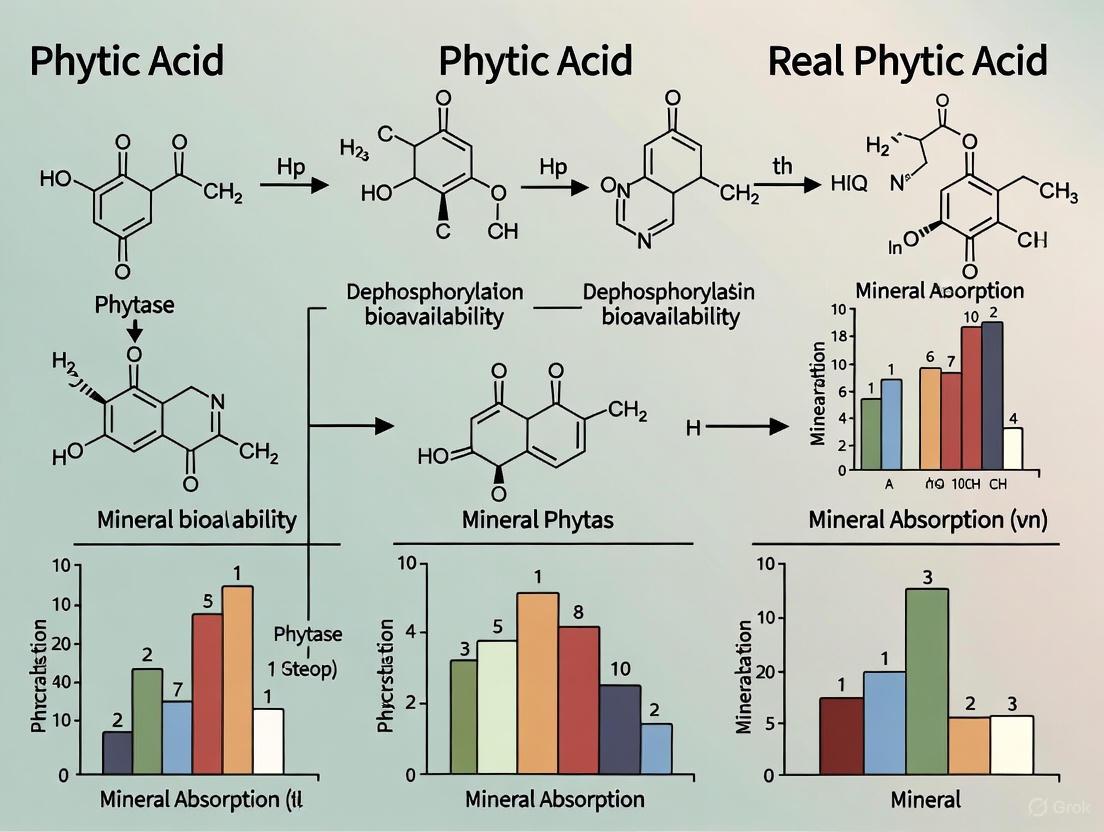
This article provides a comprehensive analysis of phytic acid as a key antinutrient that impairs mineral bioavailability in plant-based foods, a critical concern for global micronutrient deficiencies.
Strategic Approaches to Reduce Phytic Acid in Plant Foods: Enhancing Mineral Bioavailability for Biomedical Applications
Abstract
This article provides a comprehensive analysis of phytic acid as a key antinutrient that impairs mineral bioavailability in plant-based foods, a critical concern for global micronutrient deficiencies. It systematically explores the biochemical mechanisms of phytic acid-mineral chelation, evaluates conventional and advanced processing methods for phytate reduction, and discusses optimization strategies for maximal nutrient retention. The content further examines validation methodologies for assessing bioavailability improvements and highlights emerging biotechnological interventions, including CRISPR/Cas9 genome editing and microbial phytase applications. Tailored for researchers, scientists, and drug development professionals, this review bridges food science with biomedical applications, offering evidence-based strategies to address mineral malnutrition through targeted phytic acid reduction technologies.
Phytic Acid Biochemistry and Its Impact on Mineral Bioavailability: Mechanisms and Health Implications
Chemical Structure and Biosynthetic Pathways of Phytic Acid in Plant Seeds
Phytic acid (myo-inositol hexakisphosphate or IP6) is the principal storage form of phosphorus in many plant tissues, particularly in seeds, bran, and legumes [1]. As a six-fold dihydrogen phosphate ester of myo-inositol, it accounts for 60-90% of total seed phosphorus [2]. While essential for plant metabolism and seed germination, phytic acid is considered an anti-nutrient in human and animal nutrition due to its strong chelating ability with essential minerals such as iron, zinc, and calcium, reducing their bioavailability [3] [4]. This creates significant challenges for researchers aiming to improve mineral bioavailability in plant-based foods, necessitating a thorough understanding of its chemical properties and biosynthetic pathways.
- Chemical Properties: At physiological pH, the phosphate groups of phytic acid are partially ionized, forming the phytate anion [1]. Its six phosphate groups confer a high density of negative charges, enabling strong ionic interactions with positively charged mineral ions and proteins [5]. This chelation forms insoluble salts in the digestive tract of monogastric animals, including humans, who lack the enzyme phytase necessary for its degradation [1] [3].
Chemical Structure and Properties
Phytic acid (C₆H₁₈O₂₄P₆) has a molar mass of approximately 660.04 g/mol [6]. Its core structure consists of a myo-inositol ring with a phosphate group attached to each of the six carbon atoms.
- Solubility and Stability: It is soluble in water, ethanol, and acetone but nearly insoluble in ether, benzene, and chloroform. It is stable under normal storage conditions but incompatible with strong oxidizing agents [6].
- Function in Plants: In plants, phytic acid is often stored as a mixed potassium, magnesium, and calcium salt known as phytin, located within protein bodies in seeds [6]. This storage is crucial for phosphorus supply during seed germination and early seedling growth [1] [7].
The following diagram illustrates the chemical structure of phytic acid and its key characteristics:
Biosynthetic Pathways in Plant Seeds
Phytic acid biosynthesis occurs during seed maturation and involves the stepwise phosphorylation of a myo-inositol precursor. Research identifies two primary pathways for its production [5].
The biosynthesis is spatially regulated within the seed. In cereals like wheat, barley, millet, and rice, phytic acid accumulates primarily in the aleurone layer and the germ layer. In legumes and oilseeds, it is stored in the protein bodies of the endosperm [3] [5].
The following flowchart details the two primary biosynthetic pathways and the key enzymes involved:
The phytic acid content in plant foods varies significantly by type, species, and part of the plant. The table below summarizes its range in common food sources, expressed as grams per 100 grams of dry weight (g/100 g dw) [3].
Table 1: Phytic Acid Content in Common Food Sources
| Food Category | Food Source | Phytic Acid Content (g/100 g dry weight) |
|---|---|---|
| Cereals | Maize Germ | 6.39 |
| Wheat Bran | 2.1 - 7.3 | |
| Rice Bran | 2.56 - 8.7 | |
| Barley | 0.38 - 1.16 | |
| Legumes | Kidney Beans | 0.61 - 2.38 |
| Peas | 0.22 - 1.22 | |
| Chickpeas | 0.28 - 1.60 | |
| Lentils | 0.27 - 1.51 | |
| Oilseeds | Soybeans | 1.0 - 2.22 |
| Linseed | 2.15 - 3.69 | |
| Sesame Seed | 1.44 - 5.36 | |
| Nuts | Almonds | 0.35 - 9.42 |
| Walnuts | 0.20 - 6.69 | |
| Peanuts | 0.17 - 4.47 |
The Scientist's Toolkit: Key Research Reagents & Materials
This table lists essential reagents and materials for experiments focused on phytic acid analysis and reduction.
Table 2: Essential Research Reagents and Materials
| Reagent / Material | Function / Application | Key Details |
|---|---|---|
| Phytic Acid (Standard) | Analytical standard for quantification and method calibration. | Often supplied as ~50% solution in water [6]. |
| Microbial Phytase | Enzyme for exogenous dephytinization studies. | Hydrolyzes phytic acid to release inorganic P and lower-grade inositol phosphates [3] [5]. |
| Anion Exchange Resin | Extraction and purification of phytic acid from plant samples. | Used in classic AOAC methods for phytic acid isolation [6]. |
| IP6 Intermediates (IP1-IP5) | Standards for studying biosynthetic pathways and degradation products. | Critical for HPLC analysis to distinguish between different inositol phosphates [1] [6]. |
| PCR Reagents & Primers | Genetic studies of biosynthetic genes (e.g., MIPS, IPK1) and developing low-phytic-acid mutants. | Used to amplify and manipulate genes in the PA pathway [7] [5]. |
| CRISPR/Cas9 System | Genome editing tool for targeted gene knockout to create low-phytic-acid crops. | Used to disrupt genes like ITPK and MRP transporters [5]. |
Troubleshooting Common Experimental Issues
FAQ 1: Why is my phytate degradation efficiency low during food processing experiments?
- Potential Cause: Insufficient activity of endogenous or exogenous phytase enzyme due to suboptimal pH, temperature, or time.
- Solution:
- Optimize Reaction Conditions: Confirm the optimal pH and temperature for the specific phytase used. Fungal phytases often have an optimum pH of around 4.5-5.5 [3] [8].
- Pre-treatment Combination: Combine methods like soaking and germination to activate endogenous plant phytases before applying exogenous microbial phytase. Soaking legumes for 12-18 hours can reduce phytate by 10-30%, while germination for several days can reduce it by up to 60% [9] [10].
- Ensure Water Quality: Use deionized water to avoid metal ions that can inhibit phytase activity or form insoluble phytate complexes.
FAQ 2: How can I accurately distinguish and quantify IP6 from its lower inositol phosphates (IP1-IP5) in my samples?
- Potential Cause: Using non-specific methods like the classic precipitation assay, which measures total inositol phosphates.
- Solution:
- Employ High-Performance Liquid Chromatography (HPLC): This is the gold standard for separating and quantifying individual inositol phosphates (IP1-IP6). It provides high sensitivity and reproducibility [5] [6].
- Validate with Standards: Always use pure IP1-IP6 standards for calibration and peak identification in HPLC runs.
- Avoid Metal Contamination: Ensure all solvents and reagents are free of metal ions to prevent chelation and distorted readings [6].
FAQ 3: Our low-phytic-acid (lpa) mutant lines show poor seed viability or germination rates. What could be the cause?
- Potential Cause: Pleiotropic effects from disrupting the phytic acid biosynthetic pathway. Phytic acid and its intermediates (like IP3) are involved in key signaling pathways and stress responses. A drastic reduction can negatively impact seed development and vigor [7] [2].
- Solution:
- Target Different Genes: Instead of targeting core biosynthesis genes (e.g., MIPS), focus on genes specific to seed storage, such as MRP transporters (e.g., MRP5), which are responsible for sequestering phytic acid into the vacuole. This often has fewer pleiotropic effects [5] [2].
- Use Tissue-Specific Promoters: Employ seed-specific promoters for gene editing to avoid disrupting phytic acid's physiological roles in other plant tissues.
- Monitor Inorganic Phosphorus (Pi): Select mutant lines where the reduction in phytic acid phosphorus is matched by a corresponding increase in free Pi, which is beneficial for seedling growth [7].
FAQ 4: The mineral bioavailability in our in vitro model remains low despite a significant reduction in phytic acid. What other factors should we consider?
- Potential Cause: The presence of other antinutritional factors that also chelate minerals, such as tannins and polyphenols [9] [10].
- Solution:
- Analyze a Broader Profile: Quantify tannins and polyphenols in your processed samples.
- Employ Multi-Stage Processing: Incorporate processing steps that reduce multiple antinutrients. For example, lactic acid fermentation can reduce both phytate and polyphenols [8] [10].
- Add Enhancers: Include known mineral absorption enhancers like ascorbic acid (Vitamin C) in your bioavailability assays to counteract the effects of remaining antinutrients [8].
Experimental Protocols for Phytic Acid Reduction and Analysis
Protocol 1: Reducing Phytic Acid via Germination and Fermentation
This combined method leverages endogenous and microbial phytases to effectively reduce phytic acid in cereals and legumes [3] [8] [10].
- Sample Preparation: Clean and weigh whole grains or seeds (e.g., wheat, brown rice).
- Soaking: Soak seeds in deionized water (1:5 w/v ratio) at room temperature for 12-18 hours. Discard the soak water.
- Germination: Rinse the soaked seeds and allow them to germinate in a dark, humid environment at 25-30°C for 2-5 days. Rinse twice daily.
- Fermentation:
- Grind the germinated seeds with sterile deionized water to create a slurry.
- Inoculate with a lactic acid bacteria (LAB) starter culture (e.g., Lactobacillus spp.) or rely on natural fermentation.
- Incubate at 37°C for 18-24 hours.
- Termination and Analysis: Heat-treat the sample to inactivate enzymes and microbes. Dry and mill the sample for subsequent phytic acid analysis.
Protocol 2: HPLC Analysis of Phytic Acid and Inositol Phosphates
This protocol outlines the quantitative analysis of inositol phosphates using anion-exchange HPLC [5] [6].
- Extraction: Extract ~1g of ground sample with 10 mL of 0.5 M HCl for 2 hours with continuous shaking. Centrifuge at 10,000 x g for 15 minutes and collect the supernatant.
- Filtration and Dilution: Filter the supernatant through a 0.45 μm membrane filter. Dilute the filtrate appropriately with the mobile phase.
- HPLC Conditions:
- Column: Strong anion-exchange column (e.g., SAX or DNAP).
- Mobile Phase: Gradient elution using buffers such as water (pH 4.5) and sodium phosphate or ammonium formate (e.g., 1.0 M, pH 3.8).
- Detection: Post-column derivatization with Wade's reagent (ferric chloride-sulfosalicylic acid) and detection at 500 nm, or use conductivity detection.
- Flow Rate: 1.0 mL/min.
- Quantification: Identify and quantify IP6 and other inositol phosphates by comparing retention times and peak areas with those of authentic standards.
Fundamental Chelation Mechanism of Phytic Acid
What is the fundamental chemical mechanism by which phytic acid chelates minerals?
Phytic acid (myo-inositol hexakisphosphate or IP6) possesses six phosphate groups, each containing two replaceable protons, creating a molecule with twelve acidic sites [11]. At physiological pH, these phosphate groups become partially or fully ionized, giving phytic acid a strong negative charge [1]. This polyanionic structure enables it to act as a powerful chelator by forming strong electrostatic interactions and stable, insoluble complexes with positively charged di- and trivalent mineral cations [3] [11]. The binding results in the formation of insoluble salts that are poorly bioavailable for absorption in the human digestive tract [3].
The order of binding ability varies with pH and ionic conditions, but one study noted the order of ability for minerals to inhibit hydrolysis by phytase as Zn²⁺ > Fe²⁺ > Mn²⁺ > Fe³⁺ > Ca²⁺ > Mg²⁺, which relies on the pH of the phytin complexes compared to the free mineral ratio [12]. The complex formation depends strongly on the metal-to-ligand molar ratio, pH value, and protonation level of the phytate ligand [11]. Research has demonstrated that alkaline earth metals (e.g., Mg²⁺, Ca²⁺) interact with different binding sites than transition metals (e.g., Zn²⁺, Fe²⁺) [11].
Quantitative Mineral Binding Data
What is the relative binding affinity of phytic acid for different essential minerals?
The chelation effectiveness of phytic acid varies significantly among minerals. The following table summarizes quantitative data on phytate-mineral interactions, including stability constants and absorption inhibition data.
Table 1: Quantitative Mineral Binding Data for Phytic Acid
| Mineral | Reported Absorption Inhibition | Complex Stability & Characteristics | Key Research Findings |
|---|---|---|---|
| Iron (Fe) | Reduces absorption by 1-23% [13]; Diets high in phytate can cause iron deficiency anemia [3]. | Forms very stable complexes; Fe³⁺ complexes are more stable than Fe²⁺ complexes [11]. | Inhibition is particularly significant for non-heme iron from plant sources [13]. |
| Zinc (Zn) | Phytate:Zn molar ratio >15:1 essentially blocks Zn absorption; ratio <6:1 provides reasonable Zn bioavailability [12]. | Strong binding affinity (Zn²⁺ > Fe²⁺) [12]; Forms insoluble complexes [1]. | Zn deficiency is common in populations relying on whole grain cereals and legumes [14]. |
| Calcium (Ca) | High phytate, low calcium diets can contribute to rickets [1]. | Moderate binding affinity; Ca²⁺ can bind to oxalate in the gut, reducing kidney stone risk [13]. | The presence of high concentration of PA inhibits Ca availability [14]. |
| Magnesium (Mg) | The presence of high concentration of PA inhibits Mg availability [14]. | Lower binding affinity compared to transition metals [11]. | Alkaline earth metals (Mg, Ca) interact with different binding sites than transition metals (Zn, Fe) [11]. |
Experimental Protocols for Dephytinization
What are the validated experimental protocols for reducing phytic acid in plant foods to improve mineral bioavailability?
Several methods have been developed to reduce phytic acid content in food and improve nutritional value [3]. The effectiveness of these methods varies, and they can be used individually or in combination.
Endogenous Phytase Activation Methods
Protocol 1: Fermentation for Phytic Acid Reduction
- Principle: Utilizes naturally occurring or inoculated microorganisms (e.g., lactic acid bacteria) that produce the enzyme phytase, which hydrolyzes phytic acid [8].
- Procedure:
- Grind plant material (e.g., whole wheat flour) to a consistent particle size.
- Prepare a slurry by mixing the flour with warm water (30-40°C) at a ratio of 1:2 (w/v).
- Inoculate with a starter culture (e.g., Lactobacillus species) or rely on natural microbiota.
- Incubate at 37°C for 12-24 hours, maintaining pH monitoring.
- Terminate the process by heat treatment (e.g., drying, baking) or immediate analysis.
- Validation: Measure phytic acid content before and after fermentation using the ferric precipitation method [14]. This method can effectively hydrolyze phytic acid [8].
Protocol 2: Germination (Sprouting)
- Principle: Activates endogenous phytase present in the seed during the germination process [8].
- Procedure:
- Soak seeds/grains in sterile water for 12-24 hours at room temperature.
- Drain the water and allow seeds to germinate in a sprouting apparatus or on moist filter paper.
- Maintain high humidity and rinse periodically to prevent microbial contamination.
- Allow germination to proceed for 2-5 days, depending on the plant species.
- Dry the germinated seeds in an oven at 50-60°C and grind into flour for analysis or use.
- Validation: Phytic acid content is drastically reduced during soaking plus cooking [3]. Germination emerged as a promising method for activating endogenous wheat phytases [8].
External Intervention Methods
Protocol 3: Treatment with Exogenous Microbial Phytase
- Principle: Supplementation with purified phytase enzyme from microbial sources (e.g., Aspergillus niger) to hydrolyze phytic acid [3] [8].
- Procedure:
- Prepare a suspension of the plant material (flour or slurry) in a buffer optimal for phytase activity (typically acetate buffer, pH 5.0-5.5).
- Add a standardized amount of exogenous phytase (e.g., 0.1-1.0 U/g of sample).
- Incubate with continuous shaking at 55°C for 60-120 minutes.
- Inactivate the enzyme by heating at 85°C for 10-15 minutes.
- Validation: Supplementation of animal feeds with phytase improves the phosphorus bioavailability and reduces the amount of phosphorus excreted [3]. Exogenous microbial phytases addition demonstrated significant potential in enhancing mineral absorption [8].
Protocol 4: Soaking and Acidification
- Principle: Soaking facilitates diffusion and leaching of phytic acid, while acidification (using lemon juice or lactic acid) creates an optimal pH for endogenous phytase activity [8].
- Procedure:
- Soak plant material in an acidified solution (e.g., 0.1% lactic acid, or citrate buffer pH 4.0) at room temperature.
- Use a ratio of 1 part sample to 4-5 parts acidified solution.
- Soak for 12-18 hours with occasional stirring.
- Drain the soaking water and rinse the sample if necessary before further processing or cooking.
- Validation: In-home food preparation techniques like soaking in an acid medium can break down phytic acid [1]. Acidification with lemon juice or lactic acid is an effective process [8].
Troubleshooting Common Experimental Challenges
FAQ 1: Why is my dephytinization treatment not yielding significant reduction in phytic acid content?
- Potential Cause: Suboptimal pH or temperature for phytase activity.
- Solution: Verify and adjust the pH of the medium to 5.0-5.5 for most phytases. Ensure incubation temperature is maintained at 50-55°C for exogenous microbial phytases or 37-40°C for fermentation processes. The efficacy of chelators is highly dependent on the environmental conditions of the food matrix, and they are most active when pH is greater than their pKa [15].
- Prevention: Conduct preliminary experiments to establish the pH and temperature profile of the specific phytase source being used.
FAQ 2: How can I prevent mineral loss during dephytinization processing?
- Potential Cause: Leaching of minerals into processing water during soaking or washing steps.
- Solution: Minimize the volume of water used and avoid excessive washing after treatment. Alternatively, utilize the processing water in subsequent food preparation if possible. The lower inositol polyphosphates (IP5, IP4, IP3), which are catabolites of phytic acid, have reduced mineral chelating potential [1].
- Prevention: Employ methods like fermentation that do not involve aqueous extraction, or use minimal water in processes like germination.
FAQ 3: Why do mineral bioavailability assays sometimes show inconsistent results even after phytic acid reduction?
- Potential Cause: Presence of other antinutritional factors (e.g., tannins, oxalates) that also chelate minerals [13]. The interaction between phytic acid and these other components can be complex.
- Solution: Analyze the sample for other antinutrients. Use processing methods that simultaneously reduce multiple antinutrients (e.g., fermentation can reduce both phytate and tannins). Phytochemicals such as polyphenols and tannins also influence the binding [1].
- Prevention: Characterize the full antinutrient profile of your research material and employ multi-target processing strategies.
Research Reagent Solutions
Table 2: Essential Reagents and Materials for Phytic Acid and Mineral Bioavailability Research
| Reagent/Material | Function/Application | Technical Notes |
|---|---|---|
| Sodium Phytate | Standard for analytical quantification and calibration [11]. | Use high-purity grade (>95%). Store desiccated at -20°C for long-term stability. |
| Microbial Phytase | Exogenous enzyme for directed dephytinization studies [3] [8]. | Source from Aspergillus niger; specify activity (U/mg); optimize pH (5.0-5.5) and temperature (55°C). |
| Lactic Acid Bacteria Cultures | Starter cultures for fermentation-based dephytinization [8]. | e.g., Lactobacillus strains; maintain sterile conditions during inoculation. |
| Atomic Absorption Spectroscopy (AAS) | Quantification of mineral content (Fe, Zn, Ca, Mg) [14]. | Requires sample digestion (e.g., nitric acid/hydrogen peroxide) [14]. |
| Enzymatic Phytase Assay Kit | Measurement of phytase activity in samples or reagents. | Follow manufacturer's protocol; typically measures inorganic phosphate release. |
| Cation Exchange Resin | Preparation of fully protonated phytic acid (H12Phy) from salts for complexation studies [11]. | Use strong cation exchange resin (e.g., Dowex 50WX8). |
| Simulated Gastrointestinal Fluids | In vitro assessment of mineral bioaccessibility post-dephytinization. | Includes simulated gastric and intestinal fluids with precise pH and enzymatic control. |
Frequently Asked Questions (FAQs)
FAQ 1: What is phytic acid and why is it a concern in nutritional research? Phytic acid (myo-inositol hexaphosphate or IP6) is the principal storage form of phosphorus in many plant tissues, including bran, seeds, legumes, and nuts [1]. It is considered an anti-nutritional factor because it has a strong binding affinity for essential dietary minerals such as calcium, iron, and zinc, forming insoluble complexes in the digestive tract that inhibit their absorption [3] [1]. This reduction in mineral bioavailability can contribute to deficiencies, a significant concern for populations relying heavily on plant-based diets [3] [16].
FAQ 2: Which food crops contain the highest levels of phytic acid? Phytic acid content varies significantly across different plant species and even within different parts of the same grain. Generally, the highest concentrations are found in the bran or aleurone layers of cereals and in the cotyledons of legumes [3]. The table below provides a quantitative overview of its distribution in common food crops.
FAQ 3: What are the most effective methods for reducing phytic acid in plant-based foods? Several processing methods can significantly reduce phytic acid content. The most effective include controlled fermentation (which can achieve over 96% reduction), enzymatic treatment with microbial phytase, sprouting (germination), and thermal processing such as cooking [17] [10] [9]. The efficacy depends on the food matrix and the specific conditions used [17].
Quantitative Analysis of Phytic Acid in Food Crops
The following tables summarize the typical phytic acid content found in various food categories, as reported in the scientific literature. Values are expressed as grams per 100 grams of dry weight (g/100g dw).
Table 1: Phytic Acid Content in Cereals and Legumes
| Food Crop | Phytic Acid Content (g/100g dw) | References |
|---|---|---|
| Cereals | ||
| Rice Bran | 2.56 - 8.70 | [3] |
| Wheat Bran | 2.10 - 7.30 | [3] |
| Maize Germ | 6.39 | [3] |
| Wheat Germ | 1.14 - 3.91 | [3] |
| Barley | 0.38 - 1.16 | [3] |
| Sorghum | 0.57 - 3.35 | [3] |
| Oat | 0.42 - 1.16 | [3] |
| Millet | 0.18 - 1.67 | [3] |
| Legumes | ||
| Soybeans | 1.00 - 2.22 | [3] |
| Kidney Beans | 0.61 - 2.38 | [3] |
| Lentils | 0.27 - 1.51 | [3] |
| Chickpeas | 0.28 - 1.60 | [3] |
| Peas | 0.22 - 1.22 | [3] |
Table 2: Phytic Acid Content in Nuts, Oilseeds, and Other Foods
| Food Crop | Phytic Acid Content (g/100g dw) | References |
|---|---|---|
| Oilseeds | ||
| Sesame Seed | 1.44 - 5.36 | [3] |
| Sunflower Meal | 3.90 - 4.30 | [3] |
| Linseed | 2.15 - 3.69 | [3] |
| Nuts | ||
| Almonds | 0.35 - 9.42 | [3] |
| Walnuts | 0.20 - 6.69 | [3] |
| Peanuts | 0.17 - 4.47 | [3] |
| Cashew Nuts | 0.19 - 4.98 | [3] |
| Other | ||
| Taro | 0.14 - 0.20 | [1] |
| Cassava | 0.11 - 0.15 | [1] |
Experimental Protocols for Phytic Acid Reduction
Protocol 1: Controlled Fermentation for High-Efficiency Phytic Acid Reduction
This protocol, adapted from a 2025 study on bitter lupine seeds, achieved a 96.37% reduction in phytic acid [17].
Workflow Overview:
Detailed Methodology:
- Material Preparation: Start with bitter lupine seeds (Lupinus angustifolius). Crush the seeds and measure the dry matter content.
- Inoculation: Inoculate the crushed lupine biomass with a 5% volume of a defined lactic acid bacteria (LAB) consortium. The study used specific consortiums deposited in the Polish Collection of Microorganisms, such as BPK1 (Lentilactobacillus buchneri, Pediococcus acidilactici) [17].
- Fermentation: Add tap water to the inoculated biomass to create a silage. Mix thoroughly to ensure even bacterial distribution. Place the mixture in vacuum-sealed bags to create anaerobic conditions. Ferment at 20 ± 1°C for 8 weeks [17].
- Analysis: After fermentation, determine the phytic acid content using standard analytical methods (e.g., spectrophotometric determination) to quantify the reduction.
Protocol 2: Combined Thermal and Enzymatic Processing
This method is effective for a variety of cereals and legumes and can be optimized based on the specific crop.
Workflow Overview:
Detailed Methodology:
- Soaking and Comminution: Soak the grains or legumes in tap water (e.g., a 1:2 ratio of seeds to water). For enzymatic treatments, blend the soaked seeds using a food processor to increase surface area [17].
- Thermal Treatment: Cook the soaked seeds at 100°C until softened (e.g., for 4 hours). Simple cooking alone can reduce phytic acid by up to 80% [9].
- Enzymatic Hydrolysis: Treat the cooked or raw slurry with commercially available microbial phytase. The optimal conditions (temperature, pH, and duration) will depend on the specific phytase enzyme used and should follow the manufacturer's guidelines. This step leverages the enzyme's ability to hydrolyze phosphate groups from the inositol ring of phytic acid [3] [17].
- Analysis: Determine the final phytic acid content to assess the combined effect of thermal and enzymatic processing.
Troubleshooting Guides
Problem: Inconsistent phytic acid reduction during fermentation.
- Potential Cause 1: Contamination by wild microbes during fermentation.
- Solution: Ensure strict sterile techniques during inoculation. Use vacuum-sealed or airtight containers to maintain anaerobic conditions favorable for LAB and unfavorable for many spoilage organisms [17].
- Potential Cause 2: Inconsistent temperature during the fermentation period.
- Solution: Use a temperature-controlled incubator to maintain a stable temperature of 20 ± 1°C throughout the 8-week process [17].
Problem: Low mineral bioavailability despite phytic acid reduction.
- Potential Cause: The physical encapsulation of minerals by intact plant cell walls persists even after processing, limiting their release (bioaccessibility) [18].
Problem: Protein loss during aggressive processing to reduce phytic acid.
- Potential Cause: Over-processing, especially during thermal and fermentation treatments, can degrade protein quality [17].
- Solution: Optimize processing parameters (time, temperature). Consider using enzymatic hydrolysis with phytase as a primary method, as it is highly specific to phytic acid and better preserves protein content compared to prolonged fermentation [17].
The Scientist's Toolkit: Key Research Reagent Solutions
Table 3: Essential Reagents and Materials for Phytic Acid and Mineral Bioavailability Research
| Reagent / Material | Function / Application | Example & Notes |
|---|---|---|
| Microbial Phytase | Enzyme used for enzymatic dephytinization; hydrolyzes phosphate groups from phytic acid. | Commercial preparations from Aspergillus niger; used in enzymatic hydrolysis protocols [3] [17]. |
| Lactic Acid Bacteria (LAB) Consortia | Used in controlled fermentation to produce endogenous phytases and organic acids that lower pH and activate plant phytases. | Defined consortia like BPK1 (L. buchneri, P. acidilactici); ensure reproducible fermentation [17]. |
| MRS Broth | A selective growth medium for the cultivation and maintenance of lactic acid bacteria. | Standard for preparing LAB inoculum for controlled fermentation studies [17]. |
| In Vitro Digestion Model Media | Simulates gastric and intestinal conditions to study mineral bioaccessibility without human trials. | Contains arabinogalactan, pectin, mucin, etc.; used with simulated pancreatic juice (NaHCO₃, bile salts, pancreatin) [17]. |
| Casein Phosphopeptides (CPP) | Chelating agent studied to enhance mineral bioavailability; forms soluble complexes with calcium. | Used in mineral delivery systems; shown to increase calcium absorption and osteogenic activity [19]. |
| Aleurone-Rich Fraction | A functional food ingredient derived from wheat bran, used as a natural, bioavailable source of minerals for fortification. | Being investigated as a bioavailable source of iron and zinc for fortification of cereal-based products [18]. |
Frequently Asked Questions (FAQs)
FAQ 1: What is the primary mechanism by which phytic acid acts as an anti-nutrient? Phytic acid (myo-inositol hexakisphosphate or IP6) is a strong chelating agent due to its six phosphate groups, which are negatively charged at physiological pH. It binds to essential dietary minerals such as iron, zinc, calcium, and magnesium in the gastrointestinal tract, forming insoluble complexes called phytates. These complexes are poorly absorbed by the monogastric digestive system, significantly reducing the bioavailability of the bound minerals [20] [3] [1]. This chelation is the fundamental anti-nutrient mechanism that can contribute to mineral deficiencies.
FAQ 2: Under what dietary conditions is the anti-nutrient effect of phytic acid a significant concern? The anti-nutrient effect is most pronounced in two key scenarios:
- Populations reliant on plant-based diets: In developing countries where diets are heavily based on cereals, legumes, and other phytic acid-rich staples, and where access to animal-derived foods (which provide highly bioavailable heme iron) is limited [9] [21].
- Individuals with pre-existing deficiencies or high requirements: Those with existing iron or zinc deficiencies, or individuals with increased needs such as pregnant women and children, are more vulnerable to the mineral-absorption inhibiting effects of phytic acid [3] [9].
FAQ 3: Despite its anti-nutrient properties, what are the key potential health benefits of phytic acid? Research has identified several promising health benefits, primarily linked to its antioxidant and cellular signaling properties. These include:
- Antioxidant activity: It can chelate pro-oxidant metals like iron, preventing the formation of harmful free radicals [20] [22].
- Anticancer potential: Studies indicate it may inhibit cell proliferation and induce apoptosis (programmed cell death) in various cancer cell lines, including colorectal and prostate cancers [20] [22] [23].
- Reduction of pathological calcifications: It may help prevent unwanted calcium deposits in blood vessels (atherosclerosis) and kidneys (kidney stones) by inhibiting crystal formation [20].
- Anti-diabetic and anti-inflammatory properties: Evidence suggests a role in improving lipid profiles and reducing inflammation [20] [22].
FAQ 4: What are the most effective methods to reduce phytic acid in foods for research and processing? Several food processing strategies can significantly degrade phytic acid, thereby improving mineral bioavailability. The most effective methods often involve the activation of the enzyme phytase, which hydrolyzes phytic acid [3] [9] [10].
Table: Common Methods for Reducing Phytic Acid Content
| Method | Process Description | Key Mechanism | Approximate Reduction Efficiency |
|---|---|---|---|
| Soaking | Immersing grains/legumes in water for several hours. | Leaching of phytic acid into the water. Leaches water-soluble phytates [10]. | Varies widely; foundational step for other methods. |
| Fermentation | Using microorganisms (e.g., lactic acid bacteria) to ferment food. | Microbes produce phytase enzyme, which breaks down phytic acid. Lactic acid bacteria produce phytases [9] [10]. | Can be highly effective, especially with sourdough. |
| Germination (Sprouting) | Allowing seeds to sprout under controlled conditions. | Activation of the seed's endogenous phytase enzyme during germination [3] [9]. | ~60% reduction [9]. |
| Enzymatic Treatment (with Phytase) | Adding purified phytase enzyme directly to food or feed. | Direct hydrolysis of phytic acid by the exogenous enzyme, releasing bound minerals [3] [21]. | Up to 82-90% in studied interventions; considered highly effective [21]. |
| Cooking/Heat Treatment | Applying moist heat, such as boiling. | Heat degradation and conversion to lower inositol phosphates. Boiling legumes for 1 hour can reduce phytic acid by up to 80% [9]. | Varies; can be up to 80% [9]. |
FAQ 5: In human trials, what is the evidence that reducing phytic acid improves mineral bioavailability? Clinical evidence strongly supports that reducing phytic acid enhances mineral absorption. A recent narrative review of human intervention studies found that:
- The majority of studies (13 of 17, or 77%) showed that consuming phytic acid-rich foods compromised iron and zinc bioavailability [21].
- Conversely, most studies investigating the efficacy of exogenous phytase supplementation (9 of 11, or 82%) or food dephytinization (11 of 14, or 79%) demonstrated augmented iron and zinc bioavailability [21]. This provides robust evidence for the strategy of phytic acid reduction in mineral bioavailability research.
Troubleshooting Common Experimental Issues
Issue 1: Inconsistent Phytic Acid Reduction During Food Sample Processing
- Problem: Variability in phytic acid content in treated samples, leading to unreliable mineral bioavailability data.
- Solution:
- Standardize Pre-Treatment: Ensure raw materials are from a uniform batch and have consistent particle size (e.g., using a standardized mill).
- Optimize and Monitor Conditions: For fermentation, strictly control temperature, time, and inoculum concentration. For germination, maintain precise humidity and temperature. For enzymatic treatment, optimize pH, temperature, and phytase activity units (FTU) per gram of substrate, and allow sufficient reaction time [3] [10].
- Validate the Process: Use a small-scale pilot experiment to confirm reduction levels before proceeding to large-scale processing.
Issue 2: Low Mineral Bioavailability in Cell Models Despite Phytic Acid Reduction
- Problem: In vitro models (e.g., Caco-2 cells) show low iron or zinc uptake even after subjecting food samples to dephytinization protocols.
- Solution:
- Verify Reduction Efficiency: First, confirm the phytic acid content post-treatment using a reliable method (e.g., high-performance liquid chromatography - HPLC) to ensure degradation was successful [24].
- Check Simulated Digestion Parameters: Ensure the in vitro gastrointestinal digestion model accurately reflects human physiology, including correct pH, enzyme concentrations (pepsin, pancreatin), and digestion time.
- Analyze the Digest: Look for the presence of other dietary factors that can inhibit mineral absorption, such as polyphenols or tannins, which may still be present in the sample [1].
Issue 3: Difficulty in Accurately Quantifying Phytic Acid in Complex Food Matrices
- Problem: Analytical techniques yield inaccurate or irreproducible phytic acid measurements due to interference from other components.
- Solution:
- Employ a Multi-Step Extraction: Use an acid-based extraction (e.g., with HCl or TCA) followed by purification steps, such as centrifugation and filtration, to remove proteins and other interfering compounds [24].
- Use a Specific Detection Method: Move beyond colorimetric assays if interference is high. The current gold standard is High-Performance Ion Chromatography (HPIC) or High-Performance Liquid Chromatography (HPLC) coupled with a conductivity or mass spectrometry detector. This allows for the specific separation and quantification of phytic acid and its lower inositol phosphate derivatives (IP1-IP5) [24].
The Scientist's Toolkit: Key Research Reagents & Materials
Table: Essential Reagents for Phytic Acid and Mineral Bioavailability Research
| Item | Function/Application in Research | Key Considerations |
|---|---|---|
| Phytic Acid (Sodium or Potassium Salt) | Standard for analytical calibration curves; used in controlled dosing studies to investigate its effects in models. | Ensure high purity (>95%). Store in a cool, dry place. Hyroscopic [24]. |
| Microbial Phytase (e.g., from Aspergillus niger) | Enzyme used for controlled dephytinization of food samples in vitro. Critical for studying the direct impact of phytic acid degradation. | Activity is measured in Phytase Units (FTU). Optimize concentration (FTU/g), pH, temperature, and incubation time for each substrate [3] [21]. |
| Inositol Phosphate Standards (IP1-IP6) | Essential for chromatographic identification and quantification (via HPLC or HPIC) of phytic acid and its degradation products. | IP6 is phytic acid. Lower phosphates (IP1-IP5) are metabolites; useful for studying degradation pathways. |
| Simulated Gastrointestinal Fluids | For in vitro digestion models to predict mineral bioaccessibility. Includes simulated salivary, gastric, and intestinal fluids with electrolytes and enzymes. | Commercially available or prepared in-lab. Must maintain strict pH and enzymatic activity for reproducible results. |
| Caco-2 Cell Line | A human colon adenocarcinoma cell line that differentiates into enterocyte-like cells. The standard in vitro model for studying intestinal absorption of minerals. | Requires long culture time (~21 days) to fully differentiate. Validate monolayer integrity with transepithelial electrical resistance (TEER) measurements. |
Experimental Protocol: Standard Workflow for Assessing the Impact of Phytic Acid Reduction on Iron Bioavailability
This protocol outlines a standard in vitro approach combining food processing with a simulated digestion/Caco-2 cell model to assess iron bioavailability.
Objective: To determine the effect of enzymatic dephytinization on the bioavailability of iron from a plant-based food sample (e.g., wheat bran).
Materials:
- Food sample (e.g., finely ground wheat bran)
- Purified microbial phytase enzyme
- Buffer solution (e.g., acetate buffer, pH 5.5, optimal for many phytases)
- Reagents for in vitro digestion: pepsin, pancreatin, bile salts
- Caco-2 cell culture system (cells, culture flasks/plates, media)
- Inductively Coupled Plasma Optical Emission Spectrometry (ICP-OES) or Mass Spectrometry (ICP-MS) for mineral analysis.
Procedure: Part A: Enzymatic Dephytinization of Sample
- Sample Preparation: Weigh 10g of ground sample into a flask.
- Suspension: Suspend the sample in acetate buffer (pH 5.5) at a predetermined ratio (e.g., 1:10 w/v).
- Enzyme Addition: Add a standardized amount of phytase (e.g., 500-1000 FTU per gram of sample).
- Incubation: Incubate the suspension in a shaking water bath at 55°C for 2 hours. Maintain a control sample without enzyme addition under the same conditions.
- Enzyme Inactivation: Heat the slurry at 95°C for 10 minutes to inactivate the phytase.
- Analysis: Analyze an aliquot of both treated and control samples for phytic acid content (e.g., via HPLC) to confirm reduction [24].
Part B: In Vitro Simulated Digestion
- Gastric Phase: Subject the treated and control samples to a simulated gastric digestion using pepsin at pH 2.0 for 1 hour at 37°C.
- Intestinal Phase: Adjust the pH to 7.0 and add a pancreatin-bile extract mixture to simulate intestinal digestion. Incubate for a further 2 hours at 37°C.
- Collection: The resulting digest is centrifuged. The supernatant (soluble fraction) represents the bioaccessible mineral fraction ready for absorption.
Part C: Iron Uptake Assessment using Caco-2 Cells
- Cell Culture: Grow and differentiate Caco-2 cells on transparent membrane inserts for at least 21 days.
- Dosing: Apply the bioaccessible fraction from Part B to the apical (top) side of the differentiated Caco-2 cell monolayers.
- Incubation: Incubate for a set period (e.g., 2 hours) to allow for iron uptake.
- Analysis:
- Cell Iron Content: Wash the cells, lyse them, and analyze the lysate for iron content using ICP-OES. This measures the amount of iron taken up by the cells.
- Ferritin Formation: Alternatively, measure the synthesis of ferritin (an iron storage protein) in the cells via ELISA, which is a functional biomarker of iron status and uptake.
The following workflow diagram illustrates the key steps and decision points in this experimental protocol:
Experimental Workflow for Iron Bioavailability
Core Concepts and Quantitative Data
▋FAQs: Understanding Phytic Acid and Mineral Bioavailability
What is phytic acid and why is it considered an anti-nutrient?
Phytic acid (myo-inositol hexaphosphate or IP6) is the primary storage form of phosphorus in plant seeds, including cereals, legumes, nuts, and oilseeds [25]. It is classified as an anti-nutrient because its structure features multiple phosphate groups that readily form stable, insoluble complexes with essential mineral cations such as iron, zinc, calcium, and magnesium [26] [3]. In monogastric animals, including humans, who lack sufficient levels of the phytate-degrading enzyme phytase in their digestive tracts, these complexes prevent the absorption of minerals in the small intestine, thereby reducing their bioavailability [3].
What is the global health significance of phytic acid consumption?
Mineral deficiencies, particularly of iron and zinc, affect billions of people worldwide and are a major public health problem [3] [8]. The consumption of diets high in phytate is a significant contributing factor to these deficiencies, especially in developing nations and among populations relying heavily on plant-based foods like whole grains and legumes as dietary staples [26] [16]. Iron deficiency can lead to anemia, impaired cognitive development, and reduced work capacity, while zinc deficiency can cause growth retardation, immune dysfunction, and increased morbidity [3].
Are the anti-nutritional effects of phytic acid the same for all minerals?
The inhibitory effect of phytic acid varies by mineral. Research indicates that the absorption of non-heme iron (the form found in plants) and zinc is particularly susceptible to phytic acid's chelating action [26] [16]. The bioavailability of calcium and magnesium can also be reduced, though the impact may differ [27] [25]. The degree of inhibition is generally dose-dependent, meaning that higher levels of phytic acid in a meal lead to lower mineral absorption [25].
Does phytic acid offer any health benefits?
Yes, despite its anti-nutritional properties, phytic acid also exhibits several potential health benefits. It acts as an antioxidant, can help in preventing type 2 diabetes, and possesses anti-inflammatory and anti-cancer properties, particularly in relation to colon cancer [25] [22]. Therefore, it is often viewed as a "double-edged sword" in human nutrition, and its role must be evaluated based on individual dietary contexts and nutritional needs [25].
▋Data Tables: Phytic Acid Content and Mineral Bioavailability
Table 1: Phytic Acid Content in Common Plant-Based Foods and Ingredients (g/100 g dry weight)
| Food Source | Phytic Acid Content (g/100 g) | References |
|---|---|---|
| Cereals & Bran | ||
| Rice Bran | 2.56 - 8.70 | [3] |
| Wheat Bran | 2.10 - 7.30 | [3] |
| Wheat Germ | 1.14 - 3.91 | [3] |
| Legumes | ||
| Soybeans | 1.00 - 2.22 | [3] |
| Kidney Beans | 0.61 - 2.38 | [3] |
| Lentils | 0.27 - 1.51 | [3] |
| Nuts & Seeds | ||
| Sesame Seeds | 1.44 - 5.36 | [3] |
| Almonds | 0.35 - 9.42 | [3] |
| Walnuts | 0.20 - 6.69 | [3] |
| Plant-Based Meat Proteins | ||
| Peanut Protein | ~1.71 | [26] |
| Pea Protein | ~0.54 | [26] |
| Soy Protein | ~0.41 | [26] |
| Mycoprotein | ~0.24 | [26] |
Table 2: Effectiveness of Common Processing Methods in Reducing Phytic Acid
| Processing Method | Reduction Mechanism | Reported Efficacy | References |
|---|---|---|---|
| Controlled Fermentation | Microbial phytases produced by lactic acid bacteria hydrolyze phytic acid. | Up to 96% reduction in lupine seeds. | [17] |
| Germination / Sprouting | Activation of endogenous seed phytases during sprouting. | Up to 60% reduction. | [9] |
| Exogenous Phytase Treatment | Direct addition of purified microbial phytase enzyme. | Highly effective; specific % varies with dosage and conditions. | [3] [8] |
| Soaking | Leaching of phytic acid into the soak water. | Varies; enhanced with slight acidity (e.g., lemon juice). | [8] |
| Cooking | Heat degradation and leaching. | Up to 80% reduction in legumes after 1 hour. | [9] |
Experimental Protocols and Troubleshooting
▋Detailed Methodology: Controlled Fermentation for Phytic Acid Reduction
This protocol is adapted from studies on lactic acid bacteria fermentation of lupine seeds and cereals, which achieved high phytate reduction [17] [8].
1. Objective: To significantly reduce the phytic acid content in plant matrices using controlled fermentation with selected lactic acid bacteria (LAB) consortia, thereby improving mineral bioavailability.
2. Materials and Reagents:
- Plant Material: Crushed seeds (e.g., lupine, corn, wheat).
- Bacterial Inoculum: Defined consortium of LAB (e.g., Lentilactobacillus buchneri, Pediococcus acidilactici). Isolated strains can be obtained from culture collections.
- Growth Medium: De Man, Rogosa and Sharpe (MRS) broth.
- Equipment: Anaerobic jars or vacuum sealer with bags, incubator, pH meter, sterile containers.
3. Step-by-Step Workflow:
4. Key Parameters and Optimizations:
- Inoculum Concentration: A 5% (v/w) inoculum is typically effective [17].
- Fermentation Conditions: Maintain anaerobic conditions at 20-30°C for several weeks. A drop in pH indicates successful LAB activity and organic acid production.
- Moisture Content: Critical for bacterial growth and enzyme activity; must be optimized for each substrate.
▋Troubleshooting Common Experimental Issues
Problem: Inconsistent phytic acid reduction between fermentation batches.
- Potential Cause: Contamination by wild microbes or inconsistent anaerobic conditions.
- Solution: Ensure strict sterile technique during inoculation. Use verified vacuum sealing and check bags for leaks. Use standardized, defined bacterial consortia instead of relying on spontaneous fermentation [17].
Problem: The processed material develops off-odors or discoloration.
- Potential Cause: Growth of spoilage microorganisms or undesirable fermentative pathways.
- Solution: Optimize the starter culture to ensure a fast pH drop, which inhibits spoilage organisms. Monitor and control fermentation temperature precisely.
Problem: Despite phytic acid reduction, mineral bioaccessibility does not improve significantly in simulated digestion models.
- Potential Cause: The formation of other mineral-binding complexes (e.g., with tannins or fibers) or incomplete phytate hydrolysis.
- Solution: Analyze the final product for other anti-nutrients. Combine fermentation with other methods like germination for a synergistic effect. Ensure fermentation is prolonged enough to hydrolyze phytic acid completely into lower inositol phosphates that have less mineral-binding capacity [25].
Visualization of Mechanisms and Workflows
▋Diagram: Phytic Acid-Mineral Chelation and Absorption Blockage
The Scientist's Toolkit: Research Reagent Solutions
Table 3: Essential Reagents and Materials for Phytic Acid and Mineral Bioavailability Research
| Reagent / Material | Function / Application | Key Considerations |
|---|---|---|
| Microbial Phytase Enzymes | Hydrolyzes phytic acid in food/feed samples during processing. | Select enzymes based on pH/temperature activity profile (e.g., fungal phytases for low gastric pH). |
| Defined Lactic Acid Bacteria (LAB) Consortia | Starter cultures for controlled fermentation to degrade phytate. | Use specific strains (e.g., L. plantarum, L. buchneri) known for high phytase production [17]. |
| Phytic Acid (Sodium Salt) Standard | Analytical standard for quantification of phytic acid via HPLC or colorimetry. | Ensure high purity for accurate calibration curves. |
| Simulated Digestive Fluids | For in vitro assessment of mineral bioaccessibility (e.g., INFOGEST protocol). | Includes simulated salivary, gastric, and intestinal fluids to mimic human digestion. |
| MRS Broth | Culture medium for the propagation and maintenance of LAB strains. | |
| * anion Exchange Columns* | For sample clean-up and purification of phytic acid prior to analysis. | Essential for accurate analysis in complex food matrices. |
Conventional and Advanced Processing Techniques for Phytic Acid Reduction
Troubleshooting Guides
Guide 1: Inadequate Phytate Reduction during Fermentation
Problem: The reduction in phytic acid after fermentation is lower than expected.
- Potential Cause: Low phytase activity. The fermentation conditions may not be optimal for microbial or endogenous phytase production.
- Solution: Ensure proper temperature control (e.g., 30°C for lactic acid fermentation) and consider using a proven starter culture, such as Lactiplantibacillus plantarum 299v, which can achieve over 65% phytate reduction [28] [29].
- Solution: For grain-based fermentations, try a pre-processing step. Soaking and germinating maize grains before fermentation with Lp299 resulted in a phytate reduction of 85.6%, significantly higher than fermentation alone [28] [29].
- Solution: Extend the fermentation duration. One study on corn fermentation showed that phytic acid content decreased significantly over a 14-day period [30].
Problem: Spontaneous fermentation yields inconsistent results.
- Potential Cause: Uncontrolled microbial flora. The natural microbial population in the raw material can vary.
- Solution: Transition from spontaneous fermentation to controlled fermentation using a defined starter culture. Spontaneous fermentation of maize reduced phytates by 51.8%, while using Lp299 or a yogurt starter culture improved reduction to 65.3% and 68.7%, respectively [28] [29].
Guide 2: Poor Phytate Hydrolysis during Soaking and Germination
Problem: Germination alone does not significantly degrade phytate.
- Potential Cause: Sub-optimal germination conditions. The duration or temperature may be insufficient to activate endogenous phytase fully.
- Solution: Optimize germination time and conditions. For example, germination of wheat at 15°C for 120 hours led to only a 15% reduction in phytate. However, a subsequent hydrothermal processing step (50°C, pH 3.8, 24 h) degraded 95% of the phytate [31].
- Solution: Monitor and adjust the pH during soaking. Soaking at a pH between 5.0 and 6.0, which is closer to the optimum for many plant phytases, can significantly enhance phytate hydrolysis [32].
Problem: Mineral content decreases after soaking and sprouting.
- Potential Cause: Leaching of minerals into the soak water. This is a common physical loss.
- Solution: Use the soak water in subsequent preparation steps if possible, or consider shorter soaking times. Studies on faba beans confirmed that while iron and zinc content was reduced by soaking and sprouting (due to leaching), their in vitro availability was significantly improved due to the substantial reduction in phytate [32].
Guide 3: Nutrient Loss and Trade-offs from Processing
Problem: Reduction of antinutrients is accompanied by a decrease in desirable nutrients.
- Potential Cause: Different stability and solubility of nutrients. Some vitamins and minerals are water-soluble or heat-labile.
- Solution: Be aware of trade-offs and optimize methods to maximize benefits. A study on pigeon pea found that while fermentation reduced anti-nutrients effectively, it also decreased zinc and Vitamin A levels by 5-23% [33]. Plan for potential nutrient enrichment post-processing if needed.
- Solution: Select a method that preserves the target nutrients. For instance, in bitter lupine, enzymatic and thermal treatments were found to preserve more protein than fermentation, though they were less effective at removing phytic acid [17].
Frequently Asked Questions (FAQs)
FAQ 1: What are the most effective single and combined processing methods for phytic acid reduction? Combined processing methods are generally more effective. For example, fermentation of soaked and germinated maize grains reduced phytate by 85.6%, whereas fermentation of raw maize flour alone achieved a 65-69% reduction [28] [29]. In some legumes, single methods like fermentation can be extremely effective, achieving up to 96% reduction in pigeon pea [33]. The optimal protocol is matrix-dependent.
FAQ 2: How do I quantitatively assess the success of my processing method beyond just phytic acid content? The success of processing for mineral bioavailability is best evaluated using molar ratios.
- Phytate:Iron (Phy:Fe) molar ratio: A value below 1 is considered adequate for optimal iron absorption [28] [29].
- Phytate:Zinc (Phy:Zn) molar ratio: A value below 15 indicates improved zinc bioavailability [28] [29]. For example, processing reduced the Phy:Fe ratio in maize from 41.42 to 6.24 and the Phy:Zn ratio from 40.76 to 7.77 [28] [29].
FAQ 3: Why is my heat treatment (cooking, baking) not effectively reducing phytic acid? Phytate is heat-stable. Thermal processing like cooking and baking has limited efficacy in degrading phytic acid unless it is combined with other methods. The primary role of heat treatment is to inactivate other heat-labile anti-nutrients and ensure food safety [28] [29]. For significant phytate reduction, heat should be used in conjunction with a hydration step (soaking) and/or a enzymatic step (germination, fermentation) [31].
FAQ 4: Can processing methods negatively impact the protein content of the food matrix? Processing can have varying effects. Fermentation of maize led to a significant increase in protein content, from 7.3% to 10.3% [28] [29]. However, other methods, particularly those involving water, can lead to leaching of nutrients. The key is to monitor these changes; protein content can be well-preserved or even enhanced with the right method [17].
Table 1: Phytate Reduction Efficacy of Different Processing Methods
| Food Matrix | Processing Method | Phytic Acid Reduction | Key Experimental Conditions | Source |
|---|---|---|---|---|
| Maize | Soaking + Germination + Lp299 Fermentation | 85.6% (from 9.58 to 1.39 g·kg⁻¹) | Soaking (24h), Germination (72h), Fermentation with Lactiplantibacillus plantarum 299v | [28] [29] |
| Maize | Fermentation with Yogurt Starter (L. casei) | 68.7% (from 9.58 to 3.02 g·kg⁻¹) | Fermentation of raw maize flour with a commercial yogurt starter | [28] [29] |
| Maize | Fermentation with Lp299 | 65.3% (from 9.58 to 3.35 g·kg⁻¹) | Fermentation of raw maize flour with Lp299 starter culture | [28] [29] |
| Maize | Spontaneous Fermentation | 51.8% (from 9.58 to 4.65 g·kg⁻¹) | Traditional lactic acid fermentation at 30°C | [28] [29] |
| Pigeon Pea | Natural Fermentation | 96% (from 1235 to ~50 mg/100g) | Natural fermentation of pigeon pea flour | [33] |
| Bitter Lupine | Controlled Fermentation (LAB) | 96.4% | Fermentation with specific lactic acid bacteria consortia at 20°C for 8 weeks | [17] |
| Wheat | Germination + Hydrothermal Processing | 95% | Germination (120h, 15°C) followed by processing at 50°C, pH 3.8 for 24h | [31] |
| Faba Bean | Soaking | 26.9 - 32.5% | Soaking in distilled water for 24 hours | [32] |
| Faba Bean | Sprouting | 28.0 - 34.9% | Soaking for 24h followed by germination for 72h | [32] |
Table 2: Impact of Processing on Mineral Bioavailability Molar Ratios
| Food Matrix | Processing Method | Phytate:Iron (Phy:Fe) Ratio | Phytate:Zinc (Phy:Zn) Ratio | Source |
|---|---|---|---|---|
| Maize (Raw) | - | 41.42 | 40.76 | [28] [29] |
| Maize (Processed) | Soaking + Germination + Lp299 Fermentation | 6.24 (85% reduction) | 7.77 (81% reduction) | [28] [29] |
| Mungbean (Raw) | - | 7.49 | 14.51 | [34] |
| Mungbean (Processed) | Germination (20h) + Pressure Cooking | 4.10 | 12.66 | [34] |
| Chickpea (Raw) | - | 11.04 | 31.66 | [34] |
| Chickpea (Processed) | Germination (60h) + Pressure Cooking | 7.80 | 21.07 | [34] |
Detailed Experimental Protocols
Objective: To significantly reduce phytate content and enhance iron and zinc bioavailability in whole maize grains. Materials:
- Whole maize grains
- Deionized water
- Starter culture (e.g., Lactiplantibacillus plantarum 299v)
- Incubator or temperature-controlled environment
Methodology:
- Soaking: Clean the maize grains and soak them in deionized water at a 1:3 (w/v) ratio at room temperature (approx. 18°C) for 24 hours. Use static soaking without changing the water.
- Germination: After soaking, drain the water. Place the soaked grains in trays on moist cloths or filter paper. Allow them to germinate at room temperature (25°C) for 72 hours, ensuring they remain moist.
- Flour Preparation: Drain the germinated grains. Dry them (e.g., at 45-60°C) and mill into a fine flour using a hammer mill with a 0.5 mm sieve.
- Fermentation: Inoculate the flour from soaked and germinated kernels with the Lp299 starter culture. Mix thoroughly with sterile deionized water to form a slurry. Ferment at 30°C for a predetermined time (e.g., 24-48 hours).
- Termination and Analysis: After fermentation, dry the sample (e.g., at 60°C). Analyze the phytate content, mineral levels, and calculate molar ratios for bioavailability.
Objective: To achieve near-complete phytate hydrolysis in whole wheat grains. Materials:
- Whole wheat grains
- Buffer solutions for pH adjustment
- Temperature-controlled water bath or incubator
Methodology:
- Steeping and Germination: Steep and germinate wheat grains at 15°C for 120 hours to activate endogenous enzymes.
- Hydrothermal Processing: Take the germinated wheat and subject it to a hydrothermal process. The optimized conditions are:
- Temperature: 50°C
- pH: 3.8 (adjust with food-grade acid)
- Time: 24 hours
- Termination and Analysis: After processing, dry the wheat and mill it into flour. Analyze the phytate content. This protocol can increase iron bio-accessibility from 8% to 34%.
Experimental Workflow and Decision Diagram
Diagram Title: Decision Workflow for Phytic Acid Reduction Methods
The Scientist's Toolkit: Research Reagent Solutions
Table 3: Essential Reagents and Materials for Phytic Acid Research
| Item | Function/Application | Exemplary Use in Context |
|---|---|---|
| Starter Cultures (e.g., Lactiplantibacillus plantarum, Lacticaseibacillus casei) | Inoculum for controlled fermentation to ensure consistent phytase production and phytate degradation. | Fermentation with Lp299 reduced maize phytate by 65%; using a yogurt starter with L. casei achieved 69% reduction [28] [29]. |
| Phytase Enzyme (Microbial or plant-derived) | Direct enzymatic hydrolysis of phytic acid in food matrices; used in enzymatic treatment studies. | Enzymatic hydrolysis with phytase was tested as a method to reduce phytic acid in bitter lupine seeds [17]. |
| Atomic Absorption Spectrophotometry (AAS) | Accurate quantification of mineral elements (Fe, Zn, Ca, etc.) in raw and processed samples. | Used to measure iron and zinc content in maize and faba bean samples to calculate bioavailability ratios [28] [32]. |
| Spectrophotometer | Measurement of phytic acid content and inorganic phosphate via colorimetric assays. | Phytate in maize and faba beans was determined using spectrophotometric methods [28] [32]. |
| pH Meter & Buffers | Critical for monitoring and adjusting pH during fermentation and hydrothermal processing to optimize phytase activity. | Hydrothermal processing of wheat at pH 3.8 was key to achieving 95% phytate degradation [31]. |
| Anaerobic Chamber or Bags | Creating an oxygen-free environment essential for the growth of lactic acid bacteria during fermentation. | Controlled fermentation of lupine was carried out in vacuum-sealed bags to maintain anaerobic conditions [17]. |
Research Reagent Solutions: Essential Materials for Phytase Research
Table 1: Key Research Reagents and Their Applications in Phytase Studies
| Reagent / Material | Function / Application in Research | Common Examples / Specifications |
|---|---|---|
| Microbial Strains | Source of phytase enzymes for production and characterization. | Aspergillus niger (Natuphos), Escherichia coli (OptiPhos), Bacillus spp., Penicillium spp. [35] [36] [37]. |
| Fermentation Substrates | Low-cost, sustainable growth media for phytase production via Solid-State (SSF) or Submerged Fermentation (SmF). | Wheat bran, rice bran, soybean meal, oil cakes (e.g., coconut), corn cob, triticale waste [38]. |
| Phytate (Sodium Salt) | Standard substrate for in vitro assays to determine phytase activity, kinetics, and optimal conditions (pH, temperature) [35]. | Phytic acid sodium salt from rice bran or commercial suppliers; used to prepare substrate solutions [3]. |
| Activity Assay Kit | Quantifies phytase activity (FTU) in samples during production, purification, and application testing. | Kits based on the colorimetric measurement of inorganic phosphate released from phytate [39]. |
| Animal Feed Formulation | Base matrix for testing phytase efficacy in vivo, typically a phosphorus-deficient diet. | Corn-soybean meal-based diets, formulated to be deficient in non-phytate phosphorus (nPP) [39]. |
Troubleshooting Guides and FAQs
Frequently Asked Questions (FAQs)
Q1: What are the primary operational differences between fungal and bacterial phytases that I should consider for my application?
A1: The choice between fungal and bacterial phytases depends heavily on the target application's environmental conditions. The table below summarizes the key comparative characteristics to guide your selection.
Table 2: Comparative Properties of Fungal and Bacterial Phytases
| Property | Fungal Phytases | Bacterial Phytases |
|---|---|---|
| Common Sources | Aspergillus niger, A. ficuum, Peniophora lycii [36] [37] | Escherichia coli, Bacillus subtilis, B. amyloliquefaciens, Pseudomonas spp. [35] [36] |
| Optimal pH Range | Acidic (pH 2.0 - 6.0) [35] [38] | Broad, from acidic to alkaline (pH 2.0 - 8.0+), with many active at neutral pH [35]. |
| Optimal Temperature | ~45-60°C [35] | Often highly thermostable; some from Bacillus spp. withstand 90-100°C [35]. |
| Catalytic Class/Type | Primarily 3-phytases (Histidine Acid Phosphatases, HAPs) [37] | Include 6-phytases (β-propeller phytases, BPPs) and 3-phytases [35] [37]. |
| Enzyme Localization | Mostly extracellular, simplifying downstream recovery [36]. | Often cell-bound or intracellular, which can complicate purification [36]. |
| Comparative Efficacy in Feed | Effective, the first generation of commercial phytases [39]. | Newer generation; some studies show superior performance in phosphorus release and nutrient retention in broilers [39]. |
Q2: My phytase production yield in fermentation is low. What strategies can I employ to improve it?
A2: Low yield can be addressed by optimizing fermentation parameters and strain selection.
- Fermentation Method Selection: Solid-State Fermentation (SSF) is often superior for fungi, using agricultural residues like wheat bran, which mimic the natural habitat and can yield high enzyme titers [38]. Submerged Fermentation (SmF) is also widely used, particularly for bacterial phytases [35].
- Medium Optimization: Incorporate phytic acid or inorganic phosphate (Pi)-limited conditions into your growth medium. Phytase synthesis is often repressed by high Pi levels, so limiting bioavailable phosphorus can induce enzyme production [35] [38].
- Strain Improvement: Utilize genetic and protein engineering to develop strains with improved phytase properties, such as enhanced thermostability, specific activity, and protease resistance [35] [38].
Q3: During the application of phytase to plant-based food samples, the reduction of phytic acid is inconsistent. What factors should I control?
A3: Inconsistent dephytinization is commonly due to unoptimized reaction conditions.
- Control Pre-treatment pH: The initial pH of the food slurry is critical. Since most commercial phytases are active in the acidic range, adjust the pH accordingly (e.g., to pH 4.5-5.5) to ensure high enzyme activity [35] [21].
- Ensure Adequate Water Activity: The enzymatic reaction requires sufficient moisture. In semi-dry systems, ensure a uniform and adequate water content to facilitate enzyme-substrate interaction [38].
- Apply Sufficient Enzyme Dosage: Use activity units (FTU) per gram of sample as a metric. Conduct a dose-response experiment to determine the optimal loading for your specific food matrix [21]. A typical effective dose in research ranges from 500 to 2000 FTU/kg of feed/food [39] [21].
Experimental Protocols for Key Applications
Protocol 1: Production of Fungal Phytase via Solid-State Fermentation (SSF)
This protocol is adapted for high-yield phytase production from Aspergillus niger using wheat bran [38].
Inoculum Preparation:
- Cultivate A. niger spores on Potato Dextrose Agar (PDA) slants at 30°C for 5-7 days.
- Harvest spores using a sterile Tween 80 solution (0.1% v/v) to create a spore suspension. Adjust the concentration to ~1 × 10^7 spores/mL.
Fermentation Setup:
- Substrate: Use 50 g of wheat bran as the solid substrate in a fermentation flask.
- Moisturization: Add a mineral salt solution (containing MgSO₄, KCl, etc.) to adjust the moisture level to 50-60%.
- Sterilization: Autoclave the substrate at 121°C for 20 minutes.
- Inoculation: Aseptically inoculate the cooled substrate with 5 mL of the spore suspension and mix thoroughly.
Fermentation Conditions:
- Incubate at 30°C for 4-5 days under static conditions.
- Maintain high relative humidity in the incubator to prevent desiccation.
Enzyme Extraction:
- After incubation, add 250 mL of sterile distilled water or buffer (e.g., 0.1 M sodium acetate, pH 5.5) to the fermented matter.
- Agitate on a rotary shaker at 150 rpm for 1 hour at 4°C.
- Filter the slurry through muslin cloth and clarify the extract by centrifugation at 10,000 × g for 20 minutes at 4°C.
- The clear supernatant contains the crude extracellular phytase, ready for assay or further purification.
Protocol 2: In Vitro Assay for Phytase Activity (FTU Determination)
This protocol details the measurement of phytase activity by quantifying the inorganic phosphate released from sodium phytate [38].
Reagent Preparation:
- Substrate: 5.0 mM Sodium phytate solution in 0.1 M sodium acetate buffer (pH 5.5).
- Stop/Color Reagent: Ammonium molybdate-based solution (e.g., 10% w/v ammonium molybdate in 2.5 M H₂SO₄) mixed with a reducing agent like ascorbic acid.
Reaction Procedure:
- Pre-incubate 0.5 mL of substrate solution at 37°C for 5 minutes.
- Initiate the reaction by adding 0.5 mL of appropriately diluted enzyme solution.
- Incubate the reaction mixture at 37°C for exactly 30 minutes.
- Terminate the reaction by adding 1.0 mL of the stop/color reagent.
Measurement and Calculation:
- Incubate the stopped reaction for 15-20 minutes at 45°C for color development (phosphomolybdenum blue complex).
- Measure the absorbance at 820 nm against a blank (enzyme added after the stop reagent).
- One unit of phytase activity (FTU) is defined as the amount of enzyme that liberates 1 μmol of inorganic phosphate per minute under the assay conditions (37°C, pH 5.5). Calculate activity using a standard curve of potassium dihydrogen phosphate (KH₂PO₄).
Workflow and Pathway Visualizations
Phytase Research and Application Workflow
The following diagram outlines the core workflow for developing and applying a microbial phytase solution, from initial source selection to final application and validation.
Phytate Degradation and Mineral Bioavailability Pathway
This diagram illustrates the core biochemical mechanism of how phytase degrades phytic acid, thereby enhancing the bioavailability of essential minerals.
FAQs: Choosing and Applying Genome-Editing Tools
Q1: What are the key differences between ZFNs, TALENs, and CRISPR-Cas9? The core difference lies in their mechanism for DNA recognition. ZFNs and TALENs use protein domains to bind DNA, while CRISPR-Cas9 uses a guide RNA (gRNA) for DNA recognition via Watson-Crick base pairing [40]. This fundamental distinction makes CRISPR-Cas9 the most user-friendly system for design and implementation.
Q2: Which nuclease is best for reducing phytic acid in crops? For complex metabolic traits like phytic acid reduction, CRISPR-Cas9 is often the preferred choice. Its ability to perform multiplex editing—simultaneously targeting multiple genes in the phytic acid biosynthesis pathway—makes it highly effective [41]. This allows for the development of low-phytic acid (lpa) crop lines without the pleiotropic effects on yield and seed viability that hampered conventional breeding methods [41].
Q3: What is the most common challenge with CRISPR-Cas9, and how can it be mitigated? Off-target effects are a primary concern, where Cas9 cleaves unintended genomic sites [42] [43]. This can be managed with a multi-pronged approach:
- Design: Use highly specific gRNAs with the help of online prediction tools (e.g., Cas-OFFinder, CCTop) [43].
- Technology: Employ high-fidelity Cas9 variants (e.g., eSpCas9, SpCas9-HF1) or Cas9 nickases that require two closely spaced single-strand breaks to form a double-strand break, dramatically increasing specificity [40] [43].
- Delivery: Limit the active time of Cas9 in cells by using pre-assembled Cas9-gRNA ribonucleoprotein (RNP) complexes, which degrade faster than plasmid-based expression systems [44] [42].
Q4: How can I improve low editing efficiency? If your CRISPR-Cas9 system is not editing efficiently, verify these factors [42]:
- gRNA Design: Ensure the gRNA sequence is unique and does not have many similar sites in the genome.
- Delivery Method: Optimize the delivery method (e.g., electroporation, lipofection, viral vectors) for your specific cell type.
- Component Expression: Confirm that the promoters driving Cas9 and gRNA expression are active in your target cells. Using a codon-optimized Cas9 for your host organism can also enhance expression and efficiency [42].
Comparison of Major Genome-Editing Nucleases
| Feature | ZFNs | TALENs | CRISPR-Cas9 |
|---|---|---|---|
| DNA Recognition Mechanism | Protein-DNA [40] | Protein-DNA [40] | RNA-DNA (Base Pairing) [40] |
| Target Specificity Length | 9-18 bp [45] [40] | 30-40 bp [40] | 20 bp gRNA + PAM sequence [40] |
| Ease of Design & Cloning | Challenging; context-dependent effects [44] [40] | Moderate; modular TALE repeats [45] [40] | Easy; requires only gRNA synthesis [40] |
| Multiplexing Potential | Low | Low | High (with multiple gRNAs) [40] |
| Key Design Constraint | Target sites every ~50-200 bps [44] | Target must begin with a T [45] | Requires Protospacer Adjacent Motif (PAM, e.g., 5'-NGG-3') [40] |
| Primary Challenge | High off-target toxicity; difficult design [44] [40] | Large, repetitive genes are difficult to clone [45] | Off-target effects at sites with gRNA mismatches [43] |
Troubleshooting Common Experimental Problems
Problem 1: High Off-Target Effects in CRISPR-Cas9 Experiments
Potential Causes and Solutions:
- Cause: Low-specificity gRNA.
- Solution: Redesign gRNA using in silico tools like Cas-OFFinder or DeepCRISPR, which consider sequence and epigenetic features to predict and minimize off-target sites [43]. Select gRNAs with high on-target and low off-target scores.
- Cause: Prolonged Cas9 nuclease activity.
- Cause: Use of wild-type Cas9 with high activity.
Problem 2: Low On-Target Editing Efficiency
Potential Causes and Solutions:
- Cause: Poor gRNA design or target site inaccessibility.
- Solution: Ensure the gRNA does not form secondary structures and targets a region of open chromatin. Use validated software for gRNA design and consider screening multiple gRNAs for the same target.
- Cause: Inefficient delivery into target cells.
- Solution: Optimize the delivery method. Test different approaches such as electroporation or lipofection and titrate the amount of CRISPR components to find the optimal balance between efficiency and cell viability [42].
- Cause: Weak promoter or suboptimal Cas9 codon usage.
- Solution: Use a strong, cell-type-specific promoter to drive Cas9/gRNA expression. Employ a codon-optimized version of the Cas9 gene tailored for your host organism to improve translation efficiency [42].
Problem 3: Cell Toxicity or Low Viability
Potential Causes and Solutions:
- Cause: High concentrations of editing reagents.
- Solution: Titrate the amount of plasmid DNA, mRNA, or RNP complex delivered. Start with lower doses and gradually increase to find a concentration that achieves efficient editing without excessive cell death [42].
- Cause: Constitutive, high-level expression of Cas9.
- Solution: Use an inducible Cas9 system (e.g., tetracycline-inducible) to control the timing and duration of nuclease expression, thereby minimizing prolonged cellular stress [42].
Troubleshooting Common Genome-Editing Issues
The Scientist's Toolkit: Essential Reagents for Genome Editing
Key Research Reagent Solutions
| Reagent / Tool | Function / Description | Application in Phytic Acid Research |
|---|---|---|
| FokI Nuclease Domain | A bacterial restriction enzyme domain that must dimerize to cut DNA. Fused to ZF and TALE DNA-binding domains to create functional nucleases (ZFNs, TALENs) [45] [44]. | Essential component for creating targeted double-strand breaks in genes of the phytic acid pathway using ZFN or TALEN platforms. |
| Cas9 Nuclease (WT & Variants) | The effector enzyme in the CRISPR system that creates double-strand breaks at DNA sites specified by the gRNA. High-fidelity variants (e.g., eSpCas9) reduce off-target effects [40] [43]. | The primary tool for knocking out genes like MRP/ABCC-type transporters or inositol phosphate kinases to block phytic acid accumulation in seeds [41]. |
| Guide RNA (gRNA) | A short, synthetic RNA that combines the functions of tracrRNA and crRNA. It directs Cas9 to the specific target genomic locus via base-pairing [40]. | Designed to target and facilitate cleavage of key phytic acid biosynthesis genes (e.g., ITPK, MIK) for the development of low-phytate crops. |
| Phytase Enzyme | An enzyme that hydrolyzes phytic acid, releasing inorganic phosphate and chelated minerals. Can be microbial or plant-derived [3] [41]. | Used in enzymatic treatment of feed to improve mineral bioavailability. Also, the phytase gene can be overexpressed in plant endosperm as a transgenic strategy to create low-phytate grains [41]. |
| Single-Stranded Oligodeoxynucleotide (ssODN) | A single-stranded DNA template used in HDR to introduce precise point mutations or insertions at the site of a nuclease-induced break [44]. | Can be used to introduce specific, beneficial point mutations into phytic acid biosynthesis genes to fine-tune enzyme activity without complete gene knockout. |
| Protospacer Adjacent Motif (PAM) | A short (2-6 bp), nuclease-specific DNA sequence immediately following the target DNA region recognized by the gRNA. It is essential for Cas9 to initiate cleavage [40]. | A critical constraint for CRISPR experimental design; determines which genomic sites within a phytic acid gene can be targeted by standard Cas9. |
Experimental Workflow for Developing Low-Phytate Crops
The following diagram outlines a generalized protocol for using genome editing to reduce phytic acid in plants, integrating key steps from target identification to the analysis of edited lines.
Workflow for Low-Phytate Crop Development
Detailed Protocol for Developing Low-Phytate Crops
Objective: To generate low-phytic acid (lpa) crop lines using CRISPR-Cas9-mediated multiplexed knockout of genes in the phytic acid biosynthesis pathway.
Step 1: Target Identification and gRNA Design
- Procedure: Identify key genes in the phytic acid (PA) biosynthesis pathway, such as MRP/ABCC-type transporters (for PA storage) or inositol phosphate kinases (e.g., ITPK, MIK) [41]. Design 3-4 highly specific gRNAs for each target gene using online tools (e.g., CCTop, Cas-OFFinder), ensuring they have minimal off-target sites in the genome. The gRNAs should target early exons to maximize the chance of gene knockout.
Step 2: CRISPR Construct Assembly
- Procedure: Assemble a multiplexed CRISPR-Cas9 construct using a Golden Gate or similar cloning strategy [45]. Clone the selected gRNA sequences into a plant transformation vector that contains a codon-optimized Cas9 gene driven by a plant-specific promoter (e.g., Ubiquitin) and a selectable marker (e.g., hygromycin resistance).
Step 3: Plant Transformation and Regeneration
- Procedure: Introduce the assembled construct into the target crop (e.g., rice, maize, lupine) using Agrobacterium-mediated transformation or biolistics. Regenerate transformed tissues on selection media to generate T0 plants. The specific medium and conditions (e.g., MRS broth for bacteria, selective media for plants) will depend on the species [17] [41].
Step 4: Molecular Analysis of Edited Plants
- Procedure: Extract genomic DNA from T0 plant leaves. Amplify the genomic regions surrounding the gRNA target sites by PCR and subject the amplicons to Sanger sequencing or next-generation sequencing. Analyze the sequences for insertion/deletion (indel) mutations using tools like TIDE or CRISPResso. This confirms successful gene editing [41].
Step 5: Biochemical Phenotyping
- Procedure: Grow T1 plants to seed maturity. Use a colorimetric or HPLC-based method to quantify the phytic acid content in seeds from edited lines and wild-type controls [17] [41]. Simultaneously, measure the inorganic phosphate (Pi) content, as a successful lpa mutation often leads to a corresponding increase in free Pi [41].
Step 6: Agronomic Assessment
- Procedure: Evaluate the performance of the low-phytate lines under controlled and field conditions. Key parameters to measure include seed yield, germination rate, and seed viability to ensure that the edits do not have detrimental pleiotropic effects, which has been a historical challenge in lpa breeding [41].
Genetic Engineering Strategies for Low-Phytate Crop Development
Frequently Asked Questions (FAQs) & Troubleshooting Guides
FAQ 1: What are the primary genetic targets for reducing phytic acid in major crops?
Answer: The most successful strategies involve disrupting key genes in the phytic acid biosynthesis pathway. Different crops have different primary targets, and the choice of gene can affect the level of phytic acid reduction and potential agronomic impacts.
- Soybean: The GmIPK1 gene (Glyma14g07880), which encodes inositol 1,3,4,5,6-pentakisphosphate 2-kinase, is a key target. This enzyme catalyzes the final step in phytic acid biosynthesis. Mutating this gene has achieved a ~50% reduction in seed phytic acid without affecting plant growth or seed development [46].
- Rice: The OsMRP5 gene (LOC_Os03g04920), a probable multidrug resistance-associated protein, is a well-characterized target. Mutations in this gene, such as a glycine to alanine substitution at position 381, can reduce phytic acid by 54–63% [47] [48].
- General Targets: Other common targets across cereals include the MRP-type ATP-binding cassette transporter genes and genes encoding inositol phosphate kinases (IPK) [3] [49].
Troubleshooting Guide: Low Mutation Efficiency in Target Genes
| Problem | Possible Cause | Solution |
|---|---|---|
| Low mutation efficiency in soybean | Inefficient sgRNA design for the CRISPR/Cas9 system | Design sgRNAs targeting the second or third exons of GmIPK1. Protoplast assays show sgRNA-1 and sgRNA-4 can achieve up to 84.3% editing frequency [46]. |
| No phytic acid reduction despite confirmed mutation | Functional redundancy from gene homologs | In soybean, verify the expression level of the target homolog. GmIPK1 (Glyma14g07880) is highly expressed in seeds compared to homologs Glyma06g03310 and Glyma04g03240 [46]. |
| Poor germination in low-phytate mutants | Pleiotropic effects of the mutation | Use backcross breeding to introduce the low-phytate mutation into elite genetic backgrounds. This can recover satisfactory germination and yield [47]. |
FAQ 2: What are the common phenotypic issues in low-phytate mutants and how can they be mitigated?
Answer: A major challenge in developing low-phytate crops is the frequent occurrence of undesirable agronomic traits, such as low seed germination and reduced grain yield [47]. These are often pleiotropic effects of the mutations.
Troubleshooting Guide: Addressing Agronomic Deficits in Low-Phytate Lines
| Problem | Possible Cause | Solution |
|---|---|---|
| Low seed germination in primary mutants | The lpa mutation negatively impacting seed viability | Employ backcross breeding (BC1) with the parent cultivar. Selection within BC1F2:3 and BC1F3:4 generations can successfully recover lines with improved germination and a 4–18% yield increase over the parent [47]. |
| Reduced grain yield | Pleiotropic effects on plant development | Combine marker-assisted selection with rigorous field-based phenotypic selection for yield components like primary branches per plant, panicle length, and productive tillers [47]. |
| Unintended changes in grain quality | The mutation affecting other metabolic pathways | Conduct detailed quality analysis (e.g., cooking characteristics for rice) on selected lpa lines to ensure the mutation does not compromise key consumer traits [47]. |
FAQ 3: Which molecular tools are available for the rapid selection of low-phytate lines?
Answer: Beyond sequencing, several molecular markers have been developed to facilitate the identification of plants carrying low-phytate mutations without the need for chemical analysis of every plant.
- CAPS Markers: A CAPS marker was developed for a novel mutation in the OsMRP5 gene in Basmati rice. Digestion with the AluI restriction enzyme produces distinct banding patterns for mutant (four bands: 32, 220, 154, and 32 bp) and wild-type (three bands: 32, 374, and 32 bp) plants, allowing for clear selection [48].
- SSR Markers: In soybean, SSR markers like Satt237 and Satt561 are linked to low-phytate genes. Selecting for the 'Cx' allele at both loci is necessary for the low-phytate trait, though it may also include some normal-phytate lines, requiring further screening [50].
Quantitative Data on Low-Phytate Crop Development
The table below summarizes genetic engineering strategies and their outcomes in reducing phytic acid across different crops.
Table 1: Summary of Genetic Engineering Strategies for Low-Phytate Crops
| Crop | Target Gene | Technique | Reduction in Phytic Acid | Key Outcomes & Agronomic Effects | Source |
|---|---|---|---|---|---|
| Soybean | GmIPK1 | CRISPR/Cas9 (sgRNA-4) | Not quantified in T2, but the target mutant (Gm-lpa-ZC-2) has ~50% reduction | No defects in plant growth or seed development. | [46] |
| Rice (Basmati) | OsMRP5 | Gamma Irradiation & Mutation Breeding | 54% - 63% | Primary mutants had poor germination and yield, which was improved through backcross breeding. | [47] [48] |
| Soybean | Multiple (QTL) | Marker-Assisted Selection (SSR Markers Satt237, Satt561) | N/A (Phenotype selected) | Successfully combined low phytate with high protein (~42.6-48.2%). | [50] |
| Maize, Barley, Rice | lpa genes (e.g., MRP, IPK1) | Mutagenesis (EMS, gamma rays) & Genetic Engineering | 30% - 63% | Varies by mutant; some exhibit reduced field emergence and seed viability. | [3] [47] |
Experimental Protocols
Protocol 1: CRISPR/Cas9-Mediated Mutagenesis of GmIPK1 in Soybean
This protocol is adapted from the successful generation of low-phytate soybean lines [46].
Target Selection and Vector Construction:
- Identify target sequences in the second or third exon of the GmIPK1 gene (Glyma14g07880). The PAM sequence must be 5'-NGG-3'.
- Clone the sgRNA expression cassette under the control of the GmU6-10 promoter into a CRISPR/Cas9 vector containing a plant codon-optimized SpCas9 gene and a plant selection marker (e.g., phosphinothricin resistance).
Soybean Transformation:
- Use the cotyledonary node method from mature soybean seeds for transformation.
- Incorporate thiol compounds (e.g., dithiothreitol, L-cysteine) into the culture media to reduce oxidative stress and improve transformation efficiency.
Mutation Efficiency Screening:
- Initially, test sgRNA efficiency via PEG-mediated transformation of soybean protoplasts, analyzing indel frequencies by targeted deep sequencing.
- For regenerated plants (T0), extract genomic DNA and perform PCR on the GmIPK1 target region. Sequence the PCR products to identify indel mutations.
Selection of Homozygous Mutants:
- Advance mutated T0 plants to the T1 and T2 generations.
- Perform PCR and sequencing to identify plants homozygous for the Gmipk1 mutation (e.g., a 5-bp deletion or 1-bp insertion).
Phenotypic Confirmation:
- Analyze T2 seeds for phytic acid content using colorimetric or HPLC methods to confirm reduction.
- Conduct field evaluations to ensure no detrimental effects on plant growth, development, or seed yield.
Protocol 2: Development and Validation of a CAPS Marker for Low-Phytate Rice
This protocol details the development of a co-dominant marker for a specific mutation in the OsMRP5 gene [48].
PCR Amplification:
- Design primers to amplify a genomic DNA fragment containing the mutation site in OsMRP5 (e.g., the region containing the G1142A substitution).
- Perform PCR using DNA from wild-type and putative mutant plants.
Restriction Enzyme Digestion:
- The G1142A mutation creates a restriction site for the AluI enzyme.
- Digest the purified PCR products with AluI.
- Wild-type allele: Lacks the AluI site, resulting in three fragments (32, 374, and 32 bp). The 32 bp bands may be faint on a gel.
- Mutant allele (lpa): Contains the AluI site, resulting in four fragments (32, 220, 154, and 32 bp).
Gel Electrophoresis:
- Separate the digested DNA fragments using agarose gel electrophoresis (e.g., 2.5-3% agarose).
- Visualize the banding pattern under UV light. The distinct patterns allow for clear discrimination between homozygous wild-type, heterozygous, and homozygous mutant plants.
Visualized Workflows and Pathways
The following diagram illustrates the two primary genetic strategies for developing low-phytate crops, highlighting the key genes and processes.
Diagram 1: Genetic engineering targets for low-phytate crops.
The experimental workflow for creating and validating low-phytate lines using modern biotechnology and breeding approaches is outlined below.
Diagram 2: Experimental workflow for low-phytate crop development.
The Scientist's Toolkit: Research Reagent Solutions
Table 2: Essential Reagents and Materials for Low-Phytate Crop Research
| Reagent/Material | Function/Application | Example & Notes |
|---|---|---|
| CRISPR/Cas9 Vector System | For targeted gene knockout. | Use a vector with a soybean GmU6-10 promoter to drive sgRNA expression for high efficiency in soybean [46]. |
| SSR Markers | For marker-assisted selection of low-phytate QTLs. | In soybean, use Satt237 and Satt561 to select for the 'Cx' alleles necessary for the low-phytate trait [50]. |
| CAPS Markers | For co-dominant genotyping of specific point mutations. | Use the OsMRP5-AluI CAPS marker to identify a specific low-phytate mutation in rice without sequencing [48]. |
| Phytic Acid Assay Kit | For quantitative phenotypic confirmation. | Use colorimetric or HPLC-based methods to accurately measure the phytic acid reduction in seeds [47]. |
| Thiol Compounds | To improve transformation efficiency in soybean. | Add dithiothreitol (DTT) or L-cysteine to culture media to reduce oxidative browning of explants [46]. |
Troubleshooting Common Experimental Challenges
FAQ: Why is my phytic acid reduction inconsistent across batches when using enzymatic treatment? Inconsistency in enzymatic phytic acid reduction is often due to suboptimal activity of the phytase enzyme. The effectiveness of phytase is highly dependent on precise control of process conditions [3].
- ➤ Solution & Protocol: Ensure the following parameters are strictly controlled:
- pH: Maintain the pH within the enzyme's optimal range, typically between 4.5 and 5.5 for many fungal phytases [3].
- Temperature: The reaction temperature should be kept at the enzyme's specified optimum, often between 45°C and 55°C. Use a calibrated thermometer for verification [3].
- Reaction Time: Allow sufficient time for the enzymatic hydrolysis to proceed to completion, which can range from 30 minutes to several hours depending on the enzyme concentration and substrate [3].
- Water Activity: Ensure a consistent and adequate water-to-solid ratio during treatment to facilitate enzyme-substrate interaction [17].
FAQ: Fermentation effectively reduces phytic acid but negatively impacts protein content. How can I prevent this? Nutrient loss, particularly protein, can occur during uncontrolled fermentation due to microbial consumption or the formation of anti-nutritional compounds like biogenic amines [17].
- ➤ Solution & Protocol: Implement a controlled fermentation process:
- Use Defined Starters: Instead of relying on spontaneous fermentation, use a consortium of selected lactic acid bacteria (LAB) strains (e.g., Lentilactobacillus buchneri, Pediococcus acidilactici) [17].
- Monitor Fermentation Time: Do not exceed the necessary fermentation period. An 8-week controlled fermentation of lupine reduced phytic acid by over 96% while preserving protein content effectively [17].
- Control Temperature: Ferment at a stable, moderate temperature (e.g., 20 ± 1°C) to guide microbial activity towards phytate degradation rather than protein catabolism [17].
FAQ: After processing, mineral content is high, but in vitro bioavailability remains low. What could be the cause? High residual levels of phytic acid or other antinutrients are the most likely cause. Even partial degradation of phytic acid may not be sufficient to disrupt its mineral-chelation capacity [51] [3].
- ➤ Solution & Protocol:
- Verify Reduction Efficiency: Use a validated analytical method (e.g., HPLC) to confirm that phytic acid has been reduced to a target level. Do not rely solely on process parameters [52] [53].
- Check for Other Antinutrients: Analyze for oxalates and tannins, which can also inhibit mineral absorption [54] [17]. Milling or debranning may be necessary to reduce these compounds.
- Use Molar Ratios for Prediction: Calculate the phytate:mineral molar ratios in your final product. For good iron and zinc bioavailability, target a phytate:iron ratio <1 and a phytate:zinc ratio <15 [51].
Quantitative Comparison of Phytic Acid Reduction Techniques
The table below summarizes the performance and characteristics of major phytic acid reduction methods at an industrial or pilot scale.
Table 1: Industrial-Scale Phytic Acid Reduction Techniques
| Processing Method | Typical Phytic Acid Reduction Range | Key Controlling Parameters | Advantages | Limitations / Challenges |
|---|---|---|---|---|
| Controlled Fermentation [17] | Up to 96.37% | Starter culture selection, temperature (20°C), time (8 weeks), anaerobic conditions | Highly effective; improves gut microbiota (e.g., increases Lactobacillus); enhances mineral bioavailability | Risk of biogenic amine formation if uncontrolled; longer processing time; requires strict microbial control |
| Enzymatic Treatment (Phytase) [3] | Variable; can be very high | Enzyme activity (U/g), pH (4.5-5.5), temperature (45-55°C), time | High specificity; can be integrated into existing liquid processing lines; rapid | Cost of enzyme; sensitive to process conditions (pH/Temp); inconsistent results if parameters fluctuate |
| Thermal Treatment / Cooking [54] [9] | Up to 80% | Temperature, time, pressure (e.g., autoclaving) | Simple, widely available technology; no special ingredients required | Less effective than biological methods; can damage heat-sensitive nutrients; high energy input |
| Soaking [54] [9] | Moderate | Water quality, temperature, time, pH | Low-tech, low cost; can be combined with other methods | Generates large volumes of effluent water; can lead to loss of water-soluble vitamins |
| Germination / Sprouting [54] [9] | Up to 60% | Temperature, humidity, time, light | Activates endogenous phytase; "clean-label" friendly | Requires precise control to prevent microbial spoilage; processing time can be days |
Experimental Protocols for Phytic Acid Reduction
Protocol 1: Controlled Lactic Acid Fermentation for Solid Substrates (e.g., Lupine Seeds)
This protocol is adapted from a 2025 study that achieved a 96.37% reduction in phytic acid [17].
- 1. Sample Preparation: Coarsely crush or grind the plant material (e.g., lupine seeds) to increase the surface area for microbial action.
- 2. Inoculation: Add a 5% (v/w) inoculum of a defined LAB starter culture (e.g., a consortium of Lentilactobacillus buchneri and Pediococcus acidilactici) to the crushed biomass. Add tap water and mix thoroughly to ensure even distribution of the bacteria.
- 3. Fermentation: Transfer the mixture to vacuum-sealed bags or fermenters to create anaerobic conditions. Ferment at 20 ± 1°C for 8 weeks.
- 4. Monitoring: Monitor pH drop as an indicator of successful fermentation.
- 5. Termination & Analysis: After 8 weeks, the fermentation is complete. Analyze the phytic acid content and mineral bioavailability.
Protocol 2: Enzymatic Hydrolysis Using Phytase
This protocol outlines a standard enzymatic dephytinization process suitable for liquid slurries or moist solids [3] [17].
- 1. Substrate Suspension: Create a slurry of the ground plant material with water. A typical solids-to-water ratio is 1:5 to 1:10.
- 2. pH Adjustment: Adjust the pH of the suspension to the optimum for the phytase enzyme (e.g., pH 5.0). Use HCl or NaOH for adjustment.
- 3. Enzyme Addition: Add the phytase enzyme at a recommended dosage (e.g., 0.1-1.0% w/w of substrate). Disperse evenly.
- 4. Incubation: Incubate the mixture with constant agitation at the enzyme's optimal temperature (e.g., 55°C) for a defined period (e.g., 1-2 hours).
- 5. Enzyme Inactivation: Heat the mixture to 85-90°C for 5-10 minutes to denature and inactivate the enzyme, thereby stopping the reaction.
- 6. Analysis: Centrifuge or filter the product and analyze the supernatant/solid for phytic acid content and mineral levels.
Process Optimization & Decision Workflows
The following diagrams outline logical workflows for selecting and optimizing a phytic acid reduction method.
The Scientist's Toolkit: Key Research Reagent Solutions
Table 2: Essential Reagents and Materials for Phytic Acid Research
| Item | Function / Application | Example & Notes |
|---|---|---|
| Phytase Enzyme | Catalyzes the hydrolysis of phytic acid into lower inositol phosphates and inorganic phosphate, breaking its mineral-chelation ability [3]. | Derived from microbial sources (e.g., fungi). Select based on pH/temperature activity profile. |
| Defined LAB Starter Cultures | Inoculum for controlled fermentation. Strains such as L. buchneri and P. acidilactici produce phytases and acids that degrade phytate [17]. | Use commercial frozen or lyophilized concentrates. Ensure culture purity and viability. |
| Phytic Acid (IP6) Standard | Critical reference standard for calibrating analytical equipment and quantifying phytic acid in samples [52] [53]. | Use high-purity (>95%) sodium or dodecasodium phytate for accurate calibration curves. |
| Chromatography Solvents & Buffers | Mobile phases and eluents for HPLC-based separation and quantification of phytic acid and its inositol phosphate derivatives [52]. | Requires high-purity solvents and buffers for reproducible retention times and clear peaks. |
| Growth Media (e.g., MRS Broth) | For the propagation and maintenance of lactic acid bacteria used in fermentation studies [17]. | Provides essential nutrients for robust LAB growth before inoculation. |
| Simulated Digestive Fluids | For in vitro bioavailability studies to predict mineral absorption in the human gastrointestinal tract [17]. | Includes simulated salivary, gastric, and intestinal fluids with appropriate enzymes and pH levels. |
Optimizing Processing Parameters and Overcoming Technical Challenges in Phytate Reduction
This technical support center provides evidence-based troubleshooting guides for researchers optimizing microbial processes to reduce phytic acid in plant foods. Phytic acid (myo-inositol hexakisphosphate) is a primary storage form of phosphorus in seeds and legumes, but it acts as an antinutritional factor by chelating essential minerals such as iron, zinc, calcium, and magnesium, significantly reducing their bioavailability in the human intestine [9] [17] [55]. The goal of these optimization procedures is to maximize the degradation of phytic acid, thereby improving the nutritional value of plant-based foods and feeds, a key objective in mineral bioavailability research.
The most effective strategies for reducing phytic acid leverage the enzyme phytase, which hydrolyzes phytic acid into myo-inositol and inorganic phosphate. This enzyme can be naturally present in plant substrates, produced by selected microbial strains during fermentation, or added exogenously [56] [55]. The efficiency of this process is highly dependent on the precise optimization of critical parameters, including time, temperature, pH, and the selection of microbial strains, which are the focus of this guide.
Research Reagent Solutions
The table below lists key reagents and materials essential for experiments focused on phytic acid reduction.
| Reagent/Material | Function in Research | Examples & Notes |
|---|---|---|
| Lactic Acid Bacteria (LAB) Strains | Catalyze phytic acid degradation during fermentation via production of phytases and other metabolites. | Consortia of Lentilactobacillus buchneri, Pediococcus acidilactici, Lactobacillus diolivorans [17]. |
| Microbial Phytase Enzymes | Direct enzymatic hydrolysis of phytic acid; often more thermostable than plant-derived phytases. | Ronozyme P5000 CT (from Peniophora lycii); phytase from Bacillus sp. [55]. |
| High-Phytase Flours | Source of phytase to augment low-phytase substrates (e.g., oats) during soaking/fermentation. | Freshly-ground rye or buckwheat flour. Note: Phytase degrades quickly after grinding [56]. |
| MRS Broth | Selective culture medium for the cultivation and maintenance of lactic acid bacteria [17]. | Merck, Darmstadt, Germany. Cultivation typically at 30 ± 1 °C for 48 h under anaerobic conditions [17]. |
| Phytic Acid Assay Kit | Quantitative measurement of phytic acid content in processed and unprocessed samples. | K-PHYT assay kit (Megazyme International) [55]. |
| Sodium Phytate | Standard substrate for conducting in vitro assays to measure phytase enzyme activity [55]. | Sigma-Aldrich. Used in phytase activity assays to measure released inorganic phosphate. |
Optimized Parameters: Data Tables
The following table synthesizes optimal conditions for various phytic acid reduction methods, as established by recent research.
| Processing Method | Optimal Temperature | Optimal pH | Optimal Time | Key Microbial Strain / Additive | Phytic Acid Reduction | Key Reference |
|---|---|---|---|---|---|---|
| Controlled Fermentation (Lupine) | 20 ± 1 °C | Not specified (anaerobic) | 8 weeks | LAB Consortia (e.g., BPK1, BPK4) | 96.37% [17] | [17] |
| Germination (Brown Rice) | 50 °C | Not specified | 36 - 48 hours | Endogenous Phytase | Significant decrease vs. 30°C [55] | [55] |
| Microbial CLA Production (Model) | 37 °C | 7.68 - 7.94 | 72 - 79 hours | L. plantarum DSM2601 | Not Applicable (Context: CLA) [57] | [57] |
Impact of Temperature on Rice Phytase Activity
This table details the effect of soaking temperature on phytase activity and germination in brown rice, critical for designing germination protocols.
| Soaking Temperature | Germination Observed? | Phytase Activity | Recommended Use |
|---|---|---|---|
| 30 - 35 °C | Yes, coleoptile and root emerged in 2 days [55] | Good | Standard germination for sprouts |
| 40 °C | Small buds appeared, but limited elongation [55] | Good | A balance between activity and germination |
| 45 - 55 °C | No germination observed [55] | Peak activity at 50°C [55] | Optimal for maximal phytase activation and PA reduction without germination |
Troubleshooting FAQs and Experimental Protocols
FAQ 1: Why is my phytic acid reduction low even after prolonged soaking of oats?
Issue: Soaking oats with an acidic medium (e.g., vinegar, yogurt) does not significantly reduce phytic acid levels.
Root Cause: Oats are naturally low in the enzyme phytase, and the commercial kilning process they undergo likely destroys most of the remaining endogenous phytase [56]. Without active phytase, the phytic acid molecule remains intact.
Solution:
- Introduce an external source of phytase. The most effective method is to add flour from a grain high in phytase during the soaking process.
- Use freshly ground rye or buckwheat. The phytase enzyme is highly perishable and degrades quickly after grinding. For maximum efficacy, grind whole rye or buckwheat berries immediately before adding them to your soak [56].
- Protocol: For a batch of rolled oats, add a handful of freshly ground rye flour to the soaking water. Soak for at least 12-24 hours before cooking or further processing.
FAQ 2: How do I select and optimize fermentation parameters for maximum phytic acid reduction in legumes like lupine?
Issue: Inconsistent or low phytic acid reduction during the fermentation of legumes.
Root Cause: The effectiveness of fermentation is highly dependent on the specific bacterial strains used and the precise control of environmental parameters. Spontaneous fermentation is less reliable than controlled fermentation.
Solution and Protocol: Controlled Fermentation of Lupine [17]
This protocol achieved a 96.37% reduction of phytic acid in bitter lupine seeds.
- Strain Selection: Inoculate with a defined consortium of lactic acid bacteria (LAB). Effective consortia include:
- BPK1 (Lentilactobacillus buchneri, Pediococcus acidilactici)
- BPK4 (L. buchneri, P. acidilactici, Lentilactobacillus parakefiri)
- Inoculation and Preparation:
- Crush the lupine biomass.
- Add tap water to the crushed biomass.
- Inoculate with 5% (v/v) of the selected LAB consortium, ensuring even distribution.
- Fermentation Parameters:
- Temperature: Maintain at 20 ± 1 °C.
- Atmosphere: Create anaerobic conditions by placing the mixture in vacuum-sealed bags.
- Time: Ferment for 8 weeks.
FAQ 3: How does temperature specifically impact phytic acid reduction during germination?
Issue: Germinating brown rice at room temperature does not yield the expected decrease in phytic acid.
Root Cause: The activity of the endogenous phytase enzyme responsible for breaking down phytic acid is highly temperature-dependent.
Solution and Protocol: High-Temperature Soaking of Brown Rice [55]
This protocol focuses on maximizing phytase activity to reduce PA, even in the absence of full germination.
- Material Preparation: Use dehusked brown rice (e.g., Japonica cultivar). Sterilize grains if necessary.
- Temperature Optimization:
- Soak the grains in deionized water.
- Incubate at a temperature of 50°C. This temperature was identified as the peak for phytase activity in brown rice, despite germination not occurring at this temperature [55].
- Soaking Duration: Soak for 36 to 48 hours, renewing the water every two days to prevent microbial contamination.
- Validation: Analysis will show a significant decrease in PA content and a significant increase in phytase activity compared to soaking at 30°C, leading to higher estimated zinc bioavailability [55].
Experimental Workflow and Decision Diagrams
Phytic Acid Reduction Optimization Workflow
The diagram below outlines a systematic workflow for planning and optimizing an experiment to reduce phytic acid.
Method Selection Decision Tree
This decision tree helps select the most appropriate processing method based on the raw material's properties and research goals.
Troubleshooting Guides
Guide 1: Addressing Inadequate Phytic Acid Reduction
Problem: Phytic acid (PA) levels remain high after processing, limiting mineral bioavailability.
Solutions:
- Combine Multiple Methods: Sequential processing (e.g., soaking followed by fermentation) is more effective than single methods. A 2024 study on maize achieved 85.6% PA reduction by combining soaking, germination, and fermentation [28].
- Optimize Fermentation Conditions: Use defined starter cultures. Controlled fermentation with Lactiplantibacillus plantarum reduced lupine PA by 96%, compared to 52% reduction with spontaneous fermentation [17].
- Ensure Proper Soaking Conditions: Soak grains at room temperature (18-25°C) with adequate water volume (1:3 w/v ratio) for 12-24 hours [28].
Guide 2: Preventing Excessive Macronutrient Loss
Problem: Protein or other macronutrients degrade during phytic acid reduction treatments.
Solutions:
- Monitor Thermal Treatment Duration: Excessive heating can denature proteins. One study found thermal treatment effectively preserved protein content in lupine seeds despite being less effective at PA removal [17].
- Select Appropriate Method: Enzymatic treatment using phytase preserves protein content better than some physical methods [17].
- Control Fermentation Time: Optimal fermentation duration balances PA reduction with nutrient preservation. In maize, fermentation increased protein content by 7.3-10.3% while reducing PA [28].
Frequently Asked Questions (FAQs)
FAQ 1: What is the most effective single method for reducing phytic acid while preserving nutrients? Controlled fermentation using specific lactic acid bacteria strains achieves the highest phytic acid reduction (up to 96%) while improving protein content and mineral bioavailability. This method activates endogenous phytases and microbial phytase production [17] [28].
FAQ 2: How do I know if my processing method has successfully improved mineral bioavailability? Calculate phytate-to-mineral molar ratios. For zinc, a Phy:Zn molar ratio <15 indicates good bioavailability. For iron, target a Phy:Fe molar ratio <1. Successful processing of maize reduced Phy:Zn from 40.76 to 7.77 and Phy:Fe from 41.42 to 6.24 [28].
FAQ 3: Why are my combined processing methods not yielding synergistic effects? The sequence of methods matters. Soaking and germination should precede fermentation as they activate endogenous phytases, making subsequent microbial phytase action more effective. Soaking hydrates seeds, while germination activates native enzymes - both create favorable conditions for fermentation phytases [28].
FAQ 4: Can I completely eliminate phytic acid from plant foods? Complete elimination is neither practical nor desirable. Phytic acid has antioxidant properties and may offer health benefits. Target significant reduction (≥80%) rather than complete removal to balance mineral bioavailability with potential health benefits [54] [9].
Table 1. Effectiveness of Different Processing Methods on Phytic Acid Reduction
| Processing Method | Phytic Acid Reduction (%) | Key Conditions | Impact on Proteins |
|---|---|---|---|
| Controlled Fermentation (Lupine) | 96.4% | Lactic acid bacteria, 20°C, 8 weeks | Preserved |
| Enzymatic Treatment (Lupine) | ~65% | Phytase application | Well-preserved |
| Thermal Treatment (Lupine) | Lower than other methods | Heating | Well-preserved |
| Soaking+Germination+Fermentation (Maize) | 85.6% | 24h soak, germination, L. plantarum | Increased 7.3-10.3% |
| Spontaneous Fermentation (Maize) | 51.8% | Native microbes | Increased |
Table 2. Impact of Processing on Mineral Bioavailability (Maize Study)
| Treatment | Phy:Zn Molar Ratio | Phy:Fe Molar Ratio | Bioavailability Improvement |
|---|---|---|---|
| Raw Maize | 40.76 | 41.42 | Baseline |
| Soaking+Germination+Fermentation | 7.77 | 6.24 | 81-85% reduction |
| Spontaneous Fermentation | ~20* | ~20* | ~50% reduction |
*Estimated values based on reported percentage reductions [28]
Experimental Protocols
Protocol 1: Controlled Fermentation for Optimal Phytic Acid Reduction
Application: Suitable for legumes (lupine, soy) and cereals (maize, wheat)
Materials:
- Lactic acid bacterial starter culture (e.g., Lactiplantibacillus plantarum)
- Sterile containers or vacuum-sealed bags
- Milling equipment
- pH meter
Procedure:
- Mill raw materials to 0.5-1.0 mm particle size
- Inoculate with 5% (v/w) bacterial starter culture
- Add tap water to achieve proper consistency
- Transfer to vacuum-sealed bags to create anaerobic conditions
- Ferment at 20±1°C for 8 weeks [17]
- Monitor pH regularly; successful fermentation typically reaches pH <4.5
- Terminate process by drying or immediate analysis
Quality Control:
- Measure phytic acid content before and after processing
- Monitor microbial load to ensure proper fermentation
- Analyze mineral content and calculate bioavailability ratios
Protocol 2: Combined Soaking-Germination-Fermentation Method
Application: Particularly effective for cereals like maize
Materials:
- Whole grains
- Deionized water
- Germination containers
- Bacterial culture (L. plantarum recommended)
Procedure:
- Soaking: Soak grains in deionized water (1:3 w/v ratio) at 18°C for 24 hours [28]
- Draining: Drain soaking water using absorbent cloth
- Germination: Transfer soaked grains to containers with moist cloth
- Fermentation: Mill germinated grains, inoculate with L. plantarum, and ferment
Optimal Parameters:
- Soaking time: 24 hours
- Germination time: 48-72 hours
- Fermentation time: 48-72 hours with starter culture
Research Reagent Solutions
Table 3. Essential Research Reagents and Materials
| Reagent/Material | Function | Application Notes |
|---|---|---|
| Lactiplantibacillus plantarum 299v | Starter culture for controlled fermentation | Provides consistent, high phytase activity [17] |
| MRS Broth | Culture medium for lactic acid bacteria | Supports LAB growth; use anaerobic conditions [17] |
| Phytase Enzyme | Direct enzymatic phytic acid degradation | Effective for protein preservation [17] |
| Sodium Hydroxide-EDTA | Phytate extraction from solid samples | Effective for total phytate analysis [58] |
| Citrate Solution | Phytate extraction | Simulates root exudates; good for bioavailable fraction [58] |
Method Selection Workflow
Key Technical Considerations
Monitoring Mineral Bioavailability
Successful phytic acid reduction must be validated by improved mineral bioavailability. Calculate molar ratios using these formulas [28]:
Phytate:Zinc (Phy:Zn) Molar Ratio:
Target: <15 for optimal zinc bioavailability
Phytate:Iron (Phytate:Fe) Molar Ratio:
Target: <1 for optimal iron bioavailability
Method-Specific Optimization Parameters
Fermentation:
- Optimal pH: 4.0-4.5
- Temperature: 20-30°C
- Duration: 48 hours to 8 weeks depending on substrate
- Inoculum: 5% (v/w) starter culture recommended [17]
Soaking:
- Water ratio: 1:3 (w/v)
- Time: 12-24 hours
- Temperature: 18-25°C [28]
Germination:
- Duration: 48-72 hours
- Moisture: Maintain damp conditions
- Temperature: Ambient (20-25°C) [28]
Addressing Sensory and Functional Property Alterations in Processed Foods
Frequently Asked Questions (FAQs)
FAQ 1: What are the most effective processing methods for reducing phytic acid in plant-based foods? Several processing methods are highly effective. Controlled fermentation using specific lactic acid bacteria consortia has been shown to achieve the highest reduction rates, up to 96.37% in bitter lupine seeds [17]. Enzymatic treatment with phytase is another potent method, achieving approximately 74% reduction [17]. Traditional methods like soaking, germination, and thermal treatment also reduce phytic acid, though they are generally less effective than fermentation or enzymatic approaches [54] [3].
FAQ 2: How does phytic acid reduction impact the mineral bioavailability of the final product? Phytic acid (myo-inositol 1,2,3,4,5,6-hexakis dihydrogen phosphate) chelates essential minerals such as iron, zinc, calcium, and magnesium in the digestive tract, forming insoluble salts and significantly reducing their absorption [3]. Reducing the phytic acid content breaks these complexes, freeing the minerals. For example, the high phytic acid reduction from controlled fermentation directly correlates with increased mineral bioavailability, making these minerals accessible for metabolic processes [17].
FAQ 3: What are the common unintended sensory changes when applying these processing methods, and how can they be managed? Processing can alter the color, texture, and flavor of the final product. Thermal treatment can sometimes preserve protein content but may lead to browning or textural changes [59] [17]. Fermentation can produce acidic notes and soften texture. These sensory changes can be managed by optimizing process parameters. For instance, Vacuum Freeze-Drying (VFD) is excellent for preserving native color and microstructure, while Steamed Hot-Air Drying (ST-HAD) can enhance antioxidant activity but may cause reddish-brown discoloration [59]. Taste modulation knowledge can also mask off-notes from concentrated nutrients [60].
FAQ 4: Which processing method best preserves protein content and quality? Enzymatic and thermal treatments are reported to be effective at preserving protein content during phytic acid reduction [17]. The study on bitter lupine seeds indicated that these methods resulted in less protein loss compared to some fermentation techniques, making them suitable when protein conservation is a primary experimental goal.
FAQ 5: How can I monitor the effectiveness of phytic acid reduction in my experiments? The effectiveness is directly monitored by quantitatively measuring the phytic acid content before and after processing. Standard laboratory techniques are used to determine the phytic acid concentration in the raw material and the processed product [17]. The reduction percentage is calculated from these values. Additionally, you can indirectly assess effectiveness by measuring the bioaccessibility of target minerals (e.g., iron, zinc) using simulated in vitro digestion models [17].
Troubleshooting Guides
Issue 1: Inconsistent or Low Phytic Acid Reduction
Potential Causes and Solutions:
- Cause: Inconsistent microbial activity during fermentation.
- Solution: For controlled fermentation, use well-defined bacterial consortia (e.g., Lentilactobacillus buchneri, Pediococcus acidilactici) instead of relying on spontaneous fermentation. Ensure anaerobic conditions by using vacuum-sealed bags and maintain a consistent fermentation temperature (e.g., 20 ± 1 °C) [17].
- Cause: Suboptimal conditions for enzymatic activity.
- Solution: When using phytase, ensure the reaction conditions (pH, temperature, incubation time) are optimized for the specific enzyme formulation. Refer to the manufacturer's specifications for optimal activity ranges.
- Cause: Insufficient processing time or intensity.
- Solution: Extend the processing duration. For example, fermentation processes may require several weeks (e.g., 8 weeks in the cited study) to achieve maximal phytic acid degradation [17].
Issue 2: Undesirable Sensory Properties in Final Product
Potential Causes and Solutions:
- Cause: Development of overly acidic or off-flavors from fermentation.
- Solution: Fine-tune the fermentation time and the starter culture used. Different lactic acid bacteria strains produce varying profiles of metabolic by-products. Screening bacterial consortia can identify strains that achieve high phytic acid reduction while maintaining desirable sensory attributes [17] [61].
- Cause: Unwanted color changes due to heat treatment.
- Solution: Consider alternative drying methods. Vacuum Freeze-Drying (VFD) is highly effective at preserving the original color and microstructure of heat-sensitive materials, though it may be more costly than hot-air drying methods [59].
- Cause: Poor texture or mouthfeel.
- Solution: Incorporate textural analysis into your optimization protocol. For older adult populations or specific applications, understanding oral processing needs is critical. Adjusting particle size through milling or using texturizers can improve acceptability [62].
Issue 3: Significant Loss of Nutrients or Protein
Potential Causes and Solutions:
- Cause: Leaching of water-soluble nutrients during soaking or washing.
- Solution: Optimize the soaking time and temperature to balance phytic acid reduction with nutrient retention. The water used for soaking can be analyzed and potentially reused to recover leached nutrients.
- Cause: Protein degradation during prolonged fermentation.
- Solution: If protein preservation is paramount, prioritize enzymatic (phytase) treatment or thermal treatment, as these have been shown to better preserve protein content compared to some fermentation methods [17].
The table below summarizes the effectiveness of different phytic acid reduction methods based on current research, providing a benchmark for your experimental outcomes.
Table 1: Comparison of Phytic Acid Reduction Methods and Their Impact
| Processing Method | Phytic Acid Reduction (%) | Impact on Mineral Bioavailability | Impact on Protein Content | Key Sensory & Functional Considerations |
|---|---|---|---|---|
| Controlled Fermentation | Up to 96.37% [17] | Significantly improves [17] | Potential for some loss [17] | Can produce acidic flavors; softens texture; may increase antioxidant activity [59] [17] |
| Enzymatic (Phytase) | ~74% [17] | Improves [3] | Well-preserved [17] | Minimal impact on flavor and color when compared to fermentation. |
| Spontaneous Fermentation | Less than controlled [17] | Improves | Variable | Higher risk of inconsistent results and off-flavors due to uncontrolled microbiota [17]. |
| Thermal Treatment | ~17% [17] | Moderate improvement | Well-preserved [17] | Can cause browning (Maillard reaction) and textural hardening [59]. |
| Soaking & Germination | Varies (Method dependent) [54] | Improves [3] | Variable | Simple to implement but may lead to leaching of water-soluble vitamins [54]. |
Experimental Protocols
Protocol 1: Controlled Fermentation for Maximal Phytic Acid Reduction
This protocol is adapted from methods used to treat bitter lupine seeds, achieving over 96% phytic acid reduction [17].
- Material Preparation: Grind the plant material to increase surface area. Determine the dry matter content.
- Inoculation: Inoculate the crushed biomass with a 5% (v/w) starter culture of a defined lactic acid bacteria consortium (e.g., Lentilactobacillus buchneri and Pediococcus acidilactici). Add tap water and mix thoroughly to ensure even distribution.
- Fermentation: Place the mixture in vacuum-sealed bags to create anaerobic conditions. Ferment at 20 ± 1 °C for 8 weeks.
- Termination & Analysis: After fermentation, the material can be dried if needed for storage. Analyze phytic acid content using standard laboratory methods (e.g., HPLC) to determine the reduction efficiency.
Protocol 2: Enzymatic Reduction Using Phytase
This protocol is effective for reducing phytic acid while preserving protein content [17].
- Substrate Preparation: Grind the plant material and suspend it in a buffer or water, adjusting the pH to the optimum level for the specific phytase enzyme (refer to manufacturer's specifications).
- Reaction: Add a specified activity of phytase enzyme per unit of substrate. Incubate at the recommended temperature (typically 37-55°C) with constant agitation for a predetermined time (e.g., several hours).
- Enzyme Inactivation: After incubation, heat the mixture to 85-90°C for 5-10 minutes to inactivate the enzyme and stop the reaction.
- Analysis: Analyze the phytic acid content to determine the reduction percentage.
Signaling Pathways and Workflows
Phytic Acid-Mineral Bioavailability Pathway
The following diagram illustrates the core mechanism of how phytic acid inhibits mineral absorption and how processing interventions can restore bioavailability.
Experimental Workflow for Phytic Acid Reduction
This workflow outlines a systematic approach for evaluating different processing methods, from treatment to analysis.
The Scientist's Toolkit: Research Reagent Solutions
Table 2: Essential Materials and Reagents for Phytic Acid Research
| Item | Function/Application | Exemplary Specifications / Notes |
|---|---|---|
| Phytase Enzyme | Catalyzes the hydrolysis of phytic acid, freeing bound phosphate and minerals. | Source (microbial, fungal), pH optimum (e.g., 4.5-5.5), temperature optimum (e.g., 55°C). Critical for enzymatic reduction protocol [3]. |
| Defined LAB Consortia | Starter cultures for controlled fermentation. Different strains (e.g., L. buchneri, P. acidilactici) can be screened for efficacy and sensory impact. | Ensures reproducible and high-quality fermentation versus spontaneous methods. Strains available from culture collections like PCM [17]. |
| MRS Broth | A growth medium selective for the cultivation and maintenance of lactic acid bacteria. | Used for preparing inoculum for controlled fermentation experiments [17]. |
| In Vitro Digestion Model | A simulated gastrointestinal tract system to assess mineral bioaccessibility after processing. | Typically involves simulated salivary, gastric, and intestinal fluids. Allows functional assessment without human trials [17]. |
| Analytical Standards (Phytic Acid) | Essential for the quantitative measurement of phytic acid before and after processing using techniques like HPLC. | Used to create calibration curves for accurate quantification of reduction efficiency. |
Scalability and Economic Viability of Advanced Reduction Technologies
Phytic acid (myo-inositol hexakisphosphate or IP6) represents a significant challenge in nutritional science and food chemistry research. As the primary storage form of phosphorus in plants, it is prevalent in legumes, cereals, oilseeds, and nuts [63]. For researchers investigating mineral bioavailability, phytic acid's strong chelating properties negatively impact the absorption of essential minerals including iron, zinc, calcium, and magnesium [64] [10]. This technical support center addresses the practical implementation of advanced reduction technologies, focusing on scalability parameters and economic considerations for research and potential industrial translation.
Frequently Asked Questions (FAQs): Core Concepts
Q1: What defines an "advanced" phytic acid reduction technology compared to conventional methods? Advanced technologies utilize precisely controlled physical, biological, or chemical processes—such as hydrodynamic cavitation, high-pressure processing, or optimized enzymatic hydrolysis—to achieve higher degradation rates of phytic acid while better preserving the nutritional quality and functional properties of the treated matrix, compared to conventional methods like simple soaking or thermal treatment [65].
Q2: Why is phytic acid reduction critical for mineral bioavailability studies? Phytic acid binds to minerals to form insoluble complexes in the gastrointestinal tract, significantly reducing their bioaccessibility and absorption. Effective reduction of phytic acid is therefore a prerequisite for accurate assessment of mineral bioavailability in plant-based foods [64] [66].
Q3: What are the key scalability metrics for evaluating phytic acid reduction technologies? Primary scalability metrics include: (1) Phytic Acid Reduction Efficiency at scale, (2) Process Energy Intensity (kWh/kg product), (3) Throughput Capacity (kg/hour), (4) Water Consumption and Recycling Efficiency, (5) Cost per Unit Treated ($/kg), and (6) Protein Recovery Yield [65] [67] [66].
Q4: Which technological approach achieves the highest phytic acid reduction? Current research indicates that biological methods, particularly controlled fermentation using specific lactic acid bacteria consortia, can achieve the highest reduction rates, up to 96.37% in lupine seeds [17]. Hydrodynamic cavitation also shows promise, achieving up to 66% reduction in trypsin inhibitor activity in pea protein [65].
Troubleshooting Common Experimental Issues
Problem: Inconsistent Phytic Acid Reduction in Fermentation Experiments
Possible Causes and Solutions:
- Cause: Inconsistent microbial consortia or inoculum viability.
- Solution: Standardize inoculum preparation using controlled growth media (e.g., MRS broth for LAB) and maintain strict anaerobic conditions during fermentation [17].
- Cause: Uncontrolled pH during fermentation inhibiting phytase activity.
- Solution: Implement pH monitoring and control systems. The optimal pH for most microbial phytases is between 4.5 and 6.0 [68].
- Cause: Variable substrate particle size affecting water activity and microbial access.
- Solution: Standardize milling and particle size distribution (e.g., 0.5-2.0 mm) for uniform treatment [17].
Problem: Poor Protein Recovery After Processing
Possible Causes and Solutions:
- Cause: Excessive denaturation due to aggressive thermal treatment.
- Solution: Optimize thermal protocols. For High-Pressure Processing (HPP), 200 MPa pre-treatment has been shown to maximize protein recovery (72.74%) while moderately reducing antinutritional factors [65].
- Cause: Leaching of soluble proteins into processing water during soaking or hydrothermal treatment.
Problem: Unexpected Increase in Phytic Acid Content After Extraction
Possible Cause and Solution:
- Cause: Use of alkaline conditions during protein extraction which can stabilize phytic acid.
- Solution: As observed in pea protein isolation, alkaline conditions can increase measured phytic acid levels. Consider alternative extraction buffers or post-extraction dialysis to remove solubilized phytates [65].
Quantitative Comparison of Advanced Reduction Technologies
The following table summarizes performance data for key advanced phytic acid reduction technologies, as reported in recent literature.
Table 1: Performance Metrics of Advanced Phytic Acid Reduction Technologies
| Technology | Reported Phytic Acid Reduction | Key Process Parameters | Protein Recovery | Scalability Considerations |
|---|---|---|---|---|
| Controlled Fermentation [17] | Up to 96.37% | LAB consortia, 20°C, 8 weeks, anaerobic | High (preserved) | Requires bioreactor control; scalable with process automation. |
| Hydrodynamic Cavitation (HDC) [65] | Specific to Trypsin Inhibitors (66% TIA reduction) | 50 passes, pressure differential | Moderate | High energy input; continuous flow allows high throughput. |
| High-Pressure Processing (HPP) [65] | Moderate ANF reduction | 200-400 MPa, used as pre-treatment | High (72.74% at 200 MPa) | High capital cost; batch processing can limit throughput. |
| Hydrothermal Treatment [66] | Up to 99% | Controlled soaking time/temperature | High | Pilot-scale demonstrated; water and energy consumption are key costs. |
| Ultrasonication (US) [65] | Data not specified for phytic acid | 20 kHz during extraction | Moderate | Equipment scaling challenges; effective for combination treatments. |
| Enzymatic Hydrolysis (Phytase) [17] | Effective but less than fermentation | Phytase enzyme, optimal pH & temperature | High | Enzyme cost is a major factor; highly scalable with immobilized enzymes. |
Essential Experimental Protocols
Protocol 1: Controlled Fermentation for High-Efficiency Phytic Acid Reduction
This protocol, adapted from a 2025 study on bitter lupine seeds, achieved a 96.37% reduction in phytic acid [17].
Workflow Overview:
Materials and Reagents:
- Substrate: Whole or crushed lupine seeds (Lupinus angustifolius) or other legume.
- Bacterial Inoculum: Defined lactic acid bacteria (LAB) consortia (e.g., Lentilactobacillus buchneri, Pediococcus acidilactici). Isolates can be sourced from culture collections or previously fermented silage.
- Growth Medium: MRS broth for LAB propagation.
- Equipment: Anaerobic chamber or vacuum sealer, incubator, sterile bags or containers.
Step-by-Step Methodology:
- Substrate Preparation: Reduce particle size by crushing or milling seeds to a defined particle size (e.g., 0.5-2.0 mm) to increase surface area.
- Inoculation: Add tap water to adjust the dry matter content of the biomass. Inoculate with 5% (v/w) of an active LAB culture (OD600 ~0.8-1.0). Mix thoroughly to ensure even distribution.
- Fermentation: Transfer the mixture to vacuum-sealable bags. Remove air and seal tightly to create anaerobic conditions. Incubate at 20±1°C for 8 weeks.
- Process Monitoring: Monitor pH reduction as a proxy for fermentation activity. A successful fermentation will typically show a significant drop in pH.
- Termination and Analysis: Stop the process by drying or freezing. Determine phytic acid content using a standard method (e.g., Megazyme Phytic Acid Kit) and calculate the percentage reduction.
Protocol 2: Hydrodynamic Cavitation for Rapid ANF Reduction
This protocol is adapted from work on pea protein isolates, highlighting its effectiveness against thermolabile antinutritional factors [65].
Workflow Overview:
Materials and Reagents:
- Substrate: Pea protein flour or other legume protein concentrate.
- Equipment: Laboratory-scale hydrodynamic cavitation device, circulation pump, tank, heat exchanger (optional for temperature control).
Step-by-Step Methodology:
- Slurry Preparation: Prepare a uniform aqueous slurry of the protein flour (typical concentration 5-10% w/w).
- Cavitation Processing: Circulate the slurry through the hydrodynamic cavitation device for a defined number of passes (e.g., 50 passes). Monitor and control pressure drop and temperature.
- Separation: After processing, separate the treated solids by centrifugation or filtration.
- Analysis: Analyze the resulting protein isolate for phytic acid content, trypsin inhibitor activity (TIA), and tannins to assess the reduction efficiency.
The Scientist's Toolkit: Key Research Reagent Solutions
Table 2: Essential Reagents and Materials for Phytic Acid Reduction Research
| Reagent/Material | Function in Research | Example Application Notes |
|---|---|---|
| Lactic Acid Bacteria (LAB) Consortia | Biological catalysts for phytic acid degradation via phytase production. | Defined consortia (e.g., BPK1, BPK4) yield more reproducible results than spontaneous fermentation [17]. |
| Microbial Phytase Enzymes | Direct enzymatic hydrolysis of phytic acid to lower inositol phosphates. | Select thermostable phytases for processes involving heat. Optimal activity typically at pH 4.5-6.0 [68]. |
| MRS Broth | Standardized growth medium for propagation and maintenance of LAB cultures. | Ensures high viability and consistent inoculum density for fermentation experiments [17]. |
| Phytic Acid Assay Kit | Quantitative analysis of phytic acid before and after treatment. | Critical for calculating reduction efficiency. Kits based on Megazyme or similar protocols are widely used. |
| Anaerobic Gas Packs | Creates an anaerobic environment for fermentation in sealed containers. | Essential for proper growth of obligate anaerobic LAB strains [17]. |
The selection of an appropriate phytic acid reduction technology is a critical decision point in mineral bioavailability research. The choice involves balancing multiple factors, as illustrated below.
No single technology is universally superior. Controlled fermentation currently offers the highest efficacy for phytic acid removal, making it ideal for fundamental bioavailability studies. HPP excels in protein recovery applications. Hydrodynamic Cavitation and Hydrothermal Treatment present viable paths for scaling, with the former offering speed and the latter leveraging simpler infrastructure. Future advancements, particularly in enzyme engineering and process integration, will continue to enhance the scalability and economic viability of these advanced technologies.
Phytic acid (myo-inositol hexaphosphate, IP6) is a primary storage form of phosphorus in plant seeds, including cereals, legumes, nuts, and grains [9]. While it serves crucial functions for plant development, in human nutrition it is considered an antinutritional factor (ANF) because it readily chelates essential minerals such as iron, zinc, calcium, and magnesium in the digestive tract, forming insoluble complexes that are poorly absorbed [54] [19] [9]. This can lead to reduced mineral bioavailability and, over time, may contribute to deficiencies, particularly in populations relying heavily on plant-based diets [54] [18].
Addressing this issue is critical for improving global nutrition, especially with the increasing shift toward plant-based diets. No single processing method is entirely effective at eliminating phytic acid while preserving nutritional quality. Therefore, researchers are increasingly focusing on synergistic approaches that combine multiple methods to enhance efficacy, leveraging the strengths of one technique to compensate for the limitations of another [54] [69].
Frequently Asked Questions (FAQs)
1. What is phytic acid and why is it a problem in nutritional research? Phytic acid is a natural compound found in plant seeds. It is considered an antinutrient because it binds to minerals like iron, zinc, and calcium in the digestive system, significantly reducing their bioavailability. This can contribute to mineral deficiencies over time [54] [9].
2. Which minerals are most affected by phytic acid? The bioavailability of iron and zinc is particularly impaired by phytic acid. Calcium and magnesium absorption can also be significantly reduced [19] [9].
3. Can I completely remove phytic acid from foods? It is neither practical nor necessary to remove phytic acid completely. Many processing techniques can substantially reduce it. Furthermore, phytic acid also has documented health benefits, such as antioxidant properties [9]. The goal is to reduce its levels to mitigate negative impacts on mineral absorption.
4. What is the most effective single method for reducing phytic acid? Controlled fermentation, especially using specific lactic acid bacteria strains, is often one of the most effective single methods, achieving over 95% reduction in some studies [17].
5. Why should I combine multiple methods? Combining methods leverages synergistic effects. For instance, soaking followed by fermentation can activate native phytases (phytic acid-degrading enzymes) during soaking, which are then highly active during the subsequent fermentation stage, leading to a greater overall reduction than either method alone [54] [69].
Troubleshooting Common Experimental Challenges
Problem: Inconsistent Phytic Acid Reduction During Fermentation
- Observation: Significant batch-to-batch variation in phytic acid content after fermentation.
- Possible Causes & Solutions:
- Cause 1: Inconsistent Microbial Starter Culture.
- Solution: Ensure the viability and concentration of your starter culture. Use freshly prepared inoculum and standardize the inoculation percentage (e.g., 5% v/w). Always confirm microbial activity before use [17].
- Cause 2: Fluctuating Environmental Conditions.
- Solution: Strictly control temperature and pH throughout the fermentation process. For lactic acid bacteria, a temperature of 30±1°C is often optimal. Use buffered media or monitor pH closely [17].
- Cause 3: Variable Substrate Composition.
- Solution: The initial phytic acid content in plant materials can vary naturally [9]. Source raw materials from a consistent supplier and perform a baseline phytic acid measurement for each batch to adjust processing parameters if needed.
- Cause 1: Inconsistent Microbial Starter Culture.
Problem: Poor Mineral Bioaccessibility Despite Low Phytic Acid
- Observation: Phytic acid levels are significantly reduced, but in vitro assays still show low mineral bioaccessibility.
- Possible Causes & Solutions:
- Cause 1: Intact Plant Cell Walls.
- Solution: Phytic acid may be degraded, but minerals remain physically trapped within cell structures like the aleurone layer in cereals [18]. Implement a mechanical processing step such as milling, colloid milling, or dynamic high-pressure micro-fluidization to rupture cell walls and release minerals [19] [69].
- Cause 2: Mineral-Mineral Interactions.
- Solution: High levels of one mineral can inhibit the absorption of another (e.g., calcium can inhibit iron absorption) [19]. Review the total mineral profile of your food matrix and consider balancing mineral ratios.
- Cause 1: Intact Plant Cell Walls.
Problem: Unintended Nutrient Loss During Processing
- Observation: Reduction of phytic acid is successful, but protein quality or vitamin content is compromised.
- Possible Causes & Solutions:
- Cause 1: Over-Processing with Heat.
- Cause 2: Leaching of Water-Soluble Nutrients.
- Solution: Soaking and germination can lead to loss of water-soluble vitamins and minerals. Use the soaking water in subsequent preparation steps if possible, or optimize soaking time and temperature to minimize loss [9].
Comparative Efficacy of Phytic Acid Reduction Methods
The table below summarizes the typical phytic acid reduction ranges for various methods, both single and combined.
Table 1: Efficacy of Single and Combined Methods for Phytic Acid Reduction
| Method | Typical Phytic Acid Reduction Range | Key Mechanism(s) | Key Considerations |
|---|---|---|---|
| Single Methods | |||
| Soaking | 20-50% [9] | Leaching, activation of native phytases | Simple, but can lead to nutrient loss; time-dependent. |
| Cooking/Boiling | Up to 80% for legumes [9] | Heat degradation, leaching | Effective but may degrade heat-sensitive nutrients. |
| Germination/Sprouting | ~60% [9] | Activation of endogenous phytase | Increases enzyme activity; duration and conditions are critical. |
| Fermentation (Controlled) | Up to 96% [17] | Microbial phytase production, acidification | Highly effective; dependent on microbial strain and conditions. |
| Enzymatic (Phytase) | Varies by dosage & time [17] | Direct hydrolysis of phytate | Highly specific and efficient; cost of enzymes can be a factor. |
| Combined Methods | |||
| Soaking + Fermentation | >90% [54] [69] | Leaching + microbial phytase | Synergistic; soaking preps substrate for enhanced fermentation. |
| Germination + Cooking | >85% (estimated) | Endogenous phytase + heat | Combination can achieve near-complete elimination. |
| Soaking + Cooking | >80% [9] | Leaching + heat degradation | Simple combination for home-scale processing. |
| Fermentation + Enzymatic | >95% (enhanced) | Microbial + added enzymatic hydrolysis | Powerful for challenging substrates; maximizes reduction. |
Detailed Experimental Protocols for Synergistic Approaches
Protocol 1: Combined Soaking and Controlled Fermentation for Legumes
This protocol, adapted from recent research, is highly effective for processing lupine seeds and can be applied to other legumes [17].
- Objective: To significantly reduce phytic acid content in bitter lupine seeds using a synergistic combination of soaking and controlled fermentation with lactic acid bacteria (LAB).
Research Reagent Solutions & Materials:
- Bitter Lupine Seeds (Lupinus angustifolius) or other legumes.
- Lactic Acid Bacteria Consortium: e.g., a defined mix of Lentilactobacillus buchneri, Pediococcus acidilactici, etc. [17].
- De Man, Rogosa and Sharpe (MRS) Broth: For culturing LAB.
- Anaerobic Chamber or AnaeroGen Sachets: To create anaerobic conditions.
- Vacuum Sealer and Bags.
- Tap Water.
- Analytical Equipment: pH meter, oven for dry matter, equipment for phytic acid analysis (e.g., HPLC).
Procedure:
- Preparation: Coarsely mill or crush the lupine seeds.
- Soaking Phase: Add tap water to the crushed seeds and allow to soak for 12-24 hours at room temperature. This initiates the activation of native phytases and begins the leaching process.
- Inoculation: Drain excess water. Inoculate the soaked biomass with a 5% (v/w) inoculum of an active LAB culture (e.g., grown in MRS broth for 48 hours). Mix thoroughly to ensure even distribution.
- Fermentation Phase: Transfer the inoculated material to vacuum-sealable bags. Remove air and seal tightly to create anaerobic conditions, which are conducive to LAB growth and fermentation.
- Incubation: Incubate the sealed bags at 20±1°C for 8 weeks.
- Termination and Analysis: After fermentation, open the bags. Analyze the pH, dry matter, and phytic acid content. A successful fermentation will show a significant pH drop and a phytic acid reduction of over 90% [17].
The following workflow diagrams the core experimental process and the synergistic mechanism of this combined approach.
Protocol 2: Integrated Germination, Milling, and Cooking for Cereals
This protocol combines physical, biological, and thermal methods to maximize mineral bioaccessibility from wholegrain cereals.
- Objective: To reduce phytic acid and disrupt the aleurone cell layer in cereals to enhance the bioavailability of iron and zinc.
Research Reagent Solutions & Materials:
- Wholegrain Cereals (e.g., wheat, rice).
- Distilled Water.
- Sieves or Germination Trays.
- Laboratory Mill (e.g., ball mill, dynamic high-pressure micro-fluidizer).
- Heating Block or Water Bath.
Procedure:
- Germination: Sterilize grains briefly, then soak in distilled water for 12 hours. Drain and allow to germinate in a dark, humid environment at 25-30°C for 2-5 days, rinsing periodically. This process activates the seed's native phytase enzyme, which begins breaking down phytic acid [9].
- Milling: Dry the germinated grains gently. Mill the dried grains using a technique designed to rupture the aleurone cell walls, such as dynamic high-pressure micro-fluidization. This physical action is crucial for releasing minerals that are encapsulated and otherwise inaccessible [18] [19].
- Cooking: Prepare a slurry or dough from the milled flour and cook it (e.g., 90-100°C for 20-30 minutes). This heat treatment further degrades any remaining phytic acid and improves digestibility [9].
- Analysis: Measure phytic acid content before and after the process. Assess mineral bioaccessibility using an in vitro simulated gastrointestinal digestion model [18].
The diagram below illustrates how this multi-step protocol works to improve mineral bioavailability.
Research Reagent Solutions
Table 2: Essential Materials and Reagents for Phytic Acid Research
| Item | Function/Application | Example & Notes |
|---|---|---|
| Lactic Acid Bacteria Strains | Controlled fermentation; produces phytase and lactic acid. | Defined consortia (e.g., L. buchneri, P. acidilactici); ensure strain specificity for substrate [17]. |
| Microbial Phytase Enzyme | Direct enzymatic hydrolysis of phytic acid in treatments. | Commercial preparations from fungi or bacteria; optimize temperature and pH for activity [17]. |
| MRS Broth | Culture medium for propagation and maintenance of LAB. | Standardized dehydrated powder; prepare as per manufacturer's instructions [17]. |
| In Vitro Digestion Model | Simulates human GI tract to assess mineral bioaccessibility. | Includes simulated salivary, gastric, and intestinal fluids; allows measurement of released minerals [18] [17]. |
| Anaerobic Growth Systems | Creates oxygen-free environment for proper LAB fermentation. | Anaerobic jars with sachets (e.g., AnaeroGen) or chambers [17]. |
| Analytical Standards | Quantification of phytic acid and minerals. | Phytic acid sodium salt, mineral standards (Fe, Zn, Ca) for ICP or AAS. |
Analytical Methodologies and Efficacy Assessment of Phytic Acid Reduction Strategies
In Vitro and In Vivo Models for Assessing Mineral Bioavailability Enhancement
Definitions and Core Concepts: Bioaccessibility vs. Bioavailability
What is the fundamental difference between bioaccessibility and bioavailability?
- Bioaccessibility refers to the amount of an ingested nutrient that is released from its food matrix during digestion and becomes soluble in the gastrointestinal tract, making it potentially available for absorption. It is dependent on digestion and release from the food matrix [70] [71].
- Bioavailability is defined as the fraction of an ingested nutrient that is absorbed, enters the systemic circulation, and is available for use in normal physiological functions or for storage. It depends not only on digestion and release but also on absorption by intestinal cells, transport, and distribution to tissues [70] [72] [73].
The relationship between these concepts is sequential: for a nutrient to be bioavailable, it must first be bioaccessible [71].
Why are in vitro methods used as a first step in assessing mineral bioavailability?
In vitro methods serve as crucial screening tools because they are less expensive, faster, and allow for better control of experimental variables compared to human or animal studies (in vivo methods) [70] [71]. They are particularly useful for:
- Providing knowledge on interactions between nutrients and food components.
- Studying the effects of luminal factors (pH, enzymes), food processing, and the nature of the food matrix on nutrient absorbability.
- Preliminary screening to identify promising plant sources or processing techniques before committing to costly and complex human trials [70] [71].
However, it is critical to remember that in vitro studies cannot fully replicate host factors (e.g., nutrient status, age, genotype, health status) and should be regarded as a ranking tool, not a substitute for in vivo validation [70].
In Vitro Experimental Protocols and Models
This section provides detailed methodologies for the most common in vitro models used to assess mineral bioaccessibility and bioavailability.
Standard In Vitro Digestion Protocol (INFOGEST-based)
A widely adopted in vitro digestion method is based on the standardized INFOGEST protocol, which simulates the human digestive system in a two- or three-step process [70] [71]. The workflow below outlines the key stages of a three-step digestion process.
Protocol Details:
- Oral Phase (Optional): The food sample is mixed with simulated salivary fluid, often containing lingual alpha-amylase to initiate starch breakdown [70].
- Gastric Phase: The oral bolus is mixed with simulated gastric fluid. The pH is adjusted to 2.0 (simulating an adult) or 4.0 (simulating an infant) using HCl. Porcine pepsin is added, and the mixture is incubated for 1-2 hours at 37°C with constant agitation to simulate stomach motility [70].
- Intestinal Phase: The gastric chyme is neutralized to pH 5.5–6.0. A mixture of pancreatin (containing proteases, lipase, amylase) and bile salts (emulsifiers) is added. The pH is then adjusted to 6.5–7.0, and the mixture is incubated for another 2 hours at 37°C [70].
The resulting final digest is used for subsequent bioaccessibility or bioavailability measurements as described below.
Bioaccessibility Measurement Methods
Solubility Assay
- Principle: Measures the soluble fraction of a mineral after digestion, which is considered bioaccessible.
- Procedure: The intestinal digest is centrifuged at high speed (e.g., 10,000 × g) to separate soluble (supernatant) and insoluble (pellet) components. The mineral content in the supernatant is quantified using analytical techniques like Atomic Absorption Spectrophotometry (AAS) or Inductively Coupled Plasma Mass Spectrometry (ICP-MS) [70] [74].
- Calculation: Percent solubility = (Amount of soluble mineral / Total amount of mineral in test sample) × 100 [70].
Dialyzability Assay
- Principle: Estimates the fraction of mineral that is low molecular weight and soluble, thus capable of passing through the intestinal mucosa. It uses a dialysis membrane with a specific molecular weight cutoff (MWCO) to simulate this passive absorption [70] [73].
- Procedure: Following the gastric digestion, a dialysis bag containing a buffer (e.g., NaHCO₃) is placed in the digest. During the intestinal phase, the buffer diffuses out, slowly neutralizing the digest. After incubation, the mineral content inside the dialysis bag (dialysate) is analyzed [70].
- Advanced Method: Continuous-flow dialysis systems using hollow-fiber technology provide a more dynamic and potentially more accurate estimate by continuously removing dialyzable components [70].
Gastrointestinal Models (e.g., TIM systems)
- Principle: Highly sophisticated, dynamic systems that simulate many physiological parameters of the human digestive tract, including body temperature, peristalsis, churning, and regulated secretion of digestive juices and pH changes [70].
- Procedure: Commercial systems like TNO's TIM model consist of multiple computer-controlled compartments representing the stomach, duodenum, jejunum, and ileum. The bioaccessible fraction is collected as a dialysate from these compartments, allowing for time-resolved sampling [70].
- Advantage: Allows collection of digest from specific segments of the gut at any time point, providing a highly realistic simulation of the digestive process [70].
Bioavailability Measurement: The Caco-2 Cell Model
Principle: This model assesses a component of bioavailability—specifically, intestinal uptake and transport. The Caco-2 cell line, derived from human colon adenocarcinoma, differentiates into enterocyte-like cells when cultured on permeable supports (Transwell inserts). These cells form a polarized monolayer with tight junctions and brush border enzymes, mimicking the intestinal barrier [70] [71] [74].
Experimental Workflow:
Protocol Details:
- Cell Culture: Caco-2 cells are seeded on Transwell inserts and cultured for 14-21 days to allow full differentiation and formation of a tight monolayer. Integrity is often confirmed by measuring transepithelial electrical resistance (TEER) [70].
- Sample Preparation: The food sample is subjected to the in vitro gastrointestinal digestion protocol. A critical step is to neutralize the harmful effects of digestive enzymes (e.g., pancreatin) on the cells. This can be achieved by:
- Application and Incubation: The prepared, enzyme-inactivated digest is applied to the apical compartment of the Caco-2 model.
- Measurement: After incubation, bioavailability is assessed by measuring:
Troubleshooting Common Experimental Issues
We observe inconsistent mineral bioavailability results between replicates with the Caco-2 model. What could be the cause?
- Primary Cause: Inconsistent cell monolayer integrity.
- Solution: Routinely monitor Transepithelial Electrical Resistance (TEER) before and during experiments. Only use inserts with TEER values above a well-established threshold (e.g., 300 Ω·cm²) to ensure a tight, functional barrier. Standardize passage number and culture conditions to maintain cell phenotype stability [70].
Our in vitro dialyzability results do not correlate with subsequent in vivo findings. Why might this be?
- Primary Cause: The static dialyzability method may not fully simulate the complex, dynamic in vivo environment.
- Solution: Consider using more sophisticated models. The TIM system, which simulates peristalsis, gradual nutrient absorption, and dynamic pH changes, may provide a better in vivo correlation [70]. Ensure your in vitro method accounts for key inhibitors (e.g., phytic acid) and enhancers (e.g., vitamin C) relevant to your food matrix [71].
Digestive enzymes are damaging our Caco-2 cells during bioavailability assays. How can we prevent this?
- Primary Cause: Residual active enzymes (e.g., pepsin, pancreatin) in the digest are degrading the cell monolayer.
- Solution: Implement an enzyme inactivation step post-digestion. The most common methods are:
- Ultrafiltration: Using a dialysis membrane secured with an O-ring on a plastic insert placed over the cells to physically separate enzymes from the monolayer [70].
- Heat Treatment: Incubating the intestinal digest at 100°C for 4 minutes to denature the enzymes. Be aware that this may alter the food matrix and mineral complexes [70].
We are studying the effect of phytic acid reduction, but our processed samples show no improvement in iron bioavailability in the Caco-2 assay. What should we check?
- Primary Cause: The phytic acid to mineral molar ratio may still be too high, or the food matrix may not have been sufficiently disrupted.
- Solution:
- Calculate Molar Ratios: Calculate the phytic acid:iron (PA:Fe) molar ratio in your final test sample. A ratio above 1 is inhibitory, and a ratio below 10 is often targeted for improved iron bioavailability [74]. Ensure your reduction method is effective enough.
- Verify Matrix Disruption: Physical barriers like intact cell walls in cotyledons can trap minerals. Confirm that your processing method (e.g., milling, fermentation) effectively disrupts the plant cell structure to release intracellular iron [71].
Research Reagent Solutions Toolkit
Table: Essential Reagents and Materials for Bioavailability Experiments
| Item/Category | Specific Examples | Function & Application Notes |
|---|---|---|
| Digestive Enzymes | Porcine Pepsin, Pancreatin (from porcine pancreas), Bile Salts (porcine) | Catalyze the breakdown of proteins, starches, and fats during simulated digestion. Critical for mimicking gastrointestinal conditions [70]. |
| Cell Culture Model | Caco-2 cell line (HTB-37), Transwell inserts | The primary in vitro model for studying intestinal uptake and transport of minerals. Transwells enable the creation of a polarized cell monolayer [70] [74]. |
| Analytical Equipment | ICP-MS, AAS, HPLC | For precise quantification of mineral concentrations in samples, digests, and cell fractions. ICP-MS is highly sensitive for multi-element analysis [70] [74] [73]. |
| Enzyme for Phytic Acid Reduction | Phytase (e.g., from Aspergillus niger) | Used in enzymatic processing of plant foods to hydrolyze phytic acid, thereby releasing bound minerals and increasing their potential bioavailability [75] [17]. |
| Dialyzability Equipment | Dialysis tubing (e.g., 10-14 kDa MWCO), Hollow-fiber systems | To separate the low molecular weight, bioaccessible fraction of minerals from the larger, undigested food matrix after in vitro digestion [70]. |
Data Presentation and Analysis
Table: Summary of In Vitro Methods for Assessing Mineral Bioavailability [70]
| Method | Endpoint Measured | Key Advantages | Key Limitations |
|---|---|---|---|
| Solubility | Bioaccessibility | Simple, inexpensive, requires standard lab equipment. | Not a reliable direct indicator of bioavailability; cannot assess uptake kinetics or nutrient competition. |
| Dialyzability | Bioaccessibility | Simple, inexpensive, good for screening. | Cannot assess uptake/absorption rates or competition at the absorption site. |
| Gastrointestinal Models (TIM) | Bioaccessibility (Bioavailability if coupled with cells) | Incorporates many physiological parameters (peristalsis, dynamic pH); allows sampling from different gut sections. | Expensive equipment; requires technical expertise; few validation studies. |
| Caco-2 Cell Model | Bioavailability (Uptake/Transport) | Allows study of nutrient competition and interaction at the intestinal absorption site. | Requires trained personnel and cell culture facilities; more time-consuming than chemical methods. |
Table: Impact of Phytic Acid Reduction Techniques on Mineral Bioavailability
| Processing Technique | Effect on Phytic Acid & Mineral Bioavailability | Key Experimental Findings |
|---|---|---|
| Fermentation | Significant reduction of phytic acid, improving mineral bioavailability. | Controlled fermentation of lupine seeds reduced phytic acid by 96.37%, significantly increasing mineral availability and promoting beneficial gut microbiota (Lactobacillus) [17]. |
| Enzyme Treatment (Phytase) | Targeted hydrolysis of phytic acid, reducing its mineral-chelating ability. | Addition of phytase to plant-based meat alternatives reduced the phytic acid:iron molar ratio to below 10, which increased iron bioavailability to levels equivalent to beef mince in Caco-2 assays [74]. |
| Fortification | Increases total mineral content but must overcome phytic acid inhibition. | Fortification of plant-based mince with iron successfully improved total iron uptake. However, zinc fortification was less effective without concurrently reducing phytic acid levels [74]. |
Troubleshooting Guides
HPLC Analysis Troubleshooting
Problem: Poor Chromatographic Peaks for Phytic Acid Phytic acid lacks a chromophore, making direct UV-Vis detection challenging. This problem often manifests as broad, tailing, or unresolved peaks.
Potential Cause 1: Inappropriate Detection Method.
- Solution: Implement an indirect detection method. A proven approach is to use a metal replacement reaction. Prepare a colored iron(III)-thiocyanate complex and monitor the decrease in its concentration upon reaction with phytic acid, which forms a colorless iron(III)-phytate complex. This decrease can be sensitively detected by HPLC with UV-Vis detection at 480 nm [76].
- Protocol:
- Prepare the iron(III)-thiocyanate solution by mixing 25 mL of 100 μg/mL iron(III) solution with 25 mL of 500 μg/mL ammonium thiocyanate solution in a 100 mL volumetric flask.
- Add 0.2 mL of concentrated HNO₃ and dilute to the mark with ultra-pure water.
- Mix standard or sample extracts with this complex and inject into the HPLC system.
- Use a C18 reverse-phase column (e.g., 5 μm, 250 x 4.6 mm) with a mobile phase of 5% acetonitrile in water. The retention time for the iron(III)-thiocyanate peak is less than 3 minutes [76].
Potential Cause 2: Inefficient Extraction from Plant Matrix.
- Solution: Optimize the extraction procedure. Use a 0.5 M HCl solution for extracting ground plant samples. Shake the mixture for 1-2 hours and centrifuge before analysis to ensure complete recovery of phytic acid from the solid matrix [76].
Problem: Low Recovery and Reproducibility
- Potential Cause: Complexation with Co-existing Ions or Proteins.
- Solution: Use high-purity reagents and ensure sample cleanliness. Employ solid-phase extraction (SPE) with C18 cartridges to clean up samples and remove interfering compounds. For complex feed and food matrices, combining acidic extraction agents with cleanup steps like C18 SPE or spin concentrators has been shown to be effective [77].
ICP-MS Analysis Troubleshooting
Problem: Spectral Interferences in Phytic Acid Phosphorus Determination When using ICP-MS to detect phosphorus (from hydrolyzed phytate or via IC-ICP-MS), polyatomic ions can cause severe interferences.
- Potential Cause: Polyatomic interferences, such as ( ^{14}N^{16}O^{1}H^{+} ) (mass 31) on ( ^{31}P^{+} ), and doubly charged ions [78] [79].
- Solution 1: Use a Collision/Reaction Cell (CRC).
- He Collision Mode: Effectively removes many polyatomic interferences via kinetic energy discrimination. This is suitable for a wide range of analytes [78] [79].
- H₂ Reaction Mode: Effectively removes argide-based interferences (e.g., ArO⁺) and can be useful for interferences from doubly charged ions. H₂ gas is particularly effective for analyzing selenium and iron, which is relevant for mineral bioavailability studies [79].
- Solution 2: Select an Alternative Isotope. Choose the most abundant isotope that is free from isobaric overlap. For example, if measuring cadmium, use m/z 111 instead of the more abundant m/z 114 to avoid interference from tin (Sn) [79].
- Solution 3: Mathematical Corrections. Apply inter-element correction (IEC) factors for known, uncorrectable isobaric interferences [78] [79].
- Solution 1: Use a Collision/Reaction Cell (CRC).
Problem: High Background and Contamination Contamination is a critical issue in ultra-trace analysis of elements like phosphorus and metals in phytic acid complexes.
- Potential Cause 1: Impure Reagents, Acids, and Labware.
- Solution: Use the highest purity acids and water available. Check the certificate of analysis for elemental contamination levels in acids. For labware, use fluorinated ethylene propylene (FEP) or quartz containers instead of borosilicate glass, which can leach boron, silicon, and sodium. Segregate labware for specific metals to prevent memory effects [80].
- Potential Cause 2: Laboratory Environment.
- Solution: Perform sample preparation in a clean-room environment with HEPA filtration. A study showed that nitric acid distilled in a regular laboratory had high levels of Al, Ca, Fe, Na, and Mg, while acid distilled in a clean room showed significantly lower contamination. Personnel should wear powder-free gloves and avoid jewelry, cosmetics, and lotions [80].
Problem: Signal Drift and Poor Calibration
- Potential Cause: Insufficient equilibration or sample introduction issues.
- Solution:
- Ensure the sample introduction system is clean and stable before starting analysis.
- Use internal standards to correct for signal suppression or enhancement. For phytic acid analysis via phosphorus, consider using elements like Yttrium (Y) or Indium (In) as internal standards [79].
- For calibration, check the correlation coefficient (r) is at least 0.999. If linearity is poor at low concentrations, use weighted calibration (e.g., 1/I) to reduce error in the low concentration region [79].
- Monitor variance patterns. A gradually decreasing signal may indicate a memory effect, requiring cleaning of the sample introduction system. A gradually increasing signal suggests measurement began before a stable sample introduction state was reached [79].
- Solution:
IC-ICP-OES Methodology
Problem: Incomplete Separation of Inositol Phosphate Isomers A key challenge is separating the various degradation products of phytic acid (InsP6 to InsP2).
- Solution: Employ a high-performance ion chromatography system coupled to ICP-OES.
- Protocol:
- Column: Use a CarboPac PA100 column.
- Mobile Phase: Implement a nitric acid-water gradient.
- Separation: This method can separate 28 different inositol phosphate isomers (from InsP6 to InsP2) within 33 minutes.
- Detection: The ICP-OES detects phosphorus, eliminating the need for post-column derivatization and providing a universal, sensitive detection method with a low detection limit of 63 μg/L P [77].
- Protocol:
Frequently Asked Questions (FAQs)
Q1: What is the most sensitive chromatographic method for direct phytic acid quantification in food samples? A reverse-phase HPLC method with indirect UV-Vis detection via an iron(III)-thiocyanate complex offers high sensitivity for food analysis. It has a detection limit of 0.5 μg/mL, which is suitable for the typical concentration range of 2.5–50 μg/mL found in foodstuffs and plant materials. The method shows good reproducibility with a relative standard deviation (RSD) between 1.40% and 2.98% [76].
Q2: How can I simultaneously analyze phytic acid and its lower inositol phosphate degradation products? Ion Chromatography coupled with ICP-OES (IC-ICP-OES) is ideal for this purpose. It allows for the simultaneous separation and quantification of various inositol phosphates (InsP6 to InsP2) in complex food and feed matrices. The method is highly reproducible, with intra-day and intra-laboratory deviations smaller than 1% for standard solutions and under 4% for feed samples, achieving a recovery rate of around 80% for phytate [77].
Q3: What are the primary sources of contamination in ultra-trace metal analysis related to phytic acid studies, and how can I avoid them? The primary sources are:
- Water and Acids: Use the highest purity water (e.g., ASTM Type I) and high-purity acids. An aliquot of 5 mL of acid containing 100 ppb Ni will introduce 5 ppb of Ni into a 100 mL sample [80].
- Labware: Use FEP or quartz instead of borosilicate glass. Manually cleaned pipettes can retain significant contamination; automated pipette washers can reduce contamination levels from ~20 ppb to <0.01 ppb for elements like Na and Ca [80].
- Environment: Prepare standards and samples in a clean hood or HEPA-filtered clean room to minimize airborne contamination [80].
Q4: My ICP-MS calibration curve is non-linear at low concentrations. What should I do? This is often due to contamination or element instability at very low concentrations.
- Check your blank for contamination.
- Ensure calibration standards are properly prepared. If the correlation coefficient (r) is below 0.999, re-prepare the calibration samples, checking for pipetting errors [79].
- Apply a weighting factor (e.g., 1/I or 1/I²) to your calibration curve. This reduces the error between the actual and measured concentration in the low-concentration region [79].
Experimental Protocols & Data
The table below summarizes key performance metrics for different advanced techniques used in phytic acid and inositol phosphate analysis.
Table 1: Comparison of Analytical Techniques for Phytic Acid and Inositol Phosphates
| Analytical Technique | Analytes | Detection Limit | Linear Range | Reproducibility (RSD) | Key Application |
|---|---|---|---|---|---|
| HPLC/UV-Vis (Indirect) [76] | Phytic Acid | 0.5 μg/mL | 10–125 μg/mL | 1.40–2.98% | Wheat and wheat products |
| IC-ICP-OES [77] | 28 InsPx isomers (InsP6-InsP2) | 63 μg/L P | 63–3200 μg/L P | <1% (standards), <4% (feed) | Food and feed matrices, enzymatic degradation studies |
| Classical Precipitation [52] | Phytic Acid | - | - | - | Historical reference, total phytate phosphorus |
Workflow for Phytic Acid Analysis in Plant Foods
The following diagram illustrates a generalized analytical workflow for the quantification of phytic acid in plant-based foods, integrating sample preparation and various analytical endpoints.
The Scientist's Toolkit: Essential Research Reagents & Materials
Table 2: Essential Reagents and Materials for Phytic Acid Analysis
| Item | Function/Description | Justification & Best Practices |
|---|---|---|
| High-Purity Acids (HNO₃, HCl) | Sample extraction, digestion, and mobile phase preparation. | Critical for low-background ICP-MS/ICP-OES analysis. Use trace metal grade to avoid contaminating samples with elements of interest (e.g., Fe, Zn, P) [80] [78]. |
| ASTM Type I Water (>18 MΩ·cm) | Diluent for all standards and samples. | Ensures minimal introduction of ionic contaminants that can cause high blanks and inaccurate results [80]. |
| FEP/PTFE or Quartz Labware | Containers for sample storage, preparation, and analysis. | Prevents leaching of boron, silicon, and sodium, which is common from borosilicate glass. Essential for low-level metal analysis [80]. |
| C18 Solid-Phase Extraction (SPE) Cartridges | Sample clean-up to remove interfering compounds from complex food matrices. | Improves chromatographic performance and method robustness by removing organic contaminants [77]. |
| Certified Reference Materials (CRMs) | Quality control and method validation. | Verifies analytical accuracy. Use matrix-matched CRMs when possible and always check expiration dates [80]. |
| Ion Chromatography Column (e.g., CarboPac PA100) | Separation of inositol phosphate isomers (InsP6, InsP5, InsP4, etc.). | Enables the study of phytic acid degradation pathways, which is crucial for mineral bioavailability research [77]. |
| Collision/Reaction Gases (He, H₂) | Interference removal in ICP-MS. | He gas is effective for polyatomic interference removal via kinetic energy discrimination. H₂ gas is particularly useful for removing argide-based interferences [78] [79]. |
Phytic acid (myo-inositol 1,2,3,4,5,6-hexakis dihydrogen phosphate) represents the primary storage form of phosphorus in cereals, legumes, oil seeds, and nuts, comprising 1-5% by weight and 50-85% of total phosphorus in plants [3]. This compound acts as a potent antinutritional factor by chelating essential minerals such as iron, zinc, calcium, and magnesium in the gastrointestinal tract, forming insoluble salts that are poorly bioavailable to monogastric animals, including humans [3]. The chelating property of phytic acid significantly reduces mineral absorption, with bioavailability estimates as low as 5-15% in high-phytate diets [3]. This presents a substantial nutritional challenge, particularly in developing countries where plant-based foods constitute the majority of calorie intake and micronutrient malnutrition affects more than half the population [3].
The imperative to reduce phytic acid content in plant foods stems from the global prevalence of mineral deficiencies, with iron and zinc deficiencies affecting approximately one-third of the world's population [3]. These deficiencies cause profound health consequences, including impaired cognitive development, compromised immune function, reduced work capacity, adverse pregnancy outcomes, and abnormal neurobehavioral development [3]. Research confirms that improving the bioavailability of micronutrients from plant sources represents a critical strategy for addressing these widespread deficiencies, particularly as plant-based diets gain popularity for health and environmental reasons [81].
Quantitative Comparison of Reduction Methods
Table 1: Efficacy of Traditional vs. Modern Phytic Acid Reduction Methods
| Method Category | Specific Technique | Phytic Acid Reduction Efficacy | Key Advantages | Key Limitations |
|---|---|---|---|---|
| Traditional Biological | Spontaneous Fermentation | Variable (Dependent on native microbiota) | Low cost, simple implementation | Unpredictable results, risk of pathogenic contamination |
| Soaking | Moderate (Phytic acid leaches into water) | Simple, requires no special equipment | Nutrient loss through leaching, water-intensive | |
| Germination | Moderate (Activation of native phytase) | Enhances other nutritional factors | Time-consuming, requires controlled conditions | |
| Thermal Treatment | Moderate (Denatures phytate complexes) | Improves palatability, destroys pathogens | May denature beneficial enzymes, less effective alone | |
| Modern Enhanced | Controlled Fermentation with LAB | 96.37% (with selected bacterial consortia) [17] | Highest efficacy, reproducible, enhances mineral bioavailability | Requires specific bacterial strains, controlled conditions |
| Enzymatic Treatment (Phytase) | High (Targeted phytate degradation) | Specific action, preserves other nutrients | Cost of enzymes, requires optimal reaction conditions | |
| Genetic Improvement | Varies (Development of low-phytate varieties) | Permanent solution, no processing required | Long development time, regulatory considerations | |
| Combined Approaches (e.g., Soaking + Fermentation) | Very High (Synergistic effects) | Maximizes reduction, adaptable to different matrices | More complex process design |
Table 2: Impact of Reduction Methods on Mineral Bioavailability
| Processing Method | Impact on Iron Bioavailability | Impact on Zinc Bioavailability | Impact on Calcium Bioavailability | Evidence Source |
|---|---|---|---|---|
| Spontaneous Fermentation | Moderate improvement | Moderate improvement | Moderate improvement | [3] |
| Controlled Fermentation | Significant improvement | Significant improvement | Significant improvement | [17] |
| Enzymatic Treatment (Phytase) | Significant improvement | Significant improvement | Moderate improvement | [3] [17] |
| Thermal Treatment | Mild improvement | Mild improvement | Mild improvement | [17] |
| Germination | Moderate improvement | Moderate improvement | Moderate improvement | [3] |
Detailed Experimental Protocols
Controlled Fermentation with Lactic Acid Bacteria
Principle: Selected lactic acid bacteria (LAB) strains with high phytase activity are used to degrade phytic acid through controlled fermentation under anaerobic conditions [17].
Materials:
- Bitter lupine seeds (Lupinus angustifolius) or other target plant material
- Bacterial consortia (e.g., BPK1: Lentilactobacillus buchneri, Pediococcus acidilactici; BPK4: L. buchneri, P. acidilactici, Lentilactobacillus parakefiri)
- MRS broth (Merck, Darmstadt, Germany) for bacterial cultivation
- Anaerobic fermentation bags or containers with vacuum-sealing capability
- Incubator maintained at 20 ± 1°C
Procedure:
- Inoculum Preparation: Culture bacterial strains in MRS broth at 30 ± 1°C for 48 hours under anaerobic conditions using AnaeroGen sachets.
- Substrate Preparation: Crush lupine seeds and adjust dry matter content with tap water to create optimal fermentation conditions.
- Inoculation: Add 5% (v/w) bacterial inoculum to crushed lupine biomass, ensuring even distribution.
- Fermentation: Transfer inoculated material to vacuum-sealed bags to create anaerobic conditions. Ferment at 20 ± 1°C for 8 weeks.
- Monitoring: Measure pH reduction and phytate content at regular intervals to monitor progression.
- Termination: Stop fermentation by drying or pasteurization once target phytate reduction is achieved.
Key Parameters for Success:
- Maintain strict anaerobic conditions throughout fermentation
- Monitor pH reduction as indicator of successful LAB activity
- Use defined bacterial consortia rather than relying on spontaneous fermentation
Enzymatic Treatment with Phytase
Principle: Commercial phytase enzymes directly hydrolyze phytic acid, releasing bound minerals and increasing their bioavailability [3].
Materials:
- Plant material (e.g., lupine seeds, cereal bran, legume flour)
- Commercial phytase enzyme preparation
- Buffer solutions for optimal enzyme activity (pH and ion concentration specific to phytase source)
- Incubation equipment with temperature control
- Equipment for mixing/blending
Procedure:
- Substrate Preparation: Soak and blend plant material in tap water (1:2 ratio for lupine seeds) to increase surface area for enzyme action.
- pH Adjustment: Adjust slurry to optimal pH for specific phytase enzyme (typically pH 4.5-5.5 for fungal phytases).
- Enzyme Addition: Add phytase enzyme at recommended dosage (typically 0.1-1.0% of substrate weight).
- Incubation: Incubate mixture at optimal temperature (typically 45-55°C) with continuous mixing for 2-24 hours.
- Enzyme Inactivation: Heat-treated to 85-90°C for 10 minutes to terminate enzyme activity.
- Analysis: Measure phytate content and mineral bioavailability.
Key Parameters for Success:
- Maintain optimal temperature and pH throughout incubation
- Ensure adequate mixing for uniform enzyme distribution
- Determine optimal enzyme dosage and incubation time for specific substrate
Combined Thermal and Enzymatic Treatment
Principle: Thermal pretreatment disrupts cellular structures, making phytic acid more accessible to subsequent enzymatic degradation [17].
Procedure:
- Thermal Treatment: Mix plant material with water (1:2 ratio) and cook at 100°C until softened (approximately 4 hours for lupine seeds).
- Cooling: Cool substrate to optimal temperature for enzymatic treatment.
- Enzyme Application: Follow enzymatic treatment procedure as described above.
Technical Support Center: Troubleshooting Guides and FAQs
Frequently Asked Questions
Q1: Why is my fermentation process not achieving expected phytic acid reduction? A: Inadequate phytic acid reduction during fermentation typically results from three main issues:
- Insufficient anaerobic conditions: Ensure proper vacuum sealing and check for bag integrity
- Non-optimal temperature: Maintain consistent 20 ± 1°C temperature throughout fermentation
- Poor bacterial viability: Verify bacterial culture vitality and inoculum size (minimum 5% v/w recommended)
Q2: How can I determine if the reduction methods are actually improving mineral bioavailability? A: Several assessment methods can be employed:
- In vitro digestion models simulating human gastrointestinal conditions
- Measurement of mineral solubility after processing
- Caco-2 cell models for predicting absorbability
- Animal feeding studies with mineral status biomarkers
Q3: What is the most efficient method for large-scale processing? A: For industrial-scale applications, enzymatic treatment offers advantages including:
- Shorter processing times (hours vs. weeks for fermentation)
- Better process control and reproducibility
- Higher throughput capacity
- Combination methods (thermal pretreatment followed by enzymatic treatment) often provide optimal efficiency
Q4: How do I select between different reduction methods for my specific research needs? A: Method selection should consider:
- Target plant material: Cereals, legumes, and nuts respond differently to various methods
- Equipment availability: Fermentation requires temperature control, enzymatic treatment requires pH and temperature control
- Downstream applications: Consider how processing affects functional properties for final product
- Time constraints: Fermentation requires days to weeks, while enzymatic treatment can be completed in hours
Troubleshooting Common Experimental Problems
Table 3: Troubleshooting Guide for Phytic Acid Reduction Experiments
| Problem | Potential Causes | Solutions |
|---|---|---|
| Inconsistent phytic acid reduction between batches | Variable native microbiota in spontaneous fermentation | Switch to controlled fermentation with defined bacterial consortia |
| Fluctuating temperature during processing | Implement precise temperature control systems | |
| Poor mineral bioavailability despite phytate reduction | Mineral loss during processing (leaching) | Optimize processing conditions to minimize mineral loss |
| Formation of other mineral-binding compounds | Analyze for tannins, fiber, or other antinutrients | |
| Unwanted microbial growth during fermentation | Contaminated equipment or non-sterile conditions | Implement strict sanitation protocols and sterile technique |
| Incorrect pH development | Monitor pH progression and adjust bacterial inoculum if needed | |
| High processing costs for enzymatic methods | Suboptimal enzyme dosage | Conduct enzyme optimization experiments for specific substrate |
| Extended incubation times | Combine with thermal pretreatment to reduce enzyme requirements |
Research Reagent Solutions
Table 4: Essential Research Reagents for Phytic Acid Reduction Studies
| Reagent/Category | Specific Examples | Function/Application | Key Considerations |
|---|---|---|---|
| Bacterial Strains | Lentilactobacillus buchneri, Pediococcus acidilactici, Lentilactobacillus parakefiri | Controlled fermentation; phytate degradation through phytase production | Strain selection critical; defined consortia outperform single strains [17] |
| Enzyme Preparations | Commercial phytase from fungal or bacterial sources | Direct hydrolysis of phytic acid to lower inositol phosphates | Source affects pH/temperature optima; purity influences dosage requirements [3] |
| Culture Media | MRS Broth (de Man, Rogosa and Sharpe) | Propagation and maintenance of lactic acid bacteria | Supports LAB growth; anaerobic conditions essential for some strains [17] |
| Analytical Standards | Phytic acid sodium salt, myo-inositol phosphates | HPLC/UV quantification of phytic acid and degradation products | Purity critical for accurate calibration; standard curves must include expected range [3] |
| Buffer Systems | Acetate buffer (pH 4.5-5.5), phosphate buffer (pH 6.0-7.0) | Maintain optimal pH for enzymatic and fermentation processes | Buffer capacity must match system; ions may influence enzyme activity [17] |
Experimental Workflow and Pathway Diagrams
The comparative analysis demonstrates that while traditional methods like soaking, germination, and spontaneous fermentation provide moderate phytic acid reduction, modern enhanced approaches—particularly controlled fermentation with selected bacterial consortia and targeted enzymatic treatment—achieve superior and more consistent results. Controlled fermentation stands out with demonstrated phytic acid reduction exceeding 96%, significantly enhancing mineral bioavailability [17]. The selection of appropriate method should consider research objectives, available resources, and target application, with combined approaches often providing optimal efficacy.
Future research directions should focus on optimizing bacterial consortia for specific plant substrates, developing more thermostable and broad-pH-range phytase enzymes, and exploring synergistic effects of combined traditional and modern approaches. Additionally, standardized in vitro bioavailability assessment protocols would enhance comparability across studies. These advances will contribute to addressing global micronutrient deficiencies through improved mineral bioavailability from plant-based foods, supporting both human health and sustainable food systems.
Frequently Asked Questions (FAQs)
FAQ 1: What is the primary mechanism by which the gut microbiome enhances mineral bioavailability? The gut microbiome improves mineral bioavailability through several interconnected mechanisms. Beneficial bacteria, particularly probiotics like Lactobacillus and Bifidobacterium, produce short-chain fatty acids (SCFAs) like butyrate, acetate, and propionate through the fermentation of dietary fibers and prebiotics [27] [82]. These SCFAs lower the pH in the colon, which increases the solubility of minerals such as calcium, magnesium, and zinc, making them more available for absorption [27] [82]. Furthermore, certain bacteria possess the enzymatic activity to degrade antinutritional factors like phytic acid (phytate), which chelates minerals and prevents their absorption [17] [82]. Some microbial strains also contribute to the integrity of the gut barrier, promoting a healthy intestinal lining for efficient nutrient uptake [82].
FAQ 2: Why are my in vitro assays showing poor mineral bioaccessibility despite using fermented plant material? Poor mineral bioaccessibility in fermented plant material can result from several factors related to the experimental conditions:
- Ineffective Phytic Acid Reduction: The specific bacterial strains used may lack sufficient phytase activity (the enzyme that degrades phytic acid). It is critical to select and validate strains known for high phytase production, such as some Lactobacillus plantarum strains [17] [83].
- Suboptimal Fermentation Parameters: Key factors like fermentation duration, temperature, pH, and inoculum size must be optimized. For instance, controlled fermentation with specific lactic acid bacteria (LAB) consortia for 8 weeks achieved a 96% reduction in phytic acid, while shorter periods may be insufficient [17].
- Inherent Low Phytase in Substrate: The plant material itself may be low in phytase (e.g., oats, corn). In such cases, consider co-fermentation with a high-phytase flour (e.g., freshly ground rye or buckwheat) to introduce the necessary enzyme [56] [84].
- Mineral Leaching: The process of soaking and discarding the water post-fermentation can lead to the leaching of water-soluble minerals, thereby reducing the final mineral content [84].
FAQ 3: Which processing methods are most effective for reducing phytic acid in plant-based foods for my research? Multiple processing methods can reduce phytic acid, with their efficacy varying by the food matrix. The table below summarizes the effectiveness of different methods based on recent research.
Table 1: Efficacy of Different Processing Methods in Reducing Phytic Acid Content
| Processing Method | Key Experimental Conditions | Reported Phytic Acid Reduction | Key Considerations |
|---|---|---|---|
| Controlled Fermentation | Use of selected lactic acid bacteria (LAB) consortia; 8 weeks fermentation [17]. | Up to 96.4% in bitter lupine seeds [17]. | Most effective method; requires careful selection and control of microbial strains. |
| Enzymatic Treatment (Phytase) | Direct application of phytase enzyme [17]. | Effective, but less than controlled fermentation [17]. | Preserves protein content well; cost and purity of enzyme are factors. |
| Germination (Sprouting) | Typically 72 hours at ~25°C (77°F) [9] [83]. | Up to ~60% in various grains and legumes [9]. | Activates endogenous phytase; reduction level depends on grain type and sprouting duration. |
| Thermal Treatment | Heating/roasting grains [17]. | Less effective for phytic acid reduction alone [17]. | Can destroy endogenous phytase; often used in combination with other methods. |
| Soaking | Soaking grains/legumes in water for 12-24 hours [9] [84]. | Variable; contributes to leaching of phytic acid [84]. | Simple but less effective alone; efficiency increases with temperature and acidity. |
FAQ 4: How does the source of phytase impact the success of dephytinization in grain experiments? The source of phytase is a critical success factor. Endogenous phytase levels vary dramatically between grains. Rye, wheat, barley, and buckwheat are naturally high in phytase, whereas oats, corn, millet, and brown rice are very low [56] [84]. Furthermore, commercial processing (e.g., kiln-drying of oats) can destroy this naturally occurring enzyme [56]. Using freshly ground, high-phytase grains as an inoculum is significantly more effective than using stored flours, as the enzyme degrades over time after grinding [56]. Alternatively, microbial phytase from specific probiotic strains or commercial enzyme preparations can be highly effective, as they are not dependent on the plant's native enzyme content [17] [82].
FAQ 5: What are the best practices for modeling gut microbiome effects on mineral absorption in vitro? To reliably model gut microbiome effects in vitro, follow these best practices:
- Simulate Colonic Fermentation: Incorporate a step that uses a fecal inoculum or specific bacterial co-cultures (e.g., Lactobacillus, Bifidobacterium) in an anaerobic environment to mimic microbial metabolism [17].
- Monitor SCFA Production: Measure the production of short-chain fatty acids (acetate, propionate, butyrate) and a drop in pH as key indicators of active fermentation, which is linked to improved mineral solubility [27] [17].
- Use a Multi-Stage Digestion Model: Employ a system that sequentially simulates gastric, small intestinal, and colonic phases. This allows for the assessment of mineral bioaccessibility after both human digestive enzymes and microbial action [17].
- Validate with Metagenomic Analysis: When using a complex inoculum, perform 16S rRNA sequencing to characterize the microbial community composition and its changes in response to different test substrates [17].
Troubleshooting Guides
Problem: Inconsistent Reduction of Phytic Acid Between Experimental Batches
- Potential Cause 1: Inconsistent microbial starter viability and concentration.
- Solution: Standardize your inoculum preparation. Always use bacteria from the same generation and culture them under identical conditions (medium, time, temperature). Determine and use a standardized cell count (e.g., 3 × 10^6 CFU/mL) for inoculation to ensure consistency between batches [83].
- Potential Cause 2: Uncontrolled variables during fermentation.
- Solution: Strictly monitor and control environmental factors. Maintain a constant fermentation temperature (±1°C). Use vacuum-sealed or otherwise airtight containers to ensure anaerobic conditions, which are crucial for the growth of many LAB [17].
- Potential Cause 3: Natural variation in the phytic acid content of raw plant materials.
- Solution: Source plant materials from a single, reliable supplier and lot when possible. Pre-screen raw materials for baseline phytic acid and mineral content to account for natural variation in your data analysis [3].
Problem: Low Mineral Bioavailability Despite Significant Phytic Acid Reduction
- Potential Cause 1: Loss of minerals during processing steps.
- Solution: Analyze mineral content at each processing stage. Minerals can leach into soaking or cooking water [84]. If the processing water is discarded, minerals are lost. Consider using the entire slurry or analyzing the final product rather than relying on initial values.
- Potential Cause 2: The presence of other antinutritional factors.
- Potential Cause 3: The in vitro absorption model does not fully recapitulate the gut environment.
- Solution: Validate your model with a positive control. Use a known bioavailability enhancer (e.g., ascorbic acid for iron) to ensure your assay is functioning correctly. Ensure your simulated gut fluid includes relevant components like mucin and bile salts [17].
Experimental Protocols
Protocol 1: Controlled Fermentation for Phytic Acid Reduction in Plant Flours
This protocol is adapted from methods used to process bitter lupine seeds and cereal blends, achieving high phytate reduction through selected lactic acid bacteria [17] [83].
Objective: To significantly reduce the phytic acid content in plant flours using a controlled lactic acid bacteria (LAB) fermentation.
Materials:
- Plant flour (e.g., lupine, oat, wheat)
- Selected LAB strain(s) (e.g., Lactobacillus plantarum, L. casei) with known phytase activity
- De Man, Rogosa and Sharpe (MRS) broth
- Sterile tap water
- Anaerobic jars or vacuum bags with AnaeroGen sachets
- Incubator
Method:
- Inoculum Preparation: Culture the selected LAB strain(s) in MRS broth for 24-48 hours at 37°C under anaerobic conditions to reach a stationary growth phase [17] [83].
- Substrate Preparation: Weigh the plant flour into a sterile container. The dry matter of the biomass should be measured beforehand.
- Inoculation and Fermentation: Inoculate the flour with 5% (v/w) of the bacterial inoculum. Add sterile tap water to achieve a desired total solids concentration (e.g., 20% w/v) [83]. Mix thoroughly to ensure even distribution of the bacteria.
- Anaerobic Incubation: Transfer the mixture to tight, vacuum-sealed bags or containers to create anaerobic conditions. Ferment at a controlled temperature (e.g., 30°C ± 1°C) for a predetermined time (e.g., 24 hours for cereals [83] or up to 8 weeks for seeds [17]).
- Termination and Analysis: After fermentation, the material can be freeze-dried for storage. Analyze the phytic acid content before and after fermentation using a standard method (e.g., the method described by Ledesma et al., 2005) [83].
Protocol 2: In Vitro Assessment of Mineral Bioaccessibility Following Simulated Digestion
This protocol outlines a simulated gastrointestinal digestion to estimate mineral bioaccessibility, incorporating a colonic fermentation phase to model microbiome effects [17].
Objective: To determine the bioaccessible fraction of minerals from a processed food sample after simulated gastric, intestinal, and colonic digestion.
Materials:
- Test sample (processed flour)
- Simulated gastric fluid (SGF) with pepsin
- Simulated intestinal fluid (SIF) with pancreatin and bile salts
- Fecal inoculum from a relevant model organism or human source
- Phosphate-buffered saline (PBS)
- Anaerobic chamber or workstation
Method:
- Gastric Phase: Mix the test sample with SGF and adjust the pH to 2.0. Incubate in a shaking water bath at 37°C for 1-2 hours.
- Intestinal Phase: Raise the pH of the gastric chyme to 5.5-6.0 using a neutralization solution. Add SIF (containing pancreatin and bile salts) and further adjust the pH to 7.0. Incubate for another 2 hours at 37°C with shaking.
- Colonic Fermentation Phase (Optional but Recommended): a. Inoculum Preparation: Prepare a fecal slurry by homogenizing fresh fecal material in anaerobic PBS under a constant CO2 flow. b. Inoculation: Mix the digested sample from the intestinal phase with the fecal slurry in a sterile vessel. c. Fermentation: Incubate anaerobically at 37°C for 24-48 hours to simulate colonic fermentation [17].
- Analysis: Centrifuge the final digest/fermentate to separate the soluble fraction. The mineral content in this supernatant represents the bioaccessible fraction and can be analyzed using techniques like Inductively Coupled Plasma Optical Emission Spectrometry (ICP-OES).
The following diagram illustrates the core workflow and logical relationship of this protocol.
Figure 1: In Vitro Mineral Bioaccessibility Assessment Workflow.
The Scientist's Toolkit: Research Reagent Solutions
Table 2: Essential Reagents and Materials for Gut Microbiome and Mineral Bioavailability Research
| Item | Function/Application | Example Use Case |
|---|---|---|
| Selected Probiotic Strains (e.g., Lactobacillus plantarum, L. casei, Bifidobacterium longum) | To inoculate fermentations; specific strains degrade phytic acid and produce SCFAs [27] [17] [83]. | Controlled fermentation of plant flours for antinutrient reduction. |
| Phytase Enzyme (Microbial source) | Direct enzymatic hydrolysis of phytic acid in substrates low in endogenous phytase [17] [3]. | Pre-treatment of oat or corn flour to enhance mineral bioavailability. |
| Prebiotic Fibers (e.g., Inulin, FOS, GOS, Soluble Corn Fiber) | Selective substrate for beneficial gut bacteria, stimulating SCFA production which acidifies the environment and solubilizes minerals [27] [82]. | Added to in vitro colonic models to study synergistic effects (synbiotics). |
| MRS Broth | Selective growth medium for the cultivation and maintenance of lactic acid bacteria [17] [83]. | Preparation of standardized bacterial inocula for fermentation experiments. |
| Simulated Digestive Fluids (SGF, SIF) | To mimic human upper gastrointestinal digestion in a controlled in vitro setting [17]. | Assessment of mineral bioaccessibility after gastric and intestinal phases. |
| Anaerobic Chamber/Gas Pak Systems | To create an oxygen-free environment essential for the growth of strict anaerobic gut bacteria [17]. | Conducting colonic fermentation simulations and culturing anaerobic microbes. |
Key Signaling and Metabolic Pathways
The beneficial effects of the gut microbiome on mineral absorption are mediated through specific bacterial metabolites and interactions with host physiology. The following diagram summarizes the primary pathways involved.
Figure 2: Gut Microbiome Pathways for Enhancing Mineral Bioavailability.
Troubleshooting Guides
Guide 1: Addressing Inconsistent Mineral Bioavailability Results in Human Intervention Trials
Problem: Unexpectedly low or inconsistent improvements in iron and zinc status despite dietary phytic acid reduction.
Solution: Investigate these common experimental pitfalls and apply corrective measures.
- Verify Dietary Control and Compliance: Ensure strict control of the study diet. Use biomarkers like urinary phytic acid to objectively monitor participant compliance, as self-reporting is often unreliable [85].
- Re-example Baseline Mineral Status: Pre-screen participants for deficiency. Interventions show more pronounced effects in individuals with low baseline mineral status. Iron absorption can be 4-5 times higher in iron-deficient subjects [72].
- Control for Inhibitors and Enhancers: Account for dietary factors that significantly influence results. Ensure consistent control of vitamin C (enhancer) and calcium (inhibitor) intake across intervention and control groups [9] [72].
- Optimize Phytic Acid Reduction Method: Confirm the efficacy of your reduction method. Enzymatic treatment with Aspergillus niger-derived phytase at effective doses (e.g., 250-1500 FTU) is most reliable. Combine methods (e.g., fermentation followed by cooking) for maximal effect [85] [3] [17].
- Ensure Appropriate Study Duration: Design trials with sufficient length. Short-term studies (days) measure absorption, but long-term studies (months) are often needed to detect significant changes in physiological mineral status, such as serum ferritin or plasma zinc [85].
Guide 2: Troubleshooting Challenges in Dietary Phytic Acid Research
Problem: Difficulties in accurately quantifying phytic acid and its impact on mineral status in human studies.
Solution: Implement methodological best practices for precise measurement and interpretation.
- Employ Validated Biomarkers: Use a combination of biomarkers for a comprehensive assessment.
- Accurately Quantify Phytic Acid: Use high-performance liquid chromatography for precise phytic acid measurement in study diets, rather than relying on food composition tables [51].
- Predict Bioavailability with Molar Ratios: Calculate phytate:mineral molar ratios in test meals to predict absorption inhibition.
- Phytate:Iron > 1 negatively affects non-heme iron absorption.
- Phytate:Zinc > 15 significantly impairs zinc absorption [51].
- Account for Individual Variability: Include baseline mineral status, genetics, and gut microbiota composition as covariates in statistical analysis, as these factors cause significant inter-individual variation in response [72].
Frequently Asked Questions (FAQs)
Q1: What is the most clinically effective method for reducing phytic acid in human diets to improve mineral status?
A1: Based on human intervention trials, the most effective methods are exogenous phytase supplementation and food fermentation. A 2024 review of 42 human studies found that 82% of phytase supplementation trials and 79% of food dephytinization trials demonstrated significant improvements in iron and zinc bioavailability [85]. Controlled fermentation using specific lactic acid bacteria strains can reduce phytic acid by over 96%, as shown in food science studies, and is highly effective [17]. While household methods like soaking, germination, and cooking are accessible and can reduce phytic acid by up to 80%, their efficacy is more variable [9].
Q2: How long does a dietary intervention take to show a statistically significant improvement in mineral status in human subjects?
A2: The timeframe depends on the biomarker used. Short-term studies measuring mineral absorption from a single meal can show results within hours. Longer-term interventions are required to see changes in physiological status. For example:
- Iron Status: Changes in serum ferritin may require several months.
- Zinc Status: Improvements in plasma zinc concentration can be detected in studies lasting from several weeks to months [85]. One long-term study in children demonstrating improved iron and zinc status lasted 113 days [85].
Q3: Why do some human studies on phytic acid reduction fail to show improvements in mineral status?
A3: Failures often stem from methodological issues:
- Insufficient phytic acid reduction: The intervention may not lower phytic acid enough to significantly impact molar ratios.
- Inadequate sample size or duration: The study may be underpowered or too short to detect a clinically relevant change in status biomarkers.
- High baseline mineral status: Participants are not deficient, leaving little room for measurable improvement.
- Uncontrolled confounding dietary factors: The presence of other absorption inhibitors (e.g., calcium, polyphenols) or varying levels of enhancers (e.g., vitamin C, meat) across the study groups can mask the intervention's effect [85] [72].
Q4: What are the critical molar ratios of phytic acid to minerals that predict poor bioavailability in a meal?
A4: Research has established the following critical molar ratios to predict low bioavailability:
- Phytate:Calcium ratio > 0.17 may reduce calcium availability.
- Phytate:Iron ratio > 1 significantly impairs non-heme iron absorption.
- Phytate:Zinc ratio > 15 indicates potential for substantial zinc absorption inhibition [51]. These ratios are crucial for designing effective low-phytate test meals in human trials.
Table 1: Efficacy of Exogenous Phytase Supplementation on Mineral Bioavailability in Human Trials
Source: [85]
| Phytase Source | Daily Dose (FTU) | Study Duration | Population | Mineral | Bioavailability Effect |
|---|---|---|---|---|---|
| A. niger | 1176 | 1 day | Children (n=26) | Zinc | Increase |
| A. niger | 190 | 2 days | Adults (n=41) | Iron | Increase |
| A. niger | 20.5 | 1 day | Children (n=35) | Zinc | Increase |
| A. niger | 400 | 1 day | Children (n=18) | Iron | Increase |
| A. niger | 380 | 113 days | Children (n=189) | Iron, Zinc | Increase |
| A. niger | 7500 | 16 weeks | Adults (n=41) | Iron | No Effect |
Table 2: Efficacy of Food Dephytinization on Mineral Bioavailability
| Dephytinization Method | Reduction in Phytic Acid | Target Food | Mineral Bioavailability Outcome |
|---|---|---|---|
| Controlled Fermentation | Up to 96% | Lupine, Cereals | Significantly improved mineral availability [17] |
| Enzymatic Treatment (Phytase) | Variable (dose-dependent) | Cereal Porridges, Bread | Augmented iron and zinc absorption in 79% of studies [85] |
| Germination | ~60% | Cereals, Legumes | Improved predicted bioavailability [9] |
| Soaking & Cooking | Up to 80% | Legumes, Grains | Moderate improvement, method-dependent [9] |
Table 3: Critical Molar Ratios for Predicting Mineral Bioavailability
Source: [51]
| Ratio | Critical Value | Interpretation |
|---|---|---|
| Phytate : Iron | > 1 | Significantly compromises iron bioavailability |
| Phytate : Zinc | > 15 | Predicts substantial reduction in zinc absorption |
| Phytate : Calcium | > 0.17 | May negatively affect calcium availability |
| Calcium : Phytate | < 6 | Suggests low calcium bioavailability |
Experimental Protocols
Protocol 1: Evaluating Mineral Bioavailability Using a Stable Isotope Method
Purpose: To precisely measure the absorption of iron and zinc from a test meal in human subjects.
Workflow:
- Study Population: Recruit adults based on inclusion criteria. Exclude those with conditions affecting absorption.
- Test Meal Preparation: Prepare a standardized test meal from the food of interest. Label the meal extrinsically with stable isotopes of iron (⁵⁷Fe or ⁵⁸Fe) and zinc (⁶⁷Zn).
- Administration: After an overnight fast, subjects consume the entire test meal. No food or drink is allowed for 3-4 hours post-meal.
- Sample Collection: Collect blood samples at baseline and at specific intervals post-ingestion. Collect all urine for 2-3 days.
- Analysis: Analyze isotope enrichment in blood and urine samples using Inductively Coupled Plasma Mass Spectrometry.
- Calculation: Calculate fractional absorption based on the shift in isotope ratios in blood or the amount of isotope excreted in urine [72].
Protocol 2: Dephytinization of Plant-Based Foods via Controlled Fermentation
Purpose: To significantly reduce the phytic acid content in legumes or cereals for use in human intervention trials.
Workflow:
- Substrate Preparation: Clean and coarsely grind the plant material.
- Inoculum Preparation: Culture a proven consortium of lactic acid bacteria in MRS broth under anaerobic conditions.
- Fermentation: Inoculate the plant substrate with a 5% inoculum. Add tap water to achieve desired consistency. Mix thoroughly to distribute bacteria evenly.
- Incubation: Vacuum-seal the mixture in bags to create anaerobic conditions. Ferment at 20°C for 8 weeks.
- Termination & Analysis: After fermentation, dry the product. Analyze the phytic acid content using HPLC and confirm the reduction meets the target (>90% reduction is achievable) [17].
Research Workflow and Pathways
Human Study Workflow
The Scientist's Toolkit: Research Reagent Solutions
Table 4: Essential Reagents and Materials for Phytic Acid and Mineral Research
| Item | Function/Application | Example Use in Research |
|---|---|---|
| Aspergillus niger Phytase | Enzyme that hydrolyzes phytic acid, releasing bound minerals. | Supplementation in human trials to improve iron and zinc bioavailability from porridge or bread [85]. |
| Lactic Acid Bacteria Consortia | Microbial cultures for controlled fermentation to degrade phytic acid in food matrices. | Dephytinization of lupine or cereal-based foods for intervention studies [17]. |
| Stable Isotopes (⁵⁷Fe, ⁵⁸Fe, ⁶⁷Zn) | Non-radioactive tracers for accurate measurement of mineral absorption in humans. | Extrinsic labeling of test meals to determine fractional absorption of iron and zinc [72]. |
| Phytic Acid (IP6) Standard | High-purity chemical standard for calibration and quantification in analytical methods. | Used in HPLC analysis to accurately determine phytic acid content in raw and processed study foods [51]. |
| MRS Broth | Selective growth medium for the cultivation and maintenance of lactic acid bacteria. | Preparing inoculum for controlled fermentation experiments [17]. |
Conclusion
The strategic reduction of phytic acid in plant foods presents a multifaceted approach to combating global micronutrient malnutrition. This analysis demonstrates that while traditional processing methods remain practically valuable, emerging biotechnological interventions—particularly genome editing and advanced enzymatic treatments—offer unprecedented precision in developing low-phytate crops. The integration of validated in vitro and in vivo assessment models is crucial for translating processing efficiencies into clinically relevant improvements in mineral status. Future research should focus on optimizing synergistic processing combinations, addressing regulatory considerations for genetically modified low-phytate crops, and conducting longitudinal clinical trials to establish clear correlations between specific phytic acid reduction strategies and functional health outcomes. For biomedical and clinical research, these approaches open new avenues for developing functional foods and targeted nutritional interventions that can be integrated into public health strategies and therapeutic regimens for mineral deficiency disorders.
References
- 1. Phytic acid [https://en.wikipedia.org/wiki/Phytic_acid]
- 2. Phytic acid accumulation in plants: Biosynthesis pathway ... [https://www.sciencedirect.com/science/article/pii/S0981942821002345]
- 3. Reduction of phytic acid and enhancement of bioavailable ... [https://pmc.ncbi.nlm.nih.gov/articles/PMC4325021/]
- 4. Review of the beneficial and anti-nutritional qualities of phytic ... acid [https://pubmed.ncbi.nlm.nih.gov/33992384/]
- 5. Phytic acid: biosynthesis, functional attributes and ... [https://www.sciencedirect.com/science/article/abs/pii/S2212429225013811]
- 6. Phytic acid | 83-86-3 [https://www.chemicalbook.com/ChemicalProductProperty_EN_CB4321770.htm]
- 7. Phytic acid accumulation in plants: Biosynthesis pathway ... [https://pubmed.ncbi.nlm.nih.gov/33991859/]
- 8. Review of processes for improving the bioaccessibility ... [https://www.sciencedirect.com/science/article/pii/S2772753X23003891]
- 9. Phytic Acid: Antinutrient Effects, Benefits, How to Reduce [https://www.healthline.com/nutrition/phytic-acid-101]
- 10. Plant food anti-nutritional factors and their reduction strategies [https://fppn.biomedcentral.com/articles/10.1186/s43014-020-0020-5]
- 11. Complex Formation of Phytic Acid With Selected ... [https://www.frontiersin.org/journals/chemistry/articles/10.3389/fchem.2020.582746/full]
- 12. Phytic Acid - an overview [https://www.sciencedirect.com/topics/medicine-and-dentistry/phytic-acid]
- 13. Are Anti-Nutrients Harmful? - The Nutrition Source [https://nutritionsource.hsph.harvard.edu/anti-nutrients/]
- 14. Minerals (Zn, Fe, Ca and Mg) and Antinutrient (Phytic Acid) ... [https://pmc.ncbi.nlm.nih.gov/articles/PMC5983041/]
- 15. Metal Chelators as Antioxidants [https://www.aocs.org/resource/metal-chelators-as-antioxidants/]
- 16. Bioavailability of iron, zinc, and other trace minerals from ... [https://www.sciencedirect.com/science/article/pii/S0002916522033652]
- 17. Methods of Phytic Acid Reduction in Bitter Lupine Seeds ... [https://www.mdpi.com/2077-0472/15/19/2061]
- 18. Enhancing mineral bioavailability from cereals [https://pmc.ncbi.nlm.nih.gov/articles/PMC6174934/]
- 19. Editorial: Bioactive compounds in mineral bioavailability [https://pmc.ncbi.nlm.nih.gov/articles/PMC9623313/]
- 20. Phytates as a natural source for health promotion [https://pmc.ncbi.nlm.nih.gov/articles/PMC10140425/]
- 21. Dietary Phytic Acid, Dephytinization, and Phytase ... [https://www.mdpi.com/2072-6643/16/23/4069]
- 22. Investigation of the medicinal significance of phytic acid as ... [https://www.sciencedirect.com/science/article/pii/S2352939319301216]
- 23. A review on anti-nutritional factors: unraveling the natural ... [https://pmc.ncbi.nlm.nih.gov/articles/PMC10501406/]
- 24. Extraction, isolation, purification, and detection techniques ... [https://www.sciencedirect.com/science/article/abs/pii/S0308814625018187]
- 25. Phytic acid and its interactions in food components, health ... [https://www.sciencedirect.com/science/article/abs/pii/S0924224423003163]
- 26. Distribution of phytic acid in plant-based meat products on ... [https://www.sciencedirect.com/science/article/abs/pii/S0889157525003229]
- 27. Bioaccessibility and Bioavailability of Minerals in Relation to a ... [https://pmc.ncbi.nlm.nih.gov/articles/PMC8268569/]
- 28. Enhancing iron and zinc bioavailability in maize (Zea mays ... [https://pmc.ncbi.nlm.nih.gov/articles/PMC11646714/]
- 29. Enhancing iron and zinc bioavailability in maize (Zea mays ... [https://www.frontiersin.org/journals/nutrition/articles/10.3389/fnut.2024.1478155/full]
- 30. Effect of fermentation on antinutrients, and total and ... [https://pmc.ncbi.nlm.nih.gov/articles/PMC4190255/]
- 31. The impact of steeping, germination and hydrothermal ... [https://www.sciencedirect.com/science/article/abs/pii/S0308814618307738]
- 32. Effect of soaking and sprouting on iron and zinc availability ... [https://pmc.ncbi.nlm.nih.gov/articles/PMC4252429/]
- 33. Anti-nutrient reduction and nutrient retention capacity of ... [https://www.sciencedirect.com/science/article/pii/S2772502222000191]
- 34. Optimization of germination time and heat treatments for ... [https://pmc.ncbi.nlm.nih.gov/articles/PMC4008754/]
- 35. Microbial Phytases: Properties and Applications in the ... [https://pmc.ncbi.nlm.nih.gov/articles/PMC10581959/]
- 36. Fungal Phytases as Useful Tools in Agricultural Practices [https://www.mdpi.com/2073-4395/14/12/3029]
- 37. Phytase - an overview [https://www.sciencedirect.com/topics/agricultural-and-biological-sciences/phytase]
- 38. Bioprocess for Production, Characteristics, and ... [https://pmc.ncbi.nlm.nih.gov/articles/PMC7034034/]
- 39. A comparative study on the effects of fungal and bacterial ... [https://pmc.ncbi.nlm.nih.gov/articles/PMC11296186/]
- 40. CRISPR-Cas9, TALENs and ZFNs - the battle in gene editing [https://www.ptglab.com/news/blog/crispr-cas9-talens-and-zfns-the-battle-in-gene-editing/?srsltid=AfmBOor8xNRejgaem9grfWuppXtqUpKxT52HfDDvsuPE_xd1Wx6GGhAD]
- 41. Diverse role of phytic acid in plants and approaches to ... [https://www.sciencedirect.com/science/article/abs/pii/S0065266020300420]
- 42. Troubleshooting Guide for Common CRISPR-Cas9 Editing ... [https://synapse.patsnap.com/article/troubleshooting-guide-for-common-crispr-cas9-editing-problems]
- 43. Off-target effects in CRISPR/Cas9 gene editing - PMC [https://pmc.ncbi.nlm.nih.gov/articles/PMC10034092/]
- 44. Expanding the genetic editing tool kit: ZFNs, TALENs, and ... [https://www.jci.org/articles/view/72992]
- 45. ZFN, TALEN and CRISPR/Cas-based methods for genome ... [https://pmc.ncbi.nlm.nih.gov/articles/PMC3694601/]
- 46. Mutation of GmIPK1 Gene Using CRISPR/Cas9 Reduced ... [https://pmc.ncbi.nlm.nih.gov/articles/PMC9504718/]
- 47. Development and Molecular Characterization of Low Phytate ... [https://pmc.ncbi.nlm.nih.gov/articles/PMC6901921/]
- 48. Frontiers | Identification of a novel mutation in the OsMRP5 gene in low ... [https://www.frontiersin.org/journals/plant-science/articles/10.3389/fpls.2024.1455219/full]
- 49. Recent advances of CRISPR-based genome editing for ... [https://www.frontiersin.org/journals/plant-science/articles/10.3389/fpls.2024.1478398/full]
- 50. MOLECULAR MARKER-ASSISTED SELECTION OF ... [https://portal.nifa.usda.gov/web/crisprojectpages/0406972-molecular-marker-assisted-selection-of-reduced-phytate-and-higher-protein-soybean.html]
- 51. The Content and Bioavailability of Mineral Nutrients ... [https://pmc.ncbi.nlm.nih.gov/articles/PMC4766324/]
- 52. Analytical Methods for Determination of Phytic Acid and ... [https://pmc.ncbi.nlm.nih.gov/articles/PMC7795710/]
- 53. Determination of phytic acid and its importance [https://www.eurofins.in/food-testing/blog/determination-of-phytic-acid-and-its-importance/]
- 54. Anti-nutrients of plant-based food [https://www.sciencedirect.com/science/article/pii/S2772566925003088]
- 55. Phytic Acid in Brown Rice Can Be Reduced by Increasing ... [https://pmc.ncbi.nlm.nih.gov/articles/PMC7824421/]
- 56. The Low Down on Oats and Phytic Acid [https://ancestralkitchen.com/2023/11/14/the-low-down-on-oats-and-phytic-acid/]
- 57. Optimization of pH, time, temperature, variety and ... [https://www.sciencedirect.com/science/article/abs/pii/S030917402030735X]
- 58. Enhancing Phytate Availability in Soils and ... [https://pmc.ncbi.nlm.nih.gov/articles/PMC9261192/]
- 59. Effects of Processing and Cooking on Physicochemical ... [https://pmc.ncbi.nlm.nih.gov/articles/PMC12610333/]
- 60. Ten Key Health and Nutrition Trends for 2025 - KHNI [https://khni.kerry.com/trends-and-insights/ten-key-health-and-nutrition-trends-of-this-year/]
- 61. Functional Foods in Modern Nutrition Science [https://www.mdpi.com/2072-6643/17/13/2153]
- 62. A systematic review of the factors affecting textural ... [https://www.sciencedirect.com/science/article/pii/S0195666325003551]
- 63. Phytates as a natural source for health promotion [https://www.frontiersin.org/journals/chemistry/articles/10.3389/fchem.2023.1174109/full]
- 64. Barriers impairing mineral bioaccessibility and bioavailability in... [https://pubmed.ncbi.nlm.nih.gov/30632768/]
- 65. Reducing anti-nutritional factors in pea protein using ... [https://www.sciencedirect.com/science/article/pii/S0308814625020850]
- 66. in Bioavailability - Plant Food - How to Based It? Enhance [https://www.axfoundation.se/en/projects/the-mineral-shift-bioavailability]
- 67. A Review of the Treatments to Reduce Anti-Nutritional ... [https://pmc.ncbi.nlm.nih.gov/articles/PMC11854326/]
- 68. Phytases and their pharmaceutical applications: Mini-review [https://www.sciencedirect.com/science/article/abs/pii/S1878818119309715]
- 69. Bioaccessibility mechanisms, fortification strategies ... [https://www.sciencedirect.com/science/article/pii/S266683352400131X]
- 70. Application of in vitro bioaccessibility and bioavailability ... [https://pmc.ncbi.nlm.nih.gov/articles/PMC3429087/]
- 71. A Narrative Review: In-vitro Methods for Assessing Bio- ... [https://www.frontiersin.org/journals/sustainable-food-systems/articles/10.3389/fsufs.2021.727533/full]
- 72. Micronutrient bioavailability: concepts, influencing factors, ... [https://www.frontiersin.org/journals/nutrition/articles/10.3389/fnut.2025.1646750/full]
- 73. In Vitro Evaluation of Bioavailability of Se from Daily Food ... [https://www.mdpi.com/2072-6643/15/6/1511]
- 74. The effect of fortification on in vitro iron and zinc ... [https://www.sciencedirect.com/science/article/pii/S0889157525007665]
- 75. in Cereal Grains: Structure, Healthy or Harmful Ways to... Phytic Acid [https://scialert.net/fulltext/?doi=ajpnft.2011.1.22]
- 76. Determination of phytic acid in wheat and wheat products ... [https://www.sciencedirect.com/science/article/abs/pii/S0003267005018945]
- 77. Ion chromatography coupled with optical emission ... [https://www.sciencedirect.com/science/article/pii/S0308814624030875]
- 78. Six Key Errors to Avoid for Routine Analysis Using ... [https://www.spectroscopyonline.com/view/six-key-errors-avoid-routine-analysis-using-inductively-coupled-plasma-mass-spectrometry-icp-ms]
- 79. Tips for ICP-MS Analysis [https://www.shimadzu.com/es-es/an/service-support/technical-support/inductively-coupled-plasma-mass-spectrometry/tips-and-tricks/tips-for-icp-ms-analysis.html]
- 80. A Common Sense Laboratory Guide to Reducing Errors ... [https://www.spectroscopyonline.com/view/common-sense-laboratory-guide-reducing-errors-and-contamination-icp-and-icp-ms-analysis]
- 81. The Safe and Effective Use of Plant-Based Diets with ... [https://pmc.ncbi.nlm.nih.gov/articles/PMC8623061/]
- 82. Pro-Biotics, Gut Microbiome and Nutrient Absorption [https://ipa-biotics.org/pro-biotics-gut-microbiome-and-nutrient-absorption/]
- 83. Reduction in phytic acid content and enhancement of ... [https://pmc.ncbi.nlm.nih.gov/articles/PMC4444874/]
- 84. Reducing Phytic Acid in Grains and Legumes [https://www.thenourishinggourmet.com/reducing-phytic-acid-in-grains-and-legumes/]
- 85. Dietary Phytic Acid, Dephytinization, and Phytase ... [https://pmc.ncbi.nlm.nih.gov/articles/PMC11643945/]