Psychorheology in Drug Development: Linking Material Properties to Sensory Perception for Better Patient Outcomes
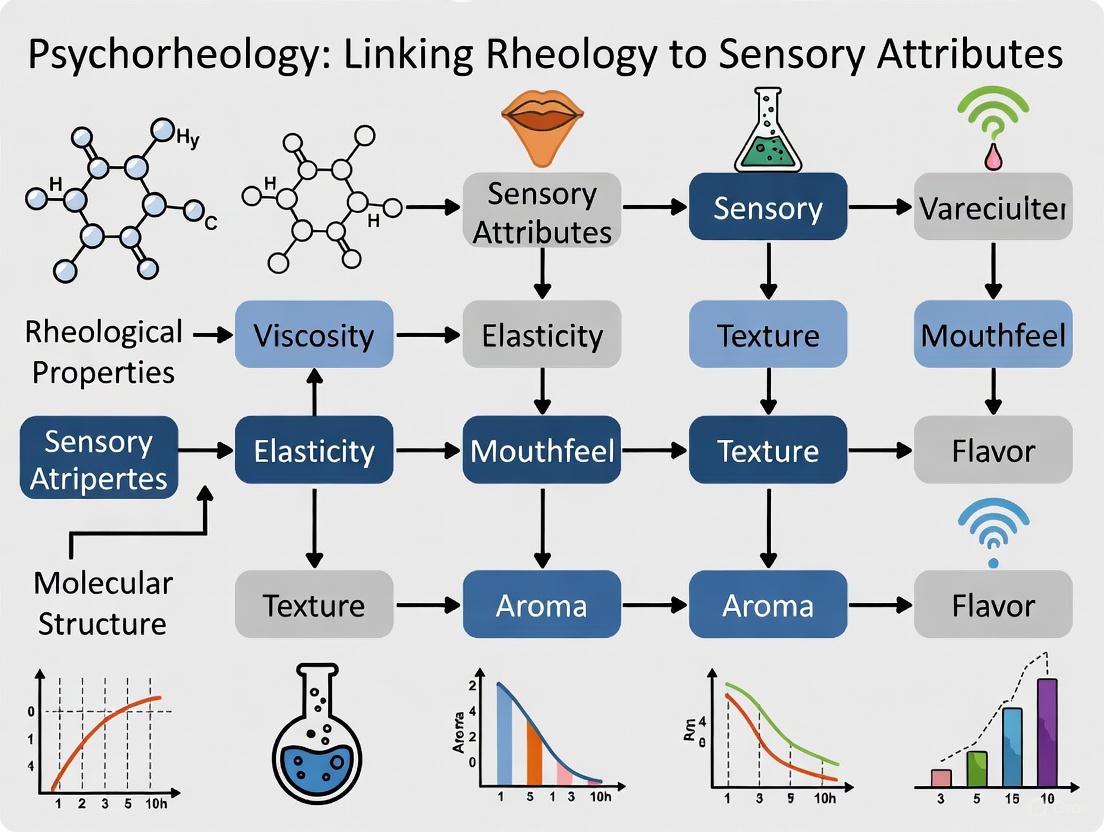
This article explores the critical intersection of rheology and sensory science, known as psychorheology, for researchers and professionals in drug development.
Psychorheology in Drug Development: Linking Material Properties to Sensory Perception for Better Patient Outcomes
Abstract
This article explores the critical intersection of rheology and sensory science, known as psychorheology, for researchers and professionals in drug development. It establishes the foundational principles connecting material properties like viscosity, yield stress, and viscoelasticity to human sensory perception of pharmaceutical products. The scope encompasses traditional and emerging methodologies, including advanced rheological techniques and machine learning applications, to predict and optimize sensory attributes. It addresses common formulation challenges, such as balancing stability with spreadability and ensuring patient compliance, and validates psychorheological approaches through case studies in bioequivalence and product performance. The synthesis provides a framework for leveraging psychorheology to design more effective and patient-accepted drug delivery systems.
Defining Psychorheology: Bridging Material Science and Sensory Perception
Psychorheology is an interdisciplinary science that establishes quantitative relationships between the rheological (flow and deformation) properties of materials and their resulting sensory perception. This field bridges the fundamental physical characterization of materials with the human psychological response to texture, mouthfeel, spreadability, and other tactile experiences. In essence, it connects objective material measurements with subjective sensory experiences, providing critical insights for industries ranging from pharmaceuticals and food to cosmetics and biomedical products [1] [2].
The foundation of psychorheology lies in recognizing that mechanical signals from a material are translated by the human nervous system into specific sensory attributes. For pharmaceutical scientists and researchers, this relationship is paramount for designing drug formulations that not only deliver APIs effectively but also provide optimal patient experiences—affecting compliance, acceptability, and therapeutic outcomes. The emergence of advanced analytical techniques, including large amplitude oscillatory shear (LAOS) and machine learning, has significantly enhanced the predictive power of psychorheological models, transforming this field from descriptive to predictive [1] [2].
Fundamental Rheological Principles in Sensory Perception
Viscoelasticity and Sensory Attributes
Most biological and pharmaceutical materials exhibit viscoelasticity, simultaneously displaying solid-like (elastic) and liquid-like (viscous) characteristics. The balance between these properties fundamentally influences sensory perception:
- Elastic (Storage) Modulus (G′): Represents the solid-like, energy-storing component of a material. A dominant G′ is often perceived as firmness, stand-up, or shape retention [3].
- Viscous (Loss) Modulus (G″): Represents the liquid-like, energy-dissipating component. A dominant G″ is frequently associated with spreadability, smoothness, or yielding behavior [3].
The loss factor (tan δ = G″/G′) quantifies this balance. A low tan δ (G′ > G″) indicates solid-like behavior, while a high tan δ (G″ > G′) indicates fluid-like behavior. This ratio is crucial for predicting whether a topical formulation will feel "rich" or "light" or whether a dysphagia formulation will be safely swallowed [3].
Non-Newtonian Behavior and Consumption/Application
Many pharmaceutical and food products are non-Newtonian fluids, meaning their viscosity changes under different stress conditions or shear rates. This behavior directly correlates with sensory phases:
- Shear-Thinning: Viscosity decreases with increasing shear rate. This is critical for products that need to be thick at rest but easy to spread or swallow upon application. Examples include lotions, gels, and thickened liquids for dysphagia [4] [5].
- Yield Stress: The minimum stress required to initiate flow. This property determines whether a material will hold its shape on a spoon or in a tube until applied, as seen in toothpastes and ointments [5].
Table 1: Key Rheological Parameters and Their Sensory Correlates
| Rheological Parameter | Sensory/Tactile Correlate | Typical Measurement |
|---|---|---|
| Elastic Modulus (G′) | Firmness, Gel Strength, Shape Retention | Oscillatory Rheology |
| Viscous Modulus (G″) | Drip, Spreadability, Smoothness | Oscillatory Rheology |
| Loss Factor (tan δ) | "Heaviness" vs. "Lightness" | G″/G′ |
| Apparent Viscosity | Thickness, Resistance to Flow | Rotational Rheology |
| Yield Stress | Sagging, Stand-up, Extrudability | Amplitude Sweep |
| Extensional Viscosity | Stringiness, Stickiness | Extensional Rheology |
Experimental Methodologies in Psychorheology
A robust psychorheological analysis requires the integration of precise material characterization with controlled sensory evaluation.
Advanced Rheological Characterization
Moving beyond simple viscosity measurements, advanced techniques probe material structure under realistic deformation conditions.
- Large Amplitude Oscillatory Shear (LAOS): Conventional oscillatory tests measure properties in the linear viscoelastic region (LVR), where the microstructure is unperturbed. LAOS extends this into the non-linear region, applying large deformations that break down the structure, more accurately simulating real-world processes like spreading, chewing, or pumping. Parameters derived from the "Sequence of Physical Processes" (SPP) analysis of LAOS data have shown high correlation with sensory textures in cosmetics and food [1] [2].
- Extensional Rheology: This measures a material's resistance to flow when stretched, which is highly relevant to sensations like stringiness or stickiness during application or swallowing. It provides information not captured by shear rheology alone [2].
- Amplitude and Frequency Sweeps: An amplitude sweep identifies the LVR and the yield point—the stress at which the structure begins to break down. Frequency sweeps, performed within the LVR, simulate the timescale of processes, from slow sedimentation (low frequency) to rapid impact or chewing (high frequency) [3].
Correlative Sensory Evaluation Protocols
Sensory analysis must be conducted with scientific rigor to generate meaningful data for correlation with instrumental measurements.
- Panel Training: Participants are screened and trained to recognize and quantify specific attributes (e.g., thickness, stickiness, slipperiness) using standardized lexicons and reference materials.
- Controlled Testing Environment: Evaluations are conducted in isolated sensory booths with controlled lighting and temperature to minimize external bias.
- Rating Methodology: Panelists typically use structured scales (e.g., 0-100 points) to rate the intensity of specific attributes or their overall acceptability. For instance, a study on dysphagia liquids had panels evaluate sensory perception at different viscosity levels [4].
- Data Triangulation: Combining instrumental rheology with sensory data and consumer preference studies provides a complete picture from material properties to market acceptability.
Figure 1: The typical workflow in a psychorheology study integrates material characterization with sensory science and data analysis to build predictive models.
Key Applications and Case Studies
Pharmaceutical Formulations and Patient Acceptability
Rheological properties are critical for the functionality and patient compliance of various dosage forms.
- Dysphagia Management: A 2024 study highlights the direct link between the viscosity of thickened liquids and sensory perception in young and elderly individuals. The study prepared unflavored and flavored liquids at 10 different viscosity levels. Rheological properties were assessed via syringe flow tests and line spread tests, while sensory panels evaluated perception. Key findings revealed that the older demographic preferred higher viscosity liquids compared to the younger group, and flavor also influenced acceptability. This underscores the need for age-specific and product-specific rheological guidelines to ensure patient safety and compliance [4].
- Topical and Transdermal Drug Delivery: The sensory profile of creams, ointments, and gels—attributes like spreadability, greasiness, and after-feel—are dominant factors in patient adherence. Psychorheology helps optimize the formulation by balancing rheological modifiers and emollients to achieve desirable sensory characteristics without compromising drug release or stability [6] [7].
- Hot Melt Extrusion (HME): In the production of amorphous solid dispersions (ASDs), the rheology of drug-polymer melts under high temperature and shear is critical for processability. Understanding these properties helps in designing ASDs with the desired physical stability and dissolution profile, ultimately affecting drug bioavailability [8].
Food and Cosmetic Sciences
The principles of psychorheology are equally pivotal in food and cosmetic industries, where consumer choice is heavily influenced by texture and mouthfeel.
- Yogurt Texture Design: A 2025 study exemplifies data-driven psychorheology, where 105 yogurt samples were produced with varying processing parameters. Their rheological behavior was analyzed using LAOS to mimic conditions during consumption. Sensory attributes were evaluated via panel tests. A machine learning model successfully predicted sensory scores, and feature importance analysis identified key rheological parameters governing texture perception during different eating phases (scooping, first bite, swallowing). This allows for targeted texture design [1] [9].
- Cosmetic Sensory Prediction: A 2024 study created a predictive model for cosmetic textures using the largest-ever assembled rheology and sensory database. It found that LAOS and extensional rheology parameters were more effective as features for predicting sensory attributes than conventional rheological parameters. This indicates the critical role of non-linear rheological behavior in the texture perception mechanism of skincare products [2].
Table 2: Summary of Psychorheological Findings from Key Studies
| Product Category | Key Rheological Parameter(s) | Linked Sensory Attribute(s) | Study Insight |
|---|---|---|---|
| Yogurt [1] | LAOS parameters, Complex Viscosity | Thickness, Stickiness, Swallowing Ease | Machine learning models achieved high predictive accuracy (RMSE <6/100), identifying key parameters for each consumption phase. |
| Dysphagia Liquids [4] | Apparent Viscosity (at 50 s⁻¹), Syringe Flow Test Result | Thickness, Slickness, Overall Acceptability | Older adults preferred higher viscosity liquids than younger adults. Samples were classified into four distinct clusters based on rheology and sensory properties. |
| Cosmetics [2] | LAOS-SPP parameters, Extensional Viscosity | Spreadability, Stickiness, Oiliness | LAOS parameters were more effective predictors of spreadability than conventional metrics, enabling superior product formulation. |
| Hydrogels [3] | Elastic Modulus (G′), Viscous Modulus (G″) | Gel Strength, Lubricity | The G′/G″ ratio at different frequencies predicts performance under stress (e.g., blinking for eye gels, joint movement for synovial fluids). |
The Scientist's Toolkit: Essential Research Reagents and Materials
Successful psychorheological research relies on a suite of specialized materials and instruments.
Table 3: Key Research Reagents and Equipment for Psychorheology
| Item | Function in Psychorheology | Example Usage |
|---|---|---|
| Rotational Rheometer | Measures viscosity as a function of shear rate (flow curves) and viscoelastic moduli (G′, G″) via oscillatory tests. | Characterizing the shear-thinning behavior of a lotion and its elastic strength at rest. |
| LAOS Capability | Applies large deformations to probe material structure under non-linear conditions, simulating real-world use. | Analyzing the breakdown of a yogurt's protein network during mastication. |
| Extensional Rheometer | Measures resistance to stretching forces, quantifying stringiness or cohesiveness. | Evaluating the stickiness of a syrup or honey. |
| Texture Analyzer | Performs empirical tests (e.g., back extrusion, penetration) that correlate with sensory firmness and consistency. | Measuring the firmness and cohesiveness of yogurts [9]. |
| Commercial Thickeners (e.g., Xanthan Gum, Modified Starch) | Used to create model systems with precisely controlled rheological properties for sensory studies. | Preparing dysphagia liquids at standardized viscosity levels [4]. |
| Standardized Sensory Scales | Provides a consistent framework for trained panels to quantify subjective sensory perceptions. | Using a 100-point scale to rate "slickness" and "thickness" [1] [4]. |
Figure 2: Logical relationships between key rheological properties and the sensory perceptions they drive, culminating in overall user preference.
Psychorheology provides a powerful, quantitative framework for understanding and designing the human experience of products. By rigorously linking fundamental rheological properties with quantified sensory perceptions, this science moves product development beyond trial-and-error into the realm of predictive design. The integration of advanced rheological techniques like LAOS with data-driven modeling and machine learning represents the cutting edge of the field, enabling researchers to deconstruct complex sensory experiences into actionable material parameters. For pharmaceutical scientists, this approach is indispensable for creating next-generation drug formulations that are not only therapeutically effective but also optimized for patient acceptability and compliance, thereby improving overall health outcomes.
Psychorheology is an interdisciplinary field that establishes the quantitative relationship between instrumental rheological measurements and subjective sensory perceptions [10]. For researchers and product development professionals, particularly in pharmaceuticals, cosmetics, and food science, psychorheology provides a critical framework for predicting how consumers will experience a product based on its fundamental physical properties. This approach transforms subjective descriptions like "creaminess," "spreadability," and "firmness" into quantifiable, reproducible parameters that can be optimized during product development [11] [12]. The primary rheological properties that govern these sensory experiences are viscosity, yield stress, and viscoelasticity.
Viscoelasticity, a key property in this framework, describes materials that exhibit both viscous (liquid-like) and elastic (solid-like) characteristics when deformed [13]. Many complex fluids, including pharmaceutical gels, creams, and lotions, display viscoelastic behavior that directly influences their sensory performance and application characteristics [13] [11]. This technical guide explores the fundamental rheological properties governing sensory attributes, provides detailed experimental methodologies for their characterization, and establishes the critical correlations that enable researchers to predict sensory outcomes from instrumental data.
Fundamental Rheological Properties and Their Sensory Significance
Viscosity and Flow Behavior
Viscosity represents a fluid's internal resistance to flow. In sensory terms, viscosity primarily influences attributes like thickness and pourability [11]. However, most complex products exhibit non-Newtonian behavior, meaning their viscosity changes with the applied shear rate, which closely mirrors real-world usage conditions.
- Shear-Thinning: Viscosity decreases with increasing shear rate. This property is crucial for products that need to be stable during storage but easy to spread during application [14]. Lotions and creams typically exhibit this behavior [12].
- Thixotropy: A time-dependent shear-thinning property where viscosity decreases under constant shear and recovers when the shear is removed. This impacts sensory attributes like longevity and structural recovery after application [14].
- Instantaneous Viscosity Maximum (IVM): Research on commercial lotions has identified IVM, determined in stress ramp tests, as the best overall rheological predictor for multiple sensory attributes, particularly those related to pick-up and rub-out phases [12].
Yield Stress
Yield stress is the critical stress that must be applied to initiate flow in a structured material [11]. Beneath this stress, the material behaves as an elastic solid; above it, the material flows like a liquid. This property has profound implications for product performance and sensory perception:
- Pourability and Dispensing: Yield stress determines whether a cream will hold its shape in a container or dispense easily [11].
- Shape Integrity: In cosmetics, yield stress helps maintain aesthetic appearance and structure in jars or tubes [11].
- Application Feel: Products with appropriate yield stress provide sufficient resistance during pickup but yield smoothly during spreading [12].
Studies have demonstrated that yield stress values derived from different methodologies (stress ramp, step-shear, and oscillatory strain sweeps) are closely correlated, providing multiple experimental pathways to this key parameter [12].
Viscoelasticity
Viscoelasticity combines liquid-like (viscous) and solid-like (elastic) characteristics, quantified through dynamic oscillatory testing [13] [11]. The primary parameters include:
- Storage Modulus (G′): Measures the elastic, solid-like component of a material, representing energy stored and recovered during deformation [13] [14]. G′ correlates with sensory attributes like firmness and structural integrity [15] [11].
- Loss Modulus (G″): Measures the viscous, liquid-like component, representing energy dissipated as heat during deformation [13] [14]. G″ influences sensory attributes such as spreadability and smoothness [11].
- Loss Tangent (tan δ = G″/G′): The ratio of viscous to elastic components indicates the dominant character of the material [15]. A low tan δ indicates solid-like behavior (elastic dominance), while a high tan δ indicates liquid-like behavior (viscous dominance).
The strain amplitude sweep test determines the Linear Viscoelastic Region (LVR), where the material's structure remains intact during deformation. The length of the LVR provides information on cream structure/firmness—longer LVR indicates more firm/structured creams [11].
Table 1: Fundamental Viscoelastic Parameters and Their Sensory Correlations
| Rheological Parameter | Physical Interpretation | Sensory Attribute | Measurement Technique |
|---|---|---|---|
| Storage Modulus (G′) | Elastic/Solid-like character | Firmness, Cohesiveness [15] | Oscillatory Amplitude Sweep |
| Loss Modulus (G″) | Viscous/Liquid-like character | Spreadability, Smoothness [11] | Oscillatory Amplitude Sweep |
| Loss Tangent (tan δ) | Balance of viscous/elastic components | Stickiness, Difficulty to Dissolve [15] | Frequency Sweep |
| Complex Modulus (G*) | Overall resistance to deformation | Thickness, Richness [10] | Frequency Sweep |
| Yield Stress | Stress required to initiate flow | Pourability, Shape Integrity [11] | Stress Ramp/Amplitude Sweep |
Experimental Protocols for Rheological-Sensory Correlation
Sample Preparation and Conditioning
Proper sample preparation is crucial for reproducible rheological measurements. For cream formulations, samples should be stored under controlled conditions (temperature and humidity) and subjected to minimal pre-shearing before testing to preserve their native structure [11]. All measurements should be performed at relevant application temperatures—for skin products, this is typically 32±1°C to simulate skin surface conditions [11].
Viscometry Testing for Yield Stress and Flow Behavior
Objective: Determine yield stress and steady-flow viscosity properties [11] [12].
Protocol:
- Stress Ramp Test: Apply a linearly increasing shear stress from 0.1 to 1000 Pa while measuring viscosity. The yield stress is identified as the point where viscosity drops precipitously [12].
- Flow Curve Measurement: Subject the sample to a series of increasing shear rates (e.g., 0.01 to 100 s⁻¹) and measure the resulting viscosity. Fit data to appropriate models (Herschel-Bulkley, Power Law) to quantify shear-thinning behavior [11].
- Thixotropy Assessment: Perform a three-interval thixotropy test with low-high-low shear rate profile to evaluate structural breakdown and recovery [14].
Oscillatory Testing for Viscoelastic Properties
Objective: Characterize viscoelastic structure without destructive deformation [11].
Protocol:
- Amplitude Sweep:
- Apply oscillatory strain from 0.01% to 100% at constant frequency (1 Hz)
- Identify the Linear Viscoelastic Region (LVR) where G′ and G″ remain constant
- Determine the critical strain (γc) where structure begins to break down (G′ = G″) [11]
- Frequency Sweep:
- Apply oscillatory frequencies from 0.1 to 100 rad/s at strain within LVR
- Measure G′, G″, and tan δ across frequency range
- Analyze frequency dependence to determine material character: solid-like (G′ > G″, both independent of frequency) vs. liquid-like (G′ and G″ strongly frequency-dependent) [11]
- Temperature Ramp: For products with temperature-dependent behavior (e.g., cream cheese), monitor G′ and tan δ during heating/cooling cycles to simulate processing or usage conditions [15].
Complementary Sensory Evaluation Protocols
Objective: Establish quantitative sensory profiles for correlation with rheological data.
Protocol:
- Panel Training: Train 10-20 panelists using reference standards and structured lexicons [11]
- Three-Stage Evaluation:
- Quantitative Scoring: Use structured scales (e.g., 0-10) for each attribute with statistical analysis (ANOVA) to ensure reproducibility [11]
Research Reagent Solutions for Rheological Studies
Table 2: Essential Materials and Reagents for Rheological-Sensory Research
| Material/Reagent | Function in Research | Application Examples |
|---|---|---|
| Xanthan Gum | Organic rheology modifier; provides shear-thinning and suspension stability [16] | Food products, pharmaceutical suspensions, personal care creams |
| Gellan Gum | Gel-forming polysaccharide; creates heat-stable gels with clean release | Cultural media, plant-based alternatives, dessert gels |
| Carbomer (Carboner) | Synthetic polymer; forms clear gels with neutral pH after neutralization | Pharmaceutical gels, cosmetic formulations, topical applications |
| Silica | Inorganic rheology modifier; provides thixotropy and anti-settling | Adhesives, coatings, toothpaste |
| Clay Minerals (e.g., Laponite) | Inorganic thickener; forms gel structures in aqueous systems | Paints, cosmetics, drilling fluids [16] |
| Emulsifying Wax | Stabilizes oil-water interfaces and contributes to cream structure | Cosmetic creams, pharmaceutical ointments [11] |
| Cellulose Derivatives (e.g., HPMC, CMC) | Organic thickeners and water-retention agents | Food products, pharmaceutical tablets, paints |
Case Studies and Experimental Data
Commercial Cream Cheese: Fat Content and Texture Relationships
A comprehensive study of commercial US cream cheese with varying fat contents demonstrated clear correlations between rheological properties and sensory attributes:
- Full-fat cream cheeses showed significantly greater G′ values at temperatures below 25°C compared to reduced-fat and fat-free variants, indicating stronger elastic structure [15]
- Sensory analysis confirmed that full-fat cheeses were firmer, more cohesive, and more difficult to dissolve and spread [15]
- Structural mechanism: Fat globules partially covered with casein participate in casein particle aggregation, reinforcing the protein network structure [15]
Table 3: Correlation of Rheological and Sensory Properties in Commercial Lotions [12]
| Sensory Attribute | Category | Best Rheological Predictor | Correlation Strength (R²) |
|---|---|---|---|
| Integrity of Shape | Appearance | Slump test (image analysis) | >0.85 |
| Firmness | Pick-up | Instantaneous Viscosity Maximum (IVM) | 0.76-0.82 |
| Stickiness | Rub-out | G′/G″ ratio (tan δ) | 0.72-0.78 |
| Spreadability | Rub-out | Instantaneous Viscosity Maximum (IVM) | 0.74-0.81 |
| Cohesiveness | Pick-up | Storage Modulus (G′) | 0.70-0.75 |
Cosmetic Creams: Quantitative Sensory Interpretation
Research on oil-in-water cosmetic creams established specific rheological parameters for predicting sensory attributes:
- Yield stress provided realistic correlations for pourability and spreadability [11]
- Amplitude sweep parameters (LVR length) correlated with firmness perception [11]
- Frequency sweep data (G′ and G″ crossover) predicted stickiness during rub-out [11]
- Non-sticky creams exhibited no crossover of G′ and G″ moduli, while sticky formulations showed clear crossover points [11]
The systematic correlation of rheological properties with sensory attributes provides researchers and product developers with powerful tools for optimizing product experience. Key principles emerge from current research:
- Multiple rheological parameters are typically required to predict the complex sensory experience of a product, with IVM, yield stress, and viscoelastic moduli (G′, G″) providing complementary information [12]
- Testing conditions must simulate actual usage scenarios, including appropriate temperature, deformation rates, and recovery times [11]
- Psychorheological databases that accumulate correlations between instrumental and sensory data enable a priori prediction of sensory properties, reducing reliance on costly human panels [10]
As the field advances, the integration of fundamental rheology with sensory science will continue to enhance our ability to design products with precisely controlled user experiences, bridging the gap between laboratory measurements and human perception.
Figure 1: Relationship between key rheological properties and sensory attributes. Viscosity primarily influences thickness and spreadability, yield stress governs shape integrity and firmness, while viscoelasticity affects multiple attributes including firmness, stickiness, and spreadability [15] [11] [12].
Figure 2: Experimental workflow for establishing psychorheological correlations. The process begins with controlled sample preparation, proceeds through complementary instrumental and sensory testing, and culminates in statistical correlation analysis to build predictive models [11] [12].
The Impact of Sensory Perception on Patient Compliance and Product Acceptability
Sensory perception, the complex process by which organisms interpret and respond to environmental stimuli, plays a critically underappreciated role in therapeutic outcomes. In pharmaceutical development, the sensory attributes of medications—including taste, texture, and aftertaste—profoundly influence patient compliance and product acceptability. Unpleasant drug tastes such as bitterness, pungency, astringency, and sourness significantly impede medication adherence, particularly among pediatric and geriatric populations [17]. This technical guide examines the psychorheological relationships between a drug's physical properties, the sensory perception it elicits, and the subsequent behavioral response of medication adherence. By exploring quantitative evaluation methods, physiological mechanisms, and advanced masking technologies, this review provides researchers with a comprehensive framework for developing patient-centric pharmaceutical formulations that optimize both therapeutic efficacy and patient experience.
Quantitative Evidence: Linking Sensory Attributes to Compliance
Research consistently demonstrates that sensory perception directly impacts medication adherence through multiple mechanisms. The quantitative evidence below establishes the empirical foundation for this relationship.
Table 1: Sensory Factors Impacting Medication Compliance
| Sensory Factor | Impact on Compliance | Affected Populations | Supporting Data |
|---|---|---|---|
| Unpleasant Taste | Significantly impedes medication adherence [17] | Pediatric, geriatric [17] | Primary reason for medication refusal in 30-50% of pediatric cases [17] |
| Sensory Processing Sensitivity (SPS) | Correlates with medication sensitivity [18] | General population (20-33%) [18] | Moderate significant correlations (r=0.21-0.36, p<0.003-0.001) across 3 studies [18] |
| OTC Analgesic Use | Alters sensory thresholds [19] | Chronic pain patients | Increased sensory threshold (B=0.83, % variance=3.87, p=0.001) [19] |
| Texture Properties | Influences preference and swallowing ease [1] | All populations, especially dysphagia patients | Predictive ML models achieved RMSE <6 on 100-point scale for thickness, stickiness, swallowing [1] |
| Age-Related Changes | Reduces tolerance to strong tastes [17] | Geriatric patients | Increased aversion to spicy and astringent tastes [17] |
Table 2: Demographic Variations in Sensory Perception and Medication Response
| Demographic Factor | Sensory Perception Impact | Compliance Consequence |
|---|---|---|
| Pediatric Populations | Heightened sensitivity to bitter tastes [17] | Medication refusal, dosing errors [17] |
| Geriatric Populations | Reduced tolerance to pungency and astringency [17] | Treatment discontinuation, suboptimal dosing [17] |
| Gender Differences | Women report more adverse drug reactions [18] | Altered dosing requirements, increased side effects [18] |
| High SPS Individuals | Amplified responses to medications and side effects [18] | Require lower medication doses, experience more ADRs [18] |
Physiological and Psychological Mechanisms
Sensory Processing Pathways
The physiological process of taste perception begins when drug components dissolve in saliva and bind to taste receptors, generating electrical signals that travel via neurons to the brain's taste center for interpretation [17]. This pathway represents the initial biological interface between pharmaceutical formulations and patient experience.
Individual Differences in Sensory Processing
Beyond universal physiological pathways, individual differences significantly moderate sensory perception. The trait of Sensory Processing Sensitivity (SPS), found in 20-33% of the general population, is associated with greater awareness of and reactivity to environmental stimuli, including medications [18]. Individuals with high SPS demonstrate stronger responses to stimuli including emotional images, others' moods, sounds, smells, strong lights, and caffeine [18]. Neuroimaging studies have linked sensory hypersensitivity to specific brain regions, particularly the insula, which shows heightened activation in highly sensitive individuals [18].
Methodological Framework: Sensory Evaluation Protocols
Quantitative Taste Assessment Techniques
Accurate evaluation of unpleasant tastes is essential for optimizing formulations and improving drug quality during development [17]. Both subjective and objective methods provide complementary data for comprehensive sensory assessment.
Table 3: Sensory Evaluation Methods for Pharmaceutical Formulations
| Evaluation Method | Key Features | Applications | Advantages/Limitations |
|---|---|---|---|
| Sensory Panels | Human sensory feedback [17] | Palatability screening, formulation optimization [17] | High ecological validity; subject to individual variability [17] |
| Electronic Tongues | Biomimetic sensor arrays [17] | Bitterness prediction, masking efficiency [17] | High-throughput; limited to liquid formulations [17] |
| Chemical Assays | Quantitative analysis of unpleasant-tasting components [17] | API characterization, quality control [17] | Objective data; may not correlate with perception [17] |
| Biosensors | High sensitivity and biomimetic properties [17] | Early development screening [17] | Remarkable sensitivity; requires specialized equipment [17] |
| Psychorheological Analysis | Correlates rheological properties with sensory texture [1] | Yogurt texture assessment, swallowing prediction [1] | Quantifies texture-perception relationships; food-focused currently [1] |
Experimental Protocol: Comprehensive Sensory Evaluation
Objective: Systematically evaluate the sensory attributes of oral pharmaceutical formulations to predict and improve patient compliance.
Materials and Equipment:
- Electronic tongue system with sensor arrays
- Laboratory rheometer with large-amplitude oscillatory shearing (LAOS) capability
- Controlled sensory evaluation facility with standardized lighting and ventilation
- Reference compounds for taste qualities (bitter: quinine; sour: citric acid; etc.)
- Test formulations and placebo controls
Procedure:
Sample Preparation:
- Prepare test formulations according to standardized manufacturing protocols
- For solid dosage forms, create standardized solutions at physiologically relevant concentrations
- Maintain all samples at 37°C to simulate oral conditions
- Include positive and negative controls in each assay batch
Instrumental Analysis:
- Conduct rheological characterization using LAOS to simulate flow conditions during consumption [1]
- Perform electronic tongue analysis following manufacturer protocols with appropriate sensor calibration
- Measure chemical parameters relevant to taste perception (pH, osmolarity, etc.)
Human Sensory Panel:
- Recruit participants representing target demographic (including age, gender, and health status)
- Train panelists in sensory evaluation techniques using reference compounds
- Conduct double-blind evaluations using standardized scales for key attributes:
- Basic tastes (bitterness, sourness, sweetness, etc.)
- Mouthfeel characteristics (thickness, stickiness, chalkiness)
- Aftertaste qualities (duration, intensity, quality)
- Overall acceptability
- Include appropriate washout periods between samples to prevent carryover effects
Data Integration:
- Apply machine learning models to correlate instrumental measures with sensory perceptions [1]
- Identify key rheological parameters influencing each sensory texture attribute
- Develop predictive models for patient acceptability based on physicochemical properties
Validation:
- Compare predicted acceptability with actual compliance data from clinical studies when available
- Establish test-retest reliability for instrumental methods
- Verify sensitivity to detect clinically meaningful differences in palatability
Research Reagent Solutions for Sensory Optimization
Table 4: Essential Materials for Sensory Optimization Research
| Research Reagent | Function | Application Context |
|---|---|---|
| Bitterness Blockers | Inhibit bitter taste receptor signaling [17] | Masking bitter APIs like antibiotics and alkaloids [17] |
| Sweeteners | Activate sweet taste receptors to counter unpleasant tastes [17] | Correction of bitter, sour, or salty drug formulations [17] |
| Flavor Enhancers | Modulate overall flavor profile and aftertaste [17] | Improving palatability of liquid formulations and ODTs [17] |
| Nitrite Scavengers | Reduce nitrosamine formation by blocking nitrosation reactions [20] | Safety-driven reformulations to mitigate impurity risks [20] |
| Biomaterial Encapsulants | Create physical barriers to prevent API-taste bud interaction [17] | Taste masking without chemical modification of APIs [17] |
| Cyclooxygenase Inhibitors | Standard compounds for studying analgesic effects on sensory perception [19] | Research on NSAID impacts on sensory thresholds [19] |
Advanced Taste-Masking and Formulation Strategies
Interdisciplinary Framework for Sensory Optimization
Modern taste-masking requires an integrated approach that addresses multiple sensory dimensions and patient factors. The following framework illustrates the comprehensive strategy needed for effective sensory optimization.
Implementation Approaches
Physical Methods:
- Microencapsulation technologies create physical barriers that prevent drug-taste bud interactions [17]
- Multi-layer coating systems provide controlled release while blocking unpleasant tastes during oral processing [17]
- Hot-melt extrusion techniques enable taste masking through molecular dispersion of APIs in polymer matrices [17]
Chemical Methods:
- Ion-exchange resins complex with bitter drugs to reduce their interaction with taste receptors [17]
- Molecular complexes (e.g., cyclodextrins) form inclusion compounds that mask unpleasant tastes [17]
- Prodrug approaches chemically modify APIs to create less bitter derivatives that convert to active form after absorption [17]
Biological Methods:
- Bitterness blockers target specific taste receptors to inhibit bitter signal transduction [17]
- Flavor modulators enhance pleasant taste qualities to counterbalance unpleasant sensations [17]
- Receptor antagonists specifically block activation of bitter or irritant receptors [17]
Emerging Technologies and Future Perspectives
The field of sensory optimization is rapidly evolving with several emerging technologies showing significant promise. Artificial intelligence (AI)-driven predictive models are increasingly able to forecast sensory attributes based on molecular structure and formulation parameters, potentially reducing development time [17]. Nanotechnology-based delivery systems offer precise control over drug release profiles, potentially eliminating taste exposure in the oral cavity while maintaining therapeutic efficacy [17]. Additive manufacturing (3D printing) enables production of complex dosage forms with customized release profiles and potentially improved sensory characteristics [20]. Electronic tongue and biosensor technologies continue to advance, providing increasingly biomimetic approaches to taste assessment without human panel requirements [17]. Continuous manufacturing processes not only improve efficiency but also enable more consistent sensory characteristics across production batches [20].
Personalized medicine approaches are beginning to incorporate sensory perception differences, with potential for formulating medications tailored to individual sensory sensitivities and preferences [18]. The growing understanding of Sensory Processing Sensitivity as a biologically-based trait suggests opportunities for screening and customized formulation approaches for the 20-33% of the population with heightened sensory reactivity [18]. Digital health technologies offer complementary strategies for addressing compliance issues related to sensory factors through reminder systems, education, and adherence monitoring.
Sensory perception represents a critical interface between pharmaceutical products and patient behavior, with profound implications for medication compliance and therapeutic outcomes. The psychorheological relationship between a drug's physical properties, its sensory attributes, and patient acceptance requires multidisciplinary approaches spanning materials science, sensory psychology, formulation technology, and clinical practice. By implementing comprehensive evaluation protocols, utilizing advanced taste-masking strategies, and accounting for individual differences in sensory processing, researchers can develop medications that are not only therapeutically effective but also sensorially acceptable to diverse patient populations. The continuing advancement of predictive modeling, nanotechnology, and personalized approaches promises to further enhance our ability to optimize the sensory characteristics of pharmaceutical products, ultimately improving medication adherence and patient outcomes across all demographic groups.
The management of dysphagia, a prevalent condition affecting a significant portion of the elderly population, presents a complex challenge at the intersection of clinical nutrition, food science, and sensory perception. This condition, characterized by difficulty in swallowing, affects 15–40% of the elderly and individuals with neurological ailments like stroke, head and neck cancer, and Parkinson's disease [21]. The global population is rapidly aging, with South Korea, for instance, having already become a super-aged society with 20.3% of its population aged 65 years or over as of 2025 [22]. This demographic shift underscores the critical importance of developing effective dysphagia management strategies tailored to the specific needs of older adults.
This case study examines age-based differences in sensory preferences for dysphagia formulations through the theoretical lens of psychorheology, which investigates the relationship between the rheological properties of foods and their sensory perception. Dysphagia management primarily involves texture modification of foods and beverages using starches and gums to increase viscosity, thereby reducing aspiration risk [21]. However, these modifications often negatively impact sensory attributes, leading to poor compliance, dehydration, malnutrition, and associated health risks [21]. Within this framework, we explore how age-related physiological changes influence sensory perception and swallowing efficiency, and how these factors must inform the development of dysphagia-specific formulations.
Table 1: Prevalence and Impact of Dysphagia in Older Adults
| Aspect | Statistic | Source |
|---|---|---|
| General elderly prevalence | 15-40% | [21] |
| Healthy Thai community-dwelling older people | 11% | [23] |
| Korean population aged ≥65 years (2025) | 20.3% (super-aged society) | [22] |
| Patients treated for dysphagia in Korea (2023) | 72.7% aged ≥70 years | [22] |
| Major complications | Aspiration pneumonia, dehydration, malnutrition, reduced quality of life | [22] |
Psychorheological Framework: Linking Rheology to Sensory Perception
Psychorheology provides a crucial framework for understanding how the physical properties of dysphagia formulations influence sensory perception and acceptance across different age groups. This relationship is particularly complex in older adults with dysphagia, who experience age-related sensory decline alongside specific textural requirements for safe swallowing.
The Multidimensional Nature of Oral Processing
Conventional rheological measurements often fail to accurately predict sensory perception because they typically test only one variable at a time, struggling to simulate the intricate dynamic processes occurring in the mouth [24]. Oral textural sensation is highly dynamic and influenced by multiple factors including oral temperature, oral processing time, saliva mixing, and varied shear rate [24]. During swallowing, the oral cavity experiences a wide range of shear rates, predicted to range from close to zero to more than 1000 s⁻¹, depending on the mechanical properties of the food [24].
Recent advances in psychorheology have led to the development of a multiple dimensional rheology approach that synchronizes four key variables in a single measurement: oral residence time, bolus temperature, saliva ratio, and oral shear rate [24]. This approach has demonstrated that for low-temperature yogurt, apparent viscosity at a temperature of 13°C, saliva ratio of 20%, and shear rate of 1 s⁻¹ provides the most reliable prediction of in-mouth thickness perception [24]. This methodology offers a more accurate bridge between instrumental measurements and sensory experience, which is crucial for developing age-appropriate dysphagia formulations.
Taste-Texture Interactions in Dysphagia Formulations
The interaction between taste and texture represents a critical factor in the acceptability of dysphagia formulations. Thickening agents, while essential for safety, can significantly suppress taste and flavor perception, leading to reduced compliance [21]. The Critical Overlap Concentration of thickeners—the point at which polymer chains begin to overlap and entangle—plays a role in this suppression, though it alone does not reliably predict taste or flavor impairment [21].
The type and concentration of thickener significantly impact sensory attributes. For instance, fluid gels with moderate thickening (0.5% gellan gum) demonstrated better bitterness masking of medication compared to both thinner (0% gellan gum) and thicker (1% gellan gum) versions [25]. This non-linear relationship highlights the complex interplay between rheology and sensory perception that must be considered when formulating for elderly populations with potential polypharmacy.
Age-Related Physiological Changes Affecting Swallowing and Perception
Understanding age-based differences in sensory preference for dysphagia formulations requires an appreciation of the physiological changes that occur with aging, collectively known as presbyphagia—the natural aging of swallowing function [22].
Structural and Functional Changes
Aging induces degenerative changes across multiple systems involved in swallowing. Neurologically, decreased nerve conduction velocity and sensory discrimination impair the regulation and response speed of the swallowing process [22]. The loss of muscle mass and strength (30-50% by age 80) particularly affects the tongue and perioral muscles, reducing swallowing efficiency [22]. Additionally, decreased saliva production (xerostomia) impedes food movement and increases pharyngeal residue, further compromising swallowing safety [22].
Table 2: Age-Related Physiological Changes Affecting Swallowing and Sensory Perception
| Physiological System | Age-Related Changes | Impact on Swallowing and Perception |
|---|---|---|
| Nervous System | Degeneration of neural structures; decreased nerve conduction velocity | Delayed swallowing reflex; reduced sensory discrimination |
| Musculoskeletal System | Loss of muscle mass (0.5-1.0% annually); tongue atrophy | Reduced swallowing efficiency; incomplete lip closure |
| Oral Environment | Decreased saliva production; xerostomia | Impaired bolus formation and movement; increased pharyngeal residue |
| Sensory Function | Impaired taste and smell; reduced tactile sensation | Diminished flavor perception; altered texture perception |
| Respiratory System | Reduced lung volume and elasticity | Impaired coordination between swallowing and respiration |
Clinical Implications of Presbyphagia
These physiological changes have significant clinical implications. Older adults with dysphagia frequently exhibit impaired safety of swallow (ISS) and delayed time to laryngeal vestibular closure (LVC), which normally should be <340ms [26]. A study of chronic post-stroke oropharyngeal dysphagia patients found baseline LVC times of 402.82±111.98ms, indicating significant impairment in airway protection mechanisms [26]. Furthermore, pharyngeal residue following swallowing is common, with studies identifying residue in 47-66% of asymptomatic older adults and 61-71% of those with symptomatic swallowing difficulties [23].
Experimental Investigations of Formulation Efficacy
Clinical Evaluation of Smoothie Formulas for Dysphagia
A recent cross-sectional study involving 63 participants aged 65 years or over investigated the effects of specially developed high-protein, low-carbohydrate smoothie formulas on swallowing capacity compared to a commercial formula (Ensure) [23]. Participants were divided into asymptomatic (n=32, aged 72.9±5.66 years) or symptomatic swallowing difficulty (n=31, aged 75.0±6.48 years) groups based on swallowing screening questionnaires.
The study developed four smoothie formulas with varying compositions: white sesame soy milk smoothie (WS), white sesame soy milk smoothie-low carbohydrate (WSLC), black sesame soy milk smoothie-low carbohydrate (BSLC), and chicken shitake smoothie (CS). These formulations provided normocaloric (1.0-1.1 kcal/ml), hypoglycemic (25-38% carbohydrate), hyperproteic (24-28% protein) nutritional profiles [23]. The viscosity of these formulations ranged from 51-350 centipoise (cP), classifying them as nectar-like textures according to the National Dysphagia Diet (NDD) criteria, while Ensure had a viscosity of 1-50 cP, classifying it as a thin liquid [23].
Swallowing capacity was assessed using Fiberoptic Endoscopic Evaluation of Swallowing (FEES), conducted by experienced physicians in a blinded, randomly crossover sequence for three drinks (WS, CS, and Ensure) [23]. The results demonstrated that:
- WS showed fewer premature spills than Ensure in the symptomatic group (5±0.03 vs. 4.7±0.12, p<0.05), but not in the asymptomatic group [23].
- CS had fewer premature spills than Ensure in both groups [23].
- Pharyngeal residue was observed in both asymptomatic (47-66%) and symptomatic (61-71%) groups across all formulas [23].
These findings suggest that smoothie drinks with specific rheological properties (51-350 cP) may offer viable alternatives to commercial formulas for older adults with dysphagia, potentially reducing premature spillage and improving swallowing safety [23].
Sensory Perception of Thickened Formulations
The sensory implications of thickened beverages represent a critical factor in compliance and nutritional outcomes. A review of taste-texture interactions in dysphagia management highlighted that thickener type and concentration significantly impact taste and flavor perception [21]. These sensory-related complaints are the leading criticism driving low compliance with thickened beverages, leading to dehydration, malnutrition, and associated health risks [21].
Research on fluid gels as potential age-appropriate dosage forms for elderly patients with dysphagia has provided insights into sensory preferences. A cross-sectional survey involving 673 participants revealed that:
- 50.8% believed fluid gels could be easily swallowed [25].
- 45.3% perceived them as safe to consume [25].
- 37.7% believed they could mask drug bitterness [25].
- 43.8% considered them suitable as a pharmaceutical formulation [25].
Additionally, a clinical study involving 30 healthy participants demonstrated that moderately thickened fluid gels (0.5% gellan gum) effectively masked the bitterness of medication and were easily swallowed [25]. This highlights the importance of optimizing viscosity not only for safety but also for sensory acceptability.
Methodological Protocols for Dysphagia Formulation Research
Rheological Characterization Protocol
Comprehensive rheological characterization is essential for developing effective dysphagia formulations. The following protocol, adapted from multiple studies, provides a standardized approach:
Viscosity Measurement:
- Use a coaxial spindle rheometer (e.g., Brookfield RST-CC TouchTM) with appropriate spindle geometry [23].
- Measure viscosity across a range of shear rates (0.1-1000 s⁻¹) to characterize shear-thinning behavior [24].
- Classify formulations according to IDDSI levels or National Dysphagia Diet criteria [23].
Multiple Dimensional Rheology Assessment:
- Synchronize four variables: oral residence time, bolus temperature, saliva ratio, and oral shear rate [24].
- Incorporate artificial saliva (standardized composition) at ratios relevant to oral processing (e.g., 20%) [24].
- Test at temperatures reflecting oral conditions (e.g., 13°C for cold foods, 37°C for warm foods) [24].
- Analyze apparent viscosity at specific parameter combinations (e.g., 13°C, 20% saliva, 1 s⁻¹ shear rate for yogurt) [24].
Texture Profile Analysis:
- Conduct large-amplitude oscillatory shearing (LAOS) to characterize nonlinear viscoelastic properties [1].
- Evaluate texture parameters such as hardness, cohesiveness, and adhesiveness using texture analyzers.
Clinical Swallowing Assessment Protocol
The assessment of swallowing function requires standardized instrumental evaluation:
Fiberoptic Endoscopic Evaluation of Swallowing (FEES):
- Perform with experienced physicians in a blinded, randomized crossover sequence [23].
- Administer 5ml aliquots of test formulations in random order.
- Record and analyze parameters including:
Videofluoroscopic Swallowing Study (VFSS):
Sensory Evaluation Protocol
Sensory assessment with appropriate panels is crucial for evaluating acceptability:
Panel Selection:
- Include both healthy young adults and older adults with and without dysphagia.
- Screen for taste sensitivity and swallowing function.
Testing Protocol:
- Use visual analog scales (VAS) for attributes like thickness, stickiness, ease of swallowing, and overall preference [1] [25].
- Evaluate bitterness masking using VAS for medication-containing formulations [25].
- Conduct paired comparisons or triangle tests for formulation differences.
- Assess aftertaste and mouthfeel characteristics.
Data Analysis:
- Employ statistical analyses (ANOVA, Friedman's test) to identify significant differences [25].
- Use correlation analysis to relate rheological parameters to sensory attributes [1].
- Apply machine learning techniques (e.g., predictive modeling) to identify key parameters influencing sensory texture [1].
The Scientist's Toolkit: Essential Research Reagents and Materials
Table 3: Essential Research Materials for Dysphagia Formulation Studies
| Material/Reagent | Function/Application | Example Specifications |
|---|---|---|
| Commercial Thickeners | Base for viscosity modification; starch-based vs. gum-based comparisons | Xanthan gum, gellan gum, modified starches [21] |
| Artificial Saliva | Simulate oral processing conditions; standardize saliva incorporation | Standardized composition (electrolytes, mucin, enzymes) [24] |
| Rheometer | Characterize flow properties and viscoelasticity | Coaxial spindle configuration (e.g., CCT-40 spindle) [23] |
| Texture Analyzer | Quantify mechanical properties relevant to oral processing | Capable of compression-extrusion tests; multiple probe geometries |
| Videofluoroscopy System | Instrumental assessment of swallowing biomechanics | Capable of recording at ≥30fps; measurement software for kinematic analysis [26] |
| Fiberoptic Endoscopic Evaluation System | Clinical assessment of swallowing safety and efficiency | Flexible endoscope with recording capabilities; standardized rating scales [23] |
| Standardized Reference Formulations | Calibration and comparison across studies | IDDSI framework levels; commercial formulas (e.g., Ensure) [23] |
Diagram: Psychorheology Framework for Dysphagia Formulation Development
Diagram Title: Psychorheology Framework for Dysphagia Formulation Development
Diagram: Experimental Workflow for Dysphagia Formulation Development
Diagram Title: Experimental Workflow for Dysphagia Formulation Development
This case study demonstrates significant age-based differences in sensory preference for dysphagia formulations, framed within a psychorheological context that links material properties to sensory perception. Key findings indicate that:
Rheological properties must be optimized for both safety and sensory acceptability, with moderate viscosity formulations (51-350 cP) showing promise for reducing premature spillage while maintaining palatability [23].
Age-related physiological changes significantly impact sensory perception and swallowing efficiency, necessitating specialized formulation approaches for older adults with dysphagia [22].
Multidimensional rheological approaches that synchronize oral processing variables provide more accurate predictions of sensory perception than conventional single-variable measurements [24].
Taste-texture interactions play a crucial role in compliance, with moderate thickening potentially offering optimal bitterness masking for medicated formulations [25].
Future research should focus on developing personalized formulation approaches that account for individual variations in oral processing, sensory perception, and swallowing physiology across different age groups. The integration of machine learning and predictive modeling, as demonstrated in yogurt texture analysis [1], offers promising avenues for optimizing dysphagia formulations based on psychorheological principles. Additionally, longitudinal studies are needed to assess the long-term nutritional outcomes and compliance associated with different dysphagia formulation strategies.
As global populations continue to age, the development of effective, acceptable dysphagia formulations based on sound psychorheological principles will play an increasingly vital role in maintaining nutritional status, quality of life, and overall health outcomes for older adults.
The demonstration of bioequivalence for topical generic products presents a unique challenge that extends beyond conventional pharmaceutical equivalence. This whitepaper introduces psychorheology as the critical fourth dimension in bioequivalence assessment, creating a vital bridge between the quantitative rheological properties of semisolid formulations and their qualitative sensory perception. By integrating principles from materials science, sensory psychology, and regulatory science, we present a comprehensive framework for utilizing psychorheology to demonstrate therapeutic equivalence. This approach addresses a significant gap in current regulatory paradigms by linking microstructure to patient-centric product performance, thereby offering a sophisticated methodology for establishing bioequivalence of complex generic topical products where traditional pharmacokinetic endpoints are unattainable.
For topical generic drugs, establishing bioequivalence through conventional clinical endpoint studies is particularly challenging due to high variability, cost, and ethical concerns. Regulatory agencies have therefore developed a modular framework for equivalence demonstration that emphasizes quality attributes as surrogate markers for clinical performance [28]. The European Medicines Agency (EMA) specifically requires demonstration of qualitative (Q1), quantitative (Q2), and microstructure (Q3) sameness, coupled with product performance (Q4) testing [28].
Within this framework, rheology has emerged as a fundamental tool for characterizing microstructure equivalence (Q3). However, traditional rheological assessment often fails to capture how formulation characteristics translate to in-use performance and patient acceptability. This is where psychorheology—the science relating rheological parameters to sensory perception—introduces a crucial dimension to bioequivalence determination. By establishing predictive relationships between instrumental measurements and human sensory response, psychorheology provides a patient-focused bridge between formulation microstructure and therapeutic performance.
The Theoretical Foundation of Psychorheology
Defining the Psychorheological Interface
Psychorheology operates at the intersection of material science and sensory psychology, investigating how the flow and deformation properties of semisolid formulations correlate with subjective sensory experiences during product application. This relationship is fundamental to patient compliance and treatment efficacy, as products with unfavorable sensory attributes are likely to be used inconsistently or abandoned entirely [29] [30].
The psychorheological framework posits that the structural network of a formulation, characterized by its rheological profile, dictates the mechanical signals transmitted to cutaneous sensory receptors during application. These signals are then interpreted by the central nervous system as specific sensory attributes such as spreadability, thickness, greasiness, and stickiness [29].
The Regulatory Imperative for Sensory Consideration
The importance of patient-centric formulation design is explicitly recognized in the EMA draft guideline on quality and equivalence of topical products, which advocates for a patient-focused approach during development [28]. This regulatory guidance emphasizes that aspects influencing patient acceptability should be primary concerns, recognizing that sensory properties can significantly impact medication adherence and thus therapeutic outcomes.
For generic products, this presents both a challenge and opportunity. While generic formulations must achieve sensory characteristics comparable to the reference listed drug (RLD) to ensure similar patient acceptance, the quantitative demonstration of this equivalence has remained elusive. Psychorheology provides the methodological foundation to objectively characterize and match these critical sensory attributes.
Essential Rheological Parameters and Their Sensory Correlates
Key Rheological Properties in Topical Formulation Design
A comprehensive rheological profile for topical semisolids encompasses both rotational and oscillatory measurements that characterize material behavior under various stress conditions. Regulatory authorities, particularly the EMA, specify mandatory parameters that must be reported for adequate characterization [28].
Table 1: Critical Rheological Parameters and Their Functional Significance
| Rheological Parameter | Functional Significance | Regulatory Status |
|---|---|---|
| Zero-shear viscosity | Predicts suspension stability & drug release profile | EMA recommended [28] |
| Yield stress | Determines spreadability & extrusion force | EMA required [28] [31] |
| Thixotropic relative area | Indicates structural recovery post-application | EMA required [28] |
| Storage modulus (G′) | Measures solid-like character & rigidity | Implied in EMA requirements [28] |
| Loss modulus (G″) | Quantifies liquid-like behavior & flow | Implied in EMA requirements [28] |
| High-shear viscosity | Predicts spreadability during application | Industry standard [31] |
Psychorheological Correlations: Bridging Instrumental Measurements to Sensory Experience
Substantial research has established consistent relationships between specific rheological parameters and sensory attributes. These psychorheological correlations form the predictive foundation for connecting formulation design to patient experience.
Spreadability, one of the most critical application attributes, correlates strongly with yield stress and high-shear viscosity. Formulations with moderate yield stress (50-200 Pa) typically demonstrate optimal spreadability—low enough for easy application yet sufficient to prevent undesirable dripping [31]. The thixotropic index further predicts whether a product will recover its structure quickly after spreading, affecting the perceived "body" of the formulation on skin.
Afterfeel attributes, including stickiness, greasiness, and residue formation, demonstrate strong correlation with tactile friction measurements and viscoelastic moduli [29]. Research has shown that starch-based Pickering creams, which exhibit higher tactile friction coefficients, are perceived as significantly less greasy, sticky, and slippery compared to traditional surfactant-stabilized creams [29].
Table 2: Established Psychorheological Correlations
| Sensory Attribute | Correlated Rheological/Tribological Parameters | Impact on Patient Acceptance |
|---|---|---|
| Spreadability | Yield stress, High-shear viscosity | High impact during application phase |
| Richness/Thickness | Zero-shear viscosity, Storage modulus (G′) | Influences perceived potency |
| Stickiness | Loss modulus (G″), Phase angle (δ) | Major determinant of non-compliance |
| Greasiness | Tactile friction coefficient, Viscoelastic profile | Affects cosmetic acceptability |
| Absorption Rate | Structural recovery time, Thixotropic area | Influences dressing time |
| Residual Film | Complex modulus, Tribological properties | Determines long-term feel |
Methodological Framework for Psychorheological Assessment
Comprehensive Rheological Profiling Protocol
Standardized methodology is essential for generating reliable, reproducible psychorheological data. The following protocol, adapted from regulatory guidelines and recent research, provides a robust framework for comprehensive characterization [28]:
Equipment Qualification and Method Validation:
- Perform rheometer qualification using viscosity reference standards (e.g., RT5000)
- Validate critical method variables: geometry selection, temperature control, and application mode
- Establish precision for key endpoints: zero-shear viscosity, yield points, moduli, and thixotropic area
Rotational Measurements:
- Conduct controlled shear rate ramps (0.01-1000 s⁻¹) to characterize flow behavior
- Determine yield point via oscillatory amplitude sweep at constant frequency
- Calculate thixotropic area via hysteresis loop (ascending/descending shear rate cycles)
Oscillatory Measurements:
- Perform amplitude sweep to identify linear viscoelastic region (LVR)
- Conduct frequency sweep (0.1-100 rad/s) at constant stress within LVR
- Calculate viscoelastic parameters: storage modulus (G′), loss modulus (G″), and phase angle (δ)
Sensory Evaluation Panel Design
Correlating rheological data with sensory perception requires carefully controlled human panel studies with standardized assessment protocols:
Panel Selection and Training:
- Recruit 15-20 participants with demonstrated sensory acuity
- Conduct screening for tactile sensitivity thresholds
- Provide extensive training on attribute recognition and scale usage
Sensory Attribute Assessment:
- Evaluate application attributes: ease of pickup, spreadability, initial consistency
- Assess during-rub attributes: slip, thickness change, absorption rate
- Measure afterfeel attributes: residue, stickiness, greasiness, softness
- Utilize structured scales (e.g., 0-10 or categorical) for quantitative analysis
Experimental Controls:
- Maintain controlled environmental conditions (temperature: 22±2°C, humidity: 50±5%)
- Implement blind coding and randomized presentation order
- Standardize application amount (typically 100-200 mg) and site (ventral forearm)
Statistical Correlation Methodology
Establishing predictive psychorheological relationships requires advanced multivariate statistical approaches:
- Employ Partial Least Squares Regression (PLS) to model relationships between rheological parameters and sensory attributes
- Calculate Pearson correlation coefficients for individual parameter-attribute pairs
- Determine discriminatory power of rheological parameters to differentiate between formulations
- Establish prediction models for key sensory attributes based on instrumental measurements
The Scientist's Toolkit: Essential Reagents and Materials
Table 3: Key Research Reagent Solutions for Psychorheological Studies
| Reagent/Material | Functional Role in Psychorheological Assessment |
|---|---|
| Research Rheometer | Equipped with Peltier temperature control and multiple geometries (cone-plate, parallel plate) for comprehensive flow and viscoelastic characterization [28] |
| Tactile Friction Analyzer | Quantifies tribological properties correlated with afterfeel attributes like greasiness and slipperiness [29] |
| Reference Standard Cream | 1% hydrocortisone cream often used as model formulation for method development [28] |
| Viscosity Reference Standards | Certified materials for equipment qualification and method validation [28] |
| Sensory Assessment Kits | Standardized materials for panel training and calibration (reference products with known sensory properties) [29] |
| Skin Simulant Substrates | Artificial skin models for ex vivo tactile friction measurements [29] |
Regulatory Integration and Future Perspectives
The integration of psychorheology into regulatory submissions for topical generic products represents a paradigm shift toward more patient-centric bioequivalence assessment. Regulatory agencies increasingly recognize that microstructure equivalence (Q3) must encompass not just compositional similarity but also functional performance characteristics [28].
For generic applicants, a psychorheological approach provides a scientifically rigorous methodology to:
- Justify formulation differences that fall outside Q1/Q2 sameness but maintain equivalent sensory characteristics
- Support waivers for comparative clinical endpoint studies
- Demonstrate patient acceptability comparable to the RLD
- Optimize formulations using fewer iterative human studies
Future developments in psychorheology will likely focus on in silico modeling of sensory perception based on rheological data, potentially reducing the need for extensive human panel studies. Additionally, advances in artificial skin models and biomimetic sensors may provide more standardized approaches for correlating instrumental measurements with sensory perception.
Psychorheology represents the essential fourth dimension in topical generic bioequivalence, completing the picture that pharmaceutical equivalence alone cannot adequately capture. By establishing quantitative relationships between rheological properties and sensory perception, this approach provides a scientifically robust methodology for demonstrating therapeutic equivalence of complex generic products.
The comprehensive framework presented in this whitepaper—encompassing theoretical foundations, methodological protocols, and regulatory considerations—equips formulation scientists with the tools necessary to leverage psychorheology in generic product development. As regulatory expectations evolve toward more patient-focused assessment criteria, psychorheology will undoubtedly play an increasingly critical role in demonstrating bioequivalence for topical generic products.
Advanced Techniques: Measuring and Predicting Sensory Attributes
Psychorheology is an interdisciplinary field that establishes quantitative links between the physical properties of materials, as measured by instruments, and the sensory perceptions experienced by consumers. For researchers and drug development professionals, mastering the core instrumental methods of rheometry, tribology, and texture analysis is crucial for rational formulation design and optimizing user acceptance. These techniques provide objective, reproducible data that can predict sensory outcomes, reducing reliance on costly and time-consuming human panel studies [11]. The ultimate goal is to build mathematical models that accurately translate instrumental readings into sensory attributes such as spreadability, firmness, smoothness, and stickiness—key factors determining product success in the market [32] [33].
This guide details these fundamental methodologies, focusing on their operating principles, measurement parameters, and their established correlations with sensory perception within psychorheological frameworks.
Core Instrumental Methods
Rheometry
Rheometry is the study of the flow and deformation of matter. It characterizes fundamental material properties like viscosity (resistance to flow) and viscoelasticity (simultaneous solid-like and liquid-like behavior) [34].
- Key Parameters: Rheometers measure viscosity (η), shear stress, shear rate, yield stress (the stress required to initiate flow), and the viscoelastic moduli: storage modulus (G') (elastic component) and loss modulus (G") (viscous component) [11] [34].
- Sensory Correlation: It is ideally suited for predicting sensory attributes experienced during the early stages of product application, such as pourability (correlated with yield stress) and initial spreadability [11]. Oscillatory tests, like amplitude and frequency sweeps, can quantify attributes like firmness (from the linear viscoelastic region, LVR) and stickiness (from the crossover point of G' and G") [11].
- Best For: Homogeneous, uniform samples like lotions, creams, and gels to ensure reliable and reproducible data, as the measurement assumes even stress distribution [34].
Texture Analysis
Texture analysis evaluates the mechanical properties of a product under conditions that simulate real-world handling, such as biting, compressing, or spreading [34].
- Key Parameters: Texture analyzers measure macroscopic, often empirical, properties including hardness, firmness, chewiness, cohesiveness, adhesiveness, and springiness [35] [34].
- Sensory Correlation: This method directly correlates with sensory attributes related to the physical manipulation of a product. For example, hardness can relate to the firmness of a cream as scooped from a jar, while adhesiveness can be linked to tackiness or residue left on the skin [34].
- Best For: Heterogeneous or composite samples (e.g., yogurts with fruit chunks, creams with exfoliating beads, or layered solid dosage forms) because it does not assume uniform material structure [34].
Tribology
Tribology is the science of interacting surfaces in relative motion, encompassing friction, lubrication, and wear. While not explicitly detailed in the search results, its role in psychorheology is emerging, particularly in understanding mouthfeel and the late-stage sensory perception of products as they are rubbed in.
- Sensory Correlation: Tribological measurements are crucial for characterizing attributes like smoothness, slipperiness, and after-feel (e.g., the residual perception after a cream has been absorbed or a pill has been swallowed) [36].
- Application: It is increasingly used in food science for oral processing and in cosmetic and pharmaceutical sciences to predict skin feel during and after application.
Table 1: Comparative Overview of Core Instrumental Methods
| Feature | Rheometry | Texture Analysis | Tribology |
|---|---|---|---|
| Core Measurement | Flow & deformation under stress/strain; viscoelasticity | Mechanical response to compression, tension, or penetration | Friction & lubrication between two surfaces |
| Typical Parameters | Viscosity, Yield Stress, G', G" | Hardness, Firmness, Adhesiveness, Cohesiveness | Friction coefficient, Lubrication properties |
| Sample Suitability | Homogeneous liquids, pastes, gels | Homogeneous & heterogeneous solids, semi-solids | Lubricating films, emulsions |
| Primary Sensory Links | Pourability, spreadability, firmness, stickiness | Firmness (pick-up), tackiness, chewiness | Smoothness, slipperiness, after-feel, astringency |
Correlating Instrumental Data with Sensory Attributes
Establishing robust quantitative relationships between instrumental data and sensory perception is the cornerstone of psychorheology. The following experimental protocols and data analysis techniques are standard in the field.
Experimental Protocol for Sensory Correlation
This protocol, adapted from a study on cosmetic creams, provides a step-by-step methodology for linking rheological measurements to sensory attributes [11].
1. Sample Preparation:
- Formulate a series of model products (e.g., oil-in-water creams) with systematic variations in emulsifiers, viscosity regulators, or active ingredients [11] [32].
- Ensure batch consistency and allow samples to equilibrate before testing.
2. Define Sensory Lexicon:
- Establish a clear, descriptive lexicon for sensory evaluation in multiple stages [11]:
- Appearance/Pick-up: Pourability.
- Pick-up: Firmness, Elasticity/Stretchability.
- Rub-out: Spreadability, Stickiness.
3. Instrumental Measurement:
- Conduct rheological tests at skin temperature (32 ± 1 °C) to mimic conditions of use [11].
- Yield Stress Test: Use a viscometry test (e.g., controlled shear stress ramp) to determine the stress required to initiate flow. This correlates with pourability [11].
- Amplitude Sweep: Apply an oscillatory strain sweep at a fixed frequency to determine the Linear Viscoelastic Region (LVR). The length of the LVR and the value of G' within it correlate with firmness [11].
- Frequency Sweep: Perform an oscillatory frequency sweep at a strain within the LVR. The relationship between G' and G" across frequencies indicates the material's structural identity. A crossover of G' and G" is indicative of stickiness [11].
4. Data Analysis and Modeling:
- Statistically analyze the sensory panel data (e.g., using ANOVA) to ensure reproducibility and quality [11].
- Employ regression analysis or machine learning models to correlate specific rheological parameters (e.g., yield stress, G' at a specific strain) with the averaged scores for each sensory attribute [11] [36].
- Validate the model with a separate set of samples.
Diagram 1: Sensory Correlation Workflow
Key Research Reagent Solutions
The following table lists essential materials and their functions based on a cited model cream formulation study [11].
Table 2: Key Research Reagents for a Model Cream Formulation
| Reagent Category | Example Materials | Function in Formulation | Technical Note |
|---|---|---|---|
| Lipid Phase | Jojoba oil, Baobab oil, Coconut oil | Emollients; provide skin feel and moisturization | Varying ratios (e.g., 1:1) to systematically alter texture [11]. |
| Emulsifying Agent | Emulsifying Wax (e.g., from Croda) | Stabilizes the oil-in-water (O/W) emulsion | A typical concentration is 5% w/w [11]. |
| Structuring Agents | Cholesterol, Span 65 (Sorbitan Tristearate) | Forms niosomal vesicles to entrap active ingredients; modifies rheology [11]. | Prepared via thin-film hydration technique [11]. |
| Aqueous Phase | Tris Buffer, Deionized Water | Continuous phase of the emulsion | Maintains pH and hydration environment [11]. |
| Active Ingredient | Model active (X) | Therapeutic or functional component | Can be loaded into niosomes for targeted delivery [11]. |
Data Presentation and Analysis
Quantitative data from instrumental methods must be structured clearly to facilitate interpretation and correlation.
Table 3: Correlation of Rheological Parameters with Sensory Attributes in Body Lotions
| Sensory Attribute | Stage of Evaluation | Relevant Rheological Test | Correlated Rheological Parameter(s) | Reported Correlation Strength/Notes |
|---|---|---|---|---|
| Pourability | Appearance / Pick-up | Yield Stress Test | Yield Stress (σ₀) | High yield stress correlates with difficult pouring [11]. |
| Firmness | Pick-up | Amplitude Sweep | Storage Modulus (G') within Linear Viscoelastic Region (LVR) | A higher G' indicates a more firm/structured product [11]. |
| Spreadability | Rub-out | Flow Curve (Viscosity vs. Shear Rate) | Viscosity at high shear rates (e.g., ~1000 s⁻¹) | Lower viscosity at high shear correlates with easier spreading [11]. |
| Stickiness | Rub-out | Frequency Sweep | Crossover point of G' and G'' (G' = G") | The presence of a crossover indicates a sticky nature [11]. |
| Elasticity / Stretchability | Pick-up | Frequency Sweep / Creep Recovery | Magnitude of G' relative to G" at low frequencies | A predominantly elastic material (G' > G") may exhibit more "bounce" or stretch [11]. |
Advanced Applications and Future Directions
The field of psychorheology is rapidly evolving with the integration of advanced computational techniques and novel instrumental approaches.
- Machine Learning and Data-Driven Psychorheology: Modern research leverages machine learning to build more accurate predictive models. For instance, studies have used Large Amplitude Oscillatory Shear (LAOS) and extensional rheology data as input features for algorithms that predict a wide range of sensory textures, moving beyond traditional linear correlations [36]. This data-driven approach can handle complex, non-linear relationships between material properties and perception.
- Market Growth and Industrial Relevance: The strong push for product quality and consistency is driving the instrumental analysis market. The global texture analyzer market, valued at approximately $500 million in 2025, is projected to grow at a CAGR of 7% through 2033. The food and beverage sector is the largest application area, but pharmaceuticals and cosmetics are significant and growing segments [37]. This underscores the economic importance of these methodologies.
- Emerging Trends: Key trends include the miniaturization of instruments for portability, the integration of Artificial Intelligence (AI) for enhanced data interpretation, and the development of connected instruments with remote diagnostics [37]. There is also a growing focus on using these techniques for non-food applications, such as optimizing the texture and feel of topical drugs and cosmetics [37].
Diagram 2: Psychorheology Linking Framework
The study of rheology has traditionally focused on the linear viscoelastic region (LVR), which characterizes material behavior under small, non-destructive deformations. However, most real-world processes—from swallowing food to applying topical creams—subject materials to large, rapid deformations. This technical guide explores the transformative role of Large Amplitude Oscillatory Shear (LAOS) rheology in characterizing material behavior under these clinically and industrially relevant conditions. By integrating LAOS with the Sequence of Physical Processes (SPP) framework, researchers can now obtain a time-resolved, quantitative fingerprint of a material's nonlinear response. Furthermore, we frame these advanced rheological techniques within the emerging field of psychorheology, which establishes critical links between quantitative material properties and subjective sensory perception, thereby offering powerful new paradigms for drug development and product formulation.
Traditional rheological analyses, which operate within the LVR, provide fundamental insights into material microstructure at rest or under minimal strain. While valuable, this data often fails to predict performance during real-world application. For instance, a topical cream must flow under the high shear of spreading but then recover its structure to remain on the skin. Similarly, a dysphagia-friendly food must withstand the large, complex deformations of the swallowing process without breaking down or posing an aspiration risk [38] [39].
LAOS bridges this gap by probing material structure under large, oscillatory deformations that drive it into the nonlinear regime. The resulting stress response contains a rich dataset that characterizes the material's microstructure and its breakdown and recovery dynamics. The challenge has been the interpretation of this complex, nonlinear data. The development of frameworks like SPP has been pivotal, transforming LAOS from a specialized test into a powerful tool for predicting in-use performance.
The LAOS Framework and the Sequence of Physical Processes (SPP)
Fundamentals of LAOS
In a LAOS test, a material is subjected to a sinusoidal strain, (\gamma(t) = \gamma0 \sin(\omega t)), where the amplitude (\gamma0) is sufficiently large to cause a nonlinear stress response. This nonlinearity manifests in a distorted stress waveform, (\sigma(t)), which can be analyzed via Fourier-transform rheology (FT-rheology) to extract higher-order harmonics. While FT-rheology is powerful, the SPP framework offers a more intuitive, time-domain alternative.
The SPP Framework: A Time-Resolved Perspective
The SPP framework abandons the traditional premise of steady-state cyclic deformation. Instead, it treats the oscillatory test as a sequence of physical processes, where the material's microstructure evolves continuously throughout the cycle [40] [41]. At each instant in time, the material is considered to be in a transient state, moving from one physical configuration to another.
This allows for the calculation of instantaneous rheological properties:
- Instantaneous Elastic Modulus ((G_t')): The stored energy per unit strain, representing the solid-like, elastic character.
- Instantaneous Viscous Modulus ((G_t'')): The energy dissipated per unit strain, representing the liquid-like, viscous character.
These time-dependent moduli provide a dynamic "fingerprint" of the material's behavior, capturing subtle transitions that are obscured in traditional LAOS analysis.
Psychorheology: Bridging Rheology and Sensory Perception
Psychorheology formally connects quantitative rheological measurements to human sensory perception. This linkage is critical for designing products where consumer acceptance is as important as functional performance, such as pharmaceuticals and foods.
A key finding in psychorheology is that human sensory perception often follows a logarithmic relationship with physical stimulus intensity, in accordance with the Weber-Fechner law. For example, the perceived "thickness" of a liquid food has been shown to be proportional to the logarithm of its viscosity [39]. This means that to create a perceptible difference in thickness, a formulation must be altered by a significant multiplicative factor, not a simple additive amount.
Advanced psychorheological studies now integrate machine learning (ML) with rheological data to predict sensory outcomes. In one study on yogurt, rheological parameters from LAOS tests were used as features in an ML model to predict sensory attributes like thickness, stickiness, and swallowing ease with high accuracy [1]. This data-driven approach provides a direct, predictive link from the lab bench to the consumer experience.
Table 1: Key Psychorheological Relationships and Applications
| Sensory Attribute | Linked Rheological Property | Application Example | Key Finding |
|---|---|---|---|
| Thickness | Viscosity at oral processing shear rates [39] | Soups & Bouillons | Perceived thickness follows a logarithmic relationship with viscosity (Weber-Fechner law). |
| Stickiness | Adhesiveness & Extensional Viscosity [38] | Texture-Modified Foods | High adhesiveness can lead to residue in the oropharynx, a risk for dysphagia patients. |
| Swallowing Ease | Shear-thinning behavior & Yield stress [1] [38] | Yogurt & Dysphagia Diets | ML models can predict swallowing scores from LAOS data, enabling targeted formulation. |
| Spreadability | Yield stress & Thixotropy [28] | Topical Creams | Correlates with patient compliance and acceptability; a key Quality-by-Design (QbD) attribute. |
Experimental Protocols and Methodologies
This section provides detailed methodologies for conducting LAOS experiments and analyzing data within the SPP framework, based on current research practices.
LAOS Testing Protocol for Composite Biocomposite Gels
The following protocol is adapted from studies on fibrin-gelatin interpenetrating networks, which serve as a prototypical biocomposite material [40] [41].
- Step 1: Sample Preparation. Prepare the composite hydrogel. For the referenced study, this involved co-polymerizing gelatin and fibrin networks with a non-specific enzymatic crosslinker. The choice of components and their concentrations should be designed to have highly separable polymerization times to isolate the mechanical contribution of each network.
- Step 2: Instrumentation. Use a stress- or strain-controlled rheometer equipped with a Peltier temperature control system and a sandblasted parallel plate geometry (e.g., 20 mm diameter) to prevent wall slip.
- Step 3: Strain Amplitude Sweep. At a fixed temperature (e.g., 25°C) and a fixed angular frequency (e.g., (\omega = 6.28 \, \text{rad/s})), perform an oscillatory strain sweep from a low strain (e.g., 0.1%) to a high strain (e.g., 1000%) to identify the limit of the LVR and the onset of nonlinearity.
- Step 4: LAOS Frequency Mapping. At a fixed, high strain amplitude (well within the nonlinear regime, e.g., (\gamma_0 = 50\%)), perform frequency sweeps across the relevant range (e.g., 0.1 to 100 rad/s). This maps the nonlinear response across different time scales.
SPP Analysis Protocol
- Step 1: Data Acquisition. For each oscillatory cycle, capture high-resolution data for strain (\gamma(t)), stress (\sigma(t)), and the phase angle (\delta(t)).
- Step 2: Calculate Instantaneous Moduli. Compute the time-resolved elastic modulus (Gt'(t)) and loss modulus (Gt''(t)) from the stress and strain data. This involves analyzing the in-phase and out-of-phase components of the stress response at each point in the deformation cycle.
- Step 3: Construct Cole-Cole Plots. Plot the parametric relationship between (Gt') and (Gt'') throughout the oscillation cycle. The shape of this trajectory—whether it is elliptical (linear) or distorted (nonlinear)—serves as a fingerprint of the material's microstructural evolution [41].
- Step 4: Statistical and Geometric Analysis. Apply a statistical framework to the time-dependent moduli and the Cole-Cole plots to quantify the material's response. This analysis reduces the complex data into intuitive parameters that classify the transition from linear to nonlinear behavior.
Psychorheological Sensory Correlation Protocol
- Step 1: Rheological Profiling. Characterize a large set of samples (e.g., 100+ formulations) using the LAOS/SPP protocols above to generate a wide array of rheological parameters (e.g., yield stress, viscous modulus at 50 s⁻¹, thixotropic area).
- Step 2: Sensory Panel Testing. A trained human sensory panel evaluates the samples for specific attributes (e.g., thickness, stickiness) on a defined scale (e.g., 0-100). Testing should be approved by an ethical review board.
- Step 3: Machine Learning Modeling. Use the rheological parameters as input features ((X)) and the sensory panel scores as the target output ((Y)) to train a predictive ML model (e.g., Random Forest, Gradient Boosting).
- Step 4: Feature Importance Analysis. Perform analyses (e.g., permutation importance) on the trained model to identify which rheological parameters are most critical for each sensory attribute. This informs targeted reformulation [1].
Data Presentation: Quantitative LAOS and Sensory Findings
The following tables consolidate quantitative data from recent studies, illustrating the power of LAOS and psychorheology.
Table 2: LAOS and SPP Analysis of a Fibrin-Gelatin Biocomposite Gel [40] [41]
| Analysis Parameter | Linear Regime Value | Nonlinear Regime Value | Implication |
|---|---|---|---|
| Strain Amplitude ((\gamma_0)) | 0.1% | 50% | Probe structure at rest vs. under large deformation. |
| Fundamental Harmonic (G') | ~500 Pa | ~50 Pa | Significant breakdown of elastic network structure. |
| Third Harmonic Relative Intensity ((I_{3/1})) | < 0.01 | > 0.1 | Clear indicator of nonlinear, distorted stress response. |
| SPP Cole-Cole Plot Shape | Narrow Ellipse | Broad, Asymmetric "Banana" Shape | Reflects a complex, time-dependent microstructural evolution. |
Table 3: Machine Learning Prediction of Yogurt Sensory Attributes from Rheology [1]
| Sensory Attribute | Key Predictive Rheological Parameters | Model Performance (RMSE on 100-pt scale) | Interpretation in Eating Process |
|---|---|---|---|
| Thickness | Viscosity at low shear rate, Storage Modulus (G') | < 6 | Perceived during scooping and first bite. |
| Stickiness | Adhesiveness, Extensional Viscosity | < 6 | Sensation of food sticking to palate during chewing. |
| Swallowing Ease | Shear-thinning index, Yield stress | < 6 | Ease of bolus transit during pharyngeal phase. |
The Scientist's Toolkit: Essential Research Reagents and Materials
Table 4: Key Research Reagent Solutions for LAOS Psychorheology
| Item / Reagent | Function and Application in Research |
|---|---|
| Gelatin & Fibrin | Model biopolymers for creating prototypical interpenetrating network hydrogels to study composite mechanics [41]. |
| Xanthan Gum | A common polysaccharide used to thicken and control the shear-thinning rheology of liquid foods and model systems [39]. |
| Texture Analyzer with TPA | Instrument for performing Texture Profile Analysis (TPA) to quantify hardness, adhesiveness, and cohesiveness of solid foods [38]. |
| Stress-Controlled Rheometer | Essential instrument for performing LAOS tests, preferably with parallel plate or cone-and-plate geometries and precise temperature control. |
| Brookfield Viscometer with UL Adapter | A workhorse viscometer for measuring shear viscosity at a single shear rate (e.g., 50 s⁻¹), simulating the swallowing process [38]. |
Visualizing Workflows and Relationships
The following diagrams, created using the specified color palette, illustrate the core experimental and conceptual frameworks discussed in this guide.
SPP Framework Workflow
Psychorheology Data Pipeline
The move beyond linear rheology to embrace LAOS and the SPP framework represents a paradigm shift in materials science. It enables researchers to move from characterizing a material in a resting state to understanding and predicting its behavior under the complex, dynamic conditions of real-world use. When integrated with the principles of psychorheology, this approach provides a powerful, quantitative pipeline for linking fundamental material properties to ultimate user experience. This is invaluable for a patient-centric design of pharmaceuticals, enabling the development of products that are not only therapeutically effective but also optimal in texture, application, and swallowability, thereby enhancing compliance and quality of life.
Psychorheology is an interdisciplinary field that establishes a critical link between the measurable physical properties of materials and the human sensory perception they elicit. In the context of topical products, foods, and pharmaceuticals, understanding this relationship is paramount for designing products that meet consumer expectations for texture, spreadability, and afterfeel. Traditional sensory analysis, which relies on human panels, is often subjective, time-consuming, and expensive [11]. The emergence of data-driven approaches, particularly machine learning (ML), now offers innovative solutions to these challenges by building predictive models that connect quantitative rheological measurements to sensory attributes with high accuracy [42]. This paradigm shift allows researchers to predict complex sensory outcomes like "stickiness," "thickness," or "greasiness" from precise instrumental data, thereby accelerating development cycles and enhancing product quality control. This technical guide explores the integration of various ML algorithms, from foundational methods like K-Nearest Neighbors to advanced gradient boosting frameworks like LightGBM, for sensory prediction within a psychorheological framework.
Theoretical Foundations: Linking Rheology to Sensory Perception
The core premise of psychorheology is that sensory perception during product application is governed by specific mechanical deformations, which can be quantified using rheology.
Rheological Properties as Predictors: Key rheological parameters serve as proxies for sensory attributes. For instance, the yield stress—the critical force required to initiate flow—correlates with attributes like pourability and firmness upon pickup [11]. The linear viscoelastic region (LVR), determined from amplitude sweep tests, provides information on the structural strength of a formulation. Furthermore, the relationship between the storage modulus (G') and loss modulus (G") in frequency sweep tests can predict stickiness; a crossover of G' and G" often indicates a sticky sensation [11].
The Eating Process Framework: In food psychorheology, the process of consumption can be deconstructed into distinct mechanical stages, such as scooping, first bite, repeated shear, and swallowing. Each stage subjects the food to a specific deformation regime (e.g., large-amplitude oscillatory shearing, or LAOS), and the corresponding rheological response can be linked to the sensory perception at that moment [42].
Machine Learning Algorithms for Sensory Prediction
Machine learning algorithms excel at identifying complex, non-linear relationships in high-dimensional datasets, making them ideal for mapping rheological parameters to sensory scores.
Foundational Algorithms
K-Nearest Neighbors (KNN): A simple, distance-based algorithm that classifies a sample based on the majority vote of its 'k' most similar samples in the feature space. It requires no separate training phase and is easy to implement [43]. KNN has demonstrated high effectiveness in classifying products like mead based on sensory characteristics [44].
Decision Trees: These models create a flowchart-like structure to make predictions. They are highly interpretable, as the path from a root node to a leaf node provides a clear reasoning for each prediction. A single decision tree achieved an accuracy of 0.909 in classifying mead types based on aroma characteristics [44].
Random Forest: An ensemble method that constructs a multitude of decision trees during training. It outputs the mode of the classes (for classification) or mean prediction (for regression) of the individual trees. Random Forest improves predictive performance and robustness compared to a single tree and provides built-in estimates of feature importance, revealing which rheological parameters most influence a given sensory attribute [42] [44] [43].
Advanced Boosting Algorithms
Boosting algorithms sequentially build models, with each new model focusing on correcting the errors of its predecessors.
Gradient Boosting Machine (GBM): GBM builds trees one at a time, where each new tree is fit to the residual errors made by the previous ensemble of trees [45].
XGBoost (Extreme Gradient Boosting): An optimized and scalable implementation of GBM. Key features that make it a popular choice include parallel processing at the node level for faster training, advanced regularization techniques to prevent overfitting, and the ability to natively handle missing values [45].
LightGBM: Developed by Microsoft, LightGBM is designed for speed and efficiency, particularly with large datasets. It uses a leaf-wise tree growth strategy, which can lead to lower loss compared to the level-wise growth of other algorithms, and a histogram-based method to speed up the training process [45]. Its efficiency makes it suitable for handling large rheological datasets.
AdaBoost (Adaptive Boosting): One of the first successful boosting algorithms, it works by putting more weight on difficult-to-classify instances. While foundational, it may produce lower accuracy compared to other algorithms like Random Forest in some sensory classification tasks [44].
CatBoost: A boosting algorithm specialized in handling categorical features with minimal preprocessing. It converts categories into numbers using various statistics on feature combinations and is known for working well with default hyperparameters [45].
Table 1: Comparison of Key Machine Learning Algorithms for Sensory Prediction
| Algorithm | Key Characteristics | Typical Use Case in Sensory Science | Performance Notes |
|---|---|---|---|
| K-Nearest Neighbors (KNN) | Instance-based, no training phase, uses distance metrics | Classification of product types (e.g., mead, juice) based on sensory profiles [44] | High accuracy reported; can be computationally heavy with large datasets |
| Decision Tree | Simple, interpretable, flowchart-like model | Classification and prediction based on identifiable sensory descriptors [44] | Achieved 90.9% accuracy in mead aroma classification; prone to overfitting [44] |
| Random Forest | Ensemble of decision trees, reduces overfitting, provides feature importance | Predictive modeling of sensory attributes (e.g., thickness, stickiness) from rheological data [42] [44] | Highly effective; identified as a top performer in multiple studies [42] [44] |
| XGBoost | Sequential tree building with regularization, handles missing data | High-accuracy regression and classification tasks with complex, structured data | Known for high speed and accuracy in competitive settings [45] |
| LightGBM | Leaf-wise growth, high speed and efficiency with large data | Processing large-scale rheological and sensory datasets | Faster training times compared to XGBoost on large datasets [45] |
| AdaBoost | Focuses on misclassified instances from previous models | Foundational boosting for classification tasks | Can produce lower accuracy compared to other ensemble methods [44] |
Experimental Protocols and Data Acquisition
A robust experimental workflow is essential for generating high-quality data to train and validate ML models.
Rheological Characterization
A comprehensive rheological profile should be acquired using a controlled-stress or controlled-strain rheometer. Critical measurements include:
- Yield Stress Measurement: Employ a controlled stress ramp to identify the precise stress value at which the material structure breaks and flow begins. This correlates with sensory attributes like firmness and pourability [11] [28].
- Amplitude Sweep: Conduct an oscillatory test over a range of strains (e.g., 0.01% to 100%) at a fixed frequency to determine the Linear Viscoelastic Region (LVR) and the oscillatory yield point. The extent of the LVR indicates structural firmness [11].
- Frequency Sweep: Perform an oscillatory test over a range of frequencies (e.g., 0.1 to 100 rad/s) at a strain within the LVR. This measures the viscoelastic moduli (G' and G") as a function of frequency, which informs on product stability and stickiness (evidenced by a crossover of G' and G") [11].
- Flow Curve (Viscosity vs. Shear Rate): A rotational test that measures viscosity over a defined range of shear rates (e.g., 0.01 to 1000 s⁻¹) to characterize shear-thinning behavior, which is critical for spreadability [28].
All measurements should be performed at a temperature relevant to the product's use (e.g., skin temperature of 32 °C for topical products) [11].
Sensory Evaluation
Human sensory evaluation must be conducted with rigor to generate reliable target data for the ML model.
- Panel Training: Recruit and extensively train a panel (typically 10-20 individuals) to recognize and quantify specific sensory attributes using a standardized lexicon (e.g., thickness, stickiness, greasiness) [42] [11].
- Testing Protocol: Evaluations are often conducted in stages mimicking product use:
- Data Collection: Panelists score each attribute on a defined scale (e.g., a 100-point scale). Statistical analysis (e.g., ANOVA) is used to ensure data reproducibility and panelist performance [42] [11].
Data Fusion and Model Training
- Dataset Construction: Rheological parameters (e.g., yield stress, G', G") are compiled into a feature matrix, with corresponding average sensory scores as the target vector.
- Model Development: The dataset is split into training and testing sets. Algorithms like Random Forest, XGBoost, and ANN are trained on the training set. Feature importance and permutation importance analyses are conducted to identify the most influential rheological parameters for each sensory attribute [42] [46].
- Validation: Model performance is validated on the held-out test set using metrics such as R² (Coefficient of Determination) and RMSE (Root Mean Square Error). For example, a predictive model for yogurt texture achieved RMSE values below 6 on a 100-point scale [42].
Essential Workflow and Signaling Pathways
The following diagram illustrates the integrated experimental and computational workflow for machine learning-based sensory prediction in psychorheology.
ML-Driven Psychorheology Workflow
Quantitative Results and Model Performance
The application of this integrated approach has yielded highly accurate predictive models across various product categories.
Table 2: Reported Performance of ML Models in Sensory Prediction
| Product Category | ML Algorithm | Sensory Attributes Predicted | Performance Metrics | Key Rheological/Tactile Predictors |
|---|---|---|---|---|
| Yogurt [42] | Predictive ML Model | Thickness, Stickiness, Swallowing, Preference | RMSE < 6 (on a 100-pt scale) | Parameters from LAOS (Large-Amplitude Oscillatory Shearing) |
| Fruit Juice [46] | Artificial Neural Network (ANN) | Sensory Hedonic (Acceptance) | R² = 0.95, RMSE = 0.04 (Model-1) | Fused E-Sensory (E-tongue, E-nose, Colorimeter) Features |
| Cosmetic Creams [11] | Rheology-Sensory Correlations | Spreadability, Stickiness, Firmness | Strong quantitative correlations established | Yield Stress, Viscoelastic Moduli (G', G") |
| Topical Creams [29] | PLS Regression | Afterfeel Attributes (Greasiness, Stickiness) | Predictable from physical measurements | Tactile Friction Coefficient |
The Scientist's Toolkit: Essential Research Reagents and Materials
Table 3: Key Materials and Instruments for Psychorheology Research
| Item / Solution | Function / Relevance |
|---|---|
| Controlled-Stress Rheometer | The primary instrument for quantifying yield stress, viscoelastic moduli (G', G"), and flow behavior of complex fluids [11] [28]. |
| E-Tongue (Electronic Tongue) | Mimics human taste; an array of liquid sensors used to detect umami, salty, sour, bitter, astringent, and sweet tastes for rapid product profiling [46]. |
| E-Nose (Electronic Nose) | Mimics human olfaction; an array of gas sensors used for global aroma analysis of food and beverage products [46]. |
| Tribometer | Measures tactile friction between a probe and a substrate (e.g., skin), providing quantitative data that correlates with sensory afterfeel (e.g., greasiness, slipperiness) [29]. |
| Structured Rheological Reference Material | Used for rheometer qualification and method validation to ensure data accuracy and reproducibility [28]. |
Psychorheology establishes the critical functional relationship between a formulation's measurable rheological properties and the sensory perceptions it elicits in patients. In topical drug development, this link is paramount to patient compliance and therapeutic success. A formulation is not merely a vehicle for an Active Pharmaceutical Ingredient (API); it is a complex sensory experience that influences whether a patient adheres to a treatment regimen. Spreadability, greasiness, and absorption are not isolated attributes but are interconnected phenomena rooted in the product's fundamental physical and structural properties [47]. Spreadability dictates the ease of application and formation of an even film, greasiness affects patient acceptability and after-feel, while absorption is directly tied to the drug's bioavailability and efficacy. The rational design of topical semi-solid dosage forms now leverages advanced rheology and sensory science to quantitatively predict and control these attributes, moving beyond traditional, empirical approaches [28] [47]. This guide details the methodologies and models that enable researchers to navigate this complex design space, ensuring the development of effective, high-quality, and patient-centric topical therapies.
Rheological Foundations of Sensory Attributes
The sensory profile of a topical formulation during and after application is a direct manifestation of its rheological behavior under specific stress conditions. The process of topical application subjects the formulation to a wide range of shear rates, from the low shear of scooping from a jar to the high shear of spreading over the skin [1].
Predicting Spreadability
Spreadability is primarily linked to a formulation's flow and deformation behavior under shear. Key rheological parameters that predict spreadability include:
- Yield Stress: The minimum stress required to initiate flow. A high yield stress prevents formulation slumping in the container but may make initial dispensing difficult. An optimal value ensures stability during storage and easy flow upon application [48] [28].
- Shear-Thinning Index: The extent of viscosity decrease with increasing shear rate. Effective spreadability requires significant shear-thinning, where the formulation's structure breaks down under the high shear of spreading, leading to a low, easy-spreading viscosity [48].
- Structural Recovery (Thixotropy): The rate at which the formulation's structure rebuilds after shear cessation. This property determines whether the formulation "sets" on the skin after spreading or remains fluid and mobile [48] [28].
Predicting Greasiness
Greasiness is a complex after-feel perception related to the residue left on the skin after application and water evaporation. It is influenced by:
- Oil Phase Composition: The chemical nature of the emollients (e.g., mineral oil, isopropyl palmitate, medium-chain triglycerides) directly influences the slick, occlusive sensation perceived as greasiness [29] [47].
- Viscoelastic Moduli (G' and G"): The balance between the elastic (solid-like, G') and viscous (liquid-like, G") modulus after application is critical. A residue with a dominant G'' (viscous) character is often perceived as greasy or sticky, whereas a more dominant G' (elastic) character can lead to a drier, powdery, or soft after-feel [29].
- Tactile Friction: Direct measurement of friction coefficients between a skin model and the applied formulation correlates strongly with greasiness perception. Lower friction is typically associated with higher perceptions of greasiness and slipperiness [29].
Predicting Absorption
While spreadability and greasiness relate to the application phase, absorption is a critical performance attribute. Rheology influences it indirectly:
- Film Formation and API Availability: The spreadability and resulting film thickness control the surface area and concentration gradient of the API available for penetration [47].
- Vehicle Microstructure: The physical structure of the formulation, characterized via rheology, affects drug release from the vehicle. A formulation's viscoelastic properties can influence the diffusion rate of the API to the skin surface [28].
Table 1: Key Rheological Parameters and Their Correlations to Sensory Attributes
| Sensory Attribute | Key Rheological & Physical Measures | Correlation and Interpretation |
|---|---|---|
| Spreadability | Yield Stress, Shear-Thinning Viscosity, Thixotropic Area | Low yield stress and high shear-thinning enable easy application. Thixotropy predicts structure recovery post-application [48] [28]. |
| Greasiness | Loss Modulus (G"), Oil Phase Composition, In Vivo Tactile Friction | High G" and low friction coefficients correlate with increased greasiness perception. Starch particles can reduce greasiness by increasing friction [29]. |
| Absorption (Drug Release) | Viscoelastic Moduli (G', G"), Formulation Microstructure | The vehicle's microstructure, defined by G' and G", influences the diffusion path and release rate of the API for skin absorption [28] [47]. |
Data-Driven Predictive Modeling in Psychorheology
Modern psychorheology has evolved from establishing simple correlations to building sophisticated, data-driven predictive models. Machine learning (ML) and artificial intelligence (AI) are now being applied to unravel the complex, non-linear relationships between rheological data and sensory outcomes [1].
A demonstrated application involved the development of a predictive ML model using a dataset from 105 yogurt samples, where rheological data from tests like Large-Amplitude Oscillatory Shearing (LAOS) were linked to sensory attributes from panel tests [1]. The model achieved high predictive accuracy, with root mean square error values below 6 on a 100-point scale. The workflow for such an approach is standardized and can be adapted for topical formulations.
The power of this approach lies not only in prediction but also in interpretation. Feature importance and permutation importance analyses allow researchers to identify which specific rheological parameters are the primary drivers for each sensory texture [1]. This transforms the model from a "black box" into a strategic tool for rational formulation design, pinpointing exactly which physical properties to modulate to achieve a desired sensory outcome.
Experimental Protocols for Correlation Establishment
Establishing robust psychorheological correlations requires standardized, precise experimental protocols for both instrumental and sensory measurements.
Protocol 1: Comprehensive Rheological Profiling of a Topical Cream
This protocol is adapted from regulatory and scientific guidelines for characterizing topical semisolids [28].
Objective: To fully characterize the rheological profile of a topical formulation, capturing parameters relevant to spreadability, structure, and stability.
Materials and Equipment:
- TA Instruments Discovery Core Rheometer or equivalent, with a Peltier plate temperature control system and textured parallel plates (e.g., 40 mm diameter) to prevent sample slip [48] [28].
- Viscosity reference standard for rheometer qualification.
- Test formulation (e.g., 1% hydrocortisone cream as a model).
Procedure:
- Sample Loading and Temperature Equilibration: Load a sufficient amount of sample onto the bottom plate of the rheometer. Bring the upper geometry down to the prescribed gap (e.g., 500 μm). Trim excess sample and allow the sample to equilibrate to the test temperature (e.g., 25°C for storage, 32°C for skin temperature) for a set time (e.g., 5 minutes) to ensure thermal equilibrium and relax loading stresses [28].
- Flow Curve Measurement:
- Mode: Controlled shear rate (CSR) or controlled shear stress (CSS).
- Procedure: Logarithmically ramp the shear rate from 0.01 to 100 s⁻¹ (or higher) and back down, measuring the viscosity and shear stress.
- Key Outputs: Shear-thinning profile, hysteresis area (thixotropy), yield stress (extrapolated from the low-shear plateau).
- Oscillatory Amplitude Sweep:
- Mode: Oscillation, constant frequency (e.g., 1 Hz).
- Procedure: Ramp the oscillatory stress from a low value (e.g., 0.1 Pa) to a value that induces structural breakdown.
- Key Outputs: Linear Viscoelastic Region (LVR), oscillatory yield point (where G' starts to decrease), storage modulus (G'), and loss modulus (G") within the LVR.
- Creep-Recovery Test:
- Mode: Transient, controlled stress.
- Procedure: Apply a constant shear stress (below the yield stress) for a set time, then remove the stress and monitor the strain recovery for an equal duration.
- Key Outputs: Compliance curve, percent recovery (indicating solid-like vs. liquid-like behavior).
Protocol 2: Sensory Panel Evaluation for Topical Formulations
This protocol is based on established sensory characterization techniques, adapted for topical products [29] [49] [50].
Objective: To obtain quantitative human perception data on key sensory attributes of topical formulations.
Materials and Equipment:
- Sensory booths or a controlled environment (standardized lighting, temperature, humidity, and ventilation) [49].
- Coded samples (3-digit blinding codes).
- Standardized skin sites (e.g., volar forearm) or application substrates.
- Evaluation questionnaires (e.g., paper or digital).
Procedure:
- Panel Selection and Training: Recruit a panel of participants (typically 10-50) representative of the target population or a trained descriptive panel. For trained panels, provide extensive training on attribute definitions and scale use. For consumer testing, use naive subjects [49] [50].
- Attribute Definition and Scale Anchoring: Define the attributes to be tested. Common attributes for topicals include:
- Spreadability: Ease of spreading.
- Greasiness/Oiliness: Perception of an oily residue after application.
- Stickiness/Tackiness: The feeling of adhesion between fingers after application. Use a structured scale (e.g., a 100-point line scale or a 9-point hedonic scale) with clear anchors (e.g., "Not Greasy At All" to "Extremely Greasy") [49].
- Sample Application and Evaluation:
- Present samples to panelists in a randomized and balanced order to avoid bias.
- Panelists apply a standardized amount (e.g., 0.2 mL) to their forearm.
- They then evaluate the attributes according to the defined scales, typically in two phases:
- Application Phase: Evaluate attributes like spreadability during the act of rubbing in.
- After-Feel Phase: Evaluate attributes like greasiness and stickiness at set time intervals (e.g., 1 min, 5 min) after application [29].
- Data Collection and Analysis: Collect the scores and perform statistical analysis (e.g., Analysis of Variance (ANOVA), multivariate analysis) to determine significant differences between samples and to correlate with instrumental data [1] [50].
Table 2: The Scientist's Toolkit for Psychorheology Research
| Tool / Reagent Category | Specific Example | Function in Psychorheology Research |
|---|---|---|
| Core Instrumentation | Discovery Core Rheometer (TA Instruments) | Provides research-grade measurement of viscosity, yield stress, viscoelastic moduli (G', G"), and thixotropy. Essential for generating predictive rheological data [48]. |
| Sensory Testing Environment | Sensory Booths | Provides a controlled environment free from external aromas, noise, and visual distractions to eliminate bias in sensory panel testing [49]. |
| Standard Excipients (Oil Phase) | White Petrolatum, Light Mineral Oil, Medium-Chain Triglycerides, Isopropyl Palmitate | Serves as the base oil phase in emulsions. Variation of these is critical for studying their impact on greasiness and skin feel [29] [47]. |
| Structuring Agents | Carbomer, Glycerol Monostearate, Cetyl Alcohol | Used to build the microstructure of semi-solid formulations, directly influencing rheological properties like yield stress and viscoelasticity [28] [47]. |
| Sensory Assessment Scale | 9-Point Hedonic Scale, Just-About-Right (JAR) Scales | Standardized scales for quantifying human subjective responses to sensory attributes like spreadability, greasiness, and overall preference [49]. |
| Data Analysis Software | R, Python (with scikit-learn), PLS Toolboxes | Used for advanced statistical analysis, multivariate modeling, and building machine learning models to link rheological and sensory datasets [1]. |
The integration of advanced rheology with sensory science through psychorheology provides a powerful, rational framework for designing superior topical drug products. By moving from qualitative descriptions to quantitative, data-driven predictions, researchers can simultaneously optimize for patient acceptance—driven by attributes like spreadability and low greasiness—and therapeutic performance, dictated by absorption. The methodologies outlined, from standardized rheological profiling to sensory panel testing and machine learning modeling, provide a actionable roadmap for industrial and academic researchers.
The future of this field is bright, pointing towards more personalized topical medicines. As one review notes, pharmacogenomics and diagnostic tools will allow for personalized formulations tailored to an individual's skin type, barrier function, and genetic factors [51]. Furthermore, the emergence of stimuli-responsive systems (e.g., pH- or temperature-sensitive hydrogels) promises a new era where sensory properties and drug release can be actively modulated by the skin's condition [51]. Finally, the adoption of Quality by Design (QbD) and Analytical QbD (aQbD) principles in regulatory submissions will further entrench rheology as a cornerstone for understanding and controlling product quality and equivalence [28]. This evolution will ensure that the topical formulations of tomorrow are not only effective but also a pleasure to use, thereby maximizing patient adherence and clinical outcomes.
Psychorheology—the science linking measurable material properties to sensory perception—provides a critical framework for optimizing oral formulations. In the context of pharmaceutical development, a product's efficacy depends not only on its biochemical composition but also on its patient acceptability, which is heavily influenced by texture and mouthfeel. These sensory attributes are directly determined by the formulation's rheological and tribological properties [52]. For populations with specific needs, such as individuals with dysphagia (swallowing difficulties), the rheological design of liquid medications becomes a primary safety and compliance concern [4] [53]. This technical guide explores the application of rheological principles to optimize the mouthfeel and swallowing characteristics of oral suspensions and thickened liquids, framing this within the broader thesis of psychorheology research.
The drive to produce palatable and easy-to-swallow formulations is pushing products into a design space where traditional formulation rules no longer apply. As research shows, even subtle alterations can cause significant changes in texture and mouthfeel, even when standard rheological measurements appear identical [52]. A rational design approach is therefore vital, requiring a dynamic, multi-scale understanding of how formulations behave during the entire oral processing sequence.
Theoretical Foundations: From Rheology to Sensory Perception
Key Rheological Properties in Oral Processing
The behavior of liquid formulations in the mouth is defined by several key rheological properties:
- Shear-Thinning (Non-Newtonian Flow): Most complex fluids, including polymeric suspensions and thickener solutions, are non-Newtonian and shear-thinning, meaning their viscosity decreases as the shear rate increases [53] [14]. This is crucial for oral processing, as a good formulation should have a high enough viscosity at low shear rates to prevent premature flow or aspiration but must thin sufficiently under the high shear rates of the tongue and pharyngeal movement to enable easy swallowing [53].
- Viscoelasticity: Oral formulations often exhibit viscoelasticity, combining the properties of liquids (viscosity) and solids (elasticity). This is quantified by the storage modulus (G′, representing elastic solid-like behavior) and loss modulus (G″, representing viscous liquid-like behavior) [14].
- Thixotropy: This property describes the time-dependent shear-thinning of a material. A thixotropic formulation will show a reversible decrease in viscosity over time under constant shear, with a gradual recovery when the shear is removed [14]. This can be beneficial, mimicking the breakdown of a structure during oral processing.
The Oral Processing Trajectory and Sensory Perception
Oral processing is a dynamic, multi-stage event where a food or liquid is transformed from an ingested substance into a swallowable bolus. This trajectory can be mapped through several stages, during which different material properties dominate sensory perception [52]:
- Initial Placement: Rheological properties like yield stress and apparent viscosity at low shear rate dominate the initial "thickness" perception.
- Mouth Coating & Lubrication: As processing continues, thin-film tribology (the study of friction and lubrication) becomes a key factor in sensations like slickness, smoothness, and creaminess [52] [54].
- Boluses Formation and Swallowing: The final rheological state of the bolus, influenced by saliva incorporation and shear history, determines the swallowing effort.
The relationship between a physical stimulus and its perceived intensity often follows a psychophysical law. For thickness perception, research on liquid bouillons and xanthan gum solutions has demonstrated a logarithmic relationship between perceived thickness and viscosity, aligning with the Weber-Fechner law [39]. This means that to create a perceptible difference in thickness at higher viscosities, a larger absolute change in viscosity is required.
Rheology in Dysphagia Management: A Critical Application
Dysphagia affects a significant portion of the population, particularly the elderly, and poses a serious risk of aspiration, malnutrition, and dehydration [4]. The standard clinical management involves thickening liquids to slow their transit through the pharynx, providing more time for the airway to be protected [4] [53].
Standardized Thickening Frameworks and Their Rheological Basis
Two main frameworks standardize the rheological properties of thickened liquids for dysphagia:
Table 1: Standardized Frameworks for Dysphagia Thickened Liquids
| Framework | Levels | Basis of Classification | Target Viscosity Range (at shear rate 50 s⁻¹) |
|---|---|---|---|
| National Dysphagia Diet (NDD) [4] | Thin, Nectar, Honey, Spoon-thick | Shear viscosity at 50 s⁻¹ at 25°C | Nectar: 51-350 mPa·sHoney: 351-1,750 mPa·sSpoon-thick: >1,750 mPa·s |
| International Dysphagia Diet Standardisation Initiative (IDDSI) [4] [53] | 0 (Thin) to 4 (Extremely Thick) | Syringe flow test (volume remaining after 10 s flow) | Not defined by viscosity; based on flow test equivalence to specific viscosity profiles. |
A critical insight from recent research is that the shear-thinning profile of a thickener is as important as its single-point viscosity. A 2025 manometry study demonstrated that two thickeners (xanthan gum-XG and carboxymethylcellulose-CMC) classified at the same IDDSI Level 3 ("Moderately Thick") had markedly different viscosities at pharyngeal shear rates (~300 s⁻¹): 87 mPa·s for XG vs. 157 mPa·s for CMC [53]. This rheological difference led to significant variations in swallowing physiology, including UES residual pressure and post-swallow residue, which were dependent on the patient's specific disorder subtype [53].
Sensory Perception and Acceptability in Patient Populations
Sensory perception of thickened liquids is not uniform across populations. A 2024 study found that healthy young and older adults differ in their texture perception and overall acceptability of these formulations [4]. Notably, the older adult group preferred higher viscosity liquids compared to the younger group [4]. This underscores the necessity of considering the target demographic's sensory expectations during formulation development, as poor palatability can lead to non-compliance and increased health risks.
Experimental Methodologies for Formulation Characterization
A comprehensive characterization of oral formulations requires a multi-technique approach that captures both bulk and thin-film properties.
Rheological Measurements
- Flow Curve and Viscosity Profile: Rotational rheometry is used to measure viscosity (η) across a range of shear rates (e.g., 0.1 to 1000 s⁻¹). This identifies whether the fluid is Newtonian or shear-thinning and allows quantification of the degree of thinning, often fitted with power-law or other viscous models [39]. This is essential for predicting in-mouth thickness and swallowing flow.
- Viscoelasticity Profiling: Small-amplitude oscillatory shear (SAOS) tests are used to measure the storage (G′) and loss (G″) moduli without destroying the sample's structure. This is particularly useful for characterizing weak gel networks in suspensions or yogurt-based formulations [55] [14].
- Yield Stress Measurement: The stress required to initiate flow is a critical parameter for suspension stability and initial mouthfeel. It can be determined via creep tests or by extrapolating flow curve data.
Tribological Measurements
Tribology is emerging as a vital tool for understanding sensations like smoothness and creaminess that arise after the bulk rheological structure has been broken down [52] [54]. Tribological tests typically measure the friction coefficient between two surfaces (e.g., polydimethylsiloxane (PDMS) spheres) lubricated by the sample, simulating tongue-palate contact. The resulting Stribeck curve shows friction as a function of sliding speed, revealing lubrication behavior in the boundary, mixed, and elastohydrodynamic regimes [54].
Sensory Evaluation Protocols
Linking instrumental measurements to human perception requires controlled sensory analysis.
- Temporal Dominance of Sensations (TDS): This dynamic method allows panelists to select the dominant sensory attribute they perceive at each moment of the oral processing, capturing the evolving profile of a formulation [52].
- Descriptive Analysis: A trained panel quantitatively rates specific pre-defined attributes (e.g., thickness, slipperiness, chalkiness) on a standardized scale.
- Consumer Acceptability: For clinical formulations, testing acceptability in the target population (e.g., elderly individuals) is crucial for ensuring compliance [4].
The Scientist's Toolkit: Key Reagents and Materials
Table 2: Research Reagent Solutions for Oral Formulation Studies
| Reagent / Material | Function in Research | Key Characteristics & Considerations |
|---|---|---|
| Xanthan Gum (XG) [53] [39] | A common shear-thinning thickener/stabilizer. | Highly pseudoplastic; provides strong thickening at low concentrations; viscosity is relatively insensitive to pH and salt. |
| Carboxymethylcellulose (CMC) [53] | A thickener with less shear-thinning than XG. | Compared to XG at the same IDDSI level, it has higher viscosity at pharyngeal shear rates, affecting swallowing [53]. |
| Modified Starch [4] [39] | A thickener and texture modifier. | Often used in commercial thickeners; its flow behavior can be similar to gum-based thickeners [4]. |
| Cress Seed Gum (CSG) [54] | A natural gum studied as a fat replacer and thickener. | Can reduce fat by up to 30% while maintaining creaminess by modifying viscosity and friction [54]. |
| Rotational Rheometer [55] [14] | To measure viscosity, yield stress, and viscoelastic moduli. | Essential for quantifying flow curves and viscoelastic parameters like G' and G". |
| Tribometer [52] [54] | To measure lubricating properties (friction coefficient). | Uses soft surfaces (e.g., PDMS) to mimic oral contacts; key for predicting mouthfeel beyond viscosity. |
Integrated Workflow for Formulation Optimization
The following diagram illustrates a logical workflow for optimizing an oral formulation based on psychorheological principles.
Case Studies in Formulation Optimization
Case Study 1: Fat Reduction in a Non-Dairy Coffee Creamer
A 2025 study on non-dairy coffee creamers provides an excellent example of using rheology and tribology to maintain sensory properties while reducing fat [54]. Researchers used cress seed gum (CSG) as a fat replacer and correlated instrumental measures with sensory perception.
- Finding: Incorporating CSG allowed for a 30% fat reduction while maintaining similar creaminess, thickness, and mouth coating attributes.
- Mechanism: The CSG increased the product's viscosity and modified its lubricating properties (friction coefficient). A strong correlation was found between these physical parameters and the perceived creaminess, leading to a proposed predictive creaminess model [54].
- Implication: This approach is directly transferable to pharmaceutical suspensions, where lipid-based components might need replacement without compromising the smooth, creamy mouthfeel that enhances patient compliance.
Case Study 2: Thickener Selection for Dysphagia Formulations
The choice between thickeners like XG and CMC, even when they meet the same IDDSI level, has direct clinical consequences [53].
- Finding: In patients with Upper Esophageal Sphincter (UES) Disorder, CMC (with its higher viscosity at 300 s⁻¹) caused a more pronounced increase in UES residual pressure compared to XG. Post-swallow residue also increased with CMC, particularly in patients with a Combination Disorder [53].
- Implication: For drug formulations aimed at dysphagia patients, the thickener's shear-thinning profile must be matched to the patient's specific pathophysiology. A one-size-fits-all approach based on a single-point viscosity or flow test is insufficient.
Optimizing the mouthfeel and swallowing of oral formulations is a complex challenge that sits at the intersection of material science, physiology, and sensory psychology. A psychorheological approach, which systematically links fundamental rheological and tribological properties to dynamic sensory perception, is essential for rational formulation design. This is particularly critical for vulnerable populations like individuals with dysphagia, where the rheology of a liquid is directly tied to both its safety and its acceptability. Future research will continue to refine in-vitro predictive models and deepen our understanding of how formulation microstructure and saliva interactions drive sensory outcomes, ultimately enabling the creation of more effective and patient-centric pharmaceutical products.
Solving Formulation Challenges: From Stability to Patient Acceptance
Psychorheology establishes a critical link between a product's measurable physical properties and the human sensory experience. Failures in this domain occur when a disconnect arises between a formulation's rheological characteristics and the consumer's sensory expectations, leading to poor compliance and ultimately, product rejection. In pharmaceutical and cosmetic development, such failures can manifest as unexpectedly low patient adherence to topical treatments or oral medications, despite demonstrated therapeutic efficacy. The core of the issue lies in the complex relationship between a product's flow and deformation behavior (rheology) and the resulting tactile, visual, and oral sensations (sensory perception) that determine user acceptance.
Sensory-driven rejection represents a significant challenge in product development. Research indicates that sensory attributes belonging to categories such as appearance, pickup, and rub-out are crucial determinants of product acceptability [12]. When rheological parameters are not optimally aligned with these sensory expectations, consumers frequently discontinue use, a phenomenon observed across pharmaceuticals, cosmetics, and food products. This whitepaper examines the fundamental mechanisms underlying these failures, presents quantitative correlations between rheological measurements and sensory outcomes, and provides methodologies to identify and mitigate such issues during product development.
Quantitative Relationships Between Rheology and Sensory Perception
Comprehensive analysis of rheological, tribological, and sensory properties provides critical insights into the factors driving consumer acceptance or rejection. Studies across formulation types have consistently demonstrated that specific rheological parameters serve as reliable predictors for key sensory attributes.
Table 1: Rheological Parameters as Predictors of Sensory Attributes
| Sensory Attribute | Predictive Rheological Parameters | Correlation Strength/Impact | Product Context |
|---|---|---|---|
| Thickness | Large-amplitude oscillatory shearing (LAOS) | Root mean square error <6 on 100-point scale [42] | Yogurt |
| Stickiness | Crossover of elastic (G') and viscous (G") moduli | Indicator of sticky nature when crossover occurs [11] | Cosmetic Creams |
| Creaminess | Viscosity and friction coefficient | Key determinants; forms basis for improved Kokini's model [54] | Non-dairy Coffee Creamer |
| Spreadability | Yield stress | Realistic correlation established [11] | Cosmetic Creams |
| Firmness | Length of Linear Viscoelastic Region (LVR) | Longer LVR = more firm/structured cream [11] | Cosmetic Creams |
| Swallowing | Specific rheological parameters from LAOS | Identified via feature importance analysis [42] | Yogurt |
| Integrity of Shape | Slump-like test with image analysis | Better predictor than fundamental rheological parameters [12] | Lotions |
The relationship between rheology and sensory perception extends beyond simple viscosity measurements. For instance, in yogurt psychorheology, feature importance and permutation importance analyses have identified key rheological parameters that influence specific sensory textures, which can be interpreted in relation to flow conditions during eating, categorized into scooping, first bite, repeated shear, and swallowing [42]. Similarly, in cosmetic creams, the instantaneous viscosity maximum (IVM) has been identified as the best overall predictor of most attributes, although the G'/G" ratio is also significant for rub-out attributes [12].
Tribological properties further refine our understanding of sensory perception. In non-dairy coffee creamers, the friction coefficient at different speeds significantly affects perceived creaminess, leading to the development of improved experimental models for predicting this key sensory attribute [54]. This multidimensional approach—combining rheology, tribology, and sensory evaluation—provides a comprehensive framework for understanding and predicting sensory-driven rejection.
Experimental Protocols for Psychorheological Analysis
Comprehensive Sample Preparation and Rheological Characterization
A robust psychorheological analysis begins with systematic sample preparation and comprehensive rheological characterization. The following protocol, adapted from multiple studies, ensures reproducible and meaningful results:
Sample Formulation: Prepare samples with systematic variation in critical composition parameters. For instance, in yogurt studies, vary whey separation time and milk powder content to create 105 distinct samples [42]. For cosmetic creams, prepare oil-in-water models containing different active carriers (e.g., niosomes) and their baselines without active components [11].
Rheological Measurements: Conduct all measurements at relevant physiological temperatures (e.g., skin temperature of 32±1°C for topicals [11]). Perform three fundamental tests: (1) Viscometry tests to determine yield stress—the critical stress required to initiate flow; (2) Amplitude sweep tests to identify the linear viscoelastic region (LVR) and characterize structure/firmness; and (3) Frequency sweep tests at strain below critical strain to determine structural identity and identify moduli crossover points indicating stickiness [11].
Advanced Deformation Analysis: Implement large-amplitude oscillatory shearing (LAOS) to reflect flow conditions during product consumption or application [42]. This protocol is particularly relevant for products undergoing significant deformation during use, such as foods during mastication or topical creams during spreading.
Correlative Sensory Evaluation Protocol
Sensory evaluation must be conducted with scientific rigor to establish meaningful correlations with rheological data:
Panel Selection and Training: Employ 10-20 extensively trained panelists who qualify based on sensory skills and consistency [11]. Training should include familiarization with standardized descriptive lexicons and scale usage.
Controlled Environment: Conduct evaluations in a controlled environment with managed relative humidity (e.g., 33% RH) and temperature to minimize external variables [11].
Staged Sensory Analysis: Implement a three-stage evaluation process: (a) Appearance—assessing pourability and integrity of shape; (b) Pick-up—evaluating firmness and elasticity/stretchability; and (c) Rub-out—rating spreadability and stickiness [11]. For oral products, include stages for scooping, first bite, repeated shear, and swallowing [42].
Quantitative Scoring: Use structured scales (e.g., 100-point scales) for attribute rating, with statistical analysis (ANOVA) to compare scores and assess panelist performance and data reproducibility [42] [11].
The integration of these protocols enables the development of predictive models that can accurately forecast sensory experiences based on rheological measurements, thereby identifying potential compliance issues before products reach consumers.
The Scientist's Toolkit: Essential Research Reagents and Materials
Table 2: Essential Research Reagents and Equipment for Psychorheology Studies
| Item Name | Function/Application | Specific Examples/Parameters |
|---|---|---|
| Rheometer | Measures flow and deformation behavior; quantifies yield stress, viscoelastic moduli | Equipped with temperature control (e.g., 32±1°C); capable of rotational, oscillatory, and LAOS measurements [42] [11] |
| Controlled Humidity Chamber | Maintains consistent environmental conditions during sensory evaluation | Controls relative humidity (e.g., 33% RH) to minimize external variables [11] |
| Niosomes/Vesicle Systems | Serves as active ingredient carriers in model formulations; affects texture | Cholesterol (45%), span 65 (45%), solutol-HS 15 (10%); prepared via thin-film hydration [11] |
| Emulsifying Wax | Creates oil-in-water emulsion base for topical formulations | Typically used at 5% concentration in model creams [11] |
| Natural Oils | Provides lipid phase in emulsions; influences sensory properties | Jojoba, baobab, coconut oils in varying ratios (1:1) [11] |
| Sensory Lexicon Standards | Provides standardized terminology for quantitative sensory evaluation | Three-stage descriptive lexicons: appearance, pick-up, rub-out [11] |
| Image Analysis System | Quantifies sample spreading in imitative tests (e.g., slump test) | Predicts integrity of shape better than fundamental rheological parameters [12] |
The selection of appropriate research materials is critical for meaningful psychorheological studies. Rheometers must be capable of both conventional oscillatory measurements and large-amplitude oscillatory shearing (LAOS) to capture material behavior across the range of deformations experienced during actual use [42]. For topical products, formulation components should include structured carrier systems such as niosomes, which affect both active delivery and sensory characteristics [11]. The inclusion of tribological attachments for rheometers further enhances the ability to correlate mechanical measurements with sensory attributes like creaminess, which depends on both viscous and frictional properties [54].
Standardized sensory evaluation tools are equally important. Well-defined sensory lexicons covering appearance, pick-up, and rub-out stages provide the necessary framework for quantitative assessment of sensory attributes [11]. For specific attributes like integrity of shape, imitative tests with image analysis may provide better prediction than fundamental rheological measurements, highlighting the importance of complementary assessment methods in psychorheology [12].
Psychorheological failures, manifested as poor compliance and sensory-driven rejection, represent significant challenges in product development across pharmaceutical, cosmetic, and food industries. These failures stem from fundamental disconnects between a product's rheological properties and consumer sensory expectations. Through systematic approaches combining advanced rheological characterization, controlled sensory evaluation, and predictive modeling, researchers can identify and address potential compliance issues during development stages. The integration of rheological, tribological, and sensory data enables the creation of comprehensive models that accurately predict human sensory responses to material properties. By adopting these methodologies and utilizing the appropriate research tools detailed in this whitepaper, developers can significantly reduce psychorheological failures and create products that align with consumer expectations, thereby enhancing compliance and product success.
Rheology, the study of the flow and deformation of matter, serves as a critical bridge between a product's formulation and its real-world performance. In pharmaceutical development, precise rheological control directly influences critical quality attributes including physical stability, ease of dispensing, and patient application experience [28]. This technical guide examines the systematic optimization of rheological properties to balance these often-competing demands, framed within the emerging discipline of psychorheology—which establishes quantitative links between material properties and sensory perception [1] [56]. For pharmaceutical scientists, mastering this balance is essential for developing drug products that maintain efficacy throughout shelf life, function reliably in delivery devices, and provide sensory experiences that promote patient adherence [48] [28].
The following sections provide a comprehensive framework for rheological optimization, detailing key parameters, measurement methodologies, and their relationship to sensory attributes. By integrating advanced rheological techniques with sensory science and machine learning, researchers can now predict and design product experiences with unprecedented precision, ultimately enhancing therapeutic outcomes through optimized rheological design.
Fundamental Rheological Properties and Their Functional Impact
Understanding the fundamental properties that govern material behavior is essential for targeted rheological optimization. These properties determine how a product will respond across various stages of its lifecycle—from storage stability to application.
Key Properties and Their Definitions
- Viscosity: A measure of a material's resistance to flow, quantifying internal frictional forces between layers in relative motion [57]. While Newtonian fluids display constant viscosity regardless of shear rate, most pharmaceutical formulations are non-Newtonian, exhibiting variable viscosity under different flow conditions.
- Yield Stress: The minimum stress required to initiate flow in a material. Below this critical stress, the material behaves as a solid; above it, the material flows [57]. This property is crucial for preventing particle settling during storage while enabling dispensing upon application of sufficient force.
- Viscoelasticity: The simultaneous exhibition of viscous (liquid-like) and elastic (solid-like) characteristics. This dual nature allows materials to store and dissipate energy during deformation [57].
- Thixotropy: A time-dependent decrease in viscosity under constant shear stress, followed by a gradual recovery when the stress is removed [57]. This property enables products to maintain stability at rest, flow during application, and recover structural integrity afterward.
Functional Implications of Rheological Properties
Table 1: Rheological Properties and Their Functional Significance in Pharmaceutical Development
| Rheological Property | Impact on Stability | Impact on Dispensing | Impact on Application |
|---|---|---|---|
| Zero-Shear Viscosity | Prevents sedimentation & creaming; higher viscosity improves stability [58] | May require higher dispensing force if too elevated | Can feel thick or difficult to spread if excessive |
| Yield Stress | Provides solid-like behavior at rest; prevents flow under gravity [58] | Must be overcome to initiate flow from container | Influences initial application feel and spreadability |
| Storage Modulus (G') | Indicates solid-like character; higher G' enhances structural stability [57] | Affects force required for extrusion | Contributes to perceived stiffness or firmness |
| Loss Modulus (G") | Reflects liquid-like character; influences sag resistance | Impacts flow characteristics during dispensing | Affects spreading smoothness and film formation |
| Thixotropic Area | Relates to structure recovery rate after shear | Influences post-dispensing behavior | Affects film formation and residual feel |
Rheological Optimization Strategies: A Systematic Approach
Achieving the optimal balance between stability, dispensing, and application requires a systematic approach to rheological design. The following strategies provide a framework for addressing common challenges in pharmaceutical development.
Enhancing Stability Through Rheological Design
Product stability during storage represents a primary concern for pharmaceutical scientists. Several key strategies can significantly improve stability:
- Increase Zero-Shear Viscosity: The viscosity exhibited at rest directly resists gravitational forces that drive particle settling or phase separation. Maximizing zero-shear viscosity within acceptable boundaries dramatically improves stability [58]. For suspensions, this increased viscosity at low shear rates reduces sedimentation velocity, maintaining uniform active pharmaceutical ingredient (API) distribution [48].
- Introduce Yield Stress: Materials with well-defined yield stress behave as solids below this critical stress value, inherently providing resistance to particle settling [58]. This solid-like character at rest prevents flow under gravity, effectively suspending particles indefinitely when the yield stress sufficiently exceeds gravitational stresses.
- Optimize Viscoelastic Character: Frequency sweep measurements reveal material behavior across different timescales. Viscoelastic liquids (phase angle >45° at low frequencies) tend to be less stable as they become more liquid-like at rest. Formulating toward gel-like character (phase angle <45° independent of frequency) provides yield stress-like behavior that resists sedimentation [58].
- Increase Cohesive Energy: Representing the elastic strength of a material's internal structure, cohesive energy correlates with yield stress and can be calculated from amplitude sweep data. Systems with higher cohesive energy demonstrate superior stability against gravitational separation [58].
Balancing Dispensing and Application Requirements
While stability demands high structural integrity at rest, successful product performance requires appropriate flow during use. Key considerations include:
- Manage Shear-Thinning Behavior: Most pharmaceutical semisolids exhibit pseudoplastic (shear-thinning) flow, where viscosity decreases with increasing shear rate [57]. This property enables easy dispensing and spreading despite high stability at rest. Optimal formulations maintain viscosity across relevant shear rates—high viscosity at low shear rates for stability, followed by significant thinning at dispensing and application shear rates.
- Control Thixotropy: While some thixotropy enables recovery after dispensing, excessive thixotropy can prolong low-viscosity periods after shear, potentially compromising stability after shipping or handling [58]. Minimizing thixotropy while maintaining adequate recovery kinetics represents an optimal balance.
- Modulate Yield Stress Values: The actual yield stress value exists on a spectrum, with higher values providing greater stability but potentially requiring excessive application force [58]. The optimal yield stress sufficiently resists sedimentation while remaining readily dispensable.
Material-Based Optimization Strategies
Beyond formulation adjustments, material selection significantly influences rheological behavior:
- Particle Size Reduction: Smaller particles increase particle-particle interactions, elevating low-shear viscosity and enhancing stability [58]. Reduced gravitational force on smaller particles further resists sedimentation.
- Tighten Particle Size Distribution: Unlike broadly distributed particles that pack efficiently, uniformly sized particles create more void space, increasing resistance to flow and enhancing stability [58].
- Structured Vehicle Systems: Incorporating rheology modifiers such as polymers, clays, or structured lipids creates internal networks that provide desired yield stress and thixotropic properties.
Measuring Rheology: Methodologies and Protocols
Robust rheological characterization requires standardized methodologies capable of discriminating subtle formulation differences. The following section outlines key experimental protocols for comprehensive rheological profiling.
Core Rheological Measurement Techniques
- Rotational Testing: Performed using cone-plate or concentric cylinder geometries, rotational tests measure viscosity as a function of shear rate, generating flow curves that reveal shear-thinning or thickening behavior [57]. Controlled shear rate or shear stress protocols provide insights into dispensing and application behavior.
- Oscillatory Testing: Employing parallel plate geometries, oscillatory tests apply sinusoidal deformation to characterize viscoelastic properties [57]. These measurements quantify structural strength and relaxation behavior critical to stability.
- Creep-Recovery Testing: Applying a constant low stress simulates long-term gravitational effects, measuring a material's resistance to flow under conditions relevant to storage stability [58].
Comprehensive Rheological Profiling Protocol
Table 2: Standardized Rheological Testing Protocol for Topical Semisolids
| Test Type | Critical Parameters | Conditions | Key Outcomes |
|---|---|---|---|
| Flow Curve | Shear stress vs. shear rate | 0.01-1000 s⁻¹; 25°C | Zero-shear viscosity, shear-thinning behavior, yield stress [28] |
| Amplitude Sweep | G', G'' vs. strain | 0.01-100% strain; 1 Hz; 25°C | Linear viscoelastic region, yield point, cohesive energy [28] |
| Frequency Sweep | G', G'' vs. frequency | 0.1-100 rad/s; 25°C | Viscoelastic character, gel point, structural stability [57] |
| Creep-Recovery | Compliance vs. time | Constant stress; 25°C | Resistance to gravitational flow, structural integrity [58] |
| Thixotropy Test | Viscosity vs. time | Three-interval test; 25°C | Structural recovery rate, time-dependent behavior [28] |
Advanced Rheological Techniques
Beyond conventional methods, advanced techniques provide deeper insights into product performance:
- Large Amplitude Oscillatory Shear (LAOS): Going beyond linear viscoelasticity, LAOS characterizes material behavior under large deformations that better mimic real-world application conditions like rubbing or spreading [1] [56]. The sequence of physical processes (SPP) analysis of LAOS data reveals microstructural changes during yielding and flow.
- Extensional Rheology: Measuring resistance to stretching flows provides insights relevant to product application processes involving tapping or filament stretching [56]. These properties correlate with sensory attributes like stringiness or tackiness.
Psychorheology: Linking Rheology to Sensory Perception
Psychorheology establishes quantitative relationships between measurable rheological parameters and human sensory perception, creating a scientific framework for designing patient-acceptable formulations.
Sensory Attribute Correlations
Substantial research demonstrates consistent correlations between specific rheological parameters and sensory attributes:
- Spreadability correlates with viscosity at medium shear rates (10-100 s⁻¹), yield stress, and parameters from LAOS testing that mimic rubbing motions [56]. Lower viscosity and yield stress generally improve perceived spreadability.
- Thickness perception strongly associates with zero-shear viscosity, storage modulus (G'), and visual product stand-up [56] [59]. Higher values intensify thickness perception.
- Stickiness/Adhesiveness relates to extensional rheological properties, high zero-shear viscosity, and specific LAOS parameters [56]. These properties influence the perceived effort required to separate fingers after product application.
- Creaminess in yogurt strongly correlates with sensory attributes like "mouth-filling" and "grip in the mouth," which derive from specific rheological profiles [59]. Similar principles apply to topical products, where creaminess involves smooth application with appropriate body.
Predictive Modeling Using Machine Learning
Advanced data analysis techniques now enable accurate prediction of sensory properties from rheological measurements:
- Machine Learning Integration: Recent studies combine extensive rheology-sensory databases with machine learning algorithms (e.g., random forest regression) to predict sensory scores from rheological parameters with high accuracy (RMSE values below 6 on a 100-point scale) [1] [56].
- Feature Importance Analysis: These models identify key rheological parameters influencing each sensory attribute through permutation and feature importance analysis [1]. For instance, spreadability prediction heavily weights LAOS parameters that mimic application motions.
- Large-Scale Databases: The most successful models utilize extensive datasets (100+ formulations) encompassing diverse composition space, enabling robust predictions across formulation variants [56].
The Scientist's Toolkit: Essential Research Reagents and Equipment
Successful rheological optimization requires appropriate instrumentation and materials. The following toolkit outlines essential resources for comprehensive rheological characterization.
Table 3: Essential Research Tools for Rheological Optimization
| Tool Category | Specific Examples | Function & Application |
|---|---|---|
| Rheometers | Discovery Core Rheometer with RheoGuide [48] | Research-grade precision with operational simplicity for pharmaceutical environments; measures viscosity and viscoelastic properties |
| Measuring Geometries | Cone-plate, parallel plates, concentric cylinders [57] | Adapt measurement system to different sample types; cone-plate for uniform shear, parallel plates for viscoelasticity, cylinders for low-viscosity fluids |
| Reference Materials | Viscosity standards (e.g., RT5000) [28] | Instrument qualification and method validation; ensure measurement accuracy and reproducibility |
| Texture Analyzers | TA.XTplus Texture Analyzer with cylinder probes [60] | Quantify mechanical properties: hardness, adhesiveness, cohesiveness via texture profile analysis (TPA) |
| Modifiers/Stabilizers | Thickeners (xanthan gum), gelling agents, particles (modified starch) [29] [60] | Adjust rheological properties; create network structures for yield stress and stability |
| Sensory References | Certified sensory kits with reference standards [59] | Calibrate sensory panels; establish consistent sensory attribute scales |
Optimizing rheology for stability, dispensing, and application requires a systematic approach that balances competing demands through targeted formulation strategies. By understanding fundamental rheological properties, employing appropriate measurement methodologies, and establishing quantitative relationships between material properties and sensory perception, researchers can design superior pharmaceutical products that maintain stability through shelf life, dispense reliably, and provide sensory experiences that promote patient compliance. The emerging discipline of psychorheology, particularly when enhanced with machine learning approaches, provides powerful tools for predicting and designing optimal sensory experiences based on measurable rheological parameters. This integrated approach ultimately enables the development of more effective pharmaceutical products through scientifically-driven rheological design.
The modern drug development landscape is characterized by high costs, lengthy timelines, and significant failure rates, particularly in late-stage clinical trials where safety and efficacy concerns halt approximately 56% of projects [61]. In this challenging environment, data-driven formulation has emerged as a transformative approach that leverages predictive computational models to screen prototype compounds virtually before committing to extensive laboratory testing. This methodology represents a fundamental shift from traditional, sequential experimentation to an integrated, predictive paradigm that can significantly accelerate design cycles while reducing resource expenditures.
The core premise of data-driven formulation lies in treating drug efficacy and toxicity as emergent properties that arise from complex interactions across multiple biological scales—from molecular target interactions to cellular responses, tissue-level effects, and ultimately clinical outcomes in diverse patient populations [62]. By building multiscale computational models that capture these interactions, researchers can predict a compound's behavior and potential liabilities much earlier in the development process. This approach is particularly valuable within the context of psychorheology research, which seeks to establish quantitative links between a formulation's physicochemical properties (rheology) and its sensory attributes or pharmacological effects—a critical consideration for patient compliance and therapeutic effectiveness.
Theoretical Foundation: Integrating Psychorheology with Predictive Modeling
The Psychorheological Framework in Pharmaceutical Development
Psychorheology represents a crucial bridge between a drug product's material properties and its perceived characteristics when administered to patients. This connection is particularly relevant for formulations where sensory attributes like mouthfeel, smoothness, or afterfeel directly impact patient acceptance and adherence. Research across multiple domains has demonstrated that instrumental measurements of textural, rheological, and tribological properties can successfully predict human sensory responses, creating opportunities to optimize formulations based on objective data rather than solely on subjective panel testing [63].
In pharmaceutical development, this framework enables formulators to:
- Establish quantitative relationships between rheological parameters and sensory perceptions relevant to drug administration
- Predict patient acceptance of novel formulations based on their physical properties
- Optimize delivery systems for enhanced user experience while maintaining therapeutic efficacy
- Reduce reliance on extensive human testing during early development phases
Predictive Modeling Methodologies
The predictive modeling ecosystem in pharmaceutical formulation integrates multiple computational approaches, each contributing unique capabilities to the overall prediction framework. The most impactful methodologies include:
Quantitative Systems Pharmacology (QSP): QSP models provide a biologically grounded, mechanistic framework that represents how drugs interact with complex biological systems across multiple scales. These models serve as essential "road maps" for navigating from molecular mechanisms to clinical outcomes, helping bridge mechanistic insights with clinical observations [62].
Machine Learning (ML) and Artificial Intelligence: ML algorithms excel at identifying complex patterns in large datasets, enabling the prediction of formulation properties and performance based on chemical structure and composition data. Classical machine learning models (including support vector machines, random forests, and decision trees) currently dominate the predictive toxicology landscape with a 56.1% market share due to their interpretability and proven effectiveness with structured datasets [64].
Systems Biology and Network Analysis: These approaches model the interconnected pathways and regulatory networks through which drugs exert their effects, providing context for how molecular-level interactions translate to cellular and tissue-level responses [62].
The integration of these complementary approaches creates a powerful predictive framework where ML identifies patterns from data, QSP provides mechanistic context, and systems biology maps the network interactions that give rise to emergent drug behaviors.
Implementing Predictive Workflows: From Data to Decisions
Core Workflow for Data-Driven Formulation
The implementation of data-driven formulation follows a systematic workflow that transforms raw data into predictive insights and optimized formulations. This process integrates computational and experimental approaches throughout the development cycle.
Data Collection and Curation Strategies
The foundation of effective predictive modeling lies in comprehensive data collection and rigorous curation. Successful implementation requires multiple data types:
Table 1: Essential Data Types for Predictive Formulation Models
| Data Category | Specific Data Types | Applications in Modeling | Data Sources |
|---|---|---|---|
| Compound Properties | Chemical structure, solubility, lipophilicity (LogP), pKa, molecular weight | QSAR models, property prediction | In-house databases, PubChem, ChEMBL |
| Rheological Parameters | Viscosity, viscoelasticity, yield stress, texture profile | Psychorheological correlation, sensory prediction | Rheometers, texture analyzers |
| In Vitro Assay Data | Cellular toxicity, target engagement, permeability, metabolic stability | Efficacy and toxicity prediction | HTS, cell painting, organ-on-chip |
| Historical Formulation Data | Excipient compatibility, stability profiles, processing parameters | Formulation optimization | Previous development projects |
| Sensory & Perception Data | Texture perception, afterfeel, acceptability scores | Psychorheological model training | Sensory panels, consumer testing |
The critical importance of data quality and diversity cannot be overstated. Models trained on limited, biased, or poor-quality data will generate unreliable predictions that can mislead development efforts. Research indicates that end users frequently struggle with fragmented, siloed, or proprietary datasets that limit model robustness and generalization [64]. To address these challenges, organizations should implement standardized data collection protocols, leverage external data sources when possible, and prioritize data curation as a fundamental activity rather than an afterthought.
Experimental Protocols for Psychorheological Correlation
Protocol 1: Rheological-Tribological-Sensory Profiling
This integrated protocol establishes quantitative relationships between instrumental measurements and sensory attributes, creating predictive models for formulation optimization.
Objective: To develop predictive models that correlate instrumental measurements of textural, rheological, and tribological properties with human sensory perceptions of prototype formulations.
Materials and Equipment:
- Controlled-stress rheometer with temperature control
- Texture analyzer with multiple probe configurations
- Tribometer or attachment for friction coefficient measurement
- Sensory testing facilities with controlled environmental conditions
- Reference standards for instrument calibration
Procedure:
- Sample Preparation: Prepare prototype formulations with systematic variation in critical composition parameters (e.g., polymer concentration, particle size, surfactant type).
- Rheological Characterization:
- Perform flow curves to determine viscosity profiles across relevant shear rates (0.1-1000 s⁻¹)
- Conduct oscillatory measurements to characterize viscoelastic properties (G', G", tan δ)
- Measure yield stress using controlled stress ramps
- Textural Analysis:
- Perform penetration tests to simulate application forces
- Conduct spreadability tests using parallel plate configuration
- Measure adhesiveness through probe withdrawal tests
- Tribological Measurements:
- Determine friction coefficients under simulated mucosal surfaces
- Characterize lubricity under varying normal forces
- Sensory Evaluation:
- Train panelists using reference standards and standardized terminology
- Conduct quantitative descriptive analysis using structured scales
- Evaluate key attributes relevant to product category (e.g., smoothness, stickiness, residue)
- Data Integration and Model Building:
- Apply multivariate statistical analysis (PCA, PLS) to identify correlations
- Develop regression models predicting sensory attributes from instrumental data
- Validate models using cross-validation and external test sets
Applications: This approach has been successfully implemented in sunscreen formulations, where textural and rheological measurements predicted sensory attributes related to spreadability and after-feel, and in plant-based desserts, where rheological behavior showed remarkably high correlation with sensory acceptance (R² = 0.9992) [63] [65].
Protocol 2: High-Throughput Formulation Screening
This protocol enables rapid evaluation of multiple formulation variants using minimal material, accelerating the identification of promising candidates for further development.
Objective: To efficiently screen large numbers of formulation prototypes using small-scale experiments and predictive modeling to identify optimal composition spaces.
Materials and Equipment:
- Automated liquid handling systems
- Microplate rheometers or viscometers
- High-throughput analytics (UV/Vis, fluorescence plate readers)
- Design of experiments (DoE) software
- Statistical analysis packages
Procedure:
- Experimental Design:
- Identify critical formulation factors and responses using prior knowledge
- Generate experimental design using response surface methodology (RSM) or similar approaches
- Define factor ranges based on feasibility and scientific rationale
- Automated Formulation Preparation:
- Use liquid handling systems to prepare formulation variants in microplates
- Implement quality controls to ensure preparation accuracy
- Include reference standards for data normalization
- High-Throughput Characterization:
- Measure rheological properties using microplate adapters
- Determine chemical stability through accelerated stress testing
- Assess appearance, pH, and other critical quality attributes
- Data Analysis and Model Building:
- Fit response surface models to experimental data
- Identify significant factors and interaction effects
- Define optimal regions in the composition space
- Generate prediction equations for key responses
- Model Validation:
- Prepare verification batches representing predicted optimal points
- Compare predicted vs. experimental results
- Refine models as needed based on validation data
Applications: This methodology has been successfully applied to optimize plant-based cocoa desserts, where Response Surface Methodology with a Face-Centered Central Composite Design identified optimal sugar and cocoa levels that maximized consumer acceptability with high determination coefficients (R² > 0.90 for most attributes, and R² > 0.99 for color) [65].
Essential Research Reagent Solutions
Successful implementation of data-driven formulation requires specific research tools and platforms that enable predictive modeling and experimental validation.
Table 2: Essential Research Reagents and Platforms for Predictive Formulation
| Category | Specific Tools/Platforms | Function in Data-Driven Formulation |
|---|---|---|
| Predictive Toxicology Platforms | Derek Nexus, Sarah Nexus, ADMET Predictor | Predict safety liabilities and toxicological endpoints for candidate molecules [64] |
| QSP Modeling Platforms | MATLAB, Simbiology, Certara QSP Platform | Develop mechanistic multiscale models of drug effects across biological scales [62] |
| Rheological Characterization | Controlled-stress rheometers, texture analyzers, tribometers | Quantify mechanical and sensory-relevant properties of formulations [63] |
| High-Content Screening Systems | Cell painting platforms, high-content imagers, organ-on-chip systems | Generate rich biological data for model training and validation [61] |
| Data Integration & Analytics | Pipeline Pilot, Knime, Python/R with ML libraries | Integrate diverse data sources and build predictive models [64] |
| Formulation Database Solutions | Vitic Excipients database, in-house knowledge management systems | Access historical formulation data for model training and pattern recognition [64] |
Implementation Challenges and Solutions
Despite its significant potential, the implementation of data-driven formulation faces several substantial challenges that require strategic approaches to overcome.
Data Quality and Availability
The performance of predictive models is fundamentally constrained by the quality, quantity, and diversity of the data used for training. Common data-related challenges include:
- Fragmented and Siloed Data: Toxicological and formulation data often resides in disconnected systems with inconsistent formatting [64].
- Limited Dataset Size: Many organizations lack sufficient historical data to train robust models, particularly for novel formulation approaches.
- Data Bias: Models trained on limited chemical spaces or biological contexts may fail to generalize to new domains.
Solution Strategies:
- Implement standardized data collection protocols across research teams
- Participate in pre-competitive data sharing initiatives, such as the Vitic Excipients database for anonymous excipient toxicity data sharing [64]
- Apply data augmentation techniques to expand limited datasets
- Prioritize data curation and metadata management as core research activities
Model Credibility and Regulatory Acceptance
A significant barrier to widespread adoption of predictive approaches is establishing sufficient credibility for model predictions to influence critical development decisions. Regulatory agencies remain cautious about accepting AI-only predictions without supplemental experimental data [64].
Solution Strategies:
- Adopt a "learn and confirm" paradigm when adapting literature-based models, critically assessing biological assumptions, pathway representations, and parameter estimation methods before experimental confirmation [62]
- Implement rigorous model validation using external test sets and prospective testing
- Develop standardized validation frameworks specific to formulation predictions
- Enhance model interpretability through attention mechanisms, feature importance analysis, and mechanistic integration
Integration with Existing Workflows
Embedding predictive tools seamlessly into established discovery and development pipelines presents significant technical and cultural challenges. Users report difficulties with interoperability between AI predictive toxicology tools and existing laboratory information management systems (LIMS), cheminformatics platforms, and collaboration tools [64].
Solution Strategies:
- Develop application programming interfaces (APIs) to connect predictive platforms with existing research tools
- Create user-friendly interfaces that integrate predictive insights into researchers' existing workflows
- Implement change management strategies to foster adoption of data-driven approaches
- Provide training programs that build computational literacy across research teams
The field of data-driven formulation is evolving rapidly, driven by advances in artificial intelligence, increased computational power, and growing recognition of the limitations of traditional approaches. Several key trends are shaping the future of this field:
- Integration of Multiscale Modeling: The most powerful predictive approaches will continue to integrate models across biological scales, from molecular interactions to population-level responses, requiring collaboration among experts in molecular biology, physiology, pharmacology, and computational science [62].
- Advanced Experimental Systems: Technologies such as organ-on-a-chip systems and 3D cell cultures provide more physiologically relevant data for model training and validation, improving the translation from in silico predictions to clinical outcomes [61].
- Community-Driven Standards Development: Initiatives such as the ASME V&V 40 standard, FDA guidance documents, NIH-supported Center for Reproducible Biomedical Modeling, and FAIR (Findable, Accessible, Interoperable, and Reusable) principles are promoting model transparency, reproducibility, and trustworthiness through coordinated community efforts [62].
- Expanding Application in Psychorheology: The principles of data-driven formulation are increasingly applied to optimize the sensory attributes of pharmaceutical products, creating opportunities to enhance patient experience and adherence through predictive psychorheological models.
The global AI in predictive toxicology market, valued at $635.8 million in 2025 and projected to reach $3,925.5 million by 2032 (29.7% CAGR), reflects the growing recognition of these approaches' value [64]. This growth is driven by regulatory initiatives, economic pressures, and the compelling need to reduce late-stage failures in drug development.
In conclusion, data-driven formulation represents a fundamental transformation in how pharmaceutical products are developed and optimized. By integrating predictive modeling with psychorheological principles, researchers can accelerate design cycles, reduce development costs, and create products that are not only therapeutically effective but also optimized for patient experience and adherence. As the field continues to mature, organizations that strategically invest in building robust data assets, developing modeling expertise, and fostering cross-disciplinary collaboration will be positioned to realize the full potential of this transformative approach.
For generic topical products, demonstrating bioequivalence is necessary but insufficient for market success and patient compliance. Sensory attributes—the texture, spreadability, and afterfeel perceived by users—are critical determinants of patient acceptance and adherence. Within the framework of psychorheology, which establishes quantitative links between physical properties and sensory perception, these subjective experiences can be objectively predicted and measured. Rising consumer demands for safer, more natural, and sustainable topical products have further intensified the need for systematic approaches to sensory equivalence [29]. This whitepaper provides technical guidance for researchers and drug development professionals on leveraging psychorheological principles and advanced instrumental techniques to ensure sensory equivalence between generic and reference listed drugs (RLDs), thereby addressing a significant challenge in generic topical product development.
Psychorheology: Linking Physical Properties to Sensory Perception
Psychorheology provides the scientific foundation for connecting a formulation's measurable physical properties to the sensory experience it elicits. Research has consistently demonstrated that different phases of product application correlate with specific instrumental measurements.
Key Psychorheological Relationships
- Application Phase Attributes: Sensorial properties experienced during initial application, such as spreadability and ease of pickup, are predominantly governed by a formulation's rheological properties, including viscosity, yield stress, and viscoelasticity [29] [30].
- Afterfeel Attributes: Sensory experiences after the product has been applied and rub-in is complete, including greasiness, stickiness, and residual coating, are more accurately predicted through tactile friction measurements of the residual film on skin [29].
- Comprehensive Profiling: A complete sensory prediction requires integrating multiple characterization techniques. Studies combining rheological, tribological, and textural properties have achieved prediction accuracies exceeding 95% for most sensory dimensions through machine learning models [66].
Quantitative Sensory-Instrumental Correlations
Table 1: Correlations Between Instrumental Parameters and Sensory Attributes
| Sensory Attribute | Key Predictive Instrumental Parameters | Correlation Strength/Notes |
|---|---|---|
| Spreadability | Texture hardness, First Newtonian zone viscosity, LAOS parameters [66] [67] | Strong negative correlation with texture hardness (r = -0.512) [66] |
| Thickness | Storage modulus (G'), Yield stress [66] [30] | Correlated with G'/G'' ratio and oscillatory test parameters [66] |
| Stickiness | Tactile friction coefficient, Viscoelastic modulus [29] [67] | High friction correlates with low stickiness perception [29] |
| Greasiness | Ex-vivo skin friction measurements [29] | Starch-based Pickering creams showed lower greasiness [29] |
| Softness | Texture hardness, cohesiveness [66] | Strong correlation with texture parameters (r = 0.909 for hardness) [66] |
Advanced Methodologies for Sensory Prediction
Moving beyond traditional correlation approaches, recent advances employ sophisticated instrumental techniques and data analysis to achieve highly accurate sensory prediction.
Tribo-Rheological Profiling
Tribo-rheology combines rheology (deformation and flow) with tribology (friction and wear) to provide a comprehensive physical characterization that mirrors the entire product usage experience—from pickup to rub-out and afterfeel [68]. This approach offers significant advantages:
- Objectivity and Reproducibility: Provides quantified, repeatable results independent of human panel variability [68].
- Cost and Time Efficiency: Enables rapid screening of numerous formulations without the expense and time of organizing human studies [68].
- API Handling Capability: Allows sensory assessment of pharmaceutical products containing Active Pharmaceutical Ingredients (APIs) where human contact is not feasible [68].
Machine Learning Integration
Machine learning (ML) models have demonstrated remarkable success in predicting sensory textures from instrumental data. One study utilizing K-Nearest Neighbors, AdaBoost, and LightGBM algorithms achieved over 95% prediction accuracy for 80% of sensory dimensions evaluated [66]. The predictive power of these models is enhanced by:
- Large Datasets: Leveraging extensive databases of rheological measurements and panel-tested sensory textures. Recent studies have utilized up to 117 distinct cosmetic formulations to train models [67].
- Advanced Rheological Parameters: Incorporating Large Amplitude Oscillatory Shear (LAOS) parameters that mimic real-world rubbing conditions and extensional rheology that simulates tapping motions during application [67].
- Feature Importance Analysis: ML techniques enable identification of the most critical rheological parameters for predicting specific sensory attributes, refining formulation strategies [67].
Experimental Protocols for Sensory Equivalence Assessment
Establishing sensory equivalence requires standardized methodologies for both instrumental characterization and sensory evaluation.
Essential Rheological and Tribological Tests
Table 2: Key Experimental Protocols for Sensory Assessment
| Test Category | Specific Measurements | Protocol Details | Sensory Attributes Addressed |
|---|---|---|---|
| Rheological Analysis | • Flow curve/viscosity profile• Oscillatory strain sweep (SAOS/LAOS)• Yield stress measurement• Thixotropy recovery [30] [67] | • Use controlled-stress or controlled-strain rheometer• LAOS via Sequence of Physical Processes (SPP)• Creep and recovery tests | Spreadability, Thickness, Softness, Melting Sensation [66] [30] [67] |
| Tribological Analysis | • Coefficient of friction (CoF) vs. load/speed• Ex-vivo skin friction [29] [66] | • Use friction and wear tester• Measure on synthetic skin or ex-vivo skin• Vary applied load and sliding speed | Greasiness, Stickiness, Slipperiness, Residual Film [29] [66] |
| Texture Analysis | • Penetration force• Compression/stretching• Spreadability force [66] | • Use texture analyzer• Compression mode tests• Peak pressure and viscosity measurements | Pick-up, Hardness, Adhesiveness, Cohesiveness [66] |
Sensory Evaluation Methods
While the focus of this whitepaper is instrumental prediction, understanding sensory evaluation methodologies provides crucial context.
- Quantitative Descriptive Analysis (QDA): The gold standard using trained panels where attributes are rated on a scale (typically 0-150) compared to references under controlled conditions (ISO 8589:2007) [67].
- Preferred Attribute Elicitation (PAE): A rapid sensory technique where consumers collaboratively identify, measure, and prioritize key attributes while providing hedonic insights, integrating both descriptive and affective dimensions [69].
- Protocol Specifics: For skin creams, panelists typically apply fixed volumes (e.g., 50μL via micropipette) within a defined area (e.g., 5cm diameter circle) at standardized rates (e.g., 120 beats per minute) to minimize variability [67].
The Scientist's Toolkit: Essential Research Reagents and Materials
Table 3: Key Research Materials for Sensory Equivalence Studies
| Material/Reagent | Function in Research | Application Notes |
|---|---|---|
| Rheology Modifiers | Adjust viscosity, yield stress, and viscoelasticity to match reference products [70] [71] | Include organic (e.g., cellulose derivatives, polyacrylic acids) and inorganic (e.g., clays, silica) types [71] |
| Pickering Emulsion Stabilizers | Create surfactant-free formulations using particles (e.g., modified starch) [29] | Provide alternative sensory profiles; perceived as less greasy and sticky [29] |
| Emollients | Influence skin feel, spreadability, and afterfeel characteristics [29] | Type of emollient has great impact on rheological and sensory results [29] |
| Sensory References | Calibrate panelist perceptions during training and evaluation [67] | Well-characterized products representing specific intensity points on sensory scales |
| Ex-vivo Skin Models | Substrate for friction and absorption measurements [29] | Provide more biologically relevant interface than synthetic surfaces |
Visualizing Experimental Workflows
Sensory Equivalence Assessment Workflow
Psychorheology Correlation Framework
Ensuring sensory equivalence in generic topical products requires a systematic psychorheological approach that links quantifiable physical properties to human sensory perception. By implementing comprehensive tribo-rheological characterization and leveraging machine learning models, researchers can accurately predict sensory attributes without exclusive reliance on human panels. This methodology not only addresses the generics challenge but also provides a robust framework for optimizing patient-centric formulation attributes. As the field advances, the integration of more sophisticated instrumental techniques and artificial intelligence will further enhance our ability to ensure that generic topical products deliver equivalent sensory experiences to their reference products, ultimately improving patient acceptance and adherence.
The Role of Recovery Rheology in Understanding Thixotropy and Structural Rebuild
Thixotropy, a fundamental time-dependent rheological property, describes the reversible structural breakdown of a material under shear stress and its subsequent recovery upon cessation of shear. Recovery rheology provides the critical methodological framework for quantifying this recovery process, characterizing the kinetics and extent of structural rebuild in complex fluids. Within pharmaceutical development, understanding thixotropy is not merely a matter of material characterization but a crucial factor influencing drug product performance, manufacturing, and sensory attributes.
The emerging field of psychorheology bridges the gap between quantitative rheological measurements and qualitative sensory perception, creating a vital connection for patient-centric drug design. This technical guide explores the core principles, measurement methodologies, and pharmaceutical applications of recovery rheology, with a specific focus on its role in elucidating thixotropic behavior and structural rebuild. By establishing the relationship between a formulation's microstructure and its macroscopic flow properties, scientists can more effectively design drugs with optimal stability, manufacturability, and user experience.
Fundamental Concepts of Thixotropy and Structural Rebuild
Thixotropy is defined as the property of certain fluids and gels to become thinner (less viscous) when subjected to a constant shear force and to fully recover their initial viscosity after the force is removed over an appropriate period [72]. This reversible, time-dependent structural transformation is fundamentally distinct from shear-thinning (pseudoplastic) behavior, which is instantaneous and not time-dependent.
The structural rebuild process, central to recovery rheology, involves the gradual reformation of the internal microstructure—such as colloidal interactions and particle networks—after shear-induced breakdown [73]. In cement-based materials, research indicates this structural build-up originates from a combination of colloidal interactions and chemical hydration, progressing through three stages: colloidal network percolation, rigid percolation, and rigidification [73].
The kinetics of structural rebuild are governed by several key parameters:
- Recovery Rate: The speed at which the material regains its structural integrity.
- Recovery Ratio: The percentage of initial structure/viscosity recovered after a specified time.
- Recovery Time Constant: The characteristic time required for the material to reach a specific recovery percentage.
Table 1: Key Parameters in Thixotropy and Structural Rebuild
| Parameter | Definition | Rheological Significance | Typical Units |
|---|---|---|---|
| Static Yield Stress | Stress required to initiate flow from rest | Indicates initial structural strength | Pa |
| Storage Modulus (G′) | Elastic (solid-like) response | Measures structural integrity | Pa |
| Loss Modulus (G″) | Viscous (liquid-like) response | Measures flowability | Pa |
| Recovery Ratio | Percentage of initial viscosity/structure recovered | Quantifies extent of structural rebuild | % |
| Critical Recovery Time | Time needed for specific recovery ratio | Characterizes rebuild kinetics | seconds/minutes |
Experimental Protocols for Measuring Structural Recovery
Three-Interval Thixotropy Test (3ITT)
The Three-Interval Thixotropy Test (3ITT) is considered one of the most comprehensive methods for quantifying thixotropic behavior and structural recovery [72]. This rotational test, performed using a rheometer, systematically subjects the sample to different shear conditions across three distinct intervals:
First Interval (Low-Shear Phase): The material is sheared at a constant low shear rate to establish a baseline viscosity representing the sample's initial structured state at rest. This phase continues until a stable viscosity reading is obtained, typically lasting 30-180 seconds depending on the material.
Second Interval (High-Shear Phase): A constant high shear rate is abruptly applied to simulate industrial processing conditions (e.g., stirring, pumping, spraying). This high-shear phase causes significant structural breakdown, manifested by a sharp decrease in viscosity. The duration is sufficient to achieve a new equilibrium viscosity, typically 30-120 seconds.
Third Interval (Recovery Phase): The shear rate is returned to the same low value used in the first interval. This phase monitors the time-dependent recovery of viscosity as the material's structure rebuilds. The duration must be sufficient to capture meaningful recovery kinetics, often several minutes.
The 3ITT can be performed in either Controlled Shear Rate (CSR) or Controlled Shear Stress (CSS) mode, with CSR being more common for standard characterization [72].
Analysis Methods for Structural Regeneration
Data from the third interval of the 3ITT is analyzed using specific methods to quantify structural regeneration:
- Recovery Ratio after a Given Time: This method calculates the percentage of viscosity recovered after a predetermined time in the third interval. For example, "the structure recovered to 80% of its initial value after 60 seconds" [72]. The recovery time points should reflect the relevant application timescales.
- Time for a Given Recovery Ratio: This approach determines the time required for the material to reach a specific recovery percentage (e.g., 25%, 50%, 90%) measured from the start of the third interval. Full recovery (100%) can take impractically long times, so lower percentages are typically analyzed [72].
Hysteresis Area Method
While the hysteresis loop method (analyzing the area between upward and downward shear rate ramps) is historically associated with thixotropy, it is considered less accurate by modern standards because it does not adequately capture the time-dependent recovery under low-shear conditions [72]. This method primarily quantifies structural breakdown during shear rather than the complete recovery profile.
Quantitative Data Analysis in Recovery Rheology
The quantitative analysis of recovery rheology data enables direct comparison between formulations and batch-to-batch consistency. The following table summarizes key quantitative measures derived from thixotropy testing:
Table 2: Quantitative Measures from Thixotropy Testing
| Measurement Type | Definition | Calculation Method | Application Context |
|---|---|---|---|
| Thixotropic Index (TI) | Ratio of viscosities at two different shear rates | TI = η₍low shear rate₎ / η₍high shear rate₎ | Quality control; indicates shear-thinning intensity [72] |
| Structural Recovery Rate | Speed of viscosity regain post-shear | Slope of viscosity vs. time curve in recovery phase | Predicts sag resistance and stability in paints, gels |
| Yield Stress Recovery | Regain of stress required to initiate flow | Static yield stress measurement after rest periods | Critical for 3D printing buildability and injectable drug formulations [73] |
| Modulus Recovery (G′) | Regain of elastic character | Oscillatory time sweep after cessation of shear | Predicts shape retention in semi-solid formulations |
The Scientist's Toolkit: Essential Research Reagents and Equipment
Successful characterization of thixotropy and structural rebuild requires specific instrumentation and methodological approaches. The following toolkit outlines essential components for recovery rheology research:
Table 3: Essential Research Toolkit for Recovery Rheology
| Tool/Reagent | Function | Application Notes |
|---|---|---|
| Rotational Rheometer | Applies controlled shear/strain and measures resultant stress/torque | Must have precise temperature control and low-torque sensitivity for recovery phases [72] |
| Cone-Plate or Parallel-Plate Geometry | Standard measuring systems for fluid/semi-solid characterization | Enables uniform shear field; appropriate gap setting is critical for suspension measurements |
| Peltier Temperature Control | Maintains precise temperature during testing | Essential as recovery kinetics are often temperature-dependent |
| Thixotropy Testing Software | Automates 3ITT and other recovery protocols | Ensures methodological consistency and enables complex multi-step testing [72] |
| Standard Reference Fluids | Validate instrument performance and methodology | Certified viscosity standards for calibration; well-characterized model thixotropic systems |
Connecting Recovery Rheology to Sensory Attributes in Drug Development
The emerging field of psychorheology establishes critical correlations between a formulation's rheological properties and its sensory attributes—a connection particularly relevant for orally administered liquids, semi-solids, and topical formulations.
Sensory processing sensitivity research demonstrates individual differences in responsiveness to sensory stimuli, suggesting that a drug's rheological properties can significantly influence patient perception and acceptance [74]. Recovery rheology provides quantifiable metrics that can predict these sensory experiences:
- Oral Feel and Residence Time: Thixotropic formulations that recover quickly after swallowing can enhance perceived efficacy through prolonged mucosal contact.
- Spreadability and Absorption: For topical products, optimal recovery kinetics ensure easy application with subsequent structural rebuild to maintain position and enhance drug penetration.
- Injectability: For subcutaneous and intramuscular injections, thixotropic behavior allows easy syringeability with rapid recovery at the injection site to form a depot.
The following diagram illustrates the relationship between material structure, rheological behavior, and the resulting sensory experience—a core concept in psychorheology:
Pharmaceutical Applications and Future Directions
Recovery rheology finds critical applications across multiple pharmaceutical development domains:
Injectable Formulations
Thixotropic behavior is essential for injectable depot systems where easy syringeability (low viscosity under high shear) must couple with rapid structural recovery at the injection site to form a stable drug reservoir. The recovery kinetics directly influence release profiles and localization.
Topical and Semi-Solid Dosage Forms
Optimal recovery rheology ensures topical gels and creams spread easily during application then quickly rebuild structure to enhance residence time and drug penetration. The structural build-up parameters directly correlate with sensorial attributes like "richness" and "after-feel" [73].
3D Printing of Pharmaceuticals
Additive manufacturing of pharmaceuticals requires precise control over structural recovery. In extrusion-based 3D printing, formulations must exhibit sufficient yield stress recovery immediately after deposition to maintain structural integrity and support subsequent layers [73] [75].
Suspension Stability
The structural rebuild kinetics following dispensing (pouring, shaking) determine suspension stability between doses. Controlled, predictable recovery prevents rapid settling while maintaining redispersibility.
The experimental workflow for applying recovery rheology in pharmaceutical development follows a systematic approach from material characterization to performance prediction:
Future directions in recovery rheology include the development of active stiffening control through external stimuli (e.g., magnetic fields) as demonstrated in cement-based materials containing magnetizable particles [73], which could translate to triggered drug release systems. Additionally, advanced modeling approaches that correlate recovery parameters with in vivo performance will further enhance the predictive power of psychorheology in pharmaceutical development.
Validating the Link: Case Studies and Model Performance
Sensory forecasting sits at the intersection of rheology, psychophysics, and machine learning, aiming to predict subjective sensory experiences from objective physical measurements. This field, particularly within psychorheology, seeks to establish quantitative links between material properties and perceptual attributes. As consumer industries and pharmaceutical development increasingly rely on such predictions, the need for robust benchmarking of forecasting models has become critical. The fundamental challenge lies in translating quantitative rheological data into accurate predictions of complex sensory perceptions like creaminess, stickiness, or smoothness.
The emerging discipline of data-driven psychorheology represents a paradigm shift from traditional correlation-based approaches to machine learning-powered forecasting models. Recent advancements have demonstrated that predictive algorithms can successfully map rheological measurements to sensory textures in products ranging from topical creams to food substances. However, the field lacks standardized frameworks for evaluating model accuracy and generalizability across different datasets and application domains. This whitepaper establishes comprehensive benchmarking methodologies drawn from cutting-edge research in sensory science and time-series forecasting, providing researchers with validated protocols for assessing predictive model performance in sensory forecasting applications.
Benchmarking Framework Design
Core Performance Metrics
A robust benchmarking framework for sensory forecasting requires multiple evaluation metrics that capture different aspects of predictive performance. Based on established practices in time-series forecasting and psychorheological modeling, the following metrics provide comprehensive assessment coverage:
- Point Prediction Accuracy: Mean Absolute Error (MAE) and Root Mean Square Error (RMSE) quantify deviation between predicted and actual sensory scores. RMSE's squaring of errors places greater penalty on large deviations, making it particularly valuable for identifying models that produce occasional catastrophic predictions.
- Probabilistic Forecasting Performance: For models predicting uncertainty intervals, the Continuous Ranked Probability Score (CRPS) evaluates the accuracy of predicted distributions, essential for quantifying forecasting uncertainty in sensory applications.
- Relative Performance Measures: Mean Absolute Percentage Error (MAPE) and weighted F1-scores facilitate model comparison across different sensory attributes and datasets with varying scales.
In practical sensory forecasting applications, model generalizability represents a crucial benchmarking dimension beyond simple accuracy metrics. Researchers should evaluate performance consistency across (1) different product formulations, (2) varying consumer panels, and (3) temporal validation using data collected at different timepoints.
Benchmarking Datasets and Experimental Design
Standardized datasets with both rheological measurements and corresponding sensory evaluations form the foundation of reliable model benchmarking. Well-constructed experiments should include:
- Multiple Product Formulations: Systematic variation of key compositional parameters (e.g., emulsion stabilizers, thickeners, rheology modifiers) to test model extrapolation capabilities.
- Comprehensive Sensory Profiling: Trained panel evaluations using established sensory lexicons with attributes scored on structured intensity scales.
- Multimodal Rheological Characterization: Combination of fundamental rheological measurements (viscosity, yield stress, viscoelastic moduli) with more advanced techniques like Large Amplitude Oscillatory Shear (LAOS) that better simulate processing and consumption conditions.
Recent research demonstrates the effectiveness of this approach, with one yogurt texture study utilizing 105 systematically varied samples and achieving RMSE values below 6 on a 100-point scale through machine learning integration of rheological and sensory data [1]. Similarly, studies on topical creams have successfully predicted sensorial attributes from rheological properties using Partial Least Squares regression, with cohesiveness predicted through dynamic viscosity and yield stress [76].
Model Architectures for Sensory Forecasting
Classical Statistical Approaches
Traditional statistical methods provide important baselines for sensory forecasting benchmarking:
- Multiple Linear Regression: Establishes linear relationships between rheological parameters and sensory attributes, serving as a fundamental baseline model.
- Partial Least Squares (PLS) Regression: Effectively handles multicollinearity in rheological datasets by projecting predictors onto latent structures maximally correlated with sensory responses [76].
- Principal Component Regression (PCR): Combines PCA dimensionality reduction with regression to address high-dimensional rheological data.
These classical approaches offer advantages in interpretability and computational efficiency but often struggle with capturing complex nonlinear relationships between material properties and sensory perception.
Machine Learning and Deep Learning Models
Advanced machine learning architectures have demonstrated superior performance in capturing the complex, nonlinear relationships between material properties and sensory perception:
- Gradient Boosting Machines (XGBoost, LightGBM): Excel at tabular data prediction tasks common in psychorheology, with built-in feature importance calculations that aid model interpretability.
- Multilayer Perceptrons (MLPs): Flexible neural architectures capable of learning complex mappings between rheological inputs and sensory outputs.
- Temporal Fusion Transformers (TFT): For time-dependent sensory evaluation data, TFTs effectively capture temporal patterns while maintaining interpretability through feature importance mechanisms [77].
- Future-Guided Learning (FGL): An emerging approach inspired by predictive coding theory that uses a "teacher" model with access to short-term future data to guide a "student" forecasting model, demonstrating 23.4% MSE reduction in nonlinear dynamical systems forecasting [78].
Recent benchmarking studies have shown that while deep learning models generally achieve highest accuracy, their advantage diminishes with smaller datasets (<1000 samples), where tree-based ensembles often provide better performance given typical psychorheology dataset sizes.
Quantitative Benchmarking Results
Model Performance Comparison
Comprehensive benchmarking across multiple sensory forecasting tasks reveals distinct performance patterns among model architectures. The following table summarizes quantitative results from recent psychorheology studies:
Table 1: Performance Comparison of Predictive Models in Sensory Forecasting Applications
| Model Architecture | Application Domain | Performance Metrics | Key Strengths |
|---|---|---|---|
| Partial Least Squares (PLS) | Topical cream sensory [76] | R² = 0.76-0.89 for afterfeel attributes | Interpretability, handling of collinearity |
| Gradient Boosting Machines | Yogurt texture [1] | RMSE < 6/100 points | Handling nonlinear relationships, feature importance |
| Deep Neural Networks | Seizure prediction from EEG [78] | 44.8% AUC-ROC improvement | Capturing complex temporal patterns |
| Future-Guided Learning | Nonlinear dynamical systems [78] | 23.4% MSE reduction | Robustness to distribution shifts |
| Temporal Fusion Transformer | Neural activity forecasting [77] | Informative forecasts up to 1.5 seconds | Multivariate forecasting, interpretability |
Dataset Characteristics and Requirements
The performance of sensory forecasting models heavily depends on dataset characteristics. Successful implementations share common data structure elements:
Table 2: Dataset Requirements for Effective Sensory Forecasting Benchmarking
| Data Component | Specifications | Impact on Model Performance |
|---|---|---|
| Sample size | 100+ systematically varied formulations [1] | Critical for deep learning model effectiveness |
| Rheological measurements | Steady shear, oscillatory rheology, LAOS, yield stress | Comprehensive characterization enables better mapping |
| Sensory evaluation protocol | Trained panels (8-12 assessors), replicated assessments | Reduces noise in target variables |
| Attribute coverage | 10-20 well-defined sensory attributes | Balances comprehensiveness with assessment fatigue |
| Scale structure | 100-point intensity scales or categorical labels | Finer scales capture more subtle differences |
Experimental Protocols
Standardized Benchmarking Workflow
Implementing a rigorous sensory forecasting benchmarking pipeline requires careful experimental design and execution:
Diagram 1: Sensory Forecasting Workflow
Sample Preparation and Rheological Characterization
- Formulation Design: Create 100+ systematically varied samples by modifying critical parameters (e.g., stabilizer concentration, emulsion composition, processing conditions). For topical creams, this includes variations in emollient type, thickener concentration, and surfactant composition [29].
- Rheological Measurements: Conduct comprehensive analysis including flow curves (viscosity vs. shear rate), oscillatory frequency sweeps (G', G''), amplitude sweeps (yield stress determination), and advanced protocols like Large Amplitude Oscillatory Shear (LAOS) to characterize nonlinear viscoelasticity [1].
- Data Preprocessing: Normalize all rheological measurements to zero mean and unit variance to ensure equal weighting in multivariate models. Apply Principal Component Analysis (PCA) to identify dominant variation patterns and reduce collinearity.
Sensory Evaluation Protocol
- Panel Training: Train 8-12 assessors over 10-15 hours using established sensory lexicons and reference materials. Focus on attribute identification and intensity scaling consistency.
- Evaluation Design: Implement balanced presentation order with replication across sessions to account for panelist variability and temporal effects. Use 100-point intensity scales for granularity.
- Quality Control: Monitor panel performance using replicate consistency measures and reference standard evaluations throughout the study period.
Model Training and Validation Framework
A rigorous validation strategy is essential for reliable benchmarking:
Diagram 2: Model Validation Framework
- Data Partitioning: Adopt chronological split (60% training, 20% validation, 20% testing) following established forecasting benchmarks [77]. For formulations with temporal stability concerns, implement formulation-based splits to test extrapolation capability.
- Hyperparameter Optimization: Use Bayesian optimization with 50-100 iterations for neural networks and tree-based models, focusing on architecture depth, regularization strength, and learning rates.
- Generalizability Assessment: Implement cross-validation with formulation-based folds to evaluate model performance on completely new product types not seen during training.
The Scientist's Toolkit: Research Reagent Solutions
Successful implementation of sensory forecasting benchmarks requires specific materials and analytical approaches:
Table 3: Essential Research Reagents and Materials for Sensory Forecasting
| Reagent/Material | Function in Sensory Forecasting | Application Examples |
|---|---|---|
| Rheometer with LAOS capability | Quantifies nonlinear viscoelasticity under deformation simulating consumption | Yogurt texture analysis [1] |
| Controlled stress/rate rheometer | Measures fundamental rheological properties (viscosity, yield stress, moduli) | Topical cream characterization [29] [76] |
| Trained sensory panels | Provides human perception data for model training and validation | All psychorheology studies |
| Reference materials | Calibrates sensory panel performance and intensity scales | Creams with known sensory properties [29] |
| Machine learning frameworks | Implements and benchmarks predictive models (Python, R) | Yogurt texture prediction [1] |
| Statistical analysis software | Conducts multivariate analysis and model interpretation | PLS analysis of cream sensory [76] |
Benchmarking predictive models for sensory forecasting requires a multifaceted approach that integrates rigorous rheological characterization, standardized sensory evaluation, and advanced machine learning methodologies. The frameworks presented in this whitepaper provide researchers with validated protocols for assessing model accuracy and generalizability across different application domains.
Key findings from current research indicate that while deep learning models offer superior performance for large datasets (>1000 samples), ensemble methods like gradient boosting often provide the best trade-off between accuracy and interpretability for typical psychorheology studies. The emerging paradigm of Future-Guided Learning demonstrates particular promise for handling temporal patterns and distribution shifts in sensory data [78].
As the field advances, increased standardization of benchmarking protocols will enable more meaningful cross-study comparisons and accelerate model development. Future research directions should focus on (1) transfer learning approaches for low-data scenarios, (2) explainable AI techniques for model interpretability, and (3) integration of multimodal data streams including molecular characterization and imaging data. By adopting these comprehensive benchmarking standards, researchers can develop more reliable sensory forecasting models that advance both fundamental understanding and practical applications in product design and development.
The sensory attributes of skin cream—such as texture, spreadability, and absorbency—are critical determinants of consumer acceptance and product success. Traditional methods for evaluating these properties rely heavily on human sensory panels, which are often subjective, time-consuming, and expensive [79]. Psychorheology, which establishes quantitative links between a product's physical rheological properties and its perceived sensory characteristics, offers a pathway to more objective assessment. However, conventional statistical models often fail to capture the complex, non-linear relationships between instrumental measurements and human perception.
Recent advances in artificial intelligence (AI) and machine learning (ML) are poised to revolutionize this field. A landmark study has demonstrated that machine learning models can predict the sensory scores of skin creams with over 95% accuracy for the majority of sensory dimensions [79]. This case study delves into this pioneering research, detailing the experimental protocols, data integration strategies, and ML models that achieved this high level of predictive performance. Furthermore, it frames these findings within the broader context of psychorheology, illustrating a robust, data-driven framework for linking measurable material properties to subjective sensory experiences.
Materials and Experimental Protocols
Sample Preparation and Instrumental Analysis
The study utilized ten commercially available skin creams (labeled SC1–SC10) with diverse formulations as a training set. A comprehensive analysis of their physical properties was conducted using three key instrumental techniques [79]:
- Rheological Properties: A rheometer was used to measure parameters such as viscosity, elastic modulus (G′), viscous modulus (G″), and shear stress, simulating the product's flow and deformation behavior during application [79].
- Textural Properties: A texture analyzer measured characteristics like hardness, cohesiveness, and adhesiveness under conditions of compression, tension, and shear, which are closely related to sensations like thickness and density [79].
- Tribological Properties: A friction and wear tester was employed to determine the coefficient of friction (CoF) on the skin surface, providing quantitative data on the product's smoothness, lubricity, and absorption performance [79].
This multi-instrument approach ensured a holistic capture of the creams' physical profiles, from bulk properties to surface interactions.
Sensory Evaluation Protocol
In parallel, a detailed sensory analysis was performed. A team of trained expert evaluators assessed each of the ten skin cream samples. The evaluation yielded quantitative scores for 22 distinct sensory attributes, covering a wide spectrum of tactile and visual perceptions experienced during product application [79].
Machine Learning Workflow and Model Development
The core of the study involved building a predictive bridge between the extensive instrumental data and the sensory scores using supervised machine learning.
Data Pre-processing and Feature Analysis
Prior to model training, Pearson’s correlation analysis was applied to identify preliminary linear relationships between individual instrumental parameters and sensory attributes [79]. This step provided an initial, qualitative understanding of the data structure and helped inform the feature selection process for the more complex ML models.
Model Selection and Training
The research team applied and compared multiple supervised learning algorithms to establish the best predictive relationships for each sensory attribute. The models with the best performance for most sensory attributes were [79]:
- K-Nearest Neighbors (K-NN)
- AdaBoost
- LightGBM
These models were trained on the dataset from the ten skin creams, learning the complex, non-linear mappings from the high-dimensional instrumental parameter space to the sensory score outputs.
Model Validation and Performance
The predictive models were rigorously validated. The overall model achieved its standout result—over 95% prediction accuracy for 80% of the sensory dimensions—in a verification test where predicted sensory scores closely aligned with actual values from the expert panel [79]. This demonstrates the model's strong reproducibility and accuracy. The study also noted challenges, including model overfitting and discrepancies between training and testing data distributions, which resulted in the residuals from the testing set exceeding those from the training set [79].
Experimental Workflow
The diagram below illustrates the integrated experimental and computational workflow that connects rheological properties to sensory perception.
Key Research Reagents and Instrumental Solutions
The following table details the key instrumental techniques and their functions in quantifying physical properties relevant to sensory perception.
Table 1: Essential Research Instrumentation for Psychorheological Studies
| Instrument Category | Specific Instrument | Primary Function in Sensory Prediction | Key Parameters Measured |
|---|---|---|---|
| Rheological Analyzer | Rheometer | Simulates flow and deformation behavior during product application [79] | Viscosity, Elastic Modulus (G'), Viscous Modulus (G''), Shear Stress |
| Textural Analyzer | Texture Analyzer | Measures physical properties under pressure, tension, and shear [79] | Hardness, Cohesiveness, Adhesiveness, Peak Pressure |
| Tribological Tester | Friction and Wear Tester | Evaluates lubricity and smoothness on skin surface [79] | Coefficient of Friction (CoF) |
| Advanced Rheology | LAOS (Large Amplitude Oscillatory Shear) | Reflects flow conditions during consumption; used in psychorheology [1] | Non-linear viscoelastic parameters |
Results and Data Analysis
Quantitative Model Performance
The performance of the machine learning models is summarized in the table below, highlighting the most successful algorithms and their overall predictive capability.
Table 2: Machine Learning Model Performance in Predicting Sensory Attributes
| Model/Result | Key Finding | Sensory Dimensions Affected |
|---|---|---|
| K-Nearest Neighbors (K-NN) | One of the three best-performing algorithms for most sensory attributes [79] | Majority of the 22 attributes |
| AdaBoost | One of the three best-performing algorithms for most sensory attributes [79] | Majority of the 22 attributes |
| LightGBM | One of the three best-performing algorithms for most sensory attributes [79] | Majority of the 22 attributes |
| Overall Model Accuracy | Achieved over 95% prediction accuracy for 80% of sensory dimensions [79] | 18 out of 22 attributes |
| Model Validation | Strong reproducibility and accuracy in verification test; predicted scores closely aligned with actual values [79] | All tested attributes |
Interpreting the Psychorheological Link
The high prediction accuracy confirms that instrumental measurements are robust proxies for human sensory perception. For instance, the ratio of elastic to viscous modulus (G′/G″) has been identified as crucial for predicting spreading properties, as it can simulate repeated finger-rubbing actions [79]. Furthermore, lower viscosity in the first Newtonian zone and lower viscoelastic modulus have been correlated with a stronger "melting sensation" in creams [79]. This successful linkage is a hallmark of modern psychorheology.
Discussion: Implications and Future Directions
The integration of machine learning with psychorheology marks a paradigm shift in the development of skincare and other sensory-driven products. This data-driven approach offers a more efficient, accurate, and standardized method for sensory evaluations, significantly accelerating product development cycles and reducing reliance on costly human panels [79].
Future research should focus on several key areas. First, addressing the challenge of model overfitting is crucial for enhancing generalizability to entirely new formulations [79]. Second, expanding the model's training dataset to include a wider variety of formulations and ingredient chemistries will improve its robustness. Finally, the principles demonstrated in this case study are highly transferable. Similar ML-driven psychorheological approaches have shown success in predicting the sensory texture of yogurt [1] and in optimizing the properties of non-dairy coffee creamers [54], indicating broad applicability across food, cosmetic, and pharmaceutical domains.
This case study demonstrates a powerful, data-driven framework where machine learning successfully bridges the gap between objective instrumental measurements and subjective human perception. By achieving over 95% accuracy in predicting sensory scores from rheological, textural, and tribological data, this research firmly establishes the value of AI in advancing psychorheology. This methodology provides researchers and product developers with a powerful tool to design and optimize products with desired sensory profiles in a more efficient, cost-effective, and predictive manner.
Psychorheology serves as the critical interdisciplinary bridge connecting the physical rheology of materials to subjective human sensory perception. This field addresses a central challenge in product development across industries: the need for objective, instrumental data that reliably predicts subjective human experiences. The perception of texture, mouthfeel, and skin feel arises from complex physical interactions between products and human biological tissues, which mechanoreceptors translate into neural signals processed by the brain [80] [81]. For researchers and drug development professionals, establishing robust correlations between instrumental measurements and human panel assessments is paramount for efficient product design and optimization. This whitepaper provides a comprehensive technical analysis of current methodologies, correlation strengths, and experimental protocols for linking instrumental data with human sensory perception of texture and friction, with direct applications in pharmaceutical formulations, cosmetic products, and food science.
The fundamental challenge in psychorheology stems from the multidimensional nature of sensory perception. Human assessment integrates inputs from multiple sensory modalities, including tactile, visual, and auditory cues, while being influenced by individual physiological differences and cognitive biases [80]. Instrumental methods, while objective and reproducible, often struggle to capture this complexity. However, recent advances in biomimetic instrumentation and multivariate analysis have significantly improved predictive capabilities, enabling researchers to build more accurate models of human sensory response without the cost and time requirements of extensive human trials [82].
Experimental Methodologies for Sensory-Physical Correlation
Biomimetic Approaches for Texture Analysis
The development of biomimetic probes that simulate human biological structures represents a significant advancement in instrumental texture analysis. In a landmark study on hazelnut texture assessment, researchers created two biomimetic probes (M1 and M2) based on the morphology of human molars [83]. These probes were designed to replicate the crushing pattern of human oral processing during texture profile analysis (TPA). The experimental protocol involved:
- Probe Design: Creating two distinct molar-shaped probes with different surface topographies to simulate natural variation in human dentition.
- Compression Testing: Subjecting four hazelnut varieties to uniaxial compression tests at multiple speeds (0.1, 1.0, and 10.0 mm/s) to simulate different chewing velocities.
- Comparative Analysis: Comparing the biomimetic probes' performance against conventional texture analyzer probes (P/50 and HPD).
- Multimodal Correlation: Establishing correlations between instrumental measurements and human sensory data for hardness and fracturability attributes.
The research demonstrated that specific probe and speed combinations yielded exceptional correlation with human panel data. The M1 probe at 10.0 mm/s showed the highest correlation with sensory hardness (rs = 0.8857), while the M2 probe at 1.0 mm/s showed maximal correlation with sensory fracturability (rs = 0.9714) [83]. This specificity highlights the importance of matching instrumental conditions to the specific sensory attribute being studied.
Tribological and Rheological Protocols for Skin Feel
The sensory evaluation of topical formulations presents unique challenges due to the complexity of skin interactions at multiple application phases. A comprehensive methodology for correlating instrumental friction measurements with sensory attributes of skin creams, lotions, and gels involves several key protocols [82] [29]:
- Rheological Characterization: Performing both linear and non-linear rheological measurements, including steady shear flow curves, oscillatory frequency sweeps, and Large Amplitude Oscillatory Shear (LAOS) to characterize material structure under deformation conditions mimicking application.
- Tribological Assessment: Using specialized tribometers with artificial skin models to measure friction coefficients under controlled normal loads and sliding velocities that simulate finger friction and product spreadability.
- Multivariate Analysis: Applying Principal Component Analysis (PCA) to reduce dimensionality of instrumental data sets, followed by supervised machine learning (multiple linear regression) to develop predictive models for sensory attributes.
This integrated approach allows researchers to predict application phase attributes (such as pick-up, rub-in, and spreadability) primarily from rheological data, while afterfeel attributes (such as greasiness, stickiness, and residual texture) correlate more strongly with tribological measurements [29]. The methodology successfully differentiates between formulation types, including surfactant-stabilized creams versus particle-stabilized Pickering creams, based on their distinct friction signatures and rheological profiles.
Physical Characterization of Surface Perception
For rigid surfaces like furniture coatings, a multimodal approach to physical characterization has proven effective for predicting tactile perception. The experimental workflow involves [81]:
- Surface Topography: Using stylus profilometers to measure multiple roughness parameters (Rp, Rdq, Rsm, Wku) that capture different aspects of surface texture.
- Tactile Friction: Employing a ForceBoard to measure friction coefficients between human fingers and sample surfaces under controlled normal loads.
- Biomimetic Sensing: Utilizing the SynTouch Biotac Toccare system, which employs a synthetic finger with multimodal sensors to evaluate 15 distinct descriptors related to texture, friction, adhesion, stiffness, and thermal properties.
- Psychophysical Testing: Conducting blindfolded similarity scaling and preference ranking tasks with human participants to establish perceptual dimensions.
This methodology reveals that tactile perception cannot be reduced to simple roughness or friction dimensions, but rather emerges from distinct combinations of multiple surface properties [81]. The biomimetic sensor system particularly provides valuable data on vibrational information (in the 20-800 Hz range) and thermal properties that correlate with human perceptual dimensions.
Quantitative Correlation Data Across Domains
The strength of correlation between instrumental measurements and human sensory perception varies significantly across product categories and sensory attributes. The following table summarizes key quantitative correlations from recent studies:
Table 1: Correlation Strengths Between Instrumental Measurements and Sensory Attributes
| Product Category | Sensory Attribute | Instrumental Method | Correlation Coefficient | Citation |
|---|---|---|---|---|
| Hazelnuts | Hardness | Biomimetic Molar Probe (M1, 10.0 mm/s) | rs = 0.8857 | [83] |
| Hazelnuts | Fracturability | Biomimetic Molar Probe (M2, 1.0 mm/s) | rs = 0.9714 | [83] |
| Bath Tissue | Softness | Tissue Softness Analyzer (TS7) | Linear Correlation | [80] |
| Liquid Bouillons | Thickness | Non-Newtonian Rheology Model | Logarithmic (Weber-Fechner) | [39] |
| Topical Creams | Afterfeel Attributes | Tactile Friction Measurements | PLS Regression Model | [29] |
Different sensory attributes require specialized instrumental approaches for optimal prediction. The relationship between physical stimuli and perceptual intensity often follows psychophysical laws, such as the Weber-Fechner law which describes a logarithmic relationship between viscosity and perceived thickness in liquid foods [39]. This fundamental principle explains why instrumental measurements must often be transformed rather than used directly for sensory prediction.
Table 2: Optimal Instrumental Conditions for Predicting Specific Sensory Attributes
| Sensory Attribute | Optimal Instrumental Method | Key Parameters | Applicable Product Categories |
|---|---|---|---|
| Hardness/Crispness | Biomimetic Compression | Force at fracture, test speed | Food products, solid dosage forms |
| Thickness | Non-Newtonian Rheology | Power law parameters (κ, n) | Liquid foods, pharmaceutical syrups |
| Surface Softness | Tissue Softness Analyzer | TS7 parameter | Hygiene tissues, nonwovens |
| Greasiness/Stickiness | Tactile Friction | Kinetic friction coefficient | Topical formulations, cosmetics |
| Roughness/Smoothness | Stylus Profilometry + Vibration | Rdq, Rsm, vibrational spectra | Rigid surfaces, coatings |
The Scientist's Toolkit: Key Research Reagent Solutions
Implementing a robust psychorheology research program requires specific instrumental solutions designed to capture relevant material and tribological properties. The following essential tools represent the current state-of-the-art in sensory-instrumental correlation research:
Table 3: Essential Instrumentation for Psychorheology Research
| Instrument/System | Function | Key Measurable Parameters | Sensory Attributes Addressed |
|---|---|---|---|
| Biomimetic Molar Probes | Simulates human mastication | Fracture force, deformation pattern | Hardness, fracturability, crispness |
| Tissue Softness Analyzer (TSA) | Quantifies tissue softness | TS7 (stiffness), TS750 (softness) | Surface softness, bulk softness |
| ForceBoard | Measures finger-surface friction | Static and kinetic friction coefficients | Slipperiness, stickiness, greasiness |
| SynTouch Biotac Toccare | Biomimetic multisensory evaluation | 15 descriptors including texture, friction, thermal | Comprehensive tactile perception |
| Rheometer with LAOS capability | Characterizes linear/non-linear viscoelasticity | G', G'', higher harmonics | Spreadability, thickness, cohesiveness |
Each instrument in this toolkit addresses specific aspects of the sensory experience. Biomimetic systems like the molar probes and SynTouch Biotac are particularly valuable as they incorporate elements of human physiology and exploratory movements into the measurement protocol, leading to higher correlation with human perception [83] [81]. The combination of rheological and tribological instrumentation allows researchers to characterize both bulk and surface properties, which often correspond to different phases of product application and consumption.
Experimental Workflow and Data Analysis Procedures
Integrated Workflow for Sensory Correlation Studies
The following diagram illustrates a comprehensive experimental workflow for establishing correlations between instrumental measurements and human sensory perception:
Integrated Experimental Workflow for Sensory-Instrumental Correlation
This workflow emphasizes the parallel execution of instrumental characterization and human sensory evaluation, followed by data integration and model development. Critical to success is the careful definition of sensory attributes at the outset, proper sample preparation to minimize variability, and rigorous validation of predictive models before deployment in product development pipelines.
Data Analysis and Modeling Approaches
The complex, multidimensional nature of sensory-instrumental correlation requires sophisticated statistical approaches:
- Principal Component Analysis (PCA): Used for dimensionality reduction of instrumental data sets, identifying the most meaningful underlying dimensions that explain the variance in material properties [82].
- Multiple Linear Regression: Employed to develop predictive models for specific sensory attributes based on multiple instrumental parameters, with validation through cross-validation techniques [82].
- Partial Least Squares (PLS) Regression: Particularly effective when the number of predictor variables (instrumental measurements) is high relative to the number of observations, and when predictors are highly correlated [29].
- Non-parametric Correlation Analysis: Spearman's rank correlation (rs) is often used for sensory data, which may not follow normal distribution assumptions [83].
The modeling approach must be matched to the specific research question. For predicting a single well-defined sensory attribute (e.g., hardness), multiple linear regression on key instrumental parameters may be sufficient. For mapping the broader perceptual space of a product category, PCA followed by PLS regression provides a more comprehensive solution.
The correlation between instrumental measurements and human sensory perception has advanced significantly through the development of biomimetic probes, multivariate analysis techniques, and specialized instrumentation that better simulates human interactions with products. Key successes include the prediction of specific textural attributes like hardness and fracturability in foods with correlation coefficients exceeding 0.85, and the development of models that can predict sensory attributes of topical formulations at different application phases [83] [82] [29].
Future advancements in this field will likely come from several directions: improved biomimetic systems that more accurately replicate human physiological responses, enhanced computational models that can handle the non-linear relationships between physical stimuli and sensory perception, and standardized testing protocols that enable cross-study comparisons. For researchers and drug development professionals, the strategic implementation of these methodologies offers the potential to accelerate product development cycles, reduce reliance on costly human panels for routine testing, and develop more targeted sensory experiences based on a fundamental understanding of the physical drivers of perception.
As psychorheology continues to evolve, the integration of neurobiological insights with advanced material characterization promises to further strengthen the crucial link between objective measurement and subjective experience, ultimately enabling more precise engineering of product sensory properties across multiple industries.
The demonstration of bioequivalence for generic, locally-acting topical drugs presents a significant scientific and regulatory challenge. Moving beyond mere chemical sameness, current guidelines demand a comprehensive characterization of a product's microstructure and physical properties, collectively known as Q3 equivalence. This whitepaper details the critical role of functional (rheological) and sensory characteristics in this process. It explores the principles of psychorheology—the science linking a formulation's physical flow to its perceived sensory attributes—and outlines a robust framework for its application. By integrating advanced rheological profiling, in vitro performance tests, and modern sensory analysis techniques, including machine learning, developers can construct a compelling case for therapeutic equivalence, ensuring patient compliance and paving a streamlined path to market approval.
For generic topical products that act locally on the skin, demonstrating bioequivalence with a reference listed drug (RLD) is complex. Unlike oral medications where systemic exposure is measured, the efficacy and safety of these products are directly influenced by their localized behavior on and in the skin. Consequently, regulatory bodies like the European Medicines Agency (EMA) and the U.S. Food and Drug Administration (FDA) emphasize that qualitative and quantitative (Q1/Q2) sameness of ingredients is insufficient to guarantee equivalent clinical performance [84].
The paradigm has therefore shifted toward establishing Q3 equivalence, which encompasses the physicochemical and structural characterization of the product [84]. This includes attributes like rheology, microstructure, and drug release. A crucial, yet often underexplored, aspect of Q3 is the product's sensory profile, or "skin feel." A formulation that is chemically equivalent but aesthetically unacceptable—being too greasy, difficult to spread, or leaving an undesirable residue—can compromise patient adherence and, ultimately, therapeutic outcomes [33]. This establishes an intrinsic link between a product's physical structure, its functional performance during application, and the resulting sensory perception, a field of study known as psychorheology [33].
Regulatory Framework: A Stepwise Approach to Equivalence
Global regulatory agencies recommend a stepwise approach for demonstrating the therapeutic equivalence of cutaneous products, prioritizing in vitro and pharmacokinetic methods over costly and lengthy clinical endpoint studies [84].
The EMA's guideline outlines decision trees based on the degree of similarity between the generic (Test) and the innovator (Reference) product. The foundational requirement is a thorough physicochemical and structural characterization, where rheological properties are explicitly highlighted as critical quality attributes (CQAs) [84] [85]. As per the EMA and FDA drafts, this characterization must include:
- A complete flow curve (viscosity vs. shear rate).
- Measurement of yield stress.
- The linear viscoelastic response (storage modulus G' and loss modulus G" vs. frequency) [86].
Table 1: Key Regulatory Recommendations for Rheological Characterization of Topical Products
| Regulatory Body | Guideline/Draft | Key Recommended Rheological Measurements |
|---|---|---|
| European Medicines Agency (EMA) | Guideline on quality and equivalence of topical products (2024) | - Complete flow curve (shear stress/viscosity vs. shear rate)- Yield stress- Linear viscoelastic response (G', G" vs. frequency) |
| U.S. Food and Drug Administration (FDA) | Draft Guidance on Acyclovir; Draft on Physicochemical and Structural (Q3) Characterization (2022) | - Multiple data points across increasing/decreasing shear rates- Yield stress for materials with plastic flow- Linear viscoelastic response (G', G" vs. frequency) |
This structured, data-driven approach allows formulators to identify and justify even minor differences in composition or structure, providing a scientific bridge to demonstrate equivalence without the need for clinical studies, especially for formulations with Q1/Q2 sameness [84].
Rheological Profiling: The Foundation of Functional Performance
Rheology, the study of the flow and deformation of matter, provides fundamental insights into a semisolid's microstructure and its functional behavior during manufacturing, storage, and use.
Key Rheological Parameters and Their Functional Correlates
For topical formulations, several key rheological parameters are instrumental in predicting performance:
- Yield Stress: This is the minimum stress required to initiate flow. It correlates directly with product stability (preventing sagging in the tube) and the force required to extrude the product from its container [31].
- Flow Curve and Viscosity Profiles: Measuring viscosity across a wide range of shear rates is crucial. High-shear viscosity correlates with spreadability during application, as spreading involves increasingly high shear rates as the film thickness decreases. Conversely, zero-shear viscosity represents the state of the product at rest and is a key contributor to physical stability, preventing the settling of suspended particles or the coalescence of emulsions during storage [31].
- Thixotropy: This property describes the reversible, time-dependent decrease in viscosity under shear and subsequent recovery upon rest. It governs the "breakability" of the structure—how easily it shears-thins during application—and its rate of recovery, which affects how quickly it "sets up" on the skin after spreading [31].
- Viscoelasticity (Oscillatory Rheology): By applying a small oscillating stress and measuring the strain response, the solid-like (elastic) and liquid-like (viscous) characteristics of a material can be determined. The storage modulus (G') indicates the energy stored elastically, representing the product's structure, while the loss modulus (G") indicates the energy lost viscously. This is critical for understanding the microstructure and its resistance to deformation [31] [85].
The Scientist's Toolkit: Essential Reagents and Materials for Rheological Analysis
Table 2: Key Research Reagent Solutions for Rheological and Sensory Characterization
| Reagent / Material | Function in Experimental Protocols |
|---|---|
| Commercial Rheometer (e.g., MCR 302, HAAKE MARS 60) | High-performance instrument for absolute measurement of viscosity, yield stress, thixotropy, and viscoelastic moduli (G', G") [82] [85]. |
| Non-Biological Skin Model / Elastomeric Surface | Synthetic substrate used in tribometers to measure frictional characteristics in a standardized, reproducible way, simulating skin feel [82]. |
| Texture Analyser | Instrument for performing imitative penetration and compression tests to obtain instrumental textural attributes (e.g., hardness, adhesiveness) [82]. |
| White Petrolatum | Common oleaginous base used in ointments; its properties are modified by surfactants and other excipients [87]. |
| Glyceryl Monostearate | A low-HLB surfactant used to create water-in-oil emulsions; influences hardness, adhesiveness, and mixing compatibility [87]. |
| Polyoxyethylene (POE) Hydrogenated Castor Oil | A high-HLB surfactant used to create oil-in-water emulsions; its presence significantly affects rheology and can lead to phase separation when mixed with certain creams [87]. |
| Vertical Diffusion Cells (Franz Cells) | Standard apparatus used for In Vitro Release Tests (IVRT) and In Vitro Permeation Tests (IVPT) to characterize drug release and permeation [84]. |
Psychorheology: Bridging Material Properties and Sensory Perception
Psychorheology formally establishes the quantitative relationship between a formulation's measurable rheological properties and the subjective sensory attributes perceived by the user [33]. Understanding this link is vital for ensuring that a generic product is not only structurally equivalent but also sensorially equivalent to the RLD, thereby ensuring patient acceptability.
Mapping Rheological Properties to Sensory Attributes
Research has consistently demonstrated specific correlations between instrumental measurements and sensory perception:
- Spreadability is influenced by a combination of high-shear viscosity and thixotropy [31]. A formulation that requires excessive "working" to spread is likely to have a high yield stress or a slow thixotropic breakdown.
- Firmness/Hardness, often assessed by a texture analyzer or rheometer in a penetration test, is perceived as the initial resistance of the product upon scooping from the jar [82] [87].
- Adhesiveness (or tackiness) correlates with the cohesive strength of the internal structure and can be measured via probe tack tests or rheological adhesion tests [87].
- After-Feel Sensations, such as greasiness or dryness, emerge as the product film thins post-application. At this stage, the rheological regime transitions to a tribological regime, where the lubricating properties and friction between the skin and a sliding surface become the dominant factors [31] [82].
Advanced Predictive Modeling Using Machine Learning
Traditional sensory analysis relying on human panels is subjective, expensive, and time-consuming [82]. Modern approaches now leverage multivariate machine learning to predict sensory attributes from instrumental data.
A recent methodology involves:
- Comprehensive Instrumental Profiling: A wide range of commercial creams, lotions, and gels are characterized using steady shear, oscillatory shear (SAOS and LAOS), tribology, and texture analysis [82].
- Dimensionality Reduction: Principal Component Analysis (PCA) is used to reduce the large number of instrumental parameters into a smaller set of key, uncorrelated variables [82].
- Model Development: Supervised machine learning models, such as multiple linear regression, are built using the PCA parameters to predict specific instrumental textural attributes. This creates a predictive model that can, for example, forecast the "spreadability" score a human panel would give based solely on the product's rheological and tribological data [82].
This data-driven approach shortens the design cycle by allowing for the high-throughput screening of formulations, reserving costly human panel testing only for the most promising candidates [82].
Experimental Protocols for Comprehensive Characterization
Protocol 1: Full Rheological Profiling for Q3 Equivalence
This protocol aligns with regulatory expectations for structural characterization [86] [85].
- Objective: To comprehensively characterize the non-Newtonian rheological behavior of a semisolid formulation for comparison with an RLD.
- Equipment: Controlled-stress or controlled-rate rheometer with a cone-plate or parallel plate geometry and a Peltier temperature control (e.g., set to 25°C for standard conditions and 32°C to simulate skin temperature).
- Method Steps:
- Equipment Verification: Calibrate the rheometer using a certified viscosity reference standard.
- Sample Loading: Apply the sample to the rheometer plate using a consistent method to minimize pre-shear and air bubble entrapment. Allow a defined rest time for structure recovery.
- Flow Curve Measurement: Perform a shear rate sweep from low (e.g., 0.01 s⁻¹) to high (e.g., 1000 s⁻¹) shear rates, followed by a downward sweep. Fit the data to a model (e.g., Cross model) to extract zero-shear viscosity and shear-thinning parameters.
- Yield Stress Determination: Perform a controlled stress ramp and identify the stress value at which a significant deviation from linearity occurs in the strain response.
- Oscillatory Frequency Sweep: Within the linear viscoelastic region (determined by an amplitude sweep), apply a small oscillatory stress and measure G' and G" over a frequency range (e.g., 0.1 to 100 rad/s).
- Data Analysis: Compare the flow curves, yield stress values, and viscoelastic moduli (G', G") of the test and reference products. Overlapping profiles and similar moduli values provide strong evidence of microstructural equivalence.
Protocol 2: Tribological Assessment for After-Feel Prediction
- Objective: To characterize the frictional properties of a thin product film, predicting sensory attributes like slipperiness, greasiness, or drag.
- Equipment: Tribometer with a non-biological skin model (e.g., elastomeric silicone) as the counter-surface.
- Method Steps:
- Sample Application: Apply a controlled, small volume of the product to the artificial skin surface.
- Friction Measurement: Under a defined normal load, slide a probe (e.g., a smooth ball) across the lubricated surface at a series of sliding speeds.
- Data Recording: Record the coefficient of friction as a function of sliding speed.
- Data Analysis: Plot the Stribeck curve (friction vs. speed). Differences in the frictional curves between test and reference products indicate potential differences in after-feel sensations, which can be correlated with specific sensory attributes [82].
The following diagram illustrates the integrated experimental workflow for establishing bioequivalence, from foundational rheology to final prediction.
Diagram 1: Integrated Workflow for Bioequivalence Assessment
The successful development and validation of generic topical drugs necessitate a holistic approach that transcends simple ingredient matching. By embracing the principles of psychorheology, developers can forge a critical link between a product's quantitative physical structure and its qualitative in-use experience. A rigorous methodology that integrates advanced rheological profiling, tribology, and in vitro performance testing, all supported by modern data analysis techniques, provides a powerful and scientifically sound framework. This comprehensive strategy not only satisfies evolving regulatory expectations for Q3 and sensory equivalence but also ensures that the final generic product is therapeutically interchangeable and readily acceptable to patients, thereby fulfilling the ultimate promise of generic medicines.
Psychorheology represents a critical interdisciplinary field that bridges the objective physical measurements of material flow (rheology) with subjective human sensory perception. Within pharmaceutical development, this approach provides a systematic framework for understanding how the structural and mechanical properties of drug delivery systems influence patient sensory experiences and, consequently, treatment adherence and therapeutic outcomes. The emerging paradigm of data-driven psychorheology leverages advanced multivariate statistics and machine learning to establish predictive relationships between quantitative rheological parameters and qualitative sensory attributes, enabling rational design of patient-centric drug products. This approach is particularly valuable for complex drug delivery systems—including semisolid topicals, vaginal microbicides, implantable depots, and injectable formulations—where performance depends critically on both biopharmaceutical properties and human factors.
The fundamental premise of psychorheology is that a formulation's microstructure, characterized by its rheological profile, dictates not only physical stability and drug release but also key sensory attributes during product application [29]. Understanding these relationships allows formulators to engineer products that balance technical requirements with patient acceptability, ultimately improving compliance for chronic conditions requiring long-term topical therapy or invasive administration routes.
Current Foundations and Methodological Frameworks
Established Rheological-Sensory Correlations
Current research has established robust correlations between specific rheological parameters and sensory perceptions across multiple dosage forms. In topical semisolids, rheological properties significantly impact sensory characteristics that determine patient acceptability [28]. These properties are considered Critical Quality Attributes (CQAs) within the Quality by Design (QbD) framework for pharmaceutical development [28].
Table 1: Documented Correlations Between Rheological Parameters and Sensory Attributes
| Rheological Parameter | Sensory Attribute | Correlation Relationship | Formulation Context |
|---|---|---|---|
| Storage Modulus (G') | Firmness/Stiffness | Positive correlation | Topical creams/gels [28] |
| Loss Modulus (G") | Spreadability | Positive correlation | O/W emulsions [28] |
| Yield Stress | Peaking/Stand-up | Positive correlation | Vaginal gels [88] |
| Thixotropic Area | Rub-in Properties | Negative correlation | Creams during application [28] |
| Tactile Friction | Afterfeel (Greasiness) | Negative correlation | Residual film perception [29] |
| Viscosity (at low shear) | Uniform Thickness | Positive correlation | Vaginal products [88] |
These correlations enable formulation scientists to predict sensory performance based on instrumental measurements, reducing reliance on costly and time-consuming human panel studies during early development phases. For instance, starch-based Pickering creams were perceived as significantly less greasy, sticky, slippery, and soft compared to traditional surfactant-stabilized creams, with these afterfeel attributes directly linked to higher measured tactile friction coefficients [29].
Advanced Methodological Approaches
Descriptive Analysis with Trained Panels
The gold standard for sensory assessment employs trained human panels using descriptive analysis to quantify perceptual attributes. In a proof-of-concept study examining vaginal products, panels evaluated attributes including stickiness, rubberiness, peaking, and uniform thickness, establishing patterns corresponding to product function [88]. This methodological rigor provides the essential human perception data needed to correlate with instrumental measurements.
Comprehensive Rheological Profiling
Regulatory agencies increasingly require exhaustive rheological characterization. The EMA draft guideline specifies five critical rheological endpoints that must be assessed for topical products [28]:
- Complete flow curve of shear stress (or viscosity) versus shear rate
- Yield point values
- Linear viscoelastic response
- Storage and loss modulus versus frequency/stress
- Thixotropic relative area
Standardized methodology is essential for generating reproducible data. A recent regulatory tutorial outlined a validated framework for rheology profile acquisition, emphasizing critical parameters including rotational yield point, thixotropic relative area, oscillatory yield point, storage modulus (G'), loss modulus (G"), and loss tangent [28].
Expanding to Complex Drug Delivery Systems
Microstructure-Property-Performance Relationships
For complex drug delivery systems, psychorheology must evolve to address more sophisticated microstructure-property-performance relationships. The Q3 microstructure equivalence framework proposed by EMA for topical generic products provides a foundational approach that can be extended to other complex systems [28]. This framework requires demonstration of qualitative (Q1), quantitative (Q2), and microstructure (Q3) sameness between test and reference products, with rheological attributes serving as essential markers of microstructure equivalence.
Advanced particle-stabilized systems like Pickering emulsions demonstrate how alternative excipients can fundamentally alter both rheological and sensory profiles. Starch particle-stabilized creams create residual films with higher tactile friction, directly reducing perceptions of greasiness and stickiness—critical afterfeel attributes that impact patient acceptability [29]. Such systems illustrate the potential for designing novel excipients that simultaneously enhance stability, safety, and sensory characteristics.
Predictive Modeling and Multivariate Analysis
The true potential of data-driven psychorheology emerges through applying multivariate statistics to establish predictive models between rheological and sensory datasets. Research has demonstrated that indirect measurements of viscosity (G" at 10 rad/s and consistency index K) can predict specific sensory attributes like stickiness, rubberiness, peaking, and uniform thickness [88]. However, many rheological parameters show weak correlations with sensory perception, indicating either incomplete measurement strategies or the need for more sophisticated modeling approaches [88].
Table 2: Key Analytical Techniques for Data-Driven Psychorheology
| Technique Category | Specific Methods | Data Output | Application in Psychorheology |
|---|---|---|---|
| Rheological Characterization | Rotational viscometry, Oscillatory analysis, Yield stress measurement, Thixotropy assessment | Flow curves, Viscoelastic parameters, Structural recovery kinetics | Quantifies mechanical properties related to application and spreading [28] |
| Sensory Evaluation | Descriptive analysis with trained panels, Tactile friction measurements, Consumer acceptability testing | Quantitative sensory profiles, Hedonic scores, Friction coefficients | Provides human perception data for correlation with instrumental measures [29] [88] |
| Multivariate Statistical Analysis | Multiple Factor Analysis (MFA), Partial Least Squares (PLS) regression, Principal Component Analysis (PCA) | Correlation models, Predictive equations, Latent variable maps | Identifies relationships between rheological and sensory datasets [88] |
| In Vitro Performance Testing | Drug release studies, Skin permeation experiments, Bioadhesion measurements | Release rates, Permeation profiles, Adhesion forces | Connects rheological properties to biopharmaceutical performance [28] |
Experimental Protocols for Psychorheological Analysis
Comprehensive Rheological Profiling Protocol
Objective: To characterize the complete rheological profile of a semolid drug delivery system for correlation with sensory attributes.
Materials and Equipment:
- Rheometer with parallel plate or cone-and-plate geometry
- Temperature control unit (Peltier or circulating bath)
- Sample loading tools (spatulas, syringes)
- Viscosity reference standard for instrument qualification
Procedure:
- Sample Preparation: Condition samples at 25°C for minimum 24 hours before testing to ensure consistent thermal history [28].
- Instrument Qualification: Verify rheometer performance using viscosity reference standard (e.g., RT5000) across relevant shear rate range.
- Flow Curve Analysis:
- Apply controlled shear rate ramp from 0.1 to 1000 s⁻¹
- Record shear stress and viscosity values
- Fit data to appropriate rheological models (Herschel-Bulkley, Casson, Power Law)
- Extract yield stress, consistency index, and flow behavior index
- Oscillatory Analysis:
- Conduct amplitude sweep at constant frequency (1 Hz) to determine Linear Viscoelastic Region (LVR)
- Perform frequency sweep from 0.1 to 100 rad/s within LVR
- Record storage modulus (G'), loss modulus (G"), and complex viscosity
- Calculate loss tangent (tan δ = G"/G')
- Thixotropy Assessment:
- Apply three-interval thixotropy test (3ITT)
- Low shear (0.1 s⁻¹) → high shear (100 s⁻¹) → low shear (0.1 s⁻¹)
- Calculate thixotropic relative area from hysteresis loop
- Data Analysis:
- Compile all rheological parameters into standardized profile
- Perform statistical analysis for batch-to-batch variability
- Compare with reference products for equivalence assessment
Critical Method Variables: Geometry selection, temperature control, sample application mode, and resting time significantly impact results and must be standardized [28].
Sensory Evaluation Protocol for Trained Panels
Objective: To quantitatively assess sensory attributes of drug delivery systems using trained human panels.
Materials:
- Controlled environment sensory testing facilities
- Standardized application substrates (ex vivo skin models or in vivo)
- Reference materials for attribute calibration
- Data collection software or scorecards
Procedure:
- Panel Training:
- Recruit 10-15 participants with demonstrated sensory acuity
- Conduct minimum 20 hours training on attribute identification and scaling
- Establish consensus on sensory lexicon specific to dosage form
- Sample Presentation:
- Utilize balanced presentation order to avoid sequence effects
- Apply blind coding with random three-digit codes
- Provide adequate rest periods between samples to prevent fatigue
- Attribute Evaluation:
- Assess application phase attributes: spreadability, slip, firmness, absorption
- Evaluate afterfeel attributes: greasiness, stickiness, residue, tack
- Use structured scales (0-10 or 0-15) with anchor points
- Include relevant controls and references
- Tactile Friction Measurement:
- Employ tribological methods on applied films
- Measure friction coefficient (μ) under controlled normal load
- Correlate with afterfeel perceptions [29]
- Data Analysis:
- Calculate mean scores and variability for each attribute
- Perform analysis of variance (ANOVA) to identify significant differences
- Apply multivariate statistics to identify underlying sensory dimensions
Visualization Frameworks for Psychorheological Relationships
Diagram 1: Psychorheology Framework Linking Formulation to Performance
Diagram 2: Data-Driven Psychorheology Workflow
The Scientist's Toolkit: Essential Research Reagents and Materials
Table 3: Essential Research Materials for Psychorheological Studies
| Category | Specific Items | Function/Rationale | Application Examples |
|---|---|---|---|
| Rheology Standards | Viscosity reference standards (e.g., RT5000) | Instrument qualification and method validation | Ensuring measurement accuracy across experiments [28] |
| Model Actives | Hydrocortisone, other BCS-based drugs | Model active pharmaceutical ingredients | Standardized test systems for method development [28] |
| Stabilizers | Glycerol monostearate, Cetyl alcohol, Carbomer | Structural modification of semisolids | Impacting rheological properties and sensory attributes [29] [28] |
| Emollients | Isopropyl myristate, Liquid paraffin | Modifying spreadability and afterfeel | Influencing tactile friction and greasiness perception [29] |
| Alternative Stabilizers | Modified starch particles | Pickering emulsion stabilization | Creating surfactant-free systems with improved sensory profiles [29] |
| Sensory References | Commercial benchmark products | Establishing sensory attribute scales | Calibrating panelists and validating sensory methods [88] |
Future Perspectives and Implementation Challenges
The expansion of data-driven psychorheology to complex drug delivery systems faces several significant challenges that represent opportunities for future research. Methodological standardization remains a critical hurdle, as neither the parameters defining semisolid rheology profiles nor their acceptance limits have been comprehensively established in literature [28]. Developing validated, standardized protocols for both rheological and sensory assessment will enable more reproducible correlations across research institutions and pharmaceutical companies.
The integration of multivariate analysis and machine learning approaches presents another frontier. Current research indicates that while some rheological parameters strongly predict specific sensory attributes, many show weak correlations, suggesting either incomplete measurement strategies or the need for more sophisticated modeling techniques [88]. Advanced pattern recognition algorithms could uncover latent relationships not apparent through traditional statistical methods.
From a regulatory perspective, implementing psychorheology within the QbD framework offers significant advantages. As regulatory agencies increasingly emphasize patient-focused drug development, understanding and optimizing sensory attributes becomes essential for both innovators and generic manufacturers seeking to demonstrate therapeutic equivalence [28]. Establishing validated psychorheological models could potentially reduce the need for costly clinical endpoint studies in certain regulatory submissions.
Finally, expanding psychorheological principles beyond traditional semisolids to emerging complex drug delivery systems—including long-acting injectables, in situ forming implants, and advanced combination products—represents a compelling research direction. Each system presents unique rheological challenges during administration and residence in the body, with sensory perceptions potentially influencing patient acceptance and adherence in fundamentally different ways.
Conclusion
Psychorheology provides an indispensable framework for connecting the quantitative world of material science with the qualitative realm of human sensory perception in drug development. By integrating foundational rheological principles with advanced methodologies like machine learning and LAOS analysis, researchers can now accurately predict and optimize critical sensory attributes such as spreadability, thickness, and mouthfeel. This data-driven approach directly addresses formulation challenges, enhances patient compliance, and supports the development of superior generic products by ensuring not just chemical but also sensory bioequivalence. Future progress hinges on expanding these models to more complex drug systems, refining in-silico screening tools to further accelerate development, and establishing psychorheology as a standard pillar in the regulatory science of pharmaceutical quality-by-design.
References
- 1. Data-driven psychorheology: application to yogurt sensory ... [https://ui.adsabs.harvard.edu/abs/2025AcRhe.tmp...21O/abstract]
- 2. Prediction of sensory textures of cosmetics using large amplitude ... [https://www.semanticscholar.org/paper/Prediction-of-sensory-textures-of-cosmetics-using-Lee-Kim/401a8a0161733cd86e5dd9d18c1e0137e6420556]
- 3. Rheological Considerations of Pharmaceutical Formulations [https://pmc.ncbi.nlm.nih.gov/articles/PMC10298452/]
- 4. Relationship between rheological properties, sensory ... [https://www.sciencedirect.com/science/article/abs/pii/S0963996924005817]
- 5. The Science of Flow: How Rheology Is Changing Medicine ... [https://www.thechemicalengineer.com/features/the-science-of-flow-how-rheology-is-changing-medicine-manufacturing-and-more/]
- 6. How is Rheology Applied to Pharmaceuticals? [https://www.azom.com/article.aspx?ArticleID=20581]
- 7. Rheological Insights for Pharmaceutical Formulation ... [https://www.azolifesciences.com/article/Rheological-Insights-for-Pharmaceutical-Formulation-Development.aspx]
- 8. Role of rheology in formulation and process design of hot ... [https://www.pharmaexcipients.com/news/role-hme-asd/]
- 9. Rheological Properties and Sensory Profile of Yoghurt ... [https://www.mdpi.com/2304-8158/13/19/3021]
- 10. Psychorheology [https://www.campoly.com/blog/psychorheology/]
- 11. Quantitative Sensory Interpretation of Rheological ... [https://www.mdpi.com/2079-9284/7/1/2]
- 12. Rheological predictions of sensory attributes of lotions [https://pubmed.ncbi.nlm.nih.gov/30908636/]
- 13. Viscoelasticity [https://en.wikipedia.org/wiki/Viscoelasticity]
- 14. A Review of Processing Techniques and Rheological ... [https://pmc.ncbi.nlm.nih.gov/articles/PMC11798767/]
- 15. Characterization of the Rheological, Textural, and Sensory ... [https://www.sciencedirect.com/science/article/pii/S0022030208709160]
- 16. Rheology Modifiers Market Growth Analysis - Forecast ... [https://www.researchandmarkets.com/reports/5878856/rheology-modifiers-market-growth-analysis?srsltid=AfmBOoqMvhOaV_r34Rj1PlUs6ixU2xkAQIp7ZCnUjOeNWE8rU5H0VZ32]
- 17. Review Evaluation, correction and masking methods for ... [https://www.sciencedirect.com/science/article/abs/pii/S0378517325008452]
- 18. The relationship between sensory processing sensitivity ... [https://pmc.ncbi.nlm.nih.gov/articles/PMC10826854/]
- 19. The effect of over-the-counter analgesics on changes to ... [https://www.nature.com/articles/s41598-025-14588-7]
- 20. Industry Leaders Weigh in on the Future of Oral Solid Dose [https://www.tabletscapsules.com/3641-Technical-Articles/617375-2025-Predictions-Industry-Leaders-Weigh-in-on-the-Future-of-Oral-Solid-Dose/]
- 21. Sensory implications of thickened beverages for Dysphagia [https://www.sciencedirect.com/science/article/pii/S002364382500564X]
- 22. Evaluation and standardized dietary strategies for ... [https://pmc.ncbi.nlm.nih.gov/articles/PMC12615149/]
- 23. Evaluating swallowing capacity in older adults with dysphagia [https://bmcgeriatr.biomedcentral.com/articles/10.1186/s12877-025-06126-x]
- 24. Multiple dimensional rheology approach for oral texture ... [https://www.sciencedirect.com/science/article/abs/pii/S0268005X24010191]
- 25. Preference, Perception, and Acceptability of Fluid Gels as a ... [https://www.mdpi.com/2310-2861/8/4/218]
- 26. Transcutaneous electrical stimulation in chronic post-stroke ... [https://www.nature.com/articles/s41598-025-07961-z]
- 27. A Meta‐Analysis and Systematic Review of the Effects of ... [https://pmc.ncbi.nlm.nih.gov/articles/PMC12235329/]
- 28. Rheology by Design: A Regulatory Tutorial for Analytical ... [https://pmc.ncbi.nlm.nih.gov/articles/PMC7558587/]
- 29. A comparative study on effects of excipients [https://www.sciencedirect.com/science/article/pii/S0378517321011765]
- 30. The Role of Rheology in Topical Drug Development [https://www.linkedin.com/pulse/role-rheology-topical-drug-development-zsvtf]
- 31. Rheology Profiling for Topical Pharmaceuticals [https://www.rheologylab.com/articles/pharmaceutical-rheology/rheology-profiling-for-topical-pharmaceuticals/]
- 32. Relation between sensory analysis and rheology of body ... [https://pubmed.ncbi.nlm.nih.gov/26940853/]
- 33. Psychorheology of Topical Applications [https://link.springer.com/chapter/10.1007/978-94-009-4906-5_4]
- 34. Rheology vs. texture: Understanding the differences and ... [https://www.stablemicrosystems.com/blog/2025/rheology-vs-texture-understanding-the-differences-and-their-importance/]
- 35. Texture Analysis Training: The Basics [https://www.rheologylab.com/texture-analysis-training-the-basics/]
- 36. Data-driven psychorheology: application to yogurt sensory ... [https://www.semanticscholar.org/paper/334b647f9b02f6568366455224b1708b6d8e43bf]
- 37. Texture Analyzer Strategic Insights: Analysis 2025 and Forecasts ... [https://www.archivemarketresearch.com/reports/texture-analyzer-442909]
- 38. Quantitative Textural and Rheological Data on Different ... [https://www.mdpi.com/2304-8158/12/20/3765]
- 39. Predicting thickness perception of liquid food products from ... [https://pmc.ncbi.nlm.nih.gov/articles/PMC8566491/]
- 40. View Paper - The Society of Rheology Meeting Web App [https://www.rheology.org/SoR25a/ViewPaper?ID=145]
- 41. Exploring the Nonlinear Rheology of Composite Hydrogels [https://arxiv.org/abs/2508.09329]
- 42. Data-driven psychorheology: application to yogurt sensory texture analysis | Rheologica Acta [https://link.springer.com/article/10.1007/s00397-025-01492-0]
- 43. My top 10 favorite machine learning algorithms [https://mljar.com/blog/machine-learning-algorithms]
- 44. Machine Learning in Sensory Analysis of Mead—A Case ... [https://www.mdpi.com/1420-3049/30/15/3199]
- 45. 4 Boosting Algorithms You Should Know: [https://www.analyticsvidhya.com/blog/2020/02/4-boosting-algorithms-machine-learning/]
- 46. A machine learning method for juice human sensory ... [https://pmc.ncbi.nlm.nih.gov/articles/PMC10485034/]
- 47. Rational Design of Topical Semi-Solid Dosage Forms-How ... [https://pmc.ncbi.nlm.nih.gov/articles/PMC10386014/]
- 48. Precision Rheology for Drug Development [https://www.tainstruments.com/precision-rheology-for-drug-development-why-pharmaceutical-scientists-trust-the-discovery-core-rheometer-blog/]
- 49. Ultimate Guide to Sensory Testing Methods [https://peekage.com/blog/sensory-testing]
- 50. An Overview of Sensory Characterization Techniques [https://pmc.ncbi.nlm.nih.gov/articles/PMC8834440/]
- 51. Topical Drug Delivery Trends 2025 [https://tiogaresearch.com/topical-drug-delivery-trends-2025-advanced-formulation-science-and-smart-delivery-systems/]
- 52. Oral processing, texture and mouthfeel: From rheology to ... [https://www.sciencedirect.com/science/article/pii/S1359029413000587]
- 53. Effect of Thickened Fluids on Swallowing Function in ... [https://pmc.ncbi.nlm.nih.gov/articles/PMC11996010/]
- 54. Comprehensive analysis of rheological, tribological, and ... [https://www.sciencedirect.com/science/article/pii/S0023643825001999]
- 55. Food rheology [https://www.anton-paar.com/us-en/food-rheology/?srsltid=AfmBOooNGPucsqj1MMI8LlYOv4HUxhjyT3pOq-16qaj00mGnAS4kbzk_]
- 56. Prediction of sensory textures of cosmetics using large a... [https://www.degruyterbrill.com/document/doi/10.1515/arh-2024-0016/html?lang=en&srsltid=AfmBOooHHy-DqoFzDCbjschnbWk6pxLbAFnH_ZOe0a5W2b4lmJPa16gT]
- 57. Understanding Rheology: Basics, Testing and Applications [https://www.technologynetworks.com/analysis/articles/rheology-basics-and-testing-rheological-properties-395278]
- 58. Optimize Rheology for Increased Dispersion [https://www.azom.com/article.aspx?ArticleID=11442]
- 59. Sensory Descriptors Driving Greek Yogurt Acceptance and ... [https://www.mdpi.com/2304-8158/14/1/130]
- 60. Quantitative Textural and Rheological Data on Different ... [https://pmc.ncbi.nlm.nih.gov/articles/PMC10606379/]
- 61. Advancing predictive toxicology: overcoming hurdles and ... [https://pubs.rsc.org/en/content/articlehtml/2025/dd/d4dd00257a]
- 62. Practical Perspectives on Enhancing Predictive Modeling ... [https://link.springer.com/article/10.1007/s40495-025-00426-x]
- 63. Sunscreen sensory attribute prediction via textural, ... [https://pubmed.ncbi.nlm.nih.gov/40905469/]
- 64. AI in Predictive Toxicology Market Forecast, 2025-2032 [https://www.coherentmarketinsights.com/industry-reports/ai-in-predictive-toxicology-market]
- 65. Sensory acceptance testing and rheological parameter ... [https://www.sciencedirect.com/science/article/pii/S2772753X25001832]
- 66. Construction of a model for predicting sensory attributes... [https://www.degruyterbrill.com/document/doi/10.1515/arh-2025-0044/html?srsltid=AfmBOordRYyYzx1EcmGd5fpqJhpgHoxff0ZfAtou5qr_5-io7J-95Ylz]
- 67. Prediction of sensory textures of cosmetics using large a... [https://www.degruyterbrill.com/document/doi/10.1515/arh-2024-0016/html?lang=en&srsltid=AfmBOooPYdcszoU6h0BcOSC_gCOPz5NRY5Krp1cd3wOTvm-EE9vG_KXN]
- 68. Sensory Prediction without a Panel: Tribo-Rheology for ... [https://www.rheologylab.com/complete-sensory-prediction-with-triborheology/]
- 69. Preferred Attribute Elicitation (PAE) in the Sensory Descriptive ... [https://pmc.ncbi.nlm.nih.gov/articles/PMC12079308/]
- 70. Rheology Modifiers Market Growth Analysis - Forecast ... [https://www.researchandmarkets.com/reports/5878856/rheology-modifiers-market-growth-analysis?srsltid=AfmBOoowpoCwfhvfUDpMLix946Fz3omuXe39MJ9EAKg-7rEhsv4DUmyx]
- 71. Rheology Modifier Market Report | Global Forecast From ... [https://dataintelo.com/report/global-rheology-modifier-market]
- 72. Basics of thixotropy [https://wiki.anton-paar.com/en/basics-of-thixotropy/]
- 73. Thixotropic structural build-up of cement-based materials [https://www.sciencedirect.com/science/article/pii/S0958946521002201]
- 74. The role of sensory processing sensitivity and emotional processing in... [https://jrp.uma.ac.ir/article_1396.html]
- 75. From rheological concepts to additive manufacturing ... [https://pubs.rsc.org/en/content/articlehtml/2025/ma/d5ma00019j]
- 76. Linking Sensory and Rheology Characteristics [https://www.cosmeticsandtoiletries.com/research/methods-tools/article/21833669/linking-sensory-and-rheology-characteristics]
- 77. Benchmarking Probabilistic Time Series Forecasting ... [https://arxiv.org/html/2510.18037v2]
- 78. A predictive approach to enhance time-series forecasting [https://www.nature.com/articles/s41467-025-63786-4]
- 79. Construction of a model for predicting sensory attributes... [https://www.degruyterbrill.com/document/doi/10.1515/arh-2025-0044/html?srsltid=AfmBOoqm21Yi11oDf3KZagkN2qOaYqUzSZDaVgcwXlpBob7iy8ECU3nT]
- 80. Relationship between human perception of softness and ... [https://bioresources.cnr.ncsu.edu/resources/relationship-between-human-perception-of-softness-and-instrument-measurements/]
- 81. The finishing touches: the role of friction and roughness in ... [https://pmc.ncbi.nlm.nih.gov/articles/PMC7286865/]
- 82. Predicting textural attributes and frictional characteristics of ... [https://www.sciencedirect.com/science/article/abs/pii/S2352573823000161]
- 83. Correlating instrumental textural properties to human ... [https://www.sciencedirect.com/science/article/pii/S2665927125002023]
- 84. New EMA Guideline on Topical Products: Impact in IVRT ... [https://kymos.com/news/ema-guideline-topical-products/]
- 85. Rheology of Complex Topical Formulations: An Analytical ... [https://www.mdpi.com/1999-4923/15/7/1810]
- 86. Rheology for generic equivalence assessments [https://www.rheologylab.com/articles/pharmaceutical-rheology/rheology-generic-formulation/]
- 87. Differences in the rheological properties and mixing ... [https://pmc.ncbi.nlm.nih.gov/articles/PMC4773392/]
- 88. Relating the Sensory and Rheological Properties ... [https://etda.libraries.psu.edu/catalog/11778]