Optimized Real-Time PCR Protocol for Sensitive Detection of Walnut Allergen Coding Sequences in Processed Foods
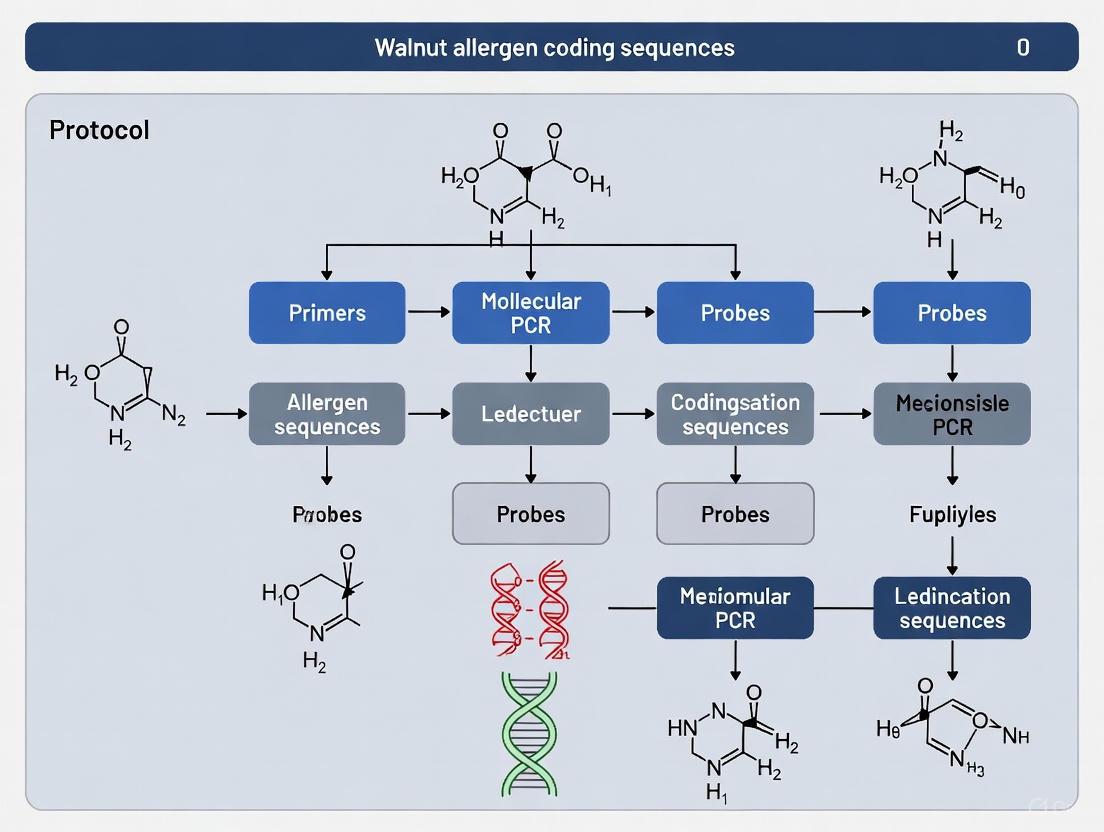
This article provides a comprehensive guide for developing and validating a real-time PCR (qPCR) method for the detection of walnut allergen coding sequences, specifically targeting Jug r 1, Jug r...
Optimized Real-Time PCR Protocol for Sensitive Detection of Walnut Allergen Coding Sequences in Processed Foods
Abstract
This article provides a comprehensive guide for developing and validating a real-time PCR (qPCR) method for the detection of walnut allergen coding sequences, specifically targeting Jug r 1, Jug r 3, and Jug r 4. Tailored for researchers and food safety professionals, the content covers foundational principles, a step-by-step optimized protocol, troubleshooting for processed food matrices, and rigorous validation against other methods like ELISA. It also synthesizes the latest findings on clinical threshold doses to bridge the gap between analytical detection and human health risk assessment, supporting accurate food labeling and allergen management.
The Critical Need for Walnut Allergen Detection: Principles and Public Health Impact
Walnut Allergy Prevalence and Global Labelling Regulations
Walnut allergy is one of the most common and severe tree nut allergies, representing a significant global health concern [1]. For affected individuals, strict avoidance of walnut and products containing it is the primary management strategy, making accurate food labeling a critical public safety issue [2] [3]. This has prompted regulatory bodies worldwide to establish stringent allergen labeling laws for prepackaged foods.
The need for reliable detection methods is paramount, as cross-contact during manufacturing can introduce walnut traces into other products [2]. Real-time PCR (polymerase chain reaction) has emerged as a highly sensitive and specific technique for detecting walnut allergen coding sequences, even in complex processed food matrices [4] [3]. This application note details the prevalence and regulatory landscape of walnut allergy and provides established protocols for its detection via real-time PCR, supporting both food safety programs and regulatory compliance.
Walnut Allergy Prevalence and Regulatory Landscape
Prevalence and Clinical Significance
Tree nut allergies, including walnut allergy, are among the most common food allergies in both children and adults [1]. Walnut is consistently ranked as one of the six tree nut allergies most commonly reported by children and adults, alongside almond, hazelnut, pecan, cashew, and pistachio [1]. Allergic reactions to walnut can be severe and are a frequent cause of life-threatening anaphylaxis [3]. Notably, approximately 50% of children allergic to one tree nut are allergic to another, and most children with tree nut allergy do not outgrow it [1].
Recent research indicates that the prevalence and sensitivity to walnut allergies are dynamic. A 2025 Japanese study reported a marked decline in the eliciting dose (ED05) for walnut over time, meaning that smaller amounts of walnut are now required to trigger a reaction in allergic populations. The ED05 for walnut was found to be 4.37 mg, which is higher than that for cashew nut (0.53 mg) but similar to peanut (4.88 mg) [5]. This trend underscores the necessity for periodic reassessment of allergen risk thresholds.
Global Labeling Regulations
Globally, regulations mandate the declaration of major food allergens on prepackaged food labels. The Codex Alimentarius, the international food standards guideline, requires the declaration of specific allergens, including tree nuts [6]. Most national regulations are aligned with this standard, though the specific nuts listed can vary.
Table 1: Global Labeling Requirements for Tree Nuts and Walnut
| Country/Region | Tree Nuts Listed as Major Allergens | Specific Mention of Walnut | Other Notable Allergens |
|---|---|---|---|
| USA [2] [7] | Mandatory for 6 key tree nuts (including walnut) | Yes | Soybeans, Peanuts, Milk, Egg, Fish, Crustacean Shellfish, Wheat, Sesame |
| Canada [8] | Mandatory | Yes | Sesame, Mustard, Molluscs |
| European Union (EU) [8] [3] | Mandatory | Yes | Celery, Lupin, Molluscs, Mustard |
| Australia/NZ [8] | Mandatory | Yes | Sesame, Lupin |
| Japan [8] | Mandatory (Walnut is on the mandatory list) | Yes | Buckwheat, Pork, Peach, Gelatin (and others recommended) |
| United Kingdom [8] | Mandatory (follows EU regulations) | Yes | Celery, Lupin, Molluscs, Mustard |
In the United States, the Food Allergen Labeling and Consumer Protection Act (FALCPA) identifies "tree nuts" as a major allergen. The U.S. Food and Drug Administration (FDA) maintains a specific "Tree Nut List" that delineates which nuts are considered major allergens. In the most recent 2025 guidance, walnut remains a mandated allergen, while several other nuts, such as coconut and chestnut, have been removed from the list [7]. As of January 1, 2023, sesame has been added as the 9th major food allergen in the U.S. [2].
Labeling can be accomplished in one of two ways:
- Including the food source name in parentheses following the ingredient (e.g., "natural flavor (walnut)").
- Using a "Contains" statement immediately after the ingredient list (e.g., "Contains walnut") [2].
It is important to note that advisory statements such as "may contain walnut" are voluntary and not regulated by law, though the FDA advises they must be truthful and not misleading [2] [7].
Real-Time PCR Detection of Walnut Allergens
Method Principle and Advantages
Real-time PCR (RT-PCR) is a DNA-based method for the direct, qualitative, and/or quantitative detection of specific walnut DNA sequences [9]. The technique targets unique genomic sequences, such as allergen-coding genes (e.g., Jug r 1, Jug r 3, Jug r 4), and amplifies them, with fluorescence-based detection enabling real-time monitoring of the amplification process [4] [3].
This method offers several advantages for allergen detection:
- High Specificity and Sensitivity: Capable of detecting trace amounts (as low as 2.5 pg) of walnut DNA [4] [3].
- Robustness in Processed Foods: DNA is generally more stable than proteins in heat-processed foods, though severe treatments like autoclaving can degrade DNA and reduce detection sensitivity [3].
- Reliability: Shows greater sensitivity and reliability in detecting hidden walnut in commercial foodstuffs compared to protein-based methods like ELISA [4] [3].
Experimental Protocol
DNA Extraction
Efficient DNA extraction is critical for assay sensitivity.
- Recommended Method: Use a CTAB-phenol-chloroform-based DNA extraction method, which has been demonstrated as most effective for walnut [4] [3].
- Commercial Kits: Validated commercial kits, such as the SureFood PREP Advanced (Art. No. S1053), can also be used to ensure consistent yield and purity [9].
- DNA Quality Check: Assess the concentration and purity of the extracted DNA using spectrophotometry (A260/A280 ratio ~1.8) and confirm integrity by agarose gel electrophoresis.
Real-Time PCR Assay
This protocol is adapted from published methodologies [4] [3] [9].
Table 2: Reaction Setup for Real-Time PCR
| Component | Volume per Reaction | Final Concentration |
|---|---|---|
| 2x SYBR Green Master Mix | 10.0 µL | 1x |
| Forward Primer (10 µM) | 0.8 µL | 400 nM |
| Reverse Primer (10 µM) | 0.8 µL | 400 nM |
| Template DNA | 2.0 µL | ~10-100 ng |
| Nuclease-free Water | 6.4 µL | - |
| Total Volume | 20.0 µL |
Primer Sequences: The following primer sets, designed against walnut allergen-coding sequences, provide high specificity.
- Jug r 1 (2S albumin): Forward: 5'-TCCATGGCTAAGTTCTTCAGC-3', Reverse: 5'-CACACCGCTTGTAGCTGTTC-3' [3]
- Jug r 3 (LTP): Forward: 5'-GGCTCTCAATGCTCTTGTCC-3', Reverse: 5'-TGAGCCACCTTTGTCATCAC-3' [3]
- Jug r 4 (11S legumin): Forward: 5'-AGATGCACACACACACACGA-3', Reverse: 5'-TGGTGTTGCTGCTGTGATAG-3' [3]
Thermocycling Conditions:
- Initial Denaturation: 95°C for 10 minutes
- Amplification (45 cycles):
- Denaturation: 95°C for 15 seconds
- Annealing/Extension: 60°C for 60 seconds (data acquisition in the SYBR Green/FAM channel)
- Melt Curve Analysis: 95°C for 10 seconds, followed by a continuous temperature increase from 65°C to 95°C at a rate of 0.1°C/second.
Data Analysis
- Quantification: For quantitative analysis, include a standard curve of known concentrations of walnut DNA (e.g., 0.1 pg/µL to 100 ng/µL) in each run. The cycle threshold (Ct) values of unknowns are plotted against the standard curve to determine the DNA concentration [9].
- Qualitative Detection: A sample is considered positive if its Ct value is less than or equal to the predetermined limit of detection (LOD) of the assay.
- Specificity Check: Perform melt curve analysis to confirm the amplification of a single, specific product. The presence of a single, distinct peak indicates specific amplification.
Workflow Visualization
The following diagram illustrates the complete experimental workflow for the detection of walnut allergens in food products:
Method Validation
- Specificity: The assay must not cross-react with DNA from other tree nuts (e.g., pecan, almond, hazelnut), peanuts, soy, or common cereal grains [10]. Test against a panel of non-target species.
- Sensitivity (LOD/LOQ): Determine the Limit of Detection (LOD) and Limit of Quantification (LOQ) using serially diluted walnut DNA in a blank food matrix. The described method can achieve an LOD of ≤ 0.4 mg walnut per kg of food sample and an LOQ of 1 mg/kg [9]. Another study reported an LOD of 2.5 pg of walnut DNA and a practical detection limit of 0.001% (w/w) walnut in wheat [3] [10].
- Effect of Processing: Note that thermal treatment combined with pressure (e.g., autoclaving) can fragment DNA, reducing amplification efficiency. In contrast, High Hydrostatic Pressure (HHP) processing has been shown to have no significant effect on DNA amplification [3].
The Scientist's Toolkit: Research Reagent Solutions
Table 3: Essential Reagents and Kits for Walnut Allergen Detection
| Product/Item | Function/Application | Example/Reference |
|---|---|---|
| CTAB-Phenol-Chloroform | High-quality genomic DNA extraction from complex food matrices. | In-house protocol [3] |
| SYBR Green Master Mix | Fluorescent dye for real-time PCR detection of amplified DNA. | Various commercial suppliers [3] |
| Jug r-specific Primers | Oligonucleotides for specific amplification of walnut allergen genes. | Jug r 1, Jug r 3, Jug r 4 primers [3] |
| Commercial Allergen Kit | Validated, ready-to-use system for standardized detection and quantification. | SureFood ALLERGEN Walnut (S3607) [9] |
| Reference Material | Certified material for creating a standard curve for quantitative PCR. | SureFood QUANTARD Allergen 40 (S3301) [9] |
| Real-time PCR Instrument | Thermocycler with fluorescence detection capabilities. | Roche LightCycler, Applied Biosystems 7500, Bio-Rad CFX96 [9] |
The combination of a dynamic regulatory environment and robust, sensitive detection methodologies is essential for protecting consumers with walnut allergies. Real-time PCR stands out as a highly specific and reliable technique for identifying the presence of walnut DNA in food products, thereby supporting manufacturers in their compliance efforts and risk assessment programs. The protocols and information provided here offer a framework for laboratories to implement or refine their walnut allergen testing strategies, contributing to greater food safety and informed consumer choice.
Limitations of Protein-Based Detection Methods (e.g., ELISA) in Processed Foods
For individuals with food allergies, the accurate detection of allergenic residues in processed foods is a critical public health issue. Protein-based detection methods, particularly the Enzyme-Linked Immunosorbent Assay (ELISA), have been the cornerstone of food allergen monitoring due to their direct targeting of allergenic proteins [11]. ELISA operates on the principle of antigen-antibody interaction, using enzyme-labelled conjugates and substrates to generate a measurable color change corresponding to the concentration of the target protein [12]. Its advantages include sensitivity, selectivity, and relatively straightforward operation [13].
However, the reliability of ELISA can be significantly compromised when analyzing processed foods. Food processing techniques—such as thermal treatment, changes in pH, and the presence of complex food ingredients—can alter protein structure, mask antibody recognition sites, and introduce matrix interferences [14]. These limitations pose substantial risks for both allergic consumers and food manufacturers, potentially leading to false-negative results and undetected allergen presence. This application note details the specific limitations of ELISA in processed food analysis and positions real-time PCR as a complementary DNA-based method for detecting walnut allergen coding sequences, enhancing the robustness of allergen control protocols.
Core Principles and Limitations of ELISA
Fundamental Principles of ELISA
ELISA is a plate-based biochemical assay that detects antigen-antibody interactions. The most common formats are direct, indirect, and sandwich ELISA (sELISA) [12]. In the context of food allergen detection, the target molecule is the allergenic protein. The assay uses antibodies specific to the protein of interest; a positive reaction is confirmed by an enzyme-mediated color change, the intensity of which is measured spectrophotometrically [12] [11]. This direct correlation between the signal and the protein concentration makes ELISA a powerful quantitative tool for specific protein detection.
Key Limitations in Processed Food Analysis
Despite its widespread use, ELISA faces several challenges that can affect its accuracy and reproducibility in processed foods, as summarized below.
Table 1: Key Limitations of ELISA in Processed Food Analysis
| Limitation | Impact on ELISA Performance | Underlying Mechanism |
|---|---|---|
| Structural Protein Alterations [14] | Reduced antibody binding, leading to false negatives. | High temperatures (e.g., >80°C) and extreme pH conditions cause protein unfolding (denaturation) or aggregation, obscuring epitopes recognized by antibodies. |
| Food Matrix Interference [14] | Inaccurate quantification (false positives or negatives); recovery rates can deviate significantly (e.g., 12%–411%) [14]. | Matrix components (e.g., inorganic salts, carbohydrates, lipids, tannins, detergents) can interact non-specifically with proteins or antibodies, or alter protein conformation. |
| Cross-Reactivity [13] | False positive results. | Antibodies may bind non-specifically to non-target proteins that share structural similarities with the target allergen, compromising assay specificity. |
| Non-Specific Binding (NSB) [13] | Elevated background signal, reducing sensitivity and accuracy. | Non-target substances in the sample adsorb to the solid phase (microplate) due to incomplete blocking, generating a false immunosignal. |
| Dependency on Antibody Quality [15] | Erroneous and irreproducible results. | The assay's performance is contingent on the affinity, specificity, and stability of the primary and secondary antibodies. Suboptimal antibodies are a major source of error. |
Experimental Insights into ELISA Limitations
Effects of Processing and Matrices on Sarcoplasmic Calcium Binding Protein (SCP)
A recent investigative study provides a mechanistic understanding of how processing and food matrices affect ELISA detection, using Sarcoplasmic Calcium Binding Protein (SCP) from crustaceans as a model allergen [14].
Experimental Protocol:
- Protein Treatment: SCP was subjected to various temperatures (4–100°C) and pH (3–11) conditions. It was also incubated with different matrix components, including inorganic salts (NaCl, KCl, CaCl₂), carbohydrates (glucose, arabinose, maltose), and peanut oil.
- Analysis: Treated SCP was analyzed using:
- sELISA and icELISA: To evaluate detection recoveries.
- Spectroscopy: Circular dichroism (CD) and fluorescence spectroscopy to assess secondary and tertiary structural changes.
- Molecular Dynamics Simulation: To model interactions between SCP and matrix molecules.
Key Findings:
- Temperature: Recoveries in sELISA significantly declined (12%–64%) at temperatures above 80°C, while icELISA remained stable until 100°C. This indicates that thermal processing can destroy conformational epitopes critical for sELISA [14].
- pH: Under acidic conditions (pH 3), SCP became more compact, which improved recovery in icELISA but reduced it in sELISA, demonstrating that the same structural change can affect different ELISA formats in opposing ways [14].
- Food Matrices: Inorganic salts, carbohydrates, and peanut oil impacted the tertiary structure and aggregation state of SCP via non-covalent interactions, leading to significant variations in ELISA results [14].
This study underscores that the structural integrity of the target protein is paramount for accurate ELISA detection, and any factor that disrupts this integrity can compromise the assay.
Comparative Performance: ELISA vs. Real-Time PCR
A direct comparison of ELISA and real-time PCR for detecting crustacean shellfish allergens highlighted critical methodological differences [16]. The study used identical split samples of Manhattan clam chowder and fish sauce. The real-time PCR assays demonstrated a broader dynamic range (0.1–10⁶ mg/kg) compared to ELISA (200–4000 mg/kg). Furthermore, the ELISA kits exhibited significant matrix interference, whereas the PCR assays did not, leading to more reliable detection in complex food systems [16].
The Case for Real-Time PCR in Walnut Allergen Detection
The limitations of ELISA are particularly relevant for walnut allergens. A 2025 study (Nut CRACKER Study) established that the estimated eliciting doses (ED01 and ED05) for walnut protein are as low as 0.8 mg and 3.8 mg, respectively [17] [18]. This extreme sensitivity required for protection demands detection methods that remain robust despite food processing.
Real-time PCR (qPCR) is a DNA-based technique that amplifies and detects specific DNA sequences. It is an excellent complementary tool to ELISA for allergen detection, as it relies on the stability of DNA, which is often more resistant to food processing than proteins [11] [19].
Table 2: Comparison of ELISA and Real-Time PCR for Allergen Detection
| Parameter | ELISA | Real-Time PCR |
|---|---|---|
| Target Molecule | Protein (allergen) | DNA (allergen-coding gene) |
| Effect of Heat Processing | Significant; can denature proteins and destroy antibody epitopes [14] | More resilient; DNA is thermally stable, though fragmentation can occur [11] |
| Effect of Food Matrix | Prone to interference (e.g., by polyphenols, lipids) [14] | Can be less susceptible with optimized DNA extraction [16] |
| Quantification | Direct quantification of the allergenic protein | Indirect quantification; correlates with the presence of the allergenic species |
| Specificity | High, but susceptible to cross-reactivity with related proteins [13] | High; achieved by targeting unique DNA sequences [19] |
| Throughput | High | High, with multiplexing potential [11] |
Recommended Protocol: Real-Time PCR for Detection of Walnut Allergen Coding Sequences
The following protocol is adapted for the detection of walnut DNA, providing a complementary approach to protein-based ELISA assays.
Workflow Overview:
Figure 1: Real-time PCR workflow for allergen detection.
1. Sample Preparation and DNA Extraction:
- Sample Commutation: Grind the food sample to a fine, homogeneous powder using a laboratory mill.
- DNA Extraction: Use a commercial kit designed for complex food matrices. The protocol should effectively remove PCR inhibitors (e.g., polyphenols, polysaccharides, fats). This typically involves:
- Lysis: Incubating the sample with a lysis buffer and proteinase K.
- Purification: Binding DNA to a silica membrane/column in the presence of a chaotropic salt.
- Washing: Removing contaminants with wash buffers.
- Elution: Dissolving the purified DNA in elution buffer or nuclease-free water.
- DNA Quantification & Quality Check: Measure DNA concentration and purity (A260/A280 ratio) using a spectrophotometer. Integrity can be checked by gel electrophoresis.
2. In Silico Analysis and Primer/Probe Design:
- Target Gene Selection: Identify a walnut-specific DNA sequence, preferably a single-copy allergen-encoding gene (e.g., Jug r 1, Jug r 2, Jug r 3) or a multi-copy gene from the chloroplast or mitochondrial genome for higher sensitivity [20].
- Sequence Specificity Verification: Use tools like BLAST to ensure the selected sequence is unique to walnut and does not align with non-target species (e.g., pecan, other tree nuts).
- Oligonucleotide Design:
- Amplicon Length: Keep it short (90-200 bp) to facilitate amplification from potentially degraded DNA in processed foods [19].
- Primers and Probe: Design primers and a hydrolysis probe (e.g., TaqMan) that meet standard qPCR design criteria (GC content, melting temperature, absence of secondary structures). The probe is labeled with a reporter dye (e.g., FAM) at the 5' end and a quencher (e.g., BHQ1) at the 3' end.
3. Real-Time PCR Amplification:
- Reaction Mix: Prepare a master mix containing:
- 1X qPCR master mix (Hot Start DNA Polymerase, dNTPs, MgCl₂)
- Forward and reverse primers (e.g., 300-500 nM each)
- Hydrolysis probe (e.g., 100-200 nM)
- DNA template (e.g., 5-100 ng of total DNA)
- Nuclease-free water to volume.
- Amplification Protocol: Run the plate on a real-time PCR instrument using a cycling program such as:
- Initial Denaturation: 95°C for 10 min.
- 40-45 cycles of:
- Denaturation: 95°C for 15 sec.
- Annealing/Extension: 60°C for 60 sec (acquire fluorescence).
- Controls: Include in each run:
- Negative Controls: No-template control (NTC) and non-allergenic food matrix control.
- Positive Control: DNA from a certified walnut standard.
- Internal Amplification Control (IAC): To detect PCR inhibitors.
4. Data Analysis and Interpretation:
- Threshold Cycle (Ct): Determine the Ct value for each sample.
- Standard Curve: For quantification, use a serial dilution of walnut DNA with known concentrations to generate a standard curve (Ct vs. log concentration).
- Result Interpretation: A sample is considered positive for walnut if it produces a fluorescence curve that crosses the threshold within the defined cycle range, and the negative controls are negative.
The Scientist's Toolkit: Research Reagent Solutions
Table 3: Essential Reagents and Materials for Allergen Detection Studies
| Item | Function/Benefit | Example Application |
|---|---|---|
| High-Binding Polystyrene Microplates | Optimal surface for adsorption of capture antibodies in ELISA. | Coating step in sandwich or indirect ELISA protocols [13]. |
| Monoclonal/Polyclonal Antibodies | High-affinity, specific antibodies are critical for assay sensitivity and specificity. | Target capture and detection in ELISA; must be validated to minimize cross-reactivity [13]. |
| Enzyme-Conjugates & Substrates | Generate the detectable signal in ELISA. | HRP-streptavidin conjugate with TMB substrate produces a colorimetric change [12] [13]. |
| Blocking Buffers (e.g., BSA, Casein) | Reduce non-specific binding (NSB) by saturating unused sites on the microplate. | Essential step after coating to minimize background noise and false positives [13]. |
| DNA Extraction Kits for Complex Matrices | Efficiently isolate high-quality, inhibitor-free DNA from processed foods. | Critical first step for reliable real-time PCR results [19] [20]. |
| TaqMan Probe-Based qPCR Master Mix | Provides all components for efficient, specific DNA amplification with hydrolysis probes. | Core reagent for real-time PCR detection of walnut allergen coding sequences [19]. |
Protein-based ELISA is a powerful but imperfect tool for allergen detection in processed foods. Its vulnerability to protein denaturation, matrix effects, and antibody-related issues necessitates a multi-faceted approach to food safety. For life-threatening allergens like walnut, where reaction thresholds are exceedingly low, relying solely on ELISA introduces significant risk.
Integrating real-time PCR into control protocols provides a robust, complementary method. By targeting stable DNA sequences, real-time PCR can overcome many of the limitations inherent to protein detection, offering greater resilience to food processing and complex matrices. For comprehensive allergen management and the protection of sensitive individuals, a combined strategy utilizing both ELISA and real-time PCR is highly recommended.
Food allergies represent a significant global health challenge, with walnut being a major trigger for severe reactions [21] [18]. Accurate detection of hidden walnut allergens in food products is crucial for consumer protection and regulatory compliance. While protein-based detection methods like ELISA (Enzyme-Linked Immunosorbent Assay) have been widely used, DNA-based detection techniques, particularly real-time PCR (Polymerase Chain Reaction), offer distinct advantages due to the superior stability of DNA molecules through various food processing conditions [21] [22].
This application note details the experimental protocols and advantages of utilizing real-time PCR for detecting walnut allergen coding sequences, framed within broader research on allergen detection methodologies. The stability of allergen-coding DNA sequences compared to protein epitopes makes DNA-based detection particularly valuable for analyzing processed foods where proteins may become denatured or structurally altered [22] [3].
Core Principles and Advantages of DNA-Based Detection
Fundamental Stability of DNA Molecules
DNA molecules demonstrate greater thermal stability and resistance to processing-induced denaturation compared to proteins. This fundamental characteristic is paramount for reliable allergen detection in processed foods [21]. Where protein epitopes may be destroyed or altered during thermal processing, masking them from antibody recognition in ELISA tests, DNA sequences remain amplifiable and detectable [22] [23].
The multi-copy nature of target genomic sequences (e.g., mitochondrial DNA, ribosomal DNA regions) further enhances detection sensitivity. Even when severe processing fragments the genome, the high copy number increases the probability that at least some target sequences remain intact for amplification [24]. Research confirms that real-time PCR can detect walnut DNA at levels as low as 0.1-1 mg kg⁻¹ (ppm) in complex food matrices, demonstrating remarkable sensitivity [21] [24].
Comparative Performance in Processed Foods
Table 1: Comparison of Allergen Detection Method Performance in Food Analysis
| Parameter | DNA-Based (Real-Time PCR) | Protein-Based (ELISA) |
|---|---|---|
| Target Molecule | Species-specific DNA sequences [25] | Allergenic proteins (e.g., Jug r 1, Jug r 3) [23] |
| Effect of Thermal Processing | DNA is more stable; remains detectable after mild to moderate heating [3] | Proteins can denature, aggregate, or undergo epitope modification; reduced detectability [22] [23] |
| Limit of Detection (Walnut) | As low as 0.1 mg kg⁻¹ (ppm) [21] | Varies; can be less sensitive than PCR in processed foods [23] |
| Specificity | High; depends on primer design [3] | High; can be affected by cross-reactive antibodies (e.g., with pecan) [23] |
| Quantification | Semi-quantitative or quantitative [24] | Quantitative [25] |
| Suitability for Processed Foods | Excellent [21] | Variable; may underestimate allergen content [22] |
Experimental Protocols for Real-Time PCR Detection
DNA Extraction and Purification
Efficient and pure DNA extraction is critical for sensitive PCR detection. The CTAB-phenol-chloroform method has been identified as particularly effective for walnut and other tree nuts [3].
Protocol: CTAB DNA Extraction from Food Samples
- Homogenization: Grind 200 mg of food sample to a fine powder using a laboratory mill under liquid nitrogen.
- Lysis: Incubate the sample with 1 mL of pre-warmed CTAB extraction buffer and Proteinase K for 60 minutes at 65°C with occasional gentle mixing.
- Purification: Add an equal volume of phenol:chloroform:isoamyl alcohol, mix thoroughly, and separate phases by centrifugation.
- Precipitation: Transfer the upper aqueous phase to a new tube. Add 0.7 volumes of isopropanol to precipitate nucleic acids.
- Washing: Pellet DNA by centrifugation, wash with 70% ethanol, and air-dry.
- Resuspension: Dissolve the purified DNA in 50 µL of TE buffer or nuclease-free water.
- Quality Control: Measure DNA concentration and purity using a spectrophotometer.
Real-Time PCR Assay Design and Workflow
Table 2: Key Research Reagent Solutions for Real-Time PCR Walnut Detection
| Reagent / Material | Function / Description | Specifications / Notes |
|---|---|---|
| Species-Specific Primers | Binds to and amplifies unique walnut DNA sequences. | Designed from allergen genes (e.g., Jug r 1, Jug r 3, Jug r 4) or multi-copy genomic regions [4] [3]. |
| Fluorescent Probes | Generates a quantifiable signal upon DNA amplification. | TaqMan probes are commonly used [21]. SYBR Green is an alternative [3]. |
| Real-Time PCR Master Mix | Contains enzymes, dNTPs, and buffer for efficient DNA amplification. | Commercial kits are available. Must be compatible with the probe chemistry [24]. |
| DNA Polymerase | Enzyme that synthesizes new DNA strands. | Thermostable (e.g., Taq polymerase) is essential for cycling at high temperatures. |
| Standard Reference DNA | Enables quantification of the target DNA in the sample. | Serial dilutions of purified, quantified walnut DNA. |
Figure 1: Real-time PCR workflow for walnut allergen detection.
Protocol: Real-Time PCR Amplification
Primer and Probe Design: Design oligonucleotides to target walnut-specific sequences.
- Target Genes: Allergen-coding sequences (e.g., Jug r 1, Jug r 3, Jug r 4) are excellent targets [4] [3]. Multi-copy non-coding regions like ITS1 are also used to enhance sensitivity [21].
- Specificity Check: Verify in silico that sequences are unique to walnut and do not cross-react with other species.
Reaction Setup:
- Prepare a reaction mix containing: 1x TaqMan Master Mix, forward and reverse primers, TaqMan probe, and template DNA.
- A standard curve using known concentrations of walnut DNA must be included for quantification.
Thermal Cycling:
- Initial Denaturation: 95°C for 10 minutes.
- Amplification (40-45 cycles):
- Denature: 95°C for 15 seconds.
- Anneal/Extend: 60°C for 60 seconds (acquire fluorescence).
- The cycle threshold (Cq) value is determined for each sample.
Critical Experimental Data and Validation
Sensitivity and Specificity Performance
Table 3: Quantitative Performance of DNA-Based Walnut Detection Methods
| Target Gene / Region | Limit of Detection (LOD) | Limit of Quantification (LOQ) | Specificity Notes | Source |
|---|---|---|---|---|
| ITS1 Region | 0.1 mg kg⁻¹ (walnut in flour) | Not specified | Specific for J. regia; no cross-reactivity with other nuts/animals. | [21] |
| Jug r 3 | 2.5 pg walnut DNA | 0.05% (500 mg kg⁻¹) in spiked samples | High specificity for walnut. | [4] [3] |
| Multiplex Nut Assay | 0.64 mg kg⁻¹ (in cookie) | Not specified; semi-quantitative | Simultaneously detects peanut, hazelnut, walnut, cashew. | [24] |
Validation studies on commercial food products demonstrate the practical reliability of these methods. One survey of 232 foodstuffs found several products with undeclared walnut or pecan, highlighting the method's utility for verifying labeling compliance [21]. Another study testing 100 commercial samples confirmed that real-time PCR was the most sensitive technique compared to two different ELISA formats [23].
Impact of Food Processing on Detection
Processing can degrade DNA, potentially affecting PCR efficiency. However, DNA is generally more resilient than proteins.
Figure 2: Comparative effects of food processing on detection targets.
- Thermal Processing: Severe heat treatment can fragment DNA. Studies show autoclaving reduces both DNA yield and amplification efficiency [3]. However, the use of short amplicons and multi-copy targets mitigates this issue, allowing detection even in baked cookies [24].
- Non-Thermal Processing: Methods like High Hydrostatic Pressure have minimal impact on DNA amplification, making PCR highly suitable for foods processed with these technologies [3].
The stability of allergen-coding DNA sequences establishes real-time PCR as a powerful and reliable tool for detecting walnut allergens in food products. Its advantages are particularly evident when analyzing processed foods, where protein integrity may be compromised. The protocols detailed herein provide a framework for implementing this sensitive and specific detection method, contributing significantly to food safety research and the protection of allergic consumers.
This application note provides a comprehensive framework for the molecular detection of walnut allergen coding sequences in food products. Walnut allergy is a significant health concern with a high prevalence of severe reactions, driven primarily by seed storage proteins. We detail the molecular characteristics of three key walnut allergens—Jug r 1 (2S albumin), Jug r 3 (non-specific lipid transfer protein), and Jug r 4 (11S globulin)—and present validated real-time PCR protocols for their specific detection. The methodologies outlined herein support food safety testing, allergen risk assessment, and clinical diagnostics by enabling sensitive and specific identification of walnut traces in complex matrices, even following food processing treatments that may compromise protein integrity.
Walnut allergy ranks among the most common and severe tree nut allergies globally, affecting both children and adults with a high rate of systemic reactions including anaphylaxis [26] [27]. The clinical relevance of walnut allergy is underscored by prevalence data from the EuroPrevall project, which indicates that approximately 3% of the adult European population is sensitized to walnut, with country-specific rates ranging from 0.1% in Iceland to 8% in Spain [26]. Component-resolved diagnostics have revealed that sensitization patterns to specific walnut proteins correlate with clinical outcomes, age of onset, and geographical distribution, making molecular characterization essential for accurate diagnosis and effective food safety controls [27].
The walnut allergens Jug r 1, Jug r 3, and Jug r 4 represent distinct protein families with varying biochemical properties and clinical significance. Jug r 1, a 2S albumin storage protein, is recognized as a major allergen associated with severe systemic reactions and persistent allergy [26]. This protein exhibits high stability due to its cysteine-rich structure and disulfide bridges, making it resistant to digestive processes and thermal treatments [26]. Jug r 3, a nonspecific lipid transfer protein (nsLTP), is more frequently associated with allergic reactions in Mediterranean regions and can cause symptoms ranging from oral allergy syndrome to severe anaphylaxis [27]. Jug r 4, an 11S globulin storage protein, contributes to the allergenicity of walnut with approximately 57% of walnut-allergic patients showing IgE reactivity to this component [28]. The complementary sensitization profiles of these three allergens make them ideal targets for comprehensive detection strategies in both clinical diagnostics and food safety testing protocols.
Molecular Characteristics of Key Walnut Allergens
Table 1: Biochemical and immunological characteristics of key walnut allergens
| Allergen | Protein Family | Biological Function | Molecular Weight | IgE Reactivity | Clinical Significance |
|---|---|---|---|---|---|
| Jug r 1 | 2S albumin | Seed storage protein | 12-15 kDa | 71.4%-96.9% [26] | Severe systemic reactions; primary walnut allergy; heat and digestion stable |
| Jug r 3 | Non-specific lipid transfer protein (nsLTP) | Pathogenesis-related protein | ~9 kDa [27] | Varies by region (higher in Mediterranean) [27] | Varies from oral allergy syndrome to anaphylaxis; heat stable |
| Jug r 4 | 11S globulin (Legumin) | Seed storage protein | ~58 kDa (precursor) [28] | 57% [28] | Systemic reactions; cross-reactive with hazelnut, cashew, and peanut [28] |
Jug r 1: The Major Walnut Allergen
Jug r 1 belongs to the 2S albumin superfamily, characterized by small, globular, water-soluble proteins with high contents of asparagine, glutamine, cysteine, and arginine residues [26]. The protein consists of two subunits (large and small) connected by disulfide bridges, contributing to its remarkable stability in the gastrointestinal tract's harsh acidic environment [26]. This structural robustness enables Jug r 1 to cross the gut mucosal barrier and present to the immune system, triggering allergic responses in sensitized individuals [26]. The DNA sequence of Jug r 1 consists of 663 base pairs encoding 142 amino acids, with identified linear IgE-binding epitopes located at AA28-35, AA42-49, AA55-62, AA65-73, AA97-104, and AA109-121 [26]. From a clinical perspective, sensitization to Jug r 1 is strongly associated with primary walnut allergy and systemic symptoms, with studies showing that 71.4% of children with walnut-induced anaphylaxis in Northern Italy were positive for Jug r 1 [26]. A Korean study further demonstrated that 96.9% of children with walnut allergy were sensitized to Jug r 1, and the concentration of Jug r 1-sIgE was higher than for other walnut components [26].
Jug r 3: The Lipid Transfer Protein
Jug r 3 represents a nonspecific lipid transfer protein (nsLTP) characterized by its compact structure stabilized by four disulfide bridges, conferring resistance to proteolysis and thermal processing [27]. This allergen is particularly significant in Mediterranean regions where nsLTP sensitization is common, often linked to peach allergy (Pru p 3) [27]. Unlike the seed storage proteins Jug r 1 and Jug r 4, Jug r 3 sensitization does not consistently correlate with severe systemic reactions to walnut, showing variable clinical manifestations from mild oral symptoms to anaphylaxis depending on individual sensitization patterns and co-factors [27].
Jug r 4: The Legumin Storage Protein
Jug r 4 is an 11S globulin (legumin group) allergen encoded by a cDNA that produces a precursor protein with a predicted molecular weight of 58.1 kDa [28]. This hexameric seed storage protein dissociates into acidic and basic subunits linked by disulfide bonds in its mature form. Serum IgE from 21 of 37 (57%) walnut-allergic patients demonstrated binding to recombinant Jug r 4, confirming its importance as a walnut allergen [28]. Significant in vitro cross-reactivity has been demonstrated between Jug r 4 and homologous legumin proteins in hazelnut, cashew, and peanut, explaining the frequent clinical co-allergy observed between these tree nuts and peanut [28]. Sensitization to Jug r 4, particularly in combination with Jug r 1, correlates with more severe allergic reactions and systemic symptoms [27].
Real-Time PCR Detection Methodology
Workflow for Walnut Allergen Detection
The following diagram illustrates the comprehensive workflow for detecting walnut allergen coding sequences in food products using real-time PCR methodology:
DNA Extraction and Quality Control
High-quality DNA extraction is fundamental for successful real-time PCR detection of walnut allergens. The CTAB-phenol-chloroform extraction method has been demonstrated as particularly effective for walnut and other tree nuts, providing superior DNA yield and quality compared to commercial kits [4]. This method effectively removes polysaccharides, polyphenols, and other PCR inhibitors that can compromise amplification efficiency. Following extraction, DNA quantity and quality should be assessed using spectrophotometric (A260/A280 ratio ~1.8-2.0) or fluorometric methods. For processed food samples, additional purification steps may be necessary to eliminate contaminants introduced during manufacturing. DNA integrity should be verified by conventional PCR amplification of a conserved housekeeping gene or by agarose gel electrophoresis to confirm the presence of high-molecular-weight DNA, particularly important for samples subjected to severe thermal processing which can cause DNA fragmentation [4] [29].
Primer and Probe Design for Walnut Allergen Targets
Table 2: Target sequences for real-time PCR detection of walnut allergens
| Target Allergen | Target Gene Type | Amplification Chemistry | Detection Limit | Key Considerations |
|---|---|---|---|---|
| Jug r 1 | Allergen-coding sequence | LNA probe / TaqMan | 2.5 pg walnut DNA [4] | High specificity; minimal cross-reactivity |
| Jug r 3 | Allergen-coding sequence | LNA probe / TaqMan | 0.01% walnut (100 mg/kg) [4] | Sensitive detection even in processed foods |
| Jug r 4 | Allergen-coding sequence | LNA probe / TaqMan | 2.5 pg walnut DNA [4] | Cross-reactivity assessment needed |
| Chloroplast markers (alternative) | Multi-copy genes | SYBR Green / TaqMan | 0.1 mg/kg [30] [31] | Higher sensitivity but less specific |
Primer and probe design should target unique regions within the coding sequences of Jug r 1, Jug r 3, and Jug r 4 to ensure specific amplification. Locked Nucleic Acid (LNA) probes have demonstrated superior sensitivity and specificity compared to SYBR Green chemistry for allergen detection, with enhanced capacity to discriminate between closely related species [29]. LNA nucleotides are bicyclic RNA analogues in which the 2'-oxygen and 4'-carbon atoms are connected by an extra methylene bridge, conferring increased thermal stability and greater mismatch discrimination compared to conventional DNA probes [29]. For each target allergen, primers should be 18-22 nucleotides in length with a Tm of 60±2°C, and amplicon sizes should be limited to 60-150 bp to ensure efficient amplification, particularly from processed food samples where DNA fragmentation may occur. For absolute quantification, standard curves should be generated using serial dilutions of plasmid DNA containing the target sequence or genomic DNA of known concentration.
Real-Time PCR Amplification Protocol
The following protocol has been validated for detection of walnut allergen coding sequences in processed foods [4]:
Reaction Setup:
- Prepare 25 μL reactions containing: 1X PCR buffer, 3-5 mM MgCl₂, 0.2 mM dNTPs, 0.3 μM each primer, 0.1-0.2 μM LNA or TaqMan probe, 1.25 U DNA polymerase, and 2-50 ng template DNA.
- Include appropriate negative controls (no-template) and positive controls (walnut DNA of known concentration).
- Perform reactions in triplicate to ensure reproducibility.
Thermal Cycling Conditions:
- Initial denaturation: 95°C for 10 minutes
- 40-45 cycles of:
- Denaturation: 95°C for 15 seconds
- Annealing/Extension: 60°C for 60 seconds (with fluorescence acquisition)
- Final hold: 4°C
Data Analysis:
- Set threshold fluorescence in the exponential phase of amplification above background but sufficiently low to provide high amplification efficiency.
- Determine cycle threshold (Ct) values for each reaction.
- For quantitative analysis, use standard curves to interpolate target DNA concentration.
- Confirm amplification specificity by melt curve analysis if using SYBR Green chemistry.
This protocol has demonstrated a limit of detection (LOD) of 2.5 pg of walnut DNA and can detect as little as 0.01% (100 mg/kg) of walnut in raw matrices using Jug r 3 primers [4]. The method has shown greater sensitivity and reliability in detecting walnut traces in commercial foodstuffs compared to ELISA assays, particularly in processed foods where protein epitopes may be denatured [4].
Research Reagent Solutions
Table 3: Essential research reagents for walnut allergen detection by real-time PCR
| Reagent Category | Specific Products/Examples | Function in Protocol |
|---|---|---|
| DNA Extraction Kits | DNeasy Plant Pro Kit (Qiagen), CTAB-phenol-chloroform method | High-quality DNA isolation from complex food matrices |
| PCR Master Mixes | TaqMan Environmental Master Mix, LightCycler 480 Probes Master | Provides optimized buffer, enzymes, dNTPs for efficient amplification |
| Fluorescent Probes | LNA probes, TaqMan probes (FAM/BHQ) | Target-specific detection with enhanced specificity and sensitivity |
| Positive Controls | Plasmid DNA containing Jug r 1, Jug r 3, Jug r 4 sequences | Standard curve generation and assay validation |
| Real-Time PCR Instruments | Applied Biosystems 7500, Roche LightCycler 480, Bio-Rad CFX96 | Automated thermal cycling with fluorescence detection capabilities |
Impact of Food Processing on Detection
Food processing methods significantly impact the detectability of walnut allergens through both protein-based and DNA-based detection methods. Thermal processing, particularly when combined with pressure (autoclaving), can reduce DNA yield, quality, and amplification efficiency due to fragmentation and degradation of DNA molecules [4] [29]. Studies have demonstrated that autoclaving (121-138°C under pressure) substantially reduces the amplifiability of walnut DNA, whereas high hydrostatic pressure (HHP) treatment alone does not produce significant effects on DNA amplification [4]. In contrast, boiling treatments typically have minimal impact on DNA detection sensitivity. These processing effects highlight the advantage of multi-target detection approaches for walnut allergens, as different sequences may exhibit varying resistance to degradation. For instance, shorter amplicons (≤100 bp) remain detectable even in severely processed samples where longer targets may be compromised [31]. When developing detection protocols for specific food products, it is essential to validate the method using processed materials that reflect the intended application, as processing-induced modifications to DNA can affect both the absolute limit of detection and the quantitative accuracy of real-time PCR assays.
Clinical Relevance and Threshold Doses
Understanding the clinical relevance of walnut allergens and their eliciting doses is crucial for contextualizing the importance of sensitive detection methods. Recent research has established that very small amounts of walnut protein can trigger allergic reactions in sensitized individuals. The Nut CRACKER study analyzed 626 walnut oral food challenges and determined that discrete doses of walnut protein eliciting symptoms in 1% (ED01) and 5% (ED05) of the allergic population were 0.8 mg and 3.8 mg, respectively [18]. These thresholds are remarkably low, equivalent to minute fractions of a single walnut kernel, underscoring the critical need for highly sensitive detection methods in food safety testing. A Japanese study further confirmed the potency of walnut allergens, establishing an ED05 of 4.37 mg for walnut in their population, with even lower thresholds observed in patients with high levels of Jug r 1-specific IgE [5]. These findings directly inform public health policies and food labeling requirements, highlighting the importance of detection methods capable of identifying walnut traces at levels relevant to clinical reactivity. Real-time PCR protocols targeting allergen coding sequences provide the necessary sensitivity to detect walnut contamination at or below these established threshold doses, thereby supporting effective allergen management and consumer protection.
The molecular detection of walnut allergen coding sequences via real-time PCR represents a robust, sensitive, and specific approach for identifying walnut contamination in food products. Targeting the major allergens Jug r 1, Jug r 3, and Jug r 4 provides comprehensive coverage of the principal allergenic components in walnut, accommodating varying sensitization patterns across different populations. The protocols outlined in this application note have been validated across multiple studies and demonstrate superior performance compared to protein-based detection methods, particularly in processed foods where allergen integrity may be compromised. As walnut allergy continues to represent a significant health concern with potentially severe outcomes, the implementation of reliable detection methods supports both clinical diagnostics and food safety initiatives, ultimately contributing to improved quality of life for walnut-allergic consumers through accurate food labeling and reduced risk of accidental exposure.
For individuals with walnut allergy, exposure to even trace amounts of walnut can trigger reactions ranging from mild symptoms to life-threatening anaphylaxis [32]. The prevalence of walnut allergy makes it a significant public health concern, affecting approximately 0.6% of children in the US and representing the most common tree nut allergy in the country [33] [32]. The management of walnut allergy relies entirely on the strict avoidance of walnuts and products containing them, making accurate detection and labeling of walnut in food products a critical safety issue [3] [23].
This article explores the vital link between the analytical sensitivity of walnut detection methods and the clinical thresholds that protect allergic consumers. Establishing this relationship ensures that detection methodologies are sufficiently sensitive to identify walnut concentrations that could provoke allergic reactions. Real-time PCR (RT-PCR) has emerged as a powerful technique for detecting walnut traces in complex food matrices, offering the specificity and sensitivity required to verify labeling compliance and protect consumer health [3] [23].
Walnut Allergy Prevalence and Clinical Relevance
Epidemiological Significance
Walnut allergy exhibits notable geographical variation in prevalence. In the United States, walnut is the most commonly reported tree nut allergy, affecting approximately one-third of tree nut-allergic individuals [33]. European studies report a range of walnut allergy prevalence, from 0.1% to 3.7% across different countries, with France showing the highest rate [32]. In Spain, the prevalence of IgE sensitization to Jug r 4 with clinical reaction has been reported between 0.1% and 0.35% [23].
Clinical Manifestations and Severity
Walnut allergy can provoke a spectrum of IgE-mediated symptoms including nausea, vomiting, pruritus, abdominal pain, urticaria, angioedema, diarrhea, asthma, and potentially fatal anaphylaxis [32]. The severity of reactions often correlates with sensitization to specific walnut storage proteins. Individuals with severe reactions to walnut have been shown to have higher levels of IgE to Jug r 1, Jug r 2, Jug r 6, and Jug r 4 compared to those with milder reactions [33].
Cross-Reactivity Considerations
A significant clinical concern is the cross-reactivity between walnut and other tree nuts, particularly pecan, as they belong to the same Juglandaceae family [32]. This cross-reactivity often necessitates the avoidance of both nuts by allergic individuals. Additionally, the homology between walnut Jug r 4 and peanut Ara h 3 (approximately 73% sequence identity) may contribute to cross-reactivity between these botanically distinct allergens [33] [34].
Eliciting Doses and Clinical Thresholds
Reference Doses for Allergen Risk Management
The establishment of reference doses for allergenic foods is a critical component of risk management. These doses represent the maximum amount of an allergen that can be safely consumed without triggering a reaction in the majority of sensitive individuals. While comprehensive population-based threshold data for walnut remains limited, similar allergens have established reference doses that inform detection sensitivity requirements.
For instance, a reference dose of 10 mg of shrimp protein (approximately 44 mg of shrimp) has been proposed to protect most shrimp-allergic individuals [35]. For milk allergens, a reference dose of 0.1 mg of milk proteins has been established, which translates to approximately 3.03 mg of liquid milk per kg of food [36]. These values provide important benchmarks for understanding the sensitivity required for walnut detection methodologies.
Minimum Eliciting Doses for Walnut
Research indicates that the minimum amount of walnut protein that elicits an allergic reaction in 5% of the sensitized population is estimated to be 3–4 mg [23]. This threshold underscores the exceptional sensitivity required for detection methods to effectively protect consumers. Individual variability in reaction thresholds is high, necessitating detection capabilities that can identify even trace amounts of walnut in food products.
Real-Time PCR Detection of Walnut Allergens
Methodological Principle and Advantages
Real-time PCR (RT-PCR) represents a sophisticated DNA-based approach for detecting walnut allergens in food products. This technique amplifies specific walnut allergen coding sequences using fluorescence-based detection, allowing for both qualitative identification and quantitative analysis [3]. Compared to protein-based immunoassays, RT-PCR offers several advantages for allergen detection in processed foods:
- Enhanced stability of DNA targets versus protein antigens in processed food matrices [37] [23]
- Superior sensitivity with detection limits reaching parts per million (ppm) levels [3] [23]
- High specificity through careful primer design targeting unique walnut sequences [3]
- Robust performance across various food processing conditions [3]
Target Genes and Analytical Performance
The selection of appropriate target sequences is crucial for developing sensitive and specific RT-PCR assays. Research has demonstrated that targeting walnut allergen coding sequences such as Jug r 1 (2S albumin), Jug r 3 (lipid transfer protein), and Jug r 4 (11S globulin) provides excellent specificity and sensitivity for walnut detection [3]. The performance of these targets is summarized in Table 1.
Table 1: Performance Characteristics of Real-Time PCR Methods for Walnut Detection
| Target Allergen | Gene/Sequence Target | Limit of Detection (DNA) | Limit of Detection (Walnut in Food) | Reference |
|---|---|---|---|---|
| Jug r 1, 3, 4 | Allergen coding sequences | 2.5 pg walnut DNA | 0.01% (100 mg/kg) | [3] |
| Jug r 3 | Allergen coding sequence | Not specified | 0.01% (100 mg/kg) | [3] |
| Walnut (unspecified) | Mitochondrial DNA | Not specified | 10 ppm (mg/kg) | [23] |
The exceptional sensitivity of these methods enables detection of walnut traces at levels that could potentially trigger reactions in highly sensitive individuals, thereby supporting food safety management.
Comparison with Immunoassay Methods
Studies have directly compared RT-PCR with enzyme-linked immunosorbent assay (ELISA) for walnut detection in commercial food products. In one comprehensive survey of 100 commercial samples, RT-PCR demonstrated superior sensitivity compared to both a commercial sandwich ELISA kit and a multimeric scFv ELISA [23]. While there was general agreement between methods for most samples, discrepancies were noted in heat-treated samples or products containing pecan, where the walnut ELISA kit showed cross-reactivity [23].
This comparative performance highlights the complementary nature of these techniques, with RT-PCR providing a highly sensitive and specific approach for detecting walnut DNA even in processed foods where proteins may be denatured.
Experimental Protocols for Real-Time PCR Detection
DNA Extraction and Purification
Proper DNA extraction is fundamental to successful RT-PCR detection. The following protocol has been validated for walnut detection in complex food matrices [3] [23]:
- Sample Homogenization: Finely grind food samples using an analytical mill to ensure representative sampling.
- CTAB–Phenol–Chloroform Extraction: Utilize cetyltrimethylammonium bromide (CTAB) buffer followed by phenol-chloroform extraction for optimal DNA yield from walnut-containing samples.
- DNA Purification: Employ commercial DNA clean-up systems (e.g., Wizard DNA Clean-up System, Promega) to remove potential PCR inhibitors.
- Quality Assessment: Measure DNA concentration and purity using UV spectrophotometry (e.g., NanoDrop ND-1000). Acceptable 260/280 ratios typically range from 1.8 to 2.0.
This extraction method has proven particularly effective for walnut, providing high-quality DNA suitable for amplification even from processed food matrices [3].
Primer Design and Validation
Effective RT-PCR detection requires carefully designed primers targeting walnut-specific sequences:
- Target Selection: Focus on allergen coding sequences (Jug r 1, Jug r 3, Jug r 4) or conserved mitochondrial genes (e.g., 12S rRNA, 16S rRNA) [3] [37].
- Specificity Validation: Test primer specificity against a panel of non-target species, including common ingredients and potentially cross-reactive nuts [3] [37].
- Sensitivity Determination: Establish limits of detection and quantification using serial dilutions of walnut DNA and spiked food samples [3].
For walnut detection, primer sets targeting Jug r 3 have demonstrated particularly high sensitivity, detecting as little as 0.01% (100 mg/kg) of raw walnut in spiked samples [3].
Real-Time PCR Amplification Protocol
The following amplification protocol has been successfully employed for walnut detection [3]:
Reaction Setup:
- Prepare reaction mixes containing SYBR Green master mix
- Add specific primers (typically 0.2-0.5 µM each)
- Include approximately 10-50 ng of template DNA
Amplification Parameters:
- Initial denaturation: 95°C for 10 minutes
- 40-45 cycles of:
- Denaturation: 95°C for 15 seconds
- Annealing: 60-65°C for 30-60 seconds
- Fluorescence acquisition at the end of each annealing step
Data Analysis:
- Determine cycle threshold (Ct) values
- Quantify using standard curves from known DNA concentrations
- Confirm amplification specificity through melt curve analysis
This protocol has been validated across various food matrices, demonstrating robust performance for walnut detection [3] [23].
Impact of Food Processing on Detection Sensitivity
Processing Effects on DNA Quality
Food processing methods can significantly impact the quality and amplifiability of DNA targets, consequently affecting detection sensitivity. Studies have investigated various processing techniques:
- Thermal Treatment Combined with Pressure (Autoclaving): This severe processing method reduces both yield and amplification efficiency of walnut DNA due to fragmentation and degradation [3].
- High Hydrostatic Pressure (HHP): This emerging processing technology does not produce significant effects on walnut DNA amplification, making detection equally effective in HHP-treated products [3].
- Oven Cooking and Autoclaving: Model studies with meat products have shown that while thermal processing may reduce DNA quality, well-designed RT-PCR assays still achieve sensitivities of 0.01% (w/w) or better in cooked hams and autoclaved sausages [36].
Optimization Strategies for Processed Foods
To maintain detection sensitivity across variously processed foods, several strategies prove effective:
- Target Shorter Amplicons: Designing primers to amplify shorter DNA fragments (100-150 bp) improves detection in highly processed foods where DNA fragmentation occurs [3].
- Normalized Quantification: Using the ∆Ct method with an endogenous control accounts for variations in DNA recovery and quality from processed samples [36].
- Matrix-Matched Standards: Preparing calibration curves using processed model mixtures that mimic the food matrix being analyzed improves quantification accuracy [36].
Research Reagent Solutions
Table 2: Essential Research Reagents for Walnut Allergen Detection by RT-PCR
| Reagent/Category | Specific Examples | Function/Application | Reference |
|---|---|---|---|
| DNA Extraction Kits | NucleoSpin Food Kit (Macherey-Nagel), Wizard DNA Clean-up System (Promega) | Isolation and purification of high-quality DNA from complex food matrices | [23] [36] |
| PCR Reagents | SYBR Green master mixes, hydrolysis probes (TaqMan) | Fluorescence-based detection and quantification of amplified DNA targets | [3] [35] |
| Target Primers | Jug r 1, Jug r 3, Jug r 4 specific primers; 12S/16S rRNA primers | Specific amplification of walnut DNA sequences | [3] [37] |
| Reference Materials | Raw and heat-processed walnut powders, spiked model mixtures | Method calibration, validation, and quantification | [3] [23] |
| Quality Control Tools | UV spectrophotometry (NanoDrop), endogenous control primers (18S rRNA) | Assessment of DNA quality/quantity and amplification efficiency | [23] [36] |
Workflow Diagram
Diagram Title: Workflow for Walnut Detection Linking Analytical Sensitivity to Clinical Thresholds
The critical relationship between detection sensitivity and clinical thresholds forms the foundation for effective protection of walnut-allergic consumers. Real-time PCR methodologies targeting walnut allergen coding sequences provide the necessary sensitivity and specificity to detect walnut traces at levels relevant to clinical response thresholds. The validated protocols outlined in this article enable reliable detection of walnut as low as 0.01% (100 mg/kg) in various food matrices, sufficient to identify potentially hazardous contamination.
As research continues to refine population threshold data for walnut allergy, detection methodologies must evolve accordingly. The integration of sensitive DNA-based detection with robust clinical threshold data creates a comprehensive framework for evidence-based allergen management. This approach supports accurate food labeling, enables risk-based decision-making, and ultimately enhances the safety and quality of life for individuals with walnut allergy.
A Step-by-Step Protocol: From DNA Extraction to qPCR Amplification
This application note provides a detailed protocol for the optimal extraction of genomic DNA from walnut (Juglans regia) and related species using the CTAB-phenol-chloroform method. The procedure is specifically optimized to overcome the biochemical challenges posed by walnut tissues, which are rich in polysaccharides, polyphenols, and other secondary metabolites that can co-purify with DNA and inhibit downstream molecular applications. The high-quality DNA obtained through this method is suitable for sensitive downstream applications, particularly the real-time PCR detection of walnut allergen coding sequences (Jug r 1, Jug r 3, and Jug r 4) in food products, with demonstrated limits of detection as low as 2.5 pg of walnut DNA [4]. This protocol ensures the reliable detection of walnut traces as low as 0.4 mg/kg in complex food matrices, providing an essential tool for food allergen testing and compliance with labeling regulations [9].
The accurate detection of food allergens is crucial for protecting sensitized individuals. For walnut allergens, DNA-based detection methods, especially real-time PCR, offer high specificity and sensitivity [4] [30]. The success of these molecular assays is fundamentally dependent on the quality and purity of the isolated DNA [38]. Walnut tissues present specific challenges for DNA extraction due to their high content of polyphenols, polysaccharides, and lipids, which can become potent inhibitors of PCR amplification if not effectively removed during extraction [39] [40].
The CTAB (cetyltrimethylammonium bromide) method, particularly when combined with phenol-chloroform extraction, is well-established for plant tissues and is the recommended approach for obtaining high-quality DNA from walnut. This method has been successfully employed in research settings for the specific detection of walnut allergen genes, demonstrating superior performance compared to protein-based methods like ELISA in processed foods [4]. The following sections detail the chemistry, reagents, and a step-by-step protocol optimized for walnut tissue, ensuring DNA of sufficient purity and integrity for real-time PCR analysis of allergen coding sequences.
Chemical Principles and Reagent Functions
Understanding the role of each component in the extraction buffer is key to troubleshooting and further optimizing the protocol for specific walnut varieties or sample conditions.
Table 1: Key Components of CTAB Extraction Buffer and Their Functions
| Component | Typical Concentration | Primary Function | Role in Walnut DNA Extraction |
|---|---|---|---|
| CTAB | 2% (w/v) | Cationic detergent | Lyses cells and membranes; complexes with polysaccharides and denatures proteins at high salt concentration [39] [40]. |
| NaCl | 1.4 M | Ionic strength modulator | Creates high-salt conditions necessary for CTAB to form complexes with polysaccharides, preventing their co-precipitation with DNA [39] [40]. |
| EDTA | 20 mM | Chelating agent | Chelates Mg²⁺ ions, which are cofactors for DNase enzymes, thereby protecting DNA from degradation [40]. |
| Tris-HCl | 100 mM | Buffer | Maintains a stable pH (typically 8.0) throughout the extraction to prevent DNA denaturation [40]. |
| PVP | 1% (w/v) | Polymer | Binds to polyphenols and tannins (abundant in walnut) through hydrogen bonding, preventing their oxidation and subsequent co-precipitation with DNA [39] [40]. |
| β-Mercaptoethanol | 0.2-1% (v/v) | Reducing agent | Reduces disulfide bonds in proteins and prevents the oxidation of polyphenols into quinones, minimizing browning of the extract [40]. |
The protocol exploits the differential solubility of CTAB complexes. At high salt concentrations (>0.5 M NaCl), CTAB binds to polysaccharides, which are removed during the subsequent chloroform extraction. The DNA, which remains in the aqueous phase, is then precipitated at a lower effective salt concentration using isopropanol [39] [40].
Materials and Equipment
Reagents and Solutions
- CTAB Extraction Buffer: 2% CTAB, 100 mM Tris-HCl (pH 8.0), 1.4 M NaCl, 20 mM EDTA, 1% PVP (Polyvinylpyrrolidone). Add 0.2-1% β-mercaptoethanol fresh before use [39] [40].
- Liquid nitrogen
- RNase A (10 mg/ml, DNase-free) [39]
- Phenol:Chloroform:Isoamyl Alcohol (25:24:1 ratio) [39]
- Chloroform:Isoamyl Alcohol (24:1) [39]
- Isopropanol (chilled at -20°C)
- Ethanol (70%, chilled at -20°C)
- TE Buffer: 10 mM Tris-HCl (pH 8.0), 1 mM EDTA [39]
- Sodium Acetate (3 M, pH 5.2) - Optional, for alternative precipitation [38]
Equipment and Consumables
- Mortar and pestle (chilled)
- Water bath or heating block (60°C and 37°C)
- Centrifuge (capable of at least 14,000 × g)
- Polypropylene centrifuge tubes (2 ml) - Do not use polycarbonate tubes with phenol and chloroform [39]
- Vortex mixer
- Vacuum concentrator (e.g., SpeedVac) or ability to air-dry pellets [39]
Step-by-Step Protocol
Sample Preparation and Lysis
Tissue Disruption: For fresh or frozen walnut tissue, chill a mortar and pestle with liquid nitrogen. Add up to 100 mg of tissue and grind thoroughly to a fine powder. Keep the tissue frozen throughout the process to prevent the activation of degrading enzymes [39] [41].
- Alternative for freeze-dried tissue: Grind at room temperature to a fine powder [39].
Cell Lysis:
- Transfer the ground powder to a polypropylene tube.
- Add 500-1000 µl of pre-warmed (60°C) CTAB buffer (with β-mercaptoethanol) per 100 mg of tissue [39].
- Mix thoroughly by vortexing.
- Incubate the tube in a 60°C water bath for 30-60 minutes, mixing by inversion every 10 minutes. The sample should appear homogeneous.
Deproteinization and Purification
Clarification: Centrifuge the homogenate for 5-10 minutes at 14,000 × g at room temperature. Carefully transfer the supernatant to a new polypropylene tube, avoiding the pellet of cellular debris [39].
RNase Treatment: Add 5 µl of RNase A solution (10 mg/ml) to the supernatant. Mix gently and incubate at 37°C for 20 minutes to digest RNA [39].
Organic Extraction:
- Add an equal volume of Phenol:Chloroform:Isoamyl Alcohol (25:24:1) to the sample.
- Vortex vigorously for 5-10 seconds to form an emulsion.
- Centrifuge for 5-10 minutes at 14,000 × g to separate the phases. Three distinct layers will form: a lower organic phase, an interphase (containing denatured proteins and contaminants), and an upper aqueous phase (containing DNA) [39] [41].
- Carefully transfer the upper aqueous phase to a new tube. For samples with high levels of contaminants, repeat this extraction until the interphase is clear.
- Perform a final extraction with an equal volume of Chloroform:Isoamyl Alcohol (24:1) to remove residual phenol. Transfer the final aqueous phase to a new tube [39].
DNA Precipitation and Washing
DNA Precipitation: Add 0.7 volumes of cold isopropanol to the aqueous phase. Mix gently by inversion. Incubate at -20°C for at least 30 minutes to precipitate the DNA. A stringy white precipitate should be visible [39].
DNA Pelleting: Centrifuge the sample at 14,000 × g for 10 minutes at 4°C. Carefully decant the supernatant without disturbing the pellet.
Wash: Wash the DNA pellet by adding 500 µl of ice-cold 70% ethanol. Centrifuge at 14,000 × g for 5 minutes. Carefully decant the ethanol completely [39].
Drying: Air-dry the pellet for 15-30 minutes at room temperature or use a vacuum concentrator for a few minutes. Avoid over-drying, as this will make the DNA difficult to resuspend [39].
Resuspension: Dissolve the DNA pellet in 50-100 µl of TE Buffer or molecular biology grade water. Gently flick the tube or incubate at 37-55°C for 10-20 minutes to aid dissolution [39].
DNA Quantification and Quality Assessment
Quantify the DNA using a spectrophotometer (e.g., Nanodrop). High-quality DNA should have an A260/A280 ratio of ~1.8 and an A260/A230 ratio >2.0. Assess integrity by agarose gel electrophoresis, which should show a high molecular weight band with minimal smearing.
Application for Real-Time PCR Detection of Walnut Allergens
The DNA extracted via this protocol is suitable for highly sensitive real-time PCR assays targeting walnut allergen genes.
Table 2: Real-Time PCR Targets for Walnut Allergen Detection
| Target Gene | Allergen | Protein Family | Reported Sensitivity (DNA) | Reported Sensitivity (in food) | Key Reference |
|---|---|---|---|---|---|
| Jug r 3 | Lipid Transfer Protein | nsLTP | 2.5 pg | 100 mg/kg (0.01%) | [4] |
| Jug r 1 | 2S Albumin | 2S Albumin | 2.5 pg | Not specified | [4] |
| Jug r 4 | 11S Globulin | Legumin | 2.5 pg | Not specified | [4] |
| Chloroplast Markers (e.g., mat K) | - | - | High (for peanut) | 10 mg/kg (after boiling/autoclaving) | [31] |
A study using this CTAB-phenol-chloroform DNA extraction method demonstrated specific and accurate amplification of walnut allergen sequences (Jug r 1, Jug r 3, Jug r 4) with a limit of detection of 2.5 pg of walnut DNA. The Jug r 3 primer set was particularly robust, detecting down to 100 mg/kg of raw walnut in spiked samples [4]. This highlights the method's applicability for ensuring compliance with food labeling regulations and protecting consumers with walnut allergies.
Troubleshooting Guide
Table 3: Common Issues and Proposed Solutions
| Problem | Possible Cause | Solution |
|---|---|---|
| Low DNA Yield | Incomplete tissue grinding, insufficient lysis. | Ensure tissue is a fine powder; increase incubation time/temperature at lysis step. |
| Brown/Dirty DNA | Polyphenol oxidation. | Increase concentration of β-mercaptoethanol and PVP; grind tissue while frozen. |
| DNA Difficult to Resuspend | Over-drying the pellet; presence of polysaccharides. | Do not over-dry pellet; gently warm during resuspension; perform additional chloroform extraction. |
| Poor A260/A280 Ratio | Protein or phenol contamination. | Repeat phenol:chloroform extractions until interphase is clear; ensure careful phase separation. |
| PCR Inhibition | Co-precipitation of polysaccharides or polyphenols. | Dilute DNA template; use a PCR facilitator like BSA; or further purify DNA using a silica column [41]. |
| Degraded DNA | DNase activity; too vigorous mixing. | Ensure all equipment and solutions are sterile; use EDTA-containing buffer; avoid vortexing after lysis step. |
The CTAB-phenol-chloroform protocol remains a robust and effective method for extracting high-quality DNA from challenging plant tissues like walnut. Its ability to remove PCR inhibitors such as polysaccharides and polyphenols makes it particularly suitable for preparing DNA for the highly sensitive real-time PCR detection of walnut allergen coding sequences. By following this optimized protocol, researchers and food testing laboratories can reliably detect trace amounts of walnut in food products, thereby playing a critical role in food safety and allergen management.
Primer Design Strategies for Allergen Coding Sequences (Jug r 1, Jug r 3, Jug r 4)
Within the framework of a broader thesis on developing robust protocols for the real-time PCR (RT-PCR) detection of walnut allergens, the strategic design of primers targeting specific allergen coding sequences is paramount. Walnut allergy is among the most prevalent tree nut allergies and can trigger severe reactions, making reliable detection of hidden allergens in processed foods a critical public health and regulatory concern [4] [42]. While protein-based detection methods like ELISA exist, their reliability can be compromised in processed foods where proteins may be denatured or altered [3]. DNA-based detection, particularly RT-PCR, offers a highly sensitive and specific alternative, as DNA is generally more resilient to food processing conditions [4] [3]. This application note details comprehensive primer design strategies and optimized protocols for the quantitative RT-PCR detection of three major walnut allergens: Jug r 1 (2S albumin), Jug r 3 (non-specific lipid transfer protein), and Jug r 4 (11S globulin, legumin). The methodologies outlined herein are designed to provide researchers and food safety professionals with a validated, sensitive, and reliable system for detecting walnut traces, even in complex food matrices.
Strategic Selection of Allergen Targets
The selection of appropriate allergen coding sequences as PCR targets is the foundational step for ensuring a successful detection assay. For walnut, the major allergens belong to different protein families and exhibit varying prevalence and clinical significance.
- Jug r 1 (2S Albumin): This allergen is a seed storage protein recognized as a major walnut allergen, with sensitization particularly frequent in certain geographic regions like the Netherlands and Spain [42]. Research indicates that Jug r 1-specific IgE levels are a strong discriminator for clinical walnut allergy in young children and can help predict the severity of reactions [43]. Its significance makes it an essential target for a comprehensive detection assay.
- Jug r 3 (Lipid Transfer Protein - LTP): LTPs are stable proteins resistant to digestion and thermal processing. Sensitization to Jug r 3 is more common in Southern Europe and can be associated with more severe systemic reactions [42]. Its stability makes it an excellent marker for detection, especially in processed foods.
- Jug r 4 (11S Globulin - Legumin): This is another major seed storage protein and one of the most abundant in walnut [33]. It is homologous to the major peanut allergen Ara h 3, sharing about 73% sequence identity, which is a consideration for investigating cross-reactivity [33]. It is recognized by a significant proportion of walnut-allergic individuals.
Targeting multiple, independently inherited allergen genes simultaneously, as demonstrated in the development of a triplex RT-PCR assay [4], significantly enhances the reliability and comprehensiveness of detection, guarding against false negatives due to genetic variation in walnut cultivars.
Table 1: Major Walnut Allergen Targets for RT-PCR Detection
| Allergen | Protein Family | Clinical & Practical Significance for Detection |
|---|---|---|
| Jug r 1 | 2S Albumin | Major allergen; good predictor of clinical allergy and severity in children [43]. |
| Jug r 3 | Lipid Transfer Protein (LTP) | Stable protein; associated with severe reactions; common target for sensitive detection assays [4] [42]. |
| Jug r 4 | 11S Globulin (Legumin) | Abundant seed storage protein; homologous to peanut Ara h 3 [33]. |
Primer and Probe Design Guidelines
The design of oligonucleotides for RT-PCR must adhere to stringent bioinformatic and thermodynamic principles to ensure high specificity, sensitivity, and efficiency.
Core Design Parameters
The following parameters, consistent with industry best practices, should guide the design of primers and probes [44]:
- Primer Length and Melting Temperature (Tm): Design primers between 18–30 bases in length. The optimal Tm is 60–64°C, with the forward and reverse primer Tm not differing by more than 2°C. The annealing temperature (Ta) should be set no more than 5°C below the lowest Tm of the primer pair [44].
- Amplicon Characteristics: The amplified product (amplicon) should be relatively short, ideally between 70–150 base pairs. This enhances amplification efficiency, which is particularly crucial for degraded DNA from processed foods [44].
- GC Content: The GC content of both primers and probes should be maintained between 35–65%, with an ideal of 50%. Avoid stretches of four or more consecutive G residues, as they can promote non-specific secondary structures [44].
- Probe Design (for hydrolysis probe assays): The probe should have a Tm 5–10°C higher than the primers to ensure it binds before the primers during the annealing step. For single-quenched probes, a length of 20–30 bases is recommended. A G residue should be avoided at the 5' end, as it can quench the fluorophore reporter [44]. Double-quenched probes are recommended for lower background and higher signal.
- Specificity and Secondary Structures: All primer and probe sequences must be analyzed for self-dimers, heterodimers, and hairpin formation. The free energy (ΔG) for any such structures should be weaker (more positive) than –9.0 kcal/mol. Tools like the OligoAnalyzer Tool (IDT) are essential for this analysis. Furthermore, BLAST analysis against public databases must be performed to confirm specificity for the target Juglans regia sequences and to avoid cross-reactivity with other species, such as pecan (Carya illinoinensis) [3] [44].
Computational Tools for High-Throughput Design
For large-scale primer design projects, computational pipelines can streamline the process. Tools like CREPE (CREate Primers and Evaluate) integrate Primer3 for candidate generation with specificity checks using ISPCR, providing a high-throughput solution for designing and evaluating primers for numerous target sites [45]. This is especially useful for designing primers for multiple allergen isoforms or for different nut species simultaneously.
The following workflow diagram illustrates the key stages in the primer design and experimental validation process:
Experimental Protocol for Detection and Quantification
This section provides a detailed, step-by-step protocol for the detection of walnut allergen coding sequences in food samples, based on validated methods [4] [3].
DNA Extraction from Food Samples
The quality of DNA is critical for PCR success. For walnut and complex food matrices, a CTAB-based method has been shown to be superior.
Recommended Method: CTAB-Phenol-Chloroform Extraction
- Homogenization: Grind the food sample to a fine powder under liquid nitrogen.
- Defatting: For high-fat samples like nuts, perform a defatting step using hexane or petroleum ether.
- Lysis: Suspend the sample in CTAB extraction buffer (e.g., 2% CTAB, 100 mM Tris-HCl pH 8.0, 20 mM EDTA, 1.4 M NaCl) and incubate at 65°C with constant agitation.
- Purification: Extract the lysate with an equal volume of phenol:chloroform:isoamyl alcohol (25:24:1). Centrifuge to separate phases.
- Precipitation: Transfer the aqueous upper phase and precipitate the nucleic acids with isopropanol.
- Wash and Resuspend: Wash the DNA pellet with 70% ethanol, air-dry, and resuspend in TE buffer or nuclease-free water.
- Quantification and Quality Assessment: Measure DNA concentration and purity using a spectrophotometer (e.g., A260/A280 ratio ~1.8). Assess integrity by agarose gel electrophoresis.
Quantitative Real-Time PCR (RT-PCR) Assay
Reaction Setup:
- Master Mix: Use a commercial SYBR Green or TaqMan Master Mix suitable for your instrument.
- Primers/Probe: Final concentration typically 200-500 nM for primers and 100-250 nM for hydrolysis probes.
- DNA Template: Use 50-100 ng of extracted DNA per reaction.
- Run in triplicate alongside negative controls (no-template) and positive controls (walnut DNA of known concentration).
Cycling Conditions (Example for SYBR Green):
- Initial Denaturation: 95°C for 10 min.
- Amplification (40-45 cycles):
- Denature: 95°C for 15 sec.
- Anneal/Extend: 60°C for 1 min (acquire fluorescence for SYBR Green).
- Melt Curve Analysis (for SYBR Green): 65°C to 95°C, increment 0.5°C.
Data Analysis
- Quantification: Generate a standard curve using serial dilutions of pure walnut DNA (e.g., 100 pg/µL to 0.1 pg/µL). The cycle threshold (Cq) values are plotted against the log of the DNA concentration. Use this curve to interpolate the amount of walnut DNA in unknown samples.
- Limit of Detection (LOD) and Quantification (LOQ): The LOD is the lowest DNA concentration that can be reliably detected, while the LOQ is the lowest concentration that can be quantified with acceptable precision and accuracy. These must be determined experimentally using spiked samples.
Performance Metrics and Validation
The described strategy, employing primer sets for Jug r 1, Jug r 3, and Jug r 4, has been rigorously validated. The table below summarizes key performance data from the literature and compares it with a commercial assay.
Table 2: Performance Metrics of RT-PCR for Walnut Allergen Detection
| Parameter | Experimental Assay (Linacero et al.) [4] [3] | Commercial Kit (SureFood) [9] |
|---|---|---|
| Target Genes | Jug r 1, Jug r 3, Jug r 4 | Specific walnut DNA sequences |
| DNA LOD | 2.5 pg of walnut DNA | Information not specified in source |
| Food LOD (Spiked) | Jug r 3 primers: 100 mg/kg (0.01%) raw walnut | ≤ 0.4 mg/kg (with specified prep) |
| Food LOQ (Spiked) | Jug r 3 primers: 0.05% (500 mg/kg) | 1 mg/kg (with specified prep) |
| Specificity | Specific for J. regia, J. nigra, J. cinerea; no cross-reactivity with pecan | Specific for J. regia and J. nigra |
| Comparison to ELISA | Greater sensitivity and reliability in commercial foodstuffs [4] | N/A |
Impact of Food Processing
Food processing can fragment DNA, affecting PCR efficiency. Studies have shown:
- High Hydrostatic Pressure (HHP): This processing method did not produce any significant effect on the amplification of walnut DNA, making it highly suitable for PCR-based detection [4] [3].
- Thermal Treatment (Autoclaving): The combination of high heat and pressure significantly reduced both the yield and amplifiability of walnut DNA, leading to a potential underestimation of allergen content if not accounted for in the standard curve [4] [3].
The following diagram summarizes how different processing methods affect the key components for protein and DNA-based allergen detection:
The Scientist's Toolkit: Research Reagent Solutions
The following table lists key reagents and materials essential for implementing this RT-PCR detection protocol.
Table 3: Essential Research Reagents and Materials
| Reagent/Material | Function/Application | Specific Recommendation / Note |
|---|---|---|
| CTAB Extraction Buffer | Lysis and stabilization of plant DNA during extraction. | Preferred over silica-column methods for walnut and processed foods due to higher yield and quality [4]. |
| SYBR Green or TaqMan Master Mix | Fluorescent detection of amplified DNA in real-time PCR. | Select a mix compatible with your instrument. Double-quenched probes (e.g., with ZEN/TAO) are recommended for lower background [44]. |
| Species-Specific Primers & Probes | Amplification and detection of target allergen sequences. | Designed against Jug r 1, Jug r 3, and Jug r 4 coding sequences for high specificity and sensitivity [4]. |
| Pure Walnut DNA Standard | Generation of standard curve for absolute quantification. | Essential for determining LOD/LOQ and quantifying unknown samples. Should be of high purity (A260/280 ~1.8). |
| Laboratory Reference Material | Quality control and validation of quantitative results. | e.g., SureFood QUANTARD Allergen 40 (40 mg walnut/kg) for calibrating the quantitative method [9]. |
The detailed primer design strategies and optimized experimental protocols outlined in this document provide a solid foundation for the sensitive and specific detection of walnut allergen coding sequences via RT-PCR. By targeting multiple, clinically relevant genes like Jug r 1, Jug r 3, and Jug r 4, and by employing a robust CTAB-based DNA extraction method, this approach demonstrates superior performance compared to protein-based assays, particularly in processed foods. The validation data confirms its high sensitivity, with a detection limit of 2.5 pg of walnut DNA, and its reliability across various food matrices. This methodology represents a significant contribution to the field of food allergen detection, enabling better protection for walnut-allergic consumers and supporting compliance with food labeling regulations.
qPCR Reaction Mix Composition and Thermocycling Conditions
Within the framework of research dedicated to the real-time PCR (qPCR) detection of walnut allergen coding sequences, the precise formulation of the reaction mix and the optimization of thermocycling conditions are foundational to success. Allergies to tree nuts, including walnut, represent a significant health concern, and the management for sensitized individuals relies heavily on the accurate labeling of food products [46]. While immunological methods like ELISA directly target allergenic proteins, their efficacy can be diminished in processed foods where proteins may be denatured [47]. qPCR presents a powerful alternative by targeting the DNA encoding these allergens, which is generally more resilient to processing conditions [4] [46]. This application note provides a detailed protocol for setting up and running a SYBR Green-based qPCR assay for the specific and sensitive detection of walnut allergens (Jug r 1, Jug r 3, and Jug r 4), enabling reliable verification of label compliance and detection of hidden allergens in complex food matrices [4] [46].
Materials and Reagents
The Scientist's Toolkit: Research Reagent Solutions
The following reagents are essential for performing the qPCR assay. All reagents should be of molecular biology grade, and reactions should be set up in a clean environment to prevent contamination.
Table 1: Essential Reagents for qPCR Detection of Walnut Allergens
| Reagent | Function/Benefit | Examples/Notes |
|---|---|---|
| DNA Polymerase | Enzyme that synthesizes new DNA strands. Thermostable and used for PCR amplification. | Taq DNA Polymerase; Hot-start versions are recommended to minimize nonspecific amplification [48] [49]. |
| qPCR Buffer | Provides optimal chemical environment (pH, salts) for polymerase activity. | Often supplied with MgCl₂; concentration is typically 1X final reaction [50] [49]. |
| MgCl₂ | Essential cofactor for DNA polymerase activity. Concentration must be optimized. | Final concentration typically 1.5-2.0 mM; critical for reaction efficiency and specificity [49]. |
| dNTPs | Deoxynucleoside triphosphates (dATP, dCTP, dGTP, dTTP); the building blocks for new DNA strands. | Typical final concentration is 200 µM of each dNTP [50] [49]. |
| Sequence-Specific Primers | Short oligonucleotides that define the start and end of the DNA target to be amplified. | Designed to be specific to walnut allergen genes (Jug r 1, 3, 4); 20-30 nucleotides, 40-60% GC content [4] [50] [46]. |
| SYBR Green Dye | Fluorescent dye that intercalates into double-stranded DNA, allowing for real-time detection of amplification. | Enables detection without the need for a specific probe; requires post-run melt curve analysis to verify specificity [51] [46]. |
| Template DNA | The extracted DNA from the food sample, containing the target sequence to be amplified. | High-quality, purified DNA is critical. For walnut, a CTAB-phenol-chloroform extraction method has been identified as optimal [4] [46]. |
| Nuclease-Free Water | Solvent used to bring the reaction to its final volume; must be free of nucleases. | Ensures no degradation of reagents or template during reaction setup [50]. |
Primer Design and Validation
The specificity of the qPCR assay is determined by the primers. For the detection of walnut, primers should be designed to target allergen-coding sequences such as Jug r 1 (2S albumin), Jug r 3 (lipid transfer protein), and Jug r 4 (11S legumin) [4] [46]. The following criteria should be adhered to:
- Length: 18-30 nucleotides [50] [49].
- GC Content: 40-60% for stable binding [50] [49].
- Melting Temperature (Tm): 52-65°C, with forward and reverse primer Tms within 5°C of each other [48] [50] [49].
- Specificity: Primers should be checked against sequence databases (e.g., NCBI BLAST) to ensure they are unique to the walnut genome and do not bind to unrelated species [50].
- Amplicon Length: Keep products between 70-200 base pairs for high efficiency, which is particularly important when analyzing processed foods where DNA may be fragmented [51] [46].
The designed primers must be validated empirically for specificity and sensitivity. Furthermore, the use of a reference plasmid containing the target sequence, as demonstrated for other allergens, can serve as an excellent internal control for every run, helping to set a cutoff for positive samples and minimize inter-run variability [52].
Experimental Protocols
DNA Extraction Protocol from Food Matrices
The quality of the DNA template is paramount. A protocol based on CTAB-phenol-chloroform has been identified as optimal for walnut DNA extraction [4] [46].
- Homogenization: Grind the food sample to a fine powder under liquid nitrogen.
- Lysis: Suspend 100 mg of sample in CTAB extraction buffer and incubate at 65°C for 30-60 minutes with occasional mixing.
- Purification: Add an equal volume of chloroform:isoamyl alcohol (24:1), mix thoroughly, and centrifuge to separate phases.
- Precipitation: Transfer the aqueous upper phase to a new tube and add ice-cold isopropanol to precipitate the nucleic acids.
- Washing: Pellet the DNA by centrifugation, wash the pellet with 70% ethanol, and air-dry.
- Resuspension: Dissolve the purified DNA in nuclease-free water or TE buffer.
- Quantification and Quality Assessment: Measure DNA concentration and purity using a spectrophotometer (A260/A280 ratio ~1.8). Assess integrity by agarose gel electrophoresis.
qPCR Reaction Mix Composition and Thermocycling
This section details the standard reaction setup and cycling conditions for amplifying walnut allergen sequences using SYBR Green chemistry. The provided table summarizes the components and their optimal concentrations.
Table 2: qPCR Reaction Mix Composition for a 50 µL Reaction
| Component | Final Concentration/Amount | Notes and Optimization Guidelines |
|---|---|---|
| qPCR Buffer (10X) | 1X | Often supplied with MgCl₂. If not, it must be added separately [49]. |
| MgCl₂ (25 mM) | 1.5 - 2.0 mM | Optimize in 0.5 mM increments if necessary. Too low: no product; too high: nonspecific products [49]. |
| dNTP Mix (10 mM) | 200 µM | 50 µM of each dNTP. Lower concentrations (50-100 µM) can enhance fidelity but reduce yield [50] [49]. |
| Forward Primer (20 µM) | 0.1 - 0.5 µM | Typically 0.2 µM each. Higher concentrations may promote nonspecific binding [50] [49]. |
| Reverse Primer (20 µM) | 0.1 - 0.5 µM | |
| SYBR Green I | As per mfr. instructions | |
| Taq DNA Polymerase | 1.25 units | Range is 0.5 - 2.0 units per 50 µL reaction [49]. |
| Template DNA | 1 - 100 ng | The optimal amount must be determined empirically. Avoid high concentrations that can inhibit the reaction [49]. |
| Nuclease-Free Water | To 50 µL |
Protocol for Reaction Setup:
- Prepare Master Mix: Thaw all reagents on ice. For multiple reactions, prepare a master mix containing all common components (water, buffer, MgCl₂, dNTPs, SYBR Green, polymerase) to minimize pipetting errors and ensure consistency. Mix gently by pipetting up and down [50].
- Aliquot: Dispense the appropriate volume of master mix into each qPCR tube or well.
- Add Template: Add the required volume of template DNA to each reaction. Include a no-template control (NTC) containing water instead of DNA to check for contamination.
- Seal Plate: Apply optical adhesive seals to the plate, ensuring a tight fit to prevent evaporation.
- Centrifuge: Briefly centrifuge the plate to collect all contents at the bottom of the wells.
Thermocycling Conditions: The thermocycling protocol consists of several critical steps, as visualized in the workflow below. The conditions in the following table are recommended as a starting point for amplifying walnut allergen targets, which are typically short amplicons (<200 bp) [48] [46] [49].
Table 3: Standard qPCR Thermocycling Conditions
| Step | Temperature | Time | Purpose | Notes |
|---|---|---|---|---|
| Initial Denaturation | 95°C | 2 - 3 min | Full denaturation of dsDNA template; activation of hot-start polymerase. | Critical for complex templates like gDNA. Can be extended for high-GC content [48] [49]. |
| Cycling (40 cycles) | ||||
| › Denaturation | 95°C | 15 - 30 sec | Separates DNA strands before each cycle. | |
| › Annealing | 55 - 65°C | 15 - 30 sec | Primers bind to their complementary target sequences. | Optimization is key. Start 5°C below calculated Tm; increase if nonspecific, decrease if low yield [48]. |
| › Extension | 68 - 72°C | 45 - 60 sec | DNA polymerase synthesizes the new DNA strand. | For Taq, ~1 min/kb is standard. For short amplicons, 45 sec is sufficient [48] [49]. |
| Melt Curve Analysis | 65°C to 95°C | Incremental increase (e.g., 0.5°C/step) | Verifies amplification of a single, specific product. | Performed after final cycle. A single peak indicates specific amplification [51]. |
Troubleshooting and Optimization
Even with a standardized protocol, optimization may be required for specific applications or instruments.
- No Amplification or Low Yield: Check DNA quality and quantity. Ensure the polymerase is active. Lower the annealing temperature in 2-3°C increments. Verify primer design and integrity [48] [50].
- Nonspecific Amplification or Primer-Dimers: Increase the annealing temperature in 2-3°C increments. Use a hot-start polymerase. Titrate down the primer concentration. Check for primer self-complementarity. Utilize a touchdown PCR protocol [48] [50].
- Presence of Inhibitors: Dilute the template DNA. Re-purify the DNA extract. Include PCR enhancers like BSA (10-100 µg/mL) or DMSO (1-3%), which can help overcome inhibitors in complex food matrices and improve amplification of difficult templates [50].
- Effect of Food Processing: Be aware that severe processing (e.g., autoclaving) can fragment and degrade DNA, reducing amplification efficiency. Designing short amplicons (<100-200 bp) is critical for reliable detection in highly processed foods [4] [46] [47]. High hydrostatic pressure (HHP), in contrast, has been shown to have little effect on walnut DNA amplification [4] [46].
Data Analysis and Interpretation
For qualitative detection (presence/absence), the results are interpreted based on the Cycle Threshold (Ct) value and melt curve analysis. The Ct value is the cycle number at which the fluorescence signal crosses a predefined threshold, indicating detectable amplification [51].
- Positive Result: A sample is considered positive if amplification occurs and the melt curve shows a single, specific peak matching that of the positive control.
- Negative Result: No amplification curve, or a Ct value higher than a validated cutoff (e.g., >40 cycles), and a nonspecific or absent melt curve peak.
- Use of Reference Plasmids: To enhance reliability, a reference plasmid containing the target sequence can be used in each run to set a precise Ct cutoff, which helps cancel out inter-instrument variability and avoids false positives/negatives [52].
This protocol, when followed meticulously, provides a robust method for the detection of walnut allergen coding sequences, contributing significantly to food safety and the protection of allergic consumers.
Establishing a Standard Curve for Quantification and Determining LOD/LOQ
This application note provides a detailed protocol for establishing a standard curve for absolute quantification in real-time PCR and for determining the Limit of Detection (LOD) and Limit of Quantification (LOQ). Framed within research on the detection of walnut allergen coding sequences, this guide is intended to help researchers generate reliable, reproducible quantitative data that complies with the MIQE (Minimum Information for Publication of Quantitative Real-Time PCR Experiments) guidelines. The procedures outlined herein cover the preparation of standard curves, the evaluation of assay performance parameters, and the statistical determination of key sensitivity metrics, providing a complete framework for validating quantitative PCR assays in food allergen analysis.
Absolute quantification by real-time PCR (qPCR) is a powerful technique that allows researchers to determine the exact copy number of a specific DNA sequence in a sample. This method relies on constructing a standard curve using samples of known concentration, which establishes a mathematical relationship between the cycle threshold (Ct) value and the starting quantity of the target nucleic acid [53] [54]. In the context of food allergen detection, this enables precise quantification of allergen-coding genes, providing critical data for food safety regulation and consumer protection.
The Limit of Detection (LOD) is defined as the lowest amount of analyte in a sample that can be detected with a stated probability (typically 95%), though not necessarily quantified as an exact value [55]. In practical terms for walnut allergen detection, LOD represents the minimal number of target DNA copies that can be reliably distinguished from background noise.
The Limit of Quantification (LOQ) is defined as the lowest amount of measurand that can be quantitatively determined with stated acceptable precision and accuracy under stated experimental conditions [55]. For food allergen analysis, LOQ establishes the minimum copy number that can be measured with statistical confidence, crucial for determining threshold levels that trigger regulatory action.
Theoretical Framework and Key Parameters
Principles of Standard Curve Quantification
In real-time PCR, the cycle threshold (Ct) is the cycle number at which the fluorescence generated by amplification exceeds a defined threshold [53] [56]. There exists an inverse linear relationship between the Ct value and the logarithm of the initial template quantity: samples with higher starting concentrations produce lower Ct values [57]. This relationship forms the mathematical basis for absolute quantification.
The standard curve is generated by plotting the Ct values of known standards against their log-transformed concentrations [53] [54]. The resulting regression line follows the equation:
y = mx + b
Where:
- y = Ct value
- m = slope of the curve
- x = log10 of the initial template concentration
- b = y-intercept [57]
For unknown samples, the measured Ct value is substituted into the equation (rearranged as x = (y-b)/m) to calculate the initial template concentration [57].
Critical Performance Parameters
| Parameter | Ideal Value | Calculation/Interpretation |
|---|---|---|
| Amplification Efficiency | 90-110% [58] | E = [10(-1/slope) - 1] × 100 [57]. Corresponds to a slope between -3.6 and -3.3 [57]. |
| Linear Dynamic Range | 5-6 orders of magnitude [58] | The range of concentrations where the assay maintains linear response. |
| Regression Coefficient (R²) | >0.99 [58] [57] | Indicates how well the data points fit the standard curve. |
| Slope | -3.3 to -3.6 [57] | Directly related to PCR efficiency. |
Experimental Protocol: Standard Curve Establishment
Standard Material Preparation
Target Amplification and Cloning:
Standard Concentration Determination:
Preparation of Serial Dilutions:
- Prepare a 10-fold or 2-fold serial dilution series covering at least 5 orders of magnitude (e.g., 107 to 102 copies/μL) [58] [60].
- Use a consistent dilution matrix such as nuclease-free water or TE buffer.
- Prepare fresh dilution series for each qPCR run or aliquot and store at -20°C to avoid freeze-thaw cycles.
qPCR Amplification and Data Collection
Reaction Setup:
- Use a total reaction volume of 20-25 μL containing master mix, primers, probe (if using probe-based chemistry), and template DNA.
- For each standard dilution, include a minimum of 3 technical replicates [58].
- Include no-template controls (NTC) to detect potential contamination.
Thermal Cycling Conditions:
- Initial denaturation: 95°C for 10 minutes
- 40-50 cycles of:
- Denaturation: 95°C for 15 seconds
- Annealing/Extension: 60°C for 1 minute [61]
- Follow manufacturer's recommendations for specific reagent systems.
Data Collection:
- Set the fluorescence threshold in the exponential phase of amplification above the background fluorescence but within the linear region of all standard curves [53].
- Record Ct values for each replicate.
Standard Curve Generation and Validation
Plotting the Standard Curve:
- Plot the mean Ct value (y-axis) against the log10 of the known starting copy number (x-axis) for each standard dilution.
- Perform linear regression analysis to obtain the equation of the line and R² value.
Assay Performance Validation:
The following workflow diagram illustrates the complete process for establishing a standard curve:
Experimental Protocol: Determining LOD and LOQ
Preliminary Experiments for LOD/LOQ Estimation
Preparation of Low-Concentration Samples:
- Prepare multiple replicates (n ≥ 8) of samples at low concentrations near the expected detection limit [55].
- Include concentrations spanning the expected LOD/LOQ range.
qPCR Amplification of Low-Concentration Samples:
- Run all samples in the same qPCR run under identical conditions.
- Include negative controls to establish background signal.
Data Analysis for Preliminary LOD:
- Determine the concentration at which 95% of the replicates show positive amplification [55].
- This provides an initial estimate of the LOD.
Statistical Determination of LOD and LOQ
The following methodology adapts standard statistical approaches for the unique characteristics of qPCR data [55]:
Experimental Design:
- Prepare a minimum of 5 different low concentrations plus a blank (zero concentration).
- Run a minimum of 8 replicates at each concentration.
- The lowest concentration should be slightly below the expected LOD.
Probit Analysis for LOD Determination:
- Use logistic regression to model the probability of detection as a function of concentration.
- The LOD is defined as the concentration at which 95% of the replicates test positive [55].
- The model follows the equation: P = 1 / [1 + e-(β0 + β1×x)] Where P is the probability of detection, x is log10(concentration), and β0 and β1 are regression coefficients.
LOQ Determination Based on Precision Profile:
- LOQ is the lowest concentration where the coefficient of variation (CV) ≤ 25-35% [55].
- Calculate the CV for each concentration level.
- The CV for qPCR data assuming log-normal distribution is calculated as: CV = √[e(SD(ln(conc))² - 1]
Confidence Interval Estimation:
- Calculate confidence intervals for both LOD and LOQ using appropriate statistical methods.
- Report the 95% confidence intervals for these parameters.
The following workflow illustrates the statistical determination of LOD and LOQ:
Complete Method Validation Including Extraction
For complete method validation (e.g., for diagnostic applications), the LOD and LOQ should include the nucleic acid extraction step, as this is a major source of variation [61]. This approach involves:
Spiking Experiments:
- Spike the target walnut DNA into negative food matrix samples.
- Perform extraction and qPCR analysis on these samples.
Comprehensive LOD/LOQ Determination:
- Determine LOD and LOQ as described above but using the spiked samples that have undergone the complete extraction process.
- This provides a more realistic assessment of the method's performance with real samples.
Application to Walnut Allergen Detection
Specific Considerations for Food Allergen Detection
When applying these quantification principles to walnut allergen coding sequences:
Matrix Effects:
- Account for the potential inhibition from food matrices by using internal amplification controls.
- Validate the method in various food matrices that may contain walnut allergens.
Target Selection:
- Select appropriate target genes coding for major walnut allergens (e.g., Jug r 1 for 2S albumin; Jug r 2 for vicilin; Jug r 3 for non-specific lipid transfer protein) [59].
- Design primers and probes that specifically target these walnut sequences without cross-reacting with other tree nuts.
Unit Conversion:
- Establish a relationship between DNA copy number and allergen protein concentration where possible.
- Express results in standardized units that are meaningful for food labeling and regulatory purposes.
Data Interpretation and Reporting
For reporting results of walnut allergen detection and quantification:
Report LOD and LOQ with Confidence Intervals:
- Clearly state the determined LOD and LOQ values with their 95% confidence intervals.
- Specify the units (e.g., copies/μL, copies/mg food).
Quality Control Parameters:
- Report all relevant QC parameters including amplification efficiency, R², and linear dynamic range for each run.
- Document any deviations from the established protocol.
Essential Reagents and Materials
The following table summarizes key research reagent solutions required for implementing this protocol:
| Reagent/Material | Function | Specification/Quality Standard |
|---|---|---|
| Plasmid Vector | Standard material for calibration curve | High-copy number, with selection marker |
| Cloning Enzymes | Insertion of target sequence into plasmid | High-fidelity restriction enzymes/ligase |
| Sequence-Specific Primers | Amplification of target allergen gene | HPLC-purified, specificity verified by BLAST |
| Fluorescence Detection System | Signal generation for quantification | SYBR Green I or sequence-specific probe (e.g., TaqMan) |
| qPCR Master Mix | Provides reaction components | Includes hot-start Taq polymerase, dNTPs, buffer |
| Nuclease-Free Water | Diluent for standards and reactions | Certified nuclease-free |
| Digital Pipettes | Accurate liquid handling | Calibrated, capable of delivering 0.5-10 μL accurately |
Troubleshooting and Quality Assurance
Common Issues and Solutions
| Problem | Potential Cause | Solution |
|---|---|---|
| Poor amplification efficiency (<90% or >110%) | Inhibitors in sample, primer issues, pipetting errors | Verify primer specificity, use fresh dilutions, check pipette calibration |
| High variability in low concentration replicates | Stochastic effects at low copy numbers, contamination | Increase number of replicates, use digital PCR for absolute quantification at low levels |
| Non-linear standard curve | Limited dynamic range, primer-dimer formation | Check for primer-dimer in NTC, ensure sufficient range of standard concentrations |
| Inconsistent LOD between experiments | Variations in extraction efficiency, reagent lot changes | Standardize extraction protocol, use consistent reagent lots |
Quality Assurance Measures
MIQE Compliance:
- Follow MIQE guidelines to ensure all essential experimental information is documented [58].
- Report all required parameters as specified in the MIQE checklist.
Inter-laboratory Validation:
- Where possible, validate the method across multiple laboratories.
- Use standardized reference materials to allow comparison between laboratories.
This protocol provides a comprehensive framework for establishing a standard curve for absolute quantification and determining LOD and LOQ in real-time PCR assays for walnut allergen coding sequences. By following these detailed procedures and incorporating appropriate statistical analyses, researchers can generate reliable, reproducible quantitative data suitable for regulatory decision-making, food labeling requirements, and clinical applications. The rigorous approach outlined here ensures that results are statistically defensible and comparable across laboratories, ultimately contributing to improved food safety and consumer protection.
The accurate detection of walnut allergens in complex food matrices is a critical challenge in food safety. Foods often consist of numerous ingredients that can interfere with molecular detection methods. This section details the application and validation of a real-time PCR protocol for detecting walnut allergen coding sequences, specifically evaluating its performance through spiked samples and commercial food products. The data demonstrates the method's robustness, sensitivity, and reliability in real-world scenarios, providing researchers with validated approaches for ensuring accurate allergen detection.
Performance in Spiked and Commercial Food Samples
The real-time PCR method for walnut allergen detection has been rigorously validated through experiments involving spiked samples and commercially available food products. The tables below summarize the key quantitative findings.
Table 1: Validation Results using Spiked Food Samples
| Food Matrix | Target Gene | Limit of Detection (LOD) | Limit of Quantification (LOQ) | Reference |
|---|---|---|---|---|
| Spiked food samples | Jug r 3 |
100 mg/kg (raw walnut) | 0.05% (500 mg/kg) | [62] |
| Not specified (using SureFood PREP) | Multi-copy DNA sequences | ≤ 0.4 mg/kg | 1 mg/kg | [9] |
Table 2: Application in Commercial Food Products
| Study Focus | Number of Commercial Products Tested | Key Finding | Comparative Method |
|---|---|---|---|
| Walnut detection in processed foods | Not specified | The real-time PCR method showed greater sensitivity and reliability in detecting walnut traces in commercial foodstuffs compared with ELISA assays. | ELISA [62] |
| Soy allergen sensor validation | 42 (over 300 ingredients) | The technology correctly reported the presence or absence of the allergen in all tested samples. | Lateral Flow Device (LFD) [63] |
Detailed Experimental Protocols
Protocol for Validation with Spiked Samples
This protocol is adapted from methods used to validate the detection of Bartonella quintana in blood, adjusted for the context of spiking food matrices with walnut material [64].
Step 1: Prepare the Spiked Samples
- Base Matrix: Use a food material verified to be free of the target allergen (walnut) as the base matrix.
- Spiking Material: Use a standardized preparation of raw or defatted walnut flour with a known protein/content.
- Spiking Procedure: Spike the base matrix with the walnut material to achieve final concentrations spanning the expected limit of detection (LOD) and limit of quantification (LOQ). For example, create a series of samples with concentrations such as 1.2 × 10², 1.2 × 10³, and 1.2 × 10⁴ mg/kg [64].
- Replicates: Prepare a minimum of 15-20 replicates for each concentration to allow for robust statistical analysis of the LOD [64].
Step 2: DNA Extraction
- Method: Extract DNA from the spiked samples using a validated kit, such as the QIAamp DNA Mini Kit or a similar CTAB-phenol-chloroform method, which has been found effective for walnut [64] [62].
- Controls: Include negative control extractions (using the un-spiked base matrix) and positive control extractions (using pure walnut DNA) in each batch.
Step 3: Real-Time PCR Analysis
- Reaction Setup: Perform PCR reactions in duplicate or triplicate for each extracted sample.
- Targets: Use primer sets designed for walnut allergen genes (e.g.,
Jug r 1,Jug r 3,Jug r 4). TheJug r 3primer set has been reported to offer high sensitivity [62]. - Data Analysis: Calculate the Ct value for each reaction. The LOD is determined as the lowest concentration at which 95% of the spiked samples are reliably detected. The LOQ is the lowest concentration that can be quantified with acceptable accuracy and precision [64] [62].
Protocol for Analysis of Commercial Food Products
This protocol outlines the process for screening commercially available food products for the presence of undeclared walnut allergens.
Step 1: Sample Collection and Homogenization
- Selection: Acquire a diverse range of commercial food products from retail outlets. The selection should encompass various food categories (e.g., baked goods, sauces, chocolates, snacks) and different levels of processing complexity.
- Homogenization: For solid foods, homogenize 1 g of the sample using a mortar and pestle or a laboratory homogenizer until a fine powder is obtained. For liquid foods, proceed directly to DNA extraction [63].
Step 2: DNA Extraction and Quality Assessment
- Extraction: Extract DNA from the homogenized samples using a dedicated food DNA extraction kit, such as the SureFood PREP Advanced, which is recommended for use with commercial allergen PCR kits [9].
- Quality Control: Assess the quality and quantity of the extracted DNA using a spectrophotometer. The DNA should be of sufficient quality for amplification.
Step 3: Real-Time PCR Screening and Confirmation
- Screening Run: Run the real-time PCR with all commercial samples using the validated walnut-specific primers and probes.
- Controls: Include non-template controls (NTC), negative food matrix controls, and positive controls (walnut DNA) on the same plate.
- Confirmatory Analysis: Subject positive samples to confirmatory analysis. This could include testing with a second, different walnut target gene or using an alternative method, such as an ELISA or a lateral flow device (LFD), for validation where appropriate [63].
The Scientist's Toolkit: Research Reagent Solutions
Table 3: Essential Materials for Walnut Allergen Real-Time PCR
| Item | Function | Example(s) & Notes |
|---|---|---|
| DNA Extraction Kit | Isolates PCR-quality DNA from complex food matrices. | SureFood PREP Advanced (Art. No. S1053) [9], CTAB-phenol-chloroform method [62]. |
| Real-Time PCR Kit | Provides enzymes, buffers, and dNTPs for efficient amplification. | PerfeCTa Multiplex Supermix [64]. Kits should be compatible with your instrument and probe chemistry. |
| Primers & Probes | Specifically amplify and detect walnut allergen DNA sequences. | Primer sets for Jug r 1, Jug r 3, Jug r 4 [62]. Must be validated for specificity and efficiency. |
| Commercial PCR Assay | A complete, validated kit for standardized detection. | SureFood ALLERGEN Walnut (Art. No. S3607) [9]. Ideal for standardized lab testing. |
| Positive Control DNA | Verifies PCR reaction efficiency and serves as a quantitative standard. | Purified walnut genomic DNA. Essential for creating standard curves for quantification. |
| Real-Time PCR Instrument | Performs thermal cycling and fluorescence detection. | Roche LightCycler 480 II, Applied Biosystems 7500, Bio-Rad CFX96 [9]. Must support FAM/HEX detection. |
Workflow Diagram
The following diagram visualizes the integrated experimental workflow for validating and applying the real-time PCR assay for walnut allergen detection, from initial preparation to final analysis.
Overcoming Analytical Challenges: Food Processing and Assay Optimization
Impact of Thermal and Pressure Processing (e.g., Autoclaving) on DNA Quality and Amplification
The reliability of real-time PCR for detecting allergenic ingredients, such as walnut, in processed foods is critically dependent on the quality and quantity of DNA available for analysis. Food processing methods, including thermal and pressure treatments, induce DNA degradation, which can impair amplification efficiency and lead to false-negative results [65]. This application note systematically evaluates the impact of common industrial processing techniques on DNA integrity, providing validated protocols to ensure accurate real-time PCR detection of walnut allergen coding sequences. The data and methods presented are essential for researchers and food safety specialists developing robust allergen detection assays, forming a core component of methodological research for food safety and diagnostic development.
Quantitative Impact of Processing on DNA
The following table summarizes the quantitative effects of various processing methods on DNA degradation, as determined by PCR amplification efficiency.
Table 1: Impact of Processing Methods on DNA Degradation and Amplification
| Processing Method | Experimental Conditions | Key Findings on DNA | Impact on PCR Amplification |
|---|---|---|---|
| Autoclaving | 121°C, 20 min, 1.1 atm [66] | Most severe DNA fragmentation; significant release of intracellular DNA from E. coli and S. cerevisiae. | 1.28 to 4.96 log reduction in amplifiable DNA compared to non-treated controls [66]. |
| Autoclaving (Food Matrix) | 121°C, 20 min [65] | Profound DNA degradation within a plasmid model system. | Lowest recovery of target DNA sequences (CaMV 35S promoter and zein); reliable quantification still possible with short amplicons [65]. |
| Microwaving | 850W, 100 s exposure [66] | Strong fragmentation of free λ DNA; minor DNA release from microbial cells. | 3.23 log reduction for free DNA; 0.24-1.32 log reduction for cellular DNA [66]. |
| Combined Pressure/Temperature/pH | Autoclaving (121°C) at low pH [67] | Significant reduction in amplifiable DNA fragment size, intensified by acidic conditions. | Maximum amplicon length reduced to ~300 bp for highly processed matrices [67]. |
| High-Pressure Processing (HPP) | ~76 mmHg pressure impulse in viable cells [68] | Induced nuclear DNA fragmentation in mouse blastocysts via compression/decompression forces. | Significant increase in DNA fragmentation index (83% in experimental vs. 19.7% in control) [68]. |
Experimental Protocols
Protocol 1: Assessing DNA Degradation Following Sterilization Treatments
This protocol is adapted from studies investigating DNA release and degradation during the sterilization of microbial cultures [66].
1. Objective: To evaluate DNA fragmentation and amplification capacity after autoclaving, microwaving, and chemical disinfection.
2. Materials:
- Template DNA: Microbial cultures (e.g., E. coli, S. cerevisiae) or purified genomic DNA (e.g., λ DNA).
- Reagents:
- Luria-Bertani (LB) broth or Yeast Extract-Peptone-Dextrose (YEPD) broth.
- Phosphate-Buffered Saline (PBS), pH 7.4.
- Glutaraldehyde solution (2% w/w, pH 8.0).
- DNA extraction kit (e.g., MiniBEST Universal Genomic DNA Extraction Kit).
- PCR reagents: Taq DNA polymerase, dNTPs, appropriate primer pairs.
- Equipment:
- Autoclave (e.g., capable of 121°C, 20 min, 1.1 atm).
- Microwave oven (e.g., 2450 MHz, 850W).
- Water bath.
- Centrifuge.
- Real-time PCR thermal cycler.
3. Procedure:
- Step 1: Sample Preparation. Prepare 5 mL samples of cell cultures (e.g., at 10¹¹ CFU/L) or purified DNA in sealed glass containers.
- Step 2: Application of Treatments.
- Step 3: DNA Extraction. Extract total DNA from all samples using a commercial kit. Quantify DNA concentration and purity via spectrophotometry (A260/A280).
- Step 4: DNA Quality Analysis.
- Gel Electrophoresis: Analyze DNA fragmentation using agarose gel electrophoresis (e.g., 1-2% gel).
- Real-time PCR: Perform amplification with primers for a household gene. Use the threshold cycle (Ct) to quantify amplifiable DNA. A higher Ct indicates greater degradation [65].
- Step 5: Data Analysis. Calculate the log reduction in amplifiable DNA by comparing Ct values of treated samples to non-treated controls.
Protocol 2: Real-time PCR for Allergen Detection in Processed Food Matrices
This protocol is designed for the relative quantification of walnut allergen DNA in processed foods, accounting for DNA degradation.
1. Objective: To reliably detect and quantify walnut allergen coding sequences in thermally and pressure-processed food samples.
2. Materials:
- Samples: Processed food material containing walnut.
- Reagents:
- DNA extraction kit (e.g., with compatibility for processed foods).
- Premix Ex Taq Probe qPCR (Takara) or equivalent master mix.
- Species-specific primers and TaqMan probes for:
- Target: Walnut allergen gene (e.g., Jug r 1, Jug r 3).
- Reference: A plant endogenous reference gene (e.g., actin or tubulin).
- Nuclease-free water.
- Equipment:
- Spectrophotometer (e.g., BioPhotometer D30) or fluorometer for DNA quantification.
- Real-time PCR thermal cycler (e.g., LightCycler 96, Roche).
3. Procedure:
- Step 1: DNA Extraction.
- Homogenize the food sample.
- Extract total genomic DNA. It is critical to record the final elution volume.
- Measure DNA concentration and purity. Acceptable A260/A280 ratios are typically between 1.7-2.0.
- Step 2: Primer and Probe Design.
- Step 3: Real-time PCR Setup.
- Prepare reactions in a 25 µL final volume:
- 12.5 µL Premix Ex Taq Probe qPCR (2X)
- 0.4 µM each forward and reverse primer
- 0.4 µM TaqMan probe
- 5 µL template DNA (e.g., 10-50 ng)
- Nuclease-free water to 25 µL
- Include no-template controls (NTC) and positive controls (walnut DNA) in each run.
- Prepare reactions in a 25 µL final volume:
- Step 4: Real-time PCR Amplification.
- Use the following cycling conditions [69]:
- Initial denaturation: 95°C for 10 min
- 45 cycles of:
- Denaturation: 95°C for 15 s
- Annealing/Extension: 58-60°C for 1 min (optimize temperature based on primers)
- Use the following cycling conditions [69]:
- Step 5: Data Analysis.
- Use the comparative Ct (ΔΔCt) method for relative quantification.
- The ratio between the target (allergen) and reference gene remains constant despite degradation, provided the amplicon sizes are similar and short [65].
The Scientist's Toolkit
Table 2: Essential Reagents and Kits for DNA Integrity and PCR Analysis
| Item | Function/Application | Example Product/Brand |
|---|---|---|
| High-Fidelity DNA Polymerase | PCR amplification requiring high accuracy and yield from complex templates. | Q5 High-Fidelity DNA Polymerase (NEB) [70] |
| Robust Routine PCR Enzyme | Standard PCR for routine checking of DNA quality and amplification. | OneTaq DNA Polymerase (NEB) [70] |
| qPCR Master Mix | Sensitive and efficient probe-based quantitative real-time PCR. | Premix Ex Taq Probe qPCR (Takara) [69] |
| Universal DNA Extraction Kit | Reliable extraction of genomic DNA from diverse and complex sample matrices, including processed foods. | MiniBEST Universal Genomic DNA Extraction Kit (Takara) [69] |
| TaqMan Probes | Sequence-specific detection and quantification in real-time PCR assays. | Custom synthesized probes [69] |
Workflow and Decision Pathway
The following diagram illustrates the experimental workflow for assessing the impact of processing on DNA and the subsequent decision-making process for PCR assay design.
Figure 1: Workflow for DNA Analysis and Assay Development Post-Processing.
The decision pathway for optimizing PCR assays based on the level of DNA degradation uncovered in the previous analysis is outlined below.
Figure 2: Decision Pathway for PCR Assay Optimization Based on DNA Degradation.
Thermal and pressure processing induces significant DNA fragmentation, with autoclaving causing the most severe degradation [66]. Successful real-time PCR detection of allergen sequences in processed foods hinges on adapting the analytical protocol to this reality. The key recommendation is to design quantitative assays with short, similarly-sized amplicons for both the allergen target and the endogenous reference gene [65]. The protocols and decision frameworks provided herein form a critical foundation for developing robust and reliable detection methods for walnut allergen coding sequences, ensuring accurate results even in challenging, processed food matrices.
Effects of High Hydrostatic Pressure (HHP) and Other Non-Thermal Treatments
The accurate detection of walnut allergens in processed foods is a critical concern for food safety, regulatory compliance, and public health. For researchers and food development professionals, the challenge is twofold: understanding how food processing technologies alter the detectability of allergenic components, and selecting appropriate analytical methods that remain reliable despite these modifications. High Hydrostatic Pressure (HHP) and other non-thermal treatments present a particular challenge for allergen detection protocols as they can significantly modify protein structures and alter DNA availability without the obvious degradation markers associated with thermal processing.
This application note provides a structured framework for evaluating the effects of HHP and alternative non-thermal technologies on walnut allergen detection, with a specific focus on real-time PCR methodologies targeting allergen-coding sequences. We present consolidated quantitative data, standardized experimental protocols, and analytical workflows to support method development, validation, and implementation in quality control and research settings.
Comparative Analysis of Processing Technologies on Walnut Allergen Detection
The efficacy of allergen detection methods is significantly influenced by the processing history of the food matrix. The table below summarizes the documented effects of various processing technologies on walnut components relevant to allergen detection.
Table 1: Impact of Processing Technologies on Walnut Allergen Detection
| Processing Technology | Parameters | Effect on Allergenicity/Immunoreactivity | Effect on DNA Detection | Implications for Detection Methods |
|---|---|---|---|---|
| High Hydrostatic Pressure (HHP) | 250-350 MPa, 25°C | 10-16% reduction in IgE binding [71] | No significant effect on DNA amplification [4] [3] | PCR-friendly: DNA remains amplifiable. Immunoassays may show slightly reduced reactivity. |
| HHP Combined with Heat | 650 MPa, 100°C, 15min | Up to 86% reduction in IgE binding capacity [71] | Not explicitly studied, but likely compromised due to thermal component | Immunoassay challenging: Significant protein modification limits antibody binding. PCR performance depends on thermal severity. |
| Autoclaving (Thermal/Pressure) | 138°C, 20-30min | 35.8% reduction in immunoreactivity [71] | Reduced DNA yield, integrity, and amplification quality [4] [3] | Method-dependent degradation: Both protein and DNA targets are adversely affected. |
| Dry Roasting/Heating | 160-180°C, 13-20min | Substantial decrease in protein solubility; maintained IgG immunoreactivity [71] | Not reported | Protein extraction critical: Immunoassays require optimized extraction for insoluble proteins. PCR may be superior. |
| Ultraviolet (UV) Light | 265 nm, 45min (walnuts) | Not reported | Not reported | Primarily microbial reduction: Used for pathogen control (e.g., Salmonella, E. coli, Aspergillus) without major quality loss [72]. |
| Pulsed Electric Field (PEF) | 1-40 kV/cm, μs pulses | Not reported for walnuts | Not reported for walnuts | Potential for bioactive compound extraction: Mainly researched for value extraction, not allergen detection [72]. |
Real-Time PCR Protocol for Detection of Walnut Allergen Coding Sequences
This protocol is optimized for the detection of walnut traces in processed foods, including those treated with HHP, and is based on primer sets designed for the specific allergen-coding sequences Jug r 1, Jug r 3, and Jug r 4 [4] [3] [73].
Reagents and Materials
Table 2: Essential Research Reagent Solutions for Walnut Allergen Detection via RT-PCR
| Reagent/Material | Function/Description | Specification/Notes |
|---|---|---|
| CTAB-phenol-chloroform | DNA extraction | Superior yield and quality for walnut DNA compared to other methods [4] [3]. |
| SYBR Green PCR Master Mix | Fluorescent detection | Enables real-time monitoring of DNA amplification. |
| Primer Sets (Jug r 1, Jug r 3, Jug r 4) | Target amplification | Designed on specific walnut allergen coding sequences for high specificity [4] [73]. |
| Walnut DNA Standards | Quantification | Serial dilutions for standard curve generation (e.g., 2.5 pg to 25 ng). |
| Real-Time PCR Instrument | Amplification and detection | Platform with SYBR Green detection channel (e.g., ABI Prism 7700) [74]. |
Detailed Stepwise Procedure
DNA Extraction from Processed Food Matrices
- Sample Homogenization: Finely grind 50 g of the food sample using an analytical mill.
- CTAB Extraction: Mix 0.5 g of ground sample with CTAB extraction buffer. Incubate at 60°C for 15-30 minutes with periodic vortexing.
- Purification: Add an equal volume of phenol:chloroform:isoamyl alcohol (25:24:1) to the lysate. Mix thoroughly and centrifuge at 12,000 × g for 10 minutes to separate phases.
- DNA Precipitation: Transfer the upper aqueous phase to a new tube. Add 0.1 volumes of 3M sodium acetate (pH 5.2) and 2 volumes of ice-cold 100% ethanol. Incubate at -20°C for at least 1 hour.
- DNA Washing: Pellet DNA by centrifugation at 12,000 × g for 15 minutes. Wash the pellet with 70% ethanol, air-dry, and resuspend in 50 μL of sterile, nuclease-free water.
- Quantification and Quality Assessment: Measure DNA concentration using a spectrophotometer (e.g., NanoDrop). Assess purity via A260/A280 ratio (ideal range: 1.8-2.0).
Real-Time PCR Amplification
- Reaction Setup: Prepare reactions in a 96-well plate with the following components per 20 μL reaction:
- SYBR Green Master Mix: 10 μL
- Forward and Reverse Primer (e.g., Jug r 3-specific): 0.5 μM each
- Template DNA: 2-50 ng (optimize based on extraction yield)
- Nuclease-free water: to volume
- Thermal Cycling Conditions:
- Initial Denaturation: 95°C for 10 minutes
- 40 Cycles of:
- Denaturation: 95°C for 15 seconds
- Annealing: 60°C for 30 seconds (optimize based on primer Tm)
- Extension: 72°C for 30 seconds
- Melt Curve Analysis: 65°C to 95°C, increment 0.5°C
Performance Characteristics and Validation
- Specificity: Validate against a panel of non-target nuts and common food matrices to ensure no cross-reactivity.
- Sensitivity:
- Dynamic Range: Typically covers 3-5 orders of magnitude (e.g., 10-100,000 pg DNA).
The following workflow summarizes the key steps in the protocol and the decision points for analyzing processed samples:
Comparative Method Performance: Real-Time PCR vs. Immunoassays
The selection of an appropriate detection method must account for the food processing method. Research consistently demonstrates that real-time PCR offers advantages in sensitivity and reliability for detecting walnut in commercial foodstuffs, especially processed products, compared to ELISA assays [4] [23]. However, the optimal method can be context-dependent.
Table 3: Comparison of Walnut Allergen Detection Methods in Processed Foods
| Method | Principle | Key Advantages | Key Limitations | Suitability for HHP-Processed Foods |
|---|---|---|---|---|
| Real-Time PCR (SYBR Green) | Amplification of allergen-coding DNA sequences (e.g., Jug r 1, 3, 4) | High sensitivity (LOD 2.5 pg DNA); robust in complex matrices; less affected by protein conformational changes [4] [3] [73] | Does not directly measure allergenic protein; DNA degradation in severe heat/pressure can affect results [4] | Excellent: HHP does not impair DNA amplification, making PCR highly suitable [4] [3]. |
| Sandwich ELISA | Antigen capture between two antibodies | Direct measurement of protein; high throughput; standardized kits | Susceptible to protein denaturation/masking; potential cross-reactivity (e.g., with pecan) [23] | Moderate: Protein structure may be altered by HHP, potentially affecting antibody binding and quantitation. |
| Multimeric scFv ELISA | Recombinant antibody fragments for antigen detection | Potential for high specificity with engineered reagents | More susceptible to sample processing effects than polyclonal-based ELISA [23] | Moderate to Poor: May be more affected by protein conformational changes induced by HHP. |
The relationship between processing, the target molecule (DNA vs. Protein), and the choice of detection method is summarized below:
The integration of HHP and other non-thermal technologies into food processing necessitates parallel advancements in allergen detection methodologies. Based on the consolidated data and protocols presented herein, the following recommendations are provided for researchers and scientists:
- For HHP-Processed Foods: Real-time PCR targeting allergen-coding sequences (Jug r 1, Jug r 3, Jug r 4) is the recommended detection method due to the stability of DNA under HHP conditions, ensuring high sensitivity and reliability [4] [3].
- For Thermally Processed Foods: The choice of method requires careful validation. While PCR is highly sensitive, severe autoclaving can degrade DNA. ELISA may be suitable if protein extraction is optimized for solubilizing denatured proteins, but its efficacy may be reduced [4] [71] [23].
- Method Verification: For compliance and labeling verification, a complementary approach using both real-time PCR (for high sensitivity and specificity) and a validated ELISA (for protein detection) provides the most comprehensive assessment, particularly for complex or highly processed products [23].
- Protocol Standardization: The CTAB-based DNA extraction method followed by SYBR Green RT-PCR with sequence-specific primers provides a robust, sensitive, and reproducible framework for detecting walnut traces in a wide array of food matrices, irrespective of non-thermal processing histories.
Optimization of Primer Concentration and Annealing Temperature for Specificity
This application note provides a detailed protocol for the optimization of primer concentration and annealing temperature to achieve high specificity in real-time PCR (qPCR) assays, with direct application to the detection of walnut allergen coding sequences. Based on a comprehensive analysis of current literature and experimental data, we present systematic approaches for primer design, reaction optimization, and assay validation that ensure reliable detection of allergenic ingredients in complex food matrices. The optimized protocols demonstrate exceptional sensitivity, with detection limits as low as 2.5 pg of walnut DNA, making them suitable for monitoring hidden allergens in processed food products.
The accurate detection of walnut allergen coding sequences in food products represents a significant challenge in food safety diagnostics. Real-time PCR (qPCR) has emerged as a powerful technique for this application due to its sensitivity, specificity, and ability to quantify target sequences even in processed food matrices where DNA may be degraded. However, the reliability of qPCR assays depends critically on the optimization of key parameters, particularly primer concentration and annealing temperature [75] [46].
Unoptimized primer concentrations can lead to spurious amplification products through primer-dimer formation or non-specific amplification, while suboptimal annealing temperatures may either reduce amplification efficiency or compromise specificity. Within the broader context of developing robust protocols for walnut allergen detection, this technical note addresses these critical optimization steps to ensure accurate and reproducible results that meet the stringent requirements of food safety testing and regulatory compliance [46] [62].
Theoretical Background
Fundamental Principles of qPCR Optimization
The specificity of qPCR amplification is governed by the thermodynamic interactions between primers and template DNA. Primer concentration directly influences the probability of primers binding to non-target sequences, while annealing temperature determines the stringency of this interaction. Optimal conditions allow primers to bind exclusively to their intended target sequences, while minimizing non-specific interactions [75] [76].
For walnut allergen detection, additional challenges arise from the complex composition of food matrices and the potential DNA fragmentation during food processing. These factors necessitate particularly robust assay conditions that maintain specificity despite potential compromises in DNA quality [46]. The presence of PCR inhibitors in food matrices further underscores the importance of optimized reaction conditions that maximize amplification efficiency without sacrificing specificity.
Impact of Processing on DNA Quality
Food processing methods, particularly thermal treatments, can significantly affect DNA quality and amplifiability. Studies on walnut and hazelnut detection have demonstrated that autoclaving (thermal treatment combined with pressure) reduces both DNA yield and amplification efficiency, while high hydrostatic pressure (HHP) treatments show minimal effects on DNA amplification [46] [77]. These findings highlight the necessity for optimized qPCR conditions that can accommodate partially degraded DNA templates while maintaining specificity for allergen coding sequences.
Primer Design Considerations for Walnut Allergen Detection
Effective optimization begins with appropriate primer design. For walnut allergen detection, primers should target specific allergen coding sequences such as Jug r 1, Jug r 3, and Jug r 4, which have been successfully used in validated assays [4] [46] [62].
Table 1: Primer Design Parameters for Walnut Allergen Detection
| Parameter | Optimal Range | Significance |
|---|---|---|
| Amplicon Length | 70–200 bp | Enhances amplification efficiency, especially with degraded DNA |
| GC Content | 40–60% | Ensures appropriate melting temperature |
| Primer Length | 15–30 nucleotides | Balances specificity and binding efficiency |
| Tm | ~60°C | Facilitates specific annealing |
| Tm Difference | ≤3°C between primers | Ensures balanced amplification |
| 3'-End Sequence | Avoid complementary sequences | Prevents primer-dimer formation |
When designing primers for walnut allergen genes, it is critical to consider sequence homology between different walnut species and varieties to ensure broad detection capability. Furthermore, the high similarity among homologous gene sequences in plant genomes necessitates careful examination of single-nucleotide polymorphisms (SNPs) to ensure primer specificity [75]. Primers should be designed to exploit these SNPs to differentiate between closely related sequences, with particular attention to the 3'-end nucleotides where Taq DNA polymerase is most sensitive to mismatches [75].
Optimization Protocols
Primer Concentration Optimization
Systematic optimization of primer concentration is essential for achieving specific amplification while minimizing primer-dimer formation and non-specific products.
Table 2: Primer Concentration Optimization Matrix
| Experiment Type | Recommended Range | Optimal Concentration | Notes |
|---|---|---|---|
| SYBR Green qPCR | 100–500 nM | 250 nM | Higher concentrations may increase spurious amplification |
| Probe-Based qPCR | 200–900 nM | 400 nM | May require individual optimization for each primer pair |
| Multiplex qPCR | Varies by target | Adjusted based on abundance | Use lower concentrations for high-copy targets |
Step-by-Step Protocol:
- Prepare primer stock solutions at 100 μM in TE buffer or nuclease-free water.
- Create a dilution series of both forward and reverse primers to test concentrations within the recommended ranges shown in Table 2.
- Set up qPCR reactions containing fixed amounts of template DNA (e.g., 10-50 ng of walnut DNA) and varying primer concentrations.
- Use standardized cycling conditions with an annealing temperature of 60°C initially.
- Analyze amplification plots for Cq values, amplification efficiency, and presence of primer-dimer in no-template controls.
- Select the lowest primer concentration that yields the lowest Cq value without non-specific amplification.
For walnut allergen detection, studies have successfully employed primer concentrations of 250-400 nM, with specific validation using spiked food samples to confirm robustness in complex matrices [46].
Annealing Temperature Optimization
Annealing temperature optimization is critical for maximizing specific primer binding while minimizing non-specific amplification.
Step-by-Step Protocol:
- Design a temperature gradient experiment spanning ±5°C around the predicted Tm of your primers (typically 55-65°C).
- Prepare identical reactions with optimized primer concentrations and template DNA.
- Run the gradient protocol on your thermocycler, ensuring accurate temperature calibration across different wells.
- Evaluate results based on:
- Cq values (lower is generally better)
- Amplification efficiency (90-110% ideal)
- Reaction specificity (assessed by melt curve analysis for SYBR Green assays)
- Select the optimal annealing temperature that provides the lowest Cq with high efficiency and specificity.
Research on walnut allergen detection has demonstrated that annealing temperature optimization can significantly improve assay sensitivity, with specific amplification of Jug r 1, Jug r 3, and Jug r 4 sequences achieved at annealing temperatures between 58-62°C [46].
Comprehensive Reaction Optimization
Beyond primer concentration and annealing temperature, several additional factors require optimization for robust walnut allergen detection:
Magnesium Concentration Optimization: MgCl₂ concentration significantly impacts PCR efficiency and specificity. A recent meta-analysis established that:
- The optimal MgCl₂ range for efficient PCR performance is 1.5–3.0 mM
- Each 0.5 mM increase in MgCl₂ raises DNA melting temperature by approximately 1.2°C
- Genomic DNA templates typically require higher MgCl₂ concentrations than simpler templates [78]
Thermal Cycler Parameters:
- Use fast ramp speeds where applicable to improve efficiency and reduce run times
- Implement a two-step amplification protocol (combining annealing/extension) for most applications
- For SYBR Green assays, include a melt curve analysis step (65°C to 95°C, with continuous fluorescence monitoring)
Experimental Validation and Quality Control
Assay Performance Criteria
For validated qPCR assays targeting walnut allergen sequences, the following performance standards should be met:
Table 3: qPCR Assay Validation Parameters
| Parameter | Target Value | Method of Assessment |
|---|---|---|
| Amplification Efficiency | 90–110% | Standard curve from serial dilutions |
| Linearity (R²) | ≥0.99 | Linear regression of standard curve |
| Limit of Detection | ≤2.5 pg walnut DNA | Serial dilution to extinction |
| Specificity | Single peak in melt curve | Melt curve analysis |
| Reproducibility | CV <5% for Cq values | Inter-assay replication |
Studies on walnut allergen detection have achieved exceptional sensitivity with limits of detection as low as 2.5 pg of walnut DNA, corresponding to approximately 0.01% (100 mg/kg) of raw walnut in food samples [46] [62].
Specificity Confirmation Methods
- Melt Curve Analysis: For SYBR Green assays, a single sharp peak indicates specific amplification.
- Gel Electrophoresis: Confirm expected amplicon size (particularly for initial validation).
- Sequencing: Verify the identity of amplification products, especially when developing new assays.
- Cross-Reactivity Testing: Evaluate amplification against related species and common food matrices.
In walnut allergen detection, specificity should be confirmed against other tree nuts (hazelnut, almond, pecan) and common ingredients that might be present in food products [46].
The Scientist's Toolkit: Research Reagent Solutions
Table 4: Essential Reagents for Walnut Allergen qPCR Detection
| Reagent/Category | Specific Examples | Function/Application Notes |
|---|---|---|
| DNA Extraction | CTAB-phenol-chloroform method | Optimal for walnut; effectively removes polyphenols and polysaccharides |
| qPCR Master Mix | Luna Universal qPCR Master Mix | Provides consistent performance with included passive reference dye |
| Reverse Transcription | LunaScript RT SuperMix Kit | For cDNA synthesis from RNA templates |
| Hot Start Polymerase | Antarctic Thermolabile UDG | Prevents carryover contamination; degrades uracil-containing DNA |
| Probe Chemistry | Double-quenched hydrolysis probes | Reduce background fluorescence; improve signal-to-noise ratio |
| Inhibition Relief | BSA or specialized additives | Counteract PCR inhibitors present in food matrices |
Workflow Visualization
Diagram 1: Comprehensive Workflow for qPCR Optimization in Walnut Allergen Detection
Diagram 2: Experimental Validation Workflow for qPCR Assays
Application to Walnut Allergen Detection
The optimized protocols described herein have been successfully applied to the detection of walnut allergen coding sequences in processed foods. Specific applications include:
- Detection in Baked Goods: Despite DNA fragmentation during thermal processing, optimized qPCR conditions enable reliable detection of walnut allergens.
- Monitoring Cross-Contamination: The exceptional sensitivity (0.01% detection limit) allows identification of trace-level cross-contamination in production facilities.
- Process Validation: Verification of allergen control plans through environmental monitoring and finished product testing.
Comparative studies have demonstrated that optimized qPCR methods show greater sensitivity and reliability in detecting walnut traces in commercial foodstuffs compared with ELISA assays, particularly in processed foods where protein epitopes may be altered [46].
Systematic optimization of primer concentration and annealing temperature is fundamental to developing specific, sensitive, and robust qPCR assays for walnut allergen detection. The protocols outlined in this application note provide a structured approach to achieving optimal assay performance, with validation parameters that ensure reliability in complex food matrices. By adhering to these optimized conditions, researchers and food safety professionals can implement qPCR methods that effectively protect consumers with walnut allergies through accurate detection of allergenic ingredients in diverse food products.
The integration of these optimized protocols into the broader framework of walnut allergen detection research represents a significant advancement in food safety testing, providing a methodological foundation that balances theoretical principles with practical applications in food analysis.
Addressing PCR Inhibition from Complex Food Matrices
The detection of allergenic ingredients, such as walnut, in processed foods is crucial for protecting sensitized individuals. Real-time PCR (polymerase chain reaction) has emerged as a powerful technique for detecting allergen-coding sequences due to its high sensitivity and specificity [3]. However, the accuracy of this method can be significantly compromised when analyzing complex food matrices, primarily due to PCR inhibition.
PCR inhibition occurs when substances present in food samples interfere with the activity of DNA polymerase, leading to reduced amplification efficiency, false-negative results, or inaccurate quantification [77]. This technical challenge is particularly relevant for walnut allergen detection, as walnuts contain high levels of polysaccharides and polyphenolic compounds that can co-purify with DNA and inhibit enzymatic reactions [3] [77].
This application note provides detailed protocols and strategic approaches to overcome PCR inhibition when detecting walnut allergen coding sequences in complex food products, ensuring reliable results for food safety monitoring and regulatory compliance.
Understanding PCR Inhibition in Food Matrices
Inhibitory substances in food matrices can originate from the food components themselves or can be introduced during processing or DNA extraction. Common inhibitors include:
- Polyphenols and tannins: These compounds oxidize during extraction to form irreversibly cross-linked complexes with nucleic acids and proteins [77].
- Polysaccharides: Co-precipitate with DNA, creating viscous solutions that interfere with pipetting accuracy and polymerase activity [79].
- Lipids: Can persist in DNA extracts and inhibit polymerase enzymes [3].
- Food additives: Preservatives, dyes, and flavor enhancers may inhibit PCR amplification.
- Calcium ions: Found in dairy ingredients, can affect enzymatic reactions.
- Process-induced inhibitors: Maillard reaction products formed during thermal processing can inhibit DNA polymerization [31].
The mechanism of inhibition typically involves direct interaction with the DNA polymerase, nucleic acids, or essential cofactors. Some inhibitors bind to the polymerase active site, while others chelate magnesium ions required for enzymatic activity [77].
Impact of Food Processing on DNA Quality
Thermal processing methods commonly used in food production can significantly affect DNA quality and amplificability:
Table 1: Effects of Food Processing on DNA Detection
| Processing Method | Effect on DNA | Impact on PCR Detection |
|---|---|---|
| High Hydrostatic Pressure (HHP) | Minimal degradation [3] | No significant effect on amplification |
| Autoclaving (121-138°C) | Severe fragmentation [3] [31] | Markedly reduced amplification efficiency |
| Boiling | Moderate fragmentation | Reduced sensitivity, requires shorter amplicons |
| Roasting | Protein-DNA crosslinking | Inhibition and reduced DNA yield |
| Baking (180-220°C) | Time-dependent degradation [79] | Significant reduction in detectable targets |
As shown in Table 1, the degree of DNA degradation is directly correlated with processing intensity. Studies demonstrate that thermal treatment combined with pressure (autoclaving) substantially reduces both DNA yield and amplification capability, whereas high hydrostatic pressure produces minimal effects on walnut DNA amplification [3].
Material and Reagent Solutions
Research Reagent Solutions
Table 2: Essential Reagents for Overcoming PCR Inhibition
| Reagent/Chemical | Function | Specific Application Notes |
|---|---|---|
| CTAB extraction buffer | Effective removal of polysaccharides and polyphenols [3] [77] [79] | Critical for nut matrices; composition: CTAB, NaCl, EDTA, Tris-HCl, PVP |
| Polyvinylpyrrolidone (PVP) | Binds polyphenols preventing co-extraction [77] | Add to extraction buffer (1-2% w/v) |
| Chloroform-isoamyl alcohol | Protein denaturation and lipid removal [3] | 24:1 ratio for phase separation |
| RNase A | RNA degradation to prevent competition in PCR [79] | Incubate after initial extraction |
| LNA (Locked Nucleic Acid) probes | Enhanced specificity and mismatch discrimination [80] | Particularly useful for closely related species |
| BSA (Bovine Serum Albumin) | Binds inhibitors, stabilizes polymerase [80] | Add to PCR mix (0.1-0.5 μg/μL) |
| DNA polymerase blends | Resistance to common inhibitors | Use inhibitor-resistant polymerases |
| PCR facilitators | Competes with non-specific binding | DMSO, betaine, or trehalose |
Experimental Protocols
CTAB-Based DNA Extraction from Complex Food Matrices
The cetyltrimethylammonium bromide (CTAB) method has proven particularly effective for extracting amplifiable DNA from nut-containing food matrices [3] [77] [79].
Protocol:
- Homogenization: Grind 100 mg of sample to a fine powder using liquid nitrogen and a mortar and pestle, or use a TissueLyser system (2 min at 24 Hz) [31].
- CTAB Lysis: Add 1 mL of pre-warmed (65°C) CTAB buffer (2% CTAB, 1.4 M NaCl, 20 mM EDTA, 100 mM Tris-HCl, pH 8.0, 1% PVP) and 5 μL of proteinase K (20 mg/mL). Incubate at 65°C for 30-60 min with occasional mixing [79].
- Chloroform Extraction: Add an equal volume of chloroform-isoamyl alcohol (24:1), mix thoroughly, and centrifuge at 12,000 × g for 15 min.
- RNAse Treatment: Transfer the aqueous phase to a new tube and add 5 μL of RNase A (10 mg/mL). Incubate at 37°C for 30 min [79].
- DNA Precipitation: Add 0.7 volumes of isopropanol or 2 volumes of ethanol to precipitate DNA. Incubate at -20°C for at least 1 hour.
- Washing: Centrifuge at 12,000 × g for 10 min, discard supernatant, and wash pellet with 70% ethanol.
- Resuspension: Air-dry the pellet and resuspend in 50-100 μL of TE buffer or nuclease-free water.
- DNA Quantification: Measure DNA concentration using a spectrophotometer (NanoDrop) and assess quality by A260/A280 and A260/A230 ratios [79].
DNA Extraction Workflow
qPCR Assay Optimization for Inhibitor-Prone Samples
Primer and Probe Design Considerations:
- Target selection: Use multi-copy targets (mitochondrial or chloroplast genes) for enhanced sensitivity [24] [80]. For walnut, chloroplast regions such as rbcL-accD and psbM-trnD have proven effective [80].
- Amplicon size: Design short amplicons (100-200 bp) for processed samples where DNA fragmentation may occur [79].
- Specificity enhancements: Implement LNA (Locked Nucleic Acid) probes for improved mismatch discrimination, particularly useful for distinguishing walnut from closely related species like pecan [80].
qPCR Reaction Setup:
- Reaction volume: 20-25 μL
- Master mix: Use inhibitor-resistant polymerase formulations
- Additional components:
- BSA: 0.1-0.5 μg/μL
- Primers: 200-400 nM each
- Probe: 100-200 nM
- Template DNA: 2-5 μL (optimize concentration)
- Thermocycling conditions:
- Initial denaturation: 95°C for 10-15 min
- 40-45 cycles of:
- Denaturation: 95°C for 10-15 sec
- Annealing/Extension: 60°C for 30-60 sec
Inhibition Control Strategies:
- Internal amplification controls (IAC): Add a known quantity of exogenous DNA template to monitor inhibition.
- Dilution series: Test multiple dilutions of template DNA (1:1, 1:5, 1:10) - reduced inhibition with increased dilution indicates presence of inhibitors.
- Standard addition: Spike samples with known quantities of target DNA to assess recovery efficiency.
Data Analysis and Interpretation
Performance Metrics for Walnut Allergen Detection
Table 3: Performance Characteristics of Walnut Detection Methods
| Parameter | Chloroplast Targets [80] | Allergen-Coding Sequences [3] | Multiplex Nut Assay [24] |
|---|---|---|---|
| Limit of Detection | 0.1-1 ppm | 2.5 pg walnut DNA | 0.64 mg/kg in cookie matrix |
| LOQ (Jug r 3) | - | 0.05% (100 mg/kg raw walnut) | - |
| Amplicon Size | ~100-150 bp | Varies by target | Optimized for processed foods |
| Specificity | High with LNA probes | High for walnut species | Specific for multiple nuts |
| Efficiency | 90-105% | >90% | Within validation criteria |
| Cross-reactivity | Minimal with pecan using blocking probes | Species-specific | No cross-reactivity reported |
Troubleshooting PCR Inhibition
Signs of Inhibition:
- Elevated Cq values compared to expected
- Reduced amplification efficiency
- Complete amplification failure
- Inconsistent replicate results
Solutions:
- DNA Clean-up: Implement additional purification steps (commercial clean-up kits, re-precipitation).
- Dilution Approach: Dilute template DNA 1:5 to 1:10 to reduce inhibitor concentration.
- Alternative Polymerases: Use polymerase blends specifically formulated for inhibitor resistance.
- Modified Extraction: Increase CTAB concentration or add purification columns.
Effective management of PCR inhibition is essential for reliable detection of walnut allergen coding sequences in complex food matrices. The CTAB-based DNA extraction method provides robust performance for nut-containing foods, particularly when enhanced with polyvinylpyrrolidone for polyphenol removal. Coupling this extraction approach with optimized qPCR parameters, including inhibitor-resistant polymerases, BSA supplementation, and carefully designed short amplicons, ensures sensitive and specific detection of walnut allergens.
For optimal results in allergen detection protocols, we recommend:
- Implementing the CTAB extraction method with PVP for walnut-containing matrices
- Designing assays targeting multi-copy genes with amplicons <200 bp
- Incorporating internal amplification controls to monitor inhibition
- Validating methods with processed samples to account for matrix effects
- Utilizing LNA probes when distinguishing closely related species is required
These strategies collectively address the challenge of PCR inhibition, enabling accurate detection of walnut allergens across diverse food products and processing conditions.
The Role of Amplicon Length and Target Gene Copy Number in Sensitivity
Within the framework of developing a robust real-time PCR (qPCR) protocol for detecting walnut allergen coding sequences, understanding the fundamental parameters that govern assay sensitivity is paramount. Two such critical factors are amplicon length and target gene copy number. Amplicon length directly influences amplification efficiency, especially when analyzing processed foods where DNA is often degraded. Simultaneously, the copy number of the target gene within the walnut genome dictates the intrinsic limit of detection for the assay. This application note details the experimental protocols and data analysis methods for systematically evaluating these factors to optimize the sensitivity of qPCR detection for walnut allergens (Jug r 1, Jug r 3, and Jug r 4) [3].
Key Concepts and Definitions
Amplicon Length: The length, in base pairs, of the PCR product generated during amplification. Shorter amplicons are typically amplified with higher efficiency and are more resilient to DNA fragmentation caused by food processing [81].
Target Gene Copy Number: The number of copies of a specific gene present per haploid genome. Targeting multi-copy genes or allergen-coding sequences can enhance assay sensitivity by providing more template molecules for amplification [3].
Quantification Cycle (Cq): The fractional number of PCR cycles at which the fluorescence of the amplification reaction crosses a predetermined threshold. The Cq value is inversely related to the logarithm of the initial target copy number [82].
Limit of Detection (LOD): The lowest quantity of walnut DNA that can be reliably detected by the qPCR assay. The cited study achieved an LOD of 2.5 pg of walnut DNA [3].
Experimental Protocols
Protocol 1: DNA Extraction and Quality Assessment from Processed Walnut
Purpose: To isolate high-quality DNA from raw and processed walnut samples, ensuring the integrity of the template for subsequent qPCR analysis [3].
Materials:
- Sample: Raw and processed walnut material (e.g., autoclaved, high hydrostatic pressure-treated).
- DNA Extraction Kit: CTAB-phenol-chloroform-based method.
- Equipment: Spectrophotometer (e.g., Nanodrop ND-1000), centrifuge.
Method:
- Homogenization: Grind walnut samples to a fine powder under liquid nitrogen.
- DNA Extraction: Use the CTAB-phenol-chloroform protocol as described in Linacero et al., 2016 [3]. This method is optimal for recovering DNA from complex food matrices.
- DNA Quantification: Quantify the purified DNA using spectrophotometry. Assess DNA purity by measuring the A260/A280 ratio, with a value of ~1.8 indicating pure DNA.
- DNA Dilution: Dilute DNA to a standardized working concentration (e.g., 20 ng/μL) in TE buffer (10 mM Tris/0.1 mM EDTA, pH 8.0) for qPCR analysis [81].
Protocol 2: qPCR Assay Design and Validation for Allergen Targets
Purpose: To design and validate primer sets for the specific and efficient amplification of walnut allergen genes (Jug r 1, Jug r 3, Jug r 4), evaluating the impact of amplicon length on sensitivity [3].
Materials:
- Primers: Oligonucleotides designed for Jug r 1, Jug r 3, and Jug r 4 allergen-coding sequences.
- qPCR Master Mix: 2X SYBR Green I master mix, containing enzyme, buffer, and dNTPs.
- Template DNA: Genomic walnut DNA (6–50 ng per reaction).
- Equipment: qPCR instrument (e.g., LightCycler 480), qPCR-compatible 96-well plates, optical seals, plate centrifuge.
Method:
- Primer Design:
- qPCR Reaction Setup:
- Prepare a total reaction volume of 10–50 μL containing [81]:
- 7.5 ng of genomic DNA
- 10 pmol of each primer
- 1X SYBR Green I master mix
- Include triplicates for each sample, a no-template control (NTC), and standard curves for efficiency calculation.
- Prepare a total reaction volume of 10–50 μL containing [81]:
- qPCR Cycling Conditions:
- Use a protocol such as [81]:
- 95°C for 10 min (initial denaturation)
- 35–40 cycles of:
- 95°C for 15 s (denaturation)
- 58–60°C for 5–30 s (annealing)
- 72°C for 25 s (extension)
- Include a fluorescent acquisition step at the end of each cycle.
- Use a protocol such as [81]:
- Data Analysis:
- Record Cq values for all reactions.
- Generate a standard curve by plotting the log of known DNA concentrations against their Cq values. A slope of -3.32 corresponds to 100% PCR efficiency [81].
- Calculate the reaction efficiency (E) using the formula: ( E = 10^{(-1/slope)} - 1 ) [82].
- Compare the Cq values and amplification efficiency of different amplicon lengths to determine the optimal assay conditions.
Data Presentation and Analysis
Quantitative Data on Amplicon Performance
The following table summarizes experimental data on the performance of qPCR assays targeting different walnut allergen genes, demonstrating the relationship between target selection and sensitivity.
Table 1: Sensitivity of qPCR Assays for Walnut Allergen Genes
| Target Allergen | Protein Type | Reported LOD (Walnut DNA) | LOQ in Spiked Sample (Jug r 3) | Key Application |
|---|---|---|---|---|
| Jug r 1 | 2S Albumin | Part of a multi-target assay [3] | Not Specified | Detection of hidden walnut in commercial foods [3] |
| Jug r 3 | Lipid Transfer Protein (LTP) | Part of a multi-target assay [3] | 0.05% (100 mg/kg raw walnut) [3] | Highly sensitive detection in complex food matrices [3] |
| Jug r 4 | 11S Globulin (Legumin) | Part of a multi-target assay [3] | Not Specified | Detection of hidden walnut in commercial foods [3] |
| Multi-target (Jug r 1, 3, 4) | N/A | 2.5 pg [3] | 0.05% [3] | Superior sensitivity and reliability compared to ELISA [3] |
Impact of Food Processing on DNA Quality and Amplification
The integrity of the DNA template, which is directly linked to successful amplification of a target amplicon, is significantly affected by food processing techniques.
Table 2: Effect of Food Processing on Walnut DNA Quality and qPCR Detection
| Processing Treatment | Effect on DNA Yield & Quality | Impact on qPCR Amplification |
|---|---|---|
| High Hydrostatic Pressure (HHP) | No significant effect on DNA amplification [3]. | Reliable detection, minimal impact on Cq values [3]. |
| Thermal Treatment with Pressure (Autoclaving) | Reduced DNA yield and integrity; increased fragmentation [3]. | Reduced amplification efficiency; higher Cq values or detection failure [3]. |
The Scientist's Toolkit
Table 3: Essential Research Reagent Solutions for Walnut Allergen qPCR
| Item | Function/Application | Specification Notes |
|---|---|---|
| CTAB-Phenol-Chloroform Kit | DNA extraction from complex walnut and food matrices [3]. | Optimal for recovering amplifiable DNA from processed foods [3]. |
| SYBR Green I Master Mix | Intercalating dye for real-time fluorescence detection of dsDNA in qPCR [81]. | Contains Taq polymerase, dNTPs, and buffer; requires post-amplification melt curve analysis for specificity [81]. |
| Jug r 1, Jug r 3, Jug r 4 Primers | Species-specific amplification of walnut allergen coding sequences [3]. | Primers should be designed for short, unique amplicons (75-200 bp) for high efficiency and robustness [81] [3]. |
| qPCR Standards | For constructing a standard curve to determine PCR efficiency and absolute quantification [81]. | A dilution series of a DNA sample with a known copy number of the target locus [81]. |
Workflow and Conceptual Diagrams
Experimental Workflow for Assay Optimization
The following diagram illustrates the comprehensive workflow for evaluating amplicon length and target gene copy number in the development of a sensitive qPCR assay for walnut allergens.
Factors Influencing Cq Value in qPCR
The Cq value is a central data point in qPCR analysis, and its accurate interpretation relies on several interdependent factors, as shown in the conceptual diagram below.
Assay Validation and Comparative Analysis with Other Detection Platforms
Determining Specificity, Sensitivity, and Robustness Through Collaborative Trials
Robust methodology is foundational to the accurate detection of food allergens, a critical public health concern. For patients with walnut allergies, the complete avoidance of triggers is the primary management strategy, making reliable detection of hidden walnut traces in processed foods essential [3]. While real-time PCR (polymerase chain reaction) has emerged as a powerful technique for detecting allergen-coding sequences, the performance of these assays must be rigorously characterized through validation parameters including specificity, sensitivity, and robustness [83]. This application note delineates a comprehensive protocol for establishing these key performance metrics through collaborative trials, using the detection of walnut (Juglans regia) allergen genes as a model system. The outlined procedures ensure that the method produces reliable, reproducible results suitable for implementation across multiple laboratories.
Experimental Design and Validation Parameters
A well-defined validation plan is the first step in ensuring an assay's fitness for purpose. This plan must clearly state the assay's scope—in this case, the specific detection of walnut DNA via allergen-coding sequences (e.g., Jug r 1, Jug r 3, Jug r 4) in processed food matrices [4] [3]. The plan should specify whether the assay will be qualitative or quantitative and define all key performance characteristics to be evaluated [83].
Key Performance Characteristics
- Specificity: The ability of an assay to exclusively detect the intended target (walnut) without cross-reacting with genetically similar non-target species (e.g., pecan, hazelnut) [84] [85].
- Sensitivity: Often defined by the Limit of Detection (LOD), which is the smallest amount of walnut DNA that can be reliably detected [86] [84].
- Robustness: The capacity of the assay to remain unaffected by small, deliberate variations in method parameters (e.g., reagent lots, analyst, thermal cycler) and to perform accurately in complex, processed food matrices [83].
- Precision: The degree of agreement between independent test results obtained under stipulated conditions, typically assessed as repeatability (within-lab) and reproducibility (between-lab) [84].
Establishing Assay Performance Characteristics
Before initiating a multi-laboratory collaborative trial, the fundamental performance characteristics of the assay must be established and optimized in a single laboratory.
Specificity and Inclusivity Testing
Specificity is evaluated through in silico and experimental analyses.
- In silico Analysis: The primer and probe sequences for walnut allergen genes (Jug r 1, Jug r 3, Jug r 4) are checked against sequence databases using BLAST or specialized tools like TaqSim to ensure they target conserved regions of the walnut genome and to predict potential cross-reactivity with non-target species [85].
- Wet-Lab Testing: DNA is extracted from a panel of target and non-target samples. The target panel should include various walnut cultivars (J. regia, J. nigra) to confirm inclusivity. The non-target panel must include related tree nuts (e.g., pecan, hazelnut, almond, cashew) and common food matrix ingredients to confirm exclusivity and absence of cross-reactivity [3]. A specific amplification signal should only be generated from walnut samples.
Sensitivity and Dynamic Range
Sensitivity is determined by establishing a standard curve and calculating the Limit of Detection (LOD).
- Standard Curve Preparation: A serial dilution of a known quantity of pure walnut DNA (e.g., from 100 ng to 0.1 pg) is prepared and analyzed in triplicate by real-time PCR [84].
- Data Analysis: The quantification cycle (Cq) values are plotted against the logarithm of the DNA concentration. The slope of the line is used to calculate PCR efficiency (E) using the formula: ( E = 10^{(-1/slope)} - 1 ). Optimal efficiency is 90–110%, corresponding to a slope of -3.6 to -3.1 [87] [86].
- Limit of Detection (LOD): The LOD is the lowest concentration of walnut DNA that can be consistently detected with a defined probability. For the walnut allergen assay, an LOD of 2.5 pg of walnut DNA has been achieved [4] [3]. This can be confirmed by testing 20 replicates of a low-concentration sample; the LOD is the level at which ≥95% of replicates test positive [83].
Table 1: Exemplary Sensitivity Data for Walnut Allergen qPCR Assay
| Target Gene | PCR Efficiency (E) | Correlation Coefficient (R²) | LOD (walnut DNA) | LOD in Food Matrix |
|---|---|---|---|---|
| Jug r 3 | 102% | 0.999 | 2.5 pg | 100 mg/kg (0.01%) |
| Jug r 1 | 98% | 0.998 | 2.5 pg | Data not specified |
| Jug r 4 | 95% | 0.997 | 2.5 pg | Data not specified |
Robustness and Food Processing Effects
The impact of food processing and DNA extraction on assay robustness must be evaluated.
- Food Processing Treatments: Spiked food samples should be subjected to various processing conditions, such as thermal treatment (e.g., autoclaving, which can fragment DNA and reduce amplification efficiency) and high hydrostatic pressure (HHP, which may have minimal effect on DNA amplification) [4] [3].
- DNA Extraction Efficiency: Different DNA extraction methods (e.g., CTAB-phenol-chloroform vs. commercial kits) must be compared for yield, purity, and suitability for PCR amplification from complex matrices [4] [3].
- Experimental Robustness: The assay's resilience is tested by introducing minor variations in protocol parameters, such as annealing temperature (± 1°C), reagent concentrations (e.g., MgCl₂, primer), and different thermal cyclers or analysts. The results should demonstrate no significant deviation from the validated performance [83].
Protocol for Collaborative Trial
A collaborative trial is the definitive step to validate the method's inter-laboratory reproducibility.
Trial Organization
- Participating Laboratories: A minimum of 8 laboratories is recommended. Participants should have proven proficiency in molecular techniques but be unfamiliar with the specific assay to avoid bias.
- Sample Preparation and Blinding: A central facility prepares a set of 10–15 blinded samples. These should include:
- Blank samples (walnut-free food matrices).
- Spiked samples at concentrations near the LOD (e.g., 0.01% walnut) and mid-range (e.g., 0.1% walnut).
- Specificity controls containing non-target nuts.
- All samples must be homogenized, stable, and identical for all participants.
- Protocol Standardization: A detailed, step-by-step protocol is distributed, covering DNA extraction, reagent preparation, real-time PCR setup, cycling conditions, and data analysis rules.
Data Analysis and Statistical Evaluation
Participants return raw Cq values and their qualitative assessments (positive/negative) for statistical analysis by the trial coordinator.
- Specificity and Sensitivity Calculation:
- Specificity = [True Negatives / (True Negatives + False Positives)] × 100
- Sensitivity = [True Positives / (True Positives + False Negatives)] × 100 [85]
- Precision Assessment: Calculate the Repeatability Standard Deviation (Sr) and Reproducibility Standard Deviation (SR) according to international standards (e.g., ISO 5725). The Horwitz ratio (HorRat) can be used to evaluate the acceptability of the reproducibility estimate.
Table 2: Statistical Output from a Collaborative Trial (Example)
| Sample Description | Assigned Value (%) | Mean Result (%) | Repeatability SD (Sr) | Reproducibility SD (SR) | HorRat |
|---|---|---|---|---|---|
| Cookie (Blank) | 0 | - | - | - | |
| Cookie (Spiked, Low) | 0.01 | 0.012 | 0.002 | 0.005 | 0.8 |
| Cookie (Spiked, High) | 0.10 | 0.105 | 0.010 | 0.025 | 1.0 |
| Chocolate (Spiked) | 0.05 | 0.051 | 0.005 | 0.015 | 0.9 |
The Scientist's Toolkit
Table 3: Essential Research Reagents and Materials
| Item | Function / Rationale | Exemplary Specification |
|---|---|---|
| Primers & Probe | Targets specific walnut allergen-coding sequences (Jug r 1, 3, 4). | HPLC-purified; designed for high specificity and efficiency [4] [3]. |
| DNA Polymerase | Enzyme for amplifying the target DNA sequence. | Hot-start, high-fidelity Taq polymerase to reduce non-specific amplification [86]. |
| DNA Extraction Kit | Isols high-quality, amplifiable DNA from complex food matrices. | CTAB-phenol-chloroform method demonstrated as optimal for walnut [4] [3]. |
| Positive Control DNA | Pure walnut genomic DNA for standard curve generation and run control. | Quantified and characterized walnut DNA, e.g., from J. regia [3]. |
| dNTPs | Nucleotides (dATP, dCTP, dGTP, dTTP) for DNA strand synthesis. | PCR-grade, neutralized pH [88]. |
| Real-time PCR Instrument | Platform for amplification and fluorescent signal detection. | Calibrated instrument compatible with SYBR Green or probe-based chemistry [88] [86]. |
Workflow and Trial Design Visualization
Figure 1: Collaborative trial workflow for qPCR assay validation.
Figure 2: Core parameters for qPCR assay validation.
Adherence to this structured protocol for determining specificity, sensitivity, and robustness through collaborative trials ensures the generation of a highly reliable real-time PCR method. The validated assay for walnut allergen detection, capable of identifying traces as low as 2.5 pg of DNA even in processed foods, demonstrates performance metrics that instill confidence for its application in food safety testing [4] [3]. This rigorous, multi-laboratory validation framework is universally applicable, providing a gold-standard pathway for translating novel laboratory-developed tests into standardized, trusted tools for researchers and food safety professionals.
Within food safety and authenticity control, the detection of specific allergens or species in processed foods is paramount. Two principal methodologies dominate this analytical landscape: the protein-based Enzyme-Linked Immunosorbent Assay (ELISA) and the DNA-based real-time quantitative Polymerase Chain Reaction (qPCR). This application note, framed within broader thesis research on protocols for real-time PCR detection of walnut allergen coding sequences, provides a detailed comparative analysis of these techniques. We summarize critical performance data, present validated experimental protocols for both methods and contextualize their application, particularly in challenging processed food matrices where processing-induced modifications can affect analyte detection.
Comparative Performance Data: qPCR vs. ELISA
A synthesis of recent comparative studies reveals a consistent trend regarding the sensitivity of qPCR versus ELISA across various food commodities.
Table 1: Comparative Sensitivity of qPCR and ELISA Across Different Food Matrices
| Food Analyte | Detection Method | Limit of Detection (LOD) / Sensitivity | Key Findings | Citation |
|---|---|---|---|---|
| Walnut Allergen | qPCR (Jug r 3) | 0.01% (100 mg/kg) | "Greater sensitivity and reliability... compared with ELISA assays." | [4] [3] |
| ELISA (Commercial Kit) | 0.4 - 1.0 ppm (varies by kit) | High specificity; some kits show minimal cross-reactivity with pecan. | [89] [90] | |
| Beef & Pork Species | qPCR | Pork: 0.10%; Beef: 0.50% | More sensitive and consistent agreement (96.7%) between duplicates. | [91] [92] |
| ELISA | Pork: 10.0%; Beef: 1.00% | Less time-consuming and easier to perform, but less sensitive. | [91] [92] | |
| Crustacean Allergen | qPCR (12S rRNA) | 0.1 - 10^6 mg/kg (broad dynamic range) | No significant matrix interference was observed. | [16] |
| ELISA (Total Crustacean) | 200 - 4000 mg/kg | Demonstrated matrix interference in some complex matrices. | [16] |
The data consistently demonstrates that qPCR offers a significantly lower (more sensitive) limit of detection across various targets, including allergens and meat species. Furthermore, qPCR exhibits a broader dynamic range and often shows greater resilience to interference from complex food matrices compared to ELISA [16] [91]. However, ELISA kits are frequently noted for being less time-consuming and easier to perform, making them suitable for applications where ultra-high sensitivity is not critical [91] [92].
Detailed Experimental Protocols
Protocol A: Real-Time PCR for Walnut Allergen Coding Sequences
This protocol is adapted from methods developed to detect walnut allergen genes (Jug r 1, Jug r 3, Jug r 4) in processed foods [4] [3].
DNA Extraction from Processed Food Matrices
- Method: CTAB-phenol-chloroform extraction is recommended for optimal yield and purity from walnut and other tree nuts.
- Procedure:
- Homogenize 1 g of sample with 10 mL of pre-warmed (65°C) CTAB extraction buffer.
- Incubate at 65°C for 30-60 minutes with occasional mixing.
- Add an equal volume of chloroform:isoamyl alcohol (24:1), mix thoroughly, and centrifuge at 12,000 × g for 15 minutes.
- Transfer the aqueous upper phase to a new tube and precipitate the DNA with isopropanol.
- Wash the DNA pellet with 70% ethanol, air-dry, and resuspend in nuclease-free water or TE buffer.
- DNA Quality Control: Assess DNA concentration and purity (A260/A280 ratio) using spectrophotometry. Verify DNA integrity by gel electrophoresis.
Real-Time PCR Setup and Amplification
- Reaction Mix:
- 10-50 ng of extracted genomic DNA
- 1X SYBR Green PCR Master Mix
- Forward and Reverse Primers (e.g., targeting Jug r 3), 200-400 nM each
- Primer Sequences (Example for Jug r 3):
- Forward: 5'-GCCAAACCAATAGCCATCAA-3'
- Reverse: 5'-TGAGCCACCACACTTGATGT-3'
- Thermal Cycling Conditions:
- Initial Denaturation: 95°C for 10 minutes.
- 40 Cycles of:
- Denaturation: 95°C for 15 seconds.
- Annealing/Extension: 60°C for 1 minute (acquire fluorescence).
- Melt Curve Analysis: 60°C to 95°C, increment 0.5°C.
- Data Analysis: Generate a standard curve using serial dilutions of known walnut DNA for absolute quantification. The LOD for this method can be as low as 2.5 pg of walnut DNA [4].
Protocol B: ELISA for Walnut Protein Detection
This protocol outlines the use of a commercial sandwich ELISA kit (e.g., AlerTox ELISA Walnut or BioFront MonoTrace) for the quantification of walnut protein [89] [90].
Protein Extraction
- Extraction Buffer: Use the phosphate-buffered saline (PBS) or specific extraction buffer provided with the kit. For challenging matrices like chocolate or spices, the addition of 5% (w/v) non-fat dry milk (NFDM) to the buffer is recommended to counteract polyphenol interference [90].
- Procedure:
- Homogenize 1 g of sample with 10-20 mL of extraction buffer.
- Mix thoroughly for 15-30 minutes at room temperature.
- Centrifuge the slurry (e.g., 2500 × g for 20 minutes) to pellet particulates.
- Collect the supernatant for immediate analysis or store at -20°C.
ELISA Assay Procedure
- Assay Principle: Sandwich ELISA using a walnut-specific antibody coated on the microwell plate.
- Procedure:
- Add 100 µL of standard, control, or sample extract to the appropriate wells. Incubate (e.g., 10-30 minutes at room temperature).
- Wash the plate 3-5 times with wash buffer to remove unbound material.
- Add 100 µL of enzyme-conjugated detection antibody. Incubate.
- Wash again to remove unbound conjugate.
- Add 100 µL of substrate solution (e.g., TMB). Incubate in the dark for 10-15 minutes.
- Stop the reaction with 100 µL of stop solution (e.g., 1M sulfuric acid).
- Measurement and Quantification:
- Read the optical density (OD) immediately at 450 nm using a microplate reader.
- Generate a standard curve from the OD values of the known standards. Interpolate the concentration of walnut protein in the unknown samples from this curve. The typical LOD for these kits is in the range of 0.22 - 0.4 ppm [89] [90].
The Scientist's Toolkit: Research Reagent Solutions
Table 2: Essential Materials for Walnut Allergen Detection Experiments
| Item | Function / Application | Example / Specification |
|---|---|---|
| CTAB Buffer | DNA extraction; effective for breaking down plant cell walls and isolating high-quality DNA from complex, polysaccharide-rich matrices. | Contains Cetyltrimethylammonium bromide, NaCl, EDTA, Tris-HCl. |
| SYBR Green Master Mix | qPCR detection; intercalates with double-stranded DNA produced during amplification, allowing for real-time fluorescence monitoring. | Includes hot-start Taq DNA polymerase, dNTPs, buffer, and SYBR Green I dye. |
| Walnut-Specific Primers | Amplification of specific allergen gene targets (e.g., Jug r 1, 3, 4); determines the specificity of the qPCR assay. | HPLC-purified primers; validated for specificity and efficiency. |
| Commercial Walnut ELISA Kit | Immuno-based quantitative detection of walnut protein; includes all necessary reagents (antibodies, buffers, plates) for a standardized assay. | Kits such as AlerTox or MonoTrace; includes matched antibody pairs and standards. |
| Non-Fat Dry Milk (NFDM) | Additive for protein extraction buffer; blocks interfering compounds (e.g., polyphenols) in challenging matrices like chocolate. | 5% (w/v) in the standard extraction buffer. |
Workflow and Decision Diagram
The following diagrams outline the core experimental workflows and a strategic decision pathway for method selection.
The choice between qPCR and ELISA for processed food analysis is context-dependent. qPCR demonstrates superior analytical sensitivity, a broader dynamic range, and greater robustness in complex and highly processed food matrices, making it the preferred method for trace-level detection and compliance testing where the lowest possible detection limit is mandated [16] [4] [91]. Conversely, ELISA provides a more rapid, user-friendly, and cost-effective solution for high-throughput environments where the direct detection of a protein allergen is sufficient and extreme sensitivity is not the primary driver [91] [92]. For the most critical applications, particularly with severely processed foods, an orthogonal approach using both methods may provide the highest level of assurance. The protocols and data summarized herein provide a foundation for implementing these key analytical techniques in food safety research and development.
Multiplex qPCR for Simultaneous Detection of Multiple Tree Nuts
This application note provides a detailed protocol for the simultaneous detection and semi-quantification of four major allergenic tree nuts—peanut, hazelnut, walnut, and cashew—in food matrices using a multiplex real-time PCR (qPCR) approach. The "AllNut" method presented herein was validated through a collaborative trial with 12 laboratories and demonstrates sufficient sensitivity to detect allergenic ingredients at concentrations as low as 0.64 mg/kg in a processed cookie matrix, which corresponds to approximately 0.1–0.2 mg of nut-derived protein per kg [24]. The protocol is designed to support food safety research, allergen management, and surveillance, particularly in the context of compliance with labelling regulations such as EU Regulation 2011/1169/EC.
Food allergies are a significant global public health concern, affecting up to 10% of the population, with peanut and tree nuts being among the most frequent triggers for severe reactions [24]. To protect consumers, reliable detection methods are essential for accurate food labeling and risk assessment. DNA-based methods, particularly real-time PCR, offer advantages for detecting allergenic ingredients due to DNA's relative stability during food processing compared to proteins [31].
Multiplex qPCR enhances the efficiency of allergen detection by allowing the simultaneous identification of several targets in a single reaction, reducing time, cost, and labor. This document outlines a validated multiplex qPCR protocol that employs multicopy target sequences from mitochondrial and chloroplast DNA to achieve high sensitivity for detecting peanut, hazelnut, walnut, and cashew [24]. The method is applicable to various processed food matrices and is framed within broader research on walnut allergen detection, leveraging specific allergen-coding sequences such as Jug r 1, Jug r 3, and Jug r 4 for walnut [4].
Experimental Design and Performance Data
The method was validated through an inter-laboratory ring trial, demonstrating robust performance across different food matrices, including baked cookies and cooked sausage meat [24].
Table 1: Validation results of the multiplex qPCR (AllNut) from collaborative trial
| Parameter | Result | Details |
|---|---|---|
| Target Nuts | Peanut, Hazelnut, Walnut, Cashew | Simultaneous detection in a single reaction [24] |
| Limit of Detection (LOD) | 0.64 mg/kg | In a processed cookie matrix [24] |
| Tested Matrices | Cookie, vegan cookie, veggie burger, sauce powder, sausage (Lyoner type) | Artificially contaminated (incurred) samples [24] |
| Precision | Good precision data | Confirmed by collaborative trial [24] |
| Quantitative Recovery | Insufficient in some cases | Measurement uncertainties >50% in quantitative analysis; method is primarily for detection/semi-quantification [24] |
Independent research on walnut detection supports the high sensitivity of qPCR, with one study reporting an LOD of 2.5 pg of walnut DNA and successful detection of 100 mg/kg of raw walnut in spiked samples using Jug r 3 primers [4].
Table 2: Key reagent solutions for multiplex qPCR detection of tree nuts
| Reagent / Material | Function / Explanation | Specification / Example |
|---|---|---|
| Defatted Nut Flours | Used to create incurred reference materials for validation [24] | Peanut, hazelnut, walnut, cashew |
| CTAB Extraction Buffer | DNA extraction; effective for plant tissues and processed foods [24] [4] | Cetyltrimethylammonium bromide-based protocol |
| Proteinase K | Digests proteins during DNA extraction, increasing DNA yield and purity [93] | |
| Multiplex qPCR Mastermix | Supports simultaneous amplification of multiple targets in one well | Quantitect Multiplex Mastermix no ROX (QIAGEN) [24] |
| Species-Specific Primers/Probes | Ensures specific detection of each target nut; target multicopy genes for sensitivity [24] | e.g., Primers for walnut allergens Jug r 1, Jug r 3, Jug r 4 [4] |
| Hydrolysis Probes (TaqMan) | Enable specific, real-time detection of amplified DNA during qPCR | Labeled with FAM, VIC, CY5 fluorescent dyes [24] [94] |
| Matrix Standard DNA | Calibrator for semi-quantitative estimation; DNA extracted from a known contaminated material [24] | e.g., DNA from 400 mg/kg nut-in-cookie material |
Detailed Experimental Protocols
DNA Extraction from Food Matrices
The integrity of DNA is critical for successful PCR amplification, especially in processed foods. A CTAB (cetyltrimethylammonium bromide)-based protocol is recommended for its efficacy with complex and processed matrices [24] [4] [93].
Protocol Steps:
- Homogenization: Weigh 100 mg of the ground food sample.
- Lysis: Incubate the sample with CTAB buffer and Proteinase K at 65°C [93].
- RNA Digestion: Treat the lysate with RNase A to remove RNA [93].
- Chloroform Extraction: Add chloroform to separate proteins and polysaccharides from the DNA-containing aqueous phase. Centrifuge and transfer the upper aqueous phase [93].
- DNA Precipitation: Precipitate DNA with CTAB solution and/or isopropanol [93].
- Wash and Elute: Wash the DNA pellet with 70% ethanol, air-dry, and re-suspend in a suitable buffer like 0.2x TE or sterile deionized water [93].
Quality Control: Assess DNA concentration and purity (A260/A280 ratio) using a UV-Vis spectrophotometer. Verify DNA integrity by agarose gel electrophoresis [93].
Multiplex qPCR Assay Setup
This protocol is adapted from the collaborative trial validation [24].
Primer and Probe Design:
- Select multicopy target sequences (e.g., from mitochondrial DNA) for high sensitivity [24]. For walnut, allergen-coding sequences like Jug r 3 have been successfully used [4].
- Design primers and probes to have similar annealing temperatures (60°C used in the validated method) [24].
- Label hydrolysis probes with different fluorescent dyes (e.g., FAM, VIC, CY5) for distinct detection of each target [24] [94].
Reaction Setup:
- Use a commercial multiplex qPCR mastermix.
- Final Reaction Volume: 25 µL [94].
- DNA Template: 5 µL of extracted DNA sample [24].
- Primer and probe concentrations should be optimized; the validated AllNut method used final concentrations between 0.2 and 0.6 µM for primers and 0.1 and 0.2 µM for probes [24].
Thermocycling Conditions:
- Initial Denaturation: 15 min at 95°C [24] (activates hot-start polymerase).
- Amplification Cycles (38 cycles):
- Denaturation: 10 s at 95°C
- Annealing/Extension: 60 s at 60°C (fluorescence data collection) [24].
Data Analysis
- Determination of Presence/Absence: A sample is considered positive for a specific nut if the fluorescence signal crosses the threshold cycle (Ct) within the defined number of amplification cycles (e.g., 38 cycles) [24].
- Semi-Quantitative Estimation: Prepare a standard curve using serial dilutions of DNA extracted from a reference material with a known nut concentration (e.g., 400 mg/kg nut in cookie) [24]. The estimated concentration of an unknown sample can be extrapolated from this curve.
- Note on Quantification: As recovery may be insufficient for fully accurate quantification (measurement uncertainty >50%), the method is best applied for sensitive detection and semi-quantitative estimation [24].
Workflow and Signaling Pathway
The following diagram summarizes the logical workflow and analysis pathway for the multiplex qPCR detection of tree nut allergens, from sample preparation to final interpretation.
Troubleshooting and Technical Notes
- Inhibition: If amplification fails, test for PCR inhibitors by diluting the DNA sample or using an internal amplification control.
- Specificity: Always run negative controls (non-target species) to confirm the absence of cross-reactivity. The AllNut method was tested for exclusivity against almond, soy, pistachio, etc. [24].
- Effect of Processing: Severe thermal processing (e.g., autoclaving) can fragment DNA and reduce amplification efficiency [4]. Using short amplicon lengths (<200-300 bp) can mitigate this issue [93].
- DNA Quality: The CTAB-phenol-chloroform extraction has been identified as particularly effective for obtaining high-quality walnut DNA from processed foods [4].
Correlating DNA Detection Levels with Protein Allergen Risk Using Established ED01/ED05 Values
Within food safety research, a significant challenge lies in bridging the gap between the detection of allergenic species via molecular methods and the clinical risk posed by their protein allergens. This application note details a structured framework for correlating the detection of walnut DNA, quantified via real-time PCR (qPCR), with established protein eliciting doses to assess potential allergenic risk. The protocol is grounded in a comprehensive analysis of walnut allergy thresholds [17] and sensitive DNA-based detection methods [4] [3]. This approach provides researchers and food safety professionals with a methodology to support more evidence-based risk assessments and labeling decisions for walnut allergens in processed foods.
Quantitative Risk Assessment Data
The foundation of this correlation protocol is the availability of robust, population-based eliciting dose data. The following table summarizes the key quantitative thresholds for walnut protein, derived from the largest published dataset of walnut oral food challenges [17] [95].
Table 1: Population Eliciting Doses for Walnut Protein
| Metric | Dose (Discrete Dosing) | Dose (Cumulative Dosing) | Description |
|---|---|---|---|
| ED01 | 0.8 mg | 1.2 mg | The estimated dose of walnut protein that will elicit an objective allergic reaction in 1% of the walnut-allergic population. |
| ED05 | 3.8 mg | 5.9 mg | The estimated dose of walnut protein that will elicit an objective allergic reaction in 5% of the walnut-allergic population. |
| Safe Dose | ≤ 1 mg | - | Doses at or below this level elicited no objective reactions in safe-dose challenges [17]. |
These values, particularly the ED01 of 0.8 mg of walnut protein, serve as the critical benchmark for risk assessment. It is important to note that factors such as younger age, co-allergy to pecan, and undergoing oral immunotherapy are associated with significantly lower reaction thresholds [17] [95].
Experimental Protocols
Real-Time PCR Detection of Walnut Allergen Coding Sequences
This protocol, adapted from Linacero et al. (2016) [4] [3], enables the specific and sensitive detection of walnut DNA in processed food matrices.
DNA Extraction
- Method: Use a CTAB-phenol-chloroform-based DNA extraction method. This method has been validated as optimal for obtaining high-quality DNA from walnut and complex food matrices [4] [3].
- Sample Preparation: For solid foods, homogenize a representative sample to a fine powder under liquid nitrogen. For spiked samples, incorporate the allergen into the food matrix and allow it to equilibrate before extraction.
qPCR Assay Setup and Execution
- Principle: Use SYBR Green-based quantitative real-time PCR (qPCR) for detection [96] [3].
- Target Sequences: Employ primer sets designed on specific walnut allergen-coding sequences:
- Reaction Composition:
- Template DNA: 2.5 pg to 100 ng of extracted DNA.
- Primers: 0.2 - 0.4 µM of each forward and reverse primer.
- Master Mix: SYBR Green PCR master mix (containing DNA polymerase, dNTPs, SYBR Green dye, and buffer).
- Nuclease-Free Water: To volume.
- qPCR Cycling Conditions:
- Initial Denaturation: 95°C for 10 minutes.
- 40-50 Cycles of:
- Denaturation: 95°C for 15 seconds.
- Annealing/Extension: 60-64°C for 1 minute (primer-specific).
- Melt Curve Analysis: 65°C to 95°C, increment 0.5°C.
Data Analysis
- Standard Curve: Generate a standard curve using serial dilutions of known quantities of pure walnut DNA (e.g., 100 ng to 0.1 pg). Plot the log of the initial DNA quantity against the Cycle Threshold (CT) value [96].
- Quantification: Use the standard curve to determine the quantity of walnut DNA (in picograms) in unknown samples based on their CT values.
- Limit of Detection (LOD): The validated LOD for this method is 2.5 pg of walnut DNA [4] [3].
- Limit of Quantification (LOQ): Using Jug r 3 primers, an LOQ of 0.05% (w/w) or 100 mg/kg of raw walnut in a food matrix has been demonstrated [3].
Correlation of DNA to Protein and Risk Assessment
This protocol outlines the process for translating DNA detection data into a protein-based risk evaluation using the ED01/ED05 values.
- Convert DNA to Biomass: Using the DNA quantitation from the qPCR assay, estimate the total walnut biomass in the food sample. This may require a pre-established conversion factor (e.g., pg DNA per mg walnut tissue), which can be determined experimentally for different food matrices.
- Convert Biomass to Protein: Apply a standard conversion factor to translate walnut biomass into walnut protein mass. A general conversion factor is approximately 20% protein content in walnuts, though this can be refined with specific nutritional data.
- Compare to Eliciting Doses: Compare the calculated mass of walnut protein per serving of the food product to the established ED01 (0.8 mg) and ED05 (3.8 mg) values.
- Risk Characterization: The outcome informs the potential risk level:
- Below ED01 (0.8 mg protein): The risk of an objective reaction is estimated to be very low (<1% of allergic individuals), corresponding to a "safe dose" [17].
- Between ED01 and ED05: The risk is elevated, affecting 1-5% of the allergic population.
- Above ED05 (3.8 mg protein): The product poses a significant risk to a substantial portion (>5%) of the walnut-allergic population.
Workflow Diagram
The following diagram illustrates the integrated workflow from sample analysis to risk assessment.
The Scientist's Toolkit: Research Reagent Solutions
Table 2: Essential Reagents and Materials for Walnut Allergen Detection and Risk Assessment
| Item | Function / Application | Key Characteristics & Notes |
|---|---|---|
| Jug r 1, 3, 4 Primers | Gene-specific detection of walnut allergen sequences by qPCR. | Ensures specific amplification of walnut DNA; critical for assay specificity [4] [3]. |
| SYBR Green Master Mix | Fluorescent dye for real-time detection of PCR product accumulation. | Allows for quantitative monitoring of amplification; cost-effective for screening [96]. |
| CTAB-Phenol-Chloroform | Reagents for high-quality genomic DNA extraction from complex food matrices. | Optimal for walnut and processed foods, providing high DNA yield and purity [4] [3]. |
| Pure Walnut DNA Standard | Used for generating a standard curve for absolute quantification in qPCR. | Essential for converting CT values into precise DNA concentrations (pg) [96]. |
| ED01/ED05 Reference Values | Population thresholds for protein eliciting doses used in risk characterization. | 0.8 mg and 3.8 mg walnut protein; the benchmark for clinical risk assessment [17] [95]. |
The integration of sensitive real-time PCR detection targeting allergen-coding sequences with clinically relevant population threshold data (ED01/ED05) provides a powerful, evidence-based framework for assessing the risk of walnut allergens in food. This correlative approach addresses a critical evidence gap in global food allergen risk assessment, moving beyond simple detection to informed risk characterization. By implementing this protocol, researchers and food safety managers can generate data that supports more precise risk management decisions, potentially reducing the reliance on unnecessary precautionary labeling and improving the quality of life for food-allergic consumers [17] [97].
The Complementary Roles of LC-MS/MS and qPCR in Allergen Detection
Food allergies represent a significant and growing global public health concern, affecting individuals of all ages and necessitating complete avoidance of allergenic foods by sensitive individuals [98]. Accurate detection of allergenic ingredients in food products is therefore paramount for consumer safety and regulatory compliance. Among the various analytical techniques available, Liquid Chromatography with Tandem Mass Spectrometry (LC-MS/MS) and real-time quantitative Polymerase Chain Reaction (qPCR) have emerged as two powerful methodologies. LC-MS/MS excels in the direct detection of allergenic proteins, while qPCR targets the DNA sequences that code for these proteins. This application note delineates the complementary roles of these two techniques, providing a detailed comparative analysis and experimental protocols to guide researchers and scientists in the field of food allergen detection, with a specific focus on walnut allergens.
Comparative Analysis of LC-MS/MS and qPCR
The selection between LC-MS/MS and qPCR hinges on the specific analytical question, the nature of the food matrix, and the required information. The table below summarizes the core characteristics, strengths, and limitations of each technique.
Table 1: Core Characteristics of LC-MS/MS and qPCR in Allergen Detection
| Feature | LC-MS/MS | Real-Time qPCR |
|---|---|---|
| Analytical Target | Allergenic proteins/peptides (e.g., Jug r 1, Jug r 4) [99] | Allergen-coding DNA sequences (e.g., genes for Jug r 1, Jug r 3, Jug r 4) [3] |
| Detection Principle | Direct detection of signature peptides via mass-to-charge ratio and fragmentation patterns [100] | Amplification and fluorescent detection of species-specific DNA sequences [3] |
| Key Advantage | Direct confirmation of allergenic protein; high specificity and multiplexing capability; unaffected by antibody cross-reactivity [101] [102] | Exceptional sensitivity; high species specificity; robust for identifying ingredient source [103] [3] |
| Primary Limitation | Complex sample preparation; high instrumentation cost; requires skilled personnel [101] [102] | Indirect detection (does not measure protein); DNA degradation under harsh processing can lead to false negatives [101] [3] |
| Impact of Food Processing | Protein denaturation can complicate extraction, but target peptides can remain detectable [100] | Severe thermal/pressure processing (e.g., autoclaving) can degrade DNA, reducing detectability [3] |
| Representative Sensitivity | Walnut: 0.22 µg/g (2S albumin peptide) [99]; Pistachio: 1 mg/kg [102] | Walnut: 2.5 pg of DNA, 100 mg/kg in food (LOD 0.01%) [3] |
The quantitative performance of both techniques has been rigorously demonstrated for various allergens, as shown in the table below.
Table 2: Reported Sensitivities for Different Allergens Using LC-MS/MS and qPCR
| Allergen Source | LC-MS/MS Sensitivity | qPCR Sensitivity | Citations |
|---|---|---|---|
| Silkworm | 0.0005% (5 mg/kg) in model cookies | 0.001% (10 mg/kg) in model cookies | [103] |
| Walnut | 0.22 µg/g for GEEMEEMVQSAR peptide | 2.5 pg of walnut DNA; 0.01% (100 mg/kg) in food | [3] [99] |
| Almond | 0.08 µg/g for GNLDFVQPPR peptide | Information not specified in search results | [99] |
| Livestock Meat | LODs of 2.0–5.0 mg/kg for beef, lamb, pork, chicken, duck | Information not specified in search results | [104] |
Experimental Protocols
Protocol for Real-Time PCR Detection of Walnut Allergen Coding Sequences
This protocol is adapted from the study by Linacero et al. (2016) for the specific detection of walnut DNA using allergen-coding sequences [3].
Research Reagent Solutions
Table 3: Key Reagents for qPCR Detection of Walnut
| Reagent / Material | Function / Description |
|---|---|
| CTAB-Phenol-Chloroform | DNA extraction buffer; effective for isolating high-quality DNA from complex, fatty matrices like nuts. |
| Jug r 1, Jug r 3, Jug r 4 Primers | Species-specific primers designed against walnut allergen gene sequences (2S albumin, LTP, legumin). |
| SYBR Green Master Mix | Fluorescent dye that intercalates with double-stranded DNA, allowing for quantification during amplification. |
| Thermal Cycler with Real-Time Detection | Instrument for precise temperature cycling and real-time monitoring of fluorescence signal. |
Detailed Workflow
DNA Extraction:
- Homogenize the food sample.
- Extract genomic DNA using a CTAB-phenol-chloroform based method, which was identified as optimal for walnut compared to other kits [3].
- Quantify the extracted DNA and assess its purity using a spectrophotometer (A260/A280 ratio).
Primer and Reaction Setup:
- Utilize specific primer sets designed for Jug r 1, Jug r 3, and Jug r 4 allergen-coding sequences. The study found Jug r 3 primers to be particularly sensitive [3].
- Prepare the qPCR reaction mix containing the SYBR Green master mix, forward and reverse primers, and the template DNA.
Amplification and Detection:
- Run the qPCR reaction with a standard thermal cycling protocol: initial denaturation (e.g., 95°C for 10 min), followed by 40-50 cycles of denaturation (95°C for 15 sec), and annealing/extension (60°C for 1 min).
- Include a melt curve analysis step at the end of the cycles to verify the specificity of the amplification product.
Data Analysis:
- Determine the cycle threshold (Ct) values for each sample.
- Use a standard curve generated from known concentrations of walnut DNA for absolute quantification.
Protocol for LC-MS/MS Detection of Walnut and Almond Allergens
This protocol is based on the method developed by Seimiya et al. (2023) for the simultaneous detection of walnut and almond proteins in processed foods [99].
Research Reagent Solutions
Table 4: Key Reagents for LC-MS/MS Allergen Detection
| Reagent / Material | Function / Description |
|---|---|
| Ammonium Bicarbonate Buffer | Protein extraction buffer. |
| Dithiothreitol (DTT) & Iodoacetamide (IAA) | Reducing and alkylating agents for breaking and blocking disulfide bonds in proteins. |
| Trypsin (Sequencing Grade) | Proteolytic enzyme that digests proteins into specific peptides for MS analysis. |
| Solid Phase Extraction (SPE) Cartridge | For cleanup and concentration of peptide digests to remove matrix interferents. |
| Signature Peptides (e.g., Walnut: GEEMEEMVQSAR)" | Unique, stable amino acid sequences used as quantitative markers for the target allergen. |
| LC-MS/MS System (Triple Quadrupole)" | Instrument for peptide separation and highly specific detection via Multiple Reaction Monitoring (MRM). |
Detailed Workflow
Protein Extraction:
- Homogenize the food sample.
- Extract proteins using an ammonium bicarbonate buffer containing urea and DTT to solubilize and reduce the proteins [99].
Protein Digestion:
Peptide Cleanup:
- Purify the digested peptide mixture using a Solid Phase Extraction (SPE) cartridge to remove salts, lipids, and other interfering matrix components [100].
- Elute the peptides, evaporate the solvent to dryness, and reconstitute in a mobile phase compatible with LC-MS/MS.
LC-MS/MS Analysis:
- Separate the peptides using reverse-phase liquid chromatography.
- Analyze the eluting peptides using a triple quadrupole mass spectrometer operating in Multiple Reaction Monitoring (MRM) mode. For walnut, monitor specific transitions for peptides like GEEMEEMVQSAR (2S albumin) [99].
Data Analysis:
- Identify the allergen based on the retention time and the presence of specific MRM transitions.
- Quantify using a calibration curve constructed from the peak areas of the target peptides.
The most robust strategy for allergen detection and risk management involves leveraging the complementary strengths of both qPCR and LC-MS/MS. An integrated approach can be implemented as follows: use qPCR as a highly sensitive and specific screening tool to rapidly test for the potential presence of an allergenic ingredient based on its DNA. If a positive result is obtained, follow up with LC-MS/MS as a confirmatory technique to unambiguously verify the presence of the allergenic protein itself. This two-tiered strategy is particularly powerful for complex investigations, such as distinguishing between closely related species (e.g., pistachio and cashew) where ELISA and PCR may cross-react [101] [102], or for verifying allergen presence in highly processed foods where protein, not DNA, is the relevant clinical trigger.
In conclusion, both qPCR and LC-MS/MS are indispensable in the modern food allergen analysis toolkit. The choice between them is not a matter of superiority but of context. qPCR offers exceptional sensitivity and is ideal for screening and tracing the source of allergenic ingredients. In contrast, LC-MS/MS provides direct, multi-analyte confirmation of the allergenic proteins, overcoming limitations of cross-reactivity. A strategic combination of both methods provides the highest level of assurance in protecting consumers with food allergies.
Conclusion
This detailed outline synthesizes a robust framework for developing a highly sensitive and specific real-time PCR method for walnut allergen detection. The protocol's demonstrated ability to detect traces in processed foods, where protein-based methods may fail, makes it an essential tool for food safety. By integrating the latest methodological optimizations with emerging clinical data on allergic reaction thresholds (ED01 of 0.8 mg walnut protein), this approach provides a critical scientific basis for evidence-based allergen labeling and risk management. Future directions should focus on standardizing multiplex assays for broader allergen panels and further correlating DNA markers with clinically relevant protein quantities to better protect allergic consumers.
References
- 1. Tree Nut Allergy [https://www.foodallergy.org/living-food-allergies/food-allergy-essentials/common-allergens/tree-nut]
- 2. Food Allergies [https://www.fda.gov/food/nutrition-food-labeling-and-critical-foods/food-allergies]
- 3. Detection by real time PCR of walnut allergen coding ... [https://www.sciencedirect.com/science/article/abs/pii/S0308814616301327]
- 4. Detection by real time PCR of walnut allergen coding ... [https://pubmed.ncbi.nlm.nih.gov/26920302/]
- 5. Trends over a decade in the prevalence and eliciting dose ... [https://pmc.ncbi.nlm.nih.gov/articles/PMC12597278/]
- 6. Food Allergy Labeling Laws: International Guidelines for ... [https://pmc.ncbi.nlm.nih.gov/articles/PMC10169132/]
- 7. Food Allergen Labeling Guidance for Industry [https://www.fda.gov/food/food-allergensgluten-free-guidance-documents-regulatory-information/frequently-asked-questions-food-allergen-labeling-guidance-industry]
- 8. Food Allergens - International Regulatory Chart - FARRP [https://farrp.unl.edu/IRChart/]
- 9. SureFood® ALLERGEN Walnut - Food & Feed Analysis [https://food.r-biopharm.com/products/surefoodallergen-walnut/]
- 10. Detection of allergen walnut component in food by an ... [https://pubmed.ncbi.nlm.nih.gov/19903414/]
- 11. Food allergen testing: should you use ELISA, PCR, or LFA ... [https://blog.invitek.com/articles/foodsafetyintegrity/food-allergen-testing-should-you-use-elisa-pcr-or-lfa-methods]
- 12. An overview of ELISA: a review and update on best laboratory ... [https://pmc.ncbi.nlm.nih.gov/articles/PMC11808753/]
- 13. Non-Specific Binding and Cross-Reaction of ELISA [https://pmc.ncbi.nlm.nih.gov/articles/PMC8394222/]
- 14. Insights into effects of processing and food matrices on ... [https://www.sciencedirect.com/science/article/abs/pii/S0308814625009690]
- 15. What Are The Restrictions Of Elisa Tests? Unlocking ... [https://merkel.co.il/what-are-the-restrictions-of-elisa-tests-unlocking-the-enigma/]
- 16. Comparison of real-time PCR and ELISA for the detection ... [https://pubmed.ncbi.nlm.nih.gov/33617420/]
- 17. New study cracks walnut allergy thresholds [https://allergenbureau.net/new-study-cracks-walnut-allergy-thresholds/]
- 18. Cracking walnut reaction threshold (Nut CRACKER Study) [https://www.aaaai.org/Tools-for-the-Public/Latest-Research-Summaries/The-Journal-of-Allergy-and-Clinical-Immunology-In/2025/walnut]
- 19. Development of a real time PCR assay for detection ... [https://www.sciencedirect.com/science/article/abs/pii/S095671351200504X]
- 20. Quantitative Real-Time PCR for the Detection of Allergenic ... [https://pubmed.ncbi.nlm.nih.gov/37608105/]
- 21. Market analysis of food products for detection of allergenic ... [https://www.sciencedirect.com/science/article/abs/pii/S0308814615000199]
- 22. Detection of Allergenic Proteins in Foodstuffs: Advantages ... [https://pmc.ncbi.nlm.nih.gov/articles/PMC8949930/]
- 23. Survey of Commercial Food Products for Detection ... [https://pmc.ncbi.nlm.nih.gov/articles/PMC7922217/]
- 24. Collaborative trial validation of a new multiplex real-time ... [https://link.springer.com/article/10.1007/s00003-022-01385-x]
- 25. PCR & ELISA Allergen Testing: How Manufacturers Detect ... [https://certified-laboratories.com/blog/pcr-elisa-allergen-testing-how-manufacturers-detect-hidden-risks/]
- 26. f441 Jug r 1 [https://www.thermofisher.com/phadia/us/en/resources/allergen-encyclopedia/f256/f441.html]
- 27. Allergen Recognition Patterns in Walnut Allergy Are Age ... [https://www.sciencedirect.com/science/article/abs/pii/S2213219819300996]
- 28. Jug r 4, a legumin group food allergen from walnut ... [https://pubmed.ncbi.nlm.nih.gov/17032053/]
- 29. Detection of pistachio allergen coding sequences in food ... [https://www.sciencedirect.com/science/article/abs/pii/S0956713516306880]
- 30. Detection of Food Allergens by Taqman Real-Time PCR ... [https://pubmed.ncbi.nlm.nih.gov/28315214/]
- 31. Detection of Peanut Allergen by Real-Time PCR [https://www.mdpi.com/2304-8158/10/6/1421]
- 32. f256 Walnut [https://www.thermofisher.com/phadia/us/en/resources/allergen-encyclopedia/f256.html]
- 33. Purification and Epitope Mapping of Jug r 4, a Major ... [https://www.mdpi.com/2313-5786/5/1/8]
- 34. Walnut Allergy in Peanut-Allergic Patients [https://pmc.ncbi.nlm.nih.gov/articles/PMC7065414/]
- 35. A new real-time PCR quantitative approach for the ... [https://www.sciencedirect.com/science/article/abs/pii/S0889157518302850]
- 36. Detection and Quantification of Milk Ingredients as ... - PMC [https://pmc.ncbi.nlm.nih.gov/articles/PMC6995640/]
- 37. Filling Analytical Gaps in Allergen Detection—Real-Time ... [https://pmc.ncbi.nlm.nih.gov/articles/PMC10416776/]
- 38. Validation of a simplified small-scale DNA extraction ... [https://pmc.ncbi.nlm.nih.gov/articles/PMC11065827/]
- 39. Protocol for Extracting DNA from Plant Samples Using CTAB [https://opsdiagnostics.com/notes/protocols/ctab_protocol_for_plants.htm]
- 40. The Chemistry Behind Plant DNA Isolation Protocols | IntechOpen [https://www.intechopen.com/chapters/72074]
- 41. CTAB Protocol for Isolating DNA From Plant Tissues | ZYMO RESEARCH [https://www.zymoresearch.com/blogs/blog/ctab-protocol-for-isolating-dna-from-plant-tissues]
- 42. Walnut allergy: sensitization patterns & prediction of severity [https://www.aaaai.org/tools-for-the-public/latest-research-summaries/the-journal-of-allergy-and-clinical-immunology-in/2020/walnuts]
- 43. Jug r 1 as a major walnut allergen [https://pubmed.ncbi.nlm.nih.gov/31175720/]
- 44. Rules and Tips for PCR & qPCR Primer Design | IDT [https://www.idtdna.com/page/support-and-education/decoded-plus/how-to-design-primers-and-probes-for-pcr-and-qpcr/]
- 45. A Computational Tool for Large-Scale Primer Design and ... [https://www.mdpi.com/2073-4425/16/9/1062/review_report]
- 46. Detection by real time PCR of walnut allergen coding ... [https://www.sciencedirect.com/science/article/pii/S0308814616301327]
- 47. Research progress on detection methods for food allergens [https://www.sciencedirect.com/science/article/abs/pii/S0889157524009402]
- 48. PCR Cycling Parameters—Six Key Considerations for ... [https://www.thermofisher.com/us/en/home/life-science/cloning/cloning-learning-center/invitrogen-school-of-molecular-biology/pcr-education/pcr-reagents-enzymes/pcr-cycling-considerations.html]
- 49. Guidelines for PCR Optimization with Taq DNA Polymerase [https://www.neb.com/en-us/tools-and-resources/usage-guidelines/guidelines-for-pcr-optimization-with-taq-dna-polymerase?srsltid=AfmBOoqmK0pHlACSTaq4HyFPedA8dWt8XrS82oZL_g_g5WaMO9XIyJo8]
- 50. Polymerase Chain Reaction: Basic Protocol Plus ... [https://pmc.ncbi.nlm.nih.gov/articles/PMC4846334/]
- 51. Brief guide to RT-qPCR - PMC [https://pmc.ncbi.nlm.nih.gov/articles/PMC11612376/]
- 52. Real-time PCR Detection Methods for Food Allergens ... [https://pubmed.ncbi.nlm.nih.gov/31062597/]
- 53. 荧光定量PCR_标准曲线绘制_荧光探针介绍_南京德泰生物 [http://www.detaibio.com/topics/real-time-pcr.html]
- 54. 实时荧光定量PCR系列4-PCR技术的定量方法(绝对定量法)-生物外包-科学指南针 [https://shiyanjia.com/knowledge-articleinfo-3309.html]
- 55. Methods to determine limit of detection and ... [https://pmc.ncbi.nlm.nih.gov/articles/PMC5496743/]
- 56. 实时荧光定量PCR_百度百科 [https://baike.baidu.com/item/%E5%AE%9E%E6%97%B6%E8%8D%A7%E5%85%89%E5%AE%9A%E9%87%8FPCR/5395897]
- 57. The mathematics of qRT-PCR in virology [https://virologyresearchservices.com/2025/01/13/the-mathematics-of-qrt-pcr-in-virology/]
- 58. 如何用MIQE标准指导多重实时荧光定量PCR实验的流程与验证 ... [http://www.alifescience.com/classs/545.html]
- 59. 运用实时荧光定量pcr检测食品中核桃过敏原的方法 [https://patents.google.com/patent/CN110846410A/zh]
- 60. 荧光定量PCR服务-qPCR技术服务-钟鼎生物 [https://www.zoonbio.com/molecular-biology-service-index-realtime-PCR.html]
- 61. 为马科动物疱疹病毒2诊断的呼吸道液体定量PCR检测方法的 ... [https://www.jove.com/cn/t/53672/development-validation-quantitative-pcr-method-for-equid-herpesvirus]
- 62. Detection by real time PCR of walnut allergen coding ... [https://inc.nutfruit.org/studies/detection-by-real-time-pcr-of-walnut-allergen-coding-sequences-in-processed-foods/]
- 63. Rapid and accurate electrochemical sensor for food ... [https://www.nature.com/articles/s41598-021-00241-6]
- 64. Development and validation of a real-time PCR test to detect ... [https://pmc.ncbi.nlm.nih.gov/articles/PMC10860707/]
- 65. Assessment of DNA degradation induced by thermal and ... [https://www.sciencedirect.com/science/article/abs/pii/S0308814613006158]
- 66. Impact of Sterilizations on DNA Release From Microbial ... [https://pmc.ncbi.nlm.nih.gov/articles/PMC7082761/]
- 67. Combined effects of temperature, pressure and low pH on the ... [https://cjfs.agriculturejournals.cz/artkey/cjf-201104-0006_combined-effects-of-temperature-pressure-and-low-ph-on-the-amplification-of-dna-of-plant-derived-foods.php]
- 68. Pressure induced nucleus DNA fragmentation - PMC [https://pmc.ncbi.nlm.nih.gov/articles/PMC3114967/]
- 69. Development of a real-time PCR assay for the identification ... [https://www.nature.com/articles/s41598-020-59010-6]
- 70. DNA Amplification, PCR & qPCR [https://www.neb.com/en-us/applications/dna-amplification-pcr-and-qpcr?srsltid=AfmBOorGqMFX_7bCHZwMXs9SjDILH-Z5m9AkcaWbGLL0uxnabcC0oohK]
- 71. The allergenic potential of walnuts treated with high ... [https://www.sciencedirect.com/science/article/abs/pii/S1466856416307676]
- 72. Impact of Non-Thermal Technologies on the Quality of Nuts [https://www.mdpi.com/2304-8158/11/23/3891]
- 73. Evaluation of a Real Time PCR Assay and a ELISA Method ... [https://www.ccsenet.org/journal/index.php/jfr/article/view/0/39175]
- 74. High-Throughput Real-Time Reverse Transcription-PCR ... [https://pmc.ncbi.nlm.nih.gov/articles/PMC84298/]
- 75. An optimized protocol for stepwise optimization of real-time ... [https://www.nature.com/articles/s41438-021-00616-w]
- 76. Optimization Tips for Luna® qPCR [https://www.neb.com/en-us/tools-and-resources/usage-guidelines/optimization-tips-for-luna-qpcr?srsltid=AfmBOoqLZCedOIMEeWDMv_zUGkfHWTKlDTpBdWeyTQ4eVWV1oByb7Vj-]
- 77. Real Time PCR to detect hazelnut allergen coding ... [https://www.sciencedirect.com/science/article/abs/pii/S0308814612017670]
- 78. Investigating concentration effects on reaction efficiency ... [https://www.sciencedirect.com/science/article/abs/pii/S0003269725001472]
- 79. Development of PCR Methods for Detecting Wheat and Maize ... [https://pmc.ncbi.nlm.nih.gov/articles/PMC12551070/]
- 80. Development and validation of a duplex real-time PCR ... [https://www.sciencedirect.com/science/article/abs/pii/S0956713520305600]
- 81. Quantitative Analysis of Copy Number Variants Based on ... [https://pmc.ncbi.nlm.nih.gov/articles/PMC3949243/]
- 82. Use and Misuse of Cq in qPCR Data Analysis and Reporting [https://pmc.ncbi.nlm.nih.gov/articles/PMC8229287/]
- 83. Validating Real-Time Polymerase Chain Reaction (PCR) Assays [https://pmc.ncbi.nlm.nih.gov/articles/PMC7834634/]
- 84. Quantitative PCR validation for research scientists: Part 1 of 2 [https://virologyresearchservices.com/2023/01/13/quantitative-pcr-validation-part-1-of-2/]
- 85. Predicting the sensitivity and specificity of published real-time ... [https://ann-clinmicrob.biomedcentral.com/articles/10.1186/1476-0711-7-18]
- 86. RT-qPCR Testing and Performance Metrics in the COVID- ... [https://www.mdpi.com/1422-0067/25/17/9326]
- 87. Statistical analysis of real-time PCR data - BMC Bioinformatics [https://bmcbioinformatics.biomedcentral.com/articles/10.1186/1471-2105-7-85]
- 88. Optimization of the real-time PCR platform method using ... [https://www.nature.com/articles/s41598-025-16972-9]
- 89. AlerTox® ELISA Walnut [https://www.hygiena.com/food-safety/allergen-detection/walnut/alertox-elisa-walnut]
- 90. Walnut ELISA Kit - 96 wells | TREE NUTS [https://www.biofronttech.com/product/food-safety-monotrace-food-allergen-elisa-kits-tree-nuts/walnut-elisa-kit-96-wells/16012518/]
- 91. Comparison of real-time PCR and ELISA-based methods ... [https://www.sciencedirect.com/science/article/abs/pii/S0956713516303802]
- 92. A comparison of ELISA and real-time PCR kits for meat ... [https://link.springer.com/article/10.1007/s00217-021-03803-0]
- 93. Development of PCR Methods for Detecting Wheat and ... [https://www.mdpi.com/2673-6284/14/4/78]
- 94. Development and validation of a multiplex qPCR assay for ... [https://www.nature.com/articles/s41598-021-83489-2]
- 95. Walnut Threshold Dose Distribution and Safe ... [https://pubmed.ncbi.nlm.nih.gov/40451607/]
- 96. Introduction to Quantitative PCR (qPCR) Gene Expression ... [https://www.thermofisher.com/us/en/home/life-science/pcr/real-time-pcr/real-time-pcr-learning-center/gene-expression-analysis-real-time-pcr-information/introduction-gene-expression.html]
- 97. Updated population minimal eliciting dose distributions for ... [https://www.sciencedirect.com/science/article/abs/pii/S0278691520301472]
- 98. Advances in Food Processing Techniques for Allergenicity ... [https://pmc.ncbi.nlm.nih.gov/articles/PMC12651889/]
- 99. Development of a simple and reliable LC-MS/MS method ... [https://www.sciencedirect.com/science/article/pii/S2665927123000126]
- 100. Advanced Analysis of Allergens in Foods: LC–MS ... [https://www.spectroscopyonline.com/view/advanced-analysis-allergens-foods-lc-ms-ms-methodologies-and-future-insights]
- 101. Allergens in Food: Analytical LC-MS/MS Method for the ... [https://pmc.ncbi.nlm.nih.gov/articles/PMC12428185/]
- 102. Allergens in Food: Analytical LC-MS/MS Method for the ... [https://www.mdpi.com/2304-8158/14/17/3031]
- 103. Comparative analysis of LC-MS/MS and real-time PCR ... [https://www.sciencedirect.com/science/article/abs/pii/S0308814624004102]
- 104. Development and validation of an LC-MS/MS method for a ... [https://www.sciencedirect.com/science/article/abs/pii/S0308814625032169]