Nutrient Absorption and Utilization: From Molecular Mechanisms to Clinical Applications in Drug Development
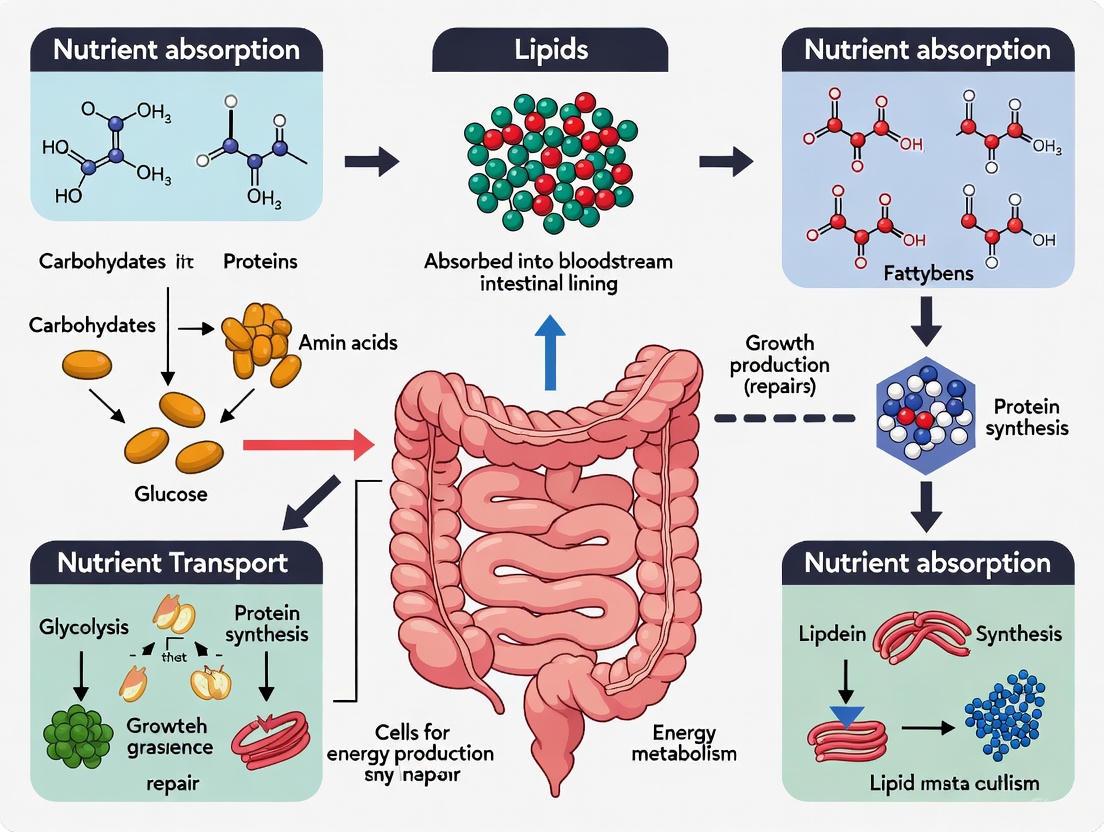
This article provides a comprehensive analysis of the principles governing nutrient absorption and utilization, tailored for researchers, scientists, and drug development professionals.
Nutrient Absorption and Utilization: From Molecular Mechanisms to Clinical Applications in Drug Development
Abstract
This article provides a comprehensive analysis of the principles governing nutrient absorption and utilization, tailored for researchers, scientists, and drug development professionals. It explores the foundational biology of the gastrointestinal tract, from cellular-level transport mechanisms to systemic metabolic pathways. The scope extends to advanced methodological frameworks for assessing bioavailability, investigating critical drug-nutrient interactions that impact therapeutic efficacy, and validating findings through cutting-edge nutritional assessment and personalized nutrition models. By synthesizing current research and emerging trends, this review aims to bridge fundamental science with clinical application, offering insights crucial for the development of nutraceuticals, pharmaceuticals, and personalized dietary interventions.
The Biological Framework: Cellular Transport and Systemic Metabolism of Nutrients
Gastrointestinal Tract Anatomy and Site-Specific Absorption Processes
The gastrointestinal (GI) tract is a highly specialized system responsible for the digestion and absorption of nutrients, playing a critical role in energy production, growth, and cellular maintenance [1]. Its functions extend beyond simple nutrient uptake to include waste elimination, maintenance of hormonal homeostasis, and immunity [1]. For researchers in nutrient absorption and drug development, understanding the site-specific anatomical and physiological specializations along the GI tract is fundamental for predicting compound bioavailability, designing effective therapeutics, and investigating nutrient utilization mechanisms [2]. This whitepaper provides an in-depth technical guide to GI anatomy and the region-specific absorption processes that govern these activities, framed within the context of advanced research methodologies.
Anatomical Organization and Cellular Specialization of the GI Tract
The human GI tract is approximately 9 meters in length, extending from the mouth to the anus [1]. Its structure is highly specialized, with significant variations in cellular composition and function along its course to facilitate efficient digestion and absorption.
Regional Anatomical Divisions
The GI tract is embryologically derived from the primordial digestive tract, which divides into the foregut, midgut, and hindgut, each with distinct arterial blood supplies [1]. Organogenesis is typically achieved by the 8th week of gestation, though intestinal absorption functionality begins around the 24th week [1].
Table 1: Embryological Development of the Gastrointestinal Tract
| Embryological Division | Arterial Supply | Structures Formed |
|---|---|---|
| Foregut | Celiac Trunk | Pharynx, Esophagus, Stomach, Liver, Gallbladder, Bile Ducts, Pancreas, Proximal Duodenum |
| Midgut | Superior Mesenteric Artery | Distal Duodenum, Jejunum, Ileum, Cecum, Ascending Colon, Proximal 2/3 of Transverse Colon |
| Hindgut | Inferior Mesenteric Artery | Distal 1/3 of Transverse Colon, Descending Colon, Sigmoid Colon, Rectum, Proximal Anal Canal |
Functionally, the GI tract is divided into several distinct compartments, each with a unique role in the processing and absorption of nutrients and xenobiotics [1] [3]:
- Mouth: The entry point, equipped with mechanical (teeth) and chemical (salivary amylase) digestion capabilities.
- Esophagus: A muscular tube that transports food from the mouth to the stomach via peristaltic contractions.
- Stomach: Divided into the cardia, fundus, body, antrum, and pylorus. It serves as a primary site for mechanical churning and initial protein digestion, and is the first site of absorption for lipid-soluble substances like alcohol and aspirin [1].
- Small Intestine: The major site for nutrient absorption, subdivided into the duodenum (approx. 30 cm), jejunum (approx. 244 cm), and ileum (approx. 150 cm) [1].
- Large Intestine: Comprised of the ascending, transverse, descending, and sigmoid colon, rectum, and anus. Its primary functions are water absorption and stool formation [1].
Cellular Specialization of the Intestinal Epithelium
The intestinal lining is composed of several highly specialized cell types that work in concert to facilitate absorption, secretion, and immune defense [1].
Figure 1: Key GI Tract Cell Types and Functions. The diagram illustrates specialized cells in the stomach and small intestine, their primary secretions, and downstream physiological roles. CCK=Cholecystokinin; GLP-1=Glucagon-like peptide-1.
The immense surface area of the small intestine is enhanced by the presence of villi and microvilli, which increase the absorptive surface by 30- to 600-fold [3]. This architectural specialization is fundamental to its capacity for efficient nutrient uptake.
Site-Specific Nutrient and Drug Absorption Processes
The absorption of nutrients and pharmaceutical compounds is not uniform along the GI tract. It is governed by regional variations in pH, surface area, transit time, and the expression of specific transport proteins and metabolizing enzymes [1] [3].
Regional Absorption Specialization
Table 2: Site-Specific Absorption of Nutrients and Key Parameters
| GI Segment | Length & pH | Primary Absorptive Functions | Key Transport Mechanisms |
|---|---|---|---|
| Duodenum | ~30 cm, pH ~6.0-6.5 | Iron, Calcium, Phosphorus, Magnesium, Copper, Selenium, Fat-soluble vitamins (A, D, E, K), Water-soluble vitamins (B1, B2, B3, B7, B9) [1]. | Passive diffusion, carrier-mediated transport (e.g., DMT1 for iron). |
| Jejunum | ~244 cm, pH ~6.5-7.0 | Lipids (as glycerol & free fatty acids), Amino Acids, Monosaccharides, Thiamine, Riboflavin, Niacin, Pantothenate, Biotin, Folate, Pyridoxine, Ascorbic Acid, Zn, Cr, Mn, Mo [1] [3]. | Passive transcellular/paracellular, active transport (e.g., SGLT1 for glucose, PEPt1 for di/tri-peptides), lymphatic uptake via lacteals for lipids. |
| Ileum | ~150 cm, pH ~7.0-7.5 | Bile Salts & Acids, Vitamin B12 (Cobalamin), Vitamin D, Vitamin K, Magnesium [1]. | Active transport (e.g., ASBT for bile acids, IF-B12 complex receptor). |
| Colon | ~150 cm, pH ~6.6-7.0 | Water, Electrolytes (Na+, Cl-), Short-chain fatty acids from fermentation [1] [3]. | Passive and active electrolyte transport (e.g., ENaC for Na+), paracellular transport. |
Ion absorption is also region-specific. Sodium (Na+) is absorbed via nutrient-coupled, electroneutral, or electrogenic mechanisms depending on the segment, while chloride (Cl-) absorption occurs through paracellular, electroneutral, and bicarbonate-dependent pathways [3].
Impact on Drug Absorption and Modeling
For drug development professionals, these regional specializations are critical. The fraction of an orally administered drug that reaches systemic circulation (bioavailability, F) is a product of the fraction absorbed (Fabs), the fraction escaping gut-wall metabolism (Fg), and the fraction escaping hepatic metabolism (Fh): F = Fabs × Fg × Fh [4] [2].
The small intestine expresses a range of uridine 5′-diphospho-glucuronosyltransferases (UGTs), including UGT1A1, 1A3, 1A4, 1A7, 1A8, 1A10, 2B7, 2B15, and 2B17, which can contribute to significant first-pass metabolism before a compound reaches the portal vein [4]. Predicting this intestinal metabolism is a key challenge that can be addressed with Physiologically Based Pharmacokinetic (PBPK) modeling [4].
Experimental Methodologies for Studying GI Absorption
A multi-faceted approach, utilizing in silico, in vitro, and in vivo models, is employed to study the complex processes of intestinal absorption.
In Silico Modeling and Prediction
In silico models are valuable tools for high-throughput screening and preliminary assessment of absorption potential [5].
- Quantitative Structure-Activity Relationship (QSAR) Models: These models use molecular descriptors (e.g., logP, molecular weight, polar surface area) to predict human intestinal absorption (HIA) or Caco-2 permeability [5]. While useful for early-stage screening, their predictive accuracy can be limited for structurally diverse compounds.
- Physiologically Based Pharmacokinetic (PBPK) Modeling: These more complex models simulate the entire GI system to predict drug concentration-time profiles. They integrate compound-specific properties (solubility, permeability) with physiological parameters (transit times, pH, enzyme expression levels) [4] [6] [7]. The Advanced Compartmental Absorption and Transit (ACAT) model is a common PBPK framework that describes dissolution, absorption, and metabolism in different gut regions [4].
Figure 2: PBPK Modeling Workflow for Predicting GI Absorption. The diagram outlines the integration of compound-specific, physiological, and in vitro data to build and validate a predictive model of pharmacokinetics (PK).
In Vitro and Ex Vivo Models
In vitro models are crucial for understanding transport mechanisms and metabolism without the complexity of a whole organism [8].
- Caco-2 Cell Monolayers: This immortalized human colon adenocarcinoma cell line, when differentiated, exhibits morphological and functional similarities to the small intestinal epithelium. It is a standard model for predicting passive transcellular and paracellular drug permeability [5].
- Other Advanced Models: More complex in vitro systems include multicellular models that incorporate mucus-producing and enteroendocrine cells, as well as microphysiological systems (MPSs or "gut-on-a-chip") that replicate dynamic fluid flow and mechanical peristalsis, providing a more physiologically relevant environment [8].
Protocol 1: Measuring Apparent Permeability (Papp) in Caco-2 Cell Monolayers
- Cell Culture: Seed Caco-2 cells on semi-permeable filter supports and culture for 21 days to allow full differentiation and polarization.
- Validation: Confirm monolayer integrity by measuring Transepithelial Electrical Resistance (TEER) prior to experiments. Accept TEER values > 300 Ω·cm².
- Dosing: Apply the test compound in a suitable buffer (e.g., Hanks' Balanced Salt Solution, HBSS) to the apical chamber (for absorption studies) or basolateral chamber (for efflux studies).
- Incubation: Maintain the system at 37°C with gentle agitation. Sample from the opposite chamber at regular time intervals over a predetermined period (e.g., up to 2 hours).
- Analysis: Quantify the compound concentration in the samples using a sensitive analytical method (e.g., LC-MS/MS).
- Calculation: Determine the apparent permeability (Papp) using the formula: Papp = (dQ/dt) / (A × C₀), where dQ/dt is the steady-state flux, A is the surface area of the filter, and C₀ is the initial donor concentration.
In Vivo and Clinical Methods
- Human Intestinal Permeability (Peff) Measurements: The single-pass intestinal perfusion (SPIP) technique, often performed in humans during a surgical procedure, allows for direct regional measurement of permeability and is considered a gold standard for correlating with the fraction of dose absorbed [2].
- Mass Balance Studies: These complex clinical studies involve administering a radiolabeled (¹⁴C) version of the drug and meticulously measuring the recovery of the drug and its metabolites in excreta (urine, feces) to determine the absolute absorption and elimination pathways [2].
- Biomarker Discovery and Toxicokinetics: Integrated human intervention studies, combined with machine learning and Bayesian population toxicokinetic modeling, can be used to identify novel biomarkers of exposure and characterize the absorption, distribution, metabolism, and excretion (ADME) of compounds, as demonstrated in mycotoxin research [9].
The Scientist's Toolkit: Key Research Reagents and Materials
Table 3: Essential Reagents for GI Absorption Research
| Reagent / Material | Function and Application in Research |
|---|---|
| Caco-2 Cell Line | An immortalized human colorectal adenocarcinoma cell line that, upon differentiation, forms a polarized monolayer with functional tight junctions and expresses relevant transporters. It is the industry standard for high-throughput screening of intestinal permeability [8] [5]. |
| Transwell Permeable Supports | Semi-permeable filter inserts used in cell culture plates to grow polarized cell monolayers. They enable separate access to the apical and basolateral compartments for permeability and transport studies [8]. |
| Hanks' Balanced Salt Solution (HBSS) | A widely used physiological buffer for in vitro permeability assays. It maintains pH and ion balance to support cell viability during experiments. |
| Cryopreserved Human Hepatocytes | Used in suspension or co-culture assays to study hepatic and, indirectly, intestinal phase II metabolism (e.g., glucuronidation), which is challenging to predict with microsomal systems alone [4]. |
| Human Intestinal Microsomes | Subcellular fractions containing metabolizing enzymes (e.g., UGTs, CYPs) from intestinal tissue. Used for reaction phenotyping and quantifying the metabolic stability of compounds in the gut wall [4]. |
| Simulated Intestinal Fluids (FaSSIF/FeSSIF) | Biorelevant dissolution media that mimic the composition (e.g., bile salts, phospholipids) and pH of the fasted (FaSSIF) and fed (FeSSIF) small intestine. Critical for evaluating the dissolution and precipitation of poorly soluble drugs [2]. |
The gastrointestinal tract is a complex and heterogeneous organ system where anatomy and physiology dictate highly specialized, site-specific absorption processes. A detailed understanding of the regional expression of transport proteins, metabolizing enzymes, and the varying physicochemical environments is indispensable for research into nutrient utilization and the development of orally administered drugs. The continued refinement of experimental models—from sophisticated in silico PBPK platforms to advanced microphysiological systems—provides researchers with powerful tools to dissect these processes, predict in vivo outcomes, and ultimately bridge the gap between basic science and clinical application.
The process of nutrient absorption is a complex, coordinated operation central to human physiology, with the enterocyte serving as its primary cellular unit. Enterocytes, also known as intestinal absorptive cells, are simple columnar epithelial cells that line the inner surface of the small and large intestines, forming the crucial interface between the luminal environment and the internal milieu [10] [11]. These highly polarized cells are anatomically and functionally specialized to facilitate the efficient uptake of ions, water, nutrients, vitamins, and bile salts [1]. The enterocyte's structural design is optimized for its absorptive role, featuring a glycocalyx surface coat containing digestive enzymes and thousands of microvilli on the apical surface that dramatically increase the surface area available for absorption—estimated at 3000–7000 microvilli per cell in the small intestine [10]. Each microvillus, approximately 100 nm in diameter and up to 1.5 μm in length, creates the characteristic brush border appearance visible under light microscopy and amplifies the intestinal surface area by a factor of about 30 [10] [11]. This structural specialization, combined with sophisticated transport machinery, enables enterocytes to manage the diverse array of nutrients released from food digestion, making them indispensable to the broader principles of nutrient absorption and utilization research.
Enterocyte Ultrastructure and Functional Polarization
The functional efficiency of enterocytes stems from their highly organized ultrastructure and distinct polarization. At the electron microscopy level, enterocytes appear as prismatic, highly polarized epithelial cells with a clearly defined apical membrane facing the intestinal lumen and a basolateral membrane oriented toward the basement membrane and blood supply [10]. The apical membrane is characterized by numerous microvilli, each containing a core of 40–50 actin filaments that extend into a terminal web of microfilaments located below the apical surface [10]. These microvilli are covered by a glycocalyx, a mesh-like coat approximately 0.3 μm thick consisting of acidic mucopolysaccharides and glycoproteins that house various digestive enzymes [10] [11].
The enterocyte's polarization is maintained by junctional complexes that bind neighboring cells together at the luminal surface. These complexes include tight junctions (TJs), which provide a selective barrier preventing indiscriminate passage of intestinal contents between cells, followed by adhesive junctions and desmosomes [10]. The lateral membranes of enterocytes often form intricate interdigitations with adjacent cells, further increasing the surface area for transport and housing structures such as adhesive junctions and desmosomes [10]. The basal part of the plasma membrane rests on a basement membrane, which may contain pores formed by processes of enterocytes and dendritic cells, potentially facilitating the delivery of absorbed materials into the underlying interstitium [10].
Internally, enterocytes contain a typical set of organelles, including a centrally located Golgi apparatus usually situated above the nucleus, and both smooth and rough endoplasmic reticulum [10]. The smooth endoplasmic reticulum cisternae are notably attached to the basolateral plasma membrane just below the belt of adhesive junctions and are involved in lipid processing and lipoprotein assembly [10]. This precise organizational architecture enables the compartmentalization of digestive and absorptive processes that is fundamental to the enterocyte's role in nutrient assimilation.
Transport Mechanisms: Transcellular and Paracellular Pathways
Nutrient absorption occurs through two primary mechanistic pathways: transcellular and paracellular transport, each with distinct characteristics and functional roles in overall nutrient assimilation.
Transcellular Transport
Transcellular transport involves the movement of substances across the epithelium by passing through the enterocyte itself, requiring traversal of both the apical and basolateral membranes [12]. This energy-dependent process typically involves membrane-bound transport proteins and can occur against concentration gradients through active transport mechanisms [11] [12]. In most mammals, intestinal absorption of nutrients is dominated by transcellular transport, with specific transporters dedicated to particular nutrients, such as the SGLT1 transporter for glucose absorption [12]. Transcellular transport represents the major pathway for the absorption of most macronutrients, including sugars, amino acids, lipids, and various micronutrients.
Paracellular Transport
Paracellular transport refers to the transfer of substances across the epithelium by passing through the intercellular spaces between cells, primarily regulated by the tight junctions [12]. This pathway is generally passive, driven by concentration gradients, osmosis (for water), and solvent drag for solutes, without direct energy expenditure [12]. The tight junctions possess a net negative charge and demonstrate size-selectivity, preferentially transporting positively charged molecules and excluding larger molecules with molecular radii greater than approximately 4.5 Å [12].
The functional significance of paracellular transport varies across species and physiological conditions. In most mammals, it plays a secondary role in glucose absorption compared to transcellular transport, though evidence suggests paracellular pathways become more available when nutrients are present in the intestinal lumen [12]. Interestingly, small flying vertebrates (birds and bats) rely predominantly on the paracellular pathway for glucose absorption, possibly as an evolutionary adaptation to reduce gut mass and accommodate faster transit times [12]. For drug delivery, the paracellular pathway is particularly important for hydrophilic pharmaceuticals that cannot permeate the lipid membrane via the transcellular pathway, though such drugs typically exhibit lower bioavailability [12].
Table 1: Comparative Characteristics of Transport Pathways
| Feature | Transcellular Transport | Paracellular Transport |
|---|---|---|
| Route | Through the cell | Between cells |
| Energy Requirement | Often requires energy (active transport) | Passive (no direct energy requirement) |
| Saturation | Can be saturated due to transporter limitation | Not saturable |
| Selectivity | High (substrate-specific transporters) | Size and charge selectivity (approx. >4.5 Å) |
| Major Transporters | SGLT1 (glucose), GLUT5 (fructose), Pept1 | Claudins (form tight junction pores) |
| Evolutionary Adaptation | Dominant in most mammals | Major pathway in small flying vertebrates |
Molecular Machinery of Nutrient Absorption
Carbohydrate Absorption
Enterocytes employ a sophisticated sequential mechanism for carbohydrate assimilation. The process begins with polysaccharidases and disaccharidases embedded within the glycocalyx that hydrolyze complex sugars into monosaccharides [11]. Glucose and galactose then cross the apical membrane via the sodium-glucose cotransporter (SGLT1), utilizing the sodium gradient established by the Na+/K+ ATPase pump on the basolateral membrane [11]. Once inside the cell, these sugars move through the cytosol and exit via the basolateral membrane into the blood capillaries using the GLUT2 transporter [11]. Fructose absorption occurs through a distinct pathway, entering the enterocyte through the GLUT5 transporter on the apical membrane and likely exiting via other GLUT transporters on the basolateral side [11]. Clinical disorders such as dietary fructose intolerance and lactose intolerance arise from deficiencies in these specific transport and enzymatic components [11].
Protein and Amino Acid Absorption
Protein assimilation involves peptidases within the glycocalyx that cleave dietary proteins into amino acids and small peptides [11]. A critical enzymatic component is enteropeptidase (enterokinase), which activates pancreatic trypsinogen to trypsin, thereby initiating a cascade of zymogen activation in the pancreatic secretory products [11]. The resulting amino acids and small peptides are then transported across the enterocyte through specific amino acid transporters, with enterocytes participating in various metabolic cycles including the Krebs and Cori cycles, and possessing the capacity to synthesize lipase [11].
Lipid Uptake and Processing
Lipid absorption represents one of the most complex enterocyte functions, requiring coordinated extracellular and intracellular processing. Dietary lipids are first emulsified and broken down by pancreatic lipase aided by bile secretions [11]. The resulting lipid products diffuse into enterocytes, where they undergo extensive processing: smaller lipids are transported directly into intestinal capillaries, while larger lipids are processed by the Golgi apparatus and smooth endoplasmic reticulum into lipoprotein chylomicra [10] [11]. These chylomicra are then exocytosed into lacteals rather than blood capillaries, entering the lymphatic system before eventual delivery to the systemic circulation [11]. The smooth endoplasmic reticulum cisternae in enterocytes remain interconnected, facilitating this complex lipid processing and packaging [10].
Ion, Vitamin, and Bile Salt Transport
Enterocytes manage the absorption of essential ions including sodium, calcium, magnesium, iron, zinc, and copper, primarily through active transport mechanisms [11]. Water uptake follows the osmotic gradient established by the Na+/K+ ATPase on the basolateral surface, occurring through both transcellular and paracellular routes [11]. Vitamin B12 absorption involves specific receptors that bind to the vitamin B12-gastric intrinsic factor complex, followed by internalization through receptor-mediated endocytosis [11]. Additionally, enterocytes participate in the enterohepatic circulation by resorbing unconjugated bile salts in the ileum, particularly those bile acids that were released but not utilized in lipid emulsification [11].
Table 2: Major Transport Proteins and Functions in Enterocytes
| Nutrient Category | Transporter/Enzyme | Location | Function | Clinical Significance |
|---|---|---|---|---|
| Sugars | SGLT1 | Apical membrane | Sodium-glucose cotransport | - |
| GLUT2 | Basolateral membrane | Glucose, galactose efflux | - | |
| GLUT5 | Apical membrane | Fructose uptake | Dietary fructose intolerance | |
| Disaccharidases | Glycocalyx | Sugar hydrolysis | Lactose intolerance | |
| Amino Acids/Peptides | Peptidases | Glycocalyx | Protein cleavage | - |
| Enteropeptidase | Apical membrane | Trypsinogen activation | - | |
| Amino acid transporters | Apical/basolateral membranes | Amino acid transport | - | |
| Lipids | - | - | Diffusion | - |
| Golgi/SER | Intracellular | Chylomicron assembly | - | |
| Other | Na+/K+ ATPase | Basolateral membrane | Sodium gradient maintenance | - |
| B12-IF receptor | Apical membrane | Vitamin B12 uptake | B12 deficiency | |
| IgA receptor | Basolateral membrane | Immunoglobulin absorption | - |
Experimental Methodologies for Studying Enterocyte Function
Ultrastructural Analysis
The investigation of enterocyte biology employs sophisticated methodological approaches to elucidate structure-function relationships. Electron microscopy (EM) remains a fundamental tool for examining enterocyte ultrastructure, revealing critical details such as the presence of four cell types in the epithelial layer: goblet cells, dendritic cells, 'light' enterocytes, and 'dark' enterocytes [10]. Sample preparation for EM typically involves perfusion fixation, which better preserves native cellular architecture and intercellular spaces compared to immersion fixation [10]. For three-dimensional reconstruction, serial sectioning techniques and advanced imaging software are employed to model complex cellular components such as the actin-myosin cuffs and longitudinal bundles of actin filaments associated with interdigitations [10].
Transport Studies
Quantifying nutrient transport across enterocyte membranes utilizes various experimental systems. Using chamber experiments allow researchers to measure electrophysiological parameters and directional flux of compounds across isolated intestinal segments or epithelial cell monolayers [12]. Isotopic tracer methods employing radiolabeled or stable isotope-labeled nutrients (e.g., glucose, amino acids) enable precise tracking of substrate movement and metabolic fate [12]. Molecular techniques including RNA interference, CRISPR-Cas9 gene editing, and transporter overexpression in cell culture models (e.g., Caco-2 cells) help establish the specific roles of individual transport proteins [11] [12]. These approaches are often complemented by immunohistochemistry and fluorescence in situ hybridization to localize transporters within specific membrane domains and cell types.
Table 3: Quantitative Structural and Functional Data of Enterocytes
| Parameter | Value/Range | Measurement Context | Reference |
|---|---|---|---|
| Microvilli per enterocyte | 3000–7000 | Small intestine | [10] |
| Microvillus diameter | ~100 nm | Electron microscopy | [10] |
| Microvillus length | Up to 1.5 μm | Electron microscopy | [10] |
| Glycocalyx thickness | ~0.3 μm | Electron microscopy | [10] |
| Actin filaments per microvillus | 40–50 | Electron microscopy | [10] |
| Paracellular transport size exclusion | >~4.5 Å molecular radius | Intestinal epithelium | [12] |
| Glucose transport predominance | Primarily transcellular (SGLT1) | Most mammals | [12] |
| Glucose transport predominance | Primarily paracellular | Small birds and bats | [12] |
Research Reagent Solutions for Enterocyte Studies
Table 4: Essential Research Reagents for Enterocyte and Absorption Studies
| Reagent/Category | Specific Examples | Research Application | Function |
|---|---|---|---|
| Cell Culture Models | Caco-2 cells, HT-29 cells, IPEC-J2 cells | In vitro transport studies | Form polarized monolayers with enterocyte characteristics for permeability and transport assays |
| Transport Inhibitors | Phlorizin, Ouabain, Specific cytokine inhibitors | Mechanistic studies | Inhibit specific transporters (SGLT1, Na+/K+ ATPase) to elucidate transport pathways |
| Molecular Biology Tools | siRNA, CRISPR-Cas9 systems, Transporter plasmids | Gene function studies | Knock down or overexpress specific transport proteins to determine function |
| Detection Reagents | Radiolabeled nutrients (³H, ¹⁴C), Fluorescent tags | Flux measurements | Track nutrient movement and localization in transport assays |
| Antibodies | Anti-claudin antibodies, Anti-SGLT1, Anti-GLUT2 | Localization studies | Identify spatial distribution of tight junction components and transporters via IHC/IF |
| Permeation Enhancers | Medium chain fatty acids (capric acid), Chitosans, Zona occludens toxin | Paracellular pathway studies | Temporarily disrupt tight junctions to enhance paracellular transport for drug delivery research |
Visualization of Transport Pathways
The following diagrams, generated using Graphviz DOT language, illustrate key transport pathways and experimental workflows in enterocyte biology. All diagrams adhere to the specified color palette and contrast requirements.
Diagram 1: Glucose Transport Pathway
Diagram 2: Paracellular Transport Pathway
Diagram 3: Lipid Processing Pathway
Diagram 4: Experimental Workflow
The cellular machinery of nutrient absorption centered on enterocytes represents a sophisticated biological system with profound implications for both basic research and therapeutic development. The intricate coordination between transcellular and paracellular pathways, the specific transport proteins, and the structural specialization of enterocytes collectively ensure efficient nutrient assimilation while maintaining a protective barrier function. Understanding these mechanisms at a molecular level provides critical insights for addressing malabsorption disorders, optimizing drug delivery systems, and developing targeted therapeutic interventions. Continued research into enterocyte biology, particularly the regulation of tight junction permeability and the specific transporters involved in nutrient uptake, will undoubtedly yield valuable advances in clinical practice and pharmaceutical development, furthering our comprehension of the fundamental principles governing nutrient absorption and utilization.
The digestion and absorption of macronutrients—carbohydrates, proteins, and lipids—represent fundamental physiological processes that transform ingested food into absorbable components for energy production, tissue maintenance, and cellular function. Understanding these mechanisms at a technical level is crucial for researchers and drug development professionals working on metabolic disorders, nutrient-based therapies, and malabsorption conditions. This whitepaper provides an in-depth examination of the enzymatic pathways, transport mechanisms, and regulatory systems governing macronutrient processing, framed within contemporary principles of nutrient absorption research. The complex interplay between food matrix structure, digestion kinetics, and absorption efficiency presents both challenges and opportunities for therapeutic intervention and nutritional science advancement, particularly as new research reveals the profound implications of nutrient release rates on metabolic outcomes [13].
Carbohydrate Digestion and Absorption
Biochemical Pathways and Enzymatic Processing
Carbohydrate digestion initiates in the oral cavity through the action of salivary α-amylase, which begins hydrolyzing starch into smaller polysaccharides and maltose [14]. This process continues in the small intestine where pancreatic α-amylase further breaks down complex carbohydrates into disaccharides and oligosaccharides [15]. The final digestive stage occurs at the brush border membrane of enterocytes, where specific disaccharidases—including lactase, sucrase, and maltase—catalyze the hydrolysis of disaccharides into monosaccharide components [16]. These enzymes are integral membrane proteins with active sites facing the intestinal lumen, enabling efficient substrate processing prior to absorption.
The resulting monosaccharides (glucose, galactose, and fructose) are absorbed via specialized transport mechanisms. Glucose and galactose utilize active transport through sodium-dependent glucose transporters (SGLT1), while fructose enters enterocytes via facilitated diffusion through GLUT5 transporters [16] [15]. All monosaccharides exit enterocytes into circulation via GLUT2 transporters. The rate of carbohydrate digestion and absorption significantly influences postprandial metabolic responses, with low-glycemic index foods producing gradual increases in blood glucose compared to high-glycemic alternatives [15].
Table 1: Key Enzymes in Carbohydrate Digestion
| Enzyme | Production Site | Substrate | Products |
|---|---|---|---|
| Salivary α-amylase | Salivary glands | Starch | Maltose, maltotriose, α-limit dextrins |
| Pancreatic α-amylase | Pancreas | Starch | Maltose, maltotriose, α-limit dextrins |
| Lactase | Small intestine brush border | Lactose | Glucose + Galactose |
| Sucrase-isomaltase | Small intestine brush border | Sucrose, maltose, isomaltose | Glucose, Fructose |
| α-glucosidase | Small intestine brush border | Maltose, maltotriose | Glucose |
Research Methodologies and Experimental Approaches
Investigation of carbohydrate digestion employs both in vitro and in vivo techniques. For assessing digestibility kinetics, researchers utilize the hydrogen breath test, which measures hydrogen production from bacterial fermentation of unabsorbed carbohydrates in the colon [14]. This method is particularly valuable for diagnosing malabsorption disorders like lactose intolerance. In vitro models simulating gastrointestinal conditions incorporate specific enzymes at physiological concentrations and pH levels to monitor carbohydrate breakdown rates [17].
Controlled studies examining glycemic response involve measuring blood glucose levels at regular intervals following carbohydrate consumption, with results used to calculate glycemic index values [15]. Advanced approaches include isotopic labeling of carbohydrates to track metabolic fates, such as the conversion of fructose to glucose, lactate, or glycogen in the liver [15]. For intestinal transport studies, Caco-2 cell monolayers serve as an established model of human intestinal epithelium to characterize transporter kinetics and inhibition profiles.
Protein Digestion and Absorption
Proteolytic Cascades and Amino Acid Transport
Protein digestion commences in the stomach where pepsin, activated from pepsinogen in acidic environments, denatures proteins and cleaves peptide bonds [16]. The process intensifies in the small intestine where pancreatic proteases—including trypsin, chymotrypsin, and carboxypeptidases—hydrolyze polypeptides into smaller peptides and amino acids [18]. Brush border peptidases further digest tripeptides and dipeptides into absorbable units, while some dipeptides and tripeptides are transported directly into enterocytes via the PepT1 transporter [16].
Amino acid absorption occurs through diverse specialized transport systems with distinct substrate specificities for acidic, basic, neutral, and imino acids [16]. These transporters employ active sodium-coupled mechanisms, facilitated diffusion, and exchange processes to regulate amino acid uptake. Research demonstrates that protein digestion rates significantly impact postprandial muscle protein synthesis, with rapidly digested proteins like whey inducing a swift but transient increase, while slowly digested casein provides a prolonged moderate stimulation [19].
Table 2: Protein Absorption Rates of Common Dietary Sources
| Protein Source | Absorption Rate (g/hour) | Characteristics | Anabolic Response |
|---|---|---|---|
| Whey protein hydrolysate | 8-10 | Rapidly digested, high leucine content | Rapid, pronounced stimulation |
| Whey protein isolate | 8-10 | Fast absorption, lactose-free | Strong acute response |
| Plant proteins (pea) | Intermediate | Moderate digestion rate, lower leucine | Moderate, sustained response |
| Casein | ~6.1 | Forms gastric clots, slow digestion | Prolonged, moderate stimulation |
Investigative Protocols for Protein Utilization
Research on protein digestion and absorption employs sophisticated methodologies including intrinsically labeled proteins produced by administering stable isotope-labeled amino acids to animals, enabling precise tracking of protein-derived amino acids through digestion, absorption, and incorporation into tissues [19]. These tracer studies allow researchers to quantify the postprandial utilization of dietary protein for muscle protein synthesis.
Muscle protein synthesis rates are typically measured through stable isotope-labeled amino acid infusion combined with tissue biopsy, assessing tracer incorporation into muscle protein over time [19]. To evaluate protein quality, the digestible indispensable amino acid score (DIAAS) methodology has largely replaced the protein digestibility-corrected amino acid score (PDCAAS), providing more accurate assessment of amino acid bioavailability. For clinical assessment of protein malabsorption, fecal nitrogen measurement remains a fundamental diagnostic approach, while more specialized testing may include plasma amino acid profiling following protein ingestion.
Lipid Digestion and Absorption
Emulsification, Enzymatic Hydrolysis, and Micellar Formation
Lipid digestion presents unique challenges due to the hydrophobic nature of triglycerides, necessitating specialized mechanisms for processing within the aqueous gastrointestinal environment. The process initiates in the stomach with mechanical emulsification through churning actions and limited enzymatic hydrolysis by gastric lipase [20] [21]. Upon entering the small intestine, lipids trigger cholecystokinin release, stimulating gallbladder contraction and bile secretion into the duodenum.
Bile salts act as biological detergents, emulsifying large lipid droplets into smaller ones, thereby increasing the surface area for pancreatic lipase action [20] [16]. Pancreatic lipase then hydrolyzes triglycerides into monoglycerides and free fatty acids, which combine with bile salts, phospholipids, and cholesterol to form mixed micelles that transport these lipid components to the enterocyte brush border for absorption [20]. Within enterocytes, fatty acids and monoglycerides are re-esterified into triglycerides, then incorporated into chylomicrons for transport through lymphatic circulation to peripheral tissues [20].
Table 3: Key Components in Lipid Digestion and Absorption
| Component | Source | Function | Significance |
|---|---|---|---|
| Lingual lipase | Tongue serous glands | Initiates triglyceride digestion | Particularly important in infants |
| Gastric lipase | Gastric mucosa | Hydrolyzes short-chain triglycerides | Minor role in adults, important in infants |
| Bile salts | Liver, gallbladder | Emulsification, micelle formation | Essential for fat-soluble vitamin absorption |
| Pancreatic lipase | Pancreas | Primary triglyceride hydrolysis | Requires colipase for activity |
| Chylomicrons | Intestinal epithelial cells | Transport of dietary lipids in lymph | Enters circulation via thoracic duct |
Experimental Models for Lipid Assimilation Studies
Research on lipid digestion employs in vitro models that simulate the gastrointestinal environment, including pH-stat titration methods to monitor lipase activity in real-time by quantifying fatty acid release [21]. These systems often incorporate simulated gastric and intestinal phases with controlled bile salt concentrations and mechanical agitation to replicate physiological conditions.
For absorption studies, Caco-2 cell monolayers serve as standardized models of intestinal epithelium to investigate lipid uptake and chylomicron assembly [20]. Advanced imaging techniques including fluorescence microscopy with labeled lipids allow visualization of micelle formation and cellular uptake processes. Human studies utilize stable isotope-labeled fatty acids incorporated into triglycerides to trace metabolic fates and distribution patterns, while lymph cannulation in animal models enables direct collection and analysis of chylomicron composition and secretion kinetics.
Research Tools and Methodologies
Research Reagent Solutions
Table 4: Essential Research Reagents for Nutrient Absorption Studies
| Reagent/Category | Specific Examples | Research Application | Technical Function |
|---|---|---|---|
| Stable Isotope Tracers | ¹³C-leucine, ¹⁵N-glycine, ²H-palmitate | Metabolic trafficking studies | Enables precise tracking of nutrient fate in vivo |
| Digestive Enzymes | Pancreatin, pepsin, bile extracts | In vitro digestion models | Simulates physiological breakdown of macronutrients |
| Cell Culture Models | Caco-2 cells, HT-29 cells | Intestinal transport studies | Represents human intestinal epithelium for uptake studies |
| Transport Inhibitors | Phloridzin, ouabain, specific antibody blockers | Mechanism elucidation | Identifies specific transport pathways |
| Analytical Standards | Certified amino acid mixes, lipid standards, monosaccharides | Mass spectrometry, HPLC | Quantification and method calibration |
| Immunoassay Kits | GLP-1, GIP, CCK, PYY ELISA kits | Hormonal response measurement | Evaluates enteroendocrine responses to nutrients |
Visualization of Macronutrient Absorption Pathways
The following diagrams illustrate key processes in macronutrient absorption, generated using Graphviz DOT language with adherence to the specified color palette and formatting constraints.
Carbohydrate Absorption Pathway
Lipid Processing and Chylomicron Assembly
Implications for Research and Therapeutic Development
The intricate processes of macronutrient digestion and absorption present multiple targets for therapeutic intervention and nutritional strategy development. Research indicates that modulation of digestion rates—through enzyme inhibition, food matrix design, or specific nutrient combinations—can significantly impact metabolic outcomes [21] [13]. For instance, controlled lipid digestion approaches are being explored as weight management strategies, while targeted protein delivery systems show promise for combating anabolic resistance in aging and clinical populations [19] [21].
Future research directions should prioritize understanding nutrient absorption within the context of complex meals rather than isolated nutrients, as interactions between macronutrients significantly alter digestion kinetics and metabolic responses [15] [13]. Additionally, the development of sophisticated in vitro models that more accurately simulate human gastrointestinal physiology will enhance predictive capabilities in drug and nutritional product development. The emerging field of personalized nutrition requires deeper investigation into how individual variations in digestive physiology, enzyme expression, and transporter activity influence nutrient bioavailability and utilization, potentially informing targeted interventions for specific populations including infants, the elderly, and those with metabolic disorders [22].
Micronutrient handling encompasses the complex physiological processes of absorption, transport, and utilization of vitamins and minerals essential for human health. This technical guide examines the cellular mechanisms, bioavailability factors, and methodological approaches central to nutrient absorption research. While adequate micronutrient status supports physiological homeostasis and reduces disease risk, deficiencies affecting billions globally persist due to both inadequate intake and suboptimal bioavailability. This whitepaper synthesizes current evidence on micronutrient handling mechanisms, presents standardized experimental protocols for assessing bioavailability, and identifies emerging research directions including transporter discovery and precision nutrition applications. The integration of advanced biomarker assessment with mechanistic understanding of absorption pathways provides critical foundations for therapeutic development and nutritional interventions targeting optimized healthspan and metabolic function.
Micronutrients, comprising vitamins and minerals, are essential inorganic compounds required in trace amounts for fundamental biochemical processes including gene transcription, enzymatic reactions, and protection against oxidative stress [23]. Unlike macronutrients, micronutrients are not utilized for energy but function as crucial cofactors in metabolic pathways, with both deficient and excessive intakes producing adverse health effects [23]. The gastrointestinal tract represents the primary interface for micronutrient handling, with specialized cellular mechanisms facilitating the absorption and processing of these vital compounds [1]. Understanding micronutrient handling requires comprehensive knowledge of their chemical properties, absorption kinetics, and the host factors that influence their bioavailability—defined as the proportion of an ingested nutrient that is absorbed, transported to target tissues, and utilized in metabolic functions or storage [24]. Recent research emphasizes that optimal micronutrient concentrations extend beyond preventing deficiency syndromes to supporting long-term healthspan and reducing chronic disease risk [25].
Micronutrient Classification and Functions
Vitamin Classification and Characteristics
Vitamins are organic compounds classified according to their solubility, which determines their absorption mechanisms, transport pathways, and storage capabilities within the body [23].
Table 1: Fat-Soluble Vitamins: Functions, Sources, and Recommended Intakes
| Vitamin | Major Functions | Primary Food Sources | RDA/Adequate Intake (Adults) |
|---|---|---|---|
| A (Retinol) | Vision, cell differentiation, growth | Liver, dairy, eggs, leafy vegetables, orange fruits | 700-900 mcg/d |
| D (Cholecalciferol) | Calcium regulation, bone metabolism, immune function | Fatty fish, fortified foods, sun exposure | 15-20 mcg/d (varies) |
| E (Tocopherol) | Antioxidant protection, cell membrane integrity | Nuts, seeds, vegetable oils, leafy greens | 15 mg/d α-tocopherol |
| K (Phylloquinone) | Coagulation, bone metabolism | Leafy greens, synthesized by gut bacteria | 90-120 mcg/d |
Table 2: Water-Soluble Vitamins: Functions, Sources, and Recommended Intakes
| Vitamin | Major Functions | Primary Food Sources | RDA/Adequate Intake (Adults) |
|---|---|---|---|
| B1 (Thiamine) | Coenzyme in glucose metabolism, energy production | Whole grains, nuts, poultry, legumes | 1.1-1.2 mg/d |
| B2 (Riboflavin) | Redox reactions, antioxidant regeneration | Dairy, eggs, fortified grains | 0.9-1.3 mg/d |
| B3 (Niacin) | Precursor to NAD/NADP, cellular redox reactions | Meat, fish, whole grains, mushrooms | 14-16 mg/d |
| B9 (Folate) | DNA/RNA synthesis, red blood cell maturation | Leafy greens, legumes, fortified grains | 400 mcg/d (600 mcg pregnancy) |
| B12 (Cobalamin) | DNA synthesis, myelin formation, erythropoiesis | Animal products (meat, dairy, eggs) | 2.4 mcg/d |
| C (Ascorbic acid) | Collagen formation, antioxidant, iron absorption | Citrus fruits, berries, tomatoes, leafy vegetables | 75-90 mg/d |
Essential Minerals: Functions and Requirements
Minerals are inorganic micronutrients that serve structural roles in bones and teeth, function as enzyme cofactors, and maintain acid-base and fluid balance [23].
Table 3: Essential Minerals: Functions, Sources, and Recommended Intakes
| Mineral | Major Functions | Primary Food Sources | RDA/Adequate Intake (Adults) |
|---|---|---|---|
| Calcium | Bone mineralization, nerve transmission, muscle contraction | Dairy, fortified plant milks, leafy greens, legumes | 800-1000 mg/d |
| Phosphorus | Energy metabolism (ATP), structural component of nucleic acids | Dairy, meat, poultry, processed foods | 700 mg/d |
| Potassium | Main intracellular cation, acid-base balance, blood pressure regulation | Fruits, vegetables, legumes, dairy | 2600-3400 mg/d |
| Iron | Oxygen transport, electron transfer, DNA synthesis | Meat, poultry, fish, legumes, fortified grains | 8-18 mg/d |
| Zinc | Enzyme cofactor, immune function, protein synthesis | Meat, shellfish, legumes, seeds | 8-11 mg/d |
| Magnesium | Enzyme cofactor, nerve function, bone development | Nuts, seeds, whole grains, leafy greens | 310-420 mg/d |
Cellular Mechanisms of Micronutrient Absorption
Gastrointestinal Specialized Cell Types
The gastrointestinal epithelium contains specialized cell types that facilitate micronutrient handling through distinct mechanistic roles [1]:
- Enterocytes: Principal absorptive cells constituting most of the intestinal lining, responsible for the uptake of ions, water, nutrients, vitamins, and unconjugated bile acid salts through both active and passive transport mechanisms [1].
- Goblet cells: Specialized epithelial cells that produce alkaline mucus to protect the gastrointestinal lining from shearing forces and acidic secretions, thereby creating a favorable environment for nutrient absorption [1].
- Enteroendocrine cells: Located throughout the stomach, pancreas, and small intestine, these cells secrete gastrointestinal hormones (e.g., cholecystokinin, GLP-1) that regulate digestive processes and nutrient absorption kinetics [1].
- Oxyntic (parietal) cells: Specialized stomach cells that secrete hydrochloric acid and intrinsic factor, the latter being essential for vitamin B12 absorption in the terminal ileum [1].
- Paneth cells: Located in the small intestinal crypts, these cells secrete antimicrobial peptides that help regulate gut microbiota, indirectly influencing micronutrient bioavailability [1].
Site-Specific Absorption Pathways
Micronutrient absorption occurs along specialized regions of the gastrointestinal tract with distinct functional segments [1]:
Duodenum: The proximal segment (~30 cm) receives chyme from the stomach and secretions from the liver, pancreas, and gallbladder. This segment absorbs most minerals including iron, calcium, phosphorus, magnesium, copper, selenium, and fat-soluble vitamins (A, D, E, K) [1]. The acidic environment facilitates mineral solubilization, while bile salts enable fat-soluble vitamin absorption.
Jejunum: This middle segment (~244 cm) contains specialized lymphatic vessels (lacteals) that absorb dietary lipids and fat-soluble vitamins. The jejunum represents the primary site for absorption of most water-soluble vitamins including thiamine, riboflavin, niacin, pantothenate, biotin, folate, pyridoxine, and ascorbic acid [1]. Amino acids, monosaccharides, and small peptides are also absorbed here through specialized transport mechanisms.
Ileum: The distal segment (~150 cm) terminates at the ileocecal junction and specializes in the absorption of vitamin B12, bile salts, and additional magnesium [1]. The ileum employs specific receptor-mediated transport for B12-intrinsic factor complexes, representing a highly specialized micronutrient absorption pathway.
Factors Influencing Micronutrient Bioavailability
Bioavailability refers to the proportion of an ingested nutrient that is absorbed in a form available for normal physiological functions and storage [24]. Multiple dietary and host factors significantly impact micronutrient bioavailability:
Dietary Factors
- Food matrix effects: Plant-based foods often exhibit reduced micronutrient bioavailability due to entrapment in cellular structures and binding by dietary antagonists such as phytate, oxalate, and fiber [24]. For example, iron and zinc bioavailability from plant sources is significantly lower than from animal sources due to phytate content.
- Nutrient-nutrient interactions: Certain nutrient pairs demonstrate synergistic relationships (e.g., vitamin C enhances non-heme iron absorption), while others compete for absorption (e.g., calcium and zinc; iron and calcium) [26]. The presence of dietary fat significantly enhances absorption of fat-soluble vitamins (A, D, E, K) [26].
- Chemical form differences: Specific chemical forms of micronutrients demonstrate varying bioavailability profiles. For instance, calcifediol (25-hydroxyvitamin D) exhibits greater bioavailability than cholecalciferol, while methylfolate demonstrates superior bioavailability compared to folic acid [24].
Host Factors
- Life stage influences: Pregnancy and lactation are characterized by enhanced absorptive capacity for multiple micronutrients, while elderly individuals frequently exhibit reduced absorption efficiency for vitamins B12, D, and calcium due to age-related physiological changes [24] [26].
- Gut microbiota composition: A healthy gastrointestinal microbiota can enhance the absorption of specific vitamins and minerals through fermentation and metabolic transformation, while dysbiosis or bacterial overgrowth may reduce bioavailability of certain micronutrients [24].
- Pathophysiological conditions: Gastrointestinal diseases, inflammatory states, surgical interventions (e.g., bariatric surgery), and medication use can profoundly impact micronutrient absorption capacity [27]. Chronic inflammation particularly affects iron metabolism through hepcidin-mediated pathways.
Experimental Methodologies for Assessing Bioavailability
In Vitro Digestion Models
In vitro systems simulating human digestion provide preliminary data on nutrient release kinetics and absorption potential:
Protocol: Simulated Gastrointestinal Digestion Model
- Oral phase simulation: Incubate test food with artificial saliva (α-amylase in buffer, pH 6.8) for 2-5 minutes at 37°C with constant agitation [24].
- Gastric phase simulation: Adjust to pH 3.0 with HCl, add pepsin solution, and incubate for 1-2 hours at 37°C with continuous mixing.
- Intestinal phase simulation: Adjust to pH 7.0 with NaHCO3, add pancreatin and bile extract solution, incubate for 2 hours at 37°C.
- Absorption simulation: Transfer digest to dialysis membrane with specific molecular weight cutoff (typically 5-15 kDa) or utilize Caco-2 cell monolayers to model intestinal absorption.
- Analytical quantification: Measure micronutrient concentration in dialysate or cellular fraction using appropriate analytical methods (HPLC, ICP-MS, ELISA).
Balance Studies and Ileal Digestibility
Balance studies represent a classical approach for assessing micronutrient bioavailability by measuring the difference between ingestion and excretion [24]:
Protocol: Metabolic Balance Study
- Controlled diet period: Administer a controlled diet containing precisely quantified micronutrient levels for a stabilization period (typically 7-14 days).
- Balance measurement phase: Continue controlled diet while collecting complete urine and fecal outputs for 5-10 days. Mark fecal samples using non-absorbable markers (e.g., carmine red, polyethylene glycol).
- Sample processing: Homogenize and aliquot fecal samples, acid-digest if analyzing minerals.
- Analytical measurement: Quantify micronutrient content in diet, urine, and feces using validated analytical methods.
- Bioavailability calculation: Calculate apparent absorption using the formula: (Intake - Fecal Output) / Intake × 100%.
Ileal digestibility methods provide more precise absorption data by measuring the difference between ingested nutrients and those remaining in ileal contents, typically employing naso-intestinal intubation or ileostomy subjects [24].
Stable Isotope Tracer Methodologies
Stable isotope techniques represent the gold standard for assessing mineral bioavailability in human studies:
Protocol: Stable Isotope Absorption Study
- Isotope administration: Administer orally a precisely measured dose of stable isotope-enriched micronutrient (e.g., ⁵⁷Fe, ⁶⁷Zn, ⁴⁴Ca) after an overnight fast.
- Control of co-factors: Standardize accompanying meal composition to control for enhancers/inhibitors of absorption.
- Biological sampling: Collect blood samples at baseline and at predetermined intervals post-administration (e.g., 2, 4, 6, 8, 24 hours).
- Sample analysis: Quantify isotope enrichment in biological samples using inductively coupled plasma mass spectrometry (ICP-MS).
- Kinetic modeling: Calculate absorption fraction based on tracer appearance in circulation using compartmental modeling approaches.
Research Reagent Solutions for Micronutrient Studies
Table 4: Essential Research Reagents for Micronutrient Absorption Studies
| Reagent/Cell Line | Application in Research | Specific Utility |
|---|---|---|
| Caco-2 cell line | Intestinal absorption modeling | Differentiates into enterocyte-like cells with brush border enzymes; used for transport studies and permeability assessment |
| HT-29-MTX cell line | Mucous layer modeling | Co-culture with Caco-2 to create more physiologically relevant intestinal barrier with mucus production |
| Human intestinal organoids | Personalized absorption models | Patient-derived 3D cultures that maintain genetic and physiological characteristics of donor tissue |
| SH-SY5Y cell line | Neurological nutrient studies | Assess micronutrient transport across blood-brain barrier and neuronal uptake mechanisms |
| HepG2 cell line | Hepatic metabolism assessment | Models hepatic processing, storage, and metabolism of absorbed micronutrients |
| Specific transporter-expressing cell lines (e.g., hFcT, hZIP4) | Transporter mechanism studies | Engineered to overexpress specific micronutrient transporters for mechanistic studies |
| Stable isotope-labeled micronutrients (⁵⁷Fe, ⁶⁷Zn, ⁴⁴Ca) | Human absorption kinetics | Enable precise tracking of mineral absorption, distribution, and retention without radioactivity |
| Simulated gastrointestinal fluids (SGF, SIF) | In vitro digestion models | Standardized solutions mimicking gastric and intestinal secretions for bioavailability screening |
| Ussing chamber systems | Intestinal permeability and transport | Measures electrophysiological parameters and nutrient flux across intact intestinal tissue |
| LC-MS/MS and ICP-MS systems | Analytical quantification | High-sensitivity detection and quantification of micronutrients and their metabolites in biological samples |
Emerging Research Directions and Clinical Implications
Transporter Discovery and Characterization
Recent research has identified previously unknown micronutrient transporters, expanding understanding of absorption mechanisms. The recent discovery that SLC35F2 functions as a high-specificity transporter for queuosine—a vitamin-like micronutrient crucial for brain health, memory, and cancer defense—exemplifies ongoing advances in transporter biology [28]. This discovery, emerging from over 30 years of investigation, highlights the incomplete understanding of micronutrient transport mechanisms and suggests additional transporters remain to be characterized.
Precision Nutrition and Biomarker Development
Current research focuses on establishing evidence-based thresholds for optimal micronutrient concentrations by integrating biomarker data with clinical outcomes, genetic profiles, and lifestyle factors [25]. Traditional Dietary Reference Intakes (DRIs) provide population-level guidelines but fail to account for individual variability in absorption efficiency and metabolic requirements. The development of sensitive biomarkers that reflect tissue status and functional outcomes represents a critical research direction for advancing personalized micronutrient recommendations [25].
Therapeutic Applications and Global Health
Micronutrient research directly informs clinical practice and public health interventions. The European Society for Clinical Nutrition and Metabolism (ESPEN) has established clinical guidelines for micronutrient use in high-risk populations including patients with cancer, obesity, gastrointestinal disorders, and critical illness [27]. Strategic supplementation and food fortification programs represent cost-effective approaches for addressing widespread deficiencies, with vitamin D supplementation demonstrating particularly favorable economic profiles—approximately $12 per person annually compared to $6,000-$18,000 for treating complications associated with deficiency [24].
Micronutrient handling represents a complex physiological process influenced by chemical, dietary, and host factors that collectively determine bioavailability and metabolic utilization. Advanced methodological approaches including stable isotope techniques, in vitro digestion models, and transporter characterization studies provide critical tools for investigating absorption mechanisms. The integration of bioavailability concepts with clinical assessment of micronutrient status enables more effective therapeutic interventions and public health strategies to address the global burden of micronutrient deficiencies. Future research directions emphasizing transporter biology, precision nutrition, and evidence-based optimal concentration thresholds will further advance the field of micronutrient handling and its applications in therapeutic development and clinical practice.
The tricarboxylic acid (TCA) cycle serves as the fundamental metabolic nexus in post-absorptive nutrient utilization, integrating carbon skeletons from carbohydrates, lipids, and proteins into a unified energy-producing pathway. This whitepaper examines the biochemical architecture, regulatory mechanisms, and experimental methodologies for investigating mitochondrial bioenergetics. We detail how acetyl-CoA, derived from diverse macronutrients, undergoes oxidative decarboxylation within the mitochondrial matrix to generate reducing equivalents (NADH, FADH₂), GTP, and biosynthetic precursors. The document provides a technical framework for researchers investigating metabolic flexibility, nutrient sensing, and therapeutic targeting of energy metabolism, with direct relevance to drug development in metabolic disorders, cancer, and age-related diseases.
Following nutrient absorption and systemic distribution, cellular energy metabolism requires the convergence of disparate fuel sources into a common biochemical pathway. The TCA cycle (also known as the Krebs cycle or citric acid cycle) represents this critical juncture, transforming post-absorptive substrates into universal energy currencies and biosynthetic precursors [29] [30]. Located within the mitochondrial matrix, this amphibolic pathway functions as both a catabolic engine for ATP production and an anabolic supplier of carbon skeletons for biosynthesis [30] [31].
The cycle's integration with mitochondrial oxidative phosphorylation (OXPHOS) enables efficient energy extraction, with the electron transport chain (ETC) converting reducing equivalents into a proton gradient that drives ATP synthesis [32]. For research scientists and drug development professionals, understanding TCA cycle dynamics provides critical insights into metabolic diseases, cancer metabolism, and aging, where mitochondrial dysfunction often underlies pathological progression [29] [32].
Biochemical Architecture of the TCA Cycle
Reaction Steps and Enzymatic Catalysis
The TCA cycle comprises eight enzymatically-catalyzed steps that completely oxidize the acetyl moiety of acetyl-CoA to two molecules of CO₂ while generating three NADH, one FADH₂, and one GTP (or ATP) per turn [33] [34]. The cycle begins and ends with oxaloacetate, which acts catalytically to facilitate the oxidation of acetyl-CoA [30].
Table 1: Enzymatic Steps of the TCA Cycle
| Step | Reaction | Enzyme | Catalytic Features | Products |
|---|---|---|---|---|
| 1 | Acetyl-CoA + Oxaloacetate → Citrate | Citrate synthase | Irreversible; allosterically inhibited by ATP, NADH, succinyl-CoA [31] | Citrate, CoA-SH |
| 2 | Citrate ⇌ Isocitrate | Aconitase | Fe-S cluster-dependent; reversible isomerization [31] | Isocitrate |
| 3 | Isocitrate → α-Ketoglutarate | Isocitrate dehydrogenase | Rate-limiting; NAD+-dependent oxidation; activated by ADP, inhibited by ATP/NADH [31] [34] | α-Ketoglutarate, CO₂, NADH |
| 4 | α-Ketoglutarate → Succinyl-CoA | α-Ketoglutarate dehydrogenase | TPP, lipoate, FAD-dependent; inhibited by succinyl-CoA/NADH [31] | Succinyl-CoA, CO₂, NADH |
| 5 | Succinyl-CoA → Succinate | Succinyl-CoA synthetase | Substrate-level phosphorylation [33] | Succinate, GTP/ATP |
| 6 | Succinate → Fumarate | Succinate dehydrogenase | Complex II of ETC; FAD-dependent [31] | Fumarate, FADH₂ |
| 7 | Fumarate → Malate | Fumarase | Stereospecific hydration [31] | L-Malate |
| 8 | Malate → Oxaloacetate | Malate dehydrogenase | Thermodynamically unfavorable; driven by product removal [31] | Oxaloacetate, NADH |
Energy Yield and Metabolic Output
The net energy yield from a single acetyl-CoA molecule through the TCA cycle and subsequent oxidative phosphorylation is substantial. Each turn of the cycle directly produces three NADH, one FADH₂, and one GTP, with the reducing equivalents driving proton pumping across the inner mitochondrial membrane via the ETC [30].
Table 2: Energy Yield from One Acetyl-CoA Molecule
| Component | Quantity per Acetyl-CoA | ATP Equivalents via OXPHOS | Final ATP Yield |
|---|---|---|---|
| NADH | 3 | ~2.5 ATP/NADH [33] | ~7.5 ATP |
| FADH₂ | 1 | ~1.5 ATP/FADH₂ [33] | ~1.5 ATP |
| GTP | 1 | 1 ATP (direct conversion) [33] | 1 ATP |
| Total | ~10 ATP equivalents |
For a single glucose molecule, which yields two acetyl-CoA molecules, the complete cycle generates approximately 20 ATP equivalents plus 4 ATP from substrate-level phosphorylation in glycolysis and 6 NADH plus 2 FADH₂ from prior metabolic steps [33].
Nutrient Convergence on the TCA Cycle
Metabolic Pathways Feeding the TCA Cycle
The TCA cycle serves as the final common pathway for the oxidation of all three macronutrients, with each following distinct routes to acetyl-CoA or cycle intermediates:
Figure 1: Convergence of macronutrient-derived carbon skeletons on the TCA cycle. Carbohydrates feed into the cycle via pyruvate dehydrogenase, lipids through β-oxidation, and proteins via multiple entry points as acetyl-CoA or other intermediates.
Amino Acid-Citric Acid Cycle Interplay (AACCI)
The biochemical interplay between amino acid metabolism and the TCA cycle constitutes a bidirectional metabolic exchange system [31]. This framework enables amino acids to serve as both substrates for energy generation and precursors for biosynthetic pathways via cycle-derived metabolites.
- Catabolic Entry Points: Glucogenic amino acids undergo deamination to form pyruvate, oxaloacetate, fumarate, succinyl-CoA, or α-ketoglutarate, which directly enter the TCA cycle [31]. For example, glutamate is deaminated to α-ketoglutarate, while aspartate is converted to oxaloacetate.
- Anabolic Utilization: TCA cycle intermediates (oxaloacetate, α-ketoglutarate) serve as carbon skeletons for non-essential amino acid synthesis (e.g., aspartate, glutamine) through cataplerotic reactions [31].
- Nitrogen Flux Coordination: The cycle integrates with nitrogen metabolism through transamination reactions and the urea cycle, with deamination-derived ammonia combining with aspartate (TCA-derived) in hepatic urea synthesis [31].
Regulatory Architecture of the TCA Cycle
Metabolic Control Nodes
The TCA cycle is governed by a multifaceted control system integrating substrate availability, energy status, redox balance, and ionic signaling [31]. This hierarchical regulation optimizes metabolic flux to align with cellular demands through modulation of enzymatic gatekeepers.
- Citrate Synthase: Catalyzes the first committed step, regulated by substrate availability (oxaloacetate and acetyl-CoA) and product inhibition by citrate [31].
- Isocitrate Dehydrogenase (IDH): The primary rate-limiting enzyme, subject to dual modulation by cellular energy charge (ATP/ADP ratio) and redox status (NADH/NAD+ balance) [31] [34]. Calcium-mediated activation occurs in excitable tissues.
- α-Ketoglutarate Dehydrogenase (α-KGDH): Inhibited by allosteric effectors (ATP, NADH, succinyl-CoA) during high-energy states and activated by Ca²⁺ influx during increased ATP demand [31].
Energy Charge and Redox Sensing
The ATP/ADP ratio and NADH/NAD+ ratio serve as primary regulators of cycle activity, creating feedback inhibition that prevents energy overproduction [34]. Key regulatory mechanisms include:
- Energy Sensing: Elevated ATP/ADP ratios suppress IDH and α-KGDH, while ADP accumulation during energy deficit activates these rate-limiting dehydrogenases [31].
- Redox Homeostasis: High NADH/NAD+ ratios inhibit IDH and α-KGDH, preventing reductive stress, while sustained ETC activity maintains NAD+ regeneration [31].
- Calcium Signaling: In muscle and neurons, Ca²⁺ surges synchronize TCA flux with contractile/electrical activity by activating IDH and α-KGDH [31].
Experimental Methodologies for TCA Cycle Investigation
Metabolic Flux Analysis
Investigating TCA cycle dynamics requires sophisticated methodologies to quantify metabolic flux and intermediate turnover:
Protocol 1: Stable Isotope Tracing for TCA Flux Analysis
Cell Culture Labeling: Incubate cells with (^{13}\mathrm{C})-labeled nutrients (e.g., [U-(^{13}\mathrm{C})]glucose, [1,2-(^{13}\mathrm{C})]acetate) for specified durations (minutes to hours) to track carbon incorporation into TCA intermediates [30].
Metabolite Extraction: Use cold methanol:water (80:20) extraction at -20°C to quench metabolism and extract intracellular metabolites. Centrifuge at 14,000 × g for 15 minutes at -10°C.
LC-MS Analysis: Employ hydrophilic interaction liquid chromatography (HILIC) coupled to high-resolution mass spectrometry for separation and detection of TCA intermediates. Use negative ion mode for organic acids.
Isotopomer Analysis: Determine mass isotopomer distributions (MIDs) of TCA cycle intermediates (citrate, α-ketoglutarate, succinate, malate) using specialized software (e.g., INCA, Isotopomer Network Compartmental Analysis) to calculate flux rates [30].
Flux Calculation: Apply metabolic modeling to estimate net fluxes through specific cycle reactions, accounting for compartmentation and anaplerotic/cataplerotic flows.
Protocol 2: Mitochondrial Respiration Assessment
Mitochondrial Isolation: Homogenize tissue in ice-cold isolation buffer (225 mM mannitol, 75 mM sucrose, 10 mM MOPS, 1 mM EGTA, pH 7.2) and isolate mitochondria by differential centrifugation [32].
High-Resolution Respirometry: Utilize instruments such as the Oroboros O2k to measure oxygen consumption rates (OCR) in response to substrate additions.
Substrate-Uncoupler-Inhibitor Titration (SUIT) Protocol:
- Add glutamate (10 mM) and malate (2 mM) to initiate State 2 respiration
- Add ADP (2.5 mM) to assess State 3 respiration
- Add succinate (10 mM) to measure convergent electron flow
- Titrate carbonyl cyanide-p-trifluoromethoxyphenylhydrazone (FCCP; 0.5-2 μM) to induce uncoupled respiration
- Add rotenone (0.5 μM) to inhibit Complex I
- Add antimycin A (2.5 μM) to inhibit Complex III
Data Analysis: Calculate respiratory control ratio (State 3/State 4), ADP/O ratio (ATP yield per oxygen atom), and maximum uncoupled respiration.
The Scientist's Toolkit: Essential Research Reagents
Table 3: Key Research Reagents for TCA Cycle Investigation
| Reagent/Category | Specific Examples | Research Application | Mechanism of Action |
|---|---|---|---|
| Enzyme Inhibitors | Rotenone, Malonate, Arsenite | Pathway flux interrogation | Complex I inhibition (Rotenone); SDH competitive inhibition (Malonate); α-KGDH inhibition (Arsenite) [31] |
| Isotopic Tracers | [U-(^{13}\mathrm{C})]Glucose, (^{13}\mathrm{C})/(^{15}\mathrm{N})-Amino Acids | Metabolic flux analysis | Carbon/nitrogen tracking through metabolic networks [30] |
| Mitochondrial Uncouplers | FCCP, CCCP, DNP | Assessment of maximum respiratory capacity | Dissipates proton gradient across IMM [32] |
| Ion Chelators | EGTA, EDTA | Calcium manipulation studies | Selective calcium chelation (EGTA) or broad divalent cation chelation (EDTA) [31] |
| Genetic Tools | siRNA against IDH, CRISPR/Cas9 for SDH | Gene function studies | Targeted knockdown/knockout of TCA cycle enzymes [29] |
Pathophysiological Implications and Therapeutic Targeting
TCA Cycle Dysregulation in Disease
Dysregulation of the TCA cycle contributes to numerous pathological conditions, presenting opportunities for therapeutic intervention:
- Cancer Metabolism: Many tumors exhibit TCA cycle rewiring, with mutations in IDH, SDH, and FH leading to metabolite accumulation (e.g., 2-hydroxyglutarate, fumarate, succinate) that promotes tumorigenesis via epigenetic remodeling and HIF stabilization [29] [35].
- Neurodegenerative Disorders: Mitochondrial dysfunction and impaired TCA cycle activity contribute to bioenergetic failure in Alzheimer's and Parkinson's diseases, with aconitase vulnerability to oxidative stress potentially initiating neuronal damage [29] [31].
- Metabolic Diseases: Insulin resistance and type 2 diabetes associate with reduced TCA cycle flux and mitochondrial oxidative capacity, contributing to lipid accumulation and impaired glucose homeostasis [29] [32].
- Aging: Mitochondrial dysfunction establishes a vicious cycle of metabolic remodeling, chronic inflammation, and cellular senescence, with mtDNA mutations and oxidative damage accumulating over time [29].
Therapeutic Strategies Targeting Mitochondrial Metabolism
Current therapeutic approaches focus on modulating TCA cycle activity and mitochondrial function:
- IDH Inhibitors: Enasidenib and ivosidenib target mutant IDH in acute myeloid leukemia, reducing the oncometabolite D-2-hydroxyglutarate [29].
- Mitochondrial Uncouplers: Compounds like niclosamide and nitazoxanide demonstrate anticancer effects in preclinical models by disrupting cancer cell energy metabolism [32].
- Dietary Interventions: Caloric restriction and time-restricted feeding enhance TCA cycle efficiency and mitochondrial biogenesis, potentially delaying age-related functional decline [29].
- Exercise Mimetics: Compounds that activate AMPK and PGC-1α signaling pathways promote mitochondrial biogenesis and may improve TCA cycle function in metabolic diseases [29].
The TCA cycle represents the biochemical cornerstone of post-absorptive nutrient utilization, providing both energy currency and biosynthetic precursors essential for cellular function. Its position at the intersection of carbohydrate, lipid, and protein metabolism makes it a critical regulatory node in health and disease. For researchers and drug development professionals, understanding TCA cycle dynamics offers valuable insights for diagnostic biomarker development and therapeutic targeting across a spectrum of conditions, from cancer to metabolic and neurodegenerative disorders. Advanced techniques in metabolic flux analysis, respirometry, and genetic manipulation continue to reveal novel aspects of cycle regulation, opening new avenues for investigating metabolic flexibility and developing targeted interventions.
The Gut-Brain Axis and Endocrine Regulation of Nutrient Metabolism
The gut-brain axis (GBA) represents a complex, bidirectional communication network that integrates neural, endocrine, and immunological signaling pathways between the gastrointestinal tract and the central nervous system [36] [37]. This sophisticated system plays a fundamental role in monitoring nutrient intake, regulating energy homeostasis, and coordinating metabolic processes throughout the body. The gastrointestinal tract, far beyond its digestive functions, operates as a multifaceted endocrine organ that senses nutrient composition and quantity, relaying this information to the brain via both neural and humoral pathways [38]. In return, the brain processes this information and sends regulatory signals back to the gut to modulate digestive function, nutrient absorption, and metabolic expenditure [39].
The significance of the GBA extends far beyond basic digestive physiology, serving as a crucial regulator in conditions ranging from obesity and type 2 diabetes to neurodegenerative disorders [37] [38]. Recent research has illuminated the pivotal role of the gut microbiota as a key component of this axis, with microbial-derived metabolites and components acting as essential signaling molecules that influence host physiology [36] [37]. The coordinated interplay between these systems ensures precise regulation of nutrient metabolism, maintaining metabolic homeostasis despite varying nutrient availability and energy demands.
Anatomical and Cellular Foundations
The organizational framework of the gut-brain axis comprises several integrated components that facilitate continuous communication between the gut and nervous system.
Neural Communication Pathways
The vagus nerve serves as the primary neural conduit for gut-brain communication, transmitting sensory information from the abdominal viscera to the brainstem [36]. This nerve carries signals from mechanoreceptors and chemoreceptors in the gut wall that detect mechanical distension, nutrient composition, and other luminal factors. Vagal afferents project to the nucleus tractus solitarius (NTS) in the brainstem, which integrates this information and relays it to higher brain centers including the hypothalamus [38]. The enteric nervous system (ENS), often described as the "second brain," consists of extensive neuronal networks within the gut wall that can operate independently but remain under central modulation [39].
Circulatory and Barrier Systems
The blood-brain barrier (BBB) and intestinal barrier represent critical regulatory interfaces in gut-brain communication [39]. The BBB strictly controls molecular transit between systemic circulation and the central nervous system, while the intestinal barrier regulates absorption from the gut lumen. Both barriers demonstrate dynamic permeability influenced by microbial metabolites, inflammatory mediators, and neural signals [39]. Short-chain fatty acids (SCFAs) produced by microbial fermentation of dietary fiber can enhance BBB integrity, while systemic inflammation can compromise both barriers, potentially permitting increased passage of signaling molecules [37] [39].
Key Cellular Elements
- Enteroendocrine Cells (EECs): Specialized epithelial cells scattered throughout the intestinal mucosa that sense nutrient composition and release gut hormones in response [1]. These cells constitute the largest endocrine organ in the body and express various nutrient receptors that detect specific dietary components.
- Enterochromaffin Cells: A subset of EECs that produce and release the neurotransmitter serotonin (5-HT), which influences gut motility, secretion, and potentially mood [39].
- Microglial Cells: The resident immune cells of the central nervous system that undergo functional maturation influenced by microbial metabolites, particularly SCFAs [37] [39]. These cells display morphological and functional immaturity in germ-free animal models, underscoring the microbiota's role in CNS immune development.
Table 1: Primary Communication Pathways of the Gut-Brain Axis
| Pathway | Components | Function | Signaling Molecules |
|---|---|---|---|
| Neural | Vagus nerve, Enteric nervous system | Rapid transmission of mechanical and chemical information from gut to brain | Neurotransmitters (Glutamate, GABA) |
| Endocrine | Gut hormones, Circulatory system | Hormonal signaling from gut to brain and peripheral organs | GLP-1, PYY, Ghrelin, CCK, Leptin |
| Immune | Cytokines, Immune cells | Inflammatory signaling between gut and brain | Cytokines (IL-1β, IL-6, TNF-α) |
| Microbial | Gut microbiota, Microbial metabolites | Communication via bacterial components and metabolites | SCFAs, Bile acids, Tryptophan metabolites |
Endocrine Signaling Molecules and Mechanisms
The endocrine component of the gut-brain axis involves a sophisticated network of hormones released from the gastrointestinal tract in response to nutrient intake. These hormones act both locally and systemically to coordinate digestive processes, regulate appetite, and maintain metabolic homeostasis.
Key Gastrointestinal Hormones
Glucagon-like Peptide-1 (GLP-1) is a 36-37 amino acid peptide produced primarily by L-cells in the distal ileum and colon [38]. Following nutrient ingestion, GLP-1 is released and exerts multiple metabolic effects through both peripheral and central mechanisms. In the pancreas, it enhances glucose-dependent insulin secretion from β-cells while inhibiting glucagon release from α-cells [38]. Centrally, GLP-1 acts on receptors in the arcuate nucleus (ARC) and paraventricular nucleus (PVN) of the hypothalamus to promote satiety and reduce food intake [38]. The intracellular signaling pathways mediating these effects include the cAMP-PKA pathway, which modulates potassium channels in glucose-sensitive neurons, and TRPC5 channels that regulate neuronal excitability in POMC neurons [38]. Following bariatric surgery, GLP-1 levels increase significantly, contributing to improved glycemic control and reduced appetite [38].
Peptide YY (PYY) is co-secreted with GLP-1 from intestinal L-cells following meal ingestion, particularly in response to fat and protein consumption [38]. PYY operates primarily as an "ileal brake," slowing gastric emptying and intestinal transit to optimize nutrient absorption. Its central effects include inhibition of neuropeptide Y (NPY) neurons in the arcuate nucleus, resulting in reduced appetite and decreased food intake [39]. PYY exists in two major forms: PYY1-36 and PYY3-36, with the latter showing greater specificity for the Y2 receptor that mediates anorexigenic effects [38].
Ghrelin, uniquely among gut hormones, stimulates appetite and promotes food intake [38]. Produced primarily by P/D1 cells in the gastric fundus, ghrelin levels increase during fasting and decrease following meal consumption. It activates growth hormone secretagogue receptors (GHS-R1a) on NPY/AgRP neurons in the arcuate nucleus, potently stimulating hunger and increasing meal initiation [38]. Ghrelin also influences glucose metabolism by decreasing insulin secretion and promoting hepatic glucose production.
Cholecystokinin (CCK) is released from I-cells in the duodenum and jejunum in response to dietary fat and protein [38]. It stimulates gallbladder contraction and pancreatic enzyme secretion while delaying gastric emptying through actions on vagal afferent pathways. Centrally, CCK synergizes with leptin to promote satiety, acting primarily through CCK-A receptors in the periphery and CCK-B receptors in the brain [39].
Adipose-Derived Hormones
Leptin, while primarily secreted by adipose tissue, also functions within the gut-brain axis to regulate long-term energy balance [38]. Leptin circulates at levels proportional to adipose tissue mass and acts on receptors in the arcuate nucleus to inhibit NPY/AgRP neurons while stimulating POMC neurons, resulting in reduced appetite and increased energy expenditure. Leptin resistance, characterized by diminished responsiveness to circulating leptin, represents a hallmark feature of obesity [38].
Table 2: Key Hormonal Regulators in the Gut-Brain Axis
| Hormone | Production Site | Primary Stimuli | Receptors | Major Metabolic Actions |
|---|---|---|---|---|
| GLP-1 | Intestinal L-cells | Carbohydrates, Fats | GLP-1R | ↑ Insulin secretion, ↓ Glucagon, ↓ Appetite, Delayed gastric emptying |
| PYY | Intestinal L-cells | Fat, Protein | Y2 (primarily) | ↓ Appetite, Delayed gastric emptying (ileal brake) |
| Ghrelin | Gastric P/D1 cells | Fasting | GHS-R1a | ↑ Appetite, ↑ Growth hormone secretion, ↓ Insulin secretion |
| CCK | Intestinal I-cells | Fat, Protein | CCK-A, CCK-B | ↑ Pancreatic enzyme secretion, ↑ Gallbladder contraction, ↓ Appetite |
| Leptin | Adipose tissue | Adipose tissue mass | LepR | ↓ Appetite, ↑ Energy expenditure, ↑ Insulin sensitivity |
Microbial Influences on Nutrient Signaling
The gut microbiota constitutes an essential regulatory component within the gut-brain axis, significantly influencing host metabolism through multiple mechanisms. Comprising approximately 2000 bacterial species with a genetic capacity 150 times greater than the human genome, the gut microbiome functions as a virtual endocrine organ that modifies both local and systemic physiology [37].
Microbial Metabolites as Signaling Molecules
Short-chain fatty acids (SCFAs), including acetate, propionate, and butyrate, are produced through microbial fermentation of indigestible dietary fibers [36] [37]. These metabolites influence host metabolism through multiple mechanisms: serving as energy substrates for intestinal epithelial cells (particularly butyrate), activating G-protein coupled receptors (GPCRs) such as GPR41 and GPR43 on enteroendocrine cells to stimulate GLP-1 and PYY release, and exerting epigenetic effects through inhibition of histone deacetylases [36] [37]. Butyrate has demonstrated particular importance in maintaining intestinal barrier function and reducing inflammation.
Bile acids undergo microbial transformation into secondary bile acids, which function as signaling molecules through activation of the nuclear receptor FXR and membrane receptor TGR5 [37] [39]. These interactions stimulate fibroblast growth factor 19 (FGF19) production, which improves glucose regulation, and promote GLP-1 secretion from intestinal L-cells [39]. The composition of the bile acid pool thus serves as an important regulatory mechanism influencing metabolic outcomes.
Tryptophan metabolites represent another crucial class of microbial signaling molecules. Gut microbiota metabolize dietary tryptophan into various indole derivatives and kynurenine pathway metabolites that can activate aryl hydrocarbon receptors (AhRs) on astrocytes and other cell types [37]. This signaling pathway modulates neuroinflammatory processes and contributes to blood-brain barrier integrity. Additionally, gut bacteria influence serotonin synthesis by regulating tryptophan availability, as approximately 90% of the body's serotonin is produced in the intestine [37] [39].
Microbiota-Endocrine Interactions
The gut microbiota profoundly influences endocrine signaling within the GBA through both direct and indirect mechanisms. Microbial composition affects the enteroendocrine cell development and function, thereby modulating hormone production and secretion [36]. Additionally, gut bacteria can enzymatically modify hormones, altering their bioactivity and clearance rates. perhaps most significantly, microbial dysbiosis has been associated with the development of leptin and insulin resistance, highlighting the microbiota's role in maintaining metabolic homeostasis [36] [37].
Central Processing and Metabolic Regulation
The central nervous system serves as the command center for integrating signals originating from the gastrointestinal tract and adipose tissue. The hypothalamus represents the primary brain region responsible for coordinating metabolic responses, with specific nuclei dedicated to monitoring nutrient status and regulating energy balance.
Hypothalamic Integration Centers
The arcuate nucleus (ARC) possesses a relatively permeable blood-brain barrier, allowing direct access to circulating metabolic signals [38]. Within the ARC, two functionally distinct neuronal populations regulate feeding behavior: POMC neurons that release α-MSH to inhibit feeding, and NPY/AgRP neurons that stimulate appetite [38]. These neurons integrate hormonal signals including leptin, insulin, ghrelin, GLP-1, and PYY to adjust feeding behavior and energy expenditure accordingly. GLP-1 directly activates POMC neurons while inhibiting NPY/AgRP neurons through mechanisms involving TRPC5 and KATP channels [38].
The paraventricular nucleus (PVN) receives projections from ARC neurons and serves as an important output center for regulating autonomic function [38]. GLP-1 acting in the PVN modulates postsynaptic excitability through the AC-cAMP-PKA pathway, leading to phosphorylation of AMPA receptor subunits and enhanced excitatory signaling that promotes satiety [38].
The dorsomedial nucleus (DMN) contains glucose-sensitive neurons that express GLP-1 receptors and participate in glucose homeostasis [38]. These neurons modulate delayed rectifier potassium channels through the cAMP-PKA pathway, linking central GLP-1 signaling to peripheral glucose regulation.
Brainstem Integration
The nucleus tractus solitarius (NTS) in the brainstem receives direct vagal afferent input from the gastrointestinal tract, providing rapid neural feedback regarding gastric distension and nutrient composition [38] [39]. The NTS contains its own population of GLP-1-producing neurons that project to other brain regions involved in appetite regulation. This brainstem circuitry represents a more primitive regulatory system that operates somewhat independently of forebrain centers while still communicating with hypothalamic nuclei to coordinate metabolic responses.
Diagram 1: Gut-Brain Axis Signaling Pathways. This diagram illustrates the integrated signaling pathways connecting peripheral nutrient sensing with central nervous system processing to regulate appetite and metabolic function.
Experimental Approaches and Methodologies
Research investigating the gut-brain axis employs diverse methodological approaches spanning molecular techniques to clinical interventions. The complexity of this system necessitates multidisciplinary strategies to elucidate mechanisms and therapeutic potential.
Microbiome Modulation Studies
Prebiotic interventions involve administering non-digestible food ingredients that selectively stimulate the growth or activity of beneficial gut bacteria [40]. The PROMOTe randomized controlled trial (2024) exemplified this approach by administering a prebiotic supplement to older adults (≥60 years) for 12 weeks while monitoring physical and cognitive outcomes [40]. This study demonstrated that prebiotic supplementation significantly improved cognitive function, particularly memory performance on paired associates learning tests, though it did not enhance physical function measures beyond exercise and protein supplementation alone [40].
Probiotic interventions introduce specific live microorganisms intended to confer health benefits. Studies have shown that specific probiotic strains, particularly Lactobacillus and Bifidobacterium species, can improve insulin sensitivity, restore menstrual cycle regularity in PCOS, and rebalance microbial communities [36]. These interventions typically involve daily administration of defined bacterial strains over periods ranging from 4-12 weeks, with outcomes assessed through metabolic testing, hormone measurements, and microbial composition analysis.
Fecal microbiota transplantation (FMT) represents a more extreme approach involving transfer of entire microbial communities from healthy donors to recipients [36] [37]. This method has demonstrated efficacy in improving glucose metabolism in individuals with metabolic syndrome and provides powerful evidence for the microbiota's causal role in metabolic health [36]. FMT studies typically employ rigorous donor screening, standardized preparation protocols, and comprehensive metabolic phenotyping before and after intervention.
Molecular and Neuroimaging Techniques
Targeted metabolomics enables quantification of microbial-derived molecules including SCFAs, bile acids, and tryptophan metabolites in blood, feces, and occasionally cerebrospinal fluid [37]. Liquid chromatography coupled with mass spectrometry (LC-MS) represents the gold standard approach, allowing precise measurement of these signaling molecules and their correlation with clinical outcomes.
Functional neuroimaging techniques, particularly functional magnetic resonance imaging (fMRI), have been employed to visualize central nervous system responses to nutrient ingestion or gut hormone administration [39]. These studies reveal altered activity in hypothalamic, brainstem, and cortical regions involved in appetite regulation following metabolic interventions, providing insight into the neural circuits modulated by gut-brain signaling.
Genetic and molecular approaches include sequencing of bacterial 16S rRNA genes to characterize microbial community composition, RNA sequencing to assess host gene expression responses, and targeted manipulation of specific signaling pathways in animal models using chemogenetic or optogenetic techniques [37]. These methods enable researchers to establish causal relationships between specific microbial taxa, host pathways, and physiological outcomes.
Table 3: Experimental Models in Gut-Brain Axis Research
| Model System | Key Applications | Strengths | Limitations |
|---|---|---|---|
| Germ-free mice | Establishing causal role of microbiota | Complete absence of microbiota, ability to conduct fecal transplants | Artificial environment, developmental compensation |
| Gnotobiotic models | Investigating specific microbial functions | Defined microbial communities, controlled complexity | May not reflect full community interactions |
| Human RCTs | Translational clinical research | Direct human relevance, assessment of clinical efficacy | Ethical and practical limitations for mechanistic studies |
| Cell culture systems | Molecular mechanism studies | High throughput, precise environmental control | Lack systemic complexity and neuronal integration |
| Vagotomy models | Neural pathway identification | Demonstrates necessity of neural pathways | Non-specific effects, compensatory mechanisms |
Methodological Protocols
To facilitate experimental replication and standardization across gut-brain axis research, detailed methodologies for key approaches are provided below.
Prebiotic Intervention Protocol (Based on PROMOTe Trial)
The PROMOTe randomized controlled trial implemented a rigorous protocol for investigating gut microbiome modulation in aging populations [40]:
Study Design: A 12-week, double-blind, placebo-controlled, randomized trial employing a twin-pair matched design to control for genetic and environmental factors [40].
Participants: 36 twin pairs (72 individuals) aged ≥60 years, with block randomization within each twin pair to either prebiotic or placebo group [40].
Intervention:
- Prebiotic group: Daily prebiotic supplement (specific composition not detailed in available source)
- Placebo group: Matched placebo identical in appearance
- All participants: Received branched-chain amino acid (BCAA) supplementation and prescribed resistance exercise program to control for these confounding factors [40]
Outcome Measures:
- Primary outcome: Chair rise time (5 repetitions)
- Secondary outcomes: Cognitive function (CANTAB battery), grip strength, Short Physical Performance Battery (SPPB), appetite (SNAQ score), gut microbiome composition (16S rRNA sequencing) [40]
Sample Collection and Analysis:
- Fecal samples collected at baseline and 12 weeks for microbial analysis
- Dietary intake recorded using myfood24 online software
- Remote assessment protocols enabled participation without travel requirements [40]
Statistical Analysis: Linear mixed models accounting for twin pair matching, with both intention-to-treat and per-protocol analyses [40].
Gut Hormone Signaling Experimental Approach
To investigate endocrine signaling within the gut-brain axis, the following methodology can be employed:
Animal Model Selection: Wild-type and genetically modified rodents (e.g., tissue-specific receptor knockout models) maintained under controlled feeding conditions.
Hormone Administration:
- Central administration: Cannulation of cerebral ventricles or specific brain nuclei (e.g., ARC, PVN) for direct hormone infusion
- Peripheral administration: Subcutaneous, intraperitoneal, or intravenous injection of hormones or receptor antagonists
- Use of stable isotope-labeled hormones to track distribution and metabolism
Neuronal Activation Assessment:
- Immunohistochemistry for c-Fos expression as marker of neuronal activation
- In vivo electrophysiology to record neuronal firing in response to hormone administration
- Fiber photometry for real-time monitoring of calcium activity in specific neuronal populations
Metabolic Phenotyping:
- Glucose and insulin tolerance tests
- Indirect calorimetry to measure energy expenditure and respiratory quotient
- Food intake monitoring with automated feeding systems
- Body composition analysis via MRI or DEXA
Molecular Analysis:
- In situ hybridization to localize receptor expression
- Western blotting and ELISA for protein quantification
- qPCR for gene expression analysis in microdissected brain regions
Diagram 2: Experimental Workflow for Gut-Brain Axis Clinical Trials. This diagram outlines the sequential stages of clinical trials investigating microbiome-based interventions, from subject recruitment through data analysis.
The Scientist's Toolkit: Essential Research Reagents
Investigating the gut-brain axis requires specialized reagents and tools to dissect its complex interactions. The following table summarizes key research solutions employed in this field.
Table 4: Essential Research Reagents for Gut-Brain Axis Investigations
| Reagent Category | Specific Examples | Research Applications | Key Functions |
|---|---|---|---|
| Receptor Agonists/Antagonists | Exendin-4 (GLP-1R agonist), Y2 receptor antagonists, Ghrelin receptor inverse agonists | Pharmacological dissection of hormone signaling pathways | Target specific receptors to establish causal relationships in hormone actions |
| Microbiome Modulators | Specific prebiotics (inulin, FOS), Probiotic strains (Lactobacillus, Bifidobacterium), Fecal microbiota transplants | Manipulation of gut microbial composition | Modify gut ecosystem to investigate microbiota-host interactions |
| Molecular Biology Tools | qPCR primers for bacterial 16S rRNA, CRISPR-Cas9 for gene editing, RNAscope for in situ hybridization | Genetic manipulation and analysis | Target specific genes or pathways; quantify and localize gene expression |
| Analytical Standards | Stable isotope-labeled SCFAs, Bile acid standards, Hormone ELISA kits | Quantification of metabolites and hormones | Enable precise measurement of key signaling molecules in biological samples |
| Animal Models | Germ-free mice, Tissue-specific receptor knockouts, Vagotomized models | Systems-level investigation of gut-brain communication | Establish necessity and sufficiency of specific pathways in vivo |
Therapeutic Applications and Future Directions
Understanding the endocrine regulation of nutrient metabolism through the gut-brain axis has yielded promising therapeutic approaches for metabolic disorders, with several interventions already demonstrating clinical efficacy.
Current Therapeutic Strategies
GLP-1 receptor agonists represent the most successful therapeutic class derived from gut-brain axis research [41] [38]. Drugs such as semaglutide have evolved from single-indication glucose-lowering agents to multi-indication therapies approved for type 2 diabetes, obesity, and cardiovascular risk reduction [41]. These agents leverage the natural endocrine signaling of GLP-1 but overcome the rapid degradation that limits native hormone activity. The development of dual and triple receptor agonists (e.g., combining GLP-1, GIP, and glucagon receptor activation) represents the next frontier in metabolic therapeutics, potentially offering enhanced efficacy through complementary mechanisms [41].
Microbiome-targeted interventions include specific probiotic formulations that have demonstrated efficacy in improving insulin sensitivity and restoring menstrual cycle regularity in women with PCOS [36]. Prebiotic supplements have shown benefits for cognitive function in older adults and may reduce frailty indicators [40]. Fecal microbiota transplantation, while currently limited to recurrent C. difficile infection treatment, shows potential for metabolic applications, with ongoing research optimizing donor selection, preparation methods, and delivery protocols [36] [37].
Bariatric surgery remains the most effective intervention for severe obesity and represents a powerful illustration of gut-brain axis manipulation [38]. Procedures such as Roux-en-Y gastric bypass profoundly alter gut hormone secretion patterns, increasing GLP-1, PYY, and GLP-2 levels while reducing ghrelin concentrations [38]. These endocrine changes contribute not only to reduced appetite and weight loss but also to remarkable improvements in type 2 diabetes, often occurring before significant weight reduction [38].
Emerging Research Frontiers
Precision microbiome therapeutics represents an emerging approach that recognizes the significant interindividual variation in gut microbial composition and host response [36]. Future interventions may involve personalized microbial consortia or customized dietary recommendations based on an individual's microbial profile, genetic background, and metabolic phenotype [36]. The integration of multi-omics data (genomics, metabolomics, proteomics) with machine learning approaches may enable prediction of individual responses to specific interventions.
Advanced delivery systems for gut-brain axis therapeutics include oral formulations that resist gastric degradation, targeted gut-restricted compounds that minimize systemic exposure, and brain-penetrating versions designed for central nervous system indications [41]. Innovations in controlled-release technology may enable sustained hormone secretion patterns that more closely mimic physiological profiles.
Novel molecular targets beyond established hormone receptors include bile acid signaling pathways (FXR, TGR5), microbial metabolite receptors (GPCRs), and enzymes involved in hormone processing or degradation [37] [38]. The continued exploration of microbial/host co-metabolism may reveal additional therapeutic opportunities for modulating gut-brain communication.
The gut-brain axis represents a dynamic and rapidly evolving field with tremendous potential for addressing the growing burden of metabolic disease. As our understanding of its complex circuitry deepens, so too will our ability to develop increasingly sophisticated interventions that harness this innate regulatory system for therapeutic benefit.
Advanced Assessment and Bioavailability Modeling in Research and Development
Principles of Nutrient Bioavailability and Key Influencing Factors
Nutrient bioavailability is defined as the proportion of an ingested nutrient that is absorbed from the gastrointestinal tract, becomes available in the bloodstream, and is utilized for normal physiological functions, metabolism, and storage [42] [43]. This concept extends beyond mere absorption to include the nutrient's final utilization at the cellular level. A closely related term, bioaccessibility, refers specifically to the fraction of a compound that is released from its food matrix during digestion and becomes available for intestinal absorption [44]. Understanding these principles is fundamental for researchers and health professionals aiming to connect dietary intake with physiological outcomes, as the chemical quantity of a nutrient in food frequently overestimates the amount actually available to the body [42].
The study of bioavailability is critical in multiple domains of nutritional science. It informs the establishment of accurate Dietary Reference Intakes (DRIs), guides the selection of compounds for food fortification, enables the formulation of specialized nutritional products, and provides a framework for assessing the impact of dietary patterns on health and disease [45] [46]. For researchers in drug development, the principles of nutrient absorption and utilization offer valuable comparative models for pharmaceutical bioavailability studies.
Core Factors Influencing Nutrient Bioavailability
The bioavailability of any given nutrient is not a fixed property but is determined by a complex interplay of dietary and host-related factors. These can be broadly categorized for systematic research and analysis.
Dietary Factors
Dietary factors encompass the chemical and physical characteristics of the food consumed, along with interactions between different dietary components.
- Chemical Form of the Nutrient: The specific chemical form of a nutrient significantly dictates its absorption pathway and efficiency. For instance, iron exists as either heme iron (from animal sources, bound in a porphyrin ring) or non-heme iron (from plant sources, as iron salts). Heme iron is absorbed at a rate of 10-40%, while non-heme iron absorption ranges from 2-20% [42]. Similarly, selenium in the form of selenomethionine is handled differently by the body compared to selenite or selenate [43] [46].
- Presence of Dietary Inhibitors: Certain compounds in food can strongly chelate or precipitate minerals, rendering them unavailable for absorption.
- Phytate (myo-inositol hexakisphosphate), concentrated in unrefined cereals, legumes, and seeds, is a potent inhibitor of non-heme iron, zinc, and calcium absorption by forming insoluble complexes in the gastrointestinal tract [42] [45].
- Polyphenols from tea, coffee, cocoa, and some vegetables can dose-dependently inhibit non-heme iron absorption [42].
- Oxalates, found in spinach and other plants, can bind calcium and reduce its bioavailability [45].
- Presence of Dietary Enhancers: Other dietary components can facilitate the absorption of nutrients.
- Ascorbic acid (Vitamin C) is a powerful enhancer of non-heme iron absorption by reducing ferric iron (Fe³⁺) to the more soluble ferrous form (Fe²⁺) and forming an absorbable iron-ascorbate chelate [46].
- Muscle tissue from meat, poultry, and fish promotes the absorption of both heme and non-heme iron, although the mechanisms are not fully understood [42] [46].
- Dietary fats enhance the absorption of fat-soluble vitamins (A, D, E, and K) and carotenoids [47].
- Food Matrix and Processing: The physical structure of food, known as the food matrix, can entrap nutrients, limiting their release during digestion. Mechanical processing, cooking, and fermentation can disrupt this matrix, enhancing bioaccessibility. For example, the bioavailability of carotenoids from vegetables is increased by gentle cooking and the presence of emulsifiers [45] [46] [44]. Conversely, in almonds, intact cell walls physically hinder the release of lipids and vitamin E [45].
Host-Related Factors
Host-related factors are intrinsic to the individual and can vary significantly across populations and life stages.
- Physiological Status and Age: Requirements and absorptive efficiency can change with life stage. Pregnancy and lactation are characterized by an upregulation in the absorption of several nutrients, such as iron and calcium [42] [47]. Conversely, aging is often associated with reduced gastric acid secretion (hypochlorhydria), which can impair the absorption of iron, calcium, zinc, and folate, and hinder the bioconversion of beta-carotene to vitamin A [42] [47].
- Health Status and Nutrient Status: The body's existing stores of a nutrient regulate its absorption, a key homeostatic mechanism. Iron absorption, for instance, is inversely related to body iron stores; absorption increases in deficiency and decreases in repletion [42]. Gastrointestinal health is also critical. Conditions like Environmental Enteric Dysfunction (EED), common in children in low-income countries, cause villus atrophy and inflammation, severely compromising nutrient absorption [42]. Similarly, Helicobacter pylori infection can induce hypochlorhydria, while a lack of intrinsic factor leads to vitamin B12 malabsorption [42] [46].
- Genetic and Microbiome Factors: Individual genetic variations can influence the expression of transport proteins and metabolic enzymes. Furthermore, the gut microbiota can both synthesize certain vitamins (e.g., B vitamins, vitamin K) and compete for their absorption, playing a complex role in determining net bioavailability [47].
Table 1: Key Dietary Factors Affecting Mineral Bioavailability
| Mineral | Key Dietary Inhibitors | Key Dietary Enhancers |
|---|---|---|
| Iron (Non-heme) | Phytate, polyphenols, calcium, peptides from some proteins | Ascorbic acid, muscle tissue, organic acids |
| Zinc | Phytate (dose-dependent), high iron supplementation | Organic acids, certain amino acids (e.g., histidine) |
| Calcium | Phytate, oxalate, high-fiber diets, sodium | Vitamin D, lactose (at high doses), certain proteins/amino acids |
| Selenium | Not well-characterized; form-dependent | Dependent on chemical form (Selenomethionine vs. Selenite) |
Table 2: Key Host-Related Factors Affecting Nutrient Bioavailability
| Host Factor | Affected Nutrients | Physiological Impact |
|---|---|---|
| Iron Deficiency | Iron | Upregulation of non-heme and heme iron absorption. |
| Hypochlorhydria | Iron, Calcium, Zinc, Folate, β-carotene | Reduced solubilization and release of nutrients from food matrix. |
| Pregnancy/Lactation | Iron, Calcium | Enhanced absorptive capacity to meet increased physiological demands. |
| Environmental Enteric Dysfunction (EED) | Multiple micronutrients | Villus atrophy and inflammation lead to malabsorption. |
| Genetic Variants (e.g., MTHFR) | Folate | Alters metabolism and utilization of different folate forms. |
Methodologies for Assessing Bioavailability
A range of experimental models, from in vitro simulations to human clinical trials, are employed to measure nutrient bioavailability, each with distinct advantages and limitations.
In Vitro Digestion Models
In vitro simulations of human digestion are used to estimate bioaccessibility—the release of nutrients from the food matrix. These methods are cost-effective and allow for high-throughput screening.
- Protocol Overview: A typical in vitro digestion protocol involves sequential incubation of a food sample in simulated gastric and intestinal fluids, mimicking the pH, electrolytes, and enzymes (e.g., pepsin, pancreatin) found in the human gut. The fraction of the nutrient solubilized in the intestinal dialysate or filtrate is considered bioaccessible [47] [48].
- Limitations and Validation: The primary challenge lies in the accurate translation of in vitro results to the human body. Complex physiological responses, such as the dynamic regulation of transport proteins and the influence of the mucus layer, are difficult to replicate. Therefore, in vitro data are often validated against in vivo results to establish correlations [48].
Animal Models
Animal studies provide a whole-organism context, allowing for the assessment of absorption, tissue distribution, and metabolic utilization.
- Species Selection: The choice of animal model is critical and must be physiologically relevant. For example, rodents are poor models for beta-carotene bioavailability because their absorptive mechanism differs from humans; ferrets are considered more suitable for this purpose. Similarly, chicks have shown poor correlation with humans for estimating iron bioavailability from certain sources [43].
- Common Endpoints: Measurements include growth response in nutrient-deficient animals, tissue mineral content (e.g., bone density for calcium), and enzyme activity dependent on the nutrient in question [43].
Human Studies
Human studies are considered the gold standard for determining bioavailability, as they directly measure outcomes in the target species.
- Balance Studies: This classic method involves a controlled feeding period followed by the complete collection of urine and feces. Bioavailability is calculated as the difference between intake and excretion (Balance = Intake - Fecal Loss - Urinary Loss). While useful, it is cumbersome, requires highly controlled conditions, and can be confounded by endogenous nutrient secretions [47] [43].
- Postprandial Plasma Response: The rate and extent of a nutrient's appearance in the bloodstream after a test meal is a direct measure of absorption. This method is most effective for nutrients that are not subject to complex homeostatic control in the short term [43].
- Isotopic Tracer Techniques: The use of stable or radioactive isotopes represents a major technical advance.
- Intrinsic Labeling: A plant or animal food is grown or raised with a radioactive or stable isotope of the mineral of interest (e.g., ⁵⁸Fe, ⁶⁷Zn), incorporating the label into its natural structure.
- Extrinsic Labeling: An isotopic tag is mixed with the food just before consumption.
- Validation: Studies have shown that for many minerals, the absorption of an extrinsic tag is similar to that of an intrinsic tag, demonstrating that the tracer mixes effectively with the native mineral pool in the food. This "extrinsic tag method" has greatly facilitated research, as it avoids the need to produce intrinsically labeled foods for every experiment [43] [48].
- Functional Biomarkers: For some nutrients, bioavailability can be inferred from the change in a functional or biochemical endpoint. For iron, the most relevant endpoint is the incorporation into hemoglobin. In iron-deficient subjects, the change in hemoglobin concentration in response to consumption of different iron forms provides a relative measure of bioavailability [43].
The following diagram illustrates the workflow for a comprehensive human bioavailability study using isotopic tracers, integrating multiple measurement endpoints:
Diagram 1: Human Bioavailability Study Workflow
Quantitative Approaches and Mathematical Modeling
For some well-studied nutrients, mathematical models, or algorithms, have been developed to predict bioavailability from complex diets by integrating data on dietary modifiers and, in some cases, host status [42].
- Iron Absorption Algorithms: Early models were based on single-meal absorption studies, but these were recognized to overestimate the effects of dietary modifiers. The most recent models employ a probability-based approach that allows for the estimation of total iron absorption from mixed diets for adults at any level of iron status, considering the forms of iron and key inhibitors like phytate and enhancers like vitamin C [42].
- Zinc Bioavailability Models: These algorithms use a trivariate saturation response model to estimate total absorbable zinc. The primary inputs are the total zinc and phytate content of the diet. The model calculates absorption based on the molar ratio of phytate to zinc, acknowledging the potent inhibitory effect of phytate [42] [46].
- Other Nutrients: New terms have been introduced to account for bioavailability in dietary recommendations. These include the Digestible Indispensable Amino Acid Score (DIAAS) for protein quality, Dietary Folate Equivalents (DFEs) to account for the higher bioavailability of folic acid compared to food folate, and Retinol Activity Equivalents (RAEs) for vitamin A sources [42].
The following diagram outlines the logical structure and key inputs for a predictive mineral bioavailability model:
Diagram 2: Predictive Bioavailability Model
The Researcher's Toolkit: Key Reagents and Materials
Research into nutrient bioavailability relies on a suite of specialized reagents, isotopic tracers, and assay systems.
Table 3: Essential Research Reagent Solutions for Bioavailability Studies
| Reagent / Material | Primary Function in Research | Example Application |
|---|---|---|
| Stable Isotopes (e.g., ⁵⁷Fe, ⁶⁷Zn) | Safe, non-radioactive tracers for metabolic studies in humans. | Extrinsic and intrinsic labeling of test meals to track absorption and distribution. |
| Simulated Digestive Fluids | In vitro replication of gastric and intestinal environments. | Assessment of nutrient bioaccessibility from a food matrix during simulated digestion. |
| Phytase Enzymes | Hydrolyze phytic acid to lower inositol phosphates. | Used in vitro to study the effect of phytate reduction on mineral bioavailability or in food processing to enhance mineral absorption. |
| Caco-2 Cell Line | Human colon adenocarcinoma cell line that differentiates into enterocyte-like cells. | In vitro model for studying intestinal uptake and transport mechanisms of nutrients. |
| Specific Assay Kits (HPLC, ELISA, ICP-MS) | Quantification of nutrient concentrations and forms in biological samples (blood, urine, feces) and food. | Measurement of plasma nutrient levels, urinary excretion rates, and food composition. |
| Chelating Agents (e.g., EDTA) | Bind minerals to prevent precipitation or alter absorption pathways. | Investigation of absorption mechanisms; used in some fortification compounds (e.g., NaFeEDTA) to enhance iron bioavailability. |
The principles of nutrient bioavailability sit at the intersection of food chemistry, gastrointestinal physiology, and human metabolism. A rigorous understanding of the factors that modulate bioavailability—from the chemical form of the nutrient and its dietary matrix to the genetic and physiological state of the host—is essential for advancing nutritional science. The field continues to evolve with refinements in mathematical modeling and sophisticated methodologies like stable isotope techniques, which allow for precise, ethical research in human subjects. For scientists and drug development professionals, these principles provide a critical framework for designing effective nutritional interventions, formulating specialized diets, and drawing meaningful correlations between dietary intake and health outcomes in research. Future work will likely focus on better integration of host-specific factors, including genetics and microbiome composition, into predictive models to enable personalized nutrition.
In Vitro and In Silico Models for Predicting Nutrient Absorption and Release
Understanding the journey of a nutrient from ingestion to systemic utilization is fundamental to nutritional science, drug development, and food engineering. This process encompasses bioaccessibility—the release of nutrients from the food matrix into a form available for absorption—and bioavailability—the fraction that is absorbed and becomes available for physiological functions or storage [49]. Predicting these parameters in humans is fraught with challenges, including ethical constraints, inter-individual physiological variability, and cost. Consequently, a hierarchy of in vitro (laboratory-based) and in silico (computer-simulated) models has been developed to provide reproducible, controlled, and mechanistic insights into the complex process of nutrient digestion and absorption [49] [50]. These models serve as indispensable tools for screening formulations, understanding fundamental mechanisms, and supporting regulatory submissions, all within a framework that prioritizes the principles of the 3Rs (Replacement, Reduction, and Refinement of animal testing) [51]. This guide provides a technical overview of the primary models, their applications, and integrated protocols for researchers.
In Vitro Models: Simulating the Gastrointestinal Environment
In vitro models range from simple static systems to sophisticated dynamic setups that mimic the changing conditions of the human gastrointestinal (GI) tract.
Static and Dynamic Digestion Models
Static models employ fixed conditions of pH, enzyme concentrations, and digestion times, making them ideal for high-throughput screening. The INFOGEST protocol is a widely adopted standardized static method that harmonizes parameters like pH levels and enzyme activities across research labs, enabling direct comparison of results [50]. In contrast, dynamic models incorporate physiological changes such as gradual pH adjustment, continuous flow of digestive juices, and peristaltic movements. These systems offer a more realistic simulation of the in vivo environment [50].
A key advancement in dynamic simulation is the TNO Gastro-Intestinal Model (TIM), a multi-compartmental system that replicates the stomach, duodenum, jejunum, and ileum. The TIM system simulates body temperature, secretion of digestive juices, regulation of pH, and peristalsis, allowing for the continuous collection of digest from different segments of the GI tract [49]. A more recent innovation is the development of a digital TIM-1 model within commercial software platforms like GastroPlus, which has been validated against experimental data to accurately simulate GI behavior and enhance the prediction of oral absorption [52].
Table 1: Comparison of Primary In Vitro Digestion Models
| Model Type | Key Features | Primary Applications | Advantages | Limitations |
|---|---|---|---|---|
| Static Models (e.g., INFOGEST) | Fixed pH, enzyme concentrations, and digestion times [50]. | Nutrient bioaccessibility screening; standardized comparison of food matrices [50]. | Reproducible, simple, low-cost, high-throughput [49] [50]. | Does not reflect dynamic physiological changes [50]. |
| Dynamic Models (e.g., TIM systems) | Computer-controlled compartments; simulated gastric emptying, pH changes, and peristalsis [49]. | Studying digestion kinetics; complex food-drug interactions; colonic fermentation [49]. | More physiologically relevant; allows sequential sampling [49]. | Expensive; requires specialized equipment; complex operation [49]. |
| Dialyzability | Uses dialysis membranes to separate low molecular weight compounds after digestion [49]. | Estimating bioaccessibility of minerals and other small molecules [49]. | Simple, inexpensive; estimates the fraction available for absorption [49]. | Cannot assess uptake, transport, or competition at absorption site [49]. |
Intestinal Absorption and Transport Models
After simulating digestion, the next critical step is predicting absorption across the intestinal barrier.
Caco-2 Cell Model: The Caco-2 cell line, derived from human colon adenocarcinoma, spontaneously differentiates into a monolayer of polarized enterocyte-like cells upon culture. This model expresses tight junctions, microvilli, and functional transporters (e.g., PEPT1, P-gp), making it a gold standard for studying transcellular passive diffusion, carrier-mediated transport, and efflux mechanisms [49]. For transport studies, cells are grown on permeable Transwell inserts, allowing separate access to the apical (luminal) and basolateral (systemic) compartments to measure compound translocation [51] [49].
Artificial Membranes: Systems like the Parallel Artificial Membrane Permeability Assay (PAMPA) use a hydrophobic filter to simulate the lipid bilayer of the intestinal epithelium. PAMPA is a high-throughput tool specifically designed to study passive transcellular diffusion, with permeability strongly correlated to a compound's partition coefficient (log P) [51].
Advanced Barrier Models: To better recapitulate the in vivo complexity, researchers are developing advanced models such as:
- Co-culture systems: Incorporating mucus-secreting goblet cells (e.g., HT29-MTX) alongside Caco-2 cells.
- Organs-on-chips: Microfluidic devices that house intestinal cells under dynamic flow and mechanical strain, mimicking peristalsis and allowing for more complex cellular interactions [51].
- Ex vivo intestine explants: These preserve the full native cellular and tissue architecture of the intestinal mucosa, providing the most comprehensive model for molecular trafficking studies under controlled conditions [51].
In Silico Models: Computational Prediction of Nutrient Fate
In silico models leverage bioinformatics and computational power to predict the behavior of nutrients and proteins without physical experiments.
Physiologically Based Kinetic (PBK) Models and Bioinformatics
PBK models, drawing concepts from pharmacokinetics (ADME: Absorption, Distribution, Metabolism, Excretion), are used to predict the overall internal exposure to a compound [52]. For nutrients, developing predictive PBK models requires linking food properties with enzymatic hydrolysis kinetics and GI transit times [52]. A significant advancement in this area is the integration of in vitro models into in silico platforms; for instance, the digital TIM-1 model within GastroPlus software enhances the prediction of oral drug and nutrient absorption [52].
Bioinformatic tools are increasingly applied to study proteins from novel food sources. These in silico tools simulate enzymatic cleavage patterns based on protease specificity and protein sequence to predict protein digestibility. Furthermore, molecular docking studies can predict the affinity of resulting peptides for specific intestinal transporters, providing insights into their potential absorption [52].
Machine Learning in Digestion Science
Machine learning (ML) offers powerful pattern recognition capabilities to handle complex, nonlinear relationships in biological data. In nutrition science, ML algorithms can integrate large datasets from dietary habits, physical activity, gut microbiota, and genetic information to predict individual postprandial glycemic and triglyceride responses [53].
An example of ML's application is the development of an integrated Random Forest with XGBoost model to predict the nutrient content (e.g., total organic carbon, total nitrogen) and maturity of rural organic solid waste composts. This model achieved high prediction accuracy (R² values of 0.79-0.83 for key parameters), demonstrating the potential of ML to optimize biological processes related to nutrient cycling [54].
Table 2: Overview of Key In Silico Modeling Approaches
| Model Type | Underlying Principle | Research Application Example |
|---|---|---|
| Physiologically Based Kinetic (PBK) Models | Mathematical simulation of ADME processes based on physiological parameters [52]. | Predicting internal exposure to a compound after ingestion; modeling food transit and absorption [52]. |
| Enzymatic Cleavage Prediction | Bioinformatics algorithms that predict protease cleavage sites based on protein primary structure [52]. | Initial screening of novel protein digestibility and potential peptide release [52]. |
| Molecular Docking | Computational simulation of the binding affinity between a ligand (e.g., peptide) and a receptor (e.g., intestinal transporter) [52]. | Predicting the interaction of digested peptides with intestinal transporters like PEPT1 [52]. |
| Machine Learning (ML) / Integrated Models | Pattern recognition and prediction from large, complex datasets using algorithms like Random Forest and XGBoost [53] [54]. | Predicting personal postprandial glycemic response [53]; forecasting compost nutrient content and maturity [54]. |
Integrated Experimental Protocols
This section provides detailed methodologies for key experiments in nutrient absorption research.
Protocol 1: Standardized Static In Vitro Digestion (INFOGEST method)
This protocol is adapted for assessing the bioaccessibility of a nutrient from a solid food matrix.
1. Experimental Workflow:
2. Research Reagent Solutions:
- Simulated Salivary Fluid (SSF): Contains electrolytes and salivary α-amylase. Maintains ionic strength for the oral phase.
- Pepsin Solution (from porcine stomach mucosa): Primary protease for gastric digestion. Requires acidic conditions (pH ~3) for optimal activity.
- Pancreatin-Bile Extract Mixture: A cocktail of pancreatic enzymes (trypsin, chymotrypsin, lipase, amylase) and bile salts for intestinal digestion. Bile salts act as emulsifiers for lipolysis.
- Dialysis Tubing (Molecular Weight Cut-Off, e.g., 10 kDa): Used in dialyzability methods to separate the bioaccessible fraction (small molecules) from larger, undigested components [49].
3. Detailed Steps:
- Oral Phase: Commence with the food sample. Add simulated salivary fluid containing α-amylase and incubate for a defined period (e.g., 2 minutes) at 37°C with constant agitation.
- Gastric Phase: Add simulated gastric fluid to the oral bolus. Lower the pH to 3.0 using HCl and add a defined activity of pepsin. Incubate the mixture for 2 hours at 37°C to simulate stomach digestion.
- Intestinal Phase: Raise the pH to 7.0 using NaHCO₃ to inactivate pepsin and create a favorable environment for pancreatic enzymes. Add the pancreatin-bile extract mixture and incubate for a further 2 hours at 37°C.
- Termination & Analysis: Stop the reaction by placing samples on ice. Centrifuge the intestinal digest at high speed to separate the soluble fraction (supernatant) from the pellet. The supernatant represents the bioaccessible fraction and can be analyzed via techniques like HPLC, mass spectrometry, or atomic absorption spectroscopy to quantify the released nutrient [49] [50].
Protocol 2: Assessing Bioavailability Using a Caco-2 Cell Transport Model
This protocol measures the uptake and transport of a bioaccessible nutrient.
1. Experimental Workflow:
2. Research Reagent Solutions:
- Caco-2 Cell Line: A human colon adenocarcinoma cell line that differentiates into enterocyte-like cells. Serves as the model intestinal barrier.
- Transwell Inserts: Permeable supports that allow cells to form a polarized monolayer with distinct apical and basolateral compartments.
- In Vitro Digestion Sample: The bioaccessible fraction (supernatant) from Protocol 1. Note: Enzymes in the digest (e.g., trypsin) can damage cells and must be inactivated by heat treatment or separated using a dialysis membrane insert [49].
- TEER (Transepithelial Electrical Resistance) Measurement Equipment: An volt/ohm meter with "chopstick" electrodes to non-invasively monitor the integrity and tight junction formation of the cell monolayer.
3. Detailed Steps:
- Cell Culture and Differentiation: Seed Caco-2 cells at a high density on collagen-coated Transwell inserts. Culture for 21 days, changing the medium regularly, to allow full differentiation and the formation of a tight monolayer. Monitor integrity by measuring Transepithelial Electrical Resistance (TEER).
- Experiment Setup: On the day of the experiment, wash the cell monolayers with a buffered solution (e.g., HBSS). Apply the inactivated intestinal digest to the apical compartment. The basolateral compartment contains transport medium.
- Incubation and Sampling: Incubate the system at 37°C for a set period (e.g., 1-4 hours). Sample from the basolateral compartment at designated time points.
- Analysis: Quantify the amount of nutrient that has been transported to the basolateral side using appropriate analytical methods (e.g., HPLC, LC-MS). Apparent permeability coefficients (Papp) can be calculated to quantify the transport rate [51] [49].
The synergistic use of in vitro and in silico models provides a powerful, ethical, and mechanistically insightful toolkit for predicting nutrient absorption and release. While in vitro models, from static digestion to complex Caco-2/Transwell systems, offer controlled environments to dissect specific stages of digestion and absorption, in silico approaches provide high-throughput screening and the ability to integrate complex datasets for prediction. The future of this field lies in the continued refinement and integration of these models, such as coupling in vitro output to PBK models, and in the development of more sophisticated, personalized models that account for individual genetic, microbial, and physiological variability to better predict nutritional outcomes [52] [53] [50].
The International Life Sciences Institute (ILSI) U.S. and Canada has introduced a transformative framework for quantifying nutrient intake that moves beyond total nutrient content to focus on bioavailability—the proportion of a nutrient that is absorbed and utilized by the body. This framework, detailed in the 2025 paper "Framework for Estimating the Absorption and Bioavailability of Nutrients from Foods," establishes a method for creating predictive algorithms to adjust nutrient values based on absorption enhancers and inhibitors. This technical guide explores the framework's core principles, methodologies, and applications, positioning it as a critical advancement for precision nutrition research and a necessary evolution beyond traditional dietary assessment [55] [56].
The Critical Limitation of Current Nutritional Assessment
Traditional systems for assessing nutrient intake and requirements, including Dietary Reference Intakes (DRIs), food labels, and nutrient databases, share a fundamental limitation: they report total nutrient content without accounting for bioavailability [55]. This creates a significant gap between reported intake and the amount of nutrient actually available for physiological functions.
- Inherent Variability: Bioavailability varies substantially across different foods due to their unique compositional matrices. For example, the oxalates in spinach significantly limit calcium absorption, while vitamin C enhances iron absorption [55] [56].
- Health Implications: This gap can have real-world health consequences. Individuals and researchers may incorrectly assume nutrient needs are being met, when in fact absorption inhibitors are substantially reducing the usable amount [55].
- Methodological Flaws: Self-reported dietary assessments are prone to measurement error and underreporting. Furthermore, food composition tables often lack data on trace elements and cannot reflect variations due to processing, storage, or cooking methods [57].
The ILSI framework directly addresses these limitations by providing a standardized method to integrate bioavailability into all levels of nutritional assessment.
Core Principles of the ILSI Bioavailability Framework
The framework is built on the principle that usable nutrient intake, not total intake, is the most relevant metric for nutritional science and policy. Its primary output is the development of nutrient-specific algorithms that predict the absorbable fraction of a nutrient from a given food [55] [58].
Key Conceptual Components
- Bioavailability Adjustment: The framework establishes a method for creating algorithms that adjust static nutrient values based on the presence of known enhancers and inhibitors within a food or meal [55].
- Focus on Predictive Equations: The goal is to develop user-friendly prediction methods that can be integrated into digital tools and databases, moving from a static lookup table to a dynamic calculation system [55] [58].
- From Research to Application: A core objective is to make this information widely available not only for research but also for the public, via nutrient-tracking apps and potentially food labels, to inform personalized dietary choices [56].
Proof of Concept: Calcium Bioavailability Algorithm
As an initial validation, ILSI U.S. and Canada is partnering with nutrient-tracking platforms to integrate the first open-access calcium bioavailability algorithm. This algorithm will help users estimate the actual amount of calcium absorbed from their diet, rather than the total amount consumed, demonstrating the practical utility of the framework [55] [56].
Methodological Workflow for Bioavailability Assessment
Implementing the ILSI framework requires a multi-faceted approach, combining established biochemical techniques with emerging technologies. The following workflow outlines the key stages from dietary intake to functional assessment.
Experimental Protocols for Bioavailability Research
In Vitro Digestion Models
Protocols like the INFOGEST in vitro digestion model provide a standardized semi-dynamic system to simulate human gastrointestinal conditions. This method allows for the controlled evaluation of digestive efficiency across different food matrices. For instance, this model has been used to evaluate the bioaccessibility of lipid components from food matrices supplemented with milk fat globule membrane (MFGM), analyzing subsequent effects on the lipid profile of Caco-2 cell cultures [59].
Biomarker Identification and Validation
The framework relies on robust nutritional biomarkers to objectively measure absorption and metabolic response. Biomarkers are classified into three categories [57] [60]:
- Biomarkers of Exposure: Objective indicators of nutrient intake (e.g., alkylresorcinols for whole-grain consumption, proline betaine for citrus intake).
- Biomarkers of Status: Measure nutrient concentration in biological fluids or tissues (e.g., serum ferritin for iron, plasma zinc for zinc).
- Biomarkers of Function: Assess the functional consequences of nutrient status (e.g., enzyme activity assays for nutrient-dependent enzymes).
Metabolomic Profiling
Untargeted metabolomics using LC-MS/MS can detect shifts in the metabolome following nutrient consumption. For example, this approach has identified phenolic compounds like cyanidine-3-O-glucoside (C3G) and cyanidine-3-O-rutinoside (C3R) in plasma following tart cherry consumption, providing a direct measure of bioavailability and metabolic processing [59].
The Scientist's Toolkit: Essential Research Reagents and Materials
Table 1: Key Research Reagents and Materials for Bioavailability Studies
| Item/Category | Function/Application | Specific Examples |
|---|---|---|
| In Vitro Digestion Models | Simulates human GI tract conditions for nutrient release studies | INFOGEST standardized protocol [59] |
| Cell Culture Models | Studies intestinal absorption and metabolism | Caco-2 human intestinal epithelial cell line [59] |
| Analytical Instruments | Identification and quantification of nutrients/metabolites | LC-MS/MS for metabolomics [59] |
| Biomarker Assay Kits | Measures specific nutritional biomarkers in biological samples | ELISA kits for ferritin, retinol-binding protein [57] |
| Food Matrix Components | Studies effect of food structure on nutrient release | Milk fat globule membrane (MFGM), various thickeners (agar, gellan gum) [59] |
| Nutrient-Specific Dyes/Probes | Visualizes and quantifies nutrient uptake | Fluorescently-tagged nutrients for cellular uptake studies |
Quantitative Data on Bioavailability Factors
The following tables consolidate key quantitative relationships that inform the development of bioavailability algorithms, highlighting the significant impact of dietary factors and food matrix effects.
Table 2: Bioavailability Modifiers for Key Minerals
| Mineral | Absorption Enhancers | Absorption Inhibitors | Impact Magnitude |
|---|---|---|---|
| Iron | Vitamin C (ascorbic acid) [55] [57] | Phytates (cereals, legumes), Polyphenols (tea, coffee) [57] | Vitamin C can enhance non-heme iron absorption by up to 4-6 fold [57] |
| Calcium | Lactose (in infants), certain amino acids [57] | Oxalates (spinach, rhubarb), Phytates [55] | Calcium from milk is better absorbed than from solid foods; oxalates in spinach drastically reduce absorption [55] [57] |
| Zinc | Animal proteins, organic acids [57] | Phytates (dietary fiber) [57] | Phytates can complex with zinc, significantly reducing its bioavailability [57] |
Table 3: Impact of Food Processing and Matrix on Nutrient Bioavailability
| Processing/Food Matrix Factor | Nutrient Affected | Effect on Bioavailability |
|---|---|---|
| Thermal Processing/Cooking | Vitamin B6, Vitamin C [57] | Can reduce content; may release nutrients from matrix |
| Mechanical Processing | Carotenoids, Lycopene [57] | Often increases bioavailability by breaking down cell walls |
| Thickeners in Enteral Formulas | Proteins, Carbohydrates [59] | Agar (0.2%) accelerated protein emptying; effects vary by thickener type and concentration |
| Supplementation with BM-MFGM | Lipids, phospholipids [59] | Altered cellular lipid profiles in Caco-2 cells, dependent on food matrix |
Applications and Implementation Pathways
The ILSI bioavailability framework is designed for integration across multiple domains of nutritional science and public health. The following diagram illustrates the primary implementation pathways.
Specific Implementation Areas
- Enhanced Nutrient Databases: Integration of bioavailability algorithms into food composition databases will enable more accurate estimation of usable nutrient intake from dietary surveys and food balance sheets [55] [56].
- Research Applications: The framework supports more precise analysis in national dietary surveys, clinical trials, and studies linking diet to health outcomes by providing a more accurate measure of nutrient exposure [55].
- Consumer-Facing Tools: Partnership with nutrient-tracking platforms to integrate bioavailability algorithms (beginning with calcium) will provide consumers and dietitians with a truer picture of nutritional intake [55] [56].
- Food Labeling and Policy: In the longer term, this research could inform revisions to food labeling regulations and Dietary Reference Intakes (DRIs) to reflect bioavailable nutrient content, leading to more effective public health nutrition policies [55].
Future Directions and Research Needs
The current ILSI framework represents a starting point. Future work will focus on:
- Algorithm Expansion: Broadening the framework beyond calcium to include other critical nutrients such as iron, zinc, and fat-soluble vitamins [55] [58].
- Personalized Nutrition: Incorporating individual factors like genetics, gut microbiota composition, and life stage into bioavailability models to enable truly personalized nutritional recommendations [61] [62].
- Technology Integration: Leveraging new technology-based dietary assessment tools, including mobile applications and wearable sensors, to collect real-time dietary data that can be processed through bioavailability algorithms [63].
In conclusion, the ILSI Framework for Estimating the Absorption and Bioavailability of Nutrients from Foods marks a paradigm shift in nutritional science. By moving beyond total nutrient content to focus on biologically available nutrients, it provides researchers, clinicians, and policymakers with a more accurate and physiologically relevant model for assessing nutrient intake and its relationship to human health.
Biomarkers and 'Nutri-Metabolomics' for Tracking Nutrient Utilization
Nutri-metabolomics, a specialized branch of metabolomics, represents a dynamic and multivariate approach to investigating biological system responses to nutritional stimuli. This advanced technology analyzes the direct and indirect effects of diet on metabolism by examining the complete profile of metabolites within a biological system over a specific time period and under defined conditions [64]. The metabolic profile, or "metabotype," serves as a molecular fingerprint that reflects the biological state of an organism, providing a direct link to the body's phenotype and offering crucial biochemical information that complements genomic and proteomic data [64]. This field has rapidly evolved into a cornerstone technology in nutritional research, enabling the discovery and validation of dietary biomarkers while providing unprecedented insights into the complex interactions between diet, host metabolism, and gut microbiota functionality [65].
The fundamental principle underlying nutri-metabolomics is that food consumption and nutrient intake trigger metabolic changes that can be quantitatively measured in various biological fluids and tissues. These measurable changes provide objective data about nutrient utilization, bioavailability, and metabolic processing that traditional dietary assessment methods cannot capture. Unlike conventional approaches that rely on self-reported consumption data—which are subject to recall bias, measurement error, and inaccurate portion size estimation [66]—nutri-metabolomics offers an objective means to quantify nutrient exposure and metabolic utilization, thereby addressing significant limitations in nutritional research [67]. This technical guide explores the core principles, methodologies, and applications of nutri-metabolomics within the broader context of nutrient absorption and utilization research, providing researchers and drug development professionals with comprehensive frameworks for implementing these approaches in investigative studies.
Biomarker Discovery and Validation
Biomarker Classes in Nutritional Research
Nutritional biomarkers in metabolomics research generally fall into three primary categories: food intake biomarkers, dietary pattern biomarkers, and nutritional status biomarkers. Food intake biomarkers are specific to particular foods or food components and serve as objective indicators of consumption. For example, plasma trimethylamine oxide has been identified as a specific marker for fish consumption, while methylhistidines in urine indicate animal protein intake [64]. Dietary pattern biomarkers reflect broader consumption habits, such as the intake of ultra-processed foods versus whole food diets, and often involve complex metabolite patterns rather than single molecules [67]. Nutritional status biomarkers provide information about the functional utilization of nutrients within biological systems, indicating whether specific nutrients are adequately absorbed, metabolized, and incorporated into physiological processes [64].
The National Institutes of Health (NIH) has made significant advances in developing poly-metabolite scores for assessing consumption of ultra-processed foods. In a landmark study published in May 2025, researchers identified hundreds of metabolites in blood and urine that correlated with the percentage of energy derived from ultra-processed foods in the diet [67]. Using machine learning algorithms, the team developed poly-metabolite scores that could accurately differentiate between highly processed and unprocessed diet phases in controlled feeding studies. This approach demonstrates how complex metabolite patterns, rather than single biomarkers, can provide more robust and comprehensive assessments of dietary intake quality [67].
Quantitative Biomarker Data
Table 1: Key Nutritional Biomarkers and Their Analytical Measurements
| Biomarker Category | Specific Biomarker | Biological Matrix | Associated Dietary Factor | Analytical Technique |
|---|---|---|---|---|
| Food Intake | Trimethylamine oxide | Plasma | Fish consumption | LC-MS/MS |
| Methylhistidines | Urine | Animal protein intake | LC-MS/MS | |
| Alkylresorcinols | Blood | Whole grain consumption | LC-MS/MS | |
| Ultra-processed Food Score | 64-metabolite signature | Blood | Ultra-processed food energy percentage | Machine learning algorithm applied to LC-MS/MS data |
| 25-metabolite signature | Urine | Ultra-processed food energy percentage | Machine learning algorithm applied to LC-MS/MS data | |
| Oxidative Stress | 8-oxoGuo/Cre ratio | Urine | Overall oxidative stress status | LC-MS/MS with creatinine normalization |
| 8-oxodGuo/Cre ratio | Urine | Overall oxidative stress status | LC-MS/MS with creatinine normalization | |
| Amino Acids | L-serine, L-proline, taurine, etc. (9 total) | Plasma | Protein quality and metabolic status | LC-MS/MS |
| Vitamins | B1, B2, B3, B5, B6, B7, 5-methyltetrahydrofolate, etc. (13 total) | Plasma | Micronutrient status | LC-MS/MS |
Advanced Biomarker Applications
Recent research has demonstrated the application of nutrition-related biomarkers in developing predictive models for biological age. A 2025 study utilizing the Light Gradient Boosting Machine (LightGBM) algorithm incorporated plasma concentrations of nine amino acids and thirteen vitamins, along with urinary oxidative stress markers (8-oxoGuo and 8-oxodGuo), to construct a nutrition-based aging clock [68]. The model achieved remarkable predictive accuracy, with a mean absolute error (MAE) of 2.5877 years and a coefficient of determination (R²) of 0.8807, establishing a significant link between nutrition-related biomarkers, oxidative stress, body composition, and aging [68]. This application illustrates how nutri-metabolomics can extend beyond basic nutritional assessment to provide insights into broader health outcomes and physiological aging processes.
The integration of microbiome-derived metabolites represents another frontier in nutritional biomarker research. The gut microbiota transforms dietary components into a diverse array of metabolites that significantly influence host metabolism and health outcomes. Nutri-metabolomics has become an essential tool for understanding the activity and functionality of gut microbiota beyond mere compositional analysis, particularly through measuring microbiota-produced metabolites that reflect the complex interactions between diet and microbial communities [65]. These advances highlight the expanding role of nutri-metabolomics in precision nutrition and preventive health strategies.
Analytical Methodologies and Workflows
Sample Preparation and Analysis
Robust sample preparation is fundamental to reliable nutri-metabolomic analyses. For plasma sample processing, protocols typically involve protein precipitation using cold organic solvents such as methanol or acetonitrile, followed by centrifugation to remove precipitated proteins. The supernatant is then carefully collected and often subjected to evaporation and reconstitution in mobile phase-compatible solvents before analysis [68]. For urine sample preparation, midstream morning collections are commonly used, with prompt preservation at -80°C. Prior to analysis, samples are thawed in a 37°C water bath, centrifuged to remove particulates, and supernatants are mixed with working solutions containing internal standards such as 8-oxo-[¹⁵N₅]dGuo and 8-oxo-[¹³C₁¹⁵N₂]Guo for quantitative accuracy [68].
The analytical core of nutri-metabolomics relies heavily on liquid chromatography-tandem mass spectrometry (LC-MS/MS) due to its superior sensitivity, specificity, and capacity to simultaneously analyze hundreds of metabolites. Reverse-phase chromatography with C18 columns is typically employed for metabolite separation, using water and organic modifiers (typically methanol or acetonitrile) with additives such as formic acid or ammonium acetate to enhance ionization [68]. Mass spectrometry detection utilizes multiple reaction monitoring (MRM) modes for targeted analyses, providing optimal sensitivity and quantitative accuracy for known metabolites. For untargeted approaches, high-resolution mass spectrometry platforms such as Q-TOF (Quadrupole-Time of Flight) or Orbitrap instruments are preferred for their ability to detect thousands of metabolites simultaneously, enabling comprehensive metabolic profiling and discovery of novel biomarkers [65].
Experimental Workflow Visualization
Experimental Workflow for Nutri-Metabolomic Studies
Data Processing and Statistical Analysis
Metabolomic data processing begins with raw data conversion from instrument-specific formats to open formats such as mzML or mzXML, followed by peak detection, alignment, and annotation using specialized software tools including XCMS, MS-DIAL, or OpenMS [65]. Following data preprocessing, multivariate statistical analyses including Principal Component Analysis (PCA) and Partial Least Squares-Discriminant Analysis (PLS-DA) are employed to identify metabolite patterns distinguishing experimental groups. Univariate statistics (t-tests, ANOVA with appropriate multiple testing corrections) then determine significant differences in individual metabolite levels between conditions. Machine learning algorithms have become increasingly integral to nutri-metabolomics, with random forest, gradient boosting, and LASSO regression being particularly valuable for identifying complex metabolite patterns predictive of dietary exposures or nutritional status [67] [68].
The implementation of quality control measures throughout the analytical process is critical for generating reliable data. These include the use of pooled quality control samples (injected repeatedly throughout analytical batches to monitor instrument stability), internal standards for quantification, and standard reference materials where available. Additionally, batch effect correction algorithms are routinely applied to minimize technical variation introduced during sample analysis across multiple batches [68].
Research Applications and Experimental Designs
Controlled Feeding Studies
Controlled feeding studies represent the gold standard for nutri-metabolomic research, enabling rigorous investigation of metabolic responses to defined dietary interventions. The NIH Clinical Center trial exemplifies this approach, wherein 20 adults consumed a diet high in ultra-processed foods (80% of energy) and a diet comprising no ultra-processed food (0% of energy) for two weeks each in random order [67]. This crossover design allowed researchers to identify hundreds of metabolites that correlated with the percentage of energy from ultra-processed foods and to develop poly-metabolite scores that accurately differentiated between dietary phases within the same individuals [67]. Such controlled studies minimize confounding factors and establish direct causal relationships between dietary components and metabolic responses.
Key considerations in designing controlled feeding studies include menu standardization (ensuring consistent food preparation and portion sizes), washout periods between intervention arms to eliminate carryover effects, and comprehensive sample collection at multiple time points to capture dynamic metabolic responses. Additionally, dietary compliance monitoring through direct observation, returned food weighing, or biomarker verification is essential for maintaining study integrity. The incorporation of omic technologies including genomics, transcriptomics, and proteomics alongside metabolomics further enhances the depth of mechanistic insights gained from such interventions [65].
Population-Based Observational Studies
Observational studies in free-living populations provide complementary insights into habitual dietary patterns and their metabolic correlates. The German National Nutrition Survey II (NVS II) exemplifies this approach, employing multiple dietary assessment methods including diet history interviews, 24-hour recalls, and weighed food records in conjunction with biospecimen collection [66]. Such large-scale studies enable researchers to examine associations between dietary patterns, metabolite profiles, and health outcomes across diverse populations, though they are inherently limited in establishing causal relationships due to potential confounding factors.
Methodological considerations for observational nutri-metabolomic studies include appropriate dietary assessment methods selection based on research objectives, with 24-hour recalls and weighed food records generally showing better agreement than diet history interviews for many food groups [66]. Timing of biospecimen collection relative to dietary intake is crucial, with fasting samples typically preferred for minimizing acute dietary effects on metabolite profiles. Covariate data collection including demographic characteristics, lifestyle factors, medication use, and health status is essential for appropriate statistical adjustment in analytical models [68].
Integration with Body Composition and Physiological Measures
The integration of metabolomic data with body composition and physiological measures enhances the biological interpretation of nutritional metabolomics findings. Bioelectrical impedance analysis (BIA) provides a non-invasive method for assessing body composition parameters including basal metabolic rate, muscle mass, total body water, extracellular water, intracellular water, fat mass, and visceral fat [68]. These measures can be correlated with metabolic profiles to understand how body composition influences nutrient metabolism and utilization.
Recent research has demonstrated significant associations between nutrition-related biomarkers, oxidative stress markers, and body composition parameters in the context of aging. The measurement of urinary oxidative stress markers 8-oxoGuo and 8-oxodGuo, which reflect RNA and DNA oxidation respectively, provides insights into the relationship between nutritional status, oxidative damage, and aging processes [68]. These markers, along with plasma amino acid and vitamin profiles, have been successfully incorporated into machine learning models predicting biological age, illustrating the power of integrating diverse data types in nutri-metabolomic research [68].
The Scientist's Toolkit: Research Reagent Solutions
Table 2: Essential Research Reagents and Materials for Nutri-Metabolomics
| Reagent/Material | Specification | Application | Key Function |
|---|---|---|---|
| LC-MS/MS System | Triple quadrupole or Q-TOF instruments | Metabolite quantification and identification | High-sensitivity detection and quantification of metabolites in complex biological samples |
| Chromatography Columns | C18 reverse-phase columns (e.g., 2.1 × 100 mm, 1.8 μm) | Metabolite separation | Separation of complex metabolite mixtures prior to mass spectrometry analysis |
| Internal Standards | Isotope-labeled compounds (e.g., 8-oxo-[¹⁵N₅]dGuo) | Quantitative accuracy | Correction for analyte loss during sample preparation and matrix effects during analysis |
| Sample Preparation Kits | Protein precipitation plates, solid-phase extraction cartridges | Sample clean-up and concentration | Removal of interfering compounds and enrichment of target metabolites |
| Quality Control Materials | Pooled plasma/urine samples, standard reference materials | Quality assurance | Monitoring analytical performance and batch-to-batch variability |
| Bioelectrical Impedance Analyzer | Multi-frequency BIA devices (e.g., 5-500 kHz) | Body composition assessment | Non-invasive measurement of body composition parameters relevant to nutrient utilization |
| Metabolomics Software | XCMS, MS-DIAL, MetaboAnalyst | Data processing and analysis | Peak picking, alignment, statistical analysis, and pathway mapping |
Data Integration and Interpretation Frameworks
Multi-Omics Integration Pathways
Multi-Omics Integration in Nutritional Research
Metabolic Pathway Analysis
Pathway analysis constitutes a critical step in interpreting nutri-metabolomic data, transforming lists of significantly altered metabolites into biologically meaningful insights regarding affected metabolic pathways. Commonly impacted pathways in nutritional studies include amino acid metabolism (reflecting protein quality and utilization), lipid metabolism pathways (indicative of energy metabolism and membrane integrity), mitochondrial function pathways (reflecting cellular energy production), and microbiota-related metabolic pathways (demonstrating host-microbe co-metabolism of dietary components) [64] [65]. Specialized tools such as MetaboAnalyst, IMPaLA, and MPEA enable statistical enrichment analysis that identifies pathways overrepresented in experimental data compared to chance expectation.
The integration of pathway analysis with other omics data layers, particularly genomics and microbiome data, provides more comprehensive understanding of how genetic variation and microbial communities influence individual responses to nutrients. For instance, single nucleotide polymorphisms (SNPs) in genes encoding metabolic enzymes can significantly alter metabolic responses to specific dietary components, while inter-individual variations in gut microbiota composition affect the production of microbial metabolites from dietary precursors [65]. These integrative approaches form the foundation for developing personalized nutrition recommendations based on individual metabolic phenotypes.
Nutri-metabolomics has established itself as an indispensable technology in nutritional science, providing objective biomarkers of nutrient intake, status, and utilization that overcome limitations of traditional dietary assessment methods. The field continues to evolve rapidly, with ongoing advancements in analytical technologies, computational methods, and integration with other omics approaches driving increasingly sophisticated applications in both basic research and clinical practice [65]. As the field progresses, several emerging trends are likely to shape future research directions, including the development of standardized biomarker panels for specific dietary patterns, enhanced dynamic monitoring of metabolic responses through frequent sampling protocols, and the integration of real-time sensor data with metabolomic profiles.
The ultimate application of nutri-metabolomics lies in the development of precision nutrition strategies that tailor dietary recommendations to individual metabolic phenotypes, genetic backgrounds, and microbiome compositions [65]. The research methodologies and technical approaches outlined in this guide provide the foundation for advancing this goal, enabling researchers and drug development professionals to design rigorous studies that generate robust, clinically relevant insights into nutrient utilization and its relationship to health outcomes. As these technologies become more accessible and standardized, nutri-metabolomics is poised to transform nutritional science from a population-based discipline to one that delivers truly personalized nutritional recommendations and interventions.
Point-of-Care Technology and Dried Blood Spot Analysis for Nutritional Status
Dried Blood Spot (DBS) analysis has evolved from a niche newborn screening tool into a sophisticated platform for nutritional status assessment, offering significant advantages for point-of-care testing and large-scale epidemiological research. This technical guide examines DBS technology within the framework of nutrient absorption and utilization principles, detailing validated analytical methodologies, performance characteristics, and implementation protocols. We provide comprehensive experimental workflows and data validation frameworks to enable researchers and drug development professionals to leverage this microsampling approach for precise nutritional biomarker quantification, supporting advancements in personalized nutrition and public health interventions.
Dried Blood Spot testing represents a paradigm shift in nutritional biomarker assessment, transitioning from traditional venous blood sampling to minimally invasive microsampling techniques. This transformation aligns with core principles of nutrient absorption research by enabling frequent, longitudinal monitoring of nutritional status without the logistical constraints of conventional phlebotomy. DBS methodology facilitates the measurement of key nutritional biomarkers including vitamins, fatty acids, and metabolic intermediates from capillary blood collected on filter paper, maintaining analytical precision comparable to established venous blood methods [69].
The gastrointestinal tract orchestrates nutrient absorption through highly specialized cellular mechanisms. Enterocytes, the primary intestinal lining cells, directly mediate the uptake of ions, water, nutrients, vitamins, and unconjugated bile acid salts [1]. Following absorption, nutrients enter circulation, where their levels reflect both intake and metabolic utilization. DBS sampling captures this systemic availability through a minimally invasive approach that is particularly valuable for vulnerable populations and longitudinal study designs where traditional blood draws present practical and ethical challenges.
Technical Foundations and Analytical Validation
Methodological Principles and Performance Characteristics
DBS analysis involves collecting capillary blood via finger prick onto specialized filter paper cards, followed by drying, transport, and laboratory analysis. The fundamental advantage of this approach lies in the stability of many nutritional biomarkers in dried form, eliminating the need for cold chain logistics and enabling global sample collection [69]. Analytical validation studies have confirmed strong correlation between DBS and traditional plasma measurements for numerous nutritional biomarkers.
Table 1: Analytical Validation of DBS for Nutritional Biomarkers
| Biomarker Category | Specific Analytes | Correlation with Venous Blood | Key Validation Findings | Reference |
|---|---|---|---|---|
| Fat-Soluble Vitamins | Retinol (Vitamin A) | r² = 0.78 | No significant difference vs. plasma on group level; stable 90 days at room temperature | [70] |
| Omega-3 Fatty Acids | EPA, DHA, Omega-3 Index | Strong correlation | Predictor of RBC omega-3 index; tracks dietary intervention responses | [69] [71] |
| Vitamin D Metabolites | 25(OH)D | Strong correlation | Comparable accuracy to venous blood using LC-MS/MS | [69] |
| Metabolic Markers | HbA1c, Homocysteine | Strong correlation | Equivalent clinical classification | [69] |
| Complex Exposomics | >200 xenobiotics | 60-140% recovery | Median RSD: 18%; suitable for targeted and non-targeted analysis | [72] |
Experimental Protocol: Comprehensive Nutritional Fatty Acid Profiling
The following protocol details the methodology for assessing dietary fat intake via DBS analysis, as validated in nutritional intervention studies [71]:
Sample Collection:
- Participant preparation: Overnight fasting (12 hours) prior to sample collection
- Blood collection: Three drops of capillary blood obtained via finger prick using sterile lancet
- Sample deposition: Blood applied directly to filter paper (Whatman Protein Saver 903 Card) pre-treated with antioxidants (5 mg/mL butylated hydroxytoluene and 5 mg/mL gallic acid) to prevent oxidation of polyunsaturated fatty acids
- Drying process: Air-dry samples for 20 hours at room temperature in the dark
- Storage: Place dried samples in zip-lock bags with desiccant packs, store at -20°C until analysis
Sample Processing and Analysis:
- Extraction: Punch entire blood spot from card, extract with 500 μL distilled water containing 10 g/L ascorbic acid (antioxidant), incubate 15 minutes in dark
- Lipid extraction: Add 400 μL acetonitrile containing 5 g/L BHT and 4 mmol/L tocol (internal standard), followed by 400 μL n-hexane with 5 g/L BHT, vigorous shaking for 2 minutes
- Analysis: Gas Chromatography with Flame Ionization Detection (GC-FID) for fatty acid profiling
- Quantification: Identify fatty acid methyl esters by comparison with certified standards, calculate concentrations using internal standard method
Quality Control:
- Analyze samples in triplicate
- Include calibration standards with known concentrations
- Process blank filter paper samples to account for potential background contamination
Research Reagent Solutions
Table 2: Essential Research Materials for DBS Nutritional Analysis
| Reagent/Material | Function | Specification Example | Application Notes |
|---|---|---|---|
| Filter Paper Cards | Sample matrix for blood collection | Whatman Protein Saver 903 Card | Pre-treatment with antioxidants recommended for fatty acid analysis |
| Anticoagulants | Prevent blood coagulation | Lithium-heparin tubes | For venous DBS comparison studies |
| Antioxidants | Prevent oxidation of sensitive analytes | Butylated Hydroxytoluene (BHT), Gallic Acid | Critical for polyunsaturated fatty acid stability |
| Internal Standards | Quantification reference | Retinyl acetate, Tocol, Deuterated analogs | Compound-specific internal standards recommended for LC-MS/MS |
| Extraction Solvents | Analyte liberation from DBS | Acetonitrile, Hexane, Ethanol, Isopropyl alcohol | Optimization required for different analyte classes |
| Artificial Plasma | Calibration standard matrix | 0.9% NaCl with Bovine albumin | Enables creation of calibration curves without donor blood |
Analytical Workflows and Nutrient Utilization Pathways
DBS Analytical Workflow for Nutritional Biomarkers
Nutrient Absorption to Biomarker Detection Pathway
Applications in Nutritional Research and Drug Development
Nutritional Intervention Monitoring
DBS technology enables precise monitoring of nutritional intervention efficacy through longitudinal sampling. Research demonstrates distinctive temporal response patterns for various nutritional biomarkers:
Table 3: Biomarker Response Dynamics to Nutritional Interventions
| Biomarker | Response Time | Intervention Example | Magnitude of Change | Research Implications | |
|---|---|---|---|---|---|
| Eicosapentaenoic Acid (EPA) | Highly responsive to previous day's diet | 104g canned mackerel (1.15g EPA) | Significant increase within 24 hours | Marker of recent dietary intake | [71] |
| Docosahexaenoic Acid (DHA) | 1-2 weeks for detectable changes | 104g canned mackerel (1.7g DHA) | Progressive increase over 2 weeks | Reflects medium-term intake patterns | [71] |
| Omega-3 Index | 2-4 weeks for stabilization | Omega-3 supplementation | Increase from baseline to target range | Composite marker of status | [69] |
| Vitamin D [25(OH)D] | 4-8 weeks for new steady state | Vitamin D3 supplementation | Dose-dependent increase | Assessment of supplementation efficacy | [69] |
Advanced Methodologies: Exposomics and Metabolomics
Recent methodological advances have expanded DBS applications beyond targeted nutrient analysis to comprehensive exposomics and metabolomics profiling. Optimized liquid chromatography-high resolution mass spectrometry (LC-HRMS) workflows now enable simultaneous assessment of over 200 structurally diverse xenobiotics alongside endogenous metabolites [72]. This integrated approach provides a systems-level perspective on nutrient-environment interactions, with performance characteristics including:
- Acceptable recoveries: 60-140% for majority of compounds
- Reproducibility: Median relative standard deviation of 18%
- Matrix effects: Median value of 76% (median RSD: 14%)
- Compound classes: PFAS, personal care products, pesticides, mycotoxins, flame retardants, polyphenols
- Endogenous metabolites: Amino acids, biogenic amines, fatty acids, acylcarnitines
Implementation Considerations for Research Studies
Statistical Analysis and Study Design
Appropriate statistical approaches are essential for deriving valid conclusions from DBS nutritional studies:
- Sample size calculation: For within-subject designs using Wilcoxon test (α=0.05, power=80%, effect size=0.7), minimum n=15 participants accounting for 10% dropout [71]
- Data analysis methods: Hierarchical clustering and principal component analysis for pattern detection in fatty acid profiles; linear mixed models for longitudinal changes across multiple time points
- Quality control: Implementation of control charts using duplicate analysis in acceptable runs to monitor analytical variability
Limitations and Methodological Considerations
While DBS offers substantial advantages, researchers must account for several methodological considerations:
- Hematocrit effect: Variable hematocrit levels can influence blood viscosity and spot diffusion characteristics
- Analyte stability: Although many nutritional biomarkers show excellent stability, compound-specific validation is required (e.g., retinol stable 90 days at room temperature) [70]
- Sensitivity requirements: Limited sample volume may challenge detection of low-abundance analytes
- Reference ranges: Establishment of population-specific reference ranges for DBS-based nutritional biomarkers
Dried Blood Spot analysis represents a validated, versatile methodology for nutritional status assessment that aligns with fundamental principles of nutrient absorption and utilization research. The technology provides researchers and drug development professionals with a practical tool for longitudinal monitoring of nutritional interventions, biomarker discovery, and large-scale epidemiological studies. As analytical methodologies continue to advance, particularly in the domains of exposomics and metabolomics, DBS sampling is poised to expand our understanding of nutrient-environment-disease interactions, supporting the development of targeted nutritional therapies and personalized health interventions.
Machine Learning and Big Data Analytics for Personalized Nutrition Guidance
Personalized nutrition (PN) represents a fundamental shift from generalized dietary guidelines to precision-based approaches that account for individual variability in biology, behavior, and environment [73]. This paradigm is particularly critical for addressing chronic conditions such as obesity, diabetes, and cardiovascular diseases, where standardized interventions often fail to achieve clinically meaningful outcomes [73]. The convergence of machine learning (ML) and big data analytics has accelerated this transformation, enabling the development of dynamic, data-informed frameworks tailored to individual physiological needs [73] [74]. Within this context, a thorough understanding of nutrient absorption and bioavailability—the quantity of nutrients actually absorbed and utilized by the body—provides the essential biochemical foundation upon which effective personalized nutrition guidance must be built [55].
The current system of food labeling, which reports total nutrient content without considering bioavailability, has significant limitations for personalized nutrition applications [55]. Bioavailability varies considerably across foods due to the presence of enhancers (e.g., vitamin C boosting iron absorption) and inhibitors (e.g., oxalates in spinach limiting calcium uptake) [55]. Machine learning models that incorporate these factors can dramatically improve the accuracy of personalized dietary recommendations by estimating actual nutrient utilization rather than simple intake values [55] [53].
Machine Learning Foundations for Nutrition Guidance
Core Machine Learning Approaches
Machine learning encompasses statistical approaches that learn functional relationships between predictors and outcomes from data [75]. In personalized nutrition, ML techniques enable the revelation of complex interdependencies between dietary inputs, biological markers, and health outcomes that would be impossible to discern through traditional statistical methods alone [75].
Table 1: Machine Learning Algorithms for Personalized Nutrition Applications
| Algorithm Category | Specific Methods | Nutrition Applications | Key Strengths |
|---|---|---|---|
| Supervised Learning | Multilayer Perceptrons (MLPs), Long Short-Term Memory (LSTM) networks, Random Forests, XGBoost, Gradient Boosting | Prediction of postprandial glycemic responses, lipid fluctuations, weight dynamics, biomarker prediction (e.g., plasma vitamin C) [73] [74] | Handles complex, non-linear relationships; accommodates multimodal data inputs |
| Unsupervised Learning | k-means Clustering, Principal Component Analysis (PCA) | Phenotype-driven stratification for targeted interventions, identification of consumer subgroups with similar responses [73] [75] | Discovers hidden patterns without predefined labels; enables population segmentation |
| Reinforcement Learning | Deep Q-Networks, Policy Gradient Methods | Continuous personalization via feedback loops from behavioral and physiological data [73] [74] | Adapts recommendations based on continuous feedback; optimizes long-term outcomes |
| Deep Learning | Convolutional Neural Networks (CNNs), Vision Transformers, CSWin architectures | Food image classification, portion size estimation, nutrient content prediction [73] [74] | High accuracy (>90%) in visual recognition tasks; handles complex image data |
| Hybrid Approaches | Content-based filtering, Collaborative filtering, Knowledge graphs | Integrated recommender systems combining multiple data modalities [73] | Combines strengths of multiple approaches; enhances personalization accuracy |
The efficacy of ML-driven nutrition guidance depends on multidimensional data integration. Key data sources include:
- Biological data: Genetic profiles, metabolic phenotypes, gut microbiome composition, and biochemical markers [73] [53]
- Lifestyle monitoring: Physical activity, sleep patterns, and stress levels collected via wearable devices [73] [76]
- Dietary intake: Traditional logging, image-based assessment, and real-time nutrient tracking [73] [74]
- Environmental factors: Food access, cultural preferences, and social determinants of health [75]
The integration of these diverse data streams enables the construction of comprehensive digital phenotypes that form the basis for truly personalized dietary recommendations [73] [53].
Experimental Protocols for Studying Nutrient Absorption
Bioavailability Assessment Frameworks
Understanding nutrient bioavailability is fundamental to personalized nutrition, as it determines the actual physiological utilization of ingested nutrients rather than simply their presence in food [55]. The International Life Sciences Institute (ILSI) has developed a methodological framework for estimating nutrient absorption and bioavailability that can be integrated into nutrient databases, food labels, and dietary assessment tools [55]. This framework establishes nutrient-specific algorithms that adjust for various factors influencing absorption, including enhancers and inhibitors present in foods [55].
Table 2: Experimental Models for Studying Nutrient Absorption and Bioavailability
| Model Type | Specific Protocols | Applications in Nutrient Absorption | Advantages | Limitations |
|---|---|---|---|---|
| In Vivo Human Studies | Randomized controlled trials (RCTs), pre-post interventions, cross-sectional analyses [76] | Gold standard for validating bioavailability algorithms; assessment of real-world physiological responses [55] [53] | Direct physiological relevance; accounts for full human metabolism | Expensive; time-consuming; ethical constraints; inter-individual variability |
| In Vivo Animal Models | Lymph duct cannulation (conscious lymph fistula model) [77] | Study of dietary fat absorption, intestinal lipoprotein transport [77] | Enables isolation of intestinal lipoproteins; kinetic analysis of absorption | Species-specific differences in gastrointestinal physiology |
| In Vitro Digestion Models | INFOGEST harmonized static model [78] | Simulation of human protein digestion; bioactive peptide release [78] | Standardized protocol; high throughput; eliminates ethical concerns | Limited reproduction of full physiological complexity |
| Organ-on-Chip Systems | Microfluidic intestine models | Nutrient transport studies; gut-brain axis investigations | Controlled microenvironment; human cell sources | Early development stage; technical complexity |
| Stable Isotope Tracers | Isotopic labeling of nutrients | Direct measurement of nutrient absorption and metabolism | Highly accurate quantification of bioavailability | Specialized equipment required; expensive |
The INFOGEST Harmonized Static Protocol for Protein Digestion
The INFOGEST model has emerged as the most effective in vitro approach for simulating gastrointestinal protein processes in humans, with 65% of recent studies adopting this method [78]. This protocol describes experimental conditions close to human physiological situations and can be adapted to answer various research questions regarding protein digestion and bioactive peptide release [78].
Detailed Methodology:
Oral Phase: Variation in duration across studies, though 60% of studies employ a digestion period of 120 minutes. Amylase enzyme utilized at pH 7 [78].
Gastric Phase: Pepsin enzyme application at pH 3 to simulate stomach conditions [78].
Intestinal Phase: Pancreatin enzyme utilization at pH 7 to replicate intestinal environment [78].
Sample Collection and Analysis: Bioactive peptide identification via mass spectrometry; nutrient availability assessment through chemical assays; correlation with in vivo data for validation [78].
This standardized protocol enables high-throughput screening of protein bioavailability from various sources (seven studies used plant-based proteins, twelve used animal proteins, and one used both) [78], providing valuable data for machine learning models that predict individual responses to different protein sources.
Lymph Fistula Model for Dietary Fat Absorption
The lymph fistula model, particularly in conscious rodents, remains the gold standard for studying intestinal lipid transport [77]. This method enables the collection of intestinal lipoproteins before they enter systemic circulation, providing direct insight into the transport phase of dietary fat absorption [77].
Detailed Methodology:
Surgical Preparation: Mesenteric or thoracic lymph duct cannulation, often combined with duodenal and jugular vein cannulations for rehydration and blood sampling [77].
Post-operative Recovery: Animals are maintained in specialized restraining cages with adequate hydration to preserve physiological lymph flow [77].
Lipid Administration: Intraduodenal infusion of lipid emulsions with or without isotopic labeling [77].
Lymph Collection: Continuous lymph collection over extended periods (typically 6-8 hours) to analyze lipid secretion kinetics [77].
Lipoprotein Analysis: Separation of chylomicrons from VLDLs via ultracentrifugation; quantification of lipid components using standardized biochemical assays [77].
This model provides crucial data on how different dietary fats are processed and transported, information that can train ML algorithms to predict individual variations in fat absorption and metabolism [77].
Implementation and Validation of ML-Driven Nutrition Guidance
Clinical Validation and Efficacy Assessment
The implementation of ML-driven personalized nutrition requires rigorous validation against clinical outcomes. Recent systematic reviews evaluating AI-generated dietary interventions demonstrate promising results across various health conditions [76].
Table 3: Clinical Efficacy of AI-Generated Personalized Nutrition Interventions
| Health Condition | Study Designs | Key Outcomes | Statistical Significance |
|---|---|---|---|
| Diabetes & Prediabetes | 5 RCTs, 5 pre-post designs, 1 cross-sectional [76] | 72.7% diabetes remission rate; improved glycemic control [76] | Statistically significant improvements in 6/9 studies with comparison groups [76] |
| Irritable Bowel Syndrome (IBS) | Pre-post interventions, RCTs [76] | 39% reduction in IBS symptom severity [76] | Statistically significant in majority of studies [76] |
| Metabolic Health | Randomized controlled trials [73] [76] | Reduced glycemic excursions by up to 40%; improved triglyceride responses (r=0.47) [73] [53] | Significant improvements in AI groups vs. traditional approaches [73] [76] |
| Psychological Well-being | Pre-post assessments [76] | Improved psychological well-being; reduced symptoms of depression and anxiety [76] | Comparable or better outcomes in 2/9 studies [76] |
| Weight Management | RCTs and observational studies [73] [75] | Enhanced weight dynamics prediction; improved long-term weight management [73] [75] | Mixed results across studies; dependent on individual characteristics [75] |
Technical Implementation Framework
Research Reagent Solutions for Nutrient Absorption Studies
Table 4: Essential Research Reagents for Nutrient Absorption Studies
| Reagent Category | Specific Examples | Research Applications | Technical Considerations |
|---|---|---|---|
| Digestive Enzymes | Amylase, Pepsin, Pancreatin [78] | Simulation of gastrointestinal digestion in INFOGEST protocol; study of nutrient release from food matrix [78] | Purity and supplier critical for reproducibility; concentration and pH must be standardized [78] |
| Isotopic Tracers | Stable isotope-labeled nutrients (^13C, ^15N, ^2H) | Direct tracking of nutrient absorption, metabolism, and distribution [77] | Requires mass spectrometry detection; careful consideration of tracer position in molecule |
| Cell Culture Models | Caco-2 cell lines, HT29-MTX co-cultures | Intestinal transport studies; absorption mechanism investigation [77] | Passage number and differentiation state affect transport properties; requires validation with primary tissue |
| Bioactive Compounds | Specific inhibitors/enhancers (e.g., oxalates, phytates, vitamin C) | Bioavailability modulation studies; mechanism of action investigation [55] | Concentration ranges should reflect physiological levels; purity essential for accurate interpretation |
| Lipoprotein Separation Media | Density gradient solutions (KBr, NaCl) | Isolation of chylomicrons, VLDL, and other lipoprotein fractions [77] | Strict control of density and pH; ultracentrifugation conditions must be standardized |
| Molecular Biology Assays | qPCR primers, ELISA kits, Western blot antibodies | Analysis of transporter expression; regulatory mechanism studies | Validation for specific tissue types essential; antibody specificity critical |
Challenges and Future Directions
Despite significant advances, several challenges remain in the implementation of machine learning and big data analytics for personalized nutrition guidance. Key limitations include:
Algorithmic Transparency and Explainability: Complex ML models often function as "black boxes," complicating clinical trust and adoption [73] [75]. Approaches such as symbolic knowledge extraction have demonstrated promise, reaching 74% precision and 80% fidelity in generating explainable, rule-based recommendations [73].
Data Privacy and Security: The sensitive nature of health and genetic data necessitates robust privacy-preserving approaches such as Federated Learning (FL) and homomorphic encryption [73] [74].
Reproducibility and Generalizability: ML studies in nutrition often suffer from reproducibility issues, particularly when intervention effects are subtle and individualized [75]. The "p > n" problem (where predictors exceed sample size) further complicates model development [75].
Integration of Non-Biomedical Factors: Effective personalized nutrition must incorporate social, cultural, culinary, economic, and environmental aspects of diets, which profoundly impact the acceptability and long-term compliance with recommendations [75].
Future research directions should focus on developing more transparent AI models, validating long-term efficacy across diverse populations, and creating standardized frameworks for integrating bioavailability data into personalized nutrition algorithms [55] [73] [75]. As these challenges are addressed, machine learning and big data analytics will increasingly enable truly personalized nutrition guidance that accounts for the complex interplay between diet, individual physiology, and actual nutrient utilization.
Overcoming Clinical Challenges: Drug-Nutrient Interactions and Malabsorption
The concurrent administration of drugs and nutrients represents a complex therapeutic frontier, where pharmacokinetic and pharmacodynamic interactions can significantly alter clinical outcomes. These drug-nutrient interactions (DNIs) are governed by a series of biological processes that affect the absorption, distribution, metabolism, and excretion (ADME) of both therapeutic compounds and essential nutrients [79]. Understanding these mechanisms is crucial for researchers and drug development professionals working to optimize therapeutic efficacy and minimize adverse effects, particularly in vulnerable populations with compromised nutritional status [80].
The physiological interplay between drugs and nutrients occurs throughout the gastrointestinal tract and involves specialized cellular systems responsible for nutrient absorption and drug processing. Enterocytes, the primary epithelial cells lining the intestinal lumen, play a central role in the uptake of both nutrients and pharmaceutical agents [1]. Additional specialized cells, including goblet cells, enteroendocrine cells, and Paneth cells, contribute to the intestinal environment that dictates the bioavailability of orally administered compounds [1]. This review examines the core mechanisms underlying DNIs within the context of modern nutrient absorption and utilization research, providing a technical framework for predicting and managing these critical interactions in drug development and clinical practice.
Core Mechanisms of Drug-Nutrient Interactions
Interactions Affecting Absorption
The absorption phase represents the first potential point of interaction between drugs and nutrients, primarily occurring within the gastrointestinal tract. These interactions can be categorized into direct and indirect mechanisms that significantly alter bioavailability.
Direct Absorption Effects
Direct interactions involve physicochemical reactions between drugs and nutrients that reduce dissolution or prevent absorption through complex formation. Chelation reactions represent a well-characterized direct interaction, where drugs with metal-binding capabilities form insoluble complexes with divalent and trivalent cations. Tetracycline antibiotics demonstrate this mechanism, cheating with calcium, magnesium, and iron ions commonly found in nutritional feeds, dairy products, and mineral supplements [79]. This interaction can reduce tetracycline absorption by up to 80%, significantly compromising antimicrobial efficacy [79]. Similarly, fluoroquinolone antibiotics like ciprofloxacin experience approximately 50% reduction in absorption when co-administered with enteral nutrition, likely through analogous metal-binding mechanisms [79].
Binding interactions constitute another direct mechanism, where drugs adsorb to nutritional components within the GI tract. The anticonvulsant phenytoin and the anticoagulant warfarin both demonstrate reduced absorption when administered with continuous nasogastric feeding, potentially through binding to dietary proteins or amino acids present in enteral formulations [79]. Dietary fibers and pectin from fruits like apples and pears can also bind drugs such as paracetamol and digoxin, though the clinical significance of these interactions varies based on dietary composition and dosage [79].
Indirect Absorption Effects
Indirect absorption mechanisms alter the physiological environment of the GI tract rather than directly interacting with molecular structures. Delayed gastric emptying represents a significant indirect mechanism, whereby meal composition directly influences drug transit time. Hot foods and fatty meals prolong gastric emptying more substantially than high-protein or carbohydrate-rich meals, increasing stomach residence time for concurrently administered drugs [79]. This extended residence can enhance disintegration and dissolution of some formulations while potentially degrading acid-sensitive compounds.
Changes in splanchnic blood flow constitute another indirect mechanism, as the presence of food or enteral nutrition in the small intestine increases blood flow through the splanchnic circulation [79]. This hemodynamic alteration may enhance drug absorption and bioavailability by reducing first-pass hepatic metabolism through decreased portal blood flow velocity. This mechanism explains the increased concentrations observed for propranolol and metoprolol when administered with food compared to fasting conditions [79].
Bile salt-mediated effects provide a third indirect pathway, whereby bile salts released in response to dietary fat intake promote the absorption of highly lipophilic drugs. The antifungal agent griseofulvin demonstrates enhanced absorption through this mechanism, as bile salts emulsify the drug and facilitate intestinal uptake [81]. Additionally, drugs may compete with nutrients for shared active transport systems, as observed with methyldopa and levodopa, whose absorption decreases with high-protein diets due to competition with amino acids for transporters [79].
Table 1: Classification of Drug-Nutrient Absorption Interactions
| Interaction Type | Specific Mechanism | Example Drug Classes | Effect on Bioavailability |
|---|---|---|---|
| Direct | Chelation | Tetracyclines, Fluoroquinolones | Decreased (up to 80%) |
| Binding to proteins/fibers | Phenytoin, Warfarin, Digoxin | Variable decrease | |
| Indirect | Delayed gastric emptying | Multiple drug classes | Variable (increase or decrease) |
| Altered splanchnic blood flow | Propranolol, Metoprolol | Increased | |
| Bile salt-mediated absorption | Griseofulvin, other lipophilic drugs | Increased | |
| Competition for transporters | Levodopa, Methyldopa | Decreased |
Interactions Affecting Metabolism
Metabolic interactions between drugs and nutrients primarily involve modulation of enzyme systems responsible for biotransformation, particularly the cytochrome P450 (CYP) superfamily. These interactions can either enhance or inhibit drug metabolism, leading to potentially subtherapeutic or toxic concentrations.
Cytochrome P450 inhibition represents the most extensively characterized metabolic interaction. Grapefruit juice serves as a prototypical example, containing furanocoumarins that potently inhibit intestinal CYP3A4 activity [79]. This inhibition reduces presystemic metabolism of concurrently administered drugs, significantly increasing their bioavailability. Drugs affected by this interaction typically exhibit low inherent oral bioavailability due to significant first-pass metabolism, including certain antibiotics (erythromycin, saquinavir), cardiovascular agents (amiodarone, felodipine, verapamil), phosphodiesterase type-5 inhibitors, and immunosuppressants (cyclosporin) [79]. Emerging evidence suggests that pomegranate juice may similarly inhibit CYP2C9, though the clinical significance of this interaction requires further investigation [79].
Nutritional status and enzyme function demonstrate a crucial relationship that modulates drug metabolism beyond specific food components. Malnutrition significantly impairs hepatic enzyme function, including cytochrome P450 isoforms, resulting in unpredictable drug clearance [80]. This effect is particularly concerning for medications with narrow therapeutic indices, where small changes in metabolism can precipitate toxicity or therapeutic failure. Specific forms of malnutrition produce distinct metabolic consequences: kwashiorkor (protein deficiency) is associated with impaired hepatic metabolism and potential reduction in drug clearance, while chronic stunting alters CYP enzyme activity and produces variable oral bioavailability [80].
Nutrient-mediated regulation of drug-metabolizing enzymes extends beyond direct inhibition to include modulation of enzyme expression and activity. Protein-energy malnutrition has been demonstrated to reduce hepatic cytochrome P450 activity, potentially prolonging the half-life of drugs dependent on oxidative metabolism [80]. Conversely, certain dietary components may induce enzyme systems, though these interactions are less well-characterized in clinical literature.
Table 2: Metabolic Drug-Nutrient Interactions and Clinical Consequences
| Mechanism | Nutrient/Food Component | Molecular Target | Affected Drugs | Clinical Effect |
|---|---|---|---|---|
| Enzyme inhibition | Grapefruit juice (furanocoumarins) | Intestinal CYP3A4 | Cyclosporin, Calcium channel blockers, Statins | Increased bioavailability, potential toxicity |
| Enzyme inhibition | Pomegranate juice | CYP2C9 | Warfarin, Phenytoin, NSAIDs | Potential increased exposure (under investigation) |
| Impaired enzyme function | Protein-energy malnutrition | Hepatic CYP isoforms | Narrow therapeutic index drugs | Unpredictable clearance, toxicity risk |
| Altered enzyme activity | Chronic malnutrition | CYP enzymes, Phase II metabolism | Multiple hepatically-cleared drugs | Variable bioavailability |
Interactions Affecting Excretion
Renal excretion represents the final potential site for drug-nutrient interactions, primarily through alterations in urinary pH and active transport competition.
Diuretic-induced electrolyte excretion constitutes the most clinically significant excretion interaction. Diuretics directly increase renal elimination of key electrolytes, potentially leading to deficiencies with long-term use [79]. Thiazide and loop diuretics enhance excretion of potassium, magnesium, and calcium, while potassium-sparing diuretics can conversely promote hyperkalemia when combined with potassium supplements or salt substitutes [82]. Other drugs exhibiting similar electrolyte-excreting effects include amphotericin B (magnesium, potassium) and cisplatin, which when causing nephrotoxicity, increases renal losses of magnesium and zinc [79].
Urinary pH modification by nutrients can alter drug reabsorption and elimination. Alkalinization of urine through consumption of bicarbonate-rich mineral waters or certain fruits and vegetables can enhance excretion of weak acid drugs like salicylates and barbiturates. Conversely, acidifying nutrients may reduce elimination of these same compounds. Though not directly documented in the search results, this mechanism represents an established pharmacokinetic principle with clinical relevance.
Tubular transport competition between drugs and nutrients may occur when they share active secretion pathways in the proximal tubule. While less extensively characterized than absorption interactions, this mechanism potentially affects drugs and nutrients with structural similarities competing for organic anion or cation transporters.
Methodological Approaches for Investigating Drug-Nutrient Interactions
Experimental Models and Protocols
Research into drug-nutrient interactions employs a hierarchy of experimental approaches, progressing from in vitro screening to controlled human studies.
In vitro screening models provide initial mechanistic data through systems including Caco-2 cell monolayers for absorption prediction, human liver microsomes for metabolic stability assessment, and transfected cell lines expressing specific transport proteins. These systems allow researchers to identify potential interactions before advancing to more complex and costly in vivo studies [53].
Human absorption, distribution, metabolism, and excretion (hADME) studies represent the gold standard for characterizing the pharmacokinetic profile of investigational drugs, utilizing two primary approaches [83]:
Conventional hADME studies administer radiolabeled drug compounds (typically ¹⁴C) at pharmacologically relevant doses, enabling quantitative tracking of drug and metabolites through radiometric detection. These studies provide comprehensive data on elimination routes, metabolic profiles, and circulating drug-related materials.
Microtracer hADME studies combine an intravenous microtracer dose (typically ≤100 μg) of radiolabeled drug with a therapeutic oral dose of unlabeled compound. This approach leverages accelerator mass spectrometry (AMS) for ultrasensitive detection of radiolabeled material, offering advantages including exemption from prerequisite toxicology studies and use of non-good manufacturing practice (GMP) ¹⁴C-labeled materials [83].
Protocol for a conventional hADME study:
- Subjects: Healthy volunteers (typically n=6-8)
- Dosing: Single oral dose containing ~100 μCi ¹⁴C-labeled drug
- Sample collection: Blood, plasma, urine, and feces collected at predetermined intervals up to 7-10 days or until >90% radioactivity recovery
- Sample analysis: Liquid scintillation counting for total radioactivity; LC-MS/MS for metabolite profiling and identification
- Data analysis: Pharmacokinetic parameters calculation (AUC, Cmax, tmax, t½); mass balance determination; metabolite structural characterization
Nutrient bioavailability assessment employs specialized methodologies to quantify absorption and utilization of dietary components. The framework for developing predictive equations for nutrient bioavailability involves: (1) identifying key factors influencing bioavailability; (2) conducting comprehensive literature reviews of high-quality human studies; (3) constructing predictive equations based on these insights; and (4) validating equations to facilitate translation [81].
The Scientist's Toolkit: Essential Research Reagents and Materials
Table 3: Key Research Reagents and Materials for Investigating Drug-Nutrient Interactions
| Reagent/Material | Specifications | Research Application |
|---|---|---|
| Caco-2 cell line | Human colorectal adenocarcinoma cells | In vitro model of intestinal absorption; predicts permeability and transporter interactions |
| Cryopreserved hepatocytes | Human or relevant species source | Metabolic stability assessment, metabolite identification, enzyme induction/inhibition studies |
| Transfected cell lines | Expressing specific human transporters (P-gp, BCRP, OATPs) or CYP enzymes | Mechanistic studies of transport and metabolism interactions |
| ¹⁴C-labeled drug compounds | Radiolabeled at metabolically stable position; high radiochemical purity (>98%) | Mass balance studies, metabolite profiling, absorption and excretion quantification |
| Stable isotope-labeled nutrients | ¹³C, ¹⁵N, or ²H-labeled nutrients | Tracing nutrient disposition and quantifying effect of drugs on nutrient bioavailability |
| Human intestinal microsomes | Pooled donors for representative metabolism | Intestinal first-pass metabolism assessment |
| Accelerator Mass Spectrometry (AMS) | Ultrahigh sensitivity detection of ¹⁴C | Microtracer studies requiring minimal radioactivity administration |
| Liquid chromatography-tandem mass spectrometry (LC-MS/MS) | High resolution and sensitivity | Quantification of drugs, metabolites, and nutrients in complex biological matrices |
Implications for Drug Development and Clinical Practice
The systematic investigation of drug-nutrient interactions carries significant implications for pharmaceutical development and therapeutic individualization.
In drug development, understanding potential nutrient interactions informs formulation strategies, dosing recommendation development, and food effect assessment. Regulatory agencies require comprehensive characterization of food effects during drug development, typically through standardized fed vs. fasting bioavailability studies [83]. The growing recognition of malnutrition's impact on drug pharmacokinetics further emphasizes the need to consider special populations during clinical trials [80].
In clinical practice, awareness of significant drug-nutrient interactions guides medication administration timing, nutritional status monitoring, and patient counseling. The narrow therapeutic index of drugs like warfarin, phenytoin, and digoxin necessitates particular vigilance regarding dietary changes and nutritional supplement use [82] [79]. Malnourished patients require individualized dosing regimens and therapeutic drug monitoring, especially during nutritional rehabilitation when improving status may alter drug disposition [80].
Emerging approaches including personalized nutrition leverage advances in "-omic sciences" (nutrigenomics, proteomics, metabolomics) to tailor dietary recommendations based on individual biological requirements [84]. Similarly, precision medicine approaches in pharmacotherapy consider genetic polymorphisms in drug-metabolizing enzymes and transporters that may modify susceptibility to drug-nutrient interactions [53].
Drug-nutrient interactions represent multifaceted phenomena with significant implications for therapeutic efficacy and safety. The mechanisms governing these interactions span the entire ADME spectrum, with absorption and metabolism interactions demonstrating particular clinical significance. Research methodologies continue to evolve, with conventional and microtracer hADME studies providing comprehensive pharmacokinetic characterization while increasingly sophisticated in vitro systems enable mechanistic interrogation.
Future directions in this field include developing more predictive computational models of interactions, expanding research into the effects of specific nutritional statuses on drug disposition, and exploring the role of gut microbiota in mediating drug-nutrient interactions. As personalized medicine advances, integrating nutritional assessment with pharmacogenetic profiling will enable more precise dosing recommendations tailored to individual patients' metabolic phenotypes and nutritional status. For drug development professionals and researchers, systematic evaluation of drug-nutrient interactions remains essential for optimizing therapeutic outcomes and minimizing adverse events across diverse patient populations.
Drug-induced nutrient depletion is a critical area of research in pharmacology and nutritional science, representing a significant challenge in patient care and drug development. The principles governing nutrient absorption and utilization can be profoundly disrupted by medications through multiple mechanisms, including altered gastrointestinal pH, interference with transport systems, and modified renal excretion. Among the most well-documented medications affecting nutrient status are proton pump inhibitors (PPIs), metformin, and diuretics. These drug classes, while therapeutically essential for managing common conditions like gastroesophageal reflux, type 2 diabetes, and hypertension, can inadvertently create nutrient deficiencies that may compromise patient health and treatment outcomes. Understanding the specific mechanisms, clinical consequences, and research methodologies for investigating these interactions is fundamental for researchers and drug development professionals working to mitigate these adverse effects while preserving therapeutic efficacy.
Proton Pump Inhibitors (PPIs)
Mechanisms of Action and Nutrient Interference
Proton pump inhibitors (PPIs) are the most potent inhibitors of gastric acid secretion, capable of increasing intragastric pH by several units and hydrogen ion concentration by several hundred to thousand fold [85]. Their primary mechanism involves irreversible inhibition of the H+/K+ ATPase enzyme system in gastric parietal cells, which is responsible for hydrogen ion secretion in exchange for potassium ions in the gastric lumen [85]. This profound acid suppression creates an environment of relative achlorhydria that interferes with the bioavailability and absorption of several essential vitamins and minerals, primarily in the stomach and duodenum.
The absorption of several nutrients is pH-dependent. For instance, the acidic gastric environment is necessary for the liberation of protein-bound vitamin B12 from dietary sources and for the reduction of ferric iron to its more absorbable ferrous form [85] [86]. The modified intestinal environment under PPI therapy may also promote bacterial overgrowth, which can further consume available cobalamin [85]. Additionally, the absorption of calcium salts is dependent on gastric acid for ionization and solubilization, suggesting another pathway for PPI-induced malabsorption [86].
Quantified Nutrient Depletion Profiles
Table 1: Documented Nutrient Depletions Associated with Proton Pump Inhibitor Use
| Nutrient | Documented Effect | Proposed Mechanism | Clinical Research Findings |
|---|---|---|---|
| Vitamin B12 | Reduced absorption leading to potential deficiency | Impaired cleavage from dietary proteins due to decreased gastric acid; potential bacterial overgrowth [85] | PPI users had 1.82x higher risk of deficiency (OR=1.82; p=0.025) in Medicaid population [85] |
| Magnesium | Hypomagnesemia | Unknown intestinal absorption defect; FDA warning issued in 2011 [85] | Case reports and FDA warning; risk may be notable in elderly and malnourished patients [85] |
| Iron | Reduced absorption | Decreased conversion of ferric to ferrous iron in low gastric acid environment [85] [86] | Studies show conflicting results; theoretical risk substantial [85] |
| Calcium | Impaired absorption | Decreased ionization of calcium salts in achlorhydric state [85] [86] | Associated with increased fracture risk (RR=1.26 for hip fracture) [86] |
| Vitamin D | Significantly lower levels | Possible impaired absorption; exact mechanism unclear [86] | 100% of chronic PPI users had vitamin D deficit vs. 25% of controls (p<0.001) [86] |
| Zinc | Trend toward deficiency | Proposed pH-dependent absorption interference [86] | Non-significant trend for zinc deficiency in PPI users (p=0.08) [86] |
Experimental Protocols for Investigating PPI-Nutrient Interactions
Protocol 1: Longitudinal Cohort Study on PPI-Induced Vitamin B12 Deficiency
- Study Population: Recruit 200 chronic PPI users (≥12 months continuous use) and 200 matched controls not taking acid-suppressing medications
- Baseline Assessment: Document demographic data, PPI type/dose/duration, dietary intake (3-day food record), and comorbid conditions
- Laboratory Measures:
- Serum vitamin B12, methylmalonic acid, and homocysteine levels
- Complete blood count with peripheral smear for macrocytosis
- Serum gastrin level (to assess degree of acid suppression)
- Follow-up: Repeat laboratory measures at 6, 12, and 24 months
- Statistical Analysis: Multivariate regression to identify risk factors for deficiency, controlling for age, diet, and duration of PPI use [85]
Protocol 2: Calcium Absorption Study Using Stable Isotopes
- Participants: 40 subjects (20 PPI users, 20 controls) matched for age and sex
- Calcium Absorption Test:
- Administer oral dose of 44Ca with standardized meal after overnight fast
- Administer intravenous dose of 42Ca 1 hour later
- Collect serial blood samples at 0, 1, 2, 4, 6, 8, and 24 hours
- Collect 24-hour urine
- Sample Analysis:
- Measure isotope ratios in urine and serum using mass spectrometry
- Calculate fractional calcium absorption = (oral dose IV dose)/(oral dose) × (IV tracer enrichment/oral tracer enrichment)
- Additional Measures:
PPI Nutrient Interference Pathway
Diagram 1: PPI nutrient interference pathway. PPIs inhibit gastric acid production, leading to multiple nutrient malabsorption mechanisms.
Metformin
Biguanide Mechanisms Affecting Nutrient Status
Metformin, a biguanide antihyperglycemic agent, exerts its primary glucose-lowering effects through multiple mechanisms including decreased hepatic glucose production, diminished intestinal glucose absorption, and enhanced insulin sensitivity [87] [88]. While not fully elucidated, metformin's mechanisms relevant to nutrient status involve inhibition of mitochondrial complex I, activation of AMP-activated protein kinase (AMPK), and alterations in the gut microbiome [89] [87]. These actions, particularly within the gastrointestinal system, underlie its association with specific nutrient depletions, most notably vitamin B12.
The principal mechanism for metformin-induced vitamin B12 deficiency appears to involve multiple pathways: alterations in intrinsic factor (IF) levels, changes in the physiology of the calcium-dependent binding of the IF-B12 complex to the cubilin receptor in the ileum, and potential bacterial overgrowth leading to B12 consumption [89]. Additionally, metformin may interfere with the absorption of other B vitamins, including thiamine (B1), through inhibition of the human thiamine transporter (THTR2) in the small intestine [89].
Quantified Nutrient Depletion Profiles
Table 2: Documented Nutrient Depletions Associated with Metformin Use
| Nutrient | Documented Effect | Proposed Mechanism | Clinical Research Findings |
|---|---|---|---|
| Vitamin B12 | Significant decrease in status | Altered intrinsic factor; calcium-dependent membrane binding interference; bacterial overgrowth [89] | Prevalence of deficiency: 5.8% in metformin users vs. 2.4% in non-users; dose-dependent effect [89] |
| Vitamin B1 (Thiamine) | Reduced plasma concentrations | Inhibition of human thiamine transporter (THTR2) in small intestine [89] | T2DM patients show 75-76% reduced plasma thiamine vs. healthy controls [89] |
| Folate | Possible reduction | Mechanism not fully elucidated; may involve intestinal changes [89] | Limited evidence; noted in some observational studies [89] |
| Vitamin D | Potential reduction | Possible interaction with vitamin D metabolism; research ongoing [89] | Growing evidence suggests potential impact [89] |
| Magnesium | Potential reduction | May involve renal handling or intestinal absorption; research ongoing [89] | Evidence suggests possible impact in addition to alterations to microbiome [89] |
Experimental Protocols for Investigating Metformin-Nutrient Interactions
Protocol 1: Comprehensive B12 Status Assessment in Type 2 Diabetes
- Study Design: Prospective, randomized, double-blind, placebo-controlled trial
- Participants: 500 metformin-naïve type 2 diabetes patients initiating therapy
- Intervention:
- Group 1: Metformin (≥1500 mg/day)
- Group 2: Alternative antihyperglycemic agent (e.g., DPP-4 inhibitor)
- Assessments (Baseline, 6, 12, 24 months):
- Serum B12, holotranscobalamin (active B12)
- Metabolic markers: methylmalonic acid, homocysteine
- Peripheral neuropathy assessment: nerve conduction studies, Michigan Neuropathy Screening Instrument
- Dietary B12 intake: food frequency questionnaire
- Statistical Analysis: Linear mixed models to assess changes over time, adjusting for age, diabetes duration, renal function [89]
Protocol 2: Thiamine Transporter Inhibition Assay
- Cell Culture: Human embryonic kidney (HEK293) cells stably expressing human THTR-2 transporter
- Thiamine Uptake Assay:
- Pre-incubate cells with metformin (0.1-10 mM) for 30 minutes
- Incubate with ³H-labeled thiamine (20 nM) for 5 minutes
- Terminate uptake with ice-cold phosphate-buffered saline
- Lyse cells and measure radioactivity via scintillation counting
- Calculate thiamine uptake as pmol/mg protein/min
- Kinetic Analysis:
- Vary thiamine concentration (0.1-50 μM) with/without metformin
- Determine Km and Vmax using nonlinear regression
- Validation: Compare with phenformin (known anti-thiamine activity) [89]
Metformin B12 Interference Pathway
Diagram 2: Metformin B12 and thiamine interference pathway. Metformin alters intestinal physiology, disrupting B12 absorption through multiple mechanisms and inhibiting thiamine transport.
Diuretics
Renal Excretion Mechanisms and Electrolyte Balance
Diuretics exert their therapeutic effects by interfering with renal tubular reabsorption of sodium and water, but their mechanisms inevitably affect the handling of other electrolytes and minerals. The different classes of diuretics act at specific nephron segments, resulting in distinct patterns of electrolyte excretion. Loop diuretics inhibit the Na+-K+-2Cl- cotransporter in the thick ascending limb of the loop of Henle, profoundly increasing excretion of sodium, chloride, potassium, calcium, and magnesium [90] [91]. Thiazide diuretics act on the early distal convoluted tubule by inhibiting the Na+-Cl- cotransporter, leading to increased excretion of sodium, chloride, and potassium, but unlike loop diuretics, they reduce calcium excretion [90] [91]. Potassium-sparing diuretics work in the late distal tubule and collecting duct, either by directly blocking sodium channels or antagonizing aldosterone receptors, resulting in conservation of potassium but potential effects on other minerals.
Beyond their direct effects on renal electrolyte handling, some diuretics may also indirectly affect nutrient status. For instance, the significant potassium and magnesium losses caused by loop and thiazide diuretics can create a vicious cycle, as magnesium deficiency can exacerbate potassium wasting by increasing potassium secretion in the collecting duct [90] [91]. Additionally, food intake has been demonstrated to significantly affect the pharmacokinetics of oral loop diuretics, with studies showing decreased peak plasma concentrations and urinary recovery when taken with food, which may further complicate their electrolyte effects [92].
Quantified Nutrient Depletion Profiles
Table 3: Documented Nutrient Depletions Associated with Diuretic Use
| Diuretic Class | Nutrients Depleted | Proposed Mechanism | Clinical Implications |
|---|---|---|---|
| Loop Diuretics (furosemide, bumetanide, torsemide) | Potassium, sodium, calcium, magnesium, phosphate [90] [91] | Inhibition of Na+-K+-2Cl- cotransporter in thick ascending limb; reduced transepithelial voltage driving paracellular cation reabsorption [90] | Hypokalemia, hypomagnesemia, hypocalcemia; increased arrhythmia risk; possible metabolic alkalosis [90] |
| Thiazide Diuretics (hydrochlorothiazide, chlorthalidone) | Potassium, sodium, magnesium [90] [91] | Inhibition of Na+-Cl- cotransporter in distal convoluted tubule; increased distal sodium delivery enhancing potassium secretion [90] | Hypokalemia, hyponatremia, hypomagnesemia; hypercalcemia possible due to enhanced calcium reabsorption [90] |
| Potassium-Sparing Diuretics (spironolactone, triamterene, amiloride) | Folic acid [91] | Mechanism not fully elucidated; possible interference with folate metabolism or absorption [91] | Possible megaloblastic anemia with long-term use, particularly in susceptible populations [91] |
Experimental Protocols for Investigating Diuretic-Nutrient Interactions
Protocol 1: Comprehensive Electrolyte Balance Study
- Study Design: Randomized, crossover, controlled feeding study
- Participants: 40 healthy volunteers and 40 hypertensive patients on chronic diuretic therapy
- Intervention Phases (each 4 weeks with washout):
- Phase 1: Loop diuretic (furosemide 40 mg daily)
- Phase 2: Thiazide diuretic (HCTZ 25 mg daily)
- Phase 3: Potassium-sparing diuretic (spironolactone 50 mg daily)
- Standardized Diet: Controlled electrolyte content (potassium, magnesium, calcium, sodium)
- Assessments:
- 24-hour urine collections for electrolyte excretion
- Serum electrolytes twice weekly
- Muscle magnesium content via ³¹P-NMR spectroscopy (subset)
- ECG for arrhythmia monitoring
- Statistical Analysis: Repeated measures ANOVA to compare electrolyte balance across phases [90] [91]
Protocol 2: Diuretic Pharmacokinetic-Food Interaction Study
- Participants: 24 patients with edema requiring loop diuretic therapy
- Design: Randomized, two-way crossover
- Interventions:
- Session A: Oral furosemide 40 mg after overnight fast
- Session B: Oral furosemide 40 mg with standardized high-carbohydrate meal
- Pharmacokinetic Sampling:
- Serial blood samples: 0, 0.5, 1, 1.5, 2, 3, 4, 6, 8 hours
- Urine collections: 0-2, 2-4, 4-6, 6-8, 8-12, 12-24 hours
- Analyses:
- Plasma: furosemide concentration by HPLC
- Urine: volume, sodium, potassium, chloride, calcium, magnesium
- Pharmacodynamic Endpoints:
- Cumulative sodium excretion
- Diuresis volume over 8 hours [92]
Diuretic Electrolyte Depletion Pathway
Diagram 3: Diuretic electrolyte depletion pathway. Different diuretic classes affect distinct nephron segments, causing unique electrolyte depletion patterns.
The Scientist's Toolkit: Research Reagent Solutions
Table 4: Essential Research Reagents for Investigating Medication-Nutrient Interactions
| Reagent/Assay | Application | Research Utility | Technical Notes |
|---|---|---|---|
| Stable Isotopes (⁴⁴Ca, ⁴²Ca, ¹³C-labeled nutrients) | Nutrient absorption studies | Quantification of fractional absorption using isotope ratio mass spectrometry; avoids radioactivity concerns [85] | Requires specialized mass spectrometry equipment; precise control of isotope administration |
| Liquid Chromatography-Mass Spectrometry (LC-MS/MS) | Vitamin and mineral quantification | High-sensitivity measurement of micronutrients and metabolites in biological samples [89] [86] | Enables multiplexed analysis of multiple analytes; requires appropriate internal standards |
| Cell Culture Models (Caco-2, HEK293 with transfected transporters) | Transport mechanism studies | Investigation of drug effects on specific nutrient transporters (e.g., THTR-2, OCT) [89] | Permits mechanistic studies under controlled conditions; limited physiological complexity |
| Electrophysiology Setup (USsing chambers) | Intestinal/renal transport | Direct measurement of ion and nutrient transport across epithelial tissues [90] | Maintains tissue polarity and function ex vivo; technically challenging |
| Genomic Sequencing (16S rRNA, metagenomic) | Microbiome analysis | Assessment of drug-induced alterations in gut microbiota composition and function [89] | Reveals potential bacterial contributions to nutrient depletion; complex data analysis |
| Atomic Absorption Spectroscopy | Mineral quantification | Precise measurement of magnesium, zinc, copper in biological samples [86] | High sensitivity for specific elements; single-element analysis |
The investigation of medication-induced nutrient depletion sits at the critical intersection of pharmacology and nutritional science. Proton pump inhibitors, metformin, and diuretics demonstrate distinct but overlapping mechanisms through which they interfere with nutrient absorption, metabolism, and excretion. The methodological approaches outlined—including stable isotope techniques, transporter assays, and electrolyte balance studies—provide robust frameworks for systematically evaluating these interactions. For drug development professionals, these findings highlight the importance of incorporating comprehensive nutrient assessment into pre-clinical and clinical trial designs, particularly for medications with mechanisms that directly or indirectly affect gastrointestinal or renal function. Future research should focus on identifying genetic susceptibility factors, developing targeted formulations that minimize nutrient interference, and establishing evidence-based screening and supplementation protocols for patients requiring long-term therapy with these high-risk medications.
Managing Drug-Induced Depletions of Vitamin B12, Magnesium, and Coenzyme Q10
The long-term use of prescription and over-the-counter pharmaceuticals represents a pervasive yet underappreciated etiological factor in the development of micronutrient deficiencies. These drug-induced nutrient depletions can develop insidiously over months or years, often presenting with nonspecific clinical manifestations that are erroneously attributed to underlying disease states or the aging process itself [93]. This whitepaper examines the specific depletion mechanisms, clinical consequences, and research methodologies for three critical nutrients—vitamin B12, magnesium, and coenzyme Q10 (CoQ10)—within the broader context of nutrient absorption and utilization principles. A comprehensive understanding of these interactions is fundamental for researchers and drug development professionals seeking to mitigate adverse effects and optimize therapeutic outcomes in polypharmacy populations.
The physiological interplay between pharmaceuticals and nutrients occurs through multiple mechanistic pathways: alterations in drug transport and metabolism; induction of malabsorption syndromes; competitive inhibition at enzyme active sites; and modulation of renal excretion patterns [93] [82]. These interactions are particularly consequential for geriatric populations, who frequently present with age-related declines in nutrient absorption and higher medication burden [94]. Research indicates that patients taking three or more medications demonstrate significantly higher prevalence of deficiencies in vitamin B12 and other essential micronutrients [95].
Quantitative Analysis of Drug-Induced Nutrient Depletions
The following tables synthesize empirical data on prevalence rates, risk factors, and depletion mechanisms for the target nutrients, providing a consolidated research reference.
Table 1: Vitamin B12 and Magnesium Depletion Profiles
| Parameter | Vitamin B12 | Magnesium |
|---|---|---|
| Primary Depleting Drugs | Metformin, Proton Pump Inhibitors (PPIs) | Proton Pump Inhibitors, Loop Diuretics, Thiazide Diuretics |
| Prevalence of Deficiency | 5.8% - 33% in metformin users [95]; PPI use associated with decreased absorption [93] | PPI use >1 year increases risk; Loop diuretics cause 4.7%-11% drop [95] |
| Key Risk Factors | Age >65 years, vegetarian diet, metformin dose >1000mg/day, duration >3 years [95] | Duration of PPI use, impaired renal function, elderly, women, low dietary intake [95] [93] |
| Primary Depletion Mechanism | Altered intestinal physiology (metformin); Impaired acid-mediated liberation from food matrix (PPIs) [95] [93] | Impaired intestinal absorption (PPIs); Increased renal excretion (diuretics) [95] |
| Clinical Manifestations of Deficiency | Megaloblastic anemia, neuropathies, cognitive impairment, elevated homocysteine [95] | Cardiac arrhythmias, muscle cramps, weakness, hypertension, increased cardiovascular risk [95] |
Table 2: Coenzyme Q10 (CoQ10) Depletion Profile
| Parameter | Coenzyme Q10 |
|---|---|
| Primary Depleting Drugs | Statins, Beta-blockers, Thiazide Diuretics, Metformin [95] |
| Prevalence of Deficiency | Statins associated with decreases up to 54% in some studies [95] |
| Key Risk Factors | Statin dose, advanced age, pre-existing CoQ10 deficiency, statin-associated myopathy [95] |
| Primary Depletion Mechanism | Inhibition of HMG-CoA reductase (statins) blocking synthesis of mevalonate pathway intermediates [95] |
| Clinical Manifestations of Deficiency | Fatigue, myalgia, decreased cardiac function, cognitive complaints, worsened antioxidant defense [95] |
| Notable Drug Interaction | May reduce anticoagulant efficacy of warfarin, requiring increased monitoring [96] [97] |
Mechanistic Pathways and Experimental Analysis
Vitamin B12 Depletion Pathways
The principal mechanisms underlying drug-induced vitamin B12 deficiency involve disruption of the intricate absorption cascade. Vitamin B12 naturally bound to dietary proteins requires liberation by gastric acid and pepsin before binding with R-binders and subsequently with intrinsic factor (IF) in the duodenum [95]. Metformin is postulated to induce a functional B12 malabsorption by interfering with the calcium-dependent membrane binding of the B12-IF complex to the ileal receptor, cubilin [93]. This mechanism is distinct from that of proton pump inhibitors, which elevate gastric pH, thereby inhibiting the acid-dependent dissociation of B12 from dietary protein carriers [93]. The resultant deficiency impairs one-carbon metabolism, leading to homocysteine accumulation and defective myelin synthesis, manifesting as megaloblastic anemia and neurological sequelae.
Diagram: Pharmacological Disruption of Vitamin B12 Absorption Pathway. PPIs inhibit the acid-dependent liberation of B12 from dietary proteins, while metformin interferes with the calcium-dependent binding of the B12-IF complex to the cubilin receptor in the ileum.
Magnesium and CoQ10 Depletion Pathways
Drug-induced magnesium depletion occurs via two primary pathways: proton pump inhibitors appear to impair absorption through uncertain mechanisms, potentially involving alterations in transient receptor potential melastatin (TRPM) 6/7 channel function [95]; whereas loop and thiazide diuretics increase renal excretion by inhibiting reabsorption in the thick ascending limb and distal tubule, respectively [93]. Coenzyme Q10 depletion by statins represents a classic example of mechanism-based nutrient depletion, as HMG-CoA reductase inhibition concurrently blocks the synthesis of both cholesterol and the isoprenoid side-chain of CoQ10, compromising cellular energy production particularly in high-demand tissues like cardiac and skeletal muscle [95].
Diagram: Mechanisms of CoQ10 and Magnesium Depletion. Statins inhibit HMG-CoA reductase, blocking CoQ10 synthesis. PPIs impair intestinal magnesium absorption, while diuretics increase renal magnesium excretion.
Research Methodologies and Assessment Protocols
Laboratory Assessment of Nutrient Status
Accurate assessment of nutrient status requires sophisticated methodologies that differentiate between circulating levels and functional adequacy.
Vitamin B12 Status Evaluation: Initial screening employs measurement of serum B12 concentrations, though this assay lacks sensitivity for detecting subclinical deficiency. More sophisticated assessment incorporates methylmalonic acid (MMA) and homocysteine measurements as functional metabolic markers [82]. Elevated MMA reflects impaired B12-dependent conversion of methylmalonyl-CoA to succinyl-CoA, while elevated homocysteine indicates compromised B12-dependent remethylation to methionine. Protocol: Collect fasting serum samples; measure B12 via chemiluminescent immunoassay; quantify MMA via liquid chromatography-tandem mass spectrometry (LC-MS/MS); assess homocysteine via high-performance liquid chromatography (HPLC) or enzymatic assays.
Magnesium Status Assessment: While serum magnesium is the most accessible clinical measurement, it represents <1% of total body stores and may not reflect intracellular status. The magnesium loading test provides a more functional assessment of status, though it is more complex to administer. Protocol: Administer 0.1 mmol/kg elemental magnesium IV over 4 hours; collect 24-hour urine pre- and post-infusion; retention >25-50% of the load suggests deficiency. Experimental models may directly measure intracellular magnesium in erythrocytes or peripheral blood mononuclear cells using atomic absorption spectroscopy.
Coenzyme Q10 Status Quantification: CoQ10 levels are typically measured in plasma or serum via HPLC with electrochemical or ultraviolet detection, though platelet or leukocyte CoQ10 content may better reflect tissue status. Protocol: Collect blood in EDTA tubes protected from light; separate plasma via centrifugation; extract CoQ10 with hexane; analyze via HPLC; normalize to total lipid content or cell count for cellular measurements.
In Vivo Research Model for Drug-Nutrient Interaction
The following experimental protocol outlines a comprehensive approach for investigating drug-induced nutrient depletion in rodent models:
Animal Model Selection: Utilize aged rodents (e.g., 18-24 month C57BL/6 mice) to better recapitulate age-related vulnerability to nutrient deficiencies and polypharmacy effects [94].
Drug Administration: Incorporate clinically relevant dosing via drinking water or diet:
- Metformin: 250-300 mg/kg/day
- PPIs (e.g., omeprazole): 20-40 mg/kg/day
- Statins (e.g., atorvastatin): 10-20 mg/kg/day
- Include appropriate vehicle controls
Duration and Monitoring: Maintain drug exposure for 8-16 weeks to model chronic use, with weekly monitoring of weight, food/water intake, and general health status.
Nutrient Status Assessment: At endpoint, collect blood via cardiac puncture under anesthesia for plasma nutrient measurements (B12, Mg, CoQ10). Euthanize animals and harvest tissues (liver, kidney, skeletal muscle, brain) for:
- Tissue mineral analysis (atomic absorption spectroscopy for Mg)
- CoQ10 quantification (HPLC)
- B12-dependent enzyme activity assays
Functional and Behavioral Assessment: Implement behavioral test batteries to correlate nutrient status with functional outcomes:
- Open Field Test and Elevated Plus Maze for anxiety-like behavior
- Rotarod or grip strength for motor function
- Morris Water Maze for cognitive function [98]
Molecular Analyses: Perform targeted molecular analyses in relevant tissues:
- Gene expression of nutrient transporters (e.g., SMVT, TRPM6/7)
- Mitochondrial function assays (respiratory control ratio, complex I/II activity)
- Oxidative stress markers (lipid peroxidation, antioxidant enzymes)
Table 3: Research Reagent Solutions for Nutrient Assessment
| Reagent/Assay | Function/Application | Technical Notes |
|---|---|---|
| LC-MS/MS for MMA | Quantifies methylmalonic acid with high specificity and sensitivity | Gold standard for functional B12 status; requires stable isotope internal standards |
| Atomic Absorption Spectroscopy | Precisely measures magnesium in biological samples | Suitable for serum, urine, and tissue digests; requires appropriate matrix-matched standards |
| HPLC with Electrochemical Detection | Measures CoQ10 redox status (ubiquinone/ubiquinol ratio) | Superior to UV detection for sensitivity; requires protection from oxidation during sample prep |
| Enzymatic Activity Assays | Assesses function of B12-dependent enzymes (e.g., methionine synthase) | Reflects functional nutrient status beyond static concentrations |
| TRPM6/7 Antibodies | Immunodetection of magnesium transport channels in intestinal and renal tissues | Useful for mechanistic studies of PPI-induced magnesium malabsorption |
Research Gaps and Future Directions
The current evidence base for drug-induced nutrient depletions reveals significant research gaps that merit systematic investigation. Future research should prioritize longitudinal cohort studies with repeated nutrient measurements in patients initiating high-risk medications, which would elucidate the kinetics of depletion and identify critical thresholds for intervention [93]. The field particularly lacks randomized controlled trials examining the efficacy of targeted repletion strategies for preventing drug-induced adverse effects, such as CoQ10 supplementation for statin-associated myopathy or B12 repletion for metformin-induced neuropathy [95].
From a mechanistic standpoint, research must better characterize the synergistic effects of polypharmacy on nutrient status, as patients frequently take multiple medications with potential additive or multiplicative depletion risks [94]. Advanced techniques in nutrigenomics and epigenetics offer promising avenues for exploring how drug-nutrient interactions influence gene expression patterns relevant to neurological function and metabolic regulation [99]. Furthermore, the development of standardized diagnostic criteria for defining clinically significant nutrient deficiencies in the context of medication use would substantially enhance research consistency and clinical applicability [93] [82].
Drug-induced nutrient depletion represents a scientifically substantiated yet clinically overlooked phenomenon with significant implications for patient safety and therapeutic efficacy. The systematic depletion of vitamin B12, magnesium, and coenzyme Q10 by commonly prescribed medications exemplifies the intricate interplay between pharmacology and nutrition. Research initiatives must prioritize the elucidation of depletion kinetics, the validation of repletion strategies, and the development of clinical practice guidelines that integrate nutritional assessment into medication management protocols. For drug development professionals, these findings underscore the imperative to consider nutrient interactions during both drug design and post-marketing surveillance, ultimately advancing the goals of precision medicine and therapeutic optimization.
Impact of Food and Enteral Feeds on Drug Pharmacokinetics
The interaction between food, enteral nutrition, and orally administered drugs is a critical consideration in drug development and clinical therapy. While the effects of food components (like fats, proteins, and carbohydrates) are relatively well-studied, the impact of food's physical properties (such as viscosity and volume) has received less attention but is now emerging as a significant factor [100]. Furthermore, in patients requiring tube feeding, the concurrent administration of enteral nutrition (EN) can significantly alter drug absorption, potentially leading to therapeutic failure, as documented for drugs like phenytoin and valproic acid [101] [102]. This guide synthesizes the mechanisms, clinical evidence, and research methodologies central to understanding these interactions within the broader principles of nutrient absorption and utilization.
Food-Drug Interaction (FDI) refers to the phenomenon where food affects the pharmacokinetic or pharmacodynamic characteristics of a drug, significantly altering its absorption rate or extent [100]. These interactions are a primary determinant influencing the bioavailability of orally administered drugs within the gastrointestinal tract [100]. The mechanisms are complex and multifaceted, involving:
- Alterations in Gastrointestinal Physiology: Changes in gastric pH, gastric emptying rate, intestinal motility, and bile secretion [100] [103].
- Physicochemical Interactions: Binding or complexation between drugs and food/feed components, such as chelation with multivalent cations or adsorption to proteins [102] [104].
- Modification of Luminal Environment: Increases in splanchnic blood flow, changes in gut microbiota composition, and increases in luminal viscosity and volume [100].
Enteral nutrition adds another layer of complexity. During enteral nutrition, drug-nutrient interactions are more likely to occur than in orally fed patients, posing a significant risk to the safety and efficacy of pharmacotherapy [104]. A lack of awareness of their clinical significance can lead to nutritional and/or therapeutic failure [104].
Impact of Food Properties on Oral Drug Absorption
The physical and chemical properties of food can profoundly affect the disintegration and dissolution of oral drugs by altering the gastrointestinal environment.
Key Mechanisms of Food Effects
- Food Viscosity: High-viscosity meals (e.g., those rich in dietary fibers, pectin, or gums) can decelerate gastric emptying, potentially by increasing flow resistance and downregulating gastrointestinal motility-related genes [100]. Increased lumen macroviscosity also hinders liquid penetration into tablets and the diffusion of drug molecules, directly affecting disintegration and dissolution [100]. This is particularly impactful for BCS Class III drugs (high solubility, low permeability) [100].
- Food Volume: The volume of co-administered food or liquid can influence gastric emptying and the degree of intraluminal dilution. Larger volumes may initially accelerate gastric emptying of liquids but can also dilute drug concentrations, potentially affecting absorption kinetics [103].
- Other Physiological Effects: Food intake stimulates bile secretion, which can enhance the solubility of poorly water-soluble drugs. It also increases splanchnic blood flow, which may facilitate the absorption of high-clearance drugs [100].
Quantitative Data on Food Viscosity Effects
Table 1: Impact of Initial Meal Viscosity on Gastric Emptying in Humans [100]
| Meal Viscosity (Pa·s) | Subjects (n) | Half Gastric Emptying Time - T1/2 (min)* | AUC for Satiety* |
|---|---|---|---|
| 0.02 | 8 | 17 (11–24) | 9.6 (5.4–14.9) |
| 0.08 | 8 | 18 (15–22) | 11.5 (7.4–15.7) |
| 1.1 | 7 | 18 (11–25) | 11.4 (6.2–14.4) |
| 1.7 | 6 | 19 (10–27) | 12.1 (9.4–15.8) |
Notes: Values are medians (range). *AUC: Area under the curve of self-assessment satiety questionnaires. Adapted from Marciani et al., J Nutr, 2000 [100].
Despite a 1000-fold variation in initial meal viscosity, the half-emptying time only varied 1.3-fold, suggesting a modest direct impact of viscosity alone on gastric emptying, likely due to rapid intragastric dilution and the complex hormonal regulation of gastric motility [100].
Interactions with Enteral Nutrition
Enteral nutrition can significantly modify drug absorption, with several documented clinically relevant interactions.
Common Drug-Enteral Feed Interactions
Table 2: Clinically Significant Drug Interactions with Enteral Nutrition and Management Strategies
| Drug | Nature of Interaction | Proposed Mechanism | Management Strategy |
|---|---|---|---|
| Phenytoin | Significantly decreased absorption [101] [102]. | Binding to proteins or calcium in the feed, or to the tube itself [101] [104]. | Separate administration by 2 hours before and after feeding. Monitor serum levels closely [102]. |
| Valproic Acid | Case reports of decreased serum levels [101]. | Mechanism not fully elucidated; possibly similar to phenytoin (binding) [101]. | Separate administration by at least 1 hour. Monitor serum levels [101]. |
| Fluoroquinolones (e.g., ciprofloxacin) | Reduced absorption [102]. | Chelation with multivalent cations (Ca²⁺, Mg²⁺, Zn²⁺) in the feed [102]. | Separate administration by 2 hours before and after feeding. Consider parenteral alternatives [102]. |
| Warfarin | Decreased absorption and clinical effect [102]. | Physical binding or sequestration, even with low vitamin K feeds [102]. | Separate administration by 1-2 hours before and after feeding. Monitor INR closely [102]. |
| Digoxin | Reduced absorption with high-fiber feeds [102]. | Binding to fiber components in the enteral formula [102]. | Withhold high-fiber feeds for 2 hours before and 1 hour after each dose [102]. |
The Influence of Enteral Feed Composition on Absorption
The nutrient composition of enteral diets can itself influence intestinal absorption kinetics. Research in perfusion models has shown that the absorption rates of macronutrients differ, with carbohydrate absorption rates being significantly larger than those of fat and protein [105]. The optimal composition of a diet for complete absorption in the shortest intestinal length was found to be 48% of energy as carbohydrate, 23% as protein, and 29% as fat, which closely matches general nutritional requirements [105]. This principle is critical in patients with malabsorption or short-bowel syndrome and may indirectly affect drug absorption by determining the luminal environment and transit times.
Experimental Methodologies for Investigating Interactions
A robust framework for studying nutrient bioavailability can be adapted for drug-nutrient interaction research [81].
Framework for Predictive Research
A proposed 4-step framework includes [81]:
- Identifying Key Factors: Determine the food/feed properties (viscosity, pH, cation content) and drug properties (BCS class, lipophilicity) that may influence interaction potential.
- Comprehensive Literature Review: Systematically gather data from high-quality human studies and case reports.
- Constructing Predictive Models: Develop equations or algorithms, such as Physiologically Based Pharmacokinetic (PBPK) models, to predict oral drug absorption under the influence of food properties [100].
- Validation: Experimentally validate the models to ensure accuracy and translational potential.
Key Experimental Protocols
Protocol 1: In Vitro Dissolution and Disintegration Testing in Viscous Media
- Objective: To assess the impact of food viscosity on drug formulation performance.
- Methodology: Perform standard USP dissolution apparatus testing using equiviscous solutions of different viscosity-enhancing agents (e.g., guar gum, pectin, HPMC) to simulate a high-viscosity gastric environment. Monitor drug release over time [100].
- Key Measurements: Percentage of drug dissolved vs. time, tablet disintegration time, water uptake of the tablet.
- Application: This protocol can reveal formulation-specific vulnerabilities. For example, film-coated tablets may show a more pronounced effect than uncoated tablets due to polymer-specific interactions [100].
Protocol 2: Clinical Single-Dose Pharmacokinetic Study
- Objective: To quantify the food effect or enteral feed interaction on drug absorption in humans.
- Methodology: A randomized, crossover study design is ideal. Participants receive a single dose of the drug under two conditions: in the fasted state and after a standardized high-viscosity meal or during continuous enteral feeding.
- Key Measurements: Serial blood sampling to determine pharmacokinetic parameters: C~max~ (maximum plasma concentration), T~max~ (time to C~max~), and AUC (area under the concentration-time curve) [100].
- Data Analysis: Compare parameters between conditions. A significant decrease in C~max~ and AUC indicates reduced absorption extent and/or rate.
Protocol 3: Tube Binding Study
- Objective: To investigate if drug loss is due to binding to the enteral feeding tube material.
- Methodology: Pass the drug formulation, suspended in water or enteral formula, through the specific feeding tube material (e.g., polyurethane, silicone). Analyze the concentration of the drug in the effluent compared to the initial concentration.
- Key Measurements: Drug recovery percentage.
- Application: Helps distinguish between a true drug-nutrient interaction and a physical drug-tube interaction [101] [104].
The Scientist's Toolkit: Key Research Reagents and Materials
Table 3: Essential Reagents and Materials for Food-Drug Interaction Research
| Item | Function/Application in Research |
|---|---|
| Viscosity-Enhancing Agents (e.g., Hydroxypropyl Methylcellulose (HPMC), Guar Gum, Pectin) | Used to prepare viscous media for in vitro dissolution testing to simulate the physical barrier of food [100]. |
| Enteral Nutrition Formulas (Standard, High-Protein, High-Fiber) | Representative feeds used in in vitro binding studies or as co-administered substances in clinical PK studies to investigate specific interactions [101] [102]. |
| Simulated Gastric and Intestinal Fluids (e.g., FaSSGF, FaSSIF) | Biorelevant media for dissolution testing that mimic the pH and composition of fasted and fed state gastrointestinal fluids. |
| Physiologically Based Pharmacokinetic (PBPK) Modeling Software (e.g., GastroPlus, Simcyp) | Platforms to build and validate mechanistic models that simulate and predict drug absorption in the presence of food, integrating in vitro data to forecast in vivo outcomes [100]. |
| Feeding Tube Materials (Silicone, Polyurethane) | Used in in vitro setups to quantify drug adsorption to the tube surfaces, a potential confounder in enteral drug administration [101] [104]. |
Visualization of Pathways and Workflows
Food Effects on Drug Absorption Pathways
The following diagram illustrates the primary physiological pathways through which food impacts drug absorption.
Experimental Workflow for Interaction Assessment
This flowchart outlines a systematic experimental workflow for assessing drug-food/enteral feed interactions.
The impact of food and enteral feeds on drug pharmacokinetics is a critical area of research that sits at the intersection of pharmaceutics, nutrition, and clinical medicine. A deep understanding of the mechanisms—ranging from the physical effects of viscosity to specific binding interactions—is essential for predicting and managing these interactions. The integration of in vitro screening tools with PBPK modeling and well-designed clinical studies provides a powerful framework for optimizing drug therapy in both orally fed and enterally nourished patients, ensuring both efficacy and safety. Future research should continue to refine predictive models and explore the interactions of newer drug modalities with the complex environment of the fed gastrointestinal tract.
Strategies for Optimizing Timing and Formulation to Mitigate Interactions
In the realm of nutrient absorption and utilization research, the strategic optimization of timing and formulation represents a pivotal frontier for mitigating deleterious interactions that compromise therapeutic and nutritional efficacy. These interactions, occurring at metabolic, chemical, and physiological levels, can profoundly alter the bioavailability of both nutrients and active pharmaceutical ingredients. Bioavailability, defined as the proportion of an ingested nutrient or drug that is absorbed, transported to the systemic circulation, and made available for physiological processes or storage, is a critical determinant of clinical outcomes [47]. For researchers and drug development professionals, understanding these dynamics is not merely academic but foundational to designing advanced formulations, tailoring administration protocols, and ultimately personalizing interventions for diverse patient populations. This guide synthesizes contemporary research and methodological approaches to address these complex interactions within a structured scientific framework, providing both theoretical grounding and practical experimental tools.
Core Concepts: Nutrient-Drug Interactions and Bioavailability
Nutrient-drug interactions are multifaceted events that can occur within the gastrointestinal lumen, at the intestinal epithelium, or during post-absorptive metabolism. The co-administration of oral formulations with food is a major factor governing bioavailability, capable of altering pharmacokinetic profiles by influencing gastric emptying rate, gastric pH, bile flow, hepatic and splanchnic blood flow, and inducing physical or chemical interactions [106]. The consequences are bidirectional and clinically significant: a drug may see its therapeutic effect diminished due to reduced absorption, or conversely, exhibit unexpected side effects from rapid absorption and elevated serum concentrations [106]. For instance, propranolol and ketoconazole demonstrate improved absorption in the presence of food, whereas the bioavailability of levothyroxine and ciprofloxacin decreases by 40–50% postprandially [106].
Simultaneously, the bioavailability of nutrients themselves is governed by a complex set of factors. The European Food Safety Authority (EFSA) conceptualizes bioavailability as the "availability of a nutrient to be used by the body," a process encompassing digestion, absorption, distribution, and utilization [47]. Key influencing variables include:
- Nutrient Form: Specific chemical forms exhibit different bioavailability profiles (e.g., calcifediol vs. cholecalciferol for vitamin D; methylfolate vs. folic acid) [47].
- Food Matrix and Composition: The presence of macronutrients like fat can enhance the absorption of fat-soluble vitamins, while dietary antagonists such as phytate and fiber can bind minerals, reducing their availability [47].
- Host Factors: Individual characteristics, including age, genetic makeup, health status, and gut microbiota composition, significantly modulate absorptive capacity [53] [47] [22].
Table 1: Key Factors Influencing Nutrient and Drug Bioavailability
| Factor Category | Specific Factor | Impact on Bioavailability |
|---|---|---|
| Nutrient/Drug Properties | Chemical Form/Solubility | Determines absorption pathway and efficiency (e.g., haem vs. non-haem iron) [107]. |
| Dosage/Timing | High doses may saturate transporters; timing relative to meals is critical [108] [106]. | |
| Dietary Context | Food Matrix | Lipid-rich meals enhance fat-soluble vitamin absorption; complex matrices can entrap nutrients [47]. |
| Dietary Antagonists/Promoters | Phytate reduces mineral absorption; vitamin C can promote non-haem iron absorption [47]. | |
| Host Physiology | Gastrointestinal Health | Conditions like atrophic gastritis or pancreatitis impair digestion and absorption [22]. |
| Age & Life Stage | Infants and the elderly often have reduced digestive capacity [22]. | |
| Gut Microbiota | Can synthesize (e.g., B vitamins) or degrade certain nutrients and drugs [47]. |
Quantitative Data: Dose-Response and Interaction Kinetics
A risk-benefit assessment (RBA) methodology, which moves beyond traditional hazard-focused assessment to simultaneously consider risks and benefits, relies on rigorous quantitative dose-response relationships [107]. These relationships are rarely linear and often exhibit complexities such as threshold effects, U-shaped curves, and source-dependent variations. For example, zinc intake demonstrates a potential U-shaped relationship with colorectal cancer risk, while the fibre from cereals shows a more potent protective effect against the same cancer compared to fibre from other sources [107]. Similarly, haem iron is consistently associated with an increased risk of several chronic diseases, whereas non-haem iron shows less consistent associations, underscoring the importance of the chemical form [107].
The timing of nutrient intake, especially relative to exercise or drug administration, is another critical variable with quantitative implications. For post-exercise glycogen replenishment, ingesting carbohydrates within a critical 2-hour window post-exercise is crucial due to heightened muscle affinity for restoration [108]. The recommended dose is 1–1.2 g·kg⁻¹·h⁻¹ for the initial 4-hour recovery window, with the type of carbohydrate also influencing the rate; glucose and glucose polymers are most effective, and the addition of fructose, while not enhancing muscle glycogen synthesis further, can reduce gastrointestinal discomfort and benefit liver glycogen replenishment [108].
Table 2: Selected Quantitative Dose-Response Relationships for Nutrients
| Nutrient | Health Outcome | Dose-Response Relationship & Notes | Key Contextual Factors |
|---|---|---|---|
| Dietary Fibre | Colorectal Cancer | Significant inverse association. Cereal fibre shows the most robust protective effect [107]. | Source of fibre is a critical effect modifier. |
| Calcium | Various Cancers | Inverse associations with several cancers. High dairy intake may increase prostate cancer risk [107]. | Source (e.g., dairy) can alter the direction of risk. |
| Haem Iron | Chronic Diseases (e.g., T2D, CVD) | Positive association with increased risk. | Form of iron is a major determinant of health impact. |
| Zinc | Colorectal Cancer | Potential U-shaped relationship; both low and high intakes may increase risk [107]. | Non-linear dose-response. |
| Carbohydrates | Post-Exercise Glycogen Replenishment | 1–1.2 g·kg⁻¹·h⁻¹ within 0-4 hours post-exercise optimizes synthesis rate [108]. | Timing and type (e.g., glucose) are crucial. |
Experimental Protocols for Assessing Bioavailability and Interactions
Accurately assessing nutrient bioavailability and interaction potential requires a hierarchy of experimental models, from in vitro simulations to controlled human trials. The following protocols provide a framework for generating high-quality data.
Protocol 1: Balance Studies for Apparent Absorption
This classic method measures the difference between intake and excretion to estimate apparent absorption [47] [81].
Detailed Methodology:
- Subject Preparation: Recruit subjects matching the target population (e.g., by age, health status). Standardize diets and prohibit confounding substances (e.g., supplements, alcohol) for a wash-in period prior to and during the study.
- Test Substance Administration: Precisely administer a single dose or multiple doses of the nutrient or drug under investigation. The form (e.g., with/without food, specific matrix) should be defined by the research question.
- Sample Collection: Collect all urine and feces for a defined period post-administration (often 72-120 hours, depending on nutrient kinetics). For ileal digestibility studies—a more precise variant—collect ileal effluent from subjects with ileostomies [47].
- Analysis: Analyze the test substance in the administered dose, any uneaten food, and all excreta using appropriate analytical techniques (e.g., HPLC, ICP-MS).
- Calculation: Calculate apparent absorption using the formula:
[(Intake - Fecal Excretion) / Intake] * 100. This provides a percentage of the ingested dose that is not excreted in feces and is therefore presumed absorbed.
Limitations: This method does not account for nutrients that are absorbed but then secreted back into the gut lumen (endogenous losses) or metabolized by the colonic microbiota, which can synthesize certain vitamins, potentially skewing results for those nutrients [47].
Protocol 2: Development of Predictive Bioavailability Equations
A more recent, advanced approach involves creating algorithms to predict bioavailability based on key influencing factors [81].
Detailed Methodology:
- Identify Key Factors: Systematically identify host, dietary, and compound-specific factors that influence the bioavailability of the target nutrient/drug (e.g., phytate intake, gastric pH, polymorphism of a specific transporter).
- Comprehensive Literature Review: Conduct a systematic review of high-quality human studies that report absolute or relative bioavailability measures. Extract data on intake, resulting blood/tissue concentrations, and the identified key factors.
- Model Construction: Use statistical modeling (e.g., multiple regression, machine learning) to construct a predictive equation. The model links the input variables (key factors and dose) to the output variable (bioavailability or plasma concentration).
- Validation: Validate the predictive equation in an independent cohort of subjects. Compare the predicted values with experimentally measured values to assess the model's accuracy and refine it as needed [81].
Protocol 3: Postprandial Stress and Functional Food Efficacy
To evaluate the efficacy of functional foods or formulations in mitigating meal-induced metabolic stress.
Detailed Methodology:
- Study Design: A randomized, controlled, crossover trial design is optimal.
- Intervention Meals: Prepare two test meals: a high-stressor meal (high in calories, sugar, fat) and a modified version incorporating the functional ingredient or formulation of interest.
- Subject Administration: Administer the meals to fasted subjects on separate days, with adequate washout periods.
- Blood Sampling: Collect serial blood samples at baseline and at regular intervals postprandially (e.g., 1, 2, 4, 6 hours).
- Biomarker Analysis: Analyze biomarkers of metabolic stress, including oxidative stress (e.g., ROM, isoprostanes), inflammatory stress (e.g., IL-6, TNF-α), and glycemic/lipid response (glucose, insulin, triglycerides) [53].
- Data Interpretation: Compare the area under the curve (AUC) for each biomarker between the two meals to determine the mitigating effect of the functional formulation.
Diagram 1: Bioavailability Assessment Workflow (Width: 760px)
Formulation Strategies to Mitigate Interactions
Advanced formulation science offers multiple avenues to circumvent negative interactions and enhance bioavailability. The strategic goal is to control the release, stability, and absorption profile of the active compound.
- Lipid-Based Formulations and Permeation Enhancers: Lipid-based systems (e.g., Self-Emulsifying Drug Delivery Systems - SEDDS) can significantly enhance the absorption of poorly water-soluble compounds by promoting solubilization in the gut and facilitating lymphatic transport, thereby bypassing first-pass metabolism. Permeation enhancers, such as certain surfactants or medium-chain fatty acids, can temporarily and reversibly increase intestinal epithelial permeability [47] [106].
- Encapsulation and Microencapsulation: Encapsulating nutrients or drugs in protective matrices (e.g., liposomes, polysaccharides) can shield them from destructive interactions in the GI tract, such as degradation by gastric acid or binding by dietary antagonists. This technology also allows for targeted release in specific intestinal segments [47].
- Pre-digestion Technologies: For special populations with impaired digestion (e.g., elderly, patients with pancreatic insufficiency), pre-digesting food components can dramatically improve nutrient absorption. This involves using enzymatic hydrolysis in vitro to break down proteins into peptides and carbohydrates into simpler sugars, mimicking the natural digestive process [22].
- Timed-Release and Delayed-Release Formulations: Using specific coating technologies, formulations can be designed to resist dissolution in the stomach and release their contents only upon reaching the small intestine or colon. This protects acid-labile compounds and prevents interaction with gastric contents. Conversely, rapid-release formulations can be used to ensure quick absorption when a delay is undesirable.
Diagram 2: Formulation Strategies to Mitigate Interactions (Width: 760px)
The Scientist's Toolkit: Essential Research Reagents and Materials
Table 3: Key Research Reagent Solutions for Bioavailability Studies
| Reagent / Material | Function / Application | Specific Example / Note |
|---|---|---|
| Simulated Gastrointestinal Fluids | In vitro digestion models to predict bioaccessibility. | Includes simulated salivary fluid (SSF), gastric fluid (SGF), and intestinal fluid (SIF) with defined electrolytes and enzymes [47]. |
| Stable Isotope Tracers | Precisely track nutrient absorption, distribution, and metabolism without radioactive hazards. | e.g., ⁵⁷Fe or ⁶⁷Zn isotopes to study mineral absorption in the presence of different dietary promoters/inhibitors [81]. |
| Caco-2 Cell Line | An in vitro model of the human intestinal epithelium for permeability and transport studies. | Used to screen formulation effects on absorption and transporter interactions (e.g., P-gp efflux) [106]. |
| Specific Enzymes | For pre-digestion studies and in vitro models. | Proteases (e.g., pepsin, trypsin), carbohydrases (e.g., amylase), and phytase to hydrolyze anti-nutrients [47] [22]. |
| Encapsulation Materials | Develop formulations to protect active ingredients. | Materials like chitosan, alginate, or PLGA for microencapsulation; phospholipids for liposomes [47] [22]. |
| Point-of-Care (POC) Devices | Rapid, on-site assessment of biomarkers (e.g., glucose, specific vitamins). | Enables real-time monitoring in clinical or field settings; useful for assessing postprandial responses [84]. |
The optimization of timing and formulation to mitigate interactions is a dynamic and critically important field within nutrient absorption research. The strategies outlined—from personalized timing based on physiological windows and sophisticated formulation design to the rigorous experimental protocols for evaluation—provide a robust toolkit for researchers and drug developers. The future of this field lies in deepening the integration of -omics technologies (nutrigenomics, metabolomics) to further personalize recommendations, the development of even more intelligent and responsive delivery systems, and the application of implementation science to translate these evidence-based strategies effectively into clinical and public health practice [53] [109]. By systematically addressing the complexities of bioavailability, scientists can continue to enhance the efficacy of nutritional and pharmaceutical interventions, improving health outcomes across diverse populations.
Addressing Altered Physiology in Aging and Chronic Disease for Improved Nutrient Uptake
The interplay between aging, chronic disease, and nutrient uptake represents a critical frontier in nutritional science and therapeutic development. This technical guide examines the physiological alterations in the gastrointestinal tract and their systemic consequences, which compromise nutrient absorption and utilization. We explore the mechanisms underlying these changes, including gut microbiome dysbiosis, epigenetic aging, and inflammation, and present advanced methodologies for their investigation. Framed within the broader principles of nutrient absorption research, this whitepaper provides researchers and drug development professionals with cutting-edge tools—including biomarker applications, omics technologies, and targeted experimental protocols—to address these challenges and develop interventions for improved nutritional status in vulnerable populations.
Aging and chronic diseases induce multifaceted physiological changes that significantly compromise nutrient uptake and utilization. The gastrointestinal system undergoes specific functional declines, including reduced digestive enzyme secretion, altered gut motility, and diminished absorptive surface area [1]. These changes occur within the context of a broader physiological landscape characterized by chronic inflammation, immune senescence, and metabolic dysregulation [110]. Furthermore, the gut microbiome, a crucial partner in nutrient metabolism, experiences profound compositional shifts toward a state of dysbiosis, marked by reduced microbial diversity and the outgrowth of potentially pathogenic taxa such as Proteobacteria [111].
The cumulative impact of these alterations extends beyond macronutrient malabsorption to affect the bioavailability of essential micronutrients. Chronic conditions including inflammatory bowel disease (IBD), chronic renal failure, liver cirrhosis, and COPD are frequently complicated by micronutrient deficiencies, which can exacerbate the primary disease process and diminish overall health status [112]. Understanding these intricate physiological disruptions is foundational to developing targeted nutritional interventions that can overcome absorption barriers and support healthy aging.
Mechanisms of Impaired Nutrient Uptake
Gastrointestinal Structural and Functional Decline
The process of nutrient absorption is highly specialized across different segments of the gastrointestinal tract. Aging and chronic disease disrupt this precise organization through several key mechanisms:
Reduced Enterocyte Function: Enterocytes, the primary cells responsible for nutrient uptake, experience declined functionality with age, impairing the absorption of ions, water, nutrients, and vitamins [1]. This is particularly evident in the reduced absorption of lipids, fat-soluble vitamins, and vitamin B12, the latter being dependent on intrinsic factor secreted by gastric parietal cells [1].
Altered Gut Microbiome Metabolism: The gut symbiont microbiota participates in bile metabolism, which is essential for the digestion, transport, and absorption of nutrients. Dysbiosis disrupts the conversion of primary to secondary bile acids by bacteria such as Clostridium in Firmicutes, thereby compromising the absorption of fat-soluble vitamins and signaling through bile acid receptors like FXR and TGR5, which regulate cholesterol levels and glucose metabolism [111].
Diminished SCFA Production: The degradation of dietary fibers by gut microbiota produces short-chain fatty acids (SCFAs), primarily acetate, propionate, and butyrate (in a typical ratio of 60:20:20 mM/kg in the human colon). Butyrate serves as the primary fuel for colonocytes and possesses anti-cancer and anti-inflammatory properties. A decreased abundance of SCFA-producing bacteria has been documented in type 1 and type 2 diabetes, liver cirrhosis, IBD, and atherosclerosis, directly linking microbial metabolic output to host nutrient status and disease risk [111].
Systemic Inflammation and Its Impact
Chronic low-grade inflammation, often termed "inflammaging," is a hallmark of both aging and many chronic diseases. This inflammatory state directly impairs nutrient utilization through several pathways:
Acute-Phase Response: During infectious illness, inflammatory disorders, and with obesity, systemic changes occur known as the "acute-phase response," which alters the homeostasis of many nutrients. For instance, levels of circulating micronutrients like iron and zinc can be dramatically shifted, not reflecting true nutritional status but rather the body's response to inflammatory stimuli [60]. This necessitates careful interpretation of nutritional biomarkers in the context of inflammation.
Epigenetic Modifications: Diet acts as a molecular modulator of aging, influencing inflammation and the microbiome. Immunomodulating micronutrients like vitamin D3 play significant roles in aging by supporting immune competence and reducing chronic inflammation. These effects are mediated in part through epigenetic mechanisms, as evidenced by biological aging metrics like epigenetic clocks [110].
Table 1: Key Mechanisms of Impaired Nutrient Uptake in Aging and Chronic Disease
| Physiological Mechanism | Impact on Nutrient Uptake | Associated Conditions |
|---|---|---|
| Enterocyte dysfunction | Reduced absorption of lipids, fat-soluble vitamins, vitamin B12 | Age-related decline, celiac disease, IBD |
| Gut microbiome dysbiosis | Diminished SCFA production, impaired bile acid metabolism | Type 2 diabetes, obesity, IBD, cardiovascular disease |
| Chronic inflammation (elevated CRP) | Altered nutrient homeostasis, increased nutrient requirements | Metabolic syndrome, rheumatoid arthritis, sarcopenia |
| Reduced digestive secretions | Impaired protein and fat digestion | Atrophic gastritis, pancreatic insufficiency |
| Altered gut motility | Variable transit time affecting absorption | Diabetic gastroparesis, age-related dysmotility |
Advanced Assessment Methodologies
Biomarkers of Nutritional Status
Nutritional biomarkers provide objective measures that are critical for assessing nutritional status beyond traditional dietary recalls, which are limited by systematic errors, underreporting, and difficulties in estimating portion sizes [57] [113]. The Biomarkers of Nutrition and Development (BOND) program classifies nutritional biomarkers into three distinct categories, each serving specific purposes in research and clinical applications [60]:
Biomarkers of Exposure: These assess what has been consumed, taking into account bioavailability. They include traditional dietary assessment methods and increasingly, dietary biomarkers that provide objective measures of intake. Examples include alkylresorcinols in plasma for whole-grain consumption, proline betaine in urine for citrus exposure, and nitrogen in 24-hour urine for protein intake [57] [60].
Biomarkers of Status: These measure nutrients in biological fluids or tissues, or the urinary excretion of nutrients or their metabolites, with the aim of assessing an individual's or population's status relative to established cut-offs. Ideally, they reflect total body content or the size of the most sensitive tissue store [60].
Biomarkers of Function: These measure the functional consequences of nutrient deficiency or excess and have greater biological significance than static biomarkers. They include functional biochemical biomarkers (e.g., enzyme activity assays, abnormal metabolites) and functional physiological/behavioral biomarkers (e.g., immune function, cognition, growth) [60].
Table 2: Classification and Applications of Nutritional Biomarkers
| Biomarker Category | Measured Parameters | Research Applications | Examples |
|---|---|---|---|
| Exposure Biomarkers | Nutrient intake, dietary patterns, supplement usage | Validate dietary questionnaires, assess compliance in interventions | Alkylresorcinols (whole grains), proline betaine (citrus), nitrogen (protein) |
| Status Biomarkers | Nutrient concentrations in biological fluids/tissues | Identify deficiency/toxicity states, monitor nutritional status | Serum ferritin (iron stores), plasma zinc, 25-hydroxyvitamin D |
| Functional Biomarkers | Enzyme activity, metabolic products, physiological outcomes | Assess functional consequences, serve as surrogate endpoints for disease | Glutathione peroxidase activity (selenium), dark adaptation (vitamin A), DNA damage |
Omics Technologies in Nutrition Research
The integration of omics technologies has revolutionized nutritional assessment by enabling comprehensive profiling of biological responses to dietary intake:
Metabolomics for Dietary Assessment: Metabolomics profiles from blood, urine, or other body fluids offer objective assessment of intakes of foods and nutrients. The food metabolome includes over 25,000 compounds, most of which are further metabolized in the body, providing a complex but rich source of data on dietary exposure [113]. This approach is particularly valuable for addressing the systematic biases inherent in self-reported dietary data, such as the 30-40% energy intake underestimation observed among overweight and obese participants in the Women's Health Initiative cohorts when using food frequency questionnaires [113].
Epigenetic Clocks for Biological Age Assessment: Epigenetic clocks estimate biological age based on DNA methylation patterns and can be categorized into several types: chronological clocks (e.g., Horvath), biological risk clocks (e.g., GrimAge), mitotic clocks (e.g., epiTOC2), and noise barometer clocks. The selection of a specific clock should align with research objectives; for instance, GrimAge is particularly well-suited for evaluating non-communicable disease risk and mortality prediction [110].
Microbiome Profiling: Taxonomic profiling of the gut microbiome can serve as an additional aging clock, providing insights into host aging. The gut microbiome evolves from early colonization at birth, diversifies with diet and puberty, and stabilizes into a unique adult profile. Aging alters this balance, increasing variability and the abundance of specific taxa such as Bacteroides and Alistipes [110].
Diagram 1: Multi-Omics Data Integration for Precision Nutrition
Experimental Protocols for Nutrient Absorption Research
Protocol 1: Doubly Labeled Water Method for Energy Expenditure Measurement
Purpose: To objectively measure total energy expenditure (TEE) as a biomarker of energy intake in free-living individuals [113].
Methodology:
- Baseline Sample Collection: Collect baseline urine, blood, or saliva samples before administration of labeled water.
- Dose Administration: Provide participants with a measured dose of water containing stable isotopes of deuterium (²H) and oxygen-18 (¹⁸O).
- Equilibration Period: Allow 4-6 hours for isotopes to equilibrate with body water and collect a second sample.
- Elimination Phase: Participants resume normal activities for 7-14 days while isotopes are eliminated in body water and carbon dioxide.
- Final Sample Collection: Collect final sample at the end of the elimination period.
- Isotope Ratio Analysis: Analyze all samples using isotope ratio mass spectrometry to determine isotope elimination rates.
- Calculation: Calculate carbon dioxide production rate from differences in elimination rates between ²H and ¹⁸O, then derive energy expenditure using standard equations.
Applications: This method provides the gold standard for objective assessment of energy requirements in different populations and can validate or calibrate self-reported energy intake data.
Protocol 2: Multi-Biomarker Panel Development for Dietary Pattern Assessment
Purpose: To develop and validate panels of biomarkers for objective assessment of adherence to specific dietary patterns [114].
Methodology:
- Controlled Feeding Study: Conduct a randomized, controlled crossover trial where participants follow specific dietary patterns (e.g., Mediterranean diet, Western diet) under controlled conditions.
- Biospecimen Collection: Collect blood and urine samples at multiple time points throughout each feeding period.
- Metabolomic Profiling: Perform untargeted metabolomic analysis using liquid chromatography-mass spectrometry (LC-MS) and gas chromatography-mass spectrometry (GC-MS).
- Biomarker Identification: Use multivariate statistical analysis (e.g., partial least squares discriminant analysis) to identify metabolites that discriminate between dietary patterns.
- Validation in Observational Cohorts: Validate candidate biomarkers in free-living populations using prospective cohort designs with repeated dietary assessments.
- Panel Optimization: Select the most robust biomarkers to create a composite score that reflects adherence to the target dietary pattern.
Applications: This approach has been used to develop biomarker scores for Mediterranean diet adherence that predict incident type 2 diabetes, combining the objectivity of biomarkers with the holistic assessment of dietary patterns.
Intervention Strategies for Enhanced Nutrient Uptake
Dietary Composition and Carbohydrate Quality
Emerging evidence indicates that dietary composition, particularly carbohydrate quality, significantly influences healthy aging outcomes. A prospective cohort study from the Nurses' Health Study with 47,513 participants found that every 10%-calorie increment in intakes of high-quality carbohydrates was associated with significantly higher odds of healthy aging (odds ratio [OR], 1.31; 95% CI, 1.22-1.41) [115]. Healthy aging was defined as the absence of major chronic diseases, lack of cognitive and physical function impairments, and good mental health.
Specific carbohydrate sources showed distinct associations:
- Carbohydrates from fruits, vegetables, and whole grains were positively associated with odds of healthy aging (ORs ranging from 1.11 to 1.37 per 5% energy increment)
- Refined carbohydrates were associated with lower odds of healthy aging (OR, 0.87; 95% CI, 0.80-0.95)
- Intakes of total dietary fiber and fiber from fruits, vegetables, and cereals were associated with higher odds of healthy aging (ORs ranging from 1.07 to 1.17 per 1-SD increment)
- A higher glycemic index (OR, 0.76; 95% CI, 0.67-0.87) and carbohydrate-to-fiber ratio (OR, 0.71; 95% CI, 0.62-0.81) were inversely associated with healthy aging when comparing extreme quintiles [115]
These findings suggest that targeted modifications of carbohydrate quality, rather than simply reducing total carbohydrate intake, may represent a viable strategy for improving nutrient utilization and promoting healthy aging.
Precision Nutrition Approaches
Precision nutrition represents a paradigm shift from one-size-fits-all dietary recommendations to targeted interventions based on individual characteristics:
Food-Derived Signals and Nutrition Dark Matter: The concept of Nutrition Dark Matter (NDM) encompasses the vast collection of over 139,000 food-derived small molecules, only a small fraction of which have known biological functions or identified protein targets. These compounds may hold key regulatory roles in aging-related pathways and represent a novel domain for therapeutic discovery [110].
Microbiome-Targeted Interventions: The gut microbiome can be modulated through specific dietary components to enhance nutrient absorption and metabolism. Diets like the Mediterranean diet are associated with microbial profiles protective against obesity-related cancers. Although no universal "healthy microbiome" exists, certain taxa (e.g., Faecalibacterium) are linked to health benefits and lower epigenetic age, while others (e.g., Ruminococcus) are associated with dysbiosis and higher risk for non-communicable diseases [110].
Timed Nutrient Delivery: Circadian rhythms within the gut epithelium are influenced by feeding patterns and microbiota-derived signals, which interact with host immune and neural systems. Maintaining rhythmicity in microbiome-host interactions may be an additional target for interventions aimed at delaying cognitive aging and optimizing nutrient utilization [110].
Diagram 2: Vicious Cycle of Malnutrition in Chronic Disease
The Scientist's Toolkit: Research Reagent Solutions
Table 3: Essential Research Reagents for Nutrient Absorption Studies
| Reagent/Category | Specific Examples | Research Application | Technical Considerations |
|---|---|---|---|
| Stable Isotopes | Deuterium (²H), Oxygen-18 (¹⁸O), ¹³C-labeled compounds | Doubly labeled water method for energy expenditure; nutrient tracer studies | Require mass spectrometry for detection; specialized facilities for handling |
| Epigenetic Clocks | Horvath, GrimAge, epiTOC2 | Biological age assessment; intervention efficacy evaluation | Choice of clock depends on research question (chronological age vs. mortality risk) |
| Metabolomics Platforms | LC-MS, GC-MS, NMR spectroscopy | Food metabolome analysis; dietary pattern biomarker discovery | Untargeted vs. targeted approaches; extensive bioinformatics support needed |
| Microbiome Profiling Reagents | 16S rRNA sequencing kits, shotgun metagenomics | Gut microbiota composition and functional potential assessment | Consider variable regions for 16S; functional inference vs. direct measurement |
| Cell Culture Models | Caco-2 cells, HT-29-MTX, organoid cultures | Intestinal absorption mechanisms; drug-nutrient interactions | Limited complexity compared to in vivo but controlled environment |
| Biomarker Assay Kits | ELISA, multiplex immunoassays, enzymatic activity assays | Nutritional status assessment; functional biomarker measurement | Must validate against gold standard methods; consider cross-reactivity |
Addressing altered physiology in aging and chronic disease requires a multifaceted approach that integrates advanced assessment methodologies with targeted interventions. The complex interplay between gastrointestinal function, systemic inflammation, microbiome composition, and epigenetic regulation necessitates moving beyond traditional nutritional paradigms toward precision-based approaches. By leveraging objective biomarkers, omics technologies, and sophisticated study designs, researchers and drug development professionals can develop effective strategies to overcome barriers to nutrient uptake and utilization in vulnerable populations. The continued refinement of these tools and their integration into clinical practice holds promise for breaking the vicious cycle of malnutrition and functional decline, ultimately supporting extended healthspan and improved quality of life in aging and chronic disease populations.
Evidence Validation and Comparative Analysis of Nutritional Interventions
Cross-Sectional Surveys and Continuous Surveillance in Nutritional Epidemiology
Nutritional epidemiology serves as a critical bridge between population dietary patterns and the understanding of nutrient absorption and utilization at both individual and population levels. This field employs specific methodological approaches, primarily cross-sectional surveys and continuous surveillance systems, to collect data on dietary intake, nutritional status, and health outcomes. Within the broader context of nutrient absorption and utilization research, these methods provide the population-level data necessary to formulate and test hypotheses about how nutrients are processed, metabolized, and utilized in diverse human populations under free-living conditions [116] [117].
The public health importance of nutritional epidemiology is substantial, particularly as chronic diseases constitute the major cause of morbidity and mortality in many countries worldwide. Variations in chronic disease risk across populations and over time are often attributed to modifiable exposures, with diet and physical activity patterns over the lifespan providing natural candidate explanations [116]. However, expert committees reviewing analytic epidemiology literature have consistently noted that few nutrition and chronic disease associations can be viewed as established, largely due to methodological challenges in accurately assessing dietary exposures [116]. This technical guide examines the core methodologies of cross-sectional surveys and continuous surveillance systems, their applications, limitations, and integration into a comprehensive framework for nutritional research.
Methodological Foundations: Core Concepts and Definitions
Cross-Sectional Surveys in Nutritional Epidemiology
Cross-sectional surveys provide a snapshot of a population's nutritional status, dietary intake, and related health parameters at a specific point in time. These surveys are characterized by their collection of data from a sample of individuals at a single time point, without repeated measurements or follow-up. The China Health and Nutrition Survey exemplifies a large-scale cross-sectional design that has been adapted to an ongoing open cohort model in some implementations [118].
The fundamental objective of cross-sectional nutritional surveys is to assess and describe the distribution of dietary exposures, nutritional status, and their associations with health outcomes in a defined population at a specific time. This approach allows researchers to identify population subgroups with inadequate or excessive nutrient intakes, monitor the prevalence of nutrition-related health conditions, and generate hypotheses about diet-disease relationships that can be tested in more rigorous longitudinal or experimental studies [117] [118].
Continuous Surveillance Systems
Continuous surveillance systems involve the ongoing, systematic collection, analysis, and interpretation of nutrition-related data for use in planning, implementing, and evaluating public health nutrition programs and policies. As defined by foundational guidance in the field, "Surveillance should provide ongoing information about the nutritional conditions of the population and the factors that influence them" [119].
The key distinction from cross-sectional surveys lies in the continuous, regular nature of data collection, which enables monitoring of trends over time, detection of emerging nutritional issues, and evaluation of the impact of interventions and policy changes. Nutrition surveillance represents one component within broader nutrition information systems, which integrate hardware, software, data, people, and procedures to produce actionable information [119].
Table 1: Comparative Analysis of Cross-Sectional Surveys and Continuous Surveillance Systems
| Characteristic | Cross-Sectional Surveys | Continuous Surveillance Systems |
|---|---|---|
| Temporal Framework | Single time point measurement | Ongoing, repeated data collection |
| Primary Purpose | Describe population status and generate hypotheses | Monitor trends, detect changes, evaluate interventions |
| Data Collection | Intensive, detailed assessment at one time | Regular, sometimes less detailed monitoring |
| Resources Required | High per data collection cycle | Sustained infrastructure investment |
| Key Strengths | Provides detailed snapshot of population | Tracks changes over time, enables early warning |
| Major Limitations | Cannot establish temporal sequence | May lack depth of dedicated surveys |
| Examples | National nutrition surveys (e.g., NHANES) | School census systems, health facility data |
Dietary Assessment Methodologies: Technical Approaches and Protocols
The accurate assessment of dietary intake represents one of the most significant methodological challenges in nutritional epidemiology. Multiple approaches have been developed, each with distinct advantages, limitations, and appropriate applications.
Self-Reported Dietary Assessment Methods
Self-reported methods form the backbone of most large-scale nutritional surveys and surveillance systems. These approaches include food frequency questionnaires (FFQs), 24-hour dietary recalls, multiple-day diet records, and brief dietary screening instruments [117].
Food Frequency Questionnaires (FFQs) consist of a structured food list and frequency response section where participants indicate their usual frequency of consuming each food over a specified period, typically one year. FFQs are the most common dietary assessment method in large observational studies due to their low participant burden, ease of administration, and ability to capture usual long-term dietary intake. The semi-quantitative nature of most FFQs enables estimation of nutrient intake, though this method is limited by its fixed food list and reliance on long-term memory [117].
24-Hour Dietary Recalls involve participants reporting all foods and beverages consumed in the previous 24 hours or the preceding calendar day to a trained interviewer. This method provides detailed, open-ended data on dietary intake without relying on long-term memory. Multiple recalls collected across different seasons enhance the ability to estimate usual intake. The high interviewer burden and cost represent limitations, though this approach is widely employed in national surveys and dietary intervention trials [117].
Multiple-Day Diet Records require participants to record everything they eat or drink over several days or weeks. Considered the gold standard for ascertaining dietary information because they do not rely on memory, diet records provide accurate, detailed data with direct computation of portion sizes. Limitations include high participant burden, potential for the recording process to alter usual eating habits, and resource-intensive nature, which has limited their use in large-scale epidemiologic studies [117].
Table 2: Dietary Assessment Methods in Nutritional Epidemiology
| Method | Key Advantages | Key Limitations | Primary Applications |
|---|---|---|---|
| Food Frequency Questionnaire (FFQ) | Captures long-term intake; Low participant burden; Cost-effective for large studies | Fixed food list may miss items; Relies on long-term memory; Semi-quantitative | Large epidemiologic studies; Assessment of past dietary intake |
| 24-Hour Dietary Recall | Detailed, open-ended data; Does not rely on long-term memory; Multiple recalls improve accuracy | High interviewer burden; Expensive; Single recall has high within-person error | National surveillance; Validation studies; Intervention trials |
| Diet Records | No reliance on memory; Direct portion size measurement; Highly detailed data | High participant burden; May alter eating habits; Resource-intensive | Validation studies; Compliance monitoring in trials |
| Biomarkers | Objective measurement; No self-report bias; Represents bioavailable dose | Limited to few nutrients; Expensive; May not reflect long-term intake | Validation of self-report; Association studies in subsets |
Biomarkers and Objective Measures in Nutritional Assessment
Nutritional biomarkers offer an objective approach to assessing dietary intake and nutritional status, complementing or replacing self-reported methods. Biomarkers adhere to a classical measurement model (w = z + e, where w is the biomarker measurement, z is the true intake, and e is random error) and provide measurements free from the systematic biases inherent in self-reported data [116].
Established intake biomarkers include doubly-labeled water (DLW) for energy expenditure and intake assessment, urinary nitrogen for protein intake, and 24-hour urinary sodium and potassium excretion for sodium and potassium intake. Emerging biomarkers using metabolomic profiling of blood and urine specimens offer promise for expanding the range of objectively measured nutritional variables [116] [117].
The limitations of biomarkers have prevented their widespread use in nutritional epidemiology. Many foods and nutrients lack sensitive or specific biomarkers, assessment includes error from multiple sources, biomarkers may not reflect long-term intake, and obtaining and testing biospecimens is expensive and burdensome. Consequently, biomarker use has been mostly confined to nested case-control studies, small trials, and validation studies for self-reported dietary assessment methods [117].
Study Design and Implementation Protocols
Survey and Surveillance Design Considerations
The design phase of nutritional surveys and surveillance systems requires careful consideration of multiple methodological factors to ensure valid, reliable, and useful data collection.
Sampling methodologies vary among nutrition surveys, with nearly half employing multistage sampling (typically combining stratified or cluster sampling with simple random sampling). Stratified sampling is also commonly used, while simple random sampling and systematic random sampling are less frequently employed [118].
Sample size determination must balance statistical power requirements with practical constraints. National nutrition surveys typically include 1,000 to over 20,000 participants, with variability between surveys and between cycles of the same survey. Response rates show considerable variation, ranging from 15% in Switzerland's menuCH survey to 100% in India's National Nutrition Monitoring Bureau survey, with Asian countries generally reporting higher response rates [118].
Temporal considerations differ significantly between cross-sectional surveys and continuous surveillance. Cross-sectional surveys may be conducted as one-time assessments or repeated at regular or irregular intervals. Continuous surveillance systems maintain ongoing data collection, though the specific timing and frequency of measurements vary based on system objectives and resources [119] [118].
Data Collection Procedures and Quality Control
Standardized protocols for data collection are essential for ensuring data quality and comparability across time and between populations. These protocols include:
- Training and standardization of interviewers, particularly for 24-hour dietary recalls, to minimize interviewer effects and enhance data quality.
- Quality control procedures during data collection, including range checks, consistency verification, and monitoring of data completeness.
- Nutrient estimation using standardized food composition databases, though limitations exist due to variations in nutrient content related to season, production location, growing conditions, storage, processing, and cooking techniques [117].
- Biochemical assessment protocols for surveys incorporating biomarker measurements, including specimen collection, processing, storage, and laboratory analysis procedures.
The integration of technology in data collection has expanded, with computer-assisted interview systems, mobile applications for dietary recording, and automated data transfer systems enhancing efficiency and data quality.
Data Analysis, Interpretation, and Translation
Analytical Approaches for Nutritional Survey Data
Analysis of nutritional survey and surveillance data requires specialized statistical approaches to address the complex nature of dietary exposure data and its relationship to health outcomes.
Measurement error modeling is particularly important given the substantial random and systematic errors inherent in dietary assessment methods. Statistical methods for addressing measurement error include regression calibration, which uses biomarker data from a subsample to correct biases in self-reported dietary data [116].
Dietary pattern analysis has emerged as a complementary approach to traditional nutrient-based analysis, examining how combinations of foods and nutrients consumed together influence health outcomes. Methodologies for dietary pattern analysis include factor analysis, cluster analysis, and indices based on dietary recommendations [117].
The analysis of complex survey data requires appropriate statistical techniques that account for the sampling design, weighting, and clustering of observations to produce valid population estimates and variance calculations [118].
Interpretation and Application of Findings
Interpretation of nutritional survey and surveillance data requires careful consideration of methodological limitations and potential biases. Key considerations include:
- Temporality limitations of cross-sectional data, which cannot establish causal relationships due to the simultaneous assessment of exposures and outcomes.
- Confounding by non-dietary factors associated with both dietary patterns and health outcomes.
- Measurement error in dietary assessments, which typically attenuates associations toward the null hypothesis.
- Ecological fallacy in population-level analyses, where associations observed at the group level may not apply at the individual level.
Despite these limitations, nutritional surveys and surveillance systems provide invaluable data for public health policy, program planning, and resource allocation. This includes identifying population subgroups at nutritional risk, monitoring progress toward nutrition-related health goals, evaluating the impact of nutrition programs and policies, and providing data for economic analyses and planning [119].
Advanced Methodological Approaches and Future Directions
Metabolomics and Nutritional Biomarker Development
High-dimensional metabolomic profiling of blood and urine specimens represents a promising approach for nutritional biomarker development. This methodology involves comprehensive analysis of small molecule metabolites to identify patterns associated with specific dietary exposures [116].
The application of metabolomics in nutritional epidemiology faces distinct challenges compared to genetic studies. Environmental exposures such as diet are assessed with substantial measurement error and change over time, unlike time-invariant genetic variants. Statistical approaches for handling these complexities include methods for high-dimensional data with measurement error and techniques for modeling time-varying exposure patterns [116].
Integration of Novel Technologies and Personalized Nutrition
Emerging technologies are transforming nutritional survey and surveillance methodologies, enabling more precise and personalized approaches to dietary assessment.
Mobile health technologies include smartphone applications for dietary recording, wearable sensors for monitoring eating behavior and physiological responses, and integrated systems for real-time data collection and feedback. These technologies facilitate the assessment of meal timing, eating patterns, and physiological responses to food intake in free-living populations [53].
Personalized nutrition approaches leverage genetic, metabolic, and microbiome data to tailor dietary recommendations to individual characteristics. Machine learning algorithms can integrate diverse data sources (dietary habits, physical activity, gut microbiota, genetic variants) to predict individual responses to food intake and develop personalized dietary recommendations [53].
The Scientist's Toolkit: Research Reagent Solutions
Table 3: Essential Research Reagents and Tools for Nutritional Epidemiology
| Research Tool | Technical Function | Application Context |
|---|---|---|
| Doubly-Labeled Water (DLW) | Objective biomarker for total energy expenditure through isotopic tracer methodology | Validation of energy intake assessment; Energy requirement studies |
| 24-Hour Urinary Nitrogen | Biomarker for protein intake based on nitrogen excretion | Protein intake validation; Nitrogen balance studies |
| Mass Spectrometry Platforms | High-sensitivity detection and quantification of metabolic profiles in biospecimens | Metabolomic biomarker discovery; Nutrient biomarker validation |
| Standardized Food Composition Databases | Reference data linking food consumption to nutrient composition | Nutrient intake estimation from food consumption data |
| Validated FFQ Instruments | Structured instruments assessing usual frequency of food consumption over time | Large-scale epidemiologic studies; Diet-disease association analysis |
| Nutritional Biomarker Panels | Multiplex assays for nutritional status biomarkers (vitamins, minerals, metabolites) | Objective nutritional status assessment; Deficiency monitoring |
| Dietary Recall Software | Standardized computer-assisted interview systems for dietary recall administration | 24-hour dietary recall data collection; Nutrient intake analysis |
Cross-sectional surveys and continuous surveillance systems provide complementary methodological approaches for investigating relationships between nutrition and health in population-based research. While each approach has distinct strengths and limitations, their integration within a comprehensive nutritional epidemiology framework offers powerful tools for advancing understanding of nutrient absorption, utilization, and health effects across diverse populations.
Future methodological developments will likely focus on enhancing dietary assessment through technological innovations, expanding objective biomarker development through metabolomic approaches, and advancing statistical methods for addressing measurement error and complex exposure patterns. These advancements will strengthen the scientific foundation for developing evidence-based nutrition policies and personalized nutrition approaches to improve population health.
The investigation of nutrient absorption and utilization operates within a complex biological system, requiring a multifaceted research approach to establish efficacy and effectiveness. The hierarchy of evidence spans from highly controlled randomized controlled trials (RCTs) to pragmatic real-world studies, each contributing distinct insights into nutritional physiology and health outcomes. Research in nutrient digestion, absorption, energy transformation, and metabolism forms the physiological foundation for understanding organ function and overall health, with disordered nutrient utilization increasing risk for nutritional and metabolic diseases [59]. The choice of research design must align with the specific research question, acknowledging that each methodology offers complementary strengths and limitations for elucidating the principles of nutrient absorption and utilization.
The evidence landscape in nutritional science is undergoing a significant transformation. As global health priorities shift toward prevention and personalization, medical nutrition is emerging as a critical pillar of care, increasing the demand for robust evidence [120]. This guide examines the continuum of research methodologies, from traditional RCTs to emerging real-world evidence frameworks, providing researchers and drug development professionals with the analytical tools necessary to design, interpret, and apply findings across the spectrum of nutritional investigation.
The Randomized Controlled Trial: Gold Standard and Limitations
Fundamental Principles and Implementation
Randomized controlled trials represent the benchmark for establishing causal relationships in clinical nutrition research. These studies utilize the scientific approach with three fundamental steps: the researcher measures variables, influences or intervenes with variables systematically, and then re-measures variables to ascertain intervention effects [121]. True experimental designs incorporate key methodological safeguards including random assignment to groups, controlled experimental treatments that manipulate the independent variable (e.g., specific nutrient intake), and measurements of dependent variables (e.g., biochemical markers of nutrient status) before and after intervention [121].
The integrity of an RCT depends on maintaining prognostic balance throughout the study duration. Critical appraisal of RCT quality should assess whether intervention and control groups started with the same prognosis through adequate randomization and concealment, whether prognostic balance was maintained through blinding procedures, and whether groups remained balanced at the study's completion through complete follow-up and appropriate analysis [122]. Each domain introduces potential bias if inadequately addressed in the study design.
Interpreting RCT Outcomes and Statistical Measures
Proper interpretation of RCT results requires understanding both the magnitude and precision of effect estimates. For dichotomous outcomes (e.g., incidence of nutrient deficiency), effects can be expressed in both relative and absolute terms. Relative measures (relative risks, odds ratios, hazard ratios) are generally consistent across populations, while absolute measures (risk differences) are often more intuitive for clinicians and patients [122].
Consider a hypothetical RCT comparing dietary supplementation to placebo where 20% of the supplement group and 25% of the placebo group developed a nutrient deficiency. The absolute risk reduction would be 5% (0.25-0.20), with a relative risk of 0.80 (80%) and a relative risk reduction of 20% [122]. The number needed to treat (NNT) would be 20, meaning 20 people would need to receive the supplement over the study period to prevent one case of deficiency [122]. Confidence intervals should accompany these point estimates to indicate the precision of the effect size.
Table 1: Key Statistical Measures for Interpreting RCT Results on Dichotomous Outcomes
| Measure | Calculation | Interpretation | Example from Hypothetical Trial |
|---|---|---|---|
| Absolute Risk Reduction (ARR) | Risk(control) - Risk(intervention) | Absolute difference in event rates | 0.25 - 0.20 = 0.05 (5%) |
| Relative Risk (RR) | Risk(intervention)/Risk(control) | Relative likelihood of event in intervention vs. control | 0.20/0.25 = 0.80 (80%) |
| Relative Risk Reduction (RRR) | 1 - Relative Risk | Proportion of baseline risk reduced by intervention | 1 - 0.80 = 0.20 (20%) |
| Number Needed to Treat (NNT) | 1/ARR | Number of patients needed to treat to prevent one adverse event | 1/0.05 = 20 |
| Odds Ratio (OR) | Odds(intervention)/Odds(control) | Ratio of odds of event in intervention vs. control | (0.20/0.80)/(0.25/0.75) = 0.75 |
Methodological Challenges in Nutrition RCTs
RCTs investigating dietary interventions face unique methodological challenges that complicate their design and interpretation. Seven inherent practical considerations specifically relevant to nutrition RCTs include: (1) the need for narrow focus that may limit generalizability; (2) complex selection of subjects and exposures; (3) difficulties with blinding dietary interventions; (4) perceived asymmetry of treatment in relation to need; (5) complex temporal relations between dietary exposures and outcomes; (6) challenges maintaining strict adherence to intervention protocols despite potential clinical counter-indications; and (7) the necessity for methodologic rigor in dietary assessment [123].
The PREDIMED trial, a large RCT examining Mediterranean diet supplementation with extra-virgin olive oil or nuts versus a control diet for cardiovascular prevention, illustrates both the value and limitations of nutrition RCTs. While providing valuable evidence, the trial demonstrated methodological limitations including probably inadequate randomization concealment, definitely no blinding (high risk of bias), and early trial stopping [122]. These limitations necessitate careful interpretation when applying results to clinical practice or policy.
Beyond RCTs: Complementary Research Approaches
Observational and Correlational Designs
When RCTs are impractical or unethical, observational designs provide valuable alternative approaches for nutritional investigation. Correlational quantitative research designs measure variables and establish associations without manipulating the independent variable [121]. Unlike descriptive research that merely observes, correlational studies specifically examine relationships between variables, determining both the direction (positive or negative) and strength of associations [121]. For example, a researcher might correlate protein intake levels with muscle mass measurements across a population without manipulating dietary intake.
Causal comparative research (ex post facto research) studies reasons behind changes that have already occurred [121]. For instance, researchers might investigate how a newly adopted diet affects children who have already begun consuming it, making this approach particularly valuable in sociological and medical nutrition research [121]. These studies compare groups with specific attributes to controls lacking those attributes, but cannot definitively establish causality due to the lack of random assignment and temporal ambiguity.
Emerging Real-World Evidence Frameworks
Real-world evidence (RWE) captures how nutritional interventions perform in everyday settings, reflecting patient adherence, quality of life, and long-term outcomes that matter to clinicians and consumers [120]. Unlike RCTs limited in scope and scale, RWE studies nutritional interventions under realistic conditions with heterogeneous populations and typical compliance patterns. The medical nutrition sector is increasingly recognizing RWE as transformative, particularly as regulatory environments evolve to accept diverse evidence forms [120].
A retrospective chart review examining time-restricted eating (TRE) in metabolic specialist clinics exemplifies real-world research application. This observational study of 271 adults found that 47.2% received TRE advice, primarily using the 16:8 method, with 81% of adherent patients experiencing modest but significant reductions in weight (-1.2 kg), BMI (-0.4 kg/m²), and waist circumference (-3.7 cm) [124]. This study demonstrates the feasibility of collecting meaningful clinical data outside rigid experimental constraints, though it cannot establish causality compared to an RCT.
Quantitative Analysis Frameworks for Nutritional Research
Analytical Approaches Across Research Designs
Quantitative data analysis employs statistical methods to transform numerical data into meaningful insights about nutrient utilization and metabolic outcomes. The four primary types of quantitative analysis include: (1) Descriptive analysis summarizing what happened in data through measures of central tendency and variability; (2) Diagnostic analysis explaining why events occurred by examining relationships between variables; (3) Predictive analysis forecasting future trends using historical data and statistical modeling; and (4) Prescriptive analysis recommending specific actions based on data-driven evidence [125].
Selection of appropriate analytical methods depends on research goals, data types, and practical constraints. Common statistical approaches in nutritional research include T-tests for comparing group means (e.g., nutrient levels between intervention and control), chi-square tests for categorical outcomes (e.g., deficiency incidence), regression analysis for understanding multivariate relationships (e.g., how age, intake, and genetic factors collectively explain nutrient status variation), time series analysis for longitudinal patterns, and cluster analysis for identifying natural patient subgroups [125].
Table 2: Quantitative Research Designs for Nutrient Absorption and Utilization Studies
| Research Design | Key Characteristics | Applications in Nutrition Research | Causal Inference |
|---|---|---|---|
| Experimental | Random assignment, researcher manipulates independent variable | Nutrient supplementation trials, mechanistic studies | Strong |
| Quasi-Experimental | Non-random group assignment, intervention manipulated | Community-based nutrition programs, educational interventions | Moderate |
| Causal Comparative | Ex post facto, groups compared based on existing characteristics | Comparing nutrient status in different dietary pattern adherents | Weak |
| Correlational | Measures variables, identifies relationships without manipulation | Association between dietary intake and biomarker levels | Very Weak |
| Descriptive | Observes and records variables without influence | Nutritional status assessments, dietary pattern surveys | None |
Methodological Considerations for Nutrient Utilization Studies
Research investigating nutrient digestion, absorption, and metabolism must account for numerous factors influencing bioavailability, including intrinsic human factors (age, gender, physical activity), dietary factors (food matrix, processing conditions, additives), and the gut microbiota's role in energy acquisition, storage, and expenditure [59]. The INFOGEST in vitro digestion protocol represents one standardized experimental approach for simulating gastrointestinal processing to evaluate digestive efficiency of food matrices and their effects on cellular metabolism [59].
Advanced analytical techniques enable sophisticated investigation of nutrient metabolism. For example, untargeted metabolomics approaches using LCMS/MS can detect shifts in metabolic profiles following nutritional interventions, as demonstrated in a study identifying increased plasma levels of cyanidine-3-O-glucoside, cyanidine-3-O-rutinoside, and vanillic acid following tart cherry consumption [59]. These methodological advances enhance our ability to track nutrient fate and metabolic consequences beyond gross physiological outcomes.
Research Reagent Solutions for Nutrient Absorption Studies
Table 3: Essential Research Reagents for Investigating Nutrient Absorption and Utilization
| Reagent/Category | Function/Application | Example Uses |
|---|---|---|
| In Vitro Digestion Models | Simulate human gastrointestinal conditions | INFOGEST protocol for evaluating digestive efficiency of food matrices [59] |
| Cell Culture Models | Assess cellular response to digested nutrients | Caco-2 cell lines for intestinal epithelium lipid metabolism studies [59] |
| Dietary Assessment Tools | Measure nutrient intake in human studies | Dietary records, recalls, and emerging digital tools for real-world data collection [123] |
| Biomarker Assays | Objectively measure nutrient status | Plasma metabolite detection via LCMS/MS [59] |
| Thickeners & Formulation Agents | Modify food matrix properties | Agar, gellan gum, guar gum, carrageenan for studying gastric emptying rates [59] |
Visualizing Research Workflows and Methodological Relationships
Evidence Hierarchy in Nutrition Research
Research Design Decision Framework
The evolving landscape of nutrition research demands methodological sophistication and integration across the evidence spectrum. No single research design can fully elucidate the complex relationships between dietary intake, nutrient absorption, utilization, and health outcomes. Rather, a methodological triangulation approach—strategically combining RCTs, observational studies, real-world evidence, and mechanistic investigations—provides the most comprehensive understanding of nutritional science principles.
Future advances will require improved dietary assessment methodologies [123], embracement of real-world evidence frameworks [120], and appropriate application of quantitative analysis techniques [125]. As global health challenges evolve and personalized nutrition advances, researchers and drug development professionals must maintain methodological rigor while embracing innovative approaches to evidence generation that bridge the gap between efficacy and effectiveness in nutrient absorption and utilization research.
Comparative Efficacy of Inorganic vs. Chelated Mineral Supplements
The fundamental challenge in mineral nutrition lies not in dietary intake but in bioavailability—the proportion of a nutrient that is absorbed, utilized, and stored by the body [126]. The chemical form of minerals significantly dictates their metabolic fate; inorganic minerals (salts) and chelated minerals (bound to organic ligands) navigate the gastrointestinal tract via distinct pathways with consequential differences in absorption efficiency, physiological utilization, and environmental impact [127] [128].
This review synthesizes current evidence on the comparative efficacy of these mineral forms, framed within the core principles of nutrient absorption research: bioavailability, metabolic functionality, and precision nutrition. The analysis provides researchers and drug development professionals with a technical foundation for designing advanced nutraceuticals and therapeutic agents.
Fundamental Absorption Mechanisms
Paracellular and Transcellular Pathways
Mineral absorption occurs primarily via two mechanisms in the gastrointestinal tract. The paracellular pathway involves passive diffusion between enterocytes, driven by concentration gradients. In contrast, the transcellular pathway involves active, energy-dependent transport across the cell membrane [126]. Inorganic minerals, being highly reactive ions, often face absorption challenges due to antagonisms and precipitation in the gut lumen.
The Chelation Advantage
Chelated minerals are structured with a central metal ion coordinately bonded to organic ligands such as amino acids or small peptides, forming a stable, ring-like structure [129] [127]. This configuration protects the mineral from interactions with dietary antagonists like phytates, fibers, and other minerals within the chyme [127]. The critical absorption advantage stems from the potential for the chelate to be absorbed intact via peptide or amino acid transporters, bypassing the competitive ion transport systems used by inorganic minerals [129].
Table 1: Common Chelating Agents and Their Mineral Applications
| Chelating Agent Type | Specific Compound | Example Mineral Chelates | Research Notes |
|---|---|---|---|
| Amino Acids | Methionine | Zinc methionine, Copper methionine | Enhanced stability in upper GI tract [129] [128] |
| Lysine | Calcium lysinate | ||
| Glycine | Magnesium glycinate | ||
| Organic Acids | Picolinic Acid | Chromium picolinate, Manganese picolinate | Absorbed via different pathways than dietary chromium [128] |
| Gluconic Acid | Zinc gluconate, Iron gluconate | ||
| Citric Acid | Magnesium citrate, Chromium citrate | ||
| Proteinates | Enzymatically prepared peptides | Zinc proteinate, Copper proteinate | Ligand source and manufacturing process critical for stability [130] [127] |
Diagram 1: Mineral Absorption Pathways in the GI Tract
Quantitative Efficacy Data from Preclinical and Clinical Studies
Livestock and Poultry Models
Meta-analyses of global studies provide robust, large-scale data on performance outcomes. A comprehensive meta-analysis of 64 studies involving 288 dietary assessments and 194,356 broilers demonstrated clear advantages of replacing inorganic trace minerals (ITM) with proteinate trace minerals (PTM) [130].
Table 2: Broiler Performance Meta-Analysis: ITM vs. PTM [130]
| Performance Metric | ITM Replacement with PTM at Equivalent (100%) or Reduced (11–80%) Levels | ITM Replacement with PTM at Reduced (50–80%) Levels Only |
|---|---|---|
| Final Body Weight | +7.50 g/bird (p < 0.05) | Data combined with BWG |
| Body Weight Gain (BWG) | +4.29 g/bird (p < 0.05) | +2.65 g/bird |
| Average Daily Gain (ADG) | +0.36 g (p < 0.05) | +1.67 g |
| Feed Conversion Ratio (FCR) | -1.26% (p < 0.05) | -4.50% |
| Total Feed Intake (FI) | -6 g/bird (p < 0.05) | -7 g/bird |
| Mortality | -10.95% (p < 0.05) | -11.09% |
Furthermore, mineral excretion decreased significantly with PTM versus ITM, with reductions of 16% for Cu, 14% for Fe, 21% for Mn, and 15% for Zn (p < 0.001), demonstrating enhanced bioavailability and reduced environmental impact [130].
Research on Advanced Chelate Technology-based Minerals (ACTMS) in broilers showed that inclusion led to the significant improvement of FCR and average daily weight gain, and also significantly enhanced the antioxidant activity of key enzymes like superoxide dismutase and glutathione peroxidase [129].
Human Clinical Trials
Human studies present more mixed but promising results. A randomized crossover trial investigating a liposomal multivitamin/mineral supplement found that the liposomal delivery mechanism enhanced iron absorption compared to a standard supplement [131]. The liposomal condition exhibited a 50% greater mean incremental area under the curve (iAUC) and significantly larger percent changes from baseline at 4 and 6 hours post-ingestion [131].
Other studies support the context-dependent benefit of chelation. A study in 15 adults found that chelated zinc (citrate and gluconate) was absorbed approximately 11% more effectively than non-chelated zinc oxide [128]. Similarly, a study in 30 adults showed that chelated magnesium (glycerophosphate) raised blood levels more effectively than magnesium oxide [128]. However, a study in postmenopausal women showed that calcium carbonate (non-chelated) was more rapidly absorbed than calcium citrate (chelated), indicating that the optimal form may be mineral- and population-specific [128].
Detailed Experimental Protocols for Efficacy Evaluation
Protocol: Mineral Absorption and Bioavailability Study
This protocol is adapted from methodologies used in recent high-quality research [130] [131].
1. Objective: To quantitatively compare the absorption efficiency and bioavailability of a specific mineral (e.g., Zinc) from its inorganic and chelated forms.
2. Experimental Design:
- Type: Randomized, double-blind, crossover trial.
- Participants: Minimum of 15-25 healthy adults, with power analysis conducted a priori. Specific populations (e.g., elderly, those with low stomach acid) can be targeted based on the hypothesis [128].
- Interventions: Single oral doses of the test mineral in three forms:
- A: Inorganic form (e.g., Zinc Oxide).
- B: Chelated form (e.g., Zinc Methionine or Zinc Gluconate).
- C: Placebo.
- Washout Period: A minimum of 1-week washout between interventions to eliminate carryover effects.
3. Procedures:
- Baseline Fasting: Participants fast for 12 hours overnight prior to each test session.
- Blood Sampling: Collect venous blood samples at baseline (0 h) and at 2, 4, and 6 hours post-supplementation. For some minerals, 24-hour sampling may be required.
- Sample Analysis: Serum/plasma is separated and analyzed for mineral concentration using appropriate methods (e.g., Inductively Coupled Plasma Mass Spectrometry (ICP-MS) or colorimetric assays [131]).
- Pharmacokinetic Analysis: Calculate key parameters for each condition:
- C~max~: Maximum observed concentration.
- T~max~: Time to reach C~max~.
- iAUC (Incremental Area Under the Curve): Calculated for the 0-6 hour period using the trapezoidal rule.
4. Statistical Analysis:
- Use linear mixed models to analyze changes in mineral concentrations with condition and time as fixed effects and participant as a random effect [131].
- Compare iAUC values between conditions using paired t-tests. A significance level of p < 0.05 is standard.
Protocol: Long-Term Efficacy and Functional Status Assessment
1. Objective: To evaluate the long-term impact of mineral form on functional biomarkers and mineral status.
2. Experimental Design:
- Type: Randomized, controlled trial (e.g., parallel design over 8-12 weeks).
- Groups: Three groups receiving equivalent elemental mineral doses from inorganic, chelated, or placebo sources.
- Outcome Measures:
3. The Scientist's Toolkit: Key Research Reagents
Table 3: Essential Reagents for Mineral Absorption and Efficacy Research
| Reagent / Solution | Function / Rationale | Application Example |
|---|---|---|
| Chelated Mineral Standards | Provide verified reference material for analytical quantification. | Zinc methionine standard for HPLC/ICP-MS calibration [128]. |
| Stable Isotopes | Enable precise tracing of mineral absorption and distribution without radioactivity. | ⁶⁷Zenriched compounds for metabolic studies [53]. |
| Phytate-Rich Diet Model | Creates a controlled high-antagonism environment to test mineral stability. | Assessing chelated vs. inorganic mineral bioavailability in feed [127]. |
| Enzyme Assay Kits (SOD, GSH-Px) | Quantify functional activity of mineral-dependent enzymes as a biomarker of status. | Evaluating zinc and selenium bioavailability in blood/tissue samples [129] [132]. |
| Cell Culture Models (e.g., Caco-2) | Simulate human intestinal epithelium for initial, high-throughput absorption screening. | Studying transcellular transport mechanisms of different mineral forms [126]. |
Implications for Research and Development
The evidence supporting chelated minerals has significant implications for drug development and nutritional science.
- Targeted Formulations: Chelated minerals offer a strategy for populations with impaired absorption, such as the elderly who may produce less stomach acid, a condition that hinders the dissociation and absorption of inorganic minerals [128].
- Sustainability: The demonstrated reduction in mineral excretion with chelated forms (e.g., 15-21% for key minerals in broilers [130]) aligns with the growing emphasis on sustainable development goals within nutritional science. Life cycle assessment modelling has shown that proteinate trace mineral inclusion can lower gross carbon emissions by 3.5% and emission intensities by 4.1-4.5% [130].
- Precision Nutrition: The future of mineral research lies in personalized approaches. Inter-individual variability in genetics, microbiome, and metabolism means that "one size fits all" recommendations are obsolete [53]. Future R&D should focus on identifying clusters of subjects who are particularly responsive to specific chelated forms.
Diagram 2: R&D Workflow for Advanced Mineral Supplements
Within the framework of nutrient absorption principles, the evidence indicates that chelated minerals consistently demonstrate superior bioavailability and functional efficacy compared to their inorganic counterparts, particularly in challenging dietary environments and specific populations. The stability afforded by the chelate ring structure mitigates absorption antagonisms, leading to more efficient utilization, improved physiological outcomes, and a reduced environmental footprint.
For researchers and drug development professionals, this validates the investment in advanced chelation technologies. The future trajectory of mineral supplementation is moving beyond gross deficiency prevention towards optimized status for health promotion, a goal that is profoundly dependent on the fundamental bioavailability principles elucidated by the comparative efficacy of inorganic and chelated forms.
Validation of Functional Food Health Claims through Human-Based Evidence
The validation of health claims for functional foods through robust human-based evidence represents a critical frontier in nutritional science. This whitepaper examines the current evidentiary standards, methodological challenges, and advanced protocols required to substantiate claims that functional foods modulate physiological functions beyond basic nutrition. Within the broader context of nutrient absorption and utilization research, we synthesize emerging frameworks for clinical trial design, biomarker validation, and personalized nutrition approaches that account for interindividual variability in response. The analysis underscores that while mechanistic insights from in vitro and animal studies provide valuable foundational knowledge, human clinical evidence remains the ultimate determinant for validating health claims and translating functional food research into meaningful public health recommendations.
Functional foods are defined as "foods, which beneficially affects one or more target functions in the body, beyond adequate nutritional effects, in a way that is relevant to either an improved state of health and well-being and/or reduction of risk of disease" [53]. Despite exponential growth in functional food research publications—with 32,914 papers published between 2010-2019 alone—only 3.0% of these manuscripts represented clinical and randomized controlled trials [53]. This significant evidence gap between basic research and human validation undermines the scientific credibility of the field and hampers the development of evidence-based public health recommendations.
The absorption, metabolism, and physiological effects of bioactive food components are profoundly influenced by human digestive processes, microbiota interactions, and individual genetic and metabolic variations [53]. These complex, system-level interactions cannot be fully replicated in simplified model systems. Consequently, human studies represent the optimal model for understanding the true functionality of a food and enabling responsible health claims [53]. This whitepaper examines the methodological frameworks, technical approaches, and validation criteria essential for establishing robust human evidence for functional food health claims within the broader context of nutrient absorption and utilization research.
Current Evidence Landscape and Methodological Challenges
The Clinical Evidence Gap
An analysis of PubMed publications from 2010-2019 reveals a substantial disconnect between scientific interest in functional foods and rigorous clinical validation. Of 32,914 manuscripts featuring the term "functional food" during this period, only 975 (3.0%) represented clinical and randomized controlled trials [53]. Similar deficits were observed for research on specific health targets such as immune function, antioxidants, and inflammation. This scarcity of high-quality human evidence represents the fundamental challenge in validating functional food health claims.
Methodological Complexities in Human Trials
Functional food clinical trials share common features with pharmaceutical trials but face unique methodological challenges that complicate study design and interpretation [133]. The following table summarizes key comparative aspects:
Table 1: Comparative Analysis of Clinical Trial Methodologies
| Feature | Pharmaceutical Trials | Functional Food Trials | Key Challenges |
|---|---|---|---|
| Primary Goal | Efficacy and safety for disease treatment | Health promotion and disease prevention | Quantifying preventive effects requires larger samples and longer duration |
| Intervention Control | Highly controlled, standardized doses | Highly variable due to dietary habits, food matrix effects | Difficult to isolate effects of single bioactive components |
| Regulatory Oversight | Strict (FDA, EMA) pre-market approval | Emerging, diverse globally | Inconsistent health claim regulations across jurisdictions |
| Confounding Variables | Minimized through controlled settings | Numerous (diet, lifestyle, microbiota) | Requires sophisticated statistical adjustment and careful study design |
| Endpoint Validation | Validated surrogate markers and clinical endpoints | Evolving biomarker development | Often relies on emerging biomarkers with unclear clinical relevance |
Functional food trials must account for numerous confounding variables including background diet, lifestyle factors, medication use, and individual differences in gut microbiota composition [133]. The food matrix itself presents unique challenges, as the combination of various foods in meals can lead to different effects than consuming single food components alone, significantly impacting bioavailability and physiological activity [53].
Advanced Methodological Frameworks for Human Trials
Strengthening Human-Based Evidence
Future research must prioritize well-designed human intervention studies and enhanced nutritional epidemiology [53]. For intervention studies, focusing on susceptible populations characterized by ongoing risk factors for cardiovascular disease, diabetes, and obesity provides several advantages. These individuals exhibit alterations in physiology that predispose to overt disease, potentially increasing sensitivity to detect intervention effects [53].
Nutritional epidemiology requires overcoming fundamental limitations of traditional dietary assessment methods. Food frequency questionnaires and 24-hour recalls suffer from significant biases related to inaccurate reporting and the impossibility of tracking long-term dietary habits with precision [53]. Future approaches should develop complementary tools including:
- Biomarkers of intake: Utilizing metabolite profiles and metabotypes to objectively quantify food consumption
- Wearable technology: Implementing smart devices capable of registering detailed food intake and dietary habits
- Integrated omics approaches: Combining genomics, proteomics, and metabolomics to capture system-level responses
"Real Life" Study Designs
Conventional clinical trials often fail to replicate real-world eating patterns, limiting the translatability of their findings [53]. The continuous consumption of unbalanced meals leads to repeated postprandial metabolic stress characterized by inflammatory and oxidative stress responses [53]. Investigating how functional foods can mitigate this postprandial stress represents a more ecologically valid approach to health claim validation.
Key considerations for real-world study designs include:
- Meal timing and frequency: Understanding temporal patterns of food consumption
- Food combinations: Evaluating synergistic or antagonistic interactions between food components
- Culinary processing effects: Accounting for changes in bioactive compounds during cooking and preparation
- Postprandial assessment: Focusing on acute responses to meals rather than only fasting measures
The following diagram illustrates an integrated workflow for validating functional food health claims through human evidence:
Experimental Protocols for Key Functional Food Categories
Probiotic Clinical Trial Protocol
Objective: To evaluate the effects of specific probiotic strains on gut barrier function and inflammatory markers in adults with metabolic syndrome.
Study Design: Randomized, double-blind, placebo-controlled, parallel-group trial.
Participants:
- n=120 adults aged 40-65 with metabolic syndrome
- Exclusion criteria: antibiotic use within 8 weeks, prebiotic/probiotic use within 4 weeks, inflammatory bowel disease
Intervention:
- Active: 10^9 CFU/day of specified probiotic strain in maltodextrin carrier
- Placebo: Maltodextrin only
- Duration: 12 weeks
Primary Outcomes:
- Serum LPS-binding protein (LBP) as marker of intestinal permeability
- Fecal calprotectin as marker of intestinal inflammation
- Plasma IL-6, TNF-α, CRP as systemic inflammatory markers
Sample Collection & Analysis:
- Blood, stool, and urine samples at baseline, 6 weeks, and 12 weeks
- 16S rRNA sequencing of fecal samples for microbiota analysis
- LC-MS based metabolomics of plasma and urine
- ELISA for inflammatory markers
Statistical Analysis:
- Intention-to-treat analysis with mixed-effects models
- Adjustment for multiple comparisons using false discovery rate
- Correlation analysis between microbiota changes and clinical parameters
Postprandial Study Protocol for Polyphenol-Rich Foods
Objective: To assess the effect of berry polyphenols on postprandial endothelial function and oxidative stress after a high-fat meal.
Study Design: Randomized, controlled, crossover trial.
Participants:
- n=25 overweight adults with endothelial dysfunction (flow-mediated dilation ≤6%)
- Washout period: 2 weeks between interventions
Test Meals:
- Control: High-fat meal (900 kcal, 50g fat)
- Intervention: High-fat meal + 200g mixed berries (equivalent to 500mg polyphenols)
Measurements:
- Flow-mediated dilation at baseline, 2h, and 4h postprandial
- Plasma polyphenol metabolites (LC-MS)
- Oxidative stress markers (plasma MDA, oxLDL)
- Endothelial microparticles (flow cytometry)
- Blood glucose, insulin, triglycerides
Data Analysis:
- Incremental area under the curve calculations
- Paired t-tests or Wilcoxon signed-rank tests
- Linear mixed models with time × treatment interaction
Biomarkers and Outcome Measures
Validating health claims requires establishing robust biomarkers that reflect target engagement and physiological effects. The following table summarizes key biomarker categories and their analytical methodologies:
Table 2: Biomarker Framework for Functional Food Validation
| Biomarker Category | Specific Biomarkers | Analytical Methods | Evidence Level |
|---|---|---|---|
| Exposure Biomarkers | Plasma/Saliva/Urine metabolites of bioactive compounds; Micronutrient levels | LC-MS/MS, GC-MS, HPLC | Confirms bioavailability and compliance |
| Target Engagement | Specific pathway activation (Nrf2, NF-κB); Enzyme inhibition; Receptor binding | Western blot, ELISA, PCR, enzymatic assays | Demonstrates mechanism of action in humans |
| Functional Efficacy | Endothelial function (FMD); Insulin sensitivity (HOMA-IR); Cognitive performance | Physiological assessments, OGTT, cognitive batteries | Shows physiological effect |
| Systemic Outcomes | Inflammatory cytokines; Oxidative stress markers; Lipid profiles; Microbiota composition | Multiplex assays, 16S rRNA sequencing, metabolomics | Reflects integrated physiological response |
| Clinical Endpoints | Blood pressure; Body composition; Disease incidence; Hospitalizations | Clinical measurements, medical records | Long-term health relevance |
Biomarker validation must consider several key aspects: analytical validity (accuracy, precision, sensitivity), biological variability (within- and between-subject), practicality of collection, and established reference ranges. Particularly for functional foods, understanding the kinetics of bioactive compounds is essential, including absorption, distribution, metabolism, and excretion patterns [53].
Personalized Nutrition Approaches
The concept of "one size fits all" in nutrition has been increasingly challenged by evidence of significant interindividual variability in response to dietary interventions [53]. Within lifestyle interventions for prediabetic individuals, approximately 30% of participants do not respond or adhere to the intervention [53]. Personalized nutrition approaches leverage human individuality to drive nutrition strategies that prevent, manage, and treat disease and optimize health [53].
Key Determinants of Interindividual Variability
Genetic Factors: The heritability of postprandial blood glucose responses has been estimated at 48%, suggesting a significant modifying effect of genetic variation [53]. Genetic polymorphisms affecting taste perception, nutrient metabolism, and transport mechanisms can all influence responses to functional foods.
Gut Microbiome Composition: The gut microbiota plays a crucial role in metabolizing dietary components and generating bioactive metabolites. Machine learning algorithms that integrate microbiome data can successfully predict individual glucose responses to food, with accuracy surpassing that of carbohydrate counting alone [53].
Metabolic Phenotypes: Baseline metabolic status, including insulin sensitivity, inflammatory tone, and oxidative stress levels, significantly modifies responses to functional food interventions [53]. Subjects with ongoing risk factors often show greater responsiveness to interventions.
Integration of Multi-Omics Data
Advanced analytical frameworks now integrate data from multiple domains to predict individual responses:
PREDICT-1 Study Framework:
- Machine learning model incorporating dietary habits, physical activity, sleep, and gut microbiota
- Prediction of both triglyceride (r=0.47) and glycemic (r=0.77) responses to food intake
- Demonstration of substantial interindividual variability even to identical meals
Multi-Omics Integration:
- Genomic data identifying genetic variants affecting nutrient metabolism
- Metabolomic profiling capturing real-time metabolic responses
- Microbiome sequencing characterizing microbial community structure and function
- Proteomic analysis revealing protein-level responses to interventions
The Scientist's Toolkit: Research Reagent Solutions
Table 3: Essential Research Reagents for Functional Food Clinical Trials
| Reagent Category | Specific Examples | Function in Research | Technical Considerations |
|---|---|---|---|
| Bioactive Standards | Pure phytochemicals (e.g., quercetin, EGCG, resveratrol); Certified nutrient standards | Quantification of bioactive compounds in foods and biospecimens; Dose standardization | Purity certification; Stability testing; Isotope-labeled internal standards for LC-MS |
| Assay Kits | Multiplex cytokine panels; Oxidative stress markers (MDA, 8-OHdG); Metabolic hormones (insulin, GLP-1) | High-throughput measurement of biomarkers in biological samples; Validation against gold standard methods | Cross-reactivity assessment; Lot-to-lot consistency; Appropriate sample stability |
| Microbiome Tools | 16S rRNA primers; Metagenomic sequencing kits; Stable isotope probes | Characterization of gut microbiota composition and function; Tracking of microbial metabolites | Standardized DNA extraction protocols; Negative controls for contamination; Bioinformatics pipelines |
| Cell-Based Assays | Caco-2 intestinal models; HepG2 hepatocytes; Primary endothelial cells | Mechanistic studies of bioavailability and bioactivity; Preclinical screening | Physiological relevance; Authentication of cell lines; Culture conditions mimicking in vivo environment |
| Omics Platforms | LC-MS/MS systems; NMR spectrometers; Next-generation sequencers; Microarrays | Comprehensive molecular profiling; Discovery of novel biomarkers and mechanisms | Standardization of protocols; Quality control samples; Data normalization strategies |
Regulatory Considerations and Health Claim Substantiation
The regulatory landscape for functional food health claims varies significantly across jurisdictions, with important implications for research design [134]. The European Food Safety Authority (EFSA), U.S. Food and Drug Administration (FDA), and other regulatory bodies have established frameworks for evaluating scientific evidence supporting health claims.
Hierarchy of Evidence for Health Claims
Regulatory agencies typically employ a hierarchy of evidence in evaluating health claims, with human intervention studies representing the highest level of evidence for physiological effects. The strength of permitted claims correlates with the quality and consistency of the evidence:
- Health Claims: Require significant scientific agreement based on the totality of publicly available evidence
- Qualified Health Claims: Permitted based on emerging evidence when the quality and strength are less than for full health claims
- Structure/Function Claims: Describe the role of nutrients or dietary ingredients intended to affect normal structure or function
Recent research indicates that the number of packaging health claims does not reliably indicate healthier food choices, reinforcing the need for evidence-based regulation [135]. Analysis of 597 food items found no significant association between the number of nutritional content claims and actual healthfulness as measured by the Nutri-Score system [135].
The validation of functional food health claims through human evidence is evolving rapidly with advances in technology and analytical methods. Key future directions include:
Precision Nutrition Approaches: Moving beyond population-wide recommendations to develop targeted approaches for specific genotypes, microbiome compositions, and metabolic phenotypes [53]. This requires larger trials with deep phenotyping and machine learning approaches to identify responder subgroups.
Advanced Trial Designs: Implementing adaptive trial designs, n-of-1 studies, and factorial designs that can efficiently evaluate multiple interventions and identify synergistic combinations.
Integration of Real-World Evidence: Developing frameworks to incorporate real-world data from wearable sensors, mobile health applications, and electronic health records to complement traditional clinical trials.
Standardization of Methodologies: Establishing consensus protocols for assessing bioavailability, bioactivity, and efficacy of functional food components to enable cross-study comparisons and meta-analyses.
In conclusion, robust validation of functional food health claims requires a multidisciplinary approach integrating nutrition science, clinical research, omics technologies, and data analytics. While significant methodological challenges remain, the continued refinement of human study methodologies and analytical frameworks will strengthen the evidence base supporting functional foods and enable their rational integration into dietary patterns for health promotion and disease prevention.
{#topic}
Nutrigenomics and Inter-individual Variability in Response to Dietary Interventions
The field of nutrigenomics has fundamentally reshaped our understanding of the relationship between diet and human health, moving beyond a "one-size-fits-all" approach to reveal the complex molecular interactions between an individual's genetic makeup and nutritional intake. This whitepaper examines the scientific principles underlying inter-individual variability in response to dietary interventions. It explores the core nutrigenomic mechanisms—including genetic polymorphisms, epigenetic modifications, and gut microbiome interactions—that dictate differential responses to nutrients. Furthermore, it details the multi-omics technologies and advanced computational models that are enabling the transition to precision nutrition. By integrating genomic, transcriptomic, proteomic, and metabolomic data, researchers can now predict individual metabolic responses with over 90% accuracy in some models [136]. This in-depth technical guide provides a framework for researchers and drug development professionals to design and interpret studies on nutrient absorption and utilization, highlighting essential experimental protocols, key reagent solutions, and foundational signaling pathways.
Traditional nutritional science has long operated on the premise of generalized dietary recommendations for entire populations. However, the consistent observation of wide inter-individual variation in metabolic responses to identical foods has challenged this paradigm [137]. For instance, postprandial glycemic responses to the same food can vary significantly between individuals, influenced by factors beyond the food's macronutrient composition [138]. Nutrigenomics, defined as the study of the molecular relationships between nutrition, genes, and health, provides the mechanistic basis for this variability [139] [140]. It operates on the core principle that individual genetic variation affects how nutrients are absorbed, metabolized, stored, and excreted.
This discipline intersects with nutrigenetics, which focuses on how an individual's genetic makeup influences their response to specific dietary components [140]. Together, they form the foundation of precision nutrition, an approach that tailors dietary interventions based on a person's unique biochemical profile, encompassing genetics, metabolism, microbiome, and lifestyle [136] [138]. The clinical and public health implications are substantial, offering the potential to enhance the efficacy of nutritional strategies for preventing and managing chronic diseases such as obesity, type 2 diabetes, and cardiovascular disease [141] [137]. The integration of these fields with digital health technologies, including continuous glucose monitors (CGMs) and AI-driven applications, is now facilitating real-time, dynamic nutritional adjustments [136] [137].
Molecular Foundations of Variability
Inter-individual variability in dietary response is not a random phenomenon but is rooted in distinct, measurable biological layers. The primary sources of this variation can be categorized into genetic, epigenetic, and microbiome-related factors.
Genetic Variation (Nutrigenetics)
The most fundamental source of variability lies in an individual's DNA sequence. Single Nucleotide Polymorphisms (SNPs) are variations at a single nucleotide position that can directly influence the function of proteins involved in nutrient metabolism [140].
- Nutrient Metabolism and Absorption: SNPs in genes like
BCO1(Beta-Carotene Oxygenase 1) affect the conversion of beta-carotene to vitamin A. Specific alleles (rs6564851-Candrs6420424-A) are associated with differential circulating levels of lutein and zeaxanthin [138]. Similarly, lactose intolerance is a classic example, caused by SNPs in the LCT gene that result in reduced lactase enzyme activity in adulthood [140]. - Disease Risk and Macronutrient Response: Genetic variations in the
FTO(Fat Mass and Obesity-Associated) andTCF7L2(Transcription Factor 7 Like 2) genes are linked to an increased risk of obesity and impaired glucose metabolism, influencing an individual's optimal macronutrient intake [137]. For example, carriers of specificPPARGpolymorphisms may respond more favorably to a Mediterranean diet rich in monounsaturated fats [137].
Epigenetic Modifications
Epigenetics refers to heritable changes in gene expression that do not involve changes to the underlying DNA sequence. Diet is a powerful modulator of the epigenome, influencing DNA methylation, histone modification, and non-coding RNA expression [136]. These modifications can alter an individual's metabolic phenotype and disease susceptibility over their lifetime. Nutritional interventions, such as intermittent fasting, have been shown to induce systemic and tissue-specific transcriptional and epigenetic changes that can promote health and longevity [136]. This dynamic interaction means that an individual's response to a current dietary intervention is shaped by their cumulative nutritional history.
The Gut Microbiome
The gut microbiota, a complex ecosystem of trillions of microorganisms, is a key mediator of diet-host interactions. The microbiome's composition varies greatly between individuals and influences nutrient extraction, energy harvest, and the production of metabolites like short-chain fatty acids (SCFAs) [136] [137].
- Microbiome-Dependent Responses: The abundance of specific bacterial species, such as Akkermansia muciniphila, is associated with improved insulin sensitivity. Individuals with higher levels of this bacterium may derive greater benefit from high-fiber diets due to enhanced SCFA production [137].
- Personalized Probiotic and Prebiotic Strategies: Microbiome profiling enables the development of targeted prebiotic and probiotic therapies to modulate an individual's microbial community toward a more favorable metabolic phenotype [137].
Table 1: Key Genetic Variants Influencing Nutrient Response
| Gene | Variant (SNP) | Nutrient/Dietary Factor | Physiological Impact | Research/Clinical Implication |
|---|---|---|---|---|
| BCO1 | rs6564851-C, rs6420424-A |
Beta-carotene, Lutein, Zeaxanthin | Alters carotenoid metabolism and bioavailability [138] | Informs personalized recommendations for vitamin A precursor intake. |
| FTO | Various risk alleles | Dietary fat, Total energy intake | Increased risk of obesity, differential weight loss response [137] | Guides dietary strategy for weight management (e.g., low-fat vs. low-carb). |
| TCF7L2 | rs7903146 |
Dietary carbohydrates | Impaired glucose metabolism, increased type 2 diabetes risk [137] | Suggests reduced carbohydrate or low-glycemic load diets for carriers. |
| LCT | rs4988235 |
Lactose | Lactose malabsorption and intolerance [140] | Recommends lactose-free diet and alternative calcium sources. |
| APOA2 | rs5082 |
Saturated Fat | Increased obesity risk with high saturated fat intake [137] | Advises strict limitation of saturated fats for carriers. |
Investigating Variability: Multi-Omics Technologies and Protocols
The systematic study of inter-individual variability requires the integration of multiple high-throughput technologies, collectively known as "multi-omics." These tools provide a comprehensive, layered view of an individual's physiological state.
Multi-Omics Integration
A robust nutrigenomic study design involves the simultaneous collection and analysis of data from several omics layers:
- Genomics/Epigenomics: Identifies genetic predispositions (SNPs) and diet-induced changes in DNA methylation [136] [142].
- Transcriptomics: Measures gene expression changes in response to dietary interventions, often using RNA sequencing (RNA-Seq) [136] [143].
- Proteomics: Profiles the expression, modification, and function of proteins, providing a direct readout of cellular activity [136] [141].
- Metabolomics: Quantifies small-molecule metabolites, offering a real-time snapshot of metabolic phenotype and biochemical status [136] [141].
- Microbiomics: Characterizes the composition and functional genes of the gut microbiota through metagenomic sequencing [136].
Advanced computational models, particularly transformer and graph neural networks, are now being deployed to integrate these massive, heterogeneous datasets. These models have demonstrated remarkable efficacy, with some achieving over 90% accuracy in predicting individual metabolic responses to dietary interventions [136].
Key Experimental Models and Protocols
Human Clinical Trials (e.g., PREDICT, FOOD4ME)
Large-scale clinical trials have been instrumental in quantifying inter-individual variability.
- Protocol Overview: These trials typically recruit hundreds to thousands of participants. Data collection includes fasting and postprandial blood sampling (for metabolomic/proteomic analysis), DNA genotyping, stool samples for microbiome sequencing, and continuous monitoring with digital health devices like CGMs and activity trackers [136] [137].
- Outcome Measures: Primary outcomes often include changes in postprandial glycemia, lipemia, body weight, and specific biomarkers of inflammation and metabolic health. Machine learning algorithms are then applied to the multi-omics dataset to build predictive models of dietary response [136].
2Drosophila melanogasteras a Model Organism
The fruit fly is a powerful, cost-effective in vivo model for nutrigenomic research [143].
- Experimental Workflow:
- Dietary Manipulation: Flies are raised on chemically defined diets, allowing precise control over nutrient composition (e.g., high-sugar, high-fat, or calorie-restricted diets).
- Phenotypic Screening: Lifespan, fecundity, locomotor activity, and stress resistance are measured.
- Molecular Analysis: Tissues are harvested for RNA-Seq (transcriptomics), mass spectrometry (metabolomics/proteomics), or epigenetic analysis.
- Genetic Manipulation: Tools like the GAL4/UAS system or CRISPR/Cas9 are used to knock down or overexpress genes of interest (e.g.,
Insulin-like receptor (InR),foxo) in specific tissues to dissect their role in nutrient sensing and aging [143].
The following diagram illustrates the core nutrient-sensing pathway highly conserved between Drosophila and humans, which is a primary target for nutrigenomics research.
Diagram Title: Core Nutrient Sensing Pathway
Quantitative Evidence from Clinical Research
The efficacy of a nutrigenomics-guided approach is supported by growing quantitative evidence from clinical trials and market analyses, which demonstrate its superior outcomes compared to traditional methods.
Table 2: Evidence Base for Nutrigenomics-Guided Interventions
| Study Type / Metric | Key Findings | Implication for Research & Development |
|---|---|---|
| Large-Scale Clinical Trials (PREDICT, FOOD4ME) | Significant improvements in weight management, glycemic control, and dietary adherence compared to conventional one-size-fits-all approaches [136]. | Provides robust clinical validation for the precision nutrition model. |
| Computational Modeling | Advanced AI/ML models (e.g., transformer networks) can predict individual metabolic responses to food with >90% accuracy [136]. | Enables development of high-fidelity digital twins for in silico testing of dietary interventions. |
| Market Growth & Investment | The nutrigenomics market is projected to grow at a CAGR of 15.46% (2025-2033), driven by demand for personalized health solutions [144]. | Signals strong commercial viability and sustained R&D investment in the field. |
| Obesity Management | The market segment for obesity management using nutrigenomics is expected to exceed $300 million by 2025 [144]. | Highlights a key therapeutic area with substantial clinical and commercial potential. |
The Scientist's Toolkit: Essential Research Reagents and Solutions
Conducting rigorous nutrigenomics research requires a suite of specialized reagents, assays, and technologies. The following table details key solutions essential for investigating inter-individual variability.
Table 3: Key Research Reagent Solutions for Nutrigenomics
| Research Solution | Function/Description | Example Applications in Nutrigenomics |
|---|---|---|
| DNA Genotyping Microarrays | High-throughput profiling of hundreds of thousands to millions of Single Nucleotide Polymorphisms (SNPs) across the genome. | Identifying genetic variants (e.g., in FTO, TCF7L2) associated with differential responses to macronutrients [137] [140]. |
| Next-Generation Sequencing (NGS) | Comprehensive analysis of genetic and transcriptomic data. Includes Whole Genome Sequencing (WGS) and RNA-Seq. | Discovering novel SNPs; measuring diet-induced changes in gene expression patterns (transcriptomics) [136] [143]. |
| Mass Spectrometry (MS) | Platform for proteomic (identification/quantification of proteins) and metabolomic (identification/quantification of metabolites) profiling. | Characterizing postprandial plasma metabolomes; identifying protein biomarkers of nutrient status and metabolic health [136] [141]. |
| Metagenomic Sequencing Kits | Reagents for sequencing the collective genetic material of the gut microbiome (16S rRNA gene or shotgun metagenomics). | Correlating microbial community structure and function (e.g., abundance of A. muciniphila) with host metabolic responses to dietary fiber [136] [137]. |
| Continuous Glucose Monitors (CGMs) | Wearable sensors that measure interstitial glucose levels in real-time, providing dense temporal data. | Capturing high-resolution, individual glycemic variability to identical foods, a key phenotype for building prediction models [136] [137]. |
| CRISPR/Cas9 Gene Editing Systems | Tools for precise genetic manipulation in model organisms and cell lines. | Establishing causal relationships by knocking out nutrient-sensing genes (e.g., InR, Sirt1) in models like Drosophila [143]. |
The investigation of nutrigenomics and inter-individual variability represents a fundamental advancement in the principles of nutrient absorption and utilization research. It conclusively demonstrates that uniform dietary recommendations are inherently limited because they fail to account for the complex interplay of an individual's genetic makeup, epigenetic landscape, and gut microbiome. The integration of multi-omics data through sophisticated computational models is transforming this field from a descriptive science to a predictive and ultimately prescriptive one.
For researchers and drug development professionals, this paradigm shift opens new frontiers. It enables the design of more targeted and effective nutritional interventions, the identification of novel biomarkers for drug efficacy and toxicity, and the development of personalized therapeutic nutrition as an adjunct to pharmaceutical treatments. Future research must focus on expanding the diversity of study populations, establishing standardized protocols for omics data integration, and addressing the ethical and practical challenges of data privacy and equitable access. By embracing these principles, the scientific community can unlock the full potential of precision nutrition to improve human health and manage chronic disease.
Economic and Implementation Research for Scaling Effective Nutritional Strategies
Within the broader thesis on the principles of nutrient absorption and utilization research, a critical challenge emerges: translating efficacious findings into routine practice. In clinical nutrition, a profound gap exists between established evidence and real-world care delivery. Malnutrition affects 30–50% of hospital inpatients at admission, a prevalence that persists or worsens during hospitalization, leading to diminished functional capacity, increased complications, and higher healthcare costs [109]. While evidence-based nutritional care processes—including systematic risk screening, comprehensive assessment, and individualized nutrition therapy—can mitigate these effects, their routine implementation remains inconsistent [109]. This whitepaper details the methodologies of implementation science and economic evaluation essential for scaling effective nutritional strategies, ensuring that advancements in nutrient utilization research achieve population-level impact.
Core Frameworks for Implementation Research
Implementation science provides rigorous methods to integrate evidence into practice. The following established frameworks form an integrated backbone for designing and evaluating implementation initiatives, offering a structured approach to diagnose context, select strategies, and measure success [109].
The Consolidated Framework for Implementation Research (CFIR)
The CFIR serves as a determinant framework to identify multi-level barriers and facilitators across five domains [109]:
- Innovation: The attributes of the nutritional strategy itself (e.g., evidence strength, adaptability).
- Outer Setting: External influences (e.g., policy, incentives).
- Inner Setting: The organizational context (e.g., culture, available resources).
- Individuals: Characteristics of involved people (e.g., knowledge, self-efficacy).
- Implementation Process: The steps and strategies used to enact the strategy (e.g., planning, engaging).
The Expert Recommendations for Implementing Change (ERIC)
The ERIC compilation is a taxonomy of 73 discrete implementation strategies, grouped into nine clusters to facilitate targeted action. These include evaluative & iterative approaches, training & education, and infrastructure change, among others [109].
The Implementation Outcomes Framework (IOF)
The IOF defines and measures success beyond clinical efficacy, focusing on eight key outcomes [109]:
- Acceptability: Stakeholder satisfaction.
- Adoption: Initial uptake.
- Appropriateness: Perceived fit.
- Feasibility: Practicality in real-world constraints.
- Fidelity: Adherence to the intended protocol.
- Implementation Cost: Total resources required.
- Penetration: Reach within the target population.
- Sustainability: Maintenance over time.
The logical relationship between these frameworks, from diagnosis to evaluation, is outlined in the diagram below.
Quantitative Evidence for Implementation Strategy Effectiveness
Recent systematic reviews synthesizing 29 primary studies involving 1,624 healthcare professionals and 13,523 patients provide robust evidence on the effectiveness of multifaceted implementation strategies [109].
Implementation Outcomes of Multifaceted Strategies
The following table summarizes the performance of implemented strategies against key implementation outcomes, demonstrating high stakeholder acceptance and reliability.
Table 1: Documented Implementation Outcomes for Evidence-Based Nutritional Care Strategies
| Implementation Outcome | Reported Performance / Metric | Contextual Notes |
|---|---|---|
| Fidelity | Median ≥ 80% | Adherence to the intended protocol by healthcare professionals. |
| Acceptability | > 70% in all assessing studies | Satisfaction with the innovation among stakeholders. |
| Feasibility | Consistently rated favorably | Practicality of implementation within real-world constraints. |
| Penetration & Sustainability | Moderate, but positive | Reach within eligible populations and maintenance over time. |
Clinical and Service Outcomes
The implementation of evidence-based nutritional care leads to tangible improvements in both service delivery and patient health, as shown in the table below.
Table 2: Service and Patient-Level Outcomes from Implemented Nutritional Care
| Outcome Category | Specific Improvements Documented |
|---|---|
| Service Outcomes | Earlier initiation of nutrition therapy; Greater dietary adequacy; Fewer treatment interruptions; Fewer nutrition-related complications. |
| Patient Outcomes | Reduced weight loss; Improved nutritional status; Better health-related quality of life; Higher patient satisfaction. |
Experimental Protocols for Implementation Research
Protocol 1: Mixed-Methods Systematic Review
This protocol is designed to synthesize evidence on implementation and clinical effectiveness, following established guidelines [109].
- Objective: To synthesize and evaluate current evidence on the implementation and the clinical effectiveness of strategies promoting evidence-based nutritional care.
- Data Sources: Systematic searches across 15 bibliographic databases.
- Eligibility Criteria: Studies (January 2015 – January 2025) evaluating implementation strategies targeting evidence-based nutrition care for any patient or healthcare professional group.
- Data Extraction & Synthesis: Two independent reviewers screen records and extract data. Findings are integrated narratively using the CFIR, ERIC, and IOF frameworks due to heterogeneity in study designs and outcomes.
- Quality Appraisal: The Mixed-Methods Appraisal Tool (MMAT) is applied independently by two reviewers.
Protocol 2: Data Analysis Plan for National Dietary Intake
This protocol supports the development of population-level guidelines by analyzing current dietary intakes and health status, ensuring recommendations are practical and relevant [145].
- Primary Data Sources: National Health and Nutrition Examination Survey (NHANES) and its dietary component, What We Eat in America (WWEIA) [145].
- Key Datasets:
- USDA Food and Nutrient Database for Dietary Studies (FNDDS): Provides energy and nutrient values for foods and beverages reported in WWEIA [145].
- USDA Food Pattern Equivalents Database (FPED): Converts food consumption data into USDA Food Pattern components (e.g., whole fruits, total vegetables) to assess adherence to dietary recommendations [145].
- Analytical Methodology: Established statistical approaches account for day-to-day variability in self-reported dietary data. Analysis describes mean and usual intakes of food groups, nutrients, and dietary components across life stages and sociodemographic variables [145].
The workflow for this data-driven approach is visualized below.
The Scientist's Toolkit: Key Reagent Solutions
The following table details essential resources and methodologies used in implementation and data analysis research in nutritional science.
Table 3: Key Research Reagent Solutions for Implementation and Data Analysis
| Item / Methodology | Function / Application in Research |
|---|---|
| Staff Education Components | The most frequent intervention component (97% of studies); used to address knowledge deficits and build self-efficacy among healthcare professionals [109]. |
| Audit with Feedback | A core implementation strategy (present in 93% of studies); provides iterative performance data to drive practice improvement [109]. |
| NHANES/WWEIA Data | The National Health and Nutrition Examination Survey (NHANES) and its "What We Eat in America" (WWEIA) component provide the only nationally representative survey of food/beverage consumption in the U.S., essential for population-level analysis [145]. |
| USDA FNDDS | The USDA Food and Nutrient Database for Dietary Studies provides the energy and nutrient values for foods/beverages reported in WWEIA, enabling analysis of nutrient intakes [145]. |
| USDA FPED | The USDA Food Pattern Equivalents Database converts food consumption data from FNDDS into ~37 food pattern components, allowing researchers to assess adherence to food-based dietary recommendations [145]. |
Economic Evaluation and Pathway to Sustainability
Scaling nutritional strategies requires demonstrating value. Economic evaluation must move beyond simple cost analysis to capture the full value proposition of effective implementation.
Key Economic Metrics and Drivers of Sustainability
- Implementation Costs: Quantifying the total resources required for strategy deployment, including staff time for education, audit-feedback cycles, and system redesign [109].
- Value-Based Return: Economic models should capture downstream savings from reduced complications, shorter hospital stays, and lower readmission rates associated with improved nutritional status [109].
- Drivers of Sustainability: Long-term success is moderated by visible leadership, standardized communication tools, iterative planning, and a strong evidence base [109]. These factors enhance organizational commitment and embed new practices into routine workflow.
The interplay of implementation strategies, outcomes, and economic impact forms a cyclical pathway for scaling and sustainability, as shown in the final diagram.
Conclusion
The intricate processes of nutrient absorption and utilization are foundational to human health and are critically important in pharmaceutical and nutraceutical development. A deep understanding of the molecular mechanisms, coupled with advanced methodological frameworks for assessing bioavailability, is essential. The high prevalence of drug-nutrient interactions necessitates their systematic evaluation in the drug development pipeline to prevent iatrogenic deficiencies and ensure therapeutic efficacy. Future directions point decisively toward personalized nutrition, leveraging machine learning, omics technologies, and real-time monitoring to tailor dietary and therapeutic interventions based on an individual's genetic makeup, microbiome, and metabolic profile. For researchers and drug developers, integrating these principles is paramount for innovating next-generation therapies, functional foods, and evidence-based nutritional guidance that improve patient outcomes and advance public health.
References
- 1. Physiology, Nutrient Absorption - StatPearls - NCBI Bookshelf [https://www.ncbi.nlm.nih.gov/books/NBK597379/]
- 2. Intestinal Permeability and Drug Absorption: Predictive ... [https://pmc.ncbi.nlm.nih.gov/articles/PMC6723276/]
- 3. Physiology of Intestinal Absorption and Secretion [https://www.sciencedirect.com/science/article/abs/pii/S1521691816000111?via%3Dihub=&utm_campaign=CHD_gutmd-opiniones]
- 4. PBPK Modeling as a Tool for Predicting and ... [https://pmc.ncbi.nlm.nih.gov/articles/PMC8468656/]
- 5. Computational approaches for modeling human intestinal ... [https://pmc.ncbi.nlm.nih.gov/articles/PMC2441499/]
- 6. Mathematical Modeling of the Gastrointestinal System for ... [https://www.mdpi.com/2306-5354/11/8/813]
- 7. Phys-DAT: A physiologically-based pharmacokinetic model ... [https://www.sciencedirect.com/science/article/pii/S0169260723005953]
- 8. In vitro models replicating the human intestinal epithelium ... [https://www.sciencedirect.com/science/article/pii/S0168365921002522]
- 9. Integrative human intervention study for mycotoxin ... [https://www.nature.com/articles/s41598-025-27106-6]
- 10. Enterocyte - an overview | ScienceDirect Topics [https://www.sciencedirect.com/topics/agricultural-and-biological-sciences/enterocyte]
- 11. Enterocyte - Wikipedia [https://en.wikipedia.org/wiki/Enterocyte]
- 12. Paracellular transport [https://en.wikipedia.org/wiki/Paracellular_transport]
- 13. Future protein foods: plant versus animal sources, nutrient ... [https://www.frontiersin.org/journals/science/articles/10.3389/fsci.2025.1671189/full]
- 14. Physiology, Carbohydrates - StatPearls - NCBI Bookshelf - NIH [https://www.ncbi.nlm.nih.gov/books/NBK459280/]
- 15. Carbohydrate Digestion and Absorption [https://sugar.ca/sugars-health/carbohydrate-digestion-and-absorption]
- 16. Digestion and absorption [https://www.sciencedirect.com/science/article/abs/pii/S1472029924000092]
- 17. Carbohydrate Digestibility and Metabolic Effects [https://www.sciencedirect.com/science/article/pii/S0022316622094457]
- 18. Protein absorption rate chart - Ask an RD [https://www.gainful.com/blogs/nutrition/protein-absorption-rate?srsltid=AfmBOop8fw1sXQvW7l5ZC0m6qoPfEqOOXw2z3uCc0RKSyqwB9tGPGIVQ]
- 19. THE IMPACT OF PROTEIN QUANTITY, QUALITY ... [https://www.gssiweb.org/sports-science-exchange/article/the-impact-of-protein-quantity--quality-distribution--and-food-matrix-on-muscleprotein-synthesis]
- 20. and Digestion of Lipids – Nutrition: Science and Everyday... Absorption [https://openoregon.pressbooks.pub/nutritionscience/chapter/5d-digestion-absorption-lipids/]
- 21. Controlled lipid in the development of functional and... digestion [https://pubmed.ncbi.nlm.nih.gov/39615348/]
- 22. Enhancing food digestion and nutrient through... absorption [https://www.sciopen.com/article/10.26599/FMH.2025.9420069]
- 23. Nutrition: Micronutrient Intake, Imbalances, and Interventions [https://www.ncbi.nlm.nih.gov/books/NBK597352/]
- 24. Micronutrient Bioavailability: Concepts, Influencing Factors, ... [https://www.frontiersin.org/journals/nutrition/articles/10.3389/fnut.2025.1646750/abstract]
- 25. Towards defining optimal concentrations of micronutrients ... [https://www.sciencedirect.com/science/article/pii/S0047637425000387]
- 26. What Is Nutrient Absorption, and How Does It Change ... [https://naturemed.org/what-is-nutrient-absorption-and-how-does-it-change-by-age/]
- 27. The science of micronutrients in clinical practice [https://www.sciencedirect.com/science/article/pii/S0261561423004284]
- 28. Scientists solve 30-year mystery of a hidden nutrient that ... [https://www.sciencedaily.com/releases/2025/08/250821004244.htm]
- 29. Mitochondrial dysfunction in the regulation of aging and aging ... [https://pmc.ncbi.nlm.nih.gov/articles/PMC12177975/]
- 30. Regulation and function of the mammalian tricarboxylic acid ... [https://pmc.ncbi.nlm.nih.gov/articles/PMC9871338/]
- 31. Overview of TCA Cycle: Metabolic pathway, Functions and ... [https://www.creative-proteomics.com/resource/overview-tca-cycle.htm]
- 32. Mitochondrial uncoupling, energy substrate utilization, and ... [https://www.nature.com/articles/s44324-025-00080-3]
- 33. Citric acid cycle [https://en.wikipedia.org/wiki/Citric_acid_cycle]
- 34. The TCA Cycle - Steps - Krebs Cycle [https://teachmephysiology.com/biochemistry/atp-production/tca-cycle-2/]
- 35. Unlocking the Secrets of the TCA Cycle [https://www.metwarebio.com/tca-cycle-energy-metabolism-secrets/]
- 36. Modulating Metabolism and Reproductive Health through ... [https://www.sciencedirect.com/science/article/abs/pii/S0882401025008381]
- 37. Microbiota–gut–brain axis and its therapeutic applications ... [https://www.nature.com/articles/s41392-024-01743-1]
- 38. The central signaling pathways related to metabolism ... [https://translational-medicine.biomedcentral.com/articles/10.1186/s12967-025-06656-3]
- 39. The Gut–Brain Axis and the Microbiome - PubMed Central - NIH [https://pmc.ncbi.nlm.nih.gov/articles/PMC6999848/]
- 40. Effect of gut microbiome modulation on muscle function ... [https://www.nature.com/articles/s41467-024-46116-y]
- 41. Embracing Proactive Multi-Indication Development for ... [https://www.appliedclinicaltrialsonline.com/view/embracing-proactive-multi-indication-development-metabolic-therapies]
- 42. Bioavailability of Nutrients [https://nutritionalassessment.org/bioavailability/]
- 43. Nutrient Bioavailability - an overview [https://www.sciencedirect.com/topics/medicine-and-dentistry/nutrient-bioavailability]
- 44. Nutrient Bioavailability in the Human Body [https://wholisticmatters.com/nutrient-bioavailability/]
- 45. Nutrient Bioavailability - an overview [https://www.sciencedirect.com/topics/food-science/nutrient-bioavailability]
- 46. Micronutrient bioavailability: Dietary Reference Intakes and ... [https://pmc.ncbi.nlm.nih.gov/articles/PMC2854910/]
- 47. Micronutrient bioavailability: concepts, influencing factors, ... [https://www.frontiersin.org/journals/nutrition/articles/10.3389/fnut.2025.1646750/full]
- 48. Bioavailability of Micronutrients From Nutrient-Dense Whole ... [https://pmc.ncbi.nlm.nih.gov/articles/PMC7393990/]
- 49. Application of in vitro bioaccessibility and bioavailability ... [https://pmc.ncbi.nlm.nih.gov/articles/PMC3429087/]
- 50. A review of in-vitro digestibility models on diverse foods ... [https://link.springer.com/article/10.1007/s44187-025-00454-y]
- 51. In Vitro and Ex Vivo Models to Study Molecular Trafficking ... [https://www.mdpi.com/1422-0067/26/21/10535]
- 52. In silico analyses as a tool for regulatory assessment of ... [https://www.sciencedirect.com/science/article/abs/pii/S2468111325000325]
- 53. Goals in Nutrition Science 2020-2025 - PMC - PubMed Central [https://pmc.ncbi.nlm.nih.gov/articles/PMC7923694/]
- 54. Integrated machine learning model for prediction of ... [https://www.sciencedirect.com/science/article/abs/pii/S2213343725028349]
- 55. A New Approach to Understanding Nutrient Intake: An ILSI ... [https://www.morningstar.com/news/pr-newswire/20251119dc28371/a-new-approach-to-understanding-nutrient-intake-an-ilsi-us-canada-framework]
- 56. A New Approach to Understanding Nutrient Intake: An ILSI ... [https://finance.yahoo.com/news/approach-understanding-nutrient-intake-ilsi-191700589.html]
- 57. Biomarkers of Nutrition and Health: New Tools for New ... [https://pmc.ncbi.nlm.nih.gov/articles/PMC6567133/]
- 58. Session 7 – Predicting Bioavailability for Micronutrients ... [https://ilsi.org/ilsi-us-can-2025-annual-meeting/session-7-predicting-bioavailability-for-micronutrients-and-bioactives/]
- 59. Nutrient Digestion, Absorption, Energy Transformation and ... [https://www.mdpi.com/journal/nutrients/special_issues/X6WU0449KB]
- 60. Nutritional assessment - Biomarkers [https://nutritionalassessment.org/biomarkers/]
- 61. Foundational Nutrition: Implications for Human Health - PMC [https://pmc.ncbi.nlm.nih.gov/articles/PMC10343467/]
- 62. Biomarkers of Nutrient Bioactivity and Efficacy [https://pubmed.ncbi.nlm.nih.gov/22772736/]
- 63. Evaluation of New Technology-Based Tools for Dietary ... [https://pubmed.ncbi.nlm.nih.gov/30597864/]
- 64. Integrating (Nutri-)Metabolomics into the One Health ... [https://pmc.ncbi.nlm.nih.gov/articles/PMC10384896/]
- 65. Nutritional metabolomics: Recent developments and future ... [https://www.sciencedirect.com/science/article/pii/S1367593123001382]
- 66. Comparison of food consumption and nutrient intake ... [https://pmc.ncbi.nlm.nih.gov/articles/PMC6424917/]
- 67. Diets high in ultra-processed foods, which are ... [https://www.nih.gov/news-events/news-releases/nih-researchers-develop-biomarker-score-predicting-diets-high-ultra-processed-foods]
- 68. Utilizing nutrition-related biomarkers to develop a ... [https://www.frontiersin.org/journals/nutrition/articles/10.3389/fnut.2025.1563220/full]
- 69. How Blood Spot Testing Is Changing Preventive Health in 2025 [https://www.vitamintestkits.com/blogs/vitamin-blog/blood-spot-testing-preventive-health-2025?srsltid=AfmBOoomYVu97L2voZSpG0_Y07hAARZKWNaK1BndUDqgT-ECImQxMxd7]
- 70. Validation of the Use of Dried Blood Spot (DBS) Method to ... [https://pmc.ncbi.nlm.nih.gov/articles/PMC3963629/]
- 71. Dried blood spot technique for dietary fat assessment in a ... [https://nutritionandmetabolism.biomedcentral.com/articles/10.1186/s12986-025-00983-4]
- 72. Dried blood spots analysis for targeted and non- ... [https://www.sciencedirect.com/science/article/pii/S0160412025005653]
- 73. Artificial intelligence in personalized nutrition and food ... [https://pmc.ncbi.nlm.nih.gov/articles/PMC12325300/]
- 74. Artificial intelligence in personalized nutrition and food ... [https://www.frontiersin.org/journals/nutrition/articles/10.3389/fnut.2025.1636980/full]
- 75. Machine learning and personalized nutrition: a promising ... [https://www.nature.com/articles/s41430-023-01350-3]
- 76. Artificial Intelligence Applications to Personalized Dietary ... [https://pmc.ncbi.nlm.nih.gov/articles/PMC12193492/]
- 77. Guide for Selecting Experimental Models to Study Dietary ... [https://www.mdpi.com/2072-6643/17/23/3644]
- 78. Experimental Protocols Used to Mimic Gastrointestinal ... [https://pmc.ncbi.nlm.nih.gov/articles/PMC11314321/]
- 79. Nutrition — drug-nutrient interactions [https://pharmaceutical-journal.com/article/ld/nutrition-drug-nutrient-interactions]
- 80. Malnutrition and Its Effect on Drug Pharmacokinetics [https://pmc.ncbi.nlm.nih.gov/articles/PMC12414074/]
- 81. Framework for Developing Prediction Equations ... [https://www.sciencedirect.com/science/article/pii/S2161831325001176]
- 82. Drug-Nutrient Interactions | Linus Pauling Institute [https://lpi.oregonstate.edu/mic/drug-nutrient-interactions]
- 83. Human absorption, distribution, metabolism, and excretion ... [https://www.sciencedirect.com/science/article/pii/S0090955625090762]
- 84. Principles of Nutritional Assessment - 3rd edition [https://nutritionalassessment.org/]
- 85. Proton pump inhibitors and risk of vitamin and mineral ... [https://pmc.ncbi.nlm.nih.gov/articles/PMC4110863/]
- 86. Effect of Long-Term Proton Pump Inhibitor Use on Blood ... [https://www.mdpi.com/2077-0383/12/8/2910]
- 87. Metformin: Uses, Interactions, Mechanism of Action [https://go.drugbank.com/drugs/DB00331]
- 88. Metformin - StatPearls - NCBI Bookshelf - NIH [https://www.ncbi.nlm.nih.gov/books/NBK518983/]
- 89. Metformin and Micronutrient Status in Type 2 Diabetes [https://pmc.ncbi.nlm.nih.gov/articles/PMC7308123/]
- 90. Understanding medications that affect your nutrients and ... [https://www.parkview.com/blog/understanding-medications-that-affect-your-nutrients-and-electrolyte-levels]
- 91. Drug-Induced Nutrient Depletion - High Blood Pressure ... [https://www.compoundsavannah.com/nutrient-depletion-htn-diuretics]
- 92. Food: an unrecognized source of loop diuretic resistance [https://pubmed.ncbi.nlm.nih.gov/15162897/]
- 93. Evidence of Drug–Nutrient Interactions with Chronic Use of ... [https://pmc.ncbi.nlm.nih.gov/articles/PMC5874849/]
- 94. Do medicines commonly used by older adults impact their ... [https://www.sciencedirect.com/science/article/pii/S2667276621000676]
- 95. Drug-Induced Nutrient Depletions: What Pharmacists Need ... [https://www.uspharmacist.com/article/druginduced-nutrient-depletions-what-pharmacists-need-to-know]
- 96. Does Coenzyme Q10 interact with any drugs? [https://www.drugs.com/medical-answers/coenzyme-q10-interact-drugs-3573829/]
- 97. 8 Supplements That Don't Always Mix With Prescriptions [https://www.aarp.org/health/drugs-supplements/mixing-prescription-drugs-and-supplements/]
- 98. Nutritional co-therapy with vitamin D and L-theanine ... [https://www.sciencedirect.com/science/article/pii/S0531556525002104]
- 99. how micronutrient enrichment shapes brain function, and ... [https://pmc.ncbi.nlm.nih.gov/articles/PMC12500463/]
- 100. Impact of Food Physical Properties on Oral Drug Absorption [https://pmc.ncbi.nlm.nih.gov/articles/PMC11745047/]
- 101. Potential Pharmacokinetic Interaction Between Enteral ... [https://pmc.ncbi.nlm.nih.gov/articles/PMC12416780/]
- 102. Managing interactions between medicines and enteral feeds [https://www.sps.nhs.uk/articles/managing-interactions-between-medicines-and-enteral-feeds/]
- 103. Enteral Drug Administration - an overview [https://www.sciencedirect.com/topics/nursing-and-health-professions/enteral-drug-administration]
- 104. Enteral feeding: Drug/nutrient interaction [https://www.sciencedirect.com/science/article/abs/pii/S0261561400901559]
- 105. Composition of enteral diets and meals providing optimal ... [https://www.sciencedirect.com/science/article/pii/S0002916522043155]
- 106. An overview on developing the formulation to keep away ... [https://www.sciencedirect.com/science/article/pii/S2949829525000555]
- 107. Mapping the Quantitative Dose–Response Relationships ... [https://www.mdpi.com/2304-8158/14/8/1420]
- 108. Nutritional Strategies to Improve Post-exercise Recovery ... [https://link.springer.com/article/10.1007/s40279-025-02213-6]
- 109. Using implementation science to promote evidence-based ... [https://pmc.ncbi.nlm.nih.gov/articles/PMC12510114/]
- 110. Modulating biological aging with food-derived signals [https://www.nature.com/articles/s41514-025-00266-5]
- 111. Food, Nutrition, and Gut Health: Mechanisms Explained [https://esmed.org/food-nutrition-and-gut-health-mechanisms-explained/]
- 112. LLL 44 – Module 3: Micronutrients in Chronic disease [https://www.sciencedirect.com/science/article/pii/S2405457724001281]
- 113. Intake Biomarkers for Nutrition and Health: Review ... [https://pmc.ncbi.nlm.nih.gov/articles/PMC11123464/]
- 114. Towards nutrition with precision: unlocking biomarkers as ... [https://www.nature.com/articles/s42255-024-01067-y]
- 115. Dietary Carbohydrate Intake, Carbohydrate Quality, and ... [https://pubmed.ncbi.nlm.nih.gov/40377936/]
- 116. Nutritional Epidemiology Methods and Related Statistical ... [https://pmc.ncbi.nlm.nih.gov/articles/PMC6377194/]
- 117. Understanding Nutritional Epidemiology and Its Role in ... [https://pmc.ncbi.nlm.nih.gov/articles/PMC4288279/]
- 118. Cross-continental national nutrition surveys: a narrative review [https://bmcnutr.biomedcentral.com/articles/10.1186/s40795-024-00868-4]
- 119. Methods of nutrition surveillance in low-income countries - PMC [https://pmc.ncbi.nlm.nih.gov/articles/PMC4797352/]
- 120. The Real-World Revolution in Medical Nutrition [https://www.iqvia.com/blogs/2025/07/why-evidence-matters-more-than-ever-the-real-world-revolution-in-medical-nutrition]
- 121. Types of Quantitative Research Methods and Designs [https://www.gcu.edu/blog/doctoral-journey/types-quantitative-research-methods-designs]
- 122. Nutrition Users' Guides: RCTs Part 2 – structured guide for ... [https://pmc.ncbi.nlm.nih.gov/articles/PMC11773662/]
- 123. Randomized Controlled Trials Are Not a Panacea for Diet- ... [https://www.sciencedirect.com/science/article/pii/S2161831322007293]
- 124. Time-Restricted Eating in Real-World Healthcare Settings [https://pubmed.ncbi.nlm.nih.gov/39771048/]
- 125. A Practical Guide to Quantitative Data Analysis Methods ... [https://www.looppanel.com/blog/quantitative-data-analysis-methods]
- 126. Invited review: Mineral absorption mechanisms ... [https://www.sciencedirect.com/science/article/pii/S0022030218300614]
- 127. Chelated vs Inorganic Minerals - Bioavailability for Livestock [https://www.wbcil.com/blog/chelated-vs-inorganic-minerals-unlocking-bioavailability-for-peak-livestock-performance/]
- 128. Chelated Minerals: Types, Benefits, and Recommendation [https://www.healthline.com/nutrition/chelated-minerals]
- 129. Effect of advanced chelate technology-based trace minerals ... [https://pmc.ncbi.nlm.nih.gov/articles/PMC11467658/]
- 130. The Effect of Chelated Trace Mineral Supplementation in ... [https://pmc.ncbi.nlm.nih.gov/articles/PMC12607354/]
- 131. Liposomal Mineral Absorption: A Randomized Crossover ... [https://pubmed.ncbi.nlm.nih.gov/36014827/]
- 132. The Role of Minerals in the Optimal Functioning of the Immune ... [https://pmc.ncbi.nlm.nih.gov/articles/PMC8840645/]
- 133. Functional Foods in Clinical Trials and Future Research ... [https://pmc.ncbi.nlm.nih.gov/articles/PMC12346611/]
- 134. An international regulatory review of food health-related ... [https://www.sciencedirect.com/science/article/pii/S1756464620301201]
- 135. Do Food Packaging Health Claims Depict Healthiness or ... [https://journals.stfm.org/primer/2025/venkatesh-2024-0129/]
- 136. Nutrigenomics meets multi-omics: integrating genetic ... [https://genesandnutrition.biomedcentral.com/articles/10.1186/s12263-025-00790-9]
- 137. Personalized Nutrition in the Era of Digital Health [https://pmc.ncbi.nlm.nih.gov/articles/PMC12474561/]
- 138. Precision nutrition and nutrients: making the promise a reality [https://www.frontiersin.org/journals/nutrition/articles/10.3389/fnut.2025.1553149/full]
- 139. Unlocking Personalized Nutrition [https://www.numberanalytics.com/blog/ultimate-guide-nutrigenomics-community-nutrition]
- 140. How to Use Nutrigenomics Testing to Personalize Your Patients... [https://www.rupahealth.com/post/nutrigenomics]
- 141. Nutrigenomics and personalized diets - Tailoring nutrition ... [https://www.sciencedirect.com/science/article/pii/S2772502225002884]
- 142. : Opportunities & challenges for public health Nutrigenomics nutrition [https://pubmed.ncbi.nlm.nih.gov/30666988/]
- 143. as a tool to study the impact of diet on aging and... Nutrigenomics [https://genesandnutrition.biomedcentral.com/articles/10.1186/s12263-019-0638-6]
- 144. Nutrigenomics Industry Growth Opportunities and ... [https://www.marketreportanalytics.com/reports/nutrigenomics-industry-95970]
- 145. Data Analysis for the 2025 Guidelines Committee Report [https://www.dietaryguidelines.gov/2025-advisory-committee-report/data-analysis]