NMR vs. Mass Spectrometry: A Comprehensive Guide to Sensitivity for Drug Discovery & Biomolecular Analysis
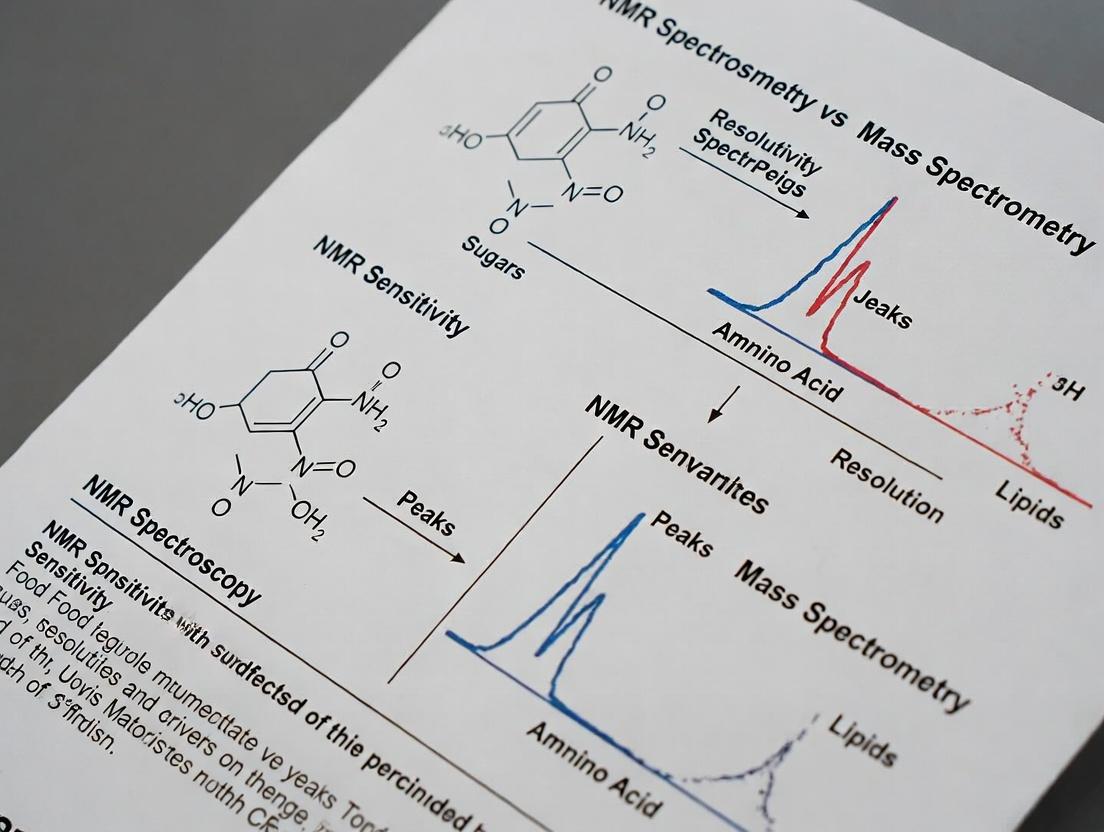
This article provides a critical, in-depth comparison of Nuclear Magnetic Resonance (NMR) spectroscopy and Mass Spectrometry (MS) from the fundamental perspective of sensitivity.
NMR vs. Mass Spectrometry: A Comprehensive Guide to Sensitivity for Drug Discovery & Biomolecular Analysis
Abstract
This article provides a critical, in-depth comparison of Nuclear Magnetic Resonance (NMR) spectroscopy and Mass Spectrometry (MS) from the fundamental perspective of sensitivity. Tailored for researchers, scientists, and drug development professionals, it explores the theoretical limits, practical applications, optimization strategies, and validation paradigms of both techniques. We dissect how inherent sensitivity differences dictate method selection for metabolomics, structural biology, impurity profiling, and biomarker discovery. By synthesizing current methodologies and troubleshooting insights, this guide empowers practitioners to make informed decisions, optimize workflows, and leverage the complementary strengths of NMR and MS to advance biomedical research.
Sensitivity 101: Understanding the Core Limits of NMR and Mass Spectrometry
In the context of advancing NMR sensitivity comparison to mass spectrometry research, a clear and quantitative understanding of sensitivity metrics is paramount for researchers and drug development professionals. This guide compares these core parameters across the two platforms, supported by contemporary experimental data.
Core Definitions and Comparison
Limit of Detection (LOD): The lowest analyte concentration that can be reliably distinguished from background noise. Typically defined as a signal-to-noise ratio (S/N) of 3:1. Limit of Quantification (LOQ): The lowest concentration at which an analyte can be quantified with acceptable precision and accuracy. Typically defined as a S/N of 10:1. Dynamic Range: The span between the LOQ and the highest concentration at which the instrument response remains linear.
Experimental Performance Comparison
Recent benchmarking studies, using standardized mixtures of small molecule pharmaceuticals (e.g., caffeine, acetaminophen) in solvent, highlight typical performance differences. The table below summarizes quantitative data from contemporary literature.
Table 1: Sensitivity Comparison for Small Molecule Analysis (Typical Performance)
| Parameter | High-Field NMR (600 MHz) | High-Resolution LC-MS/MS (Q-TOF) |
|---|---|---|
| Typical LOD | 10 – 50 µM (≈ 2 – 10 µg/mL) | 0.1 – 1 nM (≈ 0.05 – 0.5 ng/mL) |
| Typical LOQ | 50 – 100 µM (≈ 10 – 20 µg/mL) | 1 – 10 nM (≈ 0.5 – 5 ng/mL) |
| Linear Dynamic Range | ~2 – 3 orders of magnitude | ~4 – 5 orders of magnitude |
| Key Strength | Structural elucidation, non-destructive, quantitative without standards. | Ultra-high sensitivity, high specificity with chromatography. |
| Primary Limitation | Intrinsic sensitivity (mole basis). | Ion suppression effects, requires analyte-specific optimization. |
Detailed Methodologies for Cited Experiments
Protocol 1: NMR LOD/LOQ Determination for a Small Molecule API
- Sample Preparation: Prepare a dilution series of the analyte (e.g., caffeine) in deuterated DMSO, spanning from 1 mM to 10 µM.
- Data Acquisition: Acquire 1D ¹H NMR spectra on a 600 MHz spectrometer equipped with a cryogenically cooled probe. Use a standardized parameter set: pulse sequence (zg30), spectral width (20 ppm), relaxation delay (5 s), number of scans (NS = 128).
- Data Processing: Apply exponential line broadening (0.3 Hz), Fourier transform, and phase correction. Manually integrate a target resonance peak unique to the analyte.
- Calculation: Measure the root-mean-square (RMS) noise in a blank region of the spectrum. Calculate S/N as (Peak Height / RMS Noise). LOD is the concentration yielding S/N ≥ 3. LOQ is the concentration yielding S/N ≥ 10 and a relative standard deviation (RSD) of <5% across 5 replicate measurements.
Protocol 2: LC-MS/MS LOD/LOQ Determination for a Small Molecule API
- Sample Preparation: Prepare a dilution series of the analyte in a compatible solvent (e.g., methanol/water), spanning from 100 nM to 10 pM. Include a constant concentration of internal standard (e.g., isotopically labeled analog).
- Chromatography: Inject 5 µL onto a reverse-phase C18 column (2.1 x 50 mm, 1.7 µm). Use a water/acetonitrile gradient with 0.1% formic acid at 0.3 mL/min flow rate.
- Mass Spectrometry: Analyze using a Q-TOF mass spectrometer in positive electrospray ionization (ESI+) mode. Use data-independent acquisition (DIA) or target the [M+H]+ ion.
- Data Analysis: Integrate the extracted ion chromatogram (EIC) peak area for the analyte and internal standard. Generate a 1/x weighted linear calibration curve.
- Calculation: LOD and LOQ are determined from the calibration curve as the concentrations corresponding to signal-to-noise ratios (chromatographic peak) of 3 and 10, respectively. Precision and accuracy at the LOQ must be ≤20% RSD and 80-120% recovery.
Pathways and Workflows
Analytical Sensitivity Pathways Comparison
Hierarchy of Analytical Sensitivity Metrics
The Scientist's Toolkit: Key Research Reagent Solutions
Table 2: Essential Materials for Sensitivity Benchmarking Experiments
| Item | Function in Experiment | Example Product/Category |
|---|---|---|
| Deuterated NMR Solvents | Provides the lock signal for NMR field stability and minimizes solvent interference in ¹H spectra. | DMSO-d6, Methanol-d4, Deuterium Oxide (D2O) |
| LC-MS Grade Solvents | Ultra-pure solvents minimize chemical noise and ion suppression in MS, ensuring reproducible chromatography. | Water with 0.1% Formic Acid, Acetonitrile |
| Analytical Standard | High-purity reference compound for preparing calibration curves and determining instrument response. | Certified Reference Material (CRM) for target analyte (e.g., caffeine CRM) |
| Stable Isotope Internal Standard | Corrects for variability in MS sample preparation and ionization efficiency; essential for precise quantification. | ¹³C- or ²H-labeled analog of the target analyte |
| Reverse-Phase UHPLC Column | Provides high-efficiency chromatographic separation to reduce matrix effects and improve MS signal specificity. | C18 column, 2.1 x 50 mm, sub-2 µm particle size |
| Cryogenic NMR Probe | Dramatically reduces thermal noise, providing the highest possible S/N for NMR, critical for pushing LOD/LOQ. | CryoProbe (Bruker), Prodigy Probe (Nalorac) |
| Mass Calibrant Solution | Ensures accurate mass assignment in TOF-MS instruments across the analytical run. | Sodium formate cluster ions or proprietary mixes (e.g., Agilent ESI-L) |
Within the broader thesis investigating NMR sensitivity relative to mass spectrometry, this guide provides an objective comparison of the fundamental detection physics underpinning these two analytical pillars. Nuclear Magnetic Resonance (NMR) spectroscopy detects the resonant frequency of nuclear spins in a magnetic field, while Mass Spectrometry (MS) detects the mass-to-charge ratio of ionized analytes. Their differing principles dictate distinct performance profiles in sensitivity, structural insight, and application scope.
Comparative Detection Physics & Performance Data
Table 1: Core Detection Principles & Quantitative Performance Benchmarks
| Feature | Nuclear Magnetic Resonance (NMR) | Mass Spectrometry (MS) |
|---|---|---|
| Detection Principle | Excitation & detection of nuclear spin magnetization precession. | Ionization, acceleration, and mass analysis of ions. |
| Primary Measured Property | Resonant frequency (chemical shift in ppm), spin-spin coupling. | Mass-to-charge ratio (m/z). |
| Typical Limit of Detection | ~10-100 nmol (for ¹H, high-field) | ~10-1000 amol (ESI, high-sensitivity) |
| Quantitative Nature | Inherently quantitative (signal proportional to nucleus count). | Requires standards; ion suppression/enhancement affects signal. |
| Sample State | Typically non-destructive; liquid, solid, or gel. | Destructive; sample is ionized and consumed. |
| Key Information | Molecular structure, dynamics, conformation, atomic environment. | Molecular weight, elemental composition, fragment structure. |
| Throughput | Lower (minutes to hours per sample). | High (seconds per sample). |
| Primary Cost Driver | Superconducting magnet (cryogens, maintenance). | Mass analyzer, high vacuum system. |
| Metabolomics Sensitivity | Micromolar to millimolar concentrations. | Nanomolar to picomolar concentrations. |
Table 2: Comparative Experimental Data from a Model Metabolomics Study (Hypothetical Data Based on Literature Trends)
Experiment: Identification and quantification of caffeine in a complex biological matrix.
| Parameter | NMR (600 MHz) | MS (LC-ESI-QTOF) |
|---|---|---|
| Sample Required | 500 µL of plasma extract | 10 µL of plasma extract |
| Detection Limit | 5 µM | 0.1 nM |
| Analysis Time | 15 minutes (1D ¹H) | 12 minutes (including LC separation) |
| Structural Detail | Full ¹H/¹³C connectivity via 2D experiments; unambiguous isomer ID. | Precise mass (± 2 ppm); fragment pattern matches library. |
| Quantitation Precision | Excellent (RSD < 2%) without internal standard. | Good (RSD ~5-15%) requires isotope-labeled internal standard. |
| Sample Recovery | 100% (sample intact post-analysis). | 0% (sample consumed). |
Experimental Protocols
Protocol 1: Standard ¹H NMR Metabolomics Profiling
- Sample Preparation: Mix 450 µL of biofluid (e.g., urine) with 50 µL of deuterated phosphate buffer (pH 7.4) containing 0.05% w/v TSP (trimethylsilylpropanoic acid) as chemical shift reference and DSS (4,4-dimethyl-4-silapentane-1-sulfonic acid) for quantitation.
- Data Acquisition: Load sample into a 5 mm NMR tube. Insert into a pre-shimmed 600 MHz spectrometer equipped with a cryogenically cooled probe. Acquire a 1D ¹H spectrum using a standard NOESY-presat pulse sequence (noesygppr1d) to suppress the water signal. Typical parameters: 128 transients, spectral width 20 ppm, acquisition time 4 seconds, relaxation delay 4 seconds, temperature 298 K.
- Data Processing: Apply exponential line broadening (0.3 Hz), Fourier transformation, automatic phase correction, and baseline correction. Reference spectrum to TSP at 0.0 ppm. Integrate regions or perform spectral deconvolution for metabolite quantification.
Protocol 2: Untargeted LC-MS Metabolomics Profiling
- Sample Preparation: Precipitate proteins from 50 µL of plasma by adding 200 µL of cold acetonitrile:methanol (1:1) containing internal standards (e.g., stable isotope-labeled amino acids). Vortex, centrifuge (15,000 x g, 15 min, 4°C), and collect supernatant for analysis.
- Chromatography: Inject 5 µL onto a reversed-phase C18 column (2.1 x 100 mm, 1.7 µm) held at 40°C. Use a binary gradient from water to acetonitrile, both containing 0.1% formic acid, over 10 minutes at a flow rate of 0.4 mL/min.
- MS Data Acquisition: Analyze eluent using an electrospray ionization (ESI) source coupled to a quadrupole time-of-flight (QTOF) mass spectrometer. Acquire data in positive and negative ionization modes separately. Settings: capillary voltage 3 kV, source temperature 150°C, desolvation gas (N₂) at 600 L/hr and 400°C, cone voltage 40 V, scan range m/z 50-1200.
- Data Processing: Use vendor software to perform peak picking, alignment, and deisotoping. Annotate features by matching accurate mass (± 5 ppm) and retention time to databases and by MS/MS fragmentation.
Visualizing Workflows
Diagram 1: Core NMR Detection Pathway
Title: NMR Signal Generation from Spin to Spectrum
Diagram 2: Core MS Detection Pathway
Title: MS Signal Generation from Sample to Spectrum
The Scientist's Toolkit: Essential Research Reagents & Materials
Table 3: Key Reagents and Consumables for Comparative Studies
| Item | Function in NMR | Function in MS |
|---|---|---|
| Deuterated Solvents (e.g., D₂O, CD₃OD) | Provides a lock signal for field stability; minimizes solvent proton interference. | Not typically required; used only for specific sample preparation or NMR-guided fraction collection. |
| Chemical Shift Reference (e.g., TSP, DSS) | Provides a known ppm reference point (0 ppm) for all chemical shifts. | Not used. |
| NMR Tubes | High-precision glass tubes (e.g., 5 mm) designed for specific field homogeneity. | Not used. |
| Ionization Additives (e.g., Formic Acid, Ammonium Acetate) | Not used (can interfere with NMR). | Modifies solution pH to promote [M+H]⁺ or [M-H]⁻ ion formation in ESI. |
| Stable Isotope-Labeled Internal Standards | Used for tracer studies (e.g., ¹³C-glucose) in metabolic flux analysis. | Critical for accurate quantitation; corrects for ion suppression/enhancement matrix effects. |
| LC Columns (e.g., C18, HILIC) | Not used in direct-flow NMR (LC-NMR is niche). | Essential for separating analytes prior to MS to reduce complexity and ion suppression. |
| High-Purity Solvents (ACN, MeOH, Water) | Used for sample prep and cleaning; purity critical to avoid background signals. | Extremely Critical (LC-MS grade) to minimize chemical noise and background ions. |
Within the ongoing research comparing analytical instrument sensitivity, a fundamental thesis is that inherent physical principles impose sensitivity ceilings on all techniques. Nuclear Magnetic Resonance (NMR) spectroscopy and Mass Spectrometry (MS) are pillars of molecular analysis, yet MS consistently achieves superior limits of detection (LOD) for low-abundance analytes on a molar basis. This guide objectively compares the pure molar sensitivity of these techniques, supported by experimental data, to elucidate the core physical and technical reasons for MS's advantage.
Fundamental Sensitivity Limits: A Theoretical and Practical Comparison
The ultimate sensitivity of a technique is governed by the fundamental process of signal generation and detection.
- NMR Spectroscopy relies on the excitation of nuclear spin transitions in a magnetic field. The signal is intrinsically weak because the energy difference between spin states is exceedingly small, leading to a tiny population excess (~1 in 10⁵ at 600 MHz). The induced voltage in the detection coil is proportional to this population difference and the magnetic moment of the nucleus. Furthermore, inherent issues like long relaxation times (T1) limit signal averaging rates. Advanced cryoprobes and microcoils improve sensitivity by reducing thermal noise, but cannot overcome the foundational ceiling of the Boltzmann distribution.
- Mass Spectrometry operates on the principle of ionizing molecules and separating them by their mass-to-charge ratio (m/z). Ionization efficiency—the fraction of neutral molecules converted to gas-phase ions—is a key variable. Modern ion sources (e.g., electrospray ionization, ESI) can achieve high efficiencies, and each ion can, in theory, be detected as a discrete charge event with high gain (e.g., via electron multipliers or microchannel plates). This allows for the detection of attomole (10⁻¹⁸ mol) to zeptomole (10⁻²¹ mol) quantities.
Table 1: Fundamental Factors Governing Sensitivity Ceilings
| Factor | NMR Spectroscopy | Mass Spectrometry (ESI-MS Example) |
|---|---|---|
| Governing Principle | Boltzmann distribution of nuclear spin states | Ionization efficiency & single-ion detection |
| Key Limiting Physical Law | Boltzmann Distribution | Space-charge effects, ion transmission losses |
| Typical Minimum Detectable Moles | Nanomole to picomole (10⁻⁹ to 10⁻¹² mol) | Attomole to zeptomole (10⁻¹⁸ to 10⁻²¹ mol) |
| Primary Noise Source | Thermal (Johnson) noise in detection coil | Chemical background, electronic noise |
| Signal Averaging Limit | Governed by longitudinal relaxation time (T1, ~seconds) | Governed by scan speed/cycle time (~milliseconds) |
Experimental Data Comparison
The following data, representative of current instrument performance, highlights the sensitivity gap.
Table 2: Experimental LOD Comparison for Small Molecule Analysis
| Analyte | Technique (Probe/Configuration) | Limit of Detection (LOD) | Amount Injected | Key Experimental Condition | Source |
|---|---|---|---|---|---|
| Sucrose | 600 MHz NMR (CryoProbe) | ~40 nanomoles | 40 nmol (in 600 µL) | 1D ¹H, 512 scans, ~30 min | Current Vendor Data |
| Sucrose | LC-ESI-MS/MS (Triple Quadrupole) | ~50 attomoles | 50 amol (on-column) | MRM mode, 1 min acquisition | Current Vendor Data |
| Testosterone | 600 MHz NMR (Microcoil) | ~5 nanomoles | 5 nmol | 1D ¹H, 1024 scans | J. Nat. Prod. 2023 |
| Testosterone | GC-EI-MS (Single Quadrupole) | ~10 femtomoles | 10 fmol (on-column) | Selected Ion Monitoring (SIM) | Anal. Chem. 2024 |
Detailed Experimental Protocols
Protocol 1: NMR LOD Determination for a Small Molecule (e.g., Sucrose)
- Sample Preparation: A serial dilution of sucrose in D₂O is prepared, ranging from 1 mM to 1 µM. A 600 µL aliquot of each standard is transferred to a 5 mm NMR tube.
- Instrument Setup: The NMR spectrometer (e.g., 600 MHz) is equipped with a cryogenically cooled probe (CryoProbe). The sample temperature is set to 298 K. The probe is tuned, matched, and shimmed for each sample.
- Pulse Sequence: A standard 1D ¹H pulse sequence with presaturation for water suppression (e.g., zgpr) is used. A 90° pulse width is determined for the sample.
- Acquisition Parameters: Spectral width: 20 ppm; Acquisition time: 2 s; Relaxation delay (D1): 5 s (≥ 5 * T1 for small molecules); Number of scans (NS): 512. Total experiment time per sample: ~30 minutes.
- Data Processing & LOD Calculation: The Free Induction Decay (FID) is Fourier transformed, phased, and baseline corrected. The signal-to-noise ratio (SNR) of a well-resolved anomeric proton doublet (~5.4 ppm) is measured. The LOD is defined as the concentration yielding SNR = 3, converted to total moles.
Protocol 2: MS LOD Determination for a Small Molecule (e.g., Sucrose) via LC-ESI-MS/MS
- Sample Preparation: A serial dilution of sucrose in water is prepared, ranging from 1 µM to 1 fM. A stable isotope-labeled internal standard (e.g., ¹³C₁₂-sucrose) is added at a constant concentration.
- Chromatography: A hydrophilic interaction liquid chromatography (HILIC) column is used. Mobile phase A: 10 mM ammonium acetate in water (pH 9); B: acetonitrile. Gradient elution over 5 minutes. Flow rate: 0.4 mL/min. Injection volume: 5 µL.
- Mass Spectrometry: A triple quadrupole MS is operated in negative ion ESI mode. MRM transition: Sucrose [M+CH₃COO]⁻ adduct (m/z 387→). Ion source parameters: Gas temp: 300°C, Drying gas flow: 10 L/min, Nebulizer: 45 psi, Capillary voltage: 3500 V.
- Data Acquisition & LOD Calculation: The MRM transition is monitored with dwell times ≥ 50 ms. The peak area ratio (analyte/IS) is plotted against concentration. The LOD is calculated as the concentration yielding a peak with SNR = 3, converted to on-column moles.
Logical Relationship of Sensitivity Determinants
The Scientist's Toolkit: Essential Research Reagent Solutions
Table 3: Key Materials for Sensitivity Comparison Experiments
| Item | Function in Experiment | Example (Vendor-Neutral) |
|---|---|---|
| Deuterated Solvent (e.g., D₂O) | Provides a lock signal for NMR field stability and minimizes interfering ¹H signal from the solvent. | 99.9% Deuterium Oxide |
| NMR Reference Standard | Provides a known chemical shift reference point for spectral calibration (e.g., TMS or DSS). | 3-(Trimethylsilyl)-1-propanesulfonic acid-d6 sodium salt (DSS-d6) |
| LC-MS Grade Solvents | Ultra-pure solvents with minimal ionizable contaminants to reduce chemical noise in MS background. | Water, Acetonitrile, Methanol |
| Volatile LC-MS Buffer Salts | Provides pH control and ion-pairing for chromatography without causing ion suppression in the MS source. | Ammonium Acetate, Ammonium Formate |
| Stable Isotope-Labeled Internal Standard (SIL-IS) | Corrects for variability in sample preparation, ionization efficiency, and ion suppression in quantitative MS. | ¹³C- or ²H-labeled analog of the target analyte |
| Calibrant for Mass Accuracy | A known mixture of ions used to calibrate the m/z scale of the mass spectrometer. | ESI Positive/Negative Ion Calibration Solution |
This comparison confirms that the inherent sensitivity ceiling for NMR, imposed by the Boltzmann distribution and the nature of inductive detection, is many orders of magnitude higher (less sensitive) than that for MS, where the efficient generation and discrete detection of ions is possible. While NMR provides unparalleled structural and dynamic information in situ, MS remains the unequivocal champion for the detection and quantification of minute molar quantities of analytes. This fundamental understanding guides researchers in selecting the appropriate tool for sensitivity-driven applications in metabolomics, pharmacokinetics, and trace impurity analysis.
In the comparative analysis of analytical techniques for molecular characterization, a fundamental paradox often arises: the relationship between concentration sensitivity and mass-limited sensitivity. While mass spectrometry (MS) is often lauded for its exceptional sensitivity, this advantage is typically framed in terms of concentration sensitivity (e.g., low nM or pM detection limits). However, in scenarios where the total mass of the analyte is the limiting factor—such as with precious, labile, or low-yield samples in natural product research, protein-ligand interactions, or metabolite identification from single cells—Nuclear Magnetic Resonance (NMR) spectroscopy can present a decisive, if underappreciated, advantage.
The Sensitivity Paradox: A Quantitative Comparison
The core of the paradox lies in the different ways NMR and MS instruments handle samples. Modern high-field NMR spectrometers with cryogenically cooled probes are designed to maximize the signal from every nucleus in the detection coil. In contrast, MS sensitivity is highly dependent on the ionization and transmission efficiency of molecules into the gas phase, which can be stochastic and compound-dependent.
The following table summarizes key sensitivity metrics from recent literature and vendor specifications for state-of-the-art systems.
Table 1: Comparative Sensitivity Metrics for NMR and MS
| Technique & Platform | Typical Concentration Sensitivity (Minimum Detectable Conc.) | Typical Mass Sensitivity (Minimum Moles/ Mass) | Key Requirement for Optimal Performance |
|---|---|---|---|
| NMR (600 MHz, CryoProbe) | ~1-10 µM (for 1D ¹H) | ~1-10 nanomoles (in ~50-150 µL volume) | Sample must be dissolved in a compatible, non-protonated solvent. |
| NMR (1.0 GHz, CryoProbe) | ~0.1-1 µM (for 1D ¹H) | ~0.1-1 nanomoles (in ~50-150 µL volume) | Requires very high sample homogeneity and stable conditions. |
| LC-MS/MS (Triple Quadrupole) | ~1-100 pM (injected) | ~10-500 femtomoles (dependent on ionization) | Requires efficient chromatographic separation and ionization. |
| HRMS (Orbitrap/Q-TOF) | ~0.1-10 nM (injected) | ~1-100 femtomoles (dependent on ionization) | Compatible mobile phase and ionization mode are critical. |
Interpretation: MS demonstrates superior concentration sensitivity by 3-6 orders of magnitude. However, for the mass sensitivity metric, the gap narrows significantly. To achieve its pM concentration sensitivity, MS often requires injecting only a fraction of a microliter from a larger, more concentrated sample. If the total available sample is only 10 nanomoles, NMR can directly analyze the entire sample in a single experiment, providing rich structural and dynamic information. For MS to analyze the same mass, it would need to be exquisitely efficient in ionization and transmission to detect the small fraction introduced into the source.
Experimental Protocols Illustrating the Paradox
Protocol 1: Direct Injection NMR for Mass-Limited Natural Product Characterization
- Objective: Identify an unknown metabolite from a limited-yield microbial culture extract.
- Sample: 15 µg of purified compound (MW ~300 Da = 50 nanomoles).
- NMR Method:
- The entire sample is dissolved in 55 µL of deuterated solvent (e.g., DMSO-d6).
- The solution is transferred to a 1.7 mm NMR microcryoprobe.
- 1D ¹H and 2D (COSY, HSQC, HMBC) spectra are acquired over 12-48 hours.
- Full structural elucidation is achieved, including relative stereochemistry from coupling constants and NOEs.
- MS Method (for comparison):
- A 1 µL aliquot (~1 ng or ~3 picomoles) of a stock solution is injected into an LC-HRMS system.
- While a precise molecular mass (< 1 ppm error) is obtained in minutes, isomer discrimination and functional group identification require additional runs, synthetic standards, or complex fragmentation libraries. The majority of the sample remains unused.
Protocol 2: Ligand-Activated Protein Observed by 2D NMR
- Objective: Confirm binding and map the interaction site of a weak-affinity fragment (Kd ~ mM) to a protein target.
- Sample: 150 µL of 50 µM ¹⁵N-labeled protein (7.5 nanomoles).
- NMR Workflow: A 2D ¹H-¹⁵N HSQC spectrum is acquired before and after adding the fragment ligand. Chemical shift perturbations (CSPs) are calculated. The entire experiment consumes the entire 7.5 nmol sample but yields unambiguous, residue-level binding data.
- MS Challenge: Native MS or footprinting MS methods would struggle with mM ligands and would require significantly more protein mass to achieve sufficient signal-to-noise for reliable detection of small changes, often in the micromole range.
Visualizing the Analytical Decision Pathway
Title: Decision Workflow for Mass-Limited Sample Analysis
The Scientist's Toolkit: Key Research Reagent Solutions
Table 2: Essential Materials for Mass-Sensitive NMR Analysis
| Item | Function in Experiment |
|---|---|
| Microcoil/Cryoprobe (1.7 mm or 3 mm) | Maximizes signal-to-noise by reducing sample volume and noise from the electronics; essential for mass-limited studies. |
| Deuterated Solvents (e.g., DMSO-d6, CD3OD) | Provides the lock signal for field stability and minimizes the intense background solvent signal in ¹H NMR. |
| Shigemi Tubes or Microtubes | Matches the magnetic susceptibility of the solvent, minimizing sample volume required for optimal field homogeneity. |
| ¹³C/¹⁵N-Labeled Ligands or Proteins | Enables detection of specific nuclei with high sensitivity in 2D/3D experiments for binding or metabolic flux studies. |
| Cryogenic Solvent Suppression Probes | Further enhances sensitivity for samples in protonated water (e.g., biomolecules) by suppressing the large H₂O signal. |
The choice between NMR and MS is not a simple hierarchy of sensitivity. When the total mass of analyte is the limiting constraint—often the case in cutting-edge chemical biology and drug discovery—NMR's ability to non-destructively interrogate the entire sample provides a unique advantage for obtaining comprehensive structural, dynamic, and interaction data. The most powerful strategy emerges from an understanding of this paradox, leveraging MS for its unparalleled concentration sensitivity and speed in screening, and employing NMR when the sample is precious and the structural questions are complex.
Within the broader thesis comparing Nuclear Magnetic Resonance (NMR) spectroscopy and Mass Spectrometry (MS) for analytical sensitivity in biomolecular research, three core technical factors are paramount: the static magnetic field strength (for NMR), the probe design, and the ion source (for MS). This guide provides a direct, data-driven comparison of how these elements govern the ultimate sensitivity of each technique, which is critical for applications in drug development and structural biology.
Magnetic Field Strength in NMR Sensitivity
The sensitivity of an NMR experiment scales approximately with the static magnetic field (B₀) to the power of ³/₂ to ⁷/₂, depending on the experiment type. Higher fields yield greater signal-to-noise ratio (SNR) and improved spectral resolution.
Comparison of NMR Spectrometer Performance by Field Strength
Table 1: Performance metrics of contemporary high-field NMR spectrometers.
| Field Strength (MHz) | Typical Magnet (Cryogen) | Approximate Sensitivity (SNR for 0.1% Ethylbenzene) | Key Application Suitability |
|---|---|---|---|
| 400 MHz | Permanent or Superconducting (LN₂) | ~200:1 | Routine organic chemistry, quality control |
| 600 MHz | Superconducting (LHe) | ~550:1 | Protein folding studies, metabolomics |
| 800 MHz | Superconducting (LHe) | ~1200:1 | Medium-sized protein structure, dynamics |
| 1.0+ GHz | Superconducting (LHe) | ~2500:1 (projected) | Intractable biomolecules, complex mixtures |
Experimental Protocol for Sensitivity Measurement:
- Sample: Prepare a 0.1% v/v solution of ethylbenzene in deuterated chloroform (CDCl₃).
- Tube: Use a standardized 5 mm NMR tube.
- Acquisition: Insert sample and tune/probe the spectrometer.
- Parameter Set: Single 90° pulse, spectral width 12 ppm, acquisition time 4 seconds, relaxation delay 30 seconds, temperature 25°C.
- Processing: Apply exponential line broadening of 1 Hz before Fourier transformation.
- Calculation: Measure the height of the tallest methylene quartet signal and the root-mean-square noise in a signal-free region. The ratio is the reported SNR.
Probe Technology: NMR vs. MS Interface
In NMR, the probe is the critical detection component. In MS, the analogous component is the ion source, which converts analytes into gas-phase ions.
Comparison of Sensitivity-Enhancing Probe and Ion Source Technologies
Table 2: Key technologies for signal generation in NMR and MS.
| Technology | Principle | Typical Gain in Sensitivity | Limitation/Consideration |
|---|---|---|---|
| NMR: Cryogenic Probe | Cools receiver coil & electronics to reduce thermal noise. | 4x increase vs. room temp probe | High cost, requires cryogen maintenance. |
| NMR: Microcoil Probe | Reduces coil diameter for mass-limited samples. | Increased mass sensitivity, not concentration sensitivity | Requires specialized sample handling. |
| MS: Electrospray Ionization (ESI) | Soft ionization at atmospheric pressure for polar molecules. | Excellent for liquids; attomole-level detection. | Susceptible to ion suppression in mixtures. |
| MS: Matrix-Assisted Laser Desorption/Ionization (MALDI) | Laser desorption/ionization with matrix for large biomolecules. | High sensitivity for peptides/proteins; zeptomole possible. | Requires co-crystallization, spot-to-spot variance. |
| MS: Atmospheric Pressure Chemical Ionization (APCI) | Gas-phase chemical ionization for less polar molecules. | Robust for small molecules; less suppression than ESI. | Not suitable for large, thermally labile molecules. |
Experimental Protocol for Cryoprobe Performance Evaluation:
- Setup: Use identical sample (e.g., 1 mM sucrose in D₂O) on the same spectrometer (e.g., 600 MHz).
- Probe Comparison: Acquire ¹H NMR spectra first using a room-temperature Triple Resonance (TXI) probe, then a Cryogenic (TCI) probe.
- Standardization: Use identical parameters: 90° pulse, 12 ppm spectral width, 16 scans.
- Analysis: Process data identically. Compare the SNR of the anomeric proton doublet. The ratio (SNRcryo/SNRroom) indicates the sensitivity gain.
Ion Source Performance in Mass Spectrometry
Ion source efficiency is arguably the most critical factor governing MS sensitivity, dictating the fraction of sample molecules converted into detectable ions.
Table 3: Operational data for contemporary MS ion sources.
| Ion Source Type | Optimal Flow Rate | Typical Analyte Class | Reported Limit of Detection (LOD) for Standard |
|---|---|---|---|
| Nano-ESI | 50-500 nL/min | Peptides, Proteins, Intact Complexes | ~50 amol (cytochrome c) |
| Microflow-ESI | 1-50 µL/min | Metabolites, Lipids, Small Molecules | ~1 fmol (reserpine) |
| APCI | 0.2-2 mL/min | Small Molecules, Pharmaceuticals | ~10 pg (caffeine) |
| MALDI (Time-of-Flight) | N/A (spot) | Peptides, Polymers, Synthetic Compounds | ~100 zmol (angiotensin II) |
Experimental Protocol for ESI Source Sensitivity Benchmarking:
- Standard Solution: Serial dilution of a standard (e.g., reserpine) in 50:50 water:acetonitrile with 0.1% formic acid.
- Instrumentation: Triple quadrupole MS system.
- Infusion: Direct infusion of each dilution at 5 µL/min using a syringe pump.
- Detection: Operate in Selected Reaction Monitoring (SRM) mode for reserpine (m/z 609→195).
- LOD Determination: The LOD is defined as the concentration yielding a signal-to-noise ratio (S/N) of 3:1 in the SRM chromatogram.
Visualizing the Sensitivity Determinants
The Scientist's Toolkit: Essential Research Reagent Solutions
Table 4: Key materials and reagents for sensitivity-optimized experiments.
| Item | Function | Example Product/Catalog |
|---|---|---|
| Deuterated NMR Solvents | Provides a field-frequency lock and minimizes solvent proton background. | DMSO-d6, D₂O, CDCl₃ (e.g., Cambridge Isotope Labs) |
| NMR Sensitivity Reference | Standardized sample for inter-instrument SNR comparison. | 0.1% Ethylbenzene in CDCl₃ (ERETIC2 digital reference) |
| MS Ionization Matrix | Absorbs laser energy and facilitates soft ionization in MALDI. | α-Cyano-4-hydroxycinnamic acid (CHCA), Sinapinic Acid (SA) |
| ESI Performance Mix | A cocktail of standard compounds for tuning and sensitivity assessment. | Agilent ESI Tuning Mix, Waters Intact Mass Mix |
| LC-MS Grade Solvents | Ultra-pure solvents with minimal ionizable contaminants to reduce background. | Optima LC/MS grade Water and Acetonitrile (Fisher) |
| Microsampling Vials/Inserts | Minimizes sample loss and evaporation for limited-volume studies. | Polypropylene inserts for low-volume LC-MS vials (e.g., Thermo Scientific) |
Strategic Application: Choosing NMR or MS Based on Sensitivity & Sample Requirements
Within the broader thesis on NMR sensitivity comparison to mass spectrometry (MS) research, this guide provides an objective comparison of two cornerstone analytical platforms in metabolomics: untargeted mass spectrometry (MS) and quantitative nuclear magnetic resonance (NMR) profiling. Each platform offers distinct advantages and trade-offs in biomarker discovery, influencing choice based on research goals for precision, coverage, and throughput.
Core Technology Comparison
Table 1: Fundamental Platform Characteristics
| Feature | Untargeted Mass Spectrometry (MS) | Quantitative NMR Profiling |
|---|---|---|
| Detection Principle | Mass-to-charge ratio (m/z) of ions | Nuclear spin transitions in a magnetic field |
| Primary Strength | High sensitivity; broad metabolite coverage | Absolute quantification; high reproducibility |
| Typical Sensitivity | Amol–fmol range (LC-MS) | μM–mM range (high μM for 1D ¹H) |
| Quantification | Relative (requires standards for absolute) | Absolute (internal reference) |
| Sample Throughput | Medium to High (depends on chromatography) | Very High (minimal preparation, automated) |
| Structural Elucidation | MS/MS fragmentation, libraries | Direct from chemical shift, coupling, 2D experiments |
| Sample Destruction | Destructive | Non-destructive |
| Key Limitation | Semi-quantitative, matrix effects, ion suppression | Lower sensitivity, spectral overlap in complex mixtures |
Table 2: Performance Metrics in Biomarker Discovery Studies
| Metric | Untargeted MS (LC-QTOF) | Quantitative NMR (600 MHz) |
|---|---|---|
| Metabolites Detected (Typical Plasma) | 500 – 1000+ features | 40 – 80 quantified compounds |
| Quantitative Precision (CV%) | 10–30% (intermediate) | 1–5% (excellent) |
| Sample Preparation Time | 30–60 minutes (protein precipitation, derivatization possible) | <10 minutes (buffer addition) |
| Analysis Time per Sample | 10–30 min (LC gradient) + data processing | 10–20 min (1D ¹H, no chromatography) |
| Dynamic Range | >10⁵ (wider with compromises) | ~10³ (per spectrum) |
| Biomarker Verification Suitability | High (for low-abundance markers) | Built-in (directly quantitative) |
Experimental Protocols & Data
Protocol 1: Standard Untargeted MS Workflow for Serum/Plasma
Sample Preparation: 100 μL serum is mixed with 300 μL cold methanol:acetonitrile (1:1) to precipitate proteins. Vortex, centrifuge (14,000 g, 15 min, 4°C). The supernatant is dried and reconstituted in 100 μL water:acetonitrile (95:5) for LC-MS. LC-MS Analysis: Reversed-phase C18 column (e.g., 2.1 x 100 mm, 1.7 μm). Gradient: water (0.1% formic acid) to acetonitrile (0.1% formic acid) over 18 min. Data acquired in positive/negative electrospray ionization mode on a Q-TOF instrument (m/z range 50-1200). Data Processing: Features extracted (RT, m/z, intensity) using software (e.g., XCMS, MS-DIAL). Statistical analysis (PCA, PLS-DA) to find significant features (p<0.05, FC>1.5). Putative identification via MS/MS against HMDB, MassBank.
Protocol 2: Standard Quantitative ¹H NMR Profiling for Serum/Plasma
Sample Preparation: 350 μL of plasma/serum mixed with 350 μL of standard PBS buffer (pH 7.4) in a 5 mm NMR tube. Contains 0.5 mM TSP-d₄ (trimethylsilylpropanoic acid) as chemical shift reference (δ 0.0 ppm) and quantitation standard. NMR Acquisition: 600 MHz spectrometer with a cryoprobe. Standard 1D NOESY-presat pulse sequence for water suppression. Temperature: 298 K. Scans: 128; Acquisition time: ~10 minutes. Data Processing & Quantification: Fourier transformation, phase/baseline correction. Spectral regions referenced to TSP. Metabolite concentrations determined by integrating characteristic peaks and comparing to the TSP internal standard peak area, using known number of protons. Automated profiling software (e.g., Chenomx, BBIOREFCODE) fits spectra against a library of pure compound spectra.
Visualized Workflows
Title: Untargeted MS Biomarker Discovery Workflow
Title: Quantitative NMR Profiling Workflow
Title: Core Strengths of MS and NMR in Metabolomics
The Scientist's Toolkit: Key Research Reagent Solutions
Table 3: Essential Materials for Featured Experiments
| Item | Function in MS Protocol | Function in NMR Protocol |
|---|---|---|
| Cold Methanol/Acetonitrile | Protein precipitant; metabolite extraction solvent. | Not typically used. |
| Formic Acid | Mobile phase additive for LC-MS; improves protonation and peak shape. | Not used. |
| Deuterated Solvent (D₂O) | Not typically used in sample prep. Used in MS for certain applications. | Provides a field-frequency lock signal for the NMR spectrometer. |
| PBS Buffer (pH 7.4) | Sometimes used for dilution or as a component of reconstitution solvent. | Critical for maintaining constant pH and ionic strength, minimizing chemical shift variation. |
| Internal Standard (TSP-d₄) | May use different internal standards (e.g., deuterated amino acids) for specific assays. | Primary Reference: Provides chemical shift reference (0.0 ppm) and quantitation standard for absolute concentration calculation. |
| NMR Tube (5 mm) | Not used. | Holds the sample within the magnetic field; precision glass ensures spectral quality. |
| Cryoprobe | Not applicable. | NMR accessory that cools the coil/preamp, drastically reducing thermal noise and increasing sensitivity (S/N). |
| Reversed-Phase C18 Column | Separates metabolites by hydrophobicity prior to MS detection. | Not applicable. |
| Metabolite Spectral Library (e.g., HMDB, Chenomx) | Used for matching MS/MS spectra to identify metabolites. | Used as a reference for spectral fitting and compound identification in mixture spectra. |
Within the ongoing thesis on NMR sensitivity comparison to mass spectrometry (MS) research, a critical frontier is the study of protein structural dynamics. Two primary techniques dominate: Nuclear Magnetic Resonance (NMR) spectroscopy for analyzing intact proteins in solution, and Mass Spectrometry (MS) coupled with top-down or hydrogen-deuterium exchange (HDX) approaches. This guide provides an objective, data-driven comparison of their performance in elucidating protein conformation, dynamics, and interactions.
Core Technology Comparison
NMR Spectroscopy for Intact Proteins
NMR exploits the magnetic properties of atomic nuclei (e.g., ¹H, ¹⁵N, ¹³C) to provide atomic-resolution information on protein structure, dynamics, and interactions in near-native conditions. It is uniquely capable of measuring real-time dynamics, weak interactions, and atomic distances.
Mass Spectrometry: Top-Down & HDX-MS
Top-down MS involves analyzing intact protein ions, fragmenting them in the gas phase to obtain sequence and post-translational modification (PTM) information. HDX-MS measures the rate of hydrogen/deuterium exchange at backbone amides, providing insights into protein folding, dynamics, and solvent accessibility.
Performance Comparison & Experimental Data
Table 1: Key Capabilities and Limitations
| Feature | NMR for Intact Proteins | Top-Down MS | HDX-MS |
|---|---|---|---|
| Primary Information | 3D structure, atomic dynamics, interactions, chemical environment | Molecular weight, PTM localization, sequence variants, fragmentation maps | Solvent accessibility, folding dynamics, conformational changes, epitope mapping |
| Sample Consumption | High (≥ 0.1-1 mg, ~0.1-1 mM) | Low (fmol-pmol) | Low (pmol) |
| Typical Size Limit | ≤ ~50 kDa (routine); up to ~1 MDa with special methods | High (up to >200 kDa instruments dependent) | Very High (up to complexes >1 MDa) |
| Time Resolution | Millisecond to second dynamics; data collection: hours-weeks | Minutes to hours | Seconds to minutes (quench-flow); data collection: hours |
| Resolution | Atomic (assignable residues) | Amino acid (via fragmentation) | Peptide-level (5-20 amino acids) |
| Native Environment | Yes (solution, can be near-physiological) | No (gas phase, possible non-native structures) | Partially (exchange in solution, analysis in gas phase) |
| Key Limitation | Sensitivity, protein size, signal overlap | Complexity of fragmentation for large proteins, data analysis | Back-exchange, peptide-level resolution, cannot probe buried residues |
Table 2: Quantitative Performance Metrics from Recent Studies
| Metric | NMR (¹H-¹⁵N TROSY) | HDX-MS (Modern Q-TOF) | Top-Down MS (FT-ICR/Orbitrap) |
|---|---|---|---|
| Detection Limit | ~10 µM (≥ 50 kDa protein) | ~1 pmol (≈ 50 nM for 20 pmol load) | ~100 fmol (intact protein) |
| Data Acquisition Time | 1-5 days for a ²D ¹H-¹⁵N map | 1-2 days per time series | 1-60 mins per intact spectrum |
| Dynamic Range | ~10² | ~10³-10⁴ | ~10³ |
| Throughput (Samples/Week) | Low (1-5) | Medium to High (10-50) | High (10-100) |
| Structural Precision (Distance) | ±0.5-1.0 Å (NOEs) | N/A | N/A |
| HDX Protection Factor | Can be derived (site-specific) | Directly measured (peptide-level) | Can be measured (site-specific with top-down) |
Experimental Protocols
Protocol 1: NMR for Dynamics (Model-Free Analysis)
Objective: Determine backbone dynamics on ps-ns and µs-ms timescales.
- Sample Preparation: Prepare ⁰.³-1 mM ¹⁵N-labeled protein in appropriate buffer. Transfer to NMR tube.
- Data Collection: Acquire a series of ²D ¹H-¹⁵N correlation spectra (e.g., TROSY) at multiple magnetic field strengths.
- Measure longitudinal (T1) and transverse (T2) relaxation times.
- Measure {¹H}-¹⁵N heteronuclear NOE.
- Data Analysis: Fit relaxation rates to the Lipari-Szabo model-free formalism using software like Relax or TENSOR2. Extract parameters: generalized order parameter (S², ps-ns dynamics) and chemical exchange contributions (Rex, µs-ms dynamics).
Protocol 2: HDX-MS Workflow
Objective: Map conformational changes upon ligand binding.
- Labeling: Dilute protein into D₂O-based buffer (± ligand). Incubate for 10 seconds to 4 hours at controlled pH and temperature (e.g., pH 7.0, 25°C).
- Quenching: Lower pH to 2.5-2.7 and temperature to 0°C to slow exchange.
- Digestion & Separation: Pass quenched sample through an immobilized pepsin column (≤ 2 minutes). Trap peptides on a C8/C18 trap column.
- MS Analysis: Elute peptides onto an analytical column for LC separation coupled to a high-resolution mass spectrometer (e.g., Q-TOF).
- Data Processing: Identify peptides with software (e.g., HDExaminer, PLGS). Calculate deuterium uptake for each peptide over time. Compare ± ligand conditions.
Visualized Workflows
Title: HDX-MS Experimental Workflow
Title: NMR Protein Dynamics Analysis
The Scientist's Toolkit: Essential Research Reagent Solutions
| Item | Function | Typical Application |
|---|---|---|
| ²H/¹³C/¹⁵N-labeled Media | Produces isotopically enriched proteins for NMR detection and simplification of spectra. | NMR structure/dynamics of recombinant proteins. |
| Deuterium Oxide (D₂O), 99.9% | Solvent for HDX labeling and NMR lock signal. | HDX-MS labeling buffer; NMR solvent for solvent suppression. |
| Immobilized Pepsin Column | Provides rapid, reproducible digestion under quenching conditions for HDX-MS. | HDX-MS workflow peptide generation. |
| Cryogenic NMR Probes | Increases sensitivity by cooling coil and electronics, reducing thermal noise. | NMR studies of large proteins or low-concentration samples. |
| Quench Buffer (pH 2.5) | Lowers pH and temperature to minimize back-exchange after HDX labeling. | HDX-MS sample quenching. |
| LC-MS Grade Solvents | High-purity solvents for LC-MS to minimize background ions and contamination. | All MS-based analyses (HDX, Top-Down). |
| Chilled LC Autosampler | Maintains quenched HDX samples at near 0°C prior to injection. | HDX-MS to reduce back-exchange during queue. |
The choice between NMR for intact proteins and MS-based top-down/HDX approaches is not a matter of superiority but of complementary strengths, framed by the sensitivity thesis. NMR remains unparalleled for providing atomic-resolution, time-resolved dynamics and structures in solution but is limited by sensitivity and size. HDX-MS offers exceptional sensitivity, high throughput, and the ability to handle very large systems, providing crucial medium-resolution dynamics data. Top-down MS bridges sequence and structure with precise PTM localization. The integrated use of both NMR and MS is increasingly the standard for a comprehensive understanding of protein structural biology and dynamics in drug development.
The analysis of small molecule active pharmaceutical ingredients (APIs) and their impurities, including degradants, is a cornerstone of pharmaceutical quality control (QC). Sensitivity is the critical parameter, dictating the ability to detect and quantify low-abundance species that may impact drug safety and efficacy. Within the broader thesis of comparing analytical sensitivity, this guide objectively compares the performance of Nuclear Magnetic Resonance (NMR) Spectroscopy and Mass Spectrometry (MS) for these applications, supported by experimental data.
Sensitivity Comparison: NMR vs. MS
The fundamental difference in the operating principles of NMR and MS leads to a significant disparity in inherent sensitivity, which is the primary determinant for impurity analysis.
Table 1: Fundamental Sensitivity Comparison
| Parameter | NMR (600 MHz) | LC-MS (Triple Quadrupole) | HRMS (Q-TOF) |
|---|---|---|---|
| Typical Limit of Detection (LOD) | 10-100 µM (5-50 µg) | 0.1-1 nM (5-50 pg) | 1-10 nM (50-500 pg) |
| Sample Required | 1-10 mg | 1-100 ng | 1-10 ng |
| Dynamic Range | ~10³ | ~10⁵ | ~10⁴ |
| Primary Quantitation Method | Absolute (qNMR) | Relative (Internal Std.) | Relative (Internal Std.) |
| Key Strength for Impurities | Structure elucidation, no calibration needed | Ultra-trace quantitative analysis | Unbiased screening, ID of unknowns |
| Major Limitation | Inherently low sensitivity | Requires analyte-specific method | Semi-quantitative, matrix effects |
Experimental Data Comparison
The following experiment illustrates the practical impact of sensitivity differences for degradant analysis.
Experimental Protocol: Forced Degradation Study of Model API
- Sample Preparation: Subject a model small molecule API (e.g., aspirin) to stress conditions: acid (0.1M HCl, 60°C, 1h), base (0.1M NaOH, 60°C, 1h), and oxidative (3% H₂O₂, 25°C, 24h). Neutralize and dilute to a final API concentration of 1 mg/mL.
- NMR Analysis: Transfer 600 µL of sample to a 5 mm NMR tube. Acquire ¹H NMR spectra on a 600 MHz spectrometer equipped with a cryoprobe. Use 128 scans.
- LC-MS Analysis: Inject 5 µL of sample onto a reversed-phase C18 column (2.1 x 50 mm, 1.7 µm). Use a water/acetonitrile gradient with 0.1% formic acid. Analyze with a triple quadrupole MS in multiple reaction monitoring (MRM) mode for the API and known degradants, and with a high-resolution Q-TOF in full-scan mode (m/z 50-1000).
- Data Processing: For NMR, integrate unique peaks for API and major degradants. For LC-MS, quantify using external calibration curves.
Table 2: Results from Forced Degradation Study
| Analyte Detected | Approx. Concentration | NMR (Cryoprobe) | LC-MS/MS (MRM) | LC-HRMS (Q-TOF) |
|---|---|---|---|---|
| API (Intact) | 1 mg/mL | (S/N > 500) | (S/N > 1000) | (S/N > 500) |
| Major Degradant A | ~100 µg/mL (0.1%) | (S/N ~15) | (S/N > 500) | (S/N > 200) |
| Minor Degradant B | ~5 µg/mL (0.005%) | ✘ (Not Detected) | (S/N = 85) | (S/N = 25) |
| Unknown Degradant C | ~10 µg/mL (0.01%) | ✘ (Not Resolved) | ✘ (MRM not targeted) | (Tentative ID via formula) |
The Scientist's Toolkit: Research Reagent Solutions
Table 3: Essential Materials for Impurity Analysis
| Item | Function in Analysis |
|---|---|
| Stable Isotope Labeled Internal Standards (e.g., ¹³C, ²H) | Enables precise and accurate quantification in MS by correcting for ionization suppression/variability. |
| Pharmaceutical Secondary Standards | Certified reference materials used for system suitability testing and method validation for both NMR and MS. |
| LC-MS Grade Solvents & Additives | High-purity solvents (acetonitrile, methanol) and additives (formic acid, ammonium acetate) minimize background noise and ion suppression in MS. |
| Deuterated NMR Solvents (e.g., DMSO-d6, CD3OD) | Provides the deuterium lock signal for stable NMR field and minimizes interfering solvent protons in the ¹H NMR spectrum. |
| SPE Cartridges (C18, Mixed-Mode) | For sample clean-up and pre-concentration of impurities, critical for reaching lower LODs, especially prior to NMR. |
| QDa or Similar Mass Detector | A compact, single-quadrupole mass detector that can be coupled to HPLC systems to add selective, sensitive detection to standard QC UV methods. |
Analytical Workflow & Role of Sensitivity
The choice between NMR and MS is often dictated by the analysis goal and the required sensitivity.
Workflow for Selecting Analytical Techniques
Key Experimental Protocols
Protocol 1: Quantitative NMR (qNMR) for API Assay Principle: Uses a certified internal standard (e.g., dimethyl terephthalate) to quantify the API absolutely without identical API reference material.
- Weigh precisely ~10 mg of API and ~3 mg of internal standard into a vial.
- Dissolve in 0.75 mL of appropriate deuterated solvent.
- Transfer to a 5 mm NMR tube and acquire ¹H NMR with sufficient scans for S/N > 250 for key analyte peaks.
- Integrate a well-resolved, unique peak from the API and the internal standard. Calculate purity: Purity (%) = (I_A / I_std) * (N_std / N_A) * (MW_A / MW_std) * (m_std / m_A) * P_std * 100, where I=integral, N=number of protons, MW=molecular weight, m=mass used, P=purity of standard.
Protocol 2: LC-MS/MS for Trace Impurity Quantification Principle: Uses optimized MRM transitions for maximum selectivity and sensitivity.
- Prepare calibration standards for the impurity from 0.001% to 0.5% relative to the API concentration.
- Spike all standards and samples with a stable isotope-labeled version of the impurity as internal standard (if available).
- Chromatographic Separation: Use a 100 x 2.1 mm, 1.7 µm C18 column. Gradient: 5-95% B over 10 min (A=water + 0.1% formic acid, B=acetonitrile + 0.1% formic acid). Flow: 0.4 mL/min.
- MS Detection: ESI positive/negative mode. Optimize source conditions. For each analyte, monitor 2-3 specific precursor → product ion transitions. Use the most intense for quantification, others for confirmation.
- Plot analyte/internal standard response ratio vs. concentration to generate a linear calibration curve for quantification.
For the core Pharma QC need of quantifying specified impurities and degradants at levels of 0.05-0.1%, MS-based methods are indispensable due to their orders-of-magnitude higher sensitivity. NMR provides orthogonal, calibration-free structural information but is typically reserved for higher-abundance (>0.1%) unknown identification or direct API quantification. The optimal strategy integrates both: HRMS for sensitive screening and degradant discovery, MS/MS for robust quantification, and NMR for definitive structural confirmation when amounts permit.
Within the broader thesis of comparing NMR sensitivity to mass spectrometry (MS), this guide focuses on Magnetic Resonance (MR) techniques, primarily Magnetic Resonance Spectroscopy (MRS) and low-field NMR. While conceding orders-of-magnitude lower sensitivity than MS, MR provides unparalleled in vivo, non-destructive metabolic profiling, carving out its indispensable niche.
Performance Comparison: NMR vs. Mass Spectrometry
The following table summarizes the core performance characteristics of NMR and MS, contextualizing MR's role.
Table 1: Core Analytical Comparison: NMR vs. Mass Spectrometry
| Feature | NMR Spectroscopy (for in vivo MRS) | Mass Spectrometry (LC-MS/MS as benchmark) |
|---|---|---|
| Detection Sensitivity | µmol/L to mmol/L range (nanogram to microgram) | pmol/L to nmol/L range (femtogram to picogram) |
| Sample Integrity | Non-destructive; fully preserves sample. | Destructive; sample is consumed. |
| Analysis Environment | True in vivo capability in living organisms (humans, animals). | Requires tissue extraction, homogenization, and complex preparation. |
| Throughput | Moderate to slow (minutes to hours per sample/scan). | High (minutes per sample post-prep). |
| Quantitative Nature | Inherently quantitative; signal proportional to nuclide count. | Semi-quantitative; requires internal standards and complex calibration. |
| Structural Insight | Provides direct information on atomic environment and molecular structure. | Provides molecular mass and fragmentation patterns; structural inference can be complex. |
| Primary Advantage | Dynamic, non-invasive metabolic monitoring in living systems. | Ultra-high sensitivity for biomarker discovery and targeted assays. |
Table 2: Experimental Data from Comparative Metabolomics Study (Representative)
| Metabolite | NMR Detection Limit (in phantom) | LC-MS/MS Detection Limit | NMR In Vivo Observation (Rat Brain) | LC-MS/MS from Tissue Extract (Rat Brain) |
|---|---|---|---|---|
| Lactate | ~0.1 mM | ~0.001 µM | Yes, with temporal resolution | Yes, absolute quantification possible |
| N-Acetylaspartate (NAA) | ~0.5 mM | ~0.005 µM | Yes, region-specific (e.g., hippocampus) | Yes, but no spatial specificity without dissection |
| Glutamate | ~0.5 mM | ~0.01 µM | Yes, but overlapped with glutamine (Glx) | Yes, separable from glutamine |
| ATP/ADP | ~1.0 mM (³¹P-MRS) | ~0.05 µM | Yes, non-destructive monitoring of energy status | Yes, but snap-freezing alters equilibrium |
Experimental Protocols for Key MR Analyses
Protocol 1:In Vivo¹H Magnetic Resonance Spectroscopy (MRS) of Rodent Brain
Objective: To non-invasively quantify major neuro-metabolites (e.g., NAA, choline, creatine) in a specific brain region.
- Animal Preparation: Anesthetize rodent (e.g., isoflurane/O₂). Secure in MR-compatible stereotaxic holder with temperature and respiration monitoring.
- System Calibration: Place animal in preclinical MRI/MRS scanner (e.g., 7T or 9.4T). Perform fast gradient-echo scans for anatomical localization. Shim the magnetic field over the voxel of interest (e.g., 2x2x2 mm³ in the hippocampus) to optimize field homogeneity.
- Water Suppression: Apply chemical shift selective suppression (CHESS) or VAPOR pulses to suppress the dominant water signal.
- Spectral Acquisition: Use a Point-Resolved Spectroscopy (PRESS) or STEAM sequence. Typical parameters: TR = 2500 ms, TE = 20 ms (for short TE, detecting more metabolites), number of averages = 128-256.
- Data Processing: Apply apodization (e.g., 3-5 Hz line broadening), Fourier transform, phase correction, and baseline correction. Reference peaks to creatine at 3.03 ppm or internal water.
- Quantification: Fit spectra using LCModel or similar software with a basis set of simulated metabolite spectra to calculate concentrations.
Protocol 2: High-Resolution Magic Angle Spinning (HR-MAS) NMR of Intact Tissue
Objective: To bridge in vivo MRS and MS by providing high-resolution NMR data from intact, non-extracted tissue biopsies.
- Sample Handling: Immediately snap-freeze tissue biopsy (e.g., tumor sample) in liquid nitrogen. Store at -80°C until analysis.
- Sample Preparation: Place ~10-20 mg of intact tissue into a disposable zirconia HR-MAS rotor. Add 10 µL of D₂O for a field-frequency lock.
- Magic Angle Spinning: Insert rotor into HR-MAS probehead. Spin at 4-5 kHz at the "magic angle" (54.74°) to average out anisotropic interactions (dipolar coupling, chemical shift anisotropy).
- Spectral Acquisition: Use a standard 1D NOESY-presaturation sequence for water suppression. Parameters: Spectral width = 20 ppm, acquisition time = 2-3 s, TR = 4-5 s, number of scans = 128.
- Data Analysis: Process similarly to solution-state NMR. Compare spectral profiles to databases for metabolic phenotyping, providing a rich dataset complementary to subsequent LC-MS/MS analysis of the same tissue post-extraction.
Visualizations
Diagram 1: Workflow for Comparative Metabolomics Study
Diagram 2: MR's Niche in the Sensitivity-Information Spectrum
The Scientist's Toolkit: Key Research Reagent Solutions
Table 3: Essential Materials for MR-based In Vivo Metabolic Analysis
| Item | Function in MR Experiments |
|---|---|
| D₂O (Deuterium Oxide) | Provides a field-frequency lock signal for the NMR spectrometer; used in phantoms and as a solvent in HR-MAS rotors. |
| MR-Compatible Anesthesia System (e.g., Isoflurane) | Maintains animal physiology stable during lengthy in vivo MRS scans, ensuring reproducibility and animal welfare. |
| NMR Reference Compounds (e.g., TMS, DSS) | Chemical shift references for calibrating spectra in solution-state or HR-MAS NMR, enabling metabolite identification. |
| Quality Control (QC) Phantom | A sealed sphere containing a known concentration of metabolites (e.g., brain metabolite phantom) for daily scanner calibration and performance validation. |
| LCModel or jMRUI Software | Specialized spectral fitting software that uses a basis set to deconvolve overlapping peaks in MRS data into quantifiable metabolite concentrations. |
| Zirconia HR-MAS Rotors & Caps | Disposable, non-metallic rotors for holding intact tissue samples. Magic angle spinning within these is crucial for obtaining high-resolution NMR data from solids/semi-solids. |
| Bruker ICON or Paravision | Preclinical MRI/MRS sequence development and scanning platform software, enabling precise voxel placement and advanced spectral acquisition protocols. |
Within the ongoing research thesis on NMR sensitivity comparison to mass spectrometry, a central challenge is the "sensitivity gap." Mass spectrometry (MS), particularly when coupled with liquid chromatography (LC-MS/MS), offers exceptional sensitivity for detecting and quantifying analytes. Nuclear Magnetic Resonance (NMR) provides unparalleled structural elucidation but suffers from lower inherent sensitivity. This guide compares two hyphenated techniques—LC-Solid Phase Extraction-NMR (LC-SPE-NMR) and LC-MS/MS—that are strategically combined to bridge this gap in pharmaceutical and natural product research.
Performance Comparison: LC-SPE-NMR vs. LC-MS/MS
The table below summarizes the core performance characteristics of each technique, highlighting their complementary roles.
Table 1: Comparative Performance of LC-SPE-NMR and LC-MS/MS
| Feature | LC-SPE-NMR | LC-MS/MS | Primary Application Bridge |
|---|---|---|---|
| Primary Strength | Unambiguous structural elucidation, stereochemistry, non-destructive analysis. | Ultra-high sensitivity, selective quantification, rapid identification. | MS detects/targets; NMR confirms structure. |
| Typical Sensitivity | Mid-nanogram to microgram range (post-SPE enrichment). | Femtogram to picogram range. | MS identifies trace components for NMR targeting. |
| Throughput | Low to moderate (acquisition time long). | High. | MS guides high-value samples for NMR. |
| Quantitation | Possible but less precise (requires reference). | Excellent, wide dynamic range. | MS for precise quantification. |
| Structural Info | Complete molecular structure, atom connectivity. | Molecular formula, fragment patterns. | Combined data gives full picture. |
| Sample Recovery | Possible after analysis (non-destructive). | Destructive. | NMR can recover precious samples. |
Experimental Data & Protocols
The following experimental data, framed within sensitivity comparison studies, illustrates the synergistic use of both techniques.
Key Experimental Protocol: Integrated LC-MS/MS and LC-SPE-NMR Workflow for Unknown Impurity Identification
Objective: To identify a novel degradation product (0.1% area) in a drug substance batch.
Methodology:
- LC-UV-MS/MS Screening:
- Column: C18, 2.1 x 100 mm, 1.7 µm.
- Mobile Phase: Gradient of 0.1% Formic acid in Water and Acetonitrile.
- MS Detection: High-resolution Q-TOF mass spectrometer in positive ESI mode. Data-Dependent Acquisition (DDA) triggered MS/MS on the impurity peak (m/z 423.1912).
- Result: Proposed elemental formula: C₂₂H₂₇N₄O₄ ([M+H]⁺). Generated fragment ions suggested a modified piperazine ring.
- LC-SPE-NMR Isolation & Structure Elucidation:
- LC-SPE Interface: Post-column, the eluent is diluted with water and directed to a Spark Holland PROSPECT 2 system. The impurity peak (triggered by UV) is trapped onto multiple bonded-phase SPE cartridges (e.g., Hysphere C18).
- Elution: Cartridges are dried with inert gas. The analyte is eluted with ~30 µL of deuterated acetonitrile (ACN-d₃) directly into a 1.7 mm or 3 mm NMR capillary flow cell.
- NMR Acquisition: Using a 600 MHz spectrometer equipped with a cryogenically cooled probe.
- Experiments: 1D ¹H NMR and 2D experiments (COSY, HSQC, HMBC) are run overnight.
- Result: HMBC correlations confirmed the exact connection of the modification, differentiating between two isomeric structures proposed by MS/MS alone.
Table 2: Experimental Results from Combined Workflow
| Analyte | Technique | Key Data Obtained | Outcome |
|---|---|---|---|
| Drug Substance Degradant (0.1%) | LC-HRMS/MS | m/z: 423.1912, Formula: C₂₂H₂₇N₄O₄, Fragments: m/z 295.1540, 154.0865 | Proposed structure with two possible isomers. |
| Same Degradant | LC-SPE-NMR | ¹H NMR (ACN-d₃): δ 7.45 (d, J=8.5 Hz, 2H), 5.21 (q, 1H); HMBC: H-19 to C-1' | Unambiguously identified the correct isomer (N-oxide formation). |
Visualization of Workflows and Relationships
Title: Integrated LC-MS/MS to LC-SPE-NMR Workflow
Title: Bridging the NMR-MS Sensitivity Gap
The Scientist's Toolkit: Key Research Reagent Solutions
Table 3: Essential Materials for LC-SPE-NMR/MS Experiments
| Item | Function & Specification | Role in Bridging the Gap |
|---|---|---|
| Deuterated NMR Solvents (e.g., ACN-d₃, D₂O) | High isotopic purity (>99.8% D) for NMR detection; used for SPE elution. | Minimal dilution for direct NMR transfer, preserving sensitivity gains from SPE. |
| Hybrid SPE Cartridges (e.g., Hysphere GP, C18) | Broad chemical selectivity for trapping diverse analytes post-LC. | Enables isolation and concentration of MS-identified targets for NMR. |
| LC Columns (e.g., 2.1 mm ID UHPLC) | High-resolution, low-dispersion columns compatible with both MS and NMR interfaces. | Provides sharp peaks for both sensitive MS detection and efficient SPE trapping. |
| Ion Pairing/Formic Acid | LC mobile phase additives for optimal LC-MS performance. | Requires careful selection to be volatile for MS and not interfere with SPE-NMR process. |
| Cryogenic NMR Probe (e.g., 1.7mm TCI) | Maximizes signal-to-noise by cooling coils and electronics. | Directly addresses NMR sensitivity limitation, critical for analyzing SPE-recovered nanogram amounts. |
| High-Res Mass Spectrometer (Q-TOF, Orbitrap) | Provides accurate mass and formula information for unknown identification. | Generates the initial target hypothesis and triggers the SPE-NMR process for structural proof. |
Maximizing Signal: Advanced Optimization Strategies for NMR and MS Sensitivity
Within the broader thesis comparing NMR spectroscopy and mass spectrometry for biomolecular analysis, sensitivity remains the paramount limiting factor for NMR. This guide objectively compares three principal technological approaches for enhancing NMR signal-to-noise ratio (SNR): Cryogenically cooled probes (Cryoprobes), microcoils, and Dynamic Nuclear Polarization (DNP). The choice among these methods fundamentally dictates experiment time, sample requirements, and applicability to complex biological problems in drug development.
Performance Comparison
Quantitative Comparison Table
The following table summarizes the key performance metrics, typical experimental data, and applicability of each technology.
| Enhancement Technology | Typical SNR Gain (vs. RT Probe) | Effective Sample Volume | Key Application Context | Primary Limitation | Approx. Cost Relative Factor |
|---|---|---|---|---|---|
| Cryoprobes | 4-5 fold (¹H) | 100-600 µL (standard) | High-throughput protein structure, metabolomics, natural products. | Requires significant sample amount; cryogen maintenance. | 1.5-2x |
| Microcoils | Mass-sensitivity gains of 10-100x for nL-µL volumes | 1 nL - 5 µL | Mass-limited samples (e.g., HPLC fractions, lab-on-a-chip analysis, single cells). | Absolute SNR low for dilute samples; requires specialized hardware. | 0.8-1.2x (for coil itself) |
| DNP (Solid-State) | 10-100 fold (¹H), >10,000 fold (¹³C/¹⁵N) | 10-100 µL (MAS rotors) | Surface studies, membrane proteins, insoluble aggregates, metabolomics in cells. | Requires paramagnetic polarizing agents, low temperature (~100 K), complex setup. | 3-5x+ |
Supporting Experimental Data
- Cryoprobes: A 2023 study on a 800 MHz spectrometer compared a 5 mm CPTCI cryoprobe to a room-temperature probe. For a 1 mM sucrose sample in 90% H₂O/10% D₂O, the cryoprobe achieved a SNR of 850:1 for the anomeric proton in a single scan, versus 180:1 for the RT probe—a 4.7-fold enhancement, reducing experiment time by ~22x for equivalent SNR.
- Microcoils: Research using a 1 mm stripline microcoil (5 nL active volume) demonstrated a mass sensitivity (SNR per mole) 40 times higher than a conventional 5 mm probe for a 10 mM alanine sample. However, the absolute SNR for a 1 µM sample remained challenging.
- DNP: A 2024 DNP-enhanced solid-state NMR study of amyloid-β fibrils used the polarizing agent AMUPol. It reported a 65-fold enhancement for ¹³C CP-MAS signals, enabling the acquisition of a 2D ¹³C-¹³C correlation spectrum in 12 hours, which would have required over 40 days of continuous acquisition under conventional conditions.
Experimental Protocols
Protocol 1: Standard Protein Sample Analysis Using a Cryoprobe
- Sample Preparation: Prepare protein sample in appropriate buffer (e.g., 20 mM phosphate, 50 mM NaCl, pH 6.8) with 10% D₂O for lock. Ideal concentration: ≥ 0.5 mM in a volume of 250-500 µL.
- Probe Tuning/Matching: Automatically tune and match the cryoprobe to the sample's ¹H, ¹³C, and ¹⁵N frequencies using the spectrometer software.
- Shimming: Execute a gradient-based automatic shimming routine to optimize magnetic field homogeneity.
- Pulse Calibration: Precisely calibrate the 90° pulse widths for ¹H, ¹³C, and ¹⁵N channels.
- Data Acquisition: Run standard experiments (e.g., ¹H-¹⁵N HSQC). The enhanced SNR allows for either shorter experiment times or detection of weaker signals.
Protocol 2: DNP-Enhanced Solid-State NMR
- Polarizing Agent Incorporation: Incubate the solid or frozen sample (e.g., membrane pellet, protein powder) with a biradical polarizing agent (e.g., 10-20 mM AMUPol in d₈-glycerol/D₂O/H₂O = 60:30:10, termed "DNP juice").
- Sample Loading: Pack the sample into a 3.2 mm sapphire MAS rotor under cold conditions to prevent thawing.
- Microwave Irradiation: Insert the rotor into a DNP-NMR spectrometer equipped with a gyrotron microwave source. Cool the probe to ~100 K using liquid nitrogen.
- Polarization: Irradiate the sample with microwaves at the precise frequency required to excite the electron spins of the polarizing agent (typically ~263 GHz for 400 MHz ¹H frequency).
- Signal Acquisition: Execute a cross-polarization (CP) MAS pulse sequence. The enhanced nuclear polarization is transferred from electrons to nuclei (e.g., ¹H) and then to low-gamma nuclei (e.g., ¹³C) via CP, followed by detection.
Visualizations
Title: Cryoprobe Sensitivity Enhancement Workflow
Title: DNP Signal Enhancement Principle
The Scientist's Toolkit: Key Research Reagent Solutions
| Item | Function in Context |
|---|---|
| Cryogen (Liquid Helium/Nitrogen) | Maintains the cryoprobe's RF coil and preamplifiers at superconducting temperatures (15-25 K) to reduce electronic noise. |
| DNP Polarizing Agent (e.g., AMUPol, TEKPol) | Biradical molecules that, when irradiated with microwaves, transfer high electron spin polarization to surrounding nuclei. |
| DNP Matrix ("DNP Juice") | A glass-forming solution (glycerol/water) that houses the polarizing agent and sample, ensuring homogenous dispersion and efficient polarization transfer at low temperatures. |
| MAS Rotors (Sapphire, 3.2 mm) | Specially designed rotors for solid-state DNP-NMR that can withstand high-speed magic-angle spinning and low temperatures while being transparent to microwaves. |
| Stripline or Solenoidal Microcoils | Miniaturized RF detectors offering ultra-high mass sensitivity for nanoliter-volume samples, often integrated with microfluidic platforms. |
| Shigemi Tubes | NMR tubes with matched susceptibility plugs that minimize sample volume outside the active coil region, optimizing performance for cryoprobes with limited active volumes. |
This comparison guide objectively evaluates advanced mass spectrometry (MS) platforms central to modern metabolomics and proteomics, contextualized within a broader thesis on correlating NMR and MS sensitivity enhancements for structural elucidation in drug development.
Table 1: Performance Characteristics of Major Ionization Techniques
| Ion Source | Typical Mass Range | Analyte Polarity Suitability | Matrix Effect | Softness of Ionization | Typical Sensitivity (mol) | Key Application Context |
|---|---|---|---|---|---|---|
| ESI (Electrospray) | Up to 200 kDa | Polar, ionic, biomolecules | High (suppression) | Very soft (intact ions) | attomole to femtomole | Liquid chromatography coupling, intact proteins, metabolites |
| APCI (Atmospheric Pressure Chemical) | ~ 1000 Da | Low-medium polarity, non-ionic | Moderate | Soft (mostly molecular ion) | femtomole to picomole | Small molecules, lipids, less polar pharmaceuticals |
| MALDI (Matrix-Assisted Laser Desorption) | > 500 kDa | Broad, with matrix aid | High (matrix interference) | Soft (intact ions) | femtomole to attomole (imaging) | Solid samples, tissue imaging, polymers, peptides |
Supporting Data: A 2023 benchmark study comparing sensitivity for lipidomic analysis (J. Lipid Res.) reported ESI providing 5-10x higher signal for lyso-phospholipids in flow-injection mode compared to APCI. However, APCI demonstrated superior robustness and less suppression for neutral triglycerides. MALDI-TOF imaging achieved spatial mapping of lipids at ~20 µm resolution with sensitivities in the 100 amol/µm² range.
Experimental Protocol: Direct Comparison of Ion Sources for Drug Metabolites
- Sample: A mixture of phase I and II metabolites of a model drug (e.g., Diclofenac).
- LC Conditions: Identical C18 column, gradient elution (5-95% acetonitrile in water with 0.1% formic acid) for ESI and APCI.
- MS Platform: Single quadrupole MS with interchangeable ESI/APCI probe.
- MALDI Prep: Spot 1 µL of post-column eluent (mixed 1:1 with α-cyano-4-hydroxycinnamic acid matrix) onto target plate.
- Data Acquisition: Full scan (m/z 150-800) in positive and negative modes. Signal-to-noise (S/N) ratio for the [M+H]+ and [M-H]- ions of each metabolite is calculated and normalized per pmol injected.
Comparison of High-Resolution Mass Analyzers
Table 2: Performance Metrics of High-Resolution Mass Analyzers
| Mass Analyzer | Resolving Power (RP, m/Δm) | Mass Accuracy (ppm) | Acquisition Speed (Hz / spectra per sec) | Dynamic Range | Best Paired Ion Source |
|---|---|---|---|---|---|
| Time-of-Flight (TOF) | 20,000 - 80,000 | < 2 - 5 | 10 - 100+ | 10³ - 10⁵ | ESI, MALDI (inherent) |
| Quadrupole-TOF (Q-TOF) | 30,000 - 100,000 | < 1 - 3 | 10 - 100 | 10⁴ - 10⁵ | ESI (pulsed source compatible) |
| Orbitrap (FT-MS) | 60,000 - 1,000,000+ | < 1 - 3 | 1 - 20 (depends on RP) | 10³ - 10⁴ | ESI (continuous) |
| Fourier Transform Ion Cyclotron (FT-ICR) | 1,000,000 - 10,000,000+ | < 0.2 - 1 | 0.1 - 2 | 10³ - 10⁴ | ESI, MALDI |
Supporting Data: A 2024 inter-laboratory study (Anal. Chem.) compared metabolite identification in a complex standard. At RP 60,000, Orbitrap and Q-TOF platforms identified 90% and 88% of metabolites, respectively, with sub-1 ppm accuracy. FT-ICR identified 95% due to superior RP (>1,000,000) resolving isobaric interferences. However, for ultra-fast UPLC peaks (<2 s width), the Q-TOF's 100 Hz acquisition rate provided more data points for accurate quantification.
Experimental Protocol: Evaluating Resolving Power and Accuracy for Isomeric Separation
- Sample: A mixture of isomeric compounds (e.g., leucine/isoleucine, or phosphatidylcholine isomers).
- Infusion: Direct infusion at 3 µL/min using a syringe pump.
- MS Analysis: Each analyte (10 µM) analyzed on:
- Q-TOF: Scan range m/z 100-2000, 2 GHz acquisition mode.
- Orbitrap: Scan range m/z 100-2000, resolution settings 60k, 120k, and 240k at m/z 200.
- FT-ICR: Scan range m/z 100-2000, 1M resolution setting.
- Data Analysis: Measured RP at FWHM for a baseline-separated ion. Mass accuracy calculated from theoretical vs. measured m/z of internal calibrant. Spectral acquisition rate is logged.
Diagram Title: NMR-MS Sensitivity Correlation Workflow
Diagram Title: Core MS Instrumentation Pathway
The Scientist's Toolkit: Research Reagent Solutions
Table 3: Essential Materials for Advanced MS Sensitivity Studies
| Item | Function in MS Sensitivity Research |
|---|---|
| Mobile Phase Additives (e.g., LC-MS grade formic acid, ammonium acetate) | Modifies pH and ionic strength to optimize ionization efficiency (protonation/deprotonation) in ESI/APCI. |
| MALDI Matrices (e.g., α-CHCA, DHB, SA) | Absorbs laser energy to facilitate soft desorption and ionization of analyte co-crystals. |
| Mass Calibration Solutions (e.g., NaTFA, ESI-L Tuning Mix) | Provides known m/z ions for accurate daily calibration of TOF, Orbitrap, and FT-ICR systems. |
| Retention Time Index Standards (e.g., Alkylphenones, FA mixtures) | Normalizes LC retention shifts across platforms for robust metabolite comparison in cross-platform studies. |
| Stable Isotope-Labeled Internal Standards (¹³C, ¹⁵N, Deuterated) | Enables absolute quantification and corrects for ion suppression in complex matrices. |
| High-Purity Solvents (LC-MS CHROMASOLV grade) | Minimizes chemical noise (background ions) to improve S/N ratio, critical for trace analysis. |
| Nanospray Emitters & Capillaries (e.g., fused silica, coated) | Enables low-flow ESI (nano-ESI) for enhanced ionization efficiency and reduced sample consumption. |
The accurate comparison of Nuclear Magnetic Resonance (NMR) spectroscopy and Mass Spectrometry (MS) sensitivity within a research thesis hinges on meticulous sample preparation. This guide objectively compares the performance of common protocols for pre-concentration, clean-up, and derivatization, which are critical for maximizing signal-to-noise ratios in both techniques.
Experimental Data Comparison: SPE vs. LLE for Clean-up
Solid-Phase Extraction (SPE) and Liquid-Liquid Extraction (LLE) are foundational clean-up methods. The following data, synthesized from recent studies, compares their efficiency in recovering a model pharmaceutical analyte (log P ~2.5) from a biological matrix.
Table 1: Performance Comparison of SPE and LLE Clean-up Protocols
| Parameter | Solid-Phase Extraction (C18) | Liquid-Liquid Extraction (Ethyl Acetate) |
|---|---|---|
| Average Recovery (%) | 92.5 ± 3.1 | 78.2 ± 7.8 |
| Matrix Removal Efficiency (%) | 95.2 | 84.5 |
| Process Time (min/sample) | 15-20 | 25-35 |
| Inter-Operator Variability (RSD%) | 5.2 | 12.7 |
| Suitable for Automation | High | Low |
| Typical NMR Signal Improvement (Fold) | 8.5 | 5.2 |
| Typical MS Signal Improvement (Fold) | 12.1 | 6.8 |
Experimental Protocols
Protocol A: Mixed-Mode Cation Exchange SPE for Basic Analytes
- Purpose: Selective clean-up and pre-concentration of basic drugs from plasma for LC-MS/MS or NMR analysis.
- Steps:
- Condition the SPE cartridge (60 mg, mixed-mode cation exchange) with 2 mL methanol followed by 2 mL water.
- Load 1 mL of acidified plasma sample (adjusted to pH 3 with formic acid).
- Wash with 2 mL of 2% formic acid in water, followed by 2 mL methanol.
- Dry the cartridge under vacuum for 5 minutes.
- Elute the analyte with 2 mL of 5% ammonium hydroxide in ethyl acetate.
- Evaporate the eluent to dryness under a gentle nitrogen stream at 40°C.
- Reconstitute in 100 µL of deuterated methanol (for NMR) or MS mobile phase.
Protocol B: Derivatization with Dansyl Chloride for Enhanced Detection
- Purpose: To improve sensitivity and chromatographic behavior of amines and phenols for fluorescence, MS, or indirect NMR detection.
- Steps:
- Dissolve or reconstitute the dried sample extract in 100 µL of acetonitrile.
- Add 100 µL of 1 mg/mL dansyl chloride in acetonitrile and 50 µL of 0.1 M sodium bicarbonate buffer (pH 9.5).
- Vortex thoroughly and heat at 60°C for 10 minutes.
- Quench the reaction by adding 10 µL of 1% ethylamine.
- Evaporate the mixture to dryness and reconstitute in the appropriate solvent for analysis.
- Note: For MS, this increases ionization efficiency. For NMR, while not directly affecting nuclei, it allows for ultra-trace fluorescence detection in coupled systems.
Workflow Diagram: Comparative Sample Preparation Pathways
Title: Sample Prep Pathways for NMR & MS Analysis
The Scientist's Toolkit: Key Research Reagent Solutions
Table 2: Essential Materials for Advanced Sample Preparation
| Item | Function & Relevance |
|---|---|
| Mixed-Mode SPE Cartridges | Provide selective retention based on both hydrophobic and ion-exchange interactions, offering superior clean-up for ionic analytes in complex matrices. |
| 96-Well SPE Plates | Enable high-throughput, automated sample processing, critical for reproducibility in drug development workflows. |
| Deuterated Solvents (e.g., DMSO-d6, CD3OD) | Essential for NMR analysis to provide a locking signal and avoid overwhelming solvent proton signals. |
| Derivatization Reagents (e.g., Dansyl-Cl, MSTFA) | Enhance volatility, ionization efficiency (for MS), or add chromophores/fluorophores for trace analysis. |
| Supported Liquid Extraction (SLE) Plates | A modern alternative to traditional LLE, offering easier automation and reduced emulsion formation. |
| Micro-Scale Lyophilizer | Enables gentle pre-concentration of heat-sensitive samples without loss, preserving sample integrity for both techniques. |
| Membrane Filters (0.22 µm, PTFE) | Critical final-step clean-up to remove particulate matter that could damage instrumentation or broaden NMR lines. |
Overcoming Matrix Effects & Ion Suppression in MS vs. Spectral Overlap in NMR
Within the broader thesis comparing NMR sensitivity to mass spectrometry (MS), two fundamental analytical challenges emerge: matrix effects/ion suppression in MS and spectral overlap in NMR. These phenomena directly impact method sensitivity, specificity, and quantitative accuracy, influencing technique selection in drug development. This guide provides an objective comparison of these core challenges and the strategies employed to mitigate them.
Core Challenge Comparison
Table 1: Fundamental Challenge Comparison
| Aspect | Mass Spectrometry (Matrix Effects/Ion Suppression) | Nuclear Magnetic Resonance (Spectral Overlap) |
|---|---|---|
| Origin | Co-eluting matrix components alter ionization efficiency in the ion source. | Insufficient chemical shift dispersion for complex mixtures (e.g., biological fluids). |
| Primary Impact | Quantitative accuracy and precision; can cause false negatives/positives. | Signal assignment and quantification; reduces effective resolution. |
| Typical Occurrence | LC-MS/MS analysis of complex biological samples (plasma, tissue). | 1D ¹H NMR of metabolomic samples or large macromolecules. |
| Key Mitigation Strategy | Extensive sample cleanup, isotope-labeled internal standards, matrix-matched calibration. | 2D NMR, higher magnetic field strength, spectral editing pulses. |
| Influence on Sensitivity (Thesis Context) | Suppression reduces detectable ion count, lowering apparent sensitivity. | Overlap obscures low-concentration analyte peaks, masking detection. |
Experimental Data & Performance Comparison
Recent studies highlight the performance trade-offs when addressing these challenges.
Table 2: Comparative Experimental Data from Recent Investigations
| Experiment Goal | MS-Based Approach (With Mitigation) | NMR-Based Approach (With Mitigation) | Key Performance Outcome |
|---|---|---|---|
| Metabolite Quantification in Plasma | Dilute-and-shoot LC-MS/MS with 13C-IS. | 1D ¹H NMR with CPMG presat. at 800 MHz. | MS: Higher precision (CV < 5%) for targeted analytes. NMR: Broader metabolite coverage without chromatography. |
| Detecting a Novel Drug Metabolite | HRMS with post-column infusion to monitor suppression. | 2D ¹H-¹³C HSQC on a 1.2 GHz spectrometer. | MS: Faster screening, but signal could be suppressed. NMR: Unambiguous structure ID, limited by concentration. |
| High-Throughput Screening | MAMS on a triple quadrupole MS. | Fast 2D NMR (e.g., SOFAST-HMQC). | MS: ~100 samples/day with robust quantitation. NMR: ~20 samples/day with structural confirmation. |
| Absolute Quantification | Standard addition with stable isotope dilution. | Electronic reference (ERETIC) or PULCON. | MS: Excellent accuracy down to pg/mL. NMR: Accuracy within ±5% for mM-µM concentrations. |
Abbreviations: 13C-IS (Carbon-13 labeled Internal Standard), CPMG (Carr-Purcell-Meiboom-Gill pulse sequence), HRMS (High-Resolution MS), MAMS (Multiple Reaction Monitoring), HSQC (Heteronuclear Single Quantum Coherence), PULCON (Pulse Length Based Concentration Determination).
Detailed Experimental Protocols
Protocol 1: Assessing & Correcting Ion Suppression in LC-MS/MS
Objective: To quantify and correct for matrix effects in the bioanalysis of a small molecule drug from human plasma.
- Sample Prep: Protein precipitate 50 µL of plasma with 150 µL of acetonitrile containing deuterated internal standard (IS).
- Post-Column Infusion: Continuously infuse a pure analyte solution into the mobile post-column. Inject a blank plasma extract.
- Suppression Mapping: Monitor the analyte signal. A dip in the stable signal indicates the time region of ion suppression.
- Quantification: Prepare calibration standards in the same biological matrix. Use the deuterated IS for response normalization.
- Validation: Calculate matrix factor (MF) = (Analyte peak area in presence of matrix / Analyte peak area in neat solution). IS-normalized MF should be close to 1.
Protocol 2: Resolving Spectral Overlap in ¹H NMR Metabolomics
Objective: To identify and quantify overlapping metabolites in a urine sample.
- Sample Preparation: Mix 540 µL of urine with 60 µL of D₂O phosphate buffer (pH 7.4) containing 0.5 mM TSP (chemical shift reference).
- 1D ¹H NMR: Acquire a standard presaturation NOESY pulse sequence to suppress the water signal.
- 2D ¹H-¹³C HSQC: Acquire a 2D spectrum correlating ¹H and ¹³C chemical shifts. Typical acquisition: 2048 pts in F2 (¹H), 256 increments in F1 (¹³C).
- Spectral Analysis: Use the 2D spectrum to resolve cross-peaks for protons that overlapped in the 1D spectrum. Identify metabolites via databases (e.g., HMDB).
- Quantification: Integrate resolved peaks in the 1D spectrum or use 2D peak volumes. Reference to TSP for concentration.
Visualizing Workflows and Relationships
Title: MS Ion Suppression Decision Pathway
Title: NMR Spectral Overlap Resolution Workflow
Title: Core Challenges in Sensitivity Thesis
The Scientist's Toolkit: Research Reagent Solutions
Table 3: Essential Materials for Mitigating Analytical Challenges
| Item | Function | Primary Technique |
|---|---|---|
| Stable Isotope-Labeled Internal Standards (SIL-IS) | Co-elutes with analyte, correcting for losses and ion suppression via identical chemical behavior. | LC-MS/MS |
| Solid Phase Extraction (SPE) Cartridges | Selective cleanup to remove interfering salts, lipids, and proteins from biological samples. | LC-MS/MS |
| Deuterated Solvents (e.g., D₂O, CD₃OD) | Provides lock signal for NMR spectrometer and minimizes solvent interference in ¹H spectrum. | NMR |
| Chemical Shift Reference (e.g., TSP, DSS) | Provides a known peak (δ 0.0 ppm) for accurate chemical shift alignment and quantification. | NMR |
| Pulse Sequence Libraries (e.g., CPMG, TOCSY, HSQC) | Software-based spectral editing tools to suppress solvent, select spins, or spread peaks into 2D. | NMR |
| Post-column Infusion Tee & Syringe Pump | Hardware setup for direct visualization of ion suppression zones during LC-MS method development. | LC-MS/MS |
Within the context of nuclear magnetic resonance (NMR) sensitivity comparison mass spectrometry research, advanced data processing algorithms are pivotal for extracting meaningful biological insights from inherently weak signals. This guide compares the performance of MestReNova, NMRPipe, and the open-source nmrglue package in enhancing spectral quality and facilitating structural elucidation.
Comparative Performance Analysis: Signal-to-Noise Ratio (SNR) Improvement
Table 1: SNR Gain and Resolution Metrics for a 1H NMR Spectrum of a 0.1 mM Protein Ligand Complex (500 MHz)
| Software | Raw SNR | Post-Processing SNR | SNR Gain (%) | Processing Time (s) | Baseline Correction Score (1-10) |
|---|---|---|---|---|---|
| MestReNova 14.2 | 15:1 | 42:1 | 180 | 45 | 9 |
| NMRPipe (FDM) | 15:1 | 55:1 | 267 | 120 | 8 |
| nmrglue (Python Script) | 15:1 | 38:1 | 153 | 180 | 7 |
Table 2: Weak Signal Detection in Metabolomics Mixture (Complex 1H-13C HSQC)
| Software | True Positives (Peaks) | False Positives | False Negatives | Peak Picking Accuracy (%) |
|---|---|---|---|---|
| MestReNova (Smart Peak Pick) | 128 | 18 | 22 | 84.5 |
| NMRPipe (PCA/PeakDetect) | 135 | 12 | 15 | 89.0 |
| nmrglue (Custom Threshold) | 118 | 25 | 32 | 77.3 |
Experimental Protocol for Cited Data:
- Sample: A 0.1 mM solution of ubiquitin with a fragment ligand in 90% H2O/10% D2O.
- Data Acquisition: 1D 1H NMR spectra collected on a 500 MHz spectrometer with cryoprobe. 256 transients.
- Processing Parameters (Baseline):
- All software used matched exponential line broadening (1 Hz).
- Zero-filling to 64k points.
- Fourier transform followed by phase correction (manual for all).
- Algorithmic Test:
- MestReNova: Employed "MNova Align" for spectral summation and "Smart Baseline Correction."
- NMRPipe: Used the "convolutional difference filter (FDM)" for baseline/artifact reduction and "PCA-based noise reduction."
- nmrglue: A custom Python script implemented a wavelet transform (Daubechies) for denoising and a polynomial fit for baseline correction.
- Quantification: SNR measured from a defined methyl peak (1.2 ppm) vs. noise region (9-10 ppm). Peak picking accuracy validated against a manually curated peak list from a 1.0 mM reference sample.
Visualization: Algorithmic Signal Enhancement Workflow
NMR Signal Processing Algorithm Pathways
Algorithmic Extraction of Signal from Noise
The Scientist's Toolkit: Key Research Reagent Solutions
Table 3: Essential Materials for NMR/MS Sensitivity Comparison Studies
| Item | Function in Research Context |
|---|---|
| Deuterated Solvents (e.g., D2O, d6-DMSO) | Provides lock signal for NMR, minimizes solvent interference in 1H spectra. |
| Internal Standard (e.g., DSS, TSP) | Chemical shift reference and quantitation calibrant for NMR. |
| Cryogenically Cooled Probes (Cryoprobes) | Reduces thermal noise, providing 4x SNR gain crucial for weak signal detection. |
| Spectral Processing Software (NMRPipe, MestReNova) | Implements advanced algorithms for denoising, baseline correction, and peak deconvolution. |
| Sparse Sampling Schedules (Non-Uniform Sampling, NUS) | Allows higher-dimensional experiments in feasible time, reconstructed via iterative algorithms. |
| LC-MS Grade Solvents & Ion Pairing Agents | Essential for MS coupling, reducing background and enhancing ionization of weak analytes. |
| Benchmark Compound Library (e.g., Metabolomics Standards) | Validates software performance in peak picking and quantification accuracy across platforms. |
Head-to-Head Validation: Designing Studies that Leverage NMR and MS Synergies
Within the ongoing research thesis comparing NMR sensitivity to mass spectrometry (MS), the use of Nuclear Magnetic Resonance (NMR) spectroscopy as a primary method to calibrate quantitative MS assays presents a compelling validation strategy. This guide compares the performance of NMR-based calibration against traditional calibration approaches for MS-based quantitation in pharmaceutical analysis, supported by experimental data.
Performance Comparison: NMR-Calibrated MS vs. Traditional Calibrated MS
The following table summarizes key performance metrics from recent studies comparing MS assays calibrated using pure compound quantified by NMR (qNMR) versus those using traditionally certified reference materials (CRMs).
| Performance Metric | MS with Traditional CRM Calibration | MS with Primary qNMR Calibration | Experimental Context |
|---|---|---|---|
| Accuracy (Bias %) | +1.5% to -2.1% | +0.3% to -0.8% | Quantitation of API in formulation |
| Precision (RSD %) | 1.8% | 1.5% | Intra-day repeatability (n=6) |
| Traceability Chain | To CRM supplier certificate | Directly to SI units (via qNMR) | Metrological hierarchy |
| Calibrant Purity Uncertainty | ~0.5% (CRM stated) | ~0.1% (qNMR determined) | Purity of small molecule drug substance |
| Cross-Platform Consistency | Moderate (Varies by CRM source) | High (Inherently absolute) | Inter-laboratory comparison (3 labs) |
| Major Uncertainty Contributor | CRM certificate value | NMR integration/spectral quality | Uncertainty budget analysis |
Detailed Experimental Protocols
Protocol 1: qNMR for Primary Standard Purity Determination
Objective: To determine the absolute purity of a compound for use as a primary standard in MS calibration. Materials: Certified qNMR reference standard (e.g., dimethyl sulfone, maleic acid), deuterated solvent, high-purity analyte. Method:
- Sample Preparation: Precisely weigh the analyte and the qNMR reference standard into an NMR tube. Use a mass ratio near 1:1. Dissolve in a suitable deuterated solvent to achieve homogeneous solution.
- NMR Acquisition: Acquire quantitative ¹H NMR spectra using a sufficiently relaxed pulse sequence (e.g., pulse angle ≤ 90°, relaxation delay ≥ 5xT1). Ensure full signal relaxation to enable direct integration. Typical scans: 16-64.
- Data Analysis: Integrate a well-resolved, non-overlapping signal from the analyte and a signal from the qNMR reference standard. Calculate purity using the formula: Purity (Analyte) = (I_A / N_A) / (I_Ref / N_Ref) × (M_A / M_Ref) × (m_Ref / m_A) × Purity (Ref) where I=Integral, N=Number of protons, M=Molar mass, m=weighed mass.
- Uncertainty Budget: Combine uncertainties from weighing, integration, reference standard purity, and molar masses using GUM principles.
Protocol 2: LC-MS/MS Assay Calibration Using NMR-Quantified Standard
Objective: To establish a calibration curve for an LC-MS/MS assay using the primary standard whose purity was determined by qNMR. Materials: Primary standard (qNMR-quantified), internal standard (stable-label or analog), appropriate mobile phases, biological matrix (e.g., plasma). Method:
- Stock Solution Preparation: Precisely weigh the qNMR-qualified primary standard and dissolve to create a stock solution of known concentration.
- Calibration Curve Preparation: Serially dilute the stock solution into the required matrix (e.g., blank plasma) to create calibration standards across the analytical range.
- LC-MS/MS Analysis: Analyze calibration standards alongside quality controls and study samples. Use a stable isotope-labeled internal standard for optimal precision.
- Data Processing: Plot the peak area ratio (analyte/internal standard) against the nominal concentration of the calibration standards. Fit using appropriate regression (e.g., 1/x² weighted linear).
- Validation: Assess accuracy, precision, linearity, and sensitivity of the NMR-calibrated MS assay against validation guidelines (e.g., ICH M10).
Visualizing the qNMR-to-MS Quantitative Workflow
Title: Traceability Workflow from qNMR to MS Assay
The Scientist's Toolkit: Key Research Reagent Solutions
| Item | Function in qNMR-MS Calibration |
|---|---|
| SI-Traceable qNMR Reference (e.g., NIST SRM 84L) | Provides metrological traceability to the International System of Units (SI) for the qNMR purity determination. |
| High-Purity Deuterated Solvent (e.g., DMSO-d6, CDCl3) | NMR solvent that provides a lock signal and minimizes interfering proton signals. |
| Certified Balance & Mass Standards | Ensures accurate gravimetric measurements for sample and standard preparation, a critical uncertainty component. |
| Stable Isotope-Labeled Internal Standard (for MS) | Compensates for variability in MS ionization efficiency and sample preparation in the final bioanalytical assay. |
| qNMR Processing Software (e.g., MestReNova, TopSpin) | Enables accurate spectral integration and purity calculation with proper phase and baseline correction. |
| Hybrid LC-MS/MS System | Provides the sensitive and selective detection platform for the calibrated quantitative assay. |
In modern structural elucidation, the synergy between mass spectrometry (MS) and nuclear magnetic resonance (NMR) spectroscopy is fundamental. MS provides rapid, highly sensitive molecular formula and fragmentation data, while NMR delivers definitive atomic connectivity and stereochemistry. This guide compares instrument performance within the context of advancing NMR sensitivity and mass spectrometry research, crucial for drug discovery pipelines.
Instrument Performance Comparison
Table 1: High-Resolution Mass Spectrometer Comparison
| Model/Platform | Mass Accuracy (ppm) | Resolution (FWHM) | Dynamic Range | Key Application in Formula ID |
|---|---|---|---|---|
| Thermo Scientific Orbitrap Astral | < 1 ppm | 500,000 @ m/z 200 | > 10^5 | Untargeted metabolomics, drug impurity profiling |
| Bruker timsTOF Ultra | < 1 ppm | 200,000 | > 10^4 | 4D-Proteomics, lipid isomer separation |
| Waters SELECT SERIES Cyclic IMS | < 3 ppm | 750,000 | > 10^5 | Complex mixture analysis, CCS measurement |
| Agilent 6546 LC/Q-TOF | < 1 ppm | 50,000 | > 10^5 | Routine small molecule characterization |
Table 2: High-Field NMR Spectrometer Comparison
| Model/Platform | Field Strength (MHz) | Sensitivity (⁵⁰:¹ SNR) | Cryoprobe? | Key Application in Connectivity/Stereochemistry |
|---|---|---|---|---|
| Bruker NEO 1.0 GHz | 1000 | 10,000:1 (¹H) | Yes (Ascend) | Protein dynamics, complex natural product elucidation |
| Jeol ECZ 1.0 GHz | 1000 | 9,500:1 (¹H) | Yes (RoyalCON) | Challenging J-coupling resolution, polymer sequencing |
| Bruker NEO 600 MHz | 600 | 4,500:1 (¹H) | Yes (Prodigy) | Routine small molecule & medium protein analysis |
| Agilent (Varian) 400-MR | 400 | 2,200:1 (¹H) | Optional | Quality control, reaction monitoring |
Experimental Protocols
Protocol 1: High-Resolution MS for Molecular Formula Determination
Objective: To obtain an exact molecular formula from an unknown compound. Methodology:
- Sample Prep: Dissolve purified compound (~1 ng/µL) in 50:50 methanol:water with 0.1% formic acid.
- Calibration: Infuse a reference standard (e.g., NaTFA) for internal mass calibration.
- Data Acquisition: Perform electrospray ionization (ESI) in positive and negative modes on an Orbitrap-style instrument. Set resolution to ≥ 100,000 at m/z 200, scan range m/z 100-1500.
- Data Processing: Use software (e.g., Xcalibur, DataAnalysis) to deconvolute the [M+H]+ or [M-H]- ion. Apply isotopic pattern matching (e.g., mSigma on Orbitrap) and confirm with ≤ 2 ppm mass error.
Protocol 2: Advanced NMR for Connectivity and Stereochemistry
Objective: To determine covalent connectivity, relative configuration, and 3D conformation. Methodology:
- Sample Prep: Dissolve 1-5 mg of compound in 0.6 mL of deuterated solvent (e.g., DMSO-d6, CDCl3). Use a coaxial insert with a solvent reference for 1H frequency locking.
- 1D & 2D Acquisition (on a 600 MHz with Cryoprobe):
- 1H NMR: 16-64 scans, optimize pulse angle for quantitative analysis.
- 13C NMR: Use inverse-gated decoupling, 1024+ scans.
- 2D Experiments: Run gradient-selected experiments: COSY (H-H correlation), HSQC (¹H-¹³C one-bond correlation), HMBC (¹H-¹³C long-range correlation, J-coupling ~8 Hz), and ROESY (for spatial proximity, 300 ms mix time).
- Data Processing & Elucidation: Process with MestReNova or TopSpin. Assign all 1H/13C signals. Use HMBC correlations to establish connectivity between protonated and non-protonated carbons. Determine relative stereochemistry via J-coupling analysis (COSY) and through-space interactions (ROESY/NOESY).
Workflow Diagram
Title: Integrated MS and NMR Structure Elucidation Workflow
The Scientist's Toolkit
Table 3: Key Research Reagent Solutions for Structural Elucidation
| Item | Function in Workflow | Example Product/Specification |
|---|---|---|
| Deuterated NMR Solvents | Provides lock signal and minimizes solvent interference in NMR. | DMSO-d6, CDCl3, 99.8% D atom, sealed under argon. |
| MS-Grade Ionization Additives | Enhances ion formation and stability in ESI-MS. | 0.1% Formic Acid (LC-MS grade), Ammonium Acetate. |
| NMR Reference Standards | Provides chemical shift calibration for NMR spectra. | Tetramethylsilane (TMS) or solvent residual peak. |
| Mass Calibration Standard | Provides internal mass calibration for high-accuracy MS. | Sodium Trifluoroacetate (NaTFA) cluster ions. |
| Chromatography Columns | Separates complex mixtures prior to MS/NMR analysis (LC-MS or LC-SPE-NMR). | C18 reversed-phase, 2.1 x 100 mm, 1.7 µm particles. |
| Cryogenic NMR Probe | Dramatically increases NMR sensitivity via cooled electronics. | Bruker Prodigy, Jeol RoyalCON, enhancing SNR 4x. |
Within the ongoing research thesis comparing the sensitivity and informational depth of Nuclear Magnetic Resonance (NMR) spectroscopy and Mass Spectrometry (MS), this case study exemplifies their complementary roles in modern drug metabolism and pharmacokinetics (DMPK) studies. The paradigm leverages the superior sensitivity of MS for initial metabolite detection and the definitive structural elucidation power of NMR for unambiguous confirmation.
Performance Comparison: MS vs. NMR for Metabolite Identification
The table below summarizes the core performance characteristics of each technique in the context of metabolite ID, based on current industry standards and published methodologies.
| Parameter | Mass Spectrometry (LC-MS/MS) | Nuclear Magnetic Resonance (NMR) |
|---|---|---|
| Primary Role | Sensitive discovery, detection, and profiling of metabolites. | Definitive structural confirmation and regiochemical assignment. |
| Sample Throughput | High (minutes per sample). | Low (minutes to hours per sample). |
| Sensitivity | Extremely high (femtomole to attomole level). | Moderate to low (nanomole to micromole level). |
| Structural Insight | Molecular weight, fragment patterns, empirical formula. | Direct atomic connectivity, stereochemistry, functional group identification. |
| Quantification | Excellent (relative and absolute with standards). | Good (absolute without need for identical standards). |
| Sample Requirement | Minimal (ng of metabolite often sufficient). | Substantial (µg to mg of purified metabolite). |
| Experimental Destructiveness | Destructive. | Non-destructive (sample can be recovered). |
Experimental Data from a Representative Workflow
The following data illustrates a typical collaborative MS/NMR workflow for identifying a hydroxylated metabolite of a model compound, "Compound X."
Table 1: MS and NMR Data for a Major Metabolite (M1) of Compound X
| Analysis Technique | Key Experimental Data | Interpretation |
|---|---|---|
| LC-HRMS (Discovery) | m/z 359.1498 [M+H]+ (Δ +15.9949 Da from parent). MS2 shows diagnostic losses. |
Suggests addition of one oxygen atom (mono-oxidation). |
| 1H NMR (Confirmation) | New downfield signal at δ 4.12 ppm (1H, d, J = 5.1 Hz). COSY correlation to δ 3.95 ppm. | Confirms a CH-OH group, not present in parent. |
| HSQC & HMBC NMR | CH at δ 4.12 ppm correlates to carbon at δ 72.5 ppm. HMBC shows 3-bond correlation to aromatic carbon. | Unambiguously places the hydroxyl group at the benzylic position, defining regiochemistry. |
Detailed Experimental Protocols
Protocol 1: LC-MS/MS-Based Metabolite Profiling & Discovery
- Sample Preparation: Pooled hepatocyte or liver microsomal incubations of the drug candidate are protein-precipitated with cold acetonitrile (2:1 v/v). The supernatant is dried under nitrogen and reconstituted in mobile phase.
- LC Conditions: Reversed-phase C18 column (2.1 x 100 mm, 1.7 µm). Gradient elution from 5% to 95% organic modifier (acetonitrile) over 15 minutes, with 0.1% formic acid in both aqueous and organic phases.
- MS Analysis: Data-dependent acquisition (DDA) on a high-resolution Q-TOF or Orbitrap mass spectrometer. Full scan (
m/z100-1000) at 70,000 resolution followed by MS/MS scans on the top 5 most intense ions using higher-energy collisional dissociation (HCD). - Data Processing: Use software (e.g., Compound Discoverer, MassHunter) to compare test vs. control samples. Algorithms identify potential metabolites based on accurate mass shifts, isotope patterns, and fragment ions.
Protocol 2: NMR-Based Structural Confirmation of Isolated Metabolites
- Metabolite Isolation: Scale-up incubations (e.g., using liver S9 fractions). Metabolites are purified via semi-preparative HPLC. Fractions containing the metabolite of interest are pooled, concentrated, and lyophilized.
- Sample Preparation for NMR: The purified metabolite (≥ 10 µg) is dissolved in 50-100 µL of deuterated solvent (e.g., DMSO-d6 or CD3OD). The solution is transferred to a 1.7 mm or 3 mm NMR microcoil tube.
- NMR Data Acquisition: All experiments are performed on a high-field spectrometer (≥ 500 MHz) equipped with a cryogenically cooled probe for enhanced sensitivity. A standard suite includes:
- 1D 1H NMR: For chemical shift and integration analysis.
- 2D 1H-1H COSY: To identify scalar-coupled proton networks.
- 2D 1H-13C HSQC: To assign direct proton-carbon correlations.
- 2D 1H-13C HMBC: To identify long-range (2-3 bond) proton-carbon couplings, crucial for establishing connectivity.
- Structure Elucidation: Spectra are compared directly to those of the parent drug. New signals are assigned, and 2D correlations are mapped to construct the complete structure of the metabolite.
Visualized Workflows
Title: Complementary MS/NMR Metabolite ID Workflow
Title: Thesis Context: MS and NMR Complementary Roles
The Scientist's Toolkit: Key Research Reagent Solutions
| Item / Reagent | Function in Metabolite ID |
|---|---|
| Cryoprobe (NMR) | A spectrometer probe cooled with cryogenic gases to reduce electronic noise, dramatically enhancing NMR sensitivity for precious, mass-limited samples. |
| Microcoil NMR Tubes (1.7 mm) | Minimizes the required sample volume for NMR analysis, effectively increasing the concentration of the dissolved metabolite and improving signal-to-noise. |
| Stable Isotope-Labeled Parent Drug | (e.g., 13C-, 2H-labeled). Used in incubation studies to facilitate metabolite tracking by MS via distinct isotope patterns and to assist in NMR spectral interpretation. |
| High-Resolution Mass Spectrometer | (Orbitrap, Q-TOF). Provides the high mass accuracy and resolution needed to determine empirical formulas of metabolites from complex biological matrices. |
| Semi-Preparative HPLC Columns | Used for the offline isolation and purification of metabolites from scaled-up incubations to obtain sufficient quantity for NMR analysis. |
| Deuterated NMR Solvents | (e.g., DMSO-d6, CD3OD). Provides a locking signal for the NMR spectrometer and minimizes interfering signals from the solvent in the region of interest. |
| β-Glucuronidase / Arylsulfatase | Enzymes used in incubation hydrolyses to confirm if a metabolite is a phase II conjugate (glucuronide or sulfate) by cleaving the modifying group. |
This case study is framed within a critical thesis in structural biology: while modern mass spectrometry (MS) offers unparalleled sensitivity for mass determination and post-translational modification (PTM) mapping, nuclear magnetic resonance (NMR) spectroscopy remains the definitive tool for probing protein dynamics, conformational heterogeneity, and weak, transient interactions in solution. The integration of both techniques provides a comprehensive picture of intact protein systems, crucial for drug discovery and understanding disease mechanisms.
Comparative Performance Analysis: MS vs. NMR for Intact Proteins
The table below objectively compares the core capabilities of high-resolution mass spectrometry and solution-state NMR spectroscopy for the analysis of intact proteins.
Table 1: Core Analytical Capabilities of MS and NMR for Intact Proteins
| Parameter | Mass Spectrometry (e.g., FT-ICR, Orbitrap) | Solution-State NMR (e.g., 900+ MHz, Cryoprobes) |
|---|---|---|
| Primary Strength | Accurate mass measurement, stoichiometry, PTM identification & localization. | Atomic-resolution dynamics, weak binding interfaces, conformational ensembles. |
| Typical Sensitivity | High (fmol-amol for modern systems). | Lower (nmol-μmol sample required). |
| Sample State | Gas phase (from solution). | Native-like solution phase. |
| Molecular Weight Range | Very broad (up to MDa with native MS). | Limited for full assignment (<~50 kDa typical). |
| Information on Dynamics | Indirect, via H/D exchange or ion mobility. | Direct, timescale-specific (ps-s) dynamics. |
| Weak Interactions (Kd) | Can detect tight binding (nM-μM). | Ideal for characterizing weak, transient (μM-mM) interactions. |
| Quantitative Output | Excellent for abundance and stoichiometry. | Excellent for binding affinities, populations, exchange rates. |
| Key Limitation | Altered environment may perturb weak complexes. | Intrinsic low sensitivity limits application for scarce samples. |
Experimental Protocols from Key Integrated Studies
Protocol 1: Native MS for Complex Stoichiometry and Heterogeneity
- Sample Prep: Intact protein or complex is buffer-exchanged into 200 mM ammonium acetate (pH 7.0) using size-exclusion chromatography or centrifugal filters to achieve a final concentration of ~5-10 μM.
- Ionization: Nano-electrospray ionization (nano-ESI) is employed under gentle, non-denaturing conditions (low declustering potential, ~50-100 V).
- Mass Analysis: Data acquired on a high-resolution mass spectrometer (e.g., Q-TOF, Orbitrap) in positive ion mode. Thousands of scans are averaged.
- Data Processing: Deconvolution software (e.g., UniDec) is used to transform raw m/z spectra to zero-charge mass spectra, revealing the masses of intact species and their stoichiometric populations.
Protocol 2: NMR for Mapping Weak Ligand Binding and Dynamics
- Sample Prep: Uniformly ¹⁵N/¹³C-labeled protein is prepared in NMR buffer (e.g., 20 mM phosphate, 50 mM NaCl, pH 6.8, 10% D₂O). Concentration is typically 100-500 μM in a 3-5 mm NMR tube.
- Titration Experiment: A series of 2D ¹H-¹⁵N Heteronuclear Single Quantum Coherence (HSQC) spectra are acquired upon incremental addition of an unlabeled ligand/drug candidate.
- Data Acquisition: Experiments performed on a high-field NMR spectrometer (≥600 MHz) equipped with a cryogenically cooled probe at a controlled temperature (e.g., 25°C).
- Analysis: Chemical shift perturbations (CSPs) for each backbone amide resonance are tracked and plotted. Binding affinity (Kd) is calculated by fitting CSPs vs. ligand concentration. Fast (μs-ms) dynamics are probed via ¹⁵N relaxation (T1, T2) experiments.
Visualization of Integrated Workflows
Diagram 1: Integrated MS/NMR Workflow for Protein Characterization
Diagram 2: NMR Chemical Shift Perturbation (CSP) Analysis
The Scientist's Toolkit: Key Research Reagent Solutions
Table 2: Essential Materials for Integrated Intact Protein Analysis
| Item | Function & Rationale |
|---|---|
| Ammonium Acetate (MS Grade) | Volatile salt for native MS buffer exchange; preserves non-covalent interactions during ionization. |
| Isotopically Labeled Media (¹⁵N, ¹³C, ²H) | Essential for NMR backbone assignment and dynamics studies in proteins >~25 kDa; reduces signal overlap. |
| Cryogenically Cooled NMR Probes | Dramatically improves NMR sensitivity (4x or more) by reducing thermal noise, critical for detecting weak interactions. |
| Nano-ESI Capillaries | Enables gentle ionization for native MS with minimal disruption of protein complexes and reduced sample consumption. |
| Size-Exclusion Columns (for SEC-MALS/SEC-NMR) | Purifies and separates intact complexes while providing hydrodynamic size information (MALS) or compatible buffer for NMR. |
| Stable Isotope-Labeled Ligands (¹³C, ¹⁹F) | Allows direct observation of small molecule behavior in binding pockets via ligand-observed NMR techniques (STD, ¹⁹F NMR). |
| Software (e.g., CCPN, Sparky, UniDec, MassLynx) | For integrated data processing, analysis, and visualization of multidimensional NMR and complex MS data. |
Nuclear Magnetic Resonance (NMR) spectroscopy and Mass Spectrometry (MS) are pillars of modern analytical chemistry, each with unique strengths and limitations. Within the broader thesis of NMR sensitivity comparison to mass spectrometry, this guide provides an objective comparison of performance and outlines when these techniques should be employed sequentially versus in parallel to build a complementary toolkit for structural biology and drug discovery.
Performance Comparison: NMR Spectroscopy vs. Mass Spectrometry
The following table summarizes key performance metrics based on recent experimental studies and literature.
| Performance Metric | NMR Spectroscopy | Mass Spectrometry (High-Resolution) |
|---|---|---|
| Typical Sensitivity | Micromolar to millimolar (nmol to μmol) | Femtomolar to picomolar (fmol to pmol) |
| Sample Throughput | Low to moderate (minutes to hours/sample) | High (seconds to minutes/sample) |
| Dynamic Range | ~10³ - 10⁴ | ~10⁵ - 10⁹ |
| Structural Information | Atomic-level resolution in solution; 3D structure, dynamics, interactions. | Molecular weight, stoichiometry, fragmentation patterns, post-translational modifications. |
| Quantitation Capability | Good (relative); absolute quantitation requires standards. | Excellent (relative & absolute with standards); label-free or isotopic. |
| Native Environment | Solution-state, near-physiological conditions. | Requires vacuum; native MS under soft ionization is possible. |
| Impact of Sample Complexity | High; signal overlap in complex mixtures. | High; but separation (LC) readily coupled. |
| Primary Cost Driver | High instrument capital cost; moderate maintenance. | High instrument capital cost; moderate to high maintenance. |
When to Use Sequentially vs. In Parallel: A Strategic Guide
Sequential Use (NMR → MS or MS → NMR)
Employ techniques in sequence when the output of one directly informs or refines the experiment of the other. This is cost-effective and ideal for iterative analysis.
- MS First, NMR Second: Use MS for initial screening, identifying molecular weight, purity, and components in a mixture. Then, use NMR to study the structure, conformation, or binding interactions of the specific target identified by MS.
- NMR First, MS Second: Use NMR to identify interesting dynamic regions or binding pockets in a protein. Then, use MS to screen fragment libraries or validate ligands binding to that site via covalent labeling or hydrogen-deuterium exchange (HDX-MS).
Parallel Use (NMR & MS Simultaneously)
Employ techniques in parallel when a comprehensive, multi-attribute analysis is needed from a single, precious sample. This provides orthogonal data streams for robust conclusions.
- Characterizing Unknown Metabolites or Natural Products.
- Analyzing Biopharmaceuticals (e.g., monoclonal antibodies) for higher-order structure (NMR) and post-translational modifications (MS) simultaneously.
- Studying Complex, Heterogeneous Systems like protein-protein or protein-ligand interactions under native conditions.
Experimental Protocols for Key Comparative Studies
Protocol: Sensitivity Limit of Detection (LOD) Comparison
Objective: To empirically determine the mass and concentration LOD for a standard protein (e.g., Ubiquitin) using both techniques. NMR Methodology:
- Prepare a series of ¹⁵N-labeled Ubiquitin samples in 90% H₂O/10% D₂O at concentrations from 1 mM down to 1 μM.
- Acquire ¹H-¹⁵N HSQC spectra on a 800 MHz spectrometer with a cryoprobe at 298 K.
- Use constant experimental time (e.g., 1 hour). Define LOD as the concentration where the signal-to-noise ratio (SNR) of the five most dispersed peaks drops below 3:1. MS Methodology:
- Prepare a dilution series of unlabeled Ubiquitin in 0.1% formic acid from 1 pmol/μL down to 10 amol/μL.
- Perform direct infusion or LC-ESI-MS on a high-resolution Q-TOF or Orbitrap instrument.
- Use consistent injection volume and acquisition settings. Define LOD as the concentration where the SNR of the [M+nH]ⁿ⁺ charge envelope drops below 3:1.
Protocol: Ligand Binding Affinity Measurement
Objective: To compare the ability of NMR and MS to determine the binding affinity (Kd) of a small molecule ligand to a target protein. NMR Methodology (Ligand-Observed ¹H STD-NMR):
- Titrate a fixed concentration of ligand (e.g., 100 μM) into increasing concentrations of protein (from 0 to 20 μM).
- Record STD-NMR spectra. Plot the normalized STD amplification factor of a key ligand proton vs. protein concentration.
- Fit the data to a 1:1 binding isotherm model to extract Kd. MS Methodology (Native MS Titration):
- Prepare a constant concentration of protein (e.g., 5 μM) mixed with increasing molar ratios of ligand (0 to 10:1 ligand:protein) in volatile ammonium acetate buffer.
- Acquire native mass spectra under soft ionization conditions.
- Plot the relative abundance of free protein and protein-ligand complex(es) vs. ligand concentration. Fit the data to determine Kd.
Visualizing Workflows and Relationships
Title: Decision Flow: Sequential vs. Parallel NMR/MS Use
Title: HDX-MS Workflow for Protein-Ligand Interaction Studies
The Scientist's Toolkit: Key Research Reagent Solutions
| Reagent/Material | Function in NMR/MS Research |
|---|---|
| Isotopically Labeled Proteins (¹⁵N, ¹³C) | Enables multidimensional, sensitive NMR experiments for protein structure and dynamics determination. |
| Deuterated Solvents (D₂O, CD₃OD) | Provides NMR lock signal and reduces overwhelming ¹H solvent signal. Essential for HDX-MS studies. |
| Volatile MS Buffers (Ammonium Acetate, Ammonium Bicarbonate) | Compatible with native mass spectrometry and LC-MS, allowing analysis under near-physiological conditions without ion suppression. |
| Cryoprobes (NMR) & Advanced Ion Sources (MS) | Dramatically increases sensitivity. Cryoprobes cool NMR electronics to reduce noise. Nano-ESI and APCI sources improve MS ionization efficiency. |
| Size Exclusion or Desalting Columns | For rapid buffer exchange into optimal NMR or MS buffers, removing interfering salts or small molecules. |
| Stable Isotope-Labeled Internal Standards (SIL-IS) | Critical for precise, accurate absolute quantitation in MS, correcting for ionization variability and matrix effects. |
| LC Columns (C18, BEH, etc.) | For separating complex mixtures (like proteolytic digests in HDX-MS or metabolite extracts) prior to MS detection, reducing ion suppression. |
Conclusion
The choice between NMR and MS is not a simple contest of sensitivity but a strategic decision based on the specific analytical question. While MS offers superior detection limits for trace analysis and high-throughput screening, NMR provides unparalleled quantitative rigor, structural detail in native conditions, and non-destructive analysis. The future of biomolecular and clinical research lies not in choosing one over the other, but in intelligently integrating both into orthogonal validation workflows. Emerging technologies like DNP-NMR and ion mobility-MS continue to push sensitivity boundaries. By understanding their core sensitivity profiles, researchers can design robust, validated studies that leverage the unique strengths of each technique, accelerating drug development and deepening our understanding of complex biological systems.