Navigating FDA and EU Food Analytical Method Validation: A 2025 Guide for Researchers
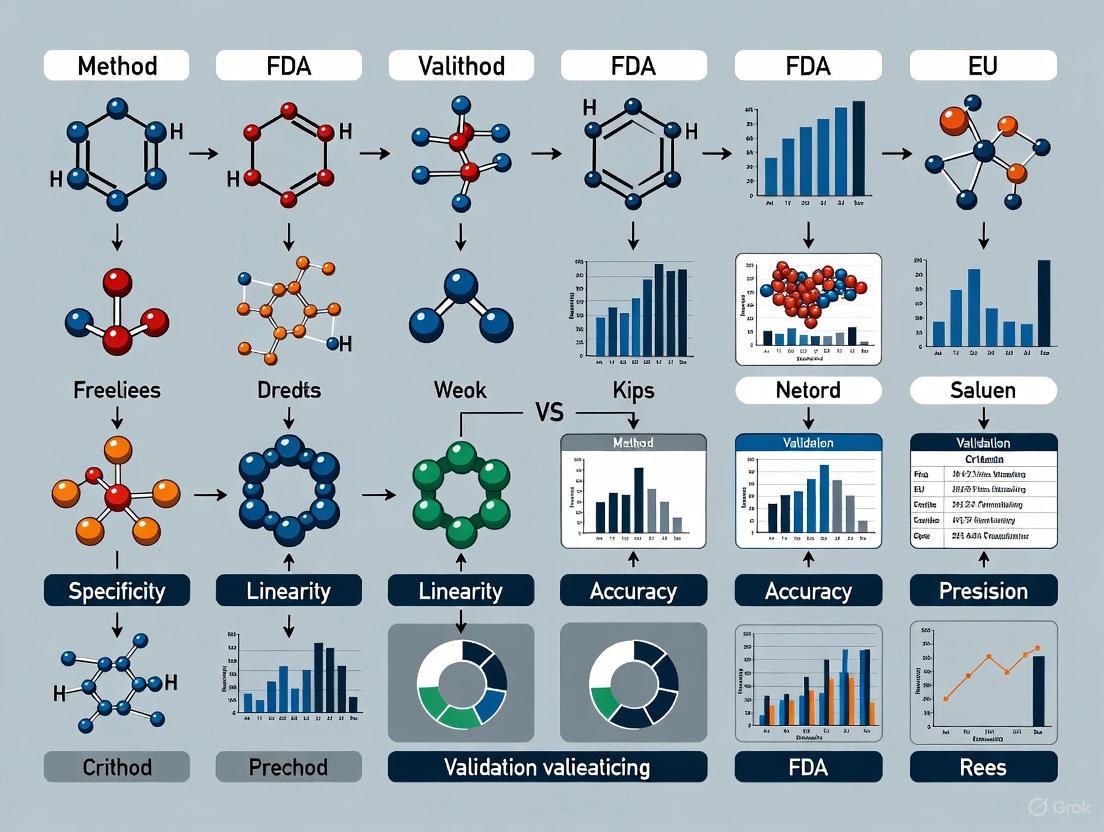
This article provides a comprehensive comparison of the FDA and European Union (EU) validation criteria for food analytical methods, tailored for researchers, scientists, and drug development professionals.
Navigating FDA and EU Food Analytical Method Validation: A 2025 Guide for Researchers
Abstract
This article provides a comprehensive comparison of the FDA and European Union (EU) validation criteria for food analytical methods, tailored for researchers, scientists, and drug development professionals. It explores the foundational regulatory philosophies, details the specific methodological requirements and application processes, offers strategies for troubleshooting and optimizing validation studies, and delivers a direct comparative analysis to aid in strategic planning and global compliance.
Understanding the Regulatory Landscape: FDA and EU Philosophies on Method Validation
In the rigorously regulated fields of food safety and analytical science, validation and verification are foundational concepts. While sometimes used interchangeably, they represent distinct processes, each critical for ensuring the safety and quality of the food supply. A precise understanding of these terms is essential for researchers and scientists developing and applying analytical methods, particularly when navigating the distinct requirements of different regulatory jurisdictions.
This guide provides a detailed comparison of validation and verification, framing them within the specific contexts of the U.S. Food and Drug Administration (FDA) and the European Food Safety Authority (EFSA). The objective is to equip professionals with the knowledge to implement robust, compliant food safety systems and analytical methodologies.
Core Conceptual Distinctions
At its core, the difference between validation and verification is one of intent and timing. Validation is a forward-looking process focused on the design and potential of a method or plan. In contrast, verification is a backward-looking process that checks the ongoing performance and consistency of implementation [1] [2].
The table below summarizes the key distinctions:
| Feature | Validation | Verification |
|---|---|---|
| Core Question | "Is the plan/method effective and scientifically sound?" [1] [3] | "Are we following the plan/method correctly and consistently?" [1] [3] |
| Primary Focus | Design, accuracy, and scientific basis [2] | Implementation, precision, and routine operation [2] |
| Temporal Nature | Conducted in advance, and re-assessed when changes occur [1] | Ongoing, routine activity conducted during operations [1] |
| Objective | To prove that a control measure or method is capable of controlling a hazard or producing a reliable result [1] | To confirm that the validated plan or method is being executed as designed [1] |
| Key Activities | Scientific studies, literature citation, in-plant challenge studies, consulting process authorities [1] [2] | Calibration of equipment, record reviews, product sampling, audits, and monitoring [1] |
| Analogy | Proving a recipe, if followed, will produce a safe product (theoretical) [1] | Checking that the cook followed the recipe correctly (practical) [1] |
Regulatory Frameworks: FDA vs. EU
The principles of validation and verification are embedded within the food safety legislation of both the United States and the European Union, though their articulation and emphasis can differ.
United States (FDA) Framework
Under the Food Safety Modernization Act (FSMA), the FDA mandates a preventive controls approach. The regulation requires that food facilities validate their process preventive controls to ensure they are adequate for controlling identified hazards [1]. Furthermore, facilities must verify that these controls are consistently implemented [1] [3]. This includes activities like calibrating monitoring instruments and reviewing records.
The FDA's Human Food Program (HFP) FY 2025 priorities emphasize strengthening regulatory oversight through guidance, including the upcoming "draft guidance for Preventive Controls for Human Food specific to Chemical Hazards," which will inform industry validation and verification responsibilities [4].
European Union (EFSA) Framework
In the EU, regulations like (EC) No 1331/2008 establish a common procedure for the authorization of food additives, requiring safety evaluation by EFSA [5]. The concept of validation is inherent in the pre-market safety assessment of novel foods and additives, where extensive scientific data must be submitted to demonstrate safety [6].
Verification is a continuous process post-authorization. EFSA conducts ongoing monitoring, often through structured data collection calls. For example, a 2025 open call for data on food additives like Steviol glycosides and lactic acid compounds includes a final phase dedicated to "data validation and data acceptance," which is an agency-level verification of the submitted industry data [5] [7]. This ensures that real-world use aligns with the conditions of the initial safety assessment.
Experimental Protocols and Methodologies
The application of validation and verification requires distinct experimental approaches, from the system level down to the analytical method level.
Validation Protocols
Validation involves gathering evidence to prove a process or method is effective.
- HACCP/Food Safety Plan Validation: For a critical control point (CCP), such as a heat step to destroy pathogens, validation would involve citing scientific literature (e.g., USDA studies proving a specific temperature-time combination is lethal to the target microorganism) and supplementing with in-plant validation studies to confirm the theoretical parameters work in the specific operational environment [1] [2]. This accounts for variables like equipment variability and product characteristics.
- Analytical Method Validation: According to EFSA guidance for novel foods, a validated analytical method must demonstrate several performance characteristics. The 2024 guidance requires that if a novel food has multiple forms (e.g., dried, powder), stability and composition analyses must be conducted on at least five representative batches of each form produced independently [6]. This provides statistical confidence in the method's reliability.
Verification Protocols
Verification activities are routine checks to ensure validated plans and methods remain in control.
- CCP Verification: For the same heat process CCP, verification activities include [1]:
- Calibrating the thermometers used for monitoring against a certified reference.
- Reviewing temperature logs from the production line to ensure no deviations occurred.
- Periodically conducting microbiological testing of the final product.
- System Verification: This includes internal audits, environmental monitoring for pathogens, and reanalysis of the entire Food Safety Plan at least every three years (per FDA requirement) to ensure it reflects current operations [3].
Essential Research Reagent Solutions
The following reagents and materials are fundamental for conducting the experiments required for method validation and verification in a food analysis laboratory.
| Reagent/Material | Primary Function in Food Analysis |
|---|---|
| Certified Reference Materials (CRMs) | Calibrating equipment and validating the accuracy of analytical methods for contaminants like heavy metals or nutrients. |
| Pathogen Surrogate Strains (e.g., non-pathogenic E. coli) | Safely conducting in-plant validation studies for antimicrobial interventions without introducing a food safety hazard [2]. |
| Selective Culture Media & Agar | Isolating and enumerating specific microbial pathogens or indicators during product testing and environmental monitoring. |
| Enzymes & Substrates | Used in enzymatic assays for quantifying specific components (e.g., sugars, organic acids) or detecting antibiotic residues. |
| Antibodies for Immunoassays | Key reagents in ELISA kits for the sensitive and specific detection of allergens, toxins (e.g., mycotoxins), or protein additives. |
| Standard Analytical Standards (e.g., for pesticides, additives) | Essential for creating calibration curves to identify and quantify chemical residues in food samples. |
| Genomic DNA & PCR Reagents | Used in molecular methods for the precise identification of species (e.g., authenticity testing) and detection of foodborne pathogens. |
Validation and verification, while complementary, are non-interchangeable pillars of modern food safety systems and analytical quality assurance. Validation provides the foundational, scientific proof that a method or control measure can work, while verification provides the ongoing evidence that it is working as intended in daily practice.
For researchers and scientists operating in a global context, understanding the nuanced requirements of regulatory bodies like the FDA and EFSA is paramount. The FDA's FSMA framework emphasizes preventive control validation and systematic verification, whereas the EU's EFSA embeds these principles within a comprehensive lifecycle approach—from pre-market validation of novel substances to post-market monitoring and data verification. Mastering the distinct application of validation and verification is not merely a regulatory compliance issue; it is the cornerstone of producing safe, high-quality food and generating trustworthy scientific data.
The Methods Development, Validation, and Implementation Program (MDVIP) is a standardized operating procedure within the FDA Foods Program for managing analytical method lifecycle [8]. This framework ensures that FDA laboratories use properly validated methods, and where feasible, methods that have undergone multi-laboratory validation (MLV) to support the regulatory mission [8]. Governed by the Foods Program Regulatory Science Steering Committee (RSSC), the MDVIP represents a collaborative effort across FDA centers including CFSAN, ORA, CVM, and NCTR [8]. This review examines the MDVIP structure, compares it with EU validation criteria, and provides practical experimental protocols for researchers navigating dual compliance requirements.
MDVIP Framework and FDA Center-Specific Guidelines
MDVIP Governance and Structure
The MDVIP operates through a structured governance model with clearly defined roles:
- Regulatory Science Steering Committee (RSSC): Provides overarching management and coordination, with membership from CFSAN, ORA, CVM, and NCTR [8]
- Research Coordination Groups (RCGs): Provide disciplinary leadership for chemistry and microbiology methods, coordinating guideline development and method posting [8]
- Method Validation Subcommittees (MVS): Responsible for approving validation plans, evaluating validation results, and updating validation guidelines [8]
This structure ensures consistent method validation approaches across all Foods Program laboratories while maintaining scientific rigor.
Researchers must consult guidelines from specific FDA centers based on their product type. The FDA provides dedicated guidance pages for each center [9]:
Table: FDA Center-Specific Guidance Resources
| FDA Center | Full Name | Regulatory Focus | Guidance Accessibility |
|---|---|---|---|
| CBER | Center for Biologics Evaluation and Research | Biological products (vaccines, blood products) | Dedicated online guidance pages [9] |
| CDER | Center for Drug Evaluation and Research | Pharmaceutical drugs, small molecules | Product-specific guidances (PSGs) available [10] |
| CDRH | Center for Devices and Radiological Health | Medical devices, radiological health | Searchable guidance database [9] |
| CVM | Center for Veterinary Medicine | Animal drugs, feed, veterinary devices | Specific validation guidelines [9] [8] |
| CFSAN | Center for Food Safety and Applied Nutrition | Food ingredients, dietary supplements, cosmetics | MDVIP guidelines for food methods [8] |
For generic drug development, FDA publishes Product-Specific Guidances (PSGs) that detail expectations for developing generic equivalents to specific reference listed drugs, providing crucial methodology recommendations [10].
Cross-Center Submissions
For complex submissions involving multiple FDA centers, the draft guidance "Cross-Center Master Files: Where to Submit" recommends procedures for master files referenced in multiple regulatory submissions across CBER, CDER, CDRH, and CVM [11]. This is particularly relevant for combination products or ingredients with multiple applications.
Comparative Analysis: FDA vs. EU Validation Criteria
Philosophical and Structural Differences
The FDA and European Union approach regulatory validation from fundamentally different perspectives:
Table: Regulatory Philosophy Comparison
| Aspect | FDA Approach | EU Approach |
|---|---|---|
| Governance Model | Centralized federal authority with direct decision-making power [12] | Coordinated network of national competent authorities [12] |
| Primary Focus | Risk-based, pragmatic balance of innovation and patient safety [13] | Prescriptive, precautionary principle with extensive documentation [13] |
| Implementation | Standardized procedures (e.g., MDVIP) across federal laboratories [8] | Harmonized directives implemented through national authorities [14] |
| Adaptability | Encourages flexible approaches with post-market surveillance [13] | Requires comprehensive pre-market validation and compliance [13] |
The FDA's MDVIP operates as a centralized framework ensuring consistency across its laboratories [8], while the EU system relies on harmonized standards interpreted by multiple national authorities [14].
Method Validation Requirements
Both regulatory systems require rigorous method validation but emphasize different aspects:
Table: Validation Requirements Comparison
| Validation Component | FDA Requirements | EU Requirements |
|---|---|---|
| Guidance Document | MDVIP Standard Operating Procedures [8] | European Pharmacopoeia methods |
| Foundation | ICH Q2(R2) guidelines on analytical procedure validation [15] | ICH Q2(R2) with EU-specific adaptations |
| Clinical Evidence | Risk-based requirements; sometimes waived with predicate comparison [14] | Mandatory clinical evaluation for all devices under MDR [14] |
| Multi-laboratory Studies | Emphasized where feasible under MDVIP [8] | Often required for standard methods |
| Post-Market Changes | Science- and risk-based management facilitated by ICH Q14 [15] | Strict change control procedures required |
The FDA has adopted the ICH Q2(R2) guidance, which provides a general framework for the principles of analytical procedure validation, including validation principles that cover the analytical use of spectroscopic data [15]. This aligns with the MDVIP's commitment to properly validated methods [8].
Experimental Protocols for Dual Compliance
Method Validation Workflow for FDA MDVIP
The following diagram illustrates the complete method validation workflow under the FDA MDVIP framework:
Detailed Validation Methodology
For researchers developing methods compliant with both FDA and EU standards, the following integrated protocol ensures regulatory acceptance:
Protocol 1: Comprehensive Analytical Method Validation
Objective: To establish and validate an analytical method that meets both FDA MDVIP and EU regulatory requirements for food analytical methods.
Materials and Equipment:
- Reference standards and certified reference materials
- Appropriate instrumentation with calibrated equipment
- Chemical reagents of appropriate purity
- Quality control samples representing specification levels
Procedure:
- Method Development Phase
- Define analytical target and performance requirements
- Conduct preliminary studies to establish optimal conditions
- Identify critical method parameters using risk assessment approaches
Validation Parameters Testing (Following ICH Q2(R2) principles [15])
- Specificity: Demonstrate ability to unequivocally assess the analyte in the presence of potential interferents
- Linearity: Establish over a minimum range of 80-120% of target concentration with minimum of 5 concentration levels
- Accuracy: Recovery studies at 3 concentration levels with minimum 3 replicates each
- Precision:
- Repeatability: Minimum 6 determinations at 100% concentration
- Intermediate precision: Different days, analysts, equipment with statistical evaluation
- Range: Establish confirmed interval from linearity, accuracy, and precision data
- Detection Limit (LOD) & Quantitation Limit (LOQ): Signal-to-noise approach or standard deviation method
Multi-Laboratory Validation (where feasible)
- Transfer method to minimum of two additional laboratories
- Establish reproducibility data through interlaboratory study
- Document all deviations and observations
Documentation
- Prepare comprehensive validation report addressing all parameters
- Include raw data, statistical analysis, and representative chromatograms/spectra
- Document any deviations from planned protocol
Dual Regulatory Submission Strategy
The following diagram outlines a strategic approach for navigating both FDA and EU regulatory landscapes:
Protocol 2: Gap Analysis for FDA-EU Compliance
Objective: To identify and address disparities between FDA and EU validation requirements early in method development.
Procedure:
- Regulatory Requirement Mapping
Strategic Planning
- Design validation studies that satisfy the most stringent requirements from either region
- Plan for additional testing where significant gaps exist between FDA and EU expectations
- Establish documentation system that can be adapted for both submission types
Risk Assessment
- Evaluate potential regulatory hurdles specific to each jurisdiction
- Develop contingency plans for addressing potential deficiencies
- Identify areas where waivers or exemptions might be applicable
Research Reagent Solutions for Validation Studies
Table: Essential Materials for FDA-EU Compliant Method Validation
| Reagent/Material | Function in Validation | Regulatory Considerations |
|---|---|---|
| Certified Reference Materials | Calibration standard; method accuracy determination | Must be traceable to national or international standards; certificates of analysis required |
| System Suitability Mixtures | Verify chromatographic system performance | Should contain all analytes and potential interferents; stability must be documented |
| Quality Control Samples | Precision and accuracy assessment | Should represent low, medium, and high concentrations within validated range |
| Stability Solutions | Forced degradation studies specificity evaluation | Should include acid, base, oxidative, thermal, and photolytic stress conditions |
| Matrix Blank Samples | Specificity and selectivity demonstration | Should represent all applicable sample matrices encountered in routine analysis |
The FDA's MDVIP framework provides a standardized approach to methods development, validation, and implementation across its Foods Program laboratories [8]. When combined with center-specific guidelines and international standards like ICH Q2(R2) [15], researchers can develop robust analytical methods that facilitate regulatory acceptance across multiple jurisdictions. The key to successful global compliance lies in understanding the philosophical differences between FDA and EU regulatory approaches [13], implementing validation studies that address the most stringent requirements, and maintaining comprehensive documentation adaptable to both systems.
Ensuring the safety of food products is a paramount objective for regulatory agencies worldwide, with the European Union (EU) and the United States Food and Drug Administration (FDA) representing two major regulatory systems. While both share the common goal of protecting public health, their approaches to food safety validation, particularly for novel foods and analytical methods, differ significantly in philosophy, process, and technical requirements. The EU framework operates through a decentralized network of member states coordinated by EU-level agencies, whereas the FDA functions as a centralized federal authority with direct decision-making power [12]. Understanding these differences is crucial for researchers, scientists, and drug development professionals navigating global market access, as the strategic approach to compliance must account for these distinct regulatory pathways. This guide objectively compares these frameworks, focusing specifically on the European Food Safety Authority's (EFSA) role, relevant methodological standards, and novel food validation processes, providing experimental data and protocols to illustrate key distinctions.
EFSA's Role in the EU Food Safety Framework
Organizational Structure and Mandate
The European Food Safety Authority (EFSA) serves as the cornerstone of the EU's food safety system, functioning as an independent scientific risk assessment body. Unlike the FDA's centralized approval model, EFSA provides scientific advice and risk assessments that inform the European Commission's regulatory decisions [16]. This separation of risk assessment (EFSA) from risk management (European Commission and EU Member States) is a fundamental characteristic of the EU system. EFSA's mandate encompasses the safety assessment of Novel Foods, food additives, food flavourings, and other food-related components, ensuring that all authorized products meet stringent safety standards before entering the EU market [5] [7].
The Novel Food Authorization Process
A primary function of EFSA is the scientific evaluation of Novel Food applications. A "novel food" is defined as a foodstuff not consumed to a significant degree within the EU before May 15, 1997 [16]. The authorization process involves a structured submission and assessment workflow, illustrated below.
Figure 1: EFSA Novel Food Application Workflow
Recent data from Q3 2025 demonstrates this process in action. During this period, EFSA received 19 new dossiers, validated 8 applications, and published 3 scientific opinions [17]. The European Commission subsequently granted 6 authorizations based on EFSA's assessments, which included both new novel foods and modifications to existing authorizations [17]. This workflow ensures that all novel foods are subject to a comprehensive safety evaluation covering their composition, production process, stability, and proposed uses before they can be marketed in the EU [16].
Comparative Analysis: EU vs. FDA Validation Criteria
Foundational Philosophies and Approaches
The regulatory philosophies governing food safety in the EU and US stem from their distinct institutional structures, leading to different validation criteria and evidence requirements.
EU (EFSA) Approach: The EU operates on the precautionary principle, requiring comprehensive safety data before market entry. EFSA's guidance emphasizes a holistic safety assessment that includes detailed characterization of the novel food, its production process, compositional data, specifications, proposed uses, and anticipated intake [16]. For novel foods, EFSA requires data on nutritional information, toxicology, and allergenicity to establish safety under the proposed conditions of use [16]. The process is highly structured, with EFSA providing updated guidance in 2025 to clarify data requirements and improve application quality [16].
FDA Approach: The FDA's framework for food ingredients, including the Generally Recognized as Safe (GRAS) notification program, often allows for market entry based on expert consensus of safety without a formal pre-market approval requirement for certain substances. This system can provide a faster path to market for some products but may involve different types of scientific evidence and justification compared to the EU's mandatory pre-market authorization for all novel foods.
Key Differences in Methodological Validation
The approaches to methodological validation for food analysis reflect these broader philosophical differences, as summarized in the table below.
Table 1: Comparison of EU and FDA Food Safety Validation Approaches
| Aspect | EU (EFSA) Framework | FDA Framework |
|---|---|---|
| Governing Principle | Precautionary principle | Risk-based approach |
| Approval Authority | European Commission (based on EFSA assessment) | FDA (centralized) |
| Data Requirements | Comprehensive pre-market safety data | Varies by pathway (e.g., GRAS vs. food additive petition) |
| Methodology Standards | Reference to European standards (e.g., for pathogens) | Methods from FDA's Bacteriological Analytical Manual (BAM) |
| Ongoing Monitoring | Regular re-evaluation; post-market monitoring plans [5] | Post-market surveillance |
| Transparency | Proactive publication of supporting data [5] [7] | Case-specific transparency |
A concrete example of the EU's rigorous approach to analytical competency is found in official control laboratories. From 2019 to 2021, French National Reference Laboratories organized interlaboratory proficiency testing (PT) schemes to assess the performance of laboratories in detecting and enumerating major foodborne pathogens like Listeria monocytogenes, Salmonella spp., and coagulase-positive staphylococci [18]. These PTs, involving an average of 65 laboratories annually, used fresh food samples spiked at different contamination levels to mimic real-world conditions, demonstrating the importance the EU places on maintaining a network of competent testing facilities [18].
Experimental Protocols for Method Validation
Proficiency Testing for Pathogen Detection
The French PT scheme provides a detailed protocol for validating analytical methods in food microbiology, aligning with the requirements of European regulations on microbiological criteria for foodstuffs (Commission Regulation (EC) No 2073/2005) [18].
Objective: To assess the competency of official control laboratories in detecting and enumerating Listeria monocytogenes, Salmonella spp., and coagulase-positive staphylococci (CPS) in food matrices.
Materials and Methods:
- Sample Preparation: Ten samples for detection and four samples for enumeration per pathogen were prepared annually using food matrices historically associated with outbreaks (e.g., minced meat, dry sausage, smoked salmon) [18].
- Contamination Levels: Samples included blank (non-contaminated), low-spiking, and high-spiking levels to challenge different analytical sensitivities [18].
- Testing Protocol: Participating laboratories used either reference methods (ISO 11290-1 for L. monocytogenes detection) or validated alternative methods. For enumeration, methods included ISO 11290-2 for L. monocytogenes and ISO 6888-1 or ISO 6888-2 for CPS [18].
- Data Analysis: Results were collected and compared against expected values. Performance was assessed based on the accuracy of detection (presence/absence) and enumeration (bacterial count) [18].
Results and Interpretation: Over the three-year study, the PT results demonstrated the high competency of the laboratory network, with satisfactory performance in detecting L. monocytogenes and Salmonella spp., and enumerating L. monocytogenes and CPS [18]. This protocol serves as a model for validating method performance within the EU's official control system.
Data Collection for Food Additive Safety
EFSA employs systematic data collection protocols to support the re-evaluation of food additives, as mandated by Regulation (EU) No 257/2010 [5].
Objective: To gather analytical and use level data on food additives for exposure assessment and safety evaluation.
Experimental Workflow:
- Data Call: EFSA issues open calls for data from national authorities, research institutions, and food business operators [5] [7].
- Standardized Reporting: Data must be submitted in specific electronic formats (e.g., SSD2 for analytical data) via EFSA's Data Collection Framework (DCF) [5].
- Priority Substances: For the 2025 data collection, priority additives include steviol glycosides (E 960a, E 960c, E 960d), lactates (E 270, E 325-327, E 585), and glycerol (E 422) [5].
- Data Validation: A defined period (e.g., July-August 2025) is allocated for data validation and acceptance into EFSA's Scientific Data Warehouse [5].
This systematic, data-driven approach ensures that EFSA's safety assessments are based on robust and current information on actual use levels and concentrations of additives in food.
The Scientist's Toolkit: Essential Research Reagents and Materials
Successful navigation of the EU's food validation framework requires specific reagents and materials tailored to its regulatory requirements. The following table details key solutions for compliance and testing.
Table 2: Key Research Reagent Solutions for EU Food Safety Compliance
| Research Reagent/Material | Function in EU Validation Context |
|---|---|
| Certified Reference Materials (CRMs) | Essential for method validation and ensuring the accuracy and traceability of analytical results for contaminants or nutrients. |
| ISO 17025 Accredited Controls | Quality controls used in proficiency testing schemes to demonstrate laboratory competency, as required for official control labs [18]. |
| SSD2 (Standard Sample Description v2) Format Tools | Software and templates for compiling analytical data in the specific format mandated by EFSA for data submission [5] [7]. |
| Defined Pathogen Strains | Certified strains of L. monocytogenes, Salmonella spp., and S. aureus used for spiking studies in internal method validation and PT schemes [18]. |
| XML Schema for DCF Submission | Pre-configured electronic data reporting tools required for submitting use level and analytical data to EFSA's Data Collection Framework [7]. |
The EU framework for food safety validation, centered on EFSA's scientific assessments and structured authorization processes, presents a comprehensive and precautionary system distinct from the FDA's approach. Key differentiators include the EU's mandatory pre-market authorization for novel foods, its systematic re-evaluation program for food additives, and its reliance on a network of proficient official control laboratories. For researchers and product developers targeting transatlantic markets, understanding these differences is not merely an academic exercise but a strategic necessity. Success requires early and careful planning of validation strategies, meticulous attention to EFSA's specific data requirements, and the utilization of appropriate reagents and materials designed for compliance with the EU's rigorous standards.
The Universal Principle of 'Fitness for Purpose'
For researchers and scientists in food and drug development, demonstrating that an analytical method is "fit for purpose" is a universal principle underpinning all regulatory frameworks. This concept ensures that methods are reliable, accurate, and consistently produce results that support safety and quality assessments. In the context of food analytical methods, two of the most influential regulatory systems are those of the U.S. Food and Drug Administration (FDA) and the European Union (EU). While both share the common goal of protecting public health, their pathways, documentation requirements, and specific technical expectations can differ significantly. Understanding these differences is not merely an academic exercise; it is a practical necessity for designing robust development programs, avoiding costly delays, and achieving successful global market access for new food products, ingredients, and contaminants. This guide provides a structured comparison of FDA and EU validation criteria, supported by experimental data and clear protocols, to equip professionals with the knowledge to navigate this complex landscape.
Comparative Analysis: FDA vs. EU Validation Frameworks
The regulatory approaches for analytical method validation in the US and EU are defined by a series of key guidance documents and regulations. The following table summarizes the core frameworks and their primary focus.
| Regulatory Body | Primary Guidance/Document | Core Philosophy & Emphasis |
|---|---|---|
| U.S. FDA | FDA Guidance for Industry [19] | A lifecycle approach, focusing on data integrity and continuous assurance of method performance rather than a one-time event [20] [19]. |
| European Union (EU) | EU GMP Annex 15 [19] | A mandatory risk-based approach to qualification and validation, requiring a thorough assessment to determine the extent of validation needed [19]. |
Foundational Principles and Harmonization
Despite their differences, a strong foundation of harmonization exists, primarily through the International Council for Harmonisation (ICH) guidelines.
- ICH Q2(R1): This guideline provides the internationally accepted standard for validation, defining key parameters such as specificity, accuracy, precision, linearity, and range [19]. Both FDA and EU regulators expect compliance with these core parameters.
- The Lifecycle Model: Recent updates, such as ICH Q2(R2) and ICH Q14, are redefining validation as a continuous lifecycle [20]. This shift moves the focus from a single "validation event" to an ongoing process that begins with method design and continues through monitoring and control. The Analytical Target Profile (ATP) is central to this model, serving as a predefined objective that outlines the method's required performance [20].
- Data Integrity: Both regions mandate strict adherence to ALCOA+ principles, ensuring data is Attributable, Legible, Contemporaneous, Original, Accurate, Complete, Consistent, Enduring, and Available [19].
Key Validation Parameters and Requirements
The following table breaks down the specific experimental parameters required to demonstrate a method is "fit for purpose," drawing from FDA, EU, and overarching ICH and USP standards [19].
| Validation Parameter | Experimental Purpose & Protocol | FDA & EU Expectation (Based on ICH) |
|---|---|---|
| Specificity | To prove the method can accurately measure the analyte despite other components. | Protocol: Analyze blank matrix, placebo, and samples with potential interferents (e.g., degradation products, related substances). Data: Chromatograms or spectra showing baseline separation and no interference. |
| Accuracy | To determine the closeness of measured value to the true value. | Protocol: Spike known amounts of analyte into the matrix (e.g., food sample) at multiple levels (e.g., 50%, 100%, 150%) and analyze. Data: Report % recovery and confidence intervals. |
| Precision | To evaluate the reproducibility of measurements. | Protocol: Includes Repeatability (multiple injections of same sample prep) and Intermediate Precision (different days, analysts, equipment). Data: Report % Relative Standard Deviation (%RSD). |
| Linearity | To demonstrate a proportional relationship between analyte amount and instrument response. | Protocol: Prepare and analyze a series of standard solutions across a specified range (e.g., 5 concentration levels). Data: Plot response vs. concentration; report correlation coefficient (R²), slope, and y-intercept. |
| Range | To confirm the interval between upper and lower analyte levels where method is precise, accurate, and linear. | Protocol: Established from linearity and precision data. Data: The specified range must be justified by the data. |
| Detection Limit (LOD) | To determine the lowest detectable amount of analyte. | Protocol: Based on signal-to-noise ratio (3:1) or standard deviation of the response from a blank. Data: The concentration that gives a signal 3x the noise level. |
| Quantitation Limit (LOQ) | To determine the lowest quantifiable amount with acceptable accuracy and precision. | Protocol: Based on signal-to-noise ratio (10:1) or standard deviation of the response and the slope. Data: The concentration that gives a signal 10x the noise level; must be supported by accuracy/precision data at that level. |
| Robustness | To assess the method's reliability when small, deliberate changes are made to parameters. | Protocol: Vary parameters like temperature, flow rate, pH, or mobile phase composition within a small, realistic range. Data: System suitability criteria (e.g., retention time, resolution, tailing factor) must still be met. |
Workflow Diagram: The Analytical Method Lifecycle
The following diagram illustrates the modern, lifecycle approach to analytical method validation, which is increasingly emphasized by both FDA and EU regulators [20].
Experimental Case Study: Aflatoxin B1 Analysis in Olive Oil
To illustrate the application of validation principles, we examine a recent study developing a microfluidic method for detecting aflatoxin B1 in olive oil [21].
Detailed Experimental Protocol
- Objective: To develop an integrated system for rapid extraction and immunosensor-based detection of aflatoxin B1.
- Apparatus & Workflow:
- Extraction: A poly(dimethylsiloxane) (PDMS) microfluidic mixer was used to rapidly extract aflatoxin B1 from olive oil samples, requiring only 2 mL of sample.
- Detection: The extract was analyzed using a disposable paper-based microfluidic immunosensor. The sensor utilized carbon nanotubes to provide a high surface area for sensitive measurement.
- Validation Data & Results: The method was successfully validated, demonstrating:
This case study exemplifies the "fitness for purpose" principle, showcasing a method designed to be cost-effective, rapid, and highly suitable for its specific application in food safety monitoring.
The Scientist's Toolkit: Key Reagents and Materials
The following table details essential research reagents and materials used in modern food analytical methods, as exemplified by the featured case study and broader field practices [21].
| Item | Function in Analysis |
|---|---|
| Carbon Nanotubes (CNTs) | Used in biosensors to enhance electrochemical signal and increase surface area for antibody immobilization, leading to lower detection limits [21]. |
| Poly(dimethylsiloxane) (PDMS) | A common polymer for fabricating microfluidic devices due to its optical clarity, flexibility, and gas permeability; ideal for rapid, small-volume mixing and extraction [21]. |
| Paper-based Microfluidics | Provides a low-cost, disposable platform for creating immunosensors or lateral flow assays, facilitating point-of-need testing [21]. |
| Reference Standards | Highly characterized materials of known purity and concentration, essential for calibrating instruments, preparing calibration curves, and determining accuracy. |
| Chromatography Columns | The heart of HPLC/UPLC systems, where separation of analytes from complex food matrices occurs based on chemical interactions. |
| Mass Spectrometry (MS) Detectors | Provides highly specific and sensitive detection by identifying analytes based on their mass-to-charge ratio, crucial for confirming the identity of contaminants and compounds. |
The pursuit of demonstrating "fitness for purpose" is the unifying thread connecting FDA and EU validation criteria. While the foundational principles of ICH Q2 provide a common language, strategic differences exist in the application and emphasis, such as the FDA's strong push for a lifecycle approach and the EU's codified risk-based framework under Annex 15. For researchers and drug development professionals, success in this environment requires a proactive strategy: adopt the Analytical Procedure Lifecycle model early in method development, leveraging the ATP as a guiding document. Implement a risk-based approach to focus validation efforts on the most critical method parameters. Finally, invest in robust data integrity practices and continuous monitoring to ensure methods remain in a state of control throughout their operational life. By understanding and integrating these comparative insights, scientists can not only ensure regulatory compliance but also build more reliable, robust, and efficient analytical methods that truly serve their intended purpose.
The U.S. Food and Drug Administration (FDA) and the European Commission/European Food Safety Authority (EFSA) represent two distinct regulatory models for ensuring food safety. The FDA operates as a federal agency within the Department of Health and Human Services, with its food regulatory functions primarily executed by the Center for Food Safety and Applied Nutrition (CFSAN) and the Office of Regulatory Affairs (ORA) [22]. CFSAN is responsible for the scientific and regulatory oversight of food, while ORA conducts inspections and enforcement activities through its field staff.
In contrast, the European system employs a separation of powers. The European Commission is the EU's executive body, responsible for proposing and implementing food safety legislation. EFSA, established in 2002, operates as an independent scientific agency that provides risk assessments to inform the Commission's risk management decisions [22] [23]. This fundamental structural difference creates varying approaches to food analytical method validation, with the FDA employing a more integrated model and the EU separating scientific assessment from policy implementation.
A philosophical difference further distinguishes these bodies. The EU often applies the "precautionary principle," where regulators can restrict substances with scientific uncertainty about safety [24]. Conversely, the U.S. model typically permits substances until significant risk is proven [24]. This philosophical divergence profoundly influences their respective analytical validation criteria and regulatory tolerance for uncertainty.
Analytical Method Validation: Frameworks and Criteria
FDA Foods Program Method Validation
The FDA Foods Program employs the Methods Development, Validation, and Implementation Program (MDVIP) to govern its analytical laboratory methods [8]. This program is managed by the FDA Foods Program Regulatory Science Steering Committee (RSSC), comprising members from CFSAN, ORA, the Center for Veterinary Medicine (CVM), and the National Center for Toxicological Research (NCTR) [8]. The MDVIP ensures that FDA laboratories use properly validated methods, prioritizing multi-laboratory validation (MLV) where feasible.
The FDA's validation process is disciplined through Research Coordination Groups (RCGs) and Method Validation Subcommittees (MVS) [8]. The RCGs provide overall leadership and coordinate guideline development, while MVSs are responsible for approving validation plans and evaluating results. For chemical methods, the FDA has established detailed validation guidelines that outline parameters such as accuracy, precision, specificity, and linearity.
The FDA maintains the Foods Program Compendium of Analytical Laboratory Methods, which contains validated methods with defined validation statuses currently used by FDA regulatory laboratories [25]. This Compendium includes the Chemical Analytical Manual (CAM) and the Bacteriological Analytical Manual (BAM), with methods categorized by validation level from emergency use to full multi-laboratory validation [25].
EFSA Method Validation and Data Collection
EFSA does not maintain its own laboratory methods compendium equivalent to the FDA's but instead focuses on establishing standardized data reporting requirements for member states. EFSA mandates the use of the Standard Sample Description (SSD2) data model for submitting analytical results of food and feed samples [26]. This harmonized approach ensures consistent data quality across EU member states.
EFSA employs a centralized data collection framework through its Data Collection Framework (DCF) portal, where national authorities, research institutions, and stakeholders submit monitoring data [7] [5]. EFSA issues specific reporting guidance documents, such as the "Chemical monitoring reporting guidance: 2025 data collection," which provides detailed technical requirements for data submission [26].
A key distinction is EFSA's publication of open calls for specific data, targeting particular food additives or contaminants for monitoring. For example, recent calls have requested data on food colourants like Tartrazine (E 102) and steviol glycosides (E 960), with strict deadlines for data submission and validation [7] [5]. This approach allows EFSA to systematically gather evidence for risk assessments and re-evaluations.
Comparative Analysis of Validation Approaches
Table 1: Comparison of FDA and EFSA Analytical Method Validation Frameworks
| Validation Aspect | FDA Foods Program | European Commission/EFSA |
|---|---|---|
| Governing Framework | Methods Development, Validation, and Implementation Program (MDVIP) [8] | EU Regulations (e.g., Regulation (EC) No 1331/2008) [5] |
| Primary Guidance | FDA Foods Program Guidelines for Chemical Methods/Microbiological Methods [25] | EFSA Reporting Guidance (e.g., Chemical monitoring reporting guidance: 2025) [26] |
| Validation Levels | Four tiers: Emergency Use, Single Laboratory, Independent Lab Validation, Multi-laboratory [25] | Standardized data quality requirements across member states |
| Data Collection System | Internal FDA laboratory network | Data Collection Framework (DCF) for member states and stakeholders [7] |
| Method Compendia | Chemical Analytical Manual (CAM) & Bacteriological Analytical Manual (BAM) [25] | No central methods compendium; focuses on data standardization |
| Transparency | Publicly available validated methods | Proactive publication of all data supporting scientific outputs [7] |
Experimental Protocols and Validation Parameters
Method Validation Parameters
Both regulatory systems require demonstration of similar analytical method performance characteristics, though implementation differs. The International Council for Harmonisation (ICH) guidelines, which the FDA follows for pharmaceutical methods and references for food methods, outline core validation parameters [27]. These include:
- Accuracy: The closeness of test results to the true value, typically assessed by analyzing standards of known concentration or spiking placebos with known analyte amounts [27].
- Precision: The degree of agreement among individual test results from repeated samplings, including repeatability (intra-assay), intermediate precision (inter-day, inter-analyst), and reproducibility (inter-laboratory) [27].
- Specificity: The ability to unequivocally assess the analyte in the presence of potentially interfering components like impurities, degradation products, or matrix components [27].
- Linearity and Range: The method's ability to produce results proportional to analyte concentration within a specified range with suitable accuracy and precision [27].
- Limits of Detection and Quantitation: The lowest amounts of analyte that can be detected (LOD) or quantitatively determined with acceptable accuracy and precision (LOQ) [27].
- Robustness: The method's capacity to remain unaffected by small, deliberate variations in method parameters [27].
Workflow Visualization
The following diagram illustrates the comparative methodological approaches for food analytical validation between the FDA and EU systems:
Research Reagent Solutions and Essential Materials
Table 2: Key Research Reagents and Materials for Food Analytical Methods
| Reagent/Material | Function/Purpose | Regulatory Application |
|---|---|---|
| Stable Isotope-Labeled Internal Standards | Enables accurate quantification via mass spectrometry by correcting for matrix effects and recovery variations | Essential for FDA CAM methods like mycotoxin analysis (C-003.03) [25] |
| Certified Reference Materials (CRMs) | Method validation and quality control through analysis of materials with certified analyte concentrations | Required for both FDA and EFSA-compliant method validation |
| Multi-residue Analytical Columns | Simultaneous separation and detection of multiple analytes in complex food matrices | Used in FDA methods for pesticides, PFAS, and veterinary drugs [25] |
| Molecular Detection Assays (qPCR, LAMP) | Rapid, specific detection of pathogens without culture enrichment | Employed in FDA BAM for Salmonella, Cyclospora [25] and EFSA monitoring |
| Solid-Phase Extraction (SPE) Cartridges | Sample clean-up and analyte concentration to improve sensitivity and reduce matrix interference | Critical for both regulatory frameworks for contaminant analysis |
| Enzyme Immunoassay Kits | High-throughput screening for allergens, toxins, and chemical residues | Used in initial testing phases under both systems |
Comparative Experimental Data and Regulatory Outcomes
Quantitative Validation Performance Metrics
Table 3: Validation Requirements for Select Analytical Methods
| Method/Analyte | Regulatory Body | Accuracy/Recovery (%) | Precision (RSD%) | LOQ |
|---|---|---|---|---|
| Mycotoxins (Multi) | FDA CAM C-003.03 [25] | 70-120% | ≤20% | 0.1-500 µg/kg |
| PFAS Compounds | FDA CAM C-010.03 [25] | 80-110% | ≤15% | 0.1-1.0 µg/kg |
| Sulfites in Food | FDA CAM C-004.04 [25] | 85-100% | ≤10% | 1.0 mg/kg |
| Food Additives (e.g., E 102) | EFSA Monitoring [7] | Data quality assessed via SSD2 compliance | Laboratory proficiency requirements | Laboratory-defined with justification |
Method Implementation Case Studies
FDA Multi-Laboratory Validation Approach: The FDA's method for determining mycotoxins in food (C-003.03) employs stable isotope dilution assay (SIDA) combined with liquid chromatography-tandem mass spectrometry (LC-MS/MS) [25]. This method, validated across multiple FDA laboratories, simultaneously quantifies 12 different mycotoxins including aflatoxins, deoxynivalenol, and fumonisins in various matrices. The validation followed MDVIP Level 4 requirements, demonstrating consistent performance across 10 laboratories with recovery rates of 70-120% and precision RSDs ≤20% [25].
EFSA Standardized Data Collection Approach: EFSA's monitoring program for food additives like Tartrazine (E 102) and Ponceau 4R (E 124) utilizes a centralized data model where member states submit analytical results using the SSD2 format [7] [26]. This approach standardizes data on use levels, analytical concentrations, and presence across EU members, enabling comprehensive exposure assessments. The data collected through EFSA's DCF must include detailed metadata on sampling, analysis, and measurement uncertainty to ensure comparability across different laboratories and member states [7].
The FDA and EU systems represent two philosophically different but scientifically rigorous approaches to food analytical method validation. The FDA employs a centralized laboratory network with standardized validation protocols through MDVIP, resulting in compendia of validated methods (CAM/BAM) for regulatory enforcement [8] [25]. In contrast, EFSA focuses on standardizing data reporting from decentralized member state laboratories, using the SSD2 model and DCF portal to harmonize risk assessment data across the EU [7] [26].
For researchers and drug development professionals, understanding these distinctions is critical for global regulatory compliance. The FDA system provides specific methodological guidance, while the EFSA approach emphasizes data quality and standardization. Both systems increasingly recognize international harmonization efforts, particularly through ICH guidelines, though fundamental philosophical differences in precautionary approaches continue to create distinct validation landscapes [24] [27].
Implementing Validation Protocols: A Step-by-Step Guide for Compliance
For researchers and drug development professionals operating in the global landscape, understanding the distinct validation frameworks for analytical methods is crucial. The U.S. Food and Drug Administration (FDA) and the European Union (EU) employ different regulatory philosophies and technical requirements for validating analytical methods, particularly for food and feed products. The FDA Foods Program has institutionalized a rigorous, collaborative process through its Method Development, Validation, and Implementation Program (MDVIP), which strongly emphasizes multi-laboratory validation (MLV) to ensure method robustness and reproducibility [8]. This structured approach differs significantly from EU validation criteria, which are embedded within different regulatory structures and guidance documents. This guide provides an objective comparison of these frameworks, supported by experimental data and procedural details, to assist scientific professionals in navigating compliance requirements across jurisdictions.
The FDA's MDVIP Framework and Multi-Laboratory Validation
Governance and Structure of the MDVIP
The Method Development, Validation, and Implementation Program (MDVIP) represents the FDA's structured mechanism for ensuring analytical methods meet rigorous quality standards before deployment in regulatory laboratories. This program is governed by the FDA Foods Program Regulatory Science Steering Committee (RSSC), which comprises members from key FDA components: the Center for Food Safety and Applied Nutrition (CFSAN), the Office of Regulatory Affairs (ORA), the Center for Veterinary Medicine (CVM), and the National Center for Toxicological Research (NCTR) [8]. A primary objective of the MDVIP is to ensure that FDA laboratories use properly validated methods, with a distinct preference for those that have undergone multi-laboratory validation where feasible [8].
The operational work is managed through discipline-specific groups. Research Coordination Groups (RCGs) provide overall leadership and coordinate the development and updating of guidelines, while Method Validation Subcommittees (MVS) are responsible for approving validation plans and evaluating validation results [8]. This governance structure ensures consistent application of validation standards across all FDA Foods Program analytical laboratories.
The Multi-Laboratory Validation Process
Multi-laboratory validation represents the highest level of method validation within the FDA's MDVIP framework. MLV involves a formal, collaborative study typically conducted across multiple FDA regulatory laboratories to demonstrate method robustness and transferability. The process is designed to ensure that an analytical method produces reliable and reproducible results when used by different analysts, with different instruments, and in different laboratory environments.
The MLV process evaluates key analytical performance characteristics, including:
- Precision (repeatability and reproducibility)
- Accuracy (recovery studies)
- Specificity/Selectivity
- Linearity and Range
- Limit of Detection (LOD)
- Limit of Quantitation (LOQ)
- Ruggedness/Robustness
Methods that successfully complete MLV are considered the gold standard for regulatory analysis and are listed indefinitely in the FDA's official compendia [25].
Compendium of Validated Methods
The FDA maintains the Foods Program Compendium of Analytical Laboratory Methods, which serves as the official repository of validated methods for regulatory use. The Compendium is divided into chemical methods (published in the Chemical Analytical Manual or CAM) and microbiological methods (centered around the Bacteriological Analytical Manual or BAM) [25].
Methods within the CAM are categorized by their validation status, with posting durations directly reflecting the level of validation rigor:
| Validation Level | Posting Duration | Renewal Conditions |
|---|---|---|
| Multi-Laboratory Validated (MLV) | Indefinitely | Not applicable |
| Equivalent to MLV | 3 years | Subject to renewal |
| Single-Laboratory Validation | Up to 2 years | Requires upgrade to MLV |
| Emergency Use | 1 year | Limited validation |
For microbiological methods, the MDVIP recognizes four distinct validation levels, with Level 4 representing full multi-laboratory validation involving 10 laboratories [25]. Virtually all methods included in the microbiology portion of the Compendium have achieved MLV status.
EU Validation Framework for Analytical Methods
The search results provided do not contain specific information about the European Union's validation criteria for food analytical methods. The EU search result [28] focuses exclusively on the Electronic Common Technical Document (eCTD) specifications for pharmaceutical marketing authorizations, which is not relevant to food method validation. Other EU-related search results [29] [30] [31] discuss the Medical Device Regulation (MDR), which governs medical devices rather than food analytical methods.
This gap in the search results prevents a direct, detailed comparison between FDA and EU validation criteria for food analytical methods. In a comprehensive comparison, the EU section would typically cover relevant frameworks such as:
- Regulations established by the European Food Safety Authority (EFSA)
- European Commission regulations governing official controls for food and feed
- Validation criteria outlined in EU reference laboratory protocols
- Requirements for single-laboratory validation and collaborative studies under EU mandates
Researchers seeking this information would need to consult official EU sources such as the European Commission's Health and Food Safety Directorate-General or EFSA's guidance documents on analytical method validation.
Comparative Analysis: Key Dimensions of Difference
Based on the available FDA information and general regulatory knowledge, the following table outlines the primary dimensions where differences between FDA and EU validation approaches would likely be observed:
| Dimension | FDA Approach | EU Approach |
|---|---|---|
| Governance Model | Centralized via MDVIP and RSSC [8] | Information Not Available |
| Preferred Validation | Multi-laboratory validation (MLV) [8] | Information Not Available |
| Method Compendia | CAM and BAM with defined validation levels [25] | Information Not Available |
| Validation Levels | 4-tier system for microbiology [25] | Information Not Available |
| Post-Market Surveillance | Ongoing method performance monitoring | Information Not Available |
This comparison highlights the structured, hierarchical nature of the FDA's validation framework, with its clear preference for multi-laboratory validation as the highest standard for regulatory methods.
Experimental Protocols for Method Validation
Multi-Laboratory Validation Protocol
The MLV process follows a standardized protocol to ensure comprehensive evaluation of method performance:
Pre-Validation Requirements: The method must first demonstrate successful single-laboratory validation with acceptable performance characteristics. A detailed validation plan is approved by the Method Validation Subcommittee [8].
Laboratory Selection: A minimum of 10 participating laboratories is typically selected for Level 4 MLV studies in microbiology [25]. For chemical methods, the number may vary but generally involves multiple independent laboratories.
Sample Preparation and Distribution: Uniform test samples, including certified reference materials and fortified samples, are prepared centrally and distributed to all participating laboratories to ensure consistency.
Blinded Analysis: Participating laboratories analyze the samples using the standardized method protocol without prior knowledge of expected results (blinded study).
Data Collection and Statistical Analysis: Results from all laboratories are collected and subjected to statistical analysis using appropriate methods (e.g., ANOVA for reproducibility assessment).
Acceptance Criteria Evaluation: Method performance is evaluated against pre-defined acceptance criteria for precision, accuracy, and other validation parameters.
Final Review and Approval: The Method Validation Subcommittee reviews the complete validation data package and grants final approval for methods meeting all requirements [8].
Single-Laboratory Validation Protocol
For methods awaiting MLV, the FDA accepts single-laboratory validated methods for limited-term use in regulatory analysis [25]. The validation protocol includes:
Specificity/Selectivity Assessment: Demonstration that the method can unequivocally identify and quantify the analyte in the presence of potential interferents.
Linearity and Range Determination: Analysis of a minimum of 5 concentration levels across the method's analytical range with acceptable correlation coefficients.
Accuracy Evaluation: Using spiked recovery studies with typically 3 concentration levels analyzed in replicate.
Precision Assessment: Through repeatability (multiple analyses on the same day) and intermediate precision (different days, different analysts) experiments.
Limit of Detection and Quantitation: Determination through signal-to-noise ratio or statistical methods based on standard deviation of the response.
Robustness Testing: Deliberate variation of method parameters to evaluate method resilience.
Research Reagent Solutions for Analytical Method Validation
The following table details essential reagents and materials used in developing and validating analytical methods for food contaminants, with examples drawn from specific methods in the FDA's Chemical Analytical Manual:
| Reagent/Material | Function in Analysis | Example Application |
|---|---|---|
| Stable Isotope-Labeled Internal Standards | Correct for matrix effects and loss during sample preparation; enable accurate quantification | Quantification of mycotoxins using Stable Isotope Dilution Assay (SIDA) in corn, peanut butter, and wheat flour [25] |
| Immunoaffinity Columns | Selective clean-up and concentration of target analytes from complex food matrices | Purification of aflatoxins and other mycotoxins prior to LC-MS/MS analysis [25] |
| LC-MS/MS Grade Solvents | High-purity mobile phases for chromatographic separation; minimize background interference | Determination of chloramphenicol and nitrofuran metabolites in seafood [25] |
| Certified Reference Materials | Method validation and quality control; establish accuracy and traceability | Calibration and recovery studies for PFAS analysis in food [25] |
| Quaternary Amine Phases (QAX) | Solid-phase extraction sorbents for selective isolation of acidic compounds | Extraction of perfluoroalkyl and polyfluoroalkyl substances (PFAS) from various food matrices [25] |
Workflow Visualization of FDA MDVIP Process
The following diagram illustrates the structured workflow of method development, validation, and implementation under the FDA's MDVIP:
MLV Study Design and Implementation
The multi-laboratory validation study represents the most rigorous phase of method validation under the MDVIP. The following diagram details the typical workflow and decision points in an MLV study:
The FDA's Method Development, Validation, and Implementation Program represents a comprehensive, structured approach to ensuring the reliability of analytical methods used in food safety regulation. Its emphasis on multi-laboratory validation as the highest standard provides a robust framework for demonstrating method reproducibility across different laboratory environments. While this guide has detailed the FDA's MDVIP framework and MLV processes, the available search results prevented a complete comparison with EU validation criteria. For researchers and drug development professionals working across jurisdictions, understanding these nuanced differences in validation philosophy and technical requirements is essential for successful regulatory compliance and global market access. Future research should focus on direct comparative studies of method performance under both frameworks to provide empirical data on equivalencies and differences.
In the field of food analysis, the validity and reliability of analytical methods are paramount for ensuring food safety, enforcing regulatory compliance, and protecting public health. Regulatory agencies worldwide have established stringent criteria to govern the validation of these methods, creating a complex landscape for researchers and food development professionals. The European Union's standard-driven process, prominently featuring adherence to ISO 16140 for food microbiology method validation, represents a structured, harmonized approach that contrasts in significant ways with the United States Food and Drug Administration's (FDA) framework. This guide objectively compares these systems, examining their underlying philosophies, specific technical requirements, and practical implications for laboratory implementation. Understanding the distinctions between these frameworks is essential for laboratories operating in international contexts, method development scientists designing validation studies, and regulatory affairs professionals navigating multi-jurisdictional submissions.
The EU's approach to method validation is characterized by its reliance on standardized international protocols and harmonized terminology, which promotes consistency across member states and different laboratory environments [32]. Conversely, the FDA's guidance documents, while comprehensive, often function within a more flexible structure that can lead to variations in interpretation and implementation [33]. These differences extend beyond mere terminology to foundational aspects such as the definition of performance parameters, experimental designs for validation studies, and the acceptance criteria applied to method performance characteristics.
Comparative Analysis of Validation Parameters and Terminology
A critical challenge in comparing regulatory frameworks lies in the discrepant terminology and varying emphasis placed on different validation parameters. This terminology confusion is a well-documented issue in analytical chemistry, where identical terms may be defined differently across guidelines, or different terms may be used to describe similar concepts [32]. The European Medicines Agency (EMA) and other EU bodies often provide more precise descriptions of the practical conduct of validation experiments, whereas FDA documents frequently present reporting recommendations more comprehensively [33].
The table below summarizes the key performance parameters and highlights the comparative emphasis in EU and FDA approaches:
Table 1: Comparison of Key Analytical Method Validation Parameters
| Validation Parameter | EU/EMA Emphasis | FDA Emphasis | Key Discrepancies |
|---|---|---|---|
| Precision | High (97% of guidelines include it) [32] | High | Terminology varies (e.g., Ruggedness in FDA often corresponds to Intermediate Precision in EU) [34] |
| Accuracy & Trueness | Often treats Accuracy as composite of Trueness (bias) and Precision [32] | Prefers the term "Accuracy" as a unified concept [32] | Conceptual difference: FDA's Accuracy encompasses both random (precision) and systematic (trueness) error [34] |
| Selectivity/Specificity | High (89% of guidelines include it) [32] | High | EMA describes practical experiment conduct more precisely [33] |
| Linearity & Range | High (84% of guidelines include it) [32] | High | FDA presents reporting recommendations more comprehensively [33] |
| Limit of Detection (LOD) | High (92% of guidelines include it) [32] | High | Similar statistical approaches (e.g., signal-to-noise) but potential differences in application [34] |
| Robustness | Included in most guidelines | Included in most guidelines | EU GMPs are often considered more comprehensive and less flexible [35] |
This lack of harmonization necessitates that laboratories carefully specify the regulatory guideline under which a method was validated. The International Council for Harmonisation (ICH) aims to combine the advantages of both EU and FDA documents to minimize confusing differences and reduce the unnecessary effort of maintaining compliance with multiple, sometimes conflicting, guidelines [33]. Until greater harmonization is achieved, practitioners must remain vigilant in understanding the specific definitions and experimental requirements mandated by the regulatory jurisdiction for which they are developing the analytical method.
Experimental Protocols for Key Validation Parameters
The demonstration of a method's validity relies on structured experimental protocols designed to rigorously challenge its performance characteristics. The following sections outline standard methodologies for establishing critical validation parameters, synthesizing common requirements from international guidelines.
Protocol for Establishing Accuracy
Accuracy, expressing the closeness of agreement between the measured value and the accepted true value, is typically demonstrated through recovery studies [34].
Detailed Methodology:
- Sample Preparation: For drug products or complex food matrices, a known quantity of the pure analyte (reference material) is introduced ("spiked") into a synthetic matrix or the actual sample matrix from which the analyte has been excluded. For drug substances, comparison with a reference material of known purity is standard.
- Experimental Design: The study should assess a minimum of 3 concentration levels covering the specified range of the method (e.g., 80%, 100%, 120% of the target concentration). At each level, a minimum of 3 replicates must be prepared and analyzed independently, following the complete analytical procedure [34].
- Data Analysis: Recovery is calculated as:
(Measured Concentration / Theoretical Concentration) * 100%. The results are reported as the mean recovery (%) across all replicates at each level, along with the confidence intervals. The standard deviation or relative standard deviation (RSD) provides a measure of precision at each level.
Protocol for Establishing Precision
Precision, the closeness of agreement between a series of measurements from multiple sampling, is evaluated at three tiers: repeatability, intermediate precision, and reproducibility [34].
Detailed Methodology:
- Repeatability: This assesses precision under the same operating conditions over a short time interval.
- Design: Analyze a minimum of 6 determinations at 100% of the test concentration, or a minimum of 9 determinations (3 concentrations x 3 replicates) covering the reportable range.
- Analysis: Express results as standard deviation (SD) and relative standard deviation (RSD).
- Intermediate Precision (Ruggedness): This assesses within-laboratory variations.
- Design: Incorporate results from different analysts, different days, different equipment, or different environmental conditions.
- Analysis: The combined SD and RSD from the varied conditions are calculated and compared against predefined acceptance criteria.
- Reproducibility: This expresses precision between laboratories, typically assessed in collaborative studies for pharmacopoeial methods.
Protocol for Establishing Linearity and Range
Linearity demonstrates the method's ability to produce results directly proportional to analyte concentration, while the range is the interval over which acceptable linearity, accuracy, and precision are confirmed [34].
Detailed Methodology:
- Sample Preparation: Prepare a series of standard solutions or spiked samples at a minimum of 5 concentration levels, appropriately distributed across the intended range.
- Analysis and Calculation: Analyze each solution and plot the instrumental response against the analyte concentration. Calculate a regression line using the method of least squares. The coefficient of determination (R²) is a common metric, with acceptance criteria often set at R² > 0.95 for many methods, though this is method-dependent [34].
- Range Definition: The validated range is established as the concentration interval over which the R², accuracy, and precision all meet the predefined acceptance criteria.
Protocol for Establishing Limit of Detection (LOD) and Quantitation (LOQ)
The LOD is the lowest detectable amount, while the LOQ is the lowest quantifiable amount with acceptable accuracy and precision [34].
Detailed Methodology (Signal-to-Noise): This approach is applicable to techniques with a stable baseline, such as chromatography.
- Procedure: Compare the measured response from a sample with a known low concentration of analyte against a blank sample.
- Calculation: The signal-to-noise ratio (S/N) is determined. A ratio of 3:1 is generally accepted for LOD, and a ratio of 10:1 is accepted for LOQ [34].
Detailed Methodology (Based on Standard Deviation):
- Procedure: Analyze multiple replicates (e.g., n=10) of a blank sample or a sample with very low analyte concentration.
- Calculation:
LOD = (3.3 * σ) / SLOQ = (10 * σ) / SWhere 'σ' is the standard deviation of the response (e.g., of the blank) and 'S' is the slope of the calibration curve.
This workflow outlines the sequential protocol for validating a new analytical method, from establishing foundational parameters to final documentation, ensuring all mandatory criteria are met before routine use.
The Scientist's Toolkit: Essential Research Reagent Solutions
The successful validation of an analytical method relies on a foundation of high-quality, well-characterized materials and reagents. The following table details key solutions and their critical functions in the validation process, particularly within the context of food and pharmaceutical analysis.
Table 2: Key Research Reagent Solutions for Method Validation
| Reagent/Material | Function in Validation | Application Context |
|---|---|---|
| Certified Reference Materials (CRMs) | Serves as the primary standard with known purity and traceability to establish accuracy and calibration [34]. | Drug substance assay, quantification of active ingredients, establishing metrological traceability. |
| Spiked Matrix Blanks | A synthetic mixture of the sample matrix (excipients/food components) without analyte, used to demonstrate accuracy in complex matrices [34]. | Drug product analysis, food contaminant testing, recovery studies for bioavailability. |
| Chromatographic Mobile Phases | Buffers and organic solvents formulated per method specifications; their consistency is critical for robustness testing of methods like HPLC/LC-MS [34]. | All chromatographic separations (HPLC, UPLC, LC-MS); variations can impact retention time and peak shape. |
| System Suitability Standards | A ready-to-use control solution to verify that the entire analytical system (instrument, reagents, columns) is performing adequately before validation runs [34]. | Used across all chromatographic and spectroscopic techniques to ensure data integrity. |
| Stable Isotope-Labeled Internal Standards | Added to samples to correct for analyte loss during preparation and matrix effects in mass spectrometry, improving precision and accuracy [34]. | LC-MS/MS bioanalysis, quantitation of trace-level contaminants or metabolites. |
The comparison between the EU's standard-driven process, with its adherence to protocols like ISO 16140, and the FDA's guidance-based approach reveals a fundamental dichotomy in regulatory philosophy. The EU system prioritizes harmonization and procedural specificity, aiming to ensure consistency across diverse member states and laboratories. In contrast, the FDA framework, while equally rigorous, can offer more flexibility and a risk-based approach, though this can sometimes lead to challenges in interpretation and implementation [33] [35].
For researchers and drug development professionals, the key takeaway is the critical importance of early strategic planning. The choice of validation guideline must be aligned with the target market from the outset of method development. Furthermore, when developing methods for global submission, designing studies that satisfy the most stringent elements of both frameworks is the most efficient path to compliance. The ongoing efforts of the International Council for Harmonisation (ICH) provide hope for a more unified future, potentially reducing the resource burden on the industry and eliminating confusing discrepancies in terminology [33]. Until such harmonization is fully realized, a detailed understanding of the specific criteria mandated by the EU's ISO standards and the FDA's guidance documents remains an indispensable component of successful analytical method validation.
Analytical method validation serves as a critical process to guarantee that the methods used for testing various substances are fit for purpose and yield trustworthy results [36]. In the globalized landscape of food and pharmaceutical research, understanding the regulatory expectations for these validation parameters is essential for market approval and patient safety. While the fundamental scientific principles of validation parameters remain consistent, the regulatory philosophies and emphasis of the United States Food and Drug Administration (FDA) and the European Union (EU) agencies can differ significantly, creating a complex compliance environment for researchers and drug development professionals [13].
This guide provides a detailed, objective comparison of the performance requirements for precision, accuracy, selectivity, and sensitivity, framed within the context of FDA and EU validation criteria. It is designed to help scientific teams navigate these requirements efficiently, avoiding costly delays and ensuring robust, defensible data for regulatory submissions.
Core Parameter Definitions and Regulatory Philosophies
Fundamental Parameter Definitions
At the heart of all analytical method validation lie four critical parameters. Precision focuses on the consistency and repeatability of analytical measurements under varying conditions, encompassing both within-laboratory repeatability and between-laboratory reproducibility [36]. Accuracy represents the closeness of agreement between a test result and the accepted reference value, validating that a method measures what it is intended to measure. Selectivity (often used interchangeably with specificity) determines the ability of the method to accurately measure the analyte of interest in the presence of potential interferents, such as matrix components or closely related compounds [36]. Sensitivity indicates the capability of the method to detect small changes in analyte concentration, often defined through measures like the limit of detection (LOD) and limit of quantitation (LOQ).
Contrasting Regulatory Philosophies
The FDA and EU agencies, while aligned on the goal of public health protection, often employ different philosophical approaches to regulation. The FDA adopts a risk-based, pragmatic approach that balances innovation with patient safety, often demonstrating flexibility if robust post-market surveillance is in place [13]. This can be summarized as, "Prove it's safe, then I'll monitor you." In contrast, the European Union follows a more prescriptive and cautious path, requiring extensive documentation, rigorous verification, and full transparency at every step before market access is granted [13]. This translates to a philosophy of, "Prove it's compliant, and I’ll let you operate." [13]. These philosophical differences, while narrowing, still influence the detailed expectations for validation parameters.
Comparative Analysis of Validation Parameters
The following section provides a detailed, point-by-point comparison of the four critical validation parameters, summarizing key quantitative and qualitative expectations.
Table 1: Comparison of Precision and Accuracy Requirements
| Parameter | Core Definition | FDA-Linked Expectations & Typical Data | EU-Linked Expectations & Typical Data | Key Comparative Insight |
|---|---|---|---|---|
| Precision | Consistency and repeatability of measurements [36] | Focus on repeatability (same conditions) and intermediate precision (different days, analysts). RSD ≤ 2% for assay of drug substance often expected. | Strong emphasis on both within-lab precision and between-lab reproducibility as part of method robustness. | EU guidelines may place greater explicit emphasis on demonstrating reproducibility across multiple laboratories, especially for centralized procedures. |
| Accuracy | Closeness of agreement between test result and accepted reference value. | Demonstrated by spiking known amounts of analyte into the matrix (e.g., 50%, 100%, 150%) and assessing recovery. Recovery of 98–102% is typical for APIs. | Similar recovery expectations, but may require a wider range of matrices or a greater number of recovery levels to be tested. | The principles are nearly identical; differences often lie in the scope and extent of matrix testing required for dossier acceptance. |
Table 2: Comparison of Selectivity and Sensitivity Requirements
| Parameter | Core Definition | FDA-Linked Expectations & Typical Data | EU-Linked Expectations & Typical Data | Key Comparative Insight |
|---|---|---|---|---|
| Selectivity/Specificity | Ability to measure analyte unequivocally in the presence of potential interference [36] | Requires demonstration that excipients, impurities, or degradation products do not interfere. Resolution ≥ 1.5 for chromatographic peaks. | Uses the term "specificity" more frequently, with stringent requirements for proving separation from structurally similar compounds. | EU's MDR/IVDR and related guidelines often demand more comprehensive identification and testing of all potential interferents, leaving less to "risk management." |
| Sensitivity | The capability to detect small changes in analyte concentration. | Defined via LOD (typically S/N ≥ 2 or 3) and LOQ (typically S/N ≥ 10 and with established precision/accuracy at that level). | Definitions are identical, but the required justification for the chosen LOQ being "fit-for-purpose" (e.g., sufficient to detect impurities at reporting threshold) can be more rigorous. | The EU's more prescriptive nature may require more data to justify that the established LOD/LOQ is adequate for its intended use, especially for impurities. |
Experimental Protocols for Parameter Assessment
Protocol for Precision and Accuracy
A standard protocol for the concurrent validation of precision and accuracy involves a spike-and-recovery design.
- Sample Preparation: Prepare a blank sample (the matrix without the analyte), and a reference standard solution of the analyte at 100% of the target concentration. Then, prepare a minimum of three concentration levels (e.g., 50%, 100%, 150% of the target) by spiking the analyte into the matrix, with a minimum of three replicates per level.
- Analysis: Analyze all samples in a random sequence to avoid systematic bias.
- Data Analysis for Precision: Calculate the mean, standard deviation (SD), and relative standard deviation (RSD or %CV) for the replicates at each concentration level. The RSD is the primary metric for precision.
- Data Analysis for Accuracy: For each spike level, calculate the percentage recovery using the formula:
(Measured Concentration / Spiked Concentration) * 100. The mean recovery across all levels and replicates should fall within a pre-defined range (e.g., 98–102%). - Intermediate Precision: Repeat the entire experiment on a different day, using a different analyst and/or instrument to demonstrate the method's robustness.
Protocol for Selectivity and Sensitivity
This protocol assesses a method's ability to distinguish the analyte and measure it at low levels.
Selectivity Assessment:
- Analyte Identification: Inject a standard of the target analyte to record its retention time and spectral characteristics.
- Interference Check: Individually inject samples of the blank matrix and all potential interferents (e.g., excipients, structurally related impurities, degradation products).
- Forced Degradation: Stress the sample (e.g., with heat, light, acid, base, oxidant) to generate degradation products and analyze to ensure the analyte peak is resolved from them.
- Resolution Calculation: For chromatographic methods, the resolution between the analyte peak and the closest eluting potential interferent should be ≥ 1.5.
Sensitivity Assessment (LOD/LOQ):
- Signal-to-Noise Ratio (S/N): Analyze progressively diluted samples and inject each one. The LOD is the concentration at which the S/N is approximately 2:1 or 3:1. The LOQ is the concentration at which the S/N is approximately 10:1.
- Standard Deviation of the Response: Based on the SD of the response (from the regression line or the SD of the blank) and the slope of the calibration curve (S). LOD = 3.3(SD/S) and LOQ = 10(SD/S).
- LOQ Confirmation: The LOQ must be confirmed by analyzing multiple samples at the LOQ level and demonstrating acceptable precision (e.g., RSD ≤ 5%) and accuracy (e.g., Recovery 80-120%).
The logical workflow for establishing and confirming these parameters is outlined below.
The Scientist's Toolkit: Essential Research Reagents and Materials
Successful validation requires the use of high-quality, traceable materials. The following table details key reagents and their functions in the validation process.
Table 3: Essential Research Reagents and Materials for Analytical Validation
| Item | Function in Validation | Critical Quality Attributes |
|---|---|---|
| Certified Reference Standard | Serves as the benchmark for quantifying the analyte and establishing accuracy. | High purity (e.g., ≥95%), well-characterized identity and structure, traceable to a primary standard. |
| Blank Matrix | Provides the medium for preparing spiked samples to assess selectivity, accuracy, and precision in a relevant background. | Should be representative of the test samples and confirmed to be free of the target analyte and interferents. |
| Chromatographic Columns | The physical medium for separation in HPLC/UPLC, critical for demonstrating selectivity. | Reproducible selectivity, appropriate chemistry (e.g., C18, HILIC), stability over multiple injections. |
| Mass Spectrometry Solvents | Used for mobile phase and sample preparation in LC-MS methods, where sensitivity is paramount. | Ultra-high purity (e.g., LC-MS grade), low background signal, minimal ion suppression/enhancement effects. |
| System Suitability Standards | A control solution used to verify that the entire analytical system is performing adequately before and during validation runs. | Must be stable and produce reproducible results for parameters like retention time, peak area, and theoretical plates. |
Navigating the regulatory landscape for analytical method validation demands a deep understanding of both scientific principles and regional regulatory nuances. While the core parameters of precision, accuracy, selectivity, and sensitivity are universal pillars of data quality, the emphasis and documentation requirements can differ between the FDA's more risk-based approach and the EU's more prescriptive framework [13]. A successful global strategy involves building robust, well-documented validation packages that not only meet the current technical criteria but are also designed with regulatory intelligence in mind. By leveraging the comparative insights and experimental protocols outlined in this guide, researchers and drug development professionals can streamline their method development processes, ensure compliance, and accelerate the journey from the laboratory to the global market.
In the globalized food industry, method validation serves as the cornerstone for ensuring the safety, quality, and accurate labeling of food additives. It provides the scientific evidence that an analytical procedure is suitable for its intended purpose, yielding reliable and reproducible results. The regulatory landscapes of the United States (U.S. Food and Drug Administration) and the European Union (European Food Safety Authority) provide distinct but equally critical frameworks governing these analytical methods. This guide objectively compares the validation criteria for food additives under these two major regulatory systems, using steviol glycosides and lactic acid as representative case studies. Understanding these differences is paramount for researchers, scientists, and drug development professionals navigating international markets, as it impacts everything from method development and data reporting to product approval and post-market monitoring. The recent surge in regulatory activity in both jurisdictions, including new guidance and ongoing re-evaluation programs, underscores the dynamic nature of this field and the need for up-to-date compliance strategies [37] [5].
Analytical Method Validation: Core Parameters and Protocols
At its heart, method validation is a formal, experimental process that characterizes a method's performance against a set of predefined acceptance criteria. Key parameters are universally recognized, though specific requirements may differ between the FDA and EFSA.
Key Validation Parameters
- Accuracy: Closeness of agreement between a test result and the accepted reference value. It is typically determined by spike and recovery experiments, where a known amount of the analyte is added to a blank matrix, and the percentage recovered is measured [38].
- Precision: The degree of agreement among a series of measurements from multiple sampling of the same homogeneous sample. It is expressed as repeatability (intra-assay) and reproducibility (inter-assay, inter-laboratory) [38] [8].
- Selectivity/Specificity: The ability to assess unequivocally the analyte in the presence of components that may be expected to be present, such as impurities, degradants, or matrix components. The FDA guidance discusses using a spike and recovery approach to adjust for interference bias when determining this parameter [38].
- Linearity and Range: The linearity of an analytical procedure is its ability to obtain test results directly proportional to the concentration of analyte in the sample. The range is the interval between the upper and lower concentrations for which it has been demonstrated that the procedure has a suitable level of precision, accuracy, and linearity [38].
- Limit of Detection (LOD) and Limit of Quantification (LOQ): The LOD is the lowest amount of analyte that can be detected but not necessarily quantified. The LOQ is the lowest amount that can be quantitatively determined with suitable precision and accuracy. A recent study on steviol glycosides achieved an LOD of 0.2-0.5 mg/L and an LOQ of 0.7-1.5 mg/L using HPLC-VWD [39]. The FDA has also added a spike and recovery approach for determining the LOD to provide flexibility [38].
- Measurement Uncertainty: A parameter associated with the result of a measurement that characterizes the dispersion of the values that could reasonably be attributed to the measurand. It is a key requirement under EU regulations and is increasingly emphasized to improve the reliability of analytical results [39].
Example Experimental Protocol: HPLC Analysis of Steviol Glycosides
The following workflow visualizes a validated method for quantifying steviol glycosides in processed foods, as detailed in a recent study:
Methodology Details: [39]
- Instrumentation: High-Performance Liquid Chromatography with Variable Wavelength Detector.
- Chromatographic Conditions: C18 column; mobile phase typically consists of a gradient of aqueous phosphate buffer and acetonitrile; flow rate of ~1.0 mL/min; detection wavelength of 210 nm.
- Sample Preparation: As illustrated in the workflow, samples are homogenized, followed by a solid/liquid extraction with a water-methanol mixture. The extract is then filtered and diluted to fit within the calibration curve range.
- Validation: The method was validated for the five major steviol glycosides. The LOQ of 0.7-1.5 mg/L confirmed its suitability for monitoring these additives at low levels in complex food matrices. All negative samples were confirmed by a more sensitive UHPLC-MS/MS method.
Comparative Analysis: FDA vs. EU Regulatory Frameworks
While grounded in similar scientific principles, the FDA and EU approaches to method validation exhibit differences in guidance, enforcement, and specific technical expectations.
Table 1: Comparison of FDA and EU Validation Criteria for Food Additives
| Aspect | U.S. FDA Approach | European Union (EFSA) Approach |
|---|---|---|
| Governing Body | FDA (Center for Food Safety and Applied Nutrition - CFSAN) [8] | European Food Safety Authority (EFSA) [40] |
| Core Guidance | Methods Development, Validation, and Implementation Program (MDVIP); "Analytical Procedures and Methods Validation for Drugs and Biologics" adapted for food [8] [41] | EFSA guidance on data requirements for food additive applications; Compliance with Regulation (EC) No 1331/2008 [40] |
| Legal Status | Largely non-binding guidance, but enforcement is strict [37] [41] | Legally mandated requirements under EU regulations [40] [5] |
| Key Parameters | Precision, Accuracy, Selectivity, Sensitivity, Linearity [38] [8] | Precision, Accuracy, Selectivity, LOD/LOQ, Linearity, Measurement Uncertainty [39] [40] |
| Recent Focus | Hyper-focus on method validation and verification during inspections, even for compendial methods (USP) [41] | Open call for analytical and use level data for specific additives (e.g., Steviol glycosides, Lactic acid salts) [5] |
| Data Submission | Part of GRAS notices or other pre-market submissions; required for OTC products [42] [41] | Required for novel food applications and the re-evaluation program; specific electronic format (SSD2/DCF) [40] [5] |
The FDA's Evolving Enforcement Stance
The FDA's approach, while often guidance-based, is backed by vigorous enforcement. Recent reports from industry laboratories indicate a significant increase in FDA requests for product-specific validation reports, proving that methods have been properly verified for the specific product matrix being tested [41]. This applies not only to in-house methods but also to official compendial methods from the United States Pharmacopeia, which require verification per USP General Chapter <1226> [41]. This "hyper-focus" ensures that the data supporting product safety and labeling are generated using scientifically sound and robust methods. For sweeteners like steviol glycosides, which have an Acceptable Daily Intake of 4 mg/kg bw/day, precise quantification is essential for accurate exposure assessments [39].
The EU's Structured Re-evaluation and Data Collection
The EU operates a mandatory, centralized system. A cornerstone of its framework is the continuous re-evaluation of previously authorized food additives. EFSA is currently conducting this program and has identified data gaps for several substances [40]. To address this, EFSA launched an open call for data in 2025, specifically requesting analytical and use level data for steviol glycosides and lactic acid salts, among others [5]. This proactive data collection ensures that the safety assessments are based on the most current consumption patterns and analytical science. Submission mandates are strict, requiring data in specific electronic formats like the Standard Sample Description version 2 for analytical data [5].
The Scientist's Toolkit: Essential Reagents and Materials
Successful method validation relies on high-quality, well-characterized materials. The following table details key research reagent solutions and their functions in the analytical process.
Table 2: Key Research Reagent Solutions for Food Additive Analysis
| Reagent/Material | Function in Analysis | Example Use Case |
|---|---|---|
| Certified Reference Standards | Provides the primary benchmark for quantifying the target analyte and confirming method accuracy. | High-purity Rebaudioside A for calibrating the HPLC assay of steviol glycosides [39]. |
| Chromatography Columns | Stationary phase for separating analytes from complex food matrices. | C18 Reverse-Phase Column for resolving individual steviol glycosides in HPLC analysis [39]. |
| Mass Spectrometry-Grade Solvents | High-purity solvents ensure minimal background interference and optimal instrument performance. | Acetonitrile and Methanol for mobile phase preparation and sample extraction in LC-MS/MS [39]. |
| Sample Preparation Sorbents | Used in clean-up steps to remove interfering matrix components (e.g., fats, proteins). | Solid-Phase Extraction Cartridges for purifying lactic acid from complex food samples before analysis. |
| Stable Isotope-Labeled Internal Standards | Corrects for analyte loss during sample preparation and matrix effects in mass spectrometry. | 13C-labeled Lactic Acid for achieving high accuracy and precision in LC-MS/MS quantification. |
The validation of analytical methods for food additives is a dynamic and critical discipline, shaped by distinct regulatory philosophies in the U.S. and EU. The FDA's approach, characterized by detailed guidance and intensified enforcement, demands rigorous, product-specific verification to ensure data reliability. In contrast, the EU's framework is a structured, regulatory-driven process that emphasizes ongoing re-evaluation and centralized data collection, as seen in the 2025 call for steviol glycosides and lactic acid data. For researchers and industry professionals, the key takeaway is that a one-size-fits-all strategy is ineffective. Success in the global market requires a deep understanding of both systems, a commitment to robust, multi-parameter method validation, and proactive engagement with evolving regulatory requirements. Whether developing a new additive or monitoring existing ones, the principles of accuracy, precision, and demonstrated measurement uncertainty remain the universal language of scientific credibility and regulatory compliance.
Overcoming Validation Hurdles: Strategies for Robust and Efficient Methods
Common Pitfalls in Establishing Selectivity and Linearity
For researchers and scientists developing analytical methods for food and drug products, demonstrating that a method is reliable, accurate, and precise is a fundamental regulatory requirement. Validation provides assurance that test results can be trusted to make critical decisions about product safety and quality. Within this framework, selectivity and linearity stand as two cornerstone parameters whose proper establishment is vital for regulatory compliance.
Selectivity refers to the ability of the method to measure the analyte clearly and reliably in the presence of other components, such as impurities, degradants, or matrix components. A lack of selectivity can lead to false positives or inflated results, directly compromising safety assessments.
Linearity describes the ability of the method to produce test results that are directly proportional to the concentration of the analyte in a given range. An incorrect linear range can lead to inaccurate quantification, potentially causing failure to detect unsafe levels of contaminants or miscalculation of active ingredient potency.
The regulatory landscape for these parameters is defined by two major frameworks: the U.S. Food and Drug Administration (FDA) and the European Union's system, which involves the European Food Safety Authority (EFSA) and other bodies. While both share the common goal of protecting public health, their guidance documents, terminologies, and specific expectations can differ, creating a complex environment for global product development. This guide objectively compares the practical challenges and performance criteria associated with establishing selectivity and linearity under these two systems.
Regulatory Frameworks: FDA vs. EU
Understanding the distinct organizational structures and philosophical approaches of the FDA and EU regulatory systems is the first step in navigating their validation requirements.
FDA's Centralized and Risk-Based Approach
The FDA operates as a centralized federal authority within the U.S. Department of Health and Human Services [12]. For food methods, the Human Foods Program (HFP) oversees activities, and methods are governed by processes outlined in the Methods Development, Validation, and Implementation Program (MDVIP) Standard Operating Procedures [8]. This system is designed to be pragmatic and risk-based, balancing innovation with patient safety. The FDA provides specific guidance documents, such as those for analytical testing methods for tobacco products, which outline recommendations for validation and verification, though these are often non-binding and allow for alternative approaches [37].
EU's Decentralized and Prescriptive System
In contrast, the EU system is more decentralized and prescriptive. The European Food Safety Authority (EFSA) coordinates scientific risk assessments but does not itself grant authorizations; it provides scientific opinions to the European Commission [5] [6]. EFSA issues detailed, updated guidance documents that reflect changes in the legal framework and set clear, comprehensive data requirements. A recent update to the novel food application guidance, effective in 2025, exemplifies this stringent, clearly outlined approach [6]. The philosophy is one of demonstrating full compliance upfront, with an emphasis on extensive documentation and rigorous verification at every step [13].
Table: Core Structural Differences Between FDA and EU Regulatory Systems
| Feature | U.S. FDA | European Union (EFSA) |
|---|---|---|
| Governance | Centralized federal agency [12] | Coordinating network of member states [12] |
| Primary Guidance | MDVIP Procedures; Product-specific guidances (e.g., tobacco) [8] [37] | The Novel Food Regulation; EFSA Administrative & Scientific Guidance [6] |
| Philosophy | Risk-based, pragmatic, and adaptive [13] | Prescriptive, precautionary, and compliance-focused [13] |
| Data Acceptance | May allow more alternative validation approaches [37] | Requires strict adherence to published data formats and models (e.g., SSD2, DCF) [5] |
Establishing Selectivity: Pitfalls and Protocols
Parameter Definition and Regulatory Expectations
Selectivity is the ability of an analytical method to distinguish and quantify the target analyte without interference from other components in the sample. A common point of confusion lies in the terminology, where selectivity is sometimes distinguished from specificity, the latter being the ultimate ideal of absolutely no interference.
- FDA Perspective: The FDA requires that methods demonstrate the analyte's response is unequivocally attributable to itself and free from interference from other components. The guidance emphasizes that proper validation provides assurance that test results are reliable, consistent, and accurately identify the intended analyte without interference [43]. Method selectivity describes how effectively you can distinguish and quantify the target analyte in the presence of expected interferences, acknowledging some interference may occur but must be separable [43].
- EU/EFSA Perspective: EFSA's guidance is highly detailed regarding potential interferents. For novel foods, requirements are expanded to investigate cross-reactivity, especially for proteins and microorganisms. The 2025 guidance includes a more comprehensive decision tree for investigating potential cross-allergenicity, representing a tiered approach to demonstrate selectivity [6].
Common Pitfalls in Practice
- Inadequate Matrix Testing: Testing the pure analyte standard but failing to test it in the presence of the full sample matrix (e.g., food homogenate, final product) is a critical error. Interferences from lipids, proteins, carbohydrates, or inherent impurities can cause false positives or elevated baselines.
- Ignoring Potential Degradants or Metabolites: A method may be selective for the pristine analyte but fail to distinguish it from its common degradants or metabolites. This is a major regulatory concern for stability-indicating methods.
- Overlooking Isobaric Interferences: In techniques like mass spectrometry, compounds with the same mass-to-charge ratio (isobars) can co-elute and cause significant interference if the method's separation or detection is not optimized for selectivity.
Experimental Protocol for Demonstrating Selectivity
A robust selectivity experiment should be designed to simulate real-world sample analysis.
Methodology:
- Prepare Test Solutions: Analyze a minimum of six independent sources of the blank matrix (e.g., from different lots or suppliers) to establish the baseline and noise level.
- Introduce Interferents: Spike the blank matrix with known or potential interferents at physiologically or environmentally relevant concentrations. These may include related compounds, degradation products, preservatives, or excipients.
- Analyze Spiked Sample: Spike the blank matrix with the target analyte at a relevant concentration (e.g., at the Lower Limit of Quantification (LLOQ) and mid-range of the calibration curve).
- Chromatographic/Spectral Examination: For chromatographic methods, assess the resolution between the analyte peak and the nearest eluting peak; a resolution of >2.0 is generally desirable. For spectroscopic methods, examine the spectrum for overlaps.
Data Analysis:
- Calculation: Interference is typically calculated as the percentage of the response relative to the target analyte. Interference (%) = (Response of Interferent / Response of Analyte) × 100%
- Acceptance Criterion: A common acceptance criterion is that the interference at the retention time of the analyte should be less than 20% of the LLOQ and less than 5% of the analyte at mid-range concentrations.
Diagram: Selectivity Assessment Workflow
Establishing Linearity: Pitfalls and Protocols
Parameter Definition and Regulatory Expectations
Linearity is the ability of a method to obtain test results that are directly proportional to the concentration of the analyte within a given specified range. The range itself is derived from the linearity study and is the interval between the upper and lower concentration levels for which acceptable levels of accuracy, precision, and linearity have been demonstrated.
- FDA Perspective: The FDA requires demonstration of accuracy, precision, detection limit, quantitation limit, linearity, and range for analytical techniques [43]. The guidance emphasizes that you must prove linearity across concentration ranges and define the appropriate working range [43].
- EU/EFSA Perspective: EFSA's guidance implies the need for linearity through its stringent requirements for composition and stability testing. For novel foods, if the product comes in various forms, analyses must be conducted on at least five representative batches of each form, produced independently, which inherently requires a validated and linear quantitative method [6].
Common Pitfalls in Practice
- Insufficient Number of Calibration Points: Using too few concentration levels (e.g., only 3) fails to adequately model the true response of the instrument and can miss subtle non-linearities, especially at the extremes of the range.
- Ignoring Residuals Analysis: Relying solely on the correlation coefficient (R²) is a classic pitfall. A high R² can mask significant bias or a pattern in the residuals (the difference between the observed and predicted values), indicating a poor fit to a linear model.
- Incorrect Range Definition: Setting the validated range too narrowly can lead to the need for frequent sample dilution or re-analysis, while a range that is too wide may encompass regions where the response is not truly linear, leading to quantification errors.
- Neglecting Matrix-Matched Standards: Creating the calibration curve in a pure solvent when the method is used to analyze complex sample matrices can result in inaccurate quantification due to matrix effects (e.g., ionization suppression/enhancement in LC-MS).
Experimental Protocol for Demonstrating Linearity
A well-designed linearity experiment is foundational to accurate quantification.
Methodology:
- Prepare Calibration Standards: Prepare a minimum of 5-8 concentration levels covering the expected range (e.g., from 50% to 150% of the target concentration, or from the LLOQ to the ULOQ). For matrix-sensitive methods, standards must be prepared in the blank matrix.
- Analyze in Random Order: Analyze the calibration standards in a randomized sequence to avoid systematic drift effects.
- Replicate Measurements: Analyze each concentration level in duplicate or triplicate.
Data Analysis:
- Plot Data: Plot the mean instrument response (e.g., peak area) against the nominal concentration.
- Perform Regression: Apply a least-squares linear regression to the data to obtain the line of best fit (y = mx + c).
- Calculate R² (Correlation Coefficient): While not sufficient alone, it is a starting point. R² should typically be >0.99.
- Analyze Residuals: Calculate and plot the residuals. There should be no obvious pattern (e.g., U-shaped curve) and residuals should be randomly distributed around zero.
- Calculate %Bias: For each calibration level, calculate the percentage difference between the back-calculated concentration (from the regression line) and the nominal concentration. Bias (%) = [(Back-calculated Concentration - Nominal Concentration) / Nominal Concentration] × 100%
Acceptance Criteria: The %Bias at each concentration level should typically be within ±15% (or ±20% at the LLOQ).
Table: Example Linearity and Range Data for a Hypothetical Mycotoxin Assay
| Nominal Conc. (ppb) | Mean Response (n=3) | Back-calculated Conc. (ppb) | Bias (%) | Acceptance Met? |
|---|---|---|---|---|
| 2 (LLOQ) | 12540 | 1.92 | -4.0% | Yes (±20%) |
| 5 | 31200 | 4.95 | -1.0% | Yes (±15%) |
| 10 | 62100 | 9.89 | -1.1% | Yes (±15%) |
| 25 | 155100 | 24.73 | -1.1% | Yes (±15%) |
| 50 | 311500 | 49.67 | -0.7% | Yes (±15%) |
| 75 | 465800 | 74.28 | -1.0% | Yes (±15%) |
| 100 | 623500 | 99.41 | -0.6% | Yes (±15%) |
| 150 (ULOQ) | 935100 | 149.11 | -0.6% | Yes (±15%) |
Diagram: Linearity Assessment Workflow
The Scientist's Toolkit: Essential Reagents and Materials
The following reagents and materials are critical for successfully executing the validation protocols for selectivity and linearity.
Table: Essential Research Reagent Solutions for Validation Studies
| Item | Function in Validation |
|---|---|
| Certified Reference Standard (CRM) | Provides the highest quality analyte with a certificate of purity and traceability, used to prepare the primary stock solution for the calibration curve. Essential for accuracy. |
| Blank Matrix | The analyte-free sample material (e.g., drug placebo, food homogenate without the target contaminant). Crucial for testing selectivity and for preparing matrix-matched calibration standards. |
| Chemical Interferents | Related compounds, degradants, metabolites, or common matrix components used to challenge the method's selectivity and prove the analyte's response is unique. |
| Stable Isotope-Labeled Internal Standard (IS) | Corrects for variability in sample preparation and instrument response, improving the precision and accuracy of quantification, especially in complex matrices like food. |
| High-Purity Solvents & Reagents | Essential for preparing mobile phases, extraction solvents, and sample diluents. Impurities can cause high background noise, ghost peaks, and interference. |
Navigating the common pitfalls in establishing selectivity and linearity requires a meticulous and scientifically rigorous approach. The key differentiator between success and failure often lies not just in following a protocol, but in understanding the "why" behind each step—whether it's analyzing a blank matrix to uncover hidden interferences or scrutinizing a residuals plot to confirm true linearity. While the regulatory frameworks of the FDA and EU may differ in their structure and documentation specifics, their fundamental demand for robust, reliable, and well-characterized analytical methods is universal.
For the drug development professional, a deep understanding of these principles is more than a regulatory hurdle; it is a critical component of product quality and, ultimately, patient safety. By systematically addressing the pitfalls and implementing the detailed experimental protocols outlined in this guide, scientists can build a solid foundation of data that will withstand regulatory scrutiny across global markets.
The validation of analytical methods is a cornerstone of pharmaceutical and food product safety, ensuring that measurements of contaminants and active ingredients are reliable and accurate. Within this framework, the Limits of Detection (LOD) and Quantification (LOQ) are critical parameters, defining the smallest amount of an analyte that can be reliably detected and measured, respectively. The United States Food and Drug Administration (FDA) and the European Union's regulatory network, coordinated by the European Medicines Agency (EMA), provide the foundational guidelines for establishing these limits. While both authorities share the ultimate goal of protecting public health, their regulatory philosophies, detailed requirements, and implementation guidance exhibit notable differences that researchers and drug development professionals must navigate for global market access [12].
Understanding these distinctions is not merely an academic exercise; it has direct implications for resource allocation, development timelines, and strategic regulatory planning. The FDA operates as a centralized federal authority with direct decision-making power, while the EMA functions as a coordinating network among national competent authorities in EU Member States [12]. This structural difference influences the consistency and nature of regulatory feedback. Furthermore, the FDA's guidance often embodies a pragmatic, risk-based approach, whereas EMA guidelines may be perceived as more comprehensive and prescriptive in certain aspects, such as the mandatory requirement for a Validation Master Plan [44]. This guide provides a detailed comparison of FDA and EU perspectives on LOD and LOQ, supported by experimental data and protocols, to equip scientists with the knowledge to optimize their analytical methods for compliance in both regions.
Comparative Analysis of FDA and EU Regulatory Approaches
The following table summarizes the key regulatory differences between the FDA and EU/EMA that impact the establishment and validation of LOD and LOQ.
Table 1: Key Regulatory Differences Between FDA and EMA Impacting Method Validation
| Aspect | U.S. Food and Drug Administration (FDA) | European Union / European Medicines Agency (EMA) |
|---|---|---|
| Governance Structure | Centralized federal agency with direct approval authority [12]. | Coordinating network; the European Commission grants marketing authorization based on EMA scientific opinion [12]. |
| Core Philosophy | Risk-based, with high emphasis on statistical rigor and process control [44]. | Comprehensive and harmonized, with strong focus on predefined plans and lifecycle management [44]. |
| Validation Documentation | Does not mandate a Validation Master Plan (VMP) but expects an equivalent structured document with protocols, reports, and scientific justifications [44]. | Mandates the use of a Validation Master Plan (VMP) to define the scope, responsibilities, and timelines for validation activities [44]. |
| Statistical Emphasis | High emphasis on statistical process control and data-driven monitoring [44]. | Encourages the use of statistics but offers more flexibility in application [44]. |
| Guidance Specificity for LOD/LOQ | General principles are embedded in guidance documents, such as the 2012 Pyrogen and Endotoxins Testing Q&A, which defers to fundamental methods in USP <85> and AAMI ST72 [45]. | Expectations are outlined in EU GMP guidelines, particularly Annex 15, and are further clarified in Q&A documents from the Quality Working Party (QWP) [46]. |
A prime example of regulatory divergence is found in pyrogen testing, which is a critical safety test for injectable products. The European Pharmacopoeia Commission has officially removed the Rabbit Pyrogen Test (RPT) from all monographs as of July 2025, requiring full implementation of in vitro alternatives like the Bacterial Endotoxins Test (BET) and Monocyte Activation Test (MAT) by January 2026 [47]. The FDA, while accepting the BET for over 30 years, has not issued a similar blanket prohibition on the RPT, as noted in its 2012 guidance which still references USP Chapter <151> on pyrogenicity testing [45] [48]. This creates a tangible difference in acceptable methodologies for non-endotoxin pyrogens between the two regions.
The following workflow diagram illustrates the strategic process for developing an analytical method that meets both FDA and EU requirements, from initial planning to ongoing verification.
Experimental Protocols for Determining LOD and LOQ
The establishment of LOD and LOQ should follow a systematic and statistically sound experimental approach. The International Council for Harmonisation (ICH) guideline Q2(R1), "Validation of Analytical Procedures: Text and Methodology," provides a globally recognized foundation, which is accepted by both FDA and EMA [12]. The following protocols detail the standard methodologies.
Protocol for the Determination of LOD and LOQ
This protocol outlines the procedure for determining the Limit of Detection (LOD) and Limit of Quantification (LOQ) for an analytical method, using a signal-to-noise ratio approach and standard deviation of the response.
- 1. Objective: To experimentally determine the lowest concentration of an analyte that can be reliably detected (LOD) and quantified (LOQ) under stated experimental conditions.
- 2. Principle: The LOD is the lowest amount of analyte that can be detected, but not necessarily quantified. The LOQ is the lowest amount that can be quantified with suitable precision and accuracy. The determination can be based on the standard deviation of the response and the slope of the calibration curve.
- 3. Materials and Equipment:
- HPLC/UHPLC system with a UV-Vis or MS detector (or other appropriate analytical instrument).
- Reference standard of the target analyte with certified purity.
- Appropriate solvents and reagents of high purity.
- Volumetric flasks, pipettes, and other labware for precise solution preparation.
- 4. Procedure:
- 4.1. Preparation of Solutions: Prepare a series of at least five standard solutions of the analyte spanning a range that includes the expected LOD/LOQ. A blank solution (containing all components except the analyte) should also be prepared.
- 4.2. Analysis: Inject each solution in replicate (a minimum of n=6 for the blank and low-concentration samples). The replicates should be performed on different days to capture inter-day variability.
- 4.3. Data Collection: Record the analytical response (e.g., peak area, height) for each injection.
- 5. Calculation:
- Based on Standard Deviation and Slope:
- Calculate the standard deviation (σ) of the response for the blank or the lowest concentration samples.
- Determine the slope (S) of the calibration curve from the low-concentration standards.
- LOD = 3.3 * (σ / S)
- LOQ = 10 * (σ / S)
- Based on Signal-to-Noise Ratio: This approach is applicable primarily to chromatographic methods.
- The signal-to-noise ratio (S/N) is measured by comparing the analyte signal to the background noise level.
- An S/N of 3:1 is generally accepted for LOD.
- An S/N of 10:1 is generally accepted for LOQ.
- Based on Standard Deviation and Slope:
- 6. Acceptance Criteria:
- The calculated LOD and LOQ should be sufficient to meet the product's safety and quality specifications (e.g., below the level of concern for a contaminant).
- The precision (RSD) at the LOQ level should typically be ≤ 20%, and accuracy should be within ±20% of the theoretical value.
Protocol for the Bacterial Endotoxins Test (BET) as a Case Study
The BET is a critical test where LOD is paramount. The following protocol is based on FDA guidance and pharmacopoeial methods (USP <85>, Ph. Eur. 2.6.14) [45] [48].
- 1. Objective: To determine the endotoxin content in a sample and validate that the method's sensitivity (λ, the labeled lysate sensitivity) is suitable for the intended product.
- 2. Principle: The test uses a lysate derived from the amoebocytes of the horseshoe crab, which clots in the presence of bacterial endotoxins.
- 3. Materials and Equipment:
- LAL Reagent: Limulus Amebocyte Lysate.
- Control Standard Endotoxins (CSE): A standardized endotoxin preparation.
- Endotoxin-free water and labware.
- Depyrogenated tubes and pipette tips.
- Water bath or incubator (37°C ± 1°C).
- 4. Procedure (Gel Clot Method):
- 4.1. Inhibition/Enhancement Test: To confirm the test validity in the presence of the product, prepare solutions with the product spiked with a known concentration of CSE (e.g., at 2λ, λ, 0.5λ, and 0.25λ).
- 4.2. Test for Confirmation of Labeled Lysate Sensitivity: Repeat the test using the CSE in water to confirm the lysate's labeled sensitivity (λ).
- 4.3. Product Testing: Test the product sample, typically diluted to a level below the Maximum Valid Dilution (MVD) to overcome interference.
- 5. Calculation and Interpretation:
- The LOD in the BET is the labeled sensitivity (λ) of the lysate reagent, which must be confirmed during validation.
- The test is valid if the geometric mean endpoint concentration of the CSE is within 0.5λ to 2λ.
- The endotoxin concentration in the product is calculated based on the dilution factor and the endpoint dilution that forms a firm clot.
- 6. Acceptance Criteria: The product meets the test if the endotoxin concentration is below the established limit (e.g., K/M, as defined in USP <85>).
The Scientist's Toolkit: Key Research Reagent Solutions
The following table lists essential reagents and materials used in the validation of analytical methods, particularly for parameters like LOD and LOQ, and in specific tests like the BET.
Table 2: Essential Research Reagents and Materials for Method Validation
| Item | Function / Purpose | Key Considerations |
|---|---|---|
| Certified Reference Standards | Provides the known, traceable quantity of analyte for calibration and accuracy determination. | Purity and stability are critical. Source should be reliable and documentation comprehensive. |
| Limulus Amebocyte Lysate (LAL) | The key reagent for the Bacterial Endotoxins Test (BET) to detect gram-negative bacterial endotoxins [45] [48]. | Sensitivity (λ) must be confirmed. Sourced from horseshoe crabs; consider recombinant Factor C (rFC) as an alternative. |
| Control Standard Endotoxins (CSE) | A standardized endotoxin preparation used to validate the LAL test and determine sample endotoxin concentration [45]. | Must be traceable to an international endotoxin standard. |
| Recombinant Factor C (rFC) | An animal-free, recombinant reagent for endotoxin-specific detection [48]. | Gaining regulatory acceptance but may require additional validation compared to LAL. |
| Monocyte Activation Test (MAT) Kits | An in vitro test using human cells to detect a broad spectrum of pyrogens (both endotoxin and non-endotoxin) [47] [48]. | Mandated for use in the EU for certain products following the removal of the rabbit test. Critical for non-endotoxin pyrogens. |
| Endotoxin-Free Water & Labware | Used to prepare solutions and perform tests without introducing external endotoxin contamination. | Essential for preventing false positives in sensitive tests like the BET. |
Data Presentation and Statistical Evaluation
Presenting validation data in a clear, structured format is essential for regulatory submissions. The following table provides a template for summarizing LOD and LOQ data, which can be adapted for specific analytical procedures.
Table 3: Example Data Table for LOD and LOQ Validation (Hypothetical HPLC-UV Method for a Contaminant)
| Analyte | Method | Calibration Curve Slope (S) | Std. Dev. of Response (σ) | Calculated LOD (ng/mL) | Calculated LOQ (ng/mL) | Verified LOQ Precision (%RSD) | Verified LOQ Accuracy (% Recovery) |
|---|---|---|---|---|---|---|---|
| Contaminant A | HPLC-UV | 12540 | 850 | 0.22 | 0.68 | 5.2% | 98.5% |
| Contaminant B | HPLC-UV | 9845 | 920 | 0.31 | 0.94 | 7.8% | 101.2% |
| Key | S/N ~3:1 | S/N ~10:1 | n=6, must be ≤20% | n=3, must be 80-120% |
Statistical analysis forms the backbone of LOD/LOQ determination. Both FDA and EMA expect statistical justification. The standard deviation used in calculations should be derived from a sufficient number of replicate measurements (e.g., n≥6) to ensure a reliable estimate of population variance. For the BET, the calculation of geometric mean endpoint concentrations is required to confirm lysate sensitivity, a process that inherently controls for variability through log transformation [45]. When comparing methods or results, appropriate statistical tests (e.g., F-test for variance, t-test for means) should be employed to demonstrate equivalence or superiority, as referenced in FDA guidance which encourages alternative methods that provide advantages in "accuracy, sensitivity, precision, [and] selectivity" [45].
Navigating the regulatory landscapes of the FDA and EMA for analytical method validation requires a nuanced understanding of both shared principles and distinct emphases. The fundamental scientific requirements for establishing LOD and LOQ, such as statistical rigor and demonstration of suitability, are consistent. However, the path to compliance differs in documentation, specific methodological expectations, and lifecycle management.
To optimize methods for both markets, researchers should adopt a strategic, forward-looking approach. Proactively implementing a Validation Master Plan, even for FDA submissions, ensures readiness for the EU market and aligns with quality-by-design principles valued by both agencies. Furthermore, embracing novel, scientifically advanced methods like the Monocyte Activation Test (MAT) or recombinant assays positions a product for the future, especially in light of the EU's definitive move away from animal-based pyrogen testing [47]. Ultimately, a robust validation package, grounded in sound science and comprehensive data, is the most reliable key to unlocking simultaneous approval in both the U.S. and European markets.
Navigating Matrix Effects and Sample Handling Complexities
For researchers and scientists in drug and food development, navigating the complexities of matrix effects and sample handling is a critical technical challenge, further complicated by differing regulatory philosophies between the United States (US) and European Union (EU). Matrix effects, which refer to the alteration of an analytical signal caused by all other components of the sample, can lead to erroneous results, impacting method accuracy and precision [49]. The approaches to validating methods and managing these interferences are framed within the distinct regulatory frameworks of the US Food and Drug Administration (FDA) and the European Medicines Agency (EMA) and related EU bodies.
The FDA often employs a risk-based, pragmatic approach that balances innovation with patient safety, while the EU follows a more prescriptive and cautious path, requiring extensive documentation and rigorous verification [13]. This article provides a detailed comparison of the experimental protocols and validation criteria for managing matrix effects and sample handling under these two regulatory paradigms, providing a scientific guide for global development professionals.
Regulatory Framework Comparison
Foundational Philosophies and Structures
The core difference in approach stems from the organization and philosophy of the regulatory systems themselves.
FDA (US): The FDA operates as a centralized federal authority. Its review teams are composed of FDA employees, enabling relatively swift decision-making and direct authority to grant marketing approval [12]. For food methods, the Methods Development, Validation, and Implementation Program (MDVIP) Standard Operating Procedures govern analytical methods, with a goal of ensuring that FDA laboratories use properly validated methods [8].
EU (European Medicines Agency and EFSA): The EMA operates as a coordinating body rather than a direct decision-making authority. It coordinates the scientific evaluation of medicines through a network of national competent authorities across EU Member States. The actual marketing authorization is granted by the European Commission [12]. For food safety, the European Food Safety Authority (EFSA) plays a key role, such as launching calls for analytical data on food additives to inform re-evaluation [5].
Table 1: Core Regulatory Philosophies for Method Validation
| Aspect | FDA (US) Approach | EU Approach |
|---|---|---|
| Governance | Centralized federal authority [12] | Network of national competent authorities [12] |
| Primary Focus | Risk-based, pragmatic, balancing safety with innovation [13] | Prescriptive, cautious, requiring extensive documentation [13] |
| Underlying Principle | "Prove it's safe, then I'll monitor you." [13] | "Prove it's compliant, and I'll let you operate." [13] |
| Data Requirements | Flexible, guided by specific product-type guidances (e.g., for tobacco) [37] | Comprehensive, often pre-defined and systematic (e.g., EFSA data calls) [5] |
Key Guidelines and Standards
Both regions have established detailed guidelines to ensure analytical method validity.
FDA Guidance: The FDA issues product-specific guidance documents. For instance, the final guidance "Validation and Verification of Analytical Testing Methods Used for Tobacco Products" provides recommendations on generating validated data for applications [37]. Furthermore, the ICH M10 guidance on bioanalytical method validation is a foundational document, outlining the requirements for matrix effect assessments [49].
EU Guidelines: In the EU, the requirements are embedded in regulations and guidelines like the Medical Device Regulation (MDR) and the scientific opinions of EFSA. EFSA provides precise technical specifications for data submission, such as requiring data in SSD2 (Standard Sample Description version 2) format for chemical monitoring [5].
Matrix Effect Assessment: Methodologies and Validation
Matrix effect is a critical parameter in quantitative Liquid Chromatography-Mass Spectrometry (LC-MS) bioanalysis, where components co-eluting with the analyte can cause signal suppression or enhancement [49]. A solid assessment is essential during method development.
Experimental Protocols for Assessment
The following are established best-practice methodologies for evaluating matrix effects.
Protocol 1: Post-Column Infusion (Qualitative Assessment)
- Purpose: To identify regions of ion suppression or enhancement throughout the chromatographic run.
- Procedure: A constant flow of analyte neat solution is infused post-column via a syringe pump into the LC eluent. A blank matrix extract is then injected into the LC system. The ion chromatogram for the analyte is monitored for any significant signal disruption [49].
- Data Interpretation: A stable signal indicates no matrix effect. A dip or peak in the signal indicates suppression or enhancement, respectively, at that retention time. This method is ideal for initial method development and troubleshooting.
Protocol 2: Post-Extraction Spiking (Quantitative Assessment)
- Purpose: To quantitatively determine the Matrix Factor (MF) and evaluate lot-to-lot variability.
- Procedure: At least six different lots of blank matrix are processed. The extracted blanks are then spiked with the analyte at two concentrations (Low and High QC). The response (peak area) of these samples is compared to the response of the analyte spiked into a neat solution at the same concentrations [49].
- Data Interpretation: MF = Peak Area (Post-spiked extract) / Peak Area (Neat solution). An MF of <1 indicates signal suppression; >1 indicates enhancement. The precision (CV%) of the MF across the different lots should be ≤15%. The IS-normalized MF (MFanalyte / MFIS) should be close to 1.0, demonstrating effective compensation [49].
Protocol 3: Pre-Extraction Spiking (Functional Assessment)
- Purpose: To qualitatively demonstrate that any matrix effect is consistent and does not impact the method's accuracy and precision.
- Procedure: Low and High QC samples are prepared by spiking the analyte into at least six different lots of blank matrix before extraction and then processed through the entire method. The calculated concentrations of these QCs are evaluated for accuracy and precision [49].
- Data Interpretation: The results for accuracy (within ±15% bias) and precision (CV ≤15%) for each individual matrix lot must meet pre-set criteria. This confirms that the overall method performance is acceptable despite the presence of any consistent matrix effect [49].
The following workflow diagram illustrates the relationship between these assessment methods:
Regulatory Validation Criteria Comparison
The protocols above are utilized within the broader validation requirements of the FDA and EU. While the core scientific principles are aligned, the emphasis and documentation requirements can differ.
Table 2: Matrix Effect Validation Requirements: FDA vs. EU
| Validation Parameter | FDA Expectations | EU / EMA Expectations |
|---|---|---|
| Assessment Method | Post-extraction spiking and pre-extraction spiking are recognized. ICH M10 provides harmonized guidance [49]. | Largely aligned with ICH M10 principles; emphasis on systematic assessment throughout the product lifecycle [49]. |
| Number of Matrix Lots | Minimum of 6 individual lots for validation [49]. | Minimum of 6 individual lots for validation [49]. |
| Acceptance Criteria (Quantitative) | IS-normalized MF should be close to 1.0. CV of MF across lots should be ≤15% [49]. | Consistent with FDA; IS-normalized MF close to 1.0 and CV ≤15% [49]. |
| Acceptance Criteria (Functional) | Accuracy and precision of pre-extraction QCs within ±15% / ≤15% CV [49]. | Accuracy and precision of pre-extraction QCs within ±15% / ≤15% CV [49]. |
| Additional Matrices | Should include hemolyzed and lipemic matrices if relevant [49]. | Should include hemolyzed and lipemic matrices if relevant [49]. |
| Strategic Emphasis | Risk-based; focused on mitigating impact on final data. Open to alternative validation approaches if justified [37]. | Prescriptive; comprehensive documentation required. Focus on proving compliance with detailed guidelines upfront [13]. |
The Scientist's Toolkit: Key Research Reagent Solutions
Successfully navigating matrix effects requires not only robust protocols but also the correct selection of reagents and materials. The following toolkit details essential items for developing a resilient LC-MS bioanalytical method.
Table 3: Essential Research Reagent Solutions for Managing Matrix Effects
| Item / Solution | Function & Role in Mitigation |
|---|---|
| Stable Isotope-Labeled (SIL) Internal Standard | The gold standard for compensating for matrix effects. Co-elutes with the analyte, experiences nearly identical ionization effects, and normalizes recovery variations [49]. |
| Different Ionization Sources (e.g., APCI) | Atmospheric-Pressure Chemical Ionization (APCI) is less susceptible to matrix effects from phospholipids and salts than the more common Electrospray Ionization (ESI). Switching sources can be an effective mitigation strategy [49]. |
| Specialized Sample Cleanup Sorbents | Materials like phospholipid removal plates or mixed-mode solid-phase extraction (SPE) sorbents can selectively remove interfering matrix components during sample preparation, reducing the source of the effect [49]. |
| High-Purity Mobile Phase Additives | Using high-purity solvents and additives (e.g., mass spectrometry-grade ammonium formate/acetic acid) reduces chemical noise and background interference that can contribute to signal variability. |
| Well-Characterized Biological Matrix Lots | Sourcing a diverse set of individual donor lots of blank plasma/serum is crucial for a representative assessment of matrix effect variability during method development and validation [49]. |
Navigating matrix effects and sample handling complexities requires a deep understanding of both analytical science and regulatory nuance. The experimental protocols for assessment—post-column infusion, post-extraction spiking, and pre-extraction spiking—provide a robust framework for evaluating these interferences.
From a regulatory perspective, while the technical requirements for method validation are largely harmonized under guidelines like ICH M10, the strategic context differs. The FDA's risk-based philosophy may offer more flexibility in the acceptance of justified alternative approaches [37] [13]. In contrast, the EU's prescriptive framework demands comprehensive documentation and proof of compliance from the outset [5] [13].
For researchers and drug development professionals, the path to successful global submissions lies in adopting the most rigorous approach to method validation—one that incorporates the quantitative assessment of matrix effects, utilizes a Stable Isotope-Labeled Internal Standard where possible, and is supported by robust, well-documented experimental data that can satisfy the scrutiny of both regulatory regimes.
Leveraging International Standards and Alternative Validation Approaches
Navigating the regulatory landscape for analytical method validation is a fundamental requirement for researchers and scientists in the food and pharmaceutical sectors. The United States Food and Drug Administration (FDA) and the European Medicines Agency (EMA) provide the primary guidance for method validation in their respective jurisdictions, establishing benchmarks for quality, safety, and efficacy [12]. While both agencies share the ultimate goal of protecting public health, their regulatory philosophies, detailed requirements, and procedural approaches differ in ways that directly impact method development and validation strategies [13] [50].
Understanding these differences is not merely an academic exercise; it is a strategic necessity for global market access. A method validated purely for FDA submission may not meet all EU requirements, potentially leading to costly delays, repeated studies, or even regulatory rejection [12]. This guide provides a detailed, objective comparison of FDA and EMA validation criteria, supported by experimental data and structured protocols, to empower professionals in designing robust, globally compliant analytical methods.
Comparative Analysis of Validation Parameters
The core of method validation lies in demonstrating that an analytical procedure is suitable for its intended use. The FDA and EMA outline specific parameters that must be evaluated, though the emphasis and practical execution can vary.
Side-by-Side Comparison of Key Validation Parameters
The following table synthesizes the quantitative and qualitative expectations for major validation parameters as outlined by the FDA and EMA, drawing from comparative analyses of their guidance documents [51] [52].
Table 1: Comparison of FDA and EMA Bioanalytical Method Validation Parameters
| Validation Parameter | FDA Guidance Approach | EMA Guideline Approach | Critical Comparison Summary |
|---|---|---|---|
| Specificity/Selectivity | Demonstrates reliable discrimination of analyte in presence of components that may be expected to be present. | Requires demonstration of selectivity in the presence of other constituents, described with precise practical experiments. | EMA is more prescriptive in the practical conduct of specificity experiments [52]. |
| Accuracy | Recommended determination by analyzing replicates of a known concentration and comparing measured vs. true value. | Closeness of agreement between the true value and the mean result obtained. Requires assessment with a minimum number of replicates. | Largely aligned in principle and reporting [52]. |
| Precision | Includes repeatability (intra-assay) and intermediate precision (inter-assay). Assessed via multiple aliquots. | Includes repeatability and intermediate precision (reproducibility within the same lab). Stresses evaluation over different days, analysts, or equipment. | EMA describes practical conduct more precisely, emphasizing intermediate precision variables [51] [52]. |
| Linearity | A linear relationship should be evaluated across the specified range. A minimum of 5 concentration points is suggested. | Requires a linear relationship demonstrated by a defined mathematical equation. A minimum number of concentrations is mandated. | Conceptually similar; EMA may demand more explicit mathematical treatment [51]. |
| Range | Confirmed by verifying that the method provides acceptable accuracy, precision, and linearity when applied to samples containing analyte at the extremes and within the range. | The interval between the upper and lower concentration for which suitable precision, accuracy, and linearity are demonstrated. | Effectively identical in definition and application [51]. |
| LOD/LOQ | LOD/LOQ may be determined based on signal-to-noise ratio or standard deviation of the response. | Requires explicit determination and validation of LOD and LOQ, often via standard deviation of the blank or calibration curve. | EMA provides more detailed guidance on experimental determination and validation of these limits [51]. |
| Robustness | Should be evaluated to ensure method reliability during normal use. Often part of development, not necessarily formal validation. | Must be studied to assess the method's capacity to remain unaffected by small, deliberate variations in method parameters. | EMA places greater emphasis, requiring deliberate variation of parameters (e.g., pH, temperature) [51] [52]. |
Analysis of Comparative Data
The data in Table 1 reveals a fundamental philosophical divergence. The FDA guidance tends to present recommendations and reporting structures more comprehensively, offering a framework that allows for some interpretability [52]. In contrast, the EMA guideline is often more precise in describing the practical conduct of validation experiments, leaving less room for ambiguity in laboratory execution [52]. This is particularly evident in parameters like robustness, which the EMA explicitly requires to be studied through deliberate variations, whereas the FDA may consider it more a function of method development.
Experimental Protocols for Method Validation
To ensure regulatory acceptance across jurisdictions, a robust experimental design that satisfies the core requirements of both agencies is essential. Below is a consolidated protocol for validating a high-performance liquid chromatography (HPLC) method for quantifying a food contaminant, integrating key requirements from both FDA and EMA guidelines [51] [52].
Consolidated Protocol for HPLC Method Validation
1. Objective: To develop and validate a robust HPLC-UV method for the quantification of Mycotoxin X in cereal samples, ensuring compliance with FDA and EMA validation criteria.
2. Experimental Workflow: The following diagram outlines the end-to-end method development and validation lifecycle, incorporating stages from initial definition through to ongoing verification.
3. Materials and Reagents:
- Analytical Standard: Mycotoxin X (purity ≥98%)
- HPLC System: With UV-Vis detector, auto-sampler, and column oven
- Chromatography Column: C18, 150 mm x 4.6 mm, 5 µm
- Solvents: HPLC-grade methanol, acetonitrile, and water
- Sample Material: Blank cereal matrix (e.g., ground wheat)
4. Detailed Experimental Procedures:
4.1. Specificity/Selectivity:
- Procedure: Inject and analyze (a) blank cereal extract, (b) cereal extract spiked with Mycotoxin X at the LOQ, and (c) cereal extract spiked with potentially interfering compounds (e.g., other mycotoxins, matrix components).
- Acceptance Criteria (FDA & EMA): Chromatogram of the blank shows no interference at the retention time of Mycotoxin X. The peak purity of the analyte in the spiked sample is confirmed.
4.2. Linearity and Range:
- Procedure: Prepare and analyze a minimum of six calibration standards in duplicate across a range (e.g., 50-150% of the expected concentration). The range should encompass the LOQ to the ULOQ.
- Acceptance Criteria (FDA & EMA): The correlation coefficient (r) should be ≥0.998. The back-calculated concentration of each standard should be within ±15% of the nominal value (±20% at the LOQ).
4.3. Accuracy and Precision:
- Procedure:
- Accuracy (Recovery): Prepare QC samples at three concentration levels (Low, Medium, High) in six replicates. Calculate the mean percentage recovery.
- Precision:
- Repeatability: Analyze the six replicates at each QC level within a single day and laboratory.
- Intermediate Precision: Repeat the accuracy experiment on a different day, with a different analyst and a different HPLC instrument.
- Acceptance Criteria (FDA & EMA):
- Accuracy: Mean recovery should be within 85-115% for all levels.
- Precision: The relative standard deviation (RSD) for repeatability and intermediate precision should be ≤15% for all levels (≤20% at the LOQ).
4.4. Robustness (EMA Emphasis):
- Procedure: Deliberately vary method parameters one factor at a time (OFAT) from the optimized conditions. Parameters include: mobile phase pH (±0.2 units), column temperature (±2°C), and flow rate (±10%).
- Acceptance Criteria (EMA): System suitability criteria (e.g., resolution, tailing factor) are met in all varied conditions, and the impact on the quantitation of the analyte is reported.
The Scientist's Toolkit: Essential Research Reagent Solutions
Successful method validation relies on high-quality materials and reagents. The following table details key solutions and their functions in the context of bioanalytical method development and validation.
Table 2: Key Research Reagent Solutions for Analytical Method Validation
| Item | Function in Validation | Critical Considerations |
|---|---|---|
| Certified Reference Standards | Serves as the benchmark for method accuracy, calibration, and identification. Provides a known purity and concentration. | Source from a certified supplier. Purity and stability are paramount. Must be traceable to a primary standard. |
| Stable Isotope-Labeled Internal Standards (SIL-IS) | Corrects for analyte loss during sample preparation and matrix effects in mass spectrometry, improving precision and accuracy. | Ideally, the SIL-IS should be added at the very beginning of the sample preparation process. |
| HPLC-Grade Solvents & Mobile Phase Additives | Ensure low UV background, minimal particulate matter, and consistent chromatographic performance. | Low UV cut-off, high purity to prevent ghost peaks and column contamination. |
| Matrix-Based Quality Control (QC) Samples | Used during validation and routine analysis to monitor method performance, accuracy, and precision over time. | Should be prepared in the same biological matrix as the study samples and stored under identical conditions. |
| System Suitability Test Solutions | Verifies that the total analytical system (instrument, reagents, column) is adequate for the intended analysis before the run. | Typically a mixture of the analyte and other critical components to check parameters like resolution, tailing, and reproducibility. |
The regulatory frameworks of the FDA and EMA, while aligned in their fundamental goals, present distinct pathways for analytical method validation. The FDA's guidance offers a more flexible, comprehensive framework for reporting, whereas the EMA's guideline is often more prescriptive, detailing the practical execution of experiments with particular emphasis on robustness and intermediate precision [52].
For the global researcher, this comparison underscores that the path of least resistance is not to choose one standard over the other, but to design validation studies that meet the most stringent requirements of both. A proactive, strategic approach that leverages the detailed experimental rigor suggested by the EMA and the comprehensive reporting structure of the FDA will yield robust, defensible, and globally acceptable analytical methods. This not only streamlines regulatory submissions but also builds a foundation of quality and reliability that is essential for both patient safety and scientific integrity.
Analytical method validation is a critical pillar in ensuring the safety, quality, and efficacy of food products, pharmaceuticals, and other regulated goods. For researchers and scientists operating in global markets, navigating the distinct yet sometimes overlapping requirements of major regulatory bodies is essential. The United States Food and Drug Administration (FDA) and the European Medicines Agency (EMA) represent two of the most influential regulatory systems worldwide. While the FDA's authority spans the United States, the EMA's directives apply across its member states, with each framework incorporating both unique and harmonized elements [53].
A significant trend in regulatory oversight is the shift towards remote and digitally enhanced tools. The FDA has now permanently integrated Remote Regulatory Assessments (RRAs) into its compliance toolkit. As defined in its June 2025 final guidance, an RRA is a "remote examination of an FDA-regulated establishment or its records," which serves as a separate oversight mechanism that may precede, follow, or stand alone from a physical inspection [54]. For the industry, this underscores the necessity of maintaining well-organized, accessible, and inspection-ready digital records.
Underpinning both regions' approaches is the goal of establishing "fitness for purpose" for analytical methods. This principle ensures that a validated method is consistently capable of producing reliable results that are appropriate for their intended use [55]. The following sections provide a detailed, data-driven comparison of the FDA and EU validation criteria to guide research and development professionals.
Comparative Analysis: FDA vs. EU Validation Frameworks
Foundational Principles and Key Guidance Documents
The following table summarizes the core guidance documents and foundational principles for method validation from the FDA, EU, and international harmonization bodies.
Table 1: Key Regulatory and Guidance Documents for Analytical Method Validation
| Regulatory Body | Key Guidance Documents | Core Principles / Focus Areas |
|---|---|---|
| U.S. FDA | - FDA Final Guidance: "Validation and Verification of Analytical Testing Methods..." (2025) [37]- ICH Q2(R2) "Validation of Analytical Procedures" (2024) [56]- Analytical Procedures and Methods Validation for Drugs and Biologics | - Fitness for Purpose: Methods must be validated for their intended use [41].- Data Integrity: Emphasis on accurate, secure, and retrievable electronic records [54].- Risk-Based Approach: Science- and risk-based post-approval change management [56]. |
| European Union (EMA) | - Eurachem Guide: "The Fitness for Purpose of Analytical Methods" (3rd Ed., 2025) [55] [57]- ICH Q2(R2) [56]- National procedures and decentralized protocols [53] | - Fitness for Purpose: A laboratory guide to method validation and related topics [55].- Holistic Validation: Includes guidance on sampling, sample handling, and performance characteristics [55].- Practical Application: Balances theoretical background with practical planning and evaluation guidelines [55]. |
| International Harmonization | - ICH Q2(R2): Validation of Analytical Procedures (2024) [56]- ICH Q14: Analytical Procedure Development (2024) [56] | - Global Harmonization: Aims to reduce duplicative studies and standardize submissions [56].- Science-Based Development: Facilitates efficient, science-based, and risk-based post-approval change management [56]. |
Regulatory Oversight and Inspection Processes
A practical understanding of how regulatory inspections are conducted is crucial for preparedness. The FDA and EU agencies demonstrate notable differences in their inspectional approaches.
Table 2: Comparison of FDA and EU Regulatory Inspection Processes
| Aspect | U.S. FDA | European Union (EMA & Member States) |
|---|---|---|
| Notification | Prior notification is not usually given unless specified by the related FDA center [53]. | Prior notifications are typically given before inspection [53]. |
| Inspection Party | Usually a single inspector [53]. | Commonly a team of two or three inspectors [53]. |
| Expense Coverage | The FDA covers all expenses for the inspection [53]. | All expenses are covered by the Marketing Authorisation Application (MAA) holder, including travel [53]. |
| Initiating Documentation | Begins with formal documentation, including Form 482 (Notice of Inspection) [53]. | Less formal documentation; often begins with an open discussion about purpose and expectations [53]. |
| Classification of Findings | - NAI (No Action Indicated)- VAI (Voluntary Action Indicated)- OAI (Official Action Indicated) [53] | - Critical- Major- Minor- Others [53] |
| Feedback Delivery | Significant problems are presented in writing on Form FDA-483 [53]. | Findings are verbally discussed in a "closeout meeting" at the inspection's conclusion [53]. |
Experimental Protocols for Method Validation
This section outlines the core experimental protocols and workflows for validating an analytical procedure, synthesizing requirements from both FDA and Eurachem guidance.
Core Validation Parameters and Experimental Design
The following workflow diagram maps the key stages and decision points in the analytical method validation lifecycle, integrating principles from FDA guidance and Eurachem best practices.
The validation process begins with defining the method's scope and target profile, which includes the analyte, matrix, and required performance levels. Following Eurachem guidance, the laboratory must then plan the validation study, selecting the appropriate validation parameters and designing experiments using tools like Design of Experiments (DOE) to efficiently understand variable interactions [55] [58]. A formal protocol specifying manufacturing conditions, controls, sampling plans, and pre-defined acceptance criteria is required [58].
Laboratory testing is then executed to evaluate the following key performance characteristics, the evidence for which must be available for both FDA RRAs and EU assessments [54] [55]:
- Specificity/Selectivity: Ability to assess the analyte unequivocally in the presence of potential interferences.
- Accuracy: The closeness of agreement between a test result and the accepted reference value.
- Precision: The closeness of agreement between a series of measurements (repeatability, intermediate precision).
- Linearity and Range: The ability to obtain results directly proportional to analyte concentration, and the interval over which this is demonstrated.
- Detection Limit (LOD) & Quantitation Limit (LOQ): The lowest amount of analyte that can be detected or quantified with acceptable accuracy and precision.
- Robustness: A measure of the method's capacity to remain unaffected by small, deliberate variations in method parameters.
The final stage involves comprehensive documentation and reporting, culminating in a final report that justifies whether the process is considered to be in a state of control [58].
The Scientist's Toolkit: Essential Research Reagent Solutions
Successful execution of validation protocols requires high-quality materials and reagents. The following table details essential components for a robust analytical method validation toolkit.
Table 3: Essential Research Reagent Solutions for Analytical Method Validation
| Reagent / Material | Function in Validation | Key Considerations |
|---|---|---|
| Certified Reference Materials (CRMs) | Serves as the primary standard for establishing method accuracy and calibration curves. | Purity, traceability to a recognized standard (e.g., NIST), and stability are critical [55]. |
| High-Purity Analytical Standards | Used for preparing calibration standards and spiking samples for recovery studies (accuracy). | Must be well-characterized and of a grade suitable for the intended analytical technique. |
| Blank Matrix | Used to prepare calibration standards and quality control samples, and to demonstrate specificity and LOD/LOQ. | The matrix should be free of the target analyte and representative of the test samples [55]. |
| Stable Isotope-Labeled Internal Standards | Used in chromatographic methods (e.g., LC-MS/MS) to correct for analyte loss and matrix effects, improving precision and accuracy. | The labeled standard should behave identically to the native analyte but be distinguishable mass spectrometrically. |
| System Suitability Test Mixtures | Verifies that the entire analytical system (instrument, reagents, columns) is performing adequately at the time of the test. | Typically a mixture of analytes that evaluates parameters like resolution, peak shape, and reproducibility. |
Navigating the regulatory landscape for analytical method validation requires a meticulous and informed approach. The FDA and EU frameworks, while distinct in their inspectional approaches and some procedural details, are fundamentally aligned on core principles. Both emphasize "fitness for purpose," a science- and risk-based lifecycle approach, and the importance of robust data integrity [54] [55] [58].
The increasing adoption of international harmonized guidelines like ICH Q2(R2) and ICH Q14 provides a pathway for developers to create streamlined, globally applicable validation strategies [56]. Furthermore, the FDA's permanent adoption of Remote Regulatory Assessments signals a future where digital readiness and well-organized, accessible data are as crucial as the scientific validity of the methods themselves [54]. For researchers and scientists, a deep understanding of these comparative frameworks, coupled with rigorous experimental execution using high-quality reagents, is the definitive path to successful regulatory compliance and, ultimately, ensuring product safety and quality.
FDA vs. EU: A Side-by-Side Analysis of Validation Criteria and Market Impact
Regulatory frameworks for products impacting public health, such as food, drugs, and medical devices, are designed to ensure safety, efficacy, and quality. Two of the most influential systems globally are governed by the United States Food and Drug Administration (FDA) and the network of authorities in the European Union (EU). While sharing a common objective of protecting consumers, their foundational philosophies and operational structures are fundamentally different. The FDA operates as a centralized federal authority, whereas the EU employs a decentralized network model. Understanding this distinction—between a single, unified agency and a collaborative system of member state authorities—is critical for researchers, scientists, and drug development professionals navigating the global regulatory landscape. This guide provides a structured comparison of these two philosophies, supported by data and visualizations to elucidate their practical implications for validation criteria and market access [12].
Structural Philosophy: Centralized Authority vs. Networked Coordination
The core structural difference between the two systems dictates their operational tempo, decision-making processes, and the nature of stakeholder interaction.
The FDA's Centralized Model
The FDA functions as a centralized federal agency within the U.S. Department of Health and Human Services. It possesses direct decision-making power, with its internal centers—such as the Center for Drug Evaluation and Research (CDER) and the Center for Devices and Radiological Health (CDRH)—reviewing applications and granting approvals authorizing market access across the entire United States [12]. This model enables relatively swift and consistent decision-making, as review teams consist of FDA employees who facilitate internal communication and expedited consultations [14] [12].
The EU's Decentralized Network
In contrast, the EU structure is a coordinated network. The European Medicines Agency (EMA) acts as a coordinating hub rather than a direct approval body. For assessments, the EMA's scientific committee (e.g., the Committee for Medicinal Products for Human Use - CHMP) appoints "Rapporteurs" from national regulatory agencies of member states to lead the evaluation. The CHMP issues a scientific opinion, which is then forwarded to the European Commission, which holds the legal authority to grant a marketing authorization valid across the EU [12]. This model incorporates diverse scientific perspectives from across Europe but requires more complex coordination [14] [12].
The following diagram illustrates the fundamental difference in the flow of an application through these two distinct systems:
Comparative Analysis of Regulatory Pathways
The structural philosophies manifest in distinct regulatory pathways, timelines, and evidence requirements. The following table summarizes key quantitative differences, particularly drawing from data in the drug and medical device sectors, which illustrate the operational outcomes of each philosophy.
Table 1: Comparative Analysis of FDA and EU Regulatory Pathways
| Aspect | U.S. Food and Drug Administration (FDA) | European Union Network |
|---|---|---|
| Governance Structure | Centralized federal agency [12] | Decentralized network of national authorities coordinated by EMA [12] |
| Decision-Making Authority | FDA has direct authority to approve products for the entire US market [12] | The European Commission grants legal marketing authorization based on EMA's scientific opinion [12] |
| Standard Review Timeline | ~10 months for New Drug Applications (NDAs) [12] | ~12-15 months from submission to final EU authorization [12] |
| Expedited Pathways | Multiple, overlapping programs (Fast Track, Breakthrough Therapy, Accelerated Approval, Priority Review) [59] [12] | Primarily Accelerated Assessment and Conditional Approval [59] [12] |
| Clinical Evidence Philosophy | For devices, often relies on substantial equivalence to a predicate (510(k)) [14] [60] | For devices, requires demonstration of performance against General Safety & Performance Requirements (GSPRs) [14] [60] |
| Pediatric Study Requirements | Pediatric Research Equity Act (PREA) - often requires studies post-approval [12] | Pediatric Investigation Plan (PIP) - must be agreed upon before pivotal adult studies [12] |
Case Study: Data Submission for Food Additives Re-evaluation
The differences in philosophy are also evident in procedures for food safety. The European Food Safety Authority (EFSA) manages a decentralized data collection for the re-evaluation of food additives. It issues open calls for analytical and use-level data from member states, research institutions, and industry. Data must be submitted in specific electronic formats (e.g., SSD2 for analytical data) to the EFSA Data Collection Framework (DCF), a centralized portal for a decentralized network of data providers [5].
In contrast, the FDA's approach to standardized study data is managed through its central Electronic Submissions Gateway (ESG). The agency provides a process for sponsors to submit sample datasets for validation against its technical standards, ensuring conformance before a formal submission is made—a service offered directly by the centralized agency [61]. This exemplifies the FDA's hands-on, guided approach versus the EU's standardized, network-driven model.
Experimental Protocol: Submitting Data for Regulatory Evaluation
The workflow for preparing and submitting analytical data to a regulatory authority involves a meticulous, multi-stage protocol. The following diagram details the key stages from preparation to acceptance, which are common to both systems but must be executed according to their specific technical requirements.
The Scientist's Toolkit: Key Reagents for Regulatory Data Submission
When preparing data for regulatory submission, specific "reagents" or tools are essential. The following table lists key solutions and their functions in ensuring a compliant and successful submission.
Table 2: Essential Research Reagents for Regulatory Data Submission
| Reagent Solution / Tool | Function in the Experimental/Submission Process |
|---|---|
| Data Standards Catalogues (e.g., EFSA PARAMcatalogue, FDA Study Data Technical Conformance Guide) | Provides the definitive list of controlled terminologies, parameters, and codes that must be used to structure the data, ensuring consistency and interpretability by the regulator [5]. |
| XML Schema Definitions (XSD) | Defines the precise structure and data types for the XML files that carry the submission data, ensuring technical conformance to the required format [5]. |
| Validator Software (e.g., Pinnacle 21 Community) | An essential quality control tool that checks datasets against regulatory agency business rules and data standards before submission, identifying errors that could lead to rejection [61]. |
| Data Conversion/Compilation Tools (e.g., EFSA DCF Tools) | Software provided by authorities to help manually compile data from spreadsheets into the required structured format for generating submission-ready XML files [5]. |
| Standard Sample Description (SSD2) Model | The specific data model mandated by EFSA for reporting chemical monitoring analytical data, standardizing how samples are described and analyzed [5]. |
Strategic Implications for Research and Development
The philosophical differences between the centralized and decentralized models have direct, strategic implications for product development.
- Timeline Management: The centralized FDA model can, in many cases, offer a faster path to initial market entry, particularly for products utilizing expedited programs like Breakthrough Therapy or the 510(k) pathway [14] [59] [12]. Developers must account for the longer timeline of the EU system, which involves a multi-layered review and the European Commission's administrative process.
- Evidence Generation Strategy: The EU network's emphasis on performance-based data and broader clinical evaluation requires a more robust evidence generation plan from the outset. A clinical strategy designed only for FDA's substantial equivalence pathway may be insufficient for EU MDR compliance, necessitating additional studies [14] [60]. Furthermore, the EU's requirement for a pre-agreed Pediatric Investigation Plan (PIP) forces earlier strategic pediatric development compared to the U.S. [12].
- Global Submission Planning: While both agencies use the Common Technical Document (CTD) format, regional differences in Module 1 and specific expectations for summaries and risk management plans (EU RMP vs. FDA REMS) require careful, parallel planning. A single dossier is not sufficient for both markets, and the more comprehensive EU RMP often serves as a good foundation for global filings [12].
The choice between engaging with the centralized FDA or the decentralized EU network is more than a procedural decision; it is a strategic one that influences development timelines, clinical trial design, and resource allocation. The FDA's centralized model offers the potential for swifter, more streamlined decisions from a single entity. The EU's decentralized network, while potentially more complex and time-consuming, provides the advantage of incorporating diverse European perspectives and, upon success, grants immediate access to a large multi-national market. For researchers and developers, the most effective strategy involves understanding these philosophical and operational differences from the project's inception, allowing for the construction of a global development plan that efficiently satisfies the distinct validation criteria of both worlds.
For researchers and scientists developing analytical methods, understanding the divergent regulatory documentation requirements of the U.S. Food and Drug Administration (FDA) and the European Union (EU) is critical for global compliance. The principal difference lies in their foundational approach: the FDA regulatory framework emphasizes a protocol-focused methodology, whereas the EU system, governed by regulations like the Medical Device Regulation (MDR) and guidelines from the European Medicines Agency (EMA), places a stronger emphasis on the overarching Validation Master Plan (VMP) [14] [35]. This distinction stems from fundamental philosophical differences in how the agencies view the validation process. The FDA's model is often perceived as more pragmatic and risk-based, focusing on the specific evidence generated by a protocol to demonstrate control. In contrast, the EU adopts a more prescriptive and planned approach, requiring a comprehensive VMP to demonstrate that the entire validation program is systematically designed and controlled from the outset [13] [62].
These differences have direct implications for how research teams structure their documentation, plan resources, and prepare for regulatory inspections. A failure to appreciate these nuances can lead to significant delays, unexpected regulatory hurdles, or findings during audits [12]. This guide provides a detailed comparison of these two approaches, supported by experimental data and practical frameworks, to equip professionals with the knowledge needed to navigate both regulatory landscapes successfully.
Core Conceptual Frameworks
The FDA's Protocol-Focused Approach
The FDA's approach to validation is fundamentally evidence- and data-driven, with the protocol serving as the central document that defines the experimental roadmap. The FDA defines process validation as "The collection and evaluation of data, from the process design stage through commercial production, which establishes scientific evidence that a process is capable of consistently delivering quality product" [44]. This definition underscores the agency's focus on the scientific evidence generated through the execution of a predefined plan.
- Substantial Equivalence Demonstration: For many devices, the 510(k) pathway relies on demonstrating substantial equivalence to a predicate device. The protocol for such testing must be meticulously designed to facilitate this comparison, focusing on specific performance characteristics [14].
- Stage-Gate Process: The FDA's process validation guidance is structured around a three-stage model:
- Stage 1 - Process Design: The commercial manufacturing process is defined based on knowledge gained through development and scale-up activities.
- Stage 2 - Process Qualification: The process design is evaluated to ensure it is capable of reproducible commercial manufacturing.
- Stage 3 - Continued Process Verification (CPV): Ongoing assurance is gained during routine production that the process remains in a state of control [44] [63].
- Inspection Focus: During inspections, FDA investigators typically request the specific validation protocols and their resulting reports to verify that critical processes were designed and are being controlled according to the documented evidence [64] [62]. The protocol is the primary tool for demonstrating control.
The EU's Validation Master Plan Emphasis
The EU's framework, particularly outlined in the EU GMP Annex 15, mandates a more top-down approach, where the Validation Master Plan (VMP) is the cornerstone document [62]. The VMP is a high-level strategic document that outlines the entire validation strategy for a product, process, or facility.
- Regulatory Mandate: Unlike the FDA, the EU formally requires a VMP under its GMP regulations. Annex 15 states that a VMP should be implemented, defining the overall strategy for validation and identifying the responsibilities and overall planning [62].
- Comprehensive Scope: The VMP provides an overview of the entire validation program, including:
- The validation policy and organizational structure of the validation team.
- A summary of facilities, systems, equipment, and processes to be validated.
- The key acceptance criteria and documentation format for protocols and reports.
- The planning and scheduling of activities, tied into project timelines [62].
- Rationale-Driven: A crucial function of the VMP is to document the rationale for validation decisions, explaining which systems are deemed critical and thus require full validation, and which are non-critical [64]. This forces stakeholders to agree on a validation strategy and technical rationale before protocol development begins.
The following diagram illustrates the distinct documentation workflows and logical relationships under each regulatory framework:
Comparative Analysis: Key Differences and Requirements
The philosophical differences between the FDA and EU approaches manifest in several practical aspects of validation documentation. The table below provides a structured comparison of the core requirements and focus areas.
Table 1: Core Documentation Requirements - FDA vs. EU Approach
| Aspect | FDA (Protocol-Focused) | EU (VMP-Emphasis) |
|---|---|---|
| Primary Document | Detailed Validation Protocol [64] | Validation Master Plan (VMP) [62] |
| Regulatory Status | Expected practice, but not formally mandated by regulation [62] | Formally required under EU GMP Annex 15 [62] |
| Core Philosophy | Evidence-based, data-driven demonstration of control [44] | Planned, systematic approach ensuring comprehensive control [62] |
| Strategic Rationale | Contained within the protocol or supporting development reports | Defined upfront in the VMP, justifying the scope and extent of validation [64] |
| Management Approval | Required for the protocol itself | Required for the overarching VMP to demonstrate organizational commitment [64] |
| Documentation Hierarchy | Protocol → Report | VMP → Protocol → Report [62] |
| Lifecycle Integration | Defined three-stage model (Design, Qualification, Continued Verification) [44] | Implicitly lifecycle-focused, often through a Validation Master Plan [44] |
Detailed Requirements for a Validation Master Plan
For researchers operating in the EU context, or for companies seeking global alignment, understanding the required content of a VMP is essential. The VMP is a summary document that should be "brief, concise and clear" [62]. Its key elements, derived from EU GMP Annex 15 and other guidelines, include:
- Validation Policy: An overview of the company's philosophy, intentions, and approach to validation, including management's commitment to a science- and risk-based approach [62].
- Organizational Structure: Definitions of responsibilities for the validation team, management, and other key players from departments such as Engineering, Manufacturing, Quality Control, and Quality Assurance [62].
- Facilities, Systems, and Processes Summary: A list of all items to be validated, often using a matrix to identify the required level of qualification (e.g., DQ, IQ, OQ, PQ) and validation (Process, Cleaning, Computer System) [62].
- Key Acceptance Criteria: An outline of the high-level acceptance criteria for the items listed. Detailed criteria are reserved for the individual protocols [62].
- Documentation Format: A description of the format to be used for protocols and reports, referencing relevant SOPs [62].
Detailed Requirements for a Validation Protocol
Whether for the US market or as a subordinate document to the VMP in the EU, the validation protocol is the workhorse of evidence generation. Both agencies require a written protocol that is reviewed and approved before execution [62]. The typical content of a robust protocol includes:
Table 2: Core Components of a Validation Protocol
| Component | Description | Regulatory Importance |
|---|---|---|
| Introduction & Objectives | Clearly states what the validation aims to achieve and what is being validated. | Sets the scope and purpose for regulators and the team [62]. |
| Responsibilities | Identifies personnel involved and their specific roles in the validation activity. | Ensures accountability and that tasks are performed by qualified individuals [62]. |
| Prerequisites | Lists activities or procedures that must be completed prior to validation (e.g., calibration, training). | Demonstrates forward planning and that the system is ready for validation [62]. |
| Test Methods & Parameters | Details the test scripts, methods, and specific parameters to be measured. | Provides the methodology for data collection, ensuring consistency and reproducibility [62]. |
| Acceptance Criteria | Defines the predefined, quantitative criteria that must be met for validation success. | Critical for an objective, pass/fail assessment; lack of predefined criteria is a common FDA citation [65]. |
| Test Data Sheets | Provides formatted sheets for documenting and recording the test results. | Ensures raw data is captured in a consistent and organized manner [62]. |
Experimental Protocols and Data Presentation
Case Study: Microbiological Testing and Process Validation
A 2025 FDA warning letter provides a concrete example of the agency's protocol-focused scrutiny. The FDA cited a firm because its validation protocol, while referencing requirements from its VMP, failed to specify operating conditions such as bulk hold times, process limits, and acceptance criteria for process parameters [65]. The company's subsequent updated protocol still failed to adequately address these elements, including insufficient information on sampling [65].
Experimental Insight:
- Objective: To validate the microbial quality of a non-sterile product over its defined hold times.
- Protocol Deficiency: The protocol stated only "microbial limits will be met" without defining the specific test intervals, acceptance criteria (e.g., CFU/g), or the sampling plan.
- Regulatory Finding: The FDA deemed the validation insufficient because the protocol lacked the specificity required to generate scientifically sound evidence of control [65].
- Corrective Action: A revised protocol was required that detailed the hold time intervals (0, 12, 24, 36 hours), specific acceptance criteria for total aerobic microbial count (<100 CFU/g) and total combined yeasts/molds count (<10 CFU/g), and the number of samples per interval (n=3 from three separate batches).
Analytical Method Validation Protocol
For food analytical methods, a typical validation protocol must generate data on specific performance characteristics. The following table summarizes the key parameters and the expectations for a chromatographic method, such as HPLC for analyte quantification.
Table 3: Key Analytical Performance Parameters and Experimental Data Requirements
| Performance Parameter | Experimental Protocol Summary | Typical Acceptance Criteria | Supporting Data from Experimentation |
|---|---|---|---|
| Accuracy | Analyze samples spiked with known quantities of the analyte (n=3) at three concentration levels (80%, 100%, 120% of target). | Mean recovery of 90-110% | Report individual and mean % recovery for each level. |
| Precision | Repeatability: Inject six independent preparations at 100% of the test concentration. Intermediate Precision: Repeat on a different day by a different analyst. | RSD ≤ 2.0% for repeatability. No significant difference between two sets (p>0.05). | Report individual results, mean, standard deviation, and %RSD. |
| Specificity | Chromatographic analysis of blank, placebo, and analyte to demonstrate baseline separation and no interference. | Resolution > 1.5 between analyte and closest eluting peak. | Provide overlain chromatograms demonstrating separation. |
| Linearity | Prepare and analyze a minimum of 5 concentrations over a specified range (e.g., 50-150% of target). | Correlation coefficient (r) > 0.998 | Report concentration vs. response data, regression line, and r² value. |
| Range | Established from the linearity study, confirming accuracy, precision, and linearity are acceptable within the interval. | The specified interval between the upper and lower concentration levels. | Define the validated range based on linearity and precision data. |
| Robustness | Deliberate, small variations in method parameters (e.g., flow rate ±0.1 mL/min, temperature ±2°C). | The method remains unaffected by small variations. | Report system suitability results (e.g., tailing factor, theoretical plates) under each condition. |
The Scientist's Toolkit: Essential Research Reagent Solutions
Executing the validation protocols described requires high-quality, consistent materials. The following table details key reagent solutions and their critical functions in ensuring reliable and defensible validation data.
Table 4: Essential Reagents and Materials for Analytical Method Validation
| Reagent/Material | Function in Validation | Critical Quality Attributes |
|---|---|---|
| Certified Reference Standards | Serves as the primary benchmark for quantifying the analyte of interest; essential for establishing accuracy, linearity, and precision. | Certified purity and identity, traceability to a national metrology institute, stability data, and proper storage conditions. |
| Chromatographic Solvents & Reagents | Form the mobile phase and sample preparation matrix; directly impact retention time, peak shape, specificity, and sensitivity. | HPLC/LC-MS grade, low UV absorbance, low particulate matter, controlled water content, and lot-to-lot consistency. |
| System Suitability Test Kits | Verifies that the analytical system (e.g., HPLC, GC) is performing adequately at the time of the test, a prerequisite for any validation run. | Contains specific analytes to test parameters like theoretical plates, tailing factor, and resolution; provided with certified values. |
| Stable Isotope-Labeled Internal Standards | Used in mass spectrometry to correct for sample preparation losses, matrix effects, and instrument variability; crucial for robust bioanalytical methods. | High isotopic purity, chemical stability, and identical analytical behavior to the native analyte. |
| Microbiological Culture Media | Used for validating microbiological assays, sterility testing, and antimicrobial effectiveness testing; supports the growth and enumeration of specific microorganisms. | Selectivity, productivity, and compliance with pharmacopoeial specifications (e.g., USP, Ph. Eur.); requires growth promotion testing. |
The divergence between the FDA's protocol-focused approach and the EU's VMP-emphasis represents more than a mere documentation preference; it reflects a fundamental difference in regulatory philosophy. The FDA prioritizes the scientific evidence generated from a well-defined, pre-approved protocol to demonstrate control. The EU system, through its mandate for a Validation Master Plan, emphasizes forward-looking, systematic planning and comprehensive oversight of the entire validation lifecycle [13] [62].
For researchers, scientists, and drug development professionals, the key to successful global regulatory strategy is not to choose one approach over the other, but to integrate both. The most robust validation framework begins with a comprehensive VMP to satisfy EU requirements and provide strategic direction, which then drives the development of detailed, FDA-ready protocols. This hybrid model ensures that validation activities are not only data-rich and scientifically sound but also part of a coherent, well-managed, and inspectable quality system that meets the expectations of regulators worldwide.
For researchers and scientists developing analytical methods, understanding the distinct validation criteria of the U.S. Food and Drug Administration (FDA) and the European Union (EU) is crucial for global compliance. While a harmonized international standard would streamline processes, significant differences in regulatory philosophy and specific requirements persist between these two major jurisdictions. The FDA's approach is characterized by a risk-based, centralized model guided by the Methods Development, Validation, and Implementation Program (MDVIP) Standard Operating Procedures [8]. This framework emphasizes flexibility and lifecycle management for analytical methods, with the FDA Foods Program committing to collaborate on "development, validation, and implementation of analytical methods" to ensure laboratories "use properly validated methods" [8].
In contrast, the EU operates a more decentralized, documentation-intensive system. The European Food Safety Authority (EFSA) manages extensive data collection programs that mandate specific reporting formats and rigorous validation protocols [7]. A notable example is EFSA's 2025 pilot monitoring program for food additives and flavorings, which requires data submission in specialized electronic formats (SSD2 for analytical data) with strict deadlines for validation and acceptance [7]. This reflects the EU's structured, inspection-focused approach where compliance is demonstrated through comprehensive documentation and adherence to standardized reporting requirements. For professionals navigating both systems, these philosophical differences manifest in practical variations in statistical rigor, batch requirements, and experimental protocols throughout the method validation lifecycle.
Comparative Analysis of Key Validation Parameters
Statistical Parameters and Acceptance Criteria
The core statistical parameters required for analytical method validation share similarities between FDA and EU frameworks, but differ in specific emphasis, stringency, and application contexts.
Table 1: Comparison of Key Statistical Validation Parameters
| Validation Parameter | FDA Requirements & Practices | EU Requirements & Practices |
|---|---|---|
| Accuracy | Emphasizes demonstration of accuracy through appropriate standards and controls; supports alternative validation approaches when scientifically justified [38]. | Requires systematic assessment with defined acceptance criteria; integrated into comprehensive data packages [7]. |
| Precision | Mandates sufficiently precise methods; includes updates to calculations and formulas in recent guidance [38]. | Enforces strict repeatability and reproducibility standards; verified through multi-laboratory validation where feasible [8]. |
| Selectivity/Specificity | Recommends approaches to adjust for interference bias; includes additional equations in recent guidance to determine selectivity [38]. | Requires demonstration of specificity for target analytes; critical for monitoring programs with multiple substances [7]. |
| Linearity & Range | Clarifies thinking on adequacy of linear regression (R²); provides flexibility in establishing linearity [38]. | Expects defined linear ranges with established criteria; embedded in standardized data reporting requirements [7]. |
| Detection/Quantification Limits | Added spike and recovery approach for determining LOD to provide flexibility in analytical sampling procedures [38]. | Sets strict limits based on method capability and regulatory needs; particularly for controlled substances [7]. |
Batch and Sample Requirements
Batch requirements represent a significant area of divergence between FDA and EU approaches, reflecting their different regulatory philosophies.
Table 2: Comparison of Batch and Sample Requirements
| Aspect | FDA Approach | EU Approach |
|---|---|---|
| Validation Batches | Often allows for scientific justification of batch numbers; embraces risk-based approaches that may reduce unnecessary testing [66] [38]. | Typically requires more extensive batch data for established methods; emphasizes comprehensive dataset generation [7]. |
| Sample Size/Replicates | Provides updated citations supporting replicate recommendations; allows flexibility in sampling procedures [38]. | Often specifies minimum sample numbers and replicates; emphasizes consistency across member states [7]. |
| Data Reporting | Requires proper documentation with recognition of alternative approaches [38]. | Mandates specific formats like SSD2 for analytical data and XML for use level data [7]. |
| Ongoing Verification | Lifecycle approach with continuous verification; emphasizes real-time monitoring [66]. | Structured post-market surveillance with regular safety assessments [14]. |
For the FDA, the batch testing approach has evolved toward greater flexibility, with recent guidance acknowledging that "alternative validation procedures and recommendations may differ from those in this guidance" [38]. This allows manufacturers to justify their validation strategies scientifically rather than adhering to rigid prescribed numbers. The FDA's risk-based framework enables manufacturers to tailor batch numbers and sample sizes to the specific context of use and product risk profile.
Conversely, the EU typically requires more extensive batch data, particularly for methods monitoring regulated substances like food additives. EFSA's monitoring programs specify exact data formats, reporting timelines, and validation criteria that leave less room for deviation [7]. The EU system emphasizes harmonization across member states, which drives more prescriptive batch requirements to ensure consistent interpretation of data across different national authorities. For certain additives like Tartrazine (E 102) or Ponceau 4R (E 124), EFSA mandates specific reporting deadlines and complete transmission of all data through the Data Collection Framework by June 30, 2025, followed by a two-month validation period [7].
Experimental Protocols and Methodologies
Analytical Method Validation Workflow
The following diagram illustrates the comprehensive workflow for analytical method validation, integrating requirements from both FDA and EU regulatory frameworks:
This workflow applies to both regulatory frameworks but requires adaptation to specific jurisdictional requirements. The Method Design Phase involves preliminary experiments to establish basic method parameters, including selectivity, working range, and preliminary precision estimates. During the Core Validation Activities, both FDA and EU require formal protocol-driven studies, but the EU typically demands more extensive documentation at each stage, particularly for methods included in ongoing monitoring programs [7].
The Statistical Analysis phase must address specific regulatory expectations for data treatment. The FDA has recently clarified its position on using linear regression (R²) for determining linearity [38], while EU guidelines often prescribe specific statistical approaches for data analysis. For Documentation, the FDA emphasizes ALCOA+ principles (Attributable, Legible, Contemporaneous, Original, Accurate + Complete, Consistent, Enduring, Available) [66], while the EU requires submission in specific electronic formats such as SSD2 for analytical data [7].
The Scientist's Toolkit: Essential Research Reagents and Materials
Table 3: Essential Research Reagents and Materials for Validation Studies
| Item/Category | Function in Validation | Regulatory Considerations |
|---|---|---|
| Certified Reference Standards | Establish accuracy, calibration curves, and method traceability; critical for quantitative analysis. | FDA supports use of reference standards with recent guidance expansions on tobacco product reference standards [38]. EU requires specific reference materials for regulated substances. |
| System Suitability Solutions | Verify chromatographic system performance prior to and during validation experiments. | Required by both frameworks; specific criteria may differ. FDA provides updated formulas for calculations [38]. |
| Quality Control Materials | Monitor method performance across validation batches; assess precision and reproducibility. | Both regulators require QC measures. EU's structured approach often specifies frequency and acceptance limits [7]. |
| Sample Preparation Reagents | Extract and isolate analytes from complex matrices; critical for selectivity demonstration. | FDA recently added approaches for determining selectivity, including equations to adjust for interference bias [38]. |
| Stability Samples | Evaluate analyte stability under various conditions; establish method robustness. | Required by both; FDA's recent tobacco guidance includes specific recommendations for stability testing [38]. |
Emerging Trends and Future Directions
The regulatory landscape for analytical method validation is rapidly evolving, with several trends significantly impacting statistical and batch requirements:
Artificial Intelligence Integration: Both FDA and EU are developing frameworks for AI in analytical methods. The FDA's 2025 draft guidance proposes a risk-based credibility framework for AI models used in regulatory decision-making [67] [68], while the EU's draft GMP Annex 22 similarly addresses AI validation, requiring risk classification, transparency, and human oversight [68]. This convergence suggests future validation protocols will need to address algorithm validation and machine learning model governance.
Real-World Evidence Integration: Regulatory acceptance of real-world evidence is expanding beyond clinical applications into analytical method lifecycle management. The ICH M14 guideline, adopted in September 2025, sets global standards for pharmacoepidemiological safety studies using real-world data [67], establishing precedents for alternative validation approaches that may influence food analytical methods.
Regulatory Divergence and Modernization: While scientific harmonization continues through international bodies, regulatory modernization is creating new divergences. The EU's 2025 Pharma Package introduces modulated exclusivity and supply resilience obligations [67], which may indirectly affect analytical requirements through increased focus on manufacturing consistency and quality control. Simultaneously, FDA's movement toward Computer Software Assurance emphasizes practical proof over documentation [66], representing a philosophical difference in validation approaches that extends to analytical methods.
Advanced Manufacturing Technologies: As continuous manufacturing and advanced therapies emerge, both agencies are developing specialized analytical requirements. The FDA has issued guidance on continuous manufacturing [67], while the EU's Annex 15 updates align with lifecycle approaches to process validation [66]. These developments will inevitably affect analytical method validation, particularly regarding real-time release testing and reduced batch sizes.
For researchers and development professionals, these trends underscore the need for flexible validation strategies that can adapt to evolving regulatory expectations while maintaining scientific rigor. The most successful organizations will be those that implement robust lifecycle approaches to analytical methods, build capabilities in AI and data science, and maintain proactive regulatory intelligence functions to anticipate emerging requirements across both FDA and EU jurisdictions.
For researchers and scientists in food and drug development, navigating the regulatory requirements for analytical method validation is a critical step in ensuring product safety and gaining market approval. In the context of food analytical methods, understanding the distinct approaches of the United States Food and Drug Administration (FDA) and the European Union (EU) is fundamental. While both regulatory systems share the ultimate goal of protecting public health, their frameworks for recognizing and validating analytical methods differ in philosophy, process, and specific technical requirements. This guide provides an objective comparison of the flexibility and recognition pathways for alternative methods, such as NF VALIDATION and AOAC, within these two major jurisdictions, providing scientists with the strategic insights needed to plan efficient and compliant global development programs.
The FDA and the EU operate under fundamentally different regulatory structures, which directly influence their approach to method validation. The FDA operates as a centralized federal authority within the U.S. Department of Health and Human Services, making direct decisions on regulatory matters [12]. Its guidance documents, while non-binding, represent the agency's current thinking on a topic and are highly influential [69] [37]. In contrast, the EU system is more decentralized. The European Food Safety Authority (EFSA) plays a key role in scientific risk assessment and provides opinions, but it is the European Commission that holds the legal authority to grant marketing authorizations and set regulatory standards [12] [35]. This structural difference means that in the EU, method validation requirements can be detailed in regulations and supported by extensive, publicly available data collection frameworks [7] [5].
Table 1: Core Regulatory Structures for Food Analytical Methods
| Feature | U.S. Food and Drug Administration (FDA) | European Union (EU) |
|---|---|---|
| Governance | Centralized federal agency [12] | Network of national competent authorities coordinated by EFSA and the European Commission [12] [35] |
| Legal Power | Direct authority to issue binding regulations and guidance [12] | European Commission holds binding decision-making power, informed by EFSA's scientific assessments [35] |
| Key Documents | Guidance for Industry documents (e.g., on method validation) [69] [37] | Regulations (e.g., (EC) No 1331/2008, (EC) No 1333/2008) and EFSA data collection calls [7] [5] |
| Philosophy | Risk-based, pragmatic approach; encourages flexibility and alternative approaches [37] [13] | Prescriptive, precautionary approach; emphasizes comprehensive documentation and procedural rigor [13] |
A key philosophical difference lies in their approach to flexibility. The FDA explicitly acknowledges in its guidance that the recommendations are non-binding and that "there may be other validation procedures that may differ from the recommendations in this guidance" [37]. This opens the door for alternative methods if they are scientifically justified. The EU system, while strict, provides clarity through structured, ongoing monitoring programs and detailed reporting guidance, such as the annual open calls for data on food additives [7] [5].
Validation Criteria: Parameter-by-Parameter Comparison
A direct comparison of validation parameters reveals both convergence and notable differences in expectations. A comparative study of bioanalytical method validation guidelines noted that while the FDA and EMA (the EU's medicines agency) documents are similar, they are not identical. The study found that the EMA guideline describes the practical conduct of experiments more precisely, while the FDA guidance presents reporting recommendations more comprehensively [33]. This distinction often holds true for the food sector as well.
Table 2: Comparative Analytical Method Validation Parameters
| Validation Parameter | FDA Approach & Flexibility | EU Approach & Recognition |
|---|---|---|
| Specificity/Selectivity | Must demonstrate that the method can distinguish the analyte from interfering components [69]. | Similar requirement, with a strong emphasis on the matrix effect in various food commodities. |
| Accuracy | Recommended recovery ranges provided; alternative statistical approaches for data analysis are acceptable [37]. | Requires demonstration of accuracy, often through the analysis of certified reference materials or by comparison to a reference method. |
| Precision | Includes repeatability and intermediate precision. FDA allows for alternative approaches to statistical tests [37]. | Similarly requires repeatability and within-laboratory reproducibility. Precise data submission formats are mandated (e.g., SSD2 format for EFSA) [7]. |
| Linearity & Range | A specific range should be established with a sufficient number of concentrations. The guidance provides a framework but allows for justification of the approach [69]. | The relationship between response and concentration must be demonstrated across the specified range. EFSA provides specific concentration ranges for monitoring [5]. |
| Robustness | Should be evaluated to show the method's reliability when small, deliberate changes are made to method parameters [69]. | System suitability tests are critical. Changes in operational conditions must not affect the outcome. |
| Recognition of Alternative Methods | Explicitly states that alternative approaches can be used if properly justified and validated [37]. | Recognition of methods is often tied to compliance with standardized protocols and submission to monitoring programs (e.g., EFSA's calls for data) [7]. |
Pathways for Alternative Methods: NF VALIDATION, AOAC, and Beyond
Recognition of Third-Party and Collaborative Methods
Both regulatory regions recognize the value of standardized methods developed by independent bodies, but the pathways to acceptance differ. The AOAC International Official Methods of Analysis program is a globally recognized benchmark for method validation. In the U.S., FDA guidance often aligns with AOAC principles, and the agency's openness to alternative approaches means that a properly validated AOAC method is likely to be accepted as part of a submission [37]. Similarly, the NF VALIDATION program, administered by AFNOR Certification in France, is a key mark of quality for methods intended for the European and international markets.
The pathway to recognition in the EU is often more formalized and integrated into ongoing regulatory monitoring. For instance, EFSA's open calls for data on food additives (like the one for Steviol glycosides and lactic acid salts) require data to be submitted in specific electronic formats (SSD2) using standardized catalogues and terminology [5]. Using a pre-validated method like NF VALIDATION can significantly ease the burden of generating compliant data for such submissions. The EU's emphasis on a "common terminology and methodology" [7] makes these certified methods particularly valuable for generating data that will be accepted across member states.
Strategic Application and Workflow
Choosing and implementing an alternative method requires a strategic workflow that accounts for the target regulatory market from the beginning. The following diagram illustrates the key decision points and processes for validating a method intended for both FDA and EU submission.
The Scientist's Toolkit: Essential Reagents and Materials
Successful method validation relies on a foundation of high-quality materials and reagents. The following table details key components essential for conducting validation experiments that will meet regulatory scrutiny.
Table 3: Essential Research Reagent Solutions for Method Validation
| Item | Function in Validation | Regulatory Consideration |
|---|---|---|
| Certified Reference Materials (CRMs) | Serves as the primary standard for establishing accuracy, precision, and calibration curves. Provides a traceable link to SI units. | Data submitted to EFSA for food additives must be linked to specific substance codes from official catalogues [7] [5]. CRMs ensure this requirement is met. |
| Analytical Grade Solvents & Reagents | Used in sample preparation, mobile phase preparation, and derivatization. Purity is critical for maintaining low background noise and ensuring specificity. | FDA guidance emphasizes the need to characterize and document the quality of all critical reagents used in the testing method [69]. |
| Stable Isotope-Labeled Internal Standards | Essential for mass spectrometry-based methods to correct for matrix effects, losses during sample preparation, and instrument variability. | The use of a suitable internal standard is a key parameter for demonstrating method robustness, a requirement under both FDA and EU expectations [33]. |
| Characterized Control Matrix | A blank sample of the food matrix, free of the analyte, used to prepare calibration standards and quality control samples. | The complexity of food matrices makes a well-characterized control vital for demonstrating selectivity and achieving accurate quantification, which is a focus of EFSA's monitoring [5]. |
| Quality Control (QC) Materials | Samples with known concentrations of the analyte, used to monitor the method's performance during validation and routine use. | Both FDA and EU guidelines require the establishment of QC samples to demonstrate ongoing method accuracy and precision throughout its use [69] [7]. |
Experimental Protocols for Key Validation Experiments
To ensure regulatory compliance, the experimental protocols for validating key parameters must be meticulously designed and documented. Below are detailed methodologies for two critical experiments.
Protocol for Assessing Accuracy and Precision
This experiment is designed to quantify the systematic error (accuracy) and random error (precision) of the analytical method within the same run and on different days.
- Sample Preparation: Prepare a minimum of five replicates of the quality control (QC) samples at three different concentration levels (low, medium, and high) across the calibration range. Use the characterized control matrix for preparation.
- Analysis: Analyze all QC samples in a single analytical run (for repeatability) and repeat the same process over at least three different days to assess intermediate precision. The use of a new calibration curve on each day is required.
- Data Analysis:
- Accuracy: For each concentration level, calculate the mean measured concentration. The percent accuracy is calculated as (Mean Measured Concentration / Nominal Concentration) × 100.
- Precision: Calculate the relative standard deviation (RSD%) of the measured concentrations for each level, both within the same run (repeatability) and between the different days (intermediate precision).
- Acceptance Criteria: The mean accuracy should typically be within 85-115% of the nominal value, and the RSD% should generally not exceed 15%. These criteria must be pre-defined in the validation plan [69] [33].
Protocol for Demonstrating Specificity/Selectivity
This experiment ensures that the method can unequivocally distinguish the analyte from other components in the sample matrix.
- Interference Check: Analyze a minimum of six independent sources of the blank control matrix. The chromatographic response in the region of the analyte and internal standard should be less than 20% of the response of the lower limit of quantification (LLOQ) standard.
- Analyte Spiking: Spike the blank matrix with the analyte at the LLOQ level and confirm that the signal can be detected and quantified with the required accuracy and precision.
- Challenge with Interferents: If known or potential interferents (e.g., structurally similar compounds, metabolites, or common matrix components) are identified, spike them into the LLOQ sample. The measured concentration of the analyte should remain within ±20% of the nominal value.
- Documentation: Overlay chromatograms from the blank matrix, blank matrix spiked at LLOQ, and a real sample to visually demonstrate the absence of interference. This is a powerful tool for regulatory review [33].
Navigating the pathways for alternative method validation between the FDA and EU requires a clear understanding of their distinct philosophies and procedural requirements. The FDA offers greater explicit flexibility, encouraging scientifically justified alternative approaches [37]. The EU provides a highly structured environment where compliance with detailed technical and data formatting standards is paramount [7] [5].
For researchers and drug development professionals, the following strategic recommendations are proposed:
- For a primarily US-focused program, leverage the FDA's flexibility by developing a robust, scientifically sound validation package. Referencing established principles from AOAC or other recognized bodies can strengthen the submission.
- For a primarily EU-focused program, prioritize the use of methods that are NF VALIDATED or can generate data in strict compliance with EFSA's standardized formats and terminology from the outset.
- For a global program requiring both FDA and EU approval, the most efficient strategy is to design the validation study to meet the more prescriptive EU standards from the beginning. This approach, while potentially more resource-intensive initially, ensures that the data package will be acceptable to both regulators, avoiding costly repetitions and delays.
Strategic Implications for Global Market Access and Product Development Timelines
For researchers, scientists, and drug development professionals, navigating the divergent regulatory pathways of the U.S. Food and Drug Administration (FDA) and the European Medicines Agency (EMA) is a critical component of global product strategy. While both agencies share the ultimate goal of ensuring that medicines are safe and effective for patients, their regulatory frameworks, processes, and scientific expectations differ significantly [12]. These differences are not merely procedural; they represent fundamentally distinct regulatory philosophies and risk management frameworks that have evolved from unique legal systems and healthcare structures [35].
Understanding these nuances is paramount, as they directly impact development timelines, costs, and, ultimately, market access strategies. A failure to appreciate and plan for these distinctions can lead to significant delays, unexpected regulatory hurdles, and suboptimal outcomes in one or both markets [12]. This guide provides a comparative analysis of the FDA and EMA, focusing on the strategic implications for global market access and product development timelines, equipping professionals with the knowledge to make informed strategic decisions.
Organizational Structure and Regulatory Philosophy
The foundational differences between the FDA and EMA begin with their core organizational structures and governance models, which in turn influence their efficiency and approach to regulation.
FDA: A Centralized Federal Authority: The FDA operates as a centralized federal agency within the U.S. Department of Health and Human Services. It functions as a single regulatory authority with direct decision-making power. The Center for Drug Evaluation and Research (CDER) evaluates new drug applications and has the independent authority to approve, reject, or request additional information. This centralized model enables relatively swift decision-making, as review teams consist of FDA employees who facilitate consistent internal communication. Once the FDA approves a drug, it is immediately authorized for marketing throughout the entire United States, providing instantaneous nationwide market access [12].
EMA: A Coordinated European Network: In contrast, the EMA operates as a coordinating body rather than a direct decision-making authority. Based in Amsterdam, it coordinates the scientific evaluation of medicines through a network of national competent authorities across EU Member States. For the centralized procedure, the Committee for Medicinal Products for Human Use (CHMP) conducts the evaluation, led by Rapporteurs from national agencies. The CHMP issues a scientific opinion, but the legal authority to grant the marketing authorization resides with the European Commission [35] [12]. This network model incorporates broader scientific perspectives from across Europe but requires more complex coordination among multiple national agencies.
Table 1: Fundamental Structural Differences Between FDA and EMA
| Aspect | FDA (U.S.) | EMA (EU) |
|---|---|---|
| Governance | Centralized federal agency | Coordinating network of national agencies |
| Decision-Maker | FDA itself | European Commission (based on EMA recommendation) |
| Geographic Scope | Single nationwide market (USA) | 27 EU member states + EEA countries [35] |
| Primary Review Body | Internal FDA employees (CDER/CBER) | Committee (CHMP) with members from national agencies |
Regulatory Pathways and Their Impact on Development Timelines
Both agencies offer standard and expedited regulatory pathways, but the specific mechanisms, eligibility, and procedural requirements differ, directly influencing development strategy and timelines.
Standard Approval Processes
The primary application routes are well-defined but distinct. The FDA utilizes the New Drug Application (NDA) for small molecules and the Biologics License Application (BLA) for biological products [12]. These are reviewed by the Center for Drug Evaluation and Research (CDER) or the Center for Biologics Evaluation and Research (CBER).
The EMA's centralized procedure is mandatory for biotechnology-derived medicines, orphan drugs, and advanced therapies, and optional for other innovative medicines. This procedure grants marketing authorization across the entire EU. For products not eligible for the centralized route, decentralized or national procedures are available, though these result in country-specific authorizations [35] [12].
Expedited Programs for Faster Access
Both regions have established programs to accelerate access to medicines for serious conditions and unmet medical needs, though their structures vary.
FDA Expedited Programs: The FDA offers multiple, sometimes overlapping, expedited programs [12]:
- Fast Track: Facilitates frequent communication and allows rolling review of the application.
- Breakthrough Therapy: For drugs showing substantial improvement over existing therapies; provides intensive FDA guidance.
- Accelerated Approval: Allows approval based on a surrogate endpoint reasonably likely to predict clinical benefit, requiring confirmatory post-approval trials.
- Priority Review: Shortens the review clock from 10 months to 6 months.
EMA Expedited Programs: The EMA's main expedited mechanism is Accelerated Assessment, which reduces the assessment timeline from 210 to 150 days for medicines of major public health interest [12]. The EMA also offers conditional approval, allowing authorization based on less comprehensive data than normally required, with obligations to complete studies post-approval.
Table 2: Comparison of Key Expedited Regulatory Pathways
| Pathway | Agency | Key Feature | Timeline Impact |
|---|---|---|---|
| Fast Track | FDA | Rolling review & frequent communication | Accelerates submission process |
| Breakthrough Therapy | FDA | Intensive, organizational guidance | Can streamline entire development |
| Accelerated Approval | FDA | Approval based on surrogate endpoint | Significantly shortens pre-approval phase |
| Priority Review | FDA | Shorter review period | Review timeline: 6 months vs. 10 months [12] |
| Accelerated Assessment | EMA | Shorter assessment period | Assessment timeline: 150 days vs. 210 days [12] |
| Conditional Approval | EMA | Approval with less comprehensive data | Earlier market access pending confirmatory data |
The following diagram illustrates the typical journey of a drug application through the standard review processes of the FDA and EMA, highlighting the key stages where timelines diverge.
Analytical and Evidence Requirements: A Comparative Look
While the core principles of demonstrating safety, quality, and efficacy are universal, the FDA and EMA can have different expectations regarding clinical evidence and analytical validation, impacting the design of development programs.
Clinical Evidence and Trial Design
A key strategic difference lies in the design of clinical trials, particularly the choice of comparator. The EMA generally expects comparison against relevant existing treatments where established therapies are available, as placebo-controlled trials may raise ethical concerns. Conversely, the FDA has traditionally been more accepting of placebo-controlled trials, even when active treatments exist, reflecting a philosophy that emphasizes assay sensitivity and scientific rigor [12]. This divergence can force sponsors to choose between designing a single, more complex (and costly) trial with an active comparator to satisfy EMA, or running separate trials for each region.
For biosimilars, a significant convergence is emerging. Both agencies are increasingly open to reducing the clinical data burden. The FDA recently granted its first waiver for a clinical efficacy study for a biosimilar monoclonal antibody (Stelara), relying on comprehensive analytical comparison [70]. Similarly, the EMA has released a draft reflection paper proposing that robust analytical and pharmacokinetic data could potentially replace comparative efficacy studies under specific conditions where the mechanism of action is well-understood and the analytical methods are sufficiently sensitive [70].
Analytical Method and Process Validation
For pharmaceutical quality control, analytical methods must be rigorously validated. Regulatory guidelines, such as the FDA's "Analytical Procedures and Methods Validation for Drugs and Biologics" and the ICH Q2(R2) guideline, outline key validation parameters including specificity, accuracy, precision, linearity, and range [51]. These ensure methods are fit for their intended purpose in assessing the identity, strength, quality, and purity of drug substances and products.
In process validation, which ensures a manufacturing process consistently produces a quality product, the FDA and EMA share a lifecycle approach but differ in implementation. The FDA employs a clear three-stage model: Process Design, Process Qualification, and Continued Process Verification [44] [63]. The EMA's approach, outlined in EU GMP Annex 15, also covers the lifecycle but is not as explicitly divided into stages, instead referencing prospective, concurrent, and retrospective validation [44].
A notable difference is the requirement for a Validation Master Plan (VMP), which is mandatory under EMA's Annex 15 but not explicitly required by the FDA, though the FDA expects an equivalent structured document [44]. Furthermore, while the FDA typically recommends a minimum of three consecutive successful batches for process qualification, the EMA does not mandate a specific number, instead requiring a scientific justification based on risk [44].
The Scientist's Toolkit: Key Reagents for Analytical Method Validation
The following table details essential materials and reagents used in the development and validation of robust analytical methods for pharmaceutical quality control.
Table 3: Essential Research Reagents for Analytical Method Development and Validation
| Reagent / Material | Function in Analysis |
|---|---|
| Drug Substance (API) Reference Standard | Serves as the primary benchmark for identifying the active ingredient and establishing analytical parameters like retention time, spectral data, and response factor. |
| High-Purity Solvents & Mobile Phases | Used for sample preparation, dilution, and as the liquid medium in chromatographic systems (e.g., HPLC). Purity is critical to avoid interference with analyte detection. |
| Characterized Impurity Standards | Used to demonstrate method specificity—the ability to accurately measure the analyte in the presence of expected impurities, degradation products, and excipients. |
| System Suitability Test Mixtures | A prepared sample containing key analytes and impurities used to verify that the chromatographic system is performing adequately before a series of analyses is run. |
| Buffers and pH Adjustment Solutions | Used to control the pH of mobile phases and sample solutions, which is crucial for achieving consistent chromatographic separation and stability of the analyte. |
Strategic Implications for Global Product Development
The differences between the FDA and EMA have profound strategic implications that should be considered early in the product development lifecycle.
Sequencing Market Entry: The choice of which market to target first is a critical strategic decision. Pursuing the FDA first is advantageous when speed to market is critical and a clear predicate device exists for a 510(k) pathway (for devices) or when the U.S. is the primary target market [14]. Conversely, pursuing the EMA first can be beneficial for a global strategy, as CE marking (for devices) provides broader immediate market access and the comprehensive clinical evaluation required by the EU can serve as a strong foundation for subsequent submissions to the FDA and other international markets [14].
Clinical Program Design: To satisfy both agencies, sponsors must carefully design their clinical programs. This often means incorporating active comparator arms in trials to meet EMA expectations, even if a placebo-controlled design would be sufficient for the FDA. Furthermore, pediatric planning must be aligned; the EMA's requirement for a agreed-upon Pediatric Investigation Plan (PIP) before initiating pivotal adult studies means this planning occurs much earlier than for the FDA's Pediatric Research Equity Act (PREA) requirements [12].
Cost and Resource Allocation: Navigating two systems inevitably increases development costs. Companies must budget for two separate application fees, potentially more complex clinical trials, and the maintenance of two distinct quality and pharmacovigilance systems post-approval. However, the strategic payoff of accessing both the U.S. (~$180B) and EU (~$160B) medical device markets, which represent the two largest global markets, often justifies this investment [14].
The regulatory landscapes of the FDA and EMA, while aligned in their fundamental goals, present a complex array of differences in structure, process, and scientific expectation. For drug development professionals, a deep understanding of these distinctions is not merely an operational requirement but a strategic imperative. Success in global market access depends on integrating these regulatory considerations into the earliest stages of product development, from clinical trial design and evidence generation to planning for post-approval lifecycle management.
Companies that proactively design their development programs with both the FDA and EMA in mind, potentially leveraging mechanisms like parallel scientific advice, are best positioned to optimize their timelines, manage costs, and successfully navigate the path to global market access. In an increasingly interconnected world, the ability to efficiently meet the standards of both of these major regulatory authorities is a key determinant of commercial success and, ultimately, the ability to bring new medicines to patients worldwide.
Conclusion
Successfully navigating the FDA and EU validation landscapes is paramount for global market access. While both regulatory systems are grounded in the core principle of 'fitness for purpose,' their approaches differ significantly in structure, specific requirements, and documentation. The FDA's centralized, guideline-driven process contrasts with the EU's decentralized, standard-based framework. Understanding these differences allows researchers to design more robust validation studies from the outset, avoiding costly delays. Future success will depend on harmonization efforts, the increasing role of real-world data, and the ability to adapt validation strategies for emerging contaminants and complex food matrices, ultimately ensuring both consumer safety and efficient innovation in the global food supply.
References
- 1. The Difference Between Validation And Verification [https://www.asifood.com/asi-food-safety-blog/the-difference-between-validation-and-verification]
- 2. Validation Versus Verification [https://www.beefresearch.org/resources/beef-safety/fact-sheets/validation-versus-verification]
- 3. Validation vs. Verification: What's the Difference? [https://goktl.com/validation-vs-verification-whats-the-difference/]
- 4. Human Food Program (HFP) FY 2025 Priority Deliverables [https://www.fda.gov/about-fda/human-foods-program/human-food-program-hfp-fy-2025-priority-deliverables]
- 5. Open call for food additives analytical and use level data in ... [https://www.efsa.europa.eu/en/call/open-call-food-additives-analytical-and-use-level-data-food-and-beverages-intended-human]
- 6. Navigating Novel Foods to Europe in 2025: Insights into ... [https://www.cirs-group.com/en/food/navigating-novel-foods-to-europe-in-2025-insights-into-the-latest-efsa-guidance]
- 7. Open call for food additives/food flavourings analytical, use ... [https://www.efsa.europa.eu/en/call/open-call-food-additivesfood-flavourings-analytical-use-level-and-presence-data-during-first]
- 8. Foods Program Methods Validation Processes and ... [https://www.fda.gov/food/laboratory-methods-food/foods-program-methods-validation-processes-and-guidelines]
- 9. Links to Center-Specific Submission Preparation Guidelines [https://www.fda.gov/industry/policiesguidance/links-center-specific-submission-preparation-guidelines]
- 10. Product-Specific Guidances for Generic Drug Development [https://www.fda.gov/drugs/guidances-drugs/product-specific-guidances-generic-drug-development]
- 11. Cross-Center Master Files: Where to Submit [https://www.fda.gov/regulatory-information/search-fda-guidance-documents/cross-center-master-files-where-submit]
- 12. FDA vs EMA: Key Regulatory Differences for ... [https://lsacademy.com/en/fda-vs-ema-key-regulatory-differences-for-pharmaceuticals/]
- 13. FDA vs EU: Regulations compared [https://www.we4cr.com/smart-clinical-trials-fda-vs-eu-2025/]
- 14. EU MDR vs FDA: 2025 US-EU Medical Device Regulatory ... [https://www.complizen.ai/post/eu-mdr-vs-fda-complete-regulatory-comparison-guide-2025]
- 15. Q2(R2) Validation of Analytical Procedures March 2024 [https://www.fda.gov/regulatory-information/search-fda-guidance-documents/q2r2-validation-analytical-procedures]
- 16. what EFSA's updated guidance means for safety assessments [https://www.efsa.europa.eu/en/news/navigating-novel-foods-what-efsas-updated-guidance-means-safety-assessments]
- 17. EU Novel Food Application Updates in Q3 2025 [https://www.cirs-group.com/en/food/eu-novel-food-application-updates-in-q3-2025-including-akk-nmn-and-hmos]
- 18. Interlaboratory proficiency tests to assess the analytical ... [https://www.sciencedirect.com/science/article/abs/pii/S0168160525001631]
- 19. Key Analytical Procedure Validation Regulations You ... [https://altabrisagroup.com/analytical-procedure-validation-regulations/]
- 20. Analytical Method Validation Beyond the Event [https://www.qbdgroup.com/en/blog/analytical-method-validation-lifecycle-approach]
- 21. Top 131 Food Analytical Methods papers published in 2025 [https://scispace.com/journals/food-analytical-methods-xrtltmoz/2025]
- 22. Is the European EFSA Really Better Than the American FDA? [https://datafisher.com/news/is-the-european-efsa-really-better-than-the-american-fda/]
- 23. Novel Food Regulation: EFSA Versus FDA [https://safefood360.com/blog/novel-food-regulation-efsa-versus-fda/]
- 24. Differences between European and American Food ... [https://blog.ansi.org/ansi/differences-between-eu-and-us-food-standards/]
- 25. Foods Program Compendium of Analytical Laboratory ... [https://www.fda.gov/food/laboratory-methods-food/foods-program-compendium-analytical-laboratory-methods]
- 26. Chemical monitoring reporting guidance: 2025 data collection [https://www.efsa.europa.eu/en/supporting/pub/en-9245]
- 27. ICH and FDA Guidelines for Analytical Method Validation [https://www.labmanager.com/ich-and-fda-guidelines-for-analytical-method-validation-34252]
- 28. eCTD v3.2 - eSubmission [https://esubmission.ema.europa.eu/ectd/]
- 29. EU MDR vs FDA: what are the main differences and ... [https://spyro-soft.com/blog/healthcare/eu-mdr-vs-fda-what-are-the-main-differences-and-similarities]
- 30. EU MDR vs US FDA: Key Differences and How to Navigate [https://inter-scientific.com/eu-mdr-vs-us-fda-key-differences-and-how-to-navigate/]
- 31. Medical Device Regulations in the EU (MDR) vs. FDA (US ... [https://blog.pqegroup.com/medical-device/medical-device-regulations-eu-mdr-vs-fda]
- 32. Performance parameters for analytical method validation [https://www.sciencedirect.com/science/article/abs/pii/S0165993620301424]
- 33. new FDA guidance vs. EMA guideline. Better or worse? [https://pubmed.ncbi.nlm.nih.gov/30590335/]
- 34. Performance Characteristics In Analytical Method Validation [https://gmpinsiders.com/performance-characteristics-method-validation/]
- 35. In-Depth Look at the Differences Between EMA and FDA [https://www.mabion.eu/science-hub/articles/similar-but-not-the-same-an-in-depth-look-at-the-differences-between-ema-and-fda/]
- 36. Understanding the Four Types of Analytical Method ... [https://www.oxford-analytical.co.uk/understanding-the-four-types-of-analytical-method-validation/]
- 37. FDA Issues Final Guidance on Analytical Testing for ... [https://www.fda.gov/tobacco-products/ctp-newsroom/fda-issues-final-guidance-analytical-testing-industry-use-tobacco-product-applications]
- 38. Validation and Verification of Analytical Testing Methods ... [https://www.federalregister.gov/documents/2025/01/07/2024-31541/validation-and-verification-of-analytical-testing-methods-used-for-tobacco-products-guidance-for]
- 39. Validation and determination of steviol glycosides in ... [https://pubmed.ncbi.nlm.nih.gov/41113266/]
- 40. Food additives - EFSA - European Union [https://www.efsa.europa.eu/en/topics/topic/food-additives]
- 41. FDA Hyper Focused on Validations and Verifications [https://certified-laboratories.com/blog/fda-hyper-focused-on-validations-and-verifications/]
- 42. Summary of U.S. FDA GRAS Updates in the Third Quarter ... [https://www.cirs-group.com/en/food/summary-of-us-fda-gras-updates-in-the-third-quarter-of-2025]
- 43. What Is FDA Method Validation Guidance and Its ... [https://altabrisagroup.com/fda-method-validation-guidance/]
- 44. EMA vs FDA Expectations on Process Validation [https://www.pharmaguideline.com/2025/07/ema-vs-fda-expectations-on-process-validation.html]
- 45. Guidance for Industry: Pyrogen and Endotoxins Testing [https://www.fda.gov/regulatory-information/search-fda-guidance-documents/guidance-industry-pyrogen-and-endotoxins-testing-questions-and-answers]
- 46. Quality of medicines questions and answers: Part 1 [https://www.ema.europa.eu/en/human-regulatory-overview/research-development/scientific-guidelines/quality-medicines-qa-introduction/quality-medicines-questions-answers-part-1]
- 47. EU Ends Rabbit Pyrogen Test: Impact on Marketing ... [https://www.dlrcgroup.com/eu-ends-rabbit-pyrogen-test-impact-on-marketing-authorisation/]
- 48. Pyrogen Testing for Medical Devices [https://namsa.com/resources/blog/pyrogen-testing-for-medical-devices/]
- 49. Assessment of matrix effect in quantitative LC-MS bioanalysis [https://pmc.ncbi.nlm.nih.gov/articles/PMC11352789/]
- 50. FDA vs EMA: Key Regulatory Differences in 2025 [https://pharmuni.com/2024/08/12/from-fda-to-ema-navigating-global-regulatory-requirements/]
- 51. What are the differences and key steps in Analytical ... [https://resources.eirgenix.com/blog/method_dev_qual_validation]
- 52. new FDA guidance vs. EMA guideline. Better or worse? [https://www.sciencedirect.com/science/article/pii/S0731708518320077]
- 53. Food Drug Administration VS. European Union [https://www.longdom.org/open-access/food-drug-administration-vs-european-union-7297.html]
- 54. U.S. FDA Publishes Final Guidance for Remote Regulatory ... [https://www.sidley.com/en/insights/newsupdates/2025/07/us-fda-publishes-final-guidance-for-remote-regulatory-assessments]
- 55. The Fitness for Purpose of Analytical Methods (2025) [https://www.eurachem.org/index.php/3-publications/guides/144-gdmv2014]
- 56. Q2(R2) Validation of Analytical Procedures and Q14 ... [https://www.federalregister.gov/documents/2024/03/07/2024-04834/q2r2-validation-of-analytical-procedures-and-q14-analytical-procedure-development-international]
- 57. New Eurachem validation guide released [https://www.eurachem.org/index.php/news/newsarts/542-nws-ffp2025]
- 58. Process Validation Regulations For Non- Sterile Pharmaceuticals... [https://www.linkedin.com/pulse/comparative-analysis-process-validation-framework-us-fda-uday-shetty-fppqc]
- 59. Review times and clinical evidence on novel drugs at the ... [https://pmc.ncbi.nlm.nih.gov/articles/PMC6983504/]
- 60. FDA vs. EU-MDR: Key Differences in Medical Device ... [https://mdsdenmark.dk/fda-vs-eu-mdr-key-differences-in-medical-device-regulations/]
- 61. Submit a Standardized Data Sample to FDA [https://www.fda.gov/drugs/electronic-regulatory-submission-and-review/submit-standardized-data-sample-fda]
- 62. What is a Validation Master Plan (VMP)? [https://www.getreskilled.com/validation/validation-master-plan/]
- 63. Understand FDA Guidance and EU Guidelines (Nov 17th [https://finance.yahoo.com/news/biopharmaceutical-manufacturing-process-validation-understand-091100380.html]
- 64. Developing a master plan for complex validation projects [https://www.packagingdigest.com/packaging-design/developing-a-master-plan-for-complex-validation-projects]
- 65. Correlation between Validation Master Plan and ... [https://www.gmp-compliance.org/gmp-news/correlation-between-validation-master-plan-and-validation-protocols]
- 66. Latest FDA & EU Guidelines Every Pharma Validation Professional... [https://pharmaconnections.in/latest-fda-eu-guidelines-every-pharma-validation-professional-should-know-in-2025/]
- 67. Regulatory strategy reimagined: Three trends accelerating ... [https://www.drugdiscoverytrends.com/regulatory-strategy-reimagined-three-trends-accelerating-drug-development/]
- 68. and Comparing AI Guidance for Pharma | Orlando... | LinkedIn FDA EU [https://www.linkedin.com/posts/orlandolopezrodriguez_map-the-ai-fdas-draft-guidance-draft-2025-activity-7374023807487102976-kdbu]
- 69. Validation of Testing Methods for Tobacco Products [https://www.fda.gov/regulatory-information/search-fda-guidance-documents/validation-and-verification-analytical-testing-methods-used-tobacco-products]
- 70. US and EU perspectives on the evolving nature of clinical ... [https://www.hoganlovells.com/en/publications/us-and-eu-perspectives-on-the-evolving-nature-of-clinical-requirements-for-biosimilars]