Navigating Collinearity in Nutritional Research: Statistical Methods and Best Practices for Dietary Component Analysis
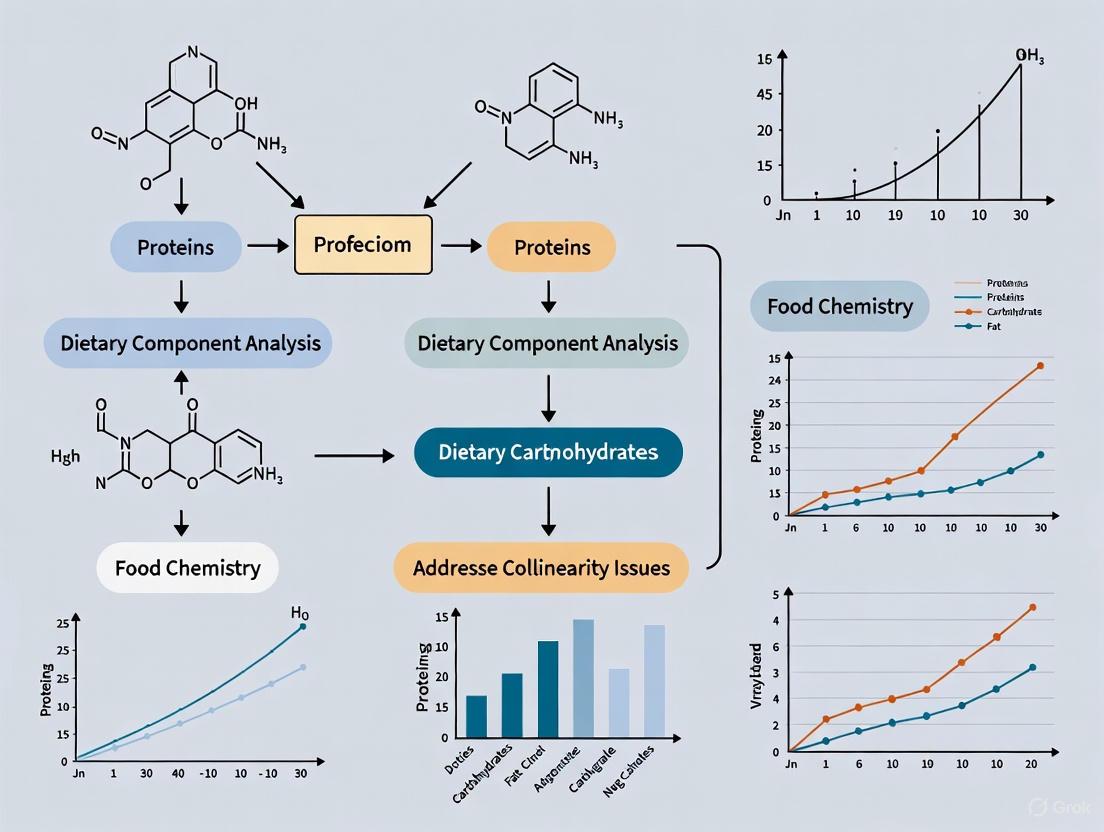
Collinearity among dietary components presents significant challenges in nutritional epidemiology and clinical research, obscuring true diet-disease relationships and complicating statistical inference.
Navigating Collinearity in Nutritional Research: Statistical Methods and Best Practices for Dietary Component Analysis
Abstract
Collinearity among dietary components presents significant challenges in nutritional epidemiology and clinical research, obscuring true diet-disease relationships and complicating statistical inference. This article provides a comprehensive framework for addressing collinearity through four key approaches: understanding its sources and impacts in dietary data, applying appropriate statistical methodologies including traditional and emerging techniques, implementing optimization strategies to enhance model performance, and validating findings through comparative analysis. Targeted at researchers, scientists, and drug development professionals, the content synthesizes current methodological advances including principal component analysis, reduced rank regression, compositional data analysis, and machine learning applications, while offering practical guidance for robust dietary pattern analysis in biomedical research.
Understanding Dietary Collinearity: Sources, Challenges, and Impacts on Research Validity
Frequently Asked Questions (FAQs)
What is collinearity and why is it particularly problematic in nutritional research?
Collinearity, sometimes called multicollinearity, occurs when two or more predictor variables in a regression model are highly correlated, meaning they express a linear relationship [1]. In nutritional research, this is exceptionally common because nutrients are not consumed in isolation; they come packaged together in foods and dietary patterns [2] [3].
For example, individuals with a high intake of dietary fiber often also have high intakes of certain vitamins and minerals. When these correlated nutrients are included in the same regression model to predict a health outcome, they cannot independently predict the value of the dependent variable because they explain some of the same variance [1]. This correlation leads to unstable and less interpretable regression estimates, making it difficult to isolate the specific effect of a single nutrient or food component on health [4].
What are the practical consequences of ignoring collinearity in my analysis?
Ignoring collinearity can severely impact the interpretation and validity of your research findings. Key consequences include:
- Unstable and Inflated Estimates: Regression coefficients can become highly sensitive to small changes in the model or data, leading to large standard errors and variance inflation [2] [4]. This instability means that coefficient estimates may vary wildly between studies or even between different samples from the same population.
- Reduced Statistical Power: The increased variance of coefficient estimates makes it harder to detect statistically significant relationships, even when true effects exist [5]. This can lead to Type II errors (false negatives).
- Counterintuitive Coefficient Interpretation: In the presence of strong collinearity, a coefficient might have a sign (positive or negative) that is the opposite of what is biologically plausible, making the results difficult to interpret meaningfully [4].
- Attenuated Observed Relative Risks: As demonstrated in diet-assessment studies, a moderate to high correlation between risk factors can substantially influence the observed relative risk (RRo). Methods with low validity might even produce inverse RRo, completely misrepresenting the true relationship [5].
How can I diagnose and measure collinearity in my dataset?
Diagnosing collinearity involves a combination of examining correlation matrices and calculating specific diagnostic statistics. The most common metric is the Variance Inflation Factor (VIF).
The VIF measures how much the variance of a regression coefficient is inflated due to collinearity. The table below outlines the interpretation of VIF values [1]:
| VIF Value | Interpretation |
|---|---|
| 1 - 2 | Essentially no collinearity. |
| 5 - 10 | Moderate to high degree of collinearity. |
| > 10 | Extreme collinearity; parameter estimates are highly unstable. |
Additional diagnostic tools include:
- Correlation Matrices: Simple Pearson correlations between pairs of independent variables. Values exceeding 0.8 or 0.9 signal potential problems.
- Condition Indices and Variance Decomposition Proportions: These more advanced diagnostics, extendable to relative risk regression models, can help identify the number and source of collinear relationships among multiple variables [4].
My model has high collinearity. What are my options to address it?
Several strategies are available, but the choice depends on your research question and the causal framework. The diagram below outlines a decision workflow for addressing collinearity.
1. Causal-Data Approaches: Your first consideration should always be causal theory, as represented by a Directed Acyclic Graph (DAG) [2].
- Adjust for Confounders: If the correlated variable is a confounder, you must adjust for it in the model to obtain an unbiased total effect estimate, even if it introduces high collinearity. The bias from omitting a confounder is typically a greater concern than the loss of precision from collinearity [2].
- Avoid Adjusting for Intermediates or Colliders: If the correlated variable is on the causal pathway (an intermediate) or is a common effect (a collider), adjusting for it will introduce bias (overadjustment or collider stratification bias) [2]. In these scenarios, the unadjusted model is correctly specified.
2. Statistical-Data Approaches: If the goal is to understand the overall diet rather than a specific nutrient, or if causal adjustment is necessary, these methods can help.
- Dietary Pattern Analysis: Instead of analyzing single nutrients, create composite dietary patterns.
- Variable Selection or Combination: Use expert knowledge to select a single, representative nutrient from a correlated group or to create a scientifically meaningful composite score.
- Advanced Regression Techniques: Methods like Ridge Regression can handle collinearity by adding a penalty to the model, which stabilizes coefficient estimates at the cost of introducing some bias [2].
Should I dichotomize continuous nutrition variables like BMI to avoid collinearity issues?
No. Dichotomizing or discretizing continuous variables (e.g., creating "high" and "low" BMI groups) is strongly discouraged [6]. This practice:
- Reduces Statistical Power: It throws away information and adds measurement error, attenuating the true effect size and making it harder to detect real relationships [6].
- Increases Risk of Spurious Findings: It can inflate Type I error rates and lead to the detection of spurious main effects or interactions, especially when multiple correlated variables are dichotomized [6].
- Prevents Detection of Non-Linear Relationships: Dichotomization makes it impossible to examine potentially important quadratic or other non-linear effects [6].
- Leads to Biased Parameter Estimates: These biased results may not be replicated, leading to incorrect scientific conclusions [6].
You should always analyze continuous variables as continuous, using multiple regression to examine their relationships with outcomes [6].
The Researcher's Toolkit: Key Methods for Dietary Pattern Analysis
The following table summarizes common statistical methods used to overcome collinearity by analyzing dietary patterns as a whole [3].
| Method | Category | Brief Description | Key Function |
|---|---|---|---|
| Principal Component Analysis (PCA) | Data-Driven | Creates new, uncorrelated variables (components) that explain maximum variance in food intake data. | Reduces dimensionality; handles multicollinearity by creating orthogonal patterns. |
| Factor Analysis | Data-Driven | Similar to PCA, but aims to identify underlying latent factors that explain correlations between foods. | Identifies unobserved constructs (e.g., "Western diet") driving food consumption. |
| Cluster Analysis | Data-Driven | Groups individuals into mutually exclusive categories based on similar dietary habits. | Classifies subjects into dietary types (e.g., "healthy eaters," "convenience food consumers"). |
| Reduced Rank Regression (RRR) | Hybrid | Derives dietary patterns that maximally explain the variation in intermediate response variables (e.g., biomarkers). | Creates patterns predictive of specific disease pathways. |
| Healthy Eating Index (HEI) | Investigator-Driven (A Priori) | Scores diet quality based on adherence to pre-defined dietary guidelines. | Assesses how well a population's diet aligns with national recommendations. |
Experimental Protocol: Diagnosing Collinearity in a Nutritional Epidemiological Analysis
This protocol provides a step-by-step guide for assessing collinearity in a standard nutritional cohort study analyzing the relationship between nutrient intakes and a health outcome.
1. Hypothesis: Investigate the association between intakes of Nutrient A, Nutrient B, and Nutrient C with the risk of Disease X, while controlling for key confounders like age, sex, and energy intake.
2. Software and Data Preparation:
- Software: R, SAS, SPSS, or Stata.
- Data: A dataset with continuous variables for nutrient intakes (e.g., from Food Frequency Questionnaires), the health outcome, and confounders. Ensure nutrients are adjusted for total energy intake using a preferred method (e.g., nutrient density or residual method).
3. Step-by-Step Procedure:
- Step 1: Run Initial Multivariable Model.
- Fit a regression model (logistic for binary outcomes, Cox for time-to-event) including all nutrients of interest (A, B, C) and confounders.
- Observation: Note if any coefficient estimates are non-significant or have counterintuitive signs despite a strong known biological relationship.
Step 2: Generate Correlation Matrix.
- Calculate pairwise Pearson correlations between Nutrient A, B, and C.
- Diagnostic Threshold: Correlations with an absolute value > 0.7 indicate a potential collinearity problem that requires further investigation.
Step 3: Calculate Variance Inflation Factors (VIFs).
- Run a linear regression model with the nutrients as independent variables. The health outcome can be ignored for this diagnostic step, or the VIF can often be calculated directly from the original model in most statistical software.
- The VIF for the i-th predictor is calculated as
VIF = 1 / (1 - R²_i), where R²_i is the coefficient of determination from a regression of the i-th predictor on all the other predictors. - Diagnostic Threshold: As per the table in the FAQs, a VIF > 10 indicates severe multicollinearity [1]. A VIF > 5 is often used as a more conservative rule of thumb for concern.
Step 4: Interpret and Act.
- Follow the decision workflow provided in the diagram above. Based on the VIF results and your causal hypothesis (DAG), decide whether to:
- Proceed with the model as is (if VIFs are low, or if adjusting for a confounder is essential).
- Use a dietary pattern approach (PCA, RRR) instead of single nutrients.
- Employ a penalized regression method like Ridge Regression.
- Follow the decision workflow provided in the diagram above. Based on the VIF results and your causal hypothesis (DAG), decide whether to:
FAQs: Addressing Core Conceptual Challenges
Q1: What is collinearity in dietary research and why is it a problem? Collinearity occurs when two or more dietary components in a regression model are highly correlated, making it difficult to isolate their individual effects on a health outcome. For example, people who eat more dietary fiber often also have higher intake of vitamin E, as a 2025 study found vitamin E mediated over 85% of fiber's association with cognitive function [7]. This interdependence distorts statistical results, leading to unreliable estimates of effect sizes and significance, and can obscure true biological relationships.
Q2: How can I experimentally disentangle synergistic effects from simple additive effects? True synergy is defined as a combined effect that exceeds the expected additive effect of individual components [8]. To test for this, researchers use specific pharmacological models and statistical approaches. You must first define the expected additive effect using a reference model (e.g., Bliss Independence or Loewe Additivity). Subsequently, experimentally measured effects of the combination are compared against this predicted additive value. A statistically significant excess indicates synergy [9] [8].
Q3: What are the practical implications of nutrient collinearity for designing interventions? Collinearity implies that population-level "one-size-fits-all" dietary guidelines may be suboptimal. For instance, a 2025 study on older adults revealed a J-shaped relationship between dietary fiber and cognitive function, with benefits plateauing after 22-30 grams per day [7]. This suggests that recommendations must account for such non-linear thresholds and interacting factors, moving towards precision nutrition that considers an individual's unique biochemical, genetic, and microbiome profile [10].
Q4: Which statistical methods are most robust for analyzing correlated dietary patterns? Clustering algorithms are a powerful tool. A 2022 study used k-means clustering to group individual foods and Partitioning Around Medoids (PAM) to categorize entire meals based on their nutritional content and food group composition [11]. This "generic meal" approach reduces data complexity by analyzing meals as cohesive units, which can more accurately reflect real-world eating patterns and help mitigate collinearity issues between single nutrients.
Troubleshooting Guides: Common Experimental Pitfalls
Issue: Inconsistent Results in Replicating Nutrient Synergy
Potential Causes and Solutions:
- Cause 1: Inaccurate control for the expected additive effect.
- Solution: Consistently apply and report a validated synergy model (e.g., Bliss Independence for agents with independent mechanisms, Loewe Additivity for agents with similar mechanisms) [8]. Justify your model choice.
- Cause 2: Uncontrolled ratios and dosing of interacting components.
- Solution: Synergy is highly dependent on the concentration/dose ratio of the components [8]. Conduct preliminary dose-response curves for each agent alone to identify appropriate ratio ranges for combination studies.
- Cause 3: Patient variability in genetics, microbiome, or metabolism.
Issue: High Collinearity Between Key Nutrients of Interest Inflates Statistical Variance
Potential Causes and Solutions:
- Cause 1: Studying nutrients that are naturally co-located in common foods.
- Solution: Instead of analyzing isolated nutrients, adopt a meal-based or dietary pattern approach. The "generic meal" method can characterize commonly consumed meal types, incorporating portions and nutritional content to create a more holistic exposure variable [11].
- Cause 2: Insufficient variation in the population's diet.
- Solution: Ensure your cohort includes individuals with diverse dietary habits. In analysis, consider using Principal Component Analysis (PCA) to create composite scores of dietary patterns, or employ ridge regression, which is designed to handle correlated variables.
Quantitative Data Tables
Table 1: Non-Linear Thresholds in Dietary Fiber Intake and Cognitive Outcomes
Data sourced from a cross-sectional study of 2,713 older adults (NHANES 2011-2014) [7]
| Cognitive Test | Inflection Point (g/day) | Association Below Threshold (β, 95% CI) | Association Above Threshold (β, 95% CI) |
|---|---|---|---|
| DSST (Processing Speed) | 29.65 | 0.18 (0.01, 0.26), P<0.0001 | -0.15 (-0.29, -0.02), P=0.0265 |
| Global Composite Z-Score | 22.65 | 0.01 (0.00, 0.01), P=0.0004 | -0.00 (-0.01, 0.00), P=0.9043 |
Table 2: Hazard Ratios for Cognitive Impairment from Combined Lifestyle Factors
Data from a cohort of 18,909 older Chinese adults followed for 5.27 years [12]
| Lifestyle Combination | APOE ε4 Carriers HR (95% CI) | APOE ε4 Non-Carriers HR (95% CI) |
|---|---|---|
| High Total Activity + Healthy Diet | 0.65 (0.60, 0.71) | 0.65 (0.60, 0.71) |
| High Physical Activity + Healthy Diet | 0.72 (0.66, 0.78) | 0.72 (0.66, 0.78) |
| High Cognitive Activity + Healthy Diet | 0.73 (0.67, 0.79) | 0.73 (0.67, 0.79) |
| High PA + High CA + Healthy Diet | 0.46 (0.28, 0.76) | 0.47 (0.37, 0.58) |
Experimental Protocols
Protocol 1: Clustering Meal Patterns to Reduce Collinearity
Objective: To identify commonly consumed meal patterns for use as exposure variables, minimizing collinearity from analyzing nutrients in isolation [11].
Methodology:
- Data Collection: Collect detailed dietary data using a 4-day weighed food diary.
- Food Grouping: Classify all food items into standardized food groups.
- Meal Characterization: For each meal, calculate its Nutrient Rich Foods (NRF9.3) index score and record the food groups it contains.
- Clustering: Apply the Partitioning Around Medoids (PAM) clustering algorithm to group similar meals based on their NRF score and food group composition.
- Portion Sizes: Define a set of standard portion sizes for each resulting "generic meal" cluster.
- Validation: Estimate mean daily nutrient intakes using the generic meal data and compare them to intakes calculated from the original data to assess accuracy.
Protocol 2: Testing for Synergy Using Bliss Independence Model
Objective: To determine if the combined effect of two nutrients (A and B) is greater than the sum of their individual effects (synergistic) [8].
Methodology:
- Dose-Response Curves: Conduct experiments to establish full dose-response curves for Nutrient A and Nutrient B individually.
- Define Expected Additive Effect (EAB): Using the Bliss Independence model, calculate the expected effect of the combination as:
E_AB = E_A + E_B - (E_A * E_B), where EA and E_B are the fractional effects (0 to 1) of each nutrient alone. - Combination Experiment: Measure the actual effect of the Nutrient A+B combination at a specific ratio.
- Statistical Comparison: Compare the experimentally observed effect to the predicted E_AB using an appropriate statistical test (e.g., t-test).
- Interpretation: If the observed effect is significantly greater than E_AB, the interaction is classified as synergistic.
Signaling Pathways and Workflows
Diagram Title: Mediated Pathway of Dietary Fiber and Cognition
Diagram Title: Meal Clustering Analysis Workflow
The Scientist's Toolkit: Research Reagent Solutions
Table 3: Essential Reagents and Tools for Dietary Interaction Research
| Item | Function / Application |
|---|---|
| 24-Hour Dietary Recall | A structured interview method to quantify all foods and beverages consumed by a participant in the previous 24 hours. It is a standard tool for dietary assessment in studies like NHANES [7]. |
| Automated Multiple-Pass Method (AMPM) | A validated, five-step computerized methodology used by USDA to conduct 24-hour recalls, designed to enhance completeness and accuracy of dietary data [7]. |
| Digit Symbol Substitution Test (DSST) | A neuropsychological test from the NHANES battery that assesses processing speed, executive function, and sustained attention. It is a common outcome measure in nutrition-cognition studies [7]. |
| Partitioning Around Medoids (PAM) Algorithm | A robust clustering algorithm used to categorize complex meal data into distinct "generic meal" groups based on their nutritional content and food group composition, mitigating collinearity [11]. |
| Simplified Healthy Eating Index (SHE-index) | A scoring system based on the frequency of consumption of key food groups (e.g., fruits, vegetables, fish) and avoidance of others (e.g., sugar), used to define overall diet quality in cohort studies [12]. |
| Bliss Independence Model | A reference model used in pharmacology and nutrition to calculate the expected additive effect of two or more compounds, serving as the benchmark for identifying synergistic interactions [8]. |
Troubleshooting Guides
Guide 1: Diagnosing Multicollinearity in Dietary Data
Problem: Unstable coefficient estimates and inflated standard errors are observed in a regression model linking nutrient intake from an FFQ to a health outcome.
Explanation: Multicollinearity occurs when two or more predictor variables (e.g., food items or nutrient intakes) in a model are highly correlated. In dietary data, this is common because people consume foods in combinations (e.g., people who eat bread often also eat butter). This high intercorrelation makes it difficult for the model to estimate the independent effect of each food or nutrient [13].
Solution Steps:
- Calculate Variance Inflation Factors (VIFs): For each predictor variable in your regression model, compute the VIF. A common threshold for concern is a VIF > 2.5, which indicates the variance of a coefficient is inflated by 150% due to correlations with other predictors [14].
- Examine Correlation Matrices: Create a matrix of correlation coefficients between all food items or nutrient intakes. Look for pairs or groups with very high correlations (e.g., |r| > 0.8) [15].
- Investigate the Source: Determine if high VIFs are caused by:
- Structurally correlated food items (e.g.,
whole milkandsaturated fat). - Inclusion of interaction terms or polynomial terms (e.g.,
sodiumandsodium^2). - A categorical variable represented by multiple dummy indicators (e.g.,
season_of_recall) [14].
- Structurally correlated food items (e.g.,
Guide 2: Addressing Multicollinearity in Dietary Pattern Analysis
Problem: A researcher wants to identify distinct dietary patterns from an FFQ without the patterns being obscured by the inherent correlations between food items.
Explanation: Traditional regression struggles with highly correlated food data. Data reduction techniques are better suited for this task, as they are designed to handle intercorrelated variables and transform them into a new, smaller set of uncorrelated variables (dietary patterns) [13] [3].
Solution Steps:
- Apply Principal Component Analysis (PCA) or Factor Analysis: These are the most common methods. They derive dietary patterns (components) that are linear combinations of the original food items, with each successive component capturing the maximum remaining variance and being uncorrelated with the others [13] [16].
- Use Treelet Transform (TT): This emerging method combines PCA with cluster analysis, which can yield more interpretable patterns, especially when food groups are highly correlated in a hierarchical manner [13] [3].
- Consider Compositional Data Analysis (CODA): If your dietary data are "closed" (e.g., percentages of total energy intake), CODA is appropriate. It transforms intake data into log-ratios, effectively handling the multicollinearity inherent in compositional data [13] [3].
Guide 3: Resolving Multicollinearity in Food Origin Traceability Models
Problem: In spectroscopic analysis of foods (e.g., for origin traceability), multicollinearity between thousands of adjacent spectral wavelengths degrades model accuracy and stability.
Explanation: Spectral data contains massive redundancy, as measurements at nearby wavelengths are often nearly identical. This severe multicollinearity can overwhelm classification models like PLS-DA [15].
Solution Steps:
- Implement a Variable Selection Method: Use a strategy like Multicollinearity Reduction-based Variable Selection (MR-based VS). This method selects a subset of spectral variables based on two criteria [15]:
- Inter-class significant difference: The variables must differ significantly across the categories of interest (e.g., different geographic origins).
- Intra-class correlation evaluation: Among the discriminatory variables, it selects those with the lowest mutual correlation, thereby reducing multicollinearity.
- Validate the Reduced Model: Combine the selected, low-collinearity variables with your classification model (e.g., PLS-DA or ULDA) and confirm that classification accuracy improves compared to the full-spectrum model [15].
Frequently Asked Questions (FAQs)
FAQ 1: My VIFs are high for several control variables (e.g., total energy and physical activity level), but the VIF for my main variable of interest (e.g., vitamin D intake) is low. Is this a problem?
Answer: No, this scenario can often be safely ignored. Multicollinearity is primarily a problem for the variables that are themselves highly correlated. If your main variable of interest has a low VIF, it indicates that its effect can be reliably estimated despite the correlations among your control variables. The control variables can still effectively perform their function of accounting for confounding [14].
FAQ 2: The VIFs for my interaction term (e.g., 'sodium intake * age group') and its main effects are very high. Should I remove the interaction?
Answer: Not necessarily. High VIFs are an inherent property of models with interaction terms or polynomial terms. The statistical significance (p-value) of the highest-order term (the interaction itself) is not affected by this multicollinearity. You can proceed with the model but should use an overall test (e.g., a likelihood ratio test) to assess the significance of the interaction term as a whole [14].
FAQ 3: Can I use a Food Frequency Questionnaire (FFQ) even though dietary components are known to be correlated?
Answer: Yes, FFQs are a standard and valid tool in nutritional epidemiology, precisely because data reduction techniques like Principal Component Analysis (PCA) and Factor Analysis are designed to handle these correlations. These methods have demonstrated reasonable reproducibility and validity in deriving meaningful dietary patterns from FFQ data, despite multicollinearity [13] [16] [17].
FAQ 4: How can I validate that my method for handling multicollinearity (e.g., deriving dietary patterns) is effective?
Answer: Use a multi-method validation approach. For dietary patterns, this involves:
- Reproducibility: Administer the same FFQ to the same subjects at two time points and check the consistency of the derived patterns [16] [17].
- Validity: Compare the patterns and their correlations with health outcomes against those derived from more detailed dietary records [16] [18] or against biomarkers of nutrient intake (e.g., serum 25(OH)D for vitamin D), which are not subject to the same measurement errors as self-reported data [19] [20].
Experimental Protocols
Protocol 1: Validating an FFQ Using the Method of Triads
Purpose: To assess the validity of a nutrient intake estimate from an FFQ while accounting for measurement error by using two additional, uncorrelated methods [19] [20].
Workflow:
Materials:
- Research Reagent Solutions:
- Self-Administered FFQ: A questionnaire listing vitamin D-rich food sources and fortified products specific to the study population [19] [20].
- 7-Day Weighed Food Record (7d-FR): A detailed dietary record used as one reference method [19] [18].
- Biomarker Assay Kit: A validated kit for measuring serum 25-hydroxyvitamin D (25(OH)D) concentration, a objective biomarker of vitamin D status [19] [20].
- Sun Exposure Questionnaire (SEQ): A tool to quantify participants' sun exposure, a major confounding factor for vitamin D status [19] [20].
Procedure:
- Recruitment: Enroll a sample of at least 50-100 participants representative of the target population [19].
- Data Collection:
- Administer the newly developed FFQ to assess habitual vitamin D intake.
- Simultaneously, collect a 7-day weighed food record (7d-FR) as a detailed dietary reference.
- Collect a blood sample from each participant to measure serum 25(OH)D concentration.
- Administer a Sun Exposure Questionnaire (SEQ) to control for endogenous vitamin D synthesis.
- Statistical Analysis - Method of Triads:
- Calculate the correlation coefficients between each pair of the three methods (FFQ & 7d-FR, FFQ & Biomarker, 7d-FR & Biomarker).
- The validity coefficient (ρ) for the FFQ is estimated using the formula:
ρ_FFQ = √(r_FFQ,7dFR * r_FFQ,Biomarker / r_7dFR,Biomarker), whereris the correlation coefficient between two methods [19]. - A validity coefficient close to 1.0 indicates high validity for the FFQ.
Protocol 2: Applying PCA to Derive Dietary Patterns from an FFQ
Purpose: To reduce a large set of correlated food items from an FFQ into a smaller number of uncorrelated dietary patterns for analysis against health outcomes [13] [16].
Workflow:
Materials:
- Research Reagent Solutions:
- Cleaned FFQ Dataset: Data from a validated FFQ, with implausible intakes removed.
- Food Grouping Scheme: A pre-defined nutritional or culinary scheme for aggregating individual food items into logical groups (e.g., "red meat," "whole grains," "leafy green vegetables") [13] [16].
- Statistical Software: Software capable of PCA (e.g., R, SAS, Stata, SPSS).
Procedure:
- Data Preprocessing: Group individual food items from the FFQ into meaningful food groups to reduce the number of variables and mitigate noise.
- Perform PCA: Apply PCA to the correlation matrix of the food group intakes. This generates a set of principal components (linear combinations of the food groups) that are orthogonal (uncorrelated).
- Determine Components: Decide how many components to retain based on:
- Eigenvalue > 1 rule: Retain components with an eigenvalue greater than one.
- Scree plot: Retain components before the plot levels off.
- Interpretability: Retain a number of components that are nutritionally meaningful and explain a sufficient amount of variance (e.g., 70-80%) [13].
- Interpret Patterns: Rotate the retained components (often using Varimax rotation) to simplify interpretation. Name each dietary pattern based on the food groups with the highest absolute factor loadings (e.g., "Prudent Pattern" for high loadings on vegetables, fruits, whole grains; "Western Pattern" for high loadings on red meat, processed foods, refined grains) [13] [16].
Data Presentation
Table 1: Correlation Coefficients from FFQ Validation Studies
This table summarizes typical correlation coefficients observed when validating FFQs against other dietary assessment methods, providing a benchmark for researchers.
| Nutrient / Food Group | vs. Dietary Records (Crude) | vs. Dietary Records (Energy-Adjusted) | vs. Biomarkers | Notes | Source |
|---|---|---|---|---|---|
| Protein | 0.55 | - | - | Moderate validity | [18] |
| Carbohydrates | 0.27 | - | - | Low validity | [18] |
| Fruits | - | - | - | Overestimated by 56.3% | [18] |
| Vegetables | - | - | - | Overestimated by 82.8% | [18] |
| Vitamin D (FFQ vs 7d-FR) | - | 0.36 (R) | - | Compared to 7-day record | [19] |
| Vitamin D (FFQ vs Biomarker) | - | 0.56 (R) | - | Superior prediction ability | [19] |
| Prudent Dietary Pattern | 0.70 (ICC) | 0.45 - 0.74 (vs records) | - | Reasonable reproducibility & validity | [16] |
| Western Dietary Pattern | 0.67 (ICC) | 0.45 - 0.74 (vs records) | - | Reasonable reproducibility & validity | [16] |
Table 2: Statistical Methods for Dietary Pattern Analysis to Address Multicollinearity
This table compares different statistical approaches used to handle multicollinearity in dietary data analysis.
| Method | Category | Key Principle | Advantages | Disadvantages / Considerations | |
|---|---|---|---|---|---|
| Principal Component Analysis (PCA) | Data-driven | Extracts uncorrelated components that explain maximum variance. | Most common method; creates orthogonal patterns. | Patterns can be difficult to interpret; results are study-specific. | [13] [3] |
| Factor Analysis | Data-driven | Similar to PCA, models common factors shared across food groups. | Similar to PCA. | Similar to PCA. | [13] |
| Reduced Rank Regression (RRR) | Hybrid | Extracts patterns that explain maximum variation in intermediate response variables (e.g., nutrients). | Incorporates biological pathways; good for hypothesis testing. | Requires pre-specified response variables. | [13] [3] |
| Clustering Analysis | Data-driven | Groups individuals into mutually exclusive clusters with similar diets. | Easy to interpret (person-centered approach). | Does not reduce dimensionality of food variables. | [13] |
| Treelet Transform (TT) | Data-driven | Combines PCA and clustering in a one-step process. | Can yield more interpretable patterns with hierarchical data. | Emerging method; less established. | [13] [3] |
| Compositional Data Analysis (CODA) | Compositional | Transforms intake data into log-ratios to account for closed data. | Correctly handles relative nature of dietary data. | Complex interpretation; requires specific expertise. | [13] [3] |
Troubleshooting Guide: Is Multicollinearity Affecting My Model?
Multicollinearity can silently undermine your regression analysis. Use this guide to diagnose and correct it.
| Symptom | Possible Cause | Diagnostic Check | Immediate Action |
|---|---|---|---|
| A statistically significant overall model (e.g., F-test) has no statistically significant predictors [21] | Inflated standard errors due to shared variance among predictors making it hard to detect individual effects [22] [21] | Calculate Variance Inflation Factors (VIFs) for each predictor [22] | Check for and consider removing highly correlated variables (e.g., both BMI and body fat percentage) |
| Coefficient estimates are counter-intuitive or have opposite signs than expected [22] | Unstable coefficient estimates caused by overlapping predictor information, making estimates highly sensitive to minor data changes [22] [21] | Examine the stability of coefficient estimates when adding/removing other predictors or a few data points | Avoid interpreting regression coefficients in isolation; use the model for prediction only with caution |
| Coefficient estimates change dramatically with the addition or removal of a variable [21] | Unstable estimates where the effect of one predictor is confused with the effect of another, correlated predictor [21] | Check pairwise correlations between the unstable predictor and others in the model [22] | Center your predictors (subtract their means) or use regularization techniques like ridge regression [21] |
FAQ: Navigating Multicollinearity in Dietary Research
What is the Variance Inflation Factor (VIF), and how is it calculated?
The Variance Inflation Factor (VIF) quantifies how much the variance of a regression coefficient is inflated due to multicollinearity [21]. It is calculated for each predictor variable (i) using the formula:
VIF = 1 / (1 - R²ᵢ) [22] [21]
Here, R²ᵢ is the R-squared value obtained by regressing the i-th predictor variable on all the other predictor variables in the model. This R² measures how much of the variance in one predictor is explained by the others [22].
- VIF = 1: No multicollinearity [22] [21].
- VIF > 5: Represents a potentially problematic amount of multicollinearity [22].
- VIF > 10: Signals serious multicollinearity, indicating that over 90% of the variance in that predictor is shared with others [21].
Why can't I just look at correlation coefficients between my predictors?
Pairwise correlations are a good first check but are insufficient because they only assess the relationship between two variables [22]. Multicollinearity can be a multivariate phenomenon where one predictor is explained by a combination of several other predictors, even if no single pairwise correlation is high [22]. VIFs are better because they use multiple regression to detect this more complex correlation structure [22].
My goal is prediction, not interpreting coefficients. Do I need to worry about high VIF?
If your only goal is prediction and the correlation structure among your predictors is stable in new data, high VIF may not ruin your predictive accuracy [21]. However, if you care about understanding which specific dietary components drive the outcome, or if the correlations in your training data are not representative, multicollinearity remains a serious problem that compromises the interpretation of your model [21].
What are the practical consequences for my dietary component analysis?
In dietary research, where nutrients are often highly correlated, multicollinearity can lead to:
- Unreliable Insights: Making it difficult to determine if calories, fat, or sugar intake is the true driver of a health outcome [23].
- Wasted Resources: An underpowered study may fail to detect a real and important effect of a specific nutrient, leading to a Type II error (false negative) [24].
- Reduced Generalizability: Models with unstable coefficients may not perform well when applied to new populations with slightly different dietary patterns [24].
Experimental Protocol: Detecting and Addressing Multicollinearity
Follow this step-by-step protocol to diagnose and mitigate multicollinearity in your datasets.
Step 1: Calculate Variance Inflation Factors (VIFs)
- Fit your multiple regression model with all predictors.
- For each predictor
iin the model, run an auxiliary regression where predictoriis the dependent variable, and all other predictors are independent variables. - Obtain the R-squared (R²ᵢ) value from each of these auxiliary regressions.
- Calculate VIF for each predictor using: VIFᵢ = 1 / (1 - R²ᵢ) [22] [21].
Step 2: Interpret VIF Values Use the thresholds in the table below to assess the severity of multicollinearity for each variable [22] [21].
| VIF Value | Degree of Multicollinearity | Implied Shared Variance | Recommended Action |
|---|---|---|---|
| VIF = 1 | None | 0% | No action needed. |
| 1 < VIF ≤ 5 | Moderate | < 80% | Monitor; may be acceptable depending on context. |
| VIF > 5 | Problematic | ≥ 80% | Strongly consider mitigation strategies [22]. |
| VIF > 10 | Severe | ≥ 90% | Requires correction [21]. |
Step 3: Apply Mitigation Strategies
- Remove Variables: If two variables measure the same underlying construct (e.g., different metrics for "fruit intake"), remove one based on theoretical justification [21].
- Create Composite Variables: Combine highly correlated predictors into a single index or score (e.g., a "Western Dietary Pattern" score) [21].
- Use Regularization: Apply techniques like Ridge Regression, which introduces a penalty term to shrink coefficients and reduce variance [21].
- Center Predictors: For models with interaction terms, centering variables (subtracting the mean) can help reduce multicollinearity [21].
The Scientist's Toolkit: Research Reagent Solutions
| Item | Function in Analysis |
|---|---|
| VIF Calculation | Diagnoses the severity of multicollinearity by quantifying the inflation of a coefficient's variance [22] [21]. |
| Pairwise Correlation Matrix | An initial diagnostic tool to identify highly correlated pairs of predictor variables [22]. |
| Ridge Regression | A regularization technique that stabilizes coefficient estimates and reduces variance by introducing a penalty term, useful when prediction is the goal [21]. |
| Principal Component Analysis (PCA) | A dimensionality reduction technique that creates a new set of uncorrelated variables (principal components) from the original predictors, effectively eliminating multicollinearity [21]. |
| Dietary Species Richness (DSR) | A metric used in nutritional epidemiology to quantify food biodiversity, which can help avoid using multiple highly correlated food item variables [23]. |
Experimental Workflow Diagram
The diagram below outlines the logical process for diagnosing and addressing multicollinearity in research.
Visualizing Variance Inflation
This diagram illustrates the core concept of how multicollinearity inflates the variance of regression coefficients.
Frequently Asked Questions (FAQs)
FAQ 1: What is collinearity and why is it a specific problem in nutritional research? Collinearity, or multicollinearity, occurs when two or more predictor variables in a statistical model are highly correlated. In nutritional research, this is a fundamental challenge because people consume foods, not isolated nutrients. These foods contain multiple nutrients that are often consumed together (e.g., fat and calories in a rich diet, or fiber and certain vitamins in plant-based foods) [25]. This high correlation makes it statistically difficult to isolate the independent effect of a single nutrient on a health outcome, potentially obscuring the true diet-disease relationship [25].
FAQ 2: What are the practical consequences if I ignore collinearity in my analysis? Ignoring collinearity can lead to unstable and unreliable statistical models. The risks include:
- Inflated Variances: The standard errors for the coefficients of collinear variables become very large, reducing the statistical power of your test [25].
- Unreliable Estimates: The calculated effect (e.g., Hazard Ratio, Odds Ratio) of a specific nutrient can become extremely sensitive to minor changes in the model or dataset, making your results difficult to interpret and replicate [25].
- Misleading Conclusions: You may incorrectly conclude that a nutrient has no significant effect on disease risk when it actually does, or vice-versa.
FAQ 3: What are the established methods to detect and manage collinearity? Researchers have developed several strategies to address this issue. The following table summarizes the key approaches, their applications, and important limitations based on case studies.
Table 1: Methodologies for Addressing Collinearity in Nutritional Studies
| Method | Application Example | Key Findings/Limitations |
|---|---|---|
| Excluding Collinear Variables | A case-control study on colon cancer risk explored the relationship between fat and caloric intake [25]. | The perceived risk associated with fat was highly sensitive to whether calories were included or excluded from the model, demonstrating how this method can force a choice between related but distinct factors [25]. |
| Energy-Adjustment (Residual Method) | A prospective cohort study on carbohydrates and cancer adjusted for total energy intake using the residual method to isolate the effect of carbohydrate composition independent of total calories consumed [26]. | This method helps to "purge" the effect of total energy, allowing the examination of nutrient composition. It is a standard technique for handling the correlation between a nutrient and total energy intake [26]. |
| Advanced Regression Techniques (Ridge Regression) | The same colon cancer case-control study evaluated ridge regression as a solution [25]. | While specialized methods like ridge regression can stabilize coefficient estimates, the authors noted that the results remained sensitive to the underlying statistical assumptions [25]. |
| Machine Learning (XGBoost) | A study on Type 2 Diabetes (T2D) predictors used the XGBoost algorithm, which incorporates regularization (L1/L2) to handle multicollinearity among predictors like diet and lifestyle factors [27]. | This technique can manage high-dimensional, correlated data by penalizing complex models, reducing overfitting, and identifying the most robust predictors, such as age and BMI, even when other factors are correlated [27]. |
FAQ 4: Can you provide a real-world example where collinearity caused confusion? A classic example comes from a case-control study of colon cancer conducted in Utah. Researchers found that the apparent risk associated with dietary fat was entirely dependent on how they handled its collinearity with total caloric intake in their statistical models. Depending on the analytical method chosen, fat could appear to be a significant risk factor or have no association at all, highlighting how collinearity can lead to conflicting findings in the literature [25].
FAQ 5: How does study design contribute to collinearity problems? The design of nutritional studies can introduce collinearity. For example, in a large cross-sectional cohort study (n=25,970) examining climate-friendly diets and micronutrient intake, researchers noted that many key micronutrients (like iron, zinc, and vitamin B-12) are often found together in animal-source foods [28]. When participants reduce their intake of this food group, the intake of all these nutrients decreases simultaneously, creating a collinear block of variables that is hard to disentangle in observational analyses [28].
Experimental Protocols for Managing Collinearity
Protocol 1: Energy-Adjustment of Nutrients Using the Residual Method
This protocol is used to examine the effect of a specific nutrient independent of an individual's total caloric intake.
- Data Collection: Collect dietary intake data using validated methods (e.g., 24-hour recalls, food diaries, or FFQs) to estimate daily intake of the target nutrient and total energy [26].
- Model Fitting: Fit a linear regression model with the target nutrient intake (e.g., grams of carbohydrate) as the dependent variable and total energy intake (kcal) as the independent variable.
- Calculate Residuals: Obtain the residuals from the model fitted in Step 2. These residuals represent the variation in nutrient intake that is not explained by total energy intake.
- Use in Analysis: Use these energy-adjusted residuals as the exposure variable in your main disease risk model (e.g., a Cox proportional hazards model) [26].
Protocol 2: Applying Machine Learning (XGBoost) to Identify Robust Predictors
This protocol uses the XGBoost algorithm to handle collinear predictors and identify those with the strongest relationship to the outcome.
- Data Preparation: Compile a dataset including the outcome (e.g., T2D history) and a wide range of potential predictors (dietary nutrients, lifestyle factors, anthropometrics, socioeconomics) [27].
- Propensity Score Matching (Optional): To reduce confounding by lifestyle, groups with different dietary patterns (e.g., high vs. low animal-sourced food intake) can be matched on key confounders like age, gender, BMI, and physical activity [27].
- Model Training & Tuning: Train the XGBoost classifier on the data. Optimize hyperparameters, including the L1 (lasso) and L2 (ridge) regularization parameters, which help mitigate the effect of multicollinearity by penalizing model complexity [27].
- Feature Importance Analysis: Derive and interpret feature importance scores from the trained model using Shapley (SHAP) plots to identify the top predictors of the disease outcome, such as age, BMI, and specific nutrient ratios [27].
Workflow and Signaling Pathways
Statistical Decision Pathway for Collinearity
The Scientist's Toolkit: Research Reagent Solutions
Table 2: Essential Materials and Analytical Tools for Nutritional Cohort Studies
| Item | Function in Research |
|---|---|
| Validated Food Frequency Questionnaire (FFQ) / 24-Hour Recall | A core tool for assessing habitual dietary intake over a defined period. It translates food consumption into nutrient intake data using a food composition database [28] [26]. |
| Food Composition Database (e.g., PC-KOST2-93, UK Nutritional Database) | Software that contains the nutritional profile of thousands of food items. It is used to calculate the intake of specific nutrients, energy, and other dietary components from the reported food consumption [28] [26]. |
| Biomarker Assay Kits (e.g., for Vitamin D, Selenium, Folate) | Provides an objective measure of nutrient status, complementing self-reported intake data and helping to account for issues of bioavailability and absorption [28]. |
| Statistical Software with Advanced Regression Modules (e.g., R, Python, Stata) | Essential for performing complex statistical analyses, including energy-adjustment, calculating variance inflation factors (VIF), running ridge regression, and implementing machine learning algorithms like XGBoost [27] [25]. |
| Machine Learning Libraries (e.g., XGBoost in Python/R) | Software libraries that provide implementations of advanced algorithms capable of handling high-dimensional, collinear data and providing robust feature importance rankings [27]. |
Statistical Approaches for Collinear Dietary Data: From Traditional to Emerging Methods
Frequently Asked Questions (FAQs)
FAQ 1: Why are dimension reduction techniques like PCA necessary in dietary pattern analysis? Traditional methods that analyze individual foods or nutrients in isolation often fail to capture the complex interactions and synergies within a whole diet. Dietary components are frequently consumed in combination and can be highly correlated, a problem known as multicollinearity. PCA helps overcome this by creating new, uncorrelated variables (principal components) that represent overarching dietary patterns, providing a more holistic view of diet and its relationship with health outcomes [29] [30].
FAQ 2: My PCA results are difficult to interpret. What is the biological meaning of a principal component? Principal components are mathematical constructs designed to capture maximum variance in the data; they are not inherently biologically meaningful [31]. Interpretation relies on the researcher examining the factor loadings—the correlations between the original food items and the component. For example, a component with high positive loadings for fruits, vegetables, and whole grains might be labeled a "Prudent" pattern, while one with high loadings for processed meats and refined grains might be labeled a "Western" pattern [32] [33]. The context of your study and existing nutritional knowledge are essential for meaningful interpretation.
FAQ 3: How do I decide the number of components to retain in my analysis? There is no single definitive rule, and the decision should be guided by a combination of statistical and interpretability criteria [32]. Common approaches include:
- Kaiser's Criterion: Retaining components with eigenvalues greater than 1 [32].
- Scree Plot: Looking for a "break" or "elbow" in the plot of eigenvalues, retaining components before the plot flattens out.
- Variance Explained: Retaining enough components to capture a satisfactory amount of the total variance in the data (e.g., 70-80%). In practice, many nutritional studies retain components that explain at least 5% of the variance each [33].
- Interpretability: The final component structure should be logically and nutritionally interpretable.
FAQ 4: I've detected severe multicollinearity in my dietary data. Should I proceed with PCA? Yes, PCA is one of the recommended methods to mitigate multicollinearity [30]. Since PCA transforms your original correlated variables into a set of uncorrelated principal components, the multicollinearity problem is eliminated in the new component space. This makes PCA an excellent pre-processing step for regression analyses, as the resulting component scores can be used as independent, non-collinear predictors [30].
FAQ 5: What is the key practical difference between using PCA and Factor Analysis (FA) for dietary pattern derivation? While both are data-driven techniques, their primary goals differ slightly, leading to different outcomes.
- PCA is a dimensionality reduction technique. Its goal is to explain the maximum possible variance in the original variables by creating new composite variables. It does not distinguish between common variance and unique (error) variance [29] [31].
- FA is a latent variable modeling technique. Its goal is to explain the covariances or correlations among the original variables by identifying underlying, unobservable "factors." It explicitly models the common variance shared among variables, separating it from unique variance [29]. In practice, the dietary patterns derived from both methods are often similar, but FA may provide a more refined model of the underlying dietary constructs.
Troubleshooting Common Experimental Issues
Problem: Unstable or Non-Reproducible Component Loadings
- Symptoms: Factor loadings change drastically with small changes in the dataset or when using different sub-samples.
- Potential Causes & Solutions:
- Cause 1: Inadequate sample size. A large number of observations relative to the number of food variables is needed for stable results.
- Solution: Ensure your sample size is sufficient. Rules of thumb vary, but a minimum of 10 observations per variable is often suggested.
- Cause 2: Incorrect handling of outliers. Outliers can disproportionately influence the variance and distort the component structure.
- Cause 3: Not accounting for energy intake. Absolute food intakes are often highly correlated with total energy intake.
- Solution: Adjust food intake for total energy using a preferred method (e.g., density method or residual method) before conducting PCA [32].
- Cause 1: Inadequate sample size. A large number of observations relative to the number of food variables is needed for stable results.
Problem: Low Total Variance Explained by Retained Components
- Symptoms: The first several components explain only a small fraction (e.g., <30%) of the total variance in the dietary data.
- Potential Causes & Solutions:
- Cause 1: Highly diverse and uncorrelated dietary behaviors in the population. If foods are not consumed in consistent patterns, it is difficult for PCA to find strong common components.
- Solution: Consider if your population is too heterogeneous. Stratified analysis by relevant subgroups (e.g., sex, ethnicity) may yield more coherent patterns [32].
- Cause 2: Poor grouping of individual food items. Using too many fine-grained food groups can introduce noise.
- Solution: Revisit your food grouping scheme. Combine similar foods into logically meaningful groups to strengthen correlations and improve pattern detection [32].
- Cause 1: Highly diverse and uncorrelated dietary behaviors in the population. If foods are not consumed in consistent patterns, it is difficult for PCA to find strong common components.
Problem: Component Scores are Weakly Associated with Health Outcomes
- Symptoms: In subsequent regression analysis, the dietary pattern scores show no statistically significant association with the health outcome of interest (e.g., BMI, disease incidence).
- Potential Causes & Solutions:
- Cause 1: The derived patterns are not causally related to the outcome.
- Solution: This may be a true finding. Re-evaluate your hypothesis and consider other dietary pattern techniques.
- Cause 2: Inadequate control for confounding variables.
- Cause 3: Loss of information due to over-aggressive dimension reduction.
- Solution: Retain a larger number of components in the initial PCA to ensure you are not discarding a pattern that is weakly represented in variance but biologically relevant.
- Cause 1: The derived patterns are not causally related to the outcome.
Standard Experimental Protocol for PCA in Dietary Studies
The following table summarizes a standard protocol for deriving dietary patterns using PCA, based on common practices in the nutritional epidemiology literature [32] [33].
Table 1: Standard Protocol for Dietary Pattern Derivation using PCA
| Step | Action | Rationale & Technical Notes | ||||
|---|---|---|---|---|---|---|
| 1. Data Preprocessing | Convert individual food intake data into pre-defined food groups. | Reduces computational complexity and noise. Groups should be based on nutritional similarity and culinary use. A typical study might use 30-50 food groups [32]. | ||||
| 2. Energy Adjustment | Adjust intake of each food group for total energy intake. | Removes the effect of overall calorie consumption, allowing patterns to reflect food choice independent of quantity. The nutrient density method (g/1000 kcal) is commonly used. | ||||
| 3. Standardization | Standardize the energy-adjusted food group intakes (mean=0, SD=1). | Prevents variables with larger natural ranges (e.g., beverages) from dominating the analysis simply due to their scale [34] [31]. | ||||
| 4. Run PCA | Perform PCA on the correlation matrix of standardized food groups. | The correlation matrix is used because data is standardized. The analysis extracts components (eigenvectors) and their associated variances (eigenvalues). | ||||
| 5. Determine Retention | Decide the number of components to retain. | Use a combination of eigenvalue >1 criterion, scree plot inspection, and interpretability [32]. | ||||
| 6. Rotation | Apply Varimax rotation to the retained components. | Rotation simplifies the component structure, maximizing high loadings and minimizing low ones, which aids in interpretation. Varimax is an orthogonal rotation that assumes components are uncorrelated [32]. | ||||
| 7. Interpretation | Interpret patterns based on factor loadings. | Food groups with absolute loadings above a threshold (e.g., | 0.2 | or | 0.3 | ) are considered significant contributors. Name the pattern based on the high-loading foods (e.g., "Western," "Prudent") [32] [33]. |
| 8. Score Calculation | Calculate dietary pattern scores for each participant. | Scores represent each individual's adherence to each pattern. Regression-based methods are often used to calculate standardized scores. |
The workflow for this protocol can be visualized as follows:
The Scientist's Toolkit: Key Reagents & Materials
Table 2: Essential "Research Reagents" for Dietary Pattern Analysis
| Item / Concept | Function / Definition in the Analysis |
|---|---|
| Food Frequency Questionnaire (FFQ) | The primary data collection tool that captures habitual intake of foods and beverages over a specified period. Its design and validity are foundational. |
| Food Grouping System | A predefined schema for aggregating individual food items into nutritionally and culturally meaningful groups (e.g., "whole grains," "processed meats," "leafy green vegetables") [32]. |
| Correlation Matrix | The square matrix showing pairwise correlations between all standardized food group variables. It is the input for the PCA [31]. |
| Eigenvalue | A scalar value that indicates the amount of variance captured by each principal component. Components with larger eigenvalues are more important [31]. |
| Eigenvector | A vector that defines the direction of the principal component. The loadings of the original variables on the component are derived from the eigenvector [31]. |
| Factor Loadings | The correlations between the original food group variables and the principal component. They are the primary basis for interpreting the dietary pattern [32]. |
| Varimax Rotation | An orthogonal rotation method that simplifies the component structure, aiding interpretation by making high loadings higher and low loadings lower [32]. |
| Dietary Pattern Score | A numerical value for each individual, quantifying their adherence to the identified dietary pattern. Used as an exposure variable in subsequent health outcome analyses [33]. |
Decision Pathway for Addressing Collinearity in Dietary Analysis
When facing correlated dietary data, the following decision pathway can guide your methodological choices, positioning PCA as a key solution within a broader set of options [35] [30].
Advanced Technical Notes
Handling Non-Normal Data: While PCA is based on linear algebra and does not require strict normality, extreme deviations from normality can distort results. If your dietary data is highly non-normal, consider log-transformation before standardization, or explore the use of the Semi-parametric Gaussian Copula Graphical Model (SGCGM), a non-parametric extension mentioned in recent methodological reviews [29].
Beyond PCA - Network Analysis: An emerging alternative to PCA is dietary network analysis (e.g., Gaussian Graphical Models). Instead of reducing dimensions, this approach maps the web of conditional dependencies between individual foods, potentially revealing more complex interaction structures [29]. This represents a shift from a "data-driven" to a "relationship-driven" paradigm for understanding dietary patterns.
In nutritional epidemiology, the analysis of diet-disease relationships presents a significant challenge due to the high correlation (collinearity) between different dietary components. Traditional methods that focus on single nutrients can be obscured by these complex interrelationships. Reduced Rank Regression (RRR) is a powerful hybrid method that addresses this issue by identifying dietary patterns that maximally explain the variation in pre-specified intermediate response variables, such as nutrient intakes or disease-related biomarkers. This approach is particularly valuable for deriving disease-specific dietary patterns, making it an essential tool for researchers and drug development professionals investigating the metabolic pathways linking diet to chronic diseases [36] [3] [37].
Core Concepts and Troubleshooting FAQ
What is Reduced Rank Regression (RRR) and how does it address collinearity?
RRR is a hybrid method that combines a priori knowledge with a posteriori data exploration. It identifies linear combinations of predictor variables (food groups) that maximally explain the variation in a set of response variables. These response variables are chosen based on prior knowledge of their role in the disease pathway, effectively breaking the collinearity problem by focusing the pattern extraction on biologically relevant intermediates [36] [3].
- Mechanism: Unlike purely data-driven methods like Principal Component Analysis (PCA), RRR uses response variables to guide the discovery of dietary patterns. This ensures the derived patterns are not only descriptive of consumption habits but are also directly relevant to the disease or health outcome of interest [3] [37].
- Advantage for Collinearity: By projecting both predictors and responses into a common subspace that maximizes their association, RRR handles multicollinear food items effectively, providing more stable and interpretable patterns in the context of the specific disease [36] [37].
How do I select appropriate response variables for an RRR analysis?
Selecting response variables is a critical step, as they determine the disease-specificity of the derived dietary pattern.
- Guideline: Response variables should be meaningful intermediates on the causal pathway between diet and the disease outcome.
- Common Choices:
- Macronutrients: Percentages of energy from protein, carbohydrates, saturated fats, and unsaturated fats are frequently used to explore patterns related to energy metabolism and obesity [36].
- Biomarkers: Physiological markers such as C-reactive protein (CRP) for inflammation or blood lipids for cardiovascular disease can serve as powerful responses [36] [37].
- Nutrient Intakes: Specific micronutrients or other nutrients known to be associated with the disease.
- Troubleshooting Tip: If the resulting patterns are poorly associated with the final disease outcome, re-evaluate the choice of response variables. They may not be sufficiently on the causal pathway.
What are common pitfalls in interpreting RRR results and their relationship to disease?
- Pitfall 1: Confusing explanation with prediction. RRR-derived patterns are optimized to explain variation in the response variables, not to maximize prediction of the final disease outcome.
- Pitfall 2: Misinterpreting directionality. The association between a dietary pattern score and a disease does not necessarily imply causality.
- Troubleshooting Tip: Always validate the association of the derived dietary pattern score with the hard disease endpoint (e.g., incidence of hypertension or diabetes) in a separate analysis or model. A pattern high in saturated fat was positively associated with waist circumference and CRP, demonstrating a link to metabolic health markers [36].
What is the difference between RRR, PCA, and PLS?
Researchers often need to choose between different pattern derivation methods. The table below compares their key features.
Table: Comparison of Dietary Pattern Derivation Methods
| Feature | Principal Component Analysis (PCA) | Reduced Rank Regression (RRR) | Partial Least Squares (PLS) |
|---|---|---|---|
| Primary Goal | Explains maximum variance in food intake variables [37]. | Explains maximum variance in disease-related response variables [37]. | Explains variance in both food intake and response variables [37]. |
| Pattern Basis | Inter-correlations between foods (data-driven) [37]. | Pre-specified intermediate pathways (hybrid) [36] [3]. | A combination of dietary variance and response variable correlation (hybrid) [37]. |
| Relationship to Disease | May be poorly related to disease risk [37]. | Designed to be more associated with disease risk via responses [37]. | Aims to balance dietary description and disease prediction [37]. |
| Interpretation | Describes actual dietary habits in a population. | Provides biologically plausible, disease-specific patterns. | Similar to RRR but with a slightly different optimization goal. |
Key Experimental Protocols
Protocol 1: Deriving a Macronutrient-Based Dietary Pattern using RRR
This protocol is based on a study that identified dietary patterns associated with markers of metabolic health using NHANES data [36].
- Data Preparation: Collect detailed dietary intake data, preferably through 24-hour dietary recalls or validated Food Frequency Questionnaires (FFQs). Code the data into meaningful food groups.
- Define Response Variables: Calculate the percentages of total energy intake derived from protein, carbohydrates, saturated fats, and unsaturated fats.
- Model Fitting: Apply the RRR model with the food groups as predictors and the four macronutrient percentages as response variables. The number of derived patterns will be equal to the number of response variables.
- Pattern Interpretation: Examine the factor loadings for each food group to interpret the patterns. For example, a pattern with high positive loadings on solid fats and processed meats and a high negative loading on carbohydrates might be labeled a "High Saturated Fat" pattern.
- Validation: Investigate the association between the pattern scores and health outcomes (e.g., waist circumference, CRP levels) using multivariate generalized linear models, adjusting for confounders like age, sex, and economic status.
Protocol 2: Comparing RRR with PCA and PLS in a Hypertension Study
This protocol is adapted from a study that identified dietary patterns associated with elevated blood pressure in Lebanese men [37].
- Data Collection: Gather dietary data via a culturally appropriate FFQ and measure blood pressure and other covariates.
- Parallel Analysis: Derive dietary patterns using three methods:
- PCA: Apply to the food group intake variables without using blood pressure information.
- RRR: Use nutrients or biomarkers known to be related to hypertension (e.g., sodium, potassium, magnesium) as response variables.
- PLS: Use the same response variables as in RRR.
- Performance Comparison: Compare the performance of the three methods by examining the odds ratios (OR) for elevated blood pressure across tertiles or quartiles of adherence to each dietary pattern. Assess which method yields patterns most strongly associated with the disease outcome.
- Interpretation: Discuss the behavioral relevance (PCA) versus the disease-specificity (RRR) of the identified patterns.
Visualizing the RRR Workflow
The diagram below illustrates the logical flow and key components of a Reduced Rank Regression analysis.
Figure 1: RRR Analysis Workflow
Table: Key Research Reagents and Resources for RRR Analysis
| Item/Resource | Function/Description | Example |
|---|---|---|
| Dietary Assessment Tool | To quantify food and nutrient intake in the study population. | Food Frequency Questionnaire (FFQ), 24-hour dietary recall [36] [37]. |
| Food Composition Database | To convert consumed foods into nutrient intakes. | USDA Food and Nutrient Database for Dietary Studies (FNDDS) [36]. |
| Biomarker Assay Kits | To measure physiological response variables (e.g., inflammation). | High-sensitivity C-reactive protein (hs-CRP) immunoassay [36]. |
| Statistical Software | To perform the complex RRR calculation and subsequent modeling. | R, SAS, or SPSS with appropriate procedures or custom scripts. |
| Theoretical Framework | The established knowledge used to select meaningful response variables. | Scientific literature on diet-disease pathways (e.g., saturated fat → inflammation → CVD). |
The following table summarizes key quantitative results from recent studies employing RRR for dietary pattern analysis.
Table: Summary of Selected RRR Study Findings
| Study & Population | Key Response Variables | Identified Dietary Pattern | Association with Health Outcome (β or OR [95% CI]) |
|---|---|---|---|
| NHANES (US Adults) [36] | % energy from protein, carbs, saturated fat, unsaturated fat. | High Saturated Fat Pattern | Waist Circumference: βQ5vsQ1 = 1.71 [0.97, 2.44]; CRP: βQ5vsQ1 = 0.37 [0.26, 0.47] |
| Lebanese Males [37] | Nutrients related to hypertension. | Pattern derived by RRR | Odds Ratio for Elevated BP: OR = 2.21 [1.21, 4.03] (Highest vs. Lowest Quartile) |
| NHANES (US Adults) [36] | % energy from macronutrients. | High Fat, Low Carbohydrate Pattern | Positive association with higher economic status: βHighVsLow = 0.22 [0.16, 0.28] |
FAQs: Method Selection and Conceptual Foundations
Q1: What is the primary difference between Cluster Analysis (CA) and Finite Mixture Models (FMM) for identifying dietary subgroups?
While both are data-driven methods to uncover latent subgroups, their core approaches differ. Cluster Analysis (CA), including methods like k-means, is an algorithmic, distance-based approach that partitions individuals into mutually exclusive groups based on the similarity of their dietary intake [38]. In contrast, a Finite Mixture Model (FMM) is a model-based, probabilistic approach that assumes the population is a mixture of distinct subpopulations, each with its own probability distribution [3] [39]. FMM does not assign an individual to a single group definitively but calculates a probability of belonging to each subgroup, naturally handling uncertainty in classification [40] [39].
Q2: When should I choose a Finite Mixture Model over traditional Cluster Analysis?
FMM is particularly advantageous in several scenarios:
- When classification uncertainty is high: FMM provides posterior probabilities of group membership, which is valuable when subgroups are not well-separated [40].
- To handle overlapping subgroups: Probabilistic classification in FMM accommodates food items or individuals with characteristics of multiple groups, reducing allocation bias [40].
- For statistical inference: As a model-based approach, FMM allows for the use of information criteria (e.g., AIC, BIC) for objective model selection and can more easily incorporate covariates to understand what drives subgroup membership [39].
Q3: How does the problem of collinearity among dietary components affect these analyses, and how can it be managed?
Collinearity, where dietary components (e.g., nutrients or food groups) are highly correlated, is a common issue in dietary data. It can lead to unstable results and make it difficult to discern the independent role of each dietary component in defining the subgroups [41]. Management strategies include:
- Principal Component Analysis (PCA): As a preprocessing step, PCA can reduce a set of intercorrelated variables into a few uncorrelated principal components, which can then be used as input for CA or FMM [42].
- Variable Selection or Combination: Prior to analysis, carefully combine correlated food items into logical food groups based on nutritional knowledge [3].
- Acknowledgment: At a minimum, investigators should assess and report on the potential for multicollinearity and acknowledge its possible impact on the interpretation of which foods/nutrients define the clusters [41].
Troubleshooting Guides: Addressing Common Experimental Challenges
Problem: Determining the Optimal Number of Clusters or Components
Issue: The researcher is unsure how many subgroups (k) best represent the underlying population.
Solutions:
- Use Multiple Information Criteria: For FMM, rely on statistical indices such as the Akaike Information Criterion (AIC) or Bayesian Information Criterion (BIC). The model with the lowest AIC/BIC is typically preferred [39].
- Employ Algorithmic Indices: For k-means clustering, use a combination of indices (e.g., Gap statistic, Silhouette width). One approach is to calculate numerous indices and choose the value of
kthat is most frequently suggested [43]. - Consider Interpretability and Extraneous Knowledge: The chosen number of clusters must be biologically or nutritionally plausible. A 3-cluster solution that is easily interpretable and actionable is often better than a 5-cluster solution that is not.
Problem: Results Are Not Reproducible or Are Unstable
Issue: Running the analysis multiple times on the same data yields different subgroup solutions.
Solutions:
- Set a Random Seed: Always set a random number generator seed before performing analyses with a stochastic element (e.g., k-means clustering, the EM algorithm in FMM) to ensure results can be replicated [42].
- Standardize Input Variables: If variables are on different scales (e.g., grams of carbohydrates vs. micrograms of vitamin A), one variable will disproportionately influence the distance calculations. Standardize all dietary variables (e.g., z-scores) before analysis [43].
- Validate Stability: Use internal validation techniques such as splitting the data and comparing results across halves, or using bootstrapping to assess the stability of the cluster solutions.
Problem: Interpreting the Meaning of the Derived Subgroups
Issue: The statistical analysis produces subgroups, but their dietary patterns are unclear or difficult to describe.
Solutions:
- Examine Component Loadings or Cluster Centroids: For FMM, review the parameters (e.g., means) of the dietary variables for each component. For CA, examine the mean intake (centroids) of each food group for every cluster. A useful table structure is shown below.
- Compare to the Overall Mean: Calculate the mean intake of each food group for the entire sample and then for each subgroup. Describe the subgroup by highlighting the food groups for which its mean intake is significantly higher or lower than the overall average.
- Profile and Label the Subgroups: Create a table to summarize the key characteristics. For example:
Table: Characteristics of Dietary Subgroups Identified via Finite Mixture Model
| Subgroup (Label) | Estimated Proportion | Key Defining Dietary Features | Posterior Probability > 0.8 |
|---|---|---|---|
| "Healthy" Pattern | 32% | High intake of fruits, vegetables, whole grains. Low intake of processed meats and sugary beverages. | 85% |
| "Western" Pattern | 41% | High intake of red meat, refined grains, and high-fat dairy. Low intake of legumes and fish. | 78% |
| "Moderate" Pattern | 27% | Average intake across most food groups. Slightly higher intake of poultry and eggs. | 82% |
Experimental Protocols
Protocol 1: Conducting k-Means Cluster Analysis on Dietary Data
Objective: To partition participants into a predefined number (k) of mutually exclusive subgroups based on dietary intake similarity.
Materials: Dietary intake data (e.g., from FFQs or 24-hour recalls), statistical software (R, Python, SAS, STATA).
Methodology:
- Data Preprocessing: Aggregate individual foods into meaningful food groups (e.g., "red meat," "leafy green vegetables"). Standardize all food group intake variables (e.g., convert to z-scores).
- Determine the Number of Clusters (k): Use the
NbClustpackage in R or similar to run multiple indices on a range of k values (e.g., 2-10). Select the optimal k [43]. - Execute k-means Algorithm: Using the standardized data and chosen k, run the k-means algorithm. Set a random seed for reproducibility. The algorithm will iteratively assign participants to clusters to minimize within-cluster variation.
- Extract Results: Obtain the cluster assignment for each participant and the cluster centroids (the mean values of each food group for the participants in that cluster).
- Interpret and Validate: Analyze the centroid values to label and describe each cluster. Validate the stability of the solution.
Protocol 2: Fitting a Gaussian Finite Mixture Model
Objective: To identify latent dietary subgroups by modeling the population as a mixture of Gaussian distributions.
Materials: Dietary intake data, statistical software with FMM capability (e.g., R packages mclust, flexmix).
Methodology:
- Data Preprocessing: Prepare and standardize food group intake variables as in Protocol 1.
- Model Specification: Assume the data arises from a mixture of
kmultivariate normal distributions. The model parameters (means, variances, mixing proportions) are unknown and must be estimated. - Parameter Estimation via EM Algorithm:
- Expectation (E-step): Calculate the posterior probability of each participant belonging to each potential component, given the current parameter estimates [40] [39].
- Maximization (M-step): Update the parameter estimates (means, variances, mixing proportions) using the probabilities calculated in the E-step [40] [39].
- Iteration: Repeat E- and M-steps until the log-likelihood converges, indicating a stable solution.
- Model Selection: Fit models with different numbers of components and covariance structures. Use BIC to select the best-fitting model.
- Classification and Interpretation: Assign participants to the component for which they have the highest posterior probability. Interpret the subgroups by examining the estimated mean intake profiles for each component.
Workflow and Signaling Pathways
Diagram 1: Overall Workflow for Identifying Dietary Subgroups Using CA or FMM
Diagram 2: Expectation-Maximization (EM) Algorithm for Finite Mixture Models
Research Reagent Solutions
Table: Essential Tools for Dietary Pattern Analysis via Clustering/FMM
| Tool / Resource | Function / Description | Example Software/Package |
|---|---|---|
| Dietary Assessment Platform | Collects and processes raw dietary intake data. | NDS-R, ASA24, Food Frequency Questionnaire (FFQ) databases |
| Statistical Software | Provides environment for data management, statistical analysis, and visualization. | R, Python (with scikit-learn), SAS, STATA, SPSS |
| Clustering Package | Implements algorithmic clustering methods like k-means and hierarchical clustering. | R: stats (kmeans), cluster; Python: sklearn.cluster |
| Mixture Modeling Package | Fits model-based clusters (FMM) using algorithms like EM. | R: mclust, flexmix, mixtools; Python: sklearn.mixture |
| Model Selection Index | Objectively determines the optimal number of clusters or components. | R: NbClust (for CA), BIC/AIC (for FMM) |
| Food Composition Database | Converts reported food consumption into nutrient data; used for creating food groups. | USDA FoodData Central, South African FCDB [40] |
| Data Standardization Tool | Scales variables to mean=0 and SD=1 to prevent dominance by high-variance nutrients. | R: scale() function; Python: StandardScaler |
In nutritional epidemiology and drug development research, analyzing dietary intake data presents a unique statistical challenge: perfect multicollinearity. This occurs because dietary components—whether macronutrients, food groups, or eating occasions—represent parts of a whole that sum to a constant total (e.g., 100% of energy intake or 24 hours in a day) [44] [45]. Traditional statistical methods assume variables can vary independently, which violates the fundamental constraint of compositional data. When one dietary component increases, others must decrease to maintain the constant total, creating inherent dependencies that traditional regression models cannot properly handle [46] [13].
Compositional Data Analysis (CoDA) provides a robust mathematical framework that addresses these limitations by treating dietary data as inherently relative information [47]. Instead of analyzing absolute amounts, CoDA focuses on ratios between components, effectively eliminating collinearity issues while providing biologically meaningful interpretations of dietary patterns [44]. For researchers investigating diet-disease relationships or developing nutritional interventions, understanding CoDA methodologies is essential for producing valid, interpretable results that account for the complex interdependence of dietary components.
Fundamental Principles and Log-Ratio Transformations
Core Mathematical Concepts
CoDA operates on the principle that the relevant information in compositional data is contained in the ratios between components rather than their absolute values [47]. This approach transforms raw compositional data from the constrained "simplex" space (where all points must sum to a constant) to unconstrained Euclidean space through log-ratio transformations, enabling application of standard statistical methods [44].
The three primary log-ratio transformations used in CoDA each serve distinct analytical purposes:
- Additive Log-Ratio (alr): Transforms compositions by taking the logarithm of each component divided by a reference component. While simple to compute, the choice of reference component is arbitrary and results are not isometric (distance-preserving) [47].
- Centered Log-Ratio (clr): Uses the geometric mean of all components as the denominator, preserving the distances between components within a composition. However, this transformation leads to singular covariance matrices due to the sum-to-zero constraint [47].
- Isometric Log-Ratio (ilr): Creates orthonormal coordinates through sequential binary partitioning, producing coordinates that are orthogonal and ideal for standard statistical modeling. This method preserves all metric properties and is particularly valuable for regression analysis [47] [45].
Comparison of Log-Ratio Transformation Methods
Table 1: Key Characteristics of Log-Ratio Transformations in Dietary Research
| Transformation | Mathematical Formula | Key Advantages | Limitations | Primary Use Cases |
|---|---|---|---|---|
| Additive Log-Ratio (alr) | alr(x_i) = ln(x_i/x_D) where x_D is reference component |
Simple computation and interpretation | Results depend on choice of reference component; not isometric | Preliminary analysis; when a natural reference component exists |
| Centered Log-Ratio (clr) | clr(x_i) = ln(x_i/g(x)) where g(x) is geometric mean of all components |
Symmetric treatment of all components; preserves distances | Leads to singular covariance matrix; problematic for multivariate statistics | Exploratory analysis; calculating compositional distances |
| Isometric Log-Ratio (ilr) | ilr_i = √(r*s/(r+s)) * ln(g(x+)/g(x-)) where r and s are parts in numerator and denominator groups |
Orthonormal coordinates; preserves all metric properties; ideal for regression | Complex interpretation; requires sequential binary partitioning | Regression modeling; multivariate analysis; hypothesis testing |
Figure 1: Generalized Workflow for Compositional Data Analysis
Frequently Asked Questions (FAQs) and Troubleshooting
FAQ 1: How does CoDA fundamentally differ from traditional nutritional models like the "isocaloric substitution model"?
CoDA and traditional isocaloric models both address the compositional nature of dietary data but through different mathematical frameworks. The traditional isocaloric substitution model uses a "leave-one-out" approach where one component is omitted from regression models to serve as a reference [46]. For example, in a model predicting health outcome Y based on carbohydrates (EC), proteins (EP), fats (EF), and total energy (TE), the coefficient for EC represents the effect of substituting carbohydrates for the omitted reference category (e.g., fats) while keeping total energy constant [47].
In contrast, CoDA explicitly models all components through log-ratios, treating the composition as an integrated system rather than isolating individual components. This provides several advantages: (1) it respects the scale-invariance principle that compositions carry relative rather than absolute information; (2) it eliminates arbitrary choices about which component to omit; and (3) it enables simultaneous interpretation of all compositional relationships [47] [13]. While both approaches can estimate substitution effects, CoDA provides a more mathematically coherent framework for understanding the complex interdependencies within dietary patterns.
FAQ 2: What are the most common mistakes when implementing CoDA, and how can I avoid them?
Ignoring the zeros problem: Dietary data often contain zero values (non-consumption of certain foods), which pose challenges for log-ratio methods since log(0) is undefined.
- Solution: Use specialized zero-handling methods such as multiplicative replacement implemented in R packages like
zCompositions[48].
- Solution: Use specialized zero-handling methods such as multiplicative replacement implemented in R packages like
Misinterpreting ilr coordinates: Researchers often struggle to interpret ilr coordinates in nutritionally meaningful terms.
Applying CoDA inconsistently to variable versus fixed totals: Compositional data with fixed totals (e.g., 24-hour day) behave differently from those with variable totals (e.g., energy intake).
- Solution: For variable totals, include the total as a covariate or use the nutrient density model framework while ensuring proper interpretation [46].
Overlooking measurement error: Dietary assessment methods contain substantial measurement error that interacts with CoDA methodology.
- Solution: Consider emerging measurement error correction methods specifically designed for compositional data [49].
FAQ 3: When should I use CoDA instead of traditional principal component analysis (PCA) for dietary pattern analysis?
CoDA should be preferred when your research question involves the relative structure of the diet rather than absolute intake levels. A 2025 study directly comparing PCA and CoDA methods for identifying dietary patterns associated with hyperuricemia demonstrated that while both approaches can identify similar patterns, CoDA methods (specifically compositional PCA and principal balances) more appropriately handle the compositional nature of dietary data [50].
Traditional PCA applied to raw dietary data violates the assumption of data independence and can produce misleading results because it doesn't account for the fact that increasing one dietary component necessitates decreasing others [50] [13]. Compositional PCA (CPCA) transforms data using clr transformations before applying PCA, ensuring that patterns reflect relative rather than absolute variations in intake [50].
Table 2: Decision Framework for Choosing Between PCA and CoDA Methods
| Research Context | Recommended Method | Rationale | Example Applications |
|---|---|---|---|
| Identifying dietary patterns based on relative composition | Compositional PCA (CPCA) or Principal Balances | Respects compositional constraint; patterns reflect proportional relationships | Studying traditional dietary patterns where relative proportions define patterns (e.g., "traditional southern Chinese" pattern high in rice, low in wheat) [50] |
| Analyzing absolute intake differences | Traditional PCA | Focuses on variance in absolute amounts rather than ratios | Comparing absolute consumption levels across populations with different energy requirements |
| Investigating time-use patterns | Isometric log-ratio (ilr) coordinates | Perfect for fixed-sum compositions (24-hour day) | Studying reallocation of time between sleep, sedentary behavior, and physical activity [44] |
| High-dimensional compositional data | Penalized regression on ilr coordinates | Handles high-dimensionality while maintaining compositional principles | Microbiome data analysis; metabolomic profiling [48] |
Experimental Protocols and Implementation
Protocol: Analyzing Meal Timing Effects Using CoDA
This protocol adapts the methodology from a study investigating the relationship between meal timing and body mass index in children [45], providing a framework for analyzing how energy distribution throughout the day affects health outcomes.
Step 1: Data Preparation and Composition Definition
- Collect dietary intake data using weighed food records or 24-hour recalls over multiple days
- Define eating occasions (EOs): typically breakfast, lunch, supper, and snacks (morning, afternoon, evening)
- Calculate energy intake (% of total daily energy) for each EO
- Transform absolute intakes to proportional data where all EOs sum to 100% of daily energy intake
Step 2: Address Data Challenges
- Handle zeros using multiplicative replacement if any EO has zero intake
- Check for measurement error using energy intake to estimated energy requirement ratios
- Apply isometric log-ratio transformation to the compositional data:
Step 3: Statistical Modeling
- Incorporate ilr coordinates into linear mixed-effects models:
- Include relevant covariates: age, sex, total energy intake, physical activity, socioeconomic status
- Use likelihood ratio tests to assess overall composition effect
Step 4: Interpretation and Visualization
- Interpret coefficients as the change in outcome when increasing the relative proportion of one EO at the expense of the remaining EOs
- Create ternary plots for visualization of three-part subcompositions
- Calculate predicted outcomes for different meal timing patterns
Protocol: Food Substitution Analysis with CoDA
Step 1: Compositional Framework Setup
- Define the full dietary composition (e.g., food groups, macronutrients)
- Apply clr transformation to all components
- For high-dimensional data, use pivot balance ilr coordinates to focus on specific components of interest
Step 2: Regression Modeling
- Fit multivariate regression model with clr-transformed predictors:
- Where Y is the health outcome of interest
Step 3: Substitution Effect Calculation
- Compute expected difference in outcome when substituting amount Δ of component i for component j:
- For small substitutions, this approximates to ΔY ≈ (βi - βj) * Δ/x_i
Step 4: Uncertainty Estimation
- Calculate variance of substitution effects using the covariance matrix of coefficients
- Generate confidence intervals using delta method or bootstrap approaches
Figure 2: Compositional Data Transformation Pipeline
R Packages for Compositional Data Analysis
Table 3: Essential Software Packages for Implementing CoDA in Dietary Research
| Package Name | Primary Functions | Key Features | Application Examples | Reference |
|---|---|---|---|---|
| compositions | Comprehensive CoDA toolkit | Data classes (acomp, aplus), descriptive statistics, visualization, multivariate methods | Compositional PCA, regression with compositional predictors | [48] |
| robCompositions | Robust CoDA methods | Specialized for data with outliers, zeros, missing values; includes robust PCA and regression | Handling dietary data with measurement error and outliers | [48] |
| zCompositions | Handling zeros and missing data | Multiple imputation methods for rounded zeros, count zeros, essential zeros | Dealing with non-consumption of food items in dietary records | [48] |
| easyCODA | Simplified CoDA implementation | Stepwise selection of log-ratios, correspondence analysis, redundancy analysis | Exploratory analysis of dietary patterns | [48] |
| multilevelcoda | Multilevel modeling with CoDA | Bayesian multilevel models with compositional predictors, isotemporal substitution analysis | Longitudinal dietary studies with repeated measures | [48] |
| ggtern | Visualization | Ternary diagrams compatible with ggplot2 syntax | Visualizing three-part compositions (e.g., macronutrients) | [48] |
Specialized Methods for High-Dimensional Data
For researchers working with high-dimensional compositional data (e.g., microbiome, metabolomics), several specialized packages extend CoDA principles:
- coda4microbiome: Implements penalized regression for microbiome data analysis, handling compositionality and zero inflation [48]
- FLORAL: Provides log-ratio lasso regression for continuous, binary, and survival outcomes with compositional features [48]
- codacore: Identifies sparse log-ratios optimized for association with response variables [48]
Advanced Applications and Future Directions
Compositional data analysis continues to evolve with several promising applications in nutritional epidemiology and related fields. The integration of dietary compositions with physical activity and clinical biomarkers represents a frontier in nutritional research, allowing comprehensive modeling of lifestyle effects on health outcomes [49]. This approach enables researchers to evaluate food substitutions within the broader context of an individual's lifestyle, leading to more personalized dietary recommendations for disease prevention.
Time-use epidemiology has emerged as a particularly successful application of CoDA, where the 24-hour day is treated as a composition of sleep, sedentary behavior, and physical activity [44]. Research in this area consistently demonstrates that reallocating time from sedentary behavior to moderate-to-vigorous physical activity improves numerous health outcomes, including adiposity, cardiometabolic health, and mental well-being [44].
Future methodological developments will likely focus on measurement error correction specifically designed for compositional data [49], longitudinal CoDA for analyzing dietary patterns over time, and high-dimensional applications in omics sciences. As these methodologies mature, CoDA will continue to transform how researchers analyze complex dietary patterns and their relationships with health and disease.
This technical support center is designed for researchers tackling the specific challenges of high-dimensional dietary data analysis. Dietary components are often highly correlated (collinear), and datasets can include many more variables (e.g., foods, nutrients, biomarkers) than study participants. This guide provides targeted troubleshooting advice and FAQs to help you successfully apply LASSO and Ridge regression, two essential regularization methods, within this complex research context.
Frequently Asked Questions (FAQs)
FAQ 1: Why should I use LASSO or Ridge regression instead of traditional regression for analyzing dietary patterns?
Traditional methods like ordinary least squares (OLS) regression or standard logistic regression are often unsuitable for high-dimensional dietary data. They are prone to overfitting (modeling noise rather than true relationships) and can produce unstable, unreliable estimates when predictors are highly correlated, a common scenario with dietary components [51]. LASSO and Ridge regression address this by adding a penalty term to the model fitting process, which:
- Prevents overfitting by constraining the size of model coefficients [51] [52].
- Handles multicollinearity by producing more stable and generalizable models [51] [53].
- Enhances interpretability, particularly with LASSO, which performs variable selection by driving some coefficients to exactly zero [51].
FAQ 2: My dataset has many missing values in the dietary intake records. How can I perform variable selection reliably?
Missing data is a common issue in dietary research. A naive approach like listwise deletion can lead to biased results and substantial loss of power [54]. A robust solution involves integrating data imputation with variable selection.
- Use Multiple Imputation: Employ advanced imputation techniques like Multiple Imputation by Chained Equations (MICE) or modern matrix completion algorithms (e.g.,
softImpute) that are designed for high-dimensional data [54]. These methods create several complete versions of your dataset, reflecting the uncertainty of the imputed values. - Apply Regularized Regression: Perform your chosen variable selection method (e.g., LASSO) on each of the imputed datasets [54].
- Consolidate Results: Use a consistent method to combine the variable selection results across all imputed datasets to obtain a final, robust model [54].
FAQ 3: When I run LASSO, my results seem to change drastically with a small change in the data. Why is this happening and how can I stabilize it?
This instability can occur when predictors in your dietary dataset are highly correlated. In such cases, standard LASSO may arbitrarily select only one variable from a group of correlated nutrients or food items and discard the others, and this selection can be unstable across different data samples [51] [52].
- Solution: Consider using the Elastic Net method. It combines the penalties of LASSO (L1) and Ridge (L2) regression. While LASSO may select only one variable from a correlated group, Elastic Net can select and retain the entire group, leading to more stable and reliable variable selection, which is often more biologically plausible in dietary pattern analysis [51].
FAQ 4: How do I know if I have chosen the right strength of regularization (the λ value) for my model?
The regularization parameter (λ or alpha) controls the strength of the penalty. Choosing it correctly is critical for model performance.
- Standard Procedure: Use K-fold cross-validation on your training set. The algorithm fits the model for a range of λ values and identifies the one that gives the lowest mean cross-validated error [52].
- Pro Tip: For a sparser and more stable model, you can use the "one-standard-error" rule. Instead of the λ that gives the absolute minimum error, select the largest λ whose error is within one standard error of the minimum. This often yields a simpler model with fewer predictors [52].
FAQ 5: I have standardized my dietary intake data, but my LASSO model is still hard to interpret. Are there methods to improve this?
A new development in this area is the uniLasso (Univariate-Guided Sparse Regression). This method improves upon standard LASSO by ensuring that the coefficients in the final multivariate model have the same sign as their univariate counterparts. This enhances interpretability and can generate simpler, sparser models without sacrificing predictive performance, making it a promising tool for high-dimensional nutritional epidemiology [55].
Troubleshooting Common Experimental Issues
Problem: Model performance is poor on new data (overfitting).
- Check 1: Ensure you are using cross-validation to tune the regularization parameter (λ) and not fitting it on your entire dataset [52].
- Check 2: Verify that you have standardized your features (e.g., centering to mean zero and scaling to unit variance). If predictors like nutrient intake are on different scales, the penalty is applied unevenly, biasing the selection process [52].
- Check 3: If you have a very large number of correlated dietary variables, try switching from LASSO to Elastic Net, which can provide a more stable fit [51].
Problem: The model includes counterintuitive or clinically irrelevant dietary predictors.
- Check 1: This may indicate that the λ value is too small, allowing too many variables into the model. Consider using the one-standard-error rule to select a larger λ for a sparser model [52].
- Check 2: Incorporate domain knowledge into the modeling process. You can force certain known important variables (e.g., total energy intake) to be always included in the model (unpenalized) while applying regularization to others.
Problem: Inconsistent results after multiple imputation for missing data.
- Check: Ensure you are correctly consolidating results across imputed datasets. Use methods specifically designed for this purpose, such as the "MultiAIS-hrlasso" approach, which integrates a multiple imputation algorithm with a hybrid random lasso method for consistent variable selection in high-dimensional incomplete data [54].
Comparison of Regularization Methods for Dietary Data
The table below summarizes the key characteristics of LASSO, Ridge, and Elastic Net to help you select the appropriate method.
Table 1: Comparison of Regularization Methods for High-Dimensional Dietary Data Analysis
| Feature | LASSO Regression | Ridge Regression | Elastic Net |
|---|---|---|---|
| Model Type | Linear / Generalized Linear | Linear / Generalized Linear | Linear / Generalized Linear |
| Primary Strength | Variable selection & interpretability | Handling multicollinearity & prediction | Balance of selection & stability |
| Variable Selection | Yes (drives coefficients to zero) | No (shrinks coefficients near zero) | Yes (can drive coefficients to zero) |
| Handling Correlated Dietary Variables | Limited; selects one from a group | Good; shrinks coefficients equally | Strong; can select entire groups |
| Best Use Case in Nutrition | Identifying a minimal set of key dietary predictors | Building a stable predictive model when all variables are relevant | Datasets with many correlated foods/nutrients |
Experimental Protocol: Applying LASSO to a Dietary CVD Risk Model
This protocol outlines the key steps for developing a cardiovascular disease (CVD) risk prediction model using LASSO regression with high-dimensional dietary and clinical data, based on methodologies from published research [51].
1. Data Preprocessing and Preparation
- Data Cleaning: Handle missing values using an appropriate method such as multiple imputation [54].
- Feature Standardization: Standardize all continuous predictor variables (e.g., nutrient intakes, biomarker levels) to have a mean of zero and a standard deviation of one. This ensures the LASSO penalty is applied fairly across all variables [52]. Center the response variable if it is continuous.
- Data Splitting: Split the dataset into a training set (e.g., 70-80%) for model building and tuning, and a hold-out test set (e.g., 20-30%) for final model evaluation.
2. Model Tuning and Training
- Hyperparameter Tuning: Use K-fold cross-validation (e.g., 5- or 10-fold) on the training set to determine the optimal value for the regularization parameter, λ. The
glmnetpackage in R orLassoCVin Python are standard tools for this. - Model Fitting: Fit the final LASSO model on the entire training set using the optimal λ value identified by cross-validation.
3. Model Evaluation and Interpretation
- Performance Assessment: Evaluate the final model's performance on the held-out test set using relevant metrics (e.g., Mean Squared Error for continuous outcomes, Area Under the ROC Curve for binary outcomes like CVD).
- Variable Selection: Examine the final model's coefficients. Variables with non-zero coefficients are those selected by the LASSO procedure as being predictive of the outcome. For example, a model might identify low-density lipoprotein cholesterol (LDL-C), high-density lipoprotein cholesterol (HDL-C), and triglyceride levels as key predictors [51].
The following workflow diagram illustrates this experimental process:
The Scientist's Toolkit: Essential Research Reagents & Computational Solutions
Table 2: Key Software, Packages, and Methodological "Reagents" for Regularized Regression
| Tool / Solution | Function / Purpose | Example Implementation |
|---|---|---|
glmnet (R) / LassoCV (Python) |
Efficiently fits LASSO, Ridge, and Elastic Net models with built-in cross-validation. | Core software package for model fitting. |
scikit-learn (Python) |
Comprehensive machine learning library containing Lasso, Ridge, and ElasticNet classes, plus preprocessing tools. |
from sklearn.linear_model import Lasso |
mice (R) / scikit-learn Impute (Python) |
Performs Multiple Imputation by Chained Equations (MICE) to handle missing data before modeling. | Creates multiple complete datasets for analysis. |
| StandardScaler | Preprocessing module to standardize features to mean=0 and variance=1, a critical step before regularization. | from sklearn.preprocessing import StandardScaler |
| Cross-Validation | A resampling procedure used to reliably estimate the tuning parameter (λ) and model performance on unseen data. | 5- or 10-fold CV is standard practice. |
| uniLasso | A newer method that guides sparse regression to ensure model coefficients align with univariate associations, improving interpretability [55]. | Useful for generating more reliable and interpretable models. |
Frequently Asked Questions (FAQs)
Q1: How do tree-based methods inherently handle collinearity in dietary component data? Tree-based algorithms, such as Random Forests and Gradient Boosting Machines, are robust to multicollinearity because their splitting rules are based on the quality of a split at each node, not on parameter estimates that can become unstable with correlated variables [56] [57]. While they can handle correlated predictors, high collinearity can sometimes make variable importance scores less reliable. For enhanced interpretation, it is recommended to use permutation importance or SHAP (SHapley Additive exPlanations) values.
Q2: What are the primary challenges when using Neural Networks for dietary pattern analysis, and how can they be mitigated? Key challenges include:
- Data Volume Dependency: Neural networks typically require large sample sizes to generalize effectively and avoid overfitting [58].
- Interpretability: They often function as "black boxes," making it difficult to understand how specific dietary components influence the outcome [58] [57]. Mitigation strategies involve using regularization techniques (L1/L2), dropout layers, and post-hoc interpretability tools like LIME (Local Interpretable Model-agnostic Explanations) to explain predictions [57].
Q3: My dataset has many more food group variables than study participants (the "high p, low n" problem). Which ML methods are most suitable? This is a common scenario in nutritional epidemiology. The following methods are particularly well-suited:
- Regularized Regression: Techniques like LASSO (Least Absolute Shrinkage and Selection Operator) perform automatic variable selection, shrinking coefficients of non-informative features to zero [13].
- Random Forests: Their built-in feature selection via bagging and random subspace sampling helps prevent overfitting [56].
- Principal Component Analysis (PCA) as a Preprocessor: Using PCA to create a smaller set of uncorrelated components from the original food groups before applying a predictive model can be effective [13].
Q4: How can I validate that my ML-derived dietary pattern is reproducible and biologically meaningful? Validation should be a multi-step process:
- Internal Validation: Use robust methods like nested cross-validation to assess model performance and avoid data leakage, providing unbiased performance estimates [56].
- External Validation: Test the derived pattern on a completely independent cohort or dataset [13].
- Biological Validation: Correlate the ML-derived dietary pattern with objective biomarkers (e.g., blood nutrient levels, metabolites from controlled feeding studies) to confirm its biological relevance [59].
Q5: What is the advantage of using ensemble methods like Stacked Generalization for causal inference in diet-disease relationships? Stacked generalization combines predictions from multiple base learners (e.g., generalized linear models, random forests, gradient boosting). This approach mitigates the bias that can arise from misspecifying a single parametric model, especially when complex synergies or heterogeneous effects exist between dietary components and health outcomes [56]. Advanced techniques can then be applied to the ensemble output to obtain valid causal statistics [56].
Troubleshooting Common Experimental Issues
Problem: Model Performance is Poor and Unstable
- Symptoms: Low predictive accuracy on test sets; large differences in performance between cross-validation folds.
- Potential Causes & Solutions:
- Cause 1: Insufficient Data for Model Complexity. A deep neural network was applied to a small cohort study.
- Solution: Switch to a method suited for smaller samples, such as Random Forest, LASSO, or Support Vector Machines [58]. Simplify the neural network architecture and increase regularization.
- Cause 2: High-Dimensional, Sparse, or Noisy Dietary Data. The model is overfitting to noise in the food frequency questionnaire (FFQ) data.
- Solution: Pre-process data by aggregating individual food items into meaningful food groups. Apply feature selection (e.g., using LASSO or Random Forest variable importance) to reduce dimensionality before training the final model [59] [13].
- Cause 3: Inadequate Handling of Dietary Measurement Error.
- Solution: Where possible, incorporate repeated 24-hour dietary recalls or objective biomarkers to calibrate intake estimates and reduce regression dilution bias [57].
Problem: The Model is a "Black Box" and Results are Difficult to Interpret
- Symptoms: Inability to explain which dietary components are driving predictions, leading to skepticism from scientific peers.
- Potential Causes & Solutions:
- Cause: Over-reliance on Complex, Non-linear Models without Interpretability Frameworks.
- Solution: Use model-agnostic interpretation tools. For tree-based methods, calculate permutation-based feature importance. For any model, apply SHAP or LIME to generate local explanations for individual predictions [57]. Consider supplementing your analysis with more interpretable methods like Principal Component Analysis (PCA) or Clustering to describe the key patterns that the predictive model is using [13].
Problem: Suspected Data Leakage and Over-optimistic Performance
- Symptoms: Training performance is excellent, but performance drops drastically on a hold-out test set or in production.
- Potential Causes & Solutions:
- Cause: Pre-processing steps (e.g., imputation, scaling) were applied to the entire dataset before train/test split.
- Solution: Implement a nested cross-validation protocol. All pre-processing and feature selection steps must be learned from the training fold within each cross-validation loop and then applied to the validation fold. This ensures the test data does not influence the training process in any way [56].
Experimental Protocols & Methodologies
Protocol 1: Deriving Dietary Patterns using Tree-Based Methods (Random Forest)
- Objective: To identify a dietary pattern predictive of a specific health outcome (e.g., hypertension) and determine the most important food groups contributing to this pattern.
- Workflow:
- Data Pre-processing: Group individual food items from FFQ data into logical food groups (e.g., "whole grains," "processed meats," "leafy green vegetables"). Standardize intake to a common metric (e.g., grams per 1000 kcal).
- Model Training: Train a Random Forest regressor/classifier with the health outcome as the target variable and the food groups as features.
- Hyperparameter Tuning: Use a validation set or cross-validation to tune key parameters such as
max_depth,n_estimators, andmin_samples_leaf. - Pattern Extraction: The model's predictions themselves represent the complex, non-linear dietary pattern. Calculate permutation importance or mean decrease in Gini impurity to rank the contribution of each food group to the predictive pattern.
- Validation: Assess the model's performance on a held-out test set using metrics like AUC (for classification) or R² (for regression). Correlate the model's predicted values with relevant biomarkers if available [56] [59].
Protocol 2: Analyzing Dietary Patterns with Neural Networks
- Objective: To model the highly non-linear and synergistic relationships between a wide array of dietary components and a continuous health biomarker.
- Workflow:
- Input Engineering: Create the input layer for the network. Consider using PCA-derived components or pre-selected food groups to reduce dimensionality.
- Network Architecture: Design a feedforward neural network with 1-3 hidden layers using activation functions like ReLU. Include L2 regularization and dropout layers (e.g., 20-50% dropout) to prevent overfitting.
- Model Training: Train the model using an appropriate optimizer (e.g., Adam) and loss function (e.g., Mean Squared Error).
- Interpretation: Apply SHAP's DeepExplainer to attribute the prediction output to the input features, thereby identifying which combinations of foods the network deems most important for the biomarker level [58] [57].
- Validation: Perform k-fold cross-validation and compare the neural network's performance against a baseline linear model to ensure the added complexity is justified.
The diagram below illustrates the logical workflow for selecting and applying a machine learning model to analyze dietary patterns.
Research Reagent Solutions: Essential Materials for ML-Driven Dietary Analysis
The following table details key computational "reagents" and data sources essential for conducting research in this field.
| Research Reagent / Tool | Function / Purpose | Example Use-Case in Dietary Analysis |
|---|---|---|
| Web-based ASA24 (Automated Self-Administered 24-hr Recall) | Provides a scalable, lower-cost method for collecting detailed dietary intake data, enabling larger sample sizes and more repeated measures [57]. | Used to collect high-quality, repeated dietary intake data for building and validating ML models on a cohort. |
| Food Image Databases & Computer Vision Models | Serves as an objective marker for dietary intake. Deep learning models (e.g., CNNs) can classify foods and estimate portion sizes from images [59]. | Supplementing or validating self-reported intake in a study; automating the dietary assessment process in free-living populations. |
| Structured Dietary Databases (e.g., USDA FoodData Central) | Provides the nutritional composition (macronutrients, micronutrients) for foods reported in consumption data. | Translating food intake data (e.g., "1 apple") into nutrient intake data (e.g., "95 kcal, 25g carb") for input into ML models. |
| Controlled Feeding Study Biobanks | Collections of biological samples (blood, urine) from participants on tightly controlled diets. Provides ground-truth data for linking diet to biomarkers [59]. | Used to validate ML-discovered dietary patterns by testing their association with objective, diet-related biomarkers. |
| ML Libraries (e.g., scikit-learn, TensorFlow/PyTorch, SHAP) | Software packages that provide implementations of algorithms for model training, validation, and interpretation. | scikit-learn for Random Forest/LASSO; TensorFlow for neural networks; SHAP for explaining any model's output. |
| Causal Forest Algorithms | A specialized ML method designed to estimate heterogeneous treatment effects, i.e., how the effect of a dietary intervention varies across subpopulations [56]. | Analyzing data from a dietary trial to understand for which individuals (e.g., based on genetics, baseline diet) a specific diet pattern is most effective. |
The table below summarizes the key characteristics, advantages, and limitations of machine learning methods relevant to dietary pattern analysis, with a focus on handling collinearity.
| Machine Learning Method | Key Mechanism | Handling of Collinearity | Key Advantages | Primary Limitations |
|---|---|---|---|---|
| Random Forest | Ensemble of decorrelated decision trees | High robustness [56] | Handles non-linearity; provides variable importance scores; less prone to overfitting than a single tree. | Final model is complex; standard variable importance can be biased towards correlated features. |
| Gradient Boosting Machines (GBM) | Ensemble of trees built sequentially to correct errors | High robustness | Often achieves state-of-the-art prediction accuracy; can model complex interactions. | More prone to overfitting than Random Forest; requires careful tuning; computationally intensive. |
| LASSO (Least Absolute Shrinkage and Selection Operator) | Applies L1 penalty to shrink coefficients, some to zero. | Performs variable selection, effectively handling it [13]. | Produces sparse, interpretable models; performs automatic feature selection. | Assumes linearity; can arbitrarily select one variable from a group of highly correlated ones. |
| Principal Component Regression (PCR) | Uses PCA to transform correlated features into orthogonal components before regression. | Designed to eliminate it by creating uncorrelated components [13]. | Completely removes multicollinearity; useful for dimensionality reduction. | Resulting components can be difficult to interpret in a dietary context. |
| Artificial Neural Networks (ANN) | Multiple layers of interconnected neurons with non-linear activation functions. | Generally robust, but weights for correlated features can be unstable. | High capacity to model complex, non-linear, and synergistic relationships [58] [57]. | "Black box" nature; requires very large datasets; high computational cost [58]. |
| Support Vector Machines (SVM) | Finds a hyperplane that best separates classes in high-dimensional space. | Generally robust due to the use of maximum margin principle. | Effective in high-dimensional spaces; versatile through kernel functions. | Memory intensive; less intuitive for deriving variable importance; primarily for classification. |
Optimizing Analysis and Overcoming Practical Challenges in Collinear Dietary Data
Frequently Asked Questions
Q1: Why is feature scaling necessary, and which technique should I choose for my dietary data? Feature scaling ensures that variables measured on different scales (e.g., grams of nutrients vs. daily calories) contribute equally to analysis. Algorithms sensitive to data magnitude, such as those using distance calculations or gradient descent, require scaled data for stable and accurate results [60] [61]. The choice depends on your data's distribution and the presence of outliers.
- Use Standardization (Z-score): If your data contains outliers or does not follow a normal distribution. This method centers data around a mean of zero with a standard deviation of 1 [60] [61].
- Use Normalization (Min-Max): When your data is bounded and you need to scale features to a specific range, typically [0, 1]. It is sensitive to outliers [60] [61].
- Use Robust Scaling: When your dataset contains significant outliers, as it uses the median and interquartile range [60].
Q2: My dietary data consists of macronutrient proportions that sum to a total energy intake. How should I handle this compositional nature to avoid collinearity? Dietary data is inherently compositional—the parts (e.g., carbohydrates, fat, protein) sum to a whole (total energy). Standard correlation analysis can produce misleading "spurious correlations" [46]. Specialized methods are required:
- Isocaloric Substitution Models: These models estimate the effect of substituting one nutrient for another while keeping total energy intake constant. At least one nutrient must be left out of the model as a reference [46].
- Compositional Data Analysis (CoDA): This framework uses log-ratio transformations (e.g., isometric log-ratios) to properly analyze the relative nature of the components. This respects the geometric constraints of the data [46].
- Nutrient Density Model: This approach uses ratios of nutrients to total energy. For variable totals, the total energy must also be included as a covariate to avoid misleading results [46].
Q3: How can I detect and remedy severe multicollinearity among my predictor variables? Multicollinearity occurs when two or more independent variables are highly correlated, which reduces model interpretability and predictive power [62].
- Detection:
- Variance Inflation Factor (VIF): A VIF value exceeding 5 or 10 indicates a critical level of correlation that needs remediation [62].
- Correlation Matrix and Heatmaps: A correlation coefficient with an absolute value greater than 0.7 between two variables suggests strong collinearity. Heatmaps provide an easy way to visualize these relationships [62].
- Remediation:
- Remove Redundant Variables: If two variables convey the same information, consider removing one. This requires domain knowledge to decide which variable is less meaningful [62].
- Dimensionality Reduction: Techniques like Principal Component Analysis (PCA) can create a new, smaller set of uncorrelated variables that retain most of the original information [63] [64].
Troubleshooting Guides
Problem: Inconsistent Model Performance and Unstable Coefficients in Regression Analysis You may observe that your regression model's coefficients change erratically with small changes in the data, or that the model performs well on training data but poorly on new, unseen data.
Diagnosis and Solution Protocol This is often a symptom of multicollinearity among predictor variables or improperly scaled data [62] [61]. Follow this workflow to identify and resolve the issue.
Diagram 1: Troubleshooting workflow for model instability.
1. Detect Multicollinearity
- Action: Calculate the Variance Inflation Factor (VIF) for all predictor variables.
- Protocol:
- Use a Python library like
statsmodels:from statsmodels.stats.outliers_influence import variance_inflation_factor - Create a DataFrame
Xcontaining your independent variables. - Calculate VIF for each variable. A VIF > 5 indicates moderate correlation, and > 10 indicates severe multicollinearity [62].
- Use a Python library like
- Action: Generate a correlation matrix and visualize it with a heatmap.
- Protocol:
- Use
pandas:correlation_matrix = your_data.corr() - Use
seabornto plot:sns.heatmap(correlation_matrix, annot=True) - Look for correlation coefficients with absolute values > 0.7 [62].
- Use
2. Remediate Multicollinearity
- Action: Remove highly correlated variables.
- Protocol:
- From each pair of highly correlated variables, remove the one that is less biologically meaningful for your dietary study. Use domain knowledge for this decision [62].
- Use
pandasdrop()function to remove the selected columns.
- Action: Apply dimensionality reduction.
- Protocol:
3. Verify Feature Scaling
- Action: Check if numerical features are on similar scales.
- Protocol: If you are using an algorithm sensitive to feature magnitudes (e.g., regression, SVM, KNN), apply standardization [61].
- Protocol:
- Use
sklearn.preprocessing.StandardScalerto transform your data to have a mean of 0 and a standard deviation of 1 [61].
- Use
Problem: Loss of Information and Statistical Power When Analyzing Compositional Dietary Data Standard linear models applied to raw proportional dietary data can lead to biased results and incorrect conclusions due to the "closed" nature of the data (parts summing to a whole) [46].
Diagnosis and Solution Protocol The core issue is that a change in one dietary component inherently affects the proportions of others. Specialized compositional data approaches are needed.
Diagram 2: Method selection for compositional data analysis.
1. Choose the Appropriate Compositional Model
- Action: For estimating the effect of substituting one nutrient for another.
- Protocol: Use an isocaloric substitution model.
- Formulate a linear regression model that includes all but one nutritional component (the reference) and the total energy intake [46].
- The coefficient for a specific nutrient (e.g., carbohydrates) represents the change in the outcome when increasing that nutrient by 1 unit while simultaneously decreasing the reference nutrient (e.g., protein) by 1 unit, keeping total energy constant [46].
- Action: For analyzing the overall association of the dietary composition.
- Protocol: Use Compositional Data Analysis (CoDA) with log-ratio transformations.
- Apply an isometric log-ratio (ILR) transformation to your dietary components before analysis. This creates new, interpretable variables that are orthogonal (uncorrelated) [46].
- This can be implemented using packages in R (
compositions) or Python (scikit-bio).
2. Implement the Nutrient Density Model
- Action: When the ratio of a nutrient to total energy is the primary variable of interest.
- Protocol:
- Create new variables for each nutrient as a proportion of total energy:
nutrient_proportion = nutrient / total_energy - In your regression model, include these proportion variables and the variable for total energy intake. Omitting total energy can lead to severely biased results [46].
- Create new variables for each nutrient as a proportion of total energy:
Data Transformation and Scaling Techniques
Table 1: Comparison of Common Feature Scaling Techniques
| Technique | Formula | Use Case | Impact of Outliers |
|---|---|---|---|
| Standardization (Z-Score) [61] | ( z = \frac{x - \mu}{\sigma} ) | Distance-based algorithms (KNN, SVM), PCA, gradient descent. | Sensitive |
| Normalization (Min-Max) [60] [61] | ( X{new} = \frac{X - X{min}}{X{max} - X{min}} ) | Neural networks, algorithms requiring bounded input (e.g., images). | Highly Sensitive |
| Robust Scaling [60] | ( X_{scaled} = \frac{X - Median}{IQR} ) | Data with significant outliers. | Robust |
The Scientist's Toolkit: Essential Research Reagents & Solutions
Table 2: Key Computational Tools for Data Preprocessing and Analysis
| Tool / Library | Primary Function | Application Example |
|---|---|---|
| Pandas (Python) [64] | Data manipulation and cleaning | Loading CSV data, handling missing values, filtering, and merging datasets. |
| Scikit-learn (Python) [64] | Machine learning pipeline | StandardScaler, PCA, traintestsplit, and encoding categorical variables. |
| Statsmodels (Python) [62] | Statistical modeling | Calculating Variance Inflation Factor (VIF) for multicollinearity detection. |
| Seaborn/Matplotlib (Python) [62] | Data visualization | Creating correlation heatmaps and clustermaps for visual diagnostics. |
| Compositions (R) | Compositional Data Analysis | Performing isometric log-ratio (ILR) transformations for compositional data. |
Troubleshooting Guides
Common Problems & Solutions
| Problem Category | Specific Issue | Likely Cause | Solution | Preventive Measures |
|---|---|---|---|---|
| High Collinearity | Model coefficients are unstable or have high variance; model performance degrades. | Predictor variables (e.g., nutrient intakes) are highly correlated with each other or with background variables (e.g., anthropometrics) [65]. | Use a residual-based approach: Regress both the target (e.g., LBM) and primary predictors (e.g., bioimpedance) on the background variables. Then, use the residuals for subsequent modeling [65]. | Conduct correlation analysis and Variance Inflation Factor (VIF) checks during exploratory data analysis. |
| The predictive power of a key nutrient is masked. | The importance of a single variable is diluted by other correlated variables in the model [66] [65]. | Apply relative importance metrics (e.g., lmg in linear models) that average over all orderings of regressors to fairly assess each variable's contribution [65]. |
Use tree-based models like Random Forests, which are more robust to correlated predictors [66] [65]. | |
| Feature Engineering | Created features are highly correlated with original variables, adding no new information. | The engineered features are simple transformations that do not capture novel interactions or relationships. | Use combinatorial operations (e.g., min, max, sum, difference) on pairs of top-ranked features to generate more informative, non-linear interactions [66]. | Prioritize feature engineering after feature selection to reduce the combinatorial space and computational cost. |
| Model Performance | Poor generalizability of a diet recommendation system to new populations. | Algorithmic bias; training data is not representative of the target population's cultural dietary habits [67]. | Incorporate cultural and regional food preferences as explicit constraints in the model during the data preprocessing and recommendation phase [67]. | Collect and use diverse, multi-population datasets for model training and validation. |
Experimental Protocols for Cited Methods
Protocol 1: Residual-Based Modeling to Account for Background Variables
- Application Context: Predicting a clinical target (e.g., Lean Body Mass) using covariates (e.g., bioimpedance), while accounting for influential background variables (e.g., height, weight, age) [65].
- Detailed Methodology:
- Define Datasets: Let ( Y ) be the target variable, ( X ) be the matrix of primary predictors, and ( B ) be the matrix of background variables.
- Create Reduced Dataset:
- Regress ( Y ) on ( B ) using a linear model. The residuals from this model, denoted ( Y^{(B)} ), represent the variation in the target not explained by the background.
- Independently regress each column of ( X ) on ( B ). The residuals from these models form a new matrix, ( X^{(B)} ), representing the variation in each predictor not explained by the background.
- Model Building: Construct your primary predictive model (e.g., Linear Regression, Random Forest) using the reduced dataset (( Y^{(B)} ), ( X^{(B)} )) [65].
- Variable Selection & Importance: Perform variable selection and assess importance within this reduced model to identify the most relevant predictors beyond the background.
Protocol 2: Combinatorial Feature Engineering for Enhanced Prediction
- Application Context: Improving heart disease prediction by creating a more informative feature set from a small number of key attributes [66].
- Detailed Methodology:
- Initial Feature Selection: First, identify the most important features from your dataset. For example, use a Random Forest model to rank features and select the top
k(e.g., 4) attributes [66]. - Generate Feature Pairs: Form all possible unique pairs from the selected
kfeatures. - Apply Arithmetic Operations: For each feature pair, generate new features using basic mathematical operations. Commonly used operations include:
- Sum ( ( A + B ) )
- Difference ( ( A - B ) | ( B - A ) )
- Product ( ( A \times B ) )
- Minimum ( ( \min(A, B) ) )
- Maximum ( ( \max(A, B) ) )
- Model Training: Use the newly expanded set of engineered features to train machine learning classifiers. An ensemble learning approach (e.g., soft voting) can further enhance performance and robustness [66].
- Initial Feature Selection: First, identify the most important features from your dataset. For example, use a Random Forest model to rank features and select the top
Frequently Asked Questions (FAQs)
Q1: In a linear model with many correlated dietary nutrients, how can I determine which one is truly the most important?
The standard t-test on coefficients can be misleading with collinearity. Instead, use a relative importance metric like the lmg metric. It works by averaging the incremental ( R^2 ) contribution of a variable over all possible orderings of regressors into the model, providing a fair share of the model's explanatory power to each predictor [65].
Q2: My primary predictors are strongly influenced by basic anthropometrics (height, weight). How do I isolate their unique effect? Adopt a residual-based approach. By modeling your target and predictors against the background anthropometrics, you create a "reduced dataset" of residuals. Analyzing this dataset allows you to select features and assess importance for the variation that exists beyond what is already explained by anthropometry, thus isolating the unique effect of your predictors [65].
Q3: What is a practical method for creating meaningful new features from nutritional data? A proven method is combinatorial feature engineering. After selecting a handful of key features, generate new ones by performing arithmetic operations (min, max, sum, difference) on all possible pairs. This can transform a small set of features into a richer, more predictive set that captures non-linear interactions, significantly boosting model accuracy [66].
Q4: How can I make my AI-based diet recommendation system adaptable to different cultural cuisines? The key is to explicitly incorporate cultural dietary habits and food preferences as a core component of the system's logic. This involves using datasets that include cultural food choices and building models that can adjust meal recommendations based on these defined cultural patterns, thereby improving adherence and real-world applicability [67].
Workflow Visualization
Residual-Based Analysis Workflow
Feature Engineering Pipeline
The Scientist's Toolkit: Research Reagent Solutions
| Item / Technique | Function in Nutritional Analysis Research | Example Use-Case |
|---|---|---|
| Random Forest (RF) | A versatile ensemble learning method used for both classification/regression and, crucially, for feature selection via built-in importance scores [66] [65]. | Ranking the importance of various dietary components or bioimpedance measures in predicting a health outcome like cardiovascular disease [66]. |
| Relative Importance Metrics (lmg) | A statistical metric for linear models that partitions the model's ( R^2 ) into non-negative contributions from each regressor, averaging over all orderings, which is robust to collinearity [65]. | Fairly quantifying the contribution of each correlated nutrient (e.g., different fatty acids) to the explained variance in a metabolic syndrome score. |
| Residual-Based Analysis | A methodology to isolate the unique effect of predictors of interest by removing the variance explained by known background or confounding variables [65]. | Studying the relationship between bioelectrical impedance and lean body mass after accounting for the effects of height, weight, and age [65]. |
| Combinatorial Feature Engineering | A technique to create new, informative features from a reduced set of top predictors by applying arithmetic operations to all possible pairs, capturing complex interactions [66]. | Enhancing a heart disease prediction model by generating interaction terms between key clinical features like blood pressure and cholesterol levels [66]. |
| Bioelectrical Impedance Analysis (BIA) | A non-invasive method to assess body composition by measuring the body's resistance to a small electrical current, providing covariates like resistance and reactance at multiple frequencies [65]. | Serving as a set of predictors ( X ) in a model to estimate Lean Body Mass ( Y ), with anthropometrics ( B ) as background variables [65]. |
Addressing Measurement Error and Dietary Assessment Limitations in Collinear Data
Frequently Asked Questions
1. What are the primary consequences of measurement error in dietary assessment? Measurement error in dietary data attenuates (weakens) the observed relative risks in regression models. When several correlated risk factors are included in a model, these errors can substantially bias results. Methods with low validity might even produce inverse relative risks, fundamentally misleading interpretation [5].
2. How does collinearity specifically affect nutritional epidemiology? Dietary nutrients and foods often show strong correlations, a phenomenon known as collinearity. When highly intercorrelated variables are included in the same model, the observed relative risk depends not only on the validity of the diet assessment method but also on this collinearity. This can lead to severely biased estimates of effect [5] [3].
3. What analytical approaches can help manage collinear dietary data? Dietary pattern analysis provides a promising alternative to examining single nutrients. Data-driven methods like Principal Component Analysis (PCA) and Factor Analysis identify common patterns of food intake, thereby reducing the dimension of correlated variables. Confirmatory Factor Analysis (CFA) can be a more stable alternative to PCA, especially in smaller sample sizes [3] [68]. Hybrid methods like Reduced Rank Regression (RRR) incorporate health outcomes into the pattern identification process [3].
4. How should I select variables for a model with collinear dietary data? Caution must be exercised to include only a selected number of variables in a model, especially when they are highly intercorrelated. Including a large number of correlated variables can magnify the influence of measurement error and make results difficult to interpret. A parsimonious model focusing on key variables is often preferable [5].
5. What is the certainty of evidence from observational studies on diet? According to GRADE guidance, evidence from observational studies in nutrition typically starts at a low certainty level. This is due to an inherent risk of substantial residual confounding. This certainty can be rated up in the presence of large associations (e.g., relative risk >2 or <0.5) or valid dose-response gradients, provided no other serious limitations exist [69].
Troubleshooting Guides
Issue: Attenuated or Inverted Relative Risks
Problem: Observed relative risks in your analysis are weaker than expected, non-significant, or even in the opposite direction of what was hypothesized.
Diagnosis: This is a classic symptom of measurement error in correlated exposure variables. The observed relative risk (RRo) is a function of both the true relative risk and the validity of your diet assessment method, and is further distorted by collinearity [5].
Solution:
- Re-assess Your Model: Reduce the number of highly intercorrelated variables in your regression model.
- Shift to Pattern Analysis: Instead of using individual nutrients or foods, derive dietary patterns using data-reduction techniques.
- Validate Your Method: Use and report the validity coefficients of your dietary assessment method to help quantify the potential for attenuation.
Issue: Unstable or Uninterpretable Dietary Patterns
Problem: The dietary patterns derived from Principal Component Analysis (PCA) or similar methods are unstable across sub-samples or lack clear interpretation.
Diagnosis: This often occurs when dealing with a small sample size or when the input variables have complex correlation structures. PCA can be sensitive to these conditions [68].
Solution:
- Consider Confirmatory Factor Analysis (CFA): If you have a priori hypotheses about the underlying dietary patterns, CFA can be a more robust and stable alternative, providing more interpretable factors, especially in smaller samples [68].
- Check Sample Size: Ensure your sample is adequate for the number of variables you are analyzing.
- Bootstrap for Stability: Use bootstrapping techniques to check the stability of your derived patterns, as demonstrated in the EGEA2 study [68].
Issue: Managing A Priori Dietary Patterns and Evidence
Problem: Difficulty in appraising, interpreting, and applying evidence from studies using investigator-driven dietary patterns (e.g., dietary scores).
Diagnosis: Communicating the strength of evidence for dietary recommendations is complex, especially when based on observational data with inherent limitations [69] [70].
Solution:
- Use Structured Frameworks: Employ tools like the Nutrition Users' Guides (NUGs) to assess the methodological quality, interpret the magnitude and precision of effects, and apply results based on values and preferences [69].
- Understand Certainty of Evidence: Systematically evaluate the evidence using GRADE or similar frameworks. Be transparent that recommendations based on observational studies start at low certainty and can be affected by confounding [69].
- Focus on Overall Diet: Communicate that there is no single perfect diet plan. Dietary scores should be used to describe overall dietary characteristics and adherence to guidelines based on scientific evidence [3].
Methodological Comparison of Analytical Techniques
The table below summarizes key statistical methods for addressing collinearity in dietary data.
Table 1: Comparison of Statistical Methods for Dietary Pattern Analysis in Collinear Data
| Method Category | Method Name | Key Principle | Key Advantage | Key Limitation |
|---|---|---|---|---|
| Data-Driven | Principal Component Analysis (PCA) / Factor Analysis | Identifies intercorrelated variables and reduces them to fewer, uncorrelated patterns (components) [3] [71]. | Helps overcome multicollinearity; useful for exploring underlying structures in dietary data without prior hypotheses [3]. | Components can be unstable in smaller samples and may be difficult to interpret [68]. |
| Data-Driven | Cluster Analysis | Groups individuals into distinct categories based on similarities in their dietary intake [3]. | Creates easily understandable consumer groups or "typologies." | Can be sensitive to the choice of input variables and clustering algorithms. |
| Data-Driven | Confirmatory Factor Analysis (CFA) | Tests a pre-specified hypothesis about the structure of dietary patterns and how foods correlate [68]. | More stable and interpretable than PCA in smaller sample sizes; grounded in prior knowledge [68]. | Requires a priori hypotheses and a well-defined theoretical model. |
| Hybrid | Reduced Rank Regression (RRR) | Identifies dietary patterns that explain maximum variation in both food intake and intermediate health outcomes (e.g., biomarkers) [3]. | Directly incorporates a disease-specific pathway, potentially increasing predictive power for that disease. | Patterns are specific to the chosen intermediate outcomes and may not generalize. |
| Hybrid | Least Absolute Shrinkage and Selection Operator (LASSO) | Performs variable selection and regularization to enhance prediction accuracy and interpretability [3]. | Automatically selects the most relevant foods from a large, correlated set, simplifying the model. | The statistical properties and performance in dietary pattern analysis are still under evaluation. |
Experimental Workflow for Analyzing Collinear Dietary Data
The following diagram outlines a logical workflow for designing an analysis plan that accounts for measurement error and collinearity.
The Scientist's Toolkit: Key Research Reagents & Solutions
Table 2: Essential Methodological Tools for Dietary Pattern Analysis
| Item / Concept | Function in Research |
|---|---|
| Diet History Interview | A combined-method assessment (e.g., 2-week food record + food frequency questionnaire) used to capture habitual dietary intake with high validity [5]. |
| Food Frequency Questionnaire (FFQ) | A self-administered tool listing commonly consumed foods, used to estimate usual intake over a long period. A core tool in large epidemiological studies [71] [68]. |
| Healthy Eating Index (HEI) | An investigator-driven dietary quality score that measures adherence to dietary guidelines. Used to create an a priori dietary pattern for analysis [3]. |
| Principal Component Analysis (PCA) | A statistical procedure used to reduce a large set of correlated dietary variables into a smaller number of uncorrelated patterns (components) for use in regression models [3] [71]. |
| Confirmatory Factor Analysis (CFA) | A statistical method used to test a pre-defined hypothesis about the structure of dietary patterns, offering an alternative to PCA with potential advantages in stability [68]. |
| Reduced Rank Regression (RRR) | A hybrid statistical technique that identifies dietary patterns that explain as much variation as possible in a set of intermediate health response variables [3]. |
| GRADE Framework | A systematic approach for rating the certainty of evidence (High, Moderate, Low, Very Low) and moving from evidence to recommendations in guidelines [69]. |
| Bootstrapping | A resampling technique used to assess the stability and reliability of derived dietary patterns, especially in smaller sample sizes [68]. |
Sample Size Considerations and Power Analysis for Collinear Dietary Components
In nutritional epidemiology, collinearity presents a significant challenge when analyzing dietary components. Multicollinearity occurs when two or more independent variables in a regression model are highly correlated, making it difficult to determine which variable is truly affecting the outcome [72]. In dietary research, this is particularly problematic because people consume foods in combination, creating natural correlations between nutrients and food groups. For instance, consumption of dairy products often correlates with calcium and vitamin D intake, while meat consumption may correlate with protein and iron intake.
The statistical challenges introduced by collinearity include unstable coefficient estimates, inflated standard errors, and reduced statistical power [73] [72]. This complicates researchers' ability to identify which specific dietary components are genuinely associated with health outcomes. When planning studies involving dietary assessment, researchers must therefore carefully consider both sample size requirements and appropriate analytical techniques to address these challenges.
Understanding Multicollinearity and Its Impact
What is Multicollinearity?
Multicollinearity exists when independent variables in a regression model are correlated to such an extent that it becomes problematic for statistical inference [73]. In the context of dietary research, this frequently occurs because dietary patterns consist of multiple foods and nutrients that tend to be consumed together. There are two primary types of multicollinearity:
- Structural multicollinearity: This occurs when researchers create model terms using other terms, such as including both a variable and its square or interaction terms [73].
- Data multicollinearity: This type is inherent in the data itself and commonly occurs in observational studies where variables naturally covary [73].
Problems Caused by Multicollinearity
Multicollinearity creates several critical issues that affect the reliability and interpretability of regression models:
- Unstable coefficient estimates: Small changes in the data can cause large swings in coefficient values, making results unreliable [73] [72].
- Inflated standard errors: The precision of coefficient estimates decreases, reducing the ability to detect statistically significant relationships [73].
- Difficulty interpreting variable importance: When predictors are highly correlated, it becomes challenging to determine which variables are truly driving the observed effects [72].
Table 1: Summary of Multicollinearity Problems and Consequences
| Problem | Statistical Manifestation | Impact on Research Conclusions |
|---|---|---|
| Unstable coefficients | Large changes in coefficients with minor data changes | Reduced reliability of effect estimates |
| Inflated standard errors | Reduced statistical significance | Potential failure to detect true relationships |
| Interpretation difficulty | Unclear individual variable effects | Challenges identifying key dietary drivers |
Notably, multicollinearity does not necessarily affect a model's predictive accuracy or goodness-of-fit statistics [73]. The primary impact is on the interpretability of individual predictor variables.
Sample Size Considerations for Studies with Collinear Predictors
Fundamental Principles of Sample Size Determination
Determining appropriate sample size is crucial for ensuring studies have sufficient statistical power to detect meaningful effects. The following factors influence sample size requirements:
- Significance level (α): The probability of Type I error (false positive), typically set at 0.05 [74].
- Statistical power (1-β): The probability of correctly rejecting a false null hypothesis, usually set at 80% or higher [74] [75].
- Effect size: The magnitude of the relationship researchers want to detect [76].
- Population variance: The variability in the outcome measure [74].
When predictors are collinear, sample size requirements often increase because the relationships between variables make it more difficult to isolate individual effects.
Power Analysis Methods
Power analysis can be conducted using various approaches, depending on the study design and research question:
- A priori power analysis: Determines the necessary sample size before a study begins, given specified α level, power, and expected effect size [75].
- Post hoc power analysis: Calculates the achieved power of a study after data collection, based on the obtained sample size and effect size [75].
For studies involving collinear dietary components, specialized software such as G*Power provides robust methods for power analysis and sample size determination [77]. This free software supports sample size calculations for various statistical tests, including F, t, χ2, z, and exact tests.
Table 2: Key Factors in Sample Size Determination for Dietary Studies
| Factor | Typical Setting | Impact on Required Sample Size |
|---|---|---|
| Significance level (α) | 0.05 | Lower α requires larger sample size |
| Statistical power (1-β) | 0.80 or 0.90 | Higher power requires larger sample size |
| Effect size | Varies by research question | Smaller effect sizes require larger samples |
| Predictor collinearity | Depends on dietary assessment | Higher collinearity requires larger samples |
Sample Size Formulas
For studies with continuous outcomes, different sample size formulas may be applied depending on the population size:
Cochran's Sample Size Formula (for large or unknown populations):
Where z is the z-value, p is the proportion estimate, and e is the desired precision [74].
Modified Formula for Finite Populations:
Where N is the population size and n₀ is Cochran's sample size [74].
Detection and Diagnosis of Multicollinearity
Variance Inflation Factor (VIF)
The Variance Inflation Factor (VIF) is the most commonly used diagnostic for detecting multicollinearity [73] [14]. The VIF measures how much the variance of a regression coefficient is inflated due to multicollinearity. It is calculated as:
Where R² is the coefficient of determination obtained by regressing the predictor of interest on all other predictors.
Interpretation guidelines:
- VIF = 1: No correlation between the predictor and other variables
- VIF between 1 and 5: Moderate correlation that may not require corrective action
- VIF > 5: Critical multicollinearity requiring attention [73]
Some researchers recommend a more conservative threshold of 2.5, which corresponds to an R² of 0.60 with other variables [14].
Correlation Matrices
Examining pairwise correlations between dietary components provides an initial assessment of potential multicollinearity. Correlation coefficients exceeding ±0.7 to ±0.8 between predictors suggest potentially problematic multicollinearity.
Analytical Approaches for Handling Collinear Dietary Data
Dietary Pattern Analysis
Instead of examining individual dietary components, researchers can use dietary pattern analysis to address collinearity by considering the overall diet [3]. This approach acknowledges that people consume combinations of foods rather than isolated nutrients. The main methods include:
- Data-driven methods: Principal component analysis, factor analysis, and cluster analysis [3].
- Hybrid methods: Reduced rank regression, which incorporates information on health outcomes [3].
- Investigator-driven methods: Priori-defined dietary scores based on existing knowledge or guidelines [3].
Figure 1: Dietary Pattern Analysis Approaches for Handling Collinearity
Statistical Techniques for Multicollinearity
Several statistical approaches can mitigate the effects of multicollinearity:
- Centering variables: Subtracting the mean from continuous independent variables before creating higher-order terms can reduce structural multicollinearity [73].
- Regularization methods: Techniques like ridge regression or LASSO (Least Absolute Shrinkage and Selection Operator) can handle correlated predictors [3].
- Composite indices: Creating summary scores that combine correlated dietary components into a single measure [3].
Frequently Asked Questions (FAQs)
Q1: When can I safely ignore multicollinearity in my dietary research? Multicollinearity can often be safely ignored in these scenarios:
- When the correlated variables are control variables rather than variables of primary interest [14].
- When high VIFs are caused by including powers or products of variables (such as quadratic terms or interactions) [14].
- When the variables with high VIFs are indicator variables representing a categorical variable with three or more categories [14].
- When the primary research goal is prediction rather than interpretation of individual coefficients [73].
Q2: How does multicollinearity affect my required sample size? Multicollinearity typically increases sample size requirements because it reduces the statistical power to detect significant relationships for individual predictors. With correlated predictors, the effective "signal" for any single variable is weaker, requiring larger samples to achieve the same power as uncorrelated predictors.
Q3: What VIF threshold should I use to identify problematic multicollinearity? While traditional guidelines suggest VIF > 5 indicates critical multicollinearity [73], some experts recommend a more conservative threshold of 2.5 [14]. The appropriate threshold may depend on your specific research context and the consequences of inflated variances in your application.
Q4: Can I use traditional power analysis software for studies with collinear predictors? Standard power analysis software (e.g., G*Power) can be used initially, but researchers should account for the anticipated correlation structure among predictors [77]. This may involve increasing the target sample size by 10-25% depending on the degree of collinearity expected in dietary measures.
Q5: How do I calculate statistical power when my dietary predictors are correlated? When predictors are correlated, specialized power analysis approaches are needed. These may include:
- Simulation studies that incorporate the observed or anticipated correlation structure.
- Using specialized software that allows specification of correlation matrices.
- Conservative approaches that assume smaller effect sizes to account for the variance inflation.
Research Reagent Solutions
Table 3: Essential Tools for Analyzing Collinear Dietary Data
| Tool Category | Specific Examples | Primary Function | Application Context |
|---|---|---|---|
| Statistical Software | R, SPSS, SAS, Stata | Implementation of statistical methods | Data analysis, power calculation, model fitting |
| Power Analysis Tools | G*Power, PASS, nQuery | Sample size determination and power analysis | Study planning, grant applications |
| Dietary Assessment Tools | FFQ, 24-hour recalls, food records | Collection of dietary intake data | Data collection phase of nutritional studies |
| Multicollinearity Diagnostics | VIF calculation, condition indices | Detection and assessment of collinearity | Model diagnostics, reporting |
| Specialized Regression Methods | Ridge regression, LASSO, PLS | Modeling with correlated predictors | Analysis of highly collinear dietary data |
Effectively addressing sample size considerations and power analysis in studies with collinear dietary components requires both advanced planning and appropriate analytical strategies. Researchers should:
- Conduct power analyses that account for expected correlations among dietary predictors
- Implement dietary pattern approaches when individual nutrient effects are not the primary focus
- Use appropriate diagnostic tools to detect and quantify multicollinearity
- Apply statistical methods robust to collinearity when interpreting individual nutrient effects
By integrating these approaches, nutritional epidemiologists can enhance the validity and interpretability of their findings despite the inherent correlations in dietary data.
Troubleshooting Guide: Data Augmentation for Collinear Data
FAQ 1: Why should I use specialized data augmentation for my collinear dietary data, and what performance improvements can I expect?
Answer: Standard data augmentation methods often fail with collinear data because they do not preserve the complex correlation structures inherent to datasets like dietary intake records or spectroscopic measurements. Using methods specifically designed for collinear data can yield significant performance improvements.
The table below summarizes quantitative performance gains reported from implementing collinear-specific augmentation:
Table 1: Performance Improvements from Collinear Data Augmentation
| Application Domain | Model Type | Performance Improvement | Source |
|---|---|---|---|
| Fat Content Prediction in Minced Meat (NIR Spectra) | Artificial Neural Networks (ANN) | Up to 3-fold reduction in Root Mean Squared Error (RMSE) on independent test set | [78] |
| Protein Prediction in Minced Meat (NIR Spectra) | Artificial Neural Networks (ANN) | 1.5 to 3-fold reduction in RMSE on independent test set | [79] |
This method is particularly efficient for datasets with moderate to high collinearity, as it directly utilizes this property for data generation. It is simple, fast, and requires very few parameters that need no specific tuning [78] [79].
FAQ 2: What is the fundamental difference between using sparse latent factor models and Principal Component Analysis (PCA) for my dietary pattern analysis?
Answer: While both are data reduction techniques, sparse latent factor models offer key advantages over PCA, especially when analyzing complex, collinear dietary data and incorporating covariate information.
Table 2: PCA vs. Sparse Latent Factor Models for Dietary Patterns
| Feature | Principal Component Analysis (PCA) | Sparse Latent Factor Models | |
|---|---|---|---|
| Core Approach | Finds linear combinations of all food variables that explain maximum variance | Forces less influential food-to-factor associations to be exactly zero | |
| Handling of Food Variables | Requires arbitrary, ad-hoc decisions for selecting/ignoring foods in patterns (e.g., loading thresholds) | Provides probabilistic criteria to determine relevant foods for each pattern, reducing researcher subjectivity | |
| Covariate Accommodation | Does not easily accommodate covariates like age, sex, or BMI; often requires stratified analysis | Allows covariates to be jointly accounted for during model estimation, isolating their effects from dietary patterns | |
| Resulting Patterns | Can have many cross-loading elements, making interpretation difficult | Produces more interpretable patterns with sparser, clearer food subsets | [80] [81] |
Sparse latent factor models are particularly useful because they reflect the fundamental view that each food is expected to be largely associated with one, or at most two, dietary patterns but unrelated to others [81].
Answer: Dietary clinical trials face inherent challenges that introduce complexity and collinearity, making them prime candidates for the advanced computational approaches discussed here.
Table 3: Common Limitations in Dietary Clinical Trials
| Category | Specific Challenge | Impact on Analysis |
|---|---|---|
| Complexity of Intervention | Multi-target effects of food; High collinearity between dietary components; Food-nutrient interactions; Diverse food cultures and habits | Obscures causal relationships and makes it difficult to isolate the effect of a single nutrient or food [82] |
| Methodological Problems | Lack of appropriate placebo; Low patient adherence; High attrition rate; Insufficient sample size | Undermines statistical power and the validity of the trial's findings [82] |
| Subject Variability | Baseline dietary exposure and status; Ethnicity, genotype, and physiological state (e.g., pregnancy) | Creates high inter- and intra-individual variability, confounding treatment effects [82] |
The complex nature of nutritional interventions, compared to pharmaceutical trials, means that DCTs are more susceptible to confounding variables and design difficulties. The magnitude of treatment effects also tends to be smaller and more variable [82].
Experimental Protocol: Procrustes-Based Augmentation for Collinear Data
This protocol details the method for augmenting collinear datasets using Procrustes validation sets, as validated on Near-Infrared (NIR) spectroscopic data [78] [79].
Principle: The method generates new, synthetic data points by leveraging the intrinsic collinearity of the dataset through a combination of latent variable modeling and cross-validation resampling.
Workflow Overview:
Step-by-Step Methodology:
Latent Variable Modeling:
- Apply a latent variable method (e.g., PCA) to the original, collinear dataset
X(dimensions: nsamples x nfeatures). - This projects the data into a lower-dimensional latent space
T(scores), capturing the essential correlation structure. The model is defined by the loadingsPsuch thatX = T P' + E, whereEis residual noise [78].
- Apply a latent variable method (e.g., PCA) to the original, collinear dataset
Cross-Validation Resampling:
- Split the latent scores
Tinto multiple training and validation sets using a method like k-fold cross-validation. - For each fold, a model is built on the training scores, and the validation scores are projected. The small discrepancies (residuals) between the actual and projected validation scores are collected [78] [79].
- Split the latent scores
Synthetic Data Generation:
- The collected residuals from the cross-validation step, which represent the structured noise within the latent space, are used to generate new, plausible score vectors.
- These new score vectors are projected back to the original high-dimensional feature space using the loadings
Pfrom the initial model, creating new synthetic samplesX_new[78] [79].
Model Training & Validation:
- Append the synthetic samples
X_newto the original datasetXto form a significantly larger, augmented dataset. - Use this augmented dataset to train complex, high-capacity models like Artificial Neural Networks (ANNs). The performance should be validated on a held-out independent test set that was not used in the augmentation process [78] [79].
- Append the synthetic samples
Experimental Protocol: Sparse Latent Factor Analysis for Dietary Patterns
This protocol describes how to derive dietary patterns using Bayesian sparse latent factor models, which effectively handle collinearity and incorporate covariates [80] [81].
Principle: The model explains observed food intake data as a linear combination of a few latent factors (dietary patterns), where the factor loadings are "sparse," meaning most food-to-factor associations are forced to zero for clearer interpretation.
Workflow Overview:
Step-by-Step Methodology:
Data Preparation:
- Standardize the intake values for all food items (e.g., from an FFQ) to a common scale (e.g., mean=0, variance=1) [81].
- Gather covariate data (e.g., sex, race/ethnicity, BMI) to be included in the model.
Model Definition:
- The core latent variable model for an individual
i's observed food intakey_i(a p-vector for p foods) is expressed as:y_i = Λ s_i + ε_iwheres_iis a k-vector of latent factor scores (dietary patterns),Λis thep x kfactor loading matrix, andε_iis a p-vector of independent noise terms [81].
- The core latent variable model for an individual
Incorporating Sparsity and Covariates:
- Sparsity: A sparsity-inducing prior is placed on the loadings matrix
Λ. A common Bayesian approach is to use a spike-and-slab prior, where each loadingλ_jkhas a prior probability of being exactly zero. This ensures that each dietary pattern is defined by only a small subset of relevant foods [80] [81]. - Covariates: The model can be extended so that the latent factor scores
s_iare themselves regressed on the observed covariatesz_i(e.g., sex, BMI):s_i = B z_i + ξ_i, whereBis a matrix of coefficients andξ_iis a residual. This jointly isolates the variation due to covariates from the underlying dietary patterns [81].
- Sparsity: A sparsity-inducing prior is placed on the loadings matrix
Model Fitting and Interpretation:
- Estimate the model parameters using Bayesian methods, typically Markov Chain Monte Carlo (MCMC) sampling, to obtain posterior distributions for
Λand other parameters [80] [81]. - Interpret the derived dietary patterns by examining the posterior means of the loadings matrix
Λ. Due to sparsity, each pattern will be characterized by only the foods with significant non-zero loadings, making the patterns (e.g., "Western," "Prudent") more distinct and interpretable [81].
- Estimate the model parameters using Bayesian methods, typically Markov Chain Monte Carlo (MCMC) sampling, to obtain posterior distributions for
The Scientist's Toolkit: Research Reagent Solutions
Table 4: Essential Computational Tools for Collinear Data Analysis
| Tool / Reagent | Function / Purpose | Example Application |
|---|---|---|
| Procrustes Cross-Validation | A resampling method used to generate synthetic data points that preserve the collinear structure of the original dataset. | Augmenting small NIR spectroscopic or dietary datasets to improve the training of complex ANN models [78] [79]. |
| Bayesian Sparse Priors | A probability distribution (e.g., spike-and-slab) applied to model parameters to force most parameters to zero, promoting model interpretability. | Creating sparse factor loadings in latent variable models to identify which foods are most relevant to each dietary pattern [80] [81]. |
| Latent Variable Models (PCA, Factor Analysis) | Statistical models that explain observed data in terms of lower-dimensional, unobserved (latent) variables. | Reducing the dimensionality of highly collinear food intake data to uncover underlying dietary patterns [13]. |
| Generalized Latent Variable Model (GLVM) | A unifying framework for models like factor analysis and IRT, allowing for strong parametric assumptions that can reduce sample size requirements. | Adapting cognitive tests for nutritional neuroscience studies, potentially with smaller sample sizes [83]. |
Method Validation and Comparative Performance of Collinearity Management Approaches
In nutritional epidemiology, the challenge of multicollinearity—where dietary variables are highly correlated—complicates the analysis of how diet influences cardiovascular disease (CVD) risk. Dietary pattern analysis has emerged as a solution, moving beyond single-nutrient studies to examine the cumulative and interactive effects of the overall diet. Among the statistical methods available, Principal Component Analysis (PCA) and Reduced Rank Regression (RRR) are prominent techniques for deriving these patterns, each with distinct theoretical foundations and practical applications for predicting cardiometabolic risk factors [3] [84]. This guide provides a technical framework for researchers to understand, implement, and troubleshoot these methods.
Core Concepts: PCA vs. RRR
What is the fundamental difference between PCA and RRR? The fundamental difference lies in their objective: PCA is an unsupervised method designed to explain the maximum variation in the predictor variables (food groups), while RRR is a supervised method designed to explain the maximum variation in a set of response variables (e.g., biomarkers or known risk factors) [84] [85].
- Principal Component Analysis (PCA): This is a data-driven method that creates linear combinations of food intakes to explain as much variation in the dietary data itself as possible. The resulting patterns reflect common dietary behaviors in your population but are not necessarily optimized to predict a specific health outcome [84] [86].
- Reduced Rank Regression (RRR): This hybrid method creates dietary patterns that are linear combinations of food intakes, optimized to explain as much variation as possible in a pre-specified set of intermediate response variables (e.g., blood lipids, blood pressure, or nutrient intakes related to CVD) [3] [87]. This makes the patterns directly relevant to the biological pathway of the disease.
The table below summarizes the key characteristics of each method.
| Feature | Principal Component Analysis (PCA) | Reduced Rank Regression (RRR) |
|---|---|---|
| Core Objective | Explain maximum variance in food intake variables [84] | Explain maximum variance in a set of response variables [84] |
| Method Type | Unsupervised, data-driven [3] [86] | Supervised, hybrid [3] |
| Use of Health Outcome | Not used in pattern derivation [86] | Directly uses intermediate response variables in pattern derivation [87] |
| Primary Output | Dietary patterns representing population eating habits | Disease-specific or biomarker-related dietary patterns |
| Variance Explained | Typically higher in food intake [85] | Typically higher in the health outcome [85] |
Experimental Protocols & Methodologies
Protocol 1: Implementing Principal Component Analysis (PCA)
1. Variable Preparation: Standardize your food group intake data (convert to z-scores) to ensure variables with larger scales do not disproportionately influence the patterns [88] [86]. Aggregate individual food items into meaningful food groups based on nutrient profile or culinary use [84] [87]. 2. Analysis Execution: Run the PCA on the correlation matrix of the food groups. Use orthogonal rotation (e.g., varimax) to simplify the factor structure and improve interpretability [88]. 3. Component Selection: Determine the number of patterns to retain based on a scree plot, eigenvalues (>1 is a common rule of thumb), and interpretability [88] [86]. 4. Interpretation: Examine the factor loadings for each retained component. A loading represents the correlation between a food group and the dietary pattern. Label each pattern based on food groups with high positive or negative loadings (e.g., "Prudent pattern" for high loadings of vegetables and whole grains) [84] [89].
Protocol 2: Implementing Reduced Rank Regression (RRR)
1. Define Response Variables: Select a priori a set of intermediate response variables relevant to CVD. These could be nutrients (e.g., fiber, saturated fat), biomarkers (e.g., LDL cholesterol, fasting glucose), or a combination [3] [85]. 2. Variable Preparation: As with PCA, standardize the food group intake data. 3. Analysis Execution: Run the RRR analysis with food groups as predictors and the selected response variables as outcomes. The number of patterns extracted by RRR cannot exceed the number of response variables [3]. 4. Interpretation: Similar to PCA, interpret the derived patterns by examining the food group loadings. Additionally, review the coefficients for the response variables to understand how the pattern is linked to the cardiometabolic risk factors [87].
Comparative Performance & Data Interpretation
Empirical studies directly comparing PCA and RRR in the context of cardiometabolic risk provide critical insights for selecting a method. The quantitative results from these studies are summarized below.
Table 2: Empirical Comparison of PCA and RRR Performance
| Study & Population | Methods Compared | Key Findings on Variance Explained | Key Findings on Health Association |
|---|---|---|---|
| Iranian Overweight/Obese Women (n=376) [85] | PCA, RRR, PLS | Food Group Variance: PCA (22.81%) > RRR (1.59%)Outcome Variance: RRR (25.28%) > PCA (1.05%) | A plant-based pattern from all methods was associated with a higher fat-free mass index. |
| Iranian Cohorts on Hypertension (n=12,403) [87] | PCA, RRR, PLS | Not explicitly quantified in results. | RRR-derived patterns showed a stronger and significant association with increased hypertension risk (RR: 1.41). PCA and PLS patterns showed inverse associations. |
Troubleshooting Common Experimental Issues
FAQ 1: The dietary patterns from my PCA are not significantly associated with my cardiovascular outcome. Is the method failing? Not necessarily. This is an expected limitation of PCA. Since PCA patterns are derived without using health outcome data, they may represent common eating habits that are not directly relevant to the specific disease pathway you are studying [84]. Consider using RRR, which incorporates response variables to ensure the patterns are physiologically relevant to the outcome [3] [85].
FAQ 2: My RRR model results in patterns that are difficult to interpret in terms of real-world dietary habits. What should I do? This is a known trade-off of RRR. While it maximizes explained variance in the response, the resulting pattern may not align with a common or intuitive dietary behavior [84]. To improve interpretability, you can:
- Correlate the RRR-derived pattern scores with nutrient intakes not used in the model to gain a better nutritional profile.
- Compare the food group loadings from RRR with those from a PCA on the same dataset to see if the RRR pattern resembles a known dietary habit.
FAQ 3: How do I handle the high collinearity among my food intake variables before analysis? Both PCA and RRR are solutions to this problem. These methods are designed to create uncorrelated (orthogonal) linear combinations of the original, highly correlated food variables. You do not need to remove correlated variables beforehand [84] [86]. In fact, the collinearity is what allows the methods to identify underlying patterns.
FAQ 4: Should I center and scale my data before running PCA or RRR? Yes, it is highly recommended to standardize your data (centering and scaling to unit variance) [88] [86]. This prevents variables measured on different scales (e.g., grams of vegetables vs. milliliters of soda) from unduly influencing the patterns based solely on their unit of measurement.
The Scientist's Toolkit: Research Reagent Solutions
Table 3: Essential Reagents for Dietary Pattern and CVD Risk Analysis
| Reagent / Tool | Function / Application |
|---|---|
| Validated Food Frequency Questionnaire (FFQ) | The primary tool for collecting habitual dietary intake data from study participants. It should be specific to the population's cuisine [84] [87]. |
| Food Composition Database | Used to convert reported food consumption from the FFQ into daily intake of nutrients and energy (e.g., USDA database, SU.VI.MAX database) [84] [87]. |
| Biomarker Assay Kits | Essential for measuring intermediate response variables in RRR, such as LDL-C, HDL-C, triglycerides, fasting glucose, and C-reactive protein (CRP) [84] [85]. |
| Statistical Software (R, SAS, SPSS) | Platforms with packages/procedures (e.g., princomp in R, PROC PLS in SAS) to perform PCA, RRR, and other multivariate analyses [90] [88]. |
| Cardiovascular Risk Calculators (e.g., PREVENT, SCORE2) | Clinical tools used to validate the predictive utility of derived dietary patterns by estimating an individual's 10-year or 30-year risk of a CVD event [91] [92]. |
Troubleshooting Guides & FAQs
Frequently Asked Questions
Q1: Our cluster analysis produces different results every time we run it. How can we determine the true number of dietary patterns in our population? A1: Implement stability validation to objectively select the optimal number of clusters. This method assesses how similar clustering solutions are when applied to different datasets drawn from the same source [93]. The most stable solution, indicated by the lowest average misclassification rate across multiple random splits of your data, likely represents the true underlying dietary patterns rather than random noise [93].
Q2: We've developed a dietary pattern model that performs well in our study cohort. What validation is needed before applying it to a new population? A2: A single successful external validation is insufficient to claim a model is "validated" for universal use [94]. You must assess transportability through multiple geographic and temporal validations [94]. Expect performance heterogeneity due to variations in patient characteristics, measurement procedures, and population changes over time [94]. Implement ongoing validation strategies to monitor performance and update models when necessary [94].
Q3: How reproducible are data-derived (a posteriori) dietary patterns across different studies and over time? A3: Evidence suggests good cross-study reproducibility and temporal stability for most a posteriori dietary patterns [95] [96]. A scoping review found dietary patterns remained largely consistent across different centers/studies and over periods of ≥2 years [95]. However, the statistical methods used to assess reproducibility in individual studies are often basic, so rigorous validation in your specific context remains essential [95].
Q4: What is the difference between reproducibility and validity for dietary patterns? A4:
- Reproducibility refers to consistency across different statistical solutions, dietary questionnaires, or shorter time periods (≤1 year) and is generally good [96].
- Relative validity compares patterns from different dietary assessment methods (e.g., FFQ vs. 24-hour recall) and is typically lower than reproducibility [96].
- Construct validity assesses whether patterns represent meaningful dietary constructs and can be evaluated using confirmatory factor analysis [96].
Experimental Protocols: Stability Validation for Cluster Analysis
Detailed Methodology from NESCAV Study [93]
Objective: To select the most appropriate clustering method and number of clusters for describing dietary patterns using stability-based validation.
1. Data Preparation Protocol
- Food Group Merging: Merge individual food items from a 134-item FFQ into 45 broader food groups based on nutritional similarity.
- Energy Adjustment: Adjust food group and nutrient intakes for total energy intake using the residuals method of Willet and Stampfer.
- Outlier Handling: Truncate extreme intake values exceeding 6 standard deviations (affecting only 0.28% of data points).
- Standardization: Standardize food intakes by subtracting the minimum intake and dividing by the range to ensure equal weighting.
2. Clustering Algorithm Setup
- Methods Tested: K-means, K-medians, and Ward's minimum variance method.
- Cluster Range: Evaluate solutions with k = 2 to 6 clusters.
- Solution Representation: Each solution is represented by an n-dimensional vector of labels (Y = (Y₁, ..., Yₙ)), where Yᵢ = v if the i-th individual is assigned to cluster v.
3. Stability Assessment Procedure
- Random Splitting: Randomly split the dataset X into two independent halves: training dataset (Xtr) and test dataset (Xte).
- Solution Transfer:
- Obtain clustering solution Ytr := Aₖ(Xtr) on training data.
- Obtain clustering solution Yte := Aₖ(Xte) on test data.
- Use (Xtr, Ytr) to construct a classifier Φ.
- Use Φ to predict labels for test sample Xte.
- Stability Measurement: Calculate misclassification rate by comparing Φ(Xte) with Aₖ(Xte).
- Iteration: Repeat the random splitting process 20 times to reduce random variation.
- Stability Estimation: Compute average misclassification rate across 20 iterations. Lower rates indicate higher stability.
4. Optimal Solution Selection
- Compare stability estimates across all clustering methods and cluster numbers.
- Select the method and k-value associated with the highest stability (lowest misclassification rate).
Stability Validation Workflow for Dietary Patterns
Quantitative Data Tables
Table 1: Stability Indices for Dietary Pattern Validation [93]
| Stability Index | Calculation Method | Interpretation | Optimal Value |
|---|---|---|---|
| Misclassification Rate | Proportion of incorrectly classified instances between training and test solutions | Lower values indicate higher stability | Minimize (Closer to 0) |
| Adjusted Rand Index | Measures similarity between two data clusterings | Higher values indicate greater similarity | Maximize (Closer to 1) |
| Cramer's V | Measures association between two categorical variables | Higher values indicate stronger agreement | Maximize (Closer to 1) |
Table 2: Performance Comparison of Clustering Methods (NESCAV Study) [93]
| Clustering Method | Number of Clusters | Stability Performance | Resulting Dietary Patterns | Population Prevalence |
|---|---|---|---|---|
| K-means | 3 | Most Stable Solution | "Convenient" pattern | 46% |
| K-means | 2 | Lower stability | N/A | N/A |
| K-means | 4-6 | Lower stability | N/A | N/A |
| K-means | 3 | Most Stable Solution | "Prudent" pattern | 25% |
| K-means | 3 | Most Stable Solution | "Non-Prudent" pattern | 29% |
| K-medians | 2-6 | Suboptimal stability | N/A | N/A |
| Ward's Method | 2-6 | Suboptimal stability | N/A | N/A |
Table 3: Heterogeneity in Prediction Model Performance Across Locations [94]
| Model Context | Performance Metric | Pooled Estimate | 95% Prediction Interval | Sources of Heterogeneity |
|---|---|---|---|---|
| Wang Model (COVID-19 Mortality) | C-statistic | 0.77 | 0.63-0.87 | Patient age (45-71 years), Male % (45-74%) |
| Wang Model (COVID-19 Mortality) | Calibration Slope | 0.50 | 0.34-0.66 | Different healthcare systems, measurement protocols |
| Wang Model (COVID-19 Mortality) | O:E Ratio | 0.65 | 0.23-1.89 | Clinical practice patterns, outcome definitions |
| Cardiovascular Disease Models (104 models) | C-statistic (Development) | 0.76 | N/A | Patient characteristic distributions |
| Cardiovascular Disease Models (104 models) | C-statistic (External Validation) | 0.64 | N/A | More homogeneous validation samples |
The Scientist's Toolkit: Research Reagent Solutions
Table 4: Essential Methodological Tools for Dietary Pattern Validation
| Research Reagent | Function/Purpose | Implementation Example |
|---|---|---|
| Stability Indices Package | Quantifies reproducibility of clustering solutions across data perturbations | Combined use of misclassification rate, Adjusted Rand Index, and Cramer's V [93] |
| Dietary Assessment Converter | Enables comparison across different dietary data collection methods | Statistical harmonization of FFQ, 24-hour recall, and food record data [96] |
| Temporal Validation Framework | Assesses pattern stability over extended time periods (≥2 years) | Testing same dietary patterns across multiple time points in longitudinal studies [95] |
| Confirmatory Factor Analysis (CFA) | Tests construct validity of predefined dietary patterns | Validating that hypothesized dietary constructs accurately represent population patterns [96] |
| Geographic Transportability Test | Evaluates model performance across different locations/centers | Applying same clustering algorithm to similar populations in different countries/regions [94] [95] |
| Compositional Data Analysis (CODA) | Handles proportional nature of dietary intake data | Transforming dietary data into log-ratios to address co-dependence between food components [13] |
Technical Support Center: Troubleshooting Collinearity in Dietary Component Analysis
Frequently Asked Questions (FAQs)
Q1: My multivariate regression model shows statistically significant dietary components, but the coefficients have counter-intuitive signs (e.g., a nutrient known to be beneficial appears harmful). What is happening and how can I resolve this?
A1: This pattern strongly suggests multicollinearity among your predictor variables. When dietary components are highly correlated, the model cannot reliably estimate their individual effects, leading to unstable and paradoxical coefficient signs.
Resolution Protocol:
- Calculate Variance Inflation Factors (VIF) for all dietary components. A VIF > 10 indicates severe collinearity for that variable [97].
- If specific collinear pairs are identified, consider creating a composite index from them (e.g., a "saturated fat score" from correlated fats) if it is biologically meaningful.
- Apply dimensionality reduction techniques like Principal Component Analysis (PCA) on the correlated dietary variables and use the resulting principal components as new, orthogonal predictors.
- Validate the biological plausibility of the final model's directions of effect with existing literature.
Q2: I have removed a key dietary variable from my analysis due to high collinearity, but now my model's predictive performance for the clinical outcome has decreased. What alternative method should I use?
A2: Simply removing variables can discard critical information. Ridge Regression is specifically designed for this scenario, as it retains all variables while stabilizing the coefficient estimates.
Implementation Workflow:
- Standardize all dietary intake variables (mean = 0, standard deviation = 1) so they are on a comparable scale for penalization.
- Fit a Ridge Regression model using a statistical software package that can perform regularized regression.
- Use cross-validation to select the optimal lambda (λ) penalty value—the one that minimizes cross-validated prediction error.
- Report the coefficients obtained at the optimal λ. These will be biased but more robust and typically have better real-world predictive performance.
Q3: My model achieves high statistical performance (R²), but the results are too complex to interpret biologically or translate into a dietary recommendation. How can I balance performance with interpretability?
A3: This is a common challenge when using complex models to handle collinearity. The solution is to prioritize interpretable models and use complexity as a tool for insight, not an end goal.
Methodology:
- Use Elastic Net: This technique blends Ridge and Lasso regression. It can handle collinearity while performing variable selection (via Lasso) to yield a simpler, more interpretable model than using all variables.
- Cluster Analysis: Perform hierarchical clustering on the dietary variables based on their correlation matrix. Groups of highly correlated nutrients that cluster together can be interpreted as a "dietary pattern." The cluster centroids can then be used as new, consolidated variables in your model.
- Domain Knowledge Integration: Always force the final model through a filter of biological plausibility. If a result contradicts established knowledge without a strong, explainable reason, it may be a statistical artifact.
Q4: How do I visually demonstrate the problem of collinearity in my data and the effectiveness of my solution in a publication or presentation?
A4: A combination of a correlation heatmap and a model comparison diagram is highly effective.
Visualization Protocol:
- Create a correlation matrix of the key dietary components.
- Generate a heatmap visualization of this matrix. Cells with dark colors (high absolute correlation) visually pinpoint collinear pairs.
- To show the solution, create a flowchart that contrasts the unstable path of a standard model with the stabilized path of your chosen method (e.g., Ridge Regression or PCA).
Experimental Protocols for Addressing Collinearity
Protocol 1: Diagnostic Suite for Collinearity Assessment
Objective: To systematically identify and quantify the severity of multicollinearity within a set of dietary components. Materials: Dataset of dietary intake measures, statistical software (R, Python, SAS, etc.). Procedure:
- Compute the correlation matrix for all dietary variables.
- Calculate Variance Inflation Factors (VIF) for each variable within a multiple linear regression framework.
VIF = 1 / (1 - R²_k), where R²_k is the R-squared obtained by regressing the k-th predictor on all other predictors. - Perform an Eigenvalue Decomposition on the correlation matrix. Condition Indices are calculated as the square root of the ratio of the largest eigenvalue to each successive eigenvalue. A condition index > 30 suggests a serious collinearity problem. Output: A table of VIFs and condition indices to prioritize which variables or groups of variables are involved in collinear relationships.
Protocol 2: Principal Component Analysis (PCA) for Dimensionality Reduction
Objective: To transform correlated dietary variables into a smaller set of uncorrelated variables (principal components) that capture most of the variance in the original data. Materials: Standardized dietary data, software capable of PCA. Procedure:
- Standardize the dietary variables to have a mean of zero and a standard deviation of one.
- Perform PCA on the standardized data matrix to extract principal components (PCs).
- Apply the Kaiser criterion (retain PCs with eigenvalues > 1) and scree plot analysis to determine the number of components to retain.
- Interpret the retained PCs by examining the factor loadings (correlations between the original variables and the PCs). A loading with an absolute value > 0.3-0.4 is typically considered meaningful. Output: A set of orthogonal PCs for use in subsequent regression models, replacing the original correlated dietary variables.
Data Presentation Tables
Table 1: Comparison of Statistical Methods for Handling Collinear Dietary Data
| Method | Key Mechanism | Pros | Cons | Best Use Case |
|---|---|---|---|---|
| VIF Diagnosis | Identifies highly correlated variables. | Simple to implement and interpret. | Does not solve the problem, only diagnoses it. | Initial data screening and exploration. |
| Variable Removal | Removes one or more variables from a correlated pair. | Simplifies the model. | Can introduce bias and lose information. | When a clearly redundant or less relevant variable exists. |
| Ridge Regression | Adds a penalty to the model to shrink coefficients. | Retains all variables; produces more robust models. | Coefficients are biased and never zero; less interpretable. | Prediction is the primary goal, and all variables should be retained. |
| PCA Regression | Replaces original variables with uncorrelated components. | Eliminates collinearity completely; components are orthogonal. | Components can be difficult to interpret biologically. | When the main patterns in the diet are of interest, not individual nutrients. |
| Elastic Net | Blends Ridge (L2) and Lasso (L1) penalties. | Handles collinearity and performs variable selection. | Requires tuning of two parameters. | When seeking a interpretable, sparse model from a large set of correlated predictors. |
Table 2: Research Reagent Solutions for Nutritional Biomarker Analysis
| Reagent / Material | Function / Explanation | Application Note |
|---|---|---|
| Mass Spectrometry Grade Solvents | High-purity solvents for sample preparation and mobile phases. | Minimizes background noise and ion suppression for accurate quantification of nutritional biomarkers. |
| Stable Isotope-Labeled Internal Standards | Chemical analogs of analytes with heavy isotopes (e.g., ¹³C, ¹⁵N). | Corrects for analyte loss during sample preparation and matrix effects in mass spectrometry. |
| Immunoassay Kits (ELISA) | Kits for measuring specific nutrients or metabolic hormones (e.g., Vitamin D, Insulin). | Provides a high-throughput method for validating dietary intake or assessing metabolic status. |
| Solid Phase Extraction (SPE) Cartridges | Used to clean-up and concentrate complex biological samples (serum, urine). | Removes interfering compounds, enhancing the sensitivity and specificity of downstream analysis. |
| DNA/RNA Extraction Kits | For isolating genetic material from biospecimens like blood or buccal cells. | Enables nutrigenomic studies to investigate gene-diet interactions underlying clinical outcomes. |
� Diagram Visualizations
Analytical Paths for Collinear Data
PCA Workflow for Dietary Data
Reproducibility Assessment Across Populations and Dietary Cultures
This technical support resource provides guidance for researchers addressing challenges in dietary pattern reproducibility, particularly within the context of collinearity in dietary component analysis.
Troubleshooting Guides
Issue: Low Reproducibility of Dietary Patterns Across Different Populations
Problem: Dietary patterns identified in one population show poor reproducibility when applied to another cultural or geographic group.
Solutions:
- Conduct Confirmatory Factor Analysis (CFA): Use CFA rather than exploratory methods to test whether pre-defined dietary patterns hold in new populations. This approach builds on exploratory factor analysis results to confirm pattern stability [98].
- Develop Culture-Specific Food Lists: Create comprehensive food lists reflecting local dietary practices. For example:
- In Lebanon, researchers developed a 94-item FFQ that captured both traditional Mediterranean dishes and Western foods by reviewing 24-hour recalls from a national survey and consulting cultural experts [99].
- For Yup'ik populations in Alaska, researchers included 163 commonly eaten foods based on nearly 2000 24-hour food recalls [98].
- Account for Seasonal Variation: For populations with strong seasonal dietary patterns, incorporate seasonal consumption assessment. In Alaska Native populations, researchers specifically asked about seasonal versus year-round consumption of traditional foods [98].
Experimental Protocol: Culture-Specific FFQ Development
- Compile Initial Food List: Review existing 24-hour recalls or dietary records from the target population until food item saturation occurs (no new foods identified)
- Expert Panel Review: Have licensed dietitians, nutritionists, and cultural experts review the food list for clarity and comprehensiveness
- Target Population Feedback: Test the food list with a small sample from the target population to ensure cultural appropriateness
- Compare with Neighboring Regions: Examine previously published FFQs from culturally similar regions
- Include Open-Ended Section: Allow participants to list regularly consumed foods not included in the predefined list [99]
Issue: Inconsistent Dietary Pattern Stability Over Time
Problem: Dietary patterns show significant variation when measured at different time points, complicating longitudinal studies.
Solutions:
- Formal Statistical Assessment: Use index-based approaches or statistical models to formally assess stability over time rather than relying on visual pattern comparison [95].
- Adequate Time Interval Between Assessments: For test-retest reliability, use appropriate intervals (e.g., 1 month for short-term reproducibility, 1 year for long-term reproducibility) [100] [99].
- Multiple Dietary Assessments: Collect multiple 24-hour recalls or records across different seasons to account for seasonal variation in food availability and consumption [99].
Experimental Protocol: Temporal Stability Assessment
- Administer Baseline FFQ (FFQ-1) to establish initial dietary patterns
- Collect Multiple 24-Hour Recalls: Spread across different seasons (e.g., 2-3 recalls per season for a total of 8-12 recalls)
- Administer Follow-up FFQ (FFQ-2) at predetermined interval (1 month for short-term, 1 year for long-term reproducibility)
- Calculate Intraclass Correlation Coefficients (ICC) between FFQ administrations to measure test-retest reliability [100] [98]
- Assess Cross-Classification: Calculate percentage of participants classified into same/adjacent quartiles between time points [101] [102]
Issue: Poor Correlation Between Dietary Patterns and Biomarkers
Problem: Identified dietary patterns show weak associations with biochemical biomarkers, raising questions about validity.
Solutions:
- Triangulation Approach: Combine multiple assessment methods with independent error sources (FFQs, repeated 24-hour recalls, and biomarkers) [99].
- Seasonal Biomarker Collection: Time biomarker collection to coincide with relevant dietary assessments. In Lebanese studies, collecting fasting blood samples in fall concurrent with 24-hour recalls improved diet-biomarker correlations [99].
- Focus on Specific Biomarkers: Use biomarkers strongly linked to specific dietary components of interest (e.g., plasma carotenoids for vegetable intake, δ15N and δ13C stable isotope ratios for traditional marine food intake) [99] [98].
Experimental Protocol: Biomarker Validation
- Select Appropriate Biomarkers: Choose biomarkers with established relationships to dietary components of interest
- Coordinate Sample Collection: Time blood collection to coincide with dietary assessment periods
- Account for Seasonality: Collect samples in seasons when dietary components of interest are most reliably reflected in biomarkers
- Use Multiple Comparison Methods: Calculate Spearman correlation coefficients, conduct Bland-Altman analysis, and assess joint classification into same/adjacent quartiles [99]
Frequently Asked Questions (FAQs)
How many participants are needed for dietary pattern reproducibility studies?
Sample sizes vary by study design:
- For FFQ reproducibility testing: 100-150 participants is common [101] [102] [100]
- For dietary pattern confirmation in new populations: 250+ participants provides sufficient power for confirmatory factor analysis [98]
- Larger samples (n>600) enable better assessment of associations between patterns and participant characteristics [98]
What statistical measures best assess dietary pattern reproducibility?
Multiple statistical approaches should be used:
- Correlation Coefficients: Spearman correlations >0.4-0.5 indicate acceptable reproducibility [101] [102] [100]
- Weighted Kappa Statistics: Values of 0.41-0.60 represent moderate agreement, 0.61-0.80 substantial agreement [101] [100]
- Cross-Classification: >70% same/adjacent quartile classification with <5% extreme misclassification indicates good reproducibility [101] [102]
- Intraclass Correlation Coefficients (ICC): ICC >0.40 indicates acceptable test-retest reliability for dietary patterns [98]
How does collinearity between dietary components affect pattern reproducibility?
Collinearity presents specific challenges:
- Masked Associations: High correlation between food items can obscure true diet-disease relationships [103]
- Pattern Instability: In the presence of multicollinearity, small differences in population characteristics can lead to different patterns emerging
- Statistical Approaches: Dietary pattern methods (PCA, factor analysis) inherently address collinearity by grouping correlated foods, but the resulting patterns may be population-specific [104]
Table 1: Reproducibility Metrics from Recent Validation Studies
| Study Population | FFQ Items | Time Interval | Correlation Coefficients | Weighted Kappa | Cross-Classification Same/Adjacent Quartile |
|---|---|---|---|---|---|
| Reunion Island [101] | 181 | 4 weeks | 0.56 (nutrients), 0.64 (food groups) | 0.44 (nutrients), 0.47 (food groups) | 78% (nutrients), 83% (food groups) |
| Lebanese Adults [99] | 94 | 12 months | 0.36-0.85 (nutrients) | N/R | 74.8-95% |
| Chinese Rural [100] | 76 | 1 month | 0.58-0.92 (crude), 0.62-0.92 (energy-adjusted) | 0.45-0.81 | N/R |
| Mediterranean Adults [102] | 157 | N/R | 0.51 (validity vs 24HR) | N/R | 71% (nutrients), 68% (food groups) |
Table 2: Dietary Pattern Reliability in Yup'ik Population [98]
| Dietary Pattern | Composite Reliability | Test-Retest Reliability (ICC) |
|---|---|---|
| Subsistence Foods | 0.56 | 0.34 |
| Processed Foods | 0.73 | 0.66 |
| Fruits and Vegetables | 0.72 | 0.54 |
Table 3: Number of 24-Hour Recalls Needed to Estimate Individual Usual Intake [103]
| Precision Level | Energy (Number of Recalls) | Vitamin A (Number of Recalls) | Calcium (Pregnant Women in Indonesia) |
|---|---|---|---|
| Within ±10% of true intake | 30 | 44 | 24 |
| Within ±20% of true intake | 8 | N/R | 6 |
| Within ±30% of true intake | 3 | N/R | N/R |
Experimental Workflows
Dietary Pattern Validation Workflow
Collinearity and Pattern Reproducibility
Research Reagent Solutions
Table 4: Essential Materials for Dietary Pattern Reproducibility Studies
| Research Tool | Function | Examples/Specifications |
|---|---|---|
| Culture-Specific FFQ | Assess habitual dietary intake | 76-181 food items; includes traditional and market foods; appropriate time reference (past year) [101] [100] [99] |
| Portion Size Aids | Standardize quantity estimation | Food models, photographs, standard bowls with volume markings, household measures [102] [100] [99] |
| Dietary Analysis Software | Convert food consumption to nutrient data | CDGSS 3.0 with updated Food Components Databases; Excel add-in software like EiyoPlus [100] [105] |
| Biomarker Assays | Objective validation of dietary patterns | Plasma carotenoid measurements; δ15N and δ13C stable isotope ratios for traditional food intake [99] [98] |
| Statistical Packages | Analyze reproducibility metrics | SPSS, R, or specialized packages for factor analysis and reliability statistics [100] [98] |
Evaluating the effectiveness of prediction methods is crucial in disease outcome research, particularly when dealing with correlated dietary components where model performance can be significantly impacted. For researchers analyzing collinear nutritional data, proper metric selection and interpretation ensures that predictive models for disease outcomes provide reliable, actionable insights. Performance metrics quantitatively measure how well your classification or prediction model distinguishes between different health states, disease outcomes, or patient responses to treatment. Systematic evaluation using established benchmarks and appropriate statistical measures allows for objective comparison of different modeling approaches despite the challenges posed by highly correlated predictor variables [106].
Key Performance Metrics and Their Interpretation
Core Metrics for Binary Classification
In disease outcome prediction, models typically function as binary classifiers, categorizing patients into groups such as "disease" or "no disease." The performance of these classifiers is evaluated using metrics derived from a 2x2 confusion matrix (also called a contingency matrix), which cross-tabulates predicted outcomes with actual outcomes [106] [107].
Table 1: Fundamental Performance Metrics for Binary Classifiers
| Metric | Calculation | Interpretation | Application Context |
|---|---|---|---|
| Sensitivity (Recall) | TP / (TP + FN) | Proportion of actual positives correctly identified | Crucial for disease screening where missing a case is unacceptable |
| Specificity | TN / (TN + FP) | Proportion of actual negatives correctly identified | Important for confirming disease absence; high specificity reduces false alarms |
| Precision (Positive Predictive Value) | TP / (TP + FP) | Proportion of positive predictions that are correct | Essential when cost of false positives is high (e.g., expensive treatments) |
| Accuracy | (TP + TN) / (TP + TN + FP + FN) | Overall proportion of correct predictions | Best used with balanced datasets; misleading with class imbalance |
| F1-Score | 2 × (Precision × Recall) / (Precision + Recall) | Harmonic mean of precision and recall | Balanced measure when seeking equilibrium between false positives and false negatives |
| Matthews Correlation Coefficient (MCC) | (TP×TN - FP×FN) / √[(TP+FP)(TP+FN)(TN+FP)(TN+FN)] | Correlation between observed and predicted classifications | Robust measure effective even with severe class imbalance [107] |
The following workflow illustrates the process of evaluating a prediction model, from data preparation to metric interpretation:
Advanced Evaluation Approaches
Beyond the basic metrics, more sophisticated approaches provide deeper insights into model performance:
Receiver Operating Characteristic (ROC) Analysis: The ROC curve plots the true positive rate (sensitivity) against the false positive rate (1-specificity) across all possible classification thresholds. The Area Under the ROC Curve (AUC) provides a single measure of overall performance that is threshold-independent, with values ranging from 0.5 (no discriminative power) to 1.0 (perfect discrimination) [106] [107].
Cross-Validation: Instead of a single train-test split, cross-validation (particularly k-fold cross-validation) provides more robust performance estimates by repeatedly partitioning the data into training and validation sets. This helps assess how the model will generalize to independent datasets and is especially valuable with limited data [106].
Experimental Protocols for Method Evaluation
Systematic Performance Analysis Protocol
Benchmark Dataset Selection: Use established benchmark datasets containing cases with known, experimentally validated outcomes that represent real-world scenarios. These datasets should not be used for both training and testing to properly assess generalization capability [106].
Data Partitioning: Split data into training and test sets using cross-validation (e.g., 10-fold) to obtain multiple performance estimates. For dietary studies with correlated components, ensure each partition maintains similar distributions of key variables [106].
Model Training: Train prediction models using only the training data. For machine learning approaches, optimize parameters through internal validation separate from the final test set [106].
Performance Measurement: Apply trained models to the test set and calculate multiple metrics (sensitivity, specificity, precision, accuracy, F1-score, MCC) to capture different aspects of performance [106] [107].
Statistical Comparison: Use appropriate statistical tests (e.g., paired t-tests, McNemar's test) to compare performance between different methods, ensuring assumptions of the tests are met [107].
Addressing Collinearity in Dietary Research
When evaluating prediction models in nutritional epidemiology where dietary components are highly correlated:
Metric Selection: Prioritize metrics less sensitive to imbalanced data (MCC, F1-score) as collinearity can exacerbate class imbalance issues [108] [107].
Validation Strategy: Implement repeated cross-validation to ensure performance estimates are stable despite correlated predictors [106].
Benchmarking: Compare performance against null models and established methods using the same benchmark dataset to contextualize results [106].
Frequently Asked Questions
What is the most important metric for disease prediction models?
There is no single "most important" metric—the choice depends on the clinical context. For disease screening where missing cases is critical, sensitivity is prioritized. For confirmatory testing where false positives are problematic, specificity or precision may be more important. Most researchers report multiple metrics to provide a comprehensive performance picture [106] [107].
How do I handle imbalanced datasets in disease prediction?
With imbalanced data (e.g., rare disease outcomes), accuracy becomes misleading. Instead, focus on sensitivity, specificity, F1-score, and Matthews Correlation Coefficient (MCC), which provide more meaningful performance assessments. Techniques like stratified sampling during cross-validation or using synthetic minority over-sampling can also help address imbalance [106].
What statistical tests are appropriate for comparing two prediction models?
For comparing models, use paired statistical tests that account for the same test set being used for both models. Common approaches include paired t-tests on cross-validation results (ensure normality assumptions are met), McNemar's test on discordant predictions, or permutation tests. Always correct for multiple comparisons when evaluating many models [107].
How does collinearity in dietary components affect performance evaluation?
High collinearity between dietary predictors can inflate variance in performance estimates and make models unstable. This can lead to inconsistent performance across different data partitions. Use regularization techniques during model training and robust cross-validation schemes with multiple repetitions to obtain more reliable performance estimates [108].
When should I use ROC analysis versus precision-recall curves?
ROC curves are most informative when classes are relatively balanced. For imbalanced datasets common in disease prediction, precision-recall curves often provide a more informative picture of performance because they focus on the positive (minority) class and are less optimistic about performance with imbalance [107].
The Scientist's Toolkit: Research Reagent Solutions
Table 2: Essential Resources for Prediction Method Evaluation
| Tool/Resource | Function/Purpose | Application Notes |
|---|---|---|
| VariBench | Benchmark database for variations | Provides established benchmark datasets with known outcomes for method comparison [106] |
| Cross-Validation Frameworks (k-fold, LOOCV) | Robust performance estimation | Mitigates overfitting; provides variance estimates for performance metrics [106] |
| ROC Analysis Tools | Threshold-independent performance assessment | Visualizes performance trade-offs across all classification thresholds [106] [107] |
| Statistical Testing Packages | Model comparison capabilities | Enables rigorous statistical comparison between different prediction approaches [107] |
| Confusion Matrix Analysis | Fundamental performance visualization | Foundation for calculating multiple performance metrics [106] [107] |
Troubleshooting Common Experimental Issues
Problem: Inconsistent Performance Across Data Partitions
Solution: This often indicates model instability, frequently exacerbated by collinearity in dietary predictors. Implement repeated cross-validation with multiple random seeds to obtain more stable performance estimates. Consider using regularization methods (ridge, lasso, or elastic net regression) that specifically address collinearity issues [106] [108].
Problem: Good Accuracy But Poor Clinical Utility
Solution: When accuracy appears high but the model fails to identify true cases (low sensitivity), examine class distribution. With imbalanced data, accuracy can be misleading. Focus on metrics specific to your clinical context—typically sensitivity for screening applications. Adjust classification thresholds based on ROC analysis to optimize clinically relevant performance [106] [107].
Problem: Model Performance Degrades with New Data
Solution: This indicates overfitting or dataset shift. Ensure your training and test datasets come from the same population distribution. Use simpler models or increased regularization when working with highly correlated dietary components. Perform external validation on completely independent datasets when possible [106].
Solution: Different metrics emphasize different aspects of performance. Create a model evaluation framework that weights metrics according to their clinical importance in your specific application. Alternatively, use composite metrics like the F1-score (balancing precision and recall) or MCC (comprehensive measure considering all confusion matrix categories) [107].
The following diagram illustrates the relationship between different performance metrics and what aspect of model performance they capture:
Troubleshooting Guides
Guide 1: Addressing Collinearity in Dietary Component Analysis
Problem: High multicollinearity among dietary components inflates standard errors, causing unstable coefficient estimates and unreliable significance tests for individual biomarkers [109] [110].
- Checkpoints & Solutions:
- Check Variance Inflation Factor (VIF): Calculate VIF for each predictor. A VIF > 10 indicates severe multicollinearity [110].
- Solution: Apply ridge regression, which introduces a penalty term (λΣ(β_j²)) to the loss function, reducing variance at the cost of slight bias [109] [110].
- Solution: Use Principal Component Analysis (PCA) to transform correlated dietary variables into a smaller set of uncorrelated components [110].
- Solution: Combine highly correlated food groups into a single index (e.g., an "economic development index" from income and education) [110].
Guide 2: Managing Compositional Data in Diet-Microbiome Studies
Problem: Both dietary intake and microbiome data are compositional, meaning they are parts of a constrained whole. An increase in one component necessitates a decrease in others, complicating interpretation [111] [112].
- Checkpoints & Solutions:
- Check Data Structure: Ensure your dietary data (e.g., from FFQs or 24-h recalls) and microbiome data (e.g., relative abundances) are recognized as compositional [111].
- Solution: Apply compositional data transformations such as the centered log-ratio (CLR) transformation or the phylogenetically-informed isometric log-ratio (PhILR) transform before analysis [111].
- Solution: Focus on relative changes rather than absolute values when interpreting results [111].
Guide 3: Mitigating Measurement Error in Dietary Assessment
Problem: Self-reported dietary data from Food Frequency Questionnaires (FFQs) or 24-hour recalls are subject to measurement error, recall bias, and underreporting, weakening associations with biomarkers [111] [113].
- Checkpoints & Solutions:
- Check for Biomarkers: Identify and use objective biomarkers for specific foods or nutrients (e.g., 24-h urinary nitrogen for protein intake) to validate self-reported intake [114] [113].
- Solution: Employ controlled feeding studies to obtain precise dietary intake data for biomarker discovery and validation [114].
- Solution: Use multiple short-term dietary recalls instead of a single FFQ to better estimate habitual intake and reduce random error [113].
Frequently Asked Questions (FAQs)
FAQ 1: What is the best statistical method to adjust for multiple comparisons when testing multiple biomarkers? The choice depends on your goal. To control the False Discovery Rate (FDR), use the Benjamini-Hochberg (BH) procedure. This is less stringent than family-wise error rate controls like the Holm-Bonferroni method and is often more appropriate for exploratory biomarker studies where some false positives are acceptable [115]. However, note that the BH procedure assumes independent tests, and performance may be affected with correlated biomarkers [115].
FAQ 2: How should I handle correlated biomarker outcomes in my model? When biomarkers are highly correlated (multicollinearity), it can be helpful to model their first few principal components instead of using all biomarkers as separate variables. This approach reduces dimensionality and mitigates multicollinearity issues [115].
FAQ 3: We are analyzing the effects of a dietary pattern, not a single nutrient. Is a single biomarker sufficient? No. A single biomarker is unlikely to capture the complexity of an entire dietary pattern. A panel of multiple biomarkers is almost certainly necessary to characterize the intake of various food groups and nutrients that constitute the pattern [113]. Research is ongoing to validate such biomarker panels for dietary patterns like the Mediterranean diet [113].
FAQ 4: What are the key considerations for designing a study to discover new dietary biomarkers? Key considerations include: using controlled feeding studies to provide known dietary intakes; testing a variety of foods and dietary patterns across diverse populations; employing high-throughput metabolomics techniques; and having a plan for rigorous biomarker validation using standardized approaches [114].
FAQ 5: Can machine learning be applied to diet-biomarker data integration? Yes. Machine Learning (ML) techniques can identify intricate patterns in complex, multi-dimensional dietary data. ML can improve food diary analysis, automate food group classification, and integrate nutritional, metabolic, and epidemiological datasets to generate insights beyond traditional statistics [116]. Ensure models are interpretable, reproducible, and validated [116].
Summarized Data Tables
Table 1: Statistical Methods to Address Collinearity and Other Data Challenges
| Method | Primary Use | Key Advantage | Key Disadvantage |
|---|---|---|---|
| Ridge Regression [109] [110] | Mitigates multicollinearity | Stabilizes coefficient estimates, reduces variance | Introduces bias in estimates |
| Principal Component Analysis (PCA) [115] [110] | Reduces dimensionality, handles multicollinearity | Creates uncorrelated components from original variables | Components can be difficult to interpret |
| Centered Log-Ratio (CLR) Transformation [111] | Handles compositional data | Allows use of standard statistical methods | Data must remain in a transformed space |
| False Discovery Rate (FDR) Control [115] | Adjusts for multiple testing | More power than family-wise error rate control | May be too stringent with correlated outcomes |
Table 2: Biomarkers of Intake for Dietary Pattern Components
| Biomarker Category | Example Biomarkers | Associated Food/Food Group | Key Considerations |
|---|---|---|---|
| Validated Recovery Biomarkers | Doubly Labeled Water (energy), 24-h Urinary Nitrogen (protein) [114] | Total Energy, Protein | Robust but limited in number; do not reflect a specific pattern. |
| Nutritional Status Biomarkers | Serum Carotenoids, Plasma Fatty Acids [113] | Fruit & Vegetable intake, Fatty Fish/Oil intake | Influenced by metabolism and interactions. |
| Metabolomics-Based Biomarkers | Proline betaine (citrus), Alkylresorcinols (whole grains) [113] | Specific foods or food groups | High-throughput but often require validation; specificity can be low. |
Experimental Protocols
Protocol 1: Discovering Dietary Pattern Biomarkers Using Controlled Feeding and Metabolomics
Objective: To identify a panel of urinary or plasma metabolites that robustly reflect adherence to a specific dietary pattern (e.g., Mediterranean vs. Western diet) [114] [113].
- Study Design: A randomized, controlled crossover feeding trial with two or more distinct dietary pattern interventions [113].
- Participant Selection: Recruit healthy adults or a target population. Ensure sample size is sufficient for biomarker discovery and validation phases [114].
- Dietary Intervention: Implement controlled feeding periods for each dietary pattern. Diets must be well-defined, and compliance should be monitored closely [113].
- Biospecimen Collection: Collect 24-hour urine and fasting blood plasma samples at the end of each feeding period. Immediately aliquot and store at -80°C [113].
- Metabolomic Analysis:
- Use high-throughput mass spectrometry (MS) for untargeted metabolomic profiling [114].
- Include quality control samples (pooled reference samples) throughout the analytical run.
- Data Processing & Statistical Analysis:
- Pre-process raw data: peak picking, alignment, and normalization.
- Perform univariate (t-tests) and multivariate (PCA, OPLS-DA) analyses to identify metabolites that discriminate between dietary patterns.
- Adjust p-values for multiple comparisons using FDR [115].
- Validate the discriminatory power of the potential biomarker panel in an independent cohort.
Protocol 2: Integrating Self-Reported Dietary Patterns with Microbiome Data
Objective: To model the association between a priori dietary patterns (e.g., Healthy Eating Index) and gut microbiome composition, accounting for data compositionality [111] [117].
- Dietary Assessment: Collect habitual dietary intake using a validated Food Frequency Questionnaire (FFQ) or repeated 24-hour recalls [111].
- Dietary Pattern Scoring: Calculate dietary pattern scores (e.g., Mediterranean Diet Score, Dietary Inflammatory Index) for each participant [117].
- Microbiome Profiling:
- Collect stool samples from participants using standardized kits.
- Extract DNA and perform 16S rRNA gene amplicon or shotgun metagenomic sequencing.
- Process sequences through a bioinformatic pipeline to generate a taxonomic abundance table.
- Data Transformation:
- Microbiome Data: Apply a compositional transform such as the centered log-ratio (CLR) or the phylogenetically-informed isometric log-ratio (PhILR) transformation to the taxonomic abundance table [111].
- Statistical Modeling:
- Use Redundancy Analysis (RDA) or similar multivariate methods to model the relationship between the dietary pattern scores and the transformed microbiome composition [111].
- Check for confounders (e.g., age, BMI, medication) and include them as covariates in the model.
- Assess the significance of the diet-microbiome association using permutation tests.
Visualized Workflows & Relationships
Dietary Biomarker Discovery
Data Integration & Analysis
The Scientist's Toolkit: Research Reagent Solutions
Table 3: Essential Materials for Diet-Biomarker Research
| Item | Function/Application |
|---|---|
| Validated Food Frequency Questionnaire (FFQ) | Assesses habitual dietary intake over a defined period for dietary pattern analysis [111] [117]. |
| Stable Isotope-Labeled Standards | Used in mass spectrometry-based metabolomics for precise quantification of metabolites and biomarker validation [114]. |
| Standardized Stool Collection Kit | Ensures consistent, stabilized collection of fecal samples for downstream microbiome DNA analysis [118]. |
| Automated Dietary Assessment Tool (e.g., ASA24) | Provides a web-based platform for collecting multiple 24-hour dietary recalls with reduced interviewer burden [111] [112]. |
| C18 and HILIC Chromatography Columns | Essential for liquid chromatography-mass spectrometry (LC-MS) to separate a wide range of metabolites in biospecimens [114]. |
| Ridge Regression Software/Package | Statistical software (e.g., R glmnet) that implements ridge penalty to handle collinearity in dietary or biomarker data [109] [110]. |
| Comprehensive Metabolomic Database (e.g., HMDB) | A reference database for annotating and identifying metabolites discovered in untargeted metabolomic studies [114]. |
Conclusion
Addressing collinearity in dietary component analysis requires a multifaceted approach that combines foundational understanding of nutritional complexity with appropriate statistical methodologies. The integration of traditional dimension reduction techniques like PCA with emerging methods such as compositional data analysis and machine learning offers powerful tools for deriving meaningful dietary patterns while managing intercorrelations. Future directions should focus on developing standardized validation frameworks, advancing personalized nutrition approaches through better handling of dietary complexity, and leveraging novel data sources including biomarkers of aging and omics technologies. As nutritional research increasingly informs drug development and clinical practice, robust methods for addressing collinearity will be essential for generating reliable evidence and translating findings into effective biomedical interventions and public health strategies.
References
- 1. Collinearity | Multicollinearity, Variance Inflation & Correlation [https://www.britannica.com/topic/collinearity-statistics]
- 2. Collinearity and causal diagrams – a lesson on ... [https://pmc.ncbi.nlm.nih.gov/articles/PMC5131787/]
- 3. A review of statistical methods for dietary pattern analysis [https://pmc.ncbi.nlm.nih.gov/articles/PMC8056502/]
- 4. Collinearity diagnosis for a relative risk regression analysis [https://pubmed.ncbi.nlm.nih.gov/1518991/]
- 5. Bias in diet assessment methods--consequences of ... [https://pubmed.ncbi.nlm.nih.gov/9363530/]
- 6. Discretizing continuous variables in nutrition and obesity ... [https://www.nature.com/articles/s41387-023-00248-0]
- 7. Non-linear association between dietary fiber intake and ... [https://www.frontiersin.org/journals/nutrition/articles/10.3389/fnut.2025.1611162/full]
- 8. Drug-Drug Interactions and Synergy [https://www.sciencedirect.com/science/article/abs/pii/S0031699724016521]
- 9. Synergy, Additive Effects, and Antagonism of Drugs with ... [https://www.mdpi.com/2813-2998/4/1/4]
- 10. Advances in artificial intelligence and precision nutrition ... [https://www.nature.com/articles/s41467-025-62985-3]
- 11. A Clustering Approach to Meal-Based Analysis of Dietary ... [https://www.sciencedirect.com/science/article/pii/S0022316623086066]
- 12. Combined effects of physical activity, cognitive ... [https://pmc.ncbi.nlm.nih.gov/articles/PMC12257734/]
- 13. A review of statistical methods for dietary pattern analysis [https://nutritionj.biomedcentral.com/articles/10.1186/s12937-021-00692-7]
- 14. When Can You Safely Ignore Multicollinearity? [https://statisticalhorizons.com/multicollinearity/]
- 15. A variable selection method based on multicollinearity ... [https://www.sciencedirect.com/science/article/abs/pii/S0924203125000384]
- 16. Reproducibility and validity of dietary patterns assessed with a ... [https://pubmed.ncbi.nlm.nih.gov/9989687/]
- 17. A meta-analysis of the reproducibility of food frequency ... [https://ijbnpa.biomedcentral.com/articles/10.1186/s12966-020-01078-4]
- 18. Relative validation of a food frequency questionnaire to ... [https://foodandnutritionresearch.net/index.php/fnr/article/view/1165]
- 19. Development and Validation of Vitamin D- Food Frequency ... [https://pmc.ncbi.nlm.nih.gov/articles/PMC9967684/]
- 20. Development and Validation of Vitamin D- Food Frequency ... [https://www.mdpi.com/2072-6643/15/4/796]
- 21. The Concise Guide to Variance Inflation Factor [https://www.statology.org/the-concise-guide-to-variance-inflation-factor/]
- 22. Variance Inflation Factors (VIFs) [https://statisticsbyjim.com/regression/variance-inflation-factors/]
- 23. Food Biodiversity and its Association with Diet Quality ... [https://www.sciencedirect.com/science/article/pii/S2161831325001899]
- 24. Practical Strategies for Sample Size in Multiple Regression [https://pmc.ncbi.nlm.nih.gov/articles/PMC12389515/]
- 25. Collinear nutrients and the risk of colon cancer [https://pubmed.ncbi.nlm.nih.gov/2066749/]
- 26. Dietary carbohydrate intake and risks of overall and 21 site ... [https://www.frontiersin.org/journals/nutrition/articles/10.3389/fnut.2025.1607358/full]
- 27. Exploring Predictors of Type 2 Diabetes Within Animal- ... [https://www.mdpi.com/2077-0383/14/2/458]
- 28. Dietary Climate Impact in Relation to Micronutrient Intake ... [https://pmc.ncbi.nlm.nih.gov/articles/PMC12355999/]
- 29. Unveiling Dietary Complexity: A Scoping Review and ... [https://pmc.ncbi.nlm.nih.gov/articles/PMC12567371/]
- 30. Mitigating the Multicollinearity Problem and Its Machine ... [https://www.mdpi.com/2227-7390/10/8/1283]
- 31. Principal Component Analysis (PCA): Explained Step-by- ... [https://builtin.com/data-science/step-step-explanation-principal-component-analysis]
- 32. Dietary patterns derived using principal component ... [https://www.frontiersin.org/journals/nutrition/articles/10.3389/fnut.2023.1091555/full]
- 33. Differences in United States Adult Dietary Patterns by ... [https://www.sciencedirect.com/science/article/pii/S0022316625003335]
- 34. Step-By-Step Guide to Principal Component Analysis With ... [https://www.turing.com/kb/guide-to-principal-component-analysis]
- 35. Understanding Multicollinearity: Detection and Remedies [https://www.statology.org/understanding-multicollinearity-detection-and-remedies/]
- 36. Dietary patterns derived by reduced rank regression ... [https://pmc.ncbi.nlm.nih.gov/articles/PMC11519099/]
- 37. Identification of dietary patterns associated with elevated ... [https://journals.plos.org/plosone/article?id=10.1371/journal.pone.0220942]
- 38. Tutorial on statistical data reduction methods for exploring ... [https://www.sciencedirect.com/science/article/pii/S2405457723021460?dgcid=rss_sd_all]
- 39. Application of finite mixture models to explore ... [https://pmc.ncbi.nlm.nih.gov/articles/PMC11863850/]
- 40. Determining classes of food items for health requirements ... [https://www.frontiersin.org/journals/nutrition/articles/10.3389/fnut.2023.1186221/full]
- 41. Multicollinearity in Regression Analyses Conducted ... [https://pmc.ncbi.nlm.nih.gov/articles/PMC4888898/]
- 42. Principal components analysis in clinical studies - Zhang [https://atm.amegroups.org/article/view/16014/html]
- 43. A Clustering Approach to Meal-Based Analysis of Dietary ... [https://pmc.ncbi.nlm.nih.gov/articles/PMC9535445/]
- 44. Twenty-Four-Hour Compositional Data Analysis in ... [https://www.mdpi.com/1660-4601/22/7/1002]
- 45. Time of Dietary Energy and Nutrient Intake and Body Mass ... [https://www.mdpi.com/2072-6643/14/20/4356]
- 46. A comparison of methods for analysing compositional data ... [https://bmcmedresmethodol.biomedcentral.com/articles/10.1186/s12874-025-02509-1]
- 47. Log-ratio transformations for dietary compositions [https://pmc.ncbi.nlm.nih.gov/articles/PMC8596073/]
- 48. CRAN Task View: Compositional Data Analysis - R Project [https://cran.r-project.org/view=CompositionalData]
- 49. Measurement error correction in food substitution analysis [https://cdas.cancer.gov/approved-projects/5090/]
- 50. Comparison between compositional data analysis and ... [https://pmc.ncbi.nlm.nih.gov/articles/PMC12307145/]
- 51. LASSO Regression Analysis: Applications in Dyslipidemia ... [https://pmc.ncbi.nlm.nih.gov/articles/PMC12488800/]
- 52. LASSO Regression Demystified 2025: The Guide to ... [https://medium.com/@vadimtyuryaev/lasso-regression-demystified-2025-the-guide-to-sparse-interpretable-models-with-python-code-e2ed8b528a0a]
- 53. A Trade-Off Between MSE and Accuracy in Logistic, Lasso, ... [https://www.mdpi.com/2571-905X/8/2/45]
- 54. Variable selection for high-dimensional incomplete data [https://www.sciencedirect.com/science/article/abs/pii/S0167947323001883]
- 55. Tying Together Loose Ends With uniLasso [https://hdsr.mitpress.mit.edu/pub/mivh5k7u]
- 56. Machine learning can improve the development of ... [https://pmc.ncbi.nlm.nih.gov/articles/PMC9378580/]
- 57. Perspective: Big Data and Machine Learning Could Help ... [https://pmc.ncbi.nlm.nih.gov/articles/PMC8166570/]
- 58. Transforming Food Consumer Analysis: The Role of ... [https://www.sciencedirect.com/science/article/pii/S2772566925001454]
- 59. Applying Machine Learning To Assess Dietary Patterns [https://portal.nifa.usda.gov/web/crisprojectpages/1029897-applying-machine-learning-to-assess-dietary-patterns.html]
- 60. Data Preprocessing in Machine Learning: Steps & Best ... [https://lakefs.io/blog/data-preprocessing-in-machine-learning/]
- 61. Mastering Data Preprocessing: A Practical Guide to Clean ... [https://medium.com/@shrutikakkapade21/mastering-data-preprocessing-a-practical-guide-to-clean-and-transform-data-for-machine-learning-74d151dd523e]
- 62. Detecting and Remedying Multicollinearity in Your Data Analysis [https://hex.tech/blog/detecting-and-remedying-multicollinearity/]
- 63. Data Preprocessing in Data Mining [https://www.geeksforgeeks.org/data-science/data-preprocessing-in-data-mining/]
- 64. Data Preprocessing Techniques in Machine Learning [https://timespro.com/blog/data-preprocessing-techniques-in-machine-learning]
- 65. an application to the prediction of lean body mass from ... [https://pmc.ncbi.nlm.nih.gov/articles/PMC9042145/]
- 66. Impact of feature selection and feature engineering in ... [https://www.sciencedirect.com/science/article/abs/pii/S0010482525013794]
- 67. Intelligent diet recommendation system powered by ... [https://www.sciencedirect.com/science/article/pii/S2405457725029249]
- 68. Assessment of dietary patterns in nutritional epidemiology [https://www.sciencedirect.com/science/article/pii/S0002916523030356]
- 69. Nutrition Users' Guides: an introduction to structured ... [https://pmc.ncbi.nlm.nih.gov/articles/PMC12322572/]
- 70. Limitations of Observational Evidence: Implications for ... [https://www.sciencedirect.com/science/article/pii/S216183132201167X]
- 71. Principal component analysis of dietary and lifestyle ... [https://pmc.ncbi.nlm.nih.gov/articles/PMC3109225/]
- 72. Demystifying Multicollinearity: A Guide For Data Science ... [https://medium.com/@prarthanasingh/demystifying-multicollinearity-a-guide-for-data-science-enthusiasts-1ea2f9583a33]
- 73. Multicollinearity in Regression Analysis: Problems, ... [https://statisticsbyjim.com/regression/multicollinearity-in-regression-analysis/]
- 74. 6.2.1. Cochran's Sample Size Formula [https://www.myrelab.com/learn/sample-size]
- 75. for Independent Power t-test Analysis Sample [https://stats.oarc.ucla.edu/spss/dae/power-analysis-for-independent-sample-t-test/]
- 76. How to do a power to determine analysis sample size [https://www.statsig.com/perspectives/power-analysis-determine-sample-size]
- 77. determination and Sample using the G* size ... power analysis Power [https://pubmed.ncbi.nlm.nih.gov/34325496/]
- 78. Collinear datasets augmentation using Procrustes ... [https://www.sciencedirect.com/science/article/pii/S0003267025003071]
- 79. Collinear datasets augmentation using Procrustes ... [https://arxiv.org/abs/2312.04911]
- 80. Advanced Dietary Patterns Analysis Using Sparse Latent ... [https://www.sciencedirect.com/science/article/pii/S0022316622109521]
- 81. Advanced Dietary Patterns Analysis Using Sparse Latent ... [https://pmc.ncbi.nlm.nih.gov/articles/PMC6280002/]
- 82. Common Limitations and Challenges of Dietary Clinical ... [https://pmc.ncbi.nlm.nih.gov/articles/PMC8453651/]
- 83. Latent Variable Modeling and Adaptive Testing for ... [https://pmc.ncbi.nlm.nih.gov/articles/PMC7797961/]
- 84. A Comparison of PCA and RRR Methods | PLOS One [https://journals.plos.org/plosone/article?id=10.1371/journal.pone.0161298]
- 85. A comparison of principal component analysis, reduced ... [https://pubmed.ncbi.nlm.nih.gov/39333898/]
- 86. Q & A: Principal Component Analysis [https://www.graphpad.com/guides/prism/latest/statistics/stat_qa_pca.htm]
- 87. YaHS-TAMYZ and Shahedieh cohort studies [https://www.frontiersin.org/journals/nutrition/articles/10.3389/fnut.2022.1076723/full]
- 88. Exploratory Data Analysis [https://www.epa.gov/caddis/exploratory-data-analysis-0]
- 89. Exploration of the Principal Component Analysis (PCA) ... [https://www.mdpi.com/2072-6643/13/1/70]
- 90. Solved: Graphs for PCA and RRR [https://communities.sas.com/t5/Statistical-Procedures/Graphs-for-PCA-and-RRR/td-p/650567]
- 91. Updates in Cardiovascular Disease Risk Assessment [https://www.acc.org/Latest-in-Cardiology/Articles/2025/02/28/14/55/Updates-in-CV-Disease-Risk-Assessment]
- 92. CVD Risk Prediction Tool May Help Guide Statin Therapy [https://news.feinberg.northwestern.edu/2025/09/11/cvd-risk-prediction-tool-may-help-guide-statin-therapy/]
- 93. Stability-based validation of dietary patterns obtained by ... [https://pmc.ncbi.nlm.nih.gov/articles/PMC5237531/]
- 94. There is no such thing as a validated prediction model [https://bmcmedicine.biomedcentral.com/articles/10.1186/s12916-023-02779-w]
- 95. Reproducibility of A Posteriori Dietary Patterns across Time ... [https://www.sciencedirect.com/science/article/pii/S2161831322000540]
- 96. Reproducibility and Validity of A Posteriori Dietary Patterns [https://www.sciencedirect.com/science/article/pii/S2161831322002587]
- 97. Text has enhanced contrast | ACT Rule | WAI [https://www.w3.org/WAI/standards-guidelines/act/rules/09o5cg/]
- 98. Characterizing the Reproducibility and Reliability of Dietary ... [https://pmc.ncbi.nlm.nih.gov/articles/PMC4621269/]
- 99. Validity and Reproducibility of a Culture-Specific Food ... [https://pmc.ncbi.nlm.nih.gov/articles/PMC7692843/]
- 100. Reproducibility and relative validity of a food frequency ... [https://nutritionj.biomedcentral.com/articles/10.1186/s12937-021-00756-8]
- 101. Development, Reproducibility, and Validity of a ... [https://pubmed.ncbi.nlm.nih.gov/41255465/]
- 102. Reproducibility and relative validity of a food frequency ... [https://journals.plos.org/plosone/article?id=10.1371/journal.pone.0218541]
- 103. Kirkpatrick S Reproducibility in Dietary Assessment [https://nutritionalassessment.org/reproducibility/]
- 104. Are Reproducible Dietary Patterns Consistently Associated ... [https://www.sciencedirect.com/science/article/pii/S216183132500033X]
- 105. Examining and Comparing the Validity and Reproducibility of ... [https://formative.jmir.org/2024/1/e55795]
- 106. How to evaluate performance of prediction methods ... [https://pmc.ncbi.nlm.nih.gov/articles/PMC3303716/]
- 107. Evaluation metrics and statistical tests for machine learning [https://www.nature.com/articles/s41598-024-56706-x]
- 108. Methods in Nutritional Studies Research [https://www.numberanalytics.com/blog/research-methods-nutritional-studies]
- 109. Overcoming the problems caused by collinearity in mixed ... [https://pmc.ncbi.nlm.nih.gov/articles/PMC8317320/]
- 110. Understanding Multicollinearity in Regression Analysis [https://medium.com/@jangdaehan1/understanding-multicollinearity-in-regression-analysis-an-in-depth-exploration-61dd14c445da]
- 111. A Guide to Dietary Pattern–Microbiome Data Integration [https://pmc.ncbi.nlm.nih.gov/articles/PMC9071309/]
- 112. A Guide to Dietary Pattern–Microbiome Data Integration [https://www.sciencedirect.com/science/article/pii/S0022316622006228]
- 113. Biomarkers of dietary patterns: a systematic review of ... [https://pmc.ncbi.nlm.nih.gov/articles/PMC9263887/]
- 114. Perspective: Dietary Biomarkers of Intake and Exposure— ... [https://www.sciencedirect.com/science/article/pii/S2161831322002514]
- 115. Post-hoc multiple comparisons adjustment in biomarker ... [https://stats.stackexchange.com/questions/657261/post-hoc-multiple-comparisons-adjustment-in-biomarker-discovery]
- 116. Novel data-driven approaches for nutrition and ... [https://sustainablenutritioninitiative.com/novel-data-driven-approaches-for-nutrition-and-sustainable-diets-insights-from-the-nutrition-society-congress/]
- 117. Dietary patterns and associations with biomarkers of ... [https://nutritionj.biomedcentral.com/articles/10.1186/s12937-021-00674-9]
- 118. Best Practices and Considerations for Conducting Research ... [https://pmc.ncbi.nlm.nih.gov/articles/PMC12056254/]