Monosaccharides and Disaccharides: Molecular Architecture and Its Impact on Drug Development
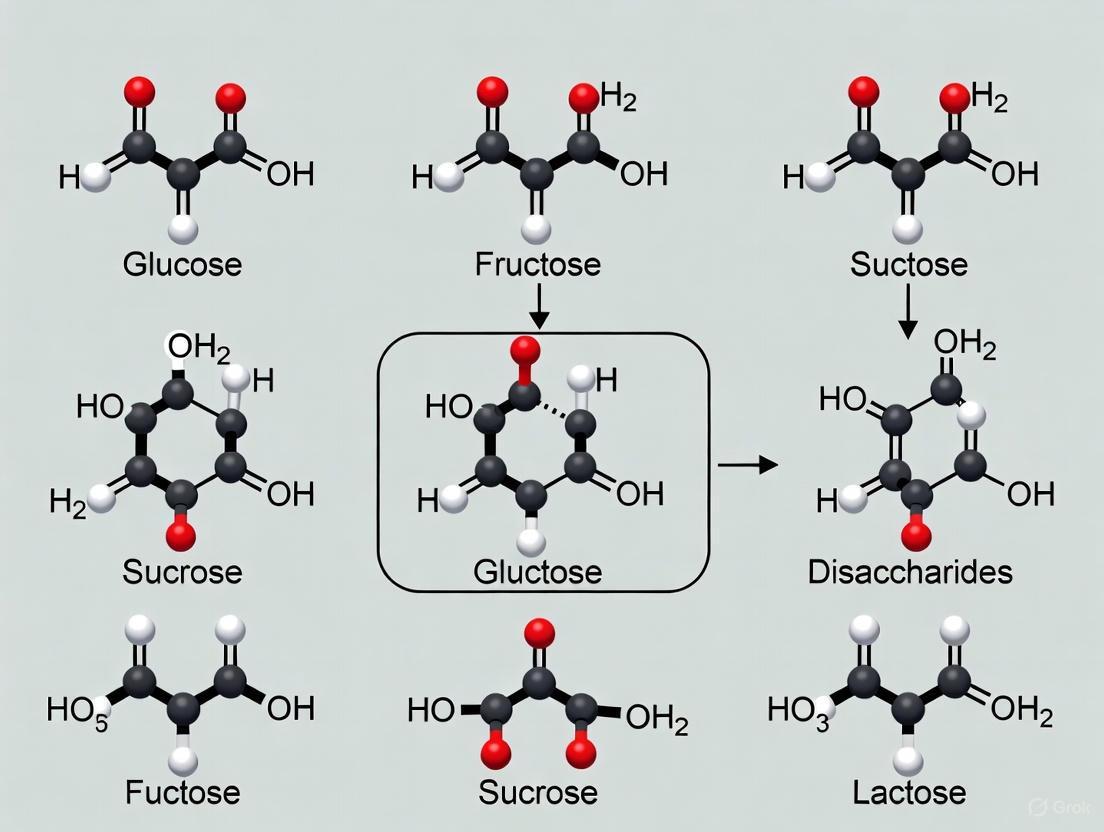
This article provides a comprehensive analysis of the molecular structure of monosaccharides and disaccharides for researchers and professionals in drug development.
Monosaccharides and Disaccharides: Molecular Architecture and Its Impact on Drug Development
Abstract
This article provides a comprehensive analysis of the molecular structure of monosaccharides and disaccharides for researchers and professionals in drug development. It covers the foundational principles of sugar chemistry, from stereochemistry and cyclic forms to glycosidic bond formation. The content explores advanced methodologies for producing rare sugars and their direct application in drug targeting, tissue-specific delivery, and antiviral therapies. It further addresses critical challenges in synthesis, analysis, and stability, offering optimization strategies. Finally, the article presents a comparative evaluation of natural versus synthetic sugars and validates structural insights through case studies of approved carbohydrate-based therapeutics, linking fundamental chemistry to clinical outcomes.
The Sugar Blueprint: From Aldoses to Ketoses and Glycosidic Bonds
Monosaccharides are the fundamental molecular units of carbohydrates and serve as the essential building blocks for constructing complex glycans [1] [2]. In the context of glycobiology and drug development, a precise understanding of monosaccharide structure, stereochemistry, and behavior in biological systems is crucial for advancing research on glycan-protein interactions, cell signaling, and therapeutic agent design [3]. These simple sugars form the foundational vocabulary of the carbohydrate language that governs numerous biological processes, from cellular recognition to immune responses [3] [2].
The term "glycan" refers broadly to molecules composed of simple sugars and their derivatives linked in polymer structures, either as standalone molecules or attached to proteins and lipids [3] [2]. This review provides a comprehensive technical examination of monosaccharide chemistry and structure, with emphasis on research methodologies relevant to scientific and drug development applications.
Structural Complexity of Monosaccharides
Basic Chemical Structure and Classification
Monosaccharides are defined as polyhydroxy aldehydes or ketones, with the general empirical formula Cx(H2O)n, where x typically ranges from 3 to 9 carbon atoms [1] [2]. These simple sugars can be systematically classified based on two key structural features: the number of carbon atoms in the chain and the nature of the carbonyl functional group.
Table 1: Monosaccharide Classification Based on Carbon Count and Functional Group
| Carbon Atoms | Classification Term | Aldose Example | Ketose Example |
|---|---|---|---|
| 3 | Triose | Glyceraldehyde | Dihydroxyacetone |
| 4 | Tetrose | Erythrose | Erythrulose |
| 5 | Pentose | Ribose | Ribulose |
| 6 | Hexose | Glucose | Fructose |
| 7 | Heptose | - | Sedoheptulose |
The classification system produces names such as "aldohexose" for a six-carbon sugar with an aldehyde group (e.g., glucose) or "ketopentose" for a five-carbon sugar with a ketone group (e.g., ribulose) [1]. The carbon atoms in monosaccharides are numbered from the end closest to the carbonyl group, with the aldehyde carbon designated as C-1 in aldoses and the keto group typically at C-2 in ketoses [2].
Stereoisomerism and Configuration
The presence of multiple chiral centers in monosaccharides creates substantial structural diversity, with each chiral carbon capable of existing in two different configurations [1] [2]. For a monosaccharide with n chiral centers, the maximum number of possible stereoisomers is 2^n [2].
The overall configuration of a monosaccharide (D or L) is determined by the absolute configuration of the highest-numbered chiral carbon (the stereogenic center furthest from the carbonyl group) [2]. In Fischer projections, if the hydroxyl group on this carbon is on the right, the sugar has the D-configuration; if on the left, it has the L-configuration [1]. Most monosaccharides in vertebrate systems have the D-configuration, with notable exceptions including fucose and iduronic acid [2].
Sugars that differ in configuration at only one chiral center are termed epimers [2]. For example, D-glucose and D-mannose are C-2 epimers, while D-glucose and D-galactose are C-4 epimers [2]. These subtle structural differences can have significant biological consequences, affecting molecular recognition and metabolic pathways.
Diagram Title: Monosaccharide Classification System
Cyclization and Anomeric Forms
In aqueous solutions, monosaccharides with five or more carbons predominantly exist in cyclic forms, resulting from an intramolecular nucleophilic addition reaction between a hydroxyl group and the carbonyl carbon [1] [3]. This cyclization creates a hemiacetal (from aldoses) or hemiketal (from ketoses) and introduces an additional chiral center at the anomeric carbon (C-1 in aldoses, C-2 in ketoses) [1] [2].
The ring structures are typically five-membered (furanose) or six-membered (pyranose) rings, analogous to the heterocyclic compounds furan and pyran [1] [2]. The newly formed chiral center at the anomeric carbon gives rise to two stereoisomers, designated as α and β anomers, which differ in the orientation of the hydroxyl group attached to the anomeric carbon relative to the ring [3] [2].
Table 2: Common Cyclic Forms of Biologically Important Monosaccharides
| Monosaccharide | Predominant Ring Form | Anomeric Configuration | Biological Significance |
|---|---|---|---|
| D-Glucose | Pyranose | α and β | Primary metabolic energy source |
| D-Fructose | Furanose | α and β | Fruit sugar, metabolic intermediate |
| D-Galactose | Pyranose | α and β | Component of lactose, cell recognition |
| D-Ribose | Furanose | α and β | RNA backbone component |
| D-Mannose | Pyranose | α and β | Protein glycosylation |
The interconversion between α and β anomers in solution, known as mutarotation, occurs through the reversible opening of the ring to the linear form followed by re-closing [2]. This dynamic equilibrium continues until a stable ratio of anomers is achieved, which varies depending on the specific monosaccharide and environmental conditions [2].
Analytical Methodologies for Monosaccharide Characterization
NMR Spectroscopy for Structural Analysis
Nuclear Magnetic Resonance (NMR) spectroscopy has emerged as a powerful technique for monosaccharide identification and quantification, particularly in complex biological mixtures such as dietary fiber hydrolysates [4]. Proton NMR (¹H NMR) provides detailed structural information without requiring derivatization or neutralization steps that can complicate chromatographic methods [4].
The anomeric proton regions in ¹H NMR spectra (typically δ 4.5-5.5 ppm) provide distinctive fingerprints for identifying and quantifying individual monosaccharides in mixtures [4]. Using 2 N trifluoroacetic acid (TFA) in D₂O as solvent improves signal separation and avoids overlap with the water signal, enhancing analytical specificity [4].
Table 3: Key Research Reagent Solutions for Monosaccharide Analysis
| Reagent | Function | Application Example |
|---|---|---|
| Trifluoroacetic Acid (TFA) | Acid hydrolysis of polysaccharides | Breaking glycosidic bonds to release monosaccharides [4] |
| Deuterated Water (D₂O) | NMR solvent | Providing deuterium lock signal for NMR analysis [4] |
| Sodium Borodeuteride (NaBD₄) | Reduction agent | Stabilizing monosaccharides for GC-MS analysis [4] |
| Trimethylsilyl Reagents | Derivatization agents | Increasing volatility for GC separation [4] |
| Sulfuric Acid (H₂SO₄) | Strong acid hydrolysis | Complete breakdown of resistant polysaccharides [4] |
Protocol: ¹H NMR Analysis of Monosaccharide Composition
Methodology for Dietary Fiber Hydrolysates [4]
Sample Preparation: Isolate dietary fiber fractions using AOAC 991.43 enzymatic-gravimetric method. Submit fractions to sequential acid hydrolysis first with 2 N TFA followed by H₂SO₄ for complete polysaccharide breakdown.
Hydrolysis Conditions:
- Primary hydrolysis: 2 N TFA at 121°C for 60 minutes
- Secondary hydrolysis: 1-2 N H₂SO₄ at 100°C for 30-60 minutes
- Direct analysis without neutralization or derivatization
NMR Acquisition Parameters:
- Instrument: 400-600 MHz NMR spectrometer
- Solvent: 2 N TFA in D₂O (pH ≈ 0.5)
- Internal Standard: TSP (3-(trimethylsilyl)propionic-2,2,3,3-d4 acid sodium salt)
- Temperature: 25-30°C
- Spectral width: 10-12 ppm
- Relaxation delay: 10-20 seconds
Signal Assignment: Identify anomeric proton signals using reference standards including glucose (Glc), galactose (Gal), mannose (Man), xylose (Xyl), fucose (Fuc), arabinose (Ara), rhamnose (Rha), glucuronic acid (GlcA), and galacturonic acid (GalA).
Quantification: Calculate absolute concentrations using TSP internal standard and integration of resolved anomeric proton signals.
Diagram Title: NMR Analysis Workflow for Monosaccharides
Comparative Analytical Techniques
While NMR provides comprehensive structural information, other techniques offer complementary approaches for monosaccharide analysis:
GC-MS Methods: Require derivatization (typically trimethylsilylation) to increase volatility for gas chromatographic separation [4]. This approach provides excellent sensitivity but involves more extensive sample preparation including neutralization steps after acid hydrolysis [4].
LC-MS Methods: Enable direct analysis of underivatized monosaccharides using hydrophilic interaction liquid chromatography (HILIC) or ion-exchange chromatography. These methods benefit from not requiring derivatization but may have lower resolution for certain isomeric sugars compared to GC-MS.
Colorimetric Assays: Benedict's test and Fehling's test provide simple qualitative identification of reducing sugars based on the reduction of copper(II) to copper(I) oxide, producing a characteristic brick-red precipitate [5]. These methods are useful for educational purposes and rapid screening but lack the specificity of instrumental techniques.
Research Applications and Biological Significance
Monosaccharides in Biological Systems
The nine most common monosaccharides found in vertebrate glycoconjugates include glucose (Glc), galactose (Gal), mannose (Man), N-acetylglucosamine (GlcNAc), N-acetylgalactosamine (GalNAc), fucose (Fuc), xylose (Xyl), sialic acid (Neu5Ac), and glucuronic acid (GlcA) [2]. Each plays distinct roles in biological processes:
- Glucose: Central energy source in metabolism; precursor for many polysaccharides [1] [6]
- Galactose: Component of lactose; important in cell recognition and neural tissue [6]
- Mannose: Key component of N-linked glycoproteins; involved in protein folding and quality control [2]
- Fucose: Often found at terminal positions of glycans; participates in cell-cell recognition and immune modulation [2]
- Sialic Acids: Terminal sugars on glycoconjugates; mediate cell-cell interactions and provide negative charge [2]
Structure-Activity Relationships in Polysaccharides
Recent research has increasingly focused on correlating monosaccharide composition with biological activity. Studies on Tremella fuciformis spore polysaccharides demonstrate how monosaccharide profiles influence antioxidant and hypoglycemic activities [7]. Ridge regression models have identified key monosaccharide percentage variations that notably regulate bioactivity, with extracellular polysaccharides rich in mannose showing superior DPPH radical scavenging and α-glucosidase inhibition compared to glucose-rich intracellular polysaccharides [7].
Such structure-activity relationship studies are crucial for pharmaceutical development, where specific monosaccharide sequences and modifications can be engineered to optimize therapeutic effects. The growing application of artificial intelligence-based prediction and multiscale computational simulations further enhances our ability to understand and manipulate these relationships [7].
Monosaccharides represent far more than simple energy sources; they are sophisticated information-carrying molecules that orchestrate complex biological processes through their structural diversity and dynamic behavior. The precise stereochemistry, anomeric configuration, and ring conformation of these fundamental building blocks directly determine the higher-order structures and functions of the glycans they compose.
Advanced analytical methodologies, particularly NMR spectroscopy, provide researchers with powerful tools to decipher monosaccharide composition and structure in complex biological systems. As drug development increasingly targets glycan-mediated processes, from host-pathogen interactions to cancer cell recognition, a deep understanding of monosaccharide biochemistry becomes essential for rational therapeutic design. Continuing research on the quantitative structure-activity relationships of monosaccharides and polysaccharides promises to unlock new opportunities in glycobiology and carbohydrate-based pharmaceutical development.
Stereoisomerism represents a fundamental principle of organic chemistry that is central to understanding the vast structural and functional diversity of carbohydrates in biological systems. Monosaccharides, the simplest sugar units, serve as the foundational building blocks for complex carbohydrates and glycoconjugates that mediate essential biological processes including cell signaling, immune recognition, and energy metabolism [2] [3]. The intricate three-dimensional architectures of these molecules arise from the presence of multiple chiral centers within their carbon skeletons, which enables the existence of numerous stereoisomers—molecules with identical atomic connectivity but differing spatial arrangements [2] [1]. This molecular diversity, encoded in seemingly subtle variations in stereochemistry, underpins the remarkable specificity of carbohydrate-protein interactions that are critical to numerous physiological and pathological processes, making stereoisomerism a subject of paramount importance to researchers in glycobiology and drug development [8] [9].
Within the broad spectrum of stereoisomerism, epimers constitute a particularly significant category for carbohydrate research. Epimers are defined as stereoisomers that differ in configuration at exactly one chiral carbon atom, serving as nature's subtle molecular editing mechanism that generates distinct biological activities from nearly identical chemical scaffolds [2]. For instance, the simple interconversion of the C-4 hydroxyl group configuration distinguishes D-glucose from D-galactose—two epimers with markedly different metabolic fates and biological functions [2]. This review comprehensively examines the structural principles, analytical methodologies, and biological implications of stereoisomerism and epimerism in monosaccharides and disaccharides, providing researchers with both theoretical foundations and practical experimental frameworks for advancing carbohydrate-based research and therapeutic development.
Structural Fundamentals of Monosaccharide Stereoisomerism
Chiral Centers and Stereoisomer Diversity
The capacity of monosaccharides to form multiple stereoisomers stems directly from their polyhydroxylated carbon chains containing multiple chiral centers. A chiral carbon, by definition, is one that bears four different substituents, creating a molecular asymmetry that prevents the molecule from being superimposed on its mirror image [2] [1]. The number of potential stereoisomers for any given monosaccharide follows the formula 2^n, where n represents the number of chiral carbon atoms within the molecule [2]. For aldohexoses with the formula C₆H₁₂O₆, which contain four chiral centers (carbons 2-5), this mathematical relationship predicts 16 possible stereoisomers (2^4 = 16), including the biologically crucial D-glucose, D-galactose, and D-mannose [2] [1]. Similarly, aldopentoses possess three chiral centers, yielding 8 possible stereoisomers (2^3 = 8) [2].
Table 1: Stereoisomer Diversity in Monosaccharides Based on Carbon Chain Length
| Monosaccharide Type | Carbon Atoms | Chiral Centers | Possible Stereoisomers | Representative Examples |
|---|---|---|---|---|
| Aldotriose | 3 | 1 | 2 | D- and L-glyceraldehyde |
| Aldotetrose | 4 | 2 | 4 | D-erythrose, D-threose |
| Aldopentose | 5 | 3 | 8 | D-ribose, D-arabinose |
| Aldohexose | 6 | 4 | 16 | D-glucose, D-galactose, D-mannose |
| Ketohexose | 6 | 3 | 8 | D-fructose, D-psicose |
The absolute configuration at the highest-numbered chiral carbon (farthest from the carbonyl group) determines the overall D or L designation for the monosaccharide [2] [1]. In the Fischer projection, if the hydroxyl group on this carbon is positioned to the right, the sugar is designated as D; if to the left, it is designated L [2]. The vast majority of monosaccharides in vertebrate systems possess the D configuration, with notable exceptions including L-fucose and L-iduronic acid, which play specialized roles in recognition processes [2]. This systematic approach to configuration assignment provides researchers with a standardized framework for describing and comparing monosaccharide stereochemistry.
Epimers: Specific Subclass of Stereoisomers
Epimers constitute a specialized category of diastereomers—stereoisomers that are not mirror images—that differ in configuration at exactly one chiral center [2]. This seemingly minor structural variation can profoundly impact biological activity, molecular recognition, and metabolic fate. The most clinically relevant epimeric relationships in hexoses include: D-glucose and D-mannose (C-2 epimers), which differ in configuration at carbon 2; and D-glucose and D-galactose (C-4 epimers), which differ in configuration at carbon 4 [2]. The biological significance of these epimeric relationships is profound: D-glucose serves as the universal energy currency in biological systems; D-galactose becomes incorporated into lactose, glycolipids, and glycoproteins; and D-mannose participates in protein glycosylation and cellular recognition events [2] [3].
Table 2: Biologically Significant Epimeric Pairs in Hexose Sugars
| Epimeric Pair | Epimerization Site | Biological Significance | Physiological Context |
|---|---|---|---|
| D-glucose/D-mannose | C-2 | Protein glycosylation, metabolic regulation | N-linked glycosylation, energy metabolism |
| D-glucose/D-galactose | C-4 | Lactose synthesis, glycoconjugate formation | Milk carbohydrate, cell surface receptors |
| D-iduronic acid/D-glucuronic acid | C-5 | Proteoglycan structure, signaling | Heparin/heparan sulfate biosynthesis |
The concept of epimerism extends beyond monosaccharides to include disaccharides and complex carbohydrates. For example, lactose (Gal(β1→4)Glc) and lactulose (Gal(β1→4)Fru) represent disaccharide epimers that differ in the configuration of the second monosaccharide unit (glucose versus fructose) [10]. These structural differences translate to dramatically different physiological properties: lactose is hydrolyzed by human lactase in the small intestine, while lactulose resists mammalian digestive enzymes and reaches the colon intact, where it exerts osmotic and prebiotic effects [10]. Such structure-function relationships underscore why precise stereochemical characterization is essential for understanding carbohydrate biology and developing carbohydrate-based therapeutics.
Analytical Methods for Resolving and Characterizing Sugar Epimers
Differential Ion Mobility Mass Spectrometry
The resolution and identification of carbohydrate epimers presents significant analytical challenges due to their nearly identical physical and chemical properties. Recent advances in differential ion mobility mass spectrometry (DMS-MS) have enabled unprecedented separation of disaccharide epimers, anomers, and connectivity isomers based on their distinct mobility in high electric fields [9]. This technique operates on the principle that ions experience field-dependent mobility differences when subjected to an asymmetric oscillating electric field in the presence of a carrier gas. The compensation voltage (CV) required to transmit a specific ion through the DMS device serves as a unique identifier that can distinguish even closely related epimers [9].
The experimental workflow for DMS-MS analysis of disaccharide epimers involves several critical steps. First, disaccharide samples are prepared at appropriate concentrations (typically 1-100 μM) in compatible solvents such as water, methanol, or acetonitrile [9]. The DMS parameters are optimized for carbohydrate analysis, including the use of helium-rich carrier gas mixtures (up to 75% helium) to enhance resolution by reducing collisional energy loss and improving field focusing [9]. The separation occurs in a planar DMS electrode assembly with precisely controlled field strengths (typically 10-40 kV/cm) and compensation voltage scanning ranges specific to disaccharides (approximately -5 to -15 V) [9]. Finally, the transmitted ions are characterized by mass spectrometry, providing both mobility and mass-to-charge ratio data for unambiguous epimer identification.
DMS-MS Workflow for Disaccharide Epimer Separation
This methodology has demonstrated remarkable efficacy in separating composition isomers such as 4-O-β-d-glucopyranosyl-d-glucose (cellobiose) and 4-O-β-d-galactopyranosyl-d-glucose (lactose), which differ solely in the configuration of a single hydroxyl group at the C-4 position of the non-reducing sugar [9]. The technique achieves a 14-fold enhancement in resolving power compared to conventional ion mobility methods, primarily through helium enrichment of the carrier gas and optimization of flow rates [9]. At low disaccharide concentrations, baseline separation of epimeric pairs is achievable, while at higher concentrations, complex multi-peak spectra emerge due to the formation and dissociation of non-covalently bound oligomers, providing additional characteristic fingerprints for epimer identification [9].
Molecular Dynamics Simulations of Carbohydrate Epimers
Computational approaches, particularly molecular dynamics (MD) simulations, provide powerful complementary tools for understanding the structural dynamism and conformational preferences of carbohydrate epimers at atomic resolution. Recent advances in force field parameterization, such as the GLYCAM06 force field, have enabled accurate modeling of carbohydrate behavior in aqueous solutions, including subtle epimer-specific characteristics [8]. These simulations reveal how epimeric differences translate to distinct torsional preferences, hydrogen-bonding patterns, and hydration dynamics that ultimately govern biological recognition and function.
A representative MD protocol for studying disaccharide epimers involves several systematic steps. First, initial disaccharide structures are built with specific glycosidic linkages and anomeric configurations based on crystallographic or NMR data [8]. The molecules are then solvated in explicit water boxes (typically using TIP3P water model) with appropriate counterions to neutralize charged groups [8]. The system undergoes energy minimization to relieve steric clashes, followed by gradual equilibration under controlled temperature (300 K) and pressure conditions [8]. Production simulations are then conducted for extended timescales (typically 100 ns to 1 μs) using integration time steps of 1-2 femtoseconds, with trajectory data saved at regular intervals for subsequent analysis of conformational sampling, hydrogen bonding, and solvation dynamics [8].
Application of this methodology to chondroitin sulfate disaccharides has revealed that β1→4-linked sequences exhibit greater conformational rigidity compared to their β1→3-linked counterparts, primarily due to stabilizing intramolecular hydrogen bonds between the GalNAc O5 atom and GlcA O3 atom [8]. Furthermore, the study demonstrated that increased sulfation patterns introduce greater ruggedness into the energy landscapes of these disaccharides, suggesting that epimerization and sulfation work in concert to fine-tune glycosaminoglycan conformation and protein-binding specificity [8]. These computational insights provide valuable guidance for the rational design of carbohydrate-based therapeutics targeting specific protein recognition events.
Research Reagent Solutions for Epimer Analysis
Table 3: Essential Research Reagents and Materials for Carbohydrate Epimer Studies
| Reagent/Material | Specifications | Research Application | Functional Significance |
|---|---|---|---|
| Protected Monosaccharides | Hydroxyl groups selectively protected with acetyl, benzyl, or silyl groups [11] | Glycosynthesis of defined epimers | Enables regioselective formation of specific glycosidic linkages during disaccharide synthesis |
| Semi-protected Monosaccharides | Partially protected building blocks with specific free hydroxyls [11] | Chemoenzymatic synthesis approaches | Balances reactivity and selectivity for sequential glycosylation strategies |
| Stable Isotope-labeled Sugars | ^13C, ^2H, or ^15N incorporated at specific positions [9] | Metabolic tracing and NMR quantification | Enables tracking of epimer interconversion in biological systems and enhances MS detection |
| Glycosidases/Epimerases | Enzymes with defined specificity (α/β, linkage-specific) [12] [10] | Controlled hydrolysis and epimerization | Facilitates structural analysis through selective cleavage and enzymatic epimer interconversion |
| DMS Carrier Gas Mixtures | Helium-nitrogen or helium-carbon dioxide blends [9] | High-resolution ion mobility separations | Enhances epimer resolution by reducing collisional broadening and improving field focusing |
The expanding toolkit for epimer research now includes rare sugars produced through innovative enzymatic and chemical approaches. The pioneering work of the Izumori group and others has established methods to produce virtually all possible monosaccharides, including L-sugars, through strategic combinations of chemical synthesis and enzyme-catalyzed reactions [12]. Key enzymes in this repertoire include isomerases that convert aldoses to ketoses and vice versa, and epimerases that specifically invert configuration at defined carbon positions [12]. These rare sugars serve as invaluable reference standards for analytical method development and as starting materials for synthesizing biologically relevant oligosaccharide sequences that probe the functional significance of specific epimeric relationships.
Stereoisomerism and epimerism represent fundamental structural principles that govern the biological diversity and functional specificity of carbohydrates in health and disease. The precise spatial arrangement of hydroxyl groups along the monosaccharide carbon chain, particularly at critical chiral centers, creates distinct molecular landscapes that are specifically recognized by enzymes, transporters, and receptors throughout biological systems [2] [3]. The continuing development of advanced analytical technologies, particularly high-resolution differential ion mobility mass spectrometry and all-atom molecular dynamics simulations, is progressively overcoming the historical challenges associated with carbohydrate epimer analysis and characterization [8] [9].
Future research directions in this field will likely focus on several promising areas. First, the integration of multiple complementary analytical platforms (DMS, LC, MS, NMR) will provide more comprehensive epimer characterization capabilities, particularly for complex biological samples [9]. Second, the expanding availability of rare sugars through improved enzymatic and chemical synthesis methods will enable systematic structure-activity relationship studies that define the functional consequences of specific epimeric substitutions [12] [11]. Finally, the application of these fundamental principles to drug development—particularly in the design of glycomimetic therapeutics, carbohydrate-based vaccines, and targeted delivery systems—holds considerable promise for addressing challenging medical conditions including cancer, infectious diseases, and autoimmune disorders [11]. As our understanding of sugar stereoisomerism continues to deepen, so too will our ability to harness this knowledge for therapeutic innovation and improved human health.
Within the broader research on the molecular structure of monosaccharides and disaccharides, understanding their cyclic forms is not merely an academic exercise but a fundamental prerequisite for advancements in drug development and chemical biology. Monosaccharides, the elementary building blocks of carbohydrates, are polyhydroxylated aldehydes or ketones that exist predominantly in cyclic forms in aqueous solution, a state central to their biological function [2] [13]. This ring-chain tautomerism, where the open-chain form reversibly converts to cyclic hemiacetals, defines the reactivity and stereochemistry of sugars [14]. For researchers and scientists, the ability to control the conformation and anomeric configuration of these sugars is directly linked to the rational design of glycomimetic drugs, vaccines, and diagnostics. Such compounds can inhibit carbohydrate-mediated recognition processes in diseases like cancer, viral infections, and autoimmune disorders [11] [15]. This whitepaper provides an in-depth technical guide to the cyclic forms of monosaccharides—hemiacetals, furanoses, and pyranoses—and their anomeric chemistry, framing this knowledge as a critical toolkit for modern therapeutic development.
Structural Fundamentals: From Open-Chain to Cyclic Hemiacetals
The genesis of cyclic sugar forms is an intramolecular reaction, a classic nucleophilic addition. An alcohol group within the same sugar molecule attacks the electrophilic carbonyl carbon (C-1 of an aldose or C-2 of a ketose), forming a cyclic hemiacetal [14] [13]. This reaction is reversible and occurs spontaneously in aqueous solution, leading to an equilibrium between the open-chain and cyclic forms [16]. The formation of the cyclic hemiacetal creates a new chiral center at the carbonyl carbon, which is now called the anomeric carbon [14] [13]. The two stereoisomers that result from this cyclization are termed anomers [16].
- The Anomeric Effect: A key stereoelectronic phenomenon in carbohydrate chemistry is the anomeric effect. It describes the thermodynamic preference for an electronegative substituent (such as a hydroxyl group) attached to the anomeric carbon to occupy the axial position in the preferred chair conformation of a pyranose sugar, despite the steric strain this may cause [17]. This preference, which can be estimated at about 2.0 kcal/mol for a hydroxyl group, arises from hyperconjugative interactions involving the lone pairs of the ring oxygen and the σ* orbital of the C1-substituent bond [17]. The anomeric effect is solvent-dependent; the axial preference is more pronounced in vacuum or nonpolar solvents, whereas in polar solvents like water, the equatorial anomer can become more stable due to differential solvation [17].
The following diagram illustrates the logical pathway from the open-chain form to the cyclic anomers.
Ring Size Diversity: Pyranoses and Furanoses
The size of the ring formed during cyclization is determined by which hydroxyl group attacks the carbonyl carbon. Five- and six-membered rings are overwhelmingly favored due to their minimal angle and eclipsing strain [16] [18].
- Pyranoses: These are six-membered cyclic hemiacetals, structurally analogous to the compound pyran. They are the most stable and prevalent form for many hexoses, such as glucose [16] [14]. In its pyranose form, glucose exists in a chair conformation, which can undergo a "ring flip" between two chair conformers ((^4C1) and (^1C4)) [2]. The (^4C_1) conformation is typically dominant, as it allows bulky substituents to occupy more roomy equatorial positions [16].
- Furanoses: These are five-membered cyclic hemiacetals, named for their structural similarity to furan. While less common than pyranoses for aldohexoses, they are the preferred form for some important sugars, such as fructose and the carbohydrate component of RNA, ribose [14] [2]. The furanose ring is more flexible than the pyranose ring and is not planar, adopting envelope or twist conformations to relieve torsional strain [2].
Table 1: Comparative Analysis of Pyranose and Furanose Ring Structures
| Feature | Pyranose (6-membered ring) | Furanose (5-membered ring) |
|---|---|---|
| Ring Analog | Pyran [16] [14] | Furan [16] [14] |
| Bond Formation | Typically C-1–O–C-5 (in aldohexoses) [2] | Typically C-1–O–C-4 (in aldohexoses) [2] |
| Ring Strain | Low angle and eclipsing strain [16] | Low angle strain, some torsional strain [16] |
| Predominant Conformation | Chair (e.g., (^4C_1)) [2] | Envelope and Twist [2] |
| Conformational Flexibility | Lower (flips between chair forms) [2] | Higher (multiple low-energy conformers) [2] |
| Example in Equilibrium | ~64% β- and ~36% α-D-glucopyranose [14] | Trace amounts of D-glucofuranose [14] |
Anomeric Chemistry and Mutarotation
The anomeric carbon is the most reactive site in a cyclic sugar, governing its chemical and biological behavior.
- α- and β-Anomers: The two anomers are diastereomers distinguished by the stereochemical configuration of the hemiacetal hydroxyl group [16]. In a Haworth projection, with the ring oxygen in the upper rear, the anomer is defined as α if the anomeric hydroxyl group is trans to the terminal -CH(_2)OH group (down in D-sugars), and β if it is cis (up in D-sugars) [14] [13]. This configuration critically influences the three-dimensional shape and biological recognition of the sugar [11].
- Mutarotation: This is the spontaneous change in the optical rotation of a pure anomer when dissolved in water, as it equilibrates to become an mixture of anomers [16] [14]. For example, pure α-D-glucopyranose has a specific rotation of +112°, while pure β-D-glucopyranose has a rotation of +19°. In water, both anomers mutarotate to an equilibrium mixture with a final rotation of +52.5°, which consists of approximately 64% β- and 36% α-anomer [14]. This process occurs via the transient formation of the open-chain aldehyde, which can re-cyclize to form either anomer [16].
The dynamic interconversion between anomers and ring forms is a key property for researchers to consider in experimental design.
Experimental Protocols and Methodologies
Controlling the anomeric center is a central challenge in the chemical synthesis of glycans. The following protocols detail modern methodologies for stereoselective glycosylation, which is critical for producing well-defined carbohydrate structures for research and drug development.
Stereoselective Glycosylation via S_N2 Mechanism
Principle: This method favors a direct, bimolecular nucleophilic substitution (SN2) to achieve high stereocontrol, in contrast to traditional acid-catalyzed methods that often proceed via a less selective SN1-like pathway involving an oxocarbenium ion intermediate [15].
Detailed Protocol:
- Preparation of Glycosyl Donor (Triflate): Dissolve the alcohol precursor (e.g., a sphingosine derivative, 0.1 mmol) in anhydrous dichloromethane (DCM, 2 mL) under an inert atmosphere (N(_2) or Ar).
- Cool the solution to 0°C in an ice bath.
- Add 2,6-di-tert-butylpyridine (DTBP, 0.22 mmol, 2.2 eq) as an acid scavenger.
- Slowly add triflic anhydride (Tf(_2)O, 0.2 mmol, 2.0 eq) dropwise via syringe. Stir the reaction at 0°C for 1-2 hours, monitoring by thin-layer chromatography (TLC). The resulting triflate is often used in situ without isolation due to its high reactivity [15].
- Anomeric O-Alkylation: In a separate flask, dissolve the sugar hemiacetal (lactol, 0.12 mmol, 1.2 eq) in anhydrous N,N-dimethylformamide (DMF, 2 mL).
- Add finely powdered cesium carbonate (Cs(2)CO(3), 0.3 mmol, 3.0 eq) to the lactol solution. Stir the mixture at room temperature for 30 minutes to generate the anomeric alkoxide.
- Transfer the pre-formed triflate solution (from step 4) to the reaction vessel containing the anomeric alkoxide via cannula.
- Allow the reaction to warm to room temperature and stir for 4-12 hours, monitoring by TLC or LC-MS.
- Upon completion, quench the reaction by adding a saturated aqueous solution of ammonium chloride (NH(_4)Cl).
- Extract the aqueous layer three times with ethyl acetate (EtOAc). Combine the organic layers, wash with brine, dry over anhydrous magnesium sulfate (MgSO(_4)), and concentrate under reduced pressure.
- Purify the crude product (e.g., the resulting β-linked disaccharide or glycosphingolipid) using flash chromatography on silica gel [15].
Synthesis of Glycosyl Imidates for S_N1-type Glycosylation
Principle: Glycosyl trichloroacetimidates are premier donors for acid-catalyzed glycosylation. The anomeric hydroxyl group acts as a nucleophile under basic conditions to form an imidate leaving group, which is later activated by a Lewis acid to promote S_N1-like glycosylation with high efficiency [15].
Detailed Protocol:
- Preparation of Hemiacetal Donor: Ensure the sugar hemiacetal (1.0 eq) is lyophilized or thoroughly azeotroped with toluene to remove water.
- Dissolve the dry hemiacetal in anhydrous DCM (concentration ~0.1 M).
- Cool the solution to 0°C.
- Add fresh 1,8-Diazabicyclo[5.4.0]undec-7-ene (DBU, 0.1 eq) as a non-nucleophilic base.
- Slowly add trichloroacetonitrile (CCl(_3)CN, 5.0-10.0 eq) dropwise.
- Stir the reaction mixture at 0°C until TLC analysis indicates complete consumption of the starting hemiacetal (typically 2-6 hours).
- Concentrate the reaction mixture under reduced pressure without heating.
- Purify the crude glycosyl trichloroacetimidate by flash chromatography on silica gel (often using a gradient of hexane/EtOAc) to obtain the pure donor as a mixture of anomers or a single anomer, depending on the reaction conditions and sugar structure [15].
The Scientist's Toolkit: Essential Research Reagents
The following reagents and materials are indispensable for conducting experiments in anomeric chemistry and glycosylation.
Table 2: Key Research Reagents for Anomeric Chemistry and Glycosylation
| Reagent / Material | Function & Application | Technical Notes |
|---|---|---|
| Cesium Carbonate (Cs₂CO₃) | A mild, soluble base used to deprotonate the anomeric hydroxyl to form a nucleophilic alkoxide for S_N2 glycosylation [15]. | Preferred over K(2)CO(3) for its superior solubility in organic solvents like DMF and ability to chelate, enhancing stereoselectivity [15]. |
| Triflic Anhydride (Tf₂O) | A powerful electrophile used to generate triflate leaving groups from alcohols in situ for S_N2 glycosylation [15]. | Highly moisture-sensitive and corrosive. Must be handled under strict anhydrous conditions in a fume hood. |
| Trichloroacetonitrile (CCl₃CN) | Reagent for converting anomeric hydroxyls into trichloroacetimidate leaving groups [15]. | Toxic and lachrymatory. Use in a well-ventilated fume hood. The electron-withdrawing trichloro group increases the nucleofugality of the imidate. |
| DBU (1,8-Diazabicyclo[5.4.0]undec-7-ene) | A non-nucleophilic, strong base used to catalyze the formation of glycosyl trichloroacetimidates [15]. | Prevents N-alkylation side reactions that can occur with more nucleophilic bases. |
| Anhydrous Solvents (DMF, DCM) | Reaction medium for glycosylation. DMF solubilizes anomeric alkoxides, while DCM is standard for Lewis acid-promoted glycosylations. | Essential to maintain anhydrous conditions to prevent hydrolysis of activated glycosyl donors and Lewis acid catalysts. |
| Molecular Sieves (3Å or 4Å) | Powdered, activated sieves are added to reaction mixtures to scavenge trace water, ensuring the integrity of moisture-sensitive reagents and intermediates. | Must be activated by heating in a flame-dried flask under high vacuum prior to use. |
The chemistry of cyclic monosaccharide forms—hemiacetals, furanoses, and pyranoses—and their anomeric behavior represents a cornerstone of glycoscience. A deep and practical understanding of concepts like ring-chain tautomerism, the anomeric effect, mutarotation, and stereoselective glycosylation protocols is not merely theoretical. It is an essential component of the molecular toolkit for researchers and drug development professionals aiming to harness the power of carbohydrates. As the field moves toward more sophisticated applications, including glycan-based vaccines, cancer immunotherapies, and glycomimetic drugs, the ability to precisely synthesize and manipulate these complex structures will remain a critical driver of innovation and success [12] [11].
The glycosidic bond is a fundamental linkage in carbohydrate chemistry, serving as the crucial ether bridge that connects monosaccharide units to form disaccharides and larger polysaccharides [19]. For researchers investigating the molecular structure of monosaccharides and disaccharides, a deep understanding of this bond is indispensable. Its formation, classification, and stereochemistry directly influence the biological properties, metabolic fate, and functional applications of carbohydrate-containing molecules [20] [21]. This whitepaper provides an in-depth technical examination of glycosidic bond formation and disaccharide classification, with a specific focus on methodologies and applications relevant to drug development and pharmaceutical sciences.
The glycosidic bond is formed between the hemiacetal or hemiketal group of a saccharide and the hydroxyl group of another compound, which may or may not be another carbohydrate [19]. This linkage is established through a condensation reaction, often termed dehydration synthesis, which results in the loss of a water molecule [20] [22]. The specific nature of this bond—including its stereochemistry (α or β) and the carbon atoms involved in the linkage—confers distinct three-dimensional structures and biological functionalities to the resulting disaccharides [20] [23].
Disaccharide Fundamentals and Classification
Disaccharides, commonly referred to as double sugars, consist of two monosaccharide units joined via a glycosidic linkage [20] [24]. These carbohydrates maintain the general empirical formula C12H22O11, reflecting the loss of one water molecule during their formation [25]. Like monosaccharides, disaccharides typically manifest as white, crystalline solids at room temperature and exhibit substantial solubility in water [20] [23].
Disaccharides are primarily categorized based on the chemical behavior of their constituent monosaccharides, particularly focusing on the availability of a free anomeric carbon that can function as a reducing agent.
Classification of Disaccharides
Reducing Disaccharides: These disaccharides contain one monosaccharide unit with a free hemiacetal unit that can act as a reducing aldehyde group [20]. This characteristic enables them to undergo mutarotation and react with various chemical reagents. Common examples include:
- Maltose: Composed of two glucose units linked by an α(1→4) glycosidic bond [20] [23]. It is a hydrolysis product of starch and is commonly found in sprouting grains [23].
- Lactose: Consisting of galactose and glucose joined by a β(1→4) glycosidic bond [20]. It is the primary sugar in milk and serves as a crucial energy source for infants [20] [26].
- Cellobiose: Made up of two glucose units connected by a β(1→4) glycosidic bond [20] [23]. It is a product of cellulose hydrolysis.
Non-Reducing Disaccharides: In these disaccharides, the glycosidic bond forms between the anomeric centers of both monosaccharide components, leaving no free hemiacetal units capable of acting as reducing agents [20]. This structural configuration results in reduced chemical reactivity, which can be advantageous for stability in storage [20]. Notable examples include:
Table 1: Characteristic Properties of Common Disaccharides
| Disaccharide | Monosaccharide Units | Glycosidic Bond Type | Reducing Property | Primary Natural Sources |
|---|---|---|---|---|
| Sucrose | Glucose, Fructose | α(1→2)β | Non-reducing | Sugarcane, Sugar beet [20] [25] |
| Lactose | Galactose, Glucose | β(1→4) | Reducing | Milk, Dairy products [20] [24] |
| Maltose | Glucose, Glucose | α(1→4) | Reducing | Starch hydrolysis, Sprouting grains [20] [23] |
| Trehalose | Glucose, Glucose | α(1→1)α | Non-reducing | Fungi, Plants, Insects [20] [24] |
| Cellobiose | Glucose, Glucose | β(1→4) | Reducing | Cellulose hydrolysis [20] [23] |
Structural Determination of Glycosidic Bonds
Elucidating the precise structure of glycosidic bonds—including the specific carbon atoms involved, the stereochemistry (α or β), and the overall conformation of the disaccharide—is fundamental to understanding its biological function and metabolic processing.
Analytical Workflow for Glycosidic Bond Characterization
The following diagram outlines a generalized experimental workflow for determining the structure of glycosidic bonds in disaccharides, integrating classical chemical methods with modern instrumental techniques.
Key Analytical Techniques
Methylation Analysis: This classical chemical method involves methylating all free hydroxyl groups of the intact disaccharide before hydrolysis. The resulting partially methylated monosaccharides are then identified, typically using Liquid Chromatography-Mass Spectrometry (LC-MS), to determine the original linkage points. The hydroxyl groups formed after hydrolysis indicate the positions involved in the glycosidic bond, while the original free hydroxyls are identified by their methylation [27].
Nuclear Magnetic Resonance (NMR) Spectroscopy: NMR is a powerful, non-destructive technique that provides comprehensive structural information without the need for chemical derivatization. It is particularly valuable for determining:
Mass Spectrometry (MS): MS is primarily used to determine the molecular weight of the disaccharide and to analyze the products of hydrolysis and methylation, providing complementary data to NMR and methylation analysis [27].
Experimental Protocols for Glycosidic Bond Formation and Cleavage
Protocol 1: Acid-Catalyzed Hydrolysis of Glycosidic Bonds
This fundamental protocol details the chemical breakdown of disaccharides into their constituent monosaccharides, a critical step for compositional analysis [23].
- Principle: Glycosidic bonds are cleaved by the addition of a water molecule in the presence of a mineral acid as a catalyst, reversing the condensation reaction that formed the bond [20] [23].
- Materials:
- Disaccharide sample (e.g., 100 mg sucrose)
- Dilute hydrochloric acid (HCl, 1M) or sulfuric acid (H2SO4, 1M)
- Heating mantle or water bath
- Round-bottom flask with condenser
- Sodium hydroxide (NaOH) or sodium bicarbonate (NaHCO3) for neutralization
- pH indicator paper
- Procedure:
- Dissolve the disaccharide sample in the dilute acid solution within the round-bottom flask.
- Attach a condenser and heat the mixture under reflux at approximately 100°C for 30-60 minutes [23].
- Allow the mixture to cool to room temperature.
- Carefully neutralize the hydrolysate with NaOH or NaHCO3 solution until a neutral pH is achieved (pH ~7).
- The resulting monosaccharide mixture can be analyzed by techniques such as Thin-Layer Chromatography (TLC), High-Performance Liquid Chromatography (HPLC), or polarimetry to identify and quantify the hydrolysis products [25].
Protocol 2: Enzymatic Hydrolysis Using Disaccharidases
This protocol demonstrates the specificity of enzyme-catalyzed reactions, which is a key consideration in metabolic studies and diagnostic assays.
- Principle: Specific disaccharidase enzymes (e.g., lactase, maltase, sucrase) catalyze the hydrolysis of their corresponding disaccharides in aqueous environments at mild conditions [20] [21].
- Materials:
- Disaccharide substrate (e.g., lactose for lactase)
- Corresponding disaccharidase enzyme (commercially available)
- Suitable buffer (e.g., phosphate buffer, pH optimized for the enzyme)
- Incubator or water bath
- Microcentrifuge tubes
- Procedure:
- Prepare a solution of the disaccharide substrate in the appropriate buffer.
- Add a measured activity unit of the disaccharidase enzyme to the solution.
- Incubate the reaction mixture at the enzyme's optimal temperature (typically 37°C) for a defined period (e.g., 10-30 minutes).
- Terminate the reaction by heating the sample to 95°C for 5 minutes to denature the enzyme.
- Analyze the products for the presence of monosaccharides using a glucose oxidase assay (for glucose-containing disaccharides), HPLC, or other suitable analytical methods.
Protocol 3: Fischer Glycosidation for Alkyl Glycoside Synthesis
This synthetic method, adapted for modern laboratory practice, is used to create glycosides where the aglycone is a simple alcohol [19].
- Principle: Monosaccharides react with alcohols in the presence of an acid catalyst to form a mixture of α- and β-glycosides [19].
- Materials:
- Anhydrous monosaccharide (e.g., D-glucose)
- Anhydrous alcohol (e.g., methanol, ethanol)
- Acid catalyst (e.g., anhydrous HCl, p-toluenesulfonic acid)
- Microwave synthesizer or conventional heating with reflux apparatus
- Molecular sieves (to maintain anhydrous conditions)
- Procedure:
- Place the anhydrous monosaccharide and molecular sieves in a microwave-compatible reaction vessel.
- Add the anhydrous alcohol and a catalytic amount of the acid catalyst.
- Seal the vessel and heat the mixture using microwave irradiation (e.g., 100°C for 10-20 minutes) [19]. Conventional heating with reflux can also be used, though reaction times may be longer.
- After cooling, neutralize the catalyst with a weak base.
- Concentrate the mixture under reduced pressure and purify the resulting alkyl glycosides using chromatography.
The Scientist's Toolkit: Key Research Reagents and Materials
Table 2: Essential Reagents for Glycosidic Bond Research
| Reagent / Material | Function / Application | Key Characteristics |
|---|---|---|
| Glycosyltransferases [21] | Enzymatic formation of glycosidic bonds using activated sugar donors (e.g., UDP-glucose). | High stereospecificity and regioselectivity; essential for synthesizing complex oligosaccharides. |
| Glycosidases [21] | Hydrolysis of glycosidic bonds; can be used in reverse for synthesis under specific conditions. | Readily available; broad substrate range; useful for structural analysis and transglycosylation. |
| Glycosyl Fluorides [21] | Activated donor substrates for engineered glycosidases (glycosynthases). | React with glycosynthase mutants to form glycosidic bonds without hydrolysis of the product. |
| Sugar Nucleotides (e.g., UDP-glucose) [21] | Native activated donor substrates for glycosyltransferases. | Enable high-yield, irreversible glycosylation in biosynthesis and enzymatic synthesis. |
| p-Nitrophenyl Glycosides [21] | Activated donor substrates for reverse glycosidation reactions using glycosidases. | The p-nitrophenol leaving group facilitates efficient synthesis of oligosaccharides. |
| Ionic Liquids (e.g., AMMOENG 101) [19] | Reaction media for enzymatic glycosylation, particularly with phosphorylases. | Low water activity enhances reverse hydrolysis and transglycosylation reactions. |
Advanced Enzymatic and Chemoenzymatic Strategies
The formation of glycosidic bonds presents significant challenges in synthetic chemistry, including the need for stereochemical control and the presence of multiple reactive hydroxyl groups. Enzymatic and chemoenzymatic strategies offer powerful solutions to these challenges [21].
Glycosyltransferases in Oligosaccharide Assembly
Glycosyltransferases catalyze the transfer of a monosaccharide from an activated sugar nucleotide donor to a specific acceptor molecule with high fidelity. This "one enzyme-one linkage" hypothesis underscores their exquisite specificity [21]. A key consideration is the availability of sugar nucleotides, which can be addressed by in situ regeneration systems. For instance, UDP-glucose can be regenerated from sucrose and catalytic UDP using sucrose synthase, making large-scale synthesis more feasible [21].
Engineered Enzymes: Glycosynthases
Glycosynthases are engineered glycosidases in which the catalytic nucleophile has been mutated (e.g., a glutamate to a serine or alanine). These mutants lose their hydrolysis activity but can utilize glycosyl fluorides as donors to form glycosidic bonds with high efficiency and stereoselectivity [21]. This technology leverages the vast diversity of naturally occurring glycosidases and converts them into efficient synthetic tools.
Synthetic Workflow for Complex Glycoconjugate Assembly
The following diagram illustrates a multi-step chemoenzymatic approach for synthesizing complex oligosaccharides, such as tumor-associated antigens, highlighting the iterative use of specific glycosyltransferases.
The glycosidic bond is more than a simple covalent link; its formation, stereochemistry, and stability are central to the structure and function of disaccharides in biological systems and their applications in therapeutics. Mastery over the formation and cleavage of this bond, through both chemical and enzymatic methods, is a cornerstone of carbohydrate research. For drug development professionals, understanding these principles is critical for designing carbohydrate-based therapeutics, understanding metabolic diseases like lactose intolerance, and developing inhibitors of glycoside-processing enzymes. As enzymatic and chemoenzymatic strategies continue to advance, they offer increasingly powerful and precise tools for the construction of complex glycostructures, paving the way for new discoveries and innovations in glycobiology and pharmaceutical science.
This technical guide provides an in-depth analysis of the structural characteristics that define reducing and non-reducing sugars, exploring their distinct functional implications in biochemical systems and therapeutic development. Reducing sugars, characterized by a free anomeric carbon capable of reducing other substances, stand in stark contrast to non-reducing sugars whose anomeric centers participate in glycosidic bonds. We examine the molecular basis of this differentiation through structural chemistry, experimental detection methodologies, and biological context. The content further explores how these fundamental distinctions translate to diverse roles in metabolic pathways, glycosylation processes, and disease mechanisms, providing critical insights for research and drug development applications.
The classification of sugars as reducing or non-reducing represents a fundamental dichotomy in carbohydrate chemistry with profound implications across biological systems. This distinction, rooted in the reactivity of the anomeric carbon atom, governs carbohydrate behavior in analytical tests, metabolic pathways, and complex glycoconjugate synthesis [28] [29]. For research scientists and drug development professionals, understanding these structural determinants is essential for investigating metabolic disorders, designing glycosylation-based therapies, and developing diagnostic assays.
At the molecular level, monosaccharides exist as polyhydroxy-aldehydes (aldoses) or polyhydroxy-ketones (ketoses) with the general formula (CH₂O)ₙ [2] [30]. These simple sugars serve as building blocks for disaccharides and polysaccharides, with their chemical reactivity largely determined by the carbonyl functional group and the configuration of chiral centers. The dynamic equilibrium between linear and cyclic forms establishes the fundamental framework for understanding reducing capacity, which in turn influences biological interactions ranging from enzyme recognition to cellular signaling.
Structural Determinants: Molecular Basis of Classification
The Anomeric Center and Hemiacetal Formation
The defining feature of reducing sugars is the presence of a free anomeric carbon, which exists in equilibrium between cyclic hemiacetal and open-chain forms [29] [30]. This structural arrangement enables the molecule to act as a reducing agent. Monosaccharides predominantly exist in cyclic forms, either as five-membered furanose rings or six-membered pyranose rings, formed through intramolecular nucleophilic attack of a hydroxyl group on the carbonyl carbon [2]. This cyclization creates a new chiral center at the anomeric carbon (C-1 for aldoses, C-2 for ketoses), yielding α- and β-anomers that interconvert via mutarotation [2].
For glucose in aqueous solution, this equilibrium involves less than 1% of molecules in the open-chain aldehyde form at any given time, yet this small fraction is sufficient to confer reducing properties [29]. The accessibility of the carbonyl group determines reducing capacity, with the ring opening exposing an aldehyde (in aldoses) or α-hydroxy ketone (in ketoses) that can undergo oxidation reactions.
Comparative Analysis of Sugar Types
Table 1: Structural and Functional Characteristics of Reducing vs. Non-Reducing Sugars
| Characteristic | Reducing Sugars | Non-Reducing Sugars |
|---|---|---|
| Anomeric Center | Free hemiacetal group | Anomeric carbon involved in glycosidic bond |
| Equilibrium Forms | Exists in equilibrium between cyclic and open-chain forms | Locked in cyclic form with no free anomeric carbon |
| Carbonyl Group | Accessible aldehyde or α-hydroxy ketone | Carbonyl group unavailable due to glycosidic linkage |
| Oxidation Susceptibility | Can be oxidized by mild oxidizing agents | Resistant to oxidation under same conditions |
| Chemical Tests | Positive Benedict's, Fehling's, and Tollens' tests | Negative test results with standard reagents |
| Representative Examples | Glucose, fructose, maltose, lactose | Sucrose, trehalose, raffinose, polysaccharides |
Structural Representations and Classification
Table 2: Classification of Common Sugars by Reducing Capacity
| Sugar Type | Specific Examples | Reducing Capacity | Structural Rationale |
|---|---|---|---|
| Monosaccharides | Glucose, Galactose, Fructose, Mannose | Reducing | All monosaccharides are reducing sugars due to free anomeric carbon |
| Disaccharides | Maltose (Glcα1-4Glc), Lactose (Galβ1-4Glc) | Reducing | One anomeric carbon remains free in glycosidic linkage |
| Disaccharides | Sucrose (Glcα1-2βFru), Trehalose (Glcα1-1αGlc) | Non-reducing | Both anomeric carbons participate in glycosidic bond |
| Trisaccharides | Raffinose (Galα1-6Glcα1-2βFru) | Non-reducing | No free anomeric carbon available |
| Polysaccharides | Starch, Glycogen, Cellulose | Technically reducing but rarely detectable | Only terminal anomeric carbons are free, representing tiny fraction of total structure |
The structural relationship between hemiacetal formation and reducing capacity follows a deterministic pathway that can be visualized as a decision tree:
Experimental Determination: Methodologies and Protocols
Chemical Detection Methods
Several well-established chemical tests differentiate reducing from non-reducing sugars based on the oxidation of the free aldehyde or α-hydroxy ketone group. These assays employ metal salt solutions that undergo characteristic color changes when reduced by susceptible sugars [28] [29].
Benedict's Test Protocol:
- Principle: Reducing sugars convert blue Cu²⁺ ions to red Cu₂O precipitate [28] [29]
- Reagents: Benedict's qualitative solution containing copper sulfate, sodium carbonate, and sodium citrate
- Procedure: Add 2 mL of Benedict's solution to 1 mL of test sample in a test tube. Heat in a boiling water bath for 3-5 minutes. Observe color change and precipitate formation
- Interpretation: Blue (negative); Green/Yellow/Orange/Red with precipitate (positive, semi-quantitative based on color intensity)
- Applications: Historical method for urine glucose detection, general screening for reducing sugars
Fehling's Test Protocol:
- Principle: Similar to Benedict's test but uses different complexing agents [29]
- Reagents: Fehling's solution A (copper sulfate) and Fehling's solution B (potassium sodium tartrate and sodium hydroxide)
- Procedure: Mix equal volumes of Fehling's A and B solutions immediately before use. Add test sample and heat in a water bath for several minutes
- Interpretation: Blue to brick-red precipitate indicates positive test
- Applications: Distinguishing aldehydes from ketones, detecting reducing sugars
Tollens' Test Protocol:
- Principle: Reducing sugars produce a silver mirror from silver ammonia complex [29]
- Reagents: Tollens' reagent (ammoniacal silver nitrate)
- Procedure: Add test sample to freshly prepared Tollens' reagent in a clean glass test tube. Heat gently in a water bath for 5-10 minutes
- Interpretation: Formation of silver mirror on test tube walls indicates positive test
- Applications: Highly sensitive detection of reducing sugars, distinguishing from non-reducing sugars
The Scientist's Toolkit: Essential Research Reagents
Table 3: Key Research Reagents for Sugar Analysis
| Reagent/Assay | Composition | Detection Mechanism | Applications in Research |
|---|---|---|---|
| Benedict's Solution | Copper sulfate, sodium citrate, sodium carbonate | Reduction of Cu²⁺ to Cu⁺ oxide | General screening for reducing sugars, historical diabetes monitoring |
| Fehling's Solution | Copper sulfate, potassium sodium tartrate, sodium hydroxide | Reduction of Cu²⁺ to Cu⁺ oxide | Quantitative analysis of reducing sugars, analytical chemistry |
| Tollens' Reagent | Ammoniacal silver nitrate solution | Reduction of Ag⁺ to metallic silver | Highly sensitive detection of aldehydes, carbohydrate characterization |
| Enzymatic Glucose Oxidase | Glucose oxidase, peroxidase, chromogen | Specific oxidation of glucose producing colored product | Specific blood glucose monitoring, metabolic studies |
| Acid Hydrolysis | Dilute hydrochloric or sulfuric acid | Cleaves glycosidic bonds to release monosaccharides | Conversion of non-reducing to reducing sugars for analysis |
Experimental Workflow for Comprehensive Sugar Characterization
A systematic approach to sugar characterization involves sequential analysis to determine reducing capacity and structural features:
Functional Implications in Biological Systems
Metabolic Processing and Sugar Activation
In biological systems, monosaccharides undergo activation to high-energy nucleotide sugar donors before incorporation into glycoconjugates [31] [32]. This activation requires nucleoside triphosphates (typically UTP or GTP) and glycosyl-1-phosphate, catalyzed by kinases or through nucleotide exchange reactions [31]. The most common nucleotide sugar donors in animal cells include UDP-glucose, UDP-galactose, GDP-mannose, and CMP-sialic acid [31].
Reducing sugars play central roles in energy metabolism, with glucose serving as the primary energy source converted to glucose-6-phosphate by hexokinase upon cellular entry [31] [33]. This phosphorylation traps glucose within cells, creating a concentration gradient that facilitates further uptake through GLUT transporters [31] [33]. Fructose metabolism bypasses key regulatory steps through ketohexokinase-mediated phosphorylation to fructose-1-phosphate, enabling uncontrolled entry into glycolytic and lipogenic pathways that may contribute to metabolic disorders when consumed in excess [33].
Glycosylation and Glycoconjugate Synthesis
Glycosylation, the enzymatic process of attaching glycans to proteins or lipids, represents a fundamental biological context where the reducing ends of sugars engage in glycosidic bond formation [34]. This post-translational modification occurs primarily in the endoplasmic reticulum and Golgi apparatus, where nucleotide sugar transporters deliver activated monosaccharides to glycosyltransferases [31] [34].
N-glycosylation initiates with the assembly of lipid-linked oligosaccharide precursors (Glc₃Man₉GlcNAc₂) on dolichol-phosphate carriers in the ER [34]. The resulting glycan is transferred en bloc to asparagine residues of nascent proteins, then extensively processed through trimming and elaboration in the Golgi apparatus [34]. O-glycosylation typically occurs in the Golgi through sequential addition of monosaccharides to serine or threonine residues [34]. In both pathways, the reducing ends of sugar donors become involved in glycosidic linkages, rendering them non-reducing within the final glycoconjugate structure.
Biological Recognition and Disease Implications
The reducing capacity of sugars influences their biological interactions and functional roles. Reducing sugars participate in non-enzymatic glycation reactions, forming advanced glycation end products (AGEs) that accumulate in diabetic complications and aging tissues [29]. The Maillard reaction between reducing sugars and amino groups contributes to food browning and flavor development, but also to pathological protein modifications [28].
Aberrant glycosylation patterns are hallmarks of various diseases, including cancer, inflammation, and congenital disorders of glycosylation [34]. Tumor cells frequently display truncated O-glycans and altered sialylation patterns that facilitate metastasis and immune evasion [34]. Understanding the structural determinants of sugar reactivity enables therapeutic targeting of these pathways, such as developing glycosyltransferase inhibitors or exploiting sugar-based receptors for drug delivery [35] [36].
Research and Therapeutic Applications
Metabolic Tracers and Biochemical Tools
The differential reactivity of reducing sugars enables their application as metabolic tracers and biochemical tools. Radiolabeled reducing sugars like [¹⁴C]-glucose allow tracking of carbohydrate utilization in metabolic studies [31]. Azido- and alkynyl-modified reducing sugars serve as bioorthogonal handles for glycan imaging through click chemistry applications, enabling visualization of glycosylation patterns in living cells [31].
Sugar salvage pathways represent another research application, where cells reuse monosaccharides from degraded glycoconjugates for new synthesis [31] [32]. Studies demonstrate that 80% of radiolabeled N-acetylglucosamine from degraded liver glycoproteins is converted to UDP-GlcNAc, with one-third incorporated into secreted glycoproteins [31]. Similar salvage efficiency applies to sialic acids, with 30-90% reutilization following lysosomal degradation [32].
Therapeutic Targeting and Drug Development
The distinct transport mechanisms for different sugar classes offer therapeutic opportunities. GLUT transporters facilitate uptake of various hexoses, while SGLT transporters specifically mediate sodium-dependent glucose and galactose absorption [31] [33]. SGLT2 inhibitors represent a successful drug class that exploits this specificity to enhance renal glucose excretion in diabetes management [33].
Glycosylation precursors and intermediates are emerging therapeutic targets. Metabolic inhibitors of glycan synthesis, such as 2-deoxyglucose and 6-diazo-5-oxo-L-norleucine, disrupt glycosylation in cancer and inflammatory cells [36]. Research on receptors like FFA2, activated by short-chain fatty acids from dietary fiber fermentation, reveals how sugar metabolites influence insulin secretion, immune function, and fat storage [35]. Structural studies of such receptors enable development of selective modulators for metabolic disorders [35].
The structural dichotomy between reducing and non-reducing sugars establishes a fundamental framework with far-reaching implications across biological systems and therapeutic applications. The presence or absence of a free anomeric carbon dictates chemical reactivity, biological function, and experimental detection capabilities. For research scientists and drug development professionals, these distinctions inform assay selection, metabolic tracing, and therapeutic targeting strategies.
Advancing understanding of glycosylation mechanisms and sugar metabolism continues to reveal new therapeutic opportunities, from metabolic disorders to cancer and inflammatory conditions. The integration of structural biology, chemical tools, and metabolic analysis will further elucidate how subtle variations in sugar chemistry translate to profound biological consequences, driving innovation in glycobiology and precision therapeutics.
From Structure to Therapy: Rare Sugar Production and Pharmaceutical Applications
Enzymatic and Chemical Strategies for Rare Sugar Synthesis
Rare sugars, defined as monosaccharides and their derivatives that exist in limited quantities in nature, have emerged as critical compounds in pharmaceutical and functional food research due to their unique biological activities and structural properties [37]. With only seven monosaccharides (D-glucose, D-fructose, D-galactose, D-mannose, D-ribose, D-xylose, and L-arabinose) considered abundant in nature, the vast landscape of potential rare sugars presents significant synthetic challenges and opportunities for exploring structure-function relationships [38]. The molecular structure of these compounds, particularly the configuration around asymmetric carbon centers and the resulting stereochemistry, directly influences their biological activity, metabolic pathways, and physical properties [39] [38]. For drug development professionals, understanding these structure-activity relationships is crucial for designing therapeutic compounds with targeted effects, such as D-allose's documented anticancer properties and D-allulose's antidiabetic effects [37].
The fundamental structural diversity among monosaccharides arises from variations in the three-dimensional arrangement of hydroxyl groups around asymmetric carbon atoms, creating distinct epimers that differ in their biological recognition and functionality [39]. This molecular-level understanding provides the foundation for developing synthetic strategies that can precisely control stereochemistry to produce specific rare sugar isomers with desired therapeutic or functional properties. The growing importance of rare sugars in pharmaceutical applications underscores the need for efficient, scalable, and stereoselective synthesis methods that can provide sufficient quantities for research and development [40] [37].
Enzymatic Synthesis Strategies
The Izumoring System: A Comprehensive Framework
The Izumoring strategy, developed by Prof. Izumori and colleagues, represents a systematic enzymatic approach for producing virtually all monosaccharide isomers through a carefully designed network of interconversions [40] [38]. This sophisticated system employs four key enzyme classes—aldose isomerase (AIase), ketose 3-epimerase (KEase), polyol dehydrogenase (PDH), and aldose reductase (ARase)—to create a symmetric ring structure that interconnects ketohexoses, aldohexoses, and hexitols [37]. The strategy enables the production of 34 different hexoses through controlled microbial oxidation of polyols to their corresponding ketoses, followed by enzymatic epimerization using D-tagatose-3-epimerase [37].
The power of the Izumoring system lies in its comprehensive coverage of possible stereoisomers. Each ketose in the system corresponds to two aldoses through enzymatic isomerization and two polyols through specific dehydrogenase reactions [40]. Some polyols serve as convergence points, being identical to others, which creates an efficient network for interconversion. For drug development applications, this systematic approach allows researchers to target specific rare sugars with known biological activities and develop efficient synthetic routes from readily available starting materials [38].
Table 1: Key Enzymes in the Izumoring System and Their Functions
| Enzyme Class | EC Number | Reaction Catalyzed | Significance in Rare Sugar Production |
|---|---|---|---|
| Ketose 3-Epimerase | EC 5.1.3 | Reversible C-3 epimerization between ketoses | Enables interconversion of ketohexoses epimeric at carbon-3 |
| Aldose Isomerase | EC 5.3.1 | Aldose-ketose isomerization | Connects aldose and ketose forms |
| Polyol Dehydrogenase | EC 1.1.1 | Oxidation-reduction between ketoses and corresponding polyols | Creates connection between ketoses and sugar alcohols |
| Aldose Reductase | EC 1.1.1 | Reduction of aldoses to corresponding polyols | Connects aldoses to sugar alcohols |
Recent Advances in Enzymatic Approaches
Contemporary research has focused on enhancing the efficiency and practicality of enzymatic rare sugar synthesis through protein engineering and novel pathway design. A landmark 2025 study demonstrated a chemo-enzymatic approach for synthesizing D-allose using an engineered glycoside-3-oxidase [41]. Through seven rounds of directed evolution, researchers achieved a 20-fold improvement in catalytic activity for D-glucose and a 10-fold increase in operational stability [41]. The optimized process uses 1-O-benzyl-D-glucoside as a substrate, ensuring regioselective oxidation at the C3 position, followed by stereoselective chemical reduction and deprotection to yield D-allose with an impressive overall yield of 81% [41].
This innovative strategy represents a significant advancement over traditional protection-deprotection methods, offering a more straightforward approach that avoids laborious purification steps while maintaining high regio- and stereoselectivity [41]. The engineered enzyme demonstrates remarkable substrate specificity, oxidizing D-glucose at either the C2 or C3 position depending on the presence of a C1 substitution, being converted into the respective keto-derivatives [41]. This level of control is particularly valuable for pharmaceutical applications where isomeric purity is critical for therapeutic efficacy and safety.
Beyond the Izumoring framework, novel non-Izumoring enzymatic approaches have emerged, including enzymatic condensation, phosphorylation-dephosphorylation cascade reactions, aldose epimerization, ulosonic acid decarboxylation, and biosynthesis of rare disaccharides [40]. These alternative methods expand the synthetic toolbox available to researchers and provide complementary pathways to access challenging structural motifs.
Experimental Protocol: Chemo-Enzymatic Synthesis of D-Allose
Objective: Synthesize D-allose using engineered glycoside-3-oxidase through a chemo-enzymatic approach [41].
Materials:
- Engineered glycoside-3-oxidase (post 7 rounds of directed evolution)
- 1-O-benzyl-D-glucoside substrate
- Appropriate buffer system (e.g., phosphate buffer, pH 7.0-8.0)
- Chemical reducing agents (e.g., sodium borohydride)
- Deprotection reagents
- Standard laboratory equipment (incubators, centrifuges, HPLC system)
Methodology:
- Enzyme Preparation: Utilize glycoside-3-oxidase engineered through directed evolution to enhance catalytic activity and operational stability [41].
- Oxidation Reaction:
- Prepare reaction mixture containing 1-O-benzyl-D-glucoside (50-100 mM) in appropriate buffer
- Add engineered glycoside-3-oxidase (optimized concentration)
- Incubate at optimal temperature (typically 30-37°C) with agitation
- Monitor reaction progress by HPLC or TLC
- Stereoselective Reduction:
- Recover keto-derivative intermediate
- Subject to stereoselective chemical reduction using appropriate reducing agent
- Control reaction conditions to maintain stereoselectivity
- Deprotection:
- Remove benzyl protecting group under mild conditions
- Purify final D-allose product
- Analysis:
- Confirm product identity and purity using HPLC, LC-MS, and NMR spectroscopy
- Determine overall yield and isomeric purity
Key Parameters:
- Overall process yield: 81%
- Enzyme catalytic activity improvement: 20-fold vs. wild type
- Operational stability improvement: 10-fold vs. wild type
Chemical Synthesis Strategies
Photocatalytic Approaches for Systematic Synthesis
Photocatalytic synthesis has emerged as a promising chemical strategy for rare sugar production, offering mild reaction conditions and environmental compatibility compared to traditional chemical methods [42]. A groundbreaking 2025 study demonstrated a comprehensive photocatalytic approach for the systematic conversion of monosaccharides with preservation of stereochemical configuration [42]. This methodology enables a "universal recipe" for synthesizing various rare sugars using a single reaction system, representing a significant advancement over conventional methods that require individual synthetic routes for each target compound.
When D-glucose in aqueous solution undergoes photocatalytic treatment under UV irradiation in the presence of TiO₂ (P25), D-arabinose formation occurs efficiently [42]. Similarly, the system produces D-lyxose from D-galactose, D-ribose from D-allose, and D-xylose from D-gulose [42]. Further photocatalytic treatment of these aldopentoses yields the corresponding aldotetroses—D-erythrose from D-ribose and D-arabinose, and D-threose from D-lyxose and D-xylose [42]. This systematic approach successfully achieves conversion from aldohexoses to aldopentoses and subsequently to aldotetroses within a unified reaction framework.
A crucial advantage of this photocatalytic method for pharmaceutical applications is its preservation of stereochemical configuration. Studies confirmed that when L-glucose and L-arabinose served as starting materials, the process yielded L-arabinose and L-erythrose, respectively [42]. This stereochemical fidelity is essential for drug development, where the specific configuration of sugar molecules directly influences their biological activity and metabolic fate.
Table 2: Photocatalytic Conversion of Monosaccharides to Rare Sugars
| Starting Material | Photocatalyst | Product Formed | Reaction Conditions |
|---|---|---|---|
| D-Glucose | TiO₂ (P25) | D-Arabinose | UV irradiation (10 mW cm⁻²) |
| D-Galactose | TiO₂ (P25) | D-Lyxose | UV irradiation (10 mW cm⁻²) |
| D-Allose | TiO₂ (P25) | D-Ribose | UV irradiation (10 mW cm⁻²) |
| D-Gulose | TiO₂ (P25) | D-Xylose | UV irradiation (10 mW cm⁻²) |
| D-Ribose | TiO₂ (P25) | D-Erythrose | UV irradiation (10 mW cm⁻²) |
| L-Glucose | TiO₂ (P25) | L-Arabinose | UV irradiation (10 mW cm⁻²) |
Experimental Protocol: Photocatalytic Conversion of D-Glucose to D-Arabinose
Objective: Convert D-glucose to D-arabinose using photocatalytic method with stereochemical preservation [42].
Materials:
- D-glucose (high purity)
- TiO₂ photocatalyst (P25, Evonik)
- UV light source (capable of 10 mW cm⁻² intensity)
- Aqueous reaction system
- HPLC system with appropriate columns
- Derivatization reagents: p-aminobenzoic acid ethyl ester (ABEE)
- Standard laboratory equipment
Methodology:
- Reaction Setup:
- Prepare 50 mL of 15 mM D-glucose aqueous solution
- Add 25 mg of TiO₂ photocatalyst (P25)
- Mix thoroughly to create suspension
Photocatalytic Reaction:
- Initiate reaction with UV irradiation at intensity of 10 mW cm⁻²
- Maintain constant agitation during reaction
- Control temperature at ambient conditions
Sampling and Analysis:
- Collect 1 mL aliquots at appropriate time intervals
- Centrifuge samples to remove photocatalyst
- Filter supernatant using syringe filter
Product Derivatization and Detection:
- Derivatize products with ABEE for enhanced detection:
- Prepare ABEE solution: 332 mg ABEE, 31.7 mg sodium cyanoborohydride, 386 µL acetic acid, 3.60 mL methanol
- Mix 10.0 µL product solution with 40.0 µL ABEE solution
- Vortex for 15 seconds, centrifuge for 2 minutes
- Heat mixture to 80°C for 1 hour
- Cool to room temperature, centrifuge for 2 minutes
- Add 200 µL water and 200 µL chloroform, vortex for 1 minute
- Centrifuge for 2 minutes, separate layers
- Analyze aqueous layer by HPLC and LCMS
- Confirm product identity by ¹H NMR spectroscopy
- Derivatize products with ABEE for enhanced detection:
Key Parameters:
- Confirmed stereochemical configuration preservation
- Successful systematic conversion from aldohexoses to aldopentoses to aldotetroses
- Universal applicability across multiple monosaccharide substrates
Analytical Characterization Techniques
Advanced Structural Analysis of Rare Sugars
Comprehensive structural characterization of rare sugars is essential for confirming synthetic success and understanding structure-function relationships. Cyclic ion mobility spectrometry (cIMS) has emerged as a powerful analytical technique for the in-depth characterization of oligosaccharides, providing detailed information about monosaccharide composition, linkage type, and anomeric configuration [43]. This technology addresses a critical challenge in rare sugar research—the structural analysis of isomeric compounds with nearly identical physicochemical properties.
The cIMS approach enables separation of galactose and glucose anomers by exploiting high ion mobility resolution, providing reference mobilograms for determining composition and anomeric configuration of disaccharides like 4β-galactobiose [43]. By studying monosaccharide fragments generated by collision-induced dissociation (CID) before ion mobility separation, researchers can obtain detailed structural information about reducing-end anomers of important disaccharides such as lactose and cellobiose [43]. The cIMS² approach, which involves isolating each anomer using cIMS followed by individual fragmentation and subsequent separation of monosaccharide fragments by cIMS, allows for comparison with monosaccharide standards and unambiguous structural assignment [43].
For pharmaceutical applications, this level of analytical precision is crucial for characterizing rare sugar compounds intended for therapeutic use, where precise structural knowledge directly impacts safety and efficacy profiles. The ability to distinguish subtle structural features, including anomeric configuration and linkage type, supports quality control in rare sugar production and facilitates the development of structure-activity relationships for drug development.
Crystallographic Insights into Rare Sugar Structures
X-ray crystallography provides fundamental insights into the structural differences between rare sugars and their more common counterparts, revealing how subtle molecular variations manifest in distinct crystal packing arrangements and physical properties [39]. Comparative analysis of D-glucose and D-allose crystal structures demonstrates how minimal differences in molecular configuration produce significant structural variations at the macroscopic level [39].
Despite nearly identical molecular structures, differing only in the orientation of the OH group at the C-3 position, D-glucose and D-allose exhibit dramatically different crystal structures and packing arrangements [39]. These crystallographic differences directly influence physical properties such as solubility, melting point, and optical characteristics, which are critical parameters for pharmaceutical formulation development [39]. Understanding these structure-property relationships enables more rational design of rare sugar-based therapeutics with optimized delivery characteristics and stability profiles.
Most monosaccharide crystals form transparent, colorless needles or plates with high water solubility and a tendency to incorporate water molecules as crystal solvents [39]. Interestingly, most monosaccharides do not exhibit polymorphism, with D-allose being a notable exception [39]. This crystallographic behavior has implications for pharmaceutical development, where polymorph control is essential for ensuring consistent product performance and stability.
The Scientist's Toolkit: Essential Research Reagents
Table 3: Key Research Reagents for Rare Sugar Synthesis and Analysis
| Reagent/Enzyme | Function/Application | Source/Example |
|---|---|---|
| Engineered Glycoside-3-oxidase | Regioselective oxidation of D-glucose at C3 position | Engineered from bacterial source [41] |
| D-Tagatose-3-Epimerase (DTE) | C-3 epimerization between ketoses | Pseudomonas sp. ST-24 [37] |
| L-Rhamnose Isomerase (LRI) | Conversion of D-allulose to D-allose | Pseudomonas stutzeri [37] |
| L-Arabinose Isomerase (AI) | Conversion of D-galactose to D-tagatose | Geobacillus stearothermophilus [37] |
| TiO₂ (P25) Photocatalyst | Photocatalytic conversion of monosaccharides | Evonik [42] |
| Cyclic Ion Mobility Spectrometry (cIMS) | Structural characterization of oligosaccharides | Waters SELECT SERIES Cyclic IMS [43] |
| p-Aminobenzoic acid ethyl ester (ABEE) | Derivatization agent for HPLC analysis of sugars | Commercial source [42] |
The strategic integration of enzymatic and chemical approaches for rare sugar synthesis represents a powerful paradigm for accessing these structurally complex and biologically significant molecules. Enzymatic methods, particularly the comprehensive Izumoring strategy and engineered enzyme approaches, provide exceptional stereoselectivity and regioselectivity under mild reaction conditions [41] [40] [38]. Complementary chemical strategies, especially emerging photocatalytic methods, offer systematic synthetic pathways with preservation of stereochemical configuration and reduced environmental impact [42]. For researchers and drug development professionals, these advanced synthesis methods enable the production of sufficient quantities of rare sugars for detailed biological evaluation and therapeutic development, supporting the growing recognition of these compounds as valuable scaffolds for pharmaceutical innovation. The continued refinement of both enzymatic and chemical synthesis strategies, coupled with advanced analytical characterization techniques, promises to accelerate the discovery and development of rare sugar-based therapeutics with tailored biological activities and optimized properties for clinical applications.
Abstract The molecular structure of monosaccharides dictates their specific interactions with cellular receptors, making them powerful tools for targeted drug delivery. This whitepaper provides an in-depth technical analysis of two key targeting systems: galactose for hepatocyte-specific delivery via the asialoglycoprotein receptor (ASGPR) and mannose for immune cell targeting via the mannose receptor (CD206). Within the broader context of molecular structure-function research in carbohydrates, we detail the underlying mechanisms, quantitative efficacy data, and standardized experimental protocols to support research and development in this field.
Monosaccharides are fundamental building blocks of complex carbohydrates, and their specific structural configurations are critical for biological recognition. The spatial orientation of their hydroxyl groups and the stereochemistry of their anomeric carbon create unique molecular signatures recognized by specific lectin receptors [44]. This review focuses on two hexoses—galactose and mannose—epimers that differ only in the configuration at the C-4 carbon, yet mediate entirely distinct biological targeting pathways. Exploiting these natural ligand-receptor pairs allows for precise subcellular, cellular, and tissue-specific targeting of therapeutic agents, a cornerstone of modern drug delivery system design.
Galactose for Hepatic Targeting
The Asialoglycoprotein Receptor (ASGPR) Mechanism
The Asialoglycoprotein Receptor (ASGPR) is a C-type lectin receptor abundantly and almost exclusively expressed on the sinusoidal surface of hepatocytes, with a high capacity for endocytosis [45]. It demonstrates nanomolar-level affinity for terminal galactose (Gal) and N-acetylgalactosamine (GalNAc) residues [45]. This receptor functions as a natural recycling system for glycoproteins, recognizing and internalizing ligands that expose these sugars after the removal of terminal sialic acid residues.
The targeting mechanism is a prime example of structure-based specificity. The ASGPR recognizes the distinct stereochemistry of the galactose molecule, particularly the axial hydroxyl group at the C-4 position [46]. Upon ligand binding, the receptor-ligand complex is rapidly internalized via clathrin-mediated endocytosis, delivering its cargo into the acidic endosomal compartment of the hepatocyte [45]. This pathway provides an efficient route for intracellular drug delivery to the liver.
Quantitative Data on Galactose-Targeted Systems
Recent preclinical studies demonstrate the significant enhancement in therapeutic efficacy achieved through galactose-mediated hepatic targeting. The table below summarizes key performance metrics from a study on Galactose-modified Lipid Nanoparticles (Gal-LNPs) loaded with Resveratrol (RSV) for treating Non-Alcoholic Fatty Liver Disease (NAFLD) [45].
Table 1: Efficacy Metrics of Gal-LNP-RSV in a NAFLD Mouse Model
| Parameter | Free RSV | Gal-LNP-RSV | Improvement vs. Free RSV |
|---|---|---|---|
| Hepatic Lipid Accumulation | Baseline | Reduced by 48.3% | 48.3% improvement |
| Serum ALT Level | Baseline | Reduced by 58.7% | 58.7% improvement |
| Serum AST Level | Baseline | Reduced by 49.3% | 49.3% improvement |
| Cellular Uptake (in vitro) | Baseline | 3.49-fold higher | 249% increase |
Further evidence underscores the therapeutic relevance of galactose metabolism in liver pathologies. Research on Hepatocellular Carcinoma (HCC) has identified key enzymes in the Leloir pathway (GALK1 and GALT) as being significantly upregulated—by 6-fold and 8-fold, respectively, across 28 different human liver cancer cell lines—establishing them as novel therapeutic targets [47].
Experimental Protocol: Formulation and Evaluation of Gal-LNPs
Objective: To formulate and evaluate galactose-modified lipid nanoparticles for targeted hepatic delivery of Resveratrol [45].
Materials:
- Cationic Lipids: e.g., DOTAP, DC-Cholesterol.
- Helper Lipids: DSPC, Cholesterol.
- PEGylated Lipid: HOOC-PEG-DSPE.
- Targeting Ligand: Galactosamine.
- Coupling Reagents: EDCI and NHS.
- Drug: Resveratrol.
- Equipment: Microfluidic device or probe sonicator, dynamic light scattering (DLS) instrument, HPLC system.
Methodology:
- Synthesis of Gal-Lipid Conjugate:
- Perform a one-step coupling reaction between the primary amine of galactosamine and the carboxylic acid group of HOOC-PEG-DSPE using EDCI/NHS chemistry in an aqueous/organic solvent system.
- Purify the resulting Gal-PEG-DSPE conjugate via dialysis or chromatography and confirm structure via NMR and Mass Spectrometry.
Preparation of Gal-LNP-RSV:
- Prepare the lipid mixture by dissolving cationic lipid, helper lipids, cholesterol, and the synthesized Gal-PEG-DSPE (e.g., 2.5 mol%) in ethanol.
- Dissolve Resveratrol in the lipid mixture.
- Using a microfluidic device, rapidly mix the ethanolic lipid phase with a citrate-buffered aqueous phase (e.g., pH 4.0) at a fixed flow rate ratio (e.g., 1:3).
- Dialyze the formed nanoparticles against PBS (pH 7.4) to remove ethanol and unencapsulated drug.
Characterization:
- Particle Size and Zeta Potential: Measure hydrodynamic diameter, polydispersity index (PDI), and surface charge using DLS.
- Drug Loading: Determine Encapsulation Efficiency (EE%) and Drug Loading (DL%) by quantifying free, unencapsulated RSV in the dialysate using HPLC.
- In vitro Targeting Efficacy: Assess cellular uptake in ASGPR-positive cell lines (e.g., HepG2) using fluorescently labeled LNPs. Compare Gal-LNPs against non-modified LNPs via flow cytometry or confocal microscopy.
The workflow for this protocol is summarized in the following diagram:
Mannose for Immune Cell Targeting
The Mannose Receptor (CD206) Mechanism
The Mannose Receptor (MR, CD206) is a type I transmembrane C-type lectin receptor primarily expressed on macrophages and immature dendritic cells, playing a critical role in endocytosis, antigen processing, and presentation [48] [49]. Its extracellular region contains eight C-type lectin-like domains (CTLDs), with CTLD4 and CTLD5 primarily responsible for the calcium-dependent recognition of terminal mannose, fucose, and N-acetylglucosamine (GlcNAc) residues [48].
A key feature of MR targeting is the "multivalency effect". The affinity for a single monomannoside is low (in the millimolar range); however, presenting multiple mannose residues on a carrier (e.g., nanoparticles, dendrimers, polymers) dramatically enhances binding affinity and specificity through the "cluster glycoside effect" [48]. The MR exhibits a pronounced preference for branched oligosaccharides over linear structures, and the spatial arrangement of mannose units is critical for effective receptor engagement [48]. Upon binding multivalent mannosylated ligands, the MR-ligand complex is internalized, routing the cargo predominantly into early endosomes. This pathway is particularly exploited for enhancing antigen cross-presentation on MHC I molecules and for delivering therapeutics to macrophage lysosomes [49].
Quantitative Data and Applications of Mannosylated Systems
Mannose-mediated targeting has shown efficacy across anti-infective, anti-cancer, and anti-inflammatory applications. The table below summarizes data from selected studies.
Table 2: Efficacy of Selected Mannosylated Formulations
| Application | Mannosylated System | Key Experimental Finding | Significance |
|---|---|---|---|
| Trained Immunity & Cancer | Yeast Mannan [50] | Induced trained immunity in monocytes, enhancing TNFα/IL-6 secretion and cancer cell killing. | Foundations for anti-tumor immune reprogramming. |
| E. coli UTI Treatment | n-Heptyl Mannoside (Monovalent) [51] | FimH binding affinity (KD) = 5 nM. | Potent bacterial anti-adhesion. |
| E. coli UTI Treatment | Divalent C-mannoside (EB8018) [51] | Entered Phase IIa clinical trials for Crohn's disease. | Validates clinical potential of multivalent mannosides. |
| Vaccine Adjuvancy | Synthetic p(Man-TLR7) Copolymer [48] | Enhanced humoral and cellular immunity in mice vs. non-targeted antigens. | Powerful strategy for vaccine development. |
Experimental Protocol: Assessing Mannose Receptor Binding and Uptake
Objective: To evaluate the binding and internalization efficiency of a mannosylated formulation by mannose receptor-positive cells [48] [50].
Materials:
- Mannosylated Formulation: e.g., mannose-decorated nanoparticle, glycodendrimer, or protein conjugate. A fluorescently labeled version (e.g., with FITC or Cy5) is required for uptake studies.
- Control: Non-mannosylated but otherwise identical formulation.
- Cells: MR-expressing cell line (e.g., primary human macrophages, immature dendritic cells derived from monocytes, or a macrophage cell line like RAW 264.7).
- Inhibitors: Mannan (from S. cerevisiae) as a competitive inhibitor.
- Buffers: Flow Cytometry Staining Buffer (PBS + 1% BSA), 4% Paraformaldehyde (PFA).
- Equipment: Flow cytometer, confocal microscope, surface plasmon resonance (SPR) instrument if assessing binding kinetics.
Methodology:
- Cell Culture: Differentiate and culture macrophages or dendritic cells in appropriate media.
- Competitive Inhibition Assay:
- Pre-incubate cells with a high concentration of soluble mannan (e.g., 500 μg/mL) for 30-60 minutes to block MRs.
- Add the fluorescent mannosylated formulation to both pre-blocked and non-blocked cells.
- Incubate for a set time (e.g., 2-4 hours) at 37°C (for uptake) or 4°C (for surface binding only).
- Analysis:
- Flow Cytometry: Wash cells, detach gently, and resuspend in staining buffer containing PFA. Analyze mean fluorescence intensity (MFI) via flow cytometry. Compare MFI of mannosylated formulation vs. control and vs. mannan-blocked groups.
- Confocal Microscopy: Seed cells on glass-bottom dishes. After incubation with the fluorescent formulation, wash, fix with 4% PFA, and mount. Image to visualize intracellular localization.
The mannose receptor binding and internalization pathway is illustrated below:
The Scientist's Toolkit: Essential Research Reagents
This section details key reagents and their functions for investigating monosaccharide-mediated targeting, as derived from the cited experimental protocols.
Table 3: Essential Reagents for Monosaccharide-Targeting Research
| Reagent / Material | Function / Role in Research | Specific Example |
|---|---|---|
| Galactosamine | Precursor for synthesizing galactose-based targeting ligands for ASGPR. | Coupled to HOOC-PEG-DSPE for Gal-LNP synthesis [45]. |
| HOOC-PEG-DSPE | A PEGylated lipid providing a terminal carboxylic acid group for covalent conjugation of targeting ligands (e.g., galactosamine). | Used as a linker in active targeting strategies [45]. |
| EDCI / NHS | Carbodiimide crosslinking reagents used to catalyze amide bond formation between carboxylic acids and primary amines. | Standard chemistry for conjugating sugars to lipid or polymer carriers [45]. |
| Cationic Lipids | Core component of lipid nanoparticles, imparting a positive surface charge that can facilitate cell interaction and complexation with nucleic acids. | DOTAP, DC-Cholesterol [45]. |
| Mannan (from Yeast) | A polysaccharide rich in mannose. Used as a competitive inhibitor to block the mannose receptor and confirm MR-mediated uptake mechanisms. | Essential for control experiments in binding/uptake assays [48] [50]. |
| FimH Lectin Domain | The mannose-binding adhesin from uropathogenic E. coli. Used in screening and validation assays for FimH antagonist development. | Target for anti-adhesive monovalent and multivalent mannosides [51]. |
| Monomers for Glycodendrimers | Core building blocks (e.g., PAMAM dendrimers) for constructing multivalent glycoconjugates to exploit the cluster glycoside effect. | Used to create high-avidity mannose-based antagonists or carriers [48] [51]. |
The strategic application of galactose and mannose as targeting moieties exemplifies how a deep understanding of monosaccharide structure and receptor biology can be translated into advanced therapeutic strategies. Galactose-mediated targeting leverages the high specificity and capacity of hepatocyte-specific ASGPR, offering a powerful platform for treating liver diseases. Conversely, mannose-mediated targeting exploits the endocytic prowess of the Mannose Receptor on antigen-presenting cells, opening avenues for novel vaccines, anti-infectives, and immunomodulators. Continued research into the subtle aspects of carbohydrate chemistry, receptor multivalency, and nanocarrier design will further refine these systems, solidifying the role of monosaccharides as indispensable tools in the next generation of precision medicines.
The relentless evolution of viral pathogens necessitates continuous innovation in antiviral drug development. Among the most promising strategic approaches is the exploitation of stereochemical properties of biological molecules, particularly the utilization of L-sugar configurations in nucleoside analogs. These compounds represent a sophisticated class of antiviral agents engineered to mimic natural nucleosides while incorporating specific structural modifications that confer therapeutic advantages. Nucleoside analogs play an indispensable role in modern antiviral and anticancer therapies, serving as critical components in treatment regimens for diseases ranging from HIV and hepatitis to herpes simplex virus and influenza [52]. The strategic incorporation of L-sugars into these molecular frameworks represents a paradigm shift in drug design, leveraging the principle that viral enzymes may process these unnatural enantiomers while human enzymes largely ignore them, thus achieving enhanced therapeutic selectivity.
This technical analysis examines the structural and functional basis of L-sugar-containing nucleoside analogs within the broader context of monosaccharide and disaccharide research. For drug development professionals and researchers, understanding these structural nuances is paramount for designing next-generation antiviral agents with improved efficacy and reduced toxicity profiles. The development journey from initial concept to clinical application reveals how subtle alterations in carbohydrate chemistry—specifically the shift from natural D-sugars to their L-enantiomers—can dramatically transform pharmacological properties, opening new frontiers in our battle against viral pathogens.
Structural Foundations: Carbohydrate Chemistry in Drug Design
Fundamental Carbohydrate Structure and Nomenclature
Carbohydrates, as fundamental biological molecules, provide the essential structural framework for nucleoside analogs. The basic blueprint of a carbohydrate follows the stoichiometric formula (CH₂O)ₙ, where n represents the number of carbon atoms in the molecule [53]. This molecular framework serves as the architectural basis for both natural nucleosides and their synthetic analogs. Monosaccharides, the simplest carbohydrate units, are classified based on two key characteristics: the number of carbon atoms they contain (trioses, tetroses, pentoses, hexoses) and the type of carbonyl functional group they possess (aldoses for aldehydes, ketoses for ketones) [53] [54]. In pharmaceutical development, pentose and hexose sugars are of particular importance as they form the sugar backbone of nucleoside analogs.
The stereochemical configuration of carbohydrates plays a pivotal role in their biological recognition and function. In standard Fischer projections, the spatial arrangement of hydroxyl groups around asymmetric carbon atoms determines whether a sugar is classified as a D or L enantiomer [54]. This distinction is crucial for drug design, as biological systems exhibit pronounced chiral selectivity—most naturally occurring sugars in nucleic acids exist exclusively in the D-configuration. This biological preference forms the fundamental rationale for developing L-sugar analogs, as their altered stereochemistry allows them to potentially bypass human metabolic pathways while remaining substrates for viral enzymes.
Natural Nucleosides Versus Engineered Analogs
Natural nucleosides consist of two key components: a nucleobase (purine or pyrimidine) covalently linked via a β-glycosidic bond to a pentose sugar (typically D-ribose in RNA or D-2-deoxyribose in DNA) [55]. Nucleoside analogs are synthetic compounds designed to structurally resemble these natural nucleosides while incorporating specific modifications that disrupt viral replication. These modifications can occur at three potential sites: the nucleobase, the sugar moiety, or both components simultaneously [55].
The incorporation of L-sugars represents a particularly sophisticated modification strategy. Several antiviral agents, including lamivudine, emtricitabine, and telbivudine, are specifically designed as negative enantiomers (L-forms) of their natural D-form counterparts [56]. This strategic enantiomeric inversion creates a steric hindrance phenomenon—while viral polymerases may still incorporate these analogs into growing DNA chains, human polymerases are more likely to reject them due to their unnatural configuration. This fundamental recognition difference provides the foundation for the selective toxicity that makes L-nucleosides valuable therapeutic agents.
Table 1: Structural Classification of Nucleoside Analogs Based on Sugar Modifications
| Modification Type | Structural Alteration | Representative Drugs | Mechanistic Consequence |
|---|---|---|---|
| Sugar Enantiomers | L-configuration instead of natural D-sugar | Lamivudine, Emtricitabine, Telbivudine | Steric hindrance for human polymerases; reduced off-target toxicity |
| Deoxyribose Modifications | Removal of 3'-hydroxyl group | Acyclovir, Valacyclovir | Chain termination after incorporation into DNA strand |
| Ring Structure Alterations | Acyclic sugar mimic | Acyclovir, Ganciclovir | Altered phosphorylation profile and enzyme recognition |
| Functional Group Addition | Addition of halogen or other moieties | Gemcitabine, Cidofovir | Enhanced binding affinity or altered metabolic activation |
Mechanisms of Action: From Structural Mimicry to Viral Inhibition
Biochemical Activation Pathways
L-nucleoside analogs exert their antiviral effects through a sophisticated multi-step activation process that begins with intracellular phosphorylation. The mechanism of action for these compounds typically involves a critical phosphorylation cascade wherein viral and cellular kinases sequentially add phosphate groups to the nucleoside analog, converting it from a prodrug form to its active triphosphate state [57]. For example, herpes simplex virus thymidine kinase demonstrates a remarkable 200-fold greater affinity for acyclovir phosphorylation compared to human thymidine kinases, establishing the foundational selectivity of this class of drugs [57].
Once activated, these triphosphate analogs employ two primary mechanisms to suppress viral replication. The first mechanism involves competitive inhibition of viral polymerases, where the drug competes with natural nucleotide substrates for binding to the enzyme's active site [56]. The second mechanism entails obligate chain termination, wherein incorporation of the analog into the growing DNA strand prevents further elongation [57]. This termination effect is particularly pronounced in analogs such as acyclovir and valacyclovir, which lack the 3'-hydroxyl group necessary for forming the next phosphodiester bond [57]. The resulting truncated DNA strands effectively halt viral replication, thereby controlling infection progression.
Selective Toxicity and Therapeutic Windows
The clinical utility of L-nucleoside analogs hinges on their selective toxicity—the ability to inhibit viral replication while minimizing damage to host cells. This selectivity derives from several biochemical advantages. First, as previously mentioned, viral kinases often demonstrate superior phosphorylation efficiency for specific analogs compared to their human counterparts [57]. Second, viral DNA polymerases frequently exhibit higher binding affinity for the triphosphate forms of these drugs compared to human polymerases [57]. Third, the altered stereochemistry of L-sugars creates kinetic discrimination during incorporation into nucleic acid chains.
However, this selectivity is not absolute, leading to characteristic toxicity profiles. The most significant adverse effect associated with certain nucleoside analogs is mitochondrial toxicity, believed to result from inhibition of the human mitochondrial DNA polymerase γ [56]. This interaction can lead to depletion of mitochondrial DNA and impaired oxidative phosphorylation, manifesting clinically as lactic acidosis, hepatic steatosis, myopathy, neuropathy, and pancreatitis [56]. The severity of this toxicity varies among analogs, with fialuridine (FIAU) demonstrating profound mitochondrial damage that led to its withdrawal from development, while drugs like lamivudine exhibit significantly better safety profiles [56].
Quantitative Analysis: Efficacy and Structure-Activity Relationships
Recent Screening Data for Influenza Indication
A comprehensive drug repurposing screening study conducted in 2025 evaluated 35 FDA-approved nucleoside analogs against influenza H1N1 virus, revealing promising antiviral activity for several compounds [58]. This systematic investigation employed an NP ELISA-based methodology to quantify viral nucleoprotein expression as a measure of infection inhibition. The screening identified seven compounds with significant antiviral activity, with cytidine analogs demonstrating particularly potent effects against influenza virus [58].
Table 2: Anti-Influenza Activity of Nucleoside Analogs (H1N1 Strain)
| Compound Name | Nucleobase Type | IC₅₀ Value (μM) | IC₉₀ Value (μM) | Therapeutic Index |
|---|---|---|---|---|
| Gemcitabine | Cytidine analog | 0.64 ± 0.21 | 5.18 | High |
| 5-Azacytidine | Cytidine analog | 3.42 ± 0.38 | 27.72 | Moderate |
| Didanosine | Purine analog | 12.85 ± 0.94 | 104.09 | Moderate |
| Zidovudine | Thymidine analog | 15.71 ± 1.05 | 127.25 | Moderate |
| Stavudine | Thymidine analog | 18.20 ± 1.13 | 147.42 | Moderate |
| Abacavir | Guanine analog | 24.55 ± 1.29 | 198.86 | Low |
| Emtricitabine | Cytidine analog (L-form) | 26.92 ± 1.35 | 218.05 | Low |
The quantitative structure-activity relationship (QSAR) evident from this dataset reveals that cytidine analogs generally exhibit superior potency against influenza virus compared to other nucleoside classes. Molecular dynamics simulations conducted alongside the experimental work identified that key binding site residues—including Arg45, Lys229, Arg239, Lys308, and Lys480—play crucial roles in drug binding [58]. Additionally, a magnesium ion cofactor was found to be essential for the binding interaction. Stable hydrogen bonds formed between active analogs and specific residues (Arg239, Thr307, Asn310), along with significant interactions with RNA complementary bases, correlated strongly with antiviral efficacy [58].
Structural Determinants of Antiviral Activity
The molecular basis for the observed antiviral activity stems from specific structural features that enable effective polymerase inhibition while maintaining selective toxicity. Molecular modeling studies indicate that nucleoside analogs capable of inhibiting RNA-dependent RNA polymerase (RdRP) often contain specific substituents at the 2' and 3' positions of the sugar ring that form strategic hydrogen bonds with neighboring aspartic acid and asparagine residues in the polymerase active site [57]. For L-nucleoside analogs, the inverted stereochemistry creates a distinct spatial orientation that aligns differently with these catalytic residues, potentially explaining variations in potency among different viral targets.
The L-configuration appears to provide particular advantages for certain virus-polymerase combinations. For hepatitis B virus, L-nucleosides like lamivudine and telbivudine demonstrate enhanced resistance profiles compared to their D-counterparts, though resistance can still develop through mutations in the viral reverse transcriptase [56]. This resistance typically arises from alterations in the YMDD motif of the polymerase, which reduces incorporation of the analog while maintaining functionality for natural nucleotides [56]. Understanding these structural constraints is essential for designing next-generation L-nucleosides with higher genetic barriers to resistance.
Experimental Methodologies: Technical Approaches for Evaluation
Standardized Antiviral Screening Protocol
Robust evaluation of L-nucleoside analogs requires standardized methodologies to assess antiviral potency and cellular toxicity. The following protocol, adapted from recent influenza antiviral research, provides a framework for systematic compound evaluation [58]:
Cell Culture and Virus Propagation
- Maintain Madin-Darby canine kidney (MDCK) cells in OptiMEM supplemented with 10% fetal bovine serum at 37°C with 5% CO₂
- Propagate influenza A virus (e.g., A/Puerto Rico/8/34 [H1N1]) in MDCK cells
- Determine virus titers by plaque assay in MDCK cells, expressing titer as plaque-forming units (pfu)/mL
NP ELISA-Based Antiviral Assay
- Seed MDCK cells in 96-well plates at a density of 1.5 × 10⁴ cells/well 24 hours prior to assay
- Prepare H1N1 virus at concentration of 2000 pfu/mL in infection medium (Opti-MEM with 2 μg/mL TPCK-trypsin)
- Prepare compounds at 2X final concentrations in infection medium in separate 96-well plate
- Combine equal volumes of virus solution and compound solution
- Remove medium from cell plates, wash once with PBS, then add 100 μL of virus-compound mixture
- Incubate for 24 hours at 37°C with 5% CO₂
- Remove medium, wash once with PBS, then fix and permeabilize cells with ice-cold 80% acetone for 15 minutes
- Block non-specific binding with 2% bovine serum albumin (BSA) for 30 minutes
- Incubate with primary antibody (Mouse anti-influenza A nucleoprotein, 1:2000 dilution in 1% BSA) for 60 minutes
- Wash four times with 0.05% Tween 20 in PBS using plate washer
- Incubate with secondary antibody (goat-anti-mouse-HRP, 1:10,000 dilution in 1% BSA) for 60 minutes
- Wash four times with 0.05% Tween 20 in PBS
- Add TMB substrate, stop reaction with 0.5 M H₂SO₄, measure OD₄₅₀ with microplate reader
Data Analysis
- Calculate percent infection by normalizing background-corrected OD₄₅₀ values to virus control wells (no compound)
- Plot percent infection versus log of compound concentration
- Fit data using nonlinear four parameter logistic (4PL) regression to determine IC₅₀ values
Complementary Cytotoxicity Assessment
Parallel cytotoxicity evaluation is essential for determining therapeutic indices:
CCK-8 Cytotoxicity Assay
- Seed MDCK cells in 96-well plates at density of 1.5 × 10⁴ cells/well 24 hours prior to assay
- Prepare compounds at desired concentrations (typically 0.1 μM to 100 μM) in infection medium
- Remove medium from cell plates, wash once with PBS, then add 100 μL of compound solution
- Incubate for 24 hours at 37°C with 5% CO₂
- Add CCK-8 reagent according to manufacturer specifications
- Measure absorbance to determine cell viability relative to DMSO-treated controls
The Scientist's Toolkit: Essential Research Reagents and Materials
Table 3: Key Research Reagents for Nucleoside Analog Antiviral Studies
| Reagent/Material | Specifications | Experimental Function | Example Source/Reference |
|---|---|---|---|
| MDCK Cells | Madin-Darby canine kidney epithelial cells | Permissive cell line for influenza virus propagation and antiviral assays | ATCC [58] |
| OptiMEM Medium | Reduced-serum medium | Cell maintenance and infection medium providing optimal conditions for viral replication | Gibco [58] |
| TPCK-Trypsin | Tosyl phenylalanyl chloromethyl ketone-treated trypsin | Serine protease that cleaves influenza hemagglutinin, enabling multiple replication cycles | Sigma-Aldrich [58] |
| Anti-NP Antibody | Mouse anti-influenza A nucleoprotein monoclonal antibody | Primary antibody for detection of viral nucleoprotein in ELISA-based assays | Southern Biotech [58] |
| HRP-Conjugated Secondary Antibody | Goat anti-mouse immunoglobulin with horseradish peroxidase | Enzyme-linked secondary antibody for colorimetric detection in ELISA | BioLegend [58] |
| CCK-8 Reagent | Cell Counting Kit-8 tetrazolium compound | Colorimetric assay for quantifying cell viability and compound cytotoxicity | DOJINDO Laboratories [58] |
| Nucleoside Analogs | ≥95% purity, pharmaceutical grade | Test compounds for antiviral screening and mechanism of action studies | DrugBank [58] |
Emerging Frontiers and Future Perspectives
Novel Synthetic Approaches and Biotechnological Innovations
The field of nucleoside analog development is undergoing transformative advances through biotechnological synthesis methods. Recent progress in enzyme resource development and increasing demand for efficient, green manufacturing processes are driving a transition from traditional multi-step chemical synthesis to biotechnological approaches [52]. These methods offer significant advantages in sustainability, efficiency, and cost control. Key enzymatic strategies employing nucleoside phosphorylases and N-deoxyribosyltransferases have emerged as particularly promising for the biosynthesis of nucleoside analogs [52].
Multi-enzyme cascade reactions represent another innovative approach gaining traction in nucleoside analog production. These systems leverage the catalytic efficiency of enzyme complexes to achieve sophisticated transformations under mild conditions, minimizing protective group chemistry and reducing environmental impact [52]. The integration of these biotechnological methods with traditional medicinal chemistry creates powerful synergies for developing novel L-nucleoside analogs with optimized therapeutic properties.
Broad-Spectrum Antiviral Strategies Targeting Viral Glycans
Beyond nucleoside analogs, innovative approaches targeting viral glycans represent an emerging frontier in antiviral development. Recent research has demonstrated that synthetic carbohydrate receptors (SCRs) can function as broad-spectrum antivirals by interacting with N-glycans on viral surfaces [59]. Unlike traditional rigid inhibitors, these flexible SCRs utilize multiple extended arms that rotate and interact with hydroxyl and hydrogen groups on viral sugars, achieving strong binding through cumulative weak interactions [59].
In preclinical studies, two candidates—SCR005 and SCR007—demonstrated efficacy against multiple enveloped viruses from three different viral families, as well as nonenveloped glycosylated rotavirus [59]. Importantly, these compounds showed protective effects in SARS-CoV-2-infected mouse models without significant toxicity at high doses [59]. This innovative approach to targeting previously "undruggable" viral sugar motifs expands the antiviral arsenal beyond polymerase inhibitors and may offer complementary mechanisms to L-nucleoside therapies.
Similarly, heteromultivalent glycopolymers functionalized with both 6'-sialyllactose and zanamivir have shown remarkable efficacy against influenza A virus by simultaneously targeting hemagglutinin and neuraminidase [60]. These dual-action polymers achieve >99.9% infection inhibition at nanomolar concentrations—approximately 10,000 times more effective than commercial zanamivir [60]. The success of this sugar-targeting strategy highlights the continued importance of carbohydrate chemistry in antiviral development.
The strategic incorporation of L-sugars into nucleoside analogs represents a sophisticated application of carbohydrate chemistry to address critical challenges in antiviral therapy. By exploiting the chiral selectivity of enzymatic systems, these compounds achieve enhanced therapeutic indices through reduced off-target effects while maintaining potent antiviral activity. The continuous refinement of L-nucleoside designs—informed by structural biology, molecular modeling, and robust screening methodologies—promises to yield next-generation antiviral agents with improved resistance profiles and enhanced safety.
As viral pathogens continue to evolve, the integration of L-nucleoside chemistry with emerging approaches like synthetic carbohydrate receptors and multivalent glycopolymers creates a powerful multidimensional strategy for combating current and future viral threats. The ongoing translation of fundamental carbohydrate research into clinical therapeutics underscores the enduring importance of molecular structure-function relationships in advancing human health.
Disaccharides as Stabilizers and Excipients in Pharmaceutical Formulations
Within the broader research on the molecular structure of monosaccharides and disaccharides, their application as stabilizers in pharmaceutical formulations represents a critical area of study. Disaccharides, sugars composed of two monosaccharide units joined by a glycosidic linkage, are chemically characterized as C12H22O11, formed through a dehydration reaction that ejects a water molecule [23] [20]. The stability of pharmaceuticals is a paramount quality attribute, and excipients play a crucial role in enabling drug delivery and manufacture [61]. Among known factors affecting stability, moisture is often the most common cause of drug degradation via hydrolysis or other moisture-facilitated reactions [61]. Disaccharides have emerged as particularly effective excipients in solid-state biologics, which aim to enhance stability by increasing molecular rigidity within the formulation matrix [62]. This technical guide examines the mechanisms, applications, and experimental approaches for utilizing disaccharides as stabilizers in pharmaceutical development, providing a comprehensive resource for researchers and drug development professionals.
Molecular Structure and Properties of Disaccharides
Structural Fundamentals
Disaccharides are classified as reducing or non-reducing based on their molecular structure and chemical behavior. Reducing disaccharides, such as lactose, maltose, and cellobiose, contain one free hemiacetal unit that can function as a reducing aldehyde group [20]. In contrast, non-reducing disaccharides like sucrose and trehalose form glycosidic bonds between their respective hemiacetal carbon atoms, leaving no free hemiacetal units to act as reducing agents [20]. This structural difference confers enhanced chemical reactivity to reducing sugars while providing greater stability for non-reducing sugars during storage [20].
The glycosidic bonds connecting monosaccharide units can form at various positions, creating structurally distinct disaccharides even from identical monosaccharide constituents. For instance, maltose features α(1→4) linkages between glucose units, while cellobiose contains β(1→4) linkages between the same monosaccharides [23]. Despite their similar composition, these structural differences yield vastly different biological properties – maltose can be digested by humans, whereas cellobiose cannot [23].
Functional Properties Relevant to Pharmaceutical Applications
Table 1: Common Disaccharides in Pharmaceutical Applications
| Disaccharide | Monosaccharide Units | Glycosidic Linkage | Reducing Properties | Key Pharmaceutical Applications |
|---|---|---|---|---|
| Sucrose | Glucose + Fructose | α(1→2)β | Non-reducing | Lyoprotectant, bulking agent |
| Trehalose | Glucose + Glucose | α(1→1)α | Non-reducing | Stabilizer for spray-dried formulations, lyoprotectant |
| Lactose | Galactose + Glucose | β(1→4) | Reducing | Tablet filler, dry powder inhaler carrier |
| Maltose | Glucose + Glucose | α(1→4) | Reducing | Limited use, hydrolysis product of starch |
The physical and chemical properties of disaccharides make them particularly valuable in pharmaceutical formulations. As white crystalline solids soluble in water, they offer practical handling characteristics [23] [20]. Their hydrophilic nature, derived from multiple hydroxyl groups, enables interactions with biological tissues through hydrogen bonding, which contributes to bioadhesion properties [63]. The safety profile of disaccharides is well-established, with many recognized as generally safe for use in food and cosmetic products, facilitating their regulatory acceptance for pharmaceutical applications [64].
Stabilization Mechanisms of Disaccharides
Primary Stabilization Mechanisms
Disaccharides stabilize biologic formulations through two primary mechanisms: water substitution and matrix vitrification. The water substitution model proposes that disaccharides act as water substitutes, forming hydrogen bonds with proteins in the absence of water, thereby maintaining the native conformation of biologics by replacing hydrogen bonds previously formed with water molecules [62]. This thermodynamic stabilization preserves the three-dimensional structure of proteins during drying and storage.
Matrix vitrification involves the formation of an amorphous solid matrix that immobilizes the biologic material, reducing molecular mobility and preventing degradation reactions [62]. This kinetic stabilization creates a high-viscosity glassy state that restricts translational and rotational movements, effectively slowing chemical reactions and physical transformations that could compromise drug stability.
Molecular Interactions
The stabilizing efficacy of disaccharides depends on their molecular interactions with biologics. Sugar excipients that remain amorphous and miscible with proteins, such as trehalose, can form homogeneous matrices that maximize protein-excipient interactions [65]. These interactions include hydrogen bonding between sugar hydroxyl groups and protein polar residues, which maintains protein conformation in the solid state [65]. Trehalose has demonstrated particular effectiveness in this regard, remaining amorphous after spray drying and showing miscibility with bovine serum albumin (BSA), forming hydrogen bonds that minimize monomer loss in stability studies [65].
In contrast, excipients with strong crystallization tendencies, such as mannitol and leucine, may phase-separate from proteins, creating heterogeneous systems with reduced stabilizing effects [65]. Crystalline forms of mannitol exist in spray-dried solids alongside amorphous forms, explaining only partial stabilization of proteins, while leucine's strong crystallization tendency results in substantial immiscibility with BSA, providing minimal stabilizing effect due to phase separation [65].
Pharmaceutical Applications and Formulation Considerations
Application in Solid Dosage Forms
Disaccharides serve multiple functions in solid pharmaceutical formulations, primarily as stabilizers for moisture-sensitive drugs. They can reduce drug degradation by acting as physical barriers, decreasing moisture availability, and limiting moisture mobility within the formulation matrix [61]. The non-reducing nature of disaccharides like sucrose and trehalose provides enhanced stability against Maillard reactions and other degradation pathways, making them preferable for long-term storage [20].
In lyophilized protein products, disaccharides such as sucrose and trehalose function as lyo-protectants by maintaining an amorphous solid matrix with reduced molecular mobility after freeze-drying [65]. Their ability to form hydrogen bonds with proteins replaces water molecules lost during drying, preserving native-state conformation [65]. While sucrose has been widely used, its low glass transition temperature (Tg ≈ 60°C) promotes crystallization during storage; trehalose, with a higher Tg (above 100°C), offers superior stability for high-temperature processes like spray drying [65].
Formulation Strategies for Different Delivery Systems
Table 2: Disaccharide Performance in Different Formulation Processes
| Formulation Process | Recommended Disaccharides | Key Considerations | Stability Outcomes |
|---|---|---|---|
| Lyophilization | Sucrose, Trehalose | Maintain amorphous matrix, higher Tg preferred | Preservation of protein structure, extended shelf-life |
| Spray Drying | Trehalose | High Tg crucial for thermal stability | Protein stability maintained despite shear stresses |
| Inhalation Powders | Trehalose, Mannitol | Balance stability with aerosol performance | Variable protein stability based on crystallinity |
| Oral Solid Dosage | Lactose, Sucrose | Compatibility with active ingredient | Reduced hydrolysis of moisture-sensitive drugs |
For inhalation formulations, disaccharides must provide stabilization while maintaining appropriate aerosol performance. Trehalose has proven effective in spray-dried inhalation products, remaining amorphous and miscible with proteins to preserve stability [65]. Mannitol, though used in FDA-approved inhalation products primarily as a bulking agent, may partially crystallize during processing, potentially compromising protein stabilization [65] [23]. The crystallization of excipients during processing can create heterogeneous solid matrices that diminish stability, highlighting the importance of selecting excipients with appropriate crystallization tendencies for specific formulation processes [65].
Experimental Protocols and Characterization Methods
Formulation Preparation and Processing
Spray Drying Protocol for Protein-Disaccharide Formulations (adapted from [65]):
Solution Preparation: Dissolve the protein (e.g., BSA) in appropriate buffer (e.g., 2.5 mM potassium phosphate buffer, pH 6.8) and dialyze overnight. Prepare disaccharide stock solutions in the same buffer. Mix protein and disaccharide solutions to achieve total solid concentration of 20 mg/mL with typically 1:1 weight ratio.
Filtration: Filter solutions using 0.1 μm syringe-driven filter unit to remove particulates.
Spray Drying Parameters:
- Inlet temperature: 120°C
- Outlet temperature: 60-70°C
- Solution feed rate: 2 mL/min
- Air volumetric flow rate: 600 L/min
Secondary Drying: Transfer spray-dried powder to glass vials and further dry in lyophilizer at 30°C under 100 mTorr for 24 hours to minimize residual moisture.
Storage: Crimp vials with aluminum seals and store at -20°C until analysis.
Analytical Characterization Techniques
Solid-State Characterization Methods:
Powder X-ray Diffraction (PXRD): Determine crystallinity/amorphous state of the spray-dried solids. Crystalline materials produce sharp diffraction peaks while amorphous systems show broad halos [65].
Solid-State Fourier-Transform Infrared Spectroscopy (ssFTIR): Detect changes in protein secondary structure by analyzing amide I and II bands [65].
Solid-State Hydrogen-Deuterium Exchange (ssHDX): Probe protein conformation and matrix interactions by measuring hydrogen-deuterium exchange rates, providing insights into protein dynamics and surface accessibility [65].
Solid-State Nuclear Magnetic Resonance (ssNMR): Examine protein conformation and protein-excipient interactions at molecular level, providing information on molecular mobility and specific interactions [65].
Differential Scanning Calorimetry (DSC): Determine glass transition temperatures (Tg) of amorphous systems and identify crystallization events [62].
Scanning Electron Microscopy (SEM): Analyze particle morphology and surface characteristics [65].
Research Reagent Solutions and Materials
Table 3: Essential Research Reagents for Disaccharide Stabilization Studies
| Reagent/Material | Function/Application | Example Usage | Key Considerations |
|---|---|---|---|
| Trehalose Dihydrate | Stabilizing disaccharide for amorphous formulations | Spray-dried protein formulations at 1:1 protein:excipient ratio | High Tg (≥100°C) maintains amorphous state during spray drying |
| D-Mannitol | Bulking agent with partial crystallization tendency | Inhalation formulations, comparison studies | Crystallization may reduce stabilizing effect; partial miscibility |
| L-Leucine | Aerosolization enhancer (not a disaccharide) | Inhalation powder formulations for aerosol performance | Strong crystallization causes phase separation; limited stabilization |
| Bovine Serum Albumin (BSA) | Model protein for stabilization studies | 1:1 protein:excipient formulations for spray drying | Well-characterized structure enables detailed stability analysis |
| Potassium Phosphate Buffer | Solution medium for formulation preparation | 2.5 mM, pH 6.8 for pre-spray drying solutions | Appropriate ionic strength and pH for protein stability |
| Deuterium Oxide (D₂O) | Deuterium source for ssHDX experiments | Hydrogen-deuterium exchange studies | Enables analysis of protein conformation and molecular interactions |
Stability Assessment and Regulatory Considerations
Stability Testing Protocols
Stability assessment of disaccharide-containing formulations follows established guidelines for pharmaceutical excipients. The International Pharmaceutical Excipients Council (IPEC) Federation provides comprehensive guidance for establishing excipient stability programs, including strategies for supporting regulatory filings, defining storage conditions, and substantiating shelf-life claims [66]. These guidelines classify excipients based on stability profiles: very stable, stable, and limited stability, with specific testing requirements for each category [66].
Stability studies should evaluate both physical and chemical stability of disaccharide-containing formulations under recommended storage conditions. Physical stability includes maintenance of amorphous state, prevention of crystallization, and preservation of particle morphology. Chemical stability encompasses protein integrity, absence of degradation products, and maintenance of biological activity. For solid-state biologics, stability testing typically includes accelerated stability studies at elevated temperatures and controlled humidity conditions to predict long-term stability [65].
Regulatory and Compatibility Considerations
The solid form of active pharmaceutical ingredients (APIs) must be identified and controlled throughout development, including final packaging, as interactions between API and excipients or container may alter drug activity [67]. While disaccharides generally have excellent safety profiles, with many recognized as generally safe for use in cosmetics and food products [64], their compatibility with specific APIs must be verified.
Regulatory considerations include comprehensive characterization of the solid-state properties of disaccharide-containing formulations and demonstration of stability throughout the proposed shelf-life. The case of ritonavir, where a new polymorphic form emerged during production, underscores the importance of thorough solid-form screening and understanding excipient-API interactions [67]. For novel excipients or chemically modified disaccharides, more extensive safety and stability data are typically required [66].
Disaccharides, particularly non-reducing varieties like trehalose and sucrose, serve as effective stabilizers in pharmaceutical formulations through mechanisms of water substitution and matrix vitrification. Their ability to form amorphous, miscible matrices with proteins while maintaining high glass transition temperatures makes them invaluable for stabilizing biologics in solid dosage forms. The efficacy of specific disaccharides depends on their molecular structure, crystallization tendency, and processing parameters. Comprehensive characterization using advanced analytical techniques provides critical insights into protein-excipient interactions and facilitates the rational design of stable formulations. As pharmaceutical development increasingly embraces complex biologics and alternative delivery systems, disaccharides continue to offer versatile stabilization strategies that balance efficacy, stability, and manufacturability.
Carbohydrate-Based Nanoparticles for Drug and Gene Delivery Systems
The design of advanced drug and gene delivery systems represents a cornerstone of modern therapeutic development. Among the various nanoplatforms investigated, those derived from carbohydrates have garnered significant interest due to their exceptional biocompatibility, biodegradability, and structural versatility. The functionality of these systems is intrinsically linked to the molecular architecture of their monosaccharide and disaccharide building blocks. The specific configuration of hydroxyl groups, anomeric carbon reactivity, ring size (furanose vs. pyranose), and stereochemistry governing glycosidic bond formation directly influence critical nanoparticle properties such as aqueous solubility, recognition by biological receptors, and degradation profiles [2] [22]. This technical guide explores carbohydrate-based nanoparticles (CBNPs) within the context of monosaccharide and disaccharide molecular structure research, providing researchers and drug development professionals with a comprehensive resource covering fundamental principles, synthesis methodologies, characterization techniques, and therapeutic applications.
Molecular Foundations: Monosaccharides and Disaccharides
Structural and Stereochemical Principles
Monosaccharides, the fundamental units of carbohydrates, are polyhydroxylated aldehydes (aldoses) or ketones (ketoses). Their classification is based on the number of carbon atoms: trioses (3 C), tetroses (4 C), pentoses (5 C), and hexoses (6 C) [22]. A key source of structural diversity arises from stereoisomerism; an aldohexose with four chiral centers, for example, can exist in 16 possible isomeric forms [2]. The absolute configuration (D or L) of a monosaccharide is determined by the chiral carbon farthest from the carbonyl carbon. In solution, monosaccharides predominantly exist in cyclic hemiacetal forms, creating a new chiral center known as the anomeric carbon (C-1 in aldoses). The orientation of the hydroxyl group at this carbon defines the α- or β-anomer [2]. Cyclization yields five-membered (furanose) or six-membered (pyranose) rings, with the preferred chair conformations (e.g., ^4^C~1~ for D-glucose) dictating the spatial orientation of substituent groups and thus their biological interaction capabilities [2].
Glycosidic Bond Formation and Disaccharide Diversity
The covalent linkage between monosaccharides, known as a glycosidic bond, forms between the anomeric carbon of one sugar and a hydroxyl group of another via a dehydration synthesis reaction [22]. The specificity of this bond (e.g., α-1,4 vs. β-1,4) and the constituent monosaccharides define the properties of the resulting disaccharide or polysaccharide. Common disaccharides like sucrose (Glucose α-1,2 Fructose), lactose (Galactose β-1,4 Glucose), and maltose (Glucose α-1,4 Glucose) illustrate how small structural variations confer distinct chemical and biological properties [22]. This fundamental understanding of glycosidic linkage is paramount for designing polysaccharide-based nanoparticles with tailored degradation kinetics and mechanical strength.
Diagram 1: From Monosaccharides to Glycosidic Bonds. This workflow illustrates the structural evolution from linear monosaccharides to disaccharides, highlighting the critical role of anomeric carbon chemistry.
Synthesis and Fabrication of Carbohydrate-Based Nanoparticles
Key Polysaccharides and Their Properties
A variety of polysaccharides, which are long-chain polymers of monosaccharides, are employed in nanoparticle fabrication. The table below summarizes the key characteristics and origins of prominent polysaccharides used in drug delivery.
Table 1: Key Polysaccharides in Nanoparticle Design and Synthesis
| Polysaccharide | Monosaccharide Units & Linkages | Source | Key Properties Relevant to Drug Delivery |
|---|---|---|---|
| Chitosan | D-glucosamine & N-acetyl-D-glucosamine (β-1,4) [68] | Crustacean shells, fungi [68] | Cationic (unique among polysaccharides), mucoadhesive, biocompatible, permeation enhancer [68] |
| Cellulose | D-glucose (β-1,4) [2] | Plants, algae | High mechanical strength, water-insoluble, modifiable via nanocrystal (CNC) production [68] |
| Alginate | β-D-mannuronate & α-L-guluronate [69] | Brown algae | Anionic, forms gentle hydrogels with divalent cations (e.g., Ca²⁺) [69] |
| Hyaluronic Acid | D-glucuronic acid & N-acetyl-D-glucosamine (β-1,3 & β-1,4) [69] | Animal tissues | Anionic, targets CD44 receptor on cancer cells, biocompatible [69] |
| Dextran | D-glucose (α-1,6 with some α-1,3 branches) [70] | Microbial | Highly water-soluble, biocompatible, used in clinical contrast agents [71] [70] |
| Cyclodextrins | D-glucose (α-1,4; cyclic oligomer) [68] | Enzymatic hydrolysis of starch [68] | Hydrophobic internal cavity, hydrophilic exterior for host-guest complexes [68] |
Common Nanoparticle Fabrication Techniques
The fabrication of CBNPs leverages the chemical functionality of monosaccharide units. Key techniques include:
Ionic Gelation: This method is widely used for charged polysaccharides like chitosan and alginate. For chitosan nanoparticles, the positive charges on protonated amino groups (from glucosamine units) interact with polyanionic cross-linkers, such as tripolyphosphate (TPP), to form nanoparticles via electrostatic forces [68] [72]. The process is simple, mild, and amenable to encapsulating sensitive biomolecules.
Emulsion-Solvent Evaporation: This technique is suitable for a broader range of polysaccharides. A water-immiscible organic solution containing a dissolved polymer is emulsified in an aqueous phase. Upon removal of the organic solvent, the polymer precipitates to form nanoparticles. The method allows for control over particle size by adjusting stirring speed and surfactant concentration [72].
Nanoprecipitation: This method involves the precipitation of a dissolved polymer by a stepwise addition of a non-solvent. The supersaturation of the polymer leads to the formation of small, compact nanoparticles. It is a straightforward technique that often results in nanoparticles with a narrow size distribution [72].
Self-Assembly of Amphiphilic Derivatives: Polysaccharides can be chemically modified with hydrophobic segments (e.g., fatty acids, cholesterol). In an aqueous environment, these amphiphilic polymers spontaneously self-assemble into core-shell nanostructures, where the hydrophobic core serves as a reservoir for poorly water-soluble drugs, and the hydrophilic polysaccharide shell provides steric stabilization and biocompatibility [72].
Diagram 2: CBNP Fabrication Workflow. A generalized flowchart outlining the key decision points and steps in the synthesis of carbohydrate-based nanoparticles, from polymer selection to final application.
Experimental Protocols and Characterization
Detailed Protocol: Ionic Gelation for Chitosan Nanoparticles
This protocol is adapted for the encapsulation of a small molecule drug (e.g., an antibiotic or chemotherapeutic) [68] [72].
Research Reagent Solutions & Materials: Table 2: Essential Reagents for Chitosan Nanoparticle Synthesis
| Reagent/Material | Function/Explanation |
|---|---|
| Chitosan (Medium Molecular Weight) | The primary biodegradable and cationic polysaccharide polymer backbone. |
| Acetic Acid Solution (1% v/v) | Aqueous solvent for dissolving chitosan via protonation of amino groups. |
| Sodium Tripolyphosphate (TPP) | Polyionic cross-linker that interacts electrostatically with chitosan to form the nanoparticle matrix. |
| Drug Payload (e.g., Temozolomide) | The active pharmaceutical ingredient to be encapsulated. |
| Magnetic Stirrer & Hot Plate | For controlled mixing and heating during synthesis. |
| Probe Sonicator | To achieve a homogeneous nanoparticle suspension and reduce particle size. |
| Dialysis Tubing or Ultracentrifuge | For purifying formed nanoparticles from free drug and unreacted components. |
Step-by-Step Methodology:
- Polymer Solution Preparation: Dissolve chitosan in a 1% (v/v) aqueous acetic acid solution at a concentration of 1.0-2.0 mg/mL under constant magnetic stirring (500 rpm) at room temperature until completely dissolved. Adjust the pH of this solution to 4.5-5.5 using sodium hydroxide (e.g., 1M NaOH).
- Cross-linker Solution Preparation: Prepare an aqueous solution of TPP at a concentration of 0.5-1.5 mg/mL.
- Drug Loading: Dissolve the drug candidate in either the chitosan solution or the TPP solution, depending on its solubility and stability. For a hydrophobic drug, it may first need to be dissolved in a minimal amount of DMSO before addition.
- Nanoparticle Formation: Add the TPP solution dropwise (e.g., 0.5 mL/min) into the chitosan solution under constant stirring. A typical chitosan-to-TPP mass ratio is 3:1 to 5:1. The formation of an opalescent suspension indicates nanoparticle formation.
- Stabilization and Purification: Stir the suspension for an additional 30-60 minutes. Purify the nanoparticles by centrifugation (e.g., 15,000 rpm for 30 minutes) or dialysis against distilled water for 24 hours to remove unencapsulated drug and acetic acid.
- Storage: Re-disperse the nanoparticle pellet in an isotonic buffer (e.g., PBS) at a neutral pH and store at 4°C for short-term use.
Key Characterization Techniques
Rigorous characterization is essential to ensure CBNPs meet the required specifications for biomedical application.
- Size and Surface Charge: Dynamic Light Scattering (DLS) is used to determine the hydrodynamic diameter and polydispersity index (PDI), which indicates size distribution. Zeta potential measurement provides information about the surface charge, which predicts colloidal stability and interaction with biological membranes [68]. For drug delivery, nanoparticles smaller than 200 nm are often preferred [68].
- Morphology: Advanced imaging techniques like Scanning Electron Microscopy (SEM) and Transmission Electron Microscopy (TEM) are employed to visualize nanoparticle shape, surface texture, and confirm size data obtained from DLS [72].
- Drug Loading and Encapsulation Efficiency: The drug loading capacity (DLC) and encapsulation efficiency (EE) are critical quality attributes. They are typically quantified using HPLC or UV-Vis spectroscopy after separating the nanoparticles from the free drug. EE% = (Mass of drug in nanoparticles / Total mass of drug used) x 100% [68].
- In Vitro Drug Release: The release profile of the encapsulated drug is studied by incubating the nanoparticles in a release medium (e.g., PBS at pH 7.4 and an acidic pH to simulate the tumor microenvironment). Samples are withdrawn at predetermined intervals and analyzed for drug content, demonstrating controlled and often pH-responsive release [73].
Targeting Mechanisms and Therapeutic Applications
Receptor-Mediated Targeting
A significant advantage of CBNPs is their ability to be functionalized for active targeting. This leverages specific interactions between sugar moieties on the nanoparticle and receptors overexpressed on target cells.
- Mannose Receptor Targeting: Macrophages and other antigen-presenting cells express the mannose receptor. Mannose-functionalized nanoparticles are therefore efficiently internalized by these cells, making them ideal for developing therapies for intracellular infections like tuberculosis, leishmaniasis, and for vaccine delivery [72] [70].
- Hyaluronic Acid and CD44 Targeting: The CD44 receptor is overexpressed on many cancer cell types. Hyaluronic acid-based nanoparticles can selectively bind to CD44, promoting receptor-mediated endocytosis and targeted drug delivery to tumors, as demonstrated in models of breast cancer and glioblastoma [68] [69].
- Lectin-Mediated Targeting: Lectins are carbohydrate-binding proteins expressed on various epithelial surfaces, including the gastrointestinal tract. This interaction can be exploited to enhance the bioadhesion and oral bioavailability of drugs encapsulated in CBNPs [74].
Stimuli-Responsive Drug Release
CBNPs can be engineered to release their payload in response to specific physiological triggers, enhancing site-specificity and reducing off-target effects.
- pH-Responsive Release: The tumor microenvironment and intracellular endosomes/lysosomes are characterized by an acidic pH (4.5-6.5). Polysaccharides with ionizable groups (e.g., chitosan) or those incorporating acid-labile linkers can be designed to swell, dissolve, or degrade at these lower pH values, leading to a burst of drug release at the target site [73].
- Enzyme-Responsive Release: Certain polysaccharides are substrates for specific enzymes (e.g., hyaluronidase in the tumor microenvironment, or lysozyme which cleaves chitosan). Incorporation of these polysaccharides into the nanoparticle matrix allows for enzyme-triggered drug release [72].
Table 3: Applications of CBNPs in Targeted Drug and Gene Delivery
| Therapeutic Area | Polysaccharide Used | Targeting Mechanism | Key Findings/Outcomes |
|---|---|---|---|
| Brain Tumors (Glioma) | Chitosan, Hyaluronic Acid [68] | Receptor-mediated transcytosis across BBB; CD44 targeting [68] | Enhanced brain penetration of temozolomide and paclitaxel; improved survival in animal models [68] |
| Breast Cancer | Chitosan, Starch, HA, Alginate [69] | Passive (EPR) and active (e.g., HA-CD44) targeting [69] | Increased tumor accumulation, reduced systemic toxicity, overcoming multidrug resistance [69] |
| Intracellular Infections | Chitosan, Maltose-dendrimers [72] [70] | Mannose receptor targeting macrophages [72] [70] | Efficient antibiotic delivery to macrophages harboring M. tuberculosis or Leishmania parasites [72] |
| Gene Delivery | Chitosan, Cyclodextrin [71] | Condensation and protection of nucleic acids; cationic chitosan interacts with DNA/RNA [71] | Successful in vitro and in vivo transfection; potential for vaccine and immunotherapy applications [71] |
Carbohydrate-based nanoparticles represent a highly promising and versatile platform for advancing drug and gene delivery. Their success is fundamentally rooted in the rich structural and stereochemical diversity of their monosaccharide constituents, which allows for precise engineering of their physicochemical and biological properties. Research has demonstrated their efficacy in targeting challenging diseases, including cancer, brain disorders, and intracellular infections, by improving therapeutic bioavailability and reducing side effects.
Despite the significant progress, challenges remain in the clinical translation of CBNPs. Scalability of manufacturing processes, long-term toxicological profiles, and batch-to-batch consistency of natural polysaccharides are critical areas requiring further investigation [74]. The future of CBNPs lies in the development of more sophisticated "smart" systems that integrate multiple targeting ligands and respond to several disease-specific stimuli simultaneously. Furthermore, the convergence of glycomics with artificial intelligence promises to accelerate the rational design of novel carbohydrate-based nanomaterials, paving the way for a new era of personalized nanomedicine [70].
Overcoming Analytical and Stability Challenges in Sugar Chemistry
Lactose intolerance is a clinical syndrome characterized by gastrointestinal symptoms—such as bloating, abdominal pain, flatulence, and diarrhea—following the ingestion of lactose-containing foods [75]. This condition arises from a deficiency in lactase, an enzyme encoded by the LCT gene in humans and located in the brush border of the small intestine [76]. From a biochemical perspective, lactase (EC 3.2.1.108) is a β-galactosidase essential for the complete hydrolysis of the disaccharide lactose into its constituent monosaccharides, glucose and galactose [77] [76]. Understanding this disorder requires a fundamental knowledge of carbohydrate chemistry, particularly the molecular structures of monosaccharides and disaccharides, and the enzymatic mechanisms that facilitate their digestion.
Lactose, the primary carbohydrate in milk, is a disaccharide composed of β-D-galactose and D-glucose monomers linked by a β(1→4) glycosidic bond [53]. The spatial configuration and glycosidic linkage of lactose make it indigestible without specific enzymatic cleavage. In healthy individuals, lactase catalyzes the hydrolysis of this bond, rendering the monosaccharides absorbable by the intestinal epithelium [75]. Research into the molecular structure of these sugars reveals that the 3′-OH and 2′-OH moieties on the galactopyranose ring are essential for recognition and hydrolysis by lactase, highlighting the enzyme's substrate specificity [76].
This whitepaper examines lactase deficiency through the lens of carbohydrate biochemistry, detailing the molecular basis of the disorder, current diagnostic methodologies with experimental protocols, and emerging therapeutic strategies relevant to drug development professionals.
Biochemical Basis of Lactose Intolerance
Molecular Structure of Lactose and the Mechanism of Hydrolysis
Lactose is a disaccharide with the chemical formula C₁₂H₂₂O₁₁. Its molecular structure consists of a D-galactopyranose ring linked to a D-glucopyranose ring via a β(1→4) glycosidic bond [53]. This specific linkage is critical because human digestive enzymes capable of hydrolyzing α-linkages, such as amylases, cannot cleave it. The lactase enzyme specifically targets this β-glycosidic bond.
The catalytic mechanism of lactase involves a double displacement reaction that retains the anomeric configuration of the substrate [76]. Key features of the mechanism include:
- Nucleophilic Attack: A glutamate residue on the enzyme acts as a nucleophile, attacking the anomeric carbon (carbon number 1) of the galactose moiety in the β-glycosidic bond [76].
- Disaccharide Cleavage: The D-glucose moiety is eliminated, potentially facilitated by magnesium-dependent acid catalysis [76].
- Hydrolysis Completion: A water molecule performs a nucleophilic attack on the covalent enzyme-galactose intermediate, releasing D-galactose and regenerating the free enzyme [76].
The enzyme has a temperature optimum of approximately 37°C and a pH optimum of 6, making it well-suited to the conditions within the human small intestine [76]. The structural specificity is further evidenced by studies showing that modifications to the 3′-hydroxy group of galactose disrupt initial substrate binding, while the 2′-hydroxy group is necessary for the catalytic steps beyond recognition [76].
Pathophysiology of Lactase Deficiency
When lactase activity is low or absent, ingested lactose passes through the small intestine without being hydrolyzed. Upon reaching the colon, the intact lactose is fermented by the local bacterial flora [75]. This bacterial metabolism produces gases such as hydrogen, methane, and carbon dioxide, which contribute to symptoms of bloating, abdominal distension, and flatulence [75]. Furthermore, the unabsorbed lactose increases the osmotic load within the colon, leading to an influx of water and resulting in osmotic diarrhea [75].
The diagram below illustrates this pathological process.
Pathophysiology of Lactose Intolerance: This diagram outlines the sequence from lactose consumption to symptom development, highlighting the key role of lactase deficiency.
Etiology and Global Epidemiology of Lactase Deficiency
Lactase deficiency is categorized into four primary types based on etiology, each with distinct underlying mechanisms and age of onset [75].
Table 1: Classification of Lactase Deficiency
| Type | Age of Onset | Primary Cause | Reversibility |
|---|---|---|---|
| Primary (Late-onset) | Adolescence/Adulthood | Genetically programmed decline in lactase activity (LCT gene regulation) [75] | Irreversible |
| Secondary (Acquired) | Any age | Injury to intestinal mucosa (e.g., infections, celiac disease, Crohn's, chemotherapy) [75] | Often reversible with resolution of underlying cause |
| Developmental | Premature infancy | Intestinal immaturity in preterm infants (born at 28-37 weeks gestation) [75] | Improves with intestinal maturation |
| Congenital | Infancy (post-birth) | Rare autosomal recessive mutation in the LCT gene [75] [76] | Liflasting |
The prevalence of lactose intolerance, primarily driven by primary lactase deficiency, varies dramatically across global populations due to genetic factors [75] [78]. This distribution is strongly correlated with the historical domestication of dairy animals and the subsequent selection for lactase persistence mutations, such as the C/T-13910 polymorphism [75] [76].
Table 2: Global Epidemiology of Lactose Intolerance (Selected Populations)
| Country/Region | Approximate Lactose Intolerance Prevalence | Remarks |
|---|---|---|
| DR Congo, Vietnam, South Korea | >99% [78] | Highest prevalence globally |
| China, Japan | 85%-90% [78] | Loss of 80-90% of lactase activity within 3-4 years after weaning [75] |
| Italy, Greece | ~70% [75] [78] | High prevalence in Southern Europe |
| India | ~60% (Higher in South, lower in North) [75] [79] | Regional variation reflects genetic diversity |
| United States | ~52% (Varies by ethnicity) [78] | Disproportionately affects African American, Asian American, Hispanic/Latino, and Native American populations [75] |
| White Northern Europeans | 2%-15% [75] [78] | Lowest prevalence globally; lactase activity declines slowly over 18-20 years [75] |
Diagnostic Methodologies and Experimental Protocols
Accurate diagnosis of lactose intolerance is crucial for clinical management and research. The following section details standard and emerging diagnostic protocols.
Hydrogen Breath Test
The Hydrogen Breath Test (HBT) is the most widely used and non-invasive diagnostic method for detecting lactose malabsorption [75].
Principle: Undigested lactose is fermented by colonic bacteria, producing hydrogen (H₂) and methane (CH₄). These gases are absorbed into the bloodstream and exhaled via the lungs. An elevated concentration of hydrogen in the breath after lactose ingestion indicates malabsorption [75].
Experimental Protocol:
- Patient Preparation:
- Avoid antibiotics for at least 4 weeks prior to testing [75].
- No bowel preparation (e.g., for colonoscopy) or surgery within 2 weeks of testing [75].
- Fasting for 8-12 hours before the test. Only water is permitted.
- Avoid smoking, vigorous exercise, and consuming high-fiber or slowly digestible foods (e.g., beans) the day before the test.
- Baseline Measurement: Collect a baseline breath sample.
- Lactose Load: Administer a standard oral dose of lactose, typically 25g or 50g dissolved in 250-500 mL of water [75].
- Sample Collection: Collect breath samples at regular intervals (e.g., every 15-30 minutes) for 2-4 hours post-ingestion.
- Analysis: Analyze breath samples for hydrogen and methane concentration using gas chromatography.
- Interpretation: A rise in hydrogen concentration >20 parts per million (ppm) above the baseline level is considered a positive test for lactose malabsorption [75].
Lactose Tolerance Test (LTT)
This test directly assesses the body's ability to digest lactose and absorb the resulting monosaccharides.
Principle: Ingestion of lactose should lead to a rise in blood glucose levels if it is properly hydrolyzed and absorbed. A blunted glycemic response suggests lactase deficiency [75].
Experimental Protocol:
- Patient Preparation: As for the Hydrogen Breath Test (fasting).
- Baseline Measurement: Draw a baseline blood sample to measure plasma glucose level.
- Lactose Load: Administer 50g of lactose orally [75].
- Serial Blood Sampling: Collect blood samples at 60 and 120 minutes after lactose ingestion.
- Analysis: Measure plasma glucose in all samples.
- Interpretation: A rise in blood glucose of <20 mg/dL (1.1 mmol/L) from the baseline is indicative of lactose malabsorption. The test has a sensitivity of 75% and a specificity of 96% [75]. Note: False negatives can occur in patients with diabetes mellitus or small intestinal bacterial overgrowth (SIBO) [75].
Genetic Testing
Genetic testing identifies single-nucleotide polymorphisms (SNPs) associated with lactase non-persistence.
Principle: The primary genetic variant associated with lactase persistence in populations of European descent is the C/T-13910 polymorphism, located upstream of the LCT gene. The TT genotype is associated with persistence, while the CC genotype is associated with non-persistence [75] [76].
Experimental Protocol (Molecular Genotyping):
- Sample Collection: Obtain a DNA sample from the patient, typically via a buccal swab or peripheral blood sample.
- DNA Extraction: Isolate genomic DNA using a commercial extraction kit.
- Target Amplification: Amplify the region containing the SNP of interest (e.g., C/T-13910) using Polymerase Chain Reaction (PCR) with specific primers.
- Genotype Analysis: Determine the genotype using a method such as:
- Restriction Fragment Length Polymorphism (RFLP): Using a restriction enzyme that cuts the sequence differentially based on the polymorphism.
- Real-time PCR with allele-specific probes: Fluorescent probes designed to bind specifically to the wild-type or mutant allele.
- DNA Sequencing: The gold standard for identifying the nucleotide sequence.
- Interpretation: The presence of the CC genotype at the -13910 locus is highly predictive of primary lactase deficiency [75]. This test is highly sensitive and specific and is not affected by recent diet or intestinal health.
The following diagram outlines the diagnostic workflow.
Diagnostic Workflow for Lactose Intolerance: This chart illustrates the primary diagnostic pathways, from initial assessment to confirmation.
The Scientist's Toolkit: Key Research Reagents
Table 3: Essential Reagents for Lactose Intolerance Research
| Research Reagent / Material | Function and Application in Research |
|---|---|
| Lactase Enzyme (from microbial sources) | Used in studies of enzyme kinetics, stability, and immobilization for industrial applications (e.g., lactose-free milk production). Common sources: Kluyveromyces lactis (yeast) and Aspergillus niger (fungus) [77] [76]. |
| Purified Lactose Substrate | The essential substrate for in vitro assays measuring lactase activity, inhibitor screening, and studying the enzyme's catalytic mechanism [76]. |
| β-Galactosidase Assay Kits | Commercial kits for quantifying lactase (β-galactosidase) enzyme activity in tissue homogenates (e.g., from intestinal biopsies) or microbial cultures, often using colorimetric or fluorometric substrates like ONPG (o-Nitrophenyl β-D-galactopyranoside) [76]. |
| Genotyping Assays (e.g., TaqMan for C/T-13910) | Reagents for identifying lactase persistence genotypes in population genetics studies and clinical diagnostics. Critical for linking phenotype to genotype [75] [76]. |
| Hydrogen/Methane Breath Analyzer | Medical-grade gas chromatographs for precise measurement of H₂ and CH₄ in breath samples. Essential for conducting and validating Hydrogen Breath Tests in clinical research [75]. |
Therapeutic and Research Frontiers
Management of lactose intolerance focuses on symptom prevention, primarily through dietary modification and enzyme replacement therapy.
Current Management Strategies
- Dietary Avoidance: Reducing or eliminating intake of lactose-containing foods remains the cornerstone of management [75].
- Lactase Enzyme Supplements: Oral supplements containing microbial-derived β-galactosidase (e.g., from Aspergillus oryzae) are consumed with or before lactose-containing meals to aid digestion [77] [76]. These are often formulated in acid-resistant tablets to ensure the enzyme survives gastric passage [76].
- Lactose-Free Dairy Products: Pre-treated with lactase enzyme to hydrolyze lactose into glucose and galactose within the product itself. This process also increases perceived sweetness, as the monosaccharides are sweeter than the parent lactose [77] [76].
Emerging Trends and Market Outlook
The growing awareness of lactose intolerance has fueled significant market growth and innovation in the food and pharmaceutical industries.
Table 4: Lactose Intolerance Treatment Market Overview (2025 Outlook)
| Aspect | Details |
|---|---|
| Global Market Size (2025) | Lactose Intolerance Treatment Market: USD 36.9 Billion [80] |
| Projected CAGR (2025-2034) | 8.84% [80] |
| Key Growth Drivers | Rising global prevalence, increasing health awareness, dairy-free product innovation, and over-the-counter availability of enzyme supplements [81] [80]. |
| Leading Product Segment | Lactose-free dairy products, holding a 41.2% market share in 2025 [81]. |
| Dominant Region | North America, accounting for 41% market share in 2024 [80]. |
| Fastest Growing Region | Asia Pacific, driven by high native prevalence and increasing health expenditure [80]. |
Innovation is also advancing in the enzyme itself. Research focuses on engineering more robust lactases with improved acid stability (to survive stomach passage) and thermostability (for food processing), as well as exploring novel probiotic strains that can assist with lactose digestion in the gut [77] [80]. Furthermore, the rapid development of plant-based dairy alternatives provides another avenue for dietary management, catering to consumer demands for sustainability and clean-label products [80].
The chemical synthesis of glycosidic bonds is a cornerstone of carbohydrate chemistry, yet achieving high yields and precise stereocontrol remains a significant challenge due to the complex, multifaceted mechanisms governing glycosylation reactions [82]. The stereochemical outcome at the anomeric center (α- or β-linkage) is critically important for the biological function of the resulting glycoconjugates, influencing their role in processes ranging from immune recognition to cell signaling [11]. Traditionally viewed as a continuum between SN1 and SN2 pathways, our understanding of glycosylation mechanisms has evolved to include intermediates such as covalent glycosyl triflates, contact ion pairs (CIP), and solvent-separated ion pairs (SSIP), whose equilibrium and relative reactivity dictate the final stereoselectivity [83]. This technical guide examines contemporary strategies for optimizing these reactions, framed within the context of monosaccharide and disaccharide molecular structure research, to provide researchers and drug development professionals with methodologies to navigate this complex reaction landscape.
Mechanistic Foundations of Stereocontrol
The Glycosylation Landscape: Beyond Simple SN1/SN2 Dichotomy
The mechanism of glycosylation is considerably more complex than the traditional SN1/SN2 dichotomy suggests. Advanced mechanistic scenarios must account for multiple intermediates and pathways that coexist and compete under given reaction conditions [82]. As illustrated in Figure 1, the reaction pathway can proceed through covalent adducts (e.g., glycosyl triflates) or various ion pairs, each with distinct stereochemical implications.
Experimental Evidence for Ion Pair Intermediates Comparative studies of permethylated glucosyl triflate (GTf) and its xylosyl counterpart (XTf) have provided compelling evidence for the involvement of ion pairs. The addition of excess triflate salt (Bu₄NOTf) significantly alters the α/β selectivity in reactions using XTf compared to GTf, indicating a more pronounced role for ion pairs in the xylosidation process [83]. Quantum chemical calculations at the SCS-MP2//DFT(M06-2X) level, with explicit inclusion of solvent molecules, revealed that contact ion pairs arising from XTf were substantially more stable than those from GTf, attributed to the greater conformational flexibility of XTf's pyranosyl ring [83]. This enhanced stability explains the greater sensitivity of xylosidation to common ion effects and highlights how subtle structural differences in monosaccharide building blocks can dramatically influence reaction pathways.
Figure 1: Complex Glycosylation Mechanism Pathways. The diagram illustrates competing pathways from glycosyl donor to product, involving multiple intermediates whose prevalence determines stereochemical outcome [83].
The Scientist's Toolkit: Essential Reagents for Glycosylation Optimization
Table 1: Key Research Reagent Solutions for Glycosylation Studies
| Reagent Category | Specific Examples | Function in Glycosylation |
|---|---|---|
| Glycosyl Donors | Glucosyl trichloroacetimidate (TCA), Glycosyl triflates (GTf, XTf) | Activated sugar derivatives that serve as glycosyl group donors in bond formation [82] [83] |
| Promoters/Activators | Brønsted acids (pKa 4.8-0.2), BSP/TTBP system | Activate leaving groups on donors to generate reactive electrophilic species [82] [83] |
| Stereodirecting Additives | Lithium salts (various anions), Tetraalkylammonium triflate (Bu₄NOTf) | Influence anomeric selectivity through counterion effects and ion pair stabilization [82] [83] |
| Solvents | Dichloromethane (DCM), Diethyl ether (Et₂O), Acetonitrile (MeCN) | Medium that affects intermediate stability, ion separation, and nucleophile accessibility [82] [83] |
| Protecting Groups | Benzyl ethers, Acetates, Permethylated derivatives | Shield hydroxyl groups to control reactivity and prevent unwanted side reactions [82] [11] |
Contemporary Optimization Methodologies
Bayesian Optimization for Reaction Discovery
Traditional one-variable-at-a-time (OVAT) approaches to glycosylation optimization often struggle to capture the complex, multidimensional parameter spaces that govern reaction outcomes. Recently, Bayesian optimization (BO) has emerged as a powerful tool for navigating this complexity, treating the glycosylation reaction class as a black box function to discover novel methodologies [82] [84].
Experimental Design and Implementation In a groundbreaking study, Faurschou and Pedersen employed a human-in-the-loop Bayesian optimization setup called the "GlycoOptimizer" to explore an 11-parameter reaction space including donor configuration (α/β TCA), acid promoter (varying pKa), lithium salt identity, concentration, temperature, and a ternary solvent system (DCM/Et₂O/MeCN) [82]. The campaign began with 10 random experiments, after which the algorithm proposed batches of 5 new experiments based on previous results, balancing exploitation (estimated Pareto Front) and exploration (Steinerberger-sampling) [82].
This approach led to the discovery of novel lithium salt-directed stereoselective glycosylation methodologies, where stereoselectivity could be controlled through the interplay between specific lithium salts and other reaction conditions [82] [84]. The optimization process utilized partial dependence plots to infer trends from the collected data, providing interpretability similar to traditional OVAT analysis while capturing complex parameter interactions that would be missed by simpler approaches [82].
Advanced Analytical Techniques for Rapid Screening
The optimization cycle is greatly accelerated by implementing advanced analytical techniques that provide rapid feedback on stereochemical outcomes. Ion mobility spectrometry has recently been introduced as a valuable tool for analyzing crude glycosylation reaction mixtures, requiring less method development than traditional liquid chromatography and enabling rapid design-make-test-analyze cycles [85].
When coupled with flow chemistry approaches, this analytical technique allows for efficient screening of glycosylation conditions with minimal material consumption and precise parameter control [85]. The integration of these technologies facilitates high-throughput experimentation, dramatically reducing the time required to identify optimal reaction conditions for challenging glycosidic bond formations.
Experimental Protocols for Glycosylation Optimization
Protocol 1: Bayesian Optimization Campaign for Stereoselective Glycosylation
Objective: To discover novel stereoselective glycosylation conditions using Bayesian optimization [82].
Model Reaction: Glycosylation of perbenzylated glucosyl trichloroacetimidate (TCA) donor with L-menthol as acceptor.
Reaction Setup:
- Donor: Perbenzylated glucosyl TCA (α or β configuration)
- Acceptor: L-menthol
- Key Variables: 11-parameter space including donor configuration, acid identity (pKa 4.8-0.2 or none), lithium salt identity, concentration, temperature, and solvent composition (DCM/Et₂O/MeCN)
Methodology:
- Initialization: Perform an initial batch of 10 random experiments within the defined parameter space.
- Analysis: Evaluate yield and anomeric selectivity by NMR spectroscopy using an internal standard.
- Optimization Loop:
- Feed results to GlycoOptimizer algorithm.
- Receive suggestions for 5 new experiments (25% exploration, 75% exploitation).
- Execute suggested experiments and analyze outcomes.
- Repeat until convergence or desired performance is achieved.
- Validation: Confirm optimal conditions with control experiments.
Key Output: Identification of previously unknown condition combinations that provide high yield and stereoselectivity, particularly lithium salt-directed systems.
Protocol 2: Investigating Ion Pair Effects in Glycosyl Triflate Reactions
Objective: To elucidate the role of ion pairs in glycosylation mechanisms using glucosyl and xylosyl triflate donors [83].
Materials:
- Donors: 2,3,4,6-tetra-O-methyl-D-glucosyl triflate (GTf) and 2,3,4-tri-O-methyl-D-xylosyl triflate (XTf)
- Acceptors: EtOH, tBuOH, CF₃CH₂OH
- Additive: Tetrabutylammonium triflate (Bu₄NOTf)
Procedure:
- Donor Generation: Synthesize glycosyl triflates in situ at low temperatures from corresponding thioglycosides using appropriate activators.
- Glycosylation Reactions:
- Conduct reactions in dichloromethane at controlled temperatures.
- Systematically vary acceptor identity and concentration.
- Examine common ion effect by adding excess Bu₄NOTf (0-5 equiv).
- Analysis:
- Determine product yields and α/β ratios using NMR spectroscopy.
- Compare selectivity trends between GTf and XTf under identical conditions.
- Computational Studies:
- Perform SCS-MP2//DFT(M06-2X) level calculations with explicit solvent molecules.
- Evaluate relative stability of contact ion pairs and covalent triflates.
Expected Outcomes: Quantitative data demonstrating greater ion pair involvement in xylosidation versus glucosidation, correlating with computational predictions of relative ion pair stability.
Quantitative Data and Parameter Effects
Table 2: Factors Influencing Glycosylation Yield and Stereoselectivity
| Parameter | Effect on Yield | Effect on Stereoselectivity | Mechanistic Rationale |
|---|---|---|---|
| Donor Configuration (α/β TCA) | Varies by system | Can be stereospecific [82] | Different reaction pathways from anomeric conformers |
| Acid Promoter (pKa) | Optimal range typically 4.8-0.2 [82] | Moderate influence | Generation rate of reactive intermediates |
| Lithium Salt Identity | Minor to moderate effect | Strong directing effect [82] | Counterion-dependent stabilization of ion pairs |
| Common Ion Addition (TfO⁻) | Variable suppression | Pronounced effect (especially for xylosyl) [83] | Shifts equilibrium toward covalent triflates |
| Solvent Composition (DCM/Et₂O/MeCN) | Significant optimization parameter | Crucial for stereocontrol [82] | Polarity effects on ion separation; solvent participation |
| Temperature | Typically lower improves yield | Strong effect on α/β ratio [82] | Alters relative activation barriers for competing pathways |
| Concentration | Optimal midpoint often exists | Moderate influence [82] | Affects intermolecular vs intramolecular pathways |
Future Directions and Applications
The field of glycosylation optimization is rapidly evolving toward data-driven approaches. Artificial intelligence and machine learning are being leveraged to predict reaction outcomes and propose retrosynthetic pathways, transforming glycan synthesis from "artisanal practice" into a predictable engineering discipline [86]. The integration of robotic synthesis platforms with real-time analytical monitoring enables closed-loop optimization systems that can dynamically adjust reaction parameters to maximize yield and selectivity [86].
These advancements are particularly relevant in pharmaceutical applications, where glycan-based drugs are gaining momentum for treating cancers, autoimmune diseases, and infectious diseases [87]. The growing understanding of glycosylation mechanisms and improved synthetic methodologies directly support the development of glycan-based biomarkers for precision medicine and glycoengineered biotherapeutics with optimized pharmacological properties [86] [87] [88].
Figure 2: Integrated Glycoscience Research Workflow. Modern glycosylation research combines computational, robotic, and enzymatic approaches to develop biomedical applications [86] [87].
Optimizing glycosylation reactions for both yield and stereoselectivity requires a multifaceted approach that acknowledges the complex, interconnected nature of the reaction parameters. The integration of traditional mechanistic studies with cutting-edge technologies like Bayesian optimization, rapid analytics, and computational modeling provides a powerful framework for navigating this challenging reaction space. As these methodologies continue to mature, they promise to accelerate the synthesis of complex carbohydrates, enabling deeper exploration of glycobiology and development of novel glycan-based therapeutics. The recent discovery of lithium salt-directed stereoselectivity exemplifies how data-driven approaches can uncover previously unknown strategic relationships between reaction components, moving the field beyond reliance on empirical optimization and toward predictive design.
Analytical Techniques for Structural Elucidation and Purity Assessment
The precise determination of molecular structure and purity is a cornerstone of modern chemical and pharmaceutical research, particularly in the study of monosaccharides and disaccharides. These fundamental carbohydrates serve not only as essential energy sources but also as critical components in biologics, vaccines, and various pharmaceutical formulations. The structural complexity of sugars—encompassing isomerism, anomericity, and diverse linkage patterns—presents unique analytical challenges that demand sophisticated methodological approaches. Within the context of a broader thesis on molecular structure of monosaccharides and disaccharides research, this technical guide comprehensively details the current analytical techniques and protocols that enable researchers to confidently elucidate structures and verify purity. As the pharmaceutical industry increasingly invests in complex molecular entities, the role of advanced analytical techniques like NMR spectroscopy and multidimensional chromatography has become indispensable for ensuring molecular accuracy, regulatory compliance, and ultimately, drug safety and efficacy [89] [90].
Structural Elucidation Techniques
Elucidating the complete chemical structure of a molecule requires a suite of complementary techniques that provide information on atomic connectivity, stereochemistry, and three-dimensional conformation. For monosaccharides and disaccharides, this is particularly crucial due to the prevalence of isomers and anomers.
Nuclear Magnetic Resonance (NMR) Spectroscopy
NMR spectroscopy stands as one of the most powerful techniques for complete structural elucidation, providing unparalleled insight into molecular structure, including stereochemical details. The technique exploits the magnetic properties of certain atomic nuclei (e.g., ¹H, ¹³C) when placed in a strong magnetic field and probed with radiofrequency pulses. The resulting chemical shifts, coupling constants, and integration values provide a detailed map of the molecular environment [90].
Types of NMR Used in Structure Elucidation:
- 1D NMR: Includes ¹H NMR (revealing hydrogen atom environments) and ¹³C NMR (showing distinct carbon environments, especially when enhanced by DEPT editing).
- 2D NMR: Techniques such as COSY (Correlation Spectroscopy) detect proton-proton couplings; HSQC/HMQC (Heteronuclear Single/Multiple Quantum Coherence) correlate protons with directly bound carbons; HMBC (Heteronuclear Multiple Bond Correlation) reveals long-range proton-carbon couplings across multiple bonds; and NOESY/ROESY (Nuclear Overhauser Effect Spectroscopy) provides information about the spatial proximity between atoms, critical for determining three-dimensional configuration [90].
NMR is particularly valuable because it is a non-destructive technique that provides both quantitative and qualitative data without the need for crystallization. It excels at identifying isomeric impurities, non-ionizable compounds, and residual solvents that might be missed by other analytical methods [90]. A key application in pharmaceutical development is the structure verification of Active Pharmaceutical Ingredients (APIs) and the identification of impurities, which is essential for regulatory compliance [90].
Mass Spectrometry (MS) and Liquid Chromatography-Tandem Mass Spectrometry (LC-MS/MS)
Mass spectrometry, particularly when coupled with separation techniques like liquid chromatography, is a major analytical platform for metabolomics and small molecule identification. LC–MS/MS provides mass spectral information that is used for identifying separated components based on their mass-to-charge ratio and fragmentation patterns [91].
Acquisition Modes for LC-MS/MS:
- Data-Dependent Acquisition (DDA): Precursor ions exceeding a predefined intensity threshold are selected from a full scan for fragmentation, yielding relatively high-quality tandem mass spectra friendly to structure elucidation.
- Data-Independent Acquisition (DIA): Precursor ion and fragment information are obtained from alternating scans at low or high collision energy. Techniques like SWATH (Sequential Window Acquisition of All Theoretical Fragment-Ion Spectra) use narrow precursor ion selection windows (20–50 Da) to yield higher quality spectra, though they require deconvolution algorithms to assign precursors to their fragments [91].
Strategies for Structure Annotation using MS:
- Authentic Standard Compounds: The most confident approach ("Level 1" annotation), involving comparison of query mass spectra and retention time to purified standards.
- Public/Commercial Reference Spectral Libraries: Yields "Level 2" annotations (probable structures) but is limited by the scope and reliability of available libraries.
- In-silico Prediction: Uses quantum chemistry, heuristic-based methods, or machine learning to predict mass spectra from molecular libraries or annotate substructures. This approach provides the most annotations but with lower confidence ("Level 3" or "Level 4") [91].
Comparative Analysis of Structural Elucidation Techniques
Table 1: Comparison of Key Techniques for Structural Elucidation
| Feature/Parameter | NMR Spectroscopy | Mass Spectrometry (MS) | Infrared Spectroscopy (IR) |
|---|---|---|---|
| Structural Detail | Full molecular framework, stereochemistry, and dynamics | Molecular weight and fragmentation pattern | Functional group identification only |
| Stereochemistry Resolution | Excellent (e.g., chiral centers, conformers via NOESY/ROESY) | Limited | Not applicable |
| Quantification | Accurate without external standards | Requires standards or internal calibrants | Limited |
| Impurity Identification | High sensitivity to positional and structural isomers | Sensitive to low-level impurities | May not detect low-level or structurally similar impurities |
| Primary Use Case | Complete structure elucidation, chiral analysis, dynamics | Mass confirmation, metabolite identification | Functional group fingerprinting |
Purity Assessment Techniques
Confirming the identity of a compound is only half the challenge; rigorously assessing its purity is equally critical, especially for pharmaceutical applications where impurities can have serious safety implications.
Chromatographic Methods
Chromatography separates components in a mixture, allowing for both the quantification of the main compound and the detection and identification of impurities.
High-Performance Liquid Chromatography (HPLC) HPLC is a workhorse for purity analysis. For peptides and carbohydrates, several detection modes are employed:
- Reverse-Phase HPLC (RP-HPLC): Widely applied in peptide purity analysis, it separates peptides via hydrophobic interactions and detects UV absorption of peptide bonds at 214 nm or 220 nm. Purity is quantified by calculating the main peak area proportion relative to the total [92].
- Hydrophilic Interaction Liquid Chromatography (HILIC): Used for separating short-chain carbohydrates, including monosaccharides and oligosaccharides, and often coupled with an Evaporative Light-Scattering Detector (ELSD) [93].
- Recycling HPLC (R-HPLC): An advanced technique that increases separation efficiency by "recycling" the compound between two identical columns using a switching valve. This significantly increases the number of theoretical plates, enabling the separation of closely related structures like anomers or regioisomers of protected carbohydrates to purity levels of ≥99.5% [94].
Gas-Liquid Chromatography (GLC) GLC is a conventional and highly reliable method for quantifying carbohydrates in a sample. Since carbohydrates are non-volatile, they must first be derivatized—typically via trimethylsilylation—to make them volatile. The trimethylsilylated monosaccharide derivatives are then separated and quantified by GC, often using a flame ionization detector or mass spectrometry [95]. The protocol involves methanolysis, re-N-acetylation, and derivatization before analysis [95].
Size-Exclusion Chromatography (SEC) SEC separates molecules based on their size and is particularly useful for assessing the purity of biomolecular preparations. For instance, when isolating extracellular vesicles (EVs) from plasma for biomarker discovery, SEC was shown to provide the greatest enrichment of EV markers and unique proteins with the lowest level of contaminants compared to other methods like precipitation [96].
Interpreting Purity Data and Common Misconceptions
Accurate interpretation of purity data is vital. A key concept in peptide analysis, for example, is that HPLC-derived purity is not equivalent to net peptide content. The purity value from HPLC is based on the peak area ratio of UV-absorbing components. Non-UV-absorbing components, such as water and salts, are not measured, and thus the reported purity does not represent the actual mass percentage of the peptide [92]. Furthermore, the selection of detection wavelength (214 nm vs. 220 nm) can affect sensitivity and background noise, and should be optimized based on the sample's properties [92].
Detailed Experimental Protocols
Protocol 1: Monosaccharide Analysis by Gas-Liquid Chromatography
This protocol is adapted from established methods for the qualitative detection and quantification of carbohydrate components in glycoconjugates [95].
Research Reagent Solutions
Table 2: Key Reagents for GLC Analysis of Carbohydrates
| Reagent/Material | Function |
|---|---|
| Myo-inositol | Internal standard for quantification. |
| 0.5 N HCl-Methanol | Methanolysis reagent to solvolyze carbohydrates into monosaccharide components. |
| Absolute Methanol | Solvent for sample preparation and re-N-acetylation. |
| Acetic Anhydride | Re-acetylation agent for amino sugars after methanolysis. |
| Absolute Pyridine | Basic solvent for derivatization reactions. |
| Hexamethyldisilazane (HMDS) | Trimethylsilyl donor for volatilization. |
| Trimethylsilyl Chloride (TMSC) | Catalyst for trimethylsilylation reaction. |
Methodology:
- Methanolysis:
- Dry the sample (1–10 µg) with an internal standard (1–10 µg, e.g., Myo-inositol) using a rotary evaporator and then in a desiccator in vacuo over P₂O₅ for 30 minutes.
- Add 0.5 mL of 0.5 N HCl-methanol and heat at 65°C for 16 hours.
- Dry the sample again as above. The result is a methylglycoside sample.
- Note: For samples containing significant lipids, perform a hexane extraction before the next step.
Re-N-acetylation:
- Add 0.5 mL of absolute methanol, 10 µL of absolute pyridine, and 50 µL of acetic anhydride to the sample. Leave at 25°C for 15 minutes.
- Dry under a stream of N₂ gas and then in a desiccator in vacuo over NaOH for 30 minutes.
Trimethylsilyl (TMS)-derivatization:
- Add 50 μL of absolute pyridine, 10 μL of HMDS, and 5 μL of TMSC to the sample. Leave at room temperature for 30 minutes.
- Centrifuge at 3000 rpm for 10 minutes.
- Transfer the supernatant to a new glass tube, dry under N₂ gas, and solubilize the TMS derivatives in 50 μL of hexane.
GLC-analysis:
- Inject 2–10 μL of the hexane solution into the GLC.
- Example Conditions: Oven temperature programmed from 140°C (hold 10 min) to 260°C at 5°C/min, then hold at 260°C for 10 min. Use a flame ionization detector and a CBJ-5 column (30 m × 0.32 mm) [95].
Protocol 2: Purification of Protected Carbohydrates via Recycling HPLC
This protocol describes the use of alternate-pump Recycling HPLC (R-HPLC) to achieve ≥99.5% purity for synthetic protected carbohydrates, a standard critical for pharmaceutical application [94].
Methodology:
- System Setup: Utilize an alternate-pump R-HPLC system with two identical columns connected by a 10-port switching valve. This design avoids peak broadening and pump wear associated with direct-pump recycling systems.
- Stationary Phase Selection: Screen different stationary phases to optimize separation.
- Pentafluorophenyl (PFP) columns are best suited for acyl-protected monosaccharides and benzyl-protected compounds.
- Phenyl hexyl columns are optimal for acyl-protected oligosaccharides.
- Use methanol as the organic modifier for these π-bond-containing phases, as acetonitrile can disrupt crucial π-π interactions.
- Separation Process: The system begins in valve position A. After injection, the compound flows through the first column.
- Upon reaching its retention time (tᵣ), it is detected by a non-destructive UV detector and enters the second column.
- When the compound is halfway through the second column (at 1.5tᵣ), the valve switches to position B, connecting column 2 directly to column 1.
- When the compound is halfway through the first column again (at 2.5tᵣ), the valve switches back to position A, putting the compound in line with the detector and column 2.
- Recycling and Collection: This recycling process is repeated for as many effective columns as needed to achieve the desired separation between the product and impurities (e.g., anomers, regioisomers). The compound passes the UV detector after every odd-numbered column, generating a spectral peak. Once separated, the pure compound is collected via fraction collection [94].
Workflow Visualization
The following diagram illustrates the general workflow for the structural elucidation and purity assessment of monosaccharides and disaccharides, integrating the techniques discussed in this guide.
Diagram 1: Integrated analytical workflow for structural elucidation and purity assessment of monosaccharides and disaccharides. The process begins with sample preparation, branches into parallel structural and purity analyses using complementary techniques, and culminates in data integration for a final report. DDA: Data-Dependent Acquisition; DIA: Data-Independent Acquisition; ELSD: Evaporative Light-Scattering Detection.
The rigorous demands of contemporary monosaccharide and disaccharide research, particularly within the pharmaceutical industry, necessitate a multifaceted analytical strategy. No single technique is sufficient to fully characterize and validate these complex molecules. As emphasized in the 2025 Structure Elucidation & Verification Report, the future lies in "a different mix of different approaches... putting lots of different software and data together to get an answer" [89]. A synergistic approach, combining the atomic-level structural detail of NMR, the sensitive mass analysis of LC-MS/MS, and the high-resolution separation power of advanced chromatographic techniques like Recycling HPLC, provides the most robust pathway to confident structural elucidation and the demonstration of high purity required for regulatory approval and therapeutic safety. As the complexity of drug molecules continues to rise, the adoption and further development of these integrated analytical workflows will be paramount to successful research and development.
The inherent susceptibility of native glycosidic bonds to hydrolytic cleavage presents a significant challenge in drug development and glycobiology research. This whitepaper synthesizes current research on strategic approaches to enhancing glycosidic bond stability, focusing on chemical modification, biomimetic catalyst design, and computational predictive methods. Within the broader context of monosaccharide and disaccharides research, we demonstrate how rational structural modifications—including S-linkage, fluorination, and carbon-for-oxygen substitution—confer remarkable resistance to acid, enzymatic, and thermal degradation while maintaining biological recognition. The findings provide a technical framework for designing hydrolysis-resistant glycoconjugates with enhanced pharmacokinetic properties for therapeutic and diagnostic applications.
Glycosidic bonds, the fundamental linkages connecting monosaccharide units in disaccharides and complex carbohydrates, are typically formed between a sugar's anomeric carbon and a hydroxyl group of another sugar via an oxygen atom (O-glycosidic bond) [97]. While essential for the structural diversity of carbohydrates, the native O-glycosidic bond exhibits inherent susceptibility to hydrolysis under various conditions, including acidic environments, elevated temperatures, and enzymatic activity [98] [99]. This lability poses a significant limitation for the development of carbohydrate-based therapeutics, diagnostics, and materials, as it can lead to rapid degradation and loss of function in vivo.
Research into the molecular structure of monosaccharides and disaccharides has revealed that hydrolysis proceeds through mechanisms involving protonation of the glycosidic oxygen, leading to cleavage of the C-O bond [100] [99]. The rate of hydrolysis is influenced by multiple factors, including the identity of the monosaccharide units, the anomeric configuration (α or β), and the presence of substituents on the sugar rings [101] [99]. A deep understanding of these structure-stability relationships provides the foundational knowledge required for the rational design of hydrolysis-resistant analogs, a core objective in modern glycochemistry and glycoliology.
Fundamental Mechanisms of Glycosidic Bond Hydrolysis
Chemical Pathways for Bond Cleavage
The hydrolysis of glycosidic bonds can proceed via several well-characterized mechanisms, primarily dependent on the nature of the glycosidic linkage and the reaction conditions.
- Acid-Catalyzed Hydrolysis: In acidic environments, hydrolysis often follows a DN*AN mechanism for deoxyribonucleosides, involving an oxacarbenium ion-like transition state [100]. The reaction is initiated by protonation of the heterocyclic base or the glycosidic oxygen, making the leaving group more labile. For purine nucleosides, protonation typically occurs at the N7 position, significantly accelerating the cleavage rate compared to pyrimidine nucleosides [99].
- Glycosidase-Mediated Cleavage: Enzymatic hydrolysis by glycosyl hydrolases typically proceeds through a mechanism with significant oxocarbenium ion character, often involving retaining or inverting mechanisms that leverage enzyme active site residues to catalyze bond cleavage [102].
- Transition State Analysis: Kinetic isotope effect studies and computational analyses reveal that hydrolysis reactions proceed through highly dissociative transition states where leaving group departure is substantially advanced relative to nucleophile approach [100].
Factors Influencing Hydrolysis Rates
Multiple structural factors significantly impact the stability of glycosidic bonds to hydrolytic cleavage, as quantified in the table below.
Table 1: Factors Affecting Glycosidic Bond Hydrolysis Rates
| Factor | Effect on Hydrolysis Rate | Experimental Evidence |
|---|---|---|
| Base Identity (N-glycosides) | Purine derivatives hydrolyze faster than pyrimidine ones [99]. | At pH 1.0, 37°C, purine nucleosides hydrolyze significantly faster than pyrimidine counterparts [99]. |
| Sugar Substituents | 2'-OH substitution increases stability; deoxynucleosides hydrolyze 100-1000x faster than ribonucleosides [99]. | Hydrolysis with 1N HCl at 100°C shows marked rate differences between deoxyribonucleosides and ribonucleosides [99]. |
| Substituents on Base | Electron-withdrawing groups increase lability; 5-bromodeoxyuridine hydrolyzes faster than deoxyuridine [99]. | Hydrolysis with 5% trichloroacetic acid at 100°C for 30 minutes demonstrates differential stability [99]. |
| Glycosidic Atom | S-glycosides show higher metabolic stability than O-glycosides [98]. | S-linked glycoconjugates resist degradation by glycosyl hydrolases in vivo [98]. |
Strategic Approaches to Stabilize Glycosidic Linkages
Atomic Substitution: S-Linkages and C-Glycosides
Replacement of the oxygen atom in the glycosidic bond with alternative atoms represents the most direct approach to enhancing hydrolytic stability.
- S-Linkages (Thioglycosides): Substituting the glycosidic oxygen with sulfur creates thioglycosides with dramatically improved metabolic stability. The longer C-S bond length (1.78 Å vs. 1.42 Å for C-O) and reduced susceptibility to enzyme recognition contribute to this stability [98]. Thioglycosides are widely used as glycosidase inhibitors and have shown improved biological activity in various glycoconjugates.
- C-Glycosides: Replacing the anomeric oxygen with a methylene group (-CH(_2)-) creates carbon-glycosidic bonds that are completely resistant to hydrolytic cleavage under physiological conditions [102]. The synthetic challenge lies in achieving stereoselective synthesis while maintaining biological recognition.
- Difluoro-C-glycosides: Incorporating a difluoromethylene group (-CF(_2)-) at the anomeric position provides electronic properties similar to oxygen while maintaining exceptional resistance to hydrolysis, making them excellent glycomimetics [102].
Sugar Ring Modifications
Modifications to the monosaccharide ring itself can confer additional stability to the glycosidic linkage.
- Carba-sugars: Replacing the ring oxygen with a methylene group creates carba-sugars that maintain the overall conformation while eliminating hydrolytically sensitive acetal linkages [102].
- Fluorination: Strategic incorporation of fluorine atoms at key positions on the sugar ring can stabilize glycosidic bonds by altering electron distribution and providing steric hindrance to enzymatic cleavage [102].
The following diagram illustrates the strategic approaches to creating hydrolysis-resistant glycosidic linkages.
Quantitative Comparison of Glycosidic Bond Stability
The effectiveness of these stabilization strategies is demonstrated through quantitative comparisons of hydrolysis rates and metabolic stability.
Table 2: Quantitative Comparison of Glycosidic Bond Stability
| Glycosidic Linkage Type | Hydrolytic Stability | Metabolic Stability | Relative Hydrolysis Rate | Key Applications |
|---|---|---|---|---|
| Native O-Glycoside | Low | Low | Baseline (1x) | Natural glycoconjugates [98] |
| S-Glycoside | High (acid-resistant) | High (enzyme-resistant) | Significantly slower | Glycosidase inhibitors, antibacterial agents [98] |
| C-Glycoside | Very high (completely stable) | Very high | Not detectable | Stable epitopes for vaccines [102] |
| Difluoro-C-glycoside | Very high | Very high | Not detectable | Tuberculosis vaccine candidates [102] |
| Carba-sugar | High | High | Significantly slower | Glycomimetics, enzyme inhibitors [102] |
Case Studies in Hydrolysis-Resistant Glycoconjugate Design
Stable Mycobacterial Lipid Antigens for Tuberculosis Vaccines
A prime example of rational design comes from developing hydrolysis-resistant analogs of mannosyl-β1-phosphomycoketide (MPM), a mycobacterial lipid antigen presented by CD1c to T cells. Native MPM undergoes hydrolysis in antigen-presenting cells to form phosphomycoketide (PM), creating uncertainty in epitope recognition [102].
Researchers designed and synthesized three stabilized MPM analogs:
- MPM-1: Features a carba-mannose (ring oxygen replaced by methylene)
- MPM-2: A C-mannoside (anomeric oxygen replaced by methylene)
- MPM-3: A difluoromethylene-modified C-mannoside
Crystallographic studies confirmed that CD1c complexes with these analogs maintained binding comparable to natural MPM. Most significantly, MPM-3 demonstrated complete resistance to hydrolysis while maintaining antigenicity and cross-reactive T-cell responses, fulfilling requirements for clinical use in tuberculosis vaccines and diagnostics [102].
S-Linked Oligosaccharides as Metabolic Probes
The application of S-linked oligosaccharides has provided powerful tools for glycobiology research. For instance, S-linked analogs of arabinoxylan—a major hemicellulose considered for second-generation biofuels—were synthesized to create hydrolysis-resistant mimics [98]. These stable analogs serve as mechanistic and structural probes to study enzymatic degradation pathways without being metabolized, enabling detailed investigation of hemicellulose processing systems.
Similarly, S-linked sialyloligosaccharides incorporated into liposomes and micelles function as effective influenza virus inhibitors by resisting the neuraminidase activity of the virus, which typically cleaves sialic acid residues from host cells [98].
Experimental Protocols and Methodologies
Synthesis of Hydrolysis-Resistant Glycosidic Linkages
Protocol 1: Synthesis of S-Linked Glycoconjugates via Direct Glycosylation
- Principle: Glycosylation between a glycosyl acceptor bearing a free thiol (SH) group and a glycosyl donor [98].
- Procedure:
- Prepare glycosyl donor (e.g., peracetylated sugar) and glycosyl acceptor with unprotected thiol.
- Dissolve in anhydrous dichloromethane or DMF under inert atmosphere.
- Add Lewis acid promoter (e.g., BF(3)·Et(2)O, TMSOTf) at 0°C.
- Warm reaction to room temperature and monitor by TLC.
- Quench with triethylamine, concentrate, and purify by flash chromatography.
- Key Considerations: Anomeric configuration control is crucial; neighboring group participation protects the 2-O-position with an ester to ensure β-selectivity.
Protocol 2: Synthesis of C-Glycosides via Hydrophosphonylation
- Principle: Coupling of a lactone-derived phosphonate with a lipid moiety to form a hydrolysis-resistant C-glycosidic linkage [102].
- Procedure:
- Prepare mannose-derived lactone precursor.
- Convert to exo-glycal intermediate.
- Implement hydrophosphonylation reaction to form β-C-mannoside phosphonate.
- Couple with synthetic mycoketide lipid using phosphoramidite chemistry.
- Purify using neutral conditions (avoiding acids) to prevent decomposition.
- Key Considerations: Use excess lipid to prevent pyrophosphate formation; validate products by NMR and mass spectrometry.
Stability Assessment Methodologies
Acid Hydrolysis Resistance Testing:
- Prepare sample solutions in various concentrations of formic acid (e.g., 1-10% v/v) [101].
- Incubate at 37°C for predetermined time intervals (e.g., 0-24 hours).
- Neutralize with ice-cold ammonia solution at specific time points.
- Analyze by reversed-phase HPLC with diode-array detection.
- Quantify remaining glycoside and hydrolysis products relative to internal standard.
Enzymatic Stability Assessment:
- Incubate compounds with relevant glycosidases in appropriate buffer conditions.
- Use TLC, HPLC, or LC-MS to monitor degradation over time.
- Compare degradation rates to native O-glycoside controls.
The experimental workflow for designing and testing hydrolysis-resistant glycosides follows a systematic approach.
The Scientist's Toolkit: Essential Research Reagents and Materials
Table 3: Essential Reagents for Hydrolysis-Resistant Glycoconjugate Research
| Reagent/Material | Function/Application | Specific Examples |
|---|---|---|
| Thioglycoside Donors | Building blocks for S-linked oligosaccharide synthesis | Peracetylated thioglycosides, glycosyl thioacetates [98] |
| Carba-sugar Precursors | Starting materials for ring-modified glycomimetics | Pseudo-glucal intermediates, cyclitols [102] |
| C-Glycoside Intermediates | Synthesis of non-hydrolyzable carbon linkages | Lactone precursors, exo-glycals, phosphonates [102] |
| Lewis Acid Promoters | Catalyze glycosylation reactions | BF(3)·Et(2)O, TMSOTf, NIS/TfOH [98] |
| Glycosyl Hydrolases | Enzymatic stability assessment | Neuraminidases, amylases, cellulases [103] [98] |
| Chromatography Materials | Purification of synthetic glycoconjugates | Silica gel, C18 reversed-phase columns [101] [102] |
| NMR Solvents | Structural validation of products | Deuterated DMSO, chloroform, water [101] [102] |
The strategic development of hydrolysis-resistant glycosidic linkages represents a significant advancement in glycochemistry with far-reaching implications for therapeutic and diagnostic applications. Through rational atomic substitution, ring modification, and innovative synthetic methodologies, researchers can now tailor glycoconjugates with precisely controlled stability profiles while maintaining essential biological recognition. The integration of computational prediction with empirical validation provides a powerful framework for accelerating the design of next-generation glycomimetics. As these stabilized compounds progress toward clinical application, they hold particular promise for enhancing the efficacy of carbohydrate-based vaccines, improving the metabolic stability of glycotherapeutic agents, and enabling novel diagnostic approaches for infectious diseases and cancer.
Improving Transfection Efficiency in Carbohydrate-Based Gene Delivery Vectors
Carbohydrate-based vectors represent a promising frontier in non-viral gene delivery, offering superior biocompatibility and reduced immunogenicity compared to viral counterparts. However, their clinical translation has been hampered by challenges in achieving consistently high transfection efficiency. This technical guide explores the molecular underpinnings of carbohydrate-DNA complexation and cellular internalization, focusing on how the structural motifs of monosaccharides and disaccharides influence key performance parameters. We present a systematic analysis of strategic chemical modifications, vector engineering approaches, and optimized experimental protocols designed to overcome extracellular and intracellular barriers. Within the broader context of molecular structure research, this review establishes a foundational framework for rational design of next-generation carbohydrate vectors with enhanced transfection capabilities for therapeutic applications.
Gene therapy holds transformative potential for treating genetic disorders, cancers, and infectious diseases, but its efficacy is contingent on efficient gene delivery systems. Viral vectors, while efficient, pose significant safety concerns including immunogenicity and insertional mutagenesis [104]. Non-viral alternatives, particularly those utilizing carbohydrate-based polymers, have gained considerable attention due to their biocompatibility, biodegradability, low toxicity, and ease of modification [105] [106]. Natural polysaccharides like chitosan, alginate, and hyaluronic acid offer abundant reactive groups for functionalization and demonstrate inherent mucoadhesive properties that prolong residence time at absorption sites [105].
Despite these advantages, carbohydrate-based vectors face fundamental challenges in transfection efficiency. The molecular structure of carbohydrate polymers—including monosaccharide composition, glycosidic linkage patterns, chain length, and degree of branching—directly influences their DNA condensation capability, cellular uptake efficiency, and endosomal escape potential [106]. Understanding these structure-function relationships is paramount for advancing carbohydrate vector technology. This review examines the current landscape of carbohydrate-based gene delivery, with particular focus on strategic modifications to polysaccharide architectures that enhance transfection performance while maintaining favorable safety profiles.
Molecular Foundations: Carbohydrate Structure and Vector Function
The efficacy of carbohydrate-based gene delivery systems is fundamentally governed by their molecular architecture. Key structural parameters directly influence vector performance through multiple mechanisms:
Monosaccharide Building Blocks
The selection of monosaccharide units—glucose, galactose, fructose, galactosamine, or glucuronic acid—determines the inherent charge density and hydrogen bonding capacity of the resulting polymer [105]. Cationic monosaccharides like those found in chitosan provide primary amine groups that can be protonated to facilitate electrostatic interaction with nucleic acids. The spatial arrangement of hydroxyl groups influences water solubility and conformational flexibility, critical factors for cellular recognition and internalization.
Glycosidic Linkages and Polymer Conformation
The stereochemistry (α or β) and linkage positions (1→4, 1→6, etc.) between monosaccharide units dictate the polymer backbone rigidity and its ability to condense genetic material [107]. Linear polysaccharides with regular repeating units typically demonstrate more predictable DNA binding compared to highly branched structures. Molecular dynamics simulations suggest that β-linked polymers adopt more extended conformations that facilitate multivalent interactions with cell surface receptors.
Sulfation Patterns and Charge Distribution
The introduction of sulfate groups onto polysaccharide backbones significantly enhances their anionic charge density, creating stronger electrostatic interactions with cationic counter-ions and cell membranes [106]. The degree of sulfation (DS), sulfur position, and distribution pattern along the polymer chain profoundly affect biological activity. Studies demonstrate that elevated sulfate density results in higher negative charge that enhances interaction with viral surface proteins and cellular receptors [106].
Figure 1: Relationship between carbohydrate molecular structure and vector efficiency parameters. The molecular architecture of carbohydrate-based vectors directly influences multiple performance metrics through specific mechanistic pathways.
Strategic Approaches to Enhance Transfection Efficiency
Chemical Modifications of Carbohydrate Polymers
Strategic chemical functionalization of polysaccharide backbones represents the most direct approach to enhancing transfection efficiency:
Cationic Functionalization: Quaternary ammonium groups introduced to neutral polysaccharides create polycationic structures that efficiently complex with DNA through electrostatic interactions. The charge density must be optimized to balance DNA binding strength with release capability [106].
Sulfation and Sulfonation: Controlled sulfation of polysaccharides enhances their interaction with cell surface receptors and improves water solubility. The antiviral efficacy of polysaccharides is significantly influenced by the density and arrangement of sulfate groups along their structures [106].
Hydrophobic Modification: Partial acetylation or grafting with alkyl chains promotes self-assembly into nanoparticles and enhances membrane permeability through hydrophobic interactions. Over-modification can compromise water solubility and increase cytotoxicity.
Targeting Ligand Conjugation: Specific monosaccharides (e.g., galactose for asialoglycoprotein receptor targeting) or peptide motifs can be conjugated to polysaccharide backbones to enable receptor-mediated endocytosis [108]. Studies demonstrate that galactosylated albumin nanoparticles achieve almost two-fold bioavailability compared to non-targeted equivalents [108].
Hybrid and Composite Systems
Incorporating carbohydrate polymers into hybrid systems addresses limitations of native polysaccharides:
Polyelectrolyte Complexes: Ionic interactions between cationic polysaccharides (e.g., chitosan) and anionic polymers (e.g., alginate, sulfated polysaccharides) form stable complexes that protect genetic material and provide controlled release kinetics [105] [106].
Inorganic Nanomaterial Integration: Combining polysaccharides with ceramic, nanoclay, or metal oxide nanoparticles significantly improves thermal stability and mechanical properties. Research demonstrates that pure bacterial cellulose degrades at 190°C, while inorganic nanoparticle functionalization elevates degradation temperature to 580°C [106].
Lipid-Polysaccharide Hybrids: Cationic lipids assembled with carbohydrate polymers create vectors that leverage the membrane fusion capabilities of lipids with the biocompatibility of polysaccharides, enhancing endosomal escape efficiency.
Table 1: Strategic Modifications for Enhancing Carbohydrate Vector Efficiency
| Modification Approach | Molecular Mechanism | Impact on Transfection Efficiency | Key Considerations |
|---|---|---|---|
| Cationic Functionalization | Introduces positive charges for electrostatic DNA complexation | Increases DNA binding capacity and complex stability | Over-cationization may increase cytotoxicity; charge density must be optimized |
| Sulfation/Sulfonation | Enhances negative charge density and receptor interactions | Improves cellular targeting and uptake; increases antiviral activity | Degree of sulfation critically impacts biological activity; position matters |
| Targeting Ligand Conjugation | Enables receptor-mediated endocytosis via specific interactions | Enhances cell-type specificity and internalization efficiency | Ligand density and presentation affect binding affinity and internalization |
| Hydrophobic Modification | Promotes self-assembly and membrane interactions | Improves nanoparticle stability and membrane fusion | Balance between hydrophobicity and water solubility must be maintained |
| Polyelectrolyte Complexation | Forms ionic networks between oppositely charged polymers | Enhances protection of genetic material; enables controlled release | Stoichiometric ratio and molecular weight significantly affect complex properties |
| Inorganic Hybridization | Introduces reinforcement materials with high stability | Improves thermal and mechanical properties; enhances drug loading | Nanoparticle size and distribution affect composite homogeneity and performance |
Structural Optimization Parameters
Fine-tuning the physical and architectural properties of carbohydrate vectors significantly impacts their performance:
Molecular Weight Control: Optimal molecular weight balances DNA condensation capability with release efficiency. Ultra-high molecular weight polymers may form excessively stable complexes that impede DNA transcription.
Degree of Branching: Linear polysaccharides typically demonstrate more efficient cellular uptake compared to highly branched architectures, though branching can enhance stability against enzymatic degradation.
Particle Size and Zeta Potential: Nanoparticles in the 40-200 nm range show optimal cellular internalization, while positive zeta potential (+20 to +30 mV) promotes interaction with negatively charged cell membranes [108]. The optimal GEM-LA-BSA nanoparticle formulation demonstrated a particle size of 40.19 ± 7.98 nm with enhanced cytotoxicity (IC50 226.42 ± 11.32 μg/mL) compared to free drug (IC50 366.03 ± 11.93 μg/mL) [108].
Experimental Protocols and Methodologies
Vector Synthesis and Characterization
Protocol 1: Galactosylated Albumin Nanoparticle Synthesis [108]
- Conjugate Preparation: Synthesize lactobionic acid-albumin (LA-BSA) conjugate via carbodiimide chemistry at pH 6.5 for 12 hours at 4°C.
- Nanoprecipitation: Dissolve GEM-LA-BSA conjugate in deionized water at 10 mg/mL concentration.
- Cross-linking: Add glutaraldehyde (0.1% v/v) dropwise under constant stirring at 800 rpm for 2 hours.
- Purification: Centrifuge at 15,000 × g for 30 minutes and resuspend in phosphate buffer (pH 7.4).
- Characterization: Determine particle size by dynamic light scattering (DLS), morphology by HR-TEM, and drug encapsulation efficiency by HPLC.
Protocol 2: Sulfated Polysaccharide Modification [106]
- Sulfation Reaction: Dissolve native polysaccharide (1g) in formamide (20 mL) under nitrogen atmosphere.
- Reagent Addition: Add sulfur trioxide-pyridine complex (2-8 molar equivalents per hydroxyl group) gradually over 30 minutes.
- Temperature Control: Maintain reaction at 60°C for 3 hours with continuous stirring.
- Neutralization and Recovery: Adjust pH to 7.0 with NaOH, precipitate with ethanol (75% v/v), and collect by centrifugation.
- Degree of Sulfation Analysis: Determine by elemental analysis or barium chloride-gelatin method.
Transfection Efficiency Assessment
Protocol 3: In Vitro Transfection Evaluation [109] [110]
- Cell Seeding: Plate adherent cells (e.g., HepG2, HEK293) at 70-90% confluency in 24-well plates 24 hours prior to transfection.
- Complex Preparation: Form polyplexes at various carbohydrate vector:DNA mass ratios (typically 5:1 to 50:1) in serum-free medium, incubate for 20 minutes at room temperature.
- Transfection: Replace cell culture medium with polyplex-containing medium (0.5-1 μg DNA per well), incubate for 4-6 hours.
- Medium Replacement: Exchange with fresh complete medium, continue incubation for 24-48 hours.
- Efficiency Quantification: Assess transfection efficiency by flow cytometry (for GFP reporters) or luciferase assay, normalize to total protein content.
- Viability Assessment: Perform MTT assay concurrently to determine cytotoxicity.
Table 2: Key Parameters for Transfection Optimization [109] [110]
| Parameter | Optimal Condition | Experimental Impact | Adjustment Recommendation |
|---|---|---|---|
| Cell Confluency | 70-90% for adherent cells | Over-confluent cells show reduced uptake due to contact inhibition | Standardize seeding protocol and timing before transfection |
| Serum Conditions | Serum-free during complex formation; serum-containing during expression | Serum proteins can interfere with complex formation but enhance cell viability | Use serum-free medium for complex formation, then add serum after 4-6 hours |
| DNA Vector Quantity | 0.5-1 μg DNA per well in 24-well format | Insufficient DNA reduces expression; excess increases cytotoxicity | Perform dose-response curve for each new cell line |
| Incubation Time | 4-6 hours for complex exposure | Prolonged exposure increases toxicity; insufficient time reduces uptake | Optimize based on cell viability and expression levels |
| Cell Passage Number | <30 passages after thawing | Excessive passaging alters gene expression and transfection susceptibility | Maintain frozen stocks at low passage numbers; use within 3-4 passages after thawing |
| Polyplex Maturation | 20-30 minutes at room temperature | Incomplete complex formation reduces protection; over-incubation may cause aggregation | Standardize incubation time and conditions for reproducibility |
Figure 2: Comprehensive workflow for developing and evaluating carbohydrate-based gene delivery vectors, from synthesis to preclinical assessment.
The Scientist's Toolkit: Essential Research Reagents
Table 3: Key Research Reagents for Carbohydrate-Based Gene Delivery Studies
| Reagent/Category | Specific Examples | Function and Application | Commercial Sources/References |
|---|---|---|---|
| Cationic Polymers | Polyethylenimine (PEI), Poly(L-lysine) (PLL) | Gold standard transfections; high positive charge density facilitates DNA/RNA condensation; provides benchmark for efficiency comparison | Thermo Fisher, Sigma-Aldrich [104] |
| Natural Polysaccharides | Chitosan, Hyaluronic acid, Alginate, Dextran | Biocompatible backbone materials; can be chemically modified to enhance gene delivery capabilities; low immunogenicity | Sigma-Aldrich, Creative PEGWorks [105] [106] |
| Sulfation Reagents | Sulfur trioxide-pyridine complex, Chlorosulfonic acid | Introduce sulfate groups to enhance biological activity and negative charge density; improve targeting capabilities | TCI Chemicals, Sigma-Aldrich [106] |
| Cross-linking Agents | Glutaraldehyde, Genipin, Carbodiimides (EDC/NHS) | Stabilize nanoparticle structure; control release kinetics; improve mechanical properties | Sigma-Aldrich, Thermo Fisher [108] |
| Characterization Kits | PicoGreen assay, MTT viability kits, Zeta potential standards | Quantify DNA complexation efficiency, cell viability, and nanoparticle surface charge | Thermo Fisher, BioRad, Malvern Panalytical [109] [110] |
| Transfection Reporters | GFP, Luciferase plasmids, β-galactosidase vectors | Quantitative assessment of transfection efficiency and duration of gene expression | Addgene, Promega, Takara Bio [109] [110] |
Carbohydrate-based gene delivery vectors represent a rapidly advancing field with significant potential for clinical translation. The molecular structure of monosaccharides and disaccharides—including their functional groups, glycosidic linkages, and substitution patterns—serves as a fundamental design parameter that directly dictates transfection efficiency. Strategic chemical modifications such as cationization, sulfation, and targeting ligand conjugation have demonstrated remarkable improvements in cellular uptake and gene expression while maintaining favorable biocompatibility profiles.
Future research directions should focus on several key areas: First, the development of predictive computational models that correlate carbohydrate structural features with transfection performance would accelerate rational vector design. Second, advanced stimuli-responsive systems that release genetic payloads in response to specific intracellular cues would enhance spatial and temporal control of gene expression. Third, comprehensive structure-activity relationship studies systematically evaluating the impact of monosaccharide stereochemistry, anomeric configuration, and branching patterns on delivery efficiency would provide valuable design principles.
As the field progresses, integration of artificial intelligence and machine learning approaches will likely play an increasingly important role in optimizing carbohydrate vector design. These technologies are already being applied to enhance transfection efficiency, specificity, and safety, leading to an increased number of nonviral vectors in gene therapy clinical trials [111]. With continued multidisciplinary collaboration between glycochemists, molecular biologists, and pharmaceutical scientists, carbohydrate-based vectors are poised to become powerful tools in the gene therapy arsenal, potentially offering safer alternatives to viral vectors for treating a wide range of genetic disorders.
Comparative Analysis and Clinical Validation of Sugar-Based Therapeutics
The fundamental perception of sweetness begins at the molecular level with the interaction between sweet molecules and the human sweet taste receptor, a G-protein coupled receptor (GPCR) complex comprised of T1R2 and T1R3 subunits [112]. While natural monosaccharides (e.g., glucose, fructose) and disaccharides (e.g., sucrose, lactose) provide the foundational structures for sweetness, both natural high-potency sweeteners and synthetic sweeteners are engineered or isolated to optimize binding affinity and efficacy at this receptor site. The core thesis of modern sweetener research posits that minute alterations in molecular structure—such as chloro-deoxy substitutions in sucralose or glycosidic patterns in steviol glycosides—can profoundly influence metabolic pathways, receptor binding kinetics, and ultimately, physiological outcomes [112] [113]. This review provides a comprehensive technical analysis of the structural, functional, and safety profiles of natural and synthetic sweeteners within the context of molecular design principles and their implications for host metabolism.
Molecular Classification and Physicochemical Properties
Sweeteners are classified based on origin and molecular complexity. This section details the structural characteristics that define their functional applications and metabolic fates.
Synthetic (Artificial) Sweeteners
Synthetic sweeteners are chemically engineered molecules designed for high potency and minimal caloric contribution. Their approval as food additives by the U.S. Food and Drug Administration (FDA) follows rigorous toxicological evaluation [114].
Table 1: Characteristics of Major FDA-Approved Synthetic Sweeteners
| Sweetener | Molecular Formula/Structure | Sweetness Potency (Sucrose=1) | Glycemic Index | Metabolic Fate | Acceptable Daily Intake (ADI, FDA mg/kg) |
|---|---|---|---|---|---|
| Aspartame | L-Aspartyl-L-phenylalanine methyl ester | 180–220 [115] [112] | 0 [112] | Hydrolyzed to aspartic acid, phenylalanine, and methanol in the intestine [114]. | 50 [116] [114] |
| Sucralose | 1,6-Dichloro-1,6-dideoxy-β-D-fructofuranosyl-4-chloro-4-deoxy-α-D-galactopyranoside | 600 [115] [112] [114] | 0 [112] | Poorly absorbed; ~85% excreted unchanged in feces [115]. | 5 [116] |
| Saccharin | 2-Hydroxybenzoic acid imide | 300 [115] [112] | 0 [112] | Not metabolized; rapidly absorbed and excreted unchanged in urine [117]. | 15 [116] |
| Acesulfame-K | 6-Methyl-1,2,3-oxathiazine-4(3H)-one-2,2-dioxide potassium salt | 200 [116] [112] | 0 [112] | Not metabolized; rapidly absorbed and excreted unchanged by kidneys [114]. | 15 [116] |
| Neotame | N-[N-(3,3-dimethylbutyl)-L-α-aspartyl]-L-phenylalanine 1-methyl ester | 7,000–13,000 [116] [114] | 0 | Rapidly de-esterified to methanol and dealkylated neotame acid, which is excreted. | 0.3 [116] |
| Advantame | N-[3-(3-Hydroxy-4-methoxyphenyl)propyl]-L-α-aspartyl-D-alanine 2,2,2-trifluoroethyl ester | 20,000 [112] [114] | 0 | Metabolized to advantame acid and excreted in feces. | Data not specified in sources |
Natural Sweeteners and Rare Sugars
This category encompasses plant-derived high-intensity sweeteners and low-calorie rare sugars. Unlike caloric natural sweeteners like honey, these are characterized by minimal metabolic utilization.
Table 2: Characteristics of Major Natural and Rare Sugar Sweeteners
| Sweetener | Source | Core Molecular Structure | Sweetness Potency (Sucrose=1) | Glycemic Index | Metabolic Fate | ADI (FDA mg/kg) |
|---|---|---|---|---|---|---|
| Stevia (Steviol Glycosides) | Stevia rebaudiana leaves | Diterpene glycosides (e.g., Stevioside, Rebaudioside A) | 200–300 [115] [116] | 0 [115] | Hydrolyzed by gut bacteria to steviol, which is absorbed and excreted in urine [113]. | 4 [116] (expressed as steviol) |
| Monk Fruit (Mogrosides) | Siraitia grosvenorii fruit | Triterpene glycosides (Mogrosides) | 150–300 [115] | 0 | Metabolized by colonic microbiota; mogrol absorbed and excreted. | Not specified in sources |
| Erythritol | Fermentation of glucose | 4-carbon sugar alcohol (Polyol) | 0.7 [112] | 0 [112] | ~90% absorbed in small intestine, not metabolized, excreted unchanged in urine [113]. | Not specified; classified as GRAS |
| Xylitol | Birch wood, corn cob | 5-carbon sugar alcohol (Polyol) | 1.0 [112] | 12 (Very Low) [112] | Partially absorbed; unabsorbed portion fermented by gut microbiota [113]. | Not specified; classified as GRAS |
| Allulose (D-psicose) | Enzymatic isomerization of fructose | C-3 epimer of fructose | 0.7 [112] | 1 (Very Low) [112] | Mostly absorbed but not metabolized; excreted in urine [113]. | Not specified; classified as GRAS |
Safety and Health Implications: A Metabolic Perspective
The long-term health effects of sweeteners represent an area of intense research, with evidence pointing to a complex, double-edged role in host metabolism [113].
Synthetic Sweeteners: Emerging Concerns
- Metabolic Dysregulation and Gut Microbiota: Chronic consumption of non-nutritive sweeteners (NNS) has been associated with disturbances in glucose homeostasis. Sucralose and saccharin have been shown to induce gut dysbiosis, increase gut permeability, and negatively modulate T-cell responses, contributing to systemic inflammation and oxidative stress [115] [116]. The proposed mechanism involves NNS altering the composition and function of the gut microbiome, which in turn impairs glucose tolerance and promotes insulin resistance [116] [113].
- Carcinogenicity and Toxicity Profiles: The carcinogenic potential of synthetic sweeteners remains controversial. Aspartame is metabolized into aspartic acid, phenylalanine, and methanol, with methanol further metabolized into formaldehyde—a known DNA crosslinking agent and Group 1 carcinogen [118]. In 2023, the International Agency for Research on Cancer (IARC) classified aspartame as "possibly carcinogenic to humans" (Group 2B) based on limited evidence, particularly for hepatocellular carcinoma [117]. However, the FDA disagrees with this classification, citing significant shortcomings in the underlying studies and maintains that its consumption within the ADI is safe [114] [117]. Historical concerns linked saccharin to bladder cancer in male rats, but subsequent mechanistic studies showed this pathway is not relevant to humans, leading to its delisting as a potential carcinogen [117].
- Neurological and Cardiovascular Risks: Recent observational studies have raised concerns about neurological and vascular health. A 2025 large-scale study reported that high consumption of artificial sweeteners (equivalent to one diet soda daily) was associated with a 62% faster rate of global cognitive decline, equating to approximately 1.6 years of brain aging [119]. Furthermore, sugar alcohols like erythritol and xylitol have been associated with heightened platelet responsiveness and increased thrombosis potential, which may elevate the risk of major adverse cardiovascular events (MACE), including myocardial infarction and stroke [119].
Natural Sweeteners: A Comparative Safety Profile
Natural sweeteners are generally perceived as safer, but they are not without potential issues.
- Metabolic Benefits and Limitations: Stevia and monk fruit extracts have a minimal impact on blood glucose and insulin levels, making them suitable for diabetics [115] [120]. They also possess antioxidant and anti-inflammatory properties [113]. However, some natural sweeteners like honey and agave nectar are calorie-dense and can significantly raise blood sugar, offering little advantage over sucrose for weight management or glycemic control [120].
- Gastrointestinal Tolerance: Sugar alcohols (polyols) such as xylitol and sorbitol are poorly absorbed in the small intestine. When consumed in large quantities, they exert an osmotic effect, drawing water into the lumen and leading to bloating, flatulence, and diarrhea [116] [113]. Erythritol is generally better tolerated, as a larger proportion is absorbed and excreted unchanged [113].
Experimental Methodologies for Sweetener Research
This section outlines standard protocols for investigating the metabolic effects and safety profiles of sweeteners.
In Vitro Receptor Binding and Signaling Assays
Objective: To quantify the binding affinity (Kd) and efficacy (EC50) of a sweetener compound at the human sweet taste receptor (T1R2/T1R3).
Protocol:
- Cell Culture: Stably transfect HEK-293T cells with plasmids encoding human T1R2 and T1R3 receptors.
- Calcium Imaging: Load cells with a fluorescent calcium indicator (e.g., Fluo-4 AM). Stimulate with a logarithmic dilution series of the test sweetener.
- Data Acquisition: Measure intracellular calcium flux ([Ca2+]i) as a proxy for receptor activation using a fluorescence microplate reader or confocal microscope.
- Dose-Response Analysis: Fit the fluorescence response data to a sigmoidal curve to calculate the EC50, representing the sweetener's potency [112] [113].
In Vivo Metabolic Phenotyping in Rodent Models
Objective: To assess the long-term impact of sweetener consumption on weight gain, glucose tolerance, and liver health.
Protocol:
- Animal Grouping: Randomly assign C57BL/6J mice (n=10/group) to receive one of the following in their drinking water: water only (control), 10% w/v sucrose solution (positive control), or an isovolumetric solution of a non-nutritive sweetener (e.g., sucralose, stevia) matched for sweetness.
- Long-Term Intervention: Maintain the intervention for 12-20 weeks, with weekly monitoring of body weight, food intake, and water consumption.
- Glucose Tolerance Test (GTT): Fast mice for 6 hours. Administer glucose (2 g/kg body weight) via intraperitoneal (IP) injection. Measure blood glucose from the tail vein at 0, 15, 30, 60, and 120 minutes post-injection.
- Terminal Analysis: At endpoint, collect plasma for insulin and lipid profiling. Harvest liver tissue for histological analysis (H&E staining) to grade non-alcoholic fatty liver disease (NAFLD) and for RNA/protein extraction to analyze expression of genes related to gluconeogenesis (e.g., G6Pase) and lipogenesis (e.g., SREBP-1c) [116] [113] [118].
Human Gut Microbiota Fermentation Models
Objective: To evaluate the prebiotic or disruptive effects of sweeteners on the human gut microbiome.
Protocol:
- Stool Inoculum Preparation: Collect fresh fecal samples from healthy human donors (n≥5) under anaerobic conditions. Homogenize in anaerobic phosphate-buffered saline (PBS).
- Batch Culture Fermentation: Use a bioreactor containing a defined gut medium. Inoculate with the fecal slurry and supplement with the test sweetener (e.g., 1% w/v) as the sole carbon source. Include a no-carbon control and a known prebiotic (e.g., fructooligosaccharides, FOS) as a positive control.
- Monitoring: Incubate anaerobically for 48 hours. Monitor bacterial growth (OD600), pH, and short-chain fatty acid (SCFA) production (via GC-MS) at 0, 24, and 48 hours.
- Microbiome Analysis: At endpoint, extract genomic DNA from culture samples and perform 16S rRNA gene sequencing (V4 region) to assess shifts in microbial community structure and diversity [113].
Visualization of Metabolic Pathways and Experimental Workflows
Sweetener Metabolism and Host Interaction Pathways
The following diagram summarizes the key metabolic fates of major sweetener classes and their subsequent interactions with host metabolic pathways.
Diagram 1: Sweetener Metabolism and Host Interaction Pathways. SCFAs: Short-Chain Fatty Acids.
In Vivo Metabolic Phenotyping Workflow
The following diagram outlines the key steps in a rodent model study designed to assess the metabolic impact of chronic sweetener consumption.
Diagram 2: In Vivo Metabolic Phenotyping Workflow in Rodents. GTT: Glucose Tolerance Test; ITT: Insulin Tolerance Test; NAFLD: Non-Alcoholic Fatty Liver Disease.
The Scientist's Toolkit: Essential Research Reagents
This table details key reagents and their applications for conducting the experimental protocols described in Section 4.
Table 3: Key Research Reagents for Sweetener Investigation
| Reagent / Material | Function / Application | Example Use Case |
|---|---|---|
| HEK-293T Cell Line | A mammalian cell line easily transfected, used for heterologous expression of GPCRs like T1R2/T1R3. | In Vitro Binding Assays: Studying sweetener-receptor binding kinetics and intracellular signaling [113]. |
| Fluo-4 AM Dye | A cell-permeant, fluorescent calcium indicator. Used to measure intracellular calcium flux upon receptor activation. | Calcium Imaging: Quantifying the efficacy (EC50) of a sweetener in activating the T1R2/T1R3 receptor [113]. |
| C57BL/6J Mice | A common inbred strain of laboratory mouse. Susceptible to diet-induced obesity and glucose intolerance. | In Vivo Phenotyping: Modeling long-term metabolic effects of sweetener consumption, including weight gain and insulin resistance [116] [118]. |
| 16S rRNA Sequencing Primers (e.g., 515F/806R) | PCR primers targeting the V4 hypervariable region of the bacterial 16S rRNA gene for microbiome analysis. | Microbiome Profiling: Assessing shifts in gut microbial community composition and diversity in response to sweeteners [113]. |
| Gas Chromatography-Mass Spectrometry (GC-MS) | An analytical method for separating and identifying volatile compounds. | SCFA Analysis: Quantifying acetate, propionate, and butyrate levels in gut model fermentations or fecal samples [113]. |
Structure-Activity Relationships (SAR) in Aminoglycoside Antibiotics
Aminoglycoside antibiotics represent a critically important class of therapeutic agents within the broader landscape of monosaccharide and disaccharide research. These compounds are composed of amino-modified monosaccharides glycosidically linked to a central 2-deoxystreptamine (DOS) core, a cyclitol amino-containing ring. The structural complexity of aminoglycosides arises from the specific arrangement of these monosaccharide units and their diverse functional group modifications. Research into the molecular structure of biologically active carbohydrates has revealed that subtle changes in stereochemistry, functional group substitution, and inter-glycosidic linkages can profoundly alter biological activity, target specificity, and pharmacological properties [12] [11]. Within this context, aminoglycosides serve as a paradigm for understanding how carbohydrate-based molecules interact with complex biological targets, specifically the bacterial ribosomal RNA.
The clinical importance of aminoglycosides, as listed by the World Health Organization as critically important antimicrobials for human therapy, is tempered by significant dose-dependent adverse effects, primarily ototoxicity and nephrotoxicity. These adverse effects are directly linked to the compounds' mechanism of action on eukaryotic ribosomes, particularly mitochondrial ribosomes, highlighting the critical importance of target selectivity rooted in structural differences [121]. This whitepaper examines the structure-activity relationships that govern aminoglycoside efficacy, selectivity, and resistance, providing researchers and drug development professionals with a comprehensive technical framework for understanding and optimizing these complex carbohydrate-based therapeutics.
Structural Foundations of Aminoglycoside Antibiotics
Core Architecture and Common Derivatives
Aminoglycosides share a common structural framework consisting of a central 2-deoxystreptamine ring to which various amino sugar substituents are attached. The classification of these antibiotics depends on the substitution pattern on the DOS core:
- 4,5-Disubstituted derivatives: Include neomycin and paromomycin, characterized by glycosidic attachments at positions 4 and 5 of the DOS ring
- 4,6-Disubstituted derivatives: Include gentamicin, tobramycin, and amikacin, with substitutions at positions 4 and 6 of the DOS ring
The specific monosaccharides constituting rings I, II, and III vary among different aminoglycosides, with modifications including the presence or absence of amino groups, hydroxyl groups, and their stereochemical configurations [121] [122]. For instance, the structural difference between paromomycin and neomycin lies specifically in the ring I 6′ substituent (6′OH versus 6′NH₂), a seemingly minor modification that significantly alters biological activity and selectivity [121].
Ribosomal Target and Mechanism of Action
Aminoglycosides exert their antibacterial effect by targeting the bacterial 30S ribosomal subunit, specifically helix 44 (h44) of 16S rRNA, which forms part of the decoding site. The primary binding interaction occurs through rings I and II of the aminoglycoside, which form an interaction core within the ribosomal RNA pocket [121].
Key binding interactions include:
- Ring I intercalation into the internal loop formed by rRNA bases A1408, A1492, A1493 and the base pair C1409–G1491
- Stacking interactions between ring I and G1491
- Hydrogen bond formation between functional groups on ring I and A1408
- Additional hydrogen bonds linking hydroxyl groups at positions 3′ and 4′ of ring I to phosphate groups of bulged adenine bases 1492 and 1493
This binding results in decreased translational fidelity and inhibition of translocation, ultimately leading to bacterial cell death [121] [123]. The specific molecular interactions between aminoglycosides and their ribosomal target provide the fundamental basis for understanding structure-activity relationships in this antibiotic class.
Quantitative SAR Analysis of Key Structural Modifications
Ring I Modifications and Selectivity Optimization
The 4′-O-substitutions on glucopyranosyl ring I have been systematically investigated to enhance aminoglycoside selectivity for bacterial versus eukaryotic ribosomes. Research has demonstrated that 4′,6′-O-acetal and 4′-O-ether modifications can significantly alter ribosomal interactions [121].
Table 1: MIC Activities of Selected 4′-O-Substituted Aminoglycosides Against M. smegmatis Strains with Point Mutations in Drug-Binding Pocket
| Compound | MIC A1408 (μM) | MIC G1408 (μM) | MIC G1491 (μM) | MIC C1491 (μM) |
|---|---|---|---|---|
| Neomycin | 0.8 | >720 | 0.8 | 27 |
| Paromomycin | 1.6 | 102 | 1.6 | >720 |
| Acetal 1 | 1.6 | ≥720 | 1.6 | ≥720 |
| Acetal 2 | 1.6 | ≥720 | 1.6 | ≥720 |
| Acetal 3 | 1.6 | ≥720 | 1.6 | ≥720 |
| Acetal 9 | 1.6 | ≥720 | 1.6 | ≥720 |
| Acetal 30 | 1.6 | ≥720 | 1.6 | ≥720 |
The data reveal that 4′-O-substituted compounds show dramatically increased MIC values with single nucleotide alterations at either position 1408 or 1491, indicating their heightened selectivity for the bacterial binding pocket configuration. This contrasts with parent compounds neomycin and paromomycin, which show differential sensitivity to specific mutations based on their 6′ substituents [121].
Structure-Activity Relationships of 4′,6′-O-Acetal Derivatives
Comprehensive SAR studies of over 30 acetal derivatives have elucidated key structural requirements for antibacterial activity:
- Hydrophobic and stacking interactions: Both hydrophobic and stacking interactions contribute to drug-ribosome binding, as evidenced by the maintained activity of compounds with aromatic substituents and reduced activity of alicyclic analogues
- Electronic effects: Substituents on the phenyl ring (e.g., chloro, fluoro, methoxy, nitro, trifluoromethyl) have relatively modest effects on activity, suggesting tolerance for diverse electronic properties
- Linker optimization: A two-carbon chain between the aromatic moiety and C(2) of the 1,3-dioxane ring provides optimal activity
- Ring integrity: Disruption of ring I in benzylidene acetals abolishes antibacterial activity, highlighting the critical nature of the saccharide ring structure [121]
These findings demonstrate that while the core carbohydrate structure is essential for binding, strategic modifications at the 4′ position can fine-tune selectivity without compromising antibacterial potency against target organisms.
Impact of 6′ Substitutions on Ribosomal Selectivity
The nature of the substituent at the 6′ position of ring I fundamentally influences ribosomal selectivity and resistance profiles:
- 6′-NH₂ compounds (e.g., neomycin): Activity is highly dependent on an adenine at ribosomal residue 1408 (MIC A1408: 0.8 μM vs. MIC G1408: >720 μM) but less affected by alterations at position 1491
- 6′-OH compounds (e.g., paromomycin): Activity is less affected by G1408 alteration but highly dependent on G1491 (MIC G1491: 1.6 μM vs. MIC C1491: >720 μM) [121]
This differential specificity stems from fundamental differences in hydrogen bonding patterns. The 6′ ammonium group of neomycin cannot form favorable interactions with the Watson-Crick sites of a guanine residue at position 1408 and may experience charge repulsion, while the 6′ hydroxyl group of paromomycin can still serve as a hydrogen bond acceptor [121] [123].
Table 2: Structural Features Governing Aminoglycoside Selectivity and Resistance
| Structural Feature | Impact on Bacterial Activity | Impact on Eukaryotic Selectivity | Resistance Implications |
|---|---|---|---|
| 6′-NH₂ group | Essential for activity against standard bacterial ribosomes | Poor activity against cytosolic ribosomes (G1408) | Susceptible to A1408G mutation |
| 6′-OH group | Good activity against standard bacterial ribosomes | Retains some activity against mitochondrial ribosomes (A1408) | Susceptible to C1491U mutation |
| 4′-O-substitutions | Largely retained against bacterial ribosomes | Greatly reduced activity against mutant ribosomes | Increased selectivity against eukaryotic targets |
| Number of positive charges | Correlates with binding affinity | Increases non-specific binding and toxicity | Alters susceptibility to specific rRNA mutations |
Experimental Methodologies for SAR Determination
Chemical Synthesis of Modified Aminoglycosides
The synthesis of SAR study compounds typically begins with protected aminoglycoside precursors, followed by selective functionalization at target positions:
Representative protocol for 4′,6′-O-acetal synthesis:
- Start with paromomycin or related 4,5-disubstituted aminoglycoside
- Protect reactive amino groups with appropriate protecting groups (e.g., benzyloxycarbonyl, tert-butoxycarbonyl)
- Form 4′,6′-O-benzylidene acetal using benzaldehyde dimethyl acetal under acid catalysis
- Alternatively, introduce diverse aromatic aldehydes to generate varied acetal structures
- Deprotect under controlled conditions to yield target compounds
- Purify via column chromatography and characterize by NMR, mass spectrometry [121]
For 4′-O-ether derivatives, similar protection strategies are employed, followed by selective alkylation at the 4′-position using appropriate alkyl halides or other electrophiles.
Biological Evaluation Methods
Minimum Inhibitory Concentration (MIC) Determination:
- Bacterial strains: Wild-type and recombinant strains of Mycobacterium smegmatis or other suitable species
- Mutation incorporation: Single point mutations in the drug-binding pocket (e.g., A1408G, G1491C, G1491A) to mimic eukaryotic residues
- Methodology: Broth microdilution according to Clinical and Laboratory Standards Institute (CLSI) guidelines
- Incubation: 18-24 hours at appropriate temperature with shaking
- Endpoint determination: Lowest concentration showing no visible growth [121]
Ribosomal Binding Studies:
- Techniques: Fluorescence anisotropy, isothermal titration calorimetry, surface plasmon resonance
- RNA constructs: Oligoribonucleotides containing the minimal A-site sequence
- Conditions: Physiologically relevant buffer systems (e.g., containing Mg²⁺ to maintain RNA structure)
- Data analysis: Determination of dissociation constants (KD) and binding stoichiometry [123] [124]
Structural Biology Approaches
X-ray Crystallography:
- Co-crystallization of aminoglycosides with bacterial ribosomal subunits or model oligonucleotides
- Structure determination and refinement to atomic resolution
- Analysis of specific interactions: hydrogen bonding, stacking interactions, electrostatic contacts [123]
Nuclear Magnetic Resonance (NMR) Spectroscopy:
- 2D NMR techniques (TOCSY, NOESY) to study ligand-RNA interactions
- Chemical shift perturbation mapping to identify binding sites
- Structure calculation of complexes in solution [124]
Visualization of SAR Concepts and Experimental Workflows
Aminoglycoside-Ribosome Binding Interactions
Diagram 1: Key Aminoglycoside-Ribosome Interactions
This diagram illustrates the critical molecular interactions between aminoglycoside antibiotics and their 16S rRNA target. Ring I serves as the primary pharmacophore, engaging in specific interactions with phylogenetically variable rRNA residues that determine species selectivity. The 6′ substituent (NH₂ vs. OH) dictates sensitivity to the identity of residue 1408, while 4′-O-modifications can enhance selectivity by introducing steric or electronic features that are better accommodated in the bacterial binding pocket.
SAR Investigation Workflow
Diagram 2: SAR Investigation Workflow
The systematic investigation of aminoglycoside structure-activity relationships follows an iterative design-make-test-analyze cycle. Beginning with natural aminoglycoside templates, researchers design analogues targeting specific positions known to influence binding or selectivity. After synthesis and characterization, compounds undergo biological evaluation against relevant bacterial strains, including those with engineered ribosomal mutations that mimic eukaryotic residues. Biophysical and structural studies provide mechanistic insights that inform SAR model development, leading to further rounds of optimization.
The Scientist's Toolkit: Essential Research Reagents and Materials
Table 3: Key Research Reagent Solutions for Aminoglycoside SAR Studies
| Reagent/Material | Function/Application | Specific Examples |
|---|---|---|
| Aminoglycoside Precursors | Starting materials for chemical modification | Paromomycin, neomycin, neamine, ribostamycin |
| Protecting Groups | Selective protection of amino and hydroxyl groups during synthesis | Benzyloxycarbonyl (Cbz), tert-butoxycarbonyl (Boc), acetyl, benzyl |
| Activated Carbonyl Reagents | Formation of acetal/ether derivatives | Benzaldehyde derivatives, alkyl halides, epoxides |
| Recombinant Bacterial Strains | Evaluation of specificity using ribosome mutations | M. smegmatis with A1408G, G1491C, G1491A mutations |
| RNA Oligonucleotides | Biophysical binding studies | A-site model RNAs (27-nucleotide mimics) |
| Crystallization Reagents | Structural studies of antibiotic-RNA complexes | Ammonium sulfate, PEG varieties, suitable buffers |
| Analytical Standards | Quality control and characterization | HPLC standards, NMR reference compounds |
Clinical Implications and Future Directions
Current Clinical Applications and Guidelines
Aminoglycosides remain essential therapeutic agents for serious Gram-negative infections, with recent guidelines emphasizing their role in antimicrobial stewardship:
- Primary indications: Short-term empirical therapy for serious Gram-negative infections, combination therapy for Pseudomonas aeruginosa infections, synergistic therapy for endocarditis
- Dosing optimization: Current guidelines recommend lean body weight-based dosing and therapeutic drug monitoring
- Spectrum considerations: Gentamicin and tobramycin for most Enterobacterales; amikacin reserved for resistant organisms
- Toxicity management: Limiting treatment duration to minimize nephrotoxicity risk; monitoring for ototoxicity [125]
Overcoming Aminoglycoside Limitations through SAR
The clinical utility of aminoglycosides is constrained by toxicity concerns and emerging resistance mechanisms. SAR research provides strategic approaches to address these limitations:
Addressing Toxicity:
- Mitochondrial toxicity is linked to interaction with the mitoribosomal A-site containing A1555G or C1494U mutations
- 4′-O-substituted analogues show reduced affinity for eukaryotic ribosomal binding pockets while maintaining bacterial ribosome activity
- Modified compounds demonstrate little activity for human drug-binding pockets, suggesting potential for improved therapeutic index [121]
Countering Resistance:
- Enzymatic modification (acetylation, adenylation, phosphorylation) represents a major resistance mechanism
- Strategic modification at vulnerable positions (e.g., N1 on ring II, N3 on ring I) can circumvent common resistance enzymes
- Arginine conjugation enhances binding to viral RNA targets, suggesting alternative applications beyond antibacterial therapy [122] [124]
Integration with Broader Carbohydrate Research
Aminoglycoside SAR studies exemplify broader principles in carbohydrate research with implications for various therapeutic applications:
- Stereochemical precision: The specific configuration of hydroxyl and amino groups dictates biological activity, mirroring findings in other carbohydrate-based therapeutics
- Hydration dynamics: As with other carbohydrates, aminoglycoside hydration shells influence molecular recognition and binding, as revealed by terahertz spectroscopy studies [126]
- * Synthetic methodology*: Advances in monosaccharide synthesis and protection/deprotection strategies directly enable aminoglycoside optimization [12] [11]
The continued investigation of aminoglycoside structure-activity relationships not only advances our ability to optimize this critically important antibiotic class but also contributes fundamental knowledge to the broader field of therapeutic carbohydrate research, with implications for glycopeptide antibiotics, carbohydrate-based vaccines, and other bioactive glycomimetics.
The strategic conjugation of cytotoxic drugs to glucose or other monosaccharides represents a promising frontier in targeted cancer therapy. This approach exploits a fundamental metabolic aberration in cancer cells known as the Warburg effect, where cancerous tissues exhibit marked glucose avidity and high rates of aerobic glycolysis compared to non-transformed tissues [127]. Almost a century after Otto Warburg's initial observation, this dysfunctional metabolism is now recognized as a hallmark of cancer, with glycolytic enzymes and insulin-independent glucose transporters widely overexpressed in human cancers [127]. The clinical relevance of this phenomenon is demonstrated by the widespread use of 2-deoxy-2-(18F)fluoro-D-glucose (18F-FDG) in positron emission tomography (PET) to visualize tumors and their metastases based on their heightened glucose uptake [127]. Glycoconjugation builds upon this precedent by linking therapeutic agents to glucose or other sugar molecules, creating sophisticated targeted therapies often designed as prodrugs that release their active payload upon intracellular entry and processing.
Structural Foundations of Sugar-Based Targeting
Monosaccharide Structure and Function
Monosaccharides, the fundamental building blocks of carbohydrates, are polyhydroxy-aldehydes (aldoses) or ketones (ketoses) [3]. The most prevalent monosaccharides in glycoconjugation strategies include glucose, galactose, and fructose—all hexoses (six-carbon sugars) with the chemical formula C₆H₁₂O₆ but differing in their structural arrangements and functional group orientations [53]. These seemingly minor variations in stereochemistry create significant biological consequences, influencing receptor binding specificity and cellular uptake mechanisms. In aqueous solutions, monosaccharides predominantly exist in cyclic ring forms, either as five-membered furanose or six-membered pyranose structures [3]. This cyclization creates an anomeric carbon (carbon 1 in aldoses) that can exist in two stereochemical configurations—alpha (α), with the hydroxyl group below the ring plane, or beta (β), with the hydroxyl group above the ring plane [53]. This anomeric configuration profoundly affects the biological properties and stability of glycoconjugates.
Glycosidic Bond Formation
The conjugation of therapeutic agents to sugar molecules occurs primarily through glycosidic bonds—covalent linkages formed between the anomeric carbon of a sugar and another molecule (typically a drug compound) via a dehydration reaction [53]. These bonds can be of the alpha or beta type, with varying enzymatic and chemical stability profiles that influence drug release kinetics. The strategic design of these linkage chemistries is crucial, as they must remain stable during circulation but readily cleavable upon reaching the target cancer cell, often through the action of intracellular glycosidases or specific physiological conditions like acidic pH [127].
Table 1: Common Monosaccharides in Drug Conjugation and Their Properties
| Monosaccharide | Type | Anomeric Preference | Key Biological Features | Relevance to Drug Targeting |
|---|---|---|---|---|
| Glucose | Aldohexose | β-D-Glucopyranose | Primary metabolic fuel; transported via GLUT transporters | Targets Warburg effect; GLUT-1 overexpression in cancers |
| Galactose | Aldohexose | β-D-Galactopyranose | Component of lactose; asialoglycoprotein receptor ligand | Potential for hepatocyte targeting via ASGPR |
| Mannose | Aldohexose | α-D-Mannopyranose | Recognition by mannose receptors on immune cells | Targeting antigen-presenting cells and macrophages |
| N-Acetylgalactosamine | Aminohexose | β-D-GalNAc | Ligand for hepatocyte-specific asialoglycoprotein receptor | Liver-directed therapy applications |
Key Validation Models for Sugar-Conjugated Drugs
In Vitro Validation Systems
Two-Dimensional (2-D) Monolayer Cultures
Traditional 2-D cell culture represents the initial screening platform for glycoconjugate validation. These systems provide a controlled environment for preliminary assessment of cytotoxicity, cellular uptake, and mechanism of action [128]. The specific experimental protocols include:
Cytotoxicity Assays: Cells are plated in 96-well plates at standardized densities (e.g., 5,000-10,000 cells/well) and treated with serially diluted glycoconjugate compounds for 24-72 hours. Viability is measured via MTT, XTT, or resazurin reduction assays, with calculation of IC₅₀ values comparing conjugated versus unconjugated drugs [127].
GLUT Transporter Inhibition Studies: To confirm transporter-mediated uptake, cells are co-treated with GLUT inhibitors like phloretin or phlorizin (typically 0.1-100 μM) alongside the glycoconjugate. Significant reduction in cytotoxic potency in the presence of inhibitors suggests GLUT-dependent internalization [127].
Cellular Uptake Measurements: Quantitative analysis using radiolabeled (³H, ¹⁴C) or fluorescently tagged glycoconjugates enables precise measurement of cellular accumulation over time, with comparison to non-conjugated analogs [127].
Despite their utility for high-throughput screening, 2-D systems lack the physiological complexity of tumor environments, as they cannot capture the relevant three-dimensional architecture, gradient formations, and cell-matrix interactions that influence drug penetration and efficacy in vivo [129].
Advanced Three-Dimensional (3-D) Models
Three-dimensional culture systems bridge the gap between traditional monolayers and in vivo models by restoring critical tissue-like architecture and microenvironmental cues [129]. These systems more accurately replicate the diffusion barriers, nutrient gradients, and cell-cell interactions found in actual tumors, providing superior predictive value for therapeutic efficacy.
Multicellular Spheroids: Self-assembled aggregates of cancer cells that develop hypoxic cores and nutrient gradients mimicking avascular tumor nodules. Spheroids are particularly valuable for evaluating glycoconjugate penetration and spatial distribution patterns using fluorescence microscopy or mass spectrometry imaging [129].
Organ-on-a-Chip Systems: Microfluidic devices that culture cells in perfused, three-dimensional microenvironments with physiological fluid flow and mechanical forces [130]. These advanced platforms allow real-time monitoring of glycoconjugate transport across endothelial barriers and accumulation in tissue compartments.
Protocol: Spheroid-Based Efficacy Testing
- Generate spheroids using low-adherence round-bottom plates or hanging drop methods.
- Culture until mature (typically 5-7 days) with diameters of 200-500 μm.
- Treat with glycoconjugate compounds across a concentration range.
- Monitor spheroid growth kinetics and viability using acid phosphatase or ATP-based assays.
- Section and stain spheroids to assess compound penetration and spatial effects on proliferation/apoptosis.
In Vivo Validation Models
In vivo models provide the essential whole-organism context for evaluating glycoconjugate targeting, biodistribution, pharmacokinetics, and toxicology [128]. These systems capture the complex interplay of absorption, distribution, metabolism, and excretion (ADME) that cannot be replicated in vitro.
Rodent Tumor Xenografts: Immunocompromised mice (e.g., nude, SCID) implanted with human cancer cell lines subcutaneously or orthotopically in tissue-matched locations [127]. These models allow assessment of tumor-selective accumulation and antitumor efficacy of glycoconjugates compared to normal tissues.
Syngeneic Models: Immunocompetent mice with grafts from the same genetic background, preserving intact immune interactions that may influence glycoconjugate efficacy and the tumor microenvironment [127].
Genetically Engineered Models: Animals that spontaneously develop tumors due to specific oncogenic drivers, providing authentic tumor-stromal interactions and disease progression [131].
Protocol: Biodistribution Studies
- Administer radiolabeled (e.g., ¹⁴C, ³H) or near-infrared fluorescent glycoconjugate via intravenous injection.
- Euthanize animals at predetermined time points (e.g., 5 min, 30 min, 2 h, 24 h, 48 h post-injection).
- Collect and weigh tumors and normal tissues (liver, kidney, heart, lung, spleen, brain, muscle).
- Quantify compound levels in tissues using scintillation counting, mass spectrometry, or fluorescence imaging.
- Calculate tissue-to-plasma ratios and compare accumulation in target versus non-target tissues.
Table 2: Comparative Analysis of Validation Models for Sugar-Conjugated Drugs
| Model System | Key Applications | Advantages | Limitations |
|---|---|---|---|
| 2-D Monolayer Culture | Initial screening, mechanism studies, GLUT dependence | High throughput, cost-effective, controlled environment [128] | Lacks physiological complexity, poor predictive value for in vivo efficacy [129] |
| 3-D Spheroids | Penetration assessment, gradient effects, hypoxia responses | Recapitulates diffusion barriers, tumor-like architecture [129] | Limited size due to necrosis, absence of vascular component |
| Organ-on-a-Chip | Barrier transport, vascular interactions, human-specific biology | Human cells, biomechanical forces, dynamic flow [130] | Technical complexity, limited throughput, high cost |
| Rodent Xenografts | Biodistribution, efficacy, toxicity | Human tumors in living system, clinical correlation [127] | Immune-compromised hosts, species differences in metabolism |
| Transgenic Models | Spontaneous tumor development, immune interactions | Authentic tumor microenvironment, disease progression [131] | Extended timeline, variable penetrance, high cost |
Case Studies in Sugar-Conjugated Drug Validation
Glufosfamide: A Pioneering Glycoconjugate
Glufosfamide (β-D-glucose conjugated to ifosfamide mustard) represents the first comprehensively studied glycoconjugated anticancer agent [127]. Its development and validation provide a template for current approaches:
In Vitro Validation: Demonstrated comparable cytotoxicity to ifosfamide mustard in cancer cell lines, with significantly reduced potency upon co-treatment with GLUT-1 inhibitors phloretin and phlorizin, confirming transporter-mediated uptake [127].
In Vivo Efficacy: Matched the survival extension of its aglycone in aggressive tumor models while exhibiting substantially reduced toxicity (4.5-fold greater LD₅₀ in rats, 2.3-fold greater in mice) [127].
Biodistribution: Radiolabeling studies revealed preferential tumor localization with retention for at least 24 hours, while healthy tissues relying on insulin-independent glucose transporters (liver, kidneys, CNS) showed expected uptake but minimal toxicity [127].
TX-1877 Series: Structure-Activity Relationships
Research on TX-1877 radiosensitizer derivatives demonstrates how strategic sugar modification can optimize therapeutic properties:
Glycoconjugation Impact: Native TX-1877 (ER=1.75) showed reduced radiosensitizing activity when conjugated to simple monosaccharides (TX-2141: ER=1.33), but significant enhancement with optimized tetra-O-acetylated glucose conjugate TX-2244 (ER=2.30) [132].
Molecular Properties Analysis: Computational modeling revealed that O-acetylation increased hydrophobicity and molecular stability, improving membrane permeability and biological activity [132]. This highlights the importance of rational sugar moiety engineering beyond simple conjugation.
Table 3: Key Research Reagents for Validating Sugar-Conjugated Drugs
| Reagent / Resource | Function | Application Examples |
|---|---|---|
| GLUT Transporter Inhibitors (Phloretin, Phlorizin, Cytochalasin B) | Competitive inhibition of glucose transporters | Mechanistic studies to confirm GLUT-mediated uptake [127] |
| GLUT-1 Antibodies | Detection and quantification of transporter expression | Immunohistochemistry, Western blotting of tumor models [131] |
| Radiolabeled Sugars (¹⁴C-glucose, ³H-2-deoxyglucose) | Tracing glucose uptake and metabolism | Competition studies with glycoconjugates [127] |
| Near-Infrared Fluorescent Dyes (Cy5.5, IRDye) | Optical imaging of biodistribution | Whole-body and ex vivo imaging of compound localization [133] |
| Cancer Cell Panels | Representing varying GLUT expression levels | In vitro screening for structure-activity relationships [127] |
| 3-D Culture Matrices (Matrigel, collagen, synthetic hydrogels) | Supporting three-dimensional tissue models | Spheroid formation, invasion assays, penetration studies [129] |
Visualizing Experimental Workflows
The following diagrams illustrate key experimental approaches for validating sugar-conjugated drug targeting.
Diagram 1: In Vitro Validation Workflow for Glycoconjugate Targeting
Diagram 2: GLUT-Mediated Targeting Mechanism of Sugar-Conjugated Drugs
The strategic validation of sugar-conjugated drugs requires a methodical, multi-stage approach that progresses from simple in vitro systems to complex in vivo models. The integration of molecular-level understanding of monosaccharide chemistry with physiological relevant testing platforms creates a powerful framework for developing targeted therapeutics. As the field advances, key areas for continued development include more sophisticated humanized models, computational prediction of glycoconjugate behavior, and standardized validation protocols that bridge academic and industrial research. The ongoing elucidation of tumor-specific metabolic dependencies promises to further refine sugar-based targeting strategies, potentially expanding beyond glucose to other monosaccharides that exploit unique aspects of cancer cell biology. Through rigorous application of the validation principles outlined in this guide, researchers can more effectively harness the potential of glycoconjugation to create targeted therapies with enhanced efficacy and reduced systemic toxicity.
The exploration of unnatural sugars has opened new frontiers in antiviral drug discovery, with L-ribose emerging as a pivotal building block for novel therapeutic agents. As the enantiomer of naturally occurring D-ribose, L-ribose serves as the foundational scaffold for L-nucleosides, which demonstrate significant antiviral activity with reduced cellular toxicity compared to their D-counterparts [134]. The molecular structure of monosaccharides—specifically the chirality at each carbon center—profoundly influences their biological activity, metabolic stability, and ultimately their therapeutic efficacy.
This case study examines the scientific rationale behind L-ribose derived antiviral agents, focusing on their development, mechanism of action, and clinical applications. The distinctive stereochemistry of L-ribose allows for the creation of nucleoside analogs that are recognized by viral polymerases but exhibit limited interaction with host cellular enzymes, resulting in enhanced therapeutic indices and superior safety profiles [134]. We present comprehensive experimental data and methodologies that underscore the success of these compounds in targeting viruses including Hepatitis B Virus (HBV) and Human Immunodeficiency Virus (HIV).
Molecular Significance of L-Ribose in Antiviral Design
Structural Properties of L-Ribose
L-ribose is a five-carbon monosaccharide (pentose) with the chemical formula C₅H₁₀O₅. As the enantiomer of D-ribose, it shares identical physical properties but differs in its three-dimensional orientation, specifically the configuration of hydroxyl groups around chiral centers [135]. This altered chirality renders L-ribose resistant to degradation by many host metabolic enzymes that specifically recognize D-sugar configurations, thereby increasing the intracellular half-life of L-nucleoside analogs [134].
The molecular structure of L-ribose enables the formation of nucleosides where the sugar moiety is in the L-configuration, contrary to the natural D-nucleosides found in nucleic acids. This structural distinction allows L-nucleosides to be phosphorylated by viral kinases and incorporated into viral DNA by reverse transcriptase, where they act as chain terminators, while largely avoiding incorporation into host DNA [134].
Advantages of L-Nucleosides Over D-Nucleosides
Table 1: Comparative Properties of L-Nucleosides Versus D-Nucleosides
| Property | L-Nucleosides | D-Nucleosides |
|---|---|---|
| Substrate for host kinases | Limited | Efficient |
| Incorporation into host DNA | Minimal | Significant |
| Antiviral potency | High | Variable |
| Cellular toxicity | Low | Often higher |
| Metabolic stability | High | Moderate to low |
| Resistance development | Slower | Faster |
The fundamental advantage of L-nucleosides lies in their differential recognition by viral versus host cellular enzymes. Viral polymerases exhibit broader substrate tolerance, enabling them to utilize L-nucleoside triphosphates for viral replication. Conversely, host DNA polymerases demonstrate high specificity for D-nucleotides, resulting in reduced incorporation of L-nucleotides into host DNA and consequently lower cytotoxicity [134]. This selective interference with viral replication forms the basis for the clinical success of L-nucleoside analogs.
Synthetic Methodologies for L-Ribose Production
Efficient Synthesis from D-Ribose
The limited natural availability of L-ribose necessitates efficient synthetic routes for large-scale production. A prominent method involves the conversion of inexpensive, naturally abundant D-ribose to L-ribose through strategic molecular rearrangement [136]. This process entails the interconversion of the hydroxy group at C1 and the hydroxymethyl group at C5 of the D-ribose molecule, effectively inverting the sugar's configuration.
The synthetic pathway proceeds through six defined steps:
- Protection of D-ribose hydroxyl groups using trityl chloride
- Reduction of the protected sugar to form ribitol derivative
- Acetylation to form tetraacetate ester
- Selective hydrolysis of the trityl protecting group
- Oxidation of the resulting hydroxymethyl group to aldehyde
- Final hydrolysis of ester groups to yield L-ribose [136]
This methodology achieves an overall yield of approximately 39% from D-ribose, representing a significant improvement over earlier approaches that relied on difficult separations from L-arabinose mixtures with yields around 30% [136].
Alternative Synthetic Approaches
Researchers have developed complementary strategies for L-ribose production, including stereoselective cis-dihydroxylation and C2-hydroxymethylation approaches [134]. These methods have enabled the practical synthesis of not only L-ribose but also related unnatural sugars like L-apiose, expanding the toolkit available for nucleoside analog development.
The economic viability of L-nucleoside therapeutics depends heavily on these synthetic advances, as reflected in the growing L-ribose market, which is projected to reach $599 million by 2025, demonstrating the commercial significance of these production methodologies [137].
Experimental Protocols for L-Nucleoside Evaluation
In Vitro Antiviral Activity Assessment
Table 2: Key L-Nucleoside Analogs and Their Antiviral Profiles
| Compound | Viral Targets | Development Status | Key Advantages |
|---|---|---|---|
| Lamivudine (3TC) | HBV, HIV | Approved clinical use | High efficacy, favorable toxicity profile |
| L-FMAU | HBV | Clinical trials | Potent anti-HBV activity |
| L-Fd4C | HBV | Clinical trials | Potent anti-HBV activity |
| L-ddC | HBV, HIV | Preclinical/Clinical | Active against HBV and HIV-1 |
| L-dT | HBV | Research | Anti-HBV activity |
| L-dC | HBV | Research | Anti-HBV activity |
The antiviral evaluation of L-nucleoside analogs follows standardized experimental protocols:
Cell Culture Assays:
- Cell lines: Human hepatoma cells (e.g., HepG2) for HBV studies; peripheral blood monocyte-derived macrophages for broad-spectrum antiviral assessment
- Infection models: Cells are infected with viral isolates at predetermined multiplicities of infection (MOI)
- Compound treatment: Test compounds are applied in serial dilutions alongside positive and negative controls
- Endpoint measurement: Viral replication is quantified via PCR for viral DNA/RNA, ELISA for viral antigens, or plaque assays for infectious virions [134]
Cytotoxicity Assessment:
- Parallel cultures are maintained for cytotoxicity determination using MTT assay or similar viability indicators
- Selective index (SI) is calculated as the ratio of cytotoxic concentration (CC₅₀) to effective concentration (EC₅₀)
Mechanism of Action Studies
The antiviral mechanism of L-nucleosides is elucidated through several experimental approaches:
Enzyme Kinetics:
- Purified viral reverse transcriptase is incubated with natural nucleotides and L-nucleoside triphosphates
- Incorporation efficiency is measured using radiolabeled substrates or fluorescent detection methods
- Chain termination efficiency is assessed through gel electrophoresis of extension products
Metabolic Activation:
- Intracellular phosphorylation is evaluated using radiolabeled L-nucleosides in cell cultures
- Phosphorylated metabolites are extracted and separated via HPLC or capillary electrophoresis
- Metabolic profiles are quantified to determine the efficiency of conversion to active triphosphate forms
Research Reagent Solutions for L-Nucleoside Development
Table 3: Essential Research Reagents for L-Nucleoside Studies
| Reagent/Category | Specific Examples | Function/Application |
|---|---|---|
| Starting Materials | D-ribose, L-arabinose | Precursors for L-ribose synthesis |
| Protecting Groups | Trityl chloride, acetic anhydride, benzoyl chloride | Selective protection of hydroxyl groups during synthesis |
| Reducing Agents | Sodium borohydride (NaBH₄) | Reduction of aldehydes to alcohols |
| Oxidizing Agents | DMSO/TFAA (Swern oxidation) | Oxidation of hydroxymethyl groups to aldehydes |
| Glycosylation Agents | Phenylselenol, tributylstannane | Formation of glycosidic bonds in nucleoside synthesis |
| Cell Culture Systems | Human airway organoids, peripheral blood monocyte-derived macrophages | Advanced models for antiviral efficacy testing |
| Analytical Tools | HPLC, NMR, mass spectrometry | Compound purification and characterization |
| Enzyme Assays | Reverse transcriptase activity assays | Mechanism of action studies |
Case Studies of Successful L-Ribose Derived Antiviral Agents
Lamivudine (3TC)
Lamivudine, the prototypical L-nucleoside success story, exemplifies the therapeutic potential of L-ribose derived compounds. As a cytidine analog featuring an oxathiolane ring, lamivudine demonstrates potent activity against both HBV and HIV [134]. Its mechanism involves intracellular conversion to the active triphosphate form, which competes with natural cytidine triphosphate for incorporation into viral DNA by reverse transcriptase. Upon incorporation, lamivudine triphosphate causes chain termination due to the absence of a 3'-hydroxyl group.
The clinical success of lamivudine validated the L-nucleoside approach and stimulated further investigation into related compounds. Its favorable toxicity profile, particularly reduced mitochondrial toxicity compared to D-nucleoside analogs, established L-nucleosides as preferred therapeutics for chronic HBV infection.
Emerging L-Nucleoside Analogs
The success of lamivudine prompted development of additional L-nucleoside analogs with improved properties:
L-FMAU: This fluorinated analog exhibits potent anti-HBV activity and has progressed to clinical trials. The fluorine substitution at the 5-position of the cytosine base enhances metabolic stability and antiviral potency [134].
L-Fd4C: As a 2',3'-didehydro-2',3'-dideoxy-5-fluorocytidine analog, L-Fd4C demonstrates exceptional potency against HBV and is undergoing clinical evaluation. Its structure incorporates multiple modifications that confer resistance to enzymatic degradation while maintaining efficient phosphorylation by viral kinases [134].
Analytical and Characterization Techniques
Structural Confirmation Methods
The characterization of L-ribose and L-nucleosides employs sophisticated analytical techniques:
Optical Rotation: The specific optical rotation ([α]D) provides primary confirmation of L-configuration, with L-ribopyranose tetraacetate exhibiting a rotation of +55.2°, opposite in sign to the D-enantiomer [136].
Nuclear Magnetic Resonance (NMR):
- Proton NMR (¹H NMR) confirms structural integrity through chemical shifts and coupling constants
- Carbon-13 NMR (¹³C NMR) verifies carbon skeleton and functional groups
- Two-dimensional techniques (COSY, HSQC, HMBC) establish complete structural assignments
Mass Spectrometry:
- High-resolution mass spectrometry (HRMS) confirms molecular formula
- LC-MS/MS characterizes metabolic stability and identifies degradation products
Purity Assessment
Chromatographic Methods:
- HPLC with UV detection quantifies purity and identifies impurities
- Chiral chromatography confirms enantiomeric purity and absence of D-enantiomer contaminants
Visual Experimental Workflow
Diagram 1: L-Ribose Synthesis Workflow from D-Ribose
Diagram 2: L-Nucleoside Antiviral Mechanism of Action
L-ribose derived antiviral agents represent a seminal advancement in nucleoside chemistry and antiviral therapy. Their development exemplifies how strategic manipulation of monosaccharide stereochemistry can yield therapeutics with superior efficacy and safety profiles. The clinical success of lamivudine and the promising progression of additional L-nucleoside analogs through development pipelines validate this approach.
Future directions in L-nucleoside research include:
- Development of compounds with enhanced resistance profiles against mutant viruses
- Exploration of L-nucleoside analogs against emerging viral threats
- Optimization of pharmacokinetic properties through prodrug approaches
- Investigation of combination therapies with complementary mechanisms
The continued evolution of L-ribose based antiviral agents underscores the enduring importance of carbohydrate chemistry in addressing unmet medical needs in infectious diseases. As synthetic methodologies advance and our understanding of virus-host interactions deepens, L-nucleosides will likely remain cornerstone therapeutics in the antiviral arsenal.
The Role of Disaccharide Linkages in Drug Solubility and Bioavailability
Within the broader context of molecular structure research on monosaccharides and disaccharides, the specific role of disaccharide linkages has emerged as a pivotal area of investigation in pharmaceutical sciences. As complex biomolecules, disaccharides are not merely inert carriers but active contributors to the pharmacokinetic profile of drug compounds. The structural nuances of disaccharides—encompassing sugar type, anomeric configuration, glycosidic linkage position, and overall stereochemistry—impart significant influence on key pharmaceutical properties including solubility, permeability, and ultimately, bioavailability [138] [2]. For drug candidates classified under the Biopharmaceutics Classification System (BCS) class IV, which are characterized by both poor solubility and permeability, strategic disaccharide conjugation presents a promising approach to overcome these limitations and enhance therapeutic efficacy [139]. This technical guide examines the mechanisms by which disaccharide linkages modulate drug disposition, provides experimental methodologies for their investigation, and explores their application through case studies in modern drug formulation.
Molecular Mechanisms of Disaccharide-Drug Interactions
Structural Fundamentals of Disaccharide Linkages
The pharmacological activity of disaccharide-conjugated drugs is profoundly influenced by the structural characteristics of the sugar moiety. Research on anthracycline antibiotics has demonstrated that the disaccharide component interacts directly with biological targets, particularly through minor groove binding in DNA, thereby enhancing target recognition and binding specificity [140]. The spatial orientation and three-dimensional configuration of disaccharide linkages are critical determinants of this interaction. For instance, in disaccharide analogs of idarubicin, the axial orientation of the second sugar residue was identified as essential for optimal cytotoxic and antitumor activity [140]. Similarly, structure-activity relationship studies of oleanane disaccharides from Akebia quinata revealed that specific structural motifs, particularly the α-L-rhap-(1→2)-α-L-arap moiety in kalopanaxsaponin A, conferred significantly higher cytotoxicity (IC50 1.8—2.7 μg/ml) compared to other sugar linkages [141]. These findings underscore that subtle variations in disaccharide structure—including changes in sugar composition, glycosidic bond position, and anomeric configuration—can dramatically alter biological activity and pharmacological efficacy [138].
Solubilization Mechanisms
Disaccharides enhance drug solubility through multiple interconnected mechanisms. When incorporated into solid dispersion systems, disaccharides and their derivatives function as matrix carriers that inhibit drug crystallization and promote the formation of amorphous states with higher energy and greater aqueous solubility [139]. The molecular-level interactions between disaccharides and poorly soluble drugs involve hydrogen bonding and molecular encapsulation, which effectively reduce the interfacial energy between the drug and dissolution medium. Furthermore, cyclodextrins—cyclic oligosaccharides containing glucopyranose units—form inclusion complexes with hydrophobic drug molecules, creating a molecular enclosure that shields the drug from the aqueous environment while improving its apparent solubility [139]. The hydrophilic exterior of these disaccharide-based systems enhances wetting and dissolution rates, thereby addressing the fundamental solubility challenges associated with BCS class IV compounds.
Bioavailability Enhancement Pathways
The integration of disaccharides into drug formulations improves oral bioavailability through gastrointestinal and metabolic modulation. Certain disaccharides exhibit specific effects at the gastrointestinal level that can influence drug absorption and first-pass metabolism [142]. Additionally, disaccharide conjugates can serve as targeting moieties that facilitate tissue-specific drug delivery. For example, galactose, mannose, fucose, glucose, and sialic acid residues have been utilized as powerful scaffolds installed on drug molecules to target specific tissues including the brain, liver, and cancers [138]. This targeted approach not only enhances drug accumulation at the site of action but also reduces systemic exposure and potential side effects. The structural specificity of these sugar-mediated targeting systems highlights the critical importance of disaccharide configuration in determining drug distribution and efficacy.
Table 1: Disaccharide-Linked Formulations and Their Effects on Bioavailability
| Drug Compound | Disaccharide System | Experimental Model | Bioavailability Enhancement | Reference |
|---|---|---|---|---|
| Canagliflozin | HP-β-CD solid dispersion | Sprague-Dawley rats | 1.9-fold increase in AUC | [139] |
| Anthracycline disaccharide analogs | Novel disaccharide series | Human tumor xenografts | Improved antitumor efficacy vs. doxorubicin | [140] |
| Kalopanaxsaponin A | α-L-rhap-(1→2)-α-L-arap | Cancer cell lines | IC50 1.8-2.7 μg/ml (higher than other linkages) | [141] |
Experimental Approaches for Disaccharide-Enabled Formulations
Formulation Optimization Using Quality by Design (QbD)
The development of disaccharide-based drug formulations can be systematically optimized through a Quality by Design (QbD) approach, which employs statistical experimental design to understand the relationship between formulation variables and critical quality attributes. In a recent study on canagliflozin solid dispersions, researchers implemented a Box-Behnken design (BBD) with three factors at three levels, resulting in fifteen experimental runs [139]. The critical process parameters (CPPs) and critical material attributes (CMAs) identified included the SiO2 ratio (w/w), HP-β-CD ratio (mol/mol), and spray dryer blower setting, while critical quality attributes (CQAs) encompassed yield (Y1), solubility (Y2), and particle size (Y3) [139]. Through this multivariate approach, the optimized formulation achieved a solubility of 9941 μg/mL and particle size of 5.89 μm, representing significant enhancement over the unformulated drug. The QbD methodology provides a robust framework for identifying the design space where disaccharide-based formulations consistently meet the desired product profile, ensuring both efficacy and manufacturing reliability.
Analytical Characterization Techniques
Comprehensive characterization of disaccharide-drug conjugates requires a suite of analytical techniques to confirm structural integrity, physicochemical properties, and performance attributes. Key methodologies include:
- Differential Scanning Calorimetry (DSC): Used to detect changes in thermal behavior, confirming the transition from crystalline to amorphous state and determining glass transition temperatures [139].
- Powder X-Ray Diffraction (PXRD): Provides definitive evidence of crystallinity or amorphization by analyzing diffraction patterns [139].
- Scanning Electron Microscopy (SEM): Reveals surface morphology and particle characteristics of the formulated product [139].
- Tandem Mass Spectrometry (ESI-MS/MS): Enables discrimination and relative quantification of isomeric disaccharides through analysis of fragment ion patterns derived from cross-ring cleavage and glycosidic bond cleavage [143].
- Thin-Layer Chromatography with Image Analysis (TLC-Image): Offers a simple, quantitative method for detecting carbohydrates in analytical assays and food samples without requiring specialized equipment, with determination coefficients (R2) greater than 0.97 in calibration curves [144].
The following diagram illustrates the experimental workflow for developing and characterizing disaccharide-enhanced formulations:
Diagram 1: Experimental workflow for disaccharide-enabled formulations
In Vitro and In Vivo Evaluation
The assessment of disaccharide-enhanced formulations encompasses comprehensive in vitro and in vivo studies to establish performance under biologically relevant conditions. In vitro dissolution testing should be conducted across physiologically representative pH levels (e.g., pH 1.2, 4.0, and 6.8) to simulate gastrointestinal variability [139]. For canagliflozin solid dispersions, the optimized formulation demonstrated remarkable dissolution enhancement, with final dissolution rates increasing 3.58-fold at pH 1.2 and 3.84-fold at pH 6.8 compared to commercial Invokana tablets [139]. Subsequent in vivo pharmacokinetic evaluation in Sprague-Dawley rats following oral administration at 5 mg/kg revealed a 1.9-fold increase in AUC (area under the curve) for the disaccharide-based solid dispersion compared to unformulated canagliflozin [139]. These findings highlight the critical translation of in vitro performance to in vivo efficacy, validating the disaccharide approach to bioavailability enhancement.
Table 2: In Vitro Dissolution Enhancement of Canagliflozin Solid Dispersions
| Formulation | pH Condition | Dissolution Rate Increase (vs. CFZ) | Dissolution Rate Increase (vs. Invokana) |
|---|---|---|---|
| CFZ-SD | pH 1.2 | 8.67-fold | 3.58-fold |
| CFZ-SD | pH 6.8 | 8.85-fold | 3.84-fold |
| CFZ-SD | Distilled Water | Significant enhancement reported | Not quantified |
The Scientist's Toolkit: Essential Research Reagents and Materials
The following table catalogues critical reagents and materials employed in disaccharide-based formulation research, as identified from experimental methodologies in the literature:
Table 3: Research Reagent Solutions for Disaccharide-Drug Formulation Studies
| Reagent/Material | Function/Application | Example Usage |
|---|---|---|
| Hydroxypropyl-β-cyclodextrin (HP-β-CD) | Polymer carrier for solid dispersions; enhances solubility through molecular encapsulation | Primary polymer in canagliflozin solid dispersions [139] |
| Silica Gel 60 TLC plates | Stationary phase for carbohydrate separation and analysis | Quantitative TLC analysis of mono-, di-, and oligosaccharides [144] |
| 1-Phenyl-3-methyl-5-pyrazolone (PMP) | Derivatization reagent for MS analysis of carbohydrates; enhances detection sensitivity | ESI-MS/MS discrimination of 16 disaccharide isomers [143] |
| Kollicoat IR | Polyvinyl alcohol-polyethylene glycol graft copolymer; solubility-enhancing polymer | Polymer screening for solid dispersion formulations [139] |
| Copovidone (Kollidon VA64) | Spray-drying carrier polymer; inhibits crystallization | Polymer screening for amorphous solid dispersions [139] |
| Acetonitrile (HPLC grade) | Mobile phase component for chromatographic analysis | HPLC quantification of canagliflozin [139] |
| Diphenylamine/Aniline reagent | Visualization agent for carbohydrate TLC plates | Detection of carbohydrate spots after separation [144] |
Structural Considerations and Structure-Activity Relationships
The biological activity and pharmaceutical performance of disaccharide-conjugated drugs are profoundly influenced by specific structural features of the sugar moiety. Research has demonstrated that even subtle modifications in disaccharide structure can yield significant differences in pharmacological outcomes. The following diagram illustrates the structure-activity relationship of disaccharide modifications and their corresponding effects on drug properties:
Diagram 2: Structure-activity relationships of disaccharide modifications
Key structural considerations include:
Sugar Composition and Linkage Position: The specific monosaccharide units and their connection points dramatically influence biological recognition. In oleanane disaccharides, the α-L-rhap-(1→2)-α-L-arap moiety exhibited distinctly higher cytotoxicity (IC50 1.8—2.7 μg/ml) against all tested cell lines compared to other sugar linkages (IC50 4—8 μg/ml) [141].
Anomeric Configuration: The spatial orientation of the glycosidic bond (α or β) determines three-dimensional structure and subsequent biological interactions. In anthracycline disaccharides, the axial orientation of the second sugar residue was critical for optimal cytotoxic and antitumor activity [140].
Functional Group Modifications: Substituents on the sugar hydroxyl groups (e.g., acetylation, sulfation) can alter physicochemical properties and metabolic stability. Terminal mono- or disaccharides with specific functional groups serve as powerful scaffolds for targeting tissues including brain, liver, and cancers [138].
These structural parameters collectively influence the drug's molecular recognition, binding affinity to biological targets, and susceptibility to enzymatic degradation, ultimately determining the pharmacological profile of disaccharide-conjugated therapeutics.
Disaccharide linkages represent a sophisticated tool in the pharmaceutical scientist's arsenal for addressing the pervasive challenges of poor drug solubility and limited bioavailability. The strategic implementation of disaccharide-based systems—including solid dispersions, cyclodextrin complexes, and targeted conjugates—enables precise modulation of drug physicochemical properties and biological interactions. The structural specificity of these carbohydrate moieties demands rigorous characterization and optimization, facilitated by Quality by Design principles and advanced analytical techniques. As research continues to elucidate the intricate structure-activity relationships governing disaccharide-mediated effects, these biomolecules will undoubtedly play an increasingly prominent role in the development of next-generation therapeutics with optimized delivery profiles and enhanced clinical efficacy.
Conclusion
The molecular architecture of monosaccharides and disaccharides is not merely an academic subject but a cornerstone of modern drug development. The foundational understanding of stereochemistry, cyclic forms, and glycosidic bonds enables the precise engineering of sugars for specific therapeutic ends. Methodological advances allow for the production and application of rare sugars, transforming them into powerful tools for drug targeting and as active pharmaceutical ingredients themselves. While challenges in synthesis and stability persist, ongoing optimization of analytical and synthetic techniques continues to expand the toolkit available to researchers. The clinical validation of numerous carbohydrate-based drugs, from antivirals to antibiotics, underscores the immense translational potential of this field. Future directions point toward an increased use of glycans in personalized medicine, advanced glycoconjugate vaccines, and smart delivery systems that respond to specific physiological triggers, firmly establishing sugar chemistry as a critical discipline for the next generation of biomedical innovations.
References
- 1. - Wikipedia Monosaccharide [https://en.wikipedia.org/wiki/Monosaccharide]
- 2. Monosaccharide Diversity - Essentials of Glycobiology - NCBI [https://www.ncbi.nlm.nih.gov/books/NBK579981/]
- 3. 7.1: Monosaccharides and Disaccharides [https://bio.libretexts.org/Bookshelves/Biochemistry/Fundamentals_of_Biochemistry_(Jakubowski_and_Flatt)/01%3A_Unit_I-_Structure_and_Catalysis/07%3A_Carbohydrates_and_Glycobiology/7.01%3A_Monosaccharides_and_Disaccharides]
- 4. Development of a 1H qNMR method for the identification ... [https://www.nature.com/articles/s42004-025-01696-8]
- 5. : Monosaccharides , Examples, Types & Functions Definition [https://www.vedantu.com/chemistry/monosaccharides]
- 6. - Monosaccharide , Examples, Function & Definition | Biology Structure [https://biologydictionary.net/monosaccharide/]
- 7. Correlation analysis of monosaccharide composition and ... [https://www.sciencedirect.com/science/article/pii/S0308814625043183?dgcid=rss_sd_all]
- 8. In-Depth Molecular Dynamics Study of All Possible ... [https://pmc.ncbi.nlm.nih.gov/articles/PMC8773825/]
- 9. Separation of disaccharide epimers, anomers and ... [https://www.sciencedirect.com/science/article/abs/pii/S0003267022003543]
- 10. 9.3: Disaccharides [https://bio.libretexts.org/Courses/Roosevelt_University/BCHM_355_455_Biochemistry_(Roosevelt_University)/09%3A_Carbohydrates/9.03%3A_Disaccharides]
- 11. Monosaccharide Structure: Types and Functions [https://glycodepot.com/2025/06/07/what-are-monosaccharides-structure-types-functions/]
- 12. Transforming monosaccharides: Recent advances in rare ... [https://www.sciencedirect.com/science/article/pii/S2667160325000067]
- 13. Pyranose and Furanose Forms [https://chem.libretexts.org/Bookshelves/Organic_Chemistry/Supplemental_Modules_(Organic_Chemistry)/Reactions/Addition_Reactions/Addition_to_Carbonyls/Pyranose_and_Furanose_Forms]
- 14. Pyranoses and Furanoses: Ring-Chain Tautomerism In ... [https://www.masterorganicchemistry.com/2017/07/13/pyranoses-and-furanoses-ring-chain-tautomerism-in-sugars/]
- 15. Stereoselective Conversions of Carbohydrate Anomeric ... [https://pmc.ncbi.nlm.nih.gov/articles/PMC11722021/]
- 16. 25.5: Cyclic Structures of Monosaccharides - Anomers [https://chem.libretexts.org/Bookshelves/Organic_Chemistry/Organic_Chemistry_(Morsch_et_al.)/25%3A_Biomolecules-_Carbohydrates/25.05%3A_Cyclic_Structures_of_Monosaccharides_-_Anomers]
- 17. The anomeric and exo-anomeric effects of a hydroxyl ... [https://www.sciencedirect.com/science/article/abs/pii/S0008621598001141]
- 18. Cyclic compounds | Research Starters [https://www.ebsco.com/research-starters/chemistry/cyclic-compounds]
- 19. Glycosidic bond [https://en.wikipedia.org/wiki/Glycosidic_bond]
- 20. Disaccharide [https://en.wikipedia.org/wiki/Disaccharide]
- 21. Glycosidic Bond - an overview | ScienceDirect Topics [https://www.sciencedirect.com/topics/pharmacology-toxicology-and-pharmaceutical-science/glycosidic-bond]
- 22. 3.4: Carbohydrates - Monosaccharides and Disaccharides [https://bio.libretexts.org/Courses/North_Central_State_College/BIOL_1550%3A_Microbiology_(2025)/03%3A_Macromolecules/3.04%3A_Carbohydrates_-_Monosaccharides_and_Disaccharides]
- 23. 25.8: Disaccharides - Chemistry LibreTexts [https://chem.libretexts.org/Bookshelves/Organic_Chemistry/Organic_Chemistry_(Morsch_et_al.)/25%3A_Biomolecules-_Carbohydrates/25.08%3A_Disaccharides]
- 24. Disaccharides [https://byjus.com/chemistry/disaccharides/]
- 25. Disaccharides - Definition, Types, Examples [https://www.geeksforgeeks.org/chemistry/disaccharides-definition-types-examples/]
- 26. Understanding Disaccharides: Structure and Function [https://www.ai-futureschool.com/en/chemistry/understanding-disaccharides-in-biochemistry.php]
- 27. Glycosidic Bond - an overview [https://www.sciencedirect.com/topics/engineering/glycosidic-bond]
- 28. Reducing vs Non-reducing Sugar [https://www.geeksforgeeks.org/biology/reducing-vs-non-reducing-sugar/]
- 29. What Are Reducing Sugars? [https://www.masterorganicchemistry.com/2017/09/12/reducing-sugars/]
- 30. 7.1: Monosaccharides and Disaccharides [https://bio.libretexts.org/Workbench/Biochem_Remix_Acevedo/07%3A_Carbohydrates_and_Glycobiology/7.01%3A_Monosaccharides_and_Disaccharides]
- 31. Glycosylation Precursors - Essentials of Glycobiology - NCBI [https://www.ncbi.nlm.nih.gov/books/NBK579932/]
- 32. Monosaccharide Metabolism - Essentials of Glycobiology - NCBI [https://www.ncbi.nlm.nih.gov/books/NBK20703/]
- 33. Metabolism and Health Impacts of Dietary Sugars - PMC [https://pmc.ncbi.nlm.nih.gov/articles/PMC8792817/]
- 34. Glycosylation: mechanisms, biological functions and ... [https://www.nature.com/articles/s41392-024-01886-1]
- 35. New discovery could advance drugs for diabetes and obesity [https://www.ddw-online.com/new-discovery-could-advance-drugs-for-diabetes-and-obesity-35389-202506/]
- 36. Regulation through the metabolic flux of precursor pathways [https://www.sciencedirect.com/science/article/pii/S0734975023000915]
- 37. Rare Sugars: Recent Advances and Their Potential Role in ... [https://pmc.ncbi.nlm.nih.gov/articles/PMC8003523/]
- 38. Transforming monosaccharides: Recent advances in rare ... [https://pmc.ncbi.nlm.nih.gov/articles/PMC11803239/]
- 39. Crystal structure of rare sugars [https://www.glycoforum.gr.jp/article/27A23.html]
- 40. Enzymatic approaches to rare sugar production [https://www.sciencedirect.com/science/article/abs/pii/S0734975017300046]
- 41. A new chemo-enzymatic approach to synthesize rare ... [https://pubs.rsc.org/en/content/articlelanding/2025/gc/d4gc04449e]
- 42. Systematic synthesis of rare sugars and stereospecific ... [https://www.nature.com/articles/s41598-025-02758-6]
- 43. Characterization of Structural Using Cyclic Ion Mobility... Disaccharides [https://pmc.ncbi.nlm.nih.gov/articles/PMC11066964/]
- 44. New Insights into the Interplay Between Simple Sugars and ... [https://pmc.ncbi.nlm.nih.gov/articles/PMC12191879/]
- 45. Galactose receptor-mediated hepatic targeting system [https://pmc.ncbi.nlm.nih.gov/articles/PMC12153050/]
- 46. Galactose in human metabolism, glycosylation and ... [https://www.sciencedirect.com/science/article/pii/S0304416521000568]
- 47. The Leloir Pathway of Galactose Metabolism – A Novel ... [https://ar.iiarjournals.org/content/36/12/6265]
- 48. Mannose Ligands for Mannose Receptor Targeting - PMC [https://pmc.ncbi.nlm.nih.gov/articles/PMC10855088/]
- 49. The Mannose Receptor: From Endocytic Receptor and ... [https://www.frontiersin.org/journals/immunology/articles/10.3389/fimmu.2021.765034/full]
- 50. Mannose glycans as key players in trained immunity [https://www.sciencedirect.com/science/article/pii/S0304416525000248]
- 51. Mannose Derivatives as Anti-Infective Agents [https://www.mdpi.com/1422-0067/26/20/10230]
- 52. Biotechnological synthesis of nucleoside analogs [https://www.sciencedirect.com/science/article/pii/S2666554925000511]
- 53. Structure and Function of Carbohydrates | Biology for Majors I [https://courses.lumenlearning.com/wm-biology1/chapter/reading-types-of-carbohydrates/]
- 54. 5.2: Carbohydrate Structures [https://chem.libretexts.org/Bookshelves/Introductory_Chemistry/Chemistry_for_Allied_Health_(Soult)/05%3A_Properties_of_Compounds/5.02%3A_Carbohydrate_Structures]
- 55. Nucleoside analogue [https://en.wikipedia.org/wiki/Nucleoside_analogue]
- 56. Nucleoside Analogues - LiverTox - NCBI Bookshelf [https://www.ncbi.nlm.nih.gov/books/NBK548938/]
- 57. Nucleoside Analogue - an overview | ScienceDirect Topics [https://www.sciencedirect.com/topics/agricultural-and-biological-sciences/nucleoside-analogue]
- 58. Repurposing of the nucleoside analogs for influenza - PMC [https://pmc.ncbi.nlm.nih.gov/articles/PMC12447893/]
- 59. New broad-spectrum antiviral compounds target viral sugars [https://cen.acs.org/pharmaceuticals/drug-discovery/New-broad-spectrum-antiviral-compounds/103/web/2025/08]
- 60. The antiviral potential of sugar-coated nanostructures [https://www.news-medical.net/health/Exploring-the-antiviral-potential-of-sugar-coated-nanostructures-against-influenza-A-and-SARS-CoV-2.aspx]
- 61. Ensuring Product Stability - Choosing the Right Excipients [https://pubmed.ncbi.nlm.nih.gov/35526577/]
- 62. Molecular mechanisms for stabilizing biologics in the solid ... [https://www.sciencedirect.com/science/article/pii/S0022354924005434]
- 63. Disaccharide - an overview [https://www.sciencedirect.com/topics/medicine-and-dentistry/disaccharide]
- 64. Safety Assessment of Monosaccharides, Disaccharides, ... [https://pubmed.ncbi.nlm.nih.gov/31170840/]
- 65. Understanding the impact of protein-excipient interactions ... [https://pmc.ncbi.nlm.nih.gov/articles/PMC10042268/]
- 66. Updated: IPEC Excipient Stability Guide for Pharmaceutical ... [https://ipec-federation.org/ipec-stability-guide/]
- 67. Special Issue “Pharmaceutical Solid Forms: From Crystal ... [https://www.mdpi.com/1999-4923/17/3/312]
- 68. How to Develop Drug Delivery System Based on ... [https://pmc.ncbi.nlm.nih.gov/articles/PMC10255125/]
- 69. Advancements in Polysaccharide-Based Nanoparticles for ... [https://pmc.ncbi.nlm.nih.gov/articles/PMC12655023/]
- 70. Sugar-coated nanoparticles in healthcare: From laboratory ... [https://www.sciencedirect.com/science/article/abs/pii/S0378517325005897]
- 71. Carbohydrate-Based Nanoparticles for Potential ... [https://www.sciencedirect.com/science/article/abs/pii/B9780124160200000048]
- 72. Carbohydrate-based nanocarriers and their application to ... [https://www.sciencedirect.com/science/article/abs/pii/S0169409X19301619]
- 73. pH-responsive carbohydrate polymer-based nanoparticles ... [https://pubmed.ncbi.nlm.nih.gov/39978518]
- 74. Glyco-nanomaterials as a therapeutic target in drug ... [https://www.sciencedirect.com/science/article/abs/pii/S0141813025083874]
- 75. Lactose Intolerance - StatPearls - NCBI Bookshelf [https://www.ncbi.nlm.nih.gov/books/NBK532285/]
- 76. Lactase [https://en.wikipedia.org/wiki/Lactase]
- 77. Lactase - an overview [https://www.sciencedirect.com/topics/biochemistry-genetics-and-molecular-biology/lactase]
- 78. Lactose Intolerance by Country 2025 [https://worldpopulationreview.com/country-rankings/lactose-intolerance-by-country]
- 79. DELETE - Pediatric Lactose Intolerance [https://emedicine.medscape.com/article/930971-overview]
- 80. Lactose Intolerance Treatment Market Size 2025 to 2034 [https://www.precedenceresearch.com/lactose-intolerance-treatment-market]
- 81. Lactose Intolerance Market Size YoY Growth Rate, 2025 ... [https://www.coherentmi.com/industry-reports/lactose-intolerance-market]
- 82. lithium salt directed stereoselective glycosylations [https://pubs.rsc.org/en/content/articlehtml/2025/sc/d5sc03244j]
- 83. Role of ion pairs in model glycosylation reactions ... [https://www.sciencedirect.com/science/article/abs/pii/S0008621524002064]
- 84. Discovery of novel glycosylation methods using Bayesian ... [https://pubs.rsc.org/en/content/articlelanding/2025/sc/d5sc03244j]
- 85. Rapid Stereochemical Analysis of Glycosylations in Flow ... [https://ui.adsabs.harvard.edu/abs/2025ChEuJ..31E0311W/abstract]
- 86. Latest Trends in Synthetic Glycan Chemistry (2025 Outlook) [https://www.bocsci.com/glycan/resources/latest-trends-in-synthetic-glycan-chemistry-2025-outlook.html?srsltid=AfmBOorm-00ISxcyW4UlXpzr2C20zgSx1LBSdGh1rZko9ZKjFmaXerHG]
- 87. Glycobiology Market Size, Share and Trends 2025 to 2034 [https://www.precedenceresearch.com/glycobiology-market]
- 88. Glycomics Market Size Expected to Reach USD 8.66 Bn by [https://www.globenewswire.com/news-release/2025/02/14/3026725/0/en/Glycomics-Market-Size-Expected-to-Reach-USD-8-66-Bn-by-2034.html]
- 89. ACD/Labs Releases 2025 Structure Elucidation & ... [https://www.chromatographyonline.com/view/acd-labs-releases-2025-structure-elucidation-verification-report]
- 90. 2025 Pharma Trends: Structure elucidation services by NMR [https://resolvemass.ca/structure-elucidation-services-by-nmr/]
- 91. Strategies for structure elucidation of small molecules ... [https://pmc.ncbi.nlm.nih.gov/articles/PMC9489805/]
- 92. MtoZ Biolabs Launches High-Precision Peptide Purity ... [https://www.cbs42.com/business/press-releases/ein-presswire/851603569/mtoz-biolabs-launches-high-precision-peptide-purity-testing-solution-to-empower-protein-and-peptide-research]
- 93. Carbohydrate analysis by high-performance liquid ... [https://www.sciencedirect.com/science/article/pii/B9780128214473000135]
- 94. Protocol for the purification of protected carbohydrates [https://pmc.ncbi.nlm.nih.gov/articles/PMC5123635/]
- 95. Carbohydrate analysis by gas-liquid chromatography - NCBI [https://www.ncbi.nlm.nih.gov/books/NBK593965/]
- 96. Comparative Analysis of Plasma Extracellular Vesicle ... [https://pubmed.ncbi.nlm.nih.gov/40981205/]
- 97. 3.4: Carbohydrates - Monosaccharides and Disaccharides [https://bio.libretexts.org/Courses/City_College_of_San_Francisco/Introduction_to_Microbiology_(Liu_et_al.)/03%3A_Macromolecules/3.04%3A_Carbohydrates_-_Monosaccharides_and_Disaccharides]
- 98. Chemical and enzymatic synthesis of S-linked sugars ... [https://www.sciencedirect.com/science/article/abs/pii/S0040402020311959]
- 99. 2.4 Stability of N-Glycosidic Bonds [https://www.tud.ttu.ee/im/Tonu.Reintamm/shabarova/2.4.html]
- 100. Mechanisms for enzymatic cleavage of the N-glycosidic bond ... [https://pmc.ncbi.nlm.nih.gov/articles/PMC4238931/]
- 101. Stability of N-glycosidic bond of (5′S)-8,5′-cyclo-2 - PMC [https://pmc.ncbi.nlm.nih.gov/articles/PMC3502650/]
- 102. Rational design of a hydrolysis-resistant mycobacterial ... [https://pmc.ncbi.nlm.nih.gov/articles/PMC8511953/]
- 103. Developing Catalysts for the Hydrolysis of Glycosidic ... [https://pmc.ncbi.nlm.nih.gov/articles/PMC11385356/]
- 104. Macromolecular Gene Delivery Systems: Advancing Non- ... [https://www.xiahepublishing.com/2572-5505/JERP-2025-00009]
- 105. Advances in gene therapy: Polysaccharide nanoparticles ... [https://www.sciencedirect.com/science/article/abs/pii/S1773224724009560]
- 106. Sustainable and biocompatible hybrid materials-based ... [https://pubs.rsc.org/en/content/articlehtml/2025/ra/d4ra07277d]
- 107. Highly accurate carbohydrate-binding site prediction with ... [https://www.nature.com/articles/s41467-024-49516-2]
- 108. Central Composite Design Based Optimization of ... [https://pubmed.ncbi.nlm.nih.gov/40439523/]
- 109. An Overview of Transfection: Methods, Challenges and ... [https://biotech-spain.com/en/articles/an-overview-of-transfection-methods-challenges-and-applications/]
- 110. Factors Influencing Transfection Efficiency [https://www.thermofisher.com/us/en/home/references/gibco-cell-culture-basics/transfection-basics/factors-influencing-transfection-efficiency.html]
- 111. Non-Viral Transfection Reagents Market Surges at 8.73% ... [https://www.towardshealthcare.com/insights/non-viral-transfection-reagents-market-sizing]
- 112. Beyond Sugar: A Holistic Review of Sweeteners and Their ... [https://pmc.ncbi.nlm.nih.gov/articles/PMC12470175/]
- 113. Review Effects of artificial and natural sweeteners on host ... [https://www.sciencedirect.com/science/article/abs/pii/S0963996925014966]
- 114. Aspartame and Other Sweeteners in Food [https://www.fda.gov/food/food-additives-petitions/aspartame-and-other-sweeteners-food]
- 115. Artificial Sweeteners vs. Natural Alternatives [https://www.news-medical.net/health/Artificial-Sweeteners-vs-Natural-Alternatives-Navigating-the-Sweetener-Landscape.aspx]
- 116. Chronic Use of Artificial Sweeteners: Pros and Cons [https://pmc.ncbi.nlm.nih.gov/articles/PMC11435027/]
- 117. Artificial Sweeteners and Cancer - NCI [https://www.cancer.gov/about-cancer/causes-prevention/risk/diet/artificial-sweeteners-fact-sheet]
- 118. Aspartame and Human Health: A Mini-Review ... [https://pmc.ncbi.nlm.nih.gov/articles/PMC12286081/]
- 119. Artificial sweeteners aged the brain by over 1.5 years ... [https://www.cnn.com/2025/09/03/health/artificial-sweetener-cognition-wellness]
- 120. The Great Debate Between Artificial & Natural Sweeteners [https://www.obesityaction.org/resources/the-great-debate-between-artificial-natural-sweeteners/]
- 121. 4′-O-substitutions determine selectivity of aminoglycoside ... [https://www.nature.com/articles/ncomms4112]
- 122. Structure-Activity Relationships Among the Aminoglycoside ... [https://pmc.ncbi.nlm.nih.gov/articles/PMC444567/]
- 123. The molecular basis for A-site mutations conferring ... [https://pubmed.ncbi.nlm.nih.gov/14523926/]
- 124. Structure–activity relationships of aminoglycoside-arginine ... [https://www.sciencedirect.com/science/article/pii/S0014579304012761]
- 125. Aminoglycosides: an update on indications, dosing and ... [https://pmc.ncbi.nlm.nih.gov/articles/PMC12377976/]
- 126. Relationships between Molecular Structure of ... [https://www.mdpi.com/1422-0067/22/21/11969]
- 127. Glucose conjugation for the specific targeting and treatment of ... [https://pmc.ncbi.nlm.nih.gov/articles/PMC3784344/]
- 128. In Vivo vs. In Vitro Models: Key Differences and ... [https://liveonbiolabs.com/in-vivo-vs-in-vitro-models/]
- 129. Modelling tissues in 3D: the next future of pharmaco-toxicology and... [https://genesandnutrition.biomedcentral.com/articles/10.1007/s12263-008-0107-0]
- 130. In Vitro vs In Vivo: A History of Modern Cell Culture [https://emulatebio.com/in-vitro-vs-in-vivo-cell-culture/]
- 131. Antibody Validation for Immunohistochemistry [https://www.cellsignal.com/about-us/our-approach-process/antibody-validation-immunohistochemistry?srsltid=AfmBOoo26zkbO_h_nrmATszh32aqjEG1zRGVgoVEVFS3b0MD82QcE2sF]
- 132. Structure-associated Functional Control of TX-1877 Series ... [https://ar.iiarjournals.org/content/38/7/4241]
- 133. of In and Comparison to Mathematical... Vitro Validation Targeting [https://pubmed.ncbi.nlm.nih.gov/30051429/]
- 134. A highly efficient synthesis of unnatural l-sugars from d-ribose [https://www.sciencedirect.com/science/article/abs/pii/S0040403905014012]
- 135. Difference Monosaccharide , Disaccharide , Polysaccharide [https://alevelbiology.co.uk/notes/monosaccharide-disaccharide-polysaccharide/]
- 136. WO1998039347A2 - Synthesis of l-ribose and 2-deoxy l- ... [https://patents.google.com/patent/WO1998039347A2/en]
- 137. L Ribose Market Report 2025 (Global Edition) [https://www.cognitivemarketresearch.com/l-ribose-market-report]
- 138. Application of Mono- and Disaccharides in Drug Targeting ... [https://pubmed.ncbi.nlm.nih.gov/29441721/]
- 139. Research on Enhancing the Solubility and Bioavailability of ... [https://pmc.ncbi.nlm.nih.gov/articles/PMC12566820/]
- 140. Role of the sugar moiety in the pharmacological activity ... [https://www.sciencedirect.com/science/article/abs/pii/S0006295201005226]
- 141. Structure–Activity Relationship of Oleanane Disaccharides ... [https://www.jstage.jst.go.jp/article/bpb/27/5/27_5_744/_article/-char/en]
- 142. Demonstration of a specific metabolic effect of dietary ... [https://pubmed.ncbi.nlm.nih.gov/240012/]
- 143. Food Chemistry [https://www.sciencedirect.com/science/article/abs/pii/S0308814622033027]
- 144. A simple quantitative method using TLC-image analysis to ... [https://pmc.ncbi.nlm.nih.gov/articles/PMC10395783/]