Mineral Bioavailability in Dairy vs. Plant Sources: A Scientific Review for Biomedical Research
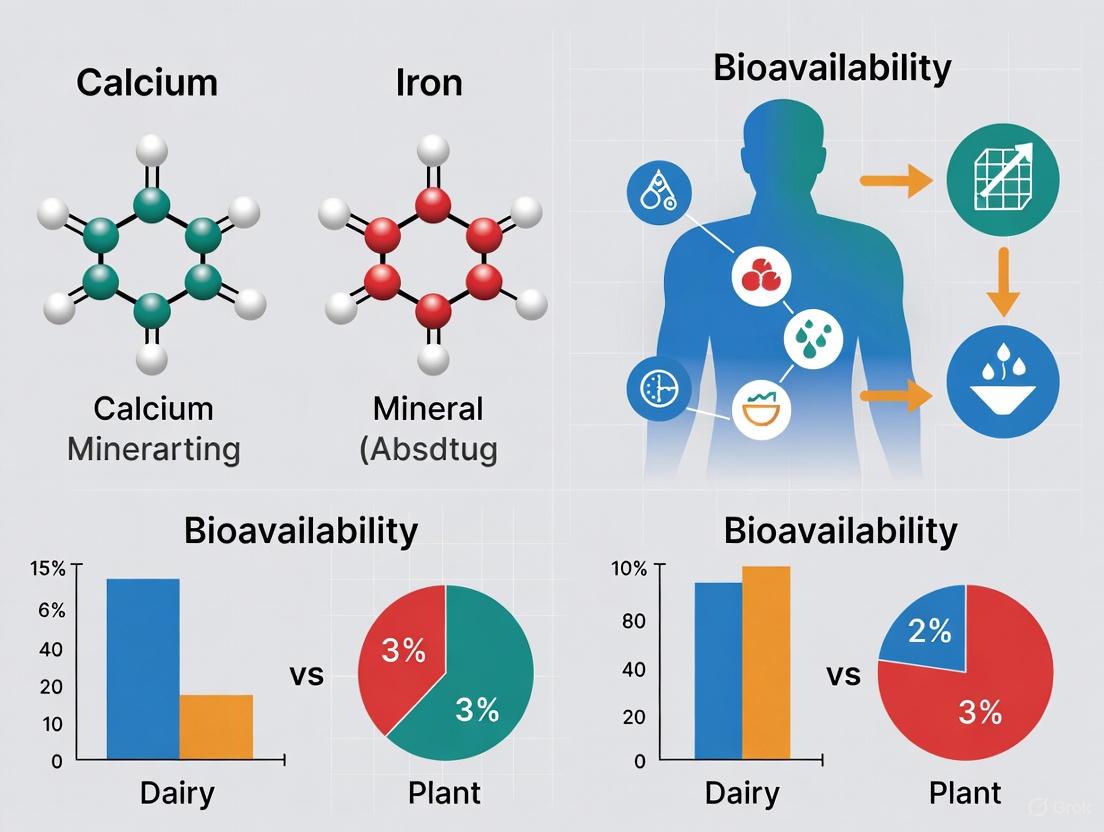
This article provides a comprehensive analysis of the bioavailability of essential minerals from dairy products and plant-based alternatives, tailored for researchers, scientists, and drug development professionals.
Mineral Bioavailability in Dairy vs. Plant Sources: A Scientific Review for Biomedical Research
Abstract
This article provides a comprehensive analysis of the bioavailability of essential minerals from dairy products and plant-based alternatives, tailored for researchers, scientists, and drug development professionals. It explores the foundational mechanisms of mineral absorption, including the pivotal roles of enhancers and inhibitors like phytate and casein phosphopeptides. The scope extends to in vitro and in vivo methodological approaches for assessing bioavailability, strategies to optimize mineral uptake from plant matrices through processing and fortification, and a critical comparative evaluation of nutritional efficacy. By synthesizing current evidence, this review aims to inform the development of nutritional interventions, fortified foods, and bioenhanced pharmaceutical formulations.
Fundamental Mechanisms of Mineral Absorption and Metabolic Fate
Bioavailability, defined as the proportion of an ingested nutrient that is absorbed, utilized, and stored by the body, serves as a critical determinant of nutritional quality. This concept is particularly pivotal in the ongoing scientific comparison between dairy and plant-sourced minerals, where significant differences in absorption and metabolism directly impact dietary recommendations and public health outcomes. For researchers and drug development professionals, understanding the intricate factors governing mineral bioavailability—including chemical speciation, food matrix effects, and inhibitory or enhancing compounds—is essential for developing effective nutritional interventions and fortified foods. This guide provides a comprehensive, data-driven comparison of calcium, iron, and zinc bioavailability from dairy versus plant sources, with additional consideration of magnesium, synthesizing current research findings, experimental methodologies, and key regulatory pathways.
Fundamental Concepts of Mineral Bioavailability
Mineral bioavailability encompasses multiple physiological processes: bioaccessibility (release from the food matrix during digestion), absorption (uptake by intestinal epithelial cells), and utilization (incorporation into biological structures or metabolic processes). Several key factors differentially affect these processes for dairy versus plant-based minerals:
- Inhibitors in Plant Matrices: Plant sources frequently contain phytates (myo-inositol hexakisphosphate) and oxalates that chelate minerals, forming insoluble complexes that dramatically reduce absorption. Spinach, for instance, contains high calcium levels but its bioavailability is negligible (~5%) due to oxalate content [1] [2].
- Enhancers and Promoters: Certain compounds can facilitate mineral absorption. Vitamin C (ascorbic acid) significantly enhances non-heme iron absorption by reducing ferric iron (Fe³⁺) to the more soluble ferrous (Fe²⁺) form and forming absorbable iron-ascorbate complexes [3].
- Chemical Speciation Differences: The chemical form of minerals substantially influences their bioavailability. In dairy, calcium exists primarily as calcium phosphate complexes within casein micelles, while in fortified plant-based beverages, it's often added as calcium carbonate or tricalcium phosphate, with varying solubility and absorption characteristics [1] [4].
- Food Matrix Effects: The overall composition of a food affects mineral release during digestion. The dairy matrix facilitates calcium absorption, while plant cell walls and fiber components can physically entrap minerals, limiting their accessibility to digestive enzymes and absorption transporters [5].
Table 1: Key Factors Influencing Mineral Bioavailability from Dairy and Plant Sources
| Factor | Effect on Bioavailability | Dairy Sources | Plant Sources |
|---|---|---|---|
| Phytate Content | Strongly inhibitory for Ca, Fe, Zn | Minimal | High in grains, legumes, nuts |
| Oxalate Content | Strongly inhibitory for Ca | Minimal | High in spinach, rhubarb, beet greens |
| Vitamin C | Enhances non-heme iron absorption | Low | Variable (high in citrus, peppers) |
| Animal Protein | Enhances zinc and iron absorption | High | Low to absent |
| Calcium Form | Impacts solubility & absorption | Calcium phosphate complexes | Calcium carbonate, tricalcium phosphate in fortified foods |
| Food Matrix | Affects mineral release | Facilitates mineral release | May entrap minerals |
Comparative Bioavailability of Key Minerals
Calcium
Calcium bioavailability varies substantially between dairy and plant sources, with dairy generally providing highly bioavailable calcium, while plant sources show extreme variability.
Table 2: Calcium Bioavailability from Dairy and Selected Plant Sources
| Source | Total Calcium Content (mg/100g FW) | Bioaccessibility/Bioavailability (%) | Key Influencing Factors |
|---|---|---|---|
| Skim Milk | ~120-130 | ~30% [1] | Presence of casein phosphopeptides, lactose |
| Kale | ~150 | ~50% [1] | Low oxalate content |
| Fortified White Bread | Varies (fortified) | ~30% (similar to milk) [1] | Calcium carbonate fortification |
| Spinach | ~100-120 | ~5% (very low) [1] | High oxalate content |
| Plant-Based Beverages | Varies (often fortified) | <10% (when fortified with tricalcium phosphate) [1] | Fortification form (carbonate vs. phosphate) |
| Tahini | ~100-150 | <10% [1] | Phytate content |
| Broccoli | ~40-50 | ~30% (similar to milk) [1] | Low oxalate content |
Dairy calcium exhibits consistent bioavailability due to the presence of casein phosphopeptides formed during digestion, which help maintain calcium in a soluble form, and the effect of lactose, which enhances passive paracellular calcium absorption in the small intestine [2]. The form of calcium in dairy exists primarily as calcium phosphate complexes within casein micelles, which are effectively disrupted during digestion, releasing highly bioaccessible calcium.
In plant sources, bioavailability ranges from very high (kale, broccoli) to negligible (spinach), primarily dictated by oxalate content, with some influence from phytate. Fortified plant-based beverages demonstrate particularly variable bioavailability depending on the fortificant used: calcium carbonate shows ~26-32% bioavailability, approaching that of dairy, while tricalcium phosphate exhibits lower bioavailability (25-30%) due to solubility limitations [4]. This has significant implications for product formulation and nutritional guidance.
Iron
The fundamental distinction between heme and non-heme iron represents the most significant difference in mineral bioavailability between animal and plant sources.
Table 3: Iron Bioavailability from Animal and Plant Sources
| Source | Iron Type | Bioavailability (%) | Key Influencing Factors |
|---|---|---|---|
| Red Meat | Heme iron | 25-30% [6] | Protected from dietary inhibitors |
| Plant Foods | Non-heme iron | 2-10% [6] | Phytate, polyphenols, calcium |
| Vitamin C-Rich Plants | Non-heme iron | Enhanced absorption (up to 4-6x) [3] | Vitamin C content, meal composition |
Heme iron, exclusively found in animal products including dairy (though in minimal amounts), is absorbed via a specific, highly efficient pathway through heme carrier protein 1 (HCP1) and is relatively unaffected by dietary inhibitors. In contrast, non-heme iron from plant sources constitutes the majority of dietary iron but exhibits lower and more variable bioavailability due to multiple inhibitory factors.
The absorption of non-heme iron is strongly inhibited by phytate (even at 2-10mg per meal) and certain polyphenols (e.g., tannins in tea and coffee), with studies showing 50mg of bean polyphenols reducing iron absorption by 14%, and 200mg reducing it by 45% [3]. Calcium also non-specifically inhibits both heme and non-heme iron absorption. Conversely, vitamin C is a potent enhancer, with research indicating that 50mg of vitamin C can counteract the inhibitory effects of up to 100mg of tannic acid, and 30mg can overcome inhibition from up to 60mg of phytic acid [3].
Notably, adaptive mechanisms may increase non-heme iron absorption in individuals following long-term plant-based diets, with some studies showing comparable iron status between vegans and omnivores despite the bioavailability differences, potentially due to higher total iron intake and physiological adaptations [6].
Zinc
Zinc bioavailability is profoundly affected by dietary composition, with plant-based diets presenting particular challenges due to high phytate content.
Table 4: Zinc Bioavailability Influencing Factors and Sources
| Factor/Source | Effect on Zinc Bioavailability | Mechanism/Notes |
|---|---|---|
| Phytate | Strongly inhibitory | Forms insoluble complexes; high in legumes, whole grains |
| Animal Protein | Enhances | May form soluble zinc complexes; cysteine-rich proteins particularly effective |
| Organic Zinc Forms | Enhanced vs. inorganic | Zn-methionine, Zn-amino acid complexes use amino acid transporters |
| Iron Supplementation | Inhibitory (high doses) | Competition for DMT1 transporter |
Zinc absorption occurs primarily in the duodenum and proximal jejunum via specific zinc transporters (ZIP and ZnT families). The presence of phytate in plant foods (particularly whole grains, legumes, and nuts) dramatically reduces zinc bioavailability by forming insoluble complexes that cannot be digested by human enzymes. The phytate:zinc molar ratio serves as a useful predictor of bioavailability, with ratios >15 indicating poor bioavailability [7].
Interestingly, animal proteins enhance zinc absorption, with certain amino acids (particularly histidine and methionine) and peptides forming soluble complexes that may utilize alternative absorption pathways. This explains the generally higher zinc bioavailability from dairy compared to plant sources. Recent research also indicates that organic zinc forms (e.g., zinc methionine, zinc amino acid complexes) exhibit higher bioavailability than inorganic salts (e.g., zinc sulfate), potentially through utilization of amino acid transport systems [7] [8].
Magnesium
While comprehensive comparative bioavailability data for magnesium from dairy versus plant sources is more limited in the provided search results, certain key aspects can be noted. Magnesium absorption occurs throughout the small intestine via both passive paracellular and active transcellular pathways. Similar to other minerals, phytate can inhibit magnesium absorption, though to a lesser extent than for zinc or iron. Plant foods like nuts, seeds, whole grains, and leafy green vegetables are good dietary sources of magnesium, while dairy contains moderate amounts. The presence of fermentable dietary fibers may enhance magnesium absorption in the colon through short-chain fatty acid production, which acidifies the lumen and increases solubility.
Key Experimental Methodologies in Bioavailability Research
In Vitro Digestion Models
In vitro simulation of human digestion provides a controlled, reproducible system for assessing bioaccessibility (the fraction released from the food matrix and available for absorption). The INFOGEST static digestion model has been widely adopted as a standardized protocol, simulating oral, gastric, and intestinal phases with defined electrolytes, enzymes, and physiological parameters [1]. Key steps include:
- Oral Phase: Incubation with simulated salivary fluid (SSF) containing α-amylase at pH 7 for 2 minutes.
- Gastric Phase: Addition of simulated gastric fluid (SGF) containing pepsin, pH adjustment to 3, and incubation for 2 hours.
- Intestinal Phase: Addition of simulated intestinal fluid (SIF) containing pancreatin and bile salts, pH adjustment to 7, and incubation for 2 hours.
Following digestion, the bioaccessible fraction is typically separated by centrifugation and analyzed. Isotopic tracers (e.g., ⁴³Ca) can significantly improve accuracy by distinguishing reagent calcium from naturally occurring calcium in the sample [1] [2].
Diagram 1: In vitro digestion workflow
Cell Culture Models
The Caco-2 human intestinal cell line, which spontaneously differentiates into enterocyte-like cells, provides a robust model for studying mineral absorption and transport. The experimental workflow typically involves:
- Cell Culture: Maintenance of Caco-2 cells in appropriate media until confluence.
- Differentiation: Culture for 14-21 days on permeable filters to form polarized monolayers with tight junctions and brush border enzymes.
- Treatment Application: Addition of bioaccessible fractions from in vitro digestion to the apical compartment.
- Transport Assessment: Measurement of mineral transport to the basolateral compartment over time, often using isotopic tracers.
- Transporter Expression: Analysis of gene or protein expression of relevant transporters (DMT1, ferroportin, ZIPs, ZnTs).
Caco-2 cells express relevant mineral transporters and mimic the intestinal barrier, allowing study of both absorption and the effects of food components on transporter activity [7].
In Vivo Studies
Human and animal studies provide the most physiologically relevant bioavailability data but are resource-intensive. Common approaches include:
- Iron Bioavailability: Often assessed using erythrocyte incorporation of stable iron isotopes (⁵⁷Fe, ⁵⁸Fe) administered with test meals, with blood samples collected over 10-14 days.
- Calcium Absorption: Can be determined using dual-stable isotope techniques (oral ⁴⁴Ca and intravenous ⁴²Ca) with mass spectrometric analysis of urinary excretion.
- Biomarker Monitoring: Measurement of serum mineral levels, mineral-dependent enzymes, or functional endpoints (e.g., bone mineral density for calcium).
Recent in vivo research has demonstrated the efficacy of innovative plant-based nutraceuticals formulated to minimize inhibitors and enhance iron bioavailability in deficient models [3].
Mineral Absorption Pathways and Molecular Mechanisms
Iron Absorption Pathways
Diagram 2: Iron absorption pathways
Iron absorption occurs primarily in the duodenum and is precisely regulated. Heme iron from animal sources enters enterocytes via heme carrier protein 1 (HCP1), after which heme oxygenase releases ferrous iron. Non-heme iron (primarily ferric, Fe³⁺) must first be reduced to ferrous iron (Fe²⁺) by duodenal cytochrome B (DcytB) at the brush border membrane before transport via divalent metal transporter 1 (DMT1) [6].
Once inside the enterocyte, iron can be stored as ferritin or exported to circulation via ferroportin. The ferrous iron is then oxidized to ferric iron by hephaestin and bound to transferrin for systemic distribution. The hormone hepcidin serves as the master regulator of iron homeostasis by controlling ferroportin degradation in response to iron stores and inflammation [6].
Zinc Absorption Pathways
Diagram 3: Zinc absorption and regulation
Zinc absorption occurs primarily in the duodenum and jejunum through two major transporter families with opposing functions. ZIP (Zrt-, Irt-like protein) transporters, located on the apical membrane of enterocytes, facilitate zinc uptake into the enterocytes. In contrast, ZnT transporters on the basolateral membrane mediate zinc efflux into the portal circulation [7].
Intracellular zinc homeostasis is regulated by metallothionein, which buffers cellular zinc levels by binding excess zinc. During low zinc intake, metallothionein expression decreases, allowing more free zinc for basolateral export. When zinc intake is high, metallothionein synthesis increases, sequestering zinc within the enterocyte, which is subsequently lost during enterocyte sloughing [7]. This post-absorptive regulation provides a rapid response mechanism to maintain zinc homeostasis.
Calcium Absorption Pathways
Calcium absorption occurs via two primary mechanisms:
- Transcellular active transport: Dominant at low to moderate calcium intakes and vitamin D-dependent, involving apical TRPV6 channels, intracellular binding to calbindin D9k, and basolateral export via PMCA1b.
- Paracellular passive diffusion: Predominant at high calcium intakes, occurring throughout the small intestine via tight junctions.
Vitamin D is the primary regulator of active calcium absorption through genomic upregulation of TRPV6 and calbindin expression. The soluble fraction of calcium in the intestinal lumen is critical for both pathways, explaining why compounds affecting solubility (oxalates, phytates) profoundly impact bioavailability.
The Scientist's Toolkit: Research Reagent Solutions
Table 5: Essential Research Reagents for Mineral Bioavailability Studies
| Reagent/Assay | Application | Key Features & Considerations |
|---|---|---|
| INFOGEST Standardized Solutions | In vitro digestion simulation | Standardized electrolyte, enzyme, bile salt compositions for oral, gastric, intestinal phases |
| Caco-2 Cell Line | Intestinal absorption studies | Human colorectal adenocarcinoma cells that differentiate into enterocyte-like phenotype |
| Stable Isotopes (⁴⁴Ca, ⁴⁵Ca, ⁵⁷Fe, ⁶⁷Zn) | Metabolic tracer studies | Enables precise tracking of mineral absorption, distribution; avoids radiation hazards |
| ICP-MS (Inductively Coupled Plasma Mass Spectrometry) | Elemental analysis | Ultra-sensitive detection of multiple minerals simultaneously; can interface with HPLC |
| DMT1/Ferroportin Antibodies | Transporter expression studies | Western blot, immunohistochemistry for iron transporter quantification |
| ZIP/ZnT Transporter Assays | Zinc transport studies | siRNA knockdown, overexpression models to study specific transporter functions |
| Phytase/Oxalate Assay Kits | Inhibitor quantification | Enzymatic/colorimetric determination of phytate, oxalate in food samples |
The bioavailability of essential minerals varies substantially between dairy and plant sources, with dairy generally providing highly bioavailable forms of calcium and zinc, while plant sources offer more variable bioavailability depending on their inhibitor and enhancer profiles. Iron presents the most striking difference, with heme iron from animal sources exhibiting superior bioavailability compared to non-heme iron from plants, though this can be modulated by dietary factors. Understanding these differences is crucial for developing evidence-based dietary recommendations, effective fortification strategies, and therapeutic interventions for populations at risk of mineral deficiencies. Future research should focus on optimizing plant-based diets through strategic food combinations, processing techniques to reduce inhibitors, and improved fortification approaches to enhance mineral bioavailability from sustainable food sources.
Minerals are essential for numerous physiological functions, but their bioavailability—the proportion that is absorbed, utilized, and stored by the body—varies significantly between food sources. Dairy milk has long been recognized as a rich and bioavailable source of essential minerals, serving as a natural benchmark against which other sources can be compared. The high bioavailability of minerals in dairy is attributed to its native molecular complexes and cofactors, such as the presence of binding proteins (e.g., caseinophosphopeptides) and the absence of inhibitory substances common in plant foods. In contrast, plant-based sources often contain compounds like phytates and oxalates that can strongly bind minerals, rendering them less accessible for absorption. This guide objectively compares the mineral bioavailability from dairy and plant sources, providing researchers and scientists with a synthesis of current experimental data and the methodologies used to generate it. Understanding these differences is critical for nutritional science, public health policy, and the development of effective mineral-fortified foods and supplements.
Quantitative Comparison of Mineral Content and Bioavailability
The nutritional value of a mineral source is determined by both its total mineral content and its bioavailability. The following tables summarize key experimental data comparing these parameters between dairy and various plant-based alternatives.
Table 1: Gross Mineral Content in Dairy and Plant-Based Foods (per 100 g fresh weight)
| Food Source | Calcium (mg) | Iron (mg) | Zinc (mg) | Reference / Notes |
|---|---|---|---|---|
| Bovine Skimmed Milk | ~1200 [1] | - | - | Value estimated from context as a reference point. |
| Fortified White Bread | 959 [1] | - | - | Fortified with calcium carbonate. |
| Kale | 2455 [9] | 0.47-180.03 [9] | 0.06-56.10 [9] | Wide range due to species and cultivation practices (mg/100g dry weight). |
| Spinach | 131.7 [10] | 27.0 [10] | 0.85 [10] | Figures for raw, edible portion. |
| Plant-Based Beverages | Variable, often low [1] [11] | Variable [11] | Variable [11] | High variability; many are fortified. |
| Leafy Vegetables (General) | 24.49–2455 [9] | 0.47–180.03 [9] | 0.06–56.10 [9] | Extreme variability (mg/100g dry weight). |
Table 2: Bioaccessibility/Bioavailability of Minerals from Different Sources
| Food Source | Calcium Bioaccessibility | Iron Bioavailability | Zinc Bioavailability | Key Inhibiting Factors |
|---|---|---|---|---|
| Bovine Skimmed Milk | ~30% [1] | - | - | Favorable matrix with enhancing factors. |
| Kale | High (5x milk supply/serving) [1] | - | - | Lower levels of antinutrients. |
| Fortified White Bread | High (similar to milk) [1] | - | - | Calcium carbonate is a bioaccessible form. |
| Spinach | Very Low (∼0.1%) [1] | Low [10] | - | Very high oxalate content. |
| Plant-Based Beverages | Low (<10%) [1] | - | - | Use of low-solubility tricalcium phosphate; phytates. |
| Leafy Vegetables (Cooked) | 3.0–75.8% (Bioaccessibility) [9] | 1.9–16.44% [9] | ~13.7% [9] | Antinutrients reduced by processing. |
Table 3: Impact of Processing on Mineral Retention and Bioaccessibility
| Processing Method | Average Mineral Loss | Impact on Bioaccessibility | Key Evidence |
|---|---|---|---|
| Boiling | 24.16–71.54% [9] | Increased (due to reduction of antinutrients) [9] | Significant leaching of minerals into cooking water [9]. |
| Steaming | 14.36–29.04% [9] | Increased (due to reduction of antinutrients) [9] | Preferred method for better mineral retention [9]. |
Detailed Experimental Protocols for Assessing Bioavailability
A critical understanding of the data presented above requires familiarity with the experimental models used to determine mineral bioaccessibility and bioavailability. The following section details the key methodologies cited in the comparative literature.
The INFOGEST Static Digestion Model
This standardized in vitro protocol is widely used to simulate human gastrointestinal digestion to assess bioaccessibility—the fraction of a compound released from its food matrix and made soluble in the gut, thus potentially available for absorption [12].
- Procedure:
- Gastric Phase: The food sample is mixed with simulated gastric juice (containing pepsin) and the pH is reduced to 3.0 using HCl. The mixture is incubated for a set period (e.g., 2 hours) under constant agitation at 37°C.
- Intestinal Phase: The gastric chyme is mixed with simulated intestinal juice (containing pancreatin and bile salts). The pH is raised to 7.0 using NaHCO₃ and incubated for another 2 hours (e.g., 2 hours) at 37°C.
- Measurement of Bioaccessibility: After intestinal digestion, the sample is centrifuged. The mineral content in the supernatant (soluble fraction) represents the bioaccessible amount. It is quantified using techniques like Atomic Absorption Spectrophotometry (AAS) or Inductively Coupled Plasma Mass Spectrometry (ICP-MS) [1] [12]. Isotopic tracers (e.g., ⁴³Ca) can be used to improve the accuracy of calcium bioaccessibility measurements by distinguishing reagent calcium from sample calcium [1].
- Application: This model was used to demonstrate the low calcium bioaccessibility (<10%) in plant-based beverages and spinach, contrasting with the high bioaccessibility in milk and fortified bread [1].
Dialyzability Method
This method, an extension of basic solubility assays, estimates bioaccessibility by measuring the fraction of a mineral that is not only soluble but also of low molecular weight, capable of passing through a semi-permeable membrane, mimicking passage across the intestinal mucosa [12].
- Procedure:
- In Vitro Digestion: The sample undergoes a simulated gastric and intestinal digestion as described in the INFOGEST model.
- Dialysis: During or after the intestinal digestion, the sample is placed in a dialysis bag or tube with a specific molecular weight cutoff. This apparatus is immersed in a buffer.
- Incubation and Analysis: The system is incubated to allow low-molecular-weight, soluble minerals to diffuse through the membrane into the buffer. The mineral content in this dialysate is then analyzed [12].
Caco-2 Cell Model
This model goes a step beyond bioaccessibility to assess a component of bioavailability—specifically, intestinal cell uptake and transport [12].
- Cell Culture: Caco-2 cells, derived from human colon adenocarcinoma, are cultured on permeable supports (Transwell inserts). Upon differentiation, they form a polarized monolayer that morphologically and functionally resembles small intestinal enterocytes.
- Procedure:
- Sample Preparation: The food sample is first subjected to an in vitro gastric and intestinal digestion.
- Bioavailability Assay: The digested sample (the bioaccessible fraction) is applied to the apical (luminal) side of the Caco-2 cell monolayer.
- Measurement: After incubation, mineral uptake is measured by analyzing the mineral content within the cells. Mineral transport is measured by analyzing the mineral content that has passed through the cell monolayer to the basolateral side [12].
- Limitation: It is crucial to note that this model measures uptake and transport, not systemic utilization, and is therefore a component of, not a complete measure for, true in vivo bioavailability [12].
Molar Ratio Predictions
For rapid screening, the bioavailability of certain minerals can be predicted by calculating the molar ratios of antinutrients to minerals in the food.
- Procedure:
- Chemical Analysis: The concentrations of minerals (e.g., Ca, Fe, Zn) and antinutrients (e.g., phytate, oxalate) in a food are determined via standard methods (AAS, titration) [10].
- Calculation: Key ratios are calculated, including:
- Application: This method was used to predict the adequacy of calcium and zinc, but not iron, in traditional vegetables consumed by the Gumuz community in Ethiopia [10].
The relationships and workflows of these experimental methods are summarized in the diagram below.
The Scientist's Toolkit: Key Research Reagents and Materials
To conduct the experiments described in this guide, researchers require specific reagents, models, and analytical equipment. The following table details essential solutions and materials for this field of study.
Table 4: Essential Research Reagents and Materials for Mineral Bioavailability Studies
| Reagent / Material | Function / Application | Key Considerations |
|---|---|---|
| INFOGEST Simulated Juices | Standardized solutions of electrolytes, enzymes (pepsin, pancreatin), and bile salts to mimic human gastric and intestinal digestion [1]. | Adherence to the standardized INFOGEST protocol is critical for inter-laboratory reproducibility. |
| Isotopic Tracers (e.g., ⁴³Ca) | Used as a tracer to accurately distinguish reagent calcium from calcium released from the food sample during in vitro digestion, improving measurement accuracy [1]. | Requires access to specialized instrumentation like ICP-MS for detection. |
| Caco-2 Cell Line (HTB-37) | A human epithelial colorectal adenocarcinoma cell line that, upon differentiation, forms a polarized monolayer used as an in vitro model of the human intestinal epithelium for uptake/transport studies [12]. | Requires strict cell culture conditions and validation of monolayer integrity (e.g., via transepithelial electrical resistance). |
| Transwell Inserts | Permeable supports for growing Caco-2 cells, allowing separate access to the apical (luminal) and basolateral (serosal) compartments to study mineral transport [12]. | Various pore sizes and membrane materials are available; selection depends on experimental needs. |
| Atomic Absorption Spectrophotometry (AAS) | An analytical technique used for quantifying specific mineral elements in digested samples, dialysates, or cell lysates by measuring the absorption of optical radiation by free atoms in the gas state [10]. | |
| Inductively Coupled Plasma Mass Spectrometry (ICP-MS) | A highly sensitive analytical technique used for the multi-elemental detection and quantification of trace minerals in biological samples at very low concentrations [13] [14]. | Capable of handling complex matrices and detecting isotopic labels. |
| Dialyzation Tubing | Semi-permeable membranes with a specific molecular weight cutoff (e.g., 12-14 kDa) used in dialyzability methods to separate low-molecular-weight, bioaccessible minerals from larger food digesta components [12]. |
The experimental data and methodologies compiled in this guide unequivocally demonstrate that dairy milk serves as a high-value benchmark for mineral bioavailability, particularly for calcium. Its natural composition provides minerals in a physicochemical form that is highly soluble and accessible following digestion. In contrast, the bioavailability of minerals from plant-based sources is highly variable and often substantially lower, primarily due to the presence of inherent antinutritional factors like phytates and oxalates.
While certain plant foods like kale and calcium-carbonate-fortified bread can serve as good sources of bioaccessible calcium, many others, including spinach and plant-based beverages fortified with insoluble salts, perform poorly. The choice of experimental model—from simple molar ratios and bioaccessibility assays to more complex cell cultures—depends on the research question, with each method providing a different level of insight into the complex journey of a mineral from food to the human body. For researchers and product developers, this evidence underscores the necessity of looking beyond gross mineral content and carefully considering the food matrix, the chemical form of fortified minerals, and the potential impact of processing when evaluating or designing mineral-rich foods.
The shift toward plant-based diets has brought increased attention to the nutritional composition of plant foods and their efficacy as primary mineral sources. While plants contain essential minerals, their bioavailability—the proportion absorbed and utilized by the body—is critically influenced by the presence of naturally occurring antinutrients [15] [16]. These compounds, primarily phytates and oxalates, can form insoluble complexes with minerals, significantly reducing their solubility and subsequent absorption [17]. This review objectively compares the mineral bioavailability from dairy versus plant sources, framing the discussion within the broader context of nutritional science and public health. It synthesizes experimental data on the mechanisms by which antinutrients impair mineral solubility and outlines strategies to mitigate these effects, providing a comparative guide for researchers and industry professionals.
Mineral Profiles of Dairy vs. Plant-Based Alternatives
A direct comparison of mineral content reveals significant differences between cow's milk and plant-based milk alternatives (PBMA). As illustrated in Table 1, the mineral profile varies considerably across beverage types [18] [11] [19].
Table 1: Comparative Mineral Composition of Cow's Milk and Plant-Based Milk Alternatives (Generalized Profile)
| Mineral | Cow's Milk | Soya PBMA | Almond PBMA | Oat PBMA | Rice PBMA | Coconut PBMA |
|---|---|---|---|---|---|---|
| Calcium (Ca) | Moderate | Variable (Often fortified) | Variable (Often fortified) | Variable (Often fortified) | Variable (Often fortified) | Variable (Often fortified) |
| Phosphorus (P) | High | Moderate to High | Low | Low | Low | Low |
| Magnesium (Mg) | Moderate | High | Moderate | Low | Low | Low |
| Zinc (Zn) | High | Low | Low | Low | Low | Low |
| Selenium (Se) | High | Below quantification | Below quantification | Below quantification | Below quantification | Below quantification |
| Iodine (I) | High | Low | Similar to milk (in some) | Low | Low | Low |
| Iron (Fe) | Low | Moderate to High | Low | Low | Low | Low |
| Potassium (K) | High | Similar to milk | Low | Low | Low | Low |
Soya-based drinks often contain higher levels of certain minerals like magnesium and copper compared to cow's milk [18]. However, a critical finding is that the selenium content in all analyzed plant-based drinks was below the quantification limit, whereas cow's milk is a reliable source of this essential trace element [18]. Furthermore, due to the high natural variability in fortification and base ingredients, it is difficult to state that plant-based alternatives can reliably substitute milk as a consistent mineral source [18].
Beyond mere presence, the protein quality of a source, often measured by the Digestible Indispensable Amino Acid Score (DIAAS), is a key differentiator. Cow's milk protein is outstanding, with DIAAS values exceeding 100% for all indispensable amino acids [20] [19]. In contrast, plant-based drinks generally exhibit lower DIAAS values. For example, oat and almond beverages show particularly low scores for lysine (34-73%) and tryptophan (94-95%), indicating their protein is less complete and bioavailable [20].
Antinutrient Mechanisms and Impact on Mineral Bioavailability
Phytates (Phytic Acid)
Phytic acid is a primary storage form of phosphorus in cereals, legumes, nuts, and oil seeds [17]. Its strong chelating ability allows it to bind divalent and trivalent metal ions such as zinc, iron, calcium, and magnesium [16]. The resulting phytate-mineral complexes are insoluble in the small intestine, making the bound minerals unavailable for absorption [17] [16]. This is a major concern in regions where diets are heavily reliant on these food groups, contributing to mineral deficiencies [16]. The negative impact of phytates is particularly pronounced for zinc and non-heme iron, whose absorption can be severely curtailed even at low phytate concentrations [16].
Oxalates (Oxalic Acid)
Oxalic acid is a dicarboxylic acid prevalent in many leafy greens, such as spinach, rhubarb, and tea [21] [22]. Similar to phytates, oxalates have a strong affinity for divalent cations, especially calcium [22]. The formation of insoluble calcium oxalate crystals is a key mechanism that drastically reduces calcium bioavailability [22] [16]. For instance, while spinach is high in calcium, its absorption is very low (~5%) due to the high oxalate content, whereas calcium from low-oxalate dairy is absorbed at a much higher rate (~32%) [16]. The soluble form of oxalate is more readily absorbed in the human body and is associated with an increased risk of kidney stones, whereas the insoluble form is less bioavailable [22].
Table 2: Impact of Antinutrients on Key Mineral Bioavailability
| Mineral | Primary Antinutrient Inhibitors | Key Mechanisms | Dietary Consequences |
|---|---|---|---|
| Calcium (Ca) | Oxalates, Phytates | Formation of insoluble calcium oxalate; phytate complexes reduce solubility [22] [16]. | Low absorption from high-oxalate greens (e.g., spinach); dairy calcium is highly bioavailable [16]. |
| Iron (Fe) | Phytates, Tannins | Phytates form insoluble complexes; tannins chelate iron, reducing absorption [17] [16]. | Major cause of iron deficiency in plant-based diets; non-heme iron absorption is significantly inhibited [16]. |
| Zinc (Zn) | Phytates | Strong chelation forms insoluble complexes in the gut, preventing absorption [17] [16]. | High prevalence of zinc deficiency in populations consuming cereal-heavy diets [16]. |
| Magnesium (Mg) | Phytates, Oxalates | Chelation by phytates and oxalates forms insoluble salts [22]. | Bioavailability can be reduced in whole grains and high-oxalate vegetables. |
The following diagram illustrates the journey of minerals from food consumption to absorption, highlighting the critical points where antinutrients interfere.
Figure 1: Pathway of Mineral Bioavailability and Antinutrient Interference. This figure visualizes how dietary minerals can form either soluble complexes for absorption or insoluble complexes with antinutrients, leading to excretion.
Experimental Data and Methodologies for Analysis
Protocols for Quantifying Antinutrients and Mineral Bioavailability
1. UPLC-QqQ-MS/MS for Oxalate Quantification A highly sensitive and high-throughput technique for oxalate detection was established using ultra-high-performance liquid chromatography–triple quadrupole tandem mass spectrometry (UPLC-QqQ-MS/MS) [21]. This method is particularly effective for complex sample matrices where oxalate levels are low.
- Workflow: Samples are prepared and injected into the UPLC system. The hydrophilic interaction liquid chromatography (HILIC) column effectively retains and separates the highly polar oxalate. Detection is then performed using the multiple reaction monitoring (MRM) mode of the QqQ-MS/MS, which scans for specific precursor and product ion transitions unique to oxalate [21].
- Key Parameters: The method demonstrated strong linearity (correlation coefficient r = 0.99906), recovery rates between 93.61% and 107.37%, and a relative standard deviation (RSD) of less than 14.8%, confirming its precision and accuracy for quantifying oxalate in foods like sweet corn and spinach [21].
2. Inductively Coupled Plasma–Optical Emission Spectroscopy (ICP-OES) for Mineral Profiling This technique was used to characterize the mineral profile of cow's milk and various plant-based milk alternatives [18].
- Workflow: Liquid beverage samples are typically digested with acid to break down organic matrices and create a solution for analysis. The solution is nebulized into an argon plasma, where atoms are excited to higher energy states. As they return to ground state, they emit element-specific light, which is measured by an optical spectrometer [18].
- Application: This method allows for the simultaneous quantification of multiple minerals (e.g., Ca, Mg, Cu, Zn, Se) in a single sample run, providing a comprehensive mineral profile for comparative studies [18].
3. In Vitro Bioavailability assays These simulated digestion models estimate mineral bioaccessibility.
- Protocol: Samples are subjected to sequential enzymatic digestion mimicking the mouth, stomach, and small intestine conditions using enzymes like pepsin and pancreatin. The fraction of the mineral that becomes solubilized and available for absorption in the intestinal phase is measured, often using ICP-OES or other analytical methods [16]. This soluble fraction is considered the "bioaccessible" portion.
The experimental workflow for a comprehensive analysis is summarized below.
Figure 2: Experimental Workflow for Nutritional Composition Analysis. This diagram outlines the key steps for the simultaneous analysis of minerals, antinutrients, and protein quality to build a comprehensive nutritional profile.
The Scientist's Toolkit: Key Research Reagent Solutions
Table 3: Essential Reagents and Materials for Research on Antinutrients and Mineral Bioavailability
| Research Reagent / Material | Function and Application in Analysis |
|---|---|
| UPLC-QqQ-MS/MS System | High-sensitivity quantification of specific antinutrients like oxalate in complex food matrices using MRM mode [21]. |
| ICP-OES Spectrometer | Multi-element analysis for determining the total mineral content (e.g., Ca, Zn, Fe, Mg) in food and digesta samples [18]. |
| HILIC Chromatography Column | Stationary phase designed for the separation of highly polar compounds like organic acids (oxalate) in UPLC-MS systems [21]. |
| Enzymes (Pepsin, Pancreatin) | Used in in vitro simulated digestion models to break down food matrices and assess mineral bioaccessibility [16]. |
| Certified Reference Materials | Standard reference materials with certified mineral/analyte concentrations for calibration and validation of analytical methods [18] [21]. |
| Oxalate Oxidase / AAE3 Enzyme | Key enzymes used in enzymatic assays for oxalate or in genetic engineering strategies to develop low-oxalate crops [21] [22]. |
Strategies to Mitigate Antinutrient Effects
Several processing and dietary strategies can reduce antinutrient levels or mitigate their effects, thereby improving mineral solubility and bioavailability from plant sources.
- Traditional Processing Methods: Techniques such as fermentation, germination (sprouting), soaking, and thermal processing (cooking, autoclaving) are highly effective. Fermentation and germination leverage endogenous or microbial enzymes to hydrolyze phytates [17]. Soaking allows for the leaching of water-soluble antinutrients like oxalates into the soak water, which is then discarded [17]. Boiling is particularly effective for reducing soluble oxalates; for example, boiling rhubarb stalks significantly lowered oxalate content [22].
- Genetic Modification: Biotechnological approaches are being explored to develop low-antinutrient crops. For instance, overexpression of the O7 gene (oxalyl-CoA synthetase) in maize reduced kernel oxalate content by approximately 43% and concurrently increased micronutrients like zinc [21]. Similarly, targeting genes involved in oxalate biosynthesis or phytate metabolism can create plant varieties with improved nutritional profiles [21] [22].
- Dietary Management and Formulation: Simple dietary choices can enhance mineral absorption. Consuming vitamin C-rich foods alongside plant-based meals can chelate non-heme iron, markedly improving its absorption by counteracting the effects of phytates [16]. Furthermore, protein complementation—combining different plant protein sources like grains and legumes—ensures a complete amino acid profile and can improve overall protein quality and utilization [16]. Avoiding tea and coffee near meals can also minimize the inhibitory effects of tannins on iron absorption [16].
The scientific evidence clearly demonstrates that the high mineral content in many plant foods does not directly translate to high nutritional value due to the inhibitory actions of antinutrients like phytates and oxalates. Dairy milk provides a consistent and bioavailable source of essential minerals, supported by its high-quality protein matrix and low levels of these antinutrients [18] [11] [19]. In contrast, the mineral bioavailability from plant-based alternatives is highly variable and often compromised [16]. While processing technologies and dietary strategies can significantly improve the nutritional quality of plant foods, careful planning is essential. For individuals relying heavily on plant-based diets, a conscious combination of food selection, processing, and potential fortification is necessary to ensure adequate mineral intake and avoid long-term deficiencies. Future research should focus on optimizing these strategies and developing improved plant varieties through breeding and biotechnology to enhance global nutrition.
The bioavailability of dietary minerals—governed by a complex interplay between host physiology, dietary composition, and gut microbial activities—represents a critical determinant of nutritional status and overall health. This guide provides a comparative analysis of mineral bioavailability from dairy and plant-based sources, focusing on the mechanistic role of the gut microbiome in mediating these processes. We examine how microbial transformations either enhance or inhibit mineral absorption and present experimental data and protocols relevant for researchers and drug development professionals investigating nutrient-microbe interactions.
The gut microbiome influences mineral bioavailability through multiple mechanisms, including acidification via short-chain fatty acids (SCFAs), chelation through siderophores, and enzymatic liberation from mineral complexes [23]. Conversely, minerals shape microbial community structure, creating a bidirectional relationship crucial for maintaining mineral homeostasis [23]. Understanding these interactions is particularly important when comparing mineral sources; dairy minerals often demonstrate high inherent bioavailability, whereas minerals from plant sources may be sequestered by compounds like phytates, requiring microbial intervention for liberation [24] [25].
Mechanisms of Microbial-Mediated Mineral Absorption
Microorganisms enhance mineral bioavailability through specific biochemical processes that transform insoluble mineral forms into absorbable nutrients. The table below summarizes these key mechanisms.
Table 1: Microbial Mechanisms Influencing Mineral Bioavailability
| Mechanism | Target Minerals | Microbial Process | Effect on Bioavailability |
|---|---|---|---|
| Acid Production | Calcium, Phosphorus, Magnesium | Production of SCFAs (e.g., acetate, butyrate) lowers luminal pH [23]. | Increased solubility and transepithelial transport of minerals [23]. |
| Siderophore Production | Iron | Secretion of high-affinity iron-chelating molecules (e.g., by Pseudomonas, Streptomyces) [26]. | Sequesters iron from insoluble oxides, enhancing its solubility and uptake [26]. |
| Phytase Enzymes | Phosphorus, Calcium, Iron, Zinc | Hydrolysis of phytic acid present in plant-based foods [23]. | Releases bioavailable forms of minerals from insoluble phytate complexes [23]. |
| Redox Reactions | Iron, Manganese | Microbial respiration alters metal oxidation states (e.g., reduction of Fe³⁺ to Fe²⁺) [26]. | Increases solubility of metal-containing minerals [26]. |
The following diagram illustrates the coordinated interplay between these microbial processes and host absorption in the gut.
Comparative Bioavailability: Dairy vs. Plant-Based Minerals
Nutritional Composition and Clinical Evidence
Dairy products and plant-based alternatives differ significantly in their inherent mineral content and the bioavailability of these nutrients. The following table compares key mineral metrics, drawing on compositional analyses and clinical findings.
Table 2: Mineral Content and Bioavailability: Dairy vs. Plant-Based Milk Alternatives
| Mineral / Parameter | Bovine Skim Milk | Soy-Based Beverage | Almond-Based Beverage | Key Research Findings |
|---|---|---|---|---|
| Protein (g/100g) | 3.3 [24] | ~3.2 (varies by product) [24] | 0.5 [24] | Dairy protein has a superior Digestible Indispensable Amino Acid Score (DIAAS) of 100 vs. 40-60 for plant proteins [24]. |
| Calcium | Natural content | Often fortified to match dairy [25] | Often fortified to match dairy [25] | Bioavailability: A systematic review concluded that calcium from fortified plant-based drinks is not as bioavailable as that from cow's milk [24]. |
| Iodine | Significant natural source [25] | Low, unless fortified [25] | Low, unless fortified [25] | An Australian audit found only 3.1% of plant-based milks were fortified with iodine, making them significantly lower than cow's milk [25]. |
| Zinc & Phosphorus | Significant natural source [25] | Lower than cow's milk [25] | Lower than cow's milk [25] | Microbes (e.g., Lactobacillus plantarum) can improve zinc status through synergistic action when supplemented with zinc [23]. |
| Iron | Not a primary source | Variable; phytic acid can inhibit absorption [23] | Variable; phytic acid can inhibit absorption [23] | Microbes enhance iron solubility via siderophores and SCFAs [23] [26]. Iron supplements can negatively alter gut microbiota, increasing enteropathogens [23]. |
The Role of the Matrix and Microbial Liberation
The fundamental difference in mineral bioavailability often lies in the food matrix. The dairy matrix encapsulates minerals in a complex with proteins and lipids, which can protect them during digestion and facilitate absorption [24]. In contrast, plants frequently contain antinutritional factors such as phytates and oxalates, which bind minerals into insoluble complexes in the gut, rendering them unavailable for direct host uptake [23].
This is where microbial activity becomes crucial. Phosphate-solubilizing bacteria, including species of Pseudomonas and Bacillus, secrete organic acids that chelate metal ions and directly hydrolyze phytates [26]. This microbial transformation is a prerequisite for the absorption of minerals from many plant sources, a process less critical for the more readily available minerals in dairy.
Experimental Protocols for Assessing Mineral Bioavailability
In Vivo Protocol: Evaluating Mineral Bioavailability with Yeast Supplementation
This protocol is adapted from a 2025 study investigating how live yeast supplementation affects trace mineral solubility in the rumen and subsequent bioavailability in growing lambs, a model relevant to human mineral absorption studies [27].
- Objective: To evaluate the effects of a dietary intervention (yeast supplementation) on trace mineral (TM) concentrations in rumen fluid, blood serum, and meat, and to assess growth performance.
- Experimental Design:
- Subjects: 24 healthy growing Awassi lambs (3-4 months old).
- Groups: Random assignment to three treatment groups (n=8/group):
- YS0.00: Control (0.00 g yeast/lamb/day)
- YS1.50: 1.50 g live yeast/lamb/day
- YS3.00: 3.00 g live yeast/lamb/day
- Diet: All lambs fed a pelleted Total Mixed Ration (TMR) offered at 3.0% of body weight, with water provided ad libitum [27].
- Key Methodologies:
- Supplementation: Live yeast (Saccharomyces cerevisiae) was administered daily via an oral drench.
- Performance Monitoring: Feed intake and body weight were measured every four weeks over the 8-week trial.
- Sample Collection: At trial termination, samples of blood serum, rumen fluid, and meat (Longissimus dorsi muscle) were collected.
- Mineral Analysis: Concentrations of Fe, Cu, Zn, I, Se, and Co in all samples were determined using Inductively Coupled Plasma Optical Emission Spectrometry (ICP-OES) [27].
- Statistical Analysis: Data were analyzed to identify significant differences (p < 0.05) between treatment groups and to compute correlations between TM concentrations in different tissues.
- Key Findings: Yeast supplementation at 1.50 g/day significantly increased serum levels of Mn, Cu, and Se and increased the concentration of most TMs in meat. Strong positive correlations were found between TM levels in rumen fluid and meat, indicating improved mineral transfer and bioavailability [27].
In Vitro & Clinical Assessment Protocol
For research on human nutrition, a combination of in vitro and clinical approaches is applicable.
- In Vitro Digestion & Bioaccessibility Models:
- Simulated Gastrointestinal Digestion: Subject food samples to a simulated oral, gastric, and intestinal digestion using standardized enzymes and pH conditions.
- Colon Fermentation: Incubate the digested material with a human fecal microbiota in an anaerobic chamber to simulate microbial fermentation in the colon.
- Mineral Analysis: Measure soluble mineral content in the supernatant of fermented samples using ICP-OES or ICP-MS to estimate bioaccessibility [23].
- Clinical Trial Design:
- Cohort: Recruit cohorts with specific micronutrient deficiencies or at-risk populations (e.g., children, elderly).
- Intervention: Administer a specific dietary intervention (e.g., fortified plant beverage vs. dairy milk) or a probiotic/synbiotic (e.g., Lactobacillus plantarum with a prebiotic).
- Outcome Measures: Primary outcomes include changes in blood mineral levels. Secondary outcomes can include markers of gut health, inflammation, and comprehensive microbiome analysis (16S rRNA sequencing) to correlate microbial shifts with mineral status [23].
The Scientist's Toolkit: Key Research Reagents & Solutions
Table 3: Essential Reagents for Investigating the Gut-Mineral Axis
| Reagent / Material | Function & Application | Example Use Case |
|---|---|---|
| Live Yeast (Saccharomyces cerevisiae) | Dietary supplement to modulate rumen/gut microbiota, improving fiber digestion and mineral absorption [27]. | In vivo studies on ruminants to enhance trace mineral bioavailability in serum and meat [27]. |
| Specific Probiotic Strains (e.g., Lactobacillus plantarum, Bifidobacterium lactis) | Defined microbial interventions to study impact on mineral status; often used in synbiotic formulations with prebiotics [23]. | Clinical trials to alleviate mineral deficiencies and study host-microbiome interactions [23]. |
| Mineral Solubilizing Microbes (e.g., Pseudomonas, Bacillus megaterium) | Model organisms for studying microbial phosphate, zinc, and silica solubilization mechanisms [28]. | In vitro assays to identify microbial strains capable of liberating minerals from insoluble complexes for biofertilizer or nutraceutical development [28]. |
| ICP-OES / ICP-MS | Analytical techniques for precise quantification of trace element and mineral concentrations in biological samples (serum, tissue, food) [27]. | Determining multi-mineral profiles in host tissues and digesta to calculate absorption and retention [27]. |
| Siderophores (e.g., from Pseudomonas spp.) | High-affinity iron-chelating compounds to study microbial iron acquisition [26]. | In vitro experiments to assess the mobilization of iron from mineral oxides and its subsequent bioavailability [26]. |
| Short-Chain Fatty Acid (SCFA) Assay Kits | Quantify microbial fermentation end-products (acetate, propionate, butyrate) that influence gut pH and mineral solubility [23]. | Correlating SCFA production with mineral bioaccessibility measurements in in vitro digestion-fermentation models [23]. |
The bioavailability of dietary minerals—defined as the fraction of an ingested nutrient that becomes available for use and storage in the body—is a critical determinant of their systemic efficacy [29]. This review provides a comparative analysis of the cellular and systemic fate of minerals sourced from dairy versus plant-based beverages, a topic of growing relevance given the expanding market for plant-based milk alternatives (PBMA) and ongoing nutritional debates. Mineral bioavailability is influenced by a complex interplay of food matrix effects, enhancers, and inhibitors that collectively dictate intestinal absorption efficiency, transport mechanisms, and ultimate tissue utilization [29]. Understanding these fundamental processes provides essential insights for nutritional science and public health strategies, particularly as consumers increasingly replace traditional dairy with plant-based alternatives without always recognizing the potential nutritional implications [25] [19].
Mineral Bioavailability: Fundamental Concepts and Mechanisms
Defining Bioavailability in Mineral Nutrition
Bioavailability extends beyond mere absorption from the gastrointestinal tract to include the subsequent utilization, metabolism, and storage of nutrients in target tissues [29]. This comprehensive definition acknowledges that minerals absorbed into enterocytes may still face barriers to systemic circulation and cellular integration. The concept of mineral bioavailability encompasses three primary phases: (1) solubilization and release from the food matrix during digestion, (2) transepithelial transport across intestinal mucosa, and (3) post-absorptive utilization and retention in physiological pools [29]. Each phase presents potential limitations that differ considerably between dairy and plant-based mineral sources.
Key Factors Governing Mineral Absorption and Fate
Multiple factors influence the bioavailability of minerals from dietary sources. The chemical form of the mineral significantly impacts its absorption potential, with chelated minerals bound to organic compounds like amino acids demonstrating enhanced bioavailability compared to inorganic salts [30]. Food matrix effects also play a crucial role, as components like casein phosphopeptides in dairy can enhance mineral absorption, while phytates and oxalates in plant sources can strongly inhibit it [29] [30]. Host factors, including physiological status, genetic polymorphisms in transport proteins, and gut microbiota composition, further modify individual absorption capacity [29]. The presence of other dietary components simultaneously consumed can create synergistic or antagonistic interactions—vitamin D enhances active calcium transport, while divalent mineral competitors may share absorption pathways [29].
Comparative Analysis of Mineral Profiles
Macromineral Composition
Table 1: Comparative Macromineral Profiles of Dairy and Plant-Based Beverages
| Mineral | Cow's Milk | Soya PBMA | Oat PBMA | Almond PBMA |
|---|---|---|---|---|
| Calcium (mg/100g) | ~120 [29] | Varies (often fortified) [25] | Varies (often fortified) [25] | Varies (often fortified) [25] |
| Phosphorus (mg/100g) | Significant [19] | Similar to milk [18] | Lower than milk [25] | Lower than milk [25] |
| Magnesium (mg/100g) | Present [19] | Higher than milk [18] | Lower than milk [25] | Lower than milk [25] |
| Potassium (mg/100g) | Significant [19] | Similar to milk [18] | Lower than milk [25] | Lower than milk [25] |
| Sodium (mg/100g) | Present [19] | Varies by product [18] | Varies by product [25] | Varies by product [25] |
Cow's milk naturally contains a significant profile of essential macrominerals, including approximately 120 mg of calcium per 100 mL [29]. While some plant-based alternatives, particularly soya beverages, may contain similar or even higher levels of certain minerals like magnesium and copper [18], most PBMAs have inherently lower native mineral content except when fortified [25]. The mineral composition of PBMAs varies considerably by type, with soya drinks generally providing more favorable mineral profiles compared to almond, oat, or rice-based alternatives [18] [19].
Trace Element Composition
Table 2: Comparative Trace Element Profiles of Dairy and Plant-Based Beverages
| Trace Element | Cow's Milk | Soya PBMA | Oat PBMA | Almond PBMA |
|---|---|---|---|---|
| Zinc | Higher content [18] | Lower than milk [18] [25] | Lower than milk [25] | Lower than milk [25] |
| Iron | Present | Higher than milk [19] | Lower than milk [25] | Lower than milk [25] |
| Copper | Present | Higher than milk [18] | Lower than milk [25] | Lower than milk [25] |
| Iodine | Significant [19] | Lower than milk (unless fortified) [25] | Lower than milk [25] | Similar to milk (some products) [18] |
| Selenium | Higher content [18] | Below quantification limit [18] | Below quantification limit [18] | Below quantification limit [18] |
Trace elements demonstrate pronounced differences between dairy and plant sources. Dairy milk contains higher concentrations of zinc and selenium compared to PBMAs, with the latter often falling below quantification limits in plant-based beverages [18]. Iodine content is notably higher in dairy milk, with most PBMAs containing significantly lower levels except for specific almond and hazelnut products that may approach dairy equivalence [18] [25]. Conversely, soya-based beverages may provide higher iron and copper content than dairy milk [19]. The stark contrast in selenium levels is particularly noteworthy, with all studied PBMA types containing less than 10 µg/kg [18].
Absorption Pathways and Modulating Factors
Dairy Matrix: Enhancers of Mineral Bioavailability
The dairy matrix contains several components that enhance mineral bioavailability. Casein phosphopeptides released during digestion sequester calcium, protecting it from precipitation by anions in the intestine and enabling passive diffusion [29]. Whey proteins, including alpha-lactalbumin and beta-lactoglobulin, similarly bind minerals and facilitate their gradual release during digestion [29]. Lactose enhances calcium absorption through multiple potential mechanisms, including widening paracellular spaces in the enteric cell lining and potentially functioning as a prebiotic to maintain favorable colonic pH for absorption [29]. The amino acids L-lysine and L-arginine in dairy proteins further enhance mineral absorption through chelation mechanisms [29].
Dairy Mineral Absorption Enhancement Pathway: This diagram illustrates how components within the dairy matrix interact to enhance mineral bioavailability through multiple synergistic mechanisms.
Plant-Based Matrix: Inhibitors of Mineral Bioavailability
Plant-based beverages face significant challenges in mineral bioavailability due to naturally occurring compounds that inhibit absorption. Phytates (phytic acid) found in whole grains, legumes, and nuts can bind minerals like iron, zinc, calcium, and magnesium, forming insoluble complexes that resist digestive enzymes and reduce absorption [30]. The inhibitory effect is substantial, with research indicating that just 10 mg of phytates can decrease iron absorption by 60% when supplementing with inorganic iron salts [30]. Oxalates present in certain vegetables and plants similarly bind minerals, particularly calcium, forming insoluble salts that limit bioavailability [30]. The fiber content in plant matrices can physically encapsulate minerals and increase transit time, further reducing absorption opportunities [30].
Plant-Based Mineral Absorption Inhibition Pathway: This diagram illustrates how anti-nutrients in plant-based matrices form insoluble complexes with minerals, reducing their bioavailability and systemic delivery.
Experimental Approaches for Assessing Mineral Bioavailability
In Vivo Methodologies
Sophisticated in vivo methods utilizing isotopes, both radio-isotopes and stable isotopes, have significantly improved the accuracy and precision of nutrient bioavailability studies in humans [29]. These approaches account for endogenous nutrient losses through enterohepatic circulation and incorporation into storage tissues, providing comprehensive data on true absorption and retention [29]. Tissue mineral analysis, as demonstrated in livestock studies examining mineral deposition in serum, rumen fluid, and meat in response to dietary interventions, offers insights into systemic mineral distribution and utilization [31]. Balance studies that measure mineral intake versus excretion through urine and feces provide additional data on net retention and bioavailability [29].
In Vitro and Analytical Techniques
Inductively coupled plasma–optical emission spectroscopy (ICP-OES) enables precise quantification of multiple mineral elements simultaneously in various biological samples, including foods, fluids, and tissues [18] [31]. The Sandell-Kolthoff reaction method provides specific determination of iodine content, an important mineral frequently deficient in plant-based alternatives [18]. In vitro digestion models simulating gastrointestinal conditions offer rapid screening of potential mineral bioavailability, though translation to human conditions remains challenging [29]. Ultra performance liquid chromatography (UPLC) analysis allows comprehensive amino acid profiling, enabling calculation of protein quality metrics like the Digestible Indispensable Amino Acid Score (DIAAS), which is significantly higher for dairy proteins compared to plant-based alternatives [19].
Research Reagent Solutions for Mineral Bioavailability Studies
Table 3: Essential Research Reagents for Mineral Bioavailability Investigation
| Reagent/Technique | Application in Mineral Research | Key Characteristics |
|---|---|---|
| ICP-OES | Multi-element mineral quantification in food, fluid, and tissue samples [18] [31] | High sensitivity, simultaneous multi-element analysis, wide dynamic range |
| Stable Isotopes | Tracing mineral absorption, distribution, and retention in human studies [29] | Non-radioactive, safe for human use, enables metabolic pathway tracing |
| Amino Acid Chelates | Enhanced mineral bioavailability in absorption studies [30] | Improved stability against antagonists, recognized as food by transport systems |
| UPLC with UV Detection | Amino acid profiling and protein quality assessment [19] | High resolution, accurate quantification of hydrolyzed amino acids |
| Sandell-Kolthoff Reaction | Specific determination of iodine content [18] | Selective for iodine quantification in complex matrices |
| In Vitro Digestion Models | Simulating gastrointestinal mineral release [29] | Rapid screening, controlled conditions, cost-effective |
The cellular and systemic fate of minerals from intestinal absorption to tissue utilization differs substantially between dairy and plant-based sources. The native dairy matrix provides multiple enhancing components, including casein phosphopeptides, whey proteins, lactose, and specific amino acids that collectively promote mineral solubility, absorption, and utilization [29]. In contrast, plant-based matrices contain inherent anti-nutritional factors like phytates and oxalates that significantly impair mineral bioavailability despite potential fortification [30]. These differences extend beyond absolute mineral content to impact fundamental absorption mechanisms and ultimate physiological utilization.
Current scientific evidence indicates that while plant-based beverages can be designed to approximate the mineral profile of dairy milk through fortification, their nutritional equivalence in terms of bioavailability remains challenging due to persistent matrix effects [25] [19]. Future research directions should focus on innovative processing techniques to reduce anti-nutritional factors in plant matrices, development of advanced chelation technologies to enhance mineral absorption from plant-based sources, and comprehensive long-term studies examining the health outcomes associated with exclusive consumption of mineral-fortified plant-based alternatives. Understanding these fundamental aspects of mineral fate from consumption to physiological utilization is essential for developing evidence-based dietary recommendations and optimizing the formulation of both traditional and alternative food sources to support human health.
Advanced Methodologies for Assessing Mineral Bioaccessibility and Bioavailability
In vitro dialyzability methods are established tools in nutritional science for estimating the bioavailability of minerals, such as iron and zinc. These methods simulate human gastrointestinal digestion processes to predict how much of a mineral from a food source is released and becomes available for absorption. The core principle involves a two-step enzymatic digestion simulating the gastric and intestinal phases, followed by dialysis through a semi-permeable membrane with a defined molecular weight cut-off (MWCO) to separate the bioaccessible fraction of minerals [32]. The dialyzable mineral content is then used as an indicator of its potential bioavailability. These methods are particularly valuable for screening purposes due to their reproducibility, simplicity, and ability to integrally simulate in vivo conditions, providing a practical approach to understanding factors that affect mineral absorption from various diets [33] [32].
The application of these models is crucial within the broader research context of comparing mineral bioavailability from dairy versus plant sources. Dairy milk is a well-known source of highly bioavailable calcium and other minerals [34], while plant-based beverages and foods often contain inhibitors like phytate that can significantly reduce mineral absorption [11] [35]. In vitro dialyzability provides a controlled, efficient, and ethical method to generate comparative data on the nutritional value of different food matrices, guiding both public health recommendations and product development.
Principles and Methodologies of In Vitro Dialysis
Fundamental Mechanisms of Dialysis
Dialysis is a separation technique that facilitates the removal of small, unwanted compounds from macromolecules in solution by selective and passive diffusion through a semi-permeable membrane [36]. The process relies on the thermal, random movement of molecules in solution, leading to a net movement from areas of higher to lower concentration until equilibrium is reached [36]. In the context of simulated gastrointestinal digestion, a sample and a buffer solution (the dialysate) are placed on opposite sides of the membrane. Small molecules and buffer salts pass freely through the membrane pores, while larger molecules are retained on the sample side [36]. This principle allows researchers to separate low-molecular-weight, potentially bioaccessible minerals from the larger food matrix and undigested components.
The rate of dialysis is influenced by several key factors [36]:
- Temperature: Increased temperature speeds up molecular diffusion.
- Concentration Gradient: The rate of diffusion is directly proportional to the concentration of a molecule.
- Molecular Weight: Larger molecules diffuse more slowly.
- Membrane Surface Area and Thickness: The rate is directly proportional to the surface area and inversely proportional to membrane thickness.
- Agitation: Stirring the dialysate breaks up the Nernst diffusion layer, maintaining a favorable concentration gradient and increasing diffusion rate.
Standardized Experimental Protocol for Mineral Dialyzability
A typical in vitro dialyzability protocol for minerals involves a simulated gastrointestinal digestion followed by dialysis. The method requires strict standardization of pH, time schedules, and the molecular weight cut-off of the dialysis membrane to ensure reproducible and comparable results [32].
Protocol: Two-Step In Vitro Digestion and Dialysis
Gastric Phase:
- The food sample is homogenized and mixed with a simulated gastric juice solution, typically containing pepsin, and the pH is adjusted to 2.0 with HCl.
- The mixture is incubated at 37°C for 1-2 hours with constant agitation to simulate stomach conditions.
Intestinal Phase and Dialysis:
- The pH of the gastric digest is raised to 6.0-7.0 using a NaHCO₃ solution.
- A simulated intestinal fluid containing pancreatin and bile salts is added.
- This mixture is transferred into a dialysis bag or tube with a specific MWCO (e.g., 6-8 kDa for minerals).
- The dialysis sac is placed in a flask containing a measured volume of dialysate buffer, which is maintained at pH 7.0 and 37°C.
- The intestinal digestion and dialysis proceed for 2 hours with constant stirring.
Sample Analysis:
- After incubation, the dialysate (the fluid outside the membrane) is collected.
- The mineral content (e.g., iron, zinc, calcium) in the dialysate is quantified using appropriate analytical techniques, such as Atomic Absorption Spectrometry (AAS) or Inductively Coupled Plasma (ICP) methods.
- The dialyzability is calculated as the percentage of the total mineral content in the original sample that is found in the dialysate [32].
Workflow of a Dialyzability Experiment
The following diagram illustrates the logical workflow of a standard in vitro dialyzability experiment for assessing mineral bioavailability.
In vitro dialyzability models provide quantitative data that clearly demonstrate the differences in mineral bioavailability between dairy and plant-based sources. The following tables summarize key findings from comparative studies.
Table 1: Comparison of Mineral Content and Protein in Cow's Milk and Plant-Based Beverages [11]
| Beverage Type | Protein (g/250 mL) | Calcium (mg) | Zinc (mg) | Iron (mg) | Key Notes |
|---|---|---|---|---|---|
| Cow's Milk (whole) | ~9.0 | ~300 | ~1.0 | ~0.1 | Natural, complete protein; highly bioavailable calcium. |
| Soy Beverage | ~7.0 | ~300 (fortified) | ~0.6 | ~1.1 | Similar protein content; contains phytates. |
| Almond Beverage | ~1.0 | ~300 (fortified) | ~0.4 | ~0.5 | Low protein; often contains added sugars and stabilizers. |
| Rice Beverage | <0.5 | ~300 (fortified) | ~0.2 | ~0.1 | Very low protein; high carbohydrates. |
| Oat Beverage | ~2.5 | ~300 (fortified) | ~0.5 | ~0.4 | Contains beta-glucans; may contain phytates. |
Table 2: Factors Affecting Mineral Bioavailability from Different Sources [35] [37] [34]
| Factor | Effect on Bioavailability | Presence in Dairy | Presence in Plant Sources |
|---|---|---|---|
| Phytate | Strong inhibitor of Zn, Fe, and Ca absorption. | Absent | High in grains, legumes, nuts, and seeds. |
| Oxalate | Inhibits calcium absorption. | Low | High in spinach, rhubarb, beans. |
| Casein Phosphopeptides (CPP) | Enhances calcium absorption. | Present (from casein) | Absent |
| Protein Quality | Animal protein enhances Zn absorption. | High-quality complete protein | Often incomplete; plant protein may be less effective. |
| Lactose | May slightly enhance calcium absorption. | Present | Absent |
| Calcium Form | Calcium in milk is naturally complexed. | Calcium citrate malate / native | Added calcium carbonate may settle and be less absorbable. |
Key Findings from Comparative Studies:
- Calcium Bioavailability: The calcium naturally present in cow's milk is highly bioavailable. In contrast, the calcium added to fortified plant-based beverages may be only about 75% as absorbable as the calcium in milk. Furthermore, up to 40% of added calcium can settle at the bottom of the container, reducing the amount actually consumed [34].
- Zinc and Iron Absorption: Phytate (phytic acid) is a potent inhibitor of zinc and non-heme iron absorption found in plant sources like soy, grains, and legumes [35] [37]. The presence of phytate in many plant-based beverages can significantly reduce the dialyzability and subsequent bioavailability of these critical minerals.
- Protein Context: The protein in cow's milk not only is a complete protein but also appears to create a food matrix that facilitates mineral absorption. Most plant-based beverages (with the exception of soy) provide very little and/or incomplete protein, which further limits their nutritional value as a milk substitute [11] [34].
The Scientist's Toolkit: Key Reagents and Materials
Successful execution of in vitro dialyzability experiments requires specific reagents and materials to accurately simulate gastrointestinal conditions.
Table 3: Essential Research Reagents for In Vitro Dialyzability Studies
| Reagent / Material | Function in the Experiment | Key Considerations |
|---|---|---|
| Pepsin | Gastric protease enzyme. Simulates protein digestion in the stomach. | Activity units should be standardized; derived from porcine gastric mucosa. |
| Pancreatin | Enzyme mixture (amylase, protease, lipase). Simulates digestion in the small intestine. | Must contain trypsin and chymotrypsin activities. |
| Bile Salts | Emulsifies fats. Critical for the solubility and absorption of lipophilic compounds. | Often a porcine bile extract. Concentration affects micelle formation. |
| Dialysis Membrane | Semi-permeable barrier to separate low MW dialyzable minerals. | MWCO is critical (e.g., 6-8 kDa). Regenerated cellulose is common. Pre-treatment may be needed [38]. |
| HEPES Buffer or PBS | Dialysate solution. Maintains a stable pH during the intestinal phase. | Physiological pH (6.0-7.0) is crucial for enzyme activity and mineral solubility. |
| Atomic Absorption Spectrometer (AAS) | Analytical instrument for precise quantification of mineral elements. | Requires specific hollow cathode lamps for each mineral (e.g., Fe, Zn, Ca). |
Advanced Models and Methodological Considerations
Reverse Dialysis and Multi-Stage Models
To address specific research questions, more sophisticated dialysis models have been developed. The reverse dialysis method has been shown to offer significantly lower experimental variation compared to traditional dialysis sac techniques. In this setup, multiple small dialysis sacs containing the dialysate are placed within the sample digestion mixture, increasing the effective surface area for diffusion and improving reproducibility [38].
Furthermore, multi-stage models have been designed to mimic complex physiological processes. For instance, a two-stage reverse dialysis method has been developed for targeted liposomal drug delivery systems. This approach can be adapted for food science to model different gastrointestinal scenarios [38]:
- Stage 1: Mimics general circulation or stomach conditions using a mild buffer (e.g., pH 7.4 HEPES) to assess mineral stability.
- Stage 2: Mimics the target environment (e.g., the small intestine or colon) using a surfactant solution (e.g., Triton X-100) to trigger the release of encapsulated or bound minerals. This can be particularly useful for studying the effect of gut microbiota on mineral liberation from fibrous plant matrices.
Limitations and Validation of In Vitro Dialysis
While in vitro dialyzability is a powerful screening tool, it has inherent limitations that researchers must acknowledge [32]:
- Correlation with Human Absorption: Although in vitro dialyzability often correlates with human absorption studies for ranking iron and zinc availability, it is not a perfect predictor. Effects from milk, certain proteins, tea, and organic acids may not be fully accurately predicted.
- Membrane Limitations: The method excludes minerals bound to large molecules (which might be available via other mechanisms) and includes minerals bound to small molecules (which are not always bioavailable).
- Lack of Tissue Uptake: The model stops at the stage of absorption (bioaccessibility) and does not account for subsequent uptake by intestinal cells (enterocytes), metabolism, or systemic distribution.
Therefore, data from in vitro dialyzability should be interpreted as a relative indicator of potential bioavailability, and findings, especially for novel food matrices, should be validated with more complex models (e.g., Caco-2 cell cultures) or human trials.
In the field of nutritional science, particularly in the comparative research on mineral bioavailability from dairy versus plant sources, the ability to accurately quantify metabolic flux in living organisms is paramount. The dynamic nature of in vivo kinetics—whereby substances are continuously synthesized, broken down, and converted—requires sophisticated methodologies that can move beyond static concentration measurements to provide critical information on the rates of production, appearance, and disappearance of metabolites [39]. Stable, nonradioactive isotope tracers, in conjunction with advanced analytical techniques, have emerged as the gold standard for this purpose, enabling researchers to obtain quantitative data on in vivo kinetics in both rest and disease states [39] [40]. This guide provides an objective comparison of the performance of various isotopic tracer methodologies and balance studies, framing them within the context of a broader thesis on mineral bioavailability. It is designed to equip researchers, scientists, and drug development professionals with the knowledge to select and implement the most appropriate experimental designs for their investigative needs.
Isotopic tracer methodologies can be broadly categorized based on the type of isotope used (stable vs. radioactive) and the primary objective of the study (mass balance, pharmacokinetics, or metabolic flux). The table below summarizes the core characteristics, applications, and performance metrics of the predominant methodologies used in clinical and in vivo trials.
Table 1: Comparison of Key Isotopic Tracer Methodologies for Clinical Trials
| Methodology | Isotope Type | Primary Objective | Key Performance & Output Metrics | Analytical Platforms | Advantages | Limitations |
|---|---|---|---|---|---|---|
| Mass Balance Study [41] [42] | Radioactive (e.g., 14C, 3H) | Investigate excretion routes and metabolite profile of a drug. | Maximum recovery of radioactive dose in excreta (urine, feces); rates and routes of elimination. | LC/Flow Scintillation Detection, LC-MS/MS, AMS | Provides a complete picture of a drug's metabolic fate; strong regulatory acceptance. | Involves administration of radioactivity; requires specialized safety protocols and waste handling. |
| Stable Isotope Tracer Infusion [39] [43] [44] | Stable (e.g., 13C, 15N, 2H) | Quantify in vivo metabolic kinetics (e.g., production, disposal, conversion rates). | Rates of appearance (Ra), disappearance (Rd), fractional synthesis rate (FSR), pathway flux. | GC-MS, LC-MS, NMR | Non-radioactive, safe for human subjects; versatile for macronutrient and mineral metabolism. | Complex data analysis and modeling; requires careful control of experimental conditions (e.g., steady-state). |
| Absolute Bioavailability (ABA) Trial [42] | Stable or Radioactive | Determine the fraction of an extravascularly administered drug that reaches systemic circulation. | Absolute Bioavailability (F), Area Under the Curve (AUC). | LC-MS/MS, AMS | Critical for oral drug development; microdosing designs can circumvent solubility issues. | Traditional crossover designs are logistically complex; requires an intravenous formulation. |
| Hybrid Tracer Trial [42] | Radioactive + Stable | Combine ABA and ADME assessments in a single experiment. | Absolute Bioavailability (F) + Mass Balance and Metabolite Identification. | LC-MS/MS, AMS | Increases efficiency; rich, high-quality pharmacokinetic data from a single study. | Analytically and logistically complex; requires sophisticated labeling and detection strategies. |
Experimental Protocols for Key Methodologies
Stable Isotope Tracer Infusion for Metabolic Flux Studies
This protocol is adapted for investigating nutrient kinetics, such as tracing the metabolic fate of minerals or other nutrients from different dietary sources [39] [43].
1. Tracer Preparation and Administration:
- A stable isotope tracer (e.g., a mineral labeled with 13C or a stable isotope of the mineral itself) is prepared in a sterile, isotonic solution suitable for intravenous infusion [43].
- The infusion protocol often involves a "primed-continuous" approach: an initial bolus injection (the "prime") is rapidly administered to quickly raise the tracer concentration in the body pool, followed by a continuous, slower infusion to maintain a steady-state concentration of the tracer in the bloodstream [39] [43].
2. Subject Preparation and Sample Collection:
- Human subjects or animal models are typically studied in a fasted state to establish a metabolic baseline. The tracer is infused via a venous catheter [39].
- Blood samples are collected from a separate venous access site before the infusion begins (to determine baseline isotopic enrichment) and at regular intervals during the infusion. Tissue samples (e.g., muscle, adipose) may also be collected in animal studies via biopsy [39].
3. Sample Analysis and Data Processing:
- Plasma or serum is separated from blood samples. Metabolites of interest (e.g., glucose, fatty acids, minerals) are extracted and chemically derivatized to make them volatile for GC-MS analysis [39].
- The isotopic enrichment (the ratio of tracer to tracee) is determined using GC-MS or LC-MS. The enrichment is expressed as Tracer-to-Tracee Ratio (TTR) or Mole Percent Excess (MPE) [39].
- In vivo kinetic parameters, such as the Rate of Appearance (Ra) of the tracee into the plasma pool, are calculated using mathematical models that incorporate the known tracer infusion rate and the measured TTR [39] [44].
Mass Balance Study for ADME Profiling
This protocol is fundamental in drug development for understanding the comprehensive disposition of a compound [41] [42].
1. Radiolabeled Drug Preparation and Dosing:
- The investigational drug is synthesized to incorporate a radioactive isotope, most commonly Carbon-14 (14C), at a specific position in its molecular structure [42].
- A single dose of the 14C-labeled drug is administered to human subjects (typically 6-8) at the therapeutic dose level. The total radioactive dose is kept within safe limits (e.g., 100 µCi/3.7 MBq) [42].
2. Extensive Sample Collection:
- Subjects are housed in a controlled clinical facility for the duration of the study (typically 7-10 days or longer if necessary) to allow for complete collection of all excreta [41].
- All urine and feces are collected at predefined intervals over the study period. Blood/plasma samples are also collected at multiple time points [41] [42].
3. Radioactivity Measurement and Metabolite Identification:
- The total radioactivity in each sample of urine, feces, and plasma is quantified using techniques like liquid scintillation counting [41].
- The cumulative recovery of radioactivity is calculated to ensure a mass balance (ideally approaching 100%).
- Profiling and identification of metabolites are performed using advanced techniques such as liquid chromatography coupled with tandem mass spectrometry (LC-MS/MS) and radiodetection [41] [42]. This reveals the metabolic pathways of the drug.
Table 2: Research Reagent Solutions for Isotopic Tracer Studies
| Reagent / Material | Function & Application | Key Considerations |
|---|---|---|
| Stable Isotope-Labeled Tracer [39] [43] | A molecule (e.g., nutrient, drug) where atoms are replaced with stable isotopes (13C, 2H, 15N). Used to trace metabolic pathways and quantify kinetics. | Chemical and isotopic purity; position of the label in the molecule; must be chemically and functionally identical to the natural molecule (tracee). |
| Radiolabeled Tracer (e.g., 14C) [41] [42] | A molecule labeled with a radioisotope to track all drug-related material in mass balance/ADME studies. | Radiochemical purity and specific activity; position of the radiolabel; requires strict handling and disposal protocols per ALARA principles. |
| Derivatization Reagents [39] | Chemicals used to modify metabolites (e.g., pentaacetate for glucose) for analysis by GC-MS, increasing volatility and stability. | Must produce a consistent and single derivative; should not introduce analytical interferences. |
| Sterile Tracer Infusate [43] | A Good Manufacturing Practice (GMP)-grade solution of the isotopic tracer for intravenous administration in human studies. | Sterility, apyrogenicity, and stability are critical; often requires compounding in a USP 797 clean room. |
| Isotopic Standards | Calibration standards with known isotopic enrichment for mass spectrometry, used to quantify tracer/tracee ratios accurately. | Essential for correcting for natural isotopic abundance and ensuring analytical accuracy and precision [39]. |
Visualization of Experimental Workflows
The following diagrams illustrate the logical flow and key decision points for the described isotopic tracer methodologies.
Diagram Title: Methodology Selection Workflow for Isotopic Tracer Studies
Diagram Title: In Vivo Assay Validation Cycle
The selection of an appropriate isotopic tracer methodology is a critical determinant of success in clinical and nutritional research. As detailed in this guide, mass balance studies using radiolabels provide an unparalleled, comprehensive view of a compound's fate, while stable isotope infusion techniques offer a safe and powerful means to quantify dynamic metabolic fluxes in vivo. The emerging hybrid approaches further enhance efficiency by combining multiple objectives into a single trial. When applied to the comparative study of mineral bioavailability from dairy and plant sources, these methodologies can yield definitive, quantitative data on absorption, distribution, and metabolic utilization, moving beyond simple compositional analysis to a true functional comparison. A rigorous approach to assay validation, as outlined, ensures that the data generated is robust, reproducible, and fit for its intended purpose, ultimately enabling researchers to make informed decisions and advance scientific understanding.
The comparative assessment of mineral bioavailability from dairy versus plant sources is a critical area of nutritional science, demanding robust and reliable analytical techniques for accurate mineral quantification. The choice of analytical methodology directly impacts the quality of data generated and the validity of subsequent bioavailability conclusions. This guide provides an objective comparison of three fundamental techniques—Inductively Coupled Plasma Mass Spectrometry (ICP-MS), Atomic Absorption Spectroscopy (AAS), and Spectrophotometry—framed within the context of mineral bioavailability research. As consumer trends shift towards plant-based milk alternatives (PBMA), understanding their mineral composition relative to traditional dairy milk becomes paramount for evaluating their nutritional equivalence [18]. Such research relies heavily on advanced bioanalytical methods to generate precise data on macro-minerals and trace elements, informing dietary recommendations and public health policies.
Fundamental Operating Principles
Each technique operates on distinct physical principles, which govern its application, performance, and limitations in mineral analysis.
Inductively Coupled Plasma Mass Spectrometry (ICP-MS): This technique combines a high-temperature inductively coupled plasma source with a mass spectrometer. The liquid sample is nebulized and injected into the argon plasma, where it is desolvated, vaporized, atomized, and ionized. The resulting ions are then separated based on their mass-to-charge ratio (m/z) by the mass spectrometer and detected [45]. The process provides a direct measurement of the elemental composition of the sample, offering exceptional sensitivity for a wide range of elements.
Atomic Absorption Spectroscopy (AAS): AAS relies on the absorption of light by free, ground-state atoms in the gaseous state. A hollow cathode lamp emits light at a specific wavelength characteristic of the element of interest. When this light passes through the atomized sample, ground-state atoms absorb it, and the amount of absorption is proportional to the concentration of the element [45] [46]. The atomization source can be a flame (Flame AAS) or a graphite furnace (Graphite Furnace AAS), with the latter offering superior sensitivity.
Spectrophotometry (Molecular Absorption): Unlike the atomic-level techniques above, spectrophotometry typically measures the absorption of light by molecules or complex ions in a solution. The analyte mineral is first reacted with a chelating or complexing agent to form a colored complex. The intensity of the color, measured at a specific wavelength, is proportional to the concentration of the mineral in the sample [13]. The Sandell-Kolthoff reaction, for instance, is a specific spectrophotometric method used for iodine determination [18].
Visualized Workflow for Mineral Analysis
The following diagram illustrates the core operational workflows for ICP-MS, AAS, and Spectrophotometry in mineral quantification.
Comparative Performance Analysis
Key Analytical Parameters
The selection of an analytical technique involves balancing multiple performance parameters against the specific requirements of the study, such as the need for multi-element analysis, required detection limits, and sample throughput.
Table 1: Comparative Analysis of ICP-MS, AAS, and Spectrophotometry
| Parameter | ICP-MS | Flame AAS | Graphite Furnace AAS | Spectrophotometry |
|---|---|---|---|---|
| Detection Limit Range | Parts per trillion (ppt) to parts per quadrillion (ppq) [45] [46] | Few hundred parts per billion (ppb) to a few hundred parts per million (ppm) [45] | Mid parts per trillion (ppt) range to few hundred parts per billion (ppb) [45] | Varies; generally higher than AAS/ICP-MS (e.g., ppm range) |
| Working Range | Very wide (ppq to hundreds of ppm) [45] | Linear over several orders of magnitude | Linear over several orders of magnitude | Limited linear range (Beer-Lambert law) |
| Multi-Element Capability | Yes, simultaneous [45] | No, sequential | No, sequential | No, typically single-element |
| Analysis Speed | Very fast for multiple elements | ~15-30 seconds per element [45] | Several minutes per element [45] | Minutes per sample after reaction |
| Sample Throughput | High | Moderate to High | Low | Moderate |
| Tolerance to Matrix Effects | Low to moderate (can be mitigated) | Low, requires careful matching | Very low, requires modifiers | Can be high, requires blanking |
Experimental Data in Food Mineral Analysis
Empirical data from food science research demonstrates the practical application and output of these techniques. A study comparing the mineral profiles of cow's milk and plant-based alternatives utilized ICP-OES (a variant of ICP-MS) and a spectrophotometric method (Sandell-Kolthoff reaction) for iodine, providing a direct comparison within the user's research context [18].
Table 2: Experimental Mineral Data in Dairy and Plant-Based Milks (using ICP-OES) [18]
| Beverage Type | Calcium (Ca) | Magnesium (Mg) | Potassium (K) | Phosphorus (P) | Zinc (Zn) | Selenium (Se) | Iodine (I)* |
|---|---|---|---|---|---|---|---|
| Cow Milk | Baseline | Baseline | Baseline | Baseline | Higher | Higher (Quantifiable) | Similar to almond/hazelnut |
| Soya PBMA | Higher | Higher | Similar | Similar | Lower | Below Limit of Quantification | Not Specified |
| Almond PBMA | Not Specified | Not Specified | Not Specified | Not Specified | Not Specified | Below Limit of Quantification | Similar to cow milk |
| Hazelnut PBMA | Not Specified | Not Specified | Not Specified | Not Specified | Not Specified | Below Limit of Quantification | Similar to cow milk |
*Iodine determined by the Sandell-Kolthoff reaction (spectrophotometry).
This data highlights key findings: soya-based drinks may have higher contents of some minerals like Ca and Mg, but cow's milk generally contains higher levels of essential trace elements like Zn and Se, with Se being below the limit of quantification (LOQ) in all PBMAs using the employed method [18]. This underscores the importance of a technique's sensitivity (LOQ) for accurate nutritional profiling.
Detailed Experimental Protocols
Sample Preparation for Food Matrices
Proper sample preparation is critical for accurate results and minimizes matrix interferences.
- Digestion Protocol: Accurately weigh ~0.5 g of homogenized liquid milk or PBMA into a digestion vessel. Add 5-10 mL of high-purity concentrated nitric acid (HNO₃). For fatty matrices, the addition of 1-2 mL of hydrogen peroxide (H₂O₂) may be necessary. Perform microwave-assisted digestion using a controlled ramp program (e.g., ramp to 180°C over 20 minutes, hold for 15 minutes). After cooling, dilute the digestate to a final volume (e.g., 50 mL) with ultrapure water (18.2 MΩ·cm) [47] [48]. Always include procedural blanks and certified reference materials (CRMs) for quality control.
Technique-Specific Methodologies
ICP-MS Method: Use a mixed-element calibration standard in a dilute nitric acid matrix (e.g., 2% HNO₃) to cover the mass range of interest. Internal standards (e.g., Scandium [Sc], Germanium [Ge], Rhodium [Rh], Indium [In], Terbium [Tb]) should be added online to correct for signal drift and matrix suppression. Instrument operating conditions should be optimized daily for sensitivity (ion counts), oxide levels (e.g., CeO⁺/Ce⁺ < 2%), and doubly charged ions (e.g., Ba²⁺/Ba⁺ < 3%) [47].
Graphite Furnace AAS Method: For each element, install the corresponding hollow cathode lamp (HCL) or electrodeless discharge lamp (EDL). Optimize the wavelength and slit width. Develop a furnace temperature program specific to the element and matrix. A typical program includes: Drying (e.g., 100-130°C to remove solvent), Pyrolysis (e.g., 400-800°C to remove organic matter; optimize to volatilize matrix without losing analyte), and Atomization (high temperature, e.g., 2000-2500°C, to produce free atoms). Use chemical modifiers (e.g., Pd/Mg) to stabilize volatile elements during the pyrolysis step [45].
Spectrophotometry Method (e.g., for Iron): Prepare a series of iron standards. To each standard and sample aliquot, add a hydroxylamine solution to reduce Fe³⁺ to Fe²⁺. Add an acetate buffer to adjust the pH. Then, add ortho-phenanthroline solution, which complexes with Fe²⁺ to form an orange-red complex. Allow the color to develop for a set time (e.g., 10-15 minutes). Measure the absorbance of the solution at 510 nm using a spectrophotometer against a reagent blank. Construct a calibration curve of absorbance versus concentration [13].
The Scientist's Toolkit: Essential Research Reagents and Materials
Successful execution of mineral quantification experiments requires specific, high-purity reagents and materials.
Table 3: Essential Reagents and Materials for Mineral Quantification
| Item | Function / Application | Technical Notes |
|---|---|---|
| High-Purity Acids (HNO₃, HCl) | Sample digestion and dilution; creates a uniform matrix for analysis. | Must be trace metal grade to avoid sample contamination. Distillation may be required [47]. |
| Certified Reference Materials (CRMs) | Quality control; validates method accuracy and precision. | Use matrix-matched CRMs (e.g., skim milk powder, botanical samples). |
| Multi-Element Calibration Standards | Instrument calibration for ICP-MS and AAS. | Commercially available certified solutions covering a wide concentration range. |
| Element-Specific Hollow Cathode Lamps (HCLs) | Light source for AAS. | A specific HCL is required for each element analyzed [45]. |
| Graphite Tubes & Cones | Consumables for GFAA and ICP-MS, respectively. | Cones (sampler and skimmer) interface the plasma with the mass spectrometer in ICP-MS [45]. |
| Chemical Modifiers (e.g., Pd salts) | Used in GFAA to stabilize volatile analytes during pyrolysis. | Reduces analyte loss before the atomization step, improving accuracy. |
| Complexing Agents (e.g., ortho-phenanthroline) | Forms colored complexes with target minerals for spectrophotometry. | Specificity and molar absorptivity determine the method's sensitivity. |
| Argon Gas | Plasma gas for ICP-MS/ICP-OES; inert atmosphere for GFAA. | Requires high purity (e.g., 99.995%+) for stable plasma operation [45]. |
Technique Selection Guide
Choosing the optimal technique depends on the specific goals and constraints of the bioavailability study. The following decision pathway provides a logical framework for selection.
This guide objectively compares ICP-MS, AAS, and Spectrophotometry, providing researchers with the data and protocols necessary to select the optimal technique for quantifying minerals in dairy and plant-based sources. The application of these sensitive and reliable bioanalytical methods is fundamental to advancing our understanding of mineral bioavailability and informing nutritional science.
The efficacy of a food as a mineral source is not determined solely by its total mineral content, but by the fraction that is absorbed, utilized, and made available for physiological functions; this fraction is known as its bioavailability. [12] For researchers comparing mineral sources, such as dairy versus plant-based alternatives, predicting this bioavailability is crucial. Molar ratios and scoring systems serve as powerful, predictive tools for this purpose. These methods estimate how dietary enhancers and inhibitors interact to either facilitate or hinder mineral absorption in the gut. [49] [50] [51] Utilizing these models allows for a more nuanced and accurate nutritional comparison than what is possible by examining mineral content alone, moving beyond a simple nutritional label to a functional understanding of the food's nutritional value.
The core challenge in mineral nutrition from plant sources is the presence of antinutrients, such as phytic acid, which is the principal storage form of phosphorus in seeds and grains. [51] At the pH of the small intestine, phytic acid carries a strong negative charge, allowing it to chelate positively charged mineral ions like zinc, iron, and calcium, forming insoluble complexes that are unavailable for absorption. [51] The concept of molar ratios quantifies this interaction by calculating the relative molar amounts of an inhibitor (like phytate) to a mineral of interest. A higher ratio indicates a greater potential for the mineral to be bound and a lower predicted bioavailability.
Key Molar Ratios and Mathematical Models
The Phytate-to-Zinc (Phytate:Zn) Molar Ratio
The Phytate:Zn molar ratio is one of the most validated and widely used predictors of zinc bioavailability. The model is grounded in the understanding that zinc absorption is a transporter-mediated process and that phytate inhibits this absorption by binding zinc in the gut. [50] The relationship is not isolated but is significantly modulated by the presence of other dietary components, particularly calcium.
Seminal research in rat models established critical thresholds for this ratio. These studies found that the maximum Phytate:Zn molar ratio that did not depress growth was greatly influenced by the dietary calcium level. [49] For instance, with a dietary calcium level of 0.75%, growth was not affected at a Phytate:Zn ratio of 12 or less. However, at a higher calcium level of 1.75%, growth was depressed at ratios greater than 6. [49] This demonstrates a synergistic inhibitory effect between calcium and phytate on zinc availability, likely because calcium can form insoluble bridges between phytate and zinc, further reducing solubility.
This foundational work has been refined into sophisticated mathematical models for human nutrition. A key model of zinc absorption (TAZ) incorporates the effects of dietary Zn, phytate, calcium, and protein: [50]
Where: TAZ = total daily absorbed Zn; TDZ, TDP, TDC, TDPr = total daily dietary Zn, phytate, Ca, and protein; AMAX, KT, KP, BCa, BPr are model parameters. [50]
Fitting this model to clinical data revealed that dietary calcium and protein modestly enhance Zn absorption, with calcium likely acting by binding phytate and making it unavailable for zinc complexation, and protein potentially enhancing zinc solubility or transporter binding. [50] When controlled for calcium and protein, the model showed no statistically discernable effect of dietary iron on zinc absorption. [50] This model explains approximately 88% of the variance in absorbed zinc, a significant improvement over models based on zinc and phytate alone. [50]
The Calcium-to-Phosphorus (Ca:P) Molar Ratio
The Ca:P molar ratio is a classical metric in bone health nutrition. The goal of this ratio is to align with the composition of bone mineral and to support optimal absorption of both minerals. Dietary guidelines often recommend a ratio close to 1:1 to 1.5:1 for skeletal health. [18] An imbalance in this ratio can be detrimental; for example, an excessively high calcium intake can complex with phosphorus, reducing the absorption of both minerals.
Recent analyses of commercial beverages have shown that many plant-based milk alternatives (PBMA) are formulated with a higher Ca/P ratio compared to cow's milk. [18] This is often a result of fortification strategies aimed at matching the calcium content of dairy milk. From a molar ratio perspective, these elevated Ca/P values in PBMA are considered "aligned with dietary guidelines." [18] However, it is critical to note that this ratio does not account for the presence of phytate. In plant-based systems, a high Ca:P ratio may be less informative on its own, as the high phytate content can bind to both minerals, complicating the absorption picture. Therefore, while a favorable Ca:P ratio is a positive indicator, its predictive power for calcium bioavailability in plant foods is limited without considering the phytate content.
Other Influential Ratios and Factors
Beyond the primary ratios, other dietary factors play significant roles in mineral bioavailability:
- Sodium-to-Potassium (Na/K) Ratio: This ratio is primarily viewed as an indicator of cardiovascular health, with lower values being beneficial. [18] Research has found that both commercial cow milk and soya PBMA present lower Na/K values, which is a positive nutritional attribute. [18] While not a direct predictor of absorption like the Phytate:Zn ratio, it is an important complementary metric for overall nutritional profiling.
- Iron Bioavailability Enhancers: For iron, particularly the non-heme iron found in plants, the presence of enhancers is critical. A key enhancer is ascorbic acid (vitamin C), which can reduce ferric iron (Fe³⁺) to the more soluble and absorbable ferrous (Fe²⁺) form, and can also form a complex with iron that remains soluble in the gut. [51] The molar ratio of ascorbic acid to iron can be a useful predictor of iron bioavailability from plant-based meals.
The following table summarizes the key molar ratios and their interpretations in mineral bioavailability.
Table 1: Key Molar Ratios for Predicting Mineral Bioavailability
| Ratio | Mineral Focus | Interpretation & Thresholds | Key Influencing Factors |
|---|---|---|---|
| Phytate:Zn | Zinc | In rats: ≤12 (0.75% Ca diet); ≤6 (1.75% Ca diet) without growth depression. [49] | Dietary calcium (synergistic inhibition); dietary protein (mild enhancement). [49] [50] |
| Ca:P | Calcium, Phosphorus | ~1:1 to 1.5:1 is often recommended for bone health. [18] | Vitamin D status; presence of phytate (can bind both). |
| Na/K | General Health | Lower values are beneficial for cardiovascular health. [18] | Not a direct absorption metric, but used for overall nutritional quality. |
| Ascorbic Acid:Iron | Iron (Non-heme) | Higher values predict enhanced iron absorption. [51] | Presence of other inhibitors (phytate, polyphenols). |
Applying these molar ratios and analytical data to the comparison of dairy and plant-based sources reveals distinct nutritional profiles. Cow's milk provides a consistent and high-quality mineral package. It is a significant source of phosphorus, potassium, zinc, and selenium, with the latter being below the limit of quantification in all tested plant-based milk alternatives (PBMAs). [18] The mineral content in milk is naturally occurring and not bound to phytic acid, resulting in generally high bioavailability.
In contrast, PBMAs exhibit high variability in their native mineral content. For example, soya PBMAs can have higher contents of magnesium and copper than cow milk, but the critical finding is their significantly lower content of zinc and selenium. [18] A major differentiator is the near-ubiquitous presence of phytic acid and other antinutrients in plant sources, which are inherent to the raw materials (e.g., nuts, legumes, grains). This necessitates sophisticated fortification strategies to make PBMAs nutritionally relevant as mineral sources.
Table 2: Comparative Mineral Profile of Cow Milk and Selected Plant-Based Milk Alternatives (PBMAs)
| Mineral / Attribute | Cow Milk | Soya PBMA | Almond/Hazelnut PBMA | Oat/Rice PBMA | Key Implications for Bioavailability |
|---|---|---|---|---|---|
| Calcium (Ca) | Native content | Often fortified to match milk | Often fortified to match milk | Often fortified to match milk | Fortified Ca in PBMAs may be highly bioavailable, but native Ca is subject to phytate inhibition. |
| Phosphorus (P) | High native content [18] | Similar to milk [18] | Not specified in results | Not specified in results | High native P in milk contributes to a favorable Ca:P ratio. |
| Zinc (Zn) | Higher content [18] | Lower content [18] | Not specified in results | Not specified in results | Lower Zn content in soya, combined with phytate, suggests low Zn bioavailability despite similar total P. |
| Selenium (Se) | Detectable content [18] | Below quantification limit [18] | Below quantification limit [18] | Below quantification limit [18] | A clear nutritional disadvantage for all PBMAs tested. |
| Iodine (I) | Detectable content | Not specified in results | Similar to milk [18] | Not specified in results | Almond & hazelnut PBMAs may match milk, but source is likely fortification, not native content. |
| Phytic Acid | Absent | Present (inherent) | Present (inherent) | Present (inherent) | Primary inhibitor of Zn and Fe absorption in all PBMAs. |
| Ca/P Ratio | Lower [18] | Higher [18] | Information Missing | Information Missing | Elevated ratio in PBMAs is aligned with guidelines, but the influence of phytate must be considered. |
| Na/K Ratio | Lower (beneficial) [18] | Lower (beneficial) [18] | Information Missing | Information Missing | A positive nutritional attribute for both milk and soya PBMA. |
The data leads to a critical conclusion: while fortification can bring the total calcium content of PBMAs to parity with or even above that of dairy milk, it is difficult to state with certainty that PBMAs can reliably substitute milk as a source of a broad spectrum of minerals due to their variable native profiles, the presence of antinutrients, and frequent deficiencies in minerals like selenium. [18] The bioavailability of fortified minerals, while generally good from compounds like calcium phosphate, does not compensate for the loss of other, non-fortified, highly bioavailable minerals present in dairy.
Experimental Protocols for Bioavailability Assessment
To generate the data required for calculating molar ratios and validating mathematical models, a range of in vitro bioaccessibility and bioavailability methods have been developed. These methods serve as essential screening tools before progressing to more costly and complex human trials. [52] [51]
Standardized In Vitro Digestion Protocols
The foundation of all in vitro assessment is simulating human gastrointestinal digestion. The INFOGEST method is a widely recognized, standardized protocol for this purpose. [51] It involves a two-step (or sometimes three-step) digestion process that mimics the physiological conditions of the human gut.
The typical workflow is as follows:
- Oral Phase (Optional): The food sample is mixed with a simulated salivary fluid containing electrolytes and the enzyme α-amylase to initiate starch breakdown.
- Gastric Phase: The sample is acidified to pH 3.0 (or other specified pH) and incubated with a simulated gastric fluid containing the enzyme pepsin. This step simulates the stomach's digestive environment.
- Intestinal Phase: The gastric chyme is neutralized to pH 5.5-6.0, and then further adjusted to pH 6.5-7.0 after the addition of a simulated intestinal fluid containing pancreatin (a mix of pancreatic enzymes) and bile salts. This step simulates the environment of the small intestine, where mineral absorption primarily occurs.
Measuring Bioaccessibility and Bioavailability
Following the simulated digestion, different methods are employed to determine the fraction of mineral that is available for absorption.
- Solubility Assay: The intestinal digest is centrifuged to separate the soluble supernatant from the insoluble precipitate. The mineral content in the supernatant, measured via techniques like ICP-OES or AAS, represents the soluble, bioaccessible fraction. [12] [51]
- Dialyzability Assay: This method, introduced by Miller et al. (1981), uses a dialysis membrane with a specific molecular weight cutoff to simulate passive absorption across the intestinal mucosa. Following the gastric phase, a dialysis bag containing a buffer is placed in the digest. During the intestinal phase, minerals of low molecular weight that diffuse through the membrane into the dialysate are considered the dialyzable, bioaccessible fraction. [12] [51]
- Caco-2 Cell Model: This method assesses a component of bioavailability—cellular uptake and transport. Caco-2 cells, derived from human colon adenocarcinoma, differentiate in culture to exhibit the morphology and functionality of small intestinal enterocytes. The digested food sample is applied to these cells grown on permeable filters. The amount of mineral taken up by the cells or transported to the basolateral side is then quantified. This system allows for the study of nutrient interactions and transporter-mediated uptake. [12] [51]
The diagram below illustrates the logical workflow integrating these key in vitro methods.
Diagram 1: Workflow of key in vitro methods for assessing mineral bioaccessibility and bioavailability, showing the progression from a food sample to measurable mineral fractions.
The Scientist's Toolkit: Essential Research Reagents and Materials
To execute the experimental protocols described above, researchers rely on a standardized set of reagents, cell lines, and analytical equipment. The following table details key components of this research toolkit.
Table 3: Essential Research Reagents and Materials for Mineral Bioavailability Studies
| Category | Item | Specification / Example | Primary Function in Protocol |
|---|---|---|---|
| Digestive Enzymes | Pepsin | Porcine gastric mucosa (e.g., ≥250 U/mg) | Simulates protein digestion in the gastric phase. [12] |
| Pancreatin | Porcine pancreas extract (amylase, lipase, proteases) | Simulates complex carbohydrate, fat, and protein digestion in the intestinal phase. [12] | |
| Bile Salts | Porcine bile extract (e.g., mixture of taurocholate, glycocholate) | Emulsifies fats, facilitating lipase action and forming mixed micelles for mineral solubilization. [12] | |
| Cell Culture | Caco-2 Cells | HTB-37 (ATCC) | Human cell line that differentiates into enterocyte-like monolayers for uptake/transport studies. [12] [51] |
| Transwell Inserts | Permeable polyester/polycarbonate membranes (e.g., 0.4-3.0 μm pore size) | Support Caco-2 cell growth as a polarized monolayer for transport studies from apical to basolateral compartment. [12] | |
| Analytical Instruments | ICP-OES / ICP-AES | Inductively Coupled Plasma - Optical Emission / Atomic Emission Spectroscopy | Multi-elemental analysis for accurate quantification of mineral content in samples and digests. [18] |
| AAS | Atomic Absorption Spectrophotometry | Standard method for quantifying specific mineral elements. [12] | |
| HPLC | High Performance Liquid Chromatography | Quantification of organic compounds (e.g., phytic acid, phenolics) that act as inhibitors or enhancers. [12] | |
| Laboratory Supplies | Dialysis Tubing | Cellulose membrane with specific MWCO (e.g., 6-8 kDa) | Separates low molecular weight, dialyzable minerals from the digest in the dialyzability assay. [12] |
| pH Stat Titrator | Automated system for pH monitoring and adjustment | Maintains precise pH control during dynamic digestion simulations (e.g., in TIM models). [12] |
The calculation of bioavailability through molar ratios and sophisticated mathematical models provides an indispensable framework for the rigorous comparison of mineral sources. For researchers and product developers, these tools move the analysis beyond the simplistic comparison of "milligrams per serving" to a functional prediction of nutritional impact. The evidence clearly indicates that while plant-based alternatives can be successfully fortified to match the total calcium content of dairy milk, their utility as a comprehensive and reliable replacement for the full spectrum of highly bioavailable minerals found in dairy remains limited. This is primarily due to variable native mineral profiles, inherent antinutrient content, and the logistical challenges of multi-mineral fortification.
Future research should focus on the continued refinement of absorption models to include a wider array of food matrices and interactions. Furthermore, agricultural and food processing strategies, such as the development of low-phytate crops or the application of phytase enzymes during manufacturing, hold promise for fundamentally improving the mineral bioavailability of plant-based foods, narrowing the nutritional gap with dairy sources.
Leveraging Animal Nutrition Models for Human Bioavailability Predictions
The assessment of mineral bioavailability is a critical frontier in nutritional science, particularly when comparing traditional dairy sources with emerging plant-based alternatives. Bioavailability—the proportion of a nutrient that is absorbed, utilized, and stored by the body—determines the true nutritional value of a food. For minerals like calcium, phosphorus, and zinc, the food matrix and presence of inhibiting or enhancing substances create complex challenges for prediction. Researchers and drug development professionals increasingly rely on a combination of in vitro (laboratory) and in vivo (living organism) models to understand these dynamics without resorting to costly and complex human clinical trials for every product formulation. This guide objectively compares the experimental data and methodologies used to predict mineral bioavailability from dairy and plant sources, providing a practical toolkit for scientific evaluation.
Quantitative Comparison of Mineral Content and Bioavailability
The fundamental nutritional comparison begins with mineral content, but the critical differentiator often lies in bioavailability. The following tables synthesize experimental data on these aspects.
Table 1: Mineral Content of Cow's Milk vs. Plant-Based Beverages (per 100g) [11] [18] [34]
| Mineral | Cow's Milk (Full Fat) | Soy-Based Drink | Almond-Based Drink | Oat-Based Drink | Rice-Based Drink |
|---|---|---|---|---|---|
| Calcium (mg) | ~120 mg (natural) | ~120 mg (typically fortified) | ~120 mg (typically fortified) | ~120 mg (typically fortified) | ~120 mg (typically fortified) |
| Phosphorus (mg) | ~95 mg | Variable, can be similar to milk | Lower than milk | Lower than milk | Lower than milk |
| Iodine (µg) | ~30 µg | Lower than milk | Lower than milk | Lower than milk | Lower than milk |
| Magnesium (mg) | ~10 mg | Higher than milk | Variable | Variable | Variable |
| Zinc (mg) | ~0.4 mg | Variable | Lower than milk | Lower than milk | Lower than milk |
| Selenium (µg) | ~1-2 µg | Below quantification limits | Below quantification limits | Below quantification limits | Below quantification limits |
Table 2: Comparative Bioavailability and Protein Quality of Milk and Plant-Based Beverages [11] [34] [24]
| Parameter | Cow's Milk | Soy-Based Drink | Almond-Based Drink | Other Plant-Based Drinks |
|---|---|---|---|---|
| Protein Content (g/100g) | 3.3 - 3.5 g | ~3.3 g | ~0.5 - 1.0 g | Typically ≤ 1 g (e.g., rice, coconut) |
| Protein Quality (DIAAS) | ~100 (High Quality) | Lower than milk | ~40 (Low Quality) | Low Quality |
| Calcium Bioavailability | High (natural form) | Variable; may be 75% as absorbable as milk calcium; antinutrients may interfere | Variable; settling of fortificants and antinutrients can reduce absorption | Variable; highly dependent on fortification and formulation |
| Key Antinutrients | None | Phytates | Phytates | Phytates (varies by source) |
Experimental Protocols for Assessing Bioavailability
A multi-faceted approach, utilizing both simulated and live models, is essential for a comprehensive bioavailability assessment.
In Vitro Digestion Models
In vitro models simulate human gastrointestinal conditions to provide a rapid, cost-effective initial screening.
Protocol 1: Simulated Gastrointestinal Digestion for Mineral Solubility [53]
- Sample Preparation: Homogenize liquid samples. For solid foods, a standardized grinding and suspension process is used.
- Gastric Phase: The sample is mixed with a simulated gastric juice (e.g., containing pepsin) and adjusted to a pH of 2.0-3.0 with HCl. The mixture is incubated at 37°C for 1-2 hours with constant agitation.
- Intestinal Phase: The gastric chyme is then mixed with a simulated intestinal juice (e.g., containing pancreatin and bile salts) and the pH is raised to 7.0-7.5. Incubation continues at 37°C for an additional 2 hours.
- Bioaccessibility Analysis: After digestion, the mixture is centrifuged at high speed (e.g., 10,000 x g) to separate the soluble fraction. The mineral content in the supernatant (representing the bioaccessible fraction) is quantified using techniques like Inductively Coupled Plasma-Optical Emission Spectroscopy (ICP-OES) [18].
Utility and Limitations: This method is excellent for measuring solubility, a key prerequisite for absorption. It allows for high-throughput screening and tight control of variables. However, it cannot replicate the complex cellular transport, endocrine regulation, and microbial interactions of a living system [53].
In Vivo Animal Models
Animal models remain the gold standard for preclinical research, providing a whole-system perspective on absorption and utilization.
Protocol 2: Determination of True Ileal Digestibility in Rodents [54]
- Animal and Diet Design: Rats or pigs (the latter having a GI tract more similar to humans) are fed a controlled diet containing the test protein (e.g., milk or soy protein) as the sole nitrogen source.
- Digesta Collection: Following the feeding period, animals are euthanized, and the contents of the terminal ileum (the last section of the small intestine) are collected. This is critical, as fecal analysis reflects colonic fermentation and endogenous nitrogen secretion, not just small intestinal absorption.
- Endogenous Loss Correction: A protein-free diet is fed to a separate group of animals to measure the baseline output of endogenous proteins and amino acids.
- Analysis: The amino acid composition of the ileal digesta and the diet is analyzed. True Ileal Digestibility is calculated as:
(Amino acid ingested - (Amino acid in ileal digesta - Endogenous amino acid)) / Amino acid ingested
Protocol 3: Stable Isotope Tracers for Mineral Absorption [54]
- Isotope Administration: A stable, non-radioactive isotope of the target mineral (e.g.,
⁴⁴Caor⁴⁸Cafor calcium) is incorporated into the test meal (e.g., milk or a plant beverage). - Monitoring: Blood samples are drawn at multiple time points post-consumption. Alternatively, total urine output is collected over a period of 24-48 hours.
- Quantification: The enrichment of the stable isotope in the blood or urine is measured using highly sensitive techniques like Inductively Coupled Plasma-Mass Spectrometry (ICP-MS).
- Calculation: The fractional absorption rate is calculated based on the appearance and/or retention of the tracer in the body. This method is considered highly accurate for measuring mineral absorption in vivo.
Visualization of Experimental Workflows
The following diagrams illustrate the logical flow of the key experimental approaches described.
In Vitro Bioaccessibility Workflow
In Vivo Digestibility Pathway
The Scientist's Toolkit: Key Research Reagents & Materials
Table 3: Essential Reagents and Instruments for Bioavailability Research [11] [18] [53]
| Reagent / Instrument | Function / Application |
|---|---|
| Simulated Gastric & Intestinal Fluids | Standardized enzymatic solutions (pepsin, pancreatin) and bile salts to mimic human digestion in vitro. |
| Inductively Coupled Plasma-Optical Emission Spectroscopy/Mass Spectrometry (ICP-OES/MS) | High-sensitivity elemental analysis for quantifying mineral concentrations and stable isotope tracers in digesta, blood, and urine. |
| Ultra-High-Performance Liquid Chromatography (UPLC) | Used for precise separation and quantification of amino acids in protein digestibility studies. |
Stable Isotope Tracers (e.g., ⁴⁴Ca, ⁶⁷Zn) |
Non-radioactive labels to track and quantify the absorption and metabolic fate of minerals from specific foods in vivo. |
| Caco-2 Cell Line | A human colon adenocarcinoma cell line that, upon differentiation, exhibits enterocyte-like properties. Used in advanced in vitro models to study active transport and uptake of minerals. |
The comparative analysis of mineral bioavailability from dairy and plant sources reveals a complex landscape. While fortification can make plant-based beverages superficially similar to cow's milk in mineral content, inherent advantages in the dairy matrix—such as the absence of antinutrients, the presence of enhancing factors, and the natural form of its minerals—often result in superior bioavailability [11] [34]. The protein quality of milk, as measured by DIAAS, remains outstanding compared to plant-based alternatives [11] [24].
For researchers, a tiered approach is most effective: leveraging rapid in vitro screens for initial formulation testing, followed by validation in robust in vivo animal models like the true ileal digestibility assay in pigs or stable isotope studies in rodents. These models provide predictive data on human absorption that is invaluable for both nutritional product development and fundamental scientific inquiry. The ongoing challenge is to refine these models further and apply them to improve the nutritional quality of sustainable plant-based foods, ensuring they can more effectively meet human physiological needs.
Strategies to Overcome Absorption Barriers and Enhance Mineral Delivery
In the context of global research comparing mineral bioavailability from dairy versus plant sources, the presence of phytic acid (myo-inositol hexakisphosphate) represents a significant nutritional challenge. As the primary storage form of phosphorus in cereals, legumes, oil seeds, and nuts, phytic acid is known as a potent food inhibitor that chelates essential micronutrients such as iron, zinc, calcium, and magnesium, rendering them poorly bioavailable for monogastric animals, including humans [55]. This anti-nutritional effect is particularly relevant when considering the broader thesis of mineral bioavailability, as over half of the world's population depends on plant-based foods as their primary nutritional source [55] [56].
The persistent issue of micronutrient malnutrition, affecting more than half of the world's population, has intensified research into practical food processing strategies to degrade phytic acid in plant foods [55]. This guide objectively compares the performance of three major processing techniques—soaking, fermentation, and thermal treatment—in reducing phytate content and enhancing mineral bioavailability, with particular emphasis on experimental data and protocols relevant to food science research and development.
Phytate as an Anti-Nutrient: Mechanisms and Research Significance
Chemical Nature and Mineral Binding Capacity
Phytic acid possesses six phosphate groups that can form insoluble complexes with di- and trivalent mineral ions, significantly inhibiting their intestinal absorption [55] [57]. The strong chelating property of phytic acid creates mineral-phytate complexes that remain stable under the pH conditions of the gastrointestinal tract, making the bound minerals unavailable for absorption [55]. This mechanism is particularly problematic for individuals relying predominantly on plant-based diets, as the inhibitory effect can lead to deficiencies of iron, zinc, and calcium even when these minerals are present in adequate quantities in the diet [56].
Research Context: Dairy vs. Plant Mineral Bioavailability
The significance of phytate reduction techniques becomes apparent when examining the comparative bioavailability of minerals from dairy versus plant sources. Calcium absorption from dairy products is generally high, ranging from approximately 25-35%, whereas calcium from high-phytate plant sources may exhibit absorption rates below 10% [58]. This discrepancy is reflected in population-level data showing that countries with high dairy consumption typically have higher calcium intake levels [58]. Similarly, the absorption of both iron and zinc is lower from vegetarian than non-vegetarian diets due to the increased intake of phytate-containing legumes and whole grains [56].
Table 1: Phytic Acid Content in Common Plant-Based Foods
| Food Category | Specific Food | Phytic Acid Content (g/100g dry weight) | References |
|---|---|---|---|
| Cereals | Maize germ | 6.39 | [55] |
| Wheat bran | 2.1–7.3 | [55] | |
| Rice bran | 2.56–8.7 | [55] | |
| Barley | 0.38–1.16 | [55] | |
| Legumes | Kidney beans | 0.61–2.38 | [55] |
| Chickpeas | 0.28–1.60 | [55] | |
| Lentils | 0.27–1.51 | [55] | |
| Oilseeds | Soybeans | 1.0–2.22 | [55] |
| Sunflower meal | 3.9–4.3 | [55] | |
| Nuts | Almonds | 0.35–9.42 | [55] |
| Walnuts | 0.20–6.69 | [55] |
Comparative Analysis of Phytate-Reduction Techniques
Soaking and Germination
Experimental Protocol for Germinated Brown Rice (GBR): Brown rice cultivars are sterilized, soaked in deionized water, and incubated at varying temperatures (30-55°C). The water is renewed every two days. Grains are collected at different time points (e.g., every 12 hours up to 48 hours, then at 2, 4, 6, 8, and 10 days) and stored at -80°C for analysis of phytic acid content and phytase activity [59].
Key Experimental Findings: Research demonstrates that germination significantly increases intrinsic phytase activity, which peaks at 50°C in rice grains. After 36 hours of soaking at 50°C, phytase activity increased substantially, while phytic acid content decreased significantly compared to soaking at 30°C. The calculated total daily absorbed zinc (TAZ) was significantly higher in germinated brown rice compared with non-soaked seeds, with grains germinated at 50°C showing higher TAZ values than those at 30°C [59].
Lactic Acid Soaking Protocol: Whole wheat and corn grains are soaked in lactic acid solutions (0, 10, and 25 g/kg) for 0, 6, 12, 24, and 48 hours. After treatment, samples are either analyzed immediately or dried and stored for four weeks at 21°C before analysis [60].
Efficacy Data: Soaking cereals in 25 g/kg lactic acid for 48 hours decreased phytic acid content by 24% in corn, 30% in wheat, and 25% in a wheat-corn mixture. The treatment was more effective in wheat, which has higher intrinsic phytase activity than corn. Drying and storing the treated samples for four weeks further enhanced phytic acid degradation in wheat and the wheat-corn mix [60].
Fermentation
Microbial Phytase Mechanisms: Fermentation leverages microbial phytases that catalyze the step-wise hydrolysis of phytic acid, releasing inorganic phosphate and lower myo-inositol phosphate esters. These enzymes are produced by various microorganisms, including fungi (e.g., Aspergillus spp.) and bacteria (e.g., Bacillus spp.) [57] [61]. Microbial phytases are generally more stable and effective than plant-derived phytases, with some retaining activity at temperatures up to 80°C [57].
Experimental Applications: In food systems, fermentation using starter cultures such as Pediococcus acidilactici has been employed in meat products like pepperoni-style sausages. The process involves mixing ground meat with starter culture and non-meat ingredients, fermenting at controlled temperatures (e.g., 35.6°C) and relative humidity (∼85%) to a target pH (e.g., pH 4.6 or 5.0) [62]. This acidic environment, combined with microbial phytase activity, contributes to phytate degradation.
Efficacy and Advantages: Microbial phytases are considered competent, economically stable, and promising bioinoculants for food processing [57] [61]. They offer the advantage of being produced through fermentation processes using readily available substrates, without involving toxic chemicals, qualifying them as sustainable processing aids [57].
Thermal Treatment
Microwave-Assisted Acidic Hydrolysis Protocol: An acidic rye bran extract is subjected to microwave thermal treatment across a temperature range up to 200°C for varying durations. The conversion of phytate is monitored, and mathematical models are developed to predict hydrolysis efficiency under different parameter combinations [63].
Experimental Findings: Microwave treatment at 200°C for 15 minutes achieved a phytate conversion rate of 98.5%. The hydrolysis showed a sigmoidal correlation with temperature, with treatment time exhibiting its main influence in the mid-temperature range (150-180°C) [63]. A kinetic model determined the reaction order at 0.68 and activation energy at 118.7 kJ/mol, suggesting equal liberation of all six phosphate groups from phytate [63].
Post-Fermentation Heating: In fermented sausage processing, post-fermentation heating to internal temperatures of 37.8°C to 54.4°C with holding times of 0.5 to 12.5 hours enhanced pathogen reduction, with the potential to further modify phytate complexes [62]. The combination of fermentation followed by thermal treatment generated total microbial reductions of 2.0 to 6.7 log CFU/g, indicating substantial effects on biological components in the food matrix [62].
Table 2: Comparative Efficacy of Phytate-Reduction Techniques
| Processing Technique | Experimental Conditions | Phytate Reduction | Key Factors Influencing Efficacy |
|---|---|---|---|
| Soaking & Germination | 50°C for 36 hours (brown rice) | Significant decrease | Temperature, time, intrinsic phytase levels [59] |
| Lactic Acid Soaking | 25 g/kg LA for 48 hours (wheat) | 30% reduction | Acid concentration, duration, grain type [60] |
| Microbial Fermentation | Phytase-producing microorganisms | Varies by strain & substrate | Microbial strain, temperature, pH, fermentation time [57] |
| Microwave Thermal | 200°C for 15 minutes (rye bran) | 98.5% conversion | Temperature, time, acidity [63] |
| Combined Approaches | Fermentation + post-heating | Enhanced overall reduction | Process sequencing, parameters at each stage [62] |
Impact on Mineral Bioavailability
The ultimate goal of phytate reduction is to enhance mineral bioavailability. Research confirms that reducing phytic acid content directly improves the absorption of key minerals. In germinated brown rice, the reduction in phytic acid resulted in significantly higher calculated total daily absorbed zinc (TAZ) compared to non-germinated samples [59]. Similarly, the degradation of phytate to lower myo-inositol phosphates through processing has been shown to make minerals almost completely available for monogastric animals [60].
The complex interplay between processing techniques and mineral bioavailability underscores the importance of optimizing protocols for specific food matrices. For instance, lactic acid treatment not only reduced phytic acid content but also modified resistant starch fractions in cereals, which may further influence mineral absorption through effects on hindgut fermentation [60].
The Scientist's Toolkit: Research Reagent Solutions
Table 3: Essential Research Reagents for Phytate Reduction Studies
| Reagent/Equipment | Function in Research | Experimental Examples |
|---|---|---|
| Phytase Assay Kit (e.g., K-PHYT, Megazyme) | Quantifies phytate content and phytase activity through enzymatic hydrolysis and phosphate detection [59] | Determination of PA content in germinated brown rice; measurement of phytase activity during grain soaking [59] |
| Inductively Coupled Plasma Mass Spectrometry (ICP-MS) | Precisely measures mineral content (Zn, Fe, Ca) in food samples before and after processing [59] | Analysis of zinc content in brown rice grains subjected to different germination conditions [59] |
| Microbial Phytases (e.g., from Aspergillus spp., Bacillus spp.) | Enzyme supplements for experimental phytate degradation studies; comparison of efficacy across microbial sources [57] [61] | Evaluation of phytate reduction in various food matrices; assessment of temperature and pH stability profiles [57] |
| Starter Cultures (e.g., Pediococcus acidilactici, Lactobacillus spp.) | Controlled fermentation studies; production of lactic acid and other metabolites that influence phytate degradation [62] [60] | Fermentation of sausage models; lactic acid production for grain soaking experiments [62] [60] |
| Laboratory Microwave Reactor | Controlled thermal processing under acidic conditions for phytate hydrolysis studies [63] | Microwave-assisted acidic hydrolysis of rye bran extracts; kinetic studies of phytate conversion [63] |
The comparative analysis of soaking, fermentation, and thermal treatment reveals distinct advantages and applications for each technique in reducing phytate content in plant-based foods. Soaking and germination leverage intrinsic enzymatic activities, with efficacy highly dependent on temperature and time parameters. Fermentation utilizes microbial phytases and organic acid production, offering the potential for targeted phytate degradation. Thermal treatment, particularly microwave-assisted acidic hydrolysis, provides the most dramatic phytate reduction but requires careful parameter control to avoid negative effects on food quality.
These processing techniques play a crucial role in addressing the fundamental challenge of mineral bioavailability from plant versus dairy sources. By effectively reducing the antinutritional impact of phytic acid, these methods can enhance the nutritional value of plant-based foods, potentially narrowing the bioavailability gap between plant and dairy mineral sources. Future research directions should focus on optimizing combined processing approaches, developing more thermostable phytase enzymes, and conducting human studies to validate the effects on mineral absorption in the context of varied dietary patterns.
Calcium fortification of plant-based drinks is a critical public health strategy to address widespread calcium insufficiency, particularly for individuals following vegan, vegetarian, or lactose-free diets [64] [65]. The selection of appropriate calcium salts—primarily citrate and carbonate—represents a significant technical challenge with direct implications for nutritional outcomes. This comparison guide provides an objective evaluation of these predominant fortificants within the broader context of mineral bioavailability from dairy versus plant sources, presenting key experimental data to inform research and development initiatives.
The fundamental challenge in plant-based beverage fortification stems from the inherent compositional differences with dairy milk. While dairy provides a natural matrix of nutrients that enhance calcium absorption, plant-based systems often contain antinutritional factors such as phytates and tannins that can significantly compromise mineral bioavailability [66] [67]. This complex interaction between fortificants and food matrices necessitates careful salt selection based on comprehensive scientific evidence.
Comparative Analysis of Calcium Salts
Physicochemical Properties and Bioavailability
Table 1: Fundamental Characteristics of Calcium Citrate and Calcium Carbonate
| Property | Calcium Citrate | Calcium Carbonate |
|---|---|---|
| Calcium Content (%) | 21% (Moderate) [68] | 40% (High) [68] |
| Bioavailability | 25-36% (Higher absorption) [64] [68] | 20-40% (Variable absorption) [64] [67] |
| Solubility Characteristics | Soluble in water, does not require stomach acid for absorption [68] | Insoluble in water, requires stomach acid for optimal absorption [64] [68] |
| pH Dependency | Absorption consistent across pH levels [68] | Highly dependent on low pH for absorption [68] |
| Absorption with Food | Can be taken with or without food [68] | Must be taken with food for optimal absorption [68] |
The bioavailability differential between these salts is particularly relevant for specific population groups. For older adults or individuals with reduced gastric acid production—common among those using acid-reducing medications—calcium citrate provides superior absorption characteristics due to its pH-independent dissolution profile [68] [67]. Experimental models indicate that the absorption advantage of citrate becomes increasingly pronounced in clinical scenarios involving compromised digestive function.
Technical Performance in Food Matrices
Table 2: Performance in Plant-Based Beverage Formulation
| Parameter | Calcium Citrate | Calcium Carbonate |
|---|---|---|
| Taste Impact | Minimal flavor alteration [64] | Chalky, soapy, or lemony taste [64] |
| Color Stability | Generally neutral effect | May cause whitish discoloration |
| Suspension Properties | Good solubility enhances uniform distribution | Sedimentation concerns requiring homogenization [64] |
| Interaction with Plant Components | Less affected by phytates due to higher solubility | Increased susceptibility to phytate complexation [67] |
| Fortification Cost | Higher cost (70-90% of total fortification expense) [64] | Lower cost (70-90% of total fortification expense) [64] |
The technological challenges of calcium fortification are substantial, with organoleptic alterations representing a major constraint. Calcium carbonate's pronounced effect on flavor and mouthfeel often necessitates additional formulation adjustments, such as sweeteners or flavor masks, which can impact the nutritional profile [64]. Calcium citrate generally demonstrates superior compatibility with sensitive flavor systems, making it preferable for neutral-flavored applications.
The economic consideration is significant in public health implementations. While calcium carbonate offers substantial cost advantages in raw material expenses, this benefit must be weighed against potential bioavailability limitations and sensory compromises that might affect consumer acceptance and adherence [64].
Experimental Assessment Methodologies
Bioavailability Evaluation Protocols
Clinical Assessment of Calcium Absorption: The gold standard methodology for quantifying calcium bioavailability employs a randomized, double-blind, comparator-controlled, crossover design as exemplified in recent investigations [69]. This approach controls for interindividual variability and provides robust pharmacokinetic data.
Key Experimental Protocol: A representative study examining calcium absorption in postmenopausal women implemented the following methodology [69]:
- Population: Healthy postmenopausal females (45-65 years) after overnight fasting
- Interventions: Single servings providing 630 mg calcium with 400 IU vitamin D₃
- Test Articles: Calcium citrate vs. calcium-carbonated Lactobacillus postbiotic system (Ca-LAB)
- Bioavailability Metrics: Serum calcium concentrations (0-8 hours) and urinary calcium excretion (0-24 hours)
- Analytical Methods: Inductively Coupled Plasma-Optical Emission Spectrometry (ICP-OES) for calcium quantification
Critical Findings: This investigation demonstrated significantly greater calcium bioavailability from the Ca-LAB system compared to calcium citrate, with higher area under the curve (AUC) and peak concentration (Cmax) values in both serum and urine matrices [69]. The research underscores how innovative delivery systems can enhance absorption efficiency beyond conventional salt formulations.
The following diagram illustrates the experimental workflow for assessing calcium bioavailability:
In Vitro Bioaccessibility Models
Simulated gastrointestinal digestion models provide valuable preliminary data on calcium release before proceeding to clinical trials. The standard protocol involves:
- Oral Phase: Incubation with artificial saliva (α-amylase) for 5-10 minutes at 37°C
- Gastric Phase: Adjustment to pH 3.0 with pepsin, incubation for 1-2 hours
- Intestinal Phase: Adjustment to pH 7.0 with pancreatin and bile salts, incubation for 2 hours
- Calcium Analysis: Centrifugation and quantification of soluble calcium in supernatant via atomic absorption spectroscopy or ICP-OES
This methodology allows researchers to assess the bioaccessible fraction of calcium—the portion solubilized and available for intestinal absorption—under standardized conditions that simulate human digestion [67].
The broader thesis of mineral bioavailability from dairy versus plant sources reveals fundamental differences in nutritional matrix effects. Dairy milk provides a complete nutritional package where calcium exists in complexed forms with proteins and other components that enhance its absorption, typically achieving bioavailability rates of approximately 30-35% [18] [67].
In contrast, plant-based matrices present multiple challenges to mineral absorption. Cereal-based beverages contain phytates that strongly chelate calcium, forming insoluble complexes in the gastrointestinal tract [67]. Legume-based drinks may contain oxalates that similarly reduce calcium bioavailability. These antinutritional factors can reduce absorbed calcium by 20-30% compared to dairy milk, even when total calcium content is matched through fortification [66].
The following diagram illustrates the key factors influencing calcium bioavailability across different matrices:
Fortification strategies must account for these matrix effects. Research indicates that calcium citrate often demonstrates superior performance in plant-based systems because its higher solubility makes it less vulnerable to precipitation with phytates and oxalates [67]. This advantage is particularly pronounced in whole grain beverages where phytate content is inherently high.
The Scientist's Toolkit: Essential Research Reagents
Table 3: Key Reagents for Calcium Bioavailability Research
| Reagent/Material | Function | Application Notes |
|---|---|---|
| Inductively Coupled Plasma-Optical Emission Spectrometry (ICP-OES) | Quantitative elemental analysis of calcium in biological and food samples [18] [69] | Provides precise quantification with minimal sample preparation; detection limits <0.1 µg/mL |
| Stable Calcium Isotopes (⁴²Ca, ⁴⁴Ca) | Tracers for precise absorption studies in human trials | Enables accurate measurement without radiation concerns; requires mass spectrometry detection |
| Simulated Gastrointestinal Fluids | In vitro digestion models assessing bioaccessibility [67] | Standardized formulations including salivary, gastric, and intestinal phases with enzymes |
| Caco-2 Cell Lines | Human intestinal epithelium model for absorption mechanisms | Differentiated monolayers simulate intestinal transport; predicts bioavailability |
| Enzymes (Phytase, Pepsin, Pancreatin) | Digestive enzyme preparation for in vitro models | Phytase pretreatment can assess phytate reduction strategies [67] |
| Atomic Absorption Spectroscopy | Alternative to ICP-OES for calcium quantification | Suitable for single-element analysis with good sensitivity |
The evaluation of calcium citrate versus carbonate for plant-based beverage fortification reveals a complex trade-off between bioavailability, technical performance, and economic considerations. Calcium citrate demonstrates superior absorption characteristics, particularly in populations with compromised digestive function and in plant matrices high in antinutritional factors. Calcium carbonate offers economic advantages and higher calcium density but presents challenges with solubility, sensory compatibility, and pH-dependent absorption.
The broader context of mineral bioavailability from dairy versus plant sources underscores that successful fortification requires more than simply matching total calcium content. Matrix effects, inhibitory compounds, and absorption enhancers must all be considered in formulation strategies. Future research directions should explore novel calcium delivery systems, including peptide-chelated calcium and encapsulated formulations, which may circumvent current limitations of traditional salts [67] [69].
For researchers and product developers, the selection between citrate and carbonate should be guided by target population needs, product positioning, and comprehensive cost-benefit analysis that accounts for both nutritional efficacy and consumer acceptance.
The critical challenge in mineral nutrition is not merely the gross content of a mineral in a food source, but its bioavailability—the proportion that is absorbed, transported to the target tissues, and utilized in physiological functions [70]. Mineral deficiencies in iron, zinc, and calcium remain a significant global public health concern [71]. The bioavailability of minerals from dietary sources is profoundly influenced by their chemical form and the food matrix. For instance, the high phytate and oxalate content in many plant-based foods can form insoluble complexes with minerals, drastically reducing their absorption [71] [1]. Conversely, dairy products are recognized for their high calcium bioavailability due to components like casein phosphopeptides and lactose that enhance absorption [29].
Innovative delivery systems, including mineral chelates (amino acid and peptide-based) and microencapsulation technologies, have been developed to overcome the limitations of traditional mineral supplements like inorganic salts. These advanced systems are designed to protect the mineral from antagonistic interactions in the gut, enhance their solubility, and improve uptake into the bloodstream [72] [73]. This guide provides a comparative analysis of these advanced delivery systems, focusing on their performance in enhancing mineral bioavailability within the context of dairy versus plant-sourced minerals.
Mineral Chelates: Amino Acid and Peptide Complexes
Mineral chelates are formed when a metal ion coordinately bonds with organic ligands, such as amino acids or peptides, creating a stable ring structure [72]. This section compares the two primary types of low-molecular-weight chelates.
Formation and Structural Characteristics
In amino acid chelates, a single mineral ion is bound to one or two amino acids. A common example is ferrous bis-glycinate, which has demonstrated a four-fold higher iron absorption compared to ferrous sulfate in the presence of dietary phytates [71].
Peptide-mineral complexes utilize peptides derived from the enzymatic hydrolysis of food proteins (e.g., from milk, soybean, or fish) as ligands [71] [74]. The mineral-binding capacity of these peptides is attributed to functional groups in their amino acid side chains, particularly phosphate groups (on phosphoserine in casein phosphopeptides), carboxylate groups (on aspartic and glutamic acids), and nitrogen atoms in amino groups [71] [74]. The binding modes can include unidentate, bidentate, and bridging modes [74].
Table 1: Sources and Calcium-Binding Capacity (CaBC) of Selected Calcium-Binding Peptides (CaBP)
| Peptide Source | Peptide Sequence (if identified) | Calcium-Binding Capacity (μg/mg) | Reference |
|---|---|---|---|
| Mung Bean Protein | LLLGI | 943.60 | [74] |
| Fermented Bovine/Soybean Meal | Not Specified | 707.47 | [74] |
| Chlorella pyrenoidosa Protein | NSGC | 211.00 | [74] |
| Cucumber Seed | Not Specified | 191.50 | [74] |
| Soybean Protein | Not Specified | 57.25 | [74] |
| Tilapia Skin Collagen | LVFL | 79.50 | [74] |
| Tilapia Skin Collagen | YGTGL | 76.03 | [74] |
| Wheat Germ Protein | Not Specified | 67.50 | [74] |
| Sheep Bone Collagen | Not Specified | 56.39 | [74] |
| Pacific Cod Fish Bone | Decapeptide | 0.43 | [74] |
Mechanisms of Enhanced Bioavailability
The primary mechanism by which chelates improve bioavailability is through the protection of the mineral during gastrointestinal transit. The organic ligand shields the mineral from precipitating with dietary antagonists like phytates and oxalates [72]. Furthermore, peptide and amino acid chelates may exploit alternative absorption pathways. Some evidence suggests they are absorbed via peptide transporters (e.g., PepT1) in the intestinal epithelium, bypassing the saturated divalent metal ion channels used by inorganic minerals, which could lead to more efficient uptake [71] [74].
Figure 1: Absorption Pathway Comparison. Chelated minerals are protected from dietary antagonists, enhancing uptake compared to inorganic minerals.
Microencapsulation of Minerals
Microencapsulation involves entrapping a core material (e.g., a mineral chelate) within a wall material to create microparticles. This technology is particularly valuable for protecting sensitive ingredients and controlling their release [73] [75].
Techniques and Applications
A common method for encapsulating mineral chelates is spray drying, which is efficient for industrial-scale production. The wall materials can include polysaccharides (e.g., chitosan, alginate), proteins (e.g., whey protein, β-lactoglobulin), or lipids [73] [75]. For example, one study microencapsulated iron-peptide complexes using spray drying and incorporated them into dry beverage formulations (tangerine, strawberry, and chocolate flavors) [73]. This process not only protected the iron but also masked any potential off-flavors, improving consumer acceptability.
Lipid-based nanoparticles, such as nanoemulsions, are another advanced delivery system. These are heterogeneous mixtures of oil and water where one phase is dispersed as tiny droplets (>200 nm) within the other. They are highly effective at encapsulating lipophilic bioactive compounds to enhance their water solubility and stability in the gastrointestinal tract [75].
Comparative Bioavailability Performance
The efficacy of these delivery systems is ultimately validated through in vitro and in vivo studies measuring bioaccessibility (the fraction released from food and soluble under digestive conditions) and bioavailability (the fraction absorbed and utilized).
Experimental Data and Comparison
Table 2: Comparison of Bioaccessibility and Bioavailability of Different Iron Forms
| Iron Form / Delivery System | In Vitro Solubility After Digestion (%) | In Vitro Bioaccessibility (Dialyzability, %) | In Vitro Bioavailability (Caco-2 Cell Uptake, %) | Reference |
|---|---|---|---|---|
| Microencapsulated Fe-Peptide Complex | 39.1 | 19.8 | 34.8 | [73] |
| Ferrous Sulfate (Control) | 10.2 | 12.9 | 9.7 | [73] |
| Fe-Peptide Complex (10:1 ratio) | Not Specified | 49.0 | 56.0 | [73] |
Table 3: Calcium Bioaccessibility from Selected Food Sources
| Food Source | Calcium Content (mg/100 g fresh weight) | Bioaccessibility Range (%) | Key Influencing Factors | Reference |
|---|---|---|---|---|
| Skimmed Milk | ~120 | ~30 | Presence of lactose, casein phosphopeptides | [1] [29] |
| Kale | 7.48 - 959 (variable) | ~50 (High) | Low oxalate content | [1] |
| Fortified White Bread | Variable (Fortified) | High (Similar to milk) | Fortification with soluble calcium carbonate | [1] |
| Spinach | Variable | <10 (Very Low) | High oxalate content | [1] |
| Tahini | Variable | <10 (Very Low) | High phytate content | [1] |
| Plant-Based Beverages | Variable (Fortified) | <10 (Very Low) | Use of insoluble tricalcium phosphate; phytates | [1] |
The data demonstrate a clear enhancement in iron bioavailability when using peptide complexes and microencapsulation. The microencapsulated Fe-peptide complex showed significantly higher solubility, bioaccessibility, and cellular uptake compared to the common fortificant ferrous sulfate [73]. Furthermore, the food matrix plays a dominant role, as seen with calcium, where despite fortification, plant-based beverages often show very low bioaccessibility due to the form of calcium used and the presence of inherent antinutritional factors [1].
Essential Research Toolkit: Methodologies and Reagents
Key Experimental Protocols
1. Determination of Mineral-Chelating Activity:
- Iron-Chelating Assay: The colorimetric ferrozine method is widely used. The peptide sample is mixed with FeCl₂, and the reaction is initiated by adding ferrozine. The magenta-colored Fe²⁺-ferrozine complex is measured at 562 nm. A lower absorbance indicates higher iron-chelating activity as the peptide binds Fe²⁺, preventing complex formation with ferrozine [71].
- Calcium-Binding Capacity: This can be determined using a method involving ortho-cresolphthalein complex. The peptide is mixed with a calcium solution, and after incubation, the unbound calcium in the supernatant binds to the ortho-cresolphthalein complex reagent, producing a color measurable at 570 nm. The amount of calcium bound to the peptide is quantified on a weight-to-weight basis (μg Ca/mg peptide) [71] [74]. Atomic absorption spectrometry (AAS) is also commonly used for precise quantification of free and bound mineral ions [71].
2. In Vitro Bioavailability Assessment (INFOGEST model): A standardized static in vitro digestion model simulating oral, gastric, and intestinal phases is used [1]. To accurately track the mineral, an isotopically labelled tracer (e.g., ⁴³Ca) can be added. The bioaccessible fraction is determined as the soluble mineral content in the digestate after centrifugation. The bioavailable fraction can be assessed by applying the digested sample to a human intestinal epithelial cell model, such as Caco-2 cells, and measuring the mineral content that is taken up by the cells [1] [73].
Figure 2: In Vitro Bioavailability Workflow. Standardized protocol for assessing mineral bioaccessibility and bioavailability.
Research Reagent Solutions
Table 4: Essential Research Reagents and Materials
| Reagent / Material | Function / Application | Example Use Case |
|---|---|---|
| Ferrozine Reagent | Colorimetric detection of free Fe²⁺ ions | Quantifying iron-chelating capacity of peptides [71] |
| Caco-2 Cell Line | Human colon adenocarcinoma cell line; model for intestinal epithelium | Assessing cellular uptake and transport of minerals (bioavailability) [73] |
| Proteases (e.g., Pepsin, Trypsin, Papain) | Enzymatic hydrolysis of proteins to release bioactive peptides | Preparation of mineral-binding peptides from parent proteins [71] [74] |
| Chromatography Media (e.g., IMAC-Fe III) | Purification of metal-binding peptides based on affinity | Isolation of iron-binding peptides from complex hydrolysates [73] |
| Spray Dryer | Microencapsulation of sensitive ingredients using a wall material | Producing stable, powdered Fe-peptide microparticles for food fortification [73] |
| Atomic Absorption Spectrometry (AAS) | Highly sensitive quantification of specific mineral elements | Measuring mineral content in samples, supernatants, or cell lysates [71] |
The transition from inorganic mineral salts to advanced delivery systems like amino acid/peptide chelates and microencapsulated compounds represents a significant evolution in nutritional science. The experimental data consistently show that these innovative systems can enhance mineral bioavailability by protecting the mineral from dietary antagonists and potentially facilitating alternative absorption pathways.
When comparing mineral sources, the dairy matrix provides a natural model of high bioavailability, largely due to its inherent components like casein phosphopeptides. For plant-based alternatives, which are often hindered by antinutritional factors, the application of these advanced delivery systems is not just beneficial but may be essential to achieve comparable nutritional efficacy. The choice of delivery system should be informed by the target mineral, the food matrix, and the specific challenges of the fortification application. Future research will likely focus on optimizing the cost-effectiveness of these systems and further validating their health benefits in human populations.
Calcium is the most abundant mineral in the human body, with nearly 99% found in bones and teeth, providing structural integrity and strength [76]. Despite its critical role, global statistics indicate that calcium deficiency has become a significant health concern, primarily due to dietary trends lacking emphasis on calcium-rich foods combined with the low bioavailability of calcium from many food sources [76]. The fundamental challenge in calcium nutrition lies not merely in the gross calcium content of foods but in its bioavailability—the fraction of ingested nutrient that is absorbed and utilized by the body [29]. This review examines the synergistic effects of vitamin D and prebiotics on calcium absorption within the context of comparative mineral bioavailability from dairy versus plant sources, providing researchers with experimental data and methodological approaches for further investigation.
The dairy versus plant-based calcium source debate centers significantly on bioavailability differences. Dairy products are considered the gold standard for calcium sources, providing approximately 120 mg calcium per 100 mL of bovine milk with about 40% absorption efficiency under normal circumstances [29]. In contrast, many plant-based products demonstrate widely variable calcium content (7.48–959 mg/100 g fresh weight) and bioaccessibility (0.1–50%), with factors such as oxalate and phytate content significantly inhibiting absorption [1]. For instance, spinach, despite its high gross calcium content, has very low bioaccessibility (<10%) due to its high oxalate content, while kale provides 5 times more bioaccessible calcium than an equivalent serving of skimmed milk [1]. Understanding these fundamental differences in calcium sources provides crucial context for evaluating enhancement strategies through nutrient synergy.
Calcium Absorption Fundamentals: Pathways and Modulators
Biochemical Pathways of Calcium Absorption
The body primarily absorbs calcium in the small intestine through two distinct transport mechanisms: transcellular and paracellular pathways [76]. The transcellular pathway involves active transport through enterocytes, beginning with calcium entry via highly selective channels (TRPV5 and TRPV6), intracellular binding to calcium-binding proteins (calbindin), and extrusion via plasma membrane Ca²⁺-ATPase [76]. This vitamin D-dependent process dominates at low-to-moderate calcium intakes. In contrast, the paracellular pathway involves passive diffusion between enterocytes through tight junctions, becoming more significant at higher calcium concentrations [76]. Both pathways represent potential intervention targets for enhancing calcium absorption through nutritional synergism.
Vitamin D plays a crucial regulatory role in the transcellular absorption pathway. It increases calcium absorption in the gut by regulating calcium transport proteins, particularly by stimulating the production of proteins that facilitate calcium transport in enterocytes and renal tubular cells [77] [76]. Without adequate vitamin D, much of the dietary calcium consumed passes through the system unabsorbed, regardless of the calcium source [77]. This mechanistic understanding provides the foundation for exploring synergistic nutrient pairing to optimize calcium absorption from various dietary sources.
Nutritional Modulators of Calcium Bioavailability
Various nutritional factors significantly influence calcium absorption efficiency, either enhancing or inhibiting the process. Inhibitors include phytates and oxalates, which form insoluble complexes with calcium, particularly problematic in plant sources like spinach, legumes, and grains [76]. Tannins (found in tea), caffeine, and alcohol also negatively impact calcium absorption [76]. Conversely, several enhancers improve calcium bioavailability: Vitamin D promotes active transport; lactose and other sugars widen paracellular spaces; casein phosphopeptides and whey proteins from dairy bind calcium and facilitate slow release; and specific amino acids (L-lysine, L-arginine) enhance passive diffusion [29].
Prebiotics represent a particularly promising category of enhancers that function through multiple mechanisms. These non-digestible carbohydrate compounds are selectively utilized by host microorganisms to confer health benefits, primarily through gut microbial interactions [78]. The microbial fermentation of prebiotic fibers produces short-chain fatty acids (SCFAs) including butyric, acetic and propionic acid, which lower intestinal pH, potentially increasing calcium solubility and absorption [79] [78]. Additionally, SCFAs may act as signaling molecules affecting bone turnover, while prebiotic-induced changes in gut microbiota composition may influence bone homeostasis via immune system regulation and reduced release of pro-inflammatory cytokines that stimulate osteoclast formation [78].
Direct Bioavailability Comparison
Table 1: Calcium Content and Bioaccessibility of Selected Foods
| Food Category | Specific Food | Gross Calcium Content (mg/100g fw) | Bioaccessibility (%) | Bioaccessible Calcium (mg/100g fw) | Servings Equivalent to 1 Serving Skim Milk |
|---|---|---|---|---|---|
| Dairy | Skim Milk | ~120 [29] | ~30 [1] | ~36 | 1.0 |
| Plant-Based beverages | Almond Drink | Varies [1] | Low (<10%) [1] | Varies | 1.5-3 [1] |
| Plant-based beverages (various) | Varies | 0.1-10 [1] | Low | - | |
| Vegetables | Kale | 125-150 [1] | High (~50%) [1] | ~62.5-75 | 0.2 [1] |
| Spinach | High | <10 [1] | Low | - | |
| Broccoli | Moderate | ~30 [1] | Moderate | 1.5-3 [1] | |
| Cabbage | Moderate | ~30 [1] | Moderate | 1.5-3 [1] | |
| Fortified Foods | White Bread (CaCO₃) | Varies [1] | High (~30%) [1] | Varies | 0.2-1.4 [1] |
| Wholemeal Bread | Moderate | ~30 [1] | Moderate | 1.5-3 [1] | |
| Legumes | Chickpeas | Moderate | ~30 [1] | Moderate | 1.5-3 [1] |
| Kidney Beans | Moderate | ~30 [1] | Moderate | 1.5-3 [1] | |
| Other | Tofu | Varies | <10 [1] | Low | - |
| Tahini | 959 [1] | <10 [1] | ~96 | - | |
| Dried Figs | Moderate | <10 [1] | Low | - |
The comparative analysis reveals that despite many plant-based products having calcium content equivalent to or surpassing dairy, their bioaccessibility varies tremendously. Key factors influencing this variability include:
- Inhibitory compounds: Phytates in legumes and grains, oxalates in spinach and rhubarb form insoluble complexes with calcium [1] [76]
- Fortification form: Calcium carbonate in fortified white bread shows high bioaccessibility (~30%), while tricalcium phosphate used in many plant-based beverages has poor solubility and low bioaccessibility (<10%) [1]
- Food matrix effects: The complex matrix of whole foods like kale appears to protect calcium and enhance its bioaccessibility, achieving approximately 50% bioaccessibility [1]
Dairy products maintain relatively consistent calcium bioavailability due to their complex matrix of enhancing components, including casein phosphopeptides, whey proteins, and lactose, which facilitate calcium absorption through multiple complementary mechanisms [29].
Mineral Profiles: Dairy vs. Plant-Based Alternatives
Table 2: Mineral Profile Comparison of Dairy Milk and Plant-Based Alternatives
| Mineral | Cow Milk | Soya PBMA | Almond PBMA | Oat PBMA | Coconut PBMA | Rice PBMA |
|---|---|---|---|---|---|---|
| Calcium | Naturally present | Higher content (fortified) [18] | Varies (often fortified) | Varies (often fortified) | Varies (often fortified) | Varies (often fortified) |
| Magnesium | Present | Higher content [18] | - | - | - | - |
| Phosphorus | Present | Similar content [18] | - | - | - | - |
| Zinc | Higher content [18] | Lower content [18] | - | - | - | - |
| Selenium | Higher content [18] | Below quantification [18] | Below quantification [18] | Below quantification [18] | Below quantification [18] | Below quantification [18] |
| Iodine | Present | Lower content | Similar content [18] | - | - | - |
| Copper | Present | Higher content [18] | - | - | - | - |
| Mineral Ratios | ||||||
| Ca/P | Lower | Higher [18] | - | - | - | - |
| Na/K | Lower (beneficial) [18] | Lower (beneficial) [18] | - | - | - | - |
Recent comprehensive analysis of commercial milk and plant-based milk alternatives (PBMA) reveals significant differences in mineral profiles beyond just calcium [18]. While soya PBMAs contained higher amounts of calcium, magnesium, and copper than commercial milk, dairy milk had higher contents of zinc and selenium, with the latter being below the limit of quantification in all plant-based alternatives [18]. Both almond and hazelnut PBMAs displayed iodine contents similar to commercial milk, suggesting some plant-based alternatives can provide comparable mineral content for certain minerals [18]. However, the researchers concluded that "due to their variability, it is difficult to say with certainty that PBMA can reliably substitute milk as a source of minerals" [18], highlighting a significant research gap requiring further investigation.
Experimental Evidence: Vitamin D and Prebiotic Interventions
Vitamin D and Calcium Absorption Studies
The synergistic relationship between vitamin D and calcium is well-established in biochemical literature. Vitamin D increases calcium absorption in the gut by regulating calcium transport proteins, essential for active calcium transport through the transcellular pathway [77] [76]. Clinical evidence demonstrates that co-supplementing vitamin D and calcium reduces fracture risk more effectively than calcium alone [77]. A review published in Nutrients found this combination significantly improved outcomes for bone health, with the synergistic effect being particularly important for populations with limited dairy intake or increased requirements, such as postmenopausal women and the elderly [77].
The molecular mechanism involves vitamin D regulation of gene expression in intestinal epithelial cells, increasing production of TRPV6 channels, calbindin proteins, and PMCA pumps essential for transcellular calcium transport [76]. This mechanistic understanding explains why simply increasing dietary calcium without adequate vitamin D status often fails to improve calcium balance and bone health outcomes. The clinical implication is that assessment of both nutrients should be considered in tandem for research and clinical practice focused on bone mineral metabolism.
Prebiotic Effects on Mineral Absorption
Table 3: Prebiotic Intervention Studies on Mineral Absorption
| Prebiotic Type | Study Model | Duration | Dose | Key Findings | Reference |
|---|---|---|---|---|---|
| Inulin-type fructans (ITF) | Humans with T2D (n=29) | 6 weeks | 16 g/day | No significant effect on serum calcium, magnesium, vitamin D, or bone turnover markers | [79] |
| Inulin-type fructans | Healthy postmenopausal women | Varies | Varies | Improved calcium and magnesium status | [78] |
| Galactooligosaccharides (GOS) | Postmenopausal women | Varies | Varies | Increased calcium absorption | [78] |
| Various prebiotics | Animal models | Varies | Varies | Increased calcium absorption in lower intestines; improved bone mineral density | [78] |
The evidence regarding prebiotic effects on mineral absorption presents a complex picture with seemingly contradictory results. A 2025 randomized double-blind crossover study specifically investigated the effect of inulin-type fructans (16 g/day for 6 weeks) on serum minerals and bone turnover markers in people with type 2 diabetes (T2D) and found no significant effects on calcium, magnesium, vitamin D, or bone turnover markers compared to control [79]. However, the researchers noted correlations between gut microbiota changes and bone health parameters, suggesting "cross-talk between the human host and gut microbiota may influence bone health in this population" despite the negative primary outcomes [79].
In contrast, other clinical studies in healthy postmenopausal women and adolescents have shown improved calcium and magnesium status after treatment with prebiotic fibers [78]. Animal studies have more consistently demonstrated beneficial effects of various prebiotic fibers on intestinal calcium absorption and bone health outcomes [78]. This discrepancy highlights potential population-specific factors, including baseline mineral status, gut microbiota composition, and metabolic conditions like diabetes that may influence prebiotic efficacy.
Proposed Mechanism of Prebiotic Action
The proposed mechanism for prebiotic-enhanced mineral absorption involves multiple complementary pathways. Prebiotics are selectively utilized by beneficial gut microorganisms, stimulating their proliferation and metabolic activity [78]. This fermentation produces short-chain fatty acids (SCFAs), which lower intestinal pH, potentially increasing mineral solubility and passive absorption [78]. Additionally, SCFAs may function as signaling molecules that directly influence bone cell activity, with butyrate in particular potentially inhibiting osteoclast differentiation and bone resorption [78]. Beyond direct effects on mineral solubility, prebiotic-modulated changes in gut microbiota composition may influence bone homeostasis through immune system regulation, particularly by reducing pro-inflammatory cytokines like TNF-α, IL-6, and IL-1β that promote osteoclast formation and activity [78].
Research Methods: Experimental Protocols for Bioavailability Studies
In Vivo Absorption Studies
The INFOGEST static digestion model provides a standardized approach for studying calcium bioaccessibility. This protocol involves simulated gastrointestinal digestion using isotopically labelled calcium (⁴³Ca) as a tracer to improve measurement accuracy of reagent calcium [1]. Key methodological steps include:
- Sample Preparation: Fresh food samples are homogenized to simulate mastication
- Oral Phase: Incubation with simulated salivary fluid (SSF) electrolytes, α-amylase, and mucin at pH 7 for 2 minutes
- Gastric Phase: Addition of simulated gastric fluid (SGF) electrolytes, pepsin, and gastric lipase at pH 3 for 2 hours
- Intestinal Phase: Addition of simulated intestinal fluid (SIF) electrolytes, pancreatin, and bile salts at pH 7 for 2 hours
- Centrifugation: Separation of bioaccessible fraction (supernatant) from pellet
- Analysis: Calcium quantification in bioaccessible fraction using ICP-OES or ICP-MS with isotope ratio measurement for accurate bioaccessibility calculation [1]
This method allows for controlled comparison of calcium release from different food matrices under standardized conditions, providing valuable preliminary data before more complex and costly human trials.
Clinical Trial Methodologies
For human studies of calcium absorption, the randomized, double-blind, placebo-controlled crossover design represents the gold standard, as demonstrated in the recent prebiotic clinical trial [79]. Key methodological considerations include:
- Participant Selection: Carefully defined inclusion/exclusion criteria based on health status, medication use, dietary habits, and baseline nutrient status
- Intervention Design: Appropriate dosing based on previous literature, adequate duration to detect physiological changes (typically 4-12 weeks), and proper control interventions (e.g., maltodextrin placebo)
- Assessment Methods: Stable isotope techniques for precise measurement of calcium absorption; serum biomarkers of mineral status and bone turnover (P1NP, CTX-1); BMD measurement via DXA; and gut microbiota analysis through 16S rRNA sequencing or metagenomics [79]
- Statistical Power: Sample size calculations based on primary outcomes to ensure adequate statistical power, typically requiring 20-30 participants per group for crossover designs [79]
The crossover design, where participants serve as their own controls, is particularly efficient for nutrient absorption studies as it reduces between-subject variability, though adequate washout periods (typically 4 weeks) are essential to prevent carryover effects [79].
Research Reagent Solutions
Table 4: Essential Research Reagents for Calcium Absorption Studies
| Reagent Category | Specific Examples | Research Application | Key Function |
|---|---|---|---|
| Prebiotic Compounds | Inulin-type fructans (Orafti Synergy1), Fructooligosaccharides (FOS), Galactooligosaccharides (GOS) | Intervention studies | Selective microbial fermentation to produce SCFAs and lower intestinal pH |
| Calcium Tracers | ⁴³Ca, ⁴⁴Ca, ⁴⁸Ca stable isotopes | Bioavailability assessment | Accurate measurement of calcium absorption and distribution |
| Digestion Enzymes | Pepsin, pancreatin, gastric lipase, α-amylase | In vitro digestion models | Simulation of gastrointestinal digestion for bioaccessibility studies |
| Cell Culture Models | Caco-2 human intestinal epithelial cells, HT-29-MTX mucus-secreting cells | Intestinal absorption mechanisms | Study of transcellular and paracellular calcium transport pathways |
| Bone Turnover Markers | P1NP (bone formation), CTX-1 (bone resorption) | Clinical bone health assessment | Sensitive biomarkers of bone remodeling dynamics |
| Microbiota Analysis | 16S rRNA sequencing primers, metagenomic kits | Gut microbiota composition | Assessment of microbial community changes in response to interventions |
| SCFA Analysis | GC-MS/FID systems, SCFA standards | Microbial metabolite profiling | Quantification of butyrate, acetate, propionate production |
These research reagents enable comprehensive investigation of the vitamin D-prebiotic-calcium absorption axis at multiple levels, from in vitro screening to human clinical trials. The selection of appropriate prebiotic compounds with well-characterized structures and purity is essential for reproducible results, while stable isotope calcium tracers represent the gold standard for accurate absorption measurement in humans [79] [1]. Combined application of these tools facilitates mechanistic understanding of nutrient synergy while generating clinically relevant data for evidence-based recommendations.
The evidence reviewed demonstrates that nutrient synergy between vitamin D, prebiotics, and calcium represents a promising approach for optimizing calcium absorption, though significant research gaps remain. The comparative analysis reveals fundamental differences in calcium bioavailability between dairy and plant sources, with dairy providing consistently high bioavailability while plant sources show extreme variability depending on inhibitory compounds, fortification forms, and food matrix effects. Vitamin D's role in enhancing calcium absorption is well-established, particularly for the transcellular active transport pathway, while prebiotic effects appear more variable and potentially population-dependent.
Future research should prioritize several key areas: First, longer-term human studies examining combined vitamin D and prebiotic interventions across diverse populations, including those with metabolic conditions like type 2 diabetes that may influence efficacy. Second, mechanistic studies to better understand how different prebiotic structures influence mineral absorption and gut-bone axis signaling. Third, development of optimized delivery systems for these synergistic nutrients, including encapsulation technologies to enhance stability and targeted release. Finally, personalized nutrition approaches that consider individual differences in gut microbiota composition, vitamin D status, and genetic factors affecting nutrient metabolism and response. As calcium deficiency remains a significant global health concern despite numerous intervention strategies, leveraging nutrient synergy through combined vitamin D and prebiotic approaches represents a promising frontier for addressing this persistent public health challenge.
The pursuit of adequate mineral nutrition is fundamentally challenged by the complex and often antagonistic interactions between essential micronutrients, particularly calcium (Ca), iron (Fe), and zinc (Zn). Within the broader research on mineral bioavailability from dairy versus plant sources, a critical issue emerges: the co-administration of these minerals can significantly inhibit the absorption of others, compromising the nutritional efficacy of fortified foods and supplements [35] [80]. This phenomenon, termed mineral antagonism, poses a substantial formulation challenge for the food and pharmaceutical industries aiming to address widespread micronutrient deficiencies.
Iron, zinc, and calcium deficiencies represent some of the most prevalent nutritional disorders globally. It is estimated that 1.5–2.0 billion people worldwide suffer from one or multiple chronic mineral deficiencies [35]. These deficiencies can lead to severe health consequences, including anemia, impaired immune function, stunted growth, and osteoporosis. The biological significance of these minerals is underscored by their roles in oxygen transport (Fe), enzymatic reactions (Zn), and structural integrity (Ca) [35]. Solving the puzzle of their co-absorption is therefore not merely an academic exercise but a pressing public health necessity. This guide objectively compares the performance of various formulation strategies designed to manage these interactions, providing researchers and product developers with experimental data and protocols to inform their work.
The Scientific Basis of Ca-Fe-Zn Interactions
Mechanisms of Absorption and Antagonism
The absorption of minerals in the gastrointestinal tract is a tightly regulated process. Antagonistic interactions occur primarily when minerals compete for shared absorptive pathways or induce physiological changes that hinder the uptake of others.
- Competitive Inhibition for Transporters: Divalent cations like Ca, Fe, and Zn may compete for binding sites on shared intestinal transporters, such as the Divalent Metal Transporter 1 (DMT1) [35]. When one mineral is present in high concentrations, it can saturate these transporters, thereby reducing the absorption of others.
- Modulation of Intestinal Environment: High doses of calcium, particularly in the form of calcium carbonate (CaCO₃), can alter the gut's physicochemical environment. This may affect the solubility and subsequent absorption of both iron and zinc [80].
- The Role of Ligands: The presence of certain dietary components can either exacerbate or mitigate these interactions. For instance, phytate (found in grains and legumes) and oxalate (found in spinach and rhubarb) can form insoluble complexes with all three minerals, drastically reducing their bioavailability [35] [81]. Conversely, promoters like ascorbic acid can enhance iron absorption by reducing it to its more absorbable ferrous form and chelating it [35].
Visualizing Mineral Interaction and Absorption Pathways
The following diagram illustrates the key mechanisms of mineral interaction and the factors that influence their journey from ingestion to absorption.
A foundational understanding of mineral antagonism begins with comparing the inherent bioavailability of minerals from their natural dietary sources. Dairy and plant-based alternatives represent two critical pillars in this comparison.
Inherent Advantages of Dairy Milk
Cow's milk is a nutritionally dense liquid that provides a rich source of bioavailable calcium. A 2022 study analyzing 27 plant-based drinks and cow's milk found that milk contained more energy, fat, carbohydrate, and key minerals like calcium, phosphorus, and iodine than most plant-based beverages [11]. Importantly, the protein in milk is of high quality; it outperformed all plant-based drinks in Digestible Indispensable Amino Acid Score (DIAAS), which is indicative of superior protein quality that may also support mineral absorption [11].
The high bioavailability of calcium from milk is well-established. Research using the INFOGEST static digestion model to measure bioaccessible calcium found that the bioaccessibility of calcium from skimmed milk was approximately 30% [1]. When both bioaccessibility and typical serving sizes were considered, few plant-based products could match the bioaccessible calcium supply from milk.
Plant-based beverages and foods face two primary challenges regarding mineral nutrition: a naturally low mineral content and the presence of absorption inhibitors.
- Low Native Mineral Content: With the exception of soy drinks, which contained more than 3% protein, most plant-based milk alternatives (e.g., almond, oat, rice) analyzed contained ≤ 1% protein and cannot be considered good protein sources [11]. This often extends to mineral content without fortification.
- Impact of Inhibitors: Plants naturally contain compounds like phytate and oxalate that strongly bind minerals. For example, spinach, despite having a high gross calcium content, has very low calcium bioaccessibility (<10%) due to its high oxalate content [1]. Similarly, the presence of phytate in whole grains and legumes can inhibit the absorption of iron and zinc [35].
- Ineffective Fortification: Many plant-based beverages are fortified with calcium. However, the form of calcium used is crucial. Products fortified with tricalcium phosphate showed low solubility and consequently low bioaccessibility [1]. This suggests that fortification does not automatically guarantee nutritional equivalence to dairy.
Table 1: Comparison of Mineral Bioaccessibility from Dairy and Select Plant-Based Foods
| Food Source | Gross Calcium Content (mg/100g fw) | Calcium Bioaccessibility (%) | Key Inhibitors/Promoters |
|---|---|---|---|
| Skimmed Milk | ~1200 [1] | ~30 [1] | Lactose, milk proteins (promoters) |
| Kale | 959 [1] | ~50 [1] | Low oxalate content |
| Fortified White Bread | Varies | High (similar to milk) [1] | Calcium carbonate (highly bioavailable) |
| Spinach | High | <10 [1] | Very high oxalate content (inhibitor) |
| Plant-Based Beverages | Varies (often fortified) | <10 [1] | Phytate, tricalcium phosphate (inhibitor) |
| Tofu | Varies | <10 [1] | Phytate (inhibitor) |
Experimental Data on Mineral Interaction and Formulation Efficacy
Key Findings from Intervention Studies
Robust clinical and experimental data illuminate the specific effects of mineral co-administration and the efficacy of various formulation strategies.
- Calcium's Impact on Iron and Zinc: A study on lactating Gambian women who consumed 1000 mg of calcium as CaCO₃ between meals for one year found no significant deleterious effects on their plasma ferritin (iron storage) and zinc concentrations compared to a placebo group [82]. This suggests that taking calcium supplements between meals, rather than with iron-rich meals, may mitigate the negative interaction. However, another study found that a higher dietary calcium level (1400 ppm) was marginally associated with lower zinc absorption (P = 0.071) [80].
- Efficacy of Chelated Minerals: Research demonstrates that altering the chemical form of minerals can overcome antagonism. A study evaluating a "novel fortificant mixture" containing NaFeEDTA (a chelated form of iron) found that iron absorption from this product was 1.7 times that from a product using ferrous sulfate [80]. This highlights the power of chemical chelation to protect iron from inhibitory interactions.
- The Role of Promoters: The same study incorporated ascorbic acid and citric acid into the novel fortificant mixture, which are known to enhance iron absorption [80]. This multi-pronged strategy—using a bioavailable mineral chelate and including absorption promoters—proved highly effective.
Table 2: Summary of Experimental Data on Formulation Strategies
| Formulation Strategy | Experimental Model | Key Outcome | Reference |
|---|---|---|---|
| Meal Timing (Ca between meals) | 1-year clinical trial in lactating women | 1000 mg Ca as CaCO₃ between meals did not affect Fe or Zn status. | [82] |
| Use of Chelated Iron (NaFeEDTA) | Radioisotope study in adult women | Iron absorption was 1.7x greater than from ferrous sulfate. | [80] |
| Inclusion of Ascorbic Acid | Radioisotope study in adult women | Enhanced non-heme iron absorption when included in fortificant mixture. | [80] |
| Fortification with Calcium Carbonate | In vitro digestion (INFOGEST) | White bread fortified with CaCO₃ was a good source of bioaccessible Ca. | [1] |
| Fortification with Tricalcium Phosphate | In vitro digestion (INFOGEST) | Low solubility and bioaccessibility (<10%) in plant-based beverages. | [1] |
Formulation Strategies to Manage Antagonism
Based on the experimental evidence, several key formulation strategies can be employed to manage Ca-Fe-Zn interactions effectively.
Temporal Separation of Mineral Intake
The Gambian women's study provides a strong rationale for temporally separating the intake of antagonistic minerals [82]. Formulation guidelines and product usage instructions can advise consumers to take calcium supplements between meals, thereby avoiding direct competition with iron and zinc absorbed from food. This simple strategy leverages the body's natural absorptive rhythms without requiring complex food matrix engineering.
Utilization of Bioavailable Mineral Forms
The choice of mineral compound used in fortification is paramount.
- For Calcium: Calcium carbonate has been shown to be a highly bioavailable form when used in fortified bread, performing similarly to the calcium in milk [1]. In contrast, tricalcium phosphate, often used in plant-based beverages, has low solubility and bioaccessibility and should be avoided or replaced [1].
- For Iron: NaFeEDTA is a superior choice in high-inhibitor environments (e.g., foods high in phytate) compared to ferrous sulfate [80]. While more expensive, its enhanced absorption can justify the cost in targeted applications.
- For Zinc: Although the evidence for zinc chelates is less pronounced in the provided results, zinc methionine was used in the novel fortificant mixture that improved iron absorption [80]. Further research is focused on organic zinc complexes to improve its bioavailability.
Incorporation of Absorption Promoters
Including promoters in the formulation can actively counteract inhibition.
- Ascorbic Acid (Vitamin C): This is a potent enhancer of non-heme iron absorption. It reduces ferric iron (Fe³⁺) to the more soluble ferrous (Fe²⁺) form and can form a chelate that remains soluble in the intestinal lumen [35] [80].
- Citric Acid and Other Organic Acids: These acids can act as weak chelators, helping to keep minerals in a soluble form for absorption [80].
Reduction of Antinutrients via Food Processing
For plant-based ingredients, traditional processing methods can significantly improve mineral bioavailability.
- Soaking, Germination, and Fermentation: These techniques activate endogenous phytase enzymes, which breakdown phytate, thereby liberating bound minerals and enhancing their absorption [35] [81]. Fermentation over 72 hours has also been shown to destroy lectins, another class of antinutrients [81].
- Thermal Processing: Boiling and autoclaving are effective at degrading heat-labile antinutrients like lectins [81]. However, the choice of processing method matters; microwaving was not effective at deactivating lectins in common beans [81].
Essential Experimental Protocols for Assessment
For researchers and product developers, accurately assessing the efficacy of these strategies is critical. The following are key methodologies cited in the literature.
In Vitro Bioaccessibility Models
In vitro digestion models simulate the human gastrointestinal tract to estimate the fraction of a nutrient that is released from the food matrix and available for absorption (bioaccessibility).
- INFOGEST Static Digestion Model: This is a standardized, international protocol. It involves a two-step (gastric and intestinal) digestion using defined concentrations of enzymes (e.g., pepsin, pancreatin) and bile salts under controlled pH and time conditions [1] [12]. The bioaccessible fraction is then measured in the resulting digest.
- Use of Isotopic Tracers: The accuracy of in vitro calcium bioaccessibility measurements can be significantly improved by using isotopically labelled ⁴³Ca as a tracer to distinguish reagent calcium from calcium naturally present in the food matrix [1].
- Dialyzability Method: This method, based on the work of Miller et al. (1981), involves placing a dialysis bag with a specific molecular weight cut-off into the intestinal digest. The mineral that diffuses into the bag (the dialyzable fraction) is considered bioaccessible [12].
In Vivo Absorption Studies
While in vitro models are excellent for screening, human studies are the gold standard for determining true bioavailability.
- Radioisotope Studies: The method used by Mendoza et al. involves extrinsically labeling food products with radioisotopes of iron (⁵⁹Fe) and zinc (⁶⁵Zn) [80]. Subjects consume the labeled test meal, and absorption is determined by a whole-body counter 7 days later. This provides a direct and highly accurate measurement of mineral absorption.
- Plasma Biomarker Monitoring: Long-term supplementation studies, like the one in Gambian women, monitor changes in plasma concentrations of minerals (e.g., zinc) or storage proteins (e.g., ferritin for iron) to assess the impact on mineral status [82].
The workflow for developing and validating a mineral-optimized product, integrating these protocols, is summarized below.
The Scientist's Toolkit: Key Research Reagents & Materials
Table 3: Essential Reagents and Materials for Mineral Bioavailability Research
| Reagent/Material | Function in Research | Example Application |
|---|---|---|
| NaFeEDTA | A chelated form of iron highly bioavailable in high-phytate foods. | Used in fortificant mixtures to enhance iron absorption [80]. |
| Calcium Carbonate (CaCO₃) | A highly bioavailable and cost-effective form of calcium for fortification. | Used in fortified white bread to provide bioaccessible calcium [1]. |
| Ascorbic Acid | Promoter that enhances non-heme iron absorption by facilitating reduction and chelation. | Added to fortificant mixtures to counteract iron inhibition [35] [80]. |
| Phytate / Sodium Phytate | Antinutrient used to create controlled high-inhibitor model systems in vitro. | Spiking experiments to study the efficacy of different iron compounds [35]. |
| Pepsin & Pancreatin | Digestive enzymes for simulating gastric and intestinal phases in vitro. | Essential components of the INFOGEST and other digestion models [1] [12]. |
| Radioisotopes (⁵⁹Fe, ⁶⁵Zn) | Tracers for precise, direct measurement of mineral absorption in humans. | Used in whole-body counting studies to compare absorption from different formulations [80]. |
| Caco-2 Cell Line | Human epithelial cell line used to model intestinal uptake and transport of nutrients. | Coupled with in vitro digests to study cellular uptake (a component of bioavailability) [12]. |
Comparative Analysis of Nutritional Efficacy and Clinical Implications
The shift towards plant-based diets, driven by health, environmental, and ethical considerations, has precipitated a surge in the consumption of plant-based milk alternatives (PBMA) and meat analogues. For researchers and health professionals, understanding the nutritional implications of this dietary transition is paramount. While numerous studies compare the gross mineral content of dairy and plant-based products, the critical factor of mineral bioavailability—the fraction of a nutrient that is absorbed, utilized, and stored by the body—is often the decisive element in nutritional impact [83] [84]. This guide provides a systematic, data-driven comparison of the mineral profiles and bioavailability of dairy versus major plant-based alternatives, synthesizing current research to inform scientific and product development decisions.
Mineral Content: A Direct Compositional Analysis
A direct comparison of total mineral content reveals significant differences between dairy and plant-based products, as well as considerable variation among different types of PBMA.
Milk and Milk Alternatives
Table 1: Mineral Profile of Cow Milk vs. Plant-Based Milk Alternatives (per 100 mL) [18] [85] [25]
| Mineral | Cow Milk (Average) | Soya PBMA | Oat PBMA | Almond PBMA | Coconut PBMA | Key Comparisons |
|---|---|---|---|---|---|---|
| Calcium (mg) | ~120 (natural) | ~120 (fortified) | ~120 (fortified) | ~120 (fortified) | ~120 (fortified) | Natural in milk; typically fortified in PBMAs. |
| Iodine (μg) | ~30-50 [25] | Variable (Low) | Variable (Low) | Variable (Low) | Variable (Low) | Dairy is a key dietary source; only ~34% of PBMAs are fortified [85]. |
| Phosphorus (mg) | ~95 | Similar to milk | Lower | Lower | Lower | Soya PBMAs can have P levels comparable to milk [18]. |
| Zinc (mg) | ~0.4 | Lower | Lower | Lower | Lower | Cow milk has significantly higher Zn content [18] [25]. |
| Selenium (μg) | Detected | < 10 μg/kg | < 10 μg/kg | < 10 μg/kg | < 10 μg/kg | Selenium is below the limit of quantification in all PBMAs [18]. |
| Magnesium (mg) | ~10-12 | Higher | Variable | Variable | Variable | Soya PBMA has a higher Mg content than cow milk [18]. |
| Potassium (mg) | ~150 | Similar | Lower | Lower | Lower | Soya PBMA has K content similar to cow milk [18]. |
A 2025 study analyzing 80 milk and 60 PBMA samples found that soya-based alternatives had higher contents of calcium, magnesium, copper, and manganese than commercial milk, and similar contents of potassium and phosphorus. In contrast, commercial milk had higher contents of sulfur, zinc, and selenium [18]. It is crucial to note that the mineral content in PBMAs is highly dependent on fortification. A 2024 UK audit found that while 87% of non-organic PBMAs were fortified with calcium, only 34% were fortified with iodine, 79% with vitamin B12, and 56% with vitamin B2 (riboflavin) [85]. Another 2024 audit in Australia revealed that 80.6% of PBMAs were fortified with calcium, but fortification with other micronutrients was less common (e.g., 27.1% for vitamin B12) [25].
Meat and Meat Alternatives
Table 2: Mineral Profile of Beef Burger vs. Plant-Based Burgers [86]
| Mineral | Beef Burger | Plant-Based Burgers (Mycoprotein, Soy, etc.) | Key Comparisons |
|---|---|---|---|
| Iron (mg) | Significantly Higher | Variable, but generally lower | Beef burger has significantly greater total Fe. |
| Zinc (mg) | Significantly Higher | Variable, but generally lower | Beef burger has significantly greater total Zn. |
| Calcium (mg) | Lower | Significantly Higher | Plant-based burgers are superior sources. |
| Copper (mg) | Lower | Significantly Higher | Plant-based burgers are superior sources. |
| Magnesium (mg) | Lower | Significantly Higher | Plant-based burgers are superior sources. |
| Manganese (mg) | Lower | Significantly Higher | Plant-based burgers are superior sources. |
A 2023 study analyzing plant-based burgers and a beef burger confirmed that the beef burger contained significantly greater quantities of total iron and zinc compared to most meat substitutes. However, the plant-based alternatives were superior sources of calcium, copper, magnesium, and manganese [86]. This highlights a clear trade-off in mineral composition between animal and plant-based meat products.
The Critical Dimension of Mineral Bioavailability
Total mineral content is an incomplete metric without considering bioavailability. A mineral's journey from food to systemic circulation is influenced by the food matrix, processing, and the presence of inhibitors or promoters.
Key Concepts and Experimental Models
- Bioavailability: The fraction of a nutrient that is absorbed, reaches systemic circulation, and is utilized in physiological functions or stored [83]. This is the ultimate measure of a nutrient's value.
- Bioaccessibility: The fraction of a nutrient that is released from the food matrix and becomes soluble in the gastrointestinal tract, making it available for intestinal absorption [87] [86].
- In Vitro Digestion Models: These static simulations of gastrointestinal digestion are a cornerstone of mineral bioavailability research. They typically involve a three-stage process (mouth, stomach, small intestine) using standardized enzymes and pH conditions to mimic human digestion [86] [83]. The resulting digest can be analyzed for soluble mineral content (bioaccessibility) or used in cell models to measure uptake.
- Caco-2 Cell Model: This is a gold-standard in vitro method for assessing mineral absorption. The digest from the simulated gastrointestinal process is applied to human-derived Caco-2 cell lines, which model the intestinal epithelium. The amount of mineral transported into the cells provides a direct measure of bioavailability [86] [88] [89].
The following diagram illustrates the standard experimental workflow for assessing mineral bioavailability, integrating both the simulated digestion and cellular absorption components.
Comparative Bioavailability Data
Table 3: Comparative Bioavailability of Key Minerals from Dairy and Plant-Based Sources
| Mineral | Source | Bioavailability/Bioaccessibility Notes | Key Influencing Factors |
|---|---|---|---|
| Calcium | Cow Milk | ~30-35% absorption [84]. | Promoted by: Vitamin D, lactose, casein phosphopeptides in milk [84]. |
| Fortified Soy Beverage | ~24% absorption (the fortificant can settle, reducing available content) [84]. | Inhibited by: Phytates and oxalates in plants (e.g., spinach absorption is only ~5%) [84]. | |
| Goat Milk & Cheese | Higher bioaccessibility of Ca and Mg than cow milk counterparts [87]. Cheese has high Ca and Zn bioaccessibility [87]. | Food structure (cheese matrix) and processing enhance bioaccessibility [87]. | |
| Iron | Beef / Heme Iron | High bioavailability (20-30% absorption) [86] [89]. Superior bioaccessible and bioavailable Fe in burgers [86]. | Heme iron uses a specific, efficient absorption pathway [89]. |
| Plant-Based / Non-Heme Iron | Lower bioavailability (2-15% absorption) [86] [89]. Bioavailability varies dramatically among plant burgers [86]. | Inhibited by: Phytic acid (main inhibitor), polyphenols [86] [88]. Promoted by: Vitamin C (ascorbic acid), fermentation [88] [89]. | |
| Fortified PBMAs | Fe-fortified plant-based mince can achieve Fe bioavailability equivalent to beef mince by reducing the phytic acid:iron molar ratio [88]. | Fortification strategy is critical to overcome inhibitory factors [88]. | |
| Zinc | Beef Burger | Superior bioavailable Zn [86]. | |
| Plant-Based Burgers | Lower bioaccessible and bioavailable Zn, except mycoprotein burger was comparable [86]. Zn fortification did not significantly enhance bioavailability [88]. | Strongly inhibited by phytic acid; PA:Zn ratio often remains high even after fortification [88]. |
The Scientist's Toolkit: Key Research Reagents and Materials
Table 4: Essential Research Reagents for In Vitro Mineral Bioavailability Studies
| Reagent / Material | Function in Experimental Protocol | Example Use Case |
|---|---|---|
| Pepsin (from porcine gastric mucosa) | Simulates protein digestion in the gastric phase. | Used at pH 2.0 for 90 min at 37°C to mimic stomach digestion [86] [83]. |
| Pancreatin (from porcine pancreas) | Provides a mixture of digestive enzymes (amylase, protease, lipase) for the intestinal phase. | Added with bile salts after gastric phase when pH is adjusted to 7.0 [86]. |
| Bile Extracts (porcine) | Emulsifies fats, facilitating lipid digestion and absorption. | Used in conjunction with pancreatin in the intestinal phase [86] [83]. |
| Caco-2 Cell Line | A human colon adenocarcinoma cell line that differentiates into enterocyte-like cells. | The standard in vitro model for assessing intestinal absorption and transport of minerals [86] [88]. |
| ICP-MS / ICP-OES | Inductively Coupled Plasma Mass Spectrometry / Optical Emission Spectroscopy for precise mineral quantification. | Used to measure total mineral content in foods and mineral concentration in digests and cell lysates [18] [86] [88]. |
| α-Amylase | Enzyme that breaks down starch during the oral phase of digestion. | Included in simulated salivary digestion [83]. |
| Dialysis Membranes | Used in certain in vitro models to separate the bioaccessible fraction simulating passive absorption. | Employed in solubility and dialysis methods to predict potential mineral absorption [87] [83]. |
Discussion and Research Implications
The data consistently demonstrate that while fortification can bring the total mineral content of plant-based alternatives to levels comparable with dairy and meat, significant differences in mineral bioavailability often persist. Dairy milk provides a complete, high-bioavailability mineral package, particularly for iodine, zinc, selenium, and phosphorus, which are inherently lacking or less bioavailable in many PBMAs [18] [25]. The high bioavailability of calcium from milk, compared to many plant sources, is a key nutritional advantage [84].
For iron, the heme form in animal products is unequivocally more bioavailable than the non-heme iron in plants. However, strategic fortification and processing, such as fermentation, show promise in bridging this gap. For instance, Fe-fortified plant-based mince can achieve iron bioavailability equivalent to beef mince [88], and fermented mealworm tempeh demonstrated greater iron bioavailability than some plant-based alternatives [89]. A critical finding for product development is that zinc bioavailability remains a significant challenge for plant-based products, as fortification alone does not reliably enhance it due to the persistent inhibitory effects of phytic acid [88].
From a research perspective, the variability in mineral content and bioavailability among different plant-based products is vast, making blanket conclusions difficult [18] [86]. This underscores the need for continued research using standardized in vitro protocols (e.g., INFOGEST) and advanced models like the Caco-2 cell system to accurately characterize the nutritional value of these evolving food products. For consumers and health professionals, the evidence indicates that replacing dairy with PBMA requires careful product selection and a varied diet to compensate for potential shortfalls in iodine, zinc, and high-bioavailability protein and minerals.
The validation of calcium bioavailability is a critical process in nutritional science, particularly when assessing the efficacy of fortified plant-based alternatives designed to replace traditional dairy sources. For researchers and drug development professionals, understanding the precise methodologies and variables that influence mineral absorption is essential for product formulation and health claim substantiation. This guide provides an objective, data-driven comparison of calcium bioavailability from cow's milk versus fortified soy drinks, framing the analysis within the broader context of mineral bioavailability research. The examination of specific experimental protocols, quantitative outcomes, and methodological considerations offers a framework for evaluating absorption studies in both clinical and preclinical settings.
Quantitative Bioavailability Comparison
Research directly comparing calcium absorption from cow's milk and fortified soy drinks has yielded variable results, primarily due to differences in experimental methodology and the type of calcium fortificant used. The table below summarizes key findings from controlled human studies.
Table 1: Comparison of Calcium Absorption from Cow's Milk and Fortified Soy Drinks in Human Studies
| Calcium Source | Fortification Type | Study Population | Fractional Calcium Absorption (Mean ± SD) | Statistical Significance vs. Cow's Milk | Citation |
|---|---|---|---|---|---|
| Cow's Milk | Not Applicable | Young Women (n=20) | 0.217 ± 0.040 | Reference | [90] |
| Soy Drink | Calcium Carbonate | Young Women (n=20) | 0.211 ± 0.057 | Not Significant (Equivalent) | [90] |
| Soy Drink | Tricalcium Phosphate | Young Women (n=20) | 0.181 ± 0.039 | Significantly Lower (P < 0.05) | [90] |
| Cow's Milk | Not Applicable | Healthy Men (n=16) | Not Fully Reported | Reference | [91] |
| Soy Drink (Intrinsic Label) | Calcium Fortified | Healthy Men (n=16) | 75% of Cow's Milk Efficiency | Significantly Lower | [91] |
The data indicates that the chemical form of the fortificant is a critical determinant of bioavailability. Calcium carbonate-fortified soy drink demonstrated bioavailability statistically equivalent to cow's milk, whereas soy drinks fortified with tricalcium phosphate (TCP) showed significantly lower absorption [90]. This underscores that the specific calcium salt used for fortification must be considered when evaluating a product's nutritional equivalence.
Detailed Experimental Protocols
A critical appraisal of bioavailability data requires a thorough understanding of the underlying experimental methods. The following section details the protocols of two pivotal studies that produced contrasting results.
Dual Stable Isotope Technique in Young Women
This protocol represents a robust method for assessing acute calcium absorption.
- Objective: To compare the fractional calcium absorption (FCA) of cow's milk with soy milk fortified with calcium carbonate (CC) or tricalcium phosphate (TCP) [90].
- Study Design: A three-way crossover design involving 20 healthy young women (age 23 ± 2 years) [90].
- Test Products & Labeling:
- Participants consumed 250 mg of calcium from three sources: cow's milk, CCSM, and TCPSM.
- Cow's milk was extrinsically labeled with the stable isotope
44Ca. - The fortified soymilks were intrinsically labeled during manufacturing by adding
44Ca to the respective calcium salts (carbonate or phosphate) before fortification [90].
- Procedure:
- After an overnight fast, participants consumed a single test dose with 10 mg of
44Ca. - One hour post-consumption, a second stable isotope,
43Ca, was administered via intravenous injection to serve as a reference [90]. - A 24-hour urine sample was collected.
- After an overnight fast, participants consumed a single test dose with 10 mg of
- Analysis:
- The ratios of
43Ca:42Ca and44Ca:42Ca in the urine were determined using inductively coupled plasma mass spectrometry (ICP-MS). - Fractional Ca absorption was calculated from these isotopic ratios [90].
- The ratios of
Diagram: Dual Stable Isotope Method Workflow
Intrinsic vs. Extrinsic Labeling Validation in Men
This study highlights the importance of correct isotopic labeling methodology for suspensions like fortified beverages.
- Objective: To compare calcium bioavailability from fortified soy milk to cow's milk and evaluate the validity of extrinsic labeling for such products [91].
- Study Design: A within-subject comparison in 16 healthy men [91].
- Test Products & Labeling:
- Participants consumed 300 mg calcium loads from cow's milk and soy milk.
- Cow's milk was extrinsically labeled.
- Soy milk was tested with both extrinsic and intrinsic labeling methods.
- Procedure:
- Test doses were given as part of a light breakfast after an overnight fast.
- The milks were physically partitioned into liquid and solid phases to evaluate tracer distribution.
- Key Findings:
- Calcium from intrinsically labeled soy milk was absorbed at 75% the efficiency of calcium from cow's milk [91].
- Extrinsic labeling of the soy milk fortificant did not achieve uniform tracer distribution between the liquid and solid phases. This methodological flaw led to a 50% overestimate of true absorbability [91].
- The study concluded that intrinsic labeling is required for accurate bioavailability testing of calcium particulate suspensions like fortified soy milk.
Critical Methodological Considerations
The disparity in findings between the two studies can be largely attributed to methodological factors.
- Labeling Technique: The validity of the extrinsic labeling technique is a primary differentiator. The overestimate of absorption with extrinsic labeling [91] underscores that intrinsic labeling during manufacturing is the more rigorous method for fortified liquid products where the calcium is not in a homogenous solution [90] [91].
- Calcium Fortificant: The specific calcium salt used for fortification is a major determinant of bioavailability. Calcium carbonate has been shown to be a well-absorbed source [90] [1], whereas tricalcium phosphate, commonly used in plant-based beverages, has demonstrated low bioaccessibility in some models [1].
- Food Matrix & Antinutrients: Plant-based sources like soy naturally contain compounds such as phytates, which can chelate calcium and inhibit its absorption by forming insoluble complexes in the gut [76]. The overall food matrix effect must be considered beyond just the fortificant type.
The Scientist's Toolkit: Key Research Reagents & Materials
Table 2: Essential Materials for Calcium Bioavailability Research
| Reagent / Material | Specification / Function | Application Note |
|---|---|---|
| Stable Isotopes | ⁴⁴Ca (oral tracer), ⁴³Ca (intravenous tracer). Highly purified, isotopically enriched forms. | Essential for dual-isotope studies. Allows precise measurement of absorption without radioactivity [90]. |
| ICP-MS | Inductively Coupled Plasma Mass Spectrometry. | High-sensitivity instrument for precise measurement of isotopic ratios (e.g., ⁴³Ca:⁴²Ca) in biological samples like urine [90]. |
| Calcium Salts (Fortificants) | Calcium Carbonate (CaCO₃), Tricalcium Phosphate (Ca₃(PO₄)₂, TCP). Pharmaceutical or food grade. | Used for intrinsic labeling and product formulation. The chemical form significantly impacts bioavailability [90] [1]. |
| Intrinsic Labeling Protocol | Incorporation of isotopic tracer directly into the fortificant salt during the manufacturing process of the test product. | Critical for accurate assessment of fortified beverages to ensure isotopic equilibration and avoid overestimation of absorption [90] [91]. |
Pathways and Regulatory Logic in Calcium Homeostasis
Understanding the biological context is vital for interpreting bioavailability data. The following diagram illustrates the primary pathways of calcium absorption in the intestine, which is the focal point of these studies.
Diagram: Intestinal Calcium Absorption Pathways
Calcium absorption occurs via two primary mechanisms. The transcellular active transport pathway is vitamin D-dependent, saturable, and dominant at low-to-moderate calcium intakes. It involves apical entry via TRPV6 channels, cytosolic diffusion bound to calbindin, and basolateral extrusion via PMCA1b pumps [76]. The paracellular passive diffusion pathway is vitamin D-independent, non-saturable, and occurs throughout the intestine, driven by the lumen-to-blood calcium concentration gradient [76]. The efficiency of these pathways can be modulated by dietary factors and the chemical form of ingested calcium.
The evaluation of protein quality through the Digestible Indispensable Amino Acid Score (DIAAS) has emerged as a sophisticated method for assessing the nutritional value of foods, providing critical insights into amino acid bioavailability. Concurrently, mineral utilization remains a pivotal factor in human nutrition, particularly when comparing dairy and plant-based sources. This review examines the interrelationship between protein quality metrics and mineral bioavailability, synthesizing current research on how DIAAS scores correlate with the bioaccessibility of essential minerals across different food matrices. We present comprehensive experimental data comparing dairy and plant-based alternatives, detailing methodologies for assessing both protein and mineral bioavailability. The analysis reveals significant implications for dietary recommendations and future research directions in nutritional science, especially relevant for populations relying on plant-based proteins.
The Digestible Indispensable Amino Acid Score (DIAAS) represents the current gold standard for evaluating protein quality, recommended by the Food and Agriculture Organization (FAO) to replace the previously used Protein Digestibility-Corrected Amino Acid Score (PDCAAS) [92] [93]. This methodological shift addresses critical limitations in prior assessment systems by introducing two fundamental improvements: the use of ileal amino acid digestibility coefficients rather than fecal crude protein digestibility, and the elimination of truncation for scores exceeding 100% [92] [93]. The DIAAS is calculated as the lowest ratio of digestible indispensable amino acid in 1 gram of test protein to the same amino acid in 1 gram of reference protein, multiplied by 100 [92].
The fundamental principle underlying DIAAS is that dietary amino acids should be treated as individual nutrients, with protein quality evaluation based on digestible or bioavailable amino acids [92]. This approach acknowledges that several amino acids have important metabolic fates beyond protein synthesis, making information on absorbed amounts crucial for nutritional assessment. The DIAAS framework allows for more accurate prediction of a food's ability to supply available amino acids relative to requirements, particularly when evaluated as a sole protein source [92].
Table 1: Comparison of Protein Quality Assessment Methods
| Assessment Method | Digestibility Measurement | Amino Acid Consideration | Score Truncation | Key Limitations |
|---|---|---|---|---|
| PER (Protein Efficiency Ratio) | Growth-based bioassay in rats | Indirectly assessed through growth | Not applicable | Overestimates requirements for sulfur-containing amino acids; not additive for mixed proteins |
| PDCAAS (Protein Digestibility Corrected Amino Acid Score) | Fecal crude protein digestibility | Single value for protein digestibility applied to all amino acids | Truncated at 100% | Does not account for individual amino acid bioavailability; overestimates quality due to microbial activity in colon |
| DIAAS (Digestible Indispensable Amino Acid Score) | True ileal amino acid digestibility for each indispensable amino acid | Individual digestibility coefficients for each indispensable amino acid | Not truncated for single sources | Limited database of ileal digestibility values; more complex analysis required |
Methodological Approaches for Assessing Protein Quality and Mineral Bioaccessibility
In Vivo Determination of DIAAS
The most accurate method for determining DIAAS values involves in vivo studies with ileal cannulation to directly assess true ileal amino acid digestibility. In one such study with Bama minipigs, researchers evaluated the effects of different dairy processing methods on amino acid digestibility and subsequent DIAAS values [94]. The experimental protocol involved seven ileal cannulated minipigs assigned to a 7×6 incomplete Latin square design, incorporating six dairy products and one nitrogen-free diet [94]. Ileal digesta were collected for 9 hours on specific collection days, with crude protein and amino acid content determined analytically. True ileal digestibility (TID) was calculated using the formula: TID (%) = [1 - ((AAdiet - AAendogenous) / AAintake)] × 100, where AAdiet represents amino acid in digesta from diet-containing feed, AAendogenous is endogenous amino acid loss, and AAintake is amino acid intake [94].
In Vitro Simulation of Protein Digestibility
For more rapid screening, in vitro digestion models have been developed to estimate protein digestibility. The INFOGEST static digestion model has been successfully adapted for this purpose, as demonstrated in studies evaluating soy products [95]. This standardized international protocol simulates gastric and intestinal digestion phases using specific enzymes, pH conditions, and digestion times relevant to human physiology. In one application, researchers used this model to track the digestibility of individual amino acids across traditional soy food production chains, from cooked soybeans to soymilk and tofu [95]. The resulting digestibility values were then used to calculate in vitro DIAAS values, providing a practical alternative to more complex in vivo studies.
Assessment of Mineral Bioaccessibility
The evaluation of mineral bioaccessibility employs similar in vitro digestion approaches but focuses on mineral solubility under simulated gastrointestinal conditions. In a comprehensive assessment of plant-based calcium sources, researchers utilized the INFOGEST static digestion model with a sophisticated modification: isotopically labeled (^{43})Ca was used as a tracer of reagent calcium to improve the accuracy of bioaccessibility measurements [1] [2]. This approach allowed for precise quantification of the soluble fraction of calcium following digestion, which represents the bioaccessible pool available for intestinal absorption. Bioaccessibility was calculated as: Bioaccessibility (%) = (Soluble mineral content after digestion / Total mineral content before digestion) × 100.
Table 2: Key Research Reagent Solutions for Protein and Mineral Bioavailability Studies
| Research Reagent | Application | Function | Experimental Considerations |
|---|---|---|---|
| Isotopically labeled (^{43})Ca | Mineral bioaccessibility studies | Tracer for reagent calcium to improve measurement accuracy | Requires ICP-MS detection; accounts for endogenous mineral contributions |
| INFOGEST digestion model components | Standardized in vitro digestion | Simulates gastric and intestinal phases of human digestion | Uses specific enzyme activities (pepsin, pancreatin); controlled pH and timing |
| True ileal digestibility assay | In vivo protein quality assessment | Measures amino acid absorption at terminal ileum | Requires cannulated animal models or dual-isotope methods in humans |
| UPLC with AccQ-Tag Ultra reagent | Amino acid profiling | Derivatization and quantification of amino acids | Requires acidic hydrolysis; separate analysis for tryptophan (alkaline hydrolysis) |
| Dual-isotope method | Non-invasive human protein digestibility | Determines true ileal amino acid digestibility in humans | Can be applied in different physiological states; emerging methodology |
Protein Quality: DIAAS Comparisons
Substantial evidence demonstrates superior protein quality in dairy products compared to most plant-based alternatives. In vivo studies with minipigs reveal DIAAS values for various dairy products predominantly classified as "excellent," with scores for individuals older than 3 years ranging from 104 for high-temperature treated milk to 123 for pasteurized milk [94]. These values significantly exceed those observed for many plant-based sources. For instance, a comprehensive comparison of nutritional composition found that milk exhibited higher calculated DIAAS values than all plant-based drinks analyzed [11]. The exceptional protein quality of dairy is attributed to its complete amino acid profile and high digestibility, with true ileal digestibility of crude protein reaching 97.0% ± 1.6% for raw milk and 98.7% ± 1.8% for pasteurized milk in minipig studies [94].
Plant-based proteins generally demonstrate more variable and often lower protein quality. Research on soy products reveals a clear increase in protein quality through food processing: cooked soybeans showed "low" protein quality (DIAAS < 60), while soymilk (DIAAS = 78–88) and tofu (DIAAS = 79–91) achieved "good" protein quality ratings [95]. This improvement is attributed to increased protein digestibility across the production value chain: 52.1–62.7% for cooked soybeans, 84.1–90.6% for soymilk, and 94.9–98.4% for tofu [95]. Beyond soy, most plant-based beverages contain ≤1% protein, fundamentally limiting their capacity to serve as substantial protein sources regardless of quality scores [11].
The implications of these protein quality differences extend to practical nutritional outcomes. A study comparing vegetarian and omnivorous endurance athletes found that DIAAS scores and available protein were significantly higher for omnivorous versus vegetarian athletes (+11% and +43%, respectively) [96]. These differences correlated with physiological outcomes, as omnivorous participants had significantly higher lean body mass than vegetarian participants (+14%), with significant correlations between available protein and both strength (r = 0.314) and lean body mass (r = 0.541) [96]. The researchers calculated that based on available protein determined through DIAAS, vegetarian athletes would need to consume an additional 10g protein daily to reach the recommended intake for protein (1.2 g/kg/d), and an additional 22g protein daily to achieve an intake of 1.4 g/kg/d, the upper end of the recommended intake range [96].
Mineral Bioavailability: Comparative Evidence
Mineral bioavailability varies dramatically between dairy and plant-based sources, with dairy consistently demonstrating superior mineral bioaccessibility. A comprehensive assessment of plant-based calcium supplies found that despite high gross calcium contents in many plant-based foods, most have limited bioaccessible calcium [1] [2]. Bioaccessibility of calcium ranged from approximately 0.1–50% across 25 plant-based products, with the lowest bioaccessibility (<10%) found in spinach, plant-based beverages, tofu, dried figs, and tahini [1]. This contrasts with the relatively high and consistent calcium bioaccessibility from skimmed milk (∼30%) [1].
The chemical form of calcium significantly influences its bioaccessibility. In plant-based beverages, the low solubility of tricalcium phosphate used for fortification substantially reduces bioaccessibility [1]. Conversely, white bread fortified with calcium carbonate demonstrated good bioaccessibility, suggesting that the fortification compound selection critically determines mineral bioavailability [1]. When both bioaccessibility and recommended serving portions were considered, only three plant products were identified as good sources of calcium: kale, finger millet, and fortified white bread, requiring 0.2–1.4 servings to equal the bioaccessible supply from one serving of skimmed milk [1].
For other essential minerals, plant-based sources face similar bioavailability challenges. Research on soy foods revealed substantial iron and zinc contents, but high molar ratios of phytic acid to iron (PA/Fe >8) and phytic acid to zinc (PA/Zn >15) indicate strong inhibition of iron and zinc bioavailability [95]. Phytic acid and oxalates present in plant matrices form insoluble complexes with minerals, profoundly reducing their bioaccessibility despite apparently adequate total mineral content.
Table 3: Protein Quality and Mineral Bioaccessibility Comparison: Dairy vs. Plant-Based Sources
| Food Category | Example Products | DIAAS Range | Protein Quality Classification | Calcium Bioaccessibility | Key Inhibiting Factors |
|---|---|---|---|---|---|
| Dairy Products | Raw milk, Pasteurized milk, Yogurt | 104–123 [94] | Excellent / High quality | ~30% [1] | None significant |
| Soy Products | Tofu, Soymilk | 78–91 [95] | Good quality | Varies (tofu <10%) [1] | Phytic acid, fortification compounds |
| Legumes | Cooked soybeans, Chickpeas | <60–79 [95] | Low to Good quality | Moderate (black chickpeas, chickpeas, kidney beans, peas) [1] | Phytic acid, plant tissue matrix |
| Plant-Based Beverages | Almond, Oat, Rice drinks | Generally lower than dairy [11] | Low quality (most ≤1% protein) | <10% [1] | Insoluble fortification compounds (tricalcium phosphate) |
| Leafy Greens | Kale, Spinach | Not determined | Varies | High (kale) to Very Low (spinach) [1] | Oxalates (especially in spinach) |
Interrelationships Between Protein Quality and Mineral Utilization
The relationship between protein quality and mineral utilization operates through multiple mechanistic pathways. The following diagram illustrates the key interrelationships and their physiological consequences:
The complex interplay between protein and mineral bioavailability is mediated by several factors. First, the protein matrix itself influences mineral solubility, with certain protein structures potentially enhancing or inhibiting mineral release during digestion [97]. Casein micelles in dairy, for instance, possess unique binding properties for minerals, particularly calcium, that may enhance its bioaccessibility through the formation of casein phosphopeptides during digestion that maintain calcium in a soluble form [97].
Second, antinutritional factors commonly present in plant-based protein sources simultaneously impair both protein digestibility and mineral bioavailability. Phytates, found in legumes and grains, bind minerals such as calcium, zinc, and iron, reducing their bioaccessibility while also potentially interfering with protein digestion through enzyme inhibition [95]. Oxalates, prominent in spinach and some other plant foods, similarly form insoluble complexes with calcium, rendering it largely unavailable for absorption [1].
Third, processing methods differentially affect protein quality and mineral bioavailability. For example, fermentation and heat treatment can enhance protein digestibility by denaturing proteins and reducing antinutritional factors [94] [95]. However, these same processes may sometimes alter mineral solubility or distribution. The transformation from soybeans to soymilk and tofu demonstrates how processing can simultaneously improve protein quality (increasing DIAAS from <60 to 79-91) while potentially concentrating or altering mineral availability [95].
Implications for Nutrition and Research Directions
The interconnected relationship between protein quality and mineral utilization has significant implications for dietary recommendations, particularly for vulnerable populations and those following plant-based diets. Research indicates that complete replacement of milk with plant-based drinks without adjusting the overall diet can lead to deficiencies of certain important nutrients in the long term [11]. This concern is particularly relevant for children, adolescents, and elderly individuals with higher requirements for both protein and minerals.
Future research should prioritize several key areas. First, there is a need to develop rapid, inexpensive in vitro digestibility assays that can reliably predict both protein and mineral bioavailability [92]. Second, processing technologies that reduce antinutritional factors while maintaining or enhancing protein and mineral bioavailability require further development and optimization [95]. Third, the potential for dual-fortification strategies that address both protein quality and mineral bioavailability gaps in plant-based products warrants investigation.
From a regulatory perspective, the DIAAS framework offers a more accurate assessment of protein quality but presents implementation challenges [93]. Policy considerations should address how protein quality claims are validated and communicated, particularly for innovative food products combining multiple protein sources. Additionally, regulations may be needed to ensure that mineral fortification of plant-based products uses highly bioavailable forms, as current practices often employ compounds with poor solubility and bioaccessibility [1].
The interrelationship between DIAAS scores and mineral utilization reveals a complex nutritional landscape where dairy sources consistently provide superior protein quality and mineral bioavailability compared to most plant-based alternatives. The mechanistic connections between these nutritional components—mediated through digestive processes, antinutritional factors, and food matrix effects—highlight the importance of considering both protein and mineral bioavailability in dietary planning and product development.
While processing can enhance the protein quality of plant-based sources, as demonstrated in the transformation from soybeans to tofu, mineral bioavailability remains a significant challenge for many plant-based products. Future innovation in food technology should focus on simultaneous optimization of both protein quality and mineral bioavailability, potentially through selective processing, strategic fortification, and antinutritional factor reduction. For researchers and healthcare professionals, these findings underscore the necessity of considering both protein and mineral dimensions when evaluating nutritional quality and making dietary recommendations.
Bone mineral density (BMD) serves as a critical clinical indicator for bone health and is the gold standard for diagnosing osteoporosis, a systemic skeletal disease characterized by compromised bone strength and increased fracture risk [98] [99]. The interplay between bone metabolism and the hematological system represents a dynamic and complex research field. Bone marrow serves as the primary site for hematopoiesis, creating a physiological connection between bone and blood cell formation [100]. This review synthesizes evidence from recent human studies to objectively examine the relationship between BMD and hematological parameters, with a specific focus on hemoglobin levels and trace elements. Furthermore, it frames these relationships within the broader context of mineral bioavailability from dairy versus plant sources, providing researchers and drug development professionals with a comprehensive analysis of current evidence, methodological approaches, and potential mechanistic pathways.
Hematological Parameters and Bone Mineral Density
Hemoglobin and BMD: Population-Specific Associations
Evidence from large-scale epidemiological studies reveals a significant, though complex, association between hemoglobin (HGB) levels and BMD, with variations observed across sex, racial, and menopausal status subgroups.
Table 1: Key Findings on Hemoglobin-BMD Associations from Recent Studies
| Study (Population) | Sample Size | Key Findings | Subgroup Variations |
|---|---|---|---|
| NHANES (2013-2018) [99] | US Adults ≥18 years | - Negative association between HGB and lumbar spine BMD in fully adjusted models.- Non-linear (U-shaped and inverted U-shaped) relationships in specific racial subgroups. | - Associations for thoracic and lumbar BMD found primarily in women and other races.- Non-Hispanic Asians: U-shaped curve for lumbar and thoracic BMD.- Other races: Inverted U-shaped curve for lumbar BMD. |
| KNHNES (2008-2011) [101] | 1,574 Korean Adults (Post-PSM) | - Partial positive associations in men.- Negative associations in women. | - In men: The normal HGB group had lower mean BMD than the anemia group.- In women: The anemia group had higher whole-body and lumbar-spine BMD. |
| IMOS (4th Round) [102] | 1,426 Iranian Adults ≥50 years | - Positive relationship between HGB and BMD at hip and femoral neck in men.- No significant correlation in women. | - No significant correlation between HGB and low BMD/osteoporosis in either gender. |
The underlying mechanisms for these associations are hypothesized to involve several pathways. Chronic hypoxia resulting from anemia may impair osteoblast function and promote osteoclastogenesis, thereby disrupting normal bone remodeling [101]. The etiology of anemia itself may be a contributing factor; a Korean study found that anemic women with low ferritin (suggestive of iron-deficiency) had the highest BMD, whereas anemic women with normal ferritin had the lowest BMD, indicating that the cause of low hemoglobin may influence the direction of its relationship with bone [101]. Furthermore, Mendelian randomization studies suggest a potential causal effect of bone metabolism on red blood cell production, highlighting a bidirectional relationship [100].
Trace Elements and Bone Health
Beyond hemoglobin, other trace elements in the blood have been investigated for their associations with BMD. A cross-sectional study using NHANES (2011-2016) data provides insights into these relationships.
Table 2: Associations Between Blood Trace Elements and BMD in US Adults [103]
| Trace Element | Association with BMD in Women | Association with BMD in Men |
|---|---|---|
| Lead (Pb) | Inverse association with LS-BMD, PV-BMD, and TF-BMD. Higher blood Pb linked to increased prevalence of low BMD and osteoporosis. | Not specified in results. |
| Selenium (Se) | Positive association with PV-BMD. | No significant linear association observed. |
| Iron (Fe), Zinc (Zn), Copper (Cu), Manganese (Mn), Cadmium (Cd), Mercury (Hg) | No consistent linear association with BMD observed. | No consistent linear association with BMD observed. |
This study underscores a particularly strong detrimental effect of lead on bone mass in women, which is a critical consideration for both environmental health and osteoporosis risk assessment [103]. The exact mechanisms are still under investigation but may involve the disruption of calcium metabolism and direct toxicity to bone-forming cells.
The Immune System and Bone: A Role for Basophils?
The field of osteoimmunology explores the intricate relationship between the immune system and bone metabolism. While inflammatory markers like the neutrophil-to-lymphocyte ratio (NLR) have been more consistently linked to BMD, the role of specific immune cells like basophils is less clear [104]. A recent retrospective study in an East Asian adult population found that peripheral blood basophil count showed no significant correlation with lumbar spine T-scores in the overall cohort [104]. However, a weak inverse trend was noted in participants with a BMI ≥ 27, suggesting a potential modulatory role of metabolic status on this relationship. The authors concluded that basophil count alone does not appear to be a reliable biomarker for BMD in the general population, though it may warrant further investigation in specific subgroups [104].
Methodological Approaches in BMD and Hematological Research
Core Experimental Protocols and Measurements
The evidence reviewed relies on several well-established clinical and laboratory methodologies:
Bone Mineral Density (BMD) Measurement: The gold standard for BMD assessment, used across all cited studies, is Dual-energy X-ray Absorptiometry (DXA/DEXA) [101] [102] [103]. The typical protocol involves:
- Device: Hologic Discovery model densitometers (e.g., QDR-4500A) are commonly used [103] [99].
- Software: Apex software (e.g., version 3.2, version 4.0) is used for data analysis [103] [99].
- Measurement Sites: Standard sites include the lumbar spine (L1-L4), femoral neck, total hip, and sometimes the whole body [101] [103].
- Diagnostic Criteria: BMD values are converted to T-scores (compared to a young adult reference mean) for diagnosis. Osteoporosis is typically defined as a T-score ≤ -2.5, osteopenia as a T-score between -1.0 and -2.5, and normal BMD as a T-score ≥ -1.0, according to World Health Organization (WHO) criteria [102] [103] [104].
Hematological and Biochemical Analysis:
- Hemoglobin (HGB): Measured from blood specimens using automated hematology analyzers (e.g., Beckman Coulter DxH 800 instrument). The principle involves converting light transmittance through a lysed blood solution into an HGB value [99].
- Complete Blood Count (CBC): Provides data on red blood cell, white blood cell, and platelet parameters, including basophil count [104] [100].
- Trace Elements: Analysis of elements like lead, selenium, and cadmium is performed on whole blood samples using sophisticated techniques like inductively coupled plasma mass spectrometry (ICP-MS) [103] [99].
- Serum Ferritin: A key marker for iron storage, used to define iron deficiency (e.g., <15 ng/mL) [101].
Statistical Modeling: Studies employ multivariable linear and logistic regression models to assess associations while adjusting for a wide array of potential confounders, such as age, sex, BMI, smoking status, alcohol consumption, and comorbidities [101] [103] [99]. Advanced techniques like propensity score matching (PSM) are used to enhance the comparability of groups in observational studies [101], and Mendelian randomization is employed to infer potential causality [100]. Smooth curve fitting and two-piecewise linear regression are applied to identify non-linear relationships [99].
The Scientist's Toolkit: Key Research Reagents and Materials
Table 3: Essential Materials and Reagents for Research in BMD and Hematology
| Item / Solution | Function / Application in Research |
|---|---|
| Hologic DXA System | Gold-standard device for precise and accurate measurement of areal BMD at various skeletal sites. |
| Beckman Coulter DxH Analyzer | Automated system for performing complete blood counts (CBC), including hemoglobin and basophil quantification. |
| ICP-MS Instrumentation | Highly sensitive and specific detection and quantification of trace element concentrations (e.g., Pb, Se, Cd) in blood samples. |
| Standard Biochemical Kits | For measuring serum/plasma levels of biomarkers like ferritin, calcium, phosphorus, vitamin D, and alkaline phosphatase. |
| Hologic Apex Software | Specialized software for analyzing DXA scan data, calculating BMD, T-scores, and Z-scores. |
| Stable Isotopes (e.g., for Ca) | Used in advanced bioavailability studies to track the absorption and incorporation of minerals into bone and other pools. |
The relationship between diet and bone health is profoundly influenced by the bioavailability of nutrients, particularly calcium. This is a critical point of differentiation between dairy milk and plant-based beverages (PBBs).
Calcium Bioavailability from Dairy
Dairy is a superior source of highly bioavailable calcium due to its unique chemical matrix and the presence of synergistic factors [29] [34]:
- Passive Absorption Enhancement: Components in milk, such as casein phosphopeptides (from enzymatic hydrolysis of casein), whey proteins (alpha-lactalbumin, beta-lactoglobulin), and specific amino acids (L-lysine, L-arginine), bind calcium and sequester it, preventing precipitation in the intestine and enabling its slow release for passive diffusion [29].
- Lactose and Absorption: Lactose, the natural sugar in milk, is believed to widen paracellular spaces in the intestinal lining, further enhancing passive diffusion of calcium, particularly at high doses [29].
- Vitamin D Synergy: Milk is routinely fortified with vitamin D, which regulates the active transport of calcium across the intestinal mucosa, especially at low to moderate calcium intakes [29] [34].
It is estimated that approximately 40% of calcium from dairy sources is absorbed in adults under normal circumstances [29].
Calcium Bioavailability from Plant-Based Beverages
In contrast, the bioavailability of calcium from fortified plant-based beverages is often compromised due to several factors [19] [34]:
- Settling of Calcium Salts: Up to 40% of the added calcium (commonly tricalcium phosphate or calcium carbonate) can settle and adhere to the container, making it unavailable for consumption even after vigorous shaking [34].
- Lower Absorption of Fortificants: Some forms of added calcium may be only about 75% as absorbable as the native calcium found in cow's milk [34].
- Antinutrients: Plant-based beverages may contain natural compounds like phytates (in grains, legumes) and oxalates that can chelate calcium and other minerals (magnesium, zinc), forming insoluble complexes that the body cannot absorb [34].
Table 4: Nutritional Comparison of Cow's Milk and Select Plant-Based Beverages (per 250 ml) [19] [34]
| Nutrient | Cow's Milk (Whole) | Soy Drink | Almond Drink | Rice Drink |
|---|---|---|---|---|
| Protein (g) | ~9 (Complete, high quality) | ~7-9 | ~1 | ~0.5 |
| Calcium | Natural, high bioavailability | Usually fortified | Usually fortified | Usually fortified |
| Calcium Bioavailability | High (~40% absorbed) | Moderate/Lower (fortificant + potential antinutrients) | Moderate/Lower (fortificant + potential antinutrients) | Moderate/Lower (fortificant + potential antinutrients) |
| DIAAS (Protein Quality) | High (>100% for most age groups) | Lower than milk | Very Low | Very Low |
Integrated Pathways and Conceptual Workflows
The evidence linking hematological outcomes, dietary mineral sources, and bone health involves interconnected biological pathways. The following diagram synthesizes these relationships into a conceptual framework.
Pathways Linking Hematology, Diet, and Bone Mineral Density
Diagram Title: Integrated Pathways in Bone Health Research
This diagram illustrates the multi-factorial nature of bone health regulation. The dietary pathway (yellow) shows how the source of minerals (dairy vs. plant) directly influences calcium absorption and availability for bone mineralization. The hematological pathway (green) demonstrates how key blood parameters can impact bone via multiple mechanisms, including hypoxia from anemia, direct toxicity from trace elements like lead, and inflammatory processes involving immune cells. A critical bidirectional relationship is shown where the bone marrow environment (a component of bone health) is itself responsible for producing blood cells, creating a feedback loop.
This evidence review confirms a significant association between hematological parameters and bone mineral density, with hemoglobin levels showing complex, population-specific relationships. The detrimental impact of lead on BMD in women and the potential causal link from bone metabolism to hematopoiesis, as suggested by Mendelian randomization, are particularly noteworthy findings. From a nutritional perspective, the bioavailability of bone-building minerals like calcium is fundamentally different between dairy milk and plant-based beverages, with dairy's natural matrix providing a distinct advantage. For researchers and drug development professionals, these insights highlight the importance of considering hematological status and dietary patterns as modifiable factors in bone health. Future research should focus on elucidating the precise molecular mechanisms behind these associations, exploring the role of specific anemia etiologies, and developing targeted interventions that address both hematological and skeletal health in at-risk populations.
Identifying Critical Knowledge Gaps and Inconsistencies in Current Literature
A critical comparison of mineral composition and bioavailability between dairy and plant-based sources reveals significant variations and challenges in nutritional equivalence.
Mineral Composition and Variability
Table 1: Mineral Profile Comparison of Cow's Milk and Plant-Based Milk Alternatives (PBMAs) [18] [25]
| Mineral | Cow's Milk (Typical Content) | Soya PBMA | Almond/Hazelnut PBMA | Oat/Rice PBMA | Key Findings |
|---|---|---|---|---|---|
| Calcium | Natural content + high bioavailability | Often fortified to similar or higher levels than milk | Often fortified to similar or higher levels than milk | Often fortified to similar or higher levels than milk | Soya PBMA has higher natural Ca content. Natural content in other PBMAs is generally lower. [18] |
| Iodine | Consistently present | Typically low/unfortified | Similar to commercial milk (in some studies) | Typically low/unfortified | Significant inconsistency; one study found almond/hazelnut similar to milk, while audits find most PBMAs unfortified. [18] [25] |
| Selenium | Present | Below quantification limit (<10 µg/kg) | Below quantification limit (<10 µg/kg) | Below quantification limit (<10 µg/kg) | Markedly lower in all PBMA types compared to cow's milk. [18] |
| Zinc | Higher content | Lower content | Lower content | Lower content | Cow's milk generally provides higher levels of zinc. [18] [25] |
| Phosphorus | Similar to soya PBMA | Similar to commercial milk | Lower content | Lower content | Soya PBMA is comparable to milk; other PBMAs have lower levels. [18] [24] |
| Protein | High-quality, complete (~3.3g/100g) | Similar protein content (soy) | Significantly lower (e.g., 0.5-3.2g/100g for almond) | Significantly lower | Protein quality (DIAAS) is superior in dairy (100 vs. 40 for almond). [24] |
Table 2: Bioavailability Findings from Processed Plant and Enriched Dairy Foods [105] [106] [107]
| Food Matrix | Processing Method | Mineral(s) Studied | Impact on Bioaccessibility/Bioavailability | Key Correlating Factors |
|---|---|---|---|---|
| Wheat | Sprouting (120h, 26°C) | Iron, Zinc | Bioaccessibility ↑ 1.5-2.7x (Fe), 1.6-2.3x (Zn). Bioavailability ↑ 1.6x (Zn); No significant change (Fe). | Phytate breakdown (25-40%). Formation of non-labile Fe complexes limits its bioavailability. [105] |
| Iron-Biofortified Lentils | Boiling | Iron, Zinc, Copper, Calcium | Increased bioaccessibility for Cu, Zn, Ca, Mg, S. | Reduction of antinutritional factors (ANFs). [106] |
| Iron-Biofortified Lentils | Fermentation | Iron, Zinc, Copper, Calcium | Highest Fe and Ca bioavailability (69.4%, 50.3%). Highest ferritin formation in Caco-2 cells. | Highest reduction of ANFs; negative correlation with TPC/TDF. [106] |
| Kefir | Enrichment with Chlorella (1-5%) | Iron | Increased released iron; relative bioavailability decreased with higher algal dose. | Interaction with dairy matrix and algal components. [107] |
Critical Gaps and Inconsistencies Identified
- Inconsistent Fortification and Labeling: A critical gap exists between the potential and the reality of PBMA fortification. While technically feasible, its application is inconsistent. An Australian audit found that only 80.6% of PBMAs were fortified with calcium, 27.1% with vitamin B12, and a mere 3.1% with iodine [25]. This variability makes it "difficult to say with certainty that PBMA can reliably substitute milk as a source of minerals" [18] and poses a significant public health risk if consumers assume nutritional equivalence.
- Bioavailability vs. Bioaccessibility Disconnect: A key methodological inconsistency is the conflation of bioaccessibility (release from the food matrix) with bioavailability (absorption and utilization). For instance, wheat sprouting significantly increased iron bioaccessibility but did not enhance its bioavailability due to the formation of non-labile iron complexes [105]. This highlights a critical gap in understanding the speciation of minerals post-processing and its ultimate impact on absorption.
- Limited Scope of Mineral Interactions: Research has extensively covered the role of phytic acid, but significant gaps remain regarding interactions with other dietary components. Studies on lentils have revealed complex and sometimes contradictory correlations between minerals (e.g., calcium showed strong negative, moderate positive, and strong positive correlations with iron in different processed flours) and negative correlations with total phenolic content (TPC) and total dietary fiber (TDF) [106]. The broader impact of the food matrix and the intestinal microbiome on mineral bioavailability from different sources is underexplored [108].
- Insufficient Data on Selenium and Trace Minerals: Selenium is consistently identified as a major differentiator, being below the limit of quantification in all PBMAs versus cow's milk [18]. This represents a critical knowledge gap, as the nutritional implications of this deficiency in populations replacing dairy with PBMAs are not sufficiently studied.
Experimental Protocols for Assessing Mineral Bioavailability
The standard for assessing mineral bioavailability in food science involves a combination of in vitro digestion and cellular models.
Integrated In Vitro Digestion/Caco-2 Cell Model
This protocol simulates human gastrointestinal digestion followed by measurement of mineral uptake using a human intestinal cell line [105] [106].
Workflow Diagram: In Vitro Bioavailability Assay
Detailed Methodology:
- In Vitro Digestion: The food sample is subjected to a two-stage enzymatic digestion.
- Caco-2 Cell Bioassay: The resulting digest is applied to a monolayer of human colorectal adenocarcinoma (Caco-2) cells, which, upon differentiation, exhibit enterocyte-like characteristics.
- Cell Culture: Caco-2 cells are grown in Dulbecco's Modified Eagle Medium (DMEM) with fetal bovine serum and antibiotics until they form a confluent, differentiated monolayer [106].
- Incubation: The in vitro digest is applied to the cells and incubated for 24-48 hours at 37°C in a 5% CO₂ atmosphere [105].
- Bioavailability Measurement:
- For Iron: Bioavailability is quantified by measuring the formation of ferritin (an iron storage protein) in the Caco-2 cells using a human ferritin enzyme-linked immunosorbent assay (ELISA) kit. Ferritin concentration is normalized to total cell protein [106].
- For Other Minerals (Zn, Ca, Mg, Cu): Cellular mineral uptake can be directly measured via inductively coupled plasma mass spectrometry (ICP-MS) after washing and digesting the cell monolayer [105].
Advanced Speciation Analysis using DGT
To address the bioaccessibility-bioavailability gap, the Diffusive Gradients in Thin-films (DGT) technique can be integrated.
Diagram: Mineral Speciation and Lability Analysis
Methodology: The in vitro digest is applied to a DGT unit containing a diffusive gel layer and a binding layer impregnated with Chelex resin, which chelates free metal ions. Labile complexes that dissociate rapidly enough to contribute ions to the resin are measured, while non-labile complexes do not. This explains why, for example, sprouted wheat zinc bioavailability increased (release of labile complexes) while iron bioavailability did not (release of non-labile complexes) [105].
The Scientist's Toolkit: Key Research Reagents and Materials
Table 3: Essential Research Reagents for Mineral Bioavailability Studies
| Reagent/Material | Function in Experimental Protocol | Key Consideration |
|---|---|---|
| Caco-2 Cell Line | Differentiates into enterocyte-like cells; model for human intestinal absorption. | Passage number and culture conditions (e.g., time post-confluence) must be standardized for consistent differentiation. [105] [106] |
| Enzyme Cocktails (Pepsin, Pancreatin) | Simulates the enzymatic hydrolysis of gastric and intestinal phases during in vitro digestion. | Activity and source (e.g., porcine pepsin) must be consistent to ensure reproducible digest conditions. [106] |
| DGT Device with Chelex Resin | Measures the labile fraction of minerals in a solution, predicting bioavailability. | Critical for distinguishing between bioaccessible and bioavailable mineral pools, explaining absorption discrepancies. [105] |
| Inductively Coupled Plasma Mass Spectrometry (ICP-MS) | Quantifies mineral/element content with high sensitivity and specificity in samples, cells, and digests. | Requires appropriate sample digestion and use of certified reference materials (e.g., NIST 1567b) for calibration. [105] [108] |
| Human Ferritin ELISA Kit | Quantifies ferritin protein synthesized by Caco-2 cells as a direct measure of cellular iron uptake and bioavailability. | Results are normalized to total cell protein content (e.g., via BCA assay) for accurate comparison. [106] |
Conclusion
The body of evidence confirms that dairy milk serves as a high-quality benchmark for mineral delivery, offering naturally high bioavailability for calcium and other key minerals, partly due to the absence of significant antinutrients and the presence of enhancing components. While fortified plant-based alternatives, particularly soy, can be formulated to approach the mineral content of dairy, their nutritional efficacy is not guaranteed and is highly variable, heavily dependent on fortification methods, source compounds, and the presence of absorption inhibitors. For researchers and drug development professionals, this underscores that 'content does not equal delivery.' Future research must prioritize clinical trials that move beyond compositional analysis to directly measure post-prandial mineral absorption and long-term health outcomes. The translation of this work points to the need for standardized fortification policies, advanced food processing technologies to mitigate antinutrients, and the development of next-generation, high-bioavailability mineral delivery systems for both clinical nutrition and public health food products.
References
- 1. A comparison of the bioaccessible calcium supplies of various plant-based products relative to bovine milk - ScienceDirect [https://www.sciencedirect.com/science/article/pii/S0963996923013431]
- 2. A comparison of the bioaccessible calcium supplies of various plant-based products relative to bovine milk - PubMed [https://pubmed.ncbi.nlm.nih.gov/38129068/]
- 3. Innovative Plant-Based Nutraceuticals: Enhancing Iron ... [https://www.mdpi.com/2076-3921/14/11/1335]
- 4. Calcium in Milk Alternatives: Amounts and Bioavailability - Nutrition Advance [https://www.nutritionadvance.com/calcium-in-milk-alternatives/]
- 5. Plant-based milk substitutes: sources, production, and ... [https://www.frontiersin.org/journals/food-science-and-technology/articles/10.3389/frfst.2025.1593870/full]
- 6. Plant-Based Diet and Risk of Iron-deficiency Anemia. A ... [https://pmc.ncbi.nlm.nih.gov/articles/PMC12174276/]
- 7. Dietary Zn—Recent Advances in Studies on Its ... [https://www.mdpi.com/1420-3049/30/13/2742]
- 8. Effects of Zinc (Zn) from Different Sources on Production ... [https://pmc.ncbi.nlm.nih.gov/articles/PMC12197422/]
- 9. Leafy vegetables as a significant source of minerals [https://www.sciencedirect.com/science/article/abs/pii/S0924224425002079]
- 10. The Content and Bioavailability of Mineral Nutrients ... [https://pmc.ncbi.nlm.nih.gov/articles/PMC4766324/]
- 11. Comparison of nutritional composition between plant- ... [https://pmc.ncbi.nlm.nih.gov/articles/PMC9650290/]
- 12. Application of in vitro bioaccessibility and bioavailability ... [https://pmc.ncbi.nlm.nih.gov/articles/PMC3429087/]
- 13. Methods established for the detection of mineral levels in ... [https://www.sciencedirect.com/science/article/pii/S0039914024013420]
- 14. Identification of Patterns of Trace Mineral Deficiencies in ... [https://pmc.ncbi.nlm.nih.gov/articles/PMC12427370/]
- 15. Antinutrients: Lectins, goitrogens, phytates and oxalates ... [https://www.sciencedirect.com/science/article/pii/S1756464622000081]
- 16. Nutrition for Plant-based Diets: Managing Nutrient Intake and ... [https://khni.kerry.com/news/plant-based/nutrition-for-plant-based-diets-managing-nutrient-intake-and-bioavailability/]
- 17. Plant food anti-nutritional factors and their reduction strategies [https://fppn.biomedcentral.com/articles/10.1186/s43014-020-0020-5]
- 18. Mineral profile of cow milk and plant-based milk alternatives [https://www.sciencedirect.com/science/article/pii/S0022030225000530]
- 19. Comparison of nutritional composition between plant- ... [https://www.frontiersin.org/journals/nutrition/articles/10.3389/fnut.2022.988707/full]
- 20. A review on nutritional quality of animal and plant-based ... [https://pmc.ncbi.nlm.nih.gov/articles/PMC11259050/]
- 21. Optimization of Plant Oxalate Quantification and ... [https://pmc.ncbi.nlm.nih.gov/articles/PMC11547668/]
- 22. Management Strategies for the Anti-nutrient Oxalic Acid in ... [https://link.springer.com/article/10.1007/s11947-024-03726-0]
- 23. Gut microbiome–micronutrient interaction: The key to ... [https://pmc.ncbi.nlm.nih.gov/articles/PMC9311823/]
- 24. A Nutritional and Environmental Impact Comparison ... [https://esmed.org/MRA/mra/article/view/6498]
- 25. How do plant‐based milks compare to cow's ... [https://pmc.ncbi.nlm.nih.gov/articles/PMC11795225/]
- 26. A review on microbe–mineral transformations and their impact ... [https://pmc.ncbi.nlm.nih.gov/articles/PMC12350396/]
- 27. Ruminal solubility and bioavailability of trace minerals in ... [https://pmc.ncbi.nlm.nih.gov/articles/PMC12542867/]
- 28. Editorial: Mineral solubilizing microorganisms (MSM) and ... [https://www.frontiersin.org/journals/microbiology/articles/10.3389/fmicb.2025.1662759/full]
- 29. Bioavailability of Micronutrients From Nutrient-Dense Whole ... [https://pmc.ncbi.nlm.nih.gov/articles/PMC7393990/]
- 30. Webinar preview: How Balchem’s bioavailable minerals can support... [https://www.nutritioninsight.com/news/balchem-albion-chelated-minerals-plant-based.html]
- 31. Ruminal solubility and bioavailability of trace minerals in ... [https://www.frontiersin.org/journals/veterinary-science/articles/10.3389/fvets.2025.1657871/full]
- 32. Methods and options in vitro dialyzability; benefits ... [https://pubmed.ncbi.nlm.nih.gov/16711473/]
- 33. In vitro gastrointestinal digestion and fermentation models ... [https://pubmed.ncbi.nlm.nih.gov/33591236/]
- 34. How Milk Compares to Plant Based Beverages [https://dairynutrition.ca/en/milk-quality/milk-compared-other-plant-based-foods/how-milk-compares-plant-based-beverages]
- 35. A review on iron, zinc and calcium biological significance ... [https://www.sciencedirect.com/science/article/abs/pii/S0889157523004039]
- 36. Dialysis Methods for Protein Research [https://www.thermofisher.com/us/en/home/life-science/protein-biology/protein-biology-learning-center/protein-biology-resource-library/pierce-protein-methods/dialysis-methods-protein-research.html]
- 37. Comparative Absorption and Bioavailability of Various ... [https://pmc.ncbi.nlm.nih.gov/articles/PMC11677333/]
- 38. A two-stage reverse dialysis in vitro dissolution testing ... [https://www.sciencedirect.com/science/article/pii/S0378517312000646]
- 39. Applications of stable, nonradioactive isotope in tracers ... in vivo [https://www.nature.com/articles/emm201597?error=cookies_not_supported&code=4a5015b0-2160-4fc6-8cbc-d1cf8fbbe92c]
- 40. Frontiers | Stable Isotopes for Tracing Cardiac Metabolism in Diseases [https://www.frontiersin.org/journals/cardiovascular-medicine/articles/10.3389/fcvm.2021.734364/full]
- 41. Mass Balance Study [https://www.creative-biolabs.com/drug-discovery/therapeutics/mass-balance-studies.htm]
- 42. Combining Isotopic Techniques to Increase Efficiency of... Tracer [https://link.springer.com/article/10.1007/s40268-020-00304-5]
- 43. Isotope Tracer Methodologies for Metabolic Clinical Trials [https://prosciento.com/specialized-methods/stable-isotope-tracers/]
- 44. Advances in Stable Isotope Tracer Methodology Part 1 [https://pmc.ncbi.nlm.nih.gov/articles/PMC7372575/]
- 45. Comparison of Atomic Spectroscopy Techniques and the ... [https://csanalytical.com/comparison-atomic-spectroscopy-techniques-advantages-icp-ms-vs-aa-icp-oes/]
- 46. ICP-MS vs. AAS - Which Technique to Choose [https://www.drawellanalytical.com/icp-ms-vs-aas-which-technique-to-choose/]
- 47. Comparison of the Performance of ICP-MS, CV-ICP-OES, and ... [https://pmc.ncbi.nlm.nih.gov/articles/PMC11656208/]
- 48. Comparison of AAS, EDXRF, ICP-MS and INAA ... [https://www.sciencedirect.com/science/article/abs/pii/S0026265X16300200]
- 49. Effect of Dietary Phytate/Zinc Molar Ratio on Growth and ... [https://www.sciencedirect.com/science/article/pii/S0022316623280608]
- 50. Mathematical model of zinc absorption: effects of dietary ... [https://pmc.ncbi.nlm.nih.gov/articles/PMC3683099/]
- 51. A Narrative Review: In-vitro Methods for Assessing Bio- ... [https://www.frontiersin.org/journals/sustainable-food-systems/articles/10.3389/fsufs.2021.727533/full]
- 52. Approaches to evaluate nutrition of minerals in food [https://www.sciencedirect.com/science/article/pii/S2213453021000100]
- 53. What can in vitro methods tell us about mineral availability? [https://pubmed.ncbi.nlm.nih.gov/2484377/]
- 54. In vivo determination of amino acid bioavailability ... [https://pubmed.ncbi.nlm.nih.gov/16001870/]
- 55. Reduction of phytic acid and enhancement of bioavailable ... [https://pmc.ncbi.nlm.nih.gov/articles/PMC4325021/]
- 56. Bioavailability of iron, zinc, and other trace minerals from ... [https://www.sciencedirect.com/science/article/pii/S0002916522033652]
- 57. Insight into phytase-producing microorganisms for phytate ... [https://pmc.ncbi.nlm.nih.gov/articles/PMC10128089/]
- 58. Calcium Absorption from Food Products: Food Matrix Effects [https://pmc.ncbi.nlm.nih.gov/articles/PMC8746734/]
- 59. Phytic Acid in Brown Rice Can Be Reduced by Increasing ... [https://pmc.ncbi.nlm.nih.gov/articles/PMC7824421/]
- 60. Soaking in lactic acid lowers the phytate-phosphorus ... [https://www.sciencedirect.com/science/article/abs/pii/S0377840118314986]
- 61. Microbial phytase: Their sources, production, and role in ... [https://www.sciencedirect.com/science/article/pii/S2666154323000662]
- 62. Evaluation of post-fermentation heating times and ... [https://pmc.ncbi.nlm.nih.gov/articles/PMC6036999/]
- 63. Microwave-assisted acidic hydrolysis of phytate from rye bran [https://www.sciencedirect.com/science/article/pii/S0023643823010782]
- 64. Calcium‐fortified foods in public health programs [https://pmc.ncbi.nlm.nih.gov/articles/PMC7891425/]
- 65. Investigating Knowledge on Calcium and Preferences for ... [https://pmc.ncbi.nlm.nih.gov/articles/PMC10521993/]
- 66. Plant-based drinks for vegetarian or vegan toddlers [https://www.sciencedirect.com/science/article/pii/S0963996922007049]
- 67. Calcium supplementation strategies for older people [https://www.sciencedirect.com/science/article/abs/pii/S0924224425003711]
- 68. Choosing the Right Calcium: Plant-Based vs. Carbonate ... [https://www.clinikally.com/blogs/news/choosing-the-right-calcium-plant-based-vs-carbonate-vs-citrate?srsltid=AfmBOooGsXTLdY9hiOoM2iHUe1FHt1hVGm5AtJKsNPXr7GsIb_SKwGcd]
- 69. Bioavailability of calcium in an enriched postbiotic system ... [https://www.frontiersin.org/journals/nutrition/articles/10.3389/fnut.2023.1073622/full]
- 70. Micronutrient bioavailability: concepts, influencing factors, ... [https://www.frontiersin.org/journals/nutrition/articles/10.3389/fnut.2025.1646750/full]
- 71. Peptide–Mineral Complexes: Understanding Their ... [https://pmc.ncbi.nlm.nih.gov/articles/PMC7601898/]
- 72. Chelated vs Inorganic Minerals - Bioavailability for Livestock [https://www.wbcil.com/blog/chelated-vs-inorganic-minerals-unlocking-bioavailability-for-peak-livestock-performance/]
- 73. Formulations with microencapsulated Fe–peptides improve ... [https://www.sciencedirect.com/science/article/pii/S2665927122000491]
- 74. The Formation, Structural Characteristics, Absorption ... [https://www.mdpi.com/2304-8158/11/18/2762]
- 75. Nanotechnology-based Delivery Systems for Enhanced ... [https://www.foodandnutritionjournal.org/vol13nospl-issue-phytonutrients-2025/nanotechnology-based-delivery-systems-for-enhanced-bioavailability-of-antioxidant-compounds-in-fruits-and-vegetables/]
- 76. Improving calcium Bioavailability: Strategies, challenges, ... [https://www.sciencedirect.com/science/article/abs/pii/S2212429225008946]
- 77. Nutrient Synergy: What To Take Together For Maximum ... [https://www.iherb.com/blog/nutritional-synergy/2208?srsltid=AfmBOooFVWiDXU83ETudt0L7VkVa-LL3KVym0Sb40wUyfgeaMciesCtb]
- 78. Prebiotics, Bone and Mineral Metabolism - PMC [https://pmc.ncbi.nlm.nih.gov/articles/PMC5851694/]
- 79. Can supplements with prebiotic fibres positively influence ... [https://pmc.ncbi.nlm.nih.gov/articles/PMC12141403/]
- 80. Effect of a micronutrient fortificant mixture and 2 amounts of ... [https://www.sciencedirect.com/science/article/pii/S0002916522038205]
- 81. Is There Such a Thing as “Anti-Nutrients”? A Narrative Review ... [https://pmc.ncbi.nlm.nih.gov/articles/PMC7600777/]
- 82. The effect of long-term calcium supplementation on indices ... [https://pubmed.ncbi.nlm.nih.gov/9014651/]
- 83. Bioavailability of Macroelements from Synbiotic Sheep's ... [https://pmc.ncbi.nlm.nih.gov/articles/PMC10383885/]
- 84. Calcium's Bioavailability in Milk [https://dairynutrition.ca/en/nutrients-milk-products/calcium/calcium-and-bioavailability]
- 85. Exploring the Nutritional Profile and Cost of Plant-Based ... [https://www.sciencedirect.com/science/article/pii/S2475299125028963]
- 86. Content and Availability of Minerals in Plant-Based Burgers ... [https://pmc.ncbi.nlm.nih.gov/articles/PMC10303107/]
- 87. Effect of processing on the bioaccessibility of essential ... [https://www.sciencedirect.com/science/article/pii/S030881462102745X]
- 88. The effect of fortification on in vitro iron and zinc ... [https://www.sciencedirect.com/science/article/pii/S0889157525007665]
- 89. Comparison of the In Vitro Iron Bioavailability of Tempeh ... [https://www.mdpi.com/2072-6643/16/16/2756]
- 90. Calcium Bioavailability of Calcium Carbonate Fortified ... [https://www.sciencedirect.com/science/article/pii/S0022316622104311]
- 91. Bioavailability of the calcium in fortified soy imitation milk, ... [https://pubmed.ncbi.nlm.nih.gov/10799379/]
- 92. Digestible indispensable amino acid score (DIAAS) [https://pmc.ncbi.nlm.nih.gov/articles/PMC11252030/]
- 93. Potential impact of the digestible indispensable amino acid ... [https://pmc.ncbi.nlm.nih.gov/articles/PMC5914309/]
- 94. Processing of Dairy Products Can Affect the Digestible ... [https://www.sciencedirect.com/science/article/pii/S0022316625002883]
- 95. Increase in protein quality from soybean to soymilk and tofu [https://www.sciencedirect.com/science/article/pii/S0963996924000176]
- 96. A Comparison of Dietary Protein Digestibility, Based on ... [https://pmc.ncbi.nlm.nih.gov/articles/PMC6950041/]
- 97. Casein Micelles as an Emerging Delivery System for ... [https://pmc.ncbi.nlm.nih.gov/articles/PMC8392355/]
- 98. Association between blood-derived biological aging and bone ... [https://bmcmusculoskeletdisord.biomedcentral.com/articles/10.1186/s12891-025-09213-7]
- 99. Association of hemoglobin levels with bone mineral density ... [https://www.nature.com/articles/s41598-022-13973-w]
- 100. Effects of bone metabolism on hematopoiesis: A Mendelian ... [https://www.sciencedirect.com/science/article/pii/S2405525524001183]
- 101. Association between Hemoglobin Level and Bone Mineral ... [https://pmc.ncbi.nlm.nih.gov/articles/PMC5613021/]
- 102. Iranian multi-center osteoporosis study (IMOS) [https://pubmed.ncbi.nlm.nih.gov/39907827]
- 103. Associations of blood trace elements with bone mineral density [https://josr-online.biomedcentral.com/articles/10.1186/s13018-023-04329-9]
- 104. Re-evaluating basophil count as a hematological indicator ... [https://www.frontiersin.org/journals/endocrinology/articles/10.3389/fendo.2025.1643760/full]
- 105. The impact of wheat sprouting on iron and zinc ... [https://www.sciencedirect.com/science/article/abs/pii/S0308814625035848]
- 106. Impact of dietary components and processing on mineral ... [https://www.sciencedirect.com/science/article/abs/pii/S0963996925017855]
- 107. In Vitro Analysis and Assessment of the Bioavailability ... [https://www.mdpi.com/2076-3417/15/12/6567]
- 108. Milk mineral composition is strongly associated with the ... [https://www.frontiersin.org/journals/nutrition/articles/10.3389/fnut.2025.1550292/full]