Measuring Iron Bioavailability from Plant-Based Foods: Methods, Mechanisms, and Clinical Implications
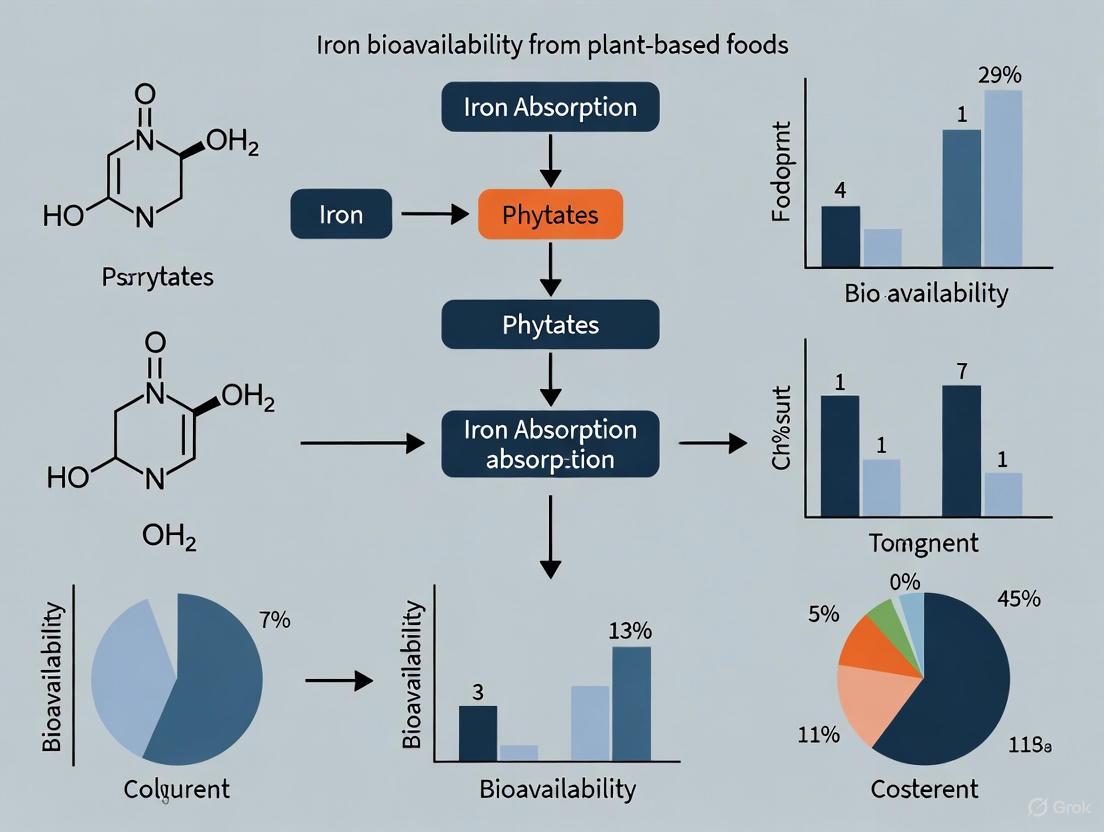
This article provides a comprehensive review of the scientific frameworks and methodologies for assessing iron bioavailability from plant-based sources.
Measuring Iron Bioavailability from Plant-Based Foods: Methods, Mechanisms, and Clinical Implications
Abstract
This article provides a comprehensive review of the scientific frameworks and methodologies for assessing iron bioavailability from plant-based sources. Tailored for researchers and drug development professionals, it explores the fundamental mechanisms of non-heme iron absorption, details established and emerging in-vitro and in-vivo assessment techniques, and discusses strategies to overcome bioavailability barriers. The content further examines physiological adaptations in individuals following plant-based diets and validates methods through comparative analysis with clinical outcomes, synthesizing current evidence to inform future nutritional science and therapeutic development.
The Science of Non-Heme Iron: Absorption Pathways and Regulatory Physiology
Iron is a critical micronutrient for fundamental physiological processes including oxygen transport, DNA synthesis, and cellular energy production [1] [2]. In the human diet, iron exists in two distinct chemical forms with profoundly different absorption characteristics: heme iron and non-heme iron [2]. Heme iron, derived from hemoglobin and myoglobin in animal tissues, is highly bioavailable, while non-heme iron, found in plant-based foods and iron-fortified products, exhibits more variable absorption influenced by dietary factors [3] [4]. Understanding their distinct uptake mechanisms is essential for research aimed at improving iron bioavailability from plant-based foods, which is particularly relevant given the global prevalence of iron deficiency affecting nearly 30% of the world's population [3].
Table 1: Fundamental Characteristics of Heme and Non-Heme Iron
| Characteristic | Heme Iron | Non-Heme Iron |
|---|---|---|
| Dietary Sources | Animal tissues (meat, poultry, fish) [2] [4] | Plant foods (legumes, grains, vegetables) and iron-fortified products [3] [4] |
| Chemical Form | Iron-protoporphyrin IX complex (Fe²⁺) [2] | Ionic iron (primarily Fe³⁺) [3] |
| Proportion in Mixed Diets | ~10-15% of total iron intake [2] | ~85-90% of total iron intake [2] |
| Typical Absorption Rate | 25-30% [1] | 1-10% (highly variable) [1] |
| Major Uptake Mechanism | Specific receptor-mediated endocytosis and/or transporters [2] | Reduction followed by DMT1-mediated transport [1] |
| Influence of Body Iron Stores | Modest regulatory effect [2] | Strong inverse regulation [5] |
Molecular Mechanisms of Intestinal Iron Uptake
Heme Iron Absorption Pathways
The absorption of heme iron remains less characterized than non-heme iron, but two primary mechanisms have been proposed. The receptor-mediated endocytosis hypothesis suggests heme is recognized by a specific heme-binding protein on the apical membrane of duodenal enterocytes, with internalization occurring via tubulovesicular structures [2]. This pathway is supported by the identification of a high-affinity heme binding protein on intestinal microvillus membranes with a dissociation constant of 10⁻⁶ to 10⁻⁹ mol/L, and studies demonstrating temperature and ATP dependence of heme uptake [2]. Alternatively, direct transporter-mediated uptake may occur through identified heme transporters such as PCFT/HCP1, which demonstrates heme transport capability when expressed in model systems, though its physiological role may be more significant in folate absorption [2]. Regardless of the entry mechanism, intracellular heme is subsequently catabolized by heme oxygenase within the enterocyte to release ionic iron, which then joins the common labile iron pool for export to circulation via ferroportin [2].
Non-Heme Iron Absorption Pathways
Non-heme iron absorption involves a carefully orchestrated sequence of chemical transformations and transport events. Prior to absorption, non-heme iron (primarily in the insoluble Fe³⁺ state) must be solubilized and reduced to Fe²⁺ by duodenal cytochrome B (DcytB) reductase at the enterocyte brush border [1]. The resulting Fe²⁺ is then transported across the apical membrane by divalent metal transporter 1 (DMT1) [1]. Within the enterocyte, iron may be stored in ferritin or transferred to the basolateral membrane for export to circulation. This final step is mediated by ferroportin, which exports iron in conjunction with the ferroxidases hephaestin and ceruloplasmin that oxidize Fe²⁺ back to Fe³⁺ for binding to transferrin in the circulation [1]. This absorption pathway is strongly influenced by dietary factors and body iron stores through systemic regulation by the hormone hepcidin [6].
Diagram 1: Heme and non-heme iron uptake mechanisms in intestinal enterocytes. Heme iron enters via specific receptors/transporters and is degraded intracellularly, while non-heme iron requires reduction before DMT1-mediated transport. Both pathways converge on the labile iron pool, with export regulated by hepcidin.
Regulatory Mechanisms and Dietary Influences
Systemic Regulation by Hepcidin
The peptide hormone hepcidin serves as the master regulator of systemic iron homeostasis by controlling ferroportin-mediated iron export from enterocytes, macrophages, and hepatocytes [6] [1]. Hepcidin binds to ferroportin, inducing its internalization and degradation, thereby reducing iron efflux into plasma [1]. Hepcidin expression is increased by elevated iron stores and inflammation, and decreased during iron deficiency, hypoxia, and elevated erythropoietic activity [6]. Recent research demonstrates that individuals following long-term vegan diets exhibit lower baseline hepcidin levels, potentially enhancing their non-heme iron absorption capacity as an adaptive mechanism [6].
Dietary Modulators of Iron Absorption
The absorption of non-heme iron is particularly susceptible to dietary influences, which is highly relevant for plant-based diet research. Key inhibitors include:
- Phytic acid: abundant in cereals and legumes, forms insoluble complexes with iron at intestinal pH [3]
- Polyphenols: present in tea, coffee, and some grains, chelate iron and reduce absorption [3] [4]
- Calcium: high concentrations can inhibit both heme and non-heme iron absorption [7]
Conversely, several enhancers can significantly improve non-heme iron bioavailability:
- Ascorbic acid (vitamin C): reduces Fe³⁺ to Fe²⁺ and forms absorbable complexes, potentially increasing absorption by 8-20% [6]
- Animal tissue: the "meat factor" mechanism remains incompletely characterized but consistently enhances non-heme iron absorption [5]
- Certain organic acids: including citric, malic, and lactic acids [3]
Table 2: Dietary Factors Influencing Non-Heme Iron Bioavailability
| Factor | Effect | Mechanism | Common Dietary Sources |
|---|---|---|---|
| Phytic Acid | Inhibition [3] | Forms insoluble complexes with iron, reducing solubility | Whole grains, legumes, nuts [3] |
| Polyphenols | Inhibition [3] [4] | Chelates iron, forming indigestible complexes | Tea, coffee, certain grains [3] |
| Calcium | Inhibition [7] | Interferes with both heme and non-heme iron uptake | Dairy products, fortified foods [7] |
| Ascorbic Acid | Enhancement [6] | Reduces Fe³⁺ to Fe²⁺ and forms absorbable complexes | Citrus fruits, peppers, broccoli [6] |
| Animal Tissue | Enhancement [5] | Partially digested proteins may enhance solubility | Meat, fish, poultry [5] |
Research Protocols for Assessing Iron Bioavailability
In Vitro Bioaccessibility Methods
In vitro methods provide rapid, cost-effective screening tools for assessing iron bioavailability from plant-based foods before proceeding to human trials [3]. The INFOGEST standardized method simulates gastrointestinal digestion using a three-stage process: oral phase (α-amylase), gastric phase (pepsin, gastric lipase, HCl), and intestinal phase (pancreatin, bile salts) [3]. The dialyzability approach measures the fraction of iron that passes through a membrane with specific molecular weight cut-off after simulated digestion, representing the potentially absorbable fraction [3] [5]. For more sophisticated assessment, the Caco-2 cell model utilizes human colon adenocarcinoma cells that differentiate into enterocyte-like monolayers, allowing measurement of iron uptake and transport [3]. These methods enable researchers to screen the effects of food processing techniques, plant varieties, and meal composition on iron bioavailability under standardized conditions.
Algorithm-Based Bioavailability Prediction
Several mathematical algorithms have been developed to estimate iron bioavailability from dietary composition data [5]. The Monsen model (1978) was the first to predict bioavailability based on heme iron intake and enhancers of non-heme iron absorption [5]. Improved meal-based algorithms by Hallberg & Hulthén (2000) and Reddy et al. (2000) incorporate adjustment terms for both inhibitors and enhancers [5]. More recently, diet-based models by Armah et al. (2013) and Collings et al. (2013) were developed to reflect iron absorption adaptations occurring over complete diets rather than single meals [5]. Additionally, the probabilistic approach described by Dainty et al. (2014) estimates population-level iron absorption using data on total iron intake and serum ferritin concentrations, particularly useful for assessing dietary iron adequacy in populations [8].
Diagram 2: Research workflow for assessing iron bioavailability from plant-based foods, progressing from in vitro screening to human validation studies.
Acute Absorption Study Protocol
For direct measurement of iron absorption in human subjects, the following protocol adapted from recent research can be implemented [6]:
Objective: Evaluate acute changes in plasma iron levels following consumption of a test meal containing non-heme iron.
Participants: Recruit healthy adults (typically n=26-30 per group) based on predetermined inclusion criteria including age range (e.g., 18-30 years), dietary pattern (vegan/omnivore), non-smoking status, and absence of conditions affecting iron absorption [6].
Pre-test standardization: Participants should fast overnight (≥10 hours) and avoid strenuous activity, alcohol, and caffeine for 24 hours before testing [6].
Test meal administration: Provide a standardized test meal containing a known quantity of non-heme iron (e.g., 150g pistachios containing approximately 5.7mg iron) [6].
Blood sampling: Collect venous blood samples at baseline (0 min), 120 min, and 150 min postprandially [6].
Sample analysis: Measure serum iron concentrations in all samples. Analyze additional iron status biomarkers (hemoglobin, ferritin, hepcidin) in baseline samples [6].
Data analysis: Calculate area under the curve (AUC) for serum iron response. Compare responses between groups using appropriate statistical methods (e.g., ANOVA, multivariate regression adjusting for baseline iron status) [6].
The Scientist's Toolkit: Essential Research Reagents
Table 3: Essential Research Reagents for Iron Bioavailability Studies
| Reagent/Resource | Application | Key Function | Example Specifications |
|---|---|---|---|
| Caco-2 Cell Line | In vitro absorption models [3] | Differentiates into enterocyte-like monolayers for uptake studies | HTB-37, passages 25-45, 21-day differentiation |
| INFOGEST Reagents | Standardized digestion protocol [3] | Simulates gastrointestinal conditions | α-amnylase, pepsin, pancreatin, bile extracts |
| Stable Iron Isotopes | Human absorption studies [5] | Tracer methodology for precise absorption measurement | ⁵⁷Fe, ⁵⁸Fe for metabolic studies |
| Hepcidin ELISA Kits | Regulation studies [6] | Quantifies hepcidin-25 in serum/plasma | Commercial kits (e.g., DRG EIA-5258) |
| DMT1 Antibodies | Transport mechanism studies | Immunodetection of DMT1 expression | Commercial antibodies (e.g., Santa Cruz sc-166884) |
| Ferroportin Antibodies | Iron export studies | Immunodetection of ferroportin expression | Commercial antibodies (e.g., Alpha Fp11-A) |
| Phytic Acid Assay Kits | Inhibitor quantification | Measures phytate content in food samples | Megazyme K-PHYT series |
The fundamental metabolic pathways for heme and non-heme iron uptake involve distinct mechanisms with significant implications for iron bioavailability from plant-based foods. Heme iron utilizes specific receptor-mediated and transporter-mediated pathways with high absorption efficiency, while non-heme iron absorption depends on reduction and DMT1-mediated transport influenced by dietary factors and systemic regulation. Researchers investigating iron bioavailability from plant-based foods should employ a combination of in vitro screening methods, algorithm-based predictions, and carefully designed human absorption studies to account for these complex mechanisms. The ongoing characterization of adaptive responses in populations consuming plant-based diets, including modulations in hepcidin expression and absorption efficiency, represents a promising research direction for addressing iron deficiency through dietary interventions.
Systemic iron homeostasis is critically dependent on the interaction between the peptide hormone hepcidin and the cellular iron exporter ferroportin. This regulatory axis controls the major flows of iron into plasma from dietary sources in the duodenum and from recycling macrophages, ensuring iron availability for essential physiological processes while preventing iron overload. Within the context of measuring iron bioavailability from plant-based foods, understanding this regulatory mechanism is fundamental, as it adapts to different dietary iron patterns and bioavailability.
Core Regulatory Mechanism: The Hepcidin-Ferroportin Axis
Molecular Players and Their Interaction
The liver-derived hormone hepcidin serves as the master regulator of systemic iron homeostasis [9] [10]. Its primary receptor and functional target is ferroportin (SLC40A1), the sole known cellular iron exporter in mammals [11] [12]. Ferroportin is expressed on the basolateral surface of duodenal enterocytes, which absorb dietary iron, and on the surface of iron-recycling macrophages in the spleen and liver [11] [13].
Hepcidin regulates iron efflux through two distinct mechanisms:
- Occlusion Mechanism: At higher concentrations, hepcidin physically occludes the iron-efflux channel of ferroportin, preventing iron export [11].
- Endocytosis and Degradation Mechanism: Hepcidin binding induces ubiquitination of ferroportin's cytoplasmic segment, triggering its internalization, lysosomal degradation, and subsequent proteasomal degradation [11]. This mechanism is particularly significant as it produces a prolonged effect, with hepcidin's iron-lowering impact persisting for 24–48 hours despite rapid clearance of the peptide from circulation [11].
Table 1: Key Proteins in Systemic Iron Regulation
| Protein | Gene | Location | Primary Function |
|---|---|---|---|
| Hepcidin | HAMP | Hepatocytes | Master regulatory hormone; binds ferroportin to inhibit iron export |
| Ferroportin | SLC40A1 | Enterocytes, macrophages, hepatocytes | Sole cellular iron exporter; hepcidin receptor |
| DMT1 | SLC11A2 | Apical membrane of enterocytes | Imports non-heme iron (Fe²⁺) from intestinal lumen |
| DCYTB | CYBRD1 | Apical membrane of enterocytes | Reduces dietary Fe³⁺ to absorbable Fe²⁺ |
| Transferrin | TF | Blood plasma | Iron transport protein |
| Transferrin Receptor 1 | TFR1 | Ubiquitous, especially erythroid cells | Mediates cellular uptake of transferrin-bound iron |
Physiological Regulation of the Axis
Hepcidin expression is dynamically regulated by multiple physiological cues to maintain iron balance:
- Iron Stores: Elevated iron levels increase hepcidin production, reducing iron absorption and release from stores [9].
- Erythropoietic Demand: Increased red blood cell production suppresses hepcidin to enhance iron availability for hemoglobin synthesis [9].
- Inflammation: Inflammatory stimuli, particularly IL-6, strongly induce hepcidin expression, sequestering iron as a host defense mechanism [14] [9].
- Hypoxia: Low oxygen tension decreases hepcidin expression, promoting iron absorption and mobilization [9].
This dynamic regulation ensures that during states of high iron demand or low oxygen availability, hepcidin decreases, allowing ferroportin to remain active on cell surfaces and increase iron delivery to plasma. Conversely, during iron sufficiency or inflammation, hepcidin increases, degrading ferroportin and restricting iron flow into plasma [11] [9].
Quantitative Data on Iron Absorption and Regulation
The hepcidin-ferroportin axis adapts to different dietary iron sources and bioavailability. Plant-based diets contain exclusively non-heme iron, which has lower bioavailability than heme iron from animal sources, typically ranging from 2-15% compared to 10-25% for heme iron [15]. However, physiological adaptations can enhance non-heme iron absorption in individuals following vegan diets.
Table 2: Iron Bioavailability and Absorption Adaptations
| Parameter | Omnivorous Diet | Vegan Diet | Notes |
|---|---|---|---|
| Heme Iron Bioavailability | 10-25% [15] | 0% | Not present in plant-based diets |
| Non-heme Iron Bioavailability | 2-15% [15] | 2-15% (baseline) | Enhanced by adaptive mechanisms |
| Acute Serum Iron AUC after Pistachio Consumption | 853 ± 268.2 µmol/L/h [6] | 1002.8 ± 143.9 µmol/L/h [6] | Significantly higher in vegans (p=0.04) |
| Key Adaptive Mechanism | Standard hepcidin regulation | Lower basal hepcidin levels [6] | Enhances ferroportin-mediated iron absorption |
Hepcidin Concentration Ranges and Regulatory Factors
Under normal physiological conditions, hepcidin concentrations in healthy humans range from approximately 2-20 nM [11]. This concentration is about one hundred-fold higher than similarly-sized peptide hormones like insulin, glucagon, or parathyroid hormone [11]. Hepcidin levels are influenced by various physiological and pathological conditions, creating a dynamic regulatory system that responds to the body's iron requirements.
Table 3: Factors Regulating Hepcidin Expression and Activity
| Regulatory Factor | Effect on Hepcidin | Physiological Consequence |
|---|---|---|
| High Iron Stores | Increased expression [9] | Reduced iron absorption and mobilization |
| Inflammation (IL-6) | Strongly increased [14] [9] | Iron restriction for pathogens |
| Erythropoietic Demand | Decreased expression [9] | Enhanced iron availability for RBC production |
| Hypoxia | Decreased expression [9] | Improved iron mobilization for oxygen delivery |
| Plant-Based Diet (Long-term) | Lower basal levels [6] | Enhanced non-heme iron absorption |
Experimental Protocols for Investigating Iron Bioavailability
Protocol: Acute Non-Heme Iron Absorption Test
This protocol is adapted from a recent clinical trial investigating non-heme iron absorption in vegans versus omnivores [6] and provides a methodology to assess adaptive responses in the hepcidin-ferroportin axis.
Study Population and Inclusion Criteria
- Recruit participants aged 18-30 years, divided into vegans (≥6 months on diet free of animal-derived foods) and omnivores (consistent consumption of both animal and plant-based foods) [6].
- Exclusion criteria: pregnancy, blood donation within past 6 months, use of medications/supplements affecting iron absorption, gastrointestinal conditions affecting absorption, known nut allergies [6].
- Sample size: Estimated using statistical power analysis (e.g., G*Power software assuming medium effect size, 90% power, α=0.05), requiring at least 26 participants [6].
Pre-Test Conditions and Standardization
- Participants should fast overnight and refrain from strenuous activity, alcohol, and caffeine for 24 hours before testing [6].
- Conduct all measurements in a controlled environment to minimize variability.
Baseline Measurements and Test Meal
- Collect baseline data:
- Body composition analysis via bioelectrical impedance [6]
- Blood pressure measurements
- Baseline blood sample (time 0)
- Administer test meal: 150g of pistachios (approximately 79g edible portion, containing 5.7±0.6mg non-heme iron) [6]
- Collect subsequent blood samples at 120 and 150 minutes post-consumption
- Maintain participants at rest during testing period with no additional food or drink except water [6]
Blood Sample Analysis
- Immediate analysis of iron levels (μg/dL) at all timepoints [6]
- Analysis of baseline parameters: erythrocytes, hemoglobin, hematocrit, MCV, MCH, MCHC, RDW, ferritin [6]
- Specialized analysis:
Data Analysis and Interpretation
- Calculate area under the curve (AUC) for serum iron response [6]
- Perform multivariate regression analysis to identify associations with hepcidin levels and basal iron status [6]
- Compare responses between vegan and omnivore groups
Protocol: Assessing Hepcidin-Ferroportin Interaction in Inflammation Models
This protocol utilizes animal models to investigate hepcidin-ferroportin regulation under inflammatory conditions, particularly relevant for understanding iron bioavailability in inflammatory states [14].
Animal Models and Induction of Inflammation
- Utilize wild-type and Hjv-/- mice (models of hemochromatosis) [14]
- Two inflammation models:
- Control groups: Standard rodent chow or phosphate-buffered saline injection
Sample Collection and Timepoints
- For chronic model: Terminal collection at 8 weeks
- For acute inflammation: Multiple timepoints (4, 8, 24 hours; 7, 14, 21, 28 days) to capture both acute and chronic phases [14]
- Collect blood, liver, spleen, and kidney tissues
Biochemical and Molecular Analyses
Blood Analysis:
- Hematological parameters: hemoglobin, hematocrit, RDW, MCV
- Serum iron, transferrin saturation, TIBC, ferritin
- Serum hepcidin quantification by ELISA [14]
Tissue Analysis:
- RNA extraction and qPCR for gene expression (Il6, hepcidin, Fpn, Hjv)
- Relative mRNA expression calculated by 2-ΔΔCt method normalized to Rpl19 [14]
- Western blotting for ferroportin protein levels (samples not boiled, β-mercaptoethanol omitted from loading buffer) [14]
- Tissue iron quantification using ferrozine assay [14]
- Histology: immunohistochemistry for ferroportin, Perls staining for iron deposits, Masson's trichrome or Sirius Red for fibrosis [14]
Data Interpretation
- Compare inflammatory hypoferremia response between wild-type and Hjv-/- mice
- Assess temporal relationship between hepcidin induction and Fpn mRNA/protein expression
- Evaluate tissue-specific regulation of ferroportin
Signaling Pathways and Regulatory Networks
Systemic Iron Regulation Pathway
Diagram Title: Systemic Iron Regulation by the Hepcidin-Ferroportin Axis
Cellular Iron Absorption and Export Mechanism
Diagram Title: Cellular Iron Absorption and Hepcidin Regulation
The Scientist's Toolkit: Research Reagent Solutions
Table 4: Essential Research Reagents for Iron Homeostasis Studies
| Reagent/Category | Specific Examples | Research Application | Key Function |
|---|---|---|---|
| Hepcidin Quantification | Hepcidin ELISA (e.g., HMC-001; Intrinsic LifeSciences) [14] | Measuring serum hepcidin levels in clinical/animal studies | Direct quantification of the master iron regulator hormone |
| Iron Status Panel | Serum iron, ferritin, transferrin saturation, TIBC [6] [14] | Comprehensive assessment of systemic iron status | Evaluation of iron stores, transport, and availability |
| Molecular Biology Tools | qPCR primers for Hamp, Fpn, Hjv, Il6 [14] | Gene expression analysis in tissues | Quantifying mRNA levels of key regulatory genes |
| Protein Detection | Custom ferroportin antibodies [14] | Western blotting, immunohistochemistry | Detecting ferroportin protein expression and localization |
| Iron Chelators | Deferoxamine (DFO) [13] | Experimental iron restriction | Cellular iron chelation to study iron-dependent processes |
| Iron Sources | Ferric ammonium citrate (FAC) [13] | Experimental iron loading | Inducing cellular iron overload conditions |
| Inflammation Inducers | Heat-killed Brucella abortus, LPS [14] | Modeling inflammatory regulation of iron | Studying hepcidin induction in inflammatory states |
The hepcidin-ferroportin axis represents the core regulatory system controlling systemic iron homeostasis, adapting to dietary iron availability, physiological demands, and pathological conditions. In plant-based nutrition research, understanding this regulatory mechanism is crucial, as evidenced by the enhanced non-heme iron absorption capacity in adapted vegans through hepcidin modulation. The experimental protocols and methodologies presented provide robust frameworks for investigating iron bioavailability and regulatory adaptations, enabling researchers to elucidate the complex interplay between diet, iron regulation, and physiological outcomes.
Iron deficiency anemia (IDA) is a global health challenge, affecting more than a quarter of the world's population [16] [17]. The bioavailability of dietary iron, rather than its absolute content in food, is a critical determinant of iron status, particularly for individuals relying on plant-based diets where iron is present in the less absorbable non-heme form [16] [18]. The absorption of this non-heme iron is significantly modulated by dietary components, primarily phytates and polyphenols, and to a more limited extent, certain fiber types [16] [19]. Understanding the specific mechanisms and magnitude of inhibition caused by these compounds is therefore essential for developing effective nutritional strategies and accurate bioavailability assessment methods in the context of public health and food science research. This document provides a detailed overview of the inhibitory mechanisms and presents standardized experimental protocols for quantifying these effects in research settings.
Mechanisms of Inhibition
Iron absorption occurs primarily in the duodenum and proximal jejunum [20]. Non-heme iron, predominantly in the ferric (Fe³⁺) state, must be solubilized and reduced to the ferrous (Fe²⁺) form by the ferric reductase duodenal cytochrome B (Dcytb) before it can be transported across the enterocyte apical membrane by the divalent metal transporter 1 (DMT1) [20] [15]. Dietary inhibitors disrupt this process through distinct molecular pathways.
Pathway Diagram: Molecular Inhibition of Non-Heme Iron Absorption
Phytates (Phytic Acid)
Mechanism: Phytates (myo-inositol hexaphosphate) are the primary storage form of phosphorus in seeds, grains, legumes, and nuts [19]. They possess six phosphate groups that are highly effective at chelating positively charged minerals, forming insoluble complexes with iron in the gastrointestinal lumen [16] [19]. This complexation prevents the solubilization and reduction of iron, rendering it unavailable for absorption via DMT1 [19].
Key Evidence: A pivotal study demonstrated that the strong inhibitory effect of wheat bran on iron absorption was directly attributable to its phytate content. When phytates were removed via enzymatic dephytinization, the inhibitory effect was almost completely abolished [19]. The study concluded that although other minor factors exist in bran, phytates are the main cause of its inhibitory effect on iron absorption [19].
Polyphenols
Mechanism: Polyphenols are a large class of antioxidant compounds found in tea, coffee, wine, cereals, legumes, fruits, and vegetables [16] [21]. Their ability to inhibit iron absorption depends on the number and configuration of hydroxyl groups, particularly ortho-dihydroxy groups (e.g., in gallic acid) or functional groups like 3-hydroxy- and 4-carboxyl (e.g., in quercetin) [22] [21]. These structural features enable potent iron chelation, forming insoluble iron-polyphenol complexes that cannot be absorbed [21].
Key Evidence: The inhibitory effect is dose-dependent. For instance, adding 50 mg of bean polyphenols to a meal reduces iron absorption by 14%, while 200 mg inhibits absorption by 45% [22]. Recent research also shows that the interaction is complex and can be modulated; for example, in potato protein-iron complexes, the polyphenol type and ratio significantly influenced iron release and subsequent bioavailability in Caco-2 cell models [23].
Dietary Fiber
Mechanism: The role of fiber in iron absorption is more nuanced and source-dependent. Early hypotheses suggested that fiber components like cellulose, pectin, and hemicellulose could bind iron and impede its absorption [24]. However, subsequent research indicates that the strong inhibitory effect previously attributed to fiber, particularly from wheat bran, is largely due to the associated phytate content rather than the fiber itself [24] [19].
Key Evidence: A 1983 study compared the effects of different fiber sources and found that only bran significantly reduced iron absorption (from 2.26% to 1.07%), while cellulose and pectin had no significant effect. When comparing high-fiber and low-fiber meals matched for other components, the high-fiber meal resulted in lower absorption (2.96% vs. 6.07%), but the effect was described as "modest," leading the authors to conclude that fiber is not a major determinant of food iron availability [24].
Table 1: Quantitative Inhibitory Effects of Dietary Components on Non-Heme Iron Absorption
| Inhibitor | Common Dietary Sources | Mechanism of Action | Magnitude of Effect | Key Research Findings |
|---|---|---|---|---|
| Phytates | Whole grains, legumes, nuts, seeds | Forms insoluble complexes with iron, preventing solubilization and reduction [16] [19]. | Strong. A few milligrams can significantly reduce absorption [22]. | Removal of phytates from bran via enzymatic dephytinization largely eliminated its inhibitory effect [19]. |
| Polyphenols | Tea, coffee, red wine, certain beans, herbs | Chelates iron via specific hydroxyl group configurations, forming insoluble complexes [22] [21]. | Dose-dependent. 50-200 mg can inhibit absorption by 14-45% [22]. | The inhibitory effect varies by polyphenol structure; interactions with proteins can further modulate impact [23]. |
| Fiber | Bran, whole grains, vegetables | Historically thought to bind iron, but effect is likely minor and confounded by phytates [24] [19]. | Variable & Modest. Specific fibers like bran show a significant, but not universal, effect [24]. | In matched meals, a high-fiber meal reduced absorption to 2.96% vs. 6.07% for a low-fiber meal [24]. |
Experimental Protocols for Assessing Iron Bioavailability
In Vitro Digestion Model Coupled with Caco-2 Cells
This protocol simulates human gastrointestinal digestion followed by measurement of iron uptake using a human intestinal cell line, providing a high-throughput screening tool [23] [22].
Workflow Diagram: In Vitro Iron Bioavailability Assessment
Detailed Methodology:
Sample Preparation:
- Homogenize the test food sample to a consistent particle size.
- Accurately weigh a portion (typically 1-10 g) into a digestion vessel.
Simulated Gastric Digestion:
- Add simulated gastric fluid (SGF) containing pepsin (e.g., 0.2 g/10 mL SGF). Adjust pH to 2.0-3.0 using HCl.
- Incubate the mixture at 37°C for 1-2 hours in a shaking water bath to simulate stomach motility.
Simulated Intestinal Digestion:
- Adjust the pH of the gastric digest to 7.0 using NaHCO₃.
- Add simulated intestinal fluid (SIF) containing pancreatin and bile salts (e.g., 0.05 g/10 mL SIF).
- Incubate at 37°C for an additional 2 hours with shaking.
Isolation of Bioaccessible Fraction:
- Centrifuge the final digest at high speed (e.g., 10,000 × g, 30 min, 4°C).
- Collect the soluble fraction (supernatant), which contains the "bioaccessible" iron, and filter through a 0.22-μm membrane.
Caco-2 Cell Uptake Assay:
- Culture Caco-2 cells until they form a confluent, differentiated monolayer (typically 13-21 days).
- Apply the bioaccessible fraction to the cells and incubate for 24-48 hours.
- After incubation, wash the cells and lyse them in a detergent-free buffer.
- Measure the protein concentration and intracellular ferritin formation in the cell lysate using an enzyme-linked immunosorbent assay (ELISA). Ferritin levels are a well-established proxy for cellular iron uptake and status [23].
Human Isotopic Studies (The "Gold Standard")
This protocol involves administering a test meal labeled with stable iron isotopes to human subjects and measuring incorporation of the isotope into red blood cells, providing the most physiologically relevant data [24] [19].
Detailed Methodology:
Study Population & Baseline:
- Recruit healthy volunteers. Exclude individuals with conditions affecting iron absorption (e.g., inflammation, anemia).
- Measure baseline iron status (hemoglobin, serum ferritin).
Isotope Administration:
- Prepare a test meal intrinsically or extrinsically labeled with a stable iron isotope (e.g., ⁵⁷Fe or ⁵⁸Fe).
- After an overnight fast, subjects consume the entire test meal under supervision. The meal composition should be meticulously documented.
Blood Sampling and Analysis:
- A baseline blood sample is taken before the meal.
- A second blood sample is drawn 14 days post-consumption, allowing time for the absorbed iron to be incorporated into circulating erythrocytes.
- Isotopic enrichment in the blood samples is quantified using inductively coupled plasma mass spectrometry (ICP-MS).
Calculation of Iron Absorption:
- Iron absorption is calculated based on the principle of isotope dilution in the circulating blood volume, using the following formula [24]:
Percentage Absorption = (Isotope in Circulating RBCs / Isotope Administered) × 100 - Circulating iron is estimated from blood volume and hemoglobin concentration.
- Iron absorption is calculated based on the principle of isotope dilution in the circulating blood volume, using the following formula [24]:
The Scientist's Toolkit: Key Research Reagents & Materials
Table 2: Essential Reagents for Iron Bioavailability Research
| Reagent / Material | Function / Application | Example Use Case |
|---|---|---|
| Caco-2 Cell Line (HTB-37) | A human colorectal adenocarcinoma cell line that, upon differentiation, exhibits enterocyte-like properties. The standard in vitro model for intestinal iron uptake studies [23]. | Measuring cellular iron uptake via ferritin production after exposure to in vitro food digests. |
| Stable Iron Isotopes (⁵⁷Fe, ⁵⁸Fe) | Non-radioactive tracers used to label test meals for human absorption studies. Allows for precise, safe, and quantitative tracking of iron from a specific food source [24] [19]. | The "gold standard" method for determining absolute iron absorption fraction from a whole diet or single meal in humans. |
| Simulated Gastrointestinal Fluids (SGF/SIF) | Chemically defined solutions containing electrolytes and enzymes (pepsin, pancreatin, bile salts) that mimic the composition and activity of human gastric and intestinal juices [23]. | Used in the in vitro digestion model to simulate the biochemical environment of the human GI tract. |
| Ferritin ELISA Kit | Immunoassay kit for the quantitative measurement of ferritin protein concentration in cell lysates or serum. Ferritin is a direct indicator of cellular iron storage and uptake [23]. | Quantifying iron uptake in Caco-2 cell assays; also used as a clinical marker of body iron stores in human studies. |
| Inductively Coupled Plasma Mass Spectrometry (ICP-MS) | Highly sensitive analytical technique for quantifying trace elements and their isotopic ratios. Essential for measuring isotopic enrichment in blood samples from human studies [24]. | Precise measurement of stable iron isotope incorporation into red blood cells to calculate absorption efficiency. |
Within the context of research on measuring iron bioavailability from plant-based foods, understanding the dietary factors that enhance absorption is paramount. Iron deficiency anemia (IDA) is a global health challenge, affecting nearly a quarter of the world's population, with women and children being disproportionately impacted [22]. While plant-based foods contain iron, its bioavailability is often low due to the presence of inhibitors such as phytates and polyphenols [22] [3]. A critical strategy to overcome this limitation involves leveraging absorption enhancers, primarily vitamin C (ascorbic acid) and the "meat factor." This document provides detailed application notes and experimental protocols for studying these enhancers, supporting the development of effective strategies to improve iron nutrition from plant-based sources.
The following tables summarize key quantitative data on iron absorption and the effects of various enhancers, providing a basis for experimental design and data interpretation.
Table 1: Iron Bioavailability from Different Dietary Patterns
| Diet Type | Estimated Iron Bioavailability | Key Influencing Factors | Key Citations |
|---|---|---|---|
| Mixed Diet (Omnivorous) | 14% - 18% | Presence of "meat factor" and vitamin C from fruits/vegetables. | [25] [26] |
| Vegetarian/Vegan Diet | 5% - 12% | Higher levels of phytates and polyphenols; absence of "meat factor." | [27] [25] |
Table 2: Impact of Specific Enhancers on Iron Absorption
| Enhancer | Proposed Mechanism | Quantitative Effect on Non-Heme Iron Absorption | Key Citations |
|---|---|---|---|
| Vitamin C (Ascorbic Acid) | Reduces ferric iron (Fe³⁺) to more soluble ferrous (Fe²⁺) form; chelates iron at alkaline pH. | Can overcome inhibitory effects of phytic acid and polyphenols (e.g., 50 mg vit C counteracts >100 mg tannic acid). | [22] [28] [26] |
| "Meat Factor" (MFP) | Promotes formation of luminal carriers; may protect non-heme iron from dietary inhibitors. | Addition of chicken, beef, or fish can increase non-heme iron absorption by 2 to 3 fold. | [26] [29] |
Molecular Mechanisms of Action
Understanding the biochemical pathways through which vitamin C and the "meat factor" operate is essential for rational experimental design.
Vitamin C: The Reductive Pathway
Vitamin C enhances the absorption of non-heme iron through a dual mechanism at the site of the intestinal enterocyte. The following diagram illustrates this coordinated process:
Diagram 1: Molecular mechanism of vitamin C-enhanced iron absorption. Vitamin C acts in the gut lumen as a chelator, keeping Fe³⁺ soluble, and provides electrons via Dcytb to reduce Fe³⁺ to the absorbable Fe²⁺ form.
As illustrated, the process involves:
- Chelation in the Lumen: Vitamin C present in the intestinal lumen binds to dietary ferric iron (Fe³⁺), forming a soluble complex that prevents precipitation at the alkaline pH of the duodenum [28].
- Reduction at the Enterocyte Membrane: Simultaneously, cytoplasmic vitamin C acts as an electron donor for the membrane-integrated enzyme duodenal cytochrome b (Dcytb). This enzyme transfers electrons to reduce the chelated Fe³⁺ to the more bioavailable ferrous form (Fe²⁺) [28].
- Transport: The resulting Fe²⁺ is then a substrate for the Divalent Metal Transporter-1 (DMT-1), which facilitates its uptake into the enterocyte [28] [26]. It is noteworthy that other dietary organic acids like citric and malic acid can also assist in the chelation step, promoting Dcytb-mediated reduction [28].
The 'Meat Factor': The Enhancing Pathway
The precise identity of the "meat factor" remains an active area of research, but its effect is well-documented. It enhances the absorption of non-heme iron from plant-based foods consumed in the same meal. The mechanism is distinct from that of vitamin C.
Diagram 2: Proposed mechanism of the 'Meat Factor' (MFP). MFP enhances non-heme iron absorption, potentially by forming soluble complexes and protecting iron from dietary inhibitors.
The enhancing effect is attributed to:
- Cysteine-Containing Peptides: Evidence suggests that peptides released from the digestion of meat, poultry, and fish promote the formation of luminal carriers for iron, facilitating its transport to and across the intestinal mucosa [26].
- Inhibitor Protection: The "meat factor" may also act by binding to or otherwise neutralizing common dietary inhibitors like phytates and polyphenols, preventing them from complexing with iron and rendering it insoluble [26].
Experimental Protocols
This section provides detailed methodologies for assessing the effects of vitamin C and the "meat factor" on iron bioavailability, utilizing established in-vitro models.
INFOGEST In-Vitro Digestion Protocol for Iron Bio-Accessibility
The INFOGEST method is a standardized, internationally recognized simulated gastrointestinal digestion model ideal for preliminary screening [3] [30].
1. Principle: To simulate the human digestive process in vitro to measure the fraction of iron that is released from the food matrix (i.e., bio-accessible) and available for absorption.
2. Reagents:
- Simulated Salivary Fluid (SSF)
- Simulated Gastric Fluid (SGF)
- Simulated Intestinal Fluid (SIF)
- Pepsin (from porcine gastric mucosa)
- Pancreatin (from porcine pancreas)
- Bile salts (porcine)
- Standard solutions for pH adjustment (e.g., HCl, NaHCO₃)
- Test samples: Plant-based food homogenates, with and without added enhancers (e.g., pureed meat, ascorbic acid solution).
3. Procedure:
- Oral Phase: Mix 5 g of standardized food homogenate with 4 mL of SSF and 1 mL of salivary α-amylase solution. Incubate for 2 minutes at 37°C with constant agitation.
- Gastric Phase: Add 8 mL of SGF and 1 mL of pepsin solution (to achieve 2000 U/mL in final mixture). Adjust pH to 3.0. Incubate for 2 hours at 37°C with constant agitation.
- Intestinal Phase: Add 16 mL of SIF and 4 mL of pancreatin-bile solution (to achieve 100 U/mL trypsin activity and 10 mM bile salts in final mixture). Adjust pH to 7.0. Incubate for 2 hours at 37°C with constant agitation.
- Termination & Centrifugation: Stop the reaction by placing samples on ice. Centrifuge the digestate at high speed (e.g., 10,000 × g for 60 minutes at 4°C) to separate the soluble fraction.
4. Analysis:
- Analyze the iron content in the soluble fraction (supernatant) using Inductively Coupled Plasma Optical Emission Spectrometry (ICP-OES) or Atomic Absorption Spectrometry (AAS).
- Calculate the bioaccessible iron as a percentage of the total iron in the original sample.
Caco-2 Cell Model Protocol for Iron Bioavailability
The Caco-2 cell model is a more advanced in-vitro method that measures actual uptake by human intestinal cells [3].
1. Principle: To utilize a monolayer of differentiated Caco-2 cells (a human colon adenocarcinoma line that exhibits enterocyte-like properties) to assess the uptake and transport of iron from digested food samples.
2. Reagents:
- Caco-2 cell line (ATCC HTB-37)
- Dulbecco's Modified Eagle Medium (DMEM) with high glucose
- Fetal Bovine Serum (FBS), heat-inactivated
- Non-essential amino acids, Penicillin-Streptomycin
- HEPES buffer
- Trypsin-EDTA for cell passaging
- Digested samples: Soluble fraction from the INFOGEST protocol.
- Ferritin ELISA kit: For quantifying cellular iron uptake.
3. Procedure:
- Cell Culture: Maintain Caco-2 cells in complete DMEM. For experiments, seed cells at high density on Transwell inserts and culture for 21 days to allow for full differentiation and tight junction formation. Confirm monolayer integrity by measuring transepithelial electrical resistance (TEER).
- Treatment: Apply the soluble fraction from the in-vitro digestion (diluted in serum-free, buffered DMEM, pH 7.4) to the apical side of the Caco-2 monolayer. The basolateral side contains fresh serum-free medium.
- Incubation: Incubate cells for a set period (e.g., 2-4 hours) at 37°C in a 5% CO₂ atmosphere.
- Harvest: After incubation, collect the basolateral medium to assess iron transport. Wash the cell monolayer with a chelating buffer to remove surface-bound iron, then harvest the cells.
4. Analysis:
- Cellular Iron Uptake: Lyse the harvested cells and measure the intracellular ferritin concentration using an ELISA kit. Ferritin synthesis is a well-validated biomarker of iron uptake in Caco-2 cells [3].
- Iron Transport: Measure the iron content in the basolateral medium using ICP-OES or AAS.
- Compare ferritin levels and transported iron between samples with and without absorption enhancers.
The Scientist's Toolkit: Key Research Reagents
Table 3: Essential Materials for Iron Bioavailability Research
| Category | Item / Reagent | Function & Application in Research | Key Citations |
|---|---|---|---|
| Cell Culture | Caco-2 Cell Line (HTB-37) | In-vitro model of human intestinal epithelium for iron uptake/transport studies. | [3] |
| Enzymes & Digestion | Pepsin, Pancreatin, Bile Salts | Key components of simulated digestive fluids for in-vitro digestion models (e.g., INFOGEST). | [3] [30] |
| Analytical Standards | Phytic Acid (Sodium Salt), Tannic Acid | Used to create standardized meals or calibrate assays for major iron absorption inhibitors. | [22] [3] |
| Absorption Enhancers | L-Ascorbic Acid | Reference standard for vitamin C to study and control its enhancing effect in experiments. | [22] [28] |
| Absorption Enhancers | Lyophilized Meat Powder / Cysteine Peptides | Reference material for investigating the "meat factor" (MFP) enhancement mechanism. | [26] [29] |
| Analytical Equipment | ICP-OES / AAS | Quantitative measurement of total iron and bioaccessible iron in food and digestate samples. | [3] |
| Molecular Biology | Ferritin ELISA Kit | Quantification of cellular iron uptake in the Caco-2 cell model. | [3] |
Application in Dietary Intervention Design
Research into these enhancers directly informs effective dietary strategies. A key consideration is whether enhancers need to be consumed simultaneously with iron-rich foods. An 8-week dietary intervention study in young women provided iron-fortified oat flakes at breakfast and a source of vitamin C (orange juice) separately in the second part of the day. This regimen was effective in improving hematocrit levels, suggesting that separate administration can still be beneficial, though the study also indicated that a better baseline iron status predicted a more effective outcome [31]. This highlights the importance of considering host iron status in intervention design, as iron bioavailability is significantly increased in individuals with low iron stores [25] [26].
For populations adopting vegan or vegetarian diets, where iron bioavailability is typically 5-12%, accounting for these factors in dietary modeling is critical. Failure to do so can lead to over-optimistic estimates of absorbable iron and increase the risk of deficiency [27].
Iron bioavailability from plant-based (non-heme) diets has been a longstanding concern in nutritional science. While non-heme iron has lower theoretical bioavailability than heme iron from animal sources, emerging evidence indicates that the human body can undergo physiological adaptations to enhance non-heme iron absorption when chronically exposed to plant-based diets. This application note synthesizes current evidence and provides detailed methodologies for investigating these adaptive mechanisms, with particular focus on the role of hepcidin regulation in mediating iron absorption efficiency.
Table 1: Key Evidence for Physiological Adaptations in Vegan Iron Absorption
| Evidence Type | Population/Finding | Significance | Citation |
|---|---|---|---|
| Acute Iron Absorption | Vegans (n=13) showed significantly higher serum iron AUC (1002.8 ± 143.9 µmol/L/h) vs. omnivores (853 ± 268.2 µmol/L/h) after pistachio consumption. | Direct evidence of enhanced non-heme iron absorption capacity. | [6] [32] |
| Hepcidin Association | Significant negative association between hepcidin levels and iron absorption in vegans (β = -0.5, p = 0.03). | Identifies a key regulatory hormone mediating the adaptive response. | [6] |
| Epidemiological Iron Status | Multiple studies show no significant differences in anemia prevalence or standard iron status markers between vegans and omnivores. | Suggests long-term adaptation maintains iron status despite different iron forms. | [1] |
| Dietary Iron Intake | Vegans consistently demonstrate higher total iron intake (e.g., 22 mg/day) compared to omnivores (e.g., 14 mg/day). | Highlights importance of quantifying intake alongside absorption. | [1] |
Core Experimental Protocol: Acute Non-Heme Iron Absorption
The following section details a validated clinical protocol for measuring acute non-heme iron absorption, adapted from a recent controlled trial [6] [32].
Participant Selection and Criteria
Inclusion Criteria:
- Adults aged 18-50 years.
- Vegan participants: Consistent exclusion of all animal-derived foods for ≥6 months.
- Omnivore participants: Regular consumption of animal and plant-based foods.
- Non-smoking status.
- Low alcohol consumption (<10 g/day).
Exclusion Criteria:
- Pregnancy or lactation.
- Blood donation within previous 6 months.
- Use of medications/supplements affecting iron absorption (e.g., proton pump inhibitors, iron, calcium, zinc supplements) within past 6 months.
- Gastrointestinal conditions affecting absorption (e.g., celiac disease, IBD, gastric bypass).
- Known nut allergies.
Pre-Test Standardization and Baseline Measurements
- Dietary Assessment: Verify dietary pattern adherence using a validated food frequency questionnaire (e.g., 93-item FFQ) [6].
- Anthropometrics: Measure body composition via bioelectrical impedance analysis under standardized conditions (overnight fasted, no strenuous activity for 24h, no alcohol/caffeine).
- Blood Pressure: Measure in triplicate using digital sphygmomanometer after 5 minutes seated rest.
- Baseline Blood Collection: Draw fasting venous blood sample for analysis of:
- Iron Status Indicators: Serum iron, ferritin, soluble transferrin receptor (sTfR), hemoglobin, hematocrit, RBC indices (MCV, MCH, MCHC, RDW).
- Regulatory Hormone: Hepcidin.
- Inflammation Marker: C-reactive protein (CRP) to rule out inflammatory confounders.
Test Meal Administration and Postprandial Blood Sampling
- Test Meal: 150 g of whole pistachios (providing ~5.7 mg of non-heme iron). The edible portion is calculated by weighing leftovers [6].
- Postprandial Blood Sampling: Collect additional blood samples at 120 and 150 minutes after test meal consumption.
- Standardization: Participants remain seated and fasted (water allowed) during the entire sampling period to minimize metabolic variability.
Sample Processing and Analysis
- Serum Separation: Centrifuge blood samples for hepcidin and sTfR analysis, aliquot serum into microcentrifuge tubes, and store at -20°C until batch analysis.
- Iron Analysis: Measure serum iron concentrations at all three time points (0, 120, 150 min) using standardized clinical laboratory protocols.
- Primary Outcome Calculation: Calculate the Area Under the Curve (AUC) for serum iron concentration versus time to quantify total iron absorption.
Figure 1: Experimental workflow for measuring acute non-heme iron absorption, from participant screening to data analysis.
Mechanistic Insights and Signaling Pathways
The enhanced non-heme iron absorption observed in vegans is primarily regulated by the hepcidin-ferroportin axis. Hepcidin, a liver-derived peptide hormone, is the master regulator of systemic iron homeostasis [6] [1] [26].
Figure 2: Hepcidin-ferroportin axis regulating non-heme iron absorption. Lower hepcidin in vegans increases ferroportin-mediated iron export.
Key Regulatory Mechanism
In individuals following vegan diets, chronic exposure to lower-bioavailability iron can lead to a reduction in iron stores. This state is detected by the liver, which responds by downregulating hepcidin synthesis [6]. Lower circulating hepcidin results in less binding to the iron exporter ferroportin on the basolateral membrane of enterocytes. Consequently, ferroportin is not internalized and degraded, allowing for increased iron efflux from intestinal cells into the bloodstream [6] [1] [26]. This physiological adaptation effectively enhances the efficiency of non-heme iron absorption to meet physiological demands.
The Scientist's Toolkit: Research Reagent Solutions
Table 2: Essential Reagents and Materials for Iron Absorption Studies
| Item | Specification/Function | Application Example |
|---|---|---|
| Certified Test Meal | Precisely quantified iron content (e.g., pistachios: 5.7 ± 0.6 mg/100g). Ensures consistent and measurable iron challenge. | [6] |
| Hepcidin-25 ELISA Kits | Quantify serum levels of the bioactive 25-amino acid hepcidin peptide. Critical for measuring the primary regulatory hormone. | [6] |
| Clinical Chemistry Analyzers | Automated analysis of serum iron, ferritin, CRP, and complete blood count (CBC) parameters. Provides high-throughput, standardized biomarker data. | [6] [33] |
| Soluble Transferrin Receptor (sTfR) Assays | Differentiate between absolute and functional iron deficiency; less confounded by inflammation than ferritin alone. | [6] [1] |
| Dietary Assessment Tool | Validated Food Frequency Questionnaire (FFQ). Verifies participant dietary pattern adherence and estimates habitual iron intake. | [6] [33] |
Data Analysis and Interpretation
Table 3: Quantitative Absorption Data and Statistical Comparison
| Variable | Vegan Group (n=13) | Omnivore Group (n=14) | P-value | Effect Size (ES) |
|---|---|---|---|---|
| Serum Iron AUC (µmol/L/h) | 1002.8 ± 143.9 | 853.0 ± 268.2 | 0.04 | 0.68 |
| Basal Serum Iron (µg/dL) | Reported in [6] | Reported in [6] | >0.05 | N/S |
| Hepcidin Level Association (β) | -0.5 | - | 0.03 | - |
| Ferritin (ng/mL) | Typically lower in vegans | Typically higher in omnivores | Varies | - |
Analytical Approach
- Primary Analysis: Compare the serum iron AUC between vegan and omnivore groups using an independent samples t-test.
- Multivariate Regression: Model the relationship between iron absorption (AUC) and potential predictors, including baseline hepcidin, ferritin, sTfR, and dietary group.
- Considerations:
- Inflammation: Exclude participants with elevated CRP (>5 mg/L) from primary analysis, as inflammation potently increases hepcidin, independently of iron stores [33].
- Iron Status: The enhancing effect of adaptation is most pronounced in individuals with low to marginal iron stores.
The presented evidence and protocols provide a framework for investigating the physiological adaptations to plant-based diets. The core finding is that a chronic vegan diet can induce a functional adaptation, likely mediated by downregulation of hepcidin, resulting in significantly enhanced absorption efficiency of non-heme iron. This mechanistic insight is crucial for refining dietary reference values and developing effective nutritional guidance for individuals adhering to plant-based diets. The experimental protocol outlined herein serves as a robust model for future research aiming to quantify iron bioavailability and its regulatory physiology.
In-Vitro and In-Vivo Methods for Bioavailability Assessment
Iron deficiency is a prevalent global health issue, affecting nearly 30% of the world's population, with plant-based diets often contributing due to the lower bioavailability of non-heme iron [3] [16]. While plant-based foods can contain significant amounts of iron, its absorption is strongly influenced by inhibitors such as phytic acid, tannins, and dietary fiber, as well as enhancers like ascorbic acid [3] [16]. In-vitro methods provide a rapid, cost-effective, and ethical alternative to human studies for the preliminary screening of iron bioavailability, enabling researchers to identify promising plant sources and processing methods before proceeding to complex clinical trials [3] [34]. This document outlines the key in-vitro methodologies, with a focus on the standardized INFOGEST protocol, for assessing iron bioavailability in plant-based foods within a research context.
Key In-Vitro Methods for Iron Bioavailability
In-vitro iron bioavailability assessment encompasses several levels of complexity, from simple solubility tests to more physiologically relevant cell culture models. The following table summarizes the primary methods used in the field.
Table 1: Key In-Vitro Methods for Assessing Iron Bioavailability
| Method | Principle | Key Outputs | Advantages | Limitations |
|---|---|---|---|---|
| Solubility | Measures the amount of iron released from the food matrix into solution after simulated digestion [3]. | Percentage of soluble iron. | Simple and rapid [3]. | Does not predict absorption; limited physiological relevance [3]. |
| Dialyzability | Simulates gastrointestinal digestion, with the bioaccessible fraction defined as the iron that crosses a dialysis membrane with a specific molecular weight cut-off [34]. | Dialyzable iron concentration/percentage. | Good correlation with human absorption data for iron; cost-effective [34]. | Does not account for uptake and metabolism by intestinal cells. |
| INFOGEST (Static Digestion) | A standardized international consensus protocol that simulates gastric and intestinal digestion with fixed enzyme activities, pH, and timing [3] [34]. | Bioaccessible iron (soluble fraction after digestion). | Improved inter-laboratory comparability and reproducibility; uses physiologically relevant conditions [34]. | Static model does not simulate dynamic gut motility; reagent minerals may interfere [34]. |
| Caco-2 Cell Model | Utilizes human colon adenocarcinoma cells that differentiate into enterocyte-like cells. Digested samples are applied, and iron uptake is measured [3] [35]. | Ferritin formation in cells or decrease in iron in media; a proxy for iron absorption [35]. | Incorporates a cellular component for absorption; can study transporter mechanisms [3]. | Cell culture is time-consuming and requires specialized facilities; results can be variable. |
The logical relationship and a typical workflow integrating these methods for assessing iron bioavailability from food can be visualized as a sequential process.
The INFOGEST Static Digestion Protocol
The INFOGEST protocol, established by an international consensus, provides a standardized framework for in-vitro static simulation of gastrointestinal digestion, significantly improving the comparability of results across different laboratories [34].
Principle and Workflow
The method aims to simulate the physiological conditions of the human gut, including pH, digestive enzymes, and incubation times, to measure the bioaccessible fraction of iron—the amount released from the food matrix and available for absorption [3] [34]. A detailed workflow is provided below.
Detailed Methodology
Note: The following is a generalized protocol based on the INFOGEST method. Specific enzyme activities and salt concentrations should be adjusted as per the detailed international consensus [34].
Reagent Preparation
- Simulated Salivary Fluid (SSF), Simulated Gastric Fluid (SGF), and Simulated Intestinal Fluid (SIF): Prepare electrolyte stock solutions as specified in the consensus protocol.
- Enzyme Solutions: Prepare fresh enzyme solutions in their corresponding simulated fluids. For the intestinal phase, a pancreatin-bile extract mixture is used.
Digestion Procedure
- Oral Phase: Mix the food sample (e.g., 5 g) with SSF and a known activity of α-amylase. Incubate for 2 minutes at 37°C with constant agitation.
- Gastric Phase: Adjust the pH of the oral bolus to 3.0. Add SGF and a known activity of pepsin. Incubate for 2 hours at 37°C with constant agitation.
- Intestinal Phase: Adjust the pH of the gastric chyme to 7.0. Add SIF and a known activity of the pancreatin-bile mixture. Incubate for 2 hours at 37°C with constant agitation.
Analysis of Bioaccessible Iron
- Terminate the reaction by placing the digest on ice.
- Centrifuge the final digest (e.g., at 10,000 × g for 60 minutes at 4°C).
- Carefully collect the supernatant, which contains the soluble (bioaccessible) iron.
- Analyze the iron content in the supernatant using Inductively Coupled Plasma Mass Spectrometry (ICP-MS) or Atomic Absorption Spectroscopy (AAS). The bioaccessibility is calculated as: Bioaccessible Iron (%) = (Iron in supernatant / Total iron in original sample) × 100
Critical Considerations and Modifications
A significant challenge in using the INFOGEST protocol for mineral analysis is the contribution of iron and zinc from the enzyme reagents themselves, which can constitute more than 50% of the total mineral in the digesta and lead to overestimation of bioaccessibility [34]. To address this:
- Reduced Enzyme Concentration: A modified INFOGEST method with reduced pancreatin and bile concentrations has been proposed to limit this interference [34].
- Isotopic Labelling: For highly accurate measurements, isotopic labelling (e.g., with
^{67}Znor^{57}Fe) of reagent minerals allows for discrimination between reagent-derived and sample-derived iron and zinc in the digesta, improving the reliability of bioaccessibility quantification [34].
The Caco-2 Cell Model for Iron Uptake
The Caco-2 cell model adds a critical biological layer to the in-vitro assessment by measuring the actual uptake of iron by human intestinal cells.
Principle
When Caco-2 cells are grown under specific conditions, they differentiate to form a polarized monolayer that morphologically and functionally resembles small intestinal enterocytes. These cells express iron transporters such as Divalent Metal Transporter 1 (DMT1). When the soluble fraction from the INFOGEST digestion is applied to these cells, the iron is taken up, leading to an increase in cellular ferritin, an iron storage protein. The amount of ferritin produced is a well-established indicator of iron uptake and bioavailability [35].
Detailed Methodology
- Cell Culture: Maintain Caco-2 cells in standard culture medium. Seed cells at a high density on transwell or multi-well plates and allow them to differentiate for 14-21 days.
- Sample Application: Apply the soluble fraction (supernatant) from the in-vitro digestion to the apical side of the differentiated Caco-2 cell monolayer. Incubate for a specified period (e.g., 24 hours) at 37°C.
- Cell Harvesting and Analysis:
- Aspirate the media and wash the cell monolayer with a buffer solution.
- Lyse the cells using a detergent-based lysis buffer.
- Centrifuge the lysate to remove cellular debris.
- Measure Ferritin: Quantify the ferritin concentration in the cell lysate using an enzyme-linked immunosorbent assay (ELISA).
- Normalize to Protein: Measure the total protein content in the lysate (e.g., using the Bradford assay) and express the ferritin concentration as ng ferritin per mg of total cellular protein.
Applications and Data Interpretation
In-vitro models are extensively used to screen the effects of processing, formulation, and food matrix on iron bioavailability. For instance, a 2024 study used the Caco-2 model to demonstrate that fermented mealworm-based tempeh had greater iron bioavailability than conventional plant-based meat alternatives [35]. Furthermore, diet modeling studies have shown that using diet-dependent iron absorption equations, which account for the balance of enhancers and inhibitors, is more accurate than using constant absorption factors, and is crucial for designing nutritionally adequate vegetarian and vegan diets [27].
Table 2: Example In-Vitro Iron Bioavailability Data from Comparative Studies
| Food Sample | Total Iron (mg/100g) | Soluble Iron (mg/100g) | Caco-2 Cell Ferritin (ng/mg protein) | Notes |
|---|---|---|---|---|
| Beef (Sirloin) | 2.6 | 0.7 | 25.5 | Reference heme-iron source [35] |
| Beyond Burger | 4.1 | 2.2 | 18.1 | High soluble iron, moderate bioavailability [35] |
| Mealworm Tempeh | 3.8 | 1.5 | 28.5 | Fermentation improved bioavailability vs raw ingredients [35] |
| Cooked Lentils | 3.3 | 0.4 | 8.2 | High phytate content reduces bioavailability [3] |
The Scientist's Toolkit: Essential Research Reagents
The following table lists key reagents and materials required for conducting in-vitro iron bioavailability studies, particularly following the INFOGEST and Caco-2 protocols.
Table 3: Essential Research Reagents and Materials
| Item | Specification/Example | Function in Protocol |
|---|---|---|
| Pepsin | From porcine gastric mucosa, ≥2500 U/mg | Proteolytic enzyme for the gastric phase of INFOGEST digestion [34]. |
| Pancreatin | From porcine pancreas, specified trypsin activity | Provides a mix of digestive enzymes (proteases, lipases, amylases) for the intestinal phase [34]. |
| Bile Extract | Porcine or bovine bile salts | Emulsifies fats and facilitates lipid digestion in the intestinal phase [34]. |
| α-Amylase | From Bacillus sp., specified activity | Digestive enzyme for starch breakdown in the oral phase [34]. |
| Caco-2 Cell Line | HTB-37 from ATCC | Human intestinal cell model used for iron uptake studies [35]. |
| Cell Culture Plates | Transwell plates with permeable membranes | Support the growth and differentiation of polarized Caco-2 cell monolayers. |
| Ferritin ELISA Kit | Human Ferritin Immunoassay | For quantitative measurement of ferritin protein in Caco-2 cell lysates [35]. |
| ICP-MS | Inductively Coupled Plasma Mass Spectrometer | Highly sensitive instrument for accurate quantification of iron and other minerals in digesta and food samples [34] [35]. |
For over three decades, the human epithelial colorectal adenocarcinoma cell line, Caco-2, has remained the gold standard model for predicting intestinal absorption and permeability in pharmaceutical and nutritional research [36] [37]. When cultured under specific conditions, these cells spontaneously differentiate to form a polarized monolayer that exhibits key characteristics of human small intestinal enterocytes, including brush border microvilli and well-developed tight junctions [38]. This model's exceptional capability to accurately predict the bioavailability of diverse iron compounds from foods and supplements has made it indispensable for research, particularly in the context of plant-based foods and the development of novel iron formulations [39] [40] [3].
This application note details the standardized protocols for utilizing the Caco-2 cell model specifically for assessing iron bioavailability. It provides researchers with a robust framework to obtain reliable, reproducible data that effectively bridges the gap between in-vitro screening and human studies, supporting advancements in nutritional science and therapeutic development.
Key Applications in Iron Bioavailability Research
The Caco-2 model has been extensively validated for studying iron absorption mechanisms and screening factors that influence iron bioavailability. Its predictive power is well-established across various research contexts.
Validation Against Human Studies
A seminal study demonstrated an excellent correlation between Caco-2 predictions and human absorption data for iron. The research carefully replicated meals from previous human studies to evaluate the effects of ascorbic acid (AA) and tannic acid (TA) on iron absorption ratios [39].
Table 1: Correlation between Caco-2 Model Predictions and Human Iron Absorption Data
| Test Compound | Correlation (R value) | Significance (P value) | Observed Effect in Caco-2/Human Studies |
|---|---|---|---|
| Ascorbic Acid (AA) | 0.935 | 0.012 | Dose-response increase in absorption |
| Tannic Acid (TA) | 0.927 | 0.007 | Dose-response decrease in absorption |
| AA and TA (Pooled) | 0.968 | < 0.001 | Linear relationship in absorption ratios |
The natural logs of the absorption ratios determined in Caco-2 and human studies showed a strong linear relationship, leading the authors to conclude that the Caco-2 model accurately reflects the human response to these iron bioavailability modifiers [39].
Screening of Novel Iron Formulations
The model is crucial for evaluating next-generation iron supplements designed to enhance absorption and reduce gastrointestinal side effects. For instance, a liposomal iron formulation (Ferro Supremo) was tested alongside standard FeSO₄ [40]. Quantitative analysis revealed that the innovative formulation entered, accumulated in the cytoplasm, and was transported by Caco-2 cells four times more efficiently than FeSO₄, demonstrating its potential as a superior iron supplement [40].
Investigating Plant-Based Diets and Iron Uptake
The Caco-2 model is pivotal for studying the "iron paradox" of plant-based diets, where despite high iron content, its bioavailability is low due to inhibitors like phytates and polyphenols [3]. Research has shown that physiological adaptations, including lower levels of the iron-regulatory hormone hepcidin, can enhance iron absorption in vegans [6]. This highlights the model's utility in exploring complex regulatory mechanisms affecting iron status in different dietary patterns.
Experimental Protocols
Below is a detailed methodology for a standard Caco-2 iron uptake and transport assay.
Cell Culture and Differentiation
- Culture Conditions: Maintain Caco-2 cells in Dulbecco's Modified Eagle's Medium (DMEM) supplemented with 10% fetal bovine serum (FBS), 1% non-essential amino acids, and 1% penicillin/streptomycin at 37°C in a 5% CO₂ atmosphere [40].
- Monolayer Formation: Seed cells on collagen-coated polycarbonate transwell inserts at a density of ( 3.5 \times 10^4 ) to ( 3.5 \times 10^5 ) cells/cm² [40] [38].
- Differentiation: Culture the cells for 21 days post-confluence to ensure full differentiation. Change the medium three times per week [38].
Integrity Validation of Cell Monolayers
- Transepithelial Electrical Resistance (TEER): Measure TEER weekly using an epithelial voltohmmeter. Accept monolayers with TEER values ≥ 250-300 Ω·cm² for transport studies. High TEER indicates well-formed tight junctions [40] [37].
- Paracellular Marker Flux: Before an experiment, confirm integrity by measuring the apical-to-basolateral flux of Lucifer Yellow (50-100 µM). Monolayers with < 1% transport of the applied Lucifer Yellow per hour are considered intact [37] [38].
Iron Bioavailability Assay
- Test Compound Preparation: Prepare the iron compound (e.g., FeSO₄, liposomal iron, or a food digest) in a suitable transport buffer (e.g., HBSS).
- Dosing: Apply the test solution to the apical compartment. The basolateral compartment contains fresh transport buffer. A typical experiment uses a 10 µM iron concentration and runs for 120 minutes at 37°C [38].
- Sample Collection: Collect samples from the basolateral compartment at designated time points for analysis.
- Cell Harvesting: After the experiment, lyse the cell monolayer to determine the amount of iron retained within the cells, often quantified as ferritin formation, a key indicator of cellular iron uptake and utilization [39].
Analytical and Data Analysis Methods
- Quantification of Iron Transport: Analyze basolateral samples and cell lysates using Atomic Absorption Spectrometry (AAS) or Inductively Coupled Plasma Mass Spectrometry (ICP-MS) for precise iron quantification [40].
- Calculation of Apparent Permeability (Papp): Calculate Papp (in cm/s) using the formula: ( P{app} = (dQ/dt) / (A \times C0) ), where ( dQ/dt ) is the transport rate, ( A ) is the membrane surface area, and ( C_0 ) is the initial apical concentration.
- Assessment of Cellular Iron Uptake: Measure cellular ferritin levels via ELISA as a functional biomarker of iron bioavailability [39].
Diagram 1: Caco-2 iron bioavailability assay workflow.
The Scientist's Toolkit: Essential Research Reagents
Table 2: Key Reagent Solutions for Caco-2 Iron Uptake Studies
| Reagent / Material | Function / Application | Examples / Specifications |
|---|---|---|
| Caco-2 Cells | Core cell line for generating intestinal model | Human colorectal adenocarcinoma origin [38] |
| Transwell Inserts | Physical support for polarized cell growth | Polycarbonate membrane, 0.4 µm pore size, 12-24 mm diameter [40] |
| DMEM Culture Medium | Base nutrient medium for cell growth and maintenance | Supplemented with 10% FBS, 1% NEAA, penicillin/streptomycin [40] |
| TEER Measurement System | Monitors integrity and tight junction formation | Epithelial voltohmmeter (e.g., Millicell ERS) [40] |
| Lucifer Yellow | Fluorescent marker for monolayer integrity validation | 50-100 µM; paracellular flux <1%/hour indicates intact monolayer [37] |
| Transport Buffer (e.g., HBSS) | Physiological buffer for absorption experiments | Maintains pH and osmolarity during transport studies |
| Reference Compounds | System suitability controls for permeability | High Permeability: Propranolol; Low Permeability: Atenolol [37] |
| Analytical Instruments | Quantification of iron and data analysis | AAS, ICP-MS for iron; LC-MS/MS for other compounds [40] [38] |
Molecular Mechanisms of Iron Transport
The Caco-2 model recapitulates the key molecular pathways of iron absorption found in the human duodenum. Understanding these mechanisms is crucial for interpreting experimental results.
Diagram 2: Molecular pathways of non-heme iron absorption in enterocytes.
The diagram illustrates the primary pathway for non-heme iron absorption. Dietary ferric iron (Fe³⁺) is first reduced to ferrous iron (Fe²⁺) by the brush-border membrane ferrireductase duodenal cytochrome B (DCYTB), a process enhanced by vitamin C [41]. The ferrous iron is then transported across the apical membrane into the enterocyte via the divalent metal transporter 1 (DMT1) [41]. Once inside the cell, iron can be stored as ferritin or exported across the basolateral membrane into the portal circulation via ferroportin (FPN). The exported iron is oxidized to Fe³⁺ by the ferroxidase hephaestin (HEPH) and bound to transferrin for systemic distribution [41]. The hormone hepcidin serves as the master regulator of systemic iron homeostasis by binding to ferroportin, triggering its internalization and degradation, thereby reducing iron efflux from enterocytes [6] [41].
Technical Considerations and Limitations
While invaluable, the Caco-2 model has limitations that researchers must consider when interpreting data.
- Lack of Cellular Diversity: The standard model comprises primarily enterocytes and lacks other intestinal cell types, such as goblet cells, which secrete mucus. Co-culture models like CacoGoblet (Caco-2/HT29-MTX) incorporate a mucus layer, providing a more physiologically relevant barrier [37].
- Altered Metabolic Enzyme Expression: Caco-2 cells may not fully replicate the human in vivo metabolic profile, showing limited expression of certain Phase I and II enzymes and non-physiological expression of others like carboxylesterases (CES1/2), which can affect prodrug metabolism studies [36].
- Overexpression of Efflux Transporters: Some Caco-2 subclones overexpress efflux transporters like P-glycoprotein, which can lead to an underestimation of absorption for their substrate drugs [36].
The Caco-2 cell model remains a powerful, reproducible, and highly predictive tool for assessing iron bioavailability. Its well-characterized nature and correlation with human absorption data make it an essential first step in screening novel iron formulations and evaluating the bioavailability of iron from plant-based foods. By adhering to standardized protocols and understanding the model's capabilities and limitations, researchers can generate robust, high-quality data to advance nutritional strategies and therapeutic interventions for iron deficiency.
Human Trials: Designing Acute Plasma Iron Response Studies
Within the broader thesis research on measuring iron bioavailability from plant-based foods, the acute plasma iron response study is a critical methodological tool. This protocol details the design and execution of such studies to accurately assess the initial absorption and systemic appearance of iron from plant-based test meals. The primary outcome is the measurement of the change in serum iron concentration over time following meal consumption, generating a plasma iron response curve that serves as a validated proxy for iron absorption [42]. This approach is particularly valuable for screening plant-based formulations, such as nutraceuticals [22] [43] or meat alternatives [42] [35], where overcoming the inherent low bioavailability of non-heme iron is a key research objective. The guidelines below ensure the production of reliable, interpretable, and comparable data.
Key Study Parameters and Outcomes
A well-designed acute study is characterized by precise control over test conditions and rigorous timing of biological sample collection. The following tables summarize the core parameters to define and the key outcomes to measure.
Table 1: Key Experimental Parameters for an Acute Plasma Iron Response Study
| Parameter Category | Specific Consideration | Application Note |
|---|---|---|
| Study Population | Females of reproductive age with low iron stores (serum ferritin <25 µg/L) are a key target group [42]. | Ensures measurable response and high clinical relevance. |
| Sample Size | Aim for a minimum of 25-30 participants per test group to achieve statistical power [42]. | Based on recent RCTs with similar primary outcomes. |
| Test Meal | Single meal containing a defined amount of elemental iron (e.g., 32 mg from ferrous sulfate as a reference) [42]. | Standardizes the iron dose for comparison. |
| Fasting Protocol | Overnight fast (e.g., 10-12 hours) prior to test meal administration [22]. | Ensures a baseline state for plasma iron measurement. |
| Blood Collection Timepoints | Baseline (0 h), then post-meal at 0.5, 1, 1.5, 2, 3, and 4 hours [42]. | Captures the full absorption curve, including peak response. |
Table 2: Primary and Secondary Outcome Measures
| Outcome Measure | Description | Significance |
|---|---|---|
| Serum Iron Concentration | Direct measurement of iron in blood plasma at each timepoint. | Primary data for constructing the plasma iron response curve. |
| Area Under the Curve (AUC) | The calculated area under the plasma iron concentration-time curve. | Integrated measure of total iron appearance in the circulation. |
| Peak Plasma Iron (Cmax) | The maximum observed serum iron concentration. | Indicates the highest level of acute iron absorption. |
| Time to Peak (Tmax) | The time post-consumption at which Cmax occurs. | Provides kinetic information on the rate of absorption. |
| Serum Ferritin | Measurement of iron storage protein at baseline. | Used to characterize participants' iron status [42] [15]. |
| Transferrin Saturation (TSAT) | Calculated percentage of iron-binding transferrin that is saturated with iron. | An indicator of functional iron availability [42] [44]. |
Detailed Experimental Protocol
Pre-Trial Phase: Screening and Preparation
- Ethical Approval: Obtain approval from an accredited Institutional Review Board (IRB) or Research Ethics Committee (REC). The study must be registered in a public trials registry [45].
- Participant Screening: Recruit eligible participants based on inclusion/exclusion criteria.
- Inclusion: Focus on a specific at-risk population, such as non-pregnant women of reproductive age (18-40 years) with low iron stores (serum ferritin <25 µg/L) [42].
- Exclusion: Criteria should include conditions that affect iron absorption or metabolism: pregnancy, menopause, use of iron supplements or medications that interfere with absorption (e.g., antacids), smoking, chronic gastrointestinal disorders, or active infection [42].
- Informed Consent: Provide detailed information about the study's purpose, procedures, risks, and benefits. Obtain written informed consent from all participants.
- Test Meal Standardization: Prepare test meals to be identical in weight, appearance, and macronutrient content. The only variable should be the iron source (e.g., plant-based meat vs. animal meat [42] or a specific plant-based nutraceutical formulation [22]). Meals should be designed to isolate the variable of interest.
Trial Execution Day
- Baseline Procedures:
- Confirm participant compliance with overnight fast.
- Insert a venous catheter for repeated blood sampling to minimize discomfort.
- Collect baseline (t=0) blood sample for serum iron, ferritin, and other status indicators.
- Test Meal Administration:
- Provide the standardized test meal. The participant must consume it within a fixed time (e.g., 15 minutes).
- For studies testing the effect of enhancers/inhibitors, these can be incorporated into the meal [22].
- Postprandial Blood Collection:
- Collect blood samples at predetermined timepoints: 0.5, 1, 1.5, 2, 3, and 4 hours after meal consumption.
- Process blood samples promptly: allow to clot, centrifuge, and aliquot serum into cryovials. Store at -80°C until analysis.
Sample Analysis and Data Processing
- Biochemical Analysis:
- Analyze serum iron concentrations using standardized, validated clinical chemistry methods (e.g., colorimetric assays).
- Measure baseline iron status markers (ferritin, transferrin saturation) [42].
- Data Calculation:
- Calculate the change in serum iron concentration from baseline (∆SI) for each timepoint.
- Plot the ∆SI against time to generate the plasma iron response curve for each participant and test meal.
- Calculate the Area Under the Curve (AUC) for the 0-4 hour period using the trapezoidal rule. This is the key summary statistic for comparing iron bioavailability between test meals.
Visualization of Iron Metabolism and Study Workflow
The following diagrams illustrate the physiological pathway of iron absorption and the sequential workflow of the clinical trial.
Iron Absorption Pathway
Acute Study Workflow
The Scientist's Toolkit: Research Reagent Solutions
Table 3: Essential Materials and Reagents
| Item | Function/Application | Specification Notes |
|---|---|---|
| Ferrous Sulfate | Reference standard iron supplement [42]. | Provides a benchmark (32 mg elemental iron) to compare against novel plant-based iron sources. |
| Plant-Based Test Materials | The experimental variable (e.g., nutraceuticals, meat alternatives) [22] [42]. | Must be chemically characterized for iron, phytic acid, and polyphenol content [22] [43]. |
| Serum Ferritin Immunoassay | Quantifies baseline iron stores in participants [42] [15]. | Critical for participant stratification. Available as ELISA or other immunoturbidimetric kits. |
| Serum Iron Assay Kit | Measures iron concentration in serum samples from all timepoints [42]. | Colorimetric kits based on ferrozine or similar chromogens are standard. |
| Transferrin Assay Kit | Measures transferrin concentration to calculate Transferrin Saturation (TSAT) [42] [44]. | TSAT = (Serum Iron / Total Iron-Binding Capacity) x 100. |
| Venous Catheter | Allows for repeated blood sampling with minimal participant discomfort. | Standard clinical-grade safety-winged catheters. |
| Serum Separator Tubes & Cryovials | For blood sample collection, processing, and storage. | Tubes must be trace-element free. Cryovials for long-term storage at -80°C. |
The Hallberg and Hulthén model represents a significant methodological advancement in the prediction of dietary iron absorption. This algorithm was developed to quantitatively predict the effects of various dietary factors known to influence both heme- and nonheme-iron absorption from complete meals and diets [46]. The model addresses a critical challenge in nutritional science: while iron intake data is readily measurable, the bioavailability of that iron varies dramatically based on dietary composition and individual iron status. Traditional intake measurements often fail to accurately reflect the iron actually available for absorption, making algorithms like Hallberg and Hulthén's essential tools for researchers studying iron metabolism, particularly from plant-based sources where bioavailability is typically lower [3] [47].
The foundation of this algorithm rests on the concept of "iron availability" - the amount of iron available for absorption from the gastrointestinal tract after accounting for the enhancing or inhibiting effects of dietary modifiers [47]. This approach provides a more physiologically relevant metric than simple iron intake for epidemiological research and dietary planning. For researchers focused on plant-based foods, this model offers a framework to predict how various dietary combinations either facilitate or hinder iron absorption, enabling more effective dietary strategies to combat iron deficiency anemia.
Algorithm Fundamentals and Mathematical Framework
Core Structure and Components
The Hallberg and Hulthén algorithm employs a multiplicative model that calculates iron absorption based on a reference value adjusted for specific dietary factors and individual iron status. The model incorporates both host-related factors (iron status) and dietary components (enhancers and inhibitors) that collectively determine the fraction of iron absorbed from a meal [46].
The fundamental equation takes the form: Absorption = Basal Absorption × (Factor1 effect) × (Factor2 effect) × ... × (Factorn effect)
Where Basal Absorption represents the absorption from a reference meal containing no known inhibitors or enhancers, adjusted to a reference dose absorption of 40% [46]. This basal value is then modified by equations describing the dose-effect relationships of each dietary factor.
Key Dietary Factors and Their Mathematical Treatment
The algorithm quantifies the effects of the following dietary factors, with special considerations for interactions between individual components:
- Phytate: A potent inhibitor of iron absorption, with a non-linear dose-response relationship
- Polyphenols: Compounds found in plant foods that chelate iron and reduce its absorption
- Ascorbic acid: A powerful enhancer that reduces ferric iron (Fe³⁺) to the more soluble ferrous form (Fe²⁺)
- Meat, fish and seafood: Contain factors that enhance nonheme iron absorption
- Calcium: An inhibitor that affects both heme and nonheme iron absorption
- Egg and soy protein: Known inhibitory effects on iron absorption
- Alcohol: Can enhance iron absorption under certain conditions
For each factor, the algorithm incorporates a specific equation derived from experimental absorption studies that describes its quantitative effect on iron bioavailability [46].
Quantitative Values of Dietary Factors
Table 1: Quantitative Effects of Dietary Factors on Iron Absorption Based on the Hallberg and Hulthén Algorithm
| Dietary Factor | Effect Type | Dose-Effect Relationship | Impact Magnitude |
|---|---|---|---|
| Phytate | Inhibitor | Non-linear dose response | Significant reduction even at low doses (2-10 mg/meal) [22] |
| Polyphenols | Inhibitor | Dose-dependent inhibition | 50 mg reduces absorption by ~14%; 200 mg reduces by ~45% [22] |
| Ascorbic Acid | Enhancer | Linear enhancement at lower doses | Increases absorption 8-20% depending on dose [6] |
| Meat/Fish | Enhancer | Approximately linear | Can enhance absorption by 50-100% depending on quantity |
| Calcium | Inhibitor | Dose-dependent | Significant inhibition at pharmaceutical doses (>300 mg) |
| Soy Protein | Inhibitor | Non-linear | Varies with processing and preparation methods |
Table 2: Comparison of Iron Absorption from Different Diet Patterns
| Diet Type | Estimated Iron Absorption | Key Influencing Factors |
|---|---|---|
| Mixed Western Diet | 14-18% [3] | Balance of enhancers and inhibitors |
| Vegetarian/Vegan Diet | 5-12% [3] | High phytate and polyphenol content |
| Vegan (Adapted) | Up to 10.4% (study findings) [6] | Physiological adaptations, lower hepcidin |
| Optimized Plant-Based | Variable (diet-dependent) | Strategic combination of low-inhibitor, high-enhancer foods |
Experimental Protocol for Algorithm Validation
Study Design and Meal Labeling
To validate the Hallberg and Hulthén algorithm, researchers should employ a standardized protocol based on the original methodology:
Subject Selection: Recruit participants with varying iron status (as measured by serum ferritin) to represent a population spectrum. Inclusion of both vegans/vegetarians and omnivores allows for comparison of absorption efficiency [6].
Test Meal Preparation: Prepare test meals representing different dietary patterns (omnivorous, vegetarian, vegan) with carefully quantified contents of enhancers and inhibitors. For plant-based studies, focus on common protein sources and preparation methods.
Iron Tracer Administration: Label test meals with stable iron isotopes (⁵⁷Fe, ⁵⁸Fe) either extrinsically mixed with the meal or intrinsically incorporated during food preparation [48].
Absorption Measurement: Administer test meals after an overnight fast. Collect blood samples at baseline and at specific intervals (typically 120 and 150 minutes post-consumption) to measure iron appearance in circulation [6].
Calculation of Fractional Iron Absorption: Determine the fraction of administered iron tracer incorporated into erythrocytes 14 days post-administration using mass spectrometry techniques [48].
Biochemical and Dietary Assessments
Comprehensive laboratory and dietary assessments are essential for algorithm validation:
- Iron Status Biomarkers: Measure serum ferritin, soluble transferrin receptor (sTfR), hemoglobin, hematocrit, and hepcidin levels [6] [48]
- Inflammation Markers: Assess C-reactive protein (CRP) and α1-acid glycoprotein to account for inflammation effects on iron metabolism
- Dietary Analysis: Precisely quantify dietary factors in test meals including phytate, polyphenols, ascorbic acid, calcium, and animal tissue content [46]
- Statistical Analysis: Compare predicted vs. measured absorption using correlation analysis (r²) and paired statistical tests (e.g., paired t-test) with target validation thresholds of r² > 0.95 and p > 0.95 for agreement [46]
Signaling Pathways and Physiological Adaptations
The Hallberg and Hulthén algorithm operates within the context of the body's complex iron regulation system. Recent research on plant-based diets has revealed significant physiological adaptations that influence algorithm parameters:
Iron Absorption Regulation Pathway
Vegans demonstrate significantly higher nonheme iron absorption compared to omnivores, with studies showing an area under the curve (AUC) for serum iron of 1002.8 ± 143.9 µmol/L/h versus 853 ± 268.2 µmol/L/h (p = 0.04) following pistachio consumption [6]. This enhanced absorption is mediated by physiological adaptations including:
- Reduced Hepcidin Levels: Vegan participants showed significantly lower hepcidin concentrations (β = -0.5, p = 0.03), which increases ferroportin-mediated iron export from enterocytes [6]
- Enhanced DMT1 Expression: Upregulation of divalent metal transporter 1 (DMT1) in enterocytes improves iron uptake capacity [6]
- Mucosal Adaptation: Long-term exposure to plant-based diets induces changes in intestinal mucosa that enhance iron absorption efficiency
These physiological adaptations must be considered when applying the Hallberg and Hulthén algorithm to different population groups, as the base absorption values may need adjustment for vegans and vegetarians.
Research Reagent Solutions and Essential Materials
Table 3: Essential Research Reagents for Iron Bioavailability Studies
| Reagent/Material | Specification | Research Application |
|---|---|---|
| Stable Iron Isotopes | ⁵⁷Fe, ⁵⁸Fe (≥95% enrichment) | Precise measurement of iron absorption from test meals [48] |
| Caco-2 Cell Line | Human colorectal adenocarcinoma cells | In vitro assessment of iron bioavailability and uptake mechanisms [3] |
| INFOGEST Standardized Model | Simulated gastrointestinal digestion protocol | Standardized in vitro assessment of iron bioaccessibility [3] |
| Phytate Assay Kit | Enzymatic or colorimetric detection | Quantification of phytic acid in plant-based test meals [22] |
| Polyphenol Standards | Gallic acid, catechin, tannic acid | Calibration for polyphenol quantification in test meals |
| Hepcidin ELISA | Human hepcidin-25 specific | Measurement of regulatory hormone affecting iron absorption [6] |
| Ferritin Immunoassay | High-sensitivity assay | Assessment of iron stores and status [48] |
| Atomic Absorption Spectrometry | Graphite furnace configuration | Precise measurement of iron concentration in biological samples |
Experimental Workflow for Plant-Based Food Assessment
The following diagram illustrates the complete experimental workflow for applying the Hallberg and Hulthén algorithm to assess iron bioavailability from plant-based foods:
Iron Bioavailability Assessment Workflow
Application to Plant-Based Diet Research
The Hallberg and Hulthén algorithm demonstrates particular utility in plant-based nutrition research, where iron bioavailability is a primary concern. Key applications include:
Predicting Absorption from Plant-Based Meals
When applied to vegetarian and vegan menu plans, diet-dependent absorption estimates using the Hallberg and Hulthén approach consistently yield lower absorbable iron values compared to constant absorption factors (18% or 10%) [27]. This highlights the importance of accounting for specific dietary compositions rather than applying blanket absorption rates.
Optimizing Plant-Based Diets for Iron Bioavailability
Researchers can use the algorithm to identify optimal food combinations that maximize iron absorption from plant-based diets. For example, the model can quantify how vitamin C-rich foods counteract the inhibitory effects of phytates and polyphenols when consumed simultaneously with iron-rich plant foods [22]. This enables evidence-based dietary recommendations for populations relying primarily on plant-based iron sources.
Assessing Biofortification and Food Processing Strategies
The algorithm provides a framework for evaluating the potential impact of biofortification efforts and food processing techniques on iron bioavailability. By quantifying how processing methods (soaking, fermentation, germination) affect inhibitor levels, researchers can predict the net effect on absorbable iron rather than just total iron content [3].
The Hallberg and Hulthén algorithm represents a powerful tool for predicting iron bioavailability from plant-based foods, with applications in nutritional epidemiology, clinical nutrition, and public health policy. By incorporating both dietary factors and physiological adaptations, this model provides more accurate predictions of iron absorption than simple intake measurements. The experimental protocols and methodological considerations outlined in this document provide researchers with a comprehensive framework for applying this algorithm to advance our understanding of iron metabolism from plant-based diets and develop effective strategies to combat iron deficiency anemia in diverse populations.
In nutritional research, particularly concerning iron from plant-based foods, accurately distinguishing between bioaccessibility and bioavailability is fundamental for interpreting data and assessing a food's true nutritional value. Simply measuring the total iron content in a food provides an incomplete picture, as only a fraction of this iron may ultimately be usable by the human body. Bioaccessibility refers to the fraction of a compound that is released from its food matrix into the gastrointestinal lumen and thus becomes accessible for intestinal absorption [49] [50]. It is a prerequisite for absorption, representing the compound that is solubilized and available for uptake by intestinal epithelial cells.
In contrast, bioavailability is a broader and more complex term. From a nutritional perspective, it encompasses the entire journey of a nutrient: gastrointestinal digestion, absorption, metabolism, tissue distribution, and bioactivity [51]. It is defined as the fraction of an ingested nutrient that reaches the systemic circulation and is utilized in physiological functions or stored [51]. Therefore, while bioaccessibility is concerned with the accessibility of a nutrient in the gut, bioavailability describes its overall utilization by the body, making it a key determinant of nutritional effectiveness [51].
Key Distinctions and Quantitative Data
The following table summarizes the core differences between these concepts, with a specific focus on non-heme iron from plant-based sources.
Table 1: Key Distinctions Between Bioaccessibility and Bioavailability of Non-Heme Iron
| Feature | Bioaccessibility | Bioavailability |
|---|---|---|
| Definition | Fraction of iron released from the food matrix and accessible for absorption in the gut [49] [50] | Fraction of ingested iron that is absorbed, metabolized, distributed, and utilized by the body [51] |
| Primary Focus | Digestive processes in the gastrointestinal lumen | Systemic physiological processes post-consumption |
| Key Influencing Factors | Food matrix structure, processing methods, pH, digestive enzymes [49] | Presence of enhancers (e.g., Vitamin C) and inhibitors (e.g., phytates, polyphenols), individual physiological state (e.g., iron status, hepcidin levels) [27] [6] |
| Measurement Methods | In vitro simulated digestion models (static, semi-dynamic, dynamic) [49] [50] | In vivo human studies (e.g., serum iron AUC, isotopic tracing); coupled in vitro digestion/Caco-2 cell models [52] [49] [6] |
| Represents | A potential for absorption | Actual physiological utilization |
Research demonstrates that the bioavailability of non-heme iron is significantly modulated by dietary composition and physiological adaptation. A 2025 clinical trial showed that the area under the curve (AUC) for serum iron after consuming pistachios was significantly higher in vegans (1002.8 ± 143.9 µmol/L/h) compared to omnivores (853 ± 268.2 µmol/L/h), suggesting enhanced non-heme iron absorption in adapted individuals [6]. Furthermore, diet-dependent absorption equations, which account for the concentration of enhancers and inhibitors, provide more accurate estimates of absorbable iron than constant absorption factors, underscoring the context-dependent nature of iron bioavailability [27].
Table 2: Common Iron Absorption Factors and Inhibitors/Enhancers
| Factor | Effect on Non-Heme Iron Bioavailability | Mechanism / Example |
|---|---|---|
| Phytic Acid | Decrease | Binds iron to form insoluble complexes [6] |
| Polyphenols | Decrease | Forms insoluble complexes with iron [6] |
| Vitamin C | Increase (by 8-20%) | Reduces ferric iron (Fe³⁺) to more soluble ferrous (Fe²⁺) form and can form soluble complexes [6] |
| Calcium | Decrease | Can inhibit both heme and non-heme iron absorption [6] |
| Adaptation (e.g., Vegan Diet) | Increase | Physiological adaptations may include lower baseline hepcidin levels, enhancing iron absorption [6] |
Experimental Protocols for Iron Analysis
Protocol: In Vitro Assessment of Iron Bioaccessibility
This protocol, based on the INFOGEST standardized static simulation method, is used to determine the bioaccessible iron fraction from a plant-based food sample [49] [50].
- Sample Preparation: Homogenize the test food material. If solid, a defined particle size should be achieved via grinding.
- Oral Phase: Mix the sample with simulated salivary fluid (SSF) containing electrolytes and α-amylase. Incubate for 2 minutes at 37°C under constant agitation.
- Gastric Phase: Combine the oral bolus with simulated gastric fluid (SGF) containing pepsin. Adjust the pH to 3.0. Incubate for 2 hours at 37°C under constant agitation.
- Intestinal Phase: Mix the gastric chyme with simulated intestinal fluid (SIF) containing pancreatin and bile salts. Adjust the pH to 7.0. Incubate for 2 hours at 37°C under constant agitation.
- Collection of Bioaccessible Fraction: After intestinal incubation, centrifuge the final chyme (e.g., at 10,000 × g, 30 min, 4°C) to separate the soluble fraction. The supernatant represents the bioaccessible fraction, containing the iron released from the food matrix.
- Quantification: Analyze the iron content in the supernatant using a validated quantitative method, such as Inductively Coupled Plasma Mass Spectrometry (ICP-MS) or Atomic Absorption Spectrometry (AAS). The bioaccessibility percentage is calculated as (Iron in supernatant / Total iron in original sample) × 100.
Protocol: In Vivo Assessment of Iron Bioavailability
This protocol outlines a acute feeding study design to measure non-heme iron absorption in human subjects, as demonstrated in recent research [6].
- Subject Selection and Screening: Recruit participants based on predefined criteria (e.g., vegans vs. omnivores, age, health status). Exclude individuals with conditions or medication use that may interfere with iron absorption. Obtain ethical approval and informed consent.
- Baseline Measurements: Collect fasting baseline blood samples. Analyze for serum iron, ferritin, hepcidin, and complete blood count (CBC) to establish baseline iron status [6].
- Test Meal Administration: Administer a standardized test meal containing a known quantity of non-heme iron from a plant-based source (e.g., 150 g of pistachios, providing approximately 5.7 mg of iron) [6]. Participants should have fasted beforehand.
- Postprandial Blood Sampling: Collect subsequent blood samples at predetermined time points (e.g., 120 and 150 minutes post-consumption) to track the change in serum iron levels [6].
- Data Analysis and Calculation:
- Measure serum iron concentration in all blood samples.
- Calculate the Area Under the Curve (AUC) for the serum iron response versus time. The AUC is a key metric representing the relative absorption and systemic appearance of iron.
- Statistically compare the AUC and other parameters (e.g., hepcidin correlation) between subject groups to determine the impact of dietary patterns on iron bioavailability.
Visualizing Pathways and Workflows
Iron Absorption Pathway
Bioaccessibility Workflow
The Scientist's Toolkit: Research Reagent Solutions
Table 3: Essential Reagents and Materials for Iron Bioaccessibility/Bioavailability Research
| Item | Function / Application |
|---|---|
| Simulated Digestive Fluids (SSF, SGF, SIF) | Standardized electrolyte solutions that mimic the ionic composition of saliva, gastric, and intestinal juices in in vitro digestion models [49] [50]. |
| Digestive Enzymes (α-amylase, Pepsin, Pancreatin) | Catalyze the breakdown of macronutrients (carbohydrates, proteins, lipids) during simulated digestion, facilitating the release of iron from the food matrix [49] [50]. |
| Bile Salts | Emulsify lipids and form micelles, which are critical for the solubilization of lipophilic compounds and can also influence the bioaccessibility of minerals. |
| Caco-2 Cell Line | A human colon adenocarcinoma cell line that, upon differentiation, exhibits enterocyte-like properties. Used in co-culture with digestion models to study iron uptake and transepithelial transport [52] [49]. |
| Hepcidin ELISA Kits | Quantify serum or plasma levels of hepcidin, the master regulator of iron homeostasis, which is a critical biomarker for interpreting iron absorption study results [6]. |
| ICP-MS (Inductively Coupled Plasma Mass Spectrometry) | A highly sensitive and specific analytical technique for the precise quantification of total iron and specific iron isotopes in biological samples, food, and in vitro digests. |
| Certified Reference Materials (CRMs) | Food or biological materials with certified nutrient concentrations, used to validate the accuracy and precision of analytical methods for iron quantification [52]. |
Overcoming Bioavailability Barriers: From Food Processing to Meal Planning
Within the framework of research on iron bioavailability from plant-based foods, the reduction of antinutritional factors, particularly phytic acid (myo-inositol 1,2,3,4,5,6-hexakis dihydrogen phosphate), represents a critical preprocessing strategy [53]. Phytic acid is the principal storage form of phosphorus in cereals, legumes, oil seeds, and nuts, comprising 1–5% by weight and representing 50–85% of total phosphorus in plants [53]. Its molecular structure confers strong chelating properties that form insoluble complexes with essential minerals—particularly iron and zinc—drastically reducing their bioavailability in the human gastrointestinal tract [53] [3]. This review presents application notes and standardized protocols for the three most effective processing techniques—soaking, fermentation, and sprouting—to degrade phytates and enhance iron bioavailability in plant foods, providing researchers with practical methodologies for sample pretreatment in bioavailability assays.
Quantitative Efficacy of Phytate-Reduction Techniques
The efficacy of phytate-reduction techniques varies considerably based on processing parameters, substrate composition, and treatment combinations. The following tables summarize quantitative data on phytate reduction and subsequent improvements in iron bioavailability indicators across different processing methods and food matrices.
Table 1: Phytate Reduction Efficacy Across Processing Techniques in Cereals and Legumes
| Processing Technique | Food Matrix | Conditions | Phytate Reduction (%) | Key Parameters | Citation |
|---|---|---|---|---|---|
| Soaking | Faba bean | 24h, room temperature, water changed twice | 26.9–32.5% | Phytate content significantly reduced | [54] |
| Sprouting | Faba bean | 24h soak + 72h germination | 28.0–34.9% | Phytase activity increased significantly | [54] |
| Fermentation (Spontaneous) | Maize flour | 48–72h fermentation | 51.8% | pH decrease observed | [55] |
| Fermentation (Lp299) | Maize flour | Lactiplantibacillus plantarum 299v | 65.3% | Significant phytate degradation | [55] |
| Fermentation (Yogurt) | Maize flour | Yogurt with Lacticaseibacillus casei | 68.7% | Effective phytate reduction | [55] |
| Combination (Soaking+Germination+Fermentation) | Maize grains | Sequential treatment with Lp299 | 85.6% | Most effective strategy | [55] |
Table 2: Impact of Processing on Iron Bioavailability Indicators
| Processing Technique | Food Matrix | Phytate:Iron Molar Ratio (Pre/Post) | Iron Availability Increase | Citation |
|---|---|---|---|---|
| Soaking + Sprouting | Faba bean | Not specified | Significant improvement in in vitro iron availability | [54] |
| Combination Processing | Maize | 41.42 → 6.24 (85% reduction) | Dramatic improvement in estimated iron bioavailability | [55] |
| Soaking + Cooking | Legumes | Not specified | Drastic phytate reduction, improved mineral availability | [53] |
Experimental Protocols for Phytate Reduction
Soaking Protocol
Principle: Soaking hydrates seeds and activates endogenous phytase enzymes, which initiate phytate hydrolysis. Soaking also facilitates leaching of water-soluble phytates into the soak water [54] [56].
Materials:
- Deionized water
- Temperature-controlled water bath
- Sieve/colander
- Drying oven (45°C)
- Hammer mill with 0.5–1.0 mm sieve
Procedure:
- Clean seeds manually to remove damaged grains and foreign materials.
- Soak seeds in distilled water (1:5 w/v ratio) for 24 hours at room temperature (25°C) [54].
- Change soak water twice during the process to remove leached phytates [54].
- After soaking, discard soak water and rinse seeds twice with distilled water.
- Drain using sieve/colander.
- Dry at 45°C in oven until constant weight [54].
- Mill using hammer mill fitted with 0.5–1.0 mm sieve [54] [55].
- Store processed flour in airtight containers at -18°C until analysis [54].
Optimization Notes:
- Soaking at temperatures between 45–65°C and pH 5.0–6.0 (optimal for phytase activity) enhances phytate degradation [54].
- Acidic or alkaline conditions can further improve phytate reduction through chemical hydrolysis.
Sprouting (Germination) Protocol
Principle: Sprouting activates metabolic processes that synthesize and activate phytase enzymes, breaking down phytates to release phosphorus for the growing plant [57] [56].
Materials:
- Soaking equipment (as above)
- Germination trays
- Filter paper/moist cloth
- Climate chamber (temperature control)
- Freeze dryer
Procedure:
- Follow soaking protocol as described in Section 3.1.
- Transfer soaked seeds to trays lined with moist filter paper.
- Germinate for 72 hours at 25°C, maintaining moisture by adding water as needed [54].
- Ensure adequate air circulation to prevent microbial contamination.
- Manually remove root portions after germination [54].
- Freeze-dry germinated seeds to preserve enzymatic activity and prevent further growth.
- Mill using hammer mill fitted with 0.5–1.0 mm sieve [54] [55].
- Store processed flour in airtight containers at room temperature prior to analysis [54].
Optimization Notes:
- Germination time and temperature significantly impact phytase activity; optimize based on seed type.
- Some cereals and legumes may require scarification (physical disruption of seed coat) to enhance water uptake and uniform germination.
Fermentation Protocols
Principle: Fermentation utilizes microbial phytases produced by lactic acid bacteria (LAB) and other microorganisms to hydrolyze phytates [55]. The process also activates endogenous phytases in the plant material through pH reduction.
Spontaneous Fermentation
Materials:
- Milled flour
- Deionized water
- Fermentation vessels
- pH meter
Procedure:
- Prepare maize flour using hammer mill with 0.5 mm sieve [55].
- Mix flour with water (typically 1:2–1:3 ratio) to form slurry.
- Incubate at 30–37°C for 48–72 hours [55].
- Monitor pH decrease throughout fermentation.
- Terminate fermentation by drying or freeze-drying.
- Store at 4°C for further analysis [55].
Starter Culture Fermentation
Materials:
- Milled flour
- Deionized water
- Specific starter cultures (Lactiplantibacillus plantarum 299v or yogurt containing Lacticaseibacillus casei)
- Fermentation vessels with temperature control
- pH meter
Procedure:
- Prepare maize flour using hammer mill with 0.5 mm sieve [55].
- For L. plantarum 299v fermentation:
- Inoculate flour-water mixture with Lp299 culture [55].
- Incubate at optimal growth temperature (typically 30–37°C) for defined period.
- For yogurt culture fermentation:
- Inoculate with commercial yogurt containing viable L. casei [55].
- Incubate at appropriate temperature.
- Monitor pH and lactic acid production throughout fermentation.
- Terminate fermentation by drying or freeze-drying.
- Store at 4°C for further analysis [55].
Combined Pretreatment and Fermentation
Materials:
- Whole grains
- Soaking and germination equipment (as above)
- Starter culture (L. plantarum 299v)
- Fermentation vessels
Procedure:
- Soak whole maize grains for 12–24 hours.
- Germinate soaked grains for 48–72 hours [55].
- Mill germinated grains using hammer mill with 0.5 mm sieve.
- Ferment resulting flour with L. plantarum 299v starter culture as in Section 3.3.2 [55].
- This combination approach achieved the highest phytate reduction (85.6%) in maize [55].
Biochemical Pathways of Phytate Degradation
The degradation of phytic acid during processing follows specific biochemical pathways mediated by enzymatic activity:
Figure 1: Phytate Degradation Pathway During Food Processing
The enzymatic degradation of phytic acid (IP6) proceeds through sequential phosphate removal, yielding various lower inositol phosphates (IP5, IP4, IP3, etc.) with progressively reduced mineral-chelating capacity [53]. This hydrolysis is catalyzed by phytase enzymes activated or produced during soaking, sprouting, and fermentation processes. As phytate degradation progresses, previously bound mineral ions (particularly Fe²⁺ and Zn²⁺) are released and become available for absorption in the gastrointestinal tract.
Research Reagent Solutions
Table 3: Essential Research Reagents for Phytate Reduction Studies
| Reagent/Equipment | Specification/Function | Application Notes | Citation |
|---|---|---|---|
| Phytase Assay Reagents | Sodium phytate, TCA, ammonium molybdate, ascorbic acid | Quantify phytase activity during processing; assay at pH 5.0 (acid phytase) and pH 8.0 (alkaline phytase) | [54] |
| Starter Cultures | Lactiplantibacillus plantarum 299v | Defined-strain fermentation; consistent phytate degradation | [55] |
| Starter Cultures | Yogurt with Lacticaseibacillus casei | Accessible culture source; effective phytate reduction | [55] |
| Atomic Absorption Spectrophotometry | Varian SpectrAA 200 or equivalent | Quantify iron, zinc and other minerals after dry ashing (530°C, 2h) | [54] |
| Phytate Determination | Acidic iron (III) solution, 2,2-bipyridine | Haug & Lantzsch method; measure iron content decrease at 519nm | [54] |
| In Vitro Bioavailability Assay | Pepsin, pancreatin, bile extracts | Simulate gastrointestinal digestion; measure soluble mineral fraction | [3] [54] |
| Milling Equipment | Hammer mill with 0.5–1.0 mm sieve | Standardize particle size for uniform processing | [54] [55] |
The processing techniques detailed in this application note—soaking, sprouting, and fermentation—provide researchers with effective methodologies to reduce phytate content in plant-based foods prior to iron bioavailability assessment. The combination of soaking, germination, and fermentation with specific starter cultures emerges as the most effective strategy, achieving up to 85.6% phytate reduction in maize [55]. These preprocessing techniques are essential for accurate evaluation of iron bioavailability from plant matrices, as they mimic traditional food preparation methods while providing a standardized approach for research applications. Implementation of these protocols will enhance the reliability and relevance of iron bioavailability studies, particularly in the context of plant-based diets and biofortification programs.
Iron deficiency anemia (IDA) remains a significant global health burden, affecting approximately one-quarter of the world's population, with particularly high prevalence among women and children [22]. While plant-based foods contain iron, its bioavailability is often limited due to the presence of absorption inhibitors such as phytic acid and certain polyphenols [22]. This application note details protocols for measuring iron bioavailability within the context of optimizing meal composition through strategic inclusion of vitamin C and organic acids to enhance iron absorption from plant-based sources. The methodologies presented are designed for researchers and scientists investigating nutritional interventions for IDA, with particular relevance to drug development professionals exploring nutraceutical formulations.
Quantitative Evidence: Vitamin C and Iron Bioavailability
Clinical and Preclinical Efficacy Data
Table 1: Efficacy of Vitamin C in Enhancing Iron Absorption from Human and Animal Studies
| Study Model | Intervention | Control | Iron Absorption/Status Outcome | Reference |
|---|---|---|---|---|
| Human RCT (n=96 IDA adults) | 18 mg plant-based iron + 90 mg plant-based Vitamin C (60 days) | Placebo | Significant hemoglobin increase (p<0.001); Greater efficacy vs. iron alone [58] | [58] |
| Human Absorption Trial (n=52 IDA women) | OatNF-SA-Fe (4 mg Fe with sodium ascorbate) | FeSO₄ | 76% higher absorption with water; 65% higher with polyphenol-rich meal [59] | [59] |
| In Vitro (Caco-2 cells) | Liposomal Iron + Vitamin C (Ferro Supremo) | FeSO₄ | 4x greater cellular transport efficiency [40] | [40] |
| Animal Study (IDA rats) | Plant-based nutraceutical formula | - | Significant improvement in blood parameters after 28 days [22] | [22] |
Table 2: Impact of Dietary Factors on Non-Heme Iron Bioavailability
| Factor | Effect on Iron Absorption | Mechanism | Recommended Protocol Consideration |
|---|---|---|---|
| Vitamin C (Ascorbic Acid) | Enhancer (Dose-dependent) | Reduces ferric (Fe³⁺) to ferrous (Fe²⁺) iron; chelates iron to form soluble complexes [58] [60] | 50-100 mg Vitamin C can overcome inhibitory effects of 100 mg tannic acid or 60 mg phytic acid [22]. |
| Phytic Acid | Inhibitor (Potent) | Strongly chelates iron, forming insoluble complexes in the gut [22] | 2-10 mg phytic acid per meal can significantly reduce bioavailability [22]. |
| Polyphenols (e.g., tannins) | Inhibitor (Dose-dependent) | Bind iron, forming insoluble complexes [22] | 50 mg polyphenols reduce absorption by ~14%; 200 mg reduces it by ~45% [22]. |
| Calcium | Inhibitor | Competes with iron for absorption pathways [61] | Space calcium intake (e.g., supplements/dairy) from iron-rich meals by ≥2 hours [61]. |
Mechanistic Insights into Vitamin C Action
The efficacy of vitamin C (ascorbic acid) in enhancing iron bioavailability is multi-faceted. Primarily, it acts as a potent reducing agent, converting the less soluble ferric iron (Fe³⁺) found in plant foods to the more bioavailable ferrous (Fe²⁺) form, which is readily absorbed by duodenal enterocytes [58] [60]. Furthermore, it can chelate iron, forming soluble complexes that protect the mineral from precipitation with phytates and polyphenols in the intestinal lumen [62]. It is also a crucial cofactor for α-ketoglutarate-dependent dioxygenases, including enzymes involved in collagen synthesis and hypoxia-inducible factor (HIF)-1 regulation [60].
Figure 1: Mechanism of Vitamin C in Enhancing Iron Bioavailability. Vitamin C reduces insoluble ferric iron (Fe³⁺) to soluble ferrous iron (Fe²⁺), simultaneously counteracting the inhibitory effects of phytates and polyphenols, thereby promoting iron absorption.
Experimental Protocols for Assessing Iron Bioavailability
Protocol 1: In Vitro Bioavailability Assessment Using Differentiated Caco-2 Cells
This protocol outlines the use of the human intestinal Caco-2 cell line, a well-established model for simulating the intestinal barrier and predicting iron absorption [40].
Research Reagent Solutions:
- Caco-2 Cells: Human colorectal adenocarcinoma cells (obtain from a certified cell bank like INSERM).
- DMEM Culture Medium: Dulbecco's Modified Eagle Medium, supplemented with 10% Fetal Bovine Serum (FBS), 1% non-essential amino acids, and 1% penicillin/streptomycin.
- Transwell Inserts: Polycarbonate filters (12 mm diameter, 0.4 µm pore size) for culturing differentiated cell monolayers.
- Test Compounds: Iron formulations (e.g., FeSO₄, liposomal iron, plant-based iron complexes) with and without Vitamin C (Ascorbic Acid).
- MTT Reagent: 3-(4,5-dimethylthiazol-2-yl)-2,5-diphenyltetrazolium bromide for cell viability assessment.
- Atomic Absorption Spectrometry (AAS) Equipment: For quantitative measurement of iron content in cells and basolateral media.
Procedure:
- Cell Culture and Differentiation:
- Seed Caco-2 cells onto Transwell inserts at a density of 3.5 × 10⁵ cells/cm².
- Culture for 15-21 days, changing the medium three times weekly, to allow full differentiation into enterocyte-like cells. Confirm differentiation by monitoring the formation of tight junctions and the expression of brush border enzymes.
- Cell Viability Assay (MTT):
- Prior to absorption studies, assess the cytotoxicity of test iron compounds.
- Treat cells with a range of concentrations (e.g., 0.1-1.0 mg/mL) of the test compounds for 48 hours.
- Aspirate treatment, add MTT solution (0.5 mg/mL), and incubate for 2 hours at 37°C.
- Dissolve formed formazan crystals with a lysis buffer (e.g., DMSO with 0.5% NP-40).
- Measure absorbance at 570 nm. Viability >80% is typically considered non-cytotoxic [40].
- Iron Absorption and Transport Study:
- Apply the test iron formulation (in a fasted-state simulated solution) to the apical (AP) side of the differentiated Caco-2 monolayer.
- Incubate for a set period (e.g., 2-4 hours) at 37°C.
- Collect samples from both the AP and basolateral (BL) compartments post-incubation.
- Lyse the cell monolayer to determine intracellular iron accumulation.
- Analyze iron content in AP, BL, and cell lysate samples using AAS.
- Data Analysis:
- Calculate the apparent permeability coefficient (Papp).
- Determine the percentage of iron transported and the percentage accumulated intracellularly.
- Compare these metrics between different formulations (e.g., with vs. without Vitamin C) and the control (FeSO₄).
Figure 2: In Vitro Iron Absorption Workflow (Caco-2 Model). The process involves cell differentiation, viability testing, application of iron formulations, and quantification of transport and accumulation.
Protocol 2: Stable Isotope Absorption Trial in Humans
This protocol describes a gold-standard method for quantifying iron absorption in humans using stable iron isotopes, providing highly accurate and clinically relevant data [59].
Research Reagent Solutions:
- Stable Iron Isotopes: Non-radioactive isotopes such as ⁵⁷Fe or ⁵⁸Fe, administered orally.
- Test Meals: Standardized meals with controlled composition (e.g., polyphenol-rich meal for inhibitory conditions) [59].
- Test Iron Formulations: The iron compound of interest (e.g., OatNF-Fe hybrids, ferrous bisglycinate, plant-based extracts) and a reference standard (FeSO₄).
- Venous Blood Collection Kits: For serial blood draws.
- Mass Spectrometry Equipment: Inductively Coupled Plasma Mass Spectrometry (ICP-MS) for high-precision isotopic ratio analysis in blood samples.
Procedure:
- Subject Selection:
- Recruit target population individuals (e.g., iron-deficient women, n=20-50 per group).
- Obtain informed consent and ethical approval (e.g., from an Institutional Review Board). The trial must be registered in a public registry (e.g., ClinicalTrials.gov) [58].
- Study Design:
- Employ a randomized, double-blind, cross-over design where each subject serves as their own control.
- Administer oral test doses (e.g., 4 mg elemental iron as a stable isotope) incorporated into the test meal or with water after an overnight fast.
- A reference dose of a different iron isotope (e.g., ⁵⁴Fe as FeSO₄) can be administered intravenously in some protocols to correct for iron incorporation.
- Dosing and Blood Sampling:
- Administer the oral isotope with the test formulation/meal.
- Collect baseline (pre-dose) blood samples.
- Collect subsequent blood samples at 14 days post-dose, the time point for peak erythrocyte incorporation of absorbed iron.
- Sample Analysis and Calculation:
- Isolate erythrocytes from blood samples.
- Digest samples and analyze isotopic enrichment using ICP-MS.
- Calculate the fractional iron absorption based on the shift in isotopic ratios in erythrocytes, using the formula: Fractional Absorption = (Isotope in RBCs / Dose administered) × (Circulating iron pool / RBC iron incorporation factor) [59].
The Scientist's Toolkit: Essential Research Reagents
Table 3: Key Reagents for Iron Bioavailability Research
| Reagent / Material | Function & Application | Example Use Case |
|---|---|---|
| Caco-2 Cell Line | In vitro model of the human intestinal epithelium for absorption and transport studies [40]. | Screening the relative bioavailability of novel iron formulations. |
| Stable Iron Isotopes (⁵⁷Fe, ⁵⁸Fe) | Safe, non-radioactive tracers for precise measurement of iron absorption in human clinical trials [59]. | Quantifying absolute absorption of a new iron fortificant from a complete meal. |
| Inductively Coupled Plasma Mass Spectrometry (ICP-MS) | Highly sensitive analytical technique for quantifying trace elements and isotopic ratios in biological samples [59]. | Measuring isotopic enrichment in blood samples from a stable isotope trial. |
| Atomic Absorption Spectrometry (AAS) | Standard method for quantifying total iron concentration in solutions, cells, and tissues [40]. | Determining iron content in Caco-2 cell lysates and media. |
| Differentiated Human Intestinal Organoids | Advanced 3D culture system mimicking in vivo intestinal physiology more closely than monolayer cultures. (Emerging tool) | Studying iron absorption in a more physiologically complex model. |
| Oat Protein Nanofibrils (OatNF) | Plant-based protein carrier for creating highly bioavailable iron hybrids for food fortification [59]. | Developing and testing novel, effective plant-based iron fortificants. |
Iron deficiency anemia (IDA) remains a critical global health challenge, affecting nearly a quarter of the world's population, with particularly high prevalence among women and children [22]. The efficacy of iron supplementation is often compromised by adverse effects and poor patient adherence, necessitating alternative dietary approaches [22]. While plant-based diets frequently contain substantial iron content, the bioavailability of this non-heme iron is significantly limited by inhibitory compounds such as phytic acid and certain polyphenols [22] [3]. The hybrid diet approach represents a strategic methodology that leverages both plant and animal protein sources to optimize iron absorption. This approach utilizes the enhancing effect of heme iron from animal sources and specific dietary factors to mitigate the inhibitory effects inherent in plant-based iron sources, thereby creating a synergistic effect on overall iron bioavailability [1] [3]. This protocol outlines evidence-based methodologies for assessing and implementing hybrid diet strategies to improve iron status, providing researchers with standardized approaches for evaluating iron bioavailability in mixed diets.
Quantitative Data on Iron Absorption Modifiers
The bioavailability of non-heme iron from plant sources is significantly influenced by the presence of specific dietary compounds. The following tables summarize key quantitative relationships between these modifiers and iron absorption.
Table 1: Inhibitory Effects of Dietary Compounds on Non-Heme Iron Absorption
| Inhibitor | Concentration in Meal | Reduction in Iron Absorption | Source |
|---|---|---|---|
| Phytic Acid | 2-10 mg | Significant reduction | [22] |
| Bean Polyphenols | 50 mg | 14% | [22] |
| Bean Polyphenols | 200 mg | 45% | [22] |
| Tannic Acid | >100 mg | Significant inhibition (requires 50 mg Vit C to overcome) | [22] |
Table 2: Enhancing Effects and Dietary Adjustments for Iron Absorption
| Enhancer/Factor | Effect on Iron Absorption | Dietary Consideration | Source |
|---|---|---|---|
| Vitamin C | Counteracts inhibitors; reduces Fe³⁺ to Fe²⁺ | 50 mg counters >100 mg tannic acid; 30 mg counters ≤60 mg phytic acid | [22] |
| Heme Iron (Animal Sources) | Higher bioavailability (25-30%) vs. non-heme (2-10%) | Not affected by dietary inhibitors | [1] |
| Animal Tissue Factor (Meat, Fish, Poultry) | Enhances non-heme iron absorption | Mechanism separate from heme iron | [63] |
| Adaptive Physiological Mechanisms | Variable absorption of non-heme iron | May increase to meet requirement | [1] |
Experimental Protocols for Assessing Iron Bioavailability
In Vitro Assessment Using the INFOGEST Method
The INFOGEST standardized static in vitro simulation of gastrointestinal digestion provides a reproducible framework for preliminary screening of iron bioavailability [3].
Protocol Overview:
- Food Sample Preparation: Homogenize test meals to a particle size of <2 mm. For hybrid diet studies, prepare samples containing plant-based iron sources (e.g., legumes, fortified cereals) combined with varying proportions of animal protein (e.g., cooked minced meat, poultry, or fish).
- Oral Phase: Mix the food sample with simulated salivary fluid (SSF) and α-amylase. Incubate for 2 minutes at 37°C with constant agitation.
- Gastric Phase: Adjust the pH to 3.0 using HCl. Add pepsin solution in simulated gastric fluid (SGF). Incubate for 2 hours at 37°C with constant agitation.
- Intestinal Phase: Adjust the pH to 7.0 using NaOH. Add pancreatin and bile salts in simulated intestinal fluid (SIF). Incubate for 2 hours at 37°C with constant agitation.
- Bioaccessible Iron Analysis: Centrifuge the digestate at 10,000 × g for 30 minutes. Filter the supernatant (0.45 μm) and analyze the iron content using Atomic Absorption Spectrometry (AAS) or Inductively Coupled Plasma Mass Spectrometry (ICP-MS). This soluble iron fraction represents the bioaccessible pool.
- Dialyzable Iron Analysis (Alternative): Following intestinal digestion, place the digestate in a dialysis tube with a molecular weight cutoff of 6-8 kDa. Dialyze against a buffer at pH 7.0 for 30-120 minutes. The iron content in the dialysate is measured and reported as dialyzable iron, an indicator of potentially bioavailable iron [64].
Quality Control: Include reference materials (e.g., ferrous sulfate as high-bioavailability control, and a phytate-rich plant meal as low-bioavailability control) in each run to validate the assay performance.
In Vivo Assessment in Animal Models
Animal studies, particularly using iron-deficient rat models, provide critical data on the physiological relevance of in vitro findings [22].
Protocol Overview:
- Animal Model and Diet: Weanling male Sprague-Dawley rats (e.g., 21-28 days old) are housed under controlled conditions. Induce iron deficiency by feeding a low-iron diet (2-5 mg Fe/kg) for a period (e.g., 2-4 weeks).
- Experimental Design: Randomly assign iron-deficient rats into experimental groups (n=8-10). Groups include:
- Negative control (low-iron basal diet).
- Positive control (basal diet + reference iron compound, e.g., ferrous sulfate).
- Test groups (basal diet formulated with hybrid meals at varying plant:animal protein ratios).
- Administer the experimental diets for 28 days ad libitum.
- Sample Collection and Analysis:
- Blood Parameters: Collect blood at baseline and at the end of the intervention via venipuncture or terminal cardiac puncture under anesthesia. Analyze key iron status indicators:
- Hemoglobin (Hb): Measured using an automated hematology analyzer.
- Serum Ferritin (SF): A key marker of iron stores, measured via immunoassay [63].
- Hematocrit (Hct).
- Tissue Iron: At termination, excise and rinse organs (liver, spleen). Homogenize tissues and digest the homogenate in nitric acid for iron concentration analysis via AAS or ICP-MS.
- Blood Parameters: Collect blood at baseline and at the end of the intervention via venipuncture or terminal cardiac puncture under anesthesia. Analyze key iron status indicators:
Ethical Considerations: The study protocol must be approved by an Institutional Animal Care and Use Committee (IACUC). All procedures should adhere to the 3R principles (Replacement, Reduction, Refinement).
Predictive Modeling from Dietary Intake and Iron Status
For human population studies, iron bioavailability can be estimated from dietary intake data and biomarkers of iron status using predictive models [63].
Protocol Overview:
- Data Collection:
- Dietary Intake: Assess using standardized methods (e.g., 4-7 day weighed food records, 24-hour recalls). Data should distinguish between heme (animal sources) and non-heme (plant sources) iron.
- Iron Status: Measure serum ferritin concentration. Exclude individuals with elevated inflammatory markers (e.g., C-reactive protein >5 mg/L) and those taking iron supplements to avoid confounding [63].
- Data Analysis:
- Calculate total daily iron intake (mg/day), separating heme and non-heme iron.
- Input population mean iron intake and mean serum ferritin concentration, stratified by sex and menopausal status, into the predictive model [63].
- The model estimates the dietary iron absorption (bioavailability) required to maintain the observed population serum ferritin concentration, factoring in physiological iron requirements and losses.
This model demonstrates that the effect of diet on iron absorption is more pronounced at lower serum ferritin concentrations, highlighting the importance of the hybrid diet approach for populations at greater risk of deficiency [63].
Iron Absorption Pathway and Experimental Workflow
The following diagrams illustrate the molecular pathway of iron absorption and the logical workflow for evaluating a hybrid diet intervention.
Diagram 1: Pathway of dietary iron absorption in enterocytes, showing key transporters and the points of influence from dietary inhibitors and enhancers.
Diagram 2: Integrated experimental workflow for developing and evaluating a hybrid diet intervention, from in vitro screening to in vivo validation and population-level modeling.
The Scientist's Toolkit: Research Reagent Solutions
Table 3: Essential Reagents and Materials for Iron Bioavailability Research
| Item | Function/Application | Example/Notes |
|---|---|---|
| Simulated Digestive Fluids | In vitro digestion (INFOGEST protocol) | Simulated Salivary Fluid (SSF), Gastric Fluid (SGF), Intestinal Fluid (SIF) with standardized electrolyte composition [3]. |
| Digestive Enzymes | Catalyze food breakdown in in vitro models | Pepsin (from porcine gastric mucosa), Pancreatin (from porcine pancreas), Bile salts (e.g., porcine bile extract) [3] [64]. |
| Atomic Absorption Spectrometer (AAS) | Quantification of iron concentration | Used for precise measurement of iron in digestates, dialysates, tissue homogenates, and serum. |
| Inductively Coupled Plasma Mass Spectrometer (ICP-MS) | High-sensitivity quantification of iron and other minerals | Preferred for low-concentration samples or multi-element analysis; offers superior detection limits. |
| Caco-2 Cell Line | In vitro model of human intestinal epithelium | Used to assess iron uptake and transport in a cell-based system, providing data on absorption [3]. |
| Enzyme-linked Immunosorbent Assay (ELISA) Kits | Quantification of protein biomarkers | For measuring serum ferritin, hepcidin, and other relevant proteins in animal or human serum/plasma samples. |
| Certified Reference Materials | Quality control and method validation | Use control meals with known iron bioavailability (e.g., high-inhibitor plant meal, ascorbic acid-rich meal) [64]. |
| Semi-Permeable Membrane | Separation of bioaccessible iron fraction | Dialysis tubing with 6-8 kDa molecular weight cutoff for dialyzable iron assays [64]. |
Within the broader context of research on measuring iron bioavailability from plant-based foods, accurately quantifying the amount of iron that is actually absorbed from a diet is a critical challenge. The iron content of a food is an unreliable indicator of its nutritional value because bioavailability—the proportion of iron absorbed and utilized by the body—varies dramatically based on the food matrix and meal composition [3]. This is particularly critical for plant-based foods, where the presence of inhibitors like phytic acid and the form of non-heme iron significantly limit absorption [3]. For researchers and product developers creating novel food products or dietary plans, relying solely on total iron content can lead to overestimations of nutritional impact. Therefore, this application note provides a practical workflow, integrating both computational and experimental methods, to accurately determine the absorbable iron content in recipe formulations.
Key Concepts in Iron Absorption
Forms of Dietary Iron and Inhibitors
Dietary iron exists in two primary forms with distinct absorption pathways:
- Heme Iron: Found in animal-based foods like meat, poultry, and seafood; typically represents about 40% of the iron in animal tissues and has relatively high and constant bioavailability [3].
- Non-Heme Iron: The only form of iron found in plant-based foods and constitutes about 60% of the iron in animal tissues [3]. Its absorption is highly variable, influenced by meal composition, and generally lower than heme iron.
The bioavailability of non-heme iron is strongly influenced by the balance between enhancers and inhibitors present in the meal [3]. Key inhibitors abundant in plant-based foods include:
- Phytic Acid: A major storage form of phosphorus in cereals and legumes that chelates iron, forming insoluble complexes in the small intestine [3].
- Polyphenols/Tannins: Found in tea, coffee, and some grains; these compounds can bind iron and reduce its absorption [3].
- Calcium: Can inhibit both heme and non-heme iron absorption.
- Dietary Fiber: May bind minerals and reduce their bioavailability.
enhancers such as ascorbic acid (vitamin C) can counteract these inhibitors by reducing ferric iron (Fe³⁺) to the more soluble ferrous form (Fe²⁺) and forming a complex that remains soluble in the intestinal lumen [3].
The Importance of Bioavailability in Diet Modeling
Incorporating iron bioavailability is essential for accurate nutritional assessment. Research has demonstrated that retrospective diet-dependent absorbable iron estimates are consistently lower than estimates based on constant absorption factors [27]. When diet models for vegetarians and vegans were evaluated using constant absorption factors (e.g., 10% or 18%), the absorbable iron content was significantly overestimated compared to more accurate diet-dependent equations [27]. This highlights the risk of designing menu plans that appear adequate in total iron but fail to meet physiological needs due to low bioavailability. Consequently, iron bioavailability should be considered when modeling diets, especially plant-based diets [27].
Computational Workflow for Estimating Absorbable Iron
For the initial development and screening of recipes, computational modeling provides a rapid and cost-effective approach to estimate absorbable iron.
Mathematical Absorption Models
Two main types of mathematical approaches can be used to model non-heme iron absorption, which account for the complex, nonlinear interactions between enhancers and inhibitors.
Table 1: Comparison of Computational Methods for Modeling Iron Absorption
| Method | Description | Advantages | Limitations | Best Suited For |
|---|---|---|---|---|
| Nonlinear Programming (NLP) | Solves diet models with inherent nonlinear equations for iron absorption directly [65]. | Potentially high accuracy if it converges to a solution. | Computationally intensive; may hit time limits or fail to find a solution, leading to inconsistencies [65]. | Continuous diet models without integer constraints. |
| Piecewise Linear Approximation (PLA) | Approximates nonlinear absorption equations with a series of linear segments [65]. | Higher consistency and solution quality for complex models; finds accurate solutions within minutes [65]. | Requires transformation of nonlinear equations into a set of linear constraints. | Mixed-integer diet models and complex menu planning [65]. |
The following diagram illustrates the logical workflow for selecting and applying these computational methods.
Practical Implementation with Diet-Dependent Equations
For researchers, implementing these models requires specific data inputs and equations. A common approach involves using algorithms that incorporate the effects of enhancers and inhibitors on non-heme iron absorption [63]. The general form of such an algorithm is:
Absorbable Iron = (Non-heme Iron × Absorption Factor × Enhancer & Inhibitor Multipliers) + (Heme Iron × Heme Absorption Factor)
The absorption factor for non-heme iron is not constant but is modified by the meal's composition. Key steps include:
- Compile a complete ingredient list with respective quantities.
- Obtain food composition data for each ingredient, including:
- Total iron (mg)
- Heme iron (mg) - if applicable
- Phytic acid (mg)
- Ascorbic acid (mg)
- Calcium (mg)
- Polyphenol content (mg)
- Calculate total amounts of enhancers and inhibitors for the entire meal.
- Apply a diet-dependent absorption equation (e.g., Conway equation, Hallberg algorithm) to compute the absorption factor for non-heme iron [27].
- Calculate total absorbable iron by summing the absorbed heme and non-heme iron.
Table 2: Example Calculation Using Diet-Dependent Factors (per 100g serving)
| Food Component | Amount | Impact on Absorption | Absorbable Iron (mg) |
|---|---|---|---|
| Lentils (cooked) | 150 g | Iron Source + Inhibitor (Phytic Acid) | 0.21 |
| Spinach (cooked) | 100 g | Iron Source + Inhibitor (Oxalates) | 0.05 |
| Tomato (raw) | 50 g | Enhancer (Vitamin C) | - |
| Lemon Juice Dressing | 15 g | Strong Enhancer (Vitamin C) | - |
| Whole Meal Total | 315 g | Net Effect | 0.42 |
| Whole Meal Total (with 100mg Vit C supplement) | 315 g | With Added Enhancer | 0.68 |
This table illustrates how a theoretical plant-based meal might yield low absorbable iron, and how the model can predict the positive impact of adding a strong enhancer like vitamin C.
Experimental Validation Protocols
While computational models are powerful for prediction, experimental validation is essential for confirming the absorbable iron content of a final recipe, particularly for novel food formulations.
In Vitro Gastrointestinal Simulation
In vitro methods provide a convenient, cost-effective tool for screening iron bioavailability before moving to more complex and expensive human trials [3]. The following workflow details the key steps of the INFOGEST standardized method, which is widely used for this purpose [3].
Detailed INFOGEST Protocol
This protocol is adapted from the standardized international method for in vitro digestion [3].
I. Materials and Reagents
- Simulated Salivary Fluid (SSF), Electrolyte Stock Solutions
- α-Amylase solution (e.g., from human saliva)
- Simulated Gastric Fluid (SGF)
- Pepsin from porcine gastric mucosa
- Simulated Intestinal Fluid (SIF)
- Pancreatin from porcine pancreas
- Bile Salts (e.g., porcine bile extract)
- pH Meter and adjustable pipettes
- Water Bath or incubator shaker (maintained at 37°C)
- Centrifuge and centrifuge tubes
II. Procedure
- Sample Preparation: Homogenize the test food recipe. Weigh approximately 5 g into a digestion vessel.
- Oral Phase:
- Add SSF (containing α-amylase) to the sample at a 1:1 ratio.
- Incubate for 2 minutes at 37°C with constant agitation.
- Gastric Phase:
- Add SGF and pepsin to the oral bolus. Adjust the pH to 3.0 ± 0.1.
- Incubate for 2 hours at 37°C with constant agitation.
- Intestinal Phase:
- Add SIF, pancreatin, and bile salts to the gastric chyme. Adjust the pH to 7.0 ± 0.1.
- Incubate for 2 hours at 37°C with constant agitation.
- Termination and Collection:
- Place the digestion vessel on ice to stop the enzymatic reaction.
- Centrifuge the digest (e.g., 5,000 × g, 30 minutes, 4°C).
- Carefully collect the supernatant, which contains the bioaccessible iron—the fraction released from the food matrix and potentially available for absorption.
Measurement of Iron Uptake Using Caco-2 Cell Model
The Caco-2 cell model provides a more biologically relevant measure of bioavailability by simulating intestinal absorption.
I. Materials and Reagents
- Caco-2 cells (human colon adenocarcinoma cell line)
- Cell culture reagents: DMEM, Fetal Bovine Serum (FBS), non-essential amino acids, penicillin-streptomycin
- Cell culture flasks and multi-well plates (e.g., 12-well or 24-well)
- In vitro digest supernatant (from Section 4.1.1)
- Iron standards for calibration
II. Procedure
- Cell Culture: Grow Caco-2 cells in complete DMEM. Seed cells on multi-well plates and allow them to differentiate for 14-21 days to form a confluent monolayer.
- Dosing: Apply the bioaccessible supernatant (from the in vitro digestion) to the apical side of the Caco-2 cell monolayer.
- Incubation: Incubate the cells for a set period (e.g., 2-4 hours) at 37°C in a 5% CO₂ atmosphere.
- Iron Uptake Measurement:
- After incubation, wash the cell monolayer with a buffer solution to remove non-absorbed iron.
- Lyse the cells and analyze the iron content in the lysate using a suitable method, such as Inductively Coupled Plasma Mass Spectrometry (ICP-MS) or Atomic Absorption Spectroscopy.
- The amount of iron transported into the cells represents the bioavailable iron.
The Scientist's Toolkit: Essential Research Reagents and Materials
Table 3: Key Reagents and Materials for Iron Bioavailability Research
| Item | Function/Application | Example/Notes |
|---|---|---|
| Ferrous Sulfate | Reference compound for iron absorption studies; used in fortification and supplements [48]. | Highly soluble and bioavailable form. Often used as a positive control. |
| Ferric Citrate Hydrate | An oral iron compound used to treat iron deficiency anemia and hyperphosphatemia [66]. | Studied for its absorption profile under fed and fasted conditions [66]. |
| Phytic Acid (Sodium Salt) | Standard inhibitor used to calibrate or validate absorption models [3]. | Allows for controlled studies on the effect of this potent iron absorption inhibitor. |
| Ascorbic Acid | Standard enhancer used to calibrate or validate absorption models and in formulation optimization [3]. | Used to test strategies for improving iron bioavailability in plant-based recipes. |
| Caco-2 Cell Line | In vitro model of the human intestinal epithelium for assessing iron uptake and bioavailability [3]. | Provides a cell-based assessment before moving to human trials. |
| Stable Iron Isotopes (⁵⁷Fe, ⁵⁸Fe) | Gold-standard for measuring iron absorption in human studies [48]. | Allows for precise tracking of iron from specific foods or meals within a complex diet. |
| Pancreatin & Bile Salts | Critical enzymes for simulating intestinal digestion in the INFOGEST protocol [3]. | Ensures the in vitro model accurately mimics the human digestive environment. |
| ICP-MS | Highly sensitive analytical instrument for quantifying iron concentration in food, digesta, and cell lysates. | Essential for accurate measurement of total and bioaccessible iron. |
Accurately calculating the absorbable iron in recipe development requires a multi-faceted approach that integrates computational modeling with experimental validation. Researchers are encouraged to employ nonlinear programming or piecewise linear approximation during the initial design phase to screen formulations and optimize the balance of enhancers and inhibitors. For definitive assessment, particularly for novel foods or clinical applications, the in vitro INFOGEST protocol coupled with the Caco-2 cell model provides a robust, cost-effective method for quantifying bioaccessible and bioavailable iron. This combined workflow enables the development of plant-based foods and diets that are not only rich in iron but also optimized for delivering this essential nutrient to the body, thereby effectively combating iron deficiency.
Epidemiological Context and Iron Status in High-Risk Groups
Iron deficiency remains the most prevalent nutritional deficiency worldwide, with adolescents and premenopausal women representing particularly vulnerable populations due to rapid growth and significant iron losses during menstruation [67]. Recent observational studies reveal alarming prevalence rates, with one Swedish study of 475 female high school students finding that 38.1% of participants were iron deficient [67]. The risk varied significantly by dietary pattern: vegetarians and vegans showed the highest prevalence at 69.4%, followed by pescatarians at 49.4%, compared to 30.5% among omnivores [67]. These findings highlight the critical need for targeted strategies to address iron bioavailability in these high-risk populations.
Table 1: Iron Deficiency Prevalence Across Dietary Patterns in Swedish Teenage Girls
| Dietary Pattern | Sample Size (n) | Mean Ferritin (µg/L) | Iron Deficiency Prevalence (%) |
|---|---|---|---|
| Omnivore | 347 | 19.6 | 30.5 |
| Pescatarian | 38 | 14.7 | 49.4 |
| Vegetarian/Vegan | 63 | 10.9 | 69.4 |
The physiological mechanisms underlying this vulnerability involve complex regulatory pathways. Hepcidin, a hormone synthesized by hepatocytes, serves as the master regulator of iron homeostasis by binding to ferroportin and limiting iron passage into the blood [1]. In states of iron deficiency, hepcidin production decreases, allowing for increased intestinal absorption of iron—an adaptive mechanism that may nevertheless be insufficient during periods of high demand such as adolescence [1].
Experimental Protocols for Assessing Iron Bioavailability
In Vitro Assessment Using the INFOGEST Method
The INFOGEST method provides a standardized, semi-dynamic in vitro simulation of gastrointestinal digestion that has been widely adopted for iron bioavailability screening [3].
Protocol 2.1: INFOGEST Iron Bioavailability Assessment
Principle: This method simulates human gastrointestinal digestion through sequential oral, gastric, and intestinal phases to measure bioaccessible iron released from food matrices.
Reagents:
- Simulated Salivary Fluid (SSF)
- Simulated Gastric Fluid (SGF)
- Simulated Intestinal Fluid (SIF)
- Electrolyte stock solutions
- Enzymes: Human salivary α-amylase, porcine pepsin, pancreatin
- Bile extracts
- pH adjustment solutions
Procedure:
- Oral Phase: Commence with 5 g of test food sample. Mix with simulated salivary fluid containing α-amylase (75 U/mL final concentration). Incubate for 2 minutes at 37°C with constant agitation.
- Gastric Phase: Adjust pH to 3.0 using 1M HCl. Add simulated gastric fluid and porcine pepsin (2000 U/mL final concentration). Incubate for 2 hours at 37°C with constant agitation.
- Intestinal Phase: Adjust pH to 7.0 using 1M NaHCO₃. Add simulated intestinal fluid, pancreatin (100 U/mL trypsin activity), and bile extracts (10 mM final concentration). Incubate for 2 hours at 37°C with constant agitation.
- Termination & Analysis: Immediately terminate digestion by cooling on ice. Centrifuge at 10,000 × g for 60 minutes at 4°C. Collect supernatant for soluble iron analysis using ICP-MS or atomic absorption spectroscopy.
Validation: Include iron sulfate as a reference standard with known bioavailability. Calculate bioaccessibility as percentage of total iron released during digestion [3].
Caco-2 Cell Model for Iron Uptake Assessment
The Caco-2 cell model provides a robust method for evaluating intestinal iron absorption, particularly for plant-based foods [35].
Protocol 2.2: Caco-2 Cell Iron Bioavailability Assay
Principle: Differentiated Caco-2 cells mimic human intestinal epithelium, enabling assessment of iron transport and uptake.
Reagents:
- Caco-2 cell line (HTB-37)
- Dulbecco's Modified Eagle Medium (DMEM)
- Fetal Bovine Serum (FBS)
- Non-essential amino acids
- Penicillin-Streptomycin
- HEPES buffer
- Trypsin-EDTA
- Transport buffer (pH 7.4)
- LC-MS/MS reagents for ferritin analysis
Procedure:
- Cell Culture: Maintain Caco-2 cells in DMEM supplemented with 10% FBS, 1% non-essential amino acids, and 1% penicillin-streptomycin at 37°C in 5% CO₂.
- Differentiation: Seed cells at density of 50,000 cells/cm² on Transwell inserts. Culture for 21 days, changing medium every 2-3 days. Confirm differentiation by monitoring transepithelial electrical resistance (TEER > 300 Ω·cm²).
- Digestion Application: Apply in vitro digesta from Protocol 2.1 to apical chambers. Incubate for 2-24 hours at 37°C.
- Iron Uptake Quantification: a. Intracellular Ferritin: Lyse cells, measure ferritin formation via ELISA as marker of iron uptake. b. Transport Assessment: Collect basolateral medium, analyze iron content using ICP-MS. c. Gene Expression: Extract RNA, analyze DMT1, DcytB, and ferroportin expression via qRT-PCR.
- Data Analysis: Normalize results to protein content. Express bioavailability as percentage of initial iron dose taken up by cells or transported basolaterally [35].
Iron Absorption Pathways and Experimental Workflow
Iron Absorption Pathways
Research Reagent Solutions for Iron Bioavailability Studies
Table 2: Essential Research Reagents for Iron Bioavailability Studies
| Reagent/Cell Line | Function/Application | Specifications |
|---|---|---|
| Caco-2 cell line (HTB-37) | Human colorectal adenocarcinoma; differentiates into enterocyte-like cells for absorption studies | 21-day differentiation; TEER >300 Ω·cm² |
| Rhizopus oligosporus | Tempeh fermentation; reduces phytic acid content | Solid-state fermentation; 48h at 30°C |
| Simulated Gastrointestinal Fluids (SSF/SGF/SIF) | In vitro digestion simulation; standardized composition | INFOGEST protocol; pH-staged digestion |
| DcytB Antibodies | Detection of duodenal cytochrome B expression; Western blot, immunohistochemistry | Validates ferric iron reduction capacity |
| DMT1 Inhibitors (e.g., NSD-1015) | Blockade of divalent metal transporter 1; mechanistic studies | Specific non-heme iron pathway inhibition |
| ICP-MS Standards | Quantification of iron concentration in digesta, cells, media | Multi-element calibration; isotope dilution capability |
| Ferritin ELISA Kits | Measurement of intracellular ferritin as iron uptake marker | Cell lysate analysis; correlation with iron status |
Formulation Strategies to Enhance Iron Bioavailability
Dietary Modulation and Food Combinations
Strategic food combinations can significantly enhance non-heme iron bioavailability from plant-based sources. Vitamin C acts as a potent reducing agent, converting ferric iron (Fe³⁺) to the more readily absorbed ferrous form (Fe²⁺) [22]. Research indicates that for a meal containing over 100 mg of tannic acid, 50 mg of vitamin C is needed to overcome the inhibitory effect, while for a meal containing up to 60 mg of phytic acid, 30 mg of vitamin C would be required to counteract inhibition [22]. Fermentation techniques, particularly using Rhizopus oligosporus in tempeh production, have demonstrated significant reductions in phytic acid content, thereby improving iron bioavailability [35].
Table 3: Efficacy of Iron-Rich Snacks in Improving Iron Status in Adolescent Girls
| Snack Type/Intervention | Duration | Hb Increase (g/dL) | Ferritin Improvement | Sample Size |
|---|---|---|---|---|
| Sweet basil leaf powder products | 3-6 months | 0.45-2.28 | 10.8 to 14.0 ng/mL (one study) | 24-211 participants |
| Multiple iron-rich snack formulations | Varies | 1.25 mean increase | Limited reporting | 5 RCTs, 5 quasi-experiments |
| Iron-fortified functional foods | 2-4 months | 0.65-1.82 | Inconsistent reporting | Varies by study |
Processing Techniques and Novel Formulations
Innovative processing methods can significantly enhance iron bioavailability from plant-based sources. Solid-state fermentation of plant materials with Rhizopus oligosporus not only reduces phytic acid content but may also partially disrupt plant cell walls, enhancing mineral release during digestion [35]. Recent research has explored the development of plant-based nutraceuticals specifically designed to maximize iron bioavailability through selective inclusion of low-inhibitor plant ingredients [22]. Formulations incorporating white potato, beetroot, kiwi, pineapple, butternut squash, melon, cinnamon powder, and acacia honey have demonstrated promising results in animal models of iron deficiency anemia, showing significant improvements in key blood parameters after 28 days of administration [22].
The increasing adoption of plant-based diets among adolescents and premenopausal women necessitates urgent attention to iron bioavailability. The protocols and strategies outlined herein provide researchers with robust methodologies for screening and enhancing iron absorption from plant-based sources. Future research should prioritize human intervention trials utilizing standardized bioavailability assessment methods, with particular focus on vulnerable populations. Furthermore, innovation in food processing technologies and strategic formulation approaches offer promising avenues for developing plant-based foods with enhanced iron bioavailability, potentially reducing the burden of iron deficiency in these high-risk populations.
Validating Methods and Comparing Diets: Clinical Evidence and Biomarkers
The global shift towards plant-based diets has intensified the need to accurately assess iron bioavailability from non-heme sources. Clinical validation of findings from in-vitro experiments is a critical step in this research domain, ensuring that predictive models accurately reflect human physiological responses. This process bridges the gap between controlled laboratory simulations and the complex, regulated environment of human iron metabolism, which involves hormones like hepcidin and transport proteins such as ferroportin and divalent metal transporter 1 (DMT1) [6]. This document provides detailed application notes and protocols for correlating in-vitro findings with human iron status, framed within research on measuring iron bioavailability from plant-based foods.
Key Iron Status Indicators and Interpretation
Accurate clinical validation hinges on the selection and interpretation of specific iron status biomarkers. The table below summarizes the primary indicators used to assess the various compartments of iron status in human studies.
Table 1: Key Indicators of Iron Status and Their Clinical Interpretation
| Compartment | Indicator | Normal Function | Interpretation in Iron Deficiency | Confounding Factors |
|---|---|---|---|---|
| Storage Iron | Serum Ferritin (SF) | Reflects total body iron stores [68]. | Decreased [68]. | Increases during inflammation (acute-phase reactant) [68]. |
| Transport Iron | Serum Iron | Circulating iron bound to transferrin [68]. | Decreased [68]. | Decreased during inflammation [68]. |
| Transferrin Saturation (TSAT) | Percentage of transferrin iron-binding sites occupied [68]. | Decreased [68]. | Decreased during inflammation; calculated from serum iron and TIBC/transferrin [68]. | |
| Functional Iron | Hemoglobin (HGB) | Oxygen-carrying protein in red blood cells [68]. | Decreased in Iron Deficiency Anemia (IDA) [68]. | Affected by other nutritional deficiencies (B12, folate), blood loss, and chronic disease [68]. |
| Soluble Transferrin Receptor (sTfR) | Indicator of functional iron deficit and erythropoietic activity [68]. | Increased [68]. | Not an acute-phase reactant; less confounded by inflammation [68]. | |
| Regulatory Hormone | Hepcidin | Master regulator of iron homeostasis; controls ferroportin-mediated iron export [6]. | Decreased, promoting increased intestinal iron absorption [6]. | Reduced by iron deficiency and hypoxia; increased by iron stores and inflammation [6]. |
The following diagram illustrates the logical relationship between dietary iron intake, key biomarkers, and the final iron status outcome in the context of a clinical study.
Experimental Protocol for Acute Iron Absorption Studies
This protocol details a method for evaluating the acute physiological response to a plant-based iron source, based on a recent clinical trial [6].
Objective
To evaluate acute changes in plasma iron levels and related biomarkers in response to a controlled dose of non-heme iron in vegan and omnivore participants.
Pre-Study Participant Preparation
- Recruitment: Recruit participants aged 18-30 years. Vegan participants must have adhered to a diet free of all animal-derived foods for at least six months. Omnivore participants must have consistently consumed a mixed diet [6].
- Screening: Exclude individuals who are smokers, heavy alcohol consumers, pregnant or breastfeeding, have donated blood in the past 6 months, use medications or supplements that interfere with iron absorption, have gastrointestinal conditions affecting absorption, or have nut allergies [6].
- Informed Consent: Obtain written informed consent approved by an institutional ethics committee [6].
Study Visit Workflow
The following workflow maps the key procedures and sampling timeline for a single study visit.
Detailed Methodology
- Baseline Assessments:
- Blood Collection and Analysis:
- Collection: Collect fasting venous blood samples at baseline (T=0) and post-ingestion (T=120 and T=150 minutes). Participants must remain at rest and fast (water allowed) during this period [6].
- Biomarker Analysis: Authorized personnel at a certified clinical laboratory should analyze samples for [6]:
- Complete Blood Count: Hemoglobin, hematocrit, red blood cell indices.
- Iron Biomarkers: Serum iron, ferritin, soluble transferrin receptor.
- Regulatory Hormone: Hepcidin (serum aliquots should be centrifuged and stored at -20°C until analysis).
- Test Meal:
- Composition: 150g of pistachios (approximately 79g edible portion), with iron content pre-quantified by a certified laboratory [6].
- Administration: Provide the entire meal to be consumed under supervision.
Data Analysis and Validation
- Primary Outcome: The area under the curve (AUC) for serum iron from T=0 to T=150 minutes. A significantly higher AUC in the vegan group indicates physiological adaptation and higher non-heme iron absorption [6].
- Statistical Analysis: Perform multivariate regression analysis to identify associations between the AUC and other biomarkers (e.g., baseline hepcidin, basal iron levels) [6].
- Validation against Models: Correlate the human AUC findings with the results from in-vitro bioavailability assays (e.g., Caco-2 cell models) performed on the same test meal to validate the predictive power of the in-vitro system.
The Researcher's Toolkit: Essential Reagents and Materials
Table 2: Key Research Reagent Solutions for Iron Bioavailability Studies
| Item | Function / Application | Specifications / Standards |
|---|---|---|
| Certified Reference Meal | Provides a standardized dose of non-heme iron for clinical tests. | Pistachios or other plant-foods; iron content must be pre-quantified by a certified lab [6]. |
| Serum Iron Assay Kit | Quantifies the concentration of circulating iron bound to transferrin. | For use on automated clinical analyzers; traceable to international standards [68]. |
| ELISA Kits | Measure concentrations of specific proteins in serum/plasma. | Required for hepcidin, ferritin, and soluble transferrin receptor (sTfR) [6] [69]. |
| Hematology Analyzer | Provides a complete blood count (CBC) and red blood cell indices. | Measures hemoglobin, hematocrit, MCV, MCH [6] [69]. |
| Electrical Bioimpedance Analyzer | Assesses body composition (mass, fat mass, musculoskeletal mass). | Must be used under standardized fasting conditions for reliability [6]. |
This protocol provides a framework for the clinical validation of in-vitro iron bioavailability findings. The core principle involves a controlled acute feeding study with meticulous blood sampling to track the serum iron response, coupled with the analysis of a panel of biomarkers that interrogate different physiological compartments of iron metabolism. Adherence to standardized protocols for participant selection, sample analysis, and data interpretation is paramount for generating reliable and generalizable results that can effectively bridge the gap between laboratory models and human nutrition.
Iron bioavailability, rather than mere iron content, is a critical determinant of iron status in human populations. A predominant hypothesis suggests that individuals consuming vegan diets, which contain only the less bioavailable non-heme iron, face a higher risk of iron deficiency. However, emerging evidence challenges this assumption, indicating that the body can undergo physiological adaptations to enhance non-heme iron absorption from plant-based diets [1]. This application note synthesizes recent clinical and review data to compare iron bioavailability between vegan and omnivore populations. It provides researchers with a consolidated summary of quantitative findings, detailed experimental protocols for assessing iron absorption, and visualizations of the underlying regulatory mechanisms, thereby contributing to a more nuanced understanding of iron metabolism within the context of plant-based nutrition research.
Key Iron Status and Intake Parameters
Table 1: Comparative Iron Status and Dietary Intake in Vegan vs. Omnivore Adults
| Parameter | Vegan Diet Findings | Omnivore Diet Findings | References |
|---|---|---|---|
| Iron Intake | Often higher; e.g., 22 mg/day [1], 21.5 mg/day [1] | Often lower; e.g., 14 mg/day [1], 12.6 mg/day [1] | [1] |
| Serum Iron AUC after Non-Heme Iron Load | 1002.8 ± 143.9 µmol/L/h | 853 ± 268.2 µmol/L/h | [6] [32] |
| Prevalence of Iron Deficiency Anemia | No significant difference from omnivores in some cohorts [1] | No significant difference from vegans in some cohorts [1] | [1] |
| Key Adaptive Mechanism | Lower hepcidin levels facilitating increased absorption [6] | Higher hepcidin levels moderating absorption [6] | [6] |
| Recommended Iron Intake (IOM) | 14 mg/day (men), 32 mg/day (women) | 8 mg/day (men), 18 mg/day (women) | [1] |
Iron Bioavailability from Plant-Based Foods
Table 2: Bioavailability of Iron from Select Plant-Based Sources and Influencing Factors
| Food or Factor | Bioavailability/Effect | Notes | References |
|---|---|---|---|
| Soybeans (in a meal) | Adjusted absorption: 4.1% - 22.2% | Highly variable; depends on meal composition and processing. | [70] |
| Ascorbic Acid (Vitamin C) | Can increase non-heme iron absorption by 8% - 20% | Potent enhancer; reduces ferric iron (Fe³⁺) to more absorbable ferrous (Fe²⁺) form. | [6] [43] |
| Phytic Acid | ≥2-10 mg per meal can significantly reduce bioavailability. | Major inhibitor; forms insoluble complexes with iron. Effect can be overcome by Vitamin C. | [3] [43] |
| Polyphenols (e.g., Tannins) | 50 mg can reduce absorption by 14%; 200 mg by 45%. | Inhibitory effect dependent on molecular structure. | [43] |
| Typical Vegetable Diet | Estimated iron bioavailability: 5% - 12% | For Western-style vegetarian diets. | [3] |
Experimental Protocols
Protocol 1: Clinical Trial for Acute Non-Heme Iron Absorption
This protocol is adapted from a controlled trial investigating acute serum iron changes after a pistachio meal in vegans and omnivores [6] [32].
Participant Selection and Criteria
- Recruitment: Recruit adults (e.g., 18-30 years old) who have consistently followed a vegan or omnivore diet for at least six months.
- Inclusion Criteria: Non-smoking status, low alcohol consumption (<10 g/day).
- Exclusion Criteria: Pregnancy/lactation, blood donation in prior 6 months, use of supplements/medications affecting iron absorption (antacids, PPIs, iron, calcium, zinc), gastrointestinal disorders (Celiac disease, IBD), allergies to test meal components.
- Screening: Use pre-participation questionnaires, interviews, and verified dietary records to confirm dietary adherence and eligibility.
Pre-Test Standardization and Baseline Measurements
- Standardization: Participants should fast overnight, avoid strenuous exercise, alcohol, and caffeine for 24 hours before the test.
- Baseline Measurements:
- Anthropometrics: Body composition via bioelectrical impedance analysis (e.g., InBody).
- Blood Pressure: Measured in triplicate with a digital sphygmomanometer.
- Basal Blood Draw: Collect fasting venous blood sample for analysis of baseline iron, ferritin, hepcidin, and complete blood count.
Test Meal Administration and Postprandial Sampling
- Test Meal: Administer a standardized dose of a non-heme iron source (e.g., 150 g of pistachios, providing ~5.7 mg of iron). The edible portion should be precisely calculated.
- Postprandial Blood Sampling: Collect additional blood samples at specific time intervals after meal consumption (e.g., 120 and 150 minutes). Participants must remain at rest and fast (except for water) during this period.
- Sample Handling: Centrifuge blood samples for serum, aliquot, and store at -20°C until analysis.
Data Analysis
- Primary Outcome: Calculate the Area Under the Curve (AUC) for serum iron concentration versus time.
- Statistical Analysis: Compare AUC and other parameters between groups using appropriate tests (e.g., t-test). Perform multivariate regression to identify associations with biomarkers like hepcidin and basal iron.
Protocol 2: In-Vitro Assessment of Iron Bioavailability
This protocol outlines general methods for preliminary screening of iron bioavailability from plant-based foods, utilizing the INFOGEST standardized semi-dynamic simulated gastrointestinal model [3] [30].
Sample Preparation
- Processing: Prepare plant samples in a form typical for consumption (e.g., cooked, pureed, or as a freeze-dried powder).
- Weighing: Accurately weigh a portion of the sample for the digestion procedure.
Simulated Gastrointestinal Digestion
- Oral Phase: Mix the sample with simulated salivary fluid (SSF) and α-amylase. Incubate for a short period (e.g., 2 minutes) at 37°C with constant agitation.
- Gastric Phase: Adjust the pH to 3.0, add simulated gastric fluid (SGF) and porcine pepsin. Incubate for a set duration (e.g., 2 hours) at 37°C to simulate stomach digestion.
- Intestinal Phase: Raise the pH to 7.0, add simulated intestinal fluid (SIF), pancreatin, and bile salts. Incubate for another 2 hours at 37°C to simulate small intestine conditions.
Bioaccessibility/Bioavailability Measurement
Following digestion, several methods can be employed:
- Solubility/Dialyzability: The digestate is centrifuged. The iron content in the supernatant (soluble fraction) represents the bioaccessible iron. Alternatively, the digestate is placed in a dialysis tube or chamber with a specific molecular weight cut-off to separate the fraction available for absorption.
- Caco-2 Cell Model: The soluble fraction of the digestate is applied to a monolayer of human colon adenocarcinoma cells (Caco-2) differentiated to enterocyte-like cells. After incubation, ferritin formation in the cells is measured as a marker of iron absorption and uptake.
Signaling Pathways and Regulatory Mechanisms
Intestinal Iron Absorption and Hepcidin Regulation
The following diagram illustrates the pathway of non-heme iron absorption at the enterocyte level and its systemic regulation by the hepcidin-ferroportin axis.
Diagram 1: Non-heme iron (Fe³⁺) is first reduced to Fe²⁺ by Duodenal Cytochrome B (DcytB) at the enterocyte brush border [1]. Fe²⁺ is then transported into the enterocyte via the Divalent Metal Transporter 1 (DMT1) [1]. Once inside, iron can be stored or exported into circulation via Ferroportin (FPN). The ferroxidases Hephaestin (in the intestine) and Ceruloplasmin oxidize Fe²⁺ back to Fe³⁺ for binding to Transferrin [1]. Systemic iron levels regulate this process via Hepcidin. High iron stores and inflammation stimulate hepcidin production, which binds to FPN, causing its internalization and degradation, thus inhibiting iron export [6] [1]. Conversely, low iron stores suppress hepcidin, allowing FPN to remain active and facilitate iron absorption [6]. Vegans may exhibit lower baseline hepcidin, enhancing their non-heme iron absorption capacity [6].
Experimental Workflow for Iron Bioavailability Assessment
The diagram below outlines a consolidated workflow for evaluating iron bioavailability, from human trials to in-vitro models.
Diagram 2: A comprehensive approach to assessing iron bioavailability integrates data from multiple sources. Human trials (in-vivo) involve recruiting defined populations (vegans/omnivores) and conducting acute iron absorption tests with standardized meals, followed by serial blood collection to measure changes in iron and related biomarkers like hepcidin and ferritin [6]. Parallel in-vitro screening provides a preliminary, cost-effective method. It involves subjecting food samples to simulated gastrointestinal digestion using standardized models like INFOGEST [3]. The resulting digestate is then analyzed for bioaccessible iron via methods like solubility or dialyzability, with the potential for further validation using the Caco-2 cell culture model, which measures actual cellular iron uptake [3]. Data from both in-vivo and in-vitro studies are finally integrated to model absorbable iron intake and inform dietary recommendations [71].
The Scientist's Toolkit: Research Reagent Solutions
Table 3: Essential Reagents and Materials for Iron Bioavailability Research
| Item | Function/Application | Examples & Notes |
|---|---|---|
| Standardized Test Meals | Provides a consistent dose of non-heme iron for human absorption studies. | Pistachios [6], soy flour, soy protein concentrates/isolates [70]. Iron content should be pre-analyzed (e.g., by ICP-MS). |
| Simulated Digestive Fluids | For in-vitro digestion models to mimic the human gastrointestinal environment. | Simulated Salivary Fluid (SSF), Gastric Fluid (SGF), and Intestinal Fluid (SIF) as per INFOGEST protocol [3]. |
| Enzymes for In-Vitro Digestion | Catalyze the breakdown of food matrices to release (liberate) iron. | Porcine pepsin (gastric phase), pancreatin and bile salts (intestinal phase) [3]. |
| Caco-2 Cell Line | An in-vitro model of the human intestinal epithelium for studying iron uptake. | Differentiated Caco-2 cell monolayers. Cellular ferritin is a common endpoint marker for iron absorption [3]. |
| ELISA/Kits | Quantification of specific protein biomarkers involved in iron metabolism. | Hepcidin, Ferritin, Soluble Transferrin Receptor (sTfR) [6] [1]. |
| Atomic Absorption Spectroscopy (AAS) / ICP-MS | Highly sensitive and accurate measurement of iron concentration in biological samples, foods, and in-vitro digestates. | Inductively Coupled Plasma Mass Spectrometry (ICP-MS) is considered a gold standard. |
| Isotope Labels | Allows precise tracking of iron absorption from specific foods or meals in human studies. | Stable (e.g., ⁵⁷Fe, ⁵⁸Fe) or radio (⁵⁵Fe, ⁵⁹Fe) iron isotopes [70]. |
The assessment of iron status is a critical component of nutritional science, particularly in research focused on the bioavailability of iron from plant-based foods. While traditional markers like hemoglobin and serum iron provide valuable information, they often fail to detect subclinical iron deficiency or accurately reflect iron status in the context of inflammation or specific dietary patterns [72] [73]. This application note provides a detailed framework for interpreting three key iron biomarkers—ferritin, soluble transferrin receptor (sTfR), and hepcidin—within plant-based nutrition research. These biomarkers offer complementary insights into iron storage, tissue demand, and systemic regulation, enabling a more nuanced understanding of how plant-based diets influence iron bioavailability and homeostasis [72] [6] [73]. Proper interpretation of these biomarkers requires careful consideration of their interrelationships and confounding factors, which will be explored through experimental data, methodological protocols, and visual guides tailored for research applications.
Biomarker Profiles in Plant-Based Diet Research
Comparative Iron Biomarker Patterns
Table 1: Characteristic Biomarker Profiles in Vegetarian vs. Omnivorous Populations
| Biomarker | Typical Pattern in Vegetarians/Vegans | Typical Pattern in Omnivores | Physiological Interpretation | Research Implications |
|---|---|---|---|---|
| Ferritin | Significantly lower [72] | Higher [72] | Reflects reduced iron stores due to lower bioavailability of non-heme iron [72] [1] | Primary indicator of iron storage status; values ≤50 ng/mL suggest early iron deficiency [74] |
| sTfR | Significantly higher [72] | Lower [72] | Indicates increased tissue iron demand and erythropoietic activity [72] | Not confounded by inflammation; better marker of functional iron deficiency [72] |
| Hepcidin | Lower [72] [6] | Higher [72] | Adaptive downregulation to enhance intestinal iron absorption [72] [6] | Key regulator of iron availability; lower levels facilitate non-heme iron absorption [6] |
| sTfR/Hepcidin Ratio | Higher (inferred) | Lower (inferred) | Composite measure balancing iron demand with systemic regulation [74] | Potentially superior for identifying early, subclinical iron deficiency [74] |
Key Analytical Considerations
Ferritin, while a reliable indicator of iron stores, is a positive acute-phase reactant and can be elevated independently of iron status during inflammation [73]. In contrast, sTfR concentration is less affected by inflammatory states, making it particularly valuable for distinguishing true iron deficiency in the presence of inflammation or chronic disease [72]. Hepcidin serves as the master regulator of systemic iron homeostasis, and its suppression represents a key physiological adaptation in individuals adhering to plant-based diets, enhancing the absorption of less bioavailable non-heme iron [72] [6]. The sTfR/Hepcidin ratio has emerged as a sensitive composite index, with significant correlations with ferritin levels beginning below a ferritin threshold of 50 ng/mL, indicating early iron deficiency [74].
Experimental Protocols for Iron Bioavailability Studies
Protocol 1: Acute Iron Absorption Assessment
This protocol outlines a method for measuring the acute plasma iron response to a controlled test meal, useful for studying the acute bioavailability of iron from different food sources [6].
Key Reagents and Materials:
- Standardized test meal (e.g., 150 g pistachios, providing ~5.7 mg non-heme iron) [6]
- EDTA or heparin blood collection tubes
- Serum separation tubes
- ELISA kits for hepcidin and sTfR quantification [72] [6]
Procedure:
- Participant Preparation: Recruit subjects following predefined dietary patterns (e.g., vegans, omnivores). Implement strict inclusion/exclusion criteria, excluding conditions affecting iron absorption (e.g., GI disorders, recent iron supplementation, blood donation) [6].
- Baseline Blood Collection: After an overnight fast, collect a baseline venous blood sample (time 0) [6].
- Test Meal Administration: Administer a standardized test meal containing a known quantity of non-heme iron. The edible portion must be accurately calculated and recorded [6].
- Postprandial Blood Collection: Collect subsequent blood samples at specified time intervals (e.g., 120 and 150 minutes post-consumption). Participants must remain at rest and fasted (except for water) during this period [6].
- Sample Analysis: Centrifuge blood samples to obtain serum or plasma. Aliquot and store at -20°C or lower until analysis. Measure serum iron concentrations at all time points. Analyze baseline samples for hepcidin, sTfR, ferritin, and standard hematological parameters [72] [6].
- Data Analysis: Calculate the area under the curve (AUC) for the serum iron response. Compare AUC between study groups using statistical tests (e.g., t-test). Perform multivariate regression analysis to identify associations between the iron response and baseline biomarkers like hepcidin [6].
Protocol 2: Longitudinal Iron Status Intervention
This protocol describes a randomized controlled trial (RCT) design to evaluate the long-term impact of a dietary intervention on iron status.
Key Reagents and Materials:
- Intervention materials (e.g., iron supplements, controlled meals) [42]
- EDTA tubes for hematology, serum tubes for biochemistry
- Automated hematology analyzer, biochemical analyzer, ELISA kits [72] [42]
Procedure:
- Study Design: Implement a randomized, double-blinded, parallel-arm study. For example, assign participants with iron deficiency to consume an iron supplement with a meal containing either animal meat or a plant-based meat alternative daily for 8 weeks [42].
- Baseline Assessment: Screen participants for eligibility (e.g., low serum ferritin <25 μg/L). Collect baseline demographic, anthropometric, and dietary data. Draw baseline blood samples [42].
- Intervention Period: Provide pre-prepared meals and supplements to ensure standardization. Monitor compliance through food diaries, logs, or returned product counts [42].
- Follow-up Blood Collection: Collect and process blood samples at the end of the intervention period using identical procedures as baseline [42].
- Biomarker Analysis: Measure key outcome indicators including serum ferritin, sTfR, transferrin saturation (TSAT), hemoglobin (Hb), and hepcidin if available [72] [42].
- Statistical Analysis: Use linear mixed-models or ANCOVA to analyze changes in biomarkers, testing for time effects and treatment-by-time interactions. Report changes as mean ± standard deviation [42].
Signaling Pathways and Analytical Workflows
Hepcidin-Iron Regulatory Pathway
The following diagram illustrates the central role of hepcidin in regulating systemic iron homeostasis, a critical pathway for interpreting biomarker changes in response to plant-based diets.
Hepcidin Regulation of Iron Homeostasis. This diagram depicts the primary regulatory pathways controlling hepcidin production in hepatocytes and its downstream effects on iron metabolism. High iron stores and inflammatory cytokines (e.g., IL-6) stimulate hepcidin synthesis, while iron deficiency and erythropoietic demand suppress it [73]. Mature hepcidin peptide binds to the iron exporter ferroportin on enterocytes and macrophages, inducing its internalization and degradation. This inhibits iron absorption from the diet and iron release from storage, thereby reducing serum iron availability [73] [1]. In individuals following plant-based diets, lower hepcidin levels facilitate increased non-heme iron absorption, representing a key adaptive mechanism [6].
Biomarker Integration Workflow
The following flowchart provides a logical framework for interpreting the combined results of ferritin, sTfR, and hepcidin measurements in a research setting.
Biomarker Integration Logic. This analytical workflow guides the interpretation of ferritin, sTfR, and hepcidin results. The process begins by assessing ferritin levels, using a cut-off of 50 ng/mL to identify potential iron deficiency [74]. The absence of inflammation is crucial for accurate ferritin interpretation. Low hepcidin in this context indicates an appropriate physiological response to low iron stores, enhancing absorption [72] [6]. Elevated sTfR confirms significant tissue iron deficiency and erythropoietic demand, indicating progression from early to more definite iron deficiency [72]. This integrated approach is particularly valuable for detecting subclinical iron deficiency in populations on plant-based diets [72] [74].
The Scientist's Toolkit: Research Reagent Solutions
Table 2: Essential Reagents and Materials for Iron Biomarker Research
| Item | Function/Application | Example Specifications & Notes |
|---|---|---|
| ELISA Kits | Quantification of hepcidin and sTfR in serum/plasma. | DRG Hepcidin-25 (bioactive) ELISA; DRG sTfR ELISA. Note: Hepcidin-25 is the bioactive form. Validate intra- and inter-assay CVs (<10%) [72]. |
| Immunoturbidimetric Assays | High-throughput quantification of ferritin and transferrin. | Automated analyzer kits (e.g., Roche Cobas C702). Ferritin is a positive acute-phase reactant; always co-measure CRP [73] [74]. |
| Hematology Analyzer | Determination of standard hematologic parameters (Hb, MCV, MCH). | HORRIBA ABX or equivalent. Provides context for interpreting iron status (e.g., microcytic, hypochromic anemia in IDA) [72]. |
| Dietary Assessment Software | Calculation of nutrient intake from food diaries. | Dieta5 or equivalent. Critical for ensuring compliance and calculating total iron, vitamin C, and inhibitor intake in dietary studies [72]. |
| Standardized Test Meals | Controlled administration of a specific dose of non-heme iron for absorption studies. | Precisely quantified iron content (e.g., 150g pistachios providing ~5.7 mg iron). Edible portion must be accurately calculated [6]. |
| CRP Assay Kits | Measurement of C-reactive protein to assess inflammation status. | Essential for confirming absence of inflammation for valid ferritin interpretation [72] [73]. |
The integrated analysis of ferritin, sTfR, and hepcidin provides a powerful toolset for advancing research on iron bioavailability from plant-based foods. Ferritin serves as the primary indicator of iron stores, with a cut-off of 50 ng/mL proposed for detecting early iron deficiency [74]. sTfR offers a valuable measure of functional iron status at the tissue level, unaffected by inflammation [72]. Hepcidin represents the master regulatory hormone, whose suppression facilitates the adaptive increase in non-heme iron absorption observed in individuals following vegetarian and vegan diets [72] [6]. The experimental protocols and interpretive frameworks detailed in this application note empower researchers to design robust studies and accurately decipher the complex story told by these biomarkers, ultimately contributing to a deeper understanding of iron metabolism in plant-based nutrition.
Iron bioavailability is a central consideration in assessing the nutritional adequacy of vegan and vegetarian diets. While plant-based diets often contain substantial amounts of iron, it is primarily in the non-heme form, which has lower bioavailability (typically 2-10%) compared to heme iron from animal sources (25-30%) [1] [26]. This discrepancy necessitates a thorough understanding of the factors influencing iron absorption to ensure adequate iron status in individuals following plant-based diets. Recent research challenges the assumption that plant-based diets inevitably lead to poorer iron status, revealing a more complex relationship mediated by dietary composition, adaptive physiological mechanisms, and food preparation methods [1]. Within the context of a broader thesis on measuring iron bioavailability from plant-based foods, this application note provides structured data and detailed protocols to support research in this critical area of nutritional science.
Quantitative Data on Iron in Plant-Based Diets
Iron Bioavailability and Dietary Recommendations
Table 1: Iron Bioavailability Factors and Recommended Intakes
| Factor | Description | Impact on Absorption | Reference |
|---|---|---|---|
| Heme Iron Bioavailability | Found in animal flesh (meat, poultry, seafood) | 25-30% | [1] |
| Non-Heme Iron Bioavailability | Found in plant foods (grains, legumes, nuts, seeds) | 2-10% | [1] |
| Enhanced Absorption with Vitamin C | Ascorbic acid reduces ferric iron (Fe³⁺) to more soluble ferrous (Fe²⁺) | Can counteract inhibitors; effect is more pronounced in single-meal studies than in complete diets [75] | [26] [75] |
| Inhibitory Effect of Phytates | Found in whole grains and legumes | Significant reduction; 2-10 mg per meal can lower bioavailability [22] | [22] |
| Inhibitory Effect of Polyphenols | Found in tea, coffee, red wine; e.g., tannins | Dose-dependent inhibition; 50 mg polyphenols can reduce absorption by 14% [22] | [22] |
| RDA for Omnivorous Men | Adults 19-50 years | 8 mg/day | [76] |
| RDA for Omnivorous Women | Women 19-50 years | 18 mg/day | [76] |
| RDA for Vegetarians | Institute of Medicine (IOM) recommendation | 14 mg/day (men); 32 mg/day (premenopausal women) [1] | [1] |
Iron Status in Vegan, Vegetarian, and Omnivorous Populations
Table 2: Comparative Iron Intake and Status from Selected Studies
| Study / Cohort | Diet Type | Mean Iron Intake (mg/day) | Key Findings on Iron Status |
|---|---|---|---|
| Risks and Benefits of a Vegan Diet (RBVD) Study | Vegan | 22 | No significant differences in iron status markers compared to omnivores [1] |
| Risks and Benefits of a Vegan Diet (RBVD) Study | Omnivore | 14 | No significant differences in iron status markers compared to vegans [1] |
| UK Biobank Cohort | Vegan | Not Specified | Prevalence of iron deficiency anemia did not differ from regular meat consumers [1] |
| UK Biobank Cohort | Vegetarian (Women) | Not Specified | Higher prevalence of anemia compared to regular meat diet [1] |
| Cohort of Healthy German Adults | Vegan | 10.4 | No differences in hemoglobin, ferritin, or transferrin between diet groups; 48% of vegans used iron supplements [1] |
| Cohort of Healthy German Adults | Lacto-ovo-vegetarian | 9.2 | No differences in hemoglobin, ferritin, or transferrin between diet groups; 30% used iron supplements [1] |
| Cohort of Healthy German Adults | Omnivore | 7.8 | No differences in hemoglobin, ferritin, or transferrin between diet groups; 20% used iron supplements [1] |
Experimental Protocols for Assessing Iron Bioavailability
Protocol for Iron Absorption from a Complete Diet
This protocol is adapted from a study examining the effect of ascorbic acid on non-heme iron absorption from a complete diet, which more closely reflects real-world conditions than single-meal tests [75].
- Objective: To measure non-heme iron absorption from a freely chosen diet under different dietary vitamin C intakes.
- Subjects: 12 participants. Individuals with conditions affecting iron absorption (e.g., celiac disease, inflammatory bowel disease) should be excluded.
- Study Design: A within-subjects design with three separate dietary periods.
- Materials:
- Stable iron isotopes (e.g., ⁵⁷Fe, ⁵⁸Fe)
- Wheat rolls for isotope labeling
- Food diaries and nutrient analysis software
- Mass spectrometry equipment for isotope ratio analysis
- Procedure:
- Baseline Period (Freely Chosen Diet): Participants consume their normal, freely chosen diet for 5 days. They ingest a wheat roll labeled with a stable iron isotope with every meal.
- Low Vitamin C Period: The diet is altered to minimize the intake of vitamin C-rich foods for 5 days. Participants again consume a labeled wheat roll with every meal.
- High Vitamin C Period: The diet is altered to maximize the intake of vitamin C-rich foods (e.g., citrus fruits, bell peppers) for 5 days. The labeled wheat roll protocol is repeated.
- Sample Collection and Analysis: Blood samples are collected at baseline and after each dietary period. Iron absorption is calculated based on the incorporation of the stable iron isotopes into red blood cells, measured by mass spectrometry.
- Statistical Analysis: Use multiple regression analysis to correlate iron absorption with dietary components (e.g., vitamin C, phosphate, animal tissue). This helps account for the complex interactions within a complete diet [75].
Protocol for Developing and Testing Plant-Based Nutraceuticals
This protocol outlines the development of plant-based nutritional formulas designed to be rich in bioavailable iron, as described in recent innovative research [22].
- Objective: To develop a plant-based nutraceutical with high bioavailable iron content and evaluate its efficacy in improving iron status in an iron-deficient animal model.
- Phase 1: Formula Development
- Literature Review: Systematically review databases (e.g., PubMed, Scopus, USDA databases) to identify plant foods that are naturally high in iron but low in iron absorption inhibitors (phytic acid and specific polyphenols like quercetin and its glycosides).
- Food Selection: Select candidate foods based on the review. Examples include white potato (boiled), beetroot juice, kiwi juice, pineapple juice, butternut squash (boiled), melon juice, cinnamon powder, and acacia honey [22].
- Chemical Analysis: Analyze the shortlisted plants for their iron, polyphenol, and phytic acid content to finalize the nutritional formula.
- Phase 2: In Vivo Bioassay in Rodent Model
- Induction of Iron Deficiency Anemia (IDA): Weanling rats are fed an iron-deficient diet for a period of 2-4 weeks to induce IDA, confirmed by low hemoglobin and serum ferritin.
- Intervention: IDA rats are divided into groups:
- Group 1: Standard rodent diet (control).
- Group 2: Iron supplement (e.g., ferrous sulfate) (positive control).
- Group 3: Iron supplement + plant-based nutraceutical.
- Group 4: Plant-based nutraceutical alone.
- Duration: The intervention is administered orally for 28 days.
- Outcome Measures: Collect blood samples at baseline and on day 28 to analyze key iron status parameters: hemoglobin, serum ferritin, transferrin saturation, and total iron-binding capacity (TIBC).
- Statistical Analysis: Compare the changes in blood parameters between groups using ANOVA to determine the efficacy of the nutraceutical both as an adjunct and a standalone intervention [22].
Signaling Pathways and Metabolic Workflows
Regulation of Dietary Iron Uptake and Storage
The following diagram illustrates the key pathways and regulatory mechanisms for iron uptake from plant-based (non-heme) sources and its subsequent storage.
Diagram Title: Non-Heme Iron Uptake and Hepcidin Regulation
This pathway highlights the critical reduction step for non-heme iron and the central regulatory role of hepcidin, which is suppressed during iron deficiency to increase absorption but elevated during inflammation, contributing to the "anemia of chronic disease" [1].
Experimental Workflow for Bioavailability Studies
The diagram below outlines a generalized workflow for conducting iron bioavailability research, from initial diet design to final data analysis.
Diagram Title: Iron Bioavailability Research Workflow
The Scientist's Toolkit: Research Reagent Solutions
Table 3: Essential Reagents and Materials for Iron Bioavailability Research
| Item | Function/Application | Specific Examples / Notes |
|---|---|---|
| Stable Iron Isotopes (e.g., ⁵⁷Fe, ⁵⁸Fe) | Safe, non-radioactive tracers for precise measurement of iron absorption in human studies by mass spectrometry. | Often administered in labeled foods (e.g., wheat rolls) to mimic dietary intake [75]. |
| Enzyme-Linked Immunosorbent Assay (ELISA) Kits | Quantification of key iron status and regulatory proteins in serum or tissue samples. | Kits for Ferritin (iron storage), Transferrin (iron transport), Transferrin Receptor, and Hepcidin [1] [77]. |
| Mass Spectrometry (ICP-MS, HR-MS) | Elemental and isotopic analysis. ICP-MS measures total iron and mineral content. HR-MS identifies and quantifies organic compounds. | Used for isotopic enrichment studies and for analyzing content of polyphenols and phytic acid in plant materials [75] [22]. |
| Cell Culture Models (Caco-2) | In vitro model of the human intestinal epithelium used for initial screening of iron bioavailability. | Assess iron uptake and transport across a cell monolayer simulating the gut barrier [22]. |
| Defined Plant Materials | Standardized research materials for developing and testing nutritional formulas. | Selected for high iron and low inhibitors (e.g., beetroot juice, kiwi juice, white potato, acacia honey) [22]. |
| Key Antibodies | Detection and quantification of specific proteins in Western Blotting or immunohistochemistry. | Antibodies against DMT1, Ferroportin, and H-Ferritin/L-Ferritin subunits for mechanistic studies [1] [78]. |
Application Note: Prevalence and Risk Factors of Iron Deficiency Anemia
This application note synthesizes current evidence on the prevalence and determinants of Iron Deficiency Anemia (IDA) across different dietary patterns, providing a foundation for longitudinal research on iron bioavailability from plant-based foods.
Table 1: IDA Prevalence and Key Risk Factors in Selected Populations
| Population / Diet Group | Prevalence of IDA / Iron Deficiency | Key Associated Factors |
|---|---|---|
| Chinese Children (<6 years) [79] | 20.61% (Overall IDA) | • Younger age (6-24 months): OR=4.10 (6-12mo), OR=2.66 (13-24mo) [79]• Rural residence: 29.96% vs Urban 13.28% [79]• Low birth weight (OR=1.46), Maternal anemia (OR=2.50), Cesarean delivery (OR=1.18), Premature birth (OR=2.15) [79] |
| Swedish Teenage Girls (Omnivores) [80] | 30.5% (Iron Deficiency) | --- |
| Swedish Teenage Girls (Pescatarians) [80] | 49.4% (Iron Deficiency) | --- |
| Swedish Teenage Girls (Vegetarians/Vegans) [80] | 69.4% (Iron Deficiency) | • Lower red meat consumption [80]• Higher intake of vegetarian patties and legumes [80] |
| Global Adult Vegans (Select Studies) [18] | No significant difference vs. omnivores in some cohorts | • Higher total iron intake often compensates for lower bioavailability [18]• Potential physiological adaptations (e.g., increased non-heme iron absorption) [6] |
Table 2: Protective Factors and Iron Absorption Dynamics
| Factor | Effect / Odds Ratio (OR) | Notes |
|---|---|---|
| Mixed Feeding (Infants) [79] | OR = 0.59 | Protective against IDA |
| Artificial Feeding (Infants) [79] | OR = 0.54 | Protective against IDA |
| Early Complementary Feeding (<6 months) [79] | OR = 0.57 | Protective against IDA |
| Acute Non-Heme Iron Absorption in Vegans [6] | Significantly higher AUC vs. Omnivores (1002.8 vs 853.0 µmol/L/h) | Suggests adaptive physiological mechanisms, potentially mediated by lower hepcidin levels [6]. |
Experimental Protocols
Protocol: Longitudinal Cohort Study on Diet and Iron Status
Objective: To track changes in iron status biomarkers over time in individuals following vegan, vegetarian, and omnivorous diets.
Methodology Overview:
- Design: Prospective observational cohort study.
- Participants: Recruitment of adults (e.g., aged 18-30) adhering to their respective diets (vegan, vegetarian, omnivorous) for a defined minimum period (e.g., 6 months) [6]. Stratify by sex and age.
- Exclusion Criteria: Pregnancy, blood donation in past 6 months, use of iron supplements or medications affecting absorption, gastrointestinal diseases, chronic inflammatory conditions [6] [80].
- Key Variables:
- Longitudinal Data Collection:
- Baseline: Assess demographics, health history, anthropometrics, and collect fasting blood samples.
- Follow-ups: Repeat blood sampling and dietary assessment at predetermined intervals (e.g., 6, 12, 24 months).
- Statistical Analysis: Employ longitudinal mixed-effects models (MEMs) or latent curve models to model within-person change in iron status over time, accounting for covariates like menstrual loss and dietary enhancers/inhibitors [81].
Protocol: Acute Non-Heme Iron Absorption Test
Objective: To measure the acute plasma iron response to a standardized non-heme iron meal in different dietary groups.
Methodology Overview:
- Design: Controlled acute intervention study.
- Participants: Vegans and omnivores, matched for age and sex [6].
- Pre-Test Conditions: Overnight fast, refrain from strenuous activity, alcohol, and caffeine for 24 hours [6].
- Procedure:
- Biomarker Analysis: Measure serum iron at all time points. Calculate Area Under the Curve (AUC) for serum iron as the primary outcome. Analyze baseline hepcidin, ferritin, and other iron status markers [6].
Signaling Pathways and Workflows
Iron Homeostasis Regulation
Longitudinal Analysis Workflow
The Scientist's Toolkit: Research Reagent Solutions
Table 3: Essential Materials for Iron Status and Absorption Research
| Item | Function / Application |
|---|---|
| Serum Ferritin Immunoassay | Quantifies ferritin levels in serum or plasma, serving as the primary indicator of body iron stores [80] [18]. |
| Hemoglobin Analyzer | Measures hemoglobin concentration in whole blood for diagnosing anemia [80]. |
| Enzyme-Linked Immunosorbent Assay (ELISA) Kits | Quantify specific proteins and hormones in iron metabolism, such as hepcidin and soluble transferrin receptor (sTfR) [6] [18]. |
| Standardized Test Meal | A controlled source of non-heme iron (e.g., pistachios) used in acute absorption tests to standardize the iron challenge across participants [6]. |
| Food Frequency Questionnaire (FFQ) | Validated tool for assessing habitual dietary intake and classifying participants into dietary pattern groups (vegan, vegetarian, omnivore) [6] [80]. |
| Diet Optimization Modeling Software | Software employing mathematical models (e.g., mixed-integer linear programming) to create diet plans that meet nutritional requirements, considering iron bioavailability [27]. |
Conclusion
The accurate measurement of iron bioavailability from plant-based foods requires a multifaceted approach, integrating foundational knowledge of iron physiology with robust methodological applications. Evidence confirms that while non-heme iron faces absorption challenges, physiological adaptations and strategic dietary planning can ensure nutritional adequacy. The field is advancing with sophisticated in-vitro models like the INFOGEST protocol and predictive algorithms that streamline research. Future directions should prioritize the development of standardized, validated assessment tools accessible for global use and further investigation into the long-term health impacts and genetic factors influencing iron regulation in diverse populations adhering to plant-based diets. This synthesis provides a critical foundation for developing targeted nutritional interventions and informing public health guidelines.
References
- 1. Plant-Based Diet and Risk of Iron-deficiency Anemia. A ... [https://pmc.ncbi.nlm.nih.gov/articles/PMC12174276/]
- 2. Mechanisms of heme iron absorption: Current questions ... [https://pmc.ncbi.nlm.nih.gov/articles/PMC2725368/]
- 3. A Narrative Review: In-vitro Methods for Assessing Bio- ... [https://www.frontiersin.org/journals/sustainable-food-systems/articles/10.3389/fsufs.2021.727533/full]
- 4. Heme Vs Non Heme Iron [https://consensus.app/questions/heme-vs-non-heme-iron/]
- 5. Dietary Iron Bioavailability: Agreement between Estimation ... [https://pmc.ncbi.nlm.nih.gov/articles/PMC5986529/]
- 6. Dietary Adaptation of Non‐Heme Iron Absorption in Vegans [https://pmc.ncbi.nlm.nih.gov/articles/PMC12189169/]
- 7. Initial uptake and absorption of nonheme iron ... [https://www.sciencedirect.com/science/article/pii/S0002916523059014]
- 8. Estimation of Dietary Iron Bioavailability from Food Iron Intake ... [https://journals.plos.org/plosone/article?id=10.1371/journal.pone.0111824]
- 9. Hepcidin: Definition, Function & Tests [https://my.clevelandclinic.org/health/body/23944-hepcidin]
- 10. Current understanding of iron homeostasis [https://www.sciencedirect.com/science/article/pii/S0002916522027241]
- 11. Hepcidin-Ferroportin Interaction Controls Systemic Iron ... [https://pmc.ncbi.nlm.nih.gov/articles/PMC8235187/]
- 12. The Regulation of Iron Absorption and Homeostasis - PMC [https://pmc.ncbi.nlm.nih.gov/articles/PMC5198508/]
- 13. Iron homeostasis and ferroptosis in human diseases [https://www.nature.com/articles/s41392-024-01969-z]
- 14. Hypoferremic Response to Chronic Inflammation Is ... [https://pmc.ncbi.nlm.nih.gov/articles/PMC12233014/]
- 15. Unlocking iron: nutritional origins, metabolic pathways, and ... [https://www.frontiersin.org/journals/nutrition/articles/10.3389/fnut.2025.1637316/full]
- 16. Iron Absorption: Factors, Limitations, and Improvement ... [https://pmc.ncbi.nlm.nih.gov/articles/PMC9219084/]
- 17. Dietary Heme Iron: A Review of Efficacy, Safety and ... [https://pmc.ncbi.nlm.nih.gov/articles/PMC12252460/]
- 18. Plant-Based Diet and Risk of Iron-deficiency Anemia. A ... [https://link.springer.com/article/10.1007/s13668-025-00671-y]
- 19. Phytates and the inhibitory effect of bran on iron absorption ... [https://www.sciencedirect.com/science/article/abs/pii/S0002916523401888]
- 20. Biochemistry, Iron Absorption - StatPearls - NCBI Bookshelf [https://www.ncbi.nlm.nih.gov/books/NBK448204/]
- 21. The Chelating Ability of Plant Polyphenols Can Affect Iron ... [https://www.mdpi.com/2076-3921/12/3/630]
- 22. Innovative Plant-Based Nutraceuticals: Enhancing Iron ... [https://pmc.ncbi.nlm.nih.gov/articles/PMC12649512/]
- 23. Effects of polyphenols on the functional properties ... [https://pubmed.ncbi.nlm.nih.gov/40450852/]
- 24. Effect of Fiber on Nonheme Iron Absorption [https://www.sciencedirect.com/science/article/pii/S0016508583800183]
- 25. Iron bioavailability and dietary reference values [https://www.sciencedirect.com/science/article/pii/S0002916523018397]
- 26. Dietary Iron - StatPearls - NCBI Bookshelf [https://www.ncbi.nlm.nih.gov/books/NBK540969/]
- 27. Iron Bioavailability Should be Considered when Modeling ... [https://www.sciencedirect.com/science/article/pii/S0022316623376041]
- 28. Understanding the role of vitamin C in enhancing iron ... [http://www.spring8.or.jp/en/news_publications/press_release/2018/180820/]
- 29. The role of meat in iron nutrition of vulnerable groups ... [https://www.frontiersin.org/journals/animal-science/articles/10.3389/fanim.2023.1142252/full]
- 30. in-vitro methods for assessing bio-accessibility/bioavailability ... [https://centaur.reading.ac.uk/102312/]
- 31. Effectiveness of Dietary Intervention with Iron and Vitamin ... [https://www.mdpi.com/1660-4601/19/19/11877]
- 32. Dietary Adaptation of Non-Heme Iron Absorption in Vegans [https://pubmed.ncbi.nlm.nih.gov/40320969/]
- 33. Association between Haem and Non-Haem Iron Intake and ... [https://pmc.ncbi.nlm.nih.gov/articles/PMC5793309/]
- 34. A stable isotope approach to accurately determine iron and ... [https://www.sciencedirect.com/science/article/abs/pii/S096399692030973X]
- 35. Comparison of the In Vitro Iron Bioavailability of Tempeh ... [https://www.mdpi.com/2072-6643/16/16/2756]
- 36. Should Caco-2 cells retain gold-standard status? [https://cn-bio.com/evaluating-caco-2-cells-gold-standard-status-in-absorption-permeability-and-bioavailability/]
- 37. High-quality in vitro permeability assays - ReadyCell by ... [https://medtechbcn.com/readycell/permeability-tools/]
- 38. Caco-2 Permeability Assay Protocol [https://dda.creative-bioarray.com/caco-2-permeability-assay-protocol.html]
- 39. An In Vitro Digestion/Caco-2 Cell Culture System ... [https://www.sciencedirect.com/science/article/pii/S0022316623031127]
- 40. Bioavailability Assessment of an Iron Formulation Using ... [https://www.mdpi.com/2304-8158/12/16/3016]
- 41. Oral Iron Therapy: Current Concepts and Future Prospects ... [https://pmc.ncbi.nlm.nih.gov/articles/PMC10939879/]
- 42. Effects of consuming an iron supplement with a meal ... [https://www.sciencedirect.com/science/article/abs/pii/S0002916525003910]
- 43. Innovative Plant-Based Nutraceuticals: Enhancing Iron ... [https://www.mdpi.com/2076-3921/14/11/1335]
- 44. ACC 2025: Intravenous Iron Safe, but Results in Mixed ... [https://www.pharmacytimes.com/view/acc-2025-intravenous-iron-safe-but-results-in-mixed-findings-for-patients-with-heart-failure]
- 45. SPIRIT 2025 statement: Updated guideline for protocols of ... [https://pmc.ncbi.nlm.nih.gov/articles/PMC12037212/]
- 46. Prediction of dietary iron absorption: an algorithm for ... [https://www.sciencedirect.com/science/article/pii/S0002916523135532]
- 47. An algorithm to assess intestinal iron availability for use in ... [https://pmc.ncbi.nlm.nih.gov/articles/PMC3065058/]
- 48. Iron absorption and loss, and efficacy of ... [https://www.nature.com/articles/s41467-025-64998-4]
- 49. Trust your gut: Bioavailability and bioaccessibility of dietary ... [https://www.sciencedirect.com/science/article/pii/S2665927122000028]
- 50. Trust your gut: Bioavailability and bioaccessibility of dietary ... [https://pmc.ncbi.nlm.nih.gov/articles/PMC8787780/]
- 51. What is the Difference Between Bioavailability ... [https://www.linkedin.com/pulse/what-difference-between-bioavailability-bioactivity-food-galanakis]
- 52. Quantitative analysis, in vitro assessment of bioavailability ... [https://www.sciencedirect.com/science/article/pii/S0889157510001298]
- 53. Reduction of phytic acid and enhancement of bioavailable ... [https://pmc.ncbi.nlm.nih.gov/articles/PMC4325021/]
- 54. Effect of soaking and sprouting on iron and zinc availability ... [https://pmc.ncbi.nlm.nih.gov/articles/PMC4252429/]
- 55. Enhancing iron and zinc bioavailability in maize (Zea mays ... [https://www.frontiersin.org/journals/nutrition/articles/10.3389/fnut.2024.1478155/full]
- 56. Plant food anti-nutritional factors and their reduction strategies [https://fppn.biomedcentral.com/articles/10.1186/s43014-020-0020-5]
- 57. Phytic Acid: Antinutrient Effects, Benefits, How to Reduce [https://www.healthline.com/nutrition/phytic-acid-101]
- 58. Efficacy of Plant-Based Iron and Vitamin C in Adults With Iron ... [https://pmc.ncbi.nlm.nih.gov/articles/PMC12640369/]
- 59. Oat protein nanofibril–iron hybrids offer a stable, high- ... [https://www.nature.com/articles/s43016-025-01260-6]
- 60. Vitamins C and E: Beneficial effects from a mechanistic ... [https://pmc.ncbi.nlm.nih.gov/articles/PMC3156342/]
- 61. Best Vegan Iron Supplements for Energy: 2025 Guide [https://supplementsstudio.com/blogs/blog/best-vegan-iron-supplements-for-energy?srsltid=AfmBOoqp0CPXRhNq3KJkN1bVdhLbJHESAm3aHw6lEFfpYz2N-efq0aRU]
- 62. Chemical Stability of Ascorbic Acid Integrated into ... [https://pmc.ncbi.nlm.nih.gov/articles/PMC8773188/]
- 63. Modeling tool for calculating dietary iron bioavailability in ... [https://pmc.ncbi.nlm.nih.gov/articles/PMC5533300/]
- 64. An in vitro method for estimation of iron availability from ... [https://www.sciencedirect.com/science/article/pii/S0002916523431668]
- 65. Diet optimization: modeling iron and zinc absorption by ... [https://www.sciencedirect.com/science/article/pii/S000291652500379X]
- 66. Effect of food on iron absorption in patients with ... [https://link.springer.com/article/10.1007/s12185-025-04108-8]
- 67. Iron insight: exploring dietary patterns and iron deficiency ... [https://pmc.ncbi.nlm.nih.gov/articles/PMC11880139/]
- 68. Laboratory methodologies for indicators of iron status [https://pmc.ncbi.nlm.nih.gov/articles/PMC5701713/]
- 69. Computational Prediction of Tissue Iron Dynamics in Iron ... [https://pmc.ncbi.nlm.nih.gov/articles/PMC12497385/]
- 70. Review Absorption of Iron Naturally Present in Soy [https://www.sciencedirect.com/science/article/pii/S2161831325000328]
- 71. Iron Bioavailability Should be Considered when Modeling ... [https://research.wur.nl/en/publications/iron-bioavailability-should-be-considered-when-modeling-omnivorou/]
- 72. Serum Hepcidin and Soluble Transferrin Receptor in ... - PMC [https://pmc.ncbi.nlm.nih.gov/articles/PMC5662660/]
- 73. Hepcidin as a Potential Biomarker for the Diagnosis of ... [https://pmc.ncbi.nlm.nih.gov/articles/PMC9634449/]
- 74. Threshold Ferritin Concentrations Reflecting Early Iron ... [https://www.mdpi.com/2072-6643/14/22/4739]
- 75. Effect of ascorbic acid intake on nonheme-iron absorption ... [https://www.sciencedirect.com/science/article/pii/S0002916523064535]
- 76. Iron - The Nutrition Source [https://nutritionsource.hsph.harvard.edu/iron/]
- 77. Iron Storage: Ferritin [https://chem.libretexts.org/Courses/Saint_Marys_College_Notre_Dame_IN/CHEM_342%3A_Bio-inorganic_Chemistry/Readings/Metals_in_Biological_Systems_(Saint_Mary's_College)/Iron_Storage%3A_Ferritin]
- 78. The ferritins: molecular properties, iron storage function ... [https://pubmed.ncbi.nlm.nih.gov/8695634/]
- 79. A systematic review and meta—analysis of the prevalence ... [https://pmc.ncbi.nlm.nih.gov/articles/PMC12598026/]
- 80. exploring dietary patterns and iron deficiency among ... [https://link.springer.com/article/10.1007/s00394-025-03630-z]
- 81. The Hitchhiker's guide to longitudinal models: A primer on ... [https://pmc.ncbi.nlm.nih.gov/articles/PMC10412784/]