Matrix Matching with Multivariate Curve Resolution (MCR): A Foundational Guide for Robust Pharmaceutical and Biomedical Analysis
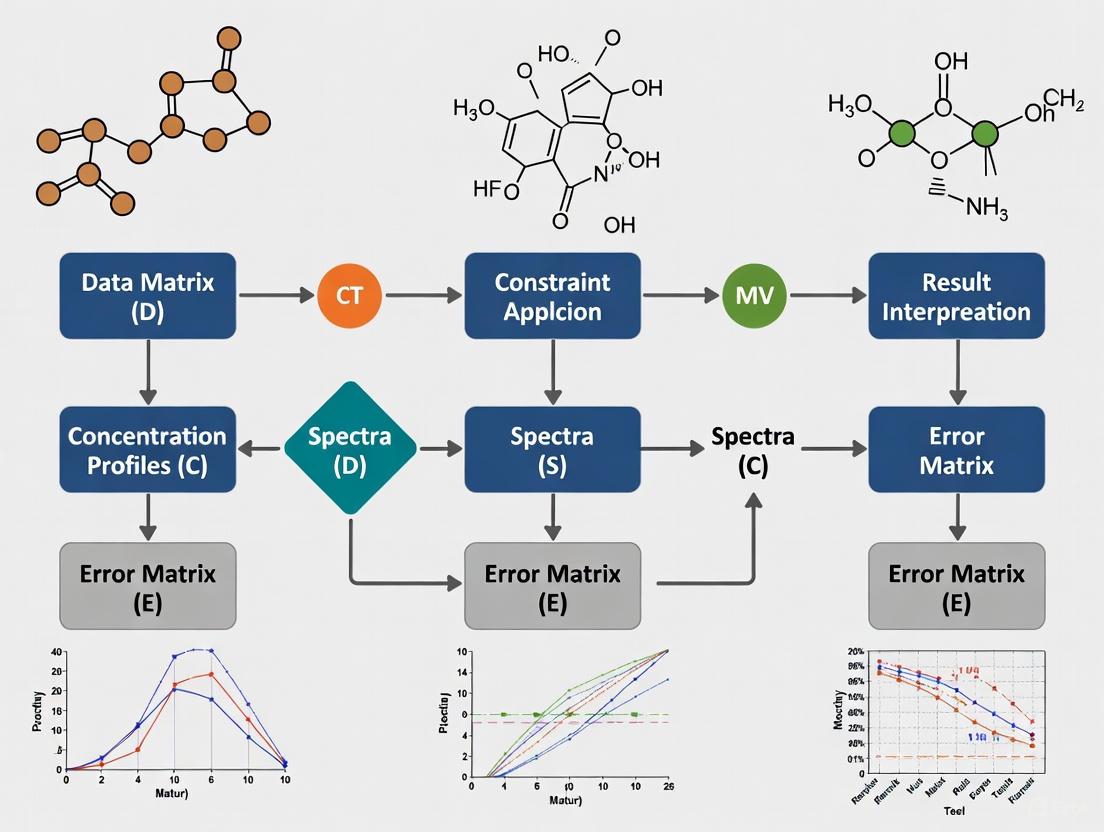
Matrix effects present a significant challenge in quantitative spectroscopic analysis, often leading to inaccurate predictions due to spectral differences and concentration mismatches between calibration standards and complex unknown samples.
Matrix Matching with Multivariate Curve Resolution (MCR): A Foundational Guide for Robust Pharmaceutical and Biomedical Analysis
Abstract
Matrix effects present a significant challenge in quantitative spectroscopic analysis, often leading to inaccurate predictions due to spectral differences and concentration mismatches between calibration standards and complex unknown samples. This article provides a comprehensive exploration of Multivariate Curve Resolution (MCR), particularly the Alternating Least Squares (MCR-ALS) method, as a powerful chemometric tool for overcoming these challenges through advanced matrix-matching strategies. Tailored for researchers, scientists, and drug development professionals, we cover the foundational principles of MCR-ALS, detail methodological workflows for implementation in pharmaceutical analysis (including dissolution, stability, and polymorphism studies), address critical troubleshooting aspects like rotational ambiguity and kinetic parameter ambiguity, and present validation protocols for ensuring analytical robustness. By synthesizing insights from foundational theory to cutting-edge applications, this review serves as an essential resource for developing more accurate and reliable quantitative methods in biomedical research and drug development.
Demystifying MCR-ALS: Core Principles and its Critical Role in Solving Matrix Effects
Multivariate Curve Resolution (MCR) comprises a family of algorithms designed to solve the mixture analysis problem by decomposing an experimental data matrix into a bilinear model of chemically meaningful pure component contributions [1]. Since the seminal work by Lawton and Sylvestre in 1971, MCR methods have continuously evolved to address increasingly complex scientific scenarios across diverse analytical domains [1]. The fundamental strength of MCR lies in its ability to recover pure response profiles of chemical constituents in unresolved mixtures without requiring prior information about their nature and composition [2].
The core MCR methodology addresses what is known as the "mixture analysis problem," where measured data represents overlapping contributions from multiple components. MCR algorithms resolve this complexity by extracting the pure spectral profiles and their relative concentrations or contributions within the measured samples [1] [2]. This capability has made MCR particularly valuable in pharmaceutical research and drug development, where understanding complex mixtures is essential for formulation optimization, impurity profiling, and metabolic studies.
Theoretical Foundation of the Bilinear Model
The Bilinear Model Formulation
The foundational principle of MCR is the bilinear model, which expresses the original data matrix D as the product of two smaller matrices C and S^T according to the equation [2]:
D = CS^T
Where:
- D (m × n) is the original experimental data matrix with m rows representing measurements and n columns representing variables
- C (m × k) is the matrix of concentration profiles or contributions of each pure component in the system
- S^T (k × n) is the matrix of pure response profiles (spectra, pH profiles, time profiles, etc.)
- k represents the number of pure components in the system
The matrices C and S^T contain the chemically meaningful profiles of the pure contributions (species, compounds) present in the original data set, though their specific chemical interpretation varies depending on the nature of the data set [2]. For spectroscopic data of mixture systems, C typically contains concentration profiles while S^T contains spectral profiles; for process monitoring, C may contain time-evolving profiles while S^T contains constituent-specific signatures.
The Ambiguity Problem
A fundamental theoretical aspect of the bilinear model in MCR is the phenomenon of "ambiguity," which recognizes that multiple pairs of matrices C and S^T can satisfy the equation D = CS^T while maintaining the same product [1]. This occurs because for any invertible matrix R, the transformation:
D = CS^T = (CR)(R^{-1}S^T)
will yield the same data matrix D. The extent of ambiguity varies depending on the system and the available constraints, and thorough studies have deepened understanding of this theoretical core of MCR methodology [1].
Table 1: Key Mathematical Properties of the MCR Bilinear Model
| Property | Mathematical Expression | Interpretation | Implications for Analysis |
|---|---|---|---|
| Bilinearity | D = CS^T | Response is linear in C for fixed S^T and vice versa | Enables alternating least squares algorithms |
| Matrix Decomposition | D (m×n) = C (m×k) × S^T (k×n) | Data expressed as product of two smaller matrices | Reduces dimensionality from m×n to k×(m+n) |
| Ambiguity | D = (CR)(R^{-1}S^T) | Multiple solutions possible | Requires application of constraints |
| Rank Deficiency | rank(D) ≤ min(m,n,k) | Maximum number of resolvable components | Determines component selection |
Research Reagent Solutions and Computational Tools
Table 2: Essential Research Reagents and Computational Tools for MCR Studies
| Reagent/Tool | Specifications | Function in MCR Research | Application Context |
|---|---|---|---|
| MATLAB Environment | Version R2016a or higher | Primary computational platform for MCR-ALS algorithm execution | Matrix computations and algorithmic implementation [2] |
| MCR-ALS GUI | Graphical interface v2.0 | User-friendly implementation of MCR-ALS with constraint application | Exploratory data analysis and method development [2] |
| Hyperspectral Imaging Data | Spectral-spatial data cubes | Provides complex mixture data for MCR analysis | Pharmaceutical raw material identification and distribution mapping |
| Multidimensional Chromatography | LC×GC, 2D separation | Generates complex mixture data with two retention dimensions | Impurity profiling and metabolomic studies in drug development |
| Process Analytical Technology | In-line spectrometers | Provides time-evolving spectral data for process monitoring | Real-time reaction monitoring in active pharmaceutical ingredient synthesis |
MCR-ALS Algorithm and Experimental Protocol
The MCR-ALS Algorithm Framework
MCR-Alternating Least Squares (MCR-ALS) is a specific algorithm that solves the basic bilinear model using a constrained Alternating Least Squares approach [2]. The algorithm iteratively refines estimates of C and S^T by alternating between solving for concentration profiles while holding spectral profiles constant, and vice versa, while applying appropriate constraints at each step.
The "art" and expertise in using MCR-ALS stems from the proper selection and application of constraints that are truly fulfilled by the data set, and from the ability to design and work with informative multiset structures [2]. The flexibility in how and where constraints are applied represents one of the main assets of this algorithm.
Step-by-Step Experimental Protocol for MCR-ALS
Protocol 1: Standard MCR-ALS Analysis Workflow
Experimental Design and Data Collection
- Design experiments to capture relevant chemical variations in the system
- Collect raw analytical data (spectral, chromatographic, etc.) in appropriate matrix format
- Preprocess data as needed (baseline correction, normalization, alignment)
Data Arrangement and Initialization
- Structure experimental data as two-way matrix D or multiset structure
- Estimate number of components, k, using singular value decomposition (SVD) or prior knowledge
- Generate initial estimates for C or S^T using pure variable detection methods or EFA
Constraint Selection and Application
- Identify chemically appropriate constraints (see Table 3)
- Implement selected constraints in the ALS optimization procedure
- Verify constraint appropriateness through residual analysis
Iterative Optimization Phase
- Solve for S^T given current C estimate: S^T = (C^T C)^{-1} C^T D
- Apply constraints to spectral profiles in S^T
- Solve for C given current S^T estimate: C = D S (S^T S)^{-1}
- Apply constraints to concentration profiles in C
- Check convergence criteria (change in residuals < threshold or maximum iterations)
Model Validation and Interpretation
- Analyze residuals (D - CS^T) for systematic patterns
- Assess explained variance and quality of fit
- Interpret resolved profiles in chemical context
- Evaluate potential ambiguity effects on conclusions
MCR-ALS Algorithm Computational Workflow
Advanced Applications in Pharmaceutical Research
Multiset Analysis for Complex Systems
Modern MCR has evolved beyond single matrix decomposition to handle multi-way and multiset data structures, enabling analysis of several data tables simultaneously [2]. This capability is particularly valuable in pharmaceutical research where multiple analytical techniques may be applied to the same samples, or when monitoring processes across different conditions.
Protocol 2: Multiset MCR-ALS for Comprehensive Drug Formulation Analysis
Multiset Design
- Arrange multiple data matrices in column-wise or row-wise augmented structures
- Ensure common components across matrices share identical profiles in the augmented dimension
- Define appropriate constraints for shared and individual components
Matrix Augmentation
- For column-wise augmentation: Daug = [D1 D2 ... Dn] = C [S1^T S2^T ... Sn^T]
- For row-wise augmentation: Daug = [D1; D2; ... ; Dn] = [C1; C2; ... ; Cn] S^T
- Implement appropriate scaling to account for different measurement intensities
Multiset Constraint Application
- Apply global constraints to profiles common across all matrices
- Apply local constraints to matrix-specific profiles
- Implement correspondence constraints to model component overlaps
Model Interpretation
- Distinguish common components present across multiple measurements
- Identify unique components specific to individual measurements
- Extract comprehensive component profiles reflecting full experimental context
Hyperspectral Imaging in Pharmaceutical Analysis
MCR applications have expanded significantly to include hyperspectral image analysis, where each pixel contains spectral information [1]. This capability supports critical pharmaceutical applications including raw material identification, counterfeit detection, and formulation homogeneity assessment.
Table 3: MCR Applications in Drug Development Research
| Application Domain | Data Type | Resolved Components | Constraints Typically Applied |
|---|---|---|---|
| Reaction Monitoring | Time-resolved spectroscopy | Reactants, intermediates, products | Non-negativity, closure, unimodality [2] |
| Impurity Profiling | Chromatographic-spectral | API, related substances, degradants | Non-negativity, selective regions [1] |
| Formulation Analysis | Hyperspectral imaging | API, excipients, contaminants | Non-negativity, spatial smoothing [1] |
| Metabolite Identification | LC-MS datasets | Parent drug, metabolites, matrix | Non-negativity, mass balance, spectral shape |
| Polymorph Characterization | Raman mapping | Crystal forms, amorphous content | Non-negativity, closure, unimodality |
Constraint Implementation in MCR-ALS
Types and Applications of Constraints
Constraints are essential for obtaining chemically meaningful solutions from MCR analysis and for reducing the inherent ambiguity in the bilinear model [2]. The table below summarizes the most commonly applied constraints in pharmaceutical applications.
Table 4: Essential Constraints in MCR-ALS for Pharmaceutical Applications
| Constraint Type | Mathematical Expression | Chemical Interpretation | Application Context |
|---|---|---|---|
| Non-negativity | C ≥ 0, S^T ≥ 0 | Concentrations and spectral intensities cannot be negative | Spectroscopic data, concentration profiles [2] |
| Unimodality | Single maximum in profiles | Single component elution or reaction progress | Chromatographic peaks, reaction profiles [2] |
| Closure | ΣC_i = constant | Mass or mole balance in closed systems | Reaction monitoring with mass balance [2] |
| Selective Regions | Certain C/ij or S/ij = 0 | Regions where only one component contributes | Spectral regions with unique absorbers |
| Trilinearity | Three-way data structure | Maintaining multilinear structure | GC×GC, LC×LC data analysis |
| Hard Modeling | C follows kinetic model | Incorporation of mechanistic knowledge | Reaction systems with known kinetics |
Constraint Application Protocol
Protocol 3: Systematic Constraint Implementation in MCR-ALS
Constraint Selection Criteria
- Identify constraints justified by physicochemical principles of the system
- Prioritize constraints with strong chemical rationale over mathematical convenience
- Avoid over-constraining which may lead to model rejection
Implementation Sequence
- Begin with non-negativity as a baseline constraint for most spectroscopic systems
- Apply unimodality to concentration profiles for chromatographic systems
- Implement closure when mass balance is known
- Use selective constraints when regions of pure variables are identified
Validation Procedures
- Compare constrained and unconstrained solutions
- Analyze residuals for systematic patterns indicating constraint violation
- Test robustness through cross-validation and bootstrap methods
- Verify chemical plausibility of resolved profiles
MCR Constraint Selection and Application Logic
Future Perspectives in MCR Method Development
The continued evolution of MCR methodology addresses emerging challenges in pharmaceutical analysis and drug development [1]. Current research focuses on adapting MCR to handle increasingly complex data structures, including incomplete multisets and combinations of matrix and tensor data [1]. The integration of MCR with machine learning approaches represents a promising direction for enhancing pattern recognition in complex mixture analysis.
Additionally, the development of more sophisticated constraint implementation methods and ambiguity assessment techniques continues to improve the reliability of MCR solutions. As MCR matures as a methodology, its application domains expand, with ongoing adaptations to new analytical measurements and scientific domains ensuring its continued relevance in pharmaceutical research and quality by design initiatives [1].
Multivariate Curve Resolution (MCR) encompasses a group of chemometric techniques designed to recover the pure response profiles (spectra, concentration profiles, pH profiles, etc.) of chemical constituents in unresolved mixtures when no prior information is available about their nature and composition [2]. The MCR-Alternating Least Squares (MCR-ALS) algorithm specifically solves the fundamental bilinear model using an iterative constrained optimization approach [2]. Originally developed for process analysis, MCR-ALS now finds application in diverse fields including spectroscopic imaging, environmental monitoring, and pharmaceutical analysis [2] [3].
The algorithm's core strength lies in its flexibility to handle various data structures (single matrices, multi-way arrays, and multiset structures) while incorporating constraints that reflect chemical or mathematical properties [2] [4]. This adaptability, combined with the ability to achieve the "second-order advantage" (quantifying analytes despite uncalibrated interferents), makes MCR-ALS particularly valuable for analyzing complex pharmaceutical mixtures [5] [6].
Theoretical Foundation
The Bilinear Model
At the heart of MCR-ALS lies a bilinear model that describes the experimental data mathematically. For a single data matrix, this model is represented as:
Where:
- D is the raw experimental data matrix (e.g., dimensions: samples × wavelengths)
- C is the matrix of concentration profiles (dimensions: samples × components)
- ST is the matrix of pure response profiles (e.g., spectra; dimensions: components × wavelengths)
- E is the matrix of residuals (unmodeled variance) [2]
This model assumes the data can be explained by a limited number of components and that the relationship between concentrations and pure profiles is linear [2]. The model readily extends to multi-set data structures through column-wise and/or row-wise matrix augmentation, allowing analysis of multiple experiments under different conditions [4].
Addressing Rotational Ambiguity
A fundamental challenge in MCR is rotational ambiguity, where multiple sets of C and ST profiles can fit the data equally well without proper restrictions [5]. This ambiguity arises from the mathematical structure of the bilinear model and can severely impact the interpretability and accuracy of resolved profiles [5].
MCR-ALS addresses this limitation through the strategic application of constraints—mathematical or chemical properties that the profiles must satisfy [2] [5]. The "art" of MCR-ALS implementation lies in selecting appropriate constraints that are truly fulfilled by the chemical system under investigation [2].
The MCR-ALS Algorithm: A Step-by-Step Protocol
The MCR-ALS algorithm follows an iterative optimization procedure to resolve the concentration and spectral profiles. The workflow can be visualized as follows:
Step 1: Determine the Number of Components (N)
Before applying MCR-ALS, the number of contributing components (N) must be estimated. This is typically done by:
- Singular Value Decomposition (SVD) or Principal Component Analysis (PCA) of data matrix D [4]
- Examining the magnitude of singular values and retaining those associated with systematic variance while excluding experimental error [4]
- Using cross-validation or statistical criteria like Malinowski's indicator function
Protocol Note: Underestimation of N leads to loss of chemical information, while overestimation introduces noise and artifacts. For complex systems, initial overestimation followed by examination of resolved profiles may be necessary.
Step 2: Generate Initial Estimates
The ALS optimization requires initial estimates for either C or ST. Common approaches include:
- Purest Variable Methods: Using techniques like SIMPLISMA (SIMPLe-to-use Interactive Self-modeling Mixture Analysis) to identify variables with the purest contributions [4]
- Evolving Factor Analysis (EFA): For process data, identifying concentration windows where components appear/disappear
- Known Reference Spectra: When available, using literature or standard spectra for some components
- Random Initialization: Less preferred but sometimes used with sufficient constraints
Step 3: Alternating Least Squares Optimization
The core iterative procedure alternates between two optimization steps:
a) Concentration Profile Update: Given the current estimate of ST, solve for C using least squares: C = D S (STS)−1 Apply relevant constraints to C (see Section 3.4) Calculate residuals and error: ‖D - CST‖
b) Spectral Profile Update: Given the updated C, solve for ST using least squares: ST = (CTC)−1CTD Apply relevant constraints to ST Calculate residuals and error: ‖D - CST‖
Step 4: Apply Constraints
Constraints are applied after each least squares step to ensure chemically meaningful solutions. The most commonly applied constraints include:
Table 1: Key Constraints in MCR-ALS
| Constraint | Application Mode | Mathematical Implementation | Chemical Meaning |
|---|---|---|---|
| Non-negativity | C and/or ST | Force negative values to zero (or small positive) using algorithms like FAST-NN [8] | Concentrations and spectral intensities cannot be negative |
| Unimodality | C | Maintain single maximum in concentration profiles [4] | Chromatographic peaks have single maximum |
| Closure | C | Constant sum of concentrations (e.g., 100%) [4] | Mass balance in closed systems |
| Trilinearity | C and ST | Identical shape and synchronization across multiple runs [4] | Second-order advantage in calibration |
| Selectivity/Local Rank | C and/or ST | Force zero concentration or response in specific regions [5] | Known absence of components in certain samples or wavelengths |
| Correspondence | C | Define presence/absence of components in different samples [5] | Multi-set analysis with different constituents |
Step 5: Check Convergence
The iteration continues until convergence criteria are met. Common criteria include:
- Relative Change (%) in residual standard error between iterations falls below a tolerance threshold (e.g., 0.1%) [7]
- Maximum number of iterations reached (e.g., 50-100 iterations)
- Successive divergence detected (e.g., 5 consecutive iterations with increasing error)
The convergence can be monitored using the following metrics:
- RSE/PCA: Residual standard error compared to PCA reconstruction with N components
- RSE/Exp: Residual standard error compared to experimental data
- % Change: Percent change in RSE/Exp between iterations [7]
Practical Implementation Protocol
Experimental Design and Data Preparation
For a typical spectroscopic application (e.g., HPLC-DAD analysis of pharmaceutical mixtures):
Research Reagent Solutions and Materials:
Table 2: Essential Research Materials for MCR-ALS Applications
| Item | Function | Example Specifications |
|---|---|---|
| Multivariate Detector | Measures multi-wavelength response | DAD detector (200-400 nm range, 1-nm resolution) [8] |
| Separation System | Partial resolution of components | HPLC system with C18 column [7] |
| Standard Compounds | Pure references for validation | Pharmaceutical standards (e.g., ≥97% purity) [9] |
| Solvent System | Sample preparation and dilution | HPLC-grade methanol, water [8] |
| Software Environment | Algorithm implementation | MATLAB with MCR-ALS toolbox [2] [10] |
| Data Format | Compatible data structure | Matrices in .MAT or .TXT format [7] |
Sample Preparation Protocol:
- Prepare stock solutions of individual components (e.g., 1 mg/mL in methanol) [8]
- Create calibration mixtures using experimental design (e.g., 5-level, 4-factor design for 4 components) [8]
- Dilute samples to appropriate concentration ranges (e.g., 4-20 μg/mL for UV detection) [8]
- Measure blank solvent for background subtraction
Data Collection Protocol:
- Set appropriate spectral range (e.g., 220-300 nm for many pharmaceuticals) [8]
- Collect spectra with sufficient resolution (e.g., 1-nm intervals) [8]
- Ensure proper signal-to-noise ratio through integration time optimization
- Export data in matrix format (samples × wavelengths) for analysis
MCR-ALS Analysis Protocol
Software Implementation: MCR-ALS is commonly implemented in MATLAB environment, with both command-line and graphical user interface versions available [2]. Alternative implementations exist in Python (e.g., SpectroChemPy) and other computational platforms [7].
Detailed Analysis Steps:
Data Preprocessing:
Initialization:
Model Fitting:
Result Examination:
- Plot resolved concentration profiles (C) and spectra (ST)
- Calculate explained variance and residual analysis
- Compare with known reference standards when available
Quality Assessment
Table 3: MCR-ALS Quality Assessment Parameters
| Parameter | Calculation | Acceptance Criteria |
|---|---|---|
| % Lack of Fit | 100 × √(Σ(E²)/Σ(D²)) | Typically < 5-10% |
| R² | 1 - (Σ(E²)/Σ(D²)) | > 0.9 (closer to 1.0 better) |
| Residual Standard Error (RSE) | √(Σ(E²)/(I×J - N×(I+J))) | Monitor convergence pattern |
| Spectral Similarity | Correlation with reference spectra | > 0.95 for good match |
Pharmaceutical Applications
MCR-ALS has demonstrated particular utility in pharmaceutical analysis, where complex mixtures are common:
Drug Quantification in Formulations
Protocol Application: Simultaneous quantification of antibiotics (clofazimine and dapsone) in fixed-dose combination tablets [9]:
- Samples: 25 mixtures with varying concentrations (calibration set) + 5 validation samples
- Instrumentation: UV-Vis spectrophotometer (200-400 nm)
- MCR-ALS Conditions: Non-negativity constraints in both modes, correlation constraint
- Results: Recovery rates near 100%, comparable to HPLC reference method [9]
Dissolution Testing
Protocol Application: Monitoring in vitro drug release profiles [9] [3]:
- Data: Time-dependent concentration profiles from dissolution apparatus
- MCR-ALS Advantage: Resolves overlapping spectra of multiple APIs without separation
- Constraints: Non-negativity, unimodality (for dissolution profiles)
Stability Studies
Protocol Application: Monitoring drug degradation kinetics [3]:
- Data: Spectral changes over time under stress conditions (light, heat, pH)
- MCR-ALS Function: Resolves drug and degradation product profiles simultaneously
- Output: Pure spectra and concentration profiles of all degradants
Polymorphism Analysis
Protocol Application: Characterization of different crystal forms [3]:
- Data: Spectral differences between polymorphic forms
- MCR-ALS Function: Resolves pure component spectra despite overlapping features
- Constraints: Non-negativity, selectivity when reference spectra available
Advanced Applications and Modifications
Handling Non-Bilinear Data
For data departing from ideal bilinear behavior (e.g., chromatographic shifts), MCR-ALS offers flexible implementations:
- Soft-Trilinearity Constraint: Allows small deviations from perfect trilinearity [4]
- Component-Wise Constraints: Apply different constraint types to individual components [4]
- Model Flexibility: Handle shifted or shape-changing profiles across data slices [4]
Multi-Set Analysis
For enhanced resolution, multiple datasets can be analyzed simultaneously:
- Data Augmentation: Column-wise and/or row-wise concatenation of related datasets
- Common Components: Assume some components shared across experiments
- Applications: Multiple batch processes, different experimental conditions [4]
Second-Order Advantage
MCR-ALS achieves the "second-order advantage" in calibration, enabling analyte quantification despite uncalibrated interferents [5]. This is particularly valuable for:
- Complex biological samples with unknown matrix effects
- Environmental samples with uncharacterized interferents
- Degradation studies with unidentified degradants [5]
Troubleshooting and Optimization
Common Issues and Solutions:
- Slow Convergence: Increase maximum iterations; relax tolerance; check initial estimates
- High Residuals: Re-evaluate number of components; check data preprocessing; examine for non-linearities
- Chemically Unrealistic Profiles: Apply additional constraints; verify constraint appropriateness
- Rotational Ambiguity Persists: Incorporate selective constraints; use multi-set analysis; apply trilinearity when justified [5]
Optimization Strategies:
- Constraint Selection: Choose constraints based on chemical knowledge, not mathematical convenience
- Initial Estimate Testing: Compare results from different initialization methods
- Multi-Method Validation: Compare with PARAFAC, PARAFAC2, or other resolution methods when possible [4]
- Experimental Design: Optimize sample composition to enhance selectivity in calibration sets [8]
The MCR-ALS algorithm provides a powerful framework for extracting chemically meaningful information from complex mixture data. Through careful implementation of the step-by-step protocol outlined here—with appropriate constraint selection, quality assessment, and troubleshooting—researchers can reliably resolve component profiles even in challenging pharmaceutical applications with extensive spectral overlap and unknown interferents.
Matrix effects represent a fundamental challenge in analytical chemistry, defined as the combined effect of all components of a sample other than the analyte on the measurement of the quantity [11]. In multivariate calibration, these effects manifest as spectral differences and concentration mismatches between calibration standards and unknown samples, leading to inaccurate predictions that compromise analytical reliability. The foundation of addressing this problem lies in multivariate curve resolution (MCR) methods, particularly MCR-Alternating Least Squares (MCR-ALS), which provides a mathematical framework for decomposing complex data into pure chemical contributions [2].
Within the broader thesis on MCR for matrix matching, this work demonstrates a systematic procedure that leverages MCR-ALS to enhance calibration model robustness. By ensuring both spectral similarity and concentration alignment between unknown samples and calibration sets, this approach addresses a critical limitation of conventional strategies that struggle to handle both aspects simultaneously [11] [12]. The following sections detail the experimental protocols, computational framework, and validation data that establish matrix matching as an essential methodology for researchers, scientists, and drug development professionals working with complex sample matrices.
Theoretical Framework of MCR-ALS for Matrix Matching
Core Mathematical Principles
Multivariate Curve Resolution operates on the fundamental bilinear model expressed as:
D = CSᵀ + E
where D is the raw data matrix (e.g., spectroscopic measurements), C contains the concentration profiles of each component across samples, Sᵀ contains the pure response profiles (e.g., spectra), and E represents the residual matrix [11] [2]. The MCR-ALS algorithm solves this model using constrained alternating least squares, iteratively optimizing C and Sᵀ while applying chemically relevant constraints such as non-negativity, unimodality, and closure to achieve physically meaningful solutions [2].
The MCR-ALS calibration method forms the foundation for matrix matching by providing resolved spectral and concentration profiles that enable direct comparison between unknown samples and multiple calibration sets. This capability allows researchers to select optimal calibration subsets that minimize matrix effects prior to prediction [11].
Matrix Matching Strategy
The matrix matching procedure employs dual assessment criteria to ensure comprehensive matching:
Spectral Matching: Evaluated through net analyte signal (NAS) projections and Euclidean distance calculations to isolate analyte and non-analyte contributions, addressing signal variations caused by matrix-induced spectral shifts and intensity fluctuations [11] [12].
Concentration Matching: Performed by evaluating the alignment of predicted concentration ranges between unknown samples and calibration sets, ensuring consistency across varying sample compositions and preventing extrapolation beyond the calibrated concentration domain [11].
This dual approach enables the identification of calibration samples that share both spectral characteristics and concentration levels with the unknown sample, addressing the complete spectrum of matrix effect challenges.
Table 1: Key Mathematical Components of the MCR-ALS Bilinear Model
| Matrix | Dimensions | Content Description | Role in Matrix Matching |
|---|---|---|---|
| D (Raw Data) | m × n | Original instrumental responses (e.g., spectra for m samples at n variables) | Provides the input data for resolving pure profiles |
| C (Concentration) | m × k | Concentration values of k components in m samples | Enables concentration matching between unknown samples and calibration sets |
| Sᵀ (Spectral) | k × n | Pure spectra of k components at n variables | Enables spectral matching through direct profile comparison |
| E (Residuals) | m × n | Variance not explained by the k components | Provides diagnostic information on model quality and potential interferences |
Experimental Protocols
MCR-ALS Matrix Matching Procedure
Principle: This protocol employs MCR-ALS to select calibration subsets that optimally match unknown samples in both spectral and concentration domains, minimizing matrix effects in multivariate calibration [11].
Materials:
- Multivariate spectroscopic data (NIR, NMR, UV-Vis, or MS)
- MATLAB environment with MCR-ALS toolbox
- Reference values for calibration samples (concentrations or properties)
Procedure:
- Data Arrangement: Organize multiple calibration sets and unknown samples into individual data matrices. Ensure consistent variable alignment across all datasets.
MCR-ALS Modeling: Apply MCR-ALS to each calibration set separately:
- Decompose each calibration data matrix Dcal into concentration profiles Ccal and spectral profiles Sᵀcal using the bilinear model: Dcal = CcalSᵀcal + E
- Apply appropriate constraints (non-negativity in concentration and spectra, closure, unimodality) during ALS optimization [2]
- Validate model quality through residual analysis and percent variance explained
Spectral Matching Assessment:
- Calculate Net Analyte Signal (NAS) projections for both calibration and unknown samples
- Compute Euclidean distances between spectral profiles of unknown samples and calibration sets
- Establish spectral similarity thresholds based on NAS and distance metrics
Concentration Matching Assessment:
- Compare predicted concentration ranges of unknown samples with the concentration domain of each calibration set
- Evaluate whether unknown samples fall within the calibrated concentration space
- Identify calibration sets with appropriate concentration alignment
Optimal Set Selection:
- Integrate spectral and concentration matching results
- Select calibration set with highest combined similarity score
- Proceed with prediction for unknown samples using the matched calibration model
Applications: This protocol is validated for NIR spectra of corn, NMR spectra of alcohol mixtures, and can be extended to various spectroscopic and chromatographic data in pharmaceutical analysis, environmental monitoring, and food chemistry [11].
Matrix-Matched Calibration Curve Construction
Principle: This protocol establishes a framework for creating matrix-matched calibration curves that account for sample-specific matrix effects, particularly useful in mass spectrometry-based proteomics [13].
Materials:
- Biological samples of interest (yeast culture, cerebrospinal fluid, FFPE tissue blocks)
- Appropriate matrix materials for dilution series
- Liquid chromatography-mass spectrometry system
- Stable isotope-labeled standards (if available)
Procedure:
- Experimental Design:
- Prepare a minimum of 6-8 calibration standards plus blank samples
- Space calibration standards logarithmically across several orders of magnitude
- Use matrix-matched materials as diluent to maintain consistent background
Sample Preparation:
- For yeast calibration curves: Create 13 calibration points plus blank using 15N-metabolic labeling for matrix matching [13]
- For cerebrospinal fluid: Implement 18O-enriched CSF as matrix material for calibration standards
- For FFPE tissue blocks: Spike pooled human plasma into PBS and mix with liver homogenate at varying concentrations
Serial Dilution Scheme:
- Avoid continuous serial dilution to prevent pipetting error propagation
- Prepare multiple primary standards (Points A-E) individually from reference materials
- Create subsequent points through dilution of primary standards (e.g., F from B, G from C)
Data Acquisition and Curve Fitting:
- Acquire LC-MS/MS data using appropriate acquisition methods (DIA or SRM)
- Construct calibration curves by plotting measured signal against known concentration
- Determine lower limit of quantification (LLOQ) where precision meets acceptance criteria
Applications: Essential for quantitative proteomics, biomarker verification, and any analytical application where matrix effects compromise quantitative accuracy, particularly in complex biological samples [13].
Data Presentation and Performance Metrics
Quantitative Assessment of Matrix Matching Benefits
The MCR-ALS matrix matching approach has been rigorously validated across multiple data types, demonstrating consistent improvement in prediction accuracy compared to conventional calibration methods.
Table 2: Prediction Performance Improvement with MCR-ALS Matrix Matching
| Dataset | Matrix Type | Analytical Technique | Prediction Error (Global Model) | Prediction Error (MCR-ALS Matrix Matching) | Improvement Percentage |
|---|---|---|---|---|---|
| Simulated Data | Controlled variability | Multivariate calibration | Not reported | Not reported | Substantial reduction in errors from spectral shifts and concentration mismatches [11] |
| Corn Samples | Agricultural product | Near-Infrared (NIR) Spectroscopy | Not reported | Not reported | Enhanced robustness and predictive accuracy by addressing matrix variability [11] [12] |
| Alcohol Mixtures | Chemical standards | Nuclear Magnetic Resonance (NMR) | Not reported | Not reported | Outperformed conventional calibration strategies in complex matrices [11] |
| General Applications | Complex matrices | Various spectroscopic methods | High matrix-induced errors | Minimized matrix effects | Ensures robust and accurate predictions across analytical platforms [11] |
Research Reagent Solutions
The implementation of effective matrix matching strategies requires specific materials and computational tools that form the essential toolkit for researchers in this field.
Table 3: Essential Research Reagents and Computational Tools for Matrix Matching
| Reagent/Tool | Specifications | Function in Matrix Matching |
|---|---|---|
| MCR-ALS Software | MATLAB environment with GUI MCR-ALS or command-line version | Resolves complex data into pure concentration and spectral profiles for matching assessment [2] |
| Stable Isotope-Labeled Standards | 15N-labeled yeast, 18O-enriched water for peptide labeling | Creates matrix-matched materials for calibration curves in quantitative proteomics [13] |
| Matrix-Matched Materials | Biological fluids, tissue homogenates, sample-specific matrices | Serves as diluent for calibration standards to maintain consistent background effects [13] |
| Multivariate Data | NIR spectra, NMR measurements, MS chromatograms | Provides the input data for MCR-ALS decomposition and subsequent matching calculations [11] |
| Constrained ALS Algorithm | Non-negativity, unimodality, closure constraints | Ensures chemically meaningful resolution of concentration and spectral profiles [11] [2] |
Visualization of Matrix Matching Framework
MCR-ALS Matrix Matching Workflow
The following diagram illustrates the complete computational workflow for implementing the MCR-ALS matrix matching strategy, from data preparation through optimal calibration set selection.
MCR-ALS Matrix Matching Workflow: This diagram outlines the systematic procedure for identifying calibration sets that optimally match unknown samples through dual assessment of spectral and concentration compatibility.
Matrix Effect Mechanisms and Solutions
The following visualization depicts the fundamental sources of matrix effects and how matrix matching strategies address these challenges in multivariate calibration.
Matrix Effect Mechanisms and Solutions: This diagram illustrates how matrix effects originate from multiple sources and how the MCR-ALS matrix matching approach systematically addresses these challenges through dual assessment criteria.
The integration of MCR-ALS methodologies with comprehensive matrix matching strategies represents a significant advancement in multivariate calibration science. By systematically addressing both spectral and concentration mismatches between calibration standards and unknown samples, this approach substantially minimizes matrix-induced errors that have historically compromised prediction accuracy in complex matrices. The experimental protocols and visualization frameworks presented herein provide researchers and drug development professionals with practical tools for implementing these strategies across diverse analytical platforms, from pharmaceutical analysis to environmental monitoring and biomedical research. As analytical challenges continue to evolve toward increasingly complex sample matrices, the principles of matrix matching established through MCR-ALS will remain essential for ensuring robust, accurate, and reliable quantitative measurements.
Multivariate Curve Resolution-Alternating Least Squares (MCR-ALS) has emerged as a powerful chemometric tool for analyzing complex chemical data from modern analytical instruments. Its ability to handle intricate mixtures and provide meaningful resolution of component profiles makes it invaluable across numerous scientific fields, including pharmaceutical analysis, environmental monitoring, and food science [14]. Two of its most significant capabilities form the core of this application note: the effective handling of matrix effects and the exploitation of the second-order advantage.
Matrix effects, which occur when sample components other than the analytes of interest influence the analytical signal, represent a major challenge in quantitative analysis. These effects can lead to inaccurate quantification, reduced method robustness, and compromised analytical performance. MCR-ALS addresses this challenge through advanced mathematical decomposition and the application of appropriate constraints [12].
The second-order advantage, a property of certain multivariate calibration methods, allows for the accurate quantification of analytes even in the presence of uncalibrated or unexpected interferences in the test samples. This unique capability eliminates the need for complete sample purification before analysis, making MCR-ALS particularly valuable for analyzing complex real-world samples where comprehensive characterization of all components is impractical [15] [5].
This application note provides a detailed examination of these key advantages, including structured protocols for implementation, visual workflows, and specific application examples relevant to researchers and drug development professionals.
Theoretical Foundations
The MCR-ALS Model
MCR-ALS operates on the fundamental principle of bilinear decomposition, where an experimental data matrix X is factorized into the product of two smaller matrices C and ST containing, respectively, the concentration profiles and the pure response profiles (e.g., spectra) of the chemical constituents, plus an error matrix E [16]:
X = CST + E
The algorithm employs an iterative Alternating Least Squares optimization to minimize the residuals in E while adhering to chemically relevant constraints such as non-negativity, unimodality, and closure [17] [14]. This soft-modeling approach is particularly effective for systems where the underlying chemical model is unknown or complex.
Understanding the Second-Order Advantage
Second-order data, represented as a matrix for each sample (e.g., from LC-DAD or GC-MS analysis), possesses a fundamental property known as the "second-order advantage." This refers to the capability of a model to accurately quantify analytes of interest even when unknown interferents are present in the test samples that were not included in the calibration set [15] [5].
This advantage is mathematically grounded in the ability to uniquely identify the contribution of the analyte within the complex sample matrix. While powerful, the realization of this advantage in MCR-ALS can be influenced by the phenomenon of rotational ambiguity, where multiple feasible solutions satisfy the model and constraints [18] [5]. The application of appropriate constraints and initialization protocols is crucial to mitigating this issue and obtaining accurate quantitative results.
Handling Matrix Effects: Protocols and Applications
Matrix effects pose a significant challenge in analytical chemistry, particularly in complex samples like biological fluids, environmental extracts, and pharmaceutical formulations. MCR-ALS offers several strategies to manage these effects.
Matrix Matching Strategy
A systematic matrix-matching procedure using MCR-ALS has been developed to enhance the accuracy and robustness of multivariate calibration models. This approach assesses both spectral matching and concentration alignment between unknown samples and the calibration set [12].
Protocol: MCR-ALS Matrix Matching
- Spectral Matching Assessment: Use Net Analyte Signal (NAS) projections and Euclidean distance calculations to isolate analyte and non-analyte spectral contributions. This step evaluates the similarity between the spectral profiles of the calibration standards and the unknown sample matrix.
- Concentration Matching Evaluation: Assess the alignment of predicted concentration ranges between unknown samples and the calibration set to ensure consistency across varying sample compositions.
- Optimal Subset Selection: Identify the calibration subset that minimizes matrix effects based on the spectral and concentration matching criteria.
- Model Validation: Validate the selected model using both simulated datasets and real-world analytical data (e.g., NIR spectra of corn, NMR spectra of alcohol mixtures) to confirm improved prediction performance [12].
Signal Pre-Treatment for Matrix Effect Correction
In applications involving effluent wastewater analysis, signal pre-treatment methods have proven essential for handling matrix effects. Two key techniques are:
- Piecewise Direct Standardization (PDS): Compensates for recovery factor variations during sample pre-concentration, overcoming challenges like the breakthrough of polar analytes (e.g., minocycline, oxytetracycline) during solid-phase extraction [15].
- Baseline Correction: Addresses large baseline drifts and additive interferences at analyte retention times caused by the sample matrix. Methods like the one proposed by Eilers can significantly improve the quality of subsequent MCR-ALS resolution [15].
Research Reagent Solutions for Environmental Monitoring
The following table details key reagents and materials used in a representative MCR-ALS study for determining tetracycline antibiotics in environmental waters [15]:
Table 1: Key Research Reagents and Materials for Tetracycline Analysis in Water
| Reagent/Material | Function in the Experimental Protocol |
|---|---|
| Oasis MAX Cartridges | Solid-phase extraction (SPE) sorbent for isolating and pre-concentrating tetracycline antibiotics from water samples. |
| Aquasil C18 Column | Analytical chromatographic column for the separation of the eight tetracycline antibiotics prior to detection. |
| Oxalic Acid Mobile Phase | Aqueous component of the LC mobile phase, crucial for achieving the chromatographic separation of tetracyclines. |
| Methanol:Acetonitrile Mobile Phase | Organic modifier component of the LC mobile phase, used in a gradient elution program. |
| Tetracycline Standards | Analytical reference standards used for calibration and validation of the MCR-ALS method. |
Exploiting the Second-Order Advantage: Protocols and Applications
The second-order advantage enables reliable analysis in situations where complete separation or comprehensive calibration is impossible.
Protocol for Second-Order Calibration in Complex Matrices
The following workflow outlines the general procedure for quantifying analytes in the presence of uncalibrated interferents using MCR-ALS with second-order data [15] [19]:
Diagram 1: MCR-ALS workflow for exploiting the second-order advantage. The process involves collecting second-order data, building an augmented matrix, performing bilinear decomposition with constraints, and finally building a calibration model to predict unknown concentrations.
Application in Pharmaceutical Analysis: Drug Dissolution and Stability
In pharmaceutical analysis, MCR-ALS has been successfully applied to stability-indicating methods and dissolution studies, where it deconvolutes overlapping signals from the active pharmaceutical ingredient (API), degradation products, and excipients without requiring prior purification [14]. This allows for:
- Stability Monitoring: Tracking the degradation of drugs like 5-Fluorouracil and Tamoxifen under various stress conditions (e.g., photodegradation), even when degradation products are unknown or not individually calibrated [14].
- Dissolution Testing: Simultaneously acquiring the dissolution profiles of multiple active ingredients in a binary pharmaceutical association, resolving the contributions of each component from complex, overlapping data [14].
Application in Environmental and Biological Monitoring
- Heavy Metal Detection: MCR-ALS has been coupled with a colorimetric sensor based on functionalized silver nanoparticles (AgNPs@11MUA) for the discrimination and quantification of multiple heavy metal ions (Cd²⁺, Cu²⁺, Mn²⁺, Ni²⁺, Zn²⁺) in water. The algorithm deconvoluted the overlapping UV-Vis signals triggered by nanoparticle aggregation, enabling identification and quantification of the metals in a complex mixture [16].
- Metabolomics: In the analysis of ¹H-NMR spectral data from mouse urine and feces, a modified "cluster-aided MCR-ALS" approach was developed to identify "reliable" components based on their reproducibility across models with different numbers of components. This method facilitated the detection of more plausible metabolic components in complex biological mixtures compared to conventional approaches [20].
Analytical Figures of Merit and Performance
The performance of MCR-ALS methods is quantitatively assessed using Analytical Figures of Merit (AFOMs). However, due to rotational ambiguity, MCR-ALS may not produce a single unique solution but rather a range of feasible solutions. This leads to the concept of an Area of Feasible Figures of Merit (AF-FOMs), where parameters like sensitivity (SEN), selectivity (SEL), and limit of detection (LOD) exist as ranges rather than single values [18].
Table 2: Analytical Figures of Merit (AFOMs) in MCR-ALS Second-Order Calibration
| Figure of Merit | Description | Implication in MCR-ALS |
|---|---|---|
| Sensitivity (SEN) | Ability to distinguish small concentration differences. | Can vary within a feasible range (AF-FOMs) due to rotational ambiguity [18]. |
| Selectivity (SEL) | Measure of spectral overlapping between components. | Influenced by the degree of profile overlap in the data modes [18]. |
| Limit of Detection (LOD) | Lowest detectable analyte concentration. | Dependent on sensitivity; thus, also exhibits a feasible range [18]. |
| Root Mean Square Error of Prediction (RMSEP) | Measures prediction accuracy. | A key parameter for evaluating the overall quantitative performance of the model [18]. |
Advanced Considerations and Protocol for Handling Rotational Ambiguity
Rotational ambiguity (RA) is an inherent challenge in MCR-ALS, originating from the bilinear model decomposition where multiple sets of profiles can fit the data equally well under the applied constraints [5] [21]. Its presence can introduce uncertainty in quantitative predictions.
Strategies to Minimize Rotational Ambiguity
The following protocol outlines a systematic approach to mitigate the effects of rotational ambiguity:
- Apply a Full Battery of Constraints: Use all chemically reasonable constraints (non-negativity, unimodality, selectivity, correspondence, closure) during ALS optimization to narrow the feasible solution space [21].
- Ensure Selective Regions: Whenever possible, design the analytical method or select data regions where the analyte has a selective signal (a region where only the analyte contributes). This significantly reduces RA [5].
- Use Appropriate Initialization: Initialize the ALS algorithm with concentration profiles derived from the purest spectral variables, especially when selective regions exist, to guide the algorithm toward a chemically meaningful solution [5].
- Avoid Artificial Data Manipulation: Protocols that involve pre-processing (e.g., chromatographic synchronization via warping) to enforce trilinearity may artificially modify the original data and do not necessarily improve, and can even worsen, analytical performance. The focus should be on reducing RA through constraints rather than forcing data into a trilinear model [21].
Visualizing the Strategy
The decision process for managing rotational ambiguity is summarized in the following diagram:
Diagram 2: A strategic protocol for mitigating the impact of rotational ambiguity in MCR-ALS, emphasizing the application of constraints and proper initialization over artificial data warping.
MCR-ALS stands as a powerful and versatile chemometric tool whose key advantages—the robust handling of matrix effects and the exploitation of the second-order advantage—make it indispensable for the analysis of complex samples. Its application across diverse fields, from pharmaceutical development to environmental monitoring, underscores its utility in providing accurate qualitative and quantitative information where traditional univariate methods fail.
Successful implementation requires careful attention to experimental design, data pre-treatment, and the application of appropriate constraints to manage challenges such as rotational ambiguity. The structured protocols and case studies presented in this application note provide a framework for researchers and drug development professionals to leverage MCR-ALS effectively, enabling reliable analysis in the presence of complex matrix interferences and uncalibrated components.
In pharmaceutical development, ensuring consistent drug performance requires rigorous analysis of dissolution behavior, solid-state stability, and polymorphic transformations. These factors are critical for drugs with poor aqueous solubility, which constitute over 40% of marketed immediate-release oral drugs and approximately 70% of new drug candidates [22]. Variations in sample composition, excipient interactions, and environmental conditions during storage and testing introduce matrix effects—the combined influence of all sample components other than the analyte on measurement accuracy [11] [12]. This application note examines these critical pharmaceutical applications through the lens of multivariate curve resolution (MCR) for matrix matching, providing detailed protocols to enhance analytical robustness in drug development.
Theoretical Background and Key Challenges
The Interrelationship of Solubility, Polymorphism, and Bioavailability
A drug's aqueous solubility is a fundamental property dictating its dissolution rate and bioavailability. The Biopharmaceutical Classification System (BCS) categorizes drugs based on solubility and intestinal permeability, with BCS Class II (low solubility-high permeability) drugs being particularly susceptible to bioavailability variations due to polymorphic changes [22]. Polymorphism, the ability of a drug substance to exist in multiple crystalline forms with identical chemical compositions, directly impacts critical pharmaceutical properties including solubility, dissolution rate, mechanical behavior, and chemical stability [23]. Different polymorphic forms exhibit varying thermodynamic stability and solubility profiles, where metastable forms typically demonstrate higher solubility but risk converting to more stable, less soluble forms during manufacturing or storage [22] [24].
Matrix Effects in Pharmaceutical Analysis
During dissolution testing and stability studies, the complex composition of dosage forms introduces significant matrix effects. Excipients, degradation products, and changing environmental conditions (e.g., humidity, temperature) alter the analytical signal, leading to inaccurate predictions of drug performance [11] [25]. These effects arise from both chemical interactions (e.g., solvation processes, ion suppression) and physical phenomena (e.g., light scattering, pathlength variations) [11]. Traditional univariate calibration methods often fail to account for these complex multivariate influences, necessitating advanced chemometric approaches.
Polymorphic Stability and Transformation Risks
Polymorphic transformations present substantial challenges throughout a drug's lifecycle. The notorious case of ritonavir exemplifies this risk, where a previously unknown, more stable polymorph (Form II) emerged during production, resulting in reduced dissolution rate and bioavailability that necessitated product withdrawal [23]. Such "disappearing polymorphs" can render initial manufacturing processes irreproducible, causing significant economic losses and potential patient safety concerns [24]. Tegoprazan provides another illustrative example, where solvent-mediated phase transformations occur between amorphous, Polymorph A (thermodynamically stable), and Polymorph B (metastable) forms, requiring careful control during manufacturing [24]. These transformations can proceed via solid-state transition or more commonly through solvent-mediated mechanisms, particularly during dissolution testing or wet granulation processes [22] [24].
MCR for Matrix Matching in Pharmaceutical Analysis
Fundamental Principles
Multivariate Curve Resolution-Alternating Least Squares (MCR-ALS) provides a powerful chemometric framework for decomposing complex analytical data into chemically meaningful components. The fundamental MCR model represents data matrix D as the product of concentration matrix C and spectral profile matrix ST, plus an error matrix E [26]:
D = CST + E
This bilinear decomposition enables the resolution of overlapping signals from multiple components in complex pharmaceutical matrices, facilitating accurate quantification despite interfering excipients or degradation products [11] [26].
MCR-ALS Matrix Matching Strategy
The matrix matching procedure using MCR-ALS addresses both spectral and concentration mismatches between calibration standards and unknown samples [11] [12]. This dual approach ensures optimal calibration subset selection for each unknown sample, significantly improving prediction accuracy in dissolution and stability testing.
Table 1: MCR-ALS Matrix Matching Assessment Criteria
| Matching Dimension | Assessment Method | Pharmaceutical Application |
|---|---|---|
| Spectral Matching | Net Analyte Signal (NAS) projections, Euclidean distance | Identifies spectral interference from excipients or degradation products in dissolution media |
| Concentration Matching | Evaluation of predicted concentration range alignment | Ensures calibration standards cover relevant drug concentration ranges in stability samples |
| Overall Matrix Similarity | Combined spectral and concentration metrics | Selects optimal calibration set for specific formulation matrix under testing |
Advantages Over Traditional Calibration Methods
MCR-ALS based matrix matching offers significant advantages for pharmaceutical analysis. Unlike standard addition methods which require extensive sample preparation, or local modeling approaches with limited scope, the MCR-ALS framework simultaneously addresses spectral variations and concentration mismatches [11]. This comprehensive approach enhances model robustness against matrix effects arising from formulation variability, storage conditions, and manufacturing process changes [11] [12]. The method has demonstrated superior performance across diverse analytical platforms including near-infrared (NIR) spectroscopy and nuclear magnetic resonance (NMR) in pharmaceutical applications [11].
Experimental Protocols
Protocol 1: Polymorph Characterization and Stability Assessment
Objective: Identify polymorphic forms and evaluate their physical stability under accelerated storage conditions.
Materials and Equipment:
- Active Pharmaceutical Ingredient (multiple polymorphic forms)
- Powder X-ray Diffractometer (PXRD)
- Differential Scanning Calorimeter (DSC)
- Saturated solubility apparatus
- Stability chambers with controlled temperature/humidity
Procedure:
- Sample Preparation: Obtain or prepare all known polymorphic forms (e.g., amorphous, metastable, stable crystalline forms) through recrystallization from different solvents or processing conditions [24].
- Structural Characterization:
- Perform PXRD analysis on each polymorph to obtain distinct diffraction patterns
- Conduct DSC to determine thermal transitions and melting points
- Solubility Determination:
- Measure equilibrium solubility of each polymorph in relevant media (pH 1.2-6.8) [22]
- Record dissolution profiles using USP apparatus
- Stability Monitoring:
- Store samples under accelerated conditions (40°C/75% RH) for up to 8 weeks [24]
- Withdraw samples at predetermined intervals (0, 1, 2, 4, 8 weeks)
- Analyze by PXRD to detect polymorphic transformations
- Kinetic Modeling:
- Fit transformation data to Kolmogorov-Johnson-Mehl-Avrami (KJMA) model to quantify transformation rates [24]
- Determine activation energy for polymorphic transitions
Protocol 2: Dissolution Testing with MCR-ALS Matrix Matching
Objective: Monitor drug dissolution profiles while accounting for matrix effects from formulation components and changing media composition.
Materials and Equipment:
- Tablet formulations with varying excipient composition
- USP dissolution apparatus with in-situ spectrophotometric probe
- Multivariate calibration software with MCR-ALS algorithms
- Dissolution media (pH 1.2 HCl, pH 4.5-6.8 buffers)
Procedure:
- Formulation Preparation: Prepare tablets with systematic variation in excipient composition (e.g., MCC with mannitol, lactose, or DCPA) to represent expected manufacturing variability [25].
- Dissolution Testing:
- Conduct dissolution testing using USP Apparatus I (baskets) or II (paddles)
- Maintain sink conditions where appropriate (typically >3× saturation solubility)
- Withdraw samples automatically or manually at predetermined time points
- Spectral Data Acquisition:
- Collect full UV-Vis or NIR spectra at each time point
- Maintain consistent pathlength and instrumental parameters
- MCR-ALS Modeling:
- Matrix Matching and Prediction:
- For each unknown dissolution sample, identify optimal calibration subset using spectral matching (Euclidean distance) and concentration matching criteria [11]
- Predict API concentration using matrix-matched calibration model
- Profile Generation and Comparison:
- Construct dissolution profiles from predicted concentrations
- Calculate similarity factors (f2) for profile comparison
- Model release kinetics (zero-order, first-order, Higuchi, Korsmeyer-Peppas)
Protocol 3: Stability Study Monitoring with MCR-ALS
Objective: Track chemical and physical stability of drug products under accelerated storage conditions while compensating for matrix effects.
Materials and Equipment:
- Stability chambers with controlled temperature and humidity
- HPLC-UV/DAD system with validated separation methods
- Multivariate analysis software
- Stressed samples (heat, light, humidity)
Procedure:
- Study Design:
- Store formulations under ICH accelerated conditions (40°C/75% RH) [25]
- Include samples stressed under more severe conditions (e.g., 60°C) to force degradation
- Sample Analysis:
- Withdraw samples at predetermined intervals (0, 1, 2, 4, 8, 12 weeks)
- Analyze by HPLC-DAD to obtain chromatographic and spectral data
- MCR-ALS Modeling:
- Build multi-set data arrangement including stability samples from different time points [26]
- Resolve pure spectra of API and degradation products
- Apply selectivity and non-negativity constraints
- Matrix Effect Compensation:
- Implement standard addition approach within MCR framework when necessary
- Use matrix matching to select appropriate calibration subsets for degraded samples [11]
- Kinetic Modeling:
- Plot concentration profiles of API and degradation products versus time
- Determine degradation kinetics (zero-order, first-order)
- Calculate shelf-life predictions
The Scientist's Toolkit: Essential Research Reagents and Materials
Table 2: Key Materials for Pharmaceutical Solubility and Polymorphism Studies
| Reagent/Material | Function/Application | Example/Notes |
|---|---|---|
| Polymorphic Standards | Reference materials for form identification | Polymorphs A & B (tegoprazan) [24] |
| MCC-Mannitol Blend | Direct compression excipient system | Prone to dissolution rate changes during storage [25] |
| MCC-Lactose Blend | Direct compression excipient system | Exhibits premature swelling during stability testing [25] |
| MCC-DCPA Blend | Direct compression excipient system | Shows stability-related dissolution changes [25] |
| Methanol | Protic crystallization solvent | Favors stable polymorph formation in tautomeric drugs [24] |
| Acetone | Aprotic crystallization solvent | Promotes metastable polymorph formation [24] |
| Saturated Solutions | Solubility and dissolution testing | Maintain sink conditions during dissolution profiling |
Case Studies and Data Analysis
Case Study: Tegoprazan Polymorphic Transformations
Tegoprazan (TPZ) exemplifies the challenges of polymorph control in tautomeric, flexible drug molecules. Comprehensive investigation revealed:
Table 3: Tegoprazan Polymorph Characteristics and Stability Data
| Parameter | Amorphous TPZ | Polymorph B | Polymorph A |
|---|---|---|---|
| PXRD Pattern | No diffraction peaks | Distinct from Polymorph A | Characteristic stable pattern |
| Thermal Behavior | No glass transition | Metastable melting endotherm | Stable melting endotherm |
| Solubility | Highest | Intermediate | Lowest (thermodynamically stable) |
| Stability (40°C/75% RH) | Converts to Polymorph A in ~8 weeks | Converts to Polymorph A in ~8 weeks | Remains unchanged |
| Transformation Mechanism | Solvent-mediated | Solvent-mediated | N/A (stable form) |
Solution-phase conformational analysis and hydrogen-bonding dimer calculations confirmed that protic solvents (e.g., methanol) favor the direct crystallization of stable Polymorph A, while aprotic solvents (e.g., acetone) promote transient formation of metastable Polymorph B [24]. Kinetic analysis using the KJMA model quantified transformation rates, demonstrating accelerated conversion under high humidity conditions.
Case Study: Griseofulvin Formulation-Dependent Stability
Directly compressed griseofulvin tablets with different excipient compositions exhibited distinct stability mechanisms affecting dissolution performance:
- MCC/Mannitol Formulations: Dissolution rate decreased after storage, correlated with storage humidity; changes attributed to particle dissolution during storage [25].
- MCC/Lactose Formulations: Similar dissolution degradation occurred due to premature swelling of particles during storage [25].
- MCC/DCPA Formulations: Exhibited stability-related dissolution changes requiring matrix-matched calibration for accurate prediction.
These formulation-dependent stability mechanisms highlight the necessity of matrix matching approaches during method development to ensure accurate dissolution prediction throughout product shelf-life.
Dissolution testing, stability studies, and polymorphism investigations present complex analytical challenges due to formulation matrix effects and solid-state transformations. The integration of MCR-ALS matrix matching strategies provides a robust framework for maintaining analytical accuracy despite variability in sample composition, excipient interference, and environmental conditions. The protocols outlined in this application note enable pharmaceutical scientists to implement these advanced chemometric approaches for reliable prediction of drug product performance, ultimately ensuring consistent bioavailability and therapeutic efficacy throughout a product's lifecycle.
Implementing MCR-ALS for Matrix Matching: From Strategy to Practical Workflow
Matrix effects present a significant challenge in analytical chemistry, often compromising the accuracy of multivariate calibration models. These effects arise from variations in sample composition and instrumental conditions, leading to spectral differences and concentration mismatches between unknown samples and calibration datasets [11]. Conventional strategies, such as standard addition and local modeling, frequently fall short as they struggle to address both spectral and concentration aspects simultaneously [11]. This document details a robust matrix-matching procedure based on Multivariate Curve Resolution–Alternating Least Squares (MCR-ALS), designed to enhance predictive accuracy by systematically aligning both the spectral and concentration domains of unknown samples with optimal calibration subsets [11]. Framed within broader MCR research, these application notes provide detailed protocols for implementing this procedure.
Theoretical Background
The MCR-ALS Foundation
Multivariate Curve Resolution (MCR) is a powerful chemometric technique for decomposing complex, multi-component analytical data. The core MCR bilinear model is expressed as: D = CSt + E where D is the original data matrix, C is the matrix of concentration profiles, S is the matrix of spectral profiles, and E is the residual matrix containing the unexplained variance [11]. The MCR-ALS algorithm resolves this model by iteratively alternating between estimating C and S under user-defined constraints until an optimal solution is reached [11]. This ability to extract pure concentration and spectral profiles from unresolved mixture signals is fundamental to its application in matrix matching.
Defining Matrix Effects
According to the International Union of Pure and Applied Chemistry (IUPAC), the matrix effect is the "combined effect of all components of the sample other than the analyte on the measurement of the quantity" [11]. These effects originate from two primary sources:
- Chemical and Physical Interactions: Components in the matrix can interact with the analyte, altering its form or detectability (e.g., ion suppression in mass spectrometry) [11].
- Instrumental and Environmental Effects: Variations in conditions like temperature or humidity can introduce artifacts (e.g., baseline shifts) that distort the analytical signal [11]. MCR-ALS helps isolate these effects, enabling their systematic mitigation.
The MCR-ALS Matrix-Matching Workflow
The following diagram illustrates the logical workflow for the MCR-ALS matrix-matching procedure, from data preparation to the final prediction.
Experimental Protocol
Data Preparation and MCR-ALS Calibration
Objective: To establish MCR-ALS calibration models for multiple, distinct calibration sets that encompass expected matrix variations.
Materials & Reagents:
- Analytical Standard Solutions: High-purity reference materials for target analytes.
- Matrix Components: Representative chemicals (e.g., salts, proteins, solvents) to simulate the composition of real-world samples.
- Calibration Sets: Multiple sets of samples where the concentrations of analytes and matrix components are varied systematically.
Procedure:
- Prepare Calibration Sets: Formulate several calibration sets. Each set should span the anticipated range of analyte concentrations but should differ in its matrix composition from the others [11].
- Acquire Instrumental Data: Collect multivariate signals (e.g., NIR, NMR spectra) for all samples in each calibration set under consistent instrumental conditions [11].
- Build MCR-ALS Models: For each calibration set, perform MCR-ALS calibration.
- Input: Data matrix Dcal for the set.
- Constraints: Apply suitable constraints (e.g., non-negativity in concentration and spectra, closure) during the ALS optimization [11].
- Output: Obtain the resolved spectral profiles (Scal) and concentration profiles (Ccal) for each set.
Matrix Matching for an Unknown Sample
Objective: To identify the calibration set that best matches the spectral and concentration characteristics of an unknown sample.
Procedure:
- Resolve the Unknown: Analyze the unknown sample's data vector (dunk) using MCR-ALS. This projects the unknown into the space defined by the previously resolved spectral profiles, yielding its estimated concentration vector [11].
- Assess Spectral Matching: For each calibration set, calculate the similarity between the unknown's spectral features and the set's spectral domain.
- Net Analyte Signal (NAS) Projection: Calculate the NAS of the unknown relative to each calibration model to isolate the analyte's contribution from the background matrix [11].
- Euclidean Distance (ED): Compute the ED between the unknown's spectrum and the centroid of each calibration set in the principal component space [11].
- Assess Concentration Matching: For each calibration set, evaluate whether the predicted concentration for the unknown falls within the calibrated range of that set, ensuring the prediction is an interpolation rather than an extrapolation [11].
- Compute Combined Matching Score: Integrate the spectral (NAS, ED) and concentration matching metrics into a single score for each calibration set. The set with the highest score is selected as the optimal matrix-matched set for the final prediction [11].
Validation and Key Findings
The MCR-ALS matrix-matching procedure was validated using simulated data, Near-Infrared (NIR) spectra of corn, and Nuclear Magnetic Resonance (NMR) spectra of alcohol mixtures [11]. The quantitative results from these validation studies are summarized in the table below.
Table 1: Summary of Validation Results for MCR-ALS Matrix Matching
| Dataset Type | Key Metric | Performance with Conventional Calibration | Performance with MCR-ALS Matrix Matching | Notes |
|---|---|---|---|---|
| Simulated Data | Prediction Error (RMSEP) | Higher | Substantially Reduced | Effectively handled simulated spectral shifts and intensity fluctuations [11] |
| NIR Corn Spectra | Predictive Accuracy | Inaccurate due to matrix variability | Significantly Improved | Procedure successfully identified calibration subsets matching the unknown's matrix [11] |
| NMR Alcohol Mixtures | Robustness to Concentration Mismatches | Limited | Enhanced | Ensured concentration predictions were within the calibrated domain of the selected set [11] |
The Scientist's Toolkit: Essential Research Reagents and Materials
Table 2: Key Reagent Solutions and Materials for MCR-ALS Matrix-Matching Studies
| Item | Function / Explanation |
|---|---|
| Multivariate Calibration Standards | High-purity chemical standards used to prepare calibration samples with known concentrations, forming the basis for building the quantitative model. |
| Matrix Mimicking Reagents | Substances (e.g., buffers, salts, proteins) used to mimic the complex background of real-world samples (like biological fluids or food) in calibration sets, crucial for evaluating matrix effects. |
| MCR-ALS Software | Computational environment (e.g., MATLAB with MCR-ALS toolboxes) essential for implementing the alternating least squares algorithm and applying constraints to resolve spectral and concentration profiles. |
| Net Analyte Signal (NAS) Calculator | A software routine or script used to compute the net analyte signal for the unknown sample against each calibration model, which is central to the spectral matching step. |
Multivariate Curve Resolution (MCR) is a powerful chemometric technique for decomposing mixed chemical data into pure component profiles, expressed as D = CS^T + E, where D is the raw data matrix, C contains concentration profiles, S^T contains spectral profiles, and E represents residual noise [27] [28]. The core challenge in MCR is the inherent rotational ambiguity, which means that without additional information, multiple sets of chemically feasible solutions (C and S^T) can equally explain the measured data [29]. Applying constraints is the primary methodology to reduce this ambiguity and steer the solution toward chemically meaningful results [29].
Constraints are mathematical expressions of prior physicochemical knowledge about the system. This article details the practical application of three fundamental constraints—non-negativity, closure, and correlation—within the context of matrix matching research, providing application notes and detailed protocols for scientists in drug development and related fields.
Theoretical Foundation of Key Constraints
The Role and Impact of Constraints
Applying appropriate constraints restricts the feasible solution space, often leading to a unique or nearly unique solution that reflects the underlying chemical reality. The "General Rule of Uniqueness" (GRU) states that a unique profile can be obtained if the applied constraints define a hyperplane related to the complementary species in the dual space [29]. Inappropriate constraints, however, can lead to false solutions or poor model performance [29].
Table 1: Summary of Fundamental MCR Constraints and Their Effects
| Constraint Type | Mathematical Expression | Chemical Property Enforced | Effect on Solution |
|---|---|---|---|
| Non-Negativity | C ≥ 0, S^T ≥ 0 | Concentrations and spectral intensities cannot be negative. | Drastically reduces rotational ambiguity; ensures physically meaningful profiles [29]. |
| Closure (Mass Balance) | Σ C_i = constant (e.g., 1) for each sample | The total mass or concentration of components sums to a known value. | Provides a scaling factor, aids in quantitative analysis, and further narrows solution space. |
| Correlation | C ~ f(External Variable) | Concentration profiles correlate with a known external profile (e.g., pH, reaction time). | Incorporates process knowledge, helps resolve profiles of species with similar spectra. |
Predicting Uniqueness from Constraints
Even with minimal constraints, some levels of uniqueness can be achieved. The Data-Based Uniqueness (DBU) theorem provides a framework to predict whether resolved profiles are unique when using only non-negativity constraints [29]. The procedure involves inspecting the resolved profiles for the presence of zero-regions and selective windows. A selective window for a component is a region in the data space where only that component contributes. According to the DBU theorem, if a component has a selective window in one mode (e.g., concentration), its profile in the dual mode (e.g., spectrum) can be uniquely resolved [29]. This is a powerful tool for validating MCR results without computationally expensive procedures to calculate all feasible solutions.
Figure 1: A workflow for diagnosing unique profiles in MCR analysis using the Data-Based Uniqueness theorem.
Application Note: Pharmaceutical Analysis Using MCR-ALS with Non-Negativity
Background and Objective
A common challenge in pharmaceutical quality control is the rapid quantification of multiple active ingredients in a formulation without time-consuming chromatographic separation. Spectrophotometric methods are fast but often fail due to severe spectral overlap. This application note demonstrates how MCR-Alternating Least Squares (MCR-ALS) with non-negativity constraints can resolve and quantify four drugs—Paracetamol (PARA), Chlorpheniramine maleate (CPM), Caffeine (CAF), and Ascorbic Acid (ASC)—in a commercial capsule (Grippostad C) [8].
Key Reagents and Instrumentation
Table 2: Research Reagent Solutions and Essential Materials
| Item Name | Specification / Function |
|---|---|
| Pure Drug Standards | PARA, CPM, CAF, ASC; for constructing calibration models. |
| Methanol (HPLC Grade) | Solvent for preparing stock and working standard solutions. |
| UV-Vis Spectrophotometer | Instrument for measuring absorption spectra (200-400 nm). |
| 1.00 cm Quartz Cells | Cuvettes for holding samples during spectral measurement. |
| MATLAB with MCR-ALS Toolbox | Software platform for data analysis and implementing the MCR-ALS algorithm [8]. |
Detailed Experimental Protocol
Sample and Standard Preparation
- Stock Solutions: Precisely weigh 100 mg of each pure drug (PARA, CPM, CAF, ASC) into separate 100 mL volumetric flasks. Dissolve and make up to volume with methanol to obtain 1 mg/mL stock solutions.
- Working Solutions: Dilute the stock solutions with methanol to prepare working standards of 100 µg/mL.
- Calibration Set: Construct a 25-mixture calibration set using a five-level, four-factor experimental design. In 10 mL volumetric flasks, combine different aliquots from the working solutions to create mixtures where the concentrations of PARA, CPM, CAF, and ASC vary within the ranges of 4.00–20.00, 1.00–9.00, 2.50–7.50, and 3.00–15.00 µg/mL, respectively. Dilute to the mark with methanol.
- Pharmaceutical Sample: Empty and mix the contents of ten Grippostad C capsules. Accurately weigh a portion equivalent to one capsule and dissolve it in methanol. Dilute to an appropriate volume, then further dilute with methanol to fall within the calibration range.
Spectral Data Acquisition
- Using a UV-Vis spectrophotometer, measure the absorption spectrum of each calibration mixture and the prepared pharmaceutical sample over the wavelength range of 200.0–400.0 nm.
- Export the spectral data points from 220.0 to 300.0 nm at 1 nm intervals. This yields a data vector of 81 points per sample.
MCR-ALS Modeling and Analysis
- Data Input: Import the spectral data matrix D (with dimensions nsamples × nwavelengths) into the MCR-ALS toolbox in MATLAB.
- Initialization: Provide an initial estimate for the spectral profiles (S^T). This can be done using pure variable detection methods or by using the spectra of pure standards if available.
- Constraint Application: In the MCR-ALS algorithm, apply the non-negativity constraint to both the concentration (C) and spectral (S^T) profiles. This forces the algorithm to only consider solutions where all concentration values and spectral intensities are zero or positive [8].
- Model Fitting: Run the MCR-ALS algorithm. The alternating least squares procedure will iteratively refine the estimates for C and S^T under the applied non-negativity constraint until convergence is achieved.
- Quantification: Use the resolved concentration profiles in C to quantify the amount of each drug in the pharmaceutical sample by comparing them to the calibration model.
Results and Discussion
The MCR-ALS model successfully resolved the heavily overlapping spectra of the four-component mixture. The application of non-negativity was crucial for obtaining chemically meaningful concentration and spectral profiles, which allowed for accurate quantification. The method was validated and showed no significant difference in accuracy and precision compared to official chromatography methods, establishing it as a green and efficient alternative for routine pharmaceutical analysis [8].
Advanced Protocol: Integrating Closure and Correlation Constraints
Closure Constraint for Reaction Monitoring
In a system where the total mass is conserved, such as a closed chemical reaction, the closure constraint is highly effective.
Protocol:
- Data Collection: Collect a spectral dataset D from a time-dependent reaction process.
- MCR-ALS Setup: Initialize the MCR-ALS analysis as described in Section 3.3.3.
- Apply Closure: During each iteration of the ALS algorithm, apply the closure constraint to the concentration profiles. For each sample (i.e., each row of C), normalize the concentrations so that they sum to a predefined constant (e.g., 1 or the initial total concentration).
- Model Fitting: Run the iterative optimization until convergence. The combination of non-negativity and closure will provide concentration profiles that reflect the reaction kinetics and satisfy mass balance.
Correlation Constraint for Process Modeling
When the concentration of a component is known to follow a specific pattern (e.g., a kinetic model), applying a correlation constraint can powerfully resolve ambiguities.
Protocol:
- Define External Profile: Have a known profile, c_know, for one or more components. This could be from a kinetic model or a measured standard.
- MCR-ALS with Correlation: During the MCR-ALS iteration, when updating the concentration matrix C, force the concentration profile of the target component to be proportional to the known profile c_know.
- Implementation: This can be implemented using a least-squares regression step within the ALS cycle. The algorithm will then resolve the remaining components while the known component's behavior is "locked in," guiding the resolution of co-eluting or spectrally similar compounds.
Figure 2: The MCR-ALS iterative cycle with integration points for non-negativity, closure, and correlation constraints.
The strategic application of constraints transforms MCR from a purely mathematical decomposition tool into a powerful method for extracting chemically accurate information. Non-negativity is a fundamental and widely applicable constraint. The closure constraint is critical for systems with conserved quantities, and the correlation constraint allows for the incorporation of rich prior knowledge from other analyses or models. By following the detailed protocols and understanding the theoretical principles outlined in this article, researchers can effectively leverage these constraints to solve complex matrix matching problems in drug development, materials science, and beyond.
Multivariate Curve Resolution (MCR) encompasses a group of techniques designed to recover the pure response profiles (spectra, concentration profiles, time profiles) of chemical constituents in unresolved mixtures when little or no prior information is available about their composition [2]. The fundamental MCR bilinear model is expressed as:
D = CST
where D is the raw experimental data matrix, C is the matrix of concentration profiles, and ST is the matrix of pure spectral profiles for each compound in the system [2]. The power of MCR, particularly the Alternating Least Squares (ALS) algorithm, lies in its ability to incorporate constraints such as non-negativity, unimodality, and closure during the optimization process, significantly enhancing the physical meaning and interpretability of the resolved profiles [2].
Data augmentation refers to the strategic combination of multiple experimental runs or data sets from different analytical techniques into a single, cohesive data structure for simultaneous analysis. This approach is critical for overcoming rotational ambiguity in MCR solutions—the inherent mathematical problem that allows for multiple, equally valid solutions to the bilinear model. By designing and analyzing multiset structures, researchers can incorporate additional information that guides the algorithm toward a more accurate, chemically meaningful resolution [2]. The "art" of MCR-ALS application thus lies in the expert selection of appropriate constraints and the design of informative multiset structures tailored to the specific scientific question [2].
Theoretical Framework for Data Augmentation in MCR
Data Structures and Augmentation Schemes
The design of the augmented data matrix is fundamental to the success of the MCR-ALS analysis. The structure dictates how additional information is introduced into the model to reduce ambiguity. The most common augmentation strategies include:
- Row-Wise Augmentation: Multiple data matrices from different experiments (e.g., varying temperature, pH, or sample composition) are concatenated horizontally. This structure assumes that the same pure spectral profiles (ST) are shared across all experiments, while the concentration profiles (C) are allowed to vary. This is particularly useful for studying evolutionary processes like reaction monitoring.
- Column-Wise Augmentation: Data matrices are concatenated vertically. This structure assumes that the same concentration profiles (C) are shared, while the spectral profiles (ST) are allowed to vary. This can be applied when the same mixture is analyzed with different spectroscopic techniques.
- Row- and Column-Wise Augmentation (Super-Augmentation): A complex structure involving both horizontal and vertical concatenation of multiple data matrices. This approach is used for the most sophisticated analyses, such as fusing data from multiple analytical platforms (e.g., LC-MS and NMR) across multiple samples.
The mathematical representation of a row-wise augmented data matrix is:
Daug = [ D1; D2; ... ; Dk ] = [ C1; C2; ... ; Ck ] ST
where D1 to Dk are the individual data matrices from different experiments, and C1 to Ck are their respective concentration profiles that will be resolved simultaneously.
Logical Workflow for MCR-ALS with Data Augmentation
The following diagram illustrates the logical sequence and decision points involved in designing and executing an MCR-ALS analysis with data augmentation.
Application Protocols
Protocol 1: Resolving Nucleic Acid Conformational Equilibria
This protocol is adapted from a study investigating the coexisting conformations of the cyclic oligonucleotide d
1. Experimental Design and Sample Preparation:
- Synthesize and purify the cyclic oligonucleotide d
using standard liquid chromatography techniques. - Prepare oligonucleotide sodium salt solutions in Ultrapure water.
- For salt-dependent studies, add appropriate volumes of PIPES buffer (200 mM, pH 7.0) and stock salt solutions (MgCl₂ and NaCl) to achieve desired final concentrations.
- Determine oligonucleotide concentration by absorbance at 260 nm, using a micromolar extinction coefficient of 64.5 OD/(µmol·ml) in water.
- For melting studies, heat samples at 90°C for 5 min and allow them to renature by slow cooling to room temperature.
2. Multimodal Data Acquisition:
- Acquire UV and Circular Dichroism (CD) spectra simultaneously in the 240–330 nm range.
- Melting Experiments: Record spectra at 3°C increments across a temperature gradient (e.g., 20–90°C). Use a temperature ramp rate of 20°C/h. Perform experiments at different MgCl₂ concentrations (e.g., 0, 2, and 10 mM) with a constant background of 100 mM NaCl.
- Salt Titration Experiments: Record spectra at increasing MgCl₂/NaCl concentrations (e.g., 0 to 10 mM MgCl₂) at fixed temperatures (e.g., 21.0°C and 54.0°C). Allow the system to equilibrate at each salt concentration until no spectral changes are observed in consecutive measurements.
- Perform background subtraction using control samples without oligonucleotide.
3. Data Augmentation and MCR-ALS Analysis:
- For each experiment (melting or titration), arrange the recorded spectra into a data matrix D, where rows correspond to different conditions (temperature/salt concentration) and columns correspond to wavelengths.
- Design the augmented data matrix: Create a row-wise augmented matrix by concatenating the data matrices from the melting experiments at different MgCl₂ concentrations and the salt titration experiments at different temperatures.
- Subject the augmented data matrix to MCR-ALS analysis.
- Apply constraints such as non-negativity to both concentration and spectral profiles, and optionally closure (mass balance) to concentration profiles.
- Set the number of components, N, based on prior knowledge or by evaluating the residual fit of models with increasing N.
4. Interpretation:
- The resolved concentration profiles reveal the evolution of each species (e.g., monomeric dumbbell, dimeric quadruplex, random coil) with changing temperature and salt concentration.
- The resolved pure UV and CD spectra for each conformation aid in species identification and validation against known standards or reference data.
Protocol 2: ROIMCR for LC-MS Data Independent Acquisition (DIA)
This protocol details the application of Regions of Interest MCR (ROIMCR) for the augmented analysis of MS1 and MS2 data from Liquid Chromatography coupled to high-resolution Mass Spectrometry (LC-HRMS) in DIA mode, as applied to the analysis of per- and polyfluoroalkyl substances (PFAS) [30].
1. Sample Preparation and LC-qTOF Analysis:
- Analyze three sample types: (a) PFAS standard mixtures at multiple concentrations, (b) hen eggs spiked with native PFAS, and (c) real-world gull egg samples.
- Spike all samples with a mass-labeled surrogate solution for internal standard quantification.
- Extract 1 g of sample with acetonitrile and perform clean-up with activated carbon.
- Perform LC separation coupled to a quadrupole-time-of-flight (qTOF) mass spectrometer.
- Operate the mass spectrometer in DIA mode using broad-band Collision-Induced Dissociation (bbCID). Acquire:
- MS1 data: Full-scan mode at a mass range (e.g., 30-1000 m/z) with low collision energy (e.g., 6 eV).
- MS2 data: With elevated collision energy (e.g., 30 eV) without precursor ion isolation to fragment all eluting compounds.
2. Regions of Interest (ROI) Selection and Data Augmentation:
- Apply the ROI method to each chromatographic run to reduce data size while preserving mass accuracy. Select ROIs based on:
- Signal intensity above a pre-defined noise threshold.
- Mass accuracy within a specified tolerance.
- Occurrence over a chromatographic time range consistent with a chromatographic peak.
- Build individual MS1 (DMS1) and MS2 (DMS2) data matrices for each sample, where rows are retention times and columns are the selected m/z values from the ROIs.
- Design the super-augmented data matrix: For the simultaneous analysis of multiple samples and data types:
- Concatenate data matrices from different samples (calibration and unknowns) vertically (column-wise).
- Horizontally concatenate (row-wise) the MS1 and MS2 ROI matrices for the same set of samples, resulting in the final super-augmented matrix DMS1,MS2,aug.
3. MCR-ALS Analysis and Quantification:
- Decompose the augmented data matrix DMS1,MS2,aug according to: DMS1,MS2,aug = Caug SaugT
- Apply non-negativity constraints to both the elution profiles (Caug) and the mass spectral profiles (SaugT).
- Use the resolved MS1 and MS2 spectra in SaugT for compound annotation and identification by comparison with standards or mass spectral libraries.
- Use the resolved elution profiles in Caug to build calibration curves from standard samples and predict concentrations in unknown samples.
Protocol 3: Multi-omic Integration for Toxicological Assessment
This protocol outlines a strategy for mid-level data fusion of multi-omics data (epigenomics, transcriptomics, metabolomics) to evaluate the ecotoxicological effects of tributyltin (TBT) on zebrafish embryos [31].
1. Experimental Design and Omics Data Generation:
- Expose zebrafish embryos to a range of TBT concentrations.
- Collect samples for multi-omics analysis:
- Epigenomics: e.g., DNA methylation data.
- Transcriptomics: e.g., gene expression microarray or RNA-seq data.
- Metabolomics: e.g., NMR or LC-MS spectral data.
- Pre-process each omics data set individually using standard normalization and feature selection methods to reduce dimensionality and remove noise.
2. Data Pre-processing and Joint Variance Decomposition:
- Perform a preliminary variance decomposition using the Joint and Individual Variation Explained (JIVE) method on the pre-processed, concatenated omics data blocks.
- JIVE separates the data into three parts:
- Joint variation: Patterns common across all omics platforms.
- Individual variation: Patterns specific to each omics platform.
- Residual noise.
3. Mid-Level Data Fusion and MCR-ALS Analysis:
- Design the augmented data matrix: Concatenate the "joint variation" matrices obtained from JIVE for each omics data block horizontally (row-wise) to form the fused data set for MCR-ALS.
- Analyze the fused data set using MCR-ALS.
- Apply chemically/biologically relevant constraints (e.g., non-negativity).
- The resolved MCR-ALS profiles (C and ST) will describe the coordinated changes across the epigenome, transcriptome, and metabolome that are induced by specific TBT exposure levels.
4. Biological Interpretation:
- Interpret the resolved ST loadings to identify key genomic regions, genes, and metabolites associated with each toxicological response pattern.
- Use the resolved C scores to understand the relationship between TBT concentration and the magnitude of each coordinated biological response.
Key Research Reagent Solutions
Table 1: Essential materials and reagents for implementing MCR data augmentation strategies.
| Reagent / Material | Function / Application | Example from Protocols |
|---|---|---|
| Cyclic Oligonucleotides | Model system for studying multi-stranded nucleic acid conformations and equilibria. | d |
| PIPES Buffer | Maintains stable pH (7.0) during nucleic acid melting and salt titration studies. | Used in UV/CD studies of oligonucleotide conformational transitions [10]. |
| Mass-Labeled Surrogates | Internal standards for accurate quantification in complex matrices via mass spectrometry. | Mass-labeled PFAS added to egg samples prior to extraction for ROIMCR analysis [30]. |
| Per- and Polyfluoroalkyl Substances (PFAS) Standards | Target analytes for method development and calibration in environmental analysis. | 23 PFAS standards used to build calibration curves for ROIMCR quantification [30]. |
| Tributyltin (TBT) | Model toxicant for triggering coordinated biological responses assessable via multi-omics. | Used to expose zebrafish embryos in multi-omic integration study [31]. |
Table 2: Summary of experimental parameters and data structures from cited application protocols.
| Application Area | Analytical Techniques | Augmentation Structure | Key Constraints | Number of Components Resolved |
|---|---|---|---|---|
| Nucleic Acid Conformations [10] | UV Spectroscopy, Circular Dichroism (CD) | Row-wise (multiple temperatures and MgCl₂ concentrations) | Non-negativity | 3 (Monomeric, Dimeric, Random Coil) |
| Environmental PFAS Analysis [30] | LC-qTOF (MS1 and MS2 DIA modes) | Row- and Column-wise Super Augmentation (Multiple samples, MS1 & MS2 data) | Non-negativity | Matches number of detectable PFAS (e.g., 25) |
| Multi-omic Toxicology [31] | Epigenomics, Transcriptomics, Metabolomics | Row-wise (Mid-level fusion after JIVE decomposition) | Non-negativity | Dependent on the number of distinct biological responses to TBT |
Workflow Diagram for ROIMCR of LC-MS Data
The following diagram details the specific workflow for the ROIMCR protocol, showing the steps from raw data acquisition to final quantitative and identification results.
Matrix effects, arising from variations in sample composition and instrumental conditions, present a major challenge in analytical chemistry, often resulting in inaccurate predictions for multivariate calibration models [11] [12]. These effects are particularly problematic in pharmaceutical analysis, where they can compromise the accuracy of dissolution testing and stability-indicating methods crucial for ensuring drug quality, performance, and regulatory compliance [32] [33].
This case study explores the integration of a Multivariate Curve Resolution-Alternating Least Squares (MCR-ALS) based matrix-matching strategy to enhance analytical robustness in two critical pharmaceutical applications: drug dissolution testing and stability-indicating method development. By systematically addressing spectral differences and concentration mismatches between calibration standards and unknown samples, this approach demonstrates significant potential for improving predictive accuracy across diverse and complex sample matrices encountered in drug development [11].
Theoretical Framework: MCR-ALS for Matrix Matching
Fundamentals of MCR-ALS
Multivariate Curve Resolution (MCR) is a powerful chemometric technique for extracting meaningful information from complex multicomponent systems. The MCR-ALS algorithm decomposes a data matrix D into the product of two smaller matrices according to the bilinear model:
D = CS^T + E
where C contains concentration profiles, S^T contains pure response profiles (e.g., spectra), and E represents the residual matrix [11]. This decomposition enables the quantification of analytes in complex mixtures without prior identification of all components, making it particularly valuable for analyzing spectroscopic data from techniques like UV-Vis, NIR, and NMR in pharmaceutical applications [11].
Matrix Matching Strategy
The developed matrix-matching procedure employs MCR-ALS to enhance the accuracy and robustness of multivariate calibration models through dual assessment:
- Spectral Matching: Evaluated via net analyte signal (NAS) projections and Euclidean distance to isolate analyte and non-analyte contributions [11] [12]
- Concentration Matching: Performed by evaluating the alignment of predicted concentration ranges between unknown samples and calibration sets, ensuring consistency across varying sample compositions [11]
This approach systematically selects calibration subsets that optimally match both spectral characteristics and concentration domains of unknown samples, effectively minimizing matrix-induced errors that conventional calibration strategies often fail to address comprehensively [11] [12].
Figure 1: MCR-ALS Matrix Matching Workflow. The process begins with decomposition of the data matrix into concentration and spectral profiles, followed by dual assessment of spectral and concentration matching to select optimal calibration subsets for enhanced prediction accuracy.
Application in Drug Dissolution Testing
Dissolution Testing Fundamentals
Dissolution testing evaluates the rate and extent of active pharmaceutical ingredient (API) release from solid oral dosage forms under standardized conditions, serving as a critical determinant of bioavailability and therapeutic effectiveness [34] [35]. This analytical technique plays essential roles in formulation development, quality control, bioequivalence assessment, and stability monitoring throughout the pharmaceutical development lifecycle [34].
Regulatory standards mandate dissolution testing for all solid oral dosage forms, with the U.S. Pharmacopeia (USP) outlining seven apparatus types, of which Apparatus I (basket) and Apparatus II (paddle) are most commonly employed for immediate-release formulations [32] [34]. The FDA requires dissolution testing for both immediate-release and modified-release solid oral dosage forms to ensure consistent in vitro performance and support in vivo bioavailability claims [34].
MCR-ALS Enhanced Dissolution Methodology
The application of MCR-ALS matrix matching in dissolution testing addresses critical matrix effect challenges arising from:
- Formulation Variability: Differences in excipient composition, particle size distribution, and manufacturing processes
- Media Composition Effects: Variations in pH, ionic strength, surfactant concentration, and enzymatic content
- Apparatus-related Factors: Hydrodynamic variations, vibration effects, and sampling position inconsistencies
Table 1: Standard Dissolution Test Conditions for Immediate-Release Solid Oral Dosage Forms
| Parameter | Typical Conditions | Regulatory Reference |
|---|---|---|
| Temperature | 37 ± 0.5°C | USP <711> [32] |
| Apparatus I (Basket) | 50-100 rpm | USP <711> [32] [34] |
| Apparatus II (Paddle) | 50-75 rpm | USP <711> [32] [34] |
| Media Volume | 500, 900, or 1000 mL | USP <1092> [32] |
| Sampling Timepoints | Adequate to characterize dissolution profile shape and duration | FDA Guidance [32] |
| Sink Conditions | Volume ≥ 3 × saturation solubility | USP <1092> [32] |
| Q Value | Typically 75-80% dissolved at specified timepoint | FDA Guidance [34] |
Experimental Protocol: MCR-ALS Enhanced Dissolution Testing
Materials and Equipment:
- USP-compliant dissolution apparatus (basket or paddle)
- Dissolution medium: Biorelevant buffers, surfactants if justified
- HPLC system with UV/Vis detector or spectrophotometric analysis
- MCR-ALS software package
Procedure:
- Sample Preparation: Select calibration sets encompassing expected formulation and matrix variations
- Dissolution Testing: Conduct tests under standardized conditions (Table 1) with automated sampling at appropriate timepoints
- Spectral Acquisition: Collect multivariate spectral data (e.g., UV-Vis, NIR) for each dissolution sample
- MCR-ALS Processing:
- Decompose spectral data matrix D into C and S^T components
- Apply constraints (non-negativity, closure) during ALS optimization
- Isolate analyte and matrix contributions in the resolved profiles
- Matrix Matching:
- Calculate spectral similarity metrics (Euclidean distance, spectral angle)
- Assess concentration range alignment between calibration and test samples
- Identify optimal calibration subset matching the unknown sample domain
- Prediction and Validation:
- Apply selected calibration model to predict API concentration
- Validate accuracy with standard reference materials
- Compare performance against conventional calibration approaches
Acceptance Criteria: Method should demonstrate improved prediction accuracy (≥15% reduction in RMSEP) compared to global calibration models, with precision (%RSD) <2% for replicate analyses [11].
Application in Stability-Indicating Methods
Stability-Indicating Method Requirements
Stability-indicating analytical methods (SIAMs) must accurately quantify the active pharmaceutical ingredient while effectively resolving it from degradation products, impurities, and excipients [33]. According to ICH guidelines, these methods require forced degradation studies under various stress conditions to demonstrate specificity and stability-indicating capability [33] [36].
Pharmaceutical stability encompasses the ability of a drug product to retain its physical, chemical, microbiological, therapeutic, and toxicological integrity throughout its designated shelf life under specified storage conditions [33]. Forced degradation studies— exposing the API to extreme environmental conditions including elevated temperature, humidity, oxidative stress, photolysis, and hydrolysis across a wide pH spectrum—are essential components of stability assessment and method validation [33].
MCR-ALS Enhanced Stability-Indicating Methodology
The integration of MCR-ALS matrix matching addresses critical challenges in stability-indicating method development:
- Degradation Product Interference: Resolves co-eluting degradation products through mathematical separation
- Matrix Complexity: Manages excipient-interference in formulated products
- Method Robustness: Maintains accuracy across different instrumentation and analytical conditions
Table 2: Typical Forced Degradation Conditions for Stability-Indicating Methods
| Stress Condition | Typical Parameters | Acceptance Criteria | Reference |
|---|---|---|---|
| Acidic Hydrolysis | 0.1N HCl, 25°C, 2 hours | Clear separation of degradation peaks | [33] |
| Alkaline Hydrolysis | 0.1N NaOH, 25°C, 2 hours | Clear separation of degradation peaks | [33] |
| Oxidative Degradation | 3% H₂O₂, 25°C, 2 hours | Clear separation of degradation peaks | [33] |
| Thermal Degradation | 80°C dry heat, 24 hours | Clear separation of degradation peaks | [33] |
| Photolytic Degradation | UV 254 nm, 24 hours | Clear separation of degradation peaks | [33] |
| Method Linearity | R² ≥ 0.999 | ICH Q2(R1) [33] | |
| Accuracy | 98-102% recovery | ICH Q2(R1) [33] | |
| Precision | %RSD < 2% | ICH Q2(R1) [33] |
Experimental Protocol: MCR-ALS Enhanced Stability-Indicating Method
Materials and Equipment:
- HPLC system with UV/PDA detector
- C18 column (150-250 mm × 4.6 mm, 5 μm)
- Forced degradation reagents (HCl, NaOH, H₂O₂)
- MCR-ALS software package
Procedure:
- Sample Preparation:
- Prepare standard solutions of API across validated concentration range (e.g., 10-50 μg/mL for mesalamine) [33]
- Subject API to forced degradation conditions (Table 2)
- Neutralize stress reactions where appropriate before analysis
- Chromatographic Analysis:
- Employ optimized mobile phase (e.g., methanol:water 60:40 v/v for mesalamine) [33]
- Set appropriate flow rate (e.g., 0.8 mL/min) and detection wavelength
- Inject samples in triplicate to establish precision
- Multivariate Data Collection:
- Collect chromatographic and spectral data across multiple timepoints
- Compile data into appropriate matrix format for MCR-ALS processing
- MCR-ALS Processing:
- Decompose data matrix to resolve API, degradation products, and excipients
- Apply appropriate constraints to ensure chemically meaningful solutions
- Validate resolution with known standards and purity assessments
- Matrix Matching and Quantification:
- Identify calibration samples matching the degradation profile matrix
- Establish quantitative models using matched calibration subsets
- Verify accuracy with spiked recovery experiments (98-102% acceptance)
- Method Validation:
- Demonstrate specificity through resolution of API from all degradation products
- Establish linearity (R² ≥ 0.999), precision (%RSD < 2%), and robustness
- Determine LOD and LOQ values (e.g., 0.22 μg/mL and 0.68 μg/mL for mesalamine) [33]
Figure 2: Stability-Indicating Method Development with MCR-ALS. The workflow illustrates how forced degradation samples are analyzed chromatographically, processed with MCR-ALS to resolve individual components, and quantified using matrix-matched calibration for validated stability-indicating methods.
The Scientist's Toolkit: Essential Research Reagents and Materials
Table 3: Key Research Reagent Solutions for MCR-ALS Enhanced Pharmaceutical Analysis
| Item | Function | Application Notes |
|---|---|---|
| MCR-ALS Software | Chemometric decomposition of multivariate data | Enables matrix matching through spectral and concentration profile resolution [11] |
| USP Dissolution Apparatus | Standardized drug release testing | Apparatus I (basket) or II (paddle) per USP <711> [32] [34] |
| HPLC/PDA System | Chromatographic separation and detection | Reverse-phase C18 columns most common; PDA enables spectral collection [33] [36] |
| Forced Degradation Reagents | Stress testing for stability-indicating methods | HCl, NaOH, H₂O₂, thermal and photolytic chambers [33] |
| Biorelevant Dissolution Media | Physiologically relevant dissolution testing | Buffers (pH 1.2-7.5), surfactants, enzymes when justified [32] [37] |
| QbD Software | Experimental design and optimization | Central Composite Design, Box-Behnken Design for method robustness [38] [39] |
This case study demonstrates the successful application of MCR-ALS matrix matching strategy to enhance two critical pharmaceutical analysis methodologies: drug dissolution testing and stability-indicating methods. The approach systematically addresses matrix effects by ensuring both spectral similarity and concentration alignment between calibration standards and unknown samples, leading to substantially improved prediction accuracy in diverse and complex matrices.
Validated on both simulated datasets and real-world analytical data, including NIR spectra of corn and NMR spectra of alcohol mixtures, the MCR-ALS framework has proven effective in minimizing errors caused by spectral shifts, intensity fluctuations, and concentration mismatches [11] [12]. When applied to pharmaceutical systems, this methodology offers significant potential for improving the robustness and regulatory compliance of analytical methods essential for drug development and quality control.
The integration of this advanced chemometric approach with established pharmaceutical testing protocols represents a meaningful advancement in addressing the persistent challenge of matrix effects, ultimately contributing to more reliable drug product characterization and enhanced patient safety through improved analytical accuracy.
Liquid Chromatography-Mass Spectrometry (LC-MS) is a cornerstone technique in metabolomics and lipidomics, capable of generating comprehensive profiles of small molecules in complex biological samples. However, the analysis of untargeted LC-MS datasets presents significant computational challenges due to the massive volume of information-rich data produced, which creates substantial storage and processing demands [40] [41]. Traditional data analysis strategies often involve chromatographic alignment and peak modeling, which can introduce errors and associate each chromatographic peak with a unique m/z measurement, potentially losing valuable information [40]. To address these limitations, the Regions of Interest Multivariate Curve Resolution (ROIMCR) strategy has been developed as a powerful alternative that effectively combines data compression and advanced chemometric resolution.
The ROIMCR method integrates two powerful approaches: (1) a data filtering and compression step based on the search of Regions of Interest (ROIs) in the m/z domain, and (2) a data resolution step using Multivariate Curve Resolution-Alternating Least Squares (MCR-ALS) analysis [40] [42]. This combined approach allows for a drastic reduction in LC-MS data size and computer storage requirements without significant loss of spectral resolution or accuracy in m/z measurements [41]. A key advantage of the ROIMCR procedure is that it requires neither chromatographic peak alignment nor chromatographic peak shape modeling as pre-treatment steps, which are commonly required in many other data analysis pipelines [43] [41]. This makes ROIMCR particularly valuable for untargeted analyses of complex biological samples where multiple constituents co-elute against strong background and solvent contributions.
Theoretical Foundations of ROIMCR
Regions of Interest (ROI) Data Compression
The ROI compression strategy addresses a critical bottleneck in LC-MS data analysis: the management of massive datasets while preserving mass accuracy. Unlike classical data compression strategies like binning, which divides the m/z axis into fixed-size segments, the ROI approach identifies regions of measured data with significant mass traces and high mass densities [40] [41]. This procedure is based on the concept that analyte signals form domains of data points with high density arranged in particular "data voids" [40].
The ROI strategy applies specific criteria to identify these regions, including a particular threshold intensity, admissible mass error, and minimum number of occurrences [40]. Data contained within these regions are retained while other data are rejected, resulting in a significant reduction in data size. Crucially, this approach preserves the original instrumental mass accuracy because no fixed bin size is applied, allowing researchers to fully leverage the benefits of high-resolution MS techniques [40] [41]. This preservation of spectral accuracy is essential for subsequent metabolite identification, as it maintains the precise m/z measurements needed for database matching and structural elucidation.
Multivariate Curve Resolution-Alternating Least Squares (MCR-ALS)
MCR-ALS is a well-established chemometric method designed to resolve spectra from mixtures of chemical constituents into contributions from individual components [40] [10]. The method is based on a bilinear model that decomposes the experimental data matrix D into the product of two smaller matrices:
D = CS^T + E
Where C contains the concentration profiles of each component across different samples, S^T contains their corresponding pure response profiles (spectra), and E represents the residual variance not explained by the model [11] [10]. The MCR-ALS algorithm solves this model using an alternating least squares optimization approach, often incorporating constraints such as non-negativity, unimodality, or closure to obtain chemically meaningful solutions [40] [10].
The power of MCR-ALS in analyzing LC-MS data lies in its ability to resolve co-eluting compounds and distinguish between analytes with similar retention times without requiring preliminary peak modeling or alignment [40]. When applied to multiple samples simultaneously through data matrix augmentation, MCR-ALS can provide resolved concentration profiles and pure spectra for all detected components across all analyzed samples, making it particularly suitable for comparative metabolomic studies [40] [41].
The Integrated ROIMCR Workflow
The ROIMCR methodology synthesizes these two approaches into a coherent workflow. The process begins with importing raw LC-MS data into a computational environment such as MATLAB. The ROI compression algorithm is then applied to identify and extract regions with significant mass traces, dramatically reducing data volume while preserving spectral accuracy. The compressed data is reorganized into a matrix format suitable for multivariate analysis. Finally, MCR-ALS is applied to resolve the compressed data, extracting pure component profiles and their relative concentrations across samples [40] [41].
This workflow can be applied to individual samples or multiple samples simultaneously through column-wise augmentation, where data matrices from different samples are appended together before MCR-ALS analysis [40]. The latter approach is particularly powerful for metabolomic studies as it enables direct comparison of component concentrations across different biological conditions or treatment groups.
Figure 1: The ROIMCR analysis workflow, integrating data compression and multivariate resolution
ROIMCR Experimental Protocol
Sample Preparation and Data Acquisition
The validation of the ROIMCR method has been demonstrated in lipidomic studies using standard lipid mixtures and biological samples [41]. A typical experiment involves preparing standard mixtures of lipids at varying concentrations (e.g., 2.5, 5, 10, and 20 ppm) with the addition of internal standards such as sphingolipids at a fixed concentration (e.g., 5 ppm) to monitor analytical performance [41]. Biological samples, such as melanoma cell line cultures, require appropriate extraction protocols to ensure comprehensive lipid recovery while minimizing degradation [41].
LC-MS analysis is performed using reversed-phase liquid chromatography coupled to a mass spectrometer equipped with an electrospray ionization (ESI) source. Typical chromatographic conditions involve a C18 column with a binary mobile phase gradient consisting of water and acetonitrile or methanol, both modified with acid or ammonium acetate to enhance ionization [41]. Mass spectrometry detection is performed in full scan mode, covering an appropriate m/z range (e.g., 50-1000 m/z) with resolution settings suitable for the instrument type (e.g., Q-TOF, Orbitrap) [41].
Data Preprocessing and ROI Compression
Following data acquisition, raw LC-MS data files are converted to netCDF or mzXML format for platform-independent processing [41]. The ROI compression is then applied using custom algorithms implemented in MATLAB. The key steps in ROI compression include:
Data Import: LC-MS data is imported into the computational environment using functions such as
mzcdfreadandmzcdf2peaksfrom the MATLAB Bioinformatics Toolbox [41].ROI Identification: The algorithm scans the data to identify regions with consecutive mass measurements exceeding a predefined intensity threshold. The search is performed with specific parameters including mass error tolerance (e.g., 0.01 Da) and minimum number of consecutive points [40] [41].
Data Reduction: For each identified ROI, the algorithm stores the m/z values, retention times, and intensities, discarding data points outside these regions. This typically reduces data size by over 90% while preserving all chemically relevant information [41].
Matrix Formation: The compressed data is reorganized into a data matrix format, with rows representing retention times and columns representing the compressed m/z variables [40].
Table 1: Key Parameters for ROI Compression
| Parameter | Typical Setting | Description |
|---|---|---|
| Mass Error Tolerance | 0.01 Da | Maximum mass deviation for consecutive points |
| Intensity Threshold | Instrument-dependent | Minimum intensity for signal consideration |
| Minimum Consecutive Points | 3-5 | Minimum number of points for ROI definition |
| Retention Time Range | Full chromatogram or selected regions | Time range for ROI search |
MCR-ALS Analysis of Compressed Data
The compressed data matrix is subsequently analyzed by MCR-ALS. The procedure involves several key steps:
Initial Estimation: The number of components in the data set is estimated using methods such as Singular Value Decomposition (SVD) or Principal Component Analysis (PCA). Initial estimates of concentration profiles or spectra are generated using techniques like SIMPLISMA or orthogonal projections [40] [41].
ALS Optimization: The algorithm alternates between optimizing the concentration (C) and spectral (S) matrices under appropriate constraints. Common constraints include non-negativity (for both concentrations and spectra), unimodality (for elution profiles), and closure (for mass balance) [40] [10].
Model Evaluation: The quality of the MCR-ALS resolution is assessed by examining the lack of fit, percentage of explained variance, and visual inspection of the resolved profiles for chemical meaning [40] [41].
Component Identification: Resolved mass spectra are compared with standard compounds or database entries (e.g., LipidBlast, Human Metabolome Database) for identification [41] [44].
For multiple samples, the data matrices are arranged in a column-wise augmented data matrix before MCR-ALS analysis, enabling the simultaneous resolution of all components across all samples and direct comparison of their concentration profiles [40] [41].
Figure 2: Data matrix augmentation for multi-sample analysis
Validation and Application in Lipidomics
Quantitative Performance in Standard Mixtures
The ROIMCR method has been rigorously validated using standard lipid mixtures containing known concentrations of various lipid classes [41]. In these validation studies, the method successfully recovered the elution profiles and pure mass spectra of all lipid constituents without significant loss of spectral accuracy. Quantitative analysis demonstrated excellent linear responses across concentration ranges from 2.5 to 20 ppm, with correlation coefficients (R²) typically exceeding 0.99 for most lipid species [41].
Table 2: Quantitative Performance of ROIMCR for Lipid Analysis
| Lipid Class | Linear Range (ppm) | R² Value | Recovery (%) | Remarks |
|---|---|---|---|---|
| Phosphatidylcholines | 2.5-20 | >0.995 | 95-105 | Excellent linearity |
| Sphingomyelins | 2.5-20 | >0.990 | 92-108 | Good accuracy |
| Triacylglycerols | 2.5-20 | >0.985 | 90-110 | Slight variability at lower concentrations |
| Internal Standards | Fixed at 5 ppm | N/A | 98-102 | Consistent performance |
Application to Biological Samples
When applied to complex biological samples such as melanoma cell line cultures, the ROIMCR method successfully identified and quantified numerous lipid species, including phosphatidylcholines, sphingomyelins, and triacylglycerols [41]. The method enabled the detection of lipid concentration changes in response to experimental conditions, demonstrating its utility in biological discovery research. The resolved mass spectra maintained sufficient accuracy for confident lipid identification through database matching, while the concentration profiles allowed for statistical comparison between sample groups [41].
The ROIMCR approach has also been applied in environmental metabolomics studies, investigating the metabolic responses of organisms to contaminants such as cadmium and copper exposure in rice [41] and endocrine disruptors in human cell lines [40]. In these applications, the method proved capable of resolving complex metabolite profiles and identifying potential biomarkers of exposure and effect.
Comparison with Alternative Methods
The ROIMCR strategy offers distinct advantages over other commonly used LC-MS data analysis approaches. Traditional methods such as XCMS [45] and MZmine [40] typically require chromatographic alignment and peak modeling steps, which can introduce errors and oversimplify complex data by associating each feature with a single m/z value [40]. In contrast, ROIMCR preserves the full mass spectral information throughout the analysis and does not require alignment or peak modeling.
Compared to direct application of MCR-ALS without ROI compression, the ROIMCR approach is computationally more efficient while maintaining spectral accuracy [40]. Previous MCR-ALS applications often used binning or windowing for data reduction, which either reduces mass accuracy (binning) or requires tedious manual intervention (windowing) [40]. The ROI compression strategy overcomes these limitations by adaptively selecting data-rich regions without fixed bin sizes.
Table 3: Comparison of LC-MS Data Analysis Strategies
| Method | Data Reduction Approach | Alignment Required | Peak Modeling | Spectral Accuracy | Computational Efficiency |
|---|---|---|---|---|---|
| ROIMCR | ROI compression | No | No | High | High |
| XCMS | ROI with centWave algorithm | Yes | Yes (CWT) | High | Moderate |
| MZmine | Various including binning | Yes | Optional | Moderate | Moderate |
| MCR-ALS with binning | Fixed bin size | No | No | Reduced | High |
| MCR-ALS with windowing | Selective regions | No | No | High | Low |
Implementation and Software Availability
The ROIMCR method has been implemented primarily in the MATLAB programming and computing environment, leveraging its powerful matrix manipulation capabilities and extensive toolboxes [40] [41]. The method is available through custom scripts and functions that can be adapted to specific analytical needs. A step-by-step protocol for implementing the ROIMCR procedure is available through Nature Protocol Exchange [40], providing researchers with a practical guide for applying this method to their own datasets.
For researchers without access to MATLAB or preferring graphical user interfaces, MCR-ALS capabilities are becoming available in commercial software packages. For instance, Mnova software (version 15.1 and later) includes an MCR tool based on the MCR-ALS algorithm for peak purity assessment in LC-MS data, available with the Advanced Chemometrics or BioHOS plugins [46]. This implementation provides comprehensive tables and plots to streamline LC-MS data analysis and enhance decision-making.
Table 4: Essential Tools and Resources for ROIMCR Implementation
| Resource Category | Specific Tools | Purpose and Function |
|---|---|---|
| Programming Environments | MATLAB with Bioinformatics Toolbox | Primary platform for ROIMCR implementation and data processing |
| Commercial Software | Mnova with Advanced Chemometrics Plugin | GUI-based MCR-ALS implementation for LC-MS data analysis |
| Data Conversion Tools | ProteoWizard, File Converter | Conversion of vendor-specific MS data to open formats (mzXML, mzML) |
| Metabolite Databases | LipidBlast, Human Metabolome Database | Identification of resolved mass spectra through database matching |
| Spectral Libraries | MassBank of North America (MoNA) | Reference spectra for metabolite identification and verification |
| Data Preprocessing | MS-FLO (MS-Feature List Optimizer) | Cleanup of errors from MS data processing including isotopes and adducts |
| Chemical Classification | ClassyFire | Automated chemical classification of identified metabolites |
The ROIMCR strategy represents a powerful approach for analyzing LC-MS metabolomic datasets, effectively addressing key challenges in data volume, spectral accuracy, and component resolution. By integrating ROI-based data compression with MCR-ALS multivariate resolution, the method enables efficient processing of complex datasets without requiring chromatographic alignment or peak modeling. Validation studies demonstrate its effectiveness for both qualitative and quantitative analysis of lipids and other metabolites in standard mixtures and biological samples.
As metabolomics continues to evolve toward more comprehensive analyses of complex biological systems, methodologies like ROIMCR that preserve spectral fidelity while enabling efficient data processing will play an increasingly important role. The integration of ROIMCR with other omics data through multi-omics integration approaches [45] and its application to various analytical challenges such as matrix effects in quantitative analysis [11] represent promising directions for future research and method development.
Navigating Pitfalls and Enhancing Performance in MCR-ALS Analysis
Understanding and Assessing Rotational Ambiguity with Tools like N-BANDS
Multivariate Curve Resolution (MCR) is a powerful chemometric technique widely used for decomposing bilinear data matrices into chemically meaningful component profiles. In analytical chemistry, it plays a crucial role in interpreting complex mixture data without prior knowledge of pure component profiles, making it particularly valuable for analyzing data from hyphenated instrumentation such as HPLC-DAD and GC-MS [47] [48]. Despite its utility, MCR methods frequently confront a fundamental mathematical challenge known as rotational ambiguity, which leads to non-unique solutions where multiple sets of concentration and spectral profiles can equally well explain the experimental data within defined constraints [47].
Rotational ambiguity arises because the bilinear model D = CS^T + E (where D is the data matrix, C contains concentration profiles, S contains spectral profiles, and E represents residuals) can be satisfied by an infinite number of linear combinations using a rotation matrix T, such that D = (CT)(T^(-1)S^T) + E [47] [5]. This phenomenon poses significant challenges for both qualitative and quantitative analysis, as it introduces uncertainty in resolved profiles and can impact the accuracy of concentration predictions [47] [5]. The extent of rotational ambiguity depends on factors such as data structure, selectivity, and the constraints applied during analysis.
Within the context of matrix matching research—where the goal is to accurately resolve component profiles in complex samples—understanding, quantifying, and minimizing rotational ambiguity becomes paramount for obtaining reliable analytical results. This application note provides comprehensive protocols for assessing rotational ambiguity using specialized tools, with particular emphasis on the N-BANDS algorithm family and its practical implementation.
Theoretical Framework and Assessment Tools
Types of Ambiguity in MCR
MCR methods are prone to two distinct types of ambiguities:
- Intensity Ambiguity: This refers to non-unique scaling of profiles but can be readily addressed through normalization procedures [47].
- Rotational Ambiguity: This leads to non-unique shapes for estimated concentration and spectral profiles, resulting in a range of feasible solutions rather than a single unique solution [47]. Unlike intensity ambiguity, rotational ambiguity presents a more profound challenge that cannot be resolved through simple scaling.
Mathematical Foundation
The bilinear model underlying MCR can be represented as: D = CS^T + E where D (I × J) is the measured data matrix, C (I × N) contains concentration profiles of N components, S (J × N) contains spectral profiles, and E (I × J) is the residual matrix [47] [48]. Rotational ambiguity stems from the fact that any non-singular matrix T (N × N) can transform the solution such that D = (CT)(T^(-1)S^T) + E, yielding equally valid factorizations [5].
The range of feasible solutions due to rotational ambiguity can be described by the Area of Feasible Solutions (AFS), which represents all possible profiles that satisfy the model and constraints [48] [5]. For systems with more than two components, determining the full AFS becomes computationally challenging, necessitating specialized algorithms that can efficiently estimate solution boundaries [48].
Algorithms for Assessing Rotational Ambiguity
Table 1: Algorithms for Assessing Rotational Ambiguity in MCR
| Algorithm | Key Features | Applicability | Constraints Handling |
|---|---|---|---|
| MCR-BANDS | Estimates extreme values of feasible ranges; complementary tool to MCR-ALS [49] | Multi-component systems | Allows same constraints as MCR-ALS |
| N-BANDS | Considers both rotational ambiguity and instrumental noise; estimates extreme values of relative area under analyte concentration profile [47] [48] | Multi-component systems with noise | Various constraints including non-negativity, unimodality |
| Sensor-wise N-BANDS | Provides boundaries of full set of feasible profiles; scans all possible sensors [48] | Multi-component systems with noise | Multiple constraint support |
| Essential Points-Guided MCR | Combines sensor-wise N-BANDS with essential data points; dramatically reduces computation time [48] [50] | Large datasets and multi-component systems | Maintains constraint compatibility |
Practical Protocols for Rotational Ambiguity Assessment
Protocol 1: Assessment Using MCR-BANDS
Purpose: To evaluate the extent of rotational ambiguity in MCR solutions and estimate extreme feasible profiles.
Materials and Software:
- MCR-ALS GUI (MATLAB-based) with MCR-BANDS extension
- Data matrix D (I × J) from analytical measurements
- Known constraints applicable to the chemical system
Procedure:
- Perform MCR-ALS Analysis: Decompose the data matrix D using MCR-ALS with appropriate constraints (non-negativity, selectivity, etc.) to obtain initial estimates of C and S matrices.
Initialize MCR-BANDS: Access the MCR-BANDS tool through the MCR-ALS GUI interface. The tool is available as both a command-line version and a GUI MATLAB interface [49].
Configure Parameters:
- Apply the same constraints used in the MCR-ALS analysis.
- Set convergence criteria (typically default values of 0.1% change in residuals).
- Define maximum number of iterations (typically 100-500).
Execute Calculation: Run the MCR-BANDS algorithm to estimate the extreme feasible profiles for each component.
Interpret Results:
- Examine the band boundaries for concentration and spectral profiles.
- Quantitatively estimate the extent of rotational ambiguity using provided metrics.
- Evaluate the effect of constraints on reducing rotational ambiguity [49].
Troubleshooting Tips:
- If convergence issues occur, relax constraints progressively.
- For complex systems, consider initializing with different methods (purest variables, EFA).
Protocol 2: Noise-Resistant Assessment with N-BANDS
Purpose: To estimate rotational ambiguity boundaries while accounting for instrumental noise.
Materials and Software:
- N-BANDS implementation (MATLAB)
- Data matrix D with estimated noise level
- Reference concentration values (for quantitative applications)
Procedure:
- Characterize Noise: Estimate instrumental noise level from blank measurements or residual analysis.
Set Up N-BANDS: Initialize the N-BANDS algorithm with the data matrix D and noise estimate.
Apply Constraints: Implement chemically appropriate constraints (non-negativity, unimodality, closure, etc.).
Optimize Signal Contribution Function (SCF):
- The algorithm determines extreme profiles by maximizing/minimizing the SCF, defined as the ratio between the contribution of a specific component to those for all sample components [47].
- This generates feasible boundaries representing the uncertainty in MCR-ALS predictions due to both rotational ambiguity and noise [48].
Output Analysis:
- Obtain maximum and minimum values for relative areas under concentration profiles.
- Calculate prediction uncertainty for quantitative applications [48].
Protocol 3: High-Efficiency Assessment with Essential Points-Guided MCR
Purpose: To dramatically reduce computational time for rotational ambiguity assessment in multi-component systems.
Materials and Software:
- Essential data points identification algorithm
- Sensor-wise N-BANDS implementation
- Large data matrices (e.g., from hyphenated instruments)
Procedure:
- Identify Essential Data Points (ESPs):
- Analyze the data matrix to identify points representing vertices of a polytope in the normalized data subspace.
- Rank data points by importance using Data Point Importance (DPI) index [48].
Integrate ESPs with Sensor-wise N-BANDS:
- Replace full sensor array with identified ESPs in the calculation.
- This reduces computational load while maintaining accuracy [48].
Compute Band Boundaries:
- Execute the modified sensor-wise N-BANDS algorithm using ESPs.
- The algorithm provides boundaries of the full set of feasible profiles.
Validate Results:
- Compare results with full data set analysis (if computationally feasible).
- Verify that ESP selection adequately represents the solution space.
Performance Expectations: This approach has demonstrated computation time reductions of >95% for simulated data and >85% for experimental spectro-electrochemical data [48] [50].
Implementation Workflow
The following diagram illustrates the logical workflow for assessing and mitigating rotational ambiguity in MCR studies:
Research Toolkit for Rotational Ambiguity Studies
Table 2: Essential Research Tools and Reagents for Rotational Ambiguity Assessment
| Tool/Reagent | Specifications | Function in Rotational Ambiguity Assessment |
|---|---|---|
| MCR-ALS GUI | MATLAB-based software suite | Primary platform for MCR analysis and implementation of BANDS algorithms [49] |
| N-BANDS Algorithm | MATLAB implementation | Estimates extreme feasible values considering both rotational ambiguity and noise [48] |
| Essential Data Points | Computational selection of critical data points | Dramatically reduces computation time for large datasets [48] [50] |
| Second-order Standard Addition | Analytical method with standard addition | Reduces rotational ambiguity by enhancing analyte signal contribution [47] |
| Simulated Datasets | HPLC-DAD or excitation-emission fluorescence data | Validation of algorithms with known ground truth [47] [5] |
| Non-negativity Constraints | Mathematical implementation (e.g., fast-NNLS) | Fundamental constraint that reduces feasible solution space [47] |
| Selectivity Constraints | Domain knowledge implementation | Utilizes selective regions in profiles to minimize rotational ambiguity [47] [5] |
| Signal Contribution Function | Optimization parameter in N-BANDS | Objective function for determining extreme feasible solutions [47] |
Advanced Applications and Case Studies
Pharmaceutical Analysis Application
In drug development, MCR with rotational ambiguity assessment has been successfully applied to the simultaneous determination of multiple central nervous system drugs (imipramine, carbamazepine, chlorpromazine, haloperidol, and phenytoin) in pharmaceutical formulations using UV-Vis spectrophotometry [51]. The severe spectral overlap among these compounds creates significant rotational ambiguity, which was addressed through MCR-ALS with correlation constraint. The method demonstrated linear ranges from 0.3-15 μg/mL depending on the drug, with correlation coefficients of 0.9993-0.9998, highlighting the quantitative reliability achievable despite rotational ambiguity challenges [51].
Spectro-electrochemical Studies
Rotational ambiguity assessment tools have shown particular utility in analyzing spectro-electrochemical data, where monitoring multiple redox species with evolving spectra presents significant challenges. The essential points-guided MCR approach enabled efficient resolution of component profiles in such systems, with computation time reductions exceeding 85% while maintaining accurate boundary estimation [48].
Nucleic Acid Conformational Studies
MCR-ALS with rotational ambiguity assessment has been employed to study nucleic acid melting and salt-induced transitions, resolving concentration profiles and pure spectra of different conformational species in equilibria. This application to cyclic oligonucleotide d
Interpretation Guidelines and Reduction Strategies
Interpreting Band Boundaries
When analyzing results from N-BANDS and related tools:
- Narrow Band Boundaries: Indicate minimal rotational ambiguity and higher reliability of resolved profiles.
- Wide Band Boundaries: Suggest substantial rotational ambiguity; results should be interpreted with caution.
- Asymmetric Boundaries: May indicate constraint effectiveness varies across the profile.
- Noise Impact: Compare N-BANDS (with noise) vs. MCR-BANDS (without noise) to separate rotational from noise effects.
Strategies for Reducing Rotational Ambiguity
Based on assessment results, implement these evidence-based strategies:
Enhance Signal Contribution: Increase the signal contribution of chemical components through methods like second-order standard addition, which has been shown to effectively reduce rotational ambiguity [47].
Apply Appropriate Constraints: Implement chemically justified constraints such as:
Incorporate Additional Information:
Experimental Design: Optimize data collection to maximize selectivity and signal-to-noise ratio, particularly for analytes of interest.
The diagram below illustrates the key strategies for reducing rotational ambiguity and their relationships:
Through systematic application of these assessment protocols and reduction strategies, researchers can significantly enhance the reliability of MCR results in matrix matching applications, leading to more confident interpretation of complex chemical data.
Addressing Rate Constant Ambiguities in Kinetic Modeling Applications
Multivariate curve resolution (MCR) has emerged as a powerful chemometric tool for extracting pure component information from spectroscopic data collected during chemical reactions. However, a significant challenge in kinetic modeling applications involves addressing inherent ambiguities in reaction rate constants, particularly for reversible first-order reaction systems. These ambiguities persist even when the underlying reaction mechanism is known, potentially compromising the accuracy and reliability of kinetic parameters essential for pharmaceutical process development and scale-up.
This application note examines the theoretical foundations of rate constant ambiguity and provides structured protocols for its identification and resolution. By integrating advanced MCR methodologies with systematic ambiguity analysis, researchers can enhance the robustness of kinetic models critical to drug development workflows.
Theoretical Foundations of Rate Constant Ambiguity
The Rotational Ambiguity Problem in MCR
Multivariate curve resolution techniques decompose a spectral data matrix D into concentration (C) and spectral (S) profiles via the bilinear model D = CST + E, where E represents residuals [52] [5]. This factorization suffers from rotational ambiguity, where multiple sets of (C, S) can satisfy the model and fit the data equally well. While constraints like non-negativity help restrict feasible solutions, they do not always guarantee a unique solution [52] [53].
Kinetic Hard-Modeling and Parameter Ambiguity
Introducing kinetic hard-modeling constraints significantly reduces rotational ambiguity by restricting concentration profiles to those consistent with mass-action differential equations. Despite this, non-trivial ambiguities in reaction rate constants can persist for certain reaction mechanisms [52]. This occurs because different combinations of rate constants can produce nearly identical concentration profiles for observed species, especially when concentration data is inaccessible for certain intermediates or when spectroscopic signals heavily overlap [52] [53].
A well-known manifestation is the "slow-fast" ambiguity in consecutive first-order reactions (A → B → C), where the concentration profile of the final product C can be virtually identical for two different sets of rate constants (k₁, k₂) and (k₂, k₁) [52]. This symmetry makes the rate constants indistinguishable based solely on the concentration profile of C.
Mathematical Characterization of Feasible Rate Constants
The set of feasible solutions can be systematically defined. Let K be the set of rate constants whose associated solutions to the kinetic equations result in feasible concentration profiles. The subset K+ contains rate constants from K whose concentration profiles can be paired with nonnegative spectral profiles to reconstruct the data matrix D. For experimental data with noise, an extended set K+ε is defined by introducing an acceptable noise level ε ≥ 0 [52]. A central theorem states that for first-order kinetics, the set K is characterized by a similarity condition for the Kirchhoff matrix, providing a direct criterion for identifying consistent rate constants [52].
Quantitative Analysis of Ambiguity in Experimental Systems
Comparative studies reveal that rate constant ambiguity is not merely a theoretical concern but has practical implications for kinetic analysis of real spectroscopic data.
Table 1: Experimental Observations of Rate Constant Ambiguities
| Reaction System | Reaction Mechanism | Ambiguous Rate Constants | Reported Range of Values | Data & Model Fit Error |
|---|---|---|---|---|
| Iridium Acyl Complex Formation [53] | Two-component reversible | k₁ (h⁻¹) and k₋₁ (h⁻¹) | k₁: 2.0×10⁻³ - 3.0×10⁻³k₋₁: 3.0×10⁻⁴ - 9.0×10⁻⁴ | < 1% |
| Reaction of 3-chlorophenylhydrazonopropane dinitrile [53] | Three-component partially reversible | k₁, k₋₁, k₂ (min⁻¹) | k₁: 1.89×10⁻¹ - 2.30×10⁻¹k₋₁: 6.12×10⁻² - 9.71×10⁻²k₂: 3.83×10⁻² - 4.48×10⁻² | Comparable low residuals |
Analysis of these systems demonstrates that significantly different rate constant sets can yield comparably excellent fits to the experimental data, making it impossible to distinguish a single "correct" value based on fit quality alone [53]. This underscores the necessity of reporting feasible parameter ranges rather than single point estimates.
Protocol for Identifying and Resolving Rate Constant Ambiguity
This section provides a detailed step-by-step protocol for diagnosing and addressing rate constant ambiguity in kinetic modeling workflows.
Experimental Workflow for Kinetic Analysis
The following diagram illustrates the integrated workflow for MCR-based kinetic analysis, incorporating ambiguity checks.
Step-by-Step Procedure
Step 1: Data Collection and Preprocessing
- Collect spectral data: Acquire time-resolved spectroscopic data (e.g., UV-Vis, IR, Raman) throughout the reaction progress. Ensure sufficient data points capture key reaction transitions [54] [55].
- Preprocess data: Apply necessary preprocessing steps such as background correction, solvent subtraction, and wavelength-dependent pathlength corrections for ATR-IR data [55].
Step 2: Initial MCR-ALS Analysis
- Perform factorization: Decompose the spectral data matrix D into C and ST using MCR-ALS.
- Apply constraints: Implement chemically meaningful constraints such as non-negativity (concentrations and spectra), unimodality, or selectivity to reduce rotational ambiguity [5] [53].
- Validate components: Determine the number of significant components via principal component analysis (PCA) or other rank-analysis methods.
Step 3: Kinetic Hard-Modeling
- Select mechanism: Define the candidate reaction mechanism (e.g., first-order consecutive, reversible).
- Implement hard-modeling: Use a hard-modeling constraint to fit concentration profiles to the system of ordinary differential equations defined by the mass-action law [53] [56].
- Initial parameter estimation: Obtain initial estimates for rate constants k via non-linear optimization minimizing the residual between modeled and MCR-derived concentrations.
Step 4: Diagnosing Rate Constant Ambiguity
- Compute feasible set: Calculate the set of feasible rate constants Kε+ for a given noise level ε. This involves identifying all rate constant vectors whose associated concentration profiles reconstruct the data within the acceptable error [52].
- Grid search: Perform a grid search around the optimal k values. If a multi-dimensional region of the parameter space yields similar low residuals, ambiguity is present [53].
- Visualize ambiguity: Plot cost function contours (or slices for >2 parameters) to visualize the feasible parameter regions [52].
Step 5: Reporting and Interpretation
- Report parameter ranges: Instead of reporting single values, document the complete range of feasible rate constants identified in Step 4 [53].
- Incorporate prior knowledge: Use additional experimental evidence or literature data to further constrain ambiguous parameters where possible.
The Scientist's Toolkit: Essential Reagents and Computational Tools
Table 2: Key Research Reagent Solutions and Computational Tools
| Tool/Reagent | Function/Description | Application Context |
|---|---|---|
| MCR-ALS Algorithm | Core algorithm for bilinear decomposition of spectral data matrix [5]. | Standard starting point for extracting concentration and spectral profiles. |
| HS-MCR (Hard-Soft MCR) | MCR variant integrating hard-modeling constraints for concentrations and soft-modeling for spectra [53]. | Systems with a well-defined kinetic model for some, but not all, components. |
| FACPACK Kinetic Modeling | Software implementation for computing feasible parameter sets and AFS [53]. | Diagnosing and quantifying rotational ambiguity and rate constant ambiguity. |
| In-situ IR/UV-Vis Spectrometer | Provides time-resolved spectroscopic data for reacting systems [55] [56]. | Non-invasive monitoring of reaction progress in microreactors or batch systems. |
| Oscillating Segmented Flow Reactor | Microreactor platform offering nearly isothermal operation and plug-flow characteristics [56]. | Acquiring high-quality kinetic data with minimal thermal gradients. |
Rate constant ambiguity presents a significant challenge in the kinetic analysis of complex reaction systems, particularly within pharmaceutical development where accurate models are essential for scale-up. This application note demonstrates that while kinetic hard-modeling within MCR frameworks powerfully reduces rotational ambiguity, it does not always guarantee unique parameter estimates. By adopting the systematic protocols outlined herein—specifically, diagnosing and reporting the full range of feasible rate constants—researchers can enhance the reliability and predictive power of their kinetic models, ultimately supporting more robust and efficient drug development processes.
In the realm of analytical chemistry, multivariate curve resolution (MCR) techniques have emerged as powerful tools for deciphering complex chemical mixtures. However, the accuracy and robustness of these methods are profoundly influenced by matrix effects—variations in sample composition and instrumental conditions that can lead to significant prediction errors. Strategic sampling through matrix matching presents a sophisticated solution to this challenge, systematically ensuring that calibration datasets align spectrally and in concentration with unknown samples. This approach is particularly vital in pharmaceutical development, where reliable analytical results form the foundation for drug formulation, quality control, and regulatory approval. This application note details protocols for implementing matrix matching strategies using MCR-ALS to enhance analytical accuracy across diverse applications, from drug quantification to metabolomic profiling.
Theoretical Framework: MCR-ALS and Matrix Matching
Fundamentals of Multivariate Curve Resolution
Multivariate Curve Resolution (MCR) is a chemometric technique designed to solve the mixture analysis problem by decomposing a data matrix of mixed responses into pure contributions from each constituent. The fundamental model can be expressed as:
D = CS^T + E
Where D is the experimental data matrix, C is the matrix of concentration profiles, S^T is the matrix of spectral profiles, and E represents the residual matrix not explained by the model. The Alternating Least Squares (ALS) algorithm is commonly employed to resolve this bilinear model by iteratively optimizing the concentration and spectral profiles while respecting constraints such as non-negativity, unimodality, or closure [57].
The Matrix Effect Challenge
Matrix effects represent a significant obstacle in analytical chemistry, occurring when the sample matrix influences the analytical signal, leading to inaccurate quantification. Traditional calibration approaches often fail when faced with:
- Spectral variations due to differing background compositions
- Concentration mismatches between calibration standards and real samples
- Instrumental fluctuations across analytical runs
These challenges are particularly pronounced in pharmaceutical analysis where excipients, formulation differences, and biological matrices can substantially alter analytical signals.
Matrix Matching as a Strategic Solution
Matrix matching addresses these challenges through systematic selection of calibration subsets that align with unknown samples across multiple dimensions. Recent advances have formalized this approach through:
- Spectral matching: Assessing similarity via net analyte signal (NAS) projections and Euclidean distance to isolate analyte and non-analyte contributions [12].
- Concentration matching: Evaluating alignment of predicted concentration ranges between unknown samples and calibration sets [12].
This dual-focus approach ensures comprehensive matrix compatibility, substantially improving prediction performance in diverse analytical scenarios.
Quantitative Assessment of Matrix Matching Efficacy
The impact of strategic sampling through matrix matching is quantifiable across multiple analytical domains. The following table summarizes key performance metrics reported in recent studies:
Table 1: Quantitative Performance Metrics of MCR-ALS with Matrix Matching
| Application Domain | Analytical Technique | Performance Improvement | Key Metrics | Reference |
|---|---|---|---|---|
| Pharmaceutical Analysis | HPLC with FAPV alignment | Significant error reduction | Relative prediction error: 1.34-1.42% for amoxicillin and potassium clavulanate | [58] |
| Metabolomics | 1H-NMR spectroscopy | Increased component detection | Detection of 7 additional metabolites vs. conventional MCR-ALS | [59] |
| Polymer Characterization | ToF-SIMS hyperspectral imaging | Successful component identification | Clear identification of substrate and 9 distinct chemical components | [60] [61] |
| Biomolecular Interaction Studies | Voltammetry & Spectroscopy | Binding constant calculation | Reliable determination of BCP-HSA binding constants | [62] |
The implementation of cluster-aided MCR-ALS in metabolomic studies demonstrates particularly impressive results, enabling researchers to distinguish between reliable and unreliable components based on their reproducibility across calculations with different component numbers [59]. This approach eliminates the traditional challenge of determining the optimal number of components while enhancing the reliability of identified metabolic signatures.
Experimental Protocols
Protocol 1: Matrix Matching for NIR Spectroscopic Analysis
This protocol details the application of MCR-ALS with matrix matching for analyzing corn samples using Near-Infrared (NIR) spectroscopy, adaptable to various biological and pharmaceutical matrices.
Reagents and Materials
Table 2: Essential Research Reagents and Materials
| Item | Specification | Function/Application |
|---|---|---|
| Corn Samples | Diverse varieties with documented compositional differences | Provides natural matrix variability for method validation |
| NIR Spectrometer | Equipped with high-stability detector and temperature control | Spectral acquisition across 800-2500 nm range |
| MCR-ALS Software | MATLAB with MCR-ALS GUI 2.0 or equivalent | Data decomposition and resolution |
| Spectral Reference Standards | NIST-traceable reflectance standards | Instrument performance validation |
| Sample Cells | Constant pathlength, quartz windows | Reproducible spectral acquisition |
Procedural Steps
Sample Preparation and Spectral Acquisition:
- Prepare a diverse set of calibration samples encompassing expected compositional ranges.
- For each sample, collect NIR spectra using consistent instrument parameters (resolution: 8 cm⁻¹, scans: 32, temperature: 25±1°C).
- Apply standard normal variate (SNV) preprocessing to minimize scattering effects.
Data Matrix Construction:
- Construct a data matrix D with rows corresponding to samples and columns to spectral variables.
- Include representative background samples to capture matrix variations.
MCR-ALS Implementation with Matrix Matching:
- Initialize spectral profiles using pure variable methods (SIMPLISMA) or random initialization approaches [63].
- Apply non-negativity constraints to both concentration and spectral profiles.
- Implement the matrix matching procedure:
- Calculate Euclidean distances between calibration and unknown samples in the spectral space.
- Assess concentration range alignment using normalized Euclidean distance on predicted concentrations.
- Select optimal calibration subset that minimizes combined spectral and concentration distance metrics [12].
Model Validation:
- Validate using cross-validation procedures (e.g., leave-one-out or venetian blinds).
- Calculate root mean square error of cross-validation (RMSECV) to assess prediction accuracy.
- For the corn dataset, this approach has demonstrated substantial improvement in prediction performance for moisture and protein content [12].
Protocol 2: Cluster-Aided MCR-ALS for NMR Metabolomics
This protocol employs cluster-aided MCR-ALS to enhance component reliability in 1H-NMR-based metabolomic studies of biological fluids.
Reagents and Materials
- Urine/Feces Samples: Collected from mouse models under controlled dietary conditions
- Deuterated Solvent: D₂O with 0.05% TSP as chemical shift reference
- NMR Spectrometer: High-field (≥600 MHz) with cryoprobe for enhanced sensitivity
- Data Processing Software: R package with modified MCR-ALS algorithms or MATLAB with PLS_Toolbox
Procedural Steps
Sample Preparation and NMR Acquisition:
- Prepare biological samples by mixing with D₂O (1:1 ratio) and transferring to NMR tubes.
- Acquire 1H-NMR spectra using standard pulse sequences with water suppression.
- Collect data with sufficient digital resolution (64k data points) and spectral width (12 ppm).
Data Preprocessing:
- Apply Fourier transformation, phase correction, and baseline correction.
- Segment spectra into integrated regions (binning) to reduce data dimensionality.
- Normalize spectra to total integral or reference compound.
Cluster-Aided MCR-ALS Implementation:
- Perform multiple MCR-ALS runs with component numbers varying from 3 to 20.
- For each run, apply appropriate constraints (non-negativity for concentrations).
- Collect all concentration profiles from all runs into a single dataset.
- Perform hierarchical cluster analysis on concentration profiles using correlation-based distance metrics.
- Identify reliable clusters using statistical methods (e.g., pvclust with AU p-value >0.95).
- Set minimum cluster size threshold based on randomized datasets (>5 elements) [59].
Component Interpretation:
- Calculate average spectral and concentration profiles for each reliable cluster.
- Identify metabolites by comparing resolved spectral profiles with reference libraries.
- In validation studies, this approach has successfully identified phenylalanine, isoleucine, threonine, and multiple additional metabolites compared to conventional MCR-ALS [59].
Signaling Pathways and Workflow Diagrams
Matrix Matching Strategic Workflow
The following diagram illustrates the comprehensive workflow for implementing strategic sampling through matrix matching in MCR-ALS applications:
Strategic Sampling Workflow for Matrix Matching
Cluster-Aided MCR-ALS Methodology
The cluster-aided approach enhances component reliability through repetitive analysis and clustering, as visualized in the following diagram:
Cluster-Aided MCR-ALS Component Identification
Applications in Pharmaceutical and Biomedical Research
Drug Formulation Analysis
The combination of MCR-ALS with previous synchronization of second-order chromatographic data through functional alignment of pure vectors (FAPV) has demonstrated exceptional performance in pharmaceutical analysis. This approach successfully quantified amoxicillin and potassium clavulanate in commercial medicinal drugs despite severe retention time shifts in peak position and shape [58]. The method achieved relative prediction errors of approximately 1.34-1.42% for both analytes, highlighting its robustness for quality control applications in drug manufacturing.
Biomolecular Interaction Studies
Matrix augmentation approaches have proven valuable for investigating interactions between pharmaceutical compounds and biological macromolecules. In a study examining bromocriptine binding to human serum albumin (HSA), MCR-ALS analysis of augmented voltammetric and spectroscopic data provided detailed interaction insights that were further validated by molecular docking studies [62]. This methodology enabled accurate calculation of binding constants, demonstrating the utility of strategic sampling and data augmentation for understanding drug-protein interactions.
High-Throughput Materials Screening
In polymer microarray analysis, MCR-ALS coupled with high-performance computing has enabled efficient characterization of chemical heterogeneities across hundreds of samples [60] [61]. This approach successfully identified specific chemistries common to different microarray spots while clearly resolving substrate materials, demonstrating its power for high-throughput materials discovery in biomedical applications such as catheter materials with reduced infection risk.
Troubleshooting and Optimization Guidelines
Common Implementation Challenges
- Rotational Ambiguity: Use MCR-BANDS analysis to assess and minimize ambiguity in resolved profiles [62].
- Initialization Sensitivity: Employ multiple random initializations or pure variable methods to ensure convergence to optimal solutions [63].
- Large Dataset Handling: Utilize high-performance computing (HPC) resources for memory-intensive hyperspectral datasets [60] [61].
- Severe Retention Time Shifts: Implement FAPV alignment for chromatographic data before MCR-ALS analysis [58].
Quality Assessment Metrics
- Model Fit: Evaluate explained variance (R²) and residual analysis.
- Prediction Accuracy: Calculate RMSEP for validation samples.
- Component Reliability: Use cluster-aided approaches to identify reproducible components [59].
- Rotational Ambiguity: Quantify using MCR-BANDS or similar tools [62].
Strategic sampling through matrix matching represents a paradigm shift in multivariate calibration methodologies. By systematically addressing both spectral and concentration mismatches between calibration standards and unknown samples, this approach substantially enhances the robustness and accuracy of MCR-ALS applications across diverse analytical domains. The protocols detailed in this application note provide researchers with practical frameworks for implementing these advanced strategies in pharmaceutical analysis, metabolomics, and materials characterization. As analytical challenges grow increasingly complex with expanding molecular databases and regulatory requirements, these sophisticated sampling and modeling approaches will play an increasingly vital role in ensuring analytical reliability and accelerating drug development processes.
In the field of multivariate curve resolution (MCR), the choice of constraints is a critical determinant of model performance and practical utility. This is particularly true for matrix matching research in pharmaceutical analysis, where complex, multi-component mixtures are the norm. Constraints are essential for obtaining chemically meaningful solutions from MCR algorithms, guiding the resolution of concentration profiles and pure component spectra. The fundamental dichotomy in this domain lies between soft-modeling and hard-modeling approaches, each with distinct philosophical underpinnings and application territories [14].
Soft-modeling constraints are data-driven and flexible, imposing guidance such as non-negativity or unimodality without requiring a strict a priori mathematical model. In contrast, hard-modeling constraints are knowledge-driven, forcing the solution to adhere to a predefined mechanistic model, such as a specific kinetic equation or thermodynamic equilibrium [56]. A third, hybrid approach seeks to leverage the strengths of both.
This application note provides a structured comparison of these constraint methodologies, supported by quantitative data, detailed experimental protocols, and visual guides. It is designed to equip researchers and drug development professionals with the practical knowledge needed to select and implement the optimal constraint strategy for their specific MCR challenges.
Theoretical Foundation and Comparative Analysis
Core Definitions and Characteristics
Soft-Modeling Constraints are flexible, shape-based guides. They incorporate partial knowledge about the system but do not impose an explicit functional form. Their primary advantage is robustness in the face of incomplete system knowledge.
Hard-Modeling Constraints are rigid and mechanistic. They require the concentration profiles to follow a specific mathematical model derived from chemical principles. Their primary advantage is high interpretability and the ability to extract physically meaningful parameters.
Hybrid Hard- and Soft-Modeling integrates both approaches within a single algorithm, such as the Hybrid Hard-Soft MCR-ALS (HS-MCR-ALS). This strategy allows the modeler to apply hard constraints to well-understood aspects of the system (e.g., the reaction kinetics of a primary component) while using soft constraints for less-defined elements (e.g., the profile of a reactive intermediate) [56] [64].
Table 1: Comparative Analysis of Constraint Types in MCR
| Feature | Soft-Modeling | Hard-Modeling | Hybrid Approach |
|---|---|---|---|
| Basis | Data-driven, empirical [56] | Model-driven, mechanistic [56] | Integrates both data- and model-driven elements [56] [64] |
| Constraint Flexibility | Soft (allows deviations) [65] [66] | Hard (strict adherence) [65] [66] | Combines both flexible and strict elements |
| Prior Knowledge Required | Low to Moderate (e.g., number of components) | High (exact mathematical model) | Moderate to High |
| Handling of Imperfect Systems | Excellent; robust to minor deviations | Poor; model misspecification causes failure | Very Good; can isolate well-defined parts |
| Primary Advantage | Flexibility and general applicability | High interpretability & parameter extraction | Balances robustness with model precision |
| Typical Applications | Exploratory analysis, complex/unknown systems | Process optimization, kinetic/equilibrium studies [56] | Systems with partially understood mechanisms [64] |
Quantitative Performance Comparison
The choice of constraint has a direct and measurable impact on the accuracy of the resolved profiles. Empirical studies consistently demonstrate the performance trade-offs.
Table 2: Quantitative Performance Metrics for Different Constraints
| Constraint Type | Application Context | Reported Performance Metric | Value |
|---|---|---|---|
| Soft (P-ALS algorithm) | HPLC-DAD Peak Resolution | Average Peak Area Error [66] | < 2% |
| Hard (Traditional ALS) | HPLC-DAD Peak Resolution | Average Peak Area Error [66] | > 12% |
| Soft-Modeling MCR | Imine Synthesis Kinetic Study | Quality of fit and extracted rate constants [56] | Comparable to Hard-Modeling |
| Hard-Modeling MCR | Imine Synthesis Kinetic Study | Quality of fit and extracted rate constants [56] | Comparable to Soft-Modeling |
| Hybrid HS-MCR-ALS | Rank-deficient Difference Spectra | Ability to circumvent rank-deficiency and recover full process evolution [64] | Effective |
A key finding is that soft constraints, as implemented in the Penalty Alternating Least Squares (P-ALS) algorithm, can significantly reduce errors in the resolved concentration profiles. This is attributed to fewer "active constraints" at the solution point, which reduces distortion, particularly from noise [65] [66]. For well-defined systems, both soft- and hard-modeling can yield similar high-quality kinetic parameters, as shown in a study of an imine synthesis monitored by Raman spectroscopy [56].
Diagram 1: Decision workflow for selecting constraint type in MCR.
Application Protocols
Protocol 1: Implementing Soft-Modeling with MCR-ALS
This protocol details the application of soft constraints using the MCR-ALS algorithm for analyzing a drug dissolution process.
1. Problem Definition & Data Collection:
- Objective: Resolve the concentration profiles and pure spectra of an API and its excipients during a dissolution test.
- Data Acquisition: Use a UV-Vis spectrophotometer to collect a time series of spectra (e.g., 200-400 nm at 1 nm intervals) from the dissolution vessel [14] [67].
2. Initialization and Pre-processing:
- Pre-processing: Perform baseline correction and normalization on the spectral data matrix D.
- Estimate Number of Components: Use Singular Value Decomposition (SVD) or Evolving Factor Analysis (EFA) to determine the number of significant components, n [64].
- Initial Spectral Estimates: Obtain initial estimates for the pure spectra matrix S^T using EFA or by selecting purest variables.
3. MCR-ALS Optimization with Soft Constraints:
- Set ALS Constraints: Apply the following soft constraints in the alternating least squares loop:
- Non-negativity: Enforce non-negative concentrations and spectra.
- Unimodality: Apply to concentration profiles expected to have a single maximum (e.g., drug release profile).
- Closure (Mass Balance): If the total concentration is known to be constant.
- ALS Iteration: Iteratively solve for C (concentration profiles) and S^T (spectra) using least squares until convergence is reached (e.g., relative change in residuals < 0.1%).
4. Model Validation:
- Analyze Residuals: Examine the residual matrix E = D - CS^T for structure or patterns, which would indicate lack of fit.
- Lack-of-Fit (LOF): Calculate LOF (%) to quantify the model's performance.
- Compare with Reference: If available, compare resolved profiles with known standard spectra or concentration data.
Protocol 2: Implementing Hard-Modeling for Kinetic Studies
This protocol applies hard-modeling constraints to obtain kinetic parameters from a reaction monitored by spectroscopy.
1. System Definition:
- Objective: Monitor an imine synthesis reaction and determine the rate constants k1 and k2 [56].
- Reaction Scheme: A → B → C (Two consecutive first-order reactions).
- Data Acquisition: Use an oscillating segmented flow reactor with inline Raman spectroscopy to collect spectral data throughout the reaction at different temperatures.
2. Hard-Model Definition:
- Kinetic Model: The concentration profiles for A, B, and C are defined by the differential equations:
dC_A/dt = -k₁ * C_AdC_B/dt = k₁ * C_A - k₂ * C_BdC_C/dt = k₂ * C_B - Parameter Initialization: Make initial guesses for the rate constants k1 and k2.
3. Hard-Modeling MCR Optimization:
- Algorithm: Use a hard-modeling MCR algorithm or the hybrid HS-MCR-ALS.
- Constraint Application: In the ALS loop, instead of freely calculating the concentration matrix C, the columns of C are forced to obey the defined kinetic model for the concentration of A, B, and C.
- Parameter Fitting: The algorithm alternates between calculating the spectral matrix S^T and optimizing the parameters (k1, k2) such that the resulting C best fits the kinetic model and the data.
4. Scale-up Prediction:
- Parameter Extraction: Obtain the optimized rate constants at different temperatures.
- Arrhenius Analysis: Fit the rate constants to the Arrhenius equation to determine the activation energy, E_a [56].
- Predictive Modeling: Use the kinetic model and parameters, along with heat and mass balance equations, to predict concentration profiles in a larger-scale reactor (e.g., 0.5 L semi-batch) [56].
The Scientist's Toolkit: Essential Reagents and Materials
Table 3: Key Research Reagent Solutions for MCR Studies
| Item Name | Function/Application | Example from Literature |
|---|---|---|
| UV-Vis Spectrophotometer | Primary instrument for collecting spectral data matrix D in dissolution, stability, and reaction monitoring studies. | Shimadzu UV-1800 with quartz cuvettes used for anti-glaucoma drug analysis [67]. |
| Raman Spectrometer | Non-invasive monitoring of chemical reactions; provides vibrational spectra for MCR. | Used for kinetic monitoring of imine synthesis in an oscillating segmented flow reactor [56]. |
| FC-40 Oil | An inert perfluorinated oil used in segmented flow reactors to generate isolated droplets (segments), enabling precise reaction control. | Used to create segmented flow for the imine synthesis reaction [56]. |
| Artificial Aqueous Humour | A simulated biological matrix used to validate analytical methods in bio-relevant conditions, bridging quality control and bioanalysis. | Used to test the applicability of an MCR-ALS method for ophthalmic drugs [67]. |
| D-optimal Design / candexch Algorithm | A statistical method for designing optimal calibration and validation sets, overcoming bias from random data splitting in machine learning chemometrics. | Implemented in MATLAB to create a robust validation set for a five-analyte UV-spectrophotometric method [67]. |
| MCR-ALS GUI Software | A dedicated software interface for implementing MCR-ALS algorithms with various constraints. | MCR-ALS GUI version 2.0 (Barcelona University) used in pharmaceutical analysis [67]. |
Diagram 2: The interaction of constraints with the MCR-ALS algorithm.
The choice between soft- and hard-modeling constraints in MCR is not a matter of which is universally superior, but rather which is most appropriate for the specific research question and the level of prior system knowledge. Soft-modeling offers robustness and flexibility, making it the tool of choice for exploratory analysis of complex or partially understood systems, such as drug degradation pathways. Hard-modeling provides high interpretability and the power to extract fundamental parameters, making it ideal for process optimization and kinetic studies where the mechanism is well-defined. The emerging hybrid approach offers a powerful middle ground, allowing researchers to anchor their models in known physics and chemistry while remaining adaptable to the uncertainties inherent in complex pharmaceutical matrices. By applying the decision workflow and protocols outlined in this document, scientists can make informed choices that enhance the reliability and impact of their matrix matching research.
Within multivariate curve resolution (MCR) for matrix matching research, the selection of algorithms with proven robustness—the ability to maintain performance despite data variability, noise, or model misspecification—is paramount for obtaining reliable, reproducible results. This document provides detailed application notes and experimental protocols for evaluating the robustness of three prominent algorithms: Frobenius Norm MCR with Alternating Least Squares (FroALS), Frobenius Norm MCR with Fast Projected Gradient Method (FroFPGM), and Minimum Volume Nonnegative Matrix Factorization (MinVol NMF). The guidance is structured to assist researchers and drug development professionals in making informed algorithm selections based on empirical robustness profiling.
Theoretical Foundations & Robustness Characteristics
Core Algorithm Definitions
- Frobenius Norm MCR with Alternating Least Squares (FroALS): This method decomposes a data matrix X into concentration (C) and spectral (S^T) profiles by minimizing a Frobenius norm cost function, often subject to constraints (e.g., non-negativity, closure) applied in an alternating fashion [14] [3]. Its iterative nature and flexibility in constraint handling make it widely applicable in pharmaceutical analysis.
- Frobenius Norm MCR with Fast Projected Gradient Method (FroFPGM): This variant addresses the same optimization problem as FroALS but utilizes a fast projected gradient approach to potentially achieve higher computational efficiency, especially for large-scale problems or those with complex constraints.
- Minimum Volume Nonnegative Matrix Factorization (MinVol NMF): MinVol NMF seeks a factorization X ≈ WH^T where W and H are non-negative, and the volume of the simplex defined by the columns of W is minimized. This geometric constraint enhances identifiability, a key aspect of robustness, by ensuring the solution corresponds to the underlying "ground-truth" factors [68] [69] [70].
Key Robustness Concepts in Context
Robustness in algorithmic statistics extends beyond simple noise tolerance. For MCR and matrix matching, it encompasses several dimensions relevant to a thesis on the subject:
- Robustness to Noise: The algorithm's performance degrades gracefully with increasing noise levels. MinVol NMF, for instance, has been proven to robustly identify ground-truth factors under noise when the data satisfies an expanded sufficiently scattered condition (p-SSC) [68] [70].
- Robustness to Model Misspecification: This includes resilience to incorrect rank selection or the presence of unmodeled components. Factorized Gradient Descent methods in low-rank matrix sensing, for example, have been analyzed for their behavior when the specified rank exceeds the true rank, a form of misspecification [71].
- Robustness to Data Perturbations: This broad category includes stability in the face of outliers, missing data, or adversarial corruptions. Optimization algorithms like Frank-Wolfe methods are valued for their stability, meaning errors do not accumulate over iterations [71].
Table 1: Core Characteristics and Robustness Profile of the Evaluated Algorithms
| Algorithm | Core Optimization Objective | Primary Constraints | Key Robustness Feature | Identifiability Condition |
|---|---|---|---|---|
| FroALS | Minimize ( | \mathbf{X} - \mathbf{CS}^T |_F^2 ) | Non-negativity, closure, unimodality | Flexibility via soft/hard constraints; handles matrix augmentation [14]. | Relies on constraints to resolve rotational ambiguity. |
| FroFPGM | Minimize ( | \mathbf{X} - \mathbf{CS}^T |_F^2 ) | Non-negativity, sparsity | Computational efficiency for large-scale or complex constraint problems. | Similar to FroALS, dependent on applied constraints. |
| MinVol NMF | Minimize ( \text{det}(\mathbf{W}^T\mathbf{W}) ) subject to ( \mathbf{X} \approx \mathbf{WH}^T ) | Non-negativity, ( \mathbf{H} ) row-stochastic | Provable identifiability of ground-truth under noise with p-SSC [70]. | Expanded Sufficiently Scattered Condition (p-SSC). |
Experimental Protocols for Robustness Evaluation
A standardized protocol is essential for the fair comparison of algorithmic robustness. The following workflow and detailed procedures outline a comprehensive evaluation strategy.
Protocol 1: Robustness to Noise and the Expanded Sufficiently Scattered Condition
Objective: To quantitatively assess the performance of MinVol NMF under noisy conditions and validate its theoretical robustness guarantees, while comparing it to FroALS and FroFPGM.
Methodology:
- Synthetic Data Generation:
- Generate ground-truth factors W# (m × r) and H# (n × r), ensuring H# is row-stochastic and satisfies the p-SSC for a given
p[70]. - Create the clean data matrix Xclean = W#(H#)T.
- Generate a noise matrix N# with i.i.d. elements from a Gaussian distribution ( \mathcal{N}(0, \sigma^2) ).
- Produce the noisy observation matrix X = Xclean + N#. Vary
σto create a dataset with a range of noise levels.
- Generate ground-truth factors W# (m × r) and H# (n × r), ensuring H# is row-stochastic and satisfies the p-SSC for a given
Algorithm Execution:
- For MinVol NMF, solve the optimization problem specified in Eq. (2) of [70]: ( \min{W, H} \det(W^\top W) \quad \text{s.t.} \quad \| X - W H^\top \|{1,2} \leq \epsilon, \quad H e = e, \quad H \geq 0 )
- For FroALS and FroFPGM, implement the standard Frobenius norm minimization with non-negativity constraints on both C and ST.
- For all algorithms, the true rank
ris provided as input.
Performance Quantification:
- Calculate the factor reconstruction error: ( \min{\Pi} \| \mathbf{W}^# - \mathbf{W}^* \Pi \|{1,2} ), where W* is the estimated factor and Π is a permutation matrix resolving trivial ambiguities.
- Record the Signal-to-Noise Ratio (SNR) of the input data.
- For each algorithm, run a minimum of
n=30replicates with different random noise instantiations to compute average performance and standard deviations.
Protocol 2: Robustness to Rank Misspecification
Objective: To evaluate algorithm stability and error when the model rank k is overspecified (k > r_true).
Methodology:
- Data Generation: Use a procedure similar to Protocol 1, but with a fixed, low noise level. The ground-truth rank is defined as
r_true. - Algorithm Execution: Run each algorithm (FroALS, FroFPGM, MinVol NMF) with a specified rank
kvarying fromr_trueto a higher value (e.g.,k = 1.5 * r_true). - Performance Quantification:
- Measure the reconstruction error ( \| \mathbf{X} - \mathbf{W}^* (\mathbf{H}^*)^\top \|_F ) against the clean data Xclean.
- For MinVol NMF, monitor the volume term ( \det((W^)^\top W^) ) as
kincreases. - Analyze whether the algorithms produce degenerate or meaningful solutions when the rank is overspecified, noting any collapse of factors or instability [71].
Table 2: Key Quantitative Metrics for Robustness Evaluation
| Metric | Formula / Description | Interpretation in Robustness Context |
|---|---|---|
| Factor Reconstruction Error | ( \min{\Pi} | \mathbf{W}^# - \mathbf{W}^* \Pi |{F} ) | Proximity to ground-truth; lower is better. Directly measures identifiability. |
| Data Fidelity Error | ( | \mathbf{X} - \mathbf{W}^* (\mathbf{H}^*)^\top |_{F} ) | Goodness-of-fit to the observed data. Should be low but not overfitted. |
| Volume Regularizer | ( \det((\mathbf{W}^)^\top \mathbf{W}^) ) | Specific to MinVol NMF. Tracks the geometric constraint driving identifiability. |
| Convergence Rate | Iterations or time to reach a predefined error tolerance | Computational robustness and efficiency. |
| Sensitivity to Rank Overspecification | Change in Factor Error when k > r_true |
Algorithm's stability to model misspecification. |
The Scientist's Toolkit: Research Reagent Solutions
Table 3: Essential Computational Tools and Materials for MCR Robustness Research
| Tool / Reagent | Function / Purpose | Implementation Notes |
|---|---|---|
| Synthetic Data Generator | Creates ground-truthed datasets with known factors for controlled robustness testing. | Must allow control over rank, noise distribution & level, and satisfaction of conditions like p-SSC. |
| Constraint Handler | Enforces physical or chemical constraints (e.g., non-negativity, closure) during optimization. | For FroALS, this is integral to the ALS loop. For FroFPGM, it is a projection step. |
| Robust Optimization Solver | Numerical engine for solving the core optimization problem (e.g., ALS, projected gradient). | Stability of this solver is critical for overall algorithm robustness. |
| Perturbation Module | Systematically introduces noise, outliers, or other distortions to datasets. | Used for stress-testing algorithms under controlled perturbations. |
| Performance Metrics Calculator | Quantifies algorithm output against benchmarks using standardized metrics. | Should include functions for resolving permutation ambiguity before calculating factor error. |
Practical Considerations for Implementation
- Choosing and Implementing Constraints: The power of FroALS and FroFPGM often lies in the intelligent application of constraints. Beyond non-negativity, consider implementing unimodality (for concentration profiles), closure (mass balance), or hard-modeling constraints derived from physical laws [14]. The order and strictness of constraint application can impact robustness.
- Handling the p-SSC in MinVol NMF: The theoretical robustness of MinVol NMF is contingent upon the data satisfying the p-SSC. In practice, validating this condition for real datasets is challenging. Therefore, MinVol NMF should be treated as a robust method when its underlying assumptions are believed to hold. Its performance on real-world data must be empirically validated against other methods.
- Initialization and Convergence Monitoring: All iterative algorithms are sensitive to initialization. Use rational initializations (e.g., from Pure Variable Detection methods) or multiple random starts to avoid poor local minima. Monitor convergence not just of the cost function, but also of the resolved profiles to ensure a stable, physically meaningful solution has been found.
The selection of a robust MCR algorithm is context-dependent. FroALS offers exceptional flexibility and is a robust choice when expert knowledge can be encoded via reliable constraints. FroFPGM provides a computationally efficient alternative for problems with large datasets or complex projection constraints. MinVol NMF offers strong theoretical robustness guarantees under specific data geometry conditions (p-SSC), making it a powerful tool for blind source separation when identifiability is the primary concern. By applying the standardized evaluation protocols and metrics outlined in this document, researchers can make quantitative, defensible decisions in their algorithm selection for robust matrix matching in pharmaceutical research and beyond.
Ensuring Accuracy: Validation, Comparative Analysis, and Figures of Merit
In analytical chemistry, particularly within pharmaceutical development and bioanalysis, the reliability of quantitative methods is paramount. This reliability is demonstrated through Figures of Merit (FOM), which are performance characteristics that define the operational boundaries and capabilities of an analytical procedure. The establishment of robust FOM is especially critical in methods employing Multivariate Curve Resolution (MCR) for complex matrix analysis, where the goal is to achieve accurate quantification despite sample composition variability. The most essential FOM include the Lower Limit of Quantification (LLOQ), which defines the lowest analyte concentration that can be measured with acceptable accuracy and precision; the Upper Limit of Quantification (ULOQ), which is the highest concentration that can be quantitatively measured; and various precision metrics that quantify the method's reproducibility. These parameters are intrinsically linked to the design, fitting, and validation of the calibration curve, the primary tool for converting instrumental responses into concentration values [72] [73] [74].
The challenge of matrix effects—where the sample's components alter the analytical signal—makes MCR an invaluable tool for matrix matching. MCR techniques, such as Multivariate Curve Resolution-Alternating Least Squares (MCR-ALS), help deconvolute analyte signals from background matrix contributions, thereby enhancing the accuracy of quantification in complex samples like biological fluids, environmental samples, and food products [11] [75]. This application note details the best practices for establishing these critical figures of merit within the context of MCR-based methods, providing structured protocols and data interpretation guidelines.
Defining Limits of Quantification and Precision
Lower and Upper Limits of Quantification (LLOQ & ULOQ)
The LLOQ and ULOQ define the quantitative range of an assay. The LLOQ is the lowest concentration at which an analyte can be quantified with defined precision and accuracy, while the ULOQ is the highest such concentration [72] [74].
- LLOQ Criteria: The LLOQ is typically defined by a precision of ≤ 20% CV and an accuracy of 80-120% of the nominal concentration. The analyte response at the LLOQ should be at least five times the response of the blank sample [72] [73].
- ULOQ Criteria: For the ULOQ, the precision should be within 15% CV and accuracy within 85-115% of the nominal concentration [72].
Table 1: Acceptance Criteria for Limits of Quantification
| Figure of Merit | Precision (%CV) | Accuracy (% of Nominal) | Signal Requirement |
|---|---|---|---|
| LLOQ | ≤ 20% | 80% - 120% | ≥ 5x response of blank [72] |
| ULOQ | ≤ 15% | 85% - 115% | Reproducible response [72] |
Approaches for Determining LLOQ
Several approaches exist for determining the LLOQ, each with its own strengths [72]:
- Precision and Accuracy Profile (Trial and Error): This practical approach involves analyzing at least five quality control (QC) samples spiked at a concentration near the expected LLOQ. The LLOQ is confirmed if the mean accuracy and precision meet the acceptance criteria. This method directly uses the same quantification procedure as study samples but can be time-consuming [72].
- Signal-to-Noise (S/N) Ratio: The LLOQ is set as the concentration that yields a signal 5 to 10 times greater than the background noise. This method is straightforward but highly dependent on the instrument and the technique used to measure noise [72].
- Standard Deviation of the Blank and Slope: The LLOQ can be calculated using the formula:
LLOQ = (y_blank + 10σ) / b, wherey_blankis the background signal,σis the standard deviation of the response (e.g., of the blank), andbis the slope of the calibration curve. This approach assumes a linear calibration model and homoscedasticity (constant variance) [72]. - EURACHEM Approach: This method involves analyzing six replicates of samples at decreasing concentration levels. A plot of %CV versus concentration is generated, and the LLOQ is determined by interpolating the concentration at a 20% CV. This approach focuses solely on precision [72].
- Accuracy Profile (Total Error Approach): This is the most comprehensive method, as it integrates both accuracy (bias) and precision. Tolerance intervals for the total error are constructed, and the LLOQ is the lowest concentration where the total error remains within pre-defined acceptability limits [72].
Assessing Precision
Precision, the closeness of agreement between independent measurements, is a core FOM. It is typically reported as the Coefficient of Variation (%CV). The confidence limits around a concentration estimate are influenced by four physical factors: the response variance at each concentration, the slope of the response/concentration curve, the closeness of the standard concentrations used to build the curve, and the number of replicates for a measurement [76]. A precision error profile can be generated to visualize the precision error across the entire concentration range of the calibration curve, providing a robust basis for setting LLOQ and ULOQ [76].
Diagram 1: Workflow for generating a precision error profile to determine LLOQ/ULOQ.
Calibration Curve Design and Best Practices
The calibration curve is the foundation of quantitative analysis, and its design is critical for obtaining reliable results.
Minimum Requirements and Design
Regulatory guidances from agencies like the FDA and EMA provide alignment on key requirements for calibration curves. A minimum of six to eight non-zero calibrator concentrations is recommended, and they should be spaced appropriately—often logarithmically—to cover the entire expected concentration range [73] [13]. The calibrators must be prepared in a matrix that matches the study sample matrix. For ligand binding assays (LBAs), which produce a non-linear, sigmoidal response, the use of appropriate regression models and weighting factors is essential [73].
Table 2: Key Requirements for Calibration Curve Preparation and Design
| Aspect | Recommendation | Rationale |
|---|---|---|
| Number of Calibrators | Minimum of 6-8 non-zero concentrations [73] | Ensures adequate definition of the concentration-response relationship. |
| Concentration Spacing | Logarithmic spacing across several orders of magnitude [13] | Provides balanced anchor points across a wide dynamic range. |
| Matrix | Qualified matrix pool identical to the study sample matrix (species, composition, processing) [73] | Minimizes matrix effects and ensures accuracy for unknown samples. |
| Preparation Independence | Calibrators and Quality Controls (QCs) must be prepared from independent stock solutions [73] | Prevents the propagation of a single spiking error. |
| Surrogate Matrix | Use only with rigorous justification and validation, including parallelism tests [73] | Ensures comparability when the true matrix is unavailable (e.g., for endogenous analytes). |
Curve Fitting and Weighting
Chromatographic assays often use linear regression, while LBAs require non-linear models like the 4- or 5-parameter logistic (4PL/5PL) curve [73]. A critical step in curve fitting is evaluating and applying curve weighting to account for heteroscedasticity—the phenomenon where the variance of the response is not constant across the concentration range.
Weighting is crucial because a standard least-squares regression gives equal emphasis to all data points. In analytical methods, the absolute error often increases with concentration, meaning high concentrations can disproportionately influence the curve fit, leading to poor accuracy at the lower end. Weighting factors such as 1/x, 1/x², or 1/y compensate for this by giving more importance to the lower concentrations [77]. The best weighting factor is the simplest one that minimizes the sum of the absolute values of the relative error (ΣRE) across the calibration range [77].
The Role of MCR-ALS in Matrix Matching
Addressing Matrix Effects with MCR
Matrix effects represent a major challenge, defined by IUPAC as the "combined effect of all components of the sample other than the analyte on the measurement of the quantity" [11]. These effects can cause signal suppression or enhancement, leading to inaccurate quantification. Matrix matching is a strategy to mitigate this by ensuring the calibration standards and unknown samples have a similar matrix composition [11].
MCR-ALS is a powerful chemometric technique that decomposes a data matrix from multiple samples into pure concentration (C) and spectral (S) profiles according to the equation: D = CSᵀ + E [11] [75]. This bilinear decomposition allows for the resolution of analyte signals from interfering matrix components.
MCR-ALS-Based Matrix Matching Protocol
A recent advanced strategy uses MCR-ALS to systematically select the best-matched calibration set for each unknown sample [11] [12]. The protocol involves:
- Data Collection and Pre-processing: Gather first-order instrumental data (e.g., spectra) for multiple calibration sets and the unknown sample.
- MCR-ALS Modeling: Apply MCR-ALS to resolve the concentration and spectral profiles for the unknown sample and for each potential calibration set.
- Spectral Matching: Assess the similarity between the unknown's resolved spectral profile and those from the calibration sets. This can be done using Net Analyte Signal (NAS) projections and Euclidean distance to isolate analyte and non-analyte (matrix) contributions [11].
- Concentration Matching: Evaluate the alignment of the predicted concentration range of the unknown with the concentration domains covered by the different calibration sets [11].
- Optimal Subset Selection: Based on the combined spectral and concentration matching scores, select the calibration subset that is most similar to the unknown sample before performing the final prediction.
Diagram 2: MCR-ALS-based matrix matching workflow for robust quantification.
This approach enhances the robustness and predictive accuracy of multivariate calibration models by proactively minimizing errors caused by spectral shifts and concentration mismatches [11]. It is important to note that while MCR-ALS can achieve interference-free calibration with first-order data, its success depends on factors like the presence of a selective spectral region for the analyte and a proper initialization of the ALS algorithm to manage rotational ambiguity [75].
Experimental Protocols
Protocol 1: Establishing LLOQ via Precision and Accuracy Profile
This protocol outlines a standard method for determining the LLOQ during assay validation [72].
- Sample Preparation: Prepare a minimum of five replicates of QC samples at a concentration near the estimated LLOQ. Use a qualified, matrix-matched pool for spiking.
- Analysis: Analyze all QC samples in a single batch alongside a freshly prepared calibration curve.
- Data Analysis:
- Calculate the mean measured concentration for the QC replicates.
- Calculate the accuracy as
(Mean Measured Concentration / Nominal Concentration) * 100. - Calculate the precision as the %CV of the measured concentrations.
- Acceptance: If the mean accuracy is between 80% and 120% and the %CV is ≤ 20%, the nominal concentration is accepted as the LLOQ. If not, repeat the experiment at a higher or lower concentration until the criteria are met.
Protocol 2: Constructing a Matrix-Matched Calibration Curve
This protocol is applicable to various analytical techniques, including LC-MS [13].
- Matrix Qualification: Source and qualify a pool of blank matrix that is identical to the study sample matrix in terms of species, anticoagulant, and processing.
- Stock Solution Preparation: Prepare independent primary and intermediate stock solutions of the reference standard for calibrators and QCs.
- Calibrator Spiking: Spike the intermediate stock into the qualified matrix pool to generate at least six non-zero calibrator levels. Use a logarithmic dilution scheme to cover the expected range. Avoid using a single continuous serial dilution to prevent the propagation of pipetting errors [13].
- Sample Processing: Process the calibrators using the same procedure (e.g., extraction, dilution) that will be applied to the study samples.
- Analysis and Regression: Analyze the calibrators in replicates and perform regression analysis using the appropriate model (linear or non-linear). Evaluate and apply the optimal weighting factor based on the precision profile [77].
The Scientist's Toolkit: Essential Research Reagents and Materials
Table 3: Key Reagents and Materials for Establishing Figures of Merit
| Item | Function and Importance |
|---|---|
| Qualified Matrix Pool | A well-characterized batch of biological matrix (e.g., human plasma) from healthy or disease-state donors. Serves as the foundation for preparing calibrators and QCs, ensuring matrix matching and minimizing variability [73]. |
| Reference Standard | A highly pure and well-characterized form of the analyte. Its quality directly defines the accuracy of the calibration curve and all subsequent measurements [73]. |
| Stable Isotope-Labeled Internal Standard (SIL-IS) | An isotopically heavy version of the analyte used in LC-MS. It corrects for variability in sample preparation and ionization efficiency, improving precision and accuracy [13]. |
| Calibration Curve Software | Software capable of performing linear and non-linear (4PL/5PL) regression, applying various weighting models (1/x, 1/x²), and calculating precision/accuracy. Must be validated for its intended use [73]. |
| MCR-ALS Software | Chemometric software (e.g., in Python, MATLAB) that implements MCR-ALS algorithms with constraints (non-negativity, selectivity) for decomposing mixture data and enabling advanced matrix matching strategies [11] [78]. |
Matrix effects present a significant challenge in quantitative analytical chemistry, particularly in complex samples such as biological fluids, pharmaceuticals, and environmental materials. This application note provides a comparative analysis of two fundamental strategies for combating these effects: matrix-matched calibration and reverse calibration. Framed within the context of multivariate curve resolution (MCR) for matrix matching research, we detail the principles, experimental protocols, and performance characteristics of each method. The note demonstrates how MCR-based matrix matching enhances model robustness by systematically selecting calibration sets that align both spectrally and in concentration with unknown samples, thereby minimizing matrix-induced errors and improving predictive accuracy across diverse analytical platforms.
In analytical chemistry, the accuracy of quantitative analysis is often compromised by the matrix effect, defined as the combined effect of all components of the sample other than the analyte on the measurement [11]. These effects arise from chemical and physical interactions between the analyte and matrix components, as well as from instrumental and environmental variations, potentially leading to signal suppression or enhancement [11]. Calibration curves are essential for establishing the relationship between an instrument's response and the analyte's concentration, yet the choice of calibration strategy is critical for obtaining reliable results in complex matrices [79] [80].
Two prominent approaches for managing matrix effects are matrix-matched calibration and reverse calibration. Matrix-matched calibration involves preparing calibration standards in a matrix that closely resembles the sample matrix, thereby compensating for matrix-induced signal variations [80]. Reverse calibration, frequently used for endogenous compounds like peptides, utilizes reverse calibration curves where a heavy isotope-labeled synthetic version of the analyte is diluted in the sample matrix to assess the relationship between measured signal and peptide quantity [13].
This application note explores the integration of these calibration techniques with Multivariate Curve Resolution (MCR), a powerful chemometric tool for resolving complex multicomponent systems. MCR, particularly when implemented with Alternating Least Squares (MCR-ALS), decomposes a data matrix into pure concentration profiles and spectral profiles, enabling the quantification of analytes even in the presence of unknown, uncalibrated constituents [81] [11] [6]. We provide a structured comparison and detailed protocols to guide researchers in selecting and implementing the optimal calibration strategy for their specific application, with a focus on drug development.
Comparative Analysis: Principles and Performance
Core Principles and Definitions
Table 1: Fundamental Characteristics of Matrix-Matched and Reverse Calibration Curves
| Feature | Matrix-Matched Calibration | Reverse Calibration |
|---|---|---|
| Core Principle | Calibration standards are prepared in a matrix that mimics the sample matrix to compensate for matrix effects [80]. | A heavy isotope-labeled internal standard (the "reverse" analyte) is diluted in the sample matrix to construct the calibration curve [13]. |
| Primary Application Scope | Broadly applicable to various analytical techniques (e.g., GC-MS, spectroscopy) for both endogenous and exogenous analytes [80]. | Primarily used for quantifying endogenous compounds (e.g., peptides, proteins) in mass spectrometry-based proteomics [13]. |
| Key Requirement | Availability of a blank matrix free of the target analyte(s). | Synthesis of stable isotope-labeled internal standard peptides for each target analyte [13]. |
| Underlying Model | Often employs classical calibration ((y = f(x)), where (y) is response and (x) is concentration) or inverse calibration ((x = g(y))) [79]. | Inherently uses a reverse calibration curve where the labeled standard is the quantified species [13]. |
| Role in MCR Framework | Serves as a matrix-matching strategy to minimize variability before model creation; can be enhanced by MCR-ALS to select optimal calibration subsets [11]. | Provides a means to approximate the lower limit of quantitation (LLOQ) and precision for unlabeled peptide responses, though cost-prohibitive for thousands of targets [13]. |
Performance and Comparative Metrics
Table 2: Quantitative Performance Comparison of Calibration Strategies
| Performance Metric | Matrix-Matched Calibration | Reverse Calibration | Solvent-Only/External Standard Calibration |
|---|---|---|---|
| Average Mean Recovery | 87% (with internal standard) [80] | Information not available in search results | 64% (external standard) [80] |
| Precision of Recovery | Most precise total recoveries across varying matrices [80] | Considered for targeted proteomics but not widely assessed for large-scale studies [13] | Less precise than internal standard methods [80] |
| Cost & Practicality | Cost-effective if blank matrix is available; can be cumbersome for complex or rare matrices [80]. | Cost-prohibitive for synthesizing labeled standards for thousands of analytes (e.g., in DIA-MS) [13]. | Most cost-effective and simple to prepare [80]. |
| Handling of Matrix Effects | Effectively reduces matrix-induced errors by simulating the sample environment [80] [11]. | Directly accounts for matrix effects as the standard experiences the same matrix as the analyte [13]. | Poor; highly susceptible to matrix-induced enhancements or suppressions [80]. |
| Suitability for Multivariate Calibration | High; integrates well with MCR-ALS and other multivariate models for robust prediction [11]. | Primarily used in univariate or low-plex targeted assays; less feasible for highly multivariate calibration. | Can be used but models are highly vulnerable to inaccuracies from unmodeled matrix components. |
Experimental Protocols
Protocol for Matrix-Matched Calibration with MCR-ALS Enhancement
This protocol outlines the procedure for establishing a matrix-matched calibration using a serial dilution series, augmented by an MCR-ALS procedure to identify the optimal calibration subset for unknown samples [13] [11].
I. Materials and Reagents
- Analytic(s) of interest (high purity)
- Blank matrix (e.g., analyte-free biological fluid, processed sample material)
- Internal standard (if using internal standard calibration) [80]
- Solvents and reagents for sample preparation (e.g., urea, DTT, IAA, trypsin for proteomics) [13]
- Saturated salt solutions (if calibrating humidity sensors for environmental control) [79]
II. Instrumentation
- Analytical instrument (e.g., GC-MS, LC-MS, HPLC, NIR Spectrometer) [80] [11]
- Ultra-performance liquid chromatography (UPLC) system (e.g., Waters NanoAcquity) [13]
- Controlled environment chamber (for humidity calibration) [79]
III. Procedure
Preparation of Stock Solutions and Calibration Standards: a. Prepare a primary stock solution of the analyte in an appropriate solvent. b. Perform a serial dilution to create a working range of concentrations. To avoid propagating pipetting errors, do not create one continuous serial dilution. Instead, prepare several independent primary points and perform dilutions from those (e.g., prepare points A-E individually, then F is a dilution of B, G of C, etc.) [13]. c. Prepare the calibration standards by spiking the appropriate amount of each working solution into the blank matrix. The calibration curve should consist of a blank (matrix only) and at least 6-8 calibration standards, ideally spaced logarithmically across several orders of magnitude [13].
Sample Preparation and Data Acquisition: a. Process all calibration standards and unknown samples identically (e.g., reduction, alkylation, digestion for proteomics [13]). b. Acquire instrumental data (e.g., spectra, chromatograms) for the entire set of calibration standards and unknown samples.
MCR-ALS Matrix Matching and Model Building [11]: a. Data Organization: Arrange the data from multiple potential calibration sets into a matrix structure. b. MCR-ALS Decomposition: Apply the MCR-ALS algorithm to decompose the data matrix into concentration (C) and spectral (S) profiles using the bilinear model: D = C S^T + E, where E is the residual matrix. c. Apply Constraints: Implement constraints such as non-negativity (for concentrations and spectra) and normalization during the ALS iterations to confine the solutions and reduce rotational ambiguity [81] [11]. d. Assess Matrix Matching: Evaluate the spectral matching between the unknown sample and each calibration set using metrics like Euclidean distance or net analyte signal (NAS) projections. Simultaneously, assess concentration matching by evaluating the alignment of predicted concentration ranges. e. Select Optimal Calibration Set: Identify the calibration set that shows the highest similarity to the unknown sample in both spectral and concentration domains. f. Build Final Calibration Model: Using the selected, matrix-matched calibration set, construct the final multivariate calibration model (e.g., using PLS or the inverse calibration equation (x = c0 + c1y) [79]) for predicting the unknown sample's properties.
Protocol for Reverse Calibration in Quantitative Proteomics
This protocol describes the use of reverse calibration curves for assessing the quantitativeness of peptide measurements in mass spectrometry-based proteomics [13].
I. Materials and Reagents
- Heavy isotope-labeled synthetic version(s) of the target peptide(s)
- Sample matrix containing the endogenous (unlabeled) peptide
- Sample preparation reagents (lysis buffer, digest enzymes, desalting columns) [13]
- iRT peptide standards for retention time calibration [13]
II. Instrumentation
- Liquid Chromatography-Tandem Mass Spectrometry (LC-MS/MS) system
- Data-independent acquisition (DIA) capable mass spectrometer [13]
III. Procedure
Preparation of Reverse Calibration Curve: a. Prepare a dilution series of the heavy isotope-labeled synthetic peptide in the sample matrix. The curve should cover the expected physiological range of the endogenous peptide. b. Include a blank sample (matrix only) to confirm the absence of the labeled standard.
Sample Preparation: a. Mix a constant amount of each point of the reverse calibration curve with the unknown samples. If the sample processing is expected to introduce losses, the heavy standard can be added prior to sample preparation to correct for them. b. Process all samples (reverse calibration curves and unknowns) through the entire workflow (digestion, desalting, etc.) [13].
Data Acquisition and Analysis: a. Acquire LC-MS/MS data for the reverse calibration curve samples and the unknown samples. b. For each peptide, plot the measured signal response of the heavy isotope-labeled standard against its known concentration in the matrix to construct the reverse calibration curve. c. Determine the figures of merit from the curve, including the lower limit of quantitation (LLOQ), which is the quantity below which a change in signal no longer reflects a change in quantity [13]. d. A peptide measurement in an unknown sample is considered quantitative only if its signal intensity corresponds to a point on the reverse calibration curve that is above the LLOQ.
Workflow Visualization
Figure 1: A decision workflow illustrating the parallel paths for implementing matrix-matched and reverse calibration strategies, culminating in a quantitative result. The matrix-matched path highlights the integration of MCR-ALS for optimal subset selection.
The Scientist's Toolkit: Essential Research Reagents and Materials
Table 3: Key Reagents and Materials for Advanced Calibration Protocols
| Item | Function/Application | Notes |
|---|---|---|
| Stable Isotope-Labeled Internal Standards | Acts as a perfect internal standard in reverse calibration; corrects for matrix effects and procedural losses [13]. | Ideally (^{13})C or (^{15})N labeled; costly to synthesize for a large number of analytes. |
| Blank Matrix | The foundation for preparing matrix-matched calibration standards [80]. | Must be verified to be free of the target analyte(s); can be difficult to obtain for some complex matrices. |
| MCR-ALS Software | Implements the multivariate curve resolution algorithm for decomposing data and aiding in matrix matching [82] [11]. | Packages like pyMCR in Python offer accessible implementations for custom analysis [82]. |
| Net Analyte Signal (NAS) Calculations | A metric used within the MCR-ALS framework to assess spectral matching by isolating the analyte's unique contribution [11]. | Helps in selecting the calibration set that is most spectrally similar to the unknown. |
| Polymer-based Sorbents (e.g., SPE Cartridges) | For clean-up and pre-concentration of samples to reduce interfering matrix components prior to analysis [80]. | Helps mitigate matrix effects but may not eliminate them entirely. |
| Analyte Protectants | Compounds added to sample solutions to mask active sites in the GC system, reducing matrix-induced diminishment effects [80]. | An alternative strategy to improve data quality in techniques like GC-MS. |
In pharmaceutical analysis, ensuring the accuracy of quantitative methods is non-negotiable for pharmacokinetic studies, bioequivalence assessments, and quality control. The integration of MCR-ALS-based matrix matching presents a significant advancement for robust multivariate calibration. This approach systematically selects calibration subsets that align with unknown samples both spectrally and in concentration, leading to substantially improved prediction performance in complex biological matrices like plasma, urine, and tissue homogenates [11]. For the quantification of protein biomarkers or drug targets, reverse calibration remains the gold standard for verifying that peptide measurements are truly quantitative, despite its scalability challenges [13].
In conclusion, the choice between matrix-matched and reverse calibration is context-dependent. Matrix-matched calibration, especially when enhanced by MCR-ALS, offers a versatile and powerful strategy for a wide range of analytes and techniques, improving robustness against matrix variability. Reverse calibration provides an unequivocal assessment of quantitativeness for specific analytes like peptides but is limited by cost and scalability. By understanding the principles, protocols, and applications detailed in this note, researchers and drug development professionals can make informed decisions to ensure the highest data quality and regulatory compliance in their analytical workflows.
Within the context of advancing matrix matching research, a critical challenge in analytical chemistry is the development of robust calibration models that remain accurate when faced with sample components not included in the calibration set. These uncalibrated components can severely compromise the predictive performance of many classical multivariate models. This application note provides a detailed comparative benchmark between Multivariate Curve Resolution (MCR) and Partial Least Squares (PLS) regression, focusing specifically on their performance in the presence of such unexpected interferences. The ability to handle this scenario, known as achieving the second-order advantage, is a key differentiator between these methodologies and is paramount for applications in complex matrices like pharmaceutical formulations and environmental samples [83] [5].
Performance Benchmarking: MCR-ALS vs. PLS
The core performance difference between MCR-ALS and PLS lies in their fundamental approach to data decomposition and utilization. PLS is a latent variable-based regression method that models the covariance between the measured data (X) and the response variable (Y). In contrast, MCR-ALS is a bilinear decomposition method that resolves the data matrix into chemically meaningful profiles, specifically the concentration profiles and the pure spectra of the constituents [10] [5]. This intrinsic property allows MCR-ALS to incorporate constraints derived from physical or chemical knowledge, making it uniquely powerful for dealing with uncalibrated interferents.
Table 1: Comparative Performance of MCR-ALS and PLS in the Presence of Uncalibrated Components
| Feature | MCR-ALS | PLS |
|---|---|---|
| Second-Order Advantage | Yes. Can quantify analytes in the presence of uncalibrated components [5]. | No. Performance degrades with uncalibrated interferents [5]. |
| Model Foundation | Bilinear decomposition into chemically meaningful profiles (C and ST) [10] [5]. | Latent variable regression modeling covariance between X and Y [84]. |
| Key Strength | Handles unknown interferences and complex sample matrices effectively [83] [85]. | Superior performance for analytes in samples free of interference or containing only calibrated interferents [83]. |
| Output Interpretation | Provides pure component spectra and concentration profiles, offering direct insight into system composition [85] [10]. | Provides a predictive model but less direct chemical interpretation. |
| Constraint Utilization | High flexibility to incorporate chemical constraints (e.g., non-negativity, selectivity) to reduce rotational ambiguity [5] [86]. | Not applicable in the same way. |
Quantitative studies substantiate this performance gap. In research on simultaneous spectrophotometric determination of pharmaceuticals in environmental samples, PLS regression demonstrated better performance for the determination of analytes in samples that are free of interference or contain only calibrated interferents. However, MCR-ALS with a correlation constraint (MCR-ALS-CC) allowed the accurate determination of analytes in the presence of unknown interferences and more complex sample matrices [83]. Furthermore, in classification tasks such as discriminating edible oils using Raman spectroscopy, MCR-Demonstrative Analysis (MCR-DA) showed performance comparable to PLS-DA, with the added advantage of being able to assign pure Raman spectra to different classes, providing explicit details about the system's components [85].
Experimental Protocol for Benchmarking MCR-ALS and PLS
This protocol outlines the key steps for conducting a fair and rigorous benchmark study between MCR-ALS and PLS, with a focus on scenarios involving uncalibrated components.
Sample Preparation and Data Collection
- Calibration Set Preparation: Prepare a set of samples containing varying known concentrations of the target analytes. The sample matrix should be representative of the expected real-world samples but without the specific uncalibrated interferent to be tested later.
- Test Set Preparation: Prepare two distinct test sets:
- Test Set 1 (Control): Contains the target analytes in the calibrated matrix, without uncalibrated components.
- Test Set 2 (Challenge): Contains the target analytes spiked into a matrix that includes one or more uncalibrated, potentially interfering components not present in the calibration set.
- Instrumental Analysis: Collect first-order data (e.g., UV-Vis spectra) for all calibration and test samples using a consistent analytical method. The data should be arranged in matrices where rows represent samples and columns represent variables (e.g., wavelengths) [83] [5].
Model Calibration and Validation
- PLS Model Calibration:
- Use the calibration set data (X-block) and the known concentration of the target analyte (y-variable) to build a PLS regression model.
- Optimize the number of latent variables using cross-validation (e.g., leave-one-out or k-fold) to prevent overfitting [87].
- MCR-ALS Model Calibration:
- Augment the calibration set data with the challenge test set data, forming a combined data matrix for MCR-ALS analysis. This is a crucial step for enabling the second-order advantage [5].
- Decompose the combined data matrix using the MCR-ALS algorithm according to the equation:
D = CS^T + E, where D is the data matrix, C is the concentration profile matrix, S^T is the spectral profile matrix, and E is the residual matrix [5]. - Apply appropriate constraints during the ALS optimization, such as non-negativity (for concentrations and spectra), unimodality, or selectivity, based on chemical knowledge of the system to mitigate rotational ambiguity [5] [86].
- Use the purest variables method, initializing with concentration profiles at the purest spectral variables, to guide the algorithm toward chemically sensible solutions [5].
Performance Assessment and Comparison
- Quantitative Prediction: Use the built PLS and MCR-ALS models to predict the concentration of the target analyte(s) in both test sets.
- Statistical Comparison: Calculate statistical parameters for the predictions on both test sets, including Root Mean Square Error (RMSE), Relative Error (RE), and the regression coefficient (R²) [83].
- Key Interpretation: The central benchmark metric is the relative performance of the two models on the challenge test set (Test Set 2). A robust MCR-ALS model will maintain low prediction errors for the target analyte despite the uncalibrated component, demonstrating the second-order advantage. In contrast, the PLS model is expected to show significantly degraded performance on this set, as it cannot model the uncalibrated interference [83] [5].
Workflow and Conceptual Diagrams
The following diagram illustrates the core conceptual difference between PLS and MCR-ALS when an uncalibrated component is present, explaining the source of MCR-ALS's second-order advantage.
The experimental workflow for the benchmarking protocol, from sample preparation to final model evaluation, is detailed below.
The Scientist's Toolkit: Essential Reagents and Materials
Table 2: Key Research Reagent Solutions and Materials
| Item | Function / Application Note |
|---|---|
| Standard Reference Materials | High-purity chemical standards for target analytes (e.g., pharmaceuticals like diclofenac, carbamazepine) to prepare calibration sets with known concentrations [83]. |
| Complex Matrix Simulants | Substances such as humic acids, protein mixtures, or surrogate biological/environmental samples to create a challenging background matrix containing potential uncalibrated interferents [83]. |
| Buffer Solutions (e.g., PIPES) | To maintain constant pH during spectroscopic analysis, ensuring spectral stability and reproducibility, especially in temperature-dependent studies [10]. |
| Spectroscopic Solvents | High-quality, UV-transparent solvents (e.g., Ultrapure water, HPLC-grade solvents) for dissolving samples and standards to minimize background signal interference [10]. |
| Chemometrics Software | Software environments (e.g., MATLAB with in-house MCR-ALS routines, PLS Toolbox) capable of implementing MCR-ALS with constraints and PLS regression with cross-validation [10] [5]. |
The accurate detection and quantification of target analytes in complex biological matrices is a fundamental challenge in analytical chemistry and biomedical research. Components within a sample that are not the target of analysis, known as the matrix, can significantly alter the analytical signal, leading to inaccurate results. This phenomenon, termed the matrix effect, is a major obstacle in developing robust diagnostic and proteomic assays [12]. In the context of cancer diagnostics, where samples like skin tissues or blood plasma contain innumerable interfering substances, these effects can compromise sensitivity and specificity, potentially leading to misdiagnosis.
Multivariate Curve Resolution (MCR), particularly the Alternating Least Squares (ALS) algorithm, has emerged as a powerful chemometric tool to address these challenges. MCR-ALS is a "gray-box" approach that decomposes a data matrix from complex mixtures into the pure spectral profiles and concentration profiles of their underlying components [54]. This guide details the application of an MCR-ALS-based matrix-matching strategy for validation in two key areas: Raman spectroscopy for skin cancer diagnostics and LC-MS for proteomic biomarker discovery.
MCR-ALS Fundamentals and the Matrix Matching Strategy
Principles of MCR-ALS
MCR-ALS operates on a bilinear model, where an experimental data matrix D is decomposed as:
D = CS^T + E
Here, C is the matrix of concentration profiles, S^T is the matrix of spectral profiles, and E is the matrix of residuals not explained by the model [88] [12]. The ALS algorithm iteratively refines estimates of C and S under user-defined constraints, such as non-negativity (concentrations and spectral intensities cannot be negative), which helps guide the solution toward chemically meaningful results [54] [89].
A Novel Matrix Matching Strategy for Validation
A recent advanced application of MCR-ALS involves a systematic matrix-matching procedure to enhance the robustness of multivariate calibration models. This strategy assesses matrix effects along two dimensions [12]:
- Spectral Matching: The net analyte signal (NAS) and Euclidean distance are used to evaluate the spectral similarity between calibration standards and unknown samples, isolating the contribution of the analyte from other components.
- Concentration Matching: The predicted concentration ranges of unknown samples are evaluated for alignment with those covered by the calibration set.
By using MCR-ALS to select calibration subsets that are spectrally and compositionally matched to unknown samples, this procedure minimizes prediction errors caused by matrix effects, ensuring more accurate and reliable quantitative results in complex matrices like biological tissues and fluids [12].
Critical Consideration: Rotational Ambiguity
A crucial limitation of MCR-ALS is rotational ambiguity. For systems with highly overlapping spectral profiles, a range of feasible solutions (C', S') may exist that are mathematically equivalent and fit the data equally well, even with constraints applied [88]. This ambiguity can make the retrieved concentration profiles and spectra less reliable. Therefore, it is essential to perform a rotational ambiguity analysis (e.g., using tools like N-BANDS) after MCR-ALS decomposition to assess the uncertainty and reliability of the analytical results, especially for quantitative purposes [88].
Application Note 1: MCR-ALS in Skin Cancer Diagnostics via Raman Spectroscopy
Experimental Protocol
Aim: To obtain the pure spectral profiles of major biochemical components from in vivo Raman spectra of skin tissues for discriminating between healthy skin, keratosis, and basal cell carcinoma.
Materials and Reagents: Table 1: Key Research Reagents and Equipment for Raman Skin Spectroscopy
| Item Name | Function/Description |
|---|---|
| Portable Raman Setup | For in vivo spectral acquisition in clinical settings [54]. |
| Diode Laser (785 nm) | Excitation source, safe for use on human skin [54]. |
| QE 65 Pro Spectrometer | Records Raman spectra in the range of 792–1874 cm⁻¹ [54]. |
| Fiber-Optic Raman Probe | Enables flexible and convenient measurement on patients [54]. |
Methodology:
- Spectral Acquisition: Raman spectra are recorded directly from the patient's skin lesion and adjacent normal tissue. Typical acquisition parameters include: a laser power density of ~0.3 W/cm² (within safe limits), an accumulation time of 60 seconds, and a spectrometer cooled to -15°C to reduce noise [54].
- Data Preprocessing: Assemble all individual Raman spectra into a data matrix D. Perform preprocessing steps such as linear offset correction to remove background fluorescence and standard normal variate (SNV) transformation to normalize the spectra [54] [89].
- MCR-ALS Decomposition: a. Initial Estimate: Provide initial estimates of pure spectra, which can be obtained from prior knowledge or by using methods like Pure Variable Detection. For skin studies, averaged spectra of pure water and key proteins can serve as a Y-reference [89]. b. Define Number of Components: Select the chemical rank (number of components, N). For skin tissue, this may include melanin, proteins (collagen, elastin), lipids, and water [54]. c. Apply Constraints: Run the MCR-ALS algorithm with constraints. Typical constraints for Raman spectra include non-negativity for both spectral and concentration profiles [54] [89]. d. Resolve Profiles: The algorithm outputs the matrix S, containing the resolved pure Raman spectra of the N components, and matrix C, containing their relative concentration contributions to each measured spectrum.
The workflow for this protocol is summarized in the diagram below.
Data Interpretation and Output
The resolved spectral profiles (S) represent the "pure" Raman signatures of major skin constituents. Studies have successfully identified components related to melanin, proteins, lipids, and water in various skin conditions [54]. The concentration profiles (C) reveal the relative abundance of these components in different tissue types, providing a biochemical basis for discrimination.
Table 2: Example MCR-ALS Output for Skin Raman Spectra
| Resolved Component | Characteristic Raman Bands (cm⁻¹) | Reported Change in Basal Cell Carcinoma vs. Normal Skin |
|---|---|---|
| Melanin | ~1380, ~1580 | Often increased in pigmented lesions [54]. |
| Proteins (e.g., Collagen) | ~850, ~940, ~1240 (Amide III), ~1660 (Amide I) | Frequently decreased due to degradation of extracellular matrix [54]. |
| Lipids | ~1065, ~1300, ~1440 | Can show altered composition [54]. |
| Water | ~1640 | Content may vary [54]. |
Application Note 2: MCR-ALS in LC-MS Proteomics for Biomarker Validation
Experimental Protocol
Aim: To use MCR-ALS for matrix effect assessment and the validation of candidate protein biomarkers in complex biological fluids like plasma or serum.
Materials and Reagents: Table 3: Key Research Reagents and Equipment for LC-MS Proteomics
| Item Name | Function/Description |
|---|---|
| High-Resolution Mass Spectrometer | (e.g., Orbitrap, FT-ICR) for accurate mass measurement [90]. |
| Liquid Chromatography (LC) System | Separates peptides/proteins to reduce sample complexity [91]. |
| Stable Isotope-Labeled Standards | Internal standards for absolute quantification in targeted MS [91]. |
| Immunoaffinity Depletion Columns | Remove high-abundance proteins (e.g., albumin) to enhance detection of low-abundance biomarkers [91]. |
Methodology:
- Sample Preparation: Collect plasma/serum from cancer patient cohorts and healthy controls. Deplete high-abundance proteins and digest the proteome with trypsin. For discovery, use fractionation to reduce complexity [91].
- LC-MS Data Acquisition: a. Discovery Phase (Untargeted): Use LC-MS/MS (e.g., Data-Dependent Acquisition) to analyze samples and identify a wide array of peptides/proteins. Label-free or isobaric tagging (TMT, iTRAQ) can be used for relative quantification [91]. b. Validation Phase (Targeted): Use targeted MS (e.g., SRM, PRM) for precise quantification of shortlisted candidate biomarkers in a larger sample set [91].
- Data Matrix Building: For MCR-ALS, build a data matrix D where rows are samples and columns are features (e.g., m/z values in MS, or retention time-m/z pairs in LC-MS). The intensity of each feature is the signal.
- MCR-ALS with Matrix Matching: a. Perform MCR-ALS on the calibration sample set (samples with known analyte concentrations) to resolve the spectral profile of the target analyte and interfering components. b. Apply the matrix-matching strategy [12] to select an optimal calibration subset from your data that is spectrally and compositionally matched to the test (unknown) samples. c. Use the resolved profiles from the matched calibration to predict concentrations in the test set, thereby minimizing matrix effects.
The logic of integrating MCR-ALS into the proteomic workflow is outlined below.
Data Interpretation and Output
In LC-MS proteomics, MCR-ALS helps isolate the contribution of the target peptide's signal from co-eluting interferences and background matrix ions. The matrix-matching protocol ensures that the quantitative model is built on a calibration set that accurately reflects the test environment, leading to more robust predictions. For instance, this approach can improve the accuracy of quantifying protein biomarkers like Annexin A3 or S100A8/A9 in acute myeloid leukemia (AML) or other cancers, where matrix effects from blood plasma are significant [91].
Integrated Discussion
The parallel application of MCR-ALS in spectroscopic and chromatographic techniques highlights its versatility as a unifying chemometric framework for matrix effect mitigation. In both skin Raman diagnostics and LC-MS proteomics, the core challenge is extracting a reliable analyte-specific signal from a complex, overlapping background.
- Complementary Insights: While Raman spectroscopy with MCR-ALS provides direct, spatially resolved information on biochemical tissue composition (a "chemical biopsy"), LC-MS proteomics with MCR-ALS enables highly sensitive and specific validation of low-abundance protein biomarkers in fluids. The two approaches can be complementary in a comprehensive cancer diagnostics pipeline.
- The Central Role of Constraints and Ambiguity: The successful application of MCR-ALS in both fields heavily relies on the appropriate use of constraints. However, users must remain cognizant of rotational ambiguity, particularly in systems with high spectral overlap or uncalibrated interferences, and should incorporate ambiguity analysis as a standard step in their validation protocol [88].
MCR-ALS, particularly when coupled with a systematic matrix-matching strategy, provides a powerful "gray-box" methodology for validating analytical assays in complex matrices. By decomposing complex data into interpretable, chemically meaningful components, it addresses the critical challenge of matrix effects. The protocols outlined for skin cancer diagnostics and LC-MS proteomics provide a actionable framework for researchers to enhance the reliability and accuracy of their analyses, thereby accelerating the development of robust diagnostic tools and validated biomarkers in cancer research and drug development.
Within matrix matching research for pharmaceutical analysis, a primary challenge is the accurate resolution and quantification of individual components in complex, unresolved mixtures analyzed by techniques like Gas Chromatography-Mass Spectrometry (GC-MS). Multivariate Curve Resolution-Alternating Least Squares (MCR-ALS) is a powerful chemometric tool that addresses this by mathematically resolving overlapped analytical signals. This Application Note details protocols for correlating MCR-ALS predictions with traditional GC methods, validating its role as a reliable tool for successful scale-up in drug development. The core principle involves decomposing a data matrix (D) into concentration profiles (C) and pure response profiles (ST), such as spectra, using the bilinear model D = CST + E, where E represents the residual matrix [2] [57]. The integration of constraints, such as non-negativity and unimodality, guides the algorithm toward chemically meaningful solutions [2] [14].
Performance Comparison: MCR-ALS vs. Traditional GC-MS Analysis
The scale-up to complex pharmaceutical samples requires methods that maintain accuracy despite severe chromatographic overlap. The following table summarizes quantitative improvements achieved by enhanced MCR-ALS strategies over conventional peak detection.
Table 1: Quantitative Performance of MCR-ALS Strategies in GC-MS Analysis
| Method | Application Context | Key Performance Metric | Result | Comparative Improvement |
|---|---|---|---|---|
| mzCompare-Assisted MCR-ALS [92] [93] | Analysis of a complex aerospace fuel (simulating complex pharmaceutical matrices) | Number of analytes discovered | 335 analytes | 44% increase vs. conventional methods |
| mzCompare-Assisted MCR-ALS [92] [93] | Resolution of co-eluting analytes | Minimum Chromatographic Resolution (Rs) for confident identification | Rs ~0.02 | Superior to standard MCR-ALS, which deteriorates below Rs ~0.25 |
| ADAP-GC 4.0 (MCR-based) [94] | Spectral deconvolution of a 27-standards mixture | Average mass spectral matching score | 959 - 960 (out of 1000) | Higher number of matched compounds and up to 6% increase in average score vs. other deconvolution software |
| Standard MCR-ALS [92] | GC-MS simulations of target-interferent pairs | Quantitative accuracy threshold | Deteriorates below Rs ~0.25 | Baseline performance without advanced constraints |
Experimental Protocols
This section provides detailed methodologies for implementing MCR-ALS to resolve complex GC-MS data, with and without the novel mzCompare algorithm.
Protocol 1: mzCompare-Assisted MCR-ALS for Severe Overlap
This protocol uses intra-chromatogram elution profile matching to generate pure constraints, enabling the resolution of analytes with chromatographic resolution (Rs) as low as 0.02 [92] [93].
Materials:
- Software: MATLAB (with in-house or custom
mzComparealgorithm). - Data: Baseline-corrected 2D GC-MS data (Retention Time × m/z).
Procedure:
- Peak Detection: Apply a peak-finding algorithm (e.g., Enhanced TIC) to the baseline-corrected GC-MS data with a user-defined signal-to-noise (S/N) threshold (e.g., S/N ≥ 5 is effective) [92].
- Selective m/z Discovery (
mzCompareCore Function):- For each peak maximum identified, the algorithm compares the retention time and peak shape across all mass channels (m/z).
- It clusters ions (m/z) that exhibit highly similar retention times and peak shapes, identifying them as originating from the same analyte.
- Pure Profile Generation: Sum the chromatographic signals of the selective m/z discovered for each analyte to generate a pure elution profile.
- MCR-ALS with Equality Constraint:
- Initialization: Use the pure elution profiles from Step 3 as the initial estimate for the C matrix in the MCR-ALS bilinear model.
- ALS Optimization: Implement the alternating least squares algorithm with the following key constraints:
- Equality Constraint: Force the elution profiles corresponding to the selective m/z to remain fixed during iteration.
- Non-negativity: Apply to both concentration profiles (C) and spectra (ST).
- Unimodality: Apply to the elution profiles in C to maintain single peaks.
- Model Validation: Assess the quality of the resolved profiles and spectra. The resolved components can be visualized in a "resolved component" chromatogram for result interpretation [92].
Protocol 2: Standard MCR-ALS for GC-MS Data Deconvolution
This is a generalized protocol for analyzing GC-MS data with moderate overlap using the MCR-ALS algorithm [2] [14] [57].
Materials:
- Software: MCR-ALS GUI or command-line tool for MATLAB.
- Data: A single GC-MS run data, structured as a 2D matrix D (Rows: Retention Time, Columns: m/z).
Procedure:
- Data Arrangement and Pre-processing: Structure the raw data into matrix D and perform necessary pre-processing (e.g., baseline correction, smoothing).
- Determine Number of Components (n): Use Singular Value Decomposition (SVD) or Evolving Factor Analysis (EFA) to estimate the number of detectable chemical components in the mixture.
- Initial Estimate: Provide an initial guess for either the concentration matrix C or the spectra matrix ST. This can be done using EFA or by selecting purest variables (m/z channels) directly from the data matrix.
- ALS Optimization with Constraints: Iteratively solve for C and ST using alternating least squares with chemically appropriate constraints. Common constraints include:
- Non-negativity: For both concentration and spectral profiles.
- Unimodality: For elution profiles in C.
- Closure (if applicable): For mass balance in concentration profiles.
- Model Evaluation: Use quality parameters such as the percentage of explained variance and the lack of fit to evaluate the model. Resolve rotational ambiguity by comparing the resolved spectrum with a library spectrum for identification [57].
The Research Toolkit
Table 2: Essential Reagents and Software for MCR-ALS/GC-MS Studies
| Item Name | Function/Benefit | Example Use in Protocol |
|---|---|---|
| MCR-ALS GUI/Software | Core algorithm for bilinear decomposition; flexible constraint application [2]. | Central to both Protocols 1 & 2 for resolving concentration and spectral profiles. |
| mzCompare Algorithm | Discovers pure elution profiles by matching retention time and shape across m/z channels [92]. | Used in Protocol 1 to generate equality constraints for MCR-ALS, enabling resolution at very low Rs. |
| MATLAB Environment | Programming platform required to run MCR-ALS and associated toolboxes [92] [95]. | Provides the computational environment for executing all algorithms and custom scripts. |
| ADAP-GC 4.0 | An MCR-based spectral deconvolution workflow for untargeted GC-MS metabolomics [94]. | An alternative software implementation for spectral deconvolution, integrated into the MZmine 2 platform. |
Workflow Visualization
The following diagram illustrates the logical workflow for the mzCompare-assisted MCR-ALS protocol, highlighting the critical step of generating a pure profile constraint.
MCR-ALS Enhanced Deconvolution Workflow
The correlation of MCR-ALS predictions, especially when enhanced with algorithms like mzCompare, with traditional GC-MS data provides a robust framework for matrix matching research. The detailed protocols and performance data herein demonstrate that MCR-ALS is not merely a complementary technique but a transformative tool for the scale-up of pharmaceutical analysis. It reliably extracts pure component information from severely overlapped chromatographic data, ensuring accurate identification and quantification where traditional methods fail. This enables more confident decision-making in drug development, from dissolution testing to stability studies.
Conclusion
Multivariate Curve Resolution, particularly the ALS algorithm, emerges as an indispensable chemometric framework for tackling the pervasive challenge of matrix effects in pharmaceutical and biomedical analysis. By systematically implementing matrix-matching strategies that align both spectral profiles and concentration ranges, MCR-ALS enables the development of exceptionally robust and transferable calibration models. The key to success lies not only in the effective application of the method but also in a rigorous understanding of its potential limitations, such as rotational and kinetic ambiguity, which must be proactively assessed and managed. Future directions point toward the tighter integration of MCR-ALS with emerging data analysis pipelines in omics sciences, the adoption of more robust algorithms like MinVol NMF, and its expanded role in quality-by-design (QbD) and real-time release testing in pharmaceutical manufacturing. As the demand for accurate analysis in complex biological matrices grows, MCR-ALS stands as a critical tool for ensuring data reliability from drug development to clinical diagnostics.
References
- 1. : 50 years addressing the mixture... Multivariate Curve Resolution [https://pubmed.ncbi.nlm.nih.gov/33453882/]
- 2. -ALS | MCR Homepage Multivariate Curve Resolution [https://mcrals.wordpress.com/theory/mcr-als/]
- 3. Current Applications of Multivariate Curve Resolution ... [https://pubmed.ncbi.nlm.nih.gov/38072117/]
- 4. Flexible Implementation of the Trilinearity Constraint in ... [https://www.mdpi.com/1420-3049/27/7/2338]
- 5. Multivariate curve resolution-alternating least-squares and ... [https://www.sciencedirect.com/science/article/abs/pii/S0003267024009607]
- 6. Multivariate curve resolution -alternating least squares ... [https://www.sciencedirect.com/science/article/pii/S1386142524003949]
- 7. MCR ALS [https://www.spectrochempy.fr/userguide/analysis/mcr_als.html]
- 8. Application of smart chemometric models for spectra ... [https://pmc.ncbi.nlm.nih.gov/articles/PMC10909257/]
- 9. Quantification of Antibiotics in Multicomponent Drug ... [https://www.pharmaexcipients.com/news/multicomponent-drug-formulation/]
- 10. Multivariate curve resolution: a powerful tool for the ... [https://pmc.ncbi.nlm.nih.gov/articles/PMC137437/]
- 11. Matrix Effect Assessment via Matrix Matching Strategy ... [https://www.sciencedirect.com/science/article/abs/pii/S0003267025010864]
- 12. Matrix effect assessment via matrix matching strategy using ... [https://pubmed.ncbi.nlm.nih.gov/41135993/]
- 13. Matrix-Matched Calibration Curves for Assessing Analytical ... [https://pmc.ncbi.nlm.nih.gov/articles/PMC7175947/]
- 14. Current Applications of Multivariate Curve Resolution ... [https://www.sciencedirect.com/science/article/abs/pii/S0022354923005142]
- 15. Solving matrix-effects exploiting the second order ... [https://www.sciencedirect.com/science/article/abs/pii/S0021967307019498]
- 16. Discriminating Analysis of Metal Ions via Multivariate Curve ... [https://www.mdpi.com/2079-4991/15/1/57]
- 17. Flexible Implementation of the Trilinearity Constraint in ... [https://pmc.ncbi.nlm.nih.gov/articles/PMC9000239/]
- 18. Area of Feasible Figures of Merit (AF-FOMs) for second- ... [https://www.sciencedirect.com/science/article/abs/pii/S0003267024007888]
- 19. Solving matrix effects exploiting the second-order ... [https://pubmed.ncbi.nlm.nih.gov/18067904/]
- 20. Identification of Reliable Components in Multivariate Curve ... [https://www.nature.com/articles/srep15710]
- 21. Contribution to second-order calibration based on ... [https://www.sciencedirect.com/science/article/abs/pii/S0003267019307639]
- 22. Polymorph Impact on the Bioavailability and Stability of ... [https://pmc.ncbi.nlm.nih.gov/articles/PMC6331817/]
- 23. Recent advances in drug polymorphs: Aspects of ... [https://www.sciencedirect.com/science/article/abs/pii/S0378517321011261]
- 24. Comprehensive Investigation of Polymorphic Stability and ... [https://www.mdpi.com/1999-4923/17/7/928]
- 25. Formulation-dependent stability mechanisms affecting ... [https://www.sciencedirect.com/science/article/pii/S0378517322010286]
- 26. Multivariate curve resolution: A review of advanced and ... [https://www.sciencedirect.com/science/article/abs/pii/S0003267012018351]
- 27. EB-gMCR: Energy-Based Generative Modeling for Signal ... [https://arxiv.org/html/2507.23600v1]
- 28. Multivariate Curve Resolution and Machine Learning [https://pmc.ncbi.nlm.nih.gov/articles/PMC6176743/]
- 29. Predicting the uniqueness of single non-negative profiles ... [https://www.sciencedirect.com/science/article/abs/pii/S0003267022001465]
- 30. Regions of Interest Multivariate Curve Resolution Liquid ... [https://pmc.ncbi.nlm.nih.gov/articles/PMC10193361/]
- 31. A novel multivariate curve resolution based strategy for ... [https://www.sciencedirect.com/science/article/pii/S0169743923002496]
- 32. Resources for Dissolution Testing of IR Solid Oral Dosage ... [https://www.fda.gov/animal-veterinary/new-animal-drug-applications/compilation-fda-guidance-and-resources-in-vitro-dissolution-testing-immediate-release-solid-oral-dosage]
- 33. Design and validation of a robust stability-indicating reversed ... [https://pmc.ncbi.nlm.nih.gov/articles/PMC12619242/]
- 34. Dissolution Testing of Pharmaceuticals: Techniques, ... [https://contractlaboratory.com/dissolution-testing-of-pharmaceuticals-techniques-equipment-and-regulatory-standards/]
- 35. Dissolution and Drug Release Tests [https://www.usp.org/small-molecules/dissolution]
- 36. Comprehensive and robust stability-indicating reversed ... [https://www.frontiersin.org/journals/chemistry/articles/10.3389/fchem.2025.1551189/full]
- 37. Developing and Validating Dissolution Procedures [https://www.chromatographyonline.com/view/developing-and-validating-dissolution-procedures-0]
- 38. Development and Validation of a Simultaneous HPLC ... [https://www.mdpi.com/2227-9717/13/9/2933]
- 39. QbD-based development and AGREE-guided validation of ... [https://link.springer.com/article/10.1007/s44371-025-00319-4]
- 40. ROIMCR: a powerful analysis strategy for LC-MS metabolomic ... [https://bmcbioinformatics.biomedcentral.com/articles/10.1186/s12859-019-2848-8]
- 41. Validation of the Regions of Interest Multivariate Curve ... [https://www.sciencedirect.com/science/article/abs/pii/S0003267018304781]
- 42. a powerful analysis strategy for LC-MS metabolomic datasets. [https://www.omicsdi.org/dataset/biostudies-literature/S-EPMC6525397]
- 43. Validation of the Regions of Interest Multivariate Curve ... [https://pubmed.ncbi.nlm.nih.gov/29801610/]
- 44. Software and Tools | West Coast Metabolomics Center [https://metabolomics.ucdavis.edu/software-and-tools]
- 45. Guide to Metabolomics Analysis: A Bioinformatics Workflow [https://pmc.ncbi.nlm.nih.gov/articles/PMC9032224/]
- 46. Advanced Chemometrics for Enhanced Data Analysis [https://mestrelab.com/main-product/advanced-chemometrics]
- 47. Functionality of rotational ambiguity in self-modeling ... [https://www.sciencedirect.com/science/article/abs/pii/S0169743925000954]
- 48. Feasible band boundaries computation in bilinear matrix ... [https://www.sciencedirect.com/science/article/abs/pii/S0003267024013394]
- 49. MCR-Bands | Multivariate Curve Resolution Homepage [https://mcrals.wordpress.com/theory/mcr-bands/]
- 50. Feasible band boundaries computation in bilinear matrix ... [https://pubmed.ncbi.nlm.nih.gov/39788647/]
- 51. Simultaneous Determination of Drugs Affecting Central ... [https://pmc.ncbi.nlm.nih.gov/articles/PMC7036114/]
- 52. On the ambiguity of the reaction rate constants in ... [https://www.sciencedirect.com/science/article/abs/pii/S0003267016304317]
- 53. A comparative study of MCR-based kinetic analyses for ... [https://www.sciencedirect.com/science/article/abs/pii/S0169743920306638]
- 54. Multivariate Curve Resolution Alternating Least Squares ... [https://www.mdpi.com/1424-8220/22/24/9588]
- 55. PMC Search Update [https://pmc.ncbi.nlm.nih.gov/articles/PMC9189600/]
- 56. Multivariate curve resolution for kinetic modeling and scale ... [https://link.springer.com/article/10.1007/s41981-022-00252-y]
- 57. ( Multivariate ). Solving the mixture analysis... Curve Resolution MCR [https://pubs.rsc.org/en/content/articlelanding/2014/ay/c4ay00571f]
- 58. Three-way calibration using PARAFAC and MCR-ALS with ... [https://www.sciencedirect.com/science/article/abs/pii/S0003267020312265]
- 59. Identification of Reliable Components in Multivariate ... Curve [https://www.nature.com/articles/srep15710?error=cookies_not_supported&code=ec53a9c3-6fe9-4c60-bc90-6c711dbb8ef4]
- 60. for Strategies image analysis of large hyperspectral data-sets... MCR [https://pmc.ncbi.nlm.nih.gov/articles/PMC3579489/]
- 61. for Strategies image analysis of large... : Internet Archive MCR [https://archive.org/details/pubmed-PMC3579489]
- 62. Matrix augmentation as an efficient method for resolving ... [https://www.sciencedirect.com/science/article/pii/S240584401935813X]
- 63. Random Initialisation of the Spectral Variables: an Alternate Approach... [https://link.springer.com/article/10.1007/s10895-017-2132-0]
- 64. Hybrid hard- and soft-modeling applied to difference spectra [https://www.sciencedirect.com/science/article/abs/pii/S0169743907001098]
- 65. Advantages of soft versus hard constraints in self-modeling ... [https://pubmed.ncbi.nlm.nih.gov/18284796/]
- 66. Advantages of Soft versus Hard Constraints in Self- ... [https://www.academia.edu/130197154/Advantages_of_Soft_versus_Hard_Constraints_in_Self_Modeling_Curve_Resolution_Problems_Alternating_Least_Squares_with_Penalty_Functions]
- 67. D-optimal candexch algorithm-enhanced machine learning ... [https://bmcchem.biomedcentral.com/articles/10.1186/s13065-025-01572-5]
- 68. Robustness of Minimum-Volume Nonnegative Matrix ... [https://arxiv.org/abs/2511.04291]
- 69. Robustness of Minimum-Volume Nonnegative Matrix ... [https://ui.adsabs.harvard.edu/abs/arXiv:2511.04291]
- 70. [Literature Review] Robustness of Minimum-Volume ... [https://www.themoonlight.io/en/review/robustness-of-minimum-volume-nonnegative-matrix-factorization-under-an-expanded-sufficiently-scattered-condition]
- 71. Algorithm robustness and its applications : Frank-Wolfe ... [https://repositories.lib.utexas.edu/items/bf3b7503-ea3b-4f7a-bddf-ded53a93cac5]
- 72. Limit of Quantitation - an overview | ScienceDirect Topics [https://www.sciencedirect.com/topics/nursing-and-health-professions/limit-of-quantitation]
- 73. Calibration Curves in Quantitative Ligand Binding Assays: Recommendations and Best Practices for Preparation, Design, and Editing of Calibration Curves | The AAPS Journal [https://link.springer.com/article/10.1208/s12248-017-0159-4]
- 74. An Explanation of Sensitivity and the LLD, LLOQ, and ... [https://www.quansysbio.com/support/explanation-of-sensitivity-lld-lloq-and-uloq/]
- 75. Interference-free calibration with first-order instrumental ... [https://www.sciencedirect.com/science/article/abs/pii/S0003267021002919]
- 76. LOQs, LODs, Precision Error Profile, and Reportable Range [https://www.brendan.com/loqs-lods/]
- 77. Calibration Curves, Part V: Curve Weighting | LCGC International [https://www.chromatographyonline.com/view/calibration-curves-part-v-curve-weighting]
- 78. Beyond Classical MCR-ALS—Minimum Volume NMF and ... [https://chemrxiv.org/engage/chemrxiv/article-details/686580741a8f9bdab5383cff]
- 79. Comparison of Classical and Inverse Calibration Equations ... [https://www.mdpi.com/1424-8220/24/21/7038]
- 80. Alternative calibration techniques for counteracting the ... [https://www.sciencedirect.com/science/article/abs/pii/S0045653514007218]
- 81. Curve Resolution - an overview | ScienceDirect Topics [https://www.sciencedirect.com/topics/computer-science/curve-resolution]
- 82. Multivariate curve resolution: an introduction [https://nirpyresearch.com/multivariate-curve-resolution-introduction/]
- 83. Comparative study of partial least squares and multivariate ... [https://pubs.rsc.org/en/content/articlelanding/2015/ra/c5ra10658c]
- 84. A Numerical Procedure for Multivariate Calibration Using ... [https://www.mdpi.com/2227-9717/9/9/1686]
- 85. The classification performance of multivariate curve ... [https://www.sciencedirect.com/science/article/abs/pii/S0026265X2300485X]
- 86. Known-value constraint in multivariate curve resolution [https://pubmed.ncbi.nlm.nih.gov/30032772/]
- 87. Double-check: validation of diagnostic statistics for PLS-DA ... [https://pmc.ncbi.nlm.nih.gov/articles/PMC3337399/]
- 88. Hazards of using multivariate curve resolution for ... [https://www.sciencedirect.com/science/article/abs/pii/S0003267025006981]
- 89. 2.2.4. Multivariate Curve Resolution Alternating Least ... [https://bio-protocol.org/exchange/minidetail?id=17659468&type=30]
- 90. Detection of Protein and Metabolites in Cancer Analyses by ... [https://pmc.ncbi.nlm.nih.gov/articles/PMC12606767/]
- 91. Harnessing Mass Spectrometry for Biomarker Discovery in ... [https://blog.crownbio.com/biomarker-and-mass-spectrometry-aml]
- 92. Enhancing gas chromatography-mass spectrometry ... [https://www.sciencedirect.com/science/article/abs/pii/S0039914024008324]
- 93. Enhancing gas chromatography-mass spectrometry ... [https://pubmed.ncbi.nlm.nih.gov/38908137/]
- 94. ADAP-GC 4.0: Application of Clustering-Assisted ... [https://pmc.ncbi.nlm.nih.gov/articles/PMC6705124/]
- 95. MCR-ALS Hard-and-Soft Modelling of Drug Uptake In Vitro ... [https://www.mdpi.com/2073-4409/11/9/1555]