Mastering the Internal Standard Method for Matrix Effect Compensation in LC-MS Bioanalysis
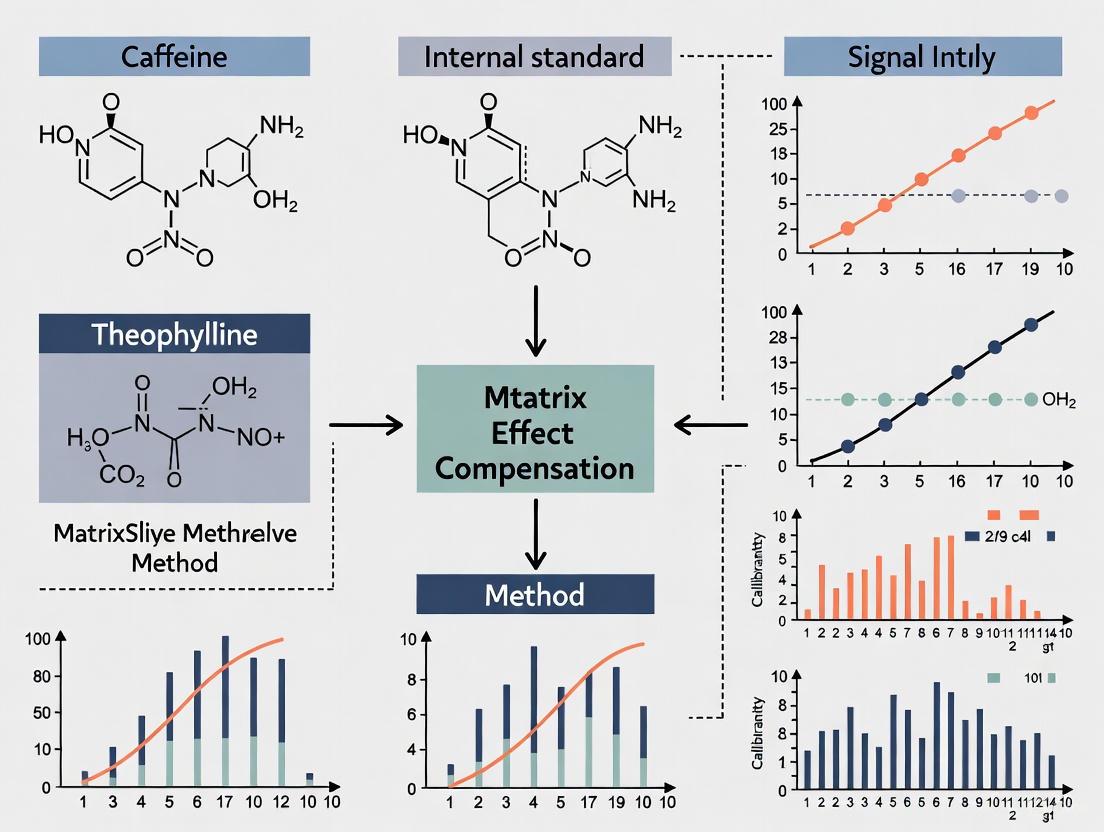
This article provides a comprehensive guide for researchers and drug development professionals on employing the internal standard (IS) method to overcome matrix effects in Liquid Chromatography-Mass Spectrometry (LC-MS).
Mastering the Internal Standard Method for Matrix Effect Compensation in LC-MS Bioanalysis
Abstract
This article provides a comprehensive guide for researchers and drug development professionals on employing the internal standard (IS) method to overcome matrix effects in Liquid Chromatography-Mass Spectrometry (LC-MS). Covering foundational principles to advanced applications, it details the selection of optimal stable-isotope labeled (SIL) IS, methodological implementation across various bioanalytical contexts, and strategies for troubleshooting and optimization. The content further explores rigorous validation techniques as mandated by international guidelines and presents a comparative analysis with other compensation strategies. By synthesizing current research and practical insights, this guide aims to enhance the accuracy, precision, and reliability of quantitative bioanalysis in pharmaceutical and clinical settings.
Understanding Matrix Effects: The Critical Challenge in Modern LC-MS Bioanalysis
Matrix effects represent a significant challenge in quantitative liquid chromatography-mass spectrometry (LC-MS), particularly in drug development and bioanalysis. These effects are defined as the alteration of analyte ionization efficiency caused by co-eluting components from the sample matrix [1] [2]. Within the context of atmospheric pressure ionization (API) techniques, this manifests primarily as ion suppression or ion enhancement, critically impacting method accuracy, precision, and sensitivity [3] [4]. Electrospray Ionization (ESI) and Atmospheric Pressure Chemical Ionization (APCI) exhibit fundamentally different susceptibilities to these effects due to their distinct ionization mechanisms [5] [1]. A comprehensive understanding of these phenomena is foundational to developing robust analytical methods, particularly those employing internal standards for matrix effect compensation.
The core of the issue lies in the ionization process itself. In LC-MS analysis, the ideal scenario assumes that the detector response is proportional only to the analyte concentration. However, in practice, components of the sample matrix other than the analyte—including endogenous materials, metabolites, or sample preparation reagents—can co-elute with the analyte and alter its ionization efficiency [2]. This matrix effect is a major source of inaccuracy in quantitative analysis, leading to potential false negatives from signal suppression or false positives from signal enhancement [1].
Fundamental Mechanisms: ESI vs. APCI
The mechanisms underlying matrix effects differ significantly between ESI and APCI sources, rooted in their distinct operational principles.
Ionization Mechanisms and Their Vulnerability
In Electrospray Ionization (ESI), ionization occurs in the liquid phase before the droplets enter the gas phase. The sample solution is sprayed through a charged capillary to produce fine, charged droplets. As the solvent evaporates, the charge concentration increases until the analyte ions are released into the gas phase [6]. This process is highly susceptible to interference from other ionic species in the solution. The primary mechanisms for ion suppression in ESI include:
- Competition for Charge: Co-eluting matrix components compete with the analyte for the limited available charge on the electrospray droplets, reducing the number of analyte ions formed [3] [1].
- Altered Droplet Properties: Non-volatile or less volatile matrix components can increase the viscosity or surface tension of the droplets, impairing solvent evaporation and the subsequent release of gas-phase ions [3] [1].
- Precipitation or Co-precipitation: The analyte can be trapped in solid deposits formed by non-volatile matrix components, preventing its ionization [1].
In contrast, Atmospheric Pressure Chemical Ionization (APCI) involves a different process. The sample is introduced in a liquid form and immediately nebulized into a fine mist within a heated vaporizer chamber (typically at 350-500°C) to convert it into the gas phase. A corona discharge needle then creates a plasma of solvent ions, which subsequently ionize the gaseous analyte molecules through chemical ion-molecule reactions [6]. APCI generally demonstrates reduced susceptibility to matrix effects because:
- Gas-Phase Ionization: Ionization occurs after the analyte has been transferred to the gas phase, eliminating suppression mechanisms related to droplet formation and solvent evaporation prevalent in ESI [5] [3].
- No Liquid-Phase Competition: The competition for charge happens in the gas phase, where the maximum number of ions formed is typically higher than in ESI [3].
A direct comparison of the matrix effect profile between ESI and APCI, assessed via post-column infusion, is illustrated in Figure 1. The ESI trace shows profound signal suppression in specific chromatographic regions, whereas the APCI trace demonstrates a markedly more stable baseline [3].
Figure 1. Comparative Matrix Effect Pathways in ESI and APCI. The diagram illustrates the fundamental difference in ionization location leading to the typically observed reduction in matrix effects for APCI compared to ESI.
Quantitative Comparison of Matrix Effects
The differential susceptibility of ESI and APCI to matrix effects has been quantified in various studies. The following table summarizes key experimental findings.
Table 1. Quantitative Comparison of Matrix Effects in ESI vs. APCI
| Study Focus | Sample Matrix | Key Finding (ESI) | Key Finding (APCI) | Reference |
|---|---|---|---|---|
| Methadone Analysis | Human Plasma | Significant signal suppression with all sample prep methods (PP, SPE) | Less liable to matrix effects; LLE most efficient | [5] |
| General API Behavior | Biological Fluids | Pronounced ion suppression due to liquid-phase competition | Lower susceptibility; suppression via gas-phase neutralization | [3] [1] |
| Pesticide Residue Analysis | Food & Water | Average signal suppression more pronounced | UniSpray source (impact-based) showed 3-4x less signal suppression | [7] |
| cVSSI-APCI Development | Complex Mixtures | Standard ESI susceptible to suppression in solvent/water | New cVSSI-APCI improved ion suppression resistance | [8] |
Experimental Protocols for Matrix Effect Evaluation
Robust assessment of matrix effects is a critical component of method development and validation. Two established experimental protocols are detailed below.
Protocol 1: Post-Column Infusion for Qualitative Assessment
This method, illustrated in Figure 2, provides a qualitative profile of ionization suppression or enhancement across the entire chromatographic run time [3] [4].
Objective: To identify retention time windows where matrix-induced ion suppression or enhancement occurs. Principle: A constant infusion of the analyte is mixed post-column with the LC effluent. The injection of a blank matrix extract reveals regions where co-eluting matrix components alter the steady analyte signal [3] [4].
Procedure:
- Setup: Connect a syringe pump containing a solution of the analyte (e.g., 1-10 µM) to a T-piece installed between the HPLC column outlet and the MS inlet.
- Baseline Establishment: Infuse the analyte at a constant flow rate (e.g., 10-20 µL/min) and inject pure mobile phase or solvent. This should produce a stable, continuous signal.
- Matrix Injection: Inject an extracted blank sample (devoid of the analyte) using the intended chromatographic method.
- Data Analysis: Observe the MRM chromatogram for the infused analyte. A dip in the signal indicates ion suppression; a peak indicates ion enhancement. The retention times of these deviations correspond to the elution of interfering matrix components [3].
Figure 2. Workflow for Post-Column Infusion Experiment.
Protocol 2: Post-Extraction Spiking for Quantitative Assessment
This method provides a quantitative measure of the absolute matrix effect for a specific analyte at a given retention time [4] [2].
Objective: To calculate the absolute matrix effect (ME%) by comparing the MS response of an analyte in matrix versus in a clean solution. Principle: The detector response for an analyte spiked into a blank matrix extract after sample preparation is compared to its response in a pure solvent standard at the same concentration [4] [9].
Procedure:
- Prepare Set A: Create a neat standard solution of the analyte in mobile phase or solvent at a known concentration (e.g., near the QC level).
- Prepare Set B: Take multiple aliquots of a blank biological matrix (e.g., plasma) through the entire sample preparation procedure (e.g., protein precipitation, LLE, SPE).
- Spike Post-Extraction: After the extraction and reconstitution steps, spike the same concentration of the analyte into the blank matrix extracts.
- LC-MS/MS Analysis: Analyze both Set A (neat standard) and Set B (post-extraction spiked matrix) and record the peak areas for the analyte.
- Calculation: Calculate the absolute matrix effect (ME%) using the formula: ME% = (Peak Area of Post-Extraction Spiked Sample / Peak Area of Neat Standard) × 100% An ME% < 100% indicates ion suppression, > 100% indicates ion enhancement, and ≈ 100% indicates no significant matrix effect [4].
The Scientist's Toolkit: Key Reagents and Materials
Successful evaluation and mitigation of matrix effects require specific reagents and materials. The following table catalogues essential items for the featured experiments.
Table 2. Essential Research Reagent Solutions and Materials
| Item | Function/Application | Specification Notes |
|---|---|---|
| Analyte Standard | Model compound for matrix effect studies (e.g., Methadone [5]) | High purity; stable under experimental conditions. |
| Blank Matrix | Source of endogenous interfering compounds (e.g., human plasma [5] [4]) | Should be free of the target analyte; pooled sources recommended. |
| Internal Standards | Compensation for variable ionization and sample prep; gold standard is Stable Isotope-Labeled Analog (SIL-IS) [2] | Should have nearly identical chemical and chromatographic behavior as the analyte. |
| Sample Prep Materials | Selective removal of matrix interferences (e.g., LLE solvents, SPE cartridges [5]) | LLE often shows superior matrix removal compared to PP [5]. |
| Post-Column T-Piece | Fluidic connection for post-column infusion experiments [3] [4] | Low dead volume to minimize peak broadening. |
| Syringe Pump | Provides constant flow of analyte standard for infusion experiments [4] | Precise and pulse-free flow is critical for a stable baseline. |
| LC-MS Grade Solvents & Additives | Mobile phase preparation to minimize background noise and source contamination [1] | High purity; volatile buffers (e.g., ammonium formate/acetate) preferred. |
Strategies for Mitigation of Matrix Effects
Overcoming matrix effects is paramount for validating robust quantitative methods. Strategies can be categorized into compensation and minimization approaches.
Sample Preparation Selectivity: The most effective approach is to remove the interfering components before LC-MS analysis. Liquid-Liquid Extraction (LLE) has been demonstrated to be more efficient at reducing matrix effects compared to protein precipitation (PP) or less selective solid-phase extraction (SPE) protocols [5]. PP with acetonitrile or perchloric acid often leaves behind polar endogenous compounds that cause significant suppression, particularly in ESI [5].
Improved Chromatographic Separation: Increasing the chromatographic resolution to separate the analyte from co-eluting interferences is a fundamental mitigation strategy. The development of Ultra-High-Performance Liquid Chromatography (UHPLC) with sub-2µm particles provides higher peak capacity and can help reduce matrix effects, though it does not eliminate them [1].
Internal Standard Calibration: This is the cornerstone of compensating for matrix effects, especially when they are variable between samples. The use of a stable isotope-labeled internal standard (SIL-IS) is considered the gold standard [2]. Because the SIL-IS has nearly identical physicochemical properties to the analyte, it co-elutes and experiences the same matrix-induced ionization suppression/enhancement. By normalizing the analyte response to the IS response, the quantitative result is compensated for the matrix effect [2].
Ion Source Selection and Operation: If the analyte is amenable to both techniques, switching from ESI to APCI can significantly reduce matrix effects, as demonstrated in Table 1 [5] [3]. Furthermore, novel ionization sources like UniSpray or cVSSI-APCI are being developed to inherently suffer less from signal suppression, showing promise for complex mixture analysis [7] [8].
Standard Addition Method: For analyses where a blank matrix is unavailable or the use of an SIL-IS is not feasible, the standard addition method can be employed. This involves adding known amounts of the analyte to the sample itself and extrapolating to find the original concentration, effectively canceling out the matrix effect [9]. Recent algorithmic advances allow this method to be effectively applied to high-dimensional data like full spectra [9].
Matrix effects represent a fundamental challenge in analytical chemistry, particularly in techniques like liquid chromatography-mass spectrometry (LC-MS), where they can severely compromise data quality. A matrix effect is defined as the combined influence of all components in a sample other than the analyte on the measurement of the quantity. When a specific component causes an effect, it is termed interference [4]. In practical terms, matrix effects occur when compounds co-eluting with the analyte interfere with the detection process, leading to altered analytical responses [10].
These effects manifest primarily as ion suppression or ion enhancement in mass spectrometry-based methods, where matrix components alter ionization efficiency in the source when they co-elute with target analytes [4]. The consequences can be detrimental during method validation, negatively affecting critical parameters including reproducibility, linearity, selectivity, accuracy, and sensitivity [4]. The extent of matrix effects is widely variable and unpredictable—the same analyte can exhibit different MS responses in different matrices, and the same matrix can affect different target analytes differently [4].
Mechanisms of Matrix Interference
Fundamental Processes
Matrix effects operate through multiple physical and chemical mechanisms depending on the analytical technique employed:
In LC-MS with electrospray ionization (ESI), interference occurs primarily in the liquid phase before charged analytes transfer to the gas phase. Less-volatile matrix components may affect droplet formation efficiency or compete for available charges during ionization. In atmospheric pressure chemical ionization (APCI), where ionization occurs in the gas phase, matrix effects are generally less pronounced but still possible through different mechanisms [4]. Matrix components with high mass, polarity, and basicity are particularly prone to causing ionization suppression [11].
For optical techniques like Laser Induced Breakdown Spectroscopy (LIBS), matrix effects change the relationship between elemental concentration and spectral line intensity due to variations in plasma properties and self-absorption phenomena [12]. In X-ray fluorescence spectroscopy, matrix differences between samples and standards lead to varying X-ray spectral responses due to differential absorption, scattering, and spectral line overlap [13].
Compromised Data Quality Parameters
Matrix effects systematically degrade key analytical performance metrics through several interconnected pathways:
Accuracy: Matrix components can cause either suppression or enhancement of the analyte signal, leading to biased results that deviate from true values. This directly impacts accuracy, as the measured concentration no longer reflects the actual concentration in the sample [4] [14].
Precision: The variable nature of matrix effects across samples introduces additional sources of variation, impairing method precision. Since matrix composition can differ between samples, the magnitude of ion suppression/enhancement may vary, resulting in poor reproducibility [11].
Sensitivity: Signal suppression directly reduces method sensitivity, potentially elevating detection and quantification limits. In severe cases, signal loss can approach 30% or more, significantly impacting the ability to detect low-abundance analytes [14].
Linearity: Matrix effects may become concentration-dependent, distorting the relationship between analyte concentration and instrument response, thereby compromising linearity [4].
Detection and Quantification of Matrix Effects
Experimental Assessment Methods
Several established experimental approaches enable systematic evaluation of matrix effects:
Table 1: Methods for Matrix Effect Assessment
| Method | Description | Type of Output | Key Limitations |
|---|---|---|---|
| Post-Column Infusion [4] | Continuous analyte infusion during LC-MS analysis of blank matrix extract identifies ionization suppression/enhancement regions | Qualitative | Does not provide quantitative results; laborious for multianalyte methods |
| Post-Extraction Spike [4] [14] | Compare analyte response in neat solution versus matrix-spiked sample at same concentration | Quantitative | Requires blank matrix (unavailable for endogenous compounds) |
| Slope Ratio Analysis [4] | Compare calibration slopes in pure solvent versus matrix | Semi-quantitative | Requires matrix-matched standards |
| Relative Matrix Effect Evaluation [4] | Assess variability of matrix effects across different sample lots | Quantitative | Laborious, requires multiple matrix sources |
Quantitative Evaluation Protocol
Protocol: Post-Extraction Spike Method for Matrix Effect Quantification
Materials:
- Blank matrix (e.g., drug-free plasma, extract from organic strawberries)
- Neat standard solutions of target analytes
- Appropriate solvents and consumables
- LC-MS system or other relevant analytical instrument
Procedure:
- Prepare a matrix-matched sample by spiking blank matrix with known analyte concentration.
- Prepare a neat standard at identical concentration in pure solvent.
- Analyze both samples using the validated analytical method.
- Calculate matrix effect (ME) using the formula: ME (%) = (Peak area in matrix / Peak area in neat solution) × 100%
- Interpret results: ME < 100% indicates ion suppression; ME > 100% indicates ion enhancement.
- Signal loss percentage = 100% - ME% [14]
Example Calculation: If the signal in matrix solution is 70% of the signal for the neat standard, this indicates 30% signal loss due to matrix effects, with instrumental recovery of 70% [14].
Compensation Strategies and the Internal Standard Method
Strategic Approaches to Matrix Effects
Two primary strategic approaches exist for addressing matrix effects, with the choice depending on required sensitivity:
Minimize Matrix Effects: When sensitivity is crucial, analysts should minimize matrix effects by adjusting MS parameters, optimizing chromatographic conditions, or implementing effective cleanup procedures [4].
Compensate for Matrix Effects: When sensitivity is less critical, analysts can compensate for matrix effects through calibration approaches. The specific method depends on blank matrix availability [4].
Internal Standardization Methods
Internal standards represent the gold standard for compensating matrix effects, particularly in LC-MS applications:
Stable Isotope-Labeled Internal Standards (SIL-IS): These are structurally identical to the analyte but contain stable isotopes (e.g., ^2H, ^13C, ^15N). They ideally co-elute with the target analyte and experience nearly identical matrix effects, effectively canceling out these interferences. Although this approach is considered optimal, it can be expensive and standards are not always commercially available [11].
Structural Analogues as Internal Standards: Compounds with similar chemical structure and properties to the analyte can serve as alternatives when SIL-IS are unavailable. To be effective, they must co-elute with the target analyte to experience identical matrix effects [11].
Methodology: A fixed amount of internal standard is added to all calibration standards, quality control samples, and unknown samples before processing. The analyte-to-internal standard response ratio is used for quantification, which compensates for both matrix effects and sample preparation variability [11].
Diagram 1: The internal standard compensation mechanism relies on the principle that matrix effects equally impact both the analyte and a properly matched internal standard, preserving their response ratio for accurate quantification.
Alternative Compensation Methods
When internal standards are not feasible, several alternative approaches can mitigate matrix effects:
Matrix-Matched Calibration: Prepare calibration standards in the same matrix as samples to simulate matrix effects. This requires appropriate blank matrix, which may be unavailable for complex or variable matrices [13].
Standard Addition Method: Add known amounts of analyte to the sample and extrapolate to determine original concentration. This approach doesn't require blank matrix but is sample-intensive and time-consuming [11] [9].
Advanced Mathematical Corrections: For techniques like LIBS, multivariate analysis methods including Principal Component Regression (PCR) and Partial Least Squares (PLS) can model and correct for matrix effects [12]. Novel algorithms are being developed to handle high-dimensional data without requiring blank measurements [9].
Sample Dilution: Simple dilution can reduce matrix component concentrations below interference thresholds, but this approach sacrifices sensitivity and may not be feasible for trace analysis [11].
Research Reagent Solutions Toolkit
Table 2: Essential Research Reagents for Matrix Effect Compensation
| Reagent/Material | Function | Application Context |
|---|---|---|
| Stable Isotope-Labeled Standards | Ideal internal standards that co-elute with analytes and experience identical matrix effects | Gold standard for LC-MS/MS quantification; essential for regulated bioanalysis [11] |
| Structural Analogues | More affordable internal standards with similar chemical properties and retention times | Alternative when isotope-labeled standards are unavailable or cost-prohibitive [11] |
| Blank Matrix | Matrix-free of target analytes for preparing matrix-matched standards and assessment | Essential for post-extraction spike method and matrix-matched calibration [14] |
| Custom Matrix-Matched Standards | Calibration standards specifically formulated to match sample matrix composition | Critical for techniques like ICP-OES and XRF where matrix effects significantly influence results [13] |
| Molecularly Imprinted Polymers | Synthetic materials with selective binding sites for specific analytes or matrix components | Emerging technology for selective extraction to reduce matrix interferences [4] |
Integrated Experimental Workflow for Matrix Effect Management
Diagram 2: An integrated decision workflow for managing matrix effects begins with assessment, then selects appropriate minimization or compensation strategies based on sensitivity requirements before final validation.
Regulatory and Validation Considerations
Method validation must specifically address matrix effects to meet regulatory standards such as ICH Q2(R2) and FDA guidelines. Specificity assessment should demonstrate the ability to unequivocally assess the analyte in the presence of expected matrix components [15]. For bioanalytical method validation, matrix effects should be evaluated using at least six lots of matrix from different sources, with precision (CV%) of the matrix factor not exceeding 15% [15].
The Analytical Target Profile (ATP) concept introduced in ICH Q14 emphasizes defining required method performance characteristics at the outset, facilitating a systematic, risk-based approach to managing challenges like matrix effects throughout the method lifecycle [15].
Matrix effects present a multifaceted challenge to analytical data quality, systematically compromising accuracy, precision, and sensitivity across multiple analytical techniques. Effective management requires a systematic approach beginning with thorough assessment using established methodologies, followed by implementation of appropriate compensation strategies matched to analytical requirements. The internal standard method, particularly using stable isotope-labeled compounds, remains the gold standard for compensation, though alternative approaches exist when constraints prevent this ideal solution. As analytical techniques continue to advance toward greater sensitivity and application to increasingly complex matrices, robust strategies for identifying and compensating for matrix effects remain essential for generating reliable analytical data, particularly in regulated environments like pharmaceutical development where data integrity directly impacts patient safety.
Matrix effects represent a critical challenge in the bioanalysis of compounds in complex biological fluids, particularly when using liquid chromatography coupled to mass spectrometry (LC-MS/MS). The matrix effect is defined as the alteration of the analytical signal caused by all components of the sample other than the analyte [2] [4]. In mass spectrometry, this typically manifests as ionization suppression or enhancement when co-eluting matrix components compete with the analyte for available charge during the ionization process [2] [16]. For researchers and drug development professionals, understanding and mitigating these effects is paramount for developing accurate, precise, and reliable bioanalytical methods, especially when employing internal standard methods for compensation [2] [16] [17].
Biological matrices such as plasma, urine, and cerebrospinal fluid (CSF) present unique compositional profiles that contribute distinct matrix effects. These effects can significantly impact key analytical validation parameters including accuracy, precision, linearity, and sensitivity [16] [4]. The complexity of these matrices necessitates a systematic approach to evaluation and compensation, particularly within the context of internal standard method development for matrix effect compensation research.
The composition of biological matrices directly influences the type and magnitude of matrix effects observed during analysis. Understanding these compositional differences is fundamental to anticipating and addressing analytical challenges.
Table 1: Common Sources of Matrix Effects in Biological Matrices
| Matrix | Major Interfering Components | Primary Type of Interference | Impact on Analysis |
|---|---|---|---|
| Plasma/Serum | Phospholipids, proteins, lipids, amino acids, salts [18] [4] | Ion suppression in ESI due to competition for charge at droplet surface [2] [4] | High potential for significant signal suppression, particularly for early-eluting compounds [4] |
| Urine | Inorganic salts (high concentration), urea, organic acids [4] | Ion suppression; non-specific interference [4] | Can vary greatly with patient hydration status and diet [4] |
| Cerebrospinal Fluid (CSF) | Proteins (lower concentration than plasma), electrolytes, endogenous metabolites [16] [19] | Generally lower matrix effect compared to plasma, but still significant for trace analysis [16] | Limited sample volume poses unique challenges for method development [16] |
The mechanisms behind these effects are particularly pronounced in electrospray ionization (ESI), where ionization occurs in the liquid phase. Co-eluting matrix components can alter droplet formation, evaporation, and the efficient transfer of the analyte charge to the gas phase [2] [4]. Phospholipids, for instance, are a well-known class of compounds in plasma that cause severe ion suppression [4]. In contrast, atmospheric pressure chemical ionization (APCI) is often less prone to these effects because ionization occurs in the gas phase, though it is not immune [4].
Experimental Protocols for Assessing Matrix Effects
A systematic evaluation of matrix effects, recovery, and process efficiency is essential during method validation [16]. The following protocols are standard in the field and should be integrated into the development of any bioanalytical method.
Post-Column Infusion for Qualitative Assessment
This method provides a qualitative overview of ion suppression/enhancement throughout the chromatographic run [2] [4].
Procedure:
- Infuse a solution of the analyte at a constant rate directly into the MS detector via a T-piece connected to the HPLC outlet.
- Inject a blank, processed sample matrix (e.g., plasma, urine, or CSF) onto the chromatographic system.
- Monitor the signal of the infused analyte throughout the chromatographic run.
Interpretation: A stable signal indicates no matrix effect. A depression in the baseline indicates regions of ion suppression, while an increase indicates ion enhancement [2]. This helps identify critical retention time windows to avoid or to optimize chromatographic conditions for separation from matrix interferents.
Post-Extraction Spiking for Quantitative Assessment
This method, pioneered by Matuszewski et al., provides a quantitative measure of the matrix effect (ME), recovery (RE), and process efficiency (PE) [16] [4].
Procedure: Prepare three sets of samples at least two concentration levels (e.g., low and high QC) using a minimum of 6 individual matrix lots [16].
- Set A (Neat Solution): Analyte spiked into a neat solvent (e.g., mobile phase).
- Set B (Post-Extraction Spiked): Blank matrix is taken through the entire sample preparation process. After extraction, the analyte is spiked into the resulting extract.
- Set C (Pre-Extraction Spiked): Analyte is spiked into the blank matrix before being taken through the entire sample preparation process.
Calculations:
- Matrix Effect (ME%) = (Mean Peak Area of Set B / Mean Peak Area of Set A) × 100
- Recovery (RE%) = (Mean Peak Area of Set C / Mean Peak Area of Set B) × 100
- Process Efficiency (PE%) = (Mean Peak Area of Set C / Mean Peak Area of Set A) × 100 = (ME% × RE%) / 100
Acceptance Criteria: While guidelines vary, a coefficient of variation (CV) for the ME% of less than 15% is typically acceptable, and the IS-normalized matrix factor should also be precise [16].
The workflow below illustrates the experimental setup for this quantitative assessment.
The Scientist's Toolkit: Key Research Reagent Solutions
The following reagents and materials are essential for conducting robust matrix effect evaluation studies.
Table 2: Essential Research Reagents and Materials for Matrix Effect Studies
| Reagent/Material | Function & Importance | Application Example |
|---|---|---|
| Isotopically Labeled Internal Standards (ILIS) | Compensates for analyte loss during preparation and variability in ionization efficiency; ideal for ME compensation [2] [17]. | ^13^C- or ^2^H-labeled analogs of the target analyte added to every sample before processing [2]. |
| Phospholipid Removal Sorbents (e.g., Phree) | Selectively removes phospholipids from plasma/serum samples, significantly reducing a major source of ion suppression [18]. | Used in solid-phase extraction (SPE) protocols or in hybrid-SPE methods to clean up plasma samples prior to LC-MS [18]. |
| LC-MS Grade Solvents | High-purity solvents minimize background noise and prevent introduction of interfering contaminants that can exacerbate ME [16] [18]. | Used for mobile phase preparation, sample reconstitution, and protein precipitation (e.g., methanol, acetonitrile) [18]. |
| Blank Matrix Lots | Sourced from at least 6 individual donors to assess the variability and magnitude of relative matrix effects [16]. | Used in post-extraction spiking experiments to calculate ME%, RE%, and PE% across a biologically relevant population [16]. |
| Analyte Protectants | Compounds that bind to active sites in the GC system, reducing analyte interaction and improving peak shape and response in GC-MS [17]. | Added to sample extracts in GC-MS analysis to compensate for matrix-induced enhancement effects [17]. |
Visualization of Ionization Suppression Mechanism
The diagram below illustrates the fundamental mechanism of ionization suppression in electrospray ionization (ESI), the most common source of matrix effects in LC-MS/MS.
Matrix effects in biological matrices like plasma, urine, and CSF are unavoidable challenges in modern bioanalysis. These effects, primarily caused by phospholipids in plasma, salts in urine, and other endogenous components, can severely compromise the accuracy and reliability of quantitative results. A thorough understanding of the sources, as outlined in this application note, is the first step toward mitigation.
The experimental protocols described—post-column infusion for qualitative assessment and the post-extraction spiking method for quantitative evaluation—provide a robust framework for systematically assessing matrix effects during method development and validation. The use of appropriate research reagents, most critically well-matched isotopically labeled internal standards, forms the cornerstone of an effective strategy to compensate for these effects. Integrating these assessments and tools ensures the development of rugged, precise, and accurate bioanalytical methods, which is critical for successful drug development and regulatory compliance.
In analytical chemistry, particularly in fields like pharmaceutical, bio-analytical, and environmental science, the matrix effect (ME) presents a significant challenge to obtaining accurate and reliable quantitative data. Matrix effect is defined as the combined influence of all sample components other than the analyte on the measurement of the quantity, which can alter the instrument's sensitivity to the analyte [9] [4]. In mass spectrometry techniques, especially when combined with liquid chromatography (LC-MS), these effects manifest primarily as ion suppression or ion enhancement when interference species co-elute with the target analyte, thereby altering ionization efficiency in the source [4] [16]. This phenomenon can be detrimental during method validation, negatively affecting critical parameters such as reproducibility, linearity, selectivity, accuracy, and sensitivity [4].
The strategic approach to managing matrix effects generally falls into two categories: minimization or compensation. When sensitivity is crucial, analysts typically focus on minimizing matrix effects through adjustments to MS parameters, chromatographic conditions, or optimizing sample clean-up procedures. When minimization is insufficient, compensation through specific calibration approaches becomes necessary, with the choice of method often depending on the availability of blank matrices [4]. Among these compensation strategies, the internal standard (IS) method represents a cornerstone technique, particularly in bioanalytical applications using LC-MS [20] [21]. This method fits within a broader ecosystem of compensation strategies that also includes standard addition, matrix-matched calibration, and surrogate matrix approaches [9] [4].
Theoretical Foundation of the Internal Standard Method
Basic Principles and Comparison with External Standardization
The fundamental concept behind internal standardization is straightforward: a known amount of the IS is added to every sample—both calibrators and unknowns—before the analysis begins. Rather than basing calibration on the absolute response of the analyte, the calibration uses the ratio of response between the analyte and the IS [20]. This approach contrasts with external standardization, where a series of calibration solutions containing known concentrations of reference standard are analyzed to construct a calibration plot based on the absolute response of the analyte (e.g., peak height or area) [20].
The mathematical foundation of the internal standard method relies on the relationship between response ratios and concentration ratios. The calibration plot is constructed using the concentration ratio (CA/CIS) versus the response ratio (RA/RIS). For unknown samples, the measured RA/RIS ratio determines the concentration ratio, and since the concentration of IS (CIS) added to the sample is known, the concentration of analyte in the sample (CA) can be accurately calculated [20].
When to Use an Internal Standard
The decision to employ an internal standard depends heavily on the complexity of the sample preparation process and the precision of the analytical instrumentation:
- Simple Sample Preparation: For straightforward procedures like direct dilution followed by injection using precise volumetric equipment, an internal standard may not provide significant benefits. In such cases, external standardization is often preferred due to its simplicity, lower cost, simpler chromatograms, and easier data processing [20].
- Complex, Multi-step Sample Preparation: An internal standard provides maximum benefit when sample preparation involves numerous steps where volumetric recovery may vary, such as in liquid-liquid extraction techniques for drug determination in plasma. In these scenarios, the IS compensates for volumetric losses throughout the process, significantly improving method precision [20].
- Inappropriate Applications: There are cases where internal standards may be ineffective or even misleading, particularly when the IS is added improperly, the sample is not homogeneous before aliquotting, or an inappropriate IS compound is selected [20].
Table 1: Decision Framework for Internal Standard Implementation
| Scenario | Recommended Approach | Key Rationale |
|---|---|---|
| Simple dilution | External standardization | High precision autosamplers (<0.5% imprecision); simpler workflow [20] |
| Liquid-liquid extraction | Internal standardization | Corrects for volumetric variability in multiple transfer steps [20] |
| Solid-phase extraction | Internal standardization | Compensates for variable recovery from the solid phase [20] |
| Unknown matrix composition | Stable Isotope-Labeled IS | Ideal compensation for matrix-induced ionization effects [21] |
| Limited blank matrix | Structural Analogue IS | Acceptable alternative when SIL-IS is unavailable [21] |
Practical Implementation and Protocols
Selection of an Appropriate Internal Standard
Choosing a suitable internal standard is critical for successful method development. The two primary categories are:
- Stable Isotope-Labeled Internal Standard (SIL-IS): Considered the gold standard for LC-MS bioanalysis, these compounds have one or several atoms in the analyte replaced by stable isotopes (e.g., ²H, ¹³C, ¹⁵N, or ¹⁷O). SIL-IS possesses nearly identical chemical and physical properties to the target analyte, ensuring consistent extraction recovery and experiencing nearly identical matrix effects during MS detection [21]. Key considerations include:
- A mass difference of 4–5 Da from the analyte is ideal to minimize mass spectrometric cross-talk [21].
- ²H-labeled standards may undergo deuterium-hydrogen exchange, and increased deuteration can cause slight retention time shifts. ¹³C, ¹⁵N, or ¹⁷O-labeled IS are often preferred [21].
- IS purity must be verified to avoid interference with the analyte [21].
- Structural Analogue Internal Standard: When a SIL-IS is unavailable, a structural analogue with similar chemical and physical properties to the target analyte, particularly hydrophobicity (logD) and ionization properties (pKa), can be used. Compounds sharing the same critical functional groups (e.g., -COOH, -SO₂, -NH₂, halogens, or heteroatoms) are ideal as they minimize differences in extraction recovery and ionization efficiency [21].
Internal Standard Addition Protocol
The timing of internal standard addition significantly impacts its effectiveness in tracking and correcting for variability:
- Pre-Extraction Addition: For most applications involving LLE or SPE, the IS is added to the sample before introducing buffers or organic solvents. This allows the IS to track analyte behavior through the entire sample preparation process, correcting for losses during extraction, transfer, and concentration steps [20] [21].
- Post-Extraction Addition: In specific assays where early IS addition might induce conversion between different forms of the analyte (e.g., free and encapsulated forms in liposome analyses), the IS is added after the SPE step [21].
- Post-Chromatographic Separation: For multi-component analyses with highly complex preparation, the IS may be introduced via post-column infusion to ensure uniform detection conditions, though this is less common for quantification [21].
Determining Internal Standard Concentration
The concentration of the internal standard must be carefully optimized considering several factors:
- Cross-Interference: According to ICH M10 guidelines, cross-interference should be ≤20% of the LLOQ for IS-to-analyte contributions and ≤5% of the IS response for analyte-to-IS contributions [21]. Formulas can be applied to calculate minimum (CIS-min) and maximum (CIS-max) IS concentrations.
- MS Sensitivity and Matrix Effects: The IS concentration is typically matched to 1/3 to 1/2 of the upper limit of quantification (ULOQ) concentration, a range expected to encompass the average peak concentration (Cmax) of most drugs [21].
- Practical Considerations: The concentration should not be so high as to cause solubility issues or exceed the capacity of SPE plates, which could reduce extraction recovery [21].
Comprehensive Experiment: Assessing Matrix Effect, Recovery, and Process Efficiency
A robust approach to comprehensively evaluate matrix effects, recovery, and process efficiency in a single experiment involves preparing specific sample sets as derived from established methodologies [16]. This integrated protocol allows for a holistic understanding of the factors influencing method performance and the effectiveness of the internal standard.
- Set 1 (Neat Solution): Prepared by spiking standard and IS into mobile phase or neat solvent. Represents the ideal scenario without matrix.
- Set 2 (Post-extraction Spiked): A blank matrix is extracted, then standard and IS are spiked into the resulting extract. Used to assess matrix effects independently of recovery.
- Set 3 (Pre-extraction Spiked): Standard and IS are spiked into the matrix before the extraction process. This set reflects the overall process efficiency, combining the effects of both matrix and recovery.
Table 2: Key Research Reagent Solutions for Internal Standard Method
| Reagent / Material | Function/Purpose | Key Considerations |
|---|---|---|
| Stable Isotope-Labeled IS | Corrects for analyte losses & ionization variability; gold standard for LC-MS [21]. | Mass shift ≥4-5 Da; prefer ¹³C/¹⁵N over ²H; verify isotopic purity. |
| Structural Analogue IS | Mitigates variability when SIL-IS is unavailable [21]. | Match logD, pKa, and critical functional groups of the analyte. |
| Blank Matrix | For developing & validating the method (e.g., plasma, urine) [4] [16]. | Should be free of analyte and interferences; surrogate matrix if blank is unavailable. |
| Matrix-Matched Standards | Calibration standards prepared in blank matrix to compensate for ME [4]. | Essential if not using a fully effective IS; requires blank matrix. |
| LC-MS Grade Solvents | Sample preparation & mobile phase; minimize background noise & contamination. | High purity ensures reproducibility and reduces instrumental artifacts. |
From these sets, key parameters can be calculated for each matrix lot and concentration level [16]:
- Matrix Effect (ME): Compare the analyte response in Set 2 (post-extraction spiked) to the response in Set 1 (neat solution). ME = (Mean Peak Area Set 2 / Mean Peak Area Set 1) × 100. An IS-normalized matrix factor (MF) can also be calculated using the response ratios.
- Reccovery (RE): Compare the analyte response in Set 3 (pre-extraction spiked) to the response in Set 2 (post-extraction spiked). RE = (Mean Peak Area Set 3 / Mean Peak Area Set 2) × 100.
- Process Efficiency (PE): Compare the analyte response in Set 3 (pre-extraction spiked) to the response in Set 1 (neat solution). PE = (Mean Peak Area Set 3 / Mean Peak Area Set 1) × 100. It represents the combined effect of ME and RE.
This systematic evaluation helps determine the extent to which the internal standard compensates for the variability introduced by the matrix and recovery, which is crucial for validating a robust bioanalytical method [16].
Data Interpretation and Troubleshooting
Evaluating Internal Standard Performance
The internal standard's response itself serves as a critical diagnostic tool for method performance. Significant variations in IS response can indicate issues that may compromise quantitative accuracy.
- Individual Anomalies: Abnormal IS responses in individual samples often stem from random variations, such as pipetting errors (failure to add or accidental double addition). The data from such samples are typically considered unreliable and require re-preparation or re-analysis [21].
- Systematic Anomalies: Consistently abnormal IS responses across a batch of samples typically point to instrument-related issues, such as problems with the autosampler injector, partial needle clogging, chromatographic retention time shifts, or signal interference. Investigating and rectifying the root cause is essential [21].
Comparison with Other Compensation Strategies
The internal standard method is one of several strategies for handling matrix effects. Understanding its relative position helps in selecting the optimal approach.
- Standard Addition Method: This method involves measuring the responses of the original sample after successive additions of known quantities of the analyte, with the unknown concentration determined by extrapolation to zero response. It is particularly useful when the matrix composition is complex and unknown, and a blank matrix is unavailable [9]. A limitation has been its traditional restriction to single signals, though recent advances propose algorithms for use with high-dimensional data (e.g., full spectra) without requiring matrix composition knowledge [9].
- Matrix-Matched Calibration: This approach involves preparing calibration standards in a blank matrix that is identical to the sample matrix. It compensates for matrix effects by ensuring that calibrators and unknowns experience the same interferences. Its major limitation is the requirement for a sufficient quantity of analyte-free blank matrix, which can be difficult or impossible to obtain for some biological matrices [4].
The internal standard method represents a powerful and widely implemented compensation strategy within the analytical scientist's toolkit, particularly for complex bioanalytical methods involving multi-step sample preparation. Its fundamental strength lies in its ability to correct for both volumetric losses during sample preparation and signal variability during detection, especially when a stable isotope-labeled internal standard is employed. While methods like standard addition excel when blank matrices are unavailable and matrix-matched calibration is effective when blank matrices are plentiful, the internal standard method, particularly with SIL-IS, offers a robust and generalizable solution for quantitative LC-MS bioanalysis across drug development, clinical research, and environmental monitoring. A systematic approach to its implementation—including careful IS selection, optimal addition timing, concentration setting, and comprehensive assessment of its effectiveness through integrated experiments—is crucial for developing reliable, accurate, and precise analytical methods that can withstand the challenges posed by complex sample matrices.
In liquid chromatography-mass spectrometry (LC-MS) bioanalysis, the accuracy and precision of quantitative results are perpetually challenged by matrix effects—the alteration of analyte ionization efficiency by co-eluting compounds from the biological matrix. These effects can manifest as either ion suppression or enhancement, significantly compromising method reliability [16] [22]. The internal standard (IS) method serves as a cornerstone technique for compensating for these variabilities. Its fundamental efficacy hinges on two interdependent principles: behavior mimicry, where the IS closely mirrors the analyte's chemical and physical properties throughout the analytical process, and complete co-elution, where the IS and analyte experience identical chromatographic and ionization conditions [22]. When successfully implemented, this approach normalizes not only matrix effects but also variability introduced during sample preparation, chromatographic separation, and mass spectrometric detection [21]. This article delineates the core principles of the IS method, provides experimental protocols for its validation, and illustrates its critical application in bioanalytical research, particularly in drug development.
Theoretical Foundations: Mimicry and Co-elution
The Imperative of Behavioral Mimicry
For an internal standard to effectively track an analyte's performance, it must exhibit nearly identical behavior during all stages of analysis. Stable isotope-labeled (SIL) internal standards, where atoms in the analyte molecule are replaced with stable isotopes (e.g., ^2H, ^13C, ^15N), represent the ideal choice because they possess virtually identical chemical and physical properties to the unlabeled analyte [21]. This mimicry ensures consistent extraction recovery during sample preparation and similar ionization efficiency in the mass spectrometer. The SIL-IS should be added to the sample as early as possible in the preparation workflow, typically immediately after aliquoting, to correct for variability in extraction, dilution, evaporation, and injection [23] [21].
The Criticality of Complete Co-elution
Behavioral mimicry alone is insufficient without complete chromatographic co-elution. Matrix effects are highly retention-time-specific; co-eluting compounds that cause ion suppression or enhancement affect an analyte only at the precise moment it elutes from the column [22]. Therefore, maximum correction of matrix effects occurs only when the IS is eluted at exactly the same retention time as the analyte, ensuring they experience an identical matrix environment [22]. Even minor shifts in retention time between the analyte and its SIL-IS, which can occur with ^2H-labeled standards due to slight differences in lipophilicity, can lead to differential matrix effects and a resultant large scatter in quantitative data [22]. Consequently, chromatographic conditions must be optimized to achieve perfect peak overlap.
The following diagram illustrates this core conceptual relationship and its impact on data quality.
Experimental Evidence and Data Presentation
Consequences of Incomplete Co-elution
A systematic investigation demonstrated the critical nature of complete peak overlapping. Researchers developing an LC-MS/MS method for two antimicrobial drugs observed an unusually large scatter in data despite using SIL-ISs. Closer examination revealed that the analytes and their deuterated analogues were not completely co-eluted [22]. The following table summarizes the quantitative evidence from this study, showing how data imprecision was minimized only after achieving complete co-elution by switching to a chromatographic column with lower resolution.
Table 1: Impact of Chromatographic Resolution on Data Precision with SIL Internal Standards
| Chromatographic Condition | Degree of Analyte/IS Co-elution | Observed Imprecision in Peak Area Ratios | Root Cause |
|---|---|---|---|
| Method 1 (Higher resolution column) | Incomplete; slight retention time shift between analyte and IS | Large scatter in LC-MS/MS data; IS failed to correct for variations | Analyte and IS experienced different matrix environments due to non-overlapping peaks [22]. |
| Method 2 (Lower resolution column) | Complete overlapping of analyte and IS peaks | Minimized scatter in LC-MS/MS data | Analyte and IS experienced identical matrix effects, allowing for accurate correction [22]. |
IS: Internal Standard; SIL: Stable Isotope-Labeled.
Internal Standard Signal Suppression
The phenomenon of mutual suppression between an analyte and its co-eluting IS was investigated using the isotope dilution technique. A study on three analyte/deuterated-analyte pairs, including fexofenadine/d6-fexofenadine, observed suppression of the IS signal by increasing concentrations of the co-eluting analyte [24]. This effect was described by Enke's model of electrospray ion generation, which attributes signal suppression to competition between ionic species for charged surface sites on generated droplets [24]. Despite this suppression, the slopes of the calibration curves for the three analytes were close to unity, indicating that quantification was not adversely affected by the variation in the IS peak area, so long as the IS and analyte were properly tracked [24].
Patterns of Internal Standard Variability
Monitoring IS responses in study samples is recommended by regulatory guidance to detect systemic issues. Abnormal IS response patterns can provide valuable diagnostic clues for root cause investigation, as summarized below.
Table 2: Troubleshooting Internal Standard Response Variability in Regulated Bioanalysis
| Pattern of IS Variability | Potential Root Cause | Impact on Data Accuracy |
|---|---|---|
| Random variation across a batch or study | Instrument malfunction; poor quality lab supplies; lack of processed sample homogeneity; analyst operational errors [25]. | Accuracy is often compromised, typically requiring re-analysis [25]. |
| Decreased IS response with increasing analyte concentration | Ionization suppression/competition between the analyte and IS in the ion source [25]. | Requires investigation; may necessitate method re-optimization [25] [23]. |
| Systematic difference in IS response between calibrators/QCs and study samples | Endogenous components in study samples causing matrix effect or interference; different anticoagulants; drug stabilizers [25]. | Must be evaluated using parallelism (dilution or standard addition) to demonstrate IS trackability [25]. |
| Abnormal IS response in a few subjects | Underlying health conditions of the subject; concurrently administered medication [25]. | Data from affected samples may be unreliable [25]. |
IS: Internal Standard; QC: Quality Control.
Protocols for Internal Standard Method Implementation
Protocol 1: Selection and Qualification of an Internal Standard
Objective: To select a fit-for-purpose internal standard that ensures accurate quantification by compensating for matrix effects and procedural losses.
Materials:
- Stable Isotope-Labeled (SIL) Analogue: The ideal IS, with a mass difference of 4-5 Da from the analyte to minimize mass spectrometric cross-talk. Prefer ^13C, ^15N, or ^17O-labeled IS over ^2H-labeled to avoid deuterium-hydrogen exchange and retention time shifts [21].
- Structural Analogue: If a SIL-IS is unavailable, a structural analogue with similar hydrophobicity (logD), ionization properties (pKa), and critical functional groups can be used, though it is less ideal [21].
- Solvents and Reagents: Appropriate matrix-free solvents and biological matrix (e.g., plasma, urine).
Procedure:
- Purity Verification: Confirm the purity of the IS to avoid interference with the analyte signal [21].
- Cross-Interference Check: Ensure the IS contribution to the analyte channel is ≤20% of the LLOQ and the analyte contribution to the IS channel is ≤5% of the IS response, per ICH M10 guidelines [21].
- Chromatographic Co-elution: During method development, optimize LC conditions (column chemistry, mobile phase, gradient) to achieve complete overlapping of the analyte and IS peaks. This is critical for effective matrix effect compensation [22].
- IS Concentration Setting: Set the IS concentration considering the following factors:
Protocol 2: Evaluating Matrix Effect and IS Trackability
Objective: To systematically assess the absolute and relative matrix effects, recovery, and process efficiency, and to confirm that the IS effectively tracks the analyte.
Materials:
- At least 6 individual lots of the biological matrix [16].
- Analyte stock solutions at low and high concentrations (e.g., LLOQ and ULOQ levels).
- Internal standard solution.
- Neat solvent (e.g., mobile phase).
Procedure (based on Matuszewski et al.):
- Prepare Three Sample Sets for each matrix lot and concentration [16]:
- Set 1 (Neat Solution): Spike analyte and IS into neat solvent. Represents the standard response without matrix.
- Set 2 (Post-Extraction Spiked): Spike analyte and IS into extracted blank matrix. Used to assess the absolute matrix effect (ion suppression/enhancement).
- Set 3 (Pre-Extraction Spiked): Spike analyte into blank matrix, then process (extract) the samples and add IS before analysis. Used to determine recovery and overall process efficiency.
- Analyze Samples: Inject all sets in a randomized sequence.
- Calculate Key Parameters:
- Matrix Effect (ME): = (Mean Peak Area of Set 2 / Mean Peak Area of Set 1) × 100%.
- Recocovery (RE): = (Mean Peak Area of Set 3 / Mean Peak Area of Set 2) × 100%.
- Process Efficiency (PE): = (Mean Peak Area of Set 3 / Mean Peak Area of Set 1) × 100%.
- IS-Normalized Matrix Factor: Calculate the matrix factor (MF) for the analyte and IS separately, then the IS-normalized MF = (Analyte MF / IS MF) [16]. A value close to 1.00 indicates excellent trackability.
- Acceptance Criteria: The precision (CV%) of the peak areas and IS-normalized matrix factors across the different matrix lots should generally be <15% [16].
The workflow for this comprehensive assessment is outlined below.
Protocol 3: Addressing IS Variability with Parallelism Evaluation
Objective: To investigate the root cause of abnormal IS response in incurred samples and verify that data accuracy is not impacted.
Materials: Incurred study samples showing abnormal IS response.
Procedure (Parallelism via Dilution):
- Sample Dilution: Serially dilute the aberrant incurred sample (e.g., 2x, 4x, 8x) using control blank matrix [25].
- Re-analysis: Re-analyze the diluted samples using the validated method.
- Data Interpretation:
- If the IS response in the diluted samples becomes comparable to that in calibrators/QCs, and the calculated analyte concentration (after correction for dilution factor) is consistent with the original value (e.g., within ±20%), the IS is tracking the analyte effectively despite the initial variability [25].
- Consistent analyte/IS ratios across the dilution series indicate good trackability. Inconsistent ratios suggest a lack of trackability, potentially due to an interfering substance, and may necessitate method redevelopment [25].
The Scientist's Toolkit: Essential Research Reagents and Materials
Table 3: Key Reagents and Materials for Internal Standard Method Implementation
| Item | Function/Benefit | Key Considerations |
|---|---|---|
| Stable Isotope-Labeled (SIL) Internal Standard | Corrects for analyte losses and matrix effects by mimicking analyte behavior throughout sample preparation and analysis [21]. | Opt for ^13C or ^15N over ^2H to prevent retention time shifts; ensure high isotope purity [21]. |
| Individual Lots of Biological Matrix (≥6 lots) | Evaluates the variability and consistency of matrix effects across a diverse population, as required by regulatory guidelines [16]. | Use matrices from relevant patient populations (e.g., hemolyzed, lipemic) if applicable [16]. |
| LC-MS Grade Solvents & Additives | Minimizes background noise and unintended ion suppression/enhancement originating from impurities in the mobile phase [22]. | |
| Appropriate LC Column | Provides the necessary chromatographic resolution to separate analytes from interferences while ensuring complete co-elution of the analyte and its IS [22]. | A column with lower resolution might sometimes be preferable to achieve perfect peak overlap between analyte and IS [22]. |
| High-Precision Pipettes & Autosampler | Ensures accurate and reproducible addition of the internal standard and injection volumes, reducing a major source of technical variability [23]. | Regular calibration is essential. Modern autosamplers typically have imprecision <0.5% [20]. |
The fundamental principles of the internal standard method—behavior mimicry and complete co-elution—are paramount for robust bioanalytical quantification in the presence of complex matrix effects. The use of a well-chosen stable isotope-labeled internal standard, coupled with chromatographic conditions that ensure their co-elution, provides the most reliable correction for variability, thereby ensuring the accuracy, precision, and regulatory compliance of LC-MS/MS methods in drug development and biomedical research.
Implementing the Internal Standard Method: From Theory to Robust Practice
Liquid chromatography-mass spectrometry (LC-MS) has become a cornerstone technique in pharmaceutical, bio-analytical, and environmental research due to its exceptional sensitivity and specificity [4]. However, the accuracy of LC-MS quantification can be severely compromised by matrix effects (MEs), where co-eluting components from complex biological samples suppress or enhance the ionization of target analytes [4]. These effects alter signal response, detrimentally affecting key validation parameters such as accuracy, reproducibility, and linearity [4].
Stable Isotope-Labeled Internal Standards (SIL-IS) represent the most effective technical approach for compensating for these matrix effects. These compounds are chemically identical to the target analytes but are mass-differentiated by the incorporation of heavy isotopes, allowing them to track analyte behavior throughout sample preparation and analysis, thereby normalizing variations and ensuring data reliability [21].
Systematic Selection of SIL-IS
Choosing the appropriate SIL-IS is critical for successful method development. The ideal standard must closely mimic the analyte's behavior while being distinguishable by the mass spectrometer.
Table 1: Key Criteria for Selecting Stable Isotope-Labeled Internal Standards
| Selection Criterion | Optimal Characteristics | Rationale & Practical Considerations |
|---|---|---|
| Chemical Similarity | Identical molecular structure except for isotopic label [21]. | Ensures nearly identical chemical and physical properties, including extraction recovery and chromatographic retention [21]. |
| Isotope Label | Preferentially labeled with 13C, 15N, or 18O over 2H [21]. | 2H-labeled standards can exhibit slightly different retention times (deuterium effect) and may undergo deuterium-hydrogen exchange, altering their mass [21]. |
| Mass Difference | Minimum of 4-5 Da from the native analyte [21]. | Minimizes mass spectrometric cross-talk and ensures the labeled standard's signal does not interfere with the isotopic envelope of the native compound [21] [26]. |
| Isotopic Purity | High purity with minimal contamination from the native analyte [21]. | Prevents overestimation of the native analyte's concentration and ensures accurate quantification. |
| Chromatographic Co-elution | Should co-elute with the target analyte [21]. | Essential for the SIL-IS to experience the same ionization suppression or enhancement from the matrix as the analyte, allowing for precise correction [21]. |
Practical Implementation and Protocol Design
Timing of Internal Standard Addition
The point at which the SIL-IS is introduced into the sample workflow determines which sources of variability it can correct for.
- Pre-Extraction Addition: Adding the SIL-IS at the beginning of sample preparation, before any processing steps, is the most comprehensive approach. It accounts for and corrects variability and analyte loss during extraction, dilution, reconstitution, and analysis [21]. This is the standard practice for most assays, including those using solid-phase extraction (SPE) or liquid-liquid extraction (LLE) [21].
- Post-Extraction Addition: In some specialized assays, such as those quantifying both free and encapsulated forms of a drug (e.g., in liposomes), early addition of the SIL-IS might induce conversion between the different forms. In these cases, the standard is added after the extraction step [21].
Determining Internal Standard Concentration
Optimizing the concentration of the SIL-IS is crucial for assay accuracy and avoiding nonlinear effects in calibration curves. Key considerations include:
- Cross-Interference: The concentration must be set to minimize mutual signal contributions between the analyte and SIL-IS, following ICH M10 guidelines which state that the IS-to-analyte contribution should be ≤20% of the LLOQ, and the analyte-to-IS contribution should be ≤5% of the IS response [21].
- Matrix Effects: To best compensate for ionization suppression/enhancement, the signal response of the SIL-IS should be matched to the expected analyte concentration in the sample. It is typically recommended to set the SIL-IS concentration within the range of one-third to one-half of the upper limit of quantification (ULOQ), as this often encompasses the average peak concentration (Cmax) of many analytes [21].
- Practical Constraints: The concentration should not be so high as to cause solubility issues or exceed the capacity of sample preparation materials like SPE plates [21].
The following workflow outlines the key decision points for implementing a SIL-IS in a quantitative method:
Research Reagent Solutions
Successful application of SIL-IS requires a toolkit of high-quality reagents and materials.
Table 2: Essential Reagents and Materials for SIL-IS Workflows
| Reagent / Material | Function & Application Notes |
|---|---|
| Stable Isotope-Labeled Internal Standards | Commercially synthesized (e.g., 13C-, 15N-labeled) or produced via metabolic labeling in organisms like E. coli or S. cerevisiae for complex biomolecules [27]. |
| Blank Matrix | A sample of the biological fluid (e.g., plasma, urine) devoid of the target analyte. Crucial for preparing calibration standards and quality controls for method development and validation [4]. |
| Matrix-Matched Calibration Standards | Calibration standards prepared by spiking the blank matrix with known concentrations of the analyte. Used to construct the calibration curve [4] [28]. |
| Isotopically Labeled Mobile Phase Additives | Used in specialized applications to track and correct for specific interactions or losses during chromatographic separation. |
| High-Purity Solvents & SPE Sorbents | Essential for efficient and reproducible sample preparation, minimizing background interference and ensuring high analyte recovery. |
Detailed Experimental Protocol: Quantification of a Small Molecule Drug in Plasma Using LC-MS/MS
This protocol provides a step-by-step guide for the absolute quantification of a small molecule drug in human plasma using a SIL-IS to compensate for matrix effects.
Materials and Reagents
- Native analyte standard (≥95% purity)
- Corresponding SIL-IS (e.g., 13C6-labeled, ≥98% purity)
- Drug-free human plasma
- Appropriate solvents (e.g., methanol, acetonitrile, acetic acid)
- Solid-phase extraction (SPE) cartridges or other required materials
Step-by-Step Procedure
Preparation of Stock and Working Solutions
- Prepare a primary stock solution of the native analyte in a suitable solvent (e.g., methanol). Confirm concentration via UV spectroscopy if a molar absorptivity is known.
- Prepare a primary stock solution of the SIL-IS in the same solvent.
- Serially dilute the native stock solution to create working solutions covering the expected calibration range (e.g., 1-1000 ng/mL).
- Prepare a single working solution of the SIL-IS at a fixed concentration, ideally corresponding to 1/3 to 1/2 of the ULOQ of the calibration curve.
Preparation of Calibration Standards and Quality Controls (QCs)
- Aliquot appropriate volumes of blank human plasma into labeled tubes.
- Add SIL-IS: Spike a fixed, equal volume of the SIL-IS working solution into all samples (calibration standards, QCs, and study samples). Vortex thoroughly.
- Spike Analyte: Spike the respective working solutions of the native analyte into the calibration standard and QC aliquots to generate concentrations spanning the calibration range (e.g., 8 concentrations). Prepare QCs at low, medium, and high concentrations. Vortex thoroughly after each addition.
Sample Preparation (e.g., Solid-Phase Extraction)
- Condition the SPE sorbent with methanol followed by water or buffer.
- Load the plasma samples onto the conditioned SPE cartridges.
- Wash with a mild aqueous buffer to remove interfering matrix components.
- Elute the analyte and SIL-IS with a strong organic solvent.
- Evaporate the eluent to dryness under a gentle stream of nitrogen.
- Reconstitute the dry residue in the initial mobile phase for LC-MS/MS analysis.
LC-MS/MS Analysis
- Inject the reconstituted samples onto the LC-MS/MS system.
- Monitor the specific multiple reaction monitoring (MRM) transitions for both the native analyte and the SIL-IS.
- Ensure the SIL-IS co-elutes with the native analyte.
Data Analysis and Calculation
For each calibration standard, calculate the peak area ratio (AreaAnalyte / AreaSIL-IS). Plot this ratio against the nominal concentration of the calibration standard and perform linear regression to generate the calibration curve. The concentration of the analyte in unknown samples is calculated by interpolating their measured peak area ratio against this calibration curve.
Troubleshooting: Investigating Anomalous SIL-IS Responses
Monitoring the SIL-IS response across a batch of samples is critical for identifying analytical errors. Significant deviations can indicate underlying problems.
- Individual Anomalies: An unusually high or low IS response in a single sample often results from pipetting errors, such as a failure to add or an accidental double addition of the SIL-IS solution. The data from such samples is typically considered unreliable and requires re-preparation [21].
- Systematic Anomalies: Consistently low or variable IS responses across all samples in a batch may point to issues with the analytical system itself. Potential causes include a partially blocked autosampler needle, leading to inconsistent injection volumes, or problems with the LC pump or mobile phase [21]. A visual check of the injection system and examination of chromatographic performance (retention time stability, peak shape) is recommended.
The following diagram summarizes the logical process for diagnosing and addressing these anomalies:
The Internal Standard (IS) method is a cornerstone of robust quantitative analysis, particularly in liquid chromatography-mass spectrometry (LC-MS), where it plays a critical role in compensating for matrix effects (ME)—the suppression or enhancement of analyte ionization caused by co-eluting matrix components [29] [4]. Matrix effects detrimentally impact method accuracy, precision, and sensitivity, making their compensation essential for reliable data, especially in regulated environments like drug development [29] [30]. This application note details a practical workflow for incorporating an Internal Standard from the initial stages of sample preparation through to final data analysis, providing researchers with a structured protocol to enhance data quality and method ruggedness.
Research Reagent Solutions and Essential Materials
The following table catalogues the key reagents and materials essential for implementing a robust IS method.
Table 1: Key Research Reagents and Materials for IS Workflows
| Item | Function & Importance |
|---|---|
| Stable Isotope-Labeled (SIL) IS | Considered the gold standard; its nearly identical chemical properties to the analyte ensure it experiences similar matrix effects, extraction efficiency, and chromatographic behavior, providing optimal compensation [29] [30]. |
| Structural Analogue IS | A practical alternative when a SIL-IS is unavailable or cost-prohibitive. It should be a chemically similar compound that co-elutes with the analyte to effectively track ionization changes [29]. |
| High-Purity Acids & Solvents | Essential for sample preparation and mobile phase preparation to minimize background noise and prevent introduction of interfering contaminants that can exacerbate matrix effects [31] [32]. |
| Blank Matrix | Required for preparing calibration standards and quality control samples to mimic the sample environment and accurately assess matrix effects during method development and validation [4]. |
| Solid Phase Extraction (SPE) Cartridges | A versatile sample clean-up tool used to selectively isolate analytes and the IS from complex matrices, thereby reducing the concentration of interfering compounds and mitigating matrix effects [33]. |
Experimental Protocols for Key Experiments
Protocol A: Post-Column Infusion for Qualitative Matrix Effect Assessment
This protocol provides a qualitative map of ionization suppression or enhancement regions throughout the chromatographic run [4].
- Setup: Connect a T-piece or a syringe pump for post-column infusion between the HPLC column outlet and the MS ion source.
- Infusion: Continuously infuse a solution of the analyte and the Internal Standard at a constant, low concentration directly into the MS eluent stream.
- Injection: Inject a blank, prepared sample extract (e.g., a processed matrix sample with no analyte or IS) onto the LC column.
- Data Acquisition & Analysis: Monitor the MS signal of the infused analyte and IS over time. A stable signal indicates no matrix effects. A depression in the signal indicates ion suppression; an increase indicates ion enhancement. The resulting chromatogram identifies the retention time zones affected by matrix interferences [29] [4].
- Method Adjustment: Use this information to adjust chromatographic conditions (e.g., gradient, mobile phase) to shift the analyte and IS retention times away from the identified suppression/enhancement zones.
Protocol B: Post-Extraction Spike Method for Quantitative Matrix Effect Evaluation
This protocol delivers a quantitative measurement of matrix effects for a specific method [4].
- Sample Set Preparation:
- Set A (Neat Solution): Prepare the analyte and IS in neat mobile phase at a known concentration.
- Set B (Post-Extraction Spiked): Take a blank matrix sample through the entire sample preparation process. After extraction, spike the same amount of analyte and IS into the cleaned-up extract.
- Set C (Extraction Efficiency Control): Spike the analyte and IS into the blank matrix before extraction and process it through the full sample preparation protocol.
- Analysis: Analyze all three sets using the developed LC-MS/MS method.
- Calculation:
- Matrix Effect (ME):
(Mean Peak Area of Set B / Mean Peak Area of Set A) × 100%. A value of 100% indicates no matrix effect; <100% indicates suppression; >100% indicates enhancement. - Extraction Recovery (RE):
(Mean Peak Area of Set C / Mean Peak Area of Set B) × 100%. - Process Efficiency (PE):
(Mean Peak Area of Set C / Mean Peak Area of Set A) × 100%[29] [4].
- Matrix Effect (ME):
The Complete Internal Standard Workflow
The entire process, from sample receipt to reporting results, is visualized in the following workflow diagram. This integrated approach ensures the IS effectively compensates for variability at every stage.
Diagram 1: Integrated IS Workflow from Sample to Data.
Workflow Phase Details
- Pre-Analytical Phase: The IS is added to the sample at the very beginning of the preparation process. This allows it to track and compensate for losses and inefficiencies during subsequent clean-up steps like Solid Phase Extraction and during the final reconstitution step [33]. Early introduction is critical for accurate compensation.
- Analysis & Data Phase: The sample is analyzed by LC-MS/MS. The acquired data is then processed, where the analyte response is normalized against the IS response to generate a calibration curve and calculate final concentrations. This normalization step corrects for instrument variability and the matrix effects assessed during the method development phase [29] [30].
Data Analysis and IS Normalization
The core of the IS method lies in its data processing workflow, which uses the IS response to correct the analyte response, mitigating variability.
Diagram 2: Data Analysis and IS Normalization Logic.
The quantitative data generated from matrix effect studies should be systematically summarized for easy interpretation during method validation.
Table 2: Example Matrix Effect and Recovery Data for a Hypothetical Assay
| Analytic | IS Type | Matrix Effect (% , n=6) | Extraction Recovery (% , n=6) | Process Efficiency (% , n=6) |
|---|---|---|---|---|
| Analyte A | SIL-IS | 95.5 ± 3.2 | 88.4 ± 2.1 | 84.3 ± 3.8 |
| Analyte B | Structural Analogue IS | 85.2 ± 8.7 | 90.1 ± 3.5 | 76.8 ± 9.1 |
| Key Interpretation | SIL-IS shows minimal matrix effect and low variability, leading to high process efficiency. The Structural Analogue shows greater suppression and higher variability, indicating less perfect compensation [30]. |
Critical Considerations and Troubleshooting
While the IS method is powerful, several factors are critical to its success and must be carefully evaluated.
- SIL-IS Purity and Isotope Effect: The SIL-IS must be of high purity. A common issue with deuterated standards is the deuterium isotope effect, which can cause the SIL-IS to elute slightly earlier than the analyte in reversed-phase chromatography. If they do not co-elute perfectly, they may experience different degrees of matrix effects, leading to inaccurate compensation [30].
- IS Concentration and Cross-Talk: The concentration of the IS must be optimized. Excessively high concentrations of IS can sometimes suppress the ionization of the analyte itself, a phenomenon observed particularly in electrospray ionization (ESI). This cross-talk should be investigated during method development [30].
- Automation in Sample Preparation: Automating sample preparation steps, including the addition of the IS, improves reproducibility, reduces human error, increases throughput, and enhances technician safety by limiting exposure to potentially hazardous samples and reagents [34] [33]. This leads to more consistent IS performance and more reliable data.
In quantitative bioanalysis, the journey from raw instrumental signal to a reliable concentration value is critical. A fundamental challenge is the matrix effect, where co-eluting compounds from a biological sample (e.g., plasma, serum, urine) can suppress or enhance the analyte's signal, leading to inaccurate quantification [35] [16]. The internal standard (IS) method is the cornerstone for compensating for these effects. This document details the protocols for moving from simple peak areas to the more robust analyte-to-IS ratio, a key calculation that mitigates variability and underpins accurate results in drug development research [36].
The Critical Role of the Analyte-to-IS Ratio
The peak area of an analyte, while a direct measurement, is susceptible to numerous inconsistencies, including:
- Injection volume variability
- Instrumental sensitivity drift
- Ion suppression/enhancement from the matrix [16]
The peak area ratio is defined as the ratio of the analyte's peak area to the internal standard's peak area [36]. Using this ratio for calibration normalizes the data, correcting for the aforementioned variabilities because both the analyte and IS are affected similarly. The internal standard, ideally a stable isotopically labeled version of the analyte, mimics the analyte's behavior throughout sample preparation and analysis, providing a reliable reference point [35].
Core Protocol: Determining Analyte Concentration via Peak Area Ratios
This protocol outlines the standard experiment for quantifying an analyte in a biological matrix using liquid chromatography-tandem mass spectrometry (LC-MS/MS).
Research Reagent Solutions and Materials
Table 1: Essential Materials and Reagents for LC-MS/MS Quantification
| Item | Function / Explanation |
|---|---|
| Analyte Standard | The pure compound of interest, used to prepare calibration standards. |
| Stable Isotope-Labeled IS | An isotopolog of the analyte (e.g., deuterated). Its nearly identical chemical properties ensure it experiences the same matrix effects as the analyte, enabling robust compensation [35]. |
| Blank Biological Matrix | The biological fluid (e.g., human serum, cerebrospinal fluid) free of the analyte, used to prepare calibration curves and quality controls [16]. |
| Sample Preparation Solvents | Solvents (e.g., methanol, acetonitrile) for protein precipitation or liquid-liquid extraction to clean up the sample and reduce matrix components [16]. |
| LC-MS/MS System | The analytical instrument for separating (chromatography) and detecting (mass spectrometry) the analyte and IS. |
Experimental Workflow
The following diagram summarizes the key steps in the quantification workflow, from sample preparation to final calculation.
Step-by-Step Procedure
- Preparation of Calibration Standards: Prepare a series of calibration standards by spiking known concentrations of the analyte into the blank biological matrix. A fixed, constant amount of internal standard is added to every standard, quality control (QC) sample, and unknown sample [16].
- Sample Preparation: Process all samples (standards, QCs, and unknowns) using an identical sample preparation method. A common approach is protein precipitation: add a volume of organic solvent (e.g., methanol or acetonitrile) to the sample, vortex mix, centrifuge, and collect the supernatant for analysis [16].
- Instrumental Analysis: Inject the processed samples into the LC-MS/MS system. The chromatographic conditions should ensure adequate separation of the analyte and IS from matrix interferences.
- Data Acquisition and Peak Integration: For each injection, the MS data system will record the chromatographic peaks for the analyte and the IS. Integrate the peaks to obtain the peak areas for both.
- Calculation of Peak Area Ratios: For each calibration standard and unknown sample, calculate the peak area ratio (PAR) using the formula: ( \text{PAR} = \frac{\text{Peak Area of Analyte}}{\text{Peak Area of Internal Standard}} ) [36].
- Construction of Calibration Curve: Plot the peak area ratio (y-axis) against the known nominal concentration (x-axis) of the calibration standards. Perform linear regression (e.g., ( y = mx + c )) to obtain the equation of the best-fit line.
- Quantification of Unknowns: For an unknown sample, calculate its peak area ratio. Use the regression equation from the calibration curve to determine its concentration: ( \text{Concentration} = \frac{(\text{PAR} - c)}{m} ).
Advanced Application: Systematically Assessing Matrix Effect and Recovery
While the internal standard method is highly effective, a systematic evaluation of matrix effects, recovery, and process efficiency is essential during method validation [16]. The following protocol, adapted from Matuszewski et al. and integrated into a single experiment, provides a comprehensive assessment.
Experimental Design: Sample Sets
Three sample sets are prepared in triplicate at low and high concentrations across multiple lots of matrix (e.g., 6 lots) [16]:
- Set 1 (Neat Solution): Analyte and IS spiked into a neat solvent (e.g., mobile phase). Represents the ideal signal without matrix or extraction.
- Set 2 (Post-extraction Spiked): Blank matrix is extracted, then the analyte and IS are spiked into the cleaned extract. Used to assess the matrix effect (ME).
- Set 3 (Pre-extraction Spiked): Analyte and IS spiked into blank matrix before the full extraction and processing. Represents the real-world sample and is used to determine recovery (RE) and process efficiency (PE).
Workflow for Matrix Effect and Recovery Assessment
The diagram below illustrates the experimental setup and the calculations derived from each set.
Calculations and Data Interpretation
The mean peak area ratios (Analyte/IS) from the three sets are used to calculate key validation parameters.
Table 2: Calculations for Matrix Effect, Recovery, and Process Efficiency
| Parameter | Calculation Formula | Interpretation & Acceptance |
|---|---|---|
| Matrix Effect (ME) | ( \text{ME\%} = \frac{\text{Mean Peak Area Ratio (Set 2)}}{\text{Mean Peak Area Ratio (Set 1)}} \times 100\% ) | 100%: No matrix effect.<100%: Ion suppression.>100%: Ion enhancement.CV of ME% across matrix lots should be <15% [16]. |
| Recovery (RE) | ( \text{RE\%} = \frac{\text{Mean Peak Area Ratio (Set 3)}}{\text{Mean Peak Area Ratio (Set 2)}} \times 100\% ) | Measures the efficiency of the extraction process. Should be consistent and precise, though not necessarily 100%. |
| Process Efficiency (PE) | ( \text{PE\%} = \frac{\text{Mean Peak Area Ratio (Set 3)}}{\text{Mean Peak Area Ratio (Set 1)}} \times 100\% ) | Represents the overall efficiency of the entire method, combining extraction recovery and matrix effects. |
The following table summarizes the expected outcomes and calculations from the advanced assessment protocol.
Table 3: Summary of Quantitative Data from Matrix Effect Experiment
| Sample Set | Description | Measures | Key Output |
|---|---|---|---|
| Set 1 | Analyte + IS in solvent | Intrinsic instrument response | Baseline signal for efficiency calculations [16]. |
| Set 2 | Analyte + IS added to extracted matrix | Ionization efficiency in the presence of matrix; Matrix Effect (ME%) | Degree of ion suppression/enhancement [16]. |
| Set 3 | Analyte + IS added to matrix before extraction | Combined effect of extraction and ionization; Recovery (RE%) & Process Efficiency (PE%) | Overall method performance and extraction yield [16]. |
The transition from raw peak areas to analyte-to-internal standard ratios is a foundational calculation that significantly enhances the reliability and accuracy of bioanalytical quantification. By implementing the detailed protocols outlined herein—from the basic calibration curve to the comprehensive assessment of matrix effects—researchers can robustly validate their methods, generate trustworthy data for pharmacokinetic and toxicokinetic studies, and confidently advance drug development programs.
Matrix effect (ME) is a well-documented phenomenon in liquid chromatography-electrospray ionization-mass spectrometry (LC-ESI-MS) that severely compromises the accuracy, precision, and reproducibility of quantitative analyses in untargeted metabolomics [37] [38]. Matrix effects occur when co-eluting compounds from complex biological samples (e.g., plasma, urine, feces) suppress or enhance the ionization of target analytes in the ESI source. This leads to inaccurate concentration measurements, reduced sensitivity, and potentially false biological interpretations. In untargeted metabolomics, where thousands of features are measured simultaneously without prior knowledge of their identity, the impact of matrix effects is particularly profound and challenging to address.
The conventional approach for compensating matrix effects involves using stable isotope-labeled internal standards (SIL-IS), which are added directly to each sample prior to extraction [21]. These standards exhibit nearly identical chemical and physical properties to their native analogs, tracking analyte behavior throughout sample preparation and analysis. However, SIL-IS availability is limited for many metabolites, custom synthesis is prohibitively expensive, and it is impractical to have SIL-IS for every potential metabolite detected in untargeted workflows [39] [40].
Post-column infusion of standards (PCIS) presents an innovative alternative for matrix effect compensation that circumvents these limitations [37] [38] [39]. This technique involves the continuous infusion of one or more standard compounds into the LC effluent after chromatographic separation but prior to MS detection. By monitoring the response profile of the infused standard(s) throughout the chromatographic run, researchers can create a real-time map of ionization suppression/enhancement across the entire chromatogram, enabling correction of matrix effects for all detected features.
Table 1: Comparison of Matrix Effect Compensation Strategies
| Strategy | Mechanism | Advantages | Limitations |
|---|---|---|---|
| Stable Isotope-Labeled IS (SIL-IS) | Added to sample pre-extraction; normalizes for recovery and ME | Excellent tracking of analyte behavior; considered gold standard for targeted analysis | Limited commercial availability; expensive; impractical for untargeted workflows |
| Structural Analog IS | Similar chemical properties to analyte; added pre-extraction | More widely available than SIL-IS; tracks extraction efficiency | May not fully compensate for matrix effects; different chromatographic behavior |
| Post-Column Infusion of Standards (PCIS) | Continuous infusion post-separation; monitors ME in real-time | Applicable to untargeted analysis; enables correction for multiple analytes; no need for individual SIL-IS | Complex setup; requires selection of appropriate PCIS candidates; additional instrumentation |
Principles of Post-Column Infusion of Standards
Fundamental Concepts and Mechanism of Action
The PCIS technique operates on the principle that compounds infused post-column experience the same ionization environment in the ESI source as analytes eluting from the chromatography system at any given moment [39]. When a sample is injected and separated, matrix components elute at specific retention times and can cause transient ionization suppression or enhancement. The continuously infused standard serves as a probe that detects these fluctuations in ionization efficiency.
As the infused standard enters the MS detector, its signal should ideally remain constant throughout the chromatographic run. However, when matrix components co-elute with the standard's constant signal, they cause detectable deviations from this baseline. Signal suppression appears as a trough in the standard's signal, while enhancement manifests as a peak. This response profile creates a "matrix effect fingerprint" that can be used to correct the signals of all endogenous analytes eluting at different retention times [37] [40].
The mathematical foundation for PCIS correction involves calculating a correction factor based on the deviation of the PCIS signal from its expected baseline. For each detected feature in the untargeted analysis, the corrected intensity can be calculated as:
[ I{corrected} = I{observed} \times \frac{PCIS{expected}}{PCIS{observed}} ]
Where (I{observed}) is the original feature intensity, (PCIS{observed}) is the PCIS signal at the feature's retention time, and (PCIS_{expected}) is the baseline PCIS signal in the absence of matrix effects.
Artificial vs. Biological Matrix Effects
A significant advancement in PCIS methodology is the distinction between artificial matrix effects (MEart) and biological matrix effects (MEbio) [37] [38]. MEart is created by intentionally introducing compounds that disrupt the ESI process via post-column infusion, serving as a controlled model system for method development. In contrast, MEbio represents the actual ionization alterations caused by endogenous matrix components in biological samples.
Recent research demonstrates that PCIS selection based on MEart shows 89% agreement (17 out of 19 tested standards) with selection based on MEbio, validating the use of artificial matrix systems for developing PCIS methods [37]. This approach enables systematic optimization without the complexity and variability of biological matrices, significantly streamlining method development.
Experimental Design and Workflow
Instrumentation Setup
Implementing PCIS requires modification of a standard LC-MS system to include an additional infusion apparatus. The fundamental setup consists of:
- Standard LC system with autosampler and analytical column
- Post-column infusion device (e.g., syringe pump with high-precision syringe)
- Mixing tee positioned between the column outlet and MS inlet
- ESI-MS instrument with appropriate sensitivity and mass resolution
The infusion device is connected via the mixing tee, allowing continuous introduction of the standard solution into the column effluent just before the ESI source. This configuration ensures that the infused standard mixes thoroughly with eluting analytes and experiences identical ionization conditions [39] [40].
Selection of PCIS Candidates
The selection of appropriate standards for post-column infusion is critical for successful matrix effect compensation. An effective PCIS should meet several criteria:
- Structural similarity to analytes of interest or representative chemical properties
- Ionization characteristics compatible with the analytical method (positive/negative mode)
- Chromatographic behavior that doesn't interfere with key analytes
- Availability and cost-effectiveness
- Stability under infusion conditions
Research indicates that PCIS candidates can be selected based on their performance in compensating artificial matrix effects (MEart), with successful translation to biological matrix effect (MEbio) correction [37]. A scoring system that balances both relative and absolute matrix effect compensation capabilities has been developed to objectively rank PCIS candidates [37].
Table 2: Criteria for PCIS Candidate Selection
| Selection Criterion | Optimal Characteristics | Evaluation Method |
|---|---|---|
| Chemical Properties | Representative of analyte class; appropriate logP/pKa | Chemical similarity scoring; property calculations |
| Ionization Efficiency | High ionization efficiency in relevant MS mode | Infusion experiments without LC flow |
| Chromatographic Profile | No co-elution with major analytes; stable background signal | Blank injections with PCIS monitoring |
| MEart Compensation | High capability to compensate artificial matrix effects | MEart scoring system [37] |
| MEbio Correlation | Strong agreement with biological matrix effect correction | Comparison with SIL-IS in spiked matrices |
Protocol for PCIS Implementation
The following step-by-step protocol outlines the implementation of PCIS for untargeted metabolomics:
Step 1: PCIS Solution Preparation
- Prepare a stock solution of the selected PCIS candidate in appropriate solvent
- Optimize concentration to provide strong signal without detector saturation
- Typical concentration range: 0.1-10 µM in LC-compatible solvent [39]
Step 2: Instrument Configuration
- Connect syringe pump or secondary LC pump to mixing tee
- Position mixing tee between column outlet and ESI source
- Use minimal dead volume connections to reduce band broadening
- Set infusion flow rate (typically 1-10% of mobile phase flow rate)
Step 3: System Equilibration
- Prime infusion line with PCIS solution
- Establish stable LC mobile phase flow
- Initiate PCIS infusion and stabilize signal (typically 10-30 minutes)
- Verify consistent PCIS signal in blank injections
Step 4: Data Acquisition Method Setup
- Configure MS method to monitor PCIS signal continuously
- For untargeted analysis, include PCIS monitoring in full-scan MS method
- For targeted approaches, include specific transitions for PCIS
- Set appropriate data acquisition rate to capture transient matrix effects
Step 5: Quality Control Implementation
- Include quality control samples with known matrix effect profiles
- Monitor PCIS response stability throughout sequence
- Establish acceptance criteria for PCIS signal variability (<15% RSD recommended)
Step 6: Data Processing and Correction
- Extract PCIS signal across chromatographic time
- Normalize PCIS signal to establish baseline
- Calculate correction factors for each time point
- Apply correction to all detected features [37] [40]
Validation and Performance Assessment
Quantitative Evaluation of Matrix Effect Compensation
Robust validation is essential to demonstrate the effectiveness of PCIS for matrix effect correction. The performance should be assessed using multiple metrics:
Matrix Effect (ME) is calculated using the formula: [ ME (\%) = \left( \frac{Peak \; Area \; in \; Presence \; of \; Matrix}{Peak \; Area \; in \; Neat \; Solution} - 1 \right) \times 100 ]
Acceptance criteria typically require ME values between -15% and +15% for acceptable methods, with precision RSD <15% [39] [41].
Performance validation should include:
- Comparison of calibration curves in neat solution versus matrix
- Assessment of precision and accuracy at multiple concentrations
- Evaluation of dilution linearity in biological matrices
- Parallelism of calibration curves in different matrices [40]
Recent studies demonstrate that PCIS correction improves matrix effect values, precision, and dilutional linearity for most analytes, bringing these parameters within acceptable ranges [40]. In some cases, PCIS correction even outperforms traditional SIL-IS correction, particularly when retention time shifts occur between the analyte and its SIL-IS [40].
Table 3: Performance Metrics for PCIS Validation
| Parameter | Evaluation Method | Acceptance Criteria |
|---|---|---|
| Matrix Effect | Compare peak areas in matrix vs neat solution | -15% ≤ ME ≤ +15% |
| Precision | Repeated measurements of QCs (n≥5) | RSD ≤ 15% (≤20% at LLOQ) |
| Accuracy | Comparison with reference values | 85-115% recovery (80-120% at LLOQ) |
| Linearity | Calibration curves in matrix | R² ≥ 0.99 |
| Carry-over | Blank injection after high concentration | ≤20% of LLOQ |
Case Study: PCIS for Endocannabinoid Analysis
A recent implementation of PCIS for the analysis of 8 endocannabinoids and related metabolites in plasma illustrates the practical utility of this approach [40]. In this study:
- The structural analogue arachidonoyl-2'-fluoroethylamide was selected as PCIS based on 7 defined characteristics
- PCIS correction improved matrix effect values for 6 of 8 analytes to within acceptable ranges
- Precision and dilutional linearity met validation criteria after PCIS correction
- Calibration curves in plasma and neat solution were parallelized for 6 of 8 analytes
- For these 6 analytes, PCIS correction provided higher accuracy than traditional SIL-IS correction
This case study demonstrates that PCIS enables quantification based on neat solution calibration curves, representing a significant advancement toward absolute quantification in complex matrices [40].
Advanced Applications and Integration
Integration with Untargeted Metabolomics Workflows
PCIS can be seamlessly integrated into standard untargeted metabolomics workflows, providing matrix effect compensation without major modifications to established protocols. Key integration points include:
Data Preprocessing: Incorporate PCIS correction during peak table generation, applying retention time-specific correction factors to all detected features [37].
Quality Control: Use PCIS response as an additional QC metric to monitor system stability and identify problematic samples [41].
Compound Identification: Apply PCIS correction before database searching to improve confidence in annotation by providing more accurate intensity measurements.
Multimodal Integration: Combine PCIS with other advanced visualization and data analysis strategies to enhance overall data quality and interpretation [42].
The Researcher's Toolkit: Essential Materials and Reagents
Successful implementation of PCIS requires specific materials and reagents optimized for the technique:
Table 4: Essential Research Reagent Solutions for PCIS Implementation
| Reagent/Material | Specification | Function/Application |
|---|---|---|
| PCIS Candidates | High purity (>95%); structural analogues or stable isotopes | Primary standards for infusion; MEart evaluation |
| Infusion Solvent | LC-MS grade; compatible with mobile phase | Preparation of PCIS solutions |
| SIL Standards | 13C, 15N labeled preferred over 2H [43] | Method comparison and validation |
| Artificial Matrix Compounds | Compounds known to cause ionization suppression | Creation of MEart for PCIS selection [37] |
| Quality Control Materials | Pooled biological matrix; certified reference materials | System suitability testing and validation |
Troubleshooting and Method Optimization
Common Challenges and Solutions
Unstable PCIS Signal:
- Cause: Air bubbles in infusion line; pump pulsation; solvent incompatibility
- Solution: Degas solutions thoroughly; use pulse-dampening systems; ensure solvent compatibility
Inadequate Matrix Effect Correction:
- Cause: Poorly selected PCIS; incorrect infusion rate; insufficient mixing
- Solution: Re-evaluate PCIS selection using MEart scoring; optimize infusion rate; ensure proper mixing tee configuration
Signal Suppression in Specific Regions:
- Cause: Matrix components eluting in critical regions; poor chromatographic separation
- Solution: Improve chromatographic separation; consider multiple PCIS for different retention windows
Increased Background Noise:
- Cause: High PCIS concentration; contamination; ion source parameters
- Solution: Optimize PCIS concentration; clean ion source; optimize MS parameters
Future Perspectives
The application of PCIS in untargeted metabolomics continues to evolve with several promising directions:
- Multi-standard PCIS approaches using carefully selected panels of standards to cover diverse chemical space
- Machine learning-assisted PCIS selection based on chemical descriptors and predicted matrix effect profiles
- Integration with multi-omics workflows to improve cross-platform data integration and interpretation
- Automated data processing pipelines specifically designed for PCIS-corrected untargeted data
- Standardized reporting frameworks for PCIS methods to enhance reproducibility and comparability across studies
As these advancements mature, PCIS is poised to become an established tool for enhancing quantitative accuracy in untargeted metabolomics, potentially transforming it from a predominantly qualitative technique to one capable of providing reliable quantitative information across the entire metabolome.
The quantification of glucosylceramide (GluCer) isoforms in cerebrospinal fluid (CSF) has gained significant clinical importance, particularly in the research of Parkinson's disease (PD) biomarkers. Mutations in the GBA1 gene, encoding the lysosomal enzyme glucocerebrosidase, represent the most common genetic risk factor for PD. GCase dysfunction leads to the accumulation of its substrate, GluCer, which is hypothesized to contribute to PD pathogenesis by promoting alpha-synuclein aggregation [44] [45]. The reliable measurement of these lipids in CSF is therefore crucial for understanding disease mechanisms and evaluating potential therapies.
However, accurate bioanalysis of GluCer in CSF presents substantial challenges due to the complex nature of the matrix and the low abundance of target analytes. The co-elution of matrix components with analytes can cause ion suppression or enhancement in mass spectrometry, a phenomenon known as the matrix effect (ME), which compromises assay accuracy, precision, and sensitivity [16] [4]. This case study details the application of the internal standard (IS) method to compensate for these matrix effects, enabling robust quantification of GluCer isoforms in human CSF. The protocol is framed within a comprehensive strategy for ME assessment and compensation, providing researchers with a validated framework for similar bioanalytical challenges.
Background and Significance
The Analytical Challenge: Matrix Effects in LC-MS/MS
Liquid chromatography coupled with tandem mass spectrometry (LC-MS/MS) is a powerful tool for quantifying low-abundance analytes in biological fluids. Despite its sensitivity and specificity, the technique is highly susceptible to matrix effects, particularly when using electrospray ionization (ESI). Matrix effects are defined as the alteration of ionization efficiency caused by co-eluting compounds from the sample matrix, leading to either ion suppression or enhancement [4] [2].
In the case of CSF analysis, the limited sample volume (often 1 mL or less) and the presence of endogenous compounds pose significant challenges [16]. These factors can introduce variability that affects the reliability of quantitative results. Consequently, regulatory guidelines from agencies like the FDA and EMA mandate the evaluation of matrix effects during bioanalytical method validation [16].
Glucosylceramide as a Biomarker in Parkinson's Disease
Recent clinical studies have revealed that GluCer levels, and particularly the ratio of GluCer to galactosylceramide (GalCer), are altered in the CSF of PD patients, with more pronounced changes observed in carriers of severe GBA1 mutations [45]. This positions GluCer quantification as a critical tool for patient stratification and therapeutic monitoring. For instance, the MOVES-PD clinical trial investigated venglustat, a GluCer synthase inhibitor, and successfully monitored reductions in CSF GluCer levels, demonstrating the practical importance of robust quantification methods [44].
Materials and Methods
Research Reagent Solutions
The table below catalogs the essential reagents and materials required for the sample preparation and analysis of GluCer from CSF.
Table 1: Key Research Reagents and Materials
| Item | Function / Role in the Protocol |
|---|---|
| GluCer Isoform Standards (e.g., C16:0, C18:0, C24:1) [16] [45] | Analytic targets for quantification; used to create calibration curves and quality control samples. |
| Stable Isotope-Labeled IS (e.g., GluCer C22:0-d4) [16] [45] | Internal Standard; corrects for losses during sample preparation and variability during MS ionization. |
| LC-MS Grade Solvents (MeOH, CHCl₃, MeCN, IPA, H₂O) [16] | Ensures minimal background interference and optimal chromatographic performance and instrument maintenance. |
| Ammonium Formate & Formic Acid [16] | Mobile phase additives that promote analyte ionization and shape chromatographic peaks. |
| Human CSF Pools (from control and PD patients) [16] [45] | The biological matrix of interest for the assay; used for validation and sample analysis. |
| Polypropylene Tubes & Cryotubes [16] | Prevents analyte adsorption to container walls during sample collection, storage, and processing. |
Experimental Workflow for ME Assessment and Compensation
The following diagram illustrates the integrated experimental workflow for the systematic assessment of matrix effect, recovery, and process efficiency using pre- and post-extraction spiking, adapted from Matuszewski et al. and applied to CSF GluCer analysis [16].
Diagram 1: Workflow for assessing matrix effect, recovery, and process efficiency. MPB: Mobile Phase B.
Detailed Protocol for Sample Preparation and Analysis
Sample Pretreatment and Extraction
- Protein Precipitation and Lipid Extraction: Add a mixed solvent of methanol and chloroform (e.g., 2:1 v/v) to the CSF sample (e.g., 200 µL) containing the internal standard (e.g., GluCer C22:0-d4). Vortex mix vigorously for 10 minutes and centrifuge at high speed (e.g., 14,000 × g) for 15 minutes to pellet proteins [16] [44].
- Sample Reconstitution: Carefully transfer the supernatant to a new tube and evaporate to dryness under a gentle stream of nitrogen. Reconstitute the dry residue in a suitable volume of mobile phase B (e.g., 90% isopropanol, 10% acetonitrile with 5mM ammonium formate) for LC-MS/MS analysis [16] [45].
LC-MS/MS Analysis
- Chromatography: Utilize a reversed-phase C18 column maintained at 55°C. Employ a binary gradient with a total run time of approximately 14 minutes. Mobile phase A is typically water with 0.1% formic acid, and mobile phase B is acetonitrile/isopropanol with 5mM ammonium formate [45].
- Mass Spectrometry Detection: Operate the mass spectrometer in positive electrospray ionization (ESI+) mode with multiple reaction monitoring (MRM). Example source parameters include a vaporizer temperature of 300°C and a source voltage of 3,500 V. Monitor specific transitions for each GluCer isoform and the internal standard [45].
Experimental Sets for ME Assessment (As shown in Diagram 1)
- Set 1 (Neat Solution): Spiking known amounts of analyte and IS into the mobile phase. This set represents the baseline response without matrix.
- Set 2 (Post-extraction Spike): Spiking known amounts of analyte and IS into a processed blank CSF extract. This set is used to quantify the matrix effect.
- Set 3 (Pre-extraction Spike): Spiking known amounts of analyte and IS into neat CSF before the sample preparation. This set reflects the overall process efficiency, combining both recovery and matrix effect [16].
Results and Data Analysis
Quantitative Method Performance
The validated LC-MS/MS method for GluCer isoforms in CSF demonstrates performance suitable for biomarker research and drug development applications.
Table 2: Summary of Validated Method Performance Metrics for GluCer Quantification in CSF
| Performance Parameter | Result / Value | Comments |
|---|---|---|
| Linearity Range | 2.5 - 200 nM [45] | R² ≥ 0.995 for 4 independent 7-point calibration curves. |
| Limit of Quantification (LOQ) | 5 nM [45] | Sufficient for detecting GluCer levels in patient CSF. |
| Between-Run Precision | ≤ 12.5% (RSD%) [45] | Meets accepted criteria for bioanalytical method validation. |
| Between-Run Accuracy | Within ± 9% [45] | Meets accepted criteria for bioanalytical method validation. |
| IS-Normalized Matrix Factor | CV < 15% [16] | Demonstrates effective compensation of matrix effects by the IS. |
Assessment of Matrix Effect, Recovery, and Process Efficiency
The systematic assessment using the three-set experiment provides a comprehensive view of the method's robustness. The matrix effect (ME) is calculated as (Peak Area of Set 2 / Peak Area of Set 1) × 100. Recovery (RE) is calculated as (Peak Area of Set 3 / Peak Area of Set 2) × 100. Process efficiency (PE) is calculated as (Peak Area of Set 3 / Peak Area of Set 1) × 100 or ME × RE [16].
The use of a stable isotope-labeled internal standard (e.g., GluCer C22:0-d4) is critical here. It undergoes nearly identical matrix effects and extraction losses as the native analytes. By calculating the analyte/IS peak area ratio for each set, the IS-normalized matrix factor and recovery can be determined, which should have a coefficient of variation (CV) of less than 15% across different lots of CSF, confirming effective compensation [16] [45].
Discussion
Clinical Application and Findings
Applying this validated method to clinical samples has yielded biologically significant results. Measurements in CSF from healthy controls (HC), idiopathic PD (iPD) patients, and GBA1-associated PD (PD-GBA) patients revealed that the GluCer/GalCer median ratios were elevated in the PD-GBA group. This elevation was more pronounced in patients with severe GBA1 mutations, providing novel insights into the sphingolipid dysregulation in Parkinson's disease and underscoring the value of robust isoform-specific quantification [45].
Advantages of the Integrated IS and ME Assessment Strategy
The protocol described offers several key advantages:
- Comprehensive Insight: The three-set experiment provides a holistic view, distinguishing between losses from sample preparation (recovery) and ionization variability (matrix effect).
- Regulatory Compliance: This systematic approach aligns with recommendations from major guidelines like CLSI C62A and ICH M10, facilitating method validation for preclinical and clinical studies [16].
- Enhanced Reliability: The use of a stable isotope-labeled IS is the most effective strategy for compensating for matrix effects, correcting for both preparation and ionization variances, which is crucial for achieving accurate quantification in complex matrices like CSF [4] [2].
This case study presents a detailed protocol for the reliable quantification of glucosylceramide isoforms in cerebrospinal fluid, integrating the internal standard method with a systematic assessment of matrix effects. The rigorous approach, which includes specific sample preparation, chromatographic separation, and mass spectrometric detection conditions, ensures the generation of high-quality data suitable for biomarker research and therapeutic development. The demonstrated application in Parkinson's disease research highlights the clinical relevance of this methodology. This framework can be adapted by researchers and drug development professionals for the accurate bioanalysis of other challenging analytes in complex biological matrices.
Troubleshooting and Optimizing Your Internal Standard Strategy for Peak Performance
In liquid chromatography-mass spectrometry (LC-MS) bioanalysis, the internal standard (IS) is a critical tool for ensuring the accuracy and precision of quantitative results. While a structurally similar analogue is often the initial consideration, selecting the optimal IS requires a more sophisticated approach to effectively compensate for variability during sample preparation, chromatographic separation, and mass spectrometric detection [21]. This is particularly crucial for mitigating matrix effects (MEs), where co-eluting components from complex biological samples can suppress or enhance analyte ionization, significantly impacting method reproducibility, linearity, and accuracy [4]. This application note details the key criteria and experimental protocols for selecting and validating an internal standard that provides robust matrix effect compensation, moving beyond simple structural analogy.
Key Selection Criteria for an Optimal Internal Standard
The ideal internal standard must closely track the analyte throughout the entire analytical process. The following criteria are essential for optimal performance.
Stable Isotope-Labeled Internal Standards (SIL-IS): The Gold Standard
Stable isotope-labeled internal standards (SIL-IS), where one or several atoms in the analyte are replaced by stable isotopes (e.g., ^2^H, ^13^C, ^15^N, ^17^O), are highly recommended for LC-MS assays [25] [21].
- Nearly Identical Properties: A SIL-IS possesses virtually identical chemical and physical properties to the target analyte, ensuring consistent extraction recovery during sample preparation [21].
- Co-elution for Matrix Effect Compensation: During MS detection, a SIL-IS co-elutes with the analyte, ensuring it experiences the same degree of ionization suppression or enhancement from co-eluting matrix components. This allows the analyte-to-IS response ratio to remain constant, effectively normalizing the matrix effect [21].
Critical considerations for SIL-IS use:
- Mass Difference: A mass difference of 4–5 Da from the analyte is ideal to minimize mass spectrometric cross-talk [21].
- Isotope Selection: ^2H-labeled internal standards may undergo deuterium-hydrogen exchange, and increased deuteration can cause slight retention time shifts, leading to differential matrix effects. Internal standards labeled with ^13^C, ^15^N, or ^17^O are generally preferred to avoid these issues [21].
- Isotope Purity: The purity of the SIL-IS must be verified to ensure it does not contain unlabeled analyte, which would cause interference [25] [21].
Structural Analogue Internal Standards
When a SIL-IS is not available, a structural analogue can be used. The compound should exhibit strong chemical and physical similarities to the target analyte, particularly in hydrophobicity (logD) and ionization properties (pKa). Compounds sharing the same critical functional groups (e.g., -COOH, -SO2, -NH2, halogens, or heteroatoms) are ideal, as they minimize differences in extraction recovery and ionization efficiency [21]. However, their ability to compensate for matrix effects is generally inferior to a well-designed SIL-IS due to potential differences in chromatographic retention and ionization efficiency.
Optimizing Internal Standard Concentration
The concentration of the IS is a crucial parameter that affects data accuracy and the linearity of the calibration curve [21].
- Cross-Interference: The IS and analyte should not contribute to each other's signals. According to ICH M10 guidelines, the IS-to-analyte contribution should be ≤20% of the lower limit of quantification (LLOQ), and the analyte-to-IS contribution should be ≤5% of the IS response [21].
- Matrix Effects and Sensitivity: The IS concentration is typically matched to one-third to one-half of the upper limit of quantification (ULOQ) concentration. This range is expected to encompass the average peak concentration (C~max~) of most drugs, ensuring the IS response is consistent with analyte levels in study samples [21]. The concentration should also be high enough to achieve an adequate signal-to-noise ratio (S/N) but not so high as to cause solubility issues or exceed solid-phase extraction (SPE) plate capacity [21].
Table 1: Criteria for Internal Standard Selection and Optimization
| Criterion | Gold Standard (SIL-IS) | Alternative (Structural Analogue) | Key Considerations |
|---|---|---|---|
| Chemical Properties | Nearly identical to analyte | Similar logD, pKa, and functional groups | Functional groups dictate extraction recovery and ionization. |
| Chromatographic Elution | Co-elutes with analyte | Elutes as close as possible to analyte | Co-elution is vital for compensating matrix effects. |
| Mass Spectrometric Detection | Mass difference of 4-5 Da | N/A | Prevents mass spectrometric cross-talk. |
| Optimal Concentration | 1/3 to 1/2 of ULOQ | 1/3 to 1/2 of ULOQ | Must evaluate cross-interference and signal-to-noise. |
Experimental Protocols for IS Evaluation and Trackability Assessment
Once an IS is selected, rigorous experimental protocols must be employed to validate its performance, particularly its ability to track the analyte in the presence of matrix effects.
Protocol 1: Assessing IS Trackability via Parallelism
The parallelism approach evaluates whether the IS effectively tracks the analyte in study samples by investigating the consistency of the analyte-to-IS response ratio upon sample dilution [25].
- Sample Preparation: Select a representative incurred sample. Prepare a series of dilutions (e.g., 1:2, 1:4, 1:8) of this sample using the appropriate blank matrix.
- Analysis: Analyze the original and diluted samples using the validated LC-MS/MS method.
- Data Analysis: Calculate the concentration of the analyte in each dilution using the calibration curve. The IS-normalized response (analyte/IS ratio) should remain consistent across dilutions.
- Interpretation: A consistent calculated concentration across dilutions (e.g., within ±20%) indicates good trackability. Inconsistent ratios suggest the IS is not effectively compensating for matrix effects, and the method requires re-optimization [25].
Protocol 2: Post-Column Infusion for Qualitative ME Assessment
This protocol provides a qualitative map of ionization suppression or enhancement throughout the chromatographic run [4].
- Setup: Inject a blank matrix extract through the LC system. Use a T-piece to mix a constant flow of the analyte standard, infused post-column, with the chromatographic eluent before it enters the MS.
- Analysis: Monitor the analyte signal. Any depression or elevation in the baseline signal indicates regions of ion suppression or enhancement, respectively, caused by co-eluting matrix components.
- Interpretation: This method helps identify whether the analyte and IS elute in a "quiet" region or a region of significant matrix effect, informing potential need for chromatographic optimization [4].
Protocol 3: Post-Extraction Spike for Quantitative ME Assessment
This method provides a quantitative measurement of the matrix effect for your specific analyte-IS pair [4].
- Sample Preparation:
- Set A: Prepare analyte in neat solution (e.g., mobile phase).
- Set B: Spike the same amount of analyte into a blank matrix extract after the extraction process.
- Analysis: Analyze both sets and compare the analyte responses.
- Calculation: Calculate the matrix effect (ME) as: ME (%) = (B/A) × 100%.
- ME < 100% indicates ion suppression.
- ME > 100% indicates ion enhancement.
- When using an IS, this calculation is performed using the IS-normalized response (analyte/IS ratio) for both sets A and B [4].
Workflow and Signaling Pathways
The following diagram illustrates the logical decision process for selecting and validating an internal standard, incorporating the key criteria and experimental protocols described.
The Scientist's Toolkit: Essential Research Reagents and Materials
Successful implementation of an IS method requires specific materials and reagents. The following table details key items and their functions.
Table 2: Essential Research Reagent Solutions and Materials
| Item | Function/Benefit |
|---|---|
| Stable Isotope-Labeled IS (SIL-IS) | Gold standard for compensating for analyte loss during sample prep and matrix effects during ionization due to co-elution with the analyte [21]. |
| HybridSPE-Phospholipid Plates/Cartridges | A targeted phospholipid depletion technology. Uses zirconia-silica to selectively bind and remove phospholipids from plasma/serum, a major source of matrix effect and source fouling [46]. |
| Biocompatible SPME (bioSPME) Fibers | For targeted analyte isolation. Concentrates analytes without co-extracting large biomolecules, providing simultaneous sample cleanup and concentration, thereby reducing matrix interference [46]. |
| p-terphenyl & 3-methyl-1,1-diphenylurea | Examples of structural analogue internal standards used in HPLC methods for compounds like indoxacarb and diuron, respectively [47]. |
| Blank Matrix | Crucial for preparing calibration standards and quality controls, and for conducting post-extraction spike and parallelism experiments to evaluate matrix effects [4] [25]. |
Selecting the optimal internal standard for LC-MS bioanalysis is a multifaceted process that extends far beyond choosing a simple structural analogue. The gold standard remains a well-characterized stable isotope-labeled internal standard (SIL-IS) with sufficient mass difference and high isotopic purity. Critical to success is the rigorous experimental validation of the IS's performance, specifically its ability to track the analyte through sample preparation and, most importantly, to compensate for matrix effects during ionization. By adhering to the detailed criteria and protocols outlined in this application note—including the evaluation of IS trackability via parallelism and the quantitative assessment of matrix effects—scientists can develop robust, reproducible, and accurate bioanalytical methods that withstand the challenges posed by complex biological matrices.
In quantitative analysis, particularly in Liquid Chromatography-Mass Spectrometry (LC-MS), the internal standard (IS) method is a critical technique for compensating for matrix effects (ME), which are the combined effects of all components of the sample other than the analyte on the measurement of the quantity. [4] Matrix effects can cause significant ionization suppression or enhancement, detrimentally affecting the accuracy, reproducibility, and sensitivity of an assay. [29] [4] The core principle of internal standardization involves adding a known, consistent amount of the IS to all calibration standards and samples. Quantification is then based not on the absolute response of the analyte, but on the peak area ratio of the analyte to the internal standard. [48] This ratio helps correct for variations in sample preparation, injection volume, and ionization efficiency caused by the sample matrix. [48] [20] However, the effectiveness of this compensation is not guaranteed. Inadequate IS compensation can lead to misleading results, making it essential for researchers to understand, identify, and correct for common pitfalls associated with its application.
A Systematic Diagnostic Workflow
When internal standard compensation fails, a systematic approach is required to diagnose the root cause. The following workflow outlines the key investigative steps, from initial observation to definitive identification of the problem. Adhering to this logical pathway ensures a comprehensive evaluation and prevents overlooked errors.
Common Pitfalls and Corrective Strategies
Despite a robust diagnostic process, specific pitfalls are frequently encountered in practice. The table below details these common issues, their impact on data quality, and proven strategies for correction, providing a ready reference for troubleshooting.
Table 1: Common Pitfalls and Corrective Strategies for Internal Standard Use
| Pitfall Category | Impact on Analysis | Corrective Strategy |
|---|---|---|
| Incorrect IS Selection | Poor compensation for matrix effects; high imprecision. | Select an IS with similar chemical structure and behavior to the analyte (e.g., a stable isotope-labeled version). [29] [49] Ensure it is not present in the sample matrix. [49] |
| Improper IS Addition | Introduces systematic error; invalidates the area ratio. | Use high-precision pipettes, add IS early in sample preparation, and automate addition where possible to ensure consistent concentration. [49] [20] |
| Lack of Similarity in Extraction | Fails to correct for recovery losses during sample prep. | The IS should be added before extraction and should exhibit similar recovery efficiency to the analyte. [20] |
| Co-elution with Interferences | Ion suppression/enhancement not fully compensated. | Use a stable isotope-labeled IS, which co-elutes perfectly with the analyte, providing the best compensation for matrix effects. [29] |
| Spectral Interference | Inaccurate peak area ratios; erroneous quantification. | Confirm the IS does not interfere with analyte peaks or vice-versa. Use high-resolution MS or alternative IS wavelengths if needed. [49] |
The Criticality of Internal Standard Selection
The single most critical factor for successful compensation is the choice of the internal standard itself. An inappropriate selection fundamentally undermines the method.
- Stable Isotope-Labeled Internal Standards (SIL-IS): The gold standard is a stable isotope-labeled version of the analyte (e.g., deuterated, C13-labeled). [29] [4] These compounds have virtually identical chemical and chromatographic properties to the analyte, ensuring they co-elute and experience the same matrix effects in the ion source, thus providing near-perfect compensation. [29] However, they can be expensive and are not always commercially available. [29]
- Structural Analogues: If a SIL-IS is unavailable, a structural analogue with similar functional groups, polarity, and retention time may be used. [29] However, its effectiveness at compensating for matrix effects is inherently lower than a SIL-IS because its ionization characteristics may not match the analyte perfectly. The key is that the IS must mimic the behavior of the analyte throughout the entire analytical process. [20]
- Elemental Analysis (ICP-OES/MS): For elemental analysis, selection criteria are equally rigorous. The internal standard should be an element not found in the samples and free from spectral interferences. [49] Furthermore, it should mimic the analyte's behavior; for example, if analyzing an element using an "ion" spectral line, the IS should also be an element measured with an "ion" line. [49] Using an "atom" line internal standard for an "atom" line analyte is also critical for accurate compensation in complex matrices. [49]
Pitfalls in Implementation and Data Evaluation
Even a perfectly chosen IS can fail due to errors in implementation or data interpretation. Vigilance during these phases is crucial.
- Inconsistent Addition: The core assumption of IS use is that its concentration is identical in all samples. [48] Manual pipetting of the IS solution using poorly calibrated pipettes is a common source of error. [20] Automation via a pump or valve system can improve reproducibility, but requires verification of proper mixing. [49]
- Ignoring IS Recovery Data: The recovery of the internal standard itself is a key performance indicator. While some variation is normal, samples with excessively low or high IS recoveries (e.g., outside a ±20% range of the average in calibration solutions) should be investigated before reporting data. [49] Poor replicate precision of the IS signal (e.g., RSD > 3%) can indicate issues with mixing or sample introduction that will lead to incorrect analyte results. [49]
- Pre-Analysis Sample Heterogeneity: The internal standard can only correct for volumetric losses and matrix effects that occur after it is added to the sample. If the original sample is not homogeneous before aliquoting, the IS cannot correct for this initial sampling error. [20] Ensuring sample homogeneity is a critical prerequisite.
Experimental Protocols for IS Performance Validation
To proactively identify and mitigate the pitfalls described above, researchers should implement the following experimental protocols. These methods are designed to validate that the chosen internal standard is functioning as intended.
Post-Column Infusion for Qualitative ME Assessment
This method provides a qualitative map of ionization suppression or enhancement across the chromatographic run. [29] [4]
Procedure:
- Set up the LC-MS system with a T-piece connector between the HPLC column outlet and the MS ion source.
- Infuse a constant, low flow of a pure analyte standard solution (or the IS itself) through the T-piece via a syringe pump.
- Inject a blank, extracted sample matrix (from which the analyte and IS are absent) onto the LC column.
- Monitor the MS signal of the infused analyte/IS. A stable signal indicates no matrix effects. A depression (suppression) or elevation (enhancement) of the signal at specific retention times indicates where matrix components eluting from the column are affecting ionization. [29] [4]
Interpretation: This method helps identify regions of significant matrix effects. The ideal IS should elute in the same region as the analyte to provide effective compensation. If the analyte elutes in a suppression zone, method development should focus on changing chromatographic conditions to move the analyte away from that zone or on improving sample clean-up to remove the interfering compound.
Post-Extraction Spiking for Quantitative ME Assessment
This method provides a quantitative measure of the matrix effect for your specific analyte and IS. [4]
Procedure:
- Prepare at least six lots of blank matrix from different sources.
- For each lot, perform the sample preparation procedure (e.g., extraction).
- Set A (Neat Standards): Prepare standards in a pure, matrix-free solvent at low, mid, and high concentrations (n=5 each).
- Set B (Post-Extraction Spiked): Spike the same amounts of analyte and IS into the processed blank matrix extracts from step 2.
- Analyze all samples and record the peak responses (absolute for analyte/IS, and the analyte/IS ratio).
Calculation and Interpretation:
Matrix Effect (ME) is calculated by comparing the response of the post-extraction spiked sample (Set B) to the response of the neat standard (Set A): [4]
ME (%) = (Mean Response of Set B / Mean Response of Set A) × 100%
A value of 100% indicates no matrix effect. <100% indicates ionization suppression, and >100% indicates enhancement. The results should be consistent across the different lots of matrix. The IS is deemed effective if the precision of the peak-area ratios (Set B) is significantly better than the precision of the analyte's absolute peak areas.
Establishing Acceptance Criteria for IS Recovery
Monitoring IS recovery during routine analysis is a vital quality control step.
Procedure:
- Based on validation data (e.g., from the post-extraction spike experiment), establish an expected recovery range for the IS (e.g., 70-120%).
- Calculate the IS recovery for each sample and quality control (QC) material in a batch by comparing the measured IS response to the average IS response in the calibration standards. [49]
Corrective Action: Any sample or QC where the IS recovery falls outside the pre-defined acceptance criteria should be investigated. Potential causes include incorrect IS addition, the presence of the IS in the original sample, or a severe, un-corrected matrix effect. [49] Data from such samples should be considered invalid.
The Scientist's Toolkit: Essential Reagents and Materials
Table 2: Essential Research Reagents and Materials for IS Methods
| Item | Function in IS Compensation |
|---|---|
| Stable Isotope-Labeled Analytes | The ideal internal standard; provides the highest degree of compensation for matrix effects and recovery losses due to nearly identical chemical properties. [29] [4] |
| Structural Analogue Compounds | An alternative internal standard when a SIL-IS is unavailable; should be selected for similar chemistry, extraction efficiency, and chromatographic retention. [29] |
| Blank Matrix | Essential for method development and validation; used in post-extraction spike and post-column infusion experiments to assess matrix effects. [4] |
| High-Precision Pipettes & Calibrators | Critical for the accurate and reproducible addition of the internal standard solution to all samples, ensuring the core principle of the method is met. [20] |
| Automated IS Addition System | A pump or valve system that introduces the IS automatically, minimizing manual pipetting error and improving reproducibility, especially in high-throughput labs. [49] |
| Ionization Buffer (e.g., Cs, Li) | In ICP-based techniques, an easily ionized element added in excess to all solutions to minimize matrix effects from other easily ionized elements. [49] |
The internal standard method is a powerful, but not infallible, technique for achieving accurate quantification in the face of matrix effects. Its success hinges on a rigorous, scientific approach that encompasses the judicious selection of the internal standard, meticulous implementation, and continuous performance monitoring. By understanding the common pitfalls—from selecting an inappropriate compound to introducing error during addition—and by employing the diagnostic and validation protocols outlined here, researchers and drug development professionals can ensure the integrity of their data. Proactive validation through experiments like post-column infusion and post-extraction spiking is not merely a regulatory checkbox, but a fundamental practice that builds a robust, reliable, and defensible analytical method.
In liquid chromatography-mass spectrometry (LC-MS/MS), matrix effects are a major challenge for accurate quantitative analysis. They occur when co-eluting matrix components from a sample interfere with the ionization of target analytes in the mass spectrometer source, leading to either ion suppression or enhancement [50]. These effects are primarily caused by residual matrix components that co-elute with the analyte, altering the signal and potentially compromising the accuracy and precision of results [50].
The role of chromatographic separation is paramount in mitigating these effects. A well-optimized separation can physically separate the analyte of interest from co-extracted matrix interferences in the time domain, thereby preventing them from simultaneously entering the ion source. This application note details protocols and strategies to optimize chromatography to minimize co-eluting interferences, framed within research on using internal standards for robust matrix effect compensation.
Fundamental Principles: Understanding the Source of Interferences
The Nature of Matrix Effects
Matrix effects stem from the competition between an analyte and co-eluting substances for charge or proton transfer during the ionization process. In complex matrices—such as biological fluids, environmental samples, or food extracts—hundreds of compounds may be present, and their incomplete separation is a primary cause of analytical inaccuracy [50]. The severity of matrix effects is highly dependent on the sample origin, sample preparation protocol, and the chromatographic conditions used [50].
The Critical Role of Retention Time
A key insight from fundamental separation science is that peak tailing and distortion, often observed in complex analyses, can originate from either kinetic or thermodynamic heterogeneity of the interaction with the stationary phase [51]. The cause of tailing can be diagnosed through simple tests:
- If tailing decreases at lower flow rates, the origin is kinetic (e.g., slow mass transfer).
- If tailing decreases at lower sample concentrations, the cause is thermodynamic (e.g., heterogeneous adsorption with a few strong binding sites) [51].
Understanding this distinction is crucial for selecting the correct optimization strategy, whether it involves modifying the kinetic (e.g., flow rate, particle size) or thermodynamic (e.g., mobile phase strength, additive) parameters of the separation.
Quantitative Assessment of Matrix Effects
A critical first step in any method development is to quantitatively assess the degree of matrix effects. The following protocol, adapted from published methodologies, provides a standardized approach for this evaluation [52] [50].
Protocol for Evaluating Matrix Effects
Principle: Matrix effects are measured by comparing the analytical response of an analyte in a pure solution to the response of the same analyte spiked into a blank matrix extract post-extraction.
Materials and Reagents:
- Mobile Phase: HPLC-grade solvents (e.g., water, acetonitrile, methanol) and additives (e.g., formic acid, ammonium acetate).
- Blank Matrix Extract: A processed sample from the matrix of interest (e.g., human plasma, river water, soil extract) known to be free of the target analytes.
- Analyte Stock Solutions: Standard solutions of the target analytes at known concentrations.
- Stable-Isotope-Labeled (SIL) Internal Standards (if available): Isotopically labeled analogs of the target analytes.
Procedure:
- Prepare Solutions:
- Solution A (Neat Standard): Dilute the analyte stock solution with the mobile phase to a specified concentration.
- Solution B (Post-extraction Spiked Matrix): Add the same amount of analyte stock solution to the blank matrix extract.
- Solution C (Standard in Matrix): For recovery assessment, spike the analyte into the blank matrix prior to extraction.
- Chromatographic Analysis: Inject and analyze Solutions A, B, and C using the LC-MS/MS method under development.
- Data Analysis: Calculate the Matrix Effect (ME) and Extraction Recovery (RE) using the following formulas:
- Matrix Effect (ME %):
(Peak Area of Solution B / Peak Area of Solution A) × 100% - Extraction Recovery (RE %):
(Peak Area of Solution C / Peak Area of Solution B) × 100% - Process Efficiency (PE %):
(Peak Area of Solution C / Peak Area of Solution A) × 100%
- Matrix Effect (ME %):
Interpretation:
- ME = 100%: No matrix effect.
- ME < 100%: Ion suppression.
- ME > 100%: Ion enhancement.
- A significant deviation from 100% indicates the need for further optimization of the sample cleanup and/or chromatographic separation.
Tabulated Data from Model Studies
Table 1: Exemplary Matrix Effect Data for Neutral Pharmaceuticals in Wastewater Using LC-APCI-MS/MS [52]
| Analyte | Apparent Recovery (Without Correction) | Matrix Effect (ME %) | Recovery with SIL IS Correction |
|---|---|---|---|
| Caffeine | ~150% | Significant Enhancement | ~100% |
| Carbamazepine | ~178% | Significant Enhancement | ~100% |
| Cotinine | ~125% | Moderate Enhancement | ~100% |
| Fluoxetine | ~110% | Mild Enhancement | ~100% |
This data highlights that without appropriate compensation (e.g., using SIL internal standards), matrix-induced signal enhancement can lead to a substantial overestimation of analyte concentration.
Optimization Strategies for Minimizing Co-elution
Effective minimization of co-eluting interferences requires a multi-pronged approach, combining chromatographic parameter optimization with strategic sample preparation.
Chromatographic Condition Optimization
1. Mobile Phase Composition and Additives: The choice of modifier (e.g., acetonitrile, methanol) and additive (e.g., formic acid, ammonium acetate) is critical. Additives, typically used in low millimolar concentrations, work by competing with the solute for adsorption sites or forming complexes (e.g., as counter-ions in ion-pairing), allowing precise control over selectivity and peak shape [51]. Systematically testing different pH values, buffer concentrations, and organic modifiers can significantly shift analyte retention times away from regions of high matrix interference.
2. Stationary Phase Selection: Surface heterogeneity of the stationary phase can contribute to peak tailing and complex adsorption behavior [51]. Exploring different column chemistries (e.g., C18, phenyl-hexyl, HILIC, polar-embedded) can dramatically alter selectivity. The use of core-shell particles can provide high efficiency with lower backpressure, facilitating faster separations and improved resolution of analytes from interferences.
3. Gradient Elution Programming: A well-optimized gradient is one of the most powerful tools for resolving complex mixtures. Slowing the gradient slope around the elution window of the target analyte can provide the necessary time to separate it from isobaric matrix components. Machine learning and AI-powered tools are now emerging to autonomously optimize LC gradients for maximum resolution [53].
Sample Preparation and Cleanup
Even with optimal chromatography, some level of sample cleanup is often essential.
- Solid-Phase Extraction (SPE) is widely used to selectively isolate analytes and remove a large portion of the matrix.
- High-Performance Thin-Layer Chromatography (HPTLC) has been demonstrated as an effective cleanup technique. In one study, it enhanced the purity of Polycyclic Aromatic Hydrocarbons (PAHs) from 66% to 96% in complex marine sediments without inducing isotopic fractionation, which was critical for subsequent accurate compound-specific isotope analysis [54].
The following workflow diagram integrates sample preparation and chromatographic optimization into a cohesive strategy for mitigating matrix effects.
The Scientist's Toolkit: Essential Research Reagents and Materials
The following reagents and materials are fundamental for developing methods resistant to matrix effects.
Table 2: Key Research Reagent Solutions for Matrix Effect Compensation
| Item | Function & Rationale |
|---|---|
| Stable-Isotope-Labeled (SIL) Internal Standards | The gold standard for compensation. The SIL analog co-elutes with the analyte, experiences nearly identical matrix effects, and corrects for signal variation [50]. |
| Multiple Isotopically Labeled Internal Standards | In multi-residue analysis (e.g., for 338 pesticides), a panel of ILIS is assigned to target analytes based on similarity in matrix effect behavior, providing superior compensation over a single IS [17]. |
| HPLC-Grade Solvents & Additives | High-purity solvents and volatile additives (e.g., formic acid, ammonium formate) are essential for consistent chromatography and low MS background noise. |
| Diverse LC Columns | A toolkit of columns with different chemistries (C18, phenyl, HILIC, etc.) is needed for selectivity screening to resolve critical analyte-interference pairs [51]. |
| Blank Matrix Materials | Sources of matrix free of the target analytes (e.g., charcoal-stripped plasma, certified blank soil) are required for preparing matrix-matched standards and conducting ME assessments. |
Advanced and Emerging Concepts
The Synergy with Biosensor Research
Fundamental research in biosensors, particularly using surface plasmon resonance (SPR), provides deep, real-time insight into binding kinetics and surface heterogeneity [51]. This knowledge can be directly translated to chromatography. Tools like the Adsorption Energy Distribution (AED) can reveal the full spectrum of binding strengths on a chromatographic surface, moving beyond simplistic models and informing the design of stationary phases and conditions that mitigate heterogeneous adsorption, a root cause of peak tailing and co-elution [51].
Pitfalls and Considerations for Internal Standards
While SIL internal standards are highly effective, their use is not without pitfalls. Deuterium isotope effects can cause the SIL internal standard to elute slightly earlier than the native analyte in reversed-phase chromatography [50]. If the matrix effect is highly time-specific, this retention time difference can lead to inadequate compensation. Furthermore, ion suppression can occur between the analyte and its co-eluting SIL internal standard in electrospray ionization, and this effect is concentration-dependent [50]. Therefore, full characterization of the analyte-SIL pair is essential.
Minimizing co-eluting interferences is a cornerstone of robust quantitative chromatography. A systematic approach that integrates effective sample cleanup, meticulous optimization of chromatographic conditions (mobile phase, stationary phase, and gradient), and the judicious use of stable-isotope-labeled internal standards provides the most reliable path to compensating for matrix effects. The protocols and strategies outlined in this application note provide a framework for researchers in drug development and other fields to achieve the high levels of accuracy and precision required for modern analytical science.
Navigating Challenges with Endogenous Analytes and Scarce Matrices
The accurate quantification of endogenous analytes in scarce biological matrices represents one of the most challenging scenarios in modern bioanalysis. Unlike xenobiotics, endogenous compounds are naturally present in biological systems, eliminating the possibility of analyzing true blank matrices and complicating the preparation of calibration standards [16] [28]. When combined with limited sample volumes—such as those encountered with pediatric studies, cerebrospinal fluid (CSF) collection, or microsampling techniques—these challenges are exacerbated, demanding sophisticated methodological approaches to ensure data reliability.
Matrix effects, defined as the alteration of analyte ionization efficiency by co-eluting matrix components, significantly impact assay sensitivity, accuracy, and precision in liquid chromatography-tandem mass spectrometry (LC-MS/MS) [16] [2]. These effects can cause either ion suppression or enhancement and are influenced by ionization mechanisms, analyte physicochemical properties, fluid composition, pretreatment procedures, and chromatographic conditions [16]. In the context of endogenous analytes and scarce matrices, conventional compensation strategies often prove insufficient, necessitating integrated experimental designs and careful internal standard (IS) selection to deliver scientifically valid results suitable for drug development and clinical research.
Systematic Assessment of Matrix Effects: A Multi-Approach Strategy
A comprehensive assessment of matrix effects, recovery, and process efficiency is essential for method validation, particularly when working with limited sample volumes and endogenous analytes. Research demonstrates that integrating three complementary assessment strategies within a single experiment provides the most thorough understanding of method performance [16].
Table 1: Key Parameters for Assessing Method Performance with Scarce Matrices
| Parameter | Definition | Impact on Method Performance | Acceptance Criteria |
|---|---|---|---|
| Matrix Effect (ME) | Alteration in ionization efficiency due to co-eluted matrix components | Affects sensitivity, accuracy, and precision; can cause ion suppression or enhancement | CV <15% for matrix factor [16] |
| Recovery | The fraction of analyte recovered after sample preparation | Impacts overall method sensitivity and reproducibility | No universal criteria; should be consistent |
| Process Efficiency | Combined effects of matrix effect and recovery | Reflects overall method performance from sample preparation to detection | Integrated indicator of total method performance |
| IS-Normalized Matrix Factor | Matrix effect corrected by internal standard response | Indicates effectiveness of IS compensation | Critical for assessing compensation efficiency |
The first approach examines the variability of peak areas and analyte-to-IS ratios between different matrix lots to assess the influence of the analytical system, relative matrix effects, and recovery on method precision [16]. This is particularly important for scarce matrices where obtaining numerous matrix lots may be challenging. The second strategy evaluates the influence of the overall process on analyte quantification, while the third approach calculates both absolute and relative values of matrix effect, recovery, and process efficiency, along with their respective IS-normalized factors [16]. This integrated methodology determines the extent to which the IS compensates for variability introduced by the matrix and recovery fraction, providing a comprehensive understanding of the factors influencing method performance.
Experimental Protocol: Integrated Assessment of Matrix Effect, Recovery, and Process Efficiency
Protocol for Systematic Evaluation in Scarce Matrices
This protocol, adapted from research on glucosylceramide quantification in CSF with limited volume, enables comprehensive assessment of matrix effects, recovery, and process efficiency in a single experiment using scarce matrix [16].
Materials and Reagents:
- Multiple lots of biological matrix (at least 6 recommended when available; fewer may be acceptable for rare matrices)
- Analytic standards and internal standard
- Appropriate solvents (LC-MS grade)
- Mobile phase components
Experimental Design:
- Sample Set Preparation: Prepare three sample sets using pre- and post-extraction spiking methods according to the scheme below [16]:
- Set 1 (Neat Solution): Spiked with standard and IS in mobile phase or neat solvent
- Set 2 (Post-extraction Spiked): Blank matrix extracted, then spiked with standard and IS
- Set 3 (Pre-extraction Spiked): Blank matrix spiked with standard and IS before extraction
Matrix Lot Evaluation: Use at least three different matrix lots at two concentration levels (medium and high QC) with fixed IS concentration [16].
Replication: Prepare each set in triplicate to assess precision.
Analysis: Analyze all sets using the developed LC-MS/MS method.
Experimental Workflow for Matrix Effect Assessment
Calculations and Data Interpretation
After analysis, calculate the key parameters using the following formulas [16]:
Matrix Effect (ME):
- ME > 100%: Indicates ion enhancement
- ME < 100%: Indicates ion suppression
Recovery (RE):
Process Efficiency (PE):
IS-Normalized Parameters: Calculate matrix factor (MF) using peak area ratios (analyte/IS) instead of absolute peak areas:
IS-normalized MF should have CV <15% across matrix lots [16].
The Scientist's Toolkit: Essential Research Reagent Solutions
Table 2: Key Research Reagent Solutions for Matrix Effect Compensation
| Reagent Type | Specific Examples | Function & Application | Considerations for Scarce Matrices |
|---|---|---|---|
| Stable Isotope-Labeled IS (SIL-IS) | 13C-, 15N-, or 2H-labeled analogues of analyte | Ideal IS for compensating matrix effects; nearly identical chemical/physical properties to analyte [41] [21] | Mass difference of 4-5 Da recommended to minimize cross-talk; 13C/15N preferred over 2H to avoid retention time shifts [21] |
| Structural Analog IS | Compounds with similar critical functional groups, hydrophobicity (logD), ionization (pKa) | Alternative when SIL-IS unavailable; should share key functional groups (-COOH, -SO2, -NH2, halogens) [21] | Limited compensation for matrix effects; method revalidation may be needed if matrix effects identified [41] |
| Analyte Protectants (APs) | Malic acid, 1,2-tetradecanediol, ethyl glycerol, gulonolactone, sorbitol [28] | Mask active sites in GC systems; reduce adsorption/degradation of susceptible analytes; particularly useful for compounds with polar groups [28] | Combination APs with broad retention time coverage provide best protection; balance solubility and potential interference [28] |
| Matrix Effect Compensation Additives | Specific compounds tailored to analytical platform | Added to samples and standards to equalize matrix-induced response variations | Must be compatible with limited sample volumes and not interfere with detection |
Implementation Guidance: Internal Standard Selection and Application
Internal Standard Selection Criteria
The choice of internal standard significantly impacts the ability to compensate for matrix effects, particularly with endogenous analytes and scarce matrices:
Stable Isotope-Labeled IS (SIL-IS) Advantages:
- Nearly identical chemical and physical properties to the analyte [21]
- Experience same matrix effects during ionization [41]
- Similar extraction recovery during sample preparation
- Considerations: Ensure isotopic purity to avoid analyte interference; account for possible deuterium-hydrogen exchange in 2H-labeled IS [21]
Structural Analog IS Limitations:
- May not fully track analyte behavior during extraction or ionization
- Potential differential matrix effects between analyte and IS [41]
- Systematic differences in IS responses between spiked standards and study samples may indicate uncompensated matrix effects [41]
Internal Standard Concentration Optimization
Appropriate IS concentration is crucial for accurate quantification. Follow these guidelines:
Assess Cross-Interference: According to ICH M10 guidelines [21]:
- IS-to-analyte contribution: ≤20% of LLOQ
- Analyte-to-IS contribution: ≤5% of IS response
Calculate Concentration Range:
- Minimum IS concentration (CIS-min) = m × ULOQ / 5
- Maximum IS concentration (CIS-max) = 20 × LLOQ / n Where m and n represent percentages of cross-signal contributions [21]
Match to Expected Analyte Levels: Set IS concentration in the range of 1/3 to 1/2 of ULOQ to encompass average peak concentration (Cmax) of most analytes [21]
Internal Standard Selection Decision Tree
Advanced Compensation Strategies for Challenging Scenarios
Standard Addition Method for Endogenous Analytes
For endogenous analytes where a true blank matrix is unavailable, the standard addition method can be employed [9] [28]. This approach involves:
- Splitting the sample into several aliquots
- Adding known increasing amounts of analyte standard to each aliquot
- Plotting the response versus added concentration
- Extrapolating the curve to determine the original endogenous concentration
For high-dimensional data (e.g., full spectra), novel algorithms now enable standard addition without requiring matrix composition knowledge or blank measurements [9].
Monitoring Internal Standard Responses for Quality Control
Consistent monitoring of IS responses during analysis provides valuable quality control information:
- Individual Anomalies: Isolated abnormal IS responses may indicate pipetting errors, failed IS addition, or sample-specific issues [21]
- Systematic Trends: Gradual IS response changes may indicate instrument drift, while sudden shifts may suggest system blockages or failures [41] [21]
- Differential Responses: Systematic differences in IS responses between calibration standards and study samples may indicate matrix effects not being adequately compensated, particularly with analog IS [41]
Establish acceptance criteria for IS responses (e.g., ±50% of mean IS response) and investigate outliers to ensure data reliability [41].
The accurate quantification of endogenous analytes in scarce matrices demands integrated strategies that address both fundamental analytical principles and practical implementation challenges. By combining systematic assessment protocols, appropriate internal standard selection, and rigorous quality control measures, researchers can develop robust methods that deliver reliable data even with limited sample volumes.
The approaches outlined in this application note provide a framework for managing matrix effects while acknowledging the constraints imposed by endogenous analytes and scarce biological samples. As analytical technologies continue to advance, these foundational principles will remain essential for generating high-quality data in drug development and clinical research applications where sample limitations and matrix complexity present ongoing challenges.
Leveraging Post-Column Infusion for Proactive Method Development and Troubleshooting
Matrix effects (ME), defined as the impact of co-eluting sample components on the ionization efficiency of an analyte, remain a significant challenge in quantitative liquid chromatography-mass spectrometry (LC-MS) [55] [2] [4]. These effects can cause severe ion suppression or enhancement, compromising method accuracy, precision, and sensitivity [4]. While stable isotope-labeled internal standards (SIL-IS) represent the gold standard for ME compensation, their commercial availability is limited, and they are often prohibitively expensive [39] [56].
Post-column infusion (PCI) has emerged as a powerful, proactive tool that enables researchers to qualitatively monitor ME in real-time during method development [55] [4]. This application note details how PCI can be strategically implemented to visualize ME, optimize sample preparation, troubleshoot analytical methods, and even serve as a novel quantification approach when SIL-IS are unavailable.
Fundamental Principles of Post-Column Infusion
The conventional post-column infusion experiment involves continuously introducing a standard compound into the LC effluent after chromatographic separation but before the mass spectrometer inlet [55] [4]. This is typically achieved using a T-connector and an auxiliary syringe pump. A blank matrix extract is then injected and analyzed chromatographically. As shown in Figure 1, the resulting signal of the infused standard provides a real-time "matrix effect profile" across the entire chromatographic run [4].
Matrix Effect Profile Interpretation:
- Stable Baseline Region: Indicates no matrix interference; ideal for analyte elution.
- Signal Suppression/Dip: Co-eluting matrix components reduce ionization efficiency.
- Signal Enhancement/Peak: Co-eluting matrix components increase ionization efficiency.
This visualization allows analysts to identify chromatographic regions susceptible to ME and adjust method parameters accordingly before quantitative analysis begins [55].
Experimental Protocols
Basic Setup for Matrix Effect Profiling
Equipment and Reagents:
- LC-MS/MS system with electrospray ionization (ESI)
- Auxiliary syringe pump capable of precise, low-flow infusion (e.g., 10 µL/min)
- T-piece or mixing tee
- LC-MS compatible tubing
- Standard compounds for infusion (see Section 3.2)
- Blank matrix extracts (e.g., plasma, urine, tissue homogenates)
- Mobile phase solvents
Procedure:
- Connect the PCI System: Install the T-piece between the column outlet and the MS inlet. Connect the syringe pump to the side port of the T-piece using appropriate tubing.
- Prepare Infusion Solution: Select and dissolve standard compounds in a compatible solvent (e.g., acetonitrile/water with 0.1% formic acid). Filter the solution if necessary.
- Establish Chromatographic Method: Use the intended initial LC method (column, mobile phase, gradient).
- Infuse Standards: Start the syringe pump to deliver the standard solution at a constant flow rate (typically 5-20 µL/min). Ensure the total flow (LC + infusion) is within the MS source specifications.
- Analyze Blank Matrix: Inject a blank matrix sample that has undergone the planned sample preparation procedure.
- Acquire Data: Monitor the signal of the infused standard(s) throughout the chromatographic run.
- Analyze Profile: Overlay the matrix effect profile with a solvent blank profile to identify regions of ion suppression or enhancement.
Selection and Optimization of Post-Column Infusion Standards
The choice of PCI standards is critical for obtaining meaningful ME profiles. Two primary strategies exist, as detailed in Table 1.
Table 1: Strategies for Selecting Post-Column Infusion Standards
| Strategy | Description | Advantages | Disadvantages | Example Applications |
|---|---|---|---|---|
| Multi-Component Standards [55] [57] | Use a mixture of compounds covering a broad polarity/retention time range. | Provides a comprehensive ME map for untargeted analysis or multi-analyte methods. | Requires optimization of mixture composition and concentration. | HILIC-MS metabolomics [57]; Multi-residue analysis [55] |
| Target-Analyte Mimics [56] | Use the unlabeled target analyte itself or a very close structural analogue. | ME profile is highly specific and relevant for the analyte of interest. | Does not provide information for other regions of the chromatogram. | Quantification of endocannabinoids [56]; Tacrolimus quantification [39] |
Standard Solution Optimization:
- Concentration: The concentration must be high enough to produce a stable, detectable signal but low enough to avoid saturating the detector or causing auto-suppression. For example, one study used concentrations ranging from 0.025 to 0.25 mg/L for various labeled compounds [55].
- Solvent: The infusion solvent should be miscible with the mobile phase to avoid precipitation or flow instability. A mixture of acetonitrile and water (e.g., 50:50, v/v) with a modifier matching the mobile phase (e.g., 0.1% formic acid) is commonly used [55] [39].
Workflow for Proactive Method Development
The following diagram illustrates a systematic workflow for leveraging PCI in method development.
Figure 1. A proactive workflow for LC-MS method development using post-column infusion to identify and mitigate matrix effects early in the process.
Advanced Application: PCI as a Quantitative Tool
Beyond qualitative profiling, PCI can be leveraged for direct quantification, especially when SIL-IS are unavailable [39]. In this innovative approach, the target analyte itself is continuously infused post-column, creating a raised, stable baseline signal.
Quantification Protocol [39]:
- Infuse Analyte: The unlabeled target analyte is infused post-column at a constant rate during the entire run.
- Modify MRM Transition: A second multiple reaction monitoring (MRM) transition for the same analyte is created with a slight mass shift (e.g., 0.0001 Da) and designated as the "internal standard" channel.
- Chromatographic Separation: The sample is injected. The analyte from the sample elutes at its characteristic retention time as a peak superimposed on the infused baseline.
- Data Processing: The peak area of the sample analyte (grey area) is ratioed against the area of the infused "internal standard" (light red area), which is calculated by subtracting the sample peak area from the total infused analyte area in a fixed time window. See Figure 2.
Figure 2. Schematic of the PCI quantification method using the target analyte itself for internal standardization.
This approach was successfully validated for the quantification of tacrolimus in whole blood, meeting the European Medicines Agency (EMA) criteria for bioanalytical method validation [39]. It corrects for matrix effects because any suppression affecting the sample analyte peak will equally affect the co-eluting infused standard signal.
Research Reagent Solutions
The following table lists key materials and reagents essential for implementing post-column infusion techniques.
Table 2: Essential Research Reagents and Tools for Post-Column Infusion
| Item Category | Specific Examples & Characteristics | Primary Function in PCI |
|---|---|---|
| Infusion Standards | Isotopically labeled compounds (Atenolol-d7, Caffeine-d3) [55]; Structural analogues (2F-AEA for endocannabinoids) [56]; The target analyte itself [39] | To create a real-time signal that visualizes or corrects for matrix effects. |
| Syringe Pump | IntelliStart system (Waters) [55]; Any HPLC-grade pump capable of precise, pulseless flow (5-20 µL/min) | To deliver the standard solution at a constant, low flow rate post-column. |
| Fluic Connectors | Low-dead-volume T-piece or mixing tee; PEEK or stainless-steel tubing (0.005" ID) | To combine the LC effluent with the infusion stream efficiently before the MS inlet. |
| Mobile Phase Additives | Ammonium formate, Formic Acid (MS-grade) [55] [57] | To maintain optimal ionization conditions and buffer the mobile phase. |
| Blank Matrices | Charcoal-stripped plasma, analyte-free urine, extracted tissue homogenates | To assess the baseline matrix effect of the sample type and sample preparation method. |
Data Presentation and Analysis
The quantitative performance of PCI-based methods is robust and meets regulatory standards. Table 3 summarizes validation data from a PCI quantification study for tacrolimus [39].
Table 3: Validation Data for PCI Quantification of Tacrolimus in Whole Blood [39]
| Validation Parameter | Result | Acceptance Criterion (EMA) |
|---|---|---|
| Linear Range | 2.22 - 42.0 ng/mL | N/A |
| Coefficient of Determination (R²) | 0.9670 - 0.9962 | Typically >0.99 |
| Inter-day Imprecision (CV) | < 15% | < 15% |
| Inter-day Inaccuracy (Bias) | < 15% | < 15% |
| Carry-over | Not observed | Not significant |
| Correlation with IS Method | r = 0.9532 | Strong agreement |
Furthermore, PCI is highly effective for evaluating sample preparation efficiency. As demonstrated in one study, PCI clearly showed a significant ion suppression zone between 2.75 and 3.25 min in plasma samples that underwent only protein precipitation. This suppression was drastically reduced in samples treated with a phospholipid removal cartridge, confirming the efficiency of the cleanup step [55].
Post-column infusion is a versatile and powerful tool that moves matrix effect management from a reactive validation step to a proactive component of LC-MS method development. Its applications range from simple, qualitative profiling to troubleshoot ionization issues, to sophisticated quantitative techniques that circumvent the need for expensive SIL-IS. By integrating PCI into their workflows, researchers and drug development professionals can gain deeper insights into their analytical methods, develop more robust assays, and ensure reliable quantification even in complex matrices.
Validation, Comparison, and Future Directions in Matrix Effect Compensation
In regulated bioanalysis, the Internal Standard (IS) is a critical tool for ensuring the reliability and accuracy of data used in safety and efficacy decisions for drug products. Its primary function is to correct for variability in sample preparation, instrument response, and matrix effects, thereby improving the precision and robustness of the analytical method. Regulatory guidelines from the International Council for Harmonisation (ICH), the European Medicines Agency (EMA), and the U.S. Food and Drug Administration (FDA) provide a framework for validating bioanalytical methods, with specific considerations for the appropriate selection and application of the IS. Adherence to these guidelines, particularly ICH M10, is a legal obligation for marketing-authorisation holders and is essential for generating reliable data that supports regulatory decisions [58].
This document outlines the specific validation requirements for IS performance within the context of a broader research thesis on matrix effect compensation. It provides detailed protocols to ensure that the use of an IS is scientifically sound and meets global regulatory standards.
Regulatory Framework and Key Definitions
Overarching Principles from ICH M10
The ICH M10 guideline, titled "Bioanalytical Method Validation and Study Sample Analysis," provides harmonized recommendations for the validation of bioanalytical assays used to quantify chemical and biological drugs and their metabolites in biological matrices [58]. The core objective of validation is to demonstrate that a method is suitable for its intended purpose. For an IS, this means proving its effectiveness in compensating for analytical variability without introducing bias.
Complementary Guidance from FDA and EMA
While the FDA and EMA both endorse the principles of ICH M10, they articulate their requirements within their own regulatory ecosystems. The FDA's approach to analytical validation is often embedded within its broader framework for product lifecycle management, which emphasizes science and risk-based principles [59] [60]. The EMA, through documents like the "Quality of medicines questions and answers," provides clarification on specific technical issues, reinforcing that full compliance with Good Manufacturing Practice (GMP) is a legal obligation for manufacturing-authorisation holders [61]. This includes the quality of analytical data generated.
Definition of an Internal Standard
An Internal Standard is a known compound, structurally similar (preferably a stable-label isotope) to the analyte, which is added to all calibration standards, quality control samples, and study samples at a fixed and known concentration before sample processing. Its response is used to normalize the response of the analyte for calculation of concentration.
The following table consolidates the key validation parameters and their acceptance criteria, with a specific focus on aspects where the IS plays a critical role.
Table 1: Key Bioanalytical Method Validation Parameters and Acceptance Criteria
| Validation Parameter | Objective | Key Acceptance Criteria (with IS Focus) | Regulatory Reference |
|---|---|---|---|
| Accuracy and Precision | To demonstrate the closeness of mean test results to the true value and the agreement between individual test results. | - Within-run & Between-run Precision: %CV ≤ 15% (20% at LLOQ) - Accuracy: Mean values within ±15% of nominal (20% at LLOQ) | ICH M10 [58] |
| Selectivity and Specificity | To assess the IS and analyte response in the presence of matrix components. | No significant interference (≤20% of LLOQ for analyte, ≤5% for IS) from at least 6 individual sources of matrix. | ICH M10 [58] |
| Matrix Effect | To evaluate the consistent performance of the IS in compensating for matrix-induced suppression or enhancement. | - IS-Normalized Matrix Factor: CV should be ≤ 15% - IS should not be susceptible to the same matrix interferences as the analyte. | ICH M10 [58], [62] [28] |
| Calibration Curve | To establish a mathematical relationship between analyte/IS response ratio and concentration. | A minimum of 6 calibration levels. Linearity with a correlation coefficient (r) ≥ 0.99. | ICH M10 [58] |
| Stability | To ensure the IS is stable in solution and in the biological matrix under all storage and processing conditions. | Analyte and IS responses in stability samples are within ±15% of fresh samples. | ICH M10 [58] |
Detailed Experimental Protocols for IS Validation
Protocol 1: Assessment of IS for Matrix Effect Compensation
1. Objective: To validate that the IS effectively compensates for matrix effects across different lots of biological matrix and that its performance is consistent and reliable.
2. Background: Matrix effects (MEs) in techniques like LC-MS/MS or GC-MS can lead to inaccurate quantitation [28]. This protocol systematically investigates the IS's ability to compensate for these effects, a critical aspect of method robustness.
3. Materials and Reagents:
- Analyte Standard: High-purity reference standard.
- Internal Standard: Stable isotope-labeled analog of the analyte is highly preferred.
- Biological Matrix: At least 6 individual lots from different donors (e.g., human plasma). Do not pool.
- Mobile Phases and Solvents: HPLC/MS-grade.
- Equipment: LC-MS/MS or GC-MS system, analytical balance, micropipettes, and vortex mixer.
4. Experimental Procedure:
1. Prepare Solutions: Prepare stock and working solutions of the analyte and IS.
2. Post-Extraction Spiking:
- Extract 6 individual blank matrix lots using the proposed method.
- Spike the analyte at Low and High QC concentrations into the cleaned-up extracts.
- Also, spike the same analyte concentrations into a pure solvent (representing no matrix).
3. Sample Analysis: Analyze all samples and record the peak areas of the analyte (Aanalyte) and IS (AIS) for each.
4. Data Analysis:
- Calculate the Matrix Factor (MF): MF = (A_analyte in matrix / A_analyte in solvent)
- Calculate the IS-Normalized Matrix Factor: IS-normalized MF = (A_analyte in matrix / A_IS in matrix) / (A_analyte in solvent / A_IS in solvent)
- Determine CV: Calculate the coefficient of variation (CV%) of the IS-normalized MF across the 6 matrix lots.
5. Acceptance Criteria: The CV of the IS-normalized MF should be ≤15%. This demonstrates that the IS is consistently compensating for the variable matrix effects.
Diagram 1: Experimental workflow for matrix effect assessment.
Protocol 2: Establishing Selectivity and Specificity for the IS
1. Objective: To confirm that the IS, and its response, are free from interference from the biological matrix and that the IS does not interfere with the analyte.
2. Experimental Procedure: 1. Source Matrices: Obtain at least 6 individual lots of the relevant blank matrix. Include lots with potential interfering conditions (e.g., hemolyzed, lipemic). 2. Prepare Samples: - Process and analyze each blank matrix lot without the analyte and without the IS. - Process and analyze each blank matrix lot with the IS added. 3. Analysis: Inject and analyze all samples. 4. Data Analysis: Examine chromatograms at the retention times of the analyte and the IS.
3. Acceptance Criteria:
- In blank samples without IS, response at the IS retention time must be ≤ 5% of the mean IS response used in the method.
- In blank samples with IS, response at the analyte retention time must be ≤ 20% of the LLOQ response.
- No other significant co-eluting peaks should be present.
Protocol 3: Determining IS Stability
1. Objective: To demonstrate the stability of the IS in stock solution and in the biological matrix under various storage and processing conditions.
2. Experimental Procedure: 1. Stock Solution Stability: Compare the response of the IS from a freshly prepared stock solution with that from a stock solution stored under defined conditions (e.g., refrigerated, room temperature) over the intended storage period. 2. Bench-Top Stability: Spike the IS into the matrix and keep it at room temperature for the expected sample processing time. Compare the response with a freshly spiked sample. 3. Processed Sample Stability (Autosampler Stability): Process QC samples, place them in the autosampler, and analyze them against a freshly prepared calibration curve after the intended storage time. 4. Freeze-Thaw Stability: Subject QC samples containing the IS to multiple (e.g., 3) freeze-thaw cycles and compare analyte/IS response ratios with samples that have not been cycled.
3. Acceptance Criteria: The mean concentration of stability samples should be within ±15% of the nominal concentration, and the IS response should be consistent, indicating no significant degradation.
The Scientist's Toolkit: Essential Reagent Solutions
Table 2: Key Research Reagents for IS Method Validation
| Reagent / Solution | Function in Validation | Critical Considerations |
|---|---|---|
| Stable Isotope-Labeled IS | Ideal IS; corrects for extraction efficiency, matrix effects, and instrument variability. | Label should be metabolically inert. Mass difference should be sufficient to avoid cross-talk. |
| Analyte Reference Standard | The target molecule of known high purity and identity. | Purity must be well-characterized. Should be representative of the drug substance. |
| Blank Biological Matrix | Used for preparing calibration standards and QCs; key for selectivity and matrix effect tests. | Should be from the same species and tissue type. Use at least 6 individual lots. |
| Protein Precipitation Solvent | For sample clean-up (e.g., acetonitrile, methanol). | Must be HPLC/MS-grade to minimize background interference. |
| Liquid Chromatography Mobile Phases | To separate the analyte and IS from matrix components. | Buffers and additives must be volatile (e.g., ammonium formate) for MS compatibility. |
| Analyte Protectants (for GC-MS) | Compounds added to compensate for matrix effects by masking active sites in the GC system [28]. | Examples include combinations like malic acid + 1,2-tetradecanediol. Must not interfere with analysis. |
Liquid chromatography-tandem mass spectrometry (LC-MS/MS) is a cornerstone technology for bioanalysis in drug development and clinical research. However, the accuracy and precision of LC-MS/MS methods are critically threatened by matrix effects (ME), which are defined as the alteration of analyte ionization efficiency by co-eluting components from the biological matrix [16] [63]. Matrix effects can cause significant ion suppression or enhancement, potentially leading to erroneous quantification and misinterpretation of pharmacokinetic data [63]. To ensure method reliability, systematic evaluation of matrix effect, recovery (RE), and process efficiency (PE) is essential during method validation [16].
The integration of internal standard (IS)-normalized matrix factor addresses this challenge by providing a mechanism to compensate for variability introduced by the matrix. Stable isotope-labeled internal standards (SIL-IS) are considered optimal for this purpose due to their nearly identical chemical and physical properties to the target analyte, ensuring consistent extraction recovery and nearly identical matrix effects during MS detection [21]. This application note provides detailed protocols for the systematic evaluation of IS-normalized matrix factor and recovery, supporting robust bioanalytical method validation.
Theoretical Foundations
Key Definitions and Calculations
Matrix Effect (ME): An alteration in the ionization efficiency of the target analyte due to co-eluted compounds in the matrix, resulting in either ion suppression or enhancement [16]. It is quantitatively expressed as the matrix factor (MF).
Absolute Matrix Factor (MFabsolute): MFabsolute = Peak area of analyte spiked post-extraction / Peak area of analyte in neat solution [63].
IS-Normalized Matrix Factor (MFIS-norm): MFIS-norm = MFanalyte / MFIS [16] [63].
Recovery (RE): The extraction efficiency of the analytical process, representing the fraction of analyte recovered after sample preparation [16].
Process Efficiency (PE): The overall efficiency of the entire analytical process, reflecting the combined effects of matrix effect and recovery [16].
Regulatory Landscape and Acceptance Criteria
International guidelines provide varying recommendations for matrix effect assessment, though they converge on key principles as shown in Table 1.
Table 1: Matrix Effect Assessment in International Guidelines
| Guideline | Matrix Lots | Concentration Levels | Key Recommendations | Acceptance Criteria |
|---|---|---|---|---|
| ICH M10 [16] | 6 | 2 | Evaluation of matrix effect precision and accuracy | Accuracy within ±15% of nominal concentration; CV ≤15% for individual matrix lots |
| EMA [16] | 6 | 2 | Evaluation of standard and IS absolute and relative matrix effects: post-extraction spiked matrix vs neat solvent | CV <15% for matrix factor |
| CLSI C62A [16] | 5 | 7 | Evaluation of matrix effect: post-extraction spiked matrix vs neat solvent | CV <15% for peak areas; evaluate absolute %ME based on TEa limits |
Experimental Protocols
Comprehensive Assessment Workflow
The following diagram illustrates the integrated experimental workflow for simultaneous assessment of matrix effect, recovery, and process efficiency:
Sample Set Preparation Protocol
Based on the approach pioneered by Matuszewski et al. [16], prepare three sample sets in parallel using at least six different lots of blank matrix [63]:
Table 2: Sample Set Preparation Scheme
| Set | Description | Preparation Method | Number of Replicates | Key Measurements |
|---|---|---|---|---|
| Set 1 | Neat solutions | Spiking standard and IS into mobile phase or solvent | Minimum 3 replicates per concentration | Baseline response without matrix |
| Set 2 | Post-extraction spiked | Spiking standard and IS into extracted blank matrix | Minimum 3 replicates per concentration | Matrix effect assessment |
| Set 3 | Pre-extraction spiked | Spiking standard before extraction, IS can be added pre- or post-extraction | Minimum 3 replicates per concentration | Recovery and process efficiency |
Detailed Procedures:
Matrix Lot Selection: Select at least six independent lots of blank matrix from individual donors [63]. For rare matrices, fewer lots may be acceptable with justification [16]. Include matrices with special conditions (hemolyzed, lipemic) when relevant to the study population [16] [63].
Solution Preparation: Prepare intermediate and working standard solutions (WS(STD)), IS solutions (WS(IS)), and mixed solutions containing both (Sol) following standard laboratory procedures for solution preparation [16].
Set 1 (Neat Solutions): Spike different volumes of WS(STD) and a fixed IS volume of WS(IS) into a neat solution of mobile phase B (MPB) in triplicate to obtain final standard concentrations at low, medium, and high QC levels [16].
Set 2 (Post-extraction Spiked):
Set 3 (Pre-extraction Spiked):
- Spike blank matrix aliquots with WS(STD) before extraction
- Add IS either before extraction (to track overall process) or after extraction (to track instrument performance only)
- Process through the complete sample preparation and analysis procedure [16]
LC-MS/MS Analysis Parameters
- Chromatography: Utilize appropriate UPLC/HPLC systems with optimized separation conditions. Example: ACQUITY UPLC HSS T3 column (2.1 × 100 mm, 1.8 μm) maintained at 35°C with mobile phase consisting of 0.1% formic acid in water (A) and 0.1% formic acid in acetonitrile (B) [64].
- Mass Spectrometry: Employ multiple reaction monitoring (MRM) with electrospray ionization in appropriate polarity. Typical parameters: capillary voltage 3.0 kV, desolvation temperature 550°C, desolvation gas flow 600 L/h [64].
- Injection: Maintain autosampler at 8°C with injection volumes typically 2-5 μL [64].
Data Calculation and Interpretation
Key Parameter Calculations
Table 3: Calculation Formulas for Key Parameters
| Parameter | Calculation Formula | Interpretation |
|---|---|---|
| Absolute Matrix Factor (MFabsolute) | MFabsolute = Mean peak areaSet 2 / Mean peak areaSet 1 | <1 = ion suppression; >1 = ion enhancement |
| IS-Normalized Matrix Factor (MFIS-norm) | MFIS-norm = MFanalyte / MFIS | Close to 1.0 indicates proper IS compensation |
| Recovery (RE) | RE = (Mean peak areaSet 3 / Mean peak areaSet 2) × 100% | Extraction efficiency percentage |
| Process Efficiency (PE) | PE = (Mean peak areaSet 3 / Mean peak areaSet 1) × 100% | Combined effect of recovery and matrix effect |
Acceptance Criteria
- Matrix Effect: IS-normalized MF should be close to 1.0 (ideal range: 0.75-1.25) with CV ≤15% across different matrix lots [63]
- Recovery: Consistency is more critical than 100% recovery; CV should be ≤15% across concentrations and matrix lots [16]
- Process Efficiency: Should be consistent across different matrix lots and concentration levels [16]
- Precision and Accuracy: For pre-extraction spiked QCs in different matrix lots, accuracy should be within ±15% of nominal concentration and precision ≤15% CV [63]
The Scientist's Toolkit
Essential Research Reagent Solutions
Table 4: Key Research Reagents and Their Applications
| Reagent/Material | Function/Purpose | Selection Criteria |
|---|---|---|
| Stable Isotope-Labeled IS (SIL-IS) | Compensate for matrix effects and procedural losses | Minimum 3-5 Da mass difference from analyte; 13C/15N preferred over 2H to avoid retention time shifts [21] |
| Matrix Lots | Assess biological variability in matrix effects | Minimum 6 independent lots; include special matrices (hemolyzed, lipemic) when relevant [63] |
| Mobile Phase Additives | Enhance chromatography and ionization | High purity solvents with volatile additives (e.g., 0.1% formic acid, ammonium formate) [16] [64] |
| Protein Precipitation Solvents | Sample clean-up and protein removal | Acidified organic solvents (e.g., IPA:MeOH 1:1 with 0.1% formic acid) [64] |
| Quality Control Materials | Monitor method performance | Prepared at low, medium, and high concentrations in target matrix [64] |
Advanced Applications and Troubleshooting
Decision Pathway for Matrix Effect Investigation
When abnormal IS responses or matrix effects are detected, follow this systematic investigation pathway:
Special Considerations for Endogenous Analytes
Quantification of endogenous compounds presents unique challenges due to the lack of true blank matrix. Several strategies can be employed:
- Surrogate Matrix Approach: Use analyte-free matrix or alternative matrices (buffer, solvent) for calibration standards with SIL-IS compensation [65]
- Standard Addition Method: Spike aliquots of study sample with increasing analyte concentrations to account for individual matrix effects [65]
- Background Subtraction: Subtract endogenous signal from spiked calibrators, though this approach raises the quantification limit [65]
Emerging Technologies and Innovations
Novel approaches continue to enhance matrix effect compensation:
- Post-Column Infusion of Standards (PCIS): Continuously introduce standards post-column to monitor and correct matrix effects throughout chromatographic separation [37]
- Integrated Collection Devices: Novel blood collection systems that integrate IS at the point of collection, enabling immediate protein precipitation and analyte stabilization [64]
- Artificial Matrix Effect Assessment: Use post-column infusion of matrix effect-creating compounds to identify optimal correction standards for untargeted metabolomics [37]
Systematic evaluation of IS-normalized matrix factor and recovery is essential for validating robust LC-MS/MS bioanalytical methods. The integrated protocol presented herein enables comprehensive assessment of matrix effects, recovery, and process efficiency within a single experiment, providing a thorough understanding of method performance and supporting regulatory compliance. By implementing these detailed protocols and following the established acceptance criteria, researchers can ensure the reliability of bioanalytical data critical to drug development and clinical research.
Accurate quantification in analytical chemistry is fundamentally challenged by the matrix effect, where components of a sample other than the analyte alter the instrumental response, leading to suppressed or enhanced signals and inaccurate results [66] [2]. This phenomenon is particularly pervasive in complex matrices such as biological fluids, environmental samples, and food products, where co-eluting compounds can interfere with detection [67] [68]. To ensure data accuracy and reliability, analysts employ specialized calibration strategies designed to compensate for these effects.
This application note provides a comparative analysis of three principal calibration techniques: Internal Standard (IS) calibration, Matrix-Matched calibration, and the Standard Addition (SA) method. Framed within broader research on the internal standard method for matrix effect compensation, this document delivers detailed protocols and quantitative data to guide researchers and drug development professionals in selecting and implementing the most appropriate calibration strategy for their specific analytical challenges.
Understanding Matrix Effects
The "matrix" refers to all components of a sample except the analyte of interest [2]. Matrix effects occur when these components influence the analytical signal, a problem notably acute in techniques like LC-MS/MS. Here, co-eluting matrix compounds can compete for charge during ionization, leading to ion suppression or, less frequently, ion enhancement [2] [67] [68]. Similar effects are observed in plasma spectrometry and fluorescence detection, where matrix components can alter plasma properties or quench emitted light [2] [69] [49].
Failure to account for matrix effects can result in significant quantitative errors. For instance, in the quantification of ochratoxin A in flour, external calibration without matrix compensation yielded results 18-38% lower than the certified value due to matrix suppression [68]. Therefore, identifying and mitigating matrix effects is a critical step in method development for reliable bioanalysis [16].
Internal Standard (IS) Calibration
The Internal Standard method involves adding a known, constant amount of a reference compound (the internal standard) to all samples, blanks, and calibration standards [48]. The fundamental principle is that the IS undergoes the same sample preparation and analytical processes as the analyte. Any variations affecting the analyte will similarly affect the IS, and thus the ratio of their responses remains constant, compensating for these fluctuations [69] [48].
- Ideal Properties: An optimal IS should be chemically similar to the analyte but analytically resolvable. It should not be present in the original sample and should be free from spectral interferences [69] [49].
- Common Choices: Stable-isotope-labeled (SIL) analogs of the analyte (e.g., deuterated or 13C-labeled compounds) are often the gold standard for LC-MS/MS as they exhibit nearly identical chemical behavior [67] [68]. For ICP-OES, elements like Yttrium (Y) or Scandium (Sc) are frequently used, provided they are absent from the sample matrix [49].
Matrix-Matched Calibration
Matrix-Matched Calibration involves preparing calibration standards in a solution that mimics the sample's matrix as closely as possible [68]. The core premise is that by matching the matrix between standards and samples, the magnitude of the matrix effect will be equivalent, thereby nullifying its impact on quantification accuracy.
A significant limitation of this approach is the requirement for a blank matrix—a material that is functionally identical to the sample but devoid of the analyte. This is often difficult or impossible to obtain for complex or highly variable matrices like urine, soil, or specific food products [68].
Standard Addition (SA) Method
The Standard Addition method corrects for matrix effects by performing the calibration directly in the sample [66] [9]. This is achieved by spiking the sample with known, increasing concentrations of the target analyte and measuring the signal response. The data is plotted, and the best-fit line is extrapolated back to the x-axis. The absolute value of the x-intercept corresponds to the original analyte concentration in the sample [66].
This method is particularly powerful because it inherently accounts for the matrix of the specific sample being analyzed, making it highly accurate for unique or variable sample matrices where a blank is unavailable [9] [69].
Comparative Performance Data
The following tables summarize key validation parameters and a comparative analysis of the three calibration methods based on recent studies.
Table 1: Quantitative Performance of Internal Standard vs. Standard Addition for Heavy Metal Analysis by MP-AES [70]
| Parameter | Internal Standard Method | Standard Additions Method |
|---|---|---|
| Linear Range | 0.24 – 0.96 mg/L | 1.10 – 1.96 mg/L |
| Limits of Detection (LOD) | Sufficiently low, more sensitive | Sufficiently low |
| Recovery | ~100% | ~100% |
| Linearity | Good, severe loss beyond 5 mg/L | Good, severe loss beyond 5 mg/L |
| Agreement | Differences between methods were <10% | Differences between methods were <10% |
Table 2: Method Comparison for OTA in Flour by LC-MS [68]
| Calibration Method | Result for MYCO-1 CRM (µg/kg) | Accuracy vs. Certified Value |
|---|---|---|
| External Calibration | 18-38% lower | Poor |
| Single Isotope Dilution (ID1MS) | Within expected range (3.17–4.93) | Accurate |
| Double/Quintuple Isotope Dilution (ID2/5MS) | Within expected range (3.17–4.93) | Accurate (≈6% higher than ID1MS) |
Table 3: Comparative Analysis of Calibration Methods for Matrix Effect Compensation
| Aspect | Internal Standard (IS) | Matrix-Matched Calibration | Standard Addition (SA) |
|---|---|---|---|
| Key Principle | Corrects via response ratio to IS [48] | Matches matrix between standards & samples [68] | Calibration performed in the sample itself [66] |
| Best For | High-throughput labs; multi-analyte methods [69] | Simple, consistent matrices where blank is available [68] | Unique, variable, or complex matrices; method confirmation [70] [69] |
| Throughput | High (after method development) | High (if blank matrix is readily available) | Low (labor-intensive per sample) |
| Limitations | Finding a suitable IS; potential for new errors [67] [49] | Obtaining a true blank matrix [68] | Increased time & sample consumption; assumes linearity [66] [69] |
Detailed Experimental Protocols
Protocol for Internal Standard Calibration in LC-MS/MS
This protocol is adapted from the quantification of glucosylceramides in cerebrospinal fluid and ochratoxin A in flour [68] [16].
5.1.1 Research Reagent Solutions
Table 4: Essential Reagents for IS-based LC-MS/MS Quantification
| Reagent / Material | Function / Specification |
|---|---|
| Analyte Certified Reference Material (CRM) | Primary standard for calibration (e.g., OTAN-1) [68]. |
| Stable-Isotope-Labeled (SIL) Internal Standard CRM | Isotopically labeled analog of the analyte (e.g., [13C6]-OTA, OTAL-1) [68]. |
| LC-MS Grade Solvents | Mobile phase preparation (e.g., Acetonitrile, Methanol, Water) to minimize background noise [68] [16]. |
| Acid Additives | Mobile phase modifiers (e.g., Formic Acid, Acetic Acid) to promote ionization in ESI+ [68]. |
| Silanized Glass Vials | Sample containers to prevent analyte adsorption to glass surfaces [68]. |
5.1.2 Procedure
- IS Stock Solution Preparation: Gravimetrically prepare a stock solution of the SIL internal standard at a precise concentration (e.g., 32 ng/g) in an appropriate solvent (e.g., acetonitrile with 0.1% formic acid) [68].
- Sample Preparation: To a known mass of sample (e.g., 5 g of flour), add a known mass of the IS working solution (e.g., 0.39 g). Add extraction solvent (e.g., 11.1 g of 85% acetonitrile/water) [68].
- Extraction: Vortex the mixture, shake orbitally for 1 hour, and centrifuge (e.g., 10 min at 7200 RPM). Transfer a sub-sample of the supernatant to a silanized HPLC vial for analysis [68].
- Calibration Standards Preparation: Prepare a series of calibration standards by gravimetrically spiking different amounts of the native analyte CRM and a fixed amount of the IS working solution into a neat solvent or, if possible, a blank matrix [68] [16].
- LC-MS/MS Analysis: Analyze all samples and standards. The quantitation is based on the peak area ratio (Analyte / IS) versus the concentration ratio (Analyte / IS) [48] [68].
Protocol for Standard Addition in MP-AES/ICP-OES
This protocol is based on the determination of heavy metals in municipal effluent using MP-AES [70] [69].
5.2.1 Research Reagent Solutions
| Reagent / Material | Function / Specification |
|---|---|
| Multi-Element Stock Standard | Contains the target analytes (e.g., Cd, Cr, Pb, Zn) at high purity and known concentration. |
| Treated Effluent Sample | The unknown sample matrix for analysis. |
| High-Purity Acids | For sample preservation and digestion (e.g., Nitric Acid). |
| Internal Standard Mix (Optional) | For ICP, elements like Sc, Y, or In can be added post-spiking to monitor drift if using a modified SA [69]. |
5.2.2 Procedure
- Sample Splitting: Accurately split the sample solution into several aliquots (e.g., five 50.00 g aliquots) [69].
- Spiking: To all but one aliquot, add increasing known amounts of the multi-element standard solution. The added concentrations should bracket the estimated unknown concentration (e.g., 1x, 2x, 3x the estimated level). Add an equal volume of pure solvent to the unspiked aliquot to correct for dilution [69].
- Analysis: Measure the analytical signal (e.g., emission intensity) for each spiked solution and the unspiked sample.
- Data Analysis & Quantification:
- Plot the measured signal (y-axis) against the concentration of the added standard (x-axis).
- Perform a linear regression to find the best-fit line.
- Extrapolate the line to the x-axis (where y=0). The absolute value of the x-intercept is the concentration of the analyte in the original sample.
The choice of calibration method is a strategic decision based on the sample matrix, analytical requirements, and practical constraints. The following decision pathway provides a guideline for method selection.
This comparative analysis demonstrates that while all three calibration methods are viable for mitigating matrix effects, their applicability and performance are context-dependent. Internal Standard calibration, particularly with SIL analogs, offers a robust and high-throughput solution for LC-MS/MS bioanalysis, though it requires careful selection and characterization of the IS [67] [68]. Standard Addition remains the most reliable method for analyzing unique or complex samples where a blank matrix is unavailable, despite its lower throughput [70] [9] [69]. Matrix-Matched calibration is effective but has limited application due to the challenge of obtaining a representative blank matrix [68].
For the highest accuracy in critical applications, such as certifying reference materials, the use of advanced internal standard techniques like isotope dilution mass spectrometry (IDMS) is recommended [69] [68]. The findings underscore the thesis that the internal standard method is a powerful, versatile, and often optimal approach for matrix effect compensation, especially when implemented with rigorous validation to address its potential limitations.
Matrix effects represent a significant challenge in quantitative analysis, often compromising accuracy, sensitivity, and reproducibility across analytical techniques. While liquid chromatography-mass spectrometry (LC-MS) matrix effects are widely discussed, similar challenges manifest differently in gas chromatography-mass spectrometry (GC-MS) and nuclear magnetic resonance (NMR) spectroscopy. This application note explores two advanced compensation strategies beyond conventional approaches: the use of analyte protectants (APs) in GC-MS and sophisticated algorithms in NMR. Framed within broader research on internal standard methods, these techniques provide powerful alternatives for reliable quantitation in complex matrices, offering particular value for drug development professionals and researchers dealing with intricate sample compositions.
Analyte Protectants in GC-MS: A Practical Solution to Matrix Effects
Fundamental Principles and Mechanism of Action
In GC-MS analysis, matrix effects frequently arise from active sites (e.g., metal ions, silanols) in the GC inlet or column that adsorb or degrade susceptible analytes, leading to poor response, peak tailing, and inaccurate quantification [28]. Analyte protectants (APs) are compounds that strongly interact with these active sites, effectively shielding analytes from interactions that cause losses [28] [71]. The mechanism involves APs masking active sites through competitive adsorption, thereby reducing analyte degradation and improving peak intensity and shape [28]. When added to both sample extracts and matrix-free standards, APs equalize the response enhancement effect typically induced by sample matrices, enabling more accurate calibration with solvent-based standards instead of difficult-to-prepare matrix-matched standards [28].
Systematic Selection of Effective Analyte Protectants
Selecting appropriate APs requires systematic evaluation of their chemical properties and interactions with the analytical system. Key factors influencing AP effectiveness include:
- Volatility and Retention Time: APs should provide broad retention time coverage. A combination of early-, middle-, and late-eluting APs ensures continuous protection throughout the chromatographic run [28].
- Hydrogen Bonding Capacity: Compounds with multiple hydroxyl groups (e.g., sugars, sugar derivatives) demonstrate superior protective effects due to their strong interactions with active sites [28].
- Solubility and Miscibility: APs must be soluble in solvents compatible with the sample extract. Strongly polar AP stock solutions may require adjustment for miscibility with weakly or moderately polar flavor extracts [28].
- Concentration: Increasing AP concentration generally enhances analyte peak intensity, but excessive concentrations can cause interference, retention time shifts, or peak distortion [28].
Experimental Protocol: Implementing APs for Flavor Component Analysis
Materials and Reagents
- Target analytes (e.g., 32 flavor components covering volatility range of GC-amenable analytes)
- Potential AP candidates (e.g., 23 compounds including sugars, dicarboxylic acids, diols)
- Solvents: ethyl acetate, acetonitrile, or other appropriate solvents
- Internal standards (e.g., triphenylmethane for GC-MS)
- Blank matrix extracts (e.g., tobacco matrix for comprehensive evaluation)
Procedure
- AP Solution Preparation: Prepare stock solutions of selected APs (e.g., malic acid, 1,2-tetradecanediol) at 1 mg/mL in an appropriate solvent that ensures miscibility with sample extracts [28].
- Sample Preparation: Add AP combination to both sample extracts and matrix-free calibration standards at equal concentrations (e.g., 1 mg/mL final concentration) [28].
- GC-MS Analysis: Conduct analysis using optimized chromatographic conditions. For flavor analysis, a suitable GC-MS system with a HP-5 capillary column (30 m × 0.25 mm I.D., 1 μm film thickness) can be employed with helium carrier gas at constant flow (1 mL/min) and a temperature program from 75°C (hold 3 min) to 300°C at defined rates [72].
- Quantitation: Use internal standard calibration for quantification. Calculate analyte concentrations based on relative peak areas (analyte to internal standard) [72].
Validation
- Assess method linearity, limits of detection (LOD) and quantification (LOQ), recovery rates, and precision
- Expected performance with optimal AP combination: linearity R² > 0.996, LOQ of 5.0–96.0 ng/mL, recovery rates of 89.3–120.5% [28]
Research Reagent Solutions for GC-MS with Analyte Protectants
Table 1: Essential Research Reagents for AP-Enhanced GC-MS Analysis
| Reagent Category | Specific Examples | Function/Purpose | Application Notes |
|---|---|---|---|
| Analyte Protectants | Malic acid, 1,2-tetradecanediol, ethyl glycerol, gulonolactone, sorbitol | Mask active sites in GC system; reduce analyte adsorption/degradation | Use combinations for broad retention time coverage; optimal concentration typically ~1 mg/mL [28] |
| Internal Standards | Triphenylmethane, isotopically labeled analogs | Normalize for variability in extraction, injection, and matrix effects | Select compounds with similar chemical properties and retention behavior to analytes [72] |
| Solvents | Ethyl acetate, acetonitrile | Extract and dissolve analytes and APs | Ensure miscibility between AP solutions and sample extracts [28] [72] |
| Matrix Modifiers | Primary Secondary Amine (PSA), Graphitized Carbon Black (GCB), MgSO₄ | Clean-up extracts during sample preparation; remove interfering compounds | Use in QuEChERS methods for complex matrices [72] |
Algorithmic Approaches for Matrix Effect Compensation in NMR
The NMR Matrix Effect Challenge
Matrix effects in NMR spectroscopy manifest differently than in MS-based techniques, primarily appearing as peak shifts, broadening, and intensity alterations caused by variations in sample viscosity, ionic strength, pH, paramagnetic impurities, and molecular interactions [73]. These effects are particularly problematic in quantitative NMR (qNMR) and metabolomics studies where accurate peak alignment and integration are essential. Unlike LC-MS or GC-MS matrix effects that primarily influence ionization efficiency, NMR matrix effects distort the fundamental spectral data used for identification and quantification.
Advanced Algorithmic Solutions for NMR Data Processing
Several computational approaches have been developed to address matrix effects in NMR, with the Generalized Fuzzy Hough Transform (GFHT) representing a particularly sophisticated solution [74]. The GFHT algorithm addresses the critical challenge of intersample peak correspondence by detecting and aligning shifted peaks across multiple samples, even when peaks change their relative order on the frequency axis [74].
The GFHT approach treats NMR datasets as images and employs a multi-component shift model (MCSM) based on principal component analysis (PCA) to describe complex peak shift patterns [74]. This method establishes correspondence by finding parameterized shapes in the data, effectively synchronizing peaks across samples despite matrix-induced variations. Key advantages include:
- Order-Invariant Alignment: Correctly aligns peaks even when they change relative positions [74]
- Symmetric Processing: Unlike warping techniques, GFHT does not rely on a reference spectrum, avoiding bias [74]
- High Resolution Preservation: Maintains full spectral resolution unlike bucketing methods [74]
Experimental Protocol: GFHT Alignment for NMR Data
Software and System Requirements
- MATLAB, Python, or similar computational environment
- NMR data processing software with API for custom algorithms
- Sufficient computational resources for matrix operations
Procedure
- Data Preparation: Convert NMR spectra to appropriate digital format (e.g., 64k data points)
- Peak Detection: Apply peak detection algorithm to create a sparse peak list
- Set appropriate signal-to-noise threshold
- Identify peak maxima across all samples
- Model Construction: Build Multi-Component Shift Model (MCSM)
- Select a subset of representative peaks across the spectral range
- Perform PCA on their shift patterns to derive latent shift components
- GFHT Processing:
- Initialize Hough Indicator Tensor (HIT) with predetermined parameter resolution
- Iterate through linear combinations of MCSM components
- Calculate Hough score measuring how well parameters describe peak shifts
- Identify maxima in Hough transform space corresponding to optimal alignment
- Peak Synchronization: Apply identified parameters to establish peak correspondence
- Validation: Assess alignment quality using internal standards or ground truth data
Validation Methods
- Use datasets with known concentrations (e.g., Arabidopsis thaliana mimic samples)
- Evaluate PCA score plot separation before and after alignment
- Assess quantitative accuracy for compounds with known concentration variations [74]
Research Reagent Solutions for NMR with Algorithmic Compensation
Table 2: Essential Research Components for Algorithm-Enhanced NMR Analysis
| Component Category | Specific Examples | Function/Purpose | Application Notes |
|---|---|---|---|
| Internal Standards | Deuterated compounds, non-biological standards (e.g., TSP, DSS) | Provide chemical shift reference; enable quantification | Select compounds that do not interfere with analytes; use for validation of alignment [74] |
| Buffers | Phosphate buffers, pH stabilizers | Control chemical environment; minimize pH-induced shifts | Use consistent buffer composition across all samples [74] |
| Software Libraries | Generalized Fuzzy Hough Transform, PCA algorithms, peak detection | Perform spectral alignment; correct matrix-induced shifts | Implement with appropriate programming environment [74] |
| Reference Materials | Certified reference materials, synthetic metabolite mixtures | Validate algorithmic corrections; provide ground truth | Use for method development and validation [74] |
Comparative Workflow Visualization
GC-MS with Analyte Protectants Workflow
NMR with Algorithmic Compensation Workflow
Quantitative Performance Comparison
Table 3: Performance Metrics of Matrix Effect Compensation Techniques
| Technique | Analytical Figures of Merit | Compensation Effectiveness | Practical Limitations |
|---|---|---|---|
| GC-MS with APs | Linearity: R² > 0.996 [28]LOQ: 5.0-96.0 ng/mL [28]Recovery: 89.3-120.5% [28] | Effectively equalizes matrix-induced response enhancement between samples and standards [28] | APs must be miscible with extract solvent; potential for interference at high concentrations [28] |
| NMR with GFHT | Enables meaningful multivariate analysis [74]Maintains full spectral resolution [74]Accurate for known concentration variations [74] | Corrects peak shifts even when peaks change order; handles complex biological variations [74] | Computationally intensive; requires programming expertise; dependent on quality of peak detection [74] |
| Multiple ILIS with Matrix Matching | Superior to single-internal-standard method [17]Effective residual matrix effect compensation [17] | Compensates for imperfect matrix matching in complex food matrices [17] | Requires multiple isotopically labeled standards; complex assignment process [17] |
The integration of analyte protectants in GC-MS and advanced algorithms in NMR represents a sophisticated approach to matrix effect compensation that extends beyond conventional internal standard methods. APs offer a practical solution for GC-MS applications where matrix-matched standardization is impractical, particularly for flavor analysis, pesticide monitoring, and cannabis testing [28] [71] [75]. Meanwhile, algorithmic approaches like GFHT address fundamental challenges in NMR spectroscopy, enabling reliable quantitative analysis of complex biological samples where physical and chemical parameter variations are unavoidable [74]. For researchers and drug development professionals, these techniques provide powerful tools to enhance analytical accuracy, ensuring reliable quantification even in the most challenging sample matrices.
The convergence of multivariate calibration and artificial intelligence (AI) represents a paradigm shift in analytical science, particularly for addressing the persistent challenge of matrix effects [76] [77]. Matrix effects—where the sample matrix alters analytical instrument sensitivity—compromise data accuracy in techniques like spectroscopy and mass spectrometry [16] [9]. Traditional univariate calibration often fails under these complex conditions.
Modern analytical chemistry now leverages multivariate data, where multiple variables are measured per sample (e.g., full spectra), and powerful AI-driven chemometrics to disentangle analyte signals from complex background interference [76] [78]. This article details current trends and provides practical protocols for employing these advanced methods, with a special emphasis on their application within research focused on internal standard techniques for matrix effect compensation.
Current Trends and Data Synthesis
The integration of AI with classical chemometric methods is enhancing the robustness of analytical models against matrix-induced errors. Key developments are summarized in the table below.
Table 1: Emerging Trends in Multivariate Calibration and AI for Matrix Effect Mitigation
| Trend | Key Advancements | Demonstrated Application | Performance Gain |
|---|---|---|---|
| AI-Enhanced Chemometrics [76] | Automation of feature extraction; Nonlinear calibration using Deep Learning (CNNs, RNNs); Use of Generative AI for synthetic data augmentation. | Analysis of complex spectroscopic datasets (NIR, IR, Raman). | Improved pattern recognition and modeling of complex, non-linear relationships compared to classical PLS/PCA. |
| Advanced Calibration Transfer [79] | Strategic framework using Ridge Regression with OSC preprocessing; Application of optimal design criteria (I-optimal) to minimize experimental runs. | Maintaining predictive accuracy in pharmaceutical QbD workflows across different process conditions. | Reduces required calibration experiments by 30-50% while maintaining prediction errors equivalent to full factorial designs. |
| Systematic Matrix Effect Compensation [28] [16] | Use of Analyte Protectants (APs) in GC-MS; Integrated protocols for assessing absolute/relative matrix effect, recovery, and process efficiency in LC-MS/MS. | Quantification of flavor components in complex food matrices; Bioanalysis of glucosylceramides in cerebrospinal fluid. | AP combinations improved recovery rates to 89.3–120.5% and significantly enhanced linearity [28]. |
| High-Dimensional Standard Addition [9] | Novel algorithm combining standard addition methodology with Principal Component Regression (PCR) without needing a blank matrix. | Accurate analyte determination in unknown, complex matrices like seawater or food. | Corrected for matrix effects, reducing prediction Root Mean Square Error (RMSE) by factors exceeding 4700x [9]. |
A critical trend is the move beyond simple model accuracy toward model robustness and uncertainty quantification. Research on "multi-calibration" aims to ensure probabilistic predictions are reliable not just overall, but across diverse data subpopulations, which is vital for methods applied to variable biological samples [80] [81]. Furthermore, Good Modeling Practice (GMoP) frameworks are being adopted in pharmaceutical development to standardize model building, verification, and validation, ensuring reliable deployment in regulated environments [82].
Detailed Experimental Protocols
Protocol 1: GC-MS Analysis with Analyte Protectants for Matrix Effect Compensation
This protocol is adapted from systematic investigations into using Analyte Protectants (APs) to compensate for matrix effects in the GC-MS analysis of flavor components [28].
1. Problem Definition: Matrix effects in GC-MS cause inaccurate quantification of target analytes due to interaction with active sites in the GC system.
2. Materials and Reagents:
- Analytes: Target flavor compounds or other susceptible analytes.
- Potential APs: A library of compounds with multiple hydroxyl groups, such as malic acid, gulonolactone, 1,2-tetradecanediol, and sorbitol.
- Solvent: Appropriate GC-MS grade solvent (e.g., methanol, acetonitrile), ensuring miscibility with AP solutions.
- Matrix: Blank matrix extracts for evaluation.
3. Experimental Procedure:
- Step 1 - Analyze Matrix Effects: Inject standards prepared in pure solvent and in the blank matrix extract. Calculate the matrix effect (ME) for each analyte as:
ME (%) = (Peak Area in Matrix / Peak Area in Solvent - 1) * 100. Identify analytes with significant signal suppression or enhancement. - Step 2 - Screen APs: Dissolve individual AP candidates in a suitable solvent. Spike them into the standard solutions and matrix extracts. Evaluate their ability to enhance and equalize the analyte's peak response in both solvent and matrix.
- Step 3 - Optimize AP Combination: Based on screening results, test combinations of 2-3 APs that cover a broad range of retention times and possess strong hydrogen-bonding capabilities. Systematically adjust their concentrations to balance protective effect with solubility and avoid peak interference or distortion.
- Step 4 - Validate the Method: Using the optimized AP combination, validate the method by assessing linearity, Limit of Quantification (LOQ), and recovery rates for all analytes. The recovery should fall within an acceptable range (e.g., 85-120%) [28].
Protocol 2: LC-MS/MS Bioanalysis with Integrated Matrix Effect and Recovery Assessment
This protocol provides a comprehensive strategy for evaluating matrix effects, recovery, and process efficiency during LC-MS/MS method validation, integrating concepts from regulatory guidelines and recent research [16].
1. Problem Definition: To comprehensively assess how matrix components and sample preparation impact the accuracy and precision of a bioanalytical LC-MS/MS method for an endogenous compound.
2. Experimental Design: Prepare the following sets in at least 6 different lots of matrix (e.g., human plasma or cerebrospinal fluid) at low and high QC concentrations [16]:
- Set 1 (Neat Solution): Standards prepared in mobile phase.
- Set 2 (Post-extraction Spiked): Blank matrix extracted, then spiked with analyte and Internal Standard (IS).
- Set 3 (Pre-extraction Spiked): Blank matrix spiked with analyte and IS, then carried through the entire extraction process.
3. Data Analysis and Calculation: For each matrix lot and concentration, calculate the following key parameters:
- Matrix Factor (MF):
MF = Peak Area (Set 2) / Peak Area (Set 1). An MF of 1 indicates no matrix effect. - IS-normalized MF:
IS-norm MF = MF (Analyte) / MF (IS). This assesses the IS's ability to correct for the matrix effect. - Recovery (RE):
RE (%) = (Peak Area (Set 3) / Peak Area (Set 2)) * 100. - Process Efficiency (PE):
PE (%) = (Peak Area (Set 3) / Peak Area (Set 1)) * 100. This reflects the overall method efficiency.
4. Acceptance Criteria: The precision (CV%) of the MF and IS-norm MF across different matrix lots should typically be <15%. Recovery and process efficiency should be consistent and high enough to meet sensitivity requirements [16].
Workflow Visualization
The following workflow diagram synthesizes the key steps from the described protocols into a unified strategy for developing a matrix-effect-resistant analytical method.
Matrix Effect Compensation Workflow
The Scientist's Toolkit: Essential Research Reagents and Materials
Table 2: Key Reagent Solutions for Matrix Effect Compensation Research
| Reagent/Material | Function & Application | Key Considerations |
|---|---|---|
| Analyte Protectants (APs) [28] | High-boiling compounds that mask active sites in the GC inlet/column, reducing adsorption of target analytes and compensating for matrix effects. | Common examples: malic acid, gulonolactone, sorbitol. Must be miscible with sample solvent and not co-elute/interfere with analytes. |
| Stable Isotope-Labeled Internal Standards (IS) [16] | Correct for variability in sample preparation, injection, and ion suppression/enhancement in MS. The gold standard for compensating matrix effects in quantitative bioanalysis. | Should be chemically identical to the analyte, elute at a similar time, and have a matching fragmentation pattern. |
| Multivariate Calibration Standards [79] [9] | A set of samples with known concentrations of the analyte(s) in a representative matrix, used to train and validate Partial Least Squares (PLS), Principal Component Regression (PCR), or AI models. | Design space should cover all expected analyte concentrations and matrix variations. Optimal design (e.g., I-optimal) can minimize the number of required calibration runs. |
| Orthogonal Signal Correction (OSC) Preprocessing [79] | A data preprocessing technique that filters out variation in the spectral data (X) that is orthogonal (unrelated) to the target property (Y), such as specific matrix interferences. | Enhances model robustness and transferability by removing structured noise, often used in conjunction with Ridge or PLS regression. |
| Model Validation Sets [16] [82] | Independent samples not used in model training, crucial for assessing the predictive performance, robustness, and real-world uncertainty of the developed multivariate model. | Should be representative of future unknown samples, including different matrix lots and concentration levels. |
The synergistic combination of multivariate calibration and artificial intelligence provides a powerful and essential framework for modern analytical scientists. The trends and protocols detailed herein offer a roadmap for developing more robust, accurate, and efficient analytical methods. By strategically employing these tools—from advanced calibration transfer and analyte protectants to high-dimensional standard addition and comprehensive LC-MS/MS validation—researchers can effectively conquer the challenge of matrix effects, ensuring data reliability in even the most complex sample matrices.
Conclusion
The internal standard method, particularly with stable-isotope labeled analogs, remains the most robust and widely applicable strategy for compensating matrix effects in LC-MS bioanalysis. Its efficacy hinges on a deep understanding of the underlying matrix challenges, careful selection of an appropriate IS, and rigorous validation within the framework of international guidelines. While alternative methods like matrix matching and standard addition have their place, the IS method's ability to correct for variability throughout the entire analytical process is unparalleled. Future advancements will likely integrate these core principles with sophisticated data analysis algorithms and high-throughput techniques, further solidifying the role of reliable internal standardization in generating high-quality data for critical decision-making in drug development and clinical research.
References
- 1. Signal suppression/enhancement in high-performance ... [https://www.sciencedirect.com/science/article/abs/pii/S0021967309017397]
- 2. Matrix Effects on Quantitation in Liquid Chromatography [https://www.chromatographyonline.com/view/matrix-effects-on-quantitation-in-liquid-chromatography-sources-and-solutions]
- 3. Ion Suppression: A Major Concern in Mass Spectrometry [https://www.chromatographyonline.com/view/ion-suppression-major-concern-mass-spectrometry]
- 4. Compensate for or Minimize Matrix Effects? Strategies ... [https://pmc.ncbi.nlm.nih.gov/articles/PMC7412464/]
- 5. Matrix effect in LC-ESI-MS and LC-APCI-MS with off-line ... [https://www.sciencedirect.com/science/article/abs/pii/S0021967304014773]
- 6. Top 6 Ion Sources in Mass Spectrometry: EI, CI, ESI, APCI, ... [https://www.metwarebio.com/top-6-ion-sources-mass-spectrometry/]
- 7. Comparison of electrospray and UniSpray, a novel ... [https://link.springer.com/article/10.1007/s00216-019-01886-z]
- 8. Development of cVSSI-APCI for the Improvement of Ion ... [https://pubmed.ncbi.nlm.nih.gov/35729103/]
- 9. Compensation for Matrix Effects in High-Dimensional ... [https://www.mdpi.com/1424-8220/25/3/612]
- 10. Matrix Effect - an overview [https://www.sciencedirect.com/topics/engineering/matrix-effect]
- 11. Strategies for the Detection and Elimination of Matrix ... [https://www.chromatographyonline.com/view/strategies-detection-and-elimination-matrix-effects-quantitative-lc-ms-analysis]
- 12. Quantitative methods for compensation of matrix effects ... [https://www.sciencedirect.com/science/article/pii/S0584854716303299]
- 13. What is Matrix Matching and How is it Affecting Your Results? [https://info.asistandards.com/blog/what-is-matrix-matching-and-how-is-it-affecting-your-results]
- 14. What is matrix effect and how is it quantified? [https://sciex.com/support/knowledge-base-articles/what-is-matrix-effect-how-to-quantify-it_en_us]
- 15. ICH and FDA Guidelines for Analytical Method Validation [https://www.labmanager.com/ich-and-fda-guidelines-for-analytical-method-validation-34252]
- 16. Systematic Assessment of Matrix Effect, Recovery, and ... [https://pmc.ncbi.nlm.nih.gov/articles/PMC12613129/]
- 17. Compensation of matrix effects in gas chromatography ... [https://www.sciencedirect.com/science/article/abs/pii/S002196731731453X]
- 18. Comparison between 5 extractions methods in either ... [https://pmc.ncbi.nlm.nih.gov/articles/PMC10200056/]
- 19. Comparative metabolomic analysis in plasma and ... [https://www.nature.com/articles/s41398-022-01941-x]
- 20. When Should an Internal Standard be Used? [https://www.chromatographyonline.com/view/when-should-internal-standard-be-used-0]
- 21. Internal Standards in LC−MS Bioanalysis [https://dmpkservice.wuxiapptec.com/articles/404-internal-standards-in-lc-ms-bioanalysis-which-when-and-how/]
- 22. The Importance of Complete Overlapping of Analyte and ... [https://www.chromatographyonline.com/view/the-importance-of-complete-overlapping-of-analyte-and-internal-standard-peaks-in-eliminating-matrix-effects-with-liquid-chromatography-mass-spectrometry-lc-ms-]
- 23. Internal standard response variations during incurred ... [https://www.sciencedirect.com/science/article/abs/pii/S1570023209005868]
- 24. Internal standard signal suppression by co-eluting analyte ... [https://pubmed.ncbi.nlm.nih.gov/12572803/]
- 25. Internal standard variability: root cause investigation ... [https://pmc.ncbi.nlm.nih.gov/articles/PMC11415014/]
- 26. The Role of Naturally Occurring Stable Isotopes in Mass ... [https://www.spectroscopyonline.com/view/role-naturally-occurring-stable-isotopes-mass-spectrometry-part-i-theory]
- 27. Production and Application of Stable Isotope-Labeled Internal ... [https://pmc.ncbi.nlm.nih.gov/articles/PMC6356711/]
- 28. Systematic investigation into matrix effect compensation in ... [https://www.sciencedirect.com/science/article/abs/pii/S003991402500308X]
- 29. Strategies for the Detection and Elimination of Matrix ... [https://www.chromatographyonline.com/view/strategies-detection-and-elimination-matrix-effects-quantitative-lc-ms-analysis-0]
- 30. The Use of Stable-Isotope-Labeled (SIL) Internal ... [https://www.waters.com/nextgen/us/en/library/application-notes/2007/the-use-of-stable-isotope-labeled-sil-internal-standards-to-compensate-for-matrix-effects-key-considerations.html?srsltid=AfmBOoqTmMaZ4yPEZvDX82tr01Tzg97N8YgA5Yl9Vr6R6IPubroYtBJt]
- 31. 'Total Workflow' Approach to Sample Prep [https://www.milestonesci.com/totalworkflow/]
- 32. How to Use a “Total Workflow” Sample Prep Approach ... [https://www.spectroscopyonline.com/view/how-to-use-a-total-workflow-sample-prep-approach-to-optimize-elemental-analysis]
- 33. What is Sample Preparation? [https://www.teledynelabs.com/markets/what-is-sample-preparation]
- 34. 6 reasons to automate your sample preparation workflows [https://www.thermofisher.com/blog/life-in-the-lab/6-reasons-to-automate-your-sample-preparation-workflows/]
- 35. Assessment of matrix effects in quantitative GC-MS by ... [https://www.sciencedirect.com/science/article/pii/S0003269725001678]
- 36. Peak area ratio: Significance and symbolism [https://www.wisdomlib.org/concept/peak-area-ratio]
- 37. Matrix Effects in Untargeted LC-MS Metabolomics [https://www.sciencedirect.com/science/article/pii/S0021967325008520]
- 38. Matrix effects in untargeted LC-MS metabolomics [https://pubmed.ncbi.nlm.nih.gov/41205486/]
- 39. Standardization via Post Column Infusion—A Novel and ... [https://pmc.ncbi.nlm.nih.gov/articles/PMC11357597/]
- 40. Strategies for using post-column infusion of standards to ... [https://chemrxiv.org/engage/chemrxiv/article-details/6694cabe01103d79c50cc9e9]
- 41. IS Responses in LC-MS/MS Bioanalysis [https://www.biopharmaservices.com/blog/bioanalysis-internal-standard-responses-in-lc-ms-ms-friend-or-foe/]
- 42. Effective data visualization strategies in untargeted ... [https://pmc.ncbi.nlm.nih.gov/articles/PMC11610048/]
- 43. Important Requirements for the Selection of Internal ... [https://pmc.ncbi.nlm.nih.gov/articles/PMC8838468/]
- 44. Plasma Glucosylceramide Levels Are Regulated by ATP10D ... [https://pmc.ncbi.nlm.nih.gov/articles/PMC12010051/]
- 45. Evaluation of a Liquid Chromatography-Tandem Mass ... [https://pubmed.ncbi.nlm.nih.gov/39047057/]
- 46. Two Distinct Sample Prep Approaches to Overcome Matrix ... [https://www.sigmaaldrich.com/US/en/technical-documents/technical-article/analytical-chemistry/solid-phase-extraction/sample-prep-overcome-matrix-effect?srsltid=AfmBOoqABiXoyqGoOOP73yX_6wjjcnVZsq7ummOb8b87JNaJL0tGIOVP]
- 47. Precision of Internal Standard and External ... [https://www.chromatographyonline.com/view/precision-internal-standard-and-external-standard-methods-high-performance-liquid-chromatography-0]
- 48. Internal Standardization In Chromatography Explained [https://scioninstruments.com/us/blog/internal-standards-what-are-they-how-do-i-choose-use-and-benefit-from-them/]
- 49. Key Points to Remember When Using Internal Standards ... [https://www.spectroscopyonline.com/view/key-points-to-remember-when-using-internal-standards-for-sample-analysis-by-icp-oes]
- 50. The Use of Stable-Isotope-Labeled (SIL) Internal ... [https://www.waters.com/nextgen/us/en/library/application-notes/2007/the-use-of-stable-isotope-labeled-sil-internal-standards-to-compensate-for-matrix-effects-key-considerations.html?srsltid=AfmBOoqFD2Z5vy-aLhonmpT5-1jUQuDbp9TBVQaeovCVphkLmEYhTsUe]
- 51. HPLC 2025 Preview: Fundamentally Speaking (Part 1) [https://www.chromatographyonline.com/view/hplc-2025-preview-fundamentally-speaking-part-1-]
- 52. Characterizing and Compensating for Matrix Effects Using ... [https://pubmed.ncbi.nlm.nih.gov/18290635/]
- 53. HPLC 2025 Day 1: Automating The Analytical Laboratory [https://www.chromatographyonline.com/view/hplc-2025-day-1-automation]
- 54. Optimization of high-performance thin-layer ... [https://www.sciencedirect.com/science/article/abs/pii/S0003267025009584]
- 55. Postcolumn Infusion as a Quality Control Tool for LC-MS- ... [https://pmc.ncbi.nlm.nih.gov/articles/PMC10443037/]
- 56. Strategies for Using Postcolumn Infusion of Standards to ... [https://pmc.ncbi.nlm.nih.gov/articles/PMC11622366/]
- 57. Matrix effect evaluation using multi-component post- ... [https://www.sciencedirect.com/science/article/pii/S0021967324009531]
- 58. on bioanalytical method ICH - Scientific guideline M 10 validation [https://www.ema.europa.eu/en/ich-m10-bioanalytical-method-validation-scientific-guideline]
- 59. Process Validation in Pharmaceuticals (2025 Guide) [https://pharmuni.com/2025/11/28/process-validation-in-pharmaceuticals-complete-guide-to-stages-requirements-documentation-year/]
- 60. Understanding FDA's 2025 Draft Guidance on AI-Enabled ... [https://www.orielstat.com/blog/fda-2025-guidance-ai-enabled-medical-devices/]
- 61. Quality of medicines questions and answers: Part 1 [https://www.ema.europa.eu/en/human-regulatory-overview/research-development/scientific-guidelines/quality-medicines-qa-introduction/quality-medicines-questions-answers-part-1]
- 62. Systematic investigation into matrix effect compensation in ... [https://pubmed.ncbi.nlm.nih.gov/40037160/]
- 63. Assessment of matrix effect in quantitative LC-MS bioanalysis [https://pmc.ncbi.nlm.nih.gov/articles/PMC11352789/]
- 64. Development and evaluation of a novel capillary blood ... [https://www.nature.com/articles/s41598-025-20951-5]
- 65. Strategies for the Quantification of Endogenously Present ... [https://www.chromatographyonline.com/view/strategies-quantification-endogenously-present-small-molecules-biological-samples]
- 66. Calibration Methods (Harris) [https://chem.libretexts.org/Ancillary_Materials/Worksheets/Worksheets%3A_Analytical_Chemistry_II/Calibration_Methods_(Harris)]
- 67. The Use of Stable-Isotope-Labeled (SIL) Internal ... [https://www.waters.com/nextgen/us/en/library/application-notes/2007/the-use-of-stable-isotope-labeled-sil-internal-standards-to-compensate-for-matrix-effects-key-considerations.html?srsltid=AfmBOope6AkEzHi79u4c91y_KhyOWsu5BszYK6s-u6FSe_J1gbkyy32N]
- 68. a case study of ochratoxin A in flour [https://pmc.ncbi.nlm.nih.gov/articles/PMC10761375/]
- 69. Standard Addition, Internal Standardization and Isotope ... [https://www.inorganicventures.com/icp-guide/standard-addition-internal-standardization-and-isotope-dilution]
- 70. Comparison of internal standard and standard additions ... [https://www.sciencedirect.com/science/article/pii/S2211715623001467]
- 71. New perspectives on THCA decarboxylation and accurate ... [https://www.nist.gov/publications/new-perspectives-thca-decarboxylation-and-accurate-gc-ms-quantitation-total-thc]
- 72. A Multi Residue GC-MS Method for Determination of 12 ... [https://brieflands.com/journals/ijpr/articles/125216]
- 73. How to Negate Matrix Effects in NMR Spectrometry [https://eureka.patsnap.com/report-how-to-negate-matrix-effects-in-nmr-spectrometry]
- 74. A solution to the 1D NMR alignment problem using an ... [https://pmc.ncbi.nlm.nih.gov/articles/PMC5834917/]
- 75. Development of an enhanced analytical method utilizing ... [https://pmc.ncbi.nlm.nih.gov/articles/PMC10721067/]
- 76. Recent Research in Chemometrics and AI for Spectroscopy, Part I [https://www.spectroscopyonline.com/view//view/recent-research-in-chemometrics-and-ai-for-spectroscopy-part-i-foundations-definitions-and-the-integration-of-artificial-intelligence-in-chemometric-analysis]
- 77. Resolving Analytical Challenges in Pharmaceutical ... [https://www.spectroscopyonline.com/view/resolving-analytical-challenges-in-pharmaceutical-process-monitoring-using-multivariate-analysis-methods-applications-in-process-understanding-control-and-improvement]
- 78. Multivariate calibration [https://www.sciencedirect.com/science/article/abs/pii/S0922348798800464]
- 79. Strategic Use of Calibration Transfer to Minimize ... [https://www.sciencedirect.com/science/article/abs/pii/S0731708525005965]
- 80. Representing, calibrating & leveraging prediction ... [https://www.newton.ac.uk/event/rcl/]
- 81. Measuring multi-calibration | Research [https://ai.meta.com/research/publications/measuring-multi-calibration/]
- 82. Pharmaceutical application of multivariate modelling techniques [https://pmc.ncbi.nlm.nih.gov/articles/PMC8695199/]