Kramer Shear Cell in Food Science: Advanced Texture Analysis for Meat and Cereal Applications
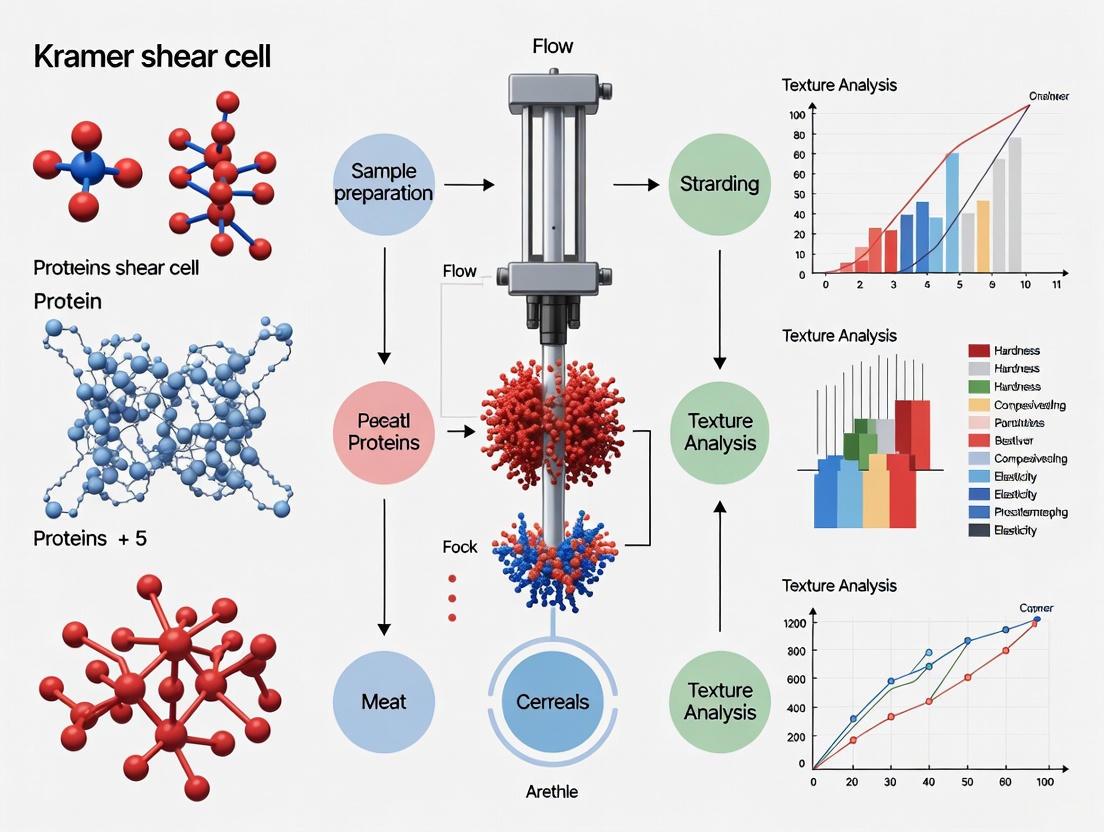
This article provides a comprehensive examination of the Kramer Shear Cell as a critical tool for texture analysis in food science, with focused applications in meat and cereal products.
Kramer Shear Cell in Food Science: Advanced Texture Analysis for Meat and Cereal Applications
Abstract
This article provides a comprehensive examination of the Kramer Shear Cell as a critical tool for texture analysis in food science, with focused applications in meat and cereal products. It establishes the foundational principles of texture measurement, detailing specific methodologies for different food matrices. The content addresses common troubleshooting scenarios and optimization strategies for data reliability, while also exploring the validation of instrumental data against oral processing behaviors and sensory perception. Designed for researchers, scientists, and product development professionals, this review synthesizes current research and standardizes testing approaches to advance the development of novel foods, including meat analogs and engineered cereals, with targeted mechanical properties.
Understanding the Kramer Shear Cell: Principles and Relevance in Modern Food Texture Analysis
The fundamental operating principles of compression, shearing, and extrusion mechanics are pivotal in structuring food materials, particularly in the development of meat analogues and cereal products. These mechanical processes govern the transformation of raw protein sources and cereal grains into fibrous, meat-like textures or expanded cereal products through controlled thermomechanical processing [1] [2]. The Kramer shear cell serves as an essential research tool for simulating these processes at laboratory scale, enabling researchers to study texture development and optimize processing parameters for specific applications [3] [4]. Understanding the interplay between these mechanical forces and material properties allows for precise control over final product characteristics, including fibrousness, hardness, and chewiness, which are critical for consumer acceptance [1] [5].
Fundamental Principles and Mechanisms
Compression Mechanics
Compression involves applying uniaxial force to materials, reducing their volume and increasing density. In food structuring, compression initiates structural breakdown and facilitates particle rearrangement. For meat and meat analogues, compression testing through Texture Profile Analysis (TPA) quantifies key parameters including hardness, springiness, cohesiveness, and chewiness [1] [4]. These measurements correlate with sensory perceptions during mastication, providing objective metrics for product development. Compression forces disrupt protein tertiary and quaternary structures, enabling subsequent reorganization into aligned, fibrous configurations [6].
Shearing Mechanics
Shearing involves applying parallel forces that cause material layers to slide against each other, generating both shear stress and normal stress components. The Kramer shear cell specifically utilizes a multi-bladed head that simultaneously compresses and shears samples, mimicking the mastication process [3] [4]. This combined action is particularly effective for developing anisotropic, fibrous structures in plant-based meats [2]. During shearing, proteins undergo structural alignment along the shear flow direction, forming the fibrous texture characteristic of whole-muscle meat analogs [2] [6]. The shear rate gradient present in certain geometries (e.g., plate-plate) further enhances fibrous structure development [2].
Extrusion Mechanics
Extrusion combines compression, shearing, and thermal energy in a continuous process. As material is forced through a barrel and die, it experiences progressive structuring stages: melting through thermal and mechanical energy input, polymerization via protein-protein interactions, and potential fracturing of the forming network under continued mechanical stress [2]. High-moisture extrusion cooking (HMEC) operates at 140-160°C with moisture contents >40%, creating the conditions for thermoplastic transformation of proteins into layered, meat-like structures [2]. The process-structure response pattern observed in extrusion is similarly achievable in shear cell processing, making the latter valuable for rapid screening of raw materials [2].
Table 1: Key Parameters in Food Structuring Mechanics
| Mechanical Process | Governing Parameters | Structural Influence | Typical Equipment |
|---|---|---|---|
| Compression | Strain rate, deformation level, holding time | Density, porosity, hardness, cohesiveness | Texture Analyzer with TPA attachments |
| Shearing | Shear rate, residence time, temperature, geometry | Fibrousness, anisotropy, tensile strength | Kramer Shear Cell, High-Pressure Shear Cell |
| Extrusion | Barrel temperature profile, screw speed, die design, moisture content | Layering, alignment, expansion, cross-linking | High-Moisture Extrusion Cooker, Wet Spinning Apparatus |
The Kramer Shear Cell in Research
Working Principle and Instrumentation
The Kramer shear cell operates on the principle of imitative testing, closely simulating the early stages of mastication through a combination of compression and shear forces [3]. The standard configuration consists of a bottom compartment that holds the test sample and a multi-bladed head (typically 5 or 10 blades) that moves downward through the material at a controlled speed [4]. As the blades penetrate the sample, they initially apply compressive force followed by progressive shearing action as the material is forced through the gaps between the blades. This dual-mechanism action makes it particularly effective for evaluating bulk textural properties of heterogeneous samples that cannot be easily formed into standardized shapes [3] [4].
The force-distance curves generated during testing provide multiple parameters: maximum force (FKMF) indicates resistance to initial blade penetration, average force (FKAF) represents overall resistance to shearing, and total work (FKW) quantifies the energy required throughout the shearing process [3]. These parameters collectively describe textural properties including firmness, toughness, and fracturability. For fibrous materials, the directional orientation of fibers relative to the blades can significantly influence measured values, allowing quantification of textural anisotropy [1].
Applications in Meat and Meat Analogue Research
In meat science, the Kramer cell quantifies textural properties crucial to consumer acceptance, including tenderness, chewiness, and cohesiveness [4]. The method is particularly valuable for assessing non-uniform products like whole-muscle meats, composite products, and restructured meats where conventional fundamental tests are difficult to apply [3]. For meat analogues, the cell evaluates the success of fibrous structure development through various processing techniques, including high-moisture extrusion, wet spinning, and shear cell processing [1] [6].
Recent applications extend to evaluating bolus properties during mastication, providing insights into dynamic texture changes during oral processing [3]. The miniature Kramer cell (HDP/MK05) has demonstrated particular utility for small sample volumes (≈5.20 cm³) approximating bite-sized portions, enabling direct correlation between instrumental measurements and sensory perception [3]. Studies have shown strong correlations between Kramer measurements and oral processing behaviors including chewing time, number of chews, and eating rate [3].
Applications in Cereal Research
In cereal science, the Kramer cell characterizes textural properties of expanded extrudates, breakfast cereals, and other baked goods [7]. The method effectively measures bulk hardness and crispness of expanded products that would fracture unpredictably in single-point compression tests [7]. For cereal products designed for milk consumption, the cell can evaluate both dry texture and bowl-life texture after milk immersion, providing insights into structural integrity maintenance [7].
Research on whole grain wheat flour extruded cereals demonstrated the Kramer cell's sensitivity to formulation and process changes, successfully detecting textural differences resulting from variations in feed moisture, barrel temperature, and flour ratios [7]. The method showed that high whole grain wheat flour content (up to 80%) could produce desirable low hardness and crispy expanded extrudates when combined with appropriate moisture content (<22%) and temperature (90-110°C) [7].
Experimental Protocols
Protocol: Texture Analysis of Meat Analogues Using Kramer Shear Cell
Purpose: To evaluate the textural properties of plant-based meat analogues and compare them with conventional meat products.
Materials and Equipment:
- Texture Analyzer (250 kg load cell) with miniature Kramer shear cell (HDP/MK05)
- Meat analogues and conventional meat samples (e.g., chicken, beef)
- Temperature control chamber (optional)
- Analytical balance
Procedure:
- Sample Preparation: Cut samples to fit the bottom compartment of the Kramer cell. Maintain uniform sample volume (≈5.20 cm³) across tests. For comparative studies, ensure similar sample dimensions and orientations [3].
- Instrument Settings: Set test speed to 2 mm/s, with a trigger force of 0.1 N. For heated tests, equilibrate samples at target temperature (e.g., 60°C for cooked meat evaluation) [3] [4].
- Testing: Position sample in the cell center. Lower the multi-bladed head until contact, then initiate test. Perform minimum of 5 replicates per sample type.
- Data Analysis: From force-distance curves, extract maximum force (FKMF), average force (FKAF), and total work (FKW). Calculate coefficients of variation to ensure measurement consistency [3].
Table 2: Kramer Shear Cell Parameters for Different Food Types
| Sample Type | Sample Volume | Test Speed | Key Measured Parameters | Typical Values |
|---|---|---|---|---|
| Raw Meat (Chicken) | ≈5.20 cm³ | 2 mm/s | FKMF, FKAF, FKW | FKMF: 150-300 N [3] |
| Plant-Based Meat Analogue | ≈5.20 cm³ | 2 mm/s | FKMF, FKAF, FKW | FKMF: 100-250 N [6] |
| Breakfast Cereal | ≈5.20 cm³ | 1-2 mm/s | FKMF, Number of Peaks | FKMF: 50-150 N [7] |
| Food Bolus | Variable | 1 mm/s | FKAF, Adhesiveness | Dependent on food type [3] |
Protocol: High-Pressure Shear Cell Processing for Fibrous Structure Formation
Purpose: To create fibrous, meat-like structures from plant proteins using shear cell technology and characterize the resulting textures.
Materials and Equipment:
- High-pressure shear cell with cone-plate or plate-plate geometry
- Plant protein isolates (soy, pea, wheat)
- Hydration equipment
- Rheological monitoring system
Procedure:
- Protein Hydration: Hydrate plant proteins to 40-70% moisture content. Mix thoroughly and equilibrate for uniform water distribution [2].
- Shearing Parameters: Set temperature to 140-160°C, pressure to 20 bar, and shear rate to 5-40 s⁻¹. Select appropriate geometry (plate-plate enhances fibrousness due to shear rate gradient) [2].
- Processing: Load hydrated protein into shear cell. Apply temperature and pressure, then initiate shearing. Monitor viscosity changes throughout process.
- Structure Analysis: Upon completion, carefully remove texturate. Analyze fibrous structure visually and instrumentally. Compare with extrusion processing outcomes [2].
Key Observations:
- Viscosity monitoring typically shows initial increase indicating protein polymerization, followed by decrease suggesting network fracturing - both essential for fibrous structure formation [2].
- Plate-plate geometry generates superior fibrousness compared to cone-plate due to radial shear rate gradient [2].
Protocol: Evaluation of Extruded Cereal Products
Purpose: To assess the effects of formulation and processing parameters on textural properties of extruded cereal products.
Materials and Equipment:
- Kramer shear cell with standard 5-bladed head
- Extruded cereal samples with varying compositions
- Moisture analyzer
- Container for milk immersion studies
Procedure:
- Dry Texture Evaluation: Test extrudates immediately after packaging. Record maximum force and number of force peaks indicating crispiness [7].
- Bowl-Life Assessment: Immerse samples in milk for standardized time (e.g., 2 minutes). Drain excess liquid and evaluate using same parameters as dry testing [7].
- Expansion Measurements: Determine sectional expansion index (SEI) and bulk density (BD) to correlate with textual properties [7].
- Formulation Optimization: Use Response Surface Methodology to optimize variables including feed moisture (16-22%), temperature (90-110°C), and whole grain wheat flour:corn flour ratio [7].
Research Reagent Solutions
Table 3: Essential Materials for Meat and Cereal Texture Research
| Category | Specific Items | Research Function | Application Examples |
|---|---|---|---|
| Protein Materials | Pea Protein Isolate (PPI), Soy Protein Concentrate (SPC), Wheat Protein (WP) | Base for fibrous structure formation | Meat analogue development via wet spinning or shear cell [6] [2] |
| Binding Agents | Sodium Alginate, Calcium Chloride, Dietary Fibers | Enhance matrix cohesion and water binding | Wet spinning coagulation bath; texture modification in hybrids [6] |
| Plant-Based Materials | Whole Grain Wheat Flour, Corn Flour | Cereal matrix formation | Extruded cereal production [7] |
| Analytical Tools | Texture Analyzer, Kramer Shear Cell, Acoustic Envelope Detector | Quantify mechanical and acoustic properties | Texture profiling; crispiness evaluation [3] [4] |
| Hybrid System Components | Microalgae, Edible Insects, Nutritional Yeast | Partial meat replacement in dual-protein systems | Sustainable hybrid meat products [5] |
Advanced Applications and Future Directions
Hybrid Meat Products
The principles of compression, shearing, and extrusion find innovative application in dual-protein foods that combine meat with alternative proteins (plants, insects, microalgae). Successful hybridization requires careful control of protein-protein interactions influenced by pH, temperature, and ionic strength [5]. Shear cells help optimize these parameters by providing controlled thermomechanical processing that promotes molecular interactions between meat proteins and alternative proteins. Consumer studies indicate that hybrid products containing 50% meat generally retain favorable sensory properties, while higher substitution levels often require textural optimization to maintain acceptance [5].
Emerging Research Techniques
Advanced research integrates Kramer shear testing with acoustic emission detection to simultaneously evaluate mechanical and acoustic properties, particularly relevant for crispiness assessment in fried coatings and cereal products [4]. Synchronized video capture further correlates structural changes with force data during testing. For fundamental material characterization, cone penetration tests and rheological measurements complement Kramer data, especially for bolus characterization [3]. The ongoing development of miniaturized testing systems allows for evaluation of limited-quantity prototypes early in product development.
The fundamental operating principles of compression, shearing, and extrusion mechanics provide the scientific foundation for modern food structuring technologies, with the Kramer shear cell serving as a versatile research tool across meat and cereal applications. Understanding these mechanisms enables researchers to optimize processing parameters for specific textural outcomes, from the fibrous anisotropy of meat analogues to the crispiness of expanded cereals. Future developments will likely focus on multi-modal characterization approaches that combine mechanical testing with acoustic, visual, and sensory evaluation, along with advanced processing technologies that enhance sustainability through hybrid protein systems. The continued refinement of these fundamental principles and their research applications will support the development of next-generation food products with improved nutritional profiles, sustainability credentials, and consumer appeal.
The Critical Role of Texture in Consumer Acceptance of Meat and Cereal Products
Texture is a paramount sensory attribute that critically determines the success of food products in the market. For meat and cereal products, achieving the correct texture is not merely a quality concern but a fundamental factor in consumer acceptance and repeat purchase. This is especially true for the rapidly expanding category of plant-based meat alternatives (PBMAs), where mimicking the familiar texture of animal meat is a significant technical challenge [8]. Simultaneously, traditional cereal-based products like breads, biscuits, and cereal bars face consumer rejection due to textural defects such as staling, inconsistency, or unacceptable mouthfeel [9].
Within research and development, objective texture measurement is indispensable for linking product formulation to sensory outcomes. The Kramer Shear Cell has emerged as a cornerstone fixture in texture analysis for these product categories. It operates by simulating the combined forces of compression, shearing, and extrusion that occur during mastication, providing researchers with reproducible data that correlates well with sensory panel assessments [9] [10]. This application note details the critical role of texture in consumer acceptance and provides standardized protocols for using the Kramer Shear Cell in meat and cereal research.
The Texture Challenge in Key Product Categories
Plant-Based Meat Alternatives (PBMAs)
The global market for PBMAs is experiencing significant growth, yet consumer acceptance is often hindered by texture imperfections. Consumers expect a product that replicates the juiciness, elasticity, and firmness of traditional meat [11]. Any deviation from this expectation can lead to product rejection. The texture of traditional meat or fish is the most important factor in determining consumer acceptance, and the same is true for cell-cultured and plant-based alternatives [12]. For a consumer trying a new protein source, it is vital that its texture delivers a 'same-as' sensory experience, as consumers are unwilling to compromise on taste and texture [12].
Cereal and Multi-Component Products
Cereal products, particularly those with variable compositions like cereal bars containing nuts, fruits, and chocolate chips, present a unique textural challenge. When tested with a single blade, results can be highly variable because each test might interact with different components (e.g., a peanut versus a raisin) [9]. This makes it difficult to get a consistent measure of the product's overall texture. The multiple blades of a Kramer Shear Cell solve this by providing a measurement on several positions simultaneously, compensating for local deviations and providing a more reproducible average texture value for the bulk sample [9].
Table 1: Key Textural Challenges in Food Products
| Product Category | Key Textural Challenges | Consumer Expectation |
|---|---|---|
| Plant-Based Meat | Lack of juiciness, elasticity, and firmness; fibrous structure [11]. | 'Same-as' sensory experience of traditional meat [12]. |
| Cereal Bars & Multi-Particle Foods | High variability due to inconsistent distribution of ingredients (nuts, fruits, chips) [9]. | Consistent and expected texture with every bite. |
| Bakery & Biscuits | Moisture-related toughness; loss of crispiness; staling [10]. | Retained crispness, desired softness or firmness. |
The Kramer Shear Cell: Principle and Applications
The Kramer Shear Cell is designed to measure the textural properties of a wide range of food products by faithfully reproducing the actions of consumption: shearing, compressing, and extruding the sample simultaneously [10].
- Design and Mechanism: The fixture consists of a stationary rectangular box with slots in the bottom to hold the sample. A moving probe, composed of 5 or 10 parallel blades, is driven through the test specimen, forcing the material through the slots in the base [9]. This multi-blade design is key to its function, as it tests a larger, more representative sample size, providing a better average value of texture than testing one small piece multiple times [10].
- Data Output: The test results in a force-time curve from which key parameters are derived. The maximum force (peak force) is often associated with firmness or hardness, while the area under the curve represents the work done, which can correlate to chewiness or toughness [9].
- Product Versatility: This method is suitable for a wide array of products, including multi-particle foods like cereals and pickles in sauce, fruits and vegetables like peas and beans, self-supporting samples like cereal bars and meat blocks, and ground meat products for quality and gristle assessment [9] [10].
Experimental Protocols
Protocol 1: Texture Analysis of a Plant-Based Burger Patty
Objective: To determine the firmness and chewiness of a plant-based burger patty and compare it to a traditional beef patty.
Materials and Reagents:
- Texture Analyzer: Equipped with a 50 kg or greater load cell [9].
- Kramer Shear Cell: A/KS5 (5 blades) or A/KS10 (10 blades) fixture.
- Samples: Plant-based burger patty and traditional beef patty, cooked to identical internal temperatures (e.g., 71°C).
- Preparation Equipment: Grill or frying pan, food thermometer, scale.
Procedure:
- Sample Preparation: Cook patties to an internal temperature of 71°C. Allow to cool to room temperature (approx. 25°C).
- Sample Weighing: Weigh out a standardized mass of patty (e.g., 25-35 grams) to ensure consistent filling of the shear cell.
- Cell Loading: Place the sample pieces into the stationary cell of the Kramer Shear Cell, ensuring even distribution.
- Test Setup: Position the blade assembly at a constant height above the sample surface. Set the test speed to a constant crosshead speed (e.g., 2.0 mm/sec).
- Analysis: Initiate the test. The blades will move down through the sample, shearing and extruding it.
- Data Collection: Record the force-time curve. Perform a minimum of 5-10 replicates per sample type.
Data Analysis:
- Extract the Maximum Force (N) and Total Work of Shearing (J) from the curve.
- Compare the mean values for the plant-based and animal-based patties using statistical analysis (e.g., T-test) to identify significant textural differences.
Protocol 2: Texture Analysis of a Cereal Bar with Inclusions
Objective: To obtain a reproducible measure of the bulk texture of a cereal bar containing variable inclusions like nuts and dried fruit.
Materials and Reagents:
- Texture Analyzer: Equipped with a 50 kg load cell or greater [9].
- Kramer Shear Cell: A/KS5 fixture.
- Samples: Cereal bars from the same batch.
- Preparation Equipment: Sharp knife, scale.
Procedure:
- Sample Preparation: Cut a representative section of the cereal bar to fit the width of the shear cell. Weigh the sample to ensure consistency.
- Cell Loading: Place the entire sample segment into the stationary cell without a specific orientation to inclusions.
- Test Setup: Position the 5-bladed assembly above the sample. Set the test speed (e.g., 2.0 mm/sec).
- Analysis: Initiate the test. The multiple blades will simultaneously shear through different regions of the bar, including various inclusions.
- Data Collection: Record the force-time curve. Perform a minimum of 7-10 replicates to account for inherent product variability.
Data Analysis:
- The key outcome is the coefficient of variation (CV) for the Maximum Force across replicates. A lower CV demonstrates the method's ability to provide a reproducible average texture despite the product's heterogeneity [9].
The workflow for texture analysis and product development using the Kramer Shear Cell is outlined below.
Data Presentation and Analysis
The following table summarizes typical textural parameters obtained from Kramer Shear Cell testing for different product categories, illustrating how the data can be applied.
Table 2: Typical Kramer Shear Cell Data for Various Product Categories
| Product Type | Key Parameter | Typical Value Range | Sensory Correlation | Application Note |
|---|---|---|---|---|
| Peas (Tenderness) | Maximum Force | Calibrated Scale [10] | Tenderometer value | CS-1-TU cell calibrated for fresh peas [10]. |
| Ground Beef | Maximum Force | Varies with quality | Gristle content, toughness [10]. | Higher force may indicate lower quality or higher gristle. |
| Cereal Bar | Work of Shearing | Varies with formulation | Chewiness, hardness. | Low variation between replicates indicates method reliability [9]. |
| PBMA Burger | Maximum Force & Work | Compared to meat control | Firmness, chewiness [12]. | Used to match the "gold standard" of meat [12]. |
The Scientist's Toolkit: Essential Research Reagents and Materials
Table 3: Essential Materials for Kramer Shear Cell Texture Analysis
| Item | Function/Description | Application Example |
|---|---|---|
| Texture Analyzer | A universal testing machine capable of tensile and compressional measurements with data acquisition software. | Base equipment for all texture analysis tests. |
| Kramer Shear Cell (A/KS5) | A fixture with 5 blades for lower force applications. Recommended for many cereal and softer meat products [9]. | Testing cereal bars, softer PBMAs, vegetables. |
| Kramer Shear Cell (A/KS10) | A fixture with 10 blades for higher force applications (>50 kg). | Testing dense meat products, firm PBMAs. |
| High-Capacity Load Cell | A sensor that measures force; 50 kg or greater is recommended for use with the Kramer Shear Cell [9]. | Essential for accurately measuring high forces generated by bulk samples. |
| Stainless Steel/Delrin Cell (CS-1A) | A corrosion-resistant version of the shear cell for high-acid food samples [10]. | Testing diced tomatoes, salsa, pickled products. |
Texture remains a decisive factor in the marketplace for both traditional and innovative food products. The Kramer Shear Cell provides an objective, reliable, and industrially relevant method to quantify texture, enabling researchers to bridge the gap between product formulation and consumer satisfaction. Its unique multi-blade design, which averages out variability and simulates complex chewing motions, makes it particularly suited for optimizing the texture of challenging products like plant-based meats and heterogeneous cereal bars. By adhering to the standardized protocols outlined in this document, researchers can generate robust, comparable data to drive product development and quality control, ultimately enhancing consumer acceptance.
The quantitative assessment of texture is a cornerstone of food science, particularly in the development and quality control of products like meat and cereals. Instrumental texture methods are broadly classified into three categories: fundamental, empirical, and imitative tests. The Kramer Shear Cell is a pivotal instrument that primarily functions as an imitative test, designed to closely mimic the complex actions of mastication during eating [3] [13]. Its operation incorporates the principles of compression, shearing, and extrusion in a single bulk measurement, making it exceptionally useful for analyzing heterogeneous products where texture varies throughout the sample [9] [14]. This application note details the classification, protocol, and application of the Kramer Shear Cell within the context of meat and cereal research.
Table: Core Classifications of Texture Testing Methods
| Test Category | Primary Principle | Measured Parameters | Key Characteristics | Example Methods |
|---|---|---|---|---|
| Fundamental | Well-defined rheological properties | Modulus, viscosity, fracture stress/strain | Intensive material properties; ideal for homogeneous materials | Uniaxial compression, torsional fracture [3] [13] |
| Empirical | Poorly-defined but practical deformations | Force, work, distance to fracture | Practical and convenient; results are sample and geometry-dependent | Puncture, single-blade shear, extrusion [3] [13] |
| Imitative | Mimics conditions of mastication/eating | Firmness, toughness, fracturability | Closely duplicates oral processing; combines multiple force actions | Texture Profile Analysis (TPA), Kramer Shear Test [3] [13] |
Theoretical Framework: The Kramer Cell's Hybrid Nature
The Kramer Shear Cell is most accurately classified as an imitative test because its multi-blade design simultaneously subjects a food sample to compression, shear, and extrusion, effectively simulating the actions of the teeth during chewing [3] [14]. This makes it superior to fundamental tests for hard, solid foods which are often anisotropic and heterogeneous, making it difficult to obtain uniform test specimens [3] [13].
While imitative, the test is also considered empirical because the parameters it measures—such as maximum force, average force, and work of shear—are not fundamental material properties but are highly correlated with sensory textural attributes like hardness and fracturability [3] [14]. Its key advantage lies in its ability to provide an averaging effect for non-uniform samples, such as cereal bars with nuts and fruits or fibrous meat, resulting in more reproducible data than single-blade tests [9].
Application in Meat and Meat Analog Research
In meat science, the Kramer Shear Cell is extensively used to evaluate the tenderness and textural uniformity of products. Its multi-blade design is particularly advantageous for assessing comminuted meats, whole muscle with variable grain, and modern meat analogs, as it accounts for natural heterogeneity [1] [15]. A primary research application is correlating instrumental measurements with sensory panel data to validate the mechanical performance of meat analogs against traditional meat [1] [16]. Studies have shown that with fine-tuning of protein sources and processing, meat analogs can achieve shear force and stiffness values similar to those of comminuted meat products [16]. The Kramer test's ability to measure bulk properties makes it ideal for quantifying the anisotropy (directional dependence of texture) in whole-muscle analogs, a key challenge in mimicking real meat [1].
Detailed Protocol: Kramer Shear Test for Meat Analogs
Objective: To determine the firmness and toughness of a meat analog patty and compare it against a commercial ground beef patty.
Table: Research Reagent Solutions and Essential Materials
| Item Name | Function/Description | Specifications/Notes |
|---|---|---|
| Texture Analyzer | Applies controlled force/deformation. | Must be equipped with a 50 kg or 250 kg load cell [3] [13]. |
| Miniature Kramer Shear Cell (HDP/MK05) | Holds sample and provides multi-blade shearing action. | 5-bladed head for lower force applications; 10-blade version available for higher loads [9] [14]. |
| Universal Sample Clamp | Prevents sample lifting during blade withdrawal. | Critical for obtaining accurate force-distance curves [14]. |
| Temperature Control Chamber | Maintains consistent sample temperature. | Texture of protein-based products is temperature-sensitive [14]. |
Methodology:
- Sample Preparation: Prepare meat analog and ground beef patties of identical dimensions (e.g., 1 cm thick). Cook to a standardized internal temperature (e.g., 75°C) and allow to cool to room temperature (25°C) before testing.
- Equipment Setup: Mount the 5-bladed Kramer shear head onto the texture analyzer. Secure the corresponding stationary sample cell (bottom compartment) to the base. Calibrate the instrument for force and distance according to the manufacturer's instructions.
- Loading: For a constant volume test, fill the bottom cell with a defined volume of sample (e.g., ≈5.20 cm³, ensuring no air pockets) [3] [13]. For a constant weight test, use a pre-defined mass. Ensure the sample is evenly distributed.
- Test Parameters: Set the test speed to 2.0 mm/s [3] [13]. The test should run until the blades pass completely through the sample and slightly through the base slots.
- Replication: Perform a minimum of five to ten replicates per sample type to ensure statistical significance.
Data Analysis: From the resulting force-distance curve, extract the following parameters [3] [13]:
- Maximum Force (FKMF): The peak force (in Newtons, N) encountered during the test. This correlates with the sensory hardness or initial bite resistance.
- Average Force (FKAF): The mean force throughout the shearing distance.
- Work of Shear (FKW): The total area under the force-distance curve (in Joules, J). This represents the total energy required to shear the sample and correlates with sensory toughness and chewiness.
Application in Cereal Product Research
For cereal products, which are often multi-particle and highly heterogeneous (e.g., breakfast cereals, cereal bars, granola), the Kramer Shear Cell's averaging capability is indispensable [9] [17]. It is routinely applied to measure firmness, fracturability, and cohesiveness [17]. A critical application in cereal science is "Bowl Life" testing, which assesses the rate at which a breakfast cereal loses its crispness after milk is added [17]. Furthermore, the cell is ideal for testing the structural integrity of cereal bars, ensuring they are cohesive enough to hold together but friable enough for easy chewing [9] [17].
Detailed Protocol: Kramer Shear Test for Cereal Bars
Objective: To evaluate the bulk firmness and fracturability of a prototype cereal bar and benchmark it against a market leader.
Methodology:
- Sample Preparation: Cut cereal bars into standardized chunks or use a constant volume/weight. For bulk testing, the pieces are placed into the cell to a fill line or to a specific weight [9].
- Equipment Setup: Identical to the meat protocol, using the 5-bladed Kramer Shear Cell (A/KS5) attached to the texture analyzer.
- Loading: Fill the stationary cell with the cereal bar pieces to the predetermined fill line (e.g., half the cell volume). Distribute the pieces evenly.
- Test Parameters: Set a crosshead speed of 1.0 to 2.0 mm/s. Initiate the test and record the force-time/distance data.
- Replication: Test at least five replicates per sample.
Data Analysis: Analyze the force-distance curve for:
- Maximum Force (N): Indicates the bar's resistance to initial fracture (hardness).
- Number of Force Peaks: For crispy/crunchy products, a higher number of significant peaks before the major failure indicates greater fracturability and crispness [3] [13].
- Work of Shear (J): Represents the total energy input to shear the sample, related to chewiness and toughness.
Table: Comparative Textural Parameters in Meat and Cereal Applications
| Application | Key Kramer Cell Parameters | Correlated Sensory Attribute | Research Utility |
|---|---|---|---|
| Meat & Meat Analogs | Maximum Force (FKMF), Work of Shear (FKW) | Tenderness, Chewiness, Toughness | Quantifying anisotropy; validating mimicry of whole-muscle meat [1] [16] |
| Cereal Products | Maximum Force, Number of Peaks, Work of Shear | Firmness, Crispness, Crunchiness, Chewiness | Measuring "Bowl Life"; optimizing binder content in bars [9] [17] |
The Kramer Shear Cell occupies a unique and vital position in the texture analysis toolkit. As a predominantly imitative and empirical method, it bridges the gap between fundamental material properties and complex sensory perception. Its capacity for bulk testing of heterogeneous materials makes it unrivaled for applications in meat and cereal science, where it provides reproducible, actionable data on key textural properties. By following standardized protocols, researchers can effectively leverage the Kramer Shear Cell to drive product development, optimize processing methods, and ensure consistent quality in both traditional and novel food products.
The Kramer Shear Cell is an empirical testing fixture that replicates the combined compressive, shearing, and extrusion forces experienced during mastication [9]. It is particularly valuable for analyzing heterogeneous foods where texture varies significantly across the product, such as multi-particle cereals, cereal bars with inclusions like nuts and fruits, and structured meat analogs [9] [3]. By testing a bulk sample, the cell provides an averaging effect, compensating for local texture deviations and yielding more reproducible data than single-point measurements [9]. The primary data output is a force-versus-distance (or time) curve from which key parameters—Maximum Force, Average Force, Work (Area Under Curve), and Fracturability—are derived to quantify textural properties.
Interpretation of Key Measurable Parameters
The following table defines the four key parameters and their significance in food texture analysis.
Table 1: Key Measurable Parameters from Kramer Shear Cell Testing
| Parameter | Definition | Textural Correlation | Application Examples |
|---|---|---|---|
| Maximum Force (FKMF) | The highest peak force recorded during the test [3]. | Hardness/Firmness; the force required to achieve a major structural failure [9] [3]. | Assessing the firmness of cereal bars [9] or the hardness of granola aggregates [18]. |
| Average Force (FKAF) | The mean force recorded throughout the shearing process [3]. | Overall resistance to shearing; can relate to perceived chewiness or toughness. | Differentiating between plant-based and traditional meat products [19]. |
| Work (FKW) | The total area under the force-distance curve, representing the total energy input to shear the sample [9] [3]. | Work of shear; a larger value indicates a firmer, more resistant sample [19]. | Measuring the energy required to masticate different foods to a swallowing threshold [3]. |
| Fracturability | The force at which a product first fractures or breaks [17]. Often the first significant peak force. | Brittleness, crispness, or crunchiness [17]. | Evaluating the crispness of breakfast cereals or the brittleness of a cereal bar [17]. |
These parameters are intrinsically linked to the fracture mechanics of foods. Fracture stress (related to Maximum Force) and toughness (related to Work) are fundamental properties that directly influence oral processing, as foods with higher values typically require increased mastication effort and time [20].
Experimental Protocol for Kramer Shear Cell Testing
Equipment and Reagent Solutions
Table 2: Essential Research Equipment and Materials
| Item | Function/Description |
|---|---|
| Texture Analyzer | A universal testing machine (e.g., TA.XTPlus/TA.HDPlus from Stable Micro Systems) equipped with a 50 kg or greater load cell for multi-blade shear tests [9]. |
| Kramer Shear Cell | Consists of a stationary slotted-bottom box and a moving multi-bladed probe (commonly 5 or 10 blades, A/KS5 or A/KS10) [9]. |
| Miniature Kramer Shear Cell (HDP/MK05) | A smaller version suitable for smaller sample volumes (≈5 cm³), closely mimicking a single bite, ideal for bolus analysis and individual food pieces [3]. |
| Acoustic Envelope Detector (A/RAED) | An accessory that synchronizes acoustic data with force measurements, crucial for objectively quantifying crispness and crunchiness in products like cereal flakes or chips [17] [3]. |
| Software | Exponent or similar software for controlling the instrument, acquiring data, and calculating parameters like maximum force, average force, and work [3]. |
Detailed Methodology
The workflow for a typical Kramer Shear Cell test is designed to ensure reproducibility and relevance to oral processing.
Diagram 1: Experimental Workflow for Kramer Shear Cell Testing. This diagram outlines the key stages, from sample preparation to data analysis.
Data Presentation and Analysis
Representative Data from Food Research
The following table compiles typical Kramer Shear Cell data for various food types, illustrating how the parameters reflect textural differences.
Table 3: Representative Kramer Shear Cell Data for Different Food Categories
| Food Sample | Approx. Sample Volume/Mass | Maximum Force (N) | Average Force (N) | Work (J) | Dominant Textural Attribute Measured |
|---|---|---|---|---|---|
| Potato Chips [3] | ≈5.2 cm³ (volume) | High | - | - | Crispiness/Crunchiness (High fracturability, accompanied by characteristic acoustic emission) |
| Raw Carrot [3] | ≈5.2 cm³ (volume) | High | - | - | Hardness & Crunchiness |
| Cereal Bar (Firm) [9] | Fixed volume or mass | High | High | High | Firmness/Hardness (High resistance to shearing and extrusion) |
| Cereal Bar (Soft/Chewy) [9] | Fixed volume or mass | Low-Moderate | Moderate | Moderate-High | Chewiness (Moderate force with significant work required due to plasticity) |
| Granola (High Impeller Speed) [18] | Fixed mass | High | - | - | Hardness & Crispness (Dense, strong aggregates) |
| Plant-Based Meat Analog (Anisotropic) [21] | Dog-bone specimen | - | - | Varies | Toughness (Work to fracture; dependent on structuring and ingredients) |
Relationship Between Curve Parameters and Texture
The force-distance curve is a fingerprint of a product's texture. The relationship between the curve's characteristics and the sensory experience is conceptualized below.
Diagram 2: Interpretation of Force-Distance Curve Parameters. This diagram shows how key features of the data curve correlate with specific textural attributes.
Application in Meat and Cereals Research
Application in Cereal Science
In cereal science, the Kramer Shear Cell addresses the challenge of textural heterogeneity. For instance, in a cereal bar containing peanuts, chocolate chips, and raisins, a single blade test might hit different ingredients each time, yielding highly variable results. The multi-blade head provides an averaging effect, giving a more reproducible measure of overall firmness [9]. Key applications include:
- Quality Assurance: Monitoring batch-to-batch consistency of breakfast cereals and cereal bars [17].
- Product Development: Optimizing formulations for reduced sugar or added fiber without compromising a desirable brittle or firm texture [17].
- Bowl-Life Testing: Assessing the sogginess resistance of breakfast cereals by testing samples after controlled exposure to moisture or milk [17].
Application in Meat and Alternative Protein Research
For meat and alternative proteins, texture is a paramount quality attribute. The Kramer cell is used to measure the bulk textural properties of ground meat, restructured products, and meat analogs.
- Benchmarking against Animal Meat: Plant-based products can be directly compared to traditional meat to target a familiar mouthfeel and biting resistance [19].
- Evaluating Anisotropy: Structured protein products designed to mimic meat fibers often exhibit anisotropic (direction-dependent) properties. While tensile tests are more direct, the Kramer shear test can provide a bulk assessment of this structured texture [21] [19].
- Bolus Analysis: The miniature Kramer cell (HDP/MK05) is particularly useful for analyzing the mechanical properties of the food bolus at the point of swallowing. This provides a direct link between food properties and oral processing behavior [3].
The Kramer Shear Cell is a versatile and imitative tool for texture measurement in complex, heterogeneous foods. The parameters of Maximum Force, Average Force, Work (Area Under Curve), and Fracturability provide a robust quantitative framework for analyzing and comparing products in both cereal and meat research. By following standardized protocols and correctly interpreting the force-distance curves, researchers can obtain data that correlates strongly with sensory perception and oral processing behavior, thereby enabling targeted product development and rigorous quality control.
Practical Methodologies: Applying the Kramer Shear Cell to Meat, Meat Analogs, and Cereals
The accurate texture analysis of variable and multi-particle food systems presents significant challenges for researchers due to sample heterogeneity, irregular particle geometries, and complex mechanical behaviors. Bulk testing methods, particularly those utilizing Kramer Shear Cells, provide a solution by measuring the collective mechanical properties of multi-particle systems, thereby overcoming limitations associated with testing individual, non-uniform specimens. Within the context of meat and cereals research, this approach is invaluable for quantifying textural properties in products ranging from comminuted meat analogues and breakfast cereals to rehydrated textured vegetable proteins [1] [17]. These Application Notes provide standardized protocols for sample preparation and testing, ensuring reproducible and scientifically robust data collection for researchers and product developers.
Experimental Protocols
Kramer Shear Cell Bulk Testing Procedure
The following protocol is adapted for a TA.HDPlus texture analyzer (Stable Micro Systems) equipped with a 5-bladed miniature Kramer Shear Cell (HDP/MK05) and a 250 kg load cell [3].
- Equipment Setup: Install the 5-bladed shear head and the bottom compartment (cell) of the Kramer Shear Cell onto the texture analyzer. Ensure the system is calibrated according to the manufacturer's specifications.
- Sample Preparation: For solid foods, fill the bottom compartment of the cell with a constant volume of sample (e.g., ≈5.20 cm³). Do not compress the sample; simply fill the cell to the required volume to ensure consistent bulk density across replicates [3]. For cereal products like flakes or granules, the cell can be used to contain the non-self-supporting bulk sample [17].
- Test Execution:
- Program the texture analyzer with the following test parameters:
- Test Type: Compression
- Pre-Test Speed: 1.0 mm/s
- Test Speed: 2.0 mm/s
- Post-Test Speed: 10.0 mm/s
- Strain: Sufficient to fully shear and extrude the sample (e.g., 80-90%) [3]
- Initiate the test. The 5-bladed head will move down into the cell, compressing, shearing, and finally extruding the sample through the slots in the bottom compartment.
- Program the texture analyzer with the following test parameters:
- Data Acquisition: From the resulting force-time or force-distance curve, record the following primary parameters [3]:
- Maximum Force (FKMF): The peak force (in Newtons, N) required to shear the sample. This correlates with hardness or firmness.
- Average Force (FKAF): The mean force (N) throughout the shearing event.
- Total Work (FKW): The total area under the curve (in Joules, J), representing the energy required to shear and extrude the sample. This correlates with chewiness or toughness.
Complementary Bowl-Life Testing for Cereals
This protocol assesses the textural stability of breakfast cereals in milk, a critical consumer attribute [17].
- Equipment: Texture Analyzer equipped with an Ottawa Cell (A/OTC) and a Watertight Base Plate (A/BWB) [17].
- Sample Preparation:
- Place a defined weight of dry cereal into the Ottawa Cell.
- Add a standardized volume and temperature of milk to submerge the cereal.
- Allow the cereal to soak for a predetermined time (e.g., 1, 2, or 3 minutes) to simulate "bowl-life."
- Test Execution:
- After soaking, drain excess milk.
- Conduct a compression test on the soaked cereal bulk using a standard plunger.
- Measure the force required to compress the sample. A significant decrease in force compared to the dry cereal indicates softening and loss of crispness.
The experimental workflow for texture analysis is summarized below:
Data Presentation and Interpretation
Typical Kramer Shear Cell Data for Various Food Matrices
The following table compiles typical data obtained from Kramer Shear Cell tests, illustrating how the method differentiates between various food textures.
Table 1: Typical Kramer Shear Cell Parameters for Different Food Categories [3] [16] [17]
| Food Category | Specific Product | Maximum Force (FKMF) (N) | Average Force (FKAF) (N) | Total Work (FKW) (J) | Primary Texture Attribute |
|---|---|---|---|---|---|
| Soft Solid Foods | Banana | Low (≈50-150) | Low (≈30-100) | Low (≈0.1-0.5) | Softness, Mashability |
| Apple | Medium (≈200-500) | Medium (≈100-300) | Medium (≈0.5-2.0) | Firmness, Crispness | |
| Hard & Fibrous | Raw Carrot | High (≈600-1000) | High (≈400-800) | High (≈2.0-5.0) | Hardness, Crunchiness |
| Comminuted Meat Analogue | Medium-High (≈300-700) | Medium-High (≈200-500) | Medium-High (≈1.5-4.0) | Firmness, Chewiness | |
| Brittle/Crispy | Potato Chips | Medium (Peak) (≈200-400) | Low (≈50-150) | Low (≈0.2-0.8) | Crispiness, Fracturability |
| Cereal Products | Dry Breakfast Cereal | Variable (≈100-600) | Variable (≈50-400) | Variable (≈0.5-3.0) | Hardness, Crispness |
| Cereal Bar | Medium (≈200-500) | Medium (≈150-350) | Medium-High (≈1.0-3.0) | Chewiness, Firmness |
Correlation with Oral Processing
Kramer Shear Cell parameters show strong correlations with oral processing behaviors, providing objective measures linked to sensory perception. The table below summarizes key relationships established in research.
Table 2: Correlation between Kramer Shear Cell Data and Oral Processing Parameters [3]
| Kramer Shear Parameter | Correlated Oral Processing Measure | Strength of Correlation | Interpretation |
|---|---|---|---|
| Maximum Force (FKMF) | Number of Chews | High (Positive) | Harder foods require more chewing cycles before swallowing. |
| Total Work (FKW) | Chewing Time | High (Positive) | Foods requiring more energy to shear demand longer oral processing. |
| Force-Deformation Profile | Bolus Particle Size | High (Negative) | Foods with higher shear forces and complex profiles produce a bolus with a finer particle size. |
The Scientist's Toolkit
Successful implementation of bulk testing requires specific reagents and equipment. The following table details essential solutions and materials.
Table 3: Essential Research Reagent Solutions and Materials for Bulk Testing
| Item | Function / Application | Example Use Case |
|---|---|---|
| Miniature Kramer Shear Cell (HDP/MK05) | To simultaneously compress, shear, and extrude a bulk solid sample, mimicking the action of teeth. | Standardized texture measurement of comminuted meat analogues, breakfast cereals, and rehydrated textured vegetable proteins [3] [17]. |
| Ottawa Cell (A/OTC) & Watertight Base Plate | To contain and test bulk particulate materials, particularly for "bowl-life" analysis of cereals in liquid. | Measuring the rate of texture softening of cereal flakes after immersion in milk [17]. |
| Acoustic Envelope Detector (A/RAED) | To simultaneously record sound emissions during mechanical testing, quantifying acoustic texture attributes. | Objectively characterizing the crispness of potato chips or the crunchiness of raw carrots during a Kramer test [3] [17]. |
| Constant Volume Sample Preparer | A jig or container to ensure a consistent volume of sample is tested every time, critical for reproducibility. | Preparing a 5.20 cm³ sample of peanut or cured ham dice for reliable and comparable shear testing [3]. |
| Whole Grain & Alternative Flours | (e.g., whole grain wheat, quinoa, amaranth) Used as test materials to understand the impact of fiber and novel ingredients on texture. | Developing and optimizing extruded cereal products with high whole grain content [7]. |
| Plant Protein Isolates/Concentrates | (e.g., soy, pea, wheat gluten) Used as base materials for creating test specimens of meat analogues. | Investigating how protein source and concentration affect the shear force and stiffness of meat analogue products [1] [16]. |
The application of standardized bulk testing protocols using the Kramer Shear Cell provides a powerful, imitative method for the texture analysis of heterogeneous food systems. The detailed methodologies for sample preparation, mechanical testing, and data interpretation outlined in these Application Notes provide a critical framework for researchers in meat and cereal science. By adopting these consistent protocols, the scientific community can generate comparable, high-quality data essential for driving innovation in product development, optimizing processing parameters, and ultimately meeting consumer expectations for texture in sustainable food products.
The development of plant-based products that accurately mimic the sensory experience of meat is a central focus in modern food science. The texture of meat is one of the most important features to replicate, as it is a critical determinant of consumer acceptance [16]. Among the various analytical methods available, the Kramer Shear Cell has emerged as a particularly valuable tool for evaluating the mechanical properties of both whole-muscle and comminuted meat products and their plant-based analogues [1]. This application note details the use of this imitative test within a broader research context, providing standardized protocols for quantifying and comparing the textural properties of meat and meat analogue products.
The Kramer Shear Cell: Principle and Research Relevance
The Kramer Shear Cell is an imitative texture testing fixture that applies a combination of compression, shearing, and extrusion to a bulk sample [9] [22]. It typically consists of a stationary rectangular box with slots in the bottom and a moving probe composed of multiple blades (commonly 5 or 10) that drive through the test specimen [9] [10].
This method is especially suited for heterogeneous products because it tests a larger sample volume simultaneously, providing an averaging effect that compensates for local texture deviations and increases reproducibility [9]. The test closely mimics the early stages of mastication, making it highly relevant for predicting oral processing behavior and sensory perception [3] [13]. The primary measured parameters are Maximum Force (FKMF), which indicates the sample's resistance to shearing and is related to hardness, and Work (or Work Function), which represents the total energy required to shear and extrude the sample and correlates with chewiness or toughness [3] [13] [22].
Experimental Protocols
Protocol 1: Standard Texture Analysis of Comminuted Products
This protocol is designed for products like ground beef, meatballs, nuggets, and their plant-based analogues.
- Objective: To determine the bulk shear and extrusion properties of comminuted meat and meat analogue samples.
- Equipment and Reagents:
- Texture Analyzer equipped with a 50 kg or greater load cell.
- 5-Blade or 10-Blade Kramer Shear Cell. The 5-blade version (e.g., HDP/KS5) is often suitable for softer products, while the 10-blade version (HDP/KS10) is used for higher force applications [22].
- Heavy-Duty Platform (e.g., HDP/90) [22].
- Standardized comminuted product samples (meat and analogue).
- Procedure:
- Sample Preparation: Prepare samples to a constant volume (e.g., ≈5.20 cm³) or constant weight. For comminuted products, this may involve gently filling the cell cavity without over-packing [3] [13].
- Equipment Setup: Mount the Kramer shear cell on the heavy-duty platform. Attach the multi-blade head to the load cell of the texture analyzer.
- Test Parameters:
- Execution: Perform the test. A minimum of five replicates per sample type is recommended.
- Data Analysis:
Protocol 2: Analysis of Self-Supporting Whole-Muscle Analogues
This protocol is for structured products like formed ham slabs, chicken fillets, or whole-muscle analogues that can hold their shape without a container.
- Objective: To evaluate the shear strength and structural integrity of structured products.
- Equipment and Reagents:
- Texture Analyzer with a 50 kg or greater load cell.
- Multi-blade head only (5 or 10 blades) from the Kramer Shear Cell.
- Flat, heavy-duty testing platform.
- Samples cut to standardized dimensions (e.g., 1 cm x 2 cm x 3 cm blocks).
- Procedure:
- Sample Preparation: Cut the whole-muscle product or analogue into uniform blocks. Document the exact dimensions and orientation of fibers, if visible.
- Equipment Setup: Mount the blade head to the load cell. Ensure the platform is clean and level.
- Test Parameters: Use the same parameters as in Protocol 1.
- Execution: Place the sample block on the platform, aligning it so the blades will shear across the fiber grain (if applicable). Perform the test. A minimum of five replicates per sample type is recommended.
- Data Analysis: Analyze the same parameters as in Protocol 1 (FKMF, FKAF, FKW). The anisotropy of a product can be assessed by comparing results from tests where the blades shear parallel versus perpendicular to the fiber direction [16].
Protocol 3: Correlating Mechanical Properties with Oral Processing
This advanced protocol uses the miniature Kramer Shear Cell (HDP/MK05) to study both food and food bolus properties.
- Objective: To investigate relationships between instrumental texture parameters and oral processing behavior.
- Equipment and Reagents:
- Procedure:
- Food Testing: Test solid foods as described in Protocol 1, using a constant sample volume of ≈5.20 cm³ and a test speed of 2 mm/s [3] [13].
- Bolus Collection: A trained subject masticates the food sample until the point of swallowing is reached, at which point the bolus is expectorated.
- Bolus Testing: Immediately transfer the bolus into the miniature Kramer cell and perform the shear test using the same parameters.
- Data Analysis:
- Calculate FKMF and FKW for both the food and the bolus.
- Correlate these mechanical properties with oral processing parameters recorded during mastication (e.g., chewing time, number of chews, eating rate). Strong correlations have been demonstrated between Kramer mechanical properties and these behavioral metrics [3] [13].
Data Presentation and Analysis
The following tables summarize typical data obtained from studies utilizing the Kramer Shear Cell, providing a benchmark for comparing meat and meat analogue products.
Table 1: Typical Kramer Shear Cell Parameters for Various Solid Foods (from a study using a miniature Kramer cell at 2 mm/s) [3] [13]
| Food Sample | Maximum Force (FKMF) (N) | Work (FKW) (N×mm) | Dominant Textural Attribute |
|---|---|---|---|
| Potato Chips | 100 - 200 | 500 - 1000 | Crispness/Fracturability |
| Raw Carrot | 400 - 600 | 2000 - 4000 | Hardness/Crunchiness |
| Apple | 200 - 400 | 1000 - 2000 | Firmness/Crispness |
| Cured Ham Dice | 150 - 300 | 1500 - 3000 | Chewiness |
| Peanut | 300 - 500 | 1500 - 2500 | Hardness/Crunchiness |
| Banana | 50 - 150 | 200 - 500 | Softness |
Table 2: Comparative Mechanical Properties of Meat and Meat Analogues
| Product Category | Example Product | Typical Shear Force Range | Key Textural Insight |
|---|---|---|---|
| Comminuted Meat | Cooked Lean Formed Ham | Higher Shear Force | Maintains meat fiber integrity, requiring more force to shear [22]. |
| Comminuted Meat Analogue | Premium Reformed Ham (chunks) | Lower Shear Force | Bound meat chunks shear and separate more easily [22]. |
| Whole-Muscle Meat | Chicken Breast | Anisotropic | Shear force is highly dependent on the direction of testing relative to muscle fiber orientation [16]. |
| Whole-Muscle Analogue (High-Moisture Extrusion) | Plant-Based Steak | Can mimic meat anisotropy | With fine-tuning, can approach the shear force and anisotropic properties of whole muscle meat [16]. |
Workflow Visualization
The following diagram illustrates the logical workflow for utilizing the Kramer Shear Cell in meat analogue development, from formulation to data-driven reformulation.
The Scientist's Toolkit: Essential Research Reagents and Materials
Table 3: Key Equipment and Materials for Kramer Shear Cell Testing
| Item | Function/Description | Example/Specification |
|---|---|---|
| Texture Analyzer | The main instrument that applies the controlled force and records data. | TA.HDplus (Stable Micro Systems) or TA1 (Lloyd/AMETEK) with a 50 kg or greater load cell [3] [23] [22]. |
| Kramer Shear Cell | The fixture that holds the sample and performs the shearing action. | Available in 5-blade (A/KS5) for lower forces and 10-blade (HDP/KS10) for higher forces [9] [22]. |
| Heavy-Duty Platform | A robust base required to withstand the high forces generated during testing. | HDP/90 Platform [22]. |
| Acoustic Envelope Detector | An accessory that synchronously records sound during testing, crucial for quantifying crispiness. | A/RAED; used for products like potato chips and raw carrots [3] [17]. |
| Standardized Protein Sources | The base materials for creating meat analogues. | Soy, pea, and wheat protein are the most common; fungal and algal proteins are emerging alternatives [16]. |
| Hydrocolloids | Used in meat analogues to modulate texture, water binding, and stability. | Various gums and starches to adjust gel strength and stiffness [16]. |
The Kramer Shear Cell is an indispensable tool for the objective quantification of texture in meat and meat analogue research. Its ability to test bulk samples and mimic the mastication process provides highly relevant data that can be correlated with oral processing and sensory perception. By applying the standardized protocols and reference data outlined in this application note, researchers can systematically benchmark and guide the development of next-generation plant-based products that more closely mimic the complex mechanics of animal meat.
The texture of crispy and crunchy foods, such as breakfast cereals and brittle foams, is a dominant factor influencing consumer perception and palatability. These mechanical properties are not merely sensory attributes but are critical indicators of product freshness, quality, and structural integrity. In the context of a broader thesis on Kramer shear cell application for meat and cereals research, this document outlines standardized protocols for quantifying these textural properties. Crispness and crunchiness, while often used interchangeably, refer to distinct sensory and mechanical characteristics; crispness is typically associated with thin, dry materials that fracture suddenly with a characteristic sound, whereas crunchiness involves a higher initial resistance to deformation and is often associated with thicker, more substantial materials like raw carrots or nuts [24]. For researchers and product developers, accurately measuring these properties is essential, as acoustic emissions during fracture have been directly correlated with consumer perceptions of freshness and quality, making instrumental analysis a vital tool for substantiating product claims [25] [26].
The Kramer Shear Cell stands as a premier imitative test method for such analyses, particularly valuable for its ability to handle heterogeneous and multi-particulate samples. Unlike fundamental tests that measure well-defined rheological properties, empirical and imitative tests like the Kramer Shear test successfully measure textural properties as they are sensed in the mouth during mastication [3]. This method involves a multi-bladed head that shears through a bulk sample, providing an averaging effect that yields more reproducible and representative data for non-uniform materials [14]. The resulting force-time and force-distance curves capture key fracture events, allowing researchers to quantify parameters such as firmness, toughness, and fracturability [14] [24]. Furthermore, integrating an Acoustic Envelope Detector adds a fourth dimension to texture analysis by capturing the sound produced during fracture, which is a crucial component of crispness perception [24] [25]. The following sections detail the practical application of these principles through specific protocols and data interpretation guidelines, framing them within the versatile research framework provided by the Kramer Shear Cell.
Application Notes: Key Properties and Measurement Principles
Defining Crispness and Crunchiness in Mechanical Terms
The mechanical distinction between crispness and crunchiness is primarily derived from the analysis of force-time or force-distance curves generated during instrumental testing. Crispness is characterized by a series of multiple, small, and sharp force peaks, indicating rapid, successive fractures within the material structure. This pattern is typical of thin, dry products like potato chips or certain breakfast cereals. In contrast, crunchiness manifests as lower frequency but higher amplitude force peaks, signifying a greater initial resistance to deformation followed by more substantial, distinct fracture events. This behavior is observed in harder or more substantial foods like raw carrots, nuts, or some granola bars [24]. From these curves, several quantitative parameters can be extracted. The rupture point or fracture strength is the force required to initiate the first major break, while the number of peaks per unit time or distance provides a measure of brittleness and the rate of structural failure. The work of failure, calculated as the area under the force-distance curve, represents the total energy required to shear and fracture the sample completely [24] [27].
The auditory component is integral to the perception of both these attributes. Studies have shown that the sounds emitted during fracture are directly linked to consumer judgments of quality and freshness. Products that produce louder, higher-pitched sounds are often perceived as fresher and more desirable [25] [26]. Consequently, modern texture analysis incorporates acoustic detection to capture this dimension. The Acoustic Envelope Detector synchronizes sound recording with mechanical force data, allowing researchers to correlate specific fracture events (peaks on the force curve) with acoustic signatures (peaks on the sound envelope) [24] [25]. This multi-sensory approach is vital for a complete understanding of textural properties, as psychological mechanisms and selective attention also play a role in how texture influences flavor perception [28]. For instance, research on potato chips has demonstrated that increased crispness level can enhance the perceived intensity of flavors and alter mastication patterns, effects that vary across different age groups of consumers [28].
The Kramer Shear Cell as an Imitative Test
The Kramer Shear Cell is classified as an imitative test because it closely mimics the mechanical action of mastication, particularly the early stages of chewing where multiple fractures occur simultaneously or in rapid succession. Its design is especially suited for bulk or heterogeneous samples, such as a serving of breakfast cereal, granola, or brittle foam pieces. Using multiple blades ensures that the test result is an average of the resistance offered by the entire sample, rather than a single point measurement that might be misrepresentative for a non-uniform product [14] [3]. This "averaging effect" significantly improves the reproducibility of results for materials with inherent structural variability [14].
The utility of the Kramer Shear Cell extends beyond solid foods to include the analysis of the food bolus. The mechanical properties of the bolus change dynamically during mastication, and understanding these changes is key to linking food structure with texture perception and oral processing behavior. Research has shown that Kramer mechanical properties of both the initial food and its bolus counterpart are highly correlated with oral processing behaviors, such as chewing time and number of chews before swallowing [3]. This makes the Kramer Shear Cell an invaluable tool for predicting and understanding human eating experiences instrumentally. A study utilizing a miniature Kramer Shear Cell demonstrated its effectiveness in detecting different levels of food hardness and fracturability, and the associated degrees of fragmentation achieved during mastication, providing a direct link between instrumental measurements and physiological processes [3].
Experimental Protocols
Protocol 1: Basic Kramer Shear Test for Cereal Fracturability
This protocol is designed to measure the bulk fracturability and shear strength of crispy cereal products using a Kramer Shear Cell.
- Objective: To determine the maximum shear force, average force, and work of shear for a bulk cereal sample, providing instrumental measures of firmness, toughness, and fracturability.
- Equipment & Reagents:
- Texture Analyser: Equipped with a 250 kg load cell or other appropriate capacity [3].
- Kramer Shear Cell: Comprising a bottom containment box and a multi-bladed (e.g., 5-bladed) head [14] [3].
- Analytical Balance: For accurate sample weighing.
- Samples: Breakfast cereals (e.g., flakes, puffed varieties, granola).
- Procedure:
- Sample Preparation: Condition samples at a constant temperature and humidity if required by the experimental design. Record ambient conditions [24].
- Sample Loading: Weigh out a constant volume or mass of cereal. The study by (2020) used a constant sample volume of approximately 5.20 cm³ to mimic a typical mouthful [3]. Gently and consistently load the sample into the bottom compartment of the Kramer Shear Cell, ensuring even distribution.
- Instrument Setup: Mount the Kramer Shear Cell base onto the heavy-duty platform of the Texture Analyser. Attach the multi-bladed head to the instrument's moving crosshead. Set the test speed to 2 mm/s, a common rate used in such analyses [3].
- Test Execution: Initiate the test. The crosshead will drive the blades downward through the sample contained in the box. The test concludes once the blades have fully passed through the sample and the force returns to zero.
- Data Acquisition: The instrument software (e.g., Exponent Connect) will record force, distance, and time data at a high acquisition rate (e.g., up to 2000 points per second for detailed fracture events) [24]. Perform a minimum of five replications per sample type to ensure statistical significance [3].
- Data Analysis: From the resulting force-distance curve, extract the following parameters [14] [3]:
- Maximum Force (FKMF): The peak force recorded, indicating the sample's resistance to initial fracture or overall firmness.
- Average Force (FKAF): The mean force throughout the shearing distance.
- Work of Shear (FKW): The total area under the force-distance curve, representing the total energy required to shear and fracture the sample (a measure of toughness).
Table 1: Key Parameters from a Basic Kramer Shear Test on Model Cereals
| Cereal Type | Maximum Force, FKMF (N) | Average Force, FKAF (N) | Work of Shear, FKW (N×mm) |
|---|---|---|---|
| Corn Flakes | 250.5 ± 15.2 | 145.3 ± 9.8 | 1250.6 ± 85.4 |
| Puffed Rice | 180.3 ± 12.7 | 110.5 ± 7.3 | 980.4 ± 65.1 |
| Granola Cluster | 450.8 ± 25.4 | 280.6 ± 18.9 | 2850.2 ± 150.7 |
Protocol 2: Integrated Acousto-Mechanical Analysis
This protocol enhances the basic shear test by simultaneously capturing acoustic data, providing a multidimensional analysis of crispness.
- Objective: To correlate mechanical fracture events with acoustic emissions, quantifying the auditory component of crispness and crunchiness.
- Equipment & Reagents:
- Procedure:
- Setup: Position the microphone of the AED approximately 1 cm from the anticipated fracture point of the sample within the Kramer Shear Cell [25].
- Calibration: Calibrate the acoustic detector according to manufacturer instructions to ensure synchronized data acquisition with the mechanical force data.
- Test Execution: Perform the Kramer Shear test as described in Protocol 1 while the AED records sound.
- Data Acquisition: The software (e.g., Exponent Connect) will synchronously capture force-distance-time data and acoustic data, which can be saved as .wav files and as an acoustic envelope (voltage vs. time) [25].
- Data Analysis:
- Acoustic Peaks: Count the number of significant acoustic peaks during the test period.
- Crispiness Index: Calculate the number of acoustic peaks per second. A higher rate indicates a crispier product [25].
- Sound Intensity: Measure the amplitude (decibels) of the acoustic peaks. Taller peaks indicate louder, more forceful fractures.
- Synchronization: Correlate specific force peaks with simultaneous acoustic peaks to validate that mechanical fractures are producing the recorded sounds.
Table 2: Acousto-Mechanical Data for Crispness Comparison in Snacks
| Sample | Number of Force Peaks | Crispiness Index (Peaks/sec) | Average Acoustic Amplitude (dB) |
|---|---|---|---|
| Potato Chip (Fresh) | 45 ± 5 | 12.5 ± 1.2 | 68.5 ± 3.1 |
| Potato Chip (Stale) | 18 ± 4 | 5.8 ± 0.9 | 52.3 ± 4.5 |
| Soda Cracker | 35 ± 6 | 10.2 ± 1.5 | 60.1 ± 2.8 |
Protocol 3: Analysis of Oral Processing Dynamics via Bolus Properties
This protocol investigates the temporal evolution of texture by measuring the mechanical properties of the food bolus at the point of swallowing.
- Objective: To understand the interplay between initial food texture, mastication behavior, and the resulting bolus properties.
- Equipment & Reagents:
- Texture Analyser and Miniature Kramer Shear Cell or other appropriate attachments (e.g., cone penetrometer) [3].
- Equipment for particle size analysis (e.g., sieve stack).
- Procedure:
- Bolus Collection: Recruit subjects according to ethical guidelines. Provide a standardized portion of food (e.g., 5-10 g). Instruct subjects to chew normally and expectorate the bolus into a container at their natural point of swallowing [3].
- Immediate Testing: Analyze the bolus immediately to prevent changes in moisture and texture.
- Kramer Shear Test: Transfer the entire bolus to the miniature Kramer Shear Cell and perform a test using the parameters from Protocol 1 [3].
- Supplementary Tests: Conduct a cone penetration test to measure bolus firmness and rheological measurements to characterize its flow behavior [3].
- Particle Size Distribution: Sieve the bolus to determine the degree of fragmentation achieved during mastication [3].
- Data Analysis:
- Correlation Analysis: Correlate the initial food's Kramer Shear properties (FKMF, FKW) with oral processing parameters (chewing time, number of chews) recorded during bolus collection.
- Bolus Property Changes: Compare the Kramer Shear work of the initial food with that of the bolus. A significant decrease indicates efficient fragmentation.
- Linking Instrumental and Sensory Data: Use multivariate statistics to link bolus mechanical properties with sensory panel data on texture perception.
The following workflow diagram illustrates the integrated experimental approach for linking food structure to perception:
The Scientist's Toolkit: Research Reagent Solutions
Table 3: Essential Materials and Equipment for Texture Analysis
| Item Name | Function/Application | Technical Notes |
|---|---|---|
| Texture Analyser | Core instrument that applies controlled force/deformation and records data. | Requires calibrated load cells (e.g., 250 kg) suitable for the expected force range of cereals and foams [3]. |
| Kramer Shear Cell | Bulk shearing of heterogeneous, multi-particulate, or non-uniform samples. | Available in standard and miniature (HDP/MK05) sizes. The 5-bladed head provides an averaging effect for reproducible results [14] [3]. |
| Acoustic Envelope Detector (AED) | Captures sound emitted during sample fracture, a key dimension of crispness. | Microphone is positioned ~1 cm from sample. Software synchronizes audio (.wav) and force data for combined analysis [24] [25]. |
| Heavy Duty Platform | Provides a stable, flat base for testing and raises the test area to avoid instrument warmth. | Essential for maintaining consistent testing conditions, especially for temperature-sensitive samples [14]. |
| Universal Sample Clamp | Prevents the sample or the Kramer cell from lifting during blade withdrawal. | Ensures data integrity by preventing unwanted movement that could artifact the force curve [14]. |
| Exponent Connect Software | Controls the instrument, captures high-speed data (up to 2000 pps), and analyzes complex curves. | Crucial for analyzing fluctuating fracture forces and integrating synchronized audio data [24] [25]. |
Data Interpretation and Integration with Mastication Dynamics
Interpreting the data from these protocols requires an understanding of the characteristic force and acoustic signatures. A force-distance curve for a crispy product like a fresh breakfast cereal will display numerous, sharp, and narrow force peaks, reflecting a series of rapid, brittle fractures. The synchronized acoustic data will show a corresponding series of sharp, high-pitched sound events [24]. In contrast, a crunchy product or a tougher cereal may show fewer, broader, and higher force peaks, indicating a more substantial and resistant structure that requires greater energy to fracture [24]. The force-time curve for a bulk sample provides a direct visualization of the fracture sequence, where each peak corresponds to the failure of an individual component or structural element within the tested volume.
The key to advanced interpretation lies in correlating these instrumental measurements with oral processing behavior. Research has firmly established that the mechanical properties measured by the Kramer Shear Cell are highly predictive of mastication dynamics. For example, a high maximum force (FKMF) and work of shear (FKW) are strongly correlated with an increased number of chews and longer chewing time before swallowing [3]. This relationship is powerful because it allows researchers to predict human eating behavior from instrumental data. Furthermore, the acousto-mechanical data can be linked to sensory perception. Studies on Japanese rice crackers ("kakinotane") have demonstrated that specific onomatopoeic descriptors for crispness (e.g., "BARI-BARI" for hard textures vs. "PARI-PARI" for crumbly ones) are dominant drivers of palatability, with moist or sticky textures ("BETA-BETA") being significantly less liked [26]. This underscores the importance of maintaining a dry, brittle structure for consumer acceptance of crispy snacks.
The following diagram summarizes the logical relationships between instrumental measurements, physiological processes, and perceptual outcomes:
Finally, this integrated approach finds practical application in product development and optimization. For instance, when reformulating products using alternative ingredients like oilseed press cakes (PCs) for textured vegetable proteins (TVPs), Kramer Shear testing can quantify the textural outcomes. Research shows that PCs high in oil and fiber can reduce protein network stability during extrusion, leading to denser TVPs with smaller pores. Instrumentally, this results in a different shear force profile—typically making the TVPs more chewy and less spongy, which can be desirable for creating a more meat-like texture [29]. By applying these standardized protocols, researchers can objectively guide ingredient selection and process optimization to achieve target textural properties that align with desired consumer experiences.
The Kramer Shear Cell is an empirical imitative test that measures the bulk shear and extrusion forces of food materials by simulating the combined actions of compression, shearing, and extrusion encountered during mastication [9] [14]. This testing methodology is particularly valuable for heterogeneous products such as meat and cereals, where texture varies significantly throughout the sample [9]. The system utilizes a stationary rectangular cell with slots in the bottom to hold the sample and a moving multi-blade head that drives through the test specimen, shearing and extruding the material through the base openings [9]. The resulting force-distance curve provides quantitative measurements of textural properties including maximum shear force (firmness/hardness) and work of shear (toughness) [14].
For researchers investigating meat and cereal textures, the Kramer Shear Cell offers distinct advantages over single-blade methods. When testing products with variable texture distributions such as cereal bars or comminuted meat products, single blade tests may yield highly variable results as the blade interacts with different components (e.g., nuts, chocolate chips, or variable meat fibers) in each test [9]. The multiple blades of the Kramer Shear Cell simultaneously measure texture at several positions, compensating for local deviations and providing an averaging effect that significantly improves reproducibility for heterogeneous samples [9] [14].
Technical Specifications and Selection Guidelines
Comparative Analysis of 5-Blade and 10-Blade Configurations
Table 1: Technical Comparison of 5-Blade and 10-Blade Kramer Shear Cells
| Parameter | 5-Blade Shear Cell | 10-Blade Shear Cell |
|---|---|---|
| Blade Configuration | 5 parallel steel blades with wider spacing [23] | 10 parallel steel blades with closer spacing [9] |
| Typical Applications | Meats, fruits, cereals with irregular shapes/sizes [23]; lower force applications [9] | Multi-particle products (cereals, pickles), peas, beans [9]; higher force applications |
| Force Reduction | ~50% reduction in force compared to 10-blade due to wider blade spacing [23] | Standard force measurement for high-resistance materials |
| Load Capacity | Maximum capacity of 102 kgf (225 lbf) [23] | Used when applied load exceeds 50kg [9] |
| Sample Considerations | Ideal for samples with many particles or non-uniform texture [23]; self-supporting samples (cereal bars, meat slabs) [9] | Bulk testing of homogeneous particulate systems |
| Load Cell Recommendation | Minimum 50kg load cell recommended [9] | Required when load >50kg [9] |
The fundamental difference between the 5-blade and 10-blade configurations lies in their blade spacing and resulting force distribution. The 5-blade configuration features wider spacing between blades, which reduces the force required for bulk shearing or compression of samples with multiple particles or non-uniform textures [23]. This design is particularly advantageous for heterogeneous products where the wider spacing allows for more representative sampling of variable components. The 10-blade configuration, with its closer blade spacing, generates higher resistance forces and is typically employed for more homogeneous multi-particle systems or when higher force measurements are required [9].
Load Cell Specifications and Selection Criteria
Table 2: Load Cell Specifications for Kramer Shear Testing
| Load Cell Capacity | Application Context | Kramer Cell Compatibility | Accuracy Requirements |
|---|---|---|---|
| 50 kg | Minimum recommended for A/KS5 5-blade cell [9] | 5-blade applications | Better than ±0.5% of reading [30] |
| >50 kg | Required for high-force applications [9] | 10-blade cell mandatory | Better than ±0.5% of reading [30] |
| 100 kg (1000N) | Standard capacity for texture analyzers with Kramer accessories [30] [31] | Both 5-blade and 10-blade systems | Better than ±0.5% of reading down to 1/1000th of load cell capacity [30] |
| 250 kg | Used in research settings for high-resistance materials [3] | Both systems, particularly for tough meat products | High-precision measurements with 250 kg load cell used in published protocols [3] |
Load cell selection is critical for obtaining accurate texture measurements while preventing instrument damage. The 5-blade cell (A/KS5) is recommended for lower force applications but still requires a 50kg load cell or greater [9]. For the 10-blade cell (A/KS10), higher capacity load cells are necessary as applied loads frequently exceed 50kg [9]. Modern texture analyzers typically feature load cells with accuracy better than ±0.5% of reading, with some systems maintaining this accuracy down to 1/1000th of the load cell capacity [30]. For specialized research applications, such as when using the miniature Kramer shear cell (HDP/MK05) for solid foods and bolus characterization, a 250 kg load cell has been effectively employed [3].
Experimental Protocols for Meat and Cereal Applications
Standardized Testing Protocol for Solid Foods
Figure 1: Experimental workflow for Kramer Shear Cell testing of solid foods, adapted from established methodologies [9] [3].
Sample Preparation:
- Meat Samples: For whole muscle meats, cut into cubes of approximately 1cm³ to ensure consistent filling of the shear cell. For comminuted meats (burgers, sausages), form into patties or use as-is if already particulate [32] [31].
- Cereal Samples: For ready-to-eat cereals, use particulates in their as-consumed form. For cereal bars or baked goods, cut into pieces that fit the cell dimensions [9].
- Loading Method: Fill the stationary rectangular cell to either a constant volume (approximately 5.20 cm³ as used in research settings) [3] or constant weight, noting which method is used for reproducibility [9].
Instrument Settings:
- Test Speed: Set deformation rate to 1.5-2.0 mm/s, consistent with published protocols (2 mm/s for solid foods [3]; 1.5 mm/s for standardized pulse firmness testing [33]).
- Deformation Distance: Program the blade travel to continue to a point close to, or slightly through, the base of the cell to ensure complete shearing and extrusion [9].
- Data Acquisition: Set sampling rate to a minimum of 500 Hz to capture sufficient data points for accurate peak detection [30].
- Temperature Control: Conduct tests at ambient temperature (22±2°C) or control temperature using environmental chambers for temperature-sensitive samples [14] [3].
Data Collection Parameters:
- Record maximum force (FKMF) representing firmness/hardness [3].
- Calculate average force (FKAF) throughout the test cycle.
- Determine work of shear (FKW) from the area under the force-distance curve, representing toughness [14] [3].
- Perform minimum of six replications per sample type to ensure statistical reliability [33] [3].
Specialized Protocol for Meat Analog Evaluation
The Kramer Shear Cell provides valuable comparative data between traditional meat products and plant-based analogs, an area of growing research interest [32] [34].
Sample Preparation Considerations:
- Whole Muscle Analogs: Cut into cubes matching dimensions of traditional meat samples (1cm³).
- Comminuted Analogs: Form into patties with standardized dimensions or use as particulate matter.
- Conditioning: Allow all samples to equilibrate to testing temperature (22±2°C) before analysis.
Modified Testing Parameters:
- Given the typically higher stiffness values of plant-based products (ranging from 113±56 kPa to 378±15 kPa for deli meat analogs) compared to animal products (49±21 kPa to 134±46 kPa) [34], ensure load cell capacity is sufficient for anticipated forces.
- Consider using the 5-blade configuration for initial screening tests of novel analog formulations where structural integrity may be variable.
- For anisotropic meat analogs designed to mimic muscle fiber orientation, note orientation of sample in cell and maintain consistency across replicates.
Data Interpretation:
- Compare maximum shear force values between traditional and analog products.
- Analyze work of shear to evaluate energy required to fracture and extrude materials, correlating with sensory chewiness.
- Normalize forces by sample mass or volume for cross-study comparisons where possible.
Research Reagent Solutions and Essential Materials
Table 3: Essential Research Materials for Kramer Shear Cell Testing
| Item | Specification/Function | Application Context |
|---|---|---|
| Kramer Shear Cell | A/KS5 (5-blade) or A/KS10 (10-blade) with stationary cell [9] | Primary shearing/extrusion fixture for bulk samples |
| Texture Analyzer | TA.HDPlus or TAPlus with minimum 50kg load cell, 1000N capacity recommended [3] [31] | Main measurement instrument with precision control |
| Calibration Weights | Certified weights covering full load cell range | Instrument verification and accuracy validation |
| Sample Containers | Airtight containers for sample storage | Maintaining sample moisture content before testing |
| Temperature Control | Environmental chamber or temperature-controlled room [14] | Testing temperature-sensitive samples |
| Safety Accessories | Safety screen or shatter screen [14] | Operator protection from sample debris |
| Cleaning Supplies | Non-abrasive cleaners, soft brushes | Blade and cell maintenance between samples |
Proper selection between 5-blade and 10-blade Kramer Shear Cell configurations, coupled with appropriate load cell specifications, is fundamental to obtaining reliable texture data for meat and cereal research. The 5-blade configuration offers advantages for heterogeneous samples and lower force applications, while the 10-blade cell is suitable for more homogeneous systems requiring higher force measurements. Adherence to standardized protocols encompassing sample preparation, instrument settings, and data analysis parameters ensures reproducibility across studies. As research into meat analogs and cereal structures advances, the Kramer Shear Cell remains an indispensable imitative test method that bridges fundamental mechanical properties and sensory texture perception.
Overcoming Challenges: Standardization and Optimization of Kramer Shear Testing
In the empirical texture analysis of foods, sample heterogeneity presents a significant challenge to obtaining reproducible and meaningful data. This is particularly true for research on complex meat products and cereals, where natural variations in composition and structure can lead to high variability in single-point measurements. Multi-blade systems, specifically the Kramer Shear Cell, address this fundamental methodological challenge by incorporating the principles of compression, shearing, and extrusion simultaneously across multiple sample regions. This application note details the scientific basis, quantitative benefits, and standardized protocols for using multi-blade shear cells to mitigate the effects of sample heterogeneity, providing researchers with robust tools for product development and quality control.
The core advantage of this approach is the averaging effect. When testing a heterogeneous product like a cereal bar or comminuted meat, a single blade might encounter different structural components—a peanut, a chocolate chip, or a region of dense muscle tissue versus connective tissue—in each test, effectively making each test measure a different sample [9]. By using multiple blades that cut simultaneously at several positions, the Kramer Shear Cell compensates for these local textural deviations, providing a single, more representative measurement of the bulk sample's properties [35] [9]. This method has been demonstrated to yield more reproducible results for highly variable samples compared to single-blade tests [35].
The following table summarizes key textural properties that can be quantified using multi-blade shear tests and contrasts the performance of single-blade and multi-blade approaches when applied to heterogeneous samples.
Table 1: Textural Properties Measured via Multi-Blade Shear Testing and a Comparison of Measurement Approaches
| Textural Property | Description | Single-Blade Measurement on Heterogeneous Samples | Multi-Blade (Kramer Cell) Measurement |
|---|---|---|---|
| Firmness / Hardness | Peak resistance force to the blades. | Highly variable; depends on the specific components encountered by the blade. | More reproducible; provides an averaged firmness of the bulk material [9]. |
| Toughness | Total energy required to shear (area under the force-distance curve). | Inconsistent; may not represent the entire sample if the blade avoids or hits particularly tough components. | Averaged across the sample; better represents the overall work required to fracture and extrude the material [35]. |
| Fracturability | Force at the first major break or peak. | Can be misleading in composite products with multiple fracture points. | Detects different levels of hardness and fracturability more reliably by engaging multiple components at once [3]. |
| Cohesiveness | How well the sample structure holds together. | Difficult to assess representatively for the entire bulk. | Effectively measured through the combined compression and extrusion action, which tests the integrity of the particle matrix [35]. |
Experimental Protocols
Protocol 1: Bulk Testing of Heterogeneous Solid Foods (e.g., Cereal Bars, Comminuted Meat Patties)
This protocol is designed for self-supporting, heterogeneous samples where the goal is to obtain a representative bulk texture measurement.
3.1.1. Research Reagent Solutions & Essential Materials
Table 2: Essential Materials for Kramer Shear Cell Testing
| Item | Function / Explanation |
|---|---|
| Texture Analyser | Primary instrument (e.g., TA.HDPlus); must be fitted with a calibrated load cell (50 kg or greater is often recommended for a 5-bladed cell) [35] [9]. |
| Kramer Shear Cell | The multi-blade attachment; consists of a moving probe with 5 or 10 blades and a stationary rectangular base with slots. The 5-bladed (A/KS5) is for lower force applications, while the 10-bladed (A/KS10) is for higher loads [35] [9]. |
| Universal Sample Clamp | Prevents the sample or platform from lifting during blade withdrawal, ensuring data integrity [35]. |
| Heavy Duty Platform | Provides a stable, flat base for the test and raises the test area away from the instrument base to avoid heat transfer to temperature-sensitive samples [35]. |
| Sharp Cutting Tools | For sample preparation; sharp instruments minimize pre-test deformation, a key factor for reproducible results [36]. |
| Template or Mould | Used to standardize sample dimensions (e.g., cubes) to minimize variability from size and shape differences, which greatly impact results [36]. |
3.1.2. Workflow Diagram
The following diagram illustrates the key stages of the experimental protocol for bulk testing with a Kramer Shear Cell.
3.1.3. Methodological Details
Sample Preparation:
- For products like cereal bars or meat slabs, test the sample directly without containment in the cell base [9].
- Standardize the sample by weight or volume to ensure reproducibility. A constant sample volume is critical for comparable results [3].
- Use sharp tools and templates to prepare samples, minimizing pre-test deformation and ensuring consistent dimensions [36].
- For non-uniform pieces (e.g., breakfast cereals, pickles in sauce), fill the stationary cell box to a consistent volume or weight [9].
Instrumental Setup:
- Install the appropriate Kramer Shear Cell (5 or 10 blades) onto the Texture Analyser.
- Ensure the instrument is equipped with a load cell of sufficient capacity (a 50 kg load cell or greater is recommended for the A/KS5) [9].
- Set the test speed to a constant rate (e.g., 2 mm/s is used in some studies) [3].
- Position the blades at a constant height above the sample surface before initiating the test [9].
Test Execution:
- Initiate the test. The blades will move down into the sample, simultaneously compressing, shearing, and extruding the material through the slots in the base.
- The test concludes once the blades have passed through the sample, typically close to or slightly through the base of the cell [9].
Data Acquisition and Analysis:
- The instrument software records a force-distance (or force-time) curve.
- Extract key parameters from the curve:
- Maximum Force (FKMF): The peak force required, indicating firmness or hardness.
- Work of Shear (FKW): The total area under the curve, representing the total energy or toughness.
- Average Force (FKAF): The mean force throughout the test [3].
- These parameters provide an average resistance for the bulk material, reducing the impact of localized variations [9].
Protocol 2: Texture Analysis of Food Bolus to Link with Oral Processing
The miniature Kramer shear cell (HDP/MK05) is particularly useful for studying the texture perception process by measuring the mechanical properties of the food bolus formed during mastication.
3.2.1. Workflow Diagram
This diagram outlines the specific process for conducting bolus analysis, linking instrumental measurements with oral processing behavior.
3.2.2. Methodological Details
Sample and Bolus Preparation:
- Prepare solid foods (e.g., banana, apple, carrot, cured ham, nuts) with a constant volume, approximating the amount commonly introduced into the mouth (e.g., ~5.20 cm³) [3].
- A subject or panel masticates the food sample and expectorates the bolus at the moment of swallowing.
- The bolus should be tested immediately to prevent changes in properties, especially moisture loss [36].
Instrumental Setup:
- Use a miniature Kramer shear cell (HDP/MK05) for the small bolus samples.
- The test setup is similar to Protocol 1, with a constant deformation rate.
Test Execution and Analysis:
- Perform the Kramer shear test on the collected bolus.
- Record the same mechanical properties: maximum force, work of shear, and average force.
- In parallel, record oral processing behaviors: chewing time, number of chews, chewing rate, and eating rate.
- Studies have shown that Kramer mechanical properties of both the initial food and the resulting bolus are highly correlated with oral processing behaviors, providing greater insight into the dynamic process of texture perception [3].
The Scientist's Toolkit: Key Considerations for Reliable Results
Beyond the core materials, several factors are critical for achieving consistent and reliable data with the Kramer Shear Cell.
- Temperature Control: Temperature strongly influences the rheological and fracture properties of many foods. Tests should be conducted at a constant temperature. This is especially critical for frozen products, gels, and fats, where minor fluctuations can produce large variations in results [36].
- Moisture Loss Prevention: Materials like fruits, vegetables, and meats can lose moisture rapidly upon exposure to air, altering their mechanical behavior. To minimize this, test samples quickly, or loosely seal them in film if testing takes several minutes [36].
- Sample Anisotropy: Be aware that many materials, like meat with its oriented fibers, are anisotropic. Their mechanical properties vary with the direction of loading. The orientation of the test specimen must be consistent across replicate tests to eliminate this source of variation [36].
- Data Interpretation: Recognize that Kramer Shear tests are empirical and imitative. They do not measure fundamental rheological properties but rather provide a combined measurement of compression, shearing, and extrusion forces that closely mimic the mastication process [35] [3]. This makes the data highly relevant for predicting sensory outcomes.
Texture analysis is a cornerstone of food science research, providing critical quantitative data on the mechanical properties of materials. Within this field, the Kramer Shear Cell stands out as an imitative test that closely mimics the complex shear, compression, and tension forces occurring during mastication [3] [35]. Its application is particularly valuable for bulk or heterogeneous samples, such as comminuted meats, cereal bars, and multi-particle systems, where it provides an averaging effect that yields more reproducible results than single-point measurements [35]. The reliability and interpretability of data generated by this method are highly dependent on the rigorous optimization and standardization of three fundamental testing parameters: deformation rate, sample volume, and fill level. This document provides detailed application notes and protocols for optimizing these critical parameters within the context of meat and cereal research, ensuring data consistency and scientific validity.
The Impact of Critical Testing Parameters
The mechanical properties measured by a Kramer Shear Cell—such as maximum force, average force, and work of shear (area under the force-distance curve)—are not intrinsic material properties. They are empirical results that are significantly influenced by the chosen instrumental settings and sample preparation [3] [35]. Failure to control these parameters introduces variability, obscures genuine material differences, and hampers cross-laboratory comparisons.
- Deformation Rate: The speed at which the blades travel through the sample directly influences the measured force. Higher rates typically result in higher peak forces as the material has less time to relax and flow, leading to a more brittle response.
- Sample Volume & Fill Level: The Kramer Shear Cell operates on a principle of bulk compression and shear. An incorrect sample volume or inconsistent fill level alters the internal stress distribution and the resistance pathway of the blades through the material. Under-filling leads to a predominance of shear, while over-filling introduces a significant and potentially variable compression component before shear begins, artificially inflating force values.
The following sections provide targeted optimization strategies for meat and cereal applications, which often present different textural challenges.
Optimization Tables and Protocols
Table 1: Optimized critical parameters for Kramer Shear Cell testing.
| Parameter | Meat Applications (Comminuted, Deli) | Cereal Applications (Bars, Flakes) | Rationale & Considerations |
|---|---|---|---|
| Deformation Rate | 2 mm/s [3] | 1 - 3 mm/s (Common range) | Mimics oral processing speed. A standard rate of 2 mm/s is widely used for meats to allow for reproducible comparison. Cereals may require adjustment based on product density and brittleness. |
| Sample Volume | ~5.2 cm³ [3] | Fill cell cavity to a known, consistent height | For meat, a fixed volume ensures comparable resistance. A volume of ~5.2 cm³ is cited as similar to a typical mouthful [3]. For cereals, a fixed fill height is often more practical for heterogeneous shapes. |
| Fill Level | Ensure sample is evenly distributed without gaps; do not over-compact. | Ensure sample is evenly distributed without gaps; do not over-compact. | Consistent packing is crucial. The goal is a uniform fill that eliminates air pockets without pre-stressing the sample through compaction, which would artificially increase hardness. |
Detailed Experimental Protocol for Parameter Optimization
This protocol outlines a systematic approach to establishing the critical parameters for a new material.
Title: Systematic Optimization of Deformation Rate, Sample Volume, and Fill Level for Kramer Shear Cell Testing.
1. Objective: To determine the optimal deformation rate and sample preparation method (volume/fill level) for a specific food material that yields the most reproducible and discriminative texture profile analysis data.
2. Experimental Design:
- Factor 1: Deformation Rate. Test a minimum of three rates (e.g., 1 mm/s, 2 mm/s, 3 mm/s).
- Factor 2: Sample Volume/Fill Level. For granular or comminuted materials, test a minimum of three different masses that correspond to low, medium, and high fill levels (e.g., 30 g, 40 g, 50 g), ensuring even distribution in the cell.
3. Materials and Equipment:
- Texture Analyzer equipped with a 250 kg load cell (or appropriate capacity) [3].
- Kramer Shear Cell (5-bladed or 10-bladed).
- Prepared food samples (e.g., plant-based deli meat, breakfast cereal, granola bars).
- Analytical balance.
- Spatula for leveling.
4. Procedure: 1. Sample Preparation: Prepare the sample according to standardized conditions (e.g., room temperature, specified humidity). 2. Parameter Setting: Set the initial deformation rate in the texture analyzer software. 3. Sample Loading: Weigh the target mass of the sample. Evenly distribute the sample pieces throughout the bottom compartment of the shear cell. Use a spatula to level the surface without applying downward pressure. 4. Test Execution: Perform the shear test. The instrument's multi-bladed head will travel downward through the sample slots, and the force-distance curve will be recorded. 5. Replication: Perform a minimum of n=5 replications for each parameter combination [3]. 6. Data Recording: Record the key parameters: Maximum Force (FKMF) and Work of Shear (FKW).
5. Data Analysis:
- Reproducibility: Calculate the coefficient of variation (CV = Standard Deviation / Mean × 100%) for the FKMF and FKW at each parameter set. The set with the lowest CV indicates the most reproducible condition.
- Discriminatory Power: Using a fixed, optimized volume/fill level, analyze samples with known differences (e.g., different brands, formulations). The parameter set that produces the largest and most statistically significant (p < 0.05) differences in FKMF and FKW has the highest discriminatory power.
The Scientist's Toolkit: Research Reagent Solutions
Table 2: Essential materials and equipment for Kramer Shear Cell testing.
| Item | Function/Application |
|---|---|
| Texture Analyzer | The primary instrument that drives the Kramer Shear Cell and measures force-distance data. Requires a calibrated load cell suitable for the expected force range (e.g., 250 kg for firm meats) [3]. |
| Kramer Shear Cell (5 or 10 Blade) | The attachment that performs the bulk shearing and compression. The 5-bladed version (A/KS5) is common for standard sample sizes, while the 10-bladed version can be used for larger volumes or higher force applications [35]. |
| Miniature Kramer/Ottawa Cell (HDP/MKO5) | A reduced-volume version ideal when sample material is limited or for lower load capacity requirements [35] [37]. |
| Universal Sample Clamp | An accessory that prevents the lower part of the shear cell from lifting during blade withdrawal, ensuring test integrity [35]. |
| Heavy Duty Platform | Provides a stable, flat base for the shear cell and raises the test area away from the instrument base, which can become warm and affect temperature-sensitive samples [35]. |
| Exponent/Texponent Software | The software controlling the texture analyzer, used for setting test parameters, acquiring data, and performing initial analysis [3]. |
Experimental Workflow and Parameter Relationships
The following diagram illustrates the logical workflow for optimizing critical parameters and how they interrelate to influence the final texture analysis results.
Kramer Cell Parameter Optimization Workflow
The path to obtaining reliable and meaningful texture data with the Kramer Shear Cell is paved with the meticulous optimization of deformation rate, sample volume, and fill level. These parameters are not mere settings but are fundamental to the test's physics, directly dictating the stress-strain response of the material. By adopting the systematic, data-driven approach outlined in these application notes—characterized by the rigorous evaluation of reproducibility and discriminatory power—researchers can transform the Kramer Shear Cell from a simple imitative tool into a powerful source of quantitative, comparable data. This discipline is essential for advancing research and development in the complex fields of meat and cereal science, ultimately leading to products with superior and consistent quality.
The Kramer Shear Cell is an established empirical tool for measuring the textural properties of foods, particularly effective for heterogeneous samples like meat and cereals. However, its utility in comparative research is hampered by a widespread lack of standardization in testing protocols across studies. This application note provides concrete guidelines and detailed protocols to enhance the reproducibility and cross-comparability of data generated using Kramer Shear Cells, with a specific focus on applications in meat and cereal science.
The Standardization Challenge in Kramer Shear Testing
The Kramer Shear test is an imitative test that closely mimics the mastication process by subjecting a sample to a combination of shear, compression, and extrusion forces [3] [35]. While this makes it highly relevant for predicting sensory outcomes, the test is empirical in nature, meaning the results are intrinsically tied to the specific instrument geometry and testing parameters used [35]. A primary challenge is that studies frequently employ different cell configurations—namely the 10-blade or 5-blade setups—and vary critical parameters such as crosshead speed and sample volume without adequate reporting, making direct comparisons unreliable [3] [17] [31].
Furthermore, as highlighted in reviews of meat analog testing, this lack of standardization is a persistent issue in the field, limiting the ability of researchers to draw meaningful conclusions from aggregated data [32] [38]. The following sections outline specific guidelines to overcome these challenges.
Experimental Protocols for Standardized Testing
To ensure data comparability, it is critical to adhere to detailed and clearly reported methodologies. Below are standardized protocols for meat and cereal products.
Protocol for Meat and Meat Analog Analysis
This protocol is designed to evaluate the tenderness of whole-muscle meats and the textural properties of structured meat analogs.
Sample Preparation:
- Whole Meat: Prepare cores (e.g., 1 cm x 1 cm cross-section) parallel to the muscle fiber orientation. Blot dry to remove excess moisture [32].
- Meat Analogs/Comminuted Products: Cut into uniform cubes (e.g., 1 cm³) to ensure consistent packing.
- Conditioning: Equilibrate samples to a consistent temperature (e.g., 20°C ± 2°C) prior to testing.
Equipment Configuration:
- Texture Analyzer: Equipped with a 250 kg load cell or appropriate capacity for expected forces [3].
- Kramer Shear Cell: Utilize either the standard 10-blade cell or the 5-blade miniature cell (HDP/MK05) for smaller sample sizes or lower force ranges [3] [31]. The specific configuration must be reported.
- Data Acquisition: Software (e.g., Exponent, NEXYGENPlus) set to record force-distance curves.
Test Parameters:
- Sample Volume/Mass: Fill the cell base to a predefined volume (e.g., ≈5.20 cm³) or mass (e.g., 25 g). Record this value precisely [3].
- Crosshead Speed: 2.0 mm/s [3].
- Test Type: Compression/Shear, with blades traversing through the entire sample until full extrusion.
- Data Recorded: Maximum Force (N or kg), Average Force (N or kg), and Total Work/Energy (J or N·m) [3] [39].
Protocol for Cereal and Cereal Bar Analysis
This protocol assesses the firmness, cohesiveness, and fracturability of ready-to-eat cereals, cereal bars, and baked goods.
Sample Preparation:
- Breakfast Cereals: Use a representative mix of whole pieces. For "bowl life" testing, precondition samples with milk for a specified time before testing using an Ottawa Cell with a watertight base [17].
- Cereal/Granola Bars: Cut into uniform cubes (e.g., 1 cm³) to ensure consistent packing and shearing.
Equipment Configuration:
- As per the meat protocol, using a Texture Analyzer and a Kramer Shear Cell (5- or 10-blade).
Test Parameters:
The logical workflow for both protocols is summarized in the diagram below.
Data Standardization and Cross-Study Comparison
To facilitate valid cross-study comparisons, researchers must comprehensively report instrumental conditions and contextual sample data. The following tables provide a framework for organizing and comparing key parameters.
Table 1: Essential Instrumental Parameters for Reporting
| Parameter | Description | Importance for Comparability |
|---|---|---|
| Kramer Cell Type | Specify 5-blade (e.g., HDP/MK05) or 10-blade configuration. | Blade number significantly impacts measured force; the 5-blade cell reduces force for heterogeneous samples [31]. |
| Crosshead Speed | Speed of blade descent (e.g., 2.0 mm/s). | Affects the strain rate applied to the sample, influencing fracture force and energy [3]. |
| Sample Mass/Volume | Precise mass (g) or volume (cm³) of sample tested. | Directly impacts the resistance to shearing and extrusion; must be kept constant [3]. |
| Load Cell Capacity | Maximum force capacity of the load cell (e.g., 250 kg). | Ensures measurements are within the accurate range of the transducer [3]. |
| Data Sampled | Key parameters extracted: Maximum Force (FKMF), Work (FKW). | Standardizing output parameters allows for direct comparison of hardness and toughness [3] [39]. |
Table 2: Essential Sample and Contextual Data for Reporting
| Parameter | Description | Importance for Comparability |
|---|---|---|
| Sample Composition | Protein source, fat content, moisture content, etc. | Fundamental properties governing material behavior (e.g., moisture content strongly influences texture) [3] [32]. |
| Processing History | Extrusion conditions, cooking time/temperature, etc. | Processing defines microstructure and thus, textural properties [32]. |
| Sample Temperature | Temperature of sample at time of testing. | Temperature affects the rheological properties of fats and proteins [3]. |
| Sample Geometry | For pre-formed samples, dimensions and shape. | Critical for fundamental tests; for Kramer tests, indicates how samples are prepared and loaded [3]. |
The Scientist's Toolkit: Research Reagent Solutions
A standardized experimental setup requires specific instrumentation and accessories. The following table details the key components for a Kramer Shear Cell testing system.
Table 3: Essential Materials and Equipment for Kramer Shear Testing
| Item | Function/Description | Example Use Case |
|---|---|---|
| Texture Analyzer | A universal testing machine with a movable crosshead and calibrated load cell to apply controlled deformation and measure force. | The core instrument for performing all compression, extrusion, and shear tests (e.g., TA.HDPlus, TA1) [3] [39]. |
| Kramer Shear Cell | A box-shaped cell with a lid containing multiple parallel blades. As the lid descends, the sample is simultaneously sheared, compressed, and extruded. | Bulk texture measurement of non-uniform samples like cooked meat chunks, breakfast cereals, or cereal bars [3] [17] [35]. |
| Miniature Kramer Cell (HDP/MK05) | A smaller version of the standard cell, requiring a smaller sample volume (≈5 cm³). | Ideal for limited sample availability or when testing forces are expected to be high for a 10-blade cell [3] [31]. |
| Acoustic Envelope Detector (A/RAED) | An accessory that records sound emissions during the test and synchronizes them with force data. | Objectively quantifying the crispness or crunchiness of products like potato chips, raw carrots, or crispy cereals [3] [17]. |
| Heavy-Duty Platform & Clamp | A stable base and sample clamp to prevent lifting of the test cell during blade withdrawal. | Ensures consistent test conditions and protects the load cell from off-axis forces [35]. |
| Temperature Control Chamber | An environmental chamber that encloses the test area to maintain precise sample temperature. | Essential for testing materials like fats or gels whose texture is highly temperature-sensitive [35]. |
The comparative analysis of textural data from Kramer Shear Cell studies remains a significant challenge due to methodological variability. By adopting the standardized protocols, comprehensive reporting frameworks, and equipment guidelines outlined in this document, researchers can significantly improve the reliability and cross-comparability of their data. Moving the field toward these standardized practices will empower the scientific community to build more robust and generalizable models for texture perception and product development in meat and cereal sciences.
Texture is a critical quality attribute in food science, defined as the combination of rheological and structural attributes perceptible through mechanical, tactile, and where appropriate, visual and auditory receptors [40]. Within the context of meat and cereal research, instruments like the Texture Analyser equipped with a Kramer Shear Cell provide objective, quantitative measurements of textural properties by generating force-distance curves during testing. These curves serve as mechanical fingerprints, where specific features correlate directly with sensory attributes like hardness, toughness, and fracturability [12] [14]. For researchers in food science and drug development, where excipient behavior or product mouthfeel may be critical, accurately interpreting these curves is fundamental to linking formulation changes with perceived texture.
Key Textural Attributes and Their Correlation with Force-Distance Curves
The force-distance curve generated during a Kramer Shear test is a rich source of information. The Kramer test applies a combination of compression, shearing, and extrusion forces, closely mimicking the mastication process for solid foods [22] [13]. The following table summarizes the primary parameters that can be extracted and the textural attributes they represent.
Table 1: Key Parameters from Force-Distance Curves and Their Textural Correlates
| Curve Parameter | Textural Attribute | Interpretation & Research Context |
|---|---|---|
| Maximum Force (Peak Force) | Firmness / Hardness | Indicates the sample's resistance to deformation. A higher peak force signifies a harder or tougher material. In meat research, this correlates with tenderness, while in cereals, it may relate to bite resistance [14] [13]. |
| Number of Force Peaks | Fracturability / Crispiness | Represents the number of structural failures within the sample. A curve with multiple sharp peaks is characteristic of brittle, crispy, or crunchy foods like breakfast cereals or potato chips [13]. |
| Total Area Under the Curve (Work) | Toughness / Chewiness | Quantifies the total energy required to shear and extrude the sample. A larger area indicates a tougher, more chewy product that requires more mastication effort, highly relevant for both meat and cereal bars [14] [3]. |
| Slope of the Curve (Initial Linear Region) | Stiffness / Rigidity | Reflects the initial resistance to the applied force before major structural failure. A steeper slope indicates a more rigid structure [14]. |
| Adhesion upon withdrawal (Negative force) | Stickiness / Cohesiveness | Measures the work required to overcome attractive forces between the sample and the blades upon withdrawal. Important for products like processed meats and certain doughs [14]. |
Practical Research Application: Differentiating Meat and Cereal Products
The application of these parameters is illustrated in comparative testing. For instance, a study on canned ham products used a 5-blade Kramer cell to compare a "cooked lean formed ham" with a "premium reformed ham." The force-distance curve for the formed ham showed a higher maximum force, indicating greater integrity of the meat fibers and thus higher firmness and toughness. In contrast, the reformed ham, consisting of bound meat chunks, required a lower maximum force to shear, reflecting its less cohesive structure [22].
Similarly, for heterogeneous cereal products like granola or muesli bars, the multi-blade design of the Kramer Shear Cell provides an averaging effect that yields more reproducible measurements of firmness and cohesiveness compared to a single blade, which might give highly variable results due to the presence of nuts, grains, and fruits [14].
Experimental Protocols for Kramer Shear Testing
This section provides a detailed, step-by-step methodology for conducting texture analysis tests using the Kramer Shear Cell, applicable to both meat and cereal research.
Protocol A: Standardized Kramer Shear Test for Solid Foods
This protocol is adapted from published research assessing the miniature Kramer Shear Cell with solid foods [13] [3].
Objective: To determine the firmness, fracturability, and toughness of solid food samples (e.g., meat strips, cereal bars) under controlled conditions.
Materials and Equipment:
- Texture Analyser (e.g., TA.HDPlus from Stable Micro Systems) [3]
- Kramer Shear Cell (5-blade (HDP/KS5) or 10-blade (HDP/KS10)) and corresponding Heavy Duty Platform [22]
- Calibrated load cell (50 kg or greater recommended for the 5-blade cell) [22]
- Universal Sample Clamp [14]
- Analytical balance
- Sharp knife or cutter for sample preparation
- Ruler or caliper
Procedure:
- Sample Preparation:
- For meat: Cut samples into cubes or strips to achieve a constant volume. Research has used a sample volume of approximately 5.20 cm³ [3].
- For cereals/bakery: For products like cereal bars or cakes, cut to a defined size that fits the cell base. For bulk, multi-particle products (e.g., breakfast cereal, meat chunks), fill the base of the shear cell to a defined volume or mass to ensure consistency [14] [22].
- For temperature-sensitive samples, equilibrate to the desired testing temperature (e.g., 5°C for refrigerated meats) [22].
Instrument Setup:
- Mount the appropriate load cell.
- Attach the Heavy Duty Platform to the base of the Texture Analyser.
- Place the empty Kramer Shear Cell base onto the Heavy Duty Platform.
- Attach the multi-blade shear probe (5 or 10 blades) to the instrument's arm.
- In the instrument software, set the test type to "Compression".
Test Parameters Configuration:
- Test Speed: 2.0 mm/s [3]
- Target Mode: Distance (set to ensure the blades pass completely through the sample and the base of the cell)
- Trigger Type: Auto (Force), typically set at 5 g.
- Data Acquisition Rate: 200-500 points per second (to capture all force peaks accurately).
Test Execution:
- Place the prepared sample into the base of the Kramer Shear Cell, distributing it evenly.
- Initiate the test. The blade set will descend into the cell, shearing and extruding the sample.
- After the test, retract the blades and carefully remove the sheared sample.
- Clean the shear cell and blades thoroughly between replicates.
Data Collection:
A standardized workflow for this protocol is presented in the diagram below.
Figure 1: Experimental workflow for a standardized Kramer Shear test.
Protocol B: Comparative Analysis Against a Gold Standard
This protocol is essential for product development, such as optimizing cell-cultured meats or novel cereal formulations, where matching the texture of a traditional product is the goal [12].
Objective: To quantitatively compare the textural profile of a new or alternative product (e.g., cultured meat, plant-based cereal) with a established "gold standard" traditional product.
Procedure:
- Define the Gold Standard: Select a commercially available traditional product that represents the ideal textural target.
- Sample Preparation: Prepare both the gold standard and test samples using Protocol A, ensuring identical dimensions, mass/volume, and testing conditions.
- Replication: Test a minimum of 5-10 replicates for each product to ensure statistical significance.
- Data Analysis: Compare the force-distance curves and extracted parameters (Max Force, Work, Number of Peaks) between the test sample and the gold standard using statistical analysis (e.g., T-test, ANOVA).
- Interpretation: A significant difference in maximum force indicates a deviation in firmness/hardness. A difference in the total work of shear indicates a difference in toughness/chewiness. The number and sharpness of peaks reveal differences in fracturability and internal structure.
The Scientist's Toolkit: Essential Research Reagents and Equipment
Table 2: Key Equipment and Materials for Kramer Shear Cell Research
| Item | Function/Application | Research Context & Notes |
|---|---|---|
| Texture Analyser | Core instrument that applies controlled force/deformation and records data. | Requires stable calibration. Models like the TA.HDPlus are standard [13]. |
| Kramer Shear Cell | Multi-blade attachment that applies combined shear, compression, and extrusion. | The 5-blade (HDP/KS5) or 10-blade (HDP/KS10) cell is chosen based on sample resistance and load cell capacity [22]. |
| Heavy Duty Platform | Supports the Kramer Shear Cell during testing. | Essential for handling the high forces generated; prevents instrument damage [14] [22]. |
| Universal Sample Clamp | Holds the sample container in place. | Prevents the shear cell from lifting during blade withdrawal, ensuring data integrity [14]. |
| Calibrated Load Cell | Measures the force exerted on the sample. | Selection is critical (e.g., 25kg for soft products, 50kg+ for tougher meats/cereals); must be within its force range for accurate data [14] [22]. |
| Temperature Control Chamber | Maintains sample temperature during testing. | Vital for temperature-sensitive samples like fats in meats or chocolate in cereals [14]. |
Interpreting a force-distance curve is a systematic process. The following diagram outlines a logical pathway for researchers to extract meaningful textural insights from raw data.
Figure 2: Logical workflow for interpreting force-distance curves to derive textural insights.
This workflow emphasizes that data interpretation is not complete until the instrumental measurements are linked back to the sensory experience and used to make informed decisions about the research product. For example, a cultivated meat sample showing a significantly higher peak force and work of shear than the gold standard (e.g., traditional chicken breast) would be interpreted as tougher and chewier, guiding the research team to adjust culture conditions or scaffolding materials to achieve a more tender structure [12].
Data Validation and Comparative Analysis: Linking Instrumental Measurements to Sensory Experience
Understanding the relationship between instrumental measurements and human oral processing is crucial for developing foods with desired sensory and nutritional properties. The Kramer shear cell serves as an imitative test that closely mimics the early stages of mastication, providing mechanical measurements that correlate with key oral processing parameters. This application note details protocols for validating Kramer shear cell measurements against fundamental oral processing behaviors—chewing time, number of chews, and bolus properties—within the context of meat and cereal research. Such validation establishes the Kramer cell as a predictive tool for how foods behave during consumption, reducing the need for extensive human trials in product development.
Theoretical Background: Linking Instrumental Measurements to Oral Processing
The Hutchings and Lillford model describes oral processing as a dual-axis process involving the structural breakdown and lubrication of food before swallowing [41]. The Kramer shear test directly quantifies the first part of this process by measuring the forces required to shear and extrude a food sample, simulating the actions of teeth and the tongue during mastication.
Research has demonstrated that the mechanical properties obtained from Kramer tests are highly suitable for detecting different levels of food textural properties, such as hardness and fracturability, and the associated degrees of fragmentation achieved during mastication [3]. These mechanical properties show strong correlations with oral processing behaviors, making the Kramer cell an invaluable tool for predicting human chewing patterns.
Experimental Protocols
Protocol 1: Kramer Shear Cell Measurement for Solid Foods
This protocol outlines the standard procedure for determining the mechanical properties of solid foods using a miniature Kramer shear cell.
- Equipment Setup: Texture analyzer (e.g., TA.HDPlus from Stable Micro Systems) equipped with a 250 kg load cell and a miniature Kramer shear cell (HDP/MK05) with a 5-bladed shear head.
- Sample Preparation:
- For meat samples: Use cooked, non-frozen muscle or meat analogue products. Cut into cubes or strips to allow a constant sample volume of ≈5.20 cm³ to be tested [3] [1].
- For cereal samples: Use intact grains, flakes, or extruded cereals. Adjust the number of pieces to achieve the target sample volume of ≈5.20 cm³ [42].
- Condition samples to room temperature (e.g., 22 ± 2°C) before testing.
- Test Parameters:
- Deformation rate: 2 mm/s [3]
- Test mode: Compression
- Data acquisition rate: 200 points per second (or as per instrument manufacturer's recommendation)
- Key Measurements: From the resulting force-distance curve, record:
- Maximum Force (FKMF): The peak force required to shear the sample.
- Average Force (FKAF): The mean force throughout the shearing process.
- Total Work (FKW): The total energy required to shear and extrude the sample, calculated as the area under the force-distance curve.
Protocol 2: Characterization of Food Bolus Properties
This protocol describes the collection and analysis of the food bolus at the point of swallowing, which is critical for understanding the endpoint of oral processing.
- Bolus Collection:
- Recruit subjects with strict dental health criteria (healthy complete dentition, no masticatory disorders) and obtain ethical approval and informed consent [42].
- Provide subjects with a fixed food portion (e.g., 3-8 g is common) [43] [42].
- Instruct subjects to chew normally and expectorate the bolus into a container at the moment they feel the need to swallow. The number of chews and chewing time to this point is defined as the swallowing threshold [42].
- Bolus Mechanical Analysis:
- Texture Profile Analysis (TPA): Immediately transfer the bolus to a texture analyzer. Perform a double-compression test (e.g., to 20-65% deformation) to determine hardness, cohesiveness, adhesiveness, and springiness [42] [41].
- Cone Penetration Test: As an alternative, a cone penetration test can be used to assess bolus hardness [3].
- Bolus Granulometric Analysis:
- Transfer the bolus to a stack of sieves (e.g., with apertures from 0.4 mm to 4 mm).
- Wash with water to remove saliva, dry particles (e.g., at 30°C for 2 hours), and sieve manually [42].
- Weigh the particles retained on each sieve. Calculate the median particle size (d50), defined as the aperture through which 50% of the particle mass passes [42].
Protocol 3: Monitoring Oral Processing Behavior
This protocol details the measurement of chewing time and number of chews, which are primary variables for validating instrumental data.
- Video Recording:
- Record subjects (e.g., n=39) in a controlled environment or a home-use-test (HUT) setting using a standard video camera [44].
- Provide a fixed bite size for all participants to standardize testing [44].
- Analyze recordings to determine:
- Chewing Time: Total time from food intake to swallowing or expectoration.
- Number of Chews: Total chewing cycles during the sequence.
- Eating Rate: Food mass consumed per unit time (g/s or g/min).
- Electromyography (EMG) (Optional):
The following workflow diagram illustrates the integrated experimental approach connecting these protocols:
Key Correlations and Expected Results
The table below summarizes the typical correlations observed between Kramer shear cell parameters and oral processing behaviors, based on experimental data.
Table 1: Correlation of Kramer Shear Cell Parameters with Oral Processing Behaviors and Bolus Properties
| Kramer Shear Cell Parameter | Correlated Oral Processing Parameter | Correlation Strength & Direction | Research Context |
|---|---|---|---|
| Maximum Force (FKMF) | Number of Chews [3] | High Positive Correlation | Solid foods (banana, apple, carrot, ham, peanut, chip) |
| Total Work (FKW) | Chewing Time [3] | High Positive Correlation | Solid foods (banana, apple, carrot, ham, peanut, chip) |
| Maximum Force (FKMF) | Bolus Hardness at Swallowing [3] [42] | Positive Correlation | Various solid foods |
| Kramer Mechanical Properties | Degree of Bolus Fragmentation [3] | Positive Correlation | Various solid foods |
| Kramer Parameters | Eating Rate [3] | Strong Negative Correlation (for single subject) | Solid foods (banana, apple, carrot, ham, peanut, chip) |
These correlations indicate that foods requiring higher shear forces and energy (as measured by the Kramer cell) generally demand more oral processing effort—longer chewing times and a greater number of chews—to form a swallowable bolus.
The Scientist's Toolkit: Essential Research Reagents and Materials
Table 2: Key Materials and Equipment for Oral Processing Validation Studies
| Item | Function/Application | Specification Notes |
|---|---|---|
| Miniature Kramer Shear Cell (HDP/MK05) | Imitates early mastication to measure shear/extrusion forces of solid foods. | 5-bladed head; compatible with texture analyzers like TA.HDPlus [3] [39]. |
| Texture Analyzer | Drives the Kramer cell and other probes; measures force, distance, and time. | Requires a stable platform and appropriate load cell (e.g., 250 kg) [3]. |
| Texture Profile Analysis (TPA) Fixture | Performs double compression on food bolus to simulate two bites and measure textural properties. | Uses a flat piston/plate; can measure hardness, cohesiveness, springiness [42] [39]. |
| Test Sieves | Analyzes particle size distribution (granulometry) of expectorated food bolus. | Apertures from 0.4 mm to 4 mm are typical for bolus analysis [42]. |
| Video Recording System | Monitors and records oral processing behavior for manual analysis of chew count and duration. | Standard camera sufficient for a home-use-test (HUT); enables frame-by-frame analysis [44]. |
Application in Meat and Cereal Research
The validation of Kramer shear cell data is particularly relevant for structured products like meat and cereals.
- Meat and Meat Analogues: The anisotropic (directionally dependent) and fibrous structure of meat makes it challenging to test with fundamental rheological methods. The Kramer cell, as an empirical test, is well-suited for such products. Research has linked instrumental texture properties of ham to masticatory duration and number of chewing cycles [3] [1]. This approach can be used to optimize the texture of meat analogues to closely mimic real meat.
- Cereal Products: Dry, crispy, or crunchy cereal products (e.g., breakfast cereals, snacks) are characterized by their fracturability. The Kramer test can quantify this attribute and its associated acoustic emissions. Furthermore, the correlation between shear properties and the resulting bolus particle size is critical, as particle size influences starch hydrolysis and glycemic response [46] [42].
Validating Kramer shear cell measurements against human oral processing parameters provides a robust scientific bridge between instrumental data and real-world eating experiences. The strong correlations between Kramer shear parameters and chewing time, number of chews, and bolus properties establish this method as a powerful predictive tool. For researchers in meat and cereal science, this validated protocol offers a reliable, efficient, and standardized approach to design and optimize products with tailored textural properties and targeted nutritional outcomes, ultimately reducing the reliance on costly and time-consuming sensory panels during the initial stages of product development.
Texture analysis is a critical component in food science research, particularly in the fields of meat and cereal science. The development and quality control of products in these sectors rely heavily on objective measurements that can accurately predict sensory outcomes. Among the most prominent instrumental methods used are the Kramer Shear Cell, Warner-Bratzler Shear Device, and Texture Profile Analysis (TPA). Each method offers distinct approaches, principles, and applications for quantifying textural properties. This application note provides a detailed comparative analysis of these three fundamental techniques, framing their performance within the context of a broader thesis on the application of Kramer Shear Cell for meat and cereals research. By examining their underlying mechanisms, correlative strengths with sensory data, and optimal application domains, this document serves as an essential guide for researchers, scientists, and product development professionals seeking to select the most appropriate texture assessment methodology for their specific needs.
Fundamental Principles and Mechanisms
Kramer Shear Cell (Multi-blade Shear Test)
The Kramer Shear Cell operates as a bulk shear and extrusion test, utilizing multiple blades to simultaneously compress, shear, and extrude a sample. The fixture typically consists of five or ten parallel steel blades that are driven downward through a rectangular container with corresponding slots in its base [14] [23]. As the blades traverse the sample, the material is subjected to a combination of shear, compression, and extrusion forces, ultimately passing through the bottom openings. This multi-faceted mechanical action makes it particularly suitable for heterogeneous samples such as comminuted meats, cereal grains, and products with irregular shapes and sizes [14] [23]. The primary measurements obtained include maximum force (indicative of hardness or toughness) and total work of shear (energy required to complete the process), which collectively provide an averaged textural assessment across the entire sample volume.
Warner-Bratzler Shear Device (Single-Blade Cutting Test)
In contrast to the Kramer cell, the Warner-Bratzler (WB) Shear Device employs a single blade, typically with a V-shaped notch or a straight edge, to perform a clean cutting action through a sample [14]. This method focuses predominantly on measuring the shear resistance of a material, with particular emphasis on quantifying the force required to cut through fibrous structures. The fundamental principle involves the blade's traversal through a standardized sample, during which the instrument records the peak force encountered. This peak force is widely interpreted as an indicator of tenderness or bite resistance [14]. The WB shear test is considered less destructive to sample integrity than multi-blade approaches and is therefore especially suited for homogeneous, solid materials where structural integrity and specific fracture points are of primary interest, such as whole-muscle meat cuts.
Texture Profile Analysis (TPA) (Two-Bite Compression Test)
Texture Profile Analysis (TPA) is a dual-compression test designed to mimic the action of the human jaw by subjecting a sample to two consecutive cycles of compression [1]. This method does not typically involve cutting or shearing actions but rather characterizes a sample's response to compressive deformation and recovery. From the resulting force-time curve, multiple textural parameters can be derived, including hardness (peak force of first compression), springiness (degree of sample recovery), cohesiveness (degree of sample deformation before rupture), gumminess (hardness × cohesiveness), and chewiness (gumminess × springiness) [1]. TPA provides a more comprehensive, multi-parameter profile of mechanical properties relevant to mastication, making it valuable for products where structural breakdown and mouthfeel are critical quality attributes.
Table 1: Fundamental Mechanical Principles of Texture Analysis Methods
| Method | Primary Action | Force Components | Sample Destruction | Data Outputs |
|---|---|---|---|---|
| Kramer Shear Cell | Bulk shearing, compression, and extrusion | Shear, compression, tension, extrusion | Complete (multi-fracture and extrusion) | Maximum force, average force, work of shear |
| Warner-Bratzler | Single-blade cutting | Primarily shear, minimal compression | Partial (clean cut along blade path) | Peak shear force, fracture point |
| Texture Profile Analysis | Two-cycle compression | Compression, decompression | Minimal to moderate (dependent on strain level) | Hardness, springiness, cohesiveness, chewiness, gumminess |
Comparative Performance Analysis
Correlation with Sensory Properties
The ultimate validation of any instrumental texture method lies in its ability to predict human sensory perception. Comparative studies across various food matrices, particularly meat products, have demonstrated significant correlations between instrumental measurements and sensory panel evaluations.
In a study comparing Allo-Kramer (AK) and Warner-Bratzler (WB) devices for assessing rabbit meat tenderness, both methods effectively detected tenderness differences resulting from varying post-mortem boning times (1, 3, and 24 hours) [47]. The sensory panel indicated higher tenderness and juiciness in meat boned at 24 hours post-mortem, and both instrumental methods captured these textural differences. Correlation analysis revealed that AK shear force showed a strong negative correlation with sensory tenderness (r = -0.58, P<0.001), while WB shear force and area correlated at r = -0.43 and r = -0.56, respectively (P<0.001) [47]. This suggests that the AK method may provide a marginally superior prediction of sensory tenderness in this specific application.
Similarly, a study on broiler breast meat compared Allo-Kramer, Warner-Bratzler, and razor blade shears for predicting sensory tenderness [48]. Regression models established from instrumental shear values demonstrated that all methods could effectively predict sensory tenderness outcomes, though each showed slightly different predictive strengths depending on the specific sensory attribute being evaluated.
Application-Specific Performance
The performance and suitability of each texture method vary significantly depending on the sample matrix and the specific textural property of interest.
For heterogeneous samples such as comminuted meats, cereal bars, breakfast cereals, and products with particulate inclusions, the Kramer Shear Cell offers distinct advantages. Its multi-blade design provides an "averaging effect" across the sample, which enhances reproducibility for materials with inherent structural variability [14]. The miniature Kramer shear cell (HDP/MK05) has also demonstrated excellent capability for characterizing solid foods and their bolus counterparts, with Kramer mechanical parameters showing high correlations with oral processing behaviors like chewing time and number of chews [13].
The Warner-Bratzler Shear Device remains the gold standard for homogeneous muscle foods where tenderness is the primary quality attribute. Its standardized application in meat science is evidenced by its incorporation into USDA and Honikel protocols for meat tenderness evaluation [14]. The method's specificity for measuring shear resistance along muscle fibers makes it particularly suitable for evaluating whole-muscle cuts like beef steaks, pork chops, and chicken breast fillets.
Texture Profile Analysis excels in characterizing the structural breakdown of semi-solid and soft solid foods, as well as baked goods. Its multi-parameter output provides a comprehensive understanding of how products behave during mastication, making it invaluable for product development and optimization in cereal science and bakery applications [1].
Table 2: Comparative Method Performance Across Sample Types
| Sample Type | Recommended Method | Key Measurable Attributes | Limitations |
|---|---|---|---|
| Whole Muscle Meats | Warner-Bratzler | Tenderness, bite resistance | Limited utility for comminuted products |
| Comminuted Meats | Kramer Shear Cell | Firmness, toughness, cohesiveness | High force requirements, sample amount |
| Cereal Grains & Bars | Kramer Shear Cell | Bulk shear properties, hardness | May over-compress fragile materials |
| Bakery Products | Texture Profile Analysis | Springiness, chewiness, resilience | Requires standardized sample geometry |
| Cheese & Dairy | Texture Profile Analysis or Wire Cutter | Firmness, spreadability, elasticity | Temperature sensitivity affects results |
| Pasta & Noodles | Specialized Blades (AACC) | Firmness, bite strength | Method-specific fixture requirements |
Practical Considerations for Method Selection
Several practical factors influence the selection of an appropriate texture analysis method for specific research applications:
Sample Preparation Requirements: The Warner-Bratzler method typically requires standardized core samples of specific dimensions, which can be time-consuming to prepare and may limit testing throughput [47]. In comparison, the Kramer Shear Cell can accommodate more variable sample sizes and geometries, potentially simplifying preparation procedures. Research on rabbit meat texture noted that the "AK method is characterized by a sample preparation procedure easier to standardize and less time consuming than WB method" [47].
Method Reproducibility: For homogeneous materials, the Warner-Bratzler device generally offers excellent reproducibility due to its standardized sample geometry and clean shear action. However, for heterogeneous products, the multi-blade approach of the Kramer cell provides more reproducible results by averaging structural variations across the sample [14]. A study on broiler breast meat identified substantial variation in Warner-Bratzler shear force measurements within early-deboned fillets, highlighting how sample heterogeneity can impact method precision [48].
Data Interpretation Complexity: Texture Profile Analysis generates multiple parameters from a single test, providing comprehensive characterization but requiring more sophisticated interpretation. In contrast, both Kramer and Warner-Bratzler methods primarily yield peak force and work measurements, offering more straightforward interpretation focused on specific texture attributes.
Experimental Protocols
Kramer Shear Cell Protocol for Meat and Cereal Applications
Scope and Application: This protocol describes the standardized procedure for measuring bulk shear properties of meat and cereal samples using a Kramer Shear Cell. The method is applicable to a wide range of products including comminuted meats, whole grains, cereal bars, and baked goods.
Equipment and Reagents:
- Texture analyzer with 250 kg load cell capacity
- Kramer Shear Cell (5 or 10-blade configuration)
- Universal sample clamp
- Heavy-duty platform
- Temperature control chamber (for temperature-sensitive testing)
- Analytical balance (±0.01 g)
- Sample preparation tools (knives, corers, rulers)
Sample Preparation:
- Meat Samples: For comminuted products (sausages, burger patties), form samples to approximately 5.20 cm³ volume (approximately 5-10g depending on density). For whole-muscle meats, cube into pieces of consistent dimensions (e.g., 1×1×1 cm).
- Cereal Samples: For grains, use whole or lightly crushed materials. For cereal bars and baked goods, cut into pieces that fit uniformly within the Kramer cell base compartment.
- Conditioning: Temper all samples to consistent temperature (typically 4°C for meats, 20-25°C for cereals) prior to testing to minimize thermal effects on texture.
- Weighing: Record exact sample mass and dimensions for normalization of results if required.
Test Parameters:
- Pre-test speed: 1.0 mm/s
- Test speed: 2.0 mm/s
- Post-test speed: 10.0 mm/s
- Target strain: 100% (full compression)
- Trigger force: 0.1 N
- Data acquisition rate: 200 pps
Procedure:
- Mount the Kramer Shear Cell securely on the texture analyzer, ensuring proper alignment.
- Place the sample evenly distributed within the base compartment of the shear cell.
- Initiate the test sequence, allowing the blades to traverse completely through the sample and extrude the material through the bottom slots.
- Record the force-time/distance curve throughout the test sequence.
- Clean the cell thoroughly between samples to prevent cross-contamination.
- Perform minimum of 10 replications per sample type for statistical significance.
Data Analysis:
- Maximum Force (FKMF): Identify the highest peak in the force curve, representing the maximum resistance to shearing.
- Average Force (FKAF): Calculate the mean force throughout the test sequence.
- Work of Shear (FKW): Compute the area under the force-distance curve, representing the total energy required to shear and extrude the sample.
- Fracturability: For crispy products, count the number of force peaks with magnitude greater than 1N.
Troubleshooting:
- Insufficient Force: Verify sample size, ensure blades are properly sharpened, confirm load cell calibration.
- Excessive Force: Reduce sample volume, consider using 5-blade instead of 10-blade configuration for very dense products.
- High Variability: Ensure consistent sample preparation, distribution within cell, and environmental conditions.
Warner-Bratzler Shear Protocol for Meat Tenderness
Scope and Application: This protocol specifies the procedure for evaluating meat tenderness using the Warner-Bratzler Shear Device, particularly suited for homogeneous muscle tissues.
Equipment and Reagents:
- Texture analyzer with 50 kg load cell capacity
- Warner-Bratzler Shear Blade (V-notch or straight edge)
- Core drill (typically 1.27 cm diameter)
- Meat sample preparation equipment
- Temperature-controlled cooking environment
Sample Preparation:
- Extract cylindrical cores from meat samples parallel to muscle fiber orientation using a core drill.
- Cook samples to predetermined internal temperature (e.g., 71°C for poultry, 63°C for beef medium-rare).
- Cool to room temperature (20-25°C) before testing to prevent temperature effects on protein structure.
- Measure and record core diameter and length for normalization.
Test Parameters:
- Pre-test speed: 2.0 mm/s
- Test speed: 2.0 mm/s
- Post-test speed: 10.0 mm/s
- Target distance: Sufficient to completely cleave sample
- Trigger force: 0.1 N
Procedure:
- Mount the Warner-Bratzler blade securely on the texture analyzer.
- Position the meat core perpendicular to the blade edge, ensuring the V-notch aligns with the sample.
- Initiate test sequence, allowing the blade to completely traverse through the meat core.
- Record the force-time curve throughout the shearing process.
- Perform minimum of 8-10 replications per treatment group.
Data Analysis:
- Peak Shear Force (N): Identify the maximum force required to shear the sample.
- Shear Energy (N×mm): Calculate the area under the force-deformation curve.
- Initial Yield: Identify the first significant peak indicating initial structural failure.
Texture Profile Analysis Protocol
Scope and Application: This protocol describes the standard procedure for Texture Profile Analysis of meat and cereal products, particularly suited for determining multiple textural parameters from a two-bite compression test.
Equipment and Reagents:
- Texture analyzer with appropriate load cell (typically 50 kg for meats, 25 kg for cereals)
- Compression platen (minimum diameter 75 mm)
- Cylindrical probe (typically 35-50 mm diameter)
- Sample preparation tools
Sample Preparation:
- Prepare samples with uniform geometry (typically cylinders 20 mm height × 20 mm diameter).
- Ensure parallel contact surfaces for uniform compression.
- Condition samples to consistent temperature before testing.
Test Parameters:
- Pre-test speed: 1.0 mm/s
- Test speed: 1.0 mm/s
- Post-test speed: 1.0 mm/s
- Compression strain: 50-75% of original height (must be consistent across samples)
- Time between compressions: 3-5 seconds
- Trigger force: 0.1 N
Procedure:
- Mount the compression platen or cylindrical probe on the texture analyzer.
- Position sample centrally on the base platform.
- Initiate two-cycle compression test.
- Record force-time curve for both compression cycles.
- Perform minimum of 8 replications per sample type.
Data Analysis:
- Hardness (N): Maximum force during first compression cycle.
- Springiness (ratio): Distance recovered between first and second compression.
- Cohesiveness (ratio): Ratio of areas under second vs first compression.
- Gumminess (N): Hardness × Cohesiveness (for semi-solid foods).
- Chewiness (N×mm): Gumminess × Springiness (for solid foods).
Research Toolkit: Essential Materials and Reagents
Table 3: Essential Research Reagent Solutions for Texture Analysis
| Item | Specification/Function | Application Notes |
|---|---|---|
| Texture Analyzer | 50-250 kg load capacity, automated crosshead, data acquisition software | Base instrument for all texture measurements; capacity depends on expected force ranges |
| Kramer Shear Cell | 5 or 10-blade configuration, stainless steel construction | Bulk shearing of heterogeneous samples; 5-blade version reduces force for high-resistance samples [23] |
| Warner-Bratzler Blade | V-notch or straight edge, hardened steel | Standardized tenderness measurement of whole muscle meats [14] |
| Compression Platens | 75-100 mm diameter, flat surface | TPA and compression testing; must be larger than sample diameter |
| Universal Sample Clamp | Adjustable tension, non-slip surface | Prevents sample lifting during blade withdrawal in cutting tests [14] |
| Heavy-Duty Platform | Rigid base with sample centralization guides | Provides stable foundation for high-force testing [14] |
| Temperature Chamber | -40°C to 150°C range, forced air circulation | Controls sample temperature during testing for temperature-sensitive materials |
| Calibrated Weight Set | ASTM Class 2 or better, traceable certification | Verification of load cell accuracy and measurement calibration |
| Sample Preparation Tools | Core borers, knives, rulers, templates | Standardized sample geometry preparation for reproducible results |
Method Selection Workflow and Data Interpretation
Data Interpretation Guidelines
Proper interpretation of texture analysis data requires understanding the relationship between instrumental measurements and sensory properties:
Kramer Shear Data: High maximum force (FKMF) values indicate greater firmness or toughness, while increased work of shear (FKW) suggests higher energy requirement for mastication. For cereal products, these parameters correlate with hardness and chewiness perception. For meats, they relate to toughness and mechanical integrity [13].
Warner-Bratzler Data: Lower peak shear force values directly correlate with increased sensory tenderness in muscle foods. Typical tenderness thresholds for beef: <35 N (very tender), 35-50 N (tender), 50-65 N (intermediate), >65 N (tough) [47].
TPA Parameters: Hardness correlates with initial bite force, springiness with height recovery after compression, cohesiveness with internal bond strength, and chewiness with sustained mastication effort. These parameters collectively describe structural breakdown during chewing [1].
Statistical Considerations
- Replication: Minimum of 8-10 replicates per sample type to account for biological and methodological variability.
- Normalization: Force measurements may require normalization by sample dimensions (cross-sectional area for Warner-Bratzler, mass/volume for Kramer).
- Correlation Analysis: Pearson correlation coefficients (r) between instrumental and sensory data should exceed |0.6| for predictive validity, with P<0.05 indicating statistical significance [47].
The comparative analysis of Kramer Shear Cell, Warner-Bratzler Shear Device, and Texture Profile Analysis reveals distinct advantages and optimal applications for each method within meat and cereal research. The Kramer Shear Cell excels in evaluating heterogeneous samples and provides superior correlation with sensory tenderness in certain meat applications (r = -0.58 vs r = -0.43 for Warner-Bratzler in rabbit meat) while offering practical benefits in sample preparation efficiency [47]. The Warner-Bratzler method remains the benchmark for homogeneous muscle foods where clean shear measurement is paramount. Texture Profile Analysis delivers comprehensive multi-parameter characterization ideal for products where structural breakdown during mastication is critical. Method selection should be guided by sample characteristics, target attributes, and practical considerations outlined in this application note. The continuing development and refinement of these methods, including miniature Kramer cells for small samples and specialized blades for specific applications, will further enhance their utility in predicting sensory outcomes and optimizing product quality.
The development of successful products, particularly in the food and pharmaceutical industries, hinges on the ability to objectively quantify and replicate critical textural attributes. For researchers aiming to mimic the complex structures of meat and cereal products, establishing a "gold standard" texture profile is a fundamental step in the benchmarking process. The Kramer Shear Cell has emerged as a preeminent tool for this purpose, providing an imitative test that closely simulates the mastication process [13] [15]. Its design subjects a product to a combination of compression, shearing, and extrusion, forces that are directly analogous to those experienced during eating [49] [15]. This application note details the protocols and methodologies for utilizing the Kramer Shear Cell to establish definitive texture profiles, enabling robust comparison between traditional products and their novel analogues.
The Kramer Shear Cell: Principle and Relevance
The Kramer Shear Cell operates on a well-established principle that combines multiple mechanical actions to evaluate texture. The typical setup consists of a stationary rectangular box with slots in the bottom to hold the sample and a moving probe composed of multiple parallel blades (5 or 10) that drive through the test specimen [49] [15].
As the blades descend, the sample undergoes three distinct phases:
- Initial Compression, where the sample is compacted.
- Shearing and Cutting, as the blades slice through the material.
- Extrusion, where the sheared material is forced through the slots in the base of the cell [49] [15].
This multi-phase deformation is particularly valuable for bulk testing of non-homogeneous or multi-particle samples (e.g., cereals, minced meats, mixed vegetables) because it provides an averaging effect across the specimen. This compensates for local textural deviations, resulting in more reproducible and reliable data than single-point measurements [49]. For self-supporting samples like meat slabs or cereal bars, testing can be simplified by using the multi-blade head alone on a flat platform, without the need for the containing cell [49].
Quantitative Texture Profiling: Key Parameters and Data
The force-distance curve generated during a Kramer Shear test yields several key parameters that form the basis of a quantitative texture profile. The most commonly reported values and their sensory correlations are summarized in the table below.
Table 1: Key Mechanical Parameters Obtained from Kramer Shear Testing and Their Sensory Correlations
| Mechanical Parameter | Description | Sensory Correlation | Exemplary Data Range |
|---|---|---|---|
| Maximum Force (FKMF) | The peak force recorded during the test. | Related to hardness and the force required for initial fracture [13]. | Plant-based deli meats: 343-378 kPa [34] |
| Average Force (FKAF) | The mean force throughout the shearing distance. | An overall indicator of textural resistance [13]. | Animal deli meats: 49-134 kPa [34] |
| Work / Energy (FKW) | The total area under the force-distance curve. | Correlates with the energy required to masticate the food until it is ready for swallowing [13]. | N/A |
| Number of Force Peaks | The count of significant force fluctuations during shearing. | Indicative of brittleness and crispy/crunchy character in solid foods [13]. | N/A |
Research has demonstrated strong correlations between these instrumental measurements and human sensory perception. One study found that Kramer mechanical properties were highly suitable for detecting different levels of food hardness and fracturability, and that parameters like chewing time and number of chews were highly correlated with Kramer-derived data [13]. Another study on deli meats found a significant correlation between mechanically measured stiffness and the sensory perception of brittleness (Spearman’s ρ=0.857, p=0.011) [34].
Experimental Protocols
Standardized Protocol for Kramer Shear Testing
The following protocol provides a detailed methodology for obtaining consistent and reproducible texture profiles for meat and cereal products using the Kramer Shear Cell.
Title: Standardized Texture Profile Analysis Using the Kramer Shear Cell Objective: To establish a gold standard texture profile by determining the maximum force, average force, and work of shear for a given product.
I. Materials and Equipment
- Texture Analyzer (e.g., TA.HDPlus from Stable Micro Systems) equipped with a 250 kg load cell [13].
- Kramer Shear Cell (A/KS5 for lower force applications, A/KS10 for higher forces >50 kg) [49].
- Analytical balance.
- Sample preparation tools (e.g., sharp knives, cutting guides, biopsy punches for cylindrical samples) [36].
- Product Catchment Drawer (A/CAT) is recommended for collection of extruded sample [49].
II. Sample Preparation
- Consistency is Critical: All test specimens must be of comparable size and shape to avoid the "size effect," where smaller specimens yield different results from larger ones [36].
- Sample Form:
- For bulk testing of non-homogeneous products (e.g., cereals, minced meat, peas), use a constant sample volume or weight. A volume of ≈5.20 cm³ has been used successfully to mimic a mouthful [13].
- For self-supporting samples (e.g., meat slabs, cereal bars), the multi-blade head can be used directly on a flat platform without the cell container [49].
- For structured but homogeneous products, cylindrical specimens (e.g., 8 mm diameter, 10 mm height) can be punched from the core of the product to ensure uniformity [50] [51].
- Handling: Prepare samples with sharp instruments to minimize pre-test deformation. Handle delicate samples with tweezers or gloves to prevent structural or temperature changes [36].
- Environmental Control: Test all samples at a constant temperature, as temperature fluctuations can significantly affect the mechanical properties of plant and animal tissues [36]. Allow samples to equilibrate to the testing temperature prior to analysis.
III. Equipment Setup
- Install the Kramer Shear Cell on the texture analyzer. Ensure the blades and cell are clean, dry, and properly aligned to minimize friction [49].
- Mount the moving blade assembly onto the load cell.
- Set the test parameters in the associated software:
- Test Type: Compression
- Deformation Rate: 2 mm/s (a standard rate used in published studies) [13].
- Target Deformation: The blades should move through the sample to a point close to, or slightly through, the base of the cell [49].
- Trigger Force: A low trigger force (e.g., 5 g) to initiate data acquisition upon contact with the sample.
IV. Procedure
- Place the prepared sample into the stationary cell (or on the platform for self-supporting samples).
- Position the blades at a constant height above the sample surface.
- Initiate the test. The blades will move down, compressing, shearing, and extruding the sample.
- Perform a minimum of five to ten replications per product to ensure statistical significance [50] [13].
- Clean the cell and blades thoroughly between samples to prevent cross-contamination [49].
V. Data Analysis From the resulting force-distance curve, calculate or directly extract the following parameters [13]:
- Maximum Force (FKMF) in Newtons (N) or kilopascals (kPa).
- Average Force (FKAF) in N or kPa.
- Work (FKW) in Joules (J), representing the total energy required to shear the sample.
Diagram 1: Kramer Shear Test Experimental Workflow
Application-Specific Considerations
For Meat and Meat Analogues:
- Anisotropy: Meat is a classic anisotropic material, meaning its mechanical properties vary with the direction of loading (e.g., with vs. across the muscle fibers) [36]. The orientation of the test specimen must be controlled and reported. Replicate tests must eliminate this variable by standardizing the cutting direction [36].
- Moisture Control: Meat and meat analogues tend to lose moisture rapidly when exposed to air. This loss significantly affects mechanical and fracture properties. To minimize discrepancies, reduce exposure to air, seal specimens loosely in film, or test in a constant humidity environment [36].
- Benchmarking: Studies demonstrate that Kramer testing can effectively differentiate between animal and plant-based products, revealing that plant-based deli meats can be more than twice as stiff as their animal counterparts [34]. This quantitative data is essential for benchmarking development efforts.
For Cereal and Multi-particulate Products:
- The primary advantage of the Kramer cell for cereals, granola, and snacks is the averaging effect achieved by shearing multiple particles simultaneously. This provides a more reproducible measurement for heterogeneous samples where single-blade tests might give highly variable results depending on whether they hit, for example, a nut or a chocolate chip [49].
- For crispy/crunchy products, the number of force peaks and the associated acoustic emission can be measured simultaneously to fully characterize the fracturability attribute [13].
The Scientist's Toolkit: Essential Research Reagents and Materials
Table 2: Key Research Equipment and Consumables for Texture Analysis
| Item | Function/Description | Application Note |
|---|---|---|
| Texture Analyzer | A universal testing machine (e.g., Instron, ZwickRoell, or TA.HDPlus) that provides the controlled deformation and force measurement. | Requires a load cell with sufficient capacity (e.g., 50 kg to 250 kg) for Kramer testing of solid foods [49] [13]. |
| Kramer Shear Cell (A/KS10) | The 10-bladed shear cell for high-force applications. Subjects product to compression, shear, and extrusion. | The standard cell for most meat and bulk cereal testing [49]. |
| Kramer Shear Cell (A/KS5) | The 5-bladed shear cell for lower-force applications. | Suitable for softer products while maintaining the averaging effect [49]. |
| Twin Blade Sample Cutter | A tool for preparing standardized cylindrical or rectangular specimens from homogeneous materials. | Critical for ensuring sample dimensional uniformity, a prerequisite for reproducible results [36]. |
| Product Catchment Drawer (A/CAT) | An accessory that collects the extruded sample material after it passes through the cell base. | Maintains a clean testing environment and facilitates post-test cleaning [49]. |
| Temperature Control Chamber | An accessory that encloses the test cell to maintain a constant temperature during testing. | Essential for testing temperature-sensitive products like fats or gels, or for simulating specific consumption conditions [36]. |
| Acoustic Envelope Detector (AED) | A microphone and software package that records and analyzes sound emissions during testing. | Used to complement mechanical data with acoustic measurements for a full characterization of crispy/crunchy textures [13]. |
Establishing a "gold standard" texture profile is an indispensable component of product development and benchmarking. The Kramer Shear Cell, with its ability to simulate mastication and provide an averaging effect for heterogeneous samples, is an powerful tool for this task. By adhering to the standardized protocols outlined in this application note—with rigorous attention to sample preparation, environmental control, and data interpretation—researchers can generate robust, quantitative, and sensorily relevant texture profiles. These profiles enable the objective comparison of traditional products and their developing analogues, ultimately guiding the formulation and processing innovations necessary to achieve market success.
The objective measurement of texture attributes like crispness and crunchiness is paramount in the development and quality control of food products, particularly within the realms of meat and cereal science. The Kramer Shear Cell serves as an established imitative test that effectively duplicates the mastication process, providing crucial data on the mechanical properties of food. When this mechanical testing is integrated with Acoustic Emission (AE) Detection, it delivers a multidimensional analysis of product texture. This combination captures the characteristic sounds of brittle fracture, offering a more comprehensive correlation with sensory perception that neither technique can achieve alone. These integrated methodologies are indispensable for researchers seeking to quantitatively link instrumental measurements to human texture perception for products ranging from crispy cereal flakes to processed meat products with crunchy components [13] [52].
Quantitative Correlations Between Mechanical and Acoustic Properties
The following table summarizes key quantitative parameters obtained from simultaneous Kramer shear and acoustic emission testing, which are instrumental in defining the texture profile of crispy and crunchy foods.
Table 1: Key Mechanical and Acoustic Parameters for Texture Profiling
| Parameter Category | Specific Parameter | Description | Correlation with Sensory Texture |
|---|---|---|---|
| Mechanical (Kramer Cell) | Maximum Force (FKMF) | Peak force recorded during the shearing process. | Highly correlated with perceived hardness; longer chewing times and more chews before swallowing [13]. |
| Average Force (FKAF) | Mean force throughout the shearing event. | Indicates overall resistance to shearing. | |
| Work / Energy (FKW) | Total area under the force-distance curve. | Related to the energy required for mastication (chewiness) [13]. | |
| Acoustic | Number of Force Peaks | Count of significant force fluctuations (>1 N drop). | Indicator of multiple fracture events; associated with crispness [13]. |
| Sound Pressure Level (SPL) | Maximum amplitude of the acoustic envelope in decibels (dB). | Higher amplitudes often correlate with a more intense auditory sensation [13] [52]. | |
| Acoustic Energy | Total energy released as sound during the test. | A key determinant of the perceived crispness or crunchiness [52]. |
Experimental Protocol: Integrated Kramer Shear and Acoustic Emission Testing
This protocol details the simultaneous measurement of mechanical and acoustic properties of solid foods using a Texture Analyzer equipped with a Miniature Kramer Shear Cell and an Acoustic Envelope Detector.
Research Reagent Solutions and Essential Materials
Table 2: Essential Equipment and Materials for Integrated Testing
| Item | Function / Specification |
|---|---|
| Texture Analyzer | A stable, high-capacity system (e.g., TA.HDPlus from Stable Micro Systems) with a 250 kg load cell to measure high shear forces [13]. |
| Miniature Kramer Shear Cell (HDP/MK05) | A 5-blade shear cell that shears, compresses, and extrudes the sample, mimicking mastication. Ideal for bulk samples of irregular shapes and sizes [13] [23]. |
| Acoustic Envelope Detector (AED) | A system comprising a directional microphone and pre-amplifier (e.g., from Brüel & Kjær) to capture acoustic emissions in the audible range (up to 12.5 kHz) during testing [52]. |
| Software | System control and data analysis software (e.g., Exponent Connect) capable of synchronizing force, distance, time, and acoustic data (dB) in real-time, and processing .wav files [52]. |
| Acoustic Calibrator | Used to calibrate the microphone to national standards, ensuring fundamental and comparable acoustic data across different tests and locations [52]. |
| Solid Food Samples | e.g., Breakfast cereals, potato chips, crackers, crispy vegetable sticks, or breaded meat products. Sample volume should be kept constant (e.g., ≈5.20 cm³) [13]. |
Detailed Step-by-Step Methodology
Sample Preparation:
- For consistent results, prepare samples to a constant volume of approximately 5.20 cm³, which mimics a common bite size [13].
- For heterogeneous products (e.g., muesli mix), ensure a representative distribution of components in the shear cell.
- Condition samples to a standard temperature if product texture is temperature-sensitive.
Instrument Setup and Calibration:
- Mount the 5-blade miniature Kramer shear cell onto the Texture Analyzer.
- Position the AED microphone close to the sample, ensuring it is oriented for optimal sound capture while minimizing background noise from the instrument.
- Calibrate the force transducer of the Texture Analyzer according to the manufacturer's instructions.
- Calibrate the AED microphone using the acoustic calibrator to ensure accurate decibel readings [52].
Test Configuration:
- In the software (e.g., Exponent Connect), create a test method that synchronizes the mechanical and acoustic data acquisition.
- Set the test parameters for the Kramer cell: a pre-test speed of 1.0 mm/s, a test speed of 2.0 mm/s, and a post-test speed of 10.0 mm/s. The target mode should be set to "Distance" sufficient to fully traverse and shear the sample [13].
- Configure the AED settings. A high-pass filter should be set (e.g., 3 kHz as a factory standard) to filter out low-frequency background noise from the Texture Analyser and general laboratory environment, focusing on the characteristic frequencies of crispy/crunchy fractures [52].
Test Execution:
- Place the prepared sample into the bottom compartment of the Kramer shear cell, ensuring it is evenly distributed.
- Initiate the test. The 5-bladed head will descend, shearing, compressing, and extruding the sample through the slots in the bottom of the cell.
- The system will simultaneously record the force-distance-time data and the accompanying acoustic emissions.
Data Analysis:
- Upon test completion, the software will generate a synchronized graph displaying the force curve and the acoustic envelope (dB vs. time or distance).
- From the force curve, extract mechanical parameters: Maximum Force (FKMF), Average Force (FKAF), and Work/Energy (FKW) [13].
- From the acoustic envelope, extract parameters: Maximum Sound Pressure Level (SPL), and total Acoustic Energy.
- Manually or automatically count the Number of Force Peaks for a force drop greater than 1 N, which corresponds to multiple fracturing events [13].
- Analyze the recorded .wav audio files to qualitatively confirm the acoustic events and check for any unwanted background noise [52].
The workflow for this integrated testing methodology is outlined below.
Application in Meat and Cereals Research
The integration of the Kramer shear cell with acoustic detection is highly relevant for specific applications within meat and cereal science, providing objective data to guide product formulation and process optimization.
Cereal Products: For breakfast cereals, snack bars, and crispy bread inclusions, this method quantitatively differentiates between stale and fresh products, or optimizes toasting and extrusion processes. The acoustic data is particularly sensitive to moisture uptake, which directly diminishes crispness [52]. The mechanical work (FKW) and number of acoustic peaks are strong predictors of sensory crunchiness.
Meat and Poultry Products: While less common for intact muscle, the application is powerful for composite and coated products. The method can assess the crispness of breading on chicken nuggets or fish fillets, the quality and gristle content in ground beef patties, and the texture of processed diced ham [13] [10]. The Kramer cell's ability to handle multi-particle, non-uniform samples makes it ideal for these complex food matrices [13].
The synergistic use of the Kramer Shear Cell and Acoustic Emission Detection provides an powerful, imitative solution for the texture analysis of crispy and crunchy products. This protocol allows researchers to capture a complete fracture profile, linking fundamental mechanical properties to the critical auditory component of texture perception. For scientists in drug development, these principles can also be adapted to analyze the disintegration and fracture properties of solid dosage forms, such as the "snap" of a tablet or the "crack" of a capsule shell. By adopting this integrated approach, researchers and product developers can obtain deeper, more predictive insights into textural quality, ultimately driving innovation and ensuring consumer satisfaction in the food and pharmaceutical industries.
Conclusion
The Kramer Shear Cell stands as an indispensable, imitative tool for quantifying the complex textures of meat and cereal products, effectively bridging the gap between instrumental measurement and human sensory perception. Its ability to handle heterogeneous samples and provide data highly correlated with oral processing behaviors makes it particularly valuable for the rapid development of novel foods, including cell-cultured meats and sustainable meat analogs. Future progress in food texture science hinges on the widespread adoption of standardized testing protocols to enable robust, cross-study comparisons. The integration of Kramer cell data with complementary techniques like spectroscopy and imaging, alongside the power of generative AI to analyze large, standardized datasets, will empower researchers to precisely engineer food structures with desired mechanical and sensory properties, ultimately accelerating innovation in biomedical and clinical nutrition research.
References
- 1. Texture methods for evaluating meat and meat analogue ... [https://www.sciencedirect.com/science/article/pii/S0956713521002413]
- 2. Application of a shear cell for the simulation of extrusion ... [https://www.sciencedirect.com/science/article/pii/S0268005X24010105]
- 3. Assessment of the Miniature Kramer Shear Cell to Measure ... [https://www.mdpi.com/2304-8158/9/5/613]
- 4. Meat and Meat Product Texture Tests [https://www.stablemicrosystems.com/applications/meat/]
- 5. Hybridization in Meat‐Based Dual Protein Foods [https://pmc.ncbi.nlm.nih.gov/articles/PMC12168152/]
- 6. Wet-Spinning Technology for Plant-Based Meat Alternative [https://pmc.ncbi.nlm.nih.gov/articles/PMC12651744/]
- 7. Development of whole grain wheat flour extruded cereal ... [https://www.sciencedirect.com/science/article/pii/S002364381630562X]
- 8. and Challenges of Plant-Based Consumer ... Acceptance Meat [https://wikifarmer.com/library/en/article/consumer-acceptance-and-challenges-of-plant-based-meat-alternatives]
- 9. Kramer Shear Cell 5 Bladed [https://www.stablemicrosystems.com/products/attachments/kramer-shear-cell-5-bladed/]
- 10. FTC Standard Shear Compression Cell - Texture Analysis [https://www.textureanalyzers.com/fixtures/ftc-standard-shear-compression-cell]
- 11. Frontiers | Sensory properties and consumer of... acceptance [https://www.frontiersin.org/journals/sustainable-food-systems/articles/10.3389/fsufs.2023.1268068/full]
- 12. Measure the texture of cell cultured foods [https://stablemicrosystems.com/applications/cell-cultured-foods/]
- 13. Assessment of the Miniature Kramer Shear Cell to Measure ... [https://pmc.ncbi.nlm.nih.gov/articles/PMC7278702/]
- 14. Cutting and Shearing Testing | Texture Analyser [https://www.stablemicrosystems.com/cutting-and-shearing-testing.html]
- 15. Test Cells for Objective Textural Measurements [https://www.sciencedirect.com/science/article/abs/pii/S0008386070742888]
- 16. Mimicking Mechanics: A Comparison of Meat and Meat Analogs [https://pmc.ncbi.nlm.nih.gov/articles/PMC11545010/]
- 17. Cereal Product Texture Analysis [https://www.stablemicrosystems.com/applications/cereals/]
- 18. Effect of high shear granulation process parameters on the ... [https://www.sciencedirect.com/science/article/abs/pii/S1537511011001796]
- 19. How to Measure the Texture of Alternative Protein Products [https://www.azom.com/article.aspx?ArticleID=20369]
- 20. Fracture properties of foods: Experimental considerations ... [https://www.sciencedirect.com/science/article/abs/pii/S0260877419302730]
- 21. Advanced tensile testing as a new tool to quantify ... [https://pmc.ncbi.nlm.nih.gov/articles/PMC10482747/]
- 22. Texture Analysis in action: the Kramer Shear Cell [https://textureanalysisprofessionals.blogspot.com/2014/11/texture-analysis-in-action-kramer-shear.html]
- 23. Texture-Analysis-With-The-5-Blade-Kramer-Shear-Cell [https://www.ametektest.com/learningzone/library/application-notes/texture-analysis-with-the-5-blade-kramer-shear-cell]
- 24. Measure crispness/crunchiness | Texture Analyser test [https://stablemicrosystems.com/properties/crispness-crunchiness/]
- 25. How to substantiate your snack crunch claims [https://www.stablemicrosystems.com/blog/2023/how-to-substantiate-your-snack-crunch-claims/]
- 26. Crispness, the Key for the Palatability of “Kakinotane” [https://pmc.ncbi.nlm.nih.gov/articles/PMC8394262/]
- 27. Fracturability - Texture Profile Analysis [https://www.universalgripco.com/fracturability]
- 28. Crispness level of potato chips affects temporal dynamics ... [https://www.sciencedirect.com/science/article/abs/pii/S095032931630026X]
- 29. Valorizing Press Cakes as Ingredients in Textured ... [https://pmc.ncbi.nlm.nih.gov/articles/PMC12368259/]
- 30. X100-FTA for Use in Food and Texture Testing Industries [https://www.azom.com/equipment-details.aspx?EquipID=8589]
- 31. Food Texture Analysis [https://www.americanlaboratory.com/914-Application-Notes/485-Food-Texture-Analysis/]
- 32. Mimicking Mechanics: A Comparison of Meat and ... [https://www.mdpi.com/2304-8158/13/21/3495]
- 33. Mini Kramer Shear Cell [https://www.stablemicrosystems.com/products/attachments/mini-kramer-shear-cell/]
- 34. Biaxial testing and sensory texture evaluation of plant- ... [https://www.sciencedirect.com/science/article/pii/S266592712500111X]
- 35. Cutting and shearing testing | Texture Analyser methods [https://www.stablemicrosystems.com/test-types/cutting-and-shearing/]
- 36. How to optimise your texture analysis sample preparation [https://www.stablemicrosystems.com/blog/2025/texture-measurement-how-to-optimise-your-sample-preparation-for-consistent-results/]
- 37. Measure the texture of alternative proteins [https://stablemicrosystems.com/applications/alternative-proteins/]
- 38. Mimicking Mechanics: A Comparison of Meat and ... [https://pubmed.ncbi.nlm.nih.gov/39517278/]
- 39. Why it is Important to Measure Food Texture? [https://www.azom.com/article.aspx?ArticleID=16735]
- 40. The Development of Optical Sensing Techniques as Digital ... [https://www.mdpi.com/2076-3417/15/4/1719]
- 41. Human oral processing and texture profile analysis ... [https://pubmed.ncbi.nlm.nih.gov/31008516/]
- 42. Role of Physical Bolus Properties as Sensory Inputs in the ... [https://journals.plos.org/plosone/article?id=10.1371/journal.pone.0021167]
- 43. Inter-individual variation of bolus properties in triggering ... [https://pubmed.ncbi.nlm.nih.gov/32621336/]
- 44. Oral processing behaviours of liquid, solid and composite ... [https://pubs.rsc.org/en/content/articlehtml/2022/fo/d2fo00300g]
- 45. Food Oral Processing—An Industry Perspective - PMC [https://pmc.ncbi.nlm.nih.gov/articles/PMC7899988/]
- 46. Chewing behavior and bolus particle size of rice influence ... [https://www.sciencedirect.com/science/article/pii/S030881462502655X]
- 47. (PDF) Comparison between Allo- Kramer and Warner - Bratzler ... [https://www.academia.edu/63710007/Comparison_between_Allo_Kramer_and_Warner_Bratzler_devices_to_assess_rabbit_meat_tenderness]
- 48. of allo– Comparison , kramer – warner and... bratzler [https://www.semanticscholar.org/paper/COMPARISON-OF-ALLO%E2%80%93KRAMER%2C-WARNER%E2%80%93BRATZLER-AND-FOR-Xiong-Cavitt/b38096954b7ecdf071eae8b7f539f3bcceaeaab8]
- 49. Kramer Shear Cell 10 Bladed [https://www.stablemicrosystems.com/products/attachments/kramer-shear-cell-10-bladed/]
- 50. Application of texture analysis methods for the ... [https://www.nature.com/articles/s41598-022-07785-1]
- 51. Texture profile analysis and rheology of plant-based and ... [https://pmc.ncbi.nlm.nih.gov/articles/PMC11885209/]
- 52. Acoustic Envelope Detector | Sound | Stable Micro Systems [https://www.stablemicrosystems.com/AcousticEnvelopeDetector.html]