Green Analytical Chemistry in Food Safety: Sustainable Methods for Modern Testing Challenges
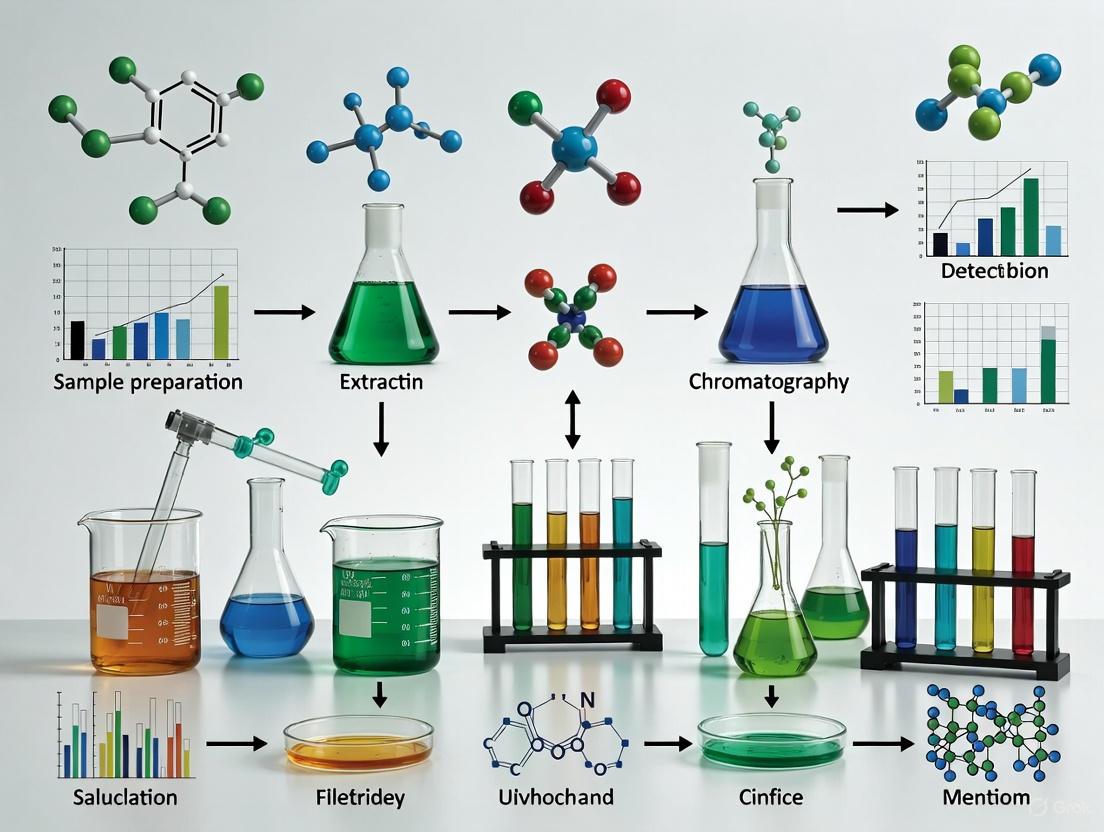
This article provides a comprehensive overview of the principles, applications, and validation of green analytical methods for food safety testing, tailored for researchers and scientists.
Green Analytical Chemistry in Food Safety: Sustainable Methods for Modern Testing Challenges
Abstract
This article provides a comprehensive overview of the principles, applications, and validation of green analytical methods for food safety testing, tailored for researchers and scientists. It explores the foundational shift from traditional, resource-intensive techniques toward sustainable practices aligned with Green Analytical Chemistry (GAC) principles. The scope covers emerging high-throughput technologies, practical methodologies for contaminant detection, strategies for optimizing and troubleshooting green methods, and rigorous frameworks for their validation and comparative assessment. By synthesizing current trends and future directions, this review serves as a critical resource for integrating environmental sustainability with analytical robustness in food safety and related biomedical fields.
Principles and Drivers of Green Analytical Chemistry in Food Safety
Green Analytical Chemistry (GAC) is an transformative discipline that integrates the principles of green chemistry into analytical methodologies, aiming to reduce the environmental and human health impacts traditionally associated with chemical analysis [1]. As global demand for safer, more sustainable food systems continues to rise, analytical sciences are increasingly expected to contribute to environmental protection and efficient resource use [2]. Traditional analytical methods, while essential for ensuring food safety and quality, often involve hazardous solvents, generate large amounts of chemical waste, and require high energy consumption [2]. GAC addresses these concerns by transforming analytical workflows through the incorporation of safer chemicals, waste minimization, and energy efficiency without compromising analytical performance [1] [2].
The foundation of GAC lies in the 12 principles of green chemistry, which provide a comprehensive framework for designing and implementing environmentally benign analytical techniques [1]. In analytical chemistry, these principles have been adapted to focus specifically on the analytical process, from sample preparation to final determination [2]. This paradigm shift prioritizes proactive rather than reactive approaches, enabling industries to detect and address inefficiencies or hazardous by-products before they escalate, thus preventing pollution at its source [1]. The adoption of GAC is particularly crucial in food safety testing, where laboratories process high sample loads routinely, amplifying the environmental footprint of traditional methods [2].
The 12 Principles of Green Analytical Chemistry
The 12 principles of Green Analytical Chemistry establish a structured approach to developing and assessing analytical methods with sustainability as a key consideration [2]. These principles, summarized in the table below, provide a comprehensive strategy for reimagining analytical chemistry to meet the demands of sustainability, safety, and environmental responsibility.
Table 1: The 12 Principles of Green Analytical Chemistry
| Principle Number | Principle Name | Core Description |
|---|---|---|
| 1 | Direct Techniques | Use direct analytical techniques to minimize extensive sample preparation [2]. |
| 2 | Reduced Sample Size | Reduce sample size and number of samples to limit material consumption and waste [2]. |
| 3 | In Situ Measurements | Favor in-situ measurements to avoid transport and contamination risks [2]. |
| 4 | Waste Minimization | Minimize waste generation at every stage of the analytical process [2]. |
| 5 | Safer Solvents/Reagents | Select safer solvents and reagents to reduce toxicity [2]. |
| 6 | Avoid Derivatization | Avoid derivatization to limit chemical use and waste [2]. |
| 7 | Energy Efficiency | Minimize energy consumption through energy-efficient instrumentation and conditions [2]. |
| 8 | Miniaturization/Reagent-Free | Develop reagent-free or miniaturized methods [2]. |
| 9 | Automation/Integration | Use automation and integration to enhance efficiency and reduce errors [2]. |
| 10 | Multi-Analyte Approach | Adopt multi-analyte or multi-parameter methods [2]. |
| 11 | Real-Time Analysis | Pursue real-time analysis for timely decision-making and waste avoidance [2]. |
| 12 | Greenness Assessment | Apply greenness metrics to quantify and improve environmental performance [2]. |
Unlike traditional analytical approaches, which prioritize precision and selectivity often at the expense of environmental considerations, GAC integrates sustainability from the early stages of method development [2]. This proactive approach supports both analytical performance and environmental responsibility, creating a new paradigm for how chemical analysis is conducted in research and industrial settings [2].
Green Analytical Workflow and Principle Integration
The following diagram illustrates how the 12 principles of GAC can be integrated into a cohesive analytical workflow, from sample collection to final analysis, promoting sustainability and efficiency.
This workflow demonstrates how GAC principles guide the transition from traditional, resource-intensive methods to modern, sustainable practices. The principles are applied throughout the analytical process to minimize environmental impact while maintaining high-quality results [2].
Green Assessment Tools for Analytical Methods
To evaluate the environmental performance of analytical procedures, several greenness assessment tools have been developed and widely adopted. These tools provide standardized metrics for quantifying and comparing the sustainability of different methods, supporting the implementation of Principle 12 (Greenness Assessment) [2].
Table 2: Key Greenness Assessment Tools in Analytical Chemistry
| Tool Name | Graphical Output | Main Focus | Output Type | Notable Features |
|---|---|---|---|---|
| GAPI | Color-coded pictogram | Entire analytical workflow | Pictogram | Easy visualization, no total score [2]. |
| Analytical Eco-Scale | Score | Reagent toxicity, energy, waste | Numerical score (100=ideal) | Simple penalty-point system [2]. |
| AGREE | Radial chart (0-1) | All 12 GAC principles | Single score + graphic | Holistic, comprehensive metric [2]. |
| AGREEprep | Pictogram + score | Sample preparation | Score + pictogram | First dedicated sample prep metric [2]. |
| BAGI | Asteroid pictogram + % score | Method applicability | Score + graphic | Evaluates practical viability [2]. |
The AGREE (Analytical GREEnness) metric, introduced in 2020, is particularly comprehensive as it integrates all 12 GAC principles into a holistic algorithm, providing a single-score evaluation supported by an intuitive graphic output [2]. The AGREE chart assigns scores on a scale from 0 to 1, delivering a normalized assessment of key parameters including solvent toxicity, energy consumption, sample preparation complexity, and analytical throughput [2]. The AGREEprep tool was later introduced to specifically evaluate the greenness of sample preparation, addressing this critical step through ten assessment criteria [2] [3].
The Blue Applicability Grade Index (BAGI) complements greenness assessment by addressing practical and operational aspects of analytical methods [2]. BAGI evaluates ten key attributes related to applicability, including analysis type, throughput, reagent availability, automation, and sample preparation, providing both a numeric score and a visual "asteroid" pictogram [2]. This tool is particularly valuable for routine food laboratories as it emphasizes practical viability and usability in real-world settings [2].
Practical Implementation in Food Safety Research
Green Sample Preparation Techniques
Sample preparation has traditionally been the most resource-intensive stage of analysis, but innovative green techniques now offer sustainable alternatives:
Solid-Phase Microextraction (SPME): A solventless technique that uses a coated fiber to extract analytes from samples. Researchers successfully applied SBSE (a related technique) to determine perfluorocarboxylic acids and fluorotelomer alcohols in water using minimal solvent volumes, achieving detection limits in the low ng/L range [4].
Microwave-Assisted Extraction (MAE): Uses microwave energy to accelerate extraction processes, significantly reducing extraction time and solvent consumption compared to traditional methods like Soxhlet extraction [5].
Stir Bar Sorptive Extraction (SBSE): A high-efficiency extraction technique where a magnetic stir bar coated with a sorbent is used to extract analytes from liquid samples. This method provides high recovery rates (55-111%) with minimal solvent use [4].
Ultrasound-Assisted Extraction (UAE): Utilizes ultrasonic energy to enhance extraction efficiency, enabling shorter processing times and reduced solvent volumes [5].
Case Study: Phthalate Analysis in Edible Oils
A recent study compared six analytical procedures for determining phthalates in edible oils using green assessment tools [3]. The methods included traditional approaches like liquid-liquid extraction (LLE) and advanced techniques such as Surface-Enhanced Raman Spectroscopy (SERS). AGREE and AGREEprep evaluation showed that the MAE-GPC-SPE method was the least green, while the SERS-based approach was the greenest, demonstrating how green metrics can guide method selection beyond analytical performance alone [3].
The Researcher's Toolkit for Green Analytical Chemistry
Table 3: Essential Reagents and Materials for Green Analytical Chemistry
| Category | Examples | Function & Green Benefits |
|---|---|---|
| Green Solvents | Water, bio-based solvents, ionic liquids, supercritical CO₂ | Replace hazardous organic solvents; reduce toxicity and environmental persistence [1] [2]. |
| Miniaturized Extraction Phases | SPME fibers, SBSE stir bars | Enable solventless or reduced-solvent extraction; minimize waste generation [4] [2]. |
| Renewable Sorbents | Bio-based sorbents, cyclodextrins | Provide selective extraction from renewable sources; biodegradable [6]. |
| Alternative Energy Sources | Microwave, ultrasound | Accelerate extraction and reduce energy consumption compared to conventional heating [5] [1]. |
Green Analytical Chemistry represents a fundamental shift in how chemical analysis is conceived and implemented, moving from traditional resource-intensive methods to sustainable practices that align with global environmental goals. The 12 principles of GAC provide a comprehensive framework for developing analytical methods that minimize environmental impact while maintaining, and often enhancing, analytical performance. For food safety researchers and drug development professionals, adopting GAC principles means embracing innovative techniques such as miniaturization, automation, and solvent-free methodologies that not only reduce ecological footprints but also improve efficiency and safety in the laboratory. The ongoing development of assessment tools like AGREE and BAGI provides robust mechanisms for quantifying and comparing the greenness of analytical methods, supporting informed decision-making and continuous improvement. As regulatory frameworks increasingly mandate sustainable practices, GAC will undoubtedly play a pivotal role in shaping the future of analytical chemistry and its contributions to a more sustainable world.
The convergence of escalating environmental degradation and pressing economic challenges has rendered the transformation towards sustainability an urgent imperative within global food systems [7]. This necessity is particularly acute in the field of food safety testing, where traditional analytical methods often rely on hazardous chemicals and energy-intensive procedures, contributing to environmental pollution and increased operational costs [8]. The current global focus on sustainability and environmental protection makes the development of green analytical methods both timely and essential for aligning scientific practice with planetary health [8]. This whitepaper examines the critical environmental and economic drivers compelling this transition and delineates the integration of green analytical methodologies within food safety research frameworks, providing researchers and drug development professionals with technical guidance for implementation.
Environmental Drivers
Climate Change and Environmental Degradation
Food systems are at the center of a brewing storm consisting of a rapidly changing climate, rising hunger and malnutrition, and significant social inequities [7]. The operationalization of food systems contributes significantly to environmental degradation and climate change through multiple pathways, including biodiversity loss, deforestation, and nutrient runoff into waterways [7]. Demand for animal-source foods is increasing, particularly in emerging economies, which exacerbates these environmental risks and introduces additional animal welfare concerns [7]. These systemic pressures necessitate a fundamental rethinking of analytical approaches across the food production and safety spectrum.
Resource Depletion and Pollution
Traditional analytical techniques in food safety and environmental monitoring have historically depended on reagents and processes that generate substantial hazardous waste. The development of green analytical methods focuses specifically on minimizing hazardous chemicals, reducing waste, and offering efficient, cost-effective analysis in food and environmental sectors [8]. The persistence of pollutants and their detection in various ecosystems creates a self-reinforcing cycle of environmental damage that green methods aim to disrupt through sustainable analytical practices.
Table 1: Environmental Impact Drivers and Green Analytical Solutions
| Environmental Driver | Impact on Food Systems | Green Analytical Solution |
|---|---|---|
| Climate Change | Contributes to and is exacerbated by food production systems; affects crop yields and pathogen prevalence [7]. | Methods with lower energy consumption (e.g., room-temperature extractions). |
| Chemical Pollution | Traditional methods use hazardous solvents, leading to soil and water contamination [8]. | Solvent-free techniques or use of benign alternatives (e.g., NADES). |
| Resource Depletion | Energy- and resource-intensive procedures deplete finite materials [8]. | Miniaturized methods and reusable materials (e.g., gel-based membranes). |
| Waste Generation | Single-use plastics and chemical waste from labs [8]. | Waste minimization strategies and biodegradable materials. |
Economic Drivers
Operational Cost Pressures
The economic imperative for sustainable practices is increasingly aligned with financial viability in food safety testing. Traditional analytical techniques often rely on hazardous chemicals and energy-intensive procedures, contributing not only to environmental degradation but also to increased operational costs [8]. These cost pressures manifest through rising expenses for chemical procurement, waste disposal, and energy consumption, creating a compelling business case for adopting greener methodologies that reduce these financial burdens through more efficient resource utilization.
Research Efficiency and Funding Alignment
Beyond direct operational savings, significant economic advantages accrue from improved research efficiency and alignment with funding priorities. Green analytical methods frequently demonstrate enhanced efficiency and cost-effectiveness while maintaining scientific rigor [8]. Furthermore, the global emphasis on sustainability has shifted research funding priorities, with many grant agencies explicitly favoring projects that incorporate green chemistry principles and demonstrate reduced environmental impact, creating additional economic incentives for researchers and institutions to adopt sustainable practices.
Table 2: Economic Drivers for Adopting Green Analytical Methods
| Economic Driver | Impact on Research & Development | Green Method Advantage |
|---|---|---|
| Rising Chemical & Waste Costs | Increased operational expenses for hazardous solvent purchase and disposal [8]. | Reduced or eliminated organic solvent use; less waste generated. |
| Energy Costs | High expenses from energy-intensive equipment and procedures [8]. | Methods operating at ambient temperature or with shorter run times. |
| Funding Availability | Growing allocation of research funds to sustainable and environmentally friendly projects [8]. | Inherent alignment with grant criteria focusing on green chemistry. |
| Cost of Non-Compliance | Potential fines and reputational damage from environmental regulations. | Proactive adherence to evolving environmental standards for labs. |
Green Analytical Methods in Food Safety Research
Core Principles and Methodologies
Green analytical methods represent a paradigm shift in food safety testing, emphasizing the design of analytical procedures that minimize environmental impact while maintaining analytical performance. These methodologies are underpinned by several core approaches: (1) replacement of hazardous solvents with benign alternatives, (2) reduction of reagent consumption through miniaturization, (3) integration of analytical steps to reduce energy and material use, and (4) design for waste minimization and degradation [8]. These principles align with the broader definition of sustainable food systems as those that enable food safety and nutrition for current and future generations in accordance with the three dimensions (economic, social, and environmental) of sustainable development [7].
Key Technical Approaches
Sustainable Sample Preparation
Advanced extraction and preparation techniques form the foundation of green analytical methods for food safety. Notable approaches include:
NADES-assisted Dispersive Liquid-Liquid Microextraction: The use of Natural Deep Eutectic Solvents (NADES) represents a significant advancement in green sample preparation. These solvents are composed of natural primary metabolites, are biodegradable, of low toxicity, and often inexpensive [8]. The methodology involves using NADES as the extraction solvent in a dispersive liquid-liquid microextraction format, often with solidification of floating organic drops for facile phase separation, enabling efficient extraction of analytes without hazardous solvents.
Biodegradable Membrane-Supported Headspace Single-Drop Microextraction: This technique utilizes eco-friendly membrane materials to support microextraction processes, eliminating plastic waste and reducing solvent volumes to microliter levels. The test kit approach enables formalin-visualized detection of contaminants while minimizing environmental impact from single-use plastics [8].
Eco-friendly Instrumentation and Detection
Advances in detection methodologies have enabled substantial reductions in the environmental footprint of food safety analysis:
Green-Synthesized Nanoparticle-Enhanced Electrochemical Sensors: Utilizing nanoparticles synthesized through green chemistry approaches (e.g., plant extracts, microorganisms) for sensitive detection of heavy metals like Pb and Cd ions provides a sustainable alternative to traditional atomic spectroscopy methods that often require significant energy input and generate hazardous waste [8].
Biogenic Metal Nanoparticles-Based Visual Sensors: Exploiting the unique optical properties of nanoparticles synthesized through biological routes for the visual detection of environmental pollutants enables rapid, on-site screening without the need for sophisticated instrumentation or extensive energy consumption [8].
Deep Learning-Enhanced Electrophoresis Methods: The integration of artificial intelligence with separation techniques allows for rapid freshness monitoring in food products with reduced reagent consumption and analysis time, demonstrating how digital technologies can enhance the sustainability of conventional analytical methods [8].
Experimental Protocols
NADES-Assisted Dispersive Liquid-Liquid Microextraction with Solidification of Floating Organic Drop
Purpose: This protocol describes the green determination of biopesticides in environmental waters using a natural deep eutectic solvent (NADES), eliminating traditional hazardous organic solvents [8].
Materials and Reagents:
- NADES Solvent: Prepare a natural deep eutectic solvent by mixing hydrogen bond donor (e.g., menthol) and hydrogen bond acceptor (e.g., thymol) components at a specific molar ratio (e.g., 1:2) under gentle heating (60-70°C) until a clear liquid forms [8].
- Aqueous Sample: Environmental water samples (river, lake, or tap water) filtered through 0.45 μm membrane filters.
- Standard Solutions: Analytical standards of target biopesticides prepared in appropriate solvents.
- Centrifuge Tubes: 15-mL conical centrifuge tubes.
- Centrifuge: Capable of achieving 4000 rpm.
- Analytical Instrumentation: HPLC-UV or HPLC-MS system for final analysis.
Procedure:
- Sample Preparation: Transfer 10 mL of filtered water sample into a 15-mL centrifuge tube.
- NADES Addition: Add a precisely measured volume (μL range) of the prepared NADES to the sample.
- Dispersion: Rapidly inject a disperser solvent (if required) or utilize vortex mixing to form a cloudy solution, ensuring complete dispersion of the NADES.
- Centrifugation: Centrifuge the mixture at 4000 rpm for 5 minutes to separate the phases.
- Solidification and Separation: Place the centrifuge tube in an ice bath for 5 minutes to solidify the floating NADES phase. Carefully remove the solidified solvent with a spatula.
- Dissolution and Analysis: Thaw the NADES and dissolve in a small volume of green solvent (e.g., ethanol) compatible with the HPLC system. Inject an aliquot for analysis [8].
Gel-Based Electromembrane Extraction
Purpose: This next-generation green preconcentration technique utilizes gel-based membranes for the extraction of ionic analytes, significantly reducing organic solvent consumption compared to traditional supported liquid membrane methods [8].
Materials and Reagents:
- Gel Membrane: Prepare a hydrogel membrane using agarose or polyacrylamide, potentially incorporating green nanoparticles for enhanced extraction efficiency.
- Electromembrane Extraction Apparatus: Custom or commercial EME setup with platinum electrodes and power supply.
- Donor and Acceptor Solutions: Aqueous donor solution containing analytes and appropriate acceptor solution (typically acidic or basic depending on analyte properties).
- DC Power Supply: Capable of providing 0-100 V DC voltage.
Procedure:
- Membrane Preparation: Cast the gel membrane to appropriate thickness (1-3 mm) and mount between donor and acceptor compartments.
- System Assembly: Fill the donor compartment with sample solution and the acceptor compartment with the appropriate receiving phase.
- Voltage Application: Apply a optimized DC voltage (typically 10-50 V) across the membrane for a specified extraction time (10-30 minutes).
- Analysis: Collect the acceptor solution and analyze using appropriate chromatographic or spectroscopic methods [8].
Table 3: Research Reagent Solutions for Green Analytical Methods
| Reagent/Material | Function | Traditional Hazardous Alternative |
|---|---|---|
| Natural Deep Eutectic Solvents (NADES) | Green extraction medium for sample preparation [8]. | Chlorinated solvents (dichloromethane, chloroform). |
| Agarose/Polyacrylamide Gels | Sustainable matrix for electromembrane extraction [8]. | Polypropylene membranes with organic solvents. |
| Biogenic Metal Nanoparticles | Recognition elements for visual sensors; green synthesis [8]. | Chemically synthesized nanomaterials with toxic precursors. |
| Biodegradable Membranes | Sustainable support for microextraction techniques [8]. | Conventional plastic-based membranes. |
Data Analysis and Sustainability Assessment
Statistical Analysis for Green Method Validation
Appropriate data collection and reliable procedures are fundamental for validating green analytical methods [9]. Microbial data in food safety often follows a lognormal distribution, requiring specific statistical approaches [9]. Method validation must include:
- Descriptive Statistics: Calculation of mean, standard deviation, and confidence intervals for accuracy and precision assessment.
- Inferential Statistics: Comparison with established reference methods using t-tests or ANOVA with comprehensive statistical analysis to validate advantages and performance [8] [9].
- Correlation Analysis: Evaluation of the relationship between analyte concentrations determined by the green method and the reference method.
- Detection and Quantification Limits: Determination through established statistical methods based on standard deviation of blank and slope of the calibration curve [9].
Greenness Assessment Tools
A critical requirement for green analytical methods is the formal assessment of environmental impact using recognized tools [8]. Key assessment methodologies include:
- AGREEprep: A comprehensive software-based tool specifically designed for assessing the greenness of sample preparation methods, evaluating multiple environmental and safety parameters [8].
- Complementary Assessment Tools: Application of at least two different greenness assessment tools is mandatory for robust evaluation, potentially including NEMI, HPLC-EAT, or GAPI, to provide a comprehensive sustainability profile [8].
The transformation toward sustainable food systems through the adoption of green analytical methods represents both an urgent necessity and a profound opportunity for food safety researchers. The environmental drivers—climate change, resource depletion, and pollution—combined with compelling economic pressures around operational costs and research efficiency, create an undeniable case for change. The technical frameworks and experimental protocols outlined provide a actionable pathway for implementation, emphasizing solvent replacement, waste reduction, and comprehensive greenness assessment. As the field advances, the integration of these sustainable methodologies will be essential for ensuring food safety and security for current and future generations while respecting planetary boundaries and economic realities.
The increasing global demand for safer and more sustainable food systems has placed greater responsibility on analytical laboratories to minimize their environmental impact. Green Analytical Chemistry (GAC) has emerged as a fundamental discipline that aims to reduce the environmental footprint of analytical methods without compromising their performance [2]. This is particularly crucial in food safety testing, where routine analyses can consume significant amounts of hazardous solvents, generate substantial chemical waste, and require high energy consumption [2]. The principles of GAC provide a structured framework for developing more sustainable methods by promoting safer chemicals, waste minimization, reduced energy consumption, and improved overall efficiency [2].
The implementation of GAC principles aligns with broader initiatives in the food industry and regulatory sectors. For instance, the U.S. Food and Drug Administration (FDA) has recently overhauled its approach to food safety through the Human Foods Program (HFP), emphasizing a "risk-informed approach" to reviewing new science about chemicals in the food supply [10]. Similarly, international standards such as ISO 14001 and ISO 22000 increasingly recognize the importance of environmental considerations alongside traditional food safety metrics [2]. Within this context, reliable tools to assess and quantify the environmental performance of analytical methods have become essential for researchers, method developers, and regulatory bodies.
This technical guide focuses on three cornerstone greenness assessment tools—AGREE, GAPI, and Analytical Eco-Scale—that enable scientists to evaluate, compare, and optimize the environmental sustainability of their analytical methods, particularly within food safety applications.
The 12 Principles of Green Analytical Chemistry
The development of greenness assessment metrics is grounded in the 12 principles of Green Analytical Chemistry, which provide a comprehensive framework for evaluating the environmental impact of analytical methods [2]. These principles encompass direct analysis techniques, minimal sample size, in-situ measurements, waste minimization, safer solvents and reagents, derivatization avoidance, energy efficiency, miniaturization, automation, multi-analyte approaches, real-time analysis, and the application of greenness metrics themselves [2]. The most advanced assessment tools, particularly AGREE, systematically incorporate all these principles into their evaluation frameworks.
The Evolution of Assessment Metrics
The landscape of greenness assessment has evolved significantly from simple checklist approaches to sophisticated, software-based tools that provide both quantitative scores and visual representations. Early tools included the National Environmental Methods Index (NEMI) and Chemical Hazard Evaluation for Management Strategies [3]. The field has since progressed to more complex and quantitative tools that often include free software and consider the entire analytical process from sample acquisition to final measurement [3]. The current generation of tools, including the Analytical Eco-Scale, GAPI, and AGREE, offer varying approaches to sustainability assessment, each with distinct advantages and limitations that make them suitable for different applications in food safety research [11] [2] [3].
Detailed Tool Analysis
Analytical Eco-Scale
The Analytical Eco-Scale is a semi-quantitative assessment tool that employs a penalty-point system to evaluate the environmental performance of analytical methods [2]. This approach calculates a final score based on the deviation from an ideal green method, with considerations for solvent toxicity, energy consumption, waste generation, and occupational hazards [2]. Its straightforward design makes it particularly accessible for routine food analysis laboratories.
Scoring Methodology and Interpretation
The Analytical Eco-Scale assigns penalty points for each parameter that deviates from ideal green conditions, with the total score calculated by subtracting these penalties from a baseline of 100 points. Methods are generally classified as follows:
- Excellent green: Scores ≥ 75 [12]
- Acceptable green: Scores between 50-74 [12]
- Inadequately green: Scores < 50 [12]
A recent application in the analysis of preservatives in food matrices demonstrated the utility of this tool, where a method for simultaneously determining sodium benzoate and potassium sorbate achieved a high analytical eco-scale score of 92, confirming its excellent environmental performance [13].
Experimental Protocol for Application
- Identify all components of the analytical method, including reagents, solvents, sample amounts, and energy requirements
- Consult the penalty point table for each component based on its environmental impact and hazardous properties
- Calculate penalty points for each parameter that deviates from ideal green conditions
- Subtract total penalty points from 100 to obtain the final score
- Compare the score against the classification benchmark to determine method greenness
Advantages and Limitations
The Analytical Eco-Scale provides a simple, quantitative score that facilitates quick comparison between methods. However, it does not consider the severity of hazardous pictograms when assigning penalty points to chemicals and lacks the visual impact of other metrics like GAPI and AGREE [12] [2]. Despite these limitations, it remains a valuable tool for initial environmental impact assessment of analytical procedures.
Green Analytical Procedure Index (GAPI)
The Green Analytical Procedure Index (GAPI) offers a visual, semi-quantitative evaluation of the environmental impact across the entire analytical workflow [2]. This tool employs a color-coded pictogram with five pentagrams representing different stages of the analytical process, with each segment colored green, yellow, or red to indicate the level of environmental friendliness [12]. This visualization enables rapid identification of specific method steps that require optimization for improved sustainability.
Assessment Framework
The GAPI tool evaluates five key areas of the analytical process [12]:
- Sample collection and preservation
- Type of method and its directness
- Sample preparation techniques
- Solvents and reagents used, including their toxicity and quantity
- Instrumentation and energy consumption
Each category contains multiple sub-criteria that are individually assessed and assigned a color code, creating a comprehensive visual profile of the method's environmental impact.
Recent Modifications: MoGAPI and Complex GAPI
To address the limitation of GAPI not providing a total numerical score, the Modified GAPI (MoGAPI) tool and accompanying software have been developed [12]. MoGAPI incorporates a scoring system that calculates a percentage based on the number of options available in each assessment item, enabling more objective comparisons between methods. For example, in sample collection, in-line collection receives the highest score (3 credits), while offline collection receives the lowest (1 credit) [12]. The total credits are summed and divided by the maximum possible credits to calculate a final percentage score.
Complex GAPI represents another evolution, extending the assessment to include pre-analytical procedures and providing a more comprehensive evaluation of greenness [2]. This expansion is particularly valuable for complex food safety analyses that require extensive sample preparation.
Experimental Protocol for Application
- Map the complete analytical workflow from sample collection to final determination
- For each of the five pentagram categories, evaluate all sub-criteria against established benchmarks
- Assign color codes (green, yellow, red) to each sub-criterion based on compliance with green principles
- Generate the final pictogram with all colored segments
- For MoGAPI application, use the dedicated software available at bit.ly/MoGAPI to calculate numerical scores [12]
Case Study Application
In a recent food safety application, GAPI was used to evaluate a smartphone-based colorimetric method for paraquat detection in fruits and vegetables [14]. The method demonstrated high analytical performance while promoting miniaturization and reduced reagent consumption, aligning with green chemistry principles as confirmed by the GAPI assessment.
AGREE Metric
The AGREE (Analytical GREEnness) metric represents a significant advancement in greenness assessment by incorporating all 12 principles of GAC into a comprehensive, software-based evaluation tool [2] [3]. Introduced in 2020, AGREE provides a unified score supported by an intuitive radial diagram that visually represents performance across all principles [2].
Assessment Framework and Output
AGREE evaluates 12 criteria corresponding to each GAC principle [3]:
- Direct analysis techniques
- Minimal sample size
- In-situ analysis
- Integrated processes
- Automation and miniaturization
- Derivatization avoidance
- Waste generation
- Multi-analyte analysis
- Energy consumption
- Renewable sources
- Toxicity of reagents
- Operator safety
The tool generates a circular pictogram with 12 colored segments, each representing one principle, with colors ranging from red (non-sustainable) to dark green (sustainable). A unified score between 0-1 appears in the center, providing a quick reference for overall method greenness [3].
AGREEprep for Sample Preparation
AGREEprep is a specialized tool derived from AGREE that focuses specifically on the sample preparation stage, which is often the most resource-intensive part of analytical methods [2] [3]. It evaluates 10 impact categories including sample preparation placement, hazardous materials, renewability and reusability, waste generation, sample size, throughput, automation, energy consumption, configuration for analysis, and operator safety [3]. This specialized focus makes it particularly valuable for food safety applications where sample matrices are often complex and require extensive preparation.
Experimental Protocol for Application
- Access the free AGREE software (available for download)
- Input data for each of the 12 GAC principles based on the analytical method parameters
- The software automatically calculates scores and generates the colored pictogram
- Interpret results with attention to both the overall score and individual segment colors
- For sample preparation assessment, use AGREEprep following a similar process with its 10 dedicated criteria
Case Study Application
In a comparative study of methods for analyzing phthalates in edible oils, AGREE demonstrated that methodologies based on Surface-enhanced Raman spectroscopy (SERS) were significantly greener than those using microwave-assisted extraction followed by gel permeation chromatography and solid-phase extraction [3]. This application highlights how AGREE can guide researchers toward more sustainable method selection in food contaminant analysis.
Comparative Analysis of Tools
Tool Comparison Table
| Tool | Graphical Output | Scoring System | Scope of Assessment | Key Features | Best Use Cases |
|---|---|---|---|---|---|
| Analytical Eco-Scale | None | Numerical score (0-100) | Entire method, penalty-based | Simple calculation, excellent for initial screening | Quick comparison of methods, initial greenness check |
| GAPI | Color-coded pentagrams | Semi-quantitative (no single score) | Entire analytical workflow | Visual identification of weak points | Method development and optimization |
| MoGAPI | Color-coded pentagrams + % score | Numerical score (%) | Entire analytical workflow | Combines GAPI visuals with quantitative scoring | Objective comparison of full analytical methods |
| AGREE | 12-segment radial diagram | Numerical score (0-1) | All 12 GAC principles | Most comprehensive, includes all GAC principles | Holistic method evaluation and validation |
| AGREEprep | 10-segment pictogram | Numerical score (0-1) | Sample preparation stage | Specialized for sample preparation | Optimization of extraction and preparation steps |
Complementary Assessment Frameworks
Blue Applicability Grade Index (BAGI)
While not strictly a greenness tool, the Blue Applicability Grade Index (BAGI) complements GAC assessments by evaluating the practical applicability of analytical methods [2] [3]. BAGI assesses ten key attributes including analysis type, throughput, reagent availability, automation, and sample preparation requirements, providing both a numeric score and a visual "asteroid" pictogram [2]. This tool is particularly valuable in food safety laboratories where method practicality is as important as environmental sustainability.
White Analytical Chemistry (WAC)
The emerging concept of White Analytical Chemistry (WAC) seeks to balance analytical performance (red), environmental sustainability (green), and practical applicability (blue) through the RGB model [2]. A "white" method harmonizes all three dimensions, representing the ideal for modern analytical laboratories. The comprehensive assessment of sodium benzoate and potassium sorbate in food matrices exemplifies this approach, where researchers evaluated greenness (AGREE: 0.79), practicality (BAGI: 80.0), and performance (RGB whiteness: 85.4) to demonstrate method excellence across all domains [13].
Assessment Workflow and Visualization
Greenness Assessment Implementation Pathway
The following diagram illustrates the systematic workflow for selecting and applying greenness assessment tools in analytical method development:
Greenness Assessment Tools Conceptual Framework
This diagram illustrates the relationship between different assessment tools and the aspects of method evaluation they address:
Essential Research Reagent Solutions
The implementation of green analytical methods requires careful selection of reagents and materials that reduce environmental impact while maintaining analytical performance. The following table outlines key solutions referenced in the literature:
| Reagent/Material | Function | Green Alternative | Application Example |
|---|---|---|---|
| Acetonitrile | HPLC mobile phase | Ethanol or ethanol-water mixtures | RP-HPLC analysis of preservatives [13] |
| Methanol | Extraction solvent | Green solvents (e.g., cyclopentyl methyl ether) | Phthalate analysis in edible oils [3] |
| Chloroform | Dispersive liquid-liquid microextraction | Dodecanol or other alcohols | Microextraction of antiviral agents [12] |
| Phosphate buffers | HPLC mobile phase component | Alternative aqueous buffers with lower toxicity | Chromatographic separation [12] |
| Traditional SPE sorbents | Sample clean-up | Magnetic nanoparticles for MSPE | Phthalate extraction [3] |
The field of greenness assessment continues to evolve with several emerging trends. First, there is growing integration of artificial intelligence and machine learning in assessment tools, as demonstrated by the FDA's development of the Warp Intelligent Learning Engine (WILEE) for post-market signal detection [10]. Second, there is increasing regulatory alignment, with tools like AGREE and GAPI being incorporated into method validation requirements for food safety testing [2]. Third, the development of unified assessment frameworks that combine greenness, practicality, and performance metrics through the White Analytical Chemistry approach represents the future of comprehensive method evaluation [13] [2].
For researchers in food safety testing, the strategic implementation of greenness assessment tools provides multiple advantages. These tools enable objective comparison of method sustainability, identification of areas for environmental improvement, demonstration of regulatory compliance, and validation of green credentials for analytical procedures. As the food industry faces increasing pressure to adopt sustainable practices, the rigorous application of AGREE, GAPI, and Analytical Eco-Scale will become essential components of method development and validation in food safety research.
By adopting these tools systematically, researchers and laboratory professionals can significantly reduce the environmental impact of food safety testing while maintaining the high standards of analytical accuracy and reliability required for protecting public health.
Regulatory Landscape and Evolving Standards for Green Methods
The global focus on sustainability and environmental protection has made the development of green analytical methods both timely and essential for food safety testing. Traditional analytical techniques often rely on hazardous chemicals and energy-intensive procedures, contributing to environmental degradation and increased operational costs [8]. Within the context of food safety research, green analytical testing technologies have garnered significant attention due to their higher detection efficiency, lower resource consumption, and environmentally friendly characteristics [15]. This evolution represents a paradigm shift from conventional approaches that typically required toxic organic solvents and generated substantial chemical waste [5]. The field has matured from conceptual principles to practical implementation, with modern methods now minimizing hazardous chemicals, reducing waste, and offering efficient, cost-effective analysis while maintaining scientific robustness and alignment with environmental priorities [8].
The foundational terminology in this field includes several key concepts. Green Chemistry, introduced by Paul Anastas and John Warner, aims to minimize negative environmental impacts of chemical processes through 12 defined principles [16]. Sustainable Chemistry, sometimes preferred over "green chemistry," focuses on improving efficiency in using natural resources to meet human needs for chemical products and services [16]. Green Analytical Chemistry, with its own 12 principles established by Gałuszka et al., specifically addresses making analytical methods more sustainable through reduced chemical use, lower energy consumption, proper waste management, and increased operator safety [16].
Core Principles and Technological Advances in Green Analytical Chemistry
Fundamental Principles
Green Analytical Chemistry operates on several core principles designed to reduce the environmental impact of analytical methods while maintaining analytical performance. The four key goals include: (i) elimination or reduction of chemical substances; (ii) minimization of energy consumption; (iii) proper management of waste; and (iv) increasing safety for the operator [16]. These principles guide the development and evaluation of all green analytical methods, creating a framework for sustainability metrics that can be quantitatively assessed.
Advanced Green Extraction and Sample Preparation Techniques
Modern green sample preparation has evolved significantly from classical extraction techniques that required toxic organic solvents. The current landscape features several innovative approaches:
Sorbent-Based Microextraction Techniques have revolutionized sample preparation by dramatically reducing solvent consumption. Solid-Phase Microextraction (SPME) integrates sampling, extraction, concentration, and sample introduction into a single solvent-free step [5]. Stir-Bar Sorptive Extraction (SBSE) provides enhanced extraction capacity and sensitivity while minimizing solvent use [5] [16]. These approaches significantly reduce the environmental footprint of sample preparation while maintaining or improving analytical performance.
Assisted Extraction Techniques utilize energy-efficient mechanisms to improve extraction efficiency. Ultrasound-Assisted Extraction (UAE) uses acoustic cavitation to enhance mass transfer, reducing extraction time and solvent consumption [5]. Microwave-Assisted Extraction (MAE) employs microwave energy to heat samples selectively, accelerating extraction processes while using smaller solvent volumes [5]. Enzyme-Assisted Extraction (EAE) utilizes biological catalysts to break down matrix components, enabling extraction under mild conditions with reduced energy input [5].
Advanced Solvent-Based Systems represent another frontier in green sample preparation. Pressurized Liquid Extraction (PLE) uses elevated temperatures and pressures to enhance extraction efficiency with less solvent [5]. Supercritical Fluid Extraction (SFE), particularly using CO₂, provides a tunable, recyclable extraction medium that eliminates organic solvent use [5]. Switchable Hydrophilicity Solvents (SHSs) can change their solubility properties on command, facilitating easy separation and solvent recovery [16].
Emerging Solvent Systems and Materials
The development of novel solvent systems has further advanced green sample preparation:
Ionic Liquids (ILs) and Deep Eutectic Solvents (DESs) offer low volatility, low flammability, and tunable properties, making them safer alternatives to conventional organic solvents [16]. Natural Deep Eutectic Solvents (NADESs) use primary metabolites found in nature, providing biodegradable and biocompatible extraction media [16]. These innovative materials align with the principles of green chemistry while maintaining analytical performance.
Table 1: Advanced Green Sample Preparation Techniques and Their Applications
| Technique Category | Specific Methods | Key Advantages | Food Safety Applications |
|---|---|---|---|
| Sorbent-Based Microextraction | SPME, SBSE, MEPS | Solvent-free or minimal solvent, high enrichment factors | Extraction of contaminants, volatiles, pesticides from food matrices |
| Assisted Extraction | UAE, MAE, EAE, PLE | Reduced extraction time and energy consumption | Extraction of bioactive compounds, contaminants from complex food samples |
| Advanced Solvent Systems | SFE, ILs, DESs, NADESs | Reduced toxicity, biodegradability, tunable properties | Extraction of lipids, pigments, contaminants from various food matrices |
| Liquid-Phase Microextraction | DLLME, HF-LPME, SDME | Minimal solvent volumes, high preconcentration factors | Preconcentration of analytes from liquid food samples |
Regulatory Framework and Standardization Initiatives
United States Regulatory Developments
The regulatory landscape for green methods in food analysis is evolving rapidly, with significant developments in both mandatory requirements and guidance documents:
The U.S. Food and Drug Administration (FDA) has undertaken several initiatives that influence the adoption of green analytical methods. In June 2025, the FDA sought input on a proposed Post-Market Assessment Prioritization Tool that would help rank chemicals in the food supply using a Multi-Criteria Decision Analysis approach [17]. This tool determines scores for each chemical based on evaluation against pre-determined criteria, considering factors specific to exposure from food, and uses a scoring method similar to FDA's Risk Ranking Model for Traceability [17]. This approach facilitates more targeted and efficient monitoring, aligning with green chemistry principles by reducing unnecessary testing.
The FDA has also updated its Food Labeling Compliance Program to reflect current regulations and enforcement priorities, including recognition of sesame as the ninth major allergen, updated guidance on gluten-free labeling, and alignment with the 2016 Nutrition Facts label revisions [17]. These updates strengthen oversight of both domestic and imported foods and provide clearer inspection protocols to ensure labels are truthful and compliant with federal regulations, creating opportunities for more efficient analytical approaches.
The agency's Human Foods Program Guidance Agenda for 2025 outlines key topics for new or updated guidance documents, including priorities for natural food color additives, new dietary ingredient notifications, and action levels for contaminants like cadmium and opiate alkaloids in food products [17]. These developments create both requirements and opportunities for implementing green analytical methods that can efficiently monitor compliance.
State-Level Regulatory Initiatives
Several states have implemented regulations that drive the adoption of greener analytical approaches:
Texas passed Senate Bill 25, requiring warning labels on foods containing over 40 additives and synthetic dyes banned or restricted in countries like Canada and the EU. Part of the federal "Make America Healthy Again" (MAHA) initiative, this law seeks to increase transparency and promote healthier eating [17]. Starting in 2027, products sold in Texas containing identified food additives or other chemical ingredients must carry a warning label, creating demand for analytical methods to verify compliance.
California has advanced legislation that could become the first state to ban particularly harmful ultra-processed foods from public school meals. Assembly Bill 1264 would phase out foods containing chemical additives like dyes, emulsifiers, and artificial flavors by 2035 [17]. The bill directs the state's environmental health agency to define ultra-processed foods and identify harmful ones to be phased out of school meals by 2032, based on links to conditions like cancer, diabetes, and obesity.
Louisiana passed nutrition reforms under the "Make America Healthy Again" initiative to overhaul food standards in schools and restaurants. The new law bans artificial dyes and preservatives in school meals starting in 2027 and requires schools to source at least 20% of their food from local farms [17]. These regulatory changes create new analytical challenges that may be addressed through green analytical methods.
International Standards and Global Harmonization
Globally, the regulatory landscape is increasingly influenced by sustainability considerations:
The European Union has actively established internationally cooperating reference centers to ensure the authenticity and integrity of the food chain (Regulation (EU) 2017/625) [16]. This approach facilitates standardization and method harmonization across member states, creating opportunities for implementing green analytical methods that meet common standards.
The United Nations Sustainable Development Goals (SDGs) provide an overarching framework that influences regulatory approaches worldwide. Several SDGs directly or indirectly affect food analysis, primarily SDG 2 (Zero Hunger), but also SDG 3 (Good Health and Well-being), SDG 6 (Clean Water and Sanitation), SDG 12 (Responsible Consumption and Production), SDG 13 (Climate Action), SDG 14 (Life Below Water), and SDG 15 (Life on Land) [16]. These international commitments create pressure for regulatory systems to adopt more sustainable analytical approaches.
Table 2: Key Regulatory Developments Influencing Green Method Adoption
| Regulatory Body | Initiative/Regulation | Key Provisions | Impact on Green Methods |
|---|---|---|---|
| U.S. FDA | Post-Market Assessment Prioritization Tool | Ranking chemicals using Multi-Criteria Decision Analysis | Promotes efficient, targeted testing reducing unnecessary analyses |
| U.S. FDA | Updated Food Labeling Compliance Program | Recognizes sesame as allergen, updated guidance | Creates need for efficient multiparameter methods |
| Texas | Senate Bill 25 (MAHA) | Warning labels for additives restricted elsewhere | Drives demand for screening methods for multiple additives |
| California | Assembly Bill 1264 | Phase-out of ultra-processed foods in schools | Requires methods to identify processed food components |
| EU | Regulation (EU) 2017/625 | Reference centers for food chain authenticity | Promotes standardized, harmonized methods across regions |
Greenness Assessment Tools and Method Validation
Standardized Greenness Assessment Protocols
The evaluation of method environmental impact has evolved from qualitative assessments to standardized quantitative tools:
The AGREEprep assessment tool provides a comprehensive framework for evaluating the greenness of sample preparation methods [8]. This tool considers multiple criteria including energy consumption, waste generation, reagent toxicity, and operator safety, generating a quantitative score that facilitates method comparison and optimization. The systematic approach provided by AGREEprep enables researchers to identify environmental hotspots in their analytical procedures and implement targeted improvements.
Leading scientific journals now frequently require comprehensive greenness assessment using multiple recognized tools to substantiate the sustainability of proposed methods [8]. This trend has accelerated the standardization and adoption of green analytical methods by ensuring that environmental claims are supported by rigorous, quantitative data. The requirement for real-world application studies rather than just standard solution analysis further ensures that green methods are practical and applicable to actual analytical challenges.
Method Comparison and Statistical Validation
For acceptance in regulatory and research contexts, green analytical methods must demonstrate performance comparable to established standard methods:
Rigorous statistical comparison with established "gold standard" methods is essential for method validation [8]. This includes comprehensive statistical analysis to validate the advantages and performance of proposed green approaches, ensuring they meet the required analytical figures of merit while providing environmental benefits. The demonstration of practical applications in food and environmental analysis using real samples rather than just standard solutions is mandatory for establishing method credibility [8].
The validation framework for green methods typically includes assessment of accuracy, precision, sensitivity, specificity, and robustness, along with greenness metrics. This comprehensive approach ensures that environmental benefits are not achieved at the expense of analytical performance, addressing a common concern regarding green analytical methods.
High-Throughput Green Analytical Technologies in Food Inspection
Chromatographic Approaches
Advanced chromatographic techniques have incorporated green principles while enhancing analytical performance:
Supercritical Fluid Chromatography (SFC) uses supercritical CO₂ as the primary mobile phase, dramatically reducing or eliminating organic solvent consumption [16]. This approach maintains separation efficiency while significantly reducing environmental impact and operator exposure to hazardous solvents. The tunability of solvent strength through pressure and temperature control provides additional flexibility for method development.
Miniaturized and Automated Chromatographic Systems reduce scale and solvent consumption while increasing throughput. These systems integrate green principles with the practical need for high-throughput analysis in food safety monitoring, enabling rapid screening of multiple contaminants with minimal resource consumption [15].
Spectroscopic and Spectrometric Methods
Modern spectroscopic approaches offer rapid, non-destructive analysis with minimal sample preparation:
X-ray Fluorescence Spectroscopy (XRF) provides elemental analysis without extensive sample preparation or chemical consumption [16]. This approach is particularly valuable for screening toxic elements in food products, enabling rapid analysis with minimal waste generation. The non-destructive nature of the technique also allows for sample preservation and further analysis.
High-Resolution Mass Spectrometry combined with minimal sample preparation enables comprehensive non-targeted analysis for contaminant identification [16]. While traditionally energy-intensive, recent advances have improved the efficiency of these systems, and their ability to identify unknown contaminants supports a preventative approach to food safety that aligns with green chemistry principles.
Microfluidic and Lab-on-a-Chip Platforms
Microfluidic technologies represent a convergence of green principles and analytical performance:
Miniaturized Analysis Systems dramatically reduce reagent consumption and waste generation while providing rapid results [15]. These systems integrate multiple analytical steps into compact formats, reducing resource consumption and space requirements while maintaining or enhancing analytical performance. The potential for point-of-use analysis also reduces transportation requirements for samples, further reducing environmental impact.
Sensor-Based Platforms utilizing biogenic metal nanoparticles and other sustainable materials enable rapid visual detection of contaminants [8]. These approaches often eliminate the need for sophisticated instrumentation, reducing energy consumption while providing practical detection capabilities suitable for field use and resource-limited settings.
Implementation Framework and Operational Protocols
Strategic Implementation Workflow
The successful implementation of green analytical methods requires a systematic approach. The following workflow visualization outlines the key stages from method selection to regulatory compliance:
Green Analytical Method Development Protocol
Developing validated green analytical methods requires careful experimental design and execution:
Phase 1: Method Scoping and Greenness Evaluation Begin with a comprehensive needs assessment defining analytical requirements, including target analytes, required sensitivity, matrix complexity, and throughput needs. Evaluate existing methods using AGREEprep or similar assessment tools to identify environmental hotspots and improvement opportunities [8]. Select candidate green techniques based on principles of substitution (replacing hazardous with benign materials), minimization (reducing resource consumption), and simplification (streamlining analytical procedures).
Phase 2: Experimental Optimization Systematically evaluate alternative solvents including Natural Deep Eutectic Solvents (NADESs), ionic liquids, and supercritical fluids for extraction efficiency, toxicity, and biodegradability [16]. Optimize energy parameters for assisted extraction techniques (UAE, MAE, PLE) to balance efficiency with power consumption [5]. Implement microextraction formats (SPME, SBSE) to minimize solvent consumption while maintaining extraction efficiency [5] [16]. Integrate automation where feasible to enhance reproducibility while optimizing resource utilization.
Phase 3: Validation and Comparison Conduct side-by-side comparison with established reference methods using statistically sufficient sample sizes (typically n≥6 for precision assessment) [8]. Perform comprehensive greenness assessment using at least two recognized tools (e.g., AGREEprep combined with life cycle assessment) to quantitatively demonstrate environmental improvements [8]. Validate method robustness through deliberate variations of key parameters and real-sample analysis to demonstrate practical applicability under realistic conditions.
The Scientist's Toolkit: Essential Research Reagents and Materials
Table 3: Key Research Reagent Solutions for Green Analytical Methods
| Reagent/Material | Chemical Composition | Function in Green Analysis | Application Examples |
|---|---|---|---|
| Natural Deep Eutectic Solvents (NADESs) | Mixtures of natural compounds (e.g., choline chloride + urea) | Green extraction media replacing organic solvents | Extraction of polyphenols, pesticides from food matrices |
| Ionic Liquids | Organic salts liquid at room temperature (e.g., imidazolium-based) | Low-volatility solvents for extraction and separation | Extraction of heavy metals, organic contaminants |
| Supercritical CO₂ | Carbon dioxide above critical point (31.1°C, 73.8 bar) | Non-toxic, tunable extraction fluid | Decaffeination, lipid extraction, essential oil isolation |
| Biogenic Nanoparticles | Metal nanoparticles synthesized using biological extracts | Green catalysts and sensing materials | Visual detection of pathogens, heavy metals |
| Molecularly Imprinted Polymers | Synthetic polymers with tailored recognition sites | Selective extraction without biological reagents | Solid-phase extraction of specific contaminants |
| Enzyme Preparations | Biological catalysts (e.g., cellulase, pectinase) | Matrix digestion and component release | Cell wall breakdown for compound extraction |
| Switchable Hydrophilicity Solvents | Solvents with CO₂-tunable solubility | Energy-efficient solvent recovery | Lipid extraction with easy solvent recycling |
Future Trends and Research Directions
Emerging Technological Innovations
The field of green analytical methods continues to evolve with several promising developments:
The integration of omics technologies (genomics, proteomics, metabolomics, isotopolomics, and metallomics) with green principles enables comprehensive food profiling while maintaining sustainability goals [16]. These non-targeted approaches initially require sophisticated instrumentation but can lead to targeted methods for specific markers, ultimately reducing analytical effort and enhancing sustainability [16]. The food profiling or panomics approach combines multiple omics methods for higher molecular and elemental resolution, though resource requirements necessitate careful cost-benefit analysis.
Advanced materials and nanotechnologies are creating new opportunities for green analysis. Biogenic metal nanoparticles-based visual sensors enable rapid detection of environmental pollutants with minimal resource consumption [8]. Gel-based electromembrane extraction approaches represent next-generation green preconcentration techniques that eliminate organic solvent use [8]. Biodegradable membrane-supported microextraction systems provide sustainable alternatives to conventional sample preparation materials [8].
Artificial intelligence and machine learning are transforming method development and optimization. Deep learning-enhanced electrophoresis methods enable rapid freshness monitoring in food products with improved accuracy and reduced analysis time [8]. AI-assisted method optimization can identify conditions that simultaneously maximize analytical performance while minimizing environmental impact, creating synergistic benefits.
Regulatory and Standardization Evolution
The regulatory landscape continues to adapt to technological advancements and sustainability imperatives:
The FDA's initiative to define ultraprocessed foods represents a significant development that could influence analytical requirements across the food industry [17]. In collaboration with the USDA, the FDA is examining chemicals, additives, ingredient count, and nutritional value to establish formal definitions that could guide school meals, federal nutrition programs, and food labeling [17]. This definitional clarity will drive demand for analytical methods capable of distinguishing processing levels and identifying specific additives.
The ongoing revision of dietary guidelines reflects evolving understanding of nutrition and food processing. The 2025-2030 guidelines are expected to focus more strongly on whole foods while removing ultra-processed foods from recommendations, creating analytical needs for verifying compliance and assessing food quality [17]. These changes will influence both regulatory testing and quality control throughout the food supply chain.
International harmonization of green method validation and acceptance continues to advance, facilitated by organizations such as the International Union of Pure and Applied Chemistry and standards developed through initiatives like the UN Sustainable Development Goals [16]. This convergence creates opportunities for method standardization and reduced duplication of validation efforts across jurisdictions.
The regulatory landscape and evolving standards for green methods in food safety testing reflect a fundamental transformation in analytical chemistry. The integration of sustainability principles with analytical performance requirements has progressed from theoretical concept to practical implementation, driven by regulatory initiatives, technological innovations, and assessment tools that quantitatively demonstrate environmental benefits. The future of green analytical methods will be characterized by continued technological innovation, increasingly sophisticated assessment tools, and greater regulatory acceptance as these methods demonstrate their ability to meet analytical needs while advancing sustainability goals.
The field of analytical chemistry is undergoing a fundamental transformation from a traditional linear model of "consume-dispose" to an integrated circular paradigm that prioritizes sustainability throughout the analytical workflow. This paradigm shift is particularly crucial in food safety testing, where the growing demand for reliable contaminant detection must be balanced with environmental responsibility. The linear approach, characterized by single-use consumables, solvent-intensive methods, and waste-generating processes, is increasingly unsustainable both economically and ecologically. In contrast, circular analytical chemistry embraces green principles by minimizing resource consumption, reducing waste generation, and recovering valuable materials from analytical processes. This transition is driven by the urgent need to develop analytical systems that not only protect consumer health but also preserve environmental integrity. The application of these principles to food safety testing represents a critical advancement toward sustainable food production systems that safeguard public health while minimizing their ecological footprint.
Within this context, high-throughput green analytical testing technologies (HT-GATTs) have garnered significant attention for food safety inspections due to their higher detection efficiency, lower resource consumption, and environmentally friendly attributes [15]. These technologies exemplify the circular paradigm by optimizing resource use while maintaining analytical performance. The movement toward circularity in analytical chemistry aligns with broader initiatives in the food industry to re-use residual streams and nutrients, creating closed-loop systems that reduce waste and environmental impact [18]. This whitepaper explores the theoretical foundations, practical applications, and future directions of this transformative shift, providing researchers and drug development professionals with a comprehensive framework for implementing circular principles in analytical practices, particularly within food safety testing.
Core Principles: Linear Versus Circular Paradigms in Analytical Chemistry
The transition to circular analytical chemistry requires a clear understanding of the fundamental differences between linear and circular approaches. The traditional linear model follows a straightforward path from sample collection to analysis and disposal, with little consideration for waste minimization or resource recovery. This approach typically involves single-use consumables, solvent-intensive extraction and separation methods, and limited recycling of materials. In contrast, the circular paradigm embraces a systemic approach that designs waste out of analytical processes and maintains materials at their highest utility at all times.
Table 1: Comparative Analysis of Linear versus Circular Paradigms in Analytical Chemistry
| Aspect | Linear Model | Circular Paradigm |
|---|---|---|
| Resource Management | Single-use consumables, virgin solvents | Reusable materials, recycled solvents |
| Waste Handling | End-of-pipe treatment, disposal | Waste minimization, by-product utilization |
| Method Design | Performance-focused only | Performance + environmental impact assessment |
| Energy Consumption | Energy-intensive processes | Energy-efficient technologies |
| Analytical Output | Pure data generation | Data + sustainable process evaluation |
The circular paradigm in analytical chemistry is built upon several core principles that distinguish it from traditional approaches. First, it emphasizes source reduction through the development and adoption of micro-extraction techniques, miniaturized analytical systems, and solvent-free extraction methods that fundamentally decrease the consumption of materials and chemicals. Second, it promotes resource recovery through techniques that enable the recycling and re-use of solvents, sorbents, and other analytical materials, effectively closing the loop in analytical workflows. Third, it incorporates waste valorization strategies that transform analytical by-products into valuable resources for other processes, mirroring the approaches being developed for re-using nutrients from municipal and food industry waste streams [18].
A critical aspect of the circular paradigm is the integration of green chemistry principles directly into analytical method development. This includes designing methods that use safer solvents, reduce energy consumption, and generate less hazardous waste while maintaining the rigorous performance standards required for food safety testing. The transition also requires new metrics for evaluating analytical methods that incorporate environmental impact assessments alongside traditional figures of merit such as accuracy, precision, and detection limits. These complementary principles work together to create analytical systems that support the broader transition toward circular food production systems where residual streams are viewed as resources rather than waste [18].
Analytical Techniques and Applications in Food Safety
Chromatographic Methods in Circular Food Safety Analysis
Chromatographic techniques form the backbone of modern food safety analysis, and their evolution toward circular principles represents a significant advancement in the field. Both gas chromatography (GC) and liquid chromatography (LC) have undergone substantial modifications to reduce their environmental impact while maintaining analytical performance. In food safety applications, gas chromatography excels in analyzing volatile compounds, including pesticide residues, environmental contaminants, and flavor profiles, while providing insights into nutritional composition and quality parameters [19]. The transition to circular practices in GC includes the adoption of solid phase microextraction (SPME) and headspace analysis techniques that minimize or eliminate solvent use in sample preparation [19].
Liquid chromatography, particularly high-performance liquid chromatography (HPLC), plays a crucial role in monitoring non-volatile contaminants such as pesticide residues, veterinary drug residues, and antibiotics in food products [19]. The circular approach to LC method development emphasizes solvent recycling, replacement of hazardous solvents with greener alternatives, and method miniaturization to reduce consumption. The emergence of comprehensive two-dimensional gas chromatography (GC×GC) represents another advancement, offering enhanced resolution for analyzing complex matrices like food samples while providing valuable information on compound vapor pressure and water solubility that informs environmental fate assessments [20].
The application of these chromatographic techniques within a circular framework is particularly evident in contaminant monitoring programs. For example, multiresidue methods (MRMs) have continually expanded in scope to target more analytes across diverse commodity groups, improving monitoring efficiency while reducing the analytical footprint through consolidated testing approaches [20]. This development supports the circular economy principle of doing more with less, maximizing the information obtained from each analytical procedure.
High-Throughput Green Analytical Testing Technologies
The growing demand for sustainable and efficient food inspection practices has driven the development of high-throughput green analytical testing technologies (HT-GATTs). These technologies offer higher detection efficiency with lower resource consumption, making them ideal tools for various food inspection applications [15]. HT-GATTs encompass a range of techniques including advanced chromatography, spectroscopy, and microfluidics, all designed to minimize environmental impact while maintaining or enhancing analytical performance.
The fundamental advantages of HT-GATTs align closely with circular economy principles. They typically require smaller sample volumes, reducing the consumption of reagents and solvents. They often incorporate automated and miniaturized systems that decrease energy and material requirements per analysis. Many HT-GATTs also enable rapid screening of multiple contaminants, providing comprehensive food safety assessment with reduced resource investment compared to traditional single-analyte methods. These technologies are particularly valuable for supporting the safe implementation of circular food production systems, where the potential presence of chemical, microbial, and physical hazards in re-used streams must be carefully monitored [18].
Table 2: Contaminant Concentrations in Potential Circular Resources (Examples)
| Hazard Category | Specific Hazard | Municipal Sewage Sludge | Food Industry Aerobic Biomass | Maximum Limits for Fertilizers |
|---|---|---|---|---|
| Chemical Hazards | Cadmium | Variable | Generally lower | Often exceeded by cadmium |
| Heavy Metals | Present | Lower concentrations | Established for various metals | |
| Pesticide Residues | Detected | Less prevalent | Regulated | |
| Microbial Hazards | Pathogenic Bacteria | Present | Less contaminated | - |
| Antimicrobial Resistance Genes | Identified | Lower presence | - | |
| Physical Hazards | Particulate Contaminants | Present | Variable | - |
Experimental Protocols for Circular Analytical Chemistry
Direct-Injection HPLC-MS/MS Method for Pharmaceutical Contaminants in Water
The development of direct-injection methods represents a significant advancement in circular analytical chemistry by eliminating resource-intensive sample preparation steps. The following protocol for detecting pharmaceutical contaminants in water samples exemplifies this approach [20]:
Principle: This method uses direct injection of filtered water samples into an HPLC system coupled with tandem mass spectrometry (MS-MS), bypassing traditional solid-phase extraction (SPE) steps that consume significant solvents and generate waste.
Equipment and Reagents:
- HPLC system with binary or quaternary pump, refrigerated autosampler, and column oven
- Tandem mass spectrometer with electrospray ionization (ESI) source
- Analytical column (e.g., C18, 100 × 2.1 mm, 1.7-1.8 μm particle size)
- HPLC-grade methanol and acetonitrile
- Ammonium formate or acetate solution (1 mM) for mobile phase additive
- Pharmaceutical reference standards
Procedure:
- Collect water samples and filter through 0.45-μm glass fiber filters
- Transfer filtered samples directly to autosampler vials
- Set HPLC conditions: mobile phase A (1 mM ammonium formate in water), mobile phase B (methanol or acetonitrile)
- Employ gradient elution: initial 5% B, increase to 95% B over 10-15 minutes, hold for 2-3 minutes
- Set flow rate to 0.3-0.4 mL/min and column temperature to 40°C
- Use MS-MS detection in multiple reaction monitoring (MRM) mode with optimized transitions for each pharmaceutical
- Inject 10-50 μL of sample directly without extraction or concentration
Circular Advantages: This approach demonstrates circular principles by eliminating SPE consumables (cartridges, solvents), reducing solvent consumption by 90-95% compared to extraction-based methods, minimizing waste generation, and lowering the carbon footprint associated with sample preparation and disposal.
Green Sample Preparation: Solid Phase Microextraction for Food Analysis
Solid phase microextraction (SPME) offers a solvent-free alternative to traditional extraction techniques in food safety analysis [19]. This method aligns with circular principles by eliminating hazardous solvent use and reducing waste generation.
Principle: SPME utilizes a fused silica fiber coated with a stationary phase to extract analytes from sample headspace or via direct immersion, followed by thermal desorption in the GC injector.
Equipment and Materials:
- SPME assembly holder with appropriate fiber (selection based on analyte polarity)
- Gas chromatograph with modified injector for thermal desorption
- Temperature-controlled agitation system for samples
- Sample vials with PTFE/silicone septa
Procedure:
- Place food sample in headspace vial with internal standard if required for quantification
- Condition SPME fiber according to manufacturer specifications
- Expose fiber to sample headspace or immerse directly in sample with constant agitation
- Maintain optimal temperature and extraction time (typically 15-60 minutes)
- Transfer fiber to GC injector for thermal desorption (typically 250-300°C for 1-5 minutes)
- Analyze desorbed analytes via GC-MS or GC with selective detection
Method Optimization:
- Fiber selection: PDMS for non-polar analytes, PA for polar compounds, mixed coatings for broad range
- Extraction temperature optimization balances extraction efficiency and equilibrium
- Salt addition can improve extraction efficiency for polar analytes in aqueous samples
- Agitation speed enhances mass transfer and reduces extraction time
Circular Advantages: SPME demonstrates circular principles through complete solvent elimination, reusable extraction fibers (typically 50-100 extractions per fiber), minimal waste generation, and reduced energy consumption compared to traditional extraction techniques like liquid-liquid extraction or Soxhlet extraction.
Visualization of Analytical Workflows
The transition from linear to circular analytical workflows involves fundamental restructuring of processes to minimize waste and resource consumption. The following diagrams illustrate key workflows in circular analytical chemistry.
Linear Analytical Process
Circular Analytical Process
The Scientist's Toolkit: Research Reagent Solutions
Implementing circular principles in analytical chemistry requires specific reagents and materials designed to minimize environmental impact while maintaining analytical performance. The following table details essential research reagent solutions for circular analytical chemistry in food safety testing.
Table 3: Research Reagent Solutions for Circular Analytical Chemistry
| Tool/Reagent | Function | Circular Advantage |
|---|---|---|
| SPME Fibers | Solvent-free extraction of analytes from food samples | Reusable (50-100 analyses), eliminate solvent waste |
| GC-MS Columns | High-resolution separation of volatile food contaminants | Enable comprehensive analysis with minimal solvent |
| HPLC-MS Systems | Sensitive detection of non-volatile contaminants | Support direct-injection methods, reduce sample prep |
| Green Solvents | Replacement for hazardous solvents in extraction | Biodegradable, less toxic, from renewable sources |
| Microextraction Devices | Miniaturized sample preparation formats | Reduce solvent consumption by 90-99% |
| Solvent Recycling Systems | Purification and reuse of analytical solvents | Close resource loops, reduce waste and costs |
The paradigm shift from linear to circular models in analytical chemistry represents both an ethical imperative and a practical necessity for sustainable food safety testing. This transition requires reimagining analytical processes as integrated systems where waste is minimized, resources are conserved, and materials are continuously cycled. The advancements in high-throughput green analytical testing technologies, solvent-free sample preparation techniques, and direct-injection methodologies demonstrate that rigorous analytical performance can be maintained while significantly reducing environmental impact.
For researchers and drug development professionals, embracing circular principles involves both adopting new technologies and re-evaluating existing methodologies through the lens of sustainability. This includes selecting green solvents, implementing micro-extraction techniques, designing multi-analyte methods, and establishing solvent recovery systems in laboratories. The continued development of circular analytical chemistry will play a crucial role in supporting broader sustainability initiatives, including the transition to circular food production systems that safely re-use nutrient streams while protecting consumer health [18]. As the field advances, the integration of circular principles will increasingly become a standard criterion for methodological excellence, joining traditional metrics such as accuracy, precision, and sensitivity in defining analytical quality.
Emerging Green Technologies and Their Application in Food Analysis
High-Throughput Green Analytical Testing Technologies (HT-GATTs) represent a transformative approach in modern analytical science, merging rapid detection capabilities with environmentally conscious principles. These technologies have garnered significant attention for food safety inspections due to their higher detection efficiency, lower resource consumption, and environmentally friendly characteristics, making them excellent tools for various food inspection applications [15]. The fundamental premise of HT-GATTs aligns with the broader paradigm shift in analytical chemistry toward sustainability science, which balances economic, social, and environmental considerations—the "triple bottom line" of sustainability [21].
Within the context of food safety testing, HT-GATTs address critical needs for timely and reliable detection of contaminants including microorganisms, environmental contaminants, and adulterants while minimizing environmental impact [22]. The global rapid food safety testing market, valued at $19.66 billion in 2025 and projected to reach $31.22 billion by 2030, reflects the growing importance of these technologies [23]. This growth is driven by increasing consumer awareness of foodborne illnesses, stringent government regulations, and rising demand for safe, high-quality food products, positioning HT-GATTs as essential components in the future of food safety infrastructure.
Core Principles and Methodological Framework
Defining Characteristics of HT-GATTs
HT-GATTs are characterized by several interconnected principles that distinguish them from conventional analytical approaches. The core characteristics include:
- Minimized Resource Consumption: Implementation of solvent-free or minimal-solvent methods to reduce waste generation and hazardous chemical usage [22]
- Enhanced Operational Efficiency: Automation and parallel processing capabilities that significantly increase sample throughput while reducing analysis time [21]
- Energy Optimization: Utilization of energy-efficient processes and equipment designs that lower overall carbon footprint [24]
- Miniaturization and Integration: Development of compact, portable devices that enable on-site testing and reduce sample/solvent requirements [25] [26]
A critical balance exists within HT-GATT implementations between green objectives and analytical performance. While solvent-free or minimal-solvent methods reduce waste, they can potentially compromise sensitivity and matrix tolerance if not properly optimized [22]. This necessitates careful selection of detection platforms to achieve both high-throughput capabilities and maintaining rigorous analytical standards.
Greenness Assessment Frameworks
The transition toward sustainable analytical practices requires robust metrics for evaluating environmental performance. The AGREEprep metric and other recognized greenness assessment tools have become essential for quantifying the environmental impact of analytical methods [8]. Recent evaluations of 174 standard methods from CEN, ISO, and Pharmacopoeias revealed that 67% scored below 0.2 on the AGREEprep scale (where 1 represents optimal greenness), highlighting the urgent need for updating standard methods to incorporate more sustainable approaches [21].
The distinction between sustainability and circularity is particularly relevant for HT-GATTs. While circular analytical chemistry focuses predominantly on minimizing waste and keeping materials in use, comprehensive sustainability encompasses economic stability and social well-being alongside environmental concerns [21]. This broader perspective ensures that HT-GATT implementations deliver meaningful advancements across all three dimensions of the "triple bottom line."
Key Technological Platforms in HT-GATTs
Chromatographic Techniques
Chromatography remains a cornerstone of modern analytical chemistry, with recent advancements focusing on green principles and high-throughput capabilities. Sustainable chromatography incorporates several key strategies:
- Solvent Reduction and Replacement: Utilization of water-based mobile phases, substitution of acetonitrile with more environmentally friendly alternatives, and minimized solvent consumption through method optimization
- System Miniaturization: Development of nano-LC and capillary LC systems that dramatically reduce mobile phase consumption while maintaining separation efficiency
- Stationary Phase Innovation: Creation of more efficient columns requiring shorter analysis times and less solvent usage
- Temperature-Assisted Techniques: Implementation of elevated temperature liquid chromatography to reduce mobile phase viscosity and improve separation efficiency
The integration of automation and parallel processing in chromatographic systems has significantly enhanced throughput while maintaining analytical performance. Modern systems can process dozens to hundreds of samples sequentially with minimal operator intervention, representing a substantial advancement over traditional chromatographic approaches [27].
Spectroscopic Methods
Spectroscopic techniques offer inherent advantages for green analytical chemistry due to their minimal sample preparation requirements and reduced reagent consumption. Key developments include:
- Portable Spectrometers: Field-deployable instruments that enable on-site analysis, eliminating transportation requirements and providing immediate results
- Hyperspectral Imaging: Non-destructive technique capable of rapid screening for multiple contaminants simultaneously across large sample sets
- Process Analytical Technology (PAT): Implementation of inline spectroscopic monitoring for real-time quality assessment during food production
- Multiplexed Assays: Development of simultaneous multi-analyte detection platforms that dramatically increase analytical throughput
These spectroscopic approaches align with green chemistry principles by minimizing waste generation and reducing overall energy consumption compared to traditional wet chemistry methods.
Microfluidic and Lab-on-a-Chip Systems
Microfluidic technologies represent perhaps the most significant advancement in HT-GATTs, offering unprecedented integration and miniaturization capabilities. The CIPAM (Centrifugal Integrated Purification-CRISPR Array for Meat Adulteration) system exemplifies this approach, combining microneedles for DNA extraction with recombinase-aided amplification (RAA) and CRISPR/Cas12a detection integrated into a centrifugal microfluidic chip [25]. This system achieves complete analysis within 30 minutes with detection limits of 0.1% (w/w) for species identification in adulterated meat products.
Microfluidic platforms provide numerous environmental benefits, including:
- Reagent Volume Reduction: Typical consumption in microliter range versus milliliters in conventional systems
- Energy Efficiency: Lower power requirements for thermal cycling and fluid manipulation
- Minimal Waste Generation: Significantly reduced disposal of plasticware and hazardous chemicals
- Portability: Enabling field-based testing that eliminates transportation-related environmental impacts
The integration of multiple analytical steps within compact microfluidic devices represents a paradigm shift toward truly sustainable analytical platforms that maintain high performance while minimizing environmental footprint.
Non-Thermal Processing and Detection Methods
Emerging non-thermal technologies offer sustainable alternatives to energy-intensive thermal processes. Pulsed Electric Field (PEF) technology exemplifies this approach, achieving pasteurization through electroporation of microbial cells rather than thermal degradation. Recent studies demonstrate that PEF pasteurization with heat recovery can reduce electricity consumption by up to 20%, fuel gas usage by over 60%, greenhouse gas emissions by approximately 30%, and water consumption by 25% compared to conventional High-Temperature Short-Time (HTST) pasteurization [24].
Other innovative non-thermal approaches include:
- Cold Plasma Technology: Utilizing ionized gas for microbial decontamination without chemical residues or significant thermal input [28]
- Essential Oil Applications: Harnessing plant-derived antimicrobial compounds as green alternatives to synthetic fungicides [28]
- Magnetic Nanoparticles: Employing functionalized magnetic materials for selective extraction and pre-concentration of contaminants [28]
These technologies demonstrate the potential for maintaining or enhancing food safety while significantly reducing the environmental impact of processing and analysis.
Experimental Protocols and Implementation
Protocol: Centrifugal Integrated Purification-CRISPR Array
The CIPAM system provides an exemplary protocol for high-throughput, green analysis of meat adulteration [25]:
Sample Preparation:
- Homogenize meat samples using a disposable blender container to prevent cross-contamination
- Prepare meat mixtures by mixing homogenized pure meats in predetermined ratios (e.g., 0.1-10% adulteration)
DNA Extraction:
- Perform acupuncture-like treatment using twelve tungsten microneedles to collect tissue samples
- Transfer microneedles to a tube containing Chelex-100 resin and ultrapure water
- Incubate at 56°C for 30 minutes, followed by 100°C for 10 minutes
- Centrifuge at 12,000 rpm for 1 minute and collect supernatant containing purified DNA
On-Chip Analysis:
- Load DNA extract into the sample chamber of the centrifugal microfluidic chip
- Program the centrifugal platform to execute automated reagent dispensing and mixing
- Conduct RAA-CRISPR/Cas12a reaction at 39°C for 20 minutes
- Detect fluorescence signals using a portable detector with data acquisition software
Validation:
- Compare results with standard reference methods (e.g., real-time PCR)
- Perform statistical analysis to verify accuracy and reliability
This integrated approach reduces analysis time to 30 minutes compared to several hours for conventional methods, while simultaneously reducing reagent consumption and waste generation.
Protocol: Pulsed Electric Field Pasteurization with Heat Recovery
A comprehensive protocol for sustainable juice pasteurization using PEF technology [24]:
System Configuration:
- Install two consecutive PEF chamber modules (PEF1 and PEF2) with intermediate cooling
- Integrate heat exchangers for thermal energy recovery (target efficiency: 35%)
- Set preheating temperature to 55°C for optimal energy efficiency
Process Parameters:
- Maintain electric field strength at 20 kV/cm
- Adjust pulse repetition rate to achieve optimal specific energy input (WPEF,opt)
- Set flow rate according to production requirements (lab scale: 20 L/h; industrial scale: 2000 L/h)
Operation:
- Preheat raw juice to target temperature (35°C, 45°C, or 55°C) using recovered thermal energy
- Subject juice to PEF treatment in two consecutive chambers with intermediate cooling
- Pass treated juice through heat exchanger to recover thermal energy for preheating incoming product
- Package pasteurized juice aseptically
Validation:
- Enumerate microbial survivors to verify 5 Log-reduction in target microorganisms
- Conduct sensory analysis and shelf-life evaluation
- Compare with conventional HTST pasteurization (90°C for 15 seconds)
This configuration achieves significant reductions in energy consumption and environmental impact while maintaining product quality and safety.
Quantitative Performance Metrics
Table 1: Comparative Analysis of Pasteurization Technologies
| Parameter | HTST Pasteurization | PEF Pasteurization (Optimal Configuration) | Relative Improvement |
|---|---|---|---|
| Electricity Consumption | Baseline | Up to 20% reduction | +20% |
| Fuel Gas Usage | Baseline | Over 60% reduction | +60% |
| Greenhouse Gas Emissions | Baseline | ~30% reduction | +30% |
| Water Consumption | Baseline | 25% reduction | +25% |
| Preheating Temperature | 90°C | 55°C | ~39% reduction |
| Processing Time | 15 seconds | <1 second | >93% reduction |
Table 2: Analytical Performance of Microfluidic HT-GATT Platforms
| Parameter | Conventional PCR | CIPAM System | Advantage |
|---|---|---|---|
| Analysis Time | 2-4 hours | 30 minutes | 75-87% reduction |
| Sample Volume | 50-100 µL | 5-10 µL | 80-90% reduction |
| Reagent Consumption | High | Minimal | Significant reduction |
| Detection Limit | 0.1-1% | 0.1% | Equivalent performance |
| Multiplexing Capacity | Limited | High | Superior |
| Portability | Laboratory-bound | Field-deployable | Enhanced applicability |
Table 3: Greenness Assessment of Analytical Techniques Using AGREEprep Metric
| Technique | Traditional Implementation | HT-GATT Implementation | Greenness Score Improvement |
|---|---|---|---|
| Liquid Chromatography | 0.3-0.4 | 0.6-0.8 | 70-100% |
| Meat Speciation Analysis | 0.2-0.3 | 0.7-0.9 | 133-200% |
| Mycotoxin Detection | 0.3-0.5 | 0.6-0.8 | 60-100% |
| Pathogen Screening | 0.4-0.5 | 0.7-0.9 | 40-125% |
Workflow and System Architecture
The implementation of HT-GATTs follows logical operational sequences that integrate multiple green principles. The following diagram illustrates the conceptual workflow for developing and implementing these technologies:
HT-GATT Development Workflow
The operational workflow for specific HT-GATT applications can be visualized through the following microfluidic analysis diagram:
Microfluidic HT-GATT Operational Flow
Essential Research Reagents and Materials
Table 4: Research Reagent Solutions for HT-GATT Development
| Reagent/Material | Function | Green Attributes | Application Examples |
|---|---|---|---|
| Tungsten Microneedles | Minimally invasive tissue sampling for DNA extraction | Reduced sample requirement; reusable | Meat speciation analysis [25] |
| Chelex-100 Resin | DNA purification without organic solvents | Eliminates phenol-chloroform extraction; reduced toxicity | Nucleic acid extraction in microfluidic devices [25] |
| Natural Deep Eutectic Solvents (NADES) | Green extraction media for analytes | Biodegradable; low toxicity; renewable sourcing | Mycotoxin extraction from food matrices [8] |
| Essential Oil Formulations | Natural antimicrobial agents | GRAS status; biodegradable; renewable sourcing | Fungal growth inhibition in food protection [28] |
| Metal Nanoparticles | Signal amplification and catalytic enhancement | Reusable; high efficiency at low concentrations | Visual sensors for environmental pollutants [8] |
| Magnetic Nanoparticles | Selective extraction and concentration | Recoverable and reusable; reduced solvent consumption | Preconcentration of contaminants [28] |
| CRISPR/Cas Reagents | Specific nucleic acid detection | Ultra-sensitive; minimal reagent requirements | Species identification in adulterated foods [25] |
| Biodegradable Membranes | Sustainable substrate for microextraction | Reduced plastic waste; compostable | Headspace single-drop microextraction [8] |
Current Challenges and Limitations
Despite significant advancements, HT-GATT implementation faces several substantive challenges that require addressed:
The rebound effect presents a particularly subtle challenge in green analytical chemistry, where efficiency gains may inadvertently lead to increased overall resource consumption [21]. For example, a novel low-cost microextraction method that uses minimal solvents might encourage laboratories to perform significantly more extractions than before, potentially increasing total chemical usage and waste generation despite the improved efficiency of individual analyses.
Method validation and standardization barriers also impede widespread adoption. Current regulatory frameworks often favor established traditional methods, creating inertia against implementing newer, greener alternatives. A comprehensive evaluation revealed that 67% of standard methods from major standards organizations (CEN, ISO, and Pharmacopoeias) scored below 0.2 on the AGREEprep greenness metric, highlighting the institutional resistance to updating official methods [21].
Economic considerations present additional hurdles, particularly regarding initial investment requirements. While technologies like PEF pasteurization demonstrate compelling long-term savings through reduced utility costs, their higher initial capital investment can deter implementation, especially for smaller food businesses [24]. Similar economic barriers affect the adoption of advanced instrumentation for food safety testing, where high costs potentially limit accessibility [23].
Technical performance trade-offs represent another significant challenge, particularly the balance between green objectives and analytical sensitivity. Solvent-free or minimal-solvent methods may compromise matrix tolerance and detection limits for certain applications, requiring careful optimization to maintain analytical rigor while achieving environmental benefits [22].
Future Perspectives and Emerging Trends
The future evolution of HT-GATTs will be shaped by several convergent technological trends that promise to enhance both sustainability and analytical performance:
Artificial Intelligence and Machine Learning integration represents perhaps the most significant advancement, enabling predictive analytics for food safety risk assessment and optimized resource utilization. Machine learning methods are being developed for identifying and classifying fungal species and predicting the growth of toxigenic fungi and subsequent mycotoxin production in food products [28]. These approaches allow for targeted testing rather than blanket monitoring, significantly reducing analytical resource consumption while maintaining food safety standards.
Advanced Automation and Smart Systems will further enhance throughput and efficiency while minimizing human error and intervention. Next-generation laboratory automation incorporates intelligent scheduling algorithms that optimize instrument utilization and energy consumption while maximizing sample throughput [27]. These systems also facilitate the implementation of circular economy principles within analytical laboratories by enabling more efficient resource recovery and reuse protocols.
Nanomaterial Innovations continue to expand the capabilities of green analytical methods. Biogenic metal nanoparticles-based visual sensors exemplify this trend, offering simple, rapid detection of environmental pollutants with minimal equipment requirements [8]. Similarly, gel-based electromembrane extraction technologies provide next-generation green preconcentration capabilities that dramatically reduce organic solvent consumption [8].
Circular Economy Integration represents a fundamental shift in how analytical processes are conceptualized and implemented. The emerging framework of Circular Analytical Chemistry (CAC) focuses on minimizing waste and keeping materials in use for as long as possible, creating closed-loop systems that dramatically reduce environmental impact [21]. This approach requires unprecedented collaboration across instrument manufacturers, researchers, routine laboratories, and policymakers to develop truly circular analytical workflows.
The continuing miniaturization and field-deployment of analytical systems will further transform food safety testing by enabling distributed analysis rather than centralized laboratory testing. This transition reduces transportation requirements and provides more timely results, creating more responsive and resource-efficient food safety monitoring networks [26].
High-Throughput Green Analytical Testing Technologies represent a fundamental evolution in analytical science, successfully merging the competing demands of increased productivity and reduced environmental impact. By integrating advanced technological platforms including microfluidics, green chromatography, non-thermal processing, and spectroscopic methods with core sustainability principles, HT-GATTs offer a viable pathway toward more environmentally responsible food safety assurance.
The ongoing development of these technologies will be shaped by several key factors, including the standardization of greenness assessment metrics, resolution of technical performance trade-offs, implementation of circular economy principles, and integration of artificial intelligence for predictive analytics. As these advancements mature, HT-GATTs will increasingly become the standard approach for food safety testing, delivering the dual benefits of enhanced analytical capability and reduced environmental footprint.
The successful implementation of HT-GATTs requires collaborative efforts across multiple stakeholders, including researchers, instrument manufacturers, regulatory agencies, and food producers. Through these coordinated efforts, HT-GATTs will continue to evolve, addressing current limitations while expanding their applications to meet emerging food safety challenges in an increasingly sustainability-conscious global marketplace.
The increasing global focus on sustainability has catalyzed a paradigm shift in analytical chemistry, particularly in the sample preparation stage, which has traditionally been the most resource-intensive and waste-generating part of the workflow. Green Analytical Chemistry (GAC) principles now guide the development and adoption of techniques that minimize environmental impact while maintaining, and often enhancing, analytical performance [16]. This transformation is especially critical in food safety testing, where rigorous monitoring demands frequent analysis of complex matrices. Traditional sample preparation methods often rely on large volumes of hazardous organic solvents, multi-step procedures, and energy-intensive processes, creating significant environmental and safety concerns [29] [30].
Within this context, three innovative approaches have emerged as cornerstones of sustainable sample preparation: QuEChERS (Quick, Easy, Cheap, Effective, Rugged, and Safe), Solid-Phase Microextraction (SPME), and various solvent-free techniques. These methodologies align with the core tenets of GAC by drastically reducing or eliminating solvent consumption, minimizing waste generation, and simplifying workflows [31] [32]. QuEChERS has revolutionized multiresidue analysis through its efficient partitioning and clean-up strategy. SPME offers a completely solvent-free alternative that integrates sampling, extraction, and concentration into a single step [30]. Meanwhile, techniques utilizing compressed fluids represent the cutting edge of green solvent technology [29]. This whitepaper provides an in-depth technical examination of these green sample preparation techniques, detailing their principles, applications, and protocols to support their implementation in food safety research and development.
The Principles of Green Analytical Chemistry
The foundation of modern green sample preparation is built upon the 12 Principles of Green Analytical Chemistry, which were defined to minimize the environmental footprint of analytical methods while maintaining high-quality results [16]. These principles emphasize the elimination or reduction of hazardous chemicals, miniaturization of procedures, energy efficiency, and enhanced safety for operators. The terms "Green Chemistry" and "Sustainable Chemistry," though sometimes used interchangeably, share the common goal of designing chemical products and processes that reduce or eliminate the use and generation of hazardous substances [16].
In practical terms, these principles translate to specific objectives in sample preparation: replacing toxic solvents with safer alternatives, reducing sample and reagent volumes, integrating steps to minimize handling, and decreasing overall energy consumption. The drive toward sustainability has also led to the development of standardized metrics for assessing the greenness of analytical methods, such as the AGREE Prep and Sample Preparation Metric of Sustainability (SPMS) tools, which allow for a quantitative comparison of the environmental impact of different sample preparation techniques [31].
QuEChERS: A Versatile Approach for Multiresidue Analysis
Principles and Workflow
The QuEChERS method was developed in the early 2000s as a straightforward alternative to traditional, labor-intensive extraction methods for pesticide residue analysis in food matrices [32] [33]. Its name is an acronym reflecting its core advantages: Quick, Easy, Cheap, Effective, Rugged, and Safe. The method is based on solvent extraction with acetonitrile, followed by partitioning induced by salting-out and a dispersive Solid-Phase Extraction (d-SPE) clean-up step [34] [33]. This approach has demonstrated remarkable versatility and has been successfully applied to various matrices and analytes, making it a preferred method for multiresidue studies in environmental, food, and biological analysis [34].
The fundamental workflow, as depicted in Figure 1, involves three key stages. Its flexibility allows researchers to select different solvents, salts, buffers, and d-SPE sorbents to optimize performance for specific analytes and matrices, making it a greener alternative to traditional sample preparation methods [34] [32].
Figure 1: QuEChERS Workflow. The process involves sample homogenization, extraction with an organic solvent, partitioning using salts, a dispersive-SPE cleanup, and final centrifugation before analysis.
Detailed Experimental Protocol
The following protocol is adapted for the determination of pesticide residues in fruits and vegetables, based on the original QuEChERS procedure and its subsequent modifications [32] [33].
- Sample Comminution: Homogenize a representative sample (often 1-2 kg) using a powerful chopping device. For samples with high water content, the use of dry ice during homogenization is recommended to prevent loss of volatile analytes and to aid in the comminution process [33].
- Weighing: Accurately weigh 10.0 ± 0.1 g of the homogenized sample into a 50 mL centrifuge tube.
- Extraction:
- Add an appropriate internal standard (e.g., triphenylphosphate) if required for quantification [33].
- Add 10 mL of acetonitrile to the tube.
- Cap the tube and shake vigorously for 1 minute using a vortex mixer or mechanical shaker.
- Partitioning (Salting-Out):
- Add a pre-packaged mixture of salts, typically containing 4 g of anhydrous magnesium sulfate (MgSO₄) to remove water and 1 g of sodium chloride (NaCl) to aid phase separation. For pH-sensitive analytes, a buffered salt mixture (e.g., citrate buffer) may be used to stabilize the compounds [33].
- Cap the tube and shake immediately and vigorously for 1-3 minutes to prevent the salts from clumping and to ensure proper solvent interaction.
- Centrifuge the tube at >3000 RCF for 5 minutes to achieve complete phase separation.
- Dispersive-SPE Cleanup:
- Transfer an aliquot (e.g., 1 mL) of the upper acetonitrile layer into a 2 mL d-SPE tube containing a clean-up sorbent mixture. Common sorbents include:
- 150 mg MgSO₄: For residual water removal.
- 25 mg Primary Secondary Amine (PSA): To remove fatty acids, sugars, and other polar organic acids.
- 25 mg C18: For removal of non-polar interferences like lipids and sterols.
- Shake the d-SPE tube vigorously for 30 seconds.
- Centrifuge at >3000 RCF for 2 minutes.
- Transfer an aliquot (e.g., 1 mL) of the upper acetonitrile layer into a 2 mL d-SPE tube containing a clean-up sorbent mixture. Common sorbents include:
- Analysis Preparation:
- Transfer the purified supernatant to a autosampler vial for analysis by LC-MS/MS or GC-MS.
- If necessary, the extract can be concentrated under a gentle stream of nitrogen or diluted with a compatible solvent to match the instrumental conditions.
Research Reagent Solutions for QuEChERS
Table 1: Essential reagents and materials for a standard QuEChERS procedure.
| Reagent/Material | Function in the Protocol |
|---|---|
| Acetonitrile | Primary extraction solvent; effectively extracts a wide range of pesticides while co-extracting less lipophilic matrix components compared to ethyl acetate [33]. |
| Anhydrous Magnesium Sulfate (MgSO₄) | Added after extraction to induce water removal from the organic phase via the "salting-out" effect, promoting phase separation and partitioning of analytes into the acetonitrile layer [32] [33]. |
| Sodium Chloride (NaCl) | Works synergistically with MgSO₄ to control the polarity of the extraction solvent and improve the efficiency of the salting-out process [33]. |
| Citrate Buffering Salts | Used in standardized methods (e.g., AOAC 2007.01) to stabilize pH-sensitive compounds (e.g., certain pesticides), preventing their degradation during extraction [33]. |
| Primary Secondary Amine (PSA) | A d-SPE sorbent that removes various polar matrix co-extractives, including fatty acids, organic acids, and sugars [32] [35]. |
| C18 | A non-polar d-SPE sorbent used to remove lipophilic interferences such as fats, waxes, and sterols from the sample extract [32] [35]. |
Solid-Phase Microextraction (SPME) and Solvent-Free Techniques
Principles of SPME
Solid-Phase Microextraction (SPME) is a non-exhaustive, solvent-free sample preparation technique introduced in the early 1990s by Professor Janusz Pawliszyn [30]. It integrates sampling, extraction, concentration, and sample introduction into a single step. The core principle involves the partitioning of analytes between the sample matrix and a stationary phase coated on a fused-silica fiber. The amount of analyte extracted by the fiber is proportional to its initial concentration in the sample, enabling quantitative analysis once equilibrium is established or under pre-equilibrium conditions with strict time control [30].
SPME can be operated in two main modes: direct immersion (DI-SPME), where the fiber is immersed directly into the liquid sample, and headspace (HS-SPME), where the fiber is exposed to the vapor phase above the sample. HS-SPME is particularly advantageous for complex, dirty matrices (like food samples) as it prevents fouling of the fiber by non-volatile matrix components, thereby extending the fiber's lifetime and improving robustness [30]. The technique is inherently aligned with GAC principles as it eliminates the need for organic solvents, reduces waste, and can be easily automated for high-throughput analysis.
Vacuum-Assisted HS-SPME (Vac-HSSPME)
A significant advancement in SPME technology is Vacuum-Assisted Headspace Solid-Phase Microextraction (Vac-HSSPME). This technique applies a vacuum to the headspace vessel, which lowers the boiling points of analytes and accelerates their transfer from the sample matrix to the headspace and onto the fiber coating [30]. Compared to conventional HS-SPME, Vac-HSSPME consistently demonstrates improved detection limits, higher extraction efficiency, and broader analyte coverage, particularly for less volatile and matrix-bound compounds [30]. Applications across diverse food products, including dairy, edible oils, meat, fruits, and beverages, have shown that vacuum conditions allow for operation at lower temperatures, which is beneficial for preserving the integrity of thermally labile compounds in food matrices [30].
Detailed SPME Experimental Protocol
The following protocol outlines a general HS-SPME procedure for analyzing volatile compounds in food samples, with notes on Vac-HSSPME adaptation.
- Sample Preparation:
- Prepare a homogeneous sample. For solid samples, this may involve grinding or pureeing. Weigh an appropriate amount (e.g., 1-5 g) into a headspace vial.
- Add a suitable volume of a saturated salt solution (e.g., NaCl) to increase ionic strength and improve the release of volatile compounds (salting-out effect).
- Add an internal standard if required for quantification.
- Seal the vial with a septum cap.
- Incubation:
- Place the vial in a heated agitator tray and incubate for a defined time (e.g., 5-15 minutes) with constant agitation to allow the sample to reach thermal equilibrium and facilitate the transfer of volatiles to the headspace.
- Extraction:
- For Vac-HSSPME: Attach the vial to a vacuum source and briefly evacuate the headspace before fiber exposure [30].
- Pierce the septum with the SPME needle and expose the fiber to the sample headspace for a predetermined extraction time (e.g., 10-60 minutes), while maintaining temperature and agitation.
- Desorption:
- Retract the fiber into the needle and withdraw it from the vial.
- Immediately insert the needle into the hot injection port of a Gas Chromatograph (GC).
- Expose the fiber for desorption (typically 1-5 minutes) to release the analytes onto the chromatographic column.
- Analysis:
- Analyze the desorbed analytes by GC-MS or GC with other detectors.
Direct SPME-MS and Other Solvent-Free Techniques
The greenness and speed of SPME are further enhanced by direct coupling to mass spectrometry (Direct SPME-MS), which eliminates the chromatographic separation step. This approach enables extremely rapid analysis times (as low as 10 seconds per sample) and is ideal for high-throughput screening applications [36]. The significant reduction in organic solvent consumption and energy use compared to SPME-LC/GC-MS makes it a forefront technique in green analytical chemistry [36].
Beyond SPME, other solvent-free and miniaturized techniques are gaining traction. Stir Bar Sorptive Extraction (SBSE) uses a magnetic stir bar coated with a sorbent phase (typically polydimethylsiloxane) for extraction, offering higher capacity than SPME fibers. Techniques utilizing compressed fluids, such as Supercritical Fluid Extraction (SFE) with CO₂, represent another green avenue. SFE uses non-toxic, renewable CO₂ under supercritical conditions as the extraction solvent, providing high selectivity, shorter extraction times, and easy recovery of the extract by simple depressurization [29].
Comparison of Green Sample Preparation Techniques
The following tables provide a comparative overview of the key characteristics, advantages, and limitations of QuEChERS, SPME, and related green techniques, highlighting their performance and applicability in food safety analysis.
Table 2: Comparison of Technical Characteristics and Greenness Metrics
| Technique | Solvent Consumption | Typical Sample Size | Principle of Extraction | Key Green Metrics |
|---|---|---|---|---|
| QuEChERS | Moderate (~10 mL/sample) | 1-15 g | Partitioning & d-SPE | Reduces solvent use vs. traditional LLE; minimizes steps and waste [34] [32] |
| SPME | Solvent-Free | 1-5 g | Sorption & Partitioning | Zero solvent waste; miniaturized; amenable to automation [30] [36] |
| Direct SPME-MS | Solvent-Free (or μL) | 1-5 g | Sorption & Direct Desorption | Near-zero solvent; very low energy use; ultra-fast analysis [36] |
| SFE | Low (may use co-solvents) | 1-10 g | Solvation with scCO₂ | Uses non-toxic, renewable CO₂; no toxic solvent residues [29] |
Table 3: Analytical Performance and Application Scope in Food Safety
| Technique | Best Suited Analytes | Main Advantages | Main Limitations / Challenges |
|---|---|---|---|
| QuEChERS | Multiclass, multiresidue pesticides, veterinary drugs, contaminants [34] [33] | Rugged, effective cleanup; high throughput; adaptable to many matrices [34] | Limited purification for complex matrices (e.g., spices, fats); requires optimization of sorbents [35] |
| SPME | Volatile & semi-volatile organic compounds (aromas, contaminants) [30] | Solvent-free; simple; combines extraction and concentration; protects the instrument from matrix [30] | Fiber cost and fragility; matrix effects; limited sorbent phases; equilibrium can be slow |
| Direct SPME-MS | Rapid screening of simple mixtures; volatiles & semi-volatiles [36] | Extremely fast (seconds/sample); high-throughput; minimal waste [36] | No chromatographic separation; prone to ion suppression; requires simple matrices or clean-up |
| SFE | Non-polar to moderately polar bioactives, lipids, contaminants [29] | Tunable selectivity; fast kinetics; easy extract recovery; green solvent (CO₂) [29] | High equipment cost; low efficiency for polar analytes without modifiers; limited commercial methods |
The relationship between the analytical scope and the greenness of these techniques can be visualized as a strategic map for method selection, as shown in Figure 2.
Figure 2: Greenness vs. Analytical Scope. This diagram illustrates the general trade-off where methods with a very broad analytical scope (like traditional Liquid-Liquid Extraction) tend to be less green, while greener techniques (like SPME) can be highly targeted. QuEChERS offers a pragmatic balance with a broad scope and medium-to-high greenness.
The transition to green sample preparation is no longer an aspirational goal but an active and necessary evolution within food safety laboratories. QuEChERS, SPME, and solvent-free techniques like SFE have proven that analytical excellence can be achieved while significantly reducing environmental impact. QuEChERS stands out for its effectiveness in multiresidue analysis of complex food matrices, while SPME and its advanced variants, such as Vac-HSSPME and Direct SPME-MS, push the boundaries of miniaturization, speed, and complete solvent elimination [34] [30] [36].
Future developments are poised to further enhance the sustainability and capability of these methods. Key trends include the synthesis of new, more selective SPME fiber coatings and d-SPE sorbents to improve clean-up and reduce matrix effects [30]. The integration of machine learning and in-silico modeling for the optimization of extraction parameters will minimize experimental time and resource consumption [29] [30]. Furthermore, the development and application of novel green solvents, such as Deep Eutectic Solvents (DES) and bio-based solvents, are expected to be incorporated into modified QuEChERS protocols and other extraction techniques, offering safer, biodegradable, and often more efficient alternatives [29] [37]. As the field progresses, the adoption of these green methodologies will be crucial for building more sustainable, efficient, and responsible food safety monitoring systems.
The application of High-Performance Liquid Chromatography (HPLC) in food safety testing and pharmaceutical development has long relied on solvents with significant environmental, health, and safety concerns. Acetonitrile, the most common organic modifier in reversed-phase HPLC, accounts for approximately 20% of its global production for analytical use alone and is classified as "problematic" due to its toxicity and environmental persistence [38]. Traditional analytical methods, while essential for ensuring food safety and quality, often involve hazardous solvents, generate large chemical waste volumes, and require high energy consumption, creating substantial environmental footprints for analytical laboratories [39] [2]. In response to these challenges, the principles of Green Analytical Chemistry (GAC) have emerged as a strategic framework for developing more sustainable chromatographic practices without compromising analytical performance [39].
This technical guide examines the current state of green solvent applications in conventional and micro-scale HPLC systems, with particular emphasis on their implementation within food safety testing research. The transition to sustainable separation science represents not merely an environmental consideration but a fundamental evolution in analytical method development that aligns with broader regulatory trends and certification frameworks, including ISO 14001 and ISO 22000, which increasingly emphasize environmental responsibility [39] [40]. We will explore the scientific foundations, practical implementations, and assessment methodologies that enable researchers to effectively integrate green solvents into their separation workflows while maintaining the rigorous performance standards required for food safety and pharmaceutical applications.
Green Solvent Alternatives for HPLC
Principles of Solvent Selection
The substitution of traditional solvents with greener alternatives in HPLC mobile phases requires careful consideration of multiple physicochemical parameters that influence chromatographic performance. According to the CHEM21 solvent selection guide and other industry frameworks, ideal green solvents should balance efficacy, safety, environmental sustainability, and cost [38]. Key selection criteria include toxicity to humans and aquatic life, flash point, biodegradability, manufacturing energy costs, and recyclability [41]. From a chromatographic perspective, critical parameters include elution strength, viscosity, UV cut-off, miscibility with water, and chemical compatibility with HPLC system components [38] [42].
The principles of Green Analytical Chemistry provide a structured approach for evaluating and implementing solvent substitutions. These twelve principles, first proposed by Galuszka et al., emphasize direct analytical techniques to minimize sample preparation, reduced sample size, waste minimization, safer solvents/reagents, energy efficiency, and the application of greenness metrics to quantify environmental performance [2]. When applying these principles to solvent selection, researchers must consider the entire lifecycle of the solvents, from production through disposal, while ensuring that the alternative solvents maintain the required chromatographic performance for reliable food safety testing [39] [2].
Properties and Applications of Prominent Green Solvents
Ethanol stands as one of the most widely adopted green solvents in HPLC applications, with over 135 documented applications in RP-HPLC alone [38]. As a bio-based solvent typically produced from renewable sources via fermentation of bio-waste, ethanol offers advantages including low toxicity, biodegradability, and minimal environmental impact [42]. Chromatographically, ethanol provides strong elution power similar to methanol and acetonitrile, though its higher viscosity (approximately 1.2 cP versus 0.37 cP for acetonitrile) can result in increased backpressure, particularly in higher-percentage mobile phases [38]. Approximately 30% of ethanol-based methods employ columns with reduced particle diameters without requiring column heating, while 26% utilize UV detection even at wavelengths ≤220 nm despite ethanol's relatively high UV cut-off [38]. The established use of ethanol-water mobile phases across numerous applications demonstrates its viability as a primary replacement for traditional solvents.
Acetone presents another alternative with over 20 years of documented use in HPLC, though it shares similar safety concerns regarding volatility and flammability as ethanol [38]. Its particularly high UV absorbance limits its utility in low-wavelength detection methods, but it remains valuable for applications where detection can occur at higher wavelengths or for analytes with strong chromophores [38].
Carbonate esters—including dimethyl carbonate (DMC), diethyl carbonate (DEC), and propylene carbonate (PC)—represent emerging alternatives with distinct properties. DMC exhibits low toxicity and is rapidly biodegradable, while PC offers high polarity (dipole moment ≈ 4.9 Debye) that improves water miscibility and increases elution power [41]. These solvents are only partially water-miscible, typically requiring co-solvents such as methanol or acetonitrile to maintain single-phase blends throughout chromatographic runs [41]. In reversed-phase HPLC, these carbonate esters demonstrate varying elution strengths, with propylene carbonate often providing stronger elution that can shorten analysis times. In HILIC applications, replacing acetonitrile with carbonate esters significantly increases viscosity (PC ~2.5 cP versus 0.37 cP for ACN), resulting in elevated backpressure and observable selectivity changes [41].
Other bio-based solvents including glycerol, ethyl lactate, Cyrene (dihydrolevoglucosenone), and Natural Deep Eutectic Solvents (NADES) have shown potential though face limitations in UV transparency, viscosity, and commercial availability in HPLC-grade quality [38]. Supercritical CO₂ represents another green option, particularly in supercritical fluid chromatography, offering advantages as a non-flammable, easily recycled solvent, though it requires specialized instrumentation [42].
Table 1: Comparison of Key Properties of Traditional and Green HPLC Solvents
| Solvent | CHEM21 Category | UV Cut-off (nm) | Viscosity (cP) | Elution Strength (RPLC) | Water Miscibility | Key Advantages | Key Limitations |
|---|---|---|---|---|---|---|---|
| Acetonitrile | Problematic | 190 | 0.37 | Medium | Complete | Low viscosity, low UV cut-off | Toxic, environmental persistence |
| Methanol | Problematic | 205 | 0.55 | Medium | Complete | Low viscosity, widely available | Toxic, flammable |
| Ethanol | Recommended | 210 | 1.20 | Medium-High | Complete | Bio-based, low toxicity | High viscosity, high UV cut-off |
| Acetone | Hazardous | 330 | 0.32 | Medium | Complete | Low viscosity | High UV cut-off, flammable |
| Dimethyl Carbonate | Recommended | 254 | 0.63 | Low-Medium | Partial | Low toxicity, biodegradable | Partial water miscibility |
| Propylene Carbonate | Recommended | 240 | 2.53 | High | Partial | High elution strength | High viscosity, partial water miscibility |
| Water | Recommended | <190 | 1.00 | Very Low | Complete | Non-toxic | Weak elution strength |
Methodological Considerations for Green Solvent Implementation
Successfully implementing green solvents requires addressing several methodological challenges. The higher viscosity of many green solvents necessitates adjustments to system parameters, including potentially increased operating temperatures to reduce viscosity or operation at lower flow rates to maintain acceptable backpressure within system limits [38] [42]. The higher UV cut-off of solvents like ethanol (210 nm) and carbonate esters (240-254 nm) can limit method sensitivity for analytes requiring low-wavelength detection, necessitating strategies such as selection of higher detection wavelengths when possible, instrument parameter optimization, or implementation of alternative detection techniques [41].
For partially water-miscible solvents like carbonate esters, ternary phase diagrams provide essential tools for identifying single-phase regions when combined with water and a co-solvent such as methanol or acetonitrile [41]. These diagrams help prevent phase separation during method execution, which can cause system damage and unreliable results. Additives such as tetrabutylammonium perchlorate can further modify stationary-phase solvation layers and retention mechanisms, providing additional selectivity control while maintaining mobile phase stability [41].
Table 2: Green Solvent Applications by Chromatographic Mode
| Chromatographic Mode | Recommended Green Solvents | Optimum Percentage Range | Key Considerations | Compatible Stationary Phases |
|---|---|---|---|---|
| Reversed-Phase HPLC | Ethanol, Ethanol-Water | 5-80% | Viscosity management at high percentages | C18, C8, phenyl, polar-embedded |
| Reversed-Phase HPLC | Acetone-Water | 10-60% | High UV cut-off limits detection | C18, C8 |
| Reversed-Phase HPLC | Carbonate ester-Alcohol-Water | 5-40% | Requires co-solvent for miscibility | C18, C8, phenyl |
| HILIC | Carbonate ester-Water with salts | 20-70% | High viscosity increases backpressure | Silica, amino, cyano |
| Normal Phase | Carbonate ester-Alcohol | 1-20% | Acts as strong modifier | Silica, amino, diol |
| Superheated Water Chromatography | Water only | 100% | Requires temperature control | Specialized thermally stable C18 |
Micro-HPLC and Miniaturization Strategies
Principles and Advantages of Microflow Separation Systems
Microflow liquid chromatography (micro-LC) represents a significant advancement in sustainable separation science, offering substantial reductions in solvent consumption and waste generation compared to conventional HPLC systems. While conventional HPLC columns (e.g., 4.6 mm ID) operating at flow rates of 1 mL/min can generate approximately 1.5 L of waste daily, microflow systems utilizing 40 μL/min flow rates reduce solvent consumption by more than a factor of 20 while maintaining analytical performance [43]. This miniaturization approach directly supports multiple principles of Green Analytical Chemistry, including waste minimization, reduced sample size, and improved energy efficiency through shorter analysis times [39] [2].
The fundamental principle underlying micro-LC performance advantages relates to the van Deemter equation, which describes the relationship between linear velocity and theoretical plate height. Ultrahigh-pressure liquid chromatography (UHPLC) with superficially porous particles (SPPs) improves efficiency by lowering van Deemter terms—reducing the "A" term (eddy diffusion) through more uniform flow paths and decreasing the "C" term (mass transfer) by shortening diffusion distances [41]. This results in a van Deemter curve with a lower minimum and less rise at higher flow rates, enabling high-efficiency separations with shorter columns and reduced run times, thereby generating less waste solvent [41]. The solid core and thin, porous shell of SPP particles further enhance this effect by maintaining short diffusion paths and uniform particle packing, delivering efficiency comparable to fully porous sub-2μm particles but with lower backpressure [41].
Practical Implementation and Method Transfer
Transferring conventional HPLC methods to microflow LC systems requires careful consideration of multiple parameters to maintain chromatographic performance. A demonstrated case study involving pesticide analysis in challenging food matrices (chili powder and fresh basil) using standard QuEChERS sample preparation showed that microflow LC-MS-MS systems operating at 40 μL/min flow rates provided equivalent separation with 3-10 fold increases in signal-to-noise ratios compared to conventional HPLC systems operating at 400 μL/min [43]. This enhanced sensitivity enables additional sample dilution to mitigate matrix effects or reduced injection volumes to improve method robustness and extend column lifetime.
The method transfer process typically involves proportional scaling of injection volumes and flow rates while maintaining identical mobile phase composition and gradient programs. For columns with reduced internal diameters, the square of the diameter ratio provides the appropriate scaling factor for flow rates [43] [42]. For instance, transferring a method from a 4.6 mm ID column to a 2.1 mm ID column would necessitate a flow rate reduction factor of (2.1/4.6)² ≈ 0.21. This scaling maintains equivalent linear velocity and retention times while dramatically reducing mobile phase consumption [42].
Microflow LC systems demonstrate particular value in food safety testing laboratories, where high sample throughput and sensitivity requirements intersect with economic and environmental concerns about solvent consumption and waste disposal. The significantly reduced operating costs associated with solvent purchase and waste disposal, combined with enhanced sensitivity for detecting trace contaminants, make microflow LC an increasingly attractive option for routine food testing applications [43].
Assessment and Validation of Green HPLC Methods
Greenness Assessment Metrics and Tools
The objective evaluation of environmental sustainability in analytical methods requires specialized metrics beyond traditional performance parameters. Several well-established greenness assessment tools have emerged to quantify and compare the environmental impact of HPLC methods, each with distinct approaches and output formats [39] [44].
The Analytical Eco-Scale provides a penalty-point-based system that quantifies deviation from ideal green methods based on solvent toxicity, energy consumption, waste generation, and occupational hazards [39] [2]. Its simplicity and semi-quantitative nature make it suitable for routine food analysis, with methods classified as excellent (>75), acceptable (50-75), or inadequate (<50) based on their final scores [2].
The Green Analytical Procedure Index (GAPI) offers a visual, semi-quantitative evaluation using a color-coded pictogram that assesses the entire analytical workflow from sample collection to final determination [39] [44]. Each of the five segments in the GAPI pictogram represents specific method stages, enabling rapid identification of environmental impact hotspots. Recent enhancements include Complex-GAPI, which incorporates pre-analytical procedures, and Modified GAPI (MoGAPI) with a scoring system and dedicated software for more precise assessments [39].
The AGREE metric (Analytical GREEnness) represents a more recent advancement that integrates all 12 GAC principles into a holistic algorithm, providing a single-score evaluation from 0-1 supported by an intuitive circular graphic output [39] [44]. The AGREE chart offers normalized assessment of key parameters including solvent toxicity, energy consumption, sample preparation complexity, and analytical throughput. The complementary AGREEprep tool specifically evaluates sample preparation steps through ten assessment criteria with dedicated open-source software [39].
Emerging metrics include the Blue Applicability Grade Index (BAGI), which addresses practical and operational aspects of analytical methods as part of the White Analytical Chemistry (WAC) framework [39] [2]. WAC seeks to balance analytical performance (red), environmental sustainability (green), and practical applicability (blue), with "white" methods harmonizing all three dimensions [39]. Additional tools like the Carbon Footprint Reduction Index (CaFRI) and Analytical Green Star Analysis (AGSA) incorporate climate impact considerations and star-shaped visualizations respectively, reflecting ongoing evolution in greenness assessment methodologies [44].
Table 3: Comparison of Greenness Assessment Tools for HPLC Methods
| Assessment Tool | Output Format | Assessment Scope | Scoring System | Key Advantages | Key Limitations |
|---|---|---|---|---|---|
| NEMI | Binary pictogram | Basic criteria (toxicity, waste, corrosivity) | Pass/Fail (4 criteria) | Simple, intuitive | Limited discrimination, no quantitative score |
| Analytical Eco-Scale | Numerical score (0-100) | Reagents, energy, waste | Penalty points subtracted from 100 | Quantitative, facilitates comparison | Subjective penalty assignment |
| GAPI | Color-coded pictogram | Entire analytical workflow | Color scale (green-yellow-red) | Comprehensive, visual identification of impact areas | No overall score, some subjectivity |
| AGREE | Circular diagram + score (0-1) | All 12 GAC principles | Weighted algorithm | Holistic, user-friendly, comprehensive | Limited pre-analytical coverage |
| AGREEprep | Pictogram + score | Sample preparation only | Weighted algorithm (0-1) | Focuses on critical sample prep stage | Must be combined with other tools for full method |
| BAGI | Asteroid pictogram + score | Method applicability | Score based on 10 practicality criteria | Assesses practical implementation | Does not address environmental impact directly |
Validation in Food Safety Applications
Implementing green HPLC methods in regulated food safety testing environments requires demonstrating equivalent or superior performance compared to established methods. Recent research has validated green chromatographic approaches for various food safety applications, including pesticide residue analysis, contaminant detection, and bioactive compound quantification [39] [43].
In a comprehensive study comparing conventional LC-MS-MS and microflow LC-MS-MS for pesticide analysis in spices, the microflow approach demonstrated excellent peak shapes, linear response (r > 0.999 for most pesticides across 0.2-100 ppb range), minimal carryover (<0.1%), and enhanced robustness in repeated injections of complex matrix extracts [43]. The 10-fold reduction in solvent consumption combined with 3-10 fold increases in signal-to-noise ratios validated the green alternative as both environmentally and analytically superior to the conventional approach [43].
For green solvent substitutions, method validation must address parameters potentially affected by solvent properties, including selectivity, sensitivity, precision, and accuracy. The higher viscosity of solvents like ethanol and propylene carbonate may affect retention time reproducibility and peak shape, particularly in isocratic methods, while UV cut-off limitations can impact method detection limits [38] [41]. Robustness testing should include variations in mobile phase composition, temperature, and flow rate to establish method tolerances specific to alternative solvents [38].
The Scientist's Toolkit: Research Reagent Solutions
Successful implementation of green HPLC methods requires appropriate selection of reagents, columns, and instrumentation. The following essential materials represent currently available solutions for developing sustainable separation methods in food safety research.
Table 4: Essential Research Reagents and Materials for Green HPLC
| Category | Specific Products/Materials | Key Function | Green Attributes | Application Notes |
|---|---|---|---|---|
| Green Solvents | HPLC-grade ethanol | Mobile phase modifier | Bio-renewable, low toxicity, biodegradable | Higher viscosity requires pressure management |
| Green Solvents | Dimethyl carbonate | Mobile phase modifier | Low toxicity, biodegradable | Partial water miscibility requires co-solvent |
| Green Solvents | Propylene carbonate | Mobile phase modifier | Low toxicity, biodegradable | High viscosity limits percentage in mobile phases |
| Green Solvents | Supercritical CO₂ | Primary mobile phase (SFC) | Non-flammable, easily recycled | Requires specialized SFC instrumentation |
| Chromatography Columns | Fused-core C18 columns (2.1-3.0 mm ID) | Stationary phase | Enables reduced flow rates and solvent consumption | Maintains efficiency at reduced dimensions |
| Chromatography Columns | Sub-2μm fully porous particles (2.1 mm ID) | Stationary phase | Enables faster separations with reduced solvent use | Requires UHPLC instrumentation |
| Chromatography Columns | Specialized polar-embedded phases | Stationary phase | Enhanced retention with aqueous mobile phases | Facilitates water-rich mobile phases |
| Sample Preparation | QuEChERS kits | Sample extraction and clean-up | Minimizes solvent use, streamlined workflow | Compatible with diverse food matrices |
| Additives | Ammonium acetate, ammonium formate | Mobile phase additives | Replaces non-volatile buffers for MS compatibility | Enables direct transition to MS detection |
| Additives | Tetrabutylammonium salts | Selectivity modifiers | Enables retention mechanism control with green solvents | Particularly useful with carbonate esters |
The integration of green solvents and micro-HPLC technologies represents a significant advancement toward sustainable separation science that aligns with the broader objectives of Green Analytical Chemistry. The established viability of solvents like ethanol, carbonate esters, and supercritical CO₂, combined with the substantial reductions in solvent consumption enabled by miniaturized chromatographic systems, provides researchers with practical pathways to reduce the environmental impact of food safety testing methods without compromising analytical performance [39] [38] [43].
Future developments in sustainable separation science will likely focus on several key areas: the creation of specialized stationary phases optimized for green solvent systems, further miniaturization of chromatographic platforms, increased integration of automated and on-line sample preparation techniques, and continued refinement of greenness assessment metrics that incorporate life cycle analysis and carbon footprint calculations [39] [44]. The emerging framework of White Analytical Chemistry, which balances analytical performance (red), environmental sustainability (green), and practical applicability (blue), provides a comprehensive paradigm for evaluating and developing future chromatographic methods [39] [2].
For researchers implementing green HPLC methods in food safety testing, success depends on systematic method development and validation approaches that address the distinctive properties of alternative solvents and miniaturized systems. By adopting the principles and methodologies outlined in this technical guide, scientists can contribute to the transformation of analytical chemistry into a more sustainable discipline while maintaining the rigorous performance standards required for protecting food integrity and public health.
The global food industry faces increasing pressure to ensure food safety and quality amidst growing consumption demands and complex supply chains. Traditional analytical methods, while accurate, are often time-consuming, labor-intensive, and reliant on hazardous chemicals, creating an urgent need for rapid, eco-friendly alternatives [45] [46]. This whitepaper examines three transformative technological platforms—spectroscopy, biosensors, and microfluidics—that are revolutionizing food safety testing within the framework of green analytical chemistry.
Green analytical methods prioritize minimal environmental impact through reduced solvent usage, decreased waste generation, and lower energy consumption [22] [21]. The integration of these principles with advanced detection platforms enables the development of sustainable analytical workflows that provide rapid, on-site, and real-time monitoring capabilities without compromising analytical performance. These technologies represent a paradigm shift from conventional "take-make-dispose" models toward circular analytical chemistry frameworks that emphasize resource efficiency and waste reduction [21].
The convergence of spectroscopy, biosensors, and microfluidics with artificial intelligence (AI), nanotechnology, and Internet of Things (IoT) connectivity further enhances their potential for decentralized food safety testing [45] [47]. This technical guide explores the fundamental principles, experimental protocols, and applications of these platforms, providing researchers and drug development professionals with comprehensive insights into their implementation within green analytical methodologies for food safety testing.
Spectroscopy Platforms
Fundamental Principles and Instrumentation
Spectroscopic techniques analyze the interaction between matter and electromagnetic radiation to determine food composition, authenticity, and contamination levels. Advanced spectroscopic methods offer non-destructive, rapid, and environmentally friendly alternatives to traditional chemical analyses [46]. These techniques require minimal sample preparation, eliminate the need for extensive solvent usage, and provide results in real-time or near-real-time, aligning with green analytical chemistry principles [47].
The most impactful spectroscopic techniques in modern food analysis include:
- Hyperspectral and Multispectral Imaging: Combines spectroscopy and digital imaging to simultaneously obtain spatial and spectral information, enabling detection of surface contaminants and structural defects [47].
- Nuclear Magnetic Resonance (NMR) Spectroscopy: Provides detailed information on molecular structure and dynamics, particularly useful for determining fat content, moisture, and solid-fat index without sample destruction [46].
- Raman and IR Spectroscopy: Vibrational techniques that generate molecular fingerprints based on bond vibrations, ideal for authentication and quantification of adulterants [46].
- Fluorescence Spectroscopy: Measures emission spectra from fluorescent compounds, effectively detecting microbial contamination and oxidative spoilage in various food matrices [46].
- X-ray-based Methods: Utilize high-energy radiation to detect physical contaminants and determine compositional attributes through density variations [46].
Experimental Protocol: Raman Spectroscopy for Adulterant Detection
Objective: Detect and quantify melamine adulteration in milk powder using Raman spectroscopy coupled with chemometric analysis [46].
Materials and Reagents:
- Milk powder samples (authentic and adulterated)
- Melamine standard (analytical grade)
- Raman spectrometer with 785 nm laser source
- Quartz cuvettes or aluminum slides
- Analytical balance
Procedure:
- Sample Preparation:
- Prepare authentic milk powder samples and adulterate with melamine at concentrations ranging from 0.1% to 5.0% (w/w).
- Homogenize all samples using a vortex mixer for 5 minutes to ensure uniform distribution.
Instrumental Setup:
- Calibrate the Raman spectrometer using a silicon wafer reference (peak at 520.7 cm⁻¹).
- Set laser power to 100 mW with an integration time of 10 seconds and 3 accumulations.
- Configure spectral range from 400 to 2000 cm⁻¹ with a resolution of 4 cm⁻¹.
Spectral Acquisition:
- Place approximately 0.5 g of each sample in the measurement chamber.
- Acquire Raman spectra for each sample, ensuring consistent focusing and ambient conditions.
- Perform triplicate measurements for each sample to ensure reproducibility.
Data Preprocessing:
- Apply Savitzky-Golay smoothing (second polynomial order, 9 points) to reduce high-frequency noise.
- Perform baseline correction using asymmetric least squares algorithm to remove fluorescence background.
- Normalize spectra to the peak at 1450 cm⁻¹ (CH₂ bending vibration) to minimize variations in laser intensity and sample positioning.
Chemometric Analysis:
- Perform Principal Component Analysis (PCA) on the preprocessed spectra to explore natural clustering and identify outliers.
- Develop Partial Least Squares (PLS) regression models using the Raman spectra as independent variables and melamine concentration as the dependent variable.
- Split data into calibration (70%) and validation (30%) sets using Kennard-Stone algorithm.
- Evaluate model performance using Root Mean Square Error of Calibration (RMSEC), Root Mean Square Error of Prediction (RMSEP), and coefficient of determination (R²).
Greenness Assessment: This method eliminates the need for extensive sample preparation and solvent consumption associated with traditional chromatographic methods. The non-destructive nature allows sample reuse, further enhancing its environmental credentials.
Data Processing and Chemometric Workflow
Spectroscopic data interpretation requires sophisticated chemometric approaches to extract meaningful information from complex spectral signatures. The general workflow for analyzing spectroscopy data in food applications involves multiple stages, from preprocessing to model development and validation [46].
The following diagram illustrates the complete chemometric workflow for spectroscopic data analysis:
Table 1: Detection Capabilities of Spectroscopy Techniques for Food Contaminants
| Technique | Analytes | Limit of Detection | Analysis Time | Greenness Advantages |
|---|---|---|---|---|
| Raman Spectroscopy | Melamine in milk powder | 0.1% [46] | < 5 minutes | Minimal sample preparation, no solvents required |
| Hyperspectral Imaging | Microbial contamination on meat | N/A | Real-time | Non-destructive, no chemicals |
| Fluorescence Spectroscopy | Aflatoxins in cereals | 1-5 ppb [46] | < 10 minutes | Reduced solvent consumption |
| NIR Spectroscopy | Fat content in meat | 0.5% [46] | < 2 minutes | No reagents, minimal waste |
| X-ray Spectroscopy | Heavy metals in fish | 1 ppm [46] | ~5 minutes | No chemical waste |
Biosensor Platforms
Operating Principles and Design Considerations
Biosensors are analytical devices that integrate biological recognition elements with transducers to produce measurable signals proportional to target analyte concentration [48]. The fundamental components include a biorecognition element (antibody, enzyme, aptamer, nucleic acid, or phage) that specifically interacts with the target analyte, a transducer that converts the biological response into a quantifiable signal, and a signal processing system that amplifies and displays the results [49] [48].
Biosensors are classified based on their transduction mechanism:
- Electrochemical Biosensors: Measure electrical changes (current, potential, impedance) resulting from biological recognition events. They offer high sensitivity, low detection limits, and compatibility with miniaturization [49] [50].
- Optical Biosensors: Detect changes in light properties (absorbance, fluorescence, luminescence, surface plasmon resonance) during bio-recognition. These provide rapid response and multiplexing capabilities [49] [50].
- Piezoelectric Biosensors: Utilize mass-sensitive crystals that oscillate at different frequencies when target analytes bind to their surface. These are label-free and enable real-time monitoring [49].
- Thermal Biosensors: Measure heat changes generated by biochemical reactions. These are less common but valuable for enzyme-based detection [48].
- Field-Effect Transistor (FET) Biosensors: Employ semiconductor technology where binding events alter electrical characteristics, enabling ultrasensitive detection [49].
The following diagram illustrates the fundamental working principle of a biosensor:
Experimental Protocol: Electrochemical Aptasensor for Salmonella Detection
Objective: Detect Salmonella spp. in meat samples using an electrochemical aptasensor with gold nanoparticle amplification [49] [48].
Materials and Reagents:
- Screen-printed gold electrodes (SPGE)
- Salmonella-specific aptamer sequence: 5'-NH₂-(CH₂)₆-ACTATGCGCGTTGAAAAAGTCTAACCTTCCTC-3'
- Gold nanoparticles (AuNPs, 20 nm diameter)
- 6-Mercapto-1-hexanol (MCH)
- Potassium ferricyanide/ferrocyanide ([Fe(CN)₆]³⁻/⁴⁻) redox probe
- Phosphate buffer saline (PBS, pH 7.4)
- Food samples (chicken homogenate)
Procedure:
- Electrode Modification:
- Clean SPGEs electrochemically in 0.5 M H₂SO₄ by applying cyclic voltammetry between 0 and +1.5 V until stable voltammogram is obtained.
- Incubate cleaned electrodes with 2 μM thiolated aptamer solution for 16 hours at 4°C to form self-assembled monolayers via Au-S bonds.
- Block nonspecific sites with 1 mM MCH for 1 hour at room temperature.
- Immerse aptamer-modified electrodes in AuNP solution for 2 hours to enhance surface area and electronic conductivity.
Sample Preparation and Incubation:
- Homogenize 25 g chicken meat with 225 mL buffered peptone water for 2 minutes.
- Centrifuge homogenate at 5000 × g for 10 minutes and filter supernatant through 0.45 μm membrane.
- Spike samples with Salmonella Typhimurium at concentrations ranging from 10¹ to 10⁶ CFU/mL.
- Incubate modified electrodes with 100 μL of prepared sample for 30 minutes at 37°C with gentle shaking.
Electrochemical Measurement:
- Wash electrodes thoroughly with PBS to remove unbound bacteria.
- Perform electrochemical impedance spectroscopy (EIS) in 5 mM [Fe(CN)₆]³⁻/⁴⁻ solution with frequency range from 0.1 Hz to 100 kHz at formal potential.
- Record charge transfer resistance (Rct) values before and after bacterial binding.
Data Analysis:
- Calculate ΔRct = Rct(sample) - Rct(blank)
- Generate calibration curve by plotting ΔRct versus logarithm of bacterial concentration.
- Determine detection limit based on 3σ of blank signal.
Greenness Assessment: This method significantly reduces reagent consumption compared to traditional ELISA and eliminates the need for sophisticated instrumentation required for PCR. The miniaturized format decreases waste generation, aligning with green chemistry principles.
Research Reagent Solutions for Biosensor Development
Table 2: Essential Research Reagents for Biosensor Fabrication
| Reagent/Material | Function | Application Example | Greenness Consideration |
|---|---|---|---|
| Gold Nanoparticles (AuNPs) | Signal amplification, electron transfer enhancement | Electrochemical detection of E. coli O157:H7 [50] | Biocompatible, reducible synthesis methods |
| Thiolated Aptamers | Target-specific recognition elements | Detection of Listeria monocytogenes [49] | Reduced animal use compared to antibodies |
| Polydimethylsiloxane (PDMS) | Microfluidic chip fabrication | Lab-on-chip pathogen detection [51] | Reusable molds, minimal waste |
| Screen-printed Electrodes | Disposable electrochemical platforms | On-site heavy metal detection [50] | Mass producible, minimal reagent requirements |
| Quantum Dots | Fluorescent labels for optical detection | Multiplexed toxin detection [50] | Reduced waste compared to organic dyes |
Microfluidic Platforms
Design Principles and Fabrication Techniques
Microfluidic technology, often referred to as "lab-on-a-chip," manipulates small fluid volumes (nanoliters to microliters) in networks of channels with dimensions ranging from tens to hundreds of micrometers [45] [51]. These platforms integrate multiple analytical functions—sample preparation, reaction, separation, and detection—into a single miniaturized device, offering significant advantages for rapid food safety testing [51].
Key design considerations include:
- Channel Architecture: Optimized for specific applications (straight, serpentine, spiral, or droplet-based)
- Material Selection: Based on chemical compatibility, optical properties, and fabrication requirements
- Fluid Control: Incorporation of valves, pumps, and mixers for automated fluid manipulation
- Detection Integration: On-chip incorporation of sensors or interfaces with external detectors
Common fabrication materials include:
- Polydimethylsiloxane (PDMS): Dominant material due to optical transparency, gas permeability, and flexibility [51]
- Thermoplastics (PMMA, PC, COC): Offer mass production capability and chemical resistance [51]
- Paper: Cellulose-based platforms provide passive fluid transport without external pumps [45] [51]
- Glass/Silicon: Used in early devices but limited by complex fabrication and cost [51]
Experimental Protocol: Microfluidic Paper-Based Analytical Device (μPAD) for Toxin Detection
Objective: Detect aflatoxin B1 in corn samples using a microfluidic paper-based analytical device with colorimetric detection [45] [51].
Materials and Reagents:
- Whatman chromatography grade paper No. 1
- Wax printer or wax for patterning
- Aflatoxin B1 standard
- Aflatoxin-specific antibodies conjugated to gold nanoparticles (AuNP-Ab)
- Phosphate buffer saline (PBS, pH 7.4)
- Corn samples
- Hot plate
- Scanner or smartphone for color quantification
Procedure:
- μPAD Fabrication:
- Design microfluidic patterns using graphic design software with hydrophobic barriers (width: 1 mm) defining hydrophilic detection zones.
- Print wax patterns using a wax printer or manually apply molten wax using a pen plotter.
- Heat printed papers on a hot plate at 150°C for 2 minutes to allow wax penetration through paper thickness.
- Cool to room temperature before use.
Assay Preparation:
- Prepare AuNP-antibody conjugate by mixing 1 mL of AuNPs (OD₅₂₀ = 5) with 10 μg of anti-aflatoxin antibody and incubating for 1 hour with gentle mixing.
- Block remaining AuNP surfaces with 100 μL of 1% BSA for 30 minutes.
- Centrifuge at 10,000 × g for 15 minutes and resuspend in PBS containing 0.1% BSA and 0.05% Tween-20.
Sample Preparation:
- Grind corn samples to fine powder using a laboratory mill.
- Extract aflatoxins by shaking 25 g sample with 100 mL methanol:water (70:30, v/v) for 30 minutes.
- Filter through Whatman No. 1 filter paper and dilute with PBS if necessary.
Detection Procedure:
- Pipette 5 μL of AuNP-antibody conjugate onto the detection zone of μPAD.
- Add 10 μL of sample extract (or standard) to the same zone and allow complete absorption.
- Incubate for 15 minutes at room temperature to allow competitive binding.
- Capture device image using a smartphone or flatbed scanner under consistent lighting.
Data Analysis:
- Convert color images to grayscale using ImageJ software.
- Measure intensity of detection zones.
- Generate calibration curve by plotting grayscale intensity versus logarithm of aflatoxin concentration.
- Calculate sample concentrations from the calibration curve.
Greenness Assessment: Paper-based microfluidics drastically reduces plastic waste compared to conventional microfluidic chips. The minimal reagent requirements (microliter volumes) and elimination of external pumps significantly decrease environmental impact.
Integrated Microfluidic Systems for Comprehensive Analysis
Advanced microfluidic platforms integrate multiple processing steps to create fully automated analytical systems. The following diagram illustrates a complete integrated microfluidic biosensor for pathogen detection:
Table 3: Performance Comparison of Microfluidic Platforms for Food Safety Applications
| Platform Type | Analyte | Sample Volume | Detection Time | Limit of Detection | Greenness Advantages |
|---|---|---|---|---|---|
| Paper-based μPAD | Aflatoxin B1 [45] | 10-20 μL | 15-20 minutes | 0.1 ppb [51] | Biodegradable substrate, minimal reagent use |
| PDMS-based Chip | E. coli O157:H7 [51] | 5-10 μL | 2 hours | 10 CFU/mL [48] | Reusable, small solvent volumes |
| Droplet Microfluidics | Salmonella spp. [45] | < 1 μL per droplet | 4-6 hours | 1 CFU/mL [48] | Ultra-low reagent consumption, high throughput |
| Electrochemical Chip | Heavy metals [51] | 50-100 μL | < 5 minutes | 0.1 ppm [50] | Minimal waste generation, portable |
Comparative Analysis and Future Perspectives
Technology Integration and Hybrid Approaches
The convergence of spectroscopy, biosensors, and microfluidics creates synergistic systems that overcome individual limitations. Microfluidic platforms can be integrated with spectroscopic detection for enhanced sensitivity [45], while biosensors incorporated into microfluidic devices enable automated sample processing with specific recognition [48]. Smartphone-based readout systems further enhance field-deployability, allowing rapid data analysis and sharing [50].
Emerging trends focus on:
- Multiplexed Detection: Simultaneous analysis of multiple contaminants in a single assay [45]
- AI-Enhanced Data Analysis: Machine learning algorithms for improved pattern recognition and predictive modeling [47]
- Sustainable Materials: Biodegradable polymers and paper-based substrates to reduce environmental impact [51]
- IoT Connectivity: Real-time monitoring and data transmission across supply chains [45] [47]
Greenness Assessment of Detection Platforms
When evaluated against green analytical chemistry principles, rapid detection platforms demonstrate significant advantages over conventional methods:
- Solvent Reduction: Microfluidic systems utilize 100-1000 times smaller reagent volumes than traditional methods [51]
- Energy Efficiency: Portable devices consume substantially less energy than laboratory instruments [50]
- Waste Minimization: Miniaturized systems generate minimal hazardous waste [22]
- Non-toxic Materials: Increasing use of biodegradable substrates and less hazardous chemicals [8]
The transition toward strong sustainability in analytical chemistry will require continued innovation in material science, device fabrication, and data processing to further reduce the environmental footprint of food safety testing while maintaining high analytical standards [21].
The global demand for safer, more sustainable food systems is driving a transformation in food safety and authenticity testing. Modern analytical sciences are increasingly expected to not only ensure food safety and quality but also to contribute to environmental protection and the efficient use of resources. This whitepaper presents a series of technical case studies on the analysis of critical food safety parameters—PFAS, mycotoxins, allergens, and authenticity markers—framed within the overarching principles of Green Analytical Chemistry (GAC). The integration of GAC principles addresses the environmental drawbacks of traditional methods, which often involve hazardous solvents, generate significant chemical waste, and require high energy consumption [39]. Across all case studies, we emphasize innovative approaches that reduce environmental impact while maintaining, and often enhancing, analytical performance, supporting the development of more sustainable laboratory practices for researchers and scientists.
Green Analytical Chemistry: Principles and Assessment Frameworks
Green Analytical Chemistry (GAC) is structured around twelve guiding principles designed to reduce the environmental and human health impacts of analytical procedures while ensuring scientific robustness [39]. Unlike traditional approaches that prioritize precision and selectivity often at the expense of environmental considerations, GAC integrates sustainability from the early stages of method development [39].
Several standardized tools have been developed to evaluate the environmental performance of analytical procedures. The Analytical Eco-Scale provides a penalty-point system based on solvent toxicity, energy consumption, waste generation, and occupational hazards [39]. The Green Analytical Procedure Index (GAPI) offers a visual, semi-quantitative evaluation of the entire analytical workflow through a color-coded pictogram [39]. The AGREE metric, a more recent tool, integrates all 12 GAC principles into a holistic algorithm, providing a single-score evaluation supported by an intuitive graphic output [39]. These tools are increasingly applied to optimize methods in food safety, pharmaceutical analysis, and environmental monitoring.
Table 1: Greenness Assessment Tools for Analytical Methods
| Tool Name | Assessment Approach | Output Format | Key Features |
|---|---|---|---|
| Analytical Eco-Scale [39] | Penalty points for hazardous practices | Numerical score | Simple, semi-quantitative; suitable for routine analysis |
| GAPI [39] | Evaluation of multiple workflow stages | Color-coded pictogram | Visual, comprehensive workflow assessment |
| AGREE [39] | Algorithm based on all 12 GAC principles | Single score (0-1) with graphic | Holistic, user-friendly, enables benchmarking |
| BAGI [39] | Evaluation of practical applicability | Numerical score and "asteroid" pictogram | Assesses practical viability in real-world labs |
Complementing these greenness metrics, the Blue Applicability Grade Index (BAGI) has been introduced to address practical and operational aspects of analytical methods, in alignment with the emerging concept of White Analytical Chemistry (WAC) [39]. WAC seeks to balance analytical performance (red), environmental sustainability (green), and practical applicability (blue) in a unified model [39].
Case Study 1: PFAS Analysis in Food Matrices
Background and Regulatory Context
Per- and polyfluoroalkyl substances (PFAS) are a family of thousands of synthetic chemicals characterized by their persistence in the environment and human bodies, earning them the name "forever chemicals" [52]. PFAS can enter the food supply through environmental contamination from polluted water or soil, or through migration from food contact materials like grease-proof packaging [53]. In response to growing health concerns, regulatory agencies worldwide are intensifying their focus on PFAS in food. The FDA has developed refined analytical methods to measure very low levels of PFAS in food, with a particular focus on foods from areas with known environmental contamination and the most commonly consumed foods [53]. Furthermore, as of February 2024, PFAS used as grease-proofing agents in food packaging are no longer being sold in the U.S. market [53] [54].
Green Analytical Method: LC-MS/MS with Enhanced Sample Preparation
The U.S. FDA's method for determining PFAS in food employs Liquid Chromatography-Tandem Mass Spectrometry (LC-MS/MS) [53]. This is a highly specific and sensitive technique ideal for detecting and quantifying multiple PFAS compounds at trace levels in complex food matrices.
A key green advancement in this workflow is the implementation of efficient sample preparation techniques, such as the QuEChERS (Quick, Easy, Cheap, Effective, Rugged, and Safe) approach, often enhanced with Enhanced Matrix Removal (EMR) sorbents [55]. This combination has demonstrated significant sustainability and efficiency improvements, achieving approximately 80% time savings and 50% cost savings compared to conventional sample preparation for PFAS analysis in fish tissue, while maintaining analytical accuracy and precision [55]. Furthermore, the integration of lab automation solutions for tasks like calibration and sample extraction reduces solvent use and analyst exposure while increasing throughput [55].
Detailed Protocol: PFAS Analysis in Seafood
- Sample Preparation: Homogenize 2 g of seafood tissue (e.g., clam, shrimp). Weigh 1 ± 0.1 g of the homogenate into a 50 mL centrifuge tube.
- Extraction: Add 10 mL of acetonitrile and 100 µL of internal standard solution. Shake vigorously for 1 minute. Use a commercial EMR-Lipid dSPME kit: add the provided salts and sorbents, shake immediately and vigorously for another minute, and centrifuge at ≥ 4000 rpm for 5 minutes.
- Cleanup: Transfer 6 mL of the supernatant to a partitioning tube (e.g., EMR-Lipid Polish). Shake and centrifuge. The cleaned extract is then concentrated under a gentle stream of nitrogen and reconstituted in a solvent compatible with the LC mobile phase.
- Instrumental Analysis:
- LC Conditions: Column: C18 column (e.g., 100 mm x 2.1 mm, 1.8 µm). Mobile Phase: (A) aqueous ammonium acetate and (B) methanol. Use a gradient elution from 20% B to 100% B over 10-15 minutes. Flow Rate: 0.3 mL/min.
- MS/MS Conditions: Ionization: Electrospray Ionization (ESI) in negative mode. Detection: Multiple Reaction Monitoring (MRM). Monitor at least two specific transitions for each target PFAS analyte (e.g., PFOA, PFOS) for confident identification and quantitation.
- Quantitation: Use a solvent-based calibration curve, applying the internal standard method for correction of matrix effects.
Table 2: Research Reagent Solutions for PFAS Analysis
| Reagent/Material | Function | Green Considerations |
|---|---|---|
| Enhanced Matrix Removal (EMR) Sorbents [55] | Selectively removes lipids and other co-extractives, reducing matrix effects. | Significantly reduces need for repeated injections and solvent-intensive re-analysis. |
| Acetonitrile | Extraction solvent for QuEChERS protocol. | Hazardous; volume minimized via efficient protocols and automated dispensing. |
| LC-MS/MS Grade Methanol | Mobile phase for chromatographic separation. | High-purity to prevent instrument contamination; recycling programs for waste. |
| Ammonium Acetate Solution | Mobile phase additive for improved ionization. | Low toxicity and environmental impact. |
| Stable Isotope-Labeled PFAS Internal Standards | Corrects for matrix effects and losses during sample preparation. | Improves accuracy, preventing wasted resources on re-testing. |
Case Study 2: Mycotoxin Analysis
Background and Challenges
Mycotoxins, toxic secondary metabolites produced by fungi, are persistent contaminants in grains, nuts, and spices. Traditional methods for mycotoxin analysis often involve large volumes of organic solvents during extraction and cleanup, presenting significant environmental and occupational hazards.
Green Analytical Method: Pressurized Liquid Extraction (PLE)
Pressurized Liquid Extraction (PLE), also known as Accelerated Solvent Extraction (ASE), is a green sample preparation technique that uses elevated temperatures and pressures to achieve fast and efficient extraction with significantly reduced solvent volumes compared to traditional methods like Soxhlet extraction [29]. The high temperature increases the solubility and diffusion rates of the analytes, while the high pressure keeps the solvent below its boiling point, allowing for rapid and efficient extraction [29]. PLE can be combined with green sorbents for in-cell cleanup, further streamlining the workflow.
Detailed Protocol: Multi-Mycotoxin Analysis in Grains
- Sample Preparation: Grind grain samples to a fine powder. Mix 1 g of the powdered sample with an equal amount of a dispersant agent (e.g., diatomaceous earth).
- PLE Extraction: Load the mixture into a dedicated PLE extraction cell. Optionally, add in-cell cleanup sorbents (e.g, C18, EMR-lipid). The system is then programmed to perform static extractions with a green solvent mixture (e.g., ethanol-water or acetonitrile-water) at high temperature (e.g., 80-100 °C) and pressure (e.g., 1500 psi) for a short period (5-10 minutes).
- Concentration: The extracted volume (typically 15-40 mL) is collected and concentrated to near-dryness under a gentle stream of nitrogen.
- Instrumental Analysis: The extract is reconstituted and analyzed typically by LC-MS/MS due to its high sensitivity and ability to perform multi-analyte quantification for a wide range of mycotoxins (aflatoxins, ochratoxin A, fumonisins, etc.) in a single run.
Case Study 3: Food Allergen Detection
Background and Regulatory Drivers
Undeclared allergens remain a leading cause of food recalls. Immunoassays (ELISA) are the workhorse for allergen detection, but a lack of standardized validation guidelines has historically been a challenge. In response, the AOAC Gluten and Food Allergens (GFA) Program Working Group developed comprehensive "Guidance on Food Allergen Immunoassay Validation" in 2024 [56]. This provides standardized protocols for validating both qualitative and quantitative methods, ensuring reliability and reducing the risk of false results that lead to product waste or public health risks [56].
Green Methodological Advances
While the core technology (ELISA) is well-established, green principles are applied through miniaturization and automation. The use of microtiter plates (96 or 384-well format) inherently reduces the volumes of antibodies, enzyme conjugates, and substrates required per test. Furthermore, the integration of automated liquid handling systems ensures precise reagent dispensing, minimizing waste and improving reproducibility. The trend toward multiplex immunoassays, which can detect several allergens simultaneously from a single sample aliquot, represents a significant step forward in reducing both solvent and sample consumption.
Case Study 4: Edible Oil Authenticity
Background and Sophisticated Fraud
Edible oils, particularly high-value oils like olive oil, are among the most frequently adulterated food commodities [57]. Fraud can include misrepresentation of botanical origin, dilution with cheaper oils, or mislabeling of geographical origin. The sophistication of fraud necessitates advanced analytical solutions [57].
Green Analytical Method: Triacylglycerol (TAG) Profiling by LC-CAD
Profiling triacylglycerols (TAGs)—the main constituents of edible oils—using Liquid Chromatography with Charged Aerosol Detection (LC-CAD) is a powerful and greener approach for authenticity testing [57]. The TAG profile acts as a unique fingerprint for each oil type. This method is highly effective for detecting adulteration because it is difficult for fraudsters to perfectly replicate the natural TAG composition of a specific oil.
The Charged Aerosol Detector (CAD) is a universal detector that responds to any non-volatile analyte, making it ideal for TAGs which lack strong chromophores. This eliminates the need for derivatization, a process that often involves additional, potentially hazardous chemicals and steps [57]. When combined with mass spectrometry, it provides a powerful non-targeted screening method.
Detailed Protocol: Authenticity Verification of Extra Virgin Olive Oil (EVOO)
- Sample Preparation: Minimal preparation is required. Dilute the oil sample (approx. 10 mg) in a suitable organic solvent (e.g., 2-propanol) to a concentration of ~1 mg/mL. Filter through a 0.2 µm PTFE syringe filter prior to injection.
- Instrumental Analysis:
- LC Conditions: Column: Reversed-phase C18 column (e.g., 150 mm x 4.6 mm, 2.7 µm). Mobile Phase: (A) acetonitrile and (B) 2-propanol. Use a complex gradient to separate the wide range of TAGs. Column temperature: 30-40 °C. Flow Rate: 0.5-1.0 mL/min.
- CAD Conditions: Nebulizer temperature: 30-40 °C. Data collection rate: 10 Hz.
- Data Analysis: The resulting chromatogram is a complex profile of TAG peaks. Data analysis involves pattern recognition techniques, such as Principal Component Analysis (PCA) or Linear Discriminant Analysis (LDA), to compare the profile of the test sample against a database of authentic EVOO samples and identify anomalies indicative of adulteration.
Table 3: Research Reagent Solutions for Oil Authenticity
| Reagent/Material | Function | Green Considerations |
|---|---|---|
| 2-Propanol (Isopropanol) | Solvent for sample dilution and mobile phase. | Less hazardous and toxic than many alternatives like chloroform. |
| Acetonitrile | Mobile phase for LC separation. | Hazardous; efforts focus on volume reduction and waste stream recycling. |
| C18 Chromatographic Column | Separation of triacylglycerol molecules. | Core of the method; eliminates need for derivatization agents. |
| Chemometric Software | Pattern recognition for fraud detection. | Prevents waste by enabling high-confidence results, reducing re-testing. |
The case studies presented demonstrate that the integration of Green Analytical Chemistry principles into food safety and authenticity testing is not only feasible but also advantageous. Techniques such as QuEChERS with EMR, PLE, automated workflows, and universal detection methods like CAD provide robust analytical performance while simultaneously reducing solvent consumption, energy use, and hazardous waste generation [39] [55] [29]. The ongoing development and adoption of standardized greenness assessment tools, such as AGREE and GAPI, will be crucial for quantitatively evaluating and driving further improvements [39].
Future progress will be fueled by interdisciplinary collaboration and continued innovation. Key areas of development include the wider adoption of non-targeted analysis using high-resolution mass spectrometry for comprehensive screening [16] [55], the exploration of novel green solvents like Deep Eutectic Solvents (DES) for extraction [29], and the application of omics technologies (metabolomics, proteomics) for tackling complex authenticity questions [16]. Furthermore, the concept of White Analytical Chemistry (WAC), which balances analytical quality, environmental impact, and practical applicability, provides a holistic framework for the future of sustainable method development [39]. By embracing these approaches, the scientific community can ensure the integrity and safety of the global food supply in an environmentally responsible manner.
Overcoming Challenges in Implementing Green Analytical Methods
Balancing Analytical Performance with Environmental Goals
The field of analytical chemistry, particularly within food safety and environmental monitoring, faces a critical challenge: delivering uncompromised analytical performance while minimizing environmental impact. Traditional analytical techniques often rely on hazardous chemicals, energy-intensive procedures, and generate significant waste, contributing to environmental degradation and increased operational costs [8]. This reality has catalyzed a paradigm shift from purely performance-driven methods to integrated approaches that balance ecological responsibility with analytical excellence. The concept of sustainability has evolved from a peripheral concern to a central pillar of modern analytical science, necessitating frameworks that simultaneously address analytical capabilities ("red"), environmental impact ("green"), and practical/economic considerations ("blue") [58]. Within food safety research, this balance is especially critical, as reliable detection of contaminants and pathogens must be achieved without exacerbating the environmental burdens our food systems create. This guide provides a comprehensive technical framework for achieving this equilibrium, offering practical methodologies, evaluation protocols, and implementation strategies for researchers and development professionals committed to advancing sustainable analytical science.
Conceptual Framework: White Analytical Chemistry (WAC) and the RGB Model
White Analytical Chemistry (WAC) represents a holistic evolution beyond the purely eco-centric focus of Green Analytical Chemistry (GAC). Founded in 2021, WAC provides a structured paradigm for developing methods that are not only environmentally sound but also analytically robust and practically feasible. The core of this framework is the red-green-blue (RGB) model, which evaluates analytical methods across three independent dimensions [58]:
- Red Dimension (Analytical Performance): This dimension encompasses the traditional metrics of method quality, including sensitivity, selectivity, accuracy, precision, linearity, robustness, and limits of detection and quantification. A method strong in the red dimension delivers reliable, reproducible, and fit-for-purpose data.
- Green Dimension (Environmental Impact): This dimension assesses the ecological footprint of a method, aligned with the 12 principles of green chemistry. Key considerations include waste generation, energy consumption, use of hazardous substances, operator safety, and the ideal of waste prevention [58].
- Blue Dimension (Practical & Economic Factors): This dimension addresses the usability and economic viability of a method, including cost, analysis time, simplicity of operation, potential for automation, and ease of implementation in routine laboratories.
A method is considered "white" when it achieves a harmonious balance across all three dimensions. The resulting "whiteness" score reflects how consistently a method meets the combined principles, guiding scientists toward continuous improvement by identifying which specific dimension requires optimization [58].
The RGB Workflow Logic
The following diagram illustrates the logical workflow and iterative decision-making process inherent to applying the WAC framework for developing a sustainable analytical method.
Green Analytical Methodologies for Food Safety
Implementing WAC requires concrete methodological shifts. The following sections detail advanced techniques that enhance sustainability without compromising the rigorous data quality required for food safety testing.
Green Sample Preparation Techniques
Sample preparation is often the most resource-intensive step. Modern green approaches focus on miniaturization, solvent reduction, and safer materials.
- Fabric Phase Sorptive Extraction (FPSE): This technique utilizes a sol-gel coated fabric substrate that simultaneously extracts analytes from aqueous and semi-aqueous matrices. The fabric provides a high surface area, leading to fast extraction kinetics and high pre-concentration factors. Protocol: A sol-gel solution (e.g., poly(tetrahydrofuran)-mediated poly(dimethylsiloxane)) is coated onto a cellulose or polyester fabric. The fabric is then immersed in the sample solution, stirred, and subsequently back-extracted (eluted) using a small volume (~100-200 µL) of a green solvent like ethyl acetate or ethanol [58].
- Dispersive Liquid-Liquid Microextraction with Solidification of Floating Organic Drop (DLLME-SFO): This method involves the rapid injection of a water-immiscible extractant solvent dispersed in a water-miscible polar solvent into an aqueous sample. After centrifugation, the dispersed fine droplets of the extractant, now containing the analytes, coalesce and solidify upon cooling (using a solvent with a melting point near room temperature, like 1-undecanol). The solid drop is easily removed for analysis. Protocol: To a 5 mL sample, rapidly inject a mixture of 1.0 mL of acetone (disperser) and 50 µL of 1-undecanol (extractant). Centrifuge for 5 minutes, then cool the tube in an ice bath for 2 minutes. Remove the solidified organic drop with a spatula, let it melt, and inject into the analytical instrument [8].
- Natural Deep Eutectic Solvents (NADES)-Assisted Extraction: NADES are formed from natural primary metabolites (e.g., choline chloride combined with urea, organic acids, or sugars) that, when mixed in specific ratios, create a liquid with a melting point lower than that of each individual component. They are biodegradable, of low toxicity, and sustainable. Protocol: Prepare a NADES by heating and stirring a mixture of choline chloride and lactic acid (1:2 molar ratio) at 80°C until a clear liquid forms. For extraction, mix the NADES with a solid or liquid food sample (e.g., 1:5 w/v or v/v), vortex and sonicate. Dilute the resulting extract with water to reduce viscosity before analysis by HPLC or GC [8].
Sustainable Instrumentation and Analysis
Post-extraction analysis can also be optimized for sustainability through reduced energy consumption and waste generation.
- Capillary Electrophoresis (CE) and Microchip CE: CE separates ions based on their electrophoretic mobility in a narrow capillary under an applied voltage. It consumes minimal volumes of background electrolyte (often aqueous buffers) per run, generating nanoliter-level waste. Its low power requirements and high separation efficiency make it a prime green alternative to HPLC for ionic and charged molecules.
- Dilute-and-Shoot Approaches: This strategy involves minimal sample preparation, where a sample is simply diluted with a compatible solvent and injected directly into an LC-MS/MS system. It eliminates extensive solvent consumption during extraction and cleanup. Protocol: Weigh 1 g of homogenized food sample into a centrifuge tube. Add 10 mL of a methanol/water (1:1 v/v) mixture, vortex vigorously for 1 minute, centrifuge, and filter the supernatant through a 0.2 µm membrane. Dilute the filtrate 1:10 with mobile phase and inject [58]. This method relies on the high selectivity and sensitivity of modern mass spectrometers to overcome matrix effects.
- Green-Synthesized Nanoparticle-Enhanced Sensors: These sensors use nanoparticles synthesized via environmentally friendly routes (e.g., using plant extracts) for the rapid, on-site detection of contaminants. Protocol: For lead (Pb) detection, green synthesize gold nanoparticles using a citrus peel extract. Functionalize the nanoparticles with a Pb-specific aptamer. Upon exposure to Pb²⁺ ions, the aggregation of nanoparticles causes a visible color change from red to blue, which can be quantified spectrophotometrically or visually assessed, enabling field-deployable analysis with minimal equipment [8].
Evaluating Method Greenness and Performance: Metrics and Tools
A critical component of WAC is the objective quantification of a method's sustainability and performance. Several standardized tools have been developed for this purpose.
Table 1: Greenness and Performance Assessment Tools for Analytical Methods
| Tool Name | Focus Dimension(s) | Key Metrics Assessed | Output Format | Key Reference |
|---|---|---|---|---|
| AGREEprep [8] | Green | Sample preparation-specific: waste, energy, hazard, volume, mode, and throughput. | Pictogram with a score (0-1). | [8] |
| Analytical GREEnness (AGREE) [58] | Green | All 12 principles of green chemistry. | Circular pictogram with a final score (0-1). | [58] |
| Red Analytical Performance Index (RAPI) [58] | Red | Reproducibility, trueness, recovery, linearity, matrix effects, LOD/LOQ. | Numerical score. | [58] |
| Blue Applicability Grade Index (BAGI) [58] | Blue | Cost, time, operational complexity, number of analytes, automation potential. | Pictogram colored in shades of blue. | [58] |
| White Analytical Chemistry (WAC) [58] | Red, Green, Blue | Integrated assessment of all three RGB dimensions. | Combined "whiteness" score. | [58] |
The trend is toward a multi-metric evaluation. A robust greenness assessment for a novel method should involve applying at least two different greenness assessment tools (e.g., AGREE and AGREEprep) alongside performance validation (RAPI) and practicality evaluation (BAGI) to provide a comprehensive view of its overall "whiteness" [8].
Table 2: Key Performance Indicators (KPIs) for Food Safety Management Systems Aligned with Analytical Goals [59]
| KPI Category | Example Indicator | Target / Benchmark | Relevance to Analytical Methods |
|---|---|---|---|
| Process-Based | Hygiene monitoring (ACC swabs) | >95% of samples in "very clean" class (≤1 log10 CFU/cm²) [59] | Validates cleanliness, reduces background interference in microbiological assays. |
| Process-Based | Environmental Monitoring (EMP) for pathogens | 100% timely corrective actions following a positive result [59] | Ensures analytical results accurately reflect controlled processing environment. |
| Product-Based | Rate of non-conforming product batches | Trend reduction to near-zero | Direct output of effective analytical quality control. |
| Company-Based | Food safety culture audit scores | Continuous year-on-year improvement | Underpins consistent application and integrity of analytical procedures. |
Application in Food Safety: A Case Study on Contaminant Detection
The practical application of the WAC framework is best illustrated through a specific food safety testing scenario.
Scenario: Development of a green analytical method for the determination of neonicotinoid pesticide residues in honey.
Objective: Replace a conventional method based on solid-phase extraction (SPE) using 50-100 mL of acetonitrile with a greener, miniaturized alternative.
Proposed Method: NADES-based Vortex-Assisted Dispersive Liquid-Liquid Microextraction (VA-DLLME) coupled with UHPLC-MS/MS.
Detailed Protocol:
- NADES Preparation: Synthesize a NADES by mixing and heating choline chloride and D-(–)-fructose in a 1:1 molar ratio with 20% (w/w) water at 70°C until a homogeneous liquid forms.
- Sample Preparation: Weigh 2.0 g of honey into a 15 mL conical centrifuge tube. Dilute with 8 mL of ultrapure water and vortex until fully dissolved.
- Microextraction: Add 500 µL of the prepared NADES (extractant) and 1 mL of tetrahydrofuran (THF, disperser solvent) to the honey solution. Vortex vigorously for 2 minutes to form a cloudy emulsion. Centrifuge at 5000 rpm for 5 minutes to separate the phases. The NADES, now enriched with analytes, will form a distinct bottom layer.
- Analysis: Dilute 100 µL of the NADES extract with 400 µL of methanol, filter through a 0.22 µm PVDF syringe filter, and inject 5 µL into the UHPLC-MS/MS system.
Workflow Visualization: The entire analytical procedure, from sample to result, is summarized in the following workflow diagram.
Evaluation:
- Greenness (AGREE/AGREEprep): This method would score highly due to the use of a non-toxic, biodegradable NADES, a ~90% reduction in organic solvent consumption compared to conventional SPE, and minimal waste generation.
- Performance (RAPI): Validation would demonstrate high recovery (>85%), precision (RSD <15%), low LOD/LOQ (sub-ppb), and excellent linearity, meeting regulatory requirements for pesticide monitoring.
- Practicality (BAGI): The method is cost-effective (low reagent cost), rapid (total preparation time <15 minutes), and simple to perform, making it suitable for high-throughput laboratory settings.
The Scientist's Toolkit: Essential Reagents for Green Food Safety Analysis
Table 3: Research Reagent Solutions for Green Analytical Chemistry
| Reagent / Material | Function in Green Analysis | Example Application |
|---|---|---|
| Natural Deep Eutectic Solvents (NADES) | Green extraction solvent replacing volatile organic compounds (VOCs). | Extraction of pesticides, mycotoxins, and polyphenols from food matrices [8]. |
| Fabric Phase Sorptive Extraction (FPSE) Membranes | High-efficiency, low-solvent medium for solid-phase microextraction. | Pre-concentration of contaminants from liquid foods (milk, juice, honey) [58]. |
| Magnetic Nanoparticles (Functionalized) | Solid-phase sorbents for dispersive SPE, easily retrieved with a magnet. | Rapid cleanup and extraction of heavy metals, allergens, or drug residues [58]. |
| Biodegradable Polymer Membranes | Sustainable substrate for constructing test kits and sensors. | Headspace single-drop microextraction test kits for formalin detection [8]. |
| Green-Synthesized Metallic Nanoparticles | Colorimetric probes for visual or spectroscopic detection. | On-site, rapid sensing of heavy metal ions (Pb, Cd) in water or food extracts [8]. |
The journey toward truly sustainable food safety systems is underpinned by the adoption of analytical methods that rigorously balance performance with planetary health. The framework of White Analytical Chemistry and its RGB model provides a scientifically sound and structured pathway to achieve this balance. By integrating green sample preparation techniques like FPSE and NADES-based extraction, leveraging advancements in instrumentation, and employing a multi-metric evaluation strategy using tools like AGREE, RAPI, and BAGI, researchers can develop methods that are not only compliant with stringent regulatory requirements but also aligned with the principles of environmental stewardship. The continued evolution of this field demands a commitment to interdisciplinary collaboration, innovation in green materials, and a fundamental shift in mindset where the "whiteness" of a method becomes a standard criterion for excellence in analytical science.
Addressing the Rebound Effect and Unintended Consequences
The integration of sustainability principles into food safety testing presents a complex challenge where well-intentioned interventions can yield unintended and counterproductive outcomes. Within the broader thesis of implementing green analytical methods for food safety research, it is crucial to recognize and address the rebound effect, a phenomenon where environmental benefits from efficiency gains are partially or fully offset by subsequent behavioral or economic responses [60]. This technical guide provides researchers and scientists with a systematic framework for identifying, quantifying, and mitigating these effects, particularly within the application of green analytical chemistry to food profiling and authenticity. Omics technologies, including genomics, proteomics, and metabolomics, are powerful tools for verifying food authenticity and ensuring food safety [16]. However, the pursuit of sustainable analytical methods must be tempered with a critical understanding of their full systemic impact, including potential spillover effects and rebounds that can undermine their environmental advantages. This document outlines the core concepts, presents quantitative data, details methodological protocols for assessment, and provides visualization tools to aid in the integration of these principles into research design.
Quantitative Landscape of Rebound and Spillover Effects
A critical first step is understanding the measurable scale of these effects. The following tables summarize key quantitative findings from the literature on food waste reduction interventions and the associated rebound effects.
Table 1: Effectiveness and Rebound Effects of Food Waste Interventions
| Intervention Type | Reported Efficacy (Waste Reduction) | Rebound Effect / Unintended Consequences | Key Findings |
|---|---|---|---|
| Surplus Food Donation | Not directly quantified as % reduction | 51% of potential carbon emissions savings offset [60] | Net climate benefit of donation still superior to anaerobic digestion (-0.40 vs. -0.22 kg CO2e/FU) [60]. |
| Plate Size Interventions | Up to 57% reduction [61] | Not studied | Robust evidence for effectiveness in hospitality environments. |
| Information Campaigns | Up to 28% reduction [61] | Not studied | Effectiveness demonstrated in small sample size interventions. |
| Changing Nutritional Guidelines | Up to 28% reduction in vegetable waste [61] | Not studied | Indicates healthy diets can contribute to waste reduction strategies. |
Table 2: Spillover Effects in Food Safety Incidents
| Factor Influencing Spillover | Impact Direction | Key Findings |
|---|---|---|
| General Safety Concern Increase | Negative spillover across all food sectors [62] | An incident that raises consumers' general safety concerns creates a market-wide negative impact. |
| Specific Risk Perception Change | Contingent on the safety level of the involved product [62] | If the involved food is highly secure, it harms unrelated foods; if it is low-security, it can benefit unrelated foods. |
| Market Share of Affected Food | Positive correlation with impact intensity [62] | The larger the market share of the implicated food, the stronger the spillover effect. |
| Overall Market Risk Level | Positive correlation with impact velocity and intensity [62] | Higher-risk markets experience more pronounced and quicker spillover effects. |
Methodological Framework for Assessment
Protocol for Quantifying the Rebound Effect in Green Analytical Methods
The following protocol, adapted from life cycle assessment methodologies, provides a structured approach to quantify the rebound effect associated with implementing a new, more efficient green analytical method.
1. Goal and Scope Definition:
- Objective: Quantify the direct and indirect rebound effects resulting from the adoption of a new green analytical technique (e.g., a streamlined omics sample preparation method).
- Functional Unit (FU): Define the FU clearly, for example, "the complete analysis of one batch of 50 food samples for authenticity markers." All subsequent calculations are normalized to this FU.
- System Boundaries: Include the entire lifecycle of the analysis: sample collection, transport, storage, preparation, instrumental analysis, and data processing.
2. Life Cycle Inventory (LCI) and Material Flow Analysis (MFA):
- Baseline Scenario (Conventional Method): Catalog all inputs (energy, solvents, reagents, consumables) and outputs (waste, emissions) for the conventional method per FU.
- Green Method Scenario: Catalog all inputs and outputs for the new green method per FU. This is where green chemistry principles are applied, using alternative solvents like Natural Deep Eutectic Solvents (NADES) or techniques like Solid-Phase Microextraction (SPME) to reduce waste and energy [16].
3. Impact Assessment - System Expansion with Substitution:
- Calculate the environmental savings (e.g., in kg CO2e) of the green method compared to the baseline.
- Model Substitution and Re-spending: The financial savings (e.g., from reduced solvent purchase, lower energy costs, or less waste disposal) from the green method are calculated. Model how these saved financial resources are likely to be re-allocated.
- Direct Rebound: The saved money is re-invested in running more analyses, thereby increasing throughput but also partial re-consumption of resources.
- Indirect Rebound: The saved money is spent on other goods or services with their own environmental footprint (e.g., lab equipment, travel).
- Credit the environmental footprint of these substituted activities against the initial savings.
4. Rebound Effect Calculation:
- The rebound effect (RE) is calculated as a percentage using the formula derived from the study on food donation:
- RE = (Environmental Impact of Re-spending / Initial Environmental Savings) × 100% [60]
- A rebound effect of 51% means that over half of the potential environmental savings are lost due to re-spending behavior.
Experimental Protocol for Non-Targeted Food Profiling Using Green Omics
This protocol outlines a sustainable workflow for food authenticity testing using a non-targeted metabolomics approach, incorporating principles of Green Analytical Chemistry.
1. Sustainable Sample Collection and Storage:
- Objective: To obtain authentic samples while minimizing the environmental impact of transport and ensuring sample integrity [16].
- Procedure: a. Collaborative Sourcing: Establish partnerships with industry or local markets to access authentic samples and reduce redundant transportation. For example, travel with a refrigerated van on a optimized route to collect multiple samples [16]. b. Standardized Storage: Immediately preserve samples using sustainable methods (e.g., freeze-drying) and store at appropriate temperatures (-80°C for long-term) to prevent degradation and avoid repeated sampling trips.
2. Green Sample Preparation:
- Objective: Extract the maximum range of metabolites while minimizing solvent use and waste.
- Procedure (Based on QuEChERS with NADES): a. Homogenization: Lyophilize and grind 1.0 g of food sample to a fine powder. b. Extraction: Add 10 mL of a Natural Deep Eutectic Solvent (NADES), such as a mixture of choline chloride and glycerol, to the sample. NADES are biodegradable, low-toxicity solvents that align with green chemistry principles [16]. c. Vortex and Sonicate: Vortex for 1 minute, then sonicate in a cooled water bath for 15 minutes. d. Phase Separation: Add 4 g of MgSO4 and 1 g of NaCl. Vortex vigorously for 1 minute and centrifuge at 10,000 g for 5 minutes. e. Clean-up: Transfer the supernatant to a dispersive Solid-Phase Extraction (d-SPE) tube containing 150 mg MgSO4 and 50 mg of primary secondary amine (PSA) sorbent. Vortex and centrifuge. The final extract is ready for analysis.
3. Instrumental Analysis with High-Resolution Mass Spectrometry (HRMS):
- Objective: Acquire comprehensive metabolomic data with high energy efficiency.
- Procedure: a. Chromatography: Use supercritical fluid chromatography (SFC) or ultra-high-performance liquid chromatography (UHPLC) with water and ethanol-based mobile phases where possible. SFC can reduce organic solvent consumption by over 80% compared to conventional HPLC [16]. b. Mass Spectrometry: Analyze 5 µL of extract using a Q-TOF mass spectrometer in data-independent acquisition (DIA) mode to capture fragmentation data for all ions.
4. Data Analysis and Marker Identification:
- Process raw data using non-targeted software (e.g., XCMS, MS-DIAL) for peak picking, alignment, and annotation.
- Use multivariate statistics (PCA, OPLS-DA) to identify marker compounds that distinguish authentic from adulterated samples.
- The ultimate goal is to develop a simpler, targeted method based on the discovered markers to reduce future analytical effort and resource consumption [16].
Visualization of Workflows and Relationships
Rebound Effect Assessment Methodology
The following diagram illustrates the logical workflow for quantifying the rebound effect, as described in Section 3.1.
Green Food Profiling and Spillover System
This diagram maps the integrated system of sustainable food analysis and the potential spillover effects on the market, linking Sections 3.2 and the data in Table 2.
The Scientist's Toolkit: Key Research Reagent Solutions
Table 3: Essential Reagents and Materials for Green Food Profiling
| Item | Function/Benefit | Green Alternative / Application |
|---|---|---|
| Natural Deep Eutectic Solvents (NADES) | Biodegradable, low-toxicity extraction solvents composed of natural primary metabolites (e.g., choline chloride and organic acids) [16]. | Replacement for conventional organic solvents like methanol and acetonitrile in sample preparation. |
| Solid-Phase Microextraction (SPME) Fibers | Solvent-less extraction technique that concentrates volatile and semi-volatile compounds from a sample headspace or direct immersion [16]. | Reduces solvent waste to zero for specific applications, aligning with green chemistry principles. |
| Supercritical Fluid Chromatography (SFC) | Chromatographic technique using supercritical CO2 as the primary mobile phase, drastically reducing the consumption of organic solvents [16]. | Green alternative to normal-phase HPLC and for chiral separations in food analysis. |
| Switchable Hydrophilicity Solvents (SHS) | Solvents that can switch between hydrophilic and hydrophobic forms upon application of a trigger like CO2, allowing for easy recovery and reuse [16]. | Used in liquid-liquid extraction to minimize solvent waste and improve sustainability. |
| Dispersive Solid-Phase Extraction (d-SPE) Sorbents | Sorbents (e.g., PSA, C18, MgSO4) used for quick clean-up of extracts to remove interfering compounds like fatty acids and pigments [16]. | Enables the use of cleaner, more sustainable extraction solvents while maintaining analytical performance. |
Strategies for Reducing Solvent Consumption and Energy Use
The increasing global focus on environmental sustainability has made the adoption of Green Analytical Chemistry (GAC) principles essential in food safety testing. Traditional analytical techniques often rely on energy-intensive processes and significant volumes of toxic organic solvents, contributing to environmental pollution and operational hazards [29]. The core objective of GAC is to minimize this environmental footprint by developing alternative methods that reduce or eliminate hazardous substances, decrease energy consumption, and maintain high analytical performance [44]. This paradigm shift represents a fundamental change in how analytical challenges are approached, balancing analytical efficacy with ecological responsibility.
Within food safety, this transformation is particularly critical. As food systems grow more complex, analytical laboratories face increasing pressure to process high sample volumes while adhering to stricter environmental regulations. The integration of green principles addresses this challenge by promoting methods that are not only environmentally friendly but also more efficient and cost-effective [15]. This technical guide explores the latest advancements in sustainable practices for food testing laboratories, providing researchers with actionable strategies to reduce solvent consumption and energy use without compromising analytical quality.
Modern Green Sample Preparation Techniques
Sample preparation has traditionally been the most resource-intensive stage of analytical workflows, consuming large volumes of solvents and requiring significant energy input. Modern green technologies have revolutionized this step by introducing alternative solvents and energy-efficient extraction methodologies.
Compressed Fluid Technologies
Compressed fluids offer a sustainable alternative to conventional solvent-based extraction methods by utilizing substances at temperatures and pressures above their critical points, thereby enhancing extraction efficiency while reducing environmental impact.
Table 1: Compressed Fluid Technologies for Green Extraction
| Technique | Key Principle | Solvent Reduction Mechanism | Primary Applications in Food Analysis |
|---|---|---|---|
| Pressurized Liquid Extraction (PLE) | Uses elevated temperatures and pressures to enhance extraction kinetics | Reduced extraction time (minutes vs. hours) and solvent volumes (15-40 mL vs. hundreds in Soxhlet) [29] | Bioactive compound extraction, contaminant analysis |
| Supercritical Fluid Extraction (SFE) | Employ supercritical fluids (typically CO₂) as extraction solvents | Eliminates organic solvents entirely; uses non-toxic, recyclable CO₂ [29] | Lipid extraction, essential oils, caffeine removal |
| Gas-Expanded Liquid Extraction (GXL) | Utilizes CO₂-expanded liquids with tunable solvation properties | Reduces solvent consumption by 50-80% compared to conventional methods [29] | Selective extraction of target analytes |
Novel Green Solvents
The development of alternative solvents represents another cornerstone of green sample preparation, focusing on substances with improved environmental and safety profiles.
Deep Eutectic Solvents (DES): These novel solvents are formed by mixing hydrogen bond donors and acceptors, resulting in mixtures with melting points lower than their individual components. DES offer significant advantages including biodegradability, low toxicity, and customizable physicochemical properties for selective extraction [29]. Their versatility makes them suitable for extracting various compounds from food matrices, from polar phenolics to non-polar lipids.
Bio-based Solvents: Derived from renewable biomass sources, these solvents present a sustainable alternative to petroleum-derived products. They typically exhibit favorable environmental footprints and can often be produced from waste materials, supporting circular economy principles in analytical laboratories [29].
Gas-Expanded Liquids: These hybrid solvents combine the advantages of compressed gases with conventional liquids, offering tunable physicochemical properties that can be optimized for specific extraction needs while substantially reducing the consumption of organic solvents [29].
Miniaturized Extraction Techniques
Miniaturization represents a powerful strategy for reducing solvent consumption by scaling down analytical processes while maintaining or even enhancing performance.
Dispersive Liquid-Liquid Microextraction (DLLME): This technique utilizes microliter volumes of extraction solvent dispersed in an aqueous sample, creating a large surface area for rapid analyte transfer. The Sugaring-Out-Induced Homogeneous Liquid-Liquid Microextraction (SULLME) represents an advanced DLLME variant that uses sugars to induce phase separation, achieving effective extraction with less than 10 mL of solvent per sample [44].
Gel-Based Electromembrane Extraction: This innovative approach utilizes gel membranes for selective extraction, significantly reducing organic solvent consumption while enabling high selectivity and preconcentration of target analytes [8].
Energy-Efficient Analytical Instrumentation and Detection Methods
Beyond sample preparation, significant opportunities exist for reducing energy consumption in analytical instrumentation and detection systems through technological innovations and method optimization.
Advanced Chromatographic Techniques
Chromatography remains a cornerstone of food safety testing, but conventional methods often involve energy-intensive operations and substantial solvent consumption.
Ultra-High Performance Liquid Chromatography (UHPLC): Modern UHPLC systems operate at significantly higher pressures than conventional HPLC, enabling faster separations with superior resolution. This translates to reduced analysis times (and associated energy consumption) of up to 80% while also decreasing solvent usage through shorter run times [63]. The technique is particularly valuable for multi-contaminant analysis, where hundreds of compounds can be separated in a single run.
Green Chromatography Practices: Several methodological adjustments can enhance the sustainability of chromatographic analyses. These include using narrower columns with smaller particle sizes, elevated temperatures to reduce solvent viscosity, and alternative solvent gradients that replace acetonitrile with more environmentally friendly options like methanol or ethanol [63].
Spectroscopic and Sensor-Based Approaches
Advanced spectroscopic methods offer rapid, often non-destructive analysis with minimal sample preparation and reduced energy requirements compared to traditional techniques.
Surface-Enhanced Raman Spectroscopy (SERS): This technique enhances the inherently weak Raman signal through interaction with nanostructured metallic surfaces, enabling detection of contaminants at trace levels without extensive sample preparation. Recent applications include detection of pesticide residues on fruit surfaces with high sensitivity, demonstrating the potential for rapid screening with minimal solvent and energy requirements [63].
Hyperspectral Imaging: Combining spectroscopy with digital imaging, this technology allows for detailed spatial and chemical analysis of food samples. It enables identification of both surface and internal quality issues in various food products without destructive sampling or chemical reagents [63].
Microfluidic and Lab-on-a-Chip Devices: These miniaturized systems integrate multiple analytical functions onto a single chip, dramatically reducing reagent consumption and analysis time while lowering energy requirements through reduced scale of operation [15].
Process Optimization and Automation
Strategic optimization of analytical workflows contributes significantly to energy reduction without requiring capital investment in new instrumentation.
Infrared (IR) and Near-Infrared (NIR) Spectroscopy: These techniques provide rapid analysis with minimal or no sample preparation, eliminating the need for energy-intensive extraction and purification steps in many screening applications [63].
Automated Sample Processing: Automated systems optimize reagent usage and reduce procedural errors, leading to more consistent results with less wasted material and energy. When combined with high-throughput approaches, laboratories can achieve significant reductions in energy consumption per sample analyzed [15].
Assessment Tools for Method Greenness
Evaluating the environmental performance of analytical methods requires specialized metrics beyond traditional analytical validation parameters. Several assessment tools have been developed to quantify and compare the greenness of analytical methods.
Table 2: Greenness Assessment Tools for Analytical Methods
| Assessment Tool | Evaluation Approach | Key Outputs | Strengths | Limitations |
|---|---|---|---|---|
| NEMI (National Environmental Methods Index) | Binary assessment of four environmental criteria | Simple pictogram indicating pass/fail for each criterion [44] | User-friendly, easily interpretable | Lacks granularity, doesn't assess full workflow |
| AGREE (Analytical Greenness) | Evaluates all 12 principles of GAC | Numerical score (0-1) and circular pictogram [8] [44] | Comprehensive, facilitates method comparison | Subjective weighting, limited pre-analytical coverage |
| GAPI (Green Analytical Procedure Index) | Assesses entire analytical process from sampling to detection | Five-part color-coded pictogram [44] | Visual identification of high-impact stages | No overall score, somewhat subjective |
| AGREEprep | Focuses specifically on sample preparation | Numerical score and specialized pictogram [8] [44] | Detailed evaluation of most impactful step | Must be used with broader tools for full assessment |
| AGSA (Analytical Green Star Analysis) | Multi-criteria assessment including toxicity and energy use | Star-shaped diagram with integrated scoring [44] | Intuitive visualization, comprehensive criteria | Relatively new tool with limited adoption |
These tools enable researchers to make informed decisions when developing or selecting analytical methods, ensuring that environmental considerations are systematically incorporated into method development and validation processes. The AGREE metric is particularly valuable as it provides both a quantitative score and visual representation based on the 12 principles of green analytical chemistry [44].
Integrated Strategy for Reducing Solvent and Energy Use
Detailed Experimental Protocols
Implementing green analytical methods requires careful protocol design and optimization. Below are detailed methodologies for key techniques that effectively reduce solvent consumption and energy use.
Pressurized Liquid Extraction (PLE) for Food Matrices
Principle: PLE uses elevated temperature and pressure to maintain solvents in liquid state above their normal boiling points, enhancing extraction efficiency and speed [29].
Materials and Equipment:
- Pressurized liquid extractor (e.g., ASE - Accelerated Solvent Extractor)
- Food sample (homogenized)
- Selected extraction solvent (prefer green alternatives like ethanol-water mixtures)
- Diatomaceous earth for sample dispersion
- Collection vials
Procedure:
- Sample Preparation: Homogenize the food sample and mix with diatomaceous earth (1:1 ratio) to prevent aggregation and ensure uniform extraction.
- Cell Loading: Place the sample mixture into the extraction cell, filling completely to avoid dead volumes.
- Parameter Setting: Set extraction parameters - temperature (80-200°C), pressure (500-3000 psi), static time (5-15 minutes), flush volume (40-60% of cell volume), and purge time (60-120 seconds).
- Extraction Cycle: Program the system for 1-3 static cycles depending on analyte and matrix complexity.
- Collection: Collect extract in sealed vials, then perform necessary dilution or concentration steps.
Green Benefits: Reduces extraction time from hours (Soxhlet) to minutes, decreases solvent consumption by 50-90% compared to conventional methods, and allows use of greener solvent alternatives [29].
SULLME (Sugaring-Out-Induced Homogeneous Liquid-Liquid Microextraction)
Principle: Utilizes sugar addition to induce phase separation in a homogeneous water-miscible organic solvent system, enabling efficient extraction with minimal solvent volumes [44].
Materials:
- Aqueous food sample
- Extraction solvent (e.g., acetonitrile, acetone)
- Sugaring-out agent (fructose, glucose, or sucrose)
- Centrifuge tubes
- Microsyringe for collection
Procedure:
- Sample Preparation: Place 1 mL of aqueous food sample into a centrifuge tube.
- Solvent Addition: Add 150-300 μL of water-miscible organic solvent and vortex to form a homogeneous solution.
- Phase Separation: Add 0.5-1.0 g of sugaring-out agent and vortex vigorously for 30-60 seconds until phase separation occurs.
- Centrifugation: Centrifuge at 4000 rpm for 3-5 minutes to complete phase separation.
- Collection: Use a microsyringe to collect the organic phase (typically 80-90% recovery) for analysis.
Green Benefits: Limits solvent consumption to <1 mL per sample, eliminates specialized equipment, and uses non-toxic, biodegradable sugars as separation agents [44].
Green LC-MS/MS Method for Multiple Contaminants
Principle: Optimized chromatographic conditions that reduce solvent consumption and analysis time while maintaining separation efficiency for multiple contaminants.
Materials and Equipment:
- UHPLC system with MS/MS detection
- C18 reverse-phase column (100 × 2.1 mm, 1.7-1.8 μm)
- Mobile phase A: Water with 0.1% formic acid
- Mobile phase B: Methanol (greener alternative to acetonitrile)
- Food sample extract
Chromatographic Conditions:
- Flow rate: 0.3-0.4 mL/min (reduced from conventional 0.5-1.0 mL/min)
- Column temperature: 45-60°C (elevated to reduce backpressure and improve efficiency)
- Injection volume: 2-5 μL
- Gradient program: Steeper gradients to reduce run time
- Total run time: 5-10 minutes (vs. 15-30 minutes in conventional methods)
Green Benefits: 40-60% reduction in solvent consumption per analysis, 50-70% reduction in analysis time and associated energy use, and replacement of hazardous acetonitrile with less problematic methanol [63].
Green Method Development and Assessment Workflow
The Scientist's Toolkit: Research Reagent Solutions
Implementing green strategies requires specific reagents and materials designed to minimize environmental impact while maintaining analytical performance.
Table 3: Essential Reagents and Materials for Green Food Analysis
| Reagent/Material | Function | Green Attributes | Application Examples |
|---|---|---|---|
| Supercritical CO₂ | Extraction solvent | Non-toxic, non-flammable, recyclable, zero solvent residues [29] | Lipid extraction, essential oil isolation, decaffeination |
| Deep Eutectic Solvents (DES) | Extraction medium | Biodegradable, low toxicity, tunable properties, renewable sourcing [29] | Polyphenol extraction, pesticide residue analysis |
| Ethanol-Water Mixtures | Extraction solvent/ mobile phase | Low toxicity, biodegradable, renewable sourcing [29] [63] | General extraction, HPLC mobile phase |
| Bio-based Solvents | Solvent replacement | Renewable feedstocks, reduced carbon footprint, often biodegradable [29] | Various extraction and chromatographic applications |
| Sugaring-Out Agents | Phase separation inducer | Non-toxic, biodegradable, food-grade chemicals [44] | SULLME methods for various analytes |
| Molecularly Imprinted Polymers | Selective sorbents | Reusable, reduce solvent consumption in cleanup | Sample preparation for specific analyte classes |
The integration of solvent reduction and energy conservation strategies represents a fundamental evolution in food safety testing methodologies. The techniques outlined in this guide—from compressed fluid technologies and novel solvents to miniaturized extraction methods and instrumental optimizations—provide practical pathways for laboratories to significantly reduce their environmental footprint while maintaining, and in some cases enhancing, analytical performance.
Future developments in green analytical chemistry will likely focus on several key areas. The digital transformation of laboratories through AI and machine learning will enable more efficient method optimization and predictive modeling, further reducing resource consumption [63] [64]. Advanced sensor technologies and portable monitoring devices will facilitate decentralized testing, reducing the need for sample transport and large centralized laboratories [63]. Additionally, the integration of renewable energy sources directly into analytical instrumentation represents a promising frontier for further reducing the carbon footprint of food testing operations [44].
The ongoing development and refinement of greenness assessment tools will provide increasingly sophisticated metrics for evaluating and comparing the environmental performance of analytical methods [8] [44]. As these tools become more comprehensive and user-friendly, they will drive further innovation in sustainable method development. By adopting these strategies today, food testing laboratories can position themselves at the forefront of sustainable analytical science while contributing to broader environmental protection goals.
Automation and Integration for Enhanced Efficiency and Throughput
The convergence of automation, artificial intelligence (AI), and green analytical methods is fundamentally transforming food safety testing. This transition moves laboratories from historically reactive, manual operations to proactive, data-driven centers of excellence. Within the context of a broader thesis on sustainable practices, this whitepaper details how the integration of High-Throughput Green Analytical Testing Technologies (HT-GATTs) with automated workflows directly enhances analytical efficiency, sample throughput, and data integrity while simultaneously reducing resource consumption and environmental impact [15] [65]. For researchers and scientists, adopting this integrated approach is no longer a future aspiration but a present necessity to meet escalating testing demands, stringent regulatory requirements, and the pursuit of superior scientific rigor in drug and food development.
Quantitative Landscape: The Drive for Efficiency
Current industry benchmarks and market forecasts underscore the urgent need for the efficiencies offered by automation and green technologies. Research and development leaders are operating in an environment defined by ambitious growth targets and significant cost pressures.
Table 1: 2025 Food Manufacturing Throughput and Cost Projections [66]
| Metric | Projected Change for 2025 | Primary Drivers & Constraints |
|---|---|---|
| Average Throughput | +20% Increase | Demand for packaged foods, scalability needs. |
| Total Cost per Product | +13% Increase | Rising material (81% of respondents) and labor costs. |
| Capital Budget Allocation | 27% for equipment purchases | Modernization, compliance, and offsetting cost inflation. |
| Primary Operational Challenge | Supply-chain consistency | Impacts preventive controls and raw material quality. |
The financial commitment to technological upgrades is substantial. Data from a 2024 State of Food Manufacturing survey reveals that nearly a third of companies plan to spend over $1 million on equipment, with nearly 10% investing up to $5 million or more [66]. This investment is catalyzing dramatic market growth; the Food Processing Automation Market is projected to expand from US$ 24.55 Billion in 2024 to US$ 45.55 Billion by 2033, reflecting a strong Compound Annual Growth Rate (CAGR) of 7.11% [67]. This growth is driven by the need for higher quality products, stringent food safety regulations, and technological breakthroughs in robotics and AI [67].
High-Throughput Green Analytical Testing Technologies (HT-GATTs): Core Methodologies
HT-GATTs represent a paradigm shift in food inspection, marrying high detection efficiency with lower resource consumption and environmentally friendly profiles [15]. The following sections provide detailed experimental protocols and operational principles for the key technologies driving this change.
Automated Chromatography Systems
Objective: To achieve rapid, simultaneous separation, identification, and quantification of multiple chemical contaminants (e.g., pesticides, mycotoxins, process contaminants) with minimal solvent usage.
Detailed Protocol:
- Sample Preparation: Implement automated solid-phase microextraction (SPME) or QuEChERS (Quick, Easy, Cheap, Effective, Rugged, and Safe) platforms. Robotic liquid handlers dispense exact amounts of solvents and samples, ensuring consistency and reducing human error in this repetitive, low-value-add task [68].
- Instrumental Analysis:
- Platform: Utilize Ultra-High-Performance Liquid Chromatography (UHPLC) or comprehensive two-dimensional Gas Chromatography (GCxGC) coupled with mass spectrometric detection.
- Methodology: Leverage the superior resolving power of UHPLC, which operates at pressures >1000 bar, to achieve faster run times and higher peak capacity compared to conventional HPLC. This directly reduces solvent consumption per analysis, a core green chemistry principle.
- Automation Integration: An automated sample manager injects prepared samples. Intelligent software controls gradient profiles and data acquisition.
- Data Processing: AI-powered software automatically integrates chromatographic peaks, identifies compounds against spectral libraries, and performs quantification. Machine learning algorithms can flag anomalous patterns for further review, moving from simple detection to predictive risk assessment [65].
Advanced Spectroscopy and Hyperspectral Imaging
Objective: To provide non-destructive, rapid screening for microbial contamination and foreign material without extensive sample preparation.
Detailed Protocol:
- Sample Presentation: Food samples (e.g., grains, meats, fresh produce) are conveyed under a hyperspectral camera via an automated conveyor system, enabling 100% inline inspection.
- Data Acquisition:
- Platform: Hyperspectral imaging sensors collect spatial and spectral data across hundreds of wavelengths (e.g., visible, near-infrared).
- AI Integration: Convolutional Neural Networks (CNNs) are trained on vast spectral libraries to recognize the unique "fingerprints" of contaminants like E. coli, Salmonella, or plastic fragments [65]. The model analyzes each pixel in real-time, classifying the sample.
- Output and Action: The system is integrated with automated rejection systems (e.g., air jets). Upon detection of a contaminant, the AI system sends a signal to physically remove the tainted item from the production line, creating a closed-loop control system.
Microfluidics and Lab-on-a-Chip (LOC) Platforms
Objective: To miniaturize and automate complex analytical procedures onto a single, integrated chip, drastically reducing reagent volumes and analysis time.
Detailed Protocol:
- Chip Design and Fabrication: Design microfluidic channels, chambers, and electrodes using photolithography on polymer or glass substrates. These chips can perform functions like mixing, separation, and detection.
- Assay Execution:
- A liquid handler automatically dispenses the food sample and reagents into the chip's inlet ports.
- On-chip pumps (e.g., electroosmotic or pneumatic) move nanoliter-to-microliter volumes through designated channels for processes like lysis, amplification (e.g., DNA for pathogen detection), and labeling.
- Detection and Readout: Integrated sensors (e.g., electrochemical, optical) on the chip detect the signal from the target analyte. The results are transmitted digitally to a Laboratory Information Management System (LIMS), providing end-to-end traceability from sample to result [65] [67].
Integrated Workflow Visualization
The following diagram illustrates the synergistic, closed-loop workflow that integrates automated sample handling, HT-GATT analysis, AI-powered data processing, and actionable feedback, all governed by the principles of green chemistry.
Automated & Green Food Safety Workflow
The Scientist's Toolkit: Essential Research Reagent and Material Solutions
Successful implementation of the protocols above requires a suite of specialized reagents and materials designed for automated systems and green chemistry.
Table 2: Key Research Reagent Solutions for Automated HT-GATTs
| Item | Function in Protocol | Key Green & Efficiency Features |
|---|---|---|
| Enhanced Solid-Phase Microextraction (SPME) Fibers | Automated sample clean-up and preconcentration for chromatography [15]. | Reduces organic solvent use by >95% compared to liquid-liquid extraction; compatible with robotic autosamplers. |
| Ready-to-Use Microfluidic Assay Kits | Self-contained reagent packs for pathogen detection on LOC platforms. | Pre-dispensed, nanoliter volumes minimize waste; integrated controls ensure reliability in high-throughput runs. |
| Green Solvent Systems for UHPLC | Mobile phase for chromatographic separation. | Replace acetonitrile with less toxic, biodegradable alternatives (e.g., ethanol-based); optimized for faster run times. |
| Stable, Lyophilized PCR Reagents | On-chip DNA amplification for microfluidic pathogen detection. | Long shelf-life reduces waste; standardized concentrations ensure reproducibility in automated liquid handling. |
| AI-Training Spectral Libraries | Curated datasets of contaminant "fingerprints" for spectroscopy [65]. | Enables non-destructive screening; continuous expansion improves model accuracy and reduces false positives. |
The integration of automation and High-Throughput Green Analytical Testing Technologies is a cornerstone of the modern food safety laboratory. This synergistic approach directly addresses the dual challenges of rising operational costs and increasing throughput demands by institutionalizing workflows that are simultaneously more efficient, sustainable, and scientifically robust. For researchers and scientists, the path forward is clear: strategic investment in automated HT-GATT platforms, coupled with a focus on workforce upskilling and data-driven decision-making, is essential. This transition is not merely an operational upgrade but a fundamental evolution toward a more predictive, preventive, and proactive scientific paradigm for ensuring food safety and quality in the 21st century.
Navigating Cost Barriers and Commercialization Gaps
The adoption of green analytical methods in food safety testing represents a critical evolution toward more sustainable and environmentally responsible practices. These methods aim to minimize or eliminate hazardous substances, reduce waste, and lower energy consumption, aligning with the principles of green chemistry [8]. However, the transition from conventional to green methodologies faces significant implementation challenges, primarily centered around cost barriers and commercialization gaps. These hurdles often prevent the widespread adoption of scientifically sound and environmentally friendly technologies, particularly in resource-constrained environments.
The global food safety testing market, valued between USD 24.2 billion to USD 25.4 billion in 2024-2025 and projected to grow at a CAGR of 6.7% to 9.7% through 2030-2034, demonstrates the expanding need for effective testing solutions [69] [70] [71]. Despite this growth, the high costs associated with advanced equipment and the lack of standardized, commercially viable green methods create substantial obstacles for researchers and industry professionals seeking to implement sustainable practices. This technical guide examines these challenges within the broader thesis of advancing green analytical methods for food safety testing and provides evidence-based strategies for navigation.
Quantifying the Challenges: Market Data and Economic Realities
Understanding the precise nature and scale of cost barriers requires examining current market data and economic pressures affecting the food testing industry. The tabulated data below summarizes key financial challenges and their impacts on testing operations.
Table 1: Food Safety Testing Market Overview and Financial Challenges
| Parameter | 2024-2025 Values | Projected Growth & Timeline | Primary Cost Challenges |
|---|---|---|---|
| Global Market Size | USD 24.2 - 25.4 billion [71] | USD 45.4 - 48.01 billion by 2033-2034 (CAGR: 6.7% - 7.8%) [69] [71] | High equipment procurement costs [69] [71] |
| Rapid Testing Segment | USD 22.6 billion (2024) [71] | USD 31.22 billion by 2030 (CAGR: 9.7%) [70] | Maintenance/calibration costs [70] |
| Manufacturing Cost Pressure | 79% of manufacturers report increased cost per product (avg. +13%) [66] | 81% project further material cost increases [66] | Skilled workforce shortages & training costs [71] |
Beyond the direct costs of testing equipment and reagents, food manufacturers face broader economic pressures that compound these specific cost barriers. Nearly eight in ten food manufacturing professionals report higher total costs per product compared to previous years, with a mean increase of 13% [66]. These pervasive cost pressures create a challenging environment for investing in new technologies, regardless of their long-term benefits or environmental advantages.
Strategic Approaches to Cost Management
Navigating cost barriers requires a multifaceted strategy that combines technological innovation, process optimization, and new business models. The following approaches demonstrate significant potential for reducing the economic hurdles to implementing green analytical methods.
Leveraging Technological Innovation
Advanced technologies offer pathways to reduce both operational expenses and environmental impact simultaneously:
Miniaturization and Automation: Implementing microextraction techniques and automated systems dramatically reduces solvent consumption from hundreds of milliliters to less than 10 mL per sample, lowering both chemical costs and waste disposal expenses [44]. These approaches align with the Green Analytical Chemistry principle of waste minimization while offering direct economic benefits through reduced reagent consumption.
Rapid and On-Site Testing: The shift from centralized laboratory testing to portable kits and remote monitoring devices enables manufacturers to identify hazards earlier in the production or distribution process [71]. This transition reduces reliance on expensive external laboratory services and minimizes the financial impact of product recalls through earlier detection.
Digital Integration: Technologies including blockchain, QR-code tracking, and IoT sensors provide an unalterable record of food origin, handling conditions, and safety test results [71]. While requiring initial investment, these technologies reduce costs associated with traceability investigations and compliance reporting.
Implementing Alternative Business Models
Novel service and procurement approaches can help mitigate upfront investment barriers:
Subscription and Outsourcing Models: Recurring testing service models offered by third-party providers represent a growing opportunity for scalable, cost-effective compliance solutions [71]. These approaches convert large capital expenditures into more manageable operational expenses, particularly beneficial for small and mid-sized enterprises.
Equipment Sharing Consortia: Collaborative partnerships between multiple research institutions or food producers enable shared access to high-cost analytical instrumentation. This model improves equipment utilization rates while distributing maintenance and calibration costs across multiple stakeholders.
Bridging Commercialization Gaps
The transition from research validation to commercially viable green analytical methods faces several specific gaps that must be addressed systematically.
Standardization and Validation Deficiencies
A significant commercialization gap exists in the lack of standardized protocols and comprehensive validation for emerging green methods. As observed in edible oil testing, many advanced techniques "are in their relative infancy, often not having been tested on a wide range of oils taken from a collection of suppliers and sources, or accounting for seasonal variation and not having undergone collaborative trials" [57]. This validation gap creates uncertainty for potential adopters and delays regulatory acceptance.
The problem is exacerbated by proprietary approaches developed in isolation, which hinders the establishment of industry-wide standardization [57]. Without standardized methods that have undergone rigorous inter-laboratory validation and demonstrated reliability across diverse real-world conditions, even the most promising green technologies struggle to achieve commercial traction.
From Research to Implementation Framework
The following workflow outlines a systematic approach for transitioning green analytical methods from research validation to commercial implementation:
Figure 1: This framework outlines the critical pathway for transitioning green analytical methods from initial research to commercial implementation, highlighting key stages where commercialization gaps often occur.
This framework emphasizes the critical importance of systematic greenness assessment using established tools before proceeding to large-scale validation efforts. As noted in the special issue requirements for Microchemical Journal, "all submitted studies must include a detailed greenness assessment using recognized tools such as AGREEprep" and should apply "at least two greenness assessment tools" to ensure comprehensive evaluation [8].
Greenness Assessment: Essential Tools and Protocols
Implementing standardized greenness assessment protocols represents a critical step in overcoming both cost barriers and commercialization gaps. These tools provide quantitative metrics for evaluating environmental impact and facilitate direct comparison between conventional and green methods.
Assessment Tool Comparison
Table 2: Greenness Assessment Tools for Analytical Methods
| Assessment Tool | Primary Focus | Output Type | Key Advantages | Implementation Context |
|---|---|---|---|---|
| NEMI [44] | Basic environmental criteria | Binary pictogram | Simple, user-friendly | Preliminary screening |
| AGREE [44] | 12 GAC principles | Score (0-1) + pictogram | Comprehensive, quantitative | Full method development |
| GAPI [44] | Entire analytical process | Color-coded pictogram | Visual, stage-specific impact | Comparative analysis |
| AGREEprep [8] [44] | Sample preparation | Score (0-1) + pictogram | Specialized for high-impact stage | Sample prep optimization |
| AGSA [44] | Multiple green criteria | Star diagram + score | Intuitive visualization | Method communication |
| CaFRI [44] | Carbon emissions | Numerical score | Climate impact focus | Sustainability prioritization |
Experimental Protocol: Comprehensive Greenness Assessment
For researchers developing new green analytical methods, the following experimental protocol ensures rigorous evaluation of both environmental and economic factors:
Initial Screening Protocol:
- Apply NEMI pictogram for basic environmental compliance check
- Calculate Analytical Method Volume Intensity (AMVI) to quantify solvent and reagent consumption per analytical run [44]
- Conduct preliminary cost analysis comparing reagent, energy, and waste disposal expenses against conventional methods
Comprehensive Assessment Protocol:
- Implement AGREE software to obtain numerical score (0-1) based on all 12 principles of green analytical chemistry
- Use GAPI to create visual representation of environmental impact across all method stages (sample collection, preparation, transportation, analysis, waste treatment)
- Apply AGREEprep specifically for sample preparation stages, which typically represent the highest environmental impact area
- Calculate Carbon Footprint Reduction Index (CaFRI) to quantify climate impact [44]
Validation and Comparison Protocol:
- Compare greenness scores with conventional methods using at least two different assessment tools
- Include comprehensive statistical analysis comparing analytical performance with established "gold standard" methods [8]
- Conduct real-sample analysis to demonstrate practical applicability beyond standard solutions [8]
The Scientist's Toolkit: Research Reagent Solutions
Selecting appropriate reagents and materials represents a critical decision point for balancing environmental concerns with analytical performance and cost considerations.
Table 3: Green Research Reagent Solutions for Food Safety Testing
| Reagent Category | Green Alternatives | Function | Key Advantages | Application Examples |
|---|---|---|---|---|
| Extraction Solvents | Natural deep eutectic solvents (NADES) [8] | Sample preparation | Biodegradable, low toxicity | Pesticide residue analysis [8] |
| Sorbents | Biodegradable membranes [8] | Sample pre-concentration | Renewable materials, reduced waste | Headspace microextraction [8] |
| Nanomaterials | Biogenic metal nanoparticles [8] | Signal amplification | Green synthesis, reduced hazard | Visual sensors for contaminants [8] |
| Derivatization Agents | Safe catalysts | Analyte detection | Reduced toxicity, improved safety | Chromatographic detection |
Navigating the cost barriers and commercialization gaps in green analytical methods for food safety testing requires a systematic approach that integrates technical innovation, economic analysis, and standardization efforts. The strategies outlined in this guide provide a framework for researchers and industry professionals to overcome these challenges while advancing the broader adoption of sustainable analytical practices.
By implementing comprehensive greenness assessment protocols, leveraging technological innovations that simultaneously reduce environmental impact and operational costs, and actively participating in standardization efforts, the scientific community can accelerate the transition to more sustainable food safety testing methodologies. The resulting analytical approaches will not only demonstrate environmental responsibility but also offer improved economic viability and practical implementation pathways, ultimately contributing to a more sustainable and resilient food supply chain.
Validating and Benchmarking Green Methods Against Traditional Standards
The global focus on sustainability is compelling the field of analytical chemistry, particularly food safety testing, to transition from a linear "take-make-dispose" model to a circular and sustainable framework [21]. Green Analytical Chemistry (GAC) aims to minimize the environmental impact of analytical procedures by reducing hazardous chemical use, energy consumption, and waste generation [44]. For researchers and drug development professionals, simply developing a novel method is no longer sufficient. Mandatory greenness profiling through standardized metrics provides a quantitative and comparable means to demonstrate environmental responsibility, align with broader sustainability goals, and meet potential regulatory requirements [21]. This technical guide provides an in-depth examination of core greenness assessment tools, with a specific focus on AGREEprep and other complementary metrics, framed within the context of developing robust and sustainable methods for food safety analysis.
The Evolution and Landscape of Greenness Assessment Tools
The evolution of greenness metrics has progressed from basic checklists to sophisticated, multi-factorial tools that provide a holistic view of a method's environmental impact [44]. The foundational tool was the National Environmental Methods Index (NEMI), which used a simple pictogram to indicate whether a method met four basic environmental criteria [44]. However, its binary (pass/fail) nature limited its ability to differentiate between degrees of greenness.
The field advanced with metrics that offered more granularity. The Analytical Eco-Scale assigns penalty points for hazardous attributes, with a score of 100 representing an ideal green method [44]. The Green Analytical Procedure Index (GAPI) introduced a more comprehensive, color-coded pictogram that assesses the entire analytical process from sample collection to final detection [44].
A significant leap forward came with the development of metrics based on the 12 principles of GAC. The Analytical Greenness (AGREE) metric provides a unified circular pictogram and a numerical score between 0 and 1, making it easy to interpret and compare methods [44]. Recognizing that sample preparation is often the most resource-intensive step, AGREEprep was later developed as a dedicated tool for evaluating this specific stage [21] [44]. More recent innovations include the Carbon Footprint Reduction Index (CaFRI), which focuses on climate impact, and the Analytical Greenness Star Analysis (AGSA), which uses a star-shaped diagram for visualization [44].
Table 1: Summary of Key Greenness Assessment Metrics
| Metric Name | Scope of Assessment | Output Format | Key Advantages | Main Limitations |
|---|---|---|---|---|
| NEMI [44] | Entire method | Binary pictogram | Simple, accessible | Lacks granularity; does not cover full workflow |
| Analytical Eco-Scale [44] | Entire method | Numerical score (0-100) | Facilitates direct comparison | Relies on expert judgment; no visual component |
| GAPI [44] | Entire method | Multi-section color pictogram | Visualizes impact across all stages | No overall single score; some subjectivity in coloring |
| AGREE [44] | Entire method | Circular pictogram & score (0-1) | Comprehensive; based on 12 GAC principles; user-friendly | Does not fully account for pre-analytical processes |
| AGREEprep [44] | Sample preparation only | Pictogram & score (0-1) | Addresses a critical, high-impact stage | Must be used with another tool for full method assessment |
| AGSA [44] | Entire method | Star diagram & score | Intuitive visual comparison; integrated scoring | Relatively new, less established than AGREE |
| CaFRI [44] | Entire method (Carbon focus) | Index & pictogram | Aligns with climate goals; lifecycle perspective | Narrow focus on carbon footprint |
A Deep Dive into AGREEprep for Sample Preparation
Core Principles and Workflow
AGREEprep is the first dedicated tool for evaluating the greenness of sample preparation procedures, a stage often responsible for the majority of solvent consumption and waste generation in analysis [44]. Its assessment criteria are tailored to the specifics of sample prep, focusing on factors such as solvent consumption, reagent toxicity, energy requirements, and waste generation [44]. The output is an easily interpretable pictogram that visually summarizes the performance across multiple criteria, accompanied by a score from 0 to 1.
The following diagram illustrates the logical workflow for applying the AGREEprep metric to a sample preparation method.
Experimental Protocol for AGREEprep Evaluation
To perform a greenness assessment using AGREEprep, follow this detailed protocol:
Method Parameterization: Gather all quantitative and qualitative data related to the sample preparation method. This includes:
- Sample size and volume.
- Exact types and volumes of all solvents and reagents used.
- Energy consumption (e.g., heating, cooling, mixing duration and power).
- Type of equipment used.
- The number of samples processed per hour (throughput).
- The volume and hazard classification of waste generated.
Data Input and Tool Utilization: Input the collected parameters into the AGREEprep software tool. The tool is typically available as an open-access calculator or software package.
Factor Evaluation: The tool evaluates the method against its core factors, which are derived from the principles of GAC and green sample preparation. These include:
- Sustainability of Solvents/Reagents: Preferring bio-based, renewable, or less hazardous chemicals.
- Miniaturization and Solvent Consumption: Assessing if volumes are minimized (e.g., below 10 mL per sample is favorable).
- Energy Efficiency: Evaluating the energy demand per sample.
- Waste Generation and Management: Quantifying waste and checking for treatment or recycling protocols.
- Throughput and Automation: Higher throughput and automation generally improve greenness.
- Operator Safety: Considering the toxicity, flammability, and vapor generation of materials.
Score Calculation and Visualization: The tool calculates a score from 0 to 1 for each principle and computes a final overall score. The output is a circular pictogram with colored segments, each representing one of the evaluation criteria.
Interpretation and Reporting: A score closer to 1 indicates a greener method. The colored segments of the pictogram allow for immediate visual identification of which aspects of the method are environmentally sound (green segments) and which require improvement (yellow or red segments) [44].
Complementary Greenness Metrics for a Holistic Profile
While AGREEprep is excellent for sample prep, a comprehensive greenness profile requires assessing the entire analytical procedure. Using multiple metrics provides a multidimensional view and mitigates the limitations of any single tool.
AGREE (Analytical Greenness)
AGREE evaluates the entire analytical method against the 12 principles of GAC [44]. Its workflow is similar to AGREEprep but broader in scope, encompassing stages from sampling to detection and data analysis. It is particularly useful for comparing the overall sustainability of two complete analytical workflows.
AGSA (Analytical Greenness Star Analysis)
AGSA is a novel metric that combines an integrated scoring system with an intuitive star-shaped diagram [44]. Its visual framework assesses factors such as automation, reagent safety, and process integration. The total area of the star offers a direct and visually compelling method for comparison, making it effective for presentations and publications.
CaFRI (Carbon Footprint Reduction Index)
With rising awareness of climate change, CaFRI addresses the need to estimate and reduce carbon emissions associated with analytical procedures [44]. It considers factors such as:
- Analytical Energy Consumption: The kWh used per sample.
- Energy Source: Whether clean or renewable energy is used.
- Transportation: The distances and modes of transport for reagents and samples.
- Solvent Volume: The carbon cost of solvent production and disposal.
A case study on a sugaring-out liquid-liquid microextraction (SULLME) method received a CaFRI score of 60, with positives for low energy consumption but negatives for lack of renewable energy and waste disposal procedures [44].
Practical Application: A Food Safety Case Study
Consider the development of a method for determining antiviral drug residues in fish, a relevant food safety application. The sample preparation involves a sugaring-out-induced homogeneous liquid–liquid microextraction (SULLME).
Table 2: Research Reagent Solutions for SULLME Food Safety Analysis
| Reagent/Material | Function in the Protocol | Greenness Considerations |
|---|---|---|
| Acetonitrile | Extraction solvent | Toxic, flammable, high environmental impact. A key hotspot. |
| Fructose | "Sugaring-out" agent to induce phase separation | Bio-based, renewable, low toxicity. A green alternative. |
| Ultrapure Water | Solvent for the aqueous sample matrix | Benign, non-toxic. |
| Fish Homogenate | The analytical sample (matrix) | Real-sample analysis is mandatory for validation [8]. |
A multi-metric evaluation of this SULLME method was performed, yielding the following scores [44]:
- Modified GAPI (MoGAPI): Score of 60, indicating moderate greenness. Strengths included miniaturization (<10 mL solvent) and use of green solvents. Weaknesses were reagent toxicity and lack of waste treatment.
- AGREE: Score of 56. It benefited from miniaturization and semi-automation but was penalized for toxic solvents and low throughput (2 samples/hour).
- AGSA: Score of 58.33. Manual handling and the number of hazard pictograms were identified as limitations.
- CaFRI: Score of 60. Low analytical energy consumption was positive, but the absence of renewable energy and long transport distances were negatives.
This case demonstrates how complementary metrics provide a balanced and comprehensive profile, highlighting that while the method excels in miniaturization, it requires improvement in waste management and reagent safety.
Implementation Strategy for the Analytical Workflow
Integrating greenness profiling from the beginning of method development is crucial for designing sustainable food safety protocols. The following workflow diagrams the strategic process for implementing mandatory greenness profiling.
A critical consideration during implementation is the "rebound effect," where efficiency gains lead to unintended consequences that offset the benefits [21]. For example, a cheap, low-solvent microextraction method might lead laboratories to perform significantly more analyses, increasing the total volume of chemicals used and waste generated. To mitigate this, laboratories should optimize testing protocols to avoid redundant analyses and foster a mindful culture where resource consumption is actively monitored [21].
The mandate for greenness profiling in food safety testing is no longer a future prospect but a present-day necessity. Tools like AGREEprep, AGREE, AGSA, and CaFRI provide the rigorous, quantitative data needed to drive the field of analytical chemistry toward greater sustainability. By adopting a multi-metric assessment strategy from the initial stages of method development, researchers and drug development professionals can not only improve their environmental stewardship but also achieve cost savings, enhance operator safety, and future-proof their methods against increasingly stringent regulatory landscapes. The integration of these metrics ensures that the pursuit of food safety is aligned with the broader imperative of planetary health.
The development and implementation of green analytical methods for food safety testing represents a critical evolution toward more sustainable, environmentally friendly laboratory practices. These methods aim to minimize hazardous chemical usage, reduce waste generation, and conserve resources while maintaining analytical reliability [72] [73]. As researchers transition from traditional, resource-intensive techniques to these novel approaches, a fundamental challenge emerges: demonstrating that green methods perform as effectively as established reference methods. This requires rigorous statistical comparison with golden standards—well-characterized, internationally recognized methods that serve as benchmarks for analytical performance.
The validation of green analytical methods extends beyond technical performance to encompass environmental impact assessments. According to principles of green analytical chemistry, method development should prioritize reductions in sample size, reagent consumption, energy requirements, and waste generation while maintaining data quality [73]. This dual focus on both analytical and environmental performance necessitates comprehensive statistical frameworks that can simultaneously evaluate multiple validation parameters against regulatory thresholds.
Within food safety testing, the urgency for validated rapid methods is particularly acute for detecting pathogens such as Salmonella, where conventional culture-based approaches may require up to 5 days to yield results—a timeframe incompatible with the need to prevent distribution of contaminated products [74]. Similar needs exist for monitoring emerging contaminants including microplastics and per- and polyfluoroalkyl substances (PFAS), where green methods must deliver ultra-trace detection while minimizing environmental footprint [75].
Fundamental Statistical Framework for Method Comparison
Key Validation Parameters
Statistical comparison between candidate green methods and golden standards requires quantitative assessment of multiple performance indicators that collectively demonstrate analytical competence. The following parameters form the foundation of method validation protocols:
Accuracy and Recovery: Measurement of how close the results from the green method are to the true value, typically expressed as percentage recovery. For contaminant testing, regulatory frameworks often establish minimum recovery criteria. For instance, the European Union's Drinking Water Directive requires validated methods to demonstrate recovery greater than 70% for emerging contaminants [75]. Accuracy assessments should be performed across the method's working range using certified reference materials when available.
Precision: Evaluation of the method's repeatability and reproducibility, quantified as the relative standard deviation (RSD) among replicate measurements. Regulatory standards often specify maximum acceptable RSD values; for example, proposed REACH amendments require reproducibility with relative standard deviation below 15% for microplastics testing [75]. Precision should be assessed at multiple concentration levels to fully characterize method performance.
Sensitivity and Detection Limits: Determination of the limit of detection (LOD) and limit of quantification (LOQ) for the green method compared to the golden standard. In food safety testing, these parameters are particularly critical for contaminants regulated at ultra-trace levels. For PFAS detection, methods must achieve LODs in the low nanogram per liter or sub-nanogram per liter range to comply with US EPA Method 533 and 1633 requirements [75].
Selectivity/Specificity: Demonstration that the green method can accurately measure the target analyte in the presence of potentially interfering compounds present in complex food matrices. For non-targeted screening approaches, this may involve evaluating false-positive and false-negative rates against comprehensive spectral libraries [75].
Table 1: Statistical Parameters for Method Validation in Food Safety Testing
| Parameter | Definition | Regulatory Example | Calculation Method |
|---|---|---|---|
| Recovery (%) | Measure of accuracy relative to true value | >70% for EU Drinking Water Directive [75] | (Measured concentration/True concentration) × 100 |
| Precision (RSD%) | Relative standard deviation of replicate measurements | <15% for REACH amendments [75] | (Standard deviation/Mean) × 100 |
| Limit of Detection (LOD) | Lowest detectable analyte concentration | <5 ng/L for priority PFAS [75] | 3.3 × (Standard deviation of blank/Slope of calibration curve) |
| Linearity (R²) | Ability to obtain proportional results to analyte concentration | Not specified but typically >0.990 | Coefficient of determination of calibration curve |
| Selectivity | Ability to distinguish analyte from interferents | Required for complex food matrices [75] | Percentage of correct identification in presence of interferents |
Experimental Design for Comparative Studies
Robust statistical comparison requires careful experimental design that addresses the complexities of food matrices and analytical challenges. The following elements should be incorporated:
Matrix-Matched Calibration: Employ calibration standards prepared in blank food matrices identical to sample materials to correct for matrix effects that can suppress or enhance analytical signals. This approach is particularly important for LC-MS/MS analysis of PFAS and other emerging contaminants, where co-extracted organics can significantly impact results [75].
Concentration Bracketing: Evaluate method performance across the entire analytical range, from detection limits to upper quantification limits, with particular attention to decision thresholds where regulatory actions are triggered. This should include a minimum of five concentration levels plus blank samples.
Multi-Matrix Validation: Test the green method across diverse food categories with varying chemical compositions and interference profiles. As demonstrated in Salmonella detection research, method performance should be verified in matrices including leafy greens, minced meat, dairy products, and seafood to establish broad applicability [74].
The following diagram illustrates the comprehensive experimental workflow for statistical comparison of green analytical methods with golden standards:
Case Study: Validation of Rapid Salmonella Detection Methods
Experimental Protocol for Comparative Statistical Analysis
A recent research initiative developed a rapid, green analytical method for Salmonella detection in food products, aiming to replace the conventional ISO 6579-1 reference method that requires up to 5 days for complete analysis [74]. The validation study employed a rigorous comparative approach with the following experimental design:
Sample Preparation: Researchers selected four distinct food matrices—leafy greens, minced meat, mozzarella cheese, and mussels—to represent diverse food categories with varying interference profiles. Samples (25 g) were homogenized with 225 mL of Buffered Peptone Water (BPW) using a peristaltic homogenizer at 230 rpm for 3 minutes, creating a 1:10 sample-to-broth ratio consistent with standard methodologies [74].
Experimental Contamination: Salmonella Typhimurium strains from an official culture collection were used to inoculate samples at two contamination levels: low (1-10 CFU/25 g) and high (10-100 CFU/25 g), bracketing relevant contamination ranges encountered in food safety monitoring [74].
Parallel Analysis: Contaminated samples underwent simultaneous testing by the rapid green method and the ISO reference method. The rapid method incorporated a shortened enrichment in preheated BPW at 41.5°C, followed by DNA extraction using the Chelex 100 method and detection via Real-Time PCR [74].
Time-course Sampling: To determine the minimum detection time, aliquots of pre-enrichment media were collected at multiple time points (0, 2, 4, 5, 6, 7, 8, and 20 hours) during incubation and subjected to DNA extraction and PCR analysis [74].
Statistical Analysis and Results Interpretation
The comparative validation study generated quantitative data that underwent comprehensive statistical analysis:
Statistical Testing: Researchers employed regression analysis to compare quantitative PCR results between methods, calculated detection probabilities at each time point using proportion tests, and determined statistical significance using chi-square tests for categorical detection outcomes.
Equivalence Testing: The study demonstrated statistical equivalence between the rapid method and the reference method after 4 hours of enrichment when using Chelex 100 DNA extraction, with no significant difference in detection capability (p > 0.05) across all food matrices tested [74].
Sensitivity/Specificity Calculation: The rapid method achieved 100% sensitivity and specificity compared to the reference method when implemented with the optimized protocol, with the critical advantage of reducing analysis time from 5 days to approximately 7 hours [74].
Table 2: Performance Comparison Between Rapid Method and Golden Standard for Salmonella Detection
| Performance Metric | ISO 6579-1 Reference Method | Rapid Green Method | Statistical Significance |
|---|---|---|---|
| Total Analysis Time | 5 days | 7 hours | N/A |
| Detection Limit | 1 CFU/25 g (after enrichment) | 1 CFU/25 g (after enrichment) | Equivalent |
| Sensitivity | 100% (by definition) | 100% | Not significantly different (p > 0.05) |
| Specificity | 100% (by definition) | 100% | Not significantly different (p > 0.05) |
| Matrix Effects | Handled by specific enrichment conditions | Consistent across 4 food matrices | Not significantly different (p > 0.05) |
| DNA Extraction Method | Not applicable (culture-based) | Chelex 100 superior to boiling | Significantly different (p < 0.05) |
The following diagram illustrates the specific experimental workflow implemented in this Salmonella detection case study:
The Scientist's Toolkit: Essential Research Reagents and Materials
The implementation of green analytical methods for food safety testing requires specialized reagents and materials that balance analytical performance with environmental considerations. The following table details essential components for developing and validating these methods:
Table 3: Essential Research Reagents and Materials for Green Food Safety Testing
| Reagent/Material | Function in Analysis | Green Attributes | Example Application |
|---|---|---|---|
| Chelex 100 Resin | DNA extraction and purification for molecular detection | Reduces organic solvent use; minimal waste generation | Rapid Salmonella detection via PCR [74] |
| Enzymatic Digestion Kits | Organic material removal from samples for contaminant analysis | Replaces hazardous chemical treatments; biodegradable | Microplastics testing in food matrices [75] |
| Weak Anion-Exchange SPE | Pre-concentration of analytes from liquid samples | Reduced solvent consumption compared to traditional SPE | PFAS detection in water and food extracts [75] |
| Polyamide TLC Plates | Separation and analysis of synthetic colorants | Minimal solvent requirement; reduced waste generation | Green limit test for synthetic colorants in foods [76] |
| Bio-Based Extraction Solvents | Alternative to conventional organic solvents | Renewable resources; reduced toxicity and biodegradability | Green sample preparation techniques [73] |
| Microfluidic Chips | Miniaturized analytical platforms | Dramatically reduced reagent consumption; high throughput | Lab-on-a-chip food authentication [72] |
Advanced Statistical Approaches for Green Method Validation
Multivariate Statistical Analysis for Complex Data Sets
Green analytical methods increasingly incorporate advanced detection technologies such as liquid chromatography coupled with high-resolution mass spectrometry (LC-HRMS) for non-targeted screening of emerging contaminants [75]. These approaches generate complex, multidimensional data sets that require sophisticated statistical techniques for proper validation:
Principal Component Analysis (PCA): Unsupervised pattern recognition technique used to visualize systematic groupings and outliers between methods, confirming that the green method does not introduce analytical bias compared to the golden standard.
Partial Least Squares-Discriminant Analysis (PLS-DA): Supervised classification method that builds a predictive model to differentiate between analytical outcomes, providing quantitative metrics of method comparability through cross-validation parameters.
Cluster Analysis: Hierarchical techniques that group analytical results based on similarity, demonstrating that results from the green method cluster appropriately with those from the reference method when analyzing identical samples.
Equivalence Testing and Tolerance Intervals
Traditional hypothesis testing approaches (e.g., t-tests) are increasingly supplanted by more appropriate equivalence testing frameworks in method validation. These statistical techniques:
Define Equivalence Margins: Establish acceptable differences between methods based on analytical requirements (e.g., ±15% for quantitative methods) rather than testing for statistically significant differences.
Two One-Sided Tests (TOST): Statistical procedure that simultaneously tests whether method differences are less than the upper equivalence margin and greater than the lower equivalence margin, providing stronger evidence of practical equivalence.
Tolerance Intervals: Calculate ranges that will contain a specified proportion of future measurements with a given confidence level, demonstrating that the green method will perform within acceptable limits during routine implementation.
The integration of green chemistry principles with robust statistical validation frameworks represents the future of food safety testing. As analytical technologies evolve toward more sustainable practices, the statistical comparison with golden standards remains the cornerstone of method credibility, ensuring that environmental benefits do not compromise data integrity and, ultimately, public health protection.
Demonstrating Real-World Applicability in Complex Food Matrices
The demonstration of real-world applicability for green analytical methods represents a critical frontier in modern food safety science. Complex food matrices—ranging from composite dishes to processed products—present unique analytical challenges that can compromise the accuracy, reliability, and translational value of safety testing data. These matrices contain innumerable interacting components that create the "matrix effect," a phenomenon where co-extracted compounds interfere with analyte detection, either suppressing or enhancing signal response and leading to potentially inaccurate quantification [77]. The growing demand for sustainable analytical practices has further complicated this landscape, requiring researchers to balance methodological greenness with analytical performance in these challenging systems [22].
Within the broader thesis on green analytical methods for food safety, establishing real-world applicability transcends conventional validation exercises. It requires a holistic framework that addresses the fundamental complexities of food systems while advancing environmental sustainability goals. The food industry currently faces mounting pressure to improve product quality while simultaneously addressing health concerns, sustainability, and resource efficiency [78]. This paradigm shift has accelerated the adoption of Green Analytical Chemistry (GAC) principles, which seek to minimize the environmental impact of analytical methods without compromising their analytical efficacy [39]. The present technical guide provides researchers with a comprehensive framework for demonstrating that green methods maintain robustness, accuracy, and precision when applied to complex food matrices, thereby facilitating their adoption in research and regulatory settings.
Understanding Matrix Complexity in Food Systems
Defining and Classifying Complex Food Matrices
From an analytical perspective, complex food matrices extend beyond simple chemical mixtures to encompass multi-phase, multi-component systems with dynamic physical and chemical properties. The International Union of Pure and Applied Chemistry (IUPAC) defines "matrix" simply as "the components of the sample other than the analyte" [77]. However, this definition belies the sophisticated interactions that occur within food systems. In practical terms, complex food matrices exhibit several defining characteristics: (1) compositional heterogeneity with non-uniform analyte distribution, (2) the presence of interferents with chemical similarity to target analytes, (3) dynamic physical states that change with processing or storage, and (4) varying binding affinities between analytes and matrix components [77] [79].
Food matrices can be systematically classified into three primary categories based on their complexity and analytical challenges:
- Simple matrices: Homogeneous, single-ingredient foods with minimal interfering components (e.g., salt solutions, refined oils)
- Moderately complex matrices: Multi-component but physically homogeneous systems (e.g., fruit juices, milk, honey)
- Highly complex matrices: Heterogeneous, multi-phase systems with significant interference potential (e.g., composite dishes, chocolate, processed meat products, sauces with emulsifiers and stabilizers)
The complexity is further amplified in prepared foods and composite dishes, where ingredients undergo structural transformations during processing and cooking, creating new molecular interactions that affect analyte extraction and detection [79]. For instance, the study of olive oil phenols illustrates how cultivar-specific responses to storage impact oxidative stability and phenolic content, with varieties like Leccino and Moraiolo exhibiting greater inhibition to oxidation [78]. Similarly, the nutritional characteristics of composite dishes are influenced not only by their individual ingredients but also by preparation methods, thermal treatments, and the "food synergy" between components [79].
Mechanisms of Matrix Effects
Matrix effects manifest primarily through two mechanisms: matrix-induced signal enhancement in GC-MS analysis, where excess matrix deactivates active sites in the instrumentation system, and ionization efficiency impacts in LC-ESI-MS, where co-eluting compounds alter analyte ionization [77]. These effects can quantitatively and qualitatively impact analytical results, leading to both false positives and false negatives in food safety testing.
In GC-MS analysis, the presence of active sites on liners and analytical columns can encourage the adsorption of certain functional groups. Excess matrix, which is commonly present in food extracts, deactivates these sites and so the analyte's response may increase relative to the same concentration in cleaner food or solvent based extracts [77]. In LC-MS analysis using electrospray ionization (ESI), matrix components can significantly impact ionization efficiency, thus affecting the reliability of detection [77]. The complexity of these interactions necessitates sophisticated methodological approaches to accurately quantify and compensate for matrix effects.
Methodological Framework for Demonstrating Applicability
Quantitative Assessment of Matrix Effects
Robust demonstration of method applicability requires rigorous quantification of matrix effects using standardized approaches. The post-extraction addition method provides a reliable protocol for determining the magnitude and direction of matrix effects [77]. This procedure involves comparing analyte response in a pure solvent standard against the same concentration spiked into a extracted sample matrix.
The matrix effect (ME) is calculated using the following equation:
ME (%) = (B/A - 1) × 100
Where A represents the peak response of the analyte in the solvent standard and B represents the peak response of the analyte in the matrix-matched standard (spiked into the food sample post-extraction) [77]. A result less than zero indicates signal suppression, while a value greater than zero indicates signal enhancement. As a rule of thumb, best practice guidelines recommend compensatory action if matrix effects exceed ±20% to minimize reporting inaccuracies [77].
For a more comprehensive assessment across the analytical range, researchers can employ calibration-based approaches:
ME (%) = (mB/mA - 1) × 100
Where mA represents the slope of the solvent-based calibration curve and mB represents the slope of the matrix-matched calibration curve [77]. This approach provides a more complete picture of matrix effects across the quantitative range rather than at a single concentration.
Comprehensive Validation Parameters
Demonstrating applicability requires assessment beyond matrix effects alone. The following table summarizes key validation parameters and their acceptance criteria for methods applied to complex food matrices:
Table 1: Key Validation Parameters for Methods in Complex Food Matrices
| Parameter | Recommended Protocol | Acceptance Criteria | Considerations for Complex Matrices |
|---|---|---|---|
| Matrix Effects | Post-extraction addition at 3 concentrations (n=5) [77] | ≤ ±20% | Test across multiple representative commodity types |
| Extraction Efficiency | Spike pre-extraction vs. post-extraction [77] | 70-120% with RSD ≤15% | Account for analyte-matrix binding |
| Accuracy | Spiked recovery experiments with incurred residues [77] | 80-110% | Use reference materials when available |
| Precision | Repeatability (n=6) and intermediate precision [77] | RSD ≤15% | Test across different production batches |
| Specificity/Selectivity | Analysis of blank matrix extracts; peak purity assessment | No interference ≥20% LOD | Challenge with structurally similar compounds |
The reliability of these assessments depends heavily on using representative commodity types that reflect the full scope of matrices the method will encounter during its operational lifetime [77]. Understanding the representative commodity types your laboratory may analyze helps guide method development and optimization steps [77].
Green Analytical Methods for Complex Matrices
Green Sample Preparation Techniques
Sample preparation represents the most environmentally impactful stage of analytical workflows for complex food matrices. Recent advances have focused on miniaturized, solvent-efficient approaches that maintain performance while reducing environmental footprint:
QuEChERS (Quick, Easy, Cheap, Effective, Rugged, and Safe): This approach has been widely adopted for extracting residues and contaminants from complex food samples, offering high efficiency while reducing solvent consumption and waste generation [39]. The versatility of QuEChERS makes it particularly valuable for heterogeneous matrices.
Solid Phase Microextraction (SPME): As a solvent-free technique, SPME provides excellent green credentials while effectively handling complex matrices through selective extraction phases [39].
Stir-Bar Sorptive Extraction (SBSE): This technique offers high preconcentration factors and has demonstrated particular value for analyzing trace-level contaminants in complex food systems [39].
Supercritical Fluid Extraction (SFE): Using supercritical CO₂ as a extraction medium, SFE replaces organic solvents while providing excellent penetration of complex matrix structures [78] [39].
These techniques align with GAC principles by minimizing hazardous solvent use, reducing waste generation, and improving energy efficiency [39]. Their application to complex matrices requires careful optimization to ensure sufficient analyte recovery while minimizing co-extraction of interferents.
Green Chromatographic Approaches
High-performance liquid chromatography (HPLC) remains a cornerstone technique for food analysis, but conventional methods often rely on hazardous organic solvents like acetonitrile and methanol, generating significant waste [39]. Green chromatographic approaches for complex matrices include:
Subcritical water extraction: Particularly effective for medium- to high-polarity compounds, this approach uses water at elevated temperatures and pressures as a green extraction medium [78].
Supercritical CO₂ extraction: Ideal for non-polar molecules, this technique enables replacement of organic solvents, contributing to more sustainable processing methods [78].
Micro-HPLC and miniaturized systems: These approaches significantly reduce mobile phase consumption while maintaining separation efficiency for complex samples [39].
Green solvent systems: Ethanol-water mixtures and other benign alternatives can replace traditional toxic solvents while maintaining analytical performance for many applications [39].
These approaches demonstrate that environmental sustainability and analytical performance need not be mutually exclusive, even for challenging food matrices.
Experimental Protocols for Demonstrating Applicability
Comprehensive Matrix Effect Assessment Protocol
Objective: Quantitatively evaluate matrix effects across multiple representative food matrices.
Materials:
- Target analytes in standard solutions
- Representative food matrices (minimum of 5 types covering varying complexity)
- Appropriate extraction solvents
- HPLC-MS/MS or GC-MS system
- Centrifuge and extraction apparatus
Procedure:
- Prepare extracts from each blank matrix using your validated extraction method
- Fortify post-extraction samples with target analytes at low, medium, and high concentrations within the calibration range (n=5 at each level)
- Prepare identical concentration standards in pure solvent
- Analyze all samples in a single randomized sequence to minimize instrumental drift
- Calculate matrix effects using ME (%) = (B/A - 1) × 100 for each concentration level
- Perform one-way ANOVA to determine if matrix effects differ significantly between concentration levels
- Document the magnitude and direction (suppression/enhancement) for each analyte-matrix combination
Interpretation: Matrix effects > ±20% require implementation of compensation strategies such as matrix-matched calibration, standard addition, or isotope-labeled internal standards [77].
Cross-Matrix Method Robustness Testing
Objective: Evaluate method performance across diverse matrix types to demonstrate broad applicability.
Materials:
- 20+ representative food commodities spanning different complexity categories
- Certified reference materials (when available)
- Quality control samples
Procedure:
- Select food matrices representing major commodity groups (high-fat, high-protein, high-carbohydrate, acidic, etc.)
- Fortify blanks with target analytes at known concentrations prior to extraction
- Process samples through entire analytical workflow alongside quality controls
- Calculate accuracy (recovery %), precision (RSD%), and process efficiency for each matrix
- Perform statistical analysis (e.g., Horwitz ratio) to evaluate inter-matrix precision
- Compare results against pre-established acceptability criteria
Data Interpretation: Consistent performance (accuracy 80-110%, precision RSD ≤15%) across diverse matrices demonstrates robust real-world applicability.
Data Interpretation and Analytical Greenness Assessment
Greenness Assessment Tools
The environmental performance of analytical methods for complex matrices can be quantitatively evaluated using established greenness assessment tools:
Table 2: Greenness Assessment Tools for Analytical Methods
| Tool | Assessment Approach | Output Format | Key Advantages | Application Example |
|---|---|---|---|---|
| Analytical Eco-Scale [39] | Penalty-point system based on reagent toxicity, energy consumption, waste | Numerical score (100 = ideal) | Simple, semi-quantitative, suitable for routine analysis | Phthalate detection in edible oils [39] |
| GAPI [39] | Pictogram evaluation of entire analytical workflow | Color-coded pictogram (5 segments) | Visual assessment of environmental impact hotspots | HPLC methods for paclitaxel analysis [39] |
| AGREE [39] | Algorithm incorporating all 12 GAC principles | Circular diagram with 0-1 score | Comprehensive, intuitive graphic output | Comparative method evaluation [39] |
| BAGI [39] | Evaluation of practical applicability aspects | Numerical score and "asterisk" pictogram | Assesses practical viability in real-world settings | Routine food laboratory workflows [39] |
These tools enable objective comparison between conventional and green methods, providing evidence for the environmental advantages of new approaches while ensuring maintained performance with complex matrices.
Troubleshooting Common Issues in Complex Matrices
Even with carefully validated methods, analysts may encounter specific challenges when working with complex food matrices:
- Severe signal suppression: Implement effective clean-up strategies, use matrix-matched calibration, or employ isotope-labeled internal standards
- Poor reproducibility: Optimize homogenization procedures, ensure consistent sample particle size, and extend equilibration times
- Elevated background interference: Incorporate additional selective clean-up steps, optimize chromatographic separation, or use more selective detection techniques
- Carryover effects: Implement rigorous between-injection washing protocols and consider sample dilution to reduce matrix concentration
Visualization of Workflows and Relationships
Experimental Workflow for Applicability Assessment
Matrix Effect Mechanism and Compensation
The Researcher's Toolkit: Essential Solutions for Complex Matrix Analysis
Table 3: Research Reagent Solutions for Complex Matrix Analysis
| Reagent/Solution | Function | Green Alternatives | Application Notes |
|---|---|---|---|
| Acetonitrile | HPLC mobile phase; extraction solvent | Ethanol-water mixtures; subcritical water [39] | Higher toxicity; prioritize replacement |
| Methanol | Extraction solvent; protein precipitation | Ethanol; propane-2-ol [39] | Less green than ethanol alternatives |
| n-Hexane | Lipid extraction; clean-up | Supercritical CO₂ [78] | Highly flammable; significant environmental concerns |
| QuEChERS Kits | Multi-residue extraction; clean-up [39] | Enhanced versions with reduced solvent volumes | Optimize for specific matrix types |
| PSA (Primary Secondary Amine) | Clean-up: removes fatty acids, sugars, organic acids [39] | Alternative sorbents (C18, Z-Sep) | Effectiveness varies by matrix |
| C18 Sorbent | Clean-up: removes non-polar interferents [39] | Balanced with PSA for comprehensive clean-up | Essential for fatty matrices |
| Isotope-Labeled Internal Standards | Compensation for matrix effects [77] | Method-specific; no direct alternatives | Crucial for accurate quantification |
Demonstrating real-world applicability in complex food matrices requires a systematic, evidence-based approach that addresses both analytical performance and environmental sustainability. By implementing the comprehensive framework outlined in this technical guide—including rigorous matrix effect quantification, cross-matrix validation, and greenness assessment—researchers can generate robust data supporting the adoption of green analytical methods in food safety testing. The ongoing evolution of green analytical technologies, coupled with standardized assessment protocols, promises to advance both food safety and sustainability objectives in tandem, creating analytical systems that are simultaneously effective, efficient, and environmentally responsible.
The Role of White Analytical Chemistry (WAC) in Balancing Metrics
The global focus on sustainability has pushed the scientific community to re-evaluate traditional analytical methods, which often rely on hazardous chemicals and energy-intensive procedures, particularly in fields like food safety testing [8] [44]. While Green Analytical Chemistry (GAC) emerged to address environmental concerns by minimizing hazardous substances and waste, it primarily focused on ecological aspects [80] [58]. This single-dimensional approach often overlooked critical parameters essential for practical implementation: analytical performance and practical/economic feasibility. White Analytical Chemistry (WAC) has emerged as a holistic paradigm that integrates all three dimensions, creating a balanced framework for sustainable method development [80] [58]. By considering environmental impact, analytical performance, and practical requirements simultaneously, WAC enables researchers in food safety and pharmaceutical development to create methods that are not only environmentally responsible but also analytically robust and practically feasible for routine implementation.
The RGB Model: Core Framework of White Analytical Chemistry
The WAC framework employs an RGB color model (Red, Green, Blue) where each color represents a fundamental dimension of analytical method assessment. The "whiteness" of a method is determined by how harmoniously these three dimensions are balanced [58].
The Green Component: Environmental Sustainability
The green component encompasses the principles of GAC, focusing on minimizing environmental impact throughout the analytical process. This dimension addresses four key rules derived from the 12 principles of GAC: minimizing hazardous chemical usage, reducing energy consumption, implementing safety measures for operators, and decreasing waste generation [80] [58]. Specific strategies include using alternative green solvents, reducing solvent volumes through miniaturization, automating processes to improve efficiency, and implementing proper waste management protocols [80].
The Red Component: Analytical Performance
The red dimension evaluates the analytical functionality and reliability of a method, ensuring it meets necessary quality standards. This includes fundamental parameters such as scope of application, detection and quantification limits, precision, and trueness [80] [58]. A method cannot be considered "white" if it sacrifices analytical quality for environmental benefits, as it would fail to provide reliable results for food safety monitoring or pharmaceutical quality control.
The Blue Component: Practical and Economic Factors
The blue dimension addresses practical implementation aspects, including the total cost of analysis, time efficiency, operational simplicity, and method necessities [80] [58]. This component recognizes that even environmentally friendly and analytically sound methods must be practically feasible for adoption in routine laboratory settings, considering factors like equipment requirements, operator training needs, and throughput requirements.
Table 1: The Three Dimensions of White Analytical Chemistry (WAC)
| Dimension | Core Focus | Key Parameters | Application in Food Safety |
|---|---|---|---|
| Green | Environmental impact | Solvent toxicity, energy consumption, waste generation, operator safety | Reducing organic solvent use in pesticide residue analysis |
| Red | Analytical performance | Sensitivity, selectivity, accuracy, precision, detection limits | Achieving low detection limits for contaminant monitoring |
| Blue | Practical & economic factors | Cost per analysis, time efficiency, operational simplicity, equipment requirements | Enabling high-throughput screening for routine food inspection |
Assessment Metrics and Tools for WAC Implementation
The implementation of WAC relies on various assessment tools that help researchers quantitatively evaluate each dimension of their analytical methods. Recent advances have produced specialized metrics for comprehensive method evaluation.
Greenness Assessment Tools
Multiple tools have been developed to assess the green component of analytical methods. The progression has moved from basic tools like the National Environmental Methods Index (NEMI) to more comprehensive metrics [44]. The Green Analytical Procedure Index (GAPI) provides a visual assessment of the entire analytical process through a color-coded pictogram, while the Analytical GREEnness (AGREE) metric offers a numerical score (0-1) based on all 12 principles of GAC [44]. Recent innovations include AGREEprep, specifically designed for sample preparation steps, Modified GAPI (MoGAPI) with cumulative scoring, and the Carbon Footprint Reduction Index (CaFRI) that focuses on climate impact [8] [44].
Practicality and Performance Metrics
The Blue Applicability Grade Index (BAGI) assesses practical considerations through a pictogram colored in different shades of blue, evaluating factors like analytical determination, sample preparation, number of analytes, and automation level [58]. For performance evaluation, the Red Analytical Performance Index (RAPI) addresses analytical parameters including reproducibility, trueness, recovery, and matrix effects [58]. These tools help balance the traditional focus on greenness with essential performance and practicality metrics.
Table 2: Key Assessment Tools for White Analytical Chemistry
| Tool Name | Focus Dimension | Output Type | Key Parameters Assessed |
|---|---|---|---|
| AGREE/AGREEprep | Green | Numerical score (0-1) + pictogram | All 12 GAC principles, sample preparation factors |
| GAPI/ComplexGAPI | Green | Color-coded pictogram | Sample collection, preparation, transportation, detection |
| BAGI | Blue | Scaled pictogram | Cost, time, operational simplicity, automation |
| RAPI | Red | Performance score | Precision, trueness, sensitivity, selectivity |
| CaFRI | Green | Numerical score | Carbon emissions, energy sources, transportation |
Experimental Protocols and Methodologies in WAC
Case Study: Ultrasound-Assisted Extraction for Food Analysis
A practical implementation of WAC principles can be illustrated through a case study analyzing manganese (Mn) and iron (Fe) in beef samples using ultrasound-assisted extraction (UAE) followed by microwave-induced plasma atomic emission spectroscopy (MP AES) [81]. This method was specifically developed to address the limitations of traditional microwave-assisted digestion which uses concentrated acids and higher energy consumption.
Sample Preparation Protocol:
- Sample Pretreatment: Beef samples were defatted, cut into pieces, and ground using a blade mill with stainless-steel knives. Samples were dried at 103°C until constant weight, then ground in a porcelain mortar to obtain a fine powder [81].
- Extraction Process: 0.35 g of dry sample was weighed into a 25 mL glass flask. A 15.00 g mixture (1:1) of 1.4 mol L⁻¹ HNO₃ and 1.2 mol L⁻¹ HCl was added (final concentration: 0.7 mol L⁻¹ HNO₃ and 0.6 mol L⁻¹ HCl) [81].
- Ultrasound Treatment: The flask was placed in a Cole-Parmer 8893 ultrasonic bath (47 kHz; 230 V) for 10 minutes. Optimal flask positioning was determined using an aluminum foil test to identify peak cavitation areas, allowing up to 6 samples to be processed simultaneously [81].
- Post-extraction Processing: The resulting suspension was centrifuged for 5 minutes at 28,000 g, with the supernatant used for analytical determination [81].
Analytical Determination:
- Instrumentation: Microwave-induced plasma atomic emission spectroscopy (MP AES)
- Calibration: Calibration curves were prepared gravimetrically by serial dilution of stock solutions (1000 mg L⁻¹) in ranges of 0.060-5.0 mg kg⁻¹ for Fe and 0.015-2.0 mg kg⁻¹ for Mn [81].
- Quality Control: Certified reference material ERM-BB184 (bovine muscle) was analyzed to validate method trueness and precision [81].
WAC Assessment of the UAE-MP AES Method
When evaluated using WAC principles, this method demonstrates the balance between different dimensions:
Green Dimension Assessment:
- AGREEprep Score: The method scored well due to minimal solvent consumption (<10 mL per sample), use of diluted rather than concentrated acids, reduced energy requirements compared to microwave digestion, and short extraction time [81].
- Advantages: Avoidance of harsh reagents, minimal waste generation, and energy efficiency through simultaneous processing of multiple samples [81].
Red Dimension Assessment:
- The method successfully measured Mn and Fe at a challenging concentration ratio of 1:150+ in beef samples with satisfactory accuracy and precision, validated through certified reference material analysis [81].
- Method validation confirmed appropriate detection limits, sensitivity, and selectivity for both elements despite their disparate concentrations [81].
Blue Dimension Assessment:
- Practical Advantages: Simple instrumentation (common ultrasonic bath), rapid analysis (10 minutes extraction), ability to process multiple samples simultaneously (6 samples/batch), and reduced operational costs [81].
- Throughput: Significantly higher sample throughput compared to conventional microwave-assisted digestion or probe-based sonication methods [81].
The Researcher's Toolkit: Essential Solutions for WAC Implementation
Table 3: Essential Research Reagents and Materials for WAC-Compliant Food Analysis
| Item | Function in WAC | WAC Dimension | Sustainable Attributes |
|---|---|---|---|
| Ultrasonic Bath | Enables efficient extraction with reduced solvent volumes | Green/Blue | Energy-efficient alternative to microwave digestion; processes multiple samples simultaneously |
| Diluted Acids (HNO₃/HCl) | Sample digestion with reduced environmental impact | Green | Lower toxicity compared to concentrated acids; reduced waste hazard |
| MP AES Spectrometer | Elemental analysis with reduced environmental footprint | Green | Uses nitrogen plasma (air-derived) rather than traditional gases like acetylene or argon |
| Fabric Phase Sorptive Extraction (FPSE) | Sample preparation technique | Green/Blue | Minimal solvent consumption; reusable materials; simplified procedures |
| Magnetic Nanoparticles | Selective extraction and preconcentration of analytes | Green/Red | Enables minimal solvent use; improves sensitivity and selectivity |
| Natural Deep Eutectic Solvents | Green alternative to conventional organic solvents | Green | Biodegradable; low toxicity; renewable sourcing |
White Analytical Chemistry represents a paradigm shift in how researchers approach method development, particularly in critical fields like food safety testing and pharmaceutical analysis. By systematically balancing the three dimensions of environmental impact (green), analytical performance (red), and practical feasibility (blue), WAC provides a comprehensive framework for developing truly sustainable analytical methods [80] [58]. The case study examining ultrasound-assisted extraction for metal determination in beef samples demonstrates how this balanced approach leads to methods that are not only environmentally responsible but also analytically reliable and practically implementable in routine testing scenarios [81].
The future of WAC will likely see increased development of integrated assessment tools that simultaneously evaluate all three dimensions, greater adoption of miniaturized and automated systems that enhance both green and blue attributes, and continued innovation in green solvents and energy-efficient instrumentation [58] [44]. As global focus on sustainability intensifies, WAC provides the necessary framework for analytical chemists to develop methods that meet the dual demands of scientific excellence and environmental responsibility, ultimately contributing to more sustainable practices in food safety monitoring and pharmaceutical development.
The field of food safety is undergoing a significant transformation, driven by emerging contaminants, evolving regulatory standards, and a global shift toward sustainable analytical practices. This whitepaper provides researchers and scientists with a technical framework for developing analytical methods that are both adaptable to future challenges and aligned with the principles of green chemistry. The modern food safety laboratory must navigate a complex regulatory environment, which in 2025 includes the U.S. Food and Drug Administration's (FDA) new AI-powered inspection tools, a sweeping initiative to phase out synthetic food dyes, and the development of a formal definition for ultraprocessed foods [17] [82]. Simultaneously, quantitative risk models are becoming increasingly sophisticated, enabling data-driven decisions about emerging hazards, such as the use of share tables in school cafeterias [83]. This document details protocols, data visualization techniques, and reagent solutions designed to build resilience and compliance into the core of food safety research.
Quantitative Foundations for Risk Assessment and Regulation
Data-driven decision-making is paramount for future-proofing food safety protocols. The following tables synthesize critical quantitative data from recent research and regulatory developments, providing a basis for risk assessment and strategic planning.
Table 1: Predicted Listeria monocytogenes Risk in Pasteurized Milk from School Cafeteria Share Tables [83]
| Scenario | Time to 1 log10 Increase | L. monocytogenes at Consumption (Max) | Probability of Illness per Serving (PIllness) | Expected Illness Frequency (All US Schools) |
|---|---|---|---|---|
| Baseline (No Share Table) | Not Applicable | < 100 cfu/mL | 2.72 × 10⁻¹³ | 1 in 3,000 years |
| Share Table (No Temp Management) | After 1 reservice (Service 2) | < 100 cfu/mL | 3.32 × 10⁻¹³ | 1 in 2,100 years |
| Share Table (With Temp Management) | After 2 days of reservice (Service 3) | < 100 cfu/mL | Similar to baseline | Similar to baseline |
| Excessive Time-Temp Abuse | Before first reservice (Before Service 2) | > 100 cfu/mL (for 0.0006% of cartons) | Higher than baseline | Higher than baseline |
Table 2: Key U.S. Regulatory and Policy Developments (2025) [17]
| Area | Development | Timeline/Status | Key Metric/Impact |
|---|---|---|---|
| AI & Inspection | FDA launched "Elsa," a generative AI tool for summarizing adverse events and identifying inspection targets [17]. | Launched June 2, 2025 | Built in secure GovCloud; accelerates scientific evaluations [17]. |
| Food Additives | FDA initiative to phase out synthetic food dyes; reversal on Red No. 3 [17] [82]. | Phasing by end of 2026; comments due July 18, 2025 | Industry cites technical and supply chain challenges for reformulation [17]. |
| Novel Foods | FDA approved Wildtype's cultivated salmon (first lab-grown seafood in the U.S.) [17]. | Approved June 12, 2025 | Grown from Pacific salmon cells; sushi-grade taste [17]. |
| Labeling & Compliance | FDA updated food labeling compliance program, now recognizing sesame as the 9th major allergen [17]. | Updated June 24, 2025 | Strengthened oversight for domestic and imported foods [17]. |
| Policy Analysis | Use of LDA topic models and K-Means clustering to quantitatively analyze food safety policies from 2007-2022 [84]. | Retrospective analysis | Identified policy surge years (2007, 2011, 2017) and characterized policy types [84]. |
Experimental Protocols for Emerging Contaminants
Quantitative Microbial Risk Assessment (QMRA) Modeling
1. Purpose: To quantitatively evaluate the safety of food handling practices against specific pathogens, such as Listeria monocytogenes in recovered food products [83].
2. Methodology:
- Hazard Identification: Define the biological hazard (e.g., L. monocytogenes).
- Exposure Assessment: Simulate conditions using stochastic models. Key steps include:
- Define Initial Contamination: Establish a concentration distribution reflecting realistic, low prevalence.
- Simulate Workflow: Model the entire process from production to consumption. For a share table, this includes initial service temperature, ambient holding time and temperature, overnight refrigeration, and subsequent reservice.
- Model Growth Kinetics: Use predictive microbiology models to estimate pathogen growth under the simulated time-temperature profiles.
- Dose-Response Assessment: Utilize established public health models (e.g., exponential or beta-Poisson models) to relate the ingested dose to the probability of infection.
- Risk Characterization: Integrate exposure and dose-response assessments to compute the probability of illness per serving. Run Monte Carlo simulations (e.g., over 50 simulated years of school weeks) to account for variability and uncertainty [83].
Policy Text Mining and Quantitative Analysis
1. Purpose: To systematically analyze trends, focus areas, and evolution in food safety regulations using computational text analysis.
2. Methodology: [84]
- Data Acquisition & Preprocessing:
- Collection: Build a corpus of central and local food safety policy documents for the defined period.
- Preprocessing: Clean text by removing stop words, punctuation, and numbers. Perform word segmentation and tokenization.
- Topic Modeling (LDA Model):
- Model Application: Apply the Latent Dirichlet Allocation (LDA) model to the processed text corpus to identify latent topics.
- Parameter Tuning: Use perplexity or coherence scores to determine the optimal number of topics (K).
- Analysis: Identify "hot topics" and track the evolution of policy themes over time by analyzing the distribution of topics across different years.
- Cluster Analysis (K-Means Model):
- Vectorization: Convert policy texts into vector space models (e.g., TF-IDF vectors).
- Clustering: Apply the K-means clustering algorithm to group policies based on content similarity.
- Validation: Use the silhouette coefficient to evaluate clustering quality and interpret the characteristics of each cluster [84].
Visualizing Workflows and Logical Relationships
Adhering to visualization guidelines is critical for creating clear and accessible technical diagrams [85] [86]. The following workflows are generated using Graphviz DOT language, with a defined color palette and explicit text color settings to ensure high contrast against node backgrounds as required [87] [88].
Food Safety QMRA Workflow
Diagram Title: Food Safety QMRA Workflow
Regulatory Policy Analysis Workflow
Diagram Title: Policy Analysis Workflow
The Scientist's Toolkit: Research Reagent Solutions
Table 3: Essential Reagents and Materials for Food Safety Research
| Reagent/Material | Function/Application | Technical Notes |
|---|---|---|
| Selective Enrichment Media (e.g., for Listeria) | Promotes the growth of target pathogens while inhibiting background flora during hazard identification and exposure assessment. | Critical for accurate initial contamination modeling in QMRA; ensures representative concentration distributions [83]. |
| Synthetic Food Dye Standards | Serves as certified reference materials for method development and validation during FDA's phase-out transition. | Essential for quantifying existing additives and verifying "free-from" claims; purity is paramount [17]. |
| PCR Master Mixes & Primers | Enables rapid, specific detection and quantification of foodborne pathogens and genetic markers in novel foods. | Supports high-throughput screening and dose-response assessment; green alternatives include reduced-volume setups [83] [84]. |
| Text Mining Software Library (e.g., Python Scikit-learn) | Provides algorithms for LDA topic modeling and K-Means clustering in quantitative policy analysis. | Enables automated processing of large regulatory text corpora; key for identifying emerging regulatory trends [84]. |
| Predictive Microbiology Software | Models microbial growth, survival, and inactivation under various conditions for exposure assessment. | Core component of QMRA; uses parameters from simulated workflows to predict hazard behavior [83]. |
Conclusion
The integration of green analytical methods into food safety testing represents a critical and irreversible shift towards more sustainable and responsible laboratory practices. This synthesis demonstrates that by adhering to GAC principles, leveraging high-throughput technologies, and employing rigorous validation metrics, researchers can maintain, and often enhance, analytical performance while significantly reducing environmental impact. The future of food safety analysis lies in the widespread adoption of these practices, driven by interdisciplinary collaboration, supportive regulatory frameworks, and a commitment to circular economy principles. The methodologies and troubleshooting strategies discussed not only ensure food safety but also provide a valuable template for advancing sustainable practices in biomedical and clinical research, where the demand for precise, reliable, and eco-conscious analysis is equally paramount.
References
- 1. Green Analytical Chemistry—Recent Innovations [https://www.mdpi.com/2673-4532/6/1/10]
- 2. Green Approaches in High-Performance Liquid ... [https://pmc.ncbi.nlm.nih.gov/articles/PMC12430196/]
- 3. Sustainability assessment in food analysis [https://www.explorationpub.com/Journals/eff/Article/101056]
- 4. "Green Analytical Methods For The Determination Of ... [https://scholarworks.utep.edu/open_etd/3975/]
- 5. Green chemistry methods for food analysis: Overview of ... [https://www.sciencedirect.com/science/article/pii/S2772582023000037]
- 6. A quality by design approach with comprehensive green ... [https://japsonline.com/abstract.php?article_id=4529&sts=2]
- 7. Sustainable food systems and nutrition in the 21st century [https://pmc.ncbi.nlm.nih.gov/articles/PMC8755053/]
- 8. Microchemical Journal | Green analytical methods for food ... [https://www.sciencedirect.com/journal/microchemical-journal/special-issue/10PF5TMMGNZ]
- 9. Modernization Data Analysis and Visualization for Food ... [https://www.mdpi.com/2076-3417/14/12/5259]
- 10. Human Food Program (HFP) FY 2025 Priority Deliverables [https://www.fda.gov/about-fda/human-foods-program/human-food-program-hfp-fy-2025-priority-deliverables]
- 11. Comprehensive review of greenness, whiteness, and ... [https://www.sciencedirect.com/science/article/pii/S2772577425000060]
- 12. Modified GAPI (MoGAPI) Tool and Software for the ... [https://www.mdpi.com/2673-4532/5/3/30]
- 13. Environmentally sustainable reverse phase-high ... [https://www.sciencedirect.com/science/article/abs/pii/S0026265X25024051]
- 14. Colorimetric Paraquat detection with a mobile-based green ... [https://www.sciencedirect.com/science/article/abs/pii/S0963996925017879]
- 15. Recent advances in high-throughput green analytical ... [https://ui.adsabs.harvard.edu/abs/2025GAnCh..1400292S/abstract]
- 16. Food profiling goes green: Sustainable analysis strategies ... [https://pmc.ncbi.nlm.nih.gov/articles/PMC11865702/]
- 17. Food & Beverage Regulatory Update – June 2025 [https://www.michaelbest.com/Newsroom/373509/Food-amp-Beverage-Regulatory-Update-ndash-June-2025]
- 18. Towards circular food production systems: Identification of ... [https://www.sciencedirect.com/science/article/pii/S0160412025003757]
- 19. How Chromatography is Used in the Food Industry [https://scioninstruments.com/us/blog/how-chromatography-is-used-in-the-food-industry/]
- 20. Chromatography in Real-World Applications [https://www.chromatographyonline.com/view/chromatography-real-world-applications-current-trends-environmental-food-forensic-and-pharmaceutical]
- 21. HPLC 2025 Preview: The Road To Sustainable Analytical ... [https://www.chromatographyonline.com/view/hplc-2025-preview-the-road-to-sustainable-analytical-chemistry]
- 22. Recent advances in high-throughput green analytical ... [https://www.sciencedirect.com/science/article/pii/S2772577425000886]
- 23. Rapid Food Safety Testing Global Market Forecast Report ... [https://uk.finance.yahoo.com/news/rapid-food-safety-testing-global-115600574.html]
- 24. Comparative Analysis of Cost, Energy Efficiency, and ... [https://pmc.ncbi.nlm.nih.gov/articles/PMC12248458/]
- 25. High-throughput identification of meat ingredients in ... [https://www.sciencedirect.com/science/article/abs/pii/S0308814624001559]
- 26. Technologies for Food Safety Testing Analysis 2025 and ... [https://www.archivemarketresearch.com/reports/technologies-for-food-safety-testing-745662]
- 27. Analytical Instrument Vendors Post Strong Q2 2025 Growth ... [https://www.chromatographyonline.com/view/analytical-instrument-vendors-q2-2025-pharma-chemical-growth]
- 28. New Strategies and Artificial Intelligence Methods for the ... [https://pmc.ncbi.nlm.nih.gov/articles/PMC12115481/]
- 29. Innovative sample preparation techniques in food analysis [https://www.sciencedirect.com/science/article/pii/S2772582025000440]
- 30. Vacuum-Assisted Headspace Solid-Phase Microextraction ... [https://www.sciencedirect.com/science/article/abs/pii/S0003267025013339]
- 31. Assessment of greenness for solid phase microextraction ... [https://www.sciencedirect.com/science/article/pii/S2772577424000764]
- 32. QuEChERS Method Simplified: Key Steps and Applications [https://www.sepscience.com/quechers-method-simplified-key-steps-and-applications-11014]
- 33. QuEChERS - A New Sample Preparation Technique for ... [https://www.chromatographyonline.com/view/quechers-new-sample-preparation-technique-multiresidue-analysis-pesticides-foods-and-agricultural-sa]
- 34. Updated overview of QuEChERS applications in food ... [https://www.sciencedirect.com/science/article/pii/S0165993623004624]
- 35. Sample Preparation In Food Safety of QuEChERS - Hawach [https://www.specartridge.com/sample-preparation-in-food-safety-of-quechers/]
- 36. Direct Solid-Phase Microextraction-Mass Spectrometry ... [https://www.chromatographyonline.com/view/direct-solid-phase-microextraction-mass-spectrometry-advances-green-analytical-chemistry]
- 37. Green solvents and their role in modern sample ... [https://link.springer.com/article/10.1007/s44371-025-00325-6]
- 38. Potential of green solvents as mobile phases in liquid chromatography - ScienceDirect [https://www.sciencedirect.com/science/article/abs/pii/S002196732500158X]
- 39. Green Approaches in High-Performance Liquid Chromatography for Sustainable Food Analysis: Advances, Challenges, and Regulatory Perspectives [https://www.mdpi.com/1420-3049/30/17/3573]
- 40. Advances, Challenges, and Regulatory Perspectives [https://pubmed.ncbi.nlm.nih.gov/40942098/]
- 41. Green Solvents and UHPLC: Balancing Chromatographic ... [https://www.chromatographyonline.com/view/green-solvents-and-uhplc-balancing-chromatographic-performance-with-environmental-sustainability]
- 42. HPLC Tips & Tricks: Getting Greener in HPLC [https://www.sigmaaldrich.com/US/en/technical-documents/technical-article/analytical-chemistry/small-molecule-hplc/getting-greener-in-hplc?srsltid=AfmBOoqOx6rykV70STwJXmzjs6i-sU4AUnM8V5SQAcfb2c7ECDDL0GeW]
- 43. How Innovations in Microflow LC-MS Can Improve Food ... [https://www.chromatographyonline.com/view/lean-green-food-testing-machines-how-innovations-microflow-lc-ms-can-improve-food-safety-test-method]
- 44. The Green Component: Assessing the Environmental Impact of Analytical Methods | LCGC International [https://www.chromatographyonline.com/view/the-green-component-assessing-the-environmental-impact-of-analytical-methods]
- 45. Microfluidic sensors for food Quality detection [https://www.sciencedirect.com/science/article/abs/pii/S095671352500725X]
- 46. Current Application of Advancing Spectroscopy Techniques in ... [https://pmc.ncbi.nlm.nih.gov/articles/PMC10379817/]
- 47. From lab to market: real-time food safety monitoring via ... [https://www.sciencedirect.com/science/article/abs/pii/S0924224425005229]
- 48. Microfluidic biosensors for rapid detection of foodborne ... [https://www.frontiersin.org/journals/chemistry/articles/10.3389/fchem.2025.1536928/full]
- 49. Biosensors in Microbial Ecology: Revolutionizing Food ... [https://pmc.ncbi.nlm.nih.gov/articles/PMC12300841/]
- 50. Biosensor to detect and analyze food quality: Integrating ... [https://www.sciencedirect.com/science/article/abs/pii/S092422442500473X]
- 51. Ensuring food safety: Microfluidic‐based approaches for ... [https://pmc.ncbi.nlm.nih.gov/articles/PMC11210746/]
- 52. PFAS in the Environment: Analysis & Methodology [https://www.merieuxnutrisciences.com/environment/pfas-in-the-environment/]
- 53. Testing Food for PFAS and Assessing Dietary Exposure [https://www.fda.gov/food/process-contaminants-food/testing-food-pfas-and-assessing-dietary-exposure]
- 54. 2025 PFAS Regulations: Chemical Testing for Manufacturers [https://www.mastest.com/2025-pfas-regulations-chemical-testing-for-manufacturers]
- 55. Key Trends and Technologies in Food Analysis [https://www.technologynetworks.com/tn/blog/key-trends-and-technologies-in-food-analysis-406855]
- 56. 2025 AOAC AWARDS - AOAC INTERNATIONAL [https://www.aoac.org/2025-annual-meeting-exposition/2025-aoac-awards/]
- 57. Review of Current and Emerging Analytical Methods for the ... [https://science.food.gov.uk/article/145026-review-of-current-and-emerging-analytical-methods-for-the-testing-of-edible-oil-for-authenticity]
- 58. White Analytical Chemistry: Balancing Performance ... [https://www.chromatographyonline.com/view/white-analytical-chemistry-balancing-performance-sustainability-and-practicality-in-modern-methods]
- 59. Revisiting Key Performance Indicators That Evaluate Food ... [https://pmc.ncbi.nlm.nih.gov/articles/PMC12607700/]
- 60. Surplus food donation: Effectiveness, carbon footprint, and ... [https://www.sciencedirect.com/science/article/pii/S0921344922001197]
- 61. Review: Consumption-stage food waste reduction ... [https://www.sciencedirect.com/science/article/pii/S030691921830318X]
- 62. Spillover Effects of Food Safety Incidents: Role of Consumers ... [https://pmc.ncbi.nlm.nih.gov/articles/PMC12427703/]
- 63. Food Testing Innovations for Safer Consumption [https://www.technologynetworks.com/applied-sciences/articles/innovations-in-food-testing-tech-ensuring-safety-from-chemical-and-microbial-contaminants-399702]
- 64. Food Safety: Top Trends for 2025 [https://goktl.com/food-safety-top-trends-for-2025/]
- 65. Food safety – the transition to artificial intelligence (AI) ... [https://www.sciencedirect.com/science/article/pii/S0924224425004145]
- 66. The 2025 Food Manufacturing Outlook: Growth Ambition ... [https://foodindustryexecutive.com/2025/10/the-2025-food-manufacturing-outlook-growth-ambition-meets-cost-reality/]
- 67. The Global Food Processing Automation (FPA) Market and [https://www.globenewswire.com/news-release/2025/11/03/3179019/28124/en/The-Global-Food-Processing-Automation-FPA-Market-and-Competitive-Landscape-2025-2033-Robotics-and-AI-Revolutionizing-Food-Safety-and-Quality-Standards.html]
- 68. How Automation is Taking Food Safety Labs to the Next ... [https://www.labmanager.com/how-automation-is-taking-food-safety-labs-to-the-next-level-32616]
- 69. Food Safety Testing Market Trends: Industry Set for $48.01 ... [https://finance.yahoo.com/news/food-safety-testing-market-trends-150500503.html]
- 70. Rapid Food Safety Testing Global Market Forecast Report [https://www.globenewswire.com/news-release/2025/11/04/3180109/0/en/Rapid-Food-Safety-Testing-Global-Market-Forecast-Report-2025-2030-Opportunities-in-AI-Driven-Predictive-Analytics-Government-Modernisation-Programs-and-Rising-Consumer-Focus-on-Foo.html]
- 71. Food Safety Testing Market Size, 2025-2034 Trends Report [https://www.gminsights.com/industry-analysis/food-safety-testing-market]
- 72. Develop Green for Analytical Authentication - FACT... Methods Food [https://carleton.ca/fact-lab/research/develop-green-analytical-methods-for-food-authentication/]
- 73. Overview of Green Sample Preparation Techniques in Food Analysis [https://www.intechopen.com/chapters/55202]
- 74. Frontiers | Toward same-day detection of Salmonella: a rapid and... [https://www.frontiersin.org/journals/microbiology/articles/10.3389/fmicb.2025.1710697/full]
- 75. Environmental and Food : Tackling Microplastics... Safety Analysis [https://www.sepscience.com/environmental-and-food-safety-analysis-tackling-microplastics-pfas-and-emerging-contaminants-12081]
- 76. A Rapid and Green Limit Test for Five Synthetic Colorants in... Method [https://link.springer.com/article/10.1007/s12161-014-9907-6]
- 77. Determining Matrix Effects in Complex Food Samples [https://www.waters.com/blog/understanding-sample-complexity-determining-matrix-effects-in-complex-food-samples/?srsltid=AfmBOophG8qxN9BBou2rwe8vuiruNxTrROfXzZJvAZUcZgIIUF22_Oi-]
- 78. Editorial: Advances in food processing and analysis: product quality and green revolution - PMC [https://pmc.ncbi.nlm.nih.gov/articles/PMC11823419/]
- 79. Food Composition Databases: Considerations about ... [https://pmc.ncbi.nlm.nih.gov/articles/PMC5789265/]
- 80. White analytical chemistry approaches for ... [https://www.sciencedirect.com/science/article/abs/pii/S0165993622003880]
- 81. Should we think about green or white analytical chemistry ... [https://pmc.ncbi.nlm.nih.gov/articles/PMC10589838/]
- 82. FDA moves shaping US food so far in 2025 [https://www.foodnavigator-usa.com/Article/2025/06/20/top-fda-food-policy-updates-2025/]
- 83. Quantitative model predicts implementing school cafeteria ... [https://www.sciencedirect.com/science/article/pii/S0022030225007374]
- 84. Quantitative Analysis of Food Safety Policy—Based on Text ... [https://pmc.ncbi.nlm.nih.gov/articles/PMC9654253/]
- 85. Keep it simple & follow these flowchart rules for ... [https://nulab.com/learn/design-and-ux/keep-it-simple-follow-flowchart-rules-for-better-diagrams/]
- 86. How to Make Good Figures for Scientific Papers [https://www.simplifiedsciencepublishing.com/resources/how-to-make-good-figures-for-scientific-papers]
- 87. Elements must meet minimum color contrast ratio thresholds [https://dequeuniversity.com/rules/axe/4.8/color-contrast]
- 88. Color contrast - Accessibility - MDN Web Docs - Mozilla [https://developer.mozilla.org/en-US/docs/Web/Accessibility/Guides/Understanding_WCAG/Perceivable/Color_contrast]