From Waste to Wellness: Advanced Extraction and Characterization of Bioactive Compounds for Biomedical Applications
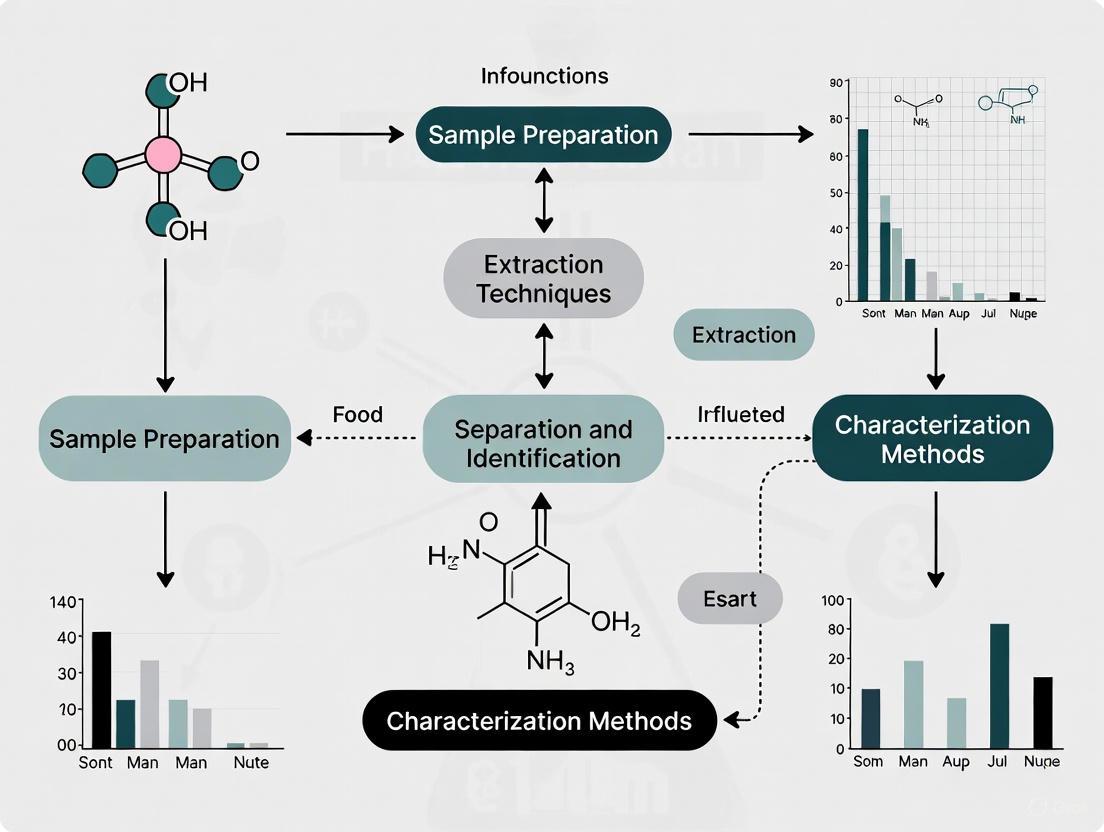
This comprehensive review addresses the critical process of obtaining and analyzing bioactive compounds from food and agri-food waste for drug development and biomedical research.
From Waste to Wellness: Advanced Extraction and Characterization of Bioactive Compounds for Biomedical Applications
Abstract
This comprehensive review addresses the critical process of obtaining and analyzing bioactive compounds from food and agri-food waste for drug development and biomedical research. It explores the foundational science behind these health-promoting compounds, details both traditional and cutting-edge extraction methodologies, and provides strategies to overcome key challenges in scalability and compound bioavailability. The article further covers advanced characterization techniques and comparative analysis of methods, offering researchers and pharmaceutical professionals a validated framework for efficiently translating natural compounds into therapeutic applications, thereby bridging the gap between food science and clinical innovation.
Unlocking Nature's Pharmacy: The Science and Sources of Bioactive Compounds
Bioactive compounds are extra-nutritional, physiologically active components naturally present in small quantities in plants, microalgae, and other biological sources [1] [2]. These compounds have gained substantial attention for their potential health benefits and functional properties, extending beyond basic nutrition to provide therapeutic effects [3] [4]. The growing interest in bioactive compounds stems from epidemiological evidence linking diets rich in these components—such as the Mediterranean diet—with lower incidence of cardiovascular, metabolic, and neurodegenerative diseases, as well as cancer [1].
These compounds demonstrate a broad spectrum of therapeutic activities, including antioxidant, anti-inflammatory, antimicrobial, antithrombotic, cardioprotective, and vasodilatory properties [2]. Well-established sources of bioactive molecules include fruits, vegetables, grains, legumes, herbs, fermented foods, and marine organisms, which are rich in diverse compounds such as flavonoids, phenolic acids, carotenoids, glucosinolates, alkaloids, vitamins, and probiotics [1]. The global agricultural production system also generates substantial agri-food wastes that represent valuable sources of these compounds, promoting sustainability while providing health benefits [5].
Table 1: Major Classes of Bioactive Compounds and Their Characteristics
| Compound Class | Subclasses | Natural Sources | Key Health Benefits |
|---|---|---|---|
| Polyphenols | Flavonoids, Phenolic acids, Lignans, Stilbenes | Berries, apples, green tea, cocoa, coffee, whole grains, flaxseeds, red wine | Cardiovascular protection, anti-inflammatory effects, neuroprotection, antioxidant properties [1] [4] |
| Carotenoids | Beta-carotene, Lutein, Zeaxanthin | Carrots, sweet potatoes, spinach, mangoes, pumpkin, kale, corn, egg yolk | Vision support, immune function, skin health, blue light filtration [4] |
| Bioactive Peptides | Lactoferrin, Casokinins, Lactokinins | Fermented foods, dairy products, animal proteins | Immunomodulatory, antihypertensive, antioxidant, mineral-binding properties [1] [6] |
| Alkaloids | Caffeine, Nicotine, Morphine | Tea, coffee, cacao, medicinal plants | Neuroprotective, anti-inflammatory, analgesic effects [3] [2] |
| Terpenoids | Monoterpenes, Sesquiterpenes, Diterpenes | Herbs, spices, citrus fruits, microalgae | Antimicrobial, anticancer, anti-inflammatory properties [3] [7] |
Extraction Methodologies
Conventional Extraction Techniques
Traditional extraction methods have been widely used for recovering bioactive compounds from biological matrices. These include techniques such as maceration, soxhlet extraction, hydro-distillation, and steam distillation [5] [8]. Solvent extraction relies on organic solvents like ethanol, acetone, and methanol to break down the plant matrix and extract target compounds [5]. The efficiency of these methods depends on several factors including solvent selection, temperature, extraction duration, and solid-to-liquid ratio [5].
Maceration involves soaking plant material in solvent with periodic agitation to facilitate compound dissolution. This technique is particularly suitable for heat-sensitive compounds but requires extended processing times [8]. Soxhlet extraction provides continuous washing of the sample with fresh solvent, improving extraction efficiency but potentially degrading thermolabile compounds due to prolonged heating [5]. Steam distillation is primarily used for extracting volatile compounds, exposing algal or plant biomass to steam at temperatures ranging from 180-240°C followed by rapid depressurization [8].
Table 2: Comparison of Extraction Methods for Bioactive Compounds
| Extraction Method | Principles | Advantages | Limitations | Optimal Applications |
|---|---|---|---|---|
| Solvent Extraction | Uses organic solvents to dissolve compounds from matrix | Simple operation, low equipment cost, high capacity | Large solvent consumption, potential toxicity, long extraction time | Wide application for various compound classes [5] |
| Ultrasound-Assisted Extraction (UAE) | Uses ultrasonic waves to generate cavitation bubbles that disrupt cells | Reduced extraction time, lower solvent consumption, higher yields | Possible degradation of compounds, scalability challenges | Polyphenols, flavonoids, carotenoids from plant materials [3] [5] |
| Microwave-Assisted Extraction (MAE) | Uses microwave energy to heat solvents and samples rapidly | Rapid heating, reduced solvent use, high efficiency | Non-uniform heating, safety concerns, equipment cost | Thermostable compounds from various matrices [3] [5] |
| Supercritical Fluid Extraction (SFE) | Uses supercritical fluids (typically CO₂) as extraction solvent | Green technology, tunable selectivity, low environmental impact | High capital cost, high pressure requirements, limited polarity | Lipophilic compounds, essential oils, pigments [3] [5] |
| Enzyme-Assisted Extraction (EAE) | Uses enzymes to degrade cell walls and release compounds | Mild conditions, high specificity, environmentally friendly | High enzyme cost, optimization complexity, longer processing | Heat-sensitive compounds, bound phenolics [5] |
Emerging Extraction Technologies
Modern extraction techniques have been developed to address limitations of conventional methods, offering improved efficiency, sustainability, and compound preservation [3] [5]. Ultrasound-assisted extraction (UAE) utilizes ultrasonic waves to generate cavitation bubbles that implode, creating shock waves that disrupt plant cells and enhance mass transfer [5]. This method has proven effective for extracting polyphenols, flavonoids, and carotenoids with reduced processing time and solvent consumption [5].
Microwave-assisted extraction (MAE) employs microwave energy to rapidly heat solvents and samples, causing instantaneous cell rupture due to internal pressure buildup [3]. MAE significantly reduces extraction time while improving yield and is particularly effective for thermostable compounds [5]. Supercritical fluid extraction (SFE), most commonly using CO₂ as the supercritical fluid, offers tunable selectivity by adjusting pressure and temperature parameters [3]. This method is considered environmentally friendly and is ideal for extracting lipophilic compounds, essential oils, and pigments [5].
Enzyme-assisted extraction (EAE) uses specific enzymes such as cellulases, proteases, and pectinases to degrade cell walls and liberate bound compounds under mild conditions [5]. This method preserves heat-sensitive bioactive compounds and has demonstrated enhanced extraction of phenolic compounds from citrus peel compared to traditional methods [5]. However, EAE faces challenges related to enzyme costs and optimization complexity that may limit industrial applications [5].
Analytical Characterization Techniques
Separation and Identification Methods
Advanced analytical techniques are essential for separating, identifying, and characterizing the complex mixture of bioactive compounds present in natural sources [3] [9]. Chromatographic methods including high-performance liquid chromatography (HPLC), ultra-high-performance liquid chromatography (UHPLC), and gas chromatography (GC) are widely employed for compound separation [3] [7]. These techniques are often coupled with various detection systems to provide comprehensive analysis.
The combination of liquid chromatography with mass spectrometry (LC-MS), particularly using quadrupole time-of-flight (QTOF) analyzers, has revolutionized the identification of bioactive compounds [7] [10]. UPLC-QTOF-MS offers high resolution, sensitivity, and mass accuracy, enabling the tentative identification of compounds even without reference standards [7] [10]. This technique was successfully applied to characterize forty constituents in the "ginseng-polygala" drug pair, with twelve compounds accurately identified using reference standards [10].
Spectroscopic techniques including nuclear magnetic resonance (NMR), infrared (IR) spectroscopy, and ultraviolet-visible (UV-Vis) spectroscopy provide complementary structural information [3]. NMR is particularly powerful for complete structural elucidation of unknown compounds, while FT-IR offers functional group information [5]. UV-Vis spectroscopy is commonly used for quantification of specific compound classes like polyphenols and carotenoids [5].
Analytical Workflow for Bioactive Compounds
Quantification and Quality Assessment
Accurate quantification of bioactive compounds is crucial for standardizing extracts and establishing dose-response relationships [7] [10]. High-performance liquid chromatography with various detectors (UV, DAD, ELSD) is routinely used for quantitative analysis [10] [9]. For instance, HPLC quantification of the "ginseng-polygala" drug pair revealed that quercetin-3-O-α-l-rhamnoside and amentoflavone were present at 203.78 and 69.84 mg/g respectively in the crude extract [7].
Recent advances in hyperspectral imaging (HSI) and near-infrared spectroscopy (NIRS) have enabled rapid, non-destructive quality assessment of medicinal plants and functional ingredients [9]. These techniques provide both spatial and spectral information, allowing for the visualization of compound distribution within samples while reducing analysis time and solvent consumption [9].
Table 3: Analytical Techniques for Bioactive Compound Characterization
| Analytical Technique | Principles | Applications | Sensitivity | Limitations |
|---|---|---|---|---|
| HPLC/UPLC | High-pressure liquid separation with various detectors | Quantitative analysis, quality control, purity assessment | High (ng-μg) | Requires standards, method development |
| LC-MS/QTOF-MS | Liquid separation coupled with high-resolution mass spectrometry | Structural identification, metabolite profiling, unknown compound characterization | Very high (pg-ng) | High cost, complex data interpretation |
| GC-MS | Gas separation coupled with mass spectrometry | Volatile compounds, fatty acids, essential oils | High (ng) | Limited to volatile/derivatized compounds |
| NMR Spectroscopy | Magnetic properties of atomic nuclei in magnetic field | Complete structural elucidation, stereochemistry determination | Moderate (μg-mg) | Lower sensitivity, expensive equipment |
| FT-IR Spectroscopy | Molecular vibration measurements using infrared light | Functional group identification, quality screening | Moderate (μg) | Limited structural information |
Experimental Protocols
Protocol 1: UPLC-QTOF-MS Analysis of Flavonoids and Lignans
Objective: To qualitatively analyze major bioactive components in plant extracts using UPLC-QTOF-MS [7].
Materials and Reagents:
- Plant material (e.g., Juniperus chinensis L. leaves)
- Methanol (HPLC grade)
- Formic acid (LC-MS grade)
- Reference standards (isoquercetin, quercetin-3-O-α-l-rhamnoside, amentoflavone, etc.)
- Deionized water (HPLC grade)
Equipment:
- UPLC system with binary pump, autosampler, and column compartment
- Quadrupole time-of-flight mass spectrometer with electrospray ionization (ESI) source
- C18 reversed-phase column (100 × 2.1 mm, 1.7 μm)
- Centrifuge
- Ultrasonic bath
- 0.45 μm nylon membrane filters
Procedure:
- Sample Preparation: Reduce plant material to fine powder using a grinder. Accurately weigh 1.0 g of powder and extract with 10 mL methanol using ultrasonication for 60 minutes. Centrifuge at 10,000 × g for 10 minutes and filter the supernatant through a 0.45 μm nylon membrane [7] [10].
UPLC Conditions:
- Column temperature: 40°C
- Injection volume: 2 μL
- Flow rate: 0.3 mL/min
- Mobile phase A: 0.1% formic acid in water
- Mobile phase B: 0.1% formic acid in acetonitrile
- Gradient program: 5-30% B (0-5 min), 30-60% B (5-10 min), 60-95% B (10-15 min), 95% B (15-17 min), 95-5% B (17-18 min), 5% B (18-20 min) [7]
QTOF-MS Parameters:
Data Analysis: Acquire data using appropriate software. Process raw data by peak picking, alignment, and normalization. Identify compounds by matching accurate mass, isotopic pattern, and fragmentation spectra with databases and reference standards [7].
Troubleshooting Tips:
- If peak resolution is poor, optimize gradient elution program
- If sensitivity is low, check ion source cleanliness and optimize fragmentor voltage
- For complex samples, use molecular networking strategy to cluster related compounds [10]
Protocol 2: HPLC Quantification of Major Bioactive Compounds
Objective: To quantitatively determine specific bioactive compounds in plant extracts using HPLC [10].
Materials and Reagents:
- Standard compounds (purity >98%)
- Acetonitrile (HPLC grade)
- Methanol (HPLC grade)
- Phosphoric acid or formic acid (HPLC grade)
- Deionized water (HPLC grade)
Equipment:
- HPLC system with DAD or UV detector
- C18 column (250 × 4.6 mm, 5 μm)
- Analytical balance
- Ultrasonic bath
- 0.45 μm membrane filters
Procedure:
- Standard Solution Preparation: Precisely weigh 4.00 mg of each reference standard and dissolve in 1.0 mL methanol to prepare stock solutions. Prepare working standards by appropriate dilution with methanol [10].
Sample Preparation: Extract plant material as described in Protocol 1. Filter through 0.45 μm membrane before injection [10].
HPLC Conditions:
- Detection wavelength: 254-360 nm (depending on compounds)
- Column temperature: 30°C
- Injection volume: 10 μL
- Flow rate: 1.0 mL/min
- Mobile phase: Various gradients of water with 0.1% acid and acetonitrile [10]
Calibration Curve: Inject series of standard solutions at different concentrations. Plot peak area against concentration to generate calibration curves. Calculate regression equations and correlation coefficients (R² > 0.999) [10].
Validation: Determine linearity, limit of detection (LOD), limit of quantification (LOQ), precision, and accuracy according to ICH guidelines [10].
Calculation: Compound content (mg/g) = (C × V × D) / W Where: C = concentration from calibration curve (mg/mL), V = volume of extract (mL), D = dilution factor, W = weight of sample (g)
Bioactivity Assessment and Mechanisms of Action
Signaling Pathways and Molecular Mechanisms
Bioactive compounds exert their therapeutic effects through modulation of key cellular signaling pathways [6]. Polyphenols such as flavonoids, catechins, and resveratrol demonstrate antioxidant and anti-inflammatory activities primarily through the p38 MAPK/Nrf2 pathway, which regulates oxidative stress responses and cellular antioxidant defenses [6]. For instance, mulberry leaf flavonoids and carnosic acid complex have been shown to enhance antioxidant capacity in broilers by activating this pathway [6].
Bioactive peptides influence inflammatory processes by modulating the MAPK and NF-κB signaling pathways, thereby reducing the production of pro-inflammatory cytokines and providing a natural alternative to non-steroidal anti-inflammatory drugs (NSAIDs) [6]. Catechins from green tea, particularly (-)-Epigallocatechin-3-gallate (EGCG), exhibit neuroprotective effects by attenuating neuroinflammatory processes and oxidative stress mechanisms, showing promise for Alzheimer's and Parkinson's diseases [6].
Cellular Mechanisms of Bioactive Compounds
Bioactivity Screening Methods
In vitro models provide efficient systems for initial bioactivity screening. The PC12 cell line, derived from rat pheochromocytoma, serves as a valuable model for neuroprotective activity assessment [10]. In one study, Aβ₂₅‑₃₅-induced PC12 cells were used as an in vitro injury model to evaluate the effects of the "ginseng-polygala" drug pair on Alzheimer's disease treatment [10]. Results demonstrated that the drug pair significantly increased cell viability and reduced reactive oxygen species and inflammatory factor levels [10].
Antibacterial activity screening against pathogenic bacteria provides valuable information for potential antimicrobial applications. The crude extract of Juniperus chinensis L. leaves exhibited potential antibacterial activity against ten pathogenic bacteria, with the highest activity detected against Bordetella pertussis [7]. Standard methods include disk diffusion, broth microdilution for MIC determination, and time-kill assays.
Antioxidant capacity assays including DPPH, ABTS, FRAP, and ORAC are routinely employed to quantify free radical scavenging activity of bioactive compounds [2]. These assays provide valuable information about potential protective effects against oxidative stress-related diseases.
The Scientist's Toolkit: Research Reagent Solutions
Table 4: Essential Research Reagents and Materials for Bioactive Compound Analysis
| Research Reagent/Material | Specification | Application Function | Example Vendors/ Sources |
|---|---|---|---|
| HPLC Grade Solvents | Methanol, Acetonitrile, Water (≥99.9% purity) | Mobile phase preparation, sample extraction | Sigma-Aldrich, Fisher Scientific, Tedia |
| Reference Standards | Certified purity (>95-98%) | Compound identification, quantification calibration | Chengdu Preferred Biological Technology, Sigma-Aldrich, ChromaDex |
| UHPLC/QTOF-MS System | High-resolution mass accuracy (<5 ppm) | Structural characterization, unknown compound identification | Agilent, AB SCIEX, Waters, Thermo Scientific |
| Chromatography Columns | C18 reversed-phase (1.7-5 μm particle size) | Compound separation based on hydrophobicity | Waters, Phenomenex, Agilent |
| Cell Lines | PC12, Caco-2, RAW 264.7, HEK293 | Bioactivity screening, mechanism studies | ATCC, Boster Biological Technology |
| Bioassay Kits | Antioxidant, anti-inflammatory, cytotoxicity | Quantitative bioactivity assessment | Sigma-Aldrich, Abcam, Cayman Chemical |
| Solid Phase Extraction | C18, silica, ion-exchange cartridges | Sample clean-up, compound enrichment | Waters, Phenomenex, Sigma-Aldrich |
Applications in Functional Foods and Pharmaceuticals
The application of bioactive compounds spans multiple industries including functional foods, nutraceuticals, pharmaceuticals, and cosmeceuticals [3] [4]. In the functional food sector, bioactive compounds are incorporated into diverse matrices including fortified beverages, dairy products, snack items, and dietary supplements [4]. These applications leverage the dual functionality of bioactive compounds, which can improve shelf-life, safety, and sensory qualities of foods while providing health benefits [1].
Modern biotechnological and AI-driven approaches have revolutionized the precision and efficacy of functional food development by enabling high-throughput screening of bioactive compounds, predictive modeling for formulation, and large-scale data mining to identify novel ingredient interactions and health correlations [4]. These technologies help overcome challenges related to stability, bioavailability, and regulatory compliance [4].
Pharmaceutical applications of bioactive compounds include their use as natural anti-inflammatory agents, neuroprotective compounds, and antimicrobial therapies [6]. For instance, ellagic acid supplementation in multiple sclerosis patients has demonstrated significant reduction in inflammatory cytokines and modulation of gene expression related to immune response [6]. Similarly, polyphenolic natural products like curcumin, quercetin, and resveratrol show promise as photosensitizers in antimicrobial photodynamic therapy, offering solutions to rising antibiotic resistance concerns [6].
The growing body of evidence supporting the health benefits of bioactive compounds has led to their incorporation into dietary guidelines and health policies on a global scale [4]. However, regulatory landscapes for functional foods and nutraceuticals vary regionally, requiring collaboration between food scientists, nutritionists, and regulatory agencies to ensure scientific validation, quality control, and appropriate labeling [4].
Agri-Food Waste as a Rich, Untapped Reservoir for Drug Discovery
The valorization of agri-food waste represents a paradigm shift in the approach to drug discovery, aligning with the principles of the circular bioeconomy. Globally, an estimated one-third of all food produced, approximately 1.3 billion tons annually, is lost or wasted [11] [12]. This inefficiency is not only an economic and ethical issue but also represents a monumental misallocation of bioactive compounds with therapeutic potential. Agricultural and food production residues, once considered low-value biomass, are now recognized as rich sources of polyphenols, carotenoids, flavonoids, and other bioactive phytochemicals [13] [14]. This application note details the extraction, characterization, and therapeutic evaluation protocols for bioactives derived from agri-food waste, providing researchers with a framework for transforming waste into valuable pharmacological agents.
Bioactive Compound Diversity in Agri-Food Waste
Agri-food wastes, including peels, seeds, pulp, husks, and leaves, are abundant sources of diverse bioactive compounds. The composition and concentration of these phytochemicals vary significantly based on the waste source, genotype, environmental conditions, and harvest timing [13].
Table 1: Key Bioactive Compounds in Selected Agri-Food Wastes and Their Potential Therapeutic Applications
| Agri-Food Waste Source | Predominant Bioactive Compounds | Reported Bioactivities | Potential Therapeutic Application |
|---|---|---|---|
| Cinnamon Leaves [13] | Cinnamaldehyde, Flavonoids | Neuroprotective, Antioxidant | Parkinson's Disease Therapy |
| Sesame Seed Coat [13] | Phenolic Compounds | Antimicrobial, Antioxidant | Food Preservation, Infectious Disease |
| Almond Shells [13] | Cellulose Nanocrystals (CNCs) | Biocompatibility, Structural | Drug Delivery Scaffolds |
| Wheat Processing Waste [15] | Ferulic Acid, Dihydroferulic Acid | Antioxidant (ABTS: 8.598 mmol Trolox/kg), Biocompatible | Cosmeceuticals, Topical Formulations |
| Fruit Peels & Vegetable Residues [12] [14] | Polyphenols, Carotenoids, Flavonoids | Antioxidant, Anti-inflammatory, Anticarcinogenic | Chronic Disease Prevention & Management |
The intrinsic biological and ecological factors that regulate phytochemical accumulation are critical. Studies have demonstrated that harvest timing and genetic diversity have profound effects on the nutritional properties and composition of different plant species [13]. For instance, seasonal dynamics markedly influence the flavonoid and phenolic profiles in plant species like Rheum officinale, with antioxidant activity peaking at distinct growth stages [13]. This temporal and genetic variation must be considered when sourcing raw materials for reproducible drug discovery efforts.
Protocols for Extraction and Isolation
The recovery of bioactive compounds from agri-food waste requires efficient, selective, and environmentally responsible extraction technologies. Conventional methods are often limited by low efficiency, high energy consumption, and the use of hazardous solvents. The following protocols outline advanced, sustainable extraction techniques.
Microwave-Assisted Extraction (MAE) of Cellulose Nanocrystals
This protocol, adapted from Valdés et al., is designed for the extraction of cellulose nanocrystals (CNCs) from lignocellulosic waste like almond shells [13]. CNCs are promising for creating biodegradable drug delivery systems.
- Objective: To efficiently extract high-purity cellulose nanocrystals from almond shell waste.
- Materials:
- Raw Material: Dried, milled almond shells (Prunus amygdalus).
- Reagents: Sodium hydroxide (NaOH), Acetic acid, Sulfuric acid (H₂SO₄), Distilled water.
- Equipment: Microwave reactor system, Centrifuge, Vacuum filtration unit, Dialysis tubing, Sonicator, Fourier-Transform Infrared (FTIR) Spectrometer, X-Ray Diffractometer (XRD).
- Procedure:
- Pre-treatment: Treat 20g of dried almond shell powder with 500 mL of 4% w/v NaOH solution at 80°C for 2 hours to remove lignin and hemicellulose. Wash the residue to neutrality.
- Bleaching: Treat the pre-treated material with an acidic solution (e.g., acetate buffer) at 80°C for 1 hour to further purify the cellulose. Wash thoroughly.
- Microwave-Assisted Acid Hydrolysis: Suspend the bleached cellulose in 250 mL of 60% w/w H₂SO₄. Subject the mixture to microwave irradiation (e.g., 400W, 70°C) for 30-45 minutes under continuous stirring.
- Quenching & Purification: Dilute the reaction mixture 10-fold with ice-cold distilled water to stop hydrolysis. Centrifuge at 10,000 rpm for 15 minutes. Wash the pellet repeatedly until the supernatant is neutral. Purify the resulting CNCs via dialysis against distilled water for 3 days.
- Dispersion: Sonicate the final CNC suspension in water for 10-15 minutes to ensure a homogeneous dispersion.
- Analysis: The success of extraction is determined by:
- FTIR: To confirm chemical structure and removal of non-cellulosic components.
- XRD: To determine crystallinity index, which MAE enhances compared to traditional methods [13].
Ultrasound-Assisted Extraction (UAE) of Phenolic Compounds
This protocol is effective for recovering heat-sensitive phenolic antioxidants from sources like fruit peels and seed coats [13] [12] [14].
- Objective: To extract antioxidant phenolic compounds from sesame seed coats using ultrasound.
- Materials:
- Raw Material: Dried sesame seed coat powder.
- Reagents: Food-grade ethanol, Folin-Ciocalteu reagent, Gallic acid, Trolox.
- Equipment: Ultrasonic bath or probe sonicator, Centrifuge, Rotary evaporator, Spectrophotometer.
- Procedure:
- Preparation: Mix 5g of sesame seed coat powder with 100 mL of a 50% ethanol/water solution.
- Sonication: Subject the mixture to ultrasound using a probe sonicator at an amplitude of 60% for 10 minutes, maintaining the temperature below 40°C using an ice bath.
- Separation: Centrifuge the sonicated mixture at 5,000 rpm for 10 minutes. Collect the supernatant.
- Concentration: Concentrate the supernatant under reduced pressure at 40°C using a rotary evaporator.
- Lyophilization: Lyophilize the concentrated extract to obtain a dry powder for storage and further use.
- Analysis:
The following workflow visualizes the complete valorization pathway from raw agri-food waste to a characterized drug delivery system.
Agri-Food Waste Valorization Workflow
Protocols for Chemical Characterization and Biological Evaluation
UHPLC-Q-Orbitrap HRMS for Phytochemical Profiling
This high-resolution mass spectrometry technique is essential for identifying and quantifying bioactive compounds in complex waste extracts [13] [15].
- Objective: To characterize the polyphenolic profile of wheat-based solid waste.
- Materials:
- Sample: Polyphenolic extract from solid wheat waste (from Protocol 3.2).
- Reagents: Methanol, Acetonitrile (UHPLC-MS grade), Formic Acid, Water (UHPLC-MS grade), Polyphenol standards (e.g., ferulic acid).
- Equipment: UHPLC system coupled to Q-Exactive Orbitrap mass spectrometer, C18 reversed-phase column (e.g., 2.1 x 100 mm, 1.7 µm).
- Procedure:
- Chromatographic Separation:
- Mobile Phase A: 0.1% Formic acid in water.
- Mobile Phase B: 0.1% Formic acid in acetonitrile.
- Gradient: 5% B to 95% B over 25 minutes.
- Flow Rate: 0.3 mL/min.
- Injection Volume: 2 µL.
- Mass Spectrometric Detection:
- Ionization Mode: Heated Electrospray Ionization (HESI) in negative and positive modes.
- Full Scan Parameters: Resolution: 70,000; Scan Range: m/z 100-1500.
- Data-Dependent MS/MS: Resolution: 17,500; Top 5 most intense ions.
- Chromatographic Separation:
- Data Analysis: Identify compounds by matching accurate mass and MS/MS fragmentation patterns against databases (e.g., mzCloud, HMDB) and confirm by comparison with authentic standards. Quantify predominant compounds like ferulic acid using external calibration curves [15].
In Vitro Neuroprotective Efficacy Screening
This protocol evaluates the neuroprotective potential of bioactive extracts, as demonstrated in studies on cinnamon leaf extracts [13].
- Objective: To assess the neuroprotective effect of a cinnamon leaf extract nanoemulsion in a cellular or animal model of Parkinson's disease.
- Materials:
- Test Substance: Nanoemulsion encapsulated cinnamon leaf extract.
- In Vitro Model: SH-SY5Y neuroblastoma cells.
- Inducing Agent: 1-Methyl-4-phenylpyridinium (MPP⁺) to induce Parkinsonian phenotype.
- Assay Kits: MTT assay kit for cell viability, Caspase-3 activity kit for apoptosis, ELISA kits for oxidative stress markers (e.g., ROS, GSH).
- Procedure:
- Cell Culture & Treatment: Maintain SH-SY5Y cells in standard culture conditions.
- Pre-treatment Group: Incubate cells with the nanoemulsion (e.g., 10-100 µg/mL) for 24 hours.
- Injury Group: Expose cells to MPP⁺ (e.g., 1 mM) for 24 hours to induce damage.
- Therapeutic Group: Pre-treat with nanoemulsion, then co-treat with MPP⁺.
- Viability Assay: Use MTT assay per manufacturer's instructions to measure cell viability after 24 hours of treatment.
- Apoptosis Analysis: Measure Caspase-3 activity in cell lysates as a marker of apoptosis.
- Oxidative Stress Measurement: Quantify intracellular ROS levels and glutathione (GSH) levels using commercially available kits.
- Cell Culture & Treatment: Maintain SH-SY5Y cells in standard culture conditions.
- Analysis: Compare viability, apoptosis, and oxidative stress markers across treatment groups. A significant improvement in the therapeutic group compared to the injury group indicates neuroprotective efficacy. In vivo models can further assess motor function improvements [13].
Advanced Formulation: Nanoencapsulation and 3D Printing
To overcome challenges like poor bioavailability and stability, advanced formulation strategies are crucial.
Nanoemulsion Encapsulation for Antimicrobial Application
This protocol details the encapsulation of sesame seed coat phenolics for antimicrobial use in food preservation and potential topical applications [13].
- Objective: To fabricate a nanoemulsion for the delivery of antimicrobial phenolic compounds.
- Materials: Sesame seed coat phenolic extract, Food-grade surfactant (e.g., Tween 80), Oil phase (e.g., medium-chain triglyceride, MCT), High-speed homogenizer, Ultrasonic processor.
- Procedure:
- Oil Phase: Dissolve the phenolic extract in the MCT oil.
- Aqueous Phase: Dissolve the surfactant in distilled water.
- Pre-emulsification: Slowly add the oil phase to the aqueous phase under high-speed homogenization (10,000 rpm for 5 minutes).
- Nanoemulsification: Further process the coarse emulsion using an ultrasonic processor at 200 W for 10 minutes (pulse mode 5s on/5s off) in an ice bath.
- Characterization: Analyze droplet size, polydispersity index (PDI), and zeta potential using dynamic light scattering. Test antimicrobial efficacy in a model system (e.g., milk preservation) by monitoring microbial load reduction over time [13].
3D Printing of Drug Delivery Systems from Food Waste
This emerging technology uses biopolymers derived from food waste, such as cellulose and lignin, to create customized drug delivery systems [16].
- Objective: To develop a 3D-printed drug delivery system using a bio-ink derived from food waste.
- Materials:
- Biopolymers: Rice husk cellulose, Soy protein, or other waste-derived polymers.
- Bio-ink Preparation Equipment: Mixer, Syringe.
- 3D Printer: Extrusion-based 3D bioprinter.
- Procedure:
- Bio-ink Formulation: Blend the purified food waste biopolymer (e.g., 5% w/v) with a biocompatible crosslinker (e.g., calcium chloride for alginate) and the active pharmaceutical ingredient (API).
- Printing: Load the bio-ink into a syringe and print onto a substrate using pre-designed software models (e.g., a lattice structure for controlled release).
- Post-processing: Crosslink the printed structure by exposing it to a crosslinking vapor or solution.
- Evaluation: Test the mechanical stability, drug release profile in simulated physiological fluids, and biocompatibility in cell cultures [16].
Table 2: Advanced Formulation Technologies for Agri-Waste Bioactives
| Formulation Technology | Core Material/Process | Key Advantages | Application in Drug Discovery |
|---|---|---|---|
| Nanoencapsulation [13] | Formation of oil-in-water nanoemulsions | Enhances solubility, stability, and bioefficacy of sensitive phenolics | Targeted antimicrobial delivery; Improved bioavailability of neuroprotective compounds |
| 3D Printing [16] | Food waste-derived bio-inks (e.g., cellulose, lignin) | Enables patient-specific, customizable geometries for controlled release | Fabrication of tailored drug delivery implants and scaffolds |
| Microbial Electrochemical Systems (METs) [17] | Electroactive bacteria on electrodes | Recovers energy and value-added products from solubilized organic waste | Sustainable production of biochemical precursors for pharmaceuticals |
The Scientist's Toolkit: Essential Research Reagents and Materials
Table 3: Key Research Reagent Solutions for Agri-Waste Valorization
| Reagent/Material | Function/Application | Example Use in Protocol |
|---|---|---|
| UHPLC-Q-Orbitrap HRMS System | High-resolution separation and identification of bioactive compounds. | Precise quantification of ferulic acid in wheat waste [15]. |
| Microwave Reactor System | Enhanced extraction efficiency with reduced solvent and time. | Extraction of cellulose nanocrystals from almond shells [13]. |
| Ultrasonic Processor | Cell disruption and formation of nanoemulsions. | Creating nanoemulsions of sesame seed phenolics; Ultrasound-assisted extraction [13] [14]. |
| Food-Grade Surfactants (e.g., Tween 80) | Stabilization of nanoemulsions for bioactive delivery. | Formulating antimicrobial nanoemulsions for milk preservation [13]. |
| Supercritical CO₂ Extraction System | Green, non-toxic solvent for extracting heat-sensitive bioactives. | Extraction of polyphenols and carotenoids without solvent residues [12] [14]. |
| 3D Bioprinter (Extrusion-based) | Fabrication of customized drug delivery scaffolds. | Printing patient-specific dosage forms using waste-derived bio-inks [16]. |
Bioactive compounds derived from food sources are increasingly recognized for their critical role in modulating oxidative stress and inflammation, two fundamental pathways in the pathogenesis of chronic diseases. These compounds, including polyphenols, polysaccharides, and fatty acids, interact with cellular signaling pathways to exert antioxidant, anti-inflammatory, and disease-preventing effects [4] [18] [2]. The growing body of research in this field bridges nutritional science with pharmaceutical development, offering promising natural strategies for disease prevention and health promotion. This application note provides a structured framework for researching these mechanisms, featuring standardized protocols, quantitative data comparisons, and visualization tools to support researchers and drug development professionals in the systematic investigation of bioactive compounds from extraction to mechanistic characterization.
Key Bioactive Compounds and Their Health Connections
Table 1: Major Bioactive Compound Classes and Their Health Mechanisms
| Compound Class | Primary Food Sources | Key Antioxidant Mechanisms | Key Anti-inflammatory Mechanisms | Documented Health Applications |
|---|---|---|---|---|
| Polyphenols [4] | Berries, apples, green tea, coffee, flaxseeds | Free radical scavenging, metal chelation, upregulation of endogenous antioxidants (SOD, CAT, GSH-Px) [19] | Inhibition of NF-κB signaling, reduction of pro-inflammatory cytokines [20] | Cardiovascular protection, neuroprotection, anti-diabetic [4] [21] |
| Polysaccharides [19] [22] | Fungi (e.g., Suillus bovinus), fruits (e.g., Phyllanthus emblica) | Reactive oxygen species (ROS) scavenging, enhancement of cellular antioxidant defenses [19] | Modulation of gut microbiota, immunomodulation via prebiotic activity [22] | Gut health promotion, immunomodulation, hepatoprotection [19] [22] |
| Carotenoids [4] | Carrots, tomatoes, leafy greens, bell peppers | Quenching of singlet oxygen, free radical neutralization | Reduction of inflammatory markers, immune system modulation | Eye health, skin protection, immune function [4] |
| Omega-3 Fatty Acids [4] | Fish, flaxseeds, walnuts | Reduction of oxidative stress indirectly through anti-inflammatory effects | Precursors to specialized pro-resolving mediators (SPMs), competition with arachidonic acid | Cardiovascular risk reduction, cognitive health, anti-inflammatory effects [4] |
Quantitative Assessment of Bioactive Compound Efficacy
Table 2: Experimentally Determined Bioactivity of Characterized Compounds
| Bioactive Source | Extraction Method & Yield | Assay System | Key Quantitative Results | Positive Control |
|---|---|---|---|---|
| Suillus bovinus polysaccharide (Y-1) [19] | BBD-RSM optimized hot water extraction | HepG2 cells induced by t-BHP | 34.73% ± 1.31% reduction in ROS at 50 μg/mL; significantly increased SOD, CAT, GSH-Px; reduced MDA | Vitamin C (50 μg/mL) |
| Phyllanthus emblica polysaccharide (PEP-U) [22] | UMSE (8.09% yield) | In vitro chemical assays | DPPH scavenging: ~85% at 1 mg/mL; ABTS scavenging: ~90% at 1 mg/mL; significant hydroxyl radical scavenging | Not specified |
| Dandelion Seed Oil (DSO) [23] | Petroleum ether extraction (13.46% yield) | In vitro chemical and cell culture | DPPH scavenging: 85.42% at 1 mg/mL; FRAP: 0.81 ± 0.05; antitumor activity against HeLa, TE-1, MCF-7 cells | Vitamin C (FRAP), Cisplatin (antitumor) |
| Musa balbisiana peel extract [24] | MAE-RSM optimized | In vitro chemical assays | TPC: 48.82 mg GAE/g DM; TSC: 57.18 mg/g DM; identified oleanolic acid as major compound | Not specified |
Detailed Experimental Protocols
Protocol 1: Optimization of Polysaccharide Extraction Using Box-Behnken Design (BBD)
Application: This protocol is adapted from the optimization of Suillus bovinus polysaccharide extraction [19] and can be applied to various fungal or plant materials.
Workflow Overview:
Materials and Reagents:
- DEAE-52 cellulose column (Solarbio) [19]
- Sephadex G-100 chromatography column (Solarbio) [19]
- Phenol-sulfuric acid reagents (Sigma-Aldrich) [19]
- Vacuum freeze-dryer
- Sevag reagent (chloroform/n-butanol, 4:1 v/v) [19]
Procedure:
- Single-Factor Experiments: Conduct preliminary tests to identify key extraction parameters (liquid-to-solid ratio: 10-50 mL/g, temperature: 30-70°C, time: 1-5 h) affecting polysaccharide yield [19].
- BBD Experimental Design: Using Design Expert software (Version 11), create a three-variable, three-level BBD with 17 experimental runs.
- Model Validation: Confirm model adequacy through ANOVA with significance level p < 0.05.
- Optimization: Utilize desirability function to identify optimal extraction parameters.
- Verification: Conduct triplicate experiments at predicted optimal conditions to validate model predictions.
Protocol 2: In Vitro Assessment of Cellular Antioxidant Mechanisms
Application: Protocol for evaluating cellular antioxidant activity using HepG2 cell model, adapted from Y-1 polysaccharide characterization [19].
Workflow Overview:
Materials and Reagents:
- HepG2 cells (ATCC)
- DMEM with 10% FBS (Gibco) [19]
- t-BHP (tert-butyl hydroperoxide) for oxidative stress induction
- DCFH-DA fluorescent probe (Sigma-Aldrich) [19]
- CCK-8 assay kit for cell viability
- Commercial SOD, CAT, GSH-Px, and MDA assay kits
Procedure:
- Cell Culture and Treatment: Seed HepG2 cells at 1 × 10^4 cells/well in 96-well plates. Culture for 24 h, then treat with test compounds (0-50 μg/mL) for 6 h [19].
- Oxidative Stress Induction: Expose cells to 0.4 mM t-BHP for 3 h (viability assay) or 30 min (ROS measurement) [19].
- ROS Measurement: After t-BHP exposure, stain cells with 1 μM DCFH-DA for 40 min. Measure fluorescence at excitation/emission 485/525 nm [19].
- Antioxidant Enzyme Assays: Follow commercial kit protocols for SOD, CAT, and GSH-Px activities in cell lysates.
- Lipid Peroxidation Assessment: Quantify MDA content using thiobarbituric acid reactive substances (TBARS) assay.
Protocol 3: Anti-inflammatory Mechanism Evaluation
Application: Protocol for assessing anti-inflammatory activity of bioactive compounds, adapted from Hibiscus sabdariffa research [20].
Materials and Reagents:
- RAW 264.7 macrophage cell line
- Lipopolysaccharide (LPS) for inflammation induction
- ELISA kits for TNF-α, IL-6, IL-1β
- Western blot reagents for NF-κB pathway proteins
- Protocatechuic acid (PCA) as reference compound [20]
Procedure:
- Cell Culture and Treatment: Culture RAW 264.7 cells and pre-treat with test compounds for 2 h.
- Inflammation Induction: Stimulate cells with LPS (100 ng/mL) for 18-24 h.
- Cytokine Measurement: Collect culture supernatant and quantify TNF-α, IL-6, and IL-1β using ELISA.
- NF-κB Pathway Analysis: Prepare cell lysates for Western blot analysis of NF-κB p65 phosphorylation and nuclear translocation.
- Statistical Analysis: Perform triplicate experiments with ANOVA and post-hoc tests (p < 0.05 significance).
The Scientist's Toolkit: Essential Research Reagents
Table 3: Key Research Reagent Solutions for Bioactive Compound Research
| Reagent/Chemical | Supplier Examples | Primary Function | Application Notes |
|---|---|---|---|
| DEAE-52 Cellulose | Solarbio | Anion-exchange chromatography for polysaccharide purification | Sequential elution with 0-0.7 M NaCl effectively separates acidic and neutral polysaccharides [19] |
| Sephadex G-100 | Solarbio | Size-exclusion chromatography for molecular weight separation | Effective for purifying polysaccharides in molecular weight range 47.34-97.07 kDa [19] |
| DCFH-DA Probe | Sigma-Aldrich | Fluorescent detection of intracellular ROS | Critical for cellular antioxidant assays; requires careful handling due to light sensitivity [19] |
| Folin-Ciocalteu Reagent | Sigma-Aldrich | Total antioxidant/phenolic content quantification | Reacts with various reducing agents, not specific to phenolics [25] [24] |
| CCK-8 Assay Kit | Various suppliers | Cell viability and proliferation assessment | More sensitive and less toxic alternative to MTT assay [19] |
| Sevag Reagent | Laboratory preparation | Protein removal from polysaccharide extracts | Chloroform:n-butanol (4:1 v/v) effectively denatures and removes proteins [19] [22] |
Mechanistic Pathways of Bioactive Compounds
Cellular Signaling Pathways:
The molecular mechanisms illustrated above demonstrate how bioactive compounds interact with key cellular pathways to exert their health-protective effects. Natural compounds from sources like Suillus bovinus and Hibiscus sabdariffa modulate these pathways through multiple interconnected mechanisms: (1) direct free radical scavenging, (2) enhancement of endogenous antioxidant defenses (SOD, CAT, GSH-Px), (3) inhibition of pro-inflammatory transcription factors (NF-κB), and (4) reduction of inflammatory mediators (TNF-α, IL-6) [19] [20]. These coordinated actions at the molecular level translate to observed protective effects against chronic diseases including cardiovascular disorders, neurodegenerative conditions, and metabolic syndrome.
The systematic investigation of bioactive compounds from foods requires integrated approaches combining optimized extraction methodologies, robust analytical techniques, and mechanistic biological assays. The protocols and data presented herein provide a standardized framework for researchers to quantitatively assess the antioxidant and anti-inflammatory potential of food-derived compounds, facilitating the translation of basic research into potential therapeutic applications. As the field advances, the integration of these approaches with emerging technologies such as AI-assisted compound discovery and multi-omics profiling will further accelerate the identification and characterization of novel bioactive compounds with disease-preventing properties [4] [21].
The valorization of agricultural by-products represents a cornerstone of sustainable biotechnology, aligning with circular economy principles by transforming waste into high-value functional ingredients [26]. Fruit processing generates substantial quantities of residues—including peels, seeds, and pomace—which are now recognized as rich repositories of bioactive compounds with nutraceutical potential [26] [27]. These materials contain diverse phytochemicals such as polyphenols, carotenoids, anthocyanins, flavonoids, tannins, and saponins, which demonstrate significant biological activities including antioxidant, anti-inflammatory, antimicrobial, anticancer, and anti-obesity properties [26]. Recent scientific surveillance indicates a 67.6% increase in research activity in this field over the past five years, with particular emphasis on developing advanced extraction technologies and characterizing novel plant materials [26]. This document provides detailed application notes and experimental protocols for the extraction, characterization, and utilization of bioactive compounds from these key sources, specifically designed for researchers, scientists, and drug development professionals.
Tropical Fruit By-products
Tropical fruit processing generates significant waste streams with remarkable nutraceutical potential. Mango, pineapple, and avocado by-products contain substantial quantities of polyphenols, carotenoids, and flavonoids with demonstrated therapeutic properties [26]. Research emphasis has grown on green extraction technologies and validating functional potential through in vitro digestion and bioavailability assays [26].
Berry Fruit By-products
Berry processing generates pomace comprising 25-50% of the initial fruit mass, containing skins, seeds, stems, and leaves [28]. These materials are particularly rich in phenolic compounds, with approximately 10% found in pulp, 28-35% in skin, and 60-70% in seeds [28]. The predominant phenolics include flavonoids (flavonols, flavanols, anthocyanins), proanthocyanidins, and phenolic acids. Anthocyanin distribution varies significantly by species, accounting for about 30% of total phenolic content in blackcurrants and 70% in blueberries [28].
Banana Peel (Musa balbisiana)
Musa balbisiana peel, an underutilized by-product, contains valuable polyphenols and saponins [24]. Under optimized microwave-assisted extraction conditions, researchers have reported total polyphenol content of 48.82 mg GAE/gDM and total saponin content of 57.18 mg/gDM [24]. The purified fractions contain oleanolic acid as a major compound, contributing to observed biological activities including hypoglycemic, anti-inflammatory, and enzyme inhibitory effects [24].
Fenugreek Seeds and Bioactives
Fenugreek (Trigonella foenum-graecum) seeds contain valuable bioactive compounds including diosgenin (0.50-0.93%), trigonelline (5.22-13.65 mg g⁻¹), and 4-hydroxyisoleucine (0.41-1.90%) [29]. These concentrations are significantly influenced by genotype, environment, and their interactions, with specific genotypes from Sivas/TR, Amasya/TR, Konya/TR, and Samsun/TR exhibiting higher diosgenin content across all conditions [29].
Table 1: Bioactive Compound Yields from Key Plant By-product Sources
| Source Material | Bioactive Compounds | Extraction Yield | Extraction Method | Reference |
|---|---|---|---|---|
| Musa balbisiana peel | Total Polyphenols | 48.82 mg GAE/gDM | Microwave-assisted | [24] |
| Musa balbisiana peel | Total Saponins | 57.18 mg/gDM | Microwave-assisted | [24] |
| Fenugreek seeds | Diosgenin | 0.50-0.93% | Pressurized n-propane | [29] [30] |
| Fenugreek seeds | Trigonelline | 5.22-13.65 mg g⁻¹ | Pressurized n-propane | [29] |
| Fenugreek seeds | 4-Hydroxyisoleucine | 0.41-1.90% | Pressurized n-propane | [29] |
| Germinated fenugreek seeds | α-Tocopherol | ~3x increase vs. raw | Pressurized n-propane | [30] |
| Germinated fenugreek seeds | β-Carotene | 55% higher vs. raw | Pressurized n-propane | [30] |
Extraction Methodologies
Modern Extraction Techniques
Conventional extraction methods like maceration and Soxhlet extraction are increasingly replaced by advanced techniques offering improved efficiency, reduced solvent consumption, and better preservation of heat-sensitive compounds [31] [32] [33]. These modern approaches include ultrasound-assisted extraction (UAE), microwave-assisted extraction (MAE), supercritical fluid extraction (SFE), pressurized liquid extraction (PLE), and enzyme-assisted extraction (EAE) [31] [32].
The efficiency of these techniques stems from enhanced cell wall disruption mechanisms: UAE employs acoustic cavitation, MAE uses microwave energy for rapid heating, SFE utilizes supercritical fluids with gas-like diffusion and liquid-like density, while PLE operates at elevated temperatures and pressures to maintain solvents in liquid state [32] [33]. Hybrid approaches combining multiple technologies demonstrate synergistic effects for challenging plant matrices [32].
Table 2: Comparison of Advanced Extraction Techniques for Bioactive Compounds
| Extraction Method | Key Parameters | Advantages | Limitations | Optimal Applications |
|---|---|---|---|---|
| Microwave-Assisted Extraction (MAE) | Solvent concentration, microwave power, irradiation time, cycle duration | Reduced processing time, lower solvent consumption, higher efficiency | Potential degradation of thermolabile compounds, non-uniform heating | Polyphenols, saponins from fruit peels and seeds [24] |
| Ultrasound-Assisted Extraction (UAE) | Amplitude, temperature, solvent type, particle size | Enhanced mass transfer, cell wall disruption, lower temperatures | Possible radical formation, limited scale-up for some systems | Flavonoids, antioxidants from berry pomace [32] [28] |
| Supercritical Fluid Extraction (SFE) | Pressure, temperature, cosolvents, flow rate | Solvent-free residues, selective extraction, low environmental impact | High capital cost, pressure limitations for some compounds | Lipophilic compounds, essential oils [31] [33] |
| Pressurized Liquid Extraction (PLE) | Temperature, pressure, solvent, static/dynamic mode | Rapid extraction, reduced solvent use, automation capability | High pressure requirements, equipment cost | Thermally stable compounds from seeds [30] |
| Enzyme-Assisted Extraction (EAE) | Enzyme type, concentration, incubation time/temperature | Selective cell wall degradation, higher release of bound compounds | Additional purification steps, cost of enzymes | Bound phenolics, polysaccharides [32] |
Protocol: Microwave-Assisted Extraction from Musa balbisiana Peel
Application Note: This protocol optimizes the simultaneous extraction of polyphenols and saponins from Musa balbisiana peel using microwave-assisted extraction combined with Response Surface Methodology [24].
Materials and Equipment:
- Dried Musa balbisiana peel powder (particle size <80 mesh)
- Methanol (analytical grade)
- Folin-Ciocalteu reagent
- Gallic acid standard
- Microwave extraction system with power control
- UV-Vis spectrophotometer
- Thermostatic water bath
- Whatman No. 1 filter paper
Experimental Procedure:
Sample Preparation:
- Collect Musa balbisiana peel at 80-85% ripeness
- Clean, slice, and dry at 60°C to moisture content below 10%
- Grind to particle size <80 mesh and store at 4°C in sealed containers [24]
Extraction Process:
- Weigh 1g of dried peel powder (accurate to 0.001g)
- Add methanol solvent at concentration 81.09% (v/v)
- Maintain solid-to-solvent ratio of 1:30 (w/v)
- Set microwave irradiation cycle to 4.39 s/min
- Extract for 44.54 minutes at optimized power [24]
- Transfer samples to 60°C thermostatic bath for 60 minutes incubation
- Filter mixture through Whatman No. 1 filter paper
- Collect filtrate for analysis
Analytical Quantification:
Optimization Approach:
- Employ Response Surface Methodology with Box-Behnken design
- Model using quadratic regression equation: [ \gamma = \beta0 + \sum\limits{i=1}^{k} \betaiXi + \sum\limits{i=1}^{k} \beta{ii}Xi^{2} + \sum\limits{i=1}^{k} \sum\limits{j=i+1}^{k-1} \beta{ij}XiXj ]
- Where Y is predicted response, β₀ is constant, βi is linear coefficient, βii is quadratic coefficient, and βij is interaction coefficient [24]
Protocol: Pressurized n-Propane Extraction from Fenugreek Seeds
Application Note: This procedure describes the extraction of bioactive compounds from raw and germinated fenugreek seeds using pressurized n-propane, enhancing recovery of thermolabile compounds [30].
Materials and Equipment:
- Fenugreek seeds (raw and germinated)
- n-Propane (95% purity)
- Aloe vera gel (for germination elicitor)
- Sodium hypochlorite solution (1%)
- Pressurized fluid extraction system
- Petri dishes
- Drying oven
- Grinding apparatus
Experimental Procedure:
Seed Germination and Elicitation:
- Sterilize raw fenugreek seeds with 1% sodium hypochlorite for 15 minutes
- Rinse thoroughly with deionized water
- Soak seeds in deionized water for 24 hours to break dormancy
- Germinate in two substrates: (1) water, (2) 30% Aloe vera gel solution
- Maintain at 24°C in darkness for 96 hours
- Spray with distilled water or Aloe vera solution every 12 hours as needed
- Dry sprouts at 308K for 8 hours
- Grind and sieve through 0.55 mesh Tyler series [30]
Pressurized n-Propane Extraction:
- Load extraction vessel with ground seed material (raw, germinated, or mixtures)
- Maintain n-propane in subcritical state
- Conduct extractions in duplicate at optimized pressure and temperature
- Use 1:2 and 2:1 ratios for seed mixtures (raw:germinated)
- Collect extracts for analysis [30]
Bioactivity Assessment:
- Antioxidant Activity: Evaluate using ABTS•+ assay with Trolox standard
- Anticancer Activity: Test in vitro against HeLa and SiHa cell lines
- Anti-hyperglycemic Activity: Assess α-glucosidase and α-amylase inhibition [30]
Characterization Techniques
Structural Elucidation of Bioactive Compounds
Advanced analytical techniques are essential for characterizing bioactive compounds from plant materials. Fourier Transform Infrared (FT-IR) and Raman spectroscopy provide information about functional groups and molecular structures [24]. Nuclear Magnetic Resonance (NMR) spectroscopy, including ¹H-NMR and ¹³C-NMR, offers detailed structural elucidation [24]. High-Performance Liquid Chromatography (HPLC) and Gas Chromatography-Mass Spectrometry (GC-MS) enable separation, identification, and quantification of individual compounds in complex mixtures [32].
Protocol: Structural Characterization of M. balbisiana Peel Extracts
Sample Purification:
- Perform liquid-liquid extraction with petroleum ether to remove lipids
- Further separate with n-butanol-water system to eliminate pigments
- Fractionate via silica gel column chromatography with chloroform:methanol or ethyl acetate:n-hexane solvent systems
- Monitor purity by Thin Layer Chromatography (TLC) [24]
FT-IR Analysis:
- Prepare KBr pellet with purified extract
- Record spectrum on Tensor 37 Brucker spectrometer
- Scan range: 400-4000 cm⁻¹
- Identify characteristic functional groups of polyphenols and saponins [24]
Raman Spectroscopy:
- Use Raman Cora 5X00 spectrometer
- Analyze fingerprint region for compound identification
- Confirm presence of specific bioactive compounds [24]
NMR Spectroscopy:
- Dissolve purified sample in D₂O at concentration 20 μg/mL
- Record ¹H-NMR and ¹³C-NMR spectra on Bruker Advance DPX-500 NMR spectrometer
- Operate at 75.5 MHz for ¹³C-NMR
- Maintain temperature at 27°C
- Identify oleanolic acid as major compound in purified fractions [24]
Bioactivity Assessment
Protocol: In Vitro Bioactivity Screening
Antioxidant Activity:
Enzyme Inhibition Assays:
Anticancer Activity:
- Maintain cancer cell lines (HeLa, SiHa) in appropriate media
- Treat with serial dilutions of extracts
- Assess viability using MTT or Alamar Blue assays
- Calculate IC₅₀ values from dose-response curves [30]
Antimicrobial Activity:
- Employ broth microdilution for MIC determination
- Use agar diffusion for preliminary screening
- Test against Gram-positive, Gram-negative bacteria, and fungi [32]
Pathway Visualization: Bioactive Compound Extraction and Characterization
Diagram 1: Comprehensive workflow for bioactive compound extraction and characterization from plant by-products
The Scientist's Toolkit: Research Reagent Solutions
Table 3: Essential Research Reagents and Materials for Bioactive Compound Analysis
| Reagent/Material | Specification | Application/Function | Example Use |
|---|---|---|---|
| Methanol | Analytical grade, 80-100% concentration | Extraction solvent for polyphenols and saponins | Microwave-assisted extraction from banana peel [24] |
| n-Propane | 95% purity, pressurized | Green solvent for pressurized liquid extraction | Extraction of fenugreek seed bioactives [30] |
| Folin-Ciocalteu Reagent | Commercial standard solution | Quantification of total phenolic content | TPC determination in fruit peel extracts [24] |
| Aloe vera gel | 30% solution in deionized water | Elicitor for seed germination | Enhancement of bioactive compounds in fenugreek [30] |
| ABTS•+ | [2,2-azino-bis-(3-ethylbenzthiazoline-6-sulfonic acid)] | Antioxidant capacity assessment | Radical scavenging activity measurement [30] |
| Trolox | (6-hydroxy-2,5,7,8-tetramethylchroman-2-carboxylic acid) | Standard for antioxidant assays | Calibration standard for TEAC values [30] |
| Deuterated Solvents (D₂O) | NMR grade, 99.9% deuterium | Solvent for NMR spectroscopy | Structural elucidation of purified compounds [24] |
| Silica Gel | 60-120 mesh for column chromatography | Stationary phase for compound separation | Fractionation of banana peel extracts [24] |
| Cell Lines | HeLa, SiHa (cervical cancer) | In vitro anticancer activity assessment | Cytotoxicity testing of plant extracts [30] |
| Enzyme Substrates | p-nitrophenyl glucopyranoside, starch | Enzyme inhibition assays | α-glucosidase and α-amylase inhibition [30] |
Fruit by-products, seeds, peels, and novel plant materials represent valuable, sustainable sources of bioactive compounds with significant potential for pharmaceutical and nutraceutical applications. The integration of advanced extraction technologies—particularly microwave-assisted, pressurized liquid, and supercritical fluid extraction—enables efficient recovery of these compounds while preserving their bioactivity. Comprehensive characterization using spectroscopic and chromatographic techniques, coupled with robust bioactivity assessment, provides the necessary foundation for drug development and functional food formulation. The protocols and application notes presented herein offer researchers standardized methodologies for exploring these promising resources, supporting the transition toward circular bioeconomy models in scientific and industrial practice.
From Lab to Scale: Extraction Techniques and Biomedical Applications
The extraction and characterization of bioactive compounds from foods is a critical research area for discovering new nutraceuticals and therapeutic agents. The efficacy of this research is fundamentally dependent on the initial extraction process, which dictates the yield, composition, and subsequent bioactivity of the isolated compounds [32]. Conventional extraction techniques such as Soxhlet, maceration, and hydro-distillation, despite the advent of modern methods, remain widely used due to their simplicity, robustness, and established protocols [34]. These methods serve as the foundational standard against which newer technologies are often compared. This application note provides detailed protocols and a comparative analysis of these three conventional methods, framed within the context of rigorous scientific research for the extraction of food-based bioactive compounds.
The selection of an appropriate extraction method is pivotal, as it directly influences the phytochemical profile and biofunctional properties of the final extract [35] [32]. The table below summarizes the core characteristics, advantages, and limitations of Soxhlet, maceration, and hydro-distillation.
Table 1: Comparative analysis of Soxhlet, maceration, and hydro-distillation techniques.
| Feature | Soxhlet Extraction | Maceration | Hydro-Distillation |
|---|---|---|---|
| Principle | Continuous solvent reflux and siphoning [34] | Passive diffusion using a solvent at room temperature [36] | Co-distillation of essential oils with boiling water [37] |
| Extraction Process | Automated, cyclic immersion | Static, prolonged soaking | Volatilization, condensation, and separation |
| Typical Duration | 4 to 6 hours [38] or longer [39] | 72 hours [35] to several weeks [40] | Several hours, depending on plant material [37] |
| Temperature | Boiling point of the solvent (e.g., ~78°C for ethanol) [32] | Ambient temperature [36] | 100°C (at atmospheric pressure) [37] |
| Solvent Consumption | Moderate, but solvent is recycled [34] | High, single-use of solvent [34] | Water only; no organic solvents |
| Suitability | Non-polar to semi-polar compounds; thermostable molecules [34] | Wide range, but best for thermolabile compounds [32] | Exclusively for volatile, heat-stable compounds (essential oils) [37] |
| Key Advantages | High efficiency, continuous extraction with fresh solvent, established standard [34] [39] | Simple equipment, preserves thermolabile compounds, easy operation [34] [36] | Solvent-free extracts, simple apparatus, ideal for volatile oils [37] |
| Major Limitations | Long time, potential thermal degradation, high solvent use [34] [32] | Lengthy process, high solvent consumption, low efficiency [34] | High energy input, degradation of thermosensitive and hydrolyzable compounds [37] |
Table 2: Impact of extraction technique on phytochemical yield and bioactivity based on a study of Mentha longifolia L. [35].
| Extraction Method | Solvent | Total Phenolic Content (mg GAE/g) | Total Flavonoid Content (mg QE/g) | Antioxidant & Antimicrobial Activity |
|---|---|---|---|---|
| Soxhlet | 70% Ethanol | High | High | Most powerful |
| Maceration | 70% Ethanol | High | High | Most powerful |
| Ultrasound-Assisted | 70% Ethanol | Intermediate | Intermediate | Significant |
| Soxhlet/Maceration | Ethyl Acetate | Lower | Lower | Moderate |
| Soxhlet/Maceration | Water | Lowest | Lowest | Weakest |
Detailed Experimental Protocols
Protocol for Soxhlet Extraction
Soxhlet extraction is a continuous, semi-automated method ideal for extracting compounds from solid matrices using relatively pure solvents [34] [39].
Principle: The method operates on the principles of solvent reflux and siphoning. The sample is repeatedly exposed to fresh, warm solvent, which improves mass transfer and extraction efficiency [34].
Procedure:
- Sample Preparation: Approximately 0.5–10 g of the dried food sample (e.g., plant material) is ground to a coarse powder to increase surface area. The powder is then placed inside a cellulose or glass fiber thimble [38] [35].
- Apparatus Setup: The thimble is positioned in the main chamber of the Soxhlet extractor. A suitable solvent (e.g., 90 mL of methanol, ethanol, or hexane) is added to a round-bottom flask, which is attached to the extractor. A condenser is fitted to the top [38].
- Heating and Extraction: The solvent is heated to reflux. The vapor travels up to the condenser, liquefies, and drips onto the sample in the thimble. The chamber slowly fills until the liquid siphons back into the round-bottom flask, carrying the extracted compounds. This cycle is repeated for a set duration, typically 4–6 hours [38] [35].
- Concentration: After extraction, the solvent in the flask, now containing the target analytes, is evaporated under reduced pressure using a rotary evaporator. The concentrated extract is transferred to a volumetric flask, made up to volume with the same solvent, filtered (e.g., through a 0.45 µm membrane), and stored for analysis (e.g., by HPLC) [38] [35].
Protocol for Maceration
Maceration is a simple, low-temperature extraction technique that is gentle on heat-sensitive bioactive compounds [36].
Principle: This method relies on the passive diffusion of soluble compounds from the plant material into the surrounding solvent, driven by a concentration gradient. Agitation can improve the rate of extraction [36].
Procedure:
- Sample Preparation: The dried food sample is cleaned and chopped or ground into small pieces to break cell walls and facilitate solvent penetration. Powdering should be avoided if it complicates subsequent filtration [36] [40].
- Solvent Addition: The prepared sample is placed in an airtight glass container. A solvent is chosen based on the target compounds' polarity (e.g., 70% ethanol for a broad range of phenolics, or a vegetable oil for oil-soluble actives) and added to the container, ensuring the plant material is fully submerged to prevent microbial growth [35] [40].
- Steeping: The container is sealed and stored at room temperature, protected from light, for an extended period—typically 72 hours for research purposes, or up to several weeks for traditional preparations. The mixture should be shaken or stirred daily to enhance extraction [35] [36].
- Separation and Storage: After maceration, the mixture is filtered through filter paper or a cloth to separate the marc (spent plant material) from the extract. The resulting liquid can be concentrated under reduced pressure if an organic solvent was used, or stored directly as an infusion. For stability, adding an antioxidant like Vitamin E (0.5-1%) is recommended for oil-based macerates. The final extract should be stored in a sealed, dark container [40].
Protocol for Hydro-Distillation
Hydro-distillation is a traditional method specifically designed for the isolation of volatile compounds and essential oils from plant materials [37].
Principle: The process involves direct contact between the plant material and boiling water. The steam and volatile oils co-vaporize, travel through a condenser where they return to the liquid state, and are subsequently separated from the water in a receiver based on density differences [37].
Procedure:
- Apparatus Assembly: A hydro-distillation unit, typically comprising a distillation flask, a condenser, and a receiving flask (often with a built-in separator), is set up.
- Loading: The food sample (fresh or dried) is immersed in water inside the distillation flask. The flask is heated, bringing the water to a boil.
- Distillation: The steam, carrying the volatile essential oils, passes into the condenser. The cooled mixture of essential oil and hydrosol (floral water) is collected in the receiver.
- Oil Separation: Due to immiscibility and density differences, the essential oil separates from the water layer. The oil is then decanted or separated using a separating funnel. The process continues until a sufficient quantity of oil is obtained, which can take several hours depending on the plant material's oil content [37].
The Scientist's Toolkit: Essential Research Reagents & Materials
Table 3: Key reagents, materials, and equipment for conventional extraction methods.
| Item | Specification/Function |
|---|---|
| Solvents | Methanol, Ethanol (70-100%), Hexane, Ethyl Acetate, Water. Selected based on target compound polarity and solubility [34] [35]. |
| Sample Preparation | Mortar and Pestle, Mechanical Grinder. For particle size reduction to increase surface area for extraction [35]. |
| Extraction Vessels | Cellulose/Glass Fiber Thimbles (Soxhlet), Airtight Glass Jars (Maceration), Clevenger-type Apparatus or Hydro-distillation Unit (Hydro-Distillation) [38] [37] [40]. |
| Heating & Control | Isomantle Heater, Heating Mantle (Soxhlet/Hydro), Thermostatically Controlled Water Bath (for heated maceration). Provides precise temperature control [38]. |
| Solvent Recovery & Concentration | Rotary Evaporator (Rotavapor) with Vacuum Pump. For gentle removal of solvent from the extract under reduced pressure and controlled temperature (e.g., 40°C) [35]. |
| Filtration | Filter Paper (Whatman No. 01), 0.45 µm Syringe Filters. For clarification of the final extract prior to analysis [38] [35]. |
| Chemical Additives | Vitamin E (Tocopherol). Added as an antioxidant (0.5-1%) to oil-based macerates to prevent rancidity [40]. |
| Analytical Instrumentation | High-Performance Liquid Chromatography (HPLC). For qualitative and quantitative analysis of the extracted bioactive compounds [38] [35]. |
Workflow and Pathway Diagrams
Soxhlet, maceration, and hydro-distillation are foundational techniques in the extraction and characterization of bioactive compounds from foods. Each method offers distinct advantages: Soxhlet for its efficiency with stable compounds, maceration for its gentleness on thermolabile bioactives, and hydro-distillation for its specialization in volatile oils. The choice of method profoundly impacts the extract's yield, chemical profile, and functional properties, as evidenced by comparative studies [35]. While modern techniques offer improvements in speed and solvent use, these conventional methods remain vital for research standardization, method validation, and specific applications where their particular strengths are required. A critical understanding of their principles, protocols, and limitations is indispensable for researchers in food science, nutraceuticals, and drug development.
The extraction and characterization of bioactive compounds from foods represent a critical frontier in nutritional science, pharmaceutical development, and functional food innovation. Conventional extraction methods, while established, often involve large quantities of organic solvents, prolonged extraction times, and high energy consumption, which can degrade thermolabile compounds and generate hazardous waste [34]. In response to these limitations, a suite of emerging green extraction technologies has been developed, aligning with the principles of green chemistry to minimize environmental impact while enhancing efficiency and selectivity [41]. This article provides detailed application notes and protocols for four key green technologies: Supercritical Fluid Extraction (SFE), Ultrasound-Assisted Extraction (UAE), Microwave-Assisted Extraction (MAE), and Enzyme-Assisted Extraction (EAE). Framed within a thesis on the extraction and characterization of food-derived bioactive compounds, this guide offers researchers, scientists, and drug development professionals with the experimental frameworks necessary to implement these sustainable techniques.
Green extraction techniques leverage innovative mechanisms to disrupt plant cell walls and enhance the mass transfer of bioactive compounds into the solvent. The selection of an appropriate method depends on the target compound's nature, the source material, and the desired yield and purity [34] [42].
Table 1: Comparative Analysis of Emerging Green Extraction Technologies
| Technology | Fundamental Principle | Optimal Compound Classes | Key Operational Advantages | Inherent Limitations & Challenges |
|---|---|---|---|---|
| Supercritical Fluid Extraction (SFE) | Uses supercritical fluids (e.g., CO₂) whose solvating power is tunable via pressure and temperature [43] [44]. | Lipids, essential oils, fragrances, non-polar pigments (e.g., carotenoids) [43] [45]. | Near-complete solvent removal; preserves thermolabile compounds; high selectivity [43] [44]. | High initial capital investment; limited efficiency for polar molecules without co-solvents [44]. |
| Ultrasound-Assisted Extraction (UAE) | Induces cell wall disruption via ultrasonic cavitation, enhancing solvent penetration [41]. | Polyphenols, antioxidants, flavonoids [41]. | Rapid extraction; reduced solvent consumption; operates at low temperatures [41]. | Potential for free radical formation degrading some compounds; scaling challenges [41]. |
| Microwave-Assisted Extraction (MAE) | Uses microwave energy to rapidly heat the solvent and matrix, creating internal pressure that ruptures cells [46]. | Phenolics, flavonoids, saponins, alkaloids [46]. | Significantly reduced extraction time; high efficiency with small solvent volumes [46] [41]. | Non-uniform heating risk; limited to solvents that absorb microwave energy [46]. |
| Enzyme-Assisted Extraction (EAE) | Employs specific enzymes (e.g., cellulase, pectinase) to hydrolyze cell wall structural polymers [41]. | Polysaccharides, oils, pigments, and bioactive compounds trapped within polysaccharide networks [41]. | High specificity; operates under mild pH and temperature conditions; ideal for heat-sensitive compounds [41]. | Relatively high cost of enzymes; requires precise control of incubation conditions [41]. |
Detailed Experimental Protocols
Protocol for Supercritical Fluid Extraction (SFE)
Application Note: SFE is exceptionally suitable for extracting non-polar to moderately polar lipophilic compounds from solid plant matrices. The following protocol outlines a method for extracting bioactive lipids from microalgae, a source of omega-3 fatty acids and carotenoids [45].
Workflow Overview:
Materials:
- Supercritical CO₂ Extraction System: Consisting of a CO₂ pump, a thermostated extraction vessel, a pressure control valve, and a collection vessel.
- Source Material: Dried, powdered microalgae (e.g., Nannochloropsis sp. or Chlorella sp.) [45].
- Extraction Solvent: Food-grade carbon dioxide (CO₂).
- Co-solvent (Optional): Anhydrous ethanol (for enhancing polar compound recovery) [43].
- Analytical Equipment: GC-MS or HPLC for compound analysis.
Step-by-Step Procedure:
- Sample Preparation: The microalgae biomass should be freeze-dried and ground to a uniform particle size (e.g., 40-60 mesh). Accurately weigh a specific mass (e.g., 10-50 g) and load it into the extraction vessel, ensuring even packing to avoid channeling.
- System Pressurization and Heating: Seal the extraction vessel. Pressurize the system with CO₂ and heat it until the supercritical state is achieved. A standard starting condition is 45°C and 300 bar [43] [44].
- Dynamic Extraction: Maintain the supercritical conditions and set the CO₂ flow rate (e.g., 2-5 mL/min). The extraction is typically performed for 60-120 minutes. A co-solvent like ethanol (5-15% of total solvent volume) can be added via a separate pump to improve the yield of polar compounds [43].
- Separation and Collection: The CO₂-rich extract is passed through a pressure reduction valve into a separation chamber maintained at a lower pressure (e.g., 50-60 bar) and temperature. This drop in solvating power causes the extract to precipitate and be collected in the vessel. The CO₂ is either vented or recycled.
- Extract Processing: The collected extract is transferred to a vial. If a co-solvent was used, it may be removed under a gentle stream of nitrogen or by rotary evaporation. The extract should be stored at -20°C and protected from light prior to analysis.
Protocol for Microwave-Assisted Extraction (MAE)
Application Note: MAE is highly effective for the rapid extraction of polar phenolic compounds and antioxidants. This protocol is optimized for extracting polyphenols from stinging nettle (Urtica dioica) leaves [46].
Workflow Overview:
Materials:
- Microwave-Assisted Extractor: Closed-vessel system with temperature and pressure control.
- Source Material: Oven-dried (50±5°C) and powdered stinging nettle leaves, sieved through a 40-mesh screen [46].
- Extraction Solvents: Water, 80% Ethanol, or Natural Deep Eutectic Solvent (NADES) (e.g., Choline Chloride:Lactic acid in a 1:2 molar ratio) [46].
- Centrifuge and Rotary Evaporator.
Step-by-Step Procedure:
- Sample and Solvent Mixing: Accurately weigh 0.5-1.0 g of nettle powder into the microwave vessel. Add the selected solvent at a defined solid-to-liquid ratio (e.g., 1:10 to 1:20 w/v).
- Microwave Extraction: Seal the vessels and place them in the microwave chamber. Set the extraction parameters. Optimal conditions for nettle in NADES were found to be 300 W for 10 minutes [46]. For other solvents, parameters may vary (e.g., 80% ethanol at 300 W for 17 minutes).
- Post-Extraction Processing: After irradiation, allow the vessels to cool to room temperature. Carefully open and centrifuge the mixture (e.g., 5000 rpm for 10 minutes) to separate the solid residue.
- Extract Concentration: Transfer the supernatant (crude extract) to a round-bottom flask. Remove the solvent using a rotary evaporator at 50°C. The resulting concentrated extract can be reconstituted in a suitable solvent for analysis of Total Phenolic Content (TPC), Total Flavonoid Content (TFC), and antioxidant activity (DPPH, ABTS, FRAP) [46].
Protocol for Ultrasound-Assisted Extraction (UAE)
Application Note: UAE is a versatile and efficient method for extracting a wide range of bioactive compounds with minimal thermal degradation. This protocol can be applied to extract antioxidants from various plant materials.
Materials:
- Ultrasonicator: Probe-type or bath-type system (20-100 kHz frequency range).
- Source Material: Dried and powdered plant matter.
- Extraction Solvent: Water, ethanol, or ethanol-water mixtures.
- Temperature Control Bath.
Step-by-Step Procedure:
- Sample Preparation: Suspend a known weight of powdered plant material in a selected solvent at a defined solid-to-liquid ratio in a glass beaker or flask.
- Ultrasonication: Immerse the ultrasonic probe into the mixture, ensuring it does not touch the bottom. Alternatively, place the flask in an ultrasonic bath. Process the sample for a specified time (e.g., 5-30 minutes). For temperature-sensitive compounds, the flask can be placed in a cooling bath to maintain ambient temperature [41].
- Separation and Concentration: After sonication, filter or centrifuge the mixture to remove particulate matter. The clarified extract can then be concentrated under reduced pressure using a rotary evaporator.
Protocol for Enzyme-Assisted Extraction (EAE)
Application Note: EAE is particularly useful for recovering compounds that are bound within cell walls or for the gentle extraction of sensitive macromolecules like polysaccharides and proteins from microalgae or plant pomace [45] [41].
Materials:
- Incubator or Water Bath: For precise temperature control.
- Enzymes: Cellulases, pectinases, amylases, or protease preparations.
- Buffer Solutions: To maintain optimal pH for enzyme activity (e.g., citrate-phosphate buffer).
Step-by-Step Procedure:
- Sample Pre-treatment: The biomass may be finely ground and suspended in a suitable buffer. A pre-treatment step, such as a brief thermal shock or ultrasonication, can be applied to make the substrate more accessible to the enzymes.
- Enzymatic Hydrolysis: Add the selected enzyme (at a concentration of 1-5% w/w of substrate) to the slurry. Incubate the mixture with continuous agitation at the enzyme's optimal temperature (typically 40-60°C) and pH for 1-4 hours [41].
- Enzyme Inactivation: After incubation, heat the mixture to 90°C for 10 minutes to denature and inactivate the enzymes.
- Extract Recovery: Centrifuge or filter the hydrolyzed mixture to separate the liquid extract from the solid residue. The extract can then be concentrated and/or lyophilized.
The Scientist's Toolkit: Research Reagent Solutions
Successful implementation of these green technologies relies on a set of essential reagents and materials.
Table 2: Essential Research Reagents and Materials for Green Extraction
| Reagent/Material | Function & Application Notes | Example Use Case |
|---|---|---|
| Supercritical CO₂ | Primary solvent in SFE; non-toxic, non-flammable, and easily removed from the extract. Its density and solvating power are tuned by adjusting pressure and temperature [43] [44]. | Extraction of lipids from microalgae for biodiesel or nutraceuticals [45]. |
| Natural Deep Eutectic Solvents (NADES) | Novel green solvents formed from natural primary metabolites (e.g., choline chloride and lactic acid). They are biodegradable, have low toxicity, and can be tailored to solubilize a wide range of compounds [46]. | Microwave-assisted extraction of polyphenols from nettle leaves, yielding high antioxidant activity [46]. |
| Food-Grade Ethanol | A versatile, renewable, and GRAS (Generally Recognized as Safe) solvent. Used in MAE, UAE, and as a co-solvent in SFE to improve the extraction of medium-polarity compounds [34] [46]. | Extraction of flavors and fragrances from plant materials for food and cosmetic applications [34]. |
| Cellulase & Pectinase Enzymes | Hydrolyze cellulose and pectin, the primary structural components of plant cell walls. This breaks down the matrix, facilitating the release of intracellular bioactive compounds [41]. | Enzyme-assisted extraction of oils, pigments, or polysaccharides from plant biomass or food processing by-products [41]. |
The transition from conventional solvent-intensive methods to green extraction technologies is a cornerstone of modern, sustainable research in food science and natural product drug discovery. SFE, UAE, MAE, and EAE each offer unique advantages in terms of selectivity, efficiency, and environmental footprint. The detailed application notes and protocols provided here serve as a foundational guide for researchers embarking on the extraction and characterization of bioactive compounds from foods. By adopting these green techniques, the scientific community can contribute to the development of safer, more sustainable, and more efficient processes for unlocking the health-promoting potential of natural resources.
The isolation and purification of bioactive compounds from complex food matrices are critical steps in unlocking their potential for pharmaceutical, nutraceutical, and functional food applications. This process transforms crude extracts into precisely characterized compounds suitable for rigorous biological activity testing and drug development. The challenges in this domain are significant, primarily due to the complex nature of food matrices and the diverse chemical properties of target compounds, which can include polyphenols, flavonoids, alkaloids, terpenoids, and carotenoids [3]. Efficient strategies must address these complexities to achieve high purity and yield while maintaining the structural integrity and bioactivity of the target molecules.
Chromatography and filtration stand as the two foundational pillars of modern separation science. High-Performance Liquid Chromatography (HPLC) and Gas Chromatography (GC) offer powerful mechanisms for separating compounds based on their differential interactions with stationary and mobile phases [47]. Meanwhile, various filtration strategies provide essential tools for preliminary cleanup, clarification, and concentration of samples, which is crucial for protecting analytical instrumentation and improving downstream chromatographic performance [48]. This article provides detailed application notes and protocols for these techniques, framed within the context of a comprehensive research workflow for the extraction and characterization of bioactive compounds from foods.
Chromatographic Separation Strategies
High-Performance Liquid Chromatography (HPLC)
Principles and Instrumentation
HPLC separates compounds based on their differential affinity between a stationary phase (typically a column packed with fine particles) and a mobile phase (a liquid solvent or mixture pumped at high pressure) [47]. The fundamental principle involves the partitioning of analytes, where compounds with stronger attraction to the stationary phase elute later than those with greater affinity for the mobile phase. Key operational parameters include mobile phase composition, flow rate, column temperature, and gradient profile, all of which require optimization for specific analyte classes.
Modern HPLC systems have evolved into Ultra-High-Performance Liquid Chromatography (UHPLC) systems, which utilize columns with smaller particle sizes (<2 µm) and higher operating pressures to achieve superior resolution, speed, and sensitivity [49]. The growing trend toward portable LC instruments further expands application possibilities for field-based analysis and point-of-need testing [49].
Application Notes and Protocol: HPLC for Polyphenol Separation
Objective: To separate, isolate, and quantify individual polyphenols from a crude fruit extract (e.g., grape seed extract).
Materials and Equipment:
- HPLC System: Binary or quaternary pump, autosampler, thermostatted column compartment, and diode array detector (DAD) [47].
- Analytical Column: C18 reversed-phase column (e.g., 250 mm x 4.6 mm, 5 µm particle size) for analytical separation. A preparatory-scale C18 column (e.g., 250 mm x 21.2 mm, 10 µm) for larger-scale isolation.
- Mobile Phase: Solvent A: 2% aqueous acetic acid or formic acid in water; Solvent B: HPLC-grade acetonitrile.
- Standards: Pure reference standards of target polyphenols (e.g., catechin, epicatechin, quercetin).
- Samples: Pre-filtered (0.45 µm syringe filter) crude extract of grape seeds.
Step-by-Step Protocol:
- Sample Preparation: The crude grape seed extract is subjected to solid-phase extraction (SPE) for preliminary cleanup. The eluent is then filtered through a 0.45 µm nylon membrane syringe filter to prevent column clogging.
- Mobile Phase Preparation: Prepare solvents A and B as described. Degas all solvents thoroughly using sonication or sparging with helium to prevent bubble formation in the system.
- System Equilibration: Prime the system with the starting mobile phase condition (95% A, 5% B). Set the flow rate to 1.0 mL/min for the analytical column and 10 mL/min for the preparatory column. Allow the system to equilibrate until a stable baseline is achieved.
- Chromatographic Method:
- Injection Volume: 20 µL for analytical, 500 µL - 1 mL for preparatory.
- Gradient Program:
Time (min) % Solvent A % Solvent B 0 95 5 5 95 5 30 60 40 35 10 90 40 10 90 41 95 5 50 95 5 - Column Temperature: 30°C.
- Detection: DAD set to 280 nm for flavan-3-ols (e.g., catechin) and 360 nm for flavonols (e.g., quercetin).
- Identification and Quantification: Identify compounds by comparing their retention times and UV-Vis spectra to those of authentic standards. For quantification, construct a calibration curve using peak areas of standard solutions at known concentrations [47].
- Fraction Collection: In preparatory mode, use a fraction collector to isolate eluting peaks based on the retention time window determined from the analytical run. Evaporate fractions under reduced pressure and lyophilize for further characterization.
Troubleshooting:
- Peak Tailing: Can indicate column degradation or non-optimal mobile phase pH. Use a mobile phase with a modifier like trifluoroacetic acid for ionizable compounds.
- Pressure Fluctuations: Often caused by particulate matter. Ensure samples are properly filtered.
- Retention Time Drift: Can result from temperature fluctuations or mobile phase composition changes. Ensure proper column thermostatting and consistent mobile phase preparation.
Gas Chromatography (GC)
Principles and Instrumentation
GC is ideally suited for the separation of volatile and semi-volatile compounds [47]. The technique relies on the partitioning of analytes between a stationary phase (a polymeric liquid coated on the inner wall of a capillary column) and a mobile phase (an inert gas, such as helium or nitrogen). Separation is achieved based on the compound's volatility and interaction with the stationary phase. As the oven temperature increases, compounds vaporize and are carried through the column by the carrier gas, eluting at characteristic times.
Application Notes and Protocol: GC-MS for Terpene Profiling in Citrus Peel
Objective: To identify and quantify volatile terpenes (e.g., limonene, pinene) in citrus peel waste.
Materials and Equipment:
- GC System: Equipped with a split/splitless injector, automated liquid sampler, and temperature-programmable oven.
- Mass Spectrometer (MS) Detector: For identification and quantification [47].
- Column: Fused-silica capillary column with a non-polar stationary phase (e.g., 5% phenyl polysiloxane, 30 m x 0.25 mm i.d., 0.25 µm film thickness).
- Standards: Pure limonene, α-pinene, and β-myrcene.
Step-by-Step Protocol:
- Sample Derivatization (if needed): Terpenes are typically volatile and do not require derivatization. For less volatile compounds like fatty acids, a derivatization step (e.g., silylation) would be necessary.
- Instrument Setup:
- Carrier Gas: Helium, constant flow of 1.0 mL/min.
- Injection: Split mode (split ratio 10:1), injector temperature 250°C.
- Oven Temperature Program:
Time (min) Rate (°C/min) Temperature (°C) Hold (min) 0 - 50 2 - 10 150 0 - 25 280 5 - MS Conditions: Ion source temperature 230°C, electron impact ionization energy 70 eV, scan range m/z 40-450.
- Data Analysis: Identify compounds by comparing their mass spectra with commercial libraries (e.g., NIST) and by matching the retention times of standards. Quantify using a calibration curve generated from standard solutions.
Filtration and Sample Preparation Strategies
Effective sample preparation is the critical first step in any analytical workflow, directly impacting the success of subsequent chromatographic analysis.
Solid-Phase Extraction (SPE)
Objective: To clean up, concentrate, and selectively isolate target analytes from a complex sample matrix.
Protocol for Purifying Phenolic Acids from Plant Extracts:
- Cartridge Selection: Choose a reversed-phase C18 SPE cartridge (e.g., 500 mg/6 mL).
- Conditioning: Sequentially pass 5 mL of methanol and 5 mL of acidified water (pH ~3) through the cartridge. Do not let the cartridge run dry.
- Loading: Load the acidified aqueous sample (crude extract) onto the cartridge at a slow, drop-wise flow rate (1-2 mL/min).
- Washing: Wash with 5 mL of acidified water to remove interfering sugars and polar impurities.
- Elution: Elute the target phenolic acids with 5 mL of methanol into a clean collection tube. Evaporate the solvent under a gentle nitrogen stream and reconstitute in the initial HPLC mobile phase.
The online coupling of SPE with liquid chromatography is a powerful advancement that minimizes analysis time, reduces manual intervention, and enhances reproducibility by integrating extraction, cleanup, and separation into a single, automated process [49] [50].
Membrane Filtration
Membrane filtration serves multiple purposes, from coarse clarification to sterile filtration.
- Microfiltration (0.1 - 10 µm): Used for clarifying crude extracts by removing suspended solids, colloidal particles, and microorganisms [51]. This is often a essential step prior to HPLC injection to protect the column and instrument from particulate matter.
- Ultrafiltration (1 - 100 kDa): Employed for fractionating biomolecules based on molecular weight, useful for concentrating protein-bound bioactive compounds or separating macromolecules from smaller metabolites.
Application Note: In dairy processing, microfiltration and ultrafiltration are extensively used to remove bacteria and spores that cause spoilage, effectively extending product shelf life [51]. This principle can be adapted in a research setting for fractionating complex food extracts.
Advanced and Integrated Workflows
Liquid Chromatography-Mass Spectrometry (LC-MS)
LC-MS combines the superior separation power of liquid chromatography with the exquisite detection sensitivity and structural elucidation capabilities of mass spectrometry. It is particularly indispensable for non-targeted analysis and for identifying unknown compounds in complex mixtures [49] [47].
Application Note: For identifying a novel flavonoid in a plant extract, HPLC with a diode array detector can provide a preliminary peak of interest and its UV spectrum. Coupling to an MS detector allows for the determination of the compound's molecular weight (via the molecular ion) and fragmentation pattern (via MS/MS), providing critical data for structural identification [3]. This hybrid approach is a cornerstone of modern phytochemical analysis.
Automation in Sample Preparation
Automation is transforming sample preparation by integrating systems that can perform tasks such as dilution, filtration, solid-phase extraction (SPE), and derivatization [50]. This trend significantly reduces human error, improves reproducibility, and increases throughput, which is especially beneficial in high-throughput environments like pharmaceutical R&D [50]. The use of ready-made kits that include standardized SPE cartridges, reagents, and optimized protocols for specific applications (e.g., PFAS analysis, oligonucleotide purification) further streamlines workflows and ensures consistent results [50].
Characterization of Isolated Compounds
Once isolated in pure form, bioactive compounds must be thoroughly characterized to confirm their identity and structure.
- Nuclear Magnetic Resonance (NMR) Spectroscopy: This is the most powerful technique for determining the complete structure of an unknown compound, including its stereochemistry. It provides information on the carbon-hydrogen framework of the molecule [3] [5].
- Fourier-Transform Infrared (FT-IR) Spectroscopy: Used to identify functional groups present in the molecule based on their characteristic vibrational energies [5].
- Ultraviolet-Visible (UV-Vis) Spectroscopy: Often coupled with HPLC (DAD), it provides information on chromophores in the molecule and can be characteristic of certain compound classes, such as polyphenols [5].
The integration of data from these multiple techniques (e.g., HPLC retention time, MS molecular weight and fragmentation, and NMR structure elucidation) is required for the definitive characterization of a novel bioactive compound.
Research Reagent Solutions
The following table details key materials and reagents essential for implementing the protocols described in this article.
Table 1: Essential Research Reagents and Materials for Isolation and Purification
| Item | Function/Application | Example Specifications |
|---|---|---|
| C18 HPLC Columns | Reversed-phase separation of medium to non-polar compounds (e.g., polyphenols, carotenoids). | 250 mm x 4.6 mm, 5 µm for analytical; 250 mm x 21.2 mm, 10 µm for preparatory. |
| SPE Cartridges | Sample cleanup and pre-concentration. | C18 phase (500 mg/6 mL) for phenolic compounds; Weak Anion Exchange (WAX) for PFAS or oligonucleotides [50]. |
| Syringe Filters | Clarification of samples prior to HPLC/GC injection to protect columns. | 0.45 µm or 0.22 µm, Nylon or PTFE membrane. |
| LC-MS Grade Solvents | Mobile phase preparation for high-sensitivity LC-MS to minimize background noise and ion suppression. | Acetonitrile, Methanol, Water, with low volatile impurities. |
| Microfiltration Membranes | Clarification of crude extracts and bioburden reduction. | Polyethersulfone (PES) or PTFE membranes, 0.22 µm pore size [52]. |
| Chemical Standards | Method development, calibration for quantitative analysis, and compound identification. | Pure (>95%) reference compounds (e.g., quercetin, limonene). |
Workflow Visualization
The following diagram illustrates the integrated workflow for the extraction, isolation, purification, and characterization of bioactive compounds from agri-food waste, summarizing the strategies discussed in this article.
Integrated Workflow for Bioactive Compound Analysis
Application in Functional Foods, Nutraceuticals, and Targeted Therapies
The extraction and characterization of bioactive compounds from foods have transitioned from a niche scientific pursuit to a cornerstone of preventive healthcare and advanced therapeutic development. Functional foods and nutraceuticals represent a rapidly evolving sector where dietary components are investigated for their ability to provide health benefits beyond basic nutrition, playing significant roles in disease prevention and health promotion [4] [53]. These products contain biologically active compounds—including polyphenols, carotenoids, omega-3 fatty acids, probiotics, and bioactive peptides—that exert physiological effects through mechanisms such as antioxidant activity, anti-inflammatory responses, modulation of gut microbiota, and enzyme inhibition [4] [54].
The global nutraceutical market is projected to reach $340 billion by 2024, reflecting a compound annual growth rate of 7.2% from 2016 to 2024, with this growth driven by increasing consumer awareness, demographic shifts, and growing scientific validation of health benefits [55]. Within this context, the precise extraction, characterization, and targeted application of bioactive compounds have become critical research domains, requiring sophisticated methodologies and interdisciplinary approaches spanning food science, nanotechnology, biotechnology, and pharmacology [4] [53]. This document provides detailed application notes and experimental protocols to support researchers in advancing this field through standardized yet innovative approaches.
Bioactive compounds constitute a chemically diverse group of natural substances derived from plant, animal, and microbial sources. Their classification, natural origins, and demonstrated health benefits provide the foundation for developing targeted functional foods and nutraceuticals [4] [53]. The table below summarizes the major classes of bioactive compounds relevant to research and development in this field.
Table 1: Major Classes of Bioactive Compounds: Sources, Extraction Methods, and Health Applications
| Compound Class | Major Food Sources | Key Health Benefits | Common Extraction Methods | Therapeutic Dose Range |
|---|---|---|---|---|
| Polyphenols | Berries, apples, green tea, cocoa, coffee, whole grains | Cardiovascular protection, anti-inflammatory, antioxidant, neuroprotective | UAE, MAE, SFE, enzyme-assisted | 300-600 mg/day (dietary); 500-1000 mg/day (therapeutic) |
| Carotenoids | Carrots, tomatoes, spinach, sweet potatoes, bell peppers | Vision health, immune support, antioxidant, anticancer | SFE, organic solvent extraction, UAE | 2-7 mg/day (β-carotene); 1-3 mg/day (lutein) |
| Omega-3 Fatty Acids | Fatty fish, algae, flaxseeds, walnuts | Cardiovascular protection, anti-inflammatory, cognitive support | SFE, pressurized liquid extraction, enzymatic extraction | 0.25-1 g/day (preventive); 2-4 g/day (therapeutic) |
| Probiotics | Yogurt, kefir, fermented foods | Gut health modulation, immune support, metabolic health | Cultivation, fermentation, stabilization | 10^9-10^11 CFU/day |
| Bioactive Peptides | Dairy, eggs, fish, legumes | Antihypertensive, antioxidant, antimicrobial, mineral-binding | Enzymatic hydrolysis, fermentation, MAE | Varies by peptide sequence and target |
UAE = Ultrasound-Assisted Extraction; MAE = Microwave-Assisted Extraction; SFE = Supercritical Fluid Extraction [4] [53] [56]
Recent advances have elucidated the multifaceted mechanisms through which these compounds exert their health benefits. Polyphenols, particularly flavonoids and phenolic acids, demonstrate significant antioxidant activity through free radical scavenging and metal chelation, while also modulating inflammatory pathways such as NF-κB and Nrf2 [4] [54]. Carotenoids function as provitamin A compounds and exert photoprotective and immunomodulatory effects. Omega-3 fatty acids (EPA and DHA) incorporate into cell membranes, influencing fluidity and signaling pathways, while also serving as precursors to specialized pro-resolving mediators that actively resolve inflammation [4] [55]. The growing body of evidence from epidemiological studies, clinical trials, and meta-analyses supports the incorporation of these bioactive compounds into targeted health strategies for chronic disease prevention and management [4] [54] [55].
Advanced Extraction and Characterization Protocols
Protocol 1: Ultrasound-Assisted Extraction (UAE) of Polyphenols from Plant Materials
Principle: Ultrasound waves (20-100 kHz) generate cavitation bubbles in solvent, causing cell wall disruption and enhanced mass transfer of bioactive compounds into solvent [53] [56].
Materials:
- Plant material (berries, herbs, food byproducts)
- Ultrasonic bath or probe system (e.g., Hielscher UP200St)
- Ethanol, methanol, water (food-grade)
- pH meter, analytical balance, vacuum filtration system
- Spectrophotometer or HPLC for quantification
Procedure:
- Sample Preparation: Dry plant material at 40°C, grind to 0.1-0.5 mm particle size.
- Solvent Selection: Prepare ethanol-water mixture (60:40 v/v) adjusted to pH 3 with citric acid.
- Extraction: Mix sample with solvent at 1:15 solid-to-liquid ratio. Subject to ultrasound at 40 kHz, 300 W, 40°C for 15-30 minutes.
- Separation: Centrifuge at 6000 × g for 15 minutes, collect supernatant.
- Concentration: Remove solvent under reduced pressure at 40°C.
- Analysis: Quantify total phenolic content by Folin-Ciocalteu method and individual compounds by HPLC-DAD.
Optimization Notes: Critical parameters include solvent composition, ultrasound frequency, power density, temperature, and extraction time. Response Surface Methodology (RSM) with Box-Behnken design is recommended for optimization [53].
Protocol 2: Supercritical Fluid Extraction (SFE) of Carotenoids
Principle: Supercritical CO₂ (scCO₂) at critical temperature (31°C) and pressure (74 bar) exhibits gas-like diffusivity and liquid-like density, enabling efficient penetration of plant matrix and selective extraction of lipophilic compounds [53] [56].
Materials:
- scCO₂ extraction system with back-pressure regulator
- Freeze-dried plant material (marigold, tomato pomace)
- Food-grade ethanol or olive oil as cosolvent
- Cold trap, collection vessels
Procedure:
- Sample Preparation: Freeze-dry plant material, grind to 0.2-0.8 mm particle size.
- Extraction: Load 100 g sample into extraction vessel. Set scCO₂ conditions: 40-70°C, 250-350 bar, flow rate 10-25 g/min.
- Modification: For polar carotenoids, add 5-15% ethanol as cosolvent.
- Separation: Maintain separator pressure at 50-60 bar, temperature at 25-30°C.
- Collection: Dissolve extracted carotenoids in oil-based vehicle for stabilization.
Analytical Quantification: Analyze carotenoid content and profile using HPLC with C30 column and PDA detection at 450 nm [56].
Table 2: Advanced Extraction Techniques for Bioactive Compounds: Operational Parameters and Applications
| Extraction Technique | Principles | Optimal Parameters | Target Compounds | Advantages |
|---|---|---|---|---|
| Ultrasound-Assisted Extraction (UAE) | Cavitation-induced cell disruption | 20-100 kHz, 30-60°C, 10-60 min | Polyphenols, flavonoids | Reduced time, lower temperature, higher yield |
| Supercritical Fluid Extraction (SFE) | Solvation power of supercritical fluids | 40-80°C, 100-400 bar, CO₂ as solvent | Carotenoids, essential oils, phytosterols | Solvent-free, selective, preserves thermolabile compounds |
| Microwave-Assisted Extraction (MAE) | Dielectric heating and cell rupture | 500-1000 W, 50-120°C, 5-20 min | Alkaloids, pigments, essential oils | Rapid heating, reduced solvent consumption |
| Enzyme-Assisted Extraction | Cell wall degradation by enzymes | 30-60°C, pH 4-7, 1-6 hours | Bound phenolics, oils, bioactive peptides | Mild conditions, highly specific, eco-friendly |
| Pressurized Liquid Extraction (PLE) | Enhanced solubility and mass transfer at high T/P | 50-200°C, 500-3000 psi, 5-20 min | Wide range of bioactives | Fast, automated, reduced solvent use |
Protocol 3: Encapsulation for Bioavailability Enhancement
Principle: Nanoencapsulation technologies protect bioactive compounds from degradation, enhance water solubility, and improve bioavailability through controlled release and targeted delivery [4] [53].
Materials:
- Bioactive compound extract
- Wall materials (chitosan, alginate, whey protein, PLGA)
- Cross-linking agents (tripolyphosphate, calcium chloride)
- High-pressure homogenizer or sonicator
- Spray dryer or freeze dryer
Procedure for Chitosan Nanoparticle Formation:
- Solution Preparation: Dissolve chitosan (0.1-0.5% w/v) in aqueous acetic acid (1% v/v).
- Bioactive Loading: Add bioactive compound to chitosan solution under stirring.
- Ionic Gelation: Add tripolyphosphate solution (0.05-0.2% w/v) dropwise under continuous stirring.
- Particle Formation: Continue stirring for 60 minutes to allow nanoparticle self-assembly.
- Purification: Centrifuge at 12,000 × g for 30 minutes, collect nanoparticles.
- Characterization: Determine particle size (DLS), zeta potential (electrophoresis), encapsulation efficiency (HPLC).
Quality Control: Assess in vitro release profile using simulated gastrointestinal fluids (USP dissolution apparatus) [53].
Experimental Workflows and Mechanism of Action
The following diagrams illustrate key experimental workflows and mechanisms of action for bioactive compounds, providing visual guidance for researchers in planning and interpreting experiments.
Workflow for Bioactive Compound Research
Diagram 1: Comprehensive Workflow for Bioactive Compound Research
Mechanism of Action of Bioactive Compounds
Diagram 2: Mechanism of Action of Bioactive Compounds
The Scientist's Toolkit: Essential Research Reagents and Materials
Successful research in bioactive compound extraction and application requires specific reagents, materials, and instrumentation. The following table details essential components of the researcher's toolkit for this field.
Table 3: Essential Research Reagents and Materials for Bioactive Compound Research
| Category | Specific Items | Research Application | Technical Notes |
|---|---|---|---|
| Extraction Solvents | Food-grade ethanol, supercritical CO₂, water, ethyl acetate | Compound extraction from natural matrices | ScCO₂ preferred for thermolabile compounds; ethanol-water mixtures for polyphenols |
| Encapsulation Materials | Chitosan, alginate, whey protein, PLGA, liposomes | Bioavailability enhancement and stabilization | Chitosan-alginate complexes provide pH-dependent release in GI tract |
| Analytical Standards | Quercetin, resveratrol, β-carotene, EPA/DHA, ORAC standards | Compound identification and quantification | Use certified reference materials for method validation |
| Cell Culture Reagents | Caco-2, HT-29, HepG2 cell lines; DMEM/F12 media; FBS | Bioavailability and bioactivity assessment | Caco-2 monolayers for intestinal permeability studies |
| Antibodies & Assay Kits | NF-κB p65, COX-2, IL-6, Nrf2; ORAC, FRAP, TEAC kits | Mechanistic studies and antioxidant capacity | Multiplex cytokine arrays for comprehensive inflammatory profiling |
| In Vivo Models | Rodent models (db/db mice, Zucker rats), Caenorhabditis elegans | Efficacy and safety evaluation | Diet-induced obesity models for metabolic syndrome research |
Advanced Applications and Targeted Delivery Systems
Protocol 4: Development of Functional Food Formulations
Principle: Successful incorporation of bioactive compounds into food matrices requires addressing challenges related to stability, bioavailability, and sensory properties [4] [53].
Procedure for Functional Beverage Development:
- Ingredient Selection: Choose bioactive extract (e.g., polyphenol-rich fruit extract), base beverage (juice, dairy alternative), and stability enhancers (gum acacia, pectin).
- Pre-treatment: Microencapsulate bioactive compound using spray drying with maltodextrin or whey protein as carrier.
- Incorporation: Gradually add encapsulated bioactives to beverage base under low-shear mixing.
- Stability Optimization: Adjust pH to 3.5-4.0 for polyphenol stability, add natural preservatives (rosemary extract, ascorbic acid).
- Pasteurization: Apply mild thermal treatment (85°C for 30 seconds) to minimize bioactive degradation.
- Storage Testing: Monitor bioactive retention, color, and sensory attributes under accelerated storage conditions (40°C, 75% RH).
Sensory Evaluation: Conduct quantitative descriptive analysis with trained panel (n=8-12) to assess potential off-flavors and overall acceptability [4].
Protocol 5: Targeted Delivery Systems for Enhanced Bioefficacy
Principle: Advanced delivery systems can improve the stability, bioavailability, and targeted release of bioactive compounds, enhancing their therapeutic efficacy [53].
Procedure for Ligand-Targeted Nanoliposomes:
- Liposome Preparation: Dissolve phospholipids (soy phosphatidylcholine), cholesterol, and bioactive compound in chloroform.
- Thin Film Formation: Remove solvent under reduced pressure, hydrate film with PBS (pH 7.4).
- Size Reduction: Sonicate or extrude through polycarbonate membranes (100-200 nm).
- Surface Modification: Conjugate targeting ligands (RGD peptides, folic acid, antibodies) to lipid-PEG derivatives.
- Characterization: Determine particle size (DLS), encapsulation efficiency (HPLC), ligand density (colorimetric assays).
- Targeting Validation: Assess cellular uptake in receptor-positive vs receptor-negative cell lines (flow cytometry, confocal microscopy).
In Vivo Validation: Use disease-specific animal models to evaluate targeted accumulation and enhanced efficacy compared to non-targeted formulations [53].
The field of bioactive compound research for functional foods, nutraceuticals, and targeted therapies continues to evolve rapidly, driven by technological advances and growing understanding of mechanisms of action. Future research directions include the application of omics technologies (nutrigenomics, metabolomics) for personalized nutrition approaches, development of more sophisticated delivery systems for enhanced targeting, and exploration of novel sources including agro-industrial byproducts and marine resources [4] [1] [53]. The integration of artificial intelligence and machine learning for predictive modeling of compound interactions and health outcomes represents another promising frontier [4] [57].
As research advances, addressing challenges related to standardization, regulatory harmonization, and clinical validation will be essential for translating scientific discoveries into effective health products. The protocols and application notes provided herein offer researchers comprehensive methodologies to advance this exciting field, contributing to the development of evidence-based functional foods and nutraceuticals with validated health benefits.
Navigating Research Hurdles: Strategies for Yield, Stability, and Bioavailability
Overcoming Low Bioavailability and Bioaccessibility Challenges
The health benefits of dietary bioactive compounds are well-documented, yet their efficacy is often limited by poor bioavailability and bioaccessibility [58]. Bioaccessibility refers to the proportion of a compound that is released from the food matrix and becomes available for intestinal absorption, while bioavailability describes the fraction that is absorbed, enters systemic circulation, and reaches target tissues to exert biological effects [58]. These sequential processes determine the ultimate physiological impact of bioactive compounds, with many promising candidates demonstrating limited effectiveness due to degradation in the gastrointestinal tract, low absorption rates, or extensive metabolic transformation [58] [1]. This application note provides detailed protocols and strategic frameworks to overcome these challenges, enabling researchers to enhance the delivery and efficacy of bioactive compounds for nutraceutical and pharmaceutical applications.
Key Challenges and Fundamental Concepts
Factors Limiting Bioefficacy
Multiple physiological and chemical barriers compromise the bioefficacy of bioactive compounds. Dietary bioactives are vulnerable to degradation from heat, enzymes, and acidic conditions during digestion [58]. Hydrophobic compounds often demonstrate limited water solubility and dispersibility, while interactions with other food components (proteins, carbohydrates, lipids) can either enhance or inhibit their release [58]. The food matrix itself presents a double-edged sword: while it can protect bioactives from environmental degradation, it may also prevent release at specific absorption sites, leading to excretion without benefit [58]. Additionally, the mucus barrier in the gastrointestinal tract and efflux transporters can further limit absorption of successfully liberated compounds [58].
The Scientist's Toolkit: Essential Research Reagents and Materials
Table 1: Essential Research Reagents and Materials for Bioavailability Studies
| Reagent/Material | Function/Application | Key Considerations |
|---|---|---|
| Caco-2 cell lines | Model human intestinal absorption; predict permeability & transport mechanisms | Requires 21-day differentiation; expresses relevant transporters & enzymes [58] |
| Simulated gastrointestinal fluids | In vitro digestion models assessing bioaccessibility | Standardized protocols (INFOGEST); simulate gastric & intestinal phases [58] |
| Transwell/permeability systems | Measure transepithelial transport of bioactives | Mimics intestinal barrier; assesses paracellular & transcellular transport [58] |
| Chromatography standards | Quantification of bioactive compounds & metabolites | HPLC, LC-MS with authentic standards for parent compounds & metabolites [58] |
| Mucus-producing cell lines | Study mucus-bioactive interactions | HT29-MTX cells; model mucus barrier effects on absorption [58] |
| Specific transporter inhibitors | Elucidate absorption pathways | Inhibitors for P-gp, BCRP, MRPs; identify efflux mechanisms [58] |
| Metabolizing enzyme preparations | Study pre-systemic metabolism | Microsomes, S9 fractions from liver/intestine; assess metabolic stability [58] |
Technological Strategies for Enhancement
Formulation-Based Approaches
Advanced delivery systems can significantly improve the stability, solubility, and absorption of bioactive compounds:
Nano-encapsulation systems including nanostructured lipid carriers, nanoemulsions, and nanoparticles protect bioactives from degradation and enhance cellular uptake [58] [59]. For example, curcumin encapsulated in nanoliposomes demonstrated improved physical and oxidative stability in oil-in-water emulsions [58]. Molecular inclusion complexes with cyclodextrins have shown promise for enhancing bioavailability, as demonstrated with isoquercitrin-γ-cyclodextrin complexes that showed improved absorption in both rats and humans [58]. Emulsion-based systems can improve the bioaccessibility of hydrophobic compounds; lutein microparticles formed by electrostatic complexation exhibited enhanced bioaccessibility [58]. Solid dispersions and amorphous solid forms can increase dissolution rates and apparent solubility of poorly soluble bioactives.
Processing Technologies
Non-thermal processing methods better retain thermolabile bioactives compared to conventional thermal processing [58]. High-pressure processing (HPP) applied to mango juice modified the gastrointestinal fate of carotenoids, potentially enhancing their bioaccessibility [58]. Pulsed electric field (PEF) treatment strategies have been shown to increase the bioaccessibility of phenolic and carotenoid compounds in oil-added carrot purees [58]. Cold atmospheric plasma treatments have been applied to açai pulp, affecting enzymatic activity and improving the bioaccessibility of phenolic compounds [58]. Ohmic heating has been used for extraction of phenolic compounds from grape pomace, resulting in extracts with favorable bioactivity and bioaccessibility profiles [58].
Table 2: Quantitative Comparison of Bioavailability Enhancement Technologies
| Technology | Target Compounds | Reported Efficacy | Key Advantages | Limitations |
|---|---|---|---|---|
| Nanoencapsulation | Curcumin, phytosterols, lutein | 2-5x bioavailability increase; 33% higher phytosterol recovery [58] | Protection from degradation; enhanced cellular uptake | Scalability challenges; potential toxicity concerns |
| High-Pressure Processing | Carotenoids, flavonoids | Improved stability & bioaccessibility [58] | Better retention of heat-sensitive compounds; minimal sensory impact | High equipment cost; batch processing limitations |
| Pulsed Electric Field | Betanin, phenolic compounds | 20-33% increased recovery [58]; enhanced bioaccessibility [58] | Reduced extraction time; improved compound stability | Limited to pumpable foods; conductivity dependence |
| Ultrasound-Assisted Extraction | Flavonoids, alkaloids, phenolic acids | Higher yield & reduced extraction time [59] [60] | Efficiency; preserved bioactivity; reduced solvent use | Potential compound degradation; optimization complexity |
| Enzyme-Assisted Extraction | Phenolic acids, flavonoids | Higher yield compared to conventional methods [60] [5] | Mild conditions; cell wall disruption | High enzyme cost; specificity requirements |
| Supercritical Fluid Extraction | Essential oils, phytochemicals | High purity extracts [59] [60] | Green technology; minimal solvent residue | High pressure requirements; equipment cost |
Experimental Protocols
Protocol: In Vitro Bioaccessibility Assessment
Principle: Simulate human gastrointestinal digestion to determine the fraction of bioactive compounds released from the food matrix and available for absorption [58].
Materials:
- Simulated gastric fluid (SGF)
- Simulated intestinal fluid (SIF)
- Digestive enzymes (pepsin, pancreatin)
- Bile salts
- Dialysis membranes (where applicable)
- pH meter and adjustment solutions
- Incubation shaker with temperature control
- Centrifuge and centrifugation tubes
Procedure:
- Oral Phase: Mix 5g sample with 4 mL simulated salivary fluid and 0.5 mL α-amylase solution. Incubate 2 min at 37°C with continuous agitation.
- Gastric Phase: Adjust pH to 3.0 with HCl, add pepsin solution (final concentration 2000 U/mL). Incubate 2h at 37°C with agitation.
- Intestinal Phase: Adjust pH to 7.0 with NaHCO₃, add pancreatin (final concentration 100 U/mL) and bile salts (final concentration 10 mM). Incubate 2h at 37°C with agitation.
- Termination & Separation: Place samples on ice to terminate digestion. Centrifuge at 10,000 × g for 60 min at 4°C.
- Analysis: Collect supernatant (bioaccessible fraction) and analyze bioactive compound content using appropriate analytical methods (HPLC, LC-MS).
- Calculation: Calculate bioaccessibility as: (Compound concentration in supernatant / Total compound concentration in undigested sample) × 100.
Variations: For lipid-soluble compounds, include a digestion step with gastric lipase. For dialysis-based methods, use membranes with appropriate molecular weight cut-offs to separate the absorbable fraction.
Protocol: Caco-2 Cell Permeability Assay
Principle: Utilize human colon adenocarcinoma cells (Caco-2) differentiated to resemble intestinal enterocytes for predicting intestinal absorption [58].
Materials:
- Caco-2 cells (passage 20-40)
- Dulbecco's Modified Eagle Medium (DMEM) with supplements
- Transwell inserts (0.4 μm pore size, 12-well or 24-well format)
- Transport buffer (HBSS with 10 mM HEPES, pH 7.4)
- Test compounds and reference standards
- LC-MS/MS system for quantification
Procedure:
- Cell Culture: Maintain Caco-2 cells in complete DMEM. Seed onto Transwell inserts at density of 1×10⁵ cells/cm².
- Differentiation: Culture for 21 days, changing medium every 2-3 days. Monitor transepithelial electrical resistance (TEER) regularly until >400 Ω·cm².
- Transport Experiment:
- Aspirate culture medium and wash cells twice with pre-warmed transport buffer.
- Add test compound in transport buffer to donor compartment (apical for A→B transport, basolateral for B→A transport).
- Add fresh transport buffer to receiver compartment.
- Incubate at 37°C with gentle shaking.
- Sample from receiver compartment at 30, 60, 90, and 120 min, replacing with fresh buffer.
- Sample Analysis: Analyze samples using validated LC-MS/MS methods.
- Data Analysis: Calculate apparent permeability (Papp) as: Papp = (dQ/dt) / (A × C₀), where dQ/dt is transport rate, A is membrane area, and C₀ is initial donor concentration.
Quality Control: Include reference compounds with known permeability (e.g., high permeability: propranolol; low permeability: atenolol). Accept the assay if TEER values remain stable throughout experiment.
Diagram 1: In vitro bioaccessibility assessment workflow
Pathway and Mechanism Visualization
Zinc Absorption and Bioavailability Enhancement Pathway
Diagram 2: Zinc absorption pathway with enhancement strategies
Overcoming the challenges of low bioavailability and bioaccessibility requires an integrated approach combining advanced processing technologies, formulation strategies, and thorough assessment methodologies. The protocols and data presented herein provide researchers with practical tools to enhance the delivery efficacy of bioactive compounds. As the field advances, focus should remain on developing sustainable, scalable technologies that maintain the natural balance and synergy of bioactive compounds while improving their physiological benefits. Future research directions should prioritize personalized nutrition approaches, real-time bioavailability monitoring, and green extraction technologies that align with global sustainability goals.
Solvent Selection and Process Parameter Optimization for Maximum Yield
The efficient extraction of bioactive compounds from agri-food waste is a critical step in harnessing their potential for pharmaceutical, nutraceutical, and cosmetic applications. Optimizing both solvent selection and process parameters directly influences the yield, quality, and economic viability of the extracted compounds. Traditional one-factor-at-a-time optimization approaches are often inefficient, unable to capture complex interactive effects between parameters, and require extensive experimental runs. This protocol details modern, systematic methodologies for maximizing extraction yield through strategic solvent selection and advanced parameter optimization techniques, providing researchers with a structured framework for process development.
Theoretical Framework and Optimization Principles
Solvent Selection Strategies
The choice of extraction solvent fundamentally determines the efficiency and selectivity of bioactive compound recovery. The mechanism involves solvent penetration into the plant matrix, solubilization of target compounds, and their transport out of the cellular structure. Key considerations include:
- Polarity Matching: Select solvents with polarity indices matching target compounds. For medium-polarity polyphenols, ethanol-water mixtures (e.g., 80% ethanol) demonstrate optimal efficacy by balancing solubility with cellular matrix penetration [5] [31].
- Green Solvent Principles: Prioritize solvents with favorable environmental, health, and safety profiles. Ethanol-water mixtures are widely recommended as effective, low-toxicity alternatives to methanol and acetone [5].
- Synergistic Mixtures: Binary solvent systems often outperform single solvents. For instance, a methanol:bi-distilled water mixture (95:5 v/v, pH-adjusted) has been successfully employed for comprehensive bioactive compound extraction [61].
Modern Optimization Methodologies
Advanced optimization approaches systematically navigate multi-parameter spaces to identify optimal conditions while revealing parameter interactions:
- Response Surface Methodology (RSM): A statistical technique for modeling and analyzing multiple parameters to optimize responses. RSM effectively maps nonlinear relationships between factors and responses, enabling identification of optimal regions within the experimental domain [24].
- Machine Learning (ML) and Bayesian Optimization: Data-driven approaches that iteratively learn from experimental data to predict optimal conditions. Gaussian Process regressors model complex parameter-response relationships while acquisition functions balance exploration of uncertain regions with exploitation of known promising areas [62].
- Multi-Objective Optimization: Simultaneously optimizes competing objectives (e.g., yield, purity, cost). Algorithms like NSGA-II (Non-dominated Sorting Genetic Algorithm II) generate Pareto-optimal solution sets, allowing selection based on application-specific priorities [63].
Experimental Protocols
Microwave-Assisted Extraction (MAE) Optimization
Principle: Microwave energy rapidly heats solvents and plant matrices, accelerating compound release through cell wall disruption [24] [31].
Materials:
- Plant material (e.g., Musa balbisiana peel, dried and ground to <80 mesh)
- Extraction solvents (ethanol, methanol, water of varying concentrations)
- Microwave extraction system with power and temperature control
- Centrifuge and filtration equipment
- UV-Vis spectrophotometer or HPLC for quantification
Procedure:
- Experimental Design:
- Implement a Box-Behnken Design (BBD) using three factors at three levels each:
- Solvent concentration (40-80%)
- Microwave irradiation cycle (2-5 s/min)
- Extraction time (20-60 min)
- Include center points to estimate curvature and experimental error [24].
- Implement a Box-Behnken Design (BBD) using three factors at three levels each:
Extraction Process:
- Combine 1g dried plant material with solvent at a fixed solid-to-liquid ratio (e.g., 1:30 w/v).
- Perform extractions at controlled microwave power (90-540 W) according to experimental design.
- Filter extracts immediately post-extraction and concentrate under reduced pressure [24].
Analysis:
- Quantify total polyphenol content (TPC) using Folin-Ciocalteu method at 765 nm.
- Determine total saponin content (TSC) via colorimetric assays.
- Calculate yields using established formulas [24]:
Table 1: Yield Calculation Formulas
| Parameter | Calculation Formula |
|---|---|
| Total Polyphenol Content (TPC) | (C × V × F × 1000) / m where C=concentration from standard curve (mg/mL), V=extract volume (mL), F=dilution factor, m=dry mass (g) |
| Total Saponin Content (TSC) | Similar calculation using saponin-specific standard curve |
High-Throughput Machine Learning-Guided Optimization
Principle: Bayesian optimization with automated experimentation efficiently explores high-dimensional parameter spaces with minimal experimental runs [62].
Materials:
- 96-well HTE reaction plates
- Automated liquid handling systems
- Chemical libraries (solvents, catalysts, additives)
- HPLC-MS or UPLC for rapid analysis
Procedure:
- Parameter Space Definition:
- Define categorical variables: solvent type, catalyst, ligand, additive.
- Define continuous variables: concentration, temperature, time.
- Apply chemical constraints to exclude impractical combinations [62].
Initialization:
- Perform quasi-random Sobol sampling to select initial experimental batch (e.g., 96 conditions).
- Execute experiments in parallel using automation [62].
Iterative Optimization:
- Analyze outcomes (yield, selectivity) for all conditions.
- Train Gaussian Process regressor on collected data.
- Apply acquisition function (q-NParEgo, TS-HVI, or q-NEHVI) to select next experimental batch.
- Repeat for 3-5 iterations or until convergence [62].
Validation:
- Confirm optimal conditions through replicate experiments.
- Scale-up validated conditions to preparative scale.
Table 2: Key Optimization Methods and Applications
| Method | Key Features | Applications | References |
|---|---|---|---|
| Response Surface Methodology (RSM) | Models quadratic responses, identifies optimal regions, reveals parameter interactions | Microwave-assisted extraction, enzyme-assisted extraction | [24] [5] |
| Machine Learning Bayesian Optimization | Handles high-dimensional spaces, efficient with parallel experiments, balances exploration/exploitation | Pharmaceutical process development, catalyst screening | [62] |
| Multi-objective Genetic Algorithms (NSGA-II) | Finds Pareto-optimal solutions for conflicting objectives, generates solution sets | Laser metal deposition, process parameter balancing | [63] |
The Scientist's Toolkit: Essential Research Reagents and Materials
Table 3: Essential Research Reagent Solutions
| Reagent/Material | Function in Extraction | Application Notes | |
|---|---|---|---|
| Ethanol-Water Mixtures | Extraction medium for medium-polarity bioactive compounds | 60-80% ethanol optimal for polyphenols; green solvent alternative | [5] |
| Methanol-Water Mixtures | Efficient extraction of broad polarity range compounds | 95:5 methanol:bi-distilled water, pH-adjusted with HCl | [61] |
| Folin-Ciocalteu Reagent | Quantification of total polyphenol content | Reacts with phenolic hydroxyls; measure at 765 nm | [24] |
| Enzyme Cocktails (Cellulases, Pectinases) | Cell wall disruption for enhanced compound release | Use under mild conditions; preserves heat-sensitive compounds | [5] |
| Hydrophilic/Lipophilic Solvent Systems | Sequential extraction of diverse compound classes | Enables fractionation by polarity; petroleum ether, chloroform, n-butanol | [24] [5] |
Workflow and Optimization Pathways
Optimization Workflow Selection guides researchers in choosing appropriate strategies based on system complexity and available resources.
Data Analysis and Interpretation
Response Surface Analysis
For RSM approaches, analyze the fitted quadratic model to identify:
- Significant Terms: Evaluate p-values for linear, quadratic, and interaction terms.
- Stationary Point Characterization: Determine whether the optimal point is a maximum, minimum, or saddle point through eigenvalue analysis.
- Canonical Analysis: Transform the fitted model to its canonical form to interpret the surface geometry.
Multi-Objective Decision Making
When optimizing multiple competing objectives (e.g., yield, purity, cost):
- Pareto Frontier Analysis: Identify non-dominated solutions where improvement in one objective necessitates deterioration in another.
- Desirability Functions: Combine multiple responses into a composite metric for easier interpretation and optimization.
- Prospect Theory Integration: Account for decision-maker risk preferences when selecting final conditions from optimal candidates [64].
Systematic solvent selection and process parameter optimization are indispensable for maximizing bioactive compound yield from agri-food waste. This protocol provides comprehensive methodologies ranging from traditional RSM to cutting-edge machine learning approaches, enabling researchers to efficiently navigate complex experimental spaces. The integration of these optimization strategies with green chemistry principles supports the development of sustainable extraction processes applicable across academic and industrial settings. Future directions include increased automation integration, development of more accurate predictive models, and expansion to novel solvent systems for enhanced selectivity and yield.
The extraction and characterization of bioactive compounds from foods, such as polyphenols, carotenoids, and omega-3 fatty acids, is a critical area of research. However, a significant challenge persists: these beneficial compounds are often highly sensitive to environmental and processing conditions, including temperature, oxygen, light, and pH fluctuations [65]. This instability limits their direct application in functional foods and nutraceuticals, reducing their bioactivity and health benefits. Encapsulation technologies have emerged as a powerful strategy to overcome these limitations by protecting sensitive bioactives, enhancing their stability, and enabling controlled release within the digestive system [66] [65]. These techniques are revolutionizing the development of functional foods and supporting medical treatments by ensuring that bioactive compounds maintain their integrity from processing to consumption [66].
Core Encapsulation Technologies and Material Selection
The selection of an appropriate encapsulation system is paramount for achieving desired stability and release profiles. The following table summarizes the primary materials and their functional impacts on the encapsulated core.
Table 1: Common Encapsulation Materials and Their Properties
| Material Category | Specific Materials | Key Properties & Functional Impacts |
|---|---|---|
| Polysaccharides | Sodium Alginate, Gum Arabic, Chitosan, Cellulose, Pectin, Xanthan Gum [66] | Typically provide an oxygen barrier, enhance stability, and enable controlled release. Often cost-effective. |
| Proteins | Dairy or Plant Proteins [67] | Good emulsifying properties; can create stable feed emulsions, but may form porous microcapsules. |
| Phospholipids | Phospholipon 90G (Soy Lecithin) [68] | Form liposomal bilayers; suitable for encapsulating hydrophilic, lipophilic, or amphiphilic substances. |
| Sterols | Cholesterol, β-Sitosterol [68] | Incorporated into liposomal bilayers to modulate membrane fluidity, permeability, and structural integrity. |
The choice between microencapsulation (1-1000 µm) and nanoencapsulation (10-100 nm) is fundamental, as size directly influences the release kinetics, bioavailability, and integration into final product matrices [65]. Nanoencapsulation is gaining traction due to its potential for enhanced bioavailability and controlled release in functional foods [69].
Quantitative Analysis of Encapsulation Performance
The performance of an encapsulation system is quantitatively assessed through key metrics. The data below illustrate how different formulation parameters influence these outcomes.
Table 2: Encapsulation Efficiency and Stability Metrics from Recent Studies
| Encapsulation System | Core Material | Key Performance Findings | Reference |
|---|---|---|---|
| Spray-Drying with Maltodextrin/Rice Starch/Tamarind Polysaccharide | Rambutan Peel Polyphenols | Encapsulation Efficiency: ~85-87%Antioxidant Activity (Post-Encapsulation): 159.2 mmol Trolox/g (DPPH assay) | [67] |
| Phospholipid Liposomes with 10 mol% Sterols | Wild Thyme Extract Polyphenols | Highest Encapsulation Efficiency: Achieved with 10 mol% sterols (Cholesterol or β-Sitosterol)Reduced Efficiency: With 30 mol% sterol content | [68] |
| Sterol-Enriched Liposomes (Ph+β-sito 10%) | Wild Thyme Extract Polyphenols | Enhanced Stability: Minimal changes in size, PDI, and zeta potential during storage.Controlled Release: Significantly delayed polyphenol diffusion. | [68] |
Detailed Experimental Protocols
Protocol: Liposome Encapsulation via the Proliposome Method for Polyphenol-Rich Extracts
This protocol is adapted from a 2025 study on encapsulating wild thyme extract, detailing the formation of phospholipid-based liposomes enriched with sterols [68].
Research Question: To develop and characterize stable liposomal carriers for polyphenol-rich extracts, evaluating the impact of sterol type (cholesterol vs. β-sitosterol) and concentration on encapsulation efficiency, physicochemical properties, and stability.
Materials:
- Core Material: Liquid plant extract (e.g., wild thyme, 48% ethanol extract) [68].
- Lipid Phase: Phospholipid (e.g., Phospholipon 90G), Cholesterol, and/or β-Sitosterol [68].
- Aqueous Phase: Ultrapure water.
- Equipment: Magnetic stirrer with hotplate, glass beaker, centrifuge, analytical balance.
Procedure:
- Preparation of Proliposome Melt: In a glass beaker, combine the total lipid mixture (1 g) consisting of phospholipid alone or phospholipid with sterol (10, 20, or 30 mol% cholesterol or β-sitosterol). Add 4 mL of the liquid plant extract [68].
- Homogenization and Solvent Evaporation: Stir the mixture at 50°C and 800 rpm for 30 minutes using a magnetic stirrer in an uncovered beaker. This allows for complete homogenization and the evaporation of ethanol from the extract [68].
- Cooling: Cool the resulting molten proliposome mixture to room temperature.
- Liposome Hydration: Slowly add 20 mL of ultrapure water to the proliposome mixture in small portions, with continuous stirring at 800 rpm and 25°C for 1 hour in a covered beaker. This step converts the proliposome mixture into a liposomal dispersion [68].
- Separation of Unencapsulated Material: Separate the liposomes from non-encapsulated extract by centrifugation at 17,500 rpm. Analyze the supernatant to determine the amount of unencapsulated compounds [68].
Analysis:
- Encapsulation Efficiency (EE): Determine using an indirect method by measuring the total polyphenol content in the supernatant (TPC~sup~) and comparing it to the initial amount (TPC~i~). Calculate EE(%) = [(TPC~i~ - TPC~sup~) / TPC~i~] × 100 [68].
- Particle Characterization: Measure the particle size, polydispersity index (PDI), and zeta potential of the liposomal dispersion using dynamic light scattering and electrophoretic light scattering techniques [68].
- Stability Testing: Monitor changes in size, PDI, and zeta potential over storage time and under stress conditions like UV irradiation or lyophilization [68].
Protocol: Spray-Drying Microencapsulation of Plant Extracts
This protocol outlines the spray-drying encapsulation of a polyphenol-rich extract from rambutan peel, utilizing a blend of carbohydrate-based encapsulants [67].
Research Question: To fabricate spray-dried microcapsules of a polyphenol-rich extract and investigate the influence of encapsulant composition on physicochemical properties, encapsulation efficiency, and antioxidant activity.
Materials:
- Core Material: Concentrated polyphenol-rich extract (e.g., rambutan peel extract, 50°Brix) [67].
- Encapsulants: Maltodextrin (DE 10-12), Rice Starch, Polysaccharide gums (e.g., Xanthan gum, Tamarind Kernel Polysaccharide) [67].
- Equipment: Spray dryer, overhead stirrer, centrifuge, rotary evaporator.
Procedure:
- Feed Dispersion Preparation: Prepare a feed dispersion with a total solids content of 30% (w/w). The core-to-wall material ratio should be 3:7 (e.g., 9 g of extract solids to 21 g of encapsulants) [67].
- Encapsulant Solution Preparation: Dissolve or disperse the encapsulant(s) in distilled water. For blends, an optimal system was reported as maltodextrin (49.85 wt%), rice starch (49.85 wt%), and tamarind polysaccharide (0.3 wt%) of the total encapsulant mass [67].
- Blending: Blend the prepared polyphenol extract solution with the encapsulant solution under constant stirring (e.g., at 600 rpm for 1 hour) [67].
- Spray-Drying: Feed the final dispersion into a spray dryer. Optimize the spray-drying conditions (inlet air temperature, feed flow rate, atomization pressure) based on the equipment and formulation. The short processing time protects heat-sensitive compounds [67].
Analysis:
- Physicochemical Characteristics: Analyze the moisture content, water activity, bulk density, and solubility of the resulting powder [67].
- Encapsulation Efficiency: Determine the surface polyphenol content and calculate the encapsulation efficiency [67].
- Antioxidant Activity: Assess the retained antioxidant activity of the microcapsules using standard assays like DPPH and ABTS [67].
Visualization of Workflows
Liposome Encapsulation Workflow
Spray-Drying Microencapsulation Workflow
The Scientist's Toolkit: Essential Research Reagents and Materials
Table 3: Key Reagent Solutions for Encapsulation Research
| Reagent/Material | Function in Research | Example from Literature |
|---|---|---|
| Phospholipon 90G | Primary phospholipid component for forming the liposomal bilayer structure. | Used as the main structural lipid in liposome formation [68]. |
| Cholesterol / β-Sitosterol | Sterol additives that modulate membrane rigidity, stability, and permeability. | Incorporated at 10-30 mol% to enhance liposome stability and control release [68]. |
| Maltodextrin | Carbohydrate encapsulant acting as a oxygen barrier and matrix former in spray-drying. | Used in combination with rice starch for encapsulating rambutan peel polyphenols [67]. |
| Tamarind Kernel Polysaccharide (TKP) | A polysaccharide gum used as a co-encapsulant to improve efficiency and stability. | Added at 0.3% (of encapsulant mass) to optimize microcapsule characteristics [67]. |
| Folin-Ciocalteu Reagent | Chemical reagent for quantifying total phenolic content, crucial for calculating encapsulation efficiency. | Used in the analysis of polyphenol content in liposomal supernatants and extracts [68] [67]. |
| DPPH / ABTS | Free radical compounds used in standard assays to measure the antioxidant activity of encapsulated bioactives. | Used to confirm the retention of bioactivity post-encapsulation [67]. |
The ultimate test for encapsulated bioactive compounds is their successful integration into food matrices. Research demonstrates that encapsulated polyphenols from rambutan peel, when added to ice cream at 1 wt%, not only enhanced the product's antioxidant activity but also improved its melting rate, acting as a dual-functional ingredient (both stabilizer and antioxidant) [67]. This underscores the tangible application of this technology in product development.
In conclusion, encapsulation technologies provide a robust platform for bridging the gap between the laboratory characterization of bioactive compounds and their effective utilization in functional foods and nutraceuticals. The choice of technique and materials directly dictates the stability, release profile, and functional efficacy of the final product. As the global market for these technologies continues to grow [69], future research will likely focus on optimizing scalability, reducing production costs, and further refining targeted and controlled release mechanisms for personalized nutrition.
Scalability and Economic Viability in Industrial Applications
The transition of methods for extracting bioactive compounds from laboratory research to industrial-scale production is a critical juncture in the development of functional foods, nutraceuticals, and pharmaceuticals. Scalability and economic viability are paramount considerations that determine whether scientifically promising techniques can be transformed into commercially successful applications. This document outlines structured protocols and application notes to guide researchers and development professionals in overcoming the primary challenges associated with this transition, focusing on practical implementation within the context of bioactive compound research.
Numerous studies have demonstrated that agri-food wastes (AFW) are rich sources of valuable bioactive compounds with diverse applications [5]. However, the journey from raw material to market-ready extract involves navigating complex technical and economic landscapes. The following sections provide a detailed framework for assessing, implementing, and optimizing scalable extraction processes, supported by comparative data, visual workflows, and practical reagent solutions.
Comparative Analysis of Extraction Technologies
Selecting an appropriate extraction technology is the foundational decision that influences all subsequent scalability parameters. The table below provides a comparative analysis of common and emerging extraction methods:
Table 1: Technical and Economic Comparison of Bioactive Compound Extraction Technologies
| Extraction Technology | Scalability Potential | Approximate Capital Cost | Operational Cost Factors | Optimal Compound Classes | Key Scalability Challenges |
|---|---|---|---|---|---|
| Microwave-Assisted Extraction (MAE) | High | Medium-High | Solvent consumption, energy input, maintenance | Polyphenols, saponins, flavonoids | Uniform field distribution in large reactors, heat management [24] |
| Ultrasound-Assisted Extraction (UAE) | Medium-High | Medium | Energy input, transducer wear, processing time | Phenolic compounds, antioxidants | Cavitation uniformity in large volumes, intensity attenuation [5] |
| Supercritical Fluid Extraction (SFE) | Medium | High | CO₂ recycling, pressure maintenance, energy | Lipids, essential oils, volatile compounds | High-pressure vessel costs, pressure drop across large columns [5] |
| Enzyme-Assisted Extraction (EAE) | Medium | Low-Medium | Enzyme cost, reaction time, pH/temp control | Bound phenolics, oils from matrices | Enzyme recovery/reuse, substrate specificity, reaction kinetics [5] |
| Traditional Solvent Extraction | High | Low | Solvent consumption, waste disposal, energy | Broad spectrum of compounds | Solvent recovery costs, environmental compliance, safety [5] |
Economic viability depends significantly on maximizing yield while minimizing resource consumption. Research on Musa balbisiana peel demonstrates that optimized MAE conditions (81.09% solvent concentration, 4.39 s/min irradiation cycle, 44.54 min microwave time) yielded total polyphenol content of 48.82 mg GAE/gDM and total saponin content of 57.18 mg/gDM [24]. Such optimization is crucial for economic viability at scale.
Strategic Framework for Scalability Assessment
Technical Scalability Evaluation
A systematic approach to scalability assessment involves evaluating multiple technical dimensions:
Process Intensification Potential: Assess whether the technology can achieve higher yields with reduced solvent consumption, energy input, or processing time compared to conventional methods. For example, MAE offers advantages over traditional methods by reducing processing time and solvent consumption while maintaining the stability of heat-sensitive compounds [24] [5].
Mass and Heat Transfer Limitations: Identify potential bottlenecks in scaling up heat and mass transfer phenomena. Laboratory-scale processes often have favorable surface-area-to-volume ratios that may not translate directly to industrial equipment.
Equipment Availability and Reliability: Evaluate the commercial availability of industrial-scale equipment and its reliability under continuous operation conditions. Technologies with limited equipment suppliers may present higher investment risks.
Process Control Requirements: Determine the sophistication needed for process control and monitoring. Technologies requiring precise parameter control (e.g., MAE, SFE) may need more advanced control systems at scale.
Economic Viability Assessment
Economic assessment should extend beyond simple cost calculations to include:
Capital Expenditure (CapEx) Analysis: Comprehensive evaluation of equipment, installation, and facility modification costs. Technologies like SFE have particularly high capital costs due to high-pressure requirements [5].
Operational Expenditure (OpEx) Projections: Detailed estimation of raw material, energy, labor, maintenance, and waste management costs. For solvent-based methods, solvent recovery and disposal represent significant operational expenses.
Return on Investment (ROI) Calculation: Projection of financial returns based on target bioactive compound market value, production volume, and operational costs.
Lifecycle Cost Analysis: Comprehensive assessment of total cost of ownership, including equipment lifespan, maintenance requirements, and decommissioning costs.
Detailed Experimental Protocols for Scalability Research
Protocol: Microwave-Assisted Extraction Scale-Up Experiment
This protocol provides a methodology for scaling up MAE of bioactive compounds from fruit peel waste, based on research with Musa balbisiana peel [24].
4.1.1 Research Reagent Solutions
Table 2: Essential Research Reagents and Materials for MAE Scale-Up
| Reagent/Material | Specifications | Function in Protocol |
|---|---|---|
| Plant Material | Musa balbisiana peel, dried at 60°C to <10% moisture, ground to <80 mesh | Source of polyphenols and saponins [24] |
| Extraction Solvent | Methanol (40-90% in water, v/v), analytical grade | Extraction medium for bioactive compounds [24] |
| Folin-Ciocalteu Reagent | Commercial standard solution | Quantification of total polyphenol content [24] |
| Gallic Acid | Reference standard (>98% purity) | Calibration standard for polyphenol quantification [24] |
| Standards for Saponin Analysis | Oleanolic acid or similar saponin standards | Quantification of total saponin content [24] |
4.1.2 Equipment Requirements
- Laboratory-scale microwave extraction system (e.g., 100-1000 mL capacity)
- Pilot-scale microwave extraction system (e.g., 5-20 L capacity)
- UV-Vis spectrophotometer (e.g., Genesys 10S UV-VIS, Thermo Scientific)
- Analytical balance (±0.0001 g precision)
- Centrifuge (capable of 4000-5000 × g)
- pH meter
- Vacuum filtration setup
- Rotary evaporator
4.1.3 Methodology
Step 1: Laboratory-Scale Optimization (100-500 g material)
- Prepare raw material with consistent particle size (<80 mesh) and moisture content (<10%).
- Conduct single-factor experiments to determine the preliminary range of key variables:
- Solvent concentration (40-90% methanol)
- Material-to-solvent ratio (1:10 to 1:50 w/v)
- Microwave power (90-540 W)
- Extraction time (20-60 minutes)
- Irradiation cycle (2-5 s/min)
- Employ Response Surface Methodology (RSM) with Box-Behnken design to optimize parameters for maximum yield of target bioactive compounds.
- Validate optimization model with triplicate runs under predicted optimal conditions.
Step 2: Pilot-Scale Translation (1-5 kg material)
- Scale up the process using a pilot-scale microwave extractor, maintaining geometric similarity where possible.
- Apply optimized parameters from laboratory scale with the following modifications:
- Adjust solvent volume based on scaled material mass
- Modify irradiation cycles to account for larger cavity dimensions
- Implement staggered processing if equipment capacity is limited
- Monitor temperature distribution at multiple points within the extraction vessel.
- Collect samples at regular intervals to establish kinetic profiles.
Step 3: Process Modeling and Economic Assessment
- Develop mass and energy balance for the scaled process.
- Calculate key performance indicators:
- Yield (mg bioactive compound per g dry material)
- Solvent consumption (L per kg material)
- Energy consumption (kWh per kg material)
- Process mass intensity (kg total input per kg extract)
- Conduct techno-economic analysis comparing traditional extraction with MAE.
4.1.4 Analytical Methods
Total Polyphenol Content: Folin-Ciocalteu method [24]
- Prepare gallic acid standard solutions (0-500 mg/L)
- Mix 0.5 mL sample with 2.5 mL Folin-Ciocalteu reagent (diluted 1:10)
- After 5 minutes, add 2 mL Na₂CO₃ (7.5% w/v)
- Incubate at 50°C for 5 minutes, measure absorbance at 760 nm
- Express results as mg gallic acid equivalents per g dry matter (mg GAE/gDM)
Total Saponin Content: Method of Chen et al. [24]
- Prepare standard curve with oleanolic acid
- Mix sample with vanillin-acetic acid solution and perchloric acid
- Heat at 60°C for 15 minutes, cool, add acetic acid
- Measure absorbance at 550 nm
- Express results as mg oleanolic acid equivalents per g dry matter (mg/gDM)
Structural Characterization: FT-IR and Raman spectroscopy to confirm functional groups of extracted compounds [24].
Protocol: Artificial Intelligence-Optimized Extraction
This protocol leverages machine learning (ML) approaches to optimize extraction parameters, based on recent advances in AI-assisted extraction optimization [70] [71].
4.2.1 Research Reagent Solutions
- Target plant material (e.g., safflower seed meal, fruit peel)
- Appropriate extraction solvents based on target compounds
- Standards for target bioactive compounds
- Reagents for analytical quantification
4.2.2 Equipment Requirements
- Standard extraction equipment (based on selected technology)
- Analytical instruments for compound quantification
- Computing resources for ML model development
- Sensors for real-time data collection (optional)
4.2.3 Methodology
Step 1: Dataset Generation
- Design experiments to create a comprehensive dataset:
- Varied extraction parameters (temperature, time, solvent concentration, etc.)
- Multiple response variables (yield, purity, bioactivity)
- Replicate measurements to account for variability
Step 2: Model Development
- Preprocess data (normalization, outlier detection)
- Split data into training and validation sets (typically 70:30 or 80:20)
- Train multiple ML algorithms:
- Artificial Neural Networks (ANN)
- Random Forest
- Support Vector Machines (SVM)
- Optimize hyperparameters using cross-validation
- Evaluate model performance using metrics such as R², RMSE, MAE
Step 3: Optimization and Validation
- Use genetic algorithms (GA) or other optimization techniques to identify optimal extraction parameters
- Validate predictions with laboratory experiments
- Refine model based on validation results
4.2.4 Analytical Methods
- Standard quantification methods for target bioactive compounds
- Quality assessment of extracts (purity, stability, bioactivity)
Workflow Visualization for Scalability Assessment
Scalability Assessment Pathway
Scalability Assessment Pathway: A systematic approach for transitioning laboratory methods to industrial application.
Technology Selection Algorithm
Technology Selection Algorithm: A decision pathway for selecting appropriate extraction technologies based on multiple criteria.
Implementation Framework for Industrial Applications
Scale-Up Considerations for Different Extraction Technologies
Successful industrial implementation requires addressing technology-specific scale-up challenges:
6.1.1 Microwave-Assisted Extraction
- Implement continuous-flow systems for large-scale processing
- Address dielectric property variations in large batches
- Ensure uniform electromagnetic field distribution
- Develop efficient cooling systems for temperature control
6.1.2 Ultrasound-Assisted Extraction
- Scale through multiple transducers or larger surface areas
- Manage cavitation intensity attenuation in large volumes
- Address erosion issues from prolonged cavitation
- Optimize frequency and power for specific vessel geometries
6.1.3 Supercritical Fluid Extraction
- Manage pressure drop across large extraction columns
- Optimize CO₂ recycling systems for economic viability
- Implement efficient separation systems for compound recovery
- Address safety considerations for high-pressure operation
Economic Optimization Strategies
Solvent Selection and Recovery: Prioritize solvents with favorable environmental, health, and safety profiles and implement efficient recovery systems. Green solvents such as ethanol and water are promising alternatives for obtaining bioactive compounds from plant-related materials [5].
Energy Integration: Implement heat recovery systems and optimize energy-intensive unit operations.
Byproduct Valorization: Develop markets for extraction residues (e.g., animal feed, bioenergy) to improve overall process economics.
Continuous Processing: Transition from batch to continuous operation to reduce downtime, improve consistency, and lower labor costs.
The successful scaling of bioactive compound extraction processes requires a systematic approach that integrates technical feasibility with economic viability. By employing the protocols, assessments, and workflows outlined in this document, researchers and development professionals can significantly improve the likelihood of successful technology translation from laboratory to industrial application. The integration of emerging technologies such as machine learning for process optimization and the adoption of circular economy principles for waste reduction further enhance the sustainability and economic attractiveness of these processes. As the field continues to evolve, attention to both technical and economic parameters will remain essential for developing commercially viable extraction processes for bioactive compounds from food and agricultural waste streams.
Ensuring Efficacy: Analytical Characterization and Method Benchmarking
Structural Elucidation with FT-IR, NMR, and GC-MS
The extraction and characterization of bioactive compounds from foods represent a critical research area for developing functional foods, nutraceuticals, and pharmaceutical precursors. This process typically begins with the extraction of target compounds from complex food matrices, such as fruit and vegetable by-products, which are rich sources of polyphenols, flavonoids, carotenoids, and saponins [72]. Following extraction, structural elucidation of these compounds is essential for understanding their biological activities, structure-function relationships, and potential health benefits.
Structural elucidation determines the precise molecular architecture of unknown compounds through analytical techniques. Among the most powerful tools for this purpose are Fourier-Transform Infrared (FT-IR) spectroscopy, Nuclear Magnetic Resonance (NMR) spectroscopy, and Gas Chromatography-Mass Spectrometry (GC-MS). Each technique provides complementary information: FT-IR identifies functional groups, NMR determines carbon-hydrogen frameworks and stereochemistry, and GC-MS separates components and provides molecular mass and fragmentation patterns [73] [24] [74].
This article provides application notes and detailed protocols for utilizing these three techniques within research focused on bioactive compounds from food sources, complete with quantitative comparisons, experimental workflows, and essential research reagents.
The following table summarizes the core capabilities, advantages, and typical applications of FT-IR, NMR, and GC-MS in the context of food bioactive compound analysis.
Table 1: Comparison of Key Structural Elucidation Techniques
| Feature/Parameter | FT-IR Spectroscopy | NMR Spectroscopy | GC-MS |
|---|---|---|---|
| Primary Structural Information | Functional group identification | Full molecular framework, stereochemistry, conformation | Molecular weight, fragmentation pattern |
| Stereochemistry Resolution | Limited | Excellent (e.g., via NOESY/ROESY) | Limited |
| Quantification Capability | Semi-quantitative | Accurate without external standards | Requires standards for accurate quantification |
| Sample Requirement | Relatively high concentrations of pure analyte | Deuterated solvents, moderate sample amount | Volatile or derivatized samples |
| Key Application in Food Bioactives | Rapid screening of functional groups; authentication | Structure confirmation of novel compounds; impurity profiling | Volatile compound profiling; essential oil analysis |
| Analysis Time | Minutes | 10 minutes to several hours | Minutes to over an hour |
| Strengths | Quick, cost-effective, non-destructive, easy use | Non-destructive, detailed atomic-level insight, identifies isomers | High sensitivity, powerful separation, extensive libraries |
| Limitations | Complex fingerprint region; needs pure analytes | Costly equipment; requires deuterated solvents | Destructive; requires volatility or derivatization |
Detailed Experimental Protocols
Protocol for FT-IR Spectroscopy Analysis
Application Note: FT-IR is ideal for the initial fingerprinting of extracts and rapid identification of major functional groups, such as hydroxyls in polyphenols or carbonyls in carotenoids [24]. It is particularly useful for monitoring extraction efficiency and batch-to-batch consistency.
Materials:
- Purified extract from food material (e.g., Musa balbisiana peel)
- FT-IR Spectrometer with KBr beam detector
- Potassium Bromide (KBr), spectroscopic grade
- Agate mortar and pestle
- Hydraulic press
Methodology:
- Sample Preparation: Gently dry the purified bioactive extract. Mix approximately 1-2 mg of the dry extract with 100-200 mg of fine KBr powder in an agate mortar. Grind thoroughly to create a homogeneous mixture.
- Pellet Formation: Transfer the mixture into a hydraulic press and apply a pressure of about 8-10 tons for 1-2 minutes to form a transparent pellet.
- Instrumental Analysis: Place the pellet in the FT-IR spectrometer holder. Record the spectrum in the mid-infrared range (4000–400 cm⁻¹) with a resolution of 4 cm⁻¹. Accumulate 32 scans to improve the signal-to-noise ratio.
- Data Interpretation: Identify characteristic absorption bands. For a polyphenol- and saponin-rich extract from banana peel, expect a broad band at 3200-3600 cm⁻¹ (O-H stretch), peaks around 2920 cm⁻¹ and 2850 cm⁻¹ (C-H stretch), a strong band at ~1700 cm⁻¹ (C=O stretch), and multiple peaks in the 1600-1000 cm⁻¹ fingerprint region for unique identification [24].
Protocol for NMR Spectroscopy Analysis
Application Note: NMR is the definitive technique for full structure elucidation, including the identification of unknown compounds, confirmation of stereochemistry at chiral centers, and characterization of complex natural products like saponins and flavonoids [73]. It is indispensable for confirming the structure of a purified active pharmaceutical ingredient (API) or a novel bioactive compound from food.
Materials:
- Highly purified fraction of the bioactive compound
- Deuterated solvent (e.g., D₂O, CDCl₃, DMSO-d₆)
- NMR spectrometer (500 MHz or higher recommended)
- NMR tubes (5 mm)
Methodology:
- Sample Preparation: Dissolve 5-20 mg of the purified sample in 0.6 mL of an appropriate deuterated solvent. For polar extracts, D₂O or methanol-d₄ are common choices. Filter the solution through a small plug of cotton or a 0.45 μm syringe filter to remove particulates.
- Data Acquisition:
- 1D NMR: Begin with ¹H NMR to identify the type and number of hydrogen atoms in different chemical environments. Follow with ¹³C NMR to map out all distinct carbon environments. DEPT experiments (90° and 135°) can be used to distinguish between CH, CH₂, and CH₃ groups.
- 2D NMR: For complex structures, perform 2D experiments.
- COSY: Identifies spin-spin coupling between neighboring protons.
- HSQC: Correlates protons directly bonded to carbon atoms (¹JCH).
- HMBC: Detects long-range couplings between protons and carbons (²,³JCH), crucial for establishing connectivity between functional groups.
- NOESY/ROESY: Provides information about the spatial proximity between atoms, helping to determine relative configuration and 3D structure [73].
- Data Interpretation: Analyze chemical shifts, coupling constants, and integration values from ¹H NMR. Correlate these with carbon shifts and connectivities from 2D spectra to piece together the molecular structure. For example, the identification of oleanolic acid as a major compound in a purified banana peel fraction was confirmed through comprehensive NMR analysis [24].
Protocol for GC-MS Analysis
Application Note: GC-MS is exceptionally suited for the separation and identification of volatile and semi-volatile compounds. It is widely used for profiling essential oils, fatty acids, and other low-molecular-weight bioactive compounds in food extracts. For non-volatile compounds like sugars or organic acids, derivatization is required [72].
Materials:
- Food extract in a volatile organic solvent (e.g., hexane, ethyl acetate)
- GC-MS system with a non-polar capillary column (e.g., DB-5MS)
- Derivatization reagents (if needed, e.g., MSTFA for silylation)
- Helium or hydrogen carrier gas (99.999% purity)
Methodology:
- Sample Preparation: If analyzing volatile compounds, simply dilute the extract in an appropriate solvent. For non-volatile polar compounds (e.g., acids, sugars), perform derivatization. A common method is silylation: mix the dry extract with N-Methyl-N-(trimethylsilyl)trifluoroacetamide (MSTFA) and pyridine, heat at 60-80°C for 15-30 minutes, and analyze directly.
- Chromatographic Separation:
- Injector Temperature: 250°C
- Oven Program: Initial temperature 50°C (hold 2 min), ramp to 300°C at 5-10°C/min, final hold 5-10 min.
- Carrier Gas: Helium, constant flow of 1.0 mL/min.
- Injection Mode: Split or splitless, depending on concentration.
- Mass Spectrometric Detection:
- Ion Source Temperature: 230°C
- Electron Energy: 70 eV
- Mass Scan Range: 40-600 m/z
- Data Analysis: Identify compounds by comparing their mass spectra and retention times with those in commercial libraries (e.g., NIST, Wiley). Use internal or external standards for quantification.
Integrated Workflow for Structural Elucidation
The following diagram illustrates a logical, integrated workflow for the extraction and structural characterization of bioactive compounds from food by-products, incorporating the techniques discussed above.
Research Reagent Solutions
The following table details key reagents and materials essential for successful structural elucidation experiments in this field.
Table 2: Essential Research Reagents and Materials for Structural Elucidation
| Reagent/Material | Function/Application | Example Use Case |
|---|---|---|
| Deuterated Solvents (D₂O, CDCl₃, DMSO-d₆) | Provides an atomic environment for NMR analysis without producing a large interfering signal. | Dissolving purified samples for ¹H and ¹³C NMR spectroscopy to determine molecular structure [73]. |
| Folin-Ciocalteu Reagent | A phosphomolybdic-phosphotungstic acid complex used to quantify total phenolic content via colorimetric assay. | Measuring the total polyphenol content (TPC) in a fruit peel extract during screening and optimization [24]. |
| Potassium Bromide (KBr), Spectroscopy Grade | Used to prepare transparent pellets for FT-IR analysis as it is transparent in the IR region. | Creating a pellet with a purified bioactive compound to obtain its FT-IR spectrum for functional group identification [24]. |
| Silica Gel (for Column Chromatography) | Stationary phase for chromatographic purification of complex extracts into individual compounds or simpler fractions. | Separating a crude saponin-rich extract into purified fractions for subsequent NMR analysis [24]. |
| Derivatization Reagents (e.g., MSTFA) | Increases volatility and thermal stability of non-volatile compounds (e.g., sugars, organic acids) for GC-MS analysis. | Silylating organic acids from a fruit extract to enable their separation and identification by GC-MS. |
| Reference Standards (e.g., Gallic Acid, Oleanolic Acid) | Provides known compounds for calibration curves (quantification) and as a reference for chromatographic retention times and spectroscopic data. | Quantifying total phenolic content (gallic acid equivalence) or confirming the identity of a triterpenoid via co-injection in GC-MS or NMR comparison [24]. |
The extraction and characterization of bioactive compounds from foods represent a critical frontier in nutritional science, functional food development, and drug discovery research. This field demands analytical techniques that provide precise quantification, robust characterization, and high throughput to unravel the complex phytochemical composition in plant matrices [75]. Ultraviolet-Visible (UV-Vis) Spectrophotometry and Advanced Chromatography have emerged as foundational tools in this scientific pursuit, each offering complementary advantages for quantitative analysis [76] [77].
UV-Vis spectroscopy provides a rapid, cost-effective approach for initial screening and quantification of chromophores in compounds through absorbance measurements at specific spectral wavelengths [76]. When coupled with chemometric tools, UV-Vis can handle complex spectral datasets from food samples, enabling quality control, authentication, and stability studies [76]. Advanced chromatographic techniques, particularly liquid chromatography coupled with mass spectrometry (LC-MS), deliver superior separation capabilities and specific identification of individual compounds within complex mixtures [75] [77]. The integration of these methodologies creates a powerful analytical pipeline for comprehensive bioactive compound analysis, from initial screening to precise quantification and structural elucidation.
Theoretical Foundations and Instrumentation
UV-Vis Spectrophotometry Principles
UV-Vis spectroscopy operates on the Beer-Lambert law, which states that the absorbance of light by a solution is directly proportional to the concentration of the absorbing species and the path length of the light through the solution [76]. This technique measures electronic transitions in molecules when they absorb ultraviolet (typically 190-380 nm) or visible (380-750 nm) light, resulting in characteristic absorption spectra [76] [78]. The maxima (λmax) and intensities of wavelength absorption provide both qualitative and quantitative information about sample composition, affected by molecular structure, chromophores, auxochromes, and concentration [76].
Modern UV-Vis systems incorporate advanced features including diode array detectors for full spectrum acquisition, temperature-controlled cell holders to maintain sample integrity, and automated sampling systems for high-throughput analysis [78]. Software solutions now include predefined methods for specific applications in food and beverage analysis, enzymatic assays, and colorimetric measurements [78].
Advanced Chromatographic Separation Mechanisms
Chromatographic techniques separate complex mixtures based on differential partitioning between mobile and stationary phases [77]. High-Performance Liquid Chromatography (HPLC) and Ultra-High-Performance Liquid Chromatography (UHPLC) utilize high pressure to force mobile phases through columns packed with micron-scale particles, achieving superior resolution and faster analysis times [77]. The emergence of hydrophilic interaction liquid chromatography (HILIC) has provided an effective alternative for separating polar compounds that are poorly retained in reversed-phase systems [77].
Gas chromatography (GC) excels in separating volatile compounds based on their volatilities and interactions with the stationary phase, making it ideal for essential oils, fatty acids, and other thermally stable volatiles [75]. For non-volatile compounds, derivatization prior to GC analysis increases volatility while maintaining structural information [75].
Detection Systems and Hyphenated Techniques
The analytical power of chromatography is significantly enhanced through coupling with sophisticated detection systems. Mass spectrometry (MS), particularly high-resolution MS (HRMS), provides exact mass measurements with accuracy typically less than 5 ppm, enabling precise molecular formula generation and compound identification [75]. Tandem mass spectrometry (MS/MS) yields fragmentation patterns crucial for structural elucidation and isomer differentiation [75].
Other detection modalities include diode array detectors (DAD) for UV-Vis spectrum acquisition, flame ionization detectors (FID) for GC analysis of organic compounds, and nuclear magnetic resonance (NMR) spectroscopy for detailed structural information [75] [77]. The hyphenation of these techniques creates comprehensive analytical platforms such as LC-MS/MS, GC-MS, and LC-NMR, which provide multiple dimensions of structural information from a single analysis [75].
Applications in Bioactive Compound Analysis
UV-Vis Spectrophotometry Applications
UV-Vis spectroscopy serves as a versatile workhorse in food analysis laboratories due to its simplicity, rapid analysis time, and cost-effectiveness. When coupled with chemometrics, it transforms from a simple quantification tool to a powerful fingerprinting technique for quality control and authentication [76].
Table 1: Quantitative Applications of UV-Vis Spectrophotometry in Food Analysis
| Application Area | Target Analyte | Wavelength (nm) | Matrix | Chemometric Tool | Reference |
|---|---|---|---|---|---|
| Fruit Quality | Chlorophyll A & B | 662, 645 | Broccoli, Cabbage | PLS | [76] |
| Spice Authentication | Picrocrocin, Crocin | 230-260, 400-470 | Saffron | PCA, DA | [76] |
| Beverage Analysis | Caffeine | 272 | Tea, Coffee | OSC-PLS-DA | [76] |
| Adulteration Detection | Rhodamine B | 600 | Chili Powder | PCA | [76] |
| Carotenoid Estimation | β-carotene | 450 | Cassava, Pumpkin | PCA | [76] |
| Functional Compound | Capsaicin | 284 | Habanero Peppers | PLS | [76] |
| Beverage Quality | Total Polyphenols | 280, 320 | Beer, Wine | Built-in algorithms | [78] |
In beverage analysis, UV-Vis spectrophotometry with specialized software enables rapid assessment of multiple quality parameters. BeerCraft Software, for instance, provides pre-programmed methods for over twenty beer attributes including alcohol concentration, bitterness units, total polyphenols, and color measurements without complicated calculations [78]. Similarly, dedicated wine analysis software offers predefined photometric, colorimetric, and enzymatic analytical procedures common in oenology [78].
The integration of chemometric tools has significantly expanded UV-Vis applications beyond simple quantification. Principal Component Analysis (PCA) enables sample classification based on spectral fingerprints, while Partial Least Squares (PLS) regression builds calibration models for quantitative prediction of specific compounds [76]. Discriminant Analysis (DA) further enhances classification accuracy, as demonstrated in the discrimination of Curcuma species with 95.5% accuracy [76].
Advanced Chromatography Applications
Chromatographic techniques provide the separation power necessary to resolve complex mixtures of bioactive compounds in food matrices, with detection systems offering the sensitivity and specificity required for precise quantification.
Table 2: Advanced Chromatographic Techniques for Bioactive Compound Analysis
| Technique | Analytes | Matrix | Detection | Key Advantages | Reference |
|---|---|---|---|---|---|
| HILIC | Polar polyphenols, flavonoids | Fruits, vegetables, teas | MS/MS | Enhanced retention of polar compounds | [77] |
| UHPLC/Q-TOF-MS | Phenolic phytochemicals | Diverse foods | Q-TOF-MS | High resolution and accurate mass | [77] |
| GC-MS | Volatile compounds, essential oils | Spices, herbs | EI-MS, CI-MS | Robust libraries for identification | [75] |
| LCxLC | Complex phenolic profiles | Plant extracts | DAD, MS | Increased peak capacity | [77] |
| Nano-LC | Limited sample amounts | Rare botanicals | MS | High sensitivity with minimal sample | [77] |
| CPC | Hydrolyzable tannins | Chestnut | UV, MS | Stationary phase retention | [79] |
The analysis of phenolic compounds exemplifies the advancements in chromatographic science. Modern UHPLC systems coupled with Q-TOF-MS provide detailed phenolic profiles with accurate mass measurements, enabling identification of novel compounds and comprehensive metabolomic studies [77]. The integration of advanced structural elucidation techniques like NMR and MS has further enhanced our ability to characterize complex phenolic molecules and their interactions with biological targets [77].
For pesticide residue analysis and contaminant screening in foods, high-resolution liquid chromatography coupled with high-resolution mass spectrometry (LC/HRMS) has revolutionized monitoring capabilities [80]. This approach enables targeted screening of hundreds of analytes while simultaneously allowing for non-targeted detection of unknown contaminants through accurate mass data and elemental formula generation [80].
Experimental Protocols
Protocol 1: UV-Vis Spectrophotometry with Chemometrics for Spice Authentication
Principle: This protocol utilizes UV-Vis spectral fingerprinting combined with chemometric analysis to authenticate genuine saffron and detect common adulterants (safflower, calendula) based on distinct chromophores [76].
Materials and Reagents:
- Saffron samples (genuine and suspected adulterated)
- Food-grade ethanol (70% v/v)
- Ultrapure water (HPLC grade)
- Quartz cuvettes (1 cm path length)
- Volumetric flasks (10 mL, 25 mL)
- Analytical balance (±0.0001 g)
- UV-Vis spectrophotometer with scanning capability (200-700 nm)
Procedure:
- Sample Preparation: Weigh 0.100 g of each saffron sample into separate 25 mL volumetric flasks. Add 20 mL of ethanol (70%), sonicate for 15 minutes at 30°C, then bring to volume with the same solvent. Filter through 0.45 μm membrane filters before analysis [76].
Instrumental Parameters:
- Wavelength range: 200-700 nm
- Scan speed: Medium
- Data interval: 1 nm
- Bandwidth: 2 nm
- Use ethanol (70%) as blank
Data Acquisition: Acquire spectra of all samples in triplicate. Record absorbance values at characteristic wavelengths for saffron biomarkers: picrocrocin (250-260 nm) and crocin (400-470 nm) [76].
Chemometric Analysis:
- Import spectral data into chemometric software
- Perform preprocessing: Savitzky-Golay smoothing and standard normal variate (SNV) correction
- Apply Principal Component Analysis (PCA) for initial pattern recognition
- Develop Discriminant Analysis (DA) model using training set samples
- Validate model with test set samples
Interpretation: Genuine saffron displays characteristic absorption at 250-260 nm (picrocrocin) and 400-470 nm (crocin). Adulterated samples show spectral deviations and cluster separately in chemometric models [76].
Protocol 2: UHPLC/Q-TOF-MS Analysis of Phenolic Compounds in Plant Materials
Principle: This protocol employs UHPLC separation coupled with high-resolution Q-TOF-MS for comprehensive profiling and quantification of phenolic phytochemicals in complex plant matrices [77].
Materials and Reagents:
- Plant material (e.g., fruits, vegetables, spices)
- Methanol (LC-MS grade)
- Acetonitrile (LC-MS grade)
- Formic acid (LC-MS grade)
- Ultrapure water (18.2 MΩ·cm)
- Standard phenolic compounds for calibration
- Centrifugal filters (0.22 μm, nylon)
Chromatographic Conditions:
- Column: HILIC or reverse-phase C18 (100 × 2.1 mm, 1.7-1.8 μm)
- Mobile phase A: Water with 0.1% formic acid
- Mobile phase B: Acetonitrile with 0.1% formic acid
- Gradient: 5-95% B over 25 minutes
- Flow rate: 0.3 mL/min
- Column temperature: 40°C
- Injection volume: 2-5 μL
Mass Spectrometry Parameters:
- Ionization: ESI positive/negative mode
- Mass range: 50-1500 m/z
- Capillary voltage: 3.0 kV
- Source temperature: 120°C
- Desolvation temperature: 350°C
- Cone gas flow: 50 L/h
- Desolvation gas flow: 800 L/h
- Collision energy: 10-40 eV (ramped for MS/MS)
- Lock mass: Leucine enkephalin (m/z 554.2615 negative mode; m/z 556.2771 positive mode)
Procedure:
- Extraction: Homogenize 1.0 g of fresh plant material with 10 mL of methanol:water (80:20, v/v). Sonicate for 30 minutes at 35°C, then centrifuge at 10,000 × g for 10 minutes. Collect supernatant and repeat extraction. Combine supernatants, evaporate under nitrogen at 35°C, and reconstitute in 1 mL initial mobile phase composition [77].
Cleanup: Pass extracts through 0.22 μm centrifugal filters before UHPLC analysis.
System Calibration: Perform mass calibration using sodium formate clusters or alternative standard according to manufacturer guidelines. Inject quality control samples (pooled mixture of all samples) every 10 injections to monitor system stability.
Data Acquisition: Acquire data in MSE mode (alternating low and high collision energies) to simultaneously collect precursor and fragment ion information.
Data Processing: Use dedicated software for peak picking, alignment, and normalization. Identify compounds by matching exact mass (≤5 ppm error) and fragmentation patterns against databases (e.g., HMDB, MassBank). Quantify using external calibration curves of authentic standards [77].
Research Reagent Solutions
Table 3: Essential Research Reagents and Materials for Bioactive Compound Analysis
| Category | Specific Items | Function/Purpose | Application Examples |
|---|---|---|---|
| Solvents | Methanol, Acetonitrile (LC-MS grade) | Mobile phase components | UHPLC/MS analysis of phenolics [77] |
| Ethanol (food grade) | Extraction solvent | UV-Vis analysis of spices [76] | |
| Columns | HILIC stationary phases | Separation of polar compounds | Polyphenol analysis [77] |
| C18 reverse-phase (1.7-1.8 μm) | General separation | Phenolic compound profiling [77] | |
| Standards | Phenolic compound standards | Quantification and identification | UHPLC calibration curves [77] |
| Pesticide residue standards | Contaminant screening | LC/HRMS targeted analysis [80] | |
| Sample Prep | QuEChERS kits | Sample clean-up and extraction | Pesticide analysis in produce [80] |
| Centrifugal filters (0.22 μm) | Sample filtration | UHPLC sample preparation [77] | |
| Consumables | Quartz cuvettes | UV-Vis sample holder | Spectral measurements [76] |
| Solid phase extraction cartridges | Sample clean-up | Matrix component removal [77] |
Workflow Integration and Pathway Analysis
The comprehensive analysis of bioactive compounds requires the integration of multiple analytical techniques into a coherent workflow. The following diagram illustrates the strategic pathway from sample preparation to data interpretation:
Figure 1. Integrated Analytical Workflow for Bioactive Compound Analysis. This pathway illustrates the sequential integration of UV-Vis spectrophotometry and advanced chromatography techniques, highlighting how these complementary approaches create a comprehensive analytical strategy for bioactive compound research.
The workflow begins with appropriate sample preparation, which is critical for both UV-Vis and chromatographic analyses. Modern extraction techniques like ultrasound-assisted extraction (UAE) have shown significant advantages over conventional methods, including reduced extraction time, enhanced yield of bioactive compounds, and minimized degradation [59]. For instance, UAE optimization for orange peel compounds demonstrated that maximum recovery required the highest tested values of ultrasonic power, extraction time, and ethanol percentage [59].
UV-Vis spectrophotometry provides initial rapid screening and quantification, with chemometric tools enabling pattern recognition and sample classification. For samples requiring more detailed characterization, advanced chromatographic separation coupled with high-resolution mass spectrometry delivers comprehensive compound identification and quantification. Method validation according to FDA, European Cooperation for Accreditation of Laboratories, and International Organization for Standardization guidelines ensures reliable and reproducible results [77].
This integrated approach facilitates the transformation of raw analytical data into meaningful biological insights, supporting applications in functional food development, nutraceutical research, and pharmaceutical discovery. The complementary nature of these techniques provides both rapid screening capabilities and definitive compound identification, making this workflow particularly valuable for quality control, authentication studies, and metabolomic investigations of bioactive compounds in food matrices.
In vitro and In silico Models for Bioactivity and Safety Screening
The growing demand for functional foods and nutraceuticals has intensified the search for novel bioactive compounds from sustainable sources, particularly agri-food byproducts [81] [18]. However, characterizing the health benefits and ensuring the safety of these extracts presents a significant challenge for researchers. Traditional animal testing is increasingly limited by ethical concerns, regulatory shifts, and low throughput for screening numerous candidate extracts [82] [83]. This application note details integrated protocols employing in silico and in vitro models that enable rapid, mechanistically informed bioactivity and safety assessment of bioactive food compounds within a human-relevant framework. These New Approach Methodologies (NAMs) support the 3Rs principle (Replacement, Reduction, and Refinement of animal testing) and are particularly suited for the early-stage screening of complex food-derived extracts [82].
In Silico Safety and Bioactivity Screening
In silico methods use computational tools to predict the interaction of chemical compounds with biological targets, providing a high-throughput, cost-effective method for initial risk assessment and bioactivity profiling [83].
Protocol: In Silico Toxicity Screening for Novel Bioactives
This protocol adapts a framework for screening novel odorants [84] for the toxicological risk assessment of volatile bioactive compounds lacking experimental data, using freely available software.
- Objective: To predict inhalation toxicity and derive a health-protective maximum concentration for volatile bioactive compounds.
- Materials:
- Software: Toxtree (v3.1.0 or higher), US EPA EPI Suite (with MPBPWIN module).
- Input: Simplified Molecular Input Line Entry System (SMILES) notation of the target compound.
- Procedure:
- Hazard Prediction:
- Exposure Limit Assignment:
- Assign a Threshold of Toxicological Concern (TTC) based on the highest hazard prediction from Step 1, as per Table 1 [84].
- Vapor Pressure Estimation:
- Input the SMILES notation into the MPBPWIN module within EPI Suite.
- Run the model to obtain a predicted vapor pressure (VP) value in mm Hg at 25 °C [84].
- Headspace Mass Calculation:
- Calculate the mass of chemical in the headspace of a defined exposure vial using the following formula, assuming ideal gas behavior (PV = nRT):
Headspace Mass (µg) = (VP × MW × V) ÷ (R × T)where MW = molecular weight (g/mol), V = headspace volume (L), R = gas constant (62.3637 L·mmHg·mol⁻¹·K⁻¹), and T = temperature (298.15 K) [84].
- Calculate the mass of chemical in the headspace of a defined exposure vial using the following formula, assuming ideal gas behavior (PV = nRT):
- Solution Concentration Derivation:
- Calculate the maximum allowable concentration in solution (% w/w) so that inhalation exposure does not exceed the TTC:
Concentration (% w/w) = (TTC µg/day × 100%) ÷ (Headspace Mass µg/day)[84].
- Calculate the maximum allowable concentration in solution (% w/w) so that inhalation exposure does not exceed the TTC:
Table 1: Thresholds of Toxicological Concern (TTC) for Hazard Classifications
| Hazard Prediction | TTC (µg/day) |
|---|---|
| Mutagen | 12 |
| Cramer Class III | 90 |
| Cramer Class II | 540 |
| Cramer Class I | 1800 |
Protocol: Molecular Docking for Bioactivity Assessment
Molecular docking predicts how a food-derived bioactive compound (ligand) interacts with a protein target, such as a nuclear receptor, to elucidate mechanisms of action like endocrine disruption [83].
- Objective: To screen and prioritize bioactive compounds for potential endocrine-disrupting effects via interaction with the human estrogen receptor alpha (hERα).
- Materials:
- Software: A molecular docking program (e.g., AutoDock Vina, GOLD).
- Protein Structure: Obtain hERα ligand-binding domain (LBD) structures from the Protein Data Bank (PDB). It is critical to use multiple conformations: apo (unliganded), agonist-bound, and antagonist-bound [83].
- Ligand Preparation: Generate 3D structures of bioactive compounds and known reference ligands (e.g., 17β-estradiol). Optimize geometries and consider possible protonation states at physiological pH [83].
- Procedure:
- Protein Preparation:
- Load the PDB files for the three hERα conformations.
- Remove water molecules and original co-crystallized ligands.
- Add polar hydrogen atoms and assign partial charges.
- Ligand Preparation:
- Generate low-energy 3D conformers for each compound.
- Determine the most stable protonation state for functional groups (e.g., phenolic hydroxyls on flavonoids or bisphenols) [83].
- Define the Binding Site:
- Set the grid box to encompass the entire LBD, with particular attention to key amino acid residues (e.g., Glu353, Arg394, His524) known to form hydrogen bonds [83].
- Run Docking Simulations:
- Execute docking for each ligand into each of the three receptor conformations.
- Generate multiple binding poses per ligand-receptor combination.
- Analysis of Results:
- Analyze the calculated binding affinity (kcal/mol) for each pose. Lower (more negative) values indicate stronger binding.
- Examine the binding mode: identify specific interactions like hydrogen bonds and hydrophobic contacts with key residues.
- Compare the binding affinity and mode of novel bioactives to reference agonists/antagonists to predict potential endocrine activity [83].
- Protein Preparation:
The following workflow diagrams the integrated in silico screening process for both safety and bioactivity.
Figure 1: Integrated in silico screening workflow for safety and bioactivity.
In Vitro Model Development
In vitro models bridge the gap between computational predictions and complex biological systems, providing human-relevant data on efficacy and safety.
Protocol: Constructing a 3D In Vitro Co-culture Model
Moving beyond simple 2D monocultures to more complex 3D co-culture models enhances biological relevance and predictive power for studying bioactivities like anti-inflammatory effects [85] [82].
- Objective: To create a biologically relevant 3D co-culture model for screening the anti-inflammatory effects of bioactive extracts.
- Materials:
- Cells: Primary human cells relevant to the target tissue (e.g., intestinal epithelial cells (Caco-2) and immune cells (THP-1-derived macrophages)) [82].
- Scaffold: A suitable 3D scaffold (e.g., collagen matrix, Matrigel, or a synthetic polymer).
- Media: Optimized cell-specific culture media.
- Procedure:
- Cell Culture Expansion:
- Maintain and expand Caco-2 and THP-1 cells separately in their recommended media.
- Differentiate THP-1 monocytes into macrophages using a stimulant like phorbol 12-myristate 13-acetate (PMA).
- 3D Co-culture Assembly:
- Embed the differentiated macrophages within the 3D scaffold matrix at a defined density.
- Seed Caco-2 epithelial cells on top of the cell-embedded scaffold to form a layered structure.
- Culture the assembled model at the air-liquid interface if appropriate for the tissue being modeled.
- Model Validation:
- Confirm cell viability using a assay like AlamarBlue or MTT.
- Assess tissue morphology and cell localization via histology (e.g., H&E staining).
- Verify basal expression of key inflammatory markers (e.g., TNF-α, IL-8) before compound treatment.
- Compound Treatment and Analysis:
- Apply the bioactive food extract to the model.
- Induce inflammation using a stimulant like lipopolysaccharide (LPS).
- Quantify the anti-inflammatory response by measuring the secretion of cytokines into the culture medium using ELISA.
- Cell Culture Expansion:
The Scientist's Toolkit: Essential Research Reagents
Table 2: Key reagents for constructing and analyzing advanced in vitro models.
| Research Reagent | Function and Application |
|---|---|
| Primary Human Cells | Provide human-relevant biological responses; used as the foundation for building predictive co-culture models [82]. |
| 3D Scaffold/Matrix | Mimics the in vivo extracellular matrix (ECM), supporting complex 3D cell growth and more realistic cell-cell interactions [82]. |
| Differentiation Inducers | Compounds like PMA used to differentiate monocytic cell lines into mature macrophages for immune component modeling. |
| Cytokine Detection Kits | Tools like ELISA kits are essential for quantifying protein-level biomarkers (e.g., IL-8) to evaluate anti-inflammatory bioactivity. |
The following diagram illustrates the key stages in developing a complex 3D in vitro model.
Figure 2: Key stages for developing a complex 3D in vitro model.
Integrated Application in Bioactive Compound Research
The true power of these models is realized when they are integrated into a cohesive research pipeline for characterizing extracts from food byproducts.
- Use Case: Antioxidant peptides from fruit processing residues (e.g., seeds, peels) [86].
- Extraction: Apply ultrasound-assisted extraction (UAE) with water or other green solvents to obtain a protein hydrolysate rich in peptides [86] [87].
- In Silico Screening:
- Perform molecular docking of identified peptide sequences against molecular targets like the Keap1-Nrf2 pathway to predict antioxidant mechanism [83].
- Screen parent peptides and their predicted metabolites for potential off-target interactions (e.g., with hERα) using the docking protocol in Section 2.2.
- In Vitro Validation:
- Test the purified peptide extract in the 3D co-culture model (Section 3.1) to validate its ability to reduce oxidative stress and inflammation in a human-relevant system.
- Compare in silico predictions with in vitro results to refine and validate the computational models.
This integrated approach allows for a more efficient and mechanistically driven discovery pipeline, from food waste to a safely and efficaciously characterized bioactive candidate.
Comparative Analysis of Extraction Efficiency and Compound Purity
Application Note
This application note provides a detailed comparative analysis of modern extraction techniques used for recovering bioactive compounds from plant-based food materials. Focusing on extraction efficiency and compound purity, we evaluate several advanced methods to guide researchers in selecting optimal protocols for their work in food science and drug development. The data presented herein supports the broader research objectives of standardizing the extraction and characterization of bioactives for functional food and pharmaceutical applications.
The efficiency of extracting bioactive compounds from natural sources is critically dependent on the selected extraction technique and parameters. These factors directly influence the selectivity, yield, and quality of the final extract, which in turn dictates its potential for application in food, cosmetic, and pharmaceutical formulations [88]. The shift towards green extraction principles promotes the use of safe, renewable solvents and energy-efficient methods to minimize environmental impact while maintaining high efficiency [88]. This study systematically compares Accelerated Solvent Extraction (ASE), Ultrasonic-Assisted Extraction (UAE), and Microwave-Assisted Extraction (MAE) for the recovery of valuable compounds from Cinnamomum zeylanicum (Ceylon cinnamon) and grape pomace.
Key Comparative Data
The following tables summarize the quantitative results of the extraction efficiency and compound purity from the evaluated studies.
Table 1: Extraction Efficiency and Bioactive Recovery from Cinnamomum zeylanicum (Ceylon Cinnamon) [89]
| Extraction Technique | Solvent | Total Phenolic Content (mg GAE/g) | Total Flavonoid Content (mg QE/g) | Cinnamaldehyde (mg/g) | Eugenol (mg/g) | Cinnamic Acid (mg/g) |
|---|---|---|---|---|---|---|
| Accelerated Solvent Extraction (ASE) | 50% Ethanol | 6.83 ± 0.31 | 0.50 ± 0.01 | 19.33 ± 0.002 | 10.57 ± 0.03 | 0.18 ± 0.004 |
| Ultrasonic-Assisted Extraction (UAE) | 50% Ethanol | Data Not Specified | Data Not Specified | Data Not Specified | Data Not Specified | Data Not Specified |
Table 2: Antioxidant Activity of Extracts from Cinnamomum zeylanicum and Grape Pomace [89] [88]
| Source Material | Extraction Technique | Solvent | Antioxidant Activity (ABTS Assay, IC₅₀) |
|---|---|---|---|
| Cinnamomum zeylanicum | UAE | 50% Ethanol | 3.26 μg/mL |
| Grape Pomace | Soxhlet (SOX) | Absolute Ethanol | Superior activity (Specific IC₅₀ not provided) |
Table 3: Extraction Yield from Grape Pomace Using Various Techniques with Absolute Ethanol [88]
| Extraction Technique | Extraction Yield (%) |
|---|---|
| Soxhlet (SOX) | 13.93 ± 0.19 |
| Maceration (MAC) | 9.57 ± 0.23 |
| Pressurized Liquid Extraction (PLE) | 8.41 ± 0.12 |
| Microwave-Assisted Extraction (MAE) | 7.98 ± 0.17 |
| Ultrasonic-Assisted Extraction (UAE) | 6.55 ± 0.22 |
Discussion of Results
The data indicates that the optimal extraction technique is highly dependent on the target compounds and source material.
- For Cinnamon Bioactives: ASE demonstrated superior performance in recovering key bioactive compounds, including cinnamaldehyde, eugenol, and cinnamic acid, when using 50% ethanol as the solvent [89]. A strong correlation (R = 0.81) between Total Phenolic Content (TPC) and Total Flavonoid Content (TFC) in ASE extracts suggests that flavonoids are major contributors to the phenolic profile.
- For Antioxidant Activity: Despite ASE yielding higher concentrations of specific bioactives, UAE with 50% ethanol exhibited the most potent antioxidant activity via the ABTS assay [89]. This highlights that the highest yield of a specific compound does not always directly translate to the highest biological activity, which may be influenced by synergistic effects of minor compounds.
- For Extraction Yield from Grape Pomace: The exhaustive nature of Soxhlet extraction made it statistically superior in terms of crude extraction yield from grape pomace using absolute ethanol [88]. However, the study also noted that UAE was the most effective technique for recovering total phenolics from the same source, underscoring the trade-off between total mass yield and specific bioactive concentration.
Experimental Protocols
Protocol 1: Accelerated Solvent Extraction (ASE) of Cinnamomum zeylanicum
This protocol is optimized for the recovery of cinnamaldehyde, eugenol, and phenolic compounds from cinnamon.
Primary Materials:
- Dried, powdered Cinnamomum zeylanicum bark.
- Ethanol (ACS grade or higher).
- Deionized water.
- Accelerated Solvent Extractor (e.g., from Thermo Scientific).
Procedure:
- Sample Preparation: Homogenize the plant material and pass through a sieve (e.g., 80 mesh). The moisture content should be below 10%.
- Solvent Preparation: Prepare a 50% (v/v) ethanol-in-water solution. Degas the solvent prior to use.
- ASE Cell Packing: Weigh approximately 1-2 grams of the prepared powder. Mix thoroughly with a dispersant (e.g., diatomaceous earth) and pack it into the stainless-steel ASE extraction cell.
- Extraction Parameters: Set the ASE system to the following conditions:
- Temperature: 100 °C (or as optimized for the specific system).
- Pressure: 1000 - 1500 psi.
- Static Time: 5-10 minutes.
- Flush Volume: 60% of cell volume.
- Purge Time: 60-90 seconds with inert gas (N₂).
- Cycles: 2-3 static cycles.
- Extract Collection: Collect the extract in a sealed vial. The total extraction time per sample is approximately 15-20 minutes.
- Post-Processing: Concentrate the extract under a gentle stream of nitrogen or using a rotary evaporator. Reconstitute in an appropriate solvent for analysis (e.g., HPLC-grade methanol).
Protocol 2: Microwave-Assisted Extraction (MAE) of Musa balbisiana Peel
This protocol, optimized using Response Surface Methodology, targets polyphenols and saponins from banana peel [24].
Primary Materials:
- Dried, powdered peel of Musa balbisiana (moisture <10%, particle size <80 mesh).
- Methanol (analytical grade).
- Microwave-assisted extraction system with closed vessels and power control.
Procedure:
- Sample Preparation: Weigh 1.0 g of dried powder into the microwave vessel.
- Solvent Addition: Add 30 mL of 81% (v/v) methanol in water (raw material-to-solvent ratio of 1:30 w/v).
- Microwave Settings: Program the MAE system with the optimized parameters:
- Microwave Power: 450 W (or adjust based on system calibration).
- Irradiation Cycle: 4.39 seconds ON / 55.61 seconds OFF per minute (a 4.39 s/min cycle).
- Extraction Time: 44.5 minutes.
- Extraction: Secure the vessels and start the extraction program.
- Cooling and Filtration: After completion, allow vessels to cool to room temperature. Filter the mixture through Whatman No. 1 filter paper or a equivalent membrane (0.45 µm).
- Analysis: The filtrate can be analyzed directly for Total Polenolic Content (TPC) and Total Saponin Content (TSC) or concentrated for further purification.
Protocol 3: Ultrasonic-Assisted Extraction (UAE) of Grape Pomace with Ethanol
This protocol outlines a green extraction method for phenolic compounds from grape pomace using absolute ethanol [88].
Primary Materials:
- Grape pomace (e.g., Niagara Rosada variety), dried and powdered.
- Absolute (anhydrous) ethanol.
- Ultrasonic bath or probe sonicator with temperature control.
Procedure:
- Sample Preparation: Weigh 5.0 g of dried grape pomace powder into a sealed, temperature-resistant container (e.g., a conical flask).
- Solvent Addition: Add 100 mL of absolute ethanol (solid-to-liquid ratio of 1:20 w/v).
- Ultrasonication: Place the container in an ultrasonic bath or treat with an ultrasonic probe. Set the temperature to 40 °C and sonicate for 30 minutes.
- Filtration: After sonication, filter the suspension through filter paper under vacuum.
- Concentration: Remove the solvent using a rotary evaporator at a temperature not exceeding 40 °C to preserve thermolabile compounds.
- Storage: Store the dried extract at 4 °C for further analysis.
Workflow and Pathway Visualizations
Comparative Extraction Efficiency Workflow
The following diagram illustrates the decision-making workflow for selecting an extraction technique based on the primary research objective.
MAE Optimization Pathway
This diagram outlines the key parameters and optimization process for Microwave-Assisted Extraction, as demonstrated for Musa balbisiana peel [24].
The Scientist's Toolkit: Research Reagent Solutions
The following table details key reagents, solvents, and materials essential for conducting the extraction protocols described in this note.
Table 4: Essential Research Reagents and Materials for Bioactive Compound Extraction
| Item | Function/Application | Key Considerations |
|---|---|---|
| Ethanol (Absolute & Aqueous) | A versatile, green solvent for extracting a wide range of polar to semi-polar bioactives. Classified as GRAS (Generally Recognized as Safe) [88]. | Anhydrous ethanol offers better penetration and eliminates drying steps, improving stability. Aqueous mixtures modulate polarity. |
| Methanol | Efficient solvent for extracting polyphenols and saponins. Commonly used in analytical methods [24]. | More toxic than ethanol; requires careful handling and thorough removal from final extracts. |
| Folin-Ciocalteu Reagent | Chemical reagent used in the colorimetric assay to determine Total Phenolic Content (TPC) [24]. | The assay measures the overall reducing capacity of the extract, not just phenolics. |
| Gas Chromatography-Mass Spectrometry (GC-MS) | Analytical instrument for identifying and quantifying volatile organic compounds (VOCs) in complex extracts [88]. | Used for profiling esters, fatty acids, and other volatiles in grape pomace extracts. |
| FT-IR & Raman Spectroscopy | Techniques for structural characterization and identification of functional groups in extracts and purified fractions [24]. | Provides a fingerprint of the extract's chemical composition, confirming the presence of target bioactives. |
| Nuclear Magnetic Resonance (NMR) | Definitive technique for elucidating the molecular structure of purified compounds, such as identifying oleanolic acid [24]. | Requires highly purified samples. Essential for confirming compound identity and purity. |
Conclusion
The extraction and characterization of bioactive compounds from food sources represent a dynamic frontier in biomedical research, effectively turning waste into valuable therapeutic candidates. The integration of emerging extraction technologies with robust characterization protocols is paramount for validating the efficacy, safety, and mechanisms of action of these compounds. Future progress hinges on interdisciplinary collaboration, leveraging omics sciences and AI for targeted discovery, and developing personalized nutrition strategies. By optimizing these processes, researchers can successfully translate the theoretical health benefits of bioactives into tangible clinical applications, paving the way for a new generation of natural, evidence-based drugs and functional foods that promote human health while supporting environmental sustainability.
References
- 1. Bioactive Compounds in Foods: New and Novel Sources ... [https://pmc.ncbi.nlm.nih.gov/articles/PMC12071708/]
- 2. Plant bioactive compounds: Extraction, biological activities, ... [https://www.frontiersin.org/journals/nutrition/articles/10.3389/fnut.2025.1659743/full]
- 3. Bioactive Compounds of Plant-Based Food: Extraction ... [https://pubmed.ncbi.nlm.nih.gov/40501497/]
- 4. Functional Foods Enriched With Bioactive Compounds [https://pmc.ncbi.nlm.nih.gov/articles/PMC12501769/]
- 5. Reviewing on extraction, isolation, characterization of ... [https://www.frontiersin.org/journals/chemistry/articles/10.3389/fchem.2025.1669737/full]
- 6. Editorial: Intervention effects of food-derived polyphenols ... [https://www.frontiersin.org/journals/nutrition/articles/10.3389/fnut.2024.1493706/full]
- 7. Qualitative and Quantitative Analysis of the Major Bioactive ... [https://pmc.ncbi.nlm.nih.gov/articles/PMC10180426/]
- 8. Conventional extraction methods for bioactive compounds ... [https://www.sciencedirect.com/science/article/abs/pii/S2211926425004084]
- 9. Advances in analytical techniques for bioactive compound ... [https://www.sciencedirect.com/science/article/abs/pii/S0026265X25014730]
- 10. Qualitative and quantitative analysis of the bioactive ... [https://www.frontiersin.org/journals/pharmacology/articles/10.3389/fphar.2022.949757/full]
- 11. Valorization of Food Waste: Extracting Bioactive ... [https://pubmed.ncbi.nlm.nih.gov/40563346/]
- 12. Valorization of Food Waste: Extracting Bioactive ... [https://www.mdpi.com/2076-3921/14/6/714]
- 13. Frontiers | Editorial: Exploring bioactive polyphenols in agri - food ... [https://www.frontiersin.org/journals/nutrition/articles/10.3389/fnut.2025.1638180/full]
- 14. Valorisation of Agri-Food Waste for Bioactive Compounds [https://pmc.ncbi.nlm.nih.gov/articles/PMC11085133/]
- 15. Chemical characterization of wheat-based waste derived ... [https://pmc.ncbi.nlm.nih.gov/articles/PMC11601129/]
- 16. 3D-printed drug delivery system from food waste [https://www.sciencedirect.com/science/article/pii/S2666964125000244]
- 17. the regenerative potential of food waste through digital, ... [https://pmc.ncbi.nlm.nih.gov/articles/PMC12504206/]
- 18. Bioactive Compounds in Foods: New and Novel Sources ... [https://www.mdpi.com/2304-8158/14/9/1617]
- 19. Extraction Optimization and Characterization of Antioxidant ... [https://pmc.ncbi.nlm.nih.gov/articles/PMC12447242/]
- 20. Applicability of Hibiscus sabdariffa L. Extract With Anti ... [https://pmc.ncbi.nlm.nih.gov/articles/PMC12455510/]
- 21. Plant-based strategies against aging: Focus on bioactive ... [https://www.sciencedirect.com/science/article/abs/pii/S0944711325006919]
- 22. Study on the extraction, antioxidant and prebiotic activity of ... [https://www.frontiersin.org/journals/nutrition/articles/10.3389/fnut.2025.1607077/full]
- 23. Extraction, compositional analysis, in vitro antioxidant and ... [https://www.sciencedirect.com/science/article/abs/pii/S0308814625006867]
- 24. Optimization of extraction and structural characterization of ... [https://www.nature.com/articles/s41598-025-24874-z]
- 25. Extraction and Characterization of Antioxidants ... [https://www.mdpi.com/2304-8158/14/3/409]
- 26. Bioactive compounds from tropical fruit by-products [https://www.sciencedirect.com/science/article/pii/S2666154325003540]
- 27. extraction of bioactive compounds and utilization in food ... [https://www.maxapress.com/article/id/6806f5a6fa6c5866a7abdf7a]
- 28. Valorization of Berry Fruit By-Products: Bioactive ... [https://pmc.ncbi.nlm.nih.gov/articles/PMC12026826/]
- 29. Characterization of bioactive compounds in fenugreek ... [https://www.frontiersin.org/journals/plant-science/articles/10.3389/fpls.2025.1562931/full]
- 30. Pressurized Liquid Extraction of Bioactive Compounds ... [https://pmc.ncbi.nlm.nih.gov/articles/PMC12191721/]
- 31. Conventional and modern techniques for bioactive ... [https://www.sciencedirect.com/science/article/pii/S2468227624004514]
- 32. Impact of extraction techniques on phytochemical ... [https://pmc.ncbi.nlm.nih.gov/articles/PMC12343529/]
- 33. Bioactive compounds from plants and by-products: Novel ... [https://www.aimspress.com/article/doi/10.3934/molsci.2024010]
- 34. Comparative analysis of extraction technologies for plant ... [https://pmc.ncbi.nlm.nih.gov/articles/PMC11911331/]
- 35. Optimization of extraction process and solvent polarities to ... [https://bioresourcesbioprocessing.springeropen.com/articles/10.1186/s40643-025-00859-8]
- 36. Unlocking Plant Potential: Maceration Extraction Explained [https://pure5extraction.com/maceration-plant-extraction/]
- 37. Essential Oils Extraction Guide: Methods, Benefits & Uses [https://elchemy.com/blogs/personal-care/an-ultimate-guide-on-essential-oils-extraction-everything-you-need-to-know]
- 38. 2.5. Soxhlet Extraction Method [https://bio-protocol.org/exchange/minidetail?id=6937230&type=30]
- 39. Modern Technique for the Extraction of Solid Materials [https://www.chromatographyonline.com/view/modern-technique-extraction-solid-materials-update]
- 40. How to Make Macerated Oils [https://formulabotanica.com/how-to-make-macerated-oils/]
- 41. Green extraction techniques: a sustainable revolution [https://www.crosspaths.eu/green-extraction-techniques-a-sustainable-revolution]
- 42. Comparative analysis of extraction technologies for plant ... [https://www.frontiersin.org/journals/chemistry/articles/10.3389/fchem.2025.1536590/full]
- 43. Supercritical Fluid Extraction: A Green and Sustainable Approach for the Isolation of High-Value Compounds from Natural Sources [https://www.ajgreenchem.com/article_221328.html]
- 44. Solvent Supercritical Fluid Technologies to Extract Bioactive Compounds from Natural Sources: A Review - PMC [https://pmc.ncbi.nlm.nih.gov/articles/PMC6152233/]
- 45. Greener Extraction Solutions for Microalgal Compounds [https://pmc.ncbi.nlm.nih.gov/articles/PMC12298023/]
- 46. Microwave-assisted extraction of bioactive compounds ... [https://www.nature.com/articles/s41598-025-09855-6]
- 47. Exploring Qualitative and Quantitative Analysis in ... [https://www.drawellanalytical.com/exploring-qualitative-and-quantitative-analysis-in-chromatography-processes-and-techniques/]
- 48. Filtration and Food Processing: Good Manufacturing ... [https://filterholdings.com/blog/filtration-and-food-processing-good-manufacturing-practices/]
- 49. HPLC 2025 Companion: Hot Topics in (U)HPLC [https://www.chromatographyonline.com/journals/lcgc-supplements/hplc-2025-companion-hot-topics-in-u-hplc]
- 50. Chromatography 2025: Sample Preparation Goes Automated [https://www.sepscience.com/chromatography-2025-sample-preparation-goes-automated-11259]
- 51. Industrial Food And Beverages Filtration System in the ... [https://www.linkedin.com/pulse/industrial-food-beverages-filtration-system-wlicf/]
- 52. Top 5 Innovations in Industrial Filtration Technology for 2025 [https://teflofilter.com/blogs/news/top-5-innovations-in-industrial-filtration-technology-for-2025]
- 53. Natural sources of bioactive compounds: recent advances ... [https://www.sciencedirect.com/science/article/abs/pii/S096399692502191X]
- 54. Bioactive Compounds of Food: Their Role in the Prevention ... [https://pmc.ncbi.nlm.nih.gov/articles/PMC6432691/]
- 55. A Comprehensive Review on Nutraceuticals: Therapy Support ... [https://pmc.ncbi.nlm.nih.gov/articles/PMC9654660/]
- 56. Bioactive Natural Pigments' Extraction, Isolation, and Stability ... [https://pmc.ncbi.nlm.nih.gov/articles/PMC9920834/]
- 57. Big data analytics in food industry: a state-of-the-art literature ... [https://pmc.ncbi.nlm.nih.gov/articles/PMC11928524/]
- 58. Evaluation of bioaccessibility and bioavailability of dietary ... [https://www.sciencedirect.com/science/article/abs/pii/S2212429224018595]
- 59. Bioactive Compounds of Plant‐Based Food [https://pmc.ncbi.nlm.nih.gov/articles/PMC12152400/]
- 60. General Extraction Protocols for Extraction of Plant Bioactives [https://www.foodresearchlab.com/blog/nutraceutical-product/common-extraction-protocols-of-bioactive-compounds-from-plants-nutraceutical-formulation/]
- 61. 3.4. Bioactive Compound Extraction [https://bio-protocol.org/exchange/minidetail?id=3610124&type=30]
- 62. Highly parallel optimisation of chemical reactions through ... [https://www.nature.com/articles/s41467-025-61803-0]
- 63. Process parameter optimisation method based on data ... [https://www.sciencedirect.com/science/article/abs/pii/S0360835225002542]
- 64. Optimization of process parameter for green die sinking ... [https://www.nature.com/articles/s41598-025-92713-2]
- 65. Innovative Microencapsulation Techniques of Bioactive ... [https://www.mdpi.com/2076-3417/15/22/11908]
- 66. Bioactive compound encapsulation [https://www.sciencedirect.com/science/article/pii/S2590157524008411]
- 67. Encapsulation of polyphenol rich extract from rambutan ... [https://www.nature.com/articles/s41598-025-06362-6]
- 68. Liposome-Based Encapsulation of Extract from Wild Thyme ... [https://pmc.ncbi.nlm.nih.gov/articles/PMC12346670/]
- 69. Food Encapsulation Advanced Technologies Market Size ... [https://www.towardsfnb.com/insights/food-encapsulation-advanced-technologies-market]
- 70. Artificial intelligence-assisted optimization of extraction ... [https://www.frontiersin.org/journals/nutrition/articles/10.3389/fnut.2025.1708593/full]
- 71. Machine Learning-Driven Optimization for Digital ... [https://link.springer.com/article/10.1007/s11947-025-04078-z]
- 72. Review on the extraction of bioactive compounds and ... [https://pmc.ncbi.nlm.nih.gov/articles/PMC10992780/]
- 73. 2025 Pharma Trends: Structure elucidation services by NMR [https://resolvemass.ca/structure-elucidation-services-by-nmr/]
- 74. Leveraging infrared spectroscopy for automated structure ... [https://www.nature.com/articles/s42004-024-01341-w]
- 75. The Role of High-Resolution Analytical Techniques in ... [https://pmc.ncbi.nlm.nih.gov/articles/PMC8004826/]
- 76. UV Fingerprinting Approaches for Quality Control Analyses of Food and Functional Food Coupled to Chemometrics: A Comprehensive Analysis of Novel Trends and Applications - PMC [https://pmc.ncbi.nlm.nih.gov/articles/PMC9498431/]
- 77. Advances in Chromatographic Analysis of Phenolic ... [https://pmc.ncbi.nlm.nih.gov/articles/PMC11276055/]
- 78. UV Vis | UV Vis Spectrometer Applications | Thermo Fisher Scientific - US [https://www.thermofisher.com/us/en/home/industrial/spectroscopy-elemental-isotope-analysis/molecular-spectroscopy/uv-vis-spectrophotometry/applications.html]
- 79. Advances in Chromatographic Techniques for the ... [https://www.chromatographyonline.com/view/advances-in-chromatographic-techniques-for-the-extraction-and-characterization-of-plant-based-bioactive-compounds]
- 80. The Use of High Resolution Liquid Chromatography with High ... [https://www.nal.usda.gov/research-tools/food-safety-research-projects/use-high-resolution-liquid-chromatography-high]
- 81. Recent Advances in Health Benefits of Bioactive Compounds ... [https://pmc.ncbi.nlm.nih.gov/articles/PMC9916361/]
- 82. Building complex in vitro models to support new approach ... [https://www.drugdiscoverynews.com/building-complex-in-vitro-models-to-support-new-approach-methodologies-16466]
- 83. Molecular docking for screening chemicals of environmental ... [https://pubs.rsc.org/en/content/articlehtml/2025/em/d5em00084j]
- 84. Framework for In Silico Toxicity Screening of Novel Odorants [https://pmc.ncbi.nlm.nih.gov/articles/PMC12567721/]
- 85. Protocol for constructing in vivo and in vitro models ... [https://www.sciencedirect.com/science/article/pii/S266616672500125X]
- 86. Extraction and Characterization of Antioxidant Peptides ... [https://pmc.ncbi.nlm.nih.gov/articles/PMC7466205/]
- 87. Extraction, Quantification and Characterization Techniques ... [https://www.mdpi.com/2311-7524/8/11/1084]
- 88. Comparative efficiency of extraction techniques for ... [https://www.sciencedirect.com/science/article/pii/S0961953425010190]
- 89. Comparative efficiency of extraction techniques for ... [https://pubmed.ncbi.nlm.nih.gov/40829445/]