Decoding Nutrient Bioavailability: Key Dietary, Host, and Methodological Factors for Biomedical Research
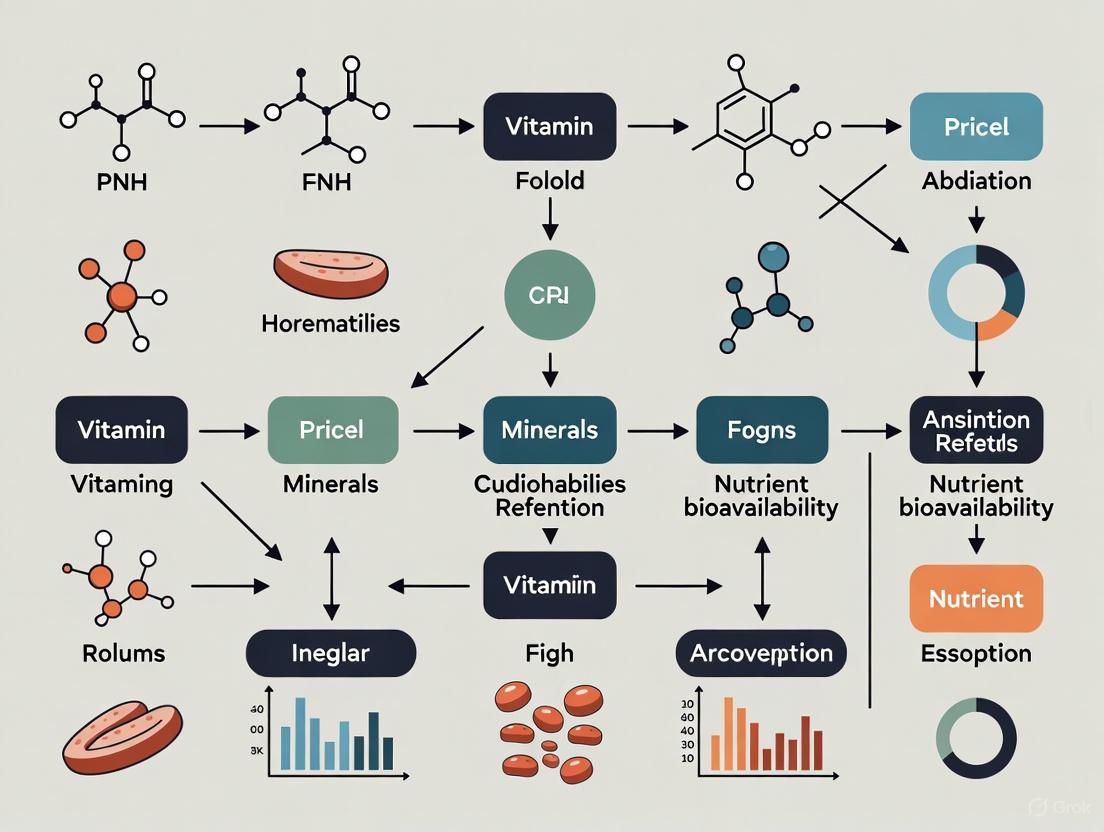
This article provides a comprehensive analysis of the multifaceted factors governing nutrient bioavailability, tailored for researchers, scientists, and drug development professionals.
Decoding Nutrient Bioavailability: Key Dietary, Host, and Methodological Factors for Biomedical Research
Abstract
This article provides a comprehensive analysis of the multifaceted factors governing nutrient bioavailability, tailored for researchers, scientists, and drug development professionals. It explores the foundational principles defining bioavailability and bioaccessibility, detailing the dietary, matrix, and host-related determinants that influence nutrient absorption and utilization. The scope extends to advanced methodological frameworks for assessment, including in vitro, in vivo, and in silico models, alongside predictive algorithms for iron, zinc, and vitamins. The content further addresses strategic interventions to enhance bioavailability through processing, formulation, and synergistic nutrient pairing, and concludes with a comparative evaluation of nutrient and drug bioavailability paradigms, highlighting implications for clinical research and therapeutic development.
Defining Bioavailability: From Core Concepts to Influential Dietary and Host Factors
In nutritional sciences and drug development, accurately predicting the physiological impact of a nutrient or active compound requires moving beyond its mere presence in a food or supplement. Two pivotal concepts, bioaccessibility and bioavailability, form a sequential pathway that determines the fraction of an ingested substance that ultimately reaches systemic circulation and becomes available for physiological use. While these terms are sometimes used interchangeably, they represent distinct phases of the journey from ingestion to utilization.
This distinction is critical for researchers designing experiments, interpreting data, and developing effective nutritional or pharmaceutical interventions. Within the broader context of a thesis on factors influencing nutrient bioavailability, this whitepaper provides a technical dissection of these concepts, detailing the experimental methodologies used to quantify them and the key factors that modulate their outcomes.
Conceptual Definitions and Sequential Relationship
The assimilation of a compound into the body is a multi-stage process. Understanding the precise definitions of bioaccessibility and bioavailability is fundamental to studying this pathway.
- Bioaccessibility refers to the fraction of a compound that is released from its food matrix and becomes soluble in the gastrointestinal (GI) tract, making it available for potential intestinal absorption [1] [2]. It is the maximum amount theoretically released from the food and represents an upper limit for absorption.
- Bioavailability, in contrast, is a more comprehensive term. It describes the proportion of an ingested nutrient that is absorbed, passes through the gut wall into the bloodstream, and is transported to the site of action, where it can be utilized or stored in the body [3] [4]. As such, bioavailability encompasses not only absorption but also metabolism, tissue distribution, and bioactivity.
The relationship between these concepts is inherently sequential, as illustrated in the following diagram.
Methodological Approaches: In Vitro vs. In Vivo
The assessment of bioaccessibility and bioavailability requires distinct experimental approaches, each with its own advantages, limitations, and appropriate applications.
In Vitro Models for Bioaccessibility
In vitro simulations of human digestion are widely used for preliminary, ethical, and high-throughput assessment of bioaccessibility. These models aim to replicate the chemical and physical conditions of the GI tract.
Core Protocol for a Two-Stage In Vitro Digestion: A commonly used method involves a sequential simulation of gastric and intestinal phases [1] [5].
- Gastric Phase: The food sample is incubated with a simulated gastric fluid, typically containing pepsin, at a low pH (e.g., 2.0) for a specified period (e.g., 1-2 hours) at body temperature (37°C) with constant agitation.
- Intestinal Phase: The gastric chyme is then neutralized and mixed with a simulated intestinal fluid containing pancreatin and bile salts. This mixture is further incubated to simulate the small intestine environment.
Determining the Bioaccessible Fraction: The fraction of the nutrient released into the digestive fluid is considered bioaccessible. To more accurately mimic absorption, this fluid is often separated from any solid residue, for example, by dialysis through semi-permeable cellulose membranes with specific pore sizes that allow only soluble, low-molecular-weight compounds to pass through [1]. The compound concentration in the dialysate represents the bioaccessible fraction.
Table 1: Key Reagents for In Vitro Bioaccessibility Studies
| Research Reagent | Function in Experimental Protocol |
|---|---|
| Simulated Gastric/Intestinal Fluids | Provides the ionic environment and pH of the human GI tract. |
| Pepsin & Pancreatin | Enzyme cocktails that simulate the proteolytic and other digestive activities in the stomach and small intestine. |
| Cellulose Dialysis Membranes | Mimics the selective absorption barrier of the intestinal wall; the diffusible fraction is considered bioaccessible [1]. |
| Bile Salts | Emulsifies lipids, facilitating the release of lipophilic compounds from the food matrix. |
In Vivo and Advanced Models for Bioavailability
While in vitro models are valuable for screening, bioavailability requires evidence of absorption and systemic use, which can only be fully assessed in living organisms.
- Balance Studies: A classical approach that measures the difference between the amount of a nutrient ingested and the amount excreted in feces, providing an estimate of "apparent absorption" [4].
- Stable Isotope Tracers: This method uses non-radioactive isotopic labels (e.g., ^13C, ^2H) to track the absorption, metabolism, and distribution of a specific nutrient within the body, offering highly accurate data on bioavailability [3].
- Cell Culture Models (e.g., Caco-2): Monolayers of human colon adenocarcinoma cells (Caco-2) that differentiate to resemble intestinal enterocytes are used to study transport and uptake mechanisms of bioaccessible compounds, bridging the gap between in vitro and in vivo studies [6].
The following diagram summarizes the primary experimental workflows for assessing both bioaccessibility and bioavailability.
Key Factors Influencing Bioaccessibility and Bioavailability
The journey from food to physiological effect is governed by a complex interplay of food-related, host-related, and compound-related factors.
Food Matrix and Composition
The physical and chemical environment of the food itself is a primary determinant.
- Encapsulation: Delivery systems like liposomes, emulsions, and protein-based carriers can protect sensitive vitamins (e.g., A, C, D) from degradation during digestion, significantly enhancing their stability and bioaccessibility [7].
- Inhibitors: Compounds such as phytates found in grains and legumes strongly bind to minerals like zinc and iron, forming insoluble complexes that drastically reduce their bioaccessibility [6] [4].
- Enhancers: Dietary lipids are crucial for the absorption of fat-soluble vitamins (A, D, E, K). Similarly, certain proteins and peptides, such as casein phosphopeptides, can enhance calcium bioavailability by preventing its precipitation in the intestine [3].
Host Factors
The physiological state of the individual consuming the nutrient plays a critical role.
- Life Stage and Gender: Age significantly influences absorption; children may have higher absorption rates for some nutrients, while the elderly often experience reduced absorption. Gender-specific differences also exist [1] [4].
- Microbiome: A healthy gastrointestinal microbiota can increase the absorption of certain vitamins and minerals, while dysbiosis can reduce their availability [4].
- Health Status: Genetic variability, the presence of diseases (e.g., malabsorption syndromes), and the use of specific medications can all profoundly impact nutrient bioavailability [4].
Table 2: Quantitative Impact of Various Factors on Bioavailability
| Factor | Example Compound | Impact on Bioavailability | Experimental Context |
|---|---|---|---|
| Chemical Form | Chromium (as picolinate vs. chloride) | Relative bioavailability ranged from 2.97% to 3.70%, varying by form and diet [1]. | In vitro model with dialysis. |
| Dietary Inhibitor | Zinc (in high-phytate foods) | Bioavailability can be significantly reduced; phytates are a major cause of deficiency [6]. | In vivo and Caco-2 cell studies. |
| Encapsulation | Vitamin B12 | Spray-dried microcapsules enhanced bioavailability up to 1.5-fold [7]. | In vitro digestion and absorption models. |
| Encapsulation | Vitamin D | Nano-delivery systems enhanced cellular transport up to five-fold [7]. | In vitro digestion and Caco-2 models. |
| Food Matrix | Calcium (from dairy) | ~40% absorbed under normal circumstances; enhanced by casein and lactose [3]. | Human balance and isotope studies. |
The critical distinction between bioaccessibility and bioavailability is not merely semantic but fundamental to rigorous research in nutrition and pharmacology. Bioaccessibility defines the pool of a compound available for absorption, while bioavailability describes the fraction that is successfully integrated into the body's systems. Recognizing this sequence is essential for designing robust experiments, whether using in vitro digestion models to estimate bioaccessibility or advanced in vivo techniques to quantify true bioavailability.
For researchers investigating the factors influencing nutrient bioavailability, this framework is indispensable. It allows for the systematic dissection of where and how an intervention—be it a new processing technology, a novel food matrix, or a specific dietary context—exerts its effect along the pathway from ingestion to physiological outcome. A precise understanding of these concepts ensures that scientific findings are accurately interpreted and effectively translated into strategies for improving human health through nutrition and medicine.
The relationship between dietary intake and human health is not solely determined by the total quantity of nutrients consumed but rather by their bioavailability—the proportion of an ingested nutrient that is absorbed, transported, and utilized in normal physiological functions or stored [8]. The food matrix, defined as the intricate molecular and physical organization of food components, plays a decisive role in modulating nutrient bioavailability [9]. For researchers and drug development professionals, understanding these dietary and food matrix determinants—including the chemical form of nutrients, and the presence of dietary enhancers and inhibitors—is crucial for developing effective nutritional interventions, fortified foods, and therapeutic agents. This technical guide provides an in-depth examination of these factors within the broader context of nutrient bioavailability research.
Core Concepts and Definitions
Bioavailability extends beyond mere absorption in the gut to include the utilization of nutrients for metabolic processes and storage [8]. A more mechanistic definition describes it as "the proportion of an ingested nutrient that is released during digestion, absorbed via the gastrointestinal tract, transported and distributed to target cells and tissues, in a form that is available for utilization in metabolic functions or for storage" [8].
The food matrix encompasses the complete structural organization of a food, including its nutrient and non-nutrient components and their physical relationships. This complex structure significantly influences the kinetics of nutrient release during digestion and subsequent absorption [9]. The concept of matrix effects is also critical in analytical chemistry, where components of a sample other than the analyte can influence its detection, leading to signal suppression or enhancement [10].
Table 1: Key Terminology in Bioavailability Research
| Term | Definition | Research Significance |
|---|---|---|
| Bioavailability | Fraction of ingested nutrient absorbed and utilized for normal body functions [11]. | Primary endpoint for assessing nutritional quality and efficacy of interventions. |
| Food Matrix | The structural and molecular organization of food components within a food. | Determines nutrient release kinetics and interactions during digestion [9]. |
| Bioaccessibility | The fraction of a nutrient released from the food matrix into the gut lumen during digestion. | Prerequisite for absorption; can be measured via in vitro digestion models. |
| Matrix Effects | Alteration of analytical signal due to co-extracted sample components other than the analyte [10]. | Critical consideration for method validation in quantitative analysis of complex food samples. |
Key Dietary and Food Matrix Determinants
Chemical Form of Nutrients
The chemical speciation of a nutrient fundamentally dictates its absorption pathway and efficiency.
- Iron: Heme iron (from hemoglobin and myoglobin in meat, poultry, and fish) is absorbed with an efficiency of 10-40%, regulated primarily by body iron stores. In contrast, nonheme iron (from plant foods and iron salts) has lower absorption (2-20%) and is highly influenced by dietary factors [11].
- Vitamin A: Pre-formed vitamin A (retinol and its esters from animal products) is more readily absorbed than provitamin A carotenoids (like β-carotene from plants). The bioavailability of provitamin A is influenced by the food matrix, with fat enhancing its absorption [11].
- Vitamin D: Vitamin D3 (cholecalciferol, from animal sources) and Vitamin D2 (ergocalciferol, from plant sources) are generally considered bioequivalent, though some research suggests potential differences in potency [11].
Dietary Inhibitors
Several dietary components can significantly reduce mineral bioavailability by forming insoluble complexes in the gastrointestinal tract.
- Phytic Acid (Phytate): This is the primary storage form of phosphorus in seeds, grains, and legumes. It is a potent inhibitor of nonheme iron, zinc, and calcium absorption by forming insoluble complexes in the gut [11]. The inhibitory effect is dose-dependent; for iron, phytate-to-iron molar ratios below 1:1, and preferably below 0.4:1, are needed to enhance absorption [11].
- Polyphenols: Found in tea, coffee, cocoa, red wine, and some vegetables and cereals, these compounds can chelate nonheme iron, reducing its absorption. The effect is also dose-dependent [11].
- Fiber and Other Components: Certain types of dietary fiber can physically entrap minerals or increase viscosity, slowing diffusion and absorption. Sulfur-containing proteins can also influence calcium balance by inducing hypercalciuria, though this may be compensated by increased absorption [9].
Dietary Enhancers
Certain food components and processing methods can promote nutrient absorption.
- Organic Acids: Ascorbic acid (vitamin C) is a powerful enhancer of nonheme iron absorption, as it can reduce ferric iron (Fe³⁺) to the more soluble ferrous (Fe²⁺) form and form soluble iron-ascorbate complexes [8].
- Peptides and Amino Acids: Phosphopeptides derived from casein hydrolysis in dairy can sequester calcium, preventing its precipitation with anions like phosphate in the intestine and enhancing its passive diffusion [9]. Amino acids like L-lysine and L-arginine also facilitate calcium absorption [9].
- Fat-Soluble Vitamins and Fats: Dietary fat is essential for the absorption of fat-soluble vitamins (A, D, E, and K). The presence of fat stimulates bile secretion, which is critical for micelle formation and the uptake of these vitamins [8].
- Prebiotics: Compounds like lactose and galacto-oligosaccharides may function as prebiotics, stimulating the growth of beneficial gut bacteria like bifidobacteria. This can maintain a low pH in the colon, potentially enhancing mineral absorption such as calcium [9].
Table 2: Key Dietary Factors Affecting Mineral Bioavailability
| Mineral | Major Inhibitors | Major Enhancers | Key Interaction Notes |
|---|---|---|---|
| Nonheme Iron | Phytate, Polyphenols, Calcium | Ascorbic Acid, Meat/Poultry/Fish (MFP factor), Organic Acids | Inhibition by phytate is dose-dependent; Ascorbic acid can counteract the effects of phytate [11]. |
| Zinc | Phytate | Organic Acids, Animal Proteins | The phytate:zinc molar ratio is a key predictor of absorbable zinc [11]. |
| Calcium | Phytate, Oxalate, Sulfur-containing proteins | Lactose (in certain populations), Casein phosphopeptides, Vitamin D | Vitamin D regulates active transport; dairy matrix components enhance passive diffusion [9]. |
Methodologies for Assessing Bioavailability and Matrix Effects
In Vivo Human Studies
Human studies are considered the gold standard for bioavailability assessment.
- Balance Studies: These measure the difference between nutrient intake and excretion (in feces, urine, and other routes) to determine net retention [8].
- Stable Isotope Tracers: The use of stable isotopes of minerals (e.g., Fe, Zn) allows for the precise tracking of absorption and metabolic utilization from specific foods or meals without the ethical concerns of radioisotopes [9] [12].
- Ileal Digestibility: This method involves measuring the nutrient content remaining in the ileal contents (often via ileostomates) and is considered a reliable indicator of apparent absorption for some nutrients [8].
In Vitro and Analytical Techniques
In vitro and model systems are valuable for mechanistic studies and screening.
- Simulated Gastrointestinal Digestion: These models mimic the stomach and small intestine conditions to assess bioaccessibility—the release of nutrients from the food matrix [8].
- Solid-Phase Microextraction (SPME): This technique can be used to quantify the distribution and release kinetics of hydrophobic compounds (e.g., flavors, bioactives) within and from complex food matrices like lipid particles [13].
- Determining Matrix Effects in Analytical Chemistry: When analyzing nutrients or contaminants in complex foods, matrix effects can alter the analytical signal. This is determined by comparing the analyte response in a pure solvent to its response in a matrix extract [10].
- Protocol: A known concentration of the analyte is spiked into both a solvent and a post-extraction sample matrix. The peak areas (Asolvent and Bmatrix) are compared using the formula:
Matrix Effect (%) = [(B_matrix - A_solvent) / A_solvent] × 100[10]. A value >|20%| typically requires method compensation, such as using matrix-matched calibration standards or isotope-labeled internal standards [10].
- Protocol: A known concentration of the analyte is spiked into both a solvent and a post-extraction sample matrix. The peak areas (Asolvent and Bmatrix) are compared using the formula:
Predictive Framework and Modeling
A structured 4-step framework has been proposed to develop predictive equations for nutrient absorption [12] [14]:
- Identify Key Factors: Determine the primary food matrix and host factors influencing the bioavailability of the target nutrient.
- Literature Review: Conduct a comprehensive review of high-quality human studies.
- Equation Construction: Build predictive algorithms based on the synthesized data (e.g., algorithms exist for iron and zinc that incorporate phytate intake) [11].
- Validation: Validate the equations against independent data sets to ensure accuracy and translational potential.
The following diagram illustrates the core experimental workflow for evaluating food matrix effects on nutrient bioavailability, integrating in vitro and in vivo approaches.
The Scientist's Toolkit: Research Reagent Solutions
Table 3: Essential Reagents and Materials for Bioavailability Research
| Reagent/Material | Function/Application | Key Considerations |
|---|---|---|
| Stable Isotope Tracers (e.g., ⁵⁷Fe, ⁶⁷Zn) | Used in human studies to trace the absorption, distribution, and retention of minerals from specific foods without radioactivity [12]. | Requires access to ICP-MS for precise isotopic ratio measurement. |
| Simulated Gastrointestinal Fluids | Key components of in vitro digestion models to mimic oral, gastric, and intestinal conditions for bioaccessibility studies. | Composition (enzymes, salts, pH) should be standardized (e.g., INFOGEST protocol). |
| Solid-Phase Microextraction (SPME) Fibers | Used for solvent-free extraction and concentration of volatile/semi-volatile analytes (e.g., flavors, bioactives) from complex food matrices to study release kinetics [13]. | Fiber coating chemistry must be matched to target analytes. |
| Phytase Enzymes | Used in research to hydrolyze phytic acid in plant-based foods, reducing its mineral-binding capacity and studying the resultant increase in mineral bioavailability [8]. | Can be used as a processing aid to develop high-bioavailability foods. |
| Matrix-Matched Calibration Standards | Analytical standards prepared in a blank extract of the sample matrix to compensate for matrix effects during quantitative LC-MS/GC-MS analysis, ensuring accurate quantification [10]. | Critical for reliable data when matrix effects exceed ±20%. |
| Short-Chain Phospholipids (e.g., diC₆PC, diC₇PC) | Model "green surfactants" to create colloidal assemblies (micelles, vesicles) for studying the entrapment and delivery of hydrophobic nutrients and flavors [13]. | Useful for understanding structural changes in delivery systems. |
The determinants of nutrient bioavailability extend far beyond the chemical analysis of a food's total nutrient content. The chemical form of the nutrient, the complex structure of the food matrix, and the dynamic interplay between dietary inhibitors and enhancers collectively dictate the final physiological value of food. A deep understanding of these factors is indispensable for researchers and drug development professionals aiming to combat micronutrient deficiencies, design next-generation functional foods, and optimize therapeutic diets. Future research will continue to refine predictive models and leverage advanced analytical techniques to further elucidate the intricate relationship between diet, the food matrix, and human health.
Nutrient bioavailability is defined as the proportion of an ingested nutrient that is absorbed, transported to target tissues, and utilized in normal physiological processes or stored for future use [4] [11]. While diet-related factors such as food matrix and nutrient interactions are well-recognized influencers of bioavailability, host-related factors introduce significant complexity into nutrient absorption and utilization patterns. These intrinsic factors—including age, health status, genetic makeup, and gut microbiota—explain substantial interindividual variability in nutritional responses and requirements [15] [16]. This technical guide provides an in-depth examination of these host-related factors within the context of food bioavailability research, offering researchers and drug development professionals a comprehensive framework for designing studies and interpreting results related to nutrient absorption and metabolism.
Core Host-Related Factors and Their Mechanisms
Age and Physiological State
Age represents a critical determinant of nutrient bioavailability, with distinct physiological factors operating throughout the lifespan. The maturation state of the gastrointestinal tract, variations in digestive secretions, and specific growth demands all contribute to age-related differences in nutrient absorption and utilization [17].
Table 1: Age-Specific Considerations for Nutrient Bioavailability
| Life Stage | Key Physiological Factors | Nutrients Most Affected | Bioavailability Implications |
|---|---|---|---|
| Early Infancy (0-6 months) | Immature gut barrier, high lactase activity, primitive renal function | Iron, zinc, calcium, vitamins | Iron and zinc highly bioavailable from human milk; specialized formulas required for optimal absorption |
| Late Infancy/Early Childhood (6-24 months) | Rapid gut development, introduction of solid foods, high nutrient demands for growth | Iron, zinc, calcium | Bioavailability from complementary foods critical; phytate content significantly impacts mineral absorption |
| Adolescence (12-18 years) | Growth spurts, hormonal changes, bone mineralization peaks | Calcium, iron, zinc | Peak calcium absorption and bone deposition at menarche; iron demands increase dramatically |
| Elderly | Atrophic gastritis, hypochlorhydria, altered gut motility | Vitamin B12, iron, calcium, folate | Impaired absorption of protein-bound B12; reduced non-heme iron absorption due to low gastric acid |
The neonatal period is characterized by a gastrointestinal system specifically adapted for milk digestion, with iron and zinc demonstrating exceptionally high bioavailability from human milk [17]. By approximately six months of age, endogenous stores are depleted, and complementary foods must provide these critical minerals, though their bioavailability is often compromised by dietary inhibitors like phytate. During adolescence, the profound physiological changes dramatically impact nutrient requirements and absorption efficiency. For females, peak calcium absorption and bone deposition occur at or near menarche, illustrating how specific physiological milestones directly influence mineral bioavailability [17]. In elderly populations, atrophic gastritis and resulting hypochlorhydria represent significant barriers to nutrient absorption. The condition impairs the release of protein-bound vitamin B12 from food and reduces the solubility and subsequent absorption of non-heme iron and calcium carbonate supplements [11].
Health Status and Pathophysiological Conditions
Systemic health conditions and gastrointestinal pathologies profoundly influence nutrient bioavailability through multiple mechanisms, including alterations in digestive secretions, intestinal permeability, nutrient sequestration, and increased metabolic losses [15] [11].
Table 2: Health Conditions Affecting Nutrient Bioavailability
| Health Condition | Pathophysiological Mechanisms | Nutrients Affected | Impact on Bioavailability |
|---|---|---|---|
| Atrophic Gastritis/Hypochlorhydria | Reduced gastric acid secretion, bacterial overgrowth | Vitamin B12, iron, calcium, folate | Impaired release of protein-bound B12; reduced non-heme iron solubility |
| Environmental Enteric Dysfunction (EED) | Villus atrophy, intestinal inflammation, increased permeability | Multiple macro- and micronutrients | Malabsorption due to reduced absorptive surface and nutrient sequestration |
| Helicobacter pylori Infection | Gastric inflammation, hypochlorhydria | Iron, vitamin B12, vitamin C | Impaired iron absorption; reduced vitamin C secretion into gastric juice |
| Inflammatory Bowel Diseases | Mucosal damage, rapid transit time, bile acid malabsorption | Fat-soluble vitamins, zinc, iron, magnesium | Malabsorption due to inflamed mucosa; increased losses from diarrhea |
| Liver and Pancreatic Diseases | Reduced bile salt production, impaired digestive enzyme secretion | Fat-soluble vitamins, zinc, magnesium | Impaired micelle formation for lipid-soluble nutrients; reduced luminal digestion |
Environmental Enteric Dysfunction (EED), a subclinical condition prevalent in children from low-income countries, exemplifies how gut pathology dramatically impacts nutrient bioavailability. EED is characterized by villus atrophy, chronic intestinal inflammation, and increased gut permeability, resulting in malabsorption of multiple nutrients [11]. The condition is hypothesized to stem from continuous exposure to fecally contaminated environments and is associated with linear growth faltering and impaired neurodevelopment, partly due to reduced nutrient absorption. Similarly, hypochlorhydria—whether from atrophic gastritis, Helicobacter pylori infection, or prolonged proton pump inhibitor use—significantly impacts mineral and vitamin bioavailability by altering the gastric environment necessary for nutrient release and chemical transformation [11].
Genetic Factors
Genetic variations, particularly single nucleotide polymorphisms (SNPs), influence nutrient bioavailability by altering the expression or function of proteins involved in digestion, absorption, transport, and metabolism [16]. These genetic differences explain substantial interindividual variability in nutrient responses despite similar intake levels.
Table 3: Genetic Variations Affecting Nutrient Bioavailability
| Gene/Protein | Genetic Variation | Function | Nutrients Affected |
|---|---|---|---|
| BCO1 | SNPs affecting enzyme activity | Cleaves provitamin A carotenoids into retinal | β-carotene, α-carotene, β-cryptoxanthin |
| SCARB1 (SR-BI) | Expression polymorphisms | Cholesterol and carotenoid transporter | Fat-soluble vitamins, carotenoids |
| NPC1L1 | Functional SNPs | Sterol transporter in enterocytes | Cholesterol, vitamin E |
| CD36 | Genetic variants | Fatty acid and carotenoid transporter | Long-chain fatty acids, carotenoids |
| MTTP | SNPs affecting protein function | Assembles chylomicrons for lipid export | Fat-soluble vitamins, carotenoids |
| APOB | Genetic polymorphisms | Structural component of chylomicrons | Lipids, fat-soluble vitamins |
The bioavailability of carotenoids provides a well-characterized example of genetic influences on nutrient absorption. β-carotene oxygenase 1 (BCO1) catalyzes the cleavage of provitamin A carotenoids into retinal, and genetic polymorphisms in BCO1 significantly impact an individual's ability to convert dietary carotenoids to vitamin A [16]. Similarly, scavenger receptor class B member 1 (SCARB1 or SR-BI), responsible for carotenoid uptake into intestinal epithelial cells, demonstrates genetic variations that affect carotenoid absorption efficiency. These genetic differences can result in up to 30-fold variations in postprandial carotenoid responses between individuals consuming identical meals [16]. Beyond carotenoids, genetic variations in proteins involved in chylomicron assembly (MTTP, APOB) and nutrient transport (CD36) further contribute to the interindividual variability in lipid-soluble vitamin absorption and distribution [16].
Gut Microbiota
The gut microbiome functions as a metabolic interface between diet and host, significantly influencing nutrient bioavailability through multiple mechanisms including biosynthesis, biotransformation, and modulation of host absorption pathways [18] [19] [20].
Diagram 1: Gut Microbiota in Nutrient Bioavailability (83 characters)
The gut microbiota significantly influences host energy balance and nutrient availability. Controlled feeding studies comparing Western diets with Microbiome Enhancer Diets (MBD) designed to deliver more substrates to colonic microbes demonstrated that the MBD led to an additional 116 ± 56 kcal lost in feces daily, resulting in significantly lower metabolizable energy for the host (89.5% vs. 95.4% on Western diet) [18]. This energy loss was accompanied by increased microbial biomass and elevated short-chain fatty acid (SCFA) production, indicating enhanced microbial fermentation. The gut microbiota also directly contributes to vitamin biosynthesis, supplying significant quantities of vitamin K, biotin, folate, and riboflavin to the host [19]. Additionally, microbial metabolism transforms primary bile acids into secondary bile acids, which influence micelle formation and thereby the absorption of lipid-soluble vitamins [20]. The microbiota's composition, which varies substantially between individuals, responds dynamically to dietary patterns, particularly fiber content, creating a complex interplay that determines net nutrient harvest from the diet [18].
Experimental Methodologies for Assessing Host Factors
Balance Studies and Metabolic Ward Protocols
Balance studies represent a foundational methodology for investigating nutrient bioavailability, measuring the difference between nutrient intake and excretion to determine net absorption [4] [21]. Recent advances in study design have incorporated stringent environmental controls within metabolic wards to minimize confounding variables.
Protocol: Comprehensive Metabolic Ward Balance Study
Participant Selection Criteria: Recruit homogeneous participant groups based on specific host factors of interest (age, genotype, health status). Exclude individuals with recent antibiotic use, chronic metabolic conditions, or unstable body weight [18].
Dietary Intervention Design:
- Prepare controlled diets in metabolic kitchens with validated nutrient content via chemical analysis
- Implement crossover designs with washout periods
- Match diets for metabolizable energy and macronutrients while varying specific bioactive components
- Example: Western Diet (WD) vs. Microbiome Enhancer Diet (MBD) with equivalent energy but differing fiber content, resistant starch, and food particle size [18]
Sample Collection Timeline:
- Days 1-7: Adaptation period to stabilize gut microbiota
- Days 8-14: Continuous balance measurements
- Daily collections of urine and feces
- Periodic blood sampling for nutrient kinetics
Analytical Measurements:
- Bomb calorimetry of food, feces, and urine to determine energy content
- Chemical analysis of specific nutrients in food and fecal samples
- Microbiota profiling via 16S rRNA sequencing and whole-genome shotgun metagenomics
- SCFA quantification via gas chromatography
- Enteroendocrine hormones (GLP-1, PYY) via immunoassay
This rigorous protocol revealed that the MBD resulted in significantly lower host metabolizable energy (89.5 ± 0.73%) compared to the WD (95.4 ± 0.21%), demonstrating how dietary modulation of gut microbiota directly impacts energy harvest [18].
Isotopic Tracer Studies
Isotopic labeling provides the most precise methodology for tracking nutrient absorption, distribution, and metabolism, allowing researchers to distinguish administered nutrients from endogenous stores.
Protocol: Double Tracer Study for Carotenoid Bioavailability
Tracer Preparation:
- Utilize stable isotope-labeled nutrients (e.g., D6-β-carotene)
- Verify isotopic purity and chemical structure via mass spectrometry
- Administer in physiological doses (e.g., 37 μmol D6-β-carotene) with standardized test meals [16]
Study Procedure:
- Overnight fasting prior to test meal administration
- Collect baseline blood samples before tracer administration
- Serial blood sampling over 8-72 hours post-administration
- Timed fecal collections if assessing excretion
Sample Analysis:
- Isolate plasma lipoprotein fractions via ultracentrifugation
- Extract carotenoids from plasma and food matrices
- Quantify tracer and tracee concentrations using HPLC-MS/MS
- Calculate area under the curve (AUC) for plasma concentration-time profiles
This methodology has revealed extraordinary interindividual variability in carotenoid absorption, with AUC values ranging from 0.01 to 30.00 μmol·h/L in response to identical D6-β-carotene doses [16]. Such variability underscores the profound influence of host factors including genetic polymorphisms in carotenoid cleavage enzymes (BCO1) and transport proteins (SCARB1).
Genomic Approaches
Genetic association studies identify specific polymorphisms that explain interindividual variability in nutrient absorption and metabolism.
Protocol: Genome-Wide Association Study (GWAS) for Nutrient Response
Participant Stratification:
- Recruit large cohorts (n > 500) with diverse genetic backgrounds
- Pre-screen for specific genetic variants of interest (e.g., BCO1, SCARB1)
- Control for confounding variables (age, BMI, health status)
Phenotypic Measures:
- Administer standardized nutrient challenge test
- Measure pre- and post-prandial nutrient concentrations in plasma
- Calculate quantitative traits (AUC, Cmax, Tmax)
Genotyping and Analysis:
- Perform whole-genome sequencing or SNP chip analysis
- Conduct association testing between genetic variants and phenotypic responses
- Validate findings in independent replication cohorts
- Perform functional characterization of significant variants
These approaches have identified key genetic variants affecting carotenoid bioavailability, including SNPs in BCO1 that affect conversion efficiency to vitamin A, and SCARB1 polymorphisms that alter cellular uptake [16].
Table 4: Methodological Approaches for Studying Host Factors in Bioavailability
| Methodology | Key Measurements | Applications | Limitations |
|---|---|---|---|
| Balance Studies | Fecal energy loss, nutrient excretion, metabolizable energy | Quantifying net absorption, energy harvest | Does not assess tissue utilization, requires controlled conditions |
| Isotopic Tracers | Plasma AUC, tracer enrichment, kinetic parameters | Tracking specific nutrient absorption and metabolism | Expensive, requires specialized analytical equipment |
| Genomic Association Studies | SNP frequencies, genotype-phenotype correlations | Identifying genetic determinants of bioavailability | Large sample sizes required, functional validation needed |
| Microbiome Profiling | 16S rRNA, metagenomics, metabolomics | Assessing microbial contributions to bioavailability | Correlation does not imply causation, high interindividual variability |
The Scientist's Toolkit: Research Reagent Solutions
Table 5: Essential Research Reagents for Studying Host Factors in Bioavailability
| Reagent/Category | Specific Examples | Research Application | Function |
|---|---|---|---|
| Stable Isotope Tracers | D6-β-carotene, 13C-vitamins, 67Zn, 57Fe | Nutrient absorption kinetics | Distinguishing administered nutrients from endogenous pools |
| Genotyping Assays | TaqMan SNP Genotyping, Whole Genome Sequencing | Genetic association studies | Identifying polymorphisms in nutrient-related genes |
| Microbiome Analysis Kits | 16S rRNA sequencing kits, Metagenomic libraries | Gut microbiota characterization | Profiling microbial community structure and function |
| Cell Culture Models | Caco-2 intestinal cells, organoid cultures | Intestinal transport studies | Modeling nutrient absorption mechanisms |
| Analytical Standards | Certified reference materials, isotope-labeled internal standards | Mass spectrometry quantification | Accurate quantification of nutrients and metabolites |
| Enzyme Activity Assays | BCO1 activity, hydrolytic enzyme assays | Functional genomics | Characterizing consequences of genetic variants |
| Gut-on-a-Chip Systems | Microfluidic intestinal models | Host-microbe interaction studies | Modeling complex gut environment with human cells |
Host-related factors—including age, health status, genetic makeup, and gut microbiota—represent fundamental determinants of nutrient bioavailability that introduce substantial complexity into nutritional research and dietary recommendations. These factors operate through diverse mechanisms, from genetic polymorphisms that alter nutrient transport protein function to age-related changes in gastrointestinal physiology and microbial modulation of nutrient availability. Advanced methodological approaches, including metabolic balance studies, isotopic tracer techniques, and genomic analyses, provide powerful tools for dissecting these complex relationships. Future research must continue to develop integrated models that account for the interplay between multiple host factors, enabling more personalized nutritional recommendations and therapeutic approaches that optimize nutrient bioavailability based on individual host characteristics.
The Impact of Life Stage and Pathophysiology on Absorptive Capacity
Nutrient bioavailability is not solely a function of dietary intake but is profoundly influenced by the physiological status of the consumer. Life stage and pathophysiological conditions introduce significant variability in gastrointestinal environments, digestive efficiency, and subsequent nutrient absorption, challenging the concept of a one-size-fits-all approach to nutritional science and food formulation. Understanding these dynamics is critical for developing targeted nutritional solutions that can effectively address the specific needs of vulnerable populations, including infants, older adults, and individuals with chronic metabolic disorders. This whitepaper synthesizes current research to provide an in-depth technical guide on how absorptive capacity varies throughout life and in disease states, framing this within the broader context of factors influencing nutrient bioavailability in foods research. It further provides researchers and drug development professionals with quantitative data, validated experimental protocols, and visual tools to advance the field of personalized nutrition.
Impact of Life Stage on Nutrient Absorption
The physiological processes of digestion and absorption evolve significantly across the human lifespan. Two critical periods—the first 1,000 days of life and older adulthood—demonstrate particularly distinct absorptive capacities.
The First 1000 Days
The period from conception to a child's second birthday represents a crucial window for establishing long-term health trajectories [22]. During this time, optimal nutrition is required to support rapid growth, brain development, and metabolic programming. The quantity of food consumed by an infant is limited, making the nutrient density and bioavailability of every meal paramount [22]. Key nutrients during this stage include carotenoids (lutein and zeaxanthin), choline, folate, iodine, iron, omega-3 fatty acids, and vitamin D [22]. Iron and folic acid are especially critical; fortification and supplementation strategies have been shown to significantly increase serum ferritin and hemoglobin levels in women of reproductive age and pregnant women, and to reduce the incidence of congenital abnormalities like neural tube defects [22]. The foundation of infant nutrition is breastfeeding, and when a mother's own milk is unavailable, donor human milk is the optimal alternative, as recommended by major pediatric and health organizations worldwide [22].
Older Adulthood
Age-related physiological decline negatively impacts nutrient digestion and absorption, increasing susceptibility to diet-related diseases [23]. A compelling study using the dynamic in vitro gastrointestinal model DIDGI simulated the digestive processes of young and older adults to assess the bioavailability of α-tocopherol (vitamin E) from fortified yogurts [23]. The results, summarized in Table 1, reveal a significant disparity in absorptive capacity between age groups.
Table 1: Age-Related Differences in α-Tocopherol Bioavailability from Fortified Yogurt
| Parameter | Young Adult Model | Older Adult Model | Significance |
|---|---|---|---|
| Intestinal Recovery of α-Tocopherol | 97.3 ± 5.9 % | 79.8 ± 5.2 % | Significantly Higher in Young |
| Bioaccessibility (Intestinal Phase) | 60.54 ± 7.38 % to 78.90 ± 8.88 % | Comparable to Young | Not Significant |
| Overall Estimated Bioavailability | 67.76 ± 7.15 % | 57.59 ± 4.50 % | Significantly Greater in Young |
The study concluded that gastric emptying is a key factor, significantly affecting α-tocopherol release and solubilization, with distinct release kinetics observed between the models [23]. This underscores that aging alters digestive function, impacting the bioavailability of even encapsulated bioactives designed for enhanced delivery.
Pathophysiological Factors Modifying Absorption
Underlying health conditions can create a pathophysiological state that fundamentally alters the body's handling of nutrients, often by inducing low-grade chronic inflammation, oxidative stress, and metabolic disturbances.
The Role of Stress and Homeostasis
The efficiency of functional foods depends on processes of digestion, absorption, metabolization, and bioavailability in body fluids and tissues [24]. These processes are compromised in pre-pathological conditions such as hypertension, low-degree chronic inflammation, insulin resistance, oxidative stress, and dysbiosis [24]. In such states of stress, the continuous consumption of unbalanced, high-calorie meals leads to repeated postprandial metabolic stress, characterized by sharp increases in blood pressure, insulin resistance, and oxidative and inflammatory stress markers [24]. The functionality of a food is thus context-dependent; a food is considered "functional" in a pathophysiological state if it can modulate biomarkers and restore homeostatic conditions, thereby playing a role in nutrition-related disease prevention [24].
The Case of Vitamin D
Vitamin D status provides a clear example of the interaction between pathophysiology and absorption. Vitamin D deficiency is a recognized global health issue and is implicated in the progression and prevention of numerous non-communicable diseases (NCDs), including cancer, diabetes, osteomalacia, and cardiovascular diseases [25]. However, the absorption and status of vitamin D rely on various factors. Its absorption can be hampered by medical conditions such as renal failure, liver disease, and a history of transplants [25]. Furthermore, the presence of complementary nutrients, the chemical form of the vitamin, and external stimuli like UV-B exposure are all critical determinants of an individual's vitamin D status [25]. This illustrates that even when a nutrient is present in the diet or in a fortified food, its ultimate bioavailability is not guaranteed in the presence of pathophysiology.
Quantitative Data on Absorption and Bioavailability
Robust, quantitative data is essential for modeling nutrient absorption and designing effective interventions. Advanced proteomic and metabolomic methods are enabling precise measurement of the factors governing bioavailability.
Table 2: Absolute Protein Expression Levels at the Blood-Brain Barrier (BBB) in Mice
| Protein Molecule | Gene Symbol | Absolute Expression Level (fmol/μg protein) | Strain Differences (Max 2.2-fold) |
|---|---|---|---|
| P-glycoprotein | abcb1a/mdr1a | Data within range of 0.637-101 | Not Specified |
| Breast Cancer Resistance Protein | abcg2/bcrp | Data within range of 0.637-101 | Significant between C57BL/6J and other(s) |
| Glucose Transporter 1 | slc2a1/glut1 | Data within range of 0.637-101 | Not Specified |
| Large Neutral Amino Acid Transporter 1 | slc7a5/lat1 | Data within range of 0.637-101 | Not Specified |
| Monocarboxylate Transporter 1 | slc16a1/mct1 | Data within range of 0.637-101 | Significant between C57BL/6J and other(s) |
Table 3: Functional Decomposition of Metabolic Costs in E. coli
| Metabolic Function | Contribution to ATP Generation | Implication |
|---|---|---|
| Biosynthesis of Building Blocks | ATP generated almost balances demand from protein synthesis. | Challenges the notion that energy is a key growth-limiting resource. |
| Fermentation and Respiration | Bulk of energy generated is unaccounted for in biosynthesis. | Suggests energy allocation to other cellular processes. |
The Quantitative Targeted Absolute Proteomics (QTAP) method allows for the highly sensitive simultaneous absolute quantification of target proteins, including low-abundance transporters and receptors [26]. For instance, QTAP has been used to quantify the protein expression levels of 13 key molecules at the blood-brain barrier in mice, with levels ranging from 0.637 to 101 fmol/μg protein and inter-strain differences of up to 2.2-fold for most molecules, as shown in Table 2 [26]. Furthermore, innovative theoretical frameworks like the Functional Decomposition of Metabolism (FDM) allow for the quantification of the contribution of every metabolic reaction to specific functions, such as biomass synthesis [27]. Applying FDM to E. coli revealed that the ATP generated during the biosynthesis of building blocks from glucose almost balances the demand from protein synthesis, the cell's largest energy expenditure, as summarized in Table 3 [27].
Experimental Protocols for Assessing Absorption
Dynamic In Vitro Digestion Models
Protocol Title: Dynamic In Vitro Digestion Simulating Young and Older Adult Gastrointestinal Conditions [23].
- System Setup: Employ the DIDGI dynamic in vitro gastrointestinal model, following the INFOGEST guidelines. Configure the system parameters (gastric pH, enzyme secretion rates, gastric emptying kinetics) to reflect published physiological data for young adults (e.g., ~25 years) and older adults (e.g., ~70 years).
- Test Meal Preparation: Prepare the test food, such as yogurt fortified with α-tocopherol encapsulated in oil-in-water nanoemulsions.
- Digestion Process:
- Gastric Phase: Introduce the test meal to the gastric compartment. Maintain temperature at 37°C. Simulate gastric secretion and mixing. Apply age-specific gastric emptying profiles (typically slower in older adults).
- Intestinal Phase: Transfer gastric chyme to the intestinal compartment in a controlled manner according to the predetermined kinetics. Add simulated intestinal fluids (bile salts, pancreatic enzymes) and maintain pH at intestinal levels.
- Sample Collection: Collect samples from the intestinal compartment at regular intervals throughout the digestion process.
- Analysis: Analyze samples for the target nutrient (e.g., α-tocopherol) using appropriate analytical techniques (e.g., HPLC). Calculate key parameters: bioaccessibility (percentage of nutrient released and solubilized in the intestinal lumen), intestinal recovery, and estimate overall bioavailability based on release kinetics and micellization.
Quantitative Targeted Absolute Proteomics (QTAP)
Protocol Title: Absolute Quantification of Protein Expression in Biological Samples via QTAP [26].
- Target Selection (Step 1): Select target proteins (e.g., nutrient transporters, receptors) based on global proteomics screening, literature, or hypothesis.
- In Silico Peptide Selection (Step 2): For each target protein, select a unique "target peptide" in silico based on strict criteria (see Table 4).
- Peptide Synthesis and Standardization (Steps 3-5): Synthesize stable-isotope labeled versions of the target peptides as internal standards. Use amino acid analysis to determine the precise concentration of unlabeled peptide standards. Optimize LC-MS/MS conditions (SRM/MRM transitions) for each peptide.
- Sample Preparation (Step 6): Prepare the biological sample (e.g., isolated brain capillaries, intestinal brush-border membrane vesicles). Digest the sample protein with trypsin.
- LC-MS/MS Analysis (Step 8): Perform simultaneous absolute quantification by spiking the sample with known amounts of isotope-labeled internal standard peptides and analyzing via LC-SRM/MRM on a triple quadrupole mass spectrometer.
- Data Analysis (Step 9): Calculate the absolute amount of each target protein in the sample by comparing the signal of the native peptide to the signal of the known internal standard.
Table 4: In Silico Pelection Criteria for QTAP Target Peptides
| Category | Criterion | Rationale |
|---|---|---|
| Necessary Conditions | 1. The peptide must be a theoretical tryptic fragment (C-terminal K or R). | Ensures efficient and predictable generation from the protein. |
| 2. The amino acid sequence must be unique to the target protein. | Guarantees quantification specificity. | |
| 3. Length of 6-16 amino acids (8-10 optimal). | Suitable for MS detection and fragmentation. | |
| 4. No methionine or cysteine residues. | Avoids oxidation and modification. | |
| 5. No post-translational modifications or known polymorphisms. | Quantifies total protein level without bias. | |
| 6. No continuous R or K sequences (RR, KK). | Ensures efficient tryptic digestion. | |
| 7. No proline residue at C-terminal side of R/K (RP, KP). | Prevents incomplete tryptic cleavage. | |
| 8. The peptide must not be in a transmembrane region. | Ensures accessibility for digestion. | |
| Sufficient Conditions | 9. Prefer no histidine residues. | Can reduce MS sensitivity. |
| 10. Prefer inclusion of a glycine or proline residue. | Can increase MS sensitivity. | |
| 11. Predict LC retention time based on hydrophobicity. | Aids in method development. | |
| 12. Prefer water-soluble peptides (hydrophobic AA < 40%). | Improves handling and analysis. |
Visualization of Pathways and Workflows
Age-Specific Digestion and Absorption Workflow
Diagram 1: Age-specific digestion impact on bioavailability.
QTAP Experimental Workflow
Diagram 2: QTAP workflow for absolute protein quantification.
The Scientist's Toolkit: Key Research Reagents and Materials
Table 5: Essential Research Reagents and Materials for Absorption Studies
| Item | Function/Application | Example/Note |
|---|---|---|
| Dynamic In Vitro Digestion Model | Simulates human GI tract peristalsis, secretion, and absorption in a controlled system. | DIDGI system [23]. |
| Stable Isotope-Labeled Peptides | Serve as internal standards for precise, absolute quantification in proteomics. | Synthesized with 13C/15N labels for QTAP [26]. |
| Triple Quadrupole Mass Spectrometer | Enables highly sensitive and selective SRM/MRM analysis for QTAP. | Essential for detecting low-abundance proteins [26]. |
| Simulated Gastrointestinal Fluids | Standardized digestive juices (saliva, gastric, intestinal) for in vitro studies. | Prepared per INFOGEST protocol [23]. |
| Encapsulation Systems | Enhance stability and bioavailability of sensitive bioactives for fortification. | Oil-in-water nanoemulsions for α-tocopherol [23]. |
| Target Peptide Selection Software | Identifies optimal, unique peptide sequences for target proteins from databases. | Critical first step in QTAP method development [26]. |
Assessment Frameworks and Predictive Modeling for Nutrient Bioavailability
In Vivo, In Vitro, and In Silico Methods for Bioavailability Measurement
Bioavailability is a critical pharmacokinetic parameter that measures the rate and extent to which an active drug or nutrient is absorbed and becomes available at the site of physiological action [28] [29]. In the context of food research, it describes the proportion of an ingested nutrient that is released during digestion, absorbed via the gastrointestinal tract, transported and distributed to target cells and tissues, and made available for utilization in metabolic functions or for storage [4]. Understanding and accurately measuring bioavailability is fundamental for determining the efficacy of bioactive compounds, developing effective dosage forms, and establishing dietary recommendations.
The measurement of bioavailability employs three complementary methodological approaches: in vivo (within living organisms), in vitro (in an artificial environment outside a living organism), and in silico (computer simulations). Each approach offers distinct advantages and limitations, and their integrated application provides the most comprehensive assessment of bioavailability. This guide examines the principles, protocols, and applications of these methods within the broader context of factors influencing nutrient bioavailability in foods research.
In Vivo Methods: Direct Measurement in Living Systems
In vivo methods are considered the gold standard for bioavailability assessment as they measure absorption and utilization within intact living organisms, most commonly humans or animal models.
Pharmacokinetic Studies
Plasma Concentration-Time Profiles: This is the most common approach for human bioavailability studies. It is based on the principle that the concentration of a substance in blood or plasma correlates with its concentration at the site of action [29]. A single dose of the compound is administered, and blood samples are collected at frequent intervals to construct a plasma concentration-time curve [29].
Key Bioavailability Parameters from Plasma Data:
- Cmax: The peak plasma concentration of the compound, indicating the maximum concentration achieved after administration [29].
- Tmax: The time required to achieve the peak plasma concentration, which provides an indication of the rate of absorption [29].
- AUC (Area Under the Curve): The integral of the concentration-time curve, which represents the total exposure to the compound over time and is the primary measure of the extent of bioavailability [28] [29].
Absolute bioavailability (F) is determined by comparing the AUC after oral administration to the AUC after intravenous administration (which is assumed to be 100% bioavailable), with adjustments for dose [29]. The formula is: F = (AUC~oral~ × Dose~IV~) / (AUC~IV~ × Dose~oral~) [29]. Relative bioavailability compares the AUC of a test formulation to that of a standard oral formulation [29].
Urinary Excretion Studies: For compounds that are excreted unchanged in the urine to a significant extent (at least 10-20%), urinary data can be used to determine bioavailability [29]. The cumulative amount of drug excreted (X~u~^∞^) is directly proportional to the extent of absorption. The maximum excretion rate (dX~u~/dt)~max~ and the time of its occurrence (t~u~)~max~ provide information about the rate of absorption [29]. This method is non-invasive and offers better patient compliance.
Pharmacodynamic and Therapeutic Response Methods
When pharmacokinetic measurement is difficult, pharmacodynamic methods may be used. These involve constructing a pharmacological effect-time curve. The method requires measuring responses for at least three biological half-lives to obtain a good estimate of AUC [29]. The therapeutic response method is based on observing the clinical response in patients; however, quantitation of the response is often imprecise, making it less suitable for comparative bioavailability studies [29].
In Vitro Methods: Controlled Laboratory Simulations
In vitro methods simulate biological processes under controlled laboratory conditions. They are cost-effective, high-throughput, and avoid ethical concerns associated with animal or human testing.
Simulated Digestion and Absorption Models
Caco-2 Cell Model: This widely used model employs a human colon adenocarcinoma cell line that, upon differentiation, exhibits morphological and functional characteristics of small intestinal enterocytes. It is a standard tool for predicting intestinal permeability.
Experimental Protocol:
- Cell Culture: Caco-2 cells are seeded onto porous membrane filters (e.g., Transwell inserts) and cultured for 21-28 days to allow for full differentiation and polarization.
- TEER Measurement: Transepithelial Electrical Resistance (TEER) is regularly monitored using a volt-ohm meter to confirm the formation of tight junctions and monolayer integrity.
- Dosing: The test compound is applied to the apical compartment (simulating the intestinal lumen).
- Sampling: Samples are taken from the basolateral compartment at timed intervals over several hours.
- Analysis: Sample analysis via HPLC or LC-MS/MS is used to determine the apparent permeability coefficient (P~app~), which correlates with in vivo absorption.
Limitations and Advancements: Simple in vitro models cannot fully model the systemic effects of a drug [30]. Advanced microphysiological systems, such as Gut/Liver-on-a-chip models, have been developed to recreate the combined effect of intestinal permeability and first-pass metabolism more accurately [30]. These systems interconnect gut and liver microtissues under fluidic flow, promoting metabolic capacity and enabling a more holistic estimation of oral bioavailability (F) by combining fraction absorbed (F~a~), fraction escaping gut metabolism (F~g~), and fraction escaping hepatic metabolism (F~h~) [30].
In Silico Methods: Predictive Computational Modeling
In silico methods use computational models to predict bioavailability based on the physicochemical properties of a compound and known physiological parameters.
Physiologically Based Pharmacokinetic (PBPK) Modeling
PBPK models are mechanistic models that simulate the absorption, distribution, metabolism, and excretion (ADME) of compounds in the body.
Workflow and Data Integration: PBPK modeling integrates data from in vitro assays (e.g., hepatic clearance rate from Liver-on-a-chip models and intestinal permeability from Gut-on-a-chip models) into a mathematical framework that describes human physiology [30]. This approach allows for the extrapolation of in vitro data to predict in vivo human bioavailability. The quality of the predictions is dependent on the input parameters derived from early in vitro and animal studies [30].
Application: These models are particularly valuable in the drug development process for selecting candidates with a high probability of success, optimizing formulations, and predicting potential food-effect interactions. They enable researchers to estimate key ADME parameters from a single, advanced in vitro experiment [30].
Comparative Analysis of Methodologies
Table 1: Comparison of In Vivo, In Vitro, and In Silico Methods for Bioavailability Measurement
| Method | Key Principles | Primary Outputs | Key Advantages | Major Limitations |
|---|---|---|---|---|
| In Vivo | Direct measurement in living organisms [29]. | AUC, C~max~, T~max~ [29]. | Gold standard; accounts for full complexity of biology [29]. | Ethical concerns; high cost and time; inter-individual variability. |
| In Vitro (Traditional) | Simulation of biological barriers in lab systems. | P~app~, Efflux Ratio, Metabolic Stability. | High-throughput; low cost; controlled conditions. | Oversimplified; may lack systemic interplay [30]. |
| In Vitro (Advanced MPS) | Co-culture of human tissues under fluidic flow to recreate organ crosstalk [30]. | F~a~, F~g~, F~h~, predicted F [30]. | Human-relevant; models combined gut-liver first-pass metabolism [30]. | Technically complex; higher cost than traditional in vitro. |
| In Silico (PBPK) | Computational simulation of ADME processes [30]. | Predicted AUC, C~max~, F. | Very fast and cheap; enables virtual screening. | Dependent on quality input data; validation required [30]. |
The Researcher's Toolkit: Essential Reagents and Materials
Table 2: Key Research Reagent Solutions for Bioavailability Studies
| Reagent / Material | Function in Bioavailability Assessment |
|---|---|
| Caco-2 Cell Line | A standard in vitro model for predicting human intestinal permeability and active transport mechanisms. |
| Primary Human Hepatocytes | Used in Liver-on-a-chip models to provide a more physiologically accurate representation of human liver metabolism and clearance [30]. |
| Transwell Inserts | Permeable supports used for growing cell monolayers (e.g., Caco-2) to study transepithelial transport. |
| PhysioMimix Bioavailability Assay Kit | An all-in-one kit containing hardware, consumables, and protocols to recreate a Gut/Liver-on-a-chip model for estimating human oral bioavailability [30]. |
| LC-MS/MS System | The analytical gold standard for the sensitive and specific quantification of drugs/nutrients and their metabolites in complex biological matrices like plasma and cell media. |
Experimental Workflow and Data Integration
The following diagram illustrates the integrated workflow for predicting human oral bioavailability using advanced in vitro and in silico methods.
The accurate measurement of bioavailability is a multifaceted challenge that requires a strategic combination of methodological approaches. While in vivo human studies remain the definitive standard, the field is rapidly advancing toward the integration of more sophisticated in vitro microphysiological systems and powerful in silico PBPK models. This integrated strategy, which leverages the strengths of each method, provides a more efficient, human-relevant, and mechanistic path to predicting the bioavailability of nutrients and drugs. This is particularly vital in food research for understanding how dietary factors, food matrices, and host physiology influence the ultimate health benefits of bioactive compounds, thereby bridging the gap between nutrient intake and functional efficacy.
Within the field of nutritional science, accurately determining the bioavailability of a nutrient—defined as its "accessibility to normal metabolic and physiologic processes"—is fundamental to establishing dietary requirements and developing effective nutritional interventions [21]. Bioavailability encompasses the sequence of digestion, absorption, transport, and utilization of nutrients by the body [4]. A precise understanding of this process is critical for addressing widespread micronutrient deficiencies and their associated health burdens [4]. This whitepaper details three core methodological approaches—balance studies, ileal digestibility measurements, and isotopic tracer techniques—that provide researchers and drug development professionals with the quantitative data necessary to evaluate nutrient bioavailability within complex food matrices and physiological systems.
Core Techniques for Measuring Bioavailability
Balance Studies
Balance studies represent a foundational approach for estimating nutrient absorption. The principle involves measuring the difference between the quantity of a nutrient ingested and the amount excreted in feces [4]. This method provides a measure of "apparent absorption," as it does not distinguish between unabsorbed dietary nutrient and endogenous nutrient excreted via the intestines [4]. While this approach can be applied to many minerals, its utility is limited for nutrients that are synthesized or degraded by the colonic microbiota, such as certain B vitamins, as this microbial activity can confound the excretion measurements [4].
Ileal Digestibility
The oro-ileal balance method is considered a more precise indicator of apparent absorption for many nutrients, particularly amino acids and minerals [4] [31]. This technique involves direct sampling of digesta from the terminal ileum, thereby quantifying the nutrient that has not been absorbed up to the end of the small intestine. By bypassing the colon, this method eliminates potential interference from microbial metabolism in the large intestine [4]. The methodology typically requires surgically cannulated animal models or ileostomized human participants, making it highly invasive [31] [32].
Table 1: Key Methodological Approaches for Assessing Nutrient Bioavailability
| Method | Key Principle | Primary Measurement | Advantages | Limitations |
|---|---|---|---|---|
| Balance Studies | Measures intake minus fecal excretion [4]. | Apparent Absorption | Non-invasive; conceptually simple. | Confounded by endogenous excretion and colonic microbiota [4]. |
| Ileal Digestibility | Measures intake minus ileal excretion [4] [31]. | Apparent Absorption up to Terminal Ileum | Avoids colonic microbial interference [4]. | Highly invasive; requires cannulated models or ileostomized subjects [32]. |
| Dual Isotope Tracer | Compares plasma enrichment of two intrinsically labeled proteins [33] [32]. | True Digestibility | Minimally invasive; distinguishes dietary from endogenous nutrients [33]. | Requires sophisticated instrumentation and correction for transamination [31] [33]. |
Isotopic Tracer Techniques
Isotopic tracer techniques, particularly the dual stable isotope tracer approach, have been developed as less invasive alternatives for measuring true nutrient digestibility [33]. This method involves the simultaneous ingestion of two intrinsically and differently labeled protein sources: a test protein (e.g., 15N-labeled) and a reference protein of known digestibility (e.g., 13C-labeled) [33]. By comparing the steady-state ratio of test protein amino acid enrichment to the reference protein amino acid enrichment in the blood, researchers can calculate the true digestibility of the test protein [33]. A key advantage is the use of intrinsic labeling, which allows the method to distinguish between dietary amino acids and those of endogenous origin secreted into the intestinal lumen [33]. A noted methodological consideration is that 15N or 2H labels on amino acids are prone to loss via transamination reactions, which can lead to an underestimation of digestibility if not corrected with appropriate factors [31] [33].
Experimental Protocols
Protocol for the Dual Isotope Tracer Technique
The following protocol, adapted from recent studies, outlines the procedure for determining true indispensable amino acid (IAA) digestibility in humans [33] [32].
- Participant Preparation: Participants fast overnight and refrain from strenuous exercise prior to the study. Cannulas are inserted for intravenous tracer infusion and arterialized blood sampling [32].
- Stable Isotope Infusion: A primed, continuous infusion of a stable isotope tracer (e.g., [1,2-13C2] leucine) is initiated and maintained throughout the experiment to measure whole-body protein metabolism [32].
- Test Meal Administration: Participants consume a test meal containing:
- The test protein, intrinsically labeled with one stable isotope (e.g., 15N or 2H).
- A reference protein with known digestibility, intrinsically labeled with a different stable isotope (e.g., universally labeled 13C-spirulina).
- A labeled free amino acid mix (e.g., 2H-cell free AA mix), assumed to have 100% bioavailability, can also be used as a reference [32].
- To achieve steady-state conditions, the meal is often administered as a series of small aliquots every 20-30 minutes over several hours (trickle-feed protocol) [32].
- Sample Collection: Multiple blood samples are collected at regular intervals over the feeding period (e.g., 540 minutes) to monitor the enrichment of the isotopic labels in plasma amino acids [31].
- Calculation of Digestibility: True IAA digestibility is determined by comparing the ratio of test protein IAA enrichment to reference protein IAA enrichment in the plasma, against the same ratio measured in the test meal [33]. The formula is expressed as:
- Digestibility (%) = ( [ (Test AA Enrichment / Ref AA Enrichment) in Plasma ] / [ (Test AA Enrichment / Ref AA Enrichment) in Meal ] ) × 100
Protocol for Ileal Digestibility in Cannulated Models
This protocol describes the determination of amino acid digestibility using a cannulated pig model [31].
- Surgical Preparation: Pigs are surgically fitted with T-cannulas in the terminal ileum and catheters in the jugular vein.
- Dietary Administration: Animals are fed a diet containing the test protein and an indigestible marker (e.g., titanium dioxide). In validation studies, the test protein is intrinsically labeled.
- Sample Collection:
- Ileal Digesta: Digesta is collected continuously from the ileal cannula over a standardized period (e.g., 0-540 minutes).
- Blood: Multiple blood samples are drawn from the jugular catheter over the same period.
- Laboratory Analysis:
- Digesta and feed samples are analyzed for amino acid content, isotopic enrichment (if applicable), and titanium concentration.
- Blood serum is analyzed for amino acid isotopic enrichment.
- Data Calculation:
- Ileal Digestibility (%) is calculated based on the amount of amino acid ingested versus the amount recovered in the ileal digesta, corrected for the flow of the indigestible marker.
Diagram 1: Dual Isotope Tracer Experimental Workflow
Research Reagent Solutions
The following reagents and materials are essential for executing the advanced bioavailability techniques described in this guide.
Table 2: Essential Research Reagents and Materials
| Item | Specification / Example | Research Function |
|---|---|---|
| Stable Isotopes | ¹⁵N, ¹³C, ²H (Deuterium) | Metabolic labeling of nutrients for tracing absorption and metabolism [33] [32]. |
| Intrinsically Labeled Proteins | ¹⁵N-milk protein, U-¹³C-spirulina, ¹³C-labeled algae | Serve as test and reference dietary proteins for digestibility studies [31] [32]. |
| Isotope-Labeled Amino Acids | [1,2-¹³C₂] Leucine, U-²H-cell free amino acid mix | Intravenous tracers for protein metabolism; reference for bioavailability [32]. |
| Indigestible Markers | Titanium Dioxide (TiO₂) | Accurate determination of nutrient flow and digestibility in digesta [31]. |
| Ileal T-Cannula | Surgical-grade | Allows for serial sampling of ileal digesta in animal models [31]. |
The accurate determination of nutrient bioavailability is a complex but essential endeavor in nutritional science and drug development. Balance studies, ileal digestibility measurements, and isotopic tracer techniques each provide unique and critical insights into the fate of dietary nutrients. While balance and ileal methods have long been standards, the emergence of the dual stable isotope tracer technique represents a significant advancement, offering a minimally invasive means to obtain true digestibility values in vulnerable and clinically relevant populations [33] [32]. The selection of an appropriate methodology must be guided by the specific research question, the nutrient of interest, and the target population. Employing these sophisticated tools allows researchers to generate robust data on nutrient bioavailability, which is pivotal for refining dietary recommendations, formulating efficacious foods and supplements, and ultimately improving human health.
Developing and Applying Predictive Algorithms for Iron and Zinc Absorption
Accurate prediction of nutrient absorption is critical for advancing food science, establishing dietary recommendations, and developing therapeutic nutritional products. This whitepaper examines the current state of predictive algorithm development for iron and zinc bioavailability, focusing on the intricate interplay between dietary factors, host status, and nutrient chemical forms. We present a structured framework for developing robust prediction equations, detailed experimental protocols for validation, and visualization of key biological pathways. The integration of these algorithms into research and development pipelines promises to enhance the precision of nutritional assessment and the efficacy of fortified foods and supplements, addressing the widespread global challenges of micronutrient deficiencies.
The adequacy of nutrient intake is fundamentally determined not only by the total amount consumed but also by the fraction absorbed and utilized by the body—a property known as bioavailability [14]. Accurate assessment of bioavailability requires sophisticated predictive equations or algorithms that can account for a multitude of interacting factors [14]. For iron and zinc, trace elements whose deficiencies affect billions worldwide, the development of such tools is particularly pressing [34] [4]. It is estimated that 17-20% of the global population is at risk for zinc deficiency, while approximately 1.2 billion women of reproductive age are deficient in at least one micronutrient, commonly iron or zinc [34] [4]. These deficiencies contribute to a spectrum of negative health outcomes, including compromised immunity, impaired cognitive development, and increased susceptibility to non-communicable diseases [4].
Current nutrient intake recommendations, nutritional assessments, and food labeling predominantly rely on estimated total nutrient content in foods, creating a significant gap between reported intake and physiological utilization [14]. Predictive algorithms bridge this gap by translating food composition data into meaningful estimates of absorbed nutrients, thereby enabling more accurate dietary planning, refined food fortification strategies, and personalized nutritional interventions. This technical guide outlines the scientific foundations, developmental frameworks, and practical applications of these critical tools within the broader context of factors influencing nutrient bioavailability in foods research.
Theoretical Foundations of Bioavailability
Defining Bioavailability for Minerals
Bioavailability encompasses the series of processes that determine the utilization of a nutrient from the diet. The European Food Safety Authority (EFSA) conceptually describes it as the "availability of a nutrient to be used by the body" [4]. A more detailed, mechanistic definition is "the proportion of an ingested nutrient that is released during digestion, absorbed via the gastrointestinal tract, transported and distributed to target cells and tissues, in a form that is available for utilization in metabolic functions or for storage" [4]. For iron and zinc, this journey is influenced by a complex set of dietary, host-related, and chemical factors.
Key Influencing Factors on Iron and Zinc Absorption
The absorption of both iron and zinc is significantly modulated by specific promoters and inhibitors present in the diet, as well as by the physiological status of the individual.
Table 1: Key Factors Influencing Iron and Zinc Bioavailability
| Factor | Effect on Iron | Effect on Zinc |
|---|---|---|
| Phytate | Strong inhibitor of non-heme iron absorption [35] | Primary dietary inhibitor; forms insoluble complexes [34] [36] |
| Animal Protein | Enhances non-heme iron absorption [35] | Increases absorption; animal protein > plant protein [36] |
| Ascorbic Acid | Powerful enhancer of non-heme iron absorption [35] | Minimal direct effect |
| Calcium | Inhibitor of both heme and non-heme iron absorption [35] | Can inhibit absorption at high doses |
| Iron Status | Major regulator; absorption inversely related to serum ferritin [37] [35] | Less pronounced effect compared to iron |
| Zinc Intake | Competitive interaction for absorption [34] | Primary regulator; fractional absorption inversely related to intake [36] [37] |
For iron, the body's iron stores, measured by serum ferritin, are a primary determinant of absorption, with a logarithmic relationship existing between the two [37]. For zinc, the amount of zinc consumed is a dominant factor, with fractional absorption efficiency decreasing as intake increases [36]. The two main factors affecting zinc absorption—dietary zinc intake and phytate content—together explain more than 80% of the variance in the quantity of zinc absorbed [36].
A Framework for Developing Predictive Algorithms
A systematic approach is essential for creating robust and reliable predictive models for nutrient absorption.
The Four-Step Developmental Framework
A proposed 4-step framework guides researchers in this process [14]:
- Identify Key Factors: Systematically identify dietary components, host factors, and nutrient forms that influence the bioavailability of the target nutrient.
- Comprehensive Literature Review: Conduct a thorough review of high-quality human studies to gather quantitative data on the dose-response relationships of the identified factors.
- Equation Construction: Integrate the gathered insights to construct mathematical models, typically multivariate equations, that predict absorption.
- Validation: Empirically validate the predictive equation against new experimental data to assess its accuracy and translational potential [14].
Algorithm Structures for Iron and Zinc
The mathematical structure of algorithms differs for iron and zinc, reflecting their distinct absorption physiologies.
- Iron Absorption Algorithm: The prediction is multifaceted due to the two forms of iron (heme and non-heme) and the wider array of modifiers. A validated algorithm for iron calculates absorption as a function of basal absorption, which is then adjusted by the multiplicative effects of various dietary factors (phytate, polyphenols, ascorbic acid, meat/fish, calcium, etc.) and the individual's iron status [35].
- Zinc Absorption Algorithm: Prediction is less complex. A validated multivariate saturation model exists, which bases its prediction primarily on the total amount of zinc ingested and the content of phytic acid in the diet [37]. This model has been independently validated with a large dataset, confirming its utility.
The workflow below illustrates the generalized process for developing and applying these algorithms.
Experimental Protocols for Algorithm Development and Validation
Robust algorithms require data from carefully designed experiments. The following protocols are central to generating this data.
Stable Isotope Tracer Studies in Humans
Objective: To precisely measure the absorption of iron or zinc from a specific meal or diet in human subjects.
Detailed Protocol:
- Test Meal Preparation: Prepare a test meal with a precisely defined composition. The meal should be labeled with stable, non-radioactive isotopes of iron (e.g., ⁵⁷Fe or ⁵⁸Fe) or zinc (e.g., ⁶⁷Zn). For iron, separate labeling of heme iron (e.g., using ⁵⁸Fe-labeled hemoglobin) and non-heme iron (e.g., ⁵⁷Fe as FeCl₃) is critical [35].
- Subject Selection and Baseline: Recruit subjects representing the target population (e.g., by iron status). After an overnight fast, subjects consume the entire test meal. Venous blood samples are collected immediately before the meal to establish baseline isotopic ratios.
- Post-Meal Blood Sampling: Collect subsequent blood samples at defined intervals. For iron, a sample taken 14 days post-consumption is often used to measure isotope incorporation into erythrocytes [35]. For zinc, repeated blood or urine samples can be used to monitor isotopic enrichment.
- Sample Analysis: Analyze blood samples using inductively coupled plasma mass spectrometry (ICP-MS) to determine the shift in isotopic ratios with high precision.
- Calculation of Absorption: Calculate fractional absorption based on the amount of isotope administered and the amount incorporated into the blood pool or excreted, using established formulas for the specific mineral.
In Vitro Digestion Models (e.g., Caco-2 Cell Model)
Objective: To provide a rapid, high-throughput screening tool for estimating the bioaccessibility and bioavailability of minerals from various food matrices.
Detailed Protocol:
- Simulated Digestion: Subject the test food to a simulated gastrointestinal digestion using a standardized protocol (e.g., the INFOGEST model). This involves sequential incubation in simulated salivary, gastric, and intestinal fluids under controlled pH, temperature, and agitation.
- Dialysis: After digestion, place the digest in a dialysis chamber or tube with a molecular weight cut-off that mimics the intestinal barrier. This step separates the bioaccessible fraction (solubilized in the intestinal phase) from the non-bioaccessible residue.
- Caco-2 Cell Uptake: Use the dialysate (the bioaccessible fraction) for exposure to a monolayer of human-derived Caco-2 cells, which have differentiated to enterocyte-like cells. Incubate for a set period (e.g., 1-2 hours).
- Analysis: After incubation, wash the cells to remove non-absorbed minerals. Lyse the cells and analyze the mineral content within the cells (representing uptake) using atomic absorption spectroscopy (AAS) or ICP-MS.
- Data Correlation: Correlate the in vitro uptake results with data from human studies to validate the predictive power of the model for the specific food type being tested [34].
Visualization of Mineral Absorption Pathways
A molecular-level understanding of absorption is fundamental to developing physiologically accurate algorithms. The following diagram illustrates the key transporters involved in zinc and iron uptake in the human duodenum and jejunum.
The Scientist's Toolkit: Essential Research Reagents and Materials
Table 3: Key Research Reagent Solutions for Bioavailability Studies
| Reagent / Material | Function in Research | Specific Application Notes |
|---|---|---|
| Stable Isotopes (⁵⁷Fe, ⁵⁸Fe, ⁶⁷Zn) | Tracers for precise measurement of mineral absorption in human studies. | ⁵⁸Fe is used to label heme iron; ⁵⁷Fe is used for non-heme iron. Allows for safe, precise pharmacokinetic analysis [35]. |
| Caco-2 Cell Line | In vitro model of the human intestinal epithelium. | Used to assess mineral uptake and transport. Must be properly differentiated to express relevant transporters (e.g., DMT1, ZIP4) [34]. |
| Inductively Coupled Plasma Mass Spectrometry (ICP-MS) | Highly sensitive analytical instrument for quantifying mineral elements and isotopic ratios. | Essential for analyzing stable isotope enrichment in biological samples and mineral content in foods and cell lysates. |
| Simulated Gastrointestinal Fluids | Standardized solutions for in vitro digestion models. | Include simulated salivary, gastric, and intestinal fluids (e.g., per INFOGEST protocol) to mimic the chemical environment of digestion. |
| Phytic Acid (Sodium Salt) | Reference standard for the primary inhibitor of zinc and non-heme iron absorption. | Used to create dose-response curves in algorithm development and to spike test meals for controlled studies [34] [35]. |
| Ascorbic Acid | Reference standard for a potent enhancer of non-heme iron absorption. | Used to quantify the enhancing effect in algorithms and to validate the responsiveness of experimental systems [35]. |
Predictive algorithms for iron and zinc absorption represent a significant advancement in nutritional sciences, moving beyond static food composition tables to dynamic, physiologically relevant models. The frameworks, protocols, and tools outlined in this whitepaper provide researchers and product developers with a roadmap for creating and applying these algorithms. The integration of validated algorithms into research and development pipelines will accelerate the design of more effective fortified foods and supplements, enable personalized nutrition based on individual status and diet, and refine global dietary recommendations. Future work must focus on expanding these models to account for the influence of the gut microbiome, genetic polymorphisms in transporter genes, and complex interactions within whole diets over the long term. By closing the gap between intake and utilization, these tools are indispensable for addressing the persistent global burden of micronutrient deficiencies.
Integrating Bioavailability Data into Dietary Reference Intakes (DRIs)
Dietary Reference Intakes (DRIs) represent the cornerstone of nutritional science, guiding everything from clinical practice to public health policy and food labeling. Historically, these recommendations have primarily relied on the estimated total nutrient content in foods. However, nutrient bioavailability—the proportion of a nutrient that is absorbed, transported to target tissues, and utilized for normal physiological functions—varies significantly between different foods and forms of nutrients [4] [38]. This technical guide examines the scientific framework, methodologies, and challenges inherent in integrating bioavailability data into DRI development, addressing a critical gap between gross nutrient content and actual metabolic availability.
The Institute of Medicine (IOM), now the National Academies of Sciences, Engineering, and Medicine (NASEM), defines bioavailability as "the accessibility of a nutrient to normal metabolic and physiologic processes" [4]. This encompasses a complex sequence of liberation from the food matrix, absorption, distribution, metabolism, and excretion. The pressing need to incorporate bioavailability into DRIs stems from evidence that chemical analyses of vitamin and mineral contents often overestimate the amounts that are truly bioavailable in foods or feedstuffs [38]. For instance, the presence of dietary inhibitors like phytate can reduce mineral absorption, while food processing techniques or the presence of enhancing factors like vitamin C can significantly improve it [4]. Without systematic integration of bioavailability data, DRIs risk being based on incomplete physiological reality, potentially leading to recommendations that are either insufficient for optimal health or wasteful of resources.
Conceptual Framework: Defining Bioavailability and Its Components
Hierarchical Components of Bioavailability
The concept of bioavailability encompasses several hierarchically related components that describe the journey of a nutrient from ingestion to utilization. Understanding these distinct phases is crucial for accurate assessment and integration into DRI development.
- Bioaccessibility: Refers to the fraction of a nutrient that is released from the food matrix during digestion and becomes accessible for intestinal absorption. This involves digestion processes that liberate the nutrient into a form available for uptake by intestinal epithelium [38].
- Absorption: The process by which a nutrient crosses the intestinal mucosa and enters systemic circulation. This stage is influenced by the nutrient's chemical form, solubility, and interactions with other dietary components [39].
- Transport and Distribution: The movement of absorbed nutrients to target tissues and organs, often involving specific binding proteins and transport mechanisms.
- Metabolism and Utilization: The conversion of nutrients to their active forms and incorporation into metabolic pathways or storage depots for future utilization [4].
This conceptual framework is particularly relevant for nutrients like carotenoids, where bioaccessibility from plant tissues is limited by structural barriers such as cell walls and chloroplast membranes, requiring disruption through processing or chewing to become available [38]. Similarly, the bioavailability of minerals like iron and zinc is strongly influenced by the presence of dietary factors such as phytate, which can bind these minerals and dramatically reduce their absorption [4].
Quantitative Bioavailability Assessment in Pharmacology
In pharmaceutical sciences, bioavailability is precisely quantified through pharmacokinetic studies following drug administration. The absolute bioavailability (Fabs) of a compound administered extravascularly is calculated by comparing the area under the plasma concentration-time curve (AUC) after extravascular administration to that after intravenous administration, with dose normalization [40]:
Fabs = (AUCT × Div) / (AUCiv × DT) × 100%
Where:
- AUCT = AUC after test extravascular administration
- AUCiv = AUC after intravenous administration
- Div = Intravenous dose
- DT = Test extravascular dose
For nutrients, similar principles apply though intravenous administration is rarely feasible for reference, necessitating alternative approaches such as stable isotope tracers to determine absorption and metabolic utilization [4].
Current DRI Development Process and Its Limitations
Evolution of the DRI Framework
The development of Dietary Reference Intakes has evolved significantly since the first Recommended Dietary Allowances (RDAs) were published in 1941 [41]. The current DRI development process is a joint U.S.-Canadian initiative overseen by the National Academies of Sciences, Engineering, and Medicine (NASEM), which appoints committees of scientific experts to review the latest evidence using systematic reviews of scientific literature and establish DRI values based on the strongest and most relevant health outcomes [41].
A significant methodological advancement occurred in 2017 with the publication of "Guiding Principles for Developing Dietary Reference Intakes Based on Chronic Disease," which enabled the consideration of chronic disease endpoints in DRI development [41]. This expansion beyond simply preventing deficiency states to optimizing health and preventing chronic disease adds complexity to bioavailability considerations, as long-term nutrient status may be influenced by different bioavailability factors than acute deficiency prevention.
Identified Gaps in Bioavailability Integration
The current DRI process faces several significant challenges in adequately incorporating bioavailability data:
- Variable Food Composition: Nutrient content in foods varies due to factors like soil composition, climate, storage conditions, and processing methods, which also affect bioavailability [4].
- Host Factors: Individual characteristics such as age, genetic variations, physiological state, health status, medication use, and gut microbiota composition significantly influence nutrient absorption and utilization [4] [38].
- Dietary Matrix Effects: The same nutrient presented in different food matrices can have substantially different bioavailability. For example, the presence of inhibitors like phytate in plant foods or enhancers like vitamin C for non-heme iron absorption dramatically affects bioavailability [4].
- Chemical Form: Different chemical forms of the same vitamin (e.g., calcifediol vs. cholecalciferol for vitamin D; methylfolate vs. folic acid) exhibit markedly different bioavailability profiles [4].
Table 1: Key Factors Influencing Nutrient Bioavailability
| Factor Category | Specific Factors | Examples |
|---|---|---|
| Diet-Related | Food Matrix | Cell wall structures in plants [38] |
| Inhibitors | Phytate, oxalate, fiber [4] | |
| Enhancers | Vitamin C (for non-heme iron), lipids (for fat-soluble vitamins) [4] | |
| Chemical Form | Heme vs. non-heme iron; various vitamin E isoforms [38] | |
| Host-Related | Age | Reduced vitamin B12 absorption in elderly [4] |
| Health Status | Gastrointestinal diseases, inflammation [4] | |
| Genetic Variations | Polymorphisms in vitamin D receptor [4] | |
| Microbiome | Synthesis of certain B vitamins and vitamin K [4] |
Methodological Approaches for Bioavailability Assessment
In Vitro and Ex Vivo Models
In vitro and ex vivo methods provide cost-effective, high-throughput screening tools for initial bioavailability assessment while addressing ethical concerns associated with animal and human studies [39]. These methods are designed to mimic biological barriers and predict absorption potential:
- Parallel Artificial Membrane Permeability Assays (PAMPA): Utilizes artificial membranes to predict passive transcellular permeability of active pharmaceutical ingredients. These assays can be tailored in terms of phospholipid compositions, support filter, and solvent type to successfully predict gastrointestinal or transdermal absorption [39].
- Biorelevant Dissolution Testing: Employs simulated gastrointestinal fluids that mimic fed and fasted states, including:
- Fasted-State Simulated Gastric Fluid (FaSSGF) with pH 1.6 containing sodium taurocholate and lecithin [39]
- Fed-State Simulated Gastric Fluid (FeSSGF) with pH 5.0, mixed with milk to represent food components [39]
- Fasted-State Simulated Intestinal Fluid (FaSSIF) and Fed-State Simulated Intestinal Fluid (FeSSIF) with appropriate surfactants and fatty components [39]
- Cell Culture Models: Range from traditional two-dimensional (2D) monolayers to more physiologically relevant three-dimensional (3D) cultures and co-cultures that better mimic human intestinal epithelium and its transport properties [39].
- In Vitro Lipolysis Tests: Particularly important for assessing lipid-based formulations, these tests evaluate drug precipitation that may occur when lipid formulations undergo enzymatic degradation in the gastrointestinal tract [39].
In Vivo and Clinical Assessment Methods
Human studies remain the gold standard for bioavailability assessment, with several well-established methodologies:
- Blood Concentration Method: Involves measuring drug or nutrient concentrations in blood over time after administration. Key pharmacokinetic parameters include:
- AUC (Area Under the Curve): Reflects total exposure
- Cmax: Maximum concentration
- Tmax: Time to reach maximum concentration [40]
- Urinary Drug Data Method: Quantifies the amount of drug or nutrient excreted in urine, which is particularly useful when the compound is primarily excreted unchanged in urine [40].
- Balance Studies: Measure the difference between nutrient intake and excretion to estimate absorption and retention [4].
- Ileal Digestibility: A more precise approach that measures the difference between ingested nutrients and those remaining in ileal contents, providing a reliable indicator for apparent absorption [4].
- Stable Isotope Tracers: Allow precise tracking of specific nutrient forms without radiation risk, enabling researchers to distinguish between endogenous and exogenous sources and study absorption, distribution, and metabolism simultaneously [12].
Table 2: Comparison of Major Bioavailability Assessment Methods
| Method | Principles | Applications | Limitations |
|---|---|---|---|
| In Vitro Dissolution | Measurement of nutrient release in simulated gastrointestinal fluids | Quality control, formulation screening | Limited biological relevance |
| PAMPA | Passive diffusion across artificial membranes | Early-stage permeability screening | Does not account for active transport or metabolism |
| Cell Cultures (Caco-2) | Transport across human cell monolayers | Absorption mechanisms, formulation effects | Variable differentiation, limited metabolic capacity |
| Stable Isotopes | Tracking labeled nutrients in biological samples | Precise absorption and metabolism studies | Expensive, requires specialized analytical equipment |
| Balance Studies | Intake minus excretion calculation | Mineral absorption studies | Does not account for endogenous losses or metabolic utilization |
A Framework for Integrating Bioavailability into DRI Development
Proposed Four-Step Framework
Weaver et al. (2025) have proposed a systematic 4-step framework designed specifically to guide researchers in developing predictive equations for estimating nutrient absorption and bioavailability [12]:
- Identify Key Influencing Factors: Systematically identify food, nutrient, and host factors that influence bioavailability of the specific nutrient, including dietary inhibitors/enhancers, food processing effects, chemical forms, and host characteristics like age or health status [12].
- Comprehensive Literature Review: Conduct systematic reviews of high-quality human studies to inform the development of predictive equations, with particular attention to study design, population characteristics, and methodological quality [12].
- Construct Predictive Equations: Develop mathematical models that incorporate the key factors identified, potentially using multivariate regression or more complex computational approaches to generate predictive algorithms for bioavailability [12].
- Validation and Translation: Validate the predictive equations against independent data sets and, when feasible, conduct targeted studies to address critical knowledge gaps, with the ultimate goal of translating these equations for use in DRI development and food labeling [12].
This framework emphasizes the need for a structured, transparent, and evidence-based approach to bioavailability integration that explicitly addresses the complex interplay between dietary factors, food matrix effects, and host characteristics.
Workflow for Bioavailability-Informed DRI Development
The following diagram illustrates the comprehensive workflow for integrating bioavailability assessment into the DRI development process:
The Scientist's Toolkit: Essential Reagents and Methodologies
Table 3: Key Research Reagents and Methodologies for Bioavailability Research
| Category | Specific Tools/Reagents | Research Application |
|---|---|---|
| In Vitro Models | PAMPA membranes | Passive permeability screening [39] |
| Caco-2, HT-29-MTX cell lines | Intestinal absorption studies [39] | |
| 3D organoid cultures | Enhanced physiological relevance [39] | |
| Biorelevant Media | FaSSGF, FeSSGF, FaSSIF, FeSSIF | Simulated gastrointestinal fluids [39] |
| Pancreatin, bile extracts | Digestive enzyme supplementation [39] | |
| Analytical Methods | LC-MS/MS, HPLC | Precise nutrient quantification [40] |
| Stable isotope tracers (²H, ¹³C, ¹⁵N) | Metabolic pathway tracing [12] | |
| Immunoassays (ELISA, RIA) | Specific biomarker quantification [40] |
Challenges and Future Directions
Methodological and Translational Challenges
Integrating bioavailability into DRIs faces several significant challenges that require methodological innovations and conceptual advances:
- Interindividual Variability: Genetic polymorphisms, gut microbiota composition, age, health status, and medication use create substantial person-to-person variability in nutrient absorption and utilization that is difficult to capture in population-level recommendations [4].
- Food Matrix Complexity: The myriad interactions between nutrients and other food components create complex relationships that are not easily reduced to simple predictive algorithms, requiring sophisticated model systems that better simulate human digestion and absorption [38].
- Analytical Limitations: Many bioavailability assessment methods focus on short-term absorption metrics rather than long-term utilization and storage, which may be more relevant for chronic disease prevention [4].
- Resource Intensiveness: High-quality bioavailability studies, particularly those using stable isotopes or long-term metabolic balance approaches, are expensive and time-consuming, limiting the generation of comprehensive datasets for all nutrients and population subgroups [12].
Technological Innovations and Research Priorities
Future advances in bioavailability integration will likely come from several promising technological and methodological developments:
- Improved In Vitro-In Vivo Extrapolation (IVIVE): Development of more sophisticated in vitro systems that better predict human absorption, including gut-on-a-chip technologies, advanced co-culture models, and systems that incorporate microbial components [39].
- Precision Nutrition Approaches: Incorporation of genetic, metabolomic, and microbiome data to develop personalized bioavailability estimates that account for individual characteristics [4].
- Enhanced Food Composition Databases: Expansion of food composition databases to include not only total nutrient content but also bioavailability estimates based on food processing and preparation methods [12].
- Harmonized Methodologies: Development of standardized, validated protocols for bioavailability assessment that allow comparison across studies and pooling of data for systematic reviews [12].
The integration of bioavailability data into DRIs represents a critical evolution in nutritional science that will enhance the precision and physiological relevance of nutrient recommendations. By adopting systematic frameworks, leveraging advanced methodological approaches, and addressing key research gaps, the scientific community can develop DRIs that better reflect the true physiological availability of nutrients and ultimately improve nutritional guidance for both populations and individuals.
Strategic Interventions to Overcome Barriers and Enhance Nutrient Uptake
Food Processing and Preparation Techniques to Reduce Antinutrients
Antinutrients are naturally occurring compounds in many plant-based foods that can interfere with the absorption of essential nutrients, thereby reducing their bioavailability—the proportion of a nutrient that is absorbed, transported to target tissues, and utilized for normal physiological functions [4]. Despite the immense health benefits of plant foods like legumes, grains, and pulses, they contain ample antinutritional factors (ANFs) including phytic acid, enzyme inhibitors (trypsin and chymotrypsin inhibitors), lectins (haemagglutinins), tannins, saponins, and oxalic acid [42] [43]. These compounds can hinder nutrient absorption through various mechanisms: phytic acid and oxalic acid chelate minerals like calcium, iron, and zinc; tannins can complex with proteins and digestive enzymes; and protease inhibitors directly interfere with protein digestion [43] [44]. The presence of these antinutrients represents a significant challenge for achieving adequate nutritional status from plant-based diets, necessitating effective processing strategies to mitigate their effects while preserving food quality and safety [45].
Within the broader context of nutrient bioavailability research, understanding and counteracting antinutrients is crucial for addressing global malnutrition and nutrient deficiencies. Recent analyses indicate that approximately 69% of non-pregnant women aged 15-49 years worldwide are deficient in at least one micronutrient, such as iron, zinc, or folate, affecting about 1.2 billion women [4]. Food processing techniques play a dual role in this landscape—while excessive processing can potentially reduce nutrient density, appropriate processing is essential for removing antinutrients and enhancing the bioavailability of essential nutrients from plant foods [46] [47]. This technical guide comprehensively examines the evidence-based processing and preparation methods that effectively reduce antinutrient levels while considering their impact on overall nutritional quality.
Major Antinutrient Classes and Their Effects
Classification and Mechanisms of Action
Enzyme Inhibitors: Trypsin and chymotrypsin inhibitors are proteins that bind to and inhibit proteolytic enzymes, reducing protein digestibility and amino acid absorption [43]. α-Amylase inhibitors interfere with starch digestion by blocking amylase activity [43].
Mineral-Binding Agents: Phytic acid (myo-inositol hexakisphosphate) strongly chelates divalent minerals like zinc, iron, and calcium, forming insoluble salts that are poorly absorbed in the gastrointestinal tract [42] [43]. Oxalic acid similarly binds calcium to form insoluble calcium oxalate crystals, reducing calcium bioavailability [44].
Protein Complexing Agents: Tannins are polyphenolic compounds that can complex with proteins through hydrogen bonding and hydrophobic interactions, reducing protein digestibility and enzyme activity [43]. Lectins are carbohydrate-binding proteins that can bind to intestinal epithelial cells, potentially disrupting nutrient absorption and gut barrier function [42].
Saponins: Surface-active glycosides that can form complexes with zinc and iron, reducing their bioavailability, and may interact with components of the intestinal mucosa [43].
Table 1: Major Antinutrients in Common Plant Foods and Their Effects
| Antinutrient | Primary Food Sources | Main Anti-nutritional Effects | Affected Nutrients |
|---|---|---|---|
| Phytic acid | Legumes, cereals, nuts, seeds | Chelates minerals, reduces absorption | Zinc, Iron, Calcium |
| Oxalic acid | Spinach, rhubarb, tea, taro | Forms insoluble salts with minerals | Calcium, Magnesium |
| Trypsin inhibitors | Soybeans, chickpeas, lentils | Inhibits protease activity | Protein |
| Tannins | Sorghum, legumes, tea | Complexes with proteins and minerals | Protein, Iron |
| Lectins | Legumes, grains | Binds to intestinal epithelium | Various nutrients |
| Saponins | Chickpeas, soybeans, quinoa | Forms complexes with minerals | Zinc, Iron |
Quantitative Presence in Key Food Crops
The content of antinutrients varies significantly between different plant species and even among varieties of the same species. For instance, in pulses, trypsin inhibitor activity ranges from 8.1-21 TIU/mg protein in chickpeas to 2.3-7.2 TIU/mg in faba beans [43]. Phytic acid content shows considerable variation, with faba beans containing 32-98 mg/g compared to 5.8-12 mg/g in chickpeas [43]. Oxalic acid levels are particularly high in certain leafy vegetables like spinach, with tea representing a major dietary source of oxalates in some populations [44]. These quantitative differences highlight the need for tailored processing approaches based on specific food-antinutrient combinations.
Conventional Processing Techniques
Thermal Processing Methods
Boiling and Pressure Cooking: Thermal processing represents one of the most effective and accessible methods for reducing heat-labile antinutrients. Boiling legumes at 100°C for 30-60 minutes can significantly reduce trypsin inhibitor activity (40-80%), lectins (95-100%), and tannin levels (30-60%) [42]. Pressure cooking, which employs higher temperatures (typically 115-121°C), achieves even greater reductions in a shorter time frame due to more efficient heat penetration. The mechanism involves protein denaturation of enzyme inhibitors and lectins, as well as leaching of water-soluble antinutrients like tannins and oxalates into the cooking water [42] [44].
Experimental Protocol: Standardized Cooking and Antinutrient Assessment
- Sample Preparation: Clean and sort 200g of legume samples (e.g., chickpeas, lentils)
- Hydration Step: Soak in distilled water (1:5 w/v) for 12 hours at room temperature
- Cooking Process: Boil soaked samples for 60 minutes or pressure cook for 15-20 minutes
- Draining: Reserve cooking water for analysis of leached compounds
- Antinutrient Analysis:
Steaming and Blanching: These milder thermal treatments are particularly effective for reducing oxalates in leafy vegetables. Studies on spinach and rhubarb have demonstrated that steaming can reduce soluble oxalate content by 30-50% through leaching while better preserving water-soluble vitamins compared to boiling [44]. Blanching (typically 1-5 minutes at 85-95°C) is commonly employed as a pre-treatment before freezing or drying to inactivate enzymes and reduce antinutrient levels.
Extrusion Cooking: This high-temperature, short-time process combines heat, pressure, and shear forces to effectively reduce antinutrients while improving protein digestibility. Extrusion conditions typically range from 120-160°C with residence times of 30-90 seconds. The intense mechanical shear disrupts cellular structures and denatures protein-based antinutrients, achieving 70-95% reduction in trypsin inhibitors and significant tannin reduction [42].
Mechanical and Soaking Methods
Dehulling and Milling: Many antinutrients, particularly tannins and phytic acid, are concentrated in the seed coat or aleurone layer of grains and legumes. Dehulling (removal of outer seed coats) can reduce tannin content by 40-70% and phytic acid by 10-30% depending on the specific crop and dehulling efficiency [42] [48]. Milling and polishing operations further reduce antinutrient content by removing these outer layers, though this must be balanced against the concurrent loss of dietary fiber and micronutrients.
Soaking and Hydration: Hydration in water (typically 1:3 to 1:5 seed-to-water ratio for 12-18 hours) facilitates the leaching of water-soluble antinutrients including oligosaccharides, tannins, and phytic acid. Soaking can reduce these compounds by 15-40%, with efficiency influenced by temperature, pH, and water replacement frequency [42] [49]. The addition of alkaline substances like sodium bicarbonate (0.5-1%) to soaking water can enhance the extraction of phenolic compounds and improve mineral bioavailability.
Table 2: Effectiveness of Conventional Processing Methods on Antinutrient Reduction
| Processing Method | Conditions | Trypsin Inhibitors | Phytic Acid | Tannins | Oxalates |
|---|---|---|---|---|---|
| Soaking | 12h, 25°C, water | 5-15% | 15-25% | 20-40% | 10-30% |
| Boiling | 60 min, 100°C | 40-80% | 10-20% | 30-60% | 40-70%* |
| Pressure Cooking | 20 min, 121°C | 70-95% | 15-25% | 40-70% | 50-80%* |
| Dehulling | Mechanical removal | 10-20% | 10-30% | 40-70% | - |
| Fermentation | 24-48h, 30-37°C | 40-90% | 30-70% | 20-60% | 10-40% |
| Germination | 3-5 days, 25°C | 30-70% | 20-50% | 10-40% | 10-30% |
*Primarily reduces soluble oxalates through leaching [44]
Biological Processing Methods
Fermentation
Fermentation represents one of the most effective biological processing methods for antinutrient reduction, employing microorganisms (bacteria, yeast, or fungi) to produce enzymes that degrade antinutritional compounds. Lactic acid bacteria fermentation in particular produces phytases that hydrolyze phytic acid into lower inositol phosphates with reduced mineral-chelation capacity, achieving 30-70% reduction in phytic acid content [42] [48]. Simultaneously, fermentation can improve protein digestibility and increase the content of certain B vitamins through microbial synthesis.
Experimental Protocol: Laboratory-Scale Fermentation for Antinutrient Reduction
- Starter Culture Preparation: Activate lactic acid bacteria (e.g., Lactobacillus plantarum) in MRS broth at 37°C for 18 hours
- Substrate Preparation: Grind legume/gram samples to flour (particle size 0.5-1.0 mm)
- Fermentation Medium: Prepare slurry with flour-to-water ratio of 1:3 (w/v), inoculate with 5% (v/v) active culture
- Fermentation Conditions: Incubate at 37°C for 24-48 hours with periodic pH monitoring
- Termination and Analysis:
- Heat-treat at 80°C for 10 minutes to terminate fermentation
- Analyze antinutrient content (phytate, tannins) and microbial load
- Assess protein digestibility using in vitro pepsin-pancreatin digestion method
Germination and Malting
Germination (sprouting) activates endogenous enzymes including phytases, α-amylases, and proteases that degrade antinutritional compounds. During the 3-5 day germination process, phytate degradation occurs through the action of activated phytase enzymes, typically achieving 20-50% reduction depending on germination conditions and plant species [42] [48]. Germination also reduces trypsin inhibitor activity (30-70%) and tannin content (10-40%) while increasing the bioavailability of minerals and enhancing protein digestibility. Malting (germination followed by kiln-drying) similarly reduces antinutrients while developing desirable flavor characteristics.
Emerging Technologies
Novel Thermal and Non-Thermal Methods
Dielectric Heating (Microwave Processing): Microwave processing generates rapid internal heating through direct interaction with polar water molecules, effectively reducing antinutrients while minimizing processing time. Studies on legumes demonstrate 60-90% reduction in trypsin inhibitors and 20-50% reduction in phytic acid with microwave processing times of 5-15 minutes, significantly shorter than conventional heating methods [42].
High Hydrostatic Pressure (HHP): This non-thermal technology applies isostatic pressures of 100-800 MPa to disrupt non-covalent bonds and cellular structures, effectively inactivating trypsin inhibitors and lectins while better preserving heat-labile nutrients. HHP processing at 400-600 MPa for 5-15 minutes can achieve 60-85% reduction in trypsin inhibitor activity while maintaining raw-like sensory characteristics [42].
Ultrasound Processing: Ultrasonic waves (20-100 kHz) generate cavitation bubbles that implode, producing localized high temperatures and pressures along with shear forces that can disrupt cellular structures and enhance leaching of antinutrients. When combined with soaking, ultrasound pretreatment (15-30 minutes) can enhance the subsequent reduction of antinutrients during cooking by 15-30% compared to conventional processing alone [48].
Enzyme and Biotechnological Approaches
Exogenous Enzyme Applications: Direct application of purified enzymes offers targeted antinutrient reduction. Commercial phytase preparations from microbial sources (e.g., Aspergillus niger) can achieve 70-95% phytate degradation when applied during soaking or fermentation processes [4]. Similarly, specific tannase enzymes can hydrolyze tannins into less inhibitory compounds, improving protein and mineral bioavailability.
Genetic Modification: Biotechnology approaches aim to develop crop varieties with intrinsically reduced antinutrient content. Strategies include silencing genes involved in antinutrient biosynthesis (e.g., phytate biosynthesis genes) or overexpressing genes encoding antinutrient-degrading enzymes [44]. Transgenic approaches have demonstrated success in developing low-phytate maize and soybean varieties with improved mineral bioavailability.
Process Optimization and Research Methodologies
Experimental Design and Response Surface Methodology
Optimizing processing conditions for maximal antinutrient reduction while preserving nutritional quality requires systematic experimental approaches. Response Surface Methodology (RSM) with Central Composite Design or Box-Behnken designs enables researchers to model the effects of multiple process variables and their interactions on antinutrient levels [42]. Typical independent variables include processing time, temperature, pH, particle size, and water-to-sample ratio, while dependent responses commonly include specific antinutrient levels, protein digestibility, and mineral bioavailability.
Diagram 1: Research Workflow for Antinutrient Reduction Studies
The Researcher's Toolkit: Essential Reagents and Materials
Table 3: Key Research Reagents and Materials for Antinutrient Analysis
| Reagent/Material | Application | Function/Principle | Example Specifications |
|---|---|---|---|
| BAPNA (Nα-benzoyl-DL-arginine 4-nitroanilide) | Trypsin inhibitor assay | Chromogenic substrate for trypsin activity measurement | ≥98% purity, spectrophotometric detection at 410 nm |
| MegazymePhytic Acid Assay Kit | Phytic acid quantification | Enzymatic hydrolysis to inorganic phosphate | Includes phytase and alkaline phosphatase enzymes |
| Folin-Ciocalteu reagent | Total phenolic/tannin content | Oxidation-reduction reaction with phenolics | 2N solution, detection at 765 nm |
| Vanillin-HCl reagent | Condensed tannins | Specific reaction with flavan-3-ols | 1% vanillin in 70% H2SO4 (v/v) |
| Phytase enzymes | Phytate degradation studies | Hydrolyzes phytic acid to lower inositol phosphates | From Aspergillus niger, activity ≥5000 U/g |
| Standard mineral solutions (Fe, Zn, Ca) | Bioavailability studies | Quantification by AAS/ICP-MS after in vitro digestion | Certified reference materials for calibration |
| Dialysis membranes | In vitro bioavailability | Simulates intestinal absorption of minerals | Molecular weight cut-off 1-10 kDa |
| Enzyme preparations (pepsin, pancreatin) | Protein digestibility assays | Simulates gastrointestinal digestion | Pepsin from porcine (≥250 U/mg), pancreatin from porcine |
Effective reduction of antinutrients through food processing and preparation represents a critical strategy for improving nutrient bioavailability from plant-based foods. Conventional methods including thermal processing, soaking, fermentation, and germination remain widely applicable and effective, particularly when optimized for specific food-antinutrient combinations. Emerging technologies such as high hydrostatic pressure, ultrasound, and enzymatic processing offer promising alternatives with potential advantages in nutrient retention and processing efficiency.
Future research should focus on several key areas: (1) developing integrated processing approaches that combine multiple methods for synergistic antinutrient reduction; (2) optimizing emerging technologies for industrial-scale application while maintaining cost-effectiveness; (3) conducting human studies to validate the effects of processing on true mineral and protein bioavailability; and (4) exploring sustainable processing solutions that minimize energy and water usage while maximizing nutritional outcomes [42] [43] [44]. As global reliance on plant-based foods increases, advancing our understanding of antinutrient reduction strategies will play an increasingly vital role in ensuring nutritional security and addressing micronutrient deficiencies worldwide.
Iron deficiency remains a pervasive global health challenge, affecting billions of individuals worldwide. The bioavailability of dietary iron, particularly non-heme iron from plant-based sources, is notoriously low due to various dietary inhibitors and its inherent chemical form. This technical review examines the well-established synergistic relationship between vitamin C (ascorbic acid) and non-heme iron absorption, detailing the biochemical mechanisms, clinical efficacy, and practical applications for enhancing iron status. Within the broader context of nutrient bioavailability research, we analyze the molecular pathways through which vitamin C reduces ferric iron (Fe³⁺) to the more soluble ferrous form (Fe²⁺), thereby facilitating intestinal absorption via the Divalent Metal Transporter-1 (DMT-1). While clinical studies demonstrate statistically significant but clinically modest improvements in iron status parameters with vitamin C co-administration, the strategic combination of these nutrients presents a valuable approach for addressing iron insufficiency, particularly for populations with limited access to heme iron sources or those consuming inhibitor-rich diets. This review provides researchers and drug development professionals with a comprehensive framework for understanding and applying this critical nutrient interaction.
Iron is a fundamental micronutrient essential for oxygen transport, DNA synthesis, cellular energy production, and immune function [50] [51]. Despite its critical biological roles, iron deficiency (ID) and iron deficiency anemia (IDA) affect approximately 2 billion people globally, making iron the most common nutrient deficiency worldwide [50]. The prevalence of IDA is particularly high among specific demographic groups, including women of reproductive age, pregnant individuals, young children, and those consuming plant-based diets [50] [52].
Dietary iron exists in two primary forms with distinct bioavailability profiles. Heme iron, derived from hemoglobin and myoglobin in animal products such as meat, poultry, and seafood, demonstrates high bioavailability with absorption rates ranging from 25-30% [50] [53]. This form of iron is absorbed intact through a specific heme transport pathway in the intestine [51]. In contrast, non-heme iron from plant-based sources including legumes, grains, nuts, and vegetables, as well as fortified foods and supplements, has significantly lower bioavailability, with absorption rates typically between 2-15% [50] [52] [51]. This form constitutes 85-90% of total iron intake in most diets but contributes less to overall iron status due to its poor absorption [50].
The concept of nutrient synergism—whereby the combination of two or more nutrients produces a greater physiological effect than the sum of their individual effects—is particularly relevant to iron nutrition. Vitamin C (ascorbic acid) represents the most potent enhancer of non-heme iron absorption identified to date [54] [55]. This review examines the scientific evidence underlying this synergistic relationship, exploring the molecular mechanisms, clinical applications, and methodological considerations for researching this critical nutrient interaction within the broader framework of factors influencing nutrient bioavailability.
Biochemical Mechanisms of Vitamin C-Mediated Iron Absorption
Molecular Pathways and Reduction Mechanisms
The enhancing effect of vitamin C on non-heme iron absorption operates through multiple complementary biochemical mechanisms that increase iron solubility and bioavailability in the gastrointestinal tract. Non-heme iron primarily exists in the oxidized ferric state (Fe³⁺) in the diet, which forms insoluble complexes in the alkaline environment of the duodenum, substantially limiting its absorption [55] [51].
Vitamin C functions as a potent reducing agent and chelator through the following sequential mechanisms:
Gastric Reduction: In the acidic environment of the stomach, vitamin C reduces ferric iron (Fe³⁺) to ferrous iron (Fe²⁺), the form preferentially transported across the intestinal epithelium [55].
Chelation Complex Formation: Vitamin C forms a soluble chelate with iron, preventing its precipitation and oxidation throughout the digestive process [55].
Intestinal Lumen Stabilization: As chyme moves into the duodenum where pH increases, the vitamin C-iron chelate remains soluble, maintaining iron in a bioavailable state for absorption [55].
Enhanced Cellular Transport: At the enterocyte brush border, the membrane-bound enzyme duodenal cytochrome B (Dcytb) further facilitates iron reduction, with vitamin C serving as an electron donor, making additional Fe²⁺ available for transport via Divalent Metal Transporter-1 (DMT-1) [55] [51].
The following diagram illustrates the sequential biochemical mechanism of vitamin C-enhanced non-heme iron absorption:
Counteraction of Dietary Inhibitors
Vitamin C effectively counteracts several potent dietary inhibitors of iron absorption, including:
- Phytates: Found in whole grains, legumes, and seeds, phytates form insoluble complexes with iron [52] [8].
- Polyphenols: Present in tea, coffee, red wine, and certain cereals, polyphenols bind iron and reduce its absorption [52] [55].
- Calcium: High concentrations of calcium can interfere with both heme and non-heme iron absorption [52].
By forming a stable complex with iron, vitamin C competitively inhibits the binding of these dietary compounds, thereby preserving iron bioavailability throughout the digestive process [55].
Quantitative Analysis of Absorption Enhancement
Comparative Bioavailability of Iron Forms
The substantial difference in absorption efficiency between heme and non-heme iron, along with the significant enhancement effect of vitamin C, is detailed in the following table:
Table 1: Comparative Bioavailability of Dietary Iron Forms and Enhancement Factors
| Iron Type | Dietary Sources | Basal Absorption Rate | With Vitamin C Enhancement | Key Influencing Factors |
|---|---|---|---|---|
| Heme Iron | Meat, poultry, fish, seafood | 25-30% [50] [53] | Minimal additional enhancement [50] | Less affected by dietary factors [50] |
| Non-Heme Iron | Plants, fortified foods, supplements | 2-15% [50] [51] | Up to 2-3 fold increase [52] [55] | Strongly inhibited by phytates, polyphenols, calcium [52] [8] |
Clinical Efficacy and Dose-Response Relationships
Clinical studies have demonstrated that the co-administration of vitamin C with iron supplements produces statistically significant but clinically modest improvements in iron status parameters. A 2024 meta-analysis of 11 clinical trials (n=1,930 patients with IDA) revealed that adding vitamin C to oral iron supplementation resulted in the following mean differences [55]:
Table 2: Clinical Outcomes of Iron Supplementation With and Without Vitamin C
| Parameter | Mean Difference with Vitamin C | Clinical Significance |
|---|---|---|
| Hemoglobin | +0.14 g/dL [55] | Statistically significant but not clinically meaningful |
| Ferritin | +3.23 µg/L [55] | Small improvement in iron stores |
| Reticulocyte Percentage | +0.22% [55] | Mild stimulation of erythropoiesis |
Notably, a 2020 randomized trial involving 440 adults with IDA found equivalent hemoglobin recovery at 2, 4, 6, and 8 weeks between groups receiving iron alone versus iron plus vitamin C, suggesting that routine high-dose vitamin C supplementation may not be necessary for treating uncomplicated IDA [55].
The absorption-enhancing effect of vitamin C demonstrates a dose-response relationship, with approximately 200 mg of vitamin C often suggested for optimal absorption when taken with iron [54]. This amount can typically be obtained from food sources such as one cup of orange juice (124 mg vitamin C) or one medium bell pepper (152 mg vitamin C) [54].
Methodological Considerations for Research
Experimental Protocols for Assessing Iron Bioavailability
Research on iron absorption requires carefully controlled methodologies to generate reliable, reproducible data. The following experimental workflow outlines key approaches for investigating vitamin C-mediated iron absorption:
Advanced Assessment Techniques
Sophisticated methodologies for measuring iron bioavailability include:
- Stable Isotope Techniques: Considered the gold standard, these methods use isotopically labeled iron tracers (⁵⁴Fe, ⁵⁷Fe, ⁵⁸Fe) to precisely track absorption from specific meals or supplements [12] [8].
- Biomarker Response Measurements: Serial measurements of hemoglobin, serum ferritin, transferrin saturation (Tsat), soluble transferrin receptor (sTfR), and reticulocyte hemoglobin content (Ret-He) provide indirect assessment of iron absorption and utilization [50] [51].
- Balance Studies: These measure the difference between iron ingestion and excretion, though they may be confounded by colonic microbiota that can degrade or synthesize certain vitamins [8].
Recent research frameworks emphasize developing predictive equations for nutrient bioavailability that incorporate key variables such as vitamin C intake, dietary inhibitor content, and host factors including iron status and genetic polymorphisms [12] [14].
Research Reagent Solutions
Table 3: Essential Research Reagents for Investigating Iron-Vitamin C Interactions
| Reagent Category | Specific Examples | Research Application | Technical Considerations |
|---|---|---|---|
| Iron Compounds | Ferrous sulfate, ferrous fumarate, ferric ammonium citrate, sodium iron EDTA | Supplement formulation; food fortification studies | Different salts vary in bioavailability and reactivity [50] |
| Vitamin C Forms | L-ascorbic acid, mineral ascorbates, ascorbyl palmitate, food-derived vitamin C | Dose-response studies; comparison of synthetic vs. natural forms | Stability varies significantly with processing, storage, and pH [54] [8] |
| Stable Isotopes | ⁵⁷Fe, ⁵⁸Fe as citrates or sulfates | Precise measurement of iron absorption from specific meals | Requires mass spectrometry detection; expensive methodology [12] |
| Dietary Inhibitors | Phytic acid (sodium salt), tannic acid, calcium carbonate | Mechanistic studies of absorption inhibition and counteraction | Purity and standardization critical for reproducible results [52] [8] |
| Cell Culture Systems | Caco-2 human intestinal epithelial cells | Preliminary screening of bioavailability | Limited representation of in vivo complexity [8] |
Implications for Clinical Practice and Public Health
The strategic combination of vitamin C with non-heme iron sources has important implications for nutritional guidance and public health interventions aimed at addressing iron deficiency. This approach is particularly relevant for:
- Plant-Based Diets: Individuals following vegetarian or vegan diets rely exclusively on non-heme iron and may benefit significantly from conscious pairing of vitamin C-rich foods with iron sources [52] [54].
- Populations with High Iron Requirements: Pregnant individuals, women of reproductive age, and adolescents undergoing growth spurts have increased iron needs that may be better met through enhanced absorption [50] [52].
- Regions with Limited Animal Source Foods: In areas where meat consumption is low due to economic, cultural, or religious factors, strategic dietary planning to combine plant iron sources with vitamin C-rich foods can improve iron status at the population level [50] [56].
Practical dietary strategies include consuming citrus fruits, tomatoes, bell peppers, broccoli, or strawberries with plant-based iron sources such as legumes, fortified cereals, and dark leafy greens [54] [53]. For individuals using iron supplements, taking them with vitamin C-rich beverages like orange juice may enhance absorption, particularly when supplements are consumed between meals to minimize interaction with dietary inhibitors [54] [55].
The synergistic relationship between vitamin C and non-heme iron absorption represents a well-characterized example of nutrient interaction with significant implications for human health. The biochemical mechanisms—including reduction, chelation, and stabilization of iron—are reasonably well understood and provide a scientific basis for dietary recommendations to enhance iron bioavailability.
While clinical evidence suggests that routine high-dose vitamin C supplementation may not be necessary for treating iron deficiency anemia in all populations, strategic dietary combinations remain a valuable approach for optimizing iron status, particularly for those with limited access to heme iron sources or with increased iron requirements. The modest clinical effect size observed in meta-analyses underscores the multifactorial nature of iron absorption, which involves complex interactions between dietary factors, host iron status, genetic determinants, and gastrointestinal environment.
Future research should focus on developing more sophisticated predictive models of iron bioavailability that incorporate vitamin C intake along with other enhancers and inhibitors, host factors, and food matrix effects [12] [14]. Additionally, investigation into the optimal forms, timing, and dosing of vitamin C for different population groups would strengthen evidence-based recommendations. As global trends move toward more plant-based diets and sustainable food systems, understanding and applying principles of nutrient synergism will become increasingly important for maintaining adequate iron status worldwide.
The integration of this knowledge into food fortification programs, dietary guidance, and clinical practice represents a promising approach to addressing the persistent challenge of iron deficiency while advancing our understanding of nutrient bioavailability in the broader context of food systems and human health.
The oral bioavailability of many bioactive compounds—including peptides, lipids, and other nutrients—is critically limited by physiological barriers that prevent their effective absorption. Formulation technologies designed to overcome these barriers are therefore essential for developing effective oral delivery systems. Permeation enhancers (PEs) and lipid-based delivery systems represent two cornerstone strategies in this endeavor. PEs temporarily and reversibly alter membrane integrity to facilitate the passage of poorly permeable compounds across the intestinal epithelium [57] [58]. Concurrently, lipid-based systems protect susceptible bioactives from degradation and improve their solubility and absorption [59] [60]. This technical guide examines the mechanisms, applications, and experimental methodologies of these technologies, providing a framework for their application in food and pharmaceutical research aimed at optimizing nutrient bioavailability.
Permeation Enhancers (PEs)
Classification and Mechanisms of Action
Permeation enhancers are excipients that increase the absorption of co-administered active compounds by transiently compromising the intestinal epithelial barrier. They are broadly categorized based on their primary mechanism and route of enhancement as shown in Table 1 [58].
Table 1: Classification and Mechanisms of Permeation Enhancers
| Category | Mechanism of Action | Representative Examples | Key Characteristics |
|---|---|---|---|
| Paracellular PEs | Open tight junctions between epithelial cells [58]. | EDTA, Zonula Occludens Toxin (ZOT) [58]. | First-generation: act via intracellular signaling. Second-generation: directly disrupt cell adhesion [58]. |
| Transcellular PEs (Membrane Perturbants) | Reversibly disrupt the integrity of the epithelial plasma membrane [58]. | Medium-chain fatty acids (e.g., Sodium Caprate C10, Sodium Caprylate C8), Salcaprozate Sodium (SNAC), Acylcarnitines, Bile Salts [57] [58] [61]. | Often surfactants; mechanisms can include modulation of intracellular mediators and TJ proteins [58]. |
| Transcellular PEs (Hydrophobization) | Physically complex with the active compound to improve passive transcellular permeation [58]. | Eligen carriers (e.g., SNAC, 5-CNAC), Hydrophobic Ion Pairing (HIP) agents [58]. | Reduce solubility of hydrophilic compounds like peptides; mechanism not fully understood [58]. |
| Other PEs | Diverse mechanisms, including mucoadhesion or enzyme inhibition. | Chitosan derivatives, Cell-Penetrating Peptides (CPPs) [58] [62]. | Chitosan may also open tight junctions; CPPs can promote endocytosis [58]. |
The following diagram illustrates how these different types of PEs facilitate the transport of bioactive compounds across the intestinal epithelium.
Clinically Approved and Promising PEs
The translation of PE technologies from research to clinical application is evidenced by several approved products and those under advanced investigation, as detailed in Table 2.
Table 2: Key Permeation Enhancers in Approved Formulations and Clinical Development
| Permeation Enhancer | Representative Product / Technology | Active Compound | Key Features and Status |
|---|---|---|---|
| Salcaprozate Sodium (SNAC) | Rybelsus (Novo Nordisk) / Eligen [57] [58] [61]. | Semaglutide (GLP-1 analog) | First oral peptide product with PE approved by FDA (2019). Also used in Eligen B12 supplement [58] [61]. |
| Sodium Caprylate (C8) | Mycapssa (Chiasma) / TPE [57] [58]. | Octreotide (somatostatin analog) | Approved in 2020. Used in an oily suspension for long-term acromegaly treatment [57] [58]. |
| Sodium Caprate (C10) | GIPET (Merrion Pharma) [58]. | Various (technology platform) | Medium-chain fatty acid; multiple products have reached clinical stages [58]. |
| Lauroylcarnitine Chloride | Peptilligence (Enteris Biopharma) [58]. | Various (technology platform) | Acylcarnitine surfactant used in proprietary platform to enhance oral bioavailability [58]. |
Experimental Protocol: In Vitro PE Screening Using Caco-2 Model
Screening PEs using human colon adenocarcinoma (Caco-2) cell monolayers is a standard initial step in evaluating permeability enhancement.
1. Primary Materials and Reagents:
- Cell Line: Caco-2 cells.
- Culture Media: Dulbecco's Modified Eagle Medium (DMEM) supplemented with fetal bovine serum (FBS), non-essential amino acids, L-glutamine, and penicillin-streptomycin.
- Transwell Plates: 12-well or 24-well plates with permeable polycarbonate filters (e.g., 1.12 cm² surface area, 0.4 µm or 3.0 µm pore size).
- Test Compounds: The active pharmaceutical ingredient/nutrient (e.g., alendronate) and candidate PEs (e.g., SNAC, sodium caprylate).
- Transport Buffer: Hank's Balanced Salt Solution (HBSS) or similar, buffered with HEPES to pH 7.4.
- Analytical Instrumentation: HPLC-MS/MS or HPLC-UV for quantifying compound concentration.
2. Methodology: 1. Cell Culture and Differentiation: Seed Caco-2 cells onto the apical (AP) side of Transwell inserts at a high density (~100,000 cells/cm²). Culture for 21-28 days, changing the media every 2-3 days, to allow the cells to differentiate into a polarized monolayer exhibiting tight junctions and enterocyte-like properties. 2. Integrity Validation: Before the experiment, validate monolayer integrity by measuring the transepithelial electrical resistance (TEER) using an epithelial voltohmmeter. Accept only monolayers with TEER values above a predetermined threshold (e.g., >300 Ω·cm²). 3. Experiment Setup: Pre-incubate the monolayers with transport buffer. Prepare solutions of the active compound with and without the PE in transport buffer. Apply this solution to the AP chamber. The basolateral (BL) chamber contains only transport buffer. 4. Sampling: At predetermined time points (e.g., 30, 60, 90, 120 min), withdraw aliquots (e.g., 200-500 µL) from the BL chamber. Replace the removed volume with fresh pre-warmed buffer to maintain sink conditions. 5. Sample Analysis: Analyze the samples using a validated analytical method (e.g., HPLC) to determine the concentration of the transported active compound. 6. Data Analysis: Calculate the apparent permeability coefficient (Papp) using the formula: Papp = (dQ / dt) / (A × C₀) where dQ/dt is the transport rate (mol/s), A is the surface area of the membrane (cm²), and C₀ is the initial concentration in the donor chamber (mol/mL) [61].
The workflow for this standard experiment is outlined below.
Lipid-Based Delivery Systems
System Types and Functional Characteristics
Lipid-based delivery systems are designed to encapsulate, protect, and improve the delivery of lipophilic bioactives that face challenges like low solubility, chemical instability, and poor absorption [60] [63]. The major types of these systems are described in Table 3.
Table 3: Major Lipid-Based Delivery Systems for Bioactive Compounds
| Delivery System | Composition & Structure | Key Advantages | Common Applications |
|---|---|---|---|
| Nanoemulsions | Oil droplets stabilized by surfactants, dispersed in an aqueous phase; typically 20-200 nm [60] [63]. | Ease of preparation, high encapsulation efficiency, improves water solubility and bioavailability [60] [63]. | Beverages, fortified dairy products, delivery of flavors, vitamins, and omega-3s [60] [63]. |
| Liposomes | Phospholipid bilayers forming an aqueous core; can be unilamellar or multilamellar [64]. | Can encapsulate both hydrophilic (in core) and lipophilic (in bilayer) compounds; biocompatible [64]. | Delivery of flavonoids, flavonolignans (e.g., silymarin), vitamins [64]. |
| Solid Lipid Nanoparticles (SLNs) | Solid lipid matrix stabilized by surfactants; solid at room and body temperature [60] [61] [64]. | Protects against chemical degradation; controls release; avoids organic solvents in production [60] [61] [64]. | Oral delivery of peptides (e.g., alendronate), sensitive lipids, and antioxidants [61] [64]. |
| Nanostructured Lipid Carriers (NLCs) | A blend of solid and liquid lipids creating an imperfect matrix [60] [64]. | Higher payload and reduced drug expulsion during storage compared to SLNs [60] [64]. | Similar to SLNs, but for higher loading capacity needs [60] [64]. |
| Self-Emulsifying Drug Delivery Systems (SEDDS) | Isotropic mixtures of oils, surfactants, and co-solvents that form fine emulsions upon mild agitation in aqueous media [62]. | Ease of administration (e.g., in soft gelatin capsules), bypasses dissolution step [62]. | Oral delivery of peptides and proteins; used in commercial products [62]. |
The decision-making process for selecting and developing an appropriate lipid-based formulation is summarized in the following diagram.
Experimental Protocol: Formulation of Solid Lipid Nanoparticles (SLNs)
The hot homogenization method is a widely used technique for preparing SLNs, suitable for encapsulating both lipophilic and hydrophilic compounds [61].
1. Primary Materials and Reagents:
- Lipid: Compritol 888 ATO, Gelot 64, Cetyl alcohol, or other solid lipids.
- Surfactants: Span 20, Tween 20, F108, Lecithin, or other generally recognized as safe (GRAS) surfactants.
- Active Compound: The nutrient or drug to be encapsulated (e.g., alendronate, omega-3 fatty acids, flavonoids).
- Aqueous Solvent: Deionized water or buffer.
- Equipment: Hot plate/stirrer, high-speed homogenizer or probe sonicator.
2. Methodology: 1. Lipid Phase Preparation: Melt the solid lipid (e.g., Compritol 888 ATO) in a water bath at approximately 5-10°C above its melting point. Dissolve or disperse the active compound and any lipophilic surfactants (e.g., Span 20) in the molten lipid. 2. Aqueous Phase Preparation: Heat the aqueous phase (water or buffer) to the same temperature as the lipid phase. Dissolve any hydrophilic surfactants (e.g., F108, Tween 20) in it. 3. Primary Emulsion: Slowly add the hot aqueous phase to the hot lipid phase under continuous high-speed stirring (e.g., using an Ultra-Turrax homogenizer at 10,000-15,000 rpm for 1-5 minutes). This forms a coarse pre-emulsion. 4. High-Pressure Homogenization or Sonication: Immediately pass the hot pre-emulsion through a high-pressure homogenizer for several cycles (e.g., 3-5 cycles at 500-1500 bar) to form a fine nanoemulsion. Alternatively, use probe sonication for a set duration (e.g., 5-10 minutes at a specific amplitude). 5. Solidification and Harvesting: Allow the hot nanoemulsion to cool down to room temperature under mild magnetic stirring. The lipid droplets solidify, forming SLNs. 6. Purification (Optional): Purify the SLN dispersion by ultracentrifugation or dialysis to remove free, unencapsulated drug and excess surfactant. 7. Lyophilization (Optional): For improved long-term stability, the SLN dispersion can be lyophilized. Add a cryoprotectant (e.g., trehalose, mannitol) before freezing to prevent particle aggregation.
3. Characterization:
- Particle Size and Zeta Potential: Analyze via dynamic light scattering (DLS).
- Encapsulation Efficiency (EE): Separate the free drug (via centrifugation/filtration), lyse the SLNs, and measure the total drug content. EE% = (Encapsulated drug / Total drug) × 100.
- In Vitro Drug Release: Use dialysis membrane method in a suitable release medium (e.g., simulated gastric/intestinal fluid) under sink conditions.
The Scientist's Toolkit: Essential Research Reagents and Materials
Table 4: Key Reagents and Materials for Formulation Research
| Reagent/Material | Function/Application | Specific Examples |
|---|---|---|
| Permeation Enhancers | Enhance transport across intestinal epithelium in vitro and in vivo [58] [61]. | SNAC (Salcaprozate Sodium), Sodium Caprate (C10), Sodium Caprylate (C8), Chitosan [57] [58] [61]. |
| Lipid Matrices | Form the core of lipid nanoparticles and emulsions; dictate encapsulation and release [60] [61] [64]. | Compritol 888 ATO, Gelot 64, Glyceryl monostearate, Trilaurin, Medium-chain triglycerides (MCTs) [61] [64]. |
| Surfactants & Stabilizers | Stabilize lipid droplets/particles in aqueous media; prevent aggregation [60] [61]. | Poloxamers (e.g., F108), Spans (e.g., Span 20), Tweens (e.g., Tween 20/80/85), Lecithin, DMPG [61] [64]. |
| Cell Culture Models | In vitro model of human intestinal epithelium for permeability screening [61]. | Caco-2 cell line, Caco-2/HT29-MTX co-cultures (mucus model) [61]. |
| Analytical Standards | Quantify drug/nutrient concentration and permeability in complex matrices. | HPLC/MS-grade standards for active compounds (e.g., alendronate, semaglutide, vitamins) [61]. |
The strategic application of permeation enhancers and lipid-based delivery systems provides a powerful means to overcome the significant physiological barriers that limit the oral bioavailability of nutrients and therapeutics. While PEs directly modulate epithelial transport, lipid-based systems offer protection and enhance solubilization. The convergence of these technologies—exemplified by PE-co-loaded SLNs—represents the cutting edge of formulation science [61]. As research progresses, a deeper understanding of the mechanisms of action, coupled with rigorous safety evaluation and the development of predictive models for bioavailability [12], will accelerate the translation of these technologies. This will ultimately enable the creation of more effective functional foods and oral pharmaceutical products, ensuring that bioactive compounds reach their systemic targets efficiently and reliably.
Addressing Bioavailability Challenges in Plant-Based and Fortified Foods
The global shift toward plant-based diets is driven by health, environmental, and ethical concerns, with the number of people adopting vegan diets increasing dramatically in recent years [65]. However, a critical technical challenge often overlooked by consumers and manufacturers alike is the issue of nutrient bioavailability—the proportion of an ingested nutrient that is absorbed, transported to target tissues, and utilized for normal physiological functions [8]. While plant-based foods can contain adequate quantities of essential micronutrients, their bioavailability is frequently compromised by plant-specific compounds and food matrix effects, creating significant challenges for ensuring nutritional adequacy in populations consuming predominantly plant-based diets [66] [8].
Bioavailability varies widely depending on multiple diet-related and host-related factors. The chemical form of the nutrient, nature of the dietary matrix, interactions with other organic components, and food processing methods collectively influence the fraction of nutrient that becomes biologically available [11]. Additionally, host-related factors including age, physiological status, genetic variability, and health status further modulate absorption and utilization [8]. This complex interplay creates a significant technical challenge for food scientists and nutrition researchers working to develop nutritionally adequate plant-based products, particularly as these products move from niche to mainstream consumption patterns.
Fundamental Bioavailability Barriers in Plant-Based Systems
Primary Inhibitors and Their Mechanisms of Action
Plant-based foods contain several naturally occurring compounds that significantly impair the absorption of essential minerals through distinct biochemical mechanisms. The table below summarizes the key inhibitors, their dietary sources, and primary mechanisms of action.
Table 1: Key Bioavailability Inhibitors in Plant-Based Foods
| Inhibitor | Major Dietary Sources | Primary Minerals Affected | Mechanism of Action |
|---|---|---|---|
| Phytic Acid (Phytate) | Unrefined cereals, legumes, oleaginous seeds [11] | Iron, Zinc, Calcium [11] | Forms insoluble complexes in the gastrointestinal tract that cannot be digested or absorbed [11] |
| Polyphenols | Tea, coffee, cocoa, red wine, spinach, aubergine, colored beans, red sorghum [11] | Non-heme Iron [11] | Dose-dependent inhibition through complex formation [11] |
| Dietary Fiber | Whole grains, fruits, vegetables | Zinc, Calcium | Entrapment in cellular structures and increased viscosity delaying diffusion [8] |
| Oxalates | Spinach, rhubarb, beet greens | Calcium | Forms insoluble salts that precipitate in the gut [66] |
The negative effect of phytate on mineral absorption is particularly significant from a public health perspective. This effect is dose-dependent, with phytate-to-iron molar ratios less than 1:1, and preferably less than 0.4:1, required before iron absorption is meaningfully enhanced [11]. For populations consuming predominantly plant-based diets with high phytate content, this can result in mineral absorption rates that are 50-80% lower than from animal-based sources, creating significant challenges for meeting nutritional requirements despite apparently adequate intake levels [66].
Matrix and Nutrient Form Considerations
Beyond specific inhibitors, the overall food matrix in plant-based foods presents additional bioavailability challenges. Plant tissues are characterized by rigid cell walls composed of cellulose, hemicellulose, and pectin, which can physically encapsulate nutrients and prevent their release during digestion [66]. This structural barrier is particularly relevant for whole food formats, where nutrients remain sequestered within intact cellular structures.
The chemical form of nutrients in plant-based foods also differs significantly from animal sources, with important implications for absorption efficacy. A prime example is iron, which exists in two distinct forms with dramatically different absorption characteristics:
- Heme iron: Found in meat, poultry, and fish; absorbed as intact iron porphyrin with 10-40% absorption efficiency; relatively unaffected by dietary factors [11].
- Non-heme iron: Found in plant foods and some animal foods; absorption ranges from 2-20%; highly susceptible to dietary inhibitors and enhancers [11].
In individuals consuming omnivorous diets, heme iron contributes approximately only 10% of total iron consumed but provides over 40% of the total iron absorbed due to its superior bioavailability. For strict plant-based consumers, this efficient pathway is unavailable, making them entirely dependent on the more variable non-heme iron absorption [11].
Quantitative Assessment of Bioavailability Gaps
Comparative Bioavailability of Key Micronutrients
The cumulative effect of inhibitors, matrix effects, and nutrient forms results in substantial differences in the bioavailability of critical micronutrients from plant versus animal sources. The following table provides a quantitative comparison of absorption rates for key nutrients of concern in plant-based diets.
Table 2: Comparative Bioavailability of Key Nutrients from Animal vs. Plant Sources
| Nutrient | Animal Source Bioavailability | Plant Source Bioavailability | Key Influencing Factors |
|---|---|---|---|
| Iron | Heme iron: 10-40% [11] | Non-heme iron: 2-20% [11] | Vitamin C (enhancer), phytate, polyphenols (inhibitors) [11] |
| Zinc | ~50-60% (high animal protein diet) | 15-30% (high phytate diet) [11] | Phytate concentration, protein source [11] |
| Calcium | ~30% (from dairy) | 5-30% (varying by plant source) [66] | Oxalates, phytates, vitamin D status [66] |
| Vitamin A | 70-90% (preformed retinol) | 20-50% (provitamin A carotenoids) [8] | Dietary fat, food matrix, genetic factors [8] |
| Vitamin B12 | 40-60% (from animal foods) | Synthetic form in fortified foods: ~50% [8] | Fortification form, intrinsic factor production [8] |
The clinical significance of these bioavailability differences is substantiated by systematic reviews linking poorly planned plant-based diets to increased risk of iron-deficiency anemia and reduced bone mineral density [65]. These health outcomes directly reflect the challenges of obtaining sufficient bioavailable iron and calcium from plant sources, particularly when diets are not strategically planned to enhance mineral absorption.
Methodological Framework for Bioavailability Assessment
Experimental Approaches for Bioavailability Measurement
Accurate assessment of nutrient bioavailability requires sophisticated methodological approaches that can simulate human digestive processes or directly measure absorption and utilization in human subjects. The following diagram illustrates the primary experimental workflows used in bioavailability research.
Figure 1: Experimental Workflows for Assessing Nutrient Bioavailability
Each methodological approach provides distinct insights into bioavailability mechanisms:
- In vitro models employ simulated human digestion systems to measure nutrient release from the food matrix and transport across epithelial cell monolayers, providing preliminary screening data without ethical constraints [8].
- Animal models allow for tissue uptake assays and biomarker analysis in controlled physiological systems, though species differences may limit direct human extrapolation [8].
- Human studies represent the gold standard for bioavailability assessment, with several specialized approaches:
- Balance studies measure the difference between nutrient ingestion and excretion [8].
- Ileal digestibility measures the difference between ingested nutrients and those remaining in ileal contents, considered a reliable indicator for apparent absorption [8].
- Stable isotope techniques use isotopically labeled nutrients to precisely track absorption and metabolic utilization [12].
Research Reagent Solutions for Bioavailability Studies
Table 3: Essential Research Reagents for Bioavailability Investigations
| Reagent/Category | Specific Examples | Research Application |
|---|---|---|
| Simulated Digestive Fluids | Gastric juice (pepsin, HCl), intestinal fluids (pancreatin, bile salts) | In vitro digestion models simulating gastrointestinal conditions [8] |
| Cell Culture Models | Caco-2 human intestinal epithelial cells | Assessment of nutrient transport across intestinal epithelium [8] |
| Stable Isotope Tracers | ⁵⁸Fe, ⁶⁷Zn, ¹³C-labeled compounds | Precise tracking of mineral absorption and metabolic fate in human studies [12] |
| Analytical Standards | Phytic acid, polyphenol references, mineral standards | Quantification of inhibitors and nutrients in food matrices [11] |
| Enzyme Preparations | Phytase, carbohydrate-degrading enzymes | Investigation of processing techniques to enhance bioavailability [11] |
Strategic Approaches to Enhance Bioavailability
Food Processing and Formulation Strategies
Strategic processing methods can significantly enhance the bioavailability of nutrients in plant-based foods by degrading inhibitors, disrupting cell walls, and modifying nutrient forms. The effectiveness of various processing techniques varies depending on the target nutrient and food matrix.
Table 4: Processing Strategies to Enhance Nutrient Bioavailability in Plant-Based Foods
| Processing Method | Target Inhibitors/Nutrients | Mechanism of Action | Effectiveness |
|---|---|---|---|
| Soaking & Germination | Phytate reduction [11] | Activation of endogenous phytase enzymes, leaching into water [11] | Moderate to high (depending on duration, temperature) |
| Fermentation | Phytate, fiber [11] | Microbial production of phytases and other degrading enzymes [11] | High (can achieve near-complete phytate hydrolysis) |
| Thermal Processing | Cell wall integrity, oxalates | Disruption of cellular structures, thermal degradation of some inhibitors [66] | Variable (may reduce some heat-sensitive vitamins) |
| Milling/Refining | Fiber, phytate (in bran) | Physical separation of inhibitor-rich fractions [11] | High for targeted components (but reduces nutrient density) |
| Enzyme Treatment | Phytate, fiber, protein | Addition of exogenous enzymes (e.g., phytase, cellulase) for targeted hydrolysis [11] | High (controlled, specific action) |
Beyond traditional processing methods, emerging technologies focus on the strategic use of food additives and formulation approaches to enhance bioavailability. These include:
- Permeation enhancers: Compounds that temporarily increase intestinal permeability to facilitate nutrient absorption [8].
- Lipid-based formulations: Employment of oil-in-water emulsions and microencapsulation to improve absorption of fat-soluble vitamins [8].
- Targeted fortification: Strategic addition of highly bioavailable nutrient forms to compensate for inherent bioavailability limitations [67].
Fortification and Nutrient Enhancement Technologies
Fortification represents a critical strategy for addressing nutrient gaps in plant-based products, though significant technical challenges must be addressed for optimal efficacy. Current industry analysis reveals substantial gaps in fortification practices, with considerable variation across product categories and geographical markets [67].
The strategic selection of fortification compounds requires careful consideration of both bioavailability and sensory impact. For example, in iron fortification:
- Ferrous sulphate offers high bioavailability but can cause lipid oxidation and metallic tastes [67].
- Ferrous phosphate provides better stability and minimal sensory impact but has lower bioavailability [67].
Similar challenges exist for calcium fortification, where highly bioavailable salts may introduce bitterness or astringency [67]. These technical trade-offs necessitate product-specific optimization to balance nutritional efficacy with consumer acceptability.
Industry assessments indicate that strategic fortification can significantly enhance the nutritional profile of plant-based products. In markets with advanced fortification practices like the Netherlands, plant-based products achieved nutritional scores of 6.67 out of 8, significantly exceeding the 5.32 score for meat-based products [67]. Soy milk frequently emerges as a nutritional standout when fortified with vitamin B12, vitamin D, and calcium, potentially outperforming conventional dairy milk in comprehensive nutrient profiling [67].
Research Gaps and Future Directions
Despite significant advances in understanding nutrient bioavailability, substantial research gaps remain. A critical limitation is the absence of comprehensive predictive algorithms for most nutrients beyond iron and zinc [12] [14]. The development of robust, validated equations to estimate nutrient absorption would represent a significant advancement for nutritional assessment and food formulation.
A structured framework for developing such predictive equations includes four key steps:
- Identifying key factors influencing bioavailability of specific nutrients [12] [14].
- Conducting comprehensive literature reviews of high-quality human studies [12] [14].
- Constructing predictive equations based on these insights [12] [14].
- Validating equations to enable translation to policy and practice [12] [14].
Additional research priorities include:
- Host-microbiome-nutrient interactions: Investigating how gut microbiota modulate the bioavailability of specific nutrients from plant-based matrices.
- Personalized nutrition approaches: Understanding how genetic polymorphisms affect individual responses to nutrients from plant sources.
- Advanced delivery systems: Developing novel encapsulation and delivery technologies to protect nutrients during processing and enhance targeted release in the gastrointestinal tract.
- Regulatory alignment: Addressing disincentives in current labeling systems (e.g., NutriScore) that fail to adequately recognize the value of fortification in plant-based products [67].
The successful navigation of these research challenges will require interdisciplinary collaboration among food scientists, nutrition researchers, clinical investigators, and regulatory specialists to ensure that the ongoing transition to plant-based diets supports optimal nutritional status and long-term health outcomes across diverse populations.
Cross-Disciplinary Insights: Validating Nutrient and Drug Bioavailability
Comparative Analysis of Bioavailability Principles in Nutrition and Pharmacology
Bioavailability serves as a critical bridge between the administration of a substance and its subsequent physiological effect, yet its conceptualization, measurement, and application diverge significantly between the fields of nutrition and pharmacology. In pharmacology, bioavailability is a precisely defined pharmacokinetic parameter essential for drug approval and dosing regimens. In contrast, nutritional science grapples with a more complex interplay of dietary components, food matrices, and host factors that influence the fraction of a nutrient absorbed and utilized for normal body functions. This article provides a comparative analysis of bioavailability principles across these two disciplines, examining definitions, methodological approaches, influencing factors, and measurement techniques. Framed within broader research on factors affecting nutrient bioavailability, this analysis aims to highlight both convergent and divergent principles to foster cross-disciplinary understanding among researchers, scientists, and drug development professionals.
Conceptual Foundations and Definitions
Pharmacological Perspective
In pharmacology, bioavailability is a subcategory of absorption and is quantitatively defined as the fraction (%) of an administered drug that reaches the systemic circulation unchanged [68]. When a medication is administered intravenously, its bioavailability is by definition 100%, as the entire dose enters the systemic circulation directly [68]. For extravascular administration routes (e.g., oral, transdermal), bioavailability is always lower due to intestinal epithelium absorption and first-pass metabolism [68]. The mathematical calculation of absolute bioavailability (F) involves comparing the area under the plasma drug concentration-time curve (AUC) for the extravascular formulation to the AUC for the intravenous formulation, with appropriate dose normalization [68].
Nutritional Science Perspective
In nutritional science, bioavailability lacks the standardized definitions characteristic of pharmacology and encompasses a broader physiological scope. Bioavailability for dietary supplements and nutrients generally designates "the proportion of the administered substance capable of being absorbed and available for use or storage" [68]. The European Food Safety Authority (EFSA) conceptually describes it as the "availability of a nutrient to be used by the body" [4], while more mechanistic definitions include "the proportion of an ingested nutrient that is released during digestion, absorbed via the gastrointestinal tract, transported and distributed to target cells and tissues, in a form that is available for utilization in metabolic functions or for storage" [4]. This comprehensive definition acknowledges that utilization and absorption are influenced by the nutritional status and physiological state of the subject, resulting in significant inter-individual variation [68].
Table 1: Comparative Definitions of Bioavailability
| Aspect | Pharmacology | Nutritional Science |
|---|---|---|
| Primary Definition | Fraction of administered drug reaching systemic circulation | Proportion of nutrient absorbed and utilized for normal body functions |
| Reference Standard | Intravenous administration (100% bioavailability) | No universal standard; varies by nutrient and context |
| Key Processes | Liberation, Absorption, First-pass metabolism | Liberation, Absorption, Distribution, Metabolism, Elimination (LADME) |
| Mathematical Basis | F = (AUC~po~ × D~iv~)/(AUC~iv~ × D~po~) × 100 | No single formula; often assessed via balance studies or tracer methods |
| Regulatory Application | Bioequivalence testing (80-125% AUC and C~max~ range) | Dietary Reference Intakes (DRIs); less standardized regulatory application |
Methodological Approaches and Measurement Techniques
Pharmacological Measurement Protocols
Pharmacology relies heavily on pharmacokinetic studies to determine bioavailability. The fundamental protocol involves:
- Study Design: A crossover or parallel-group design where subjects receive both intravenous and extravascular formulations of the drug [68].
- Blood Sampling: Serial blood samples are collected at predetermined time points following administration to characterize the drug concentration-time profile [68].
- Analytical Methods: Liquid chromatography-mass spectrometry (LC-MS/MS) or other validated bioanalytical methods to quantify drug concentrations in plasma [68].
- Data Analysis: Calculation of AUC from time zero to infinity (AUC~0-∞~) or to the last measurable concentration (AUC~0-t~). Absolute bioavailability is calculated using the formula: F~abs~ = 100 × (AUC~po~ × D~iv~)/(AUC~iv~ × D~po~) [68].
- Bioequivalence Assessment: For generic drugs, relative bioavailability is assessed by comparing the test formulation to a reference-listed drug. The 90% confidence interval for the ratio of geometric means for AUC and C~max~ must fall within 80-125% [68].
Advanced techniques include administering a very low dose of an isotopically labelled drug concomitantly with a therapeutic non-isotopically labelled oral dose, allowing deconvolution of intravenous and oral pharmacokinetics from the same administration event [68].
Nutritional Bioavailability Assessment
Nutritional bioavailability assessment employs more diverse methodologies, often tailored to specific nutrients:
- Balance Studies: Measure the difference between nutrient ingestion and excretion, providing an estimate of apparent absorption [4]. For minerals like calcium, this may involve metabolic balance protocols [69] [70].
- Tracer Methods: When intrinsic labeling of a nutrient source is possible, isotopic tracers (stable or radioactive) provide the most accurate and precise measurements of absorbability [69]. For example, isotopic iron studies can differentiate between heme and nonheme iron absorption [11].
- Ileal Digestibility: Measures the difference between ingested nutrient and that remaining in ileal contents, considered a reliable indicator for apparent absorption [4].
- Postprandial Response Curves: Similar to pharmacological AUC, measuring nutrient concentrations in blood over time after ingestion [68].
- Biomarker Responses: Functional responses such as evoked physiological responses or changes in nutrient status indicators [69].
For minerals like iron and zinc, mathematical algorithms have been developed that incorporate dietary modifiers (e.g., phytate, polyphenols) and host factors to predict bioavailability from mixed diets [11].
Diagram 1: Nutritional Bioavailability Assessment Workflow. This diagram illustrates the primary methodological approaches for assessing nutrient bioavailability, encompassing both direct measurement techniques and algorithm-based prediction models.
Factors Influencing Bioavailability
Pharmacological Factors
Drug bioavailability is influenced by a well-characterized set of factors:
- Physicochemical Properties: Hydrophobicity, pKa, solubility, and dissolution rate [68].
- Pharmaceutical Formulation: Immediate vs. modified release (delayed, extended, sustained), excipients, and manufacturing methods [68].
- Administration Conditions: Fed vs. fasted state, which affects gastric emptying rate and dissolution [68].
- First-Pass Metabolism: Pre-systemic metabolism in the gut wall and liver significantly reduces bioavailability for many drugs [68].
- Transport Systems: Substrate specificity for efflux transporters like P-glycoprotein [68].
- Drug Interactions: Enzyme induction/inhibition by co-administered drugs (e.g., grapefruit juice inhibits CYP3A) [68].
- Host Factors: Age, disease states (hepatic/renal impairment), genetic polymorphisms in metabolic enzymes [68].
Nutritional Factors
Nutrient bioavailability is governed by a more complex matrix of influences:
- Dietary Matrix Effects: Nutrients may be entrapped in plant cellular structures or bound to other food components [4]. The food matrix itself can significantly impact bioaccessibility [71].
- Chemical Form: Heme vs. nonheme iron (10-40% vs. 2-20% absorption) [11]; different vitamin forms (e.g., calcifediol is more bioavailable than cholecalciferol) [4].
- Dietary Modifiers:
- Inhibitors: Phytate (myo-inositol hexakisphosphate), polyphenols (tea, coffee), oxalates, and certain peptides that reduce mineral absorption [11]. The inhibitory effect of phytate on iron and zinc is dose-dependent [11].
- Enhancers: Ascorbic acid (reduces ferric to ferrous iron), muscle tissue ("MFP factor" enhances nonheme iron absorption), fats (improve fat-soluble vitamin absorption) [11] [21].
- Host-Related Factors:
- Physiological Status: Pregnancy, lactation, growth, and aging alter absorptive capacity [11] [4].
- Health Status: Gastrointestinal conditions like atrophic gastritis (causing hypochlorhydria) reduce iron, calcium, zinc, and folate absorption [11]. Environmental enteric dysfunction impairs nutrient absorption in developing countries [11].
- Nutrient Status: Homeostatic regulation - iron-deficient individuals upregulate both heme and nonheme iron absorption [11].
- Food Processing and Preparation: Techniques like fermentation, germination, soaking, and thermal processing can degrade inhibitors like phytate or release bound nutrients [11].
Table 2: Key Influencing Factors Comparative Analysis
| Factor Category | Pharmacological Examples | Nutritional Examples |
|---|---|---|
| Chemical Form | Salt forms, crystalline structures | Heme vs. nonheme iron; Synthetic vs. natural vitamins |
| Enhancers | Permeation enhancers, prodrug designs | Ascorbic acid for iron; Fats for fat-soluble vitamins |
| Inhibitors | Antacids, cholestyramine | Phytate, polyphenols, oxalates, fiber |
| Host Physiology | Gastric emptying, motility | Mucosal mass, digestive capacity, nutrient status |
| Pathophysiology | Hepatic impairment, achlorhydria | Helicobacter pylori infection, environmental enteropathy |
| Life Stage | Pediatric vs. geriatric dosing | Pregnancy, lactation, aging, growth |
| Interactions | Drug-drug interactions, food effects | Nutrient-nutrient interactions, food matrix effects |
Diagram 2: Multifactorial Influences on Bioavailability. This diagram illustrates the three primary categories of factors that influence bioavailability across both pharmacological and nutritional contexts: source-related factors, dietary/co-ingested factors, and host-related factors.
The Scientist's Toolkit: Key Research Reagents and Methodologies
Table 3: Essential Research Reagents and Methodologies for Bioavailability Studies
| Reagent/Methodology | Primary Application | Function in Bioavailability Assessment |
|---|---|---|
| Stable Isotopes (e.g., ^13^C, ^2^H, ^57^Fe) | Nutritional Tracer Studies | Enable intrinsic labeling of nutrients without radioactivity; permit tracking of absorption, distribution, metabolism [69] |
| Accelerator Mass Spectrometry (AMS) | Ultra-sensitive detection | Measures extremely low levels of ^14^C-labeled compounds; used for microdosing studies in pharmacology and nutrient tracking [68] |
| LC-MS/MS Systems | Pharmacokinetic Studies | Quantifies drug/nutrient concentrations in biological matrices with high sensitivity and specificity [68] |
| In vitro Digestion Models (e.g., TIM systems) | Preliminary Screening | Simulates human gastrointestinal conditions to predict bioaccessibility and potential absorption [71] |
| Caco-2 Cell Models | Intestinal Absorption Studies | Human colon adenocarcinoma cell line that differentiates into enterocyte-like cells; used to study transport mechanisms [71] |
| Phytase Enzymes | Mineral Bioavailability Enhancement | Hydrolyzes phytic acid to lower inositol phosphates, reducing mineral chelation in plant-based foods [11] |
| Permeation Enhancers (e.g., medium-chain fatty acids) | Formulation Development | Increase intestinal permeability to improve absorption of poorly permeable compounds [4] |
| Encapsulation Systems (nanoemulsions, liposomes) | Nutrient/Drug Delivery | Protect bioactive compounds during digestion and enhance absorption through various mechanisms [4] |
The comparative analysis of bioavailability principles in nutrition and pharmacology reveals both fundamental parallels and critical distinctions. Pharmacology has established a rigorous quantitative framework for bioavailability assessment, centered on systemic circulation and standardized against intravenous administration. This approach enables precise bioequivalence determinations and informed dosing regimens. Nutritional science, while incorporating similar absorption concepts, must address a more complex physiological landscape where bioavailability encompasses not just absorption but also utilization, influenced by diverse dietary matrices, food components, and host factors. Both disciplines recognize the limitations of predicting bioavailability solely from chemical characteristics, emphasizing the necessity of direct measurement. The ongoing development of sophisticated assessment techniques, including advanced isotopic methods and computational algorithms, continues to enhance our understanding of bioavailability across both fields. This cross-disciplinary examination provides researchers with a comprehensive framework for designing bioavailability studies and interpreting results within their specific pharmacological or nutritional contexts.
Bioavailability is a fundamental concept in both pharmacology and nutritional science, describing the proportion of a substance that reaches systemic circulation and becomes available at its site of action. While the core principle remains consistent across disciplines, its application and measurement differ significantly between drug and nutrient assessment. In pharmacology, bioavailability is precisely defined as the fraction of an administered drug that reaches the systemic circulation unaltered, with intravenous administration representing 100% bioavailability as it bypasses absorption barriers [72] [28]. This pharmacological definition assumes that once a drug enters systemic circulation, it will successfully reach its target site, though this excludes drugs not intended for systemic circulation, such as topical formulations [28]. The quantitative representation of bioavailability is denoted by the letter f (or F if expressed as a percentage), providing a standardized metric for comparing drug formulations and administration routes [68].
In nutritional science, the concept lacks equally precise standardization due to the complex interplay between nutrient forms, food matrices, and individual physiological factors [4] [68]. Bioavailability for nutrients encompasses not just absorption but also utilization for metabolic processes or storage, making assessment more complex than for pharmaceuticals [4]. The European Food Safety Authority (EFSA) conceptualizes nutrient bioavailability as the "availability of a nutrient to be used by the body," while more mechanistic definitions include "the proportion of an ingested nutrient that is released during digestion, absorbed via the gastrointestinal tract, transported and distributed to target cells and tissues, in a form that is available for utilization in metabolic functions or for storage" [4]. This broader conceptualization reflects the complex metabolic pathways that nutrients undergo after absorption, unlike many pharmaceutical compounds with direct therapeutic actions.
The distinction between absolute and relative bioavailability provides a framework for quantitative assessment across both fields. Absolute bioavailability compares systemic availability of a substance after extravascular administration to that after intravenous administration, while relative bioavailability compares different formulations or administration routes without reference to intravenous dosing [72] [68]. These parallel concepts enable researchers in both pharmacology and nutrition to optimize delivery systems, enhance efficacy, and establish equivalence between different formulations, though the specific methodologies and applications vary according to the unique challenges presented by drugs versus nutrients.
Absolute Bioavailability: Core Principles and Assessment
Definition and Pharmacological Context
Absolute bioavailability provides the most fundamental measurement of substance availability by comparing extravascular administration to the complete systemic access achieved through intravenous delivery. In pharmacology, this measurement is crucial for understanding how effectively a drug formulation navigates the barriers to systemic circulation. The mathematical calculation for absolute bioavailability (F) involves comparing the area under the plasma concentration-time curve (AUC) for the extravascular formulation to the AUC for intravenous administration, with appropriate dose normalization [68]. The formula for calculating the absolute bioavailability of an orally administered drug is:
Fabs = 100 · (AUCpo · Div) / (AUCiv · Dpo)
Where AUCpo represents the AUC after oral administration, Div is the intravenous dose, AUCiv is the AUC after intravenous administration, and Dpo is the oral dose [68]. This calculation yields a percentage value where 100% represents bioavailability equivalent to intravenous administration, though most extravascular routes yield values below 100% due to physiological barriers [28] [68].
The first-pass effect represents a significant barrier to absolute bioavailability for orally administered compounds. When drugs or nutrients are ingested, they must survive the gastrointestinal environment, cross the gut wall, and then pass through the portal vein to the liver before reaching systemic circulation [72]. Each step presents potential metabolic challenges that reduce the final amount reaching circulation. For example, if 100 drug molecules are ingested, only 90 might survive the GI tract, 81 might make it past the gut wall, and merely 41 might pass through the liver to reach systemic circulation, resulting in 41% absolute bioavailability [72]. Understanding which step presents the greatest loss (in this case, liver metabolism at 50%) allows researchers to target interventions specifically to that barrier.
Assessment Methodologies
Determining absolute bioavailability requires careful study design and precise measurement of systemic concentrations over time. The crossover study design is typically employed, where subjects receive both the test formulation (oral, transdermal, etc.) and an intravenous reference in separate periods, with adequate washout between administrations [73] [28]. This within-subject comparison controls for inter-individual variation in metabolism and distribution. For drugs, these studies typically involve healthy volunteers under controlled conditions, with frequent blood sampling to characterize the complete concentration-time profile [73].
The area under the curve (AUC) serves as the primary pharmacokinetic parameter for bioavailability calculations, as it integrates both the concentration and duration of the substance in systemic circulation [28] [68]. For clinical purposes, understanding the AUC graph is crucial, as it provides a visual representation of bioavailability, with the y-axis showing plasma concentration and the x-axis showing time following administration [28]. The absolute bioavailability is then calculated as the ratio of the AUC for the extravascular route to the AUC for intravenous administration, corrected for dose differences [28].
Table 1: Key Parameters in Absolute Bioavailability Assessment
| Parameter | Description | Significance in Bioavailability |
|---|---|---|
| AUC0-∞ | Area under the concentration-time curve from zero to infinity | Primary measure of total exposure; directly proportional to the extent of absorption |
| Cmax | Maximum observed concentration | Indicates the peak systemic availability; influenced by absorption rate |
| Tmax | Time to reach Cmax | Reflects the rate of absorption |
| First-pass metabolism | Pre-systemic elimination in gut wall and liver | Major limiting factor for oral bioavailability of many compounds |
| Clearance (CL) | Volume of plasma cleared per unit time | Determines the elimination rate; affects steady-state concentrations |
For nutrients, absolute bioavailability assessment is more complex due to endogenous pools and metabolic transformations. While the same principle of comparing to intravenous administration applies, this is rarely feasible or ethical for nutrients in human studies. Instead, stable isotope tracers have emerged as a valuable tool, allowing researchers to administer a very low dose of an isotopically labelled compound concomitantly with a therapeutic non-isotopically labelled oral dose [68]. The intravenous and oral concentrations can then be distinguished by their different isotopic constitution, enabling determination of oral and intravenous pharmacokinetics from the same dose administration [68]. This technique eliminates pharmacokinetic issues with non-equivalent clearance while minimizing safety concerns associated with intravenous nutrient administration.
Relative Bioavailability and Bioequivalence
Conceptual Framework and Applications
Relative bioavailability provides a practical comparison between different formulations of the same active compound without requiring intravenous administration as a reference. This approach is particularly valuable when assessing formulation improvements, comparing administration routes, or establishing therapeutic equivalence between products. The calculation for relative bioavailability (Frel) follows a similar principle to absolute bioavailability but compares two non-intravenous formulations:
Frel = 100 · (AUCA · DB) / (AUCB · DA)
Where AUCA represents the AUC for formulation A, DB is the dose of formulation B, AUCB is the AUC for formulation B, and DA is the dose of formulation A [68]. This comparative approach is essential in both pharmaceutical and nutritional contexts for establishing whether different formulations provide equivalent systemic exposure.
In pharmaceutical regulation, relative bioavailability forms the basis for bioequivalence assessment, which is critical for generic drug approval [73] [68]. The United States Food and Drug Administration (FDA) requires generic manufacturers to demonstrate that the 90% confidence interval for the ratio of the mean responses (AUC and Cmax) of their product to the reference listed drug falls within 80% to 125% [73] [68]. This "80/125 rule" applied to log-transformed data ensures that generic products provide similar systemic exposure to the innovator product, supporting the Fundamental Bioequivalence Assumption that equivalent exposure predicts equivalent therapeutic effect [73].
Bioequivalence in Nutritional Science
In nutritional science, the concept of relative bioavailability is increasingly important for comparing different forms of nutrients and evaluating enhanced delivery systems. While regulatory standards are less formalized than for pharmaceuticals, the principles of comparing systemic exposure remain relevant for assessing nutrient formulation efficacy. For example, research has demonstrated that calcifediol is more bioavailable than cholecalciferol for vitamin D, and methylfolate shows superior bioavailability compared to folic acid [4]. Similarly, the food matrix significantly influences nutrient bioavailability, with fat enhancing absorption of fat-soluble vitamins and various vitamins supporting iron absorption and metabolism [4].
The challenges in nutrient bioequivalence differ from pharmaceuticals due to complex interactions with food matrices, endogenous nutrient pools, and varying metabolic states. Plant-based foods often exhibit reduced micronutrient bioavailability due to entrapment in cellular structures and binding by antagonists such as phytate and fiber [4]. Conversely, a healthy gastrointestinal microbiota can increase absorption of certain vitamins and minerals, and specific life stages like pregnancy and lactation are characterized by enhanced absorptive capacity [4]. These factors create substantial inter-individual variation that complicates nutrient bioequivalence assessment compared to pharmaceutical products.
Table 2: Applications of Relative Bioavailability Assessment
| Application Context | Objective | Key Metrics |
|---|---|---|
| Generic Drug Development | Demonstrate therapeutic equivalence to reference product | AUC0-t, AUC0-∞, Cmax with 80-125% confidence intervals |
| Formulation Optimization | Compare modified release profiles or enhanced delivery systems | AUC, Cmax, Tmax, absorption kinetics |
| Nutrient Form Comparison | Evaluate bioavailability of different chemical forms (e.g., mineral salts vs chelates) | Plasma concentration curves, biomarker responses, tissue retention |
| Food Matrix Effects | Assess impact of dietary context on nutrient availability | Absorption efficiency, utilization biomarkers, kinetic profiles |
| Regulatory Submissions | Support claims of enhanced bioavailability or equivalence | Statistical comparison of exposure parameters against standards |
Parallel Assessment Methodologies Across Disciplines
Experimental Designs for Bioavailability Determination
The determination of bioavailability in both pharmacology and nutrition shares common experimental approaches despite differing applications. The crossover design represents the gold standard for bioavailability studies in both fields, wherein each subject receives all treatments in sequence with adequate washout periods between administrations [73]. This design controls for inter-individual variability in physiology and metabolism, providing more statistical power with fewer subjects than parallel designs. For drugs, a standard two-sequence, two-period crossover is commonly used, though more complex designs may be employed for multiple comparisons [73].
The single-dose vs. multiple-dose approach provides different insights into bioavailability characteristics. Single-dose studies capture the complete absorption, distribution, and elimination profile, allowing calculation of fundamental parameters like AUC, Cmax, and Tmax [73]. Multiple-dose studies reach steady-state concentrations, which may better reflect real-world usage patterns and account for potential accumulation or metabolic induction over time [28]. For nutrients that are regularly consumed in the diet, multiple-dose studies often more accurately represent physiological exposure, though single-dose studies with isotopic tracers provide precise absorption data without the confounding factor of endogenous nutrient pools.
Figure 1: Generalized Workflow for Bioavailability Assessment Studies. This framework applies to both drug and nutrient evaluation with field-specific modifications.
Analytical and Modeling Approaches
Bioanalytical methods form the foundation of bioavailability assessment, requiring specific and sensitive quantification of the compound of interest in biological matrices. For drugs, liquid chromatography coupled with mass spectrometry (LC-MS/MS) represents the current gold standard for precise measurement of parent compounds and metabolites in plasma or serum [74] [75]. For nutrients, analytical approaches must often distinguish between different chemical forms and account for endogenous background levels, making stable isotope methodologies particularly valuable for tracing newly administered compounds against existing pools [4] [14].
Computational modeling approaches have advanced significantly in predicting bioavailability, especially in pharmaceutical development. Quantitative Structure-Activity Relationship (QSAR) models use molecular descriptors to predict the oral bioavailability of new drug candidates before synthesis, saving resources in the drug discovery process [74]. These models have evolved from simple rule-based approaches like the "rule of five" to sophisticated machine learning algorithms incorporating random forest, support vector machine, and k-nearest neighbor approaches [74]. While QSAR models for drug bioavailability have achieved external prediction accuracy of approximately 76% for classifying compounds as high or low bioavailability, prediction of exact values remains challenging (R²=0.40) due to complex biological factors [74].
In nutritional sciences, a structured framework for developing predictive equations for nutrient bioavailability has recently been proposed, consisting of four key steps: (1) identifying key factors influencing bioavailability; (2) conducting comprehensive literature reviews of high-quality human studies; (3) constructing predictive equations based on these insights; and (4) validating equations to facilitate translation [14] [12]. This systematic approach aims to enhance the accuracy of nutrient bioavailability estimates while highlighting evidence gaps to inform future research.
Factors Influencing Bioavailability Across Disciplines
Compound-Specific Factors
The intrinsic properties of active compounds significantly influence their bioavailability regardless of whether they are pharmaceuticals or nutrients. Physicochemical characteristics including hydrophobicity, pKa, solubility, and molecular size determine how readily a compound crosses biological membranes [68]. For oral administration, compounds must possess adequate solubility in gastrointestinal fluids and permeability across the intestinal epithelium to reach systemic circulation. The Biopharmaceutics Classification System (BCS) categorizes drugs based on these fundamental properties, providing a framework for predicting absorption challenges [74].
Molecular stability in the gastrointestinal environment represents another critical factor. Some compounds may be degraded by stomach acid, digestive enzymes, or intestinal microbiota before absorption can occur [72] [4]. For example, the herbal supplement St. John's wort has been shown to increase cytochrome P450 activity, reducing the plasma concentration and bioavailability of drugs like warfarin that are metabolized by these enzymes [28]. Similarly, certain vitamin forms are more stable and bioavailable than others, with enhanced formulations designed to protect nutrients through the gastrointestinal passage [4].
Host-Related and Environmental Factors
Individual physiological characteristics create substantial variation in bioavailability between subjects. Genetic polymorphisms in metabolic enzymes and transport proteins can dramatically alter compound disposition, as exemplified by variations in cytochrome P450 activity affecting drug metabolism [28] [68]. In nutrition, genetic differences in nutrient receptors or transporters similarly influence absorption efficiency and metabolic utilization [4]. Age also significantly impacts bioavailability, with drugs and nutrients typically metabolized more slowly in fetal, neonatal, and geriatric populations [68].
Gastrointestinal physiology and health status considerably influence absorption, with alterations in gastric emptying, intestinal transit, gut wall integrity, and hepatic function all impacting bioavailability [28] [68]. Disease states affecting gastrointestinal function or liver metabolism can substantially alter bioavailability profiles, necessitating dose adjustments for both drugs and therapeutic nutrients [28]. The gut microbiota represents an additional factor, capable of both synthesizing certain vitamins (e.g., B vitamins, vitamin K) and degrading other compounds before absorption [4].
Table 3: Key Factors Influencing Bioavailability of Compounds
| Factor Category | Specific Elements | Impact on Bioavailability |
|---|---|---|
| Compound Properties | Solubility, permeability, chemical stability, molecular size | Determines fundamental absorption potential; basis for BCS classification |
| Formulation Factors | Release characteristics, excipients, encapsulation, delivery system | Modifies release and absorption kinetics; can enhance poor inherent properties |
| Host Physiology | Age, genetics, gastrointestinal health, liver function | Causes inter-individual variation; may require personalized dosing |
| Dietary/Environmental | Food interactions, concurrent supplements, dietary patterns | Can increase or decrease absorption; matrix effects particularly important for nutrients |
| Microbial Factors | Gut microbiota composition, metabolic activity | Can synthesize or degrade compounds; significant for certain drugs and nutrients |
Figure 2: Multifactorial Influences on Bioavailability. This conceptual map illustrates the diverse factors affecting drug and nutrient bioavailability, highlighting the complexity of predicting in vivo performance from in vitro characteristics.
Research Tools and Methodological Considerations
Essential Research Reagents and Technologies
Bioavailability research requires specialized reagents and technologies to accurately measure compound disposition in biological systems. Stable isotopically labeled compounds serve as invaluable tools, particularly in nutrition research, allowing researchers to distinguish newly administered compounds from endogenous pools or other sources [14] [12]. These tracers enable precise tracking of absorption, distribution, and elimination without the ethical concerns associated with radioactive isotopes. For drugs, isotopically labeled versions facilitate absolute bioavailability studies with minimal safety concerns when administered at tracer doses [68].
Bioanalytical standards and quality controls are essential for accurate quantification in biological matrices. These include certified reference materials for instrument calibration, quality control samples at multiple concentrations to validate assay performance, and stable isotope-labeled internal standards to correct for matrix effects and recovery variations [74] [75]. For nutrient bioavailability studies, well-characterized food-based reference materials help standardize assessments across laboratories and studies [14].
Table 4: Essential Research Toolkit for Bioavailability Studies
| Tool Category | Specific Tools/Reagents | Research Application |
|---|---|---|
| Analytical Standards | Certified reference materials, isotope-labeled internal standards, quality control samples | Calibration and validation of bioanalytical methods; quantification accuracy |
| Specialized Reagents | Transport protein inhibitors, metabolic enzyme substrates, receptor ligands | Mechanistic studies to identify absorption and metabolic pathways |
| Cell-Based Systems | Caco-2 cells, MDCK cells, transfected cell lines, organ-on-a-chip models | In vitro prediction of absorption potential and transport mechanisms |
| Software Tools | Phoenix WinNonlin, NONMEM, LabPlot, specialized QSAR platforms | Pharmacokinetic modeling, statistical analysis, data visualization |
| Formulation Aids | Permeation enhancers, lipid-based delivery systems, encapsulation technologies | Bioavailability enhancement for poorly absorbed compounds |
Methodological Framework for Nutrient Bioavailability Prediction
The emerging framework for developing predictive equations for nutrient bioavailability represents a significant advancement in nutritional sciences [14] [12]. This structured approach begins with comprehensive factor identification to determine all elements potentially influencing the absorption and utilization of the nutrient under investigation. These factors include nutrient form, food matrix effects, dietary modifiers, host physiology, and genetic factors, each of which must be systematically evaluated for their relative contribution to bioavailability [4] [14].
The second stage involves rigorous literature review focused on high-quality human studies that provide quantitative bioavailability data. This systematic review should prioritize studies with appropriate methodologies, such as balance studies, ileal digestibility measurements, or stable isotope tracer techniques, that provide reliable absorption data [4] [14]. Meta-analytic approaches can then synthesize findings across studies to identify consistent patterns and quantify effect sizes for different factors influencing bioavailability.
The third phase involves equation construction using the assembled data to create algorithms that predict bioavailability based on known input variables. These equations may take various forms, from multiple regression models based on continuous variables to more complex computational approaches accounting for interactions between factors [14]. Finally, model validation using independent datasets tests predictive accuracy and refines the equations, ultimately creating tools that can improve nutrient intake recommendations, food labeling, and clinical practice [14] [12].
The parallels in assessing absolute and relative bioavailability across pharmacology and nutritional science reveal both shared fundamental principles and discipline-specific considerations. The conceptual framework of quantifying systemic availability remains consistent, with AUC-based calculations providing the foundation for both absolute and relative comparisons. However, the methodological approaches necessarily diverge to address the unique challenges of each field, particularly the complex food matrix effects and endogenous nutrient pools that complicate nutritional bioavailability assessment.
The ongoing development of predictive frameworks in both disciplines represents a convergence toward more efficient assessment methods. In pharmacology, QSAR models and physiologically-based pharmacokinetic modeling aim to reduce the need for extensive clinical trials, while in nutritional science, structured approaches to bioavailability prediction equations seek to enhance the accuracy of nutrient intake recommendations [74] [14]. These parallel developments highlight the shared goal of translating fundamental bioavailability principles into practical tools for optimizing compound delivery and efficacy.
As research advances, continuing cross-disciplinary exchange between pharmacology and nutrition will likely yield improved methodologies for bioavailability assessment. The integration of emerging technologies such as organ-on-a-chip systems, advanced mass spectrometry imaging, and multi-omics approaches will provide deeper insights into the biological factors influencing bioavailability, ultimately enhancing our ability to predict and optimize the performance of both therapeutic and nutritional compounds.
Influence of Route of Administration and Pharmaceutical Formulations
The bioavailability of active compounds—whether therapeutic drugs or essential nutrients—is fundamentally governed by their route of administration and the design of their pharmaceutical formulation. These factors directly modulate the compound's journey from its point of entry to its systemic circulation and ultimate site of action. Within the specific context of food and nutrition research, where the goal is often to enhance the efficacy of bioactive food components (BACs) and nutraceuticals, understanding and leveraging these principles is paramount. This whitepaper provides an in-depth technical analysis of how administration pathways and advanced formulation strategies, including nano-formulations and stimuli-responsive delivery systems, can be engineered to overcome biological barriers and significantly improve the bioavailability and therapeutic impact of bioactive compounds.
In both food and pharmaceutical sciences, bioavailability is defined as the proportion of an administered compound that reaches systemic circulation intact and is thereby made available for biological activity at its target site [76]. For orally administered compounds, this involves a complex journey through the gastrointestinal (GI) tract, requiring the compound to be released from its matrix, survive the harsh GI environment, permeate the intestinal mucosa, and withstand hepatic first-pass metabolism [77]. The Biopharmaceutics Classification System (BCS) categorizes compounds based on their solubility and permeability characteristics, which are critical determinants of their absorption potential [78].
The core challenge in enhancing the bioavailability of many bioactive compounds from foods, such as polyphenols, carotenoids, and vitamins, lies in their inherent physicochemical properties. These often include low aqueous solubility, chemical instability in GI conditions, and limited intestinal permeability [77] [79]. Consequently, the strategies developed for pharmaceutical drug delivery—focusing on the route of administration and sophisticated formulation design—offer a powerful toolkit for the food scientist aiming to maximize the health-promoting potential of nutritional compounds.
Influence of Route of Administration
The route of administration is a primary factor governing a compound's pharmacokinetics, including its absorption rate and extent, onset of action, and metabolism. The following table summarizes the key characteristics of common administration routes.
Table 1: Impact of Administration Route on Bioavailability
| Route | Mechanism of Absorption | Impact on Bioavailability | Advantages | Disadvantages |
|---|---|---|---|---|
| Oral (Enteral) | Passive diffusion/active transport primarily in the small intestine [80]. | Highly variable; influenced by gastric emptying, food effects, and significant first-pass metabolism [76] [80]. | Non-invasive, convenient, high patient compliance [80] [77]. | Degradation in GI tract, low permeability for some compounds, food-drug interactions [76] [80]. |
| Sublingual/Buccal | Passive diffusion through oral mucosa into systemic venous circulation [80]. | Rapid absorption; bypasses first-pass metabolism [80]. | Quick onset, avoids GI degradation, improved bioavailability for susceptible compounds [80]. | Limited to potent drugs, cannot be used for unpalatable compounds [80]. |
| Rectal | Passive diffusion through highly vascularized rectal mucosa [80]. | Partially bypasses first-pass metabolism (approx. 50% of drug avoids liver) [80]. | Useful for patients unable to take oral medication [80]. | Erratic absorption, potential for local irritation, patient acceptability [80]. |
| Intravenous (Parenteral) | Direct injection into systemic circulation [80]. | 100% bioavailability; no absorption phase [80]. | Complete and predictable dosing, immediate effect [80]. | Invasive, requires sterility, risk of infection, higher cost [80]. |
| Intramuscular/Subcutaneous | Diffusion from injection site into local capillaries [80]. | Often high but can be slow and sustained; rate depends on local blood flow [80]. | Suitable for poorly soluble compounds, depot formulations for prolonged release [80]. | Injection site pain, potential for tissue damage [80]. |
| Transdermal | Diffusion through skin layers into systemic circulation [80]. | Avoids first-pass metabolism; provides steady, sustained release [80]. | Non-invasive, improved patient compliance for long-term therapy [80]. | Limited to low-dose, potent, lipophilic compounds [80]. |
| Inhalation | Passive diffusion across the large surface area of respiratory epithelium [80]. | Rapid absorption; bypasses first-pass metabolism via pulmonary vein [80]. | Rapid onset, ideal for local lung treatments [80]. | Efficacy depends on particle size (1-10 µm) and patient's respiratory physiology [80]. |
For food and nutraceutical applications, the oral route remains the most prevalent and desirable due to its non-invasiveness and high patient acceptance [77]. However, its limitations necessitate sophisticated formulation strategies to ensure bioactive compounds survive the journey and are effectively absorbed.
Pharmaceutical Formulation Strategies to Enhance Bioavailability
Formulation technology is critical for overcoming the biological barriers associated with the oral route. The strategic use of excipients and advanced delivery systems can transform a poorly available compound into an effective one.
The Strategic Role of Excipients
Excipients are far more than inert fillers; they are functional agents that can actively enhance bioavailability.
- *Polymeric Matrices:* Hypromellose (HPMC) is a semi-synthetic polymer used in solid dispersions to maintain APIs in an amorphous, more soluble state, which is particularly vital for BCS Class II and IV compounds. It forms a gel matrix upon hydration, enabling controlled drug release over time [81].
- *Disintegrants:* Partially pregelatinized maize starch (e.g., Starch 1500) enhances water uptake and accelerates tablet disintegration in the GI tract, ensuring swift API release for immediate-release formulations [81].
- *Functional Coatings:* Film coatings like Opadry systems provide moisture protection for sensitive actives. More advanced, pH-sensitive coatings (e.g., Acryl-EZE) enable targeted drug release to specific GI regions, such as the small intestine or colon, thereby enhancing absorption for compounds with regional permeability and minimizing side effects [81].
Advanced Oral Drug Delivery Systems (ODDS)
ODDS are engineered to navigate the harsh GI environment and facilitate targeted release.
- *Nano-formulations:* This category includes solid lipid nanoparticles, nanoemulsions, and liposomes. These systems protect sensitive bioactive compounds from degradation in the stomach, increase their solubility, and can enhance permeability across the intestinal epithelium [77].
- *Self-Emulsifying Drug Delivery Systems (SEDDS):* These isotropic mixtures of oils, surfactants, and co-solvents form fine oil-in-water emulsions upon mild agitation in the GI tract. This process presents the drug in a solubilized form, ready for absorption, which is highly beneficial for lipophilic nutrients [76].
- *pH-Responsive Systems:* These intelligent systems leverage the pH gradient of the GI tract (stomach: pH ~1.5-3, small intestine: pH ~6-7.5, colon: pH ~7-8). Release mechanisms are triggered by the protonation/deprotonation of ionizable groups (e.g., carboxyl or amino groups) or the breaking of dynamic covalent bonds (e.g., imines, acetals) at specific pH values [79]. This allows for targeted intestinal or colonic release, protecting compounds from the acidic stomach.
Diagram 1: pH-triggered release mechanism in the GI tract.
Experimental Protocols for Bioavailability Assessment
Robust experimental methodologies are essential for evaluating the performance of administration routes and formulations.
Protocol for Particle Size Reduction and Analysis
Particle size is a critical physical parameter that directly influences the surface area, dissolution rate, and extractability of bioactive compounds from plant food matrices [82] [83].
Objective: To determine the effect of particle size reduction on the extractability of phenolic compounds and antioxidant activity from plant-based material (e.g., apple pomace). Materials:
- Plant Material: Dried and coarse-ground apple pomace.
- Equipment: Analytical mill with controlled settings, a set of standard test sieves (e.g., 1 mm, 0.71 mm, 0.18 mm, 0.075 mm), analytical balance.
- Reagents: Ethanol (96%), Folin-Ciocalteu reagent, gallic acid standard, DPPH (2,2-diphenyl-1-picrylhydrazyl), Trolox standard, phosphate buffer.
Procedure:
- Milling: Process the coarse pomace in the analytical mill. Note the grinding time and energy input for reproducibility [82].
- Sieving: Sieve the milled powder through the nested sieve stack to obtain distinct particle size fractions (e.g., PS > 1 mm, 0.71 > PS > 0.18 mm, etc.) [83].
- Extraction: For each fraction, weigh 2 g of powder and add 20 mL of 96% ethanol. Mix for 5 hours using an orbital shaker at room temperature [83]. Centrifuge and collect the supernatant.
- Analysis:
Expected Outcome: Smaller particle sizes (e.g., 0.18 > PS > 0.075 mm) typically demonstrate significantly higher TPC and antioxidant activity due to increased surface area and greater rupture of plant cell walls, enhancing solvent access [82] [83].
Protocol for Simulating Food Effect on Drug Dissolution
The physical properties of co-ingested food, particularly viscosity, can drastically alter drug dissolution profiles [78].
Objective: To investigate the impact of food viscosity on the disintegration and dissolution of a model BCS Class III drug. Materials:
- Drug: Film-coated and uncoated tablets of a high-solubility, low-permeability drug (e.g., trospium chloride).
- Viscous Media: Prepare equiviscous solutions using different viscosity-enhancing agents (e.g., 100 cP using HPMC or a food-grade gum like guar gum) and a standard buffer (e.g., pH 6.8 phosphate buffer) [78].
- Equipment: USP dissolution apparatus (paddle type), viscometer.
Procedure:
- Media Characterization: Confirm the viscosity of each medium using the viscometer.
- Dissolution Test: Place a single tablet in the vessel of the dissolution apparatus containing 900 mL of the viscous medium, maintained at 37°C. Operate the paddles at 50 rpm.
- Sampling: Withdraw samples at predetermined time intervals (e.g., 5, 10, 15, 30, 45, 60 minutes).
- Analysis: Filter the samples and analyze the drug concentration using a validated UV-Vis or HPLC method. Plot the percent drug released versus time.
Expected Outcome: Increased medium viscosity will delay water penetration into the tablet, resulting in slower disintegration and dissolution. This effect is often more pronounced for film-coated tablets due to polymer-specific interactions (e.g., swelling of HPMC coats) [78].
The Scientist's Toolkit: Key Reagents and Materials
Table 2: Essential Research Reagents for Bioavailability and Formulation Studies
| Reagent/Material | Function/Application | Technical Notes |
|---|---|---|
| Hypromellose (HPMC) | Polymer for forming gel matrices to control drug release; used in solid dispersions to enhance solubility of BCS Class II/IV drugs [81]. | Select grade based on viscosity; pH-stable and non-toxic. |
| Partially Pregelatinized Maize Starch | Disintegrant to accelerate tablet breakdown and enable immediate API release in the GI tract [81]. | Improves flow properties and compressibility. |
| pH-Sensitive Polymers (e.g., EUDRAGIT) | Enteric coating materials to protect APIs from gastric fluid and enable targeted release in the small intestine or colon [81]. | Selection is based on the specific pH threshold for dissolution. |
| Chitosan | Natural polymer used in nanocarriers for active packaging and drug delivery; exhibits mucoadhesive properties [84]. | Biocompatible and biodegradable; cationic nature allows for complexation with anions. |
| Synthetic Lipids (e.g., Gelucire) | Lipid excipients for formulating SEDDS and solid dispersions to enhance solubility of lipophilic compounds [76]. | Selection is critical based on Hydrophilic-Lipophilic Balance (HLB) and melting point. |
| Folin-Ciocalteu Reagent | Chemical reagent for spectrophotometric quantification of total phenolic content in plant extracts [83]. | Reaction is based on the transfer of electrons in an alkaline medium. |
| DPPH (2,2-diphenyl-1-picrylhydrazyl) | Stable free radical used to evaluate the free radical scavenging (antioxidant) activity of compounds and extracts [83]. | Results are expressed as Trolox Equivalents (TE). |
The interplay between the route of administration and pharmaceutical formulation is a cornerstone of bioavailability optimization. This principle is directly transferable to the field of food and nutrition research, where the health benefits of bioactive compounds are often limited by poor solubility, stability, and absorption. The ongoing adoption of advanced oral delivery systems like SEDDS and pH-responsive nanocarriers from pharma represents a promising frontier for creating highly effective nutraceuticals and functional foods [76] [77] [79].
Future progress will be driven by several key trends: the development of food-grade, eco-friendly carrier materials to meet consumer and regulatory demands; the design of multi-stimuli-responsive systems that react to enzymes, humidity, or specific metabolites in addition to pH; and the application of AI-driven modeling to accelerate the optimization of formulation parameters [79]. Furthermore, closing the gap between in vitro analytical results and in vivo bioavailability remains critical. As one study notes, analytical results derived from laboratory extractions, while useful, do not necessarily reflect bioavailability, underscoring the need for complementary methods like simulated digestion models [82]. By integrating these sophisticated formulation strategies with a deep understanding of administration routes, researchers can significantly enhance the efficacy and reliability of bioactive compounds in promoting human health.
Regulatory and Clinical Implications for Nutraceuticals and Functional Foods
The landscape of nutraceuticals and functional foods is rapidly evolving, driven by scientific advances and growing consumer demand for health-promoting products. These products, positioned at the intersection of food and pharmaceuticals, offer significant potential for chronic disease prevention and health optimization. However, their integration into public health strategies and clinical practice is complex, governed by a fragmented global regulatory framework and challenged by the need for robust clinical evidence. A critical, yet often overlooked, factor determining their efficacy is nutrient bioavailability—the proportion of a nutrient that is absorbed, transported, and utilized for physiological functions. This whitepaper examines the regulatory and clinical implications for this sector, framing the discussion within the essential context of bioavailability research. It explores the methodological complexities of clinical trials, highlights emerging regulatory trends, and provides researchers with advanced tools for evaluating the bioavailability of bioactive compounds, thereby aiming to bridge the gap between scientific innovation, regulatory policy, and clinical application.
Functional foods and nutraceuticals are defined as foods or food components that provide health benefits beyond basic nutrition, potentially reducing the risk of chronic diseases and promoting overall well-being [85] [86]. The concept of "food as medicine" is gaining traction, reflecting a paradigm shift in nutritional science toward proactive, health-oriented dietary strategies [86]. The global nutraceuticals market, valued at $455.01 billion in 2024, is projected to grow to $754.87 billion by 2029, demonstrating the sector's significant economic and public health importance [87].
A cornerstone for understanding and validating the health claims of these products is the rigorous conduct of clinical trials, which serve as the gold standard for assessing their efficacy and safety [85]. However, a pivotal factor that complicates this assessment is nutrient bioavailability. Bioavailability is defined as the proportion of an ingested nutrient that is released during digestion, absorbed, transported to target tissues, and utilized in metabolic functions or stored [8]. It is not solely dependent on the total nutrient content of a food but is influenced by a complex interplay of dietary factors, food matrix effects, and host-related characteristics [11]. Ignoring bioavailability can lead to an overestimation of a nutrient's physiological impact, invalidating clinical outcomes and leading to misleading health claims. Therefore, research into the factors influencing nutrient bioavailability is not merely an ancillary field but a fundamental prerequisite for developing efficacious products, designing informative clinical trials, and establishing sound regulatory policies.
Clinical Evidence and Trial Design
Clinical trials for functional foods share common features with pharmaceutical trials but face unique methodological challenges. The primary goal shifts from treatment to health promotion and prevention, and study designs must account for highly variable factors such as dietary habits, lifestyle, and individual gut microbiota composition [85]. Furthermore, the observed treatment effects are often small and susceptible to numerous confounding variables [85].
Key Bioactive Compounds and Their Clinical Evidence
Table 1: Key Bioactive Compounds in Functional Foods: Mechanisms and Evidence
| Bioactive Compound | Primary Health Targets | Key Mechanisms of Action | Level of Clinical Evidence |
|---|---|---|---|
| Probiotics | Gastrointestinal health, Immunity, Mental health | Modulates gut microbiota composition; strengthens intestinal barrier; reduces pro-inflammatory cytokines (e.g., IL-6, TNF-α); upregulates anti-inflammatory cytokines (e.g., IL-10) [85]. | Strong for specific GI disorders; emerging for other indications [85]. |
| Prebiotics | Gut health, Metabolic health | Selectively fermented by beneficial gut bacteria (e.g., Bifidobacterium, Faecalibacterium); promotes production of short-chain fatty acids [85]. | Moderate; dose and individual baseline microbiota influence efficacy [85]. |
| Omega-3 Fatty Acids | Cardiovascular health, Cognitive function, Inflammation | Incorporated into cell membranes; precursors to anti-inflammatory resolvins and protectins; improves lipid profiles [85] [86]. | Strong for cardiovascular risk reduction; ongoing for other areas [86]. |
| Polyphenols & Flavonoids | Oxidative stress, Inflammation, Cardiovascular health | Potent antioxidant activities; modulates inflammatory pathways; influences cellular signaling via Nrf2, AMPK [86] [88]. | Moderate to strong for specific compounds and outcomes [86]. |
| Postbiotics | Immunity, Gut barrier function, Metabolic health | Beneficial effects from inactivated microbes or their components; enhanced stability compared to live probiotics [85]. | Emerging; significant recent research interest [85]. |
Methodological Complexities in Clinical Trials
Designing clinical trials for functional foods requires sophisticated approaches to overcome inherent challenges. Interpretation bias can affect data reported from these trials, and the possibility of applying findings to broader populations is often limited by issues inherent to food products or study design characteristics [85]. A major challenge is ensuring the bioavailability of the active ingredient, which can be influenced by the food matrix, processing, and individual host factors [8]. For instance, the efficacy of probiotics can be compromised by low viability under gastrointestinal conditions, necessitating technologies like encapsulation to enhance delivery and colonization [85] [88].
The following workflow outlines the key stages and decision points in clinical research for functional foods, highlighting the critical role of bioavailability assessment.
Regulatory Frameworks and Global Landscape
The global regulatory environment for nutraceuticals and functional foods is diverse and often inconsistent, creating significant challenges for international market access and consumer protection. Regulatory approaches vary significantly by geography, with key markets like the US, Canada, and Germany often setting de facto global standards [89]. International bodies like the FAO emphasize the need for proactive, evidence-based approaches to ensure safety and build public trust [89].
Core Regulatory Challenges
- Variable Classifications: A product classified as a dietary supplement in one country may be regulated as a food or drug in another, impacting the required evidence for safety and efficacy [89] [86].
- Health Claim Substantiation: The standards for approving health claims differ widely. The European Food Safety Authority (EFSA) and the U.S. Food and Drug Administration (FDA) have distinct processes for evaluating scientific dossiers, with EFSA historically maintaining a stringent stance [86].
- Safety and Transparency: The safety of active ingredients depends on their source, processing, and concentration [89]. There is a growing regulatory focus on accurate labelling and thorough safety assessments, especially for ingredients without a history of widespread consumption [89].
- Medication Interactions: Potential interactions with prescription or over-the-counter drugs are a critical safety consideration that regulatory frameworks are increasingly tasked with addressing [89].
Alignment with Broader Public Health Goals
Effective regulation of functional foods aligns with United Nations Strategic Development Goals 2 and 3, which target zero hunger and good health and well-being [8]. By helping to strengthen regulatory frameworks, particularly in low- and middle-income countries, international organizations aim to safeguard consumers and close widespread nutritional gaps through safe and effective fortified foods and supplements [8] [89].
Table 2: Global Nutraceutical Market Drivers and Trends (2025-2029)
| Factor | Current Impact | Forecasted Trend & CAGR | Implication for R&D |
|---|---|---|---|
| Aging Population | Major driver; addresses age-related health issues [87] [90]. | Market for healthy aging products growing at ~7.4% CAGR [90]. | Focus on bioavailable nutrients for bone, joint, and cognitive health. |
| Personalized Nutrition | Emerging trend driven by AI and nutrigenomics [86] [87]. | Shift towards tailored dosages and formulations based on individual profiles [90]. | Need for research on how host factors (genetics, microbiome) affect bioavailability. |
| Gut Health Focus | High consumer interest in probiotics/prebiotics [85]. | Innovation in synbiotics and technologies to enhance probiotic colonization [87] [88]. | Development of advanced delivery systems (e.g., encapsulation). |
| Trade and Tariff Policies | Impacting cost of imported ingredients and final products [87]. | Expected to moderately restrain market growth (forecast reduced by 0.4%) [87]. | Incentive for local sourcing and reformulation, potentially affecting bioavailability. |
The Scientist's Toolkit: Research Reagent Solutions
Advancing research in nutraceuticals and bioavailability requires a suite of specialized reagents and methodologies. The following table details key materials and their functions for conducting high-quality research in this field.
Table 3: Essential Research Reagents for Bioavailability and Efficacy Studies
| Research Reagent / Material | Primary Function in Experimental Protocols |
|---|---|
| Simulated Gastrointestinal Fluids | In vitro models to predict nutrient release and stability during digestion, providing a preliminary assessment of bioavailability [8]. |
| Cell Culture Models (e.g., Caco-2 cells) | Mimic the human intestinal epithelium to study nutrient absorption and transport mechanisms [8]. |
| Stable Isotopes (e.g., ⁵⁷Fe, ⁶⁷Zn) | Used as metabolic tracers in human studies to precisely track the absorption, distribution, and utilization of minerals and other nutrients [11]. |
| Phytase Enzymes | Used in processing or in vitro studies to hydrolyze phytic acid, reducing its inhibitory effect on mineral absorption (e.g., iron, zinc) and thereby improving bioavailability [8] [11]. |
| Encapsulation Matrices (e.g., alginate, chitosan) | Protect bioactive compounds (e.g., probiotics, polyphenols) from degradation in the stomach, enhancing their delivery and viability in the lower gut [85] [88]. |
| Specific Markers for Biofilm Protection | Used to study and enhance the stability and colonization of probiotic strains in the complex gut environment [88]. |
Advanced Experimental Protocols for Bioavailability Assessment
Accurately measuring bioavailability is fundamental to establishing meaningful health claims. The following protocols outline established and emerging methodologies.
Protocol 1: Framework for Developing Predictive Bioavailability Equations
A recent perspective article outlines a structured 4-step framework for creating prediction equations to estimate nutrient absorption [12] [14]. This approach is critical for moving beyond total nutrient content to assess the bioavailable fraction.
Objective: To develop a validated algorithm for predicting the bioavailability of a specific nutrient or bioactive compound from a mixed diet.
Methodology:
- Identify Key Factors: Systematically identify all diet-related (e.g., chemical form, food matrix, presence of enhancers/inhibitors like phytate or vitamin C) and host-related (e.g., life stage, nutrient status, health conditions) factors that influence the bioavailability of the target nutrient [12] [11].
- Comprehensive Literature Review: Conduct a review of high-quality human studies that have investigated the absorption of the target nutrient. Data on absorption kinetics and the quantitative impact of modifiers are extracted [12].
- Equation Construction: Using the compiled data, construct a mathematical model (e.g., a saturation response model for zinc, or a probability-based model for iron) that integrates the key factors to predict the absorbable fraction [12] [11].
- Validation: Validate the predictive equation against new data from controlled human studies, using methods such as stable isotopes or ileal digestibility measurements, to ensure accuracy and translational potential [12] [14].
The methodology for developing and applying these predictive models is summarized in the following diagram.
Protocol 2: In Vivo Assessment of Iron Bioavailability Using a Stable Isotope Approach
This protocol provides a detailed method for precisely measuring the bioavailability of different forms of dietary iron, a mineral whose absorption is highly variable.
Objective: To quantify the absorption of heme and non-heme iron from a test meal in human subjects.
Methodology:
- Test Meal Preparation: Prepare a standardized test meal. To differentiate heme and non-heme iron absorption, label the non-heme iron pool by adding a stable isotope of iron (e.g., ⁵⁷Fe as FeSO₄) to the meal. For heme iron, a different isotope (e.g., ⁵⁸Fe) can be used to label hemoglobin [11].
- Subject Selection and Administration: Recruit subjects representing the target population, with careful consideration of their iron status (e.g., measured by serum ferritin). After an overnight fast, subjects consume the entire test meal. All meal components must be consumed, as factors like phytate (in bran), polyphenols (in tea), and vitamin C (in juice) can significantly inhibit or enhance non-heme iron absorption [11].
- Sample Collection and Analysis:
- Blood Collection: Draw baseline blood samples before meal administration. Collect follow-up blood samples at specific intervals (e.g., 2 weeks later) to allow for isotopic incorporation into erythrocytes.
- Isotope Ratio Analysis: Isolate erythrocytes and digest the hemoglobin. Purify the iron and analyze the isotopic enrichment using inductively coupled plasma mass spectrometry (ICP-MS) [11].
- Data Calculation: Calculate the fractional absorption of each iron isotope based on the shift in isotope ratios in the blood, the subject's estimated blood volume, and hemoglobin iron concentration. The absorption of heme iron is primarily regulated by body iron stores, while non-heme iron absorption will be markedly influenced by the composition of the test meal [11].
The field of nutraceuticals and functional foods holds immense promise for advancing public health through targeted dietary strategies. Realizing this potential, however, demands a concerted effort to navigate its inherent complexities. Robust, well-designed clinical trials that account for dietary confounders and individual variation are essential to generate high-quality evidence. This evidence must be interpreted through the critical lens of bioavailability, as the mere presence of a bioactive compound is no guarantee of its physiological efficacy. Furthermore, a harmonized and science-based global regulatory landscape is crucial for ensuring product safety, validating health claims, and maintaining consumer trust.
Future progress will be driven by interdisciplinary collaboration and technological innovation. Advances in personalized nutrition, powered by artificial intelligence and nutrigenomics, will allow for tailored recommendations based on an individual's unique genetic makeup, microbiome profile, and lifestyle. Continued research into bioavailability, including the development of improved predictive models and enhanced delivery systems, will be fundamental for developing the next generation of effective, evidence-based functional foods. By integrating rigorous science with thoughtful regulation, nutraceuticals and functional foods can truly fulfill their role in a modern, prevention-oriented healthcare paradigm.
Conclusion
The intricate interplay of dietary components, food matrix, host physiology, and methodological approaches defines the complex field of nutrient bioavailability. A deep understanding of these factors is paramount for accurately assessing nutritional status, developing effective fortification strategies, and formulating bioavailable nutraceuticals. Future research must prioritize the refinement of predictive models, the exploration of personalized nutrition based on genetic and microbiomic profiles, and the development of advanced delivery systems. For biomedical and clinical research, these insights are crucial for designing clinical trials, establishing evidence-based dietary guidelines, and creating targeted nutritional interventions that maximize therapeutic efficacy and improve human health outcomes.
References
- 1. In Vitro Evaluation of Bioavailability of Cr from Daily Food ... [https://pmc.ncbi.nlm.nih.gov/articles/PMC11013223/]
- 2. Factors Affecting the Bioaccessibility and Bioavailability of ... [https://www.linkedin.com/pulse/factors-affecting-bioaccessibility-bioavailability-galanakis]
- 3. Bioavailability of Micronutrients From Nutrient-Dense ... [https://www.frontiersin.org/journals/nutrition/articles/10.3389/fnut.2020.00101/full]
- 4. Micronutrient bioavailability: concepts, influencing factors, ... [https://www.frontiersin.org/journals/nutrition/articles/10.3389/fnut.2025.1646750/full]
- 5. Bioaccessibility study for toxic and essential elements in ... [https://www.sciencedirect.com/science/article/abs/pii/S2949824425002721]
- 6. Dietary Zn—Recent Advances in Studies on Its ... [https://www.mdpi.com/1420-3049/30/13/2742]
- 7. Stability, bioaccessibility and bioavailability of vitamins in ... [https://www.sciencedirect.com/science/article/abs/pii/S0308814625027037]
- 8. Micronutrient Bioavailability: Concepts, Influencing Factors, ... [https://www.frontiersin.org/journals/nutrition/articles/10.3389/fnut.2025.1646750/abstract]
- 9. Bioavailability of Micronutrients From Nutrient-Dense Whole ... [https://pmc.ncbi.nlm.nih.gov/articles/PMC7393990/]
- 10. Determining Matrix Effects in Complex Food Samples [https://www.waters.com/blog/understanding-sample-complexity-determining-matrix-effects-in-complex-food-samples/?srsltid=AfmBOorDV6krHRlUUmEn-GzTxK8qh4WOIq1n7f_8hio-nF54M4ecqqXs]
- 11. Bioavailability of Nutrients [https://nutritionalassessment.org/bioavailability/]
- 12. Framework for Developing Prediction Equations ... [https://pubmed.ncbi.nlm.nih.gov/40683371/]
- 13. Quantitative, Localized Analysis and Food Matrix Design to ... [https://portal.nifa.usda.gov/web/crisprojectpages/1007872-quantitative-localized-analysis-and-food-matrix-design-to-improve-food-quality.html]
- 14. Framework for Developing Prediction Equations ... [https://www.sciencedirect.com/science/article/pii/S2161831325001176]
- 15. The role of diet- and host-related factors in nutrient ... [https://pubmed.ncbi.nlm.nih.gov/17521121/]
- 16. Host‐related factors explaining interindividual variability of ... [https://pmc.ncbi.nlm.nih.gov/articles/PMC5516247/]
- 17. Bioavailability of dietary supplements and impact of ... - PubMed [https://pubmed.ncbi.nlm.nih.gov/11285353/]
- 18. Host-diet-gut microbiome interactions influence human ... [https://pmc.ncbi.nlm.nih.gov/articles/PMC10232526/]
- 19. Intestinal microbiota as a route for micronutrient ... [https://www.sciencedirect.com/science/article/pii/S245196502100082X]
- 20. Mechanisms and implications of the gut microbial ... [https://www.nature.com/articles/s44324-025-00066-1]
- 21. Micronutrient bioavailability: Dietary Reference Intakes and ... [https://pmc.ncbi.nlm.nih.gov/articles/PMC2854910/]
- 22. Building blocks of life: improving nutrition and health ... [https://www.frontiersin.org/journals/nutrition/articles/10.3389/fnut.2025.1517247/full]
- 23. Impact of the physiological stage on the bioaccessibility ... [https://www.sciencedirect.com/science/article/pii/S0963996925010890]
- 24. Goals in Nutrition Science 2020-2025 - PMC - PubMed Central [https://pmc.ncbi.nlm.nih.gov/articles/PMC7923694/]
- 25. Vitamin D: recent advances, associated factors, and its role ... [https://www.nature.com/articles/s41538-025-00460-5]
- 26. A study protocol for quantitative targeted absolute proteomics ... [https://pmc.ncbi.nlm.nih.gov/articles/PMC3691662/]
- 27. Functional decomposition of metabolism allows a system- ... [https://www.nature.com/articles/s41467-023-39724-7]
- 28. Drug Bioavailability - StatPearls - NCBI Bookshelf - NIH [https://www.ncbi.nlm.nih.gov/books/NBK557852/]
- 29. Measurement of bioavailability | PPT [https://www.slideshare.net/slideshow/measurement-of-bioavailability-72997745/72997745]
- 30. Predict Human Oral Drug Bioavailability | In-Vitro Assay [https://cn-bio.com/applications/adme/drug-bioavailability/]
- 31. Comparison of the Dual Isotope Tracer Approach with Oro ... [https://pubmed.ncbi.nlm.nih.gov/40216296/]
- 32. Investigating the Digestibility, Bioavailability and Utilization ... [https://www.mdpi.com/2072-6643/17/21/3328]
- 33. Measurement of True Indispensable Amino Acid ... [https://pubmed.ncbi.nlm.nih.gov/36913451/]
- 34. Dietary Zn—Recent Advances in Studies on Its ... [https://pmc.ncbi.nlm.nih.gov/articles/PMC12251316/]
- 35. Prediction of dietary iron absorption: an algorithm for ... [https://www.sciencedirect.com/science/article/pii/S0002916523135532]
- 36. Comparative Absorption and Bioavailability of Various ... [https://www.mdpi.com/2072-6643/16/24/4269]
- 37. Algorithms for iron and zinc bioavailability: are they accurate? [https://pubmed.ncbi.nlm.nih.gov/21462108/]
- 38. Nutrient Bioavailability - an overview [https://www.sciencedirect.com/topics/food-science/nutrient-bioavailability]
- 39. In Vitro and Ex Vivo Methods - PMC - PubMed Central - NIH [https://pmc.ncbi.nlm.nih.gov/articles/PMC10144798/]
- 40. How to Conduct a Bioavailability Assessment? [https://www.creative-bioarray.com/support/how-to-conduct-a-bioavailability-assessment.htm]
- 41. Development | odphp.health.gov Dietary Reference Intakes [https://odphp.health.gov/our-work/nutrition-physical-activity/dietary-guidelines/dietary-reference-intakes/dietary-reference-intakes-development]
- 42. Conventional and emerging processing techniques for the ... [https://www.sciencedirect.com/science/article/pii/S2772502222000725]
- 43. A Review of the Treatments to Reduce Anti-Nutritional ... [https://pmc.ncbi.nlm.nih.gov/articles/PMC11854326/]
- 44. Management Strategies for the Anti-nutrient Oxalic Acid in ... [https://link.springer.com/article/10.1007/s11947-024-03726-0]
- 45. Leroy et al. (2025) Adequate Nourishment | Aleph 2020 [https://www.aleph2020.org/leroy-et-al-2025]
- 46. Defining the role of processing in food classification ... [https://www.nature.com/articles/s41538-025-00395-x]
- 47. Processed foods: contributions to nutrition - PMC [https://pmc.ncbi.nlm.nih.gov/articles/PMC6410904/]
- 48. Effect of Bioprocessing on the Nutritional Composition ... [https://www.mdpi.com/1420-3049/30/11/2356]
- 49. Beyond hummus—an up-to-date scientific review of ... [https://www.frontiersin.org/journals/sustainable-food-systems/articles/10.3389/fsufs.2025.1672634/full]
- 50. Dietary Heme Iron: A Review of Efficacy, Safety and ... [https://pmc.ncbi.nlm.nih.gov/articles/PMC12252460/]
- 51. Unlocking iron: nutritional origins, metabolic pathways, and ... [https://www.frontiersin.org/journals/nutrition/articles/10.3389/fnut.2025.1637316/full]
- 52. Dietary Iron - StatPearls - NCBI Bookshelf [https://www.ncbi.nlm.nih.gov/books/NBK540969/]
- 53. Iron-Rich Food | List of Meats And Vegetables [https://www.redcrossblood.org/donate-blood/blood-donation-process/before-during-after/iron-blood-donation/iron-rich-foods.html]
- 54. Can You Take Vitamin C and Iron Together? ... [https://cymbiotika.com/blogs/immunity/can-you-take-vitamin-c-and-iron-together-understanding-the-synergy-for-better-absorption?srsltid=AfmBOopBcpWHzz7mdlGrwRAMVZ5qKgEnb5aYHb3hIlIUcbAmRYqvUdEi]
- 55. Oral Iron and Vitamin C [https://www.thebloodproject.com/oral-iron-and-vitamin-c/]
- 56. Ten Key Health and Nutrition Trends for 2025 - KHNI [https://khni.kerry.com/trends-and-insights/ten-key-health-and-nutrition-trends-of-this-year/]
- 57. Emerging trends in permeation-enhancing technologies for ... [https://www.sciencedirect.com/science/article/abs/pii/S1001841725003560]
- 58. Application of Permeation Enhancers in Oral Delivery of ... [https://pmc.ncbi.nlm.nih.gov/articles/PMC6359609/]
- 59. a comprehensive review of literature and patent trends [https://pubmed.ncbi.nlm.nih.gov/38693696/]
- 60. Delivery systems designed to enhance stability and ... [https://www.sciencedirect.com/science/article/abs/pii/S0308814623025281]
- 61. Development of permeation enhancer-Co-loaded solid ... [https://www.sciencedirect.com/science/article/abs/pii/S1773224725007233]
- 62. Barriers and Strategies for Oral Peptide and Protein ... [https://pmc.ncbi.nlm.nih.gov/articles/PMC12030352/]
- 63. Advances in Oral Drug Delivery Systems for Natural ... [https://www.mdpi.com/1999-4923/17/11/1377]
- 64. Lipid-Based Delivery Systems for Flavonoids and ... [https://www.mdpi.com/1999-4923/15/7/1944]
- 65. Risk of Osteoporosis and Anemia in Plant-Based Diets [https://pmc.ncbi.nlm.nih.gov/articles/PMC12367322/]
- 66. Designing healthier plant-based foods: Fortification ... [https://www.sciencedirect.com/science/article/abs/pii/S0963996923003988]
- 67. ProVeg highlights plant-based fortification gaps, calls for ... [https://insights.figlobal.com/food-reformulation/proveg-highlights-plant-based-fortification-gaps-calls-for-manufacturer-action]
- 68. - Wikipedia Bioavailability [https://en.wikipedia.org/wiki/Bioavailability]
- 69. Factors Influencing the Measurement of Bioavailability ... [https://www.sciencedirect.com/science/article/pii/S0022316622148510]
- 70. Factors influencing the measurement of bioavailability, ... [https://pubmed.ncbi.nlm.nih.gov/11285351/]
- 71. of bioactive food compounds: a challenging journey to... Bioavailability [https://pmc.ncbi.nlm.nih.gov/articles/PMC3575927/]
- 72. Understanding Bioavailability in Pharmacokinetics [https://www.certara.com/blog/bioavailability/]
- 73. Bioavailability and Bioequivalence in Drug Development [https://pmc.ncbi.nlm.nih.gov/articles/PMC4157693/]
- 74. Critical Evaluation of Human Oral Bioavailability for ... [https://pmc.ncbi.nlm.nih.gov/articles/PMC3955412/]
- 75. Bioavailability Studies & Bioequivalence Services [https://www.clinicaltrialsarena.com/buyers-guide/leading-bioavailability-studies-companies/]
- 76. An overview on developing the formulation to keep away ... [https://www.sciencedirect.com/science/article/pii/S2949829525000555]
- 77. Advanced oral drug delivery systems for gastrointestinal ... [https://pubmed.ncbi.nlm.nih.gov/40448152/]
- 78. Impact of Food Physical Properties on Oral Drug Absorption [https://pmc.ncbi.nlm.nih.gov/articles/PMC11745047/]
- 79. Advances in pH-Responsive Release Technologies ... [https://www.mdpi.com/2304-8158/14/22/3896]
- 80. Medication Routes of Administration - StatPearls - NCBI - NIH [https://www.ncbi.nlm.nih.gov/books/NBK568677/]
- 81. The Strategic Role of Excipients in Drug Delivery [https://www.colorcon.com/education-insights/enhancing-bioavailability-the-strategic-role-of-excipients-in-drug-delivery]
- 82. Size reduction and particle size influence the quantification ... [https://www.sciencedirect.com/science/article/abs/pii/S0924224425002171]
- 83. Effects of Particle Size on Physicochemical and Nutritional ... [https://www.mdpi.com/2304-8158/13/5/710]
- 84. Controlled release of active food packaging by nanocarriers [https://www.sciencedirect.com/science/article/abs/pii/S2214289425000948]
- 85. Functional Foods in Clinical Trials and Future Research ... [https://pmc.ncbi.nlm.nih.gov/articles/PMC12346611/]
- 86. Functional Foods in Modern Nutrition Science [https://www.mdpi.com/2072-6643/17/13/2153]
- 87. Nutraceuticals Market Share and Forecast Report 2025 [https://www.thebusinessresearchcompany.com/report/nutraceuticals-global-market-report]
- 88. Functional foods and nutraceuticals with anti-aging effects [https://www.sciencedirect.com/science/article/pii/S1756464625001288]
- 89. United Nations' FAO releases report on supplement and ... [https://nutraceuticalbusinessreview.com/united-nations-fao-supplement-functional-food-safety-report]
- 90. Nutraceutical Market : Industry Analysis and Forecast ... [https://www.maximizemarketresearch.com/market-report/nutraceutical-market-global/2936/]