Beyond Meat: The Volodkevich Bite Fixture for Biomimetic Texture Analysis in Pharmaceutical and Clinical Research
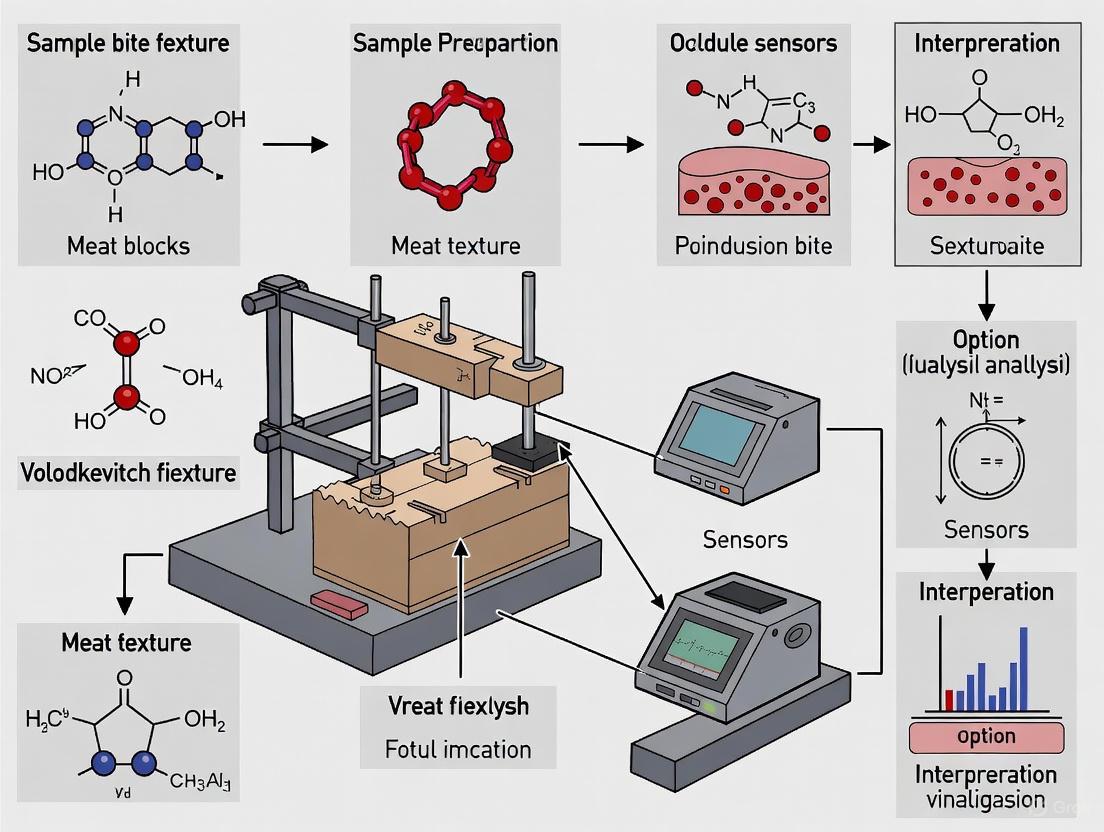
This article provides a comprehensive overview of the Volodkevich Bite Jaws fixture, an instrumental texture analysis tool that simulates the human incisor bite.
Beyond Meat: The Volodkevich Bite Fixture for Biomimetic Texture Analysis in Pharmaceutical and Clinical Research
Abstract
This article provides a comprehensive overview of the Volodkevich Bite Jaws fixture, an instrumental texture analysis tool that simulates the human incisor bite. Tailored for researchers and drug development professionals, we explore its foundational principles, from its core mechanism that combines compression and shear forces to its initial application in food science. The content details methodological protocols for imitative testing, addresses common troubleshooting scenarios and sample limitations, and validates its use through comparative analysis with other techniques and published research. The objective is to equip scientists with the knowledge to leverage this technology for optimizing the texture and patient compliance of orally administered drugs and nutraceuticals.
Understanding the Volodkevich Bite Jaws: Principles and Biomechanical Simulation
The Volodkevich bite fixture is an established texture measurement technique that fundamentally relies on its guillotine-action mechanism. This apparatus simulates the human front incisor teeth's biting action to assess key mechanical properties of food and biological samples, most notably the tenderness of meat. The fixture's core function is to generate a combination of compression and shear forces on a sample, providing researchers with reproducible quantitative data that correlates with sensory perception.
Core Mechanism and Technical Specifications
The guillotine action is achieved through a specific mechanical design. The fixture consists of upper and lower 3 mm diameter blunt wedge-shaped probe edges [1]. The sample is placed on the stationary lower knife edge. The upper knife edge, which is attached to the texture analyzer's load cell, then moves downwards in a guillotine action to shear the sample [1].
The table below summarizes the key technical specifications of this mechanism:
Table 1: Technical Specifications of the Guillotine Mechanism
| Parameter | Specification | Functional Significance |
|---|---|---|
| Probe Design | Upper and lower 3 mm diameter blunt wedges [1] | Simulates the geometry and biting surfaces of human front incisors. |
| Action | Guillotine shearing [1] | Generates a combination of compression and shear forces to mimic the human bite. |
| Maximum Sample Cross-Section | Up to 1 cm² (0.15 in²) [1] | Defines the maximum sample size that can be accommodated without interference. |
| Force Capacity | Recommended for applications below 100 N [1] | Guides the appropriate use case for the fixture and prevents overloading. |
Experimental Protocol: Meat Tenderness Assessment
This protocol details the standard methodology for assessing meat tenderness using the Volodkevich bite fixture.
Scope and Application
This method is suitable for determining the shear toughness, firmness, and overall tenderness of uniform muscle tissue samples. It is widely used in food science, meat quality research, and product development.
Equipment and Reagents
Table 2: Essential Research Reagent Solutions and Materials
| Item Name | Function / Description |
|---|---|
| Texture Analyzer | A universal testing machine (e.g., from Mecmesin) equipped with a compatible load cell to measure force during testing. |
| TMS Volodkevich Bite Jaws | The fixture itself (Part # 432-016), which includes the upper and lower blunt wedges [1]. |
| Standardized Meat Sample | Muscle tissue core or portion, typically trimmed to a uniform cross-section not exceeding 1 cm². |
| Sample Preparation Tools | Coring tools, blades, and rulers for preparing consistent sample geometries. |
Procedure
- Fixture Setup: Securely install the lower blunt wedge within the texture analyzer's base table. Attach the upper blunt wedge to the moving load cell of the texture analyzer.
- Instrument Calibration: Calibrate the texture analyzer according to the manufacturer's instructions, ensuring force and distance measurements are accurate.
- Sample Preparation: Prepare the meat sample (e.g., Longissimus dorsi muscle) by cutting it into a uniform shape with a cross-sectional area that does not exceed 1 cm² to fit between the wedge edges.
- Mounting: Place the sample horizontally on the surface of the stationary lower wedge.
- Test Execution: Initiate the test protocol. The load cell will move the upper wedge downward at a defined, constant speed (e.g., 1-2 mm/s) in a guillotine action to completely shear through the sample [1].
- Data Recording: The software (e.g., SoftMax Pro, RStudio) will record the force-time/displacement data throughout the shearing event [2].
- Analysis: Identify the peak force (N) from the resulting force-deformation curve. This maximum force is the primary quantitative metric for shear force and is inversely related to sample tenderness.
Workflow Visualization
The following diagram illustrates the logical workflow and data pathway for a typical experiment using the Volodkevich bite fixture.
Diagram 1: Experimental workflow for meat tenderness analysis.
Data Presentation and Analysis
The primary outcome of the test is a force-deformation curve. The key parameter extracted is the maximum force (Peak Force), which is directly correlated with the mechanical effort required to bite through the sample and thus serves as an objective measure of tenderness.
Table 3: Key Quantitative Data Output and Interpretation
| Data Output | Description | Interpretation |
|---|---|---|
| Peak Force (N) | The highest force recorded during the shearing event. | A higher peak force indicates a tougher, less tender sample. A lower peak force indicates a more tender sample. |
| Work / Area Under Curve (J) | The total energy required to shear through the sample. | Can provide additional insight into the sample's texture profile, such as toughness. |
| Deformation at Peak Force (mm) | The distance the probe travels before the sample's structure fully fails. | Can be related to the sample's brittleness or elasticity. |
Within the context of research aimed at imitating meat texture using a Volodkevitch bite fixture, simulating the biomechanics of the human incisor bite is a critical component. The incisor bite is a fundamental oral processing action, and its accurate simulation provides critical, objective data on textural properties such as hardness, fracturability, and cohesiveness [3] [4]. The control and measurement of this action are therefore essential for correlating instrumental measurements with human sensory perception.
This document presents detailed application notes and protocols for a reliable method of incisal bite force measurement, framing it within the broader scope of biomimetic texture analysis. The following sections summarize the quantitative foundation of the method, provide a complete experimental protocol, and visualize the underlying logical workflow.
The reliable measurement of bite force hinges on understanding the performance characteristics of the measurement system and the physiological output it captures. The following tables summarize key quantitative data for the bite force measurement device and typical output forces.
Table 1: Performance Characteristics of a Low-Cost Bite Force Measurement Device [5]
| Parameter | Value | Description |
|---|---|---|
| Force Measurement Range | 0 - 2000 N | Capable of measuring forces across the entire physiological range. |
| Accuracy | 2% | High accuracy relative to reference standard. |
| Precision | 2% | High repeatability of measurements. |
| Measurement Reliability | 11% (Coefficient of Variation) | Good repeatability over multiple repetitions and sessions. |
Table 2: Typical Human Incisal Bite Forces and EMG Relationships [6]
| Parameter | Value / Relationship | Context |
|---|---|---|
| Incisal Bite Force Range | 108 - 293 N | Documented range for the incisal region in healthy adults. |
| Force-EMG Relationship | Linear | Relationship for both temporalis and masseter muscles from 5% to 20% MVC. |
| Force Variability | Constant CoV at high intensity | Coefficient of Variation (CoV) is higher at low-intensity contractions and maintained at an approximately constant level for high-intensity contractions. |
Experimental Protocol: Incisal Bite Force Measurement
This protocol describes a method for assessing the steadiness of incisal bite force during isometric contractions of the masticatory muscles, suitable for integration with a Volodkevitch-type fixture [5] [6].
Research Reagent and Equipment Solutions
Table 3: Essential Materials for Incisal Bite Force Measurement
| Item | Function / Specification |
|---|---|
| Load Cell Transducer | Core force sensor; e.g., alloy steel load cell capable of measuring up to 2000 N with 0.3% accuracy [5]. |
| 3D-Printed Ergonomic Forks | Custom interface to hold the load cell and subject-specific silicone molds; provides comfortable bite expression and standardized placement [5]. |
| Subject-Specific Silicone Molds | Creates a custom, comfortable interface between the bite forks and the subject's teeth; improves repeatability and subject safety [5]. |
| Microcontroller Read-out System | Conditions and acquires the analog signal from the load cell [5]. |
| Electromyography (EMG) System | Records bilateral myoelectric activity of jaw elevators (e.g., temporalis and masseter muscles) [6]. |
Step-by-Step Procedure
Device Preparation and Calibration:
- Assemble the bite force measurement device by inserting the calibrated load cell into the slot of the 3D-printed ergonomic forks [5].
- For each subject, prepare and attach a reusable, subject-specific silicone mold to the fork plates. This ensures comfort and consistent placement within the oral cavity [5].
- Perform a system calibration using known weights to verify the load cell's output and ensure measurement accuracy.
Subject Preparation:
- Seat the subject in an upright position with their head unsupported, ensuring a natural posture.
- According to ethical guidelines, clean the skin surface and place bipolar surface EMG electrodes on the subject's masseter and anterior temporalis muscles bilaterally to monitor muscle activity [6].
Maximum Voluntary Contraction (MVC) Determination:
- Instruct the subject to bite the device with maximum force for 3-4 seconds. Perform 3 trials with a rest period of at least 60 seconds between trials to prevent fatigue [6].
- Record the highest stable force achieved across the trials as the subject's MVC for the incisal position.
Submaximal Steady Bite Force Tasks:
- Instruct the subject to perform a series of isometric bite contractions at target levels of 5%, 10%, 15%, and 20% of their pre-determined MVC.
- Provide visual feedback of the bite force output on a display to help the subject maintain the target force steadily for a defined period (e.g., 10-20 seconds) [6].
- Record the bite force signal and simultaneous EMG activity from all four muscle sites throughout each trial.
Data Analysis:
- Bite Force Steadiness: Calculate the standard deviation (SD) and coefficient of variation (CoV) of the force signal during the steady-state phase of each submaximal contraction to quantify variability [6].
- EMG Analysis: Linearize and integrate the EMG signals. Establish the force-EMG relationship for each muscle via linear regression analysis across the different contraction intensities [6].
Workflow Visualization
The following diagram illustrates the logical workflow and data relationships for the incisal bite force measurement protocol, connecting the experimental procedures to the final data analysis outcomes.
The Volodkevich Bite Jaws fixture is an established texture measurement technique designed to simulate the biting action of the front incisor teeth [1]. This method is crucial for objectively assessing key textural parameters in meat and other food products, providing reproducible data that correlates with sensory perception [7] [8]. Within the broader context of meat texture imitation research, this fixture offers a standardized approach to quantify attributes that directly influence consumer acceptance, such as tenderness, toughness, and firmness [7] [9].
The fixture operates by mimicking the human incisor bite action through a pair of blunt wedges that shear through samples in a guillotine-like motion [1]. This imitative test generates force-distance data that researchers can analyze to understand fundamental structural properties of meat and meat analogue products [8]. The application of this methodology extends to quality control, product development, and comparative analysis of traditional versus alternative protein sources [7].
Key Parameters and Measurement
The Volodkevich Bite Jaws fixture enables the quantification of three primary parameters that are fundamental to the sensory evaluation of meat and meat-like products.
Parameter Definitions
Table 1: Definition of Key Measurable Parameters
| Parameter | Definition | Significance in Meat Texture |
|---|---|---|
| Bite Force | The peak force required for the upper jaw to shear through a sample, simulating incisor action [1] [10]. | Directly relates to the initial perception of tenderness or resistance upon first bite [7] [9]. |
| Toughness | The work or energy (area under the force-distance curve) required to shear the sample [10]. | Indicates the resistance to chewing and mastication; high values correlate with less desirable, tough meat [1] [7]. |
| Firmness | The maximum force recorded during the compression phase before shear failure occurs [7]. | Reflects the structural integrity and freshness of the meat or meat analogue product [7]. |
Technical Specifications and Limitations
The standard fixture consists of upper and lower 3 mm diameter probe edges, with the upper knife attached to the texture analyzer load cell and the lower secured within a fixture table [1]. A critical operational consideration is the sample size limitation; the fixture accommodates samples of up to only 1 cm² (0.15 in²) in cross-section [1] [8]. Furthermore, the fixture is primarily recommended for texture measurement applications where forces are below 100 N [1]. Users must also manually support samples until the upper jaw makes contact, which introduces a potential variable and requires careful technique [8].
Experimental Protocols
This section details a standardized protocol for assessing meat texture using the Volodkevich Bite Jaws fixture, adaptable for both fundamental research and quality assurance.
Equipment and Software Setup
Table 2: Essential Research Reagent Solutions
| Item | Specification/Function |
|---|---|
| Texture Analyzer | Stable Micro Systems TA.XTplus or equivalent, fitted with a calibrated load cell [8]. |
| Volodkevich Bite Jaws | Fixture code HDP/VB*, comprising upper and lower jaws [8] [11]. |
| Heavy Duty Platform (HDP/90) | Mandatory base platform for attaching the lower jaw and ensuring stability [8]. |
| Data Acquisition Software | Exponent Connect or equivalent for controlling the instrument and recording force-time/distance data [7]. |
*HDP/ code prefix indicates mandatory use with the Heavy Duty Platform.
Sample Preparation Protocol
- Sample Sizing: Prepare meat samples (e.g., Longissimus dorsi muscle) with a uniform cross-section not exceeding 1 cm² [1]. For consistent results, use a twin-blade sample preparation tool to ensure parallel sides and repeatable dimensions [7].
- Orientation: Orient the sample on the lower jaw such that the shearing action will occur perpendicular to the dominant muscle fiber orientation where applicable [9].
- Temperature Conditioning: Condition samples to a consistent, relevant temperature (e.g., room temperature or serving temperature) before testing, as texture is highly temperature-dependent [10].
- Handling: Manually support the sample on the lower jaw until the upper jaw makes initial contact to prevent tipping or misalignment [8].
Instrumental Analysis Procedure
- Fixture Installation: Securely attach the lower bite jaw to the Heavy Duty Platform and the upper bite jaw to the texture analyzer's load cell.
- Method Programming: In the software, create a test method using the following typical conditions [8]:
- Test Type: Compression
- Pre-Test Speed: 1.0 mm/s
- Test Speed: 1.0 mm/s
- Post-Test Speed: 10.0 mm/s
- Target Mode: Distance (set to fully shear the sample)
- Trigger Force: 5 g (to initiate data acquisition upon contact)
- Data Acquisition: Initiate the test. The upper jaw will descend, compressing and then shearing through the sample.
- Replication: Conduct a minimum of n=6 replicates per sample batch to account for natural biological variation and ensure statistical significance.
Data Analysis and Interpretation
- Curve Identification: Analyze the resulting force-distance curve. A typical profile shows an initial ascending slope (compression/firmness) leading to a sharp peak (bite force) followed by a rapid decline (shearing/fracture) [10].
- Parameter Calculation:
- Statistical Analysis: Perform ANOVA or t-tests to compare mean values between different treatment groups, production batches, or storage conditions.
The following workflow summarizes the experimental procedure:
Applications in Research
The Volodkevich Bite Jaws fixture has been employed in diverse research contexts, demonstrating its utility across various food matrices.
Table 3: Exemplary Research Applications of the Volodkevich Fixture
| Research Focus | Application Detail | Key Findings/Parameters Measured |
|---|---|---|
| Meat Texture Quality | Assessment of longitudinal and transverse textural variation in pork Longissimus dorsi [8]. | Instrumental bite force measurements correlated with sensory tenderness across different muscle fiber orientations. |
| Secondary Shelf-Life | Monitoring texture degradation in legume-based chips during 21-day storage after opening [12]. | Combined mechanical (Volodkevich Bite) and acoustic data identified increased hardness and reduced crispness over time. |
| Product Development | Evaluating the texture of innovative food products, such as granola formulations with coconut copra [13]. | Tracked progressive decrease in biting force from 37.7 N (day 0) to 16.2 N (week 2) to understand moisture uptake and softening. |
| Plant-Based & Alternative Proteins | Comparative analysis of meat substitutes (e.g., Quorn) against traditional meats [7] [8]. | Provided quantitative comparison of bite force and toughness, crucial for product formulation to mimic traditional meat texture. |
Comparative Analysis with Other Methods
While the Volodkevich Bite Jaws provide a direct simulation of incisor bite, other shear-based methods are commonly used in meat science. The Warner-Bratzler Shear Test uses a triangular slot blade to shear cylindrical meat cores and is a USDA standard for tenderness [7] [9]. The Kramer Shear Cell employs multiple blades to compress and shear a bulk sample, providing an averaging effect useful for non-uniform products [7] [9]. The Volodkevich method is unique in its direct imitation of the human bite with a specific, limited sample size, whereas other methods may use larger samples or different shearing mechanics [11].
The Volodkevich Bite Jaws fixture represents a significant innovation in empirical texture measurement, originally developed to simulate the human incisor biting action for objective food assessment. This specialized attachment for texture analyzers employs a pair of blunt wedges that mimic the compression and shear forces applied by front teeth during mastication. Initially designed for evaluating meat tenderness, this fixture has established itself as a fundamental tool in food science research through its ability to provide quantifiable, reproducible data that correlates well with sensory panel evaluations. The fixture's evolution from a specialized meat testing device to a broader analytical tool demonstrates how imitative testing methodologies can transcend their original applications to address diverse research needs across multiple scientific disciplines, particularly where material fracture properties and structural integrity under mechanical stress are critical parameters.
Technical Specifications and Operating Principles
Fundamental Design and Mechanism
The Volodkevich Bite Jaws fixture operates on a guillotine-action principle, consisting of upper and lower 3 mm diameter probe edges that simulate human incisors [1]. The upper knife edge attaches directly to the texture analyzer load cell, while the lower edge remains fixed within a standard fixture table. During operation, a sample specimen is positioned on the stationary lower edge, and the instrument drives the upper edge downward at a controlled speed, shearing through the material while precisely recording the resistance forces. This action generates a combination of compression and shear forces that closely mimic the initial bite phase, providing a mechanical assessment that correlates with human sensory perception of texture [1] [8].
The fixture accommodates samples with cross-sections up to 1 cm² (0.15 in²), making it suitable for standardized testing of small, uniform specimens [1]. This limitation necessitates careful sample preparation to ensure dimensional consistency, particularly when comparing different materials or treatment conditions. The entire system is optimized for texture measurement applications below 100 N, focusing on the force range most relevant to food consumption and material properties that exhibit similar mechanical behaviors [1].
Technical Specifications Table
| Parameter | Specification | Research Significance |
|---|---|---|
| Probe diameter | 3 mm | Standardizes contact area for reproducible shear stress calculation |
| Maximum sample cross-section | 1 cm² (0.15 in²) | Limits sample size, requiring standardized preparation methods |
| Maximum force recommendation | 100 N | Defines application range for tender to moderately tough materials |
| Primary measured properties | Peak force (toughness), work of shear (energy), firmness | Quantifies key textural attributes relevant to sensory perception |
| Simulated action | Incisor tooth biting | Provides ecological validity through human mastication simulation |
| Mechanical actions | Compression and shear combination | Represents complex stress states during initial bite phase |
Evolution of Application Domains
Original Application: Meat Texture Analysis
The Volodkevich Bite Jaws were initially developed specifically for assessing the tenderness and fibrousness of meat products, addressing a critical quality parameter in the food industry [8]. Meat tenderness represents a complex sensory attribute influenced by muscle fiber density, connective tissue content, and structural integrity, all of which affect consumer acceptance. Traditional sensory evaluation using trained panels, while valuable, suffers from limitations including high cost, inter-panelist variability, and lack of objective quantification. The mechanical simulation provided by the Volodkevich fixture offered researchers an empirical method to quantify tenderness through peak force measurements and toughness through the work of shear (calculated as the area under the force-distance curve) [14].
This original application established the fixture as a valuable tool for evaluating how processing parameters—including cooking temperature, aging time, and mechanical tenderization—affect final product quality. The method's ability to detect subtle textural differences made it particularly valuable for comparative studies of different animal breeds, feeding regimes, and post-mortem handling practices. Research by Hansen et al. (2004) demonstrated the fixture's effectiveness in characterizing longitudinal and transverse textural variation in pork longissimus dorsi, establishing correlations between instrumental measurements and sensory perceptions [8].
Expansion to Plant-Based Materials
The application of Volodkevich Bite Jaws expanded significantly from its meat-focused origins to encompass various plant-based materials, particularly those with fibrous structures that resemble the textural challenges of muscle tissues. Researchers recognized that the same mechanical principles governing meat fibrousness could be applied to evaluate the texture of fruits and vegetables such as rhubarb, asparagus, and celery [8]. This expansion represented a logical progression, as many plant tissues share similar structural challenges related to fiber content and cellular integrity.
The fixture has been particularly valuable in assessing how post-harvest handling, processing, and storage conditions affect the textural quality of plant materials. For example, Li and Zhang (2007) employed the Volodkevich fixture to evaluate how three-stage hypobaric storage affected cell wall components and texture in green asparagus, demonstrating the method's sensitivity to structural changes [8]. Similarly, research on 'Flor de Invierno' pears by Varela et al. (2007) utilized the fixture to establish correlations between instrumental measurements of fracture properties and eating quality, highlighting its value in fruit quality assessment [8].
Broadened Applications in Processed Food Systems
The application spectrum of Volodkevich Bite Jaws further expanded to include various processed food systems where structural integrity and bite characteristics influence consumer acceptance. The fixture's ability to measure fracture properties made it valuable for evaluating products ranging from baked goods to reconstructed foods. Knight et al. (2001) applied the methodology to assess the thermal stability of Quorn pieces, demonstrating its utility in measuring textural changes in mycoprotein-based meat analogs [8].
Additional research extended the application to dried fruit products, with Azeredo et al. (2006) using the fixture to evaluate how drying and storage time affected the physico-chemical properties of mango leathers [8]. The carbohydrate-based systems represented a significant departure from the fixture's original protein-focused applications, confirming its broader relevance to food texture measurement. The research by Charles et al. (2007) on wheat flour-cassava starch composite mix for Chinese noodles further exemplified this expansion, establishing correlations between formulation changes and instrumental texture measurements [8].
Comparative Application Table
| Application Domain | Specific Research Applications | Measured Parameters | Key References |
|---|---|---|---|
| Meat Science | Tenderness assessment of pork, beef, poultry; Effects of aging, cooking, processing | Peak force (N), Work of shear (J) | Hansen et al. (2004) [8] |
| Fruit & Vegetables | Asparagus texture after storage; Pear eating quality; Rhubarb fibrousness | Fracture force (N), Toughness | Li & Zhang (2007); Varela et al. (2007) [8] |
| Carbohydrate Systems | Noodle bite strength; Pasta texture; Starch composite characterization | Firmness (N), Bite resistance | Charles et al. (2007); Katagiri & Kitabatake (2009) [8] |
| Processed Foods | Mango leather texture; Meat analog stability; Fried potato texture | Hardness (N), Structural integrity | Azeredo et al. (2006); Knight et al. (2001) [8] |
| Multi-domain Methodology | Fracture assessment in brittle foods; Chewing vs. biting simulation | Fracture pattern, Force curves | Varela et al. (2009) [8] |
Experimental Protocols and Methodologies
Standardized Testing Protocol
The Volodkevich Bite Jaws methodology follows a standardized approach to ensure reproducibility across studies and laboratories. The testing protocol begins with sample preparation, where materials are cut to appropriate dimensions not exceeding the 1 cm² cross-sectional limitation of the fixture. For heterogeneous materials, multiple specimens are typically prepared from different anatomical locations or structural orientations to account for natural variation. Samples are often conditioned to a consistent temperature before testing, as thermal status significantly influences material properties, particularly for fat-containing foods or temperature-sensitive materials [14].
The mechanical testing phase involves mounting the upper jaw to the texture analyzer's load cell and ensuring the lower jaw is securely fixed to the heavy-duty platform [8]. The instrument parameters are set according to the specific material being tested, with typical test speeds ranging from 1-2 mm/s to simulate realistic biting rates. As the upper jaw descends and contacts the sample, the system records the force-time/distance curve, from which key parameters are derived: the peak force (maximum resistance, typically correlated with hardness or toughness), the work of shear (area under the curve, representing total energy required for fracture), and any secondary characteristics such as jaggedness of the curve (indicating irregular fracture patterns) [14]. Multiple replications (typically 8-12) are performed for each test condition to establish statistical reliability.
Specialized Methodological Adaptations
Researchers have developed numerous methodological adaptations to address specific research questions while maintaining the fundamental principles of the Volodkevich approach. For temperature-sensitive samples, environmental chambers or pre-conditioning protocols ensure consistent thermal states during testing. For materials with pronounced structural orientation, such as muscle fibers or plant vascular bundles, specimens are often tested in multiple orientations (parallel, perpendicular, oblique) to characterize anisotropic textural properties [8].
In comparative studies assessing processing interventions, researchers often combine Volodkevich measurements with complementary analytical techniques including microscopy (to correlate mechanical properties with structural features), chemical assays (to relate texture to composition), and sensory evaluation (to validate instrumental measurements against human perception). This multi-modal approach strengthens conclusions by establishing mechanistic relationships between composition, structure, and functional properties.
Research Reagent Solutions and Essential Materials
Core Instrumentation and Accessories
| Component | Specification | Function in Research |
|---|---|---|
| Texture Analyzer | TA.XTplus or equivalent with data acquisition software | Provides controlled motion and precise force measurement |
| Volodkevich Bite Jaws | HDP/VB* with 3 mm diameter edges | Simulates incisor biting action through guillotine shearing |
| Heavy Duty Platform | HDP/90 platform | Provides stable base, prevents instrument warming from affecting samples |
| Universal Sample Clamp | Various sizes available | Prevents sample lifting during blade withdrawal phase |
| Calibrated Load Cell | Appropriate force range (typically 5-100N) | Ensures accurate force measurement within optimal range |
| Temperature Control System | Environmental chamber or Peltier system | Maintains consistent sample temperature during testing |
Visualization of Methodology and Applications
Experimental Workflow Diagram
Application Domain Evolution Diagram
The trajectory of the Volodkevich Bite Jaws from a specialized meat tenderness assessment tool to a broader analytical instrument demonstrates how methodologically sound approaches can transcend their original applications to address diverse research challenges. The fixture's enduring value lies in its principled simulation of human biting action, providing ecologically valid measurements that bridge the gap between instrumental measurements and sensory perception. While the fundamental mechanical principles remain constant, creative methodological adaptations have continually expanded the application range, offering researchers a versatile tool for quantifying material properties across food systems and beyond. The continued evolution of this methodology will likely further extend its applications, particularly as emerging fields require standardized assessment of material fracture and structural integrity under mechanical stress.
Technical Specifications and Operational Limits (e.g., 1 cm² Sample Size)
Within the scope of thesis research focused on meat texture imitation, the Volodkevich Bite Jaws fixture represents a critical methodological tool for the instrumental simulation of oral processing. Its design intent is to replicate the action of an incisor tooth biting through food, providing a means to objectively assess textural properties such as toughness, tenderness, and fibrousness in meat and meat analogue products [1] [8]. The fixture's operational limits, most notably its restricted sample size capacity, are a fundamental consideration for experimental design. This application note details the technical specifications, provides validated protocols for meat testing, and contextualizes the fixture's application within the advancing field of alternative protein research, including cultured meat [15].
Technical Specifications and Key Limitations
The Volodkevich Bite Jaws fixture consists of upper and lower jaws, each featuring a 3 mm diameter probe edge, which are attached to the texture analyzer's load cell and a heavy-duty platform, respectively [1]. The primary technical specifications and their implications for research are summarized in the table below.
Table 1: Technical Specifications and Research Implications of the Volodkevich Bite Jaws Fixture
| Parameter | Specification | Research Implication |
|---|---|---|
| Simulated Action | Biting action of front incisor teeth [1] [8] | Provides imitative texture measurement relevant to initial mastication. |
| Maximum Sample Cross-Section | 1 cm² (0.15 in²) [1] [8] | Limits the size and homogeneity of testable samples; requires precise, small sample preparation. |
| Test Principle | Guillotine-style shearing and compression [1] | Generates a combination of shear and compressive forces on the sample. |
| Recommended Force Limit | < 100 N [1] | Guides the selection of an appropriate load cell and prevents fixture overloading. |
| Key Measured Properties | Tenderness, shear toughness, firmness, bite force [1] | Quantifies fundamental textural attributes linked to sensory perception. |
The most significant operational limit is the 1 cm² maximum sample cross-section [1] [8]. This constraint necessitates that researchers carefully prepare small, uniform samples, which can be a challenge for heterogeneous materials like whole muscle meat or certain structured meat analogues. Furthermore, during testing, the small sample size may require manual support until the upper jaw makes contact [8].
Experimental Protocols for Meat Texture Analysis
Protocol: Texture Analysis using Volodkevich Bite Jaws
This protocol is designed for the objective measurement of bite force to assess tenderness in meat and meat analogue samples.
Research Reagent Solutions and Essential Materials
Table 2: Essential Materials and Equipment for Texture Analysis
| Item | Function/Description |
|---|---|
| Texture Analyzer | Universal testing machine (e.g., TA.XTplus, ZwickiLine) equipped with a 100 N or lower capacity load cell [1] [15]. |
| Volodkevich Bite Jaws (HDP/VB) | Fixture that simulates the incisor bite action [1] [8]. Must be used with a Heavy Duty Platform (HDP/90). |
| Sample Preparation Tools | 8 mm diameter punch, microtome blade or sharp knife, methacrylate plate template for height control [15]. |
| Meat or Meat Analogue Samples | Samples should be conditioned to room temperature (e.g., 1 hour prior to testing) to ensure consistent texture measurement [15]. |
Methodology:
- Sample Preparation: Using an 8 mm diameter punch, create cylindrical probes from the meat or meat analogue. To ensure uniform sample thickness, insert the cylindrical piece into a hole of a methacrylate plate template matching the desired final sample height. Slide a microtome blade across the plate surface to trim the sample to the exact thickness [15]. The final sample should have a cross-sectional area not exceeding 1 cm².
- Fixture Setup: Securely attach the lower Volodkevich jaw to the heavy-duty platform. Attach the upper jaw to the texture analyzer's load cell.
- Instrument Calibration: Calibrate the texture analyzer for force and distance according to the manufacturer's instructions.
- Test Parameters: Set the test to compression mode. Define a target strain or distance that ensures the sample is fully sheared. A pre-test speed of 1-2 mm/s and a test speed of 1-3 mm/s are typical. Include a brief pause (e.g., 1-5 seconds) between two compression cycles if performing a Texture Profile Analysis (TPA), though the fixture is most commonly used for a single bite simulation [15].
- Test Execution: Place the prepared sample on the lower jaw. Initiate the test. The upper jaw will descend, shearing the sample in a guillotine action. A minimum of six replicates per sample type is recommended for statistical significance [15].
- Data Analysis: The primary result is the maximum force (N) required to shear the sample, which is directly correlated to hardness/toughness. Other TPA parameters like cohesiveness, springiness, and chewiness can be derived from a double compression test [15].
The following workflow diagrams the experimental process from sample preparation to data interpretation.
Figure 1: Experimental Workflow for Volodkevich Bite Jaws Testing
Contextualization with Complementary Methods
The Volodkevich Bite Jaws is one of several mechanical tests used for meat texture characterization. Understanding its role within a broader analytical framework is essential for comprehensive research.
Table 3: Comparison of Texture Analysis Methods for Meat and Meat Analogues
| Method / Fixture | Measured Properties | Principle | Advantages / Limitations |
|---|---|---|---|
| Volodkevich Bite Jaws | Bite force, tenderness, toughness [1] | Simulates incisor bite with blunt wedges [8] | + Directly imitative of human bite.- Limited to 1 cm² samples [8]. |
| Warner-Bratzler Blade | Firmness, toughness, shear force [7] [11] | V-notched blade shears a sample cylinder. | + USDA standard for meat [7] [11].- Measures cutting, not biting. |
| Texture Profile Analysis (TPA) | Hardness, springiness, cohesiveness, chewiness [15] | Double compression cycle imitates chewing [15] [16]. | + Provides multiple parameters from one test [15].- Does not involve shearing. |
| Kramer Shear Cell | Firmness (bulk), work of shear [7] [11] | Multiple blades compress and shear a bulk sample. | + Good for non-uniform samples [7] [11].- Requires larger sample volume. |
The relationship between these methods and the textural properties they characterize can be visualized as a logical network, aiding in method selection.
Figure 2: Texture Analysis Method Selection Logic
Application in Advanced Meat Research
The Volodkevich Bite Jaws and analogous mechanical tests are pivotal in the burgeoning field of alternative proteins. A key research objective is to replicate the complex texture of traditional meat in plant-based and cultured meat products [16]. Instrumental texture analysis serves as a reproducible and cost-effective bridge between product formulation and sensory evaluation.
Recent studies have successfully employed TPA and rheology to characterize the mechanical properties of Frankfurt-style sausages made from cultured meat, directly comparing them to conventional products like chicken breast and processed turkey [15]. This demonstrates the direct application of these protocols for benchmarking novel products against established textural standards. The data generated is invaluable for optimizing formulations and processing conditions to achieve the desired mouthfeel and consumer acceptance [7] [15]. As the industry innovates with alternative proteins, functional ingredients, and new processing technologies like high-pressure processing (HPP) and 3D printing, the role of objective texture measurement in quality control and R&D becomes increasingly critical [7].
Protocols and Applications: Implementing the Volodkevich Fixture in Research
The Volodkevich Bite Jaws fixture is an established texture measurement tool designed to simulate the biting action of the front incisor teeth [1]. This Standard Operating Procedure (SOP) details the methodology for using this fixture to assess the tenderness and bite resistance of meat samples, providing a standardized approach for researchers in food science and related fields. The fixture operates by shearing samples with a pair of blunt wedges, generating data that correlates with sensory attributes like toughness and firmness [1] [7].
Principle of Operation
The Volodkevich Bite Jaws fixture consists of upper and lower 3 mm diameter probe edges [1]. The sample is placed on the lower knife edge, and the upper knife edge, attached to the texture analyzer's load cell, moves downward in a guillotine action to shear the sample [1]. This action simultaneously applies compression and shear forces, mimicking the human incisor bite and providing a measurement of bite force resistance [1] [14].
Apparatus and Materials
Essential Equipment
- Texture Analyzer: A stable system capable of precision force measurement and crosshead movement (e.g., TA.XTplus Texture Analyser) [8].
- Volodkevich Bite Jaws Fixture (Part No. 432-016): Comprising upper and lower jaws. The upper jaw is attached to the load cell, and the lower jaw is secured to the instrument's base [1] [8].
- Heavy Duty Platform (e.g., HDP/90): Required for stable attachment of the lower jaw [8].
- Calibrated Load Cell: Must be appropriate for the expected force range. Note: The fixture is recommended for texture measurement applications below 100 N [1] [14].
Research Reagent Solutions and Materials
Table 1: Essential materials and reagents for testing.
| Item | Function / Explanation |
|---|---|
| Meat Samples | Core test material, typically prepared into uniform cross-sections (up to 1 cm²) for consistent shearing [1]. |
| Heavy Duty Platform (HDP/90) | Provides a stable, flat base essential for mounting the lower jaw and ensuring test accuracy and reproducibility [8]. |
| Universal Sample Clamp | An optional but useful accessory to prevent sample lifting during the test, ensuring a clean shear [14]. |
| Temperature Control System | For testing temperature-sensitive samples, ensuring that data is collected under consistent and relevant conditions [14]. |
Experimental Protocol
Pre-Test Preparation and Sample Preparation
- Instrument Setup: Ensure the Texture Analyzer is calibrated and placed on a stable, level surface. Attach the Heavy Duty Platform and securely mount the lower Volodkevich jaw to it. Attach the upper jaw to the load cell [8].
- Software Configuration: Initialize the texture analysis software. Create a new method selecting compression mode, and define the test parameters (see Section 4.2).
- Sample Preparation: Prepare meat samples (e.g., muscle fibers, minced patties) to a cross-section that does not exceed 1 cm² (0.15 in²) to fit between the knife edges [1]. For consistent results, use a tool like a twin-blade sample preparation tool to ensure uniform sample dimensions [7]. The sample thickness should be representative of the product being tested.
Test Parameters and Data Acquisition
- Positioning: Place the prepared sample on the lower jaw. The sample may need to be supported by hand until the upper jaw makes initial contact [8].
- Test Execution: Initiate the test. The upper jaw will descend at the defined test speed, shearing through the sample.
- Data Recording: The instrument software will record the force-time or force-distance data throughout the test. A minimum of 10 replicates per sample type is recommended for statistical significance.
Table 2: Standard operational parameters for the Volodkevich Bite Jaws test.
| Parameter | Typical Setting | Notes |
|---|---|---|
| Pre-Test Speed | 1.0 - 2.0 mm/s | Speed of approach before the test begins. |
| Test Speed | 1.0 - 2.0 mm/s | Speed at which the upper jaw shears through the sample. |
| Post-Test Speed | 10.0 mm/s | Speed at which the upper jaw returns to the start position. |
| Target Mode | Distance or Strain | To achieve a full shear. |
| Strain / Distance | 90-100% of sample height | Ensure the sample is fully sheared. |
| Trigger Force | 0.05 N (5 g) | Force at which the instrument recognizes contact and begins data acquisition. |
| Data Acquisition Rate | 200 points per second | Ensures high-resolution force-deformation data. |
Data Analysis and Interpretation
The primary curve obtained from a Volodkevich test is a force versus time or distance plot. Key textural properties are derived as follows:
- Bite Force / Shear Force Resistance: The peak force (N) recorded during the shearing event is the primary indicator of hardness, toughness, or bite resistance [14] [7]. A higher peak force indicates a tougher sample.
- Work of Shear: The total energy or work (N×mm or J), calculated as the positive area under the force-distance curve, represents the overall toughness and the energy required to bite through the sample [14].
Volodkevich Test Data Workflow
Application Notes
- Meat Tenderness Assessment: This is the primary application, providing an objective measure that correlates with sensory panel evaluations of tenderness [1] [7].
- Sample Limitation: The fixture is limited to a sample cross-section of 1 cm². For larger or non-uniform samples, alternative fixtures like the Warner-Bratzler Shear Blade or Kramer Shear Cell are recommended [1] [14] [8].
- Fixture Care: The blades are blunt wedges designed for simulation, not cutting. Ensure they are clean and undamaged before use to prevent erroneous data.
- Data Interpretation: Results are empirical and correlate with sensory perception but are not a fundamental material property. They are most valuable for comparative studies between samples [14].
The Volodkevich Bite Jaws fixture is an established texture measurement tool that objectively quantifies the textural properties of foods by simulating the biting action of human front incisor teeth [1]. This instrumental method provides a reproducible and quantitative alternative to subjective sensory panels, offering critical insights into product quality, especially in research and development of meat and meat analog products.
The fixture is designed to imitate the human bite. It consists of upper and lower jaws, each with a 3 mm diameter probe edge, which act as blunt wedges [1] [8]. During operation, the sample is placed on the stationary lower jaw. The upper jaw, attached to the moving crosshead of a texture analyzer, descends to compress and shear the sample in a guillotine-like action [1]. The force response of the sample is recorded as it is bitten through, generating data that correlates with sensory perceptions of tenderness, toughness, and fibrousness.
Technical Specifications and Applications
Key Technical Specifications
The operational parameters of the Volodkevich Bite Jaws fixture are standardized to ensure consistent and comparable results across experiments.
Table 1: Technical Specifications of the Volodkevich Bite Jaws Fixture
| Parameter | Specification | Implication for Testing |
|---|---|---|
| Probe Diameter | 3 mm [1] | Defines the contact area and pressure applied during the simulated bite. |
| Maximum Sample Cross-Section | 1 cm² (0.15 in²) [1] | Limits the size of the sample that can be tested, requiring precise sample preparation. |
| Recommended Force Limit | < 100 N [1] | Guides the selection of an appropriate load cell for the texture analyzer to ensure measurement accuracy. |
| Simulated Action | Incisor tooth bite [8] | Provides imitative testing that closely correlates with human sensory evaluation of initial bite. |
Diverse Food Science Applications
This fixture is versatile and can be applied to a wide range of solid and semi-solid food products.
Table 2: Application Scope of the Volodkevich Bite Jaws Fixture in Food Research
| Application Area | Specific Food Products | Measured Textural Property |
|---|---|---|
| Meat and Poultry | Steaks, muscle cuts, poultry breast [8] [7] | Tenderness, shear toughness, firmness [1] |
| Fruits and Vegetables | Asparagus, rhubarb, celery [8] | Fibrousness, firmness |
| Processed Foods | Cooked pasta, meatballs, patties [8] [7] | Bite force, firmness, binding strength |
| Plant-Based Analogs | Meat analogs, structured protein products [7] | Toughness, chewiness, comparison to animal meat |
Experimental Protocols
This section provides a detailed, step-by-step methodology for utilizing the Volodkevich Bite Jaws to assess and compare the textural properties of traditional meat and modern plant-based analogs.
Sample Preparation Protocol
Consistent sample preparation is paramount for obtaining reliable and reproducible data.
- Material Selection: Obtain fresh samples of animal meat (e.g., chicken breast, beef steak) and plant-based meat analogs designed to mimic them.
- Cooking Procedure: Cook all samples using a standardized method (e.g., grilling at 200°C to a core temperature of 75°C). Rest the cooked samples for 5 minutes before further processing.
- Size Standardization: Using a sharp knife or a twin-blade sample preparation tool, cut the samples into uniform strips with a consistent cross-section not exceeding 1 cm² [1]. For example, prepare strips of 10mm x 10mm.
- Conditioning: Allow the prepared samples to equilibrate to room temperature (approx. 20°C) before testing to prevent temperature-induced texture variations.
Instrumental Analysis Protocol
This protocol outlines the setup and execution of the texture analysis test.
- Fixture Installation: Securely attach the lower Volodkevich jaw to the heavy-duty platform of the texture analyzer. Attach the upper jaw to the instrument's load cell [8].
- Instrument Calibration: Calibrate the texture analyzer for force and height according to the manufacturer's instructions using a known weight and distance standard.
- Test Parameter Programming: Input the following test parameters into the instrument's software (e.g., Exponent Connect):
- Test Type: Compression
- Pre-Test Speed: 1.0 mm/s
- Test Speed: 1.0 mm/s
- Post-Test Speed: 10.0 mm/s
- Target Mode: Distance (set to fully bisect the sample)
- Trigger Force: 5 g (to initiate data collection upon contact with the sample)
- Test Execution:
- Place a single sample strip on the lower jaw, supporting it lightly by hand until the upper jaw makes initial contact [8].
- Initiate the test. The upper jaw will descend, shearing through the sample.
- After the test, retract the upper jaw and remove the sheared sample pieces.
- Clean the jaws with distilled water and dry them before testing the next sample.
- Perform a minimum of 10 replicates per sample type to ensure statistical significance.
Data Analysis and Interpretation
The primary outcome of the test is a force-time or force-distance curve from which key textural parameters are derived.
Diagram 1: Data Analysis Workflow for Volodkevich Bite Jaws Tests. This workflow transforms raw force-distance data into interpretable textural parameters, guiding the comparison between different food samples.
Table 3: Key Data Points Extracted from the Force-Distance Curve
| Parameter | Definition | Sensory Correlation |
|---|---|---|
| Peak Force (N) | The maximum force recorded during the shearing process. | Directly correlates with hardness or toughness. A higher peak force indicates a tougher sample [7]. |
| Work of Shearing (N×mm) | The total area under the force-distance curve, representing the energy required to bite through the sample. | Correlates with chewiness. A larger area indicates a more chewy product that requires more work to comminute. |
| Curve Profile | The shape of the force-deformation curve (e.g., multiple small peaks vs. a single sharp peak). | Indicates fracturability and fibrousness. A jagged curve with multiple force peaks often suggests a fibrous structure, as seen in muscle meat or well-structured analogs [17]. |
The Scientist's Toolkit: Research Reagent Solutions
Successful texture analysis requires not only the core fixture but also a suite of supporting materials and analytical tools.
Table 4: Essential Materials and Tools for Texture Analysis Research
| Item Category | Specific Examples | Function in Research |
|---|---|---|
| Core Instrument | TA.XTplus Texture Analyser (Stable Micro Systems), TMS-Pro (Food Technology Corp) [18] [19] | Provides the controlled motive force and precision measurement for all texture testing. |
| Essential Fixture | Volodkevich Bite Jaws (Part # 432-016) [1] | Simulates the human incisor bite for direct measurement of bite force-related properties. |
| Sample Prep Tools | Twin Blade Sample Preparation Tool [7] | Ensures production of samples with identical dimensions (width, height), critical for result reproducibility. |
| Data Analysis Software | Exponent Connect Software [18] | Advanced software for controlling test parameters, collecting high-speed data (up to 2000 pps), and performing complex analysis on the resulting curves. |
| Reference Materials | Gold Standard Product Samples (e.g., a benchmark meat product) [18] | Serves as a constant reference point for instrument calibration and longitudinal study comparisons, ensuring data consistency over time. |
| Complementary Fixtures | Warner-Bratzler Blade, Kramer Shear Cell [7] | Provide alternative shearing methods for cross-validation of results or for testing samples unsuitable for the Volodkevich fixture's size limitations. |
Integration in Broader Research Context
The Volodkevich Bite Jaws are a critical tool within a larger framework aimed at understanding and replicating the complex texture of meat in alternative products.
Diagram 2: The Role of Volodkevich Jaws in Meat Analog Research. This diagram places the fixture within a larger research workflow, showing how instrumental data feeds into predictive models to refine product formulation.
As shown in Diagram 2, data from the Volodkevich fixture and other tests are increasingly used to train machine learning models. These models can predict key textural properties like Hardness and Chewiness based on the product's formulation (e.g., protein, fat, carbohydrate, and moisture content) [20]. This integration of objective instrumental data with computational power holds the potential to significantly accelerate the product development cycle for plant-based meat analogs, reducing reliance on purely trial-and-error approaches. This is crucial for an industry focused on replicating the complex, fibrous structure of animal meat to meet consumer expectations for sensory quality [16] [17].
The Volodkevich Bite Jaws fixture represents an established texture measurement technique originally developed for food science, specifically to simulate the biting action of the front incisor teeth using a pair of blunt wedges to assess properties like meat tenderness [1] [8]. This fixture consists of upper and lower 3 mm diameter probe edges that shear a sample in a guillotine action, generating compression and shear forces critical for evaluating material response to mechanical stress [1]. While traditionally applied to characterize the toughness of meat and fibrousness of vegetables [8], this methodology holds significant translational potential for pharmaceutical formulation development, particularly for gels and tablets where texture and mechanical properties directly influence product performance, patient compliance, and manufacturing processes.
The translational science framework provides a systematic approach for moving fundamental research discoveries into practical applications, with case study methodologies offering valuable tools for analyzing successful research translation [21]. This article explores how texture analysis techniques, pioneered in food science, can be translated to advance pharmaceutical dosage form development, creating a bridge between these seemingly disparate fields through shared principles of material characterization.
Texture Analysis Principles and Techniques
Core Texture Analysis Methods
Texture Profile Analysis (TPA) provides a fundamental methodology for characterizing the mechanical properties of materials through a double compression test that simulates the chewing action [15]. This analysis yields several critical parameters:
Table 1: Key Parameters in Texture Profile Analysis
| Parameter | Definition | Pharmaceutical Relevance |
|---|---|---|
| Hardness | Maximum force during first compression cycle | Tablet crushing strength, gel firmness |
| Springiness | Degree to which sample returns to original height after deformation | Mucoadhesive gel retention, chewable tablet performance |
| Cohesiveness | Extent of material deformation before rupture | Tablet brittleness, gel integrity |
| Chewiness | Product of hardness × cohesiveness × springiness | Chewable dosage form evaluation |
| Adhesiveness | Work required to overcome attractive forces | Buccal gel residence time |
| Young's Modulus | Ratio of stress to strain in elastic deformation | Fundamental material stiffness measurement |
The Volodkevich Bite Jaws fixture specifically simulates incisor tooth biting with a limited sample cross-section of 1 cm², operating through a guillotine shearing action that combines both compression and shear forces [1] [8]. This methodology is particularly valuable for evaluating bite force response in small samples, making it directly relevant to oro-dispersible tablets, chewable formulations, and mucoadhesive gels intended for buccal delivery.
Complementary Characterization Techniques
Beyond TPA, comprehensive material characterization employs additional methodologies:
- Rheology: Quantifies viscous and elastic behavior of gels under shear stress [15]
- Warner-Bratzler Shear: Measures material resistance to shearing action [22]
- Instrumental Texture Analysis: Universal testing systems provide controlled compression, tension, and shear measurements [15]
Pharmaceutical Gel Applications
Advanced Gel Formulations and Characterization
Pharmaceutical gels represent semi-solid systems where a liquid phase is thickened by a gelling agent into a structured network [23]. These formulations have gained prominence due to their superior drug penetration, spreadability, and non-greasy texture compared to traditional ointments and creams [23]. The translational application of texture analysis from food science enables precise characterization of critical gel properties:
Table 2: Gel Formulation Components and Functions
| Component | Function | Examples |
|---|---|---|
| Gelling Agent | Provides structural matrix | Carbopol, Xanthan Gum, HEC [23] |
| Solvent/Base | Dispersion medium for API | Purified water, Ethanol, Propylene Glycol [23] |
| Penetration Enhancers | Improve API absorption through barriers | DMSO, Menthol, Urea [23] |
| Preservatives | Prevent microbial contamination | Methylparaben, Benzalkonium Chloride [23] |
Long-acting gel formulations represent particularly advanced applications, with compositions designed for controlled drug release over extended periods [24]. These include:
- Temperature-sensitive gels that transition from liquid to gel state at body temperature (e.g., N-isopropylacrylamide-based gels, Poloxamer 407) [24]
- pH-sensitive and redox-responsive gels engineered to release drug payload in response to specific environmental triggers [24]
- In situ-forming hydrogels designed to form gels directly at the application site, improving drug delivery efficiency and targeting [24]
Protocol: Texture Analysis of Pharmaceutical Gels Using Volodkevich Bite Jaws
Objective: To evaluate the mechanical properties of pharmaceutical gel formulations using texture analysis instrumentation equipped with Volodkevich Bite Jaws.
Materials and Equipment:
- Texture Analyzer with 50N load cell
- Volodkevich Bite Jaws fixture (HDP/VB)
- Heavy Duty Platform (HDP/90)
- Pharmaceutical gel samples
- Temperature control chamber (optional)
- Disposable sample containers
Procedure:
- Sample Preparation:
- Prepare gel formulations according to standardized protocols (cold or hot dispersion methods) [23]
- For temperature-sensitive gels, maintain samples at 4°C until testing
- Load approximately 1 cm³ of gel sample onto lower jaw fixture, ensuring uniform distribution
Instrument Calibration:
- Calibrate texture analyzer according to manufacturer specifications
- Set test speed to 1.0 mm/s
- Program compression distance to 5-7 mm, depending on sample consistency
- Set trigger force to 0.05N
Test Parameters:
- Test speed: 0.5-2.0 mm/s
- Strain: 50-70% of original sample height
- Number of cycles: 2 (for TPA parameters)
- Time between compressions: 5 seconds
- Temperature: 25°C or 37°C to simulate room or body temperature
Data Collection:
- Perform minimum of six replicates per formulation
- Record force-time curves for analysis
- Calculate key parameters: hardness, adhesiveness, springiness, cohesiveness
Data Analysis:
- Compare force-deformation curves between formulations
- Statistically analyze parameter differences (ANOVA, t-tests)
- Correlate mechanical properties with formulation composition
This protocol enables quantitative comparison of gel formulations, providing critical data for optimizing product performance and predicting in vivo behavior.
Tablet Formulation Applications
Material Characterization for Tablet Development
While the Volodkevich Bite Jaws were originally designed for food texture analysis, their application to pharmaceutical tablets provides valuable insights into:
- Oro-dispersible tablets: Bite simulation predicts in-mouth disintegration and texture perception
- Chewable tablets: Direct evaluation of mastication effort required
- Buccal tablets: Assessment of mucosal adhesion and mechanical stability
The mechanical properties characterized through texture analysis directly influence patient compliance, particularly in pediatric and geriatric populations where swallowing difficulties may limit medication adherence.
Protocol: Tablet Bite Force Analysis Using Volodkevich Fixture
Objective: To simulate and quantify the biting force required for tablet comminution and assess texture properties relevant to patient experience.
Materials and Equipment:
- Texture Analyzer with 100N load cell
- Volodkevich Bite Jaws fixture
- Tablet samples (various formulations)
- Tablet hardness tester (for correlation)
Procedure:
- Sample Preparation:
- Prepare tablets with varying excipient compositions and compression forces
- Condition tablets at controlled humidity (40-50% RH) for 24 hours before testing
- Select tablets with minimal weight variation (±2%)
Test Configuration:
- Mount Volodkevich Bite Jaws to texture analyzer
- Set test speed to 0.8 mm/s to simulate natural biting speed
- Program compression distance to achieve complete tablet fracture
- Set data acquisition rate to 200 points per second
Testing Protocol:
- Position tablet securely in lower jaw fixture
- Initiate test sequence
- Record force-time curve until sample fracture
- Repeat for minimum of 10 tablets per formulation
Data Analysis:
- Determine peak force (hardness) required for initial fracture
- Calculate work of fracture (area under force-displacement curve)
- Record number of fracture events (brittleness indicator)
- Correlate with standard tablet hardness measurements
This methodology provides formulation scientists with critical data for optimizing tablet mechanical properties to enhance patient experience while maintaining product integrity.
The Scientist's Toolkit: Essential Research Reagents and Materials
Table 3: Key Research Reagent Solutions for Pharmaceutical Gel and Texture Analysis
| Category | Specific Items | Function/Application |
|---|---|---|
| Gelling Agents | Carbopol 940, Xanthan Gum, Hydroxyethyl Cellulose (HEC), Lecithin | Provide viscosity and structural stability to gel formulations [23] |
| Texture Probes | Volodkevich Bite Jaws (HDP/VB), Heavy Duty Platform (HDP/90), TPA Compression Plate | Specialized fixtures for mechanical property characterization [1] [8] |
| Penetration Enhancers | Dimethyl Sulfoxide (DMSO), Menthol, Urea | Improve API absorption through biological barriers [23] |
| Polymeric Carriers | Poloxamer 407, Gelatin-PEG hybrids, Chitosan-based polymers | Enable temperature-sensitive and controlled release properties [24] |
| Analytical Instruments | Texture Analyzer with 50N-100N load cell, Rheometer, DSC, TGA | Comprehensive material characterization suite [25] [15] |
Visualizing Translational Pathways and Experimental Workflows
Translational Pathway for Texture Analysis Methodology
Experimental Workflow for Gel Characterization
The translational potential of texture analysis methodologies from food science to pharmaceutical formulation represents a powerful paradigm for accelerating dosage form development. The Volodkevich Bite Jaws fixture, while originally designed for meat texture evaluation, provides valuable insights into the mechanical behavior of pharmaceutical gels and tablets that directly influence patient experience and product performance. By applying these established texture analysis techniques within a systematic translational science framework [21], pharmaceutical scientists can quantitatively correlate formulation parameters with critical quality attributes, ultimately leading to optimized products with enhanced efficacy and patient compliance. The integration of these cross-disciplinary approaches continues to advance the field of drug delivery, particularly through the development of sophisticated gel-based systems with tailored mechanical and release properties [24] [23].
Shelf-life studies are critical for determining the period during which a food product retains acceptable safety, sensory, and textural qualities under specified storage conditions. For meat products, texture degradation is a primary mode of quality failure, often preceding microbial spoilage. Monitoring this change objectively is essential for product development and quality assurance. The Volodkevitch bite fixture provides a specialized solution by simulating the human bite action of the front incisor teeth, generating quantitative data on texture parameters such as tenderness and shear toughness [1]. This application note details the protocols for integrating this fixture into comprehensive shelf-life studies for meat and meat-analog products, providing researchers with a standardized methodology for tracking texture degradation over time.
Experimental Design and Workflow
A robust shelf-life study for texture monitoring integrates the Volodkevitch bite fixture into a longitudinal experimental design that accounts for both real-time and accelerated storage conditions.
Core Study Design Components
- Objective Definition: Clearly define the study's goal, such as "To establish the shelf life of a cultured meat product based on tenderness degradation, targeting a maximum shear force increase of 25% from baseline when stored at 4°C" [26].
- Storage Conditions:
- Real-Time Testing: Stores samples under anticipated warehouse, retail, and consumer conditions (e.g., 4°C for refrigerated meats) [26].
- Accelerated Shelf Life Testing (ASLT): Stores samples at elevated stress conditions (e.g., 8°C and 12°C) to model degradation over a shorter period. The Arrhenius model is commonly used to extrapolate data from these conditions to predict real-time shelf life [26].
- Sampling Intervals: Establish a schedule for destructive testing. For a 12-month real-time study, intervals of 0, 1, 2, 3, 6, 9, and 12 months are common. Accelerated studies require more frequent sampling [26].
The following diagram illustrates the integrated workflow of a shelf-life study, from sample preparation to data-driven decision making.
Detailed Experimental Protocols
Protocol 1: Texture Analysis Using the Volodkevitch Bite Fixture
This protocol outlines the standardized operation of the Volodkevitch bite fixture for measuring the tenderness of meat samples during a shelf-life study [1].
Principle: A sample is sheared between two 3 mm diameter blunt wedge-shaped probes, simulating the action of the front incisors. The force required to shear the sample is measured, which correlates with sensory perceptions of tenderness and toughness [1].
Materials and Equipment:
- Texture Analyzer (e.g., from Stable Micro Systems) equipped with a calibrated load cell (recommended capacity below 100 N for this fixture) [1] [27].
- TMS Volodkevitch Bite Jaws fixture (Upper and Lower knife edges).
- Heavy-Duty Platform for stable mounting.
- Sample Preparation Tools (sharp knives, cork borers, rulers).
- Balance.
Procedure:
- Sample Preparation: Prepare meat samples to a cross-sectional area of up to 1 cm² (0.15 in²). Consistent sample geometry is critical for reproducibility. For heterogeneous products, increase replication [1] [27].
- Fixture Setup: Secure the lower knife edge to the instrument's base and attach the upper knife edge to the load cell.
- Instrument Calibration: Calibrate the texture analyzer according to the manufacturer's instructions for both force and distance.
- Test Parameter Programming:
- Test Type: Compression.
- Target: Distance or Force. A common approach is to compress the sample until a complete shear event is observed.
- Pre-Test Speed: 1.0 mm/s.
- Test Speed: 1.0 mm/s (or slower for finer resolution of the shear event).
- Post-Test Speed: 10.0 mm/s.
- Trigger Force: 0.1 N (to ensure contact with the sample is detected).
- Measurement:
- Place the sample securely on the lower knife edge.
- Initiate the test. The upper knife will descend, shearing the sample in a guillotine action.
- The instrument records the force versus time/distance curve.
- Replication: Conduct a minimum of 8-12 replicates per sample time point to account for biological and structural variability [27].
Data Analysis:
- The primary metric is the Maximum Shear Force (N), which is the peak force recorded during the shearing event. This represents the sample's toughness.
- Additional parameters can include the Work of Shear (N·mm), calculated as the area under the force-deformation curve up to the point of fracture.
Protocol 2: Integrated Shelf-Life Study for Meat Texture
This protocol describes the overarching shelf-life study into which the texture analysis protocol is embedded.
Materials and Equipment:
- All materials from Protocol 1.
- Controlled Environment Chambers (for real-time and accelerated storage).
- Packaging Materials (identical to commercial packaging).
- Equipment for complementary analyses (e.g., water activity meter, pH meter, microbial plating facilities) [26] [28].
Procedure:
- Study Definition:
- Formally define the objective, success criteria, and failure endpoints (e.g., shear force increase >30%, sensory score <5/9, microbial count >10⁴ CFU/g) [26].
- Sample and Package:
- At time zero, prepare and package a sufficient number of product units for the entire study's sampling plan.
- Ensure packaging is identical and sealed according to commercial standards.
- Storage and Sampling:
- Place packages into pre-conditioned storage environments.
- According to the sampling schedule, remove the required number of units from each storage condition.
- Allow samples to equilibrate to room temperature before analysis if required by the method.
- Multi-Parameter Analysis:
- For each sampling point, perform analyses in a logical sequence (non-destructive first):
- Data Management:
- Record all data in a structured database, linking values to sample ID, storage condition, and time point.
The Researcher's Toolkit
The following table details essential reagents, materials, and equipment required for conducting texture-focused shelf-life studies with the Volodkevitch bite fixture.
Table 1: Essential Research Reagents and Materials for Texture Degradation Studies
| Item | Function/Application | Technical Notes |
|---|---|---|
| TMS Volodkevitch Bite Jaws | To simulate the human incisor bite, providing a measure of shear force and toughness. | Fixture consists of upper/lower 3mm wedges. Suitable for samples ≤1 cm². Not recommended for forces >100 N [1]. |
| Texture Analyzer | To perform controlled compression and shear tests, measuring force-distance relationships. | Requires a stable frame, calibrated load cell, and software to control test parameters and acquire data [27]. |
| Controlled Environment Chambers | For maintaining constant temperature and relative humidity for real-time and accelerated shelf-life studies. | Critical for ASLT; conditions must be monitored and logged continuously [26]. |
| Water Activity (a_w) Meter | To measure the free water in a product, which is a key determinant of microbial growth and texture. | Hard candies (aw <0.6) are low risk; gummies (aw 0.75-0.85) are at risk for mold [26]. |
| Microbiological Media | For quantifying microbial spoilage organisms (e.g., total plate count, yeasts, molds). | Plates are incubated and colonies counted. Failure criteria can be defined (e.g., mold growth = failure) [26] [28]. |
| Standardized Meat Samples | The test substrate for texture analysis. | Must be prepared with highly consistent geometry (e.g., 1 cm² cross-section) to minimize data variability [1]. |
Data Analysis, Interpretation, and Modeling
The data collected from a shelf-life study must be systematically analyzed to build a predictive model for texture degradation.
Data Structuring and Kinetic Modeling
- Data Visualization: Plot the key texture parameter (e.g., Maximum Shear Force) against storage time for each storage condition.
- Kinetic Modeling: Degradation reactions often follow zero-order (constant rate) or first-order (concentration-dependent rate) kinetics. The rate constant (k) for the degradation of tenderness can be determined from the slope of the linear regression of the data plot [26].
- Accelerated Model Application: Using the ASLT data, the relationship between the degradation rate constant (k) and absolute temperature (T) is modeled with the Arrhenius equation to predict shelf life under real-time storage temperatures.
Data Interpretation and Shelf-Life Assignment
The shelf life is determined by the earliest time point at which a product exceeds one or more failure criteria. These criteria should be established prior to the study.
Table 2: Example Failure Criteria and Data Interpretation for a Cultured Meat Product
| Parameter | Baseline (Day 0) | Failure Criterion | Observed Value at 6 Months (4°C) | Status |
|---|---|---|---|---|
| Max Shear Force (N) | 25.0 ± 3.5 N | > 31.3 N (25% increase) | 29.5 N | Approaching Failure |
| Water Activity (a_w) | 0.82 ± 0.02 | > 0.90 | 0.83 | Acceptable |
| Yeast & Mold (CFU/g) | < 10 | > 10⁴ | 50 | Acceptable |
| Sensory Score (1-9) | 8.0 ± 0.5 | < 5.0 | 6.5 | Acceptable |
In this example, texture (Max Shear Force) is the limiting factor for quality, indicating a shelf life of just beyond 6 months at 4°C. A safety margin should be applied, leading to a final labeled shelf life of, for example, 6 months [26].
The following diagram maps the logical pathway from raw data to the final shelf-life decision, incorporating the concept of a limiting failure parameter.
The Volodkevitch bite fixture is an established tool for simulating the incisor tooth's biting action to assess fundamental texture properties in meat, such as tenderness, toughness, and cohesiveness [1] [8]. While this fixture provides essential force-deformation data, the context of a modern research thesis demands a more holistic analysis. Advanced setups that synchronize this mechanical data with Acoustic Emission (AE) monitoring and video capture offer a multi-modal window into the structural failures occurring during the biting process. This integration allows researchers to correlate specific force events (from the texture analyzer) with audible crackling phenomena (from AE sensors) and visual structural changes (from high-speed video), providing a comprehensive understanding of meat texture imitation, crucial for applications in alternative protein development and quality control [7] [29].
The following tables summarize the core quantitative data relevant to setting up and interpreting results from an integrated mechanical-acoustic-visual system.
Table 1: Market and Performance Context for Acoustic Emission (AE) Monitoring in Food Processing
| Metric | Value / Context | Significance for Research Setup |
|---|---|---|
| Global AE Monitoring Market Size (2024) | USD 412.8 Million [30] | Indicates robust adoption and validation of AE technology in industrial food processing environments. |
| Projected Market Size (2033) | USD 816.9 Million [30] | Highlights the growing relevance and future potential of AE for research and development. |
| Projected CAGR (2025-2033) | 8.2% [30] | Reflects sustained technological advancement and integration. |
| Acoustic Steam Leak Detection Market CAGR | 8.7% [31] | Demonstrates the growth in a related, specialized application of acoustics, underscoring the technology's versatility. |
Table 2: Key Acoustic and Instrumental Parameters for Meat Texture Analysis
| Parameter | Description | Application in Volodkevitch Testing |
|---|---|---|
| AE Signal Frequency Range | Typically high-frequency stress waves (often ultrasonic) [30] [31] | Captures micro-fractures and structural failures in meat fibers and fat globules during shearing. |
| Force Capacity of Volodkevitch Jaws | Recommended for applications below 100 N [1] | Defines the upper limit for mechanical testing to prevent fixture damage. |
| Video Capture Rate | Up to 50 frames per second [32] | Allows for detailed, frame-by-frame visual analysis of sample fracture synchronized with force/AE data. |
| Sample Cross-Section Limit | 1 cm² [1] [8] | Constrains sample preparation for the Volodkevitch fixture to ensure consistent geometry and shearing action. |
Experimental Protocols
Protocol 1: Synchronized Mechanical-Acoustic-Visual Testing
This protocol details the core methodology for integrating Acoustic Emission and video capture with a texture analyzer equipped with a Volodkevitch bite fixture.
1. Objective: To quantitatively assess the texture of meat samples by simultaneously measuring shear force, acoustic emission signals, and visual structural failure during a simulated bite.
2. Research Reagent Solutions and Essential Materials:
Table 3: Essential Materials for Integrated Texture Analysis
| Item | Function / Specification |
|---|---|
| Texture Analyzer | Primary instrument for applying controlled force; TA.XTplus model or equivalent [32]. |
| Volodkevitch Bite Jaws | Fixture that simulates incisor bite with upper and lower 3 mm diameter knife edges [1] [8]. |
| Acoustic Emission Sensor | Piezoelectric sensor to capture high-frequency (kHz-MHz) elastic waves released during sample fracture [30]. |
| Video Capture & Synchronisation System | Camera and software to record test and synchronize video frames with force-time data [32]. |
| Data Acquisition (DAQ) System | Hardware to synchronously collect analog force data from the texture analyzer and acoustic signals from the AE sensor. |
| Meat Samples | Prepared to a maximum cross-section of 1 cm² to fit the Volodkevitch fixture [8]. |
3. Methodology:
- Step 1: System Setup and Calibration. Mount the Volodkevitch bite jaws onto the texture analyzer, ensuring the heavy-duty platform is securely fitted [8]. Position the AE sensor near the sample contact point using a specialized clamp or adhesive couplant to ensure efficient acoustic transmission. Mount the video camera to provide a clear, close-up side view of the sample shearing process. Connect the force output from the texture analyzer and the signal output from the AE sensor to the same DAQ system. Calibrate all instruments according to manufacturer specifications [32].
- Step 2: Sample Preparation and Mounting. Prepare meat samples (e.g., cooked steak, animal-based or plant-based alternatives) to a consistent size, not exceeding 1 cm² cross-section [1]. For plant-based meat imitation research, this is critical for comparing against animal meat benchmarks [29]. Place the sample on the lower jaw of the fixture, supporting it manually until the upper jaw makes contact.
- Step 3: Data Synchronization and Test Initiation. In the exponent software, initiate the test method. The software should send a synchronization signal to both the DAQ system and the video capture interface, ensuring all data streams (force, AE, video) start simultaneously [32].
- Step 4: Test Execution. The texture analyzer drives the upper jaw downwards at a predefined test speed (e.g., 1 mm/s), shearing through the sample. Force, acoustic emission, and video data are collected throughout the test.
- Step 5: Data Collection and Storage. The synchronized data is stored for post-processing: a force-time curve from the texture analyzer, a waveform of acoustic emission hits, and a video file with frames locked to the data timeline.
Protocol 2: Data Analysis and Correlation
1. Objective: To extract and correlate meaningful parameters from the synchronized force, acoustic, and video data streams to characterize meat texture.
2. Methodology:
- Step 1: Mechanical Parameter Extraction. From the force-time curve, standard texture profile analysis (TPA) parameters are derived, including peak force (indicative of hardness/toughness), work of shear (energy required to cut), and cohesiveness [7].
- Step 2: Acoustic Emission Parameter Extraction. Process the AE signal to identify individual "acoustic hits." For each hit, extract parameters including peak amplitude (loudness of the fracture event), duration, rise time, and absolute energy. These parameters help classify the type and intensity of structural failures (e.g., fibrous tearing vs. brittle fat fracture) [30].
- Step 3: Video Analysis. Review the synchronized video frame-by-frame, particularly at the moments corresponding to significant peaks in the force and AE data. Observe and record the visual mode of failure, such as the initial rupture point, propagation of the crack, and sample shredding [32].
- Step 4: Multi-Modal Data Correlation. Cross-reference the datasets.
- Correlate a sharp force drop followed by a high-energy AE hit with a visual observation of a major fiber bundle snapping.
- Correlate a series of low-amplitude, short-duration AE hits with visual observations of micro-fractures or the rupture of small fat particles.
- This correlation creates a "texture fingerprint" for the sample, moving beyond simple force measurement to a holistic understanding of structural breakdown [29].
Workflow and Signaling Pathways
The following diagram illustrates the logical flow and data integration of the advanced experimental setup.
Synchronized Multi-Modal Data Acquisition
Discussion
Integrating Acoustic Emission and video capture with the traditional Volodkevitch bite fixture represents a significant evolution in meat texture analysis. This setup directly addresses the "uncanny valley" in plant-based meats by providing a high-fidelity, data-rich method to quantify and replicate the complex textural properties of whole-muscle animal meat [29]. The synchronized data enables researchers to move from simply measuring a single force value to deconstructing the sequence and nature of structural failures that collectively define the sensory experience of "tenderness" or "chewiness."
The ability to correlate a specific force signature and acoustic emission profile with a visual event—such as the tearing of muscle fibers versus the crushing of fat—provides invaluable feedback for formulating and processing alternative protein products [7] [29]. Furthermore, this advanced setup aligns with the broader industrial trend of acoustic emission monitoring, which is increasingly used for predictive maintenance and quality control in food machinery [30] [31]. Adopting this multi-modal approach in academic research ensures that texture analysis methodologies keep pace with industrial needs and technological capabilities, bridging the gap between foundational research and applied product development.
Overcoming Challenges: Sample Limitations and Data Interpretation
Addressing the 1 cm² Cross-Section Limitation for Small Samples
The Volodkevich Bite Jaws fixture is an established texture measurement technique that simulates the biting action of the front incisor teeth using a pair of blunt wedges [1]. This apparatus provides valuable imitative testing data by measuring the force required to shear through food samples, making it particularly useful for assessing properties such as meat tenderness, shear toughness of muscle, and bite force simulation [1] [8]. However, researchers face a significant constraint: the standard fixture accommodates samples with a maximum cross-section of only 1 cm² (0.15 in²) [1] [8]. This limitation presents substantial challenges when working with heterogeneous tissue samples, precious cultured meat prototypes, or when attempting to obtain multiple measurements from limited material.
This application note outlines systematic methodologies to address this constraint while maintaining scientific rigor within the broader context of meat texture imitation research. By implementing optimized sample preparation techniques, fixture modifications, and complementary analytical approaches, researchers can overcome the 1 cm² limitation and extract meaningful data from small-scale samples.
Understanding the Standard Fixture and Its Constraints
The Volodkevich Bite Jaws fixture consists of upper and lower 3 mm diameter probe edges that generate compression and shear forces through a guillotine action [1]. The standard configuration presents two primary limitations for research applications:
- Physical Size Constraint: The fixture's design physically limits sample size to approximately 1 cm², restricting analysis of larger or heterogeneous structures [8].
- Sample Support Requirement: Manual finger support is often needed to position samples until the upper jaw establishes contact, introducing potential variability [8].
These limitations are particularly problematic in emerging research fields such as cultured meat characterization, where sample availability may be limited during development phases, and structural heterogeneity must be captured for meaningful texture replication [15] [29].
Table 1: Standard Volodkevich Bite Jaws Specifications and Limitations
| Parameter | Specification | Research Implication |
|---|---|---|
| Maximum Sample Cross-section | 1 cm² [1] [8] | Limits assessment of heterogeneous samples |
| Probe Geometry | 3 mm diameter blunt wedges [1] | Simulates incisor tooth action |
| Force Recommendation | <100 N [1] | Prevents fixture damage |
| Sample Support | Manual positioning often required [8] | Introduces potential variability |
| Primary Applications | Meat tenderness, muscle toughness, bite force [1] [8] | Well-established for homogeneous samples |
Methodological Approaches to Overcome Size Limitations
Optimized Sample Preparation and Mounting Techniques
Strategic sample preparation can maximize data quality from limited sample volumes:
- Custom Template Fabrication: Develop precision cutting jigs matching the exact 1 cm² dimension to minimize sample handling damage and ensure consistent orientation of anisotropic structures. This is particularly crucial for muscle fibers in cultured meat, where grain direction significantly affects texture measurements [29].
- Support Platform Integration: Implement a Universal Sample Clamp or Heavy Duty Platform to eliminate manual support requirements and improve testing reproducibility [14]. These accessories stabilize samples without interfering with the biting action.
- Cryo-Sectioning for Replication: For precious samples, implement cryo-sectioning protocols to create multiple 1 cm² specimens from a single source at identical orientations, enabling replicated measurements and variability assessment within limited material.
Fixture Modifications and Complementary Techniques
When sample size cannot be adequately addressed through preparation alone, consider these approaches:
- Single Tooth Configuration: In some applications, using only the upper "tooth" fixture against a flat platform can accommodate slightly larger or irregularly shaped samples while still generating valuable bite force data [14].
- Alternative Attachment Selection: For samples exceeding the 1 cm² limitation, transition to complementary attachments such as Warner-Bratzler Blades for shear testing or Cylinder Probes for compression analysis, which accommodate larger sample sizes [7] [14].
- Multi-Scale Texture Mapping: Implement a texture mapping approach using interchangeable attachments on a automated testing platform to build comprehensive texture profiles from multiple small samples extracted from a larger heterogeneous source [29].
Diagram 1: Experimental workflow for small sample analysis
Experimental Protocol for Small-Sample Texture Analysis
Sample Preparation and Mounting
- Sample Extraction: Using a twin blade sample preparation tool, excise specimens with consistent dimensions. For samples smaller than 1 cm², maintain the maximum possible size and record exact measurements for normalization [7].
- Orientation Documentation: Document muscle fiber or grain direction relative to the planned shear axis. This critical for anisotropic materials like muscle tissue [29].
- Support Implementation: Mount the sample on the Heavy Duty Platform using the Universal Sample Clamp to prevent movement. For delicate samples, consider minimal-compliance adhesive that doesn't penetrate the test area.
- Temperature Equilibrium: Allow samples to equilibrate to testing temperature (typically 4°C for meat products) for 1 hour before testing to ensure consistent physicochemical properties [15].
Instrument Configuration and Testing Parameters
- Fixture Setup: Attach the Volodkevich Bite Jaws to the texture analyzer load cell and base platform, ensuring proper alignment of the upper and lower jaws.
- Force Calibration: Conduct force calibration using a certified weight set, ensuring measurements fall within the recommended <100 N range for the fixture [1].
- Test Parameters: Program the texture analyzer with appropriate testing parameters:
Table 2: Key Texture Parameters and Their Interpretation from Volodkevich Testing
| Parameter | Calculation Method | Physiological Significance |
|---|---|---|
| Bite Force | Maximum force during first compression [14] | Perceived tenderness/toughness |
| Work of Shear | Area under force-distance curve [14] | Total energy required for mastication |
| Initial Stiffness | Slope of initial linear region | Elastic resistance before structural failure |
| Adhesiveness | Negative force area upon withdrawal [7] | Moisture release and mouthfeel |
Data Collection and Quality Control
- Replication Protocol: Conduct minimum of six replicates per sample type when material allows [15]. For very limited samples, a minimum of three replicates is acceptable with appropriate statistical acknowledgment.
- Reference Materials: Include control samples with known texture properties in each testing session to monitor instrument performance and cross-experiment consistency.
- Data Recording: Document all testing parameters, sample dimensions, orientation, and environmental conditions (temperature, humidity) for complete experimental records.
- Visual Documentation: Capture images of samples pre- and post-testing to correlate mechanical data with structural features and failure modes.
Complementary Methods for Comprehensive Characterization
To overcome the limited sample size capacity of the Volodkevich fixture, researchers should implement complementary texture analysis techniques:
- Texture Profile Analysis (TPA): Perform two-cycle compression tests using a flat plate probe to extract additional parameters including hardness, cohesiveness, springiness, and chewiness [15] [18]. This approach accommodates slightly larger samples and provides complementary data on rheological properties.
- Warner-Bratzler Shear Test: Utilize a Warner-Bratzler blade for standardized shear force measurement, which accommodates larger sample sizes and provides industry-standard tenderness values [7] [14].
- Rheological Characterization: Conduct fundamental rheology tests to determine viscoelastic properties, particularly valuable for cultured meat development where matrix properties differ from traditional meat [15].
Table 3: Research Reagent Solutions for Meat Texture Analysis
| Item | Function/Application | Technical Considerations |
|---|---|---|
| Texture Analyzer | Measures force-distance-time relationships during mechanical testing [18] | Requires calibrated load cells compatible with expected force ranges |
| Universal Sample Clamp | Secures samples without manual intervention [14] | Eliminates variability from manual sample support |
| Heavy Duty Platform | Provides stable, raised base for testing [14] | Minimizes thermal transfer and improves alignment |
| Temperature Control Chamber | Maintains samples at specified temperature during testing | Critical for temperature-sensitive materials like meat and fat |
| Cryo-sectioning System | Produces thin, consistent sections from limited samples | Enables replicated measurements from precious materials |
| High-Resolution Camera | Documents sample structure pre- and post-testing | Correlates mechanical data with structural features |
Data Interpretation and Analysis Framework
When working with small samples, data interpretation requires special consideration:
- Normalization Protocols: Express force values per unit cross-sectional area to enable comparison between slightly different sample sizes. For irregular samples, use measured contact area rather than assumed dimensions.
- Anisotropy Assessment: Conduct tests at multiple orientations relative to obvious grain directions when material allows. This is particularly important for aligned muscle fibers in cultured meat [29].
- Statistical Treatment: Employ appropriate statistical methods for small sample sizes, considering non-parametric tests when n<6 and clearly reporting confidence intervals for all measurements.
- Multivariate Analysis: Combine data from multiple testing approaches (Volodkevich, TPA, rheology) to build comprehensive texture profiles that overcome limitations of any single method.
Diagram 2: Data analysis pathway for comprehensive texture profiling
The 1 cm² cross-section limitation of the standard Volodkevich Bite Jaws fixture presents challenges for meat texture researchers, particularly those working with cultured meat, heterogeneous tissues, or limited sample volumes. However, through optimized sample preparation, strategic fixture modifications, complementary testing methodologies, and careful data interpretation, researchers can overcome these constraints and extract meaningful texture data. The approaches outlined in this application note enable continued use of this valuable imitative testing method while acknowledging and addressing its limitations. As the field of meat alternatives advances, particularly in cultured meat development, such methodological adaptations will be crucial for achieving the texture replication necessary to cross the "uncanny valley" and create products that satisfy consumer expectations [29].
Within the broader research on meat texture imitation using the Volodkevich bite fixture, consistent and reproducible sample presentation is paramount. The Volodkevich Bite Jaws fixture simulates the biting action of the front incisor teeth using a pair of blunt wedges to assess properties like the tenderness of meat and the fibrousness of certain fruits and vegetables [1] [8]. A key challenge in these tests is the initial phase, where the sample must be correctly positioned and stabilized before the upper jaw makes contact to initiate the shear test. This document details standardized protocols to prevent sample movement, thereby enhancing the reliability of texture measurement data.
The Criticality of Sample Stabilization
The Volodkevich Bite Jaws fixture consists of upper and lower jaws fitted to the texture analyzer's load cell and a heavy-duty platform, respectively [8]. The test involves positioning a sample on the lower jaw; the upper jaw then moves downward in a guillotine action to shear the sample [1]. However, a documented limitation of this fixture is that samples need to be supported by the fingers until the upper jaw comes into contact with the sample [8]. Without a standardized hand-support technique or auxiliary stabilization tools, this necessity introduces a significant risk of variable pre-compression, misalignment, or slippage. Such inconsistencies directly compromise the peak force and work-of-shear measurements that quantify texture, leading to unreliable data on attributes such as toughness, tenderness, and bite force [1] [7].
Research Reagent and Essential Material Solutions
The following table catalogues the key materials and reagents essential for experiments utilizing the Volodkevich Bite Jaws, with a focus on ensuring sample integrity.
Table 1: Essential Research Materials for Volodkevich Bite Jaws Testing
| Item Name | Function & Application |
|---|---|
| Volodkevich Bite Jaws (HDP/VB) | The core fixture comprising upper and lower 3 mm diameter knife edges that simulate the incisor biting action to shear samples of up to 1 cm² in cross-section [1] [8]. |
| Heavy Duty Platform (HDP/90) | A mandatory support platform required for the stable operation of the Volodkevich Bite Jaws and other heavy-duty attachments [8]. |
| Standardized Sample Preparation Tools (e.g., Twin Blade Tool) | For the simple and quick preparation of samples with repeatable width, height, and thickness, which is a foundational step for reproducible testing [7]. |
| Cylindrical Probes (e.g., 10mm Ø) | Used in parallel studies to determine the firmness of meat pastes, providing complementary texture data [7]. |
| Material Compatibility Kit | A set of materials (e.g., anodised aluminium, stainless steel, Delrin, Perspex) for assessing chemical resistance. The fixture material's compatibility with the test product must be established to prevent damage from chemical attack [33]. |
Quantitative Data on Fixture and Sample Specifications
Understanding the physical constraints of the fixture and the resulting data is critical for experimental design.
Table 2: Key Quantitative Specifications for the Volodkevich Bite Jaws
| Parameter | Specification | Implication for Sample Handling |
|---|---|---|
| Maximum Sample Cross-Section | 1 cm² (0.15 in²) [1] [8] | Dictates the maximum size of the sample that can be tested, requiring precise trimming. |
| Recommended Force Limit | < 100 N [1] | Guides the selection of an appropriate load cell and informs the expected range of results for different sample types. |
| Upper & Lower Jaw Edge Diameter | 3 mm [1] | Defines the contact geometry with the sample, influencing the stress distribution during the bite simulation. |
| Typical Measured Textural Properties | Tenderness, Shear Toughness, Firmness, Bite Force [1] [7] | The key output parameters that are directly affected by the consistency of sample stabilization. |
Detailed Experimental Protocols for Sample Stabilization
Protocol 1: Manual Finger-Support Technique
This is the fundamental method referenced in the literature for directly supporting the sample [8].
- Objective: To manually stabilize a sample on the lower jaw without inducing pre-compression or lateral movement.
- Materials: Texture Analyzer fitted with Volodkevich Bite Jaws, prepared sample (≤1 cm² cross-section).
- Procedure:
- Initial Positioning: Using a clean, gloved hand, gently place the sample on the center of the lower jaw's knife edge.
- Stabilization: Lightly rest the tips of the index finger and thumb on the base of the Heavy Duty Platform on either side of the lower jaw. Use these fingers to lightly brace the sample against the lower jaw to prevent it from tipping or rolling.
- Initiation of Test: Start the texture analyzer test cycle. The upper jaw will begin its descent.
- Withdrawal: The moment the upper jaw makes contact with the sample, immediately and swiftly withdraw your fingers from the testing area.
- Data Capture: The analyzer will continue the test, shearing the sample and recording the force-time data.
Protocol 2: Adhesive-Based Stabilization for Cohesive Samples
- Objective: To eliminate manual handling for cohesive, non-sticky meat samples using a double-sided adhesive.
- Materials: Texture Analyzer with fixture, prepared sample, double-sided adhesive tape (cyanoacrylate-based or similar, food-safe if testing food products).
- Procedure:
- Adhesive Application: Apply a small piece of double-sided adhesive tape to the surface of the lower jaw.
- Sample Mounting: Firmly press the sample onto the adhesive, ensuring it is centered and makes full contact.
- Test Initiation: Start the test cycle. No manual support is needed. The upper jaw will descend and shear through the sample.
Protocol 3: Modeling Clay Base for Irregularly Shaped Samples
- Objective: To provide a stable base for irregular samples that cannot sit flat on the lower jaw.
- Materials: Texture Analyzer with fixture, prepared sample, non-hardening modeling clay or laboratory mounting putty.
- Procedure:
- Base Creation: Place a small amount of clay on the lower jaw and form a stable, level base.
- Sample Embedding: Gently press the sample into the clay base until it is securely held in a vertical orientation suitable for shearing.
- Stabilization and Test: Proceed with the manual finger-support technique (Protocol 1) to prevent the entire clay-sample assembly from moving, then initiate the test.
Workflow Diagram for Sample Stabilization Strategy
The following diagram illustrates the logical decision-making process for selecting the appropriate sample handling technique.
Atomic force microscopy (AFM) has become an indispensable tool for characterizing the mechanical properties of materials at the nanoscale [34] [35]. In the specific context of food science and biomaterials research, AFM enables the investigation of texture-relevant properties through the analysis of force-distance (F-D) curves, which record the interaction forces between the AFM tip and the sample surface [36]. When researching meat texture imitation using the Volodkevitch bite fixture, understanding F-D curves becomes crucial for correlating macroscopic texture perception with nanoscale mechanical properties [1] [37].
This Application Note provides a comprehensive guide to interpreting F-D curves, with specific emphasis on identifying characteristic peaks and anomalies relevant to soft biological materials. We detail experimental protocols for AFM-based nanomechanical characterization and present a framework for analyzing F-D curves to extract parameters that can be correlated with Volodkevitch bite fixture measurements.
Theoretical Background: Principles of Force-Distance Curves
Force-distance curves are fundamental to AFM-based mechanical property mapping, recording the cantilever deflection as a function of the vertical piezoelectric scanner position [35] [36]. Each F-D cycle consists of an approach curve (tip moving toward the sample) and a retraction curve (tip moving away from the sample). The specific features of these curves provide quantitative information about mechanical properties including elasticity, adhesion, and deformation characteristics [36].
For soft materials like meat analogues, the approach curve primarily reflects sample elasticity and stiffness, while the retraction curve reveals adhesive interactions between the tip and sample [36] [37]. The analysis of these curves using appropriate contact mechanics models enables the quantification of key parameters such as Young's modulus, adhesion force, and deformation work, which can be directly correlated with texture properties measured by the Volodkevitch bite fixture [1].
Table 1: Key Parameters Extracted from Force-Distance Curves
| Parameter | Description | Physical Significance | Typical Range for Soft Materials |
|---|---|---|---|
| Young's Modulus | Slope of the approach curve in contact region | Material stiffness/elasticity | 0.1 kPa - 100 kPa [36] |
| Adhesion Force | Minimum force on retraction curve | Work of adhesion | 0.01 - 10 nN [36] |
| Deformation | Indentation depth at maximum load | Sample compliance | 10 - 500 nm [37] |
| Rupture Events | Sudden force drops on retraction | Molecular unfolding or bond breaking | Variable [38] |
Experimental Protocols
Sample Preparation for Meat Analogue Characterization
Proper sample preparation is essential for obtaining reliable F-D curves. For meat analogues and biological tissues:
- Sectioning: Prepare thin sections (100-500 μm thickness) using a vibratome or cryostat to ensure uniform mechanical response [37].
- Mounting: Secure samples firmly to glass slides or Petri dishes using biocompatible adhesives or custom holders to prevent movement during measurement.
- Hydration Control: Maintain samples in appropriate physiological buffers throughout measurement to prevent artifacts from dehydration [36].
- Surface Topography Assessment: Perform initial topographic imaging to select flat regions for F-D curve acquisition, minimizing slope-related artifacts.
For the Volodkevitch bite fixture correlation studies, ensure sample dimensions comply with the fixture specifications (up to 1 cm² cross-section) [1].
AFM Instrumentation and Measurement Parameters
Consistent instrument calibration and appropriate parameter selection are critical for reproducible F-D curve acquisition:
- Cantilever Selection: Choose cantilevers with spring constants appropriate for soft materials (0.01-1 N/m) [36]. Calibrate the spring constant using thermal tune or other established methods [34].
- Force Setpoint Optimization: Adjust the maximum force applied to ensure sufficient indentation without sample damage (typically 0.1-5 nN for soft materials) [36].
- Approach/Retraction Rate Selection: Use rates between 0.5-2 μm/s to balance hydrodynamic effects and measurement time [37]. Slower rates (0.1-0.5 μm/s) are preferable for viscoelastic materials.
- Spatial Mapping: Acquire F-D curves in a 2D array (e.g., 64×64 or 128×128 points) to create nanomechanical property maps [35] [36].
- Environmental Control: Perform measurements at consistent temperature (e.g., 20-25°C) to minimize thermal drift effects.
Table 2: Optimal AFM Parameters for Meat Analogue Characterization
| Parameter | Recommended Value | Rationale |
|---|---|---|
| Cantilever Spring Constant | 0.05 - 0.5 N/m | Suitable for soft materials without excessive deformation |
| Tip Geometry | Spherical tip (R = 10-50 nm) | Prevents sample damage; better defined contact area |
| Approach/Retract Rate | 0.5 - 1 μm/s | Minimizes viscous effects while maintaining stability |
| Force Setpoint | 0.5 - 2 nN | Sufficient indentation without plastic deformation |
| Sampling Points | 512-1024 points/curve | Adequate resolution for feature identification |
| Dwell Time | 0.05 - 0.1 s at maximum force | Allows stress relaxation for viscoelastic materials |
Volodkevitch Bite Fixture Correlation Protocol
To establish correlation between AFM measurements and macroscopic texture:
- Parallel Testing: Perform Volodkevitch bite tests on adjacent samples from the same batch used for AFM characterization [1].
- Parameter Matching: Identify AFM-derived parameters (e.g., Young's modulus, adhesion work) that correlate with Volodkevitch measurements (e.g., shear force, toughness) [37].
- Statistical Analysis: Apply multivariate statistics to establish predictive models between nanoscale and macroscale properties.
- Anisotropy Assessment: For fibrous materials, perform AFM measurements parallel and perpendicular to fiber direction to match the directional dependence of bite fixture measurements [37].
Interpretation of Force-Distance Curves
Characteristic Features of F-D Curves
The diagram below illustrates the key features of a typical force-distance curve obtained from soft biological materials:
Identifying Key Peaks and Structural Features
The retraction curve often contains distinctive peaks that provide information about molecular interactions:
- Adhesion Peak: The primary minimum in the retraction curve represents the overall work of adhesion between tip and sample. For hydrophobic surfaces, this peak is typically more pronounced [36].
- Rupture Events: Sudden force drops (sawtooth patterns) indicate discrete unbinding events, which may correspond to:
- Multiple Peaks: Sequential rupture events often represent the unfolding of individual domains in proteins or the sequential breaking of multiple bonds [38].
For meat analogues, the distribution and magnitude of adhesion peaks can reveal heterogeneity in surface composition, while rupture events may indicate the presence of specific structural proteins or polymers contributing to texture [37].
Classification and Interpretation of Anomalies
Anomalies in F-D curves deviate from the expected smooth profile and often indicate specific structural events or measurement artifacts:
Table 3: Common Anomalies in Force-Distance Curves
| Anomaly Type | Visual Characteristics | Physical Interpretation | Recommended Action |
|---|---|---|---|
| No Adhesion | Flat retraction curve near baseline | Non-adhesive surface; tip contamination | Verify tip cleanliness; check sample hydration |
| Multiple Rupture Events | Series of sawtooth peaks on retraction | Sequential unfolding of complex structures | Analyze peak spacing for domain size information [38] |
| Hysteresis | Approach and retraction curves don't overlap | Viscoelastic/plastic energy dissipation | Reduce approach speed; analyze relaxation behavior |
| Irregular Baseline | Fluctuations in non-contact region | Thermal drift or fluid disturbances | Allow thermal equilibration; check buffer conditions |
| Abrupt Jumps | Sudden changes in slope | Sample collapse or structural failure | Reduce force setpoint; check sample integrity |
Data Analysis Workflow
The following diagram outlines a comprehensive workflow for processing and interpreting F-D curves:
Contact Mechanics Models for Quantitative Analysis
Selecting the appropriate contact model is essential for accurate mechanical property extraction:
- Hertz Model: Applied to the approach curve for elastic materials; provides Young's modulus estimation [36]. Suitable for most meat analogue applications with spherical tips.
- Johnson-Kendall-Roberts (JKR) Model: Used when adhesion forces are significant compared to elastic forces; applicable to soft, adhesive materials [36].
- Derjaguin-Müller-Toporov (DMT) Model: Appropriate for samples with low adhesion and small tip radii [36].
- Worm-Like Chain (WLC) Model: Fitted to rupture events on retraction curves to analyze polymer unfolding and protein mechanics [38].
For heterogeneous materials like meat analogues, regional variations may require applying different models to different sections of the sample, followed by spatial mapping of the resulting parameters [37].
The Scientist's Toolkit: Research Reagent Solutions
Table 4: Essential Materials for F-D Curve Analysis of Biological Materials
| Item | Specifications | Function | Example Suppliers/References |
|---|---|---|---|
| AFM Cantilevers | Spring constant: 0.01-1 N/mTip geometry: spherical preferredTip radius: 10-50 nm | Force sensing and application | Bruker (SCANASYST), Olympus, NanoWorld |
| Calibration Samples | Rigid reference (sapphire)Soft polymer standards (PDMS)Height standards | Instrument calibration and validation | Bruker, BudgetSensors, Ted Pella |
| Sample Mounting | Biocompatible adhesivesCustom holdersGlass substrates | Sample immobilization | Various laboratory suppliers |
| Volodkevitch Bite Jaws | 3 mm diameter probe edges1 cm² sample capacity | Macroscopic texture correlation | Mecmesin [1] |
| Buffer Systems | Phosphate-buffered salinePhysiological buffers with additives | Maintain sample hydration and viability | Various biochemical suppliers |
| Analysis Software | Custom MATLAB/Python scriptsCommercial packages (SPIP, Gwyddion) | Data processing and modeling | Open source and commercial options |
The interpretation of force-distance curves provides powerful insights into the nanomechanical properties of meat analogues and other soft biological materials. By systematically identifying key peaks and anomalies, researchers can extract quantitative parameters that correlate with macroscopic texture measurements obtained from the Volodkevitch bite fixture. The protocols and analysis frameworks presented in this Application Note establish a standardized approach for cross-correlating nanoscale and macroscale mechanical properties, advancing the development of improved meat analogue products through fundamental understanding of their structural-mechanical relationships.
Within the field of meat science and alternative protein development, the Volodkevich Bite Jaws fixture is an established tool for imitating the human incisor's biting action to assess textural properties such as tenderness, toughness, and bite force [1] [8]. Its application is critical for research aimed at mimicking the sensory experience of traditional meat, particularly in the development of cultured meat and plant-based alternatives [15]. The reproducibility of data generated by this fixture is foundational for comparing formulations, optimizing processing conditions, and ensuring quality control. This document outlines the essential calibration and standardization practices required to ensure reliable and comparable results in meat texture imitation research.
Instrumental Calibration and Setup
Proper calibration of the texture analyzer and its attachments is the first critical step in ensuring data integrity.
Volodkevich Bite Jaws Configuration
The fixture consists of upper and lower 3 mm diameter probe edges. The upper knife is attached to the texture analyzer's load cell, and the lower is secured within a heavy-duty platform [1]. The test involves positioning a sample on the lower jaw; the upper jaw then moves downwards in a guillotine action to shear the sample, simulating a bite [1] [8].
Key specifications to verify during setup include:
- Maximum Load: The fixture is recommended for texture measurements below 100 N [1].
- Sample Size: The fixture accommodates samples of up to 1 cm² (0.15 in²) in cross-section [1] [8].
Load Cell and System Verification
- Load Cell Calibration: Regularly calibrate the texture analyzer's load cell using certified weights or a calibration device traceable to national standards. This ensures the accuracy of force measurements.
- Crosshead Speed Calibration: Verify the crosshead speed to ensure consistent deformation rates between tests. Document the specific speed used (e.g., 1 mm/s) as a fixed parameter in all experimental protocols.
- Fixture Alignment: Ensure the upper and lower jaws are perfectly aligned to prevent uneven shearing forces, which could lead to anomalous results.
Table 1: Key Instrumental Parameters for the Volodkevich Bite Jaws
| Parameter | Specification | Importance for Reproducibility |
|---|---|---|
| Probe Diameter | 3 mm | Defines the contact area for shear force simulation [1]. |
| Max Sample Cross-section | 1 cm² | Standardizes the sample size presented to the jaws [1] [8]. |
| Recommended Force Limit | < 100 N | Prevents fixture damage and ensures measurement accuracy [1]. |
| Test Type | Compression/Shear (Guillotine action) | Standardizes the fundamental mechanical test being performed [1]. |
Standardized Sample Preparation Protocols
Inconsistent sample preparation is a primary source of variability in texture analysis [39]. The following protocols are designed to minimize this variability.
Sample Sizing and Geometry
- Dimensional Standardization: Use a Twin Blade Sample Preparation Tool or similar cutting guides to prepare samples of reproducible width, height, and thickness [39] [7]. Even minor differences in dimensions can cause large variations in results; a 1 mm increase on each side of a 10 mm cube increases the cross-sectional area by 21%, which could lead to a 20% higher force result [39].
- Geometry: For the Volodkevich fixture, prepare samples to fit within the 1 cm² cross-section. The use of geometrically shaped specimens (e.g., cubes or cylinders) is best for eliminating the variable of natural product shape [39].
Control of Environmental and Material Variables
- Temperature Control: Temperature strongly influences the rheological and fracture properties of meat and alternative proteins. Tests should be conducted at a constant temperature. For frozen products, even small temperature fluctuations can produce large variations in results due to changes in ice crystal size [39].
- Moisture Loss Prevention: Materials like meat can lose moisture rapidly upon exposure to air, altering their mechanical properties. To minimize this, seal specimens loosely in cling film or test them in a constant humidity environment. Samples should be tested within a short timeframe after preparation [39].
- Handling: Minimize handling to prevent altering the sample's surface or internal structure. Use tweezers or gloves for delicate samples [39].
- Directionality (Anisotropy): Many meat products are anisotropic, meaning their mechanical properties vary with the direction of the muscle fibers. The orientation of the test specimen must be consistent (e.g., always shearing across the grain) in all replicate tests to eliminate this source of variation [39].
Experimental Workflow and Data Acquisition
A standardized testing protocol is essential for generating comparable data.
Pre-Test Checks and Sample Mounting
- Calibration Verification: Confirm that the texture analyzer and load cell have been calibrated within the required period.
- Fixture Inspection: Visually inspect the Volodkevich jaws for any damage or residue from previous tests.
- Sample Mounting: Position the sample on the lower jaw. For the Volodkevich fixture, the sample may need to be supported by hand until the upper jaw makes contact [8].
Defining Test Parameters
Document and maintain consistency for the following parameters across all tests in a study:
- Pre-test Speed: The speed at which the probe approaches the sample.
- Test Speed: The speed at which the shearing action occurs.
- Post-test Speed: The speed at which the probe returns to the starting position.
- Strain or Distance: The distance the upper jaw travels to ensure complete shearing of the sample.
- Trigger Force: The minimal force required to start the test and data acquisition.
Table 2: Essential Research Reagent Solutions for Meat Texture Analysis
| Item / Reagent | Function in Research Context |
|---|---|
| Texture Analyzer | Core instrument for applying controlled deformation and measuring force/displacement [7]. |
| Volodkevich Bite Jaws (HDP/VB) | Specific fixture that simulates incisor bite for tenderness/toughness measurement [1] [8]. |
| Heavy Duty Platform (HDP/90) | Mandatory base platform required for operating the Volodkevich Bite Jaws [8]. |
| Twin Blade Sample Tool | Ensures reproducible sample dimensions (width, height, thickness), critical for reducing variability [39] [7]. |
| Cling Film / Sealed Containers | Prevents moisture loss from samples prior to testing, a major source of textural change [39]. |
| Temperature Control Chamber | Maintains constant sample temperature before and during testing, controlling for rheological property changes [39]. |
Data Interpretation and Reporting Standards
Key Texture Parameters
For a bite/shear test using the Volodkevich fixture, the primary parameter of interest is typically the maximum force (N) recorded during the shearing event, which correlates with toughness or bite resistance [1] [40]. Other parameters like work of shear (N×mm) (the area under the force-deformation curve) may also provide valuable insights.
Documentation for Reproducibility
When reporting results, it is necessary to provide full details of all test conditions so the results can be correctly interpreted and the experiment reproduced [39]. The minimum required information includes:
- Instrument Model and Software Version
- Fixture Details: Volodkevich Bite Jaws (Part No. 432-016) [1]
- Load Cell Specification
- All Test Parameters: Pre-test, test, and post-test speeds, trigger force, and deformation distance.
- Full Sample Preparation Protocol: Including sample dimensions, handling procedures, and environmental conditions (temperature, humidity).
Texture analysis serves as a critical bridge between subjective sensory perception and objective quality control in meat science. Within this field, the Volodkevich Bite Jaws fixture has established itself as a specialized tool that simulates the biting action of human front incisor teeth using a pair of blunt wedges [1]. This fixture generates compression and shear forces simultaneously on samples up to 1 cm² in cross-section, providing researchers with data that correlates with sensory tenderness assessments [1]. The fixture is specifically recommended for texture measurement applications below 100 N, making it ideal for evaluating fundamental bite properties without exceeding the force range typical of human mastication [1].
Understanding when to employ the Volodkevich fixture versus alternative attachments requires a comprehensive grasp of its unique capabilities and limitations. While it excels at imitating incisor biting action, other mechanical properties and sample types demand different analytical approaches. This guide provides researchers with a systematic framework for probe selection, experimental protocols, and data interpretation within the context of meat texture imitation research, enabling more precise measurement strategies for both fundamental research and quality assurance applications.
Comparative Fixture Analysis: Quantitative Selection Criteria
Selecting the appropriate texture analysis fixture requires careful consideration of the specific mechanical property being measured, sample characteristics, and the physiological eating action being simulated. The table below provides a comprehensive comparison of the Volodkevich Bite Jaws against commonly used alternative fixtures in meat texture research.
Table 1: Comparative Analysis of Texture Analysis Fixtures for Meat Research
| Fixture Name | Primary Measured Properties | Optimal Sample Types | Mechanism of Action | Force Range | Standards Compliance |
|---|---|---|---|---|---|
| Volodkevich Bite Jaws | Tenderness, bite force, shear toughness [1] | Uniform samples up to 1 cm² [1] | Guillotine action simulating incisor teeth with 3 mm diameter edges [1] | <100 N [1] | Established texture measurement technique |
| Warner-Bratzler Blade | Firmness, toughness, bite force [7] | Sausages, uniform muscle strips [7] | V-shaped blade shearing through sample | Not specified | USDA Standard [7] |
| Kramer Shear Cell | Firmness in bulk, averaging effect [7] | Non-uniform shapes and sizes, multi-particle samples [7] | Multiple blades compressing and shearing sample simultaneously | Not specified | Not specified |
| Meullenet-Owens Razor Shear Blade | Poultry tenderness [7] | Poultry meat specimens | Razor blade shear with minimal friction | Not specified | Industry-specific method |
| Multiple Puncture Probe | Averaging penetration force [7] | Non-uniform products (nuggets) | Multiple punctures to average variable texture | Not specified | Not specified |
| Compression Platens | Firmness, hardness, springiness [27] | Whole muscles, patties, packaged products | Uniform compression without penetration | Varies by sample | ASTM D695, ASTM D642 [27] |
The fixture selection process must align with the research objectives, whether for fundamental property measurement, quality control, or sensory correlation. The Volodkevich fixture provides distinct advantages when the goal is specifically to mimic initial bite mechanics with front teeth, whereas other fixtures may be better suited for bulk property assessment, standardized quality testing, or specialized applications such as poultry tenderness evaluation.
Experimental Protocols for Meat Texture Analysis
Standardized Volodkevich Bite Jaws Protocol
Purpose: To determine the bite force and tenderness of meat samples by simulating the action of human incisor teeth.
Equipment Requirements:
- Texture Analyzer with calibrated load cell (capacity appropriate for expected forces <100 N) [1]
- TMS Volodkevich Bite Jaws fixture [1]
- Heavy Duty Platform for stable mounting [27]
- Temperature control system if testing thermally sensitive samples [27]
- Sample preparation tools (corers, knives, twin blade sample preparation tool) [7]
Sample Preparation:
- Obtain representative meat samples from consistent anatomical locations.
- Prepare samples to maximum cross-section of 1 cm² (0.15 in²) using a twin blade sample preparation tool for dimensional consistency [1] [7].
- For comparative studies, maintain consistent sample orientation relative to muscle fiber direction.
- Condition samples to target temperature (typically 4°C for refrigerated products or serving temperature for sensory correlation).
- For cooked products, use standardized cooking protocols with monitoring of internal temperature.
Testing Parameters:
- Test speed: 1.0-2.0 mm/s (adjust based on sample characteristics)
- Target deformation: Sufficient to completely shear through sample
- Trigger force: 0.05 N (to ensure contact before data collection)
- Data acquisition rate: 200-500 points per second
- Number of replicates: Minimum 8-12 for heterogeneous meat samples [27]
Data Analysis:
- Extract peak force (N) as primary indicator of bite force [1]
- Calculate work of shearing (area under curve, N×mm) as energy required for biting
- Determine initial yield point where structure begins to fail
- For statistical analysis, apply appropriate transformations if data shows non-normal distribution
Complementary Method: Warner-Bratzler Shear Test
Purpose: To measure the shear force required to cut through meat fibers, correlating with sensory toughness.
Equipment Requirements:
- Texture Analyzer with appropriate load cell
- Warner-Bratzler Blade Set [7]
- Heavy Duty Platform
Sample Preparation:
- Prepare meat cores of consistent dimensions (typically 1×1×2 cm) with muscle fibers running lengthwise.
- For cooked meats, use standardized cooking methods and cool to consistent temperature before testing.
Testing Parameters:
- Test speed: 2.0 mm/s
- Target deformation: Complete through sample
- Trigger force: 0.05 N
Data Interpretation:
- Lower shear values indicate greater tenderness
- Compare with sensory panels for method validation
Decision Framework for Fixture Selection
The following workflow provides researchers with a systematic approach to selecting the most appropriate texture analysis fixture based on research objectives, sample characteristics, and data requirements.
Diagram 1: Fixture Selection Workflow
This decision pathway emphasizes that the Volodkevich Bite Jaws are particularly appropriate when the research objective requires simulation of initial incisor bite action on uniformly sized samples, especially when correlating with sensory perception of tenderness. Alternative fixtures become more suitable when dealing with bulk samples, standardized quality control protocols, or different mechanical properties.
Research Reagent Solutions: Essential Materials for Texture Analysis
Successful texture analysis requires not only the appropriate fixture but also complementary materials and equipment that ensure experimental consistency and reproducibility. The following table details essential research reagents and solutions for meat texture analysis studies.
Table 2: Essential Research Reagents and Solutions for Meat Texture Analysis
| Item Name | Function/Application | Specifications | Usage Notes |
|---|---|---|---|
| Texture Analyzer | Primary measurement instrument | Multiple load cell options; Exponent Connect software [7] | Select load cell appropriate for expected force range (<100 N for Volodkevich) [1] |
| Temperature Control System | Maintain sample temperature during testing | Peltier-cooled plates or environmental chambers [27] | Critical for temperature-sensitive samples; prevents texture changes during testing |
| Twin Blade Sample Preparation Tool | Standardized sample preparation | Adjustable blade spacing [7] | Ensures consistent sample dimensions (critical for Volodkevich 1 cm² limit) [1] |
| Heavy Duty Platform | Stable base for fixture mounting | Flat surface with concentric alignment rings [27] | Raises sample area from instrument base to prevent heat transfer |
| Adapter Set | Secure probe/fixture mounting | Magnetic or quick-twist options [27] | Ensures proper alignment and quick changeovers between fixtures |
| Reference Materials | Method validation and calibration | Certified standards with known texture properties | Verify instrument performance between experimental runs |
Advanced Applications and Research Implications
Integration with Complementary Analytical Techniques
Modern meat texture research increasingly combines mechanical testing with other analytical approaches to develop comprehensive understanding of structure-function relationships. The Volodkevich Bite Jaws can be effectively paired with:
Acoustic Emission Analysis: Synchronized audio recording during mechanical testing provides additional data on fracture behavior, particularly valuable for crispness evaluation in coated meat products or fried textures [7]. This approach detects high-frequency sounds emitted during sample failure that correlate with sensory perceptions of crispness and crunchiness.
Transcriptomic Analysis: Molecular-level understanding of texture changes can be achieved through RNA-seq analysis combined with mechanical testing. Recent research on strawberries demonstrates how transcriptomic approaches can identify key genes related to cell wall integrity and softening resistance [41]. Similar methodologies can be adapted to meat research to understand proteomic influences on texture.
Sensory Correlation Studies: Establishing predictive relationships between instrumental measurements and human sensory perception remains crucial for method validation. Progressive studies employ multivariate statistics to correlate Volodkevich bite force data with trained panel assessments of tenderness, chewiness, and overall texture acceptance.
Emerging Applications in Alternative Protein Development
The Volodkevich Bite Jaws fixture plays an increasingly important role in the development and optimization of alternative protein products, including plant-based meats and cultured meat products [7]. As manufacturers strive to replicate the eating quality of conventional meat, precise texture measurement becomes essential for:
- Comparative Analysis: Direct comparison of alternative protein products with traditional meat targets [7]
- Formulation Optimization: Determining effects of ingredient substitutions on bite properties
- Process Optimization: Evaluating how production methods affect final product texture
Recent research on legume-based chips demonstrates the application of Volodkevich testing to alternative protein snacks, showing how texture parameters change during storage and how these measurements correlate with consumer acceptance [12].
Methodological Workflow: From Sample to Interpretation
The following diagram illustrates the complete experimental workflow for texture analysis using the Volodkevich Bite Jaws, from initial sample preparation through data interpretation and application.
Diagram 2: Experimental Workflow
This comprehensive workflow emphasizes the importance of standardized procedures at each experimental phase to ensure reproducible and meaningful results. Particular attention should be paid to sample preparation consistency, as minor variations in dimension or orientation can significantly impact Volodkevich bite force measurements due to the fixture's sensitivity to sample geometry and structural anisotropy.
Validation and Comparative Analysis: Ensuring Scientific Rigor
Correlating Instrumental Data with Sensory Panels and Consumer Perception
Within meat science research, a significant challenge lies in establishing robust correlations between objective instrumental measurements and subjective sensory perceptions. The Volodkevich bite fixture was developed to address this challenge by simulating the human incisor bite action, providing an instrumental measurement that more closely mimics the initial textural perception during mastication [1] [8]. This application note details protocols for utilizing this fixture to generate instrumental data that effectively predicts sensory panel responses and consumer perception of meat texture, with a specific focus on tenderness and bite resistance.
Quantitative Correlations Between Instrumental and Sensory Data
The core objective of using imitative fixtures like the Volodkevich bite jaws is to achieve high correlations between instrumental force measurements and human sensory evaluations. The following table summarizes key correlation findings from research utilizing bite-simulation methods.
Table 1: Correlations Between Instrumental Texture Measurements and Sensory Panel Data
| Instrumental Method | Sensory Attribute | Correlation Coefficient | Study Context | Reference |
|---|---|---|---|---|
| Volodkevich Bite Jaws (Incisor Simulation) | Tenderness / Bite Resistance | Specific correlation coefficients for meat were not provided in the results, but the method is established for assessing these properties [1] [8]. | Meat, fibrous fruits & vegetables | [8] |
| Biomimetic Molar Probe (M1 at 10.0 mm/s) | Sensory Hardness | ( r_s = 0.8857 ) | Hazelnut testing | [4] |
| Biomimetic Molar Probe (M2 at 1.0 mm/s) | Sensory Fracturability | ( r_s = 0.9714 ) | Hazelnut testing | [4] |
| Warner-Bratzler Shear (Parallel Cores) | Sensory Tenderness | Higher correlations were achieved when sensory panelists and the instrument evaluated cores of the same orientation. | Biceps femoris roasts (Pork) | [42] |
These findings underscore that the design of the probe (e.g., incisor vs. molar simulation) and test parameters must be carefully matched to the specific food matrix and the target sensory attribute to achieve predictive validity.
Experimental Protocols
Protocol: Instrumental Texture Analysis using Volodkevich Bite Jaws
This protocol describes the standard procedure for measuring the bite force of meat samples to simulate the initial incisor bite.
3.1.1. Research Reagent Solutions & Essential Materials
Table 2: Essential Materials for Instrumental Testing with Volodkevich Bite Jaws
| Item | Function/Description |
|---|---|
| Texture Analyser | A universal testing machine (e.g., TA.XTplus, Instron) capable of cross-head movement and force measurement. Must be fitted with a Volodkevich Bite Jaws fixture [1] [8]. |
| Volodkevich Bite Jaws Fixture | Upper and lower jaws with 3 mm diameter blunt wedge edges that perform a guillotine shearing action to simulate an incisor bite [1]. |
| Heavy Duty Platform (e.g., HDP/90) | A mandatory support platform required for the secure mounting of the lower Volodkevich jaw [8]. |
| Precision Sample Cutter | A tool (e.g., a twin blade cutter) to prepare meat samples with a standardized cross-section of up to 1 cm² [1] [7]. |
| Cooked Meat Samples | Samples should be prepared according to a standardized cooking protocol (e.g., cooked to a specific internal temperature like 80°C) and equilibrated to a consistent temperature (e.g., 4°C for 24 h) before testing [42]. |
3.1.2. Detailed Methodology
- Sample Preparation: Prepare meat samples using a twin-blade cutter to ensure a consistent cross-sectional area. The Volodkevich fixture accommodates samples up to 1 cm² (e.g., 1 cm x 1 cm) [1] [8]. Sample orientation (parallel or perpendicular to muscle fibers) must be documented and kept consistent, as it significantly influences the force measurement [42].
- Fixture Setup: Securely attach the upper Volodkevich jaw to the texture analyzer's load cell. Mount the lower jaw firmly onto the Heavy Duty Platform. Ensure the two jaws are perfectly aligned.
- Instrument Calibration: Calibrate the texture analyzer for force and distance according to the manufacturer's instructions.
- Test Parameter Programming: Set the following test parameters in the instrument's software:
- Test Type: Compression
- Target Mode: Distance
- Pre-test Speed: 1.0 - 2.0 mm/s
- Test Speed: 1.0 mm/s (This parameter should be optimized; see Table 1 for the impact of speed) [4]
- Post-test Speed: 10.0 mm/s
- Distance: Sufficient to fully shear through the sample.
- Trigger Force: 5 g (to initiate data recording upon contact with the sample).
- Test Execution: Place a single prepared sample across the lower knife edge. The sample may need to be supported by hand until the upper jaw makes initial contact [8]. Start the test. The upper jaw will move downward, shearing the sample in a guillotine action.
- Data Collection: Record the peak force (in Newtons, N) required to shear the sample. This value is the primary metric for "bite force" or "shear toughness" [1] [40]. A minimum of 10-15 replicates per treatment group is recommended.
Protocol: Sensory Descriptive Analysis for Texture
This protocol outlines the key steps for training a sensory panel to quantitatively evaluate meat texture, providing the human data for correlation with instrumental measures.
3.2.1. Research Reagent Solutions & Essential Materials
Table 3: Essential Materials for Sensory Descriptive Analysis
| Item | Function/Description |
|---|---|
| Trained Sensory Panel | A group of 8-12 individuals screened for sensory acuity, trained on texture attributes, and calibrated using reference standards to ensure consistent scoring [43]. |
| Sensory Booths | Controlled environments with standardized lighting, temperature, and ventilation to minimize external bias. |
| Sensory Software | Data collection software (e.g., SIMS, Compusense) for designing ballots, collecting responses, and performing initial statistical analysis [43] [44]. |
| Reference Standards | A set of samples with known intensity of specific attributes (e.g., a specific cheese for "hardness") used to calibrate the panel's scoring scale [43]. |
3.2.2. Detailed Methodology
- Panel Training: Train panelists over multiple sessions (e.g., 10-20 hours) to identify and quantify key texture attributes such as Hardness (force required to compress a sample between molars), Fracturability (force with which the sample fractures), and Chewiness [43]. Use established references to anchor scale endpoints (e.g., "soft" vs. "hard").
- Sample Preparation & Presentation: Prepare and cook meat samples identically to the instrumental testing. Present samples in a randomized and blinded order under red lights if color bias is a concern. Use a balanced block design to account for serving order effects.
- Evaluation: Panelists evaluate each sample, scoring the intensity of each pre-defined texture attribute on a structured scale (e.g., a 15-point line scale) [43].
- Data Analysis: Analyze panel data for consistency and agreement. Key performance metrics include:
Workflow and Data Correlation Modeling
The following diagram illustrates the integrated workflow for correlating instrumental and sensory data, from experimental setup to statistical validation.
Figure 1: Integrated Workflow for Instrumental-Sensory Correlation
The Scientist's Toolkit: Research Reagent Solutions
Table 4: Key Equipment and Software for Texture-Sensory Correlation Research
| Category / Item | Brief Function & Application Note |
|---|---|
| Texture Analyzers | |
| TA.XTplus / Instron | Universal testing frames for physical texture measurement. The core instrument for mounting the Volodkevich fixture and other probes [8]. |
| Imitative Fixtures | |
| Volodkevich Bite Jaws | Simulates the initial bite of incisor teeth for measuring bite resistance and tenderness in meats and fibrous foods [1] [40]. |
| Biomimetic Molar Probes | Probes designed to mimic human molar morphology; recent studies show high correlation with sensory hardness and fracturability in hard foods [4]. |
| Warner-Bratzler Shear Blade | A standard blade for measuring the shear force of meat, correlating with perceived tenderness, often used with cores drilled from whole cuts [42] [7]. |
| Sensory Evaluation | |
| Trained Descriptive Panel | A human "instrument" providing quantitative data on perceived sensory attributes. Requires rigorous training and calibration for reliable data [43]. |
| Sensory Evaluation Software (e.g., SIMS, Compusense) | Software platforms for designing ballots, collecting data in controlled environments or via CLTs/HUTs, and performing advanced statistical analysis [43] [44]. |
| Data Analysis | |
| Statistical Software (e.g., R, SAS, JMP) | Used for correlation analysis (e.g., Spearman's rank), Analysis of Variance (ANOVA), and multivariate techniques like Principal Component Analysis (PCA) [44] [4]. |
Texture analysis is a critical component in meat science, providing objective measurements that correlate with sensory perceptions like tenderness and chewiness. For researchers focused on meat texture imitation, selecting the appropriate shear test is fundamental to generating valid, reproducible data. The Volodkevich bite jaws and Warner-Bratzler blade represent two established yet mechanically distinct approaches for quantifying meat texture properties [14]. This application note provides a detailed comparison of these two methods, framing them within the context of a broader research thesis on the Volodkevich bite fixture for meat texture imitation. It offers structured quantitative comparisons and standardized protocols to guide researchers and scientists in selecting and implementing the optimal shear test for their specific experimental requirements.
Principle of Operation and Mechanical Comparison
The core difference between these two fixtures lies in their simulation of oral processing: the Warner-Bratzler test primarily measures shear force within the meat structure, while the Volodkevich fixture more directly imitates the biting action of the incisor teeth [1] [14].
The Warner-Bratzler (WB) device typically uses a single, V-notched blade that moves downward through a sample, often a cylindrical core of meat. The blade encounters a combination of shear, compression, and tension forces as it cuts, with the peak force (in Newtons or kilograms) recorded as the primary indicator of tenderness [14] [45].
The Volodkevich (VK) fixture consists of upper and lower 3 mm diameter blunt wedge-shaped edges. The sample is placed on the lower edge, and the upper edge moves downward in a guillotine action, shearing the sample between them. This configuration simultaneously applies compression and shear forces, more closely mimicking the placement of food between the front teeth and the initial bite [1] [8].
Table 1: Fundamental Characteristics of the Volodkevich and Warner-Bratzler Fixtures
| Characteristic | Volodkevich Bite Jaws | Warner-Bratzler Blade |
|---|---|---|
| Primary Simulation | Biting action of incisor teeth [1] [8] | Internal shear force of meat muscle [14] |
| Mechanical Action | Compression and shear (guillotine action) [1] | Primarily shear, with compression and tension [14] |
| Probe Geometry | Upper and lower 3 mm diameter blunt wedges [1] | Single, V-notched blade (various thicknesses available) [14] |
| Typical Sample Form | Small, uniform pieces (up to 1 cm² cross-section) [1] [8] | Cylindrical cores (e.g., 1/2-inch diameter) or flat strips [14] [45] |
| Key Measured Parameter | Bite Force, Shear Toughness [1] [7] | Peak Shear Force (e.g., WBSF - Warner-Bratzler Shear Force) [14] [45] |
| Reported Force Capacity | Recommended for measurements below 100 N [1] | Higher force capacity; can measure several kilograms of force [45] |
Application in Meat and Meat Analogue Research
Both methods are extensively used in traditional meat science to assess tenderness, a paramount quality trait. The Warner-Bratzler Shear Force (WBSF) test is a standardized, widely published method. For instance, data shows traditional New York strip steak can require a shear force of approximately 5.2 kg, while notably tender breeds like Certified Piedmontese measure around 2.84 kg [45].
The Volodkevich fixture is applied to measure the "bite resistance" or "shear toughness" of smaller, more uniform samples, such as portions of muscle fibers or fabricated products [1] [7]. Its design is particularly relevant for research aiming to bridge instrumental measurements with human sensory perception, as it directly replicates the first bite.
In the emerging field of cultured meat and meat analogues, instrumental texture analysis is indispensable for product development. A 2022 study in Scientific Reports highlighted the use of Texture Profile Analysis (TPA) and rheology to characterize cultured meat, comparing its properties to commercial products like sausage and chicken breast [15]. While this study utilized compressive tests, shear tests like Warner-Bratzler and Volodkevich are equally critical for understanding how these novel products mimic the fibrous structure and mouthfeel of traditional meat. The mechanical characterization data these tests provide is vital for adjusting processing methods to achieve the desired structural and sensorial properties [16] [15].
Table 2: Research Applications and Suitability
| Application Context | Volodkevich Bite Jaws | Warner-Bratzler Blade |
|---|---|---|
| Traditional Meat Tenderness | Suitable for small, uniform samples; simulates bite [1] [8] | The industry gold standard for larger cuts (e.g., steaks, roasts) [14] [45] |
| Processed Meat Products | Ideal for assessing bite force of frankfurters, small sausages, and restructured products [8] [7] | Used for firmness/toughness of sausage-like products and burger patties [7] |
| Meat Analogues & Cultured Meat | Excellent for comparative bite simulation of small, engineered samples [16] | Applicable for fundamental shear strength measurement of prototype analogue structures [16] [15] |
| Anisotropy (Grain) Analysis | Limited by small sample size and guillotine action | Better suited for testing shear force parallel vs. perpendicular to muscle fiber orientation |
| Sensory Correlation | High potential due to direct simulation of incisor bite [8] | Well-established correlations with sensory panel scores for tenderness |
Experimental Protocols
Protocol for Volodkevich Bite Jaws
Objective: To determine the bite force and shear toughness of a meat sample by simulating the action of the front incisor teeth.
Equipment and Reagents:
- Texture Analyzer (e.g., TA.XTplus) equipped with a 100 N or lower capacity load cell [1]
- TMS Volodkevich Bite Jaws fixture (Upper and Lower jaws) [1]
- Heavy Duty Platform (e.g., HDP/90) [8]
- Sharp blade or cork borer for sample preparation
- Ruler or digital caliper
- Pre-set temperature water bath (for temperature control if needed)
Methodology:
- Sample Preparation: Prepare meat samples to a consistent, uniform size with a cross-sectional area not exceeding 1 cm² (e.g., 10 mm x 10 mm square or cylindrical core). The sample height should be consistent across all replicates. For cooked meat, ensure the internal temperature is standardized (e.g., 70-75°C) and allow to equilibrate to room temperature before testing unless testing thermal properties.
- Fixture Setup: Securely attach the upper Volodkevich jaw to the texture analyzer's load cell. Mount the lower jaw onto the Heavy Duty Platform, ensuring it is level and stable.
- Instrument Parameters: Program the texture analyzer with the following test settings [1] [8]:
- Test Type: Compression
- Pre-test Speed: 1.0 - 2.0 mm/s
- Test Speed: 1.0 - 2.0 mm/s
- Post-test Speed: 10.0 mm/s
- Distance: Sufficient to fully shear the sample (e.g., 15-20 mm)
- Trigger Force: 5 g (or a low value to ensure test initiation upon contact)
- Test Execution: Manually support the sample on the lower jaw edge until the upper jaw makes contact and the trigger force is detected. The instrument will then proceed to shear through the sample. A minimum of n=10 replicates per treatment group is recommended.
- Data Analysis: The primary parameter of interest is the maximum peak force (N) required to shear the sample, recorded as the "Bite Force" or "Shear Toughness" [1]. The "Work of Shear" (area under the force-distance curve) may also be analyzed as an indicator of overall toughness.
Protocol for Warner-Bratzler Shear Force
Objective: To measure the peak shear force of a meat sample, which is highly correlated with sensory tenderness.
Equipment and Reagents:
- Texture Analyzer equipped with a suitable load cell (e.g., 50 kg for tougher meats) [45]
- Warner-Bratzler Blade (standard or thin rectangular variants per USDA/Danish protocols) [14] [7]
- Slotted Blade Holder or Heavy Duty Platform with a slot for the blade to pass through
- Coring tool (e.g., 1/2-inch or 1.27 cm diameter)
- Sharp knife
- Ruler or digital caliper
Methodology:
- Sample Preparation: For whole muscle meats, cook to a predetermined internal temperature (e.g., 70°C for medium). After cooking, cool to room temperature. Using a mechanical coring tool, extract cylindrical cores parallel to the orientation of the muscle fibers. The standard core diameter is 1/2-inch (1.27 cm). Trim cores to a consistent length.
- Fixture Setup: Mount the Warner-Bratzler blade to the texture analyzer's load cell. Ensure the slotted base is positioned correctly so the blade can pass through it cleanly during the test.
- Instrument Parameters: Program the texture analyzer with the following typical settings [14] [45]:
- Test Type: Compression
- Pre-test Speed: 2.0 - 5.0 mm/s
- Test Speed: 2.0 - 5.0 mm/s (e.g., 3.3 mm/s for some standards)
- Post-test Speed: 10.0 mm/s
- Distance: Sufficient to fully traverse the sample
- Trigger Force: 5 g
- Test Execution: Position a single meat core across the center of the slot in the base platform, perpendicular to the direction of the V-notch. Start the test. The blade will move down, shearing through the core. Test a minimum of 6-10 cores per muscle or treatment.
- Data Analysis: The key result is the maximum peak force (N or kg) recorded during the shearing process. This value is the Warner-Bratzler Shear Force (WBSF). Average the peak forces from all cores for a representative value [45].
Experimental Workflow and Data Interpretation
The following diagram illustrates the logical decision-making pathway for selecting and implementing the appropriate shear test, from sample conception to data interpretation.
Diagram 1: A logical workflow for selecting between the Volodkevich and Warner-Bratzler shear tests based on sample characteristics and research objectives.
The Scientist's Toolkit: Essential Research Reagents and Materials
Table 3: Key Equipment and Materials for Shear Testing
| Item | Function/Description | Example Use Case |
|---|---|---|
| Texture Analyzer | A universal testing machine that applies controlled deformation and measures resulting forces. The core instrument for all texture analysis. | Performing compression, tension, and shear tests on meat samples. |
| Volodkevich Bite Jaws | A fixture with upper and lower 3 mm wedges that simulate incisor bite via a guillotine shearing action [1]. | Measuring bite-force resistance in small, uniform cultured meat prototypes [16]. |
| Warner-Bratzler Blade | A V-notched blade that measures the force required to shear a core of meat, indicating tenderness [14] [45]. | Standardized assessment of tenderness in bovine Longissimus dorsi muscle. |
| Heavy Duty Platform (HDP/90) | A stable, raised base platform required for mounting various fixtures, including the Volodkevich lower jaw [8]. | Providing a secure and level foundation for shear tests to ensure accuracy. |
| Coring Tool | A cylindrical tool for extracting uniform cores from whole-muscle meat samples. | Preparing 1/2-inch diameter samples for Warner-Bratzler Shear Force testing [45]. |
| Load Cells (Various Capacities) | Sensors that measure force. Different capacities (e.g., 100 N, 50 kg) are needed for different fixtures and sample types [1] [14]. | A 100 N cell for Volodkevich tests; a 50 kg cell for tough WB samples. |
| Temperature Control Unit | Maintains sample temperature during testing, crucial for temperature-sensitive samples like fats and gels. | Testing the texture of meat batters or analogues at specific processing temperatures. |
Texture analysis is a critical component of food science, particularly in meat quality assessment and product development. Empirical and imitative mechanical tests provide valuable data that correlate with sensory perception during mastication. Two prominent methodologies have emerged for evaluating meat texture: the Kramer Shear Cell, which performs bulk compression and shear testing, and the Volodkevich Bite Jaws, which simulates a specific human biting action. Understanding the distinct principles, applications, and data outputs of these fixtures is essential for selecting the appropriate method for a given research objective. The Volodkevich fixture was developed specifically to simulate the action of an incisor tooth biting through food, providing a direct mechanical analog to the initial human bite [8]. In contrast, the Kramer Shear Cell employs a multi-bladed head to simultaneously compress and shear a bulk sample, averaging the resistance across a larger, potentially heterogeneous sample volume [14] [46]. This article delineates the operational parameters, application domains, and experimental protocols for these two foundational texture analysis techniques, providing a structured framework for their deployment in meat science research.
Table 1: Core Functional Comparison of Volodkevich Bite Jaws and Kramer Shear Cell
| Feature | Volodkevich Bite Jaws | Kramer Shear Cell |
|---|---|---|
| Primary Principle | Simulates incisor bite with blunt wedges [1] [8] | Multi-bladed bulk shearing and compression [14] [46] |
| Type of Test | Imitative [8] | Empirical / Imitative [46] |
| Primary Motion | Guillotine-like shear with compression [1] | Simultaneous compression and shear with multiple blades [14] |
| Typical Measured Parameters | Bite force, toughness, tenderness [1] [8] | Firmness (bulk), toughness, average force, work of shear [14] [46] |
| Optimal Sample Characterization | Small, uniform cross-section (up to 1 cm²) [1] [8] | Bulk, heterogeneous, or multi-piece samples [14] [46] |
| Key Advantage | Direct simulation of human bite for sensory correlation | Averages variability in non-uniform samples for reproducibility |
Fixture-Specific Technical Specifications and Application Scope
The Volodkevich Bite Jaws: Precision Bite Simulation
The Volodkevich Bite Jaws fixture consists of upper and lower jaws with 3 mm diameter blunt wedge edges that mimic the human incisors [1]. During operation, the sample is placed on the lower jaw, and the upper jaw descends in a guillotine action to shear through the material [1] [8]. This action generates a combination of compression and shear forces that simulate the initial bite. A significant constraint of this fixture is its limited sample capacity, accommodating a maximum cross-section of 1 cm² (0.15 in²) [1] [8]. Consequently, sample preparation must be precise and consistent, typically requiring the excision of small, uniform specimens. The fixture is recommended for texture measurement applications below 100 N [1]. Its primary application is the assessment of tenderness and bite force in meat, as well as the toughness of muscle and fibrous plants [1] [7] [8]. The data output, typically a force-distance curve, provides parameters such as the peak bite force (indicating toughness/tenderness) and the work required to shear the sample.
The Kramer Shear Cell: Bulk Shearing for Heterogeneous Samples
The Kramer Shear Cell, available in standard and miniature (Ottawa) sizes, operates on a fundamentally different principle. It utilizes a multi-bladed head (commonly 5 or 10 blades) that moves downward through a containment cell filled with the sample [14] [46]. This action subjects the material to a complex combination of shear, compression, and extrusion forces [14]. The fixture is particularly advantageous for heterogeneous samples—such as chunks of meat, cereal bars, or multi-particle food systems—where results from a single blade might be highly variable [14]. The multi-blade system provides an "averaging" effect, yielding more reproducible and representative data for the entire batch [14]. The miniature Kramer cell (HDP/MK05) is particularly useful when sample size is limited or when imitating the early stages of mastication with a controlled sample volume (e.g., ≈5.20 cm³) [46]. Key parameters derived from the force-distance curve include the maximum force (FKMF), average force (FKAF), and the total work of shear (FKW) [46].
Table 2: Summary of Key Applications and Output Parameters
| Fixture | Primary Applications in Meat Science | Key Output Parameters & Correlations |
|---|---|---|
| Volodkevich Bite Jaws | - Tenderness of meat [1] [7]- Shear toughness of muscle [1]- Bite force simulation [1] [8] | - Maximum Peak Force: Correlates with perceived toughness/tenderness [46].- Number of Peaks & Gradient: Can correlate with chew cycles and oral residence time [46]. |
| Kramer Shear Cell | - Firmness of bulk, non-uniform meat pieces [14] [7]- Chicken strip firmness [7]- Textural properties of solid foods and bolus [46] | - Maximum Force (FKMF) & Average Force (FKAF): Indicates bulk firmness/hardness [46].- Work of Shear (FKW): Indicates toughness/energy to fracture. Highly correlated with chewing time and number of chews [46]. |
Experimental Protocols for Meat Texture Analysis
Protocol for Volodkevich Bite Jaws Tenderness Measurement
This protocol is designed to determine the bite force and tenderness of uniform meat samples.
- Objective: To instrumentally measure the bite force required to shear a standardized meat sample, simulating incisor action.
- Equipment & Reagents:
- Sample Preparation:
- Prepare meat samples by cutting them into cylinders or cubes with a cross-sectional area not exceeding 1 cm² (e.g., 1.0 cm x 1.0 cm) [1] [8].
- The sample height should be consistent, typically between 1-2 cm.
- Condition samples to a consistent temperature (e.g., room temperature or specific serving temperature) prior to testing.
- Instrument Settings:
- Test Type: Compression
- Pre-test Speed: 1.0 mm/s
- Test Speed: 1.0 mm/s [46]
- Post-test Speed: 10.0 mm/s
- Target Mode: Distance (sufficient to fully shear the sample)
- Trigger Force: 5 g
- Procedure:
- Secure the lower bite jaw to the Heavy Duty Platform and the upper jaw to the load cell of the Texture Analyser.
- Place the prepared sample horizontally on the lower jaw, ensuring it is centered.
- The operator may need to support the sample lightly until the upper jaw makes contact to prevent tipping [8].
- Initiate the test. The upper jaw will descend and shear through the sample.
- Repeat for a minimum of n=10 replicates per sample type/batch.
- Data Analysis:
Protocol for Kramer Shear Cell Bulk Firmness Measurement
This protocol is suited for assessing the bulk textural properties of heterogeneous or multi-piece meat samples.
- Objective: To determine the firmness and shear work of a bulk meat sample, averaging textural variations.
- Equipment & Reagents:
- Sample Preparation:
- For the standard Kramer Cell, a larger sample mass (e.g., 30-50 g) may be used to fill the base container.
- For the Miniature Kramer Cell, a constant sample volume of ≈5.20 cm³ is recommended, roughly mimicking a mouthful of food [46].
- The sample can consist of multiple pieces or chunks of meat, cut to loosely fit the base container without excessive gap or over-packing.
- Condition samples to a consistent temperature.
- Instrument Settings:
- Test Type: Compression
- Pre-test Speed: 1.0 mm/s
- Test Speed: 2.0 mm/s [46]
- Post-test Speed: 10.0 mm/s
- Target Mode: Distance (until the blades pass completely through the sample and base grid)
- Trigger Force: 5 g
- Procedure:
- Secure the base container of the Kramer Shear Cell to the heavy-duty platform.
- Fill the base container with the prepared sample, ensuring even distribution.
- Attach the multi-bladed head to the load cell and align it with the base container.
- Initiate the test. The blades will move downward, shearing and extruding the sample through the base grid.
- Repeat for a minimum of n=5 replicates per sample type/batch.
- Data Analysis:
Visualization of Method Selection and Workflow
The following diagram illustrates the decision-making workflow for selecting the appropriate shear testing method based on research objectives and sample characteristics.
The Scientist's Toolkit: Essential Research Reagent Solutions
Table 3: Essential Materials and Equipment for Shear Testing Experiments
| Item | Function/Description | Example Use Case |
|---|---|---|
| Texture Analyser | A instrument that applies controlled deformation to a sample and measures the resulting forces. The core platform for all texture testing. | Universal testing platform for both Volodkevich and Kramer fixtures [14] [46]. |
| Heavy Duty Platform (HDP/90) | A robust, flat base that provides stable support for fixtures and raises the test area to avoid instrument warmth. | Mandatory base for all fixtures with an "HDP/" code prefix, including Volodkevich Bite Jaws and Kramer Shear Cells [14] [8]. |
| Universal Sample Clamp | An attachment that holds the sample in place during testing, preventing lifting upon probe withdrawal. | Critical for ensuring clean shearing in cutting tests and preventing sample movement [14]. |
| Calibrated Load Cells | Sensors that measure force. Available in various capacities (e.g., 100 N, 250 kg) to ensure accuracy within the expected force range. | A 100 N load cell is suitable for Volodkevich tests, while a high-capacity cell (e.g., 250 kg) is needed for standard Kramer tests [1] [46]. |
| Temperature Control Chamber | An accessory that encloses the test area to maintain the sample at a specified temperature throughout the test. | Essential for testing temperature-sensitive samples, such as meat or fats, under controlled conditions [14]. |
| Twin Blade Sample Preparation Tool | A device for simple and quick preparation of samples with repeatable width, height, or thickness. | Ensures consistent sample geometry for Volodkevich testing, a critical factor due to its small sample size constraint [7]. |
The Volodkevich Bite Jaws fixture represents an established instrumental method for simulating the human incisor bite action during food mastication. This technology uses a pair of blunt wedges to replicate the compression and shearing forces exerted by front teeth, providing objective, quantitative measurements of textural properties critical to consumer perception and product quality. Initially developed several decades ago for assessing the toughness and tenderness of meat and the fibrousness of fruits and vegetables, this fixture has evolved into a validated research tool with applications spanning multiple food science disciplines [1] [8]. The fixture's design consists of upper and lower 3 mm diameter probe edges, where the sample is placed on the lower edge and sheared by the guillotine action of the upper edge attached to the texture analyzer load cell, accommodating samples of up to 1 cm² in cross-section [1]. This methodological approach bridges the gap between subjective sensory evaluation and instrumental texture analysis, creating a standardized paradigm for texture measurement in food research and development.
Validating Studies and Applications
Research validating the Volodkevich Bite Jaws spans diverse food matrices, from meat products to plant-based alternatives and processed foods. The following table synthesizes findings from key peer-reviewed studies that have utilized and validated this measurement approach.
Table 1: Research Studies Validating Volodkevich Bite Jaws Application
| Food Product Category | Research Focus | Key Parameters Measured | Correlation with Sensory Properties | Reference |
|---|---|---|---|---|
| Legume-Based Snacks (Chickpea & Lentil Chips) | Secondary shelf life texture evolution | Hardness, Crispness via mechanical & acoustic data | Instrumental changes detected despite no consumer-perceptible differences in triangle tests | [12] |
| Cooked Pasta | Quality assessment during frozen storage | Texture profile, firmness, bite characteristics | Correlated with sensory evaluation of al dente texture and mouthfeel | [8] |
| Pork Longissimus Dorsi | Longitudinal vs. transverse texture variation | Tenderness, shear toughness | Strong correlation with sensory panel tenderness scores | [8] |
| 'Flor de Invierno' Pears | Eating quality assessment | Firmness, fracture properties | Linked to chemical and structural aspects affecting consumer acceptance | [8] |
| Mango Leathers | Effect of drying and storage | Mechanical strength, chewiness | Associated with physicochemical changes during storage | [8] |
| Wheat Flour-Cassava Starch Noodles | Composite mix functionality | Bite strength, elasticity | Correlated with sensory evaluation of noodle quality | [8] |
| Fried Potato Strips | Frying process characterization | Crispness, firmness | Parameters used to optimize blanching and frying conditions | [8] |
| Green Asparagus | Cell wall components during hypobaric storage | Fibrousness, firmness | Linked to cellular structure preservation | [8] |
| Quorn Pieces | Thermal stability assessment | Texture integrity, bite force | Measured protein-based meat analog behavior under heating | [8] |
Detailed Protocol: Texture Analysis of Legume-Based Chips Using Volodkevich Bite Jaws
Objective: To monitor changes in instrumental texture (hardness and crispness) during the secondary shelf life (21 days post-opening) of legume-based chips using Volodkevich Bite Jaws.
Materials and Reagents:
- Commercial chickpea chips (CC) and lentil chips (LC)
- Texture Analyzer (e.g., TA.XTplus) equipped with Volodkevich Bite Jaws fixture (HDP/VB*)
- Heavy Duty Platform (HDP/90)
- Data acquisition software (e.g., Exponent Connect)
- Airtight containers for storage simulation
Experimental Workflow:
Methodological Details:
- Sample Preparation: Cut chip samples into uniform sections not exceeding 1 cm² cross-sectional area to comply with fixture limitations. Condition samples at room temperature (20 ± 3°C) for 2 hours prior to testing to minimize temperature effects on texture [12].
- Storage Conditions: For secondary shelf life studies, store opened products in airtight containers at 20 ± 3°C and 80% relative humidity. Perform texture measurements at predetermined intervals (e.g., days 0, 7, 14, and 21 post-opening) with appropriate replication (minimum n=10 per time point) [12].
- Instrument Setup: Mount the upper Volodkevich jaw to the texture analyzer load cell and secure the lower jaw within the Heavy Duty Platform. Calibrate the instrument according to manufacturer specifications. Set pre-test, test, and post-test speeds to 1.0-2.0 mm/s, with a target distance or force that ensures complete sample shearing. The fixture is recommended for texture measurements below 100 N [1] [8].
- Test Execution: Position individual chip samples horizontally across the lower jaw knife edge. Manually support fragile samples until the upper jaw makes initial contact to prevent premature movement. Initiate the test sequence, allowing the upper jaw to descend and shear through the sample in a guillotine action. Ensure consistent sample placement across all tests [1].
- Data Analysis: From the resulting force-time curve, extract the peak force (N) as an indicator of hardness/firmness. Calculate the work of shear (N×mm) as the area under the curve, representing the energy required to fracture the sample (crispness). Subject data to appropriate statistical analysis (e.g., ANOVA with post-hoc tests) to identify significant texture changes during storage [12] [14].
Key Considerations: This protocol successfully detected significant textural degradation in lentil chips during storage, demonstrated by increased hardness and reduced crispness parameters, while chickpea chips showed greater stability. The combination of mechanical data from the Volodkevich Bite Jaws with acoustic measurements significantly enhanced the sensitivity for detecting crispness changes [12].
The Scientist's Toolkit: Essential Research Reagents and Equipment
Table 2: Essential Materials for Volodkevich Bite Jaws Research
| Item Name | Specification/Function | Research Application |
|---|---|---|
| Texture Analyzer | TA.XTplus or equivalent with data acquisition software; requires calibrated load cell suitable for forces <100 N | Core measurement instrument providing controlled deformation and force recording [8] |
| Volodkevich Bite Jaws | HDP/VB model; upper and lower 3 mm diameter blunt wedge edges; 1 cm² sample capacity | Simulates human incisor bite action for compression and shear measurement [1] [8] |
| Heavy Duty Platform | HDP/90 platform required for fixture support | Provides stable, elevated base for lower jaw mounting and sample placement [8] |
| Acoustic Enclosure | Sound recording system synchronized with texture analyzer | Captures acoustic emissions during fracture; enhances crispness assessment when combined with mechanical data [12] [7] |
| Environmental Chamber | Temperature and humidity control accessory | Maintains consistent test conditions; critical for temperature-sensitive samples [14] |
| Universal Sample Clamp | Attachment to prevent sample lifting | Secures samples during testing, particularly important upon blade withdrawal [14] |
Methodological Considerations and Limitations
While the Volodkevich Bite Jaws provide valuable imitative texture data, researchers should acknowledge several methodological constraints. The most significant limitation is the restricted sample size of 1 cm² cross-section, which narrows application to appropriately sized specimens and may require sample cutting that alters native structure [8]. Additionally, manual sample support is often necessary until the upper jaw contacts the sample, potentially introducing operator variability for fragile materials [8]. The fixture is specifically recommended for texture measurements below 100 N, limiting application to low to moderate toughness products [1].
The empirical nature of the measurement means it assesses combined compression and shear forces rather than fundamental material properties, requiring careful interpretation within specific product contexts [14]. Nevertheless, when applied consistently with appropriate experimental design, the Volodkevich Bite Jaws remain a powerful tool for predicting sensory texture and monitoring product changes under various processing and storage conditions.
The Volodkevich Bite Jaws fixture performs an imitative test by simulating the action of an incisor tooth biting through food, specifically designed to assess the toughness and tenderness of meat and the fibrousness of certain fruits and vegetables. [8] It consists of upper and lower jaws that simulate the biting action of the front incisor teeth using a pair of blunt wedges. [47] During operation, a sample is positioned on the lower jaw, and the compressive, guillotine-like action of the upper jaw shears through the test material. [47] [8] This application note details its integrated use with Texture Profile Analysis (TPA) and rheometry within a comprehensive analytical framework for advanced food science, pharmaceutical development, and material characterization.
The fixture's primary function is to provide a simulated bite force measurement, generating data on the force required to shear a sample, which correlates with sensory properties like tenderness and chewiness. [47] [7] However, a significant limitation is its accommodation of samples up to only 1 cm² (0.15 in²) in cross-section, which can restrict application scope and necessitates careful sample preparation. [47] [8] When used in isolation, this limitation provides a narrow window into a sample's full textural profile. Combining this imitative test with the fundamental properties revealed by TPA and rheometry creates a powerful, multi-dimensional characterization toolkit that links mechanical performance to perceived texture and underlying material structure.
The table below summarizes the core mechanical parameters obtained from the Volodkevich Bite Jaws test and the complementary data provided by TPA and rheometry.
Table 1: Key Parameters from a Multi-Technique Texture Analysis Framework
| Technique | Primary Measured Parameters | Derived/Correlated Parameters | Typical Sample Characteristics |
|---|---|---|---|
| Volodkevich Bite Jaws | - Maximum Shear Force (N) - Work of Shearing (J) [47] | - Bite Toughness - Tenderness - Perceived Chewiness [47] [8] | - Cross-section: ≤ 1 cm² - Application: Force < 100 N [47] |
| Texture Profile Analysis (TPA) | - Hardness (N) - Springiness - Cohesiveness - Chewiness (J) [15] | - Resilience - Gumminess - Fracturability [15] | - Typically cylindrical probes (e.g., 8mm diameter) - Requires reproducible geometry [15] |
| Rheometry | - Storage Modulus (G') - Loss Modulus (G") - Complex Viscosity (η*) - Yield Stress (τʸ) [15] [48] | - Gel Strength - Viscoelastic Character - Thixotropic Recovery [15] [48] | - Small, deformable samples - Temperature control critical [48] |
The Volodkevich fixture is specifically recommended for texture measurement applications below 100 N of force. [47] The parameters from TPA, such as Hardness, Cohesiveness, and Springiness, are mathematically combined to calculate Chewiness, a parameter directly comparable to the bite force measurement. [15] Rheometry provides the fundamental viscoelastic properties, where the elastic modulus (G') and viscous modulus (G") quantify the solid-like and liquid-like character of the material, respectively. [48]
Table 2: Comparative Texture Analysis of Meat and Alternative Products (Adapted from Scientific Reports)
| Sample Type | Young's Modulus (kPa) | Hardness (N) | Cohesiveness | Chewiness (N) | Springiness |
|---|---|---|---|---|---|
| Cultured Meat Sausage | Values within the range of commercial products, demonstrating applicability for mechanical adjustment. [15] | ||||
| Commercial Sausage | Used as a benchmark for comparison with cultured meat samples. [15] | ||||
| Turkey Breast | Used as a benchmark for comparison with cultured meat samples. [15] | ||||
| Chicken Breast | Used as a benchmark for comparison with cultured meat samples. [15] |
Experimental Protocols
Protocol 1: Sample Preparation for Volodkevich Bite Jaws and TPA
Principle: Consistent and reproducible sample preparation is critical to minimize variability and ensure measurements reflect the true properties of the material. [39]
Materials:
- Test material (e.g., meat, meat alternative, fibrous vegetable)
- Sharp cutting tools (e.g., surgical blades) to minimize pre-test deformation [39]
- Twin Blade Sample Preparation Tool or similar jig [39]
- Calipers or laser micrometer
- Template (e.g., methacrylate plate) for thickness control [15]
- Tweezers or gloves for minimal handling [39]
Procedure:
- Stabilization: Ensure the test material is at the desired temperature and moisture content. For natural products like meat, which can lose moisture rapidly, loosely seal the sample in film if testing cannot be performed immediately. [39]
- Orientation: For anisotropic materials like meat with oriented fibers, note the direction of the fiber orientation. Consistent orientation (e.g., shearing across vs. with the fibers) is essential for replicate tests. [39]
- Shaping:
- For the Volodkevich Bite Jaws, cut the sample to a cross-section that does not exceed 1 cm². [47]
- For TPA, use a punch to create cylindrical probes (e.g., 8 mm diameter). [15] Then, use a template and a microtome blade to cut the cylinder to a precise thickness (e.g., 10 mm). [15] Discard any samples with structural defects. [39]
- Measurement: Measure and record the exact dimensions (width, height, thickness) of each prepared sample.
- Testing Schedule: Test all samples within a short, defined timeframe to avoid changes due to aging or drying. [39]
Protocol 2: Volodkevich Bite Jaws Test
Principle: To simulate the incisor bite and measure the force required to shear through a sample, indicating traits like tenderness and toughness. [47] [8]
Materials:
- Texture Analyzer with a 50 N or 100 N load cell
- Volodkevich Bite Jaws fixture (Upper jaw attached to load cell, lower jaw secured to base platform) [47]
- Prepared samples (from Protocol 1)
Procedure:
- Fixture Setup: Securely attach the upper and lower Volodkevich Bite Jaws to the texture analyzer. [47] Calibrate the instrument according to the manufacturer's instructions.
- Parameter Setting:
- Test Type: Compression
- Pre-test Speed: 1.0 mm/s
- Test Speed: 1.0 mm/s (or slower for better curve resolution)
- Post-test Speed: 10.0 mm/s
- Target Mode: Distance or Strain (sufficient to fully shear the sample)
- Trigger Force: 5 g (to initiate data acquisition upon contact)
- Mounting: Place a prepared sample on the lower jaw. The sample may need to be supported by hand until the upper jaw makes initial contact to prevent it from falling. [8]
- Execution: Start the test. The upper jaw will move downward, shearing the sample in a guillotine action. [47]
- Data Acquisition: Record the force-time curve. Key data points include the maximum force (N) required to shear the sample (indicative of hardness/toughness) and the total work of shearing (J), calculated as the area under the curve. [47]
Protocol 3: Texture Profile Analysis (TPA)
Principle: To characterize the textural properties of a material through a two-cycle compression test that mimics the chewing action. [15]
Materials:
- Universal Testing Machine (e.g., ZwickiLine) or Texture Analyzer
- Load cell (e.g., 50 N)
- Flat-plate compression probe (e.g., 75 mm diameter)
- Prepared cylindrical samples (from Protocol 1)
Procedure:
- Setup: Install a large, flat compression plate on the instrument. Ensure the base plate is parallel.
- Parameter Setting:
- Test Type: Two-cycle compression
- Pre-test Speed: 1.0 mm/s
- Test Speed: 1.0 mm/s
- Post-test Speed: 1.0 mm/s
- Strain: 50% or 75% of original sample height (must be consistent for all samples)
- Wait Time between Cycles: 5 seconds
- Execution: Place a cylindrical sample in the center of the base plate and start the test. The probe will compress the sample to the set strain, retract, wait, and then compress again.
- Data Analysis: Analyze the resulting force-time curve (see Figure 2, centre column in [15]) to calculate:
- Hardness (F1): Maximum force of the first compression cycle.
- Springiness: Distance the sample recovers between the end of the first cycle and the start of the second cycle (t2/t1).
- Cohesiveness: Ratio of the area under the second compression cycle to the area under the first cycle (A5+A6 / A3+A4).
- Chewiness: Product of Hardness × Cohesiveness × Springiness. [15]
Protocol 4: Rheological Characterization
Principle: To determine the fundamental viscoelastic properties and flow behavior of a material, providing insight into its microstructure. [15] [48]
Materials:
- Controlled-stress rheometer with a parallel plate or couette geometry
- Peltier temperature control system
- Sample loading tools (spatulas, syringes)
Procedure:
- Geometry Selection: Choose an appropriate geometry (e.g., 20-40 mm parallel plate) based on sample consistency.
- Loading: Load the sample onto the lower plate and bring the upper geometry to the desired measuring gap, trimming excess material.
- Oscillatory Stress Sweep:
- Mode: Oscillation
- Constant Frequency: 1 Hz
- Variable Stress: 0.1 to 100 Pa
- Temperature: Hold constant (e.g., 20°C or 37°C)
- Purpose: To identify the linear viscoelastic region (LVR) where moduli are independent of stress, and determine the yield stress.
- Oscillatory Frequency Sweep:
- Flow Curve:
- Mode: Steady state
- Variable Shear Rate: 0.1 to 1000 s⁻¹
- Purpose: To determine the apparent viscosity (η) and model the flow behavior (e.g., Herschel-Bulkley), identifying shear-thinning and thixotropic properties. [48]
Integrated Workflow and Data Correlation
The power of this framework lies in the correlation of data from all three techniques. The Volodkevich test provides a direct, application-relevant measure of "bite." TPA decomposes the overall texture into primary mechanical parameters. Rheometry reveals the fundamental structural reasons for those mechanical properties. For instance, a high bite force from the Volodkevich test will be explained by high TPA Hardness and Chewiness, which in turn are a consequence of a high storage modulus (G') and strong gel network measured by rheometry.
Diagram 1: Multi-technique texture analysis workflow.
Research Reagent Solutions
Table 3: Essential Materials for Integrated Texture Analysis
| Item | Function/Application |
|---|---|
| Texture Analyzer | Universal testing instrument to which Volodkevich jaws and TPA probes are attached. Equipped with software for control and data analysis. [47] [7] |
| Volodkevich Bite Jaws Fixture | Specialized attachment that simulates the biting action of incisor teeth for direct shear force measurement. [47] [8] |
| Heavy Duty Platform (HDP/90) | Required base platform for stable operation of the Volodkevich Bite Jaws and other heavy-duty fixtures. [8] |
| Parallel Plate Rheometer | Instrument for fundamental rheological characterization, measuring viscoelastic moduli (G', G") and flow properties. [15] [48] |
| Twin Blade Sample Tool | Tool for the simple and quick preparation of samples with repeatable width, height, and thickness. Critical for reproducibility. [39] |
| Cylindrical Sample Punch | Used to create uniform cylindrical probes from softer materials for TPA and other compression tests. [15] |
| Temperature Control System | Peltier plates or environmental chambers for rheometer and texture analyzer. Essential for testing temperature-sensitive materials. [39] |
Conclusion
The Volodkevich Bite Jaws fixture provides a unique, biomimetic method for quantifying textural properties critical to product development. Its ability to simulate the human bite offers unparalleled insight into attributes like toughness and firmness, making it invaluable not only for food science but with significant translational potential for the pharmaceutical industry. For researchers developing orally disintegrating tablets, chewable medications, or texture-modified foods for dysphagia patients, this instrument delivers objective, reproducible data that can predict patient compliance and acceptability. Future directions should focus on expanding its application in pharmaceutical formulation, exploring correlations with in-vivo sensory perception in clinical populations, and integrating its data with machine learning models for accelerated product optimization. Embracing such imitative testing is key to bridging the gap between laboratory measurements and real-world user experience.
References
- 1. TMS Volodkevich bite jaws | Mecmesin - Texture Analysis [https://www.textureanalyzers.com/fixtures/tms-volodkevich-bite-jaws]
- 2. 15 Essential Lab Software Every Scientist Should Know ... [https://www.scispot.com/blog/essential-lab-software-for-every-lab]
- 3. Methods and instruments for the evaluation of food texture [https://www.sciencedirect.com/science/article/abs/pii/S0963996925004995]
- 4. Correlating instrumental textural properties to human ... [https://www.sciencedirect.com/science/article/pii/S2665927125002023]
- 5. A Low-Cost Wireless Bite Force Measurement Device - PMC [https://pmc.ncbi.nlm.nih.gov/articles/PMC9182234/]
- 6. Reliable measurement of incisal bite force for ... [https://www.sciencedirect.com/science/article/pii/S0003996920300613]
- 7. Meat and Meat Product Texture Tests [https://www.stablemicrosystems.com/applications/meat/]
- 8. Texture Analysis in action: the Volodkevich Bite Jaws [https://textureanalysisprofessionals.blogspot.com/2014/10/texture-analysis-in-action-volodkevich.html]
- 9. Texture Profile Analysis for Assessing the Quality of Meat ... [https://www.bestech.com.au/blogs/texture-profile-analysis-of-meat/]
- 10. Cutting and shearing testing | Texture Analyser methods [https://www.stablemicrosystems.com/test-types/cutting-and-shearing/]
- 11. Comparing Stable Micro System's cutting and shearing ... [https://www.masontechnology.ie/blog/comparing-stable-micro-systems-cutting-and-shearing-accessories/]
- 12. Secondary shelf life of legume-based chips [https://www.sciencedirect.com/science/article/pii/S2772502225006869]
- 13. Impact of Coconut Copra Byproducts Incorporation on ... [https://www.mdpi.com/2076-3417/15/4/2108]
- 14. Cutting and Shearing Testing | Texture Analyser [https://www.stablemicrosystems.com/cutting-and-shearing-testing.html]
- 15. Application of texture analysis methods for the ... [https://www.nature.com/articles/s41598-022-07785-1]
- 16. Texture methods for evaluating meat and meat analogue ... [https://www.sciencedirect.com/science/article/pii/S0956713521002413]
- 17. Advancements in plant based meat analogs enhancing ... [https://pmc.ncbi.nlm.nih.gov/articles/PMC11306346/]
- 18. How a Texture Analyser works [https://www.stablemicrosystems.com/texture-analysis/how-a-texture-analyser-works/]
- 19. Products | Food Technology Corporation (FTC) [https://www.foodtechcorp.com/products]
- 20. Predicting the Textural Properties of Plant-Based Meat ... [https://www.mdpi.com/2304-8158/12/2/344]
- 21. A protocol for retrospective translational science case studies ... [https://pmc.ncbi.nlm.nih.gov/articles/PMC8057422/]
- 22. Qualitative and Quantitative Comparisons of Texture ... [https://pmc.ncbi.nlm.nih.gov/articles/PMC7477187/]
- 23. Pharmaceutical Gel Preparation: Methods, Key Ingredients ... [https://www.pharmacareerinsider.com/pharmaceutical-gel-guide/]
- 24. Long-Acting Gel Formulations: Advancing Drug Delivery ... [https://pmc.ncbi.nlm.nih.gov/articles/PMC11053897/]
- 25. Shell Formulation in Soft Gelatin Capsules [https://pmc.ncbi.nlm.nih.gov/articles/PMC11468233/]
- 26. Shelf Life Testing Explained: Principles, Methods & Best ... [https://www.jymachinetech.com/shelf-life-testing-explained-principles-methods-best-practices-2025/]
- 27. Compression Testing | Texture Analyser [https://www.stablemicrosystems.com/compression-testing.html]
- 28. Shelf Life Studies - Mérieux NutriSciences (MxNS) [https://na.mxns.com/research-projects/shelf-life]
- 29. Digital Meat [https://www.jonathanblutinger.com/research-postdoc.html]
- 30. Acoustic Emission Monitoring for Food Machinery Market [https://dataintelo.com/report/acoustic-emission-monitoring-for-food-machinery-market]
- 31. Acoustic Steam Leak Detection in Food Plants Market Research ... [https://growthmarketreports.com/report/acoustic-steam-leak-detection-in-food-plants-market]
- 32. Video Capture and Synchronisation System [https://www.stablemicrosystems.com/SynchroniseCapturedVideo.html]
- 33. Volodkevich Bite Jaws [https://www.stablemicrosystems.com/products/attachments/volodkevich-bite-jaws/]
- 34. Multifrequency AFM integrating PeakForce tapping and ... [https://pmc.ncbi.nlm.nih.gov/articles/PMC12642942/]
- 35. Advances in nanomechanical property mapping by atomic ... [https://pubs.rsc.org/en/content/articlehtml/2025/na/d5na00702j]
- 36. Nanomechanical characterization of soft nanomaterial ... [https://www.sciencedirect.com/science/article/pii/S259000642500064X]
- 37. Advanced tensile testing as a new tool to quantify ... [https://pmc.ncbi.nlm.nih.gov/articles/PMC10482747/]
- 38. Unfolding and identification of membrane proteins in situ [https://elifesciences.org/articles/77427]
- 39. How to optimise your texture analysis sample preparation [https://www.stablemicrosystems.com/blog/2025/texture-measurement-how-to-optimise-your-sample-preparation-for-consistent-results/]
- 40. Food Texture Testing for the Meat and Fish Industries [https://www.azom.com/article.aspx?ArticleID=12476]
- 41. Transcriptomic analysis of CO2-treated strawberries (Fragaria ... [https://pmc.ncbi.nlm.nih.gov/articles/PMC9437593/]
- 42. Correlations of sensory and instrumental meat tenderness ... [https://www.sciencedirect.com/science/article/pii/0950329393901642]
- 43. Panel Performance in Descriptive Analysis: Key Insights for ... [https://compusense.com/panel-performance-in-descriptive-analysis-key-insights-for-food-and-non-food-products/]
- 44. SIMS Sensory Quality Panel Software Cloud Systems [https://www.sims2000.com/sims.asp]
- 45. Warner-Bratzler Shear Force Test Proves Tenderness of ... [https://www.piedmontese.com/blogpost.aspx?bpid=shear-force-test-proves-tenderness&srsltid=AfmBOopQeuCGR04Bz90UhuTFY3yEi2pCKR5uKK-IWI31E3zWOM8Y9p3i]
- 46. Assessment of the Miniature Kramer Shear Cell to Measure ... [https://pmc.ncbi.nlm.nih.gov/articles/PMC7278702/]
- 47. TMS Volodkevich bite jaws [https://www.foodtechcorp.com/fixtures/tms-volodkevich-bite-jaws]
- 48. A Review of Processing Techniques and Rheological ... [https://pmc.ncbi.nlm.nih.gov/articles/PMC11798767/]