Analytical Target Profile (ATP) in Food Chemistry: A Practical Guide for Method Development and Validation
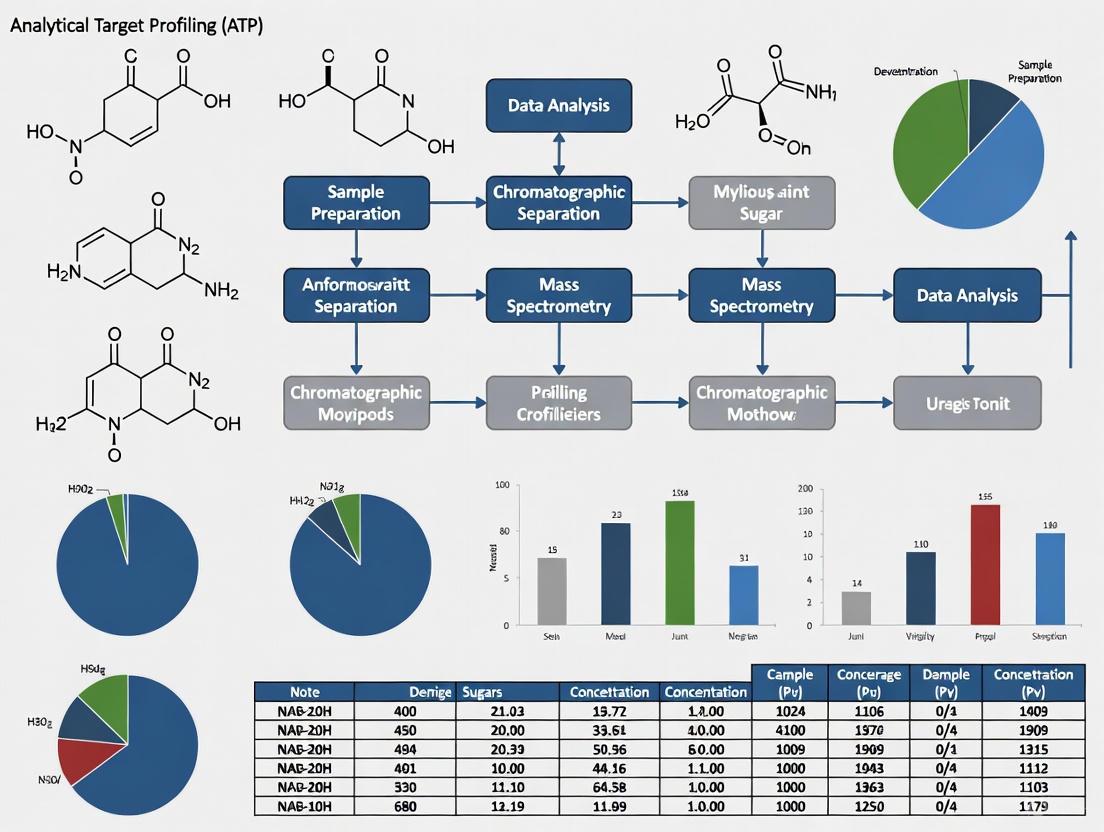
This article provides a comprehensive guide for researchers and scientists on developing and implementing Analytical Target Profiles (ATP) in food chemistry.
Analytical Target Profile (ATP) in Food Chemistry: A Practical Guide for Method Development and Validation
Abstract
This article provides a comprehensive guide for researchers and scientists on developing and implementing Analytical Target Profiles (ATP) in food chemistry. It covers the foundational principles of ATP as defined by modern regulatory guidelines like ICH Q14, outlines a step-by-step methodological approach for creating an ATP, discusses troubleshooting and optimization strategies using Analytical Quality by Design (AQbD), and explores validation protocols and comparative framework selection. By synthesizing current best practices, this guide aims to equip professionals with the knowledge to build robust, fit-for-purpose analytical methods that ensure food safety, quality, and regulatory compliance throughout the method lifecycle.
What is an Analytical Target Profile? Foundational Concepts and Regulatory Drivers
An Analytical Target Profile (ATP) is a foundational document that defines the required performance criteria for an analytical procedure. It specifies the quality standards an analytical method must meet to reliably report a result for its intended use [1]. The ATP is established prior to method development and is method-agnostic, focusing on the desired outcome rather than prescribing a specific technique [1]. This approach shifts the paradigm from a compliance-focused, check-box exercise to a structured, lifecycle-based model that enhances method understanding, robustness, and fitness for purpose [1]. Within the context of food chemistry and drug development, the ATP ensures that analytical results are sufficiently reliable to support critical decisions regarding product quality, safety, and efficacy.
The Structure and Components of an ATP
The core of an ATP is a clear statement of the intended purpose of the analytical method and a definition of the required performance standards. A well-constructed ATP includes the following key elements:
- Analyte and Attribute: Clearly defines what is being measured (e.g., an active ingredient, an impurity, or a microbial contaminant).
- Sample Type: Describes the matrix and the specific type of sample (e.g., raw material, finished product, or surface swab).
- Performance Criteria: Quantifies the maximum permissible error (bias) and the acceptable levels of uncertainty (precision) for the reportable result. The ATP defines these criteria based on the impact of the analytical result on patient safety or product quality.
Unlike traditional validation criteria which assess characteristics like specificity and accuracy in isolation, the ATP defines a "total error" requirement. This provides a direct measure of the quality and error associated with the results the procedure generates, ensuring they fall within a pre-defined range of the true value with a high degree of probability [1].
Table 1: Traditional Validation Criteria vs. ATP Performance Criteria
| Aspect | Traditional Validation Approach | ATP-Based Approach |
|---|---|---|
| Focus | Validating a specific, developed method | Defining method-independent performance requirements |
| Bias & Precision | Often evaluated separately, potentially allowing trade-offs | Considers total error (bias + precision) combined |
| Lifecycle View | Treats development, validation, and transfer as separate activities | Integrates validation, verification, and transfer as interrelated stages |
| Outcome | Demonstrates method performance against default criteria | Ensures results are fit for their intended decision-making purpose |
The ATP Within the Analytical Procedure Lifecycle
The Analytical Procedure Lifecycle is a holistic framework that integrates the ATP with all stages of an analytical method's existence, from initial conception through routine use and eventual retirement.
The lifecycle model, as illustrated above, consists of three interconnected stages [1]:
- Stage 1: Procedure Design and Development: The ATP, created based on the intended use of the method, drives the selection and development of a suitable analytical procedure. This stage involves knowledge gathering, risk assessment, and establishing an analytical control strategy.
- Stage 2: Procedure Performance Qualification: This stage provides objective evidence that the developed method, when executed in its intended environment, consistently meets the performance criteria defined in the ATP.
- Stage 3: Continued Procedure Performance Verification: During routine use, the method's performance is continuously monitored to ensure it remains in a state of control. Data is trended, and the method is managed through a structured change control process, with any major changes potentially triggering a return to Stage 1.
Application Notes and Experimental Protocols
Application Note: Implementing an ATP for a High-Throughput Screening Assay
Objective: To establish a reliable, high-throughput ATP-based viability assay for screening compound libraries in drug development.
Background: Cellular ATP concentration is a direct indicator of cell viability and metabolic activity [2]. Bioluminescent ATP assays utilizing the firefly luciferase reaction provide a highly sensitive and rapid means of quantifying ATP, making them ideal for high-throughput applications [2].
Key Research Reagent Solutions: Table 2: Essential Reagents for a Bioluminescent ATP Assay
| Reagent / Material | Function / Description |
|---|---|
| Ultra-Glo Recombinant Luciferase | A stable, engineered luciferase resistant to detergent inhibition, enabling a stable "glow-type" signal for flexible workflow [2]. |
| Cell Lysis Reagent | A detergent-based reagent to rapidly lyse cells and release intracellular ATP while inactivating ATPases. |
| D-Luciferin | The substrate for the luciferase enzyme, which is oxidized in an ATP-dependent reaction to produce light [2]. |
| Luminometer or Multiwell Plate Reader | Instrumentation capable of detecting the luminescent signal produced by the reaction, correlating light intensity to ATP concentration. |
Experimental Workflow: The following diagram outlines the core steps in executing a bioluminescent cell viability assay for high-throughput screening.
Protocol: Quantitative Determination of Cellular ATP Synthetic Activity
This protocol details a method for making permeable E. coli cells to dynamically measure glycolytic ATP synthesis activity, adaptable for studying microbial metabolism in food and pharmaceutical contexts [3].
Principle: Cells are rendered permeable via osmotic shock and detergent treatment, allowing substrates (like glucose) to enter while preventing ATP loss. Externally added luciferase produces light proportional to the ATP synthesized from the glycolytic pathway within the permeable cells [3].
Materials:
- E. coli cell culture
- Permeabilization Buffer (e.g., containing Tris-HCl, EDTA, and lysozyme)
- Detergent Solution (e.g., Brij 58)
- Reaction Buffer (containing MgSO₄)
- D-Luciferin/Luciferase Mixture
- Glucose solution (substrate)
- Luminometer
Procedure:
- Cell Preparation: Harvest E. coli cells from a mid-log phase culture by centrifugation. Wash and resuspend in Permeabilization Buffer.
- Permeabilization: Incubate the cell suspension on ice for a defined period (e.g., 10 minutes) to allow lysozyme to weaken the cell wall. Add a non-ionic detergent (e.g., Brij 58) to final concentration of 0.05% and mix gently to create pores in the membrane.
- Reaction Setup: In a luminometer tube or multiwell plate, combine the following:
- Permeabilized cell suspension
- Reaction Buffer with MgSO₄
- D-Luciferin/Luciferase Mixture
- Initiation and Measurement: Start the reaction by injecting a glucose solution. Immediately begin measuring luminescence continuously for several minutes.
- Data Analysis: The luminescence signal will increase linearly as the cells synthesize ATP from glucose. Plot luminescence versus time. The slope of the linear increase is directly proportional to the cellular ATP biosynthetic activity [3].
Quality Control: Include an ATP standard curve in each experiment to confirm the linear relationship between ATP concentration and luminescent signal. A no-glucose control should be included to establish background signal.
Data Presentation and Analysis
The quantitative data generated from analytical methods must be structured and presented to facilitate easy comparison against the ATP's performance criteria.
Table 3: Example ATP Performance Criteria Table for an Impurity Method
| Performance Characteristic | ATP Requirement | Method A Results | Method B Results | Conclusion |
|---|---|---|---|---|
| Target Measurement Uncertainty | ≤ 15% (at target concentration) | 12% | 8% | Both Acceptable |
| Accuracy (Bias) | Within ± 10% of true value | +8% | -5% | Both Acceptable |
| Precision (%RSD) | ≤ 5% | 4.5% | 3.1% | Both Acceptable |
| Total Error (Bias + 2SD) | < 20% | 17% | 11.2% | Both Acceptable |
The relationship between the total error observed from a method's performance and the criteria set in the ATP can be visualized to aid in decision-making.
The Analytical Target Profile is more than a document; it is the strategic cornerstone that guides the entire analytical method lifecycle. By defining performance requirements upfront, the ATP ensures analytical methods are developed and selected based on their ability to produce reliable, meaningful data [1]. This approach provides a direct measure of the error associated with the results and integrates validation, transfer, and ongoing monitoring into a cohesive, science-based framework [1]. Adopting an ATP-centric approach ultimately enhances product and process understanding, reduces variability, and strengthens the overall quality system in both food chemistry and pharmaceutical research, thereby better ensuring patient safety and product efficacy.
The International Council for Harmonisation (ICH) finalized two pivotal guidelines in March 2024, ICH Q2(R2) on "Validation of Analytical Procedures" and ICH Q14 on "Analytical Procedure Development," which together modernize the framework for analytical sciences in regulated industries [4]. The U.S. Food and Drug Administration (FDA) has adopted these guidelines, making them critical for regulatory submissions and compliance [5]. These documents represent a significant evolution from the previous "check-the-box" approach to a scientific, risk-based lifecycle model that begins with proactive procedure design and continues through ongoing monitoring and improvement [6]. This framework, while developed for pharmaceuticals, provides an invaluable structured approach for food chemistry research seeking to implement robust, defensible analytical methods.
The enhanced approach emphasizes built-in quality rather than retrospective testing, encouraging a deeper understanding of methods through their entire lifecycle [7]. For food chemists, this means developing methods that are not only validated but truly fit-for-purpose, with clearly defined performance criteria established before development begins. The Analytical Target Profile (ATP) serves as this foundation, prospectively defining the quality attributes a method must measure and the required performance characteristics [6]. This systematic approach ensures methods remain reliable despite complex food matrices and evolving compositional profiles.
Core Regulatory Guidelines and Their Interrelationships
Key Guidelines and Their Roles
Table 1: Core ICH and FDA Guidelines for Analytical Procedures
| Guideline | Focus Area | Key Contribution | Status |
|---|---|---|---|
| ICH Q2(R2) | Analytical procedure validation | Provides framework for validation principles, including modern techniques like multivariate methods [4] | Final March 2024 [5] |
| ICH Q14 | Analytical procedure development | Science- and risk-based approaches for development; introduces ATP and enhanced approach [8] | Final March 2024 [4] |
| ICH Q12 | Pharmaceutical product lifecycle | Enables post-approval change management; works with Q14 for analytical procedure changes [9] | Adopted May 2021 [9] |
| FDA cGMP (§211.110) | In-process controls & testing | Requires monitoring for batch uniformity; flexible for advanced manufacturing [10] | Draft guidance January 2025 [10] |
The Lifecycle Approach Integration
ICH Q2(R2) and Q14 function as interconnected components within a comprehensive Analytical Procedure Lifecycle Management (APLM) framework [7]. This model consists of three continuous stages: Procedure Design and Development, where the ATP is defined and the method is developed; Procedure Performance Qualification, where the method is formally validated; and Procedure Performance Verification, involving ongoing monitoring during routine use [7]. This represents a fundamental shift from viewing validation as a one-time event to treating it as part of a continuous quality process.
The relationship between these guidelines and the analytical lifecycle is illustrated below:
Figure 1: Analytical Procedure Lifecycle with ICH Guidelines
The Analytical Target Profile (ATP) Foundation
ATP Concept and Definition
The Analytical Target Profile (ATP) is a prospective summary of the intended purpose of an analytical procedure and its required performance characteristics [6]. It serves as the foundational specification that guides all subsequent development, validation, and monitoring activities [7]. In essence, the ATP defines what the method must be capable of achieving, rather than prescribing how to achieve it. For food chemistry applications, this means focusing on the essential measurements needed to ensure food safety, quality, and authenticity without prematurely limiting the technical approach.
The ATP establishes performance criteria directly linked to the critical quality attributes (CQAs) of the product or material being tested [9]. In food research, these attributes might include nutrient content, contaminant levels, authenticity markers, or sensory characteristics. By defining these requirements upfront, method development becomes more efficient and targeted, reducing the risk of later-stage failures and facilitating continuous improvement throughout the method's lifecycle [7].
Developing an ATP for Food Chemistry Research
Table 2: ATP Components for Food Chemistry Applications
| ATP Element | Description | Food Chemistry Example |
|---|---|---|
| Analyte/Attribute | Substance or property to be measured | Vitamin D3 concentration in fortified milk |
| Sample Matrix | Material in which analyte exists | Whole milk with varying fat content |
| Required Performance | Accuracy, precision, specificity | ±5% accuracy of true value; RSD <3% |
| Measurement Range | Interval between upper and lower concentrations | 0.5-5.0 μg/mL to cover expected fortification |
| Acceptance Criteria | Predefined limits for reportable results | 95-105% of labeled claim for compliance |
Creating an effective ATP requires cross-functional collaboration between food chemists, quality professionals, and regulatory affairs specialists. The process begins with clearly defining the business and regulatory needs for the method, followed by identifying the critical quality attributes that must be controlled [9]. For food authentication methods, this might include specificity requirements to detect adulterants at economically motivated levels. The ATP should be sufficiently detailed to guide development but flexible enough to allow for multiple technical approaches.
ICH Q14: Enhanced Analytical Procedure Development
Minimal vs. Enhanced Approaches
ICH Q14 describes two complementary approaches to analytical procedure development: the traditional minimal approach and the more systematic enhanced approach [4]. The minimal approach represents the conventional practices that have historically been used, with limited formal requirement for understanding the method's capabilities and limitations. In contrast, the enhanced approach employs structured, science-based, and risk-based methodologies to gain more comprehensive procedure understanding [11].
The enhanced approach provides significant advantages for methods requiring post-approval changes, as the deeper understanding facilitates more flexible regulatory pathways [9]. For food chemistry laboratories dealing with evolving supply chains and emerging contaminants, this approach enables method adaptability without compromising data quality. The knowledge gained through enhanced development directly informs the analytical procedure control strategy, defining which parameters are critical and must be carefully controlled versus those that can vary within established ranges [11].
Risk Assessment in Method Development
A cornerstone of the enhanced approach is the application of systematic risk assessment throughout method development [11]. This involves identifying potential sources of variability that could impact method performance, then designing experiments to understand and control these factors. For complex food matrices, this might include assessing the impact of sample composition variation, extraction efficiency differences, or matrix effects on detection.
Risk assessment tools such as Fishbone diagrams, Failure Mode and Effects Analysis (FMEA), and Prior Knowledge Reviews help method developers identify which factors merit focused experimentation [6]. The output of this assessment guides the development strategy, ensuring resources are allocated to understanding and controlling the factors that most significantly impact method performance.
ICH Q2(R2): Validation of Analytical Procedures
Core Validation Parameters
ICH Q2(R2) provides detailed guidance on validating analytical procedures to demonstrate they are fit for their intended purpose [4]. The validation parameters required depend on the type of method (identification, testing for impurities, assay, etc.), but core concepts apply across analytical techniques.
Table 3: Core Validation Parameters per ICH Q2(R2)
| Parameter | Definition | Experimental Approach | Food Chemistry Application |
|---|---|---|---|
| Accuracy | Closeness to true value [12] | Recovery studies with spiked samples [12] | Vitamin fortification recovery in complex matrices |
| Precision | Degree of scatter in results [12] | Repeatability, intermediate precision [12] | Consistency of pesticide residue measurements |
| Specificity | Ability to measure analyte despite interferences [12] | Challenge with potential interferents | Distinguishing authentic from adulterated honey |
| Linearity | Proportionality of response to concentration [12] | Minimum 5 concentration levels [12] | Calibration for mycotoxin quantification |
| Range | Interval demonstrating suitability [6] | Demonstrated through accuracy, precision, linearity | Covering expected contaminant concentrations |
| Robustness | Resilience to parameter variations [12] | Deliberate changes to critical parameters | Method transfer between laboratory environments |
| LOD/LOQ | Detection/quantitation limits [6] | Signal-to-noise or statistical approaches | Trace contaminant monitoring |
Validation Experimental Protocol
Protocol: Validation of HPLC-UV Method for Antioxidant Quantification in Botanical Extracts
1.0 Purpose To validate an HPLC-UV method for quantification of specific antioxidant compounds in complex botanical extracts per ICH Q2(R2) requirements.
2.0 Scope Applies to stability-indicating method for catechin, epicatechin, and procyanidin B2 in grape seed extract.
3.0 Experimental Design
- 3.1 Specificity: Inject individual analyte standards, placebo formulation, and forced degradation samples (acid, base, oxidation, heat, light). Resolution between closest eluting peaks should be ≥2.0.
- 3.2 Linearity and Range: Prepare minimum 5 concentrations from 50-150% of target concentration (n=3 each). Calculate correlation coefficient (R² ≥0.998), y-intercept, and slope of regression line.
- 3.3 Accuracy: Spike placebo with analytes at 50%, 100%, and 150% of target (n=3 each). Calculate mean recovery (98-102%).
- 3.4 Precision:
- Repeatability: Six replicate preparations at 100% concentration by same analyst same day (RSD ≤2.0%).
- Intermediate precision: Two analysts, different days, different instruments (RSD ≤3.0%).
- 3.5 Robustness: Deliberately vary column temperature (±2°C), flow rate (±10%), mobile phase pH (±0.2 units). System suitability must still be met.
4.0 Acceptance Criteria All validation parameters must meet pre-defined criteria based on ATP requirements. Any deviation requires investigation and justification.
Application in Food Chemistry Research
Implementing the Lifecycle Approach
Implementing the ICH Q14 and Q2(R2) framework in food chemistry research requires adapting pharmaceutical concepts to food-specific challenges. Food matrices are typically more variable than pharmaceutical formulations, and analytes of interest may be less defined. The lifecycle approach provides structure for managing this complexity through systematic development and knowledge management.
The enhanced approach is particularly valuable for food methods requiring high specificity, such as authenticity testing and allergen detection, where method robustness across variable sample types is essential. The control strategy developed through enhanced understanding explicitly defines how to maintain method performance despite matrix variations common in agricultural-sourced materials.
The Scientist's Toolkit: Essential Research Reagents and Materials
Table 4: Essential Research Reagents and Materials for Food Analytical Chemistry
| Item/Category | Function/Purpose | Application Examples |
|---|---|---|
| Stable Isotope-Labeled Internal Standards | Correct for matrix effects and extraction losses | Quantification of mycotoxins, veterinary drug residues |
| Matrix-Matched Reference Materials | Establish accuracy in complex backgrounds | Calibration for elemental analysis in various food types |
| Multi-Component Proficiency Test Materials | Verify method performance and comparability | Interlaboratory method validation studies |
| Solid Phase Extraction (SPE) Cartridges | Sample clean-up and analyte enrichment | Pesticide residue analysis before GC/MS or LC/MS |
| Immunoaffinity Columns | High specificity extraction | Aflatoxin, ochratoxin determination |
| Certified Reference Materials | Method validation and quality control | Nutrient analysis accuracy verification |
Change Management in Food Methods
As with pharmaceutical methods, food analytical procedures require updates due to technological advances, reagent obsolescence, or new scientific knowledge [9]. ICH Q14 provides a framework for managing these changes through risk-based classification and bridging studies [9]. For food methods, this might include transitioning from HPLC to UPLC platforms, updating detection techniques, or modifying sample preparation to use more sustainable solvents.
The change management process involves assessing the potential impact on method performance relative to the ATP, conducting appropriate bridging studies to demonstrate comparable performance, and implementing the change with appropriate regulatory notifications [9]. For standardized methods used in food compliance, this systematic approach ensures changes don't compromise the method's ability to correctly classify compliant and non-compliant samples.
Regulatory Submissions and Compliance
Submission Requirements
When submitting methods to regulatory bodies, the level of detail required depends on whether a minimal or enhanced approach was used [11]. For enhanced approaches, submissions should include the ATP, summary of development studies, risk assessments, and justification of the control strategy [11]. This comprehensive documentation demonstrates the scientific rigor applied during development and provides regulators confidence in the method's robustness.
For food methods referenced in standards or regulatory methods, the enhanced approach documentation facilitates future updates and method improvements. The established conditions (ECs) for the method—those parameters critical to ensuring the method performs as intended—should be clearly identified, along with their proven acceptable ranges [9]. This clarity streamlines the evaluation of proposed changes throughout the method's lifecycle.
FDA Expectations and cGMP Considerations
While cGMP regulations (21 CFR 211) specifically apply to pharmaceuticals, their principles of method validation, equipment qualification, and documentation practices represent best practices for food analytical laboratories [10] [7]. FDA's draft guidance on complying with 21 CFR 211.110 emphasizes a scientific, risk-based approach to in-process controls and testing, which aligns with the ICH Q14 enhanced approach [10].
For food chemistry research supporting product development or quality assurance, adopting these principles strengthens the scientific foundation of analytical methods. FDA encourages the use of modern analytical technologies and process models, while emphasizing the need to understand their limitations and implement appropriate controls [10]. This is particularly relevant for food laboratories implementing rapid screening methods or process analytical technology (PAT) for real-time quality assessment.
The modernized regulatory landscape for analytical procedures, embodied in ICH Q14 and Q2(R2), represents a significant advancement toward science-based, risk-informed method lifecycle management. For food chemistry researchers, these guidelines provide a robust framework for developing, validating, and maintaining analytical methods that reliably measure critical quality and safety attributes in complex food matrices.
The Analytical Target Profile serves as the cornerstone of this approach, ensuring methods are developed with a clear understanding of their intended purpose and performance requirements. The distinction between minimal and enhanced approaches provides flexibility based on method criticality, while the emphasis on method understanding and control strategies enhances robustness and facilitates managed evolution over time.
As food analytical challenges grow more complex—with needs for lower detection limits, greater specificity, and faster results—the principles outlined in these guidelines provide a path toward more reliable, adaptable analytical procedures. By adopting this lifecycle approach, food chemistry researchers can better ensure the accuracy, reliability, and defensibility of their analytical data, ultimately supporting food safety, quality, and authenticity in an evolving global marketplace.
In the realm of food chemistry research, ensuring consistent product quality is paramount. The Quality by Design (QbD) framework provides a systematic approach to development that begins with predefined objectives and emphasizes product and process understanding and control, based on sound science and quality risk management [13]. This approach is crucial for linking analytical goals, such as monitoring adenosine triphosphate (ATP) levels, to the Critical Quality Attributes (CQAs) of food products. A CQA is a physical, chemical, biological, or microbiological property or characteristic that must be within an appropriate limit, range, or distribution to ensure the desired product quality [13]. In food matrices, these attributes could include texture (firmness), color, microbial stability, and nutritional content.
The foundational step in QbD is the definition of a Quality Target Product Profile (QTPP), which is a prospective summary of the quality characteristics of a product that must be achieved to ensure the desired quality, taking into account safety and efficacy [13]. For a food product, the QTPP would define its essential characteristics as experienced by the consumer. The analytical target profile (ATP), a central concept in this thesis context, serves as the blueprint for the analytical method itself, ensuring it is fit-for-purpose in monitoring the CQAs defined by the QTPP. In postharvest food science, energy status, quantified by ATP levels and Energy Charge (EC), has emerged as a critical metabolic indicator. Recent studies on fruits like longan and shiitake mushrooms have demonstrated that sufficient ATP levels are vital for maintaining quality and delaying senescence [14] [15]. This document details application notes and protocols for utilizing ATP as a key analytical target to control CQAs in food matrices.
Quantitative Data on ATP's Role in Food Quality
Exogenous application of ATP has been shown to directly influence several CQAs in various food matrices, particularly in postharvest commodities. The data below summarize the quantitative effects of ATP and its uncoupler, 2,4-Dinitrophenol (DNP), on the quality attributes of longan fruit and shiitake mushrooms.
Table 1: Impact of ATP and DNP on CQAs and Related Metabolites in Longan Fruit Pulp [14]
| Quality Attribute / Metabolite | Measurement | ATP Treatment Effect | DNP Treatment Effect |
|---|---|---|---|
| Pulp Breakdown Index | Unitless | Decreased | Increased |
| Pulp Firmness | Force (N) | Increased | Decreased |
| Cell Membrane Permeability | Relative Electrolyte Leakage (%) | Decreased | Increased |
| Cellulose & Hemicellulose Content | mg/g | Increased | Decreased |
| Reactive Oxygen Species (ROS) | fluorescence intensity/g | Decreased | Increased |
| Malondialdehyde (MDA) | μmol/g | Decreased | Increased |
| Antioxidants (AsA, GSH) | μmol/g | Increased | Decreased |
Table 2: Effect of ATP on Energy Metabolism and Quality in Shiitake Mushrooms During Spore Release [15]
| Parameter | Measurement | ATP Treatment Effect | Functional Implication |
|---|---|---|---|
| Microstructural Integrity | SEM Observation | Retained | Delayed quality deterioration |
| Energy Metabolic Enzymes (SDH, G6PDH) | Enzyme Activity (U/mg) | Enhanced | Improved energy supply |
| Catalase (CAT) Activity | Enzyme Activity (U/mg) | Enhanced | Strengthened antioxidant system |
| Hydrogen Peroxide (H₂O₂) | Content (μmol/g) | Decreased | Reduced oxidative stress |
Experimental Protocols
Protocol 1: ATP Treatment and Quality Assessment in Fresh Fruit
This protocol outlines the methodology for treating fresh longan fruit with ATP and evaluating its impact on key CQAs like pulp breakdown and firmness [14].
- Key CQAs Monitored: Pulp breakdown index, pulp firmness, cell membrane permeability, contents of cellulose and hemicellulose, ROS and MDA production, antioxidant (AsA, GSH) levels.
- Reagents and Materials:
- Fresh longan fruits at commercial maturity.
- Adenosine triphosphate (ATP).
- 2,4-Dinitrophenol (DNP).
- Distilled water.
- Equipment: Texture analyzer, spectrophotometer, centrifuge.
- Procedure:
- Fruit Selection and Preparation: Select fruits for uniform maturity, size, color, and absence of disease. Randomly divide into three treatment groups (e.g., 50 fruits per group for statistical power): Control, ATP treatment, and DNP treatment.
- Solution Preparation: Prepare a 1.5 mmol L⁻¹ ATP solution and a 0.2 mmol L⁻¹ DNP solution using distilled water. Use distilled water for the control group.
- Treatment Application: Immerse the fruits in their respective solutions (ATP, DNP, or control) for 10 minutes. Air-dry the fruits post-treatment.
- Storage: Store the treated fruits in temperature and humidity-controlled chambers (e.g., 25°C, 85-90% relative humidity).
- Sampling and Measurement: At regular intervals (e.g., day 0, 1, 2, 3...), sample fruits from each group for destructive analysis.
- Pulp Breakdown Index: Assess visually using a standardized scoring system based on the extent of pulp collapse and juice release.
- Pulp Firmness: Measure using a texture analyzer on predetermined areas of the pulp.
- Cell Membrane Permeability: Determine by measuring relative electrolyte leakage from pulp tissue discs.
- Biochemical Assays: Quantify cellulose, hemicellulose, ROS, MDA, AsA, and GSH using established spectrophotometric methods.
Protocol 2: ATP Treatment and Proteomic Analysis in Shiitake Mushrooms
This protocol describes the use of 4D-DIA quantitative proteomics to investigate the mechanisms of ATP-induced quality retention in shiitake mushrooms during spore release [15].
- Key CQAs Monitored: Microstructural integrity (via SEM), spore release status, activity of energy metabolism enzymes (SDH, G6PDH), H₂O₂ content.
- Reagents and Materials:
- Fresh shiitake mushrooms (Lentinula edodes).
- Adenosine triphosphate (ATP).
- Enzyme assay kits (e.g., for G6PDH, SDH, CAT, H₂O₂).
- Reagents for protein extraction, digestion, and desalting (e.g., DTT, IAA, Trypsin).
- Equipment: Scanning Electron Microscope (SEM), LC-MS/MS system with ion mobility capability, centrifuge.
- Procedure:
- Mushroom Treatment: Divide mushrooms into control and ATP-treated groups. Immerse the ATP group in a 1.5 mmol L⁻¹ ATP solution for 10 minutes; immerse the control group in distilled water.
- Storage and Sampling: Store mushrooms at room temperature. Collect samples at both the initial and final stages of spore release.
- Microstructure Evaluation: Observe the spore and hyphal structure of mushroom samples using Scanning Electron Microscopy (SEM).
- Physicochemical Analysis: Homogenize mushroom tissue and extract enzymes. Measure the activities of SDH, G6PDH, and CAT, as well as H₂O₂ content using commercial assay kits according to manufacturers' instructions.
- 4D-DIA Quantitative Proteomics:
- Protein Extraction and Digestion: Extract total protein from mushroom tissue, reduce with DTT, alkylate with IAA, and digest with trypsin.
- LC-MS/MS Analysis: Analyze the resulting peptides using a 4D-DIA (four-dimensional data-independent acquisition) workflow on a LC-MS/MS system coupled with ion mobility spectrometry.
- Data Analysis: Process the raw data using specialized software (e.g., Spectronaut) to identify and quantify proteins. Perform statistical analysis to identify Differentially Expressed Proteins (DEPs) between control and ATP-treated groups.
- Bioinformatic Analysis: Conduct Gene Ontology (GO) enrichment and Kyoto Encyclopedia of Genes and Genomes (KEGG) pathway analysis on the DEPs to identify activated biological processes and signaling pathways (e.g., mTOR signaling).
Signaling Pathways and Mechanisms
The following diagrams, generated using Graphviz DOT language, illustrate the core mechanisms by which ATP modulates product quality.
ATP Mechanism on Fruit Quality
Proteomic Analysis Workflow
The Scientist's Toolkit: Research Reagent Solutions
Table 3: Essential Reagents and Materials for ATP-Related Quality Research
| Reagent / Material | Function / Role in Experimentation |
|---|---|
| Adenosine Triphosphate (ATP) | Exogenous energy source applied to treatments to directly enhance cellular energy status and study its effect on maintaining CQAs [14] [15]. |
| 2,4-Dinitrophenol (DNP) | Respiratory uncoupler used as a negative control; disrupts mitochondrial ATP synthesis, forcing energy to dissipate as heat, thereby lowering ATP levels and accelerating quality decline [14]. |
| Enzyme Assay Kits (e.g., for SDH, G6PDH, CAT) | Commercial kits used for precise, reproducible measurement of the activity of key enzymes involved in energy metabolism (SDH, G6PDH) and the antioxidant system (CAT) [15]. |
| Reagents for Proteomics (DTT, IAA, Trypsin) | Key chemicals for protein preparation: DTT (Dithiothreitol) reduces disulfide bonds; IAA (Iodoacetamide) alkylates cysteine residues; Trypsin digests proteins into peptides for LC-MS/MS analysis [15]. |
| Cellulose & Hemicellulose Assay Reagents | Chemicals used in colorimetric or gravimetric methods to quantify the content of these key cell wall polysaccharides, which are direct indicators of textural CQAs like firmness [14]. |
| Antioxidant Assay Reagents (for AsA, GSH) | Reagents used to spectrophotometrically measure the concentration of non-enzymatic antioxidants like Ascorbic Acid (AsA) and Glutathione (GSH), indicating the redox state of the tissue [14]. |
The paradigm for validating analytical methods is undergoing a fundamental shift across scientific disciplines, from food chemistry to pharmaceutical research. This transition moves from a checklist approach of verifying fixed performance parameters to a holistic, science-based framework centered on an Analytical Target Profile (ATP). The ATP defines the required quality of the analytical result based on its intended use, providing a structured framework for development and validation [16].
Traditional method validation often encounters challenges due to discrepancies and contradictory information among numerous international guidelines, leading to potential confusion regarding terminology and experimental requirements for parameters like accuracy, precision, and specificity [17]. The ATP approach, underpinned by Analytical Quality by Design (AQbD) principles, seeks to overcome these inconsistencies by establishing performance-based objectives at the outset, ensuring methods are robust, reliable, and fit-for-purpose throughout their entire lifecycle [16].
Comparative Analysis: Traditional versus ATP-Based Approaches
The core difference between the two paradigms lies in their philosophy and execution. The traditional model is often reactive, validating a finalized method against a fixed set of parameters. In contrast, the ATP model is proactive and strategic, guiding method development from the beginning to meet predefined quality standards.
Table 1: Core Differences Between Traditional and ATP-Based Analytical Approaches
| Feature | Traditional Approach | ATP-Based Approach |
|---|---|---|
| Core Philosophy | Compliance with a fixed checklist of validation parameters [17]. | Fulfillment of a predefined ATP, ensuring fitness for purpose [16]. |
| Development Mindset | Often linear and empirical (e.g., One Factor at a Time) [16]. | Systematic, risk-based, and iterative using AQbD principles [16]. |
| Primary Focus | Verification of performance parameters post-development [12]. | Designing quality into the method from the start [13]. |
| Defining Requirements | Fixed acceptance criteria for universal parameters (e.g., R² ≥ 0.999) [12]. | Flexible, performance-based objectives tailored to the method's intent [16]. |
| Control Strategy | Fixed operational conditions and system suitability tests [12]. | A robust control strategy potentially including a Method Operable Design Region (MODR) [16]. |
| Lifecycle Management | Often rigid, requiring major revalidation for changes [17]. | Flexible within the defined design space, facilitating continual improvement [16]. |
Performance-Based Objectives in Practice: ATP in Food and Pharmaceutical Research
The application of performance-based objectives is exemplified by the comparison of hygiene monitoring methods in food chemistry. A 2023 study compared the traditional coliform paper test with the rapid ATP bioluminescence assay for assessing kitchenware sanitation [18]. The coliform test, a standard method, provides a fixed, binary result (positive/negative) after a lengthy incubation. The ATP method, while not yet a standard, offers a rapid, quantitative result (in Relative Light Units, RLU) that correlates with microbial contamination levels [18].
This case demonstrates a shift towards valuing rapid, on-site results that support immediate decision-making—a performance objective defined by the need for efficient hygiene supervision. The kappa coefficient of 0.549 indicated medium consistency between the methods, showing that the ATP method provides a reliable, though not identical, assessment of cleanliness aligned with a different performance objective [18].
In pharmaceuticals, the ATP is formally defined as a prospective summary of the analytical procedure's requirements. It is established before development and drives the entire method lifecycle [16]. A well-constructed ATP includes:
- The Analyte and its Level: What is being measured and at what concentration (e.g., trace impurity vs. major component).
- The Analytical Technique: The intended technology, selected based on its ability to meet the ATP [19].
- Performance Criteria: Defined based on the method's purpose, including parameters such as accuracy, precision, and specificity [16].
- Business and End-User Needs: Throughput, cost, and ease of use in the quality control (QC) laboratory [16].
Experimental Protocols
Protocol 1: Establishing an Analytical Target Profile (ATP)
This protocol outlines the steps for defining an ATP, the critical first step in a modern, performance-based method development process.
1. Define the Analytical Need: Formulate the primary question the method must answer (e.g., "What is the concentration of allergen X in product Y?"). This determines the method's purpose [16]. 2. Define the QTPP and CQAs (for drug products): For pharmaceutical applications, the ATP is informed by the Quality Target Product Profile (QTPP) and the drug product's Critical Quality Attributes (CQAs) [13]. 3. Draft the ATP Document: Create a document containing the following elements [16]: - Analyte and Matrix: Clearly identify the substance to be measured and the sample material. - Intended Purpose: State the method's use (e.g., identity test, quantitative assay for release, impurity testing). - Performance Criteria: Define the required performance for each relevant parameter: - Specificity: Ability to measure the analyte unequivocally in the presence of potential interferents [12]. - Accuracy/Trueness: Closeness of agreement between the accepted reference value and the value found [17]. - Precision: Degree of agreement among individual test results (repeatability, intermediate precision) [12]. - Range: The interval between the upper and lower levels of analyte for which suitable precision and accuracy are demonstrated [12]. - Reportable Range and Linearity: The range of concentrations over which the method will be used and the required correlation coefficient [12]. - Business/Operational Requirements: Specify needs for sample throughput, analysis time, cost-per-test, environmental impact ("green" analytics), and ease of transfer to QC labs [19] [16].
Protocol 2: Method Development and Validation Based on ATP
Once the ATP is established, it guides the subsequent development and validation activities.
1. Technique Selection: Based on the ATP, select the most appropriate analytical technique (e.g., HPLC, GC, SFC, CE). For instance, Supercritical Fluid Chromatography (SFC) may be selected for chiral separations, water-sensitive analytes, or to meet sustainability goals [19]. 2. Risk Assessment and Knowledge Management: Use risk management tools (e.g., FMEA) to identify method parameters (Critical Method Parameters, CMPs) that can impact the performance criteria outlined in the ATP [16]. 3. Systematic Experimentation (DoE): Instead of a one-factor-at-a-time approach, use Design of Experiments (DoE) to efficiently explore the impact of CMPs and their interactions on method performance. This builds robustness into the method [16]. 4. Define the Control Strategy: Establish an Analytical Procedure Control Strategy (APCS) to ensure the method consistently meets the ATP. This includes system suitability tests (SSTs) derived from the ATP requirements [16]. 5. Method Validation: Perform validation studies to experimentally demonstrate that the method performs as specified in the ATP, following ICH Q2(R2) principles [16]. The acceptance criteria for each validation parameter are directly taken from the ATP.
Diagram 1: ATP-Based Method Lifecycle Workflow. This workflow illustrates the systematic, iterative process of developing and maintaining an analytical method based on predefined performance objectives, in alignment with ICH Q14 guidelines [16].
The Scientist's Toolkit: Essential Reagents and Materials
Successful implementation of analytical methods, whether traditional or ATP-based, relies on key reagents and technologies.
Table 2: Essential Research Reagent Solutions for Analytical Method Development
| Item | Function/Application | Example Use-Case |
|---|---|---|
| ATP Bioluminescence Assay Kits | Rapid, on-site detection of organic debris via adenosine triphosphate (ATP) from microbial and food residues [18] [20]. | Hygiene monitoring of kitchenware surfaces; verification of cleaning protocols in food manufacturing [18]. |
| Advanced Chromatography Columns | Stationary phases for separation techniques (e.g., UPLC, SFC, HPLC). Selection is critical for achieving specificity [19] [21]. | Chiral separations in API development using SFC [19]; impurity profiling in drug substances using UPLC-MS/MS [21]. |
| LC-MS/MS Compatible Solvents & Reagents | High-purity mobile phase components and additives for mass spectrometry detection to minimize background noise and ion suppression [21]. | Quantitative bioanalysis of drugs and metabolites in biological matrices during preclinical DMPK studies [21]. |
| Chemometric Software Packages | Statistical tools for designing experiments (DoE), analyzing multivariate data, and building predictive models from complex spectral data [22]. | Developing non-destructive spectroscopic methods (NIR, Raman) for food authentication and quality analysis [22]. |
| System Suitability Test (SST) Standards | Reference materials used to verify that the chromatographic system is performing adequately before sample analysis [16]. | Part of the control strategy to ensure daily performance of a validated HPLC method meets ATP criteria [16]. |
The evolution from fixed-parameter checking to performance-based objectives, crystallized in the Analytical Target Profile (ATP), represents a significant advancement in analytical science. This approach, formalized in guidelines like ICH Q14, provides a structured framework for developing methods that are not only compliant but also robust, reliable, and perfectly aligned with their intended purpose—whether in ensuring drug safety or verifying food quality [16].
This paradigm shift emphasizes building quality into the method from the very beginning, guided by a clear understanding of the required analytical performance. By adopting an ATP and AQbD framework, researchers and drug development professionals can enhance regulatory success, improve efficiency, and foster a culture of continuous improvement throughout the analytical method lifecycle.
Building Your ATP: A Step-by-Step Methodology for Food Chemistry Applications
In analytical chemistry, particularly within food chemistry and pharmaceutical development, defining the intended purpose and scope of an analytical procedure is the critical first step that forms the foundation for all subsequent activities. This initial stage determines the direction for method development, validation, and eventual application, ensuring the resulting data is fit-for-purpose. A clearly defined purpose and scope provides the framework for establishing the Analytical Target Profile (ATP), which prospectively summarizes the performance requirements for the procedure [6] [23]. For researchers and scientists, this strategic approach transforms method development from a prescriptive, "check-the-box" exercise into a systematic, science-based process that aligns with modern regulatory guidelines such as ICH Q14 and ICH Q2(R2) [6] [24]. This document outlines the principles and practical protocols for effectively establishing the purpose and scope of an analytical procedure within the context of food chemistry research.
Core Principles: From Purpose to Performance
The Role of the Analytical Target Profile (ATP)
The Analytical Target Profile (ATP) is a central concept introduced in ICH Q14 that formalizes the definition of an analytical procedure's purpose [6] [23]. It is a prospective summary that describes the intended purpose of the analytical procedure and its required performance characteristics [6]. Defining the ATP at the outset ensures that the method is designed to be fit-for-purpose from the very beginning [6]. The ATP directly links the analytical procedure to the Quality Target Product Profile (QTPP) and the Critical Quality Attributes (CQAs) of the product or compound under investigation [24]. For a food chemistry researcher, this could mean linking a method to a food's safety, authenticity, or nutritional value.
Key Questions to Define Purpose and Scope
Before drafting the ATP, researchers must answer fundamental questions about the analytical need. The table below summarizes these critical considerations.
Table 1: Key Questions to Define Analytical Procedure Purpose and Scope
| Category | Guiding Questions for Researchers |
|---|---|
| Analyte & Matrix | What specific analyte(s) must be measured? What is the chemical and physical nature of the sample matrix (e.g., solid, liquid, complexity)? |
| Intended Use | Is the method for qualitative identification or quantitative measurement? Is it for release, stability testing, raw material screening, or in-process control? |
| Performance Needs | What level of accuracy and precision is required for decision-making? What is the required sensitivity (LOD/LOQ)? What is the expected concentration range? |
| Operational Context | Where will the method be used (R&D lab, QC lab, production floor)? What are the sample throughput requirements? What technical expertise and equipment are available? |
Experimental Protocols for Scoping and Pre-Development
A systematic, science-based approach to defining the procedure's scope involves gathering key information through specific experimental and literature-based activities.
Protocol for Sample and Analyte Characterization
Objective: To understand the fundamental physicochemical properties of the analyte and the sample matrix to inform technique selection and method development. Materials:
- Purified analyte standard
- Representative sample matrix (blank and fortified)
- Relevant solvents and reagents
- Instrumentation: HPLC-UV/VIS, GC-MS, LC-MS, pH meter, balance
Methodology:
- Analyte Properties Profiling:
- Determine solubility in various solvents (water, methanol, acetonitrile, hexane).
- Estimate or measure key physicochemical properties: pKa (for ionizable compounds), LogP/LogD (lipophilicity), and chemical stability under various conditions (e.g., pH, heat, light) [19].
- Identify the analyte's spectral properties (UV-Vis absorbance maxima, fluorescence) using a spectrophotometer.
- Matrix Characterization:
- Analyze a blank (analyte-free) sample matrix to identify potential interfering components.
- Perform forced degradation studies on the sample (e.g., exposure to acid, base, oxidation, heat, and light) to understand potential degradation products and the stability-indicating requirements of the method [24].
- Documentation: Record all data in a technical report that captures process and formulation development activities, which will feed into the ATP [24].
Protocol for Defining Performance Criteria via the ATP
Objective: To formally document the quality standards the analytical procedure must meet. Materials: Data generated from Protocol 3.1, prior knowledge, and regulatory or internal quality requirements.
Methodology:
- Define the Attribute and Procedure Type: Clearly state what is being measured (e.g., "concentration of preservative X") and the type of procedure (e.g., identity test, quantitative assay for impurity, limit test for a contaminant).
- Establish Performance Criteria: Based on the intended use from Table 1, define and justify numerical targets for the following characteristics [6] [23]:
- Accuracy (e.g., mean recovery of 95-105%)
- Precision (e.g., Repeatability %RSD ≤ 2.0%)
- Specificity (e.g., baseline separation from all known interferences)
- Linearity and Range (e.g., a range of 50-150% of target concentration with R² ≥ 0.998)
- Limit of Detection (LOD) and Quantitation (LOQ) (e.g., LOQ at 0.05% of the target concentration)
- Document the ATP: Create a controlled document that includes all the above information. This document will serve as the target for method development and the benchmark for validation [6] [24].
Visualization of the Analytical Procedure Definition Workflow
The following diagram illustrates the logical workflow and key decision points for defining the purpose and scope of an analytical procedure, culminating in the ATP.
Diagram 1: Workflow for defining analytical procedure purpose and scope
The Scientist's Toolkit: Essential Research Reagent Solutions
The following table details key reagents and materials essential for the initial scoping and characterization phases of analytical procedure development.
Table 2: Essential Reagents and Materials for Scoping and Characterization
| Item/Category | Function/Application |
|---|---|
| Certified Reference Materials (CRMs) | Provides a known quantity of the target analyte with high purity and traceability; essential for determining method accuracy, linearity, and for preparing calibration standards. |
| High-Purity Solvents (HPLC/MS Grade) | Used for sample preparation, dilution, and as mobile phase components; high purity is critical to minimize background noise and interference, especially for sensitive detection methods. |
| Buffer Salts & Additives | Used to control mobile phase pH and ionic strength; critical for modulating retention and selectivity, particularly for ionizable analytes in chromatographic separations. |
| Stable Isotope-Labeled Internal Standards | Used in mass spectrometry to correct for matrix effects and variability in sample preparation and ionization; improves data accuracy and precision. |
| Derivatization Reagents | Chemicals used to modify the analyte to enhance its detectability (e.g., UV/FL) or volatility for analysis by techniques like GC. |
| Solid-Phase Extraction (SPE) Sorbents | Used for sample clean-up and pre-concentration of analytes; helps remove matrix interferences and improves method sensitivity and robustness. |
In food chemistry research and quality-by-design frameworks, the Analytical Target Profile (ATP) is a foundational concept that prospectively defines the requirements for a measurement on a specific quality attribute. The ATP outlines the necessary performance criteria—such as specificity, accuracy, precision, and the maximum allowable uncertainty for a reportable result—to ensure confidence in quality decisions made from the analytical data [25]. This report provides a structured guide for selecting the most appropriate analytical technique—whether HPLC, GC, MS, or an emerging methodology—based on the specific goals defined in the ATP for a given food analysis application. The global chromatography food testing market, anticipated to grow from USD 24.27 billion in 2025 to USD 41.70 billion by 2034, reflects the critical and expanding role of these techniques in ensuring food safety, quality, and authenticity [26].
Core Analytical Techniques: Principles and ATP Alignment
The selection of an analytical technique must be driven by the physicochemical properties of the target analytes and the performance requirements stipulated in the ATP. The table below summarizes the primary techniques and their optimal applications in food analysis.
Table 1: Core Analytical Techniques and Their Alignment with ATP Requirements in Food Analysis
| Technique | Core Principle | Best-Suited Analytes in Food | Key Performance Metrics (from ATP) | Common Food Applications |
|---|---|---|---|---|
| High-Performance Liquid Chromatography (HPLC/UHPLC) | Separation based on differential partitioning between a liquid mobile phase and a stationary phase [27]. | Non-volatile, thermally labile, and polar compounds [27] [28]. | Specificity for target compounds in complex matrices, precision, accuracy, linearity of calibration [28]. | Analysis of vitamins, pigments, synthetic dyes, mycotoxins, pesticides, and pharmaceutical residues [26] [27] [28]. |
| Gas Chromatography (GC) | Separation of volatilized analytes between a gaseous mobile phase and a liquid stationary phase. | Volatile and semi-volatile, thermally stable compounds [29]. | Specificity, sensitivity (low LOD/LOQ), resolution of complex volatile profiles [30]. | Profiling of flavor compounds, fragrance allergens, pesticide residues, and volatile contaminants [26] [29]. |
| Mass Spectrometry (MS) - Hyphenated | Ionization and separation of ions based on their mass-to-charge ratio (m/z), often coupled with LC or GC for separation. | Virtually all classes of compounds, providing structural identity [31] [32]. | Unparalleled specificity and sensitivity, ability to identify unknown compounds, high confidence in authentication [31] [32]. | Targeted and untargeted analysis of contaminants, metabolomics, food fraud detection, and compound identification [30] [31]. |
| Ambient Ionization MS (AIMS) | Direct ionization and analysis of samples under ambient conditions with minimal preparation [32] [33]. | Broad range; ideal for rapid fingerprinting of surface compounds. | Speed of analysis (<1 min/sample), minimal sample preparation, high-throughput screening capability [32]. | Non-destructive authentication of herbs, spices, and complex foods; geographical origin verification [32] [33]. |
Ultra-High-Performance Liquid Chromatography (UHPLC) represents a significant advancement, utilizing sub-2µm particles and higher pressures to deliver superior resolution, sensitivity, and faster analysis times compared to traditional HPLC, making it ideal for high-throughput laboratory environments [26] [27]. The "green" analytical chemistry trend also encourages selecting techniques like UHPLC that reduce solvent consumption [27].
Application-Oriented Technique Selection: From Targeted Quantification to Non-Destructive Authentication
Targeted Contaminant and Residue Analysis
For the precise quantification of specific contaminants, such as pesticides, heavy metals, or veterinary drug residues, HPLC or UHPLC coupled with tandem mass spectrometry (LC-MS/MS) is often the gold standard. This technique provides the high sensitivity and specificity required to meet stringent regulatory limits. Its ability to analyze non-volatile and thermally labile compounds in complex food matrices like meat, dairy, and processed foods makes it indispensable for compliance and safety monitoring [31] [28]. The ATP for such applications would mandate low limits of detection (LOD) and quantification (LOQ), high accuracy, and robust precision.
Flavor, Fragrance, and Volatile Profiling
The analysis of volatile organic compounds responsible for aroma and flavor is the domain of Gas Chromatography-Mass Spectrometry (GC-MS). This technique effectively separates and identifies complex mixtures of esters, aldehydes, alcohols, and acids [30]. When integrated with sensory evaluation data, GC-MS provides a comprehensive chemical basis for flavor perception, crucial for product development and quality control of fruits, beverages, and spices [30].
Food Authentication and Fraud Detection
Combating food fraud requires non-targeted methods that can detect subtle chemical differences indicative of adulteration or misrepresentation of geographical origin. Emerging techniques like Ambient Ionization Mass Spectrometry (AIMS), paired with machine learning, are revolutionizing this field. For example, Vapor Assisted Desorption Chemical Ionization MS (VADCI-MS) has been successfully used to non-destructively authenticate the geographical origin of Zanthoxylum bungeanum (Sichuan pepper) with 96.88% accuracy in under one minute per sample [32]. The ATP for authentication prioritizes speed, non-destructiveness, and the ability to process and classify complex spectral fingerprints using chemometrics.
Table 2: Emerging and Integrated Approaches for Advanced Food Analysis
| Application Area | Recommended Technique(s) | Key Experimental Considerations | Recent Market & Research Trends |
|---|---|---|---|
| High-Throughput Quantification | UHPLC-MS, UPLC (CAGR ~18%) [26] | Column chemistry (e.g., C18), particle size (<2µm), mobile phase gradient, injection volume. | Demand for automated, high-throughput systems in labs [26] [34]. |
| Food Fraud & Origin Screening | AIMS (e.g., VADCI-MS, PS-MS) + Machine Learning [32] [33] | Minimal sample prep, chemometric model training/validation, database building. | Shift from targeted to non-targeted, rapid screening methods [33]. |
| Comprehensive Flavor Science | GC-MS + E-nose/E-tongue + Sensory Panels [30] | Headspace sampling, sensor array calibration, panelist training for QDA. | Integration of chemical data with sensory and neuroimaging (e.g., EEG) [30]. |
| Multi-Contaminant Screening | LC-MS/MS, GC-MS/MS | Sample cleanup (SPE, GPC), dynamic MRM modes, extensive libraries. | Driven by stricter regulations on PFAS, pesticides, and toxins [26] [31]. |
Detailed Experimental Protocols
Protocol 4.1: Quantitative Analysis of Mycotoxins in Cereals using UHPLC-MS/MS
Objective: To accurately quantify specific mycotoxins (e.g., aflatoxins) in a grain sample to ensure compliance with regulatory limits.
ATP Alignment: The method is designed to meet ATP requirements for high sensitivity (LOD in low ppb), specificity (unambiguous identification via MRM), accuracy (≥90% recovery), and precision (RSD ≤10%).
Workflow:
Step-by-Step Procedure:
- Sample Preparation: Homogenize a representative grain sample to a fine powder using a laboratory mill.
- Extraction: Weigh 5.0 ± 0.1 g of the homogenized sample into a 50 mL centrifuge tube. Add 20 mL of acetonitrile/water (80:20, v/v) extraction solvent. Shake vigorously for 60 minutes on an orbital shaker.
- Clean-up: Centrifuge the extract at 4000 rpm for 10 minutes. Pass a 5 mL aliquot of the supernatant through a dedicated mycotoxin solid-phase extraction (SPE) cartridge. Elute the analytes with an appropriate solvent (e.g., methanol).
- Concentration & Reconstitution: Evaporate the eluate to dryness under a gentle stream of nitrogen. Reconstitute the residue in 1 mL of initial mobile phase (e.g., water/methanol 95:5) and filter through a 0.22 µm PVDF syringe filter into an LC vial.
- UHPLC-MS/MS Analysis:
- Column: C18, 100 mm x 2.1 mm, 1.7 µm.
- Mobile Phase: A: Water with 0.1% Formic Acid; B: Methanol with 0.1% Formic Acid.
- Gradient: 5% B to 95% B over 10 minutes.
- Flow Rate: 0.4 mL/min.
- Injection Volume: 5 µL.
- MS Detection: Electrospray Ionization (ESI) in positive mode. Monitor at least two precursor-to-product ion transitions per mycotoxin using Multiple Reaction Monitoring (MRM).
- Quantification: Use a matrix-matched calibration curve of the target mycotoxin standards (e.g., 1-100 ppb) for accurate quantification, correcting for matrix effects.
Protocol 4.2: Non-Destructive Authentication of Spices using AIMS and Machine Learning
Objective: To rapidly differentiate and authenticate the geographical origin of a spice sample (e.g., Sichuan pepper) without destructive sample preparation.
ATP Alignment: This protocol fulfills ATP needs for rapid analysis (<1 min/sample), non-destructiveness, and high classification accuracy for origin verification.
Workflow:
Step-by-Step Procedure:
- Minimal Sample Handling: Place a single, intact dried spice berry (or a small pinch of powder) directly into the sample chamber or holder of the AIMS instrument (e.g., VADCI-MS, PS-MS). No extraction is required.
- MS Fingerprint Acquisition: Initiate analysis. The ambient ionization source (e.g., using a vaporized solvent) desorbs and ionizes molecules from the sample surface in ambient air. Acquire mass spectral data for approximately 30-60 seconds per sample to obtain a full mass fingerprint (e.g., m/z 50-1200).
- Data Preprocessing & Feature Selection: Subject the raw MS data from a large number of authentic reference samples (e.g., 100+ batches from known origins) to preprocessing: baseline correction, peak alignment, and normalization. Subsequently, use statistical methods (e.g., ANOVA) to select a subset of key m/z features (e.g., 415 peaks) that are most discriminatory between classes [32].
- Machine Learning Model Training: Use the selected features from the reference set to train a supervised classification model, such as a Support Vector Machine (SVM) or Random Forest. A portion of the data (e.g., 70-80%) is used for training, ensuring the model learns the spectral patterns associated with each geographical origin.
- Model Validation & Prediction: Validate the trained model's performance using a separate, blinded test set (the remaining 20-30% of reference samples) to report accuracy, precision, and recall. Once validated, the model can be used to predict the origin of unknown samples based on their AIMS fingerprint [32] [33].
The Scientist's Toolkit: Essential Research Reagent Solutions
Table 3: Key Reagents and Materials for Food Analysis Techniques
| Item | Function/Application | Technical Notes |
|---|---|---|
| SPE Cartridges (C18, Ion-Exchange) | Sample clean-up and pre-concentration of analytes from complex food matrices. | Critical for reducing matrix effects in LC-MS/MS; selection depends on analyte polarity/charge [28]. |
| UHPLC Columns (e.g., C18, 1.7-1.8µm) | High-resolution separation of complex mixtures. | Core of UHPLC performance; sub-2µm or core-shell particles enable faster, more efficient separations [26] [27]. |
| Isotopically Labeled Internal Standards | Correction for analyte loss during sample preparation and quantification in MS. | Essential for achieving high accuracy and precision in quantitative LC-MS/MS assays [31]. |
| HRAM Mass Spectrometer (e.g., Orbitrap) | Accurate mass measurement for untargeted screening and identification of unknowns. | Provides the high resolution and mass accuracy needed for confident formula assignment in foodomics [31] [34]. |
| Chemometric Software | Processing and modeling of multivariate data from AIMS, GC-MS, or spectroscopic techniques. | Enables pattern recognition, classification, and feature selection for authentication and fraud detection [30] [32] [33]. |
Selecting the correct analytical technique is a critical step that is intrinsically guided by the Analytical Target Profile. From the robust, quantitative power of UHPLC-MS/MS for compliance testing to the rapid, non-destructive screening capabilities of AIMS with machine learning for authentication, each technology offers unique advantages. The future of food analysis lies in the intelligent integration of these techniques, leveraging automation, green chemistry principles, and advanced data analytics to meet the evolving demands of food safety, quality, and authenticity verification in a growing global market.
In the development of an Analytical Target Profile (ATP) for food chemistry research, establishing well-defined performance characteristics and acceptance criteria is a critical step. This step translates the qualitative goals of the ATP into quantitative, measurable standards that ensure the analytical method is fit for its intended purpose. These characteristics form the foundation for method validation and subsequent quality control, providing clear benchmarks for evaluating method performance and ensuring the reliability, accuracy, and reproducibility of data generated for food analysis, regulatory submissions, and quality assurance.
Key Performance Characteristics
For an analytical method to be considered valid, specific performance parameters must be evaluated and meet pre-defined acceptance criteria. The International Council for Harmonisation (ICH) guideline Q2(R1) provides a globally recognized framework for these validation parameters [12]. The following table summarizes the core characteristics and their typical acceptance criteria for a quantitative assay, such as the determination of an active ingredient or a major food component.
Table 1: Core Validation Parameters and Acceptance Criteria for a Quantitative Analytical Method
| Performance Characteristic | Definition | Typical Acceptance Criteria & Methodology |
|---|---|---|
| Specificity/Selectivity | The ability to assess the analyte unequivocally in the presence of other components, such as excipients, impurities, or the food matrix [12]. | The analyte peak should be well-resolved from all other peaks (e.g., Resolution Factor > 1.5). Demonstrated through analysis of blank samples and samples spiked with potential interferents. |
| Accuracy | The closeness of agreement between the value found and the value accepted as a true or conventional reference value [12]. | Typically assessed by recovery studies. Recovery of the spiked analyte should be within 98–102% for the API in a drug product, with similar expectations for key food components [12]. |
| Precision | The degree of agreement among individual test results when the procedure is applied repeatedly to multiple samplings of a homogeneous sample. | Expressed as Relative Standard Deviation (RSD):• Repeatability: RSD ≤ 1.0% for same analyst/equipment/short time.• Intermediate Precision: RSD ≤ 2.0% for different analysts/days/equipment [12]. |
| Linearity | The ability of the method to obtain test results that are directly proportional to the concentration of the analyte within a given range [12]. | A minimum of 5 concentration levels are tested. The correlation coefficient (R²) should typically be ≥ 0.999 [12]. |
| Range | The interval between the upper and lower concentrations of analyte for which it has been demonstrated that the method has suitable levels of precision, accuracy, and linearity. | Established from the linearity study, confirming that the intended working concentrations fall within the validated interval. |
| Robustness | A measure of the method's capacity to remain unaffected by small, deliberate variations in method parameters [12]. | The method should maintain system suitability (e.g., resolution, tailing factor) when parameters like flow rate (±0.1 mL/min), mobile phase pH (±0.2 units), or column temperature (±2°C) are varied [12]. |
Experimental Protocols for Verification
The following protocols provide detailed methodologies for establishing the key performance characteristics listed above.
Protocol for Determining Specificity
1. Objective: To demonstrate that the method can accurately quantify the target analyte without interference from the sample matrix, impurities, or degradation products. 2. Materials:
- HPLC system with UV-Vis or DAD detector
- Reference standards of the target analyte and known potential interferents
- Mobile phase and other solvents as per the developed method
3. Procedure:
- Prepare and inject a blank sample (the matrix without the analyte).
- Prepare and inject a standard solution of the pure analyte.
- Prepare and inject a sample solution spiked with the analyte and all known potential interferents (e.g., degradation products induced by stress conditions like heat or acid/base treatment).
- Compare the chromatograms to confirm that the analyte peak is pure and baseline-separated from any other peaks. 4. Data Analysis: Calculate the resolution between the analyte peak and the closest eluting interfering peak. Acceptance is typically met if the resolution is greater than 1.5.
Protocol for Determining Accuracy and Precision
1. Objective: To determine the closeness of measurement to the true value (accuracy) and the agreement between a series of measurements (precision). 2. Materials:
- Analyte reference standard
- Homogeneous representative sample matrix
- Appropriate analytical instrumentation (e.g., HPLC, GC)
3. Procedure:
- Prepare a sample of the matrix at 100% of the target concentration (n=6).
- Prepare samples of the matrix spiked with the analyte at three concentration levels (e.g., 80%, 100%, 120% of the target) in triplicate.
- Analyze all samples according to the method. 4. Data Analysis:
- Accuracy: For each spike level, calculate the percentage recovery of the analyte. The mean recovery should be within the pre-defined range (e.g., 98-102%).
- Precision: For the six samples at 100%, calculate the mean, standard deviation, and Relative Standard Deviation (RSD). The RSD should meet the repeatability criterion (e.g., ≤ 1.0%).
The Scientist's Toolkit: Essential Research Reagent Solutions
The following reagents and materials are fundamental for developing and validating robust analytical methods in food chemistry.
Table 2: Key Research Reagent Solutions for Analytical Method Development
| Item | Function / Explanation |
|---|---|
| Certified Reference Standards | High-purity chemicals with certified concentration and identity; essential for method calibration, determining accuracy, and establishing linearity. |
| Chromatography Columns (e.g., C18, HILIC) | The stationary phase for separation; column selection (particle size, length, chemistry) is critical for achieving specificity and resolution of analytes from the food matrix [12]. |
| HPLC-Grade Solvents | High-purity solvents for mobile phase preparation; minimize baseline noise and ghost peaks, ensuring detection sensitivity and accuracy. |
| Stable Isotope-Labeled Internal Standards | Used in mass spectrometry to correct for matrix effects and losses during sample preparation; significantly improves the accuracy and precision of quantitative results. |
| Sample Preparation Kits (SPE, QuEChERS) | Solid-phase extraction (SPE) and QuEChERS (Quick, Easy, Cheap, Effective, Rugged, Safe) kits are vital for cleaning up complex food matrices, reducing interferences, and improving detection limits. |
Workflow and Relationship Visualizations
The following diagrams illustrate the logical relationships and workflows involved in establishing performance characteristics.
ATP Validation Parameter Relationships
Method Validation Experimental Workflow
The Analytical Target Profile (ATP) is a foundational concept in analytical quality by design that prospectively summarizes the performance requirements for an analytical procedure. In the context of food chemistry research, the ATP defines the criteria that a measurement method must meet to generate reportable results with acceptable uncertainty for making confident decisions about food safety, quality, and composition [25]. The ATP serves as the cornerstone of the analytical method lifecycle, guiding development, validation, and continuous verification activities while ensuring that methods remain fit-for-purpose throughout their use [25].
For food chemistry researchers, the ATP provides a structured framework for communicating analytical needs across multidisciplinary teams, including food scientists, regulatory affairs professionals, and quality control personnel. By explicitly defining measurement quality requirements rather than specific methodological approaches, the ATP offers flexibility in method selection and optimization while maintaining focus on the fundamental objective: producing reliable data to support food safety decisions and quality assessments [25]. This document provides a practical template for documenting ATPs in food chemistry research and illustrates its application through a real-world example from food safety monitoring.
Core Components of an Analytical Target Profile Template
A comprehensive ATP template for food chemistry applications should contain the following essential elements, which collectively define the analytical requirements for a specific measurement:
- Analyte and Matrix Definition: Precise identification of the target analyte(s) and the specific food matrix in which it will be measured
- Measurable Attribute: Clear description of what is being measured (e.g., concentration, presence/absence, compositional profile)
- Required Level of Uncertainty: Specification of the maximum acceptable uncertainty for the reportable result
- Performance Characteristics: Defined requirements for key method performance parameters including specificity, accuracy, precision, and range
- Decision Rules: Guidelines for interpreting results in the context of regulatory limits or quality specifications
- Acceptance Criteria: Predefined criteria that must be met to demonstrate the method is fit-for-purpose
Table 1: Analytical Target Profile Template for Food Chemistry Applications
| ATP Component | Description | Food Analysis Example |
|---|---|---|
| Analyte | Specific substance or property being measured | Aflatoxin B1 |
| Matrix | Food material in which the analyte is determined | Corn-based products |
| Reportable Result | Format and units of the final value | Concentration in μg/kg |
| Target Measurement Uncertainty | Maximum acceptable uncertainty in the reportable result | ± 0.5 μg/kg at decision level |
| Specificity | Ability to distinguish analyte from interfering components | No interference from other aflatoxins or matrix components |
| Accuracy/Trueness | Closeness of agreement between measured and true value | Recovery 90-110% |
| Precision | Closeness of agreement between independent measurements | RSDr ≤ 15% |
| Range | Interval between upper and lower levels of analyte | 1-20 μg/kg |
| Regulatory Context | Purpose of the analysis and decision limits | EU Maximum Level: 2 μg/kg |
Statistical Foundations for Food Composition Data Analysis
The statistical analysis of food composition data presents unique challenges due to the compositional nature of nutrient data, the presence of natural groupings, and the prevalence of correlated components [35]. Understanding these characteristics is essential for defining appropriate ATP requirements and selecting fit-for-purpose analytical methods.
Food composition data often follows specific distribution patterns that must be considered when setting ATP criteria. Microbiological data, such as pathogen counts, are typically analyzed using lognormal distribution models, which account for the inherent variability in bacterial concentrations [36]. This approach enables researchers to interpret data following a normal distribution after appropriate transformation, facilitating more accurate estimation of microbial concentrations and their variability in food products [36].
Statistical methods commonly applied to food composition databases include [35]:
- Clustering techniques (agglomerative hierarchical cluster analysis, k-means) for grouping similar food items
- Dimension reduction methods (principal component analysis) for determining nutrient co-occurrence patterns
- Regression methods (logistic regression) for examining associations between nutrient content and food characteristics
- Standard statistical tests (Wilcoxon signed-rank test, Student's t-test) for evaluating changes in composition over time
These statistical approaches provide the foundation for establishing scientifically sound acceptance criteria in the ATP, particularly for uncertainty measurements and precision requirements.
Case Study: ATP for Pathogen Detection in the European Union RASFF System
The Rapid Alert System for Food and Feed (RASFF) in the European Union provides valuable data for developing and validating ATPs for food safety applications. Network analysis of historical RASFF data has revealed structural patterns in how contaminated products move through countries, identifying particularly sensitive routes and problematic origin countries [37]. This case study illustrates the development of an ATP for Salmonella detection in poultry products using insights from this system.
Experimental Protocol: Pathogen Detection Method Validation
Objective: To validate an analytical method for detection of Salmonella spp. in raw poultry meat that meets the performance requirements defined in the ATP.
Materials and Equipment:
- Sample homogenizer
- Selective enrichment media (Rappaport-Vassiliadis Soy broth, Muller-Kauffmann tetrathionate novobiocin broth)
- Selective agar media (Xylose Lysine Deoxycholate agar, Brilliant Green Agar)
- Biochemical confirmation media
- Serological typing reagents
- Positive control strains (Salmonella Typhimurium, Salmonella Enteritidis)
- Negative control strain (Escherichia coli)
Procedure:
- Sample Preparation: Aseptically weigh 25 g of poultry meat into a sterile bag and add 225 mL of buffered peptone water. Homogenize for 60 seconds.
- Pre-enrichment: Incubate at 37°C for 18±2 hours.
- Selective Enrichment: Transfer 0.1 mL of pre-enrichment culture to 10 mL Rappaport-Vassiliadis Soy broth and 1 mL to 10 mL Muller-Kauffmann tetrathionate novobiocin broth. Incubate RVS at 41.5°C and MKTTn at 37°C for 24±2 hours.
- Plating: Streak a loopful from each selective enrichment broth onto XLD agar and Brilliant Green Agar. Incubate at 37°C for 24±2 hours.
- Confirmation: Pick presumptive positive colonies (red with black centers on XLD, pink to white on BGA) and perform biochemical and serological confirmation.
- Result Interpretation: Report presence or absence of Salmonella in 25 g sample.
Method Performance Verification:
- Specificity: Test against 25 Salmonella serovars and 20 non-Salmonella strains
- Limit of Detection: Confirm detection at 1-10 CFU/25 g sample
- Robustness: Evaluate impact of small variations in incubation temperature and time
- Precision: Determine repeatability and reproducibility through interlaboratory study
Table 2: Research Reagent Solutions for Food Pathogen Detection
| Reagent/Equipment | Function in Protocol | Critical Parameters |
|---|---|---|
| Selective Enrichment Media | Selective growth of target pathogen while inhibiting background flora | Composition, incubation temperature and time |
| Selective Agar Plates | Isolation and presumptive identification based on colony morphology | Agar specificity, incubation conditions |
| Biochemical Confirmation Kits | Verification of isolate identity | Reaction patterns, incubation time |
| Reference Strains | Method performance verification | Certified viability, purity, and identity |
| Sample Diluents | Homogenization and maintenance of pathogen viability | pH, osmolarity, neutralization of antimicrobials |
Workflow Visualization: ATP-Driven Method Validation
ATP-Driven Method Validation Workflow
Data Analysis and Network Visualization for Food Safety
Quantitative analysis of food safety data often employs network-based approaches to understand the complex relationships between food hazards, their origins, and distribution patterns [37]. Studies of the RASFF system have utilized in-degree and out-degree network metrics to explain the roles of different countries in the food trade chain, identifying problematic origin countries and the effectiveness of border control policies [37].
For the Salmonella detection ATP, the following performance characteristics were established based on regulatory requirements and analytical capabilities:
- Specificity: 100% inclusivity for 30 Salmonella strains, 100% exclusivity for 20 non-target strains
- Relative Accuracy: ≥98% compared to reference method
- Limit of Detection: 1 CFU/25 g sample with 95% detection rate
- Precision: 100% agreement between replicates
- Robustness: Consistent performance with ±2°C incubation temperature variation
The application of hierarchical clustering with average linkage has revealed organizational structures in food data that align with common nutritional knowledge while also identifying unexpected relationships between food items [35]. Similarly, Spearman's rank correlation has been used to determine nutrient co-occurrence patterns in food composition databases [35].
Food Safety Data Analysis Framework
Implementation of the ATP Across the Analytical Lifecycle
The ATP serves as a living document that guides analytical activities throughout the entire method lifecycle, from initial development through retirement. Implementation of the ATP concept helps focus attention on the properties of a method that impact quality decisions rather than specific method descriptions, enabling greater regulatory flexibility [25].
During method development, the ATP provides clear criteria for selecting and optimizing analytical techniques. For food chemistry applications, this might involve choosing between chromatographic methods (HPLC, GC-MS) or immunoassays based on their ability to meet the defined uncertainty requirements for specific analyte-matrix combinations. The revision of ICH Q2(R1) and development of the new ICH Q14 guideline present opportunities to harmonize the definition of QbD concepts such as the ATP, facilitating their adoption in food chemistry research [25].
For routine monitoring, the ATP establishes the framework for ongoing method verification and continuous improvement. In food safety networks like the RASFF, this enables the identification of emerging hazards and the adaptation of analytical methods to address new challenges [37]. The structural analysis of food safety data as weakly connected graphs with connected components provides insights into the dynamics of food contamination issues and the effectiveness of control measures [37].
The Analytical Target Profile represents a paradigm shift in how analytical methods are developed, validated, and managed throughout their lifecycle in food chemistry research. By prospectively defining the performance requirements necessary to support quality decisions, the ATP ensures that analytical methods remain fit-for-purpose in an evolving regulatory and technological landscape. The practical template and real-world example presented in this document provide food researchers with a structured approach to implementing the ATP concept in their analytical workflows, ultimately contributing to more reliable food safety outcomes and enhanced public health protection.
As the field of food chemistry continues to advance, with increasing emphasis on data integrity and analytical reliability, the ATP framework offers a systematic approach to demonstrating method suitability and maintaining confidence in analytical results. By adopting the ATP as a central component of analytical practices, food chemistry researchers can better meet the challenges of modern food analysis while supporting the development of innovative, robust, and reliable analytical methods.
Integrating ATP with Quality by Design (QbD) Principles for Proactive Method Development
The Analytical Target Profile (ATP) represents a foundational concept in modern analytical chemistry, serving as a prospectively defined summary of the performance requirements for an analytical procedure. Within the framework of Quality by Design (QbD), the ATP establishes what the method must achieve, ensuring it remains fit-for-purpose throughout its entire lifecycle [38]. The International Council for Harmonisation (ICH) Q14 guideline formally describes the ATP as a tool that captures the prospective summary of the quality characteristics of an analytical procedure, outlining the necessary requirements for proper measurement of product quality attributes [38]. This systematic approach marks a significant departure from traditional trial-and-error method development, instead emphasizing science-based, risk-managed analytical procedures that deliver robust and reliable results.
In the context of food chemistry research, where analytical methods must contend with complex matrices and diverse analyte profiles, the integration of ATP with QbD principles provides a structured pathway for developing methods that are both scientifically sound and regulatory-compliant. The paradigm shift from Quality by Testing (QbT) to QbD embodies a proactive rather than reactive approach to quality, building quality into the analytical method from the outset rather than relying solely on final product testing [39] [40]. This enhanced approach to analytical development leads to more robust procedures, better understanding of parameter impacts, and greater flexibility for lifecycle management [41].
Theoretical Framework: Core Principles and Relationships
The Analytical Target Profile (ATP) Foundation
The ATP serves as the cornerstone of the Analytical Quality by Design (AQbD) framework, functioning as the strategic plan that guides all subsequent development activities. According to ICH Q14, the ATP describes the requirements that an analytical method needs to meet for the proper measurement of a product quality attribute, ensuring high confidence in results that guide critical decisions [38]. Structurally, the ATP comprehensively defines the intended purpose of the analytical procedure, the selection of appropriate technology, its link to Critical Quality Attributes (CQAs), and the characteristics of the reportable result including performance characteristics with predefined acceptance criteria and rationale [38].
In practice, the ATP outlines specific measurement needs for CQAs and establishes analytical procedure performance characteristics including system suitability, accuracy, linearity, precision, specificity, range, and robustness [38]. For food chemistry applications, this might translate to defining the required sensitivity for detecting contaminants, the specificity needed to distinguish analytes in complex food matrices, or the precision necessary for nutritional labeling compliance. By establishing these criteria prospectively, the ATP provides a clear target for method development and a benchmark for evaluating method performance throughout the analytical procedure lifecycle.
QbD Pillars and Their Integration with ATP
Quality by Design operates through several interconnected pillars that translate the theoretical framework of ATP into practical application. The four key pillars include:
Define the Product Design Goal: This initial phase involves outlining the Quality Target Product Profile (QTPP) and identifying all CQAs for the product [42]. In analytical terms, this corresponds directly to establishing the ATP, which serves as the analytical equivalent of the QTPP [38].
Discover the Process Design Space: ICH Q8 defines design space as an "established multidimensional combination and interaction of material attributes and/or process parameters demonstrated to provide assurance of quality" [42]. For analytical procedures, this becomes the Method Operable Design Region (MODR), representing the multidimensional combination of analytical procedure parameters that have been demonstrated to provide assurance of acceptable method performance [39] [43].
Define the Control Space: Based on the process design space, a control space is defined to ensure product quality despite known variability in the production process [42]. In analytical terms, this translates to the establishment of a control strategy for the analytical method itself.
Target the Operating Space: This represents the best set of parameters, determined statistically, which enable accommodation of natural variability in Critical Process Parameters (CPPs) and CQAs [42].
Table 1: Core Elements of the AQbD Framework
| Element | Definition | Role in AQbD |
|---|---|---|
| Analytical Target Profile (ATP) | A prospective summary of the quality characteristics of an analytical procedure [38] | Foundation - defines what the method must achieve |
| Critical Method Attributes (CMAs) | Physical, chemical, biological, or microbiological properties that must be within appropriate limits [43] | Define key performance measures for the method |
| Critical Method Parameters (CMPs) | Process parameters that significantly impact CMAs when varied [39] | Identify factors that control method performance |
| Method Operable Design Region (MODR) | Multidimensional combination of CMPs that ensure acceptable method performance [39] [43] | Establishes the proven acceptable operating ranges |
| Control Strategy | Planned controls to ensure method performance within MODR [39] | Maintains method performance throughout lifecycle |
The integration of ATP with QbD creates a systematic workflow where quality is built into the analytical method rather than tested at the end. This begins with defining the ATP, which then informs the identification of Critical Method Attributes (CMAs) and Critical Method Parameters (CMPs) through risk assessment [39] [43]. Through structured experimentation, primarily employing Design of Experiments (DoE), the relationships between CMPs and CMAs are modeled to establish the MODR [39] [44] [43]. This enhanced approach to method development contrasts sharply with the minimal approach, which relies on fixed method conditions without extensive understanding of how variability affects performance [39].
Figure 1: AQbD Workflow Logic - This diagram illustrates the systematic relationship between core AQbD components, showing how the ATP foundation guides subsequent stages through to lifecycle management.
Implementation Strategy: From Theory to Practice
Structured AQbD Workflow for Method Development
Implementing AQbD requires a systematic, phased approach that transforms the theoretical framework into practical application. The workflow encompasses five defined stages that methodically progress from planning to operational control:
Stage 1: Establishing the ATP - The cornerstone of AQbD implementation begins with defining the Analytical Target Profile, which outlines the method's intended purpose, performance requirements, and links to relevant CQAs [39] [38]. The ATP must clearly state what the method needs to measure, with what level of specificity, accuracy, precision, and over what range, establishing the foundation for all subsequent development activities.
Stage 2: Identifying CMAs and Risk Assessment - Following ATP definition, Critical Method Attributes are identified as the key performance indicators for the method. A thorough risk assessment then follows using tools such as Ishikawa (fishbone) diagrams and Failure Mode Effects Analysis (FMEA) to identify and prioritize potential CMPs that could impact CMAs [39] [43]. This systematic evaluation of risk factors encompasses instrument operation methods, reagent characteristics, and environmental conditions, categorizing factors into high-risk, noise, and experimental categories.
Stage 3: Experimental Design and Optimization - This stage employs Design of Experiments to efficiently explore the multidimensional parameter space and model the relationships between CMPs and CMAs [39] [44] [43]. Screening designs initially identify significant factors, followed by response surface methodologies (e.g., Box-Behnken Design) to characterize interactions and optimize method conditions [43] [41]. This approach replaces the inefficient one-factor-at-a-time method with a systematic, multivariate strategy.
Stage 4: Defining the Method Operable Design Region - The experimental data is used to establish the MODR, the multidimensional combination of analytical parameters where method performance meets ATP requirements [39] [43]. The MODR represents the proven acceptable ranges for method operation, providing flexibility within defined boundaries and ensuring robustness against minor operational variations.
Stage 5: Control Strategy and Lifecycle Management - A control strategy is implemented to ensure the method remains within the MODR during routine operation [39]. This includes system suitability tests, procedural controls, and ongoing monitoring. The method then enters continuous lifecycle management, where performance is regularly verified and improvements are made through a structured change management process [39] [38].
Risk Assessment and Design of Experiments Methodology
Risk assessment serves as the critical bridge between the theoretical ATP and practical experimental design. The process typically begins with initial risk identification using qualitative tools like Ishikawa diagrams, which categorize potential risk factors into predefined categories such as instrument, method, materials, environment, and personnel [43]. This is frequently followed by more quantitative tools such as FMEA, which employs risk ranking based on severity, occurrence, and detectability using a 1-10 scoring system [43]. Alternatively, Risk Estimation Matrices (REM) utilize different risk levels (low, medium, high) based on severity and occurrence [43].
Following risk assessment, DoE provides the statistical framework for efficient method characterization and optimization. The selection of appropriate experimental designs depends on the development stage and the number of factors under investigation:
- Screening Designs (e.g., Plackett-Burman, fractional factorial): Used initially to identify which factors from the risk assessment have significant effects on CMAs, reducing the number of factors for more detailed study.
- Response Surface Designs (e.g., Box-Behnken, Central Composite): Employed to characterize the relationship between significant factors and responses, modeling quadratic relationships and identifying optimal factor settings [43] [41].
Table 2: Quantitative Outcomes of QbD Implementation in Pharmaceutical Development
| Performance Metric | Traditional Approach | QbD Approach | Improvement | Source |
|---|---|---|---|---|
| Batch Failure Rate | Industry baseline | 40% reduction | Significant reduction in material wastage and reprocessing | [44] |
| Development Time | Industry baseline | Up to 40% reduction | Faster method optimization and validation | [40] |
| Method Robustness | Variable performance under minor changes | Consistent performance within MODR | Reduced out-of-specification (OOS) results | [39] [43] |
| Regulatory Flexibility | Rigid, fixed parameters | Flexible within design space | Reduced post-approval changes | [39] [42] |
The implementation of DoE enables the development of predictive models that describe the relationship between CMPs and CMAs. For instance, a typical HPLC method development might model the effect of factors such as mobile phase composition, pH, column temperature, and flow rate on responses including resolution, peak asymmetry, and retention time [39] [43]. These mathematical models then facilitate the establishment of the MODR through techniques such as Monte Carlo simulations, which can delineate regions ensuring less than 10% risk of failure [41].
Application Notes: Food Chemistry Case Study
Greenness-Integrated AQbD for Patent Blue V Analysis
A cutting-edge application of AQbD principles in food chemistry demonstrates the integration of sustainability metrics with analytical method development. This case study involves the development of a quasi-hydrophobic deep eutectic solvent-based dispersive liquid-liquid microextraction (Quasi-HDES-DLLME) method for Patent Blue V (PBV) preconcentration from various food products and environmental water samples [41]. The approach exemplifies how AQbD principles can be extended beyond traditional pharmaceutical applications to address contemporary challenges in food safety and environmental monitoring.
In this application, the ATP was defined to explicitly address both greenness and extraction efficiency as key performance criteria, incorporating the Sample Preparation Metric of Sustainability (SPMS) tool and the Efficient, Valid, and Green (EVG) framework directly into the AQbD workflow [41]. This innovative integration ensured that sustainability was embedded from the outset rather than being an afterthought. The early quality risk assessment employed an Ishikawa diagram to identify critical analytical procedure parameters (APPs), followed by predictive model generation using a Box-Behnken Design to anticipate the effects of APPs on analytical performance attributes [41].
The methodology successfully established a 4D MODR with the most robust working point identified as pH 4, DES volume 401.5 µL, THF volume 393.6 µL, and ultrasonication time of 9 minutes [41]. A second quality risk assessment based on Monte Carlo simulations delineated the MODR as a zone ensuring less than 10% risk of failure [41]. The method was subsequently validated according to ICH Q2(R2) guidelines, demonstrating quantitation and detection limits of 15 µg L⁻¹ and 5 µg L⁻¹, respectively, making it suitable for monitoring PBV compliance with regulatory limits in food and environmental samples [41].
Experimental Protocol: AQbD-Based Microextraction Method
Protocol Title: Quasi-HDES-DLLME for Patent Blue V Preconcentration in Food Matrices
Principle: This protocol describes a greenness-integrated AQbD approach for developing a microextraction method for synthetic dye analysis in food products, combining hydrophobic deep eutectic solvents with dispersive liquid-liquid microextraction for efficient preconcentration and spectrophotometric detection.
Reagents and Materials:
- Hydrogen Bond Acceptor (HBA): Tetrabutylammonium chloride
- Hydrogen Bond Donor (HBD): n-Decanoic acid (molar ratio 1:3 with HBA)
- Aprotic Solvent: Tetrahydrofuran (THF)
- Analytical Standard: Patent Blue V (PBV)
- Food Matrices: Beverages, candies, dairy products
- Environmental Samples: Surface water, wastewater
- Equipment: UV-Vis spectrophotometer, ultrasonic bath, centrifuge, pH meter
Procedure:
Step 1: ATP Definition and Risk Assessment
- Define ATP requirements: detection limit ≤5 µg L⁻¹, quantitation limit ≤15 µg L⁻¹, greenness criteria (SPMS and EVG metrics)
- Perform initial risk assessment using Ishikawa diagram to identify critical APPs: pH, DES volume, THF volume, ultrasonication time
- Categorize risk factors and prioritize high-impact parameters for DoE
Step 2: DES Synthesis and Characterization
- Prepare quasi-hydrophobic DES by mixing tetrabutylammonium chloride and n-decanoic acid in 1:3 molar ratio
- Heat mixture at 80°C with continuous stirring until formation of clear liquid
- Characterize DES formation through visual inspection and FT-IR spectroscopy
Step 3: DoE Implementation and Model Building
- Employ Box-Behnken Design with four factors (pH, DES volume, THF volume, US time) at three levels
- Perform experiments in randomized order to minimize bias
- Measure response variables: extraction efficiency, greenness metrics
- Develop predictive models using multiple regression analysis
- Validate model adequacy through analysis of variance (ANOVA)
Step 4: MODR Establishment and Verification
- Define MODR using Monte Carlo simulations with <10% risk failure threshold
- Identify robust working point: pH 4, DES volume 401.5 µL, THF volume 393.6 µL, US time 9 min
- Verify MODR boundaries through experimental confirmation at edge points
Step 5: Method Validation
- Validate according to ICH Q2(R2) guidelines: specificity, linearity, accuracy, precision, range, detection and quantitation limits, robustness
- Apply method to real food and environmental samples
- Assess greenness metrics using SPMS and EVG tools
Critical Step Notes:
- Maintain consistent DES synthesis conditions to ensure reproducible extraction performance
- Control sample pH precisely as it significantly affects extraction efficiency
- Optimize THF volume to ensure proper dispersion of DES in aqueous phase
- Standardize ultrasonication time and power for consistent extraction
Figure 2: Experimental Workflow - This diagram outlines the structured progression from ATP definition through risk assessment, experimental design, modeling, and design space establishment to final validation.
The Scientist's Toolkit: Essential Research Reagents and Materials
Successful implementation of AQbD requires specific reagents, materials, and statistical tools that collectively enable systematic method development and optimization. The following toolkit encompasses both physical materials and conceptual frameworks essential for deploying AQbD principles in food chemistry research.
Table 3: Essential Research Reagent Solutions for AQbD Implementation
| Tool Category | Specific Tools/Reagents | Function in AQbD | Application Notes |
|---|---|---|---|
| Risk Assessment Tools | Ishikawa Diagrams, FMEA, Risk Estimation Matrix | Identify and prioritize CMPs impacting CMAs | FMEA uses 1-10 scoring for severity, occurrence, detectability [43] |
| Experimental Design Software | Box-Behnken Design, Central Composite Design, Fractional Factorial | Statistically optimize CMPs through multivariate studies | Box-Behnken efficient for response surface modeling [43] [41] |
| Green Chemistry Metrics | SPMS, EVG Framework, Green DES | Incorporate sustainability into method development | DES (tetrabutylammonium chloride + n-decanoic acid) as green solvent [41] |
| Statistical Analysis Packages | Monte Carlo Simulation, Multiple Regression, ANOVA | Establish MODR and predict method performance | Monte Carlo defines regions with <10% failure risk [41] |
| Analytical Instrumentation | HPLC, Spectrophotometry, Sample Preparation Apparatus | Implement and validate developed methods | Technology selection based on ATP requirements [39] [38] |
The toolkit highlights the integration of traditional analytical reagents with modern quality assessment frameworks. Particularly noteworthy is the incorporation of green chemistry principles through tools like hydrophobic deep eutectic solvents, which offer biodegradable, low-toxicity alternatives to conventional organic solvents while maintaining high extraction efficiency for food analytes [41]. The simultaneous application of risk assessment tools and experimental design methodologies enables efficient resource allocation by focusing development efforts on parameters with the greatest impact on method performance.
Regulatory and Industry Perspective
The implementation of AQbD has gained substantial momentum in regulatory circles, with major agencies including the FDA and EMA actively encouraging its adoption in analytical method submissions [39] [45]. The 2023 endorsement of ICH Q14 "Analytical Method Development" and the revised ICH Q2(R2) "Validation of Analytical Procedures" have provided a comprehensive regulatory framework for AQbD implementation, offering clarity on expectations for enhanced approach applications [41]. These guidelines formally recognize the ATP as a foundational element, describing it as a prospective summary of the quality characteristics an analytical procedure needs to meet [38].
From an industry perspective, the adoption of AQbD principles delivers significant business benefits beyond regulatory compliance. Implementation of AQbD has been shown to reduce batch failures by 40% and decrease development time by up to 40% by optimizing parameters before full-scale manufacturing [44] [40]. The systematic understanding gained through AQbD implementation minimizes out-of-trend (OOT) and out-of-specification (OOS) results due to enhanced method robustness within the defined MODR [39] [43]. Furthermore, the regulatory flexibility inherent in the design space concept creates opportunities for lifecycle management without requiring extensive revalidation, significantly reducing post-approval change burdens [39] [42].
Despite these advantages, AQbD implementation faces challenges, including the necessity for comprehensive statistical expertise and organizational resistance to changing traditional development paradigms [39] [42]. The pharmaceutical industry has demonstrated higher implementation ratios, particularly among large companies with more than 10,000 employees, while smaller organizations may require additional support in building the necessary expertise and infrastructure [39]. Nevertheless, the compelling benefits of robust methods, reduced investigations, and regulatory flexibility continue to drive AQbD adoption across the analytical science landscape.
Optimizing Method Robustness: AQbD, Risk Assessment, and Troubleshooting Common ATP Challenges
Implementing Analytical Quality by Design (AQbD) to Enhance Method Understanding
Analytical Quality by Design (AQbD) represents a systematic, scientific, and risk-based framework for analytical method development, ensuring methods are robust, reliable, and fit-for-purpose throughout their entire lifecycle [39] [43]. Unlike traditional one-factor-at-a-time (OFAT) approaches, AQbD emphasizes proactive quality building through a deep understanding of method parameters, their interactions, and their impact on critical method attributes [46] [43]. This paradigm shift, supported by guidelines like ICH Q14 and USP <1220>, enhances method robustness, provides regulatory flexibility, and facilitates continuous improvement [16] [47]. This application note details the practical implementation of AQbD, with protocols and examples tailored for food chemistry research, focusing on the development of a precise analytical method for quantifying a target analyte in a complex food matrix.
The foundational principle of AQbD is that quality should be built into an analytical method through rigorous, science-based development, rather than merely verified through testing after the method is created [47] [43]. This systematic approach begins with a clear definition of the method's purpose and culminates in a well-understood and controlled method operable design region (MODR), ensuring consistent performance [39].
The transition to AQbD is driven by the need for more robust and resilient analytical methods. Traditional OFAT development can be time-consuming and may fail to reveal interactions between method parameters, potentially leading to methods that are fragile and prone to failure with minor, inevitable variations in routine use [46]. In contrast, AQbD, leveraging tools like Design of Experiments (DoE), provides a comprehensive understanding of the method, leading to enhanced reliability and fewer out-of-trend (OOT) or out-of-specification (OOS) results [39] [43]. For food chemistry, where matrices are often complex and variable, this robustness is paramount for obtaining accurate and reproducible data.
The AQbD Workflow: A Step-by-Step Guide
The following diagram illustrates the logical progression and iterative nature of the AQbD workflow for analytical method development.
Step 1: Define the Analytical Target Profile (ATP)
The Analytical Target Profile (ATP) is the cornerstone of the AQbD process. It is a prospective summary of the analytical procedure's requirements, defining what the method is intended to measure and the necessary performance characteristics to ensure it is fit for its purpose [16] [43].
The ATP should be independent of specific techniques and instead focus on the quality attribute of interest. For a food chemistry research project, this could be the quantification of a specific pesticide, mycotoxin, or nutritional additive in a given food matrix.
Table 1: Example ATP for Quantifying Compound X in Food Matrix Y
| ATP Component | Description and Target |
|---|---|
| Analyte | Compound X |
| Sample Matrix | Food Matrix Y (e.g., cereal, fruit puree) |
| Measurement | Quantitative assay |
| Target Range | 1 - 100 mg/kg |
| Accuracy | Mean recovery of 98-102% |
| Precision | Repeatability RSD ≤ 2.0% |
| Specificity | Able to distinguish analyte from matrix interferences and known degradants |
| Reportable Range | 0.5 - 120 mg/kg |
Step 2: Identify Critical Method Attributes (CMAs) and Parameters (CMPs)
- Critical Method Attributes (CMAs) are the performance characteristics that define method quality, directly linked to the ATP. Examples include resolution between critical peak pairs, tailing factor, and retention time [39] [43].
- Critical Method Parameters (CMPs) are the controllable variables of the analytical procedure that significantly impact the CMAs. For a chromatographic method, these could include mobile phase pH, column temperature, gradient slope, and flow rate [46] [48].
Step 3: Risk Assessment and Initial Screening
A risk assessment is conducted to prioritize CMPs for experimental evaluation. Tools like Ishikawa (fishbone) diagrams and Failure Mode and Effects Analysis (FMEA) are used to identify and rank parameters based on their potential impact on CMAs [43]. This step ensures resources are focused on the most influential factors.
Table 2: Simplified Risk Assessment (FMEA) for an HPLC Method
| Parameter | Potential Failure Mode | Severity | Occurrence | Detectability | Risk Priority |
|---|---|---|---|---|---|
| Mobile Phase pH | Poor peak shape, co-elution | 8 | 6 | 3 | High |
| Column Temperature | Shift in retention time | 5 | 5 | 2 | High |
| Flow Rate | Pressure fluctuations, retention shift | 4 | 3 | 2 | Medium |
| Detection Wavelength | Reduced sensitivity | 7 | 2 | 4 | Medium |
Step 4: Screening and Optimization using Design of Experiments (DoE)
Instead of OFAT, AQbD employs DoE to efficiently study multiple factors and their interactions simultaneously [39] [46]. A screening design (e.g., Fractional Factorial) identifies the most critical parameters, which are then optimized using a response surface methodology (e.g., Central Composite Design or Box-Behnken) [48] [43].
Experimental Protocol: Central Composite Design (CCD) for HPLC Optimization
- Objective: To determine the optimal settings for two CMPs (e.g., Mobile Phase pH and Column Temperature) to maximize resolution (CMA) between two analytes.
- Design Selection: A face-centered CCD with 2 factors and 3 center points, requiring 11 experimental runs.
- Factor Ranges:
- Mobile Phase pH: 3.5 - 5.5
- Column Temperature (°C): 30 - 50
- Execution: Perform the 11 randomized HPLC runs as defined by the DoE software.
- Data Analysis: Measure the resolution for each run. Use statistical software to fit a quadratic model and generate contour plots.
- Outcome: A mathematical model describing the relationship between pH, temperature, and resolution, used to define the MODR.
Step 5: Define the Method Operable Design Region (MODR)
The MODR is the multidimensional combination and interaction of CMPs that have been demonstrated to provide assurance that the method will meet the ATP requirements [39] [46]. It is the region of robust method operation. Operating within the MODR offers flexibility, as changes within this space are not considered modifications requiring revalidation [43].
Step 6: Establish a Control Strategy and Validate the Method
A control strategy is derived from the knowledge gained during development. This includes system suitability tests (SSTs) that verify the method is performing as expected whenever it is used [16]. The final method, with set points chosen from within the MODR, is then formally validated according to ICH Q2(R2) guidelines, assessing parameters such as accuracy, precision, specificity, and linearity [12] [48].
The Scientist's Toolkit: Essential Reagents and Materials
Table 3: Key Research Reagent Solutions for AQbD-based Chromatography
| Item | Function / Description | Application Example |
|---|---|---|
| ACQUITY Premier Glycan BEH Amide Column | A stationary phase for Hydrophilic Interaction Liquid Chromatography (HILIC) | Separation of polar compounds like carbohydrates in food [46] |
| Ammonium Formate Solution | A volatile buffer salt for mobile phase preparation, compatible with mass spectrometry | Adjusting pH and ionic strength to control selectivity and peak shape [46] |
| RapiFluor-MS Labeling Reagent | A high-sensitivity fluorescence derivatization agent | Tagging and detecting non-chromophoric analytes (e.g., sugars, amines) for trace analysis [46] |
| Fusion QbD Software | Software for designing DoE, modeling data, and defining the MODR | Statistical analysis and visualization of factor-response relationships [46] |
| Empower 3 CDS | Chromatography Data System for instrument control and data management | Seamless integration with DoE software for automated method execution and data import [46] |
Concluding Remarks
Adopting Analytical Quality by Design marks a significant step toward future-proofing analytical methods. The systematic, science-based approach detailed in this application note leads to methods that are inherently more robust, better understood, and adaptable throughout their lifecycle. For food chemistry researchers, this translates to higher-quality data, increased efficiency, and greater confidence in results, ultimately supporting the development of safer and higher-quality food products. The principles of AQbD, supported by modern guidelines and tools, provide a powerful framework for achieving excellence in analytical science.
In food chemistry and pharmaceutical research, the development of a robust Analytical Target Profile (ATP) is a critical first step in ensuring method reliability and product quality. The ATP clearly defines the purpose of the analytical procedure and its required performance criteria, ensuring alignment with the product's Critical Quality Attributes (CQAs) [16]. A systematic risk assessment is indispensable for translating the ATP into a robust analytical method. This application note provides detailed protocols for integrating two powerful risk assessment tools—the Ishikawa (cause-and-effect) diagram and Failure Mode and Effects Analysis (FMEA)—to proactively identify and control Critical Method Parameters (CMPs) during analytical method development, specifically within a food chemistry research context.
Theoretical Framework and Definitions
The Analytical Target Profile (ATP) in Food Chemistry
The ATP is a foundational document that outlines the intended purpose of the analytical procedure and defines the performance criteria the method must meet throughout its lifecycle. In food chemistry, this typically involves quantifying active compounds, profiling impurities, ensuring safety, and verifying compliance [16] [12]. A well-constructed ATP is technique-agnostic and focuses on the required outcomes, such as accuracy, precision, specificity, and reportable range [16].
Risk Assessment Tools: Ishikawa and FMEA
- Ishikawa Diagram (Fishbone Diagram): This visual tool provides a structured approach to identify all potential causes (method parameters) that could lead to a failure in meeting the ATP's performance criteria. It organizes causes into predefined categories (e.g., 5M) to ensure a comprehensive analysis [49] [50].
- Failure Mode and Effects Analysis (FMEA): FMEA is a systematic, proactive method for quantifying and prioritizing potential failures. It evaluates each potential failure mode by its Severity (S), Occurrence (O), and Detection (D), leading to a Risk Priority Number (RPN) that guides resource allocation for risk mitigation [51] [52].
The Interconnection of Ishikawa and FMEA
The strength of these tools is magnified when used in conjunction. The Ishikawa diagram efficiently maps the potential causes of failure, which then serve as direct inputs for the detailed, quantitative FMEA [53]. This integrated approach ensures that the FMEA is built upon a complete and structured understanding of the method's parameter space.
Integrated Protocol for Risk Assessment
This protocol outlines a step-by-step process for identifying and assessing CMPs using Ishikawa and FMEA.
Protocol 1: Constructing an Ishikawa Diagram for Analytical Method Development
Objective: To visually map all potential method parameters that could adversely affect the performance criteria defined in the ATP.
Materials and Reagents:
- ATP document.
- Whiteboard or diagramming software.
Methodology:
- Define the Effect: Clearly state the problem or the ATP performance criterion under assessment (e.g., "Poor Chromatographic Resolution" or "Inaccurate Quantification of Pesticide Residues"). Place this "effect" at the head of the fishbone.
- Establish Cause Categories: Adopt the 5M framework to structure the investigation:
- Man: Personnel-related factors (e.g., analyst training, technique consistency).
- Method: Analytical procedure parameters (e.g., pH, mobile phase composition, gradient profile, temperature, injection volume).
- Machine: Instrumentation and equipment (e.g., HPLC pump precision, column oven stability, detector wavelength accuracy).
- Material: Reagents, standards, and samples (e.g., reagent purity, standard stability, sample matrix complexity).
- Environment: Laboratory conditions (e.g., ambient temperature fluctuations, humidity) [49].
- Brainstorm Potential Causes: For each category, brainstorm all method parameters that could influence the defined effect. Engage a multidisciplinary team for a comprehensive view.
- Populate the Diagram: Add each potential cause as a "bone" on the diagram, grouping them under the relevant category.
The logical workflow for this protocol is summarized in the diagram below:
Protocol 2: Performing Failure Mode and Effects Analysis (FMEA)
Objective: To quantitatively prioritize the potential failure modes identified in the Ishikawa diagram via calculation of the Risk Priority Number (RPN).
Materials and Reagents:
- Completed Ishikawa diagram.
- FMEA spreadsheet or specialized software.
Methodology:
- Transfer Failure Modes: List each potential method parameter from the Ishikawa diagram as a potential "failure mode" in the FMEA worksheet.
- Define Severity (S): For each failure mode, estimate the severity of its effect on the ATP criterion. Use a scale of 1 (no effect) to 10 (hazardous effect without warning).
- Define Occurrence (O): Estimate the likelihood of the failure occurring. Use a scale of 1 (very unlikely) to 10 (almost inevitable).
- Define Detection (D): Estimate the likelihood that the current controls will detect the failure before it affects the result. Use a scale of 1 (almost certain detection) to 10 (absolute uncertainty of detection).
- Calculate RPN: Compute the Risk Priority Number for each failure mode: RPN = S × O × D.
- Prioritize and Act: Prioritize failure modes with the highest RPN scores for mitigation. Establish control strategies, which may include method optimization via Design of Experiments (DoE) to define a robust Method Operable Design Region (MODR) [16] [51].
Table 1: FMEA Scoring Criteria for Analytical Method Development
| Rating | Severity (S) Impact on ATP | Occurrence (O) Likelihood of Failure | Detection (D) Ability to Detect Failure |
|---|---|---|---|
| 1-2 | Negligible impact on data quality. | Remote probability; known robust parameter. | Almost certain detection by system suitability tests (SST). |
| 3-4 | Mild impact; data quality slightly affected. | Low occurrence rate. | High probability of detection via control measures. |
| 5-6 | Moderate impact; may affect regulatory filing. | Occasional failures observed. | Moderate chance of detection. |
| 7-8 | High impact; renders data unfit for purpose. | Repeated, common failures. | Low probability of detection. |
| 9-10 | Hazardous; could lead to product recall or safety risk. | Failure is almost inevitable. | Absolute uncertainty; no known detection method. |
Table 2: Example FMEA for an HPLC Method for Mycotoxin Quantification
| Item / Process Step | Potential Failure Mode | Potential Effects | S | O | D | RPN | Recommended Action |
|---|---|---|---|---|---|---|---|
| Mobile Phase | pH out of specification | Poor peak resolution, inaccurate quantification | 8 | 4 | 3 | 96 | Define and control pH within a narrow range; verify preparation. |
| Column | Temperature fluctuation | Retention time drift | 6 | 5 | 4 | 120 | Use column oven with tight temperature control. |
| Sample Prep | Incomplete extraction | Low recovery, inaccurate results | 9 | 5 | 2 | 90 | Validate extraction efficiency; use internal standard. |
| Detection | Wavelength drift | Reduced sensitivity, inaccurate results | 8 | 2 | 6 | 96 | Implement instrument calibration and SST. |
The overall workflow, from ATP definition to control strategy implementation, is illustrated below:
The Scientist's Toolkit: Essential Reagents and Materials
Table 3: Key Research Reagent Solutions for Analytical Method Development in Food Chemistry
| Reagent / Material | Function / Application | Key Considerations |
|---|---|---|
| Chromatography Columns (e.g., C18, HILIC) | Separation of analytes from complex food matrices. | Selectivity, particle size, pH stability to achieve resolution specified in ATP. |
| Mass Spectrometry Grade Solvents | Mobile phase preparation for LC-MS/MS. | High purity to minimize background noise and ion suppression. |
| Certified Reference Standards | Method calibration and accuracy determination. | Traceability, purity, and stability for reliable quantification. |
| Stable Isotope-Labeled Internal Standards | Correction for matrix effects and losses in sample prep. | Ensures method accuracy and precision, a key ATP requirement. |
| SPE Cartridges | Sample clean-up and pre-concentration of analytes. | Selectivity for target analytes to improve sensitivity and specificity. |
| Buffer Salts (e.g., Ammonium acetate, formate) | Control of mobile phase pH and ionic strength. | Volatility for MS compatibility; pH impacts selectivity and retention. |
The integrated use of Ishikawa diagrams and FMEA provides a rigorous, systematic, and defensible framework for risk assessment in analytical method development. By starting with a clear ATP, researchers can use these tools to efficiently identify and prioritize a wide range of potential method parameters. This structured approach facilitates the development of a Control Strategy grounded in sound science and robust risk management, ultimately leading to reliable, accurate, and fit-for-purpose analytical methods that ensure food safety, quality, and regulatory compliance.
Utilizing Design of Experiments (DoE) for Efficient Method Optimization and Defining the Method Operable Design Region (MODR)
In the pursuit of robust and reliable analytical methods for food chemistry research, the Analytical Quality by Design (AQbD) framework has emerged as a systematic and scientific approach to method development. AQbD begins with predefined objectives and emphasizes deep process understanding based on sound science and quality risk management, contrasting with the traditional empirical approach of altering one variable at a time [54]. This paradigm shift is crucial for developing methods capable of characterizing the complex chemical compositions found in food and botanical samples [55]. The Design of Experiments (DoE) is a foundational chemometric tool within AQbD that enables efficient planning and optimization of analytical procedures through structured experimentation and statistical analysis [56]. The integration of DoE provides researchers with a powerful methodology to scientifically define the Method Operable Design Region (MODR)—the multidimensional combination and interaction of critical method parameters that ensure method performance [57].
The application of AQbD and DoE is particularly valuable in food chemistry research, where analytical methods must account for natural heterogeneity and complex matrices. For instance, in the analysis of flavonoids from Genkwa Flos, a systematic AQbD approach was successfully implemented to develop a qualified liquid chromatographic method capable of quantifying multiple components simultaneously [55]. Similarly, AQbD has been applied to develop green chromatographic methods for antibiotics like meropenem trihydrate in novel nanosponge formulations [58]. These applications demonstrate how AQbD and DoE provide a systematic platform to ensure pharmaceutically qualified analytical data from complex natural products, supporting the "Totality-of-the-Evidence" approach recommended by regulatory agencies for botanical drugs [55].
Theoretical Foundations: From ATP to MODR
Defining the Analytical Target Profile (ATP)
The Analytical Target Profile (ATP) serves as the cornerstone of the AQbD approach, defining the prospective target of the analytical method development process. According to ICH guidelines, the ATP outlines the intended purpose of the analytical method and its performance requirements [55]. For food chemistry research, the ATP must clearly specify what the method aims to measure, the required specificity, accuracy, precision, and range, along with the conditions under which these criteria must be maintained.
In practical terms, an ATP for quantifying flavonoids in Genkwa Flos was defined as an analytical procedure capable of quantitatively determining eleven specified flavonoids [55]. Similarly, for pharmaceutical applications in food, the ATP might target the quantification of antibiotic residues or active pharmaceutical ingredients in complex matrices [58]. The ATP transforms the intended purpose of the method into measurable Critical Method Attributes (CMAs) that serve as performance criteria. Common CMAs in separation methods include resolution of critical peak pairs, analysis time, peak tailing factor, and number of theoretical plates [57] [54].
Critical Method Parameters and Risk Assessment
Once CMAs are established, a thorough risk assessment is conducted to identify Critical Method Parameters (CMPs) that may significantly impact method performance. Risk assessment tools such as Ishikawa (fishbone) diagrams and Failure Mode and Effect Analysis (FMEA) are employed to systematically evaluate potential factors [55] [54]. These tools help categorize risks associated with instrumentation, materials, methods, chemicals, operators, and laboratory environment.
In the development of an RP-HPLC method for favipiravir, risk assessment identified three high-level risk factors: ratio of solvent, pH of the buffer, and column type [57]. Similarly, for a UHPLC method quantifying tiopronin residues, risk assessment helped identify critical factors requiring systematic optimization [59]. The risk assessment process typically calculates a Risk Priority Number (RPN) using the equation "Severity × Probability × Detectability" to prioritize parameters for further investigation [55].
Design of Experiments (DoE) Fundamentals
Design of Experiments (DoE) represents a fundamental shift from the traditional "One-Factor-At-a-Time (OFAT)" approach, which tests individual variables while holding others constant. OFAT approaches are inefficient, can lead to non-optimized methods, and offer no warranty of robustness [54]. In contrast, DoE systematically varies multiple factors simultaneously according to a predetermined experimental design, enabling researchers to understand both main effects and interaction effects between factors [56].
DoE approaches generally progress through screening designs to identify influential factors, followed by optimization designs to establish optimal conditions. Common screening designs include Plackett-Burman Design and Fractional Factorial Design, while optimization typically employs Central Composite Design or Box-Behnken Design [55]. The relationship between input variables (factors) and output variables (responses) is mathematically modeled to understand the cause-effect relationships that govern analytical method performance [56].
Defining the Method Operable Design Region (MODR)
The Method Operable Design Region represents the culmination of the AQbD approach—a multidimensional combination and interaction of input variables that have been demonstrated to provide assurance of quality [57]. The MODR defines the boundaries within which method parameters can be adjusted without negatively impacting method performance, thereby providing operational flexibility while maintaining robustness.
In the development of a headspace GC-MS/MS method for residual solvents, the MODR was experimentally verified and defined Proven Acceptable Ranges for split ratio (1:20–1:25), agitator temperature (90–97°C), and ion source temperature (265–285°C) [60]. Similarly, for the favipiravir RP-HPLC method, the MODR was calculated using Monte Carlo simulation methods [57]. Establishing the MODR provides a scientific basis for regulatory submissions and facilitates method lifecycle management.
Practical Workflow and Protocol Implementation
Comprehensive AQbD Workflow
The implementation of AQbD follows a systematic workflow that transforms analytical method development from an empirical exercise to a science-based process. The entire workflow, from ATP definition to MODR verification, can be visualized through the following conceptual map:
Figure 1: AQbD Workflow - Systematic approach from ATP definition to control strategy establishment.
Experimental Protocol: Implementing DoE for Method Optimization
Phase 1: Pre-Experimental Planning
- Define ATP: Clearly state the method's purpose, target analytes, required specificity, accuracy, precision, and range. For food chemistry applications, specify the matrix and expected concentration ranges.
- Identify CMAs: Select measurable attributes that define method performance (e.g., resolution ≥2.0, tailing factor ≤2.0, theoretical plates >2000) [57] [60].
- Risk Assessment:
- Create an Ishikawa diagram to identify potential factors affecting CMAs.
- Use FMEA to calculate Risk Priority Numbers (RPN) for each factor.
- Classify factors as critical, non-critical, or controlled.
- Select CMPs: Choose 3-5 high-risk parameters (RPN > threshold) for experimental investigation.
Phase 2: Screening Experiments
- Design Selection: Use a screening design (Plackett-Burman or Fractional Factorial) to identify the most influential factors.
- Factor Ranges: Set wide, scientifically justified ranges for each CMP.
- Experimental Execution:
- Randomize run order to minimize bias.
- Include center points to estimate curvature and experimental error.
- Statistical Analysis:
- Perform ANOVA to identify significant factors (p < 0.05).
- Calculate effect sizes to determine practical significance.
- Use Pareto charts to visualize factor importance.
Phase 3: Response Surface Methodology
- Design Selection: Employ a response surface design (Central Composite or Box-Behnken) for optimization.
- Experimental Execution:
- Conduct experiments according to the randomized design.
- Include replication for variance estimation.
- Model Development:
- Fit quadratic models for each response.
- Check model adequacy (R², adjusted R², prediction R²).
- Validate assumptions (normality, constant variance, independence).
- MODR Establishment:
- Use Monte Carlo simulations or overlay plots to define the MODR.
- Verify MODR boundaries experimentally.
- Document PAR for each CMP.
Table 1: Common DoE Designs and Their Applications in Method Development
| Design Type | Application Purpose | Factors | Run Efficiency | Model Capability |
|---|---|---|---|---|
| Plackett-Burman | Screening many factors | 5-11 | Very high (multiple of 4) | Main effects only |
| Fractional Factorial | Screening with some interactions | 4-7 | High (2^(k-p)) | Main effects + limited interactions |
| Central Composite | Response surface optimization | 2-6 | Medium (2^k + 2k + cp) | Full quadratic model |
| Box-Behnken | Response surface optimization | 3-7 | Medium (k + 2k + cp) | Full quadratic model |
| D-Optimal | Irregular design spaces | Any | Custom | Custom |
Case Study: UHPLC Method for Tiopronin Residue Analysis
A practical implementation of this protocol can be found in the development of a UHPLC method for tiopronin residues on manufacturing equipment surfaces [59]. The method was developed using an AQbD approach in accordance with ICH Q2(R2) guidelines.
ATP: Develop a specific, precise, and accurate UHPLC method to quantify tiopronin residues in swab samples for cleaning validation, with a target concentration of 2 µg/mL and linearity from 0.302 to 3.027 µg/mL.
CMAs: Resolution from impurities, tailing factor, theoretical plates, and accuracy.
CMPs: Mobile phase composition, pH, column temperature, and flow rate were identified as potential critical parameters through risk assessment.
Experimental: A Waters ACQUITY UPLC H-Class PLUS system with BEH C18 column (100 mm × 2.1 mm; 1.7 µm) was employed. The mobile phase consisted of 0.1% v/v orthophosphoric acid (pH 2.1) and acetonitrile (88:12, v/v) with a flow rate of 0.3 mL/min and column temperature of 40°C [59].
Results: The method achieved a retention time of 1.3 min for tiopronin with excellent linearity (R² > 0.999), precision (RSD < 2%), and accuracy (recovery ~100%). The MODR was established for mobile phase ratio (±2%), pH (±0.1), and column temperature (±2°C).
Essential Research Reagent Solutions
Table 2: Key Reagents and Materials for Chromatographic Method Development
| Reagent/Material | Function/Purpose | Example Specifications | Application Notes |
|---|---|---|---|
| C18 Chromatographic Column | Stationary phase for analyte separation | Inertsil ODS-3 C18 (250 mm, 4.6 mm, 5 µm) [57] | Vary column selectivity (C8, phenyl, etc.) based on analyte properties |
| Acetonitrile (HPLC Grade) | Organic modifier in mobile phase | HPLC grade, low UV absorbance [59] [58] | Alternative: Methanol for different selectivity |
| Buffer Salts | Mobile phase pH control | Disodium hydrogen phosphate, ammonium acetate, ammonium formate [57] [58] | Concentration typically 10-50 mM; adjust pH with acid/base |
| Ion-Pairing Reagents | Modify retention of ionizable compounds | Trifluoroacetic acid, formic acid, phosphoric acid [59] [55] | Concentration typically 0.05-0.1%; use volatile acids for LC-MS |
| Reference Standards | Method calibration and validation | Certified purity ≥98% [58] | Use for system suitability testing and quantitative calibration |
Data Analysis and MODR Visualization
Statistical Analysis of DoE Results
The analysis of DoE data employs sophisticated statistical methods to build mathematical models that describe the relationship between CMPs and CMAs. The general form of a quadratic response surface model is:
Y = β₀ + ΣβᵢXᵢ + ΣβᵢᵢXᵢ² + ΣβᵢⱼXᵢXⱼ + ε
Where Y is the predicted response, β₀ is the constant coefficient, βᵢ are linear coefficients, βᵢᵢ are quadratic coefficients, βᵢⱼ are interaction coefficients, Xᵢ and Xⱼ are the factors, and ε is the random error.
Statistical significance is determined through Analysis of Variance, which partitions the total variability into components attributable to the model, individual factors, and error. Key model adequacy measures include:
- R²: Proportion of variance explained by the model (target >0.8)
- Adjusted R²: R² corrected for number of terms (should be close to R²)
- Prediction R²: Measure of predictive capability (target >0.7)
- Adequate Precision: Signal-to-noise ratio (target >4)
MODR Visualization and Interpretation
The MODR represents the multidimensional space where CMAs simultaneously meet their acceptance criteria. This region can be visualized through overlay plots or sweet spot plots, which graphically display the combination of factor settings that yield satisfactory method performance. The following diagram illustrates the MODR concept:
Figure 2: MODR Concept - The MODR represents the combination of CMPs where all CMAs meet acceptance criteria.
In the case of favipiravir quantification, the MODR was established for three high-level risk factors (ratio of solvent, pH of the buffer, and column type) using Monte Carlo simulations [57]. The MODR provides operational flexibility while maintaining robustness, as any movement within this region will not adversely affect method performance.
Protocol Verification and Validation
Once the MODR is established, verification experiments are conducted at the edges of failure and within the MODR to confirm model predictions. The final method conditions are selected within the MODR based on practical considerations, and a comprehensive validation is performed according to ICH guidelines [59] [58]. The validation typically includes assessment of:
- Specificity and selectivity
- Linearity and range
- Accuracy and precision (repeatability, intermediate precision)
- Detection and quantification limits
- Robustness (deliberate variations within MODR)
- System suitability criteria
Applications in Food Chemistry Research
The AQbD framework with DoE has been successfully applied across various food chemistry research areas, demonstrating its versatility and effectiveness:
Table 3: AQbD Applications in Food and Pharmaceutical Analysis
| Application Area | Analytical Challenge | AQbD/DoE Approach | Reference |
|---|---|---|---|
| Flavonoid Analysis in Botanicals | Multiple component separation in complex matrix | Central Composite Design for 11 flavonoids in Genkwa Flos | [55] |
| Antibiotic Quantification | Method robustness for nanosponge formulations | QbD-driven HPLC with green assessment for meropenem | [58] |
| Residual Solvent Analysis | Simultaneous detection of multiple volatile compounds | Taguchi screening and CCD for GC-MS/MS method | [60] |
| Cleaning Validation | Trace level residue detection in manufacturing | AQbD-based UHPLC for tiopronin on equipment surfaces | [59] |
| Pharmaceutical Impurities | Related substance method with closely eluting peaks | Risk assessment and DoE for robust HPLC methods | [57] [54] |
For food chemistry research specifically, AQbD provides a systematic platform to address the inherent complexity and variability of natural products. The approach enables researchers to develop methods that are not only scientifically sound but also environmentally sustainable, as demonstrated by the greenness assessment using tools such as Analytical Eco-Scale, AGREE, GAPI, and RGB [59] [58]. This aligns with the growing emphasis on sustainable analytical practices that minimize environmental impact while maintaining analytical performance.
The integration of AQbD and DoE represents a significant advancement in analytical science for food chemistry, providing a systematic framework for developing robust, reliable, and fit-for-purpose methods. By implementing this approach, researchers can enhance method understanding, improve regulatory compliance, and ultimately contribute to better characterization and quality control of food products and ingredients.
The analysis of chemical residues, allergens, and contaminants in food represents a significant challenge for researchers and scientists in food chemistry and drug development. The primary obstacle is the complex food matrix, a heterogeneous mixture of proteins, fats, carbohydrates, and minerals that can severely interfere with analytical techniques, leading to inaccurate quantification. These matrix effects can cause either suppression or enhancement of the analyte signal, adversely affecting the reliability of data crucial for regulatory submissions and safety assessments [61]. The development of a well-defined Analytical Target Profile (ATP) is a foundational step in managing these challenges. The ATP explicitly defines the required quality of the analytical results, establishing performance criteria for accuracy, precision, and sensitivity that the method must meet, thus guiding the selection of appropriate techniques and validation protocols [12] [62]. This application note provides a detailed guide to troubleshooting interferences and specificity challenges within this framework, featuring standardized protocols and data analysis techniques to ensure robust and reliable results.
Understanding and Identifying Common Interferences
Matrix effects are particularly pronounced in mass spectrometry-based methods. In Liquid Chromatography-Mass Spectrometry (LC-MS) using electrospray ionization (ESI), co-eluting compounds from the sample can cause significant signal suppression or enhancement [61]. Similarly, Gas Chromatography-Mass Spectrometry (GC-MS) is subject to matrix-induced enhancement, where matrix components can cover active sites in the GC inlet, improving peak shape but potentially leading to inaccurate quantification if not properly corrected [61].
Table 1: Common Sources of Interference in Food Analysis
| Interference Source | Analytical Technique | Observed Impact |
|---|---|---|
| Co-eluting compounds (e.g., lipids, pigments) | LC-ESI-MS | Signal suppression or enhancement of the target analyte [61] |
| Inorganic salts (e.g., potassium dihydrogen phosphate) | HPLC-UV | Appearance of extraneous interference peaks in the chromatogram [63] |
| Contaminated reagents/equipment (water, filters, pipette tips) | Liquid Chromatography (general) | Introduction of ghost peaks, high baseline noise [63] |
| Strongly retained substances from previous injections | HPLC-UV/MS | Broad peaks or peaks eluting in subsequent runs [63] |
| Proteins and phospholipids in tissue-based foods | LC-MS/MS | Ion suppression, high background noise [61] |
Other common, yet often overlooked, sources of interference originate from the laboratory environment itself. These include:
- Reagents and Solvents: Water quality is a critical factor, especially for detection at low wavelengths. Organic solvents and various salts can also be sources of contamination [63].
- Laboratory Equipment: Plasticware such as pipette tips, disposable pipettes, and syringes are chemically less inert than glass and can leach compounds, introducing interference peaks, particularly with certain solvent mixtures [63].
- Instrument System: Contamination from strongly retained compounds, ion-pairing reagents, or even bacterial growth in the water lines of an HPLC system can create a variety of interference issues [63].
Strategic Approaches for Mitigation and Troubleshooting
Several proven strategies can be employed to correct for matrix effects and enhance method specificity.
Stable Isotope Dilution Assay (SIDA)
This technique is considered the gold standard for compensating for matrix effects in quantitative analysis. It involves adding a known amount of a stable isotopically labeled analog (e.g., ¹³C, ¹⁵N) of the target analyte to the sample at the beginning of preparation [61]. The native analyte and the isotopically labeled internal standard exhibit nearly identical physical and chemical behavior through extraction, cleanup, and chromatography, and co-elute. Any matrix-induced suppression or enhancement during ionization will affect both compounds equally. The mass spectrometer can differentiate them based on mass, and the ratio of their responses is used for quantification, effectively canceling out the matrix effect [61]. SIDA has been successfully applied for the analysis of mycotoxins in corn and peanut butter, glyphosate in soybeans, and melamine in infant formula [61].
Advanced Sample Cleanup and Specific Detection
For challenging analyses like food allergens, particularly in processed foods, mass spectrometry offers a distinct advantage. Unlike immunoassays, which can struggle with denatured or hydrolyzed proteins, MS methods target signature peptides and are unaffected by protein conformation [64]. Using high-resolution accurate mass (HRAM) Orbitrap technology, scientists can develop highly specific targeted methods. Key steps for ensuring specificity include:
- Conducting in silico analysis and laboratory screening to verify peptide target specificity.
- Using scheduled parallel reaction monitoring (PRM).
- Monitoring at least three pre-determined product ions with consistent ratios, as defined by spectral libraries or internal standards [64].
Statistical Handling of Microbial Data
Data from microbial enumeration present unique challenges. Microbial concentrations are typically lognormally distributed, and data should be log-transformed before statistical analysis to meet the assumptions of parametric tests [36]. Proper statistical tests, such as the Shapiro-Wilk test for normality, should be applied to verify the distribution of the data, especially with small sample sizes [36].
Table 2: Summary of Mitigation Strategies and Their Applications
| Mitigation Strategy | Mechanism of Action | Best Suited For | Limitations |
|---|---|---|---|
| Stable Isotope Dilution Assay (SIDA) | Uses isotopically labeled internal standard to compensate for ionization effects [61]. | Quantification of single or few analytes (e.g., mycotoxins, veterinary drugs) [61]. | Isotope standards can be expensive and unavailable for all compounds [61]. |
| Matrix-Matched Calibration | Calibrants prepared in a blank matrix extract to mimic sample composition [61]. | Multi-residue methods where SIDA is impractical [61]. | Finding a truly blank matrix can be difficult; not perfect for all sample types. |
| Improved Sample Cleanup | Removes interfering compounds via SPE, filtration, or other techniques [61] [65]. | Broad applicability to most techniques and sample types. | Can increase sample preparation time and cost; potential for analyte loss. |
| Alternative Ionization Sources | Switching from ESI to APCI or APPI can reduce certain matrix effects [61]. | LC-MS methods plagued by ion suppression in ESI. | Not universally applicable; requires instrument capability and method re-development. |
| High-Resolution MS (Orbitrap) | Provides high specificity and confirmation via accurate mass measurement [64]. | Allergen detection, non-targeted screening, confirmatory analysis [64]. | High instrument cost; requires specialized expertise for data analysis [64]. |
Figure 1: A decision workflow for troubleshooting common interference problems in food analysis, linking observed issues to appropriate mitigation strategies.
Detailed Experimental Protocol: SIDA for Mycotoxins in Food
This protocol outlines the determination of multiple mycotoxins (e.g., aflatoxins, ochratoxin A) in complex matrices like corn and peanut butter using SIDA and LC-MS/MS, based on a validated procedure [61].
Materials and Reagents
- Stable Isotope Internal Standards: ¹³C-labeled homologs for each target mycotoxin.
- Extraction Solvent: Acetonitrile/water (50:50, v/v).
- Centrifuge Tubes: Conical, 50 mL.
- Syringe Filters: Nylon, 0.22 µm.
- LC-MS/MS System: Equipped with electrospray ionization (ESI).
Experimental Procedure
- Homogenization: Weigh 2.0 ± 0.1 g of homogenized sample into a 50 mL centrifuge tube.
- Internal Standard Addition: Fortify the sample with a known, uniform concentration of all ¹³C-labeled mycotoxin internal standards.
- Extraction: Add 10 mL of acetonitrile/water (50:50, v/v). Vortex mix vigorously for 1 minute, then shake on a mechanical shaker for 20 minutes.
- Centrifugation: Centrifuge at ≥4000 RCF for 10 minutes to pellet particulate matter.
- Filtration: Transfer an aliquot of the supernatant to a vial through a 0.22 µm syringe filter.
- LC-MS/MS Analysis: Inject the filtered extract directly into the LC-MS/MS system.
LC Conditions:
- Column: C18 reversed-phase (e.g., 100 mm x 2.1 mm, 1.8 µm).
- Mobile Phase A: Water with 0.1% formic acid.
- Mobile Phase B: Methanol with 0.1% formic acid.
- Gradient: Optimize for separation of all target mycotoxins (e.g., 5% B to 95% B over 10 minutes).
- Flow Rate: 0.3 mL/min.
- Injection Volume: 5 µL.
MS Conditions:
- Ionization Mode: ESI positive.
- Data Acquisition: Multiple Reaction Monitoring (MRM). Monitor at least two MRM transitions per analyte (one quantifier, one qualifier) and corresponding transitions for each internal standard.
- Dwell Time: Adjust to ensure sufficient data points per peak.
Data Analysis and Quantification
- Peak Integration: Integrate peaks for both native and isotopically labeled analytes.
- Calibration Curve: Prepare a matrix-matched calibration curve by plotting the peak area ratio (native analyte / internal standard) against concentration. A linear fit with a coefficient of determination (R²) > 0.995 is typically expected [61].
- Quantification: Use the peak area ratio from the sample and the calibration curve to calculate the concentration of the native mycotoxin in the sample. The internal standard corrects for losses during sample preparation and matrix effects during ionization.
The Scientist's Toolkit: Essential Research Reagents
Table 3: Key Reagent Solutions for Food Matrix Analysis
| Reagent / Material | Function / Application | Key Considerations |
|---|---|---|
| Stable Isotopically Labeled Standards (e.g., ¹³C, ¹⁵N) | Internal standard for SIDA to correct for matrix effects and preparation losses [61]. | Select a standard that is structurally identical to the analyte and elutes chromatographically close to it. |
| Solid-Phase Extraction (SPE) Cartridges (e.g., Oasis HLB, mixed-mode) | Sample cleanup to remove interfering lipids, pigments, and other matrix components [61]. | Select sorbent chemistry based on the polarity and ionic character of the target analyte(s). |
| Chromatography-Grade Solvents & Water | Mobile phase and extraction solvent preparation. | Low UV cutoff and freedom from contaminants are critical to prevent ghost peaks and high background [63]. |
| Ghost Peak Trapping Column | Installed in the solvent line to remove impurities from water and solvents before the HPLC pump [63]. | Effective for preventing interference peaks originating from low-quality water or solvents. |
| Zwitterionic HILIC Columns | Separation of highly polar, hydrophilic compounds (e.g., melamine, cyanuric acid) that are poorly retained in reversed-phase LC [61]. | Useful for compounds like melamine and cyanuric acid that are not retained well on standard C18 columns. |
Successfully navigating the challenges posed by complex food matrices requires a systematic, strategic approach grounded in a clear Analytical Target Profile. The integration of robust techniques like Stable Isotope Dilution Assay, advanced mass spectrometry, and rigorous sample preparation, as detailed in this application note, provides a reliable path to overcoming interferences and achieving the specificity required for accurate quantification. By adopting these protocols and understanding the sources of error, researchers and development professionals can generate high-quality, reliable data that supports regulatory compliance and ensures product safety and quality.
Strategies for Managing Post-Approval Changes and Continuous Improvement Through the ATP
The development of robust analytical methods is a critical component of food chemistry research and pharmaceutical development. This application note delineates a structured framework for managing post-approval changes and enabling continuous improvement through the Analytical Target Profile (ATP). Grounded in the principles of Analytical Quality by Design (AQbD) and aligned with modern regulatory guidelines such as ICH Q14 and Q2(R2), this protocol provides researchers and scientists with practical methodologies to enhance method flexibility, reduce lifecycle costs, and maintain regulatory compliance. By implementing a proactive, science-based approach to analytical procedure development, organizations can establish a systematic pathway for post-approval changes while ensuring ongoing method robustness and performance.
The Analytical Target Profile (ATP) represents a foundational element in modern analytical science, serving as a prospective summary of the intended purpose of an analytical procedure and its required performance characteristics [66]. In the context of food chemistry research and pharmaceutical development, the ATP defines the quality standards for analytical measurements, linking directly to Critical Quality Attributes (CQAs) of the product under investigation. This strategic document outlines the necessary performance criteria for an analytical procedure to be deemed fit-for-purpose throughout its entire lifecycle, from initial development to retirement [43].
The recent adoption of ICH Q14 and Q2(R2) guidelines marks a significant paradigm shift in analytical method validation and lifecycle management. These guidelines transition the industry from a static, one-time validation model toward a dynamic, continuous improvement approach [6] [66]. This evolution enables greater regulatory flexibility for post-approval changes through concepts such as Established Conditions (ECs) and Method Operable Design Regions (MODRs) [67]. By implementing a structured ATP framework, researchers can systematically manage post-approval changes, reduce regulatory burdens, and facilitate continuous method improvement while maintaining data integrity and product quality.
Fundamental Concepts and Regulatory Foundation
Core Components of the ATP
The ATP serves as the cornerstone for analytical procedure development, validation, and lifecycle management. It comprises several key elements that collectively define the analytical requirements:
- Measurement Objective: A clear statement of what the method intends to measure, whether it be potency, impurities, identity, or other attributes.
- Performance Characteristics: Defined criteria for accuracy, precision, specificity, detection limit, quantitation limit, linearity, and range appropriate for the intended use.
- Acceptance Criteria: Scientifically justified limits for each performance characteristic, typically derived from product CQAs and regulatory requirements [43].
- Analytical Technique: Specification of the general technology or methodology (e.g., HPLC, GC, MS) without locking in specific instrument parameters.
The ATP is inherently technology-independent, focusing on performance requirements rather than specific procedural steps, which facilitates future method improvements and technology transfers [67]. This characteristic is particularly valuable in food chemistry research, where analytical technologies evolve rapidly to address emerging contaminants and authentication challenges.
Regulatory Framework: ICH Q14, Q2(R2), and ICH Q12
The regulatory landscape for analytical procedures has evolved significantly with the introduction of harmonized guidelines that promote a lifecycle approach:
ICH Q14: Analytical Procedure Development provides a structured framework for developing analytical procedures using enhanced, science-based approaches. It formalizes concepts such as the ATP and emphasizes risk assessment, knowledge management, and continuous improvement [6] [66].
ICH Q2(R2): Validation of Analytical Procedures expands on the original Q2(R1) guideline, incorporating modern analytical technologies and emphasizing a risk-based approach to validation. It aligns method validation with the ATP and facilitates a more flexible approach to demonstrating method suitability [6].
ICH Q12: Technical and Regulatory Considerations for Pharmaceutical Product Lifecycle Management establishes the framework for post-approval changes through concepts such as Established Conditions (ECs) and Post-Approval Change Management Protocols (PACMPs) [67]. This guideline enables more efficient management of post-approval changes to analytical procedures when supported by sufficient product and process understanding.
Table 1: Key Regulatory Guidelines Supporting ATP Implementation
| Guideline | Focus Area | Key Contributions to ATP Framework |
|---|---|---|
| ICH Q14 | Analytical Procedure Development | Formalizes ATP concept; Promotes enhanced, science-based development approach; Establishes MODR principles |
| ICH Q2(R2) | Validation of Analytical Procedures | Modernizes validation parameters; Supports multivariate methods; Aligns validation with ATP requirements |
| ICH Q12 | Lifecycle Management | Introduces Established Conditions; Enables efficient post-approval change management; Facilitates continuous improvement |
Experimental Protocols for ATP Implementation
Protocol 1: Defining the Analytical Target Profile
Objective: To establish a comprehensive ATP that clearly defines the analytical procedure requirements and links them to product CQAs.
Materials and Equipment:
- Product specification documents
- Quality Target Product Profile (QTPP)
- Regulatory guidance documents (ICH Q14, Q2(R2))
- Risk assessment tools (e.g., FMEA, Fishbone diagrams)
Procedure:
Identify Analytical Needs: Review the QTPP and identify all CQAs that require analytical testing. For food chemistry research, this may include nutrient content, contaminant levels, authenticity markers, or sensory attributes.
Define Performance Requirements: For each CQA, establish specific performance criteria:
- Accuracy: Define acceptable recovery ranges based on analyte concentration
- Precision: Set limits for repeatability and intermediate precision (typically %RSD)
- Specificity: Establish resolution requirements for critical peak pairs
- Linearity and Range: Define the concentration range over which the method must perform acceptably
- Limits of Detection and Quantitation: Establish based on signal-to-noise ratios or statistical approaches
Document the ATP: Create a comprehensive ATP document containing:
- Purpose of the analytical procedure
- Analyte(s) of interest and matrix information
- Required performance characteristics with acceptance criteria
- Reference to relevant regulatory standards
Review and Approval: Circulate the ATP to stakeholders for review and obtain formal approval before proceeding with method development.
Example ATP for Vitamin Analysis in Fortified Foods:
- Accuracy: 95-105% recovery for all analytes
- Precision: ≤5% RSD for repeatability, ≤7% RSD for intermediate precision
- Specificity: Baseline separation (R ≥ 1.5) for all fat-soluble vitamins
- Range: 50-150% of label claim
- LOQ: ≤1% of label claim for each vitamin
Protocol 2: Risk Assessment and Critical Parameter Identification
Objective: To identify and prioritize factors that may impact analytical method performance through systematic risk assessment.
Materials and Equipment:
- Risk assessment tools (e.g., FMEA, Fishbone diagrams)
- Preliminary method data
- Expert knowledge from multidisciplinary team
Procedure:
Parameter Identification: List all potential method parameters that could affect performance, including:
- Sample preparation factors (extraction time, solvent composition, temperature)
- Instrumental parameters (flow rate, column temperature, detection wavelength)
- Environmental factors (room temperature, humidity)
- Analyst-related factors (technique, experience)
Risk Analysis: Evaluate each parameter using a Risk Priority Number (RPN) approach:
- Severity (1-10): Score the impact on method performance if the parameter deviates
- Occurrence (1-10): Score the probability of deviation occurring
- Detection (1-10): Score the ability to detect the deviation before it affects results
- Calculate RPN: Multiply Severity × Occurrence × Detection
Risk Prioritization: Categorize parameters based on RPN scores:
- High Risk: RPN > 40 - Requires extensive evaluation and control
- Medium Risk: RPN 16-40 - Requires moderate evaluation
- Low Risk: RPN ≤ 15 - Minimal evaluation needed
Documentation: Record the risk assessment results in a structured format.
Table 2: Example Risk Assessment for HPLC Method Using FMEA
| Parameter | Potential Failure Mode | Severity | Occurrence | Detection | RPN | Risk Level |
|---|---|---|---|---|---|---|
| Mobile Phase pH | Resolution loss between critical pairs | 9 | 3 | 4 | 108 | High |
| Column Temperature | Retention time shift | 7 | 4 | 3 | 84 | High |
| Flow Rate | Pressure fluctuations | 6 | 3 | 2 | 36 | Medium |
| Detection Wavelength | Sensitivity variation | 5 | 2 | 3 | 30 | Medium |
| Injection Volume | Linearity deviation | 4 | 3 | 4 | 48 | High |
Protocol 3: Design of Experiments (DoE) for MODR Establishment
Objective: To define the Method Operable Design Region (MODR) through structured experimentation, establishing proven acceptable ranges for critical method parameters.
Materials and Equipment:
- HPLC/UPLC system or other appropriate analytical instrumentation
- Certified reference standards
- Statistical software for DoE (e.g., JMP, Design-Expert, Minitab)
- Chromatographic columns and reagents
Procedure:
Select Critical Parameters: Based on risk assessment, identify high-impact parameters for DoE evaluation (typically 3-5 parameters).
Design Experiment: Select an appropriate experimental design based on the number of parameters:
- For 2-4 parameters: Box-Behnken or Central Composite Design
- For screening multiple parameters: Fractional Factorial Design
- Define appropriate ranges for each parameter based on preliminary experiments
Execute Experiments: Run experiments in randomized order to minimize bias. For each experimental condition, measure critical responses such as:
- Resolution between critical peak pairs
- Tailing factor
- Theoretical plates
- Retention time of key analytes
- Signal-to-noise ratio for trace analytes
Data Analysis:
- Build mathematical models relating parameters to responses
- Evaluate model adequacy using statistical measures (R², adjusted R², prediction error)
- Identify significant factors and interactions through ANOVA
Define MODR: Using response surface methodology and overlay plots, identify the multidimensional region where all critical responses meet ATP requirements.
Verify MODR: Conduct confirmation experiments at edge points of the MODR to verify robustness.
Example DoE for HPLC Method:
- Factors: Mobile phase pH (±0.2 units), gradient time (±2 minutes), column temperature (±5°C)
- Responses: Resolution ≥ 2.0, Tailing factor ≤ 1.5, S/N ≥ 10 for LOQ
- Design: Box-Behnken with 3 center points (total 15 experiments)
- Analysis: Response surface methodology with MODR established where all criteria are simultaneously met
Visualization of the ATP Lifecycle Management Framework
ATP Lifecycle Management Process
MODR and Established Conditions Relationship
Implementation Strategy for Post-Approval Changes
Establishing the Change Management Framework
Effective management of post-approval changes requires a structured framework based on the knowledge gained during method development and validation. The ICH Q12 guideline facilitates this process through the concept of Established Conditions (ECs) - legally binding information considered necessary to assure product quality [67].
Procedure for Implementing Post-Approval Changes:
Categorize Method Parameters: Based on the risk assessment and MODR studies, classify method parameters as:
- Established Conditions (ECs): Critical parameters whose ranges are essential to maintain method performance
- Non-ECs: Parameters that can be modified within the MODR without prior regulatory approval
Define Reporting Categories: For each EC, establish a reporting category that determines the level of regulatory notification required:
- Prior Approval Supplement: Major changes requiring approval before implementation
- Changes Being Effected in 30 Days: Moderate changes notified 30 days before implementation
- Annual Report: Minor changes documented in annual reports
Develop Change Protocol: Create a standardized protocol for evaluating and implementing changes:
- Assessment of change impact on method performance
- Verification experiments required to validate the change
- Documentation requirements
- Regulatory reporting obligations
Implement Knowledge Management: Maintain comprehensive records of:
- Method development studies
- Risk assessments
- MODR verification data
- Change history and performance trends
Table 3: Example Established Conditions and Reporting Categories for HPLC Method
| Parameter | Classification | Proven Acceptable Range | Reporting Category | Justification |
|---|---|---|---|---|
| Column Temperature | EC | 30-40°C | Annual Report | DoE demonstrated robustness within this range; minimal impact on product quality |
| Mobile Phase pH | EC | 5.8-6.2 | Prior Approval | Critical for resolution of impurity peaks; narrow range required |
| Flow Rate | EC | 0.9-1.1 mL/min | Changes Being Effected in 30 Days | Moderate impact on retention times; controlled by system suitability |
| Detection Wavelength | Non-EC | ±2 nm | Annual Report | Minor impact on sensitivity; covered by system suitability |
| Sample Diluent | Non-EC | N/A | Annual Report | Multiple solvents demonstrated equivalent performance |
Continuous Monitoring and Improvement Process
A proactive approach to method performance monitoring enables early detection of trends and facilitates continuous improvement.
Procedure for Continuous Monitoring:
Define Performance Metrics: Establish key indicators for method performance:
- System suitability test results
- Control chart trends for critical responses
- Out-of-specification (OOS) and out-of-trend (OOT) rates
- Analyst-to-analyst variability
Implement Statistical Process Control: Utilize control charts to monitor method performance over time:
- X-bar and R charts for quantitative responses
- P-charts for pass/fail attributes
- Establish control limits based on historical performance data
Conduct Periodic Reviews: Schedule regular method assessments to:
- Evaluate performance against the ATP
- Identify emerging trends or degradation
- Assess opportunities for improvement
- Review technological advancements that could enhance method performance
Manage Method Improvements: When opportunities for improvement are identified:
- Assess impact on existing MODR and ECs
- Conduct targeted experiments to verify improved performance
- Update method documentation and ATP if necessary
- Execute regulatory strategy based on change classification
The Scientist's Toolkit: Essential Research Reagents and Materials
Successful implementation of the ATP framework requires specific reagents, instruments, and materials that facilitate robust method development and lifecycle management.
Table 4: Essential Research Reagents and Materials for ATP Implementation
| Category | Item | Specification | Application in ATP Framework |
|---|---|---|---|
| Reference Standards | Certified Reference Materials | Purity ≥95% with certificate of analysis | Method validation, accuracy determination, system suitability |
| Chromatographic Columns | C18, C8, HILIC, etc. | Multiple manufacturers and lot numbers | Selectivity studies, robustness testing, MODR establishment |
| Solvents and Reagents | HPLC-grade solvents, buffers | Low UV absorbance, specified purity | Mobile phase preparation, sample extraction, specificity studies |
| Statistical Software | JMP, Design-Expert, Minitab | DoE capability, response surface modeling | Experimental design, MODR definition, data analysis |
| Documentation System | Electronic Laboratory Notebook | 21 CFR Part 11 compliance | Knowledge management, change history, regulatory submissions |
| Quality Control Materials | In-house reference materials | Well-characterized, stable | Continuous monitoring, trend analysis, transfer verification |
The implementation of a structured ATP framework provides researchers and scientists with a systematic approach to managing post-approval changes and enabling continuous improvement of analytical procedures. By integrating principles of AQbD with modern regulatory guidelines, organizations can achieve greater flexibility in method lifecycle management while maintaining robust quality control. The protocols and strategies outlined in this application note offer practical guidance for implementing this framework in food chemistry research and pharmaceutical development environments, ultimately leading to more efficient and effective analytical operations.
From ATP to Validated Method: Ensuring Fitness-for-Purpose in Food Analysis
The establishment of an Analytical Target Profile (ATP) provides a foundational framework for defining the performance requirements of an analytical procedure. The ATP is a prospective summary of the quality characteristics an analytical procedure must possess to reliably measure a defined quality attribute, ensuring the procedure remains fit-for-purpose throughout its lifecycle [38]. Within the context of food chemistry research, where matrices are often complex and analytes diverse, the ATP defines what needs to be measured—the required level of accuracy, precision, and specificity—but not how to demonstrate these capabilities. This "how" is addressed through the validation protocol, which provides the experimental roadmap to demonstrate that the analytical procedure meets the predefined ATP criteria [38] [16].
The International Council for Harmonisation (ICH) Q2(R2) guideline, effective in 2024, provides the definitive framework for validating analytical procedures [68] [5]. It harmonizes the principles of analytical procedure validation and describes a set of validation parameters that serve as the bridge between the ATP's conceptual requirements and the procedure's proven performance. This application note details a systematic approach for translating the performance criteria outlined in an ATP for a food chemistry application into a compliant ICH Q2(R2) validation protocol, complete with detailed experimental methodologies.
The Analytical Target Profile (ATP) as the Foundation
The ATP is the critical first step in a structured, quality-by-design (QbD) approach to analytical method development, known as Analytical Quality by Design (AQbD) [16]. It should be defined independently of a specific analytical technique, instead focusing on the fundamental measurement need for the Critical Quality Attribute (CQA) of the food component, such as a vitamin, additive, or contaminant [38] [16]. A well-constructed ATP ensures the analytical procedure is designed to generate data that supports confident decision-making regarding product safety, efficacy, and quality.
Table 1: Example Analytical Target Profile (ATP) for the Quantification of a Food Additive
| ATP Element | Description and Criteria |
|---|---|
| Intended Purpose | Quantification of [Additive X] in [Matrix Y] to ensure compliance with the specification limit of 100 mg/kg. |
| Technology Selection | High-Performance Liquid Chromatography with UV detection (HPLC-UV). Rationale: Provides the necessary specificity, accuracy, and precision for this application. |
| Link to CQAs | The assay ensures the additive level is controlled to maintain product functionality and ensure safety. |
| Characteristics of the Reportable Result | |
| Performance Characteristic | Acceptance Criteria (from ATP) |
| Accuracy (Trueness) | Mean recovery of 98–102% |
| Precision | Repeatability: RSD ≤ 2.0% |
| Specificity | No interference from matrix components, degradants, or other additives at the retention time of [Additive X]. |
| Linearity and Range | 80–120% of the target concentration (80 to 120 mg/kg) |
| Quantitation Limit | ≤ 1.0 mg/kg |
A pivotal function of the ATP is to provide the justification for the acceptance criteria set for each validation parameter in the ICH Q2(R2) protocol [38]. For instance, the precision requirement ("Repeatability: RSD ≤ 2.0%") is not arbitrary; it is derived from the need to make correct conformity decisions against the product specification, often using statistical approaches based on normal distribution probability to control the risk of false acceptance or rejection [69].
Diagram 1: The logical workflow for translating ATP requirements into a validation protocol via ICH Q2(R2) parameters.
Mapping ATP to ICH Q2(R2) Validation Parameters
The ICH Q2(R2) guideline delineates the key performance characteristics that must be validated for an analytical procedure. The following section details the translation of ATP criteria into specific validation experiments, complete with protocols.
Specificity
The ATP requires that the method can unequivocally quantify the analyte in the presence of other matrix components.
Experimental Protocol:
- Preparation:
- Analyte Standard: Prepare a standard solution of the target analyte at the specification concentration (e.g., 100 mg/kg).
- Placebo/Blank Matrix: Prepare a sample of the food matrix that does not contain the target analyte.
- Stressed Matrix (Forced Degradation): Subject the matrix containing the analyte to appropriate stress conditions (e.g., heat, light, acid/base hydrolysis, oxidation) to generate potential degradants.
- Chromatographic Analysis: Separately inject the following into the HPLC system:
- The analyte standard.
- The blank matrix.
- The stressed sample.
- The analyte standard spiked into the blank matrix.
- Evaluation: The chromatogram of the blank matrix should show no peak at the retention time of the analyte. The analyte peak in the standard and spiked matrix should be pure, as confirmed by a Diode Array Detector (DAD) or Mass Spectrometry (MS), and baseline-resolved from any degradation product peaks in the stressed sample.
Accuracy (Trueness) and Precision
The ATP defines the acceptable bias (accuracy) and variability (precision) for the reportable result.
Experimental Protocol for Accuracy (by Recovery):
- Preparation: Prepare the blank food matrix. Spike it with a known quantity of the analyte to create samples at three concentration levels (e.g., 80%, 100%, and 120% of the target specification), each in triplicate.
- Analysis: Analyze all nine samples (3 levels x 3 replicates) using the developed analytical procedure.
- Calculation: For each spiked sample, calculate the percent recovery.
Recovery (%) = (Measured Concentration / Spiked Concentration) × 100 - Evaluation: The mean recovery at each level and the overall mean recovery should be within the ATP-defined acceptance criteria (e.g., 98–102%).
Experimental Protocol for Precision:
- Repeatability: Using the accuracy study data, calculate the relative standard deviation (RSD) of the nine measurements (3 concentrations x 3 replicates). The RSD should meet the ATP criteria (e.g., ≤ 2.0%).
- Intermediate Precision: To demonstrate the method's robustness within a laboratory, a second analyst should repeat the entire accuracy/repeatability protocol on a different day using a different HPLC instrument. The combined data from both analysts/runs is evaluated, and the RSD should still meet the predefined criteria.
Table 2: Validation Parameters and their Corresponding ATP Linkage and Protocol
| Validation Parameter (ICH Q2(R2)) | Link to ATP Requirement | Summary of Experimental Protocol |
|---|---|---|
| Specificity | Ability to measure analyte unequivocally in the food matrix. | Compare chromatograms of blank matrix, standard, and stressed samples. Assess peak purity and resolution. |
| Accuracy | Mean recovery of 98–102%. | Analyze blank matrix spiked at 80%, 100%, 120% of target concentration (n=3 per level). Calculate % recovery. |
| Precision | Repeatability: RSD ≤ 2.0%. | Calculate RSD from the multiple measurements (e.g., 9) in the accuracy study. |
| Linearity | The reportable result is proportional to analyte concentration. | Prepare and analyze ≥5 standard solutions across the range (e.g., 80–120%). Plot response vs. concentration. |
| Range | The interval between 80 and 120% of target concentration. | Confirmed by acceptable linearity, accuracy, and precision across the 80–120% interval. |
| Quantitation Limit (LOQ) | LOQ ≤ 1.0 mg/kg. | Analyze samples with low analyte levels. LOQ is the lowest level with accuracy 80-120% and precision RSD ≤ 20%. |
Linearity and Range
The ATP defines the reportable range and implies a linear relationship between concentration and response.
Experimental Protocol:
- Preparation: Prepare a minimum of five standard solutions covering the ATP-defined range (e.g., 80, 90, 100, 110, 120 mg/kg).
- Analysis: Inject each standard solution in duplicate or triplicate.
- Calculation and Evaluation: Plot the mean instrumental response (e.g., peak area) against the concentration. Perform a linear regression analysis.
- The correlation coefficient (r) should typically be ≥ 0.999.
- The y-intercept should not be significantly different from zero.
- The residuals should be randomly scattered. The demonstrated range is the interval over which linearity, accuracy, and precision are all acceptable.
The Scientist's Toolkit: Essential Reagent Solutions
The successful execution of a validation protocol requires high-quality materials and a clear understanding of their function.
Table 3: Key Research Reagent Solutions for HPLC Method Validation
| Reagent / Material | Function in Validation |
|---|---|
| Certified Reference Standard | Provides the known, high-purity analyte used to prepare calibration standards and spiking solutions for accuracy studies. It is the benchmark for trueness. |
| Chromatographically Pure Solvents | Used for mobile phase and sample preparation. Impurities can cause baseline noise, ghost peaks, and interfere with specificity assessments. |
| Blank Matrix (Food Material) | The control material used to assess specificity (for interference) and as the base for preparing spiked samples for accuracy and precision studies. |
| Buffer Salts (e.g., Phosphate, Acetate) | Used to prepare the mobile phase at a controlled pH, which is critical for achieving consistent retention times and peak shape, impacting robustness. |
| Derivatization Reagents (if applicable) | Used to chemically modify the analyte to enhance its detection (e.g., fluorescence) or chromatographic behavior, which must be controlled for precision. |
Analytical Procedure Control Strategy and Lifecycle
Validation is not a one-time event. Following successful validation, an ongoing Analytical Procedure Control Strategy (APCS) must be implemented to ensure the procedure remains in a state of control throughout its lifecycle [38] [16]. The primary tool for this is the System Suitability Test (SST), which consists of a set of criteria that must be met before any analytical run can be considered valid. SST parameters—such as resolution, tailing factor, and repeatability—are derived directly from the knowledge gained during method development and validation [16].
Diagram 2: The analytical procedure lifecycle, showing the continuous process from ATP definition through post-validation management.
Inevitably, changes to the analytical procedure will occur. The ATP serves as a stable reference point to evaluate the impact of such changes. If a change is proposed, its potential effect on the ATP's performance criteria is assessed. If the change is not expected to affect the ATP, it can be managed with minimal regulatory oversight. If the ATP is impacted, a partial or full re-validation, guided by the ICH Q2(R2) parameters, must be conducted [38].
A fundamental component of the modern lifecycle approach to analytical procedures is establishing a predefined objective that stipulates the performance requirements. This is captured in the Analytical Target Profile (ATP) [70]. The ATP describes the required quality of the reportable value generated by an analytical procedure, defining the allowable Target Measurement Uncertainty (TMU), which encompasses both bias and precision [70]. For food chemistry research, this means that any validation effort for analyzing food components must begin with a clear ATP that states the purpose of the test and the maximum acceptable error for the measurement, thereby connecting all stages of the procedure's lifecycle.
The ultimate purpose of an analytical procedure is to generate a test result used to make a decision about the sample or batch from which it was obtained [70]. When determining an ATP for food component analysis, the following should be considered: the sample and matrix, the range of the analyte content, the allowable error (assessed through bias and precision), and the allowable risk of the criteria not being met [70]. This science- and risk-based approach, as championed by guidelines like ICH Q14, ensures methods are fit-for-purpose and support decisions impacting food safety, quality, and authenticity [23].
Core Validation Parameters: Protocols and Data Interpretation
This section provides detailed experimental protocols and data interpretation guidance for the core parameters of analytical method validation.
Specificity/Selectivity
Experimental Protocol:
- Preparation of Solutions:
- Analyte Standard: Prepare a solution of the target food component (e.g., a vitamin, additive, or allergen) at a known concentration within the expected range.
- Placebo/Blank Matrix: Prepare a sample of the food matrix that is identical in composition but does not contain the target analyte.
- Stressed/Interferent-Spiked Matrix: Prepare samples of the food matrix spiked with potential interferents likely to be present. These may include other food components (e.g., sugars, proteins, fats), processing aids, or known degradation products. The sample can also be subjected to stress conditions (e.g., heat, light, pH) to force degradation.
- Chromatographic Analysis (for HPLC-based methods):
- Inject the placebo matrix and the stressed/interferent-spiked matrix samples.
- The chromatogram should show no peaks co-eluting with the retention time of the target analyte.
- The baseline should be clean and stable at the analyte's retention time, demonstrating that the signal is solely from the analyte.
- Data Analysis:
- Compare the chromatograms or spectra from the blank and spiked matrices to the pure analyte standard.
- Specificity is confirmed if the analyte peak is resolved from all other potential peaks with a resolution factor Rs > 1.5 and the peak purity test (e.g., using a photodiode array detector) passes.
Table 1: Specificity Acceptance Criteria for an HPLC Method
| Parameter | Acceptance Criterion | Interpretation |
|---|---|---|
| Chromatographic Peak Resolution (Rs) | ≥ 1.5 | Baseline separation from the closest eluting potential interferent. |
| Peak Purity (e.g., via PDA) | Passes (purity angle < purity threshold) | Confirms the analyte peak is homogeneous and not a co-elution of multiple compounds. |
| Signal in Blank Matrix | No peak at analyte retention time | The matrix itself does not produce a false positive signal. |
Accuracy
Experimental Protocol:
- Sample Preparation:
- Select a representative food matrix sample with a known, homogeneous background.
- Spike the target analyte into the matrix at a minimum of three concentration levels (e.g., 50%, 100%, and 150% of the target test concentration) across the defined range. Each level should be prepared and analyzed in triplicate.
- Use a certified reference material (CRM), if available, as the most robust approach.
- Analysis:
- Analyze all spiked samples using the validated method.
- Also analyze the unspiked matrix to determine the native level of the analyte, which will be subtracted from the spiked results.
- Data Analysis:
- Calculate the recovery (%) for each replicate at each spike level using the formula:
- Recovery (%) = (Measured Concentration / Spiked Concentration) × 100
- Calculate the mean recovery and the relative standard deviation (RSD) for each level.
- Calculate the recovery (%) for each replicate at each spike level using the formula:
Table 2: Accuracy Acceptance Criteria Based on Analyte Level
| Analyte Level | Recommended Mean Recovery Range (%) | Precision (RSD) |
|---|---|---|
| Major Component (e.g., > 1% w/w) | 98.0 - 102.0 | Typically ≤ 2% [23] |
| Minor Component (e.g., 0.1% - 1%) | 95.0 - 105.0 | Typically ≤ 3-5% |
| Trace Impurity/Contaminant (e.g., < 0.1%) | 90.0 - 110.0 | Typically ≤ 10% |
Precision
Precision is validated at multiple levels, from repeatability to intermediate precision, to understand the method's variability under different conditions.
Experimental Protocol:
- Repeatability (Intra-assay Precision):
- Prepare a minimum of six independent sample preparations from a homogeneous batch of the food material at 100% of the test concentration.
- Analyze all six samples in a single sequence by the same analyst using the same instrument on the same day.
- Intermediate Precision:
- To assess the impact of within-laboratory variations, perform the analysis on different days, with different analysts, or using different instruments.
- A robust design would involve two analysts each preparing and analyzing three replicates at 100% concentration on two different days.
- Data Analysis:
- For each precision study, calculate the Relative Standard Deviation (RSD%) of the obtained concentrations.
RSD (%) = (Standard Deviation / Mean) × 100
Table 3: Precision Studies and Typical Acceptance Criteria
| Precision Level | Experimental Design | Typical Acceptance Criterion (RSD%) for Assay |
|---|---|---|
| Repeatability | 6 determinations at 100% test concentration | ≤ 2% [23] |
| Intermediate Precision | Multiple analysts/days/instruments; e.g., 2 analysts x 2 days x 3 replicates | The overall RSD should be comparable to or only slightly higher than the repeatability RSD. |
Linearity
Experimental Protocol:
- Preparation of Standards:
- Prepare a minimum of five standard solutions spanning a defined range (e.g., 50% to 150% of the target analyte concentration).
- Analysis:
- Analyze each standard solution in duplicate or triplicate in a randomized order to avoid time-dependent bias.
- Data Analysis:
- Plot the mean instrumental response (e.g., peak area) for each standard against its nominal concentration.
- Perform a linear regression analysis on the data to obtain the slope, y-intercept, and coefficient of determination (R²).
- Calculate the residuals (difference between the observed and predicted values).
Table 4: Linearity and Range Acceptance Criteria
| Parameter | Acceptance Criterion | Rationale |
|---|---|---|
| Correlation Coefficient (R²) | ≥ 0.998 | Indicates a strong linear relationship between concentration and response. |
| Y-Intercept | Statistically not significant (p > 0.05) and small relative to the response at the target concentration (e.g., < 2%) | Ensures the line passes through or near the origin, minimizing proportional error. |
| Residual Plot | Random scatter around zero | Confirms the appropriateness of the linear model and absence of systematic bias. |
The Scientist's Toolkit: Research Reagent Solutions
Table 5: Essential Materials and Reagents for Analytical Method Validation
| Item | Function & Importance |
|---|---|
| Certified Reference Material (CRM) | A substance with one or more property values that are certified by a validated procedure. Serves as the primary standard for establishing method Accuracy and is traceable to SI units. |
| Chromatographically Pure Solvents (e.g., HPLC-grade) | High-purity solvents used for mobile phase and sample preparation to minimize baseline noise, ghost peaks, and system contamination, ensuring Specificity and detector stability. |
| Buffers & Additives (e.g., phosphate, acetate, ion-pair reagents) | Used in the mobile phase to control pH, which critically impacts peak shape, retention time, and Selectivity, especially for ionizable analytes in food. |
| Analytical Column (e.g., C18, HILIC) | The heart of the separation system. The choice of stationary phase (e.g., C18, phenyl, cyano) is a key Method Operable Design Region (MODR) parameter that directly affects Specificity, retention, and efficiency [57]. |
| Solid-Phase Extraction (SPE) Cartridges | Used for complex food matrix sample clean-up to remove interfering compounds (e.g., fats, proteins, pigments), thereby improving Specificity and protecting the analytical column. |
Workflow for Analytical Method Validation
The following diagram illustrates the logical workflow for developing and validating an analytical method within the ATP lifecycle framework, from defining purpose to establishing a control strategy.
ATP-Driven Lifecycle Management
The modern validation paradigm, as outlined in ICH Q14, moves beyond a one-time exercise to a holistic lifecycle management approach [23]. The Analytical Target Profile (ATP) is the cornerstone of this model, providing the predefined objective that guides the entire lifecycle of the procedure [70]. The ATP, which states the required quality of the reportable value in terms of allowable TMU, is applied during the procedure lifecycle and connects all of its stages [70]. This ensures the method remains fit-for-purpose through continuous monitoring and, if necessary, post-validation changes and method improvements, all evaluated against the original ATP criteria.
Assessing Method Robustness and Reliability Under Variable Conditions
In the framework of Analytical Quality by Design (AQbD), the Analytical Target Profile (ATP) defines the required quality of an analytical method from the outset. It is a prospective summary of the performance characteristics a method must deliver to reliably meet its intended purpose [12] [62]. A core component of the ATP is method robustness—a measure of its capacity to remain unaffected by small, deliberate variations in method parameters [71]. Demonstrating robustness provides confidence that a method will perform reliably during routine use in a quality control (QC) laboratory, facilitating successful method transfer and ensuring consistent data quality throughout the product lifecycle [12].
This Application Note provides detailed protocols for the experimental assessment of method robustness, with a focus on applications in food chemistry and pharmaceutical research. It outlines how robustness studies are integral to ATP development, ensuring methods are resilient to the minor operational variations expected in different laboratories and over time.
Key Validation Parameters: Defining Reliability
According to ICH Q2(R1) and other regulatory guidelines, several validation parameters are critical for establishing the reliability of an analytical procedure. Robustness interacts closely with these core parameters [12] [71].
- Specificity: The ability to assess the analyte unequivocally in the presence of other components. A robust method maintains specificity despite small changes in parameters like mobile phase pH or column temperature [12].
- Accuracy: The closeness of agreement between the conventional true value and the value found. A robust method delivers accurate results across its defined operational range [12].
- Precision: The degree of agreement among individual test results. It is categorized into:
- Repeatability: Precision under the same operating conditions.
- Intermediate Precision: Precision within the same laboratory over different days, analysts, and equipment.
- Reproducibility: Precision between different laboratories. Robustness testing often informs the acceptance criteria for system suitability tests, which monitor precision during method execution [12] [71].
- Linearity & Range: The method should produce results directly proportional to analyte concentration, and remain robust across the entire specified range [12].
Table 1: Key Analytical Validation Parameters and Their Role in Robustness
| Parameter | Definition | Relationship to Robustness |
|---|---|---|
| Specificity | Ability to measure analyte amid interference | A robust method retains specificity with small parameter shifts. |
| Accuracy | Closeness to the true value | Results remain accurate within the method's operational tolerance. |
| Precision | Degree of result scatter | Robustness studies define parameter limits to ensure consistent precision. |
| Linearity | Proportionality of response to concentration | The linear response is maintained when parameters are varied. |
| Range | Interval between upper and lower concentration levels | The method performs reliably across the entire validated range. |
Experimental Design for Robustness Testing
A systematic approach to robustness testing is crucial for identifying critical method parameters and establishing a controlled, reliable operating space.
Defining Factors and Ranges
The first step is to identify the method parameters (factors) to be investigated and the range over which they will be varied. These variations should reflect small, deliberate changes that might be encountered during routine use. For a High-Performance Liquid Chromatography (HPLC) method, common factors include [71]:
- Mobile phase pH (± 0.1-0.2 units)
- Flow rate (± 0.1 mL/min)
- Column temperature (± 2-5 °C)
- Detection wavelength (± 2-3 nm)
- Mobile phase composition (± 2-5% for organic modifier)
Selecting a Screening Design
A univariate approach (changing one factor at a time) is inefficient and can miss interactions between factors. Multivariate screening designs are the preferred statistical approach [71]. The choice of design depends on the number of factors to be investigated.
Table 2: Comparison of Multivariate Experimental Designs for Robustness Screening
| Design Type | Description | Best For | Advantages & Limitations |
|---|---|---|---|
| Full Factorial | Tests all possible combinations of all factors at all levels. | A small number of factors (typically ≤ 5). | Advantage: Reveals all interaction effects. Limitation: Number of runs (2k) grows exponentially with factors (k). |
| Fractional Factorial | Tests a carefully chosen subset (a fraction) of the full factorial combinations. | A larger number of factors (e.g., 5-10). | Advantage: Highly efficient; greatly reduces number of runs. Limitation: Some interactions may be confounded (aliased). |
| Plackett-Burman | A very efficient screening design where the number of runs is a multiple of 4. | Screening a large number of factors to identify the most critical ones. | Advantage: Most economical design for main effects only. Limitation: Cannot assess interactions between factors. |
For example, a full factorial design with 4 factors, each at 2 levels, would require 16 runs (2^4). A fractional factorial or Plackett-Burman design could investigate 7 factors in just 12 runs [71].
Detailed Protocol: Robustness Study for an HPLC Method
This protocol outlines a robustness study for a hypothetical HPLC method for quantifying an active pharmaceutical ingredient (API), using a fractional factorial design.
Materials and Equipment
- HPLC system with quaternary pump, auto-sampler, column oven, and diode-array detector (DAD)
- Analytical column (e.g., C18, 150 mm x 4.6 mm, 5 µm) from at least two different manufacturing lots
- Reference standard of the target analyte
- HPLC-grade water, acetonitrile, and buffer salts (e.g., potassium phosphate)
Experimental Procedure
Step 1: Define the ATP and Critical Method Attributes From the ATP, define the Critical Method Attributes (CMAs) that must be monitored during the study. For an HPLC method, these typically include [12]:
- Retention time of the main peak
- Peak area
- Tailing factor
- Resolution from the closest eluting peak
- Theoretical plates
Step 2: Select Factors and Ranges Based on method knowledge, select five factors to investigate. The table below provides an example.
Table 3: Example Factors and Ranges for an HPLC Robustness Study
| Factor | Nominal Value | Low Level (-) | High Level (+) |
|---|---|---|---|
| A: Mobile Phase pH | 3.10 | 2.95 | 3.25 |
| B: % Acetonitrile | 45% | 43% | 47% |
| C: Flow Rate (mL/min) | 1.0 | 0.9 | 1.1 |
| D: Column Temperature (°C) | 35 | 33 | 37 |
| E: Wavelength (nm) | 254 | 252 | 256 |
Step 3: Execute the Experimental Design Using a statistical software package, generate a fractional factorial design (e.g., a 16-run design for 5 factors). Prepare mobile phases and set instrument parameters according to each run condition. Inject the standard solution in replicates (e.g., n=3) for each run and record the chromatographic data.
Step 4: Analyze the Data For each CMA, perform an analysis of variance (ANOVA) or analyze the main effects plots to determine which factors have a statistically significant (e.g., p < 0.05) influence on the method's performance.
Step 5: Establish System Suitability Limits Based on the results, define the acceptable operating ranges for each parameter that ensure the CMAs remain within predefined acceptance criteria. These ranges are then documented in the method procedure as part of the system suitability test [71].
Data Analysis and Interpretation
The data from a robustness study must be systematically analyzed to draw meaningful conclusions about the method's reliability [72].
- Descriptive Statistics: Calculate the mean, median, standard deviation, and variance for each CMA across all experimental runs to understand the central tendency and dispersion of the data [72].
- Analysis of Effects: Use Pareto charts or main effects plots to visually identify which factors have the greatest influence on the CMAs. A large effect indicates a parameter to which the method is sensitive.
- Establishing Tolerances: If a parameter shows a significant effect, its operating range must be tightly controlled. Parameters with no significant effect can have wider tolerances, providing flexibility during routine use.
The following diagram illustrates the complete workflow for a robustness study, from design to implementation.
Diagram 1: Robustness assessment workflow.
The Scientist's Toolkit: Research Reagent Solutions
The following table lists key reagents and materials critical for conducting rigorous robustness studies, particularly in chromatographic analysis.
Table 4: Essential Research Reagents and Materials for Robustness Studies
| Reagent/Material | Function & Importance in Robustness Testing |
|---|---|
| HPLC/SFC Grade Solvents | High-purity solvents minimize baseline noise and ghost peaks, ensuring that observed variations are due to method parameters and not reagent inconsistency. |
| Buffer Salts & Additives | Used to control mobile phase pH and ionic strength. Different lots or suppliers can be tested as a robustness factor. |
| Chromatographic Columns | Columns from different manufacturing lots and/or from different suppliers should be evaluated to assess method performance against column variability. |
| Certified Reference Standards | High-purity analytical standards are essential for generating accurate and precise data to reliably assess the impact of parameter changes. |
| Chemical Spikes (e.g., impurities, degradation products) | Used to challenge method specificity under varied conditions to ensure resolution is maintained. |
Case Study: Robustness in Food Chemistry
In food chemistry, analytical methods often face complex matrices. A tutorial review highlights the use of variable selection (VS) in chemometric models for food analysis [73]. In one case study, VS algorithms were applied to Near-Infrared (NIR) spectroscopic data from corn samples to quantify moisture, oil, protein, and starch.
- Challenge: The raw NIR data contained thousands of variables, many of which were non-informative or redundant, potentially leading to overfitted and non-robust calibration models.
- Solution: Variable selection methods (e.g., Successive Projections Algorithm, Genetic Algorithms) were used to identify a subset of wavelengths most relevant for predicting each constituent.
- Outcome: The models built using the selected variables showed similar or better predictive accuracy and, crucially, improved robustness compared to models using the full spectrum. By eliminating noise and non-informative data, the VS-based models were less sensitive to minor instrumental or sample variations [73].
This case demonstrates that robustness is not only about varying instrumental parameters but also about building lean, interpretable models that are inherently more reliable. The data analysis workflow for such a chemometric approach is shown below.
Diagram 2: Chemometric modeling with variable selection.
Regulatory agencies emphasize the importance of a lifecycle approach to analytical methods. While robustness is formally studied during method development and validation, it is a cornerstone of method reliability under the Analytical Procedure Lifecycle concept described in emerging ICH Q14 guidelines [12] [62]. A well-executed robustness study provides documented evidence for:
- Successful Method Transfer: Demonstrating that a method is robust to minor variations increases confidence for transfer between laboratories, a key aspect of intermediate precision and reproducibility [71].
- Regulatory Submissions: Data from robustness studies support regulatory filings by showing that the method is well-understood and will perform reliably in a QC environment, ensuring consistent product quality and safety [12] [62].
- Operational Flexibility: By defining the operable ranges of method parameters, robustness studies allow labs to make minor adjustments without requiring re-validation, within the proven acceptable ranges.
In conclusion, integrating a systematic assessment of robustness into the ATP and method development process is non-negotiable for developing reliable, high-quality analytical methods. The experimental designs and protocols detailed herein provide a roadmap for scientists to build robustness into their methods, thereby ensuring data integrity and facilitating regulatory compliance from the laboratory to commercial manufacturing.
The development of any robust analytical method in food chemistry research must begin with a clear definition of its intended purpose. The Analytical Target Profile (ATP) serves as this foundational document, outlining the performance requirements an analytical procedure must meet to be fit-for-purpose throughout its lifecycle. Within the framework of a broader thesis on ATP development, this document provides a comparative framework for selecting the most appropriate technology and apparatus to meet those predefined criteria. The International Council for Harmonisation (ICH) guidelines Q2(R2) on validation and Q14 on analytical procedure development modernize this approach, emphasizing a science- and risk-based methodology over a prescriptive one [6]. This shift ensures that the selected technology is not only capable of delivering the required data quality but is also robust, sustainable, and adaptable over time.
The selection process is multifaceted, balancing performance criteria with practical considerations. This document details a structured approach for researchers and drug development professionals to evaluate and select analytical technologies, supported by detailed protocols and data-driven decision-making tools. The integration of Analytical Quality by Design (AQbD) principles into this process, as championed by ICH Q14, ensures that quality is built into the method from the outset, rather than merely tested at the end [16].
Defining the Analytical Target Profile (ATP) as the Foundation
The ATP is a prospective summary of the performance characteristics required for an analytical procedure to be fit for its intended use. It is the single most critical document guiding all subsequent technology selection decisions. According to ICH Q14, the ATP should be defined based on the quality attribute of the product or process and must remain independent of specific techniques or analytical capabilities [16]. This ensures that the selection of a technology is driven by scientific need, not by historical precedent or equipment availability.
A comprehensive ATP captures requirements from all stakeholders, including the method requester, developer, and end-user. Beyond standard performance parameters outlined in ICH Q2(R2)—such as accuracy, precision, and specificity—the ATP should also consider business requirements, such as sample throughput, operational costs, and sustainability goals [16]. For food chemistry research, this could involve considerations related to sample matrix complexity, required detection levels for contaminants or bioactive compounds, and the need for portability in field applications.
Table 1: Core Components of an Analytical Target Profile (ATP) for Food Chemistry Research
| ATP Component | Description | Example for Bioactive Peptide Quantification |
|---|---|---|
| Analyte & Matrix | Defines the target substance and the sample material in which it is found. | Angiotensin-converting enzyme (ACE) inhibitory peptides in whey protein hydrolysate. |
| Intended Purpose | The primary question the analysis aims to answer. | Quantify specific ACE-inhibitory peptide concentration for dose-response studies. |
| Reportable Range | The interval between the upper and lower concentrations (including acceptable accuracy and precision). | 0.1 µg/mL to 100 µg/mL. |
| Accuracy | The closeness of agreement between a measured value and a true reference value. | Mean accuracy of 95-105% across the reportable range. |
| Precision | The degree of agreement among individual test results. | Repeatability (RSD ≤ 5%) and Intermediate Precision (RSD ≤ 7%). |
| Specificity | The ability to assess the analyte unequivocally in the presence of other components. | Able to distinguish target peptide from other peptides and matrix components. |
| Detection & Quantitation Limits | The lowest amount of analyte that can be detected (LOD) or quantified (LOQ). | LOQ ≤ 0.1 µg/mL. |
| Robustness | The capacity of a method to remain unaffected by small, deliberate variations in method parameters. | Tolerant to minor variations (±0.1) in mobile phase pH and column temperature (±2°C). |
| Throughput & Sustainability | Practical requirements for sample analysis time and environmental impact. | Analysis time < 15 minutes per sample; use of green solvents where possible. |
Technology Evaluation and Selection Framework
Key Analytical Technologies in Modern Food Chemistry
The analytical instrumentation market is rapidly growing, with a significant driver being research and development in food science and pharmaceuticals [74]. When an ATP is established, the next step is a comparative evaluation of technologies capable of meeting its criteria. Key trends influencing technology selection include the integration of artificial intelligence (AI) for data analysis, a push towards green analytical chemistry with miniaturized processes, and the increased demand for portable devices for on-site testing [74].
The following table provides a comparative overview of major analytical technology classes, highlighting their strengths and typical applications in food chemistry research, particularly in the study of bioactive compounds like food-derived peptides.
Table 2: Comparative Overview of Key Analytical Technologies for Food Chemistry
| Technology | Key Principles & Variations | Strengths | Common Food Chemistry Applications | Key Performance Metrics (Examples) |
|---|---|---|---|---|
| Chromatography | - High-Performance Liquid Chromatography (HPLC): Separation of non-volatile compounds. | High resolution, high sensitivity, quantitative accuracy, hyphenation with MS. | Nutrient analysis, mycotoxin detection, peptide separation, additive quantification. | Peak resolution (>1.5), retention time stability (RSD < 1%), injection precision (RSD < 1%). |
| - Gas Chromatography (GC): Separation of volatile compounds. | Profiling of volatile aromas, fatty acids, pesticides. | |||
| - Supercritical Fluid Chromatography (SFC): Uses supercritical CO₂. | Reduced solvent consumption (green alternative). | Chiral separations, lipid analysis. | ||
| Mass Spectrometry (MS) | - Tandem MS (MS/MS): Multiple stages of mass analysis. | Exceptional sensitivity and specificity, structural elucidation, multi-omics integration. | Allergen detection, contaminant identification, biomarker discovery, proteomics. | Mass accuracy (< 5 ppm), signal-to-noise ratio (>10:1 for LOQ), transition ion ratio precision. |
| - High-Resolution MS (HRMS): Accurate mass measurement. | Untargeted screening of unknown compounds. | |||
| - Hyphenated Techniques (e.g., LC-MS): Coupling with chromatography. | Powerful combination of separation and identification. | |||
| Spectroscopy | - UV-Vis Spectroscopy: Electronic transitions. | Rapid, simple, cost-effective, portable options. | Antioxidant activity assays (e.g., ORAC), protein concentration (Bradford assay). | Linear range (e.g., 0.1-1.0 AU), absorbance accuracy. |
| - Nuclear Magnetic Resonance (NMR): Nuclear spin transitions. | Non-destructive, provides detailed structural information. | Metabolomics, authentication of food origin, molecular structure confirmation. | Signal-to-noise ratio, chemical shift reproducibility. | |
| - Infrared (IR & NIR): Molecular vibrations. | Compositional analysis (moisture, fat, protein). | |||
| Electrophoresis | - Capillary Electrophoresis (CE): Separation in a narrow capillary under an electric field. | High efficiency, small sample volumes, minimal solvent use. | Analysis of amino acids, peptides, proteins, vitamins, organic acids. | Migration time reproducibility (RSD < 2%), peak area precision (RSD < 5%). |
| - Capillary Gel Electrophoresis (CGE): Includes a sieving matrix. | Size-based separation of biomolecules. | Protein purity and aggregation analysis. | ||
| In-Silico & Computational Methods | - Quantitative Structure-Activity Relationship (QSAR): Mathematical models linking structure to activity. | Rapid, low-cost screening, reduces experimental burden, mechanistic insights. | Predicting bioactivity (e.g., antioxidant, ACE-inhibitory) of food-derived peptides [75]. | Model validation (R² > 0.8, Q² > 0.6), applicability domain definition. |
| - Molecular Docking & Dynamics: Simulates molecular interactions. | Elucidating peptide-protein interaction mechanisms. | Docking score, binding affinity (Kd). |
A Structured Workflow for Technology Selection
The selection of an optimal analytical technology is a systematic process that flows directly from a well-defined ATP. The following workflow diagram, generated using Graphviz, visualizes the logical decision-making pathway.
Diagram 1: Technology Selection Workflow. This diagram outlines the systematic process for selecting an analytical technology, beginning with the ATP and involving sequential evaluation against technical and practical criteria.
Detailed Application Notes and Protocols
Protocol 1: Developing a Quantitative LC-MS/MS Method for Bioactive Peptides
This protocol details the application of the selection framework to develop a quantitative method for food-derived bioactive peptides, a key area in food chemistry and informatics [75] [76].
1. ATP Definition:
- Analyte & Matrix: Quantification of the antihypertensive peptide LVLPGE in a complex pea protein hydrolysate.
- Intended Purpose: Accurately measure peptide concentration in stability samples for shelf-life determination.
- Performance Criteria: LOQ of 10 nM, accuracy of 90-110%, precision of RSD < 8%, and a linear range of 10-1000 nM.
2. Technology Selection Justification:
- Selected Technology: Liquid Chromatography-Tandem Mass Spectrometry (LC-MS/MS).
- Justification: The ATP requires high specificity to distinguish the target peptide from other hydrolysate components and high sensitivity to reach the low nM LOQ. LC-MS/MS is uniquely suited to meet these demands, combining the separation power of HPLC with the selective and sensitive detection of MS/MS [74].
3. Experimental Methodology:
- Sample Preparation:
- Weigh 100 mg of pea protein hydrolysate.
- Extract with 10 mL of 5% acetic acid by vortexing for 10 minutes and sonicating for 15 minutes.
- Centrifuge at 10,000 x g for 10 minutes.
- Pass the supernatant through a 0.22 µm syringe filter.
- Dilute the filtrate as needed within the calibration range using the initial mobile phase.
- LC Conditions:
- Apparatus: UHPLC system with a C18 column (100 x 2.1 mm, 1.7 µm).
- Mobile Phase A: 0.1% Formic acid in water.
- Mobile Phase B: 0.1% Formic acid in acetonitrile.
- Gradient: 5% B to 95% B over 10 minutes.
- Flow Rate: 0.3 mL/min.
- Column Temperature: 40°C.
- Injection Volume: 5 µL.
- MS/MS Conditions:
- Apparatus: Triple quadrupole mass spectrometer with an electrospray ionization (ESI) source.
- Ionization Mode: Positive ESI.
- Data Acquisition Mode: Multiple Reaction Monitoring (MRM).
- Probe Voltage: 3.5 kV.
- Source Temperature: 150°C.
- Desolvation Temperature: 350°C.
- MRM Transitions: Optimize for LVLPGE (e.g., 555.3 -> 427.2 for quantification; 555.3 -> 285.1 for qualification).
- Validation Protocol (per ICH Q2(R2)):
- Specificity: Analyze blank matrix and spiked matrix to confirm no interference at the retention time of LVLPGE.
- Linearity & Range: Prepare a minimum of 6 calibration standards across the 10-1000 nM range. The coefficient of determination (R²) should be ≥ 0.99.
- Accuracy & Precision: Analyze QC samples at Low, Medium, and High concentrations (e.g., 30, 300, 900 nM) in six replicates over three different days.
- LOQ: Determine as the lowest concentration with accuracy of 80-120% and precision of RSD < 20%.
Protocol 2: Applying QSAR for the In-Silico Screening of Bioactive Peptides
For the initial discovery and prioritization of bioactive peptides, in-silico methods like QSAR offer a high-throughput, cost-effective alternative or complement to experimental techniques [75].
1. ATP Definition (In-Silico):
- Intended Purpose: Predict the half-maximal inhibitory concentration (IC₅₀) for ACE inhibition of novel peptides derived from in-silico proteolysis of food proteins.
- Performance Criteria: A QSAR model with a cross-validated correlation coefficient (Q²) > 0.6 and a coefficient of determination (R²) for the external test set > 0.7.
2. Technology Selection Justification:
- Selected Technology: 2D-QSAR modeling.
- Justification: The goal is a quantitative prediction of activity based on molecular structure. QSAR is a established computational technique for this purpose, capable of modeling the relationship between peptide descriptors (e.g., molecular weight, hydrophobicity, charge) and a biological endpoint [75]. It efficiently narrows down thousands of potential peptides to a manageable number for experimental validation.
3. Experimental (In-Silico) Methodology:
- Dataset Curation:
- Collect a curated set of 150 known ACE-inhibitory peptides with experimentally determined IC₅₀ values from scientific literature and databases like BIOPEP-UWM [75].
- Divide the dataset randomly into a training set (80%) for model building and a test set (20%) for external validation.
- Molecular Descriptor Calculation:
- Input the amino acid sequences of all peptides.
- Use chemoinformatics software (e.g., RDKit, PaDEL-Descriptor) to calculate a suite of 1D and 2D molecular descriptors (e.g., LogP, topological polar surface area, molecular weight, number of hydrogen bond donors/acceptors).
- Variable Selection:
- Remove descriptors with zero or near-zero variance.
- Apply a correlation filter to remove highly intercorrelated descriptors (e.g., |r| > 0.95).
- Use a feature selection algorithm (e.g., Genetic Algorithm, Stepwise Regression) to select the most relevant descriptors for the model.
- Model Construction & Validation:
- Construction: Use the training set and a multivariate regression method (e.g., Partial Least Squares - PLS, Multiple Linear Regression - MLR) to build the model linking the selected descriptors to pIC₅₀ (-logIC₅₀).
- Internal Validation: Assess the model using internal cross-validation (e.g., 5-fold cross-validation) to determine the Q² value.
- External Validation: Use the held-out test set to predict pIC₅₀ and calculate the external R² and root mean square error (RMSE).
- Applicability Domain: Define the model's applicability domain to identify for which new peptides the predictions can be considered reliable.
The Scientist's Toolkit: Essential Research Reagent Solutions
The following table details key reagents, materials, and digital resources essential for executing the protocols described and for general work in the field of advanced food chemistry analysis.
Table 3: Essential Research Reagent Solutions for Advanced Food Chemistry Analysis
| Category | Item | Specifications / Examples | Critical Function & Rationale |
|---|---|---|---|
| Chromatography | UHPLC/HPLC Column | C18 (reversed-phase), HILIC, chiral columns. | Core separation component; choice dictates resolution, selectivity, and efficiency of analyte separation. |
| Mobile Phase Solvents | LC-MS grade water, acetonitrile, methanol. | High-purity solvents are essential to minimize background noise and ion suppression in sensitive detection. | |
| Buffers & Additives | Ammonium formate/acetate, formic acid, trifluoroacetic acid (TFA). | Modifies mobile phase to control ionization, improve peak shape, and enhance separation. | |
| Mass Spectrometry | Calibration Standards | ESI/L tuning mix, sodium formate clusters. | Ensures mass accuracy and instrument calibration before sample analysis. |
| Stable Isotope-Labeled Internal Standards | Peptides with ¹³C/¹⁵N labeled amino acids. | Corrects for matrix effects and analyte loss during preparation, critical for accurate quantification. | |
| Sample Preparation | Solid Phase Extraction (SPE) Cartridges | C18, mixed-mode, ion-exchange. | Cleans up complex food matrices, removes interfering compounds, and pre-concentrates analytes. |
| Enzymes for Proteolysis | Trypsin, Pepsin, Pancreatin, Bromelain. | Generates bioactive peptides from parent food proteins for activity screening and identification. | |
| Computational & Databases | Chemical Databases | FooDB [76], BIOPEP-UWM, ChEMBL. | Provides structural and bioactivity data for food compounds; essential for dataset building in QSAR. |
| Cheminformatics Software | KNIME, RDKit, PaDEL-Descriptor. | Calculates molecular descriptors, builds predictive models, and automates data processing workflows. | |
| General Lab Supplies | Microfilters | 0.22 µm Nylon or PVDF membrane. | Removes particulate matter from samples to protect analytical instrumentation and columns. |
| Vials & Inserts | Clear glass vials with low-volume inserts. | Ensures compatibility with autosamplers and minimizes sample volume required for analysis. |
Selecting the optimal analytical technology is a deliberate and strategic process that is fundamental to successful ATP development in food chemistry research. By adhering to a structured comparative framework—starting with a comprehensive ATP, rigorously evaluating technologies against both technical and practical criteria, and implementing detailed, validated protocols—researchers can ensure their methods are robust, reliable, and fit-for-purpose. The integration of modern approaches, including AQbD principles, green chemistry, and in-silico tools, positions food science research to efficiently address complex analytical challenges, from validating the health benefits of bioactive peptides to ensuring the safety and quality of the global food supply.
In the field of food chemistry research and drug development, the reliability of analytical data is fundamental to ensuring product quality, safety, and regulatory compliance. The traditional approach to analytical method validation, often treated as a one-time event, is evolving toward a more dynamic, science-based lifecycle management paradigm [6] [77]. This modern framework, articulated in guidelines such as ICH Q2(R2) and ICH Q14, emphasizes that analytical procedure validation is not a final step but a continuous process that begins with method development and extends throughout the method's entire operational life [6]. For researchers and scientists, this shift represents a critical advancement in how method reliability is built, demonstrated, and maintained, particularly when methods are transferred from development laboratories to Quality Control (QC) environments for routine use. This application note details the protocols for implementing continuous method performance verification and robust method transfer within the specific context of food chemistry research, framed by the foundational principle of Analytical Target Profile (ATP) development.
The Analytical Method Lifecycle: An ATP-Driven Framework
The lifecycle of an analytical method is a comprehensive process that begins with a clear definition of its purpose and ends with its eventual retirement, with continuous verification ensuring its ongoing fitness for purpose. The Analytical Target Profile (ATP) serves as the cornerstone of this lifecycle, as recommended by ICH Q14 [6] [24]. The ATP is a prospective, predefined summary that details the intended purpose of the analytical procedure and its required performance characteristics [6]. It defines what needs to be measured and how well it needs to be measured, establishing quantitative performance criteria for attributes such as accuracy, precision, and specificity before any development work commences [77].
The following workflow outlines the key stages of the analytical method lifecycle, from conception through continuous monitoring.
This lifecycle approach, supported by a robust ATP, ensures that methods transferred to QC laboratories are not only validated but are also designed for long-term robustness and adaptability [77].
Core Principles and Regulatory Foundation
The modern approach to analytical method lifecycle management is built upon several core principles that align with regulatory guidelines from the International Council for Harmonisation (ICH) and the U.S. Food and Drug Administration (FDA) [6].
- From Validation to Lifecycle Management: The paradigm has shifted from a prescriptive, "check-the-box" validation event to a continuous, science- and risk-based lifecycle model [6] [77]. This involves ongoing monitoring to ensure the method remains fit-for-purpose in the QC environment.
- Science- and Risk-Based Approaches: Utilizing Quality Risk Management (ICH Q9) principles, potential sources of variability are identified and controlled throughout the method's life [6] [24]. This proactive strategy helps in designing a robust method and a validation plan that directly addresses its specific needs.
- The Enhanced Approach: ICH Q14 describes an enhanced approach to analytical procedure development that, while requiring a deeper initial understanding, allows for more flexibility in post-approval changes through a risk-based control strategy [6] [24]. This is particularly beneficial for managing methods in a high-throughput QC setting.
The Scientist's Toolkit: Essential Research Reagent Solutions
Successful method development and transfer require specific reagents and materials to ensure accuracy, precision, and reproducibility. The following table details key reagents and their functions in the context of food chemistry and pharmaceutical analysis.
Table 1: Key Research Reagent Solutions for Analytical Method Development and Verification
| Item | Function/Application | Example Use-Cases in Food Chemistry |
|---|---|---|
| Certified Reference Materials (CRMs) | Provides a characterized standard with a certified value and uncertainty for establishing method accuracy (trueness) and traceability [78]. | Quantification of vitamins, mycotoxins, pesticide residues, or heavy metals in food matrices. |
| Spiked Placebo/Blank Matrix | A sample of the analyte-free sample matrix spiked with known analyte concentrations. Used to evaluate accuracy, precision, and recovery in the presence of the sample matrix [6]. | Determining recovery rates of an additive in a complex food product (e.g., sweetener in a beverage). |
| System Suitability Test (SST) Mixtures | A standardized mixture of analytes used to verify that the chromatographic or spectroscopic system is performing adequately before or during a sequence of analyses [19] [24]. | Ensuring resolution of critical amino acid pairs in a protein hydrolysate or separation of isomers in a botanical extract. |
| Stability-Indicating Mixtures | A sample containing the analyte and its potential degradation products. Used to demonstrate method specificity and stability-indicating properties [77]. | Monitoring the degradation of sensitive nutrients (e.g., omega-3 fatty acids) or the formation of process contaminants. |
| Botanical Reference Materials (BRMs) | Authenticated plant materials used to validate the identity and purity of botanical ingredients through orthogonal methods like HPTLC, microscopy, and genetic testing [79]. | Confirming the authenticity of herbal ingredients in dietary supplements and detecting adulteration. |
Experimental Protocols for Continuous Verification
Implementing a continuous verification program requires well-defined experiments to monitor the health of an analytical method in the QC environment. The protocols below are designed to be performed at regular intervals or after significant events (e.g., instrument maintenance, reagent lot changes).
Protocol for Ongoing Precision and Accuracy Monitoring
This protocol assesses whether the method's precision and accuracy remain within the ATP-defined acceptance criteria during routine use in the QC lab.
- Objective: To verify that the method's precision and accuracy have not drifted from their validated state.
- Materials:
- QC check sample (a stable, homogenous material with a known concentration, representative of the test articles).
- Method-specific reagents and instrumentation.
- Methodology:
- Analyze the QC check sample as part of a routine analytical run, a minimum of six (6) times.
- Perform this monitoring at predefined intervals (e.g., weekly, monthly) or with every 20th production sample.
- Calculate the mean and relative standard deviation (RSD%) for the six results.
- Acceptance Criteria: The mean must fall within ±1.5% of the known QC check sample value (accuracy), and the RSD must not exceed the precision criterion defined in the ATP (e.g., ≤2.0%) [6] [78].
Protocol for Robustness Verification via a Youden Plot Approach
Robustness is a measure of a method's capacity to remain unaffected by small, deliberate variations in method parameters. This protocol provides a streamlined assessment.
- Objective: To experimentally confirm the method's robustness for key parameters post-transfer.
- Materials:
- A single, homogenous test sample.
- Method instrumentation capable of controlled parameter variation (e.g., HPLC system).
- Methodology:
- Select two critical method parameters (e.g., mobile phase pH, column temperature).
- For each parameter, define a nominal (set-point) value, a high value, and a low value.
- Perform a miniaturized experimental design (e.g., a fractional factorial) and analyze the sample at each combination of parameter settings.
- Measure the response (e.g., analyte retention time, peak area, resolution).
- Data Analysis: Construct a Youden plot to identify which parameter has the greatest influence on the method response. This helps prioritize parameters for the control strategy.
- Acceptance Criteria: All measured responses (e.g., assay values) across the tested parameter ranges must meet the ATP's performance criteria, confirming the method's operational robustness [78] [77].
Quantitative Data Presentation and Acceptance Criteria
Clear, structured data presentation is vital for demonstrating method performance and compliance. The following tables summarize key validation parameters and their typical acceptance criteria for a quantitative assay in food chemistry.
Table 2: Core Validation Parameters and Acceptance Criteria for a Quantitative Assay
| Performance Characteristic | Experimental Protocol Summary | Typical Acceptance Criteria |
|---|---|---|
| Accuracy (Trueness) | Analyze a minimum of 3 concentration levels in triplicate using a spiked placebo or CRM [6]. | Mean Recovery: 98.0–102.0% |
| Precision (Repeatability) | Analyze a minimum of 6 determinations at 100% test concentration [6] [78]. | RSD ≤ 2.0% |
| Intermediate Precision | Perform the repeatability study on a different day, with a different analyst and instrument [6] [78]. | RSD of pooled data ≤ 3.0% |
| Specificity | Chromatographically demonstrate resolution from known and potential interferents (e.g., impurities, matrix components) [6]. | Resolution ≥ 1.5 between analyte and closest eluting interference |
| Linearity | Prepare and analyze a minimum of 5 concentration levels from LOQ to 150% of target concentration [6]. | Correlation Coefficient (R²) ≥ 0.995 |
| Range | The interval between the upper and lower concentration levels for which linearity, accuracy, and precision are demonstrated [6]. | Established from LOQ to 150% of target |
| LOD / LOQ | Based on signal-to-noise ratio (e.g., 3:1 for LOD, 10:1 for LOQ) or standard deviation of the response [6] [19]. | LOQ typically ≤ 0.5% of target concentration for impurities |
Table 3: Method Transfer Success Criteria (Comparative Testing Protocol)
| Test | Protocol | Acceptance Criteria |
|---|---|---|
| System Suitability | Both labs perform system suitability test prior to analysis. | Must meet predefined SST criteria in both labs. |
| Comparative Analysis | The receiving (QC) lab and the transferring (R&D) lab each analyze a minimum of 6 replicates of the same homogenous sample. | No statistically significant difference at 95% confidence level between the means of the two labs (using t-test). |
| Intermediate Precision | The receiving lab analyzes 6 replicates over two different days (e.g., 3 per day). | The RSD for the receiving lab's results must be ≤ the intermediate precision RSD established during validation. |
The adoption of a holistic lifecycle management approach, anchored by a well-defined Analytical Target Profile, is fundamental for ensuring the long-term reliability and robustness of analytical methods in food chemistry and pharmaceutical development. By moving beyond one-time validation to embrace continuous performance verification and structured transfer protocols, organizations can achieve a higher degree of confidence in their analytical data. This proactive, science-based framework not only enhances regulatory compliance but also fosters operational efficiency, reduces the risk of out-of-specification results, and ultimately safeguards product quality and consumer safety. The experimental protocols and data management strategies outlined in this application note provide a practical roadmap for researchers and scientists to implement these advanced principles successfully.
Conclusion
The Analytical Target Profile represents a paradigm shift in analytical science, moving from a fixed, one-time validation to a dynamic, lifecycle management approach. By establishing a clear ATP from the outset, food chemists and researchers can develop more robust, reliable, and fit-for-purpose methods that effectively measure critical quality and safety attributes in complex food matrices. The integration of ATP with AQbD and risk management principles not only minimizes method failures and deviations but also provides regulatory flexibility for continuous improvement. As food analysis faces increasingly complex challenges—from novel ingredients to trace contaminants—the systematic, science-based framework provided by the ATP will be indispensable for ensuring data integrity, product quality, and ultimately, public health protection. Future directions will likely see greater harmonization of ATP applications across the global food industry and increased use of digital tools for lifecycle management.
References
- 1. Analytical Target Profile (ATP) - Structure and Application Throughout the Analytical Lifecycle | PDF | Chemistry | Science [https://www.slideshare.net/slideshow/analytical-target-profile-atp-structure-and-application-throughout-the-analytical-lifecycle-86905215/86905215]
- 2. ATP Assays | What is an ATP Assay? [https://www.promega.com/resources/guides/cell-biology/atp-assays/]
- 3. An Efficient Method for Quantitative Determination of ... [https://www.sciencedirect.com/science/article/pii/S247255522208457X]
- 4. FDA Releases Guidance on Analytical Procedures [https://www.biopharminternational.com/view/fda-releases-guidance-on-analytical-procedures]
- 5. Q2(R2) Validation of Analytical Procedures March 2024 [https://www.fda.gov/regulatory-information/search-fda-guidance-documents/q2r2-validation-analytical-procedures]
- 6. ICH and FDA Guidelines for Analytical Method Validation [https://www.labmanager.com/ich-and-fda-guidelines-for-analytical-method-validation-34252]
- 7. Understanding the Lifecycle Approach for Analytical ... [https://www.chromatographyonline.com/view/understanding-lifecycle-approach-analytical-procedures]
- 8. ICH Q14 Analytical procedure development - Scientific guideline [https://www.ema.europa.eu/en/ich-q14-analytical-procedure-development-scientific-guideline]
- 9. Streamlining Post-Approval Changes Industry Insights on ... [https://ispe.org/pharmaceutical-engineering/september-october-2025/streamlining-post-approval-changes-industry]
- 10. FDA Issues New Guidance on Current Good Manufacturing ... [https://www.arnoldporter.com/en/perspectives/advisories/2025/01/fda-guidance-good-manufacturing-practices-for-drugs]
- 11. ICH publishes Training Materials on Q2(R2) and Q14 [https://www.gmp-compliance.org/gmp-news/ich-publishes-training-materials-on-q2r2-and-q14]
- 12. Introduction to Analytical Method Development and ... [https://www.labmanager.com/introduction-to-analytical-method-development-and-validation-33922]
- 13. Understanding Pharmaceutical Quality by Design - PMC [https://pmc.ncbi.nlm.nih.gov/articles/PMC4070262/]
- 14. DNP and ATP modulate the pulp softening and breakdown ... [https://www.sciencedirect.com/science/article/abs/pii/S0308814624021812]
- 15. 4D-DIA quantitative proteomics unveiled the mechanisms ... [https://www.sciencedirect.com/science/article/abs/pii/S0308814625029875]
- 16. A Practical Approach to Implementing ICH Q14 [https://pmc.ncbi.nlm.nih.gov/articles/PMC12449753/]
- 17. Performance parameters for analytical method validation [https://www.sciencedirect.com/science/article/abs/pii/S0165993620301424]
- 18. Comparison of coliform paper test and ATP bioluminescence ... [https://pmc.ncbi.nlm.nih.gov/articles/PMC10070920/]
- 19. Analytical Method Lifecyle of SFC ... [https://www.chromatographyonline.com/view/analytical-method-lifecyle-sfc-methods-from-development-use-to-routine-qc-implementation-supporting-small-molecule-r-d-and-commercialization]
- 20. A Comprehensive Analysis of ATP Tests: Practical Use and ... [https://www.sciencedirect.com/science/article/pii/S0362028X22067102]
- 21. Drug Development Priorities: Preclinical Data Drives ... [https://amsbiopharma.com/analytical-method-development-drug-discovery/]
- 22. Data Handling with Chemometric Approaches [https://www.mdpi.com/2304-8158/12/14/2753]
- 23. ICH Guidelines for Analytical Method Validation Explained [https://amsbiopharma.com/ich-guidelines-analytical-method/]
- 24. Implementing ICH Q14's Enhanced Approach to Analytical ... [https://insider.thefdagroup.com/p/implementing-ich-q14]
- 25. Using the Analytical to Drive the Target ... Profile Analytical Method [https://pubmed.ncbi.nlm.nih.gov/30624912/]
- 26. Chromatography Food Testing Market Size to Exceed USD ... [https://www.globenewswire.com/news-release/2025/11/04/3180223/0/en/Chromatography-Food-Testing-Market-Size-to-Exceed-USD-41-70-Billion-by-2034-Driven-by-Stricter-Food-Safety-Regulations-and-PFAS-Monitoring.html]
- 27. Principles and Applications of High-Performance Liquid ... [https://biomedpharmajournal.org/vol18no2/principles-and-applications-of-high-performance-liquid-chromatography-hplc-a-review/]
- 28. Food and Pharmaceutical Applications of High ... [https://www.discoveryscientificsolutions.com/item/55]
- 29. Chromatography Food Testing Market Latest Trends ... [https://www.insightaceanalytic.com/report/chromatography-food-testing-market/1517]
- 30. Advances in food flavor analysis and sensory evaluation ... [https://www.sciencedirect.com/science/article/abs/pii/S0308814625034879]
- 31. Recent Advances in Liquid Chromatography–Mass ... [https://pmc.ncbi.nlm.nih.gov/articles/PMC12204688/]
- 32. Non-destructive food authentication by vapor-assisted ... [https://www.nature.com/articles/s41538-025-00650-1]
- 33. Enhancing food authentication screening through the ... [https://www.sciencedirect.com/science/article/abs/pii/S0924224424001560]
- 34. Analytical Instrument Vendors Post Strong Q2 2025 Growth ... [https://www.chromatographyonline.com/view/analytical-instrument-vendors-q2-2025-pharma-chemical-growth]
- 35. Statistical Methods for the Analysis of Food Composition ... [https://pmc.ncbi.nlm.nih.gov/articles/PMC9182527/]
- 36. Modernization Data Analysis and Visualization for Food ... [https://www.mdpi.com/2076-3417/14/12/5259]
- 37. Network analysis for food safety: Quantitative and structural ... [https://www.sciencedirect.com/science/article/pii/S0956713522006156]
- 38. Applying ICH Q14 in Pharmaceuticals Part 1 [https://premier-research.com/perspectives/applying-ich-q14-in-pharmaceuticals-part-1-the-application-of-analytical-target-profile-in-analytical-method-development/]
- 39. Recent applications of analytical quality-by-design ... [https://www.sciencedirect.com/science/article/abs/pii/S0169743924001837]
- 40. Rethinking Pharmaceutical Industry with Quality by Design [https://www.pharmaexcipients.com/news/rethinking-pharmaceutical-industry-qbd/]
- 41. Greenness-integrated analytical quality by design ... [https://www.sciencedirect.com/science/article/abs/pii/S0026265X25004060]
- 42. Quality-by-Design: The Good, The Bad, The Inevitable [https://drug-dev.com/quality-by-design-quality-by-design-the-good-the-bad-the-inevitable/]
- 43. AQbD-novel strategy for analytical methods [https://fjps.springeropen.com/articles/10.1186/s43094-024-00706-1]
- 44. Aspects and Implementation of Pharmaceutical Quality by ... [https://pmc.ncbi.nlm.nih.gov/articles/PMC12114689/]
- 45. Quality by design | European Medicines Agency (EMA) [https://www.ema.europa.eu/en/human-regulatory-overview/research-development/quality-design]
- 46. Leveraging Analytical Quality by Design Principles for ... [https://www.waters.com/nextgen/us/en/library/application-notes/2025/leveraging-analytical-quality-by-design-principles-for-efficient-development-of-a-targeted-assay-method-for-routine-monitoring-of-mannose-5-glycans-using-fluorescence-detection.html?srsltid=AfmBOoo8HG3awPwyvhL1dsG6J5UlQ6B4Z1BJyeWGSs9eWxcddp6pj5zO]
- 47. Analytical Quality by Design and Analytical Procedure Life Cycle [https://qualitymatters.usp.org/paradigm-shift-drug-development-analytical-quality-design-and-analytical-procedure-life-cycle]
- 48. Analytical quality by design (AQbD) methodology for ... [https://link.springer.com/article/10.1007/s44371-024-00067-x]
- 49. Integrated Risk Framework (IRF)—Interconnection of the ... [https://www.mdpi.com/2071-1050/17/2/536]
- 50. Implementation of Food Safety Management Systems ... [https://pmc.ncbi.nlm.nih.gov/articles/PMC8468768/]
- 51. Quality by design approach with design of experiment for ... [https://www.sciencedirect.com/science/article/pii/S2772582023000293]
- 52. A case study of upstream continuous processing [https://www.sciencedirect.com/science/article/pii/S1045105623000519]
- 53. Risk Assessment in Conjunction with Other Food Safety ... [https://www.semanticscholar.org/paper/HACCP-and-ISO22000%3A-Risk-Assessment-in-Conjunction-Varzakas/55a6c0bf1703e258ada7554c94cceb0af64161d8]
- 54. Quality by Design: A Tool for Separation Method ... [https://www.chromatographyonline.com/view/quality-design-tool-separation-method-development-pharmaceutical-laboratories]
- 55. a case study of flavonoids in Genkwa Flos [https://www.nature.com/articles/s41598-021-91341-w]
- 56. Artificial Intelligence and Experimental Design: The Flywheel of Innovating Food Processing Engineering [https://www.mdpi.com/2227-9717/13/3/846]
- 57. Development and validation of a novel isocratic RP-HPLC ... [https://www.sciencedirect.com/science/article/pii/S092809872500274X]
- 58. A quality by design approach with comprehensive green ... [https://japsonline.com/abstract.php?article_id=4529&sts=2]
- 59. Green UHPLC approach for the quantitative determination of ... [https://pmc.ncbi.nlm.nih.gov/articles/PMC12553291/]
- 60. AQbD-based headspace GC-MS/MS method development ... [https://pubs.rsc.org/en/content/articlehtml/2025/an/d5an00653h?page=search]
- 61. Important Considerations Regarding Matrix Effects When Developing Reliable Analytical Residue Methods Using Mass Spectrometry | LCGC International [https://www.chromatographyonline.com/view/important-considerations-regarding-matrix-effects-when-developing-reliable-analytical-residue-method]
- 62. Advancing the implementation of innovative analytical ... [https://www.sciencedirect.com/science/article/pii/S0022354924006282]
- 63. Where Do Interference Peaks in Liquid Chromatography ... [https://universallab.org/blog/where_do_interference_peaks_in_liquid_chromatography_come_from]
- 64. Food Allergen Detection in Complex Matrices Utilizing the Power - AnalyteGuru [https://www.thermofisher.com/blog/analyteguru/food-allergen-detection-in-complex-matrices-utilizing-the-power/]
- 65. Overcoming Common Challenges in Ion Chromatography ... [https://www.inorganicventures.com/blog/news/overcoming-common-challenges-ion-chromatography-analysis]
- 66. AQbD & the new era of ICH Q14 + Q2(R2) [https://www.qbdvision.com/aqbd-ich-q14-q2r2-guidelines-cmc/]
- 67. The Role of Enhanced Analytical Procedure Development ... [https://link.springer.com/article/10.1208/s12248-025-01037-6]
- 68. ICH Q2(R2) Validation of analytical procedures [https://www.ema.europa.eu/en/ich-q2r2-validation-analytical-procedures-scientific-guideline]
- 69. Analytical Target Profile: establishment of precision ... [https://www.sciencedirect.com/science/article/abs/pii/S0731708518315371]
- 70. 1 | PPTX Analytical target profile [https://www.slideshare.net/slideshow/analytical-target-profile-1/248410314]
- 71. Method Validation and Robustness | LCGC International [https://www.chromatographyonline.com/view/method-validation-and-robustness]
- 72. Data Analysis [https://fightbac.org/evaluation-toolbox-and-guide/data-analysis/]
- 73. Variable selection in the chemometric treatment of food data [https://www.sciencedirect.com/science/article/abs/pii/S0308814621020781]
- 74. Trends Analytical : Market Insights and Future... Chemistry 2025 [https://www.azolifesciences.com/article/Analytical-Chemistry-Trends-2025-Market-Insights-and-Future-Forecasts.aspx]
- 75. Application of quantitative structure-activity relationship to ... [https://www.sciencedirect.com/science/article/abs/pii/S092422442100354X]
- 76. Analysis of a large food chemical database [https://pmc.ncbi.nlm.nih.gov/articles/PMC6081979/]
- 77. Analytical Method Life Cycle Management [https://www.linkedin.com/pulse/science-based-integrated-analytical-procedure-industry-uday-shetty-k2rwf]
- 78. The Red Component of Analytical Chemistry: Assessing ... [https://www.chromatographyonline.com/view/the-red-component-of-analytical-chemistry-assessing-the-performance-of-analytical-methods]
- 79. 2025 Annual Meeting Scientific Sessions [https://www.aoac.org/2025-annual-meeting-exposition/2025-annual-meeting-scientific-sessions/]