Analytical Specificity in Food Analysis: From Foundational Concepts to Advanced Applications for Researchers
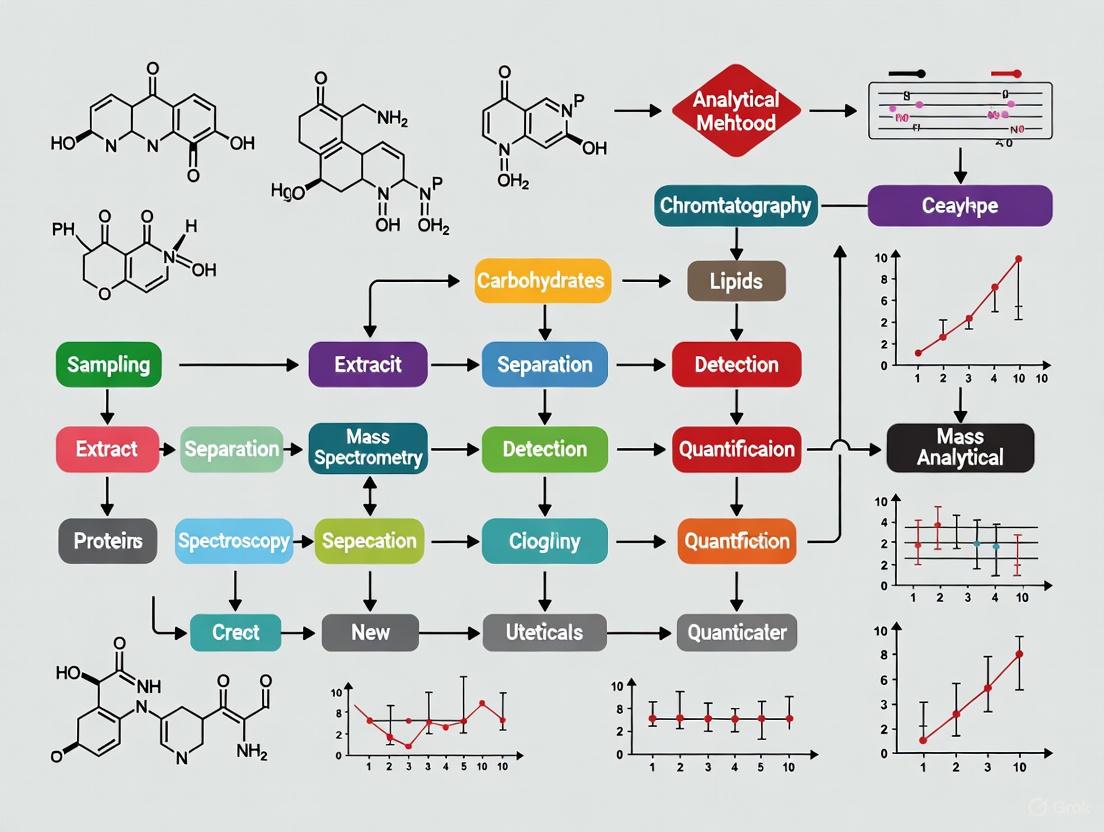
This article provides a comprehensive examination of specificity in food analytical methods, addressing the critical needs of researchers, scientists, and drug development professionals.
Analytical Specificity in Food Analysis: From Foundational Concepts to Advanced Applications for Researchers
Abstract
This article provides a comprehensive examination of specificity in food analytical methods, addressing the critical needs of researchers, scientists, and drug development professionals. It explores foundational principles of method specificity and its role in ensuring food safety, quality, and authenticity. The content covers advanced methodological applications across various analytical platforms, practical troubleshooting and optimization strategies, and rigorous validation frameworks. By synthesizing current technological advancements and regulatory standards, this review serves as an essential resource for professionals developing and implementing precise analytical methods in complex food matrices for both food and pharmaceutical applications.
The Fundamentals of Analytical Specificity in Complex Food Matrices
Defining Specificity and Selectivity in Food Analytical Chemistry
In food analytical chemistry, the accurate detection and quantification of target analytes within complex food matrices are fundamental to ensuring safety, quality, and authenticity. Specificity and Selectivity are two pivotal analytical performance parameters that underpin this reliability. These concepts, while often used interchangeably, possess distinct meanings. Specificity refers to the ability of a method to measure unequivocally the analyte in the presence of components that may be expected to be present, such as impurities, degradants, or matrix components. It represents the highest degree of selectivity, which is the ability of the method to distinguish the analyte from other substances in the sample [1] [2].
The precise determination of these parameters is not merely an academic exercise; it is a critical component of method validation, directly impacting public health and economic stability. With food fraud estimated to cost the global industry US$30–40 billion annually and foodborne illnesses affecting millions, the role of robust analytical methods has never been more crucial [3]. This guide provides an in-depth examination of specificity and selectivity within the context of modern food analysis, offering a detailed framework for their assessment and application.
Fundamental Concepts and Definitions
Specificity vs. Selectivity: A Critical Distinction
Although both terms describe a method's capacity to distinguish the target analyte from interferences, a nuanced difference exists:
- Specificity is the ideal, implying that the method responds only to the target analyte and is completely unaffected by the sample matrix or other components. It is often considered an absolute term.
- Selectivity is a more practical and graduated parameter, indicating the extent to which a method can determine a particular analyte in a mixture or matrix without interference from other analytes or matrix components. A method can be highly selective without being completely specific [1].
In chromatographic terms, specificity would be demonstrated by a single peak for the analyte with no co-eluting peaks, while selectivity ensures that the peaks for the analyte and potential interferents are sufficiently resolved to allow for accurate quantification.
The Impact of Matrix Effects
Food matrices are inherently complex, comprising proteins, carbohydrates, lipids, minerals, and water. This complexity poses a significant challenge, as these components can suppress or enhance the analytical signal, a phenomenon known as the matrix effect. These effects are a primary focus when assessing selectivity, as they can lead to false positives or inaccurate quantification [4]. The intricate nature of food samples means that a method perfectly selective in a pure solvent may suffer from severe interferences when applied to a real food sample, such as cola, garlic, or spices [5].
Experimental Assessment and Protocols
Establishing the specificity and selectivity of an analytical method is a systematic process that involves a series of experiments designed to challenge the method with potential interferents.
Core Assessment Protocol
The following workflow provides a general procedure for determining method selectivity. This should be adapted based on the specific technique (e.g., HPLC, GC-MS, ELISA) and analyte.
Protocol: Assessment of Method Selectivity
- Objective: To demonstrate that the method is unaffected by the presence of other components in the sample matrix.
Materials:
- Target analyte reference standard (high purity)
- Blank matrix (e.g., the food sample without the analyte)
- Potential interferents (e.g., structurally similar compounds, degradation products, common matrix components)
- Appropriate solvents and reagents for sample preparation
- Analytical instrument (HPLC-MS, GC-MS, etc.) calibrated according to manufacturer guidelines
Procedure:
- Prepare Solutions:
- Solution A (Analyte): Prepare the target analyte in an appropriate solvent at a concentration within the method's working range.
- Solution B (Blank Matrix): Prepare the sample matrix without the analyte, using the same sample preparation procedure.
- Solution C (Fortified Matrix): Fortify the blank matrix with the target analyte at a known concentration.
- Solution D (Interference Challenge): Fortify the blank matrix with the target analyte and potential interferents at concentrations expected to be encountered.
- Analyze Solutions: Inject or analyze each solution (A, B, C, D) in triplicate using the developed analytical method.
- Chromatographic/Data Analysis:
- Compare the chromatogram or output from Solution B (blank) with that from Solution C (fortified) to confirm the absence of co-eluting peaks from the matrix at the retention time of the analyte.
- In Solution D, verify that the signal for the analyte is unchanged compared to Solution C and that no new peaks from the interferents co-elute with the analyte.
- Quantitative Assessment: Calculate the recovery of the analyte from the fortified matrix (Solution C) and the interference-challenged matrix (Solution D). The recovery should be within acceptable limits (e.g., 90-110%) and consistent between Solutions C and D.
- Prepare Solutions:
Critical Parameters:
- The blank matrix must be truly free of the analyte.
- The concentrations of potential interferents should be realistic and sufficiently high to provide a meaningful challenge to the method.
- The experiment should be conducted over multiple batches or days to establish intermediate precision.
Advanced Techniques for Enhanced Selectivity
When standard methods face limitations, advanced techniques can be employed to improve selectivity and sensitivity.
Cryogen-free Trap Focusing in GC-MS: This technique addresses challenges like poor peak shape and co-elution in complex food analyses (e.g., flavor profiling in cola or garlic, fumigant analysis in spices). Analytes from a headspace or SPME extraction are focused on a cool trap before being rapidly thermally desorbed as a sharp band into the GC column. This process improves chromatographic resolution, thereby enhancing the selectivity of detection by separating compounds that might otherwise co-elute [5].
Molecularly Imprinted Polymers (MIPs): MIPs are synthetic polymers with tailor-made recognition sites for a specific target molecule (template). During synthesis, the template is surrounded by functional monomers and cross-linkers. After polymerization and template removal, cavities complementary in size, shape, and functional groups to the analyte remain. These "plastic antibodies" can be integrated into sensors or solid-phase extraction cartridges to selectively bind the target analyte from a complex food matrix, effectively filtering out interferents [1].
Table 1: Key Research Reagent Solutions for Selectivity Enhancement
| Reagent/Material | Function in Experimental Protocol | Application Example |
|---|---|---|
| Molecularly Imprinted Polymer (MIP) | Synthetic receptor for selective extraction and pre-concentration of a target analyte from a complex matrix. | Selective solid-phase extraction of pesticides, mycotoxins, or antibiotics from food samples prior to LC-MS analysis [1]. |
| SPME Arrow Fiber (PDMS/CWR/DVB) | A sorptive extraction device for sampling volatile and semi-volatile compounds from headspace; concentrates analytes and reduces solvent use. | Extraction of aroma-active compounds from cola or sulfur compounds from garlic for GC-MS analysis [5]. |
| Cryogen-free Focusing Trap | A packed tube for re-focusing analytes post-extraction, leading to sharper injection bands into the GC and improved peak resolution. | Essential for the trap-focused GC-MS workflow to separate and detect early-eluting compounds in complex food matrices [5]. |
| Deep Eutectic Solvents (DES) | A class of green, biodegradable solvents used in sample preparation to selectively extract target compounds based on hydrogen bonding. | Extraction of phenolic compounds or other polar analytes from food samples, replacing traditional toxic organic solvents [6]. |
| Certified Reference Material (CRM) | A material with certified property values, used to validate the accuracy and selectivity of an analytical method. | Used to verify method performance for authenticating food origin or quantifying specific contaminants/adulterants [3]. |
Methodologies and Instrumentation for Selective Analysis
The choice of analytical technique is critical in achieving the required level of selectivity for a given application.
Table 2: Selectivity of Common Analytical Techniques in Food Chemistry
| Analytical Technique | Principle | Demonstrated Selectivity For | Key Applications in Food Analysis |
|---|---|---|---|
| LC-MS / MS (Triple Quad) | Liquid chromatography separation coupled to tandem mass spectrometry; uses unique mass fragments for identification. | High selectivity for non-volatile, thermally labile compounds. | Multi-residue screening of pesticides, veterinary drugs, mycotoxins [7]. |
| GC-MS / MS (Triple Quad) | Gas chromatography separation coupled to tandem mass spectrometry; uses unique mass fragments for identification. | High selectivity for volatile and semi-volatile compounds. | Pesticide residue analysis, flavor profiling, environmental contaminants [7]. |
| High-Resolution MS (HRMS) | Measures the exact mass of ions with very high mass accuracy (e.g., Orbitrap, TOF). | Exceptional selectivity; enables non-targeted screening and identification of unknown compounds. | Fraud detection, discovery of novel contaminants, adulterant identification [7]. |
| Immunoassays (e.g., ELISA) | Uses antibody-antigen binding for detection. | High selectivity for specific proteins or complex molecules. | Rapid detection of food allergens, specific toxins (e.g., aflatoxin), hormones [7]. |
| ICP-MS | Ionizes sample in plasma and separates ions by mass-to-charge ratio. | Highly selective for elemental composition and isotopes. | Trace-level analysis of heavy metals (Pb, Cd, As, Hg) [7]. |
Validation and Quality Assurance Frameworks
The assessment of specificity and selectivity is an integral part of formal method validation, guided by international standards.
Integration into Validation Guidelines
According to ICH Q2(R1) and other guidelines, specificity is a required validation parameter. The experiments described in Section 3.1 form the core evidence for demonstrating specificity/selectivity in a validation dossier [2]. The use of Reference Materials (RMs) and Certified Reference Materials (CRMs) is crucial in this process. These materials, with their metrologically traceable property values, are used for method validation, calibration, and quality control, ensuring the comparability and reliability of testing results across different laboratories and over time [3].
The Red Analytical Performance Index (RAPI)
The White Analytical Chemistry (WAC) concept proposes that an ideal method balances analytical performance (Red), ecological impact (Green), and practicality/economy (Blue). The Red Analytical Performance Index (RAPI) is a recently developed tool that provides a quantitative and visual assessment of a method's "red" criteria, including specificity and selectivity [8].
RAPI uses open-source software to score ten key analytical performance parameters on a scale of 0-10. The results are displayed in a star-like pictogram, providing an immediate, holistic view of a method's analytical robustness. This tool allows researchers to systematically compare methods and identify potential weaknesses in performance, including selectivity, before they are deployed in routine analysis [8].
Visualizing the Workflow for Assessing Selectivity
The following diagram illustrates the logical sequence and decision points in the experimental assessment of method selectivity.
In the demanding field of food analytical chemistry, a deep and practical understanding of specificity and selectivity is non-negotiable. These parameters are the bedrock upon which reliable, reproducible, and legally defensible analytical results are built. From fundamental protocols using CRMs to advanced techniques like MIPs and HRMS, the tools available to the scientist for demonstrating selectivity are powerful and diverse. The integration of these concepts into formal validation frameworks and modern assessment tools like RAPI ensures that methods are not only scientifically sound but also fit for their intended purpose in protecting consumer health and ensuring fair trade practices in the global food supply.
The Critical Role of Specificity in Food Safety, Quality, and Authenticity
In the contemporary food industry, the concepts of food safety, quality, and authenticity represent interconnected pillars essential for consumer protection, regulatory compliance, and market transparency. Specificity in analytical methodologies serves as the foundational element that distinguishes between these pillars, enabling accurate detection, identification, and quantification of target analytes amidst complex food matrices. This technical guide examines the critical role of methodological specificity across diverse applications, from pathogen detection to authenticity verification, providing researchers with advanced frameworks for analytical development and implementation.
The globalization of food supply chains has introduced unprecedented challenges in monitoring and controlling food integrity. Food authenticity, encompassing origin, processing techniques, and label compliance, has emerged as a scientific discipline in its own right, necessitating sophisticated analytical solutions [9]. Simultaneously, persistent concerns regarding foodborne pathogens and chemical contaminants demand methods capable of precise identification to mitigate public health risks. Within this context, specificity transcends mere analytical performance characteristic to become an indispensable attribute for effective food governance, economic fairness, and consumer trust.
Specificity Fundamentals in Food Analytics
Defining Analytical Specificity
In food analytical methods, specificity refers to the ability to unequivocally identify and measure the target analyte in the presence of interfering components that may be expected to be present in the sample matrix. This distinguishes it from selectivity, which describes the method's capacity to distinguish between the target analyte and other closely related substances. High specificity ensures that analytical signals originate exclusively from the intended analyte, minimizing false positives and negatives that could compromise food safety determinations or authenticity verification.
The fundamental challenge in achieving specificity stems from the inherent complexity of food matrices, which may contain numerous compounds with similar physical or chemical properties to target analytes. For instance, distinguishing specific meat species in heavily processed products requires techniques capable of identifying minimal genetic or protein signatures despite extensive degradation and denaturation during processing [10]. Similarly, detecting specific pesticide residues at regulatory limits demands methods that can differentiate these compounds from naturally occurring phytochemicals with similar structural characteristics.
Technical Approaches to Ensure Specificity
Multiple technological approaches have been developed to address specificity challenges in food analysis:
Molecular recognition techniques utilize biological recognition elements (antibodies, nucleic acid probes, enzymes) with inherent binding specificity for target analytes. These form the basis for immunoassays and DNA-based methods that can identify specific pathogens, allergens, or genetically modified ingredients amid complex food backgrounds [11].
Separation-based techniques employ chromatographic or electrophoretic separation to physically isolate target analytes from potential interferents before detection. High-performance liquid chromatography (HPLC) with UV detection, when combined with chemometrics, has demonstrated excellent specificity for meat authentication based on metabolomic fingerprints [12].
Spectroscopic and spectrometric techniques leverage unique molecular fingerprints for identification. Mass spectrometry, particularly when coupled with separation techniques (GC-MS, LC-MS), provides highly specific detection through accurate mass measurement and fragmentation patterns, enabling definitive confirmation of chemical contaminants and authenticity markers [9].
Multivariate statistical approaches enhance method specificity through mathematical resolution of complex signals. Chemometric analysis of spectroscopic or chromatographic data can extract specific patterns corresponding to target attributes even when individual markers cannot be isolated, facilitating geographical origin verification and fraud detection [12].
Specificity in Food Safety Applications
Pathogen Detection
The specific detection of pathogenic microorganisms represents a critical application where analytical specificity directly impacts public health outcomes. Traditional culture-based methods, while specific, are time-consuming and labor-intensive. Modern rapid methods have embraced nucleic acid-based techniques and immunoassays that offer superior specificity through molecular recognition mechanisms.
Loop-mediated isothermal amplification (LAMP) has emerged as a highly specific detection platform for foodborne pathogens. This technique employs four to six specially designed primers that recognize six to eight distinct regions on the target gene, ensuring exceptional specificity. A study on Anisakis parasite detection in fish demonstrated 100% sensitivity and no cross-reactivity with similar genera (Contracaecum, Pseudoterranova, or Hysterothylacium), highlighting the method's superior specificity compared to traditional morphological identification [11].
For Listeria monocytogenes outbreak investigations, specific real-time PCR screening assays have been developed that can quickly distinguish outbreak-related strains from background strains. This specific identification enables rapid implementation of control measures, minimizing the scale and impact of foodborne illness outbreaks [11].
Chemical Hazard Identification
Specific identification of chemical hazards—including pesticides, veterinary drug residues, environmental contaminants, and naturally occurring toxins—requires methods capable of distinguishing structurally similar compounds at trace levels.
Advanced separation techniques coupled with selective detection systems have significantly enhanced specificity in chemical hazard analysis. Liquid chromatography-tandem mass spectrometry (LC-MS/MS) provides exceptional specificity through multiple reaction monitoring (MRM), where precursor-to-product ion transitions serve as highly specific identifiers for target compounds. This approach has been successfully applied to detect pesticide residues, mycotoxins, and other chemical contaminants in complex food matrices with minimal sample cleanup [11].
The development of nanomaterial-based sensors has introduced novel pathways for specific chemical detection. Gold nanoparticles functionalized with specific receptors have been employed for histamine detection in fish, with specificity achieved through molecular imprinting or biomimetic recognition elements. These systems provide specific detection even in the presence of structurally similar biogenic amines that commonly coexist in spoiled fish products [11].
Table 1: Specificity Performance of Rapid Food Safety Methods
| Analytical Technique | Target Analyte | Specificity Measure | Reference |
|---|---|---|---|
| LAMP assay | Anisakis spp. parasites | 100% sensitivity, no cross-reactivity with similar genera | [11] |
| Real-time PCR screening | Listeria monocytogenes outbreak strains | Specific identification of outbreak-related strains from background population | [11] |
| Au-NP based sensor | Histamine in fish | Selective detection despite presence of similar biogenic amines | [11] |
| FT-NIR with chemometrics | Sugar and acid content in grapes | Specific correlation with sensory properties despite matrix complexity | [11] |
| Immunosensor with carbon nanotubes | Aflatoxin B1 in olive oil | Specific detection at 0.01 ng/mL levels below regulatory limits | [12] |
Specificity in Food Authenticity and Traceability
Meat Speciation and Authenticity
Meat products represent one of the most vulnerable categories for fraudulent substitution and mislabeling. Specific identification of species origin, particularly in processed products where morphological characteristics are destroyed, requires highly specific analytical approaches.
DNA-based methods leveraging polymerase chain reaction (PCR) techniques provide exceptional specificity for meat speciation. The stability of DNA molecules through processing conditions enables specific identification even in thermally treated products. Single Nucleotide Polymorphism (SNP) markers have been developed for verifying meat from traditional cattle and pig breeds, allowing specific authentication of premium products [10]. DNA barcoding employing specific mitochondrial gene sequences (e.g., cytochrome b, COX1) enables discrimination of even closely related species with high genetic similarity, such as wild boar versus domestic pig [9].
Proteomics approaches utilizing mass spectrometry have emerged for specific meat speciation in heavily processed foodstuffs where DNA may be extensively degraded. Specific peptide markers unique to each species enable definitive identification, with methods developed for various meat species and applications including halal and kosher authentication [10].
Geographical Origin Verification
Specific verification of geographical origin represents a challenging analytical problem requiring techniques that can detect subtle compositional differences imparted by environmental and production factors.
Stable isotope ratio analysis provides specific fingerprints related to geographical origin through natural abundance variations of light elements (H, C, N, O, S) that reflect local environmental conditions. This approach has been successfully applied to develop "isoscapes" for verifying the provenance of high-value products including chicken, pork, and beef [10].
Metabolomic fingerprinting using HPLC-UV combined with multivariate statistics has demonstrated remarkable specificity for geographical origin authentication. A comprehensive study on meat authentication achieved sensitivity and specificity values exceeding 99.3% for classifying meat species and origin, with classification errors below 0.4% [12]. The specificity stems from detecting unique pattern combinations of multiple metabolites rather than relying on single markers.
Table 2: Specificity in Food Authenticity Methods
| Analytical Approach | Application | Specificity Mechanism | Performance | |
|---|---|---|---|---|
| DNA-based SNP markers | Traditional breed verification | Specific single nucleotide polymorphisms | Breed-specific authentication | [10] |
| Proteomics mass spectrometry | Meat speciation in processed foods | Specific peptide markers | Identification in heavily processed matrices | [10] |
| Stable isotope analysis | Geographical origin verification | Element-specific isotopic ratios reflecting geography | Construction of origin "isoscapes" | [10] |
| HPLC-UV metabolomic fingerprinting | Meat species and origin | Multivariate pattern recognition | >99.3% specificity, <0.4% classification error | [12] |
| DNA barcoding | Seafood species identification | Specific mitochondrial gene sequences | Species identification regardless of processing | [9] |
Advanced Specificity Enhancement Strategies
Multi-Omics Approaches
The integration of multiple analytical platforms through multi-omics strategies represents a paradigm shift in enhancing analytical specificity for complex authentication challenges. Foodomics—the integration of proteomics, metabolomics, lipidomics, genomics, and transcriptomics with advanced bioinformatics—provides multidimensional data that collectively offer specificity unattainable through single-platform approaches [9].
In fermented foods, where complex microbial interactions create challenging matrices, multi-omics approaches have surmounted the limitations of single-omics analysis. The combined application of proteomics, genomics, and metabolomics has enabled specific identification of functional microbiota and their metabolic activities, leading to improved fermentation control and quality assurance [9]. Similarly, for dairy safety, proteomics and genomics integration has enabled specific quantitative risk assessment for pathogenic microorganisms [9].
The major challenge in implementing multi-omics approaches lies in managing data heterogeneity across platforms. Advanced chemometric tools and machine learning algorithms are required to extract specific patterns from these complex datasets and translate them into actionable authentication criteria.
Microfluidic Integration
Microfluidic technology presents innovative pathways to enhance specificity through controlled fluid manipulation at microscale dimensions. The integration of multiple processing steps within miniaturized systems reduces manual intervention and associated variability while improving reaction efficiency and detection specificity.
A novel integrated aflatoxin B1 extraction and detection system demonstrated how microfluidic technology enhances specificity through efficient sample preparation and detection integration. The system employed a poly(dimethylsiloxane) microfluidic mixer for rapid extraction followed by a paper-based immunosensor with carbon nanotubes for specific detection at 0.01 nanogram levels—well below regulatory requirements [12]. The confined microfluidic environment minimizes nonspecific interactions and enhances target binding efficiency, directly improving method specificity.
Data Mining and Artificial Intelligence
Advanced data analysis techniques, including association rule mining and graph neural networks (GNNs), are emerging as powerful tools for enhancing analytical specificity in complex food systems. These approaches identify subtle relationships between multiple factors that collectively contribute to specific identification of safety risks or authenticity parameters.
A targeted sampling decision-making method based on association rule mining and GNNs demonstrated how pattern recognition in historical sampling data could specifically identify high-risk combinations of food type, sampling time, and regional attributes [13]. The improved frequent pattern growth algorithm with constraints mined specific association rules between decision-making factors, enabling precise risk prediction and resource allocation for food safety monitoring [13].
Experimental Protocols for Specificity Assessment
Protocol for Molecular Detection Specificity
Objective: Validate specificity of DNA-based detection method for meat species identification.
Materials:
- DNA extraction kit (e.g., DNeasy Mericon Food Kit)
- Species-specific primers and probes
- Real-time PCR instrument
- Reference DNA from target and non-target species
- Authentic food samples
Procedure:
- Extract DNA from reference materials and test samples using standardized protocol [9]
- Perform real-time PCR amplification with species-specific primers/probes
- Include cross-reactivity panel containing DNA from related species (e.g., for beef detection, include pork, lamb, chicken, horse)
- Assess amplification efficiency and cycle threshold values for target versus non-target species
- Determine specificity as percentage of correct identifications in blinded sample panel
Specificity Validation: Method should demonstrate 100% specific identification of target species with no cross-reactivity with non-target species, even at DNA concentrations 10-fold higher than target [10].
Protocol for Chromatographic Method Specificity
Objective: Establish specificity of HPLC-UV metabolomic fingerprinting for meat authentication.
Materials:
- HPLC system with UV-Vis detector
- C18 reverse-phase column
- Methanol, acetonitrile, water (HPLC grade)
- Formic acid
- Meat samples from different species and origins
Procedure:
- Prepare aqueous extracts from meat samples (1:5 w/v ratio)
- Centrifuge at 10,000 × g for 15 minutes and filter supernatant
- Inject 20 μL onto HPLC column maintained at 30°C
- Apply gradient elution: 5-95% organic phase over 45 minutes
- Acquire UV spectra at multiple wavelengths (210, 254, 280 nm)
- Process chromatographic data using chemometric software (PCA, PLS-DA)
Specificity Validation: Method should achieve >99.3% specificity in distinguishing meat species and >91.2% specificity for geographical origin and production method (organic, halal, kosher) with classification errors below 6.9% [12].
Visualization of Analytical Specificity Frameworks
The following diagrams illustrate key workflows and relationships that ensure specificity in food analytical methods.
Multi-Omics Specificity Enhancement Framework
Microfluidic Pathogen Detection Specificity
The Scientist's Toolkit: Essential Reagents and Materials
Table 3: Essential Research Reagents for Specific Food Analytical Methods
| Reagent/Material | Specific Function | Application Examples |
|---|---|---|
| Species-specific primers and probes | Target unique DNA sequences for specific identification | Meat speciation, GMO detection, allergen identification |
| Monoclonal antibodies | Bind specific epitopes with high specificity | Immunoassays for pathogens, toxins, protein markers |
| Molecularly imprinted polymers | Synthetic receptors with specific binding cavities | Chemical contaminant detection, small molecule analysis |
| Stable isotope standards | Internal standards for specific quantification | LC-MS/MS analysis of contaminants, nutrient analysis |
| Carbon nanotubes | Enhance sensor surface area and electron transfer | Biosensors for mycotoxins, pathogens, histamine |
| Gold nanoparticles | Signal amplification and colorimetric detection | Rapid tests for pesticides, antibiotics, spoilage indicators |
| DNA extraction kits | Isolate high-quality DNA from complex matrices | PCR-based authentication, pathogen detection |
| QuEChERS kits | Rapid sample preparation for chemical analysis | Pesticide residue analysis, contaminant testing |
Specificity stands as the cornerstone of reliable food analytical methods, underpinning accurate safety assessments, quality verifications, and authenticity determinations. As food supply chains grow increasingly complex and sophisticated fraud emerges, continuous advancement in specific detection methodologies becomes imperative. The future trajectory points toward integrated multi-omics platforms, microfluidic automation, and AI-enhanced data analysis that will collectively elevate specificity to unprecedented levels. For researchers and food development professionals, maintaining rigorous specificity validation across all analytical applications remains essential for upholding the integrity of the global food system and protecting consumer interests.
Evolution from Targeted Analysis to Comprehensive 'Foodomics' Approaches
The field of food science is undergoing a significant transformation, evolving from traditional targeted analysis towards comprehensive 'Foodomics' approaches. This paradigm shift represents a move from analyzing a limited set of known compounds to employing untargeted, holistic strategies that can capture the complete molecular profile of food matrices. Foodomics is defined as an emerging multidisciplinary field that applies omics technologies such as genomics, proteomics, metabolomics, transcriptomics, and nutrigenomics to improve the understanding of food composition, quality, safety, and traceability [14]. This evolution is driven by the recognition that food is a complex biological system, and understanding its impact on human health requires more than just quantifying a few predetermined nutrients or contaminants. The integration of these advanced analytical techniques with sophisticated data analysis tools is enabling researchers to address global food challenges, including microbiological resistance, climate change impacts, and the need for improved food safety and quality [14]. Within precision nutrition research, this comprehensive approach is particularly valuable for understanding complex relationships, such as how polyphenols influence the gut microbiome, where unexplained inconsistencies in findings may be attributed to previously unmeasured variations in food composition [15].
Comparative Analysis: Targeted vs. Foodomics Approaches
The distinction between traditional targeted methods and comprehensive Foodomics approaches extends beyond the number of compounds analyzed to encompass fundamental differences in philosophy, methodology, and application as shown in Table 1.
Table 1: Comparison between Targeted Analysis and Foodomics Approaches
| Feature | Targeted Analysis | Foodomics Approaches |
|---|---|---|
| Analytical Scope | Focused on known, predefined compounds (e.g., specific nutrients, contaminants) [16] | Holistic, aiming to capture a wide range of known and unknown molecules [15] [14] |
| Primary Objective | Quantification and validation of specific analytes [16] | Discovery, fingerprinting, and comprehensive profiling of food matrices [16] |
| Common Techniques | HPLC-DAD, GC-MS, ICP-OES for specific compound classes [16] | NMR, MS-based untargeted platforms, integrated multi-omics [15] [14] |
| Data Output | Quantitative data on specific compounds | High-throughput, complex datasets requiring advanced bioinformatics [14] |
| Key Advantage | High sensitivity and accuracy for target compounds | Ability to discover novel compounds and understand system-wide interactions [15] |
A recent review of dietary intervention clinical trials from 2014 to 2024 highlights this technological gap. The study found that while targeted methods were commonly used for food composition analysis (18 of 38 studies) and clinical samples (24 of 38 studies), none of the studies employed untargeted omics approaches for food composition analysis, and only 5 of the 38 used untargeted omics for clinical sample analysis [15]. This demonstrates that while the field recognizes the value of comprehensive approaches, their implementation in practice is still limited.
Detailed Foodomics Methodologies and Workflows
Core Analytical Techniques in Foodomics
Foodomics relies on a suite of advanced analytical platforms that enable the comprehensive characterization of food components:
Mass Spectrometry (MS)-Based Platforms: These are cornerstone technologies for metabolomic, proteomic, and lipidomic analyses. They can be coupled with separation techniques like gas chromatography (GC) or liquid chromatography (LC) to handle complex food matrices. MS-based methods can be deployed in either targeted mode, to quantify specific known metabolites, or untargeted mode, to profile all detectable metabolites for novel discovery [16]. For instance, GC-MS was effectively used to analyze fatty acids in probiotic cheese enriched with microalgae [16].
Nuclear Magnetic Resonance (NMR) Spectroscopy: NMR provides a complementary approach to MS, offering advantages in quantitative analysis and structural elucidation without requiring extensive sample preparation. It is particularly useful for profiling primary metabolites in food samples [16].
Chromatography Techniques: High-Pressure Liquid Chromatography with a diode array detector (HPLC-DAD) is utilized for compounds like amino acids, organic acids, and vitamins (A and E), while Inductively Coupled Plasma-Optical Emission Spectrometry (ICP-OES) is employed for mineral analysis [16].
Experimental Protocol: A Representative Foodomics Workflow
The following detailed protocol, adapted from a study on probiotic cheese enriched with microalgae, illustrates a integrated Foodomics approach [16]:
Table 2: Key Research Reagent Solutions for Foodomics Analysis
| Reagent/Material | Function in the Protocol | Technical Specification |
|---|---|---|
| Lactobacillus acidophilus LA-5 | Probiotic functional ingredient | Chr. Hansen strain, viable culture |
| Chlorella vulgaris & Arthrospira platensis | Microalgae enrichment | Freeze-dried biomass |
| Microbial Rennet | Milk coagulation agent | From Rhizomucor miehei fermentation |
| HPLC-DAD System | Analysis of amino acids, organic acids, vitamins (A, E) | Standard analytical configuration |
| GC-MS System | Fatty acid profiling and identification | Standard analytical configuration |
| ICP-OES System | Multi-element mineral analysis | Standard analytical configuration |
Sample Preparation and Design:
- Formulation: Develop experimental cheese batches: control (C1), with L. acidophilus LA-5 (C2), with LA-5 and C. vulgaris (C3), and with LA-5 and A. platensis (C4).
- Processing: Inoculate raw cow milk with the respective probiotic and microalgae. Add microbial rennet for coagulation.
- Ripening and Sampling: Brine the cheese and allow it to ripen for 90 days. Collect samples at predetermined time points (e.g., day 1, 30, 60, 90) for analysis.
Microbiological and Compositional Analysis:
- Enumerate total mesophilic aerobic bacteria (TMAB), non-starter lactic acid bacteria (NSLAB), and L. acidophilus LA-5 counts using standard plate counts.
- Analyze basic composition: moisture, fat, protein, salt, pH, and titratable acidity.
Metabolomic Characterization:
- Amino Acids, Organic Acids, Vitamins: Extract metabolites and analyze using HPLC-DAD.
- Fatty Acids: Extract lipids, derive fatty acids to methyl esters (FAMEs), and analyze using GC-MS.
- Minerals: Digest samples and perform multi-element analysis using ICP-OES.
Data Integration and Chemometric Analysis:
- Compile all high-throughput data from microbiological, compositional, and metabolomic analyses.
- Calculate nutritional quality indices based on the metabolomic profiles (e.g., Essential Amino Acid Index (EAAI), Atherogenicity Index (AI), Thrombogenicity Index (TI)).
- Perform multivariate statistical analysis, including Hierarchical Cluster Analysis (HCA) and Principal Component Analysis (PCA), to visualize variance and relationships between samples and their attributes.
The workflow for this comprehensive analysis is visualized in the following diagram:
Data Analysis and Interpretation in Foodomics
The high-throughput data generated from Foodomics analyses require robust chemometric and bioinformatic tools for interpretation. Multivariate statistical analysis is fundamental, with Principal Component Analysis (PCA) and Hierarchical Cluster Analysis (HCA) being widely used to identify patterns, group samples, and highlight the most significant variables contributing to variance [16]. Furthermore, the calculation of nutritional quality indices based on the comprehensive metabolomic data bridges the gap between molecular composition and health impact. These indices, such as the Essential Amino Acid Index (EAAI), Atherogenicity Index (AI), and Thrombogenicity Index (TI), transform complex chemical data into meaningful nutritional metrics [16]. The integration of these datasets enables a systems biology approach, revealing interactions between ingredients, the food matrix, and the resulting nutritional and functional properties.
Applications, Challenges, and Future Directions
Transformative Applications of Foodomics
The application of Foodomics is revolutionizing various domains within food science and nutrition:
- Precision Nutrition and Gut Microbiome Research: Foodomics provides the tools to understand inter-individual variations in response to diet. By comprehensively characterizing food composition and correlating it with individual microbiome and metabolomic profiles, it enables the development of personalized dietary recommendations [15].
- Food Authenticity, Traceability, and Quality Control: Foodomics is critical for verifying food authenticity and preventing fraud. Case studies demonstrate the use of metabolomics for authenticating horse milk adulteration, proteomic profiling for tracing seafood species and dairy product origins, and transcriptomic approaches for monitoring flavonoid biosynthesis in seeds and stress responses in plants [14].
- Safety and Contaminant Analysis: The non-targeted capability of Foodomics allows for the simultaneous monitoring of known and unknown contaminants, pathogens, toxins, and allergens in the food chain, thereby enhancing food safety [16] [17].
Current Challenges and Limitations
Despite its promise, the widespread adoption of Foodomics faces several significant hurdles:
- High Costs and Technical Complexity: The acquisition and maintenance of advanced instrumentation like high-resolution mass spectrometers, coupled with the need for specialized technical expertise, represent major financial and operational barriers, particularly for developing countries [14].
- Data Complexity and Bioinformatics Bottleneck: The immense volume and complexity of data generated require advanced bioinformatics skills and computational resources for processing, storage, and interpretation. A lack of standardized protocols and data sharing frameworks further complicates this issue [14].
- Reproducibility and Metrological Rigor: Ensuring the reliability, comparability, and metrological traceability of data from non-targeted analyses remains a challenge. Establishing robust validation protocols and reference materials is an ongoing focus for the community [17].
Future Perspectives
The future of Foodomics lies in the integration of technologies and collaborative frameworks to overcome existing challenges:
- Integration with Advanced Data Science: The coupling of Foodomics with machine learning and artificial intelligence will be crucial for predictive modeling, extracting hidden patterns from complex datasets, and automating data analysis [14].
- Portable and Affordable Platforms: Advancements in portable, affordable sensors and analytical devices will be essential for decentralizing Foodomics analyses, enabling applications in field settings, supply chain monitoring, and broader geographical implementation [14].
- Enhanced Supply Chain Transparency: Combining Foodomics data with technologies like blockchain can create immutable records of food composition and provenance, significantly enhancing supply chain transparency and consumer trust [14].
- Collaborative and Standardization Efforts: Future progress depends on strong collaboration among researchers, industry, and regulators to establish clear regulatory frameworks, standardize protocols, and promote data sharing through initiatives like METROFOOD-RI, which focuses on high-level metrology services in food and nutrition [14] [17].
The evolution from targeted analysis to comprehensive Foodomics represents a fundamental shift in how we study food. This transition, from a reductionist to a holistic perspective, is pivotal for addressing the complexity of food matrices and their interactions with human physiology. While challenges related to cost, data complexity, and standardization persist, the integration of Foodomics with emerging technologies like AI and portable sensors, along with strong collaborative efforts, is poised to unlock its full potential. This will ultimately lead to significant advancements in personalized nutrition, food safety, quality control, and public health outcomes, providing a deeper, systems-level understanding of food.
In food analytical methods research, achieving absolute specificity is a fundamental yet challenging goal. The accurate identification and quantification of target analytes are consistently challenged by the complex chemical background of food matrices. These challenges—matrix effects (ME), the presence of interfering compounds, and structural analyte similarity—directly impact the reliability, accuracy, and precision of analytical results. Within the context of a broader thesis on understanding specificity, this technical guide examines the core analytical challenges that complicate the path to unambiguous measurement. The phenomenon of matrix effects, where co-extracted matrix components alter the analytical signal, is particularly pervasive in techniques like liquid chromatography-mass spectrometry (LC-MS), where it can unpredictably compromise accuracy and precision [18]. Simultaneously, the structural similarity of isomeric compounds and the sheer number of potential chemical interferents demand increasingly sophisticated instrumental solutions. Addressing these interconnected challenges is critical for advancing food safety, ensuring authenticity, and enabling accurate risk assessment in the exposome era, where characterizing complex chemical mixtures in food becomes paramount [19].
Matrix Effects in Mass Spectrometry
Mechanisms and Impact
Matrix effects refer to the influence of all non-analyte components within a sample on the quantification of target compounds, a phenomenon particularly acute in mass spectrometric detection [18]. In LC-MS with electrospray ionization (ESI), MEs primarily manifest as ion suppression or enhancement, where co-eluting matrix components hinder or facilitate the ionization of the target analyte [20]. The mechanisms are diverse, including competition for available charge during the droplet evaporation process and the impact of non-volatile or surface-active compounds on ionization efficiency [21]. These effects can severely compromise quantitative analysis at trace levels, affecting detection capability, precision, and accuracy [21]. The extent of ME is highly variable and depends on a complex interplay of factors including the matrix species, the specific analyte, the sample preparation protocol, and the ion source design of the mass spectrometer itself [22].
Quantitative Assessment of Matrix Effects
The calibration-graph method and the concentration-based method are two established approaches for assessing ME. Research has demonstrated that the concentration-based method, which evaluates ME at each concentration level, provides a more precise understanding, revealing that lower analyte levels are often more significantly affected by ME than higher levels [18]. This finding is critical for trace analysis.
The following table summarizes quantitative ME data from a study on 74 pesticides in various fruits, illustrating the variability of this phenomenon [18].
Table 1: Matrix Effect (ME) on Pesticide Analysis in Fruits by UPLC-MS/MS
| Fruit Matrix | Number of Pesticides Studied | Key Findings on Matrix Effect | Correlation Strength (Spearman Test) |
|---|---|---|---|
| Golden Gooseberry (GG) | 74 | Similar pesticide response found with Purple Passion Fruit. | Stronger positive correlation for GG-PPF pair. |
| Purple Passion Fruit (PPF) | 74 | Similar pesticide response found with Golden Gooseberry. | Stronger positive correlation for GG-PPF pair. |
| Hass Avocado (HA) | 74 | Significant differences in pesticide response compared to GG and PPF. | Weaker correlation for GG-HA and PPF-HA pairs. |
Experimental Protocol: Evaluating Matrix Effect via the Calibration-Graph Method
Principle: This method evaluates ME by comparing the slope of the calibration curve in a matrix to the slope of the calibration curve in a pure solvent.
Procedure:
- Standard Solution Preparation: Prepare a series of standard solutions of the target analytes in a pure, matrix-free solvent (e.g., methanol/acetonitrile) at a minimum of five concentration levels.
- Matrix-Matched Standard Preparation: For each matrix under investigation (e.g., avocado, gooseberry), prepare a corresponding set of matrix-matched standard solutions at the same concentration levels. This requires extracting a blank matrix and using the final extract to reconstitute or dilute the standards.
- Instrumental Analysis: Analyze both the solvent-based and matrix-matched calibration standards using the validated LC-MS/MS or GC-MS method.
- Calculation of Matrix Effect (ME): Calculate the ME for each analyte using the formula: *ME (%) = [(Slope of matrix-matched calibration curve / Slope of solvent calibration curve) - 1] × 100%
- Interpretation: An ME value around 0% indicates no matrix effect. Negative values indicate ion suppression, and positive values indicate ion enhancement. Typically, |ME| < 20% is considered negligible, while |ME| > 20% is considered significant and requires mitigation [21].
Strategies for Mitigating Matrix Effects
Sample Preparation and Cleanup
A primary strategy for managing ME involves reducing the concentration of interfering compounds introduced into the instrument.
- The QuEChERS Approach: The Quick, Easy, Cheap, Effective, Rugged, and Safe (QuEChERS) method is widely used for multi-residue analysis. It employs different sorbents (e.g., primary secondary amine (PSA) for removing fatty acids, C18 for lipophilic compounds, graphitized carbon black (GCB) for pigments) for sample clean-up [19]. An advanced version, QuEChERSER, has been developed to extend analyte coverage, enabling the complementary determination of a broader scope of 245 chemicals, including pesticides, PCBs, and PAHs, across various food commodities [19].
- Sample Dilution: Diluting the sample extract is a simple and effective method to reduce the concentration of interfering compounds, thereby diminishing MEs. A study demonstrated that a dilution factor of 15 was sufficient to eliminate most matrix effects in the analysis of 53 pesticides in orange, tomato, and leek, allowing for quantification with solvent-based standards in most cases [21]. The obvious trade-off is a reduction in sensitivity, which must be compensated for by highly sensitive instrumentation.
- Advanced Extraction Solvents: The use of Natural Deep Eutectic Solvents (NADES) is a promising, sustainable trend. NADES are biodegradable, non-toxic, and offer tunable extraction properties, providing an efficient and environmentally friendly alternative for sample preparation that can be optimized to reduce co-extraction of interferents [19].
Instrumental and Calibration Approaches
When MEs cannot be fully eliminated, compensation through calibration techniques is essential.
- Matrix-Matched Calibration: This is the most common compensation technique, where the calibration standards are prepared in the same blank matrix as the samples, thereby matching the ME between standards and samples [21]. However, this approach requires access to blank matrices and can be labor-intensive.
- Stable Isotope-Labelled Internal Standards (SIL-IS): This is considered the gold standard for compensation. A SIL-IS is an isotopically labeled version of the target analyte that has nearly identical chemical properties and chromatographic retention, and therefore experiences the same ME. By using the response ratio of the analyte to the SIL-IS for quantification, the ME is effectively corrected [21]. Their high cost and limited availability for all analytes are the main drawbacks.
- High-Resolution Mass Spectrometry (HRMS): Instrumental advances also offer solutions. Comparing multiple reaction monitoring (MRM) on tandem mass spectrometry (MS/MS) with the information-dependent acquisition (IDA) mode on quadrupole time-of-flight (QTOF) MS has shown that the latter can simultaneously weaken MEs for multiple pesticides across diverse matrices, suggesting HRMS can provide a inherent advantage in mitigating ME-related issues [22].
The following workflow diagram summarizes the decision process for assessing and mitigating matrix effects.
The Challenge of Interfering Compounds and Analyte Similarity
Structural Isomers and In-Source Fragmentation
Beyond broad matrix effects, a more targeted challenge is posed by structurally isomeric compounds. These analytes share the same elemental composition and nominal mass, making them indistinguishable by first-generation mass spectrometers, even those with high resolving power [23]. When these isomers co-elute chromatographically, they can cause significant misidentification and inaccurate quantification.
Experimental Protocol: Differentiating Isomers by Tandem Mass Spectrometry
Principle: Isomeric compounds, despite having the same precursor ion, often undergo characteristic fragmentation pathways, producing unique product ion spectra.
Procedure:
- Chromatographic Separation: Optimize the LC method to achieve the best possible separation of the isomeric pairs. Even partial separation reduces the likelihood of simultaneous introduction into the ion source.
- MS/MS Analysis: For each isomeric standard, acquire MS/MS spectra at multiple collision energies.
- Fragment Ion Identification: Identify and record the relative abundances of characteristic fragment ions for each isomer.
- Method Development for Quantification: Select one or more unique fragment ions (or a unique ratio of fragment ions) for each isomer to use as a quantitative transition in a scheduled MRM method.
- Validation: Validate the method to ensure that there is no cross-talk between the MRM channels of the isomers and that quantification is accurate. This approach has been successfully used for the spectral discrimination of isomeric food pollutants, differentiating them based on their distinct fragmentation pathways [23].
The Research Reagent Toolkit
Successfully navigating the challenges of matrix effects and interference requires a suite of specialized reagents and materials.
Table 2: Key Research Reagent Solutions for Managing Matrix Effects and Interference
| Reagent / Material | Function / Purpose | Example Application |
|---|---|---|
| QuEChERS Kits | A standardized, multi-step sample preparation protocol for extraction and clean-up. | Removal of organic acids, pigments, and sugars from fruit and vegetable extracts prior to pesticide analysis [19] [22]. |
| Zirconium Dioxide Sorbents | Selective removal of phospholipids and other matrix components during clean-up. | Efficient clean-up of complex, phospholipid-rich matrices like avocado and dairy products [19]. |
| Stable Isotope-Labelled Internal Standards | Internal standards used to correct for matrix-induced signal suppression/enhancement and losses during sample preparation. | Quantification of pesticides in complex spices like ginger and Sichuan pepper where matrix effects are strong [21] [22]. |
| Natural Deep Eutectic Solvents | Green, tunable solvents for efficient and selective extraction of analytes. | Sustainable extraction of a wide range of contaminants from diverse food matrices, minimizing co-extraction of interferents [19]. |
The challenges of matrix effects, interfering compounds, and analyte similarity represent significant hurdles in the pursuit of analytical specificity. As this guide has detailed, these are not isolated issues but are deeply interconnected, often requiring a holistic and integrated mitigation strategy. The persistence of these challenges underscores a critical thesis in food analytical methods research: that the choice of methodology is a series of compromises, and the "perfect" method is an ideal that guides continuous improvement rather than a final destination. The future of overcoming these specificity challenges lies in the development of integrated, multi-platform approaches that leverage advanced instrumentation like LC-HRMS and GC-HRMS with ion mobility spectrometry, coupled with intelligent, green sample preparation [19] [24]. Furthermore, the adoption of data analysis strategies from fields like metabolomics to handle the multi-dimensional data generated by ME studies points to a more sophisticated, informatics-driven future for food analysis [22]. By systematically addressing these core challenges, the field moves closer to ensuring the accuracy and reliability required for protecting public health and guaranteeing food integrity.
Regulatory Frameworks and Standards Governing Analytical Specificity
Analytical specificity is a fundamental method validation parameter that confirms an analytical procedure's ability to measure the analyte unequivocally in the presence of other components, including impurities, degradation products, and matrix constituents. Within food analytical methods research, establishing specificity is crucial for ensuring the accuracy, reliability, and legal defensibility of data used for regulatory compliance, safety assessments, and nutritional labeling. The increasing complexity of global food supply chains and the proliferation of novel food ingredients demand rigorous specificity validation to prevent mislabeling, adulteration, and potential health risks. This guide examines the regulatory frameworks and standards governing this critical attribute, providing researchers with the experimental protocols and tools necessary for robust method development.
Global Regulatory Landscape
Food analytical methods operate within a multi-layered regulatory environment, where standards are set by international bodies, national agencies, and regional economic communities. Understanding the interplay between these frameworks is essential for researchers developing methods for global markets.
International Standards and Guidelines
The Codex Alimentarius Commission, established by the UN Food and Agriculture Organization and the World Health Organization, develops international food standards and guidelines. While Codex does not prescribe specific analytical methods, its texts, such as the Principles for the Establishment of Codex Methods of Analysis, mandate that methods be characterized for performance criteria including specificity, accuracy, and precision. Codex methods often serve as a basis for national standards, promoting global harmonization [25].
National Regulatory Frameworks
- United States (U.S. Food and Drug Administration): The FDA's authority derives from the Federal Food, Drug, and Cosmetic Act. For chemical hazards, the FDA's Human Foods Program is enhancing its post-market assessment framework, which relies on specific analytical methods to ensure chemical safety [26] [27]. The Food Safety Modernization Act mandates science-based approaches to prevention, implicitly requiring specific methods for verifying preventive controls and traceability [28]. The FDA's compliance programs, such as its updated food labeling program, detail the agency's approach to verifying compliance through sample analysis, necessitating methods with proven specificity for regulated allergens and nutritional components [29].
- European Union (EU): The EU operates a centralized system for food safety through the European Food Safety Authority, with regulations such as the Official Controls Regulation setting rules for analytical method validation. Methods used for official controls must demonstrate specificity, among other performance criteria, and are often referenced in standardized methods published by the European Committee for Standardization.
- India (Food Safety and Standards Authority of India - FSSAI): The FSSAI recently amended its import regulations to allow the use of validated methods from internationally recognized bodies like AOAC, ISO, and Codex when a specific method is not available in its own manuals. This shift underscores the critical importance of validated specificity in internationally accepted methods for clearing imported foods [30].
- Other Key Regions: Countries including Japan, South Korea, Thailand, and China maintain their own specifications and standards for food additives and contaminants, each with associated analytical requirements. Updates to these regulations, such as Japan's amendments to its food additive specifications, frequently occur and necessitate ongoing validation of method specificity for market access [25].
Table 1: Key Global Regulatory Bodies and Their Relevant Guidance on Analytical Specificity
| Regulatory Body | Region/Country | Key Document/Guidance | Primary Focus Related to Specificity |
|---|---|---|---|
| Codex Alimentarius | International | Principles for the Establishment of Codex Methods of Analysis | Establishes foundational performance criteria for methods used in international trade. |
| U.S. FDA | United States | Food Safety Modernization Act (FSMA) Rules; Compliance Program Guidance Manuals | Ensures methods can accurately identify and quantify chemical, microbiological, and allergenic hazards in a complex food supply [26] [28]. |
| European Commission | European Union | Commission Regulation (EC) No 333/2007 (on methods of sampling and analysis for official control) | Lays down specific performance criteria for methods used to detect regulated contaminants. |
| FSSAI | India | Food Safety and Standards (Import) Regulations | Mandates the use of FSSAI methods or other internationally validated methods, requiring demonstrated specificity [30]. |
| Health Canada | Canada | Food and Drug Regulations | Specifies methods for assessing compliance with standards for ingredients, contaminants, and nutrients. |
Core Principles of Analytical Specificity
Specificity in food analysis demonstrates that a method can distinguish the target analyte from all other substances present in the sample matrix. This is distinct from selectivity, which refers to the degree to which a method can determine a particular analyte in mixtures without interference from other components; in practice, the terms are often used interchangeably. Key challenges requiring rigorous specificity assessment include:
- Matrix Effects: Co-extractives from diverse food matrices (e.g., fats, proteins, pigments) can suppress or enhance analyte signal in chromatographic or mass spectrometric methods.
- Structural Analogs: Compounds with similar chemical structures (e.g., different mycotoxins, drug metabolites, or isobaric compounds in mass spectrometry) can co-elute and interfere with detection.
- Degradation Products: In stability studies or processed foods, the ability to differentiate the intact analyte from its breakdown products is critical.
Experimental Protocols for Establishing Specificity
A comprehensive specificity assessment is a multi-faceted experimental process. The following protocols outline the core methodologies for chromatographic and microbiological/immunoassay-based techniques, which are prevalent in food analysis.
Protocol 1: Specificity Assessment for Chromatographic Methods (e.g., HPLC, UPLC, GC)
This protocol is designed to validate methods for analyzing chemical contaminants, such as pesticides, mycotoxins, or unauthorized additives.
1. Hypothesis: The chromatographic method can resolve the target analyte from closely related chemical compounds and matrix interferences, providing an accurate and unambiguous measurement.
2. Materials and Reagents:
- Standard Solutions: High-purity certified reference materials of the target analyte and potential interferents.
- Blank Matrix Samples: Representative food samples confirmed to be free of the target analyte.
- Mobile Phase Solvents: HPLC or GC grade.
- Sample Preparation Reagents: Extraction solvents, solid-phase extraction cartridges, derivatization agents.
3. Experimental Workflow: The following diagram outlines the key experimental steps for assessing specificity in chromatographic methods.
4. Procedure: 1. Analyte Standard Analysis: Inject the pure analyte standard and record the retention time and peak characteristics (shape, symmetry). 2. Blank Matrix Analysis: Inject a prepared sample of the blank food matrix. The chromatogram should show no peaks co-eluting at the retention time of the analyte. 3. Forced Degradation/Interferent Analysis: Inject a mixture containing the target analyte and known potential interferents (e.g., structural analogs, degradation products, or key matrix components). Observe baseline resolution between the analyte peak and all interferent peaks. 4. Spiked Matrix Analysis: Fortify the blank matrix with a known concentration of the analyte and process through the entire method. The recovery of the analyte and the cleanliness of the chromatogram in the region of interest demonstrate specificity in the presence of the matrix.
5. Data Analysis and Acceptance Criteria:
- Resolution Factor (Rs): For chromatographic peaks, Rs > 1.5 between the analyte and the closest eluting potential interferent.
- Peak Purity: For diode array detectors, spectral homogeneity across the peak should be confirmed. For mass spectrometers, the absence of co-eluting isobars is confirmed via unique mass fragments.
- Absence of Interference: The response of the blank matrix at the analyte's retention time should be less than a defined threshold (e.g., 20% of the response for the analyte at the limit of quantification).
Protocol 2: Specificity Assessment for Microbiological and Immunoassay Methods
This protocol applies to methods detecting pathogens, allergens, or other biological analytes via antibody-antigen interactions or microbial growth.
1. Hypothesis: The assay's biological recognition element (antibody, culture media) is specific for the target organism or protein and does not cross-react with non-target organisms or food matrix components.
2. Materials and Reagents:
- Target Strain/Allergen: Certified reference strain of the pathogen or purified allergen protein.
- Non-Target Strains/Proteins: A panel of genetically or structurally related non-target organisms or proteins (e.g., different Salmonella serovars for a S. Enteritidis assay, or milk caseins for a beta-lactoglobulin ELISA).
- Cross-Reactive Food Matrices: Samples known to contain substances that may cause cross-reactivity (e.g., high-fat matrices, fermented products).
- Growth Media or Assay Buffer: As specified by the method.
3. Experimental Workflow: The logical flow for assessing biological assay specificity is shown below.
4. Procedure: 1. Positive Control Test: Analyze a sample containing the target organism/allergen at a defined level. The result must be unequivocally positive. 2. Cross-Reactivity Panel Test: Individually analyze samples containing each non-target organism or protein from the panel at a high concentration (typically 100-1000x the limit of detection of the target). The results for all non-targets must be negative. 3. Matrix Interference Test: Analyze a blank matrix and a matrix spiked with a low level of the target analyte. The blank must test negative, and the spiked sample must test positive with recovery within acceptable limits (e.g., 70-120%).
5. Data Analysis and Acceptance Criteria:
- Cross-Reactivity: For immunoassays, cross-reactivity is calculated as
(Concentration of target giving 50% response / Concentration of interferent giving 50% response) * 100%. Cross-reactivity with non-targets should be< 1%. - False Positives/Negatives: For microbiological methods, no growth or positive signal should occur for the non-target panel (0% false positives), and the target must be correctly identified (0% false negatives for the pure culture).
The Scientist's Toolkit: Key Research Reagent Solutions
The following reagents and materials are fundamental for conducting the specificity experiments described above.
Table 2: Essential Reagents and Materials for Specificity Validation
| Item/Category | Function in Specificity Assessment | Key Considerations for Selection |
|---|---|---|
| Certified Reference Materials (CRMs) | Serves as the definitive standard for the target analyte and potential interferents; used to establish retention time, spectral identity, and assay response. | Purity, stability, and traceability to a national metrology institute are critical. Must be representative of the analyte form in the food. |
| Characterized Blank Matrices | Provides the baseline for assessing matrix interference; used in blank and spiked recovery experiments. | Must be verified as analyte-free. Should represent the diversity of matrices to which the method will be applied (e.g., high-fat, high-protein, high-carbohydrate). |
| Chromatographic Columns | The stationary phase is a primary determinant of chromatographic resolution and peak shape, directly impacting specificity. | Selectivity (e.g., C18, phenyl-hexyl, HILIC) should be chosen based on analyte and interferent polarity and structure. |
| Specific Antibodies (for Immunoassays) | The biological recognition element that confers specificity by binding to a unique epitope on the target allergen or protein. | Monoclonal antibodies offer higher specificity than polyclonal. Must be validated for lack of cross-reactivity with related proteins. |
| Selective Culture Media (for Microbiology) | Promotes the growth of the target microorganism while suppressing the growth of non-target background flora. | Selectivity agents (e.g., antibiotics, chemicals) must be optimized to avoid inhibiting target strains. |
| Mass Spectrometry Standards (IS, SS) | Isotopically labeled internal standards correct for matrix effects and confirm analyte identity, enhancing specificity. | The ideal internal standard is a stable isotope-labeled version of the analyte itself, which co-elutes and has nearly identical chemical behavior. |
Emerging Trends and Future Directions
The regulatory and technological landscape for analytical specificity is rapidly evolving. Key trends include:
- Advanced Mass Spectrometry: The use of high-resolution accurate mass spectrometry is becoming the gold standard for confirmatory analysis, providing unparalleled specificity via exact mass measurement and isotope ratio confirmation.
- Data Science and AI: Regulatory agencies are developing AI tools, such as the FDA's Warp Intelligent Learning Engine, for horizon-scanning and signal detection. This may lead to a more dynamic identification of new potential interferents that require specificity testing [26].
- Global Harmonization: Initiatives like the FSSAI's acceptance of internationally validated methods point toward a growing recognition of the need for global alignment on validation standards, which could simplify compliance for multinational food companies [30].
- Novel Foods and Ingredients: The regulatory approval of new products, such as cultivated salmon, and the revocation of outdated standards of identity for various foods, create new analytical challenges, requiring the development of highly specific methods to distinguish novel products from traditional ones and verify compliance with modernized standards [31] [29].
Advanced Analytical Platforms and Their Specificity Applications
Chromatographic techniques, particularly High-Performance Liquid Chromatography (HPLC) and Gas Chromatography (GC), serve as foundational pillars in modern analytical science, especially within food analysis research. When these separation techniques are coupled with spectroscopic detection methods—creating hyphenated systems—they provide unparalleled capabilities for identifying and quantifying chemical compounds in complex matrices [32] [33]. The specificity achieved through these methods forms the critical linkage between analytical protocol and meaningful scientific interpretation in food analytical methods research.
This technical guide examines the fundamental principles, operational parameters, and practical implementation of HPLC, GC, and their hyphenated configurations. Within the context of food analysis, where samples present exceptional complexity and diversity, the precise characterization of individual components demands sophisticated approaches that combine physical separation with chemical identification [34]. The integration of chromatography with mass spectrometry, infrared spectroscopy, and nuclear magnetic resonance has revolutionized how researchers address challenges in food safety, quality control, authenticity verification, and nutritional assessment [33] [35].
Fundamental Principles and Instrumentation
Core Chromatographic Concepts
Both HPLC and GC operate on the same fundamental principle: the distribution of analytes between stationary and mobile phases to achieve separation based on differential partitioning [36]. The efficiency of both HPLC and GC columns is expressed in terms of Height Equivalent to Theoretical Plate (HETP), a standardized metric for evaluating column performance over its operational lifespan [36]. Band broadening, described by the Van Deemter equation, represents a universal challenge in both techniques, contributing to resolution loss through diffusion, mass transfer, and flow velocity effects [36].
Chromatograms generated by both systems display peak-shaped responses with compound concentration proportional to either peak height or area [36]. Quantitative analysis employs identical methodologies across both techniques, including normalization of peak areas, internal standard, external standard, and standard addition methods [36]. Both systems require validated reference standards traceable to certified materials for reliable quantification, with regular verification of retention times under specified operational conditions [36].
High-Performance Liquid Chromatography (HPLC)
HPLC employs liquid mobile phases under high pressure to achieve rapid separation of non-volatile or thermally labile compounds. Modern HPLC systems for food analysis typically incorporate:
- High-pressure pumping systems capable of generating precise, pulse-free gradients
- Injection valves with fixed-volume loops for reproducible sample introduction
- Thermostatically controlled column compartments for retention time stability
- Specialized detectors including Diode Array Detectors (DAD), Fluorescence Detectors, and Refractive Index Detectors [37] [38]
Reverse-phase chromatography with C18 bonded phases represents the most prevalent configuration for food compound analysis, utilizing hydrophobic interactions for separation [37] [38]. The mobile phase typically consists of water blended with organic modifiers such as acetonitrile or methanol, sometimes with modifiers like formic acid to enhance chromatographic performance [37].
Gas Chromatography (GC)
GC utilizes inert gaseous mobile phases (helium, hydrogen, or nitrogen) to transport vaporized samples through thermally controlled columns containing liquid stationary phases [39] [33]. System components include:
- Heated injection ports for sample vaporization (split/splitless modes)
- Capillary columns with coated stationary phases
- Precisely controlled oven for temperature programming
- Detection systems including Flame Ionization (FID), Electron Capture (ECD), and Mass Spectrometric detectors [39] [33]
GC applications primarily target volatile compounds, though semi-volatile analytes can be analyzed through derivatization techniques that enhance volatility and thermal stability [33]. The trimethylsilyl derivatization represents the most common approach for polar compounds containing multiple hydroxyl groups [33].
Table 1: Comparative Analysis of HPLC and GC Systems
| Parameter | HPLC | GC |
|---|---|---|
| Mobile Phase | Liquid (water, methanol, acetonitrile) | Gas (helium, hydrogen, nitrogen) |
| Sample Compatibility | Non-volatile, thermally labile compounds | Volatile and semi-volatile compounds |
| Separation Mechanism | Polarity, size, ion-exchange, hydrophobic interaction | Volatility and polarity |
| Common Detectors | UV-Vis/DAD, Fluorescence, MS | FID, ECD, MS |
| Typical Applications in Food Analysis | Phenolics, flavonoids, amino acids, vitamins, pigments | Fatty acids, pesticides, flavor compounds, essential oils |
| Derivatization Requirement | Occasionally for detection enhancement | Frequently for volatility enhancement |
Hyphenated Techniques: Integration of Separation and Detection
Conceptual Framework and Historical Development
Hyphenated techniques represent the on-line coupling of separation methods with spectroscopic detection technologies [33]. The term "hyphenation" was introduced by Hirschfeld to describe this strategic integration, which exploits the complementary advantages of both approaches [33]. Chromatography generates pure or nearly pure fractions of chemical components in mixtures, while spectroscopy provides selective structural information for identification using standards or library spectra [33].
The fundamental strength of hyphenated systems lies in their ability to provide information-rich detection for both identification and quantification, far exceeding capabilities of single analytical techniques [32]. These systems can combine separation with separation, separation with identification, or identification with identification technologies, creating powerful analytical workflows for complex sample analysis [32].
Major Hyphenated System Configurations
GC-MS and GC-IR
GC-MS represents the pioneering hyphenated technique, first to achieve widespread research and development application [33]. This configuration combines the exceptional separation efficiency of GC with the selective detection and confirmation capabilities of MS [33]. Mass spectra generated through electron impact ionization provide extensive structural information through fragment patterns that can be compared against extensive library databases [33].
The most extensively used interfaces for GC-MS include electron impact ionization (EI) and chemical ionization (CI) modes, though modern systems increasingly incorporate orthogonal time-of-flight (TOF) mass spectrometry for confirmation of purity and identity through exact mass measurement and elemental composition calculation [33]. GC-IR systems, while less common, provide complementary structural information through vibrational spectroscopy, particularly valuable for distinguishing structural isomers [33].
LC-MS and LC-NMR
LC-MS has emerged as the most prevalent hyphenated technique for food analysis, combining the robust separation capabilities of liquid chromatography with the detection specificity of mass spectrometry [33] [35]. The two dominant interfaces for natural product analysis are electrospray ionization (ESI) and atmospheric pressure chemical ionization (APCI), with the latter considered "the chromatographer's LC-MS interface" due to high solvent flow rate capability, sensitivity, response linearity, and application flexibility [33].
The inherent "soft ionization" characteristics of these interfaces typically produce mass spectra dominated by molecular ion species with minimal fragmentation, necessitating tandem mass spectrometry (MS-MS) to generate structural information through collision-induced dissociation [33]. The use of LC-MS-MS is rapidly increasing in food metabolomics and contaminant analysis [35].
LC-NMR provides unparalleled structural elucidation power through nuclear magnetic resonance spectroscopy, though sensitivity challenges have limited its widespread implementation compared to LC-MS [33]. Recent technological advances in cryoprobes and solvent suppression techniques are expanding LC-NMR applications in natural product research [33].
Advanced Hyphenated Configurations
Contemporary analytical challenges increasingly demand multidimensional hyphenation combining multiple separation or detection techniques. Examples include:
- LC-PDA-MS: Coupling liquid chromatography with photodiode array UV-Vis detection and mass spectrometry
- LC-MS-MS: Tandem mass spectrometry for enhanced structural characterization
- LC-NMR-MS: Complementary structural information from nuclear magnetic resonance and mass spectrometry
- LC-PDA-NMR-MS: Comprehensive detection incorporating multiple spectroscopic techniques [33]
For trace analysis applications where analyte enrichment proves essential, on-line coupling with solid-phase extraction (SPE), solid-phase microextraction, or large volume injection (LVI) creates even more powerful integrated systems such as SPE-LC-MS or LVI-GC-MS [33].
Diagram 1: Workflow of Hyphenated Techniques in Food Analysis. This diagram illustrates the integrated approach of combining separation techniques (HPLC, GC) with detection methods (MS, NMR, IR) for comprehensive analysis of food compounds.
Method Validation in Chromatographic Analysis
Validation Parameters and Acceptance Criteria
Method validation demonstrates that analytical procedures are suitable for intended applications, generating reproducible, consistent, and effective outcomes [37] [39]. Key validation parameters for chromatographic methods include:
- Specificity: Ability to unequivocally identify target analytes without interference from other matrix components [39]
- Linearity and Range: Response proportionality to analyte concentration within defined limits, typically demonstrated by correlation coefficients (R²) ≥0.999 [37] [39]
- Accuracy: Agreement between measured and true values, typically assessed through recovery studies (98-102% considered acceptable for GC) [39]
- Precision: Degree of measurement scatter, expressed as relative standard deviation (RSD <2% for repeatability, <3% for intermediate precision in GC) [39]
- Limits of Detection and Quantitation: Lowest detectable (signal-to-noise 3:1) and quantifiable (signal-to-noise 10:1) analyte levels [39]
- Robustness: Capacity to remain unaffected by deliberate, small parameter variations [39]
Table 2: Method Validation Parameters and Typical Acceptance Criteria for Chromatographic Methods
| Validation Parameter | Experimental Approach | Acceptance Criteria | Reference Technique |
|---|---|---|---|
| Specificity | Compare retention times in standards vs. sample matrix; assess peak purity | No interference with analyte peaks | HPLC-DAD [37], GC-MS [39] |
| Linearity | Analyze minimum of 5 concentrations in triplicate | R² ≥ 0.999 | HPLC-UV [37], GC-FID [39] |
| Accuracy | Spiked recovery studies at multiple levels | Recovery 98-102% (GC), 89.02-99.30% (HPLC) | HPLC-UV [37], GC-MS [39] |
| Precision | Repeatability (intra-day) and intermediate precision (inter-day, different analysts) | RSD < 2% (repeatability), < 3% (intermediate precision) | HPLC-UV [37], GC-MS [39] |
| LOD/LOQ | Signal-to-noise ratio of 3:1 and 10:1, respectively | LOD: S/N ≥ 3, LOQ: S/N ≥ 10 | HPLC-MS [35], GC-MS [39] |
| Robustness | Deliberate variation of method parameters (flow, temperature, etc.) | Consistent performance with minimal variations | HPLC-UV [38], GC-MS [39] |
HPLC Method Validation Example: Quantification of Quercitrin
A validated HPLC method for quantifying quercitrin in Capsicum annuum L. cultivar Dangjo demonstrates practical application of validation principles [37]. The method employed:
- Chromatographic Conditions: C18 column (4.6×250 mm, 5 μm), mobile phase comprising 0.1% formic acid (A) and 100% methanol (B) with gradient elution, detection at 360 nm, column temperature 40°C [37]
- Sample Preparation: Ultrasonic extraction (500 W, 65°C, 60 min) of 1 g freeze-dried sample with methanol [37]
- Validation Results:
GC Method Validation and Performance Verification
GC method validation follows similar principles but addresses unique challenges associated with volatile compound analysis [39]. Performance verification testing through regular analysis of reference standards proves essential for maintaining method validity, detecting issues including:
- Degraded stationary phase causing ghost peaks [40]
- Detector jet contamination reducing dynamic range [40]
- Inlet activity increases decreasing recovery of labile compounds [40]
- Loose fittings introducing air into MS sources and altering ion ratios [40]
Proactive preventative maintenance protocols should complement performance verification, including regular replacement of septa, liners, syringes, and traps based on injection counts or gas tank usage [40].
Diagram 2: Method Validation and Quality Assurance Process. This workflow outlines the comprehensive approach to developing, validating, and maintaining chromatographic methods to ensure data reliability throughout their lifecycle.
Applications in Food Analysis
Food Safety and Quality Control
Chromatographic hyphenated techniques play indispensable roles in ensuring food safety through sensitive detection and quantification of contaminants. A representative application includes:
Multi-Residue Pesticide Screening in Aquatic Products [32]:
- Technique: High-performance liquid chromatography-tandem high-resolution mass spectrometry (HPLC-HRMS)
- Sample Preparation: Modified QuEChERS procedure with dual clean-up protocols based on fat content
- Analytical Scope: 87 pesticide residues with screening detection limits of 1-500 μg/kg across different matrices
- Findings: Ethoxyquinoline, prometryn, and phoxim frequently detected; trichlorfon (4.87 μg/kg) and ethoxyquinoline (200 μg/kg) identified in specific samples, demonstrating dietary risk potential
Untargeted Metabolomics for Food Biomarker Discovery
Hyphenated techniques provide powerful platforms for untargeted metabolomics, discovering novel biomarkers related to food processing, intake, and health effects [35]. The typical workflow incorporates:
- Sample Preparation: Minimal processing to maintain metabolome integrity, often combining protein precipitation with solvent extraction [35]
- Instrumental Analysis: Complementary LC-HRMS and GC-HRMS platforms to maximize metabolite coverage [35]
- Data Processing: Peak picking, alignment, and normalization to generate feature tables [35]
- Statistical Analysis: Multivariate methods (PCA, PLS-DA) to identify significant features [35]
- Biomarker Identification: Structural characterization using accurate mass, fragmentation patterns, and database matching [35]
Food Authenticity and Traceability
Hyphenated systems prove invaluable for detecting food fraud and verifying authenticity through chemical fingerprinting. Advanced applications include:
- Geographical Origin Assessment: Profiling elemental compositions and stable isotope ratios using LC-IRMS [34]
- Adulteration Detection: Identifying unauthorized substitutions through characteristic metabolite patterns using LC-MS [35]
- Processing Verification: Distinguishing traditional from industrial processing methods based on process-induced chemical changes [35]
The Scientist's Toolkit: Essential Materials and Reagents
Table 3: Essential Research Reagents and Materials for Chromatographic Analysis of Food Compounds
| Item | Function/Purpose | Application Example |
|---|---|---|
| C18 Chromatographic Columns | Reverse-phase separation of medium to non-polar compounds | Trigonelline analysis in fenugreek seeds [38] |
| GC Capillary Columns | High-resolution separation of volatile compounds | Pesticide residue analysis in aquatic products [32] |
| Methanol, Acetonitrile (HPLC grade) | Mobile phase components for HPLC | Extraction and separation of quercitrin from peppers [37] |
| Formic Acid | Mobile phase modifier to improve peak shape and ionization | HPLC analysis of quercitrin [37] |
| Derivatization Reagents | Enhance volatility of polar compounds for GC analysis | Trimethylsilyl derivatives for GC-MS of hydroxyl-containing compounds [33] |
| Solid-Phase Extraction Cartridges | Sample clean-up and analyte enrichment | Multi-residue pesticide screening in fatty matrices [32] |
| Certified Reference Standards | Method validation, calibration, and quantification | Quercitrin and trigonelline quantification [37] [38] |
| Syringe Filters (0.45 μm, 0.22 μm) | Particulate removal from samples prior to injection | All HPLC and GC applications [37] |
Chromatographic techniques and their hyphenated systems represent mature yet continuously evolving technologies that provide the specificity required for advanced food analytical methods research. The integration of separation science with sophisticated detection technologies enables researchers to address increasingly complex challenges in food safety, quality, authenticity, and nutritional science.
Future developments will likely focus on miniaturized systems, enhanced automation, and advanced data handling techniques including artificial intelligence and machine learning applications [35]. The ongoing refinement of high-resolution mass spectrometry platforms will further expand metabolome coverage, while hybrid approaches combining multiple analytical techniques will provide more comprehensive characterization of complex food matrices [35].
As these technologies progress, the fundamental principles of proper method validation, robust quality control, and appropriate data interpretation will remain essential for generating scientifically sound, reproducible results that advance our understanding of food composition and its relationship to human health.
Mass spectrometry (MS) has emerged as a cornerstone analytical technology for ensuring food safety, quality, and authenticity. Within food analytical methods research, the fundamental distinction between targeted and untargeted approaches represents a critical paradigm that dictates experimental design, analytical capabilities, and ultimately, the scope of scientific conclusions that can be drawn. Targeted metabolomics focuses on the precise identification and quantification of a predefined set of biochemically annotated analytes, while untargeted metabolomics aims to comprehensively capture and analyze all measurable metabolites in a sample, including unknown compounds [41] [42]. This technical guide explores the principles, methodologies, and applications of these complementary approaches, framed within the context of advancing specificity in food analytical methods.
The growing importance of these techniques in food analysis is underscored by increasing global concerns about food adulteration, authenticity, and safety. Food fraud costs an estimated 30-40 billion euros annually in the EU alone, with incidents nearly doubling between 2016 and 2019 [43]. Both targeted and untargeted mass spectrometry approaches provide powerful tools to combat these issues by detecting misidentified varieties, false geographic origin claims, incorrect production systems, processing manipulations, and outright adulteration [43] [44]. The choice between these approaches hinges on the researcher's specific objectives, with targeted methods excelling at hypothesis validation and untargeted methods driving discovery and hypothesis generation [42].
Fundamental Principles: Targeted vs. Untargeted Approaches
Core Conceptual Differences
The primary distinction between targeted and untargeted metabolomics lies in their scope and philosophical approach to analysis. Targeted metabolomics is a hypothesis-driven approach that requires previously characterized sets of metabolites for analysis. It leverages extensive understanding of metabolic processes, enzyme kinetics, and established molecular pathways to attain a clear comprehension of physiological mechanisms [42]. This method typically focuses on precisely measuring around 20 metabolites with absolute quantification, providing highly specific data for hypothesis validation [41].
In contrast, untargeted metabolomics adopts a global, comprehensive perspective, encompassing the measurement of all metabolites in a sample, including unknown targets [42]. This approach is fundamentally geared toward discovery and hypothesis generation, as it does not necessitate an exhaustive prior understanding of identified metabolites [41]. Untargeted methods allow for the qualitative identification and relative quantification of thousands of metabolites in a single sample, enabling comprehensive metabolic profiling [42].
The procedural differences between these approaches reflect their distinct conceptual foundations. Targeted metabolomics requires specific extraction procedures for particular metabolites, often requiring internal standards. Untargeted metabolomics employs global metabolite extraction protocols to capture the broadest possible range of compounds [42]. While both methodologies utilize techniques like NMR, GC-MS, or LC-MS for data acquisition, untargeted approaches typically require additional data processing steps due to the complexity and volume of data generated [41].
Comparative Analysis: Advantages and Limitations
Each approach offers distinct advantages that correspond to the limitations of the other, creating a complementary relationship in analytical science.
Targeted metabolomics provides exceptional precision and specificity through several key advantages. The use of isotopically labeled standards and clearly defined parameters reduces false positives and the likelihood of analytical artifacts [42]. Metabolites analyzed with absolute quantification provide better overall precision compared to untargeted metabolomics [42]. Optimized sample preparation reduces the dominance of high-abundance molecules, while predefined lists of metabolites enable quantifiable comparisons between control and experimental groups [42]. However, these advantages come with significant limitations, including dependency on prior knowledge, a restricted number of measured metabolites (typically around 20), and an increased risk of overlooking relevant metabolites not included in the target panel [41] [42].
Untargeted metabolomics offers contrasting strengths that address these limitations. The approach provides flexible biological sample preparation, ranging from simple to complex procedures [42]. It enables systematic measurement of large numbers of metabolites in an unbiased manner, generating extensive quantitative data through comprehensive coverage [42]. Unlike targeted methods, untargeted approaches do not require internal standards for all metabolites and offer the potential for unraveling both known and unknown metabolites, leading to discoveries of previously unidentified or unexpected changes [41]. The limitations, however, are substantial. The large datasets generated require extensive processing and complex statistical analyses, while the presence of unknown metabolites introduces identification challenges [42]. Other drawbacks include unpredictable fragmentation patterns, difficulty interpreting false discovery rates, decreased precision due to relative quantification, a bias toward detecting higher abundance metabolites, and the need for additional time and resources for statistical analysis and method selection [41] [42].
Table 1: Core Characteristics of Targeted vs. Untargeted Metabolomics
| Parameter | Targeted Metabolomics | Untargeted Metabolomics |
|---|---|---|
| Analytical Scope | Defined set of known metabolites | All detectable metabolites, known and unknown |
| Primary Objective | Hypothesis validation | Hypothesis generation |
| Number of Metabolites | Typically ~20 metabolites [41] | Thousands of metabolites [42] |
| Quantification Approach | Absolute quantification [42] | Relative quantification [42] |
| Standards Required | Isotopically labeled standards essential [42] | No internal standards required [42] |
| Data Complexity | Lower complexity | High complexity, requires advanced processing |
| False Positives | Minimal with proper standardization [42] | Higher risk, requires FDR correction |
| Ideal Application | Validation of specific metabolites | Discovery of novel biomarkers |
Methodological Workflows and Experimental Protocols
Sample Preparation and Metabolite Extraction
The foundation of any successful mass spectrometry analysis begins with proper sample collection, processing, and metabolite extraction. These initial steps are critical as they directly impact the quality and reliability of all subsequent analytical procedures [45].
Sample Collection and Quenching: The choice of sample (cell, tissue, blood, urine, or food matrix) depends on the research question and metabolites of interest [45]. To preserve the metabolic state at the time of collection, rapid quenching of metabolism is essential. This can be achieved through flash freezing in liquid N₂, using chilled methanol (-20°C or -80°C), or ice-cold PBS [45]. The efficiency of quenching can be estimated by determining the abundance of stable isotope-labeled standards spiked into the quenching solvent [45]. For food authenticity studies, sampling must consider representative portions and appropriate storage conditions to prevent metabolic changes [43].
Metabolite Extraction: Following quenching, organic solvent-based precipitation of proteins and extraction of metabolites is performed. The extraction method must be optimized based on sample type and metabolomics strategy [45]. For untargeted metabolomics, extraction methods should capture a broad range of metabolites, though the physicochemical diversity of metabolites makes this challenging [45]. Liquid-liquid extraction, which relies on differential immiscibility of solvents, is commonly used. Traditionally, the "Folch" method (chloroform:methanol 2:1 v/v) and its variant, "Bligh & Dyer" method, have been used for lipid extraction from tissues [45]. Methanol/chloroform is the classical and most widely used system for biphasic extraction of metabolites, where polar metabolites partition into the methanol phase while non-polar metabolites (lipids) are extracted in the chloroform phase [45]. The methanol-to-chloroform ratio can be adjusted to optimize extraction efficiency for different metabolite classes.
Table 2: Common Metabolite Extraction Solvents and Their Applications
| Solvent Type | Specific Solvents | Target Metabolites | Characteristics |
|---|---|---|---|
| Polar Solvents | Water, Methanol, Ethanol, Acetonitrile | Amino acids, sugars, sugar phosphates, nucleotides | High polarity, miscible with water, effective for polar metabolites |
| Non-polar Solvents | Chloroform, MTBE, Hexane | Lipids, fatty acids, cholesterol, hormones | Low polarity, hydrophobic, ideal for lipidomics |
| Biphasic/Mixed Systems | Methanol-chloroform, Ethanol-water, Acetone-water | Comprehensive metabolite coverage | Combination of polar and non-polar properties |
Internal Standards: To manage variations in extraction and other experimental processes, internal standards should be added at known concentrations to the extraction buffer prior to sample processing [45]. These are typically isotopically labeled versions of metabolites or structurally similar compounds not naturally present in the biological sample. Internal standards enable accurate quantification by providing a reference for comparison and compensating for analytical variability [45]. The selection of internal standards should include representatives for each class of metabolites studied.
Instrumentation and Data Acquisition
The core instrumental workflows for targeted and untargeted approaches differ significantly in their configuration and operation, reflecting their distinct analytical objectives.
Diagram 1: MS Workflows for Compound Identification
Untargeted Metabolomics Instrumentation: Untargeted approaches typically employ high-resolution mass spectrometry (HRMS) platforms such as Quadrupole-Time of Flight (Q-TOF) or Orbitrap instruments [41]. These platforms provide high mass accuracy and resolution, enabling the detection of thousands of metabolites in a single analysis [46]. Data acquisition in untargeted metabolomics often uses data-dependent acquisition (DDA), where the instrument automatically selects the most abundant ions from the MS1 scan for fragmentation, generating MS/MS spectra for compound identification [41]. This approach is particularly valuable for food authentication studies, where it can detect unexpected adulterants or authenticity markers without prior knowledge of their existence [43].
Targeted Metabolomics Instrumentation: Targeted analyses predominantly utilize triple quadrupole (QQQ) mass spectrometers operated in Multiple Reaction Monitoring (MRM) mode [41]. This configuration offers exceptional sensitivity and specificity for quantifying predefined metabolites. In MRM, the first quadrupole (Q1) filters ions based on the precursor mass of the target analyte, the second quadrupole (Q2) functions as a collision cell where ions are fragmented, and the third quadrupole (Q3) filters specific product ions unique to the target compound [41]. This two-stage mass filtering significantly reduces background noise and enhances detection limits. Targeted methods are particularly effective for monitoring known food toxins, such as mycotoxins, marine biotoxins, and plant-derived toxins, where regulatory limits exist and precise quantification is required [46].
Data Processing and Analysis
The data processing pipelines for targeted and untargeted approaches reflect their fundamentally different data structures and analytical goals.
Untargeted Data Processing: Untargeted metabolomics generates complex, high-dimensional datasets that require extensive processing. The workflow typically includes peak detection, retention time alignment, and peak integration across all samples [42]. Following these preprocessing steps, statistical analysis—including both univariate and multivariate methods—is employed to identify significant features differentiating sample groups [43]. Principal Component Analysis (PCA) is commonly used for exploratory data analysis, while Partial Least Squares-Discriminant Analysis (PLS-DA) and Orthogonal Projections to Latent Structures (OPLS) are applied for classification and biomarker discovery [43]. Metabolite identification represents a significant challenge in untargeted studies and typically involves matching accurate mass, isotopic patterns, retention time information when available, and MS/MS fragmentation spectra against databases such as HMDB, METLIN, or MassBank [45].
Targeted Data Processing: Targeted metabolomics data processing is more straightforward, focusing on accurate integration of predefined chromatographic peaks. The process involves extracting specific MRM transitions for each analyte, integrating peak areas, and calculating concentrations based on calibration curves using internal standards [42]. Quality control measures include monitoring retention time stability, signal-to-noise ratios, and ensuring that quality control samples fall within acceptable limits [47]. Method validation is a critical component of targeted analysis, assessing parameters including specificity, accuracy, precision, linearity, limit of detection (LOD), and limit of quantitation (LOQ) [47].
Advanced Applications in Food Safety and Authenticity
Food Authenticity and Fraud Detection
Mass spectrometry approaches have become indispensable tools for combating food fraud, which costs an estimated 30-40 billion euros annually in the EU alone [43]. The applications of both targeted and untargeted methods in this domain continue to expand as analytical technologies advance.
Geographic Origin Authentication: Determining the geographic origin of food products represents one of the most prominent applications of metabolomics in food authentication [43]. The concept of "terroir"—the complete natural environment in which a particular food is produced—results in characteristic metabolite profiles that can serve as chemical fingerprints. Untargeted metabolomics has demonstrated exceptional capability for discriminating products based on geographic origin across diverse food matrices including wine, coffee, olive oil, and honey [43]. For example, studies have successfully differentiated Colombian coffees from other origins using HRMS-based metabolomics, while other research has identified specific biomarkers for distinguishing olive oils from different Mediterranean regions [43].
Food Adulteration Detection: Both targeted and untargeted approaches play crucial roles in detecting food adulteration, though with different strengths. Targeted methods are highly effective for monitoring known adulterants, such as detecting melamine in dairy products or Sudan dyes in spices [44]. However, the limitation of targeted approaches was starkly demonstrated during the 2008 melamine scandal, where the compound was not initially detected because it was not included in standard testing panels [43]. This incident catalyzed the development of untargeted methods capable of detecting unexpected adulterants. Untargeted metabolomics has since been successfully applied to detect adulteration in high-value products including saffron, honey, and olive oil by identifying anomalous metabolic profiles indicative of foreign substance addition [43] [44].
Species and Variety Authentication: MS-based methods effectively discriminate between species and varieties in cases of economic adulteration. For example, untargeted metabolomics can differentiate between Arabica and Robusta coffee varieties through specific markers such as 16-O-Methylcafestol [43]. Similarly, these approaches have been used to authenticate meat species, preventing the substitution of high-value meats with cheaper alternatives—a concern highlighted by the 2013 horse meat scandal [44].
Food Safety and Contaminant Detection
Mass spectrometry approaches provide critical capabilities for monitoring and ensuring food safety by detecting harmful contaminants across diverse food matrices.
Mycotoxin Analysis: Mycotoxins—toxic secondary metabolites produced by fungi—represent significant food safety hazards with global implications. Targeted MS methods, particularly LC-MS/MS with MRM, have become the gold standard for quantifying regulated mycotoxins such as aflatoxins, ochratoxin A, fumonisins, and deoxynivalenol in various food commodities [46]. The exceptional sensitivity of modern triple quadrupole instruments enables detection at the parts-per-billion levels required by international regulations. Untargeted approaches complement these targeted methods by enabling the discovery of emerging mycotoxins and modified forms not included in routine monitoring programs [46].
Marine Biotoxins and Phytotoxins: The detection of marine biotoxins (e.g., saxitoxin, domoic acid, okadaic acid) in shellfish and other seafood represents another critical application of MS-based analysis [46]. Traditionally monitored using animal bioassays, the transition to MS-based methods has improved specificity, sensitivity, and throughput. Similarly, plant-derived toxins such as glycoalkaloids, cyanogenic glycosides, and furocoumarins can be effectively monitored using targeted MS approaches, while untargeted methods help identify previously unrecognized phytotoxins [46].
Processing Contaminants and Emerging Risks: Both targeted and untargeted approaches contribute to identifying and quantifying processing-induced contaminants, such as acrylamide, furan, and Maillard reaction products [44]. Additionally, untargeted metabolomics provides a powerful strategy for addressing emerging food safety concerns where the identity of potential hazards may not be fully characterized, including the detection of microplastics, pharmaceutical residues, and other contaminants entering the food chain through environmental pollution or fraudulent practices [46] [44].
The Scientist's Toolkit: Essential Research Reagents and Materials
Successful implementation of mass spectrometry-based metabolomics requires careful selection of reagents, standards, and materials tailored to the specific analytical approach.
Table 3: Essential Research Reagents and Materials for MS-Based Metabolomics
| Category | Specific Items | Function & Importance |
|---|---|---|
| Internal Standards | Isotopically labeled compounds (¹³C, ¹⁵N, ²H) | Enable accurate quantification by correcting for matrix effects and analytical variability [45] |
| Extraction Solvents | LC-MS grade methanol, acetonitrile, chloroform, MTBE | High-purity solvents minimize background contamination and ensure reproducible metabolite extraction [45] |
| Mobile Phase Additives | Formic acid, ammonium acetate, ammonium formate | Enhance ionization efficiency and chromatographic separation in LC-MS applications |
| Quality Controls | Pooled quality control samples, process blanks | Monitor system stability, normalize data, and identify contamination sources [47] |
| Chromatography | C18, HILIC, and other UHPLC columns | Provide high-resolution separation of complex metabolite mixtures prior to MS detection |
| Calibration Standards | Certified reference materials, authentic standards | Establish quantification curves and ensure method accuracy [47] |
Emerging Trends and Future Perspectives
The field of mass spectrometry-based metabolomics continues to evolve rapidly, with several emerging trends shaping future applications in food analysis.
Hybrid and Widely-Targeted Approaches: Recognizing the complementary strengths of targeted and untargeted methods, researchers are increasingly adopting hybrid approaches. "Widely-targeted metabolomics" represents one such innovation, combining the high-throughput capability of untargeted methods with the sensitivity and quantification of targeted approaches [41]. This strategy typically involves initial untargeted analysis using high-resolution mass spectrometers to collect primary and secondary mass spectrometry data from various samples, followed by targeted analysis using QQQ mass spectrometers in MRM mode based on the metabolites detected from the high-resolution instrument [41]. This integrated approach has proven valuable in studies of food-related diseases and authenticity markers [41].
Mass Spectrometry Imaging (MSI): MSI represents a powerful extension of mass spectrometry that enables visualization of the spatial distribution of compounds in complex samples [48]. While applications in food safety and authenticity are still emerging, MSI has tremendous potential to provide spatially resolved molecular information on contaminants, toxins, and adulterants in food products [48]. This technology can reveal heterogeneous distribution of compounds within food matrices—information that is lost in conventional extraction-based approaches [48].
Integration with Multi-Omics and Chemometrics: The integration of metabolomics data with other omics technologies (genomics, transcriptomics, proteomics) and advanced chemometric approaches represents another significant trend [43] [44]. Metabolome-wide association studies (MWAS) combined with genome-wide association studies (GWAS) have revealed genetic associations with changing metabolite levels, providing deeper insights into the causal mechanisms behind food quality attributes [41]. Additionally, increasingly sophisticated statistical and machine learning algorithms continue to enhance the ability to extract meaningful information from complex metabolomic datasets, improving classification accuracy for authentication purposes [43].
Method Standardization and Quality Assurance: As metabolomics matures as a discipline, increased attention is being directed toward method standardization, quality assurance, and validation [47] [43]. Guidelines for developing and validating non-targeted methods for adulteration detection have been edited by organizations such as the USP [43]. Standardized protocols, reference materials, and data sharing initiatives are critical for ensuring reproducibility and comparability of results across laboratories, ultimately strengthening the role of metabolomics in regulatory decision-making for food safety and authenticity [44].
In conclusion, both targeted and untargeted mass spectrometry approaches offer powerful capabilities for compound identification in food analysis, each with distinct strengths and applications. Targeted methods provide exceptional sensitivity and precision for quantifying specific known compounds, while untargeted approaches enable comprehensive discovery of novel markers and unexpected relationships. The evolving landscape of food analytical research will likely see increased integration of these complementary approaches, coupled with advances in instrumentation, data analysis, and standardization, ultimately enhancing our ability to ensure food safety, authenticity, and quality in an increasingly complex global food supply chain.
Molecular fingerprinting through spectroscopic techniques is a cornerstone of modern analytical science, providing non-destructive means to characterize complex samples based on their unique spectral signatures. Raman, Nuclear Magnetic Resonance (NMR), and Infrared (IR) spectroscopy, each with distinct physical principles and information content, have become indispensable tools for researchers requiring detailed molecular-level analysis. Within food science, these methods address critical challenges in authenticity verification, quality control, safety assurance, and traceability by detecting subtle compositional differences often invisible to other analytical approaches [49] [50]. The specificity of each technique—vibrational transitions in Raman and IR, nuclear spin interactions in NMR—creates a complementary analytical toolbox capable of profiling everything from major constituents to trace contaminants. This technical guide examines the fundamental principles, current methodological advances, and practical applications of these three spectroscopic methods, framing them within the broader thesis of understanding specificity in food analytical methods research. It provides researchers and drug development professionals with the experimental protocols and comparative data necessary to select and implement the most appropriate fingerprinting strategy for their specific analytical challenges.
Fundamental Principles and Food-Specific Applications
The three spectroscopic techniques exploit different molecular phenomena to generate characteristic fingerprints. Near-Infrared (NIR) Spectroscopy probes overtone and combination vibrations of fundamental molecular vibrations, primarily involving C-H, O-H, and N-H bonds. Its utility in food analysis stems from rapid, non-destructive analysis capabilities, enabling online quantitative measurement of major components like proteins, polysaccharides, and polyphenols directly in food matrices [51] [52]. The technique is particularly valuable for authenticity screening and origin prediction, though it typically requires robust chemometric models for interpreting complex, overlapping spectral features [53].
Raman Spectroscopy relies on inelastic scattering of monochromatic light, providing information on molecular vibrational and rotational modes. The resulting spectra offer high chemical specificity with minimal sample preparation, making them ideal for identifying and quantifying food components and contaminants. Recent advances, particularly Surface-Enhanced Raman Spectroscopy (SERS), use nanostructured metal substrates to dramatically amplify signals, enabling detection of trace-level analytes like pesticides, mycotoxins, and microbial contaminants in cereal foods [54] [55]. Raman's relative insensitivity to water makes it particularly suitable for analyzing high-moisture food products.
Nuclear Magnetic Resonance (NMR) Spectroscopy exploits the magnetic properties of certain atomic nuclei (e.g., ^1H, ^13C) when placed in a strong magnetic field. NMR provides unparalleled structural elucidation capabilities and quantitative data without requiring component separation. In food metabolomics, NMR-based non-targeted protocols capture comprehensive metabolite profiles, facilitating the detection of authenticity violations, processing effects, and geographical origin differences through subtle spectral variations [49] [50]. The high reproducibility of NMR spectra across instruments and laboratories enables building collaborative databases and classification models with exceptional reliability [49].
Comparative Technical Specifications
Table 1: Comparative analysis of Raman, NMR, and IR spectroscopy for molecular fingerprinting in food analysis.
| Parameter | Raman Spectroscopy | NIR Spectroscopy | NMR Spectroscopy |
|---|---|---|---|
| Physical Principle | Inelastic scattering of monochromatic light | Absorption of overtone/combination vibrations | Absorption of radiofrequency by nuclei in magnetic field |
| Spectral Range | 400-1700 cm⁻¹ (fingerprint region) [56] | 780-2500 nm [52] | Typically 0-15 ppm for ^1H NMR [49] |
| Sample Form | Solid, liquid, powder; minimal preparation | Solid, liquid, powder; often minimal preparation | Liquid (often requires extraction), solid-state capabilities |
| Key Food Applications | Pesticide detection [56], nutrient imaging [55], microbial contamination [54] | Protein/fat/carbohydrate quantification [52], authenticity screening [51] | Food metabolomics [49], authenticity verification [57], geographical origin [50] |
| Detection Sensitivity | Trace-level with SERS [54] | Major components (>0.1%) [52] | Micromolar to millimolar range [49] |
| Advantages | Minimal water interference; high specificity; SERS enhancement | Rapid; non-destructive; suitable for online monitoring | Highly reproducible; quantitative; rich structural information |
| Limitations | Fluorescence interference; weak native signal | Complex spectral interpretation; limited for trace analysis | High instrument cost; often requires skilled operation |
Table 2: Performance comparison in specific food analysis case studies.
| Analysis Type | Technique | Performance Metrics | Reference Method Comparison |
|---|---|---|---|
| Fast-Food Nutritional Analysis | NIR | Excellent agreement for protein, fat, carbohydrates (p > 0.05); underestimation of dietary fiber (p < 0.05) [52] | Kjeldahl (protein), Soxhlet (fat), calculation by difference (carbohydrates) |
| Pesticide Identification | Raman (785 nm) | >90% classification accuracy for 14 pesticides using Random Forests [56] | Chromatographic methods (not directly compared in study) |
| Strawberry Sugar Content | Raman vs. NIR | Raman models achieved similar performance with half the complexity (PLSR components) [58] | Refractometry (Brix) likely used for reference values |
| Meat Fat Content | Raman vs. NIR | Raman with 6mm spot size outperformed NIR with 1cm illumination spot [58] | Soxhlet extraction or similar gravimetric method |
| Food Metabolomics | NMR | High reproducibility across laboratories; enables large, community-built datasets [49] | Combined chromatography-mass spectrometry approaches |
Experimental Protocols and Methodologies
Raman Spectroscopy for Pesticide Detection in Foods
The following protocol, adapted from Yüce et al. (2025), details the procedure for detecting and classifying pesticide residues using Raman spectroscopy combined with machine learning [56].
Sample Preparation: Solid food samples (fruits, vegetables, grains) should be homogenized, and a representative portion placed on a clean glass slide. For liquid samples, concentrate via centrifugation and deposit on aluminum-coated slides. For SERS analysis, apply colloidal gold or silver nanoparticle substrates to the sample surface to enhance Raman signal intensity [54].
Instrumentation and Parameters:
- Use a 785 nm laser excitation source to minimize fluorescence interference [56].
- Configure spectrometer with a diffraction grating suitable for 400-1700 cm⁻¹ spectral range.
- Set laser power between 50-100 mW to avoid sample degradation.
- Use an integration time of 10-30 seconds; average 3-5 scans per spectrum.
- Perform wavelength calibration using a silicon standard before sample analysis.
Spectral Acquisition:
- Collect >20 technical replicates per sample to ensure statistical robustness.
- Include blank measurements (sample-free) for background subtraction.
- Maintain consistent focus and sample positioning throughout analysis.
Data Preprocessing:
- Apply baseline correction (e.g., asymmetric least squares) to remove fluorescence background.
- Perform vector normalization to minimize intensity variations between samples.
- Use Savitzky-Golay smoothing (e.g., 2nd order polynomial, 9-15 point window) to improve signal-to-noise ratio while preserving spectral features.
Chemometric Analysis and Machine Learning:
- Employ Principal Component Analysis (PCA) for exploratory data analysis and dimensionality reduction.
- Develop classification models using Random Forest algorithm with 100-500 trees.
- Split data into training (70-80%) and test (20-30%) sets; use k-fold cross-validation (k=5-10) to optimize model parameters and prevent overfitting.
- Validate model performance using confusion matrices and calculate accuracy, precision, and recall metrics [56].
NIR Spectroscopy for Nutritional Profiling of Processed Foods
This protocol, based on Cimpean et al. (2025), describes the application of NIR spectroscopy for rapid nutritional analysis of complex fast-food matrices [52].
Sample Preparation and Presentation:
- Homogenize samples (burgers, pizzas, etc.) using a commercial food processor to consistent particle size.
- Pack samples into quartz or glass cups with reflective backing; ensure consistent packing density.
- For solid samples, maintain uniform thickness (~5 mm) across measurements.
- Analyze samples at consistent temperature (20-25°C) to minimize spectral variation.
Instrumentation and Data Collection:
- Use an FT-NIR spectrometer equipped with a reflectance probe or integration sphere.
- Collect spectra across 780-2500 nm range with 4-8 cm⁻¹ resolution.
- Acquire 32-64 scans per spectrum to improve signal-to-noise ratio.
- Calibrate instrument before analysis using certified white reference standard.
- Analyze each sample in triplicate, repositioning between measurements.
Spectral Preprocessing:
- Apply Standard Normal Variate (SNV) or Multiplicative Scatter Correction (MSC) to reduce light scattering effects.
- Use first or second derivative preprocessing (Savitzky-Golay, 2nd polynomial, 11 points) to enhance spectral features and remove baseline offsets.
- Outlier detection using Mahalanobis distance or similar statistical measures.
Quantitative Model Development:
- Develop Partial Least Squares (PLS) regression models for each nutritional parameter (protein, fat, carbohydrates, etc.).
- Use reference values obtained from standard methods (Kjeldahl for protein, Soxhlet for fat, etc.) for model calibration.
- Optimize model complexity (number of latent variables) to avoid overfitting.
- Validate models using independent test sets not included in calibration.
- For qualitative applications (authentication), develop PLS-DA or SIMCA models using authenticated reference samples [51] [52].
NMR-Based Non-Targeted Analysis for Food Authenticity
This protocol outlines the workflow for NMR-based food metabolomics, adapted from Musio et al. (2025) and specialized literature on food NMR [49] [57].
Sample Preparation:
- For liquid foods (juices, oils, honey), mix with deuterated solvent (e.g., D₂O, CD₃OD) containing 0.01-0.1% internal standard (e.g., TSP, DSS) for chemical shift referencing.
- For solid foods, perform solvent extraction (e.g., methanol-chloroform-water) to extract metabolites; reconstitute deuterated solvent with reference standard.
- Adjust sample pH using buffer solutions to minimize chemical shift variations.
- Filter extracts (0.45 μm) to remove particulate matter.
- Transfer 500-700 μL of prepared sample to high-quality NMR tubes.
NMR Data Acquisition:
- Use high-field NMR spectrometer (≥400 MHz for ^1H) with temperature control (typically 298K).
- For ^1H NMR, employ NOESY-presaturation pulse sequence to suppress water signal.
- Set spectral width of 12-20 ppm, acquisition time of 2-4 seconds, and relaxation delay of 1-5 seconds.
- Collect a sufficient number of transients (64-256) to ensure adequate signal-to-noise ratio.
- Include 2D NMR experiments (e.g., ^1H-^1H COSY, ^1H-^13C HSQC) for metabolite identification in complex matrices.
Data Processing and Multivariate Analysis:
- Apply Fourier transformation to FIDs with exponential line broadening (0.3-1.0 Hz).
- Perform phase and baseline correction manually or using automated algorithms.
- Calibrate chemical shift scale using internal standard reference signal.
- Reduce data using intelligent bucketing or binning approaches to preserve metabolic information while compensating for small shifts.
- Apply normalization (e.g., constant sum, probabilistic quotient normalization) to account for concentration variations.
- Perform multivariate analysis using PCA for exploratory analysis and OPLS-DA for supervised classification.
- Validate models using cross-validation and permutation tests to prevent overfitting [49] [57].
Essential Research Reagent Solutions
Table 3: Key reagents and materials for spectroscopic analysis in food applications.
| Reagent/Material | Function/Application | Technical Specifications |
|---|---|---|
| Gold Nanoparticle Colloids | SERS substrate for trace detection | 20-100 nm diameter; citrate-stabilized; λmax ~520-580 nm [54] |
| Deuterated Solvents (D₂O, CD₃OD) | NMR sample preparation for lock signal | 99.8-99.9% D; containing 0.01-0.1% TSP or DSS for chemical shift referencing [49] |
| Internal Standards (TSP, DSS) | Chemical shift referencing in NMR | 0.01-0.1% in deuterated solvent; pH-insensitive for biological applications [49] |
| Certified White Reference | NIR instrument calibration | >99% Reflectance; NIST-traceable certification [52] |
| Silicon Wafer Standard | Raman wavelength calibration | Characteristic peak at 520.7 cm⁻¹; single crystal orientation [56] |
| Colloidal Silver Substrates | SERS enhancement for food contaminants | 30-80 nm particle size; citrate or PVP stabilized; enhancement factor 10⁶-10⁸ [54] |
| Deuterated Chloroform (CDCl₃) | NMR analysis of lipid-rich foods | 99.8% D; stabilized with silver foil; with 0.01-0.1% TMS as internal standard [57] |
Workflow Visualization
Molecular Fingerprinting Workflow: This diagram illustrates the generalized workflow for molecular fingerprinting analysis, from sample preparation through data interpretation, demonstrating the parallel application of the three spectroscopic techniques.
NMR Metabolomics Pipeline: This workflow details the specific steps for NMR-based food metabolomics, highlighting critical preprocessing and multivariate analysis stages that enable detection of subtle compositional differences for authenticity testing.
The specificity of Raman, NMR, and IR spectroscopic methods for molecular fingerprinting provides complementary approaches to address the complex challenges in food analysis. NIR spectroscopy excels in rapid, non-destructive quantification of major food components, making it ideal for high-throughput screening and process control. Raman spectroscopy, particularly with SERS enhancement, offers exceptional sensitivity for trace-level contaminants and molecular imaging capabilities. NMR spectroscopy delivers unparalleled structural information and reproducibility for comprehensive metabolomic profiling and authenticity verification. The continuing evolution of these techniques—through improved instrumentation, advanced chemometric methods, and integration with artificial intelligence—promises to further enhance their specificity and application scope. For researchers and drug development professionals, understanding the comparative advantages, technical requirements, and implementation protocols of these molecular fingerprinting techniques is essential for designing robust analytical strategies that meet the evolving demands of food science and quality assurance.
The escalating global challenges of food safety, authenticity, and quality demand a paradigm shift from conventional analytical methods to more specific, rapid, and integrated platforms. Within this context, specificity—the ability to accurately identify and quantify a target analyte within a complex food matrix—has emerged as a cornerstone of reliable food analytics. This whitepaper details three transformative technological platforms that are redefining specificity in food science: Foodomics, biosensors, and microfluidic devices. Foodomics provides a holistic, multi-analyte molecular fingerprint; biosensors offer targeted, real-time recognition; and microfluidics enables miniaturized, automated analysis. The convergence of these platforms, augmented by artificial intelligence and nanotechnology, is forging a new generation of analytical tools capable of "sample-in-answer-out" specificity, thereby empowering researchers and industry professionals to ensure food safety and integrity with unprecedented precision and speed.
Foodomics: A Holistic Approach to Molecular Specificity
Foodomics is defined as an interdisciplinary field that applies advanced omics technologies (genomics, transcriptomics, proteomics, metabolomics) to the study of food and nutrition [14] [59]. Its power lies in moving beyond the detection of a single adulterant or contaminant to providing a comprehensive molecular profile of a food sample. This systems-biology approach is pivotal for resolving complex issues related to food authenticity, safety, and bioactivity.
Core Omics Technologies and Their Applications
The specificity of Foodomics is derived from the synergistic application of its constituent technologies, each targeting a different layer of molecular information.
Table 1: Core Omics Technologies in Foodomics and Their Specific Applications
| Omics Technology | Analytical Target | Key Analytical Techniques | Representative Applications in Food |
|---|---|---|---|
| Genomics | DNA sequence and structure | DNA microarrays, Next-Generation Sequencing (NGS) | Species identification (e.g., meat speciation), detection of genetically modified organisms (GMOs), microbial strain tracking [59]. |
| Transcriptomics | RNA expression patterns | RNA Sequencing (RNA-Seq), Gene Expression Microarrays (GEM) | Monitoring flavonoid biosynthesis in seeds, studying plant stress responses (e.g., nitrogen stress in apple plants) [14] [59]. |
| Proteomics | Protein expression, structure, and modifications | Mass Spectrometry (MS), HPLC-MS/MS, 2D Electrophoresis | Tracing seafood species and dairy product origins, authenticating horse milk adulteration, profiling milk proteins [14] [59]. |
| Metabolomics | Small-molecule metabolites (<1000-1500 Da) | GC-MS, LC-MS, NMR, Capillary Electrophoresis-MS | Authenticating food origin (e.g., olive oil, honey), assessing processing impacts via volatile fingerprinting, identifying contaminants [14] [59] [44]. |
Detailed Experimental Protocol: Metabolomic Profiling for Food Authentication
The following protocol outlines a typical workflow for using metabolomics to authenticate the geographic origin of a high-value food product, such as extra virgin olive oil (EVOO) [44].
Objective: To distinguish authentic EVOO from adulterated samples based on their unique metabolomic profiles.
Materials:
- Samples: Authentic EVOO (from certified sources), test samples.
- Reagents: Methanol, methyl-tert-butyl ether (MTBE), internal standards (e.g., stable isotope-labeled compounds).
- Equipment: Ultra-High-Performance Liquid Chromatography system coupled with a Tandem Mass Spectrometer (UHPLC-MS/MS), centrifuge, nitrogen evaporator.
Procedure:
- Sample Preparation: Weigh 10 mg of oil sample. Add 1.5 mL of a MTBE/Methanol/Water mixture (10:3:2.5, v/v/v) and vortex vigorously. Centrifuge at 14,000 × g for 10 minutes to separate phases. Collect the upper organic layer containing the lipids and dry under a gentle stream of nitrogen. Reconstitute the residue in an appropriate solvent for UHPLC-MS/MS analysis [44].
- Chromatographic Separation: Inject the sample onto a reversed-phase UHPLC column (e.g., C18). Use a binary gradient elution with mobile phase A (water with 0.1% formic acid) and mobile phase B (acetonitrile with 0.1% formic acid). The gradient typically runs from 60% B to 100% B over 15-20 minutes, effectively separating triacylglycerols (TAGs) and other metabolites.
- Mass Spectrometric Detection: Operate the mass spectrometer in data-dependent acquisition (DDA) mode. First, perform a full MS scan to detect all ions. Then, select the most abundant ions for fragmentation (MS/MS) to obtain structural information. Electrospray Ionization (ESI) in positive mode is commonly used for TAGs.
- Data Analysis and Chemometrics: Convert raw MS data into a peak list with aligned retention times and m/z values. Import this data matrix into chemometric software. Apply unsupervised methods like Principal Component Analysis (PCA) to observe natural clustering of authentic vs. test samples. Follow with supervised methods like Partial Least Squares-Discriminant Analysis (PLS-DA) to build a predictive model for authentication.
Biosensors: Engineering Specificity for Rapid Detection
Biosensors are analytical devices that combine a biological recognition element with a physicochemical transducer to produce a measurable signal proportional to the concentration of a target analyte [60] [61]. They are designed for high specificity and rapid, often real-time, analysis.
Principles and Classification of Biosensors
Specificity in biosensors is primarily conferred by the biorecognition element, which selectively interacts with the target. The transducer then converts this biological event into a quantifiable signal.
Table 2: Biosensor Types Based on Transduction Mechanism and Performance
| Biosensor Type | Biorecognition Element | Transduction Principle | Detection Limit / Example |
|---|---|---|---|
| Electrochemical | Antibodies, Aptamers, Enzymes | Measures change in electrical properties (current, potential, impedance) due to binding event. | E. coli O157:H7 detected in 20 min [61]. |
| Optical | Antibodies, Aptamers | Measures change in optical properties (wavelength, intensity, polarization). Includes SPR, fluorescence. | Salmonella spp. detected in real-time via SPR [61]. |
| Piezoelectric | Antibodies, Aptamers | Measures change in mass on the sensor surface via frequency change (e.g., Quartz Crystal Microbalance - QCM). | Staphylococcus spp. detection via mass change [61]. |
| Nanomaterial-Enhanced | Various | Uses nanomaterials (e.g., gold nanoparticles, graphene) to amplify signal. Often integrated with other types. | Melamine in milk detected at limits as low as 0.05 ppm [60]. |
Detailed Experimental Protocol: Electrochemical Aptasensor for Pathogen Detection
This protocol details the development of an electrochemical biosensor using an aptamer (a single-stranded DNA or RNA molecule) for the specific detection of Listeria monocytogenes.
Objective: To fabricate a sensitive and specific electrochemical aptasensor for the rapid detection of Listeria monocytogenes in a food homogenate.
Materials:
- Apparatus: Potentiostat, screen-printed gold or carbon electrodes, data acquisition software.
- Reagents: Thiol-modified anti-Listeria aptamer, Listeria monocytogenes cells, blocking agents (e.g., 6-mercapto-1-hexanol), redox mediators (e.g., [Fe(CN)₆]³⁻/⁴⁻).
- Buffers: Phosphate Buffered Saline (PBS, pH 7.4), washing buffer.
Procedure:
- Electrode Modification and Aptamer Immobilization: Clean the working electrode surface. Incubate the electrode with a solution of the thiol-modified aptamer for several hours. The thiol group forms a self-assembled monolayer on the gold surface, covalently anchoring the aptamer. Rinse to remove unbound aptamers.
- Surface Blocking: Incubate the modified electrode with 6-mercapto-1-hexanol to block any remaining bare gold sites. This step is critical to minimize non-specific adsorption and improve signal-to-noise ratio.
- Target Capture and Incubation: Apply the prepared food sample (e.g., milk homogenate, centrifuged and suspended in PBS) to the aptamer-functionalized electrode. Incubate to allow the target pathogen to be captured by the specific aptamer.
- Electrochemical Measurement and Signal Transduction: Wash the electrode thoroughly. Perform electrochemical impedance spectroscopy (EIS) in a solution containing the [Fe(CN)₆]³⁻/⁴⁻ redox probe. The binding of the bacterial cells to the electrode surface hinders electron transfer, resulting in an increase in the charge transfer resistance (Rct). The change in Rct is proportional to the concentration of the captured bacteria.
- Data Analysis: Construct a calibration curve by plotting the % increase in Rct against the logarithmic concentration of Listeria monocytogenes. Use this curve to quantify the pathogen in unknown samples.
Microfluidic Devices: The Platform for Integrated Specificity
Microfluidic devices, often called "lab-on-a-chip" (LoC) systems, manipulate small fluid volumes (nanoliters to microliters) in networks of microchannels [62] [63]. Their primary contribution to specificity is the integration and automation of multiple analytical steps—sample preparation, separation, reaction, and detection—into a single, miniaturized platform, thereby reducing human error and cross-contamination.
Types of Microfluidic Sensors and Their Food Applications
These devices can be fabricated from various materials (e.g., PDMS, glass, PMMA, paper) and host different sensing modalities for a wide range of targets.
Table 3: Microfluidic Sensor Types for Food Quality Detection
| Sensor Type | Detection Principle | Key Features | Food Application Example |
|---|---|---|---|
| Optical Microfluidic | Colorimetric, Fluorescence, Chemiluminescence, SPR | High sensitivity, often suitable for multiplexing and visual readout. | Smartphone-based fluorescence reader detecting E. coli in water at 5–10 cfu/ml [60] [62]. |
| Electrochemical Microfluidic | Amperometry, Potentiometry, Impedimetry | High sensitivity, portability, low cost, and compatibility with miniaturization. | Detection of heavy metals (e.g., via acidified paper substrates) [62]. |
| Paper-based Microfluidic (μPAD) | Capillary action; often colorimetric. | Extremely low cost, equipment-free, disposable, ideal for point-of-use. | Colorimetric sensor for ascorbic acid using a nanozyme paper-based chip [62] [64]. |
| Piezoelectric Microfluidic | Quartz Crystal Microbalance (QCM) | Label-free, real-time monitoring of mass changes. | Detection of biofilm formation or specific pathogen adhesion [61]. |
Detailed Experimental Protocol: Paper-based Microfluidic Device for Mycotoxin Detection
This protocol describes the creation of a low-cost, disposable paper-based microfluidic device (μPAD) for the colorimetric detection of aflatoxin B1 (AFB1) [64].
Objective: To fabricate a μPAD for the on-site, visual detection of AFB1 in grain samples.
Materials:
- Substrate: Chromatography paper (e.g., Whatman No. 1).
- Reagents: AFB1-specific aptamer, gold nanoparticles (AuNPs), salt (NaCl), blocking buffer.
- Equipment: Wax printer or photolithography setup for patterning, cutting plotter.
Procedure:
- Chip Fabrication and Patterning: Design a microfluidic pattern featuring a central sample application zone connected to multiple detection zones. Print the hydrophobic wax pattern onto the paper using a wax printer and heat the paper to allow the wax to penetrate through, creating well-defined hydrophilic channels and zones.
- Functionalization with Biorecognition Element: Spot the aptamer solution onto the designated detection zones. The aptamer will physically adsorb to the cellulose fibers. Dry and then treat with a blocking buffer to prevent non-specific binding.
- Assembly of Detection Chemistry: Pre-mix the sample extract with AuNPs and a controlled, low concentration of salt. The AuNPs are stabilized by the aptamer's conformation. In the absence of AFB1, the aptamer is bound to the AuNPs, preventing their aggregation by salt. If AFB1 is present, the aptamer preferentially binds to the toxin, leaving the AuNPs unprotected.
- Sample Application and Analysis: Apply the sample-AuNP-salt mixture to the sample zone. The solution migrates via capillary action to the detection zones. Observe the color change:
- Negative Result (No AFB1): AuNPs remain dispersed (red color).
- Positive Result (AFB1 Present): AuNPs aggregate in the presence of salt (blue color).
- Quantification (Optional): Capture an image of the chip with a smartphone and use color intensity analysis software for semi-quantitative analysis.
The Scientist's Toolkit: Essential Research Reagents and Materials
Successful implementation of the described platforms requires a suite of specialized reagents and materials. The following table details key components for experiments in this field.
Table 4: Essential Research Reagent Solutions for Featured Platforms
| Item Name | Function / Description | Application Context |
|---|---|---|
| Thiol-modified Aptamers | Single-stranded DNA/RNA molecules engineered to bind a specific target; thiol group allows for covalent immobilization on gold surfaces. | Critical as the biorecognition element in electrochemical and optical biosensors for pathogens or toxins [63] [64]. |
| Gold Nanoparticles (AuNPs) | Nanomaterials that exhibit a surface plasmon resonance shift and color change (red to blue) upon aggregation. Used as signal amplifiers or labels. | Colorimetric detection in paper-based microfluidics and lateral flow assays (e.g., for mycotoxins) [60] [64]. |
| Polydimethylsiloxane (PDMS) | A silicone-based organic polymer that is transparent, inert, and gas-permeable. It is the most common material for soft lithography of microfluidic chips. | Fabrication of flexible, reusable microfluidic devices for cell sorting, droplet generation, and integrated analysis [62] [63]. |
| Quartz Crystal Microbalance (QCM) Sensor Chip | A piezoelectric transducer that oscillates at a fundamental frequency; mass adsorption on its surface causes a measurable decrease in frequency. | Label-free, real-time detection of biofilm formation, bacterial adhesion, and biomolecular interactions [61]. |
| Matched Antibody-Antigen Pair | A highly specific immunoglobulin (antibody) and its corresponding target molecule (antigen). The foundation of immunological detection. | Essential for ELISA, immunosensors, and lateral flow assays for detecting pathogens, allergens, or specific protein markers [60] [61]. |
Technological Convergence and Future Perspectives
The true transformative potential of these platforms is realized through their integration. Microfluidic devices provide the ideal chassis for embedding biosensors and automating complex Foodomics workflows, creating powerful, portable "lab-on-a-chip" systems [62] [63]. Future advancements are focused on enhancing specificity and practicality through:
- Artificial Intelligence and Machine Learning: AI/ML algorithms are crucial for deconvoluting complex, multi-dimensional data from Foodomics and multiplexed sensors, identifying subtle patterns indicative of authenticity or spoilage that are invisible to traditional analysis [14] [62].
- Nanotechnology: The integration of nanomaterials (e.g., graphene, magnetic nanoparticles) continues to improve sensor sensitivity and facilitate efficient on-chip sample preparation, such as magnetic separation of target analytes [60] [62].
- Internet of Things (IoT) and Connectivity: The fusion of biosensors and microfluidic devices with wireless technology enables real-time monitoring of food quality throughout the supply chain, creating a transparent and responsive ecosystem [60] [62].
- Sustainable Materials: The development of biodegradable polymers and paper-based platforms addresses the environmental impact of single-use diagnostic devices, promoting green analytical chemistry [62].
Despite the remarkable progress, challenges remain, including the high cost and complexity of some Foodomics instrumentation, the need for standardized protocols, and the interference from complex food matrices [14] [62]. Overcoming these hurdles requires continued interdisciplinary collaboration among chemists, biologists, engineers, and data scientists. The ultimate goal is the widespread deployment of robust, user-friendly, and cost-effective analytical platforms that guarantee specificity and reliability from the farm to the fork.
In food analytical methods research, method specificity is the cornerstone of data reliability, consumer safety, and regulatory compliance. It refers to the ability of an analytical method to accurately and exclusively measure the target analyte in the presence of other components in a complex food matrix. Achieving high specificity is a formidable challenge, as food matrices contain numerous interfering compounds—such as proteins, fats, carbohydrates, and minerals—that can skew results. The implications of inadequate specificity are severe, ranging from undetected allergen contamination posing public health risks to inaccurate nutrient labeling misleading consumers and regulatory bodies.
This technical guide delves into three critical areas of food analysis—allergen detection, contaminant screening, and nutrient analysis—through detailed case studies. It examines the foundational principles of specific method development, explores advanced techniques enhancing analytical precision, and provides structured experimental protocols. Framed within a broader thesis on understanding specificity in food analytical methods research, this document serves as a comprehensive resource for researchers, scientists, and drug development professionals engaged in developing, validating, and applying robust analytical methods to ensure food safety and quality.
Case Study 1: Allergen Detection
Analytical Challenges and Technological Advances
Food allergen detection requires methods of exceptional sensitivity and specificity due to the potentially life-threatening nature of allergic reactions and the low threshold doses for some allergens. Traditional immunoassays like ELISA (Enzyme-Linked Immunosorbent Assay) are widely used but can be limited by cross-reactivity and matrix interference [65]. The field is rapidly evolving with innovations that offer greater precision, multiplexing capability, and non-destructive analysis.
Mass spectrometry (MS), particularly liquid chromatography-tandem mass spectrometry (LC-MS/MS), is gaining prominence for its ability to detect and quantify specific proteotypic peptides derived from allergenic proteins. This technique provides high specificity and sensitivity, with detection limits reported as low as 0.01 ng/mL for some allergens [65]. It can simultaneously target multiple allergens in a single run, such as Ara h 3 and Ara h 6 (peanut), Bos d 5 (milk), Gal d 1 and Gal d 2 (egg), and tropomyosin (shellfish) [65].
AI-enhanced, non-destructive diagnostics represent another frontier. Techniques like Hyperspectral Imaging (HSI), Fourier Transform Infrared (FTIR) spectroscopy, and Computer Vision (CV), when combined with machine learning, enable real-time allergen detection without altering the food product's integrity [65]. Furthermore, AI models are being developed to predict the allergenicity of novel food ingredients before they enter the supply chain, thereby improving proactive safety assessments [65].
Experimental Protocol: LC-MS/MS for Allergen Detection in a Complex Food Matrix
1. Objective: To detect and quantify multiple specific allergenic proteins (e.g., milk, peanut, egg) in a baked goods matrix using LC-MS/MS.
2. Materials and Reagents:
- Samples: Control (allergen-free) baked goods, and baked goods incurred with target allergens at known concentrations.
- Standards: Stable isotope-labeled peptide standards for each target proteotypic peptide.
- Extraction Buffer: A reducing and denaturing buffer (e.g., containing guanidine hydrochloride, dithiothreitol).
- Enzymes: Sequencing-grade trypsin for protein digestion.
- Solid-Phase Extraction (SPE) Plates: For sample clean-up and desalting (e.g., C18 phase).
- LC-MS/MS System: Ultra-High-Performance Liquid Chromatography (UHPLC) coupled to a triple quadrupole mass spectrometer.
3. Detailed Methodology:
- Sample Preparation: Homogenize 1 g of the food sample. Extract proteins using 10 mL of extraction buffer with agitation for 1 hour. Clarify the extract by centrifugation and filtration.
- Protein Digestion: Aliquot the protein extract. Add internal standard (isotope-labeled peptides). Reduce, alkylate, and digest the proteins with trypsin overnight at 37°C.
- Peptide Clean-up: Desalt the digested peptides using a C18 SPE plate. Elute peptides with an acetonitrile/water mixture and evaporate to dryness under a gentle nitrogen stream. Reconstitute in a mobile phase for LC-MS/MS analysis.
- LC-MS/MS Analysis:
- Chromatography: Inject the reconstituted peptides onto a reversed-phase C18 UHPLC column. Employ a gradient elution with mobile phase A (0.1% formic acid in water) and B (0.1% formic acid in acetonitrile) over 15-20 minutes.
- Mass Spectrometry: Operate the mass spectrometer in Multiple Reaction Monitoring (MRM) mode. For each target peptide, define a precursor ion and at least two specific product ions. Optimize collision energies for each transition.
- Data Analysis: Quantify target allergens by comparing the peak area ratio of the native peptide to its corresponding isotope-labeled internal standard. Use a calibration curve constructed from standard analyses for absolute quantification.
Regulatory Context and Thresholds
In the United States, the Food and Drug Administration (FDA) enforces the labeling of nine major food allergens: milk, eggs, fish, Crustacean shellfish, tree nuts, peanuts, wheat, soybeans, and sesame [66]. While the FDA has not yet established regulatory thresholds for these allergens, ongoing research aims to determine the minimum doses that can elicit an allergic reaction to inform such thresholds [67]. Recent guidance documents, such as the "Questions and Answers Regarding Food Allergens" (Edition 5) issued in January 2025, provide updated industry advice on allergen labeling requirements [66].
Table 1: Estimated Threshold Doses for Common Food Allergens
| Food Allergen | ED01 (mg of protein) | ED05 (mg of protein) |
|---|---|---|
| Peanut | 0.20 | 2.10 |
| Milk | 0.20 | 2.40 |
| Egg | 0.20 | 2.30 |
| Walnut | 0.03 | 0.08 |
| Hazelnut | 0.10 | 3.50 |
| Sesame | 0.10 | 0.20 |
| ED01/ED05: Estimated dose required to produce a reaction in 1%/5% of the allergic population. Data adapted from [67]. |
Diagram 1: LC-MS/MS Workflow for Allergen Detection. This diagram outlines the key steps in a targeted proteomics approach for detecting and quantifying specific allergenic proteins in food.
Case Study 2: Contaminant Screening
Expanding the Scope of Emerging Contaminants
The scope of food contaminant analysis has broadened significantly beyond traditional pathogens and chemicals to include emerging contaminants such as drug residues, endocrine-disrupting compounds, microplastics, per- and polyfluoroalkyl substances (PFAS), and pesticide metabolites [68] [69]. These substances pose unique analytical challenges due to their low concentrations and complex interactions within diverse food matrices. Techniques like Inductively Coupled Plasma Mass Spectrometry (ICP-MS) and Gas Chromatography-Mass Spectrometry (GC-MS) are routinely adapted and refined to address these challenges, requiring robust sample preparation and high-resolution detection to achieve the necessary specificity and sensitivity [68].
The Role of Experimental Design in Method Optimization
Screening and optimizing the numerous variables that influence contaminant degradation or extraction efficiency is a complex multivariate problem. Chemometrics and Design of Experiments (DOE) are indispensable tools for this purpose, enabling researchers to systematically evaluate the effects and interactions of multiple factors with a minimal number of experimental runs [69].
Commonly used DOE approaches in contaminant analysis include:
- Screening Designs: Plackett-Burman designs or fractional factorial designs to identify the most influential variables from a large set.
- Optimization Designs: Response Surface Methodology (RSM) using Central Composite Design (CCD) or Box-Behnken Design to model the relationship between factors and responses to find an optimum.
- Machine Learning: Artificial Neural Networks (ANNs) and other algorithms are increasingly used to model complex, non-linear relationships in contaminant degradation data [69].
These statistical approaches allow for a more efficient and scientifically rigorous development of analytical methods and treatment processes, ensuring that methods are both specific and robust.
Experimental Protocol: Screening and Optimization for Photocatalytic Degradation of a Contaminant
1. Objective: To screen and optimize variables affecting the photocatalytic degradation of a model organic contaminant (e.g., a dye or pesticide) in aqueous media.
2. Materials and Reagents:
- Photocatalyst: e.g., TiO2, ZnO nanoparticles.
- Model Contaminant: e.g., Methylene Blue dye.
- Reactor System: Batch photoreactor with a controlled light source (e.g., UV lamp).
- Analytical Instrument: UV-Vis Spectrophotometer or HPLC for monitoring contaminant concentration.
3. Detailed Methodology:
- Preliminary Screening:
- Select potential influencing factors (e.g., catalyst loading, initial pollutant concentration, pH, light intensity, reaction time).
- Design a Plackett-Burman screening experiment to identify the most significant factors affecting degradation efficiency (% degradation).
- Execute the experimental runs and analyze the data using ANOVA. Factors with p-values < 0.05 are considered significant.
- Process Optimization:
- Using the significant factors identified in the screening step, design a Response Surface Methodology (RSM) experiment, such as a Central Composite Design.
- Perform the experiments according to the RSM design.
- Fit the data to a quadratic polynomial model and perform ANOVA to assess the model's significance and lack-of-fit.
- Generate 2D contour and 3D surface plots to visualize the relationship between the factors and the response.
- Use the desirability function to numerically identify the optimal conditions that maximize degradation efficiency.
- Validation: Conduct a confirmatory experiment under the predicted optimal conditions to validate the model.
Table 2: Key Research Reagent Solutions for Contaminant Analysis & Nutrient Studies
| Reagent/Material | Function/Application | Technical Notes |
|---|---|---|
| Stable Isotope-Labeled Peptides | Internal standards for MS-based allergen and protein quantification. | Corrects for matrix effects and losses during sample preparation; essential for accurate quantification [65]. |
| Trypsin (Sequencing Grade) | Proteolytic enzyme for digesting proteins into peptides for LC-MS/MS analysis. | High purity prevents non-specific cleavage, ensuring reproducible and specific peptide maps. |
| C18 Solid-Phase Extraction (SPE) Sorbents | Clean-up and pre-concentration of analytes from complex food extracts. | Removes interfering matrix components (salts, lipids) prior to LC-MS analysis, reducing ion suppression. |
| Photocatalytic Nanoparticles (e.g., TiO2) | Semiconductor catalysts for degrading organic contaminants in AOP studies. | Their surface area and bandgap are critical intrinsic factors affecting degradation efficiency [69]. |
| Certified Reference Materials (CRMs) | Calibration and quality control for nutrient and contaminant analysis. | Provides traceability and validates the accuracy and specificity of the analytical method. |
Diagram 2: Chemometrics Workflow for Contaminant Method Optimization. This diagram illustrates the iterative, multi-stage process of using statistical experimental design to develop and optimize analytical methods or treatment processes.
Case Study 3: Nutrient Analysis
National Surveillance and Dietary Assessment
Nutrient analysis is fundamental for public health surveillance, nutritional labeling, and research linking diet to health outcomes. In the United States, this is primarily carried out via national surveys like What We Eat in America (WWEIA), the dietary component of the National Health and Nutrition Examination Survey (NHANES) [70]. These surveys rely on gold-standard 24-hour dietary recalls and use comprehensive databases to convert food consumption into nutrient intake data.
Key databases include:
- Food and Nutrient Database for Dietary Studies (FNDDS): Provides energy and nutrient values for over 7,000 foods and beverages [70].
- Food Pattern Equivalents Database (FPED): Converts foods into 37 USDA Food Pattern components (e.g., fruit, whole grains, added sugars) to assess adherence to dietary recommendations [70].
The specificity of nutrient analysis is challenged by the vast diversity of food matrices and the need to accurately measure a wide range of analytes, from macronutrients to trace vitamins and minerals.
Method Validation and the Challenge of Complex Matrices
The accuracy of nutrient analysis is highly dependent on the specificity of the method used, which must be rigorously validated for each food matrix. A study on analyzing prebiotics (FOS, inulin, GOS) in processed foods highlights the critical impact of matrix complexity on method performance [71].
Key validation parameters documented in the study include:
- Linearity: All validated methods showed satisfactory linearity (r > 0.9).
- Precision: The Percent Relative Standard Deviation (%RSD) varied widely (1-39%), directly reflecting the complexity of the different food matrices (e.g., cereal vs. nutritional bar) [71].
- Accuracy: Required the use of correction factors due to matrix effects, as percent recoveries of spiked prebiotics in control samples often fell outside the acceptable 90-110% range [71].
This case study underscores that a method validated for one matrix cannot be assumed to perform equally well in another. The "severity of the processing effects" was also noted as a significant factor influencing the final recovery of the analyte, emphasizing that both matrix composition and processing history are critical considerations for achieving specific and accurate nutrient analysis [71].
Experimental Protocol: Analysis of a Nutrient in a Processed Food
1. Objective: To develop and validate a method for the quantification of a specific nutrient (e.g., a prebiotic fiber or vitamin) in a fortified processed food (e.g., a breakfast cereal).
2. Materials and Reagents:
- Samples: Control food matrix (unfortified) and test samples.
- Standard: High-purity reference standard of the target nutrient.
- Extraction Solvents: Appropriate for the target analyte (e.g., aqueous/organic mixtures).
- Enzymes: If enzymatic digestion is required (e.g., for starch removal).
- Chromatography System: HPLC with appropriate detector (e.g., Refractive Index, UV, or MS).
3. Detailed Methodology:
- Method Development & Optimization:
- Extraction: Optimize solvent composition, temperature, and time to maximize analyte recovery.
- Clean-up: Develop procedures (e.g., SPE, filtration) to remove interfering co-extractives.
- Chromatography: Optimize the HPLC column and mobile phase to achieve baseline separation of the target nutrient from other matrix components.
- Method Validation:
- Linearity: Analyze a series of standard solutions at different concentrations. Calculate the correlation coefficient (r) of the calibration curve.
- Accuracy (Recovery): Spike the control matrix with known amounts of the analyte at multiple levels (e.g., low, mid, high). Calculate the percentage recovery of the spiked analyte.
- Precision: Analyze multiple replicates (n=5) of a spiked sample within the same day (repeatability) and on different days (intermediate precision). Report the %RSD.
- Limit of Detection (LOD) and Quantification (LOQ): Determine based on the signal-to-noise ratio (e.g., 3:1 for LOD, 10:1 for LOQ) or standard deviation of the response.
- Specificity: Demonstrate that the method can unequivocally assess the analyte in the presence of other potential matrix components.
Table 3: Impact of Food Matrix on Analytical Method Performance
| Food Matrix | Target Analyte | Method | Key Validation Finding | Implication for Specificity |
|---|---|---|---|---|
| Breakfast Cereal, Cookie, Muffin | Prebiotics (FOS, Inulin, GOS) | HPLC/GC | Recovery ranged from 25-300%; Precision (%RSD) 1-39% [71]. | Extreme matrix dependence; method requires extensive validation for each food type. |
| Milk & Dairy Products | Adulterants (water, melamine, foreign proteins) | FTIR, NMR, LC-MS [72]. | Each technique has advantages/drawbacks; no universal method exists. | A combination of techniques (data fusion) is often needed for definitive authentication. |
| Sports Drink | Prebiotics (FOS, Inulin) | HPLC | High stability of GOS, but FOS/inulin affected by low pH [71]. | Processing conditions (e.g., pH) can alter the analyte, confounding accurate measurement. |
The case studies presented on allergen detection, contaminant screening, and nutrient analysis collectively underscore a central thesis: achieving analytical specificity is a multifaceted challenge that requires a tailored, rigorous approach. There is no universal "one-size-fits-all" method. The choice of technology—whether mass spectrometry for its high specificity in allergen detection, chemometrics for optimizing contaminant degradation parameters, or validated chromatographic methods for nutrient analysis—must be guided by the specific analyte, the complexity of the food matrix, and the intended purpose of the data.
Future advancements will be driven by the integration of AI and machine learning for predictive modeling and data analysis [65] [69], the development of non-destructive and rapid-screening technologies [65] [72], and a greater emphasis on multi-analyte methods that can provide comprehensive food composition and safety profiles simultaneously. For researchers and scientists, a deep understanding of the principles of method validation, statistical design, and matrix effects is not merely academic; it is fundamental to generating reliable, defensible data that protects public health, ensures fair trade, and advances the field of food science.
Optimizing Method Performance: Troubleshooting Specificity Challenges
Systematic Approaches to Method Development and Problem Resolution
The global food system faces unprecedented challenges, including the need to ensure safety, authenticity, and quality across increasingly complex supply chains. Food adulteration, characterized by the intentional degradation of food quality through substitution of inferior substances or omission of vital ingredients, represents a significant public health concern with economic motivations driving these deceptive practices [44]. Incidents of food fraud have been documented across various product categories, including meat and meat derivatives (27.7%), cereal and bakery items (8.3%), dairy products (10.5%), and fish and seafood (7.7%) [44]. These adulteration activities can lead to serious health consequences ranging from mild conditions like diarrhea and nausea to severe diseases including diabetes, cancer, and organ damage [44].
Within this context, systematic approaches to method development and problem resolution become paramount for protecting consumer rights and ensuring product authenticity. The U.S. Food and Drug Administration (FDA) emphasizes that method validation according to established guidelines is fundamental to reliable food analysis [73]. All methods developed for the FDA Foods Program undergo rigorous validation defined by the Method Development, Validation, and Implementation Program (MDVIP), which outlines specific protocols for chemical, microbiological, and DNA-based methods [73]. This systematic framework ensures that analytical methodologies produce accurate, reproducible, and defensible results that can withstand scientific and regulatory scrutiny.
The specificity of food analytical methods—their ability to accurately distinguish and quantify target analytes amidst complex food matrices—forms the cornerstone of effective food control systems. This technical guide explores systematic approaches to developing, validating, and implementing analytical methods within the context of food science research, with particular emphasis on maintaining specificity throughout the methodological lifecycle.
Foundational Framework for Systematic Method Development
Method Validation Principles and Protocols
The systematic development of analytical methods follows a structured pathway that ensures reliability and reproducibility. The FDA Foods Program has established comprehensive guidelines for method validation that encompass several critical parameters [73]. For quantitative chemical methods, this includes determination of accuracy, precision, specificity, linearity, range, limit of detection (LOD), limit of quantitation (LOQ), and robustness. For microbiological methods, validation parameters include inclusivity, exclusivity, detection limit, and ruggedness [73].
A key component of systematic method development is the pre-established protocol, which describes the analytical framework, detailed analytical plan, and subsequent analysis to be considered [74]. As demonstrated in the 2025 Dietary Guidelines Advisory Committee process, establishing this protocol before conducting analyses ensures methodological rigor and transparency [74]. The protocol serves as a roadmap for the entire analytical process, defining scope, data requirements, analytical techniques, and criteria for conclusion development.
Systematic method development also requires appropriate quality management systems. The FDA's Center for Food Safety and Applied Nutrition (CFSAN) Laboratory Quality Assurance Manual outlines policies and instructions related to laboratory quality assurance, providing guidance on quality concepts, principles, and practices that form the foundation of reliable analytical operations [73].
Food Composition Data Considerations
Method development for food analysis must account for the inherent variability in food composition. Natural variations occur due to factors including plant husbandry practices, soil composition, weather conditions, transport, and storage conditions [75]. This variability presents significant challenges for analytical method development, as it affects the consistency of the sample matrix. For instance, the nutrient composition of meat products varies considerably depending on the proportion of lean to fat tissue, while trace elements in fruits and vegetables are affected by soil composition and fertilizer use [75].
Furthermore, analytical methodologies must consider international differences in analytical approaches. For example, carbohydrate measurement differs between countries—some determine carbohydrates "by difference" while others sum specific carbohydrate subtypes, leading to different nutritional values for the same foods [75]. Similarly, dietary fiber analysis employs different methodologies (AOAC methods versus the Englyst method), producing varying results that must be accounted for in method development [75]. These considerations highlight the need for method specificity and clear documentation of analytical procedures.
Key Analytical Technologies and Their Applications
Chromatographic Techniques
Chromatographic techniques represent one of the most dynamic disciplines within food analysis, valued primarily for their exceptional separation capabilities [44]. These techniques enable the separation, identification, and quantification of complex mixtures of analytes in food matrices.
Table 1: Chromatographic Techniques in Food Analysis
| Technique | Principles | Applications in Food Analysis | Key Advances |
|---|---|---|---|
| High-Performance Liquid Chromatography (HPLC) | Separation using liquid mobile phase and solid stationary phase under high pressure | Analysis of triacylglycerols in extra virgin olive oil [44], detection of melamine in dairy products [44], vitamin analysis | Coupling with tandem mass spectrometry (LC-MS/MS) for enhanced detection [44] |
| Gas Chromatography (GC) | Separation using gaseous mobile phase and liquid/solid stationary phase | Analysis of volatile compounds, fatty acid profiling, pesticide residue analysis [44] | Combination with mass spectrometry (GC-MS) for improved identification [44] |
| Liquid Chromatography-Tandem Mass Spectrometry (LC-MS/MS) | HPLC separation coupled with sequential mass spectrometry detection | Rapid detection of economic adulterants in fresh milk [44], identification of unauthorized substances | High sensitivity and specificity for trace analysis |
The application of UHPLC-MS/MS for direct and rapid profiling of triacylglycerols in extra virgin olive oil demonstrates the advancement of chromatographic techniques [44]. This approach enables authentication of olive oil and detection of adulteration with lower-quality vegetable oils, a common form of economic adulteration in the food industry.
Spectroscopic Techniques
Spectroscopic techniques measure the interaction between matter and electromagnetic radiation, providing rapid analysis with minimal sample preparation.
Table 2: Spectroscopic Techniques in Food Analysis
| Technique | Principles | Applications in Food Analysis | Key Advances |
|---|---|---|---|
| Laser-Induced Breakdown Spectroscopy (LIBS) | Analysis of atomic emissions from laser-generated plasma | Detection of olive oil adulteration with other edible oils, geographical origin discrimination [76] | Combination with machine learning algorithms for classification [76] |
| Fluorescence Spectroscopy | Measurement of fluorescent emission after light excitation | Olive oil authentication, distinction by geographical origin [76] | Multivariate analysis for pattern recognition |
| Fourier Transform Infrared (FTIR) Spectroscopy | Measurement of infrared absorption with interferometer | Differentiation of honey samples from different botanical origins [44], analysis of yogurt [44] | Attenuated total reflectance (ATR) accessories for solid samples |
| Surface-Enhanced Raman Spectroscopy (SERS) | Enhanced Raman scattering from molecules adsorbed on metal surfaces | Detection of chemical contaminants, food authenticity testing [44] | Nanoparticle substrates for signal enhancement |
A comparative study of LIBS and fluorescence spectroscopy for olive oil authentication demonstrated that both techniques perform highly in classification tasks, with LIBS proving particularly advantageous due to its faster operation [76]. When combined with machine learning algorithms, these spectroscopic methods create robust predictive models for rapid, online, and in-situ authentication of food products.
Molecular and Isotopic Techniques
Molecular techniques target biomolecules such as DNA and proteins to determine species origin and authenticity, while isotopic techniques exploit natural variations in isotope distributions.
- DNA-Based Methods: DNA barcoding using specific gene regions enables definitive species identification, crucial for detecting species substitution in seafood and meat products [44]. For example, FDA researchers use DNA sequencing technology to definitively determine the species of fish being analyzed [73]. DNA-based methods are particularly valuable for detecting the substitution of high-value species with lower-value alternatives, a common form of economic adulteration.
- Protein-Based Methods: Proteomic approaches, including principal component analysis of proteolytic profiles, serve as markers of authenticity for Protected Designation of Origin (PDO) cheeses [44]. These methods exploit unique protein profiles that result from specific manufacturing processes and raw material sources.
- Isotope Analysis: Stable isotope ratio analysis enables geographic origin authentication by detecting regional variations in isotope distributions [44]. This technique has been applied to verify milk geographical origin traceability [44] and to authenticate lamb meat produced from legume-rich diets through dose-dependent response of nitrogen stable isotope ratio [44].
Experimental Design and Workflow Optimization
Systematic Experimental Workflows
A structured approach to experimental design ensures comprehensive method development and problem resolution. The following workflow visualization represents a systematic framework for addressing food authenticity challenges:
Systematic Food Authentication Workflow
Research Reagent Solutions and Essential Materials
The selection of appropriate reagents and materials is critical for successful method development and implementation.
Table 3: Essential Research Reagents and Materials for Food Analysis
| Reagent/Material | Function/Application | Technical Considerations |
|---|---|---|
| Reference Standards | Quantification and method calibration | Certified reference materials with documented purity and traceability |
| Extraction Solvents | Sample preparation and analyte isolation | HPLC-grade solvents to minimize interference; solvent selection based on analyte polarity |
| Solid Phase Extraction (SPE) Cartridges | Sample clean-up and concentration | Selection of sorbent chemistry based on target analytes (C18, ion exchange, etc.) |
| Enzymes for Digestion | Protein and carbohydrate hydrolysis | Specificity and activity optimization for different food matrices |
| DNA Primers and Probes | Species identification and GMO detection | Specificity validation across target species to prevent cross-reactivity |
| Isotope Labeled Internal Standards | Mass spectrometry quantification | Compensation for matrix effects and recovery variations |
| Culture Media | Microbiological analysis | Selective media for pathogen detection; formulation according to BAM protocols [73] |
Case Studies in Systematic Problem Resolution
Olive Oil Authentication Using Complementary Techniques
Extra virgin olive oil (EVOO) authentication represents a significant challenge due to its high economic value and susceptibility to adulteration with lower-quality oils. A comprehensive approach combining multiple analytical techniques provides a systematic solution to this problem.
Experimental Protocol:
- Sample Preparation: Oil samples are diluted with appropriate solvents based on the analytical technique. For LIBS analysis, minimal preparation is required [76].
- Instrumental Analysis:
- Data Processing:
- Application of machine learning algorithms (PCA, LDA, SVM) to spectroscopic data [76].
- Development of classification models based on authentic reference samples.
- Validation using cross-validation and independent test sets.
- Interpretation: Comparison of unknown samples to established authenticity criteria using multiple data fusion approaches.
This multi-technique approach demonstrates how systematic method development leverages complementary information from different analytical platforms to arrive at definitive conclusions about food authenticity.
Protein Source Extraction and Characterization
The optimization of protein extraction from alternative sources like stinging nettle (Urtica dioica L.) illustrates systematic approach to process development for sustainable food ingredients.
Experimental Protocol:
- Cell Disruption:
- Application of pulsed electric fields (specific parameters: field strength, duration, pulses)
- High-pressure homogenization (pressure settings, number of passes)
- Protein Extraction:
- Isoelectric precipitation (pH adjustment, centrifugation conditions)
- Ultrafiltration (membrane molecular weight cutoff, pressure)
- Salting-out (salt concentration, precipitation conditions)
- Analysis:
- Protein yield quantification
- Chlorophyll content measurement
- Functional property assessment
Results: The systematic comparison revealed that high-pressure homogenization coupled with isoelectric precipitation achieved the highest protein yield of 11.60%, while the combination of pulsed electric fields with ultrafiltration effectively reduced chlorophyll content from 4781.41 µg/g in raw leaves to 15.07 µg/g in the processed material [76]. This demonstrates how systematic evaluation of multiple processing parameters enables optimization of both efficiency and product quality.
Data Analysis and Interpretation Frameworks
Multivariate Statistical Analysis
Modern food analytical methods generate complex datasets that require sophisticated statistical tools for interpretation. Multivariate analysis techniques are essential for extracting meaningful information from these datasets.
- Principal Component Analysis (PCA): Reduces data dimensionality while preserving variance, enabling visualization of sample clustering and outlier detection [44]. Applied to proteolytic profiles for cheese authentication [44] and spectroscopic data for geographical origin discrimination.
- Partial Least Squares Discriminant Analysis (PLS-DA): Supervised classification technique that maximizes separation between predefined classes, useful for authentication models [76].
- Machine Learning Algorithms: Including support vector machines (SVM) and artificial neural networks (ANN) for pattern recognition in complex datasets [76].
The integration of chemometric tools with analytical instrumentation has transformed food authentication, moving from targeted analysis of specific markers to untargeted profiling and pattern recognition approaches.
Data Fusion Strategies
Data fusion approaches combine information from multiple analytical techniques to improve classification accuracy and robustness. The following framework illustrates a systematic data fusion approach for food authentication:
Data Fusion Framework for Food Authentication
Quality Assurance and Method Validation
Validation Protocols and Parameters
Systematic method development requires rigorous validation to ensure reliability and reproducibility. The FDA Foods Program Guidelines for the Validation of Chemical Methods provide a comprehensive framework for method validation [73].
Table 4: Method Validation Parameters and Acceptance Criteria
| Validation Parameter | Evaluation Protocol | Typical Acceptance Criteria |
|---|---|---|
| Accuracy | Analysis of certified reference materials; spike recovery studies | Recovery rates 70-120% depending on analyte and concentration |
| Precision | Repeated analysis of homogeneous samples (repeatability, intermediate precision) | Relative standard deviation (RSD) <15-20% |
| Specificity | Analysis of blank samples and potential interferents | No significant interference at target analyte retention time/position |
| Linearity | Analysis of calibration standards across working range | Correlation coefficient (r) >0.99 |
| Limit of Detection (LOD) | Signal-to-noise ratio or based on standard deviation of blank | Typically 3:1 signal-to-noise ratio |
| Limit of Quantification (LOQ) | Lowest concentration with acceptable accuracy and precision | Typically 10:1 signal-to-noise ratio |
| Robustness | Deliberate variation of method parameters | Method performance maintained within defined variations |
Quality Control in Ongoing Operations
Maintaining method performance over time requires implementation of comprehensive quality control measures. The FDA's CFSAN Laboratory Quality Assurance Manual outlines principles and practices for laboratory quality management [73]. Key elements include:
- Standard Operating Procedures (SOPs): Documented protocols for all critical operations.
- Reference Materials: Use of certified reference materials for method verification.
- Control Charts: Monitoring of method performance over time using statistical quality control.
- Proficiency Testing: Participation in inter-laboratory comparison programs.
- Documentation: Comprehensive record-keeping for traceability and reproducibility.
Future Directions and Emerging Challenges
The field of food analytical method development faces several emerging challenges and opportunities. Food authentication continues to encounter difficulties related to the absence of standardized methods and the high cost of advanced analytical techniques [44]. Future developments will likely focus on:
- Miniaturization and Portability: Development of handheld devices for field-based testing, reducing the need for laboratory infrastructure.
- High-Throughput Screening: Automated platforms for rapid analysis of large sample sets, enabling more comprehensive monitoring of food supply chains.
- Data Integration Platforms: Systems for combining results from multiple analytical techniques with supply chain information for enhanced traceability.
- Standardization Initiatives: International efforts to harmonize analytical methods and data reporting formats, facilitating data comparison across laboratories and jurisdictions.
- Non-Targeted Approaches: Movement from targeted analysis of known adulterants to untargeted profiling for detection of unknown fraud patterns.
The integration of systematic approaches to method development with emerging technological capabilities will continue to enhance our ability to ensure food safety, authenticity, and quality in an increasingly complex global food system.
Chemometrics, the application of mathematical and statistical methods to chemical data, has become indispensable in modern analytical chemistry. It provides a framework for extracting meaningful information from complex instrumental data and for optimizing analytical procedures. Within this field, experimental design is a critical chemometric tool that enables researchers to systematically study the effects of multiple variables and their interactions on a given analytical method. The primary advantage over the traditional "one variable at a time" (OVAT) approach is the ability to efficiently map the experimental domain with fewer experiments, leading to robust, reproducible, and optimally performing methods [77]. This is particularly crucial in food analytical methods research, where high specificity is required to accurately identify and quantify analytes within complex and variable sample matrices. A well-optimized method ensures that the measured signal is unequivocally attributable to the target analyte, thereby fulfilling the fundamental requirement of specificity.
This guide provides an in-depth examination of the core experimental designs used for method optimization, with a specific focus on response surface methodology and its application within food chemistry. It is structured to serve researchers, scientists, and drug development professionals by detailing methodologies, providing practical protocols, and illustrating the logical workflow from experimental planning to optimization.
Foundational Concepts of Experimental Design
Before delving into specific designs, it is essential to understand the core principles that underpin all rigorous experimental planning. These principles ensure that the data collected is reliable and the conclusions drawn are valid.
The three foundational pillars of experimental design are:
- Randomization: The random order in which experimental runs are performed. This helps to neutralize the effects of lurking variables and external influences that are not controlled in the experiment.
- Replication: The repetition of experimental runs. Replication allows for a more accurate estimation of the pure error inherent in the experimental process, providing a benchmark against which the significance of effects can be tested.
- Blocking: A technique used to increase the precision of an experiment by grouping experimental units that are homogeneous. By accounting for known sources of variability (e.g., different batches of reagent, different analysts), blocking allows for a clearer view of the effects of the primary factors of interest.
In the context of optimization, the relationship between factors (independent variables, e.g., pH, temperature) and responses (dependent variables, e.g., recovery, peak area) is often modeled mathematically. A second-order model is frequently used for optimization as it can capture curvature in the response surface, which is common near optimum conditions. This model takes the form:
Y = β₀ + ∑βᵢXᵢ + ∑βᵢᵢXᵢ² + ∑∑βᵢⱼXᵢXⱼ + ε
Where Y is the predicted response, β₀ is the constant coefficient, βᵢ are the linear coefficients, βᵢᵢ are the quadratic coefficients, βᵢⱼ are the interaction coefficients, and ε is the random error [77].
Central Composite Design (CCD): A Cornerstone for Optimization
Central Composite Design is one of the most prevalent and powerful response surface designs used for building second-order models and locating optimal conditions. It was introduced by Box and Wilson and has since been extensively applied due to its flexibility and robustness [77].
Structure and Characteristics
A CCD is composed of three distinct sets of experimental points that provide the necessary information to fit a second-order model [77]:
- Factorial Points: A full or fractional two-level factorial design that estimates linear and interaction effects.
- Axial Points (or star points): Points located on the axes of the factors at a distance ±α from the center. These points allow for the estimation of curvature (quadratic effects).
- Center Points: Several replicates at the center of the design space (coded level 0 for all factors). These points provide an estimate of pure error and model stability.
The value of α determines the specific type of CCD. The three primary modalities are:
- Central Composite Circumscribed (CCC): The axial points are positioned such that the design is rotatable (α > 1). The factorial points lie at the corners of the cube, and the axial points are outside the cube.
- Central Composite Inscribed (CCI): The axial points are located at the factorial boundaries (±1), and the entire design is scaled to fit within the original design space. This is used when the experimental region is constrained.
- Central Composite Face-centered (CCF): The axial points are placed on the faces of the cube (α = 1). This design requires only three levels for each factor and is simpler to execute but is not rotatable.
Comparative Analysis of Common Experimental Designs
The table below summarizes the key characteristics of CCD and other popular designs used in screening and optimization.
Table 1: Comparison of Key Experimental Designs Used in Method Optimization
| Design Type | Primary Purpose | Model Fitted | Number of Experiments (for k factors) | Key Advantages | Key Limitations |
|---|---|---|---|---|---|
| Full Factorial | Screening | Linear | 2k | Estimates all main effects and interactions. | Number of runs becomes prohibitive with many factors. |
| Fractional Factorial | Screening | Linear | 2k-p | Highly efficient for identifying vital few factors. | Effects are aliased (confounded). |
| Plackett-Burman | Screening | Linear | Multiple of 4 | Very high efficiency for main effect screening. | Cannot estimate interactions. |
| Central Composite (CCD) | Optimization | Second-Order | 2k + 2k + n₀ | Flexible, robust, can fit full quadratic models. | Requires 5 levels per factor; more runs than BBD for k=3. |
| Box-Behnken (BBD) | Optimization | Second-Order | ~ 2k(k-1) + n₀ | Fewer runs than CCD for 3-5 factors; only 3 levels. | Cannot include axial points; not suitable for sequential experimentation. |
| Doehlert Design | Optimization | Second-Order | k² + k + n₀ | Different factors can have different numbers of levels; high efficiency. | Less uniform precision compared to CCD and BBD. |
As highlighted in a review of its use in food chemical analysis, CCD remains the most widely applied experimental matrix, preferred for its established methodology and ability to meet diverse optimization needs [77].
A Practical Protocol: Method Optimization Using CCD
To illustrate the application of CCD, consider the following detailed protocol for optimizing an Ultrasound-Assisted Dispersive Liquid-Liquid Microextraction (UA-DLLME) procedure for the simultaneous determination of dyes, as adapted from a published study [78].
Research Reagent Solutions and Materials
Table 2: Essential Materials for UA-DLLME Optimization Experiment
| Item | Function/Description | Example/Note |
|---|---|---|
| Analytes | Target substances for extraction and quantification. | Malachite Green (MG), Rhodamine B (RB). |
| Extraction Solvent | Immiscible solvent to extract analytes from the aqueous sample. | Chloroform (selected for high solubility of target dyes) [78]. |
| Disperser Solvent | Solvent miscible with both extraction solvent and water to form fine droplets. | Ethanol (facilitates dispersion of chloroform in water) [78]. |
| Aqueous Sample | Matrix containing the analytes. | Water or wastewater samples. |
| Ultrasonic Bath | Applies ultrasound energy to enhance mass transfer and extraction efficiency. | Creates cavitation, reducing extraction time and temperature [78]. |
| Centrifuge | Separates the dispersed extraction solvent phase from the aqueous phase. | Speed optimized to ~3500 rpm for complete phase separation [78]. |
| Spectrophotometer | Instrument for quantifying the extracted analytes. | UV/Vis instrument used in the cited study [78]. |
Experimental Procedure
Define Factors and Response: Select the critical factors influencing the extraction efficiency. For UA-DLLME, these may include:
- A: Volume of extraction solvent (e.g., chloroform, mL)
- B: Volume of disperser solvent (e.g., ethanol, mL)
- C: Extraction time (min)
- D: Centrifuge speed (rpm)
- E: Salt concentration (%, w/v) The primary response (Y) is the extraction recovery (%) of the dyes.
Design the Experiment: Using statistical software (e.g., Design-Expert, Minitab), generate a CCD for the five factors. A typical CCD for five factors would involve a fractional factorial portion (25-1 = 16 runs), 10 axial points (2*5), and 6-8 center points, totaling approximately 34-36 experimental runs.
Perform Experiments: Execute the extractions in a randomized order as specified by the design matrix. a. Prepare the aqueous sample spiked with the target dyes. b. In a conical tube, mix the sample with the specified volume of disperser solvent (Ethanol) and salt. c. Rapidly inject the specified volume of extraction solvent (Chloroform) into the mixture. d. Subject the mixture to ultrasound for the specified time. e. Centrifuge the mixture at the specified speed to sediment the extraction solvent phase. f. Analyze the sedimented phase using the spectrophotometer to determine the concentration and calculate the extraction recovery.
Model and Analyze Data: Input the recovery data into the software to perform multiple linear regression and fit a second-order model (as shown in Section 2). The significance of the model terms is evaluated using Analysis of Variance (ANOVA). The model's adequacy is checked via the coefficient of determination (R²), adjusted R², and lack-of-fit test.
Locate the Optimum: Use the fitted model to generate response surfaces and contour plots. These visualizations help identify the combination of factor levels that maximize extraction recovery. The numerical optimum can be found using the software's optimization function, typically based on desirability functions.
Diagram 1: CCD Optimization Workflow
Response Surface Methodology and Data Interpretation
Response Surface Methodology (RSM) is a collection of statistical and mathematical techniques used for developing, improving, and optimizing processes. Its primary objective is to find the settings of the input variables (factors) that optimize a single response or a set of responses [77]. The alliance between CCD and RSM is particularly powerful, as the data from a CCD is perfectly suited for generating the second-order models that RSM relies upon.
The core output of an RSM analysis is the response surface—a geometrical representation that shows how the response variable behaves as a function of the factors. When there are more than two factors, these are visualized as contour plots or 3D surface plots, holding other factors constant.
For example, in the UA-DLLME study, the fitted model for Rhodamine B (RB) recovery took the form of a complex equation with linear, interaction, and quadratic terms [78]. This equation is the engine of the optimization. ANOVA is used to confirm that the model is significant and that the lack-of-fit is not significant, indicating a good fit. The model's coefficients then directly indicate the magnitude and direction of each factor's influence.
Diagram 2: Two-Factor CCD Structure
Chemometric tools, particularly experimental designs like Central Composite Design, provide a rigorous, efficient, and scientifically sound framework for the optimization of analytical methods. By moving beyond the limitations of one-variable-at-a-time experimentation, these tools enable researchers to understand complex interactions between variables and model the curvature of the response surface, leading to the identification of a true optimum. The application of CCD within Response Surface Methodology represents a powerful paradigm for enhancing the performance characteristics of analytical procedures. In the context of food analytical methods research, this systematic approach to optimization is fundamental to achieving the high degree of specificity required to accurately analyze complex food matrices, ensuring the reliability and validity of the resulting data.
Addressing Matrix Interferences in Complex Food Samples
Matrix interference presents a fundamental challenge in the quantitative analysis of food, significantly impacting the accuracy, sensitivity, and reproducibility of analytical results. These effects occur when co-extracted compounds from the sample matrix alter the analytical signal of the target analyte, leading to either suppression or enhancement. In techniques such as liquid chromatography-mass spectrometry (LC-MS), matrix effects detrimentally affect accuracy, reproducibility, and sensitivity by interfering with the ionization process in the MS detector [79]. Compounds with high mass, polarity, and basicity are particularly prone to causing such interferences [79]. The complexity of food matrices, encompassing a wide range of proteins, lipids, carbohydrates, and other natural constituents, makes the analysis particularly susceptible to these effects, necessitating robust strategies for their detection and elimination to ensure data reliability in research and development [79].
Understanding matrix behavior is crucial for developing effective analytical methods. The mechanisms behind matrix effects are not fully explored, but proposed theories suggest that co-eluting interfering compounds, especially basic compounds, may deprotonate and neutralize analyte ions, reducing the formation of protonated analyte ions [79]. Alternatively, less-volatile compounds may affect droplet formation efficiency and reduce the ability of charged droplets to convert into gas-phase ions [79]. The presence of high viscosity interfering compounds could also increase the surface tension of charged droplets, further reducing evaporation efficiency [79]. Within the context of specificity in food analytical methods research, addressing matrix effects is paramount for developing methods that can accurately distinguish and quantify target analytes amidst a background of chemically similar compounds.
Detection and Quantification of Matrix Effects
Established Detection Methodologies
Several established methods exist for detecting and assessing the extent of matrix effects in analytical procedures. The post-extraction spike method is widely used, which involves comparing the signal response of an analyte spiked into a neat mobile phase with the signal response of an equivalent amount of the analyte spiked into a blank matrix sample after extraction [79]. The difference in response quantitatively indicates the extent of the matrix effect. While this approach is quantitative, its major limitation is the requirement for a blank matrix, which is not available for endogenous analytes such as metabolites [79].
An alternative qualitative approach is the postcolumn infusion method, where a constant flow of analyte is infused into the HPLC eluent while a blank sample extract is injected [79]. A variation in the signal response of the infused analyte caused by co-eluted interfering compounds indicates regions of ionization suppression or enhancement in the chromatogram. While this method helps identify problematic retention time regions, it is time-consuming, requires additional hardware, and is less suitable for multi-analyte samples [79].
Advanced Quantitative Approaches
Recent advancements have introduced more sophisticated methods for quantifying matrix effects. One novel approach for GC-MS analysis utilizes isotopologs to assess matrix effects by comparing the specific peak areas of labeled and unlabeled compounds, providing an internal measure of interference without requiring separate calibration curves [80]. For LC-MS, the use of charged aerosol detection (CAD) has proven effective for quantitatively determining the remaining matrix load after sample preparation [81]. CAD can monitor the matrix elution profile during chromatographic separation, helping to avoid unfavorable matrix effects on quantification [81]. When combined with metabolomics-based LC-MS workflows that track multiple matrix compound classes, CAD provides comprehensive insight into matrix removal efficiency across different sample preparation strategies [81].
Table 1: Methods for Detecting and Quantifying Matrix Effects
| Method | Principle | Advantages | Limitations |
|---|---|---|---|
| Post-extraction Spike | Compares analyte signal in neat solvent vs. post-extraction matrix | Quantitative assessment | Blank matrix not available for endogenous analytes |
| Postcolumn Infusion | Monitors signal variation during blank extract injection | Identifies suppression/enhancement regions in chromatogram | Qualitative, time-consuming, requires extra hardware |
| Isotopologs in GC-MS | Compares peak areas of isotopic variants in same run | Internal measurement, no separate curves needed | Specific to GC-MS, requires labeled standards |
| Charged Aerosol Detection | Quantifies non-volatile matrix components post-preparation | Universal detection, quantitative matrix load assessment | Does not distinguish specific interfering compounds |
Strategic Approaches for Mitigating Matrix Effects
Sample Preparation and Clean-up
Sample preparation represents the first line of defense against matrix effects, with the primary goal of removing interfering compounds while maintaining high analyte recovery. A comprehensive comparison of nine common sample clean-up procedures for serum analysis revealed substantial differences in matrix removal efficiency despite similar analyte recoveries [81]. Solid-phase extraction (SPE) techniques, particularly HLB SPE, provided the lowest remaining matrix load (48–123 μg mL⁻¹), representing a 10–40 fold improvement in matrix clean-up compared to protein precipitation or hybrid solid-phase extraction methods [81]. The metabolomics profiles of eleven compound classes comprising 70 matrix compounds further demonstrated that SPE techniques most effectively removed phospholipids and other key interfering compounds [81].
The selection of an optimal sample preparation method should not be based solely on analyte recovery but must also consider matrix clean-up efficiency [81]. Other common techniques include liquid-liquid extraction, which leverages differential solubility for separation, and simple sample dilution, which reduces the concentration of both analytes and interferents. However, dilution is only feasible when the analytical method possesses sufficient sensitivity [79]. Each approach offers distinct advantages and limitations, as summarized in Table 2.
Table 2: Sample Preparation Methods for Matrix Effect Reduction
| Method | Mechanism | Matrix Removal Efficiency | Practical Considerations |
|---|---|---|---|
| Solid-Phase Extraction | Selective adsorption/desorption | High (10-40x better than precipitation) | Versatile, multiple phases, suitable for automation |
| Liquid-Liquid Extraction | Partitioning between immiscible solvents | Moderate | Simple, low cost, but large solvent volumes |
| Protein Precipitation | Denaturation and precipitation of proteins | Low to Moderate | Rapid, simple, but poor removal of phospholipids |
| Sample Dilution | Reduction of absolute matrix concentration | Low | Simple, but requires high analytical sensitivity |
Chromatographic and Instrumental Solutions
Chromatographic optimization plays a crucial role in mitigating matrix effects by separating analytes from interfering compounds. Adjusting chromatographic parameters such as mobile phase composition, gradient profile, and column temperature can improve resolution and minimize co-elution [79]. However, this approach can be time-consuming, and some mobile phase additives may themselves suppress electrospray ionization [79]. Advanced separation techniques such as two-dimensional liquid chromatography (2D-LC) offer enhanced separation power for complex food matrices by combining two orthogonal separation mechanisms [82].
The strategic application of internal standards represents one of the most effective approaches for compensating for residual matrix effects. Stable isotope-labeled internal standards (SIL-IS) are considered the gold standard because they possess nearly identical chemical properties to the analytes but can be distinguished mass spectrometrically [79]. They co-elute with the target analytes and experience similar matrix effects, enabling accurate correction. When SIL-IS are unavailable or prohibitively expensive, structural analogues that co-elute with the analytes can serve as alternative internal standards, though with potentially lower correction accuracy [79].
Alternative Calibration Techniques
When conventional internal standardization is not feasible, alternative calibration methods can effectively address matrix effects. The standard addition method, widely used in atomic spectroscopy, involves spiking samples with known concentrations of analyte and measuring the response increase [79]. This technique is particularly valuable for endogenous compounds where blank matrices are unavailable, as it inherently accounts for matrix-induced signal modifications [79]. Research has demonstrated that standard addition can successfully compensate for matrix effects in LC-MS analysis of compounds like creatinine in human urine, providing improved data quality when stable isotope-labeled standards are not accessible [79].
Other calibration approaches include the echo-peak technique, which involves repeated injections of the same sample, and the matrix-matched calibration method, where calibration standards are prepared in a blank matrix similar to the sample [79]. However, matrix-matched calibration requires appropriate blank matrices, which are not always available, and it is impossible to exactly match the matrix composition of every sample [79].
Experimental Protocols for Matrix Effect Assessment
Protocol for Post-Extraction Spike Evaluation
This protocol provides a systematic approach for quantifying matrix effects using the post-extraction spike method, applicable to LC-MS and GC-MS platforms.
Materials and Reagents:
- Authentic analytical standards of target compounds
- Appropriate solvents (LC-MS grade)
- Blank matrix material (e.g., food sample confirmed to be free of target analytes)
- Matrix-matched calibration standards
- Solvent-based calibration standards
Procedure:
- Prepare a set of calibration standards in pure solvent at a minimum of five concentration levels covering the expected analytical range.
- Identify and verify a blank matrix sample. For complex food matrices, this may require extensive screening or artificial preparation.
- Prepare matrix-matched standards by spiking the blank matrix with the same concentration levels as the solvent standards.
- Extract both sets of standards using the established sample preparation protocol.
- Analyze all standards using the designated chromatographic and mass spectrometric conditions.
- Calculate the slope of the calibration curve for both the solvent standards (Ssolvent) and the matrix-matched standards (Smatrix).
- Quantify the matrix effect (ME) using the formula: ME (%) = (Smatrix / Ssolvent) × 100
Interpretation: A ME value of 100% indicates no matrix effect. Values <100% indicate signal suppression, while values >100% indicate signal enhancement. Significant deviation from 100% (>15-20%) typically requires implementation of correction strategies.
Protocol for Hierarchical Clustering-Driven Peptide Screening
This advanced protocol, adapted from meat authentication studies, demonstrates a novel approach for rapid screening of species-specific peptide biomarkers in complex matrices, effectively excluding 80% of non-quantitative peptides and enhancing processing efficiency [83].
Materials and Reagents:
- Trypsin (BioReagent grade)
- Dithiothreitol (DTT) and iodoacetamide (IAA)
- Formic acid, acetic acid, and acetonitrile (LC grade)
- Urea, thiourea, Tris(hydroxymethyl)aminomethane (Tris)
- C18 solid-phase extraction columns
- Ultra-pure water
Sample Preparation and Analysis:
- Extraction: Homogenize 2 g of food sample with 20 mL of pre-cooled extraction solution (Tris-HCl 0.05 M, urea 7 M, thiourea 2 M, pH 8.0) in an ice-water bath. Centrifuge at 12,000 rpm for 20 min at 4°C [83].
- Digestion: Aliquot 200 μL of supernatant and reduce with 30 μL of 0.1 M DTT at 56°C for 60 min. Alkylate with 30 μL of 0.1 M IAA in the dark at room temperature for 30 min. Dilute with 1.8 mL Tris-HCl buffer (25 mM, pH 8.0) and digest with 60 μL of 1.0 mg/mL trypsin solution at 37°C overnight. Terminate reaction with 15 μL formic acid [83].
- Purification: Activate C18 SPE columns with methanol and equilibrate with 0.5% acetic acid. Load samples, wash with 0.5% acetic acid, and elute with 2 mL of ACN/0.5% acetic acid (60/40, v/v). Filter through 0.22 μm membrane before analysis [83].
- Data Acquisition: Perform HRMS analysis using Q Exactive HF-X in Full Scan-ddMS2 mode. Employ UPLC with C18 column (2.1 mm × 150 mm, 1.9 μm) with mobile phase A (0.1% FA in water) and B (0.1% FA in ACN) under gradient elution [83].
- Data Processing: Apply hierarchical clustering analysis to peptide signals for pre-screening. Validate species-specific peptides through database searches and recovery rate assessments (78-128% with RSD <12% considered acceptable) [83].
The Scientist's Toolkit: Research Reagent Solutions
Table 3: Essential Research Reagents for Addressing Matrix Effects
| Reagent/ Material | Function | Application Context |
|---|---|---|
| Stable Isotope-Labeled Internal Standards | Corrects for matrix effects during quantification; co-elutes with analyte | Gold standard for quantitative LC-MS/MS when commercially available |
| C18 Solid-Phase Extraction Columns | Removes non-polar interferences; retains analytes for selective elution | Sample clean-up for semi-polar to non-polar analytes |
| Trypsin (BioReagent Grade) | Digests proteins into peptides for proteomic analysis | Protein-based biomarker discovery and quantification |
| Charged Aerosol Detector | Quantifies non-volatile matrix components; universal detection | Assessing matrix removal efficiency after sample preparation |
| HLB (Hydrophilic-Lipophilic Balance) SPE | Retains both polar and non-polar compounds | Broad-spectrum clean-up for diverse analyte classes |
| Formic Acid (LC-MS Grade) | Modifies mobile phase pH; enhances ionization in MS | LC-MS mobile phase additive for improved separation and sensitivity |
| Dithiothreitol (DTT) & Iodoacetamide | Reduces and alkylates disulfide bonds in proteins | Sample preparation for proteomic analyses to denature proteins |
Visualizing Workflows and Relationships
Decision Framework for Matrix Effect Mitigation
The following diagram illustrates a systematic approach for selecting appropriate strategies to address matrix effects in food analysis, helping researchers navigate the decision process based on their specific analytical challenges and available resources.
Matrix Effect Mitigation Workflow
Integrated Food Analysis with Chemometrics
Modern food analysis increasingly integrates advanced spectroscopic techniques with chemometric tools to handle complex data and mitigate matrix-related challenges, particularly in authentication and quality control applications.
Food Analysis with Chemometrics
Addressing matrix interferences in complex food samples requires a systematic, multifaceted approach that spans the entire analytical workflow. From sample preparation through instrumental analysis to data processing, researchers must employ strategic combinations of techniques tailored to their specific analytical challenges. The continued advancement of instrumentation, coupled with sophisticated data handling approaches such as chemometrics and hierarchical clustering, provides powerful tools for overcoming matrix-related obstacles. By implementing the detection methods, mitigation strategies, and experimental protocols outlined in this technical guide, researchers can enhance the specificity, accuracy, and reliability of their food analytical methods, ultimately contributing to improved food safety, quality control, and regulatory compliance across the food industry.
In food analytical research, the precision of techniques like High-Performance Liquid Chromatography (HPLC), Gas Chromatography-Mass Spectrometry (GC-MS), and Liquid Chromatography-Tandem Mass Spectrometry (LC-MS/MS) is paramount. These platforms are central to detecting contaminants, verifying authenticity, profiling nutrients, and ensuring food safety. However, the complex matrices of food samples—ranging from fatty tissues to carbohydrate-rich plants—introduce unique challenges that can compromise analytical specificity. Method specificity ensures that the signal measured is unequivocally attributable to the target analyte, free from interferences. This guide provides a structured, technique-specific troubleshooting framework to help researchers maintain this critical specificity, thereby upholding the integrity of their data within the rigorous demands of food science and regulatory compliance.
HPLC Troubleshooting
High-Performance Liquid Chromatography (HPLC) is a workhorse in food analysis, used for everything from quantifying vitamins to detecting mycotoxins. Its performance hinges on the smooth interaction of its components: a mobile phase reservoir, a high-pressure pump, an injector, a chromatographic column, and a detector [84]. Understanding and troubleshooting issues within this system is key to obtaining reliable, specific results.
Common Problems and Systematic Solutions
Food samples, with their potential for particulate matter, non-volatile compounds, and complex matrices, often precipitate the following issues:
- Pressure Abnormalities: High pressure often signals an obstruction, frequently caused by particulate matter from food samples clogging the column frit or salt precipitation from mobile phases [84]. Low pressure almost always indicates a leak in the system, such as from worn pump seals or loose fittings [84].
- Peak Shape and Resolution Deterioration: Peak tailing or broadening can occur due to column degradation over time or inappropriate sample solvent strength relative to the mobile phase, leading to poor resolution and failed separation of analytes from food matrix components [84].
- Baseline Instability: Noise and drift can stem from contaminated solvents , air bubbles in the detector flow cell, or a deteriorating detector lamp [84]. Consistent mobile phase preparation and column equilibration are critical to prevent retention time shifts, which can mislead analyte identification [84].
Detailed Experimental Protocol for Peak Tailing Investigation
When faced with peak tailing in an HPLC method for pesticide residue analysis, follow this diagnostic protocol:
- Inspection: Begin by visually inspecting the chromatogram for peak symmetry.
- Column Performance Check: Inject a standard solution of known performance. If peak shape is normal, the issue is likely sample-specific. If tailing persists, proceed to column troubleshooting.
- System Suitability Test: Run a test mix containing uracil (for column void volume) and a specific compound like amitriptyline to calculate the tailing factor. A tailing factor > 2 indicates a problem.
- Column Cleaning: Flush the column with a series of strong solvents (e.g., water, methanol, and isopropanol) to remove strongly retained compounds from the food matrix.
- Guard Column Replacement: If cleaning does not resolve the issue, replace the guard column. A clogged or overloaded guard column is a common cause of peak tailing.
- Analytical Column Replacement: If problems continue, replace the analytical column. A depleted stationary phase cannot maintain proper retention and peak shape.
- Method Adjustment: If a new column fixes the issue, the method was likely run on a degraded column. If not, re-optimize the mobile phase pH or composition to better suit the analyte and column chemistry.
HPLC Research Reagent Solutions
The following table details essential reagents and materials for maintaining and troubleshooting HPLC systems in food analysis.
| Item | Function |
|---|---|
| Guard Column | Protects the analytical column from particulate matter and irreversibly adsorbed compounds from complex food matrices. |
| Inline Filter | Placed before the column to prevent frit clogging. |
| High-Purity Solvents | Minimize baseline noise and UV-absorbing impurities that interfere with detection. |
| Ammonium Acetate/Formate | Common volatile buffers for MS-compatible mobile phases. |
| Trifluoroacetic Acid (TFA)/Formic Acid | Ion-pairing agents and pH modifiers to improve peak shape of ionizable compounds. |
| Column Regeneration Kits | Specific solvents for cleaning and restoring performance to fouled columns. |
GC-MS Troubleshooting
Gas Chromatography-Mass Spectrometry (GC-MS) provides high specificity for the analysis of volatile and semi-volatile compounds in food, such as flavor compounds, pesticides, and fatty acids. Its troubleshooting revolves around the inlet, column, and ion source.
Enhancing Speed and Sensitivity in Food Analysis
Recent advancements focus on making GC-MS methods faster and more sensitive, which is crucial for high-throughput food safety screening.
- Method Acceleration: A key strategy for accelerating analysis is optimizing temperature programming. One study demonstrated a reduction in total run time from 30 minutes to just 10 minutes for a panel of seized drugs (a complex mixture), a principle directly applicable to screening multiple pesticide residues in food extracts [85]. This was achieved using a standard 30-m DB-5 ms column but with a refined, steeper temperature ramp [85].
- Sensitivity Improvements: The same optimized method demonstrated a 50% improvement in the limit of detection (LOD) for key compounds, achieving detection levels as low as 1 μg/mL for cocaine compared to 2.5 μg/mL with a conventional method [85]. This enhanced sensitivity is vital for detecting trace-level contaminants in food.
Detailed Experimental Protocol for a Rapid GC-MS Screening Method
This protocol is adapted from a forensic study for screening contaminants in food extracts [85].
- Instrumentation: Use an Agilent 7890B GC system coupled with a 5977A single quadrupole MSD, equipped with an Agilent J&W DB-5 ms column (30 m × 0.25 mm × 0.25 μm).
- GC Parameters:
- Carrier Gas: Helium, constant flow rate of 2 mL/min.
- Injection Volume: 1 μL in splitless mode.
- Inlet Temperature: 280°C.
- Oven Program: Initial temperature 80°C (hold 0.5 min), ramp to 280°C at 40°C/min (hold 2 min). Total run time: 10 minutes.
- MS Parameters:
- Ion Source Temperature: 230°C.
- Quadrupole Temperature: 150°C.
- Solvent Delay: 3 minutes.
- Acquisition Mode: Full scan (e.g., 40-550 m/z).
- Validation:
- Assess linearity, LOD, LOQ, precision (repeatability and reproducibility with RSD < 0.25%), and accuracy using spiked food matrix samples.
- Confirm compound identification with spectral library matches (e.g., Wiley Spectral Library) requiring a match quality score > 90%.
GC-MS Research Reagent Solutions
| Item | Function |
|---|---|
| DB-5 ms (or equivalent) Column | A versatile, low-polarity (5%-phenyl)-methylpolysiloxane column suitable for a wide range of food analytes. |
| - Deactivated Liner | Minimizes sample degradation in the hot injection port. |
| High-Purity Helium or Hydrogen | Carrier gases for chromatographic separation. |
| MSTFA (N-Methyl-N-(trimethylsilyl)trifluoroacetamide) | A common derivatization agent for rendering polar compounds (e.g., sugars, organic acids) volatile for GC analysis. |
| C7-C40 Saturated Alkanes Mix | Used for calculating Retention Index (RI) for improved analyte identification. |
| Tuning Calibration Mixture | e.g., PFTBA (perfluorotributylamine), for regular mass calibration and instrument performance verification. |
LC-MS/MS Troubleshooting
Liquid Chromatography-Tandem Mass Spectrometry (LC-MS/MS) is the gold standard for sensitive and specific quantification of non-volatile analytes in food, including veterinary drugs, mycotoxins, and marine toxins. Its challenges are often related to ionization efficiency and matrix effects.
Overcoming Matrix Effects and Ionization Challenges
The primary challenge in LC-MS/MS is achieving reliable quantification free from matrix interferences.
- Ionization Control: A fundamental troubleshooting step is to verify whether the mass spectrometer is truly at fault. Sensitivity issues, such as signal suppression, are frequently caused by matrix effects from co-eluting compounds in the food extract that alter ionization efficiency in the source [86].
- Structured Troubleshooting: A structured approach focusing on calibration with appropriate mixes, selectivity vs. specificity, and precision issues is essential for restoring analytical performance [86]. This involves systematically checking the sample preparation, chromatographic separation, and MS detection.
Detailed Experimental Protocol for Diagnosing Signal Suppression
This protocol helps identify and mitigate matrix effects in a quantitative LC-MS/MS method for veterinary drug residues in milk.
- Post-Infusion Experiment:
- Prepare a neat solution of the analyte in a compatible solvent and infuse it at a constant rate into the MS via a syringe pump.
- Simultaneously, inject a blank milk extract (processed without the analyte) into the LC and run the analytical method.
- Observe the infused analyte signal during the chromatographic run. A dip in the stable baseline indicates the elution of matrix components that suppress the analyte's ionization.
- Post-Extraction Spiking:
- Prepare two sets of samples: (A) analyte spiked into a blank matrix before extraction, and (B) the same amount of analyte spiked into the final extract of the blank matrix after extraction.
- Compare the peak areas of A and B. A significant reduction in the peak area of A indicates loss during sample preparation, while a reduction in B compared to a pure solvent standard indicates ion suppression.
- Remediation Strategies:
- Improve Sample Cleanup: Incorporate additional purification steps like solid-phase extraction (SPE) to remove more matrix components.
- Enhance Chromatography: Optimize the gradient to shift the analyte's retention time away from the region of maximum suppression.
- Use Isotope-Labeled Internal Standards: For each analyte, use a deuterated or C13-labeled internal standard. It co-elutes with the analyte and experiences the same matrix effects, allowing for accurate correction during quantification.
Mastering technique-specific troubleshooting for HPLC, GC-MS, and LC-MS/MS is not a mere exercise in fixing instruments; it is a fundamental component of rigorous food analytical research. The path to robust, specific, and reliable data is paved with a systematic approach to problem-solving. This involves recognizing common symptoms, understanding their root causes within each platform's unique mechanics, and applying validated diagnostic protocols. By adopting this disciplined framework, researchers can effectively minimize downtime, ensure the integrity of their findings, and confidently generate data that meets the high standards required for food safety, quality control, and regulatory compliance.
Enhancing Separation Efficiency and Detection Specificity
In the domain of food science, the precise analysis of food composition is fundamental to ensuring safety, quality, and authenticity. Food is a complex matrix consisting of a multitude of chemical components, including major constituents like proteins, carbohydrates, and fats, as well as minor components such as preservatives, pesticides, and bioactive compounds [87] [88]. During processing and storage, the structure of food is susceptible to alterations, which can impact its nutritional value, safety, and sensory properties [87]. Consequently, the implementation of efficient, versatile, and reliable analytical techniques is of keen interest to assess the authenticity and traceability of foods [88]. This technical guide explores the core principles and advanced methodologies aimed at enhancing two critical aspects of food analysis: the efficiency with which analytes are separated from complex food matrices and the specificity with which they are detected and identified. This pursuit is central to a broader thesis on understanding and achieving specificity in food analytical methods research, which is vital for public health protection, regulatory compliance, and consumer trust.
Core Principles of Separation and Detection
The fundamental challenge in food analysis lies in isolating and accurately measuring specific components within a intricate and often interfering background. The processes of separation and detection are intrinsically linked; high separation efficiency directly enables greater detection specificity by reducing matrix effects.
The Goal of Separation
Separation techniques are designed to isolate a target analyte from non-protein components such as cell wall structures, polysaccharides, and lipids [89]. The choice of separation method depends on factors such as the size, physicochemical properties, charge, and binding affinity of the target molecule(s) [89]. The primary objectives are to achieve sufficient purity for accurate analysis and to maintain the native structure and function of the analyte, particularly crucial for proteins and bioactive compounds.
The Pursuit of Specificity
Detection specificity refers to the ability of an analytical method to distinguish the target analyte from other closely related substances. Specificity is achieved through the intrinsic selectivity of the detection mechanism itself (e.g., fluorescence, mass spectrometry) and is further enhanced by effective prior separation [87]. Modern trends are pushing towards techniques that offer high selectivity and sensitivity, such as biosensors and hyperspectral imaging, which can identify and quantify contaminants or nutrients with minimal sample preparation [87].
Advanced Separation Techniques
The purification step is often the most laborious and time-consuming stage in food analysis [89]. Recent advancements focus on automating these processes and developing methods that are cost-effective, sustainable, and high-resolution.
Chromatographic Methods
Chromatography remains a cornerstone technique for separating complex mixtures in food analysis. Different chromatographic systems offer varying degrees of resolution, speed, and recovery.
Table 1: Comparison of Advanced Chromatographic Techniques for Food Analysis
| Technique | Principle of Separation | Key Advantages | Key Limitations | Typical Recovery |
|---|---|---|---|---|
| Fast Protein Liquid Chromatography (FPLC) | Affinity, ion-exchange, size-exclusion | High protein recovery; maintains protein native state; cost-effective [89] | Lower speed compared to HPLC/UPLC | High [89] |
| High-Performance Liquid Chromatography (HPLC) | Reversed-phase, normal-phase | High resolution; fast analysis; versatile [87] [89] | May denature proteins; uses high pressure [89] | Lower than FPLC [89] |
| Ultra Performance Liquid Chromatography (UPLC) | Reversed-phase (smaller particles) | Faster and higher resolution than HPLC [89] | May denature proteins; higher backpressure [89] | Lower than FPLC [89] |
Electrophoretic and Filtration Methods
Beyond chromatography, other physical and electrical methods are pivotal for separation.
- Sodium Dodecyl Sulfate-Polyacrylamide Gel Electrophoresis (SDS-PAGE): This well-established technique separates proteins and peptides based on their molecular weight. SDS denatures the proteins, imparting a uniform negative charge, allowing migration through a polyacrylamide gel under an electric field to be governed primarily by size [89]. It is a user-friendly method but denatures proteins, which can be a limitation for subsequent functional analysis [89].
- Ultrafiltration (UF): This technique uses membranes to separate molecules based on size differences. It is a cost-effective, scalable, and straightforward method that operates under mild conditions, preventing protein denaturation and degradation [89]. UF is widely used for protein concentration, buffer exchange, desalting, and fractionation of complex protein mixtures. However, challenges such as membrane fouling and limited selectivity for molecules of similar size can hinder its application [89].
Diagram 1: FPLC protein purification workflow.
Enhancing Detection Specificity
Following efficient separation, precise detection is critical. Modern detection systems are increasingly coupled with separation techniques to provide unparalleled specificity.
Spectroscopic and Hyperspectral Techniques
Spectroscopic methods, including mass spectrometry (MS), ultraviolet (UV) detection, and fluorescence techniques, are vital in food science due to their high selectivity and sensitivity [87] [88]. These can be used alone or in conjunction with separation techniques like chromatography. Hyperspectral Imaging (HSI) combines conventional imaging and spectroscopy to obtain both spatial and spectral information from a sample, enabling the non-destructive detection of contaminants and the assessment of food quality [87].
Biosensors and Emerging Technologies
Biosensors represent a rapidly advancing field for specific detection. They typically consist of a biological recognition element (e.g., enzyme, antibody, DNA) coupled to a transducer, providing highly selective and rapid analysis of pathogens or chemical hazards [87]. Emerging trends also include the integration of artificial intelligence (AI) and machine learning (ML) to analyze complex data from analytical instruments, improving the speed and accuracy of identifying food contaminants and authenticating food products [87] [34].
Table 2: Advanced Detection Techniques for Food Safety and Security
| Detection Technique | Principle of Detection | Target Analytes | Specificity Drivers |
|---|---|---|---|
| Mass Spectrometry (MS) | Mass-to-charge ratio of ions | Pesticides, vitamins, proteins, contaminants [87] [88] | High mass resolution and fragmentation patterns |
| Biosensors | Biological recognition + signal transduction | Pathogens, toxins, allergens [87] | Specificity of bio-recognition element (e.g., antibody) |
| Hyperspectral Imaging (HSI) | Spatial and spectral information | Contaminants, composition, quality [87] | Spectral fingerprint of the target substance |
| PCR-based Methods | Amplification of nucleic acids | Pathogens (e.g., Salmonella, E. coli) [87] [90] | Specificity of primer sequences |
Integrated Analytical Approaches: From Methodologies to Data
The combination of separation and detection techniques into integrated workflows is a powerful approach to solving complex analytical challenges.
Detailed Experimental Protocol: Protein Identification via LC-MS
This protocol outlines the key steps for identifying and characterizing proteins from a complex food matrix, such as whey protein isolate.
1. Sample Preparation:
- Extraction: Suspend 1 g of food sample in 10 mL of an appropriate extraction buffer (e.g., phosphate-buffered saline, pH 7.4). Homogenize the mixture using a blender or ultrasonic disruptor for 5 minutes [89].
- Clarification: Centrifuge the homogenate at 10,000 × g for 20 minutes at 4°C. Carefully collect the supernatant, which contains the soluble proteins [89].
- Buffer Exchange/Desalting: Using an ultrafiltration device (e.g., a stirred cell with a 10 kDa MWCO membrane), concentrate the supernatant and exchange the buffer into a volatile LC-MS compatible buffer like 50 mM ammonium bicarbonate [89].
2. Chromatographic Separation (LC):
- System: Utilize an UPLC system for high-resolution separation.
- Column: Use a reversed-phase C18 column (e.g., 2.1 mm x 150 mm, 1.7 µm particle size).
- Mobile Phase: A) 0.1% Formic acid in water; B) 0.1% Formic acid in acetonitrile.
- Gradient: Employ a linear gradient from 5% B to 95% B over 30 minutes.
- Flow Rate: 0.3 mL/min.
- Detection: Monitor the effluent with a UV detector at 280 nm.
3. Mass Spectrometric Detection (MS):
- Ionization: The column effluent is directly introduced into an electrospray ionization (ESI) source.
- Mass Analyzer: Operate the mass spectrometer in positive ion mode. Use a high-resolution mass analyzer (e.g., Q-TOF) for accurate mass measurement.
- Data Acquisition: Acquire data in data-dependent acquisition (DDA) mode, where the top N most intense ions from the full MS scan are selected for fragmentation (MS/MS).
4. Data Analysis:
- Process the raw MS/MS data using database search algorithms (e.g., Mascot, Sequest) against a protein database to identify the proteins present in the sample.
Diagram 2: Integrated LC-MS protein analysis.
Statistical Analysis and Data Visualization
Appropriate data analysis is essential for interpreting microbiological and chemical data from food experiments. Microbial data, such as bacterial counts, are often lognormally distributed and are typically log-transformed before statistical analysis to describe the variability of bacterial concentrations and allow interpretation following a normal distribution [90]. Statistical process control and shelf-life experiments rely on these transformations to make accurate predictions and generalizations about a population [90]. Furthermore, modern data visualization is a critical tool for presenting results effectively, facilitating the interpretation of complex data sets through graphs, plots, and histograms, and aiding in the identification of trends and outliers [90].
The Scientist's Toolkit: Essential Research Reagents and Materials
The following table details key reagents and materials essential for conducting advanced food analysis experiments, particularly those focused on separation and detection.
Table 3: Research Reagent Solutions for Food Analysis
| Reagent/Material | Function/Application | Key Characteristics |
|---|---|---|
| Chromatography Columns (C18, Ion-Exchange) | Separation of proteins, peptides, and small molecules based on hydrophobicity or charge [89]. | High efficiency, reproducibility, and compatibility with aqueous/organic mobile phases. |
| Ultrafiltration Membranes | Concentration, desalting, and buffer exchange of protein solutions [89]. | Defined molecular weight cut-off (MWCO), low protein binding. |
| SDS-PAGE Gels & Reagents | Analytical and preparative separation of proteins by molecular weight [89]. | Includes polyacrylamide, SDS, buffers (e.g., Laemmli system), and molecular weight standards. |
| Mass Spectrometry Grade Solvents | Used as mobile phases in LC-MS to minimize background noise and ion suppression. | High purity, low volatile impurities, and formulated for compatibility with MS detection. |
| Biosensor Recognition Elements | Provide specificity for target analytes (e.g., pathogens, toxins) in biosensor platforms [87]. | Includes antibodies, aptamers, enzymes, or molecularly imprinted polymers. |
The continuous enhancement of separation efficiency and detection specificity is the driving force behind innovation in food analytical methods. The integration of high-resolution techniques like UPLC and FPLC with specific detection systems such as high-resolution mass spectrometry and advanced biosensors provides a powerful toolkit for researchers. Furthermore, the growing incorporation of AI and machine learning for data analysis, coupled with robust statistical and visualization practices, is transforming the field. This progression towards more precise, rapid, and automated methods is paramount for addressing the evolving challenges in food safety, authenticity, and quality, ultimately fulfilling the core thesis that a deep understanding and pursuit of specificity is fundamental to reliable food analysis research.
Validation Protocols and Comparative Assessment of Analytical Methods
In the rigorous field of food analytical methods research, method validation serves as the critical process for demonstrating that an analytical procedure is reliable and reproducible for its intended purpose. For researchers and scientists, understanding the specific requirements of international validation standards is paramount to ensuring data integrity, regulatory compliance, and ultimately, public health protection. Within the context of a broader thesis on understanding specificity in food analytical methods research, this guide provides an in-depth examination of three cornerstone frameworks: the ISO 16140 series, AOAC INTERNATIONAL, and NF Validation. These standards establish the performance criteria and experimental protocols necessary to validate method specificity, accuracy, and reliability across diverse food matrices. The harmonization and distinct focuses of these systems create a structured ecosystem for the global acceptance of analytical methods, from proprietary kit development to laboratory implementation.
The core relationship between these frameworks can be visualized as a cohesive validation ecosystem, where international standards, certification bodies, and professional associations interact to support method acceptance.
The ISO 16140 Series: A Foundational Framework
The ISO 16140 series, titled "Microbiology of the food chain - Method validation", provides the foundational technical protocols for the validation and verification of microbiological methods in food and feed testing. This series is designed specifically to help testing laboratories, test kit manufacturers, competent authorities, and food business operators implement reliable microbiological methods [91]. The standard is structured into multiple parts, each addressing a specific aspect of the validation lifecycle, from initial method comparison to final laboratory implementation.
Core Structure of the ISO 16140 Series
The ISO 16140 series consists of a multi-part framework, with each part governing a specific stage or type of method validation, creating a comprehensive pathway from development to implementation.
Table: Parts of the ISO 16140 Series and Their Scopes
| Part | Title | Primary Focus |
|---|---|---|
| Part 1 | Vocabulary | Defines essential terms and definitions [91]. |
| Part 2 | Protocol for the validation of alternative (proprietary) methods against a reference method | Base standard for alternative methods validation; includes method comparison and interlaboratory study [91]. |
| Part 3 | Protocol for the verification of reference methods and validated alternative methods in a single laboratory | Describes how a lab demonstrates proficiency with a validated method before use [91]. |
| Part 4 | Protocol for method validation in a single laboratory | For validation studies conducted within one laboratory only [91]. |
| Part 5 | Protocol for factorial interlaboratory validation for non-proprietary methods | For rapid validation of specialized non-proprietary methods [91]. |
| Part 6 | Protocol for the validation of alternative (proprietary) methods for microbiological confirmation and typing procedures | Restricted to confirmation and typing procedures (e.g., biochemical confirmation, serotyping) [91]. |
| Part 7 | Protocol for the validation of identification methods of microorganisms | Addresses identification procedures where there is no reference method (e.g., multiplex PCR, DNA sequencing) [91]. |
The Validation and Verification Workflow
The ISO 16140 framework establishes a clear, two-stage process that must be completed before a method can be routinely used in a laboratory.
Method Validation: This first stage proves the method itself is fit-for-purpose. For alternative proprietary methods, this is typically conducted according to ISO 16140-2, which requires a method comparison study (usually by one laboratory) followed by an interlaboratory study to generate comprehensive performance data [91]. This data allows potential users to make informed choices about method implementation.
Method Verification: The second stage, described in ISO 16140-3, requires a user laboratory to demonstrate it can satisfactorily perform a method that has already been validated through an interlaboratory study [91]. This involves two sub-stages:
- Implementation verification: Testing one of the same items used in the validation study to confirm the lab can achieve similar results.
- Item verification: Testing challenging items specific to the lab's scope to confirm method performance for those matrices [91].
This end-to-end workflow for method establishment, from initial validation to laboratory implementation, is standardized across the ISO 16140 series.
Recent Updates and Evolution
The ISO 16140 series is a living standard, with recent amendments reflecting technological advances and emerging needs. Key updates include:
- Amendment 1 to ISO 16140-2 (2024): Introduced new calculations for qualitative method evaluation and the Relative Limit of Detection (RLOD) in interlaboratory studies. It also addresses the validation of methods for commercial sterility testing for specific sterilized or UHT dairy and plant-based liquid products [91].
- Amendment 1 to ISO 16140-3 (2025): Specifies the protocol for the verification of validated identification methods of microorganisms, aligning with the publication of ISO 16140-7 [92].
- Amendment 2 to ISO 16140-4 (2025): Details the protocol for single-laboratory validation of identification methods of microorganisms [91].
NF Validation: The Certification Benchmark
NF Validation, administered by AFNOR Certification, is a leading independent certification scheme for alternative methods in food and environmental analysis. With a history dating back to the 1990s, NF Validation has certified over 150 alternative methods worldwide, establishing itself as a European leader in this sector [93]. The mark provides a guarantee of recognition at the European level, directly meeting the requirements for alternative methods described in Article 5 of European Regulation (EC) 2073/2005 on microbiological criteria for foodstuffs [93].
Scope and Technical Governance
NF Validation's scope in the food sector primarily covers:
- The detection or enumeration of microorganisms (e.g., Listeria, Salmonella, coliforms), validated against a standardized reference method per ISO 16140-2:2016 and its 2024 amendment [93] [94].
- The confirmation or typing of microorganisms, validated per ISO 16140-6:2019 [93].
- The screening of antibiotic residues by direct characterization of their analytical performance, using a dedicated AFNOR Certification protocol [93] [94].
The certification process is governed by a Food Technical Board that meets regularly (e.g., in July, October, and December 2025) to review and approve new validations, renewals, and extensions of methods based on a relative majority vote [94] [95] [96].
Recent Certifications and Industry Applications
Recent NF Validation certifications demonstrate its application to cutting-edge methodologies and its responsiveness to industry needs for faster and more efficient protocols.
Table: Select NF Validation Certifications (Mid-2025)
| Method / Kit | Manufacturer | Validation Detail | Significance / Application |
|---|---|---|---|
| EZ-Check Salmonella spp. | Bio-Rad | New validation (July 2025) [95]. | Detection of Salmonella in food products. |
| GENE-UP Salmonella | bioMérieux | Extension for a new automated lysis protocol for chocolates/confectionery with a 375 g test sample (July 2025) [95]. | Enhances method utility for challenging, low-risk matrices where larger sample sizes are critical. |
| iQ-Check Listeria Kits | Bio-Rad | Extension for a short enrichment protocol using LSB II broth, reducing time-to-result to <24 hrs (2025) [97]. | Addresses industry need for rapid monitoring and release of results. |
| Various Petrifilm Plates | Neogen | Extension to allow use of One Plate for testing and the Petrifilm Plate Reader Advanced (PPRA) (July 2025) [95]. | Improves efficiency and standardizes enumeration for quality control indicators. |
AOAC INTERNATIONAL: The Global Professional Association
AOAC INTERNATIONAL operates as a global, independent organization that brings together industry, government, and academic scientists to develop validated methods and standards for analytical sciences. Unlike the ISO framework, AOAC functions as a consensus-based standards organization and professional association that facilitates method validation through its Official Methods of Analysis (OMA) program and stakeholder collaboration.
Current Initiatives and Scientific Focus
AOAC's work is conducted through expert committees and working groups that address contemporary challenges in food safety and analytical science. Current scientific sessions and initiatives highlight its forward-looking focus:
- Revision of Appendix J: AOAC has embarked on a project to revise its microbiological method validation guidelines ("Appendix J"). This revision considers evolving technology and user needs, including questions about changing validation needs for different use cases, the role of culture as a "gold standard," and guidance for handling non-culturable entities like viruses and parasites [98].
- Binary Methods Validation: A dedicated session explores the validation of qualitative (categorical) methods, aiming to harmonize performance characteristics like Limit of Detection (LOD) and Probability of Detection (POD), and address inconsistencies arising from different statistical models and validation criteria [98].
- Orthogonal Methods for Botanical ID: This initiative promotes a multi-method approach (e.g., HPTLC, microscopy, genetic testing) for botanical identification, using AOAC OMA Appendix K as a framework to enhance confidence in assessing botanical identity [98].
- Collaborative Training: AOAC partners with other bodies, such as MicroVal, to provide joint training on microbial method validation, underscoring its role in education and harmonization [99].
Comparative Analysis of Standards and Certification
For researchers designing validation studies, understanding the distinct roles and interrelationships of these frameworks is crucial. The following table provides a structured comparison.
Table: Comparison of International Validation Frameworks
| Aspect | ISO 16140 Series | NF Validation | AOAC INTERNATIONAL |
|---|---|---|---|
| Primary Role | International Standard: Provides the foundational technical protocols and vocabulary [91]. | Certification Body: Independent third-party that certifies methods against defined standards (primarily ISO 16140) [93]. | Professional Association & Standards Body: Develops consensus-based standards and facilitates method validation through community programs [98]. |
| Governance | International Organization for Standardization (ISO). | AFNOR Certification (France). | AOAC Voluntary Consensus Standards Program. |
| Key Documents | Multi-part standard (ISO 16140-1 to -7) [91]. | NF Validation certificates and summary reports. | Official Methods of Analysis (OMA), Appendices (e.g., J, K). |
| Typical Output | Validation protocol and performance data requirements. | Issuance of a certification mark ("NF VALIDATION") for commercial methods [93]. | Official Methods of Analysis status; Performance Tested Methods℠ certification. |
| Applicable Methods | Microbiological methods for detection, enumeration, confirmation, typing, and identification [91]. | Microbiological methods; antibiotic residue screening [93]. | Chemical and microbiological methods; contaminants; food nutrients; botanicals. |
| Basis for Validation | Protocol against a reference method (Parts 2, 4, 5, 6) or without a reference method (Part 7) [91]. | Primarily based on ISO 16140-2 and -6 for microbiology; proprietary protocol for antibiotics [93] [97]. | Collaborative study following AOAC guidelines (e.g., Appendix J for microbiology). |
| Recognition | Globally recognized as an international standard. | Formally recognized in EU Regulation (EC) 2073/2005 [93]. | Globally recognized by industry and regulators; often used for FDA and USDA submissions. |
Experimental Protocols and Research Reagents
For scientists embarking on method validation, a clear understanding of the experimental workflow and key reagents is essential. The following section outlines a generalized protocol for validating an alternative qualitative method for microbial detection according to ISO 16140-2 and details critical reagents used in such studies.
Core Experimental Protocol for Qualitative Method Validation
The validation of an alternative proprietary method against a reference method, as mandated by ISO 16140-2, is a multi-phase process designed to rigorously evaluate method performance.
Method Comparison Study:
- Inoculum Preparation: Select a panel of target strains (inclusivity) and non-target strains (exclusivity). Prepare inoculated samples at low levels (near the method's detection limit) and uncontaminated samples (negative controls).
- Sample Testing: Test a predefined number of replicates for each food category (selected from the 15 defined in ISO 16140-2, Annex A) using both the alternative method and the reference method in a blinded manner [91].
- Data Analysis: Calculate relative accuracy, relative sensitivity, relative specificity, and relative detection level. The alternative method must demonstrate statistical non-inferiority to the reference method.
Interlaboratory Study:
- Laboratory Selection: A minimum of eight laboratories typically participate.
- Sample Distribution: Artificially contaminated and uncontaminated samples across at least five food categories are distributed to all laboratories.
- Blinded Testing: Each laboratory tests all samples using the alternative method according to the manufacturer's instructions.
- Data Analysis: Determine the alternative method's reproducibility, interlaboratory consistency, and Probability of Detection (POD) across different laboratories and sample matrices [91].
The Scientist's Toolkit: Essential Research Reagents and Materials
Table: Key Reagents and Materials for Microbiological Method Validation
| Reagent / Material | Function in Validation | Application Example |
|---|---|---|
| Selective & Non-Selective Agar Media | Used for colony isolation and confirmation. Critical for defining the scope of confirmation/typing methods (ISO 16140-6) [99]. | Tryptic Soy Agar (TSA) as a non-selective medium; Brilliance Cronobacter Sakazakii Agar as a selective medium [99]. |
| Selective Enrichment Broths | Promotes the growth of target microorganisms while inhibiting competitors. Different broths can be validated to create shorter or more efficient protocols [97]. | Listeria Special Broth II (LSB II) for a short enrichment protocol for Listeria, reducing time-to-result [97]. |
| Reference Strains | Serve as positive controls for inclusivity testing and negative controls for exclusivity testing. A well-characterized strain collection is fundamental. | Panel of Cronobacter spp. strains for validating a confirmation method like the Autof ms1000 MALDI-TOF system [99]. |
| Artificially Contaminated Food Samples | Used in the interlaboratory study to assess method performance across different matrices. Samples represent various food categories (e.g., dairy, meat, ready-to-eat). | Inoculated samples of chocolate, dairy products, and raw meats used to validate a Salmonella detection method for a "broad range of foods" [91] [95]. |
| DNA Extraction/PCR Reagents | Essential for molecular methods like real-time PCR. The validation covers the entire workflow, including sample preparation and DNA extraction [97]. | Kits like the iQ-Check Prep System or foodproof Magnetic Preparation Kit are integral parts of validated PCR methods [94] [97]. |
The landscape of international validation standards, comprising ISO 16140, AOAC INTERNATIONAL, and NF Validation, provides a robust, multi-layered framework essential for advancing research into the specificity of food analytical methods. The ISO 16140 series serves as the foundational technical bedrock, offering a precise vocabulary and structured protocols for validation and verification. NF Validation builds upon this foundation by providing an independent, regulatory-recognized certification that grants market access and credibility, particularly within Europe. Simultaneously, AOAC INTERNATIONAL fosters global consensus and addresses emerging analytical challenges through its community-driven standard development and revision processes. For the research scientist, a nuanced understanding of the distinct yet interconnected roles of these frameworks is not merely a regulatory exercise but a fundamental component of rigorous experimental design. This ensures that developed methods are not only scientifically sound but also gain the widespread acceptance necessary to protect public health and facilitate global trade.
In the field of food analytical methods research, demonstrating that a method is reliable and "fit for purpose" is paramount [100]. This is achieved by validating key performance parameters, which provide objective evidence that the method consistently produces results that are both correct and reproducible. For scientists developing methods to detect contaminants, such as mycotoxins in food, or to quantify specific constituents, understanding and correctly determining these parameters is a critical step in ensuring food safety and quality [101]. Among the most crucial parameters are the Limit of Detection (LOD), the Limit of Quantitation (LOQ), Accuracy, and Precision. These metrics define the sensitivity and reliability of an analytical procedure, forming the foundation for trust in the data generated and supporting regulatory submissions [102] [103].
The following sections provide an in-depth technical guide to these parameters, detailing their definitions, mathematical foundations, and experimental protocols for determination, with a specific focus on applications within food analytical research.
Core Definitions and Mathematical Foundations
Limit of Blank (LoB), Limit of Detection (LOD), and Limit of Quantitation (LOQ)
The lowest end of an analytical method's capability is defined by three distinct but related parameters: the Limit of Blank (LoB), Limit of Detection (LOD), and Limit of Quantitation (LOQ). They represent a progression from simply distinguishing a signal from background noise to being able to report a quantitative value with confidence.
- Limit of Blank (LoB): The highest apparent analyte concentration expected to be found when replicates of a blank sample (containing no analyte) are tested [100]. It is the threshold above which a signal is unlikely to be just background noise.
- Limit of Detection (LOD): The lowest analyte concentration that can be reliably distinguished from the LoB [100]. At this level, detection is feasible, but a precise and accurate quantitative measurement may not be possible.
- Limit of Quantitation (LOQ): The lowest concentration at which the analyte can not only be reliably detected but also quantified with acceptable accuracy and precision [100]. It is the practical lower limit for reporting numerical values.
Table 1: Definitions and Calculations for LoB, LOD, and LOQ
| Parameter | Definition | Sample Type | Typical Calculation |
|---|---|---|---|
| Limit of Blank (LoB) | Highest concentration expected from a blank sample | Sample containing no analyte | LoB = mean_blank + 1.645(SD_blank) [100] |
| Limit of Detection (LOD) | Lowest concentration reliably distinguished from LoB | Sample with low concentration of analyte | LOD = LoB + 1.645(SD_low concentration sample) [100] or 3.3σ / slope of calibration curve [104] |
| Limit of Quantitation (LOQ) | Lowest concentration quantified with acceptable accuracy and precision | Sample with low concentration of analyte at or above LOD | 10σ / slope of calibration curve [104] |
The mathematical factor 1.645 is used assuming a Gaussian distribution of data, setting a 95% probability threshold for distinguishing a real signal from background noise [100]. The LOD and LOQ can also be determined from a calibration curve, where σ represents the standard deviation of the response and the slope represents the sensitivity of the method [104].
Accuracy and Precision
Accuracy and Precision are fundamental to assessing the reliability of an analytical method, describing different aspects of measurement quality.
- Accuracy: Defined as the closeness of agreement between a test result and the accepted true value [103]. It is a measure of correctness and is often expressed as percent recovery from a spiked sample.
- Precision: The closeness of agreement between a series of measurements obtained from multiple sampling of the same homogeneous sample under the prescribed conditions [103]. It describes the random error and reproducibility of the method, with no relation to the true value.
Precision is itself evaluated at three levels:
- Repeatability (intra-assay precision): Precision under the same operating conditions over a short interval of time.
- Intermediate Precision: Precision within a single laboratory, accounting for variations like different days, different analysts, or different equipment.
- Reproducibility: Precision between different laboratories [103].
The relationship between accuracy and precision is visualized below, showing how they combine to define the quality of measurement.
Experimental Protocols for Determination
Determining LOD and LOQ
Several established approaches can be used to determine the LOD and LOQ. The choice of method depends on the analytical technique and regulatory requirements.
1. Visual Evaluation Method This empirical method involves analyzing samples with known, gradually reduced concentrations of the analyte.
- Procedure: A blank sample matrix is spiked with a known concentration of the analyte. The concentration is progressively lowered, and each sample is analyzed. The LOD is the lowest concentration at which the analyte can be reliably detected visually from the chromatogram or signal. The LOQ is the lowest concentration that can be quantified with acceptable precision and accuracy, typically determined by analyzing replicates (e.g., n=10) at the visually identified low concentration and applying the formulas
LOD = 3 × SDandLOQ = 10 × SD, where SD is the standard deviation of the measurements [101]. This method is considered to provide realistic values for complex matrices like food [101].
2. Signal-to-Noise Ratio Method This approach is applicable to techniques that exhibit baseline noise, such as chromatography.
- Procedure: The signal-to-noise (S/N) ratio is determined by comparing measured signals from samples with known low concentrations of analyte with those of blank samples. The LOD is generally assigned a S/N ratio of 3:1, and the LOQ a S/N ratio of 10:1 [101] [104]. Modern instrument software often includes automated functions for this calculation.
3. Calibration Curve Method This method uses the statistical parameters of the calibration curve to calculate LOD and LOQ.
- Procedure: A calibration curve is constructed using samples with analyte concentrations in the expected low range. The LOD is calculated as
3.3σ / Sand the LOQ as10σ / S, where σ is the standard deviation of the response (often the standard deviation of the y-intercept of the regression line) and S is the slope of the calibration curve [101] [104]. This method is widely accepted and referenced in guidelines like ICH Q2(R2).
Table 2: Comparison of LOD and LOQ Determination Methods
| Method | Principle | Advantages | Limitations |
|---|---|---|---|
| Visual Evaluation | Analysis of samples with serially reduced known concentrations | Provides realistic values for complex matrices; intuitive [101] | Subjective; dependent on analyst judgment |
| Signal-to-Noise | Comparison of analyte signal to background noise | Simple; directly applicable to chromatographic techniques [101] [104] | Requires a stable baseline; not all techniques have identifiable noise |
| Calibration Curve | Based on standard deviation and slope of the calibration curve | Objective; uses statistical properties of the method; recommended by ICH [104] | May provide underestimated values if the low-range linearity is poor [105] |
Determining Accuracy and Precision
Accuracy Accuracy is typically established by analyzing samples (e.g., triplicate at three different concentrations) spiked with a known quantity of the analyte into the sample matrix [106].
- Procedure: The known amount (the "true value") is compared to the value measured by the analytical method. Accuracy is then calculated as the percentage recovery of the known amount. For a spiked sample,
% Recovery = (Measured Concentration / Spiked Concentration) × 100[103]. The mean recovery across the range of the method demonstrates its accuracy.
Precision Precision is determined by repeatedly analyzing a homogeneous sample.
- Repeatability: A single analyst performs multiple injections (e.g., n=6) of the same sample preparation in one session. Precision is expressed as the relative standard deviation (RSD) of the results [103].
- Intermediate Precision: The same sample is analyzed over different days, by different analysts, or on different instruments within the same lab. The combined RSD from these variations reflects the method's intermediate precision [103] [106].
The following workflow outlines a typical procedure for validating these parameters for a food contaminant, such as aflatoxin in hazelnuts.
The Scientist's Toolkit: Essential Research Reagents and Materials
The validation of an analytical method for food research requires specific reagents and materials to ensure accuracy and reproducibility. The following table details key items used in a representative method for aflatoxin analysis in hazelnuts using High-Performance Liquid Chromatography (HPLC) [101].
Table 3: Essential Research Reagents and Materials for Food Contaminant Analysis
| Item | Function / Purpose | Example from Aflatoxin Analysis |
|---|---|---|
| Analytical Standards | To calibrate the instrument and create a quantitative calibration curve; defines the reference for the analyte. | Certified aflatoxin standard solution (AFB1, B2, G1, G2) [101]. |
| Sample Matrix | The blank material used for preparing calibration standards and spiking for recovery studies. | Toxin-free hazelnut sample, homogenized and verified [101]. |
| Immunoaffinity Columns (IAC) | For sample clean-up and extraction; selectively binds the target analyte to isolate it from the complex food matrix. | AflaTest-P immunoaffinity columns for cleanup [101]. |
| HPLC System with Detector | The core analytical instrument for separating and detecting analytes. | HPLC system with a fluorescence detector (FLD) [101]. |
| Chromatography Column | The stationary phase where separation of analytes occurs based on chemical interactions. | ODS-2 reversed-phase column [101]. |
| Mobile Phase Solvents | The liquid that carries the sample through the column; its composition is critical for separation. | HPLC-grade water, acetonitrile, and methanol [101]. |
Regulatory Context and Recent Guidelines
Adherence to regulatory guidelines is critical for method validation. Globally, the International Council for Harmonisation (ICH) provides the benchmark standards. The recent simultaneous release of ICH Q2(R2) "Validation of Analytical Procedures" and ICH Q14 "Analytical Procedure Development" marks a significant modernization [103] [106].
Key updates in these guidelines include:
- A Lifecycle Approach: Validation is no longer a one-time event but a continuous process integrated with method development and post-approval changes [103].
- Analytical Target Profile (ATP): A prospective summary of the method's required performance criteria, ensuring it is designed to be "fit-for-purpose" from the outset [103].
- Inclusion of Multivariate and Non-Linear Methods: Explicit guidance for modern analytical techniques, such as multivariate spectral analysis [103] [106].
- Clarification of Roles: Parameters like robustness and sample stability are now emphasized during method development rather than formal validation [106].
The U.S. Food and Drug Administration (FDA), a key ICH member, adopts and implements these harmonized guidelines, making compliance with ICH standards essential for regulatory submissions in the U.S. [102] [103]. These principles are applied not only to pharmaceuticals but also to other regulated products, including tobacco and, by extension, provide a framework for food analytical methods [102].
Comparative Analysis of Categorical vs. Continuous Method Performance
In food analytical methods research, the fundamental distinction between categorical and continuous data types dictates the entire trajectory of method selection, validation, and data interpretation. Categorical (or qualitative) methods classify samples into distinct groups based on the presence, absence, or identity of an analyte, providing a simple "yes/no" or "which type" answer. In contrast, continuous (or quantitative) methods measure the precise amount or concentration of an analyte on a numerical scale [98] [90]. Understanding the performance characteristics, applications, and limitations of each approach is crucial for developing specific, reliable, and fit-for-purpose analytical methods in food safety, quality control, and regulatory compliance.
The performance of these methods is evaluated using fundamentally different statistical frameworks and validation criteria. Categorical methods are assessed based on their classification accuracy, while continuous methods are judged on their numerical precision and accuracy [98] [90]. This review provides a comprehensive technical comparison of these approaches, offering structured performance data, detailed experimental protocols, and analytical workflows to guide researchers in selecting and validating methods based on the specific requirements of their analytical problems.
Fundamental Concepts and Data Types
Categorical (Qualitative) Methods
Categorical data represent information sorted into distinct categories or labels, classifying data without inherent numerical values. These methods answer questions about identity, presence, or classification rather than quantity [107].
- Nominal Data: Categories with no inherent order or ranking. Examples include detection of specific pathogens (Salmonella present/absent), botanical identification of plant species, or authenticity testing to verify food origin [107] [108].
- Ordinal Data: Categories with a meaningful sequence or ranking, though intervals between ranks may not be equal. Examples include semi-quantitative tests using categories like "low," "medium," and "high" for contaminant levels, or sensory evaluation scores using Likert scales [107].
In food analysis, common categorical applications include: pathogen detection via presence/absence tests; authenticity verification to detect food adulteration; GMO screening; allergen detection; and organic certification testing for prohibited substances [98] [108].
Continuous (Quantitative) Methods
Continuous data represent measurable numerical quantities that can assume any value within a given range. These methods answer "how much" questions about specific analytes [90].
- Discrete Data: Countable numerical values, typically whole integers. Examples include microbial plate counts (CFU/g) and most probable number (MPN) estimates [90].
- Continuous Data: Measurable quantities that can theoretically assume any value within a continuum. Examples include concentration of chemical contaminants (ppm), nutrient levels, pH, water activity, and instrumental readings from HPLC, GC-MS, or ICP-MS [90] [108].
In food analysis, continuous methods are essential for: quantifying contaminant levels (pesticides, heavy metals, veterinary drug residues); nutritional labeling (protein, fat, carbohydrate content); monitoring compliance with regulatory limits; and studying reaction kinetics in food processing [98] [108].
Performance Metrics Comparison
Table 1: Key Performance Metrics for Categorical vs. Continuous Methods
| Performance Aspect | Categorical Methods | Continuous Methods |
|---|---|---|
| Primary Output | Classification, Presence/Absence | Numerical Concentration Value |
| Key Validation Parameters | Sensitivity, Specificity, False Positive/Negative Rates [98] | Accuracy, Precision, Limit of Quantification (LOQ) [90] |
| Statistical Treatment | Chi-square tests, Fisher's exact test, Logistic regression [107] | Mean, Standard Deviation, Regression analysis, ANOVA [90] |
| Data Distribution | Binomial, Multinomial [90] | Normal, Lognormal (common for microbial data) [90] |
| Limit of Detection Concept | Limit of Detection (LOD) as minimum level for reliable detection [98] | LOD and LOQ (lowest measurable concentration with acceptable accuracy/precision) [90] |
Statistical Foundations and Data Analysis
Statistical Analysis Approaches
The analytical approach must align with the data type to avoid misinterpretation and ensure valid conclusions.
For categorical data, analysis typically begins with descriptive statistics including frequency distributions and mode calculations. Inferential statistical tests include:
- Chi-square test: Assesses associations between categorical variables, useful for comparing observed vs. expected frequencies in method comparison studies [107].
- Fisher's exact test: Employed when sample sizes are small or expected frequencies are low, providing exact p-values rather than approximations [107].
- Logistic regression: Models the relationship between categorical dependent variables and continuous or categorical independent variables, valuable for predicting classification outcomes based on multiple factors [107].
For continuous data, analysis incorporates:
- Descriptive statistics: Mean, median, standard deviation, and variance to summarize central tendency and variability [90].
- Parametric tests: t-tests (comparing two groups) and ANOVA (comparing multiple groups) assume normally distributed data [90].
- Regression analysis: Models relationships between continuous variables, essential for calibration curves in quantitative methods [90].
Microbiological data often requires special consideration, as bacterial counts typically follow a lognormal distribution. Log transformation converts these data to an approximately normal distribution, enabling application of parametric statistical tests [90].
Data Visualization Strategies
Effective visualization enhances interpretation and communication of analytical results.
Categorical data visualization options include:
- Bar charts and pie charts: Display frequency distributions for nominal data [107].
- Stacked bar charts: Compare proportional compositions across different groups [107].
- Mosaic plots: Visualize relationships between two or more categorical variables [107].
Continuous data visualization approaches include:
- Histograms and box plots: Display data distributions and identify outliers [90].
- Scatter plots: Visualize relationships between two continuous variables [90].
- Control charts: Monitor process stability and method performance over time [90].
Table 2: Statistical Tests for Different Data Types and Research Questions
| Research Question | Categorical Data Tests | Continuous Data Tests |
|---|---|---|
| Compare 2 groups | Chi-square test, Fisher's exact test | Independent samples t-test |
| Compare >2 groups | Chi-square test, Cochran's Q test | One-way ANOVA |
| Associate 2 variables | Chi-square test, Cramér's V | Pearson/Spearman correlation |
| Predict outcomes | Logistic regression, Decision trees | Linear regression, Random forests |
Experimental Protocols and Validation Approaches
Categorical Method Validation Protocol
Objective: Validate a qualitative (binary) method for pathogen detection or food authenticity verification.
Materials:
- Reference standards (positive and negative controls)
- Inclusivity/exclusivity panel of representative strains or samples
- Appropriate cultural media and reagents
- DNA extraction kits for molecular methods (if applicable)
- Instrumentation specific to detection technology (PCR, immunoassay, etc.)
Procedure:
- Define method scope: Clearly specify target analyte(s), food matrices, and applicable concentration ranges.
- Select reference method: Identify an appropriate comparative reference method, which may be a cultural standard for pathogens or an established identification technique for authenticity [98].
- Prepare samples: Fortify negative control matrix with target analyte at appropriate levels, including near the limit of detection.
- Determine inclusivity/exclusivity: Test method against a panel of 50-100 target (inclusivity) and non-target (exclusivity) strains/samples to establish specificity [98].
- Assess sensitivity and specificity: Analyze a sufficient number of samples (typically 50-100) comparing new method to reference method [98].
- Evaluate robustness: Deliberately vary critical method parameters (temperature, time, reagent lots) to assess method resilience.
- Calculate performance characteristics:
- Sensitivity = True Positives / (True Positives + False Negatives)
- Specificity = True Negatives / (True Negatives + False Positives)
- False Positive Rate = False Positives / (True Negatives + False Positives)
- False Negative Rate = False Negatives / (True Positives + False Negatives)
Statistical Analysis: Compare results to reference method using statistical tests such as Cohen's kappa for agreement, chi-square for independence, or Fisher's exact test for small sample sizes [98] [107].
Continuous Method Validation Protocol
Objective: Validate a quantitative method for contaminant or nutrient analysis.
Materials:
- Certified reference materials and analytical standards
- Appropriate solvents and reagents of known purity
- Matrix-matched calibration standards
- Instrumentation with demonstrated performance specifications (HPLC, GC-MS, ICP-MS, etc.)
Procedure:
- Establish calibration model: Prepare and analyze standard solutions across the working range, typically 5-8 concentration levels with replicate measurements [90].
- Determine linearity: Assess correlation coefficient (R²), residual plots, and lack-of-fit statistics to confirm linear relationship between response and concentration.
- Calculate limit of detection (LOD) and quantification (LOQ):
- LOD = 3.3 × σ/S (where σ is standard deviation of response, S is slope of calibration curve)
- LOQ = 10 × σ/S [90]
- Evaluate accuracy: Analyze certified reference materials and/or perform recovery studies at multiple fortification levels (typically 3 levels with 5-6 replicates each) [90].
- Assess precision:
- Repeatability (intra-assay precision): Multiple analyses of same sample within a single run
- Intermediate precision (inter-assay precision): Multiple analyses across different days, analysts, or equipment [90]
- Demonstrate specificity: Confirm that the method unequivocally quantifies the target analyte without interference from matrix components.
- Evaluate robustness: Systematically vary critical parameters (mobile phase composition, temperature, flow rate) to assess method resilience.
Statistical Analysis: Calculate mean, standard deviation, relative standard deviation (RSD), confidence intervals, and perform regression analysis on calibration data. For method comparison, use paired t-tests, Bland-Altman plots, or Passing-Bablok regression [90].
Analytical Workflows and Decision Pathways
Figure 1: Method Selection Workflow Based on Analytical Question
Applications in Food Analytical Research
Food Safety and Contaminant Monitoring
Categorical methods provide rapid screening for hazardous substances, enabling efficient decision-making in food safety protocols. Binary methods for pathogen detection (Salmonella, Listeria, E. coli O157:H7) deliver crucial "detect/non-detect" results that determine product disposition, with performance characterized by sensitivity and specificity rather than numerical precision [98]. These methods are particularly valuable for high-throughput screening where rapid results are prioritized over quantitative data.
Continuous methods deliver essential quantitative data for risk assessment and regulatory compliance, determining precise concentrations of chemical contaminants including veterinary drug residues, heavy metals, pesticides, and mycotoxins [98] [108]. The numerical results enable exposure assessment, dose-response modeling, and comparison with established safety thresholds such as Maximum Residue Limits (MRLs).
Authenticity and Quality Control
Food authenticity verification relies heavily on categorical methods to confirm product identity and detect adulteration. Techniques such as DNA-based identification, isotopic analysis, and spectroscopic fingerprinting classify products based on origin, species, or production method [108]. For example, botanical identification using orthogonal methods (HPTLC, microscopy, genetic testing) creates categorical classifications of plant materials [98].
Continuous methods support quality control by quantifying specific quality parameters including nutrient content, compositional analysis, and physical properties. In novel food analysis, continuous methods must be adapted to address matrix-specific challenges, as seen in amino acid analysis methods originally developed for dairy that require optimization for plant-based proteins [98].
Sensory and Consumer Science
Sensory evaluation exemplifies the integration of categorical and continuous approaches in food research. The EsSense Profile uses a categorical lexicon-based approach where consumers rate food-related feelings using specific emotion terms [109]. Alternatively, dimensional approaches like the EmojiGrid assess responses along continuous dimensions of valence and arousal, providing quantitative data on emotional responses to food products [109].
Temporal Dominance of Sensations (TDS) studies capture both categorical data (sequence of dominant sensations) and continuous elements (duration of dominance), requiring specialized statistical approaches like Categorical Functional Data Analysis (CFDA) to handle the complex temporal-categorical nature of the data [110].
The Scientist's Toolkit: Essential Research Reagents and Materials
Table 3: Key Research Reagents and Materials for Food Analytical Methods
| Reagent/Material | Function | Application Examples |
|---|---|---|
| Certified Reference Materials | Method validation, calibration, quality control | Quantifying contaminants, nutrient analysis [108] |
| DNA Extraction Kits | Nucleic acid purification for molecular methods | GMO detection, species identification, pathogen detection [108] |
| Selective Culture Media | Isolation and identification of target microorganisms | Pathogen detection, microbial quality assessment [98] |
| Chromatography Columns | Separation of complex mixtures | HPLC, GC analysis of contaminants, nutrients, additives [108] |
| Immunoassay Reagents | Specific antigen-antibody binding for detection | Allergen testing, rapid pathogen detection, toxin screening |
| Isotopic Standards | Reference for stable isotope ratio analysis | Authenticity verification, geographical origin determination [108] |
| Botanical Reference Materials | Standardized plant materials for comparison | Botanical identification, authenticity of herbal products [98] |
Advanced Integration and Future Directions
Orthogonal Approaches and Data Fusion
The most robust analytical strategies increasingly combine categorical and continuous approaches to leverage their complementary strengths. Orthogonal method validation uses fundamentally different measurement principles to confirm results, such as combining genetic testing (categorical) with chemical profiling (continuous) for botanical identification [98]. This multi-method approach enhances confidence in analytical results, particularly for high-stakes applications like regulatory decisions or authenticity verification where both identification and quantification are critical.
Data fusion techniques integrate results from multiple analytical platforms to create more comprehensive product profiles. For example, combining NMR spectroscopy [108] with chromatographic analysis and sensory data provides both categorical classifications and continuous measurements that collectively offer a more complete understanding of food composition, quality, and authenticity.
Harmonization Challenges and Method Validation
The analytical community continues to address challenges in harmonizing method validation criteria, particularly for categorical methods where performance characteristics like Limit of Detection (LOD), Level of Detection (LD), and Probability of Detection (POD) may be interpreted differently across validation standards [98]. Ongoing revisions to guidelines such as AOAC's Appendix J for microbiological method validation reflect the evolving understanding of how to properly validate both categorical and continuous methods in light of technological advances and changing user needs [98].
Future developments will likely include increased application of Bayesian statistical methods for practical equivalence testing, particularly when comparing results from similar matrices where traditional statistical approaches may be insufficient [98]. Additionally, the growing emphasis on method verification rather than complete re-validation for specific matrix-analyte combinations represents a pragmatic approach to method implementation while maintaining scientific rigor.
Orthogonal Method Verification for High-Certainty Identification
In the pursuit of definitive identification across scientific fields—from food authenticity to pharmaceutical development—orthogonal method verification stands as a cornerstone principle for achieving uncompromising certainty. Orthogonal measurements are formally defined as those that "use different physical principles to measure the same property of the same sample with the goal of minimizing method-specific biases and interferences" [111]. This approach fundamentally differs from complementary measurements, which "corroborate each other to support the same decision" but may target different attributes [111] [112].
The critical need for orthogonal verification arises from the inherent limitations of any single analytical technique. All analytical methods possess characteristic biases and systematic errors stemming from their measurement principles and required sample preparation protocols [112]. By employing multiple methods that operate on distinct physical or chemical principles, scientists can control for these individual errors, thereby obtaining a more accurate and reliable characterization of the target attribute [111] [112]. This approach is particularly vital for verifying Critical Quality Attributes (CQAs) in pharmaceuticals and ensuring authenticity within complex food matrices where economic adulteration poses significant risks [112] [113].
This technical guide explores the implementation of orthogonal verification within the broader context of method specificity in food analytical methods research. For scientific professionals engaged in method development and validation, understanding how to design, implement, and interpret orthogonal verification protocols is essential for advancing analytical science and ensuring product integrity across diverse industries.
Fundamental Principles and Definitions
Core Conceptual Framework
The theoretical foundation of orthogonal verification rests on the principle that methods utilizing fundamentally different measurement mechanisms will exhibit different methodological biases and susceptibility to various interferents. When these independent measurements converge on the same result, confidence in that result increases substantially [111]. The National Institute of Standards and Technology (NIST) emphasizes that orthogonal measurements specifically target "the quantitative evaluation of the true value of a product attribute to address unknown bias or interference" [111].
A key distinction must be drawn between orthogonal and merely complementary approaches:
- Orthogonal Methods: Different measurement principles applied to quantify the identical property of the same sample [111]. Example: Using both flow imaging microscopy (digital imaging) and light obscuration (light blockage) to determine particle size distribution and concentration in biopharmaceutical samples [112].
- Complementary Methods: Techniques that provide information about different attributes or the same attribute across different dynamic ranges to collectively support a common decision [111] [112]. Example: Combining particle size analysis (for subvisible particles) with circular dichroism (for protein conformation) in biotherapeutic characterization [112].
Method Orthogonality in Practice
For methods to be truly orthogonal, they must satisfy two primary conditions. First, they must measure the same critical quality attribute—whether it be chemical identity, particle size, biological potency, or another defined characteristic. Second, they must operate on different physical or chemical principles such that their respective measurement biases are independent [111] [112]. This independence is crucial; methods sharing common technological foundations may share common failure modes and interferents, thereby reducing the verification value of their agreement.
The dynamic range of orthogonal methods must also be compatible for the comparison to be valid. As noted in particle analysis applications, "orthogonal techniques must also provide measurements over the same dynamic range" to ensure meaningful comparison [112]. This consideration is particularly important when analyzing complex samples containing analytes across multiple size ranges or concentration levels.
Implementation Frameworks and Applications
Strategic Implementation Framework
Implementing an effective orthogonal verification strategy requires systematic planning and execution. The following workflow outlines the critical decision points and actions required to establish a robust verification protocol:
Application Case Studies
Botanical Ingredient Identification
The authentication of flower species in food and natural health products demonstrates a sophisticated application of orthogonal verification. A 2024 study utilized both DNA-based molecular diagnostics and NMR metabolite fingerprinting to identify 23 common flower species ingredients [113]. This approach leveraged the fundamental differences between genetic and chemical characterization methods:
- DNA-Based Methods: Target specific genetic sequences (rbcL and trnH-psbA intergenic spacer) that are unique to each species, providing high specificity based on genetic code [113].
- NMR Metabolite Fingerprinting: Provides comprehensive profiles of specialized metabolites (carotenoids, phenolics, alkaloids) that vary between flower species and even color variants within species [113].
The orthogonal nature of these methods provided independent verification paths—genetic composition versus expressed phytochemical profile—significantly enhancing confidence in species identification, particularly for processed ingredients where morphological characteristics are destroyed [113].
Biopharmaceutical Particle Characterization
In biopharmaceutical quality control, orthogonal method verification is essential for characterizing subvisible particles in therapeutic products. Flow imaging microscopy (FIM) and light obscuration (LO) serve as orthogonal methods for analyzing particle size distribution and concentration [112]:
- Flow Imaging Microscopy: Utilizes digital imaging to capture and analyze individual particles, providing morphological data in addition to size and count [112].
- Light Obscuration: Relies on light blockage principles to measure particle size and concentration, often required for compliance with pharmacopeia guidelines like USP <788> [112].
The combination of these techniques allows scientists to obtain accurate particle data while simultaneously checking regulatory compliance, with instruments like the FlowCam LO enabling both measurements from a single sample aliquot [112].
Table 1: Orthogonal Method Applications Across Industries
| Industry | Identification Target | Primary Method | Orthogonal Verification Method | Key Benefit |
|---|---|---|---|---|
| Botanical Products [113] | Flower Species Identity | DNA Sequencing (Genetic) | NMR Metabolite Fingerprinting (Chemical) | Independent verification paths for processed ingredients |
| Biopharmaceuticals [112] | Subvisible Particles | Flow Imaging Microscopy | Light Obscuration | Combines accurate characterization with regulatory compliance |
| Food Authentication [114] | Botanical Identity | HPTLC/Chemical | Microscopy/Macroscopic | Enhanced confidence through different analytical principles |
| Aquaculture Research [115] | Dietary Supplement Effects | Physiological Parameters | Reproductive Performance | Multi-factorial optimization |
Experimental Design and Protocols
Orthogonal Array Design for Method Optimization
The Taguchi method of experimental design provides a systematic approach for optimizing processes with multiple parameters using orthogonal arrays. This methodology "involves reducing the variation in a process through robust design of experiments" by organizing parameters and their levels into structured arrays that test pairs of combinations rather than all possible combinations [116]. The fundamental philosophy emphasizes that "quality should be designed into a product, not inspected into it" and is best achieved "by minimizing the deviation from a target" [116].
In practice, orthogonal arrays are selected based on the number of parameters (variables) and the number of levels (states) to be investigated. For example, an L9 array can efficiently evaluate three parameters at three levels each, requiring only nine experiments instead of the full factorial 27 [116]. This approach has been successfully applied in diverse fields, including optimizing dietary supplements for Caspian trout broodstocks, where vitamin C, astaxanthin, and soybean lecithin were simultaneously evaluated [115].
Detailed Experimental Protocol: Flower Species Verification
The flower species identification study provides a comprehensive protocol for implementing orthogonal verification [113]:
Sample Preparation:
- Collect fresh flower samples and identify using traditional taxonomic morphological methods
- Create herbarium vouchers for reference documentation
- Cleanse flowers with distilled water and remove petals
- For DNA analysis: extract genomic DNA from flower and leaf samples using Nucleospin Plant II kit
- For NMR analysis: pulverize flowers and proceed immediately with extraction protocols
DNA-Based Analysis:
- Extract genomic DNA using commercial kits (e.g., Nucleospin Plant II)
- Quantify DNA using fluorometric methods (e.g., Qubit Fluorometer)
- Sequence multiple genetic regions: rbcL and trnH-psbA intergenic spacer
- Compare sequences to reference databases for species identification
NMR Metabolite Fingerprinting:
- Prepare extracts using standardized NMR protocols
- Acquire 1H NMR spectra with appropriate parameters
- Analyze resulting metabolite fingerprints using multivariate statistical methods
- Identify distinguishing spectral patterns characteristic of each species
Data Integration:
- Compare results from both methodological approaches
- Establish concordance between genetic and chemical identification
- Resolve discrepancies through additional verification steps
Table 2: Research Reagent Solutions for Orthogonal Verification
| Reagent/Material | Application Context | Function in Experimental Protocol |
|---|---|---|
| Nucleospin Plant II Kit [113] | DNA-based Identification | Extracts high-quality genomic DNA from botanical samples |
| Qubit Fluorometer [113] | DNA Quantification | Precisely measures DNA concentration for downstream analysis |
| NMR Solvents (e.g., CD3OD, D2O) [113] | Metabolite Fingerprinting | Provides consistent medium for NMR analysis of specialized metabolites |
| Reference Standard Materials | Method Validation | Provides benchmark for comparing unknown samples |
| Orthogonal Array Software [116] | Experimental Design | Generates efficient test arrays for multi-parameter optimization |
Data Analysis and Interpretation
Statistical Approaches for Orthogonal Verification
The analysis of data from orthogonal methods requires specialized statistical approaches to determine method agreement and convergence. The Taguchi method employs "analysis of variance on the collected data from the Taguchi design of experiments can be used to select new parameter values to optimize the performance characteristic" [116]. Additional analytical techniques include "plotting the data and performing a visual analysis, ANOVA, bin yield and Fisher's exact test, or Chi-squared test to test significance" [116].
For binary methods in food analytics, harmonization of statistical models is particularly challenging, as "different validation standards use different validation criteria" for performance characteristics such as "limit of detection, level of detection, relative limit of detection, and probability of detection" [98]. This complexity is compounded by the use of "statistical models ranging from the normal and Poisson distributions to the beta-binomial distribution and beyond" [98]. Bayesian methods have emerged as a promising approach for establishing "practical equivalence procedure" and providing "an equivalence estimate in cases where results from similar matrices are compared" [98].
Interpretation Framework
Interpreting results from orthogonal verification requires establishing predefined acceptance criteria for convergent results. The fundamental question is whether methods with different measurement principles produce consistent findings within expected statistical variation. When orthogonal methods agree, confidence in the identification increases substantially. When discrepancies occur, systematic investigation is required to determine the source of divergence, which may include:
- Method-specific interferences affecting one technique but not the other
- Dynamic range limitations where methods effectively measure different populations
- Sample preparation artifacts differentially impacting measurement techniques
- Genuine methodological performance issues requiring optimization
The following diagram illustrates the decision pathway for interpreting orthogonal verification results:
Regulatory and Industry Perspectives
Standards and Guidelines
The implementation of orthogonal verification occurs within a framework of regulatory expectations and industry standards. Organizations like AOAC International are actively working to update method validation guidelines to address evolving technological landscapes. The ongoing revision of "Appendix J" for microbiological method validation addresses critical questions such as: "Do validation needs change with different use cases? Are recommended statistical analyses the most effective? Should we still consider culture to be the 'gold standard' for confirmation?" [114] [98]. These revisions acknowledge that "both technology and user needs have changed since the guidelines were first published" [114].
Similarly, NIST is engaged in developing "terminology standard at ISO or ASTM" to create consistent definitions and implementation frameworks for orthogonal measurements across industries [111]. This standardization work is particularly important for complex products like biologics, where "orthogonal and complementary measurements are essential in obtaining an accurate and complete understanding of a pharmaceutical sample" [112].
Industry Adoption and Challenges
The adoption of orthogonal verification faces both technical and practical challenges. In the organic food sector, where sales exceed "$69 billion last year," residue testing serves as a "critical monitoring tool" for verifying organic integrity and preventing fraud [114] [98]. However, implementing effective testing programs requires consideration of "the landscape of analytical tools available to the food industry," which is "quickly evolving" with "testing methodologies becoming more precise" [114].
The dietary supplement industry faces similar challenges, particularly for botanicals where "the identification of botanical materials often requires a multi-method approach to ensure high certainty" [114] [98]. Method selection must account for "the challenges of sampling across diverse populations and countries of origin, comparing wild-collected versus cultivated materials, and the impact of processing steps like extraction or microbial reduction" [114].
Emerging Trends and Innovations
The field of orthogonal verification continues to evolve with several significant trends shaping future development. The integration of artificial intelligence and machine learning with analytical data is creating new opportunities for pattern recognition in complex datasets. Special issues in analytical journals highlight growing interest in "Application of Artificial Intelligence and Machine Learning in Food Analysis" and "Next-Generation Chemometric and Spectroscopic Strategies for Food Safety and Authenticity" [34].
Advancements in portable and rapid detection technologies are expanding the application of orthogonal principles beyond traditional laboratory settings. Emerging areas include "Development and Application of Biosensors in the Food Field" and "Advances in Portable Biosensors and Antimicrobial Strategies for Food Safety" [34]. These technologies may enable orthogonal verification at point-of-need locations throughout supply chains.
The ongoing development of 'omics' technologies—including foodomics, metabolomics, and proteomics—provides increasingly sophisticated tools for orthogonal verification. As noted in current research priorities, "the present and future challenges in food analysis—including the application of 'omics' techniques (e.g., epigenomics, proteomics, metabolomics, foodomics)" represent a growing frontier [34].
Orthogonal method verification represents a foundational paradigm for achieving high-certainty identification in complex analytical challenges. By combining methods with independent measurement principles and biases, this approach provides robust verification that transcends the limitations of any single technique. The implementation framework requires careful consideration of method selection, experimental design, statistical analysis, and interpretation criteria.
For researchers and scientific professionals, mastering orthogonal verification principles is increasingly essential for advancing analytical science across multiple domains. As technological capabilities expand and regulatory expectations evolve, the strategic application of orthogonal approaches will continue to provide the certainty required for critical decisions in product quality, consumer safety, and scientific understanding.
Method Equivalence Testing and Harmonization Initiatives
In the field of food analytical methods research, demonstrating method equivalence is a critical statistical and regulatory process for establishing that a new or alternative analytical procedure performs comparably to an established reference method. Unlike traditional significance testing, which seeks to identify differences, equivalence testing is specifically designed to prove similarity within a pre-defined, scientifically justified margin [117]. This approach is fundamental for method validation, ensuring that new, often more efficient or cost-effective procedures can be reliably adopted without compromising data quality or consumer safety.
The drive for global harmonization of method validation standards addresses the significant challenge of inconsistent validation criteria and performance characteristics across different international standards [98]. Such inconsistencies can create trade barriers and complicate the approval of new methods. Harmonization initiatives, led by organizations like the AOAC International and the International Council for Harmonisation (ICH), aim to create unified, science-based frameworks. These frameworks ensure that methods validated in one region are recognized and trusted worldwide, thereby streamlining the path from development to market and enhancing the reliability of food safety data [103].
Foundational Principles of Equivalence Testing
The Statistical Framework of Equivalence Testing
The core principle of equivalence testing is the reversal of the conventional null and alternative hypotheses used in difference testing. In a standard t-test, the null hypothesis (H₀) states that there is no difference between two means. In equivalence testing, the H₀ is that a clinically or analytically important difference exists. Rejecting this null hypothesis provides statistical evidence for equivalence [117].
- Null Hypothesis (H₀): The difference between the test method and the reference method is greater than or equal to a pre-specified margin (i.e., |δ| ≥ Δ). The methods are not equivalent.
- Alternative Hypothesis (H₁): The difference between the test and reference methods is less than the margin (i.e., |δ| < Δ). The methods are equivalent.
The equivalence region (-Δ, Δ) is the set of differences between population means considered practically equivalent to zero. Defining this margin (Δ) is one of the most critical and challenging steps, requiring scientific judgment to balance clinical/practical relevance with statistical feasibility [117].
Key Statistical Methodologies
Two primary statistical methods are used to test for equivalence:
Two-One-Sided Tests (TOST) Procedure: This is the most common approach for assessing average equivalence. The overall null hypothesis of non-equivalence (H₀: δ ≤ -Δ or δ ≥ Δ) is decomposed into two one-sided null hypotheses:
- H₀₁: δ ≤ -Δ (Test method is inferior)
- H₀₂: δ ≥ Δ (Test method is superior) Both H₀₁ and H₀₂ are tested with separate one-sided tests (e.g., t-tests) at a significance level α. The overall null hypothesis of non-equivalence is rejected only if both one-sided tests are rejected, concluding that -Δ < δ < Δ [117] [118].
Confidence Interval Approach: This method provides results identical to the TOST procedure. For a test with a significance level of α (e.g., 5%), a (1 - 2α) confidence interval (e.g., 90%) for the difference in means is constructed. If this entire confidence interval lies completely within the equivalence region (-Δ, Δ), the null hypothesis of non-equivalence is rejected, and equivalence is concluded [117].
Table 1: Comparison of Equivalence Testing Methodologies
| Method | Key Principle | Decision Rule for Equivalence | Key Advantage |
|---|---|---|---|
| Two-One-Sided Tests (TOST) | Rejects two separate one-sided hypotheses of non-equivalence. | Both one-sided null hypotheses are rejected at level α. | Intuitively reverses the logic of difference testing. |
| Confidence Interval Approach | Constructs a confidence interval for the mean difference. | The entire (1-2α)% confidence interval falls within the equivalence region. | Provides a visual and quantitative estimate of the difference. |
Defining the Equivalence Margin (Δ)
The equivalence margin (Δ) is not a statistical calculation but a subject-matter decision. It defines the largest difference between the methods that is considered analytically or clinically irrelevant. This margin can be defined in absolute terms (e.g., within 5 units of the reference mean) or relative terms (e.g., within 10% of the reference mean) [117]. Justification for the chosen Δ should be based on:
- Prior knowledge of the method's variability and performance.
- Regulatory guidance or consensus standards.
- The clinical or practical impact of an analytical difference.
The concept of the Least Equivalent Allowable Difference (LEAD) refines this process. The LEAD represents the smallest equivalence margin for which the test would still conclude equivalence, given the observed data. It provides valuable information beyond a simple pass/fail outcome, indicating how close the methods are and offering an interpretation independent of the analyst's initial choice of Δ [118].
Experimental Protocols for Demonstrating Method Equivalence
A robust experimental design is fundamental to generating reliable equivalence data. The following protocol outlines a generalized approach for a method comparison study.
Protocol for a Quantitative Method Equivalence Study
1. Objective: To demonstrate that the candidate quantitative analytical method is equivalent to the reference method for determining the concentration of an analyte in a specified food matrix.
2. Pre-Experimental Planning
- Define the Equivalence Margin (Δ): Justify and pre-specify the Δ in the study protocol. For a quantitative assay, this is often expressed as a percentage of the reference mean or an absolute concentration difference.
- Sample Selection and Preparation: Select a representative set of samples that cover the expected range of the analyte in the specified matrix. Include samples from different lots and with varying levels of inherent matrix complexity. Ensure sample homogeneity is sufficient for sub-sampling.
3. Experimental Execution
- Sample Analysis: Analyze all selected samples using both the candidate and reference methods. The order of analysis should be randomized to avoid bias from instrument drift or environmental conditions.
- Replication: Perform a sufficient number of replicate analyses (typically n ≥ 3) per sample per method to adequately estimate within-method variability.
- Blinding: Where possible, analysts should be blinded to the identity of the samples and the method being tested (candidate vs. reference) to prevent conscious or unconscious bias.
4. Data Analysis
- Calculation of Means and Differences: For each sample, calculate the mean result for both the candidate and reference methods. Compute the difference between these means (candidate - reference).
- Statistical Testing: Perform the TOST procedure or construct a 90% confidence interval around the mean difference across all samples.
- Assessment: Compare the confidence interval to the pre-defined equivalence margin. If the entire 90% CI for the mean difference lies within -Δ and Δ, equivalence is concluded.
Figure 1: Experimental Workflow for Method Equivalence Testing
Special Considerations for Different Method Types
- Microbiological Methods: For qualitative methods (e.g., presence/absence of a pathogen), equivalence is often assessed using probability of detection (POD) models. The difference in paired POD (dPOD) and its confidence interval are calculated and compared to a pre-defined margin [98] [119].
- Binary/Categorical Methods: Validation relies on confusion matrices and performance statistics like sensitivity and specificity. Equivalence testing may use beta-binomial distributions, and there is a growing interest in applying Bayesian methods to demonstrate practical equivalence [98].
Regulatory Harmonization and Validation Guidelines
Harmonization of method validation guidelines is essential for global acceptance of data. Key organizations are modernizing their approaches to create more robust and flexible frameworks.
International Harmonization Initiatives
- ICH Q2(R2) and ICH Q14: The International Council for Harmonisation has updated its guidelines, emphasizing a lifecycle management model for analytical procedures. ICH Q14 introduces the Analytical Target Profile (ATP), a prospective summary of the method's required performance characteristics. This shifts validation from a prescriptive, "check-the-box" activity to a science- and risk-based framework, ensuring methods are fit-for-purpose from the outset [103] [120].
- AOAC International: AOAC standards are a global benchmark for food safety and agricultural methods. Current initiatives include the revision of "Appendix J" for microbiological method guidelines to address modern challenges like handling non-culturable entities (viruses, parasites) and determining whether culture should remain the universal "gold standard" for confirmation [98].
Table 2: Key Parameters for Analytical Method Validation as per ICH/FDA Guidelines
| Validation Parameter | Definition | Role in Establishing Specificity & Equivalence |
|---|---|---|
| Accuracy | Closeness of test results to the true value. | Ensures the test method is unbiased relative to the reference. |
| Precision | Degree of agreement among repeated measurements. | Quantifies random error; critical for setting equivalence margins. |
| Specificity | Ability to assess the analyte unequivocally in the presence of interferences. | Directly confirms the method's selectivity for the target analyte in a complex food matrix. |
| Linearity & Range | The interval over which results are proportional to analyte concentration. | Defines the operable scope where equivalence must be demonstrated. |
| Limit of Detection (LOD)/Quantitation (LOQ) | The lowest amount of analyte that can be detected/quantified. | Establishes the lower boundary of method performance. |
| Robustness | Capacity to remain unaffected by small, deliberate method variations. | Demonstrises method reliability under normal operational variations. |
Agency-Specific Guidance
- U.S. Food and Drug Administration (FDA): The FDA's Foods Program operates under the Methods Development, Validation, and Implementation Program (MDVIP), which mandates the use of properly validated methods and prioritizes multi-laboratory validation (MLV) where feasible [121]. The FDA has also issued recent guidance for other product areas, such as tobacco, which reinforces the universal principles of validation: demonstrating a method is "sufficiently precise, accurate, selective, and sensitive" for its intended use [102] [122].
The Scientist's Toolkit: Essential Reagents and Materials
Successful method equivalence testing requires carefully selected and high-quality materials. The following table details key research reagent solutions and their critical functions.
Table 3: Essential Research Reagent Solutions for Method Equivalence Studies
| Item | Function | Application Notes |
|---|---|---|
| Certified Reference Materials (CRMs) | Provides a matrix-matched material with a certified analyte concentration. Serves as the primary standard for establishing method accuracy and bias. | Essential for calibration and for spiking recovery experiments to determine accuracy. |
| Internal Standards (IS) | A chemically similar analog of the analyte added to samples. Used to correct for variability in sample preparation and instrument response. | Critical in mass spectrometry to improve precision and accuracy, especially in complex matrices. |
| Matrix-Matched Calibrators | Calibration standards prepared in the same food matrix as the test samples but free of the analyte. | Accounts for matrix effects that can suppress or enhance instrument signal, improving quantification. |
| Quality Control (QC) Materials | Materials with known, stable concentrations of the analyte at low, mid, and high levels within the range. | Run concurrently with test samples to monitor method performance and ensure continuous validity during the equivalence study. |
| Sample Preparation Reagents | Includes extraction solvents, buffers, solid-phase extraction (SPE) cartridges, and derivatization agents. | Optimized to efficiently isolate the target analyte from the food matrix while minimizing co-extraction of interferents. |
The landscape of method equivalence testing and harmonization is evolving rapidly, driven by technological advancement and regulatory modernization. Key future trends include:
- Adoption of a Lifecycle Approach: The integration of ICH Q2(R2), Q12, and Q14 guidelines promotes continuous method verification and improved change management, moving beyond one-time validation [103] [120].
- Advanced Statistical and Data Science Applications: There is growing interest in using Bayesian methods for equivalence testing, which can provide a more practical framework for assessing equivalence, especially when comparing results across similar matrices [98]. Furthermore, Artificial Intelligence (AI) and machine learning are being leveraged to optimize method parameters and predict performance, enhancing robustness [120].
- Addressing Complex Matrices: Research into multi-ingredient dietary supplements (MIDS) and other complex foods highlights the ongoing challenges of matrix effects and ingredient interactions. Future harmonization efforts will need to develop matrix-specific pretreatment protocols and extraction strategies to ensure analytical reliability [123].
In conclusion, method equivalence testing, supported by global harmonization initiatives, provides a scientifically rigorous framework for validating new analytical methods. By adopting modern, risk-based approaches and robust statistical principles like equivalence testing, researchers can ensure the specificity, accuracy, and reliability of food analytical methods, thereby safeguarding public health and facilitating international trade.
Conclusion
The pursuit of analytical specificity in food methods remains a dynamic field, bridging fundamental chemistry with cutting-edge technological applications. As demonstrated across all four intents, ensuring method specificity is not merely a technical requirement but a fundamental pillar supporting food safety, regulatory compliance, and scientific advancement. The integration of advanced platforms like Foodomics with robust validation frameworks and optimization strategies provides researchers with powerful tools to address increasingly complex analytical challenges. Future directions will likely focus on high-throughput screening methods, artificial intelligence-assisted data analysis, and the development of standardized protocols for novel food matrices. These advancements will significantly impact biomedical and clinical research by enabling more precise nutrient profiling, contaminant tracking, and functional food development, ultimately strengthening the connection between dietary components and health outcomes.
References
- 1. The rise of molecularly imprinted polymers in food analysis [https://www.sciencedirect.com/science/article/abs/pii/S0308814625042128]
- 2. Analytical Method Validation: A Comprehensive Review of ... [http://www.seejph.com/index.php/seejph/article/view/6516]
- 3. Reference materials for food authentication [https://link.springer.com/article/10.1007/s00216-025-05743-0]
- 4. Innovative Analytical Approaches for Food Pesticide Residue ... [https://pmc.ncbi.nlm.nih.gov/articles/PMC12452724/]
- 5. Overcoming Limitations in Food Analysis with Cryogen-free ... [https://www.chromatographyonline.com/view/overcoming-limitations-in-food-analysis-with-cryogen-free-trap-focusing-enhancing-sensitivity-selectivity-and-throughput]
- 6. Innovative sample preparation techniques in food analysis [https://www.sciencedirect.com/science/article/pii/S2772582025000440]
- 7. Food Safety Testing: Analytical Methods for Contaminants ... [https://www.labmanager.com/food-safety-testing-analytical-methods-for-contaminants-and-nutrients-34256]
- 8. Red analytical performance index (RAPI) and software [https://pubs.rsc.org/en/content/articlehtml/2025/gc/d4gc05298f]
- 9. Foodomics as a Tool for Evaluating Food Authenticity and ... [https://pmc.ncbi.nlm.nih.gov/articles/PMC11719641/]
- 10. Research - FoodAuthenticity [https://www.foodauthenticity.global/research]
- 11. Rapid Methods for Assessing Food Safety and Quality - PMC [https://pmc.ncbi.nlm.nih.gov/articles/PMC7230918/]
- 12. Top 131 Food Analytical Methods papers published in 2025 [https://scispace.com/journals/food-analytical-methods-xrtltmoz/2025]
- 13. A food safety targeted sampling decision-making method ... [https://www.nature.com/articles/s41538-025-00495-8]
- 14. Advancements in foodomics: Transformative applications ... [https://www.sciencedirect.com/science/article/pii/S2772753X25002497]
- 15. Evaluating foodomics in precision nutrition research ... [https://pubmed.ncbi.nlm.nih.gov/41027346/]
- 16. Comparison of the targeted metabolomics and nutritional ... [https://www.sciencedirect.com/science/article/abs/pii/S0039914024001802]
- 17. Exploration of Foods and Foodomics [https://www.explorationpub.com/Journals/eff/Special_Issues/245]
- 18. Evaluation of the matrix effect in the analysis of 74 ... [https://www.sciencedirect.com/science/article/pii/S2949824425002861]
- 19. Emerging Trends and Challenges in Detecting Residues ... [https://www.chromatographyonline.com/view/emerging-trends-and-challenges-in-detecting-residues-and-contaminants-in-food-in-the-exposome-era]
- 20. Food Authenticity Testing Part 2: Analytical Techniques [https://www.ifst.org/resources/information-statements/food-authenticity-testing-part-2-analytical-techniques]
- 21. Overcoming matrix effects using the dilution approach in ... [https://www.sciencedirect.com/science/article/abs/pii/S0021967311010235]
- 22. Impact of Matrix Species and Mass Spectrometry on ... [https://pmc.ncbi.nlm.nih.gov/articles/PMC10048110/]
- 23. Analysis of Chemical Contaminants in Food - PMC [https://pmc.ncbi.nlm.nih.gov/articles/PMC7356903/]
- 24. a comprehensive review of non-destructive analytical technologies [https://pubs.rsc.org/zh-tw/content/articlelanding/2025/ay/d5ay00647c]
- 25. Global Food Regulation Highlights | August 2025 [https://food.chemlinked.com/news/food-news/global-food-regulation-highlights-august-2025]
- 26. Human Food Program (HFP) FY 2025 Priority Deliverables [https://www.fda.gov/about-fda/human-foods-program/human-food-program-hfp-fy-2025-priority-deliverables]
- 27. FDA Initiates New Post-Market Review Framework for Food ... [https://www.hklaw.com/en/insights/publications/2025/05/fda-initiates-new-post-market-review-framework-for-food-chemicals]
- 28. FSMA Final Rule on Requirements for Additional ... [https://www.fda.gov/food/food-safety-modernization-act-fsma/fsma-final-rule-requirements-additional-traceability-records-certain-foods]
- 29. Food & Beverage Regulatory Update – June 2025 [https://www.michaelbest.com/Newsroom/373509/Food-amp-Beverage-Regulatory-Update-ndash-June-2025]
- 30. FSSAI modifies food import regulations regarding ... [https://foodcomplianceinternational.com/industry-insight/news/5797-fssai-modifies-food-import-regulations-regarding-analytical-methods]
- 31. Proposal To Revoke 23 Standards of Identity for Foods [https://www.federalregister.gov/documents/2025/07/17/2025-13420/proposal-to-revoke-23-standards-of-identity-for-foods]
- 32. Hyphenated Techniques for the Analysis of Food ... [https://www.mdpi.com/journal/foods/special_issues/Hyphenated_Techniques_food_analysis]
- 33. Introduction to hyphenated techniques and their ... [https://pmc.ncbi.nlm.nih.gov/articles/PMC3658024/]
- 34. Section Food Analytical Methods [https://www.mdpi.com/journal/foods/sections/Food_Analysis]
- 35. Chromatography hyphenated to high resolution mass ... [https://www.sciencedirect.com/science/article/abs/pii/S0165993620303903]
- 36. 10 Similarities Between HPLC and GC (Gas ... [https://lab-training.com/10-similarities-between-high-performance-liquid-chromatography-hplc-and-gas-chromatography-gc/]
- 37. Validation of the High-Performance Liquid ... [https://pmc.ncbi.nlm.nih.gov/articles/PMC11699575/]
- 38. Development and validation of an HPLC method for ... [https://www.sciencedirect.com/science/article/pii/S1872204025000404]
- 39. Conducting GC Method Validation Using High Accuracy ... [https://www.environics.com/2024/08/23/gc-method-validation-high-accuracy-standards/]
- 40. Preventative GC maintenance and performance verification ... [https://www.sepscience.com/preventative-gc-maintenance-and-performance-verification-testing-7247]
- 41. Targeted vs Untargeted vs Widely-targeted Metabolomics [https://www.metwarebio.com/targeted-vs-untargeted-metabolomics/]
- 42. Targeted vs Untargeted Metabolomics [https://www.metabolon.com/blog/targeted-vs-untargeted-metabolomics/]
- 43. Untargeted metabolomic approaches in food authenticity [https://www.sciencedirect.com/science/article/abs/pii/S0308814622018180]
- 44. Advancements in analytical technologies for ensuring food ... [https://www.sciencedirect.com/science/article/abs/pii/S0889157524011098]
- 45. Mass-spectrometry based metabolomics - PubMed Central - NIH [https://pmc.ncbi.nlm.nih.gov/articles/PMC12105183/]
- 46. Recent Advances in the Detection of Food Toxins Using Mass ... [https://pmc.ncbi.nlm.nih.gov/articles/PMC10731662/]
- 47. A review on specific and sensitive analytical method ... [https://ijpca.org/archive/volume/10/issue/1/article/22024]
- 48. Mass spectrometry imaging in food safety and authenticity [https://www.sciencedirect.com/science/article/pii/S0924224424004795]
- 49. Validating NMR-based non-targeted methods and fostering ... [https://www.sciencedirect.com/science/article/abs/pii/S0079656525000068]
- 50. Exploring the Frontiers of Food Science [https://pmc.ncbi.nlm.nih.gov/articles/PMC12277555/]
- 51. Near-infrared spectroscopy: application in ensuring food ... [https://pubs.rsc.org/en/content/articlelanding/2025/ay/d4ay02039a]
- 52. Comparative Evaluation of Near-Infrared Spectroscopy and ... [https://www.foodandnutritionjournal.org/volume13number3/comparative-evaluation-of-near-infrared-spectroscopy-and-classical-reference-methods-for-nutritional-analysis-of-fast-food-products/]
- 53. Pittcon 2025: Christian Huck Discusses Near-Infrared ... [https://www.spectroscopyonline.com/view/pittcon-2025-christian-huck-discusses-near-infrared-spectroscopy-in-food-analysis]
- 54. Advances in the Application of Surface-Enhanced Raman ... [https://pmc.ncbi.nlm.nih.gov/articles/PMC12563302/]
- 55. Novel analysis based on Raman spectroscopy in nutrition ... [https://pubs.rsc.org/en/content/articlehtml/2025/ay/d4ay02129k]
- 56. Mini-Tutorial: Raman Fingerprinting and Machine Learning ... [https://www.spectroscopyonline.com/view/mini-tutorial-raman-fingerprinting-and-machine-learning-classification-of-pesticides-using-a-custom-785-nm-instrument]
- 57. Application of NMR Spectroscopy in Food Analysis [https://www.mdpi.com/journal/foods/special_issues/558SN6Q92U]
- 58. Raman and NIR spectroscopy: A discussion of calibration ... [https://www.sciencedirect.com/science/article/abs/pii/S0003267025010529]
- 59. Foodomics: A sustainable approach for the specific ... [https://pmc.ncbi.nlm.nih.gov/articles/PMC11525469/]
- 60. Biosensor to detect and analyze food quality: Integrating ... [https://www.sciencedirect.com/science/article/abs/pii/S092422442500473X]
- 61. Biosensors in Microbial Ecology: Revolutionizing Food ... [https://pmc.ncbi.nlm.nih.gov/articles/PMC12300841/]
- 62. Microfluidic sensors for food Quality detection [https://www.sciencedirect.com/science/article/abs/pii/S095671352500725X]
- 63. Microfluidic biosensors for rapid detection of foodborne ... [https://www.frontiersin.org/journals/chemistry/articles/10.3389/fchem.2025.1536928/full]
- 64. a promising analytical tool for on-site detection of mycotoxins [https://www.nature.com/articles/s41538-025-00444-5]
- 65. Innovations shaping the future of food allergen testing [https://allergenbureau.net/innovations-shaping-the-future-of-food-allergen-testing/]
- 66. Food Allergies [https://www.fda.gov/food/nutrition-food-labeling-and-critical-foods/food-allergies]
- 67. Advances in Food Processing Techniques for Allergenicity ... [https://pmc.ncbi.nlm.nih.gov/articles/PMC12651889/]
- 68. Emerging Contaminants and the Future of Inorganic Analysis [https://www.chromatographyonline.com/view/emerging-contaminants-and-the-future-of-inorganic-analysis]
- 69. Use of experimental design for screening and optimization ... [https://www.sciencedirect.com/science/article/abs/pii/S0263876225003673]
- 70. Data Analysis for the 2025 Guidelines Committee Report [https://www.dietaryguidelines.gov/2025-advisory-committee-report/data-analysis]
- 71. "Adaptation and Validation of Food Product Specific Analytical ... [https://digitalcommons.unl.edu/foodscidiss/21/]
- 72. An integrative review of analytical techniques used in food ... [https://www.sciencedirect.com/science/article/abs/pii/S0308814624018569]
- 73. Laboratory Methods (Food) [https://www.fda.gov/food/science-research-food/laboratory-methods-food]
- 74. Food Pattern Modeling for the 2025 Advisory Committee ... [https://www.dietaryguidelines.gov/2025-advisory-committee-report/food-pattern-modeling]
- 75. Food composition data and databases [https://www.measurement-toolkit.org/diet/introduction/food-composition]
- 76. New Methods in Food Processing and Analysis - PMC [https://pmc.ncbi.nlm.nih.gov/articles/PMC12608938/]
- 77. A review of the use of central composite design in ... [https://www.sciencedirect.com/science/article/abs/pii/S0308814625011008]
- 78. Application of chemometrics for modeling and optimization ... [https://www.nature.com/articles/s41545-021-00113-6]
- 79. Strategies for the Detection and Elimination of Matrix ... [https://www.chromatographyonline.com/view/strategies-detection-and-elimination-matrix-effects-quantitative-lc-ms-analysis]
- 80. Assessment of matrix effects in quantitative GC-MS by ... [https://www.sciencedirect.com/science/article/pii/S0003269725001678]
- 81. Matrix removal in state of the art sample preparation ... [https://www.sciencedirect.com/science/article/abs/pii/S000326701630232X]
- 82. Foodomics: Analytical Opportunities and Challenges - PMC [https://pmc.ncbi.nlm.nih.gov/articles/PMC8756396/]
- 83. Visualization-Based Rapid Screening and Quantitative ... [https://www.mdpi.com/2304-8158/14/17/3048]
- 84. Expert Guide to Troubleshooting Common HPLC Issues [https://aelabgroup.com/expert-guide-to-troubleshooting-common-hplc-issues/]
- 85. Rapid GC-MS method for screening seized drugs in ... [https://www.frontiersin.org/journals/chemistry/articles/10.3389/fchem.2025.1559279/full]
- 86. LC-MS Troubleshooting: From Frustration to Fix [https://www.chromatographyonline.com/view/lc-ms-troubleshooting-from-frustration-to-fix]
- 87. Progressive analytical techniques utilized for the detection ... [https://www.sciencedirect.com/science/article/pii/S2666831924000821]
- 88. Current Trends of Food Analysis, Safety, and Packaging - PMC [https://pmc.ncbi.nlm.nih.gov/articles/PMC8410450/]
- 89. Separation methods for food protein purification and analysis [https://www.explorationpub.com/Journals/eff/Article/101043]
- 90. Modernization Data Analysis and Visualization for Food ... [https://www.mdpi.com/2076-3417/14/12/5259]
- 91. Method validation and method verification - Introduction - ISO [https://committee.iso.org/sites/tc34sc9/home/essential-information/content-left-area/validation-of-methods/method-validation-and-method-ver.html]
- 92. DS/ISO 16140-3:2021/Amd 1:2025 [https://webstore.ansi.org/standards/ds/dsiso161402021amd2025?srsltid=AfmBOooGFmElPh-DSRqMfyMNgT1RpSP5CKYr0y7de38Dp-E1JTStkrAy]
- 93. Food industry - NF Validation EN - Afnor [https://nf-validation.afnor.org/en/food-industry/]
- 94. NF VALIDATION (Food): what's new for October 2025! [https://nf-validation.afnor.org/en/food-industry/nf-validation-food-whats-new-for-october-2025/]
- 95. NF VALIDATION (Food): what's new for July 2025! [https://nf-validation.afnor.org/en/food-industry/nf-validation-food-whats-new-for-july-2025/]
- 96. NF VALIDATION (Food): what's new for April 2025! [https://nf-validation.afnor.org/en/food-industry/nf-validation-food-whats-new-for-april-2025/]
- 97. AFNOR Validation for Bio-Rad iQ-Check Listeria Protocols [https://www.rapidmicrobiology.com/news/afnor-validation-for-bio-rad-s-iq-check-listeria-protocols]
- 98. 2025 Annual Meeting Scientific Sessions [https://www.aoac.org/2025-annual-meeting-exposition/2025-annual-meeting-scientific-sessions/]
- 99. New certificate issued for Autobio Diagnostics's method [https://microval.org/2025/10/30/new-certificate-issued-for-autobio-diagnosticss-method/]
- 100. Limit of Blank, Limit of Detection and Limit of Quantitation [https://pmc.ncbi.nlm.nih.gov/articles/PMC2556583/]
- 101. Comparing determination methods of detection and ... [https://pmc.ncbi.nlm.nih.gov/articles/PMC9345422/]
- 102. Validation and Verification of Analytical Testing Methods ... [https://www.federalregister.gov/documents/2025/01/07/2024-31541/validation-and-verification-of-analytical-testing-methods-used-for-tobacco-products-guidance-for]
- 103. ICH and FDA Guidelines for Analytical Method Validation [https://www.labmanager.com/ich-and-fda-guidelines-for-analytical-method-validation-34252]
- 104. What Is LOD and LOQ Determination in Analytical ... [https://altabrisagroup.com/lod-and-loq-determination/]
- 105. Comparison of approaches for assessing detection and ... [https://www.nature.com/articles/s41598-024-83474-5]
- 106. Highlights from FDA's Analytical Test Method Validation ... [https://www.propharmagroup.com/thought-leadership/fda-analytical-test-method-validation-guidance]
- 107. Effective Methods for Categorical Data Analysis in 2025 [https://www.fanruan.com/en/blog/categorical-data-analysis]
- 108. Selected Instrumental Techniques Applied in Food and Feed [https://pmc.ncbi.nlm.nih.gov/articles/PMC8152966/]
- 109. Linking Categorical and Dimensional Approaches to Assess ... [https://pmc.ncbi.nlm.nih.gov/articles/PMC8997768/]
- 110. Analyzing temporal dominance of sensations data with ... [https://www.sciencedirect.com/science/article/abs/pii/S0950329323000873]
- 111. Orthogonal Measurements | NIST [https://www.nist.gov/programs-projects/orthogonal-measurements]
- 112. What is a Particle Analysis "Orthogonal Method"? [https://www.fluidimaging.com/blog/orthogonal-method-particle-analysis]
- 113. Flower Species Ingredient Verification Using Orthogonal ... [https://www.mdpi.com/2304-8158/13/12/1862]
- 114. 2025 Annual Meeting Accepted Roundtables [https://www.aoac.org/2025-annual-meeting-exposition/2025-annual-meeting-accepted-roundtables/]
- 115. Using orthogonal array design (L9) for optimization of ... [https://www.sciencedirect.com/science/article/pii/S2352513425003217]
- 116. 14.1: Design of Experiments via Taguchi Methods [https://eng.libretexts.org/Bookshelves/Industrial_and_Systems_Engineering/Chemical_Process_Dynamics_and_Controls_(Woolf)/14%3A_Design_of_Experiments/14.01%3A_Design_of_Experiments_via_Taguchi_Methods_-_Orthogonal_Arrays]
- 117. A Primer on the Use of Equivalence Testing for Evaluating ... [https://pmc.ncbi.nlm.nih.gov/articles/PMC5856600/]
- 118. Least equivalent allowable differences in equivalence testing [https://www.sciencedirect.com/science/article/abs/pii/S0950329306000954]
- 119. Evaluating Microbiological Method Equivalence [https://www.foodprotection.org/publications/food-protection-trends/archive/2023-05-evaluating-microbiological-method-equivalence-a-decision-guide/]
- 120. 2025 Trends In Pharmaceutical Analytical Methods ... [https://agnopharma.com/blog/trends-in-pharmaceutical-analytical-methods-development-validation/]
- 121. Foods Program Methods Validation Processes and ... [https://www.fda.gov/food/laboratory-methods-food/foods-program-methods-validation-processes-and-guidelines]
- 122. FDA Issues Final Guidance on Analytical Testing for ... [https://www.fda.gov/tobacco-products/ctp-newsroom/fda-issues-final-guidance-analytical-testing-industry-use-tobacco-product-applications]
- 123. Expert Perspectives on Enhancing Analytical Methods for ... [https://www.mdpi.com/2304-8158/14/21/3598]