Advanced Strategies to Overcome Ion Suppression in LC-MS: A Comprehensive Guide for Bioanalytical Scientists
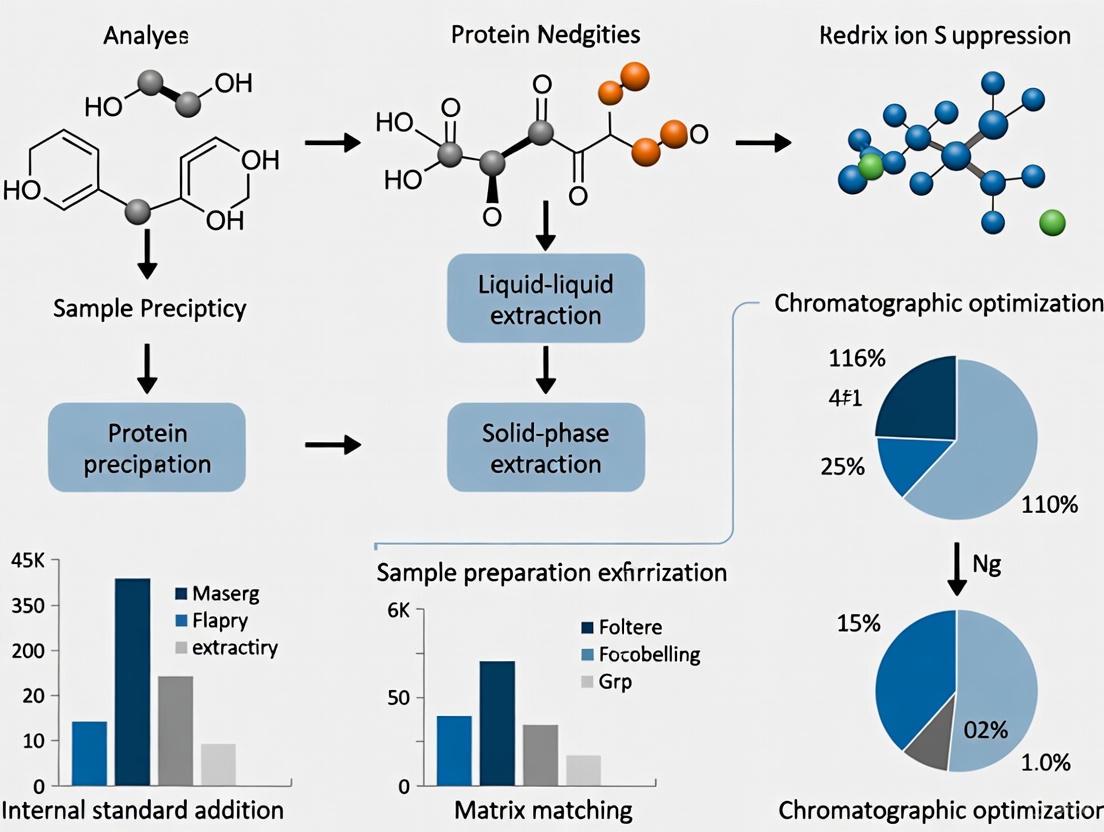
Ion suppression remains a critical challenge in LC-MS bioanalysis, compromising sensitivity, accuracy, and precision in pharmaceutical, clinical, and environmental applications.
Advanced Strategies to Overcome Ion Suppression in LC-MS: A Comprehensive Guide for Bioanalytical Scientists
Abstract
Ion suppression remains a critical challenge in LC-MS bioanalysis, compromising sensitivity, accuracy, and precision in pharmaceutical, clinical, and environmental applications. This comprehensive article provides researchers and drug development professionals with foundational knowledge and practical strategies to identify, mitigate, and correct for ion suppression effects. Covering both established and emerging techniques—from optimized sample preparation and chromatography to innovative isotope-based correction workflows—this guide synthesizes current best practices for enhancing data quality and analytical robustness across diverse matrices and study phases.
Understanding Ion Suppression: Mechanisms, Impacts, and Detection in LC-MS Analysis
FAQ: Understanding Ion Suppression
1. What is ion suppression? Ion suppression is a matrix effect in liquid chromatography–mass spectrometry (LC–MS) where co-eluting compounds reduce the ionization efficiency of your target analytes in the ion source. This competition leads to a diminished detector response, compromising sensitivity, accuracy, and precision [1] [2] [3].
2. Why is ESI more prone to ion suppression than APCI? Electrospray Ionization (ESI) and Atmospheric Pressure Chemical Ionization (APCI) have different mechanisms, making ESI more susceptible [1] [2] [4].
- ESI: Relies on charged droplets and the ejection of ions from the liquid phase. Competition for space and charge on the droplet surface by matrix components can easily suppress analyte ionization [1] [2].
- APCI: Involves vaporizing the sample into the gas phase before chemical ionization. This process is less affected by competition from non-volatile compounds, generally resulting in less pronounced ion suppression [1] [2] [4].
The table below summarizes the key differences:
| Feature | Electrospray Ionization (ESI) | Atmospheric Pressure Chemical Ionization (APCI) |
|---|---|---|
| Ionization Mechanism | Ions formed directly from charged liquid droplets [1] | Neutral molecules vaporized, then ionized in the gas phase [1] |
| Primary Suppression Cause | Competition for charge and space at the droplet surface; presence of non-volatile salts [1] [2] | Alteration of colligative properties during evaporation; gas-phase proton transfer reactions [1] [5] |
| Typical Suppression | More pronounced [1] [2] | Less pronounced [1] [2] |
3. How can I quickly check if my method has ion suppression? Two common experimental protocols are used to detect and visualize ion suppression [2] [3]:
- Post-Extraction Addition Method: Compare the MS response of an analyte spiked into a blank sample extract (after preparation) to its response in a pure solvent. A significantly lower signal in the matrix indicates ion suppression [2].
- Post-Column Infusion Method: Continuously infuse a standard of your analyte into the LC effluent while injecting a blank, prepared sample. A drop in the baseline signal in regions where matrix components elute reveals the chromatographic zones affected by suppression [2].
Troubleshooting Guide: Strategies to Overcome Ion Suppression
Optimize Sample Preparation
The most effective way to reduce ion suppression is to remove the interfering matrix components before analysis [1] [6] [3].
- Strategy: Replace simple protein precipitation with more selective techniques.
- Protocols:
Improve Chromatographic Separation
Increasing the separation between your analyte and co-eluting matrix compounds is a fundamental solution [1] [7].
- Strategy: Modify the LC method to shift the retention time of the analyte away from the suppression zone identified by the infusion experiment.
- Protocols:
- Change Chromatographic Parameters: Adjust the gradient profile, mobile phase pH, or buffer concentration to improve resolution [1].
- Use Advanced Chromatography: For highly complex samples, comprehensive two-dimensional liquid chromatography (LC×LC) significantly increases peak capacity, drastically reducing co-elution and its associated ion suppression [7].
Adjust MS Operating Conditions
Sometimes, suppression can be mitigated by re-evaluating the MS configuration.
- Strategy: Switch the ionization source or mode.
- Protocols:
- Change Ionization Source: If your analyte is suitable, switch from ESI to APCI, which is generally less prone to suppression [1] [2] [3].
- Switch Ionization Mode: Switching from positive to negative ion mode (or vice-versa) can be effective if the suppressing compounds are ionizable in one mode but not the other, and if your analyte remains detectable [1] [3].
Implement Robust Internal Standardization
Using a proper internal standard is critical for correcting the variability caused by ion suppression.
- Strategy: Use a stable isotope-labeled internal standard (SIL-IS) for each analyte.
- Protocol: The SIL-IS is chemically identical to the analyte and co-elutes with it, meaning it experiences the same level of ion suppression. The ratio of analyte signal to IS signal remains constant, correcting for the suppression effect and improving accuracy and precision [8].
Experimental Protocols
Protocol 1: Post-Column Infusion to Map Ion Suppression
Purpose: To visually identify the chromatographic regions where ion suppression occurs [2].
Materials:
- LC-MS/MS system
- Syringe pump
- T-connector
- Analyte standard solution
- Blank matrix sample (e.g., plasma, urine)
Procedure:
- Prepare Infusion Solution: Dilute the analyte standard to a concentration that provides a stable, strong signal.
- Set Up Infusion: Connect a syringe pump loaded with the infusion solution via a T-connector to the LC effluent line entering the MS ion source.
- Establish Baseline: Start the infusion and begin data acquisition. You should observe a steady baseline signal for the analyte.
- Inject Blank: While infusing, inject the prepared blank matrix sample onto the LC column and run the chromatographic method.
- Analyze Data: Observe the analyte signal trace. Any dip in the steady baseline corresponds to the elution time of matrix components that cause ion suppression.
The workflow for this experiment is illustrated below:
Protocol 2: Solid-Phase Extraction for Clean-up
Purpose: To remove ion-suppressing compounds from a biological sample prior to LC-MS analysis [1] [6].
Materials:
- Solid-phase extraction cartridge (e.g., C18, mixed-mode)
- Vacuum manifold
- Solvents (methanol, water, acetonitrile, buffers)
Procedure:
- Conditioning: Pass methanol through the sorbent bed, then follow with water or a buffer to activate the cartridge.
- Loading: Apply the prepared sample (e.g., plasma supernatant after protein precipitation) to the cartridge.
- Washing: Pass a wash solution (e.g., water, 5% methanol) through the cartridge to remove unwanted, polar matrix components.
- Elution: Elute the retained analytes with a strong solvent (e.g., pure methanol or acetonitrile).
- Analysis: Evaporate the eluent under a gentle stream of nitrogen, reconstitute in mobile phase, and inject into the LC-MS system.
Research Reagent Solutions
The following table lists key materials used to combat ion suppression.
| Reagent/Material | Function in Mitigating Ion Suppression |
|---|---|
| Stable Isotope-Labeled Internal Standard (SIL-IS) | Corrects for variable ionization efficiency; the most reliable way to ensure quantitative accuracy [8]. |
| Solid-Phase Extraction (SPE) Cartridges | Selectively binds analyte or interferents to remove salts, phospholipids, and other endogenous compounds during sample clean-up [1] [6]. |
| Volatile Buffers (e.g., Ammonium Formate/Acetate) | Replace non-volatile buffers (e.g., phosphates) in the mobile phase to prevent source contamination and signal suppression [6]. |
| IROA Internal Standard Library | A specialized isotopically labeled standard mix used in non-targeted metabolomics to measure and computationally correct for ion suppression across all detected metabolites [8]. |
FAQs: Fundamental Mechanisms and Ion Suppression
Q1: What is the fundamental difference in how ESI and APCI create ions?
The core difference lies in the phase in which ionization occurs. In ESI, ionization is a condensed-phase process that takes place within charged liquid droplets, while APCI is a gas-phase process that occurs after the solvent and analytes have been vaporized [2] [1].
- Electrospray Ionization (ESI): The LC effluent is pumped through a needle to which a high voltage is applied, creating a fine mist of charged droplets. As the solvent evaporates, the droplets shrink, increasing the charge density until Coulombic explosions occur, ultimately releasing pre-formed ions from the solution into the gas phase [2] [9].
- Atmospheric Pressure Chemical Ionization (APCI): The LC effluent is rapidly vaporized by a heated nebulizer. A corona discharge needle then creates reagent ions from the vaporized solvent molecules. These reagent ions subsequently transfer charge to the analyte molecules through gas-phase chemical reactions [2] [10].
Q2: Why is ESI generally more susceptible to ion suppression than APCI?
ESI is more prone to ion suppression due to its reliance on processes in the liquid droplet, where competition for limited charge and space can occur [11] [2]. The key mechanisms leading to suppression in ESI include:
- Competition for Charge: In the charged droplet, there is a finite amount of excess charge. Matrix components with high surface activity or basicity can out-compete analyte molecules for this limited charge, preventing the analyte from being efficiently emitted as a gas-phase ion [2] [1].
- Altered Droplet Properties: High concentrations of non-volatile or matrix components can increase the viscosity and surface tension of the droplets, hindering solvent evaporation and the liberation of gas-phase ions [2] [1].
- Precipitation: Non-volatile materials can cause the analyte to co-precipitate or prevent the droplet from reaching the critical radius required for ion emission [1].
In contrast, APCI is less susceptible because the analyte is already vaporized before ionization. While APCI can still experience suppression from components that affect charge transfer efficiency in the gas phase or cause solid formation, it is generally considered more robust for complex matrices [11] [2] [1].
Q3: When should I consider switching from ESI to APCI?
Consider switching to APCI when you are analyzing:
- Less Polar Compounds: APCI is well-suited for medium to low polarity, thermally stable molecules [10].
- Samples with High Matrix Load: If your sample cleanup is minimal and you observe significant ion suppression in ESI, APCI can offer an improvement [11] [2].
- Compounds in the Presence of Salts and Ion-Pairing Reagents: These can be particularly detrimental to ESI performance [9].
It is important to note that ESI is typically more effective for large, polar, and thermally labile molecules, such as proteins and peptides [10]. The optimal choice depends on the physicochemical properties of your specific analytes.
Q4: Besides switching the ion source, what are other effective strategies to reduce ion suppression?
- Improved Sample Cleanup: Techniques like solid-phase extraction (SPE) or liquid-liquid extraction (LLE) can effectively remove the matrix components that cause suppression [11] [12] [1].
- Enhanced Chromatographic Separation: Improving the separation to prevent ion-suppressing agents from co-eluting with your analyte is one of the most effective strategies [1] [7]. Comprehensive two-dimensional liquid chromatography (LC×LC) can dramatically increase peak capacity and reduce co-elution [7].
- Using Stable Isotope-Labeled Internal Standards (SIS): SIS compensate for ion suppression because the analyte and its standard experience the same matrix effects, correcting for losses in ionization efficiency [11] [13]. Advanced methods like the IROA TruQuant Workflow use SIS libraries to measure and correct for ion suppression across all detected metabolites in non-targeted studies [13].
- Optimizing LC-MS Conditions: Diluting the sample, reducing the injection volume, lowering the mobile phase flow rate, and adding a small amount of organic modifier to highly aqueous mobile phases can also help mitigate suppression [1] [9].
Troubleshooting Guide: Addressing Ion Suppression
| Symptom | Possible Cause | Corrective Action |
|---|---|---|
| Poor reproducibility & low analyte signal | Co-eluting matrix components causing ion suppression | 1. Improve chromatographic separation (e.g., adjust gradient, use different column chemistry).2. Implement a more rigorous sample clean-up protocol (e.g., SPE, LLE).3. Switch from ESI to APCI if analyte properties allow [11] [2]. |
| In-source adduct formation (e.g., [M+Na]+) | Presence of metal ions (e.g., from glass vials, solvents, or biological salts) | 1. Use high-purity, LC-MS grade solvents and additives.2. Use plastic vials instead of glass.3. Thoroughly flush the system between runs [9]. |
| Loss of linearity at high concentrations | Saturation of the ionization process, particularly in ESI | 1. Dilute the sample to bring it back into the linear dynamic range.2. For ESI, this may be due to charge saturation; consider switching to APCI [2]. |
| Unstable spray & signal dropout in ESI | High aqueous content in mobile phase leading to high surface tension or electrical discharge | 1. Add a small percentage (1-2%) of methanol or isopropanol to the aqueous phase to lower surface tension [9].2. Optimize the sprayer voltage and position [9]. |
Experimental Protocols for Evaluating Ion Suppression
Protocol 1: Post-Extraction Addition Method for Quantifying Ion Suppression
This method evaluates the overall impact of the sample matrix on ionization efficiency [12] [2].
- Prepare Samples:
- Sample A (Neat Standard): Prepare the analyte at a known concentration in neat mobile phase or reconstitution solvent.
- Sample B (Post-Extraction Spiked): Take a blank matrix extract (e.g., processed plasma, wastewater, or tissue homogenate) and spike it with the same concentration of analyte as Sample A after the extraction and reconstitution steps.
- LC-MS Analysis: Inject Sample A and Sample B into the LC-MS system under identical analytical conditions.
- Calculation: Calculate the ion suppression/enhancement (ISE) using the formula:
- ISE (%) = (Peak Area of Sample B / Peak Area of Sample A) × 100%
- An ISE < 100% indicates ion suppression, while an ISE > 100% indicates ion enhancement.
Protocol 2: Continuous Post-Column Infusion for Locating Ion Suppression
This protocol identifies the specific regions in the chromatogram where ion suppression occurs [2].
- Setup: Connect a syringe pump containing a solution of the analyte of interest to a T-union placed between the HPLC column outlet and the MS ion source.
- Infusion: Start a continuous infusion of the analyte at a constant rate, creating a steady baseline signal in the mass spectrometer.
- Injection: While the infusion is running, inject a blank, processed sample matrix extract onto the LC column.
- Observation: As the LC gradient runs, matrix components will elute from the column. A dip in the steady baseline signal indicates the retention time window where co-eluting matrix components are causing ion suppression.
Quantitative Comparison of ESI and APCI
The following table summarizes key performance differences between ESI and APCI, supported by experimental data from the literature.
Table 1: Comparative Analysis of ESI and APCI Performance Characteristics
| Parameter | Electrospray Ionization (ESI) | Atmospheric Pressure Chemical Ionization (APCI) | Experimental Context & Citation |
|---|---|---|---|
| Ionization Mechanism | Condensed-phase: ion evaporation from charged droplets [2] [1] | Gas-phase: chemical ionization via charge transfer [2] [10] | Fundamental mechanistic difference. |
| Susceptibility to Ion Suppression | High. Strong ion suppression observed for many analytes in complex matrices [11]. | Generally lower. Less susceptible, but can still experience ion enhancement/suppression [11]. | Analysis of biocides, UV-filters in wastewater and sludge [11]. |
| Analyte Polarity | Ideal for polar and ionic compounds [10]. | Suitable for less polar, thermally stable compounds [10]. | Analysis of cholesteryl esters; ESI proved effective for more kinds of CEs [10]. |
| Typical Adducts Formed | [M+H]+, [M+Na]+, [M+NH4]+ [10] | Primarily [M+H]+ or [M-H]- [10] | Analysis of levonorgestrel and cholesteryl esters [14] [10]. |
| Impact of Non-Volatile Salts | High. Can severely disrupt spray stability and ionization [9]. | Moderate. Less affected, but can still cause issues [2]. | Practical troubleshooting guides [2] [9]. |
| Signal Intensity for Levonorgestrel | LLOQ = 0.25 ng/mL [14] | LLOQ = 1 ng/mL [14] | Bioanalysis in human plasma; ESI provided better sensitivity [14]. |
| Signal Intensity for Cholesteryl Esters | Strong signal for [M+Na]+ and [M+NH4]+ adducts across various CEs [10]. | Weak [M+H]+ signal; selectively sensitive to CEs with unsaturated fatty acids [10]. | Profiling CEs in biological matrices; ESI was more universally effective [10]. |
Ionization Pathway Diagrams
The following diagrams illustrate the sequential mechanisms of ESI and APCI, highlighting key differences and where ion suppression can occur.
The Scientist's Toolkit: Key Reagents and Materials
Table 2: Essential Research Reagent Solutions for Ion Suppression Mitigation
| Item | Function & Application |
|---|---|
| Stable Isotope-Labeled Internal Standards (SIS) | Chemically identical to the analyte, these standards experience the same ion suppression, allowing for accurate correction and quantification [11] [13]. |
| IROA Internal Standard (IROA-IS) Library | A specialized suite of 13C-labeled internal standards used in non-targeted metabolomics to measure and algorithmically correct for ion suppression across all detected metabolites [13]. |
| Oasis HLB SPE Cartridges | A reversed-phase polymer sorbent used for robust solid-phase extraction to remove matrix components from aqueous samples (e.g., wastewater, plasma) prior to LC-MS analysis, thereby reducing ion suppression [11]. |
| LC-MS Grade Solvents & Additives | High-purity solvents (water, methanol, acetonitrile) and additives (formic acid, ammonium formate) minimize chemical background noise and the introduction of ion-suppressing contaminants [14] [9]. |
| Cyclohexane (for LLE) | An organic solvent used in liquid-liquid extraction to selectively transfer analytes from complex biological matrices like plasma into a cleaner solvent, leaving ion-suppressing components behind [14]. |
Frequently Asked Questions
Q1: What are the most common sources of ion suppression in LC-MS? The most common sources are co-eluting matrix components from biological samples (such as phospholipids), non-volatile salts in buffers, and certain mobile phase additives (like trifluoroacetic acid) that interfere with the ionization process [15] [2] [16].
Q2: How can I quickly check if my method suffers from ion suppression? A post-column infusion experiment is an effective diagnostic tool. It involves continuously infusing your analyte into the MS while injecting a blank, prepared sample matrix. A drop in the steady baseline signal indicates regions in the chromatogram where ion suppression is occurring [15] [2] [17].
Q3: Why is protein precipitation (PPT) often insufficient for preventing ion suppression? While PPT is fast and removes proteins, it does not effectively remove phospholipids, which are a major cause of ion suppression. Phospholipids co-extract with analytes and can elute across the entire chromatographic gradient, causing significant signal suppression and reduced column lifetime [15] [17].
Q4: Are some ionization techniques less prone to ion suppression than others? Yes, Atmospheric Pressure Chemical Ionization (APCI) often experiences less ion suppression compared to Electrospray Ionization (ESI). This is due to differences in the ionization mechanism; in APCI, the analyte is vaporized before ionization, reducing competition from non-volatile matrix components [2].
Q5: What is a simple change I can make to my mobile phase to reduce ion suppression for MS detection? Replace non-volatile additives with volatile alternatives. For example, use formic acid (FA) or ammonium formate instead of phosphate or Tris buffers. For applications requiring stronger ion-pairing, difluoroacetic acid (DFA) offers a good balance between MS compatibility and chromatographic performance [18] [16] [19].
Troubleshooting Guides
Diagnosing and Resolving Phospholipid-Induced Suppression
Phospholipids, particularly glycerophosphocholines and lysophosphatidylcholines, are ubiquitous in biological samples and a primary cause of ion suppression [15] [17].
- Symptoms:
- Unstable baseline and signal noise.
- Inconsistent quantification, especially at low concentrations.
- Rapid loss of LC column performance and pressure buildup.
- Decreased sensitivity over many injections.
- Diagnostic Experiment:
- Solutions:
- Sample Preparation: Move beyond protein precipitation. Use:
- Selective Phospholipid Removal Plates: Products like HybridSPE or Phree plates combine protein precipitation with selective phospholipid removal, offering a rapid and effective cleanup [15] [17].
- Solid-Phase Extraction (SPE): Methods using strong cation-exchange (SCX) sorbents can more effectively separate phospholipids from analytes [15].
- Chromatography: Optimize the gradient to separate your analyte from the major phospholipid elution regions.
- Sample Preparation: Move beyond protein precipitation. Use:
Managing Interference from Non-Volatile Salts
Salts like sodium chloride, phosphate, and Tris are common in sample buffers but are incompatible with MS, causing source contamination and signal suppression [18] [16].
- Symptoms:
- High background noise and reduced overall sensitivity.
- Formation of multiple adducts (e.g., [M+Na]+) in the mass spectrum, complicating data interpretation.
- Rapid contamination of the ion source, requiring frequent maintenance.
- Solutions:
- Desalting Techniques: Implement offline methods like dialysis, ultrafiltration, or SPE to remove salts prior to analysis [16].
- Use Volatile Buffers: Prepare samples and mobile phases using volatile salts like ammonium acetate or ammonium formate, which evaporate readily in the MS source [18] [16] [6].
- Online Desalting: Utilize LC-MS or CE-MS setups where the analytical system includes an online desalting step [16].
- Matrix Additives for MALDI: For LC-MALDI workflows, adding methylenediphosphonic acid (MDPNA) to the matrix can enhance salt tolerance and reduce signal suppression [18].
Selecting Mobile Phase Additives Compatible with MS
The choice of mobile phase additive is critical for balancing chromatographic performance and MS sensitivity [19].
- Symptoms:
- Poor peak shape and resolution (especially with formic acid in UV detection).
- Significant loss of analyte signal intensity (common with TFA).
- Solutions: Refer to the table below for a comparison of common mobile phase additives.
Table 1: Comparison of Mobile Phase Additives for Peptide Analysis
This table helps select the appropriate additive based on your detection method [19].
| Additive | Best For | Advantages | Disadvantages |
|---|---|---|---|
| Trifluoroacetic Acid (TFA) | LC-UV Detection | Excellent peak shape and resolution for UV methods. | Causes severe ion suppression in MS; contaminates the MS system. |
| Formic Acid (FA) | LC-MS Detection | Volatile; excellent for ESI-MS; minimal ion suppression. | Can yield poorer peak shape and higher UV baseline compared to TFA. |
| Difluoroacetic Acid (DFA) | Hybrid LC-UV/MS | Good balance; better MS response than TFA and better peak shape than FA. | A weaker ion-pairing agent than TFA. |
Table 2: Sample Preparation Techniques and Their Impact on Phospholipid Removal
This table compares the effectiveness of common sample prep methods in mitigating phospholipid interference [15] [17].
| Technique | Phospholipid Removal | Relative Impact on Ion Suppression | Notes |
|---|---|---|---|
| Protein Precipitation (PPT) | Ineffective | High | Quick but leaves ~90% of phospholipids; leads to significant ion suppression. |
| Liquid-Liquid Extraction (LLE) | Partial (varies) | Medium | Phospholipids may co-extract due to hydrophobic tails. |
| Solid-Phase Extraction (SPE) | Good | Low to Medium | Provides cleaner extracts; efficiency depends on sorbent chemistry. |
| Dedicated Phospholipid Removal | Excellent | Very Low | Specifically designed to remove phospholipids, dramatically reducing suppression. |
Experimental Protocols
Protocol 1: Post-Column Infusion for Diagnosing Ion Suppression
This method visually maps regions of ion suppression in your chromatographic method [2] [17].
- Setup: Connect a syringe pump containing a solution of your analyte (e.g., 10-50 µM) to a T-union between the HPLC column outlet and the MS ion source.
- Infusion: Start a constant infusion of the analyte at a low flow rate (e.g., 10 µL/min) to establish a steady background signal in the MRM channel for your analyte.
- Injection: Using the autosampler, inject a blank sample extract (e.g., processed matrix without analyte) onto the LC column and run the analytical method.
- Analysis: Observe the MRM chromatogram. A dip or "valley" in the steady signal indicates the retention time where co-eluting matrix components are suppressing the ionization of your analyte.
Protocol 2: Phospholipid Removal Using a HybridSPE Plate
This protocol describes a streamlined method for simultaneous protein precipitation and phospholipid removal [17].
- Transfer: Pipette 100 µL of plasma (or other biological fluid) into a well of the phospholipid removal plate.
- Precipitate: Add 300 µL of an organic precipitant (e.g., acetonitrile containing 1% formic acid) to the well.
- Mix: Seal the plate and vortex mix for 2-5 minutes to ensure complete protein precipitation.
- Filter: Apply positive pressure or vacuum to pass the sample-precipitant mixture through the plate's proprietary sorbent.
- Collect: Collect the filtrate into a deep-well collection plate. The filtrate is now ready for injection or further concentration.
The Scientist's Toolkit: Research Reagent Solutions
| Reagent / Material | Function / Purpose |
|---|---|
| Volatile Buffers (Ammonium Formate/Acetate) | MS-compatible buffers that evaporate easily, preventing source contamination and ion suppression [18] [6]. |
| Formic Acid (FA) | A volatile mobile phase additive standard for LC-MS methods to promote positive ionization [19]. |
| Difluoroacetic Acid (DFA) | An ion-pairing agent that offers a compromise between MS sensitivity and chromatographic peak shape for LC-UV/MS workflows [19]. |
| HybridSPE/Phree Plates | 96-well plates designed for simultaneous protein precipitation and selective removal of phospholipids from biological samples [17]. |
| Methylenediphosphonic Acid (MDPNA) | A matrix additive for MALDI-MS that enhances tolerance to buffering salts, reducing signal suppression in offline LC-MALDI analysis [18]. |
| Stable Isotopically Labeled Internal Standard | An internal standard that co-elutes with the analyte and experiences the same matrix effects, compensating for ion suppression and improving quantification accuracy [15]. |
Workflow Diagram for Identifying and Mitigating Primary Causes of Ion Suppression
The following diagram outlines a logical workflow for diagnosing the primary causes of ion suppression and selecting appropriate mitigation strategies.
Troubleshooting Guides
How does ion suppression specifically affect the Limit of Detection (LOD) in LC-MS/MS analysis?
Ion suppression occurs when co-eluting matrix components reduce the ionization efficiency of target analytes in the mass spectrometer source, leading to decreased signal intensity [20]. This directly elevates the LOD, which is the lowest concentration that can be reliably distinguished from a blank sample [21]. The observed signal reduction increases the apparent noise level, thereby lowering the signal-to-noise (S/N) ratio, a common basis for LOD determination [22] [21]. With a compromised S/N ratio, a higher analyte concentration is required to meet the standard detection threshold, thus worsening the method's LOD [20].
Table: Impact of Ion Suppression on Key LOD Determination Methods
| LOD Determination Method | Direct Impact of Ion Suppression | Final Effect on LOD |
|---|---|---|
| Signal-to-Noise (S/N) [21] | Signal ↓ while noise remains constant or increases | LOD value increases (poorer sensitivity) |
| Standard Deviation of Blank [23] [24] | Increased variability in low-level signals | Higher standard deviation (s0) elevates calculated LOD |
| Calibration Curve Approach [23] | Reduced sensitivity (slope of curve) and potential increase in prediction error | Increases the calculated LOD value |
What experimental protocol can I use to assess matrix effects and their impact on my method?
The post-column infusion method is a widely used qualitative technique to identify regions of ion suppression or enhancement throughout a chromatographic run [25].
Experimental Protocol:
- Prepare Samples: Inject a blank matrix extract (e.g., processed plasma or urine) onto the LC column.
- Infuse Analyte: Continuously infuse a solution of your analyte directly into the mobile phase post-column and into the MS source using a syringe pump.
- Acquire Data: Monitor the selected MRM transition for the infused analyte during the LC run of the blank matrix.
- Interpret Results: A stable signal indicates no matrix effects. A dip in the signal indicates ion suppression at that retention time, while a signal increase indicates ion enhancement [25].
The diagram below illustrates this experimental workflow:
My method's accuracy and precision are failing at low concentrations near the LOQ. What are the primary causes and solutions?
Poor accuracy and precision near the LOQ are frequently caused by significant matrix effects and inadequate sample clean-up [20] [26]. Ion suppression introduces variability that an internal standard cannot always fully compensate for, leading to inaccurate quantification (affecting accuracy) and high variability between replicates (affecting precision) [25].
Troubleshooting Steps:
- Verify Internal Standard: Confirm you are using a stable isotope-labeled internal standard (SIL-IS) if possible. A SIL-IS co-elutes with the analyte and experiences nearly identical ion suppression, effectively normalizing for the effect [25].
- Optimize Sample Preparation: Move towards a more selective clean-up technique. The table below compares common methods.
- Improve Chromatography: Optimize the LC method to achieve better separation of the analyte from the suppressing matrix components, shifting its retention time away from the suppression zone identified by the post-column infusion experiment [20].
Table: Comparison of Sample Preparation Techniques for Mitigating Matrix Effects
| Technique | Mechanism | Effectiveness Against Matrix Effects | Key Considerations |
|---|---|---|---|
| Protein Precipitation (PPT) [25] | Precipitates and removes proteins using organic solvents or acids. | Low. Leaves most phospholipids and other interferences in solution. | Simple and fast, but can actually concentrate phospholipids. |
| Liquid-Liquid Extraction (LLE) [25] | Partitioning of analytes into an organic solvent based on polarity. | Medium-High. Effectively removes phospholipids and polar interferences if pH is controlled. | Requires optimization of solvent and pH. Can be difficult to automate. |
| Solid-Phase Extraction (SPE) [20] [25] | Selective adsorption of analytes or interferences onto a sorbent. | High (if selective sorbents are used). Mixed-mode and phospholipid-removal SPEs are very effective. | Offers high clean-up efficiency and can be automated. |
Is there a standardized way to comprehensively evaluate my method's performance, including the red (analytical) dimension?
Yes, the Red Analytical Performance Index (RAPI) is a modern tool designed to standardize the evaluation of the "red" (analytical performance) dimension as part of the White Analytical Chemistry (WAC) framework [27]. It consolidates ten key validation parameters into a single, easy-to-interpret score from 0 to 10.
How to Use RAPI:
- Score your method's performance (0-10) for each of the following ten parameters based on your validation data [27]:
- Repeatability
- Intermediate Precision
- Reproducibility
- Trueness (Bias)
- Recovery & Matrix Effect
- Limit of Quantification (LOQ)
- Working Range
- Linearity (R²)
- Robustness/Ruggedness
- Selectivity
- Sum the individual scores for a final RAPI score out of 100, which is then normalized to a 0-10 scale [27].
- A higher score indicates superior overall analytical performance. This provides a transparent and quantitative way to compare methods or track improvements during optimization [27].
Frequently Asked Questions (FAQs)
What is the fundamental difference between LOD and LOQ?
The Limit of Detection (LOD) is the lowest concentration at which the analyte can be reliably detected but not necessarily quantified with acceptable precision. The Limit of Quantification (LOQ) is the lowest concentration that can be measured with established levels of accuracy and precision [23] [24]. In practice, the LOQ is always greater than or equal to the LOD.
Beyond sample prep, what instrumental adjustments can improve sensitivity and LOD?
Several LC-MS/MS parameters can be optimized to boost signal and lower LOD [20] [22]:
- Ion Source Optimization: Fine-tune parameters like gas flows, desolvation temperature, and spray voltage for your specific analyte [20].
- Mobile Phase Optimization: Use volatile additives (e.g., formic acid, ammonium formate) and adjust pH to promote ionization [20].
- Chromatography: Consider using smaller inner diameter columns (e.g., microflow or nano-LC) which increase analyte concentration at the detector and enhance ionization efficiency [22].
How often should I re-validate or check the LOD/LOQ for my established method?
Performance near the LOD/LOQ should be monitored as part of each analytical series or batch. The use of quality control (QC) samples at low concentrations is crucial for this [26]. A full re-validation of LOD/LOQ should be performed whenever a major change occurs in the method, such as a change in instrument platform, sample preparation procedure, or critical LC parameters [26].
The Scientist's Toolkit: Key Research Reagent Solutions
Table: Essential Materials for Mitigating Ion Suppression in LC-MS/MS Bioanalysis
| Item / Solution | Function & Role in Reducing Matrix Effects |
|---|---|
| Stable Isotope-Labeled Internal Standard (SIL-IS) [25] | Co-elutes with the analyte, undergoes identical ion suppression, and normalizes the MS response to correct for signal loss and variability. |
| Mixed-Mode Solid-Phase Extraction (SPE) Cartridges [25] | Provide selective clean-up by combining reversed-phase and ion-exchange mechanisms to retain analytes while effectively removing phospholipids and other ionic interferences. |
| Phospholipid Removal Plates (e.g., Zirconia-coated) [25] | A specialized SPE sorbent that selectively binds and removes phospholipids, a primary cause of ion suppression in plasma samples, during protein precipitation. |
| Volatile Mobile Phase Additives (Formic Acid, Ammonium Formate/ Acetate) [20] | Promote efficient analyte ionization in the source while preventing source contamination and maintaining stable spray conditions. They are easily volatile and MS-compatible. |
| LC-MS Grade Solvents [22] | High-purity solvents minimize chemical noise and background interference, which improves signal-to-noise ratio and reduces potential for contamination-related signal suppression. |
Technical Guide: Core Methodologies
Post-column Infusion
Objective: To qualitatively identify regions of ionization suppression or enhancement throughout the chromatographic run by monitoring the signal of a continuously infused analyte during the injection of a blank matrix sample [2] [28].
Experimental Protocol:
- Setup: Connect a syringe pump containing a solution of the analyte(s) of interest to a T-piece located between the HPLC column outlet and the mass spectrometer inlet [29] [28].
- Infusion: Initiate a constant infusion of the analyte standard at a defined flow rate (e.g., 10 μL/min) to establish a stable baseline signal [29].
- Chromatographic Run: Inject a prepared blank matrix sample (e.g., extracted plasma) onto the LC system and start the separation method [2] [28].
- Data Monitoring: Observe the signal response of the infused analyte in real-time. A decrease in signal indicates ion suppression caused by co-eluting matrix components; an increase indicates ion enhancement [2] [29].
- Analysis: Generate a matrix effect profile by plotting the analyte response against retention time to identify the problematic regions in the chromatogram [29].
The following diagram illustrates the typical post-column infusion experimental workflow:
Post-extraction Spike Analysis
Objective: To quantitatively measure the extent of matrix effect for an analyte at a specific retention time by comparing its signal in a clean solution to its signal when spiked into a processed blank matrix [30] [28].
Experimental Protocol:
- Prepare Samples:
- Neat Solution (A): Spike the analyte at the target concentration(s) directly into the reconstitution solvent (e.g., mobile phase) [30]. This represents the unsuppressed signal.
- Post-extraction Spike (B): Take an aliquot of the blank matrix (e.g., plasma, urine) and subject it to the entire sample preparation procedure (e.g., protein precipitation, solid-phase extraction). After processing, spike the analyte into the resulting extract at the same concentration as the neat solution [30] [28].
- Pre-extraction Spike (C): Spike the analyte into the blank matrix before the sample preparation. Then process the sample through the entire method. This is used to calculate extraction recovery [30].
- Analysis: Analyze all sample sets (A, B, and C) using the LC-MS method.
- Calculation:
- Matrix Effect (ME):
ME (%) = [1 - (Mean Peak Area of Post-extraction Spike B / Mean Peak Area of Neat Solution A)] × 100[30]. A positive value indicates suppression; a negative value indicates enhancement. - Extraction Recovery (ER):
ER (%) = (Mean Peak Area of Pre-extraction Spike C / Mean Peak Area of Post-extraction Spike B) × 100[30]. - Process Efficiency (PE):
PE (%) = (Mean Peak Area of Pre-extraction Spike C / Mean Peak Area of Neat Solution A) × 100[30].
- Matrix Effect (ME):
The following workflow outlines the parallel sample preparation and calculation steps for this method:
Troubleshooting Guides & FAQs
Frequently Asked Questions
Q1: When should I use post-column infusion versus post-extraction spike?
Q2: Can post-column infusion be used for quantitative correction of matrix effects?
- A: Yes, emerging research shows it has potential. One study used a post-column infused structural analogue to correct for matrix effects in endocannabinoid analysis, improving precision and enabling quantification using neat solution calibration curves [31].
Q3: Why do I see ion suppression even with MS/MS detection?
Q4: My recovery is >95%, but my accuracy is poor. Could matrix effects still be the problem?
- A: Absolutely. High recovery indicates the analyte was efficiently extracted from the sample. However, if co-eluting matrix components are also present in the final extract, they can still cause ion suppression or enhancement during MS detection, leading to inaccurate quantification [30].
Troubleshooting Common Problems
| Problem | Potential Cause | Recommended Solution |
|---|---|---|
| High noise/baseline drift during post-column infusion. | Contamination of ion source or mobile phase [32]. | Use high-purity, volatile mobile phase additives; perform regular ion source maintenance; employ a divert valve to direct undesired portions of the eluent to waste [6] [32]. |
| No signal change during post-column infusion. | Infusion concentration too high or low; matrix is too clean or diluted [29] [28]. | Optimize the concentration of the infusion standard. Re-evaluate using a more concentrated sample extract or a different lot of matrix [29]. |
| Inconsistent matrix effect results between sample batches. | Natural biological variation in matrix composition (e.g., phospholipid levels) [28]. | Evaluate matrix effects using multiple lots of the blank matrix. Incorporate a stable isotope-labeled internal standard (SIL-IS) for each analyte, which is the gold standard for compensation [33] [28]. |
| Severe ion suppression even after sample cleanup. | Inadequate chromatographic separation of analyte from matrix interferences [6]. | Optimize the chromatographic method (e.g., gradient, column chemistry) to shift the analyte's retention time away from suppression zones. Consider alternative ionization like APCI, which is often less prone to suppression than ESI [2] [28]. |
Comparison of Matrix Effect Evaluation Methods
| Feature | Post-column Infusion | Post-extraction Spike |
|---|---|---|
| Primary Output | Qualitative profile (chromatographic zones) [28] | Quantitative percentage (for specific analytes) [28] |
| Information Provided | Identifies retention times affected by ion suppression/enhancement [29] | Measures absolute magnitude of matrix effect [30] |
| Best Use Case | Method development and optimization [29] [34] | Method validation and quantitative assessment [28] |
| Throughput | Lower; requires special setup [28] | Higher; uses standard LC-MS setup [30] |
| Key Advantage | Visualizes matrix effects across the entire chromatogram [29] | Provides a numerical value for easy comparison and validation [30] |
| Main Limitation | Does not provide a direct numerical value for correction [28] | Requires a blank matrix, which is not always available [33] [28] |
The table below summarizes results from a spike-in experiment where peptides were added to serum and analyzed using different software tools, demonstrating variability in feature detection and false positives.
| Software Tool | Total Features Considered | Significantly Different Features (q<0.05, FC>10) | True Positives (Spike-in Peptides) | False Positives |
|---|---|---|---|---|
| msInspect | 6,525 | 2,099 | 9 | 2,090 |
| MZmine 2 | 12,092 | 539 | Information Missing | Information Missing |
| Progenesis LC-MS | 8,415 | 467 | Information Missing | Information Missing |
| XCMS | 8,703 | 66 | Information Missing | Information Missing |
The Scientist's Toolkit: Essential Research Reagents & Materials
| Item | Function in Experiment |
|---|---|
| Stable Isotope-Labeled Internal Standards (SIL-IS) | The gold standard for compensating matrix effects; co-elutes with the analyte, undergoes identical sample preparation and ionization, allowing for accurate ratio-based quantification [33] [28]. |
| Structural Analogue Standards | A more affordable alternative to SIL-IS for post-column infusion; should have similar physicochemical and ionization properties to the analytes to act as a reliable surrogate for matrix effect profiling [31]. |
| Phospholipid Removal Cartridges | Specialized solid-phase extraction sorbents designed to remove phospholipids from biological samples, which are a major cause of late-eluting ion suppression in reversed-phase LC-MS [29]. |
| Volatile Buffers (e.g., Ammonium Formate/Acetate) | Used in mobile phase to control pH without leaving non-volatile residues that contaminate the ion source and cause persistent ion suppression [32] [34]. |
| Syringe Pump | Provides a constant, pulseless flow for post-column infusion of the standard solution during the LC-MS run [29]. |
| T-piece or Mixing Tee | Connects the LC column effluent, the infusion syringe pump line, and the MS inlet, allowing for the combination of flows required for post-column infusion [29] [28]. |
Practical Sample Preparation and Chromatographic Solutions to Minimize Matrix Effects
Frequently Asked Questions (FAQs)
FAQ 1: How do I choose the right sample preparation technique to minimize ion suppression?
Answer: The choice of technique depends on your required balance between cleanliness, throughput, and method development time. Ion suppression occurs when co-eluting matrix components, particularly phospholipids, reduce the ionization efficiency of your target analyte in the mass spectrometer source [15] [12]. The table below compares the key characteristics of the three major techniques.
| Technique | Mechanism | Effectiveness Against Phospholipids | Best For | Limitations |
|---|---|---|---|---|
| Protein Precipitation (PPT) | Precipitation of proteins using organic solvents (e.g., acetonitrile). | Poor; phospholipids remain in the sample [15]. | High-throughput workflows, minimal method development [15]. | High ion suppression; least clean extracts [15]. |
| Liquid-Liquid Extraction (LLE) | Partitioning of analytes based on solubility between two immiscible liquids. | Poor; phospholipids co-extract due to their hydrophobic tails [15]. | Lipophilic compounds [15]. | Can be difficult to automate; may not suit very polar analytes. |
| Solid-Phase Extraction (SPE) | Selective retention and elution based on chemical interactions with a sorbent. | Good; selective sorbents can remove phospholipids [15] [35]. | Applications requiring the cleanest extracts and highest sensitivity [15] [35]. | Requires more method development and is more time-consuming [35]. |
The following workflow can guide your decision-making process:
FAQ 2: What specific endogenous compounds cause the most problems, and how can I monitor them?
Answer: Phospholipids are the most significant class of endogenous compounds causing ion suppression, particularly in plasma and serum samples [15] [36]. Their structure, featuring both ionic phosphate groups and hydrophobic fatty acid tails, makes them highly effective at competing for charge and space in the electrospray ionization (ESI) process [15].
You can proactively monitor phospholipids during method development using in-source multiple reaction monitoring (IS-MRM). By monitoring the transition to the common fragment ion at m/z 184 (trimethylammonium-ethyl phosphate) in positive ion mode, you can identify chromatographic regions where these interferents elute [36]. The table below summarizes the main culprits.
| Endogenous Interferent | Class | Primary Reason for Ion Suppression | Recommended Monitoring Method |
|---|---|---|---|
| Glycerophosphocholines (GPChos) | Phospholipid | Accounts for ~70% of phospholipids; highly surface-active in ESI [36]. | IS-MRM: Precursor ion > m/z 184 [36]. |
| Lysophosphatidylcholines | Phospholipid | Accounts for ~10% of phospholipids; also causes significant suppression [36]. | IS-MRM: Precursor ion > m/z 184 [36]. |
| Other Phospholipids | Phospholipid | Can contribute to matrix effects. | Neutral loss or precursor ion scans in negative mode [36]. |
FAQ 3: My current method uses protein precipitation, but I'm seeing high ion suppression. What are my options?
Answer: You have two excellent options to improve upon basic protein precipitation without completely overhauling your workflow.
- Implement Protein Precipitation with Phospholipid Removal (PPT-PLR): This technique uses a specialized well plate or cartridge that combines a filter to retain precipitated proteins with a sorbent designed to trap phospholipids [35]. It maintains the simplicity of PPT while significantly reducing a major source of matrix effects. The workflow is simple: add your crash solvent and sample to the PLR device, mix, and apply vacuum or pressure. Proteins and phospholipids are retained, while your analytes are collected in a cleaner extract [35].
- Switch to a Hybrid Technique: Combine protein precipitation with an online-SPE cleanup. One documented method for quantifying 25-hydroxyvitamin D involved precipitating proteins with acetonitrile, followed by filtration and direct injection into an LC-MS/MS system configured with a switching valve. This valve directed the extract to a trapping column for an online clean-up and concentration step before the analytical separation, effectively addressing phospholipid-based ion suppression [37].
The following diagram illustrates the optimized PPT-PLR workflow:
FAQ 4: How can I diagnose if my sensitivity issues are due to ion suppression or poor recovery?
Answer: You can diagnose this by comparing the responses from a set of experiments and calculating the apparent recovery. Here is a standard experimental protocol [15]:
Prepare Three Sets of Samples:
- Set A (Extracted Sample): Spike your analyte into the biological matrix before extraction, then perform your full sample preparation and analysis.
- Set B (Post-Extraction Spiked Sample): Take a blank matrix, perform the full sample preparation, and then spike your analyte into the resulting clean extract just before analysis.
- Set C (Neat Solution): Prepare your analyte in a pure mobile phase or solvent (no matrix).
Calculate the Metrics:
- Extraction Recovery (%) = (Peak Area of Set A / Peak Area of Set B) × 100
- This tells you how efficiently your method recovers the analyte from the matrix.
- Matrix Effect (%) = (Peak Area of Set B / Peak Area of Set C) × 100
- This tells you the degree of ion suppression (if <100%) or enhancement (if >100%).
- Extraction Recovery (%) = (Peak Area of Set A / Peak Area of Set B) × 100
An ideal method has both recovery and matrix effect close to 100%. Low recovery indicates poor extraction efficiency, while a matrix effect significantly less than 100% confirms ion suppression [15].
FAQ 5: What are the key steps in developing a robust Solid-Phase Extraction (SPE) method?
Answer: Developing a robust SPE method involves optimizing each step for your specific analytes. The most effective approach is to use a mixed-mode sorbent (combining reversed-phase and ion-exchange mechanisms) for superior cleanup of complex biological samples [35].
A highly efficient strategy is to use an SPE method development plate, which allows you to screen four different sorbent chemistries under multiple conditions (e.g., load pH, wash strength) in a single experiment to identify the optimal setup [35]. The generic protocol for a mixed-mode cation exchange sorbent is detailed below.
| Step | Purpose | Typical Conditions | Critical Parameters to Optimize |
|---|---|---|---|
| Sample Pretreatment | Ensure solubility and correct charge for retention. | Dilute sample with aqueous acid or buffer. | Sample pH (to protonate bases for cation exchange). |
| Sorbent Conditioning | Prepare the sorbent surface for retention. | Methanol followed by water or buffer. | Type and volume of solvent. |
| Sample Loading | Retain the analyte on the sorbent. | Apply pretreated sample. | Flow rate; sample solvent composition. |
| Wash 1 (Aqueous) | Remove water-soluble interferences (salts, sugars). | Water or weak buffer. | Wash solvent pH and strength. |
| Wash 2 (Organic) | Remove hydrophobic interferences (non-ionic). | Methanol, acetonitrile, or mixture. | Percentage of organic solvent. |
| Elution | Release the purified analyte for collection. | Organic solvent with volatile base (e.g., NH₄OH) or acid. | Solvent strength and pH (to neutralize the sorbent's charge). |
The Scientist's Toolkit: Research Reagent Solutions
| Category | Item | Function / Explanation |
|---|---|---|
| Specialized SPE Sorbents | Strata-X (Polymeric Reversed-Phase) | Provides higher capacity and alternative selectivity compared to traditional C18 for retaining a wide range of analytes [35]. |
| Mixed-Mode Cation/Anion Exchange | Retains analytes based on both hydrophobicity and ionic interactions, enabling superior cleanup by removing neutral and ionic interferences with optimized washes [35]. | |
| Phospholipid Removal | Phree Phospholipid Removal Plates | Integrated solution combining protein precipitation and selective phospholipid sorption in a single step, dramatically reducing a major source of ion suppression [35]. |
| Chromatography | Core-Shell (e.g., Kinetex) Biphenyl/Phenyl-Hexyl Columns | Provides complementary selectivity to C18, leveraging pi-pi interactions for better separation of aromatic compounds common in drug analysis, helping to separate analytes from matrix interferences [35]. |
| Internal Standards | Stable Isotope-Labeled Internal Standards (SIL-IS) | Chemically identical to the analyte but with a different mass. They correct for variability during sample preparation and ionization, compensating for matrix effects and improving quantitative accuracy [13] [36]. |
Troubleshooting Guides
Guide to Troubleshooting Poor Chromatographic Resolution
Table 1: Symptoms, Causes, and Solutions for Poor Resolution
| Symptom | Likely Cause | Recommended Solution |
|---|---|---|
| Broad peaks | System not equilibrated [38]; Excessive extra-column volume [39] [38]; Old or contaminated column [38] | Equilibrate column with 10 volumes of mobile phase [38]; Reduce tubing length/diameter [39]; Replace or clean column [38] |
| Tailing peaks | Column overloading [39]; Active sites on silica surface [39]; Worn or contaminated column [39] [38] | Dilute sample or reduce injection volume [39]; Add buffer to mobile phase [39]; Replace guard column or clean analytical column [39] |
| Varying retention times | System not equilibrated [38]; Mobile phase composition inconsistent [38]; Temperature fluctuations [38] | Equilibrate column fully [38]; Prepare fresh mobile phase; ensure pump mixing works [38]; Use a column oven [38] |
| Co-elution of analyte & interference | Insufficient chromatographic selectivity [39]; Inappropriate gradient profile [6] | Optimize mobile phase (pH, buffer, organic modifier) [6]; Use a gradient to separate compounds [39]; Change to a column with different stationary phase selectivity [39] |
| Loss of peak intensity/signal | Ion suppression from co-eluting matrix [6] [2] [12] | Improve sample clean-up [6] [12]; Optimize chromatography to shift analyte retention away from suppression zone [40] |
Diagnosing Ion Suppression: A Practical FAQ
Q1: How can I quickly check if my method suffers from ion suppression? The post-extraction spike method is a straightforward quantitative test [28] [12] [40].
- Procedure: Compare the MS/MS response (peak area) of your analyte in a neat solvent standard to its response in a blank sample matrix that has been extracted and then spiked with the analyte post-extraction [40].
- Interpretation: If the signal in the matrix is significantly lower (e.g., <100%) than in the neat standard, ion suppression is present. A signal >100% indicates ion enhancement [28].
Q2: I see a signal drop, but I don't know where in the chromatogram to look for suppression. What should I do? Use the post-column infusion experiment to create a visual map of ion suppression in your chromatographic run [2] [28] [40].
- Procedure: Connect a syringe pump to infuse a solution of your analyte directly into the column effluent post-separation. While infusing, inject a blank, extracted sample matrix into the LC system [2] [40].
- Interpretation: A steady signal indicates no suppression. Any dips (suppression) or rises (enhancement) in the baseline indicate regions where matrix components elute and interfere with ionization [2]. This helps you adjust the gradient to elute your analyte in a "quiet" region.
Q3: My internal standard doesn't fully compensate for ion suppression. Why? For an internal standard (IS) to effectively compensate for ion suppression, it must experience the exact same level of suppression as the analyte. This requires them to co-elute perfectly [40]. If your deuterated IS elutes even slightly earlier or later than the analyte, it may be in a different part of the suppression zone, leading to inaccurate quantification [40]. Using stable isotope-labeled standards with labels that do not impact retention (e.g., 13C, 15N) can improve co-elution and compensation [40].
Experimental Protocols
Protocol 1: Post-Column Infusion for Mapping Ion Suppression
This method provides a qualitative map of ion suppression/enhancement across the chromatographic run [2] [28].
- Objective: To identify the retention time zones where matrix components cause ion suppression or enhancement.
- Materials:
- LC-MS/MS system
- Syringe pump
- T-piece connector
- Standard solution of the target analyte (or a stable isotope-labeled internal standard)
- Extracted blank matrix sample (e.g., blank plasma extract)
- Method:
- Set up the syringe pump for a continuous, post-column infusion of the analyte standard.
- Connect the syringe pump to the LC column effluent via a T-piece.
- Start the infusion and establish a stable baseline signal in the mass spectrometer.
- Inject the extracted blank matrix sample onto the LC column and run the chromatographic method.
- Monitor the signal of the infused analyte throughout the LC run.
- Data Interpretation: A drop in the steady baseline signal indicates ion suppression caused by co-eluting matrix components. A rise indicates ion enhancement [2] [28]. The chromatogram acts as a "map" showing which retention times to avoid during method development.
The workflow for this experiment is outlined below.
Protocol 2: Quantitative Assessment of Matrix Effects
This method provides a numerical value for the extent of ion suppression or enhancement [28] [12] [40].
- Objective: To calculate the percentage of ion suppression or enhancement for an analyte at a specific retention time.
- Materials:
- LC-MS/MS system
- Standard solution of the target analyte
- Blank matrix from at least 6 different sources [40]
- Solvent (e.g., mobile phase)
- Method:
- Prepare Sample Set A: Spike the analyte at a known concentration into a pure solvent (neat standard).
- Prepare Sample Set B: Take blank matrix from multiple sources, extract it, and then spike it with the same concentration of analyte (post-extraction spike).
- Analyze all samples (Sets A and B) using the LC-MS/MS method.
- For each source in Set B, calculate the Matrix Effect (ME) using the formula: ME (%) = (Peak Area of Post-Extraction Spike / Peak Area of Neat Standard) × 100
- Calculate the overall ME as the average from the different matrix sources. A value of 100% indicates no effect; <100% indicates suppression; >100% indicates enhancement [28] [40].
- Internal Standard Normalization: To see how well your IS compensates, repeat the calculation using the analyte/IS peak area ratio (Response Factor) for both sample sets [40].
The Scientist's Toolkit: Essential Research Reagents & Materials
Table 2: Key Materials for Mitigating Ion Suppression through Chromatography
| Item | Function in Reducing Interferences | Key Considerations |
|---|---|---|
| Chromatography Columns | Separates analyte from matrix interferences; core tool for achieving resolution [6]. | Select different stationary phases (C18, phenyl, HILIC) to alter selectivity [39]. Use appropriate column dimensions (length, particle size) for needed efficiency [39]. |
| LC-MS Grade Solvents & Additives | High-purity mobile phase components minimize chemical noise and background interference [41] [39]. | Impurities can accumulate on-column and create ghost peaks or elevated baselines [41]. Use volatile buffers (ammonium formate/acetate) compatible with MS [6]. |
| Solid-Phase Extraction (SPE) | Selective sample clean-up to remove phospholipids, salts, and other ion-suppressing agents before LC-MS analysis [6] [12]. | Choose sorbent chemistry (reverse-phase, ion-exchange, mixed-mode) selective for your analyte or the interferences you wish to remove [12]. |
| Stable Isotope-Labeled Internal Standards (SIL-IS) | Compensates for variable ion suppression by behaving nearly identically to the analyte during ionization [40]. | Ideal standards use 13C or 15N labels to ensure perfect co-elution with the analyte. Deuterated analogs can sometimes slightly alter retention [40]. |
| Guard Columns | Protects the expensive analytical column by trapping particulate matter and highly retained matrix components [39] [38]. | The guard cartridge stationary phase should match the analytical column. Replace guard cartridge regularly to maintain performance [39]. |
Ion suppression is a major challenge in liquid chromatography-mass spectrometry (LC-MS), negatively impacting detection capability, precision, and accuracy. This phenomenon occurs when matrix components co-elute with analytes and interfere with the ionization process. The composition of the mobile phase is a critical factor influencing the extent of ion suppression. This guide provides targeted strategies for optimizing your mobile phase using volatile buffers and appropriate composition to enhance ionization efficiency and data reliability in your LC-MS research.
Core Principles: Why Mobile Phase Matters
The mobile phase in LC-MS does more than just carry analytes through the chromatographic system; it directly participates in the ionization process, particularly in electrospray ionization (ESI). Non-volatile mobile phase components can precipitate in the ion source, causing signal suppression, persistent contamination, and requiring tedious cleaning procedures [42]. Furthermore, high buffer concentrations or inappropriate pH can lead to ion-pairing, adduct formation, and altered ionization efficiency, all of which contribute to signal instability and suppression [2] [43] [42].
Optimization Strategies & Troubleshooting FAQs
What are the best volatile buffers and additives for LC-MS?
The key is to use volatile additives that can be easily evaporated in the MS interface. Non-volatile buffers (e.g., phosphates, borates) must be avoided as they will precipitate and cause significant signal suppression and instrument contamination [42].
Table: Recommended Volatile Buffers and Additives
| Additive/Buffer | Typical Concentration Range | Common Use Cases | Key Considerations |
|---|---|---|---|
| Formic Acid | 0.05 - 0.1% | Positive ionization mode; lowers pH for protonation of bases | Most common for positive ESI; can cause ion pairing at high concentrations [43] [42]. |
| Acetic Acid | 0.1 - 1% | Positive ionization mode; a milder alternative to formic acid | Less aggressive than formic acid; useful for sensitive compounds [42]. |
| Ammonium Formate | 1 - 20 mM | Volatile buffer for both positive and negative mode | Ensure the pKa is within ±1 unit of the desired pH [43]. Prepare by titration for higher purity [42]. |
| Ammonium Acetate | 1 - 20 mM | Volatile buffer for both positive and negative mode | Can form adducts with some analytes ([M+NH4]+) [44] [42]. |
| Ammonia / Ammonium Hydroxide | 0.1 - 0.2% | Negative ionization mode; raises pH for deprotonation of acids | Useful for negative ESI; handle in well-ventilated areas [42]. |
| Trifluoroacetic Acid (TFA) | Use with caution | Ion-pairing for peptides and proteins | Strong ion suppressor [42]. If unavoidable, add a weak acid or isopropanol to mitigate suppression, or use difluoroacetic acid (DFA) as an alternative [42]. |
How does mobile phase pH affect ionization and how do I optimize it?
The mobile phase pH should be controlled to ensure the analyte is in its ionized form in solution, which dramatically improves ionization efficiency in ESI [43].
- For Basic Analytes: Set the mobile phase pH at least 1-2 units below the analyte's pKa to ensure protonation ([M+H]+).
- For Acidic Analytes: Set the mobile phase pH at least 1-2 units above the analyte's pKa to ensure deprotonation ([M-H]-).
Always use a volatile buffer where the buffer pKa is within ±1 pH unit of the mobile phase's operating pH for effective buffering capacity [43].
What is the optimal mobile phase composition to avoid ion suppression?
- Use LC-MS Grade Solvents: Always use high-purity hypergrade (LC-MS grade) solvents and water to minimize background noise and contaminant buildup [42].
- Manage Water Content: A very high water content (>80-95%) can lead to spray instability in ESI [42]. If a highly aqueous method is necessary, consider:
- Using a flow splitter or a narrower column to reduce the flow rate entering the source.
- Adding a small percentage of a volatile organic solvent (e.g., 5-10% isopropanol) post-column to lower surface tension [42].
- Avoid Plasticizers: Store mobile phases in the manufacturer's original amber glass bottles. Avoid plastic containers and funnels, which can leach plasticizers that cause ion suppression and high background noise [42].
My peaks are tailing or broad. Could the mobile phase be the cause?
Poor peak shape often indicates secondary interactions between the analyte and active sites on the chromatographic hardware or stationary phase. This can be mitigated with mobile phase optimization:
- Peak Tailing: Add a volatile buffer (e.g., 5-10 mM ammonium formate or acetate) to your mobile phase. The buffer ions will block active silanol sites on the silica surface [45].
- Broad Peaks: Ensure the mobile phase concentration is consistent and freshly prepared. Check that the flow rate is appropriate and that the column temperature is sufficiently high [45].
Mobile Phase Optimization Workflow
Experimental Protocols
Protocol 1: Post-Column Infusion for Qualitative Matrix Effect Assessment
This method helps visualize regions of ion suppression/enhancement in your chromatogram [2] [28].
- Setup: Connect a syringe pump containing a solution of your analyte (e.g., 1-10 µM) to a T-piece between the HPLC column outlet and the MS inlet.
- Infusion: Start a constant infusion of the analyte at a low flow rate (e.g., 10 µL/min) to establish a stable baseline signal.
- Injection: Inject a blank, processed sample extract (e.g., blank plasma after protein precipitation) onto the LC column using your intended method.
- Analysis: Monitor the analyte signal. A drop in the signal indicates ion suppression caused by co-eluting matrix components; a rise indicates ion enhancement [2] [28].
Protocol 2: Post-Extraction Spike for Quantitative Matrix Effect Evaluation
This method provides a numerical value for the matrix effect (ME) [28] [2].
- Prepare Sample A: Analyze a neat standard solution of the analyte in mobile phase.
- Prepare Sample B: Spike the same amount of analyte into a blank matrix extract after the extraction and purification steps.
- Calculate Matrix Effect:
ME (%) = (Peak Area of Sample B / Peak Area of Sample A) × 100%- ME < 100%: Ion suppression.
- ME > 100%: Ion enhancement.
- An ME of 85-115% is often considered acceptable, though this depends on the application [28].
The Scientist's Toolkit: Essential Research Reagents
Table: Key Reagents for Mobile Phase Optimization
| Reagent / Material | Function / Purpose | Critical Notes for LC-MS |
|---|---|---|
| Water (LC-MS Grade) | Aqueous component of mobile phase | Use bottled or freshly purified Milli-Q water to prevent microbial contamination and organic impurities [42]. |
| Acetonitrile (Hypergrade) | Organic modifier | Low surface tension and volatility make it ideal for ESI. Use hypergrade quality for lowest UV cutoff and background [42]. |
| Methanol (Hypergrade) | Organic modifier | Can be used as an alternative to ACN. Higher viscosity and surface tension may require parameter re-optimization [42]. |
| Ammonium Formate | Volatile buffer salt | Used to prepare buffered mobile phases. Titrate from formic acid and ammonia for highest purity [42]. |
| Ammonium Acetate | Volatile buffer salt | Used to prepare buffered mobile phases. Titrate from acetic acid and ammonia for highest purity [42]. |
| Formic Acid (LC-MS Grade) | Additive for positive ionization | Promotes [M+H]+ formation by providing protons. High purity reduces background ions [42]. |
| Ammonium Hydroxide (LC-MS Grade) | Additive for negative ionization | Promotes [M-H]- formation. High purity is essential [42]. |
| Amber Glass Bottles | Mobile phase storage | Prevents leaching of contaminants and photodegradation. Avoid plastic containers [42]. |
Ion Suppression Detection Methods
Reducing the flow rates in Liquid Chromatography-Mass Spectrometry (LC-MS) from conventional analytical scales (e.g., 200-500 µL/min) to micro-flow (10-100 µL/min) or nano-flow (<10 µL/min) regimes is a powerful strategy to enhance analytical sensitivity. This enhancement is primarily achieved through improved desolvation and ionization efficiency in the mass spectrometer's ion source.
At lower flow rates, the liquid stream is broken into smaller droplets in the electrospray ionization (ESI) process. These smaller droplets have a higher surface-area-to-volume ratio, which allows for more efficient solvent evaporation (desolvation) and a more effective transfer of analyte ions into the gas phase for detection [46] [47]. This process can lead to a significant reduction in ion suppression—a phenomenon where co-eluting matrix components interfere with the ionization of the target analyte, suppressing its signal [2] [12]. This guide provides troubleshooting and FAQs for scientists implementing these techniques to bolster their bioanalytical methods.
Key Concepts FAQ
Q1: How does reducing LC flow rate improve sensitivity and reduce ion suppression? The sensitivity gain is multifactorial, stemming from fundamental improvements in ionization physics:
- Enhanced Desolvation: Lower flow rates produce smaller initial droplets in the ESI plume. These smaller droplets evaporate more completely and rapidly, leading to a more efficient release of analyte ions [46] [47]. This directly increases the ion flux reaching the detector.
- Improved Ionization Efficiency: Techniques like nano-ESI, which operate at very low flow rates, are known for their high ionization efficiency due to the mechanisms of small droplet formation [46].
- Reduced Sample Dilution: In miniaturized systems (e.g., with smaller inner diameter columns), the injected sample is less diluted before it reaches the detector, resulting in a higher peak concentration [46].
- Mitigation of Ion Suppression: While not eliminating the root cause, the significant signal enhancement for the analyte can effectively overwhelm the background ion suppression effect. Furthermore, the superior chromatographic performance often associated with miniaturized systems can help separate the analyte from ion-suppressing matrix components [46].
Q2: What is the practical difference in sensitivity gain between micro-flow and nano-flow LC-MS? The sensitivity gain is not linear and is highly dependent on the specific setup and analyte. The following table summarizes a quantitative comparison from a systematic study [46]:
| Flow Regime | Typical Flow Rate | Approx. Sensitivity Gain (vs. Analytical Flow) | Key Characteristics |
|---|---|---|---|
| Analytical Flow | ~250 µL/min | (Baseline) | Robust, high throughput, wider chemical space. |
| Micro-flow | ~50-100 µL/min | Moderate to High | Best compromise; significant sensitivity gain with maintained robustness and metabolome coverage. |
| Nano-flow | ~0.3-1 µL/min | Very High (e.g., median ~80x) | Highest mass sensitivity; but may reduce metabolome coverage and requires trap-and-elute setups. |
Q3: When should I choose nano-flow over micro-flow for my analysis? The choice involves a trade-off between sensitivity and practicality:
- Use Nano-flow when: Sample volume is extremely limited (e.g., single-cell analysis, precious biopsies), and your primary goal is to maximize sensitivity for a targeted set of analytes, even at the cost of system robustness and some chemical space coverage [46] [47].
- Use Micro-flow when: You need a significant boost in sensitivity for wide-target or global analyses (e.g., metabolomics, exposomics) but also require high robustness, reproducibility, and a broader coverage of the metabolome. It is widely recommended as the best overall compromise for small-molecule trace bioanalysis [46].
Q4: Are all mass spectrometers compatible with micro- and nano-flow LC? Most modern mass spectrometers can be adapted for micro-flow LC. Nano-flow LC typically requires a dedicated ion source with a nano-ESI emitter. It is critical to consult your instrument manufacturer to select the appropriate source and interface components for the desired flow regime.
Decision-Making and Workflow
The following diagram illustrates the logical decision process for selecting and implementing a reduced-flow strategy, incorporating key troubleshooting considerations.
Troubleshooting Guide
| Symptom | Possible Cause | Corrective Action |
|---|---|---|
| Erratic spray, signal dropouts, clogging | Particulates in sample or mobile phase; dead volume in nano connections. | Centrifuge samples; use 0.2µm filters on mobile phases; check and tighten all capillary connections [47]. |
| Poor peak shape and broadening | Excessive extra-column volume; slow column re-equilibration. | Use shorter, narrower i.d. connection tubing; ensure column compartment temperature is stable; lengthen equilibration time in gradient methods [48]. |
| Carryover between injections | Mass overload on a micro/nano column; analyte adsorption. | Reduce injection volume or dilute sample; use a stronger wash solvent in the autosampler; incorporate a more effective sample clean-up step [46]. |
| Variable retention times | Inaccurate low flow rate delivery; solvent evaporation. | Verify pump calibration for low flows; use a well-sealed vial with low-dead-volume insert; consider a pre-column flow splitter for stability [48]. |
| Continued ion suppression | Inadequate chromatographic separation from matrix; insufficient sample clean-up. | Optimize the LC gradient to separate analyte from matrix interferences; implement a more selective sample preparation like SPE or liquid-liquid extraction [2] [12] [6]. |
Essential Experimental Protocols
Protocol 1: Post-Extraction Addition Method for Quantifying Ion Suppression
This protocol evaluates the extent of ion suppression caused by the sample matrix itself [2] [12].
Prepare Samples:
- Sample A (Neat Solvent): Prepare a standard solution of your analyte at a known concentration in pure mobile phase or a weak solvent.
- Sample B (Matrix Extract): Take an aliquot of a blank matrix extract (e.g., processed plasma, tissue homogenate) that has undergone your intended sample preparation (e.g., protein precipitation). Spike this blank extract with the same amount of analyte as in Sample A, post-preparation.
Analysis: Inject Samples A and B into your LC-MS (micro- or nano-flow) system using your developed method.
Calculation: Compare the peak areas (or heights) of the analyte in both samples.
- Matrix Effect (%) = (Peak Area B / Peak Area A) × 100
- Ion Suppression (%) = 100 - Matrix Effect A value of 85-115% indicates minimal matrix effect. Values below 85% indicate significant ion suppression [12].
Protocol 2: Post-Column Infusion for Locating Ion Suppression Regions
This method identifies the specific retention time windows in your chromatogram where ion suppression occurs [2] [1].
- Setup: Connect a syringe pump containing a solution of your analyte to a T-union between the HPLC column outlet and the MS ion source.
- Infuse and Inject: Start a continuous infusion of the analyte at a constant rate to establish a stable background signal in the MS. While infusing, inject a blank, prepared sample matrix extract into the LC system and run the chromatographic method.
- Analysis: Monitor the MS signal for the infused analyte. A dip in the otherwise stable baseline indicates the elution of matrix components that cause ion suppression. The chromatogram directly maps the suppression zones, allowing you to modify your method to elute your analytes away from these regions [2].
The Scientist's Toolkit: Key Research Reagent Solutions
| Item | Function in Micro/Nano-LC-MS |
|---|---|
| LC-MS Grade Solvents & Additives | High-purity water, acetonitrile, and methanol with volatile additives (e.g., formic acid, ammonium formate) are essential to prevent source contamination and background noise [6] [48]. |
| Solid Phase Extraction (SPE) Cartridges | A selective sample preparation tool to remove proteins, phospholipids, and other endogenous materials that cause ion suppression, resulting in a cleaner extract [12] [6]. |
| Narrow I.D. Chromatography Columns | Columns with internal diameters of 1.0 mm or less for micro-flow and 75-150 µm for nano-flow are used to maintain optimal linear velocities and minimize sample dilution at low flow rates [46] [47]. |
| Protein Precipitation Plates/ Kits | A rapid, though less selective, sample clean-up method to remove proteins from biological samples like plasma or serum, helping to reduce one major source of matrix effects [1] [12]. |
| Liquid-Liquid Extraction (LLE) Kits | An alternative or complementary sample preparation technique for effectively separating analytes from interfering water-soluble matrix components based on polarity [12]. |
This technical support center provides troubleshooting guides and FAQs to help researchers address ion suppression in Liquid Chromatography-Tandem Mass Spectrometry (LC-MS/MS). Ion suppression occurs when co-eluting matrix components reduce the ionization efficiency of target analytes, compromising data accuracy and robustness [20] [49]. The following sections offer targeted strategies for different sample matrices.
Troubleshooting Guides
Biofluids (Plasma/Serum)
Plasma and serum are complex matrices rich in phospholipids, salts, and proteins, which are major causes of ion suppression [50] [49].
Q: How can I detect ion suppression in my plasma samples?
- A: Perform a post-column infusion experiment [49].
- Experimental Protocol: Set up your LC-MS/MS as usual. Then, use a syringe pump to continuously infuse a standard of your analyte into the mobile phase flow after the analytical column. First, inject a pure solvent blank; you should observe a stable signal. Then, inject a prepared blank plasma sample. Signal drops in the chromatogram indicate regions where co-eluting matrix components are causing ion suppression [49]. This helps you identify if your analyte elutes in a problem zone.
- A: Perform a post-column infusion experiment [49].
Q: My sample prep uses protein precipitation, but I still see ion suppression. Why?
- A: Protein precipitation effectively removes proteins but is ineffective against phospholipids, which are a primary source of ion suppression in LC-MS/MS [50]. Phospholipids can cause significant ion suppression and accumulate on the column and ion source, leading to long-term performance degradation [50] [49].
Q: What is a more effective sample preparation technique for plasma?
- A: Use Phospholipid Removal (PLR) Plates. These plates are designed to selectively bind and remove phospholipids from the sample. A study demonstrated that a PLR protocol removed phospholipids far more effectively than protein precipitation, drastically reducing ion suppression and improving signal stability [50].
The table below compares common sample preparation methods for biofluids.
| Preparation Technique | Mechanism | Effectiveness Against Phospholipids | Impact on Ion Suppression |
|---|---|---|---|
| Dilute-and-Shoot | Dilution of sample | None | Does not remove interferences; high risk of contamination and ion suppression [49]. |
| Protein Precipitation | Denatures and removes proteins | Low | Leaves phospholipids behind, leading to significant ion suppression [50]. |
| Solid-Phase Extraction (SPE) | Selective extraction/clean-up | High (method-dependent) | Can effectively remove a wide range of matrix interferences, including phospholipids and salts [51] [49]. |
| Phospholipid Removal (PLR) | Selective binding of phospholipids | Very High | Specifically targets phospholipids, dramatically reducing their contribution to ion suppression [50]. |
Wastewater and Environmental Samples
Wastewater contains persistent and mobile organic contaminants (PMOCs) like pesticides, pharmaceuticals, and sweeteners, which can be challenging to separate from other polar matrix components [52].
Q: My target analytes in wastewater are too polar for good retention on my C18 column. What are my options?
- A: Use Hydrophilic Interaction Liquid Chromatography (HILIC). HILIC is ideal for separating polar compounds that elute too quickly in standard reversed-phase chromatography. A study on wastewater analysis used a zwitterionic phosphorylcholine HILIC column to effectively retain and separate 11 different polar PMOCs [52].
Q: How can I optimize a HILIC method for complex wastewater samples?
- A: Employ an Experimental Design (DoE) approach. Systematically investigate key variables like mobile phase composition, gradient time, temperature, flow rate, and buffer concentration. Researchers found that using chemometric techniques like Design of Experiment (DoE) and Principal Component Analysis (PCA) was crucial for understanding the complex interactions in HILIC and optimizing the separation of multiple analytes simultaneously [52].
General LC-MS/MS System and Method Considerations
Ion suppression can also stem from the instrument hardware and method parameters.
Q: I've optimized my sample prep and chromatography, but still have issues with peak shape and signal for some compounds. What could be wrong?
- A: Consider metal-sensitive analytes. Some compounds, like organophosphorus pesticides (e.g., glyphosate) and nucleoside triphosphates, can chelate with metal surfaces (e.g., standard stainless-steel column hardware or tubing). This interaction causes adsorption, peak tailing, and severe ion suppression. A documented fix is to use metal-free LC columns and flow paths, where the internal surfaces are coated with an inert material like PEEK [53].
Q: What are some key instrument settings and maintenance practices to reduce contamination?
- A: Follow these key practices [51]:
- Use a Divert Valve: Configure the valve to direct the LC flow to waste during periods when your analytes are not eluting, preventing neutral contaminants from entering the mass spectrometer.
- Optimize Sample Introduction: Lower the injection volume and ensure the autosampler needle does not disturb pelleted debris at the bottom of vials.
- Practice Routine Maintenance: Regularly clean the ion source and replace guard columns. Implement a shutdown method to flush the system of residual contaminants.
- Use High-Quality Solvents: Always use fresh, LC-MS-grade solvents and mobile phases to prevent contamination from microbial growth or impurities.
- A: Follow these key practices [51]:
Detailed Experimental Protocols
Protocol 1: Post-Column Infusion for Ion Suppression Assessment
This protocol helps visualize ion suppression in your specific method [49].
- Setup: Integrate a syringe pump and a mixing tee between your HPLC column outlet and the MS ion source.
- Preparation: Fill the syringe with a solution of your analyte of interest.
- Infusion: Start the syringe pump to infuse the analyte at a constant rate (e.g., 10 µL/min).
- Blank Injection: Run your LC-MS method and inject a pure solvent blank. The resulting chromatogram represents your baseline analyte signal without matrix.
- Sample Injection: Run the method again and inject a blank, processed sample matrix (e.g., blank plasma extract). Observe the chromatogram for dips or drops in the infused analyte signal.
- Analysis: The regions where the signal drops indicate retention times where co-eluting matrix components are causing ion suppression.
Protocol 2: Phospholipid Removal (PLR) for Plasma/Serum
This protocol is adapted from a study comparing PLR to protein precipitation [50].
- Load: Add 100 µL of plasma to a well of a dedicated PLR plate (e.g., Microlute PLR plate).
- Precipitate: Add 300 µL of a precipitating solvent (e.g., acetonitrile with 1% formic acid). Mix thoroughly by pipetting up and down several times.
- Elute: Apply positive pressure to the plate to elute the cleaned-up sample into a collection plate. The flow rate should be slow (approximately one drop per second).
- Dilute (if needed): If the high organic solvent content leads to poor peak shape, dilute the eluate with an aqueous solution (e.g., 1:10 with water containing 0.1% formic acid).
- Analyze: Proceed with LC-MS/MS analysis.
The Scientist's Toolkit
The table below lists key reagents and materials used in the featured experiments and their functions.
| Research Reagent / Material | Function in the Context of Reducing Ion Suppression |
|---|---|
| Phospholipid Removal (PLR) Plate | Selectively captures and removes phospholipids from biological samples like plasma, directly addressing a major cause of ion suppression [50]. |
| Solid-Phase Extraction (SPE) Cartridges | Provides selective clean-up to remove a wide range of matrix interferences (salts, proteins, lipids) from complex samples [51] [52]. |
| HILIC Column (e.g., Zwitterionic) | Separates polar analytes from matrix interferences that may not be well-retained on standard reversed-phase columns, common in wastewater analysis [52]. |
| Metal-Free HPLC Column | Features an inert flow path (e.g., PEEK-coated) to prevent adsorption and ion suppression for metal-sensitive/chelating analytes [53]. |
| LC-MS Grade Solvents & Additives | High-purity solvents and volatile buffers (e.g., ammonium formate) minimize background contamination and enhance ionization efficiency [51] [20]. |
| Divert Valve | A hardware component that routes the LC effluent away from the MS source to waste during non-eluting periods, preventing source contamination [51]. |
Frequently Asked Questions (FAQs)
Q1: What are the long-term effects of unaddressed ion suppression? Beyond immediate signal loss, it leads to contamination of the ion source and accumulation of phospholipids on the HPLC column. This increases system backpressure, reduces column lifetime, causes signal instability, and requires more frequent maintenance and costly replacements [50] [49].
Q2: Can I just use "dilute-and-shoot" for faster analysis? While simple, "dilute-and-shoot" does not remove any matrix components. It simply dilutes them, and the remaining interferences can still cause significant ion suppression and rapidly contaminate your instrument, leading to downtime and poor data quality. It is not recommended for robust, routine analysis [49].
Q3: My calibration curve is linear, and my peaks look good. Can I ignore ion suppression? Not necessarily. A method can appear validated initially but still be susceptible to ion suppression. The effects may only become apparent over time as matrix components build up in the system, leading to a gradual loss of sensitivity and increased variability. Proactive checking (e.g., with post-column infusion) is recommended [49].
Troubleshooting Pathway and Experimental Workflow
The following diagram outlines a logical pathway for diagnosing and addressing ion suppression based on the specific symptom observed.
The strategies outlined in these guides—from matrix-specific sample preparation to instrumental optimizations—provide a robust framework for developing rugged and reliable LC-MS/MS methods, directly supporting the core thesis of mitigating ion suppression.
Instrument Optimization and Advanced Correction Strategies for Robust Bioanalysis
Frequently Asked Questions (FAQs)
1. How do I optimize capillary voltage to improve signal and reduce discharge? Capillary voltage (or sprayer voltage) is critical for stable ion formation. Lower voltages are generally advised to avoid rim emission or corona discharge, which cause unstable signal or complete signal loss [9]. In positive ion mode, the appearance of protonated solvent clusters indicates discharge, which can be remedied by avoiding highly aqueous eluent systems [9]. For highly aqueous mobile phases, the voltage may need to be higher, but adding a small amount (1-2% v/v) of organic solvent like methanol or isopropanol can lower surface tension and permit stable operation at a lower voltage [9].
2. What is the impact of desolvation gas temperature and flow rate on ion suppression? Desolvation gas temperature and flow are key for efficiently evaporating solvent from charged droplets. Inefficient desolvation due to incorrect gas settings can exacerbate ion suppression by reducing the liberation of gas-phase ions [1] [9]. The basic approach is to set an initial temperature (often around 100 °C) and then optimize the gas flow rates alongside other parameters to achieve the best signal response [9]. Smaller droplets, aided by proper nebulizing gas flow, are more tolerant to non-volatile species in the sample matrix, thereby reducing a common cause of ion suppression [1].
3. My LC-MS signal is unstable. Could it be related to gas flows or temperature? Yes. Fluctuating readings can be caused by flow turbulence or unstable gas flow conditions [54]. Ensure your nebulizing and desolvation gas flows are stable and properly optimized for your specific eluent flow rate and composition [9]. Additionally, check that the mass spectrometer's source temperature is set correctly and consistently, as fluctuations can affect desolvation efficiency and lead to an unstable signal [9] [55].
4. When should I consider switching from ESI to APCI to mitigate ion suppression? Atmospheric Pressure Chemical Ionization (APCI) is generally less prone to pronounced ion suppression than Electrospray Ionization (ESI) [1] [2]. This is due to their different ionization mechanisms. If you are experiencing severe ion suppression in ESI that cannot be resolved through sample cleanup or chromatographic separation, switching to APCI may be advisable, provided your analytes are suitable for this ionization technique [1] [2].
Troubleshooting Guides
Issue 1: Low or No Signal Intensity
| Possible Cause | Investigation Steps | Corrective Action |
|---|---|---|
| Incorrect Capillary Voltage | Check for signs of electrical discharge (e.g., solvent clusters in spectrum). | Re-optimize voltage; typically use lower voltages and add low proportions of organic solvent to aqueous mobile phases [9]. |
| Suboptimal Gas Flow Rates | Verify current nebulizer and desolvation gas settings against instrument recommendations. | Optimize nebulizing gas to reduce droplet size; optimize desolvation gas flow and temperature for efficient solvent evaporation [9]. |
| Source Blockage or Contamination | Inspect the capillary and orifice for physical obstructions. | Clean the source and capillary according to the manufacturer's protocols. |
Issue 2: Signal Fluctuation or Unstable Baseline
| Possible Cause | Investigation Steps | Corrective Action |
|---|---|---|
| Unstable Nebulizer Gas Flow | Check gas supply pressure and for leaks in the supply line [54]. | Ensure a stable gas supply; check for and resolve any leaks or regulator issues [54] [56]. |
| Fluctuating Source Temperature | Monitor the reported source temperature for stability. | Service the instrument if the temperature sensor or control unit is faulty [55] [57]. |
| Inconsistent Mobile Phase Delivery or Composition | Check HPLC pump for stable flow and proper mixing. | Service the HPLC pump; ensure mobile phases are properly mixed and degassed. |
Quantitative Parameter Settings Table
The following table summarizes typical starting ranges for key parameters. These must be optimized for your specific application.
| Parameter | Typical Range | Function | Impact on Ion Suppression |
|---|---|---|---|
| Capillary Voltage | Instrument-specific (e.g., 0.8 - 3.5 kV) | Creates charged droplets for ESI [9]. | High voltage can cause discharge and signal instability; optimal voltage promotes efficient ionization [9]. |
| Nebulizer Gas Flow | Instrument-specific (e.g., 0-100 arbitrary units) | Aids in droplet formation and size reduction [9]. | Optimized flow creates smaller droplets, improving desolvation and tolerance to matrix [1]. |
| Desolvation Gas Flow | Instrument-specific (e.g., 0-20 L/min) | Evaporates solvent from charged droplets [9]. | High flow and temperature aid desolvation, preventing non-volatile matrix components from suppressing ion formation [1] [9]. |
| Desolvation Temperature | ~100°C - ~600°C [9] | Provides heat to evaporate solvent. | Higher temperature improves desolvation but must be balanced to avoid thermal degradation [9]. |
| Cone Voltage | 10 - 60 V [9] | Declusters solvent/analyte ions; can induce in-source fragmentation [9]. | Prevents cluster formation that can contribute to chemical noise and interfere with detection [9]. |
Experimental Protocols
Protocol 1: Post-Column Infusion for Ion Suppression Profiling
This method visually identifies regions of ion suppression in your chromatographic method [2].
- Preparation: Prepare a standard solution of your analyte at a concentration that gives a consistent signal. Set up a syringe pump for continuous post-column infusion of this standard.
- LC-MS Setup: Connect the syringe pump to the LC effluent line entering the MS source. Using your chromatographic method, inject a blank sample extract (a processed sample without the analyte).
- Data Acquisition and Analysis: Monitor the signal of your infused analyte. A stable baseline indicates no suppression. A drop in the baseline signal indicates the elution of matrix components that cause ion suppression [2].
Protocol 2: Quantitative Assessment of Matrix Effects
This method quantifies the extent of ion suppression or enhancement for your analyte [12].
- Sample Preparation:
- Set A: Prepare analyte standards in neat mobile phase or solvent.
- Set B: Spike the same amount of analyte into blank matrix samples that have already undergone the sample preparation procedure (post-extraction addition).
- Analysis and Calculation: Analyze both sets and compare the peak areas (or heights).
- Matrix Effect (%) = (Peak Area of Set B / Peak Area of Set A) × 100%
- A value of 100% indicates no matrix effect. Values <100% indicate ion suppression, and >100% indicate ion enhancement [12].
Signaling Pathways and Workflows
Ion Suppression Troubleshooting Workflow
ESI Ionization and Suppression Mechanisms
The Scientist's Toolkit: Research Reagent Solutions
| Item | Function |
|---|---|
| High-Purity Solvents & Additives | Using LC-MS grade solvents and volatile additives (e.g., ammonium formate/acetate) minimizes non-volatile residue that causes ion suppression [9]. |
| Solid Phase Extraction (SPE) Cartridges | Selective SPE sorbents remove ion-suppressing matrix components (salts, phospholipids, proteins) during sample cleanup [1] [12]. |
| Liquid-Liquid Extraction (LLE) Reagents | Effectively separates analytes from aqueous matrices into organic solvents, removing polar matrix interferents [1] [12]. |
| Stable Isotope-Labeled Internal Standards (SIL-IS) | Corrects for variable ion suppression by experiencing the same matrix effects as the analyte, ensuring accurate quantification [12]. |
| Volatile Ion-Pairing Reagents | If ion-pairing is necessary, volatile reagents (e.g., TFA alternatives) are less likely to cause persistent ion suppression compared to non-volatile ones [12]. |
In liquid chromatography-mass spectrometry (LC-MS), selecting the appropriate ionization technique is a critical first step in method development. Electrospray Ionization (ESI) and Atmospheric Pressure Chemical Ionization (APCI) are the two most prevalent atmospheric pressure ionization techniques. The choice between them significantly influences method sensitivity, robustness, and susceptibility to matrix effects. This guide provides clear, actionable guidelines for researchers to select the optimal ionization mode, directly supporting strategies to reduce ion suppression and enhance data quality.
Fundamental Principles and Mechanisms
Understanding the distinct ionization mechanisms of ESI and APCI is essential for making an informed choice, as these fundamental differences dictate their applications and susceptibility to interference.
Electrospray Ionization (ESI) is a soft ionization process where ionization occurs in the liquid phase before the analyte enters the gas phase [58]. The process involves three key stages:
- Nebulization and Charged Droplet Formation: The sample solution is passed through a capillary needle maintained at a high voltage (e.g., 2.5–6.0 kV), generating a fine spray of highly charged droplets [58] [59].
- Droplet Desolvation and Coulomb Fission: Solvent evaporation, often assisted by a heated drying gas, reduces the droplet size. As the charge density increases, the droplets undergo Coulomb explosion, breaking into smaller droplets [59].
- Ion Ejection: Ultimately, the electric field at the droplet surface becomes strong enough to desorb analyte ions directly into the gas phase [58]. ESI is particularly effective for analytes that already exist as ions in solution or can be easily protonated/deprotonated [58].
Atmospheric Pressure Chemical Ionization (APCI) also operates at atmospheric pressure but relies on gas-phase chemical reactions following the thermal vaporization of the sample [60] [61]. Its mechanism involves:
- Nebulization and Vaporization: The liquid sample is converted into a fine mist in a heated nebulizer chamber, where it is rapidly vaporized into a gas-phase stream [60] [61].
- Corona Discharge and Reagent Ion Formation: A corona discharge needle (typically at 2-3 kV) ionizes the solvent vapor, creating primary reagent ions [61].
- Gas-Phase Chemical Ionization: These reagent ions subsequently react with neutral analyte molecules through proton, electron, or adduct transfer, producing the analyte ions for analysis [60]. Since the analyte is thermally vaporized, it must be stable at the temperatures of the nebulizer.
The following diagram illustrates the core mechanisms and logical decision points for choosing between these two techniques.
Direct Comparison and Selection Guidelines
The choice between ESI and APCI hinges on the chemical properties of your analyte and the specific requirements of your analytical method. The following table provides a direct comparison to guide your selection.
| Feature | Electrospray Ionization (ESI) | Atmospheric Pressure Chemical Ionization (APCI) |
|---|---|---|
| Ionization Mechanism | Liquid phase: ions are formed from charged droplets [58] [59] | Gas phase: chemical ionization of vaporized neutrals [60] [61] |
| Optimal Analyte Polarity | Polar to ionic compounds [59] | Polar to moderately non-polar compounds [61] |
| Molecular Weight Suitability | Excellent for large biomolecules (e.g., proteins, peptides) [58] [62] | Best for small to medium molecules (typically < 1500 Da) [61] |
| Thermal Stability Requirement | Low; suitable for thermally labile compounds [58] | High; analytes must survive vaporization [61] |
| Typical Ions Formed | Multiply or singly charged ions [M+nH]n+, [M-H]- [62] | Singly charged ions [M+H]+, [M-H]- [60] |
| Susceptibility to Matrix Effects | Generally higher; ion suppression is a major concern [28] [2] | Generally lower; less prone to ion suppression from salts and non-volatiles [14] [2] |
| Compatible Flow Rates | Wide range, from nL/min to mL/min [59] | Higher flow rates (e.g., 0.2 to 2.0 mL/min) [61] |
Case Study: Quantitative Comparison for Levonorgestrel
A direct comparison of ESI and APCI for the LC-MS/MS determination of levonorgestrel in human plasma highlights the practical implications of this choice [14] [63].
| Performance Metric | ESI Results | APCI Results | Implication for Selection |
|---|---|---|---|
| Sensitivity (LLOQ) | 0.25 ng/mL [14] | 1.0 ng/mL [14] | ESI provided 4x lower LLOQ, making it superior for trace analysis. |
| Matrix Effect | More pronounced suppression [14] | Less liable to matrix effect [14] | APCI was more robust against ion suppression from plasma components. |
| Final Choice in Study | Selected for superior sensitivity [14] | Rejected due to higher LLOQ [14] | For this application, sensitivity was the decisive factor over robustness. |
Troubleshooting Ion Suppression: A Practical FAQ
Ion suppression is a major challenge in LC-MS, where co-eluting matrix components interfere with the ionization of the target analyte [2]. The following FAQs address specific issues and provide experimental protocols to diagnose and mitigate this problem.
FAQ 1: How can I experimentally diagnose and locate ion suppression in my method?
The post-column infusion experiment is a powerful qualitative technique to identify regions of ion suppression or enhancement in your chromatogram [28] [2].
- Objective: To visually map the retention time zones where matrix components suppress or enhance ionization.
- Experimental Protocol:
- Prepare a solution of your target analyte at a concentration that produces a constant, strong signal when infused directly into the MS detector.
- Set up the system: Connect a syringe pump containing the analyte solution to a T-piece between the HPLC column outlet and the MS ionization source.
- Infuse and inject: Start the syringe pump to provide a constant background signal of the analyte. Simultaneously, inject a blank, prepared sample extract (e.g., blank plasma extract) onto the LC column and run the chromatographic method.
- Analyze the results: Monitor the multiple reaction monitoring (MRM) or single ion monitoring (SIM) trace for the infused analyte. A dip or valley in the otherwise flat signal indicates a retention time window where co-eluting matrix components are causing ion suppression [2]. Conversely, a peak indicates ion enhancement.
The workflow for this diagnostic experiment is outlined below.
FAQ 2: My method suffers from severe ion suppression in ESI. What are my options?
If ion suppression is confirmed, consider these strategies to mitigate its effects:
- Improve Sample Cleanup: Enhance your extraction protocol to remove more of the interfering matrix components. Techniques like liquid-liquid extraction (LLE) or solid-phase extraction (SPE) can significantly reduce matrix effects [28].
- Optimize Chromatography: The most effective way to overcome ion suppression is to achieve better chromatographic separation. Modify the LC method (e.g., gradient, column type, mobile phase) to shift the retention time of your analyte away from the suppression zone identified by the post-column infusion experiment [28].
- Switch Ionization Mode: Consider switching from ESI to APCI. Because APCI involves gas-phase ionization, it is often less susceptible to matrix effects caused by non-volatile salts and phospholipids that severely impact the liquid-phase ionization process in ESI [2]. A study comparing the two sources confirmed that APCI appeared slightly less liable to matrix effects for the analysis of levonorgestrel in plasma [14].
- Use Appropriate Internal Standards: The gold standard for compensating for matrix effects is the use of a stable isotope-labeled internal standard (SIL-IS). Since it has nearly identical chemical and chromatographic properties to the analyte, it will experience the same degree of ion suppression, allowing for accurate correction during quantification [28].
FAQ 3: When should I absolutely avoid using APCI?
APCI is not a universal solution and should be avoided in the following scenarios:
- Analyte is Thermally Labile: The high temperature of the APCI vaporizer can cause thermal degradation of sensitive compounds, leading to decomposition and loss of signal [61].
- Analyte is a Large Biomolecule: APCI is unsuitable for proteins, large peptides, or oligonucleotides, as these molecules are typically too large to be vaporized intact without decomposing. ESI is the definitive choice for such analytes [58] [61].
- Analyte Lacks Proton Affinity: If the molecule cannot be easily protonated/deprotonated or form stable adducts in the gas phase, APCI will not be effective.
The Scientist's Toolkit: Key Reagents and Materials
The following table lists essential materials used in developing and troubleshooting LC-MS methods with ESI and APCI.
| Item | Function in ESI | Function in APCI |
|---|---|---|
| HPLC-MS Grade Solvents (e.g., Methanol, Acetonitrile) | Mobile phase component; minimizes chemical noise and source contamination. | Mobile phase component; also acts as a reagent gas source for chemical ionization. |
| Volatile Additives (e.g., Formic Acid, Ammonium Acetate) | Promotes protonation/deprotonation of the analyte in the liquid phase. | Promotes the formation of reagent ions and proton transfer in the gas phase. |
| Stable Isotope-Labeled Internal Standard | Corrects for variable analyte recovery and matrix effects; essential for accurate quantification. | Corrects for variable analyte recovery and matrix effects; essential for accurate quantification. |
| Nitrogen Gas | Serves as a drying and nebulizing gas to assist droplet desolvation. | Serves as a nebulizing, drying, and auxiliary gas for vaporization. |
| Inert Extraction Solvents (e.g., Cyclohexane, Ethyl Acetate) | Used in sample preparation (e.g., LLE) to selectively extract the analyte away from polar matrix interferences. | Used in sample preparation (e.g., LLE) to selectively extract the analyte away from polar matrix interferences. |
Ion suppression is a pervasive matrix effect in Liquid Chromatography-Tandem Mass Spectrometry (LC-MS/MS) that occurs when co-eluting substances interfere with the ionization efficiency of target analytes, leading to reduced signal intensity, compromised quantification accuracy, and poor analytical reproducibility [2] [12]. This phenomenon is particularly problematic in complex biological samples, where endogenous phospholipids, salts, metabolites, and drug metabolites can co-elute with the compounds of interest. The consequences include higher limits of detection, degraded precision, and in severe cases, complete analyte signal annihilation [12]. Within this context, the selection of an appropriate internal standard is not merely a procedural step but a fundamental strategic decision that determines the success of a bioanalytical method. This technical support center explores how advanced internal standard approaches, specifically Stable Isotope-Labeled (SIL) Internal Standards and the Isotopic Ratio Outlier Analysis (IROA) workflow, provide robust solutions to correct for ion suppression and matrix effects, ensuring data reliability in drug development and clinical research.
Troubleshooting Guides
Guide 1: Diagnosing Ion Suppression in Your LC-MS/MS Method
Problem: Unstable analyte signals, diminishing sensitivity, or inconsistent calibration curves suggest potential ion suppression.
Solution: Systematically evaluate ion suppression using two established experimental protocols.
Procedure:
Post-Extraction Spike Test (Quantitative Assessment)
- Prepare a neat standard solution of your analyte at a known concentration in mobile phase or solvent.
- Inject this solution and record the peak area (Response~Neat~).
- Process a blank matrix sample (e.g., plasma) through your entire sample preparation protocol.
- Spike the same amount of analyte into the processed blank extract.
- Inject this post-extraction spiked sample and record the peak area (Response~Matrix~).
- Calculate the Matrix Effect (ME): ME (%) = (Response~Matrix~ / Response~Neat~) × 100 [12].
- Interpretation: An ME significantly less than 100% indicates ion suppression; an ME greater than 100% indicates ion enhancement.
Continuous Infusion Test (Qualitative Profiling)
- Set up a syringe pump to continuously infuse a solution of your analyte (and internal standard) into the LC effluent post-column.
- Inject a blank matrix extract onto the LC column and run the chromatographic method.
- Monitor the multiple reaction monitoring (MRM) trace for the infused analyte. A drop in the baseline signal indicates the retention time window where co-eluting matrix components are causing ion suppression [2] [12].
Troubleshooting Table: Interpreting Ion Suppression Test Results
| Observation | Indication | Recommended Action |
|---|---|---|
| ME is consistently ~100% across batches | Minimal matrix effect. | Method is likely robust. Proceed with validation. |
| ME varies significantly between different source matrices | High inter-individual variability. | Essential to use a Stable Isotope-Labeled Internal Standard (SIL-IS) [64]. |
| Sharp signal dip in infusion test at specific retention time | Co-elution of a specific ion suppressor. | Optimize chromatographic separation to shift analyte retention away from the suppression zone [6]. |
| Broad signal depression across the chromatogram | High levels of pervasive matrix components. | Improve sample clean-up (e.g., switch from protein precipitation to solid-phase extraction) [12]. |
Guide 2: When Your Internal Standard Fails to Correct for Matrix Effects
Problem: Even with an internal standard, method accuracy and precision are unacceptable, especially when analyzing samples from different individuals.
Root Cause: The internal standard does not adequately mimic the behavior of the analyte during sample preparation and ionization. This is common with structurally similar but non-isotopic internal standards.
Solution: Transition to a Stable Isotope-Labeled Internal Standard (SIL-IS).
Procedure:
- Acquire a Suitable SIL-IS: Ensure the standard is labeled with stable isotopes (e.g., ²H, ¹³C, ¹⁵N) to create a sufficient mass difference (typically ≥ 3 amu for small molecules) [65].
- Verify Label Stability: Confirm that the deuterium labels are not placed on exchangeable protons (e.g., on -OH, -NH₂ groups, or alpha to carbonyls) to prevent loss in the solvent or matrix [65].
- Co-process with Analyte: Add the SIL-IS at the very beginning of the sample preparation. It will experience identical extraction recovery, matrix effects, and ionization efficiency as the native analyte [64].
- Validate Correction Performance: Test the method using individual donor matrices (not just pooled plasma) to demonstrate that the analyte/SIL-IS response ratio remains constant despite variable recovery or suppression [64].
Case Study Evidence: A study on the drug lapatinib demonstrated that while both a non-isotope-labeled internal standard (zileuton) and a SIL-IS (lapatinib-d3) performed acceptably in pooled plasma, only the lapatinib-d3 could correct for the up to 3.5-fold variation in extraction recovery observed in plasma from individual cancer patients [64]. The following table summarizes the quantitative outcomes of this critical comparison:
Table: Comparative Performance of Internal Standards for Lapatinib Quantification [64]
| Analytical Metric | Non-Isotope-Labeled IS (Zileuton) | Stable Isotope-Labeled IS (Lapatinib-d3) |
|---|---|---|
| Accuracy in Pooled Plasma | Within 100 ± 10% | Within 100 ± 10% |
| Precision in Pooled Plasma | < 11% | < 11% |
| Ability to Correct for Interindividual Recovery Variation | Failed | Successful |
| Recovery Range in Donor Plasma | Not Applicable | 29 - 70% |
| Recovery Range in Patient Plasma | Not Applicable | 16 - 56% |
| Recommended for Clinical TDM/PK | No | Yes |
Frequently Asked Questions (FAQs)
Q1: What is the minimum mass difference required for a Stable Isotope-Labeled Internal Standard (SIL-IS) to be effective?
For small molecule drugs (typically < 1000 Da), a mass difference of three or more atomic mass units is generally recommended [65]. This prevents spectral overlap in the mass spectrometer, ensuring the analyte and SIL-IS signals can be distinguished clearly. Using a +1 or +2 amu standard can be risky due to the natural abundance of heavier isotopes (e.g., ¹³C) in the unlabeled analyte, which can cause the "A+1" or "A+2" peaks of the analyte to interfere with the SIL-IS signal.
Q2: My deuterated internal standard shows inconsistent performance. What could be wrong?
A common issue is the loss of the deuterium label through proton/deuterium (H/D) exchange. This can occur if the deuterium atoms are positioned on chemically labile sites, such as:
- On heteroatoms (e.g., -OD, -ND₂).
- On carbon atoms adjacent to carbonyl groups (alpha positions), which can undergo enolization.
- In certain aromatic positions under specific conditions [65]. To avoid this, prioritize SIL-IS where the labels are placed on non-exchangeable carbon sites or, ideally, use standards synthesized with ¹³C or ¹⁵N, which are chemically stable and do not exchange.
Q3: Are there alternatives to SIL-IS for managing ion suppression?
Yes, but they are often used in conjunction with, rather than as a replacement for, a good internal standard. Key strategies include:
- Enhanced Sample Clean-up: Using solid-phase extraction (SPE) instead of simple protein precipitation to remove more phospholipids and other interferents [6] [12].
- Chromatographic Optimization: Improving the separation to shift the analyte's retention time away from the major ion suppression zones identified in the infusion test [6].
- Advanced LC Techniques: Employing two-dimensional liquid chromatography (2D-LC) to achieve superior separation of the analyte from matrix components, significantly reducing ion suppression [66] [7].
- Switching Ionization Modes: Sometimes, switching from electrospray ionization (ESI), which is highly susceptible to ion suppression, to atmospheric pressure chemical ionization (APCI) can mitigate the problem [2] [12].
Q4: How does the IROA workflow relate to internal standards and matrix effects?
While not covered in detail by the gathered literature, the Isotopic Ratio Outlier Analysis (IROA) workflow is a powerful extension of the SIL principle for untargeted metabolomics. In IROA, two pools of samples are cultured or prepared with differentially labeled ¹³C glucose (e.g., 95% ¹³C and 5% ¹²C, and vice versa). All metabolites become isotopically labeled, creating unique and predictable mass spectral patterns. This allows for:
- Automatic identification of sample-derived metabolites versus background noise or contaminants.
- Correction for matrix effects because each metabolite pair (from the two pools) experiences the same suppression, and their ratio remains constant. It functions as a form of "global internal standardization" for untargeted studies.
The Scientist's Toolkit: Key Research Reagent Solutions
Table: Essential Materials for Advanced Internal Standard Methods
| Item | Function & Rationale |
|---|---|
| Stable Isotope-Labeled Internal Standard (SIL-IS) | The cornerstone reagent. Corrects for variable sample preparation recovery and ion suppression by behaving identically to the analyte but being distinguishable by mass [64] [65]. |
| High-Purity Isotope-Labeled Building Blocks (e.g., Urea-¹³C,¹⁵N₂) | Used in the de novo synthesis of SIL-IS to ensure high isotopic incorporation and minimal presence of unlabeled species, which can cause analytical interference [65]. |
| Appropriate LC Columns (C8, C18, HILIC) | Different stationary phases provide alternative selectivity to resolve analytes from matrix interferents, thereby reducing the chromatographic zone where ion suppression occurs [64] [7]. |
| Volatile Mobile Phase Additives (Ammonium Formate, Ammonium Acetate) | Essential for LC-MS compatibility. They enhance spray stability and ionization efficiency without leaving non-volatile residues that contaminate the ion source [6]. |
| Selective Sample Extraction Materials (SPE Sorbents) | Provide superior clean-up over protein precipitation by selectively binding the analyte or matrix interferents, effectively removing phospholipids—a major cause of ion suppression [12]. |
Experimental Protocol: Validating an SIL-IS-Based LC-MS/MS Method
This protocol outlines the key experiments to validate that your Stable Isotope-Labeled Internal Standard effectively corrects for matrix effects, based on regulatory guidance and best practices [64] [12].
1. Preparation of Calibrators and QCs:
- Prepare calibration standards in the same biological matrix as the study samples (e.g., human plasma).
- Prepare Quality Control (QC) samples at least three concentration levels (Low, Mid, High) in the same matrix.
- Add the SIL-IS to all samples, calibrators, and QCs at the very beginning of the sample preparation process.
2. Determination of Extraction Recovery and Process Efficiency:
- Set A (Baseline): Spike analyte and SIL-IS into blank matrix and process through extraction. Reconstitute and inject. (Represents final extracted response).
- Set B (Matrix Effect): Process blank matrix through extraction. Spike analyte and SIL-IS into the processed blank extract. Inject. (Represents response with matrix effect but no extraction loss).
- Set C (Neat Standard): Spike analyte and SIL-IS into mobile phase/reconstitution solution. Inject. (Represents 100% response).
- Calculate:
- Matrix Effect (ME) = (B / C) × 100%
- Extraction Recovery (ER) = (A / B) × 100%
- Process Efficiency (PE) = (A / C) × 100% [12]
3. Assessment of Matrix Factor (MF):
- Perform the Matrix Effect experiment (Set B above) using at least 6 different lots of individual matrix (e.g., plasma from 6 different donors).
- Calculate the IS-normalized Matrix Factor (MF) for each lot: MF = (Matrix Effect of Analyte) / (Matrix Effect of SIL-IS).
- Acceptance Criterion: The precision (CV%) of the IS-normalized MF across the different matrix lots should be ≤ 15% [12]. This proves the SIL-IS is effectively compensating for inter-individual variability.
Ion source contamination is a primary cause of ion suppression and signal instability in Liquid Chromatography-Mass Spectrometry (LC-MS), adversely affecting detection capability, precision, and accuracy [2] [67]. A proactive maintenance strategy, focused on anticipating and preventing issues before they cause instrument failure, is essential for maintaining data quality and instrument uptime [68] [69]. This guide provides detailed protocols and FAQs to help you implement a proactive maintenance schedule, directly supporting efforts to reduce ion suppression in LC-MS research.
Frequently Asked Questions (FAQs)
1. What are the most common signs of ion source contamination? The most common signs include a persistent increase in baseline noise across the chromatogram, a significant drop in sensitivity for your target analytes, and the appearance of reproducible peaks in blank injections at retention times where your compounds of interest elute [70] [71]. Spurious peaks at specific retention times often indicate contaminants introduced via the LC system or mobile phases, while a constant, elevated background can suggest contamination directly on the MS source [70].
2. How does proactive maintenance directly help reduce ion suppression? Ion suppression occurs when matrix components co-elute with your analyte and interfere with its ionization efficiency [2] [67]. A contaminated ion source exacerbates this problem. Proactive maintenance, such as routine cleaning and using high-purity solvents, prevents the buildup of contaminants that can contribute to or worsen ion suppression, thereby ensuring more consistent and reliable analyte ionization [51] [72] [71].
3. My sensitivity has dropped, but my blanks look clean. Could the source still be contaminated? Yes. Contamination can sometimes manifest as a uniform loss of signal rather than discrete peaks in a blank chromatogram. This can occur if the contaminant is non-volatile and forms a thin film on the source components, generally impairing the ionization process without creating specific spectral features [71] [67].
4. How often should I perform routine cleaning of my ion source? The frequency depends on your sample throughput and matrix complexity. A good proactive practice is to inspect and clean the source as part of a scheduled preventive maintenance plan after a certain number of samples (e.g., every 500-1000 injections) or on a calendar basis (e.g., monthly) [51] [69]. For high-throughput or dirty samples, condition-based monitoring—where you clean the source when a predefined sensitivity drop is observed—is more efficient [68] [69].
Troubleshooting Guides
Problem: Persistent Background Noise and Contaminant Peaks
Possible Causes & Solutions:
Contaminated Mobile Phase Bottles:
- Solution: Do not wash mobile phase bottles with detergent, as residues can cause contamination. Instead, use dedicated bottles for LC-MS and rinse them thoroughly with high-purity water and solvent [51]. A best practice is to replace the entire mobile phase bottle rather than "topping off" old solvent [51].
- Proactive Maintenance Schedule: Assign dedicated bottles to specific solvents and instruments. Schedule a routine inspection and rotation of bottles.
Old Aqueous Mobile Phases:
- Solution: Do not use aqueous mobile phases that are more than one week old. They can support bacterial or algal growth, leading to contamination. For proactive prevention, add at least 5% organic solvent to aqueous phases to inhibit growth and prepare them fresh weekly [51].
Impure Water or Solvents:
- Solution: Use LC-MS-grade solvents and high-purity water (resistivity of 18.2 MΩ·cm) [51] [72]. Ionic contaminants in water, such as sodium, can lead to adduct formation and signal suppression [72].
- Proactive Maintenance Schedule: Source solvents from reputable suppliers and check certificates of analysis. For in-house water purification systems, ensure a preventative maintenance plan is in place to change filters regularly [51].
Problem: Sudden and Severe Loss of Sensitivity
Possible Causes & Solutions:
Severe Ion Source Contamination:
- Solution: Follow the instrument manufacturer's guidelines for cleaning the ion source. This typically involves disassembling the source and carefully cleaning components with solvents of different polarities (e.g., water, methanol, acetonitrile, and isopropanol) [70].
- Proactive Maintenance Schedule: Implement a shutdown method that flushes the LC system and source with a high percentage of organic solvent at the end of each batch. Some evidence suggests using a shutdown method in the opposite polarity of your analysis can be particularly effective [51].
Contaminated Mobile Phase Additives:
- Solution: Use LC-MS-grade additives. Avoid using solvents from squeeze bottles, as they can leach contaminants [51] [71]. As a troubleshooting step, prepare mobile phases with additives from a different source or lot to check for performance improvement [71].
- Proactive Maintenance Schedule: Purchase small volumes of high-purity reagents, such as single-use ampoules, and store them appropriately away from other laboratory chemicals [51].
Proactive Maintenance Schedules and Protocols
The table below summarizes a proactive maintenance schedule to prevent ion source contamination.
Table 1: Proactive Maintenance Schedule for LC-MS Systems
| Maintenance Task | Frequency | Key Procedural Details |
|---|---|---|
| Prepare Fresh Mobile Phases | Weekly | Use LC-MS-grade solvents. For aqueous phases, add ≥5% organic solvent. Do not use phases older than 1 week [51]. |
| System Flush (Shutdown Method) | End of each batch/queue | Flush with a high organic solvent (e.g., 80% methanol or acetonitrile). Use high gas flows and temperature for a "mini bake-out" [51]. |
| Autosampler Needle Inspection & Cleaning | Monthly | Check for obstructions. Ensure needle depth is set to avoid disturbing pellets in sample vials [51]. |
| Ion Source Visual Inspection | Monthly or every 500-1000 injections | Look for visible salt deposits or discoloration. |
| Ion Source Cleaning | As needed (Condition-based) | Clean based on inspection or performance drop. Use solvents of different polarity. Follow vendor SOP [70]. |
| Replace Guard Column | As per vendor or method demand | Follow vendor's recommendations to prevent contaminants from reaching the analytical column and MS source [51]. |
| Water Purification System Maintenance | As per manufacturer schedule | Change filters and purification cartridges to ensure water purity (TOC < 5 ppb, resistivity 18.2 MΩ·cm) [51] [72]. |
Experimental Protocol: Post-Infusion Experiment to Locate Ion Suppression
This protocol helps identify chromatographic regions affected by ion suppression, which can be caused by co-eluting contaminants [2].
- Setup: Connect a syringe pump containing a standard solution of your analyte (e.g., 1-10 µM) to a tee-piece between the LC column outlet and the MS ion source.
- Infusion: Start a continuous infusion of the standard at a low flow rate (e.g., 5-10 µL/min) to establish a stable baseline signal in the mass spectrometer.
- Injection: Inject a blank, prepared sample extract (e.g., a processed plasma sample) into the LC system and run the chromatographic method.
- Monitoring: As the blank sample components elute from the column, they will mix with the continuously infused analyte. Monitor the signal of the analyte.
- Interpretation: A drop in the steady-state analyte signal indicates the elution of matrix components that cause ion suppression. The chromatogram will show a "negative peak" where suppression occurs, mapping the problematic regions of your chromatogram [2].
Workflow Diagram: Proactive Maintenance to Prevent Ion Suppression
The diagram below illustrates the logical relationship between proactive maintenance practices and the goal of reducing ion suppression.
The Scientist's Toolkit: Essential Reagents and Materials
Using the correct materials is fundamental to a proactive contamination control strategy.
Table 2: Key Research Reagent Solutions for Preventing Contamination
| Item | Function & Importance | Specifications / Best Practices |
|---|---|---|
| LC-MS Grade Water | Base component of aqueous mobile phases and sample reconstitution. Ionic impurities cause adduct formation and suppression [72]. | Resistivity: 18.2 MΩ·cm; TOC: < 5 ppb. Use fresh from purification system or certified bottled water. Avoid storage in glass [51] [72]. |
| LC-MS Grade Organic Solvents | Base components of organic mobile phases (e.g., Acetonitrile, Methanol). | Certificates of analysis confirming suitability for LC-MS. Use solvents filtered at manufacture (0.2 µm); avoid re-filtering in-lab [71]. |
| High-Purity Mobile Phase Additives | Modifies pH and ionic strength for improved chromatography and ionization (e.g., Formic Acid, Ammonium Acetate). | Use LC-MS-grade additives in single-use ampules. Avoid containers that may leach polymers (e.g., some plastic bottles) [51] [71]. |
| Nitrile Gloves | Prevents introduction of keratins, amino acids, and salts from skin during solvent preparation and handling [71]. | Use powder-free gloves with low extractables. Avoid latex [72] [71]. |
| Dedicated Glassware | For mobile phase preparation and storage. | Do not wash with detergent. Rinse with high-purity water and solvent. Dedicate to specific solvents/instruments [51] [71]. |
Noisy and Unstable Baselines
A noisy or drifting baseline can compromise data quality and detection limits. The causes can be broadly categorized as chemical or physical.
Q: What are the common causes of a noisy or drifting baseline, and how can I fix them?
A: The table below summarizes the frequent causes and their solutions.
| Symptom | Likely Cause | Recommended Solution |
|---|---|---|
| High and changing baseline, particularly in gradient runs with MS detection [41] | Mobile phase impurities (e.g., in water, organic solvent, or additives). | Prepare fresh mobile phase with high-purity (LC-MS grade) solvents from a different supplier or lot [41]. |
| Large, broad peak or drift at the end of a gradient or during a column wash [41] | Mobile phase impurities that are highly retained and accumulate on-column. | Use high-purity solvents and additives. Incorporate a regular, strong column washing step into your method [41]. |
| Saw-tooth or regular cyclic pattern in the baseline [41] | Inconsistent mobile phase composition due to pump problems (e.g., sticky check valves, trapped air bubbles). | Purge the pump thoroughly to remove air. Perform routine maintenance on pump check valves and seals [41] [73]. |
| Erratic or drifting baseline (especially with RI detection) [41] | Temperature fluctuations affecting the detector or mobile phase. | Use a column oven to stabilize temperature. Ensure the laboratory environment is temperature-controlled [41] [74]. |
| Overall bad baseline with various artifacts [74] | General system contamination. | Perform a thorough system cleaning, including the autosampler, pump, and detector flow cell. Replace guard columns [74]. |
Experimental Protocol: Isolating a Mobile Phase Impurity Issue To systematically determine if baseline issues stem from mobile phase impurities, execute the following test [41]:
- Prepare fresh mobile phases using solvents and additives from a different manufacturer or lot number.
- Run a blank gradient (injection of pure sample solvent) using the new mobile phases.
- Compare the baseline to the previous problematic baseline. A significant improvement indicates that the original solvents or additives were the source of contamination.
Inconsistent Retention Times
Non-reproducible retention times undermine peak identification and quantification. The nature of the drift can point to its root cause.
Q: My peaks' retention times are shifting. How do I diagnose and resolve this?
A: Troubleshoot based on the pattern of the shift, as shown in the following flowchart.
Detailed Solutions for Common Retention Time Issues:
- Fluent Composition and Mixing: Ensure mobile phase is freshly prepared, well-mixed, and degassed. For isocratic methods, premixing the mobile phase in a single bottle can eliminate pump mixing errors [73] [75]. For quaternary systems, check for cross-port leaks in the multi-channel gradient valve (MCGV) [73].
- Flow Rate and Pressure: Confirm the pump is delivering the correct flow rate. An increase in flow rate decreases retention times and vice versa [73]. Perform a system pressure test to check for leaks [73].
- Column Temperature: Use a column thermostat to maintain a stable temperature. Retention times can change by about 1-2% per °C [76].
- Column Condition: A degraded or contaminated column can cause retention drift. Flush the column with a strong solvent regularly and replace it if regeneration fails [73] [74].
- Sample Solvent: The sample should ideally be dissolved in the initial mobile phase composition. A stronger injection solvent can cause peak splitting and retention time shifts [76] [74].
Signal Instability in LC-MS
Signal instability, manifesting as fluctuating peak areas for the same sample, is a common challenge in LC-MS, often linked to ion suppression and matrix effects.
Q: The signal for my analytes, including the internal standard, fluctuates significantly from one injection to the next. What should I do?
A: Signal instability often originates from the ionization process being disrupted. Follow the diagnostic protocol below to isolate the cause.
Experimental Protocol: Diagnosing Signal Instability [77] This protocol helps determine if the problem is instrumental or related to sample preparation.
- Create a Test Method: Use a simple, unscheduled MRM method with your target analytes.
- Prepare Samples:
- Standard (STND): A medium-level standard (in 100% mobile phase A or initial gradient solvent), prepared from a pure standard.
- Blank with IS (BLNK): Solvent blank containing internal standard.
- Double-Blank (DB): Solvent blank with no internal standard.
- Run a Diagnostic Batch: Inject samples in the order: BLNK, DB, DB, BLNK, STND, DB, BLNK, STND, STND (10-20 repeated injections), BLNK, DB.
- Analyze Results:
- If the 10-20 repeated injections of STND show poor reproducibility (RSD > 10-15%), the problem is likely instrumental.
- If the repeated injections are stable, the problem lies in sample preparation or materials.
The Ion Suppression Connection
Ion suppression is a primary cause of signal instability in LC-MS. It occurs when co-eluting matrix components interfere with the ionization of your target analytes, reducing signal intensity [78] [6]. This effect is highly variable between samples, leading to instability.
Strategies to Overcome Ion Suppression and Boost Robustness:
- Improve Sample Cleanup: Use techniques like solid-phase extraction (SPE) or protein precipitation to remove matrix components [78] [6].
- Optimize Chromatography: Improve separation to prevent analytes from co-eluting with matrix. This can be achieved by adjusting the gradient, using a different column chemistry, or switching to microflow LC, which can enhance sensitivity and reduce matrix effects [6].
- Use Appropriate Internal Standards: Stable isotope-labeled internal standards (SIL-IS) are the gold standard as they co-elute with the analyte and correct for ionization variability [13].
- Maintain the Instrument: Regularly clean the ion source, LC flow path, and replace consumables to prevent contamination that exacerbates ion suppression and signal drift [6] [79].
- Consider Ionization Mode: If ion suppression is severe in ESI, switching to APCI (atmospheric pressure chemical ionization) may help, as it is generally less susceptible to matrix effects [78].
The Scientist's Toolkit: Research Reagent Solutions
The table below lists key materials and their functions for maintaining a robust LC-MS system and mitigating artifacts like ion suppression.
| Reagent/Material | Function in LC-MS | Key Consideration |
|---|---|---|
| LC-MS Grade Solvents | High-purity solvents minimize chemical noise, ghost peaks, and source contamination [41] [79]. | Essential for achieving low detection limits and stable baselines. |
| Volatile Buffers (e.g., Ammonium formate, Ammonium acetate) | Provide pH control without leaving non-volatile residues that clog the MS source [6]. | Use at concentrations >20 mM for sufficient buffer capacity [73]. |
| Stable Isotope-Labeled Internal Standards (SIL-IS) | Corrects for analyte loss during preparation and variability in ionization efficiency due to ion suppression [13]. | Ideal for quantitative accuracy. |
| IROA Internal Standard (IROA-IS) | A specialized isotopolog library for non-targeted metabolomics that measures and corrects for ion suppression across all detected metabolites [13]. | Enables correction of ion suppression from 1% to >90% [13]. |
| Solid-Phase Extraction (SPE) Cartridges | Selectively extracts and concentrates analytes while removing interfering matrix components [78] [6]. | Critical for reducing ion suppression in complex biological samples. |
By methodically applying these troubleshooting guides and utilizing the right tools, you can effectively diagnose and resolve common LC-MS artifacts, leading to more reliable and reproducible data.
Method Validation, Comparative Assessment, and Ensuring Regulatory Compliance
Ion suppression is a pervasive matrix effect in Liquid Chromatography-Tandem Mass Spectrometry (LC-MS/MS) where co-eluting compounds interfere with the ionization of target analytes, leading to reduced signal intensity and compromised data accuracy [6] [2]. For bioanalytical methods supporting drug development, demonstrating freedom from suppression is not optional—it is a regulatory imperative. This guide provides troubleshooting and best practices to identify, evaluate, and overcome ion suppression, ensuring your methods are robust, sensitive, and compliant.
Troubleshooting Guides
Guide 1: How to Diagnose Ion Suppression in Your LC-MS/MS Method
Problem: Suspected ion suppression causing low analyte signal, poor reproducibility, or inaccurate quantification.
Solution: Systematically test for ion suppression using established experimental protocols.
Experimental Protocol 1: Post-Column Infusion (Qualitative Assessment)
- Purpose: To identify chromatographic regions where ion suppression occurs [2] [28].
- Procedure:
- Connect a syringe pump containing a solution of your analyte to a post-column T-piece.
- Infuse the analyte at a constant rate to establish a stable background signal.
- Inject a prepared blank matrix extract onto the LC column.
- Monitor the MS signal. Any dip (suppression) or peak (enhancement) in the baseline indicates a matrix effect at that retention time [2].
- Interpretation: This method provides a "suppression map" of your chromatogram, helping you adjust method conditions to shift your analyte's retention time away from suppression zones [28].
Experimental Protocol 2: Post-Extraction Spiking (Quantitative Assessment)
- Purpose: To quantitatively measure the extent of ion suppression for your analyte [80] [28].
- Procedure:
- Prepare a blank matrix sample from at least six different sources [80].
- Process these samples through your entire extraction and clean-up procedure.
- Spike a known concentration of the analyte into the final extracted samples (Post-Extracted Spiked Samples).
- Also, prepare the same concentration of the analyte in pure mobile phase (Neat Solution).
- Analyze all samples and compare the peak response (area or height).
- Interpretation: Calculate the Matrix Factor (MF):
MF = (Peak Response of Post-Extracted Spiked Sample) / (Peak Response of Neat Solution). An MF significantly less than 1.0 indicates ion suppression; greater than 1.0 indicates ion enhancement [80] [28]. High variability in the MF across different matrix lots indicates a method susceptible to unpredictable matrix effects.
The workflow below illustrates the decision process for diagnosing and addressing ion suppression.
Guide 2: Strategies to Overcome Ion Suppression
Problem: Your method validation has confirmed the presence of ion suppression.
Solution: Implement a combination of strategies to mitigate or compensate for the effect.
1. Optimize Sample Preparation: Improve sample clean-up to remove interfering matrix components.
2. Enhance Chromatographic Separation: The most effective way to eliminate suppression is to separate the analyte from interfering compounds.
- Adjust Gradient or Mobile Phase: Alter the chromatographic conditions to shift the retention time of your analyte away from the suppression zone identified via post-column infusion [6].
- Use Alternative Columns: Columns with different chemistries (e.g., HILIC, different C18 ligands) can alter selectivity and resolve co-elutions [6].
3. Consider Ionization Source: Electrospray Ionization (ESI) is generally more prone to ion suppression than Atmospheric Pressure Chemical Ionization (APCI). If possible, switching to APCI can significantly reduce matrix effects for some analytes [2] [28].
4. Use a Stable Isotope-Labeled Internal Standard (SIL-IS): This is the gold standard for compensating for ion suppression.
- Mechanism: The SIL-IS has nearly identical chemical and chromatographic properties to the analyte, so it experiences the same degree of ion suppression. By normalizing the analyte response to the IS response, the effect of suppression is corrected [81] [8]. The SIL-IS should differ by at least 3 atomic mass units (amu) from the analyte to avoid cross-talk [81].
Frequently Asked Questions (FAQs)
Q1: What does the FDA guidance specifically require for assessing matrix effects? While the FDA's "Bioanalytical Method Validation" guidance does not prescribe a single experimental method, it mandates that "the integrity of the analyte and the internal standard should be established" and that matrix effects should be investigated to "ensure the quality and reproducibility of the assay" [82]. The standard industry practice, as reflected in the guidance, is to evaluate the consistency of the matrix factor across at least six lots of a blank matrix to prove the method is not adversely affected by variable ion suppression [80] [83].
Q2: Can I use LC-MS/MS without thorough chromatographic separation if I use MRM mode? No. While MRM provides high selectivity, it does not prevent ion suppression, which occurs in the ion source before the mass filtering stages. Relying solely on MRM without adequate chromatographic separation is a common pitfall that leads to significant ion suppression and inaccurate results [2]. Proper chromatographic separation remains critical.
Q3: What is an acceptable Matrix Factor (MF)? There are no universally fixed acceptance criteria, but a common standard in bioanalytical validation is that the precision of the Matrix Factor (expressed as %CV) across different matrix lots should be less than 15% [80]. The absolute value of the MF indicates the extent of suppression (MF < 1) or enhancement (MF > 1), but a consistent MF (low %CV) is often more critical as it can be compensated for with a suitable internal standard.
Q4: My analyte is endogenous. How can I get a "blank" matrix for post-extraction spiking? For endogenous compounds, a true blank matrix does not exist. Common strategies include:
- Use of Surrogate Matrix: Using an alternative matrix (e.g., buffer or stripped matrix) that is free of the analyte [28].
- Background Subtraction: Analyzing the native sample and then a sample spiked with a known addition, and subtracting the native background signal [28].
- Standard Addition Method: Building a calibration curve by spiking standard into aliquots of the same sample [84].
Essential Experimental Parameters & Reagents
The following table summarizes key parameters and reagents critical for experiments designed to validate freedom from ion suppression.
| Parameter/Reagent | Function & Importance | Best Practice Recommendations |
|---|---|---|
| Matrix Lots [80] | To evaluate the variability and consistency of matrix effects. | Use at least 6 individual sources of blank matrix. |
| Stable Isotope-Labeled Internal Standard (SIL-IS) [81] [8] | To compensate for variability in ionization efficiency and ion suppression. | Chemically identical to analyte; ≥3 amu mass difference; high isotopic purity. |
| Post-Column Infusion Setup [2] [28] | To qualitatively map ion suppression zones in the chromatogram. | Requires syringe pump and T-piece; analyte concentration should be in analytical range. |
| Solid-Phase Extraction (SPE) [6] | Sample clean-up to remove interfering matrix components (e.g., phospholipids). | More selective than protein precipitation; reduces ion suppression. |
| Chromatographic Column [6] | To physically separate the analyte from co-eluting matrix interferents. | Test different column chemistries to improve resolution and shift retention times. |
The table below provides a clear comparison of the primary experimental methods used to assess ion suppression.
| Method Name | Description | Output & Use | Key Limitations |
|---|---|---|---|
| Post-Column Infusion [2] [28] | Continuous infusion of analyte during injection of a blank matrix extract. | Qualitative "suppression map" of the chromatogram. Ideal for method development. | Does not provide a quantitative result for the analyte. |
| Post-Extraction Spiking [80] [28] | Compare response of analyte spiked into blank extract vs. neat solution. | Quantitative (Matrix Factor). Standard for method validation. | Requires a true blank matrix. |
| Slope Ratio Analysis [28] | Compare the slopes of calibration curves in solvent vs. matrix. | Semi-quantitative assessment of ME over a concentration range. | Less common than post-extraction spiking for bioanalysis. |
FAQs: Addressing Common Challenges in Sample Preparation
FAQ 1: What is the most effective single sample preparation technique for minimizing ion suppression in plasma bioanalysis?
For a single technique, Solid-Phase Extraction (SPE) using a mixed-mode polymeric sorbent (combining reversed-phase and ion-exchange mechanisms) is highly effective. It provides superior selectivity by selectively retaining target analytes and excluding major interferences like phospholipids, which are a primary cause of ion suppression [25]. While Liquid-Liquid Extraction (LLE) can also be very effective, conventional SPE often provides a better balance of high recovery, good selectivity, and ease of automation [25].
FAQ 2: How can I quickly diagnose if my LC-MS/MS method is suffering from ion suppression?
The post-column infusion method is the standard qualitative diagnostic tool [28] [2]. In this setup, a standard solution of the analyte is continuously infused into the MS via a T-piece connected to the column effluent. When a blank sample extract is injected, a drop in the steady baseline signal indicates the retention time zones where ion suppression is occurring [28] [85]. This helps identify problematic elution windows without requiring a blank matrix.
FAQ 3: My method requires high sensitivity, and sample cleanup is causing analyte loss. What alternatives do I have?
When sensitivity is crucial and cleanup leads to loss, your strategy should shift from minimizing to compensating for matrix effects [28]. The most effective approach is to use a stable isotope-labeled internal standard (SIL-IS). The SIL-IS co-elutes with the analyte, experiences nearly identical ion suppression, and corrects for the resulting accuracy bias [28]. Additionally, improving chromatographic separation (e.g., with UHPLC or multidimensional LC) can separate the analyte from suppressing matrix components without physical sample cleanup [6] [86].
FAQ 4: Can changing the ionization source reduce matrix effects?
Yes. Atmospheric Pressure Chemical Ionization (APCI) is generally less susceptible to ion suppression than Electrospray Ionization (ESI) [25] [2]. ESI is vulnerable to competition for charge in the liquid phase, while APCI occurs in the gas phase, making it less affected by non-volatile matrix components [2]. If your analyte is suitable for APCI, switching sources can significantly reduce matrix effects.
Troubleshooting Guides: Sample Preparation and Matrix Effects
Guide 1: Troubleshooting Poor Analytic Recovery
| Symptom | Potential Cause | Recommended Solution |
|---|---|---|
| Low recovery across all techniques | Analyte adsorption to labware or incomplete reconstitution | Use low-binding plastic tubes; add a small percentage of organic solvent or modifier to reconstitution solution [87]. |
| Low recovery in LLE | Incorrect pH of aqueous phase | Adjust pH to ensure analyte is in uncharged form (>2 pH units from pKa for acids/bases) [25]. |
| Poor solvent choice for analyte polarity | Use a solvent mixture (e.g., add 1-2% alcohol to a non-polar solvent) to improve extraction efficiency [25]. | |
| Low recovery in SPE | Incomplete elution from sorbent | Use a stronger elution solvent; use multiple elution steps; ensure sorbent is not overdried [25]. |
Guide 2: Troubleshooting Persistent Ion Suppression
| Symptom | Potential Cause | Recommended Solution |
|---|---|---|
| Specific retention time suppression (identified via post-column infusion) | Co-eluting matrix components (e.g., phospholipids, salts) | Optimize chromatography: Adjust gradient to shift analyte retention away from suppression zone [6]. Improve sample cleanup: Use selective SPE sorbents (e.g., zirconia-coated for phospholipids) or perform a double LLE [25]. |
| Signal instability and high background noise | Ion source contamination from matrix components | Implement a divert valve to direct early-eluting matrix to waste [28]. Perform regular ion source cleaning and maintenance [6]. |
| High variability in matrix effects between sample lots | Natural biological variability in matrix composition | Use a stable isotope-labeled internal standard (SIL-IS) to compensate for variable suppression [28]. Test method with matrix from multiple sources during validation [28]. |
Comparative Data: Techniques at a Glance
The following table provides a quantitative comparison of common sample preparation techniques based on data from the literature [25] [28] [87].
Table 1: Comparative Performance of Major Sample Preparation Techniques
| Technique | Typical Recovery Range | Matrix Effect Reduction (Qualitative) | Key Advantages | Key Limitations |
|---|---|---|---|---|
| Protein Precipitation (PPT) | >96% (Protein removal) | Low | Simple, fast, inexpensive, high-throughput, applicable to most analytes [25]. | Poor removal of phospholipids; cannot concentrate analytes; significant ion suppression remains [25]. |
| Liquid-Liquid Extraction (LLE) | Variable, often high | Medium-High | Excellent cleanup for many matrices; no sorbent conditioning; high analyte enrichment possible [25]. | Can be labor-intensive; emulsion formation; requires large solvent volumes; automation can be complex [25]. |
| Solid-Phase Extraction (SPE) | Typically >80% | High | High selectivity; can concentrate analytes; amenable to automation; wide variety of sorbent chemistries [25]. | Requires method development (sorbent, conditioning, elution); sorbent costs; potential for channeling [25]. |
| Salting-Out Assisted LLE (SALLE) | High, often better than LLE | Medium | Broader application range than LLE; uses water-miscible solvents (e.g., acetonitrile); good recovery for lipophilic molecules [25]. | Can have higher matrix effects than conventional LLE as more endogenous compounds are extracted [25]. |
Experimental Protocols for Key Assessments
Protocol 1: Assessing Matrix Effect via Post-Extraction Spike Method
This quantitative method evaluates the absolute matrix effect for your specific analyte-matrix combination [28].
Prepare Solutions:
- Set A (Neat Standards): Prepare analyte standards in pure mobile phase or reconstitution solvent at low, mid, and high concentrations.
- Set B (Post-Extraction Spiked): Process a blank biological matrix (e.g., plasma) through your entire sample preparation procedure. After the final extract is obtained, spike the same amounts of analyte as in Set A into this blank matrix extract.
- Set C (Unprocessed Standards): Spike the same analyte amounts into pure solvent to represent 100% recovery.
Analyze and Calculate: Analyze all sets by LC-MS/MS. Compare the peak areas.
- Matrix Effect (ME):
ME (%) = (Peak Area of Set B / Peak Area of Set A) × 100 - Processed Sample Recovery:
Recovery (%) = (Peak Area of Set B / Peak Area of Set C) × 100An ME of 100% indicates no matrix effect, <100% indicates suppression, and >100% indicates enhancement [28].
- Matrix Effect (ME):
Protocol 2: Evaluating Phospholipid Removal with Hybrid SPE
This protocol uses specialized plates to reduce a major cause of ion suppression in plasma samples [25].
- Sample Load: Transfer a volume of plasma (e.g., 50-100 µL) to a well of a 96-well protein precipitation plate packed with zirconia-coated silica.
- Protein Precipitation: Add a precipitant (e.g., acetonitrile, recommended for better phospholipid removal than methanol) directly to the plasma in the well plate [25].
- Filtration and Collection: Vacuum filter the plate. The phospholipids are selectively retained by the zirconia coating, while your analytes pass through in the filtrate.
- Analysis: Evaporate and reconstitute the filtrate for LC-MS/MS analysis. Compare the baseline chromatogram and analyte signal to a sample prepared with conventional PPT.
Visualizing the Strategy: Workflow and Decision-Making
The following diagram illustrates a systematic workflow for selecting and optimizing sample preparation to combat ion suppression, based on the principles discussed in the guides and FAQs.
Figure 1: A strategic workflow for mitigating ion suppression in LC-MS/MS methods, integrating diagnostic steps with compensation and minimization strategies.
The Scientist's Toolkit: Essential Research Reagents & Materials
Table 2: Key Reagents and Materials for Sample Preparation
| Item | Function in Experiment | Key Consideration |
|---|---|---|
| Mixed-Mode SPE Cartridges (e.g., C18/SCX, C18/SAX) | Selective retention of analytes based on both hydrophobicity and ionic interaction; provides superior cleanup and reduced matrix effects [25]. | Select sorbent based on analyte pKa and log P. Condition with organic solvent followed by aqueous buffer at appropriate pH [25]. |
| Zirconia-Coated Silica Plates | Selective removal of phospholipids from biological samples during protein precipitation, significantly reducing a major source of ion suppression [25]. | Use acetonitrile as precipitant for more effective phospholipid removal compared to methanol [25]. |
| Stable Isotope-Labeled Internal Standards (SIL-IS) | Ideal internal standard that co-elutes with analyte and undergoes identical ion suppression, perfectly compensating for matrix effects and improving accuracy [28]. | Must be added at the very beginning of sample preparation to correct for both recovery and matrix effects [28]. |
| LC-MS Grade Solvents & Additives | High-purity solvents and volatile buffers (e.g., ammonium formate, ammonium acetate) minimize background noise and source contamination [6] [87]. | Avoid non-volatile buffers and salts (e.g., phosphate buffers) which cause severe ion suppression and contaminate the ion source [6]. |
| Restricted Access Media (RAM) | Sorbents that exclude large molecules like proteins while retaining small analytes, allowing for direct injection or online cleanup of complex samples [25]. | Useful for online SPE and automated sample preparation workflows, reducing manual handling [25]. |
## FAQ: Understanding and Measuring Ion Suppression
What is ion suppression and why is it a critical issue in LC-MS bioanalysis?
Ion suppression is an adverse matrix effect where co-eluting compounds reduce the ionization efficiency of your target analytes in the mass spectrometer source. This leads to decreased signal intensity, compromised quantification accuracy, and poor precision [6] [2] [3]. It is particularly problematic when analyzing complex biological samples like plasma or serum, where endogenous components can co-elute with your compounds of interest.
The phenomenon occurs in the LC-MS interface before mass analysis, making even highly selective tandem mass spectrometry (MS/MS) methods susceptible to its effects [2]. It negatively impacts key analytical figures of merit, including detection capability, precision, and accuracy, potentially leading to false negatives or inaccurate quantitative results [2].
How can I definitively identify and measure ion suppression in my method?
Two primary experimental protocols are used to detect and measure ion suppression:
Post-column Infusion Experiment: This method helps you visualize where ion suppression occurs in your chromatogram [2] [49].
- Protocol: Continuously infuse a standard solution of your analyte into the column effluent via a syringe pump tee. Then, inject a blank matrix sample extract. A drop in the constant baseline signal indicates regions where matrix components are suppressing the ionization of your analyte [2] [49].
- Output: The chromatogram reveals the specific retention time windows affected by ion suppression, allowing you to assess whether your analyte elutes in a "clean" region [49].
Post-Extraction Spike Method: This approach quantifies the extent of signal loss.
- Protocol: Compare the MS/MS response (peak area) of your analyte spiked into a blank matrix extract after extraction to the response from a pure standard solution in mobile phase at the same concentration [2].
- Calculation: The percentage of ion suppression can be calculated as:
[1 - (Response from post-extraction spiked sample / Response from neat standard)] × 100%[2].
The following workflow diagram illustrates the post-column infusion method:
What are the most effective strategies to reduce ion suppression?
A multi-faceted approach is required to mitigate ion suppression. The table below summarizes the most effective strategies and their quantitative impacts as reported in the literature.
| Strategy | Quantitative Efficacy & Key Findings | Implementation Notes |
|---|---|---|
| Advanced Sample Preparation | Solid-phase extraction (SPE): Nearly doubled clonidine response vs. protein precipitation by removing phospholipids [88].HybridSPE-Phospholipid: Specifically removes phospholipids, a major cause of ion suppression [88]. | Removes interfering matrix components prior to LC-MS analysis. More selective than protein precipitation [6] [88]. |
| Chromatographic Optimization | Microflow LC: Demonstrated up to 6-fold sensitivity improvement by minimizing matrix interferences [6].Improved Resolution: Separates analytes from matrix components, directly reducing co-elution [6]. | Increases separation efficiency to prevent analytes from co-eluting with matrix interferences. |
| Ionization Source Selection | APCI vs. ESI: APCI frequently demonstrates significantly less ion suppression than ESI due to different ionization mechanisms [2] [3]. | Switching to APCI may not be feasible for all analytes (e.g., large, thermally labile molecules). |
| Metal-Free Flow Path | Metal-free HPLC columns: Recovered complete ion suppression for glyphosate; dramatic improvement in signal and peak shape for nucleoside triphosphates [89]. | Critical for analytes that chelate metals (e.g., phosphorous-containing compounds). Prevents adsorption and salt formation [89]. |
| Sample Dilution | Reduces the absolute amount of matrix components entering the system [90]. | Simple but trades off against a reduction in analyte signal; not suitable for trace analysis [3]. |
| Stable Isotope-Labeled Internal Standards | IROA Workflow: Corrected for ion suppression ranging from 1% to >97% across diverse LC-MS conditions, restoring linearity [13]. | Corrects for suppression rather than eliminating it; considered the gold standard for quantitative compensation [13] [90]. |
Can I use a standardized workflow to correct for ion suppression in non-targeted studies?
Yes, recent advances have led to standardized workflows for ion suppression correction. The IROA TruQuant Workflow is one such approach, which uses a library of stable isotope-labeled internal standards (IROA-IS) and algorithms to measure and correct for ion suppression in non-targeted metabolomics [13].
- Principle: A 13C-labeled internal standard is spiked into all samples at a constant concentration. The loss of its signal in each sample is used to calculate and correct the suppression experienced by the corresponding endogenous analyte [13].
- Efficacy: This method has been shown to effectively correct for ion suppression ranging from 1% to over 90%, and even up to 97%, across different chromatographic systems (reversed-phase, HILIC, ion chromatography) and ionization modes [13].
- Normalization: It incorporates a Dual MSTUS normalization algorithm, which further improves the quantitative accuracy and precision of the data [13].
## The Scientist's Toolkit: Key Research Reagent Solutions
The table below lists essential materials and reagents used in the featured experiments for evaluating and overcoming ion suppression.
| Tool / Reagent | Function in Ion Suppression Management |
|---|---|
| Stable Isotope-Labeled Internal Standards (e.g., IROA-IS) | Corrects for variability in ionization efficiency and ion suppression; enables quantitative accuracy by behaving identically to the native analyte but being distinguishable by mass [13]. |
| HybridSPE-Phospholipid Plates | Selectively removes phospholipids from biological samples (e.g., plasma, serum), which are a major class of compounds causing ion suppression in positive ESI mode [88]. |
| Metal-Free HPLC Columns | Prevents analyte adsorption and metal salt formation for chelating compounds, thereby recovering signal that would otherwise be lost to suppression or interaction with metal surfaces [89]. |
| Post-column Infusion Tee | Allows for the mixing of a continuously infused analyte with the column effluent, which is essential for conducting the post-column infusion experiment to visualize ion suppression zones [2] [49]. |
| Volatile Mobile Phase Additives | Buffers like ammonium acetate or formate enhance spray stability and ionization efficiency without leaving non-volatile residues that contribute to source contamination and ion suppression [6]. |
Platform Selection Guide & Comparative Performance
FAQ: How do I choose between HILIC, RPLC, and IC-MS for my specific analytes?
The choice between Hydrophilic Interaction Liquid Chromatography (HILIC), Reversed-Phase Liquid Chromatography (RPLC), and Ion Chromatography-Mass Spectrometry (IC-MS) depends primarily on the polarity and ionic character of your target analytes. Each technique occupies a distinct space in the chromatographic separation landscape [91].
- RPLC is the most widely used mode and is ideal for separating analytes based on their hydrophobicity. It is excellent for most small molecules, many lipids, and semi-polar compounds.
- HILIC is applied for the separation of polar and semi-polar compounds that are poorly retained in RPLC. It separates analytes based on their affinity for a hydrophilic stationary phase.
- IC-MS is specialized for the analysis of highly polar and ionic compounds, such as inorganic ions, organic acids, and sugars, which may not be well-suited for either RPLC or HILIC [91].
The table below summarizes the ideal application space for each technique to guide your selection.
Table 1: Platform Selection Guide Based on Analyte Characteristics
| Platform | Primary Separation Mechanism | Ideal Analyte Classes | Key Advantages |
|---|---|---|---|
| RPLC | Hydrophobicity | Non-polar to semi-polar molecules; many lipids; complex organic mixtures [91] | High efficiency; robust and well-established methods; excellent for lipid isomer separation [92] |
| HILIC | Polarity / Hydrophilicity | Polar and semi-polar compounds (e.g., metabolites, carbohydrates) [91] | Retains compounds that elute near the void volume in RPLC; co-elution of lipid classes simplifies class-based quantification [92] |
| IC-MS | Ionic Charge | Highly polar and ionic species (e.g., inorganic ions, organic acids, sugar phosphates, amino acids) [91] | Unique separation space for ions; essential for targeted metabolomics and environmental ionic contaminants [91] |
FAQ: I've heard HILIC and RPLC can give different quantitative results. Is this true?
Yes, a direct comparison study has shown that while HILIC and RPLC workflows can often be used interchangeably for accurate quantification of many lipids, significant differences can arise for specific compound classes [92]. For instance, concentrations of highly unsaturated phosphatidylcholines (PC) determined by HILIC-MS showed a possible "overestimation" compared to RPLC-MS and consensus values [92]. This highlights that the quantification accuracy can be influenced by the chromatographic method, the degree of lipid unsaturation, and the need to establish response factors to account for these differences [92].
Table 2: Comparison of HILIC vs. RPLC for Lipid Quantification (Based on [92])
| Aspect | HILIC-MS Workflow | RPLC-MS Workflow |
|---|---|---|
| Separation Basis | Lipid headgroup polarity (lipids of the same class co-elute) [92] | Fatty acyl chain hydrophobicity (separates lipids within a class) [92] |
| Matrix Effects | Diminished elution-dependent effects due to co-elution of Internal Standard (ISTD) with lipid class [92] | Increased potential for matrix effects across a broad retention time range [92] |
| Ionization Suppression | Possible within a lipid class due to co-elution of all species [92] | Less class-wide suppression, but species-specific effects possible |
| Quantification of Isomers | Not suitable for separating isomeric lipids [92] | Allows for quantification of isomeric lipids [92] |
| Reported Discrepancy | Possible overestimation of highly unsaturated PC lipids [92] | Used as a reference for accurate concentration of highly unsaturated PCs [92] |
Troubleshooting Ion Suppression: FAQs and Guides
Ion suppression is a major concern in LC-MS that can severely compromise detection capability, precision, and accuracy [2]. The following FAQs address its identification and mitigation.
FAQ: What is ion suppression and how does it affect my analysis?
Ion suppression is a matrix effect where co-eluting compounds reduce the ionization efficiency of your target analytes in the mass spectrometer source [6] [2]. This leads to a decreased signal intensity and can cause:
- Reduced detection capability (higher limits of detection)
- Compromised quantification accuracy
- False negatives for an existing analyte [2]
- Random errors due to natural variation of endogenous compounds in biological samples [2]
FAQ: How can I experimentally detect and diagnose ion suppression?
Two commonly used techniques to detect the presence of the matrix effect are the post-column infusion method and the post-extraction spike method [2] [28].
Table 3: Experimental Methods for Detecting Ion Suppression
| Method | Description | Outcome | Key Information |
|---|---|---|---|
| Post-Column Infusion [2] | A standard solution is continuously infused post-column while a blank sample extract is injected. | A drop in the baseline signal indicates the retention time zones where ion suppression occurs. | Qualitative: Identifies the chromatographic location of suppression. |
| Post-Extraction Spike [2] | The response of an analyte spiked into a blank matrix extract is compared to its response in a pure solvent at the same concentration. | A lower signal in the matrix indicates ion suppression. The ratio provides a quantitative measure. | Quantitative: Provides a numerical value for the extent of suppression at a specific retention time. |
Experimental Protocol: Post-Column Infusion for Ion Suppression Assessment
- Setup: Connect a syringe pump containing a standard solution of your analyte (typically at a concentration within the analytical range) to a T-piece located between the HPLC column outlet and the MS ion source.
- Infusion: Start a constant flow of the standard solution using the syringe pump.
- Injection: Inject a blank sample extract (e.g., a processed sample without the analyte) onto the LC column.
- Data Acquisition: Run the LC-MS method. The MS will monitor the signal of the infused analyte over time.
- Interpretation: A stable baseline indicates no suppression. A depression or "dip" in the baseline at specific retention times reveals when matrix components from the blank extract are eluting and suppressing the ionization of your analyte [2].
Workflow Diagram: Ion Suppression Troubleshooting Path
FAQ: What are the most effective strategies to overcome ion suppression?
A multi-pronged approach is often necessary to mitigate ion suppression. The strategy can be broken down into four main categories:
- Optimize Sample Preparation: Use techniques like Solid-Phase Extraction (SPE) or protein precipitation to remove endogenous interferences and clean up the sample [6] [28].
- Improve Chromatographic Separation: Adjust the method to separate your analytes from the co-eluting matrix components. This can involve using different columns, adjusting the mobile phase gradient, or employing microflow LC to improve peak resolution [6].
- Adjust Ionization Conditions: Switching from Electrospray Ionization (ESI) to Atmospheric Pressure Chemical Ionization (APCI) can often reduce ion suppression, as APCI is generally less prone to this effect [2] [28]. Regular cleaning of the ion source is also critical to prevent contamination buildup [6].
- Use Appropriate Internal Standards: The gold-standard approach is to use isotope-labeled internal standards (IL-IS). These standards behave almost identically to the analyte during sample preparation and ionization, but can be distinguished by the mass spectrometer. They compensate for the losses due to ion suppression, ensuring accurate quantification [28].
The Scientist's Toolkit: Essential Research Reagents & Materials
Table 4: Key Reagents and Materials for LC-MS Bioanalysis
| Item | Function / Application | Example / Note |
|---|---|---|
| SPLASH LIPIDOMIX | A quantitative standard mixture of deuterated lipids used as internal standards for lipidomics. | Enables the "one ISTD-per-lipid class" quantification approach [92]. |
| Isotope-Labeled Internal Standards (IL-IS) | Chemically identical, isotopically labeled standards used for absolute quantification to compensate for matrix effects and recovery losses. | Considered the best practice for achieving accurate and precise results in quantitative LC-MS [28]. |
| Volatile Buffers | Used in the mobile phase to maintain pH without causing ion source contamination or signal suppression. | Ammonium formate, ammonium acetate [6]. Avoid non-volatile salts like phosphate buffers. |
| Solid-Phase Extraction (SPE) Cartridges | For selective sample clean-up and pre-concentration of analytes to remove matrix interferences. | Choice of sorbent (C18, ion-exchange, mixed-mode) depends on analyte properties [6]. |
| NIST SRM 1950 | Standard Reference Material of human blood plasma. | Used as a benchmark for method validation and inter-laboratory comparison in metabolomics and lipidomics [92]. |
| ULC/MS-Grade Solvents | High-purity solvents (acetonitrile, methanol, water) to minimize chemical noise and background interference in mass spectrometry. | Essential for maintaining high sensitivity and preventing ion source contamination [92]. |
Workflow Diagram: Platform Selection for Unknown Analytics
Frequently Asked Questions (FAQs)
FAQ 1: What is the primary purpose of a System Suitability Test (SST) in LC-MS/MS? SSTs are designed to ensure that the entire LC-MS/MS system is performing in a manner that leads to the production of accurate and reproducible data before a batch of samples is analyzed. They provide confidence in the system's state and act as a troubleshooting guide for suboptimal performance, helping to shape preventive maintenance schedules [93] [94].
FAQ 2: How do System Suitability Tests help in reducing the impact of ion suppression? While SSTs do not directly eliminate ion suppression, they are a critical quality assurance tool that can detect its effects. A well-designed SST can reveal a loss of sensitivity or a shift in retention time that might be caused by ion suppression from matrix components. This early detection allows analysts to investigate and address the issue—such as by performing additional sample clean-up or modifying chromatographic conditions—before reporting inaccurate patient or sample results [94].
FAQ 3: What are the key parameters to monitor in a System Suitability Test? Key parameters include [95] [94]:
- Peak Intensity: Ensures the system has adequate sensitivity.
- Retention Time: Verifies the stability of the chromatographic system.
- Peak Shape/Symmetry: Indicates the health of the chromatographic column and proper mobile phase composition.
- Signal-to-Noise Ratio: Confirms the detection capability of the assay.
- Carryover: Checks the effectiveness of the auto-sampler washing procedure.
- Chromatographic Back Pressure: Monitors for blockages or pump issues.
FAQ 4: What concentration should be used for the SST sample? There is no single correct concentration, but it should be chosen based on the assay's requirements. Common practices include [94]:
- Setting the SST at 1x to 2x the Lower Limit of Quantitation (LLoQ) to challenge the assay's sensitivity.
- Setting the SST at the Upper Limit of Quantitation (ULOQ) if the assay is prone to carryover.
- Using a concentration that provides a strong signal to easily distinguish between a missing peak and a severe sensitivity loss.
Troubleshooting Guides
Guide 1: Troubleshooting Common System Suitability Test Failures
The following table outlines common SST failure modes, their potential causes, and recommended actions [94].
| SST Failure Observation | Potential Root Cause | Corrective & Preventive Actions |
|---|---|---|
| Peak is missing or signal is severely low | - Auto-sampler sampling from wrong vial/empty vial- Major leak in LC system- Wrong LC method or mobile phase- Ion source not connected or contaminated | - Verify vial position and sample volume- Check for LC leaks, especially at connections- Confirm correct method and mobile phase composition- Clean or service the ion source |
| Peak eluting later than expected, low back pressure | - Incorrect mobile phase composition- LC pump leak or failing pump seal- Insufficient organic solvent in mobile phase | - Remake mobile phase according to SOP- Check for leaks and replace pump seals if needed [94] |
| Peak eluting earlier than expected | - Column failure or incorrect column- Higher than expected organic solvent in mobile phase | - Confirm correct column is installed- Check mobile phase composition and preparation |
| Carryover in blank after SST | - Contaminated auto-sampler needle or wash port- Ineffective wash solvent | - Inspect and clean the auto-sampler needle and seals- Replace or replenish the wash solvents [94] |
| High chromatographic back pressure | - Blocked in-line filter or column frit- Buffer precipitation in system | - Replace or clean in-line filter; replace column if needed- Flush system with compatible solvents to dissolve precipitates |
Guide 2: Addressing Ion Suppression Based on Performance Monitoring Data
If a gradual loss of signal is observed over time through SST monitoring, ion suppression from matrix buildup is a likely cause. The troubleshooting logic for this scenario is outlined below.
Experimental Protocols
Protocol 1: Post-Column Infusion for Ion Suppression Profiling
This method qualitatively maps regions of ion suppression in a chromatographic run [2] [96].
Methodology:
- Setup: Connect a syringe pump containing a standard solution of the analyte of interest (typically at a concentration that produces a stable signal) to the system via a T-connector between the HPLC column outlet and the MS ion source.
- Infusion: Start a continuous post-column infusion of the analyte at a constant flow rate.
- Injection: Inject a prepared blank sample extract (e.g., blank plasma or urine) into the LC system and run the chromatographic method.
- Data Acquisition: Monitor the MRM channel for the infused analyte throughout the LC run. A stable baseline indicates no suppression. A drop in the baseline indicates the elution of matrix components that cause ion suppression [2].
Key Reagent Solutions:
- Analyte Standard Solution: A solution of the target analyte in a compatible solvent for infusion.
- Blank Matrix Extract: A sample of the biological matrix (e.g., plasma, urine) processed through the same extraction protocol as actual samples but without the analyte.
Protocol 2: Post-Extraction Spike for Quantifying Ion Suppression
This method quantitatively measures the extent of ion suppression for a specific analyte and matrix [2] [33].
Methodology:
- Prepare Samples:
- Sample A (Neat Solution): Prepare the analyte at a known concentration in neat mobile phase or reconstitution solvent.
- Sample B (Post-Extraction Spike): Take a blank matrix extract and spike it with the same concentration of analyte as Sample A.
- Analysis: Inject and analyze both samples using the validated LC-MS/MS method.
- Calculation: Calculate the matrix effect (ME) using the formula:
The Scientist's Toolkit: Key Research Reagent Solutions
The following table details essential materials and their functions for implementing robust quality control and combating ion suppression.
| Reagent / Material | Function in Quality Control & Ion Suppression Mitigation |
|---|---|
| Stable Isotope-Labeled Internal Standard (SIL-IS) | The gold standard for correcting for ion suppression; co-elutes with the analyte and experiences nearly identical suppression, allowing for accurate quantification [33]. |
| System Suitability Test (SST) Material | A standardized sample containing target analyte(s) and internal standard(s) used to verify system performance before sample batch analysis [94]. |
| Solid-Phase Extraction (SPE) Cartridges | Used for selective sample clean-up to remove phospholipids and other endogenous compounds that cause ion suppression from biological samples [1] [20]. |
| Chromatographic Columns (e.g., HILIC, RP) | Different column chemistries help achieve better separation of analytes from matrix interferents, preventing co-elution and thus ion suppression [7]. |
| Post-Column Infusion Setup (Syringe Pump, T-connector) | Essential hardware for performing the ion suppression profiling experiment to identify problematic regions in the chromatogram [2]. |
Conclusion
Effectively managing ion suppression is not a single-step fix but requires a holistic, integrated strategy spanning sample preparation, chromatographic separation, instrument optimization, and robust data correction methodologies. The most successful approaches combine selective sample clean-up techniques like mixed-mode SPE with stable isotope internal standards and optimized LC conditions to physically separate analytes from interfering matrix components. Emerging technologies, such as the IROA TruQuant workflow, offer promising universal correction capabilities for non-targeted analyses. As regulatory expectations for sensitivity and reproducibility continue to rise, adopting these comprehensive strategies will be paramount for generating reliable, high-quality data in drug development, clinical diagnostics, and complex matrix analysis, ultimately accelerating scientific discovery and ensuring regulatory compliance.
References
- 1. Ion suppression (mass spectrometry) [https://en.wikipedia.org/wiki/Ion_suppression_in_liquid_chromatography%E2%80%93mass_spectrometry]
- 2. Ion Suppression: A Major Concern in Mass Spectrometry [https://www.chromatographyonline.com/view/ion-suppression-major-concern-mass-spectrometry]
- 3. How can I identify Ion Suppression in Biological Sample ... [https://www.providiongroup.com/learn/how-can-i-identify-ion-suppression-in-biological-sample-analysis/]
- 4. Signal suppression/enhancement in high-performance ... [https://www.sciencedirect.com/science/article/abs/pii/S0021967309017397]
- 5. The ion suppression phenomenon in liquid ... [https://www.sciencedirect.com/science/article/abs/pii/S0003267004011158]
- 6. Optimizing LC‑MS/MS Sensitivity: Strategies to Overcome ... [https://biotech-spain.com/en/articles/optimizing-lc-ms-ms-sensitivity-strategies-to-overcome-ion-suppression-and-boost-robustness-in-bioanalysis/]
- 7. HPLC 2025 Preview: Boosting the Separation Power of LC ... [https://www.chromatographyonline.com/view/boosting-the-separation-power-of-lc-lc]
- 8. Ion suppression correction and normalization for non-targeted ... [https://pmc.ncbi.nlm.nih.gov/articles/PMC11794426/]
- 9. The LCGC Blog: 10 Great Tips for Electrospray Ionization ... [https://www.chromatographyonline.com/view/the-lcgc-blog-10-great-tips-for-electrospray-ionization-lc-ms]
- 10. Comparison of Electrospray Ionization and Atmospheric ... [https://pmc.ncbi.nlm.nih.gov/articles/PMC4383307/]
- 11. Comparison of electrospray ionization and atmospheric ... [https://www.sciencedirect.com/science/article/abs/pii/S002196731000155X]
- 12. Ion suppression; A critical review on causes, evaluation ... [https://www.sciencedirect.com/science/article/abs/pii/S0039914013001975]
- 13. Ion suppression correction and normalization for non- ... [https://www.nature.com/articles/s41467-025-56646-8]
- 14. Comparison of ESI– and APCI–LC–MS/MS methods [https://pmc.ncbi.nlm.nih.gov/articles/PMC5762935/]
- 15. HybridSPE: A novel technique to reduce phospholipid ... [https://pmc.ncbi.nlm.nih.gov/articles/PMC3523520/]
- 16. Understanding the Impact of Non-Volatile Salts in Mass ... [https://rilastech.com/2024/05/understanding-the-impact-of-non-volatile-salts-in-massspectrometry-analysis/]
- 17. An Improved Method for Eliminating Ion Suppression and ... [https://www.spectroscopyonline.com/view/improved-method-eliminating-ion-suppression-and-other-phospholipid-induced-interferences-bioanalytic]
- 18. Salt Tolerance Enhancement of Liquid Chromatography ... [https://pmc.ncbi.nlm.nih.gov/articles/PMC4306744/]
- 19. Mobile Phase Additives for Peptide Characterization [https://www.waters.com/blog/mobile-phase-additives-for-peptide-characterization/?srsltid=AfmBOoq7q6hAMSgkWp1zGPzVo_d5vbVnQ5dbb-A00DGEKC1QyvT9Plzw]
- 20. Optimize LC ‑ MS /MS Sensitivity: Ion ... | AMSbiopharma Suppression in [https://amsbiopharma.com/lc-ms-ms-sensitivity/]
- 21. The Limit of Detection | LCGC International [https://www.chromatographyonline.com/view/limit-detection]
- 22. Advanced Strategies to Improve Detection Limits in ... [https://www.organomation.com/advanced-strategies-to-improve-detection-limits-in-chromatography-mass-spectrometry]
- 23. A tutorial for computing limits of detection and ... [https://www.sciencedirect.com/science/article/abs/pii/S0003267021011685]
- 24. Tutorial on estimating the limit of detection using LC-MS ... [https://www.sciencedirect.com/science/article/abs/pii/S0003267016310364]
- 25. Innovations and Strategies of Sample Preparation Techniques to... [https://www.chromatographyonline.com/view/innovations-and-strategies-of-sample-preparation-techniques-to-reduce-matrix-effects-during-lc-ms-ms-bioanalysis]
- 26. A suggested standard for validation of LC-MS/MS based ... [https://pmc.ncbi.nlm.nih.gov/articles/PMC8600988/]
- 27. The Red Component of Analytical Chemistry: Assessing ... [https://www.chromatographyonline.com/view/the-red-component-of-analytical-chemistry-assessing-the-performance-of-analytical-methods]
- 28. Compensate for or Minimize Matrix Effects? Strategies ... [https://pmc.ncbi.nlm.nih.gov/articles/PMC7412464/]
- 29. Postcolumn Infusion as a Quality Control Tool for LC-MS- ... [https://pmc.ncbi.nlm.nih.gov/articles/PMC10443037/]
- 30. How to determine recovery and matrix effects for your ... [https://www.biotage.com/blog/how-to-determine-recovery-and-matrix-effects-for-your-analytical-assay]
- 31. Strategies for using post-column infusion of standards to ... [https://chemrxiv.org/engage/chemrxiv/article-details/6694cabe01103d79c50cc9e9]
- 32. How to Avoid Problems in LC–MS | LCGC International [https://www.chromatographyonline.com/view/how-avoid-problems-lc-ms-0]
- 33. Strategies for the Detection and Elimination of Matrix ... [https://www.chromatographyonline.com/view/strategies-detection-and-elimination-matrix-effects-quantitative-lc-ms-analysis]
- 34. Matrix effect evaluation using multi-component post- ... [https://www.sciencedirect.com/science/article/pii/S0021967324009531]
- 35. LC Column and Sample Preparation Considerations [https://myadlm.org/cln/cln-industry-insights/2025/lc-column-and-sample-preparation-considerations]
- 36. Recent advances in sample preparation techniques to ... [https://pubs.rsc.org/en/content/articlehtml/2014/an/c4an00094c]
- 37. Development and optimization of simplified LC-MS ... [https://pubmed.ncbi.nlm.nih.gov/22265352/]
- 38. Chromatography Troubleshooting Guides-Liquid ... [https://www.thermofisher.com/us/en/home/industrial/chromatography/chromatography-learning-center/chromatography-consumables-resources/chromatography-troubleshooting-guides/chromatography-troubleshooting-guides-liquid-chromatography.html]
- 39. Effective LC Troubleshooting: Symptom-Based Strategies ... [https://www.restek.com/articles/effective-lc-troubleshooting-symptom-based-strategies-and-solutions?srsltid=AfmBOoppFjinE72CiIBnVB3we-ZXJcRBaHLlLSEZfQK_XIwfNIjDAOhL]
- 40. Interference Testing and Mitigation in LC-MS/MS Assays [https://myadlm.org/cln/articles/2017/august/interference-testing-and-mitigation-in-liquid-chromatography-tandem-mass-spectrometry-assays]
- 41. Essentials of LC Troubleshooting, Part IV: What Is Going ... [https://www.chromatographyonline.com/view/essentials-of-lc-troubleshooting-part-iv-what-is-going-on-with-the-baseline-]
- 42. How to Maximize Sensitivity in LC-MS [https://www.sigmaaldrich.com/US/en/technical-documents/technical-article/analytical-chemistry/small-molecule-hplc/tips-and-tricks-sensitivity-gains-in-lcms?srsltid=AfmBOoqGzSQNUcHEA88BBi7FuG0IJUqK_gsDcz2fHyD50nQNtP04YMRY]
- 43. Optimizing LC–MS and LC–MS-MS Methods [https://www.chromatographyonline.com/view/optimizing-lc-ms-and-lc-ms-ms-methods]
- 44. 4 Steps to Successful Compound Optimization on LC-MS/MS [https://www.technologynetworks.com/analysis/how-to-guides/4-steps-to-successful-compound-optimization-on-lc-msms-311382]
- 45. Effective LC Troubleshooting: Symptom-Based Strategies ... [https://www.restek.com/articles/effective-lc-troubleshooting-symptom-based-strategies-and-solutions?srsltid=AfmBOooPj7WejOb_Vby1HafqNxNgdO2orRkyxHY3xzLD58UFUWdHASbD]
- 46. Systematic Investigation of LC Miniaturization to Increase ... [https://pmc.ncbi.nlm.nih.gov/articles/PMC9340153/]
- 47. Does nano/micro HPLC improve MS signal for small ... [http://www.chromforum.org/viewtopic.php?t=30101]
- 48. Effective LC Troubleshooting: Symptom-Based Strategies ... [https://www.restek.com/articles/effective-lc-troubleshooting-symptom-based-strategies-and-solutions?srsltid=AfmBOoqEv15zSdb1vj-_L9-VXCuogcKkPnilHIamQzqS3P8OnTwjbMKF]
- 49. Ion suppression in Biological Sample Analysis: You May or ... [https://www.sepscience.com/sample-prep-solutions-7-ion-suppression-in-biological-sample-analysis-you-may-or-may-not-see-it-but-its-there-6905]
- 50. Improving sample preparation for LC - MS /MS analysis [https://www.news-medical.net/whitepaper/20251028/Improving-sample-preparation-for-LC-MSMS-analysis.aspx]
- 51. Top 10 Things Users Can Do to Minimize Contamination of ... [https://sciex.com/support/knowledge-base-articles/the-top-10-things-users-can-do-to-minimize-contamination_en_us]
- 52. Determining Organic Contaminants in Wastewater with LC- ... [https://www.chromatographyonline.com/view/determining-organic-contaminants-in-wastewater-with-lc-ms]
- 53. An Uncommon Fix for LC–MS Ion Suppression [https://www.chromatographyonline.com/view/an-uncommon-fix-for-lc-ms-ion-suppression]
- 54. How to Troubleshoot Common Issues with Mass Flow Meters [https://www.bjssae.com/a-how-to-troubleshoot-common-issues-with-mass-flow-meters.html]
- 55. Temperature Sensing Issues: Troubleshooting, Tips and ... [https://www.ametherm.com/blog/thermistors/temperature-sensing-issues-troubleshooting-tips-and-solutions/]
- 56. ICP-MS Gas Flow Errors - Articles [https://community.agilent.com/knowledge/icp-ms-portal/kmp/icp-ms-articles/kp1055.icp-ms-gas-flow-errors]
- 57. Common Problems With Temperature Controllers And How ... [https://www.sinny.com/common-problems-with-temperature-controllers-and-how-to-solve-them.html]
- 58. Electrospray Ionisation Mass Spectrometry: Principles and ... [https://pmc.ncbi.nlm.nih.gov/articles/PMC1853331/]
- 59. Electrospray Ionization (ESI) in LC-MS [https://www.metwarebio.com/electrospray-ionization-esi-lc-ms-analysis/]
- 60. Atmospheric Pressure Chemical Ionization [https://www.creative-proteomics.com/support/atmospheric-pressure-chemical-ionization.htm]
- 61. Mastering Atmospheric Pressure Chemical Ionization ... [https://www.labx.com/resources/mastering-atmospheric-pressure-chemical-ionization-apci-in-mass-spectrometry/64]
- 62. Electrospray Ionization Mass Spectrometry [https://chem.libretexts.org/Bookshelves/Analytical_Chemistry/Supplemental_Modules_(Analytical_Chemistry)/Instrumentation_and_Analysis/Mass_Spectrometry/Mass_Spectrometers_(Instrumentation)/Electrospray_Ionization_Mass_Spectrometry]
- 63. of Comparison - and ESI - APCI - LC /MS methods: A case study of... MS [https://pubmed.ncbi.nlm.nih.gov/29404004/]
- 64. A stable isotope-labeled internal standard is essential for ... [https://pmc.ncbi.nlm.nih.gov/articles/PMC3848027/]
- 65. Designing Stable Isotope Labeled Internal Standards [https://acanthusresearch.com/generalblog/designing-stable-isotope-labeled-internal-standards/]
- 66. Chromatographic Techniques for Improving the LC/MS ... [https://pubmed.ncbi.nlm.nih.gov/40361260/]
- 67. Ion suppression (mass spectrometry) [https://en.wikipedia.org/wiki/Ion_suppression_(mass_spectrometry)]
- 68. Proactive Maintenance | What is a Proactive Maintenance? [https://upkeep.com/learning/proactive-maintenance/]
- 69. What is Proactive Maintenance? Benefits and How It Works [https://www.emaint.com/blog-what-is-proactive-maintenance/]
- 70. Ion source contamination, help please [http://www.chromforum.org/viewtopic.php?t=1263]
- 71. Contaminants Everywhere! Tips and Tricks for Reducing ... [https://www.chromatographyonline.com/view/contaminants-everywhere-tips-and-tricks-reducing-background-signals-when-using-lc-ms]
- 72. Why and How to Avoid Ionic Contamination in Water Used ... [https://www.spectroscopyonline.com/view/why-and-how-avoid-ionic-contamination-water-used-lc-ms-analyses]
- 73. Troubleshooting Peak Retention Time Shifts and Non- ... [https://community.agilent.com/knowledge/lc-portal/kmp/lc-articles/kp1561.troubleshooting-peak-retention-time-shifts-and-non-reproducibility-in-lc-systems]
- 74. Effective LC Troubleshooting: Symptom-Based Strategies ... [https://www.restek.com/articles/effective-lc-troubleshooting-symptom-based-strategies-and-solutions?srsltid=AfmBOoonn_vrW9u506WHbLTvfdn4r44A2QaUVHI1exJBWL93I_kT47Xe]
- 75. Retention Time Issues [http://www.chromforum.org/viewtopic.php?t=119724]
- 76. Retention Time Drift—A Case Study | LCGC International [https://www.chromatographyonline.com/view/retention-time-drift-case-study]
- 77. Diagnosing signal instability when processing data in ... [https://sciex.com/support/knowledge-base-articles/the-reason-for-an-unstable-signal-lcmsms_en_us]
- 78. LC–MS Sensitivity: Practical Strategies to Boost Your ... [https://www.chromatographyonline.com/view/lc-ms-sensitivity-practical-strategies-boost-your-signal-and-lower-your-noise]
- 79. Spectrum baseline has a lot of noise - Forum - LC/MS [https://community.agilent.com/technical/lcms/f/forum/11118/spectrum-baseline-has-a-lot-of-noise]
- 80. TROUBLE SHOOTING DURING BIOANALYTICAL ... [https://pmc.ncbi.nlm.nih.gov/articles/PMC3255387/]
- 81. Common challenges in bioanalytical method development [https://www.simbecorion.com/common-challenges-in-bioanalytical-method-development/]
- 82. FDA Guidance for Industry on Bioanalytical Method ... [https://labs.iqvia.com/blog/fda-guidance-bioanalytical-method-validation-biomarkers]
- 83. Mastering Bioanalytical Method Validation: A Practical ... [https://www.labmanager.com/mastering-bioanalytical-method-validation-a-practical-guide-for-laboratory-professionals-33998]
- 84. Tutorial review on validation of liquid chromatography ... [https://www.sciencedirect.com/science/article/abs/pii/S0003267015001956]
- 85. Matrix Effects on Quantitation in Liquid Chromatography [https://www.chromatographyonline.com/view/matrix-effects-on-quantitation-in-liquid-chromatography-sources-and-solutions]
- 86. Strategies for Dealing with Matrix Suppression in LC/MS ... [https://labscievents.pittcon.org/event/pittcon-2025/planning/UGxhbm5pbmdfMjQ1MzY4OQ==]
- 87. Effective LC Troubleshooting: Symptom-Based Strategies ... [https://www.restek.com/articles/effective-lc-troubleshooting-symptom-based-strategies-and-solutions?srsltid=AfmBOorlJSioMqETymrpg5eIqQSUN4VJ0eLVek-v0Ab7362aKWK6awY5]
- 88. Ion-Suppression & Phospholipid Contamination [https://www.sigmaaldrich.com/US/en/technical-documents/technical-article/analytical-chemistry/solid-phase-extraction/ion-suppression?srsltid=AfmBOooTPFpbWpe0QzW19VeAZQSPRK0gwsWu1KW3aA1XsFH2gdA6L8j2]
- 89. Uncommon Fix for LC – MS | LCGC International Ion Suppression [https://www.chromatographyonline.com/view/uncommon-fix-lc-ms-ion-suppression-0]
- 90. ion suppression [http://www.chromforum.org/viewtopic.php?t=12968]
- 91. Comprehensive analytical approaches: The use of LC-MS ... [https://www.sciencedirect.com/science/article/abs/pii/S0026265X25021289]
- 92. Evaluation of lipid quantification accuracy using HILIC and ... [https://pmc.ncbi.nlm.nih.gov/articles/PMC7220885/]
- 93. System suitability in bioanalytical LC/MS/MS [https://www.sciencedirect.com/science/article/abs/pii/S0731708507001537]
- 94. Using System Suitability Tests to Create a Robust Clinical ... [https://myadlm.org/cln/articles/2018/august/using-system-suitability-tests-to-create-a-robust-clinical-mass-spectrometry-service]
- 95. System Performance Monitoring in Clinical Liquid ... [https://pubmed.ncbi.nlm.nih.gov/36127574/]
- 96. Ion suppression in mass spectrometry - PubMed [https://pubmed.ncbi.nlm.nih.gov/12816898/]