Advanced Strategies for Acrylamide Mitigation in Processed Foods: From Molecular Mechanisms to Industrial Application
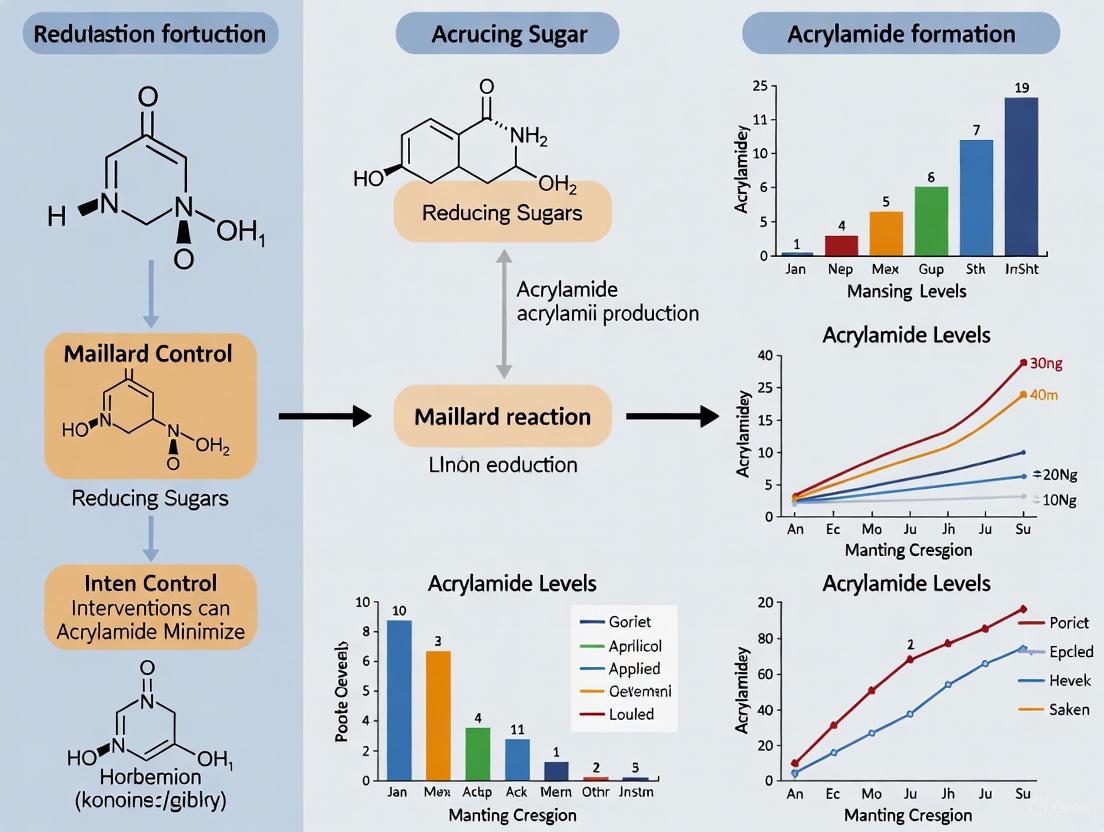
This article provides a comprehensive analysis of evidence-based strategies for reducing acrylamide, a Group 2A probable human carcinogen, in thermally processed foods.
Advanced Strategies for Acrylamide Mitigation in Processed Foods: From Molecular Mechanisms to Industrial Application
Abstract
This article provides a comprehensive analysis of evidence-based strategies for reducing acrylamide, a Group 2A probable human carcinogen, in thermally processed foods. Tailored for researchers, scientists, and drug development professionals, the content explores the molecular foundations of acrylamide formation via the Maillard reaction, details cutting-edge mitigation methodologies including enzymatic and novel technological interventions, addresses critical challenges in industrial implementation and sensory optimization, and evaluates analytical and comparative frameworks for validation. By synthesizing current research and regulatory landscapes, this review aims to bridge the gap between laboratory findings and scalable food safety applications, offering a scientific basis for future biomedical research and toxicity risk management.
Understanding Acrylamide: Formation Pathways, Toxicity, and Regulatory Landscape
Troubleshooting Common Experimental Challenges
FAQ: Why does my asparaginase treatment yield inconsistent acrylamide reduction despite controlled temperature and pH?
Inconsistent results with asparaginase treatment often stem from insufficient enzyme-substrate contact or the presence of inhibitory compounds in the complex food matrix. The enzyme must adequately access free asparagine before thermal processing to achieve effective mitigation [1]. Solutions include:
- Increase treatment time or enzyme concentration: Extend incubation time or optimize dosage to ensure complete precursor conversion [2].
- Improve substrate accessibility: For solid foods, consider injecting enzyme solutions or creating purees to enhance penetration [3].
- Matrix purification: Remove fats and proteins that may hinder enzyme activity using Carrez solution or acetonitrile extraction [4].
- Uniform application: Ensure homogeneous distribution of the enzyme solution throughout the food sample [1].
FAQ: My acrylamide quantification shows high variability between replicate samples. What analytical factors should I verify?
High variability often originates from incomplete extraction or matrix interference during analysis. Address this by:
- Optimize extraction parameters: Use acidified acetonitrile as your solvent, maintain a consistent solvent-to-sample ratio (typically 5:1 to 10:1), and ensure adequate homogenization [4].
- Implement defatting: For fatty matrices, include a defatting step with non-polar solvents before acrylamide extraction [4].
- Control thermal degradation: Avoid generating additional acrylamide during extraction by keeping temperatures below 60°C during solvent removal [4].
- Use internal standards: Incorporate deuterated acrylamide (acrylamide-d3) as an internal standard to correct for recovery variations [4].
FAQ: How can I effectively balance acrylamide reduction with maintaining desirable sensory properties in my product?
The Maillard reaction creates both acrylamide and desirable flavor compounds, creating a significant challenge [1]. Strategies include:
- Targeted precursor reduction: Use asparaginase to specifically convert asparagine to aspartic acid, which doesn't form acrylamide but still participates in flavor development [1] [2].
- Combination approaches: Employ multiple mild interventions (e.g., slight pH reduction, blanching, and lower-temperature vacuum processing) rather than a single aggressive method [2] [3].
- Antioxidant incorporation: Add natural antioxidants like rosemary extract or green tea polyphenols, which can inhibit acrylamide formation while potentially enhancing flavor complexity [2] [5].
- Optimize thermal input: Use just enough heat to achieve target sensory attributes, as acrylamide formation increases exponentially with temperature [5].
Experimental Protocols & Methodologies
Asparaginase Treatment Protocol for Cereal-Based Products
This protocol details the application of asparaginase to dough systems for acrylamide mitigation in baked goods, achieving 50-90% reduction when optimized [2] [3].
Materials Required:
- L-asparaginase enzyme (commercial food-grade)
- Wheat flour (or other cereal flour)
- Buffer solutions (pH 4-7)
- Incubator or water bath
- Mixing equipment
Procedure:
- Enzyme Solution Preparation: Prepare asparaginase solution in appropriate buffer. Optimal activity typically occurs between pH 4-7 and 30-50°C [3].
- Dough Formation: Incorporate enzyme solution during dough mixing. Ensure uniform distribution.
- Incubation: Incubate dough at 30-40°C for 30-60 minutes to allow asparagine conversion.
- Termination: Proceed directly to baking; enzyme activity ceases above 60°C.
- Control Preparation: Prepare identical dough without enzyme treatment for comparison.
Critical Parameters:
- Maintain dough temperature below 40°C during incubation to prevent premature Maillard reaction
- Optimal enzyme dosage typically ranges from 100-300 ASNU/kg flour [3]
- Adjust water content in formulation to account for added enzyme solution
LC-MS/MS Acrylamide Quantification Method
This method enables precise acrylamide detection at trace levels (μg/kg range) in complex food matrices [4].
Materials Required:
- Liquid chromatography system coupled to tandem mass spectrometer
- Acrylamide standard (and acrylamide-d3 internal standard)
- Extraction solvents (water, acetonitrile, acidified acetonitrile)
- Solid-phase extraction cartridges (if needed)
- Centrifuge and homogenization equipment
Procedure:
- Sample Preparation: Homogenize sample to fine powder. For high-fat matrices, defat with hexane prior to extraction.
- Extraction: Weigh 1g sample into centrifuge tube, add 5mL acidified acetonitrile and internal standard. Shake vigorously for 1 minute.
- Centrifugation: Centrifuge at 4000×g for 10 minutes. Collect supernatant.
- Clean-up (if needed): Pass extract through solid-phase extraction cartridge for complex matrices.
- Concentration: Evaporate extract to near-dryness under gentle nitrogen stream at <50°C.
- Reconstitution: Reconstitute in mobile phase for LC-MS/MS analysis.
- Chromatography: Use reverse-phase C18 column with water/methanol mobile phase.
- MS Detection: Employ multiple reaction monitoring (MRM) with transitions m/z 72→55 and 72→44 for acrylamide.
Quality Control:
- Include method blanks to monitor contamination
- Use matrix-matched calibration standards
- Maintain recovery rates of 85-115% with internal standard correction
Quantitative Data Comparison
Table 1: Efficacy Comparison of Acrylamide Mitigation Strategies in Cereal-Based Products
| Mitigation Strategy | Reduction Efficiency | Key Parameters | Impact on Sensory Properties |
|---|---|---|---|
| Asparaginase Treatment | 50-90% [2] [3] | pH 4-7, 30-50°C, 30-60min incubation | Minimal impact when optimized; maintains Maillard-derived flavors [1] |
| Glucose Oxidase | 30-70% [2] | pH 5-7, 30-45°C | May affect browning and sweetness due to glucose depletion [2] |
| Natural Antioxidants | 20-60% [2] [5] | 0.1-0.5% concentration in dough | Can introduce distinctive flavors; rosemary extract may impart herbal notes [2] |
| Vacuum Baking | 40-80% [2] [3] | 50-200 mbar, 15-30°C lower temperature | Alters texture and crust formation; may require process adjustment [3] |
| Fermentation | 30-70% [3] | 18-48 hours, LAB cultures | Develops characteristic sourdough flavors; affects volume and texture [3] |
Table 2: Typical Acrylamide Levels in Common Food Categories
| Food Category | Acrylamide Range (mcg/kg) | Primary Factors Influencing Formation |
|---|---|---|
| Bread Products | 10-1500 [2] | Flour type, fermentation time, baking temperature, surface browning |
| Biscuits & Cookies | 20-1000 [2] | Recipe (sugar type), thickness, baking temperature and time |
| Breakfast Cereals | 10-1000 [2] | Cereal type, extrusion parameters, toasting degree |
| Potato Products | 200-3700 (estimated from studies) | Potato variety, storage conditions, cutting style, frying temperature/time [6] |
| Coffee | Varies with roast degree | Bean type, roasting temperature and profile, degree of roast [5] |
Pathway Visualizations
Figure 1: Primary Acrylamide Formation Pathway
Figure 2: Enzymatic Acrylamide Mitigation Pathways
Research Reagent Solutions
Table 3: Essential Research Reagents for Acrylamide Mitigation Studies
| Reagent / Material | Function / Application | Key Considerations |
|---|---|---|
| L-Asparaginase | Converts asparagine to aspartic acid, removing key acrylamide precursor [1] [3] | Select food-grade versions; optimize pH (4-7) and temperature (30-50°C) for specific matrices |
| Glucose Oxidase | Reduces glucose content, limiting Maillard reaction substrates [2] | May require oxygen cofactor; affects product sweetness and browning potential |
| Natural Antioxidants (Rosemary extract, green tea polyphenols) | Inhibit Maillard reaction and scavenge free radicals [2] [5] | Can impart flavor/color; effective at 0.1-0.5% concentrations; consider synergistic effects |
| Lactic Acid Bacteria | Utilizes asparagine and reducing sugars during fermentation [3] | Select strains with high asparagine utilization; 18-48 hour fermentation typically required |
| LC-MS/MS System | Gold-standard acrylamide quantification at trace levels [4] | Requires internal standards (acrylamide-d3); method detection limits of 1-10 μg/kg achievable |
| Solid-Phase Extraction Cartridges | Matrix clean-up prior to analysis [4] | Improve method accuracy for complex matrices; select appropriate sorbent chemistry |
Acrylamide (ACR) is a chemical contaminant that forms naturally in carbohydrate-rich foods during high-temperature processing methods such as frying, roasting, and baking. It was first identified in food in 2002, drawing significant scientific and regulatory attention due to its concerning toxicological profile [5]. Acrylamide primarily forms via the Maillard reaction between the amino acid asparagine and reducing sugars like glucose and fructose at temperatures exceeding 120°C [5] [4]. Common dietary sources include fried potato products, baked cereals, bread, coffee, and various snack foods [5]. This technical resource addresses the key toxicological risks of acrylamide exposure—neurotoxicity, carcinogenicity, and reproductive toxicity—within the context of research aimed at reducing its formation in processed foods. It provides troubleshooting guidance and methodological support for scientists investigating these health impacts and developing mitigation strategies.
Frequently Asked Questions (FAQs) on Acrylamide Toxicity
Q1: What are the primary metabolic pathways of acrylamide in biological systems? Acrylamide is a small, water-soluble molecule that undergoes rapid absorption and distribution throughout the body [7] [8]. Its metabolism proceeds via two main competing pathways:
- Detoxification via Glutathione Conjugation: Acrylamide can conjugate with glutathione, a process catalyzed by glutathione S-transferases. This reaction forms N-acetyl-S-cysteine, which is further metabolized into mercapturic acids and excreted in urine. This pathway represents a primary detoxification route [4] [8].
- Bioactivation via Cytochrome P450: Alternatively, acrylamide can be transformed by the cytochrome P450 enzyme system (specifically CYP2E1) into a highly reactive epoxide metabolite, glycidamide (GA) [4] [8]. Glycidamide exhibits a greater ability to form adducts with DNA and proteins (such as hemoglobin) than its parent compound, which is a key mechanism underlying its genotoxic and carcinogenic potential [7] [8].
Q2: What is the molecular basis for acrylamide-induced neurotoxicity? Neurotoxicity is the most well-documented effect of acrylamide in humans [8]. The mechanisms are multifaceted, involving:
- Nerve Terminal Damage: ACR can form covalent adducts with nucleophilic cysteine residues on presynaptic proteins. This deactivates neurons and disrupts neurotransmitter release, leading to nerve terminal degeneration in both the central and peripheral nervous systems [4] [8].
- Oxidative Stress: The conjugation of ACR with glutathione depletes antioxidant reserves, leading to an accumulation of reactive oxygen species. This oxidative stress contributes significantly to neuronal damage [9] [4] [8].
- Inflammatory Response and Apoptosis: ACR exposure can trigger neuroinflammation, including the activation of microglial cells and astrocytes. It can also induce programmed cell death (apoptosis) in nerve cells [8]. Emerging research also suggests a role for gut-brain axis disruption in ACR neurotoxicity [8].
Q3: Why is acrylamide classified as a probable human carcinogen? The International Agency for Research on Cancer (IARC) classifies acrylamide as a Group 2A carcinogen, meaning it is "probably carcinogenic to humans" [8]. This classification is based on "sufficient evidence" of carcinogenicity in animal studies [7]. The primary mechanism involves its metabolite, glycidamide. Glycidamide can bind to purine bases in DNA, forming DNA adducts that can lead to mutations and initiate cancer development [7] [4] [8]. While epidemiological studies in humans have provided limited and sometimes inconsistent evidence, the robust animal data warrant this precautionary classification [7].
Q4: How does acrylamide affect reproductive health and development? Acrylamide has demonstrated adverse effects on reproduction and development in animal models:
- Reproductive Toxicity: It causes dominant lethal mutations, sperm-head abnormalities, and degeneration of testicular epithelial tissue [7].
- Developmental Toxicity: ACR can cross the placental barrier and reach the developing fetus. Studies indicate it can produce direct developmental and post-natal effects, with neurotoxicity observed in neonates even at exposure levels not overtly toxic to the mother [7].
Q5: What are the primary sources of human exposure to acrylamide? Exposure occurs through three main routes:
- Dietary Exposure: This is the most significant source for the general population. Foods like French fries, potato chips, bread, biscuits, breakfast cereals, and coffee are major contributors [5] [8].
- Occupational Exposure: Workers in industries involving the production of acrylamide polymers, grouting, paper manufacturing, and wastewater treatment may be exposed through inhalation or dermal contact [8].
- Environmental Exposure: Lower-level exposure can occur through drinking water (where polyacrylamide is used as a flocculant), cigarette smoke, and cosmetics [8].
Troubleshooting Common Experimental Challenges
Challenge 1: Inconsistent Acrylamide Formation in Food Models
- Problem: Difficulty in achieving reproducible levels of acrylamide in lab-scale food models, leading to highly variable experimental data.
- Solution:
- Standardize Precursor Levels: Select and characterize raw materials (e.g., potato variety, flour type) for consistent levels of asparagine and reducing sugars [5].
- Control Processing Parameters Precisely: Use ovens and fryers with accurate temperature control and monitoring. Key parameters include:
- Monitor Food pH: The pH of the food matrix affects acrylamide formation, which is favored in neutral to slightly alkaline conditions [5].
Challenge 2: Low Recovery Rates During Acrylamide Extraction and Analysis
- Problem: Poor extraction efficiency and low recovery of acrylamide from complex food matrices.
- Solution:
- Optimize Sample Preparation: Ensure thorough homogenization and consider a defatting step for fatty foods using non-polar solvents [4].
- Select an Appropriate Extraction Solvent: Acetonitrile, particularly acidified acetonitrile, has demonstrated high efficacy in extracting acrylamide while precipitating proteins and reducing co-extraction of non-polar interferents [4].
- Implement Purification Techniques: Use solid-phase extraction (SPE) or Carrez clarification to remove impurities and reduce matrix effects before instrumental analysis [4].
Challenge 3: Differentiating the Effects of Acrylamide vs. Glycidamide
- Problem: Difficulty in attributing observed toxicological effects specifically to acrylamide or its metabolite, glycidamide.
- Solution:
- Biomarker Analysis: Measure specific hemoglobin (Hb) adducts. Hb adducts of both acrylamide and glycidamide serve as reliable biomarkers of internal exposure and metabolic activation [4] [8].
- Use of Metabolic Inhibitors: In in vitro or in vivo models, employ selective inhibitors of the CYP2E1 enzyme (e.g., disulfiram) to block the conversion of ACR to GA. Comparing outcomes with and without inhibition can help delineate their respective roles [8].
- Direct Metabolite Quantification: Quantify urinary metabolites, including mercapturic acids of both ACR and GA, to assess metabolic pathway activity [4] [8].
Experimental Protocols for Toxicity Assessment
Protocol for In Vitro Assessment of Neurotoxicity
Objective: To evaluate acrylamide-induced cytotoxicity and oxidative stress in neuronal cell lines (e.g., SH-SY5Y or PC12 cells).
Methodology:
- Cell Culture: Maintain cells in appropriate medium and passage regularly.
- ACR Exposure: Seed cells in multi-well plates and treat with a range of ACR concentrations (typical range 0.1-5 mM) for 24-72 hours. Include a vehicle control (e.g., DMSO <0.1%) [8].
- Viability Assay: Perform an MTT or Alamar Blue assay to measure cell viability and determine the IC₅₀ value.
- Oxidative Stress Measurement:
- ROS Detection: Use a fluorescent probe like DCFH-DA to measure intracellular reactive oxygen species.
- Antioxidant Status: Measure the level of reduced glutathione (GSH) using a commercial kit.
- Apoptosis Assay: Detect apoptotic cells via Annexin V-FITC/PI staining followed by flow cytometry.
Troubleshooting Tip: If the cytotoxic effect is too rapid, consider using a shorter exposure time or lower concentration range. Ensure ACR solutions are prepared fresh in aqueous buffer to avoid degradation.
Protocol for Analyzing Acrylamide and its Metabolites
Objective: To quantify acrylamide levels in food samples and corresponding biomarkers in biological samples.
Methodology:
- Sample Preparation (Food):
- Homogenization: Freeze the food sample with liquid nitrogen and grind to a fine powder.
- Extraction: Weigh ~1 g of sample, add 10 mL of acidified acetonitrile, and vortex/shake vigorously for 20 minutes [4].
- Clean-up: Centrifuge, collect the supernatant, and pass it through a SPE cartridge (e.g., C18 or mixed-mode). Evaporate the eluent to dryness under a gentle nitrogen stream and reconstitute in a mobile phase for analysis [4].
- Instrumental Analysis:
- Technique: Liquid Chromatography coupled with Tandem Mass Spectrometry (LC-MS/MS) is the gold standard due to its high sensitivity and selectivity [4].
- Chromatography: Use a reverse-phase C18 column. A water/methanol or water/acetonitrile gradient is typical.
- Mass Spectrometry: Operate in Multiple Reaction Monitoring (MRM) mode. Key transitions for ACR are m/z 72 → 55 and 72 → 27 [4].
- Biomarker Analysis (Hb Adducts):
- Isolate hemoglobin from blood samples.
- Hydrolyze the adducts to release modified amino acids (e.g., for GA, it releases hydroxy-hydroxypropylvaline).
- Derivatize and analyze using GC-MS or LC-MS/MS [8].
Troubleshooting Tip: Matrix effects can suppress or enhance the MS signal. Use isotope-labeled internal standards (e.g., ¹³C₃-acrylamide) to correct for recovery losses and matrix effects.
Data Presentation: Toxicity Reference Tables
Table 1: Summary of Acrylamide's Toxicological Effects and Key Evidence
| Toxicity Endpoint | Key Mechanistic Insights | Experimental Evidence | Observed Effects in Models |
|---|---|---|---|
| Neurotoxicity | Covalent binding to presynaptic proteins; Oxidative stress; Neuroinflammation; Axonal degeneration [4] [8]. | Human occupational exposure; Animal models (rats, mice) at 5-50 mg/kg/day [8]. | Gait abnormalities, weakness, weight loss, nerve terminal damage, glial cell activation [8]. |
| Carcinogenicity | Metabolic activation to glycidamide (GA); Formation of DNA adducts leading to mutations [7] [4] [8]. | Animal studies (rodents) showing tumors at multiple sites [7]. | Classified as Group 2A ("probable human carcinogen") by IARC [8]. |
| Reproductive & Developmental Toxicity | Transplacental transfer; Direct toxicity to germinal and testicular cells [7]. | Animal studies (rodents) [7]. | Dominant lethal mutations, sperm abnormalities, testicular atrophy, developmental neurotoxicity in offspring [7]. |
Table 2: Acrylamide Content in Common Food Sources and Regulatory Benchmarks
| Food Category | Typical Acrylamide Levels (μg/kg) | EU Benchmark Levels (μg/kg) [5] [8] |
|---|---|---|
| French Fries (ready-to-eat) | Up to 1000+ [5] | 500 |
| Potato Crisps | Varies widely, can be high [5] | 750 |
| Bread & Bakery Products | Moderate [5] | Varies by product (e.g., 50-300 for soft bread) |
| Roasted Coffee | Up to 4500 [8] | 400 |
| Instant Coffee | - | 850 |
| Breakfast Cereals | Moderate [5] | Varies by cereal (e.g., 150-300) |
Signaling Pathways and Experimental Workflows
Acrylamide Metabolism and Neurotoxicity Pathways
Diagram 1: ACR Metabolic Pathways and Toxicity
Workflow for Food Acrylamide Analysis and Mitigation
Diagram 2: Food ACR Analysis Workflow
The Scientist's Toolkit: Key Research Reagents and Materials
Table 3: Essential Reagents and Materials for Acrylamide Research
| Item/Category | Specific Examples | Function/Application in Research |
|---|---|---|
| Analytical Standards | Acrylamide (¹²C₃), Isotope-Labeled Acrylamide (¹³C₃) | Quantification by LC-MS/MS; used as internal standard to ensure analytical accuracy and correct for matrix effects [4]. |
| Enzymes for Mitigation | L-Asparaginase (from Aspergillus or E. coli) | Pre-treatment of raw materials to hydrolyze the primary precursor, asparagine, thereby reducing acrylamide formation [5] [10]. |
| Cell Culture Models | SH-SY5Y, PC12, primary neuronal cultures | In vitro models for studying mechanisms of neurotoxicity, oxidative stress, and apoptosis [8]. |
| Metabolic Probes CYP2E1 Inhibitors (e.g., Disulfiram), Glutathione Depletors (e.g., BSO) | To investigate metabolic pathways; inhibiting CYP2E1 blocks formation of glycidamide, allowing differentiation of ACR vs. GA effects [8]. | |
| Antioxidants & Phytochemicals | Polyphenols (e.g., from tea, rosemary), Vitamins | Used in mitigation studies to counteract oxidative stress induced by ACR and potentially reduce its formation in food [9] [10]. |
| Chromatography Consumables | C18 SPE Cartridges, Reverse-Phase LC Columns (C18), HPLC-grade solvents (Acetonitrile, Methanol) | Sample clean-up and purification; essential components for the separation and analysis of acrylamide in complex food and biological matrices [4]. |
Dietary Exposure and Public Health Concerns for Vulnerable Populations
FREQUENTLY ASKED QUESTIONS (FAQs)
FAQ 1: What are the primary metabolic pathways of acrylamide in humans, and why is this significant for risk assessment?
Acrylamide is metabolized via two primary pathways. The major detoxification route involves direct conjugation with glutathione, facilitated by glutathione-S-transferases (GSTs), leading to the excretion of mercapturic acid derivatives. The primary activation pathway is CYP2E1 (cytochrome P450 2E1)-dependent epoxidation, which converts acrylamide into its genotoxic metabolite, glycidamide (GA). Glycidamide can form adducts with DNA and proteins, which is considered the main pathway responsible for the carcinogenic effects observed in animal studies. The balance between these activation and detoxification pathways, influenced by genetic polymorphisms in enzymes like CYP2E1, GSTs, and EPHX1, is a critical determinant of individual susceptibility and is essential for precise risk characterization [11].
FAQ 2: Beyond potatoes and cereals, what are some less obvious dietary sources of acrylamide that researchers should consider in exposure models?
While potato products, cereals, and coffee are well-known sources, certain cooking practices for other foods can contribute significantly to exposure. Studies, particularly in Asian populations, have identified vegetables cooked at high temperatures (e.g., stir-frying, roasting) as notable contributors. Additionally, canned black olives, prune juice, and certain teas have been reported to contain acrylamide. The trend of "snackification" means that foods consumed outside main meals, such as potato-based crackers, chips, and even some roasted vegetable snacks, can have high concentrations and contribute nearly as much to total exposure as main meals, highlighting the need for comprehensive dietary surveys [12] [13].
FAQ 3: What is the biochemical rationale for using asparaginase as a mitigation strategy, and what are its limitations?
Asparaginase is an enzyme that catalyzes the hydrolysis of the amino acid asparagine into aspartic acid and ammonia. Since free asparagine is the primary precursor for acrylamide formation in the Maillard reaction, reducing its availability in the raw food matrix directly limits the potential for acrylamide generation during subsequent thermal processing. This intervention targets the root cause of the problem in starchy foods. Its limitations include potential cost implications, the need for optimization for different food matrices to ensure effectiveness, and the necessity to ensure that its application does not adversely affect the final product's taste, texture, or other organoleptic properties [14] [15].
TROUBLESHOOTING GUIDES
Issue 1: Inconsistent Acrylamide Measurement in Bakery Product Replicates
Problem: High variability in acrylamide levels when testing multiple batches of the same bakery product formula.
Solution: Investigate and control key variables in the experimental protocol.
- Potential Cause 1: Inconsistent fermentation conditions.
- Corrective Action: Strictly control yeast percentage, fermentation temperature, and time. Studies show that extending fermentation time to 10-12 hours can significantly reduce acrylamide in the final product by allowing yeast to consume more free sugars and asparagine [14].
- Potential Cause 2: Fluctuating oven temperature and hot spots.
- Corrective Action: Calibrate the oven thermometer and use data loggers to map the temperature profile. Optimize baking to the lowest possible temperature and time that ensures product safety and quality. For instance, reducing biscuit baking temperature from 200°C to 180°C can cut acrylamide formation by over 50% [14].
- Potential Cause 3: Variable raw material composition.
Issue 2: Failure to Reduce Acrylamide in Fried Potato Prototypes
Problem: Mitigation strategies applied to potato products (e.g., fries, chips) are not yielding the expected reduction in acrylamide.
Solution: Focus on pre-processing steps and cooking parameters.
- Potential Cause 1: Incorrect potato storage.
- Potential Cause 2: Inadequate pre-treatment.
- Potential Cause 3: Overly aggressive frying.
- Corrective Action: Aim for a final product color of golden yellow rather than dark brown. Avoid burning. The end-point color is a direct visual indicator of the extent of the Maillard reaction and acrylamide formation [18].
DATA TABLES
Table 1: Benchmark Levels and Reported Acrylamide Concentrations in Select Cereal-Based Foods
This table compiles regulatory benchmarks and occurrence data to help researchers set target levels for their mitigation studies.
| Food Category | EU Benchmark Level (μg/kg) [14] | Mean Reported Level (μg/kg) [14] | 95th Percentile Reported Level (μg/kg) [14] |
|---|---|---|---|
| Soft Bread (Wheat) | 50 | 38 | 120 |
| Breakfast Cereals (Maize, Oats) | 150 | 102 | 403 |
| Biscuits and Wafers | 350 | 201 | 810 |
| Crackers | 400 | 231 | 590 |
| Gingerbread | 800 | 407 | 1600 |
| Baby Foods (Processed Cereal) | 40 | 89 | 60 |
Table 2: Estimated Dietary Acrylamide Exposure in Different Populations
This table summarizes exposure assessments from various regions, which is crucial for understanding public health impact and prioritizing research.
| Population / Country | Mean Exposure (μg/kg bw/day) | High Consumer Exposure (95th Percentile, μg/kg bw/day) | Main Dietary Contributors |
|---|---|---|---|
| Singapore [13] | 0.165 | 0.392 | Potato crackers/chips, vegetables cooked at high temps |
| United States [12] | 0.36 - 0.44 | - | French fries, breakfast cereals, cookies, potato chips |
| Europe (EFSA) [13] | 0.4 - 1.9 | 0.6 - 3.4 | Fried potatoes, coffee, bakery products |
| China [13] | 0.175 | - | Potato samples, cooked vegetables |
| Hong Kong [13] | 0.213 | 0.538 | Snack foods, cooked vegetables |
EXPERIMENTAL PROTOCOLS
Protocol 1: Determining the Impact of Fermentation Time on Acrylamide in Wheat Bread
1. Objective: To quantify the reduction of acrylamide in wheat bread as a function of yeast fermentation time.
2. Materials:
- Standard bread-making ingredients: wheat flour, water, yeast, salt.
- Laboratory-scale bakery equipment (mixer, proofer, oven).
- Liquid Chromatography with Tandem Mass Spectrometry (LC-MS/MS) system for acrylamide analysis [13].
3. Methodology:
- Step 1: Dough Preparation. Prepare a standardized dough formula. Divide into equal portions.
- Step 2: Controlled Fermentation. Subject each dough portion to a fixed proofing temperature (e.g., 30°C) but vary the fermentation time (e.g., 2, 4, 6, 8, 10, and 12 hours).
- Step 3: Baking. Bake all samples under identical conditions (temperature and time) until a standardized, light golden-brown color is achieved.
- Step 4: Sample Analysis. Homogenize the baked bread crust and crumb. Extract and analyze acrylamide content using a validated LC-MS/MS method. The use of an internal standard like acrylamide-2,3,3-d3 is recommended for quantification accuracy [13].
4. Expected Outcome: A significant, non-linear decrease in acrylamide content is expected with increased fermentation time, as observed in previous studies where extension to 10-12 hours showed a strong mitigating effect [14].
Protocol 2: Evaluating the Efficacy of Asparaginase in a Cookie Model System
1. Objective: To assess the reduction of acrylamide in cookies treated with the enzyme asparaginase prior to baking.
2. Materials:
- Cookie ingredients: wheat flour, sugar, fat, water.
- Food-grade asparaginase preparation.
- Dough sheeter, cookie cutters, laboratory oven.
- LC-MS/MS system for acrylamide analysis.
3. Methodology:
- Step 1: Dough Preparation & Treatment. Prepare a uniform cookie dough. Divide into two batches.
- Control Batch: No enzyme added.
- Treated Batch: Incorporate asparaginase according to the manufacturer's specifications. Allow sufficient incubation time and temperature for the enzyme to react with free asparagine in the dough.
- Step 2: Baking. Bake both batches under identical conditions (e.g., 180°C vs 200°C) to a similar light color.
- Step 3: Analysis. Measure and compare the acrylamide levels in the control and treated cookies.
4. Expected Outcome: The asparaginase-treated batch is expected to show a significant reduction (e.g., >50%) in acrylamide compared to the control, confirming the removal of the key precursor, as demonstrated in model systems [15].
DIAGRAMS
Acrylamide Metabolism Pathways
Acrylamide Formation in Food
THE SCIENTIST'S TOOLKIT
Key Research Reagent Solutions
| Reagent / Material | Function in Acrylamide Research |
|---|---|
| Asparaginase | Enzyme used to hydrolyze free asparagine in food matrices, reducing the primary precursor for acrylamide formation [14]. |
| Deuterated Internal Standards (e.g., Acrylamide-2,3,3-d3) | Used in LC-MS/MS analysis for highly accurate and precise quantification of acrylamide, correcting for matrix effects and recovery losses [13]. |
| Glutathione (GSH) | Key tripeptide for studying the detoxification pathway of both acrylamide and glycidamide via conjugation, catalyzed by Glutathione-S-Transferases (GSTs) [11]. |
| Specific CYP2E1 Inhibitors (e.g., diethyldithiocarbamate) | Pharmacological tools used in in vitro and in vivo models to inhibit the metabolic activation of acrylamide to glycidamide, helping to elucidate its role in toxicity [11]. |
| Antibodies for GA-DNA/Protein Adducts | Essential reagents for immunoassays or immunohistochemistry to detect and quantify the formation of glycidamide-derived adducts, biomarkers of genotoxic exposure [11]. |
Troubleshooting Guide: Acrylamide Analysis and Mitigation
FAQ 1: My food product samples consistently exceed acrylamide benchmarks despite process adjustments. What are the key precursors I should be analyzing in my raw materials?
The primary precursors for acrylamide formation are free asparagine (an amino acid) and reducing sugars (e.g., glucose, fructose) [17]. Your experimental protocol should prioritize the quantification of these compounds in raw ingredients.
Detailed Methodology for Precursor Analysis:
- Sampling: Obtain a representative sample of your raw material (e.g., potato flour, wheat flour). For potatoes, note the cultivar and storage conditions, as these significantly impact sugar levels [20].
- Extraction: Use a solvent like water or methanol-water solution to extract free amino acids and sugars from the homogenized sample.
- Analysis: Employ High-Performance Liquid Chromatography (HPLC) coupled with a Mass Spectrometer (MS) or a UV detector. Specific settings will depend on the target analytes, but the method should be validated for quantifying asparagine and reducing sugars.
- Data Interpretation: Correlate high precursor levels with acrylamide concentrations in the final cooked product. Research indicates that the use of potato varieties with low reducing sugar content or the partial replacement of wheat flour with rice flour are effective mitigation strategies rooted in reducing these precursors [20].
Research Reagent Solutions:
Research Reagent Function in Experiment L-Asparagine Standard Serves as a reference standard for calibrating the HPLC/MS instrument to quantify asparagine concentration in samples. Reducing Sugar Standards A mix of glucose, fructose, and maltose used to calibrate the analytical instrument for accurate sugar quantification. Asparaginase Enzyme A processing aid that converts the amino acid asparagine into aspartic acid, thereby preventing it from forming acrylamide during heating [21]. Solvents (e.g., Methanol, Water) Used for the extraction of free amino acids and reducing sugars from solid food matrices during sample preparation.
FAQ 2: When validating a new mitigation technique like asparaginase application, what is the critical experimental workflow to ensure it does not adversely affect product quality?
A rigorous validation workflow must assess both acrylamide reduction and the final product's sensory properties, as mitigation should not adversely impact consumer acceptance [21].
- Experimental Protocol for Mitigation Validation:
- Sample Preparation: Divide your food product batter or dough into two batches: a control group and a test group where asparaginase is applied according to the manufacturer's specifications (e.g., dosage, incubation time/temperature).
- Processing: Cook both batches using your standard process (e.g., frying, baking) under strictly controlled time-temperature conditions.
- Analysis:
- Acrylamide Quantification: Use GC-MS or LC-MS/MS to measure acrylamide levels in both the control and test samples. Calculate the percentage reduction.
- Quality Assessment: Conduct a paired comparison test using a trained sensory panel. Evaluate key attributes like color (using a colorimeter), texture, taste, and aroma [21].
- Data Interpretation: The mitigation is successful if a significant reduction in acrylamide is achieved (ideally below the relevant benchmark level) with no statistically significant negative impact on the sensory profile.
The following workflow diagrams the logical relationship between regulatory goals, mitigation strategies, and necessary validation steps.
Acrylamide Formation and Regulatory Context
A clear understanding of the acrylamide formation pathway is fundamental for researchers developing mitigation strategies. The following diagram details the primary chemical pathway.
FAQ 3: What are the current benchmark levels for acrylamide in major food categories, and how is the ALARA principle applied in a regulatory context?
There are currently no internationally mandated maximum limits for acrylamide in food [20]. Instead, regulatory bodies like the Codex Alimentarius Commission and the European Union have established benchmark levels to guide the implementation of the ALARA (As Low As Reasonably Achievable) principle [20] [21]. This means manufacturers are expected to reduce acrylamide levels as much as possible without adversely affecting the food supply, product safety, or consumer acceptance.
The following table summarizes the quantitative regulatory context. Note that these are benchmarks for mitigation measures, not strict legal limits.
| Food Category | Regulatory Context & Key Levels |
|---|---|
| French Fries & Potato Crisps | The EU sets benchmark levels. Mitigation includes selecting potato cultivars with low reducing sugars and controlling storage temperatures to prevent "cold sweetening" [20] [21]. |
| Bread, Biscuits, Cereals | The EU sets benchmark levels. The Code of Practice recommends replacing part of wheat flour with rice flour and avoiding reducing sugars and ammonium-based raising agents in recipes [20]. |
| Coffee & Coffee Substitutes | The EU sets benchmark levels. Acrylamide forms during roasting, with levels peaking early and declining in longer roasts; instant coffee may contain higher levels [19] [21]. |
| Baby Foods | The EU sets stringent benchmark levels. The ALARA principle is strictly applied due to infants' higher vulnerability and lower body weight [21] [22]. |
FAQ 4: Our color analysis shows a strong correlation between surface browning and acrylamide concentration. What is a reliable quantitative method to establish this for a new product?
The Maillard Reaction is responsible for both desirable browning/flavor and the formation of acrylamide [17]. You can establish a quantitative model to predict acrylamide levels based on color.
- Experimental Protocol for Color-Acrylamide Correlation:
- Sample Preparation: Create a series of samples (e.g., potato chips, toast) cooked to varying degrees of browning, from light to dark.
- Color Measurement: Use a colorimeter to measure the Lab* color space for each sample. The L* value (lightness) is often the most critical parameter, with a lower L* value indicating darker coloring.
- Acrylamide Quantification: Using the same samples, perform precise acrylamide quantification via LC-MS/MS (Liquid Chromatography with Tandem Mass Spectrometry), which is considered the gold standard due to its high sensitivity and specificity.
- Statistical Analysis: Perform a linear or non-linear regression analysis to establish a correlation between the colorimeter readings (e.g., L* value) and the chemically analyzed acrylamide concentration. This model can then be used for rapid, non-destructive screening of future batches.
Intervention Strategies: From Agricultural Selection to Processing Innovations
Frequently Asked Questions (FAQs)
FAQ 1: Why is selecting low-asparagine potato cultivars a primary strategy for reducing acrylamide in processed foods?
The formation of acrylamide in high-temperature processed foods primarily occurs through the Maillard reaction, which involves the amino acid asparagine and reducing sugars. In potato tubers, asparagine is the most abundant free amino acid, sometimes constituting over 50% of the total free amino acid pool. This makes it the major precursor for acrylamide formation during frying, baking, or roasting. By selecting cultivars that inherently accumulate lower levels of asparagine, the availability of this key precursor is reduced at the source, thereby limiting the potential for acrylamide formation during subsequent processing stages. This is considered a foundational and highly effective mitigation strategy [6] [23].
FAQ 2: Besides precursor content, what other raw material factors should we consider when selecting potatoes for low-acrylamide potential?
While low asparagine is crucial, a comprehensive selection criteria should include:
- Reducing Sugar Content: The concentration of reducing sugars (e.g., glucose, fructose) is equally critical, as it is the second reactant in acrylamide formation. Cultivars with low levels of both asparagine and reducing sugars are ideal.
- Cold Storage Response: Potatoes stored at low temperatures (below 6-8°C) can undergo "cold-induced sweetening," where starch breaks down into sugars, drastically increasing reducing sugar content. Selecting cultivars that are less susceptible to cold-induced sweetening is vital for maintaining low-acrylamide potential post-storage [24].
- Dry Matter/Solid Content: Cultivars with higher solid content tend to absorb less oil during frying and may have different heat transfer properties, which can indirectly influence acrylamide formation.
FAQ 3: What are the key methodological steps for screening and validating new potato cultivars for low acrylamide potential?
A robust experimental protocol involves a multi-step process, from raw material analysis to finished product testing, as visualized below.
FAQ 4: How do genetic approaches like CRISPR contribute to the development of low-asparagine cultivars?
Conventional breeding can be time-consuming and may not always combine low precursors with other desirable agronomic traits. Genetic engineering offers a more targeted approach. CRISPR-Cas9 technology enables precise gene editing to knock out specific genes responsible for metabolic pathways. For instance, research has shown that inactivating a single gene responsible for sugar accumulation during cold storage can significantly reduce cold-induced sweetening, thereby maintaining low reducing sugar levels. Similarly, genes in the asparagine biosynthesis pathway can be targeted to lower the free asparagine content in the tuber, creating next-generation cultivars with intrinsically low acrylamide-forming potential [6] [25].
FAQ 5: Are there any trade-offs in sensory or quality attributes when using low-asparagine/low-sugar cultivars?
This is a critical consideration for industry adoption. Cultivars with very low sugar levels may produce products with a lighter color because the Maillard reaction is also responsible for the desirable golden-brown color and roasted flavors. While this is positive from an acrylamide perspective, it may require adjustments to meet consumer expectations for color. Furthermore, flavor profiles might be altered. The key is to find a cultivar that achieves a balance – providing sufficiently low precursors to meet regulatory and safety benchmarks while still delivering acceptable sensory characteristics through optimized processing conditions [25].
Troubleshooting Guides
Problem: High Acrylamide Despite Using a Promising Low-Precursor Cultivar
| Symptom | Possible Cause | Recommended Solution |
|---|---|---|
| High acrylamide in final product. | Potatoes were stored at incorrect temperatures, leading to cold-induced sweetening. | Implement strict cold chain management. Store potatoes at recommended temperatures (typically above 8°C) and avoid prolonged cold storage. Monitor sugar levels upon receipt and before processing [24]. |
| Inconsistent acrylamide levels between batches of the same cultivar. | High natural variability in raw material. Inconsistent growing conditions, soil fertility, or harvest maturity. | Work with growers to ensure consistent agricultural practices. Implement robust incoming raw material inspection and sorting. Blend raw material from different lots to average out precursor levels. |
| Cultivar performs well in lab tests but not at industrial scale. | Industrial processing parameters (e.g., frying temperature/time, equipment type) are not optimized for the new cultivar. | Re-calibrate and optimize processing conditions (temperature, time) specifically for the new cultivar. Pilot-scale trials are essential before full-scale implementation. |
Problem: Challenges in Precursor Analysis and Cultivar Screening
| Symptom | Possible Cause | Recommended Solution |
|---|---|---|
| Inaccurate quantification of asparagine or reducing sugars. | Sample preparation errors or interference from other compounds in the complex food matrix. | Use internal standards during HPLC analysis. Validate the analytical method for potato matrices. Ensure proper extraction and purification of analytes prior to injection. |
| Poor correlation between precursor levels in raw tubers and acrylamide in finished product. | Sampling method is not representative, or the processing conditions are not standardized during screening. | Use a standardized, controlled cooking protocol (e.g., fixed time/temperature) for all cultivar samples. Ensure a homogeneous and representative sample of the tuber is taken for both precursor and acrylamide analysis. |
Quantitative Data on Acrylamide in Foods
The following table summarizes the acrylamide levels found in various food categories, highlighting the high levels in potato products and the critical need for mitigation strategies like cultivar selection.
Table 1: Acrylamide Content in Various Food Products [24]
| Food Category | Specific Food Product | Acrylamide Content (μg/kg) |
|---|---|---|
| Potato Chips | Various Brands | Up to 3,000 |
| Potato Chips | Brand A (BBQ Flavor) | >1,000 |
| French Fries | Fast Food Chain | 890 |
| Biscuits & Crackers | Fish-shaped Crackers | 2,100 |
| Breakfast Cereals | Wheat Bran Cereal | 460 |
| Root Vegetable Chips | Terra Taro Chips | 470 |
| Banana Chips | Lightly Sweetened | 190 |
| Rice Crackers | Cheese Flavor | 39 |
The Scientist's Toolkit: Key Research Reagents & Materials
Table 2: Essential Reagents and Kits for Low-Asparagine Cultivar Research
| Research Reagent / Material | Function in Experimental Protocol |
|---|---|
| L-Asparagine Standard | Used as a calibration standard in High-Performance Liquid Chromatography (HPLC) for the quantitative analysis of free asparagine content in potato tuber samples [23]. |
| D-Glucose/D-Fructose Standard | Serves as a calibration standard for the enzymatic or HPLC analysis of reducing sugars, which are co-precursors in acrylamide formation [23]. |
| Acrylamide Analytical Standard | Essential for creating a calibration curve using Liquid Chromatography-Tandem Mass Spectrometry (LC-MS/MS) to accurately quantify trace levels of acrylamide in processed food samples [24]. |
| Enzymatic Assay Kits (e.g., for sugars) | Provide a ready-to-use, validated method for the colorimetric or fluorometric determination of reducing sugars (glucose, fructose) in complex plant extracts, offering an alternative to HPLC. |
| Asparaginase Enzyme | Used in intervention studies as a comparative control. It reduces acrylamide by pre-hydrolyzing asparagine in food formulations before heating, serving as a benchmark against the efficacy of low-asparagine cultivars [23] [25]. |
Acrylamide (AA, C₃H₅NO) is a process contaminant that forms naturally in carbohydrate-rich foods during high-temperature processing (e.g., frying, baking, roasting) above 120°C [16] [26]. It is classified as a Group 2A probable human carcinogen by the International Agency for Research on Cancer (IARC) due to concerns about its neurotoxicity, carcinogenicity, and reproductive toxicity [16] [26]. Acrylamide primarily forms via the Maillard reaction between the amino acid asparagine and reducing sugars (e.g., glucose, fructose) [16] [27].
Pre-processing treatments are crucial first-line strategies for reducing acrylamide precursors in raw materials before thermal processing. Soaking, blanching, and fermentation directly target the key reactants—asparagine and reducing sugars—offering effective mitigation without significantly altering final product quality. These methods are particularly effective for plant-based foods like potatoes and cereals, which are major dietary sources of acrylamide [26] [27]. This guide provides technical protocols and troubleshooting for researchers implementing these strategies.
Fundamental Mechanisms of Acrylamide Formation
The Maillard Reaction Pathway
The primary pathway for acrylamide formation begins with a condensation reaction between the amino group of free asparagine and the carbonyl group of a reducing sugar, forming a Schiff base. This unstable compound undergoes decarboxylation to form a decarboxylated Schiff base, which then decomposes to yield acrylamide [16]. The reaction is favored at temperatures above 120°C and in low-moisture conditions [27].
Key Factors Influencing Acrylamide Formation
Understanding these factors is essential for developing effective mitigation strategies:
- Precursor Concentration: Foods with high levels of free asparagine and reducing sugars (e.g., potatoes, cereals) are particularly prone to acrylamide formation [16] [27].
- Processing Temperature and Time: Acrylamide formation increases with temperature up to a point, with maximum formation typically occurring between 160°C and 180°C. Longer heating times also increase yields [28] [16].
- pH: The Maillard reaction proceeds more readily under alkaline conditions. Lowering pH can significantly inhibit acrylamide formation [29].
- Water Activity: Low-moisture environments favor acrylamide formation, while boiling (100°C) does not produce significant amounts [16] [26].
- Surface Area to Volume Ratio: Foods with larger surface areas (e.g., thin chips) form more acrylamide due to greater exposure to heat [16] [29].
Experimental Protocols for Pre-Processing Treatments
Soaking and Blanching Protocols
Objective: To reduce water-soluble acrylamide precursors (asparagine and reducing sugars) from potato tissues before frying or baking.
Materials:
- Fresh potato tubers
- Distilled water
- Thermostatic water bath
- Food slicer (for consistent thickness)
- Refractometer (for measuring sugar content)
- Containers for soaking
Method A: Soaking Protocol
- Sample Preparation: Peel and slice potatoes to uniform thickness (e.g., 1-2 cm thick sticks or 2-3 mm slices for chips).
- Soaking Treatment: Immerse slices in distilled water at ambient temperature (approx. 20°C). Use a sample-to-water ratio of at least 1:5.
- Duration: Soak for 30-60 minutes, with occasional gentle agitation.
- Rinsing and Drying: Remove slices, rinse briefly with distilled water, and pat dry with paper towels to remove surface moisture.
- Control: Process a separate batch of untreated slices alongside the treated samples.
Method B: Blanching Protocol
- Sample Preparation: Prepare potatoes as in Step 1 of Method A.
- Blanching Treatment: Immerse slices in hot distilled water maintained at 70-85°C for 3-10 minutes in a thermostatic water bath.
- Cooling: Immediately transfer blanched slices to an ice-water bath to stop the cooking process.
- Drying: Drain and thoroughly pat dry before further processing.
- Control: Process a separate batch of untreated slices alongside the treated samples.
Expected Efficacy: Soaking and blanching can reduce acrylamide formation in subsequent frying by 20-40% by leaching out precursors [26]. Blanching is typically more effective than soaking alone.
Fermentation Protocols
Objective: To utilize microbial metabolism to degrade acrylamide precursors, primarily asparagine, in cereal and potato-based matrices.
Materials:
- Cereal flour (e.g., wheat, rye) or potato puree
- Lactic acid bacteria (LAB) strains (e.g., Lactobacillus spp., Pediococcus pentosaceus) or yeast (Saccharomyces cerevisiae)
- Microbial incubator
- Fermentation vessels
- pH meter
Method C: Lactic Acid Bacteria (LAB) Fermentation for Dough
- Starter Culture Preparation: Inoculate LAB strains into MRS broth and incubate at 37°C for 18-24 hours to achieve active growth.
- Dough Formulation: Mix cereal flour with water (hydration levels depending on flour type) and inoculate with 5-10% (v/w) active LAB culture.
- Fermentation: Incubate dough at 30-37°C for 12-24 hours. Monitor pH drop to 4.0-4.5.
- Control: Prepare a non-fermented dough or a dough fermented with commercial baker's yeast only.
Method D: Yeast-LAB Synergistic Fermentation (Sourdough)
- Sourdough Starter: Maintain a stable culture containing both LAB and wild yeast.
- Dough Inoculation: Mix cereal flour and water, and inoculate with 20% (w/w) mature sourdough starter.
- Fermentation: Incubate at 25-30°C for 12-20 hours until the dough is well-leavened and has a distinct acidic aroma.
- Control: Prepare a control dough using only commercial baker's yeast and no extended fermentation.
Expected Efficacy: LAB fermentation can reduce acrylamide in final products by 30-50%, while sourdough fermentation with LAB-yeast synergy has demonstrated reductions of up to 79.6% in rye crispbread [27].
Table 1: Comparative Efficacy of Pre-Processing Treatments on Acrylamide Reduction
| Treatment Method | Food Matrix | Key Process Parameters | Reduction in Acrylamide | Key Mechanism of Action |
|---|---|---|---|---|
| Soaking | Potato slices | 30-60 min, 20°C, Water | 20-40% [26] | Leaching of reducing sugars and asparagine |
| Blanching | Potato slices | 70-85°C, 3-10 min, Water | 20-40% [26] | Enhanced leaching and enzyme inactivation |
| LAB Fermentation | Wheat/Rye dough | 30-37°C, 12-24 hrs, pH 4.0-4.5 | 30-50% [28] [27] | Microbial consumption of asparagine; pH reduction inhibiting Maillard reaction |
| Sourdough Fermentation | Whole wheat bread | 25-30°C, 12-20 hrs, 20% starter | Up to 79.6% [27] | Synergistic action of yeast and LAB on precursor depletion |
| Use of Lemon/Rosemary Juice | Whole wheat bread | Added during dough mixing, extended fermentation | Significant reduction [28] | Acidification (lowering pH) and antioxidant activity |
Table 2: Impact of Fermentation Microorganisms on Acrylamide Mitigation
| Microorganism Type | Example Strains | Primary Mode of Action | Optimal Fermentation Time | Compatible Food Matrices |
|---|---|---|---|---|
| Lactic Acid Bacteria (LAB) | Lactobacillus spp., Pediococcus pentosaceus [28] [27] | Lowers pH, consumes asparagine and sugars [27] | 12-24 hours [27] | Bread, crackers, vegetable-based products [27] |
| Yeast | Saccharomyces cerevisiae | Consumes asparagine and sugars for biomass production | 1-2 hours (standard baking) | Bread, baked goods |
| Probiotic Cultures | Lactobacillus plantarum, Bifidobacterium spp. [27] | Degrades asparagine in plant-based substrates [27] | 12-24 hours [27] | Soy drinks, cereal-based functional foods [27] |
Troubleshooting Guides and FAQs
Frequently Asked Questions
Q1: Why did my blanched potato samples result in higher acrylamide levels than untreated controls? A1: This can occur if the blanching treatment was too severe (excessive time/temperature), causing gelatinization of starch. Gelatinized starch more readily releases sugars that participate in the Maillard reaction during subsequent frying. Ensure blanching parameters (70-85°C for 3-10 min) are strictly controlled and that samples are thoroughly dried post-treatment, as surface moisture can lower oil temperature and extend frying time, paradoxically increasing acrylamide formation [26].
Q2: Our fermented dough shows a significant pH drop, but acrylamide reduction is minimal. What is the cause? A2: While pH reduction is important, it is not the sole mechanism. The primary mechanism for acrylamide reduction in fermentation is the depletion of free asparagine by microbial metabolism. This issue may arise from:
- Strain Selection: The selected LAB strain may have low asparaginase activity. Screen for strains known to efficiently metabolize asparagine [27].
- Fermentation Time: The duration might be insufficient for significant precursor depletion. Extend fermentation time and monitor asparagine levels directly via HPLC if possible [27].
- Nutrient Availability: Other readily available nitrogen sources in the dough might be preferred by the microbes, sparing asparagine.
Q3: How can we accurately measure the success of a soaking pre-treatment in the lab? A3: Beyond measuring final acrylamide after cooking, you can directly quantify the treatment's effectiveness by:
- Measuring Leachate: Analyze the soaking water for glucose and fructose content using a refractometer or HPLC.
- Analyzing Treated Tissue: Measure the residual sugar and free asparagine content in the raw, treated potato slices compared to untreated controls. A significant decrease in these precursors correlates with reduced acrylamide formation potential [29].
Q4: Are there any negative sensory impacts of these pre-treatments, and how can they be managed? A4: Yes, potential impacts must be managed:
- Soaking/Blanching: Can lead to loss of flavor compounds, vitamins, and minerals. It can also affect texture, making potatoes less crisp. Using mild conditions and optimizing time/temperature can minimize this.
- Fermentation: Produces acidic compounds (lactic, acetic acid) which impart a sour taste. This is desirable in products like sourdough but may be undesirable in others. The level of sourness can be controlled by the fermentation time, temperature, and starter culture composition [27].
Troubleshooting Common Experimental Problems
- Problem: Inconsistent acrylamide reduction in replicate fermentation experiments.
- Solution: Standardize the vitality and cell count of the starter culture. Use a controlled incubator to maintain a stable, precise temperature throughout fermentation.
- Problem: Soaked potato slices absorbing too much oil during frying.
- Solution: Ensure slices are thoroughly dried after soaking. Surface moisture causes violent steam release during frying, which draws oil into the product. Use paper towels and/or air drying.
- Problem: Fermentation process is too slow.
- Solution: Check the viability of the starter culture. Ensure the fermentation temperature is within the optimal range for the specific microorganism. Provide necessary nutrients if the matrix is deficient.
The Scientist's Toolkit: Research Reagent Solutions
Table 3: Essential Reagents and Materials for Acrylamide Mitigation Research
| Reagent/Material | Function/Application | Example Use Case | Technical Notes |
|---|---|---|---|
| Lactic Acid Bacteria (LAB) Strains | Microbial consumption of asparagine; acidification of matrix [27] | Fermentation of dough for bread/crackers | Select strains with high asparaginase activity (e.g., Lactobacillus spp., Pediococcus pentosaceus) [28] [27] |
| Sourdough Starter Cultures | Synergistic reduction of precursors via yeast-LAB consortium [27] | Production of low-acrylamide rye or whole wheat bread | A 20% inoculation rate with extended fermentation (12-20 hrs) shows high efficacy [27] |
| Asparaginase Enzymes | Direct hydrolysis of asparagine to aspartic acid, preventing its reaction [28] | Treatment of dough or potato slurry before processing | Commercial preparations (e.g., Acrylerase) are available; effective in coffee and beverages [28] |
| Natural Acidulants (Citric Acid, Lemon Juice, Vinegar) | Lowering system pH to inhibit Maillard reaction [28] [29] | Adding to blanching water or dough formulation | A small pH reduction can have a significant effect; impacts flavor profile [29] |
| Phytic Acid & Calcium Salts | Chelation and independent reduction mechanisms in potato models [29] | Addition to blanching or soaking solutions | Studies show effects are independent of, but can complement, pH reduction [29] |
| Plant Extracts (Rosemary, Ginger) | Antioxidant activity; potential mitigation of acrylamide formation [28] | Incorporation into coatings or directly into formulations | Shown to reduce acrylamide in fried potato models without affecting sensory properties [28] |
Workflow and Mechanism Visualization
Acrylamide is a food-borne toxicant classified as a probable human carcinogen and neurotoxin, forming primarily in starch-rich foods during high-temperature processing via the Maillard reaction between the amino acid L-asparagine and reducing sugars [30] [31]. Enzymatic mitigation presents a targeted approach to reduce acrylamide formation by degrading its precursors before heat treatment occurs. The two primary enzymes employed are L-asparaginase (EC 3.5.1.1) and glucose oxidase (EC 1.1.3.4). L-Asparaginase catalyzes the hydrolysis of L-asparagine to L-aspartic acid and ammonia, thereby depleting the primary amino acid precursor required for acrylamide formation [32] [2]. Glucose oxidase mitigates acrylamide by reducing the availability of reducing sugars, converting β-D-glucose into D-glucono-δ-lactone and hydrogen peroxide [2]. These enzymes offer industry-compatible solutions with minimal impact on the sensory and rheological properties of the final food products, making them particularly suitable for applications in products like potato chips, French fries, bread, and biscuits [30] [2].
Mechanisms of Action
L-Asparaginase Mechanism
L-Asparaginase suppresses acrylamide formation by specifically targeting its key precursor, free L-asparagine. The enzyme catalyzes the hydrolytic deamination of the amide group on the side chain of asparagine, converting it into L-aspartic acid and ammonia [32] [2]. The resulting aspartic acid cannot participate in the Maillard reaction to form acrylamide, as it lacks the necessary reactive amide group. Studies indicate that pre-treating food materials like potato slices or dough with L-asparaginase can reduce acrylamide content in the final cooked product by 40% to over 97%, depending on the application method and dosage [33] [34]. The enzyme, particularly the type II form from microbial sources such as E. coli and Bacillus subtilis, has a high affinity for L-asparagine and functions optimally at neutral to slightly alkaline pH ranges and temperatures around 37°C [32].
Glucose Oxidase Mechanism
Glucose oxidase (GOX) reduces acrylamide formation by decreasing the concentration of reducing sugars, which are carbonyl sources essential for the Maillard reaction. GOX employs a tightly bound flavin adenine dinucleotide (FAD) as a redox cofactor to catalyze the oxidation of β-D-glucose. This reaction consumes oxygen and produces D-glucono-δ-lactone and hydrogen peroxide [2]. The lactone subsequently hydrolyzes spontaneously into gluconic acid. By enzymatically lowering the available glucose in the food matrix, the potential for acrylamide formation is substantially diminished. The use of GOX is especially beneficial in cereal-based products where glucose content is a significant limiting factor for acrylamide formation [2].
The following diagram illustrates the sequential biochemical pathways through which L-Asparaginase and Glucose Oxidase prevent acrylamide formation:
Troubleshooting Guides and FAQs
Frequently Asked Questions
Q1: Why is my L-asparaginase treatment not achieving the expected acrylamide reduction (>80%) in my potato chip samples? A: Suboptimal reduction is often due to insufficient enzyme penetration into the food matrix. The intact cellular structure of raw potatoes can limit enzyme access to L-asparagine. Implement a pre-treatment step such as blanching, freeze-thawing, or vacuum infusion to disrupt cell membranes. One study achieved approximately 90% L-asparagine hydrolysis by combining freeze-thaw and vacuum treatment prior to applying Bacillus subtilis L-asparaginase (4 U/g potato) [33]. Ensure the enzyme solution is uniformly applied to all surfaces.
Q2: How can I prevent the undesirable sensory changes (color, taste) in my baked product when using glucose oxidase? A: Glucose oxidase can sometimes lead to over-oxidation, affecting product quality. To mitigate this:
- Optimize enzyme dosage: Conduct a dose-response curve to find the minimal effective dose. Overdosing can lead to excessive acid production, altering pH and taste.
- Control reaction time: Limit the incubation time with the enzyme before baking to prevent complete sugar depletion, which is necessary for desired browning and flavor development via the Maillard reaction.
- Combine with other methods: Consider using glucose oxidase in combination with low levels of asparaginase to target both precursors without fully depleting either [2].
Q3: My immobilized enzyme system shows a rapid decline in activity after a few reuse cycles. What could be the cause? A: A sharp decline in activity is typically attributed to enzyme leaching, carrier fouling, or structural degradation of the support.
- Check immobilization efficiency: Ensure stable covalent binding between the enzyme and the carrier. Using carriers like agarose activated with N-hydroxysuccinimide (NHS) esters can create stable, food-safe linkages. One study reported 93.21% activity retention after 6 cycles and 72.25% after 28 days of storage with an agarose-immobilized system [35].
- Assess carrier compatibility: The food matrix may contain lipids or proteins that foul the carrier surface. Implement a regular cleaning-in-place (CIP) protocol with a mild buffer or salt solution between cycles.
- Verify operational stability: Ensure the enzyme is not exposed to pH or temperature extremes beyond its stability range during processing.
Q4: What is the best way to quantify the efficacy of my enzymatic mitigation experiment? A: Efficacy should be measured by quantifying the reduction in both the precursor (L-asparagine or reducing sugars) and the final acrylamide content.
- Precursor Analysis: Measure free L-asparagine content in treated vs. untreated samples using HPLC after enzyme treatment but before heating [33].
- Acrylamide Analysis: Quantify acrylamide in the final cooked product using highly sensitive techniques like LC-MS/MS (Liquid Chromatography-Tandem Mass Spectrometry) or GC-MS (Gas Chromatography-Mass Spectrometry), which can detect trace levels (mcg/kg) even in complex food matrices [4].
- Process Indicators: Monitor by-products like ammonia or gluconic acid to confirm enzymatic activity.
Advanced Troubleshooting: Common Experimental Issues
| Problem | Possible Cause | Suggested Solution |
|---|---|---|
| Low enzyme activity recovery after immobilization | Unstable covalent binding; harsh activation chemistry. | Use a food-safe, mild activator like NHS ester. Optimize ligand density on the carrier (e.g., by controlling epichlorohydrin ratio between 1/90 to 1/3 (v/v)) [35]. |
| Inconsistent acrylamide reduction across product batches | Variability in raw material precursor content. | Source raw materials from a consistent supplier and batch. Pre-screen raw materials (e.g., potato varieties, flour types) for L-asparagine and reducing sugar levels before processing [2]. |
| Enzyme is ineffective in dough systems | Limited diffusion; suboptimal water activity. | Increase mixing time to ensure homogeneous distribution. Add the enzyme during the water-mixing phase. Optimize dough resting time and temperature to allow sufficient reaction time (e.g., 30-60 min at 37°C) [34]. |
| High operational cost of enzyme application | Non-recyclable free enzyme; low stability. | Transition to an immobilized enzyme system in a packed-bed reactor for continuous processing and enzyme reuse [35]. Explore solid-state fermentation to produce the enzyme cost-effectively using agricultural residues [36]. |
Detailed Experimental Protocols
Protocol 1: Acrylamide Mitigation in Potato Chips Using L-Asparaginase
This protocol is adapted from a study using Bacillus subtilis L-asparaginase (BAsnase), which achieved up to 80-90% acrylamide reduction in fried potato chips [33].
Objective: To significantly reduce the acrylamide content in fried potato chips through a pre-treatment with L-asparaginase.
Materials:
- Fresh potatoes
- Purified L-asparaginase (e.g., BAsnase, specific activity ~45 U/mg)
- Potassium phosphate buffer (pH 8.0)
- Corn oil for frying
- Freezer, dryer, vacuum chamber
Methodology:
- Sample Preparation: Wash, peel, and slice potatoes into uniform pieces (e.g., 1.5 mm thickness).
- Pre-treatment (Crucial Step): To enhance enzyme penetration, subject slices to a combination of:
- Freeze-thaw: Freeze at -20°C for 20 min, then thaw at room temperature.
- Drying: Dry at 90°C for 20 min.
- Vacuum Infusion: Place slices under reduced pressure (3.2 × 10⁻³ – 1.6 × 10⁻³ MPa) for 10 min.
- Enzymatic Treatment: Evenly apply L-asparaginase solution (4 U per gram of potato) onto the pre-treated slices. Incubate at 60°C for 10 minutes.
- Frying and Analysis: Fry the treated slices in corn oil at 170°C for 90 seconds. Let cool, then analyze acrylamide content via LC-MS/MS or HPLC.
Key Parameters:
- Enzyme Dosage: 4 U/g of potato [33].
- Optimal Pre-treatment: Combined freeze-thaw, drying, and vacuum [33].
- Control: Always run a parallel batch without enzyme treatment for comparison.
Protocol 2: Mitigating Acrylamide in Sweet Bread with L-Asparaginase
This protocol, based on a study using Cladosporium sp. L-asparaginase, demonstrated a 97% reduction of acrylamide in the crust of sweet bread [34].
Objective: To integrate L-asparaginase into a bread-making process to reduce acrylamide formation during baking.
Materials:
- Wheat flour and other standard bread ingredients (yeast, sugar, salt, water)
- L-Asparaginase (e.g., from Cladosporium sp.)
Methodology:
- Dough Preparation: Prepare a standard sweet bread dough according to your recipe.
- Enzyme Incorporation: During the mixing stage, add L-asparaginase solution directly to the dough. The study used doses ranging from 50 to 300 U per batch of dough to achieve a dose-dependent reduction [34].
- Fermentation and Baking: Proceed with standard fermentation, proofing, and baking protocols.
- Analysis: After baking, separately analyze the crust and crumb for acrylamide content, sugars (e.g., glucose), L-asparagine, and indicators of the Maillard reaction like hydroxymethylfurfural (HMF) and color.
Key Parameters:
- Enzyme Dosage: 300 U for maximum reduction (97% in crust) [34].
- No Negative Impact: The study confirmed no changes in the rheological properties of the wheat flour or the physico-sensory characteristics of the final bread [34].
Efficacy of Enzymatic Mitigation Strategies in Various Food Matrices
The following table consolidates key quantitative findings on the efficacy of asparaginase and glucose oxidase from the cited research.
| Food Matrix | Enzyme Used | Dosage & Conditions | Reduction in Acrylamide | Key Findings | Source |
|---|---|---|---|---|---|
| Fried Potato Chips | Bacillus subtilis L-ASNase | 4 U/g potato; Pre-treatment: freeze-thaw, drying, vacuum | >80% (to below 20% of untreated) | Pre-treatment is critical for ~90% L-asparagine hydrolysis. | [33] |
| Sweet Bread | Cladosporium sp. L-ASNase | 300 U per dough batch | 97% (crust), 73% (crumb) | No negative effects on sensory or rheological properties. HMF also decreased. | [34] |
| Bread & Biscuits | L-ASNase (general) | 10 U/g flour | ~90% | Effective integration into existing baking processes. | [35] |
| Fluid Food Model | Agarose-Immobilized L-ASNase | Packed-bed reactor, continuous flow | ~89% | Enzyme retained 72.25% activity after 28 days of storage. | [35] |
| Cereal-Based Foods | Glucose Oxidase | Varies by matrix; depletes glucose | Substantial reduction (specific % not stated) | Effective when reducing sugar content is the limiting factor. | [2] |
The Scientist's Toolkit: Research Reagent Solutions
The following table details essential reagents, materials, and tools for conducting research on the enzymatic mitigation of acrylamide.
| Item/Category | Function/Description | Example & Notes |
|---|---|---|
| L-Asparaginase | Hydrolyzes L-asparagine to L-aspartic acid and ammonia, removing the key nitrogen precursor for acrylamide. | Available from microbial sources (e.g., E. coli, Bacillus subtilis). For food use, consider enzymes from GRAS (Generally Recognized as Safe) organisms like Aspergillus oryzae [32] [33]. |
| Glucose Oxidase | Oxidizes glucose to gluconic acid and hydrogen peroxide, depleting the carbonyl precursor for the Maillard reaction. | Often used in cereal-based products. Purity and source (e.g., Aspergillus niger) can affect performance [2] [37]. |
| Immobilization Carriers | Solid supports for enzyme binding, enabling reuse, improved stability, and continuous processing. | Agarose microspheres activated with NHS esters are a food-safe option [35]. Other carriers include chitosan, dextran, and magnetic nanoparticles. |
| Activity Assay Kits | Quantify enzyme activity by measuring reaction by-products. | Nessler's reagent can be used to measure ammonia production from L-asparaginase activity [33] [35]. Commercial glucose oxidase kits often measure H₂O₂ production. |
| Analytical Standards | Essential for accurate quantification of target analytes. | L-Asparagine, L-Aspartic Acid, Acrylamide, Glucose of high purity (HPLC grade) for calibration curves [33] [4]. |
| Chromatography Systems | For separation and sensitive detection of acrylamide, precursors, and by-products. | LC-MS/MS or GC-MS are gold standards for trace-level acrylamide quantification in complex food matrices [4]. HPLC with UV/VIS or fluorescence detection is also commonly used. |
This technical support center provides targeted guidance for researchers and scientists working to mitigate acrylamide formation in processed foods. Acrylamide, a processing contaminant classified as a probable human carcinogen, forms primarily via the Maillard reaction between the amino acid asparagine and reducing sugars at temperatures above 120°C [26] [16]. The following troubleshooting guides, FAQs, and experimental protocols are framed within the broader thesis that strategic formulation engineering—using additives, amino acids, and organic acids—offers a potent, industry-compatible approach to significantly reduce acrylamide levels without compromising product quality or safety.
Mechanisms and Pathways
Understanding the chemical foundation of acrylamide formation is crucial for developing effective mitigation strategies. The primary route is the Maillard reaction, with key pathways and intervention points outlined below.
Diagram: Key Pathways for Acrylamide Formation and Mitigation. Strategic interventions target precursors (asparagine, sugars) or alter reaction conditions to inhibit acrylamide formation.
Troubleshooting Guides
Guide 1: Inconsistent Acrylamide Reduction with Additives
Problem: Despite adding anti-acrylamide additives, the reduction in final product acrylamide content is inconsistent or below expectations.
Investigation Steps:
- Verify Precursor Levels: Quantify free asparagine and reducing sugar concentrations in your raw materials. High inherent variability in agricultural commodities can lead to inconsistent results [2]. Use LC-MS or HPLC for accurate measurement.
- Check Additive Incorporation: Ensure the additive is uniformly distributed within the food matrix. Poor mixing can create localized "hot spots" of high acrylamide formation.
- Review Processing Parameters: Re-examine time-temperature profiles. Even with additives, excessively high temperatures or prolonged heating can overwhelm the mitigation effect [28] [14]. Lowering baking temperature from 200°C to 180°C can reduce acrylamide in biscuits by over 50% [28].
- Assess Additive-Patrix Interaction: Evaluate if the additive is being bound by other food components (e.g., proteins, fibers), reducing its effective concentration at the reaction site.
Solutions:
- Pre-treatment of Raw Materials: For potato-based products, implement blanching or soaking in water or additive solutions to leach out precursors before thermal processing [26] [38].
- Optimize Additive Combination: Use a synergistic combination of additives. For example, combine an amino acid like glycine with an organic acid like citric acid. Glycine competes with asparagine in the Maillard reaction, while citric acid lowers the pH, making the reaction less favorable [14] [38].
- Adjust Additive Concentration: Systematically test higher concentrations of the additive, ensuring it remains within legal limits and does not adversely affect sensory properties.
Guide 2: Undesirable Sensory Changes Post-Mitigation
Problem: The application of a mitigation strategy successfully reduces acrylamide but leads to unacceptable changes in taste, color, or texture.
Investigation Steps:
- Identify the Culprit: Determine which aspect of the mitigation is causing the defect.
- Sour/Off-Taste: Often caused by low pH from overuse of organic acids (citric acid, lactic acid).
- Pale Color: Caused by inhibition of the Maillard reaction, which is also responsible for desired browning and flavor.
- Altered Texture/Volume: Can result from changes in pH affecting gluten development or yeast activity in baked goods.
- Check Additive Purity: For enzymes like asparaginase, verify activity units and ensure the enzyme preparation is food-grade and free from side-activities that may produce off-flavors.
Solutions:
- Titrate Additive Levels: Reduce the concentration of the offending additive to the minimum effective dose.
- Use Alternative Additives: Switch to milder alternatives. For pH reduction, calcium salts (e.g., calcium carbonate) can be used instead of strong acids [10].
- Combine with Flavor Maskers: Incorporate natural flavor maskers or enhancers, such as rosemary extract or yeast extracts, which can also contribute to acrylamide reduction [28] [2].
- Optimize Process: Adjust baking/frying time and temperature to compensate for reduced browning. A longer time at a lower temperature can help achieve desired color without high acrylamide formation.
Frequently Asked Questions (FAQs)
Q1: What are the most effective amino acids for reducing acrylamide, and what is their mechanism? A1: Amino acids such as glycine, lysine, and cysteine are highly effective. Their primary mechanism is competitive inhibition [38]. They compete with asparagine for reactive carbonyl groups (from reducing sugars), forming alternative reaction products that do not lead to acrylamide. Additionally, cysteine may directly react with and bind acrylamide after it is formed, thereby reducing its final content [38].
Q2: How do organic acids function in acrylamide mitigation, and which are most recommended? A2: Organic acids, including citric acid, lactic acid, and acetic acid (vinegar), work primarily by lowering the pH of the food system [14] [38]. A lower pH inhibits the formation of the Schiff base, a key intermediate in the acrylamide-forming Maillard reaction [16]. Citric acid is particularly effective, but it must be used judiciously as it can impart a sour taste. Lactic acid from fermentation is a milder alternative that integrates well into clean-label strategies [27].
Q3: Our lab is considering asparaginase. What are critical factors for its successful application? A3: Asparaginase is an enzyme that converts asparagine to aspartic acid, a non-reactive precursor [2] [39]. Key factors for success are:
- Application Stage: It must be applied before thermal processing, typically added to dough or batter.
- Temperature and pH: The enzyme has an optimal activity range (often 30-40°C, pH 5-7); conditions must be controlled during its application phase.
- Contact Time: Ensure sufficient time for the enzyme to act on the asparagine in the matrix.
- Enzyme Uniformity: Thorough mixing is essential for consistent results across the product.
Q4: Can natural plant extracts be viable alternatives to synthetic additives? A4: Yes. Extracts from rosemary, green tea, and ginger have shown significant promise [28] [2]. They are rich in polyphenols and antioxidants that can scavenge free radicals and inhibit the Maillard reaction, thereby reducing acrylamide formation. Their main advantage is consumer-friendly labeling, though cost, standardization, and potential effects on flavor must be evaluated.
Q5: How does fermentation with lactic acid bacteria (LAB) reduce acrylamide? A5: LAB fermentation is a multi-faceted strategy [27]:
- Precursor Depletion: LAB metabolize free asparagine and reducing sugars, directly removing the key reactants.
- pH Reduction: LAB produce lactic acid, lowering the system's pH and creating an unfavorable environment for acrylamide formation.
- Enzymatic Action: Some LAB strains produce asparaginase naturally.
Experimental Protocols & Data
Detailed Protocol: Evaluating Amino Acids in a Model System
Objective: To test the efficacy of different amino acids (e.g., Glycine, Lysine, Cysteine) in reducing acrylamide formation in a semi-solid model system.
Materials:
- Model System: 10% (w/w) Asparagine, 10% (w/w) Glucose in Phosphate buffer (0.1 M, pH 6.8).
- Test Additives: L-Glycine, L-Lysine, L-Cysteine. Prepare 1M stock solutions in deionized water.
- Equipment: Heating block or oil bath, GC-MS or LC-MS/MS system for acrylamide analysis.
Methodology:
- Preparation: Aliquot 5g of the model system mixture into several glass vials.
- Additive Incorporation: Spike the vials with the amino acid stock solutions to achieve final concentrations of 0.05M, 0.1M, and 0.2M. Include a control vial with no additive.
- Heating: Cap the vials and heat in a heating block at 180°C for 20 minutes.
- Quenching & Extraction: Immediately after heating, cool the vials in an ice bath. Add 10 mL of methanol, vortex mix for 2 minutes, and centrifuge at 4000 rpm for 10 minutes.
- Analysis: Filter the supernatant and analyze acrylamide content using a validated LC-MS/MS method.
- Data Analysis: Calculate percentage reduction relative to the control.
Quantitative Data on Additive Efficacy
Table 1: Effectiveness of Various Additives in Reducing Acrylamide in Different Food Matrices
| Additive Category | Specific Additive | Application Level | Food Matrix | Reduction (%) | Key Consideration |
|---|---|---|---|---|---|
| Enzymes | Asparaginase | 100-300 ASNU/kg dough | Bread & Biscuits | 60-90% [2] | Must be applied before baking; minimal sensory impact. |
| Amino Acids | Glycine | 0.5-1.0% flour weight | Biscuits | Up to 70% [38] | Can enhance browning at high levels. |
| L-Cysteine | 0.01-0.05 M | Model Systems | >50% [38] | May impart sulfurous notes at high doses. | |
| Organic Acids | Citric Acid | 0.5% dough weight | Potato Crisps | ~80% [14] | Significant sour taste at effective levels. |
| Lactic Acid (via LAB) | N/A (process) | Sourdough Bread | Up to 80% [27] | Integrated process; improves flavor and shelf-life. | |
| Plant Extracts | Rosemary Extract | 0.05-0.1% | French Fries | ~60% [28] | Natural label; may impart herbal flavor. |
| Green Tea Extract | 0.1% | Cereal Products | ~50% [2] | Natural label; potential bitterness. |
The Scientist's Toolkit: Key Research Reagents
Table 2: Essential Reagents for Acrylamide Mitigation Research
| Reagent / Material | Function in Research | Example Application |
|---|---|---|
| L-Asparagine | Primary amino acid precursor for acrylamide. | Used in defined model systems to study formation and mitigation kinetics. |
| Reducing Sugars (D-Glucose, Fructose) | Carbonyl source for the Maillard reaction with asparagine. | Combined with asparagine in model systems to simulate food matrices. |
| Asparaginase (e.g., from A. niger or B. subtilis) | Hydrolyzes asparagine to aspartic acid and ammonia, eliminating the key precursor. | Added to dough or slurry before thermal processing to assess precursor depletion efficacy. |
| Divalent Cation Salts (CaCl₂, MgCl₂) | May complex with precursors or alter reaction pathways to reduce acrylamide yield. | Tested in potato strips or dough to evaluate mitigation and effect on texture. |
| Natural Antioxidants (Rosemary Extract, Flavonoids) | Scavenge free radicals and dicarbonyl intermediates in the Maillard reaction. | Incorporated into oil or coating for fried products to assess inhibition of formation. |
| Lactic Acid Bacteria (e.g., Lactobacillus spp.) | Ferments sugars, produces acid, and may consume asparagine. | Used in sourdough or vegetable fermentations to study combined mitigation and sensory effects. |
Diagram: Iterative Workflow for Mitigation Protocol Development. The process is cyclical, requiring analysis and refinement at each stage to achieve optimal results.
Novel Thermal and Non-Thermal Processing Technologies
This technical support center is designed for researchers and scientists focused on reducing acrylamide in processed foods. Acrylamide, a thermal process contaminant classified as a Group 2A probable human carcinogen, forms predominantly via the Maillard reaction between the amino acid asparagine and reducing sugars at temperatures above 120 °C [40] [4]. Its presence in foods like potato products, bakery items, and coffee poses significant public health concerns, driving the need for effective mitigation strategies [6] [41].
The following guides and FAQs address specific experimental challenges related to novel thermal and non-thermal processing technologies, providing troubleshooting advice and detailed protocols to support your research within this critical field.
Troubleshooting Guides & FAQs
FAQ 1: How can I effectively reduce acrylamide in bread without compromising sensory quality?
Answer: A multi-faceted approach combining formulation and processing changes is most effective. Key strategies include:
- Extended Fermentation: Using sourdough or lactic acid bacteria (LAB) cultures can significantly reduce acrylamide precursors. Extending fermentation time to 10-12 hours has been shown to lower acrylamide levels effectively [41]. The synergy between LAB and yeast in sourdough can reduce acrylamide by up to 79.6%, as demonstrated in rye crispbread [27] [42].
- Enzyme Application: Using the enzyme asparaginase is highly effective, as it converts the primary precursor, asparagine, into aspartic acid and ammonia. This can reduce acrylamide formation by 70–90% without affecting organoleptic properties [40] [42].
- Amino Acid Addition: Incorporating competitive amino acids like glycine, cysteine, or lysine into the dough can reduce acrylamide by competing with asparagine in the Maillard reaction [43] [42].
- Process Optimization: Lowering baking temperatures and avoiding over-baking to produce lighter-colored crusts directly reduces acrylamide, which correlates with surface browning [40] [41].
FAQ 2: My acrylamide detection results are inconsistent across different food matrices. What could be wrong?
Answer: Inconsistencies often stem from sample preparation and extraction challenges. The complexity of the food matrix greatly influences analytical accuracy [4].
- Troubleshooting Steps:
- Review Extraction Efficiency: Ensure thorough homogenization and defatting of samples. Using acidified acetonitrile has shown superior efficacy in extracting acrylamide from diverse food samples compared to other solvents [4].
- Verify Purification: Multi-step purification is often necessary. Using Carrez solutions (Carrez I and II) to precipitate proteins and subsequent clean-up with solid-phase extraction (SPE) cartridges, such as Oasis HLB, can remove interfering compounds [44] [4].
- Calibrate Instrumentation: Confirm that your LC-MS/MS system is calibrated with appropriate internal standards, such as [13C₃]-labelled acrylamide, to ensure precise trace-level quantification [44] [4].
- Control pH: Be aware that acrylamide amounts can vary under different pH conditions; strongly alkaline conditions (pH 12) can lead to higher reported amounts compared to neutral conditions [4].
FAQ 3: Are non-thermal processing technologies viable for acrylamide mitigation on an industrial scale?
Answer: Yes, several non-thermal technologies show significant promise for industrial application, though their viability depends on the specific food product and process.
- Pulsed Electric Field (PEF): This technology uses short-duration high-voltage pulses to target cell membranes, aiding in microbial inactivation. It can be applied to raw materials like potatoes to reduce sugar release, thereby lowering acrylamide formation potential in subsequent frying steps [45].
- Cold Plasma (CP): This technique uses reactive species generated by ionized gases to reduce microbial load. It is energy-efficient and can be used for surface decontamination and potentially for degrading acrylamide precursors or acrylamide itself on food surfaces [45].
- High Hydrostatic Pressure (HHP): While excellent for microbial safety and nutrient retention in products like juices and ready-to-eat meals, its direct effect on acrylamide is less pronounced. However, it can be part of a combined processing strategy to enhance the effectiveness of other mitigation steps [45].
- Fermentation: This is a well-established, scalable, biological non-thermal strategy. Using selected lactic acid bacteria (LAB) and yeast strains can metabolize asparagine and reducing sugars, significantly reducing acrylamide formation in products like bread and plant-based foods [27] [42].
FAQ 4: What are the most critical parameters when designing an experiment for acrylamide mitigation in potato products?
Answer: The key parameters to control are precursor content and thermal input.
- Critical Parameters:
- Raw Material Selection: Choose potato varieties with low levels of reducing sugars and asparagine.
- Pre-treatment: Incorporate a blanching or soaking step to leach out precursors from the potato tissue. Soaking in LAB-fermented solutions has also shown a significant reduction in acrylamide after frying [27].
- Temperature and Time Control: Pre-dry or use vacuum baking to lower the effective frying temperature and reduce acrylamide formation [42]. The final cooking color is a simple and reliable indicator; aiming for a lighter golden yellow instead of a dark brown can substantially lower acrylamide [41].
- Additives: Consider dipping treatments or formulations that include organic acids (e.g., citric acid) or calcium salts to lower surface pH and inhibit the Maillard reaction [40] [43].
Data Presentation
| Strategy Category | Specific Technique | Example Application | Reported Efficacy / Impact | Key Considerations |
|---|---|---|---|---|
| Biological | Asparaginase Enzyme | Bread, Biscuits | Reduces acrylamide by 70-90% [40] | No impact on organoleptic properties; cost. |
| Lactic Acid Bacteria (LAB) Fermentation | Bread, Potato Slices | Synergy with yeast can reduce acrylamide by up to 79.6% in rye crispbread [27] [42] | Fermentation time; strain selection. | |
| Formulation | Addition of Amino Acids (e.g., Glycine, Cysteine) | Dough, Potato Formulations | Competes with asparagine; significant reduction [43] [42] | Can influence flavor at high concentrations. |
| Addition of Organic Acids (e.g., Citric Acid) | Potato Chips, Dough | Lowers pH, inhibiting Maillard reaction [40] | Sour taste at high levels. | |
| Thermal Processing | Reduced Baking/Frying Temperature | Biscuits, Bread | Reducing temp from 200°C to 180°C decreased acrylamide by >50% in biscuits [41] | Must ensure product is fully cooked. |
| Vacuum Baking | Potato Chips | Lower effective processing temperature reduces formation [42] | Requires specialized equipment. | |
| Non-Thermal Processing | Pulsed Electric Field (PEF) | Potato strips pre-frying | Aids in sugar leaching, reducing precursors [45] | Upfront investment; product-specific optimization. |
| Cold Plasma (CP) | Surface treatment of foods | Potential for precursor degradation via reactive species [45] | Treatment uniformity; impact on sensitive products. |
Table 2: Acrylamide Levels in Breakfast Cereals (2006-2025 Market Data from Spain)
This longitudinal data demonstrates the success of long-term mitigation efforts in a product category often consumed by children.
| Cereal Characteristic | Acrylamide Concentration Range (μg/kg) | Key Trend & Compliance Note |
|---|---|---|
| Overall (2025) | <15 - 569 | 95% of samples complied with EU benchmark levels in 2025 [44]. |
| By Processing Type (2025) | ||
| Puffed Cereals | Highest levels | Correlates with high thermal input during processing [44]. |
| Flaked / Extruded | Lower levels | |
| By Grain Type (2025) | ||
| Wheat and Spelt | Highest levels | Higher inherent precursor content [44]. |
| Maize and Rice | Lower levels | |
| Longitudinal Trend (Median) | ||
| 2006 | Higher | A 61% reduction in median concentrations was observed from 2006 to 2025 [44]. |
| 2025 | Lower |
Experimental Protocols
Protocol 1: Mitigating Acrylamide in Bread via Sourdough Fermentation
Objective: To reduce acrylamide formation in bread using tailored sourdough fermentation with lactic acid bacteria (LAB).
Materials:
- Wheat or rye flour
- Specific starter cultures (e.g., Lactobacillus plantarum, Lactobacillus brevis)
- Baker's yeast (Saccharomyces cerevisiae)
- Water, salt
- LC-MS/MS system for acrylamide quantification [44]
Methodology:
- Sourdough Preparation: Inoculate flour and water with selected LAB strains. Ferment at 30°C for 16-24 hours to achieve a pH below 4.3 [27] [42].
- Dough Mixing: Mix the mature sourdough (recommended at 20% of total flour weight) with the remaining flour, water, salt, and a reduced amount of baker's yeast.
- Bulk Fermentation: Allow the dough to ferment at 30°C for 2-4 hours.
- Baking: Bake at a controlled temperature (e.g., 200°C) until a lighter crust color is achieved. Avoid temperatures above 220°C [41].
- Analysis: Sample the bread crust. Quantify acrylamide using LC-MS/MS with internal standard calibration ([13C₃]-acrylamide) [44]. Compare against a control bread made with straight-dough (yeast-only) method.
Expected Outcome: The sourdough bread is expected to show a significant reduction (potentially >50%) in acrylamide content compared to the control, alongside potential improvements in shelf-life and flavor complexity [27] [42].
Protocol 2: Assessing Acrylamide Reduction in Potato Slices Using Lactic Acid Bacteria (LAB) Soaking
Objective: To evaluate the efficacy of a LAB fermentation soak in reducing acrylamide precursors in fresh potato slices before frying.
Materials:
- Fresh potatoes (standard variety)
- LAB culture (e.g., Lactobacillus casei)
- MRS broth
- Frying equipment
- LC-MS/MS system for acrylamide quantification [44]
Methodology:
- LAB Cultivation: Grow the LAB strain in MRS broth at 37°C for 24 hours to achieve a high cell count.
- Sample Preparation: Cut potatoes into uniform slices (e.g., 1.5 cm thick).
- Treatment: Divide slices into two groups.
- Control: Soak in distilled water for 15 minutes.
- Treatment: Soak in the LAB culture suspension for 15 minutes.
- Frying: Pat slices dry and fry both groups at 170°C until a light golden color is achieved.
- Analysis: Homogenize the fried chips and extract acrylamide. Analyze using a validated LC-MS/MS method. Report results as μg/kg of acrylamide in the final product [4] [27].
Expected Outcome: The LAB-treated potato slices should yield fried chips with lower acrylamide content due to the microbial metabolism of asparagine and reducing sugars during the soaking period [27].
Pathway and Workflow Visualization
Acrylamide Mitigation Experimental Workflow
This diagram outlines a logical workflow for designing an experiment to test novel acrylamide mitigation technologies.
Acrylamide Formation and Mitiation Pathways
This diagram illustrates the primary biochemical pathway for acrylamide formation and the points of intervention for key mitigation strategies.
The Scientist's Toolkit: Research Reagent Solutions
Table 3: Essential Reagents and Materials for Acrylamide Research
| Item | Function / Application in Research | Specific Example / Note |
|---|---|---|
| L-Asparaginase | Enzyme that hydrolyzes asparagine (main acrylamide precursor) into aspartic acid and ammonia [40]. | Effective in dough and potato slurry; can reduce acrylamide by 70-90% [40] [42]. |
| Lactic Acid Bacteria (LAB) Cultures | Microbial strains used in fermentation to metabolize asparagine and reducing sugars [27]. | Strains of Lactobacillus plantarum, L. brevis; used in sourdough and vegetable fermentations [27] [42]. |
| Competitive Amino Acids | Amino acids added to food formulations to compete with asparagine in the Maillard reaction [43]. | Glycine, Lysine, Cysteine, Glutamine [43] [42]. |
| Organic Acids | Added to lower food system pH, thereby inhibiting the Maillard reaction [40]. | Citric acid, lactic acid [40]. |
| Internal Standard for LC-MS/MS | Isotopically labeled standard for accurate quantification of acrylamide in complex food matrices [44]. | [13C₃]-acrylamide is essential for reliable results [44]. |
| Solid-Phase Extraction (SPE) Cartridges | For sample clean-up and purification prior to chromatographic analysis to remove interfering compounds [44] [4]. | Oasis HLB cartridges are commonly used [44]. |
| Carrez I and II Solutions | Reagents used to clarify sample extracts by precipitating proteins and other macromolecules [44]. | Carrez I: K₄[Fe(CN)₆] • 3H₂O; Carrez II: Zn(CH₃COO)₂ • 2H₂O [44]. |
Overcoming Industrial Hurdles: Sensory Trade-offs and Scalability
Balancing Acrylamide Reduction with Sensory and Nutritional Quality
Acrylamide, a process contaminant classified as a probable human carcinogen, forms naturally in starch-rich foods during high-temperature processing via the Maillard reaction between the amino acid asparagine and reducing sugars [17] [26]. For researchers and food scientists, mitigating acrylamide is complicated by the necessity to preserve the sensory attributes (color, flavor, texture) and nutritional quality of final products. This technical support center provides targeted troubleshooting guides, experimental protocols, and FAQs to address the specific challenges encountered in acrylamide reduction research.
Acrylamide Formation Pathways
The Maillard Reaction Pathway
The following diagram illustrates the primary chemical pathway for acrylamide formation in foods, which researchers must understand to develop effective mitigation strategies.
Research Reagent Solutions for Acrylamide Mitigation
Table 1: Key reagents and materials for acrylamide reduction experiments
| Reagent/Material | Function in Mitigation | Application Examples | Considerations for Sensory/Nutrition |
|---|---|---|---|
| L-Asparaginase | Hydrolyzes asparagine to aspartic acid, removing key precursor [2] | Cereal-based products, potato products | Minimal impact on flavor; may slightly alter browning [2] |
| Glucose Oxidase | Reduces glucose levels, limiting Maillard reaction substrates [2] | Bread, baked goods | Can affect dough properties and crust color |
| Lactic Acid Bacteria | Consumes asparagine and reducing sugars during fermentation; lowers pH [27] | Sourdough bread, fermented cereals | Improves flavor profile and shelf life [27] |
| Rosemary Extract | Antioxidant that inhibits Maillard reaction; free radical scavenger [2] | Potato products, crackers | Strong flavor may require dosage optimization |
| Citric Acid | Lowers pH to inhibit acrylamide formation [38] | Potato slices, dough formulations | Excessive amounts can impart sour taste |
| Calcium Salts | May modify reaction pathways and reduce acrylamide formation [38] | French fries, cereal products | Can affect texture and fortification value |
| Chitosan | Possible trapping or binding of acrylamide precursors [38] | Coating for fried foods | May influence moisture retention and texture |
Troubleshooting Guides & FAQs
FAQ 1: How can I effectively reduce acrylamide in bread without compromising crust color and flavor?
Answer: Implement a combined approach using enzymatic treatment and optimized fermentation.
- Enzymatic Solution: Incorporate L-asparaginase (100-200 ASNU/kg flour) directly into the dough. This enzyme converts asparagine to aspartic acid, reducing acrylamide precursors by up to 90% with minimal impact on sensory qualities [2].
- Process Optimization: Use sourdough fermentation with specific lactic acid bacteria strains (Lactobacillus plantarum, L. reuteri). This synergistic approach can reduce acrylamide by up to 80% while enhancing flavor complexity and shelf life [27].
- Baking Parameters: Control oven temperature to avoid excessive browning. Aim for a final crust color of golden yellow rather than dark brown, and maintain sufficient steam during initial baking phase to moderate browning reactions [26].
FAQ 2: What are the most effective pre-treatment methods for potato-based products to minimize acrylamide?
Answer: A multi-step pre-treatment protocol significantly reduces acrylamide formation in potato products.
- Blanching Protocol: Blanch potato strips in water at 70-80°C for 5-10 minutes before frying. This step leaches out asparagine and reducing sugars, achieving 30-50% reduction in acrylamide [26].
- Soaking Method: As an alternative, soak cut potatoes in 1% citric acid solution or water for 30-60 minutes at room temperature. Citric acid soaking can reduce acrylamide by up to 75% by lowering pH [38].
- Combination Approach: For maximum efficacy, implement sequential blanching (3-5 minutes at 70°C) followed by brief soaking in 0.5% glycine solution. This approach can reduce acrylamide by over 80% without significant texture deterioration [38].
FAQ 3: Which analytical methods provide the most accurate quantification of acrylamide in complex food matrices?
Answer: Liquid Chromatography with Tandem Mass Spectrometry (LC-MS/MS) is the gold standard for sensitive and specific acrylamide detection.
- Sample Preparation: Extract homogenized samples with water or acidified acetonitrile. Use solid-phase extraction (SPE) with mixed-mode cartridges for clean-up to remove interfering compounds [4] [46].
- LC-MS/MS Parameters:
- Column: Reversed-phase C18 column (100 × 2.1 mm, 1.8 μm)
- Mobile phase: Gradient of water and methanol with 0.1% formic acid
- Detection: Multiple Reaction Monitoring (MRM) transitions m/z 72→55 and 72→44 for acrylamide
- Internal standard: Deuterated acrylamide (d3-acrylamide) for quantification [46]
- Method Performance: This method achieves detection limits of 1-10 μg/kg, recovery rates of 85-115%, and excellent precision across diverse food matrices [4] [46].
FAQ 4: How do novel technologies like microwave and ultrasound affect acrylamide formation compared to traditional heating?
Answer: Novel technologies can reduce acrylamide through different mechanisms but require careful parameter optimization.
- Microwave Heating: Provides rapid, uniform heating with shorter processing times, reducing acrylamide by 40-60% compared to conventional frying. However, improper power settings can create hot spots that increase local browning [2].
- Ultrasound Application: Using ultrasound (20-40 kHz, 100-500 W/L) during blanching or soaking enhances leaching of precursors from food matrices, achieving 25-45% reduction without thermal damage to nutrients [26].
- Vacuum Baking: Operating at reduced pressure (50-100 mbar) lowers the boiling point of water, enabling baking at lower temperatures (80-100°C) while maintaining moisture removal. This method can reduce acrylamide by 70-85% while preserving heat-sensitive nutrients [2].
FAQ 5: What strategies can prevent the negative sensory impact of acrylamide-reducing additives?
Answer: Several approaches can mitigate the sensory challenges associated with acrylamide reduction.
- Combination of Multiple Strategies: Use lower concentrations of multiple mitigation agents (e.g., 0.5% citric acid + 0.3% calcium lactate + mild asparaginase treatment) rather than high concentrations of single agents to avoid flavor defects [2].
- Encapsulation Techniques: Encapsulate strong-flavored additives like rosemary extract in maltodextrin or gum arabic to mask off-flavors while maintaining efficacy at reducing acrylamide by 50-70% [2].
- Sensory Evaluation Protocol: Implement structured sensory analysis with trained panels to evaluate:
- Color measurement using chroma meters (Lab* values)
- Texture analysis via texture profile analysis (TPA)
- Flavor profiling using quantitative descriptive analysis
- Consumer acceptance testing with 9-point hedonic scales [27]
Experimental Protocols for Acrylamide Mitigation
Protocol 1: Evaluating L-Asparaginase Efficacy in Cereal Products
Objective: Determine the optimal application parameters for L-asparaginase in bread formulations.
Materials:
- L-Asparaginase enzyme (commercial food-grade)
- Wheat flour (standardized protein content)
- Standard baking ingredients (yeast, salt, water)
- LC-MS/MS system for acrylamide analysis
Methodology:
- Prepare dough formulations with enzyme concentrations of 0, 100, 200, and 300 ASNU/kg flour
- Incorporate enzyme after first mixing; maintain dough temperature at 30±2°C
- Implement fermentation times of 30, 60, and 90 minutes
- Bake at 200°C for 20 minutes; record internal temperature reaching 96°C
- Analyze acrylamide content in crust and crumb separately
- Evaluate specific volume, crust color, texture profile, and sensory attributes
Expected Outcomes: Dose-dependent reduction in acrylamide (typically 60-90% at optimal conditions) with minimal impact on volume and texture [2].
Protocol 2: Optimizing Frying Parameters for Potato Products
Objective: Establish the relationship between frying conditions and acrylamide formation.
Materials:
- Standardized potato varieties (e.g., Russet Burbank)
- Temperature-controlled fryer
- Color measurement instrument
- Acrylamide analysis equipment
Methodology:
- Cut potatoes to uniform dimensions (10×10×50 mm)
- Apply pre-treatments: blanching (70°C, 5 min), water soaking (30 min), or citric acid soaking (1%, 15 min)
- Fry at controlled temperatures (150, 170, 190°C) to varying endpoint colors
- Measure acrylamide content relative to:
- Frying time and temperature
- Final product color (Lab* values)
- Moisture and fat content
- Conduct sensory evaluation with trained panel for crispness, oiliness, and flavor
Expected Outcomes: Identification of critical control points where acrylamide formation accelerates relative to desired color development [38] [26].
Acrylamide Mitigation Decision Framework
The following workflow diagram provides a systematic approach for selecting appropriate acrylamide mitigation strategies based on product type and quality requirements.
Acrylamide Levels in Common Food Categories
Table 2: Typical acrylamide concentrations and EU benchmark levels for common food categories [26]
| Food Category | Median Acrylamide Level (μg/kg) | EU Benchmark Level (μg/kg) | Recommended Mitigation Approaches |
|---|---|---|---|
| Potato Crisps | 389 | 750 | Blanching, lower frying temperatures (168-175°C), glucose monitoring in raw potatoes |
| French Fries | 196 | 500 | Soaking pre-treatment, frying at 175°C max, golden yellow color endpoint |
| Soft Bread | 15 | 50 | Asparaginase treatment, fermentation optimization, avoidance of over-baking |
| Biscuits | 103 | 350 | Recipe modification (reducing sugars), sodium bicarbonate replacement, baking temperature control |
| Roasted Coffee | 203 | 400 | Optimized roasting profiles, blending strategies, post-roasting treatments |
| Breakfast Cereals | 50-140 | 150-300 | Extrusion parameter optimization, precursor monitoring in grains, enzyme treatments |
Successfully balancing acrylamide reduction with sensory and nutritional quality requires a multifaceted approach that integrates enzymatic treatments, process optimization, and targeted additives. The most effective strategies combine multiple interventions at lower intensities rather than relying on single aggressive approaches. As research advances, emerging technologies including precision fermentation, engineered enzymes, and novel thermal processes show promise for achieving greater reductions while maintaining product quality. Researchers should prioritize understanding the specific reaction pathways in their product matrix and implement the systematic troubleshooting approaches outlined in this guide to develop effective, practical mitigation protocols.
Economic Viability and Scalability of Mitigation Techniques
This technical support center provides evidence-based troubleshooting for researchers developing acrylamide mitigation strategies. The guidance is framed within the broader thesis that effective mitigation must balance efficacy with economic and industrial scalability to transition successfully from lab to market.
Frequently Asked Questions (FAQs)
Q1: Our pilot-scale trials with asparaginase in bread show inconsistent acrylamide reduction. What are the key variables to control?
A: Inconsistent results are often traced to suboptimal enzyme activity during dough processing. Key variables to control and monitor are:
- Dough Temperature: Ensure the dough temperature after enzyme addition is within the manufacturer's specified range (typically 25-37°C) to maintain enzyme activity [32].
- Water Activity & Dough Resting Time: Provide sufficient resting time (15-30 minutes) for the enzyme to act upon the asparagine in the hydrated dough matrix before baking [14].
- pH Level: The optimal pH for most commercial asparaginases is near neutral; verify that your recipe's pH does not significantly inhibit the enzyme [32].
Q2: We are evaluating different mitigation strategies for potato chips. How do the costs of agricultural, formulation, and processing interventions compare?
A: A tiered approach is often most cost-effective. The table below summarizes the economic and scalability profiles of common techniques.
Table: Economic and Scalability Assessment of Acrylamide Mitigation Techniques for Potato-Based Products
| Technique Category | Specific Example | Relative Cost | Scalability | Key Challenges |
|---|---|---|---|---|
| Agricultural | Selecting low-sugar potato varieties [19] | Low (long-term) | High | Requires supply chain coordination and consumer acceptance of new varieties. |
| Pre-processing | Blanching or soaking slices [18] | Low to Medium | High | Requires wastewater management and can affect texture and nutrient content. |
| Formulation | Asparaginase enzyme treatment [47] | Medium to High | High for liquids | Enzyme cost; efficacy can vary with food matrix and process conditions. |
| Formulation | Adding organic acids (e.g., citric acid) [14] | Low | Medium | May impart sour taste, limiting application in some products. |
| Processing | Optimizing time/temperature profiles [14] | Very Low | High | Requires precise process control; may conflict with desired color and flavor. |
Q3: When scaling up asparaginase use, what formulation (liquid vs. lyophilized) is more economically viable for a high-volume snack line?
A: The choice depends on your production setup and volume.
- Liquid Formulations: Are typically preferred for high-volume, continuous processes with in-line dosing systems. They offer ease of handling and immediate usability but may have a shorter shelf life and require cold storage [32] [47].
- Lyophilized (Powder) Formulations: Provide extended shelf life and stability at ambient temperatures, reducing logistics costs. They are ideal for batch processes but require a reconstitution step before use, adding to processing time [32].
Experimental Protocols & Workflows
This section provides detailed methodologies for key experiments cited in acrylamide mitigation research.
Protocol 1: Evaluating Asparaginase Efficacy in a Cereal-Based Matrix
Objective: To determine the reduction of acrylamide formation in a model biscuit system after treatment with L-asparaginase.
Materials & Reagents:
- Wheat flour
- Sucrose/Glucose solution
- Commercial L-asparaginase preparation (liquid or lyophilized)
- pH meter
- Incubator or controlled-environment chamber
- Gas Chromatography-Mass Spectrometry (GC-MS) or Liquid Chromatography-Mass Spectrometry (LC-MS) system for acrylamide quantification [48].
Methodology:
- Dough Preparation: Prepare a standard biscuit dough according to your control recipe.
- Enzyme Incorporation: For the test batch, dissolve or dilute the L-asparaginase in the recipe's water component. Mix thoroughly into the dough.
- Incubation: Hold the enzyme-treated dough at 30-37°C for 30 minutes to allow for asparagine hydrolysis [14] [32]. The control dough should be held under identical conditions without enzyme addition.
- Baking & Analysis: Bake both doughs under identical conditions (e.g., 180°C for 15 minutes). A reference experiment at a higher temperature (e.g., 200°C) can demonstrate the interaction between enzyme efficacy and thermal load [14].
- Quantification: Grind the baked products and use a validated LC-MS/MS method to quantify acrylamide levels. Calculate the percentage reduction compared to the control.
Visual Workflow: The following diagram illustrates the experimental workflow and the biochemical reaction involved.
Protocol 2: Optimizing Thermal Processing for Acrylamide Reduction
Objective: To establish a time-temperature relationship for acrylamide formation in a potato-based product and identify a mitigation "sweet spot."
Materials & Reagents:
- Standardized potato slices (e.g., 10mm diameter, 2mm thickness)
- Frying oil or oven
- Colorimeter (for objective color measurement)
- LC-MS or GC-MS system [48].
Methodology:
- Experimental Design: Create a matrix of time and temperature combinations. For example, temperatures of 160°C, 175°C, and 190°C each with time intervals sufficient to achieve a range of colors from pale to dark brown.
- Cooking & Sampling: Fry or bake the potato slices for each time-temperature combination. Sample multiple units at each interval.
- Data Collection: For each sample, record:
- Acrylamide Concentration via MS.
- Color Parameters (e.g., L* a* b* values, with a focus on browning index).
- Moisture Content (optional).
- Data Analysis: Plot acrylamide concentration and color values against time for each temperature. The goal is to identify a process condition that achieves acceptable sensory properties (based on color) with minimized acrylamide formation.
The Scientist's Toolkit: Key Research Reagents & Materials
Table: Essential Reagents and Materials for Acrylamide Mitigation Research
| Item | Function/Application in Research |
|---|---|
| L-Asparaginase (EC 3.5.1.1) | Key enzyme for primary mitigation; hydrolyzes free asparagine into aspartic acid and ammonia, removing the key precursor for acrylamide formation [32]. |
| Free Asparagine Standard | Used for calibration in HPLC/UPLC methods to quantify precursor levels in raw materials before and after enzyme treatment [14]. |
| Acrylamide Analytical Standard | Essential for creating calibration curves for accurate quantification of acrylamide in processed food samples via GC-MS or LC-MS [48]. |
| LC-MS/MS or GC-MS System | Gold-standard equipment for sensitive and specific detection and quantification of acrylamide at low concentrations (μg/kg) in complex food matrices [49] [48]. |
| Solid-Phase Extraction (SPE) Cartridges | Used for sample clean-up prior to chromatographic analysis to remove interfering compounds and improve analytical accuracy [48]. |
Visualizing Biochemical Pathways
Understanding the core pathways of acrylamide formation and mitigation is crucial for troubleshooting. The diagram below integrates the major formation routes with the primary enzymatic mitigation point.
Addressing Matrix-Specific Challenges in Cereal and Potato Products
Troubleshooting Guides
Frequently Asked Questions (FAQs) for Researchers
Q1: Why do my cereal-based products consistently exceed acrylamide benchmark levels even when following recommended thermal profiles?
A1: The issue likely stems from raw material composition rather than processing alone. In cereals, free asparagine concentration is the major determinant of acrylamide formation, not reducing sugars [14]. Investigate the free asparagine content of your specific grain variety and cultivation conditions. Wheat grown under sulfur deprivation can accumulate up to 30 times more free asparagine [14]. Implement pre-processing analytical checks for free asparagine levels in flour batches and consider blending high-asparagine flour with low-asparagine alternatives.
Q2: Why do potato product experiments show high acrylamide variability despite controlled frying conditions?
A2: The glucose-to-fructose ratio in raw tubers significantly impacts acrylamide yield, with fructose favoring acrylamide formation more than glucose [50]. This variability originates from post-harvest handling and storage conditions. Implement standardized reducing sugar analysis (HPLC methods) for all potato batches before experimentation [51]. Pre-treatment blanch water analysis can serve as a rapid indicator—measure glucose/fructose levels in blanching effluent as a quality control checkpoint.
Q3: How can we effectively reduce acrylamide in yeast-leavened products without compromising product volume?
A3: Extend fermentation time strategically. Research shows fermentation reaching 10-12 hours significantly reduces acrylamide in final baked products [14]. The yeast consumes free asparagine as a nitrogen source during prolonged fermentation. For time-constrained formulations, consider supplementing with asparaginase enzyme during dough development, which directly converts asparagine to aspartic acid [52].
Q4: What is the most effective thermal intervention for potato-based products when color standards must be maintained?
A4: Implement a two-stage cooking process. For French fries, research indicates microwave pre-cooking of potato strips before frying reduces final acrylamide content [53]. Alternatively, optimize frying to ensure final product color remains light golden to yellow, as acrylamide formation increases exponentially with darkening [14] [51]. Critical control points include maintaining oil temperature below 175°C and avoiding endpoint temperatures above 120°C in the product core.
Experimental Protocols for Key Mitigation Strategies
Protocol 1: Asparaginase Treatment for Cereal Products
- Objective: Reduce free asparagine content in dough systems prior to baking.
- Materials: Food-grade asparaginase (e.g., Sigma-Aldrich #A2925 [52]), wheat flour, standard baking ingredients, HPLC system for asparagine quantification.
- Procedure:
- Prepare dough according to standard formulation.
- Dissolve asparaginase in purified water (0.5-2.0% enzyme flour weight basis).
- Incorporate enzyme solution into dough during mixing phase.
- Incubate dough at 37°C for 30-60 minutes to allow enzymatic conversion of asparagine to aspartic acid.
- Proceed with standard baking procedures.
- Analyze both treated and control samples for acrylamide via LC-MS/MS.
- Troubleshooting: If dough handling properties degrade, reduce incubation time or enzyme concentration. Verify enzyme activity lot-to-lot.
Protocol 2: Blanching Pre-treatment for Potato Strips
- Objective: Leach out reducing sugars from potato tissue to mitigate acrylamide formation during frying.
- Materials: Potato strips, heated water bath (70-85°C), frying equipment, refractometer.
- Procedure:
- Cut potato strips to uniform dimensions (e.g., 10x10mm cross-section).
- Immerse strips in water bath at 70°C for 10-15 minutes.
- Remove strips and blot dry.
- Optionally, analyze blanching water with refractometer to quantify extracted sugars.
- Fry strips at 170°C and 190°C as experimental comparison.
- Analyze acrylamide content in finished products [51] [50].
- Troubleshooting: If strips become too soft, lower blanching temperature to 60-70°C or reduce time. Monitor for gelatinization.
Data Presentation
Table 1: Acrylamide Benchmark Levels and Reported Concentrations in Cereal and Potato Products
| Product Category | EU Benchmark Level (μg/kg) [14] | Mean Reported Level (μg/kg) [14] | 95th Percentile Reported Level (μg/kg) [14] |
|---|---|---|---|
| Soft Bread (Wheat) | 50 | 38 | 120 |
| Breakfast Cereals (Bran/Whole Grain) | 300 | 211 | 716 |
| Biscuits and Wafers | 350 | 201 | 810 |
| Crackers | 400 | 231 | 590 |
| Processed Cereal-Based Baby Foods | 40 | 89 | 60 |
| French Fries (Finished Product) | Not Specified | 322 (Pre-frying) [51] | Significant increase post-frying [51] |
Table 2: Impact of Domestic Cooking Conditions on Acrylamide in Potato Products
| Cooking Method | Temperature | Time | Resulting Acrylamide Content | Key Finding |
|---|---|---|---|---|
| Deep-frying | 180°C | 3 min | Increased from frozen base level [51] | Level increased with time/temperature [51] |
| Deep-frying | 220°C | 10 min | Significantly higher than 180°C [51] | Level increased with time/temperature [51] |
| Microwaving | 220°C (equiv.) | 10 min | Highest among tested methods [51] | Microwaving favored formation vs. roasting [51] |
Research Reagent Solutions
Table 3: Essential Reagents and Materials for Acrylamide Mitigation Research
| Reagent/Material | Function in Research | Application Example |
|---|---|---|
| Asparaginase | Hydrolyzes free asparagine to aspartic acid, removing key precursor [52]. | Addition to dough or potato slurry before thermal processing [52]. |
| Free Asparagine Standard | Quantification of primary acrylamide precursor in raw materials via HPLC/LC-MS. | Calibration for analyzing asparagine levels in different flour/potato varieties [14]. |
| Reducing Sugar Test Kit | Measures glucose/fructose content in raw materials. | Screening potato batches for low reducing sugar content before frying experiments [50]. |
| Glycine / Other Amino Acids | Competes with asparagine in Maillard reaction [53]. | Addition to dough formulations (e.g., 1% flour weight) to reduce acrylamide [53]. |
| Citric Acid / Organic Acids | Lowers pH, creating less favorable conditions for acrylamide-forming reactions. | Dipping solution for potato strips or inclusion in dough to mitigate formation [50]. |
Pathway and Workflow Visualizations
Acrylamide Formation via Maillard Reaction
Experimental Workflow for Acrylamide Reduction
Optimizing Multi-Hurdle Approaches for Synergistic Effects
Troubleshooting Guides and FAQs
Frequently Asked Questions
Q1: Why is my acrylamide analysis yielding inconsistent results between different food matrices?
Inconsistent results are often due to co-extracted compounds that interfere with analysis. The FDA method emphasizes that sample cleanup is critical; high levels of co-extracted materials can reduce the signal-to-noise ratio [54]. Ensure you are using both the OASIS HLB and Bond Elut Accucat solid-phase extraction (SPE) cartridges in sequence as specified. Do not substitute SPE sorbents without validation, as retention and elution characteristics vary [54]. Also, verify the stability of your working standards, as those at 40 ppb and less in clear glass can degrade substantially within a week [54].
Q2: We've extended fermentation time for bread production, but acrylamide reduction is not as expected. What other factors should we check?
While extended fermentation (e.g., 10-12 hours) can reduce acrylamide in bread, the primary factor is the level of free asparagine in the flour [14]. Check the composition of your raw material. Free asparagine concentration can vary dramatically with agricultural practices, particularly sulfur deficiency in the soil, which can cause asparagine levels in wheat to increase up to thirty times [17]. Mitigation should start with selecting grain varieties or using agricultural practices that result in lower free asparagine content [14] [28].
Q3: When applying multiple mitigation strategies (e.g., asparaginase and additives), how do we determine which combination is most effective without testing every possibility?
A statistical approach, such as a mixture design (e.g., a simplex lattice design), is ideal for this purpose. It allows for the assessment of the main effect of each intervention and their interactions simultaneously with a reduced number of experimental runs [55]. This method can identify true synergistic effects between different mitigation strategies, helping you optimize the combination for maximum acrylamide reduction [55].
Q4: What is a realistic target for acrylamide reduction in cereal-based products?
Complete elimination is not possible. The goal should be to reduce levels "as low as reasonably achievable" (ALARA) [14]. The European Commission has set benchmark levels for different food categories to guide this process. The following table summarizes these for key cereal-based products [14]:
Table: Benchmark Acrylamide Levels in Cereal-Based Foods (EU Regulation)
| Food Category | Benchmark Level (μg/kg) |
|---|---|
| Soft Bread (Wheat) | 50 |
| Breakfast Cereals (Wheat, Rye, Bran, Whole Grain) | 300 |
| Breakfast Cereals (Maize, Oat, Spelt, Barley, Rice) | 150 |
| Biscuits and Wafers | 350 |
| Crackers | 400 |
| Ginger Bread | 800 |
| Processed Cereal-Based Foods for Infants and Young Children | 40 |
| Biscuits and Rusks for Infants and Young Children | 150 |
Q5: Could the mitigating agents we add to food, like organic acids or plant extracts, negatively impact the sensory properties of the final product?
Yes, this is a critical consideration. Any mitigation strategy must be evaluated for its impact on organoleptic properties like taste, texture, and color [14]. For example, the Maillard reaction is responsible for both acrylamide formation and the desired color and flavor of baked goods [17]. Strategies that inhibit the reaction too aggressively may result in a pale, unappealing product. It is recommended to conduct sensory evaluations alongside acrylamide analysis when testing new mitigation techniques [14].
Troubleshooting Common Experimental Issues
Issue: Poor Recovery of Acrylamide During LC-MS/MS Analysis
- Problem: Low or inconsistent recovery of the internal standard or acrylamide.
- Solution:
- Internal Standard: Always use a stable isotope-labeled internal standard (e.g., 13C3-labeled acrylamide) to correct for losses during sample preparation [54].
- Extraction: Do not heat or sonicate the sample during extraction, as this can generate extracts that clog the SPE columns [54]. Use a rotating shaker for 20 minutes.
- SPE Procedure: Follow the SPE elution volumes precisely. Do not use a vacuum to speed up the elution process, as this can lead to poor and inconsistent recovery [54].
Issue: High Background or Noise in Chromatograms
- Problem: High baseline noise or interfering peaks during LC-MS/MS analysis.
- Solution:
- Cleanup: Ensure the second SPE cleanup step with the Varian Bond Elut Accucat cartridge is performed. This step removes early-eluting co-extractives that cause interference [54].
- Post-Column Addition: Use the recommended post-column addition of 2-propanol (1% acetic acid in 2-propanol at 50 μL/min) to the LC eluent. This was introduced specifically to eliminate background interference [54].
- Column Maintenance: Wash the HPLC column with a 50:50 mixture of methanol:acetonitrile for a minimum of 20 minutes after every 48 samples to maintain performance [54].
Experimental Protocols & Methodologies
Detailed Protocol: Quantification of Acrylamide in Food via LC-MS/MS
This protocol is based on the FDA's method for the quantitative determination of acrylamide in foods [54].
1. Principle Acrylamide is extracted from food with water. The extract is cleaned up using sequential solid-phase extraction (SPE) to remove interfering compounds. The cleaned extract is then analyzed by Liquid Chromatography with Tandem Mass Spectrometry (LC-MS/MS) using 13C3-labeled acrylamide as an internal standard for quantification.
2. Reagents and Materials
- Acrylamide standard (Sigma Chemical Company)
- 13C3-labeled acrylamide internal standard (Cambridge Isotope Laboratory)
- HPLC grade water, methanol, acetonitrile, 2-propanol
- Formic acid (99%), Glacial acetic acid (99%)
- SPE Cartridges: OASIS HLB (6 mL, 200 mg) and Bond Elut - Accucat (3 mL, 200 mg)
- Filtration: Maxi-Spin filter tube, 0.45 µm PVDF
- LC-MS/MS System with electrospray ionization (ESI) and a suitable HPLC column (e.g., Hydro-RP 80A, 2 × 250 mm, 4 µm)
3. Procedure
- Sample Preparation: Crush and homogenize a representative sample. Weigh 1.0 gram into a 50 mL polypropylene conical tube.
- Extraction: Add 1 mL of internal standard solution (200 ng/mL 13C3-acrylamide in 0.1% formic acid) and 9 mL of water. Shake to disperse, then mix on a rotating shaker for 20 minutes. Centrifuge at 9000 rpm for 15 minutes.
- Clarification: Carefully remove 5 mL of the clarified aqueous phase and pass it through a 0.45 µm PVDF spin filter by centrifuging at 9000 rpm for 2-4 minutes.
- SPE Cleanup - Step 1 (OASIS HLB):
- Condition the cartridge with 3.5 mL methanol, then 3.5 mL water.
- Load 1.5 mL of the filtered extract. Discard this load-through.
- Elute with 0.5 mL water and discard.
- Elute with an additional 1.5 mL water and collect this fraction.
- SPE Cleanup - Step 2 (Bond Elut Accucat):
- Condition the cartridge with 2.5 mL methanol, then 2.5 mL water.
- Load the entire 1.5 mL fraction from the previous step.
- Elute to the 1 mL mark on the cartridge and discard this initial eluate.
- Collect the remainder of the eluted portion into a 2 mL amber autosampler vial for analysis.
- LC-MS/MS Analysis:
- Mobile Phase: Aqueous 0.1% acetic acid, 0.5% methanol.
- Flow Rate: 200 µL/min.
- Post-column addition: 50 µL/min of 1% acetic acid in 2-propanol.
- Injection Volume: 20 µL.
- Ionization: Positive ion electrospray.
- MRM Transitions: Monitor acrylamide (m/z 72 > 55, 72 > 27) and internal standard (m/z 75 > 58, 75 > 29).
4. Calculation Acrylamide (ppb) = (200 ng internal standard) * (Area of m/z 55) / [(Area of m/z 58) * (1.0 g sample) * (Response Factor)] The response factor is determined from a concurrently run standard curve [54].
Workflow: Multi-Hurdle Mitigation Strategy
The following diagram illustrates a systematic, multi-hurdle approach to reducing acrylamide in processed foods.
Multi-hurdle mitigation workflow for acrylamide reduction.
The Scientist's Toolkit: Research Reagent Solutions
Table: Essential Reagents and Materials for Acrylamide Research
| Item | Function / Application | Example / Specification |
|---|---|---|
| 13C3-labeled Acrylamide | Internal Standard for LC-MS/MS | Corrects for analyte loss during sample prep; essential for accurate quantification [54]. |
| OASIS HLB SPE Cartridge | Sample Cleanup | Polymer-based sorbent for initial extract cleanup; removes a broad range of interferents [54]. |
| Mixed-Mode SPE Cartridge | Advanced Sample Cleanup | Cartridge with C8, Strong Anion (SAX), and Strong Cation (SCX) exchange media for superior cleanup, improving signal-to-noise [54]. |
| Asparaginase Enzyme | Mitigation Agent | Hydrolyzes free asparagine into aspartic acid, reducing the primary precursor for acrylamide formation [28]. |
| LC-MS/MS System | Analytical Detection | Enables specific and sensitive detection and quantitation of acrylamide at low μg/kg (ppb) levels [46] [54]. |
| DPPH / ABTS Reagents | Antioxidant Assay | Used to evaluate the potential of plant extracts or additives to act as antioxidants, which may inhibit acrylamide formation [55]. |
| Hydro-RP HPLC Column | Chromatographic Separation | Reversed-phase column suitable for the separation of acrylamide in complex food matrices [54]. |
| Polyacrylamide Gel | Electrophoresis | Used in laboratory research (e.g., for genetic engineering), not in food; its monomeric form is the contaminant of concern [28]. |
Evaluating Efficacy: Analytical Methods and Strategy Performance
Acrylamide, a processing contaminant classified as a Group 2A probable human carcinogen, forms in carbohydrate-rich foods during high-temperature cooking via the Maillard reaction between asparagine and reducing sugars [56] [57]. Effective monitoring is crucial for compliance with regulatory limits set by the European Union (EU Regulation 2017/2158) and for public health protection [56] [28]. This technical support center provides comprehensive guidance on three advanced detection methodologies: Liquid Chromatography-Tandem Mass Spectrometry (LC-MS/MS), Biosensors, and Enzyme-Linked Immunosorbent Assay (ELISA). These methods enable researchers to achieve the sensitivity, accuracy, and throughput required for quantifying acrylamide in complex food matrices, supporting efforts to develop safer food processing technologies.
LC-MS/MS for Acrylamide Detection
Methodology and Workflow
Liquid Chromatography-Tandem Mass Spectrometry (LC-MS/MS) represents the gold standard for accurate and sensitive quantification of acrylamide in food samples [28]. The process begins with homogenization of the food sample, followed by extraction using solvents like water or methanol. Cleanup is typically performed via solid-phase extraction (SPE) to remove interfering compounds. The extract is then separated using a reverse-phase LC column, with acrylamide detected and quantified in the mass spectrometer using Multiple Reaction Monitoring (MRM) for high specificity [56].
Table: LC-MS/MS MRM Transitions for Acrylamide
| Description | Precursor Ion (m/z) | Product Ion (m/z) | Function |
|---|---|---|---|
| Quantifier | 72.0 | 55.0 | Primary quantification |
| Qualifier | 72.0 | 27.0 | Confirmation |
LC-MS/MS Troubleshooting FAQ
Q: We are observing poor signal reproducibility in our LC-MS/MS analysis of acrylamide in potato chips. What could be the cause?
A: Poor signal reproducibility often stems from several sources:
- Source Contamination: Clean the ion source and cone according to manufacturer specifications [58].
- Sample Carryover: Implement and optimize a divert valve protocol to direct initial eluent to waste [58] [59].
- Inconsistent Chromatography: Ensure stable LC conditions; check pump seals and mobile phase composition [58].
- Ion Suppression: Use stable isotope-labeled internal standards (e.g., ¹³C₃-acrylamide) to correct for matrix effects [58].
Q: Our method shows an elevated and fluctuating baseline. How can we resolve this?
A: An elevated baseline can result from:
- Mobile Phase Contaminants: Use high-purity, LC-MS grade solvents and additives [58].
- Column Degradation: Replace the LC column if peak broadening or shape anomalies accompany baseline issues [59].
- Source Temperature Issues: Optimize the desolvation temperature to prevent incomplete solvent evaporation [58].
Q: We suspect unintended fragmentation of acrylamide in the ion source. How can we confirm and fix this?
A:
- Confirm with Tuning: Check the tune report and compare the in-source fragmentation pattern with standard spectra [58].
- Reduce Fragmentation: Lower the source collision energy or cone voltage to decrease in-source fragmentation [59].
LC-MS/MS Workflow for Acrylamide
Biosensors for Acrylamide Detection
Methodology and Workflow
Biosensors represent emerging tools for rapid acrylamide detection, leveraging biological recognition elements coupled to transducers that convert binding events into measurable signals [28]. These systems utilize enzymes, antibodies, or whole cells as recognition elements, with electrochemical and optical transducers being most common. Electrochemical biosensors measure changes in electrical properties, while fluorescent sensors detect light emission changes upon acrylamide binding. Recent advances focus on nanomaterial-enhanced biosensors that improve sensitivity and reduce analysis time, making them suitable for high-throughput screening in quality control laboratories.
Table: Biosensor Types for Acrylamide Detection
| Biosensor Type | Recognition Element | Transducer | Detection Limit | Advantages |
|---|---|---|---|---|
| Electrochemical | Antibody or enzyme | Electrode | ~0.1 ppb | Portable, rapid results |
| Fluorescent | Aptamer | Optical | ~1.0 ppb | High specificity, real-time monitoring |
| Immunosensor | Antibody | Piezoelectric | ~0.5 ppb | Label-free detection |
Biosensor Troubleshooting FAQ
Q: Our electrochemical biosensor shows signal drift during acrylamide measurement in coffee samples. What could be causing this?
A: Signal drift often results from:
- Fouling of Electrode Surface: Implement regeneration steps between measurements; consider nanostructured electrodes that resist fouling.
- Unstable Temperature: Perform measurements in a temperature-controlled environment.
- Reference Electrode Degradation: Check and replace the reference electrode if necessary.
Q: We are getting high background signals with our fluorescent biosensor in cereal samples. How can we reduce this?
A:
- Improve Washing Protocol: Increase wash buffer stringency and volume; add detergents like Tween-20 to reduce nonspecific binding.
- Optimize Probe Concentration: Titrate the recognition element to find the optimal concentration that minimizes background while maintaining signal.
- Sample Cleanup: Introduce additional filtration or centrifugation steps to remove particulate matter.
Q: The reproducibility between different biosensor chips is poor. How can we improve this?
A:
- Standardize Immobilization: Use consistent chemical activation procedures for attaching recognition elements to the transducer surface.
- Quality Control Testing: Implement pre-use validation of each chip with standard solutions.
- Automated Manufacturing: Consider commercially produced chips rather than laboratory-fabricated ones for better consistency.
Biosensor Operation Mechanism
ELISA for Acrylamide Detection
Methodology and Workflow
The Enzyme-Linked Immunosorbent Assay (ELISA) provides a high-throughput, cost-effective method for acrylamide screening in food products [28]. Commercial kits like the ABRAXIS Acrylamide-ES are available for detecting acrylamide in potato chips, French fries, cereals, and bread [28]. The procedure involves extracting acrylamide from food samples, coating wells with capture antibodies, and adding samples followed by enzyme-conjugated detection antibodies. A substrate is then added, producing a color change proportional to acrylamide concentration, measurable spectrophotometrically.
Detailed Protocol:
- Sample Preparation: Grind food samples to a fine powder and extract acrylamide with methanol/water mixture.
- Plate Coating: Incubate ELISA plates with anti-acrylamide antibody (unless using pre-coated plates).
- Blocking: Add blocking buffer (e.g., BSA in PBS) to prevent nonspecific binding.
- Sample Incubation: Add samples and standards to wells, incubate for specified time.
- Detection Antibody Incubation: Add enzyme-linked detection antibody, incubate, then wash.
- Substrate Addition: Add enzyme substrate (e.g., TMB for horseradish peroxidase).
- Signal Measurement: Measure absorbance at appropriate wavelength after stopping reaction.
- Quantification: Calculate acrylamide concentration from standard curve.
ELISA Troubleshooting FAQ
Q: We are observing weak or no signal in our acrylamide ELISA. What are the potential causes and solutions?
A:
- Reagents Not at Room Temperature: Allow all reagents to sit for 15-20 minutes before starting the assay [60].
- Incorrect Storage: Confirm kits are stored at 2-8°C and check expiration dates [60].
- Improper Pipetting: Verify dilution calculations and pipetting technique [60].
- Insufficient Incubation Time: Ensure each step receives the full recommended incubation time.
Q: Our standard curve shows poor reproducibility between replicates. How can we fix this?
A: Poor replicate data typically stems from:
- Inconsistent Washing: Follow recommended washing procedures completely; invert plates forcefully onto absorbent tissue to remove residual fluid [60].
- Edge Effects: Avoid stacking plates during incubation; ensure even temperature distribution across the plate [60].
- Plate Sealer Issues: Use fresh plate sealers for each incubation step to prevent well-to-well contamination [60].
Q: We are getting excessively high background signal across all wells, including blanks. What should we do?
A:
- Optimize Washing: Increase wash volume, duration, or add soak steps (30-second increments) [60].
- Limit Substrate Light Exposure: Store substrate in dark and limit exposure during assay [60].
- Check Antibody Concentrations: Titrate detection antibody to find optimal concentration that minimizes background.
Q: Results are inconsistent between different assay runs. How can we improve inter-assay reproducibility?
A:
- Control Incubation Temperature: Use an incubator rather than bench top to maintain consistent temperature [60].
- Standardize Timing: Use a timer for each step and minimize deviations between runs.
- Use Fresh Reagents: Prepare fresh dilutions for each assay rather than storing working solutions.
Table: Common ELISA Problems and Solutions
| Problem | Possible Cause | Solution |
|---|---|---|
| Weak/No Signal | Expired reagents | Check expiration dates; use fresh reagents [60] |
| High Background | Insufficient washing | Increase wash steps; ensure complete drainage [60] |
| Poor Replicates | Inconsistent pipetting | Calibrate pipettes; use reverse pipetting technique |
| Edge Effects | Temperature gradient | Use plate sealer; avoid stacking plates [60] |
The Scientist's Toolkit: Research Reagent Solutions
Table: Essential Research Reagents for Acrylamide Detection
| Reagent/Material | Function | Example Application |
|---|---|---|
| Acrylamide Standard (Certified Reference Material) | Calibration and quantification | Creating standard curves for LC-MS/MS, ELISA |
| ¹³C₃-Acrylamide Internal Standard | Correct for matrix effects and recovery | LC-MS/MS quantification [56] |
| Anti-Acrylamide Antibody | Molecular recognition | ELISA and immunosensor detection [28] |
| Acrylerase Enzyme | Acrylamide mitigation in samples | Reducing background levels in method development [28] |
| Polyclonal/Monoclonal Antibodies | Specific binding in immunoassays | ELISA kit components [60] |
| HRP-Conjugated Detection Antibody | Signal generation in ELISA | Visualizing acrylamide binding in plate assays [60] |
| TMB Substrate | Colorimetric detection | ELISA signal development [60] |
| Solid-Phase Extraction Cartridges | Sample clean-up | Purifying food extracts before LC-MS/MS [56] |
| ELISA Plates (Polystyrene) | Solid support for assay | Plate-based immunoassays [60] |
| PBS Buffer | Maintaining pH and osmolarity | Sample dilution and washing steps [60] |
Method Comparison and Selection Guide
Table: Comparison of Acrylamide Detection Methods
| Parameter | LC-MS/MS | ELISA | Biosensors |
|---|---|---|---|
| Sensitivity | High (sub-ppb) | Moderate (low-ppb) | Variable (ppb range) |
| Specificity | Excellent | Good (cross-reactivity possible) | Good to Excellent |
| Sample Throughput | Low to Moderate | High | Very High |
| Analysis Time | 10-30 minutes/sample | 2-3 hours/plate | Minutes per sample |
| Sample Cleanup Required | Extensive | Minimal to Moderate | Minimal |
| Cost per Sample | High | Low | Low to Moderate |
| Regulatory Acceptance | Full | Screening only | Emerging |
| Equipment Cost | Very High | Moderate | Low to High |
| Skill Level Required | Advanced | Moderate | Moderate |
| Best For | Regulatory compliance, reference methods | High-volume screening, initial surveys | Rapid field testing, process monitoring |
Advanced detection methods form the foundation of effective acrylamide reduction strategies in processed foods. LC-MS/MS provides definitive quantification for regulatory compliance, while ELISA offers high-throughput screening capabilities, and biosensors represent the future of rapid, on-site monitoring. By understanding the troubleshooting approaches and optimal applications for each method, researchers can effectively monitor acrylamide levels throughout food product development, ultimately contributing to safer food products and reduced dietary exposure to this processing contaminant.
Comparative Analysis of Mitigation Strategy Efficacy Across Food Categories
FAQs: Mitigation Strategy Selection and Optimization
FAQ 1: What are the most effective mitigation strategies for cereal-based products versus potato-based products? The efficacy of mitigation strategies varies significantly between food categories due to differences in their primary acrylamide formation precursors. For cereal-based products, the key target is reducing free asparagine, as it is the major determinant of acrylamide formation. Strategies include using grains with naturally low asparagine content, extending fermentation time in bread production, and using the enzyme asparaginase, which converts asparagine to aspartic acid [2] [14]. For potato-based products, the focus is on reducing both sugars and asparagine. Effective strategies include selecting potato varieties low in reducing sugars, storing potatoes above 8°C to prevent "cold sweetening," and pre-treating potato strips by soaking or blanching to leach out sugars before frying [19] [26].
FAQ 2: How do enzymatic treatments like asparaginase work, and what are their limitations in industrial applications? Asparaginase prevents acrylamide formation by converting the precursor asparagine into aspartic acid and ammonia before the Maillard reaction begins [2]. This enzymatic treatment is highly effective and industry-compatible, often resulting in minimal sensory alterations to the final product [2]. However, limitations include the cost of the enzyme, the need to optimize its application for different food matrices, and potential regulatory hurdles for its use in certain product categories [4].
FAQ 3: What is the impact of thermal processing parameters on acrylamide formation? Temperature and time are critical factors. Acrylamide forms at temperatures above 120°C, with formation rates increasing significantly at higher temperatures [26] [14]. For instance, reducing the baking temperature of biscuits from 200°C to 180°C can decrease acrylamide levels by more than 50% [14]. Optimizing the heating profile to achieve the desired product color and texture at the lowest possible temperature and for the shortest necessary time is a fundamental mitigation principle [14].
FAQ 4: How can the efficacy of a mitigation strategy be quantitatively assessed? The efficacy is primarily assessed by measuring acrylamide levels in the final product using advanced analytical techniques. Liquid Chromatography with Tandem Mass Spectrometry (LC-MS/MS) is the gold standard, enabling accurate, trace-level quantification of acrylamide across complex food matrices [4]. Results are compared against baseline levels and regulatory benchmark levels (e.g., EU Regulation 2017/2158) to determine the reduction percentage and compliance [26] [14].
Troubleshooting Common Experimental Issues
Issue 1: Inconsistent Acrylamide Reduction with Asparaginase Treatment
- Problem: Variable reduction rates in different batches of the same product.
- Solution: Ensure uniform application and distribution of the enzyme. Verify the enzyme's activity and stability under your processing conditions (e.g., pH, temperature). Pre-test the free asparagine content of raw materials, as natural variation can affect the required enzyme dosage [2].
Issue 2: Undesirable Sensory Changes Post-Mitigation
- Problem: Mitigation strategies (e.g., adding acids, certain additives) lead to unacceptable taste or texture.
- Solution: Conduct a thorough sensory evaluation alongside chemical analysis. For strategies affecting pH (e.g., citric acid), use the minimum effective dose. Explore combinations of mild strategies (e.g., slight temperature reduction + mild asparaginase treatment) instead of one aggressive method to minimize impact on organoleptic properties [14].
Issue 3: High Analytical Variability in Acrylamide Measurement
- Problem: Inconsistent results when quantifying acrylamide, especially in complex matrices.
- Solution: Optimize the sample preparation and extraction process. Techniques such as defatting with non-polar solvents, using Carrez solutions to precipitate proteins, and employing solid-phase extraction (SPE) for purification can significantly improve accuracy and repeatability. Using an internal standard during LC-MS/MS analysis is also critical for reliable quantification [4].
Quantitative Data on Acrylamide Levels and Mitigation Efficacy
| Food Category | Median Acrylamide Level (μg/kg) | EU Benchmark Level (μg/kg) |
|---|---|---|
| Soft Bread (Wheat) | 15 - 38 | 50 |
| Biscuits and Wafers | 103 - 201 | 350 |
| French Fries | 196 | 500 |
| Potato Crisps | 389 | 750 |
| Roasted Coffee | 203 | 400 |
| Instant Coffee | 620 | 850 |
| Breakfast Cereals | 50 - 211 | 150 - 300 |
Table 2: Efficacy of Selected Mitigation Strategies
| Mitigation Strategy | Food Category | Typical Reduction | Key Considerations |
|---|---|---|---|
| Asparaginase | Cereal-based (Bread, Biscuits) | 50 - 90% [2] | Minimal sensory impact; cost [2] |
| Lower Frying/Baking Temp | Potato, Cereal-based | >50% (e.g., 200°C to 180°C) [14] | Must achieve microbial safety & desired texture [14] |
| Pre-treatment (Soaking/Blanching) | Potato Products | Up to 40-60% [26] | Can affect texture; requires wastewater management [26] |
| Extended Fermentation | Bread | Significant decrease | 10-12 hours optimal in some studies [14] |
| Adding Natural Additives (e.g., Rosemary extract) | Various | Varies; moderate | May impart flavor; efficacy less predictable [2] |
Detailed Experimental Protocol: Asparaginase Treatment for Bread
Objective: To evaluate the efficacy of asparaginase in reducing acrylamide formation in a wheat bread model.
Materials:
- Wheat flour
- Yeast, salt, water
- Food-grade asparaginase enzyme
- Laboratory-scale mixer, proofer, and oven
Methodology:
- Dough Preparation: Prepare a standard bread dough formulation according to a control recipe.
- Enzyme Application: For the test batch, dissolve the recommended dosage of asparaginase in the recipe water and incorporate it into the dough during mixing. Ensure a control batch is prepared without the enzyme for comparison.
- Fermentation: Subject all dough samples to identical fermentation conditions (e.g., 90 minutes at 30°C and 85% relative humidity).
- Baking: Bake the dough loaves at a standardized temperature (e.g., 200°C) for a fixed time, ensuring the core temperature reaches at least 96°C for food safety.
- Sampling and Analysis: After cooling, homogenize the entire bread loaf or specific parts (e.g., crust). Analyze acrylamide content using a validated method, such as LC-MS/MS. The sample preparation should include:
- Extraction: Weigh 1g of homogenized sample. Extract with 10mL of acidified acetonitrile or water, using vigorous shaking for 15-20 minutes.
- Clean-up: Centrifuge and subject the supernatant to a clean-up step using solid-phase extraction (SPE) with a cartridge suitable for polar analytes (e.g., OASIS HLB or equivalent).
- Analysis: Inject the purified extract into the LC-MS/MS system. Quantify acrylamide using a stable isotope-labeled internal standard (e.g., Acrylamide-¹³C₃) for maximum accuracy [4].
Strategy Selection and Experimental Workflow
The following diagram outlines a logical decision workflow for selecting and testing acrylamide mitigation strategies, integrating the key concepts from the FAQs and troubleshooting guides.
The Scientist's Toolkit: Key Research Reagents & Materials
Table 3: Essential Materials for Acrylamide Mitigation Research
| Item | Function/Application in Research |
|---|---|
| Food-grade L-Asparaginase | Enzyme that hydrolyzes the acrylamide precursor asparagine into aspartic acid [2]. |
| Glucose Oxidase | Enzyme that reduces available glucose (a reducing sugar), thereby limiting Maillard reaction precursors [2]. |
| Natural Antioxidant Extracts (e.g., Rosemary, Green Tea) | Compounds that can inhibit the Maillard reaction or scavenge free radicals to reduce acrylamide formation [2]. |
| LC-MS/MS System | High-sensitivity analytical instrument for accurate quantification of trace-level acrylamide in complex food matrices [4]. |
| Stable Isotope-Labeled Internal Standard (e.g., Acrylamide-¹³C₃) | Critical for achieving accurate and precise quantification in mass spectrometry by accounting for matrix effects and recovery losses [4]. |
| Solid-Phase Extraction (SPE) Cartridges | Used for sample clean-up and purification prior to chromatographic analysis to remove interfering compounds from the food matrix [4]. |
In Vitro and In Vivo Models for Assessing Toxicity Reduction
Troubleshooting Guides and FAQs for Experimental Models
This section addresses common challenges researchers face when using alternative models to assess acrylamide toxicity and the efficacy of mitigation strategies.
Frequently Asked Questions (FAQs)
FAQ 1: What are the primary advantages of using non-mammalian models over traditional rodent models for high-throughput screening of acrylamide toxicity?
Non-mammalian models like Drosophila melanogaster, Danio rerio, and Caenorhabditis elegans offer several key advantages for screening:
- High Throughput: Their small size, short life cycles, and high reproductive capacity make them suitable for rapid, large-scale toxicity assessments, which is impractical with costly and time-consuming rodent studies [61] [62].
- Genetic Homology: They share significant genetic homology (65–80%) with humans, with many conserved signaling pathways relevant to toxicity, allowing for meaningful mechanistic studies [62].
- 3R Compliance: Their use aligns with the 3R principles (Replacement, Reduction, and Refinement) by reducing reliance on mammalian models [61] [62].
FAQ 2: Our in vitro data on acrylamide's neurotoxic effects do not correlate with in vivo findings in our mouse models. What could be the reason?
A key factor is the difference in acrylamide metabolism. In vivo, acrylamide is metabolized by cytochrome P450 (specifically CYP2E1) into its primary epoxide metabolite, glycidamide (GA), which is more reactive and genotoxic than the parent compound [63] [64]. For example, one study found that while in vitro acrylamide exposure had little effect on mouse oocyte maturation, in vivo exposure caused significant impairment, and direct in vitro exposure to glycidamide led to oocyte degeneration [63]. This suggests that the in vivo toxicity of acrylamide is often mediated by glycidamide, a factor absent in simple in vitro systems.
FAQ 3: We are observing high mortality in our zebrafish embryos upon acrylamide exposure. Which endpoints should we focus on to assess specific organ toxicity?
Zebrafish are excellent for observing developmental and organ-specific toxicity. Key endpoints to monitor include:
- Cardiac Toxicity: Impaired heart development, pericardial edema, and reduced heart rate [62].
- Neurotoxicity: Altered startle response, locomotor deficits, and neuroinflammation [62] [65].
- Oxidative Stress: Upregulation of oxidative stress response genes like glutathione S-transferase (gstp1) and associated pathways [65].
- General Developmental Malformations: Axonal degeneration, skeletal deformities, and yolk sac edema [62].
FAQ 4: How can we confirm that a natural compound is mitigating acrylamide toxicity through an antioxidant pathway in C. elegans?
You can measure specific biochemical and genetic markers:
- Biochemical Assays: Measure the restoration of activity of antioxidant enzymes like superoxide dismutase (SOD) and glutathione peroxidase (GSH-Px), and a reduction in reactive oxygen species (ROS) and malondialdehyde (MDA) levels [48].
- Genetic Markers: Use qPCR to check for the normalization of genes involved in the oxidative stress response, such as those regulated by the Nrf2 signaling pathway (e.g., heme oxygenase 1 (HO-1)) [48]. The reduction of oxidative stress is a primary mechanism by which many plant compounds, like those from Moringa oleifera, confer protection [66].
Troubleshooting Common Experimental Issues
| Problem | Possible Cause | Suggested Solution |
|---|---|---|
| High variability in acrylamide toxicity data across replicate zebrafish assays. | Inconsistent developmental stages of embryos at the start of exposure. | Strictly stage embryos by hours post-fertilization (hpf) and morphological criteria before adding to experimental wells [65]. |
| Unexpected low toxicity response in an in vivo mouse study. | The administered dose is below the threshold for the observed endpoint or inadequate exposure duration. | Consult literature for established No Observed Adverse Effect Level (NOAEL) and Lowest Observed Adverse Effect Level (LOAEL) values. For neurotoxicity, rodent NOAEL is ~0.2-0.5 mg/kg/day; ensure your dose exceeds this for effect [64]. |
| Inability to detect a protective effect of a mitigation compound in a Drosophila model. | The compound may not be bioavailable or is administered at an ineffective concentration. | Validate compound uptake. Soak the compound in food medium or use genetic tools to express the compound in flies. Perform a dose-response curve to determine the optimal concentration [62]. |
| Background interference during LC-MS/MS detection of acrylamide in food samples. | Co-extraction of complex matrix components (fats, sugars, proteins) from the food sample. | Implement rigorous sample cleanup: use defatting with non-polar solvents, protein precipitation with Carrez solutions or acetonitrile, and purification with solid-phase extraction (SPE) [4]. |
Quantitative Data on Model Responses to Acrylamide
The following tables summarize key quantitative findings from toxicity studies using alternative models, providing a reference for expected outcomes and assay design.
Table 1: Acrylamide Toxicity Endpoints in Alternative In Vivo Models
| Model Organism | Acrylamide Exposure | Key Toxicity Endpoints Observed | Reference |
|---|---|---|---|
| Zebrafish (Danio rerio) | Various concentrations | - Oxidative stress: Upregulation of gstp1 and other oxidative stress genes.- Developmental toxicity: Pericardial edema, axial malformations.- Neurotoxicity: Altered locomotor activity, hyperphosphorylation of Tau protein. | [62] [65] [64] |
| Fruit Fly (Drosophila melanogaster) | Various concentrations | - Neurotoxicity: Mitochondrial dysfunction, behavioral deficits, cell death.- Reproductive toxicity: Impaired fecundity and transgenerational effects. | [61] [62] |
| Nematode (Caenorhabditis elegans) | Various concentrations | - Neurotoxicity: Neuron-specific toxicity, degenerative changes.- Transgenerational toxicity: Physiological and behavioral deficits in offspring.- Oxidative stress: Reduction in glutathione levels. | [61] [62] |
Table 2: Efficacy of Mitigation Strategies Against Acrylamide Toxicity
| Mitigating Agent | Model System | Intervention | Observed Protective Effect | Reference |
|---|---|---|---|---|
| Carnosic Acid | Zebrafish embryos | Co-exposure with acrylamide | Attenuated acrylamide-induced retinal toxicity. | [62] |
| Moringa oleifera extract | Mouse (in vivo) | 150 and 250 mg/kg IP prior to acrylamide | Restored hepatic damage; reduced liver enzyme Alanine Aminotransferase (ALT). | [66] |
| Vitexin | Zebrafish larvae | Co-exposure with acrylamide | Inhibited neuroinflammation and improved behavioral changes. | [62] |
| N-Acetylcysteine (NAC) | Zebrafish cells & larvae | Co-exposure with acrylamide | Reduced acrylamide-induced toxicity and expression of gstp1. | [65] |
| Anthraquinone from Juglans regia | Zebrafish | Co-exposure with acrylamide | Amelioration of cognitive deficit. | [62] |
Detailed Experimental Protocols
This section provides step-by-step methodologies for key experiments cited in this guide.
Protocol 1: Assessing Acrylamide-Induced Neurotoxicity and Mitigation in Zebrafish Larvae
Application: This protocol is used to evaluate the neuroprotective effects of compounds, such as Vitexin, against acrylamide in zebrafish, measuring behavioral and inflammatory endpoints [62].
Materials:
- Wild-type AB strain zebrafish embryos.
- Acrylamide stock solution.
- Mitigation compound (e.g., Vitexin).
- E3 embryo medium.
- 24-well cell culture plates.
- DanioVision chamber or similar behavioral tracking system.
- TRIzol reagent for RNA extraction.
- qPCR equipment and reagents.
Procedure:
- Embryo Collection & Staging: Collect naturally spawned embryos and raise in E3 medium at 28.5°C. At 6 hours post-fertilization (hpf), select normally developing embryos under a stereomicroscope.
- Exposure Groups: At 24 hpf, randomly distribute embryos into 24-well plates (10-15 embryos/well). Establish four groups:
- Group 1 (Control): E3 medium only.
- Group 2 (AA): Acrylamide at a predetermined sub-lethal concentration (e.g., 1-5 mM).
- Group 3 (AA + Compound): Acrylamide + mitigation compound.
- Group 4 (Compound Control): Mitigation compound only.
- Exposure: Refresh the exposure solutions daily. Continue the exposure until 120 hpf.
- Locomotor Behavior Assay: At 120 hpf, transfer larvae to the DanioVision chamber. Acclimate for 10 minutes in the dark. Record locomotor activity (total distance moved, velocity) for 20 minutes.
- RNA Extraction and qPCR: After behavior testing, homogenize pools of larvae in TRIzol. Extract total RNA and synthesize cDNA. Perform qPCR to measure the expression levels of neuroinflammation markers (e.g., IL-1β, IL-6) and oxidative stress genes (e.g., gstp1).
- Data Analysis: Compare locomotor activity and gene expression data across groups using one-way ANOVA. A significant improvement in behavior and reduction in inflammatory markers in Group 3 indicates a protective effect.
Protocol 2: Evaluating the Hepatoprotective Effect of a Natural Extract in Mice
Application: This in vivo protocol assesses the ability of plant extracts, such as Moringa oleifera, to protect against acrylamide-induced liver damage in mice [66].
Materials:
- Adult male/female mice (e.g., BALB/c strain).
- Acrylamide.
- Plant extract (e.g., Moringa oleifera).
- Physiological saline.
- Syringes and needles for intraperitoneal (IP) injection.
- Equipment for blood collection and serum separation.
- Alanine Aminotransferase (ALT) assay kit.
Procedure:
- Animal Grouping: Randomly divide mice into four groups (n=6-10 per group):
- Group 1 (Control): Normal saline only.
- Group 2 (AA): Acrylamide only (e.g., 25 mg/kg/day IP).
- Group 3 (AA + Extract Low): Acrylamide + low dose of extract (e.g., 150 mg/kg IP).
- Group 4 (AA + Extract High): Acrylamide + high dose of extract (e.g., 250 mg/kg IP).
- Pre-treatment and Co-treatment: Administer the plant extract 1 hour prior to each acrylamide injection. Continue the treatment regimen for 7 days.
- Sample Collection: 24 hours after the final injection, anesthetize the mice and collect blood via cardiac puncture. Centrifuge the blood to obtain serum.
- Biochemical Analysis: Measure serum ALT activity using a commercial kit according to the manufacturer's instructions. Elevated ALT is a marker of liver damage.
- Data Analysis: Compare serum ALT levels across groups. A statistically significant reduction in ALT in Groups 3 and 4 compared to Group 2 indicates a dose-dependent hepatoprotective effect of the extract.
Pathway and Workflow Visualizations
Diagram 1: Acrylamide Toxicity and Mitigation Pathway
This diagram illustrates the primary metabolic pathways of acrylamide and the key mechanisms of its neurotoxicity, alongside points of intervention for mitigation strategies.
Diagram 2: Experimental Workflow for Toxicity Assessment
This flowchart outlines a standard workflow for designing and conducting experiments to assess acrylamide toxicity and evaluate mitigation strategies using alternative models.
The Scientist's Toolkit: Essential Research Reagents and Materials
Table 3: Key Research Reagent Solutions for Acrylamide Toxicity Studies
| Reagent / Material | Function in Research | Specific Example / Note |
|---|---|---|
| Acrylamide (≥99% purity) | The primary toxicant used to induce toxicity in experimental models. | Ensure high purity to avoid confounding effects from impurities. Prepare fresh stock solutions in ultrapure water or culture medium [63]. |
| N-Acetylcysteine (NAC) | A precursor to glutathione, used as a positive control antioxidant to mitigate oxidative stress. | Validates the role of oxidative pathways. Shown to reduce acrylamide toxicity and gstp1 expression in zebrafish [65]. |
| Moringa oleifera Leaf Extract | A natural plant extract used to investigate dietary mitigation. Demonstrated to reduce acrylamide in food and protect against hepatotoxicity. | Soaking French fries in 1% extract reduced acrylamide by ~37%. In mice, it restored liver enzyme ALT levels [66]. |
| Carnosic Acid / Vitexin | Natural bioactive compounds used to study specific protective mechanisms against neurotoxicity. | Carnosic acid attenuated retinal toxicity in zebrafish. Vitexin inhibited neuroinflammation in zebrafish larvae [62]. |
| LC-MS/MS System | The gold-standard analytical method for accurate quantification of acrylamide in complex food matrices and biological samples. | Enables trace-level detection and validation of acrylamide reduction strategies in processed foods [4] [48]. |
| Anti-γH2AX / Anti-Hb Adduct Antibodies | Immunological tools to detect DNA double-strand breaks (γH2AX) and hemoglobin adducts, which are biomarkers of acrylamide exposure and genotoxicity. | Hb adducts (AA-Hb, GA-Hb) are stable biomarkers for assessing long-term exposure in vivo [56] [48]. |
| qPCR Assays for Nrf2/ARE Pathway Genes | Molecular biology tools to measure oxidative stress response at the genetic level (e.g., gstp1, ho-1). | Upregulation indicates activation of the cellular defense system against acrylamide-induced oxidative damage [65] [48]. |
For researchers focused on mitigating acrylamide in processed foods, understanding its interplay with Advanced Glycation End-products (AGEs) and α-dicarbonyl compounds (α-DCs) is crucial. These classes of process contaminants share common precursors and formation pathways, primarily the Maillard reaction. This technical support center provides targeted FAQs and troubleshooting guides to assist scientists in navigating the complex relationships between these hazards, enabling the development of more effective and comprehensive reduction strategies.
Frequently Asked Questions (FAQs)
1. What is the fundamental chemical relationship between α-dicarbonyls, AGEs, and acrylamide?
α-Dicarbonyl compounds are highly reactive intermediates that serve as a critical link between initial Maillard reaction steps and the formation of both acrylamide and AGEs [67] [68]. Acrylamide is generated predominantly when the amino acid asparagine condenses with specific α-DCs, such as glyoxal (GO) and methylglyoxal (MGO) [69]. Simultaneously, these same α-DCs react with the amino groups of proteins and amino acids to form AGEs [70] [68]. Therefore, controlling α-DC levels presents a strategic leverage point for concurrently reducing both acrylamide and AGEs in food products.
2. Which analytical techniques are most suitable for quantifying α-dicarbonyl compounds in complex food matrices?
Accurate quantification of α-DCs is analytically challenging due to their low volatility, lack of UV chromophores, and high reactivity [67]. The established methodology involves a multi-step process:
- Derivatization: The food sample is derivatized with a reagent such as o-phenylenediamine (OPD) to form stable, detectable quinoxaline derivatives [68] [71].
- Extraction and Clean-up: The derivatized compounds are extracted with an organic solvent like methylene chloride to separate them from the complex food matrix [71].
- Separation and Detection: Analysis is typically performed using Gas Chromatography with a Flame Ionization Detector (GC-FID) [71] or the more sensitive Liquid Chromatography-Tandem Mass Spectrometry (LC-MS/MS) [68]. LC-MS/MS is particularly powerful for methods targeting a wide spectrum of α-DCs.
Table 1: Key α-Dicarbonyl Compounds in Food Research
| α-Dicarbonyl Compound | Primary Precursors | Role in Contaminant Formation |
|---|---|---|
| Glyoxal (GO) | Glucose, Lipids, Ascorbic Acid [68] | Precursor for both acrylamide [69] and AGEs (like CML) [70] |
| Methylglyoxal (MGO) | Glucose, Lipids [68] | Potent precursor for AGEs (like CEL) [70] [71]; can contribute to acrylamide formation |
| 3-Deoxyglucosone (3-DG) | Glucose [68] | Key intermediate in AGE formation pathways [70] [68] |
| 1-Deoxyglucosone (1-DG) | Glucose, Fructose [68] | Reactive intermediate in Maillard reaction and ascorbic acid degradation [68] |
3. Our lab is observing high acrylamide but low α-dicarbonyl levels in certain baked products. What could explain this discrepancy?
This is a common observation and can be attributed to the transient nature of α-DCs. They are central intermediates, not end-products. Several factors can cause this discrepancy:
- Kinetic Consumption: In your specific process, α-DCs may be formed and then rapidly consumed in the formation of acrylamide and AGEs. Their steady-state concentration might be low, even while their flux through the pathway is high [67].
- Specific Precursor Pool: Acrylamide can form directly from sugars and asparagine without a free, detectable α-DC intermediate. The Schiffs base pathway can dominate under certain conditions, decoupling final acrylamide yield from measurable free α-DC pools [72].
- Analytical Limitations: Standard derivatization protocols may not trap all relevant, highly reactive α-DCs before they decompose or react further [68].
4. What novel biological strategies are emerging to simultaneously reduce acrylamide and AGEs?
Enzymatic approaches are showing significant promise. Research has identified DJ-1 family Maillard deglycases, including homologs from hyperthermophilic archaea, that can degrade the Maillard adducts between glyoxals and amino acids, including asparagine [69]. By scavenging these key precursors, these enzymes can prevent acrylamide formation without depleting free asparagine or sugars. Furthermore, since they target the reactive α-dicarbonyl species, they also directly inhibit the formation of AGEs [69].
Troubleshooting Guides
Guide 1: Addressing High Variability in α-DC Quantification
Problem: Inconsistent or irreproducible results when measuring α-dicarbonyl compounds.
Solution Checklist:
- Control Derivatization pH: The derivatization reaction with OPD is highly sensitive to pH. Carefully control the acidity of the reaction medium to maximize yield and minimize artifact formation or degradation of target analytes [68].
- Implement an Internal Standard: Use a stable compound like 2,3-butanedione (dimethylglyoxal) as an internal standard. This corrects for losses during sample preparation, injection volume inconsistencies, and matrix effects [71].
- Optimize Sample Clean-up: For protein-rich matrices, precipitate proteins with methanol or other solvents prior to derivatization to prevent interference and protect instrumentation [71].
- Standardize Sample Preparation Time: Due to the high reactivity of α-DCs, minimize the time between sample collection, derivatization, and analysis to prevent pre-analytical losses.
Guide 2: Mitigating Concurrent Formation of Acrylamide and AGEs in a Model System
Problem: An experimental intervention reduces acrylamide but leads to an unintended increase in AGEs, or vice-versa.
Solution Checklist:
- Evaluate Thermal Input: Consider applying milder heat treatments. High-temperature processing (frying, baking, roasting) dramatically accelerates the formation of all three contaminants (acrylamide, AGEs, α-DCs) [70] [67].
- Reformulate with Scavengers: Incorporate natural α-dicarbonyl scavengers. Phenolic compounds and flavonoids (e.g., quercetin, catechin) have been shown to trap MGO and GO, forming stable adducts and thereby reducing the pool of reactive precursors available for both acrylamide and AGE formation [71].
- Modify Recipe Composition: In bakery models, the addition of calcium salts has been shown to effectively reduce acrylamide levels without promoting alternative harmful pathways [67].
- Investigate Enzymatic Solutions: Explore the use of the previously mentioned deglycase enzymes (e.g., DJ-1 homologs) that specifically target the reactive intermediates common to both contamination pathways [69].
The Scientist's Toolkit: Key Research Reagent Solutions
Table 2: Essential Reagents and Materials for Investigating α-DCs, AGEs, and Acrylamide
| Reagent / Material | Function in Research | Brief Protocol Note |
|---|---|---|
| o-Phenylenediamine (OPD) | Derivatizing agent for α-DCs | Reacts with α-dicarbonyls to form stable quinoxalines for GC or LC analysis. Must use high-purity grade and control pH [68] [71]. |
| Deuterated Isotopologues (e.g., D5-MGO) | Internal standards for mass spectrometry | Essential for accurate LC-MS/MS quantification, correcting for matrix effects and recovery losses [68]. |
| Methylglyoxal / Glyoxal Standards | Analytical standards for calibration | Used to create calibration curves for absolute quantification of key α-DCs in food extracts [71]. |
| Specific Flavonoids (e.g., Quercetin) | α-DC scavengers in mitigation studies | Added to food models to investigate their efficacy in trapping MGO/GO, thereby reducing acrylamide and AGE precursors [71]. |
| DJ-1 Deglycase Enzymes | Novel enzymatic mitigation agent | Used in experimental setups to evaluate the prevention of acrylamide formation via degradation of Maillard adducts at elevated temperatures [69]. |
Experimental Workflows and Pathways
Diagram 1: Maillard Reaction Contaminant Network
Diagram 2: Analytical Workflow for α-Dicarbonyls
Conclusion
Effective acrylamide mitigation requires an integrated, multi-faceted approach spanning the entire food production chain, from agricultural practices to final processing. The most promising strategies involve the combination of precursor reduction, enzymatic treatment with asparaginase, and optimization of thermal processing parameters. Future research must prioritize the development of cost-effective, scalable technologies that minimize impacts on sensory quality while achieving benchmark compliance. For biomedical research, elucidating the synergistic toxicological effects of acrylamide with other dietary contaminants like advanced glycation end-products (AGEs) presents a critical pathway. Understanding these interactions and the efficacy of mitigation strategies in reducing in vivo toxicity and adduct formation will be paramount for advancing public health and refining dietary risk assessments.
References
- 1. The use of asparaginase to reduce acrylamide levels in cooked food [https://pubmed.ncbi.nlm.nih.gov/27211635/]
- 2. Acrylamide mitigation in cereal-based foods: a comprehensive review of enzymatic treatments, additives and novel technologies | European Food Research and Technology [https://link.springer.com/article/10.1007/s00217-025-04782-2]
- 3. Reduction of Asparagine and Reducing Sugar Content, and Utilization... [https://link.springer.com/article/10.1007/s11947-024-03565-z]
- 4. Advancements and obstacles in acrylamide detection and mitigation in food products - PMC [https://pmc.ncbi.nlm.nih.gov/articles/PMC12173749/]
- 5. Acrylamide in Food: from Formation to Regulation and Emerging Solutions for Safer Consumption [https://www.opensciencepublications.com/fulltextarticles/IJN-2395-2326-12-303.html]
- 6. Mitigating acrylamide formation in processed potato products: A comprehensive review of strategies, prevention, mitigation, and regulatory challenges - ScienceDirect [https://www.sciencedirect.com/science/article/pii/S2772753X25002187]
- 7. : its metabolism, developmental and Acrylamide effects... reproductive [https://pubmed.ncbi.nlm.nih.gov/3275881/]
- 8. Frontiers | The Mechanism of Acrylamide -Induced Neurotoxicity... [https://www.frontiersin.org/journals/nutrition/articles/10.3389/fnut.2022.859189/full]
- 9. in Acrylamide : Occurrence, metabolism, molecular food ... toxicity [https://pubmed.ncbi.nlm.nih.gov/36870671/]
- 10. Acrylamide in Food: Sources and Prevention [https://www.iece.org/article/abs/asfp.2024.537179]
- 11. Biomarkers of Human Exposure to Acrylamide and Relation to Polymorphisms in Metabolizing Genes - PMC [https://pmc.ncbi.nlm.nih.gov/articles/PMC2644397/]
- 12. Acrylamide and Cancer Risk - NCI [https://www.cancer.gov/about-cancer/causes-prevention/risk/diet/acrylamide-fact-sheet]
- 13. Occurrence and Dietary Exposure to Acrylamide from Foods Consumed within and outside Main Meals in Singapore - PMC [https://www.ncbi.nlm.nih.gov/pmc/articles/PMC10453405/]
- 14. Formulation and Processing Strategies to Reduce in... Acrylamide [https://pmc.ncbi.nlm.nih.gov/articles/PMC10341540/]
- 15. Acrylamide formation mechanism in heated foods - PubMed [https://pubmed.ncbi.nlm.nih.gov/14705913/]
- 16. Dietary Acrylamide: A Detailed Review on Formation, Detection, Mitigation, and Its Health Impacts - PMC [https://pmc.ncbi.nlm.nih.gov/articles/PMC10887767/]
- 17. Traditional food processing and Acrylamide formation: A review - PMC [https://pmc.ncbi.nlm.nih.gov/articles/PMC11076960/]
- 18. in Coffee and Other Foods: Does It Cause... - Dr. Axe Acrylamide [https://draxe.com/nutrition/acrylamide/]
- 19. A Short Guide to Acrylamide in Food | What is Acrylamide ? [https://www.highspeedtraining.co.uk/hub/acrylamide-guide/]
- 20. SFA | Something’s Burning - Acrylamide in Heat- Processed Food [https://www.sfa.gov.sg/food-safety-tips/food-risk-concerns/risk-at-a-glance/acrylamide-in-heat-processed-food]
- 21. New European regulation on acrylamide : What manufacturers should... [https://www.bakeryandsnacks.com/Article/2018/03/09/New-European-regulation-on-acrylamide-What-manufacturers-should-know/]
- 22. : Consumer awareness low but those in the know are worried Acrylamide [https://www.foodnavigator.com/Article/2018/09/04/Acrylamide-Consumer-awareness-low-but-those-in-the-know-are-worried/]
- 23. 食品中丙烯酰胺的控制措施研究进展 [http://sf1970.cnif.cn/fileup/0253-990X/HTML/2019-14-250.shtml]
- 24. 部分受歡迎食物的丙烯酰胺含量 [https://www.cfs.gov.hk/tc_chi/programme/programme_rafs/programme_rafs_fc_01_29_CHOICE_410.html]
- 25. 丙 烯 酰 胺 [https://www.potatopro.com/zh-hans/topics/%E4%B8%99%E7%83%AF%E9%85%B0%E8%83%BA]
- 26. in Acrylamide : What it is & How to food levels | Eufic reduce [https://www.eufic.org/en/food-safety/article/acrylamide-qa]
- 27. Reduction of Acrylamide in Plant-Based Foods through... | IntechOpen [https://www.intechopen.com/online-first/1220703]
- 28. in Acrylamide : Innovations and Future... | stellarix Reduction Food [https://stellarix.com/insights/articles/acrylamide-reduction-in-food-innovations-and-future-prospects/]
- 29. Controlling acrylamide in French fry and potato chip models and a mathematical model of acrylamide formation: acrylamide: acidulants, phytate and calcium - PubMed [https://pubmed.ncbi.nlm.nih.gov/16438310/]
- 30. Effective mitigation in the amount of acrylamide through enzymatic ... [https://pubmed.ncbi.nlm.nih.gov/37689930/]
- 31. Effective mitigation in the amount of acrylamide through enzymatic approaches - ScienceDirect [https://www.sciencedirect.com/science/article/abs/pii/S0963996923007226]
- 32. Recent advances in L- Asparaginase production and... enzyme [https://pmc.ncbi.nlm.nih.gov/articles/PMC11696629/]
- 33. Effective treatment for suppression of acrylamide formation in fried potato chips using L-asparaginase from Bacillus subtilis - PMC [https://www.ncbi.nlm.nih.gov/pmc/articles/PMC4569621/]
- 34. of Reduction Formation in Sweet Bread with... Acrylamide [https://link.springer.com/article/10.1007/s11947-013-1108-6]
- 35. Frontiers | Covalent Immobilization of L- Asparaginase and... [https://www.frontiersin.org/journals/bioengineering-and-biotechnology/articles/10.3389/fbioe.2020.584758/full]
- 36. (PDF) Mitigation of acrylamide by l- asparaginase from Bacillus... [https://www.academia.edu/54787903/Mitigation_of_acrylamide_by_l_asparaginase_from_Bacillus_subtilis_KDPS1_and_analysis_of_degradation_products_by_HPLC_and_HPTLC]
- 37. US20150223499A1 - Method for the control of the formation of acrylamide in a foodstuff - Google Patents [https://patents.google.com/patent/US20150223499A1/en]
- 38. Review of methods for the reduction of dietary content and toxicity of... [https://pubmed.ncbi.nlm.nih.gov/18624452/]
- 39. EP2174556A1 - Method for reducing - Google Patents acrylamide [https://patents.google.com/patent/EP2174556A1/en]
- 40. Technology processing strategies to reduce the Acrylamide ... [https://www.sciencedirect.com/science/article/abs/pii/S0956713524001543]
- 41. Formulation and Processing Strategies to Reduce ... [https://www.mdpi.com/1660-4601/20/13/6272]
- 42. Mitigation of acrylamide in bread: Insights into formulation ... [https://www.sciencedirect.com/science/article/abs/pii/S0308814625044164]
- 43. Method for reducing acrylamide formation in thermally ... [https://patents.google.com/patent/US7267834B2/en]
- 44. Two decades of monitoring acrylamide in breakfast cereals [https://pmc.ncbi.nlm.nih.gov/articles/PMC12483654/]
- 45. Advances in non-thermal food processing - RSC Publishing [https://pubs.rsc.org/en/content/articlehtml/2025/fb/d5fb00136f]
- 46. ANALYTICAL METHODS - TOXICOLOGICAL PROFILE FOR ACRYLAMIDE - NCBI Bookshelf [https://www.ncbi.nlm.nih.gov/books/NBK591437/]
- 47. Enzymatic Acrylamide -Reduction Systems Market | Global Market... [https://www.futuremarketinsights.com/reports/enzymatic-acrylamide-reduction-systems-market]
- 48. Contaminant acrylamide in food: toxicity, detection methods, mitigation measures and risk assessment for humans [https://www.nrfhh.com/Contaminant-acrylamide-in-food-toxicity-detection-methods-mitigation-measures-and,142376,0,2.html]
- 49. Dietary Acrylamide: A Detailed Review on Formation, Detection, Mitigation, and Its Health Impacts - PMC [https://www.ncbi.nlm.nih.gov/pmc/articles/PMC10887767/]
- 50. Investigating influencing factors on acrylamide content in fried potatoes and mitigating measures: a review | Food Production, Processing and Nutrition | Full Text [https://fppn.biomedcentral.com/articles/10.1186/s43014-023-00212-6]
- 51. The Effect of Domestic Preparation of Some Potato Products on Acrylamide Content - PMC [https://pmc.ncbi.nlm.nih.gov/articles/PMC3235404/]
- 52. US7524519B2 - Method for reducing in... - Google Patents acrylamide [https://patents.google.com/patent/US7524519B2/en]
- 53. Acrylamide Formation in Foods during Thermal Processing with a Focus on Frying | Food and Bioprocess Technology [https://link.springer.com/article/10.1007/s11947-007-0005-2]
- 54. Detection and Quantitation of Acrylamide in Foods | FDA [https://www.fda.gov/food/process-contaminants-food/detection-and-quantitation-acrylamide-foods]
- 55. Assessment of the synergistic of a... | F1000 effect Research [https://f1000research.com/articles/11-1327]
- 56. Biomedical rationale for acrylamide regulation and methods of... [https://pmc.ncbi.nlm.nih.gov/articles/PMC8394876/]
- 57. sciencedirect.com/topics/pharmacology-toxicology-and-pharmaceutical... [https://www.sciencedirect.com/topics/pharmacology-toxicology-and-pharmaceutical-science/acrylamide]
- 58. - Troubleshooting | CHROMacademy LC MS [https://www.chromacademy.com/lc-ms/troubleshooting/troubleshooting-lc-ms/]
- 59. Fix LC - MS problems with Shimadzu's downloadable troubleshooting ... [https://www.sepscience.com/fix-lc-ms-problems-with-shimadzus-downloadable-troubleshooting-guide-6494]
- 60. | Thermo Fisher Scientific - ELISA Troubleshooting Guide MS [https://www.thermofisher.com/ms/en/home/life-science/protein-biology/protein-biology-learning-center/protein-biology-resource-library/pierce-protein-methods/overview-elisa/elisa-troubleshooting-guide.html]
- 61. Utilizing alternative in animal vivo safety and models ... for food toxicity [https://pubmed.ncbi.nlm.nih.gov/39579401/]
- 62. Utilizing alternative in vivo animal models for food safety and toxicity: A focus on thermal process contaminant acrylamide - ScienceDirect [https://www.sciencedirect.com/science/article/abs/pii/S0308814624037853]
- 63. exposure may cause severe In ... | PLOS One Vivo acrylamide toxicity [https://journals.plos.org/plosone/article?id=10.1371/journal.pone.0172026]
- 64. Mechanistic progression of acrylamide neurotoxicity linked to... [https://link.springer.com/article/10.1007/s42452-024-05850-0]
- 65. In vitro and in vivo studies of oxidative stress responses against acrylamide toxicity in zebrafish - PubMed [https://pubmed.ncbi.nlm.nih.gov/30453236/]
- 66. Evaluation of the Protective Potential of Moringa... In Vitro and In Vivo [https://openmedicinalchemistryjournal.com/VOLUME/14/PAGE/26/]
- 67. α-Dicarbonyl compounds in food products: Comprehensively understanding their occurrence, analysis, and control - PubMed [https://pubmed.ncbi.nlm.nih.gov/36789800/]
- 68. Extending the Spectrum of α-Dicarbonyl Compounds in Vivo - PMC [https://pmc.ncbi.nlm.nih.gov/articles/PMC4192516/]
- 69. DJ-1 family Maillard deglycases prevent acrylamide formation [https://pubmed.ncbi.nlm.nih.gov/27530919/]
- 70. Advanced glycation end-products (AGEs) in foods and their detecting techniques and methods: A review - ScienceDirect [https://www.sciencedirect.com/science/article/abs/pii/S0924224418304229]
- 71. Levels and formation of α-dicarbonyl compounds in beverages and the preventive effects of flavonoids - PMC [https://pmc.ncbi.nlm.nih.gov/articles/PMC5495730/]
- 72. WO2004039174A2 - A method of preventing ... acrylamide formation [https://patents.google.com/patent/WO2004039174A2/en]