The Silent Meal: A Detective Story on Your Dinner Plate
How scientists uncover invisible toxins and heavy metals in our food using cutting-edge analytical methods
You read the label: organic, high in fiber, fortified with vitamins. But what about the ingredients not listed? The ones that sneak in from the soil, water, and air? Our global food supply is a modern miracle, but it also carries invisible hitchhikers—toxins and heavy metals—that can pose serious health risks. Uncovering these hidden contaminants is a complex scientific pursuit, a blend of sophisticated chemistry and high-tech engineering dedicated to keeping our food safe. This is the world of food safety analysis, where scientists act as detectives, hunting for clues at the molecular level to protect public health.
The Unwanted Guests: What Are We Looking For?
Before we can hunt these contaminants, we need to know who the usual suspects are.
Heavy Metals
These are dense metallic elements, some of which are toxic even at very low concentrations.
Toxins
These are primarily natural byproducts of molds and fungi.
Mycotoxins
Such as Aflatoxin, produced by Aspergillus molds on crops like corn, peanuts, and tree nuts. Aflatoxin is one of the most potent natural carcinogens known .
The challenge? These contaminants are present in parts per billion (ppb)—the equivalent of a single drop of impurity in a full swimming pool. Finding them requires incredible precision.
The Scientific Toolkit: How We Find the Invisible
Modern food analysis relies on a powerful combination of techniques
Modern food analysis relies on a powerful combination of techniques. The general process involves preparing the food sample (grinding, homogenizing) and then extracting the contaminants using specific solvents. This "clean-up" step is crucial to remove fats, sugars, and proteins that could interfere with the analysis.
ICP-MS
Inductively Coupled Plasma Mass Spectrometry
This is the gold standard for heavy metal analysis. The sample is vaporized in a super-hot plasma, breaking it down into its constituent atoms. These atoms are then sorted and counted by the mass spectrometer .
LC-MS/MS
Liquid Chromatography-Mass Spectrometry
This is the champion for detecting complex organic toxins like mycotoxins. The sample is first separated by chromatography, then identified by mass spectrometry based on unique molecular weight and structure .
"These techniques allow scientists to detect contaminants at parts-per-billion levels, providing crucial data for food safety regulations worldwide."
A Deep Dive: The Rice Experiment
To understand how this works in practice, let's follow a crucial experiment
Objective
To determine the concentration of the most toxic form, inorganic arsenic, in various types of brown and white rice from different geographical regions.
Why Rice?
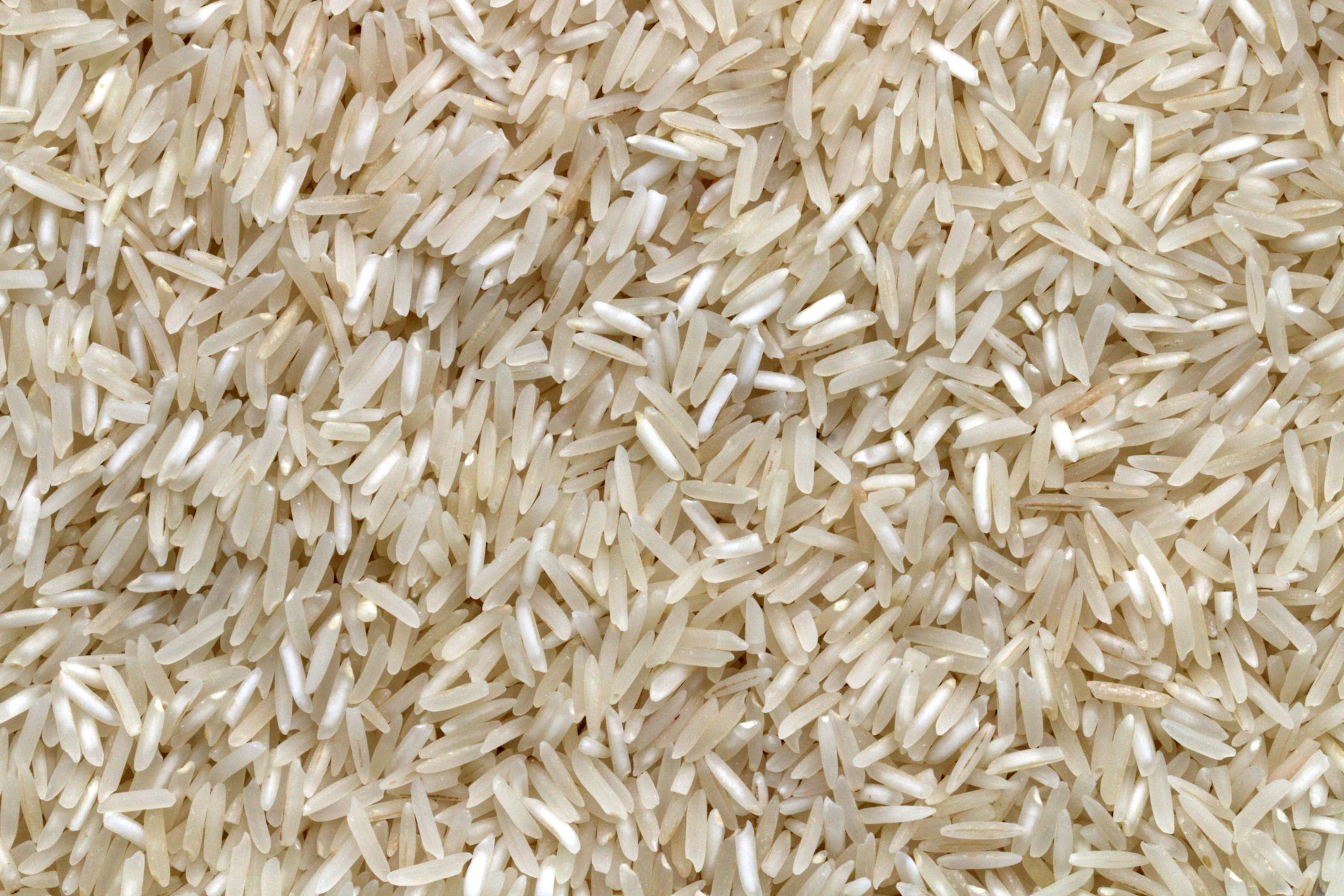
Rice is particularly efficient at absorbing arsenic from soil and water, making it a major dietary source of inorganic arsenic exposure for many populations .
- Grown in flooded paddies that increase arsenic solubility
- Absorbs arsenic more readily than other crops
- Staple food for over half the world's population
Methodology: A Step-by-Step Investigation
The scientists followed a meticulous, multi-stage process
Sample Preparation
Twenty different rice samples were purchased. Each was ground into a fine, homogeneous powder to ensure a representative sub-sample for analysis.
Extraction
A precise weight of each rice powder was placed in a tube. A specific mixture of nitric acid and water was added. The tubes were then heated in a specialized microwave digester, which uses controlled heat and pressure to completely dissolve the rice matrix and release the arsenic into the liquid solution.
Separation (Speciation)
This is the critical step. The liquid extract was injected into a HPLC-ICP-MS system (High-Performance Liquid Chromatography coupled to ICP-MS). The HPLC column expertly separated the different chemical forms of arsenic—inorganic arsenic (the most toxic) from less harmful organic forms like dimethylarsinate (DMA).
Detection & Quantification
As the separated arsenic compounds exited the HPLC column, they flowed directly into the ICP-MS. The instrument then generated a signal for each type of arsenic, and by comparing the signal intensity to known standards, the scientists could calculate the exact concentration of inorganic arsenic in each sample .
Analytical Challenge
The key difficulty in arsenic analysis is distinguishing between the toxic inorganic forms (arsenite and arsenate) and the less toxic organic forms. Without proper separation techniques, total arsenic measurements can overestimate the actual health risk.
Results and Analysis: The Findings on the Plate
The results revealed significant variations in arsenic content
The results revealed significant variations. Here's a summary of the core findings:
Table 1: Average Inorganic Arsenic Content by Rice Type
| Rice Type | Average Inorganic Arsenic (μg/kg) | Relative Risk |
|---|---|---|
| White Rice (Basmati, India) | 45 ppb |
|
| Brown Rice (USA) | 110 ppb |
|
| White Rice (Jasmine, Thailand) | 75 ppb |
|
| Brown Rice (Bangladesh) | 185 ppb |
|
Table 2: Impact of Cooking Method on Arsenic Levels
(Based on Brown Rice from Bangladesh)| Cooking Method | Residual Inorganic Arsenic |
|---|---|
| Low-Water Method (Absorption) | 180 ppb |
| High-Water Method (Rinsing & Excess Water) | 80 ppb |
Table 3: Comparison with EU Regulatory Limits
| Contaminant | Sample Result (Highest) | EU Maximum Level |
|---|---|---|
| Inorganic Arsenic in Rice | 185 ppb | 200 ppb |
Scientific Importance
This experiment confirmed that brown rice often contains higher levels of arsenic than white rice because arsenic accumulates in the outer bran layer, which is removed to make white rice. It also highlighted the impact of geography, with rice from certain regions showing higher contamination due to natural geology or historical pesticide use. Data like this is vital for regulatory bodies like the FDA to set safety limits and for consumers to make informed choices .
The Scientist's Toolkit: Essential Reagents & Materials
Key "ingredients" used in food safety analysis
Research Reagent Solutions & Materials
| Item | Function |
|---|---|
| Nitric Acid (HNO₃) | A strong acid used to digest and dissolve the solid food sample, releasing metals into a liquid solution for analysis. |
| Certified Reference Material (CRM) | A "control" sample with a known, certified concentration of contaminants. Scientists analyze this to verify their entire method is accurate and precise. |
| Chromatography Column | The heart of the HPLC system. It's a narrow tube packed with tiny particles that separate the different chemical compounds in the sample as they flow through. |
| LC-MS/MS Mobile Phase | A carefully crafted solvent that carries the sample through the chromatography system. Its composition is key to achieving a clean separation. |
| ICP-MS Calibration Standards | A set of solutions with known, increasing concentrations of heavy metals. They are used to create a calibration curve, which the instrument uses to convert its signal into a concentration for the unknown samples. |
Conclusion: A Clearer Plate for a Healthier Future
The journey from a grain of rice to a data point on a scientist's screen is a remarkable feat of modern analytical chemistry. While the presence of toxins and heavy metals in our food is an undeniable challenge, the sophisticated methods developed to detect them are our first and most powerful line of defense.
Key Takeaways
- Advanced techniques like ICP-MS and LC-MS/MS can detect contaminants at parts-per-billion levels
- Food processing and preparation methods can significantly impact contaminant levels
- Regulatory standards based on scientific data help protect consumer health
- Ongoing monitoring and research are essential for food safety
These techniques allow regulators to set safety standards, food producers to monitor their supply chains, and all of us to have greater confidence in the safety of our next meal. The work of these food detectives, though often unseen, ensures that the story on our dinner plate has a safe and healthy ending.